US6052700A - Calendar clock caching in a multiprocessor data processing system - Google Patents
Calendar clock caching in a multiprocessor data processing systemDownload PDFInfo
- Publication number
- US6052700A US6052700AUS09/156,104US15610498AUS6052700AUS 6052700 AUS6052700 AUS 6052700AUS 15610498 AUS15610498 AUS 15610498AUS 6052700 AUS6052700 AUS 6052700A
- Authority
- US
- United States
- Prior art keywords
- calendar clock
- instruction
- cached
- processors
- processor
- Prior art date
- Legal status (The legal status is an assumption and is not a legal conclusion. Google has not performed a legal analysis and makes no representation as to the accuracy of the status listed.)
- Expired - Lifetime
Links
Images





Classifications
- G—PHYSICS
- G06—COMPUTING OR CALCULATING; COUNTING
- G06F—ELECTRIC DIGITAL DATA PROCESSING
- G06F11/00—Error detection; Error correction; Monitoring
- G06F11/22—Detection or location of defective computer hardware by testing during standby operation or during idle time, e.g. start-up testing
- G06F11/2205—Detection or location of defective computer hardware by testing during standby operation or during idle time, e.g. start-up testing using arrangements specific to the hardware being tested
- G06F11/2236—Detection or location of defective computer hardware by testing during standby operation or during idle time, e.g. start-up testing using arrangements specific to the hardware being tested to test CPU or processors
- G06F11/2242—Detection or location of defective computer hardware by testing during standby operation or during idle time, e.g. start-up testing using arrangements specific to the hardware being tested to test CPU or processors in multi-processor systems, e.g. one processor becoming the test master
- G—PHYSICS
- G06—COMPUTING OR CALCULATING; COUNTING
- G06F—ELECTRIC DIGITAL DATA PROCESSING
- G06F11/00—Error detection; Error correction; Monitoring
- G06F11/22—Detection or location of defective computer hardware by testing during standby operation or during idle time, e.g. start-up testing
- G06F11/26—Functional testing
- G—PHYSICS
- G06—COMPUTING OR CALCULATING; COUNTING
- G06F—ELECTRIC DIGITAL DATA PROCESSING
- G06F11/00—Error detection; Error correction; Monitoring
- G06F11/22—Detection or location of defective computer hardware by testing during standby operation or during idle time, e.g. start-up testing
- G06F11/24—Marginal checking or other specified testing methods not covered by G06F11/26, e.g. race tests
- G—PHYSICS
- G06—COMPUTING OR CALCULATING; COUNTING
- G06F—ELECTRIC DIGITAL DATA PROCESSING
- G06F1/00—Details not covered by groups G06F3/00 - G06F13/00 and G06F21/00
- G06F1/04—Generating or distributing clock signals or signals derived directly therefrom
- G06F1/14—Time supervision arrangements, e.g. real time clock
- G—PHYSICS
- G06—COMPUTING OR CALCULATING; COUNTING
- G06F—ELECTRIC DIGITAL DATA PROCESSING
- G06F12/00—Accessing, addressing or allocating within memory systems or architectures
- G06F12/02—Addressing or allocation; Relocation
- G06F12/08—Addressing or allocation; Relocation in hierarchically structured memory systems, e.g. virtual memory systems
- G06F12/0802—Addressing of a memory level in which the access to the desired data or data block requires associative addressing means, e.g. caches
- G06F12/0806—Multiuser, multiprocessor or multiprocessing cache systems
- G06F12/0811—Multiuser, multiprocessor or multiprocessing cache systems with multilevel cache hierarchies
- G—PHYSICS
- G06—COMPUTING OR CALCULATING; COUNTING
- G06F—ELECTRIC DIGITAL DATA PROCESSING
- G06F12/00—Accessing, addressing or allocating within memory systems or architectures
- G06F12/02—Addressing or allocation; Relocation
- G06F12/08—Addressing or allocation; Relocation in hierarchically structured memory systems, e.g. virtual memory systems
- G06F12/0802—Addressing of a memory level in which the access to the desired data or data block requires associative addressing means, e.g. caches
- G06F12/0806—Multiuser, multiprocessor or multiprocessing cache systems
- G06F12/0815—Cache consistency protocols
- G—PHYSICS
- G06—COMPUTING OR CALCULATING; COUNTING
- G06F—ELECTRIC DIGITAL DATA PROCESSING
- G06F12/00—Accessing, addressing or allocating within memory systems or architectures
- G06F12/02—Addressing or allocation; Relocation
- G06F12/08—Addressing or allocation; Relocation in hierarchically structured memory systems, e.g. virtual memory systems
- G06F12/0802—Addressing of a memory level in which the access to the desired data or data block requires associative addressing means, e.g. caches
- G06F12/0806—Multiuser, multiprocessor or multiprocessing cache systems
- G06F12/0815—Cache consistency protocols
- G06F12/0831—Cache consistency protocols using a bus scheme, e.g. with bus monitoring or watching means
- G06F12/0833—Cache consistency protocols using a bus scheme, e.g. with bus monitoring or watching means in combination with broadcast means (e.g. for invalidation or updating)
Definitions
- the present inventiongenerally relates to multiprocessing computer systems, and more specifically to exhaustively testing interactions among multiple tightly coupled processors.
- L1 cachehigh-speed level one
- L2 cacheslightly lower speed level two
- SRAMStatic Random Access Memory
- DRAMDynamic Random Access Memory
- Debugging a cache protocolcan be quite difficult. This stems from a number of interrelated factors. First, the multiple processors are each typically operating asynchronously from each other at extremely high frequencies or rates of speed. Secondly, the L1 caches, and their cache controllers are typically operating at essentially the same speed as the processors. Third, instruction cache misses for test instruction sequences can delay instruction execution by relatively long, somewhat variable, periods of time. There are a number of reasons for this later problem. One reason is it may be possible to retrieve a cache line of instructions from L1 cache or from L2 cache, or it may be necessary to load the cache line from slower main memory. The DRAM comprising the main memory typically operates quite a bit slower than the processor (and L1 cache).
- Another problemis that the time it takes to fetch a block of instructions from the main memory may vary slightly. There are a number of causes of this. First, accessing different addresses in the DRAM may take slightly different times. This is partly because of differing signal path lengths. Secondly, different memory banks may have slightly different timing. This is true, even when the specifications for the memories are equivalent. This is particularly true, when the memories are self-timed. This problem may be accentuated when multiple processors or multiple memories share a common memory access bus, where the actions of one processor or memory may lock out, and stall, another processor or memory. Note also that asynchronous Input/Output (I/O) operations to memory can have seemingly random effects on timing.
- I/OInput/Output
- NOP instructionsare typically executed out of blocks of instructions held in cache lines. Each time execution crosses a cache line boundary, there is a potential for a cache miss, resulting in retrieving the cache line from slower memory. There is also a potential at that point that execution may be delayed for one or more cycles due to memory bus contention. Each of these potential delays introduces a potential window that did not get tested utilizing this set of solutions. Note also that virtual memory program activity must also be accounted for.
- Testabilityand thus reliability through earlier fault detection would be significantly increased in tightly coupled multiprocessor systems if the interactions among multiple processors could be accurately exhaustively tested, with the guarantee that no timing windows were inadvertently left untested. This testability would be further enhanced by a mechanism for recording states and state transitions over a series of clock cycles for each of the processors being tested.
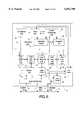
- FIG. 1is a block diagram illustrating a General Purpose Computer, in accordance with the present invention
- FIG. 2is a block diagram of a more detailed view of a multiprocessor data processing system, in accordance with the present invention
- FIG. 3is a block diagram illustrating a processor (CPU) module as shown in FIG. 2;
- FIG. 4is a block diagram of a processor shown in FIG. 3;
- FIG. 5is a block diagram of an Arithmetic (AX) Unit in the processor shown in FIG. 4;
- FIG. 6is a block diagram of a piplelined processor as shown in FIG. 3;
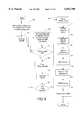
- FIG. 7is a flowchart illustrating exhaustive testing of the interaction between multiple processors in a single system, in accordance with the present invention.
- FIG. 8is a flowchart illustrating operation of a master processor during one execution of the Perform Single Test step in FIG. 7;
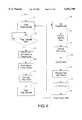
- FIG. 9is a flowchart illustrating operation of a slave processor during execution of multiple test
- FIG. 10is a flowchart illustrating operation of a Transmit Sync signal (TSYNC) instruction, in accordance with the present invention
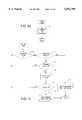
- FIG. 11is a flowchart illustrating operation of a Receive Sync signal (WSYNC) instruction, in accordance with the present invention
- FIG. 12is a flowchart illustrating operation of a delay (DELAY) instruction, in accordance with the present invention.
- FIG. 13is a block diagram illustrating the trace cache shown in FIGS. 4 and 6;
- FIG. 14is a flowchart illustrating operation of a Load Calendar Clock (LCCL) instruction, in accordance with the present invention
- FIG. 15is a flowchart illustrating operation of a processor after receiving a calendar clock interrupt, in accordance with the present invention.
- FIG. 16is a flowchart illustrating operation of a Read Calendar Clock (RCCL) instruction, in accordance with the present invention.
- RCCLRead Calendar Clock
- buswill be used to refer to a plurality of signals or conductors which may be used to transfer one or more various types of information, such as data, addresses, control, or status.
- assertand “negate” will be used when referring to the rendering of a signal, status bit, or similar apparatus into its logically true or logically false state, respectively. If the logically true state is a logic level one, the logically false state will be a logic level zero. And if the logically true state is a logic level zero, the logically false state will be a logic level one.
- FIG. 1is a block diagram illustrating a General Purpose Computer 20.
- the General Purpose Computer 20has a Computer Processor 22, and Memory 24, connected by a Bus 26.
- Memory 24is a relatively high speed machine readable medium and includes Volatile Memories such as DRAM, and SRAM, and Non-Volatile Memories such as, ROM, FLASH, EPROM, EEPROM, and bubble memory.
- Volatile Memoriessuch as DRAM, and SRAM
- Non-Volatile Memoriessuch as, ROM, FLASH, EPROM, EEPROM, and bubble memory.
- Secondary Storage 30External Storage 32
- output devicessuch as a monitor 34
- input devicessuch as a keyboard (with mouse) 36
- printers 38included in Secondary Storage 30 includes machine-readable media such as hard disk drives, magnetic drum, and bubble memory.
- External Storage 32includes machine-readable media such as floppy disks, removable hard drives, magnetic tap CD-ROM, and even other computers, possibly connected via a communications line 28.
- Secondary Storage 30 and External Storage 32is primarily for convenience in describing the invention. As such, it should be appreciated that there is substantial functional overlap between these elements.
- Computer softwaresuch test programs, operating systems, and user programs can be stored in a computer Software Storage Medium, such as memory 24, Secondary Storage 30, and External Storage 32.
- Executable versions of computer software 33can be read from a Non-Volatile Storage Medium such as External Storage 32, Secondary Storage 30, and Non-Volatile Memory and loaded for execution directly into Volatile Memory, executed directly out of Non-Volatile Memory, or stored on the Secondary Storage 30 prior to loading into Volatile Memory for execution.
- FIG. 2is a block diagram of a more detailed view of a multiprocessor data processing system, in accordance with the present invention.
- the multiprocessor data processing system 80comprises a plurality of modules coupled together via an intramodule bus 82 controlled by a storage control unit 86.
- each such module 84, 88, 90is contained on a single board, with the boards connecting into a backplane.
- the backplaneincludes the intramodule bus 82.
- sixteen modulesare shown.
- the systemincludes four (4) processor (“CPU") modules 90, four (4) Input/Output (“IOU”) modules 88, and eight (8) memory (“MMU”) modules 84.
- CPUprocessor
- IOUInput/Output
- MMUmemory
- Each of the four Input/Output (“IOU") modules 88is shown coupled to secondary storage 30. This is representative of the function of such IOU modules 88.
- Each IOU module 88will typically contain a plurality of IOU processors (not shown).
- Each of the eight memory modules 84contains memory 24 and a memory controller (not shown). This memory 24 is typically Dynamic Random Access Memory (DRAM). Large quantities of such memory 24 are typically supported.
- DRAMDynamic Random Access Memory
- Large quantities of such memory 24are typically supported.
- a Clock Management Unit 98which supplies a standard clock signal 99 to the remainder of the system 80. As clock signals are ubiquitous in digital computer architectures, the clock signal 99 will not be shown further herein except where relevant. Note also that in the preferred embodiment, multiple Clock Management Units 98 are utilized to provide a redundant clock signal 99.
- FIG. 3is a block diagram illustrating a processor (CPU) module 90 as shown in FIG. 2.
- the CPU module 90contains a plurality of processors (CPU) 92 and a cache memory system 94.
- each processor (CPU) module 90contains up to four (4) processors (CPU) 92.
- the processors 92 and the cache memory system 94are coupled together and communicate over an intraprocessor bus 96.
- the cache memory system 94is shared among the processors 92 on the CPU module 90 and maintains cache copies of data loaded into those processors 92.
- the cache memory system 94is considered here a Level 2 cache and is coupled to and communicates with the storage control system (SCU) 88 over the intramodule bus 82 in order to maintain cache coherency between Level 1 cache memories 94 on each of the processor modules 90, as well as between cache memories 54, 56 in each of the processors 92, and on the IOU modules 88.
- the SCU 88also maintains coherency between the various cache memories 94, 54, 56, and the typically slower speed memory in the MMU modules 84.
- a single block of memorywill be owned by a single cache or memory at potentially each level in the memory hierarchy. Thus, a given memory block may be owned by one Level 1 cache 54, 56, by one Level 2 cache 94, and by one MMU 84.
- FIG. 4is a block diagram of a processor 92 shown in FIG. 3.
- the processor 92communicates with the bus 96 utilizing a bus interface 78.
- the bus interfaceis bidirectionally coupled to a unified local cache 256.
- Cache memoriessuch as this unified local cache 256, are typically constructed as high speed Static Random Access Memories (SRAM).
- SRAMStatic Random Access Memories
- the local cache 256is incorporated on the same integrated circuit as the remainder of the processor 92.
- the local cache 256is the primary block that interfaces with the bus interface 78. Data and instructions are loaded via the bus 96 into the local cache 256, and data is written back from the local cache 256 via the bus 96.
- the local cache 256is bidirectionally coupled to an Arithmetric (AX) Unit module 260.
- the AX unit 260provides the bulk of the functionality of the processor 92, including instruction decode.
- the AX unit 260is bidirectionally coupled to and controls execution of a floating point (FP) unit 268 and a decimal/numeric (DN) unit 262.
- FPfloating point
- DNdecimal/numeric
- the floating-point unit 268performs both floating-point operations, and fixed-point multiplications and divisions. It is bidirectionally coupled to the local cache 256.
- the decimal/numeric (DN) unit 262performs decimal and string operations. It is bidirectionally coupled to the local cache 256, allowing it to operate relatively autonomously from the AX unit 260. Rather, once decimal or string operations are initiated in the DN unit 262, the DN unit 262 is driven by operand availability in the local cache 256.
- Trace RAM cache 58Bidirectionally coupled to both the AX unit 260 and the local cache 256 is a Trace RAM cache 58 which is capable of caching the status of instruction or cache operation.
- the Trace RAM 58is controlled by commands decoded and executed by the AX unit 260.
- the Trace RAM 58also selectively traces AX unit 260 statuses.
- the Trace RAM 58receives and selectively traces cache state signals from the local cache 256. When a trace is complete, the Trace RAM 58 can be written out to the local cache 256, and ultimately to slower memories.
- the local calendar clock unit 270contains a Cached Calendar Clock 272 and a Calendar Clock Valid flag 274.
- the calendar clock unit 270also contains arithmetic and logical circuitry allowing the Cached Calendar Clock 272 to be updated utilizing the same clock signals 99 as the master calendar clock 97.
- the Master Calendar Clock 97 and the Cached Calendar Clock 272are incremented every microsecond utilizing the common clock signal.
- the Cached Calendar Clock 272will maintain the same calendar clock time as the Master Calendar Clock 97, after being loaded with the same calendar clock value.
- the Calendar clock unit 270provides a Transmit Calendar Clock Updated signal 276 to the bus interface 78 whenever the Master Calendar Clock 97 is loaded or updated under program control with a new calendar clock value. This signal is transmitted via the bus 96 to all of the other processors 92 in the data processing system 80, which each in turn receive the signal from the bus 96 as a Receive Calendar Clock Updated signal 278.
- the Receive Calendar Clock Updated signal 278that is received by the local Calendar Clock Unit 270 results in the clearing of the Calendar Clock Valid flag 274, forcing that processor 92 to request the calendar clock value from the Master Calendar Clock 97 the next time the Calendar Clock is read by that processor 92 under program control.
- the local calendar clock unit 270is shown as a separate functional unit in FIG. 4. This is done for illustrative purposes. In the preferred embodiment, the local calendar clock unit 270 forms a portion of the AX module 260, with parts of its functionality described herein being incorporated in various AX submodules (see FIG. 5).
- FIG. 5is a block diagram of an Arithmetric (AX) Unit 260 in the processor 92 shown in FIG. 4.
- the AX unit 260comprises a Microprogram Control Section (MPS) unit 280, an Auxiliary Operations Section (XOPS) 282, a Basic Operations Section (BOPS) 284, a Safe Store Buffer (SSB) 286, an Address Preparation (AP) section 288, and a NSA Virtual Segment Section 290.
- the MPS 280is bidirectionally coupled to and receives instructions from the local cache 256.
- the MPS 280performs instruction decode and provides microprogram control of the processor 92.
- the microprogram controlutilizes a microengine executing microcode 281 stored in both dynamic and static memories in response to the execution of program instructions.
- the MPS 280is bidirectionally coupled to and controls operation of the Auxiliary Operations Section (XOPS) 282, the Basic Operations Section (BOPS) 284, the floating point (FP) unit 268, the decimal/numeric (DN) unit 262, the Address Preparation (AP) section 288, and the NSA Virtual Segment Section 290.
- the Basic Operations Section (BOPS) 284is used to perform fixed point arithmetic, logical, and shift operations.
- the Auxiliary Operations Section (XOPS) 282performs most other operations.
- the Address Preparation (AP) section 288forms effective memory addresses utilizing virtual memory address translations.
- the NSA Virtual Segment Section 290is bidirectionally coupled to and operates in conjunction with the AP section 288, in order to detect addressing violations.
- the Safe Store Buffer (SSB) 286stores the current status of the processor 92 environment, including user and segment registers, for the purpose of changing processor state.
- the SSB 286is coupled to and receives signals from the BOPS 284, the AP section 288, the MPS 280, and the NSA 290.
- the SSB 286is bidirectionally coupled to the local cache 256, allowing SSB 286 frames to be pushed out to cache 256 when entering a new processor environment, and pulled back from cache 256 when returning to an old processor environment.
- the Wait for Sync (WSYNC), Transmit Sync (TSYNC), Delay (DELAY), and trace (TRACE) instructionsare decoded and executed under microprogram control by the MPS 280 unit in the AX unit 260.
- the Wait for Sync (WSYNC) and Transmit Sync (TSYNC) instructionsutilize the transmit Calendar Clock Updated signal 276 and receive Calendar Clock Updated signal 278 otherwise utilized by the local calendar clock unit 270. Operation of the TSYNC instruction is shown in more detail in FIG. 1O. Operation of the WSYNC instruction is shown in more detail in FIG. 11. Operation of the DELAY instruction is shown in more detail in FIG. 12.
- FIG. 6is a block diagram of an alternate embodiment of the processor 92 as shown in FIG. 3.
- This alternate embodimentshows a pipelined processor 92' capable of simultaneously executing multiple instructions.
- the processor 92'is coupled to a bus 96.
- the bus 96comprises a data bus 72, a address bus 74, and a control bus 76.
- Such a bus 96is typically implemented as a hierarchy of busses.
- the data bus 72, address bus 74, and control bus 76together comprise a processor bus.
- the data bus 72, the address bus 74 and the control bus 76are coupled to a bus interface 56.
- the bus interface 56is coupled to a data cache 54, an instruction cache 56, and a trace cache 58.
- the data cache 54, the instruction cache 56, and the trace cache 58are typically constructed of high speed SRAM.
- the coupling between the data cache 54 and the bus interface 58is typically bi-directional, whereas the coupling between the bus interface 58 and the instruction cache 56 is typically single directional, since there is typically no need to write instructions back to slower memory (not shown).
- the Instruction Cache 56, and Data Cache 54are Level 1 caches in the memory hierarchy in the preferred embodiment.
- the instruction cache 56is coupled to and provides instructions to an instruction execution unit 52.
- the instruction execution unit 52 shownpreferably provides for pipelined execution of multiple instructions, synchronization of out-of-order execution, and branch prediction. However, these optimizations are not necessary to practice this invention.
- the instruction execution unit 52provides control signals to control execution of an Integer Processing Unit (IPU) 60, a load/store unit 64, a floating point unit (FPU) 68, and a systems unit 70 .
- the load/store unit 64is bidirectionally coupled to the general purpose registers (GPR) 62, the floating point registers (FPR) 66 and the data cache 54.
- the load/store unit 64loads values into the general purpose registers 62 and floating point registers 66 from the data cache 54, and writes them back to the data cache 54, as required.
- the general-purpose registers 62are bidirectionally coupled to and utilized by the integer-processing unit 60 to perform integer arithmetic, as well as other logical functions.
- Such an integer processing unit 60typically comprises logical/shift modules, integer addition/subtraction modules, and integer multiplication/division modules.
- the integer processing unit 60will typically set condition code flags in one or more condition code registers in the general purpose registers 62 based on the results of the arithmetic and logical functions performed. These condition code flags are provided to the instruction execution unit 52 for use in conditional branching. In this preferred embodiment, the integer processing unit 60 provides for arithmetic and logical functions.
- the general-purpose registers 62are also bidirectionally coupled to and utilized by the systems unit 70 to perform systems functions.
- the systems unit 70executes various system-level instructions, including instructions to change environment or state. In order to maintain system state, most of the instructions executed by the systems unit 70 are completion-serialized.
- the floating point registers 66are bidirectionally coupled to and utilized by the floating-point unit 68 to perform floating-point arithmetic functions.
- a single integer processing unit 60 and floating point unit 68are shown in this FIG. 6. This is done here for clarity. It should be understood that the preferred embodiment of the present invention will include multiple such functional units 60, 66.
- a pipelined processor 92'such as shown here will typically contain multiple integer processing units 60 providing multiple concurrent integer computations, and multiple floating point units 68 providing multiple concurrent floating point computations.
- the Instruction Unit 42comprises an instruction fetch unit 44, an instruction queue 46, an instruction dispatch unit 48, a branch processing unit 50, and an instruction completion unit 52.
- the instruction fetch unit 44is coupled to and receives instructions from the instruction cache 56.
- the instructions fetch unit 44provides instruction fetch control signals to the instruction cache 56.
- Fetched instructionsare transmitted upon demand from the instruction fetch unit 44 to the instruction queue 46 for queuing.
- the queued instructionsare subsequently removed from the instruction queue 46 and dispatched to the function units 60, 64, 68, 70 for processing by the instruction dispatch unit 48. Multiple instructions will typically be in simultaneous execution at the same time in a pipelined system.
- the completing function units 60, 64, 68, 70provide instruction completion signals to the instruction completion unit 52.
- the instruction completion unit 52is coupled to and thereupon notifies the instruction fetch unit 44 of the instruction completions, allowing for further instruction fetches.
- the branch-processing unit 50is bidirectionally coupled to and receives branch instructions from the instruction fetch unit 44.
- the branch-processing unit 50is coupled to and receives condition code information from the general-purpose registers 62. This condition code information is utilized by the branch-processing unit 50 to perform conditional branching.
- Modern branch processing units 50 in piplelined systemstypically perform branch prediction and lookahead. When using branch prediction, a branch-processing unit 50 will typically provide control signals to the instruction fetch unit 44 to continue to fetch instructions until an unresolved conditional branch is resolved.
- the contents of general-purpose registers 62are also received by the branch-processing unit 50 for use in indexed and indirect branching.
- the systems unit 70executes a number of instructions that are significant to the present invention. It executes a transmit sync (TSYNC) instruction for transmitting a synchronize signal to the other processors 92 in the system 80. It executes a wait-for-synchronize (WSYNC) instruction for pausing a processor 92 until it receives the synchronize signal from another processor 92. It executes a delay (DELAY) instruction for pausing or delaying a processor 92, 92' for a specified number of instruction. Finally, the systems unit 70 executes a trace (TRACE) instruction for controlling operation of the trace cache 58.
- TTYNCtransmit sync
- WSYNCwait-for-synchronize
- DELAYdelay
- TRACEtrace
- the trace cache 58receives trace signals 59 from different modules in the processor 92. Each of these modules provides information that can be potentially traced.
- the trace cache 92is coupled to and receives trace signals 59 from the data cache 54, the instruction cache 56, the branch processing unit 50, and the dispatch unit 48.
- the trace signals 59 from the data cache 54 and the instruction cache 56include internal cache state signals. This provides a mechanism for recording in real time state changes for the cache memories 54, 56.
- the trace cacheis coupled to and provides a trace output signal 61 to the bus interface 78. This allows the contents of a trace buffer to be selectively written to and saved in slower speed memory 24 in an MMU 84. This is typically done at the end of a trace so that the data traced can be processed.
- FIG. 7is a flowchart illustrating exhaustive testing of the interaction between multiple processors 92 in a single system 80.
- Table T-1illustrates the instructions executed by three different processors 92.
- processor #1executes a TSYNC instruction, which transmits a synchronize signal to all of the other processors 92 in the system 80. All of the processors being tested, including the processor executing the TSYNC instruction, then wait for receipt of the synchronize signal through execution of an WSYNC instruction. At this point, all of these processors are synchronized each being ready to execute their next instruction at the next common clock 99 signal edge. Each processor then starts the relevant traces by executing a TRACE instruction and delays for a specified number of clock 99 cycles by executing a DELAY instruction.
- the WSYNC instructionmay be implemented as having a clock count delay operand, resulting in a specified number of clock cycles of delay after receipt of the synchronize signal.
- the WSYNC instructionboth waits for the synchronize signal, and then starts tracing. Two-hundred fifty-six (256) trace entries are then traced, and the trace then automatically terminates. Note also that the traces may be started earlier, especially if trace entries are allowed to wrap around the trace RAM 210.
- the exhaustive testingis accomplished by varying T1, T2, and T3 for the three processors through their respective ranges. This is preferably done through use of a three level loop structure in a test driver program.
- each of the processors 92will execute a series of test instructions. For example, when testing cache memories 54, 56, the processors 92 will execute instructions affecting the state of the cache 256.
- the processors implementing such cache memory testingmay cause their respective caches 256, to compete for ownership of a given range of addresses of memory.
- the cache states for the relevant caches 256are received on the trace input signal lines 59 by the Trace Cache 58 and written into the trace RAM 210 every clock 99 cycle during the test.
- the traceis turned off by either writing a predetermined number of trace entries to the Trace RAM 210, filling up the Trace RAM 210 with trace entries, or execution of a second TRACE instruction.
- the contents of the Trace RAM 210 for each of the processors 92is then written to slower (usually DRAM) memory 24 contained in the MMU modules 84 for subsequent evaluation.
- the trace entries saved in the MMU module 84 memoriesmay also be written to secondary storage 80 for later evaluation, or for archival purposes.
- the testingis then run again, with a different combination of T1, T2, and T3 values for the three processors. This is repeated until all interesting combinations of these three timing delay values have been tested.
- FIG. 7is a flowchart illustrating a method of exhaustive testing of the interaction between multiple processors 92 in a single system 80.
- the methodutilizes the code shown and discussed in Table T-1.
- Table T-1the interaction of three processors 92, P1, P2, and P3 is tested.
- Each of the three processors 92utilizes a corresponding delay value T1, T2, and T3, for delaying the execution of its test code.
- the methodstarts by entering an outer loop. First, the next test cases are loaded from a test table, step 148. Next, a T1 delay value loop index is initialized, step 150. A second loop is then entered. The T1 delay value is then incremented, step 152, and a test is made whether the T1 delay value is within range, step 154.
- a third loopis entered.
- the T2 delay valueis first initialized, step 160.
- the T2 delay valueis then incremented, step 162, and a test is made whether the T2 delay value is within range, step 164.
- a fourth, inner, loopis entered.
- the T3 delay valueis first initialized, step 170.
- the T3 delay valueis then incremented, step 172, and a test is made whether the T3 delay value is within range, step 174.
- step 174a single test is performed, as shown in Table T-1, step 176, utilizing the T1, T2, and T3 delay values computed in the three embedded loops.
- the single test run resultsare evaluated, as appropriate, step 178.
- the inner loopthen repeats, starting with incrementing the T3 delay value, step 172.
- step 174the fourth loop is complete, and the third loop is repeated, starting with incrementing the T2 delay value, step 162.
- step 164the third loop is complete, and the second loop is repeated, starting with incrementing the T1 delay value, step 152.
- step 154the second loop is complete.
- the interaction over the specified ranges of T1, T2, and T3 for a particular test case in the test tablehave been exhaustively tested.
- the test results from the multiple testsare then evaluated, step 178.
- a testis then made whether there are any more test cases to test in the test table, step 158. If there are more test cases to test, the outer loop is repeated, starting with loading the next test entry from the test table, step 148. Otherwise, when there are no more test cases to test in the test table, step 158, the method is complete.
- the three embedded loopscan be viewed as three embedded "DO" or "FOR” loops, incrementing T1, T2, and T3 through their prescribed ranges.
- the use of these three embedded loops for testing three processorsis for illustrative purposes only. More or fewer embedded loops, for testing correspondingly more or fewer processors, are within the scope of the present invention.
- FIG. 8is a flowchart illustrating operation of a master processor during one execution of the Perform Single Test step 176 in FIG. 7.
- the Perform Single Teststep 176, starts by setting up the delay values and test instructions for each processor being utilized, step 180.
- the delay values for the three processorsare the loop indices: T1, T2, and T3.
- the test instructions for a given testtypically remain constant throughout a given set of tests.
- a slave number (Slave#) loop indexis initialized, step 181, and a loop is then entered.
- a Flag1 corresponding to the slave being setup(Flag1 [Slave#]) is set so that that slave will know to pick up its delay and test instructions, step 182.
- the master processorthen spins on a second flag (Flag2 [Slave#]) until that second flag is set, step 184.
- the second flag(Flag2 [Slave#]) is set by the slave processor when it has completed setting up for testing, and is ready to execute a WSYNC instruction (see step 144 in FIG. 9).
- the first flag(Flag1 [Slave#]) is then cleared, step 186, for preparation for the next execution of the Perform Single Test, step 176.
- the Slave# loop indexis then incremented, step 188, and a test is made whether any more slaves need to be setup. If more slaves remain to setup, the loop is repeated, setting up the next slave, starting with step 182.
- step 189the master processor is setup, step 190.
- This setupis similar to the setup performed for each of the slave processors.
- the test delay valueis typically loaded into a register.
- a TSYNC instructionis executed, step 191, resulting in a synchronize signal being transmitted to all of the processors 92 in the data processing system 80.
- a WSYNC instructionstep 192, which awaits receipt of the synchronize signal just transmitted.
- a TRACEis initiated, tracing 256 entries to the Trace RAM Execution of the WSYNC will also preferably turn on tracing to the TRACE RAM, step 193.
- the TSYNC, 191, WSYNC, 192, and TRACE, 193,are shown separately. This is for illustrative purposes. In the preferred embodiment, these three functions are combined into the TSYNC instruction.
- a DELAY instructionis executed in order to delay for a predetermined number of clock cycles, step 194. This is the delay value for the master processor resulting from the T1, T2, and T3 loops in FIG. 7. In the preferred embodiment, the delay value has been loaded into a register prior to executing the TSYNC, step 191, WSYNC, step 192, and TRACE, step 193, instructions.
- step 194After the DELAY instruction, step 194, has completed waiting the prescribed number of clock cycles, the prespecified instruction test sequence is executed, step 195. Then, a second DELAY instruction is executed, step 196, for a long enough delay that all processors 92 being tested have completed their individual test. The Trace RAM 210 is then dumped to the system RAM, step 198, for later evaluation. Note that instead of the second DELAY instruction, step 196, other methods of processor 92 resynchronization may also be utilized, such as a second usage of the TSYNC and WSYNC instructions.
- FIG. 9is a flowchart illustrating operation of a slave processor during execution of multiple tests.
- the slave computerexecutes a continuous loop until terminated.
- the second flag (Flag2 [Slave#]) for the slave processoris cleared, step 132.
- the processor 92spins until the first flag (Flag1 [Slave#]) is set, indicating that a new set of delay values and test instructions is ready for use by this slave.
- the test instructionsare then moved to a target area, step 136.
- the private cache 256is preconditioned, step 138. This is especially important if the caching system is being tested.
- the test delay valueis then loaded into a register, step 140.
- the processor 92then awaits synchronization by executing a WSYNC instruction, step 192. After receiving the synchronization signal transmitted as a result of the TSYNC instruction executed by the master processor, step 191, a TRACE instruction is executed, step 193, starting tracing to the Trace RAM 210, and a DELAY instruction is executed, step 194, delaying the number of clock cycles specified by the master processor.
- test instructions for the slave processorare then executed, step 195, and a long delay is then entered, again by executing the DELAY instruction, step 196.
- the Trace RAM 210is dumped to the system RAM, step 198, and the loop repeats, starting with clearing the second flag (Flag2 [Slave#]).
- the WSYNC instruction, step 192, and the TRACE instruction, step 193,are shown as separate steps. This is illustrative. In the preferred embodiment, the functionality of both steps are combined into the WSYNC instruction.
- FIG. 10is a flowchart illustrating operation of a Transmit Sync signal (TSYNC) instruction.
- a special synchronize interrupt signalis transmitted to each of the processors 92 in the system 80. Note that the synchronize interrupt signal is also broadcast to the processor 20 executing the TSYNC instruction.
- a signalis transmitted to all processors 92, step 102, in the data processing system 80.
- the synchronize interrupt signalis transmitted as the Transmit Calendar Clock Updated signal 276 from the processor 92 executing the TSYNC instruction, and received by all the processors 92 in the data processing system 80 as the Receive Calendar Clock Updated signal 278.
- FIG. 15illustrates operation in the preferred embodiment of each of the processors as it receives the Calendar Clock Updated interrupt signal 278.
- the TSYNC instructioncontinues execution after step 102 by dropping into the WSYNC instruction functionality shown in FIG. 11.
- FIG. 11is a flowchart illustrating operation of a Wait for Sync signal (WSYNC) instruction.
- WSYNCWait for Sync signal
- the WSYNC and TSYNC instructionscontain a maximum cycle count operand.
- This maximum cycle count operandcan optionally be implemented as a register operand, an immediate operand, a sum of multiple registers, a sum of a register and an immediate operand, or indeed as any other type of operand supported by the architecture of the processors 92 in the data processing system 80.
- the WSYNC instructiononly terminates when the synchronize interrupt is received.
- a maximum cycle count operand greater than zeroWhen a maximum cycle count operand greater than zero is encountered, a maximum cycle count is indicated. The instruction will thus terminate after that delay maximum cycle count of cycles have been encountered, or when the synchronize interrupt is received, which ever comes first. Thus, a zero maximum cycle count operand can be viewed as an infinite maximum wait. If the maximum cycle count operand was loaded from a register, that register will receive the remaining number cycle count at the end of instruction execution. Thus, if the instruction terminates with a zero remaining cycle count stored in that register, and started with a maximum cycle count greater than zero, the instruction terminated due to having decremented the counter, and not from having received the synchronize interrupt.
- the WSYNC instructioneffectively starts operation by entering into a loop.
- a checkis made of the clock signal 99, step 112. If the relevant edge of the clock signal 99 has not been encountered, step 112, the loop is repeated, starting with the test whether the clock signal 99 edge has been received, step 112. Otherwise, a test is made whether the synchronize signal has been received, step 114. If the synchronize signal has not been received, step 114, a test is made whether the maximum cycle count operand was greater than zero, step 115. If the initial maximum cycle count operand was not greater than zero, step 115, the loop repeats, starting at step 112. However, if the original maximum cycle count operand was greater than zero, step 115, a timeout count is indicated.
- a registeris loaded with the maximum cycle count value, and decremented step 116, and tested against zero, step 117, at every clock. As long as the decremented remaining cycle count is greater than zero, step 117, the loop repeats, starting at step 112. Otherwise, when the synchronize interrupt has been received, step 114, tracing is started, step 118, and the loop terminates. In the preferred embodiment, 256 events are recorded in the Trace RAM, before the tracing is automatically terminated. Otherwise, if the remaining cycle count decrements to zero, step 117, the Calendar Clock Valid Flag274 is cleared, step 119, and the loop terminates. Since the Calendar Clock Valid Flag274 is automatically cleared whenever the Calendar Clock Updated interrupt signal 278 is received (see step 302 in FIG.
- step 119guarantees that the WSYNC instruction always exits with the Calendar Clock Valid Flag274 in a safe state that guarantees that the next Read Calendar Clock instruction will read the Master Calendar Clock 97 instead of the cached calendar clock 272 (see FIG. 16).
- the remaining cycle countis made available in a register to provide an indication whether the WSYNC instruction terminated through a timeout, or through receipt of the synchronize interrupt.
- a testis made for receipt of the synchronize signal on the clock 99 edge. This is to guarantee that all processors 92 receive and respond to the synchronize signal at exactly the same time.
- the WSYNC instructionis implemented utilizing a microcode engine 280 that executes a series of instructions implementing the remainder of the flowchart at each system clock cycle until the instruction terminates.
- the synchronize signalis implemented as the hardware Receive Calendar Clock Updated interrupt signal 278.
- FIG. 12is a flowchart illustrating operation of a delay (DELAY) instruction.
- the DELAY instructionhas one or more operands to specify the number of instruction cycles to delay. This set of operands specifying the number of cycles to delay may be coded as an immediate operand, a register operand, the sum of a pair of registers, the sum of a register and an immediate operand, or indeed, any form of operand supported by the architecture. In an alternative embodiment, the number of cycles to delay can be specified in a fixed repeat count register.
- the DELAY instructionstarts by loading the number of cycles to delay into a counter containing a remaining cycle delay count, step 122. A loop is then entered, and the remaining cycle delay count is decremented, step 126.
- step 128the loop is repeated, starting with a test of the relevant edge of the clock signal 99. The loop spins, waiting for the relevant clock 99 edge. When the clock edge is detected, step 124, the remaining cycle delay count is again decremented, step 126, and again tested, step 128. The loop exits when the decrementing, step 126, causes the remaining cycle delay count to go negative, step 128.
- the resultis that the instruction delays for exactly "N" clock 99 cycles, with "N" being the number of cycles to delay specified on the DELAY instruction. This provides a significant advantage when exhaustively testing interactions between multiple processors 92 since testing ranges can be known to have been exhaustively tested.
- FIG. 13is a block diagram illustrating the trace cache 58 shown in FIGS. 4 and 6.
- the systems unit 70provides trace control signals 57 to a trace buffer control module 202 in response to execution of a Trace instruction.
- the trace buffer control module 202provides control signals to an address counter module 204.
- the address counter module 204is typically reset by the trace buffer control module 202 when a trace is started.
- the address counter module 204is a counter that increments at each clock 99. Address counter module 204 selectively either wraps around, or terminates a trace, when it hits its limit. If the address counter module 204 terminates a trace, the completion is transmitted to the completion unit 52. In any case, the address counter module 204 provides an address signal 212 to a memory address control module 206.
- the address signal 212 providedis the address of the next trace entry in a trace RAM array 210 to receive data.
- the memory address control module 206stores a single trace entry in the Trace RAM 210 at the address specified by the address signal 212 at assertion of each clock b signal.
- Trace input signals 59are coupled to and received by a multiplexor (MUX) 208.
- the trace buffer control module 202is coupled to and provides trace select signals 216 to the MUX 208 to select trace input signals 59 for tracing. The selection by the trace buffer control module 202 is in response to execution of a TRACE instruction by the systems unit.
- the MUX 208provides a Selected Trace Data signal 218 by selecting Trace input signals 59 in response to trace select signals 216.
- the values of the Selected Trace Data signals 218are written in the Trace Ram 210 at the location specified by the address counter 204 at the assertion of each clock 99. In one embodiment, a high-order bit from the address counter module 204 is written with each trace entry in the trace RAM 210.
- Thisprovides a mechanism for continuously wrapping the trace RAM 210 with trace entries. Then, when the trace data is downloaded to slower memory and evaluated, the trace entries can be properly unrolled based on this wrap bit 214, since the wrap bit 214 toggles for each cycle through the trace RAM 210.
- the trace cache 58operates by storing one entry into the trace RAM 210 for each assertion of the clock signal 99.
- the trace RAMis preferably high-speed memory, such as high speed Static Random Access Memory (SRAM), with a write time no longer than the width of the clock signal 99.
- SRAMStatic Random Access Memory
- the entire trace entryis typically a power of two (2 x ) in size, such as 16, 32, 64, or 128 bits in size.
- the trace RAMwill typically contain a power of two (2 y ) number of trace entries. This allows for easy wrapping of the address counter 204 when computing memory write addresses 212.
- the trace RAM in the preferred embodimentcontains 256 (2 8 ) trace entries.
- a Master Calendar Clock 97is maintained in the system control unit (SCU) 86.
- Two instructionsare provided to access the calendar clock.
- a "Read Calendar Clock” (RCCL) instructionreturns the current value of the calendar clock.
- a "Load Calendar Clock” (LCCL) instructionoperates to load the common calendar clock with a new value.
- the calendar clockcomprises a seventy-two (72) bit counter that is incremented every microsecond.
- the clock signals driving that incrementation of the calendar clock every microsecondare typically either derived from a system clock, or provided by a separate oscillator.
- a Transmit Calendar Clock Updated signal 276is transmitted from the cached calendar clock unit 270 of the updating processor 92. This signal is received as a Receive Calendar Clock Updated signal 278, via the bus 96, by all of the processor 92. This results in each of those processors 92 clearing its Cached Calendar Clock Valid flag 274. The next time that a program executing on any processor 92 reads the calendar clock, the cleared Cached Calendar Clock Valid flag 274 forces that processor 92 to request a current copy of the Master Calendar Clock 97. The result of this caching of the calendar clock in each processor 92 is that typical access times to the calendar clock are significantly reduced. This is because a processor 92 can utilize its own Cached Calendar Clock 272 for most reads of the calendar clock.
- the TSYNC and WSYNC instructionsutilize the Transmit Calendar Clock Updated signal 276 and the Receive Transmit Calendar Clock Updated signal 278. If the processor 92 is in test mode, where the TSYNC and WSYNC instructions are operable, the TSYNC instruction is implemented by transmitting the Transmit Calendar Clock Updated signal 276 to each of the processors 92 in the data processing system 80. This signal is received by each processor 92 in the data processing system 80 as the Receive Transmit Calendar Clock Updated signal 278. When this signal 278 is utilized by any processors 92 waiting to terminate waiting for synchronization after executing the WSYNC instruction.
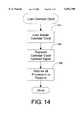
- FIG. 14is a flowchart illustrating operation of a Load Calendar Clock (LCCL) instruction, in accordance with the present invention.
- the Load Calendar Clock (LCCL) instructionWhen executed, the Master Calendar Clock 97 is loaded with the instruction operand as the new Master Calendar Clock 97 value, step 332.
- the Transmit Calendar Clock Updated signal 276is asserted by the processor 92 executing the Load Calendar Clock instruction, and transmitted to each of the processors 92 in the data processing system 80, step 334, where it is received as the Receive Calendar Clock Updated signal 278 (see FIG. 15).
- step 334the processor executing the instruction waits for all other processors 97 in the data processing system 80 to acknowledge receipt of the Calendar Clock Updated interrupt signal 278, step 336. This later step 336, helps to guarantee that all processors 97 in the data processing system 80 have the same Calendar Clock value.
- FIG. 15is a flowchart illustrating operation of a processor 92 after receiving a Calendar Clock Updated interrupt signal 278, in accordance with the present invention.
- This Calendar Clock Updated interrupt signal 278is received by each processor 92 in the data processing system 80 in response to one processor 92 transmitting the signal on its Transmit Calendar Clock Updated signal line 276.
- the Cached Calendar Clock Valid flag 274is cleared for that processor 92, step 302.
- a testis then made whether testing is enabled, step 304. If testing is enabled, step 304, a test is made whether the processor 92 is waiting for synchronization, step 306, after having executed a WSYNC (or TSYNC in the preferred embodiment) instruction.
- WSYNCor TSYNC in the preferred embodiment
- step 304the processor is activated, step 308.
- the method in FIG. 15is shown as a flowchart. However, this is for illustrative purposes. In the preferred embodiment, the method is implemented as a combination of hardware and firmware.
- the Cached Calendar Clock Valid flag 274is automatically cleared whenever the Calendar Clock Updated interrupt signal 276 is received. Then, when waiting for Sync, step 306, the processor is activated, step 308, when it tests the Calendar Clock Valid flag 274 at the next clock cycle (see step 114 in FIG. 11).
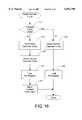
- FIG. 16is a flowchart illustrating operation of a Read Calendar Clock (RCCL) instruction, in accordance with the present invention.
- RCCLRead Calendar Clock
- a testis then made whether the Cached Calendar Clock Valid flag 274 is set, step 314. If the Cached Calendar Clock Valid flag 314 is set, step 264, the Cached Calendar Clock 272 is read, step 318, and loaded into an AQ register, step 326. Otherwise, if the Cached Calendar Clock Valid flag 274 is not set, step 314, the calendar clock value is read from the Master Calendar Clock 97, step 316, and written to the Cached Calendar Clock 272, step 320. The calendar clock value is loaded into an AQ register, step 324, and the Cached Calendar Clock 272 is marked valid by setting the Cached Calendar Clock Valid flag 274, step 322. In either case, the instruction returns the current calendar clock value in the AQ register.
Landscapes
- Engineering & Computer Science (AREA)
- General Engineering & Computer Science (AREA)
- Theoretical Computer Science (AREA)
- Computer Hardware Design (AREA)
- Quality & Reliability (AREA)
- Physics & Mathematics (AREA)
- General Physics & Mathematics (AREA)
- Debugging And Monitoring (AREA)
- Memory System Of A Hierarchy Structure (AREA)
Abstract
Description
The present invention generally relates to multiprocessing computer systems, and more specifically to exhaustively testing interactions among multiple tightly coupled processors.
The literature is full of examples where processor and system faults or "bugs" were discovered long after the processors or systems were shipped to customers. It is well known that the later in the product cycle that a "bug" is discovered, the greater the expense to fix it. Compounding this problem is the trend towards shorter and shorter product cycles. Finally, the problem is compounded again by the trend towards tightly-coupled multiple processor computer systems. This compounding is because in such a tightly-coupled multiple processor system, it is not only necessary to discover and fix the faults in a single processor, it is also now necessary to discover and fix faults resulting from the interaction among the multiple processors.
One problem with implementing tightly coupled multiple processor computer systems are in exhaustively testing the interactions between and among multiple processors. For example, in a tightly coupled system, two or more processors may each have an individual high-speed level one(L1) cache, and share a slightly lower speed level two (L2) cache. This L2 cache is traditionally backed by an even larger main memory. The L1 and L2 caches are typically comprised of high speed Static Random Access Memory (SRAM), and the main memory is typically comprised of slower speed Dynamic Random Access Memory (DRAM).
It is necessary that the cache and memory be maintained for coherency. Thus, for example, at most only a single L1 cache of a single processor is allowed to contain a cache line corresponding to a given block of main memory. When multiple processors are reading and writing the same block in memory, a conflict arises among their cache controllers. This is conflict is typically resolved in a tightly coupled multiprocessor system with an interprocessor cache protocol communicated over an interprocessor bus. For example, a first processor may be required to reserve a cache copy of the contested block of memory. This is communicated to the other processors. However, if another (second) processor already has reserved the contested block of memory, the first processor must wait until the block is unlocked, and potentially written at least back to the L2 cache.
Debugging a cache protocol can be quite difficult. This stems from a number of interrelated factors. First, the multiple processors are each typically operating asynchronously from each other at extremely high frequencies or rates of speed. Secondly, the L1 caches, and their cache controllers are typically operating at essentially the same speed as the processors. Third, instruction cache misses for test instruction sequences can delay instruction execution by relatively long, somewhat variable, periods of time. There are a number of reasons for this later problem. One reason is it may be possible to retrieve a cache line of instructions from L1 cache or from L2 cache, or it may be necessary to load the cache line from slower main memory. The DRAM comprising the main memory typically operates quite a bit slower than the processor (and L1 cache). Another problem is that the time it takes to fetch a block of instructions from the main memory may vary slightly. There are a number of causes of this. First, accessing different addresses in the DRAM may take slightly different times. This is partly because of differing signal path lengths. Secondly, different memory banks may have slightly different timing. This is true, even when the specifications for the memories are equivalent. This is particularly true, when the memories are self-timed. This problem may be accentuated when multiple processors or multiple memories share a common memory access bus, where the actions of one processor or memory may lock out, and stall, another processor or memory. Note also that asynchronous Input/Output (I/O) operations to memory can have seemingly random effects on timing.
Despite the problems described above, in order to effectively test the interaction among multiple processors, it is preferable to exhaustively test each set of possible combinations. In the case of a cache protocol as described above, it is preferable to exhaustively test each possible set of cache states and cache state transitions. It is also preferable to be able to detect and record state changes at a lower level than that available to a user program.
In order to test the interactions among multiple processors, the various combinations of states and state transitions should be tested. This can be done by executing programs simultaneously on each of the processors. Varying the time when each processor executes its program can test the different combinations. Unfortunately, there is no mechanism in the prior art to accurately exhaustively vary the times when each processor executes its program. This is partly due to the processor instruction timing variations described above. The result is that timing windows often arise where particular state and state transition interactions are not tested.
One solution to this problem is to increase the number of tests run and the number of test cycles run. This increases the chances of uncovering faults, but does not guarantee exhaustive fault coverage.
Another set of prior art solutions is to try to control more closely the timing between executions of programs by the multiple processors. One such solution is to use NOP instructions to delay execution. The larger the number of NOP instructions executed, the longer the delay. However, NOP instructions are typically executed out of blocks of instructions held in cache lines. Each time execution crosses a cache line boundary, there is a potential for a cache miss, resulting in retrieving the cache line from slower memory. There is also a potential at that point that execution may be delayed for one or more cycles due to memory bus contention. Each of these potential delays introduces a potential window that did not get tested utilizing this set of solutions. Note also that virtual memory program activity must also be accounted for.
Another problem that arises is that it is often hard to distinguish states and state transitions from a programmer's view of a processor. This is partly because there is much that is not visible at this level. States and state transitions must therefore be assumed from visible programmer model level changes in the processor. This problem of distinguishing state and state transitions is a particular problem when the states and state transitions are cache states and state transitions during interaction testing among multiple processors.
One prior art solution to determining machine states and state transitions is through the use of SCAN. Using SCAN, a known pattern of states can be loaded into a processor. The processor then executes one or two instructions. The states of the various memory elements in the processor are then unloaded from the processor and compared with their expected values. This type of functional testing is becoming common for high-end microprocessors. Unfortunately, it does not lend itself to exhaustively testing the interactions among multiple processors. One reason for this is that a processor under the control of SCAN typically only executes for one or two instruction cycles, before the SCAN latches are unloaded, and another set of values loaded. The result of this is that SCAN is extremely slow, especially in comparison to the speed of modern processors. This significantly reduces the amount of testing that can be realistically done with SCAN. Secondly, there is no readily apparent mechanism available to test multiple processors at the same time, and more importantly to vary the start times of each of the multiple processors being tested together.
In the past, it has been sometimes been possible to run enough signals out of a processor that the states and state transitions being tested can be monitored by test equipment. One problem with this method of testing is that it is a manual and error prone process. Just as important, this method is fast becoming less and less possible as more and more functionality is embedded on single chips. Pin-count has become a major concern, and it has become increasingly unlikely that precious external pins can be dedicated for the sort of interprocessor state testing described above.
Testability, and thus reliability through earlier fault detection would be significantly increased in tightly coupled multiprocessor systems if the interactions among multiple processors could be accurately exhaustively tested, with the guarantee that no timing windows were inadvertently left untested. This testability would be further enhanced by a mechanism for recording states and state transitions over a series of clock cycles for each of the processors being tested.
The features and advantages of the present invention will be more clearly understood from the following detailed description taken in conjunction with the accompanying FIGURES where like numerals refer to like and corresponding parts and in which:
FIG. 1 is a block diagram illustrating a General Purpose Computer, in accordance with the present invention;
FIG. 2 is a block diagram of a more detailed view of a multiprocessor data processing system, in accordance with the present invention;
FIG. 3 is a block diagram illustrating a processor (CPU) module as shown in FIG. 2;
FIG. 4 is a block diagram of a processor shown in FIG. 3;
FIG. 5 is a block diagram of an Arithmetic (AX) Unit in the processor shown in FIG. 4;
FIG. 6 is a block diagram of a piplelined processor as shown in FIG. 3;
FIG. 7 is a flowchart illustrating exhaustive testing of the interaction between multiple processors in a single system, in accordance with the present invention;
FIG. 8 is a flowchart illustrating operation of a master processor during one execution of the Perform Single Test step in FIG. 7;
FIG. 9 is a flowchart illustrating operation of a slave processor during execution of multiple test;
FIG. 10 is a flowchart illustrating operation of a Transmit Sync signal (TSYNC) instruction, in accordance with the present invention;
FIG. 11 is a flowchart illustrating operation of a Receive Sync signal (WSYNC) instruction, in accordance with the present invention;
FIG. 12 is a flowchart illustrating operation of a delay (DELAY) instruction, in accordance with the present invention;
FIG. 13 is a block diagram illustrating the trace cache shown in FIGS. 4 and 6;
FIG. 14 is a flowchart illustrating operation of a Load Calendar Clock (LCCL) instruction, in accordance with the present invention;
FIG. 15 is a flowchart illustrating operation of a processor after receiving a calendar clock interrupt, in accordance with the present invention; and
FIG. 16 is a flowchart illustrating operation of a Read Calendar Clock (RCCL) instruction, in accordance with the present invention.
In the following description, numerous specific details are set forth such as specific word or byte lengths, etc. to provide a thorough understanding of the present invention. However, it will be obvious to those skilled in the art that the present invention may be practiced without such specific details. In other instances, circuits have been shown in block diagram form in order not to obscure the present invention in unnecessary detail. For the most part, details concerning timing considerations and the like have been omitted inasmuch as such details are not necessary to obtain a complete understanding of the present invention and are within the skills of persons of ordinary skill in the relevant art.
The term "bus" will be used to refer to a plurality of signals or conductors which may be used to transfer one or more various types of information, such as data, addresses, control, or status. The terms "assert" and "negate" will be used when referring to the rendering of a signal, status bit, or similar apparatus into its logically true or logically false state, respectively. If the logically true state is a logic level one, the logically false state will be a logic level zero. And if the logically true state is a logic level zero, the logically false state will be a logic level one.
FIG. 1 is a block diagram illustrating aGeneral Purpose Computer 20. TheGeneral Purpose Computer 20 has aComputer Processor 22, andMemory 24, connected by aBus 26.Memory 24 is a relatively high speed machine readable medium and includes Volatile Memories such as DRAM, and SRAM, and Non-Volatile Memories such as, ROM, FLASH, EPROM, EEPROM, and bubble memory. Also connected to the Bus areSecondary Storage 30,External Storage 32, output devices such as amonitor 34, input devices such as a keyboard (with mouse) 36, andprinters 38.Secondary Storage 30 includes machine-readable media such as hard disk drives, magnetic drum, and bubble memory.External Storage 32 includes machine-readable media such as floppy disks, removable hard drives, magnetic tap CD-ROM, and even other computers, possibly connected via acommunications line 28. The distinction drawn here betweenSecondary Storage 30 andExternal Storage 32 is primarily for convenience in describing the invention. As such, it should be appreciated that there is substantial functional overlap between these elements. Computer software such test programs, operating systems, and user programs can be stored in a computer Software Storage Medium, such asmemory 24,Secondary Storage 30, andExternal Storage 32. Executable versions ofcomputer software 33, can be read from a Non-Volatile Storage Medium such asExternal Storage 32,Secondary Storage 30, and Non-Volatile Memory and loaded for execution directly into Volatile Memory, executed directly out of Non-Volatile Memory, or stored on theSecondary Storage 30 prior to loading into Volatile Memory for execution.
FIG. 2 is a block diagram of a more detailed view of a multiprocessor data processing system, in accordance with the present invention. The multiprocessor data processing system 80 comprises a plurality of modules coupled together via anintramodule bus 82 controlled by astorage control unit 86. In the preferred embodiment, eachsuch module intramodule bus 82. In the representative data processing system 80 shown in FIG. 2, sixteen modules are shown. The system includes four (4) processor ("CPU")modules 90, four (4) Input/Output ("IOU") modules 88, and eight (8) memory ("MMU")modules 84. Each of the four Input/Output ("IOU") modules 88 is shown coupled tosecondary storage 30. This is representative of the function of such IOU modules 88. Each IOU module 88 will typically contain a plurality of IOU processors (not shown). Each of the eightmemory modules 84 containsmemory 24 and a memory controller (not shown). Thismemory 24 is typically Dynamic Random Access Memory (DRAM). Large quantities ofsuch memory 24 are typically supported. Also shown in FIG. 2 is aClock Management Unit 98, which supplies astandard clock signal 99 to the remainder of the system 80. As clock signals are ubiquitous in digital computer architectures, theclock signal 99 will not be shown further herein except where relevant. Note also that in the preferred embodiment, multipleClock Management Units 98 are utilized to provide aredundant clock signal 99.
FIG. 3 is a block diagram illustrating a processor (CPU)module 90 as shown in FIG. 2. TheCPU module 90 contains a plurality of processors (CPU) 92 and acache memory system 94. In the preferred embodiment, each processor (CPU)module 90 contains up to four (4) processors (CPU) 92. Theprocessors 92 and thecache memory system 94 are coupled together and communicate over anintraprocessor bus 96.
Thecache memory system 94 is shared among theprocessors 92 on theCPU module 90 and maintains cache copies of data loaded into thoseprocessors 92. Thecache memory system 94 is considered here a Level 2 cache and is coupled to and communicates with the storage control system (SCU) 88 over theintramodule bus 82 in order to maintain cache coherency betweenLevel 1cache memories 94 on each of theprocessor modules 90, as well as betweencache memories processors 92, and on the IOU modules 88. The SCU 88 also maintains coherency between thevarious cache memories MMU modules 84. In the preferred embodiment, a single block of memory will be owned by a single cache or memory at potentially each level in the memory hierarchy. Thus, a given memory block may be owned by oneLevel 1cache cache 94, and by oneMMU 84.
FIG. 4 is a block diagram of aprocessor 92 shown in FIG. 3. Theprocessor 92 communicates with thebus 96 utilizing abus interface 78. The bus interface is bidirectionally coupled to a unifiedlocal cache 256. Cache memories, such as this unifiedlocal cache 256, are typically constructed as high speed Static Random Access Memories (SRAM). In the preferred embodiment, thelocal cache 256 is incorporated on the same integrated circuit as the remainder of theprocessor 92. Thelocal cache 256 is the primary block that interfaces with thebus interface 78. Data and instructions are loaded via thebus 96 into thelocal cache 256, and data is written back from thelocal cache 256 via thebus 96.
Thelocal cache 256 is bidirectionally coupled to an Arithmetric (AX)Unit module 260. TheAX unit 260 provides the bulk of the functionality of theprocessor 92, including instruction decode. TheAX unit 260 is bidirectionally coupled to and controls execution of a floating point (FP)unit 268 and a decimal/numeric (DN)unit 262. In the preferred embodiment, the floating-point unit 268 performs both floating-point operations, and fixed-point multiplications and divisions. It is bidirectionally coupled to thelocal cache 256. The decimal/numeric (DN)unit 262 performs decimal and string operations. It is bidirectionally coupled to thelocal cache 256, allowing it to operate relatively autonomously from theAX unit 260. Rather, once decimal or string operations are initiated in theDN unit 262, theDN unit 262 is driven by operand availability in thelocal cache 256.
Bidirectionally coupled to both theAX unit 260 and thelocal cache 256 is aTrace RAM cache 58 which is capable of caching the status of instruction or cache operation. TheTrace RAM 58 is controlled by commands decoded and executed by theAX unit 260. TheTrace RAM 58 also selectively tracesAX unit 260 statuses. TheTrace RAM 58 receives and selectively traces cache state signals from thelocal cache 256. When a trace is complete, theTrace RAM 58 can be written out to thelocal cache 256, and ultimately to slower memories.
Bidirectionally coupled to both thebus interface 78 and theAX unit 260 is a localcalendar clock unit 270. The localcalendar clock unit 270 contains aCached Calendar Clock 272 and a Calendar ClockValid flag 274. Thecalendar clock unit 270 also contains arithmetic and logical circuitry allowing theCached Calendar Clock 272 to be updated utilizing the same clock signals 99 as themaster calendar clock 97. In the preferred embodiment, theMaster Calendar Clock 97 and theCached Calendar Clock 272 are incremented every microsecond utilizing the common clock signal. Thus, theCached Calendar Clock 272 will maintain the same calendar clock time as theMaster Calendar Clock 97, after being loaded with the same calendar clock value.
TheCalendar clock unit 270 provides a Transmit Calendar Clock Updated signal 276 to thebus interface 78 whenever theMaster Calendar Clock 97 is loaded or updated under program control with a new calendar clock value. This signal is transmitted via thebus 96 to all of theother processors 92 in the data processing system 80, which each in turn receive the signal from thebus 96 as a Receive CalendarClock Updated signal 278. The Receive Calendar Clock Updated signal 278 that is received by the localCalendar Clock Unit 270 results in the clearing of the Calendar ClockValid flag 274, forcing thatprocessor 92 to request the calendar clock value from theMaster Calendar Clock 97 the next time the Calendar Clock is read by thatprocessor 92 under program control. It should be noted that the localcalendar clock unit 270 is shown as a separate functional unit in FIG. 4. This is done for illustrative purposes. In the preferred embodiment, the localcalendar clock unit 270 forms a portion of theAX module 260, with parts of its functionality described herein being incorporated in various AX submodules (see FIG. 5).
FIG. 5 is a block diagram of an Arithmetric (AX)Unit 260 in theprocessor 92 shown in FIG. 4. TheAX unit 260 comprises a Microprogram Control Section (MPS)unit 280, an Auxiliary Operations Section (XOPS) 282, a Basic Operations Section (BOPS) 284, a Safe Store Buffer (SSB) 286, an Address Preparation (AP)section 288, and a NSAVirtual Segment Section 290. TheMPS 280 is bidirectionally coupled to and receives instructions from thelocal cache 256. TheMPS 280 performs instruction decode and provides microprogram control of theprocessor 92. The microprogram control utilizes amicroengine executing microcode 281 stored in both dynamic and static memories in response to the execution of program instructions. TheMPS 280 is bidirectionally coupled to and controls operation of the Auxiliary Operations Section (XOPS) 282, the Basic Operations Section (BOPS) 284, the floating point (FP)unit 268, the decimal/numeric (DN)unit 262, the Address Preparation (AP)section 288, and the NSAVirtual Segment Section 290. The Basic Operations Section (BOPS) 284 is used to perform fixed point arithmetic, logical, and shift operations. The Auxiliary Operations Section (XOPS) 282 performs most other operations. The Address Preparation (AP)section 288 forms effective memory addresses utilizing virtual memory address translations. The NSAVirtual Segment Section 290 is bidirectionally coupled to and operates in conjunction with theAP section 288, in order to detect addressing violations.
The Safe Store Buffer (SSB) 286 stores the current status of theprocessor 92 environment, including user and segment registers, for the purpose of changing processor state. TheSSB 286 is coupled to and receives signals from theBOPS 284, theAP section 288, theMPS 280, and theNSA 290. TheSSB 286 is bidirectionally coupled to thelocal cache 256, allowingSSB 286 frames to be pushed out tocache 256 when entering a new processor environment, and pulled back fromcache 256 when returning to an old processor environment.
In the preferred embodiment, the Wait for Sync (WSYNC), Transmit Sync (TSYNC), Delay (DELAY), and trace (TRACE) instructions are decoded and executed under microprogram control by theMPS 280 unit in theAX unit 260. The Wait for Sync (WSYNC) and Transmit Sync (TSYNC) instructions utilize the transmit Calendar Clock Updated signal 276 and receive Calendar Clock Updated signal 278 otherwise utilized by the localcalendar clock unit 270. Operation of the TSYNC instruction is shown in more detail in FIG. 1O. Operation of the WSYNC instruction is shown in more detail in FIG. 11. Operation of the DELAY instruction is shown in more detail in FIG. 12.
FIG. 6 is a block diagram of an alternate embodiment of theprocessor 92 as shown in FIG. 3. This alternate embodiment shows a pipelined processor 92' capable of simultaneously executing multiple instructions. The processor 92' is coupled to abus 96. Thebus 96 comprises adata bus 72, aaddress bus 74, and acontrol bus 76. Such abus 96 is typically implemented as a hierarchy of busses. In this instance, thedata bus 72,address bus 74, and controlbus 76 together comprise a processor bus. Thedata bus 72, theaddress bus 74 and thecontrol bus 76 are coupled to abus interface 56. Thebus interface 56 is coupled to adata cache 54, aninstruction cache 56, and atrace cache 58. Thedata cache 54, theinstruction cache 56, and thetrace cache 58 are typically constructed of high speed SRAM. The coupling between thedata cache 54 and thebus interface 58 is typically bi-directional, whereas the coupling between thebus interface 58 and theinstruction cache 56 is typically single directional, since there is typically no need to write instructions back to slower memory (not shown). As noted in FIG. 3, theInstruction Cache 56, andData Cache 54 areLevel 1 caches in the memory hierarchy in the preferred embodiment.
Theinstruction cache 56 is coupled to and provides instructions to aninstruction execution unit 52. Theinstruction execution unit 52 shown preferably provides for pipelined execution of multiple instructions, synchronization of out-of-order execution, and branch prediction. However, these optimizations are not necessary to practice this invention. Theinstruction execution unit 52 provides control signals to control execution of an Integer Processing Unit (IPU) 60, a load/store unit 64, a floating point unit (FPU) 68, and asystems unit 70 . The load/store unit 64 is bidirectionally coupled to the general purpose registers (GPR) 62, the floating point registers (FPR) 66 and thedata cache 54. The load/store unit 64 loads values into the general purpose registers 62 and floating point registers 66 from thedata cache 54, and writes them back to thedata cache 54, as required.
The general-purpose registers 62 are bidirectionally coupled to and utilized by the integer-processingunit 60 to perform integer arithmetic, as well as other logical functions. Such aninteger processing unit 60 typically comprises logical/shift modules, integer addition/subtraction modules, and integer multiplication/division modules. Theinteger processing unit 60 will typically set condition code flags in one or more condition code registers in the general purpose registers 62 based on the results of the arithmetic and logical functions performed. These condition code flags are provided to theinstruction execution unit 52 for use in conditional branching. In this preferred embodiment, theinteger processing unit 60 provides for arithmetic and logical functions. The general-purpose registers 62 are also bidirectionally coupled to and utilized by thesystems unit 70 to perform systems functions. Thesystems unit 70 executes various system-level instructions, including instructions to change environment or state. In order to maintain system state, most of the instructions executed by thesystems unit 70 are completion-serialized. The floating point registers 66 are bidirectionally coupled to and utilized by the floating-point unit 68 to perform floating-point arithmetic functions.
A singleinteger processing unit 60 and floatingpoint unit 68 are shown in this FIG. 6. This is done here for clarity. It should be understood that the preferred embodiment of the present invention will include multiple suchfunctional units integer processing units 60 providing multiple concurrent integer computations, and multiple floatingpoint units 68 providing multiple concurrent floating point computations.
TheInstruction Unit 42 comprises an instruction fetchunit 44, aninstruction queue 46, aninstruction dispatch unit 48, abranch processing unit 50, and aninstruction completion unit 52. The instruction fetchunit 44 is coupled to and receives instructions from theinstruction cache 56. The instructions fetchunit 44 provides instruction fetch control signals to theinstruction cache 56. Fetched instructions are transmitted upon demand from the instruction fetchunit 44 to theinstruction queue 46 for queuing. The queued instructions are subsequently removed from theinstruction queue 46 and dispatched to thefunction units instruction dispatch unit 48. Multiple instructions will typically be in simultaneous execution at the same time in a pipelined system. Upon completion of each of the dispatched instructions, the completingfunction units instruction completion unit 52. Theinstruction completion unit 52 is coupled to and thereupon notifies the instruction fetchunit 44 of the instruction completions, allowing for further instruction fetches.
The branch-processingunit 50 is bidirectionally coupled to and receives branch instructions from the instruction fetchunit 44. The branch-processingunit 50 is coupled to and receives condition code information from the general-purpose registers 62. This condition code information is utilized by the branch-processingunit 50 to perform conditional branching. Modernbranch processing units 50 in piplelined systems typically perform branch prediction and lookahead. When using branch prediction, a branch-processingunit 50 will typically provide control signals to the instruction fetchunit 44 to continue to fetch instructions until an unresolved conditional branch is resolved. The contents of general-purpose registers 62 are also received by the branch-processingunit 50 for use in indexed and indirect branching.
Thesystems unit 70 executes a number of instructions that are significant to the present invention. It executes a transmit sync (TSYNC) instruction for transmitting a synchronize signal to theother processors 92 in the system 80. It executes a wait-for-synchronize (WSYNC) instruction for pausing aprocessor 92 until it receives the synchronize signal from anotherprocessor 92. It executes a delay (DELAY) instruction for pausing or delaying aprocessor 92, 92' for a specified number of instruction. Finally, thesystems unit 70 executes a trace (TRACE) instruction for controlling operation of thetrace cache 58.
Thetrace cache 58 receives trace signals 59 from different modules in theprocessor 92. Each of these modules provides information that can be potentially traced. In the embodiment shown in FIG. 6, thetrace cache 92 is coupled to and receives trace signals 59 from thedata cache 54, theinstruction cache 56, thebranch processing unit 50, and thedispatch unit 48. The trace signals 59 from thedata cache 54 and theinstruction cache 56 include internal cache state signals. This provides a mechanism for recording in real time state changes for thecache memories trace output signal 61 to thebus interface 78. This allows the contents of a trace buffer to be selectively written to and saved inslower speed memory 24 in anMMU 84. This is typically done at the end of a trace so that the data traced can be processed.
FIG. 7 is a flowchart illustrating exhaustive testing of the interaction betweenmultiple processors 92 in a single system 80. Table T-1 illustrates the instructions executed by threedifferent processors 92.
TABLE T-1 ______________________________________Processor # 1 Processor #2 Processor #3 T Instructions Instructions Instructions ______________________________________ 1 TSYNC 2 WSYNC WSYNC WSYNC 3 DELAY T1 DELAY T2 DELAY T3 4-n <test# 1 code> <test#2 code> <test#3 code> n+1 TRACE Done TRACE Done TRACE Done ______________________________________
In order to exhaustively test the interaction amongmultiple processors 92, the above sequence of code can be executed on each of theprocessors 92. One of the processors (here processor #1) executes a TSYNC instruction, which transmits a synchronize signal to all of theother processors 92 in the system 80. All of the processors being tested, including the processor executing the TSYNC instruction, then wait for receipt of the synchronize signal through execution of an WSYNC instruction. At this point, all of these processors are synchronized each being ready to execute their next instruction at the nextcommon clock 99 signal edge. Each processor then starts the relevant traces by executing a TRACE instruction and delays for a specified number ofclock 99 cycles by executing a DELAY instruction. Note that since each of the tested processors executes an WSYNC, TRACE, and DELAY instruction for each test run, any two or more of these instructions may be combined into a single instruction. For example, the WSYNC instruction may be implemented as having a clock count delay operand, resulting in a specified number of clock cycles of delay after receipt of the synchronize signal. In the preferred embodiment, the WSYNC instruction both waits for the synchronize signal, and then starts tracing. Two-hundred fifty-six (256) trace entries are then traced, and the trace then automatically terminates. Note also that the traces may be started earlier, especially if trace entries are allowed to wrap around thetrace RAM 210. The exhaustive testing is accomplished by varying T1, T2, and T3 for the three processors through their respective ranges. This is preferably done through use of a three level loop structure in a test driver program.
After eachprocessor 92 is synchronized with theother processors 92, has delayed its proscribed number ofclock 99 cycles, and has the appropriate traces turned on, each of theprocessors 92 will execute a series of test instructions. For example, when testingcache memories processors 92 will execute instructions affecting the state of thecache 256. The processors implementing such cache memory testing may cause theirrespective caches 256, to compete for ownership of a given range of addresses of memory. The cache states for therelevant caches 256 are received on the traceinput signal lines 59 by theTrace Cache 58 and written into thetrace RAM 210 everyclock 99 cycle during the test. At the end of the test, the trace is turned off by either writing a predetermined number of trace entries to theTrace RAM 210, filling up theTrace RAM 210 with trace entries, or execution of a second TRACE instruction. In any case, the contents of theTrace RAM 210 for each of theprocessors 92 is then written to slower (usually DRAM)memory 24 contained in theMMU modules 84 for subsequent evaluation. The trace entries saved in theMMU module 84 memories may also be written to secondary storage 80 for later evaluation, or for archival purposes. The testing is then run again, with a different combination of T1, T2, and T3 values for the three processors. This is repeated until all interesting combinations of these three timing delay values have been tested.
FIG. 7 is a flowchart illustrating a method of exhaustive testing of the interaction betweenmultiple processors 92 in a single system 80. The method utilizes the code shown and discussed in Table T-1. In this test example, the interaction of threeprocessors 92, P1, P2, and P3 is tested. Each of the threeprocessors 92 utilizes a corresponding delay value T1, T2, and T3, for delaying the execution of its test code. The method starts by entering an outer loop. First, the next test cases are loaded from a test table,step 148. Next, a T1 delay value loop index is initialized,step 150. A second loop is then entered. The T1 delay value is then incremented,step 152, and a test is made whether the T1 delay value is within range,step 154. If the T1 delay value is within a range specified in the test table entry,step 154, a third loop is entered. In the third loop, the T2 delay value is first initialized,step 160. The T2 delay value is then incremented,step 162, and a test is made whether the T2 delay value is within range,step 164. If the T2 delay value is within a range specified in the test table entry,step 164, a fourth, inner, loop is entered. In the fourth loop, the T3 delay value is first initialized,step 170. The T3 delay value is then incremented,step 172, and a test is made whether the T3 delay value is within range,step 174. If the T3 delay value is within a range specified in the test table entry,step 174, a single test is performed, as shown in Table T-1,step 176, utilizing the T1, T2, and T3 delay values computed in the three embedded loops. At the end of the single test, the single test run results are evaluated, as appropriate,step 178. The inner loop then repeats, starting with incrementing the T3 delay value,step 172. When the T3 delay value exceeds its specified range,step 174, the fourth loop is complete, and the third loop is repeated, starting with incrementing the T2 delay value,step 162. When the T2 delay value exceeds its specified range,step 164, the third loop is complete, and the second loop is repeated, starting with incrementing the T1 delay value,step 152. When the T1 delay value exceeds its specified range,step 154, the second loop is complete. At this point in the method, the interaction over the specified ranges of T1, T2, and T3 for a particular test case in the test table have been exhaustively tested. The test results from the multiple tests are then evaluated,step 178. A test is then made whether there are any more test cases to test in the test table,step 158. If there are more test cases to test, the outer loop is repeated, starting with loading the next test entry from the test table,step 148. Otherwise, when there are no more test cases to test in the test table,step 158, the method is complete. It should be noted that the three embedded loops can be viewed as three embedded "DO" or "FOR" loops, incrementing T1, T2, and T3 through their prescribed ranges. The use of these three embedded loops for testing three processors is for illustrative purposes only. More or fewer embedded loops, for testing correspondingly more or fewer processors, are within the scope of the present invention.
FIG. 8 is a flowchart illustrating operation of a master processor during one execution of the PerformSingle Test step 176 in FIG. 7. The Perform Single Test,step 176, starts by setting up the delay values and test instructions for each processor being utilized,step 180. In the example in FIG. 7, the delay values for the three processors are the loop indices: T1, T2, and T3. The test instructions for a given test typically remain constant throughout a given set of tests. A slave number (Slave#) loop index is initialized,step 181, and a loop is then entered. At the top of the loop, a Flag1 corresponding to the slave being setup (Flag1 [Slave#]) is set so that that slave will know to pick up its delay and test instructions,step 182. The master processor then spins on a second flag (Flag2 [Slave#]) until that second flag is set,step 184. The second flag (Flag2 [Slave#]) is set by the slave processor when it has completed setting up for testing, and is ready to execute a WSYNC instruction (seestep 144 in FIG. 9). The first flag (Flag1 [Slave#]) is then cleared,step 186, for preparation for the next execution of the Perform Single Test,step 176. The Slave# loop index is then incremented,step 188, and a test is made whether any more slaves need to be setup. If more slaves remain to setup, the loop is repeated, setting up the next slave, starting withstep 182.
When no more slaves remain to be setup,step 189, the master processor is setup,step 190. This setup is similar to the setup performed for each of the slave processors. In particular, the test delay value is typically loaded into a register. After setting up for testing, a TSYNC instruction is executed,step 191, resulting in a synchronize signal being transmitted to all of theprocessors 92 in the data processing system 80. This is followed by execution of a WSYNC instruction,step 192, which awaits receipt of the synchronize signal just transmitted. Upon receipt of the synchronize interrupt, a TRACE is initiated, tracing 256 entries to the Trace RAM Execution of the WSYNC will also preferably turn on tracing to the TRACE RAM,step 193. In this FIG., the TSYNC, 191, WSYNC, 192, and TRACE, 193, are shown separately. This is for illustrative purposes. In the preferred embodiment, these three functions are combined into the TSYNC instruction. After the synchronize signal has been received, and tracing started to thetrace RAM 210,step 193, a DELAY instruction is executed in order to delay for a predetermined number of clock cycles,step 194. This is the delay value for the master processor resulting from the T1, T2, and T3 loops in FIG. 7. In the preferred embodiment, the delay value has been loaded into a register prior to executing the TSYNC,step 191, WSYNC,step 192, and TRACE,step 193, instructions. After the DELAY instruction,step 194, has completed waiting the prescribed number of clock cycles, the prespecified instruction test sequence is executed,step 195. Then, a second DELAY instruction is executed,step 196, for a long enough delay that allprocessors 92 being tested have completed their individual test. TheTrace RAM 210 is then dumped to the system RAM,step 198, for later evaluation. Note that instead of the second DELAY instruction,step 196, other methods ofprocessor 92 resynchronization may also be utilized, such as a second usage of the TSYNC and WSYNC instructions.
FIG. 9 is a flowchart illustrating operation of a slave processor during execution of multiple tests. The slave computer executes a continuous loop until terminated. At the top of the loop, the second flag (Flag2 [Slave#]) for the slave processor is cleared,step 132. Then, theprocessor 92 spins until the first flag (Flag1 [Slave#]) is set, indicating that a new set of delay values and test instructions is ready for use by this slave. The test instructions are then moved to a target area,step 136. Theprivate cache 256 is preconditioned,step 138. This is especially important if the caching system is being tested. The test delay value is then loaded into a register,step 140. The first flag (Flag1 [Slave#]) is then cleared,step 142, and the second flag (Flag2 [Slave#]) is then set,step 144, indicating that the slave processor is ready for testing. Theprocessor 92 then awaits synchronization by executing a WSYNC instruction,step 192. After receiving the synchronization signal transmitted as a result of the TSYNC instruction executed by the master processor,step 191, a TRACE instruction is executed,step 193, starting tracing to theTrace RAM 210, and a DELAY instruction is executed,step 194, delaying the number of clock cycles specified by the master processor. The test instructions for the slave processor are then executed,step 195, and a long delay is then entered, again by executing the DELAY instruction,step 196. Upon completion of the second DELAY instruction,step 196, theTrace RAM 210 is dumped to the system RAM,step 198, and the loop repeats, starting with clearing the second flag (Flag2 [Slave#]). In this FIG., the WSYNC instruction,step 192, and the TRACE instruction,step 193, are shown as separate steps. This is illustrative. In the preferred embodiment, the functionality of both steps are combined into the WSYNC instruction.
FIG. 10 is a flowchart illustrating operation of a Transmit Sync signal (TSYNC) instruction. A special synchronize interrupt signal is transmitted to each of theprocessors 92 in the system 80. Note that the synchronize interrupt signal is also broadcast to theprocessor 20 executing the TSYNC instruction. In the flowchart, a signal is transmitted to allprocessors 92,step 102, in the data processing system 80. In the preferred embodiment, the synchronize interrupt signal is transmitted as the Transmit Calendar Clock Updated signal 276 from theprocessor 92 executing the TSYNC instruction, and received by all theprocessors 92 in the data processing system 80 as the Receive CalendarClock Updated signal 278. FIG. 15 illustrates operation in the preferred embodiment of each of the processors as it receives the Calendar Clock Updated interruptsignal 278. Finally, in the preferred embodiment, the TSYNC instruction continues execution afterstep 102 by dropping into the WSYNC instruction functionality shown in FIG. 11.
FIG. 11 is a flowchart illustrating operation of a Wait for Sync signal (WSYNC) instruction. As noted above, execution of the TSYNC instruction shown in FIG. 10 drops into this functionality. In the preferred embodiment, the WSYNC and TSYNC instructions contain a maximum cycle count operand. This maximum cycle count operand can optionally be implemented as a register operand, an immediate operand, a sum of multiple registers, a sum of a register and an immediate operand, or indeed as any other type of operand supported by the architecture of theprocessors 92 in the data processing system 80. When a zero maximum cycle count operand is encountered during execution, the WSYNC instruction only terminates when the synchronize interrupt is received. When a maximum cycle count operand greater than zero is encountered, a maximum cycle count is indicated. The instruction will thus terminate after that delay maximum cycle count of cycles have been encountered, or when the synchronize interrupt is received, which ever comes first. Thus, a zero maximum cycle count operand can be viewed as an infinite maximum wait. If the maximum cycle count operand was loaded from a register, that register will receive the remaining number cycle count at the end of instruction execution. Thus, if the instruction terminates with a zero remaining cycle count stored in that register, and started with a maximum cycle count greater than zero, the instruction terminated due to having decremented the counter, and not from having received the synchronize interrupt.
The WSYNC instruction effectively starts operation by entering into a loop. First, a check is made of theclock signal 99,step 112. If the relevant edge of theclock signal 99 has not been encountered,step 112, the loop is repeated, starting with the test whether theclock signal 99 edge has been received,step 112. Otherwise, a test is made whether the synchronize signal has been received,step 114. If the synchronize signal has not been received,step 114, a test is made whether the maximum cycle count operand was greater than zero,step 115. If the initial maximum cycle count operand was not greater than zero,step 115, the loop repeats, starting atstep 112. However, if the original maximum cycle count operand was greater than zero,step 115, a timeout count is indicated. A register is loaded with the maximum cycle count value, and decrementedstep 116, and tested against zero,step 117, at every clock. As long as the decremented remaining cycle count is greater than zero,step 117, the loop repeats, starting atstep 112. Otherwise, when the synchronize interrupt has been received,step 114, tracing is started, step 118, and the loop terminates. In the preferred embodiment, 256 events are recorded in the Trace RAM, before the tracing is automatically terminated. Otherwise, if the remaining cycle count decrements to zero,step 117, the Calendar Clock Valid Flag274 is cleared,step 119, and the loop terminates. Since the Calendar Clock Valid Flag274 is automatically cleared whenever the Calendar Clock Updated interruptsignal 278 is received (seestep 302 in FIG. 15,step 119 guarantees that the WSYNC instruction always exits with the Calendar Clock Valid Flag274 in a safe state that guarantees that the next Read Calendar Clock instruction will read theMaster Calendar Clock 97 instead of the cached calendar clock 272 (see FIG. 16). In the case of an initial maximum cycle count greater than zero, at the termination of the instruction execution, the remaining cycle count is made available in a register to provide an indication whether the WSYNC instruction terminated through a timeout, or through receipt of the synchronize interrupt.
It should also be noted that a test is made for receipt of the synchronize signal on theclock 99 edge. This is to guarantee that allprocessors 92 receive and respond to the synchronize signal at exactly the same time. Secondly, note that in the flowchart a tight loop is shown where the executing processor spins, waiting for clock edges,step 112. This is for illustrative purposes. In the preferred embodiment, the WSYNC instruction is implemented utilizing amicrocode engine 280 that executes a series of instructions implementing the remainder of the flowchart at each system clock cycle until the instruction terminates. Finally, as noted above in FIG. 10, in the preferred embodiment, the synchronize signal is implemented as the hardware Receive Calendar Clock Updated interruptsignal 278.
FIG. 12 is a flowchart illustrating operation of a delay (DELAY) instruction. The DELAY instruction has one or more operands to specify the number of instruction cycles to delay. This set of operands specifying the number of cycles to delay may be coded as an immediate operand, a register operand, the sum of a pair of registers, the sum of a register and an immediate operand, or indeed, any form of operand supported by the architecture. In an alternative embodiment, the number of cycles to delay can be specified in a fixed repeat count register. The DELAY instruction starts by loading the number of cycles to delay into a counter containing a remaining cycle delay count,step 122. A loop is then entered, and the remaining cycle delay count is decremented,step 126. A test is then made, comparing the remaining cycle delay count to zero. If the remaining cycle delay count is greater than or equal to zero (i.e. has not gone negative),step 128, the loop is repeated, starting with a test of the relevant edge of theclock signal 99. The loop spins, waiting for therelevant clock 99 edge. When the clock edge is detected,step 124, the remaining cycle delay count is again decremented,step 126, and again tested,step 128. The loop exits when the decrementing,step 126, causes the remaining cycle delay count to go negative,step 128. The result is that the instruction delays for exactly "N"clock 99 cycles, with "N" being the number of cycles to delay specified on the DELAY instruction. This provides a significant advantage when exhaustively testing interactions betweenmultiple processors 92 since testing ranges can be known to have been exhaustively tested.
FIG. 13 is a block diagram illustrating thetrace cache 58 shown in FIGS. 4 and 6. Thesystems unit 70 provides trace control signals 57 to a tracebuffer control module 202 in response to execution of a Trace instruction. The tracebuffer control module 202 provides control signals to anaddress counter module 204. Theaddress counter module 204 is typically reset by the tracebuffer control module 202 when a trace is started. Theaddress counter module 204 is a counter that increments at eachclock 99.Address counter module 204 selectively either wraps around, or terminates a trace, when it hits its limit. If theaddress counter module 204 terminates a trace, the completion is transmitted to thecompletion unit 52. In any case, theaddress counter module 204 provides anaddress signal 212 to a memoryaddress control module 206. Theaddress signal 212 provided is the address of the next trace entry in atrace RAM array 210 to receive data. The memoryaddress control module 206 stores a single trace entry in theTrace RAM 210 at the address specified by theaddress signal 212 at assertion of each clock b signal.
Trace input signals 59 are coupled to and received by a multiplexor (MUX) 208. The tracebuffer control module 202 is coupled to and provides traceselect signals 216 to theMUX 208 to select trace input signals 59 for tracing. The selection by the tracebuffer control module 202 is in response to execution of a TRACE instruction by the systems unit. TheMUX 208 provides a Selected Trace Data signal 218 by selecting Trace input signals 59 in response to trace select signals 216. The values of the Selected Trace Data signals 218 are written in theTrace Ram 210 at the location specified by theaddress counter 204 at the assertion of eachclock 99. In one embodiment, a high-order bit from theaddress counter module 204 is written with each trace entry in thetrace RAM 210. This provides a mechanism for continuously wrapping thetrace RAM 210 with trace entries. Then, when the trace data is downloaded to slower memory and evaluated, the trace entries can be properly unrolled based on thiswrap bit 214, since thewrap bit 214 toggles for each cycle through thetrace RAM 210.
Thetrace cache 58 operates by storing one entry into thetrace RAM 210 for each assertion of theclock signal 99. The trace RAM is preferably high-speed memory, such as high speed Static Random Access Memory (SRAM), with a write time no longer than the width of theclock signal 99. The entire trace entry is typically a power of two (2x) in size, such as 16, 32, 64, or 128 bits in size. The trace RAM will typically contain a power of two (2y) number of trace entries. This allows for easy wrapping of theaddress counter 204 when computing memory write addresses 212. The trace RAM in the preferred embodiment contains 256 (28) trace entries.
One problem encountered when implementingmultiple processors 92, 92' onmultiple processor modules 84 is that access time to certain resources shared among theprocessors 92, 92' can become both lengthy and variable. Part of both the length and variability of time can be attributed to contention over a sharedbus 82. Some of the resources that are commonly shared are system clocks. In the preferred embodiment, as shown in FIG. 2, a plurality of clock signals 99 are generated for all of theprocessors 92, 92' in the system 80 with aclock generator 98.
One clock that is maintained by the system control unit (SCU) 86, but is only provided theprocessors 92, 92' upon request, is a calendar clock. In the preferred embodiment, aMaster Calendar Clock 97 is maintained in the system control unit (SCU) 86. Two instructions are provided to access the calendar clock. A "Read Calendar Clock" (RCCL) instruction returns the current value of the calendar clock. A "Load Calendar Clock" (LCCL) instruction operates to load the common calendar clock with a new value. In this embodiment, the calendar clock comprises a seventy-two (72) bit counter that is incremented every microsecond. The clock signals driving that incrementation of the calendar clock every microsecond are typically either derived from a system clock, or provided by a separate oscillator.
It is important that all of theprocessors 92 in the data processing system 80 have the same calendar clock value. Among other reasons for this, this is important in enabling programs to be executed ondifferent processors 92 at different times during their execution. As noted above though, in the currently disclosed data processing system 80, the time it takes to read theMaster Calendar Clock 97 is lengthy and highly variable. In the preferred embodiment, this problem is solved by caching a copy of the calendar clock in eachprocessor 92. TheCached Calendar Clock 272 is then incremented by eachprocessor 92 utilizing the same clock signals 99 as used by theMaster Calendar Clock 97. In the preferred embodiment, this is done every microsecond. Whenever aprocessor 92 updates theMaster Calendar Clock 97, a Transmit Calendar Clock Updated signal 276 is transmitted from the cachedcalendar clock unit 270 of the updatingprocessor 92. This signal is received as a Receive CalendarClock Updated signal 278, via thebus 96, by all of theprocessor 92. This results in each of thoseprocessors 92 clearing its Cached Calendar ClockValid flag 274. The next time that a program executing on anyprocessor 92 reads the calendar clock, the cleared Cached Calendar ClockValid flag 274 forces thatprocessor 92 to request a current copy of theMaster Calendar Clock 97. The result of this caching of the calendar clock in eachprocessor 92 is that typical access times to the calendar clock are significantly reduced. This is because aprocessor 92 can utilize its ownCached Calendar Clock 272 for most reads of the calendar clock.
In the preferred embodiment of the present invention, the TSYNC and WSYNC instructions utilize the Transmit Calendar Clock Updated signal 276 and the Receive Transmit CalendarClock Updated signal 278. If theprocessor 92 is in test mode, where the TSYNC and WSYNC instructions are operable, the TSYNC instruction is implemented by transmitting the Transmit Calendar Clock Updated signal 276 to each of theprocessors 92 in the data processing system 80. This signal is received by eachprocessor 92 in the data processing system 80 as the Receive Transmit CalendarClock Updated signal 278. When thissignal 278 is utilized by anyprocessors 92 waiting to terminate waiting for synchronization after executing the WSYNC instruction.
FIG. 14 is a flowchart illustrating operation of a Load Calendar Clock (LCCL) instruction, in accordance with the present invention. When the Load Calendar Clock (LCCL) instruction is executed, theMaster Calendar Clock 97 is loaded with the instruction operand as the newMaster Calendar Clock 97 value,step 332. Simultaneously, the Transmit Calendar Clock Updated signal 276 is asserted by theprocessor 92 executing the Load Calendar Clock instruction, and transmitted to each of theprocessors 92 in the data processing system 80,step 334, where it is received as the Receive Calendar Clock Updated signal 278 (see FIG. 15). After theMaster Calendar Clock 97 has been loaded,step 332, and the Calendar Clock Updated signal 276 has been transmitted,step 334, the processor executing the instruction waits for allother processors 97 in the data processing system 80 to acknowledge receipt of the Calendar Clock Updated interruptsignal 278,step 336. Thislater step 336, helps to guarantee that allprocessors 97 in the data processing system 80 have the same Calendar Clock value.
FIG. 15 is a flowchart illustrating operation of aprocessor 92 after receiving a Calendar Clock Updated interruptsignal 278, in accordance with the present invention. This Calendar Clock Updated interruptsignal 278 is received by eachprocessor 92 in the data processing system 80 in response to oneprocessor 92 transmitting the signal on its Transmit Calendar ClockUpdated signal line 276. After the interrupt has been received by a processor, the Cached Calendar ClockValid flag 274 is cleared for thatprocessor 92,step 302. A test is then made whether testing is enabled,step 304. If testing is enabled,step 304, a test is made whether theprocessor 92 is waiting for synchronization,step 306, after having executed a WSYNC (or TSYNC in the preferred embodiment) instruction. If theprocessor 92 is waiting for synchronization,step 306, and testing is enabled,step 304, the processor is activated,step 308. The method in FIG. 15 is shown as a flowchart. However, this is for illustrative purposes. In the preferred embodiment, the method is implemented as a combination of hardware and firmware. In particular, note that the Cached Calendar ClockValid flag 274 is automatically cleared whenever the Calendar Clock Updated interruptsignal 276 is received. Then, when waiting for Sync,step 306, the processor is activated,step 308, when it tests the Calendar ClockValid flag 274 at the next clock cycle (seestep 114 in FIG. 11).
FIG. 16 is a flowchart illustrating operation of a Read Calendar Clock (RCCL) instruction, in accordance with the present invention. When the Read Calendar Clock (RCCL) instruction is executed by aprocessor 92, a test is then made whether the Cached Calendar ClockValid flag 274 is set,step 314. If the Cached Calendar ClockValid flag 314 is set, step 264, theCached Calendar Clock 272 is read,step 318, and loaded into an AQ register,step 326. Otherwise, if the Cached Calendar ClockValid flag 274 is not set,step 314, the calendar clock value is read from theMaster Calendar Clock 97,step 316, and written to theCached Calendar Clock 272,step 320. The calendar clock value is loaded into an AQ register, step 324, and theCached Calendar Clock 272 is marked valid by setting the Cached Calendar ClockValid flag 274,step 322. In either case, the instruction returns the current calendar clock value in the AQ register.
The above instructions were shown in their corresponding Figures implemented sequentially in flowcharts. Sequential flowcharts are used there solely for illustrative purposes. In the preferred embodiment, these instructions are implemented as a combination of firmware executed as microcode, and hardware. As such, steps in the flowcharts that appear to be sequential in the Figures may be executed in parallel in the preferred embodiment.
Those skilled in the art will recognize that modifications and variations can be made without departing from the spirit of the invention. Therefore, it is intended that this invention encompasses all such variations and modifications as fall within the scope of the appended claims.
Claim elements and steps herein have been numbered and/or lettered solely as an aid in readability and understanding. As such, the numbering and/or lettering in itself is not intended to and should not be taken to indicate the ordering of elements and/or steps in the claims.
Claims (20)
1. A data processing system comprising:
a master calendar clock is incremented in response to a calendar clock signal;
a plurality of processors, wherein:
each of the plurality of processors comprises:
a Cached Calendar Clock,
a Cached Calendar Clock Valid flag having a first logical state and a second logical state,
a first of the plurality of processors is capable of executing a Read Calendar Clock instruction,
the first one of the plurality of processors in response to executing the Read Calendar Clock instruction:
if its Cached Calendar Clock Valid flag is in the first logical state will:
read the master calendar clock,
update its Cached Calendar Clock from a value of the master calendar clock, and
set its Cached Calendar Clock Valid flag to the second logical state, and
if its Cached Calendar Clock Valid flag is in the second logical state will:
read the Cached Calendar Clock.
2. The data processing system in claim 1 wherein:
a second one of the plurality of processors is capable of executing a Load Calendar Clock instruction;
the second one of the plurality of processors in response to executing the Load Calendar Clock Instruction will:
update the master calendar clock with a new value, and
cause the Cached Calendar Clock Valid flag of a third one of the plurality of processors to be set to the first logical state.
3. The data processing system in claim 1 wherein:
the data processing system further comprises:
a bus that includes a Calendar Clock Updated signal;
each of the plurality of processors is responsively coupled to the bus; the first one of the plurality of processors sets its Cached Calendar Clock Valid flag to the first logical state in response to detecting the Calendar Clock Updated signal being asserted.
4. The data processing system in claim 3 wherein:
a second of the plurality of processors is capable of executing a Load Calendar Clock instruction; and
the second one of the plurality of processors in response to executing the Load Calendar Clock instruction will:
update the master calendar clock with a new value, and
assert the Calendar Clock Updated signal.
5. The data processing system in claim 4 wherein:
each of the plurality of processors is capable of executing the Read Calendar Clock instruction and the Load Calendar Clock instruction.
6. The data processing system in claim 4 wherein:
the Calendar Clock Updated signal is broadcast to each of the plurality of processors when the Calendar Clock Updated signal is asserted by the second one of the plurality of processors in response to that second one of the plurality of processors executing the Load Calendar Clock instruction.
7. The data processing system in claim 1 wherein:
the Cached Calendar Clock for each of the plurality of processors increments in response to the Calendar Clock signal.
8. The data processing system in claim 7 wherein:
the Calendar Clock signal is asserted once per microsecond.
9. The data processing system in claim 1 wherein:
the master calendar clock and the Cached Calendar Clock for each of the plurality of processors all represent a calendar clock value, and
the calendar clock value is represented as an integer number of microseconds after a prespecified date.
10. A data processing system comprising:
a bus comprising:
a Calendar Clock Updated signal, and
a Calendar Clock Increment signal,
a master calendar clock is incremented in response to the Calendar Clock Increment signal;
a plurality of processors responsively coupled to the bus, wherein:
each of the plurality of processors comprises:
a Cached Calendar Clock incremented in response to the Calendar Clock Increment signal,
a Cached Calendar Clock Valid flag having a first logical state and a second logical state,
a first of the plurality of processors is capable of executing a Read Calendar Clock instruction,
the first one of the plurality of processors in response to executing the read calendar clock instruction:
if its Cached Calendar Clock Valid flag is in the first logical state will:
read the master calendar clock,
update its Cached Calendar Clock from a value of the master calendar clock, and
set its Cached Calendar Clock Valid flag to the second logical state, and
if its Cached Calendar Clock Valid flag is in the second logical state will:
read the Cached Calendar Clock;
a second of the plurality of processors is capable of executing a Load Calendar Clock instruction; and
the second one of the plurality of processors in response to executing the Load Calendar Clock instruction will:
update the master calendar clock with a new value, and
assert the Calendar Clock Updated signal which is broadcast to each of the plurality of processors; and
when each of the processors detects assertion of the Calendar Clock Updated signal, it will set its Cached Calendar Clock Valid flag to the first logical state if its Cached Calendar Clock Valid flag is in the second logical state.
11. A data processing system comprising:
a Master Calendar Clock; and
a first processor capable of executing a Read Calendar Clock instruction that loads a register with a current calendar clock value, wherein:
the first processor comprises:
a Cached Calendar Clock, and
a Cached Calendar Clock Valid flag having a first logical state and a second logical state;
the first processor performs a first set of operations in response to executing the Read Calendar Clock instruction when the Cached Calendar Clock Valid flag is in the first logical state, wherein the first set of operations comprises:
fetching the current calendar clock value from the Master Calendar Clock,
writing the current calendar clock value to the Cached Calendar Clock, and
setting the Cached Calendar Clock Valid flag to its second logical state; and
the first processor performs a second set of operations in response to executing the Read Calendar Clock instruction when the Cached Calendar Clock Valid Flag Is In The Second Logical State, wherein The Second Set of operations comprises:
reading the current calendar clock value from the Cached Calendar Clock.
12. The data processing system in claim 11 which further comprises:
a second processor capable of executing a Load Calendar Clock instruction, wherein:
the second processor in response to executing the Load Calendar Clock Instruction will:
update the master calendar clock with a new value, and
cause the Cached Calendar Clock Valid flag of the first processor to be set to the first logical state.
13. The data processing system in claim 11 wherein:
the data processing system further comprises:
a bus that includes a Calendar Clock Updated signal;
the first processor is responsively coupled to the bus;
the first processor sets its Cached Calendar Clock Valid flag to the first logical state in response to assertion of the Calendar Clock Updated signal.
14. The data processing system in claim 13 which further comprises:
a second processor capable of executing a Load Calendar Clock instruction, wherein:
the second processor in response to executing the Load Calendar Clock instruction will:
update the master calendar clock with a new value, and
assert the Calendar Clock Updated signal.
15. The data processing system in claim 14 wherein:
both the first processor and the second processor are each capable of executing the Read Calendar Clock instruction and the Load Calendar Clock instruction.
16. The data processing system in claim 14 wherein:
the Calendar Clock Updated signal is broadcast to the first processor when the Calendar Clock Updated signal is asserted by the second processor in response to that second processor executing the Load Calendar Clock instruction.
17. The data processing system in claim 11 which further comprises:
an Increment Calendar Clock signal generator that generates an Increment Calendar Clock signal, wherein:
the Cached Calendar Clock for the first processor increments in response to the Increment Calendar Clock signal.
18. The data processing system in claim 17 wherein:
the master calendar clock increments in response to the Increment Calendar Clock signal.
19. The data processing system in claim 17 wherein:
the Increment Calendar Clock signal is asserted once per microsecond.
20. The data processing system in claim 11 wherein:
the master calendar clock and the Cached Calendar Clock for the first processor both represent a calendar clock value, and
the calendar clock value is represented as an integer number of microseconds after a prespecified date.
Priority Applications (3)
| Application Number | Priority Date | Filing Date | Title |
|---|---|---|---|
| US09/156,104US6052700A (en) | 1998-09-17 | 1998-09-17 | Calendar clock caching in a multiprocessor data processing system |
| PCT/US1999/009303WO2000016183A1 (en) | 1998-09-17 | 1999-04-29 | Calendar clock caching in a multiprocessor system |
| EP99921532AEP1121630A4 (en) | 1998-09-17 | 1999-04-29 | INTERMEDIATE STORAGE OF A CALENDAR STICK IN A MICROPROCESSOR SYSTEM |
Applications Claiming Priority (1)
| Application Number | Priority Date | Filing Date | Title |
|---|---|---|---|
| US09/156,104US6052700A (en) | 1998-09-17 | 1998-09-17 | Calendar clock caching in a multiprocessor data processing system |
Publications (1)
| Publication Number | Publication Date |
|---|---|
| US6052700Atrue US6052700A (en) | 2000-04-18 |
Family
ID=22558109
Family Applications (1)
| Application Number | Title | Priority Date | Filing Date |
|---|---|---|---|
| US09/156,104Expired - LifetimeUS6052700A (en) | 1998-09-17 | 1998-09-17 | Calendar clock caching in a multiprocessor data processing system |
Country Status (3)
| Country | Link |
|---|---|
| US (1) | US6052700A (en) |
| EP (1) | EP1121630A4 (en) |
| WO (1) | WO2000016183A1 (en) |
Cited By (9)
| Publication number | Priority date | Publication date | Assignee | Title |
|---|---|---|---|---|
| US6321290B1 (en)* | 1998-04-28 | 2001-11-20 | Nec Corporation | Program checking method, program checking apparatus, and computer-readable recording medium for recording target program checking program capable of reducing tracing interrupt time |
| US20020042844A1 (en)* | 2000-08-04 | 2002-04-11 | Giovanni Chiazzese | Synchronized sampling on a multiprocessor backplane via a broadcast timestamp |
| US20020095553A1 (en)* | 2001-01-16 | 2002-07-18 | Abraham Mendelson | Trace cache filtering |
| US6493797B1 (en)* | 2000-03-31 | 2002-12-10 | Intel Corporation | Multi-tag system and method for cache read/write |
| US20030163646A1 (en)* | 2002-02-27 | 2003-08-28 | O'neil Joseph Thomas | Pre-loading content to caches for information appliances |
| US20040117690A1 (en)* | 2002-12-13 | 2004-06-17 | Andersson Anders J. | Method and apparatus for using a hardware disk controller for storing processor execution trace information on a storage device |
| US20090217235A1 (en)* | 2008-02-27 | 2009-08-27 | Sap Ag | Apparatus and Method of Generating Self-Debugging Computer Software |
| US20100058095A1 (en)* | 2008-09-02 | 2010-03-04 | Robert Marion Malek | Method and Apparatus for Synchronizing Central Processing Units in a Multiprocessor Apparatus |
| US20100318843A1 (en)* | 2009-06-11 | 2010-12-16 | Stmicroelectronics Pvt., Ltd. | Shared fuse wrapper architecture for memory repair |
Citations (4)
| Publication number | Priority date | Publication date | Assignee | Title |
|---|---|---|---|---|
| US4590550A (en)* | 1983-06-29 | 1986-05-20 | International Business Machines Corporation | Internally distributed monitoring system |
| US5444780A (en)* | 1993-07-22 | 1995-08-22 | International Business Machines Corporation | Client/server based secure timekeeping system |
| US5761683A (en)* | 1996-02-13 | 1998-06-02 | Microtouch Systems, Inc. | Techniques for changing the behavior of a link in a hypertext document |
| US5852824A (en)* | 1997-05-22 | 1998-12-22 | Brown; Roger W. | Apparatus and method for processing year-date data in computer systems |
Family Cites Families (7)
| Publication number | Priority date | Publication date | Assignee | Title |
|---|---|---|---|---|
| US5067071A (en)* | 1985-02-27 | 1991-11-19 | Encore Computer Corporation | Multiprocessor computer system employing a plurality of tightly coupled processors with interrupt vector bus |
| AU616213B2 (en)* | 1987-11-09 | 1991-10-24 | Tandem Computers Incorporated | Method and apparatus for synchronizing a plurality of processors |
| US5551050A (en)* | 1989-12-20 | 1996-08-27 | Texas Instruments Incorporated | System and method using synchronized processors to perform real time internal monitoring of a data processing device |
| US5649090A (en)* | 1991-05-31 | 1997-07-15 | Bull Hn Information Systems Inc. | Fault tolerant multiprocessor computer system |
| US5553266A (en)* | 1992-04-24 | 1996-09-03 | Digital Equipment Corporation | Update vs. invalidate policy for a snoopy bus protocol |
| JP2908739B2 (en)* | 1994-12-16 | 1999-06-21 | インターナショナル・ビジネス・マシーンズ・コーポレイション | System and method for monitoring a CPU in a multiprocessor system |
| US5717903A (en)* | 1995-05-15 | 1998-02-10 | Compaq Computer Corporation | Method and appartus for emulating a peripheral device to allow device driver development before availability of the peripheral device |
- 1998
- 1998-09-17USUS09/156,104patent/US6052700A/ennot_activeExpired - Lifetime
- 1999
- 1999-04-29WOPCT/US1999/009303patent/WO2000016183A1/enactiveApplication Filing
- 1999-04-29EPEP99921532Apatent/EP1121630A4/ennot_activeWithdrawn
Patent Citations (4)
| Publication number | Priority date | Publication date | Assignee | Title |
|---|---|---|---|---|
| US4590550A (en)* | 1983-06-29 | 1986-05-20 | International Business Machines Corporation | Internally distributed monitoring system |
| US5444780A (en)* | 1993-07-22 | 1995-08-22 | International Business Machines Corporation | Client/server based secure timekeeping system |
| US5761683A (en)* | 1996-02-13 | 1998-06-02 | Microtouch Systems, Inc. | Techniques for changing the behavior of a link in a hypertext document |
| US5852824A (en)* | 1997-05-22 | 1998-12-22 | Brown; Roger W. | Apparatus and method for processing year-date data in computer systems |
Cited By (16)
| Publication number | Priority date | Publication date | Assignee | Title |
|---|---|---|---|---|
| US6321290B1 (en)* | 1998-04-28 | 2001-11-20 | Nec Corporation | Program checking method, program checking apparatus, and computer-readable recording medium for recording target program checking program capable of reducing tracing interrupt time |
| US6493797B1 (en)* | 2000-03-31 | 2002-12-10 | Intel Corporation | Multi-tag system and method for cache read/write |
| WO2002013011A3 (en)* | 2000-08-04 | 2003-02-06 | Marconi Comm Inc | Synchronized sampling on a multiprocessor backplane via a broadcast timestamp |
| US20020042844A1 (en)* | 2000-08-04 | 2002-04-11 | Giovanni Chiazzese | Synchronized sampling on a multiprocessor backplane via a broadcast timestamp |
| US7260684B2 (en)* | 2001-01-16 | 2007-08-21 | Intel Corporation | Trace cache filtering |
| US20020095553A1 (en)* | 2001-01-16 | 2002-07-18 | Abraham Mendelson | Trace cache filtering |
| US20030163646A1 (en)* | 2002-02-27 | 2003-08-28 | O'neil Joseph Thomas | Pre-loading content to caches for information appliances |
| US7010762B2 (en)* | 2002-02-27 | 2006-03-07 | At&T Corp. | Pre-loading content to caches for information appliances |
| US20040117690A1 (en)* | 2002-12-13 | 2004-06-17 | Andersson Anders J. | Method and apparatus for using a hardware disk controller for storing processor execution trace information on a storage device |
| US20090217235A1 (en)* | 2008-02-27 | 2009-08-27 | Sap Ag | Apparatus and Method of Generating Self-Debugging Computer Software |
| US8166459B2 (en)* | 2008-02-27 | 2012-04-24 | Sap Ag | Apparatus and method of generating self-debugging computer software |
| US20100058095A1 (en)* | 2008-09-02 | 2010-03-04 | Robert Marion Malek | Method and Apparatus for Synchronizing Central Processing Units in a Multiprocessor Apparatus |
| US7921317B2 (en)* | 2008-09-02 | 2011-04-05 | Unisys Corporation | Method and apparatus for synchronizing central processing units in a multiprocessor apparatus |
| US20100318843A1 (en)* | 2009-06-11 | 2010-12-16 | Stmicroelectronics Pvt., Ltd. | Shared fuse wrapper architecture for memory repair |
| US8775880B2 (en)* | 2009-06-11 | 2014-07-08 | STMicroelectronics Intenational N.V. | Shared fuse wrapper architecture for memory repair |
| US20140304561A1 (en)* | 2009-06-11 | 2014-10-09 | Stmicroelectronics International N.V. | Shared fuse wrapper architecture for memory repair |
Also Published As
| Publication number | Publication date |
|---|---|
| EP1121630A1 (en) | 2001-08-08 |
| WO2000016183A1 (en) | 2000-03-23 |
| EP1121630A4 (en) | 2005-09-21 |
Similar Documents
| Publication | Publication Date | Title |
|---|---|---|
| US6223228B1 (en) | Apparatus for synchronizing multiple processors in a data processing system | |
| US6604060B1 (en) | Method and apparatus for determining CC-NUMA intra-processor delays | |
| US6530076B1 (en) | Data processing system processor dynamic selection of internal signal tracing | |
| US5357626A (en) | Processing system for providing an in circuit emulator with processor internal state | |
| US5226130A (en) | Method and apparatus for store-into-instruction-stream detection and maintaining branch prediction cache consistency | |
| KR100403405B1 (en) | Integrated circuit with multiple functions sharing multiple internal signal buses according to distributed bus access and control arbitration | |
| EP0391173B1 (en) | Debug peripheral for microcomputers, microprocessors and core processor integrated circuits and system using the same | |
| US7197671B2 (en) | Generation of trace elements within a data processing apparatus | |
| US5345580A (en) | Microprocessor device and emulator device thereof | |
| US5657253A (en) | Apparatus for monitoring the performance of a microprocessor | |
| US6523136B1 (en) | Semiconductor integrated circuit device with processor | |
| US6754856B2 (en) | Memory access debug facility | |
| US20090259875A1 (en) | Store Clock and Store Clock Fast Instruction Execution | |
| US20080208555A1 (en) | Simulation method and simulation apparatus | |
| JPH05100905A (en) | System having hardware support break-point function and method of providing said function | |
| US20070220334A1 (en) | Debugging system and method for use with software breakpoint | |
| US6760835B1 (en) | Instruction branch mispredict streaming | |
| US5515521A (en) | Circuit and method for reducing delays associated with contention interference between code fetches and operand accesses of a microprocessor | |
| US6249880B1 (en) | Method and apparatus for exhaustively testing interactions among multiple processors | |
| US5649137A (en) | Method and apparatus for store-into-instruction-stream detection and maintaining branch prediction cache consistency | |
| US6052700A (en) | Calendar clock caching in a multiprocessor data processing system | |
| US6230263B1 (en) | Data processing system processor delay instruction | |
| KR100351527B1 (en) | Code breakpoint decoder | |
| JPS63193239A (en) | Instruction order monitoring device and method | |
| JP3146058B2 (en) | Parallel processing type processor system and control method of parallel processing type processor system |
Legal Events
| Date | Code | Title | Description |
|---|---|---|---|
| AS | Assignment | Owner name:BULL INFORMATION SYSTEMS INC., ARIZONA Free format text:ASSIGNMENT OF ASSIGNORS INTEREST;ASSIGNORS:ECKARD, CLINTON B.;SHELLY, WILLIAM A.;REEL/FRAME:009747/0530 Effective date:19980917 | |
| STCF | Information on status: patent grant | Free format text:PATENTED CASE | |
| FEPP | Fee payment procedure | Free format text:PAYOR NUMBER ASSIGNED (ORIGINAL EVENT CODE: ASPN); ENTITY STATUS OF PATENT OWNER: LARGE ENTITY | |
| FPAY | Fee payment | Year of fee payment:4 | |
| REMI | Maintenance fee reminder mailed | ||
| FPAY | Fee payment | Year of fee payment:8 | |
| FPAY | Fee payment | Year of fee payment:12 |