US6051008A - Apparatus having stabilization members for percutaneously performing surgery and methods of use - Google Patents
Apparatus having stabilization members for percutaneously performing surgery and methods of useDownload PDFInfo
- Publication number
- US6051008A US6051008AUS09/213,089US21308998AUS6051008AUS 6051008 AUS6051008 AUS 6051008AUS 21308998 AUS21308998 AUS 21308998AUS 6051008 AUS6051008 AUS 6051008A
- Authority
- US
- United States
- Prior art keywords
- catheter shaft
- organ
- end effector
- guide member
- vessel
- Prior art date
- Legal status (The legal status is an assumption and is not a legal conclusion. Google has not performed a legal analysis and makes no representation as to the accuracy of the status listed.)
- Expired - Lifetime
Links
- 238000000034methodMethods0.000titleclaimsabstractdescription27
- 230000006641stabilisationEffects0.000titleclaimsdescription67
- 238000011105stabilizationMethods0.000titleclaimsdescription67
- 238000001356surgical procedureMethods0.000titleabstractdescription16
- 239000012636effectorSubstances0.000claimsabstractdescription72
- 210000000056organAnatomy0.000claimsabstractdescription61
- 230000000087stabilizing effectEffects0.000claimsabstractdescription15
- 210000005240left ventricleAnatomy0.000claimsdescription20
- 230000000250revascularizationEffects0.000claimsdescription5
- 238000003780insertionMethods0.000claimsdescription4
- 230000037431insertionEffects0.000claimsdescription4
- 230000017074necrotic cell deathEffects0.000claimsdescription3
- 238000006243chemical reactionMethods0.000abstractdescription8
- 210000001519tissueAnatomy0.000description24
- 230000002861ventricularEffects0.000description13
- 239000000463materialSubstances0.000description9
- 230000015271coagulationEffects0.000description7
- 238000005345coagulationMethods0.000description7
- 210000002216heartAnatomy0.000description7
- 239000004033plasticSubstances0.000description6
- 229920003023plasticPolymers0.000description6
- 210000004165myocardiumAnatomy0.000description5
- 229910001000nickel titaniumInorganic materials0.000description5
- 229910001220stainless steelInorganic materials0.000description5
- 239000010935stainless steelSubstances0.000description5
- 210000001367arteryAnatomy0.000description4
- 210000001174endocardiumAnatomy0.000description4
- HZEWFHLRYVTOIW-UHFFFAOYSA-N[Ti].[Ni]Chemical compound[Ti].[Ni]HZEWFHLRYVTOIW-UHFFFAOYSA-N0.000description3
- 230000004913activationEffects0.000description3
- 239000011248coating agentSubstances0.000description3
- 238000000576coating methodMethods0.000description3
- 210000004351coronary vesselAnatomy0.000description3
- 239000011159matrix materialSubstances0.000description3
- 239000012858resilient materialSubstances0.000description3
- 206010002383Angina PectorisDiseases0.000description2
- 201000001320AtherosclerosisDiseases0.000description2
- 239000004642PolyimideSubstances0.000description2
- 229910000639Spring steelInorganic materials0.000description2
- 229910000831SteelInorganic materials0.000description2
- 229910045601alloyInorganic materials0.000description2
- 239000000956alloySubstances0.000description2
- 238000002399angioplastyMethods0.000description2
- 210000002376aorta thoracicAnatomy0.000description2
- 239000008280bloodSubstances0.000description2
- 210000004369bloodAnatomy0.000description2
- 210000004556brainAnatomy0.000description2
- 210000005242cardiac chamberAnatomy0.000description2
- 208000029078coronary artery diseaseDiseases0.000description2
- 230000000994depressogenic effectEffects0.000description2
- 239000013013elastic materialSubstances0.000description2
- 239000013536elastomeric materialSubstances0.000description2
- 238000002594fluoroscopyMethods0.000description2
- 238000002595magnetic resonance imagingMethods0.000description2
- 230000007246mechanismEffects0.000description2
- 238000012986modificationMethods0.000description2
- 230000004048modificationEffects0.000description2
- -1polyethylenePolymers0.000description2
- 229920001721polyimidePolymers0.000description2
- 229920002635polyurethanePolymers0.000description2
- 239000004814polyurethaneSubstances0.000description2
- 238000007674radiofrequency ablationMethods0.000description2
- 238000007789sealingMethods0.000description2
- 210000002186septum of brainAnatomy0.000description2
- 229910001285shape-memory alloyInorganic materials0.000description2
- 239000010959steelSubstances0.000description2
- 239000003351stiffenerSubstances0.000description2
- 238000002604ultrasonographyMethods0.000description2
- 206010002329AneurysmDiseases0.000description1
- 208000037260Atherosclerotic PlaqueDiseases0.000description1
- 206010008479Chest PainDiseases0.000description1
- 239000004677NylonSubstances0.000description1
- 239000004698PolyethyleneSubstances0.000description1
- 206010042618Surgical procedure repeatedDiseases0.000description1
- 208000027418Wounds and injuryDiseases0.000description1
- 230000009471actionEffects0.000description1
- 238000004873anchoringMethods0.000description1
- 210000000709aortaAnatomy0.000description1
- 210000001765aortic valveAnatomy0.000description1
- 238000005452bendingMethods0.000description1
- 230000015572biosynthetic processEffects0.000description1
- 230000017531blood circulationEffects0.000description1
- 210000004204blood vesselAnatomy0.000description1
- 238000002591computed tomographyMethods0.000description1
- 239000004020conductorSubstances0.000description1
- 238000007887coronary angioplastyMethods0.000description1
- 230000034994deathEffects0.000description1
- 238000013461designMethods0.000description1
- 201000010099diseaseDiseases0.000description1
- 208000037265diseases, disorders, signs and symptomsDiseases0.000description1
- 238000006073displacement reactionMethods0.000description1
- 238000002224dissectionMethods0.000description1
- 230000000694effectsEffects0.000description1
- 230000010102embolizationEffects0.000description1
- 210000001105femoral arteryAnatomy0.000description1
- 239000000835fiberSubstances0.000description1
- 238000010438heat treatmentMethods0.000description1
- 238000003384imaging methodMethods0.000description1
- 238000007373indentationMethods0.000description1
- 208000014674injuryDiseases0.000description1
- 210000000936intestineAnatomy0.000description1
- 208000028867ischemiaDiseases0.000description1
- 238000000608laser ablationMethods0.000description1
- 239000004816latexSubstances0.000description1
- 229920000126latexPolymers0.000description1
- 230000003902lesionEffects0.000description1
- 238000013507mappingMethods0.000description1
- 230000013011matingEffects0.000description1
- 229910001092metal group alloyInorganic materials0.000description1
- 210000003205muscleAnatomy0.000description1
- 229920001778nylonPolymers0.000description1
- 229920000573polyethylenePolymers0.000description1
- 229920001296polysiloxanePolymers0.000description1
- 230000008569processEffects0.000description1
- 238000002407reformingMethods0.000description1
- 210000002435tendonAnatomy0.000description1
- 238000002560therapeutic procedureMethods0.000description1
- 230000003685thermal hair damageEffects0.000description1
- 230000008733traumaEffects0.000description1
Images

Classifications
- A—HUMAN NECESSITIES
- A61—MEDICAL OR VETERINARY SCIENCE; HYGIENE
- A61B—DIAGNOSIS; SURGERY; IDENTIFICATION
- A61B18/00—Surgical instruments, devices or methods for transferring non-mechanical forms of energy to or from the body
- A—HUMAN NECESSITIES
- A61—MEDICAL OR VETERINARY SCIENCE; HYGIENE
- A61B—DIAGNOSIS; SURGERY; IDENTIFICATION
- A61B17/00—Surgical instruments, devices or methods
- A61B17/32—Surgical cutting instruments
- A61B17/3205—Excision instruments
- A61B17/3207—Atherectomy devices working by cutting or abrading; Similar devices specially adapted for non-vascular obstructions
- A—HUMAN NECESSITIES
- A61—MEDICAL OR VETERINARY SCIENCE; HYGIENE
- A61B—DIAGNOSIS; SURGERY; IDENTIFICATION
- A61B17/00—Surgical instruments, devices or methods
- A61B17/32—Surgical cutting instruments
- A61B17/3205—Excision instruments
- A61B17/3207—Atherectomy devices working by cutting or abrading; Similar devices specially adapted for non-vascular obstructions
- A61B17/320758—Atherectomy devices working by cutting or abrading; Similar devices specially adapted for non-vascular obstructions with a rotating cutting instrument, e.g. motor driven
- A—HUMAN NECESSITIES
- A61—MEDICAL OR VETERINARY SCIENCE; HYGIENE
- A61B—DIAGNOSIS; SURGERY; IDENTIFICATION
- A61B18/00—Surgical instruments, devices or methods for transferring non-mechanical forms of energy to or from the body
- A61B18/04—Surgical instruments, devices or methods for transferring non-mechanical forms of energy to or from the body by heating
- A61B18/12—Surgical instruments, devices or methods for transferring non-mechanical forms of energy to or from the body by heating by passing a current through the tissue to be heated, e.g. high-frequency current
- A61B18/14—Probes or electrodes therefor
- A61B18/1492—Probes or electrodes therefor having a flexible, catheter-like structure, e.g. for heart ablation
- A—HUMAN NECESSITIES
- A61—MEDICAL OR VETERINARY SCIENCE; HYGIENE
- A61M—DEVICES FOR INTRODUCING MEDIA INTO, OR ONTO, THE BODY; DEVICES FOR TRANSDUCING BODY MEDIA OR FOR TAKING MEDIA FROM THE BODY; DEVICES FOR PRODUCING OR ENDING SLEEP OR STUPOR
- A61M25/00—Catheters; Hollow probes
- A61M25/01—Introducing, guiding, advancing, emplacing or holding catheters
- A61M25/02—Holding devices, e.g. on the body
- A61M25/04—Holding devices, e.g. on the body in the body, e.g. expansible
- A—HUMAN NECESSITIES
- A61—MEDICAL OR VETERINARY SCIENCE; HYGIENE
- A61B—DIAGNOSIS; SURGERY; IDENTIFICATION
- A61B17/00—Surgical instruments, devices or methods
- A61B2017/00017—Electrical control of surgical instruments
- A61B2017/00022—Sensing or detecting at the treatment site
- A—HUMAN NECESSITIES
- A61—MEDICAL OR VETERINARY SCIENCE; HYGIENE
- A61B—DIAGNOSIS; SURGERY; IDENTIFICATION
- A61B17/00—Surgical instruments, devices or methods
- A61B2017/00017—Electrical control of surgical instruments
- A61B2017/00022—Sensing or detecting at the treatment site
- A61B2017/00026—Conductivity or impedance, e.g. of tissue
- A—HUMAN NECESSITIES
- A61—MEDICAL OR VETERINARY SCIENCE; HYGIENE
- A61B—DIAGNOSIS; SURGERY; IDENTIFICATION
- A61B17/00—Surgical instruments, devices or methods
- A61B2017/00017—Electrical control of surgical instruments
- A61B2017/00022—Sensing or detecting at the treatment site
- A61B2017/00039—Electric or electromagnetic phenomena other than conductivity, e.g. capacity, inductivity, Hall effect
- A—HUMAN NECESSITIES
- A61—MEDICAL OR VETERINARY SCIENCE; HYGIENE
- A61B—DIAGNOSIS; SURGERY; IDENTIFICATION
- A61B17/00—Surgical instruments, devices or methods
- A61B17/00234—Surgical instruments, devices or methods for minimally invasive surgery
- A61B2017/00238—Type of minimally invasive operation
- A61B2017/00243—Type of minimally invasive operation cardiac
- A61B2017/00247—Making holes in the wall of the heart, e.g. laser Myocardial revascularization
- A—HUMAN NECESSITIES
- A61—MEDICAL OR VETERINARY SCIENCE; HYGIENE
- A61B—DIAGNOSIS; SURGERY; IDENTIFICATION
- A61B17/00—Surgical instruments, devices or methods
- A61B17/00234—Surgical instruments, devices or methods for minimally invasive surgery
- A61B2017/00292—Surgical instruments, devices or methods for minimally invasive surgery mounted on or guided by flexible, e.g. catheter-like, means
- A61B2017/003—Steerable
- A—HUMAN NECESSITIES
- A61—MEDICAL OR VETERINARY SCIENCE; HYGIENE
- A61B—DIAGNOSIS; SURGERY; IDENTIFICATION
- A61B17/00—Surgical instruments, devices or methods
- A61B2017/00367—Details of actuation of instruments, e.g. relations between pushing buttons, or the like, and activation of the tool, working tip, or the like
- A61B2017/00398—Details of actuation of instruments, e.g. relations between pushing buttons, or the like, and activation of the tool, working tip, or the like using powered actuators, e.g. stepper motors, solenoids
- A—HUMAN NECESSITIES
- A61—MEDICAL OR VETERINARY SCIENCE; HYGIENE
- A61B—DIAGNOSIS; SURGERY; IDENTIFICATION
- A61B17/00—Surgical instruments, devices or methods
- A61B2017/00681—Aspects not otherwise provided for
- A61B2017/00685—Archimedes screw
- A—HUMAN NECESSITIES
- A61—MEDICAL OR VETERINARY SCIENCE; HYGIENE
- A61B—DIAGNOSIS; SURGERY; IDENTIFICATION
- A61B17/00—Surgical instruments, devices or methods
- A61B2017/00982—General structural features
- A61B2017/00991—Telescopic means
- A—HUMAN NECESSITIES
- A61—MEDICAL OR VETERINARY SCIENCE; HYGIENE
- A61B—DIAGNOSIS; SURGERY; IDENTIFICATION
- A61B17/00—Surgical instruments, devices or methods
- A61B17/22—Implements for squeezing-off ulcers or the like on inner organs of the body; Implements for scraping-out cavities of body organs, e.g. bones; for invasive removal or destruction of calculus using mechanical vibrations; for removing obstructions in blood vessels, not otherwise provided for
- A61B2017/22072—Implements for squeezing-off ulcers or the like on inner organs of the body; Implements for scraping-out cavities of body organs, e.g. bones; for invasive removal or destruction of calculus using mechanical vibrations; for removing obstructions in blood vessels, not otherwise provided for with an instrument channel, e.g. for replacing one instrument by the other
- A61B2017/22074—Implements for squeezing-off ulcers or the like on inner organs of the body; Implements for scraping-out cavities of body organs, e.g. bones; for invasive removal or destruction of calculus using mechanical vibrations; for removing obstructions in blood vessels, not otherwise provided for with an instrument channel, e.g. for replacing one instrument by the other the instrument being only slidable in a channel, e.g. advancing optical fibre through a channel
- A61B2017/22077—Implements for squeezing-off ulcers or the like on inner organs of the body; Implements for scraping-out cavities of body organs, e.g. bones; for invasive removal or destruction of calculus using mechanical vibrations; for removing obstructions in blood vessels, not otherwise provided for with an instrument channel, e.g. for replacing one instrument by the other the instrument being only slidable in a channel, e.g. advancing optical fibre through a channel with a part piercing the tissue
- A—HUMAN NECESSITIES
- A61—MEDICAL OR VETERINARY SCIENCE; HYGIENE
- A61B—DIAGNOSIS; SURGERY; IDENTIFICATION
- A61B17/00—Surgical instruments, devices or methods
- A61B17/30—Surgical pincettes, i.e. surgical tweezers without pivotal connections
- A61B2017/306—Surgical pincettes, i.e. surgical tweezers without pivotal connections holding by means of suction
- A—HUMAN NECESSITIES
- A61—MEDICAL OR VETERINARY SCIENCE; HYGIENE
- A61B—DIAGNOSIS; SURGERY; IDENTIFICATION
- A61B17/00—Surgical instruments, devices or methods
- A61B17/34—Trocars; Puncturing needles
- A61B2017/348—Means for supporting the trocar against the body or retaining the trocar inside the body
- A61B2017/3482—Means for supporting the trocar against the body or retaining the trocar inside the body inside
- A61B2017/3484—Anchoring means, e.g. spreading-out umbrella-like structure
- A61B2017/3488—Fixation to inner organ or inner body tissue
- A—HUMAN NECESSITIES
- A61—MEDICAL OR VETERINARY SCIENCE; HYGIENE
- A61B—DIAGNOSIS; SURGERY; IDENTIFICATION
- A61B18/00—Surgical instruments, devices or methods for transferring non-mechanical forms of energy to or from the body
- A61B2018/00053—Mechanical features of the instrument of device
- A61B2018/00184—Moving parts
- A61B2018/00196—Moving parts reciprocating lengthwise
- A—HUMAN NECESSITIES
- A61—MEDICAL OR VETERINARY SCIENCE; HYGIENE
- A61B—DIAGNOSIS; SURGERY; IDENTIFICATION
- A61B18/00—Surgical instruments, devices or methods for transferring non-mechanical forms of energy to or from the body
- A61B2018/00053—Mechanical features of the instrument of device
- A61B2018/00184—Moving parts
- A61B2018/00202—Moving parts rotating
- A61B2018/00208—Moving parts rotating actively driven, e.g. by a motor
- A—HUMAN NECESSITIES
- A61—MEDICAL OR VETERINARY SCIENCE; HYGIENE
- A61B—DIAGNOSIS; SURGERY; IDENTIFICATION
- A61B18/00—Surgical instruments, devices or methods for transferring non-mechanical forms of energy to or from the body
- A61B2018/00053—Mechanical features of the instrument of device
- A61B2018/00214—Expandable means emitting energy, e.g. by elements carried thereon
- A61B2018/00267—Expandable means emitting energy, e.g. by elements carried thereon having a basket shaped structure
- A—HUMAN NECESSITIES
- A61—MEDICAL OR VETERINARY SCIENCE; HYGIENE
- A61B—DIAGNOSIS; SURGERY; IDENTIFICATION
- A61B18/00—Surgical instruments, devices or methods for transferring non-mechanical forms of energy to or from the body
- A61B2018/00053—Mechanical features of the instrument of device
- A61B2018/00273—Anchoring means for temporary attachment of a device to tissue
- A61B2018/00279—Anchoring means for temporary attachment of a device to tissue deployable
- A—HUMAN NECESSITIES
- A61—MEDICAL OR VETERINARY SCIENCE; HYGIENE
- A61B—DIAGNOSIS; SURGERY; IDENTIFICATION
- A61B18/00—Surgical instruments, devices or methods for transferring non-mechanical forms of energy to or from the body
- A61B2018/00053—Mechanical features of the instrument of device
- A61B2018/00273—Anchoring means for temporary attachment of a device to tissue
- A61B2018/00291—Anchoring means for temporary attachment of a device to tissue using suction
- A—HUMAN NECESSITIES
- A61—MEDICAL OR VETERINARY SCIENCE; HYGIENE
- A61B—DIAGNOSIS; SURGERY; IDENTIFICATION
- A61B18/00—Surgical instruments, devices or methods for transferring non-mechanical forms of energy to or from the body
- A61B2018/00315—Surgical instruments, devices or methods for transferring non-mechanical forms of energy to or from the body for treatment of particular body parts
- A61B2018/00345—Vascular system
- A61B2018/00351—Heart
- A61B2018/00392—Transmyocardial revascularisation
- A—HUMAN NECESSITIES
- A61—MEDICAL OR VETERINARY SCIENCE; HYGIENE
- A61B—DIAGNOSIS; SURGERY; IDENTIFICATION
- A61B18/00—Surgical instruments, devices or methods for transferring non-mechanical forms of energy to or from the body
- A61B2018/00636—Sensing and controlling the application of energy
- A61B2018/00696—Controlled or regulated parameters
- A61B2018/00738—Depth, e.g. depth of ablation
- A—HUMAN NECESSITIES
- A61—MEDICAL OR VETERINARY SCIENCE; HYGIENE
- A61B—DIAGNOSIS; SURGERY; IDENTIFICATION
- A61B18/00—Surgical instruments, devices or methods for transferring non-mechanical forms of energy to or from the body
- A61B2018/00636—Sensing and controlling the application of energy
- A61B2018/00696—Controlled or regulated parameters
- A61B2018/00761—Duration
- A—HUMAN NECESSITIES
- A61—MEDICAL OR VETERINARY SCIENCE; HYGIENE
- A61B—DIAGNOSIS; SURGERY; IDENTIFICATION
- A61B18/00—Surgical instruments, devices or methods for transferring non-mechanical forms of energy to or from the body
- A61B2018/00636—Sensing and controlling the application of energy
- A61B2018/00773—Sensed parameters
- A61B2018/00839—Bioelectrical parameters, e.g. ECG, EEG
- A—HUMAN NECESSITIES
- A61—MEDICAL OR VETERINARY SCIENCE; HYGIENE
- A61B—DIAGNOSIS; SURGERY; IDENTIFICATION
- A61B18/00—Surgical instruments, devices or methods for transferring non-mechanical forms of energy to or from the body
- A61B2018/0091—Handpieces of the surgical instrument or device
- A61B2018/00916—Handpieces of the surgical instrument or device with means for switching or controlling the main function of the instrument or device
- A—HUMAN NECESSITIES
- A61—MEDICAL OR VETERINARY SCIENCE; HYGIENE
- A61B—DIAGNOSIS; SURGERY; IDENTIFICATION
- A61B18/00—Surgical instruments, devices or methods for transferring non-mechanical forms of energy to or from the body
- A61B18/04—Surgical instruments, devices or methods for transferring non-mechanical forms of energy to or from the body by heating
- A61B18/12—Surgical instruments, devices or methods for transferring non-mechanical forms of energy to or from the body by heating by passing a current through the tissue to be heated, e.g. high-frequency current
- A61B18/14—Probes or electrodes therefor
- A61B2018/1405—Electrodes having a specific shape
- A61B2018/1435—Spiral
- A—HUMAN NECESSITIES
- A61—MEDICAL OR VETERINARY SCIENCE; HYGIENE
- A61B—DIAGNOSIS; SURGERY; IDENTIFICATION
- A61B18/00—Surgical instruments, devices or methods for transferring non-mechanical forms of energy to or from the body
- A61B18/04—Surgical instruments, devices or methods for transferring non-mechanical forms of energy to or from the body by heating
- A61B18/12—Surgical instruments, devices or methods for transferring non-mechanical forms of energy to or from the body by heating by passing a current through the tissue to be heated, e.g. high-frequency current
- A61B18/14—Probes or electrodes therefor
- A61B2018/1405—Electrodes having a specific shape
- A61B2018/1435—Spiral
- A61B2018/1437—Spiral whereby the windings of the spiral touch each other such as to create a continuous surface
- A—HUMAN NECESSITIES
- A61—MEDICAL OR VETERINARY SCIENCE; HYGIENE
- A61B—DIAGNOSIS; SURGERY; IDENTIFICATION
- A61B18/00—Surgical instruments, devices or methods for transferring non-mechanical forms of energy to or from the body
- A61B18/18—Surgical instruments, devices or methods for transferring non-mechanical forms of energy to or from the body by applying electromagnetic radiation, e.g. microwaves
- A61B18/1815—Surgical instruments, devices or methods for transferring non-mechanical forms of energy to or from the body by applying electromagnetic radiation, e.g. microwaves using microwaves
- A61B2018/1861—Surgical instruments, devices or methods for transferring non-mechanical forms of energy to or from the body by applying electromagnetic radiation, e.g. microwaves using microwaves with an instrument inserted into a body lumen or cavity, e.g. a catheter
- A—HUMAN NECESSITIES
- A61—MEDICAL OR VETERINARY SCIENCE; HYGIENE
- A61B—DIAGNOSIS; SURGERY; IDENTIFICATION
- A61B90/00—Instruments, implements or accessories specially adapted for surgery or diagnosis and not covered by any of the groups A61B1/00 - A61B50/00, e.g. for luxation treatment or for protecting wound edges
- A61B90/03—Automatic limiting or abutting means, e.g. for safety
- A61B2090/033—Abutting means, stops, e.g. abutting on tissue or skin
- A61B2090/034—Abutting means, stops, e.g. abutting on tissue or skin abutting on parts of the device itself
- A—HUMAN NECESSITIES
- A61—MEDICAL OR VETERINARY SCIENCE; HYGIENE
- A61B—DIAGNOSIS; SURGERY; IDENTIFICATION
- A61B90/00—Instruments, implements or accessories specially adapted for surgery or diagnosis and not covered by any of the groups A61B1/00 - A61B50/00, e.g. for luxation treatment or for protecting wound edges
- A61B90/08—Accessories or related features not otherwise provided for
- A61B2090/0807—Indication means
- A61B2090/0811—Indication means for the position of a particular part of an instrument with respect to the rest of the instrument, e.g. position of the anvil of a stapling instrument
- A—HUMAN NECESSITIES
- A61—MEDICAL OR VETERINARY SCIENCE; HYGIENE
- A61B—DIAGNOSIS; SURGERY; IDENTIFICATION
- A61B90/00—Instruments, implements or accessories specially adapted for surgery or diagnosis and not covered by any of the groups A61B1/00 - A61B50/00, e.g. for luxation treatment or for protecting wound edges
- A61B90/36—Image-producing devices or illumination devices not otherwise provided for
- A61B90/37—Surgical systems with images on a monitor during operation
- A61B2090/378—Surgical systems with images on a monitor during operation using ultrasound
- A61B2090/3782—Surgical systems with images on a monitor during operation using ultrasound transmitter or receiver in catheter or minimal invasive instrument
- A—HUMAN NECESSITIES
- A61—MEDICAL OR VETERINARY SCIENCE; HYGIENE
- A61B—DIAGNOSIS; SURGERY; IDENTIFICATION
- A61B2217/00—General characteristics of surgical instruments
- A61B2217/002—Auxiliary appliance
- A61B2217/005—Auxiliary appliance with suction drainage system
- A—HUMAN NECESSITIES
- A61—MEDICAL OR VETERINARY SCIENCE; HYGIENE
- A61B—DIAGNOSIS; SURGERY; IDENTIFICATION
- A61B2218/00—Details of surgical instruments, devices or methods for transferring non-mechanical forms of energy to or from the body
- A61B2218/001—Details of surgical instruments, devices or methods for transferring non-mechanical forms of energy to or from the body having means for irrigation and/or aspiration of substances to and/or from the surgical site
- A61B2218/002—Irrigation
- A—HUMAN NECESSITIES
- A61—MEDICAL OR VETERINARY SCIENCE; HYGIENE
- A61B—DIAGNOSIS; SURGERY; IDENTIFICATION
- A61B2218/00—Details of surgical instruments, devices or methods for transferring non-mechanical forms of energy to or from the body
- A61B2218/001—Details of surgical instruments, devices or methods for transferring non-mechanical forms of energy to or from the body having means for irrigation and/or aspiration of substances to and/or from the surgical site
- A61B2218/007—Aspiration
- A—HUMAN NECESSITIES
- A61—MEDICAL OR VETERINARY SCIENCE; HYGIENE
- A61B—DIAGNOSIS; SURGERY; IDENTIFICATION
- A61B34/00—Computer-aided surgery; Manipulators or robots specially adapted for use in surgery
- A61B34/20—Surgical navigation systems; Devices for tracking or guiding surgical instruments, e.g. for frameless stereotaxis
- A—HUMAN NECESSITIES
- A61—MEDICAL OR VETERINARY SCIENCE; HYGIENE
- A61B—DIAGNOSIS; SURGERY; IDENTIFICATION
- A61B90/00—Instruments, implements or accessories specially adapted for surgery or diagnosis and not covered by any of the groups A61B1/00 - A61B50/00, e.g. for luxation treatment or for protecting wound edges
- A61B90/36—Image-producing devices or illumination devices not otherwise provided for
- A61B90/37—Surgical systems with images on a monitor during operation
- A—HUMAN NECESSITIES
- A61—MEDICAL OR VETERINARY SCIENCE; HYGIENE
- A61M—DEVICES FOR INTRODUCING MEDIA INTO, OR ONTO, THE BODY; DEVICES FOR TRANSDUCING BODY MEDIA OR FOR TAKING MEDIA FROM THE BODY; DEVICES FOR PRODUCING OR ENDING SLEEP OR STUPOR
- A61M25/00—Catheters; Hollow probes
- A61M25/0067—Catheters; Hollow probes characterised by the distal end, e.g. tips
- A61M25/0082—Catheter tip comprising a tool
- A61M25/0084—Catheter tip comprising a tool being one or more injection needles
Definitions
- the present inventionrelates to apparatus and methods for performing surgery on an interior wall of a hollow-body organ such as the heart, or within the brain cavities and the like. More particularly, the present invention provides a device that enables a clinician to perform surgery on an interior wall of an organ or vessel using apparatus for stabilizing an end effector during the surgery.
- a leading cause of death in the United States todayis coronary artery disease, in which atherosclerotic plaque causes blockages in the coronary arteries, resulting in ischemia of the heart (i.e., inadequate blood flow to the myocardium).
- the diseasemanifests itself as chest pain or angina.
- approximately 7 million people suffered from angina in the United StatesIn 1996, approximately 7 million people suffered from angina in the United States.
- Coronary artery bypass graftingin which the patient's chest is surgically opened and an obstructed artery replaced with a native artery harvested elsewhere, has been the conventional treatment for coronary artery disease for the last thirty years. Such surgery creates significant trauma to the patient, requires long recuperation times, and causes a great deal of morbidity and mortality. In addition, experience has shown that the graft becomes obstructed with time, requiring further surgery.
- PTCApercutaneous transluminal coronary angioplasty
- atherectomyinvolves using an end effector, such as a mechanical cutting device (or laser) to cut (or ablate) a passage through the blockage.
- an end effectorsuch as a mechanical cutting device (or laser) to cut (or ablate) a passage through the blockage.
- Such methodshave drawbacks, however, ranging from re-blockage of dilated vessels with angioplasty to catastrophic rupture or dissection of the vessel during atherectomy.
- these methodsmay only be used for that fraction of the patient population where the blockages are few and are easily accessible. Neither technique is suitable for the treatment of diffuse atherosclerosis.
- transmyocardial revascularizationa series of channels are formed in the left ventricular wall of the heart. Typically, between 15 and 30 channels about 1 mm in diameter and up to 3.0 cm deep are formed with a laser in the wall of the left ventricle to perfuse the heart muscle with blood coming directly from the inside of the left ventricle, rather than traveling through the coronary arteries. Apparatus and methods have been proposed to create those channels both percutaneously and intraoperatively (i.e., with the chest opened).
- U.S. Pat. No. 5,389,096 to Aita et al.describes a catheter-based laser apparatus for percutaneously forming channels extending from the endocardium into the myocardium.
- U.S. Pat. No. 5,380,316 to Aita et al.describes an intraoperative laser-based system for performing TMR.
- U.S. Pat. No. 5,591,159 to Taheridescribes a mechanical apparatus for performing TMR involving a catheter having an end effector formed from a plurality of spring-loaded needles.
- U.S. Pat. Nos. 5,389,073 and 5,330,466 to Imrandescribe steerable catheters; U.S. Pat. No. 5,415,166 to Imran describes a device for endocardial mapping; U.S. Pat. No. 4,813,930 to Elliott describes a radially extendable member for stabilizing an angioplasty catheter within a vessel; U.S. Pat. No. 5,354,310 describes an expandable wire mesh and graft for stabilizing an aneurysm; and U.S. Pat. Nos. 5,358,472 and 5,358,485 to Vance et al. describe atherectomy cutters that provide for aspiration of severed material.
- Apparatus constructed in accordance with the present inventioncomprises a catheter having a longitudinal axis and an end region movable to a series of positions along the longitudinal axis.
- the end regionmay be selectively moved to a position at an angle relative to the longitudinal axis of the catheter, including a substantially orthogonal position.
- the catheterincludes means for stabilizing a distal region of the apparatus within a hollow-body organ, and for counteracting reaction forces developed during actuation of an end effector.
- the catheterin a preferred embodiment of the apparatus of the invention, includes a catheter shaft and a guide member disposed for longitudinal sliding movement within a groove of the catheter shaft.
- the guide memberincludes an end region including an end effector maneuverable between a transit position wherein the end region lies parallel to a longitudinal axis of the catheter to a working position wherein the end region and end effector are oriented at an angle relative to the longitudinal axis, including a substantially orthogonal position.
- the catheter shaftpreferably may include adjustable outwardly projecting stabilization members to provide a stable platform to counteract reaction forces generated when the end effector contacts the wall of the hollow-body organ.
- Methods of using the apparatus of the present invention to perform surgerysuch as transmyocardial revascularization, are also provided.
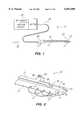
- FIG. 1is a view of a first illustrative embodiment of apparatus constructed in accordance with the present invention
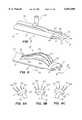
- FIG. 2is a perspective view of the distal region and end effector of the apparatus of FIG. 1;
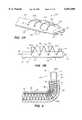
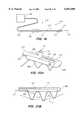
- FIGS. 3A and 3Bare, respectively, a perspective view and side view of stabilization members disposed on the distal region of the apparatus of FIG. 1;
- FIG. 4is sectional view of an illustrative end effector constructed in accordance with the present invention.
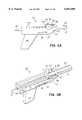
- FIGS. 5A and 5Bare, respectively, side and perspective views of an illustrative handle assembly for controlling and actuating the apparatus of the present invention
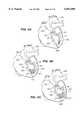
- FIGS. 6A-6Care views showing deployment of the apparatus of FIG. 1 in a patient's left ventricle to perform TMR;
- FIG. 7is a perspective view of the distal region of an alternative embodiment of apparatus constructed in accordance with the present invention.
- FIG. 8is a perspective view of the distal region of the apparatus of the present invention showing an alternative embodiment of the stabilization members
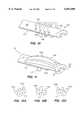
- FIGS. 9A, 9B and 9Care end views, taken along view line 9--9 of FIG. 8, depicting various deployment positions of the stabilization members of FIG. 8;
- FIG. 10is a perspective view of the distal region of the apparatus of the present invention showing an alternative embodiment of the stabilization members
- FIG. 11is a perspective view of the distal region of the apparatus of the present invention showing another alternative embodiment of the stabilization members
- FIGS. 12A-12Care end views, taken along view line 12--12 of FIG. 11, depicting various deployment positions of the stabilization members of FIG. 11;
- FIG. 13is a view of an alternative embodiment of apparatus constructed in accordance with the present invention.
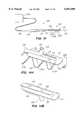
- FIGS. 14A and 14Bare, respectively, perspective top and bottom views of a distal region of the apparatus of FIG. 13;
- FIG. 15is a partial side view, partly in section, of the catheter shaft of FIGS. 13 and 14 deployed in contact with tissue;
- FIG. 16is a side view of the handle portion of the apparatus of FIG. 13;
- FIGS. 17A and 17Bare, respectively, top and side sectional views of the distal region of an alternative embodiment of the apparatus of the present invention.
- FIG. 18is a perspective top view of the distal region of a further alternative embodiment of the apparatus of the present invention.
- FIG. 19is a view of a further alternative embodiment of apparatus of the present invention.
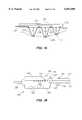
- FIGS. 20A and 20Bare, respectively, perspective top and side views of a distal region of the apparatus of FIG. 19.
- the present inventionrelates generally to apparatus and methods for percutaneously performing surgery within an organ or vessel.
- the apparatus of the present inventioncomprises a catheter including a stabilizing catheter shaft which percutaneously may be disposed within an organ.
- a guide member engaged with the catheter shaftincludes an end region that may be selectively articulated to a position at an angle to a longitudinal axis of the catheter, including a position substantially orthogonal to the longitudinal axis.
- the end regioncarries an end effector (e.g., an ablative or mechanical cutting device) for treating tissue. Severed or ablated tissue may be aspirated through the catheter to its proximal end for disposal.
- the catheter shafteither alone or in conjunction with stabilizing members, and the guide member, provides precise control over the location of the end region, and thus, the end effector.
- the present inventiontherefore offers a device having a directable end region and end effector for performing surgery that provides a degree of control heretofore unattainable. While the invention is described hereinafter as particularly useful in the emerging field of transmyocardial revascularization, apparatus constructed in accordance with the present invention may be advantageously used in performing surgery on other organs or vessels, such as the intestines, blood vessels or the brain cavities. In addition, while the present invention is described herein in the context of a mechanical cutting system, the control and stabilization apparatus of the present invention may be advantageously used with other types of cutting elements, such as lasers, cryogenic cutters or radio-frequency ablation devices.
- Apparatus 20includes a two-part catheter formed of catheter shaft 21 and guide member 22.
- Apparatus 20includes distal region 23 within which guide member 22 has end region 25 that is selectively movable between a transit position parallel to longitudinal axis 24 of catheter shaft 21 and a working position (as shown) substantially orthogonal to longitudinal axis 24.
- Distal region 23preferably includes an end effector, described in greater detail hereinbelow, for ablatively or mechanically cutting tissue to attain a treatment goal.
- End region 25 of guide member 22may be positioned longitudinally with respect to catheter shaft 21 by imparting relative movement between guide member 22 and catheter shaft 21 using handle assembly 26.
- Catheter shaft 21preferably includes a plurality of stabilizing members 27 to support and stabilize distal region 23 of the apparatus within the hollow-body organ.
- Apparatus 20is coupled via cable 28 to controller 29.
- controller 29includes a motor and control logic for rotating the cutting head responsive to commands input at handle assembly 26 or a footpedal (not shown) and a vacuum source for aspirating severed tissue from the treatment site.
- Controller 29optionally may further include RF circuitry (shown in dotted line) for energizing the cutting head to cauterize tissue as it is cut.
- controller 29may include a laser source or radio frequency circuitry for causing laser or RF ablation, respectively, using a suitable end effector.
- distal region 23includes end region 25 of guide member 22 disposed in sliding engagement in groove 30 of catheter shaft 21.
- Catheter shaft 21may be constructed of a flexible material commonly used in catheter products, such as nylon, polyethylene or polyurethane, and contains lateral grooves 31 and 32 that accept a mating portion of guide member 22 in sliding engagement.
- Catheter shaft 21may have an ellipsoidal shape to stabilize the catheter shaft and may include two spaced-apart wire stiffeners that terminate in barbs 33.
- Barbs 33are designed to engage an interior surface of an organ, for example, the apex of the left ventricle, to reduce rotation of the catheter shaft when the end effector is actuated.
- catheter shaft 21may be formed of a material having sufficient stiffness that the wire stiffeners may be omitted over most of the length of the catheter shaft.
- Guide member 22includes end region 25 carrying an end effector and flanges 34 and 35 that slidingly engage grooves 31 and 32. End region 25 may be articulated in region 36 using control wires or a temperature actuated shape-memory alloy steering mechanism, such as described in the aforementioned patents to Imran. Guide member 22 may be constructed of a spring material (commonly called a Bowden) with spaces in-between the coils to allow it to bend when it is pulled by a control wire asymmetrically, as previously known in the art. Alternatively, guide member 22 may be constructed of a stiffer material such as polyimide coated over a braided steel tubular structure, such as employed in previously known neuro-navigational endoscope devices. In this case, slits are provided on the inside of the bend in region 36 so that the guide member bends in the direction of the slits. The slits allow a tight bend radius which may not otherwise be achievable.
- a spring materialcommonly called a Bowden
- guide member 22may be constructed of
- Guide member 22preferably includes a lumen, as described hereinafter, through which tissue may be evacuated from a treatment site by suction. Accordingly, guide member 22 may also be formed from a loosely wound spring reinforced with a soft elastomeric coating.
- the elastomeric coatingadvantageously serves the following functions: it provides sealing along the length of the guide member required to maintain adequate suction through the lumen; it prevents collapse of the lumen in the presence of applied suction; it resists kinking of the coils of the spring; and it also enables the guide member to be bent to relatively tight radii.
- Reinforced tubing suitable for use as guide member 22is available from Adam Spence Corporation, Wall, N.J.
- end region 25 of guide member 22is movable from a transit position lying parallel to the longitudinal axis of catheter shaft 21 to a working position wherein end region 25 is articulated to a position substantially orthogonal to the longitudinal axis of the catheter shaft.
- end region 25may be constructed to enable it to be locked in position at any angle a that may be desired for a given application.
- stabilization members 27project outwardly from apertures 37 on either side of catheter shaft 21 in distal region 23.
- stabilization members 27comprise four circumferentially-oriented hoops formed of flexible wires 27a-27d.
- wires 27a-27dcomprise a continuous coil having its distal end affixed to catheter shaft 21 and its proximal end connected to handle assembly 26 via push wire 38. The turns of the coil are slidably disposed in lumens within catheter shaft 21 that interconnect apertures 37 on either side of the catheter shaft.
- wires 27a-27dWhen push wire 38 is urged in the distal direction, wires 27a-27d expands outwards by illustrative distances h 1 -h 4 to contact and conform to the topology of the interior wall of the hollow-body organ or vessel. Wires 27a-27d also may be retracted against catheter shaft 21 by pulling push wire 38 in the proximal direction.
- wires 27a-27dmay be moved from a retracted position in which they are retracted against distal region 23 of catheter shaft 21 to an expanded position in which they engage a wall of the organ and urge end region 25 into engagement with an opposing wall of the organ, thereby stabilizing catheter shaft 21 against rotation.
- Stabilization members 27may be constructed of any suitable elastic material, including stainless steel, spring steel, nickel-titanium alloys, and a variety of plastics. A nickel-titanium alloy is preferred where wires 27a-27d comprise a continuous coil, as in FIG. 3B. In the contracted mode, catheter shaft 21 and guide member 22 have a relatively small profile, for example, 2-3 mm. Upon actuation of the control means in handle assembly 26, wires 27a-27d expand out as shown in FIG. 3B to form a basket shape that spans and conforms to the lumen of the organ or vessel.
- stabilization members 27comprise a single coil, as in FIG. 3B, they may be actuated by a single control means. Alternatively, as described hereinafter with respect to FIG. 8, each of stabilization members 27 may be individually adjusted to conform to the shape of the cavity of the hollow-body organ. Stabilization members 27 may alternatively be oriented parallel to the longitudinal axis of apparatus 20, as described hereinafter with respect to FIG. 8.
- the longitudinal position of end region 25 with respect to catheter shaft 21may be adjusted by sliding guide member 22 in groove 30 of the catheter shaft.
- Handle assembly 26preferably includes means, described hereinafter, for moving guide member with respect to catheter shaft 21 so that end region 25 may be positioned at a series of vertical locations.
- stabilization members 27may be adjusted to provide some control over the lateral positioning of the catheter shaft and guide member with respect to the interior wall of the organ or vessel.
- end effector 40(also referred to hereinafter as a "micromorcellator”) is described as illustratively comprising a rotary cutting member and drive arrangement.
- Micromorcellator 40includes cutting head 41 comprising tubular element 42. Distal edge 42a of tubular element 42 includes a sharpened bevel 43.
- Cutting head 41is affixed to drive rod 45, which preferably includes soft plastic or elastomeric coating 45a, as described hereinabove, to maintain suction through lumen 44.
- the vacuum source in controller 29aspirates the severed tissue through lumen 44, if provided.
- guide member 22Orientation of end region 25 of guide member 22 is accomplished by control wire 46, which is slidingly disposed in lumen 47 of guide member 22.
- guide member 22preferably comprises a spring material with spaces in-between the coils to allow it to bend when control wire 46 is retracted in a proximal direction.
- guide member 22may be constructed of polyimide coated over a braided steel tube and includes slits on the inside of bend region 36 so that end region 25 bends in the direction of the slits when control wire 46 is retracted in a proximal direction.
- Cutting head 41is connected to the motor of controller 29 via drive rod 45.
- Drive rod 45may be formed of a flexible tube such as a bowden or a covered coil or may be formed of a plastic having both high torquability and flexibility.
- Drive rod 45is disposed in lumen 44 for a limited range of reciprocation, e.g., up to 3.0 cm, to permit extension of cutting head 41 beyond the end of guide member 22.
- end region 25is in its transit position
- cutting head 41is disposed just below distal endface 48 of guide member 22.
- Drive rod 45is hollow and preferably includes a covering of a soft plastic or elastomeric material to allow the application of a negative pressure to aspirate the severed tissue.
- tubular member 42 of cutting head 41may comprise an electrically conductive material and be electrically coupled to the optional radio-frequency generator circuitry in controller 29 to provide coagulation of the edges of a channel formed in the tissue by cutting head 41.
- tubular element 42serves as the electrode in a monopolar coagulation arrangement.
- a second electrode(not shown) may be formed on the working end spaced apart from the cutting head 41, so that tubular member 42 serves as one electrode of a bipolar coagulation arrangement. Applicant expects that the sealing action produced by RF coagulation, if provided, will simulate the lesions produced by a laser.
- Handle assembly 50includes lower portion 51 affixed to catheter shaft 21 and upper portion 52 affixed to guide member 22. Upper portion 52 is slidingly engaged in lower portion 51, so that guide member 22 may be selectively translated longitudinally with respect to catheter shaft 21 by rotating knob 53.
- Lower portion 51 of handle assembly 50includes hand grip 54, and button 55 for controlling the extension of stabilization members 27. Button 55 slides in slot 56 of lower portion 51 to extend or retract stabilization members 27 via push wire 38.
- Upper portion 52includes indicator 57a that may be selectively aligned with indicators 57b, so that the channels formed by end effector 40 are positioned at a series of spaced-apart locations.
- Cable 28extends from upper portion 52 and connects the working end of apparatus 20 to controller 29.
- Upper portion 52also includes button 58 which may be moved in slot 59 to control the articulation of end region 25 of guide member 22, and depth control lever 60 disposed in slot 61.
- Depth control lever 60is moved within slot 61 to control reciprocation of cutting head 41 from end region 25.
- Slot 61has a length so that when button 60 is moved to fully extend cutting head 41 from guide member 22, a proximal portion of tubular member 42 remains within guide member 22.
- a user-adjustable limit bar(not shown) may be provided in slot 61 to select the maximum extension of cutting head 41 desired for a particular application.
- RF button 62also may be provided to control activation of the optional RF circuitry of controller 29 to coagulate tissue surrounding the channel formed by micromorcellator 40.
- RF buttonalso could take the form of a microswitch located within slot 61 of handle assembly 50, so as to provide automatic activation of the RF coagulation feature for a short period of time when depth control lever 60 is advanced to contact the user-adjustable limit bar.
- handle assembly 50provides for longitudinal movement of end region 25 with respect to catheter shaft 21 via relative movement between upper portion 52 and lower portion 51 (using knob 53); provides selective deployment of stabilization members 27 via button 55; selective orientation of end region 25 via button 58; control over the depth of the channels formed by end effector 40 via depth control lever 60; and, optionally, activation of an RF coagulation feature via button 62.
- distal region 23 of apparatus 20is shown positioned in a patient's left ventricular cavity, using techniques which are per se known. Specifically, distal region 23 of apparatus 20 is inserted via a femoral artery, and is maneuvered under fluoroscopic guidance in a retrograde manner up through the descending aorta, through aortic arch 201, and down through ascending aorta 202 and aortic valve 203 into left ventricle 204.
- Previously known imaging techniquessuch as ultrasound, MRI scan, CT scan, or fluoroscopy, may be used to verify the location of the distal region 23 within the heart.
- Insertion of apparatus 20 into the left ventricleis with guide member 22 in its distal-most position with stabilization members 27 fully retracted and end region 25 in its transit position.
- catheter shaft 21(and guide member 22) preferentially bends in regions 65 and 66 to form a "dog-leg", in which distal region 23 becomes urged against a lateral wall of the ventricle.
- Regions 65 and 66 where the bends take placemay be made flexurally weaker than the remainder of the catheter shaft to aid in the bending of the catheter at these locations.
- button 55is advanced in slot 56 of handle assembly 50 to extend stabilization members 27 so that they engage the septal wall of the left ventricle and urge the end effector against left ventricular wall 206.
- the dog-leg bends in regions 65 and 66allow the catheter to be pushed onto the left ventricular wall while the stabilization members push against the septum.
- End region 25 of guide member 22is then rotated to its working position by retracting button 58 along slot 59 of handle assembly 50, thus causing end region 25 to be positioned substantially orthogonally to the longitudinal axis of catheter shaft 21.
- controller 29The motor and vacuum source of controller 29 are then actuated to cause cutting head 41 to rotate and to induce negative pressure in lumen 44 of micromorcellator 40.
- the clinicianthen pushes depth control lever 60 distally in slot 61, causing cutting head 41 to be advanced beyond distal endface 48 of guide member 22 and engage the endocardium.
- micromorcellator 40engages the endocardium, a reaction force is generated in catheter shaft 21 that tends both to push end region 25 away from the tissue and to cause the catheter shaft to want to rotate.
- the relatively flat configuration of catheter shaft 21, in conjunction with barbs 33,is expected to adequately counteract the torque induced by operation of the micromorcellator.
- stabilization members 27function to counteract both these outward reaction and torque effects.
- tissue severed by cutting head 41is suctioned into lumen 44 and aspirated to the proximal end of apparatus 20 via the vacuum source of controller 29.
- the depth of channel 207which is proportional to the movement of depth control lever 60 in slot 61, may be predetermined using conventional ultrasound techniques, MRI scanning, or other suitable methods.
- tissue severed from the ventricular wallis aspirated through lumen 44 of guide member 22, thereby reducing the risk of embolization of the severed material.
- suction through lumen 44will assist in stabilizing the micromorcellator, and tend to draw tissue into the cutting head.
- cutting head 41is withdrawn from channel 207 by retracting depth control lever 60 to its proximal-most position, thereby returning cutting head 41 to a position just below distal endface 48 of end region 25 of guide member 22. It is expected that rotation of cutting head 41 will generate sufficient frictional heat in the tissue contacting the exterior of cutting head 41 to coagulate the tissue defining the channel.
- RF button 62may be depressed on handle assembly 50 to apply a burst of RF energy to the edges of channel 207 as micromorcellator 40 achieves its maximum predetermined depth, and while cutting head 41 is stationary, rotating or being withdrawn from the channel. If provided, this burst of RF energy is expected to further coagulate the tissue defining the walls of channel 207 and modify the surface properties of the tissue.
- a series of vertically aligned spaced-apart channels 207may be formed in left ventricular wall 207 by sliding upper portion 52 proximally within lower portion 51 of handle assembly 50 (by rotating knob 53). Cutting head 41 is then advanced to form a further channel 207 in the tissue, and the tissue may also be coagulated with a burst of RF energy.
- button 55is adjusted as described above with respect to FIGS. 3A and 3B to cause the catheter shaft to rotate several degrees about its axis.
- Stabilization members 27are again extended to contact the septal wall, causing micromorcellator 40 to be urged against left ventricular wall 206 in a region laterally spaced apart from the initial line of channels 207.
- the foregoing methodsenable a matrix of channels to be formed illustratively in the left ventricular wall. It will of course be understood that the same steps may be performed in mirror image to stabilize the apparatus against the left ventricular wall while actuating the end effector to produce a series of channels in the septal region.
- the formation of such channels in the endocardium or septal regionenables oxygenated blood in the left ventricle to flow directly into the myocardium and thus nourish and oxygenate the muscle. It is believed that these channels may be drilled anywhere on the walls of the heart chamber, including the septum, apex and left ventricular wall, and the above-described apparatus provides this capability.
- Apparatus 70is similar to apparatus 20 described hereinabove, but includes wires 71 and 72 forming a dual-rail on which catheter shaft 73 glides, thereby reducing unwanted rotation of distal region 74 and end region 75.
- Distal end 76 of the dual-railincludes cushion 77 having barbs 78 for anchoring the catheter shaft in the apex of the left ventricle to prevent inadvertent rotation of catheter shaft 73.
- Guide member 79has an inner diameter suitable for carrying one of a variety of end effectors 81, such as a laser fiber, a radio frequency applying device, micromorcellator as described hereinabove, or slit needles, as in the above-mentioned patent to Taheri.
- end effectors 81such as a laser fiber, a radio frequency applying device, micromorcellator as described hereinabove, or slit needles, as in the above-mentioned patent to Taheri.
- Dual-rail embodiment 70may be used without stabilization members, or alternatively catheter shaft 73 may include the stabilization members of FIGS. 3 or as described hereinbelow.
- Wires 71 and 72also may be formed from a resilient material, e.g., stainless steel or a nickel-titanium alloy, so that when they exit catheter shaft 73 they diverge from one another and give the catheter a larger and more stable base.
- cushion 77preferably comprises an elastomeric material that allows the distance between the tips of wires 71 and 72 to increase beyond the diameter of the catheter.
- Wires 71 and 72may have other than circular cross-sections and may take the form of, for example, ribbons.
- Wires 71 and 72in cooperation with a distally-directed axial force exerted on the handle assembly by the clinician, serve to anchor the catheter against a lateral wall of the left ventricle, while catheter shaft 74 and guide member 79 are advanced along the dual-rail.
- apparatus 70may include flexurally weaker locations along its length to aid in positioning distal region 74 within the left ventricle.
- the dual-rail design of apparatus 70also may be advantageously employed to determine the location of end region 75 and end effector 81 with respect to the interior of the hollow-body organ or vessel.
- wires 71 and 72are electrically connected within cushion 77 and have a uniform resistance per unit length.
- Electrodes 80are positioned in distal end 82 of catheter shaft 73 to measure the resistance of wires 71 and 72 between the electrodes.
- the resistance between electrodes 80may be measured, for example, by ohmmeter circuitry, to determine the distance between the distal end 82 of the catheter shaft and the apex of the left ventricle.
- the position of end region 75 and end effector 81may be determined relative to the apex of the heart. This position information may be sampled using suitable analog to digital circuitry, and displayed on a display unit to aid the physician in determining where to place the channels in the heart wall.
- FIGS. 8 and 9A-9Ca first alternative embodiment of the stabilization members of the present invention are described.
- Apparatus 90includes catheter shaft 21 including barbs 33 and guide member 22 including end region 25.
- Stabilization members 91a-91dproject from proximal apertures 92 and distal apertures 93, and comprise individual longitudinallyoriented flexible wires.
- Wires 91a-91denter lumens in catheter shaft 21 through apertures 92 and extend proximally to handle assembly 26.
- Each of wires 91a-91dpreferably has a respective button (similar to button 55 in FIGS. 5) on handle assembly 26 for selectively controlling the extension of the wires.
- wires 91a-91d of the embodiment of FIG. 8may be moved from a retracted position in which they are retracted against distal region 23 of catheter shaft 21 to an expanded position in which they engage a wall of the organ and urge end region 25 into engagement with an opposing wall of the organ, thus stabilizing catheter shaft 21 against rotation.
- each of stabilization members 91preferably may be selectively extended a different amount, therefore causing distal region 23 to rotate about its longitudinal axis.
- wire 91ais extended from distal region 23 a greater distance, causing a larger bow in wire 91a, while wire 91d is extended a smaller distance, causing a smaller bow therein. Consequently, if each of wires 91a-91d contacts a wall of the organ, catheter shaft 23 will have a tendency to rotate in a counterclockwise direction (viewed from the distal end). Conversely, reversing the extensions of wires 91a and 91d, as in FIG. 9C, will cause rotation in the opposite direction. It is therefore seen that by individually controlling the extension of the stabilization members 91, the position of the catheter with respect to an interior lateral wall of the hollow-body organ can be controlled.
- Apparatus 100includes catheter shaft 101 and guide member 102. Except for stabilization members 103, which in FIG. 10 comprise horizontal inflatable ribs, apparatus 100 is similar to apparatus 20 of FIG. 1.
- guide member 102moves relative to catheter shaft 101 to enable the clinician to form a series of vertically aligned channels in the myocardium. Once a line of channels has been formed, the catheter must be moved laterally to a new location and the procedure repeated until the desired number of channels has been achieved.
- One expedient for doing sofor example, applicable to the apparatus of FIG. 7, is to withdraw the catheter slightly, rotate it and reposition it at a different location on the left ventricular wall.
- the stabilization arrangement of FIG. 10instead facilitates lateral movement by deflating ribs 103, rotating catheter shaft 21, and then re-inflating ribs 103.
- stabilization members 103when inflated, provide a degree of hoop strength that ensures proper contact of the distal face of end region 106 with the wall of the hollow-body organ or vessel at all times. Once a vertical row of channels has been formed, stabilization members 103 are deflated by the clinician and end region 106 is moved to a new lateral position. The stabilization members are fully re-inflated and another vertical row of channels is formed, as discussed hereinabove.
- FIGS. 11 and 12A-12Canother embodiment of the apparatus of the present invention is described in which the stabilization members comprise longitudinally-oriented balloons.
- Apparatus 110is otherwise similar to the apparatus of FIG. 8, and includes catheter shaft 111, guide member 112, and end region 113.
- Stabilization elements 114a-114ccomprise balloons, preferably formed of a compliant material, such as polyurethane, silicone or latex.
- the handle assembly for apparatus 110includes valving means for selectively individually inflating balloons 114a-114c. As shown in FIGS.
- balloons 114a-114cmay be selectively inflated via inflation lumens (not shown) in catheter shaft 111 to stabilize apparatus 110 within a hollow-body organ, and to rotate catheter shaft 111 (and end region 113) in a manner similar to that described above with respect to FIGS. 9A-9C.
- Apparatus 120comprises a two-part catheter formed of catheter shaft 121 and guide member 122.
- Apparatus 120includes distal region 123 within which guide member 122 has end region 125 that is selectively movable between a transit position parallel to longitudinal axis 124 of catheter shaft 121 and a working position (as shown), substantially orthogonal to longitudinal axis 124.
- Distal region 123preferably includes an end effector, as described in detail hereinabove.
- End region 125 of guide member 122may be positioned longitudinally with respect to catheter shaft 121 by imparting relative movement between guide member 122 and catheter shaft 121 using handle assembly 126.
- Catheter shaft 121includes stabilizing assembly 127 to support and stabilize distal region 123 of the apparatus within an organ or vessel.
- Apparatus 120is coupled via cable 128 to controller 129.
- controller 129includes a hydraulic or pneumatic piston, valve assembly and control logic for extending and retracting the end effector beyond the distal endface of end region 125 responsive to commands input at handle assembly 126 or a footpedal (not shown).
- Controller 129optionally may further contain RF generator circuitry for energizing electrodes disposed on the end effector to cause a controlled degree of necrosis at the treatment site.
- distal region 123 of apparatus 120is described in greater detail.
- distal region 123includes end region 125 of guide member 122 disposed in sliding engagement in track 130 of catheter shaft 121, as described hereinabove with respect to the embodiment of FIG. 1.
- Guide member 122includes end region 125 carrying end effector 134 and flanges 135 that slidingly engage grooves 131 and 132.
- End region 125may be articulated in region 136 using control wires or a temperature actuated shape-memory alloy steering mechanism, as described hereinabove.
- End region 125 of guide member 122is movable from a transit position lying parallel to longitudinal axis 124 of catheter shaft 121 to a working position wherein end region 125 is articulated to a position substantially orthogonal to the longitudinal axis of the catheter shaft.
- end region 125may be constructed to enable it to be locked in position at any angle ⁇ that may be desired for a given application.
- Stabilization assembly 127comprises flat band 137 of resilient material, such as stainless steel, that projects outwardly from catheter shaft 121 in distal region 123.
- stabilization assembly 127comprises multiple loops 127a-127c of band 137.
- Band 137has its distal end affixed to the distal end of catheter shaft 121, and its proximal end connected to handle assembly 126.
- Band 137passes through an interior lumen of catheter shaft 121 (see FIG. 15) and exits to the exterior surface of catheter shaft 121 in distal region 123.
- Crossbars 138permit band 137 to be pulled flat against the exterior surface of catheter shaft 121, as shown in FIG. 14B, or urged in a distal direction to form loops 127a-127c.
- loops 127a-127cexpand outwardly by illustrative distances h 1 -h 3 to contact and conform to the topology of interior wall T of an organ or vessel. Accordingly, loops 127a-127c may be moved from a retracted position in which they are retracted against an exterior surface of distal region 123 of catheter shaft 121 (FIG. 14B) to an expanded position (FIG. 14A) in which they engage a wall of an organ or vessel.
- stabilization assembly 127urges end region 125 into engagement with an opposing wall of the organ, thereby stabilizing catheter shaft 121 against rotation.
- Band 137may be constructed of any suitable elastic material, including stainless steel, spring steel, nickel-titanium alloys, and a variety of plastics.
- catheter shaft 121 and guide member 122In the contracted mode, catheter shaft 121 and guide member 122 have a relatively small profile, for example, 2-3 mm.
- the longitudinal position of end region 125 with respect to catheter shaft 121may be adjusted by sliding guide member 122 in track 130 of the catheter shaft.
- Handle assembly 126preferably includes means, described hereinafter, for moving guide member 122 with respect to catheter shaft 121 so that end region 125 may be positioned at a series of longitudinal locations.
- stabilization assembly 127may be adjusted to provide some control over the lateral positioning of the catheter shaft and guide member with respect to the interior wall of the organ or vessel.
- Handle assembly 126includes lower portion 140 affixed to catheter shaft 121 and upper portion 141 affixed to guide member 122.
- Upper portion 141is slidingly engaged in lower portion 140, so that guide member 122 may be selectively translated longitudinally with respect to catheter shaft 121 by rotating knob 142.
- Upper portion 141includes ribbed bonnet 143, which collapses and expands to enclose lower portion 140 as upper portion 141 is moved in the proximal and distal directions, respectively.
- Lower portion 140 of handle assembly 126includes indentations 144 forming a hand grip.
- Threaded post 145is coupled to the proximal end of band 137, and slides in a slot (not visible in FIG. 16) in the lower surface of catheter shaft 121.
- Thumbwheel 146is threaded onto post 145.
- Post 145 and thumbwheel 146permit the proximal end of band 137 (see FIG. 15) to be urged in the proximal and distal directions, for example, to deploy stabilization assembly 127.
- Band 137then is locked into position by tightening thumbwheel 146 on post 145 against the lower surface of catheter shaft 121.
- Upper portion 141includes indicator 147a that may be selectively aligned with indicators 147b, so that the treatment sites are positioned at a series of spaced-apart locations.
- Cable 128extends from upper portion 141 and connects the end effector of apparatus 120 to controller 129.
- Button 148 disposed on the top surface of upper portion 141may be depressed to command the control logic of controller 129 to reciprocate the end effector from end region 125, and optionally, cause necrosis at the treatment site.
- Button 149disposed in a slot in the upper surface of the proximal end of guide tube 122 (not visible in FIG. 16) is coupled to a tendon affixed to end region 125, and may be moved in the proximal and distal directions to control the degree of articulation of end region 125 and the end effector.
- Handle assembly 126therefore provides for longitudinal movement of end region 125 with respect to catheter shaft 121 via relative movement between upper portion 141 and lower portion 140 (using knob 142); provides selective deployment of stabilization assembly 127 (using post 145 and thumbwheel 146); selective orientation of end region 125 (using button 149); and control over operation of the end effector (using button 148).
- Apparatus 150is similar to apparatus 120 described hereinabove, but band 137 that forms stabilization assembly 127 of apparatus 120 is replaced by transversely mounted fixed wire hoops 151a-151d.
- the guide catheteris omitted from track 152 for clarity.
- Wire hoops 151a-151dillustratively four in number, have their ends affixed to the lateral faces of catheter shaft 153 so that, when unconstrained, the hoops return to a position substantially orthogonal to the longitudinal axis of catheter shaft 153.
- Wire hoopspreferably comprise a sturdy, elastic plastic or metal alloy, such as nickel-titanium.
- catheter shaft 153is shown disposed within outer sheath 154.
- hoops 151a-151dare deformed so that they lie adjacent to the exterior surface of catheter shaft 153.
- Guide member 155 and catheter shaft 153are delivered to the left ventricle while enclosed within outer sheath 154.
- distal endface 156is positioned against the apex of the left ventricle, for example, as determined by fluoroscopy, outer sheath 154 is retracted proximally. This permits hoops 151a-151d to resume their preferred shape, and urge guide member 155 against the opposing wall of the left ventricle.
- Hoops 151a-151dserve to stabilize and counteract reaction forces generated by operation of the end effector.
- FIG. 18a still further alternative embodiment of the stabilization assembly of the present invention is described.
- the catheter shaftis omitted, and guide member 161 is supported by a plurality of bands 162 (only two are shown in FIG. 18).
- Guide member 161 and bands 162extend from within outer sheath 163.
- Each band 162preferably terminates in spool 164 when it is extended from within outer sheath 163.
- Spools 164contact one wall of the organ or vessel and urge end region 165 of guide member 161 into contact with the opposing wall of the organ or vessel.
- the length of each band 162may be adjusted using suitable means disposed on the handle assembly. Operation of guide member 161 and end effector 166 are the same as described herein for other embodiments of the present invention.
- Apparatus 170comprises a two-part catheter formed of catheter shaft 171 and guide member 172, and is coupled via cable 178 to controller 179 that performs the functions described above with respect to controller 129 of the embodiment of FIG. 13.
- Apparatus 170includes distal region 173 within which guide member 172 has end region 175 that is selectively movable between a transit position parallel to longitudinal axis 174 of catheter shaft 171 and a working position (as shown), substantially orthogonal to longitudinal axis 174.
- Distal region 173preferably includes an end effector, as described in detail hereinabove.
- End region 175 of guide member 172may be positioned longitudinally with respect to catheter shaft 171 by imparting relative movement between guide member 172 and catheter shaft 171 using handle assembly 176.
- Catheter shaft 121includes stabilizing element 177 to support and stabilize distal region 173 of the apparatus within an organ or vessel.
- Distal region 173 of apparatus 170is described in greater detail with respect to FIGS. 20A and 20B.
- Distal region 173includes end region 175 of guide member 172 disposed in sliding engagement in track 180 of catheter shaft 171, as described hereinabove with respect to other embodiments.
- Guide member 172includes end region 175 carrying end effector 181 and flanges 182 that slidingly engage grooves 183 and 184.
- End region 175may be articulated in region 185, as may be constructed and operated as described hereinabove for other embodiments.
- Stabilization element 177comprises wire or band 186 of resilient material, such as stainless steel, that exits catheter shaft 171 through skive 187, and is fixed to catheter shaft 171 near distal end 188.
- stabilization element 177When deployed within a hollow organ, such as a chamber of the heart, as depicted in FIG. 20B, stabilization element 177 forms a plurality of sinusoidal bends 177a-177c that support distal end 173 of catheter shaft 171.
- Stabilization element 177preferably comprises a material having a shape-memory and that is capable of reforming to a desired shape when extended through skive 187.
Landscapes
- Health & Medical Sciences (AREA)
- Life Sciences & Earth Sciences (AREA)
- Surgery (AREA)
- Engineering & Computer Science (AREA)
- General Health & Medical Sciences (AREA)
- Public Health (AREA)
- Biomedical Technology (AREA)
- Heart & Thoracic Surgery (AREA)
- Veterinary Medicine (AREA)
- Animal Behavior & Ethology (AREA)
- Molecular Biology (AREA)
- Nuclear Medicine, Radiotherapy & Molecular Imaging (AREA)
- Medical Informatics (AREA)
- Vascular Medicine (AREA)
- Otolaryngology (AREA)
- Cardiology (AREA)
- Physics & Mathematics (AREA)
- Plasma & Fusion (AREA)
- Pulmonology (AREA)
- Hematology (AREA)
- Biophysics (AREA)
- Anesthesiology (AREA)
- Surgical Instruments (AREA)
Abstract
Description
Claims (22)
Priority Applications (2)
| Application Number | Priority Date | Filing Date | Title |
|---|---|---|---|
| US09/213,089US6051008A (en) | 1996-12-02 | 1998-12-15 | Apparatus having stabilization members for percutaneously performing surgery and methods of use |
| US10/126,295USRE43300E1 (en) | 1996-12-02 | 2002-04-18 | Apparatus having stabilization members for percutaneously performing surgery and methods of use |
Applications Claiming Priority (3)
| Application Number | Priority Date | Filing Date | Title |
|---|---|---|---|
| US3219696P | 1996-12-02 | 1996-12-02 | |
| US08/863,877US5910150A (en) | 1996-12-02 | 1997-05-27 | Apparatus for performing surgery |
| US09/213,089US6051008A (en) | 1996-12-02 | 1998-12-15 | Apparatus having stabilization members for percutaneously performing surgery and methods of use |
Related Parent Applications (1)
| Application Number | Title | Priority Date | Filing Date |
|---|---|---|---|
| US08/863,877Continuation-In-PartUS5910150A (en) | 1996-12-02 | 1997-05-27 | Apparatus for performing surgery |
Related Child Applications (1)
| Application Number | Title | Priority Date | Filing Date |
|---|---|---|---|
| US10/126,295ReissueUSRE43300E1 (en) | 1996-12-02 | 2002-04-18 | Apparatus having stabilization members for percutaneously performing surgery and methods of use |
Publications (1)
| Publication Number | Publication Date |
|---|---|
| US6051008Atrue US6051008A (en) | 2000-04-18 |
Family
ID=45877520
Family Applications (2)
| Application Number | Title | Priority Date | Filing Date |
|---|---|---|---|
| US09/213,089Expired - LifetimeUS6051008A (en) | 1996-12-02 | 1998-12-15 | Apparatus having stabilization members for percutaneously performing surgery and methods of use |
| US10/126,295Expired - LifetimeUSRE43300E1 (en) | 1996-12-02 | 2002-04-18 | Apparatus having stabilization members for percutaneously performing surgery and methods of use |
Family Applications After (1)
| Application Number | Title | Priority Date | Filing Date |
|---|---|---|---|
| US10/126,295Expired - LifetimeUSRE43300E1 (en) | 1996-12-02 | 2002-04-18 | Apparatus having stabilization members for percutaneously performing surgery and methods of use |
Country Status (1)
| Country | Link |
|---|---|
| US (2) | US6051008A (en) |
Cited By (73)
| Publication number | Priority date | Publication date | Assignee | Title |
|---|---|---|---|---|
| WO2001010287A3 (en)* | 1999-08-06 | 2001-08-30 | Russell A Houser | Percutaneous transmyocardial revascularization (ptmr) system |
| US6405733B1 (en) | 2000-02-18 | 2002-06-18 | Thomas J. Fogarty | Device for accurately marking tissue |
| US6514250B1 (en) | 2000-04-27 | 2003-02-04 | Medtronic, Inc. | Suction stabilized epicardial ablation devices |
| WO2002076281A3 (en)* | 2000-11-07 | 2003-06-19 | Artemis Medical Inc | Tissue separator assembly and method |
| US20030167056A1 (en)* | 2000-04-27 | 2003-09-04 | Jahns Scott E. | Suction stabilized epicardial ablation devices |
| US20030195499A1 (en)* | 2002-04-16 | 2003-10-16 | Mani Prakash | Microwave antenna having a curved configuration |
| US20030195500A1 (en)* | 1999-06-17 | 2003-10-16 | Moorman Jack W. | Needle kit and method for microwave ablation, track coagulation, and biopsy |
| US20030204188A1 (en)* | 2001-11-07 | 2003-10-30 | Artemis Medical, Inc. | Tissue separating and localizing catheter assembly |
| US6645217B1 (en)* | 1999-05-15 | 2003-11-11 | Advanced Cardiovascular Systems, Inc. | Over-the-wire atherectomy catheter |
| US20040010231A1 (en)* | 2000-07-13 | 2004-01-15 | Leonhardt Howard J | Deployment system for myocardial cellular material |
| US6692466B1 (en) | 2000-12-21 | 2004-02-17 | Advanced Cardiovascular Systems, Inc. | Drug delivery catheter with retractable needle |
| US20040034343A1 (en)* | 2002-08-16 | 2004-02-19 | Gillespie Walter D. | Articulation mechanism |
| US6722371B1 (en) | 2000-02-18 | 2004-04-20 | Thomas J. Fogarty | Device for accurately marking tissue |
| US6752767B2 (en) | 2002-04-16 | 2004-06-22 | Vivant Medical, Inc. | Localization element with energized tip |
| US6752154B2 (en) | 2000-02-18 | 2004-06-22 | Thomas J. Fogarty | Device for accurately marking tissue |
| US20040167511A1 (en)* | 2003-02-25 | 2004-08-26 | Artemis Medical, Inc. | Tissue separating catheter assembly and method |
| US20050015081A1 (en)* | 2003-07-18 | 2005-01-20 | Roman Turovskiy | Devices and methods for cooling microwave antennas |
| US20050070844A1 (en)* | 2003-09-30 | 2005-03-31 | Mina Chow | Deflectable catheter assembly and method of making same |
| US20060015085A1 (en)* | 2004-07-19 | 2006-01-19 | Global Stem Cell Solutions, Llc | Systems and methods for atraumatic implantation of bio-active agents |
| US20060030885A1 (en)* | 2002-10-15 | 2006-02-09 | Hyde Gregory M | Apparatuses and methods for heart valve repair |
| US20060089535A1 (en)* | 2002-07-11 | 2006-04-27 | Dan Raz | Piston-actuated endoscopic steering system |
| WO2007021433A1 (en)* | 2005-08-17 | 2007-02-22 | Corespine Technologies, Inc. | Apparatus and method for removal of intervertebral disc tissues |
| US20070213812A1 (en)* | 2002-11-15 | 2007-09-13 | Webler William E | Apparatuses and methods for delivering/deploying a medical device in a vessel |
| US7318824B2 (en) | 2001-11-02 | 2008-01-15 | Vivant Medical, Inc. | High-strength microwave antenna assemblies |
| EP1897506A1 (en)* | 2006-09-08 | 2008-03-12 | Ethicon Endo-Surgery, Inc. | A surgical instrument for performing controlled myotomies |
| US20080082093A1 (en)* | 2006-09-29 | 2008-04-03 | Prakash Mani N | Microwave antenna assembly and method of using the same |
| US20080125709A1 (en)* | 2003-12-31 | 2008-05-29 | Gregory Waimong Chang | Needle catheter |
| WO2009062061A1 (en)* | 2007-11-09 | 2009-05-14 | University Of Virginia Patent Foundation | Steerable epicardial pacing catheter system placed via the subxiphoid process |
| EP2078507A1 (en)* | 2008-01-10 | 2009-07-15 | Ludwig-Maximilians-Universität München | Small probing hook for arthroscopy |
| US20100016884A1 (en)* | 2006-03-13 | 2010-01-21 | Mini-Lap Techonologies, Inc. | Minimally Invasive Surgical Assembly and Methods |
| US20100094143A1 (en)* | 2007-03-19 | 2010-04-15 | University Of Virginia Patent Foundation | Access Needle Pressure Sensor Device and Method of Use |
| US20100114093A1 (en)* | 2007-03-13 | 2010-05-06 | University Of Virginia Patent Foundation | Epicardial Ablation Catheter and Method of Use |
| US20100137835A1 (en)* | 2003-07-15 | 2010-06-03 | Leonhardt Howard J | Deployment system for myocardial cellular material |
| US20100211064A1 (en)* | 2007-03-22 | 2010-08-19 | University Of Virginia Patent Foundation | Electrode Catheter for Ablation Purposes and Related Method Thereof |
| US20110160538A1 (en)* | 2009-12-31 | 2011-06-30 | Sundaram Ravikumar | Surgical instruments for laparoscopic aspiration and retraction |
| US7981152B1 (en) | 2004-12-10 | 2011-07-19 | Advanced Cardiovascular Systems, Inc. | Vascular delivery system for accessing and delivering devices into coronary sinus and other vascular sites |
| US20110184512A1 (en)* | 2002-11-15 | 2011-07-28 | Webler William E | Valve aptation assist device |
| USRE42959E1 (en) | 1996-12-02 | 2011-11-22 | Abbott Cardiovascular Systems Inc. | Apparatus and methods for stimulating revascularization and/or tissue growth |
| US20120014573A1 (en)* | 2010-07-13 | 2012-01-19 | Lautenschlaeger Stefan | Method and system for indicating a feeding vessel of a malformation in a medical image |
| USRE43300E1 (en)* | 1996-12-02 | 2012-04-03 | Abbott Cardiovascular Systems Inc. | Apparatus having stabilization members for percutaneously performing surgery and methods of use |
| US20120136197A1 (en)* | 2010-11-30 | 2012-05-31 | Van Gerwen Peter B J | Hearing prosthesis having a flexible elongate energy transfer mechanism |
| US8292880B2 (en) | 2007-11-27 | 2012-10-23 | Vivant Medical, Inc. | Targeted cooling of deployable microwave antenna |
| WO2013169733A1 (en)* | 2012-05-07 | 2013-11-14 | Cook Medical Technologies Llc | Sphincterotome having expandable tines |
| US8961551B2 (en) | 2006-12-22 | 2015-02-24 | The Spectranetics Corporation | Retractable separating systems and methods |
| US9028520B2 (en) | 2006-12-22 | 2015-05-12 | The Spectranetics Corporation | Tissue separating systems and methods |
| USRE45638E1 (en) | 1996-12-02 | 2015-08-04 | Abbott Cardiovascular Systems Inc. | Apparatus for percutaneously performing myocardial revascularization having means for sensing tissue parameters and method of use |
| US9149602B2 (en) | 2005-04-22 | 2015-10-06 | Advanced Cardiovascular Systems, Inc. | Dual needle delivery system |
| US9218752B2 (en) | 2010-02-18 | 2015-12-22 | University Of Virginia Patent Foundation | System, method, and computer program product for simulating epicardial electrophysiology procedures |
| US20160045214A1 (en)* | 2013-04-24 | 2016-02-18 | Hologic, Inc. | Surgical system with expandable shield |
| US9283040B2 (en) | 2013-03-13 | 2016-03-15 | The Spectranetics Corporation | Device and method of ablative cutting with helical tip |
| US9291663B2 (en) | 2013-03-13 | 2016-03-22 | The Spectranetics Corporation | Alarm for lead insulation abnormality |
| US9413896B2 (en) | 2012-09-14 | 2016-08-09 | The Spectranetics Corporation | Tissue slitting methods and systems |
| USD765243S1 (en) | 2015-02-20 | 2016-08-30 | The Spectranetics Corporation | Medical device handle |
| US9456872B2 (en) | 2013-03-13 | 2016-10-04 | The Spectranetics Corporation | Laser ablation catheter |
| US9468396B2 (en) | 2007-03-19 | 2016-10-18 | University Of Virginia Patent Foundation | Systems and methods for determining location of an access needle in a subject |
| USD770616S1 (en) | 2015-02-20 | 2016-11-01 | The Spectranetics Corporation | Medical device handle |
| US9603618B2 (en) | 2013-03-15 | 2017-03-28 | The Spectranetics Corporation | Medical device for removing an implanted object |
| US9642534B2 (en) | 2009-09-11 | 2017-05-09 | University Of Virginia Patent Foundation | Systems and methods for determining location of an access needle in a subject |
| US9668765B2 (en) | 2013-03-15 | 2017-06-06 | The Spectranetics Corporation | Retractable blade for lead removal device |
| US9883885B2 (en) | 2013-03-13 | 2018-02-06 | The Spectranetics Corporation | System and method of ablative cutting and pulsed vacuum aspiration |
| US9925366B2 (en) | 2013-03-15 | 2018-03-27 | The Spectranetics Corporation | Surgical instrument for removing an implanted object |
| US9980743B2 (en) | 2013-03-15 | 2018-05-29 | The Spectranetics Corporation | Medical device for removing an implanted object using laser cut hypotubes |
| US10136913B2 (en) | 2013-03-15 | 2018-11-27 | The Spectranetics Corporation | Multiple configuration surgical cutting device |
| US10321247B2 (en) | 2015-11-27 | 2019-06-11 | Cochlear Limited | External component with inductance and mechanical vibratory functionality |
| US10383691B2 (en) | 2013-03-13 | 2019-08-20 | The Spectranetics Corporation | Last catheter with helical internal lumen |
| US10405924B2 (en) | 2014-05-30 | 2019-09-10 | The Spectranetics Corporation | System and method of ablative cutting and vacuum aspiration through primary orifice and auxiliary side port |
| US10433861B2 (en) | 2013-08-27 | 2019-10-08 | Board Of Regents Of The University Of Texas System | System and method for cutting trabeculae carneae of the left ventricle to increase LV compliance |
| US10448999B2 (en) | 2013-03-15 | 2019-10-22 | The Spectranetics Corporation | Surgical instrument for removing an implanted object |
| US10512482B2 (en) | 2012-10-05 | 2019-12-24 | Board Of Regents Of The University Of Texas System | System and method for scoring the left ventricular endocardium to increase left ventricular compliance |
| US10835279B2 (en) | 2013-03-14 | 2020-11-17 | Spectranetics Llc | Distal end supported tissue slitting apparatus |
| US10842532B2 (en) | 2013-03-15 | 2020-11-24 | Spectranetics Llc | Medical device for removing an implanted object |
| US11058354B2 (en) | 2007-03-19 | 2021-07-13 | University Of Virginia Patent Foundation | Access needle with direct visualization and related methods |
| US12053203B2 (en) | 2014-03-03 | 2024-08-06 | Spectranetics, Llc | Multiple configuration surgical cutting device |
Families Citing this family (17)
| Publication number | Priority date | Publication date | Assignee | Title |
|---|---|---|---|---|
| EP2497520B1 (en) | 2007-07-18 | 2022-04-13 | Silk Road Medical, Inc. | Systems for establishing retrograde carotid arterial blood flow |
| US8858490B2 (en) | 2007-07-18 | 2014-10-14 | Silk Road Medical, Inc. | Systems and methods for treating a carotid artery |
| JP2011510796A (en) | 2008-02-05 | 2011-04-07 | シルク・ロード・メディカル・インコーポレイテッド | Intervention catheter system and method |
| WO2010075445A1 (en)* | 2008-12-23 | 2010-07-01 | Silk Road Medical, Inc. | Methods and systems for treatment of acute ischemic stroke |
| US20100204684A1 (en)* | 2009-01-13 | 2010-08-12 | Garrison Michi E | Methods and systems for performing neurointerventional procedures |
| US10779855B2 (en) | 2011-08-05 | 2020-09-22 | Route 92 Medical, Inc. | Methods and systems for treatment of acute ischemic stroke |
| EP4101399B1 (en) | 2011-08-05 | 2025-04-09 | Route 92 Medical, Inc. | System for treatment of acute ischemic stroke |
| US9265512B2 (en) | 2013-12-23 | 2016-02-23 | Silk Road Medical, Inc. | Transcarotid neurovascular catheter |
| US9241699B1 (en) | 2014-09-04 | 2016-01-26 | Silk Road Medical, Inc. | Methods and devices for transcarotid access |
| US11027104B2 (en) | 2014-09-04 | 2021-06-08 | Silk Road Medical, Inc. | Methods and devices for transcarotid access |
| CN119949953A (en) | 2015-02-04 | 2025-05-09 | 92号医疗公司 | Intravascular access system, dilator and system including dilator |
| US10426497B2 (en) | 2015-07-24 | 2019-10-01 | Route 92 Medical, Inc. | Anchoring delivery system and methods |
| US11065019B1 (en) | 2015-02-04 | 2021-07-20 | Route 92 Medical, Inc. | Aspiration catheter systems and methods of use |
| CN110392591B (en) | 2017-01-10 | 2022-06-03 | 92号医疗公司 | Aspiration catheter system and method of use |
| US10864350B2 (en) | 2017-01-20 | 2020-12-15 | Route 92 Medical, Inc. | Single operator intracranial medical device delivery systems and methods of use |
| JP7616642B2 (en) | 2018-05-17 | 2025-01-17 | ルート92メディカル・インコーポレイテッド | Suction catheter system and method of use |
| WO2022076893A1 (en) | 2020-10-09 | 2022-04-14 | Route 92 Medical, Inc. | Aspiration catheter systems and methods of use |
Citations (81)
| Publication number | Priority date | Publication date | Assignee | Title |
|---|---|---|---|---|
| US33258A (en)* | 1861-09-10 | Improvement in gas-burners | ||
| US3557794A (en)* | 1968-07-30 | 1971-01-26 | Us Air Force | Arterial dilation device |
| US4362161A (en)* | 1980-10-27 | 1982-12-07 | Codman & Shurtleff, Inc. | Cranial drill |
| US4576162A (en)* | 1983-03-30 | 1986-03-18 | Mccorkle Charles E | Apparatus and method for separation of scar tissue in venous pathway |
| US4582056A (en)* | 1983-03-30 | 1986-04-15 | Mccorkle Jr Charles E | Endocardial lead extraction apparatus and method |
| US4640296A (en)* | 1983-11-12 | 1987-02-03 | Schnepp Pesch Wolfram | Biopsy cannula |
| US4646738A (en)* | 1985-12-05 | 1987-03-03 | Concept, Inc. | Rotary surgical tool |
| US4729763A (en)* | 1986-06-06 | 1988-03-08 | Henrie Rodney A | Catheter for removing occlusive material |
| US4813930A (en)* | 1987-10-13 | 1989-03-21 | Dimed, Inc. | Angioplasty guiding catheters and methods for performing angioplasty |
| US4895166A (en)* | 1987-11-23 | 1990-01-23 | Interventional Technologies, Inc. | Rotatable cutter for the lumen of a blood vesel |
| US4923462A (en)* | 1987-03-17 | 1990-05-08 | Cordis Corporation | Catheter system having a small diameter rotatable drive member |
| USRE33258E (en) | 1984-07-23 | 1990-07-10 | Surgical Dynamics Inc. | Irrigating, cutting and aspirating system for percutaneous surgery |
| US4976710A (en)* | 1987-01-28 | 1990-12-11 | Mackin Robert A | Working well balloon method |
| US5093877A (en)* | 1990-10-30 | 1992-03-03 | Advanced Cardiovascular Systems | Optical fiber lasing apparatus lens |
| US5104393A (en)* | 1989-08-30 | 1992-04-14 | Angelase, Inc. | Catheter |
| US5106386A (en)* | 1989-08-30 | 1992-04-21 | Angelase, Inc. | Catheter |
| US5152744A (en)* | 1990-02-07 | 1992-10-06 | Smith & Nephew Dyonics | Surgical instrument |
| US5242460A (en)* | 1990-10-25 | 1993-09-07 | Devices For Vascular Intervention, Inc. | Atherectomy catheter having axially-disposed cutting edge |
| US5281218A (en)* | 1992-06-05 | 1994-01-25 | Cardiac Pathways Corporation | Catheter having needle electrode for radiofrequency ablation |
| US5285795A (en)* | 1991-09-12 | 1994-02-15 | Surgical Dynamics, Inc. | Percutaneous discectomy system having a bendable discectomy probe and a steerable cannula |
| US5323781A (en)* | 1992-01-31 | 1994-06-28 | Duke University | Methods for the diagnosis and ablation treatment of ventricular tachycardia |
| US5324284A (en)* | 1992-06-05 | 1994-06-28 | Cardiac Pathways, Inc. | Endocardial mapping and ablation system utilizing a separately controlled ablation catheter and method |
| US5330466A (en)* | 1992-12-01 | 1994-07-19 | Cardiac Pathways Corporation | Control mechanism and system and method for steering distal extremity of a flexible elongate member |
| US5336237A (en)* | 1993-08-25 | 1994-08-09 | Devices For Vascular Intervention, Inc. | Removal of tissue from within a body cavity |
| US5342300A (en)* | 1992-03-13 | 1994-08-30 | Stefanadis Christodoulos I | Steerable stent catheter |
| US5354310A (en)* | 1993-03-22 | 1994-10-11 | Cordis Corporation | Expandable temporary graft |
| US5358472A (en)* | 1992-01-13 | 1994-10-25 | Schneider (Usa) Inc. | Guidewire atherectomy catheter and method of using the same |
| US5358485A (en)* | 1992-01-13 | 1994-10-25 | Schneider (Usa) Inc. | Cutter for atherectomy catheter |
| US5380316A (en)* | 1990-12-18 | 1995-01-10 | Advanced Cardiovascular Systems, Inc. | Method for intra-operative myocardial device revascularization |
| US5379772A (en)* | 1993-09-14 | 1995-01-10 | Intelliwire, Inc. | Flexible elongate device having forward looking ultrasonic imaging |
| US5383884A (en)* | 1992-12-04 | 1995-01-24 | American Biomed, Inc. | Spinal disc surgical instrument |
| US5389073A (en)* | 1992-12-01 | 1995-02-14 | Cardiac Pathways Corporation | Steerable catheter with adjustable bend location |
| US5389096A (en)* | 1990-12-18 | 1995-02-14 | Advanced Cardiovascular Systems | System and method for percutaneous myocardial revascularization |
| US5403334A (en)* | 1989-09-12 | 1995-04-04 | Devices For Vascular Intervention, Inc. | Atherectomy device having helical blade and blade guide |
| US5409000A (en)* | 1993-09-14 | 1995-04-25 | Cardiac Pathways Corporation | Endocardial mapping and ablation system utilizing separately controlled steerable ablation catheter with ultrasonic imaging capabilities and method |
| US5415166A (en)* | 1991-02-15 | 1995-05-16 | Cardiac Pathways Corporation | Endocardial mapping apparatus and cylindrical semiconductor device mounting structure for use therewith and method |
| US5439474A (en)* | 1993-10-08 | 1995-08-08 | Li Medical Technologies, Inc. | Morcellator system |
| US5443443A (en)* | 1984-05-14 | 1995-08-22 | Surgical Systems & Instruments, Inc. | Atherectomy system |
| US5465717A (en)* | 1991-02-15 | 1995-11-14 | Cardiac Pathways Corporation | Apparatus and Method for ventricular mapping and ablation |
| US5488958A (en)* | 1992-11-09 | 1996-02-06 | Vance Products Incorporated | Surgical cutting instrument for coring tissue affixed thereto |
| US5497784A (en)* | 1991-11-18 | 1996-03-12 | Intelliwire, Inc. | Flexible elongate device having steerable distal extremity |
| US5505725A (en)* | 1990-10-30 | 1996-04-09 | Cardiogenesis Corporation | Shapeable optical fiber apparatus |
| US5507802A (en)* | 1993-06-02 | 1996-04-16 | Cardiac Pathways Corporation | Method of mapping and/or ablation using a catheter having a tip with fixation means |
| US5520634A (en)* | 1993-04-23 | 1996-05-28 | Ethicon, Inc. | Mechanical morcellator |
| WO1996026675A1 (en)* | 1995-02-28 | 1996-09-06 | Boston Scientific Corporation | Deflectable catheter for ablating cardiac tissue |
| US5562694A (en)* | 1994-10-11 | 1996-10-08 | Lasersurge, Inc. | Morcellator |
| US5569284A (en)* | 1994-09-23 | 1996-10-29 | United States Surgical Corporation | Morcellator |
| US5569178A (en)* | 1995-10-20 | 1996-10-29 | Henley; Julian L. | Power assisted suction lipectomy device |
| US5575787A (en)* | 1993-09-20 | 1996-11-19 | Abela Laser Systems, Inc. | Cardiac ablation catheters and method |
| US5575772A (en)* | 1993-07-01 | 1996-11-19 | Boston Scientific Corporation | Albation catheters |
| US5578067A (en)* | 1994-04-14 | 1996-11-26 | Pacesetter Ab | Medical electrode system having a sleeve body and control element therefor for selectively positioning an exposed conductor area |
| US5591159A (en)* | 1994-11-09 | 1997-01-07 | Taheri; Syde A. | Transcavitary myocardial perfusion apparatus |
| US5601586A (en)* | 1992-09-30 | 1997-02-11 | Linvatec Corporation | Variable angle rotating shaver |
| US5601588A (en)* | 1994-09-29 | 1997-02-11 | Olympus Optical Co., Ltd. | Endoscopic puncture needle |
| US5601573A (en)* | 1994-03-02 | 1997-02-11 | Ethicon Endo-Surgery, Inc. | Sterile occlusion fasteners and instruments and method for their placement |
| US5607421A (en)* | 1991-05-01 | 1997-03-04 | The Trustees Of Columbia University In The City Of New York | Myocardial revascularization through the endocardial surface using a laser |
| US5609621A (en)* | 1995-08-04 | 1997-03-11 | Medtronic, Inc. | Right ventricular outflow tract defibrillation lead |
| US5609591A (en)* | 1993-10-05 | 1997-03-11 | S.L.T. Japan Co., Ltd. | Laser balloon catheter apparatus |
| US5611803A (en)* | 1994-12-22 | 1997-03-18 | Urohealth Systems, Inc. | Tissue segmentation device |
| US5643253A (en)* | 1995-06-06 | 1997-07-01 | Rare Earth Medical, Inc. | Phototherapy apparatus with integral stopper device |
| US5651781A (en)* | 1995-04-20 | 1997-07-29 | Grace-Wells Technology Partners No. 1, L.P. | Surgical cutting instrument |
| US5662671A (en)* | 1996-07-17 | 1997-09-02 | Embol-X, Inc. | Atherectomy device having trapping and excising means for removal of plaque from the aorta and other arteries |
| US5662124A (en)* | 1996-06-19 | 1997-09-02 | Wilk Patent Development Corp. | Coronary artery by-pass method |
| US5669920A (en)* | 1993-07-09 | 1997-09-23 | Devices For Vascular Intervention, Inc. | Atherectomy catheter |
| US5683362A (en)* | 1994-05-13 | 1997-11-04 | Rowland; Christopher A. | Apparatus for performing diagnostic and therapeutic modalities in the biliary tree |
| WO1998005307A1 (en)* | 1996-08-08 | 1998-02-12 | Localmed, Inc. | Transmural drug delivery method and apparatus |
| US5725521A (en)* | 1996-03-29 | 1998-03-10 | Eclipse Surgical Technologies, Inc. | Depth stop apparatus and method for laser-assisted transmyocardial revascularization and other surgical applications |
| US5724975A (en)* | 1996-12-12 | 1998-03-10 | Plc Medical Systems, Inc. | Ultrasonic detection system for transmyocardial revascularization |
| US5782823A (en)* | 1996-04-05 | 1998-07-21 | Eclipse Surgical Technologies, Inc. | Laser device for transmyocardial revascularization procedures including means for enabling a formation of a pilot hole in the epicardium |
| WO1998038916A1 (en)* | 1997-03-07 | 1998-09-11 | Cardiogenesis Corporation | Apparatus and method of myocardial revascularization using ultrasonic pulse-echo distance ranging |
| WO1998039045A1 (en)* | 1997-03-07 | 1998-09-11 | Cardiogenesis Corporation | Catheter with three sections of different flexibilities |
| US5807384A (en)* | 1996-12-20 | 1998-09-15 | Eclipse Surgical Technologies, Inc. | Transmyocardial revascularization (TMR) enhanced treatment for coronary artery disease |
| EP0868923A2 (en)* | 1997-04-04 | 1998-10-07 | Eclipse Surgical Technologies, Inc. | Steerable catheter |
| US5830210A (en)* | 1996-10-21 | 1998-11-03 | Plc Medical Systems, Inc. | Catheter navigation apparatus |
| US5830222A (en)* | 1995-10-13 | 1998-11-03 | Transvascular, Inc. | Device, system and method for intersititial transvascular intervention |
| EP0876796A2 (en)* | 1997-05-07 | 1998-11-11 | Eclipse Surgical Technologies, Inc. | Device for use in the treatment of cardiovascular or other tissue |
| US5840059A (en)* | 1995-06-07 | 1998-11-24 | Cardiogenesis Corporation | Therapeutic and diagnostic agent delivery |
| EP0895752A1 (en)* | 1997-08-08 | 1999-02-10 | Eclipse Surgical Technologies, Inc. | Apparatus for sampling heart tissue and/or myocardial revascularization by mechanical cutting |
| US5871495A (en)* | 1996-09-13 | 1999-02-16 | Eclipse Surgical Technologies, Inc. | Method and apparatus for mechanical transmyocardial revascularization of the heart |
| US5893848A (en)* | 1996-10-24 | 1999-04-13 | Plc Medical Systems, Inc. | Gauging system for monitoring channel depth in percutaneous endocardial revascularization |
| US5910150A (en)* | 1996-12-02 | 1999-06-08 | Angiotrax, Inc. | Apparatus for performing surgery |
Family Cites Families (139)
| Publication number | Priority date | Publication date | Assignee | Title |
|---|---|---|---|---|
| US2749909A (en) | 1956-06-12 | Biopsy knife | ||
| US1162901A (en) | 1915-10-08 | 1915-12-07 | Edward B Cantey | Instrument for cutting cores from solid substances. |
| US2710000A (en) | 1952-02-19 | 1955-06-07 | Cromer Jeremiah Keith | Cutting instrument |
| US3120845A (en) | 1961-02-20 | 1964-02-11 | David B Horner | Self-powered surgical drill |
| US3470876A (en) | 1966-09-28 | 1969-10-07 | John Barchilon | Dirigible catheter |
| US3477423A (en) | 1967-01-09 | 1969-11-11 | Baxter Laboratories Inc | Biopsy instrument |
| GB1235321A (en) | 1968-01-30 | 1971-06-09 | Nat Res Dev | Improvements in or relating to drills for clearing obstructions |
| US3692020A (en) | 1971-04-29 | 1972-09-19 | Robert J Schied | Rotary punch for excising uniform diopsy specimens |
| US3780246A (en) | 1972-08-22 | 1973-12-18 | Black & Decker Mfg Co | Hand-operated tool with switch actuator having three-position lock-off assembly |
| US4207874A (en) | 1978-03-27 | 1980-06-17 | Choy Daniel S J | Laser tunnelling device |
| IT7922984U1 (en) | 1979-10-29 | 1981-04-29 | Star Utensili Elett S P A | PORTABLE POWER TOOL WITH REFINED CONTROLS. |
| AU547873B2 (en) | 1980-02-22 | 1985-11-07 | Sonic Tape Plc | A sonar distance sensing apparatus |
| US4461305A (en) | 1981-09-04 | 1984-07-24 | Cibley Leonard J | Automated biopsy device |
| US4479896A (en) | 1981-12-11 | 1984-10-30 | Antoniades Harry N | Method for extraction localization and direct recovery of platelet derived growth factor |
| US4468224A (en) | 1982-01-28 | 1984-08-28 | Advanced Cardiovascular Systems, Inc. | System and method for catheter placement in blood vessels of a human patient |
| US5370675A (en)* | 1992-08-12 | 1994-12-06 | Vidamed, Inc. | Medical probe device and method |
| US4600014A (en) | 1984-02-10 | 1986-07-15 | Dan Beraha | Transrectal prostate biopsy device and method |
| US5135531A (en) | 1984-05-14 | 1992-08-04 | Surgical Systems & Instruments, Inc. | Guided atherectomy system |
| US4578057A (en) | 1984-08-31 | 1986-03-25 | Cordis Corporation | Ventricular right angle connector and system |
| US4957742A (en) | 1984-11-29 | 1990-09-18 | Regents Of The University Of Minnesota | Method for promoting hair growth |
| EP0383363A3 (en) | 1984-11-29 | 1990-10-03 | Regents Of The University Of Minnesota | Use of wound healing agents |
| US4856529A (en) | 1985-05-24 | 1989-08-15 | Cardiometrics, Inc. | Ultrasonic pulmonary artery catheter and method |
| US4702261A (en) | 1985-07-03 | 1987-10-27 | Sherwood Medical Company | Biopsy device and method |
| US4790812A (en) | 1985-11-15 | 1988-12-13 | Hawkins Jr Irvin F | Apparatus and method for removing a target object from a body passsageway |
| US5000185A (en)* | 1986-02-28 | 1991-03-19 | Cardiovascular Imaging Systems, Inc. | Method for intravascular two-dimensional ultrasonography and recanalization |
| US4895156A (en) | 1986-07-02 | 1990-01-23 | Schulze John E | Sensor system using fluorometric decay measurements |
| US4792327A (en) | 1986-09-15 | 1988-12-20 | Barry Swartz | Lipectomy cannula |
| US4850354A (en) | 1987-08-13 | 1989-07-25 | Baxter Travenol Laboratories, Inc. | Surgical cutting instrument |
| US4788975B1 (en) | 1987-11-05 | 1999-03-02 | Trimedyne Inc | Control system and method for improved laser angioplasty |
| US5588432A (en) | 1988-03-21 | 1996-12-31 | Boston Scientific Corporation | Catheters for imaging, sensing electrical potentials, and ablating tissue |
| DE3906301A1 (en) | 1988-04-28 | 1989-12-14 | Olympus Optical Co | Surgical resection instrument |
| US5195988A (en) | 1988-05-26 | 1993-03-23 | Haaga John R | Medical needle with removable sheath |
| US4917102A (en)* | 1988-09-14 | 1990-04-17 | Advanced Cardiovascular Systems, Inc. | Guidewire assembly with steerable adjustable tip |
| US4898577A (en) | 1988-09-28 | 1990-02-06 | Advanced Cardiovascular Systems, Inc. | Guiding cathether with controllable distal tip |
| US4964854A (en) | 1989-01-23 | 1990-10-23 | Luther Medical Products, Inc. | Intravascular catheter assembly incorporating needle tip shielding cap |
| US5087265A (en)* | 1989-02-17 | 1992-02-11 | American Biomed, Inc. | Distal atherectomy catheter |
| US4985028A (en) | 1989-08-30 | 1991-01-15 | Angeion Corporation | Catheter |
| US5030201A (en) | 1989-11-24 | 1991-07-09 | Aubrey Palestrant | Expandable atherectomy catheter device |
| EP0448857A1 (en) | 1990-03-27 | 1991-10-02 | Jong-Khing Huang | An apparatus of a spinning type of resectoscope for prostatectomy |
| US5269785A (en) | 1990-06-28 | 1993-12-14 | Bonutti Peter M | Apparatus and method for tissue removal |
| US5125926A (en) | 1990-09-24 | 1992-06-30 | Laser Engineering, Inc. | Heart-synchronized pulsed laser system |
| US5125924A (en) | 1990-09-24 | 1992-06-30 | Laser Engineering, Inc. | Heart-synchronized vacuum-assisted pulsed laser system and method |
| US5885272A (en) | 1990-10-30 | 1999-03-23 | Aita; Michael | System and method for percutaneous myocardial revascularization |
| DE9190181U1 (en)* | 1990-12-10 | 1993-07-29 | Howmedica Inc. (n.d.Ges.d.Staates Delaware), New York, N.Y. | Device for interstitial laser energy delivery |
| US5224951A (en) | 1991-02-19 | 1993-07-06 | Dexide, Inc. | Surgical trocar and spike assembly |
| US5339799A (en) | 1991-04-23 | 1994-08-23 | Olympus Optical Co., Ltd. | Medical system for reproducing a state of contact of the treatment section in the operation unit |
| US5197968A (en) | 1991-08-14 | 1993-03-30 | Mectra Labs, Inc. | Disposable tissue retrieval assembly |
| US5263959A (en) | 1991-10-21 | 1993-11-23 | Cathco, Inc. | Dottering auger catheter system and method |
| WO1993014694A1 (en) | 1992-01-16 | 1993-08-05 | The General Hospital Corporation | Method and apparatus for locating tumors |
| SE9201413L (en) | 1992-04-30 | 1993-10-31 | Stiftelsen Foer Medicinsk Tekn | Preparation and Methods for Apheresis Preparation of Platelet Concentrate with Significantly Extended Durability |
| US5613972A (en) | 1992-07-15 | 1997-03-25 | The University Of Miami | Surgical cutting heads with curled cutting wings |
| US5342393A (en) | 1992-08-27 | 1994-08-30 | Duke University | Method and device for vascular repair |
| US5447533A (en) | 1992-09-03 | 1995-09-05 | Pacesetter, Inc. | Implantable stimulation lead having an advanceable therapeutic drug delivery system |
| US5287861A (en) | 1992-10-30 | 1994-02-22 | Wilk Peter J | Coronary artery by-pass method and associated catheter |
| US5429144A (en) | 1992-10-30 | 1995-07-04 | Wilk; Peter J. | Coronary artery by-pass method |
| US5584842A (en)* | 1992-12-02 | 1996-12-17 | Intramed Laboratories, Inc. | Valvulotome and method of using |
| US5292309A (en) | 1993-01-22 | 1994-03-08 | Schneider (Usa) Inc. | Surgical depth measuring instrument and method |
| US5273051A (en) | 1993-03-16 | 1993-12-28 | Wilk Peter J | Method and associated device for obtaining a biopsy of tissues of an internal organ |
| US5921982A (en)* | 1993-07-30 | 1999-07-13 | Lesh; Michael D. | Systems and methods for ablating body tissue |
| US5392917A (en) | 1993-08-03 | 1995-02-28 | Ethicon, Inc. | Easy open 1-2-3 instrumentation package |
| US5425376A (en) | 1993-09-08 | 1995-06-20 | Sofamor Danek Properties, Inc. | Method and apparatus for obtaining a biopsy sample |
| US5456689A (en) | 1993-10-13 | 1995-10-10 | Arnold J. Kresch | Method and device for tissue resection |
| US5575810A (en) | 1993-10-15 | 1996-11-19 | Ep Technologies, Inc. | Composite structures and methods for ablating tissue to form complex lesion patterns in the treatment of cardiac conditions and the like |
| US5640955A (en)* | 1995-02-14 | 1997-06-24 | Daig Corporation | Guiding introducers for use in the treatment of accessory pathways around the mitral valve using a retrograde approach |
| US5575766A (en) | 1993-11-03 | 1996-11-19 | Daig Corporation | Process for the nonsurgical mapping and treatment of atrial arrhythmia using catheters guided by shaped guiding introducers |
| US5722400A (en)* | 1995-02-16 | 1998-03-03 | Daig Corporation | Guiding introducers for use in the treatment of left ventricular tachycardia |
| US5366468A (en) | 1993-11-09 | 1994-11-22 | Linvatec Corporation | Double bladed surgical router having aspiration ports within flutes |
| US5492119A (en) | 1993-12-22 | 1996-02-20 | Heart Rhythm Technologies, Inc. | Catheter tip stabilizing apparatus |
| DE4408108A1 (en) | 1994-03-10 | 1995-09-14 | Bavaria Med Tech | Catheter for injecting a fluid or a drug |
| EP0688536B1 (en) | 1994-03-23 | 2000-08-02 | Erbe Elektromedizin GmbH | Multifunctional instrument for ultrasonic surgery |
| US5464395A (en)* | 1994-04-05 | 1995-11-07 | Faxon; David P. | Catheter for delivering therapeutic and/or diagnostic agents to the tissue surrounding a bodily passageway |
| US5743870A (en) | 1994-05-09 | 1998-04-28 | Somnus Medical Technologies, Inc. | Ablation apparatus and system for removal of soft palate tissue |
| US5680860A (en) | 1994-07-07 | 1997-10-28 | Cardiac Pathways Corporation | Mapping and/or ablation catheter with coilable distal extremity and method for using same |
| US5593405A (en)* | 1994-07-16 | 1997-01-14 | Osypka; Peter | Fiber optic endoscope |
| EP0710469B1 (en) | 1994-11-07 | 2002-12-18 | GRIESHABER & CO. AG SCHAFFHAUSEN | Device for the comminution and removal of a lens core |
| DE4441327C1 (en) | 1994-11-22 | 1995-11-09 | Inst Pflanzengenetik & Kultur | Embryonic heart muscle cells, their production and their use |
| US5665062A (en)* | 1995-01-23 | 1997-09-09 | Houser; Russell A. | Atherectomy catheter and RF cutting method |
| US5575293A (en) | 1995-02-06 | 1996-11-19 | Promex, Inc. | Apparatus for collecting and staging tissue |
| US5551427A (en) | 1995-02-13 | 1996-09-03 | Altman; Peter A. | Implantable device for the effective elimination of cardiac arrhythmogenic sites |
| US5595183A (en) | 1995-02-17 | 1997-01-21 | Ep Technologies, Inc. | Systems and methods for examining heart tissue employing multiple electrode structures and roving electrodes |
| US5569254A (en) | 1995-04-12 | 1996-10-29 | Midas Rex Pneumatic Tools, Inc. | Surgical resection tool having an irrigation, lighting, suction and vision attachment |
| AU5558096A (en) | 1995-05-01 | 1996-11-21 | Medtronic Cardiorhythm | Dual curve ablation catheter and method |
| US5606974A (en) | 1995-05-02 | 1997-03-04 | Heart Rhythm Technologies, Inc. | Catheter having ultrasonic device |
| US6322548B1 (en) | 1995-05-10 | 2001-11-27 | Eclipse Surgical Technologies | Delivery catheter system for heart chamber |
| WO1996035469A1 (en) | 1995-05-10 | 1996-11-14 | Cardiogenesis Corporation | System for treating or diagnosing heart tissue |
| US6251104B1 (en) | 1995-05-10 | 2001-06-26 | Eclipse Surgical Technologies, Inc. | Guiding catheter system for ablating heart tissue |
| US5658263A (en) | 1995-05-18 | 1997-08-19 | Cordis Corporation | Multisegmented guiding catheter for use in medical catheter systems |
| US6224584B1 (en) | 1997-01-14 | 2001-05-01 | Eclipse Surgical Technologies, Inc. | Therapeutic and diagnostic agent delivery |
| US5797870A (en) | 1995-06-07 | 1998-08-25 | Indiana University Foundation | Pericardial delivery of therapeutic and diagnostic agents |
| US5836311A (en) | 1995-09-20 | 1998-11-17 | Medtronic, Inc. | Method and apparatus for temporarily immobilizing a local area of tissue |
| US5702412A (en) | 1995-10-03 | 1997-12-30 | Cedars-Sinai Medical Center | Method and devices for performing vascular anastomosis |
| US5709697A (en) | 1995-11-22 | 1998-01-20 | United States Surgical Corporation | Apparatus and method for removing tissue |
| US5941868A (en) | 1995-12-22 | 1999-08-24 | Localmed, Inc. | Localized intravascular delivery of growth factors for promotion of angiogenesis |
| US5688234A (en) | 1996-01-26 | 1997-11-18 | Cardiometrics Inc. | Apparatus and method for the treatment of thrombotic occlusions in vessels |
| US5810836A (en) | 1996-03-04 | 1998-09-22 | Myocardial Stents, Inc. | Device and method for trans myocardial revascularization (TMR) |
| US5834418A (en) | 1996-03-20 | 1998-11-10 | Theratechnologies, Inc. | Process for the preparation of platelet growth factors extract |
| US5980545A (en) | 1996-05-13 | 1999-11-09 | United States Surgical Corporation | Coring device and method |
| DE19621099C2 (en) | 1996-05-24 | 1999-05-20 | Sulzer Osypka Gmbh | Device with a catheter and a needle that can be inserted into the heart wall from the inside as a high-frequency electrode |
| US5766163A (en)* | 1996-07-03 | 1998-06-16 | Eclipse Surgical Technologies, Inc. | Controllable trocar for transmyocardial revascularization (TMR) via endocardium method and apparatus |
| AU2458597A (en) | 1996-07-17 | 1998-02-09 | Medtronic, Inc. | System for genetically treating cardiac conduction disturbances |
| US5857995A (en) | 1996-08-15 | 1999-01-12 | Surgical Dynamics, Inc. | Multiple bladed surgical cutting device removably connected to a rotary drive element |
| US5755714A (en)* | 1996-09-17 | 1998-05-26 | Eclipse Surgical Technologies, Inc. | Shaped catheter for transmyocardial revascularization |
| US6030377A (en) | 1996-10-21 | 2000-02-29 | Plc Medical Systems, Inc. | Percutaneous transmyocardial revascularization marking system |
| US6096036A (en) | 1998-05-05 | 2000-08-01 | Cardiac Pacemakers, Inc. | Steerable catheter with preformed distal shape and method for use |
| US5971993A (en) | 1996-11-07 | 1999-10-26 | Myocardial Stents, Inc. | System for delivery of a trans myocardial device to a heart wall |
| US5873366A (en) | 1996-11-07 | 1999-02-23 | Chim; Nicholas | Method for transmyocardial revascularization |
| US6051008A (en)* | 1996-12-02 | 2000-04-18 | Angiotrax, Inc. | Apparatus having stabilization members for percutaneously performing surgery and methods of use |
| US5944716A (en)* | 1996-12-09 | 1999-08-31 | Scimed Life Systems, Inc. | Radio frequency transmyocardial revascularization corer |
| US5925012A (en) | 1996-12-27 | 1999-07-20 | Eclipse Surgical Technologies, Inc. | Laser assisted drug delivery |
| CA2225521C (en) | 1996-12-27 | 2004-04-06 | Eclipse Surgical Technologies, Inc. | Laser assisted drug delivery apparatus |
| US5906594A (en) | 1997-01-08 | 1999-05-25 | Symbiosis Corporation | Endoscopic infusion needle having dual distal stops |
| US5846225A (en) | 1997-02-19 | 1998-12-08 | Cornell Research Foundation, Inc. | Gene transfer therapy delivery device and method |
| JP3134288B2 (en) | 1997-01-30 | 2001-02-13 | 株式会社ニッショー | Endocardial suture surgery tool |
| US5730741A (en)* | 1997-02-07 | 1998-03-24 | Eclipse Surgical Technologies, Inc. | Guided spiral catheter |
| US5938632A (en) | 1997-03-06 | 1999-08-17 | Scimed Life Systems, Inc. | Radiofrequency transmyocardial revascularization apparatus and method |
| US6045565A (en) | 1997-11-04 | 2000-04-04 | Scimed Life Systems, Inc. | Percutaneous myocardial revascularization growth factor mediums and method |
| US5968059A (en) | 1997-03-06 | 1999-10-19 | Scimed Life Systems, Inc. | Transmyocardial revascularization catheter and method |
| US5951567A (en) | 1997-07-24 | 1999-09-14 | Cardiogenesis Corporation | Introducer for channel forming device |
| US5964757A (en) | 1997-09-05 | 1999-10-12 | Cordis Webster, Inc. | Steerable direct myocardial revascularization catheter |
| US6179809B1 (en)* | 1997-09-24 | 2001-01-30 | Eclipse Surgical Technologies, Inc. | Drug delivery catheter with tip alignment |
| US6106520A (en) | 1997-09-30 | 2000-08-22 | Hearten Medical, Inc. | Endocardial device for producing reversible damage to heart tissue |
| US6238389B1 (en) | 1997-09-30 | 2001-05-29 | Boston Scientific Corporation | Deflectable interstitial ablation device |
| US5980548A (en) | 1997-10-29 | 1999-11-09 | Kensey Nash Corporation | Transmyocardial revascularization system |
| US5851171A (en)* | 1997-11-04 | 1998-12-22 | Advanced Cardiovascular Systems, Inc. | Catheter assembly for centering a radiation source within a body lumen |
| US6056743A (en)* | 1997-11-04 | 2000-05-02 | Scimed Life Systems, Inc. | Percutaneous myocardial revascularization device and method |
| US6156029A (en) | 1997-11-25 | 2000-12-05 | Eclipse Surgical Technologies, Inc. | Selective treatment of endocardial/myocardial boundary |
| US5885276A (en) | 1997-12-02 | 1999-03-23 | Galil Medical Ltd. | Method and device for transmyocardial cryo revascularization |
| US6197324B1 (en) | 1997-12-18 | 2001-03-06 | C. R. Bard, Inc. | System and methods for local delivery of an agent |
| US6066126A (en) | 1997-12-18 | 2000-05-23 | Medtronic, Inc. | Precurved, dual curve cardiac introducer sheath |
| ES2255155T3 (en) | 1998-02-05 | 2006-06-16 | Biosense Webster, Inc. | DEVICE FOR THE INTRACARDIAC ADMINISTRATION OF PHARMACOS. |
| US6905476B2 (en) | 1998-06-04 | 2005-06-14 | Biosense Webster, Inc. | Catheter with injection needle |
| US6165164A (en) | 1999-03-29 | 2000-12-26 | Cordis Corporation | Catheter for injecting therapeutic and diagnostic agents |
| US6102887A (en) | 1998-08-11 | 2000-08-15 | Biocardia, Inc. | Catheter drug delivery system and method for use |
| US6045530A (en) | 1998-10-14 | 2000-04-04 | Heyer-Schulte Neurocare Inc. | Adjustable angle catheter |
| WO2000035531A1 (en) | 1998-12-14 | 2000-06-22 | Tre Esse Progettazione Biomedica S.R.L. | Catheter system for performing intramyocardiac therapeutic treatment |
| US6638233B2 (en)* | 1999-08-19 | 2003-10-28 | Fox Hollow Technologies, Inc. | Apparatus and methods for material capture and removal |
| US6613062B1 (en) | 1999-10-29 | 2003-09-02 | Medtronic, Inc. | Method and apparatus for providing intra-pericardial access |
| EP1301228B1 (en) | 2000-07-13 | 2008-07-23 | Abbott Cardiovascular Systems Inc. | Deployment system for myocardial cellular material |
| JP3680050B2 (en) | 2002-09-18 | 2005-08-10 | 株式会社東芝 | Medical manipulator and control method thereof |
- 1998
- 1998-12-15USUS09/213,089patent/US6051008A/ennot_activeExpired - Lifetime
- 2002
- 2002-04-18USUS10/126,295patent/USRE43300E1/ennot_activeExpired - Lifetime
Patent Citations (83)
| Publication number | Priority date | Publication date | Assignee | Title |
|---|---|---|---|---|
| US33258A (en)* | 1861-09-10 | Improvement in gas-burners | ||
| US3557794A (en)* | 1968-07-30 | 1971-01-26 | Us Air Force | Arterial dilation device |
| US4362161A (en)* | 1980-10-27 | 1982-12-07 | Codman & Shurtleff, Inc. | Cranial drill |
| US4576162A (en)* | 1983-03-30 | 1986-03-18 | Mccorkle Charles E | Apparatus and method for separation of scar tissue in venous pathway |
| US4582056A (en)* | 1983-03-30 | 1986-04-15 | Mccorkle Jr Charles E | Endocardial lead extraction apparatus and method |
| US4640296A (en)* | 1983-11-12 | 1987-02-03 | Schnepp Pesch Wolfram | Biopsy cannula |
| US5443443A (en)* | 1984-05-14 | 1995-08-22 | Surgical Systems & Instruments, Inc. | Atherectomy system |
| USRE33258E (en) | 1984-07-23 | 1990-07-10 | Surgical Dynamics Inc. | Irrigating, cutting and aspirating system for percutaneous surgery |
| US4646738A (en)* | 1985-12-05 | 1987-03-03 | Concept, Inc. | Rotary surgical tool |
| US4729763A (en)* | 1986-06-06 | 1988-03-08 | Henrie Rodney A | Catheter for removing occlusive material |
| US4976710A (en)* | 1987-01-28 | 1990-12-11 | Mackin Robert A | Working well balloon method |
| US4923462A (en)* | 1987-03-17 | 1990-05-08 | Cordis Corporation | Catheter system having a small diameter rotatable drive member |
| US4813930A (en)* | 1987-10-13 | 1989-03-21 | Dimed, Inc. | Angioplasty guiding catheters and methods for performing angioplasty |
| US4895166A (en)* | 1987-11-23 | 1990-01-23 | Interventional Technologies, Inc. | Rotatable cutter for the lumen of a blood vesel |
| US5104393A (en)* | 1989-08-30 | 1992-04-14 | Angelase, Inc. | Catheter |
| US5106386A (en)* | 1989-08-30 | 1992-04-21 | Angelase, Inc. | Catheter |
| US5403334A (en)* | 1989-09-12 | 1995-04-04 | Devices For Vascular Intervention, Inc. | Atherectomy device having helical blade and blade guide |
| US5152744A (en)* | 1990-02-07 | 1992-10-06 | Smith & Nephew Dyonics | Surgical instrument |
| US5242460A (en)* | 1990-10-25 | 1993-09-07 | Devices For Vascular Intervention, Inc. | Atherectomy catheter having axially-disposed cutting edge |
| US5093877A (en)* | 1990-10-30 | 1992-03-03 | Advanced Cardiovascular Systems | Optical fiber lasing apparatus lens |
| US5505725A (en)* | 1990-10-30 | 1996-04-09 | Cardiogenesis Corporation | Shapeable optical fiber apparatus |
| US5380316A (en)* | 1990-12-18 | 1995-01-10 | Advanced Cardiovascular Systems, Inc. | Method for intra-operative myocardial device revascularization |
| US5389096A (en)* | 1990-12-18 | 1995-02-14 | Advanced Cardiovascular Systems | System and method for percutaneous myocardial revascularization |
| US5554152A (en)* | 1990-12-18 | 1996-09-10 | Cardiogenesis Corporation | Method for intra-operative myocardial revascularization |
| US5465717A (en)* | 1991-02-15 | 1995-11-14 | Cardiac Pathways Corporation | Apparatus and Method for ventricular mapping and ablation |
| US5415166A (en)* | 1991-02-15 | 1995-05-16 | Cardiac Pathways Corporation | Endocardial mapping apparatus and cylindrical semiconductor device mounting structure for use therewith and method |
| US5607421A (en)* | 1991-05-01 | 1997-03-04 | The Trustees Of Columbia University In The City Of New York | Myocardial revascularization through the endocardial surface using a laser |
| US5285795A (en)* | 1991-09-12 | 1994-02-15 | Surgical Dynamics, Inc. | Percutaneous discectomy system having a bendable discectomy probe and a steerable cannula |
| US5497784A (en)* | 1991-11-18 | 1996-03-12 | Intelliwire, Inc. | Flexible elongate device having steerable distal extremity |
| US5358485A (en)* | 1992-01-13 | 1994-10-25 | Schneider (Usa) Inc. | Cutter for atherectomy catheter |
| US5358472A (en)* | 1992-01-13 | 1994-10-25 | Schneider (Usa) Inc. | Guidewire atherectomy catheter and method of using the same |
| US5323781A (en)* | 1992-01-31 | 1994-06-28 | Duke University | Methods for the diagnosis and ablation treatment of ventricular tachycardia |
| US5342300A (en)* | 1992-03-13 | 1994-08-30 | Stefanadis Christodoulos I | Steerable stent catheter |
| US5281218A (en)* | 1992-06-05 | 1994-01-25 | Cardiac Pathways Corporation | Catheter having needle electrode for radiofrequency ablation |
| US5324284A (en)* | 1992-06-05 | 1994-06-28 | Cardiac Pathways, Inc. | Endocardial mapping and ablation system utilizing a separately controlled ablation catheter and method |
| US5601586A (en)* | 1992-09-30 | 1997-02-11 | Linvatec Corporation | Variable angle rotating shaver |
| US5488958A (en)* | 1992-11-09 | 1996-02-06 | Vance Products Incorporated | Surgical cutting instrument for coring tissue affixed thereto |
| US5389073A (en)* | 1992-12-01 | 1995-02-14 | Cardiac Pathways Corporation | Steerable catheter with adjustable bend location |
| US5527279A (en)* | 1992-12-01 | 1996-06-18 | Cardiac Pathways Corporation | Control mechanism and system and method for steering distal extremity of a flexible elongate member |
| US5330466A (en)* | 1992-12-01 | 1994-07-19 | Cardiac Pathways Corporation | Control mechanism and system and method for steering distal extremity of a flexible elongate member |
| US5383884A (en)* | 1992-12-04 | 1995-01-24 | American Biomed, Inc. | Spinal disc surgical instrument |
| US5354310A (en)* | 1993-03-22 | 1994-10-11 | Cordis Corporation | Expandable temporary graft |
| US5520634A (en)* | 1993-04-23 | 1996-05-28 | Ethicon, Inc. | Mechanical morcellator |
| US5507802A (en)* | 1993-06-02 | 1996-04-16 | Cardiac Pathways Corporation | Method of mapping and/or ablation using a catheter having a tip with fixation means |
| US5575772A (en)* | 1993-07-01 | 1996-11-19 | Boston Scientific Corporation | Albation catheters |
| US5669920A (en)* | 1993-07-09 | 1997-09-23 | Devices For Vascular Intervention, Inc. | Atherectomy catheter |
| US5336237A (en)* | 1993-08-25 | 1994-08-09 | Devices For Vascular Intervention, Inc. | Removal of tissue from within a body cavity |
| US5379772A (en)* | 1993-09-14 | 1995-01-10 | Intelliwire, Inc. | Flexible elongate device having forward looking ultrasonic imaging |
| US5409000A (en)* | 1993-09-14 | 1995-04-25 | Cardiac Pathways Corporation | Endocardial mapping and ablation system utilizing separately controlled steerable ablation catheter with ultrasonic imaging capabilities and method |
| US5575787A (en)* | 1993-09-20 | 1996-11-19 | Abela Laser Systems, Inc. | Cardiac ablation catheters and method |
| US5609591A (en)* | 1993-10-05 | 1997-03-11 | S.L.T. Japan Co., Ltd. | Laser balloon catheter apparatus |
| US5439474A (en)* | 1993-10-08 | 1995-08-08 | Li Medical Technologies, Inc. | Morcellator system |
| US5601573A (en)* | 1994-03-02 | 1997-02-11 | Ethicon Endo-Surgery, Inc. | Sterile occlusion fasteners and instruments and method for their placement |
| US5578067A (en)* | 1994-04-14 | 1996-11-26 | Pacesetter Ab | Medical electrode system having a sleeve body and control element therefor for selectively positioning an exposed conductor area |
| US5683362A (en)* | 1994-05-13 | 1997-11-04 | Rowland; Christopher A. | Apparatus for performing diagnostic and therapeutic modalities in the biliary tree |
| US5569284A (en)* | 1994-09-23 | 1996-10-29 | United States Surgical Corporation | Morcellator |
| US5601588A (en)* | 1994-09-29 | 1997-02-11 | Olympus Optical Co., Ltd. | Endoscopic puncture needle |
| US5562694A (en)* | 1994-10-11 | 1996-10-08 | Lasersurge, Inc. | Morcellator |
| US5591159A (en)* | 1994-11-09 | 1997-01-07 | Taheri; Syde A. | Transcavitary myocardial perfusion apparatus |
| US5611803A (en)* | 1994-12-22 | 1997-03-18 | Urohealth Systems, Inc. | Tissue segmentation device |
| WO1996026675A1 (en)* | 1995-02-28 | 1996-09-06 | Boston Scientific Corporation | Deflectable catheter for ablating cardiac tissue |
| US5651781A (en)* | 1995-04-20 | 1997-07-29 | Grace-Wells Technology Partners No. 1, L.P. | Surgical cutting instrument |
| US5643253A (en)* | 1995-06-06 | 1997-07-01 | Rare Earth Medical, Inc. | Phototherapy apparatus with integral stopper device |
| US5840059A (en)* | 1995-06-07 | 1998-11-24 | Cardiogenesis Corporation | Therapeutic and diagnostic agent delivery |
| US5609621A (en)* | 1995-08-04 | 1997-03-11 | Medtronic, Inc. | Right ventricular outflow tract defibrillation lead |
| US5830222A (en)* | 1995-10-13 | 1998-11-03 | Transvascular, Inc. | Device, system and method for intersititial transvascular intervention |
| US5569178A (en)* | 1995-10-20 | 1996-10-29 | Henley; Julian L. | Power assisted suction lipectomy device |
| US5725521A (en)* | 1996-03-29 | 1998-03-10 | Eclipse Surgical Technologies, Inc. | Depth stop apparatus and method for laser-assisted transmyocardial revascularization and other surgical applications |
| US5782823A (en)* | 1996-04-05 | 1998-07-21 | Eclipse Surgical Technologies, Inc. | Laser device for transmyocardial revascularization procedures including means for enabling a formation of a pilot hole in the epicardium |
| US5662124A (en)* | 1996-06-19 | 1997-09-02 | Wilk Patent Development Corp. | Coronary artery by-pass method |
| US5662671A (en)* | 1996-07-17 | 1997-09-02 | Embol-X, Inc. | Atherectomy device having trapping and excising means for removal of plaque from the aorta and other arteries |
| WO1998005307A1 (en)* | 1996-08-08 | 1998-02-12 | Localmed, Inc. | Transmural drug delivery method and apparatus |
| US5871495A (en)* | 1996-09-13 | 1999-02-16 | Eclipse Surgical Technologies, Inc. | Method and apparatus for mechanical transmyocardial revascularization of the heart |
| US5830210A (en)* | 1996-10-21 | 1998-11-03 | Plc Medical Systems, Inc. | Catheter navigation apparatus |
| US5893848A (en)* | 1996-10-24 | 1999-04-13 | Plc Medical Systems, Inc. | Gauging system for monitoring channel depth in percutaneous endocardial revascularization |
| US5910150A (en)* | 1996-12-02 | 1999-06-08 | Angiotrax, Inc. | Apparatus for performing surgery |
| US5724975A (en)* | 1996-12-12 | 1998-03-10 | Plc Medical Systems, Inc. | Ultrasonic detection system for transmyocardial revascularization |
| US5807384A (en)* | 1996-12-20 | 1998-09-15 | Eclipse Surgical Technologies, Inc. | Transmyocardial revascularization (TMR) enhanced treatment for coronary artery disease |
| WO1998039045A1 (en)* | 1997-03-07 | 1998-09-11 | Cardiogenesis Corporation | Catheter with three sections of different flexibilities |
| WO1998038916A1 (en)* | 1997-03-07 | 1998-09-11 | Cardiogenesis Corporation | Apparatus and method of myocardial revascularization using ultrasonic pulse-echo distance ranging |
| EP0868923A2 (en)* | 1997-04-04 | 1998-10-07 | Eclipse Surgical Technologies, Inc. | Steerable catheter |
| EP0876796A2 (en)* | 1997-05-07 | 1998-11-11 | Eclipse Surgical Technologies, Inc. | Device for use in the treatment of cardiovascular or other tissue |
| EP0895752A1 (en)* | 1997-08-08 | 1999-02-10 | Eclipse Surgical Technologies, Inc. | Apparatus for sampling heart tissue and/or myocardial revascularization by mechanical cutting |
Non-Patent Citations (31)
| Title |
|---|
| "PMR Poduct, Axcis™ PMR™ System," http://www.cardiogenesis.com/percutaneous/product.html, Jan. 27, 1999. |
| "The PMR™ Procedure," http://www.cardiogenesis.com/percutaneous/procedure.html, Jan. 27, 1999. |
| Cooley, Denton A., M.D. et al., "Transmyocardial Laser Revascularization: Anatomic Evidence of Long-Term Channel Patency," Texas heart Institute Journal, vol. 21, No. 3 (1994), pp. 220-224. |
| Cooley, Denton A., M.D. et al., "Transmyocardial Laser Revascularization: Clinical Experience with Twelve-Month Follow-Up," The Journal of Thoracic and Cardiovascular Surgery, (Apr. 1996), pp. 791-799. |
| Cooley, Denton A., M.D. et al., Transmyocardial Laser Revascularization: Anatomic Evidence of Long Term Channel Patency, Texas heart Institute Journal, vol. 21, No. 3 (1994), pp. 220 224.* |
| Cooley, Denton A., M.D. et al., Transmyocardial Laser Revascularization: Clinical Experience with Twelve Month Follow Up, The Journal of Thoracic and Cardiovascular Surgery, (Apr. 1996), pp. 791 799.* |
| Frazier, O.H., M.D., "Myocardial Revascularization With Laser: Preliminary Findings," Supplement II Circulation, vol. 92, No. 9, (Nov. 1995), pp. II-58-II-65. |
| Frazier, O.H., M.D., Myocardial Revascularization With Laser: Preliminary Findings, Supplement II Circulation, vol. 92, No. 9, (Nov. 1995), pp. II 58 II 65.* |
| Hardy, Roger Ian, "A Histologic Study of Laser-Induced Transmyocardial Channels," Lasers in Surgery and Medicine, (1987), pp. 6:563-573. |
| Hardy, Roger Ian, A Histologic Study of Laser Induced Transmyocardial Channels, Lasers in Surgery and Medicine, (1987), pp. 6:563 573.* |
| Hershey, John E. et al., "Transmyocardial Puncture Revascularization: A Possible Emergency Adjunct to Arterial Implant Surgery," Geriatrics, (Mar. 1969), pp. 101-108. |
| Hershey, John E. et al., Transmyocardial Puncture Revascularization: A Possible Emergency Adjunct to Arterial Implant Surgery, Geriatrics, (Mar. 1969), pp. 101 108.* |
| Horvath, Keith A., M.D., et al., "Recovery and Viability of an Acute Myocardial Infarct After Transmyocardial Laser Revascularization," Journal of American College of Cardiology, vol. 25, No. 1 (Jan. 1995), pp. 258-263. |
| Horvath, Keith A., M.D., et al., "Transmyocardial Laser Revascularization: Operative Techniques and Clinical Results at Two Years," The Journal of Thoracic and Cardiovascular Surgery, (May 1996) pp. 1047-1053. |
| Horvath, Keith A., M.D., et al., Recovery and Viability of an Acute Myocardial Infarct After Transmyocardial Laser Revascularization, Journal of American College of Cardiology, vol. 25, No. 1 (Jan. 1995), pp. 258 263.* |
| Horvath, Keith A., M.D., et al., Transmyocardial Laser Revascularization: Operative Techniques and Clinical Results at Two Years, The Journal of Thoracic and Cardiovascular Surgery, (May 1996) pp. 1047 1053.* |
| Kohmoto, Takushi, M.D., "Does Blood Flow Through Holmium: YAG Transmyocardial Laser Channels?," Ann. Thorac. Surg., (1996) pp. 61: 861-868. |
| Kohmoto, Takushi, M.D., Does Blood Flow Through Holmium: YAG Transmyocardial Laser Channels , Ann. Thorac. Surg., (1996) pp. 61: 861 868.* |
| Lee, Garrett, M.D., "Effects of Laser Irradiation Delivered by Flexible Fiberoptic System on the Left Ventricular Internal Myocardium," American Heart Journal, (Sep. 1983), pp. 587-590. |
| Lee, Garrett, M.D., Effects of Laser Irradiation Delivered by Flexible Fiberoptic System on the Left Ventricular Internal Myocardium, American Heart Journal, (Sep. 1983), pp. 587 590.* |
| NASA s Jet Propulsion Laboratory, Swivel Head Sampling Drill Bit, NASA Tech Briefs, Nov. 1998.* |
| NASA's Jet Propulsion Laboratory, "Swivel-Head Sampling Drill Bit," NASA Tech Briefs, Nov. 1998. |
| PMR Poduct, Axcis PMR System, http://www.cardiogenesis.com/percutaneous/product.html, Jan. 27, 1999.* |
| Sen, P.K. et al., "Further Studies in Multiple Transmyocardial Acupuncture as a Method of Myocardial Revascularization," Surgery, vol. 64, No. 5, (Nov. 1968), pp. 861-870. |
| Sen, P.K. et al., Further Studies in Multiple Transmyocardial Acupuncture as a Method of Myocardial Revascularization, Surgery, vol. 64, No. 5, (Nov. 1968), pp. 861 870.* |
| Thaning, Otto, "Transmyocardial Laser Revascularisation in South Africa," SAMJ, vol. 85, No. 8 (Aug. 1995) pp. 787-788. |
| Thaning, Otto, Transmyocardial Laser Revascularisation in South Africa, SAMJ, vol. 85, No. 8 (Aug. 1995) pp. 787 788.* |
| The PMR Procedure, http://www.cardiogenesis.com/percutaneous/procedure.html, Jan. 27, 1999.* |
| Von Oppell, Ulrich O., Transmyocardial Laser Revascularisation, SAMJ, vol. 85, No. 9, (Sep. 1995), p. 930.* |
| White, Manuel et al., "Multiple Transmyocardial Puncture Revascularization in Refractory Ventricular Fibrillation due to Myocardial Ischemia," The Annals of Thoracic Surgery, vol. 6, No. 6, (Dec. 1968), pp. 557-563. |
| White, Manuel et al., Multiple Transmyocardial Puncture Revascularization in Refractory Ventricular Fibrillation due to Myocardial Ischemia, The Annals of Thoracic Surgery, vol. 6, No. 6, (Dec. 1968), pp. 557 563.* |
Cited By (172)
| Publication number | Priority date | Publication date | Assignee | Title |
|---|---|---|---|---|
| USRE45638E1 (en) | 1996-12-02 | 2015-08-04 | Abbott Cardiovascular Systems Inc. | Apparatus for percutaneously performing myocardial revascularization having means for sensing tissue parameters and method of use |
| USRE43300E1 (en)* | 1996-12-02 | 2012-04-03 | Abbott Cardiovascular Systems Inc. | Apparatus having stabilization members for percutaneously performing surgery and methods of use |
| USRE42959E1 (en) | 1996-12-02 | 2011-11-22 | Abbott Cardiovascular Systems Inc. | Apparatus and methods for stimulating revascularization and/or tissue growth |
| US6645217B1 (en)* | 1999-05-15 | 2003-11-11 | Advanced Cardiovascular Systems, Inc. | Over-the-wire atherectomy catheter |
| US7160292B2 (en) | 1999-06-17 | 2007-01-09 | Vivant Medical, Inc. | Needle kit and method for microwave ablation, track coagulation, and biopsy |
| US20070161977A1 (en)* | 1999-06-17 | 2007-07-12 | Moorman Jack W | Needle kit and method for microwave ablation, track coagulation, and biopsy |
| US20030195500A1 (en)* | 1999-06-17 | 2003-10-16 | Moorman Jack W. | Needle kit and method for microwave ablation, track coagulation, and biopsy |
| US8690868B2 (en) | 1999-06-17 | 2014-04-08 | Covidien Lp | Needle kit and method for microwave ablation, track coagulation, and biopsy |
| WO2001010287A3 (en)* | 1999-08-06 | 2001-08-30 | Russell A Houser | Percutaneous transmyocardial revascularization (ptmr) system |
| US6722371B1 (en) | 2000-02-18 | 2004-04-20 | Thomas J. Fogarty | Device for accurately marking tissue |
| US6564806B1 (en) | 2000-02-18 | 2003-05-20 | Thomas J. Fogarty | Device for accurately marking tissue |
| US7322360B2 (en) | 2000-02-18 | 2008-01-29 | Thomas J. Fogarty | Device for accurately marking tissue |
| US20040168692A1 (en)* | 2000-02-18 | 2004-09-02 | Thomas Fogarty | Device for accurately marking tissue |
| US6405733B1 (en) | 2000-02-18 | 2002-06-18 | Thomas J. Fogarty | Device for accurately marking tissue |
| US6752154B2 (en) | 2000-02-18 | 2004-06-22 | Thomas J. Fogarty | Device for accurately marking tissue |
| US7818039B2 (en) | 2000-04-27 | 2010-10-19 | Medtronic, Inc. | Suction stabilized epicardial ablation devices |
| US6887238B2 (en) | 2000-04-27 | 2005-05-03 | Medtronic, Inc. | Suction stabilized epicardial ablation devices |
| US6514250B1 (en) | 2000-04-27 | 2003-02-04 | Medtronic, Inc. | Suction stabilized epicardial ablation devices |
| US20030078575A1 (en)* | 2000-04-27 | 2003-04-24 | Jahns Scott E. | Suction stabilized epicardial ablation devices |
| US20030167056A1 (en)* | 2000-04-27 | 2003-09-04 | Jahns Scott E. | Suction stabilized epicardial ablation devices |
| US20050251133A1 (en)* | 2000-04-27 | 2005-11-10 | Medtronic, Inc. | Suction stabilized epicardial ablation devices |
| US6960205B2 (en) | 2000-04-27 | 2005-11-01 | Medtronic, Inc. | Suction stabilized epicardial ablation devices |
| US20040010231A1 (en)* | 2000-07-13 | 2004-01-15 | Leonhardt Howard J | Deployment system for myocardial cellular material |
| US7686799B2 (en) | 2000-07-13 | 2010-03-30 | Abbott Cardiovascular Systems Inc. | Deployment system for myocardial cellular material |
| WO2002076281A3 (en)* | 2000-11-07 | 2003-06-19 | Artemis Medical Inc | Tissue separator assembly and method |
| US7150712B2 (en) | 2000-11-07 | 2006-12-19 | Buehlmann Eric L | Target tissue localization assembly and method |
| US20040049224A1 (en)* | 2000-11-07 | 2004-03-11 | Buehlmann Eric L. | Target tissue localization assembly and method |
| US7846159B2 (en) | 2000-11-07 | 2010-12-07 | Artemis Medical, Inc. | Tissue separating and localizing catheter assembly |
| US20060293654A1 (en)* | 2000-11-07 | 2006-12-28 | Artemis Medical, Inc. | Tissue separating and localizing catheter assembly |
| US6692466B1 (en) | 2000-12-21 | 2004-02-17 | Advanced Cardiovascular Systems, Inc. | Drug delivery catheter with retractable needle |
| US10154880B2 (en) | 2001-11-02 | 2018-12-18 | Covidien Lp | High-strength microwave antenna assemblies |
| US7318824B2 (en) | 2001-11-02 | 2008-01-15 | Vivant Medical, Inc. | High-strength microwave antenna assemblies |
| US20030204188A1 (en)* | 2001-11-07 | 2003-10-30 | Artemis Medical, Inc. | Tissue separating and localizing catheter assembly |
| US10143520B2 (en) | 2002-04-16 | 2018-12-04 | Covidien Lp | Microwave antenna guide assembly |
| US20030195499A1 (en)* | 2002-04-16 | 2003-10-16 | Mani Prakash | Microwave antenna having a curved configuration |
| US10363097B2 (en) | 2002-04-16 | 2019-07-30 | Coviden Lp | Ablation system having multiple energy sources |
| US7197363B2 (en) | 2002-04-16 | 2007-03-27 | Vivant Medical, Inc. | Microwave antenna having a curved configuration |
| US6752767B2 (en) | 2002-04-16 | 2004-06-22 | Vivant Medical, Inc. | Localization element with energized tip |
| US20070198006A1 (en)* | 2002-04-16 | 2007-08-23 | Mani Prakash | Microwave antenna having a curved configuration |
| US20040267156A1 (en)* | 2002-04-16 | 2004-12-30 | Vivant Medical, Inc. | Localization element with energized tip |
| US10039602B2 (en) | 2002-04-16 | 2018-08-07 | Covidien Lp | Electrosurgical energy channel splitters and systems for delivering electrosurgical energy |
| US7468042B2 (en) | 2002-04-16 | 2008-12-23 | Vivant Medical, Inc. | Localization element with energized tip |
| US7846108B2 (en) | 2002-04-16 | 2010-12-07 | Vivant Medical, Inc. | Localization element with energized tip |
| US8808282B2 (en) | 2002-04-16 | 2014-08-19 | Covidien Lp | Microwave antenna having a curved configuration |
| US11045253B2 (en) | 2002-04-16 | 2021-06-29 | Covidien Lp | Electrosurgical energy channel splitters and systems for delivering electrosurgical energy |
| US20090149850A1 (en)* | 2002-04-16 | 2009-06-11 | Vivant Medical, Inc. | Localization Element with Energized Tip |
| US20060089535A1 (en)* | 2002-07-11 | 2006-04-27 | Dan Raz | Piston-actuated endoscopic steering system |
| US6863668B2 (en) | 2002-08-16 | 2005-03-08 | Edwards Lifesciences Corporation | Articulation mechanism for medical devices |
| US20040034343A1 (en)* | 2002-08-16 | 2004-02-19 | Gillespie Walter D. | Articulation mechanism |
| US20060030885A1 (en)* | 2002-10-15 | 2006-02-09 | Hyde Gregory M | Apparatuses and methods for heart valve repair |
| US20100222876A1 (en)* | 2002-10-15 | 2010-09-02 | Abbott Cardiovascular Systems Inc. | Apparatuses and methods for heart valve repair |
| US8133272B2 (en) | 2002-10-15 | 2012-03-13 | Advanced Cardiovascular Systems, Inc. | Apparatuses and methods for heart valve repair |
| US20070050019A1 (en)* | 2002-10-15 | 2007-03-01 | Hyde Gregory M | Apparatuses and methods for heart valve repair |
| US7740638B2 (en) | 2002-10-15 | 2010-06-22 | Abbott Cardiovascular Systems Inc. | Apparatuses and methods for heart valve repair |
| US8579967B2 (en) | 2002-11-15 | 2013-11-12 | Advanced Cardiovascular Systems, Inc. | Valve aptation assist device |
| US8187324B2 (en) | 2002-11-15 | 2012-05-29 | Advanced Cardiovascular Systems, Inc. | Telescoping apparatus for delivering and adjusting a medical device in a vessel |
| US20110184512A1 (en)* | 2002-11-15 | 2011-07-28 | Webler William E | Valve aptation assist device |
| US20070213812A1 (en)* | 2002-11-15 | 2007-09-13 | Webler William E | Apparatuses and methods for delivering/deploying a medical device in a vessel |
| US7534242B2 (en) | 2003-02-25 | 2009-05-19 | Artemis Medical, Inc. | Tissue separating catheter assembly and method |
| US20040167511A1 (en)* | 2003-02-25 | 2004-08-26 | Artemis Medical, Inc. | Tissue separating catheter assembly and method |
| US20100137835A1 (en)* | 2003-07-15 | 2010-06-03 | Leonhardt Howard J | Deployment system for myocardial cellular material |
| US8308708B2 (en) | 2003-07-15 | 2012-11-13 | Abbott Cardiovascular Systems Inc. | Deployment system for myocardial cellular material |
| US20050015081A1 (en)* | 2003-07-18 | 2005-01-20 | Roman Turovskiy | Devices and methods for cooling microwave antennas |
| US7311703B2 (en) | 2003-07-18 | 2007-12-25 | Vivant Medical, Inc. | Devices and methods for cooling microwave antennas |
| US10405921B2 (en) | 2003-07-18 | 2019-09-10 | Covidien Lp | Devices and methods for cooling microwave antennas |
| US8016784B1 (en) | 2003-09-30 | 2011-09-13 | Abbott Cardiovascular Systems Inc. | Deflectable catheter assembly having compression compensation mechanism |
| US20050070844A1 (en)* | 2003-09-30 | 2005-03-31 | Mina Chow | Deflectable catheter assembly and method of making same |
| US7998112B2 (en) | 2003-09-30 | 2011-08-16 | Abbott Cardiovascular Systems Inc. | Deflectable catheter assembly and method of making same |
| US20080125709A1 (en)* | 2003-12-31 | 2008-05-29 | Gregory Waimong Chang | Needle catheter |
| US8152758B2 (en) | 2003-12-31 | 2012-04-10 | Advanced Cardiovascular Systems, Inc. | Needle catheter |
| US20110152833A1 (en)* | 2004-07-19 | 2011-06-23 | Nexeon MedSystems | Apparatus and methods for treating tissue using passive injection systems |
| US7632262B2 (en) | 2004-07-19 | 2009-12-15 | Nexeon Medical Systems, Inc. | Systems and methods for atraumatic implantation of bio-active agents |
| US8377032B2 (en) | 2004-07-19 | 2013-02-19 | Nexeon Medsystems, Inc. | Systems and methods for atraumatic implantation of bio-active agents |
| US20060015085A1 (en)* | 2004-07-19 | 2006-01-19 | Global Stem Cell Solutions, Llc | Systems and methods for atraumatic implantation of bio-active agents |
| US7862551B2 (en) | 2004-07-19 | 2011-01-04 | Nexeon Medsystems, Inc. | Apparatus and methods for treating tissue using passive injection systems |
| US20080154201A1 (en)* | 2004-07-19 | 2008-06-26 | Bates Mark C | Apparatus and Methods for Treating Tissue Using Passive Injection Systems |
| US20100331814A1 (en)* | 2004-07-19 | 2010-12-30 | Bates Mark C | Systems And Methods For Atraumatic Implantation Of Bio-Active Agents |
| US7981152B1 (en) | 2004-12-10 | 2011-07-19 | Advanced Cardiovascular Systems, Inc. | Vascular delivery system for accessing and delivering devices into coronary sinus and other vascular sites |
| US9950144B2 (en) | 2005-04-22 | 2018-04-24 | Advanced Cardiovascular Systems, Inc. | Dual needle delivery system |
| US9149602B2 (en) | 2005-04-22 | 2015-10-06 | Advanced Cardiovascular Systems, Inc. | Dual needle delivery system |
| US20070055259A1 (en)* | 2005-08-17 | 2007-03-08 | Norton Britt K | Apparatus and methods for removal of intervertebral disc tissues |
| WO2007021433A1 (en)* | 2005-08-17 | 2007-02-22 | Corespine Technologies, Inc. | Apparatus and method for removal of intervertebral disc tissues |
| JP2009504315A (en)* | 2005-08-17 | 2009-02-05 | コアスパイン テクノロジーズ,インク. | Apparatus and method for disc tissue removal |
| US20100016884A1 (en)* | 2006-03-13 | 2010-01-21 | Mini-Lap Techonologies, Inc. | Minimally Invasive Surgical Assembly and Methods |
| US9326784B2 (en) | 2006-03-13 | 2016-05-03 | Teleflex Medical Incorporated | Minimally invasive surgical assembly and methods |
| EP1897506A1 (en)* | 2006-09-08 | 2008-03-12 | Ethicon Endo-Surgery, Inc. | A surgical instrument for performing controlled myotomies |
| US20100106151A1 (en)* | 2006-09-08 | 2010-04-29 | Ethicon Endo-Surgery, Inc. | Surgical instrument for performing controlled myotomies |
| US8425509B2 (en) | 2006-09-08 | 2013-04-23 | Ethicon Endo-Surgery, Inc. | Surgical instrument for performing controlled myotomies |
| WO2008028701A1 (en)* | 2006-09-08 | 2008-03-13 | Ethicon Endo-Surgery, Inc. | A surgical instrument for performing controlled myotomies |
| US8068921B2 (en) | 2006-09-29 | 2011-11-29 | Vivant Medical, Inc. | Microwave antenna assembly and method of using the same |
| US9333032B2 (en) | 2006-09-29 | 2016-05-10 | Covidien Lp | Microwave antenna assembly and method of using the same |
| US20080082093A1 (en)* | 2006-09-29 | 2008-04-03 | Prakash Mani N | Microwave antenna assembly and method of using the same |
| US9808275B2 (en) | 2006-12-22 | 2017-11-07 | The Spectranetics Corporation | Retractable separating systems and methods |
| US10537354B2 (en) | 2006-12-22 | 2020-01-21 | The Spectranetics Corporation | Retractable separating systems and methods |
| US8961551B2 (en) | 2006-12-22 | 2015-02-24 | The Spectranetics Corporation | Retractable separating systems and methods |
| US9028520B2 (en) | 2006-12-22 | 2015-05-12 | The Spectranetics Corporation | Tissue separating systems and methods |
| US10869687B2 (en) | 2006-12-22 | 2020-12-22 | Spectranetics Llc | Tissue separating systems and methods |
| US9801650B2 (en) | 2006-12-22 | 2017-10-31 | The Spectranetics Corporation | Tissue separating systems and methods |
| US9289226B2 (en) | 2006-12-22 | 2016-03-22 | The Spectranetics Corporation | Retractable separating systems and methods |
| US10702335B2 (en) | 2007-03-13 | 2020-07-07 | University Of Virginia Patent Foundation | Electrode catheter for ablation purposes and related method thereof |
| US20100114093A1 (en)* | 2007-03-13 | 2010-05-06 | University Of Virginia Patent Foundation | Epicardial Ablation Catheter and Method of Use |
| US11937872B2 (en) | 2007-03-13 | 2024-03-26 | University Of Virginia Patent Foundation | Epicardial ablation catheter and method of use |
| US10166066B2 (en) | 2007-03-13 | 2019-01-01 | University Of Virginia Patent Foundation | Epicardial ablation catheter and method of use |
| US9468396B2 (en) | 2007-03-19 | 2016-10-18 | University Of Virginia Patent Foundation | Systems and methods for determining location of an access needle in a subject |
| US8282565B2 (en) | 2007-03-19 | 2012-10-09 | University Of Virginia Patent Foundation | Access needle pressure sensor device and method of use |
| US20100094143A1 (en)* | 2007-03-19 | 2010-04-15 | University Of Virginia Patent Foundation | Access Needle Pressure Sensor Device and Method of Use |
| US11058354B2 (en) | 2007-03-19 | 2021-07-13 | University Of Virginia Patent Foundation | Access needle with direct visualization and related methods |
| US9314265B2 (en) | 2007-03-19 | 2016-04-19 | University Of Virginia Patent Foundation | Access needle pressure sensor device and method of use |
| US20100211064A1 (en)* | 2007-03-22 | 2010-08-19 | University Of Virginia Patent Foundation | Electrode Catheter for Ablation Purposes and Related Method Thereof |
| US9211405B2 (en) | 2007-03-22 | 2015-12-15 | University Of Virginia Patent Foundation | Electrode catheter for ablation purposes and related method thereof |
| US11951303B2 (en) | 2007-11-09 | 2024-04-09 | University Of Virginia Patent Foundation | Steerable epicardial pacing catheter system placed via the subxiphoid process |
| US20100241185A1 (en)* | 2007-11-09 | 2010-09-23 | University Of Virginia Patent Foundation | Steerable epicardial pacing catheter system placed via the subxiphoid process |
| WO2009062061A1 (en)* | 2007-11-09 | 2009-05-14 | University Of Virginia Patent Foundation | Steerable epicardial pacing catheter system placed via the subxiphoid process |
| US8292880B2 (en) | 2007-11-27 | 2012-10-23 | Vivant Medical, Inc. | Targeted cooling of deployable microwave antenna |
| EP2078507A1 (en)* | 2008-01-10 | 2009-07-15 | Ludwig-Maximilians-Universität München | Small probing hook for arthroscopy |
| US11083381B2 (en) | 2009-09-11 | 2021-08-10 | University Of Virginia Patent Foundation | Systems and methods for determining pressure frequency changes in a subject |
| US9642534B2 (en) | 2009-09-11 | 2017-05-09 | University Of Virginia Patent Foundation | Systems and methods for determining location of an access needle in a subject |
| US20110160538A1 (en)* | 2009-12-31 | 2011-06-30 | Sundaram Ravikumar | Surgical instruments for laparoscopic aspiration and retraction |
| US9326757B2 (en) | 2009-12-31 | 2016-05-03 | Teleflex Medical Incorporated | Surgical instruments for laparoscopic aspiration and retraction |
| US9218752B2 (en) | 2010-02-18 | 2015-12-22 | University Of Virginia Patent Foundation | System, method, and computer program product for simulating epicardial electrophysiology procedures |
| US8811693B2 (en)* | 2010-07-13 | 2014-08-19 | Siemens Aktiengesellschaft | Method and system for indicating a feeding vessel of a malformation in a medical image |
| US20120014573A1 (en)* | 2010-07-13 | 2012-01-19 | Lautenschlaeger Stefan | Method and system for indicating a feeding vessel of a malformation in a medical image |
| US20120136197A1 (en)* | 2010-11-30 | 2012-05-31 | Van Gerwen Peter B J | Hearing prosthesis having a flexible elongate energy transfer mechanism |
| US9408662B2 (en) | 2012-05-07 | 2016-08-09 | Cook Medical Technologies Llc | Sphincterotome having expandable tines |
| WO2013169733A1 (en)* | 2012-05-07 | 2013-11-14 | Cook Medical Technologies Llc | Sphincterotome having expandable tines |
| US9949753B2 (en) | 2012-09-14 | 2018-04-24 | The Spectranetics Corporation | Tissue slitting methods and systems |
| US10531891B2 (en) | 2012-09-14 | 2020-01-14 | The Spectranetics Corporation | Tissue slitting methods and systems |
| US9724122B2 (en) | 2012-09-14 | 2017-08-08 | The Spectranetics Corporation | Expandable lead jacket |
| US10368900B2 (en) | 2012-09-14 | 2019-08-06 | The Spectranetics Corporation | Tissue slitting methods and systems |
| US9763692B2 (en) | 2012-09-14 | 2017-09-19 | The Spectranetics Corporation | Tissue slitting methods and systems |
| US11596435B2 (en) | 2012-09-14 | 2023-03-07 | Specrtranetics Llc | Tissue slitting methods and systems |
| US9413896B2 (en) | 2012-09-14 | 2016-08-09 | The Spectranetics Corporation | Tissue slitting methods and systems |
| US10512482B2 (en) | 2012-10-05 | 2019-12-24 | Board Of Regents Of The University Of Texas System | System and method for scoring the left ventricular endocardium to increase left ventricular compliance |
| US9283040B2 (en) | 2013-03-13 | 2016-03-15 | The Spectranetics Corporation | Device and method of ablative cutting with helical tip |
| US9883885B2 (en) | 2013-03-13 | 2018-02-06 | The Spectranetics Corporation | System and method of ablative cutting and pulsed vacuum aspiration |
| US10799293B2 (en) | 2013-03-13 | 2020-10-13 | The Spectranetics Corporation | Laser ablation catheter |
| US9291663B2 (en) | 2013-03-13 | 2016-03-22 | The Spectranetics Corporation | Alarm for lead insulation abnormality |
| US10265520B2 (en) | 2013-03-13 | 2019-04-23 | The Spetranetics Corporation | Alarm for lead insulation abnormality |
| US9456872B2 (en) | 2013-03-13 | 2016-10-04 | The Spectranetics Corporation | Laser ablation catheter |
| US10485613B2 (en) | 2013-03-13 | 2019-11-26 | The Spectranetics Corporation | Device and method of ablative cutting with helical tip |
| US9937005B2 (en) | 2013-03-13 | 2018-04-10 | The Spectranetics Corporation | Device and method of ablative cutting with helical tip |
| US10383691B2 (en) | 2013-03-13 | 2019-08-20 | The Spectranetics Corporation | Last catheter with helical internal lumen |
| US9925371B2 (en) | 2013-03-13 | 2018-03-27 | The Spectranetics Corporation | Alarm for lead insulation abnormality |
| US10835279B2 (en) | 2013-03-14 | 2020-11-17 | Spectranetics Llc | Distal end supported tissue slitting apparatus |
| US11925380B2 (en) | 2013-03-14 | 2024-03-12 | Spectranetics Llc | Distal end supported tissue slitting apparatus |
| US9668765B2 (en) | 2013-03-15 | 2017-06-06 | The Spectranetics Corporation | Retractable blade for lead removal device |
| US10052129B2 (en) | 2013-03-15 | 2018-08-21 | The Spectranetics Corporation | Medical device for removing an implanted object |
| US11160579B2 (en) | 2013-03-15 | 2021-11-02 | Spectranetics Llc | Multiple configuration surgical cutting device |
| US9956399B2 (en) | 2013-03-15 | 2018-05-01 | The Spectranetics Corporation | Medical device for removing an implanted object |
| US9918737B2 (en) | 2013-03-15 | 2018-03-20 | The Spectranetics Corporation | Medical device for removing an implanted object |
| US10448999B2 (en) | 2013-03-15 | 2019-10-22 | The Spectranetics Corporation | Surgical instrument for removing an implanted object |
| US10314615B2 (en) | 2013-03-15 | 2019-06-11 | The Spectranetics Corporation | Medical device for removing an implanted object |
| US11925334B2 (en) | 2013-03-15 | 2024-03-12 | Spectranetics Llc | Surgical instrument for removing an implanted object |
| US10524817B2 (en) | 2013-03-15 | 2020-01-07 | The Spectranetics Corporation | Surgical instrument including an inwardly deflecting cutting tip for removing an implanted object |
| US10219819B2 (en) | 2013-03-15 | 2019-03-05 | The Spectranetics Corporation | Retractable blade for lead removal device |
| US9603618B2 (en) | 2013-03-15 | 2017-03-28 | The Spectranetics Corporation | Medical device for removing an implanted object |
| US9980743B2 (en) | 2013-03-15 | 2018-05-29 | The Spectranetics Corporation | Medical device for removing an implanted object using laser cut hypotubes |
| US9925366B2 (en) | 2013-03-15 | 2018-03-27 | The Spectranetics Corporation | Surgical instrument for removing an implanted object |
| US10136913B2 (en) | 2013-03-15 | 2018-11-27 | The Spectranetics Corporation | Multiple configuration surgical cutting device |
| US10842532B2 (en) | 2013-03-15 | 2020-11-24 | Spectranetics Llc | Medical device for removing an implanted object |
| US10849603B2 (en) | 2013-03-15 | 2020-12-01 | Spectranetics Llc | Surgical instrument for removing an implanted object |
| US20160045214A1 (en)* | 2013-04-24 | 2016-02-18 | Hologic, Inc. | Surgical system with expandable shield |
| US10342565B2 (en)* | 2013-04-24 | 2019-07-09 | Hologic, Inc. | Surgical system with expandable shield |
| US10433861B2 (en) | 2013-08-27 | 2019-10-08 | Board Of Regents Of The University Of Texas System | System and method for cutting trabeculae carneae of the left ventricle to increase LV compliance |
| US12053203B2 (en) | 2014-03-03 | 2024-08-06 | Spectranetics, Llc | Multiple configuration surgical cutting device |
| US10405924B2 (en) | 2014-05-30 | 2019-09-10 | The Spectranetics Corporation | System and method of ablative cutting and vacuum aspiration through primary orifice and auxiliary side port |
| USD819204S1 (en) | 2015-02-20 | 2018-05-29 | The Spectranetics Corporation | Medical device handle |
| USD854682S1 (en) | 2015-02-20 | 2019-07-23 | The Spectranetics Corporation | Medical device handle |
| USD765243S1 (en) | 2015-02-20 | 2016-08-30 | The Spectranetics Corporation | Medical device handle |
| USD806245S1 (en) | 2015-02-20 | 2017-12-26 | The Spectranetics Corporation | Medical device handle |
| USD770616S1 (en) | 2015-02-20 | 2016-11-01 | The Spectranetics Corporation | Medical device handle |
| US10321247B2 (en) | 2015-11-27 | 2019-06-11 | Cochlear Limited | External component with inductance and mechanical vibratory functionality |
Also Published As
| Publication number | Publication date |
|---|---|
| USRE43300E1 (en) | 2012-04-03 |
Similar Documents
| Publication | Publication Date | Title |
|---|---|---|
| US6051008A (en) | Apparatus having stabilization members for percutaneously performing surgery and methods of use | |
| US5931848A (en) | Methods for transluminally performing surgery | |
| EP1011460A1 (en) | Apparatus and methods for percutaneously performing surgery | |
| US6165188A (en) | Apparatus for percutaneously performing myocardial revascularization having controlled cutting depth and methods of use | |
| US6102926A (en) | Apparatus for percutaneously performing myocardial revascularization having means for sensing tissue parameters and methods of use | |
| US5571130A (en) | Atherectomy and prostectomy system | |
| US7214234B2 (en) | Delivering a conduit into a heart wall to place a coronary vessel in communication with a heart chamber and removing tissue from the vessel or heart wall to facilitate such communication | |
| JP4125482B2 (en) | Percutaneous myocardial revascularization device | |
| US6200311B1 (en) | Minimally invasive TMR device | |
| US5935141A (en) | Interventional cardiology instrument controlled from an intracoronary reference | |
| JP2001521795A (en) | Guide catheter system for cardiac tissue resection | |
| JP2001524844A (en) | Apparatus and method for intraoperative surgery | |
| WO2008098074A2 (en) | A delivery system for delivering a medical device to a location within a patient's body | |
| KR20050014732A (en) | Cryoablation systems and methods | |
| JP2001518345A (en) | Myocardial revascularization using high frequency energy | |
| US11648025B1 (en) | Steerable endoluminal punch with introducer and guidewire | |
| EP2777744B1 (en) | Catheter with needles for ablating tissue layers in vessel | |
| US20240122589A1 (en) | Surgical space maker device |
Legal Events
| Date | Code | Title | Description |
|---|---|---|---|
| AS | Assignment | Owner name:ANGIOTRAX, INC., CALIFORNIA Free format text:ASSIGNMENT OF ASSIGNORS INTEREST;ASSIGNORS:SAADAT, VAHID;REAM, JOHN H.;REEL/FRAME:009740/0706;SIGNING DATES FROM 19990110 TO 19990129 | |
| AS | Assignment | Owner name:TRANSAMERICA BUSINESS CREDIT CORPORATION, CONNECTI Free format text:ASSIGNMENT OF ASSIGNORS INTEREST;ASSIGNOR:ANGIOTRAX, INC.;REEL/FRAME:009797/0761 Effective date:19990224 | |
| STCF | Information on status: patent grant | Free format text:PATENTED CASE | |
| AS | Assignment | Owner name:TRANSAMERICA BUSINESS CREDIT CORPORATION, CONNECTI Free format text:TERMINATE SECURITY INTEREST IN PATENTS AS DEFINED IN NOTICE OF RECORDATION DATED 3/3/1999 REEL/FRAME 9797/0761;ASSIGNOR:ANGIOTRAX, INC.;REEL/FRAME:012744/0052 Effective date:19990224 | |
| RF | Reissue application filed | Effective date:20020418 | |
| FEPP | Fee payment procedure | Free format text:PAT HOLDER NO LONGER CLAIMS SMALL ENTITY STATUS, ENTITY STATUS SET TO UNDISCOUNTED (ORIGINAL EVENT CODE: STOL); ENTITY STATUS OF PATENT OWNER: LARGE ENTITY | |
| REFU | Refund | Free format text:REFUND - SURCHARGE, PETITION TO ACCEPT PYMT AFTER EXP, UNINTENTIONAL (ORIGINAL EVENT CODE: R2551); ENTITY STATUS OF PATENT OWNER: LARGE ENTITY | |
| FPAY | Fee payment | Year of fee payment:4 | |
| AS | Assignment | Owner name:ADVANCED CARDIOVASCULAR SYSTEMS, INC., CALIFORNIA Free format text:NUNC PRO TUNC ASSIGNMENT;ASSIGNOR:ANGIOTRAX, INC.;REEL/FRAME:014734/0668 Effective date:20021020 | |
| AS | Assignment | Owner name:ANGIOTRAX, INC., CALIFORNIA Free format text:CORRECTIVE ASSIGNMENT TO CORRECT THE CONVEYING PARTY AS THE RECEIVING PARTY ON A RELEASE OF SECURITY INTEREST DOCUMENT RECORDS ON REEL 012744 FRAME 0052;ASSIGNOR:TRANSAMERICA BUSINESS CREDIT CORPORATION;REEL/FRAME:014796/0092 Effective date:20020308 | |
| FPAY | Fee payment | Year of fee payment:8 | |
| FPAY | Fee payment | Year of fee payment:12 | |
| AS | Assignment | Owner name:ABBOTT CARDIOVASCULAR SYSTEMS INC., CALIFORNIA Free format text:CHANGE OF NAME;ASSIGNOR:ADVANCED CARDIOVASCULAR SYSTEMS, INC.;REEL/FRAME:027188/0695 Effective date:20070209 |