US5999500A - Data cartridge interlock release actuator system - Google Patents
Data cartridge interlock release actuator systemDownload PDFInfo
- Publication number
- US5999500A US5999500AUS08/853,619US85361997AUS5999500AUS 5999500 AUS5999500 AUS 5999500AUS 85361997 AUS85361997 AUS 85361997AUS 5999500 AUS5999500 AUS 5999500A
- Authority
- US
- United States
- Prior art keywords
- caddy
- data cartridge
- data
- autochanger
- referencing
- Prior art date
- Legal status (The legal status is an assumption and is not a legal conclusion. Google has not performed a legal analysis and makes no representation as to the accuracy of the status listed.)
- Expired - Fee Related
Links
Images




Classifications
- G—PHYSICS
- G11—INFORMATION STORAGE
- G11B—INFORMATION STORAGE BASED ON RELATIVE MOVEMENT BETWEEN RECORD CARRIER AND TRANSDUCER
- G11B15/00—Driving, starting or stopping record carriers of filamentary or web form; Driving both such record carriers and heads; Guiding such record carriers or containers therefor; Control thereof; Control of operating function
- G11B15/675—Guiding containers, e.g. loading, ejecting cassettes
- G11B15/68—Automatic cassette changing arrangements; automatic tape changing arrangements
- G11B15/682—Automatic cassette changing arrangements; automatic tape changing arrangements with fixed magazines having fixed cassette storage cells, e.g. in racks
- G11B15/6825—Details of magazines, e.g. removable, adapted for cassettes of different sizes
Definitions
- the present inventionrelates generally to the field of data cartridge storage and handling systems, and more particularly to a portable carrying case or caddy for handling data cartridges.
- this inventionprovides a method and apparatus for an autochanger to actuate an interlock release system in order to unlock data cartridges within a data cartridge caddy so that the autochanger picker can remove data cartridges from the data cartridge caddy.
- a computer information storage librarytypically includes at least one computer information drive mechanism, a media storage system for computer information media or data cartridges, a picker (also called a gripper or manipulator or engagement mechanism) for inserting media or cartridges into drives or storage locations and for extracting media or cartridges from drives or storage locations, and a transport mechanism for moving the picker and media or cartridges between drives and storage.
- Computer information storage drives with removable mediainclude, for example, disk drives (magnetic and optical) and magnetic tape drives.
- Media storage systemsinclude, for example, carousels, cylindrical silos, and slotted magazines or racks.
- transport assembliesThere is a wide spectrum of transport assemblies.
- cartridgesmay be translated and rotated with four or more degrees of freedom by an anthropomorphic robot arm or cartridges may simply be translated in two dimensions.
- the media storage systemmay be moveable.
- a carouselmay rotate to position a cartridge at a stationary drive.
- a drivemay be moved by a transport system to a stationary cartridge location.
- pickersThere is also a wide spectrum of pickers. For example, friction grippers with multiple fingers may be used, various media or cartridge features may be hooked or clamped, or cartridges may be simply pushed or pulled.
- the DLT tape cartridgecommercially available from Quantum Corporation, Milpitas, Calif., is of interest for computer information storage libraries.
- the present inventionprovides a data cartridge handling and storage caddy for securing more than one data cartridge within an autochanger and for transporting data cartridges when they are being handled outside of the autochanger storage rack.
- the present inventionalso provides a method for locking the data cartridges into the data cartridge handling and storage caddy so that the data cartridges do not fall out of the caddy when the data cartridge are being handled outside of the autochanger storage rack, when the caddy is being installed into the autochanger storage rack with a great deal of force or when the cartridge storage locations experience normal autochanger operational vibration and shock.
- the present inventionalso provides a method and apparatus for actuating the release of the data cartridge locking system within the data cartridge handling and storage caddy.
- FIG. 2Ashows a perspective view of a typical DLT data cartridge
- FIG. 2Bshows a second perspective view of a typical DLT data cartridge
- FIG. 2Cshows the second perspective view of a typical DLT data cartridge of FIG. 2C with lock and detent springs according to the present invention
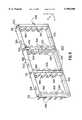
- FIG. 4shows a perspective view of a data cartridge caddy-to-storage rack referencing system and cartridge caddy according to the present invention
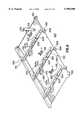
- FIG. 5shows a perspective view of a data cartridge caddy-to-storage rack referencing sleeve according to the present invention
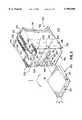
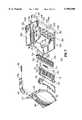
- FIG. 7shows a perspective view of a disassembled data cartridge caddy illustrating a data cartridge interlock and release system according to the present invention
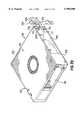
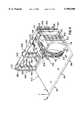
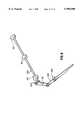
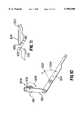
- FIG. 10shows a side perspective view of the data cartridge interlock release actuator system shown in FIG. 9 according to the present invention.
- FIG. 1is a simplified perspective view of a computer information storage library (also known as an autochanger) in accordance with an example embodiment of the present invention.
- the autochanger illustrated in FIG. 1has three computer information drive mechanisms 100, 101, and 102, mounted in the base of a cabinet (not illustrated). At least one column of cartridge storage locations 104 above the drives is used to store data cartridges.
- a compact example embodiment of a storage rack using the concepts of the present inventionmay have only one or two columns of storage locations and a larger embodiment may have more than three columns.
- the storage locations 104may be defined, for example, by "C" shaped brackets as illustrated in FIG. 1, "L” shaped brackets, shelves, edge guides, or other suitable holders.
- the storage locations 104include features to prevent cartridges from vibrating or shaking out of the storage locations.
- a transport mechanism(not illustrated) provides horizontal (X and Y) and vertical (Z) displacement of a picker 106 and supports the picker 106 at a fixed orientation relative to the displacement path.
- the picker 106includes a sleeve with guides for carrying a data cartridge and a moveable thumb (not illustrated). Examples of suitable transport mechanisms for a computer information storage rack configured as generally depicted in FIG. 1 may be found in U.S. Pat. Nos. 5,101,387, 5,043,962 and U.S. patent application Ser. No. 08/296,054, each of which is hereby incorporated by reference for all that they teach.
- FIG. 2Aillustrates a bottom side perspective view of a typical DLT data cartridge 200.
- FIG. 2Billustrates a second bottom side perspective view of a typical DLT data cartridge 200.
- FIG. 3illustrates a perspective view of a DLT data cartridge handling and storage caddy 300 from the cartridge magazine side 342 of the caddy and a top side perspective view of a DLT data cartridge 200.
- FIG. 3also shows a dotted line illustrating the insertion path for inserting the data cartridge 200 into a middle storage slot 340 of the caddy 300.
- the data cartridge slots 340 on the cartridge magazine side 342 of caddy 300are defined by shelves 316 that extend between side walls 346 and 348 of caddy 300 or by partial shelves 318 and 320 that run along the X axis on both side walls 346 and 348 at substantially the same Z axis position.
- the use of either full shelves 316 or partial shelves 318 and 320is a matter of design choice, although at least one full shelf 316 is preferred for the structural integrity of the caddy 300.
- the spacing between the shelves 316, 318, 320 in the Z axis directionis just slightly greater than the width W of the data cartridge 200.
- the outer edge 351 of shelves 316, 318, 320may be ramped, going from a relatively thin outer edge of the shelves 316, 318, 320 to a slightly thicker shelf further along the X axis into the cartridge magazine side 342 of the caddy 300 for ease of orienting and inserting the data cartridge 200 into slots 340 by the user and the autochanger.
- Another optionis to ramp the outer edge of caddy sidewalls 346 and 348 from a relatively thin outer edge to a slightly thicker wall further into the cartridge magazine side 342 of caddy 300 in the X axis direction for ease of orienting and inserting data cartridge 200 into slots 340 by the user and the autochanger.
- the ultimate distance between sidewalls 346 and 348 in the Y axis directionis just slightly greater than the length L of the data cartridge 200.
- Caddy 300includes a rear cartridge magazine side 342 into which the data cartridges 200 can be inserted and extracted from.
- Caddy 300also includes a front user handling side 344 which has a handle 314 for a user to carry the caddy 300 with when the caddy 300 is removed from the storage rack 108.
- the handle 314may also be utilized by the user to insert and extract the caddy 300 into and out of the storage rack 108.
- a typical DLT data cartridge 200is generally symmetrical or square in shape with relatively few surface features on the outer cartridge shell, such as notches, grooves of the like. Accordingly, it would be rather easy to insert a DLT data cartridge 200 into an autochanger storage rack (104 in FIG. 1) in an incorrect orientation, i.e., backwards, upside down, or in some other incorrect orientation. If a DLT data cartridge 200 is placed in an autochanger storage rack 108 in an incorrect orientation, the storage rack would not be able to read or write to the data cartridge 200, as the autochanger assumes that all of the data cartridges 200 are placed in the storage rack 108 in the same orientation.
- caddy 300 of the present inventionis equipped with data cartridge insertion guide tabs 322 along the inside of caddy wall 346 within each of the data cartridge slots 340 of caddy 300.
- Guide tabs 322should be on sidewall 346 midway into the cartridge magazine side of the caddy within the data cartridge slots 340 such that guide tab 322 line-up with notch 202 in data cartridge 200 and when the data cartridge 200 is fully inserted into slot 340, the guide tab 322 will be contained within the recessed area 216 of the data cartridge 200.
- the data cartridgewill only line-up with guide tab 322 on the side of slot 340 in the magazine side 342 of the caddy 300 in the correct orientation for the picker 106. All but the correct data cartridge orientations are locked out from being installed into the caddy 300. After a data cartridge 200 has been oriented correctly with the desired slot 340 of the caddy 300 by the user, it can be installed into the caddy 300 by pressing it into the slot 340. Once the data cartridge 200 is inserted into slot 340, it is locked into place within slot 340 as will be described below in section II.
- the data cartridge caddy 300 of the present inventionwas developed for an autochanger storage rack in which the picker 106 needs to pull the data cartridges 200 out of the storage rack 108 in an upright position.
- insertion guide tabs 322could be appropriately positioned on sidewall 348 rather than sidewall 346 in order to accommodate the data cartridge 200 in an upside down fashion.
- the data cartridge interlock and release systemis best described with reference to FIGS. 2C, 2D, 3, 4, 7 and 8.
- the data cartridge interlock and release systemlocks data cartridges 200 into caddy 300 for safe transportation of the caddy 300 when it is outside the autochanger rack 104.
- the data cartridge interlock and release systemalso allows data cartridges 200 to be inserted into the caddy 300 without actuating the release mechanism.
- data cartridges 200 already in the caddy 300are retained and can not be jarred out of the caddy 300 when an additional cartridge 200 is installed into the caddy 300.
- the data cartridge interlock and release systemcontinues to provide a light holding force against the data cartridges 200 installed in it, when the release system is actuated in order to secure the data cartridges 200 in the caddy 300 when the autochanger experiences normal operational vibration and shock.
- Cartridge spring 724comprises two different leaf springs 408 and 410 with two different tip profiles 710 and 712, respectively.
- the two types of leaf spring type latches 408 and 410operate as a pair on a single cartridge 200, see FIGS. 2C and 2D.
- the first latch 408is a lock spring and has a tip profile 710 that catches ledge 204 on side 208 of data cartridge 200 when data cartridge 200 is fully inserted into slot 340 of caddy 300. Tip profile 710 of lock spring 408 will not release the data cartridge 200 unless the lock spring 408 is deflected out of the way.
- the lock tip geometry profile 710 and slanted tip 726 combination of lock spring 408permits a data cartridge 200 to be inserted into the magazine without the other lock springs 408 or detent springs 410 being deflected out of the way.
- Lock spring 408is used to secure the data cartridge 200 within the caddy 300.
- Lock spring 408retains the data cartridge 200 securely inside the caddy 300 while the caddy 300 is being handled by the user outside of the autochanger rack 104. Lock spring 408 also secures the data cartridges 200 inside the caddy 300 should the caddy 300, through rough treatment, be slammed into the rack 104 during installation.
- a second latch 410is a pure detent spring that catches ledge 206 on side 208 of data cartridge 200, when data cartridge 200 is fully inserted into slot 340 of caddy 300, see FIGS. 2C, 2D, 7 and 8.
- Detent spring 410provides light holding force and secures data cartridge 200 against a rear wall 802 of the magazine side 342 of caddy 300.
- Detent spring 410is always operational. That is the detent spring is not disabled when the lock spring 408 is disabled. Therefore, the detent spring 410 is used to retain each data cartridge 200 in the caddy 300 while the lock spring 408 is disabled.
- the detent spring 410can be overcome and will release data cartridge 200 when the data cartridge 200 is pulled by the picker 106 or the user while the lock spring 408 is disabled.
- Detent spring 410keeps other data cartridges securely within caddy 300 whenever the lock spring 408 is disabled and the user or autochanger picker 106 removes one of the data cartridges 300. Detent spring 410 also retains the data cartridges in the caddy 300. Detent spring 410 also retains the data cartridges in the caddy 300 while the storage rack experiences normal operational vibration and shock and the lock spring 408 is disabled.
- Spring 724is preferably a one-piece, stainless steel spring with latches 408 and 410 created by means of plastic over-molded at the ends of the leaf spring fingers 728.
- Spring 724could, however, be made of another spring hard material, such as spring hard steel, beryllium-copper, spring hard plastic, etc.
- a lock spring release member 704interfaces with and is used to deflect or disable the lock springs 408 and does not interface with or deflect the detent springs 410, see FIGS. 2C, 2D, 7 and 8. Specifically, lock spring release member 704 is held in place vertically within the magazine area 342 of caddy 300 by means of extending X-shaped tab 706 through hole 352 in caddy top 350 and securing lock spring release member 704 in place by means of one end 713 of extension spring 714 attached to spring attachment means 730 on the lock spring release member 704 and the opposite end 715 of spring member 714 attached to a similar spring attachment means (not shown) on the underside of caddy top 350.
- cartridge spring 724is snapped into spring retainer 718 and positioned in caddy 300 in such a manner that spring retainer 718 finishes side wall 346 on the handle side 344 of caddy 300 and leaf springs 408 and 410 extend through rear wall 802 into the magazine side 342 of caddy 300, see FIGS. 4, 7 and 8. Screws 702 secure hand front panel 720 to the rear wall 802 of caddy 300.
- leaf springs 408 and 410extend from the handle side 344 into the cartridge magazine side 342 of caddy 300, see FIGS. 3, 4, 7 and 8.
- notch 202 of data cartridge 200is aligned with guide tab 322 and ledges 204 and 206 slide along and displace ramps 710 and 711 of lock spring 408 and detent spring 410, respectively, until ledges 204 and 206 of data cartridge 200 are positioned behind lock tip 710 of lock spring 408 and ramp tip 712 of detent spring 410, respectively, see FIGS. 2C, 3 and 4.
- a cosmetic button 328is snapped to X-shaped tab 706 of lock spring release member 704, see FIGS. 3, 4, 7 and 8.
- the extension spring 713holds the lock spring release member 704 against the under side of caddy top 350 in such a manner that displacement ramps 708 of lock spring release member 704 do not engage lock spring ramps 722 of lock spring 408 and do not displace lock springs 408 from the locked position, see FIGS. 2C, 2D, 4, 7 and 8.
- button 328is depressed, either manually or by a mechanical means within the autochanger, the lock spring release member 704 is moved downward and displacement ramps 708 of the lock spring release member 704 engage and displace lock spring ramps 722 of lock springs 408, see FIGS. 2C, 2D, 7 and 8.
- detent spring 410When lock spring 408 is displaced, lock tip 710 is disengaged from ledge 204 and only detent spring 410 holds data cartridge 200 in place within slot 340 by means of ledge 206.
- the spring force of detent spring 410is enough to hold the weight of data cartridge 200 against vibration and shock, but can be easily overcome by the user or the picker 106 pulling on the data cartridge 200.
- Lock spring release member 704 and spring retainer 718are preferably made of molded plastic, such as polycarbonate or nylon. Lock spring release member 704 and spring retainer 718 could also be made of polycarbonate or nylon. Compression spring 716 and extension spring 714 are preferably made of spring hard steel. Cosmetic button 328, caddy spring lock release 412 and handle front panel 720 are preferably made of cosmetically colored molded plastic, but could also be made of steel, brass, aluminum, etc.
- the data cartridge interlock release actuator systemis best described with reference to FIGS. 2C, 2D, 3, 4-10.
- the data cartridge interlock release actuator systemallows the data cartridges 200 to be locked into the data cartridge caddy 300 until needed by the autochanger, such that normal vibration and shock from the operation of the autochanger or the high force levels associated with the user inserting and removing the caddy 300 into the storage rack do not dislodge the data cartridges 200 from the caddy 300.
- the data cartridge interlock release actuator systemalso allows the autochanger to unlock the lock spring 408 by actuating the data cartridge interlock release actuator system, which depresses the button 328 that activates the lock spring release member 704 and displaces the lock spring 408.
- the autochangercan accomplish the actuating of the data cartridge interlock release actuator system by means of the picker 106, other robotic means, or other mechanical mechanism.
- the picker 106actuates the data cartridge interlock release actuator system.
- a motor or solenoidcould also actuate the cartridge interlock release system.
- FIGS. 4 and 5show a caddy guide referencing sleeve 500 and a caddy guide bottom plate 402.
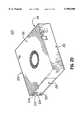
- FIG. 6shows a caddy guide top plate 600.
- the caddy guide referencing sleeve 500, caddy guide bottom plate 402 and caddy guide top plate 600help form the exterior of the autochanger storage rack 108 into which the caddy 300 is locked so that the picker of the autochanger can access the data cartridges 200.
- Caddy guide top plate 600is attached to caddy guide referencing sleeve 500 by means of screws, rivets, or the like via holes 610 in the caddy guide top plate 600 and holes 512 in the caddy guide referencing sleeve 500.
- lock release lobe 616is attached to cam shaft 908, which is attached to cam torque arm 902, which is attached to actuation link 618, which is attached to actuation lever 904 having lever pivot bushing 906.
- the cam shaft 908is rotatingly mounted to the top side of the caddy guide top plate 600, such that the lock release lobes 616 extends through holes in the caddy guide top plate 600 and line-up with the button 328 on the top 350 of the caddy 300.
- the pivot bushing 906is rotatingly attached to the autochanger storage rack such that when actuation lever 904 is raised and lowered, as shown by arrow 1004, the pivot bushing 906 is the lever rotation axis 1002.
- the actuation lever 904is raised and lowered by the picker 106 or by some other robotic or mechanical means within the autochanger unit, such as a motor or solenoid. In its free state, the actuation lever 904 is in a downward position, as shown in FIGS. 9 and 10, and the cam shaft 908 is oriented with the lock release lobes 616 providing no deflection of button 328.
- the cam shaft 908rotates and the lock release lobes 616 rotate such that the wider portion 910 engages and depresses the button 328 to actuate lock spring release member 704 and release lock springs 408 so that a cartridge 200 may be removed from the caddy 300 by the picker 106.
- the cam shaft 908rotates far enough to go over, where it will stay in a detent position during normal operation until the picker 106 lowers the actuation lever 904.
- the cam shaft 908 rotationreverses, the cam shaft 908 goes back over center and is returned and held in the free state by an extension spring (not shown) fixed to the actuation lever 904.
- cam shaft 908, actuation link 618 and actuation lever 904are made of stainless steel, but may also be made of plastic, steel, aluminum or some other similarly hard material.
- lock release lobe 616, cam torque arm 902 and pivot bushing 906are made of molded plastic, but may also be made of brass, steel or similar material.
- Cam shaft 908may be made as a cylindrical shaft as shown in FIG. 9 with pins to lock lobes 616 to cam shaft 908 in order to prevent slipping of lobes 616 when torque is applied.
- cam shaft 908is a square shaft, which prevents lobes 616 from slipping when torque is applied.
- a square cam shaft 908also eliminates the need for pins to secure lobes 616 to cam shaft 908.
- the data cartridge caddy 300permits a user of a DLT autochanger storage rack to manually install or remove up to five data cartridges 200 at a time from the autochanger storage rack. Also, while inside the storage rack, the data cartridge caddy 300 provides storage for the data cartridges 200 when not in use by the autochanger. The caddy 300 must also accurately reference the cartridges 200 to the cartridge handling system or picker 106. Therefore, an accurate alignment and referencing scheme is necessary to guide the caddy 300 from its free state outside of the storage rack 108 to its final referenced position inside the storage rack 108 when it is being installed manually by a user.
- the data cartridge caddy-to storage rack referencing systemwill be described with reference to FIGS. 3-8.
- the parts involved in aligning and referencing the caddy 300 to the autochanger storage rack 108include the caddy guide bottom plate 402, the caddy guide referencing sleeve 500, caddy guide rail 404, caddy hooks 406, caddy lock spring 604, and caddy guide top plate 600.
- Caddy hooks 406are made of molded plastic and are mounted on the topside of caddy guide top plate 600 and extend through holes 620 to the underside of caddy guide top plate 600, see FIGS. 4 and 6. Caddy hooks 406 could also be made of carbonate and Teflon-filled nylon or any material that wears well against friction.
- Caddy lock spring 604is made of stainless steel and is mounted to the caddy guide rail 404 on the underside of the caddy guide top plate 600. Caddy lock spring could also be made of a heat treated carbon steel or other spring hard material.
- the caddy guide referencing sleeve 500is made of molded plastic and is attached to the caddy guide top plate 600 by means of screws, rivets or the like through holes 610 in the caddy guide top plate 600 and holes 512 in the caddy guide referencing sleeve 500 after the caddy guide top plate 600 is installed in the autochanger storage rack 108, see FIGS. 4 and 6.
- the caddy guide referencing sleeve 500is attached to the structure of the caddy guide top plate 600 and the autochanger storage rack 108.
- the caddy guide referencing sleeve 500could also be made of carbon and Teflon-filled polycarbonate or other strong material that is also capable of dissipating the static electricity that builds up when two surfaces slide against each other.
- the caddy guide bottom plate 402is made of polycarbonate and is attached to the caddy guide referencing sleeve 500 and provides initial caddy-to-storage rack referencing as the user aligns the caddy 300 with the storage rack 108 and begins the installation procedure, see FIG. 4.
- the caddy guide bottom plate 402may also be made of steel or nylon.
- a caddy guide bottom plate 402is provided in order to assist the user in aligning the caddy for installation into a chosen slot 430 in the caddy guide referencing sleeve 500.
- the caddy guide bottom plate 402has positioning guide labels 414, 416, and 418 on it indicating the locations of the three slots 430.
- the caddy guide bottom plate 402serves as the cosmetic surface that the caddy 300 initially slides upon inside the storage rack 108 prior to final referencing and lock-in.
- the caddy guide bottomprovides Z direction guidance as the user aligns the caddy 300 in the Y direction prior to sliding the caddy 300 in the X direction in order to install the caddy 300 into the storage rack 108.
- the cartridge guide tabs 462 on the caddy guide referencing sleeve 500also provide Z direction referencing with the data cartridges 200 in the caddy 300.
- Cartridge guide tabs 462are tapered at the front side 464 to provide a smooth transition to additional Z direction referencing beyond the initial Z direction referencing provided by the caddy guide bottom plate 402.
- Z referencing tabs 506 on the caddy guide referencing sleeve 500engage Z referencing slots 306 and 308 at the front, magazine side 342 of the caddy 300, see FIGS. 3-5.
- caddy hooks 406engage ledge 370 of handle front panel 720, see FIGS. 3,4 and 6.
- the Z referencing tabs 506 and the caddy hooks 406simultaneously lift the caddy 300 up off of the caddy guide bottom plate 402 to provide final referencing of the caddy 300 in the Z direction.
- Tapered lead-in on the Z referencing slots 306 and 308 on the caddy 300, the Z referencing tabs 506 on the caddy guide referencing sleeve 500, the ledge 370 of handle front panel 720, and caddy hooks 406allow for a smooth transition to the final referenced position in the Z direction, see FIGS. 3-6.
- Final Y direction referencingis also provided by a vertical tab (not shown) within caddy hooks 406 engaging slots 332 and 334 of ledge 370 of handle front panel 720, see FIGS. 3, 4, 6 and 7. Slots 332 and 334 have a flared lead-in, in order to allow for a smooth transition to final Y direction referencing to caddy hooks 406.
- This final Y direction referencingreplaces the preliminary Y direction referencing provided by the caddy guide rail 404.
- the caddy guide rail 404may be narrower in the backside 660 to coincide with a position where the Y referencing fins 502 of the caddy guide referencing sleeve 500 take over with the Y direction referencing.
- the last referencing of the caddy 300 during installation in the storage rack 108is established in the X direction.
- the userpushes the caddy 300 in the X direction until the caddy 300 stops due to X referencing surfaces 302 and 304 on the front, magazine side 342 of side walls 346 and 348, respectively come into contact with X referencing pads 504 of the caddy guide referencing sleeve 500, see FIGS. 3-5.
- the caddy lock spring 604 on the caddy guide top plate 600locks into hole 380 in the top 350 of the caddy 300 and locks the caddy 300 into place when the caddy 300 is completely installed into the storage rack 108.
- the caddy 300is now locked into its final referenced position within the storage rack 108 and the picker 106 of the autochanger is referenced to and is able to interface with the cartridges 200 within the cartridge caddy 300.
- caddy lock spring 604 on the caddy guide top plate 600locks into hole 380 in top 350 of caddy 300 and locks caddy 300 into place within the storage rack 108 against backward movement in the X direction.
- lock ledge 605 of lock spring 604engages surface 382 of hole 380 and holds the caddy in place.
- the usermay depress the caddy spring lock release 412 toward the handle 314.
- ledge 330slides along ramp surface 603 of lock spring 604 and displaces the lock spring 604 from the locked position, so that caddy 300 is free to be removed from the storage rack 108.
- the caddy lock spring 604must be week in the Z direction in order to allow thumb actuation of the caddy spring lock release to be as light as possible. However, the caddy lock spring 604 must be able to withstand operational vibration and hold the caddy against such forces in the X direction and slightly in the Z direction. Accordingly, in a preferred embodiment, the locking ledge 605 of lock spring 604 is overbent toward surface 382 rather than being substantially vertical, see FIG. 11.
- the caddy guide referencing sleeve 500not only provides referencing for the caddy 300 to be installed into the storage rack 108, but also provides lead-in referencing for the data cartridges 200 being inserted into the caddy 300 by the data cartridge handling mechanism or picker 106, see FIGS. 4 and 5.
- data cartridge Z referencing tabs 462provide Z direction referencing for the picker 106 from the back side of the caddy guide referencing sleeve 500.
- Data cartridge referencing tabs 462are tapered at the backside ends 466 to provide a smooth transition to Z direction referencing to the picker 106.
- data cartridge Y referencing tabs 468provide Y direction referencing for the picker 106 from the backside of the caddy guide referencing sleeve 500.
- Data cartridge Y referencing tabs 468are also tapered to provide a smooth transition to Y direction referencing to the picker 106. The picker will continue to slide the data cartridge 200 in the X direction until the data cartridge 200 hits wall 802 within caddy 300, at which point the data cartridge is locked into caddy 300 by lock spring 408 and detent spring 410.
- the data cartridge caddy presence sensing method and apparatus according to the present inventionwill be described with reference to FIGS. 3-8.
- the present inventionprovides a method and apparatus for the autochanger to automatically, electronically sense the presence of data cartridge caddy 300 within the storage rack. Once the autochanger recognizes which data cartridge caddies 300 are present within the storage rack 108, the picker will not attempt to remove data cartridges 200 from data cartridge positions of data cartridge caddies 300 that are not present.
- the basic elements of the data cartridge caddy presence sensing method and apparatusinclude a optical interrupt flag 326 on the top 350 of the caddy 300 and optical interrupt sensors 606 and 608 provided on the underside of the caddy guide top plate 600, see FIGS. 3, and 6-8.
- the optical interrupt sensors 606 and 608extend through holes 508 in caddy guide referencing sleeve 500, see FIGS. 4-6.
- the optical interrupt flag 326will trip the optical interrupt sensors 606 and 608. This information will be sent to the controller of the picker 106 via electronic signal. Once the picker determines which data cartridge caddies 300 are present and which are not present, the picker 106 will go around and bump into the possible data cartridge positions of caddies 300 that are present and will skip the data cartridge positions of missing caddies 300.
- An alternative to this embodiment of the present inventionis to use reflective sensors, magnetic sensors, or micro switches. Also, instead of the picker 106 going around and bumping into the data cartridge positions of caddies 300 that are present to determine whether the data cartridges 200 are present within the caddies 300 that are present, there could also be data cartridge presence sensors on Y direction referencing tabs 466 at each data cartridge position or on caddy guide referencing sleeve posts 490, 492, 494, 496 within each data cartridge position.
- the controller of the picker 106would then query which data cartridges 200 were present within the caddies 300 that were present by sensing which optical sensors had been interrupted by the presence of the data cartridges within the caddy guide referencing sleeve 500.
- Another alternative embodimentis to utilize a bar-code reader to read bar-code labels on the cartridges 200 of the known present caddies to determine which cartridges 200 are present. If the bar-code reader does not find a bar-code label of a cartridge slot within a known present caddy, then the picker could determine whether that particular cartridge 200 was present utilizing the "sense of touch" or bumping method. Any of the above methods is much faster than the old "sense of touch" or bumping method to determine the presence of the the data cartridges within the caddies and the caddies within the autochanger.
- a caddy 300that holds a number of cartridges 200 other than five is within the scope of the present invention.
- a storage rackthat holds a different number of caddies 300 other than three is possible.
- the data cartridges 200are held in the caddy 300 in the direction described is to accommodate an HP autochanger C5150, other autochangers handle cartridges 200 from different initial orientations, such as upside down or sideways, which are within the scope of the present invention.
- the present inventionwas described for use of DLT data cartridges in an autochanger library.
- the concepts of the present inventionwould also be applicable to magneto-optical storage devices, CDS in a CD player, any types of tape cartridge, etc.
Landscapes
- Automatic Tape Cassette Changers (AREA)
- Automatic Disk Changers (AREA)
- Packaging For Recording Disks (AREA)
Abstract
Description
Claims (5)
Priority Applications (4)
| Application Number | Priority Date | Filing Date | Title |
|---|---|---|---|
| US08/853,619US5999500A (en) | 1997-05-09 | 1997-05-09 | Data cartridge interlock release actuator system |
| EP98100483AEP0877367B1 (en) | 1997-05-09 | 1998-01-13 | Data cartridge interlock release actuator system |
| DE69817913TDE69817913T2 (en) | 1997-05-09 | 1998-01-13 | Data cartridge locking and unlocking system |
| JP12476898AJP3305258B2 (en) | 1997-05-09 | 1998-05-07 | Data cartridge interlock release actuator system |
Applications Claiming Priority (1)
| Application Number | Priority Date | Filing Date | Title |
|---|---|---|---|
| US08/853,619US5999500A (en) | 1997-05-09 | 1997-05-09 | Data cartridge interlock release actuator system |
Publications (1)
| Publication Number | Publication Date |
|---|---|
| US5999500Atrue US5999500A (en) | 1999-12-07 |
Family
ID=25316523
Family Applications (1)
| Application Number | Title | Priority Date | Filing Date |
|---|---|---|---|
| US08/853,619Expired - Fee RelatedUS5999500A (en) | 1997-05-09 | 1997-05-09 | Data cartridge interlock release actuator system |
Country Status (4)
| Country | Link |
|---|---|
| US (1) | US5999500A (en) |
| EP (1) | EP0877367B1 (en) |
| JP (1) | JP3305258B2 (en) |
| DE (1) | DE69817913T2 (en) |
Cited By (10)
| Publication number | Priority date | Publication date | Assignee | Title |
|---|---|---|---|---|
| US6425723B1 (en)* | 1999-08-04 | 2002-07-30 | Fujitsu Limited | Loading device |
| US6480443B1 (en)* | 2000-04-14 | 2002-11-12 | Hewlett-Packard Co. | Method and system for restraining a cartridge within an insertable magazine |
| US20030042824A1 (en)* | 2001-08-23 | 2003-03-06 | Coffin Paul Clinton | Removable media storage method and device for a data storage system |
| US20030058747A1 (en)* | 2001-09-24 | 2003-03-27 | Smith Mark A. | Universal cartridge magazine system and method |
| US20040118215A1 (en)* | 2002-12-18 | 2004-06-24 | Hewlett-Packard Development Company, L.P. | Electromechanical apparatus with automatic self-test |
| US20050207107A1 (en)* | 2004-03-18 | 2005-09-22 | Reasoner Kelly J | Electrical-optical signal conversion for automated storage systems |
| US20050273406A1 (en)* | 2003-04-08 | 2005-12-08 | Lending Tree, Inc. | Method and computer network for co-ordinating a loan over the internet |
| US7230792B2 (en) | 2003-11-19 | 2007-06-12 | Hewlett-Packard Development Company, L.P. | Media selection systems and methods having a coupler for slidably engaging a storage medium in a storage system |
| US20070132261A1 (en)* | 2005-12-09 | 2007-06-14 | Craig Ehrlich | Collapsible Grab Handle |
| US12254897B1 (en) | 2022-09-07 | 2025-03-18 | MagNext Ltd. | Data cartridge magazine and library system |
Families Citing this family (1)
| Publication number | Priority date | Publication date | Assignee | Title |
|---|---|---|---|---|
| US6661747B2 (en)* | 2001-08-23 | 2003-12-09 | Hewlett-Packard Development Company, L.P. | Systems for retaining data media in a media storage device |
Citations (23)
| Publication number | Priority date | Publication date | Assignee | Title |
|---|---|---|---|---|
| US3812537A (en)* | 1972-11-14 | 1974-05-21 | Rca Corp | Tape cartridge player cartridge magazine |
| US4701900A (en)* | 1984-05-31 | 1987-10-20 | Sony Corporation | Disc players fitted for automatic change of discs |
| DE3904911A1 (en)* | 1988-02-17 | 1989-08-31 | Hitachi Ltd | CASSETTE-LIKE MAGNETIC TAPE CHANGER |
| US4932828A (en)* | 1985-09-04 | 1990-06-12 | Canon Kabushiki Kaisha | Automatic article feeding system |
| EP0392620A2 (en)* | 1989-04-13 | 1990-10-17 | Koninklijke Philips Electronics N.V. | Apparatus for automatically accessing cartridges in an array |
| EP0427329A2 (en)* | 1989-11-06 | 1991-05-15 | Koninklijke Philips Electronics N.V. | Optical disc cartridge loading apparatus |
| US5043962A (en)* | 1989-03-21 | 1991-08-27 | Hewlett-Packard Company | Cartridge handling system |
| US5101387A (en)* | 1989-01-18 | 1992-03-31 | Hewlett-Packard Company | Lateral displacement control assembly for an optical disk handling system |
| US5164928A (en)* | 1989-11-30 | 1992-11-17 | Hewlett-Packard Company | Error recovery in a cartridge handling system |
| EP0535640A2 (en)* | 1991-09-30 | 1993-04-07 | Conner Peripherals, Inc. | Cassette loading system |
| US5206814A (en)* | 1990-10-09 | 1993-04-27 | Robot Aided Manufacturing Center, Inc. | Robotic music store |
| US5231552A (en)* | 1990-06-29 | 1993-07-27 | Digital Equipment Corporation | Magazine and receiver for media cartridge loader |
| US5247406A (en)* | 1991-07-30 | 1993-09-21 | Storage Technology Corporation | Tape cartridge magazine |
| US5274516A (en)* | 1990-09-29 | 1993-12-28 | Victor Company Of Japan, Ltd. | Multi-cassette recording and reproducing apparatus |
| US5282183A (en)* | 1991-11-08 | 1994-01-25 | Pioneer Electronic Corporation | Position detecting apparatus and method |
| EP0627738A2 (en)* | 1993-05-27 | 1994-12-07 | International Business Machines Corporation | A magazine for storing cartridges, and a cartridge processing device |
| EP0638899A2 (en)* | 1993-08-13 | 1995-02-15 | International Business Machines Corporation | Automatic cartridge feeder |
| EP0697695A2 (en)* | 1994-07-29 | 1996-02-21 | International Business Machines Corporation | An automated storage system and method of locating objects in such a system |
| EP0709849A2 (en)* | 1994-10-25 | 1996-05-01 | SONY ELECTRONICS INC. (a Delaware corporation) | Disk cartridge magazines |
| EP0709840A2 (en)* | 1994-10-25 | 1996-05-01 | Sony Electronics Inc. | Latching cartridge magazines within cartridge storage devices |
| EP0712125A2 (en)* | 1994-11-14 | 1996-05-15 | International Business Machines Corporation | Cassette magazine for automated storage system |
| US5719833A (en)* | 1995-01-11 | 1998-02-17 | Hewlett-Packard Company | Apparatus for securing a cartridge engaging assembly within a cartridge handling system |
| US5757594A (en)* | 1994-11-16 | 1998-05-26 | International Business Machines Corporation | Plugable media stackloading system |
- 1997
- 1997-05-09USUS08/853,619patent/US5999500A/ennot_activeExpired - Fee Related
- 1998
- 1998-01-13DEDE69817913Tpatent/DE69817913T2/ennot_activeExpired - Fee Related
- 1998-01-13EPEP98100483Apatent/EP0877367B1/ennot_activeExpired - Lifetime
- 1998-05-07JPJP12476898Apatent/JP3305258B2/ennot_activeExpired - Fee Related
Patent Citations (25)
| Publication number | Priority date | Publication date | Assignee | Title |
|---|---|---|---|---|
| US3812537A (en)* | 1972-11-14 | 1974-05-21 | Rca Corp | Tape cartridge player cartridge magazine |
| US4701900A (en)* | 1984-05-31 | 1987-10-20 | Sony Corporation | Disc players fitted for automatic change of discs |
| US4932828A (en)* | 1985-09-04 | 1990-06-12 | Canon Kabushiki Kaisha | Automatic article feeding system |
| DE3904911A1 (en)* | 1988-02-17 | 1989-08-31 | Hitachi Ltd | CASSETTE-LIKE MAGNETIC TAPE CHANGER |
| US5021902A (en)* | 1988-02-17 | 1991-06-04 | Hitachi, Ltd. | Tape changer for loading and unloading a magazine of magnetic tape cartridges |
| US5101387A (en)* | 1989-01-18 | 1992-03-31 | Hewlett-Packard Company | Lateral displacement control assembly for an optical disk handling system |
| US5043962A (en)* | 1989-03-21 | 1991-08-27 | Hewlett-Packard Company | Cartridge handling system |
| EP0392620A2 (en)* | 1989-04-13 | 1990-10-17 | Koninklijke Philips Electronics N.V. | Apparatus for automatically accessing cartridges in an array |
| EP0427329A2 (en)* | 1989-11-06 | 1991-05-15 | Koninklijke Philips Electronics N.V. | Optical disc cartridge loading apparatus |
| US5164928A (en)* | 1989-11-30 | 1992-11-17 | Hewlett-Packard Company | Error recovery in a cartridge handling system |
| US5231552A (en)* | 1990-06-29 | 1993-07-27 | Digital Equipment Corporation | Magazine and receiver for media cartridge loader |
| US5274516A (en)* | 1990-09-29 | 1993-12-28 | Victor Company Of Japan, Ltd. | Multi-cassette recording and reproducing apparatus |
| US5206814A (en)* | 1990-10-09 | 1993-04-27 | Robot Aided Manufacturing Center, Inc. | Robotic music store |
| US5247406A (en)* | 1991-07-30 | 1993-09-21 | Storage Technology Corporation | Tape cartridge magazine |
| EP0535640A2 (en)* | 1991-09-30 | 1993-04-07 | Conner Peripherals, Inc. | Cassette loading system |
| US5282183A (en)* | 1991-11-08 | 1994-01-25 | Pioneer Electronic Corporation | Position detecting apparatus and method |
| EP0627738A2 (en)* | 1993-05-27 | 1994-12-07 | International Business Machines Corporation | A magazine for storing cartridges, and a cartridge processing device |
| EP0638899A2 (en)* | 1993-08-13 | 1995-02-15 | International Business Machines Corporation | Automatic cartridge feeder |
| EP0697695A2 (en)* | 1994-07-29 | 1996-02-21 | International Business Machines Corporation | An automated storage system and method of locating objects in such a system |
| EP0709849A2 (en)* | 1994-10-25 | 1996-05-01 | SONY ELECTRONICS INC. (a Delaware corporation) | Disk cartridge magazines |
| EP0709840A2 (en)* | 1994-10-25 | 1996-05-01 | Sony Electronics Inc. | Latching cartridge magazines within cartridge storage devices |
| US5576911A (en)* | 1994-10-25 | 1996-11-19 | Sony Corporation | Cartridge locking mechanism and interface |
| EP0712125A2 (en)* | 1994-11-14 | 1996-05-15 | International Business Machines Corporation | Cassette magazine for automated storage system |
| US5757594A (en)* | 1994-11-16 | 1998-05-26 | International Business Machines Corporation | Plugable media stackloading system |
| US5719833A (en)* | 1995-01-11 | 1998-02-17 | Hewlett-Packard Company | Apparatus for securing a cartridge engaging assembly within a cartridge handling system |
Non-Patent Citations (2)
| Title |
|---|
| IBM Technical Disclosure Bulletin, vol. 38 No. 10, Oct. 1995; Automatic Tape Cartridge Feeder Sensor Design, pp. 247 251.* |
| IBM Technical Disclosure Bulletin, vol. 38 No. 10, Oct. 1995; Automatic Tape Cartridge Feeder Sensor Design, pp. 247-251. |
Cited By (13)
| Publication number | Priority date | Publication date | Assignee | Title |
|---|---|---|---|---|
| US6425723B1 (en)* | 1999-08-04 | 2002-07-30 | Fujitsu Limited | Loading device |
| US6480443B1 (en)* | 2000-04-14 | 2002-11-12 | Hewlett-Packard Co. | Method and system for restraining a cartridge within an insertable magazine |
| US20030042824A1 (en)* | 2001-08-23 | 2003-03-06 | Coffin Paul Clinton | Removable media storage method and device for a data storage system |
| US7455375B2 (en) | 2001-08-23 | 2008-11-25 | Hewlett-Packard Development Company, L.P. | Removable media storage method and device for a data storage system |
| US7019940B2 (en) | 2001-09-24 | 2006-03-28 | Hewlett-Packard Development Company, L.P. | Universal cartridge magazine system and method |
| US20030058747A1 (en)* | 2001-09-24 | 2003-03-27 | Smith Mark A. | Universal cartridge magazine system and method |
| US20040118215A1 (en)* | 2002-12-18 | 2004-06-24 | Hewlett-Packard Development Company, L.P. | Electromechanical apparatus with automatic self-test |
| US20050273406A1 (en)* | 2003-04-08 | 2005-12-08 | Lending Tree, Inc. | Method and computer network for co-ordinating a loan over the internet |
| US7230792B2 (en) | 2003-11-19 | 2007-06-12 | Hewlett-Packard Development Company, L.P. | Media selection systems and methods having a coupler for slidably engaging a storage medium in a storage system |
| US20050207107A1 (en)* | 2004-03-18 | 2005-09-22 | Reasoner Kelly J | Electrical-optical signal conversion for automated storage systems |
| US7505261B2 (en) | 2004-03-18 | 2009-03-17 | Hewlett-Packard Development Company, L.P. | Electrical-optical signal conversion for automated storage systems |
| US20070132261A1 (en)* | 2005-12-09 | 2007-06-14 | Craig Ehrlich | Collapsible Grab Handle |
| US12254897B1 (en) | 2022-09-07 | 2025-03-18 | MagNext Ltd. | Data cartridge magazine and library system |
Also Published As
| Publication number | Publication date |
|---|---|
| DE69817913T2 (en) | 2004-07-15 |
| EP0877367B1 (en) | 2003-09-10 |
| EP0877367A3 (en) | 1998-12-16 |
| DE69817913D1 (en) | 2003-10-16 |
| JPH1131381A (en) | 1999-02-02 |
| JP3305258B2 (en) | 2002-07-22 |
| EP0877367A2 (en) | 1998-11-11 |
Similar Documents
| Publication | Publication Date | Title |
|---|---|---|
| US5995477A (en) | Data cartridge caddy-to-storage rack referencing method and apparatus | |
| US6028733A (en) | Data cartridge caddy-to-storage rack interlock and release system | |
| US5926341A (en) | Data cartridge interlock and release system | |
| US5870245A (en) | Modular cabinet for data storage media and drives | |
| JP2999787B2 (en) | Optical disc cartridge handling device with cartridge passive engagement assembly | |
| US5805561A (en) | Cartridge engagement system for optical disk cartridges having a positionable carriage | |
| US5993045A (en) | Data cartridge caddy presence sensing method and apparatus | |
| US5999500A (en) | Data cartridge interlock release actuator system | |
| CA2029221A1 (en) | Mass loader mechanism and method | |
| KR20010024602A (en) | Cartridge library and method of operation | |
| JP2004241118A (en) | Auto-changer | |
| US6775093B1 (en) | Data cartridge-to-caddy referencing system for a data cartridge handling mechanism within an autochanger | |
| EP0877361A2 (en) | Data cartridge handling and storage caddy | |
| US5687039A (en) | Dual fixed-finger picker for data cartridges | |
| EP0805444B1 (en) | Single-side engaging picker for data cartridges | |
| US6980884B2 (en) | Intrusion monitors for media storage systems | |
| EP1136995B1 (en) | Bar code reader device and method for its use in a media autochanger | |
| EP1150290B1 (en) | Apparatus for handling media cartridges | |
| JP2005317056A (en) | Cassette library device |
Legal Events
| Date | Code | Title | Description |
|---|---|---|---|
| AS | Assignment | Owner name:HEWLETT-PACKARD COMPANY, CALIFORNIA Free format text:ASSIGNMENT OF ASSIGNORS INTEREST;ASSIGNOR:MUELLER, ROBERT;REEL/FRAME:008762/0336 Effective date:19970926 | |
| AS | Assignment | Owner name:HEWLETT-PACKARD COMPANY, COLORADO Free format text:MERGER;ASSIGNOR:HEWLETT-PACKARD COMPANY;REEL/FRAME:011523/0469 Effective date:19980520 | |
| FEPP | Fee payment procedure | Free format text:PAYOR NUMBER ASSIGNED (ORIGINAL EVENT CODE: ASPN); ENTITY STATUS OF PATENT OWNER: LARGE ENTITY | |
| FPAY | Fee payment | Year of fee payment:4 | |
| FPAY | Fee payment | Year of fee payment:8 | |
| REMI | Maintenance fee reminder mailed | ||
| AS | Assignment | Owner name:HEWLETT-PACKARD DEVELOPMENT COMPANY, L.P., TEXAS Free format text:ASSIGNMENT OF ASSIGNORS INTEREST;ASSIGNOR:HEWLETT-PACKARD COMPANY;REEL/FRAME:026945/0699 Effective date:20030131 | |
| LAPS | Lapse for failure to pay maintenance fees | ||
| STCH | Information on status: patent discontinuation | Free format text:PATENT EXPIRED DUE TO NONPAYMENT OF MAINTENANCE FEES UNDER 37 CFR 1.362 | |
| FP | Lapsed due to failure to pay maintenance fee | Effective date:20111207 |