US5984931A - Diagnostic measurement transfer apparatus - Google Patents
Diagnostic measurement transfer apparatusDownload PDFInfo
- Publication number
- US5984931A US5984931AUS08/820,197US82019797AUS5984931AUS 5984931 AUS5984931 AUS 5984931AUS 82019797 AUS82019797 AUS 82019797AUS 5984931 AUS5984931 AUS 5984931A
- Authority
- US
- United States
- Prior art keywords
- fixture
- edge
- template
- indicator
- positioning block
- Prior art date
- Legal status (The legal status is an assumption and is not a legal conclusion. Google has not performed a legal analysis and makes no representation as to the accuracy of the status listed.)
- Expired - Fee Related
Links
- 238000005259measurementMethods0.000titleclaimsabstractdescription23
- 238000007373indentationMethods0.000claimsdescription12
- 238000000034methodMethods0.000abstractdescription4
- 238000001356surgical procedureMethods0.000description7
- 208000008558OsteophyteDiseases0.000description4
- 239000003550markerSubstances0.000description3
- 239000000463materialSubstances0.000description3
- 229920000515polycarbonatePolymers0.000description3
- 239000004417polycarbonateSubstances0.000description3
- 210000000988bone and boneAnatomy0.000description2
- 230000012010growthEffects0.000description2
- 208000004434CalcinosisDiseases0.000description1
- 230000006378damageEffects0.000description1
- 230000007423decreaseEffects0.000description1
- 239000003814drugSubstances0.000description1
- 210000003041ligamentAnatomy0.000description1
- 210000002435tendonAnatomy0.000description1
Images
Classifications
- A—HUMAN NECESSITIES
- A61—MEDICAL OR VETERINARY SCIENCE; HYGIENE
- A61B—DIAGNOSIS; SURGERY; IDENTIFICATION
- A61B17/00—Surgical instruments, devices or methods
- A61B17/14—Surgical saws
- A61B17/15—Guides therefor
- A—HUMAN NECESSITIES
- A61—MEDICAL OR VETERINARY SCIENCE; HYGIENE
- A61B—DIAGNOSIS; SURGERY; IDENTIFICATION
- A61B90/00—Instruments, implements or accessories specially adapted for surgery or diagnosis and not covered by any of the groups A61B1/00 - A61B50/00, e.g. for luxation treatment or for protecting wound edges
- A61B90/36—Image-producing devices or illumination devices not otherwise provided for
- A—HUMAN NECESSITIES
- A61—MEDICAL OR VETERINARY SCIENCE; HYGIENE
- A61B—DIAGNOSIS; SURGERY; IDENTIFICATION
- A61B90/00—Instruments, implements or accessories specially adapted for surgery or diagnosis and not covered by any of the groups A61B1/00 - A61B50/00, e.g. for luxation treatment or for protecting wound edges
- A61B90/39—Markers, e.g. radio-opaque or breast lesions markers
- A61B2090/3937—Visible markers
- A61B2090/395—Visible markers with marking agent for marking skin or other tissue
Definitions
- the present inventionrelates to a device and method for use in accurately and easily transferring the location of a measurement from a diagnostic image, such as, for example, a podiatric X-ray to a body site, such as a foot.
- a diagnostic imagesuch as, for example, a podiatric X-ray
- body sitesuch as a foot.
- the present inventionprovides a more convenient and accurate means for accomplishing this task than prior methods. Although described in the context of podiatry and podiatric surgery, the invention is not so limited, and is applicable to all forms of medical and surgical procedures.
- a common problem encountered in the field of podiatric medicineis determining the proper location at which to incise a patient's foot in order to perform a surgical procedure.
- Surgical treatment of podiatric medical problemsgenerally involves a podiatrist or other physician creating an incision corresponding to the location of the problematic area. It is crucial that the point of incision be accurately located on the patient's body. Otherwise, the patient runs the risk of multiple incisions, and an increase in the time of surgery. An incision made at the wrong cite can also risks new injuries and possible further complications.
- Bone spursare outgrowths of bone caused by the buildup of calcium deposits due to excessive stress at points where ligaments and/or tendons attach to bone. Bone spurs often appear on X-ray film as small protrusions extending from the heel of the foot.
- the physicianmust either look back and forth from the film to the patient, or have another member of the surgical team hold the X-ray film near the patient's body. Either of these options affords the physician only an approximation of the proper incision point.
- the present inventionis directed to a device that satisfies the need for the accurate and easy transfer of measurements from a diagnostic image directly to the corresponding site on a patient's body.
- the present inventionprovides a truly innovative and effective solution to this need at a cost to the user that is insignificant compared to the accuracy, convenience and surgical benefits it produces.
- a device having features of the present inventioncomprises a fixture for receiving a body part onto which a measurement is to be transferred.
- a templateis provided which is removably attachable to the fixture. The template is placed over the diagnostic image, and the measurement is transferred to the template. The template is then attached to the fixture.
- An indicatorwhich is movable in orthogonal directions relative to the fixture and the template.
- the indicatoris aligned with measurement which has been transferred to the template.
- a body partis then received into the fixture, and the body part is incised at the proper site using the indicator as a guide.
- the present inventionprovides the physician with an accurate and practical means of marking an incision site directly onto a patient's body.
- the present inventionalso decreases the time needed for a surgical procedure by allowing a physician to quickly locate an incision site.
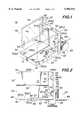
- FIG. 1shows a perspective view of the present invention.
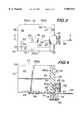
- FIG. 2shows a first plan view of the present invention.
- FIG. 3shows a side view of the present invention.
- FIG. 4shows a cross sectional view taken along line 4--4 in FIG. 3.
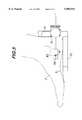
- FIG. 5shows the fixture in use in marking a diagnostic site on a patient's body.
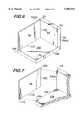
- FIG. 6shows a perspective view of a second embodiment of the present invention.
- FIG. 7shows an exploded partial perspective view of the second embodiment of the present invention shown in FIG. 6.
- the present inventiongenerally comprises an apparatus for transferring the position of an anatomical feature from a diagnostic image, such as, for example, an X-ray directly to the corresponding site on a patient's body.
- the apparatuscomprises a fixture 10, formed from polycarbonate or other suitable material.
- the fixture 10has a base 12 and an upstanding wall 14 disposed at right angles to the base 12.
- the base 12has a first edge 16, a second edge 18, side edges 20(a) and 20(b), a first surface 22, and a second surface 24.
- the base 12has indentations 26 located at opposite corners 28(a) and (b) where the side edges 20(a) and 20(b) meet the first edge 16.
- a centering guide 29is scribed or otherwise formed in or on the fixture 10.
- the basemay be provided with markings indicating the proper orientation for the right or left side of the body part to be received onto the fixture 10, which markings help to position the foot in the proper orientation with relation to the image taken in the X-ray film. In the drawings, this is shown by the circled R scribed or otherwise formed on the base 12, indicating the right side.
- the upstanding wall 14has a first edge 30, a second edge 32, side edges 34(a) and 34(b), a first face 36, and a second face 38.
- Channels 40(a) and 40(b)are formed along the length of the upstanding wall 14, and have openings 42, 45 in the first edge 30, the second edge 32, and the second face 38.
- opposing flanges 44constrict the channel openings 45 in the second face 38 of the upstanding wall 14.
- the first face 36 of the upstanding wall 14has a plurality of openings 47 disposed adjacent the side edges 34(a) and 34(b). It is also appreciated that rather than a plurality of openings, a channel may be formed in the face of the upstanding wall adjacent the side edges.
- the first face 36 of the upstanding wall 14is attached to the second edge 18 of the base 12 adjacent the second edge 32 of the first face 36.
- the fixture 10may be molded from a single piece of polycarbonate or other material without departing from the invention. It is also contemplated that the fixture may be formed without a base. In the preferred embodiment, a centering guide 29 is further scribed or otherwise formed in or on the upstanding wall 14.
- a removable template 46is provided, formed preferably from transparent polycarbonate or other suitable material.
- the template 46has a first edge 48, a second edge 50, a top edge 52, a bottom edge 54, and opposite marking surfaces 56(a) and 56(b).
- a plurality of locator pins 58are disposed along the second edge 50 of the template 46 in alignment with the openings 47 of the first face 36 of the upstanding wall 14.
- the locator pins 58are adapted to removably engage the openings 47.
- a locator pin 60is also disposed along the bottom edge 54 of the template 46 adjacent the first edge 48 of the template 46.
- the locator pin 60is adapted to rest against the indentations 26 found in the base 12. In this manner, the indentations 26 act to help align the template 46.
- a positioning block 62slideably engages a selected one of the channels 40(a) and 40(b) of the upstanding wall 14.
- the positioning block 62has a first wall 64 and a second wall 66.
- the first wall 64has a shoe 68 extending therefrom.
- the shoe 68is adapted to slideably engage a selected one of the channels 40(a) and 40(b).
- the shoe 68has flanges 70 which extend outwardly therefrom, and flare into the selected channel 40(a) and 40(b).
- a first threaded aperture 72is provided in the first wall 64 for engaging a first set screw 74.
- the second wall 66has a bore 76 extending therethrough.
- a side threaded aperture 78is disposed in the side wall which engages a second set screw 80.
- the side threaded aperture 78intersects the bore 76.
- an indicator 82is also provided.
- the indicator 82has an indicator head 84 having a guide aperture 86 therethrough.
- a positioning rod 88extends from the indicator head 84, and slideably engages the bore 76. By use of the positioning block, the indicator is adjustable along the X- and Y-axes in relation to the template 46.
- the templateis detachably positioned on the fixture using suitably-formed projections rather than pins.
- the upstanding wall 90can be formed with grooves 92 in its first face 94, disposed adjacent the side edges 96(a) and 96(b) of the upstanding wall 90.
- the template 98has integrally formed projections 100 along its second edge 102 in alignment with the grooves 92.
- the projections 100are adapted to removably engage the grooves 92.
- a groove 92can also be formed on the first face 106 of the base 108, with a corresponding projection 110 formed on the bottom edge 112 of the template 98.
- the present inventionmay be used by a physician as follows.
- the template 46is detached from the fixture 10, and is placed over, for example, an X-ray image (not pictured) displaying an image of the foot to be incised.
- the template 46is manipulated so that the second edge 50 of the template 46 is aligned with the heel of the foot as shown in the X-ray image, and the second edge 54 of the template is aligned with the sole of the foot as shown in the X-ray image.
- a locator mark Msuch as an X is made upon either marking surface 56(a) or 56(b) of the template 46 using a suitable marker. The mark is depicted in FIGS. 1 and 3 as an "X.”
- the template 46is then inserted into the fixture 10 adjacent the area of the foot (left side or right side) where the incision will be made. As shown in FIG. 3, the second locator pins 58 of the template fit snugly into the openings 47 on the first face 36 of the upstanding wall 14. The lower pin 60 rests against the indentation 26 formed in the corner 28 of the base 12, and aids in properly aligning the template 46.
- the positioning block 62is then inserted into the selected channel 40(a) or 40(b) adjacent the side of the fixture 10 where the template 46 has been inserted.
- the positioning rod 88 of the indicator 82is inserted into the bore 86 of the positioning block 62.
- the indicator 82is then adjusted so that the guide aperture 86 of the indicator head 84 is centered over the center of the locator mark M on the template 46. Adjustment of the indicator 82 is accomplished as follows.
- the indicator 82is adjusted along the Y-axis by moving the positioning block 62 along the length of the channel 40.
- the first set screw 72is turned. Tightening the first set screw 72 causes the flanges 70 of the shoe 68 to be forced against the opposing flanges 44 of the second face 38 of the upstanding wall 14. This holds the positioning block 62 firmly in the channel 40(a) or 40(b) at the desired vertical height.
- the second set screw 88is first in the loosened position. In this position, the indicator positioning rod 88 is free to slide along the bore 86. Once the guide aperture 86 is directly over the center of the locator mark M on the marking surface 56 of the template 46, the second set screw 88 is turned. This forces the second set screw against the indicator positioning rod 88 and holds the rod 88 firmly in place.
- the template 46is then removed from the fixture 10. As shown in FIG. 5, a patient's foot F is aligned with the fixture with the sole S of the foot touching the base 12, while the heel H of the foot is placed against the upstanding wall 14. The position of the indicator 82 now matches the alignment of the template 46 with the diagnostic image.
- a marking deviceby way of illustration, a felt tip or other suitable marker, is then inserted through the guide aperture 86, and a mark M is made on the patient's foot F corresponding to the proper incision point. The physician may then make the appropriate incision.
- a means other than a markercan be used to pinpoint the proper incision point on a patient's foot.
- a laser, diode, or other light beammay be shown through the guide aperture. The light beam will shine on the patient's foot at the exact point of incision.
- the present inventionis applicable to surgical procedures other than those involving the foot.
- the present inventionmay be easily adapted to transfer measurements from a diagnostic image to a patient's elbow or cranium.
Landscapes
- Health & Medical Sciences (AREA)
- Surgery (AREA)
- Life Sciences & Earth Sciences (AREA)
- Heart & Thoracic Surgery (AREA)
- Molecular Biology (AREA)
- Oral & Maxillofacial Surgery (AREA)
- Engineering & Computer Science (AREA)
- Biomedical Technology (AREA)
- Nuclear Medicine, Radiotherapy & Molecular Imaging (AREA)
- Medical Informatics (AREA)
- Veterinary Medicine (AREA)
- Animal Behavior & Ethology (AREA)
- General Health & Medical Sciences (AREA)
- Public Health (AREA)
- Pathology (AREA)
- Dentistry (AREA)
- Apparatus For Radiation Diagnosis (AREA)
Abstract
Description
The present invention relates to a device and method for use in accurately and easily transferring the location of a measurement from a diagnostic image, such as, for example, a podiatric X-ray to a body site, such as a foot. The present invention provides a more convenient and accurate means for accomplishing this task than prior methods. Although described in the context of podiatry and podiatric surgery, the invention is not so limited, and is applicable to all forms of medical and surgical procedures.
A common problem encountered in the field of podiatric medicine is determining the proper location at which to incise a patient's foot in order to perform a surgical procedure. Surgical treatment of podiatric medical problems generally involves a podiatrist or other physician creating an incision corresponding to the location of the problematic area. It is crucial that the point of incision be accurately located on the patient's body. Otherwise, the patient runs the risk of multiple incisions, and an increase in the time of surgery. An incision made at the wrong cite can also risks new injuries and possible further complications.
One example of where a proper point of incision is critical is in the treatment of bone spurs. Bone spurs are outgrowths of bone caused by the buildup of calcium deposits due to excessive stress at points where ligaments and/or tendons attach to bone. Bone spurs often appear on X-ray film as small protrusions extending from the heel of the foot.
Accurately locating a proper incision point on the patient's foot corresponding to a podiatric growth viewed on an X-ray film poses several problems to the physician. While many podiatric growths, such as bone spurs, are discernible by X-ray, the physician must visually estimate the corresponding location of the point of incision on the patient's foot. It is impractical, if not impossible, to attempt to locate an incision point on a patient's foot from a corresponding X-ray film, in part because X-ray images are only two-dimensional.
Further, it is impossible for the physician to both incise the proper area and simultaneously view the X-ray film. Currently, a physician must attempt to use a ruler to transfer the X-ray measurement to a patient's foot. The physician first measures the location to be incised on the X-ray along the X and Y axes. These measurements are then transferred to the patient's foot using the ruler. However, because the X-ray produces a two-dimensional representation, the X and Y measurements taken from the X-ray film with a ruler do not take into account the curvature of the foot. Therefore, this method does not bridge the gap from two to three dimensions, and often produces inaccurate results.
Otherwise, the physician must either look back and forth from the film to the patient, or have another member of the surgical team hold the X-ray film near the patient's body. Either of these options affords the physician only an approximation of the proper incision point.
There is, accordingly, a need for a device for accurately and easily transferring the location of an anatomical feature from a diagnostic image to a body site.
There is also the need for a diagnostic device which accurately transfers a measurement taken from a two-dimensional image to a three-dimensional body part.
The present invention is directed to a device that satisfies the need for the accurate and easy transfer of measurements from a diagnostic image directly to the corresponding site on a patient's body. The present invention provides a truly innovative and effective solution to this need at a cost to the user that is insignificant compared to the accuracy, convenience and surgical benefits it produces.
A device having features of the present invention comprises a fixture for receiving a body part onto which a measurement is to be transferred. A template is provided which is removably attachable to the fixture. The template is placed over the diagnostic image, and the measurement is transferred to the template. The template is then attached to the fixture.
An indicator is provided which is movable in orthogonal directions relative to the fixture and the template. The indicator is aligned with measurement which has been transferred to the template. A body part is then received into the fixture, and the body part is incised at the proper site using the indicator as a guide.
The present invention provides the physician with an accurate and practical means of marking an incision site directly onto a patient's body.
The present invention also decreases the time needed for a surgical procedure by allowing a physician to quickly locate an incision site.
For the purpose of illustrating the invention, there is shown in the drawings a form which is presently preferred; it being understood, however, that this invention is not limited to the precise arrangements and instrumentalities shown.
FIG. 1 shows a perspective view of the present invention.
FIG. 2 shows a first plan view of the present invention.
FIG. 3 shows a side view of the present invention.
FIG. 4 shows a cross sectional view taken alongline 4--4 in FIG. 3.
FIG. 5 shows the fixture in use in marking a diagnostic site on a patient's body.
FIG. 6 shows a perspective view of a second embodiment of the present invention.
FIG. 7 shows an exploded partial perspective view of the second embodiment of the present invention shown in FIG. 6.
Referring to the drawings, wherein like numerals refer to like elements, the present invention generally comprises an apparatus for transferring the position of an anatomical feature from a diagnostic image, such as, for example, an X-ray directly to the corresponding site on a patient's body. As shown in FIG. 1, the apparatus comprises afixture 10, formed from polycarbonate or other suitable material. In the preferred embodiment, thefixture 10 has abase 12 and anupstanding wall 14 disposed at right angles to thebase 12.
Thebase 12 has afirst edge 16, asecond edge 18, side edges 20(a) and 20(b), afirst surface 22, and asecond surface 24. In the preferred embodiment, thebase 12 hasindentations 26 located at opposite corners 28(a) and (b) where the side edges 20(a) and 20(b) meet thefirst edge 16. In the preferred embodiment, acentering guide 29 is scribed or otherwise formed in or on thefixture 10. Additionally, the base may be provided with markings indicating the proper orientation for the right or left side of the body part to be received onto thefixture 10, which markings help to position the foot in the proper orientation with relation to the image taken in the X-ray film. In the drawings, this is shown by the circled R scribed or otherwise formed on thebase 12, indicating the right side.
As shown in FIGS. 1 and 2, theupstanding wall 14 has afirst edge 30, asecond edge 32, side edges 34(a) and 34(b), afirst face 36, and asecond face 38. Channels 40(a) and 40(b) are formed along the length of theupstanding wall 14, and haveopenings first edge 30, thesecond edge 32, and thesecond face 38. As shown in FIGS. 2 and 4, opposingflanges 44 constrict thechannel openings 45 in thesecond face 38 of theupstanding wall 14. Thefirst face 36 of theupstanding wall 14 has a plurality ofopenings 47 disposed adjacent the side edges 34(a) and 34(b). It is also appreciated that rather than a plurality of openings, a channel may be formed in the face of the upstanding wall adjacent the side edges.
Thefirst face 36 of theupstanding wall 14 is attached to thesecond edge 18 of thebase 12 adjacent thesecond edge 32 of thefirst face 36. However, it is also contemplated that thefixture 10 may be molded from a single piece of polycarbonate or other material without departing from the invention. It is also contemplated that the fixture may be formed without a base. In the preferred embodiment, acentering guide 29 is further scribed or otherwise formed in or on theupstanding wall 14.
As shown in FIGS. 2 and 3, aremovable template 46 is provided, formed preferably from transparent polycarbonate or other suitable material. Thetemplate 46 has afirst edge 48, asecond edge 50, atop edge 52, abottom edge 54, and opposite marking surfaces 56(a) and 56(b). A plurality of locator pins 58 are disposed along thesecond edge 50 of thetemplate 46 in alignment with theopenings 47 of thefirst face 36 of theupstanding wall 14. The locator pins 58 are adapted to removably engage theopenings 47. In the preferred embodiment, alocator pin 60 is also disposed along thebottom edge 54 of thetemplate 46 adjacent thefirst edge 48 of thetemplate 46. Thelocator pin 60 is adapted to rest against theindentations 26 found in thebase 12. In this manner, theindentations 26 act to help align thetemplate 46.
As shown in FIGS. 2 and 4, apositioning block 62 slideably engages a selected one of the channels 40(a) and 40(b) of theupstanding wall 14. In the preferred embodiment, thepositioning block 62 has afirst wall 64 and asecond wall 66. Thefirst wall 64 has ashoe 68 extending therefrom. Theshoe 68 is adapted to slideably engage a selected one of the channels 40(a) and 40(b). Theshoe 68 hasflanges 70 which extend outwardly therefrom, and flare into the selected channel 40(a) and 40(b). In the preferred embodiment, a first threaded aperture 72 is provided in thefirst wall 64 for engaging a first set screw 74.
Thesecond wall 66 has abore 76 extending therethrough. A side threaded aperture 78 is disposed in the side wall which engages asecond set screw 80. The side threaded aperture 78 intersects thebore 76.
Anindicator 82 is also provided. In the preferred embodiment, theindicator 82 has anindicator head 84 having aguide aperture 86 therethrough. Apositioning rod 88 extends from theindicator head 84, and slideably engages thebore 76. By use of the positioning block, the indicator is adjustable along the X- and Y-axes in relation to thetemplate 46.
In a second embodiment of the present invention, the template is detachably positioned on the fixture using suitably-formed projections rather than pins. In this embodiment, as illustrated in FIGS. 6 and 7, theupstanding wall 90 can be formed withgrooves 92 in itsfirst face 94, disposed adjacent the side edges 96(a) and 96(b) of theupstanding wall 90. Thetemplate 98 has integrally formedprojections 100 along itssecond edge 102 in alignment with thegrooves 92. Theprojections 100 are adapted to removably engage thegrooves 92. Agroove 92 can also be formed on thefirst face 106 of thebase 108, with acorresponding projection 110 formed on thebottom edge 112 of thetemplate 98.
The present invention may be used by a physician as follows. Thetemplate 46 is detached from thefixture 10, and is placed over, for example, an X-ray image (not pictured) displaying an image of the foot to be incised. Thetemplate 46 is manipulated so that thesecond edge 50 of thetemplate 46 is aligned with the heel of the foot as shown in the X-ray image, and thesecond edge 54 of the template is aligned with the sole of the foot as shown in the X-ray image. A locator mark M such as an X is made upon either marking surface 56(a) or 56(b) of thetemplate 46 using a suitable marker. The mark is depicted in FIGS. 1 and 3 as an "X."
Thetemplate 46 is then inserted into thefixture 10 adjacent the area of the foot (left side or right side) where the incision will be made. As shown in FIG. 3, the second locator pins 58 of the template fit snugly into theopenings 47 on thefirst face 36 of theupstanding wall 14. Thelower pin 60 rests against theindentation 26 formed in thecorner 28 of thebase 12, and aids in properly aligning thetemplate 46.
Thepositioning block 62 is then inserted into the selected channel 40(a) or 40(b) adjacent the side of thefixture 10 where thetemplate 46 has been inserted. Thepositioning rod 88 of theindicator 82 is inserted into thebore 86 of thepositioning block 62.
Theindicator 82 is then adjusted so that theguide aperture 86 of theindicator head 84 is centered over the center of the locator mark M on thetemplate 46. Adjustment of theindicator 82 is accomplished as follows.
Theindicator 82 is adjusted along the Y-axis by moving thepositioning block 62 along the length of thechannel 40. When thepositioning block 62 holds theindicator 82 at the desired vertical height, the first set screw 72 is turned. Tightening the first set screw 72 causes theflanges 70 of theshoe 68 to be forced against the opposingflanges 44 of thesecond face 38 of theupstanding wall 14. This holds thepositioning block 62 firmly in the channel 40(a) or 40(b) at the desired vertical height.
To align theindicator 82 along the X-axis, thesecond set screw 88 is first in the loosened position. In this position, theindicator positioning rod 88 is free to slide along thebore 86. Once theguide aperture 86 is directly over the center of the locator mark M on the markingsurface 56 of thetemplate 46, thesecond set screw 88 is turned. This forces the second set screw against theindicator positioning rod 88 and holds therod 88 firmly in place.
Thetemplate 46 is then removed from thefixture 10. As shown in FIG. 5, a patient's foot F is aligned with the fixture with the sole S of the foot touching thebase 12, while the heel H of the foot is placed against theupstanding wall 14. The position of theindicator 82 now matches the alignment of thetemplate 46 with the diagnostic image. A marking device, by way of illustration, a felt tip or other suitable marker, is then inserted through theguide aperture 86, and a mark M is made on the patient's foot F corresponding to the proper incision point. The physician may then make the appropriate incision.
It is also contemplated that a means other than a marker can be used to pinpoint the proper incision point on a patient's foot. For example, a laser, diode, or other light beam may be shown through the guide aperture. The light beam will shine on the patient's foot at the exact point of incision.
It is further appreciated that the present invention is applicable to surgical procedures other than those involving the foot. For example, the present invention may be easily adapted to transfer measurements from a diagnostic image to a patient's elbow or cranium.
The present invention may be embodied in other specific forms without departing from the spirit or essential attributes thereof and, accordingly, reference should be made to the appended claims, rather than to the foregoing specification, as indicating the scope of the invention.
Claims (49)
1. An apparatus for use in transferring measurements from a diagnostic image to a body site, comprising:
(a) a fixture for receiving a body part onto which a measurement is to be transferred;
(b) a template removably attached to the fixture onto which a measurement may be transferred from a diagnostic image;
(c) an indicator movable relative to the fixture and the template, the indicator being movable in orthogonal directions; and,
(d) a positioning block, wherein the indicator is in sliding engagement with the positioning block, the positioning block for permitting movement of the indicator in orthogonal directions relative to the fixture and the template, wherein the positioning block slideably engages the fixture.
2. An apparatus for use in transferring measurements from a diagnostic image to a body site, comprising:
(a) a fixture for receiving a body part onto which a measurement is to be transferred, the fixture having a first edge, a second edge, side edges, a first face, and a second face;
(b) a template removably attached to the fixture, the template having a first edge, a second edge, and opposite marking surfaces;
(c) a positioning block slideably mounted on the fixture;
(d) an indicator in sliding engagement with the positioning block, whereby the indicator is moveable in orthogonal directions relative to the fixture and template.
3. The apparatus according to claim 2, wherein the fixture has a channel formed along its length adjacent one of the side edges, the channel open to the first edge or the second edge of the fixture, the channel open to the second face of the fixture.
4. The apparatus according to claim 3, wherein the second face of the fixture has flanges constricting the channel opening in the second face of the fixture.
5. The apparatus according to claim 3, wherein the positioning block has a bore therethrough.
6. The apparatus according to claim 5, wherein the indicator is in slidable engagement with the bore.
7. The apparatus according to claim 6, wherein the indicator comprises:
(a) an indicator head, the indicator head having a guide aperture therethrough,
(b) an indicator positioning rod extending from the indicator head, the rod in slidable engagement with the bore.
8. The apparatus according to claim 5, wherein the positioning block has a first wall and a second wall, the first wall having a shoe extending therefrom, the shoe in slidable engagement with the channel of the fixture.
9. The apparatus according to claim 8, wherein the shoe has flanges extending therefrom, the flanges in securable engagement with the channel.
10. The apparatus according to claim 9, wherein the first wall of the positioning block has a first threaded aperture, the first threaded aperture in threaded engagement with a first set screw.
11. The apparatus according to claim 10, wherein the side wall of the positioning block has a bore therethrough, the side wall having a side threaded aperture intersecting the bore, the side threaded aperture in threaded engagement with a second set screw.
12. The apparatus according to claim 3, wherein the fixture has a plurality of openings located adjacent the side edges of the first face.
13. The apparatus according to claim 12, wherein the template further has locator pins disposed along the second edge of the template, the locator pins being alignable with the openings in the first face of the fixture, the locator pins in removable engagement with the openings.
14. The apparatus according to claim 13, wherein the fixture has indentations at the corners of the first edge.
15. The apparatus according to claim 14, wherein the template further has a top edge and a bottom edge, the template having a locator pin disposed along the bottom edge adjacent the first edge, the locator pin in engagement with a selected one the indentations.
16. The apparatus according to claim 3, wherein the fixture has a plurality of grooves located adjacent the side edges of the first face.
17. The apparatus according to claim 16, wherein the template has projections disposed along the second edge of the template, the projections being alignable with the grooves in the first face of the fixture, and in removable engagement with the grooves.
18. The apparatus according to claim 17, wherein the fixture has indentations at the corners of the first edge.
19. The apparatus according to claim 18, wherein the template further has a top edge and a bottom edge, the template having a projection disposed along the bottom edge adjacent the first edge, the projection in removable engagement with a selected one of the indentations.
20. The apparatus according to claim 3, wherein the fixture has a plurality of channels formed along its length adjacent the side edges, the channels open to the first edge or the second edge of the fixture, the channels open to the second face of the fixture.
21. The apparatus according to claim 20, wherein the positioning block has a first wall and a second wall, the first wall having a shoe extending therefrom, the shoe in slidable engagement with the channels of the fixture.
22. The apparatus according to claim 2, wherein a centering guide is provided on the fixture.
23. An apparatus for transferring measurements from a diagnostic image to a body site, comprising:
(a) a fixture for receiving a body part onto which a measurement is to be transferred, the fixture comprising:
(1) a base having a first edge, a second edge, side edges, a first surface, and a second surface;
(2) an upstanding wall having a first edge, a second edge, opposite side edges, a first face, and a second face;
(b) a template removably attached to the fixture, the template having a first edge, a second edge, and opposite marking surfaces;
(c) a positioning block slideably mounted on the upstanding wall;
(d) an indicator in slidable engagement with the positioning block, whereby the indicator is moveable in orthogonal directions relative to the fixture and template.
24. The apparatus according to claim 23, wherein the upstanding wall has a channel formed along its length adjacent one of the side edges, the channel open to the first edge or the second edge of the fixture, the channel open to the second face of the fixture.
25. The apparatus according to claim 24, wherein the second face of the fixture has flanges constricting the channel opening in the second face of the fixture.
26. The apparatus according to claim 23, wherein the positioning block has a bore therethrough.
27. The apparatus according to claim 26, wherein the indicator is in slidable engagement with the bore.
28. The apparatus according to claim 27, wherein the indicator comprises:
(a) an indicator head, the indicator head having a guide aperture therethrough,
(b) an indicator positioning rod extending from the indicator head, the rod in sliding engagement with the bore.
29. The apparatus according to claim 26, wherein the positioning block has a first wall and a second wall, the first wall having a shoe extending therefrom, the shoe in slidable engagement with the channel of the fixture.
30. The apparatus according to claim 29, wherein the shoe has flanges extending therefrom, the flanges in securable engagement with the channel.
31. The apparatus according to claim 30, wherein the first wall of the positioning block has a first threaded aperture, the first threaded aperture in threaded engagement with a first set screw.
32. The apparatus according to claim 31, wherein the side wall has a bore therethrough, the side wall having a side threaded aperture intersecting the bore, the side threaded aperture in threaded engagement with a second set screw.
33. The apparatus according to claim 23, wherein the fixture has a plurality of openings located adjacent the side edges of the first face.
34. The apparatus according to claim 33, wherein the template has locator pins disposed along the second edge of the template, the locator pins being alignable with the openings in the first face of the fixture, and in removable engagement with the openings.
35. The apparatus according to claim 34, wherein the fixture has indentations at the corners of the first edge.
36. The apparatus according to claim 35, wherein the template further has a top edge and a bottom edge, the template having a locator pin disposed along the bottom edge adjacent the first edge, the locator pin in engagement with a selected one of the indentations.
37. The apparatus according to claim 23, wherein the fixture has a plurality of grooves located adjacent the side edges of the first face.
38. The apparatus according to claim 37, wherein the template has further has projections disposed along the second edge of the template, the projections being alignable with the grooves in the first face of the fixture, and in removable engagement with the grooves.
39. The apparatus according to claim 38, wherein the fixture has indentations at the corners of the first edge.
40. The apparatus according to claim 39, wherein the template further has a top edge and a bottom edge, the template having a projection disposed along the bottom edge adjacent the first edge, the projection in engagement with a selected one of the indentations.
41. The apparatus according to claim 23, wherein the fixture has a plurality of channels formed along its length adjacent the side edges, the channels open to the first edge or the second edge of the fixture, the channels open to the second face of the fixture.
42. The apparatus according to claim 41, wherein the positioning block has a first wall and a second wall, the first wall having a shoe extending therefrom, the shoe in sliding engagement with the channels of the fixture.
43. The apparatus according to claim 23, wherein a centering guide is provided on the fixture.
44. An apparatus for use in transferring measurements from a diagnostic image to a body site, comprising:
(a) a fixture for receiving a body part onto which a measurement is to be transferred;
(b) a template removably attached to the fixture onto which a measurement may be transferred from a diagnostic image; and,
(c) an indicator movable relative to the fixture and the template, the indicator being movable in orthogonal directions, the indicator alignable with a measurement transferred to the template, wherein the indicator has a guide aperture for guiding a marking device for marking a body part.
45. The apparatus according to claim 44, further comprising a positioning block, wherein the indicator is in sliding engagement with the positioning block, the positioning block for permitting movement of the indicator in orthogonal directions relative to the fixture and the template.
46. The apparatus according to claim 45, wherein the positioning block is in slidable engagement with the fixture.
47. The apparatus according to claim 46, wherein the positioning block has a bore therethrough.
48. The apparatus according to claim 47, wherein the indicator is in slidable engagement with the bore.
49. The apparatus according to claim 48, wherein the indicator comprises:
(a) an indicator head, the indicator head having the guide aperture therethrough,
(b) an indicator positioning rod extending from the indicator head, the rod in slidable engagement with the bore.
Priority Applications (1)
| Application Number | Priority Date | Filing Date | Title |
|---|---|---|---|
| US08/820,197US5984931A (en) | 1997-03-18 | 1997-03-18 | Diagnostic measurement transfer apparatus |
Applications Claiming Priority (1)
| Application Number | Priority Date | Filing Date | Title |
|---|---|---|---|
| US08/820,197US5984931A (en) | 1997-03-18 | 1997-03-18 | Diagnostic measurement transfer apparatus |
Publications (1)
| Publication Number | Publication Date |
|---|---|
| US5984931Atrue US5984931A (en) | 1999-11-16 |
Family
ID=25230156
Family Applications (1)
| Application Number | Title | Priority Date | Filing Date |
|---|---|---|---|
| US08/820,197Expired - Fee RelatedUS5984931A (en) | 1997-03-18 | 1997-03-18 | Diagnostic measurement transfer apparatus |
Country Status (1)
| Country | Link |
|---|---|
| US (1) | US5984931A (en) |
Cited By (43)
| Publication number | Priority date | Publication date | Assignee | Title |
|---|---|---|---|---|
| US20060016028A1 (en)* | 2004-07-26 | 2006-01-26 | Chun-Pong Lau | Calcaneal bisector |
| US20060264961A1 (en)* | 2003-10-25 | 2006-11-23 | Murray-Brown James H | Surgical jig |
| US20080015525A1 (en)* | 2003-01-22 | 2008-01-17 | Takashi Furukawa | Athlete's foot treatment tool |
| US9168107B2 (en) | 2004-11-09 | 2015-10-27 | Startbox, Llc | System and method for preventing wrong-site surgeries |
| US9721064B2 (en) | 2004-11-09 | 2017-08-01 | Startbox, Llc | System and method for preventing wrong-site surgeries |
| US9907558B2 (en) | 2011-07-08 | 2018-03-06 | Smith & Nephew, Inc. | Osteotomy guide and method |
| US10292713B2 (en) | 2015-01-28 | 2019-05-21 | First Ray, LLC | Freeform tri-planar osteotomy guide and method |
| US10376268B2 (en) | 2015-02-19 | 2019-08-13 | First Ray, LLC | Indexed tri-planar osteotomy guide and method |
| US10512470B1 (en) | 2016-08-26 | 2019-12-24 | Treace Medical Concepts, Inc. | Osteotomy procedure for correcting bone misalignment |
| US10524808B1 (en) | 2016-11-11 | 2020-01-07 | Treace Medical Concepts, Inc. | Devices and techniques for performing an osteotomy procedure on a first metatarsal to correct a bone misalignment |
| US10555757B2 (en) | 2014-07-15 | 2020-02-11 | Treace Medical Concepts, Inc. | Bone positioning and cutting system and method |
| US10561426B1 (en) | 2015-01-07 | 2020-02-18 | Treace Medical Concepts, Inc. | Bone cutting guide systems and methods |
| US10575862B2 (en) | 2015-09-18 | 2020-03-03 | Treace Medical Concepts, Inc. | Joint spacer systems and methods |
| US10849670B2 (en) | 2015-08-14 | 2020-12-01 | Treace Medical Concepts, Inc. | Bone positioning and preparing guide systems and methods |
| US10849663B2 (en) | 2015-07-14 | 2020-12-01 | Treace Medical Concepts, Inc. | Bone cutting guide systems and methods |
| US10849631B2 (en) | 2015-02-18 | 2020-12-01 | Treace Medical Concepts, Inc. | Pivotable bone cutting guide useful for bone realignment and compression techniques |
| US10874446B2 (en) | 2015-07-14 | 2020-12-29 | Treace Medical Concepts, Inc. | Bone positioning guide |
| US10898211B2 (en) | 2015-01-14 | 2021-01-26 | Crossroads Extremity Systems, Llc | Opening and closing wedge osteotomy guide and method |
| US11278337B2 (en) | 2015-08-14 | 2022-03-22 | Treace Medical Concepts, Inc. | Tarsal-metatarsal joint procedure utilizing fulcrum |
| US11304735B2 (en) | 2020-02-19 | 2022-04-19 | Crossroads Extremity Systems, Llc | Systems and methods for Lapidus repair of bunions |
| US11413081B2 (en) | 2015-08-14 | 2022-08-16 | Treace Medical Concepts, Inc. | Tarsal-metatarsal joint procedure utilizing fulcrum |
| US11583323B2 (en) | 2018-07-12 | 2023-02-21 | Treace Medical Concepts, Inc. | Multi-diameter bone pin for installing and aligning bone fixation plate while minimizing bone damage |
| US11596443B2 (en) | 2018-07-11 | 2023-03-07 | Treace Medical Concepts, Inc. | Compressor-distractor for angularly realigning bone portions |
| US11607250B2 (en) | 2019-02-13 | 2023-03-21 | Treace Medical Concepts, Inc. | Tarsal-metatarsal joint procedure utilizing compressor-distractor and instrument providing sliding surface |
| US11622797B2 (en) | 2020-01-31 | 2023-04-11 | Treace Medical Concepts, Inc. | Metatarsophalangeal joint preparation and metatarsal realignment for fusion |
| US11627954B2 (en) | 2019-08-07 | 2023-04-18 | Treace Medical Concepts, Inc. | Bi-planar instrument for bone cutting and joint realignment procedure |
| USD1011524S1 (en) | 2022-02-23 | 2024-01-16 | Treace Medical Concepts, Inc. | Compressor-distractor for the foot |
| US11889998B1 (en) | 2019-09-12 | 2024-02-06 | Treace Medical Concepts, Inc. | Surgical pin positioning lock |
| US11890039B1 (en) | 2019-09-13 | 2024-02-06 | Treace Medical Concepts, Inc. | Multi-diameter K-wire for orthopedic applications |
| US11931106B2 (en) | 2019-09-13 | 2024-03-19 | Treace Medical Concepts, Inc. | Patient-specific surgical methods and instrumentation |
| US11986251B2 (en) | 2019-09-13 | 2024-05-21 | Treace Medical Concepts, Inc. | Patient-specific osteotomy instrumentation |
| US12004789B2 (en) | 2020-05-19 | 2024-06-11 | Treace Medical Concepts, Inc. | Devices and techniques for treating metatarsus adductus |
| USD1051382S1 (en) | 2022-02-23 | 2024-11-12 | Treace Medical Concepts, Inc. | Lesser metatarsal cut guide |
| US12161371B2 (en) | 2021-01-18 | 2024-12-10 | Treace Medical Concepts, Inc. | Contoured bone plate with locking screw for bone compression, particularly across a tarsometatarsal joint |
| USD1057155S1 (en) | 2022-02-23 | 2025-01-07 | Treace Medical Concepts, Inc. | Lesser metatarsal cut guide with parallel cut faces |
| US12193683B2 (en) | 2021-05-20 | 2025-01-14 | Treace Medical Concepts, Inc. | Cut guide with integrated joint realignment features |
| USD1068078S1 (en) | 2023-02-08 | 2025-03-25 | Treace Medical Concepts, Inc. | Handle for an orthopedic instrument |
| USD1068077S1 (en) | 2023-02-08 | 2025-03-25 | Treace Medical Concepts, Inc. | Orthopedic rasp for preparing an intercuneiform joint |
| USD1075012S1 (en) | 2022-02-23 | 2025-05-13 | Treace Medical Concepts, Inc. | Metatarsal lateral release instrument |
| US12310603B2 (en) | 2021-02-18 | 2025-05-27 | Treace Medical Concepts, Inc. | System and technique for metatarsal realignment with reduced incision length |
| USD1079011S1 (en) | 2022-02-23 | 2025-06-10 | Treace Medical Concepts, Inc. | Metatarsal cut guide with parallel cut faces |
| US12403012B2 (en) | 2019-07-26 | 2025-09-02 | Crossroads Extremity Systems, Llc | Bone repositioning guide system and procedure |
| US12440250B2 (en) | 2024-02-05 | 2025-10-14 | Treace Medical Concepts, Inc. | Multi-diameter K-wire for orthopedic applications |
Citations (15)
| Publication number | Priority date | Publication date | Assignee | Title |
|---|---|---|---|---|
| US2226708A (en)* | 1938-09-24 | 1940-12-31 | Ernest W Cleary | Nail guide for X-ray fracture table |
| US3073310A (en)* | 1957-08-05 | 1963-01-15 | Zenon R Mocarski | Surgical instrument positioning device |
| US3508552A (en)* | 1961-10-27 | 1970-04-28 | Alexandre & Cie | Apparatus for stereotaxic neurosurgery |
| US4341220A (en)* | 1979-04-13 | 1982-07-27 | Pfizer Inc. | Stereotactic surgery apparatus and method |
| US4427005A (en)* | 1982-03-04 | 1984-01-24 | Tener William S | Apparatus and method for treating breast tumors |
| US4580561A (en)* | 1984-05-04 | 1986-04-08 | Williamson Theodore J | Interstitial implant system |
| US4618978A (en)* | 1983-10-21 | 1986-10-21 | Cosman Eric R | Means for localizing target coordinates in a body relative to a guidance system reference frame in any arbitrary plane as viewed by a tomographic image through the body |
| US4617925A (en)* | 1984-10-01 | 1986-10-21 | Laitinen Lauri V | Adapter for definition of the position of brain structures |
| US4706665A (en)* | 1984-12-17 | 1987-11-17 | Gouda Kasim I | Frame for stereotactic surgery |
| US4841975A (en)* | 1987-04-15 | 1989-06-27 | Cemax, Inc. | Preoperative planning of bone cuts and joint replacement using radiant energy scan imaging |
| US4918715A (en)* | 1989-05-01 | 1990-04-17 | Webb Research Ii Corporation | Image location marking devices for radiographs, method of making and methods of use |
| US5031203A (en)* | 1990-02-09 | 1991-07-09 | Trecha Randal R | Coaxial laser targeting device for use with x-ray equipment and surgical drill equipment during surgical procedures |
| US5193106A (en)* | 1990-08-28 | 1993-03-09 | Desena Danforth | X-ray identification marker |
| US5260985A (en)* | 1992-08-14 | 1993-11-09 | Mosby Richard A | Conforming localization/biopsy grid and control apparatus |
| US5437280A (en)* | 1993-09-20 | 1995-08-01 | Hussman; Karl L. | Magnetic resonance breast localizer |
- 1997
- 1997-03-18USUS08/820,197patent/US5984931A/ennot_activeExpired - Fee Related
Patent Citations (15)
| Publication number | Priority date | Publication date | Assignee | Title |
|---|---|---|---|---|
| US2226708A (en)* | 1938-09-24 | 1940-12-31 | Ernest W Cleary | Nail guide for X-ray fracture table |
| US3073310A (en)* | 1957-08-05 | 1963-01-15 | Zenon R Mocarski | Surgical instrument positioning device |
| US3508552A (en)* | 1961-10-27 | 1970-04-28 | Alexandre & Cie | Apparatus for stereotaxic neurosurgery |
| US4341220A (en)* | 1979-04-13 | 1982-07-27 | Pfizer Inc. | Stereotactic surgery apparatus and method |
| US4427005A (en)* | 1982-03-04 | 1984-01-24 | Tener William S | Apparatus and method for treating breast tumors |
| US4618978A (en)* | 1983-10-21 | 1986-10-21 | Cosman Eric R | Means for localizing target coordinates in a body relative to a guidance system reference frame in any arbitrary plane as viewed by a tomographic image through the body |
| US4580561A (en)* | 1984-05-04 | 1986-04-08 | Williamson Theodore J | Interstitial implant system |
| US4617925A (en)* | 1984-10-01 | 1986-10-21 | Laitinen Lauri V | Adapter for definition of the position of brain structures |
| US4706665A (en)* | 1984-12-17 | 1987-11-17 | Gouda Kasim I | Frame for stereotactic surgery |
| US4841975A (en)* | 1987-04-15 | 1989-06-27 | Cemax, Inc. | Preoperative planning of bone cuts and joint replacement using radiant energy scan imaging |
| US4918715A (en)* | 1989-05-01 | 1990-04-17 | Webb Research Ii Corporation | Image location marking devices for radiographs, method of making and methods of use |
| US5031203A (en)* | 1990-02-09 | 1991-07-09 | Trecha Randal R | Coaxial laser targeting device for use with x-ray equipment and surgical drill equipment during surgical procedures |
| US5193106A (en)* | 1990-08-28 | 1993-03-09 | Desena Danforth | X-ray identification marker |
| US5260985A (en)* | 1992-08-14 | 1993-11-09 | Mosby Richard A | Conforming localization/biopsy grid and control apparatus |
| US5437280A (en)* | 1993-09-20 | 1995-08-01 | Hussman; Karl L. | Magnetic resonance breast localizer |
Cited By (89)
| Publication number | Priority date | Publication date | Assignee | Title |
|---|---|---|---|---|
| US20080015525A1 (en)* | 2003-01-22 | 2008-01-17 | Takashi Furukawa | Athlete's foot treatment tool |
| US20060264961A1 (en)* | 2003-10-25 | 2006-11-23 | Murray-Brown James H | Surgical jig |
| US20060016028A1 (en)* | 2004-07-26 | 2006-01-26 | Chun-Pong Lau | Calcaneal bisector |
| US7331117B2 (en)* | 2004-07-26 | 2008-02-19 | The Hong Kong Polytechnic University | Calcaneal bisector |
| US9168107B2 (en) | 2004-11-09 | 2015-10-27 | Startbox, Llc | System and method for preventing wrong-site surgeries |
| US9721064B2 (en) | 2004-11-09 | 2017-08-01 | Startbox, Llc | System and method for preventing wrong-site surgeries |
| US9907558B2 (en) | 2011-07-08 | 2018-03-06 | Smith & Nephew, Inc. | Osteotomy guide and method |
| US10736641B2 (en) | 2011-07-08 | 2020-08-11 | Smith & Nephew, Inc. | Osteotomy guide and method |
| US11147590B2 (en) | 2014-07-15 | 2021-10-19 | Treace Medical Concepts, Inc. | Bone positioning and cutting system and method |
| US11523845B2 (en) | 2014-07-15 | 2022-12-13 | Treace Medical Concepts, Inc. | Bone positioning and cutting system and method |
| US12349941B2 (en) | 2014-07-15 | 2025-07-08 | Treace Medical Concepts, Inc. | Bone positioning and cutting system and method |
| US11771467B2 (en) | 2014-07-15 | 2023-10-03 | Treace Medical Concepts, Inc. | Bone positioning and cutting system and method |
| US10555757B2 (en) | 2014-07-15 | 2020-02-11 | Treace Medical Concepts, Inc. | Bone positioning and cutting system and method |
| US11497528B2 (en) | 2014-07-15 | 2022-11-15 | Treace Medical Concepts, Inc. | Bone positioning and cutting system and method |
| US11937849B2 (en) | 2014-07-15 | 2024-03-26 | Treace Medical Concepts, Inc. | Bone positioning and cutting system and method |
| US10945764B2 (en) | 2014-07-15 | 2021-03-16 | Treace Medical Concepts, Inc. | Bone positioning and cutting system and method |
| US12268397B2 (en) | 2015-01-07 | 2025-04-08 | Treace Medical Concepts, Inc. | Bone cutting guide systems and methods |
| US10603046B2 (en) | 2015-01-07 | 2020-03-31 | Treace Medical Concepts, Inc. | Bone cutting guide systems and methods |
| US10561426B1 (en) | 2015-01-07 | 2020-02-18 | Treace Medical Concepts, Inc. | Bone cutting guide systems and methods |
| US10888335B2 (en) | 2015-01-07 | 2021-01-12 | Treace Medical Concepts, Inc. | Bone cutting guide systems and methods |
| US11786257B2 (en) | 2015-01-07 | 2023-10-17 | Treace Medical Concepts, Inc. | Bone cutting guide systems and methods |
| US11974760B2 (en) | 2015-01-14 | 2024-05-07 | Crossroads Extremity Systems, Llc | Opening and closing wedge osteotomy guide and method |
| US10898211B2 (en) | 2015-01-14 | 2021-01-26 | Crossroads Extremity Systems, Llc | Opening and closing wedge osteotomy guide and method |
| US11160567B2 (en) | 2015-01-14 | 2021-11-02 | Crossroads Extremity Systems, Llc | Opening and closing wedge osteotomy guide and method |
| US11478254B2 (en) | 2015-01-28 | 2022-10-25 | Crossroads Extremity Systems, Llc | Freeform tri-planar osteotomy guide and method |
| US11259817B2 (en) | 2015-01-28 | 2022-03-01 | Crossroads Extremity Systems, Llc | Freeform tri-planar osteotomy guide and method |
| US11510685B2 (en) | 2015-01-28 | 2022-11-29 | Crossroads Extremity Systems, Llc | Freeform tri-planar osteotomy guide and method |
| US10292713B2 (en) | 2015-01-28 | 2019-05-21 | First Ray, LLC | Freeform tri-planar osteotomy guide and method |
| US11844533B2 (en) | 2015-02-18 | 2023-12-19 | Treace Medical Concepts, Inc. | Pivotable bone cutting guide useful for bone realignment and compression techniques |
| US10849631B2 (en) | 2015-02-18 | 2020-12-01 | Treace Medical Concepts, Inc. | Pivotable bone cutting guide useful for bone realignment and compression techniques |
| US11304705B2 (en) | 2015-02-19 | 2022-04-19 | Crossroads Extremity Systems, Llc | Indexed tri-planar osteotomy guide and method |
| US10376268B2 (en) | 2015-02-19 | 2019-08-13 | First Ray, LLC | Indexed tri-planar osteotomy guide and method |
| US11185359B2 (en) | 2015-07-14 | 2021-11-30 | Treace Medical Concepts, Inc. | Bone positioning guide |
| US11116558B2 (en) | 2015-07-14 | 2021-09-14 | Treace Medical Concepts, Inc. | Bone positioning guide |
| US11950819B2 (en) | 2015-07-14 | 2024-04-09 | Treace Medical Concepts, Inc. | Bone positioning guide |
| US10874446B2 (en) | 2015-07-14 | 2020-12-29 | Treace Medical Concepts, Inc. | Bone positioning guide |
| US11602386B2 (en) | 2015-07-14 | 2023-03-14 | Treace Medical Concepts, Inc. | Bone positioning guide |
| US10849663B2 (en) | 2015-07-14 | 2020-12-01 | Treace Medical Concepts, Inc. | Bone cutting guide systems and methods |
| US11963703B2 (en) | 2015-07-14 | 2024-04-23 | Treace Medical Concepts, Inc. | Bone cutting guide systems and methods |
| US12102368B2 (en) | 2015-07-14 | 2024-10-01 | Treace Medical Concepts, Inc. | Bone positioning guide |
| US11602387B2 (en) | 2015-08-14 | 2023-03-14 | Treace Medical Concepts, Inc. | Bone positioning and preparing guide systems and methods |
| US12274481B2 (en) | 2015-08-14 | 2025-04-15 | Treace Medical Concepts, Inc. | Bone positioning and preparing guide systems and methods |
| US12268428B2 (en) | 2015-08-14 | 2025-04-08 | Treace Medical Concepts, Inc. | Tarsal-metatarsal joint procedure utilizing fulcrum |
| US11413081B2 (en) | 2015-08-14 | 2022-08-16 | Treace Medical Concepts, Inc. | Tarsal-metatarsal joint procedure utilizing fulcrum |
| US10849670B2 (en) | 2015-08-14 | 2020-12-01 | Treace Medical Concepts, Inc. | Bone positioning and preparing guide systems and methods |
| US11039873B2 (en) | 2015-08-14 | 2021-06-22 | Treace Medical Concepts, Inc. | Bone positioning and preparing guide systems and methods |
| US11911085B2 (en) | 2015-08-14 | 2024-02-27 | Treace Medical Concepts, Inc. | Bone positioning and preparing guide systems and methods |
| US11213333B2 (en) | 2015-08-14 | 2022-01-04 | Treace Medical Concepts, Inc. | Bone positioning and preparing guide systems and methods |
| US11278337B2 (en) | 2015-08-14 | 2022-03-22 | Treace Medical Concepts, Inc. | Tarsal-metatarsal joint procedure utilizing fulcrum |
| US11690659B2 (en) | 2015-08-14 | 2023-07-04 | Treace Medical Concepts, Inc. | Tarsal-metatarsal joint procedure utilizing fulcrum |
| US12349927B2 (en) | 2015-09-18 | 2025-07-08 | Treace Medical Concepts, Inc. | Joint spacer systems and methods |
| US11648019B2 (en) | 2015-09-18 | 2023-05-16 | Treace Medical Concepts, Inc. | Joint spacer systems and methods |
| US11771443B2 (en) | 2015-09-18 | 2023-10-03 | Treace Medical Concepts, Inc. | Joint spacer systems and methods |
| US10575862B2 (en) | 2015-09-18 | 2020-03-03 | Treace Medical Concepts, Inc. | Joint spacer systems and methods |
| US10512470B1 (en) | 2016-08-26 | 2019-12-24 | Treace Medical Concepts, Inc. | Osteotomy procedure for correcting bone misalignment |
| US11931047B2 (en) | 2016-08-26 | 2024-03-19 | Treace Medical Concepts, Inc. | Osteotomy procedure for correcting bone misalignment |
| US11076863B1 (en) | 2016-08-26 | 2021-08-03 | Treace Medical Concepts, Inc. | Osteotomy procedure for correcting bone misalignment |
| US11364037B2 (en) | 2016-11-11 | 2022-06-21 | Treace Medical Concepts, Inc. | Techniques for performing an osteotomy procedure on bone to correct a bone misalignment |
| US12414779B2 (en) | 2016-11-11 | 2025-09-16 | Treace Medical Concepts, Inc. | Devices and techniques for performing an osteotomy procedure on a first metatarsal to correct a bone misalignment |
| US10524808B1 (en) | 2016-11-11 | 2020-01-07 | Treace Medical Concepts, Inc. | Devices and techniques for performing an osteotomy procedure on a first metatarsal to correct a bone misalignment |
| US10582936B1 (en) | 2016-11-11 | 2020-03-10 | Treace Medical Concepts, Inc. | Devices and techniques for performing an osteotomy procedure on a first metatarsal to correct a bone misalignment |
| US11596443B2 (en) | 2018-07-11 | 2023-03-07 | Treace Medical Concepts, Inc. | Compressor-distractor for angularly realigning bone portions |
| US11583323B2 (en) | 2018-07-12 | 2023-02-21 | Treace Medical Concepts, Inc. | Multi-diameter bone pin for installing and aligning bone fixation plate while minimizing bone damage |
| US11607250B2 (en) | 2019-02-13 | 2023-03-21 | Treace Medical Concepts, Inc. | Tarsal-metatarsal joint procedure utilizing compressor-distractor and instrument providing sliding surface |
| US12279794B2 (en) | 2019-02-13 | 2025-04-22 | Treace Medical Concepts, Inc. | Tarsal-metatarsal joint procedure utilizing compressor-distractor and instrument providing sliding surface |
| US12403012B2 (en) | 2019-07-26 | 2025-09-02 | Crossroads Extremity Systems, Llc | Bone repositioning guide system and procedure |
| US12251091B2 (en) | 2019-08-07 | 2025-03-18 | Treace Medical Concepts, Inc. | Bi-planar instrument for bone cutting and joint realignment procedure |
| US11627954B2 (en) | 2019-08-07 | 2023-04-18 | Treace Medical Concepts, Inc. | Bi-planar instrument for bone cutting and joint realignment procedure |
| US11889998B1 (en) | 2019-09-12 | 2024-02-06 | Treace Medical Concepts, Inc. | Surgical pin positioning lock |
| US11986251B2 (en) | 2019-09-13 | 2024-05-21 | Treace Medical Concepts, Inc. | Patient-specific osteotomy instrumentation |
| US11931106B2 (en) | 2019-09-13 | 2024-03-19 | Treace Medical Concepts, Inc. | Patient-specific surgical methods and instrumentation |
| US11890039B1 (en) | 2019-09-13 | 2024-02-06 | Treace Medical Concepts, Inc. | Multi-diameter K-wire for orthopedic applications |
| US11622797B2 (en) | 2020-01-31 | 2023-04-11 | Treace Medical Concepts, Inc. | Metatarsophalangeal joint preparation and metatarsal realignment for fusion |
| US12364522B2 (en) | 2020-01-31 | 2025-07-22 | Treace Medical Concepts, Inc. | Metatarsophalangeal joint preparation and metatarsal realignment for fusion |
| US11304735B2 (en) | 2020-02-19 | 2022-04-19 | Crossroads Extremity Systems, Llc | Systems and methods for Lapidus repair of bunions |
| US11779359B2 (en) | 2020-02-19 | 2023-10-10 | Crossroads Extremity Systems, Llc | Systems and methods for Lapidus repair of bunions |
| US12004789B2 (en) | 2020-05-19 | 2024-06-11 | Treace Medical Concepts, Inc. | Devices and techniques for treating metatarsus adductus |
| US12396770B2 (en) | 2020-05-19 | 2025-08-26 | Treace Medical Concepts, Inc. | Devices and techniques for treating metatarsus adductus |
| US12161371B2 (en) | 2021-01-18 | 2024-12-10 | Treace Medical Concepts, Inc. | Contoured bone plate with locking screw for bone compression, particularly across a tarsometatarsal joint |
| US12310603B2 (en) | 2021-02-18 | 2025-05-27 | Treace Medical Concepts, Inc. | System and technique for metatarsal realignment with reduced incision length |
| US12193683B2 (en) | 2021-05-20 | 2025-01-14 | Treace Medical Concepts, Inc. | Cut guide with integrated joint realignment features |
| USD1075012S1 (en) | 2022-02-23 | 2025-05-13 | Treace Medical Concepts, Inc. | Metatarsal lateral release instrument |
| USD1079011S1 (en) | 2022-02-23 | 2025-06-10 | Treace Medical Concepts, Inc. | Metatarsal cut guide with parallel cut faces |
| USD1011524S1 (en) | 2022-02-23 | 2024-01-16 | Treace Medical Concepts, Inc. | Compressor-distractor for the foot |
| USD1057155S1 (en) | 2022-02-23 | 2025-01-07 | Treace Medical Concepts, Inc. | Lesser metatarsal cut guide with parallel cut faces |
| USD1051382S1 (en) | 2022-02-23 | 2024-11-12 | Treace Medical Concepts, Inc. | Lesser metatarsal cut guide |
| USD1068077S1 (en) | 2023-02-08 | 2025-03-25 | Treace Medical Concepts, Inc. | Orthopedic rasp for preparing an intercuneiform joint |
| USD1068078S1 (en) | 2023-02-08 | 2025-03-25 | Treace Medical Concepts, Inc. | Handle for an orthopedic instrument |
| US12440250B2 (en) | 2024-02-05 | 2025-10-14 | Treace Medical Concepts, Inc. | Multi-diameter K-wire for orthopedic applications |
Similar Documents
| Publication | Publication Date | Title |
|---|---|---|
| US5984931A (en) | Diagnostic measurement transfer apparatus | |
| US4930525A (en) | Method for performing C.T. guided drainage and biopsy procedures | |
| US4733661A (en) | Guidance device for C.T. guided drainage and biopsy procedures | |
| EP3405125B1 (en) | Needle guides | |
| ES2294458T3 (en) | PROCEDURE AND DEVICE FOR REGISTRATION OF POSITIONAL PARAMETERS OF AN INSTRUMENT OF A LOCATION DEVICE. | |
| US20050203490A1 (en) | Apparatus and method for targeting for surgical procedures | |
| JP3180223B2 (en) | Device for mechanically aligning a bone screw in an intramedullary nail member | |
| US5141513A (en) | Surgical template | |
| US5908424A (en) | Tibial milling guide system | |
| US4738253A (en) | Guides for inclined surgical cuts or resections | |
| US4440168A (en) | Surgical device | |
| US8529573B2 (en) | Distal femoral cutting guide | |
| EP0378294B1 (en) | Femoral surface shaping guide for knee implants | |
| US5776143A (en) | Stereostatic pointing device | |
| US5827312A (en) | Marked cannula | |
| US20150005772A1 (en) | Marking device and evaluating device for patellar resection | |
| US2245350A (en) | Sacral foramina finder | |
| US20060207118A1 (en) | Surgical depth instrument | |
| US5743909A (en) | Radiological method for preoperative determination of isometric attachment points of an ACL graft, surgical aiming instrument and method of use | |
| US8728085B2 (en) | Bone cutting assembly | |
| US20110112541A1 (en) | Cutting guide comprising a movement indicator | |
| US20070118140A1 (en) | Method and apparatus for navigating a cutting tool during orthopedic surgery using a localization system | |
| EP0414130A1 (en) | A hand-held body stereotactic instrument | |
| CN108992134B (en) | An open wedge osteotomy device | |
| Webstek et al. | Recording projection of nasal landmarks in rhinoplasty |
Legal Events
| Date | Code | Title | Description |
|---|---|---|---|
| FPAY | Fee payment | Year of fee payment:4 | |
| FPAY | Fee payment | Year of fee payment:8 | |
| REMI | Maintenance fee reminder mailed | ||
| LAPS | Lapse for failure to pay maintenance fees | ||
| STCH | Information on status: patent discontinuation | Free format text:PATENT EXPIRED DUE TO NONPAYMENT OF MAINTENANCE FEES UNDER 37 CFR 1.362 | |
| FP | Lapsed due to failure to pay maintenance fee | Effective date:20111116 |