US5944713A - Method of treating a body cavity using an endoscopic surgical laser - Google Patents
Method of treating a body cavity using an endoscopic surgical laserDownload PDFInfo
- Publication number
- US5944713A US5944713AUS08/925,878US92587897AUS5944713AUS 5944713 AUS5944713 AUS 5944713AUS 92587897 AUS92587897 AUS 92587897AUS 5944713 AUS5944713 AUS 5944713A
- Authority
- US
- United States
- Prior art keywords
- tip
- body cavity
- heat
- cavity
- laser
- Prior art date
- Legal status (The legal status is an assumption and is not a legal conclusion. Google has not performed a legal analysis and makes no representation as to the accuracy of the status listed.)
- Expired - Lifetime
Links
Images



Classifications
- A—HUMAN NECESSITIES
- A61—MEDICAL OR VETERINARY SCIENCE; HYGIENE
- A61B—DIAGNOSIS; SURGERY; IDENTIFICATION
- A61B18/00—Surgical instruments, devices or methods for transferring non-mechanical forms of energy to or from the body
- A61B18/18—Surgical instruments, devices or methods for transferring non-mechanical forms of energy to or from the body by applying electromagnetic radiation, e.g. microwaves
- A61B18/20—Surgical instruments, devices or methods for transferring non-mechanical forms of energy to or from the body by applying electromagnetic radiation, e.g. microwaves using laser
- A61B18/22—Surgical instruments, devices or methods for transferring non-mechanical forms of energy to or from the body by applying electromagnetic radiation, e.g. microwaves using laser the beam being directed along or through a flexible conduit, e.g. an optical fibre; Couplings or hand-pieces therefor
- A61B18/24—Surgical instruments, devices or methods for transferring non-mechanical forms of energy to or from the body by applying electromagnetic radiation, e.g. microwaves using laser the beam being directed along or through a flexible conduit, e.g. an optical fibre; Couplings or hand-pieces therefor with a catheter
- A—HUMAN NECESSITIES
- A61—MEDICAL OR VETERINARY SCIENCE; HYGIENE
- A61B—DIAGNOSIS; SURGERY; IDENTIFICATION
- A61B18/00—Surgical instruments, devices or methods for transferring non-mechanical forms of energy to or from the body
- A61B18/18—Surgical instruments, devices or methods for transferring non-mechanical forms of energy to or from the body by applying electromagnetic radiation, e.g. microwaves
- A61B18/20—Surgical instruments, devices or methods for transferring non-mechanical forms of energy to or from the body by applying electromagnetic radiation, e.g. microwaves using laser
- A61B18/22—Surgical instruments, devices or methods for transferring non-mechanical forms of energy to or from the body by applying electromagnetic radiation, e.g. microwaves using laser the beam being directed along or through a flexible conduit, e.g. an optical fibre; Couplings or hand-pieces therefor
- A61B2018/2238—Surgical instruments, devices or methods for transferring non-mechanical forms of energy to or from the body by applying electromagnetic radiation, e.g. microwaves using laser the beam being directed along or through a flexible conduit, e.g. an optical fibre; Couplings or hand-pieces therefor with means for selectively laterally deflecting the tip of the fibre
- A—HUMAN NECESSITIES
- A61—MEDICAL OR VETERINARY SCIENCE; HYGIENE
- A61M—DEVICES FOR INTRODUCING MEDIA INTO, OR ONTO, THE BODY; DEVICES FOR TRANSDUCING BODY MEDIA OR FOR TAKING MEDIA FROM THE BODY; DEVICES FOR PRODUCING OR ENDING SLEEP OR STUPOR
- A61M2205/00—General characteristics of the apparatus
- A61M2205/10—General characteristics of the apparatus with powered movement mechanisms
- A61M2205/106—General characteristics of the apparatus with powered movement mechanisms reciprocating
Definitions
- This inventionpertains to a method of treating a body cavity of a patient, and more particularly to a method using a laser and irrigating fluid for treating a body cavity such as a sinus.
- Endoscopic toolsare presently used in certain types of surgery including sinus surgery.
- the surgeoninserts an endoscope into the sinus of a patient in order to view the microscopic operating field with an optical, electronic viewing system.
- That opto-electronic systemincludes an optical sensor positioned at a distal end of a stem of an endoscope. The image captured by the optical sensor is optically and electronically transmitted, enhanced by electronics, and viewed by the surgeon on a monitor.
- One type of endoscopehas an elongated, hollow stem, an enclosure at a proximal end of the stem opposite the distal end of the stem and a camera port extending opposite the stem from the enclosure.
- finger holes or a finger ringis provided to receive the surgeon's fingers.
- a stiff spring control valve interfaceconfigured as a depressible valve control, which controls the flow of an irrigating fluid injected through the stem and out of the distal end of the stem. Irrigation is provided via an irrigation port in the enclosure.
- the endoscopeincludes continuous suction flow through the stem from the distal end and out a suction port disposed in the enclosure. The irrigation port and the suction port are fluidly coupled to the stem within the enclosure.
- Endoscopic surgery using this type of endoscopeis sometimes used to clear and remove polyps and growths and debris from the sinus cavities of a patient.
- a laser delivery systemmay be inserted into the sinus to burn away the polyps or other nasal obstructions using laser radiation.
- increased bleeding associated with the removal of polypsis frequently a limiting factor in the ability to widely remove diseased tissue.
- This inventionrelates to a method of treating a body cavity of a patient.
- An optical fiber having at its distal end a tipis inserted into the cavity.
- Laser energyis supplied to the tip by the optical fiber.
- An irrigating fluidis introduced into the cavity, to irrigate the body cavity.
- the irrigating fluidis in heat-transfer relationship with the tip, and is heated by supplying laser energy to the tip whereby laser energy is converted into thermal energy by the tip and raises the temperature of the tip and the surrounding irrigating fluid.
- the laser tipis partially transmissive and partially absorptive and the body cavity to be treated is selectably exposed to the laser radiation for thermally and optically treating said body cavity.
- the surface of the body cavity which is mucocutaneous, such as a sinus cavityis treated and the heating of the irrigating fluid results in heating of the surface tissue, and consequently vasoconstriction of the tissue.
- the heatingconstricts the blood vessels, which results in reduced bleeding when surface tissue is removed.
- FIG. 1illustrates an endoscopic surgical tool in accordance with the principles of the present invention and which is used in combination with a laser and a laser power tube;
- FIG. 2illustrates an enlarged, cross-sectional view of the distal end of the rigid, bendable tube loosely retaining the laser power tube therein and which illustrates the laser tip protruding from the distal end thereof;
- FIG. 3illustrates an enlarged, cross-sectional view of the distal end of the rigid, bendable tube as shown in FIG. 2, wherein the laser power tube is axially compressed within the rigid, bendable tube;
- FIG. 4diagrammatically illustrates the distal end of the rigid tube with a soft-touch casing axially moved to expose the end of the rigid tube and which further illustrates how the rigid tube can be bent;
- FIG. 5illustrates an endoscope having a form-fitted palm rest and operator interface controls for suction and irrigation valves wherein the interface controls are configured as a trumpet-like control system;
- FIG. 6diagrammatically illustrates a top view of the trumpet-like control system for the endoscope illustrated in FIG. 5;
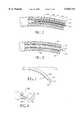
- FIG. 7Adiagrammatically illustrates treatment of a sinus cavity surgical site with a laser according to the method of the invention
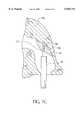
- FIG. 7Bdiagrammatically illustrates contact of a laser tip with tissue of a sinus cavity surgical site with a laser according to the method of the invention.
- FIG. 7Cdiagrammatically illustrates treatment of a nose surgical site with a laser according to the method of the invention.
- FIG. 1a laser delivery portion of an endoscopic surgical tool 10 that can be used in a preferred embodiment of the inventive method of treating the interior surface of a body cavity of a patient.
- the surgeontreats diseased mucosa and polyps in both the nasal passages and sinuses.
- the desireis to selectively weaken the diseased tissues, thereby causing them to separate from healthy tissue and be easily removed with little bleeding and trauma to the surrounding structures.
- the surgical tool 10has a branch coupler 62 connecting a coupling tube 54 and a secondary coupling tube 70.
- the primary coupling tube 54contains a portion of a laser delivery system 11.
- the laser delivery system 11has a laser tip 12 detachably connected to a laser power tube 14.
- the laser tip 12is at least partially absorptive.
- the surgical tool 10 that contains the laser delivery system 11is shown separately from an endoscope 110 shown in FIG. 5. It is recognized that a single endoscope could contain the laser delivery system 11, and means for viewing endoscopic surgery, providing additional suction from an operating field and for irrigating the field.
- the surgical tool 10 and the endoscope 11are shown separately for purpose of discussion and not to imply that the separate tool is preferable over a single tool.
- FIG. 2is an enlarged, cross-sectional view of the distal end 16 of the surgical tool 10.
- a laser feed, commonly referred to as fiber optics, 20is located in a lumen 13 of the laser power tube 14.
- An irrigating fluid 18flows through the lumen 13 of the laser power tube 14 in order to irrigate the operating field, such as a sinus 28 shown in FIG. 7A. This fluid exits from the laser power tube 14 slightly behind the laser tip 12.
- the outside casing of the laser power tube 14is made of a plastic or polymer.
- laser power tube 14is energized by an Nd:YAG laser, such as Model CL MD 110/40, manufactured by Surgical Laser Technologies, Inc. It will be recognized by those skilled in the art that other wavelengths can be used.
- the laser power tube 14is loosely disposed or retained in a lumen 22 of a bendable, rigid tube 24.
- An axially movable, soft-touch casing 26surrounds the bendable tube 24.
- the soft-touch casing 26extends over substantially all of the bendable tube 24. The soft-touch casing 26 enables the surgeon to insert this surgical tool into the body cavity without damaging the surrounding tissue.
- Fluid and debris from inside a body cavityare suctioned via the lumen 22 of the bendable tube 24 from the operating field located at a distal end 25 of the bendable tube 24.
- Irrigating fluid 18flows through the lumen 13 of the laser power tube 24 into the operating field, and the fluid and debris are suctioned via the lumen 22 of the bendable tube 24.
- the bendable, rigid tube 24is made of metal. Since the tip laser actually becomes hot and since the bendable metal tube 24 conducts heat, the soft-touch casing 26 is made of a soft, resilient, rubber-like or insulative plastic to limit the conduction of heat to the surrounding tissue.
- the laser power tube 14has a 2 millimeter diameter whereas the laser power core 20 has a 0.6 millimeter diameter.
- the laser tip 12has substantially the same diameter as the laser power tube 14. In a preferred embodiment, the tip 12 of the laser is coated such that the tip is partially transmissive and partially absorptive.
- the lumen 22is approximately 3.5 millimeters in diameter.
- the bendable metal tube 24is approximately 14 centimeters in length and the soft-touch, axially movable casing 26 is approximately 12.5 centimeters in length.
- the primary coupling tube 54 of the surgical tool 10has a proximal lumen region 23 and a proximal laser power tube portion 15.
- the bendable tube 24is surrounded by a handle 50.
- the bendable tube 24extends through the handle but the handle portion of the tube is not bendable.
- the handle 50also includes a hole linking the lumen of the bendable tube 24 with the ambient environment. By closing the hole, the surgeon increases the degree of suction at the end 25 of the bendable tube 24. By opening the hole to the ambient environment, the degree of suction at the distal end of the tube is decreased since air is suctioned through the hole in the handle.
- the base of the handle 50is attached to the irrigation coupling tube 54 with a coupler 52.
- the surgical tool 10has a laser power tube insertion port 40 located in the proximal region.
- the insertion port 40is positioned in the coupling tube 54 and permits insertion of the laser power tube 14 into the lumen of the coupling tube 54 as well as the lumen 22 of the bendable tube 24.
- the laser power tube 14is coupled to a laser and a source of irrigating fluid.
- the insertion port 40is fluidly sealed to limit leakage of fluid and debris passing through the coupling tube 54 due to the suction therethrough.
- the insertion port 40may be pneumatically sealed to provide good suction control through the tubes 54 and 24.
- a suction control valve 60is disposed on the coupling tube 54. Beyond control valve 60 the branch coupler 62 is attached to the tube 54. A suction pump or other suitable suction source is coupled to one port 64 of branch coupler 62. The branch coupler 62 provides suction for the primary coupling tube 54 and the secondary coupling tube 70.
- the secondary coupling tube 70is connected to the second branch of the branch coupler 62.
- a flow control device 72is disposed on the secondary coupling tube 70.
- the flow control device 72is a plastic crimp controller which, upon depression of a lever or catch arm 74, pinches the coupling tube 70 thereby preventing suction and flow of fluid and debris through that tube.
- a spring loaded arm 76is moved away from the catch arm 74, the catch arm 74 moves outboard or away from the tube pinch point as shown by arrow 78 and suction is permitted through the coupling tube 70.
- the secondary coupling tube 70is removably connected to a handle 90, via the detachable coupler 91, and ultimately to a bendable, rigid metal tube 92 having a soft-touch casing 94 surrounding a substantial portion thereof and particularly the distal end of the metal tube.
- the secondary bendable, rigid tube 92 and casing 94is substantially the same as the primary tube 24 except that the primary tube loosely retains the laser power tube therein.
- the soft casing on the tube 92may be axially moved to expose or cover the distal end of the tube 92.
- Other toolscan be attached to the tube 70 via the detachable coupler 91 by removal of the handle 90 therefrom.
- the distal end 16 of the surgical tool 10can be bent by the surgeon such that the tube, as well as the loosely retained laser tip and laser power tube, can be placed at specific locations in the body cavity of a patient during the microscopic, endoscopic surgery.
- the soft-touch casing 26can be axially moved to expose the end 25 of the bendable tube 24.
- the tube end 25 of the bendable tube 24is covered by the casing 26 thereby substantially eliminating a sharp tube end which may present a problem during microscopic, endoscopic surgical procedures.
- the distal end region 30 of the tip laser 12 and laser tube 14protrudes from the bendable tube 24 as shown in FIG. 4.
- the dashed lines in FIG. 4represent the distal end region 16 being straightened as compared with the curved distal end region 16 shown in solid lines.
- FIG. 3shows that the laser power tube 14 and hence the laser tip 12 can move axially within the lumen 22 upon application of an axially aligned inboard directed force shown by arrow 32.
- the endoscope 110is primarily used in conjunction with the surgical tool 10 for viewing endoscopic surgery, providing additional suction from the operating field, and for irrigating the field. Additionally, the scope provides continuously variable suction and controlled irrigation to the microscopic operating field. As stated above, it is recognized that the laser delivery system can be separate and used in combination with an endoscope 110 as shown in FIG. 5, or an endoscope can combine all the features.
- the endoscope 110has an elongated, hollow stem 112 (sometimes called a sheath) and the stem has a lumen 114 and a distal end 116. At its proximal end, the stem 112 is rotatably connected to a handle enclosure 118.
- the handle enclosure 118includes a top 120, a bottom 122, and four adjoining sides 124, 126, 128, and 130. Extending from the back side 128 of the enclosure 118 is an end 139, which includes a camera port 140. The camera port 140 may be part of the stem.
- the enclosure 118has a side view port 119 that permits the surgeon to visually confirm and mechanically change the rotative position of the stem 112 with respect to the handle enclosure 118.
- the camera port 140is sometimes referred to as a camera ring.
- the port 140permits 360° rotation for the optoelectronic cables attached thereto.
- An optical electronic viewing system 142is optically and/or electronically connected to the camera port 140 via a coupler line 144.
- a light source port 146is adapted to be coupled to a light source.
- a telescope(not shown) is loosely inserted into the lumen 114 of the stem 112. As the surgeon rotates the entire end 139 of the scope, the field of view rotates.
- the endoscope 110includes a pair of coupling hoses 160 and 162 that are coupled to an irrigation source and a suction device respectively. Accordingly, the endoscope 110 includes a irrigation port 164 and a suction port 166. These ports may be configured with removable coupling attachments 165 and 167 which enable coupling hoses 160 and 162 to be removably attached and fluidly sealed to the endoscope 110.
- the irrigation and suction ports 164 and 166are fluidly coupled to the lumen of the stem 112, as shown by dashed lines. In laser endoscopic sinus surgery, it is desirable to provide continuous irrigation via the irrigation coupling tube 160 and the stem 112 into the body cavity.
- the fingers of the surgeonoperate the trumpet-like controls by depressing the suction interface control 172.
- the valve 170, controlling the suctionmay be biased in a closed position and the operator interface control 172 may be biased upward such that the surgeon must continually depress the interface control 172 to provide the degree of suction from the surgical field via the lumen 114.
- Irrigation flowis controlled by the irrigation control valve 175.
- the operator interface control 174controls the flow of irrigation through the lumen 114 of the stem 112.
- the surgeoncan adjust the control lever 174 as shown in its dashed position 179 and thereby control the rate of flow into the operating field. This is a set-type or static control. Once the irrigation control valve is set to a certain position by the surgeon, a constant, predetermined flow of fluid is fed to the operating field via the lumen 114. The surgeon need not continually depress the irrigation control valve 175 in contrast to the suction control valve.
- the control leveris configured as a trumpet-like control which is operated by the surgeon from the top 120 of the enclosure 118.
- FIG. 6shows the operator control interface 174 having a tactile sensor or bump 190 such that the surgeon can sense the irrigation flow lever by touch.
- the top of the suction control 172is generally flat with rounded edges because the surgeon is continuously depressing the valve. Suction is primarily controlled by the operator interface 172 since the valve 170 is a variable type control which is preferably biased closed.
- the methodwill be described with primary reference to the surgical tool 10. However, it is recognized that the surgeon needs a method of viewing what is taking place at the distal end of the surgical tool, as described above in relation to the endoscope 110. Furthermore, the endoscope 110 can provide additional means for suction from the operating field and for irrigating the field.
- the distal end 16 of the surgical tool 10can be bent by the surgeon such that the tube 24, as well as the axially-movable laser tip and laser power tube 14, can be placed at specific locations in the body cavity of a patient, such as a sinus 28, during microscopic endoscopic surgery.
- Continuous irrigationis provided to the body cavity, such as the sinus 28, via the irrigation coupling tube 160 and stem 112 of the endoscope 110 or via the lumen of the laser power tube 14 of the surgical tool 10.
- the irrigating fluid 18is typically a saline solution which is warmed (not heated) prior to introduction into the surgical tool 10 or the endoscope 110.
- the irrigating fluid 18irrigates the surface of the sinus 28.
- the irrigating fluid 18is heated by the laser tip. Because the tip is at least partially absorptive, the laser radiation absorbed by the tip raises the temperature of the tip and the surrounding irrigating fluid 18.
- the heated irrigating fluid 18is localized near the laser tip 12, wherein the surgeon can selectively sear or blanch the sinus tissue in the surgery area 96, including a polyp 98.
- the heathelps cause the unhealthy tissue to weaken, as through protein denaturation or coagulation.
- the irrigating fluid 18dissipates the heat quickly, such that the heat does not materially damage the surrounding healthy tissue.
- the heatcauses vasoconstriction of the tissue. This is different from skin which, upon heating, would vasodilate.
- the temperature of the irrigation fluidwill be selected so as to enhance vasoconstriction.
- the flow of the irrigating fluid 18assists in the peeling away of the polyp 98 by peeling base tissue in layers, and acts as a controlled gentle lavage to clean debris from the surgery area 96, including the polyp 98.
- the surface of the body cavity to be treatedi.e., the polyp 98 in the sinus 28, can be selectably exposed to laser radiation for thermally and/or optically treating the surface to aid in the removal of the polyp 98.
- the laser tip 12is extended outward of the distal end 16 of the lumen 22 of the bendable tube 24 by inserting additional lengths of the power tube 14 into the port 40.
- the laser tip 12is placed in proximity to or in contact with the polyp 98 to weaken and remove the polyp 98. Since the laser tip 12 in a preferred embodiment is partially transmissive and partially absorptive, the treatment is partially thermal and partially radiative. With the blood vessels in the tissue surrounding the polyp 98 constricted, bleeding is reduced and visualization is thus improved when surface tissue is peeled off as the polyp 98 is removed.
- the tube 14retracts axially within the tube 24 upon application of an axially directed inboard force at the tip 12. If the tip 12 touches a bone or hard structure in the sinus, the power tube 14 retracts axially and compresses within the lumen 22.
- FIG. 3shows the laser power tube 14 and the laser tip 12 axially retracted within the lumen 22 upon application of an axially-aligned inboard directed force shown by arrow 32. Compression of the laser power tube 14 of approximately 3 millimeters has been noted in use of the preferred embodiment. The surgeon is thus able to conduct delicate laser microsurgery on soft tissue without damaging the harder tissue surrounding the object being surgically removed or altered.
- the laser tip 12can be used as a probe for diseased tissue.
- surgeoncan mechanically treat the surface in addition to irradiating the tissue by axially moving the soft-touch casing 26 to expose the end 25 of bendable metal tube 24, as shown in FIG. 4. This exposure may enable the surgeon to scrape with the laser tip 12 to assist in the removal of objects from the body cavity as seen in FIG. 7B.
- the surgeonuses the locally generated heat from the laser to assist in the removal of objects.
- the control valve 72 on the secondary coupling tube 70may be closed thereby eliminating or reducing suction through the secondary surgical tool.
- the surgeoncloses the control valve 60 on the primary tube 54, removes the primary surgical tool (bendable tube 24 and soft-touch casing 26) from the body cavity, inserts the secondary surgical tool (bendable tube 92 and soft-touch casing 94), opens the secondary branch control valve 72, thereby permitting suction through the secondary branch coupling tube 70 as well as the secondary endoscopic surgical tool.
- the procedure and method described above for the sinusmay be performed under a general endotracheal anesthesia.
- a similar methodcan be performed in a cavity within a nose 106.
- the laser radiation absorbed by the tipraises the temperature of the tip and the surrounding irrigating fluid 18.
- the heated irrigating fluid 18heats the tissue in the surgery area 96, including a polyp 98, causing coagulation of the polyp and vasoconstriction of the tissue since the nose, similar to the sinus cavity has mucocutaneous tissue. This is in contrast to other tissue in the human body which, upon heating, would vasodilate.
Landscapes
- Health & Medical Sciences (AREA)
- Surgery (AREA)
- Physics & Mathematics (AREA)
- Life Sciences & Earth Sciences (AREA)
- Engineering & Computer Science (AREA)
- Medical Informatics (AREA)
- Nuclear Medicine, Radiotherapy & Molecular Imaging (AREA)
- Electromagnetism (AREA)
- Optics & Photonics (AREA)
- Biomedical Technology (AREA)
- Heart & Thoracic Surgery (AREA)
- Otolaryngology (AREA)
- Molecular Biology (AREA)
- Animal Behavior & Ethology (AREA)
- General Health & Medical Sciences (AREA)
- Public Health (AREA)
- Veterinary Medicine (AREA)
- Laser Surgery Devices (AREA)
- Endoscopes (AREA)
Abstract
Description
Claims (16)
Priority Applications (1)
| Application Number | Priority Date | Filing Date | Title |
|---|---|---|---|
| US08/925,878US5944713A (en) | 1992-02-25 | 1997-09-09 | Method of treating a body cavity using an endoscopic surgical laser |
Applications Claiming Priority (4)
| Application Number | Priority Date | Filing Date | Title |
|---|---|---|---|
| US84105392A | 1992-02-25 | 1992-02-25 | |
| US12369793A | 1993-09-17 | 1993-09-17 | |
| US41328195A | 1995-03-30 | 1995-03-30 | |
| US08/925,878US5944713A (en) | 1992-02-25 | 1997-09-09 | Method of treating a body cavity using an endoscopic surgical laser |
Related Parent Applications (1)
| Application Number | Title | Priority Date | Filing Date |
|---|---|---|---|
| US41328195AContinuation | 1992-02-25 | 1995-03-30 |
Publications (1)
| Publication Number | Publication Date |
|---|---|
| US5944713Atrue US5944713A (en) | 1999-08-31 |
Family
ID=25283900
Family Applications (3)
| Application Number | Title | Priority Date | Filing Date |
|---|---|---|---|
| US07/994,730Expired - Fee RelatedUS5333603A (en) | 1992-02-25 | 1992-12-22 | Endoscope with palm rest |
| US08/088,247Expired - LifetimeUS5607420A (en) | 1992-02-25 | 1993-07-07 | Surgical tool for use with a contact laser |
| US08/925,878Expired - LifetimeUS5944713A (en) | 1992-02-25 | 1997-09-09 | Method of treating a body cavity using an endoscopic surgical laser |
Family Applications Before (2)
| Application Number | Title | Priority Date | Filing Date |
|---|---|---|---|
| US07/994,730Expired - Fee RelatedUS5333603A (en) | 1992-02-25 | 1992-12-22 | Endoscope with palm rest |
| US08/088,247Expired - LifetimeUS5607420A (en) | 1992-02-25 | 1993-07-07 | Surgical tool for use with a contact laser |
Country Status (3)
| Country | Link |
|---|---|
| US (3) | US5333603A (en) |
| AU (1) | AU3789993A (en) |
| WO (1) | WO1993016628A1 (en) |
Cited By (35)
| Publication number | Priority date | Publication date | Assignee | Title |
|---|---|---|---|---|
| US20050096694A1 (en)* | 2003-10-30 | 2005-05-05 | Woojin Lee | Surgical instrument |
| US20060020287A1 (en)* | 2003-10-30 | 2006-01-26 | Woojin Lee | Surgical instrument |
| US20070276430A1 (en)* | 2006-05-23 | 2007-11-29 | Cambridge Endoscopic Devices, Inc. | Surgical instrument |
| WO2008003641A1 (en)* | 2006-07-04 | 2008-01-10 | Bracco Imaging S.P.A. | Device for localized thermal ablation of biological tissue, particularly tumoral tissues or the like |
| US20080046000A1 (en)* | 2006-08-16 | 2008-02-21 | Woojin Lee | Surgical instrument |
| US7338513B2 (en) | 2003-10-30 | 2008-03-04 | Cambridge Endoscopic Devices, Inc. | Surgical instrument |
| US20080262492A1 (en)* | 2007-04-11 | 2008-10-23 | Cambridge Endoscopic Devices, Inc. | Surgical Instrument |
| US20080269727A1 (en)* | 2005-07-20 | 2008-10-30 | Cambridge Endoscopic Devices, Inc. | Surgical instrument guide device |
| US20080294191A1 (en)* | 2007-05-22 | 2008-11-27 | Woojin Lee | Surgical instrument |
| WO2009005763A1 (en)* | 2007-07-03 | 2009-01-08 | Iris, Inc. | Broad spectrum fiber optic base laser illumination |
| US20090054734A1 (en)* | 2007-08-23 | 2009-02-26 | Tyco Healthcare Group Lp | Endoscopic surgical devices |
| US20090069842A1 (en)* | 2007-09-11 | 2009-03-12 | Woojin Lee | Surgical instrument |
| US20090171147A1 (en)* | 2007-12-31 | 2009-07-02 | Woojin Lee | Surgical instrument |
| US7615067B2 (en) | 2006-06-05 | 2009-11-10 | Cambridge Endoscopic Devices, Inc. | Surgical instrument |
| US20090299344A1 (en)* | 2005-07-20 | 2009-12-03 | Woojin Lee | Surgical instrument guide device |
| US20090306637A1 (en)* | 2008-06-04 | 2009-12-10 | Vnus Medical Technologies, Inc. | Energy devices and methods for treating hollow anatomical structures |
| US7648519B2 (en) | 2006-09-13 | 2010-01-19 | Cambridge Endoscopic Devices, Inc. | Surgical instrument |
| US20100023008A1 (en)* | 2008-07-24 | 2010-01-28 | Heard David N | Suction Coagulator |
| US20100030018A1 (en)* | 2008-08-04 | 2010-02-04 | Richard Fortier | Articulating surgical device |
| US20100249497A1 (en)* | 2009-03-30 | 2010-09-30 | Peine William J | Surgical instrument |
| US20110112517A1 (en)* | 2009-11-06 | 2011-05-12 | Peine Willliam J | Surgical instrument |
| US20110184459A1 (en)* | 2008-08-04 | 2011-07-28 | Malkowski Jaroslaw T | Articulating Surgical Device |
| US20110196288A1 (en)* | 2004-11-05 | 2011-08-11 | Asthmatx, Inc. | Energy delivery devices and methods |
| US20110213347A1 (en)* | 2006-07-11 | 2011-09-01 | Cambridge Endoscopic Devices, Inc. | Surgical instrument |
| US20110238108A1 (en)* | 2010-03-23 | 2011-09-29 | Peine William J | Surgical instrument |
| US20150223882A1 (en)* | 2013-03-15 | 2015-08-13 | Thermedical, Inc. | Methods and devices for fluid enhanced microwave ablation therapy |
| US9168050B1 (en) | 2011-03-24 | 2015-10-27 | Cambridge Endoscopic Devices, Inc. | End effector construction |
| US9358061B2 (en) | 2012-11-16 | 2016-06-07 | Biosense Webster (Israel) Ltd. | Irrigated catheter with fluid evacuation |
| US9877768B2 (en) | 2011-04-12 | 2018-01-30 | Thermedical, Inc. | Methods and devices for heating fluid in fluid enhanced ablation therapy |
| US9931310B2 (en)* | 2013-12-12 | 2018-04-03 | Innovation Technologies, Inc. | Materials and methods for controlling infections |
| US10016375B2 (en) | 2013-12-12 | 2018-07-10 | Paul J. Rucinski | Materials and methods for controlling infections |
| US10022176B2 (en) | 2012-08-15 | 2018-07-17 | Thermedical, Inc. | Low profile fluid enhanced ablation therapy devices and methods |
| US11013555B2 (en) | 2016-08-11 | 2021-05-25 | Thermedical, Inc. | Devices and methods for delivering fluid to tissue during ablation therapy |
| US11083871B2 (en) | 2018-05-03 | 2021-08-10 | Thermedical, Inc. | Selectively deployable catheter ablation devices |
| US11918277B2 (en) | 2018-07-16 | 2024-03-05 | Thermedical, Inc. | Inferred maximum temperature monitoring for irrigated ablation therapy |
Families Citing this family (59)
| Publication number | Priority date | Publication date | Assignee | Title |
|---|---|---|---|---|
| US6746419B1 (en) | 1993-04-19 | 2004-06-08 | Stryker Corporation | Irrigation handpiece with built in pulsing pump |
| US6213970B1 (en)* | 1993-12-30 | 2001-04-10 | Stryker Corporation | Surgical suction irrigation |
| US6544211B1 (en) | 1995-02-06 | 2003-04-08 | Mark S. Andrew | Tissue liquefaction and aspiration |
| US7011644B1 (en) | 1995-02-06 | 2006-03-14 | Andrew Mark S | Tissue liquefaction and aspiration for dental treatment |
| US6676629B2 (en) | 1995-02-06 | 2004-01-13 | Mark S. Andrew | Tissue liquefaction and aspiration for dental treatment |
| US5725478A (en)* | 1996-03-14 | 1998-03-10 | Saad; Saad A. | Methods and apparatus for providing suction and/or irrigation in a rigid endoscope while maintaining visual contact with a target area through the endoscope |
| US6283955B1 (en) | 1996-05-13 | 2001-09-04 | Edwards Lifesciences Corp. | Laser ablation device |
| US5807383A (en)* | 1996-05-13 | 1998-09-15 | United States Surgical Corporation | Lasing device |
| US5836909A (en)* | 1996-09-13 | 1998-11-17 | Cosmescu; Ioan | Automatic fluid control system for use in open and laparoscopic laser surgery and electrosurgery and method therefor |
| US6053934A (en)* | 1997-06-02 | 2000-04-25 | Cook Urological, Incorporated | Replaceable, medical device handle |
| JPH10328197A (en)* | 1997-06-04 | 1998-12-15 | Morita Mfg Co Ltd | Laser medical device and laser probe used therein |
| US6139571A (en)* | 1997-07-09 | 2000-10-31 | Fuller Research Corporation | Heated fluid surgical instrument |
| US5925036A (en)* | 1997-09-22 | 1999-07-20 | Maxwell, Iii; Ralph | Apparatus for repairing bone structure using laser |
| US6135996A (en)* | 1998-04-17 | 2000-10-24 | Baxter International, Inc. | Controlled advancement lasing device |
| US6282442B1 (en) | 1998-09-11 | 2001-08-28 | Surgical Laser Technologies, Inc. | Multi-fit suction irrigation hand piece |
| US6112747A (en) | 1998-11-06 | 2000-09-05 | Jones; Jesse M. | Method of sterilizing females |
| AU1654201A (en) | 1999-10-19 | 2001-04-30 | Wolfgang Illich | Method and system for laser surgery |
| US6673067B1 (en)* | 2000-01-31 | 2004-01-06 | Gholam A. Peyman | System and method for thermally and chemically treating cells at sites of interest in the body to impede cell proliferation |
| US6652488B1 (en) | 2000-09-11 | 2003-11-25 | Stryker Corporation | Surgical suction irrigator |
| US6986764B2 (en)* | 2000-12-15 | 2006-01-17 | Laserscope | Method and system for photoselective vaporization of the prostate, and other tissue |
| US20030130649A1 (en)* | 2000-12-15 | 2003-07-10 | Murray Steven C. | Method and system for treatment of benign prostatic hypertrophy (BPH) |
| US7036072B1 (en) | 2001-12-18 | 2006-04-25 | Jgr Acquisition, Inc. | Method and apparatus for declarative updating of self-describing, structured documents |
| US7415669B1 (en) | 2001-02-27 | 2008-08-19 | Open Invention Network | Method and apparatus for viewing electronic commerce-related documents |
| US7326212B2 (en) | 2002-11-19 | 2008-02-05 | Acumed Llc | Bone plates with reference marks |
| US6517531B2 (en) | 2001-04-27 | 2003-02-11 | Scimed Life Systems, Inc. | Medical suction device |
| JP2005518255A (en)* | 2002-02-22 | 2005-06-23 | レーザースコープ | Photoselective vaporization therapy and system for gynecological treatment |
| DE10245140B4 (en)* | 2002-09-27 | 2005-10-20 | Dornier Medtech Laser Gmbh | Intelligent therapy fiber |
| US7294110B2 (en)* | 2002-11-20 | 2007-11-13 | Boston Scientific Scimed Inc. | Medical instruments |
| US7559934B2 (en)* | 2003-04-07 | 2009-07-14 | Scimed Life Systems, Inc. | Beaded basket retrieval device |
| US7422559B2 (en)* | 2004-06-16 | 2008-09-09 | Ge Inspection Technologies, Lp | Borescope comprising fluid supply system |
| US20060084947A1 (en)* | 2004-09-14 | 2006-04-20 | Scheller Gregg D | Malleable ophthalmic surgery tubing |
| US6981945B1 (en) | 2004-11-12 | 2006-01-03 | Artann Laboratories, Inc. | Colonoscope handgrip with force and torque monitor |
| US20100056867A1 (en)* | 2004-12-08 | 2010-03-04 | Vision - Sciences Inc. | Endoscope Valve |
| DE102005017798A1 (en)* | 2005-04-18 | 2006-11-09 | Dornier Medtech Laser Gmbh | optical fiber |
| EP1803454A1 (en)* | 2005-12-30 | 2007-07-04 | Dornier MedTech Laser GmbH | Treatment of cancer by a combination of non-ionizing radiation and androgen deprivation |
| WO2007103057A2 (en)* | 2006-02-24 | 2007-09-13 | U.S. Endoscopy Group, Inc. | Endoscopic suction device |
| EP1914576B1 (en)* | 2006-10-17 | 2019-01-16 | Dornier MedTech Laser GmbH | Laser applicator with an optical lightguide, the optical lightguide comprising a photorefractive section having a volume hologram. |
| JP2008212239A (en)* | 2007-02-28 | 2008-09-18 | Olympus Corp | Endoscope |
| US20080287940A1 (en)* | 2007-05-14 | 2008-11-20 | Hunter Lowell D | Fiber Pole Tip |
| US8419718B2 (en)* | 2007-05-15 | 2013-04-16 | Ams Research Corporation | Laser handle and fiber guard |
| US8092373B1 (en)* | 2007-09-09 | 2012-01-10 | William C. Papouras | Endoscope hand assist device |
| DE102008009912A1 (en)* | 2008-02-19 | 2009-08-20 | Karl Storz Gmbh & Co. Kg | endoscope |
| US7969866B2 (en)* | 2008-03-31 | 2011-06-28 | Telefonaktiebolaget L M Ericsson (Publ) | Hierarchical virtual private LAN service hub connectivity failure recovery |
| US10368838B2 (en) | 2008-03-31 | 2019-08-06 | Intuitive Surgical Operations, Inc. | Surgical tools for laser marking and laser cutting |
| EP2303100B1 (en) | 2008-04-16 | 2020-02-12 | United States Endoscopy Group, Inc. | Adaptor for a water bottle of an endoscope |
| WO2009130049A1 (en) | 2008-04-25 | 2009-10-29 | Curalux Gbr | Light-based method for the endovascular treatment of pathologically altered blood vessels |
| US8277442B2 (en) | 2008-05-05 | 2012-10-02 | Zila, Inc. | Disposable tip apparatus for laser surgical device |
| US7656923B2 (en)* | 2008-05-05 | 2010-02-02 | Zap Lasers, Llc | Dual diode converging module |
| US8535300B2 (en)* | 2008-10-24 | 2013-09-17 | Zila, Inc. | Surgical laser tip apparatus with alignment assembly |
| US20100106146A1 (en)* | 2008-10-24 | 2010-04-29 | Boitor Mihai I A | Hand-held portable laser surgical device |
| US9144373B2 (en)* | 2010-04-26 | 2015-09-29 | United States Endoscopy Group, Inc. | Water bottle adapter for coupling an endoscope to a water bottle |
| EP2830477A1 (en) | 2012-03-30 | 2015-02-04 | Bracco Diagnostics Inc. | Water bottle cap assemblies for an endoscopic device |
| US20140317884A1 (en)* | 2013-03-15 | 2014-10-30 | Todd J. Cohen | Gripping system for medical devices to improve haptics and prevent hand fatigue |
| US9161680B2 (en) | 2013-11-26 | 2015-10-20 | Bracco Diagnostics Inc. | Disposable air/water valve for an endoscopic device |
| US10039435B1 (en)* | 2017-07-26 | 2018-08-07 | JOHNFK Medical Co., Ltd. | Laryngoscope having one-on-one Wi-Fi connecting system |
| EP3746144A4 (en) | 2018-02-02 | 2021-11-24 | Calyxo, Inc. | DEVICES AND METHODS FOR MINIMALLY INVASIVE KIDNEY STONE REMOVAL BY COMBINED SUCTION AND FLUSHING |
| US12329396B2 (en) | 2022-03-02 | 2025-06-17 | Calyxo, Inc. | Kidney stone treatment system |
| JP2023143421A (en)* | 2022-03-25 | 2023-10-06 | 富士フイルム株式会社 | Endoscope operation device and endoscope |
| US20240108412A1 (en) | 2022-09-29 | 2024-04-04 | Calyxo, Inc. | Tool guiding device for kidney stone treatment apparatus |
Citations (24)
| Publication number | Priority date | Publication date | Assignee | Title |
|---|---|---|---|---|
| US3982541A (en)* | 1974-07-29 | 1976-09-28 | Esperance Jr Francis A L | Eye surgical instrument |
| US4146019A (en)* | 1976-09-30 | 1979-03-27 | University Of Southern California | Multichannel endoscope |
| US4207874A (en)* | 1978-03-27 | 1980-06-17 | Choy Daniel S J | Laser tunnelling device |
| US4313431A (en)* | 1978-12-06 | 1982-02-02 | Messerschmitt-Boelkow-Blohm Gesellschaft Mit Beschraenkter Haftung | Endoscopic apparatus with a laser light conductor |
| US4408598A (en)* | 1980-12-26 | 1983-10-11 | Olympus Optical Co., Ltd. | Endoscope with an air-liquid suction device |
| US4418688A (en)* | 1981-07-06 | 1983-12-06 | Laserscope, Inc. | Microcatheter having directable laser and expandable walls |
| US4419987A (en)* | 1979-12-21 | 1983-12-13 | Olympus Optical Co., Ltd. | Laser endoscope |
| US4445517A (en)* | 1981-09-28 | 1984-05-01 | Feild James Rodney | Suction dissector |
| GB2147209A (en)* | 1983-09-30 | 1985-05-09 | Messerschmitt Boelkow Blohm | Laser surgery instrument |
| US4557255A (en)* | 1983-08-22 | 1985-12-10 | Goodman Tobias M | Ureteroscope |
| US4566437A (en)* | 1981-05-01 | 1986-01-28 | Olympus Optical Co., Ltd. | Endoscope |
| US4572163A (en)* | 1983-11-12 | 1986-02-25 | Warner-Lambert Technologies, Inc. | Valve body for endoscope |
| US4592353A (en)* | 1984-05-22 | 1986-06-03 | Surgical Laser Technologies Ohio, Inc. | Medical and surgical laser probe |
| US4606330A (en)* | 1983-08-09 | 1986-08-19 | Richard Wolf Gmbh | Device for disintegrating stones in bodily cavities or ducts |
| US4617915A (en)* | 1984-03-27 | 1986-10-21 | Fuji Photo Optical Co., Ltd. | Construction of manual control section of endoscope |
| US4736743A (en)* | 1986-05-12 | 1988-04-12 | Surgical Laser Technology, Inc. | Vaporization contact laser probe |
| US4770653A (en)* | 1987-06-25 | 1988-09-13 | Medilase, Inc. | Laser angioplasty |
| US4850351A (en)* | 1985-05-22 | 1989-07-25 | C. R. Bard, Inc. | Wire guided laser catheter |
| US4881523A (en)* | 1988-02-04 | 1989-11-21 | Richard Wolf Gmbh | Endoscope |
| US4950267A (en)* | 1987-11-27 | 1990-08-21 | Olympus Optical Co., Ltd. | Laser beam treatment device for an endoscope |
| US5071422A (en)* | 1985-04-24 | 1991-12-10 | Candela Laser Corporation | Use of lasers to break down objects |
| US5154166A (en)* | 1990-02-01 | 1992-10-13 | Machida Endoscope Co., Ltd. | Endoscope cover |
| US5169396A (en)* | 1990-06-08 | 1992-12-08 | Kambiz Dowlatshahi | Method for interstitial laser therapy |
| US5222953A (en)* | 1991-10-02 | 1993-06-29 | Kambiz Dowlatshahi | Apparatus for interstitial laser therapy having an improved temperature sensor for tissue being treated |
Family Cites Families (2)
| Publication number | Priority date | Publication date | Assignee | Title |
|---|---|---|---|---|
| US4646737A (en)* | 1983-06-13 | 1987-03-03 | Laserscope, Inc. | Localized heat applying medical device |
| US5159851A (en)* | 1991-09-18 | 1992-11-03 | Paul Rahmes | Bicycle grip |
- 1992
- 1992-12-22USUS07/994,730patent/US5333603A/ennot_activeExpired - Fee Related
- 1993
- 1993-02-24WOPCT/US1993/001968patent/WO1993016628A1/enactiveApplication Filing
- 1993-02-24AUAU37899/93Apatent/AU3789993A/ennot_activeAbandoned
- 1993-07-07USUS08/088,247patent/US5607420A/ennot_activeExpired - Lifetime
- 1997
- 1997-09-09USUS08/925,878patent/US5944713A/ennot_activeExpired - Lifetime
Patent Citations (25)
| Publication number | Priority date | Publication date | Assignee | Title |
|---|---|---|---|---|
| US3982541A (en)* | 1974-07-29 | 1976-09-28 | Esperance Jr Francis A L | Eye surgical instrument |
| US4146019A (en)* | 1976-09-30 | 1979-03-27 | University Of Southern California | Multichannel endoscope |
| US4207874A (en)* | 1978-03-27 | 1980-06-17 | Choy Daniel S J | Laser tunnelling device |
| US4313431A (en)* | 1978-12-06 | 1982-02-02 | Messerschmitt-Boelkow-Blohm Gesellschaft Mit Beschraenkter Haftung | Endoscopic apparatus with a laser light conductor |
| US4419987A (en)* | 1979-12-21 | 1983-12-13 | Olympus Optical Co., Ltd. | Laser endoscope |
| US4408598A (en)* | 1980-12-26 | 1983-10-11 | Olympus Optical Co., Ltd. | Endoscope with an air-liquid suction device |
| US4566437A (en)* | 1981-05-01 | 1986-01-28 | Olympus Optical Co., Ltd. | Endoscope |
| US4418688A (en)* | 1981-07-06 | 1983-12-06 | Laserscope, Inc. | Microcatheter having directable laser and expandable walls |
| US4445517A (en)* | 1981-09-28 | 1984-05-01 | Feild James Rodney | Suction dissector |
| US4606330A (en)* | 1983-08-09 | 1986-08-19 | Richard Wolf Gmbh | Device for disintegrating stones in bodily cavities or ducts |
| US4557255A (en)* | 1983-08-22 | 1985-12-10 | Goodman Tobias M | Ureteroscope |
| GB2147209A (en)* | 1983-09-30 | 1985-05-09 | Messerschmitt Boelkow Blohm | Laser surgery instrument |
| US4572163A (en)* | 1983-11-12 | 1986-02-25 | Warner-Lambert Technologies, Inc. | Valve body for endoscope |
| US4617915A (en)* | 1984-03-27 | 1986-10-21 | Fuji Photo Optical Co., Ltd. | Construction of manual control section of endoscope |
| US4592353A (en)* | 1984-05-22 | 1986-06-03 | Surgical Laser Technologies Ohio, Inc. | Medical and surgical laser probe |
| US4592353B1 (en)* | 1984-05-22 | 1989-04-18 | ||
| US5071422A (en)* | 1985-04-24 | 1991-12-10 | Candela Laser Corporation | Use of lasers to break down objects |
| US4850351A (en)* | 1985-05-22 | 1989-07-25 | C. R. Bard, Inc. | Wire guided laser catheter |
| US4736743A (en)* | 1986-05-12 | 1988-04-12 | Surgical Laser Technology, Inc. | Vaporization contact laser probe |
| US4770653A (en)* | 1987-06-25 | 1988-09-13 | Medilase, Inc. | Laser angioplasty |
| US4950267A (en)* | 1987-11-27 | 1990-08-21 | Olympus Optical Co., Ltd. | Laser beam treatment device for an endoscope |
| US4881523A (en)* | 1988-02-04 | 1989-11-21 | Richard Wolf Gmbh | Endoscope |
| US5154166A (en)* | 1990-02-01 | 1992-10-13 | Machida Endoscope Co., Ltd. | Endoscope cover |
| US5169396A (en)* | 1990-06-08 | 1992-12-08 | Kambiz Dowlatshahi | Method for interstitial laser therapy |
| US5222953A (en)* | 1991-10-02 | 1993-06-29 | Kambiz Dowlatshahi | Apparatus for interstitial laser therapy having an improved temperature sensor for tissue being treated |
Cited By (84)
| Publication number | Priority date | Publication date | Assignee | Title |
|---|---|---|---|---|
| US8221450B2 (en) | 2003-10-30 | 2012-07-17 | Cambridge Endoscopic Devices, Inc. | Surgical instrument |
| US20060020287A1 (en)* | 2003-10-30 | 2006-01-26 | Woojin Lee | Surgical instrument |
| US20060206101A1 (en)* | 2003-10-30 | 2006-09-14 | Woojin Lee | Surgical instrument |
| US7147650B2 (en) | 2003-10-30 | 2006-12-12 | Woojin Lee | Surgical instrument |
| US7338513B2 (en) | 2003-10-30 | 2008-03-04 | Cambridge Endoscopic Devices, Inc. | Surgical instrument |
| US7364582B2 (en) | 2003-10-30 | 2008-04-29 | Cambridge Endoscopic Devices, Inc. | Surgical instrument |
| US7686826B2 (en) | 2003-10-30 | 2010-03-30 | Cambridge Endoscopic Devices, Inc. | Surgical instrument |
| US20080262537A1 (en)* | 2003-10-30 | 2008-10-23 | Cambridge Endoscopic Devices, Inc. | Surgical instrument |
| US20050096694A1 (en)* | 2003-10-30 | 2005-05-05 | Woojin Lee | Surgical instrument |
| US20110196288A1 (en)* | 2004-11-05 | 2011-08-11 | Asthmatx, Inc. | Energy delivery devices and methods |
| US10076380B2 (en) | 2004-11-05 | 2018-09-18 | Boston Scientific Scimed, Inc. | Energy delivery devices and methods |
| US10398502B2 (en) | 2004-11-05 | 2019-09-03 | Boston Scientific Scimed, Inc. | Energy delivery devices and methods |
| US7842028B2 (en) | 2005-04-14 | 2010-11-30 | Cambridge Endoscopic Devices, Inc. | Surgical instrument guide device |
| US8926597B2 (en) | 2005-07-20 | 2015-01-06 | Cambridge Endoscopic Devices, Inc. | Surgical instrument guide device |
| US8409175B2 (en) | 2005-07-20 | 2013-04-02 | Woojin Lee | Surgical instrument guide device |
| US9427256B2 (en) | 2005-07-20 | 2016-08-30 | Cambridge Endoscopic Devices, Inc. | Surgical instrument guide device |
| US10188372B2 (en) | 2005-07-20 | 2019-01-29 | Cambridge Endoscopic Devices, Inc. | Surgical instrument guide device |
| US20080269727A1 (en)* | 2005-07-20 | 2008-10-30 | Cambridge Endoscopic Devices, Inc. | Surgical instrument guide device |
| US20090299344A1 (en)* | 2005-07-20 | 2009-12-03 | Woojin Lee | Surgical instrument guide device |
| US20070276430A1 (en)* | 2006-05-23 | 2007-11-29 | Cambridge Endoscopic Devices, Inc. | Surgical instrument |
| US8105350B2 (en) | 2006-05-23 | 2012-01-31 | Cambridge Endoscopic Devices, Inc. | Surgical instrument |
| US7615067B2 (en) | 2006-06-05 | 2009-11-10 | Cambridge Endoscopic Devices, Inc. | Surgical instrument |
| US20100280505A1 (en)* | 2006-07-04 | 2010-11-04 | Bracco Imaging S.P.A. | Device for Localized Thermal Ablation of Biological Tissue, Particularly Tumoral Tissues or the Like |
| WO2008003641A1 (en)* | 2006-07-04 | 2008-01-10 | Bracco Imaging S.P.A. | Device for localized thermal ablation of biological tissue, particularly tumoral tissues or the like |
| US8029531B2 (en) | 2006-07-11 | 2011-10-04 | Cambridge Endoscopic Devices, Inc. | Surgical instrument |
| US20110213347A1 (en)* | 2006-07-11 | 2011-09-01 | Cambridge Endoscopic Devices, Inc. | Surgical instrument |
| US20080046000A1 (en)* | 2006-08-16 | 2008-02-21 | Woojin Lee | Surgical instrument |
| US7708758B2 (en) | 2006-08-16 | 2010-05-04 | Cambridge Endoscopic Devices, Inc. | Surgical instrument |
| US8709037B2 (en) | 2006-08-16 | 2014-04-29 | Woojin Lee | Surgical instrument |
| US20100168722A1 (en)* | 2006-09-13 | 2010-07-01 | Cambridge Endoscopic Devices, Inc. | Surgical Instrument |
| US8083765B2 (en) | 2006-09-13 | 2011-12-27 | Cambridge Endoscopic Devices, Inc. | Surgical instrument |
| US7648519B2 (en) | 2006-09-13 | 2010-01-19 | Cambridge Endoscopic Devices, Inc. | Surgical instrument |
| US20080262492A1 (en)* | 2007-04-11 | 2008-10-23 | Cambridge Endoscopic Devices, Inc. | Surgical Instrument |
| US8409245B2 (en) | 2007-05-22 | 2013-04-02 | Woojin Lee | Surgical instrument |
| US20080294191A1 (en)* | 2007-05-22 | 2008-11-27 | Woojin Lee | Surgical instrument |
| WO2009005763A1 (en)* | 2007-07-03 | 2009-01-08 | Iris, Inc. | Broad spectrum fiber optic base laser illumination |
| US9005238B2 (en) | 2007-08-23 | 2015-04-14 | Covidien Lp | Endoscopic surgical devices |
| US20090054734A1 (en)* | 2007-08-23 | 2009-02-26 | Tyco Healthcare Group Lp | Endoscopic surgical devices |
| US20090069842A1 (en)* | 2007-09-11 | 2009-03-12 | Woojin Lee | Surgical instrument |
| US8257386B2 (en) | 2007-09-11 | 2012-09-04 | Cambridge Endoscopic Devices, Inc. | Surgical instrument |
| US20090171147A1 (en)* | 2007-12-31 | 2009-07-02 | Woojin Lee | Surgical instrument |
| US9770297B2 (en)* | 2008-06-04 | 2017-09-26 | Covidien Lp | Energy devices and methods for treating hollow anatomical structures |
| US20090306637A1 (en)* | 2008-06-04 | 2009-12-10 | Vnus Medical Technologies, Inc. | Energy devices and methods for treating hollow anatomical structures |
| US8328804B2 (en) | 2008-07-24 | 2012-12-11 | Covidien Lp | Suction coagulator |
| US20100023008A1 (en)* | 2008-07-24 | 2010-01-28 | Heard David N | Suction Coagulator |
| US8808287B2 (en) | 2008-07-24 | 2014-08-19 | Covidien Lp | Suction coagulator |
| US9028490B2 (en) | 2008-07-24 | 2015-05-12 | Covidien Lp | Suction coagulator |
| US8801752B2 (en) | 2008-08-04 | 2014-08-12 | Covidien Lp | Articulating surgical device |
| US9883880B2 (en) | 2008-08-04 | 2018-02-06 | Covidien Lp | Articulating surgical device |
| US20110184459A1 (en)* | 2008-08-04 | 2011-07-28 | Malkowski Jaroslaw T | Articulating Surgical Device |
| US8968355B2 (en) | 2008-08-04 | 2015-03-03 | Covidien Lp | Articulating surgical device |
| US20100030018A1 (en)* | 2008-08-04 | 2010-02-04 | Richard Fortier | Articulating surgical device |
| US20100249497A1 (en)* | 2009-03-30 | 2010-09-30 | Peine William J | Surgical instrument |
| US20110112517A1 (en)* | 2009-11-06 | 2011-05-12 | Peine Willliam J | Surgical instrument |
| US20110238108A1 (en)* | 2010-03-23 | 2011-09-29 | Peine William J | Surgical instrument |
| US9168050B1 (en) | 2011-03-24 | 2015-10-27 | Cambridge Endoscopic Devices, Inc. | End effector construction |
| US10307201B2 (en) | 2011-04-12 | 2019-06-04 | Thermedical, Inc. | Methods and devices for use of degassed fluids with fluid enhanced ablation devices |
| US10448987B2 (en) | 2011-04-12 | 2019-10-22 | Thermedical, Inc. | Methods and devices for controlling ablation therapy |
| US9937000B2 (en) | 2011-04-12 | 2018-04-10 | Thermedical, Inc. | Methods and devices for controlling ablation therapy |
| US11950829B2 (en) | 2011-04-12 | 2024-04-09 | Thermedical, Inc. | Methods and devices for use of degassed fluids with fluid enhanced ablation devices |
| US9877768B2 (en) | 2011-04-12 | 2018-01-30 | Thermedical, Inc. | Methods and devices for heating fluid in fluid enhanced ablation therapy |
| US10548654B2 (en) | 2011-04-12 | 2020-02-04 | Thermedical, Inc. | Devices and methods for remote temperature monitoring in fluid enhanced ablation therapy |
| US11135000B2 (en) | 2011-04-12 | 2021-10-05 | Thermedical, Inc. | Methods and devices for use of degassed fluids with fluid enhanced ablation devices |
| US11871979B2 (en) | 2011-04-12 | 2024-01-16 | Thermedical, Inc. | Methods and devices for controlling ablation therapy |
| US10881443B2 (en) | 2011-04-12 | 2021-01-05 | Thermedical, Inc. | Devices and methods for shaping therapy in fluid enhanced ablation |
| US11583330B2 (en) | 2011-04-12 | 2023-02-21 | Thermedical, Inc. | Devices and methods for remote temperature monitoring in fluid enhanced ablation therapy |
| US10022176B2 (en) | 2012-08-15 | 2018-07-17 | Thermedical, Inc. | Low profile fluid enhanced ablation therapy devices and methods |
| US9358061B2 (en) | 2012-11-16 | 2016-06-07 | Biosense Webster (Israel) Ltd. | Irrigated catheter with fluid evacuation |
| US9757195B2 (en) | 2012-11-16 | 2017-09-12 | Biosense Webster (Israel) Ltd. | Irrigated catheter with fluid evacuation |
| US10925666B2 (en) | 2012-11-16 | 2021-02-23 | Biosense Webster (Israel) Ltd. | Irrigated multi-lumened electrophysiology catheter with fluid evacuation |
| US20150223882A1 (en)* | 2013-03-15 | 2015-08-13 | Thermedical, Inc. | Methods and devices for fluid enhanced microwave ablation therapy |
| US10058385B2 (en)* | 2013-03-15 | 2018-08-28 | Thermedical, Inc. | Methods and devices for fluid enhanced microwave ablation therapy |
| US9931310B2 (en)* | 2013-12-12 | 2018-04-03 | Innovation Technologies, Inc. | Materials and methods for controlling infections |
| US10682318B2 (en) | 2013-12-12 | 2020-06-16 | Innovation Technologies, Inc. | Materials and methods for controlling infections |
| US11033517B2 (en) | 2013-12-12 | 2021-06-15 | Innovation Technologies, Inc. | Materials and methods for controlling infections |
| US10507191B2 (en) | 2013-12-12 | 2019-12-17 | Innovation Technologies, Inc. | Materials and methods for controlling infections |
| US11559503B2 (en) | 2013-12-12 | 2023-01-24 | Innovation Technologies, Inc. | Materials and methods for controlling infections |
| US10226437B2 (en) | 2013-12-12 | 2019-03-12 | Innovation Technologies, Inc. | Materials and methods for controlling infections |
| US10172813B2 (en) | 2013-12-12 | 2019-01-08 | Innovation Technologies, Inc. | Materials and methods for controlling infections |
| US10016375B2 (en) | 2013-12-12 | 2018-07-10 | Paul J. Rucinski | Materials and methods for controlling infections |
| US11013555B2 (en) | 2016-08-11 | 2021-05-25 | Thermedical, Inc. | Devices and methods for delivering fluid to tissue during ablation therapy |
| US12310651B2 (en) | 2016-08-11 | 2025-05-27 | Thermedical, Inc. | Devices and methods for delivering fluid to tissue during ablation therapy |
| US11083871B2 (en) | 2018-05-03 | 2021-08-10 | Thermedical, Inc. | Selectively deployable catheter ablation devices |
| US11918277B2 (en) | 2018-07-16 | 2024-03-05 | Thermedical, Inc. | Inferred maximum temperature monitoring for irrigated ablation therapy |
Also Published As
| Publication number | Publication date |
|---|---|
| WO1993016628A1 (en) | 1993-09-02 |
| AU3789993A (en) | 1993-09-13 |
| US5607420A (en) | 1997-03-04 |
| US5333603A (en) | 1994-08-02 |
Similar Documents
| Publication | Publication Date | Title |
|---|---|---|
| US5944713A (en) | Method of treating a body cavity using an endoscopic surgical laser | |
| AU2017204568B2 (en) | Systems and methods for prostate treatment | |
| US6579285B2 (en) | Photoablation with infrared radiation | |
| JP3179109B2 (en) | Interstitial laser treatment device | |
| US6802838B2 (en) | Devices and methods for directed, interstitial ablation of tissue | |
| JP4460567B2 (en) | Deflectable interstitial ablation device | |
| US7306588B2 (en) | Devices and methods for directed, interstitial ablation of tissue | |
| US6676656B2 (en) | Surgical ablation with radiant energy | |
| US5542944A (en) | Surgical device and method | |
| CA2802925C (en) | Endoscope and optical fiber assembly | |
| US5366456A (en) | Angle firing fiber optic laser scalpel and method of use | |
| US5085658A (en) | Neurosurgical pathological tissue removing device | |
| US20040147912A1 (en) | Surgical ablation system with sliding ablation device | |
| EP0610991A2 (en) | Device for laser assisted transurethral resection of the prostate(TURP) | |
| US20080195085A1 (en) | Economical, two component, thermal energy delivery and surface cooling apparatus and its method of use | |
| US20020193781A1 (en) | Devices for interstitial delivery of thermal energy into tissue and methods of use thereof | |
| US20050288654A1 (en) | Methods and devices for delivering ablative energy | |
| WO2002005722A1 (en) | Cardiac photoablation instruments | |
| WO2003096871A2 (en) | Multipurpose fluid jet surgical device | |
| JP2010512233A (en) | Laser energy device to remove soft tissue | |
| JP2660008B2 (en) | Ultrasound therapy equipment | |
| Oswal et al. | Endonasal laser applications | |
| JPS6171041A (en) | Rejectoscope apparatus | |
| JPS62224343A (en) | Ultrasonic probe device |
Legal Events
| Date | Code | Title | Description |
|---|---|---|---|
| STCF | Information on status: patent grant | Free format text:PATENTED CASE | |
| FPAY | Fee payment | Year of fee payment:4 | |
| FPAY | Fee payment | Year of fee payment:8 | |
| AS | Assignment | Owner name:PERSEUS PARTNERS VII, L.P.,DISTRICT OF COLUMBIA Free format text:SECURITY AGREEMENT;ASSIGNORS:PHOTOMEDEX, INC.;PROCYTE CORPORATION;PHOTO THERAPEUTICS, INC.;AND OTHERS;REEL/FRAME:024244/0480 Effective date:20100319 Owner name:PERSEUS PARTNERS VII, L.P., DISTRICT OF COLUMBIA Free format text:SECURITY AGREEMENT;ASSIGNORS:PHOTOMEDEX, INC.;PROCYTE CORPORATION;PHOTO THERAPEUTICS, INC.;AND OTHERS;REEL/FRAME:024244/0480 Effective date:20100319 | |
| FPAY | Fee payment | Year of fee payment:12 | |
| SULP | Surcharge for late payment | Year of fee payment:11 | |
| AS | Assignment | Owner name:PHOTO THERAPEUTICS, INC., PENNSYLVANIA Free format text:RELEASE OF SECURITY INTEREST IN PATENTS;ASSIGNOR:PERSEUS PARTNERS VII, L.P.;REEL/FRAME:027374/0134 Effective date:20111213 Owner name:SLT TECHNOLOGIES, INC., PENNSYLVANIA Free format text:RELEASE OF SECURITY INTEREST IN PATENTS;ASSIGNOR:PERSEUS PARTNERS VII, L.P.;REEL/FRAME:027374/0134 Effective date:20111213 Owner name:PROCYTE CORPORATION, PENNSYLVANIA Free format text:RELEASE OF SECURITY INTEREST IN PATENTS;ASSIGNOR:PERSEUS PARTNERS VII, L.P.;REEL/FRAME:027374/0134 Effective date:20111213 Owner name:PHOTOMEDEX, INC., PENNSYLVANIA Free format text:RELEASE OF SECURITY INTEREST IN PATENTS;ASSIGNOR:PERSEUS PARTNERS VII, L.P.;REEL/FRAME:027374/0134 Effective date:20111213 |