US5904997A - Abrasion resistant ceramic insulation tile and method - Google Patents
Abrasion resistant ceramic insulation tile and methodDownload PDFInfo
- Publication number
- US5904997A US5904997AUS08/607,535US60753596AUS5904997AUS 5904997 AUS5904997 AUS 5904997AUS 60753596 AUS60753596 AUS 60753596AUS 5904997 AUS5904997 AUS 5904997A
- Authority
- US
- United States
- Prior art keywords
- ceramic
- tile
- insulation tile
- preceramic polymer
- ceramic insulation
- Prior art date
- Legal status (The legal status is an assumption and is not a legal conclusion. Google has not performed a legal analysis and makes no representation as to the accuracy of the status listed.)
- Expired - Lifetime
Links
- 239000000919ceramicSubstances0.000titleclaimsabstractdescription44
- 238000009413insulationMethods0.000titleclaimsabstractdescription31
- 238000005299abrasionMethods0.000titleclaimsabstractdescription29
- 238000000034methodMethods0.000titledescription20
- 229920000642polymerPolymers0.000claimsabstractdescription31
- 229910010293ceramic materialInorganic materials0.000claimsabstractdescription9
- 239000011159matrix materialSubstances0.000claimsabstractdescription3
- 229910052575non-oxide ceramicInorganic materials0.000claimsdescription5
- 239000011225non-oxide ceramicSubstances0.000claimsdescription5
- MCMNRKCIXSYSNV-UHFFFAOYSA-NZirconium dioxideChemical compoundO=[Zr]=OMCMNRKCIXSYSNV-UHFFFAOYSA-N0.000claimsdescription4
- PNEYBMLMFCGWSK-UHFFFAOYSA-Naluminium oxideInorganic materials[O-2].[O-2].[O-2].[Al+3].[Al+3]PNEYBMLMFCGWSK-UHFFFAOYSA-N0.000claimsdescription4
- 229910010271silicon carbideInorganic materials0.000claimsdescription4
- HBMJWWWQQXIZIP-UHFFFAOYSA-Nsilicon carbideChemical compound[Si+]#[C-]HBMJWWWQQXIZIP-UHFFFAOYSA-N0.000claimsdescription4
- 229910052574oxide ceramicInorganic materials0.000claimsdescription3
- 239000011224oxide ceramicSubstances0.000claimsdescription3
- BPQQTUXANYXVAA-UHFFFAOYSA-NOrthosilicateChemical compound[O-][Si]([O-])([O-])[O-]BPQQTUXANYXVAA-UHFFFAOYSA-N0.000claimsdescription2
- KZHJGOXRZJKJNY-UHFFFAOYSA-Ndioxosilane;oxo(oxoalumanyloxy)alumaneChemical compoundO=[Si]=O.O=[Si]=O.O=[Al]O[Al]=O.O=[Al]O[Al]=O.O=[Al]O[Al]=OKZHJGOXRZJKJNY-UHFFFAOYSA-N0.000claimsdescription2
- 229910052863mulliteInorganic materials0.000claimsdescription2
- 239000007788liquidSubstances0.000claims1
- 239000012704polymeric precursorSubstances0.000description10
- 238000000280densificationMethods0.000description7
- 239000000203mixtureSubstances0.000description6
- 238000012360testing methodMethods0.000description6
- 239000000463materialSubstances0.000description4
- 230000001419dependent effectEffects0.000description3
- 239000007789gasSubstances0.000description3
- 239000002243precursorSubstances0.000description3
- 239000011347resinSubstances0.000description3
- 229920005989resinPolymers0.000description3
- 230000004580weight lossEffects0.000description3
- XKRFYHLGVUSROY-UHFFFAOYSA-NArgonChemical compound[Ar]XKRFYHLGVUSROY-UHFFFAOYSA-N0.000description2
- IJGRMHOSHXDMSA-UHFFFAOYSA-NAtomic nitrogenChemical compoundN#NIJGRMHOSHXDMSA-UHFFFAOYSA-N0.000description2
- 238000013459approachMethods0.000description2
- 238000005229chemical vapour depositionMethods0.000description2
- 239000011521glassSubstances0.000description2
- 238000004519manufacturing processMethods0.000description2
- INFDPOAKFNIJBF-UHFFFAOYSA-NparaquatChemical compoundC1=C[N+](C)=CC=C1C1=CC=[N+](C)C=C1INFDPOAKFNIJBF-UHFFFAOYSA-N0.000description2
- IYPHPQODKSHEHV-UHFFFAOYSA-N4-[[5-(4-nitrophenyl)-3-oxo-2-phenyl-1H-pyrazol-4-yl]diazenyl]benzenesulfonic acidChemical compoundC1=CC=C(C=C1)N2C(=O)C(=C(N2)C3=CC=C(C=C3)[N+](=O)[O-])N=NC4=CC=C(C=C4)S(=O)(=O)OIYPHPQODKSHEHV-UHFFFAOYSA-N0.000description1
- 239000004604Blowing AgentSubstances0.000description1
- XUIMIQQOPSSXEZ-UHFFFAOYSA-NSiliconChemical compound[Si]XUIMIQQOPSSXEZ-UHFFFAOYSA-N0.000description1
- PBZHKWVYRQRZQC-UHFFFAOYSA-N[Si+4].[O-][N+]([O-])=O.[O-][N+]([O-])=O.[O-][N+]([O-])=O.[O-][N+]([O-])=OChemical compound[Si+4].[O-][N+]([O-])=O.[O-][N+]([O-])=O.[O-][N+]([O-])=O.[O-][N+]([O-])=OPBZHKWVYRQRZQC-UHFFFAOYSA-N0.000description1
- 238000010521absorption reactionMethods0.000description1
- 229910000323aluminium silicateInorganic materials0.000description1
- 229910052786argonInorganic materials0.000description1
- 239000012300argon atmosphereSubstances0.000description1
- 239000012298atmosphereSubstances0.000description1
- 239000003054catalystSubstances0.000description1
- 238000000576coating methodMethods0.000description1
- 238000010586diagramMethods0.000description1
- HNPSIPDUKPIQMN-UHFFFAOYSA-Ndioxosilane;oxo(oxoalumanyloxy)alumaneChemical compoundO=[Si]=O.O=[Al]O[Al]=OHNPSIPDUKPIQMN-UHFFFAOYSA-N0.000description1
- -1dirtSubstances0.000description1
- 230000000694effectsEffects0.000description1
- 238000005516engineering processMethods0.000description1
- 230000003628erosive effectEffects0.000description1
- 239000006260foamSubstances0.000description1
- 239000000446fuelSubstances0.000description1
- 238000001764infiltrationMethods0.000description1
- 230000008595infiltrationEffects0.000description1
- 229910052757nitrogenInorganic materials0.000description1
- 239000002245particleSubstances0.000description1
- 239000013618particulate matterSubstances0.000description1
- 238000009700powder processingMethods0.000description1
- 238000000197pyrolysisMethods0.000description1
- 238000011160researchMethods0.000description1
- 239000004576sandSubstances0.000description1
- 229910052710siliconInorganic materials0.000description1
- 239000010703siliconSubstances0.000description1
- 239000002002slurrySubstances0.000description1
- 239000004071sootSubstances0.000description1
- 239000007921spraySubstances0.000description1
- 238000012549trainingMethods0.000description1
- 230000009466transformationEffects0.000description1
- 230000004584weight gainEffects0.000description1
- 235000019786weight gainNutrition0.000description1
Images
Classifications
- C—CHEMISTRY; METALLURGY
- C04—CEMENTS; CONCRETE; ARTIFICIAL STONE; CERAMICS; REFRACTORIES
- C04B—LIME, MAGNESIA; SLAG; CEMENTS; COMPOSITIONS THEREOF, e.g. MORTARS, CONCRETE OR LIKE BUILDING MATERIALS; ARTIFICIAL STONE; CERAMICS; REFRACTORIES; TREATMENT OF NATURAL STONE
- C04B41/00—After-treatment of mortars, concrete, artificial stone or ceramics; Treatment of natural stone
- C04B41/009—After-treatment of mortars, concrete, artificial stone or ceramics; Treatment of natural stone characterised by the material treated
- B—PERFORMING OPERATIONS; TRANSPORTING
- B64—AIRCRAFT; AVIATION; COSMONAUTICS
- B64G—COSMONAUTICS; VEHICLES OR EQUIPMENT THEREFOR
- B64G1/00—Cosmonautic vehicles
- B64G1/22—Parts of, or equipment specially adapted for fitting in or to, cosmonautic vehicles
- B64G1/52—Protection, safety or emergency devices; Survival aids
- B64G1/58—Thermal protection, e.g. heat shields
- C—CHEMISTRY; METALLURGY
- C04—CEMENTS; CONCRETE; ARTIFICIAL STONE; CERAMICS; REFRACTORIES
- C04B—LIME, MAGNESIA; SLAG; CEMENTS; COMPOSITIONS THEREOF, e.g. MORTARS, CONCRETE OR LIKE BUILDING MATERIALS; ARTIFICIAL STONE; CERAMICS; REFRACTORIES; TREATMENT OF NATURAL STONE
- C04B41/00—After-treatment of mortars, concrete, artificial stone or ceramics; Treatment of natural stone
- C04B41/45—Coating or impregnating, e.g. injection in masonry, partial coating of green or fired ceramics, organic coating compositions for adhering together two concrete elements
- C04B41/50—Coating or impregnating, e.g. injection in masonry, partial coating of green or fired ceramics, organic coating compositions for adhering together two concrete elements with inorganic materials
- C04B41/5053—Coating or impregnating, e.g. injection in masonry, partial coating of green or fired ceramics, organic coating compositions for adhering together two concrete elements with inorganic materials non-oxide ceramics
- C04B41/5057—Carbides
- C04B41/5059—Silicon carbide
- C—CHEMISTRY; METALLURGY
- C04—CEMENTS; CONCRETE; ARTIFICIAL STONE; CERAMICS; REFRACTORIES
- C04B—LIME, MAGNESIA; SLAG; CEMENTS; COMPOSITIONS THEREOF, e.g. MORTARS, CONCRETE OR LIKE BUILDING MATERIALS; ARTIFICIAL STONE; CERAMICS; REFRACTORIES; TREATMENT OF NATURAL STONE
- C04B41/00—After-treatment of mortars, concrete, artificial stone or ceramics; Treatment of natural stone
- C04B41/80—After-treatment of mortars, concrete, artificial stone or ceramics; Treatment of natural stone of only ceramics
- C04B41/81—Coating or impregnation
- C04B41/85—Coating or impregnation with inorganic materials
- C04B41/87—Ceramics
- C—CHEMISTRY; METALLURGY
- C04—CEMENTS; CONCRETE; ARTIFICIAL STONE; CERAMICS; REFRACTORIES
- C04B—LIME, MAGNESIA; SLAG; CEMENTS; COMPOSITIONS THEREOF, e.g. MORTARS, CONCRETE OR LIKE BUILDING MATERIALS; ARTIFICIAL STONE; CERAMICS; REFRACTORIES; TREATMENT OF NATURAL STONE
- C04B2111/00—Mortars, concrete or artificial stone or mixtures to prepare them, characterised by specific function, property or use
- C04B2111/00474—Uses not provided for elsewhere in C04B2111/00
- C04B2111/00982—Uses not provided for elsewhere in C04B2111/00 as construction elements for space vehicles or aeroplanes
- C—CHEMISTRY; METALLURGY
- C04—CEMENTS; CONCRETE; ARTIFICIAL STONE; CERAMICS; REFRACTORIES
- C04B—LIME, MAGNESIA; SLAG; CEMENTS; COMPOSITIONS THEREOF, e.g. MORTARS, CONCRETE OR LIKE BUILDING MATERIALS; ARTIFICIAL STONE; CERAMICS; REFRACTORIES; TREATMENT OF NATURAL STONE
- C04B2111/00—Mortars, concrete or artificial stone or mixtures to prepare them, characterised by specific function, property or use
- C04B2111/20—Resistance against chemical, physical or biological attack
- C04B2111/2038—Resistance against physical degradation
Definitions
- This inventionrelates to a ceramic tile having improved abrasion resistance and a method for applying an abrasion resistant layer. Specifically, it relates to ceramic insulation tiles used in high-temperature aircraft applications to protect metallic structure from hot engine exhaust.
- Ceramic insulation tilesare used in aircraft applications to protect the aircraft metallic structure from high temperature engine exhaust.
- Current insulation tilesprovide adequate protection from high temperatures, but not from the abrasion caused by high velocity engine exhaust gases and associated erodents. Because high temperature insulation tile is composed of a porous lightweight ceramic, however, abrasion is particularly damaging to the physical integrity of the ceramic tile.
- engine exhaust gasessuch as CO 2 , O 2 , CO, and unburned fuel at high flow rates can abrade and erode insulation tile.
- abrasioncan arise from airborne particulate matter related to aircraft operation such as sand, dirt, soot, engine coatings, and turbine blade particles. Therefore a means of improving the abrasion resistance of such insulation tiles to extend the life of such tiles and reduce the cost of operation of the related aircraft is required.
- one object of the inventionis to provide a ceramic insulation tile that is resistant to abrasion from the types of gas flow and erodents present in high temperature aircraft operation.
- Another object of the inventionis to provide an abrasion resistant ceramic insulation tile that is low in cost and can be made with a process that is not labor intensive.
- Another object of the inventionis to provide a process to make an abrasion resistant ceramic insulation tile that is uncomplicated and, therefore, highly reproducible. This object will also reduce the cost of the resulting tile.
- a further object of the inventionis to provide an abrasion resistant ceramic insulation tile that is lightweight, which object is a mission critical parameter on all modern aircraft for performance and economy of operation.
- an abrasion resistant ceramic insulation tileis provided with a porous ceramic material having a surface.
- the insulation tileis further provided with a preceramic polymer which is permeated through the surface.
- the preceramic polymerforms an integral ceramic matrix with the porous ceramic material upon pyrolyzation.
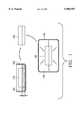
- FIG. 1is a pictorial diagram of the infiltration, curing and pyrolyzing steps of the invention.
- the method used to create an abrasion resistant ceramic insulation tileis to densify the tile surface. This process increases the strength and hardness of the tile surface and, therefore, the abrasion resistance of the tile.
- a polymeric precursor 100which is also referred to as a preceramic resin or preceramic polymer, is poured into a container 105 up to a predetermined depth H.
- a ceramic insulation tile 110is then placed in the container to allow the polymeric precursor 100 to soak into the tile to a depth H. The time required for this absorption to occur varies with the composition of the tile 110 and the polymeric precursor 100 as will be explained later.
- the tile 110 with the absorbed polymeric precursor 100is processed in accordance with the process steps specified by the manufacturer of the polymeric precursor to transform the absorbed precursor into a ceramic.
- the absorbed tile 120is cured at a low temperature for several hours in air.
- This stepis typically followed by a high temperature pyrolyzing step in an inert atmosphere 125 (for non-oxide ceramic precursors), such as high purity argon or nitrogen.
- This stepis usually performed in a standard furnace 130, at an elevated temperature.
- compositions for the tile 110 and preceramic polymer 100are interdependent, and also dependent on the abrasion resistant properties desired to be achieved.
- the material selected for the tile 110must be porous enough to allow absorbtion of the preceramic polymer 100 that is selected while retaining the heat resistant properties for which the tile was selected for the operational environment, e.g., aircraft exhausts.
- a specific preferred porositydepends on the viscosity of the preceramic polymer 100 selected, ceramic porosities in the range of 50-95 percent open porosity will allow the extent of densification required to achieve the objects of the invention.
- the preceramic polymer 100 selectedmust have a viscosity low enough to penetrate the porous tile 110 to a desired depth, which controls the properties to be achieved.
- the viscositymust not be too low, however, because this will cause the preceramic polymer 100 to be absorbed in an uncontrolled manner into the tile 110. For example, if the viscosity is too low, the preceramic polymer 100 will densify the entire tile 110 resulting a tile that is far too heavy for the intended application. If the viscosity is too high, the preceramic polymer 100 will not absorb deep enough into the tile 110 to create a dense ceramic layer having the desired properties.
- the preceramic polymer 100selects the preceramic polymer 100 to have a viscosity that will be absorbed into a selected tile 110 to a depth that will increase the abrasion resistance of the tile to a desired degree.
- the type of preceramic polymer 100 and the depth to which it is absorbed in the tile 110will determine the increase in such abrasion-related properties such as erosion resistance or impact resistance.
- a preferred viscosityis dependent on a specific porosity of tile 110, viscosities in the range of 1 to 400 centipoise will provide the extent of densification required to achieve the objects of the invention.
- the depth that the preceramic polymer 100 will penetrate the tile 110is also dependent on the interfacial forces that exist between the two materials. These forces determine the degree to which the preceramic polymer 100 will wet the tile 110 and, consequently, the depth to which the polymer will penetrate the tile.
- the methodproduces a densification of the tile 110 that is reproducible in production quantities.
- the uncomplicated nature of the process of the inventioncontributes substantially to this object.
- the viscosity of the preceramic polymer 100 and porosity of the tile 110may be selected such that the polymer will be absorbed only up to the height H to which the tile is immersed in the polymer during the soak step described previously. Selection of the materials in this manner will ensure that the depth of densificaton, and resulting strength increases, will be reproducible.
- selection of the preceramic polymer 100 in this mannermay not be possible if the preferred viscosity will not allow transformation into a ceramic with the desired strength and toughness properties.
- the preferred preceramic polymer 100was formed with BlackglasTM 489D resin sold by the Allied Signal Corporation, which pyrolyzes to form a silicon-oxycarbide ceramic. This resin was mixed with 0.05 percent by weight of Blackglas 489B catalyst to form the preceramic polymer 100. This mixture was poured into a flat-bottomed container to an approximate depth of 0.10 inch.
- the tile usedwas an alumino-silicate ceramic insulation tile made by McDonnell Douglas Technologies Inc. that had a density of 16 lb/ft 3 , which samples were 1 inch thick. The tile was placed in the container with the Blackglas mixture and allowed to soak for 15 seconds at room temperature, after which time the Blackglas mixture had absorbed into the tile to the depth of the mixture, i.e., 0.10 inch.
- the tilewas then removed from the soak container and the manufacturer's directions for curing were followed. Specifically, the absorbed tile was cured at 130 degrees Fahrenheit for three hours in air. The cured tile was then pyrolyzed in a (high purity) argon atmosphere at 1,500 degrees Fahrenheit for 3 hours to complete the surface densification process.
- the areal weight gain for this densification methodwas typically 0.035 lb/ft 3 .
- the abrasion resistance of both the untreated and densified tileswas measured using a Taber abrader device. This test uses an abrasive wheel that runs a circular track around a 4 inch by 4 inch sample surface. Following the abrasion, the depth of wear and weight loss is measured to quantify the abrasion resistance. The Taber abrasion tests were performed for 100 rotations at 70 rpm using a CS-17 wheel and a mass of 500 grams. Shore hardness A tests were also performed on both tiles to evaluate their hardness.
- Table 1shows the results of testing on both the untreated and densified tiles.
- the hardness of the tilewas increased from 62 in the untreated state to 90 after the densification with Blackglas.
- the 100 cycle weight loss for the densified tilewas greater than the untreated tile because of the higher density of the densified tile.
- the wear depth of the densified tilewas 3.57 thousands of an inch (“mils”), which was considerably less than the wear depth of the untreated tile which was 5.86 mils. This latter test represents a significant improvement in abrasion resistance of approximately 40 percent.
- the method of the inventioncan be used with a range of porous oxide and non-oxide ceramics, such as those used for high temperature insulation tiles.
- porous ceramicsinclude those made from alumina, alumina silicate, silicon carbide (a non-oxide ceramic), mullite and zirconia.
- the porositymay be created and controlled by a variety of processes, including chemical vapor deposition, a slurry dip process, powder processing or the use of a blowing agent to foam these materials.
- a range of polymeric precursorsmay be used with these porous ceramics to produce an abrasion resistant ceramic, including Tonen “PHPS-1” and “PHPS-2” (by Tonen Corporation of Tokyo, Japan), polyvinylsilane or “PVS” (by Union Carbide Corporation of Danbury, Conn.), or SwRI silicon nitrate (by Southwest Research Institute of San Antonio, Tex.) or Starfire silicon carbide (by Starfire Corporation of Watervliet, N.Y. ).
- Tonen “PHPS-1" and "PHPS-2”by Tonen Corporation of Tokyo, Japan
- PVSpolyvinylsilane or "PVS”
- SwRI silicon nitrateby Southwest Research Institute of San Antonio, Tex.
- Starfire silicon carbideby Starfire Corporation of Watervliet, N.Y.
- any of the spirosiloxane oligomers and polymers that are precursors to a silicon carboxide ceramic or "black glass”e.g. "Blackglas” by Allied-Signal
- a range of depths H of the polymeric precursor to absorb into the porous ceramic tilecan be used, depending on the desired properties to be achieved. Although it may be desirable to increase the depth H to increase the strength of the densified tile, this effect must be balanced against the increased weight due to the densified ceramic which may be undesirable for the intended application. In general, densification depths in the range of 0.050 to 0.500 inches provided reasonable increases in abrasion resistance with acceptable weight increases.
- the following steps of the inventionare repeated to increase the density of the infiltrated ceramic: infiltrating the porous ceramic with a polymeric precursor, curing the infiltrated polymeric precursor, and pyrolyzing the infiltrated polymeric precursor to form an infiltrated ceramic.
- the increased density of infiltrated ceramicresults in increased strength and hardness.
Landscapes
- Chemical & Material Sciences (AREA)
- Engineering & Computer Science (AREA)
- Ceramic Engineering (AREA)
- Materials Engineering (AREA)
- Structural Engineering (AREA)
- Organic Chemistry (AREA)
- Inorganic Chemistry (AREA)
- Thermal Sciences (AREA)
- Physics & Mathematics (AREA)
- Health & Medical Sciences (AREA)
- Critical Care (AREA)
- Emergency Medicine (AREA)
- General Health & Medical Sciences (AREA)
- Remote Sensing (AREA)
- Aviation & Aerospace Engineering (AREA)
- Ceramic Products (AREA)
- Compositions Of Oxide Ceramics (AREA)
Abstract
Description
TABLE 1______________________________________ Hardness 100-Cycle Wear DepthType (Shore A) Weight Loss (g) (mils)______________________________________Bare 62* 1.32* 5.86Densified 90* 2.81* 3.57______________________________________ *average of two tests
Claims (9)
Priority Applications (2)
| Application Number | Priority Date | Filing Date | Title |
|---|---|---|---|
| US08/607,535US5904997A (en) | 1996-02-27 | 1996-02-27 | Abrasion resistant ceramic insulation tile and method |
| US09/267,461US6174565B1 (en) | 1996-02-27 | 1999-03-12 | Method of fabricating abrasion resistant ceramic insulation tile |
Applications Claiming Priority (1)
| Application Number | Priority Date | Filing Date | Title |
|---|---|---|---|
| US08/607,535US5904997A (en) | 1996-02-27 | 1996-02-27 | Abrasion resistant ceramic insulation tile and method |
Related Child Applications (1)
| Application Number | Title | Priority Date | Filing Date |
|---|---|---|---|
| US09/267,461DivisionUS6174565B1 (en) | 1996-02-27 | 1999-03-12 | Method of fabricating abrasion resistant ceramic insulation tile |
Publications (1)
| Publication Number | Publication Date |
|---|---|
| US5904997Atrue US5904997A (en) | 1999-05-18 |
Family
ID=24432701
Family Applications (2)
| Application Number | Title | Priority Date | Filing Date |
|---|---|---|---|
| US08/607,535Expired - LifetimeUS5904997A (en) | 1996-02-27 | 1996-02-27 | Abrasion resistant ceramic insulation tile and method |
| US09/267,461Expired - Fee RelatedUS6174565B1 (en) | 1996-02-27 | 1999-03-12 | Method of fabricating abrasion resistant ceramic insulation tile |
Family Applications After (1)
| Application Number | Title | Priority Date | Filing Date |
|---|---|---|---|
| US09/267,461Expired - Fee RelatedUS6174565B1 (en) | 1996-02-27 | 1999-03-12 | Method of fabricating abrasion resistant ceramic insulation tile |
Country Status (1)
| Country | Link |
|---|---|
| US (2) | US5904997A (en) |
Cited By (1)
| Publication number | Priority date | Publication date | Assignee | Title |
|---|---|---|---|---|
| US9440752B1 (en)* | 2013-03-14 | 2016-09-13 | The United States Of America As Represented By The Administrator Of The National Aeronautics And Space Administration (Nasa) | Modification of surface density of a porous medium |
Families Citing this family (16)
| Publication number | Priority date | Publication date | Assignee | Title |
|---|---|---|---|---|
| US6403750B1 (en)* | 1999-06-03 | 2002-06-11 | Edward J. A. Pope | Apparatus and process for making ceramic composites from photo-curable pre-ceramic polymers |
| US7572311B2 (en)* | 2002-10-28 | 2009-08-11 | Geo2 Technologies, Inc. | Highly porous mullite particulate filter substrate |
| US6946013B2 (en)* | 2002-10-28 | 2005-09-20 | Geo2 Technologies, Inc. | Ceramic exhaust filter |
| US7574796B2 (en)* | 2002-10-28 | 2009-08-18 | Geo2 Technologies, Inc. | Nonwoven composites and related products and methods |
| US7582270B2 (en)* | 2002-10-28 | 2009-09-01 | Geo2 Technologies, Inc. | Multi-functional substantially fibrous mullite filtration substrates and devices |
| US7311790B2 (en)* | 2003-04-25 | 2007-12-25 | Siemens Power Generation, Inc. | Hybrid structure using ceramic tiles and method of manufacture |
| US7871716B2 (en)* | 2003-04-25 | 2011-01-18 | Siemens Energy, Inc. | Damage tolerant gas turbine component |
| US7198860B2 (en)* | 2003-04-25 | 2007-04-03 | Siemens Power Generation, Inc. | Ceramic tile insulation for gas turbine component |
| US7351364B2 (en)* | 2004-01-29 | 2008-04-01 | Siemens Power Generation, Inc. | Method of manufacturing a hybrid structure |
| US7211232B1 (en) | 2005-11-07 | 2007-05-01 | Geo2 Technologies, Inc. | Refractory exhaust filtering method and apparatus |
| US7682577B2 (en)* | 2005-11-07 | 2010-03-23 | Geo2 Technologies, Inc. | Catalytic exhaust device for simplified installation or replacement |
| US7682578B2 (en) | 2005-11-07 | 2010-03-23 | Geo2 Technologies, Inc. | Device for catalytically reducing exhaust |
| US7444805B2 (en) | 2005-12-30 | 2008-11-04 | Geo2 Technologies, Inc. | Substantially fibrous refractory device for cleaning a fluid |
| US7722828B2 (en)* | 2005-12-30 | 2010-05-25 | Geo2 Technologies, Inc. | Catalytic fibrous exhaust system and method for catalyzing an exhaust gas |
| US7563415B2 (en) | 2006-03-03 | 2009-07-21 | Geo2 Technologies, Inc | Catalytic exhaust filter device |
| RU2542795C2 (en)* | 2013-07-09 | 2015-02-27 | Федеральное государственное бюджетное образовательное учреждение высшего профессионального образования "Сибирский государственный аэрокосмический университет имени академика М.Ф. Решетнева" (СибГАУ) | Protective coating |
Citations (10)
| Publication number | Priority date | Publication date | Assignee | Title |
|---|---|---|---|---|
| US4704413A (en)* | 1983-09-07 | 1987-11-03 | Denki Kagaku Kogyo Kabushiki Kaisha | Resin composition having electromagnetic wave shielding effect |
| US5009961A (en)* | 1989-06-30 | 1991-04-23 | Ethyl Corporation | Preceramic compositions and ceramic products |
| US5024979A (en)* | 1988-04-06 | 1991-06-18 | Aerospatiale Societe Nationale Industrielle | Method of forming a fibrous structure composite ceramic material and material thus obtained |
| US5209979A (en)* | 1990-01-17 | 1993-05-11 | Ethyl Corporation | Silicon carbide coated article with ceramic topcoat |
| US5258224A (en)* | 1990-10-15 | 1993-11-02 | Ethyl Corporation | Preceramic composition and ceramic product |
| US5275980A (en)* | 1990-12-14 | 1994-01-04 | Union Carbide Chemicals & Plastics | Self-curing ceramicizable polysiloxanes |
| US5336522A (en)* | 1992-02-04 | 1994-08-09 | Societe Europeenne De Propulsion | Method of manufacturing parts made of ceramic matric composite material |
| US5348917A (en)* | 1992-11-30 | 1994-09-20 | The United States Of America As Represented By The Secretary Of The Navy | Ceramics formed by pyrolysis of either linear or thermosetting carborane (siloxane or silane) acetylene based precursor polymers |
| US5376595A (en)* | 1992-08-28 | 1994-12-27 | Allied-Signal Inc. | Silicon carboxide ceramics from spirosiloxanes |
| US5436083A (en)* | 1994-04-01 | 1995-07-25 | Dow Corning Corporation | Protective electronic coatings using filled polysilazanes |
Family Cites Families (6)
| Publication number | Priority date | Publication date | Assignee | Title |
|---|---|---|---|---|
| US3816163A (en)* | 1969-11-19 | 1974-06-11 | Owens Illinois Inc | Refractory article and method for producing same |
| GB2028682B (en)* | 1978-07-28 | 1982-08-18 | Res Inst For Special Inorganic | Method for producing corrosion-heat-and oxidation-resistant materials |
| US5225283A (en)* | 1987-04-24 | 1993-07-06 | Allied-Signal Inc. | Coating for protecting a carbon-carbon composite from oxidative degradation |
| US5176941A (en)* | 1987-11-07 | 1993-01-05 | Hoechst Aktiengesellschaft | Process of producing a ceramic/fiber composite using a molten polysilazone |
| DE4006371A1 (en)* | 1990-03-01 | 1991-09-05 | Hoechst Ag | FIBER REINFORCED COMPOSITES AND METHOD FOR THEIR PRODUCTION |
| US5536562A (en)* | 1994-03-14 | 1996-07-16 | The United States Of America As Represented By The Administrator Of The National Aeronautics And Space Administration | Low-density resin impregnated ceramic article having an average density of 0.15 to 0.40 g/cc |
- 1996
- 1996-02-27USUS08/607,535patent/US5904997A/ennot_activeExpired - Lifetime
- 1999
- 1999-03-12USUS09/267,461patent/US6174565B1/ennot_activeExpired - Fee Related
Patent Citations (10)
| Publication number | Priority date | Publication date | Assignee | Title |
|---|---|---|---|---|
| US4704413A (en)* | 1983-09-07 | 1987-11-03 | Denki Kagaku Kogyo Kabushiki Kaisha | Resin composition having electromagnetic wave shielding effect |
| US5024979A (en)* | 1988-04-06 | 1991-06-18 | Aerospatiale Societe Nationale Industrielle | Method of forming a fibrous structure composite ceramic material and material thus obtained |
| US5009961A (en)* | 1989-06-30 | 1991-04-23 | Ethyl Corporation | Preceramic compositions and ceramic products |
| US5209979A (en)* | 1990-01-17 | 1993-05-11 | Ethyl Corporation | Silicon carbide coated article with ceramic topcoat |
| US5258224A (en)* | 1990-10-15 | 1993-11-02 | Ethyl Corporation | Preceramic composition and ceramic product |
| US5275980A (en)* | 1990-12-14 | 1994-01-04 | Union Carbide Chemicals & Plastics | Self-curing ceramicizable polysiloxanes |
| US5336522A (en)* | 1992-02-04 | 1994-08-09 | Societe Europeenne De Propulsion | Method of manufacturing parts made of ceramic matric composite material |
| US5376595A (en)* | 1992-08-28 | 1994-12-27 | Allied-Signal Inc. | Silicon carboxide ceramics from spirosiloxanes |
| US5348917A (en)* | 1992-11-30 | 1994-09-20 | The United States Of America As Represented By The Secretary Of The Navy | Ceramics formed by pyrolysis of either linear or thermosetting carborane (siloxane or silane) acetylene based precursor polymers |
| US5436083A (en)* | 1994-04-01 | 1995-07-25 | Dow Corning Corporation | Protective electronic coatings using filled polysilazanes |
Cited By (1)
| Publication number | Priority date | Publication date | Assignee | Title |
|---|---|---|---|---|
| US9440752B1 (en)* | 2013-03-14 | 2016-09-13 | The United States Of America As Represented By The Administrator Of The National Aeronautics And Space Administration (Nasa) | Modification of surface density of a porous medium |
Also Published As
| Publication number | Publication date |
|---|---|
| US6174565B1 (en) | 2001-01-16 |
Similar Documents
| Publication | Publication Date | Title |
|---|---|---|
| US5904997A (en) | Abrasion resistant ceramic insulation tile and method | |
| US10683764B2 (en) | Modified atmosphere melt infiltration | |
| JP6630770B2 (en) | Method of treating a ceramic matrix composite (CMC) having a protective ceramic coating | |
| CN107428623B (en) | Thermal and environmental barrier coating for ceramic substrates | |
| US5928775A (en) | Surface protection of porous ceramic bodies | |
| US7910172B2 (en) | Method for fabricating a component having an environmental barrier coating | |
| US20090297718A1 (en) | Methods of fabricating environmental barrier coatings for silicon based substrates | |
| EP3026035B1 (en) | Coated substrate | |
| RU2752182C2 (en) | Part comprising a substrate and a protective barrier | |
| RU2754893C2 (en) | Part containing substrate and external barrier | |
| US20210276922A1 (en) | Self-healing matrix for a ceramic composite | |
| EP3604257B1 (en) | Article comprising a fiber-reinforced self-healing bond coat | |
| US20180222807A1 (en) | Increasing the density of a bond coat | |
| CN111348939B (en) | EBC and mullite bond coat comprising non-oxide silicon ceramic | |
| CA2151948A1 (en) | Anti-oxydation protection of carbon-based materials | |
| JP2812019B2 (en) | Carbon fiber / carbon composite | |
| JP2016505491A (en) | Porous mullite body with improved thermal stability | |
| Otsuka et al. | A multi-layer CVD-SiC coating for oxidation protection of carbon/carbon composite | |
| CN116426998A (en) | Forming barrier coatings using electrophoretic deposition of slurries | |
| Solntsev et al. | Coatings for thermo-reinforcement of heatproofing materials and quasiplastic ceramics | |
| Lewinsohn et al. | Progress in EBC Development for Silicon‐Based, Non‐Oxide Ceramics | |
| Yan et al. | Oxidation Behavior and Corrosion Mechanism of Sic Ceramics at High Temperatures in Wet Air Environment | |
| Bellosi et al. | Protective coatings for non-oxide ceramics | |
| JP2000239073A (en) | Ceramic based composite material and method for producing the same |
Legal Events
| Date | Code | Title | Description |
|---|---|---|---|
| AS | Assignment | Owner name:NORTHROP GRUMMAN CORPORATION, CALIFORNIA Free format text:ASSIGNMENT OF ASSIGNORS INTEREST;ASSIGNORS:DAWS, DAVID ERIC;CARPENTER, HARRY WELLINGTON;HAHN, MICHAEL THOMAS;REEL/FRAME:007884/0150;SIGNING DATES FROM 19960206 TO 19960221 | |
| STCF | Information on status: patent grant | Free format text:PATENTED CASE | |
| CC | Certificate of correction | ||
| FPAY | Fee payment | Year of fee payment:4 | |
| FPAY | Fee payment | Year of fee payment:8 | |
| FEPP | Fee payment procedure | Free format text:PAYER NUMBER DE-ASSIGNED (ORIGINAL EVENT CODE: RMPN); ENTITY STATUS OF PATENT OWNER: LARGE ENTITY Free format text:PAYOR NUMBER ASSIGNED (ORIGINAL EVENT CODE: ASPN); ENTITY STATUS OF PATENT OWNER: LARGE ENTITY | |
| FPAY | Fee payment | Year of fee payment:12 | |
| AS | Assignment | Owner name:NORTHROP GRUMMAN SYSTEMS CORPORATION, CALIFORNIA Free format text:ASSIGNMENT OF ASSIGNORS INTEREST;ASSIGNOR:NORTHROP GRUMMAN CORPORATION;REEL/FRAME:025597/0505 Effective date:20110104 |