US5895472A - Change and accounting log for object-oriented systems - Google Patents
Change and accounting log for object-oriented systemsDownload PDFInfo
- Publication number
- US5895472A US5895472AUS08/850,832US85083297AUS5895472AUS 5895472 AUS5895472 AUS 5895472AUS 85083297 AUS85083297 AUS 85083297AUS 5895472 AUS5895472 AUS 5895472A
- Authority
- US
- United States
- Prior art keywords
- function
- application programming
- programming interface
- log
- change
- Prior art date
- Legal status (The legal status is an assumption and is not a legal conclusion. Google has not performed a legal analysis and makes no representation as to the accuracy of the status listed.)
- Expired - Fee Related
Links
Images
Classifications
- G—PHYSICS
- G09—EDUCATION; CRYPTOGRAPHY; DISPLAY; ADVERTISING; SEALS
- G09G—ARRANGEMENTS OR CIRCUITS FOR CONTROL OF INDICATING DEVICES USING STATIC MEANS TO PRESENT VARIABLE INFORMATION
- G09G5/00—Control arrangements or circuits for visual indicators common to cathode-ray tube indicators and other visual indicators
- G—PHYSICS
- G06—COMPUTING OR CALCULATING; COUNTING
- G06F—ELECTRIC DIGITAL DATA PROCESSING
- G06F11/00—Error detection; Error correction; Monitoring
- G06F11/36—Prevention of errors by analysis, debugging or testing of software
- G06F11/362—Debugging of software
- G06F11/3636—Debugging of software by tracing the execution of the program
- G—PHYSICS
- G06—COMPUTING OR CALCULATING; COUNTING
- G06F—ELECTRIC DIGITAL DATA PROCESSING
- G06F11/00—Error detection; Error correction; Monitoring
- G06F11/36—Prevention of errors by analysis, debugging or testing of software
- G06F11/3698—Environments for analysis, debugging or testing of software
- G—PHYSICS
- G06—COMPUTING OR CALCULATING; COUNTING
- G06F—ELECTRIC DIGITAL DATA PROCESSING
- G06F16/00—Information retrieval; Database structures therefor; File system structures therefor
- G06F16/20—Information retrieval; Database structures therefor; File system structures therefor of structured data, e.g. relational data
- G06F16/28—Databases characterised by their database models, e.g. relational or object models
- G06F16/289—Object oriented databases
- G—PHYSICS
- G06—COMPUTING OR CALCULATING; COUNTING
- G06F—ELECTRIC DIGITAL DATA PROCESSING
- G06F8/00—Arrangements for software engineering
- G06F8/70—Software maintenance or management
- G06F8/71—Version control; Configuration management
- G—PHYSICS
- G06—COMPUTING OR CALCULATING; COUNTING
- G06F—ELECTRIC DIGITAL DATA PROCESSING
- G06F9/00—Arrangements for program control, e.g. control units
- G06F9/06—Arrangements for program control, e.g. control units using stored programs, i.e. using an internal store of processing equipment to receive or retain programs
- G06F9/46—Multiprogramming arrangements
- G06F9/54—Interprogram communication
- G06F9/542—Event management; Broadcasting; Multicasting; Notifications
- G—PHYSICS
- G09—EDUCATION; CRYPTOGRAPHY; DISPLAY; ADVERTISING; SEALS
- G09G—ARRANGEMENTS OR CIRCUITS FOR CONTROL OF INDICATING DEVICES USING STATIC MEANS TO PRESENT VARIABLE INFORMATION
- G09G5/00—Control arrangements or circuits for visual indicators common to cathode-ray tube indicators and other visual indicators
- G09G5/14—Display of multiple viewports
- Y—GENERAL TAGGING OF NEW TECHNOLOGICAL DEVELOPMENTS; GENERAL TAGGING OF CROSS-SECTIONAL TECHNOLOGIES SPANNING OVER SEVERAL SECTIONS OF THE IPC; TECHNICAL SUBJECTS COVERED BY FORMER USPC CROSS-REFERENCE ART COLLECTIONS [XRACs] AND DIGESTS
- Y10—TECHNICAL SUBJECTS COVERED BY FORMER USPC
- Y10S—TECHNICAL SUBJECTS COVERED BY FORMER USPC CROSS-REFERENCE ART COLLECTIONS [XRACs] AND DIGESTS
- Y10S707/00—Data processing: database and file management or data structures
- Y10S707/99951—File or database maintenance
- Y10S707/99952—Coherency, e.g. same view to multiple users
- Y—GENERAL TAGGING OF NEW TECHNOLOGICAL DEVELOPMENTS; GENERAL TAGGING OF CROSS-SECTIONAL TECHNOLOGIES SPANNING OVER SEVERAL SECTIONS OF THE IPC; TECHNICAL SUBJECTS COVERED BY FORMER USPC CROSS-REFERENCE ART COLLECTIONS [XRACs] AND DIGESTS
- Y10—TECHNICAL SUBJECTS COVERED BY FORMER USPC
- Y10S—TECHNICAL SUBJECTS COVERED BY FORMER USPC CROSS-REFERENCE ART COLLECTIONS [XRACs] AND DIGESTS
- Y10S707/00—Data processing: database and file management or data structures
- Y10S707/99951—File or database maintenance
- Y10S707/99952—Coherency, e.g. same view to multiple users
- Y10S707/99953—Recoverability
- Y—GENERAL TAGGING OF NEW TECHNOLOGICAL DEVELOPMENTS; GENERAL TAGGING OF CROSS-SECTIONAL TECHNOLOGIES SPANNING OVER SEVERAL SECTIONS OF THE IPC; TECHNICAL SUBJECTS COVERED BY FORMER USPC CROSS-REFERENCE ART COLLECTIONS [XRACs] AND DIGESTS
- Y10—TECHNICAL SUBJECTS COVERED BY FORMER USPC
- Y10S—TECHNICAL SUBJECTS COVERED BY FORMER USPC CROSS-REFERENCE ART COLLECTIONS [XRACs] AND DIGESTS
- Y10S707/00—Data processing: database and file management or data structures
- Y10S707/99951—File or database maintenance
- Y10S707/99952—Coherency, e.g. same view to multiple users
- Y10S707/99954—Version management
Definitions
- This inventionrelates generally to object-oriented systems, and in particular to a change and accounting log for an object-oriented system.
- object-oriented systemsthere is often a need to modify classes, objects, attributes and object properties.
- management of modifications and version controlis difficult when multiple users modify the object-oriented system. Users typically make modifications for the purpose of (1) improving the efficiency and/or accuracy of the object-oriented system or (2) debugging the object-oriented system.
- trace outputsIn the case of debugging, the use of trace output from debug statements placed inside the object-oriented system has little application to version control. Instead, trace outputs usually are recorded in an associated log file temporarily and merely to verify the correctness of operation, but not to document modifications.
- the present inventiondiscloses a method, apparatus, and article of manufacture for providing a change and accounting log in an object-oriented system.
- a functionis invoked in an application programming interface (API) to modify one or more aspects of the object-oriented system
- APIapplication programming interface
- a log entryis created in the API that documents various aspects of the invoked function.
- the log entryidentifies the invoked function in the API, input parameters passed to the invoked function in the API, output parameters received from the invoked function in the API, and/or a return code received from the invoked function in the API that indicates a successful or failed completion of the invoked function in the API.
- the APIstores the log entry into the change and accounting log in the data storage device.
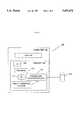
- FIG. 1illustrates an exemplary computer system that could be used to implement the present invention
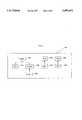
- FIG. 2is a block diagram illustrating the structure of an exemplary object-oriented system according to the present invention
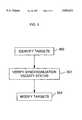
- FIG. 3is a block diagram illustrating the logic of the computer program as performed by the computer according to the present invention.
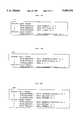
- FIGS. 4A-4Care examples of the contents of a change and accounting log created by the present invention.
- FIG. 5is a flowchart illustrating the operation of the present invention.
- FIG. 1illustrates an exemplary computer system 100 that could be used to implement the present invention.
- the computer 102comprises a processor 104 and random access memory (RAM) 106.
- the computer 102may be coupled to other devices, such as a monitor, a keyboard, a mouse device, a printer, etc.
- other devicessuch as a monitor, a keyboard, a mouse device, a printer, etc.
- the computer 102operates under control of an operating system 108 stored in the memory 106.
- the present inventionis preferably implemented using one or more object-oriented computer programs or applications 110 and an application programming interface (API) 112 operating under the control of the operating system 108.
- the computer program 110accesses and manipulates an object-oriented system 114 stored in the memory 106 of the computer 102 using the functions provided by the API 112.
- the object-oriented system 114may include one or more models, which are groupings of classes and objects.
- the API 112creates a change and accounting log 116 documenting all such changes made to the object-oriented system 114, for later review or perusal.
- the operating system 108, the computer program 110, the API 112, and the object-oriented system 114are tangibly embodied in a computer-readable medium, e.g., data storage device 118, which could include one or more fixed or removable data storage devices, such as a zip drive, floppy disc drive, hard drive, CD-ROM drive, tape drive, etc.
- the operating system 108, the computer program 110, and the API 112are all comprised of instructions which, when read and executed by the computer 102, causes the computer 102 to perform the steps necessary to implement and/or use the present invention.
- a computer-readable mediume.g., data storage device 118, which could include one or more fixed or removable data storage devices, such as a zip drive, floppy disc drive, hard drive, CD-ROM drive, tape drive, etc.
- the operating system 108, the computer program 110, and the API 112are all comprised of instructions which, when read and executed by the computer 102, causes the computer 102 to perform the steps necessary to implement and/
- FIG. 2is a block diagram illustrating the structure of an exemplary object-oriented system 114 according to the present invention.
- Class2 202is a subclass of Class1 200.
- Object1(Obj1) 204is an instance of Class1 200 and Object2 (Obj2) 206 is an instance of Class2 202.
- Class1 200 and Class2 202both include Attribute1 (Attr1) 208. Attribute1 208 is propagated to Object1 204, which is an instance of Class1 200. Attribute1 208 is also propagated to Object2 206, which is an instance of Class2 202.
- the attributesare identified as Class1/Attribute1, Class2/Attribute1, Object1/Attribute1, and Object2/Attribute1.
- Step 1generates a list of the classes and objects having the attribute
- Step 2checks all the classes and objects on the list to be sure they can be changed
- Step 3performs the desired change to the attribute in the listed classes and objects.
- Step 1the computer program 110 and API 112 determine the targets which will be synchronized by the method. This step traverses the object-oriented system 114 and, using navigation functions, identifies the classes, objects, attributes, etc., for update and records the names of these identified entities in a list.
- Step 2the computer program 110 proceeds through the list, checking whether the operation would cause local conflicts with each identified class, object, attribute, etc.
- a user interfaceoptionally queries the user at this step. If all classes, objects, attributes, etc., return an affirmative indication, then the method proceeds to Step 3.
- Step 3the computer program 110 updates the target classes and objects by calling an API 112 command function for each class and object from the list to change the attribute. After this step, synchronization is complete.
- APIApplication Program Interface
- the API 112provides the necessary functions for the computer program 110 to make changes to the classes, objects, attributes, etc., across the object-oriented system 114 as illustrated in FIG. 2.
- the API 112also provides the necessary functions for creating a change and accounting log 116 documenting these changes.
- the API 112 navigation functionsare performed using the following relationships: (1) in a defining entity, from an object to a class and from a subclass to a superclass; (2) in a defined entity, from a class to an object and a superclass to a subclass; (3) in an owner, from a sub-entity to a class or object, where the sub-entity is an attribute, event, etc.; (4) in an owned entity, from a class or object to a sub-entity; and (5) in related attributes, from an attribute to another attribute via a relation.
- the function GETDEFININGENTITYidentifies the class which is the definition template for an entity. For classes, this function returns the top of the inheritance tree.
- the function GETDEFININGCLASSreturns the defining class.
- the function LISTDEFINEDENTITIESlists the classes in the defining class.
- the function LISTDEFINEDENTITIESWITHOBJECTlists the entities in the defining class.
- the function LISTSUBCLASSESrecursively lists all subclasses of the current class.
- the function LISTSUBCLASSESWITHOBJECTlists all subclasses and entities of the current class.
- the function LISTINSTANCESlists all instances of the current class. For objects, this function lists all instances of the GETDEFININGENTITY function.
- the function GETOWNERreturns the object container for objects and sub-entities. For classes, this function returns the superclass. This function returns "self”, if at a top-level class or object, or there are no superclasses.
- the function LISTOWNEDENTITIESlists all owned entities of the current class.
- the function LISTRELATEDENTITIESlists all related entities of the current class.
- the API 112 command functionsprovide the mechanism for the computer program 110 to modify classes and objects in the object-oriented system 114.
- the API 112 command functionsare a higher level interface that use the API 112 navigation functions. The following describes some of the specific API 112 command functions invoked by the computer program 110 to manipulate the object-oriented system 114.
- the GET functionretrieves the value of a property of one or more classes, objects, attributes, etc.
- the input sequencehas the name of the class, object, attribute, etc., to get information about, the type of data to retrieve, and the scope of the data.
- the CHECK functiondetermines whether an operation should be performed. In essence, the CHECK function allows a user to determine what changes to the object-oriente114 would 114 would occur if an API 112 command function such as SET, ADD, or DELETE were invoked. However, the changes are not actually made to the object-oriented system 114, but are reported through the output parameters. If the user invoked the actual API 112 command function after invoking the CHECK function, the output parameters would be identical, but the object-oriented system 114 would be altered.
- an API 112 command functionsuch as SET, ADD, or DELETE
- the SET functionspecifies values for properties of classes, objects, attributes, etc.
- the input sequencehas three parameters: the name of the entity to be modified, the property of the entity that is to be modified, and the new value for the property.
- the ADD functioncreates a class, object, attribute, etc., for embedding or connecting to an existing class, object, attribute, etc.
- the input sequencehas the name of the entity, the type of entity to add, the name of the entity to add, and the instance destination.
- the DELETE functionremoves an entity from the object-oriented system 114.
- API 112Additional functions provided by the API 112 include instantiation and subclassing. These functions are built on the primary synchronization capabilities, wherein the instantiation function copies classes to objects and the subclassing function adds or removes inherited objects from the superclass.
- FIG. 3is a block diagram illustrating the logic of the computer program 110 as performed by the computer 102 according to the present invention.
- Block 300represents the computer 102 traversing the object-oriented system 114 and identifying the classes, objects, attributes, etc., i.e., the targets, to be updated.
- Block 302represents the computer 102 checking the list of targets for synchronization validity status, i.e., whether they can be updated. In this step, the computer 102 proceeds through the list of targets and checks each class, object, attribute, etc., to determine whether the operation would cause local conflicts. The user may be asked for confirmation at this step.
- Block 304represents the computer 102 performing the actual modifications to the targets, resulting in synchronization.
- Step 1forms a list of the attributes
- Step 2checks all the attributes on the list to be sure they may have their type changed
- Step 3performs the update on the listed attributes.
- Step 1identifies the objects to change using a series of API 112 navigation functions.
- the procedureis to find a root defining class, its subclasses, their instances, and then the attribute of the preceding set of classes and objects.
- the proposed navigation functions called to find the root defining classare:
- the API 112 navigation function GETOWNER("Obj1/Attr1")returns "Obj1", the owner of the attribute.
- the relationship between Attr1 and Obj1is available as a relative path name "./Attr1" using the GETRELATIVENAME() function.
- the root defining classis then found by the GETDEFININGENTITY("Obj1") function, which returns "Class1" as the top of the inheritance hierarchy.
- Class1The subclasses of Class1 are identified by the LISTSUBCLASSES() function.
- the full list of classes and subclassesis ("Class1", “Class2”).
- Class1the full list of classes and subclasses
- For each element, its instancesare listed, the net effect being the function LISTINSTANCESRECURSIVELY(), which returns ("Obj1", "Obj2”).
- LISTINSTANCESRECURSIVELY()which returns ("Obj1", "Obj2”
- the full set of entitiesis now ("Class1", “Class2”, “Obj1”, “Obj2”).
- Step 2performs the checking by iterating through the listed targets defined by step 1, and calling the CHECK function on each target from the list. If all objects return an affirmative indication, then the method proceeds to Step 3.
- Step 3updates the target objects by calling the SET function on each target from the list. This completes the synchronization.
- Step 1the list of targets is determined in Step 1 ("Class1", “Class2”, “Obj1”, “Obj2”).
- the API 112 navigation functions usedare GETDEFININGENTITY() followed by LISTINSTANCESRECURSIVELY().
- Step 2calls the CHECK function for each target of the list from Step 1 to verify the ability to add a new attribute.
- Step 3adds the attribute by invoking the ADD function for each target of the list, thereby completing the synchronization.
- Step 1To delete the attribute "Attr1" from Class1 or Obj1, the list of targets is determined in Step 1 ("Class1", “Class2”, “Obj1”, “Obj2").
- the API 112 navigation functions usedare GETDEFININGENTITY() followed by LISTINSTANCESRECURSIVELY().
- Step 2calls the CHECK function for each target of the list from Step 1 to verify the ability to delete the attribute.
- Step 3removes the attribute by invoking the DELETE function for each target of the list, thereby completing the synchronization.
- FIGS. 4A-4Care examples of the contents of a change and accounting log 116 created by the present invention.
- the API 112records all changes made to the object-oriented system 114 in the change and accounting log 116, including all additions, deletions, and modifications. It also records all requests for information.
- Each action made in the object-oriented system 114may be recorded in the log 116 by the API 112. For example, if a class or attribute is added to, modified in, or deleted from the object-oriented system 114, or an attribute is added to a class, or a change is made to the type of attribute, etc., then the API 112 makes an entry in the log 116 for each action.
- FIG. 4Aillustrates an entry 402 that is written to the log 116 by the API 112 when "Class1" is added to the object-oriented system 114.
- the first lineincludes “APIadd” that identifies that the ADD function in the API 112 was invoked and is a header for the following input parameters.
- the second, third and fourth linesidentify the input parameters passed to the APIadd function, wherein “newModel” on line 2 indicates that the APIadd function is being performed on the model named “newModel”, “APIClass” on line 3 indicates that the APIadd function is adding a new class "Class1" to model “newModel”, and "Class1" on line 4 indicates that the new class is named "Class1".
- the fifth linealso includes "APIadd” that identifies that the ADD function in the API 112 was invoked and is a header for the following output parameter.
- the sixth lineidentifies the output parameter received from the APIadd function, wherein “newModel/Class1” indicates that the APIadd function added a new class to the model.
- the “rc” on each of lines 2-4 and 6are return codes from the ADD function (1 means success and 0 means failure).
- FIG. 4Billustrates an entry 404 that is written to the log 116 by the API 112 when attribute "a" is added to "Class1" in the object-oriented system 114.
- the first lineincludes “APIadd” that identifies that the ADD function in the API 112 was invoked and is a header for the following input parameters.
- the second, third and fourth linesidentify the input parameters passed to the APIadd function, wherein “newModel/Class1” on line 2 indicates that the APIadd function is being performed on class “Class1" in model “newModel”, “APIAttribute” on line 3 indicates that the APIadd function is adding a new attribute to class "Class1" in model “newModel”, and "a” on line 4 indicates that the new attribute is named "a”.
- the fifth linealso includes "APIadd” that identifies that the ADD function in the API 112 was invoked and is a header for the following output parameter.
- the sixth lineidentifies the output parameter received from the APIadd function, wherein “newModel/Class1/a” indicates that the APIadd function added a new attribute "a” to class “Class1” of model “newModel”.
- the “rc” on each of lines 2-4 and 6are return codes from the ADD function (1 means success and 0 means failure).
- FIG. 4Cillustrates an entry 406 that is written to the log 116 by the API 112 when the type of attribute "a" is set in the object-oriented system 114.
- the first lineincludes "APIset” that identifies that the SET function in the API 112 was invoked and is a header for the following input parameters.
- the second, third and fourth linesidentify the input parameters passed to the APIset function, wherein "newModel/Class1/a” on line 2 indicates that the APIset function is being performed on the attribute named "newModel/Class1/a", “APIType” on line 3 indicates that the APIset function is setting the type of the attribute "a” of class “Class1" in the "NewModel” model, and "INTEGER” on line 4 indicates that the attribute "a” is being set to an integer type attribute.
- the fifth linealso includes "APIset” that identifies that the SET function in the API 112 was invoked and is a header for the following output parameter.
- the sixth lineidentifies the output parameter received from the APIset function, wherein "newModel/Class1/a” indicates that the APIset function set the type of attribute "a” in class “Class1” of model “newModel”.
- the seventh linealso includes "APIset” that identifies that the SET function in the API 112 was invoked and is a header for the following output parameter.
- the eighth lineidentifies the output parameter received from the APIset function, wherein "newModel/Class1/a” indicates that the APIset function set the type of attribute "a” in class “Class1” of model “newModel”.
- the "rc” on each of lines 2-4 and 6-8are return codes from the SET function (1 means success and 0 means failure).
- An alternative embodiment of the present inventionincludes a return code that provides specific error information, such as user id, user name, time, date, and process id in the log.
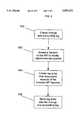
- FIG. 5is a flowchart illustrating the operation of the present invention.
- Block 500represents the computer 102 creating a change and accounting log in the data storage device 118 coupled to the computer 102.
- Block 502represents the computer 102 invoking a function in the API 112 to modify one or more aspects of an object-oriented system 114.
- Block 504represents the computer 102 creating a log entry in the API 112 that documents various aspects of the invoked function, wherein the log entry identifies the invoked function in the API 112, input parameters passed to the invoked function in the API 112, output parameters received from the invoked function in the API 112, and/or a return code received from the invoked function in the API 112 that indicates a successful and failed completion of the invoked function in the API 112.
- Block 506represents the computer 102 storing the log entry into the change and accounting log 116 in the data storage device 118.
- the present inventiondiscloses a method, apparatus, and article of manufacture for providing a change and accounting log in an object-oriented system.
- a functionis invoked in an application programming interface (API) to modify one or more aspects of the object-oriented system
- APIapplication programming interface
- a log entryis created in the API that documents various aspects of the invoked function.
- the log entryidentifies the invoked function in the API, input parameters passed to the invoked function in the API, output parameters received from the invoked function in the API, and/or a return code received from the invoked function in the API that indicates a successful and failed completion of the invoked function in the API.
- the APIstores the log entry into the change and accounting log in the data storage device.
Landscapes
- Engineering & Computer Science (AREA)
- Theoretical Computer Science (AREA)
- Physics & Mathematics (AREA)
- General Engineering & Computer Science (AREA)
- General Physics & Mathematics (AREA)
- Software Systems (AREA)
- Computer Hardware Design (AREA)
- Databases & Information Systems (AREA)
- Quality & Reliability (AREA)
- Computer Security & Cryptography (AREA)
- Data Mining & Analysis (AREA)
- Multimedia (AREA)
- Stored Programmes (AREA)
Abstract
Description
This application is a continuation-in-part of the following co-pending and commonly-assigned patent applications:
Application Ser. No. 08/747,415, entitled "METHOD FOR SYNCHRONIZING CLASSES, OBJECTS, ATTRIBUTES AND OBJECT PROPERTIES ACROSS AN OBJECT-ORIENTED SYSTEM," filed on Nov. 12, 1996, by Stephen A. Brodsky, et al.;
Application Ser. No. 08/747,414, entitled "LAYOUT METHOD FOR ARC-DOMINATED LABELLED GRAPHS," filed on Nov. 12, 1996, by Dipayan Gangopadhyay, et al.;
Application Ser. No. 08/747,416, entitled "MULTIOBJECT VIEWS IN AN OBJECT MODELING TOOL," filed on Nov. 12, 1996, by Roni Korenshtein;
Application Ser. No. 08/747,057, entitled "INTERACTIVE MODELING AGENT FOR AN OBJECT-ORIENTED SYSTEM," filed on Nov. 12, 1996, by Stephen A. Brodsky, et al.;
Application Ser. No. 08/747,058, entitled "EXECUTION ENGINE IN AN OBJECT MODELING TOOL," filed on Nov. 12, 1996, by Stephen A. Brodsky, et al.;
Application Ser. No. 08/747,417, entitled "NOTIFICATION MANAGER FOR OBJECT-ORIENTED SYSTEMS," filed on Nov. 12, 1996, by Stephen A. Brodsky et al.;
all of which applications are incorporated by reference herein.
This application is also related to the following co-pending and commonly-assigned patent applications:
Application Ser. No. 08/850,829, entitled "METHOD FOR SYNCHRONIZATION BETWEEN LINKS AND GROUP DEFINITIONS WITHIN AN OBJECT-ORIENTED SYSTEM," filed on same date herewith, by Stephen A. Brodsky, et al.;
Application Ser. No. 08/850,858, entitled "OBJECT OUTLINE VIEW FOR GROUPS WITHIN AN OBJECT-ORIENTED SYSTEM," filed on same date herewith, by Stephen A. Brodsky, et al.;
Application Ser. No. 08/850,214, entitled "METHOD FOR SENDING A MESSAGE TO A GROUP AND THE GROUP BROADCASTS THE MESSAGE TO ITS MEMBERS OR REFERENCES WITHIN AN OBJECT-ORIENTED SYSTEM," filed on same date herewith, Stephen A. Brodsky, et al.;
Application Ser. No. 08/850,838, entitled "MODEL TRACE VIEW FOR OBJECT-ORIENTED SYSTEMS," filed on same date herewith, by Stephen A. Brodsky et al.;
Application Ser. No. 08/850,337, entitled "FRACTAL NESTED LAYOUT FOR HIERARCHICAL SYSTEMS," filed on same date herewith, by Stephen A. Brodsky;
Application Ser. No. 08/850,847, entitled "REFERENCE ATTRIBUTES WITHIN AN OBJECT-ORIENTED SYSTEM," filed on same date herewith, by Stephen A. Brodsky et al.;
all of which applications are incorporated by reference herein.
1. Field of the Invention
This invention relates generally to object-oriented systems, and in particular to a change and accounting log for an object-oriented system.
2. Description of Related Art
In object-oriented systems, there is often a need to modify classes, objects, attributes and object properties. However, management of modifications and version control is difficult when multiple users modify the object-oriented system. Users typically make modifications for the purpose of (1) improving the efficiency and/or accuracy of the object-oriented system or (2) debugging the object-oriented system.
Concerning improvements, conscientious users aid in version control by documenting their changes. However, users often forget to record all changes made to the object-oriented system, and instead, may record only the major modifications. Without a complete record of all changes, version control is impossible.
In the case of debugging, the use of trace output from debug statements placed inside the object-oriented system has little application to version control. Instead, trace outputs usually are recorded in an associated log file temporarily and merely to verify the correctness of operation, but not to document modifications.
Current methods for modifying classes, objects, attributes and object properties are not necessarily error-free, and often result in numerous errors throughout the object-oriented system. What is needed, then, is a straightforward method for capturing information concerning changes made to the object-oriented system, so that changes can be undone if necessary. Thus, there is a need in the art for a change and accounting log file that records all changes to a model, including additions, deletions, and modifications. Further, the log file should provide information about the input values used, the functions called, the data created, and who made the change.
To overcome the limitations in the prior art described above, and to overcome other limitations that will become apparent upon reading and understanding the present specification, the present invention discloses a method, apparatus, and article of manufacture for providing a change and accounting log in an object-oriented system. When a function is invoked in an application programming interface (API) to modify one or more aspects of the object-oriented system, a log entry is created in the API that documents various aspects of the invoked function. The log entry identifies the invoked function in the API, input parameters passed to the invoked function in the API, output parameters received from the invoked function in the API, and/or a return code received from the invoked function in the API that indicates a successful or failed completion of the invoked function in the API. Thereafter, the API stores the log entry into the change and accounting log in the data storage device.
However, for a better understanding of the invention and its advantages, reference should be made to the drawings which form a further part hereof, and to accompanying descriptive matter, in which there is illustrated and described specific examples in accordance with the invention.
Referring now to the drawings in which like reference numbers represent corresponding parts throughout:
FIG. 1 illustrates an exemplary computer system that could be used to implement the present invention;
FIG. 2 is a block diagram illustrating the structure of an exemplary object-oriented system according to the present invention;
FIG. 3 is a block diagram illustrating the logic of the computer program as performed by the computer according to the present invention;
FIGS. 4A-4C are examples of the contents of a change and accounting log created by the present invention; and
FIG. 5 is a flowchart illustrating the operation of the present invention.
In the following description of the preferred embodiment, reference is made to the accompanying drawings which form a part hereof, and in which is shown by way of illustration a specific embodiment in which the invention may be practiced. It is to be understood that other embodiments may be utilized and structural changes may be made without departing from the scope of the present invention.
FIG. 1 illustrates anexemplary computer system 100 that could be used to implement the present invention. Thecomputer 102 comprises aprocessor 104 and random access memory (RAM) 106. Thecomputer 102 may be coupled to other devices, such as a monitor, a keyboard, a mouse device, a printer, etc. Of course, those skilled in the art will recognize that any combination of the above components, or any number of different components, peripherals, and other devices, may be used with thecomputer 102.
Generally, thecomputer 102 operates under control of anoperating system 108 stored in thememory 106. The present invention is preferably implemented using one or more object-oriented computer programs orapplications 110 and an application programming interface (API) 112 operating under the control of theoperating system 108. Thecomputer program 110 accesses and manipulates an object-orientedsystem 114 stored in thememory 106 of thecomputer 102 using the functions provided by theAPI 112. The object-orientedsystem 114 may include one or more models, which are groupings of classes and objects. As the object-orientedsystem 114 is changed, theAPI 112 creates a change andaccounting log 116 documenting all such changes made to the object-orientedsystem 114, for later review or perusal.
In the preferred embodiment, theoperating system 108, thecomputer program 110, theAPI 112, and the object-orientedsystem 114 are tangibly embodied in a computer-readable medium, e.g.,data storage device 118, which could include one or more fixed or removable data storage devices, such as a zip drive, floppy disc drive, hard drive, CD-ROM drive, tape drive, etc. Further, theoperating system 108, thecomputer program 110, and theAPI 112 are all comprised of instructions which, when read and executed by thecomputer 102, causes thecomputer 102 to perform the steps necessary to implement and/or use the present invention. Of course, those skilled in the art will recognize many modifications may be made to this configuration without departing from the scope of the present invention.
FIG. 2 is a block diagram illustrating the structure of an exemplary object-orientedsystem 114 according to the present invention. In the object-orientedsystem 114,Class2 202 is a subclass ofClass1 200. Object1(Obj1) 204 is an instance ofClass1 200 and Object2 (Obj2) 206 is an instance ofClass2 202.
In order to change Attribute1, for example,Class1 200,Object1 204,Class2 202, andObject2 206 must be updated, so that they remain synchronized. Thecomputer program 110, using theAPI 112, performs this update in three steps:Step 1 generates a list of the classes and objects having the attribute,Step 2 checks all the classes and objects on the list to be sure they can be changed, andStep 3 performs the desired change to the attribute in the listed classes and objects.
InStep 1, thecomputer program 110 andAPI 112 determine the targets which will be synchronized by the method. This step traverses the object-orientedsystem 114 and, using navigation functions, identifies the classes, objects, attributes, etc., for update and records the names of these identified entities in a list.
InStep 2, thecomputer program 110 proceeds through the list, checking whether the operation would cause local conflicts with each identified class, object, attribute, etc. A user interface optionally queries the user at this step. If all classes, objects, attributes, etc., return an affirmative indication, then the method proceeds toStep 3.
InStep 3, thecomputer program 110 updates the target classes and objects by calling anAPI 112 command function for each class and object from the list to change the attribute. After this step, synchronization is complete.
TheAPI 112 provides the necessary functions for thecomputer program 110 to make changes to the classes, objects, attributes, etc., across the object-orientedsystem 114 as illustrated in FIG. 2. TheAPI 112 also provides the necessary functions for creating a change andaccounting log 116 documenting these changes.
TheAPI 112 navigation functions are performed using the following relationships: (1) in a defining entity, from an object to a class and from a subclass to a superclass; (2) in a defined entity, from a class to an object and a superclass to a subclass; (3) in an owner, from a sub-entity to a class or object, where the sub-entity is an attribute, event, etc.; (4) in an owned entity, from a class or object to a sub-entity; and (5) in related attributes, from an attribute to another attribute via a relation.
The following describes some of thespecific API 112 navigation functions invoked by thecomputer program 110.
The function GETDEFININGENTITY identifies the class which is the definition template for an entity. For classes, this function returns the top of the inheritance tree.
The function GETDEFININGCLASS returns the defining class.
The function LISTDEFINEDENTITIES lists the classes in the defining class.
The function LISTDEFINEDENTITIESWITHOBJECT lists the entities in the defining class.
The function LISTSUBCLASSES recursively lists all subclasses of the current class.
The function LISTSUBCLASSESWITHOBJECT lists all subclasses and entities of the current class.
The function LISTINSTANCES lists all instances of the current class. For objects, this function lists all instances of the GETDEFININGENTITY function.
The function LISTINSTANCESRECURSIVELY lists all instances of the current class and its subclasses.
The function GETOWNER returns the object container for objects and sub-entities. For classes, this function returns the superclass. This function returns "self", if at a top-level class or object, or there are no superclasses.
The function LISTOWNEDENTITIES lists all owned entities of the current class.
The function LISTRELATEDENTITIES lists all related entities of the current class.
TheAPI 112 command functions provide the mechanism for thecomputer program 110 to modify classes and objects in the object-orientedsystem 114. TheAPI 112 command functions are a higher level interface that use theAPI 112 navigation functions. The following describes some of thespecific API 112 command functions invoked by thecomputer program 110 to manipulate the object-orientedsystem 114.
The GET function retrieves the value of a property of one or more classes, objects, attributes, etc. The input sequence has the name of the class, object, attribute, etc., to get information about, the type of data to retrieve, and the scope of the data.
The CHECK function determines whether an operation should be performed. In essence, the CHECK function allows a user to determine what changes to the object-oriente114 would 114 would occur if anAPI 112 command function such as SET, ADD, or DELETE were invoked. However, the changes are not actually made to the object-orientedsystem 114, but are reported through the output parameters. If the user invoked theactual API 112 command function after invoking the CHECK function, the output parameters would be identical, but the object-orientedsystem 114 would be altered.
The SET function specifies values for properties of classes, objects, attributes, etc. The input sequence has three parameters: the name of the entity to be modified, the property of the entity that is to be modified, and the new value for the property.
The ADD function creates a class, object, attribute, etc., for embedding or connecting to an existing class, object, attribute, etc. The input sequence has the name of the entity, the type of entity to add, the name of the entity to add, and the instance destination.
The DELETE function removes an entity from the object-orientedsystem 114.
Additional functions provided by theAPI 112 include instantiation and subclassing. These functions are built on the primary synchronization capabilities, wherein the instantiation function copies classes to objects and the subclassing function adds or removes inherited objects from the superclass.
FIG. 3 is a block diagram illustrating the logic of thecomputer program 110 as performed by thecomputer 102 according to the present invention.Block 300 represents thecomputer 102 traversing the object-orientedsystem 114 and identifying the classes, objects, attributes, etc., i.e., the targets, to be updated.Block 302 represents thecomputer 102 checking the list of targets for synchronization validity status, i.e., whether they can be updated. In this step, thecomputer 102 proceeds through the list of targets and checks each class, object, attribute, etc., to determine whether the operation would cause local conflicts. The user may be asked for confirmation at this step.Block 304 represents thecomputer 102 performing the actual modifications to the targets, resulting in synchronization.
A number of examples are provided below to further illustrate the operation of the present invention. These examples include theAPI 112 command functions SET, ADD, and DELETE performed on the object-orientedsystem 114 of FIG. 2.
In a first example, suppose the type of Obj1/Attr1 needs to be changed. This requires that all the attributes are updated to a new type so that they remain synchronized. The present invention performs this update in three steps: Step 1 forms a list of the attributes,Step 2 checks all the attributes on the list to be sure they may have their type changed, andStep 3 performs the update on the listed attributes.
TheAPI 112 navigation function GETOWNER("Obj1/Attr1") returns "Obj1", the owner of the attribute. The relationship between Attr1 and Obj1 is available as a relative path name "./Attr1" using the GETRELATIVENAME() function. The root defining class is then found by the GETDEFININGENTITY("Obj1") function, which returns "Class1" as the top of the inheritance hierarchy.
The subclasses of Class1 are identified by the LISTSUBCLASSES() function. The full list of classes and subclasses is ("Class1", "Class2"). For each element, its instances are listed, the net effect being the function LISTINSTANCESRECURSIVELY(), which returns ("Obj1", "Obj2"). The full set of entities is now ("Class1", "Class2", "Obj1", "Obj2").
The list of target attributes to update are now available by adding the relative path name "./Attr1"to the list above, resulting in ("Class1/Attr1", "Class2/Attr1", "Obj1/Attr1", "Obj2/Attr1"), completing the identification of the entities to update.
To add an attribute "Attr2" to Class1 or Obj1, the list of targets is determined in Step 1 ("Class1", "Class2", "Obj1", "Obj2"). TheAPI 112 navigation functions used are GETDEFININGENTITY() followed by LISTINSTANCESRECURSIVELY().
To delete the attribute "Attr1" from Class1 or Obj1, the list of targets is determined in Step 1 ("Class1", "Class2", "Obj1", "Obj2"). TheAPI 112 navigation functions used are GETDEFININGENTITY() followed by LISTINSTANCESRECURSIVELY().
FIGS. 4A-4C are examples of the contents of a change andaccounting log 116 created by the present invention. In the present invention, theAPI 112 records all changes made to the object-orientedsystem 114 in the change andaccounting log 116, including all additions, deletions, and modifications. It also records all requests for information.
Each action made in the object-orientedsystem 114 may be recorded in thelog 116 by theAPI 112. For example, if a class or attribute is added to, modified in, or deleted from the object-orientedsystem 114, or an attribute is added to a class, or a change is made to the type of attribute, etc., then theAPI 112 makes an entry in thelog 116 for each action.
FIG. 4A illustrates anentry 402 that is written to thelog 116 by theAPI 112 when "Class1" is added to the object-orientedsystem 114. The first line includes "APIadd" that identifies that the ADD function in theAPI 112 was invoked and is a header for the following input parameters. The second, third and fourth lines identify the input parameters passed to the APIadd function, wherein "newModel" online 2 indicates that the APIadd function is being performed on the model named "newModel", "APIClass" online 3 indicates that the APIadd function is adding a new class "Class1" to model "newModel", and "Class1" on line 4 indicates that the new class is named "Class1". The fifth line also includes "APIadd" that identifies that the ADD function in theAPI 112 was invoked and is a header for the following output parameter. The sixth line identifies the output parameter received from the APIadd function, wherein "newModel/Class1" indicates that the APIadd function added a new class to the model. The "rc" on each of lines 2-4 and 6 are return codes from the ADD function (1 means success and 0 means failure).
FIG. 4B illustrates anentry 404 that is written to thelog 116 by theAPI 112 when attribute "a" is added to "Class1" in the object-orientedsystem 114. The first line includes "APIadd" that identifies that the ADD function in theAPI 112 was invoked and is a header for the following input parameters. The second, third and fourth lines identify the input parameters passed to the APIadd function, wherein "newModel/Class1" online 2 indicates that the APIadd function is being performed on class "Class1" in model "newModel", "APIAttribute" online 3 indicates that the APIadd function is adding a new attribute to class "Class1" in model "newModel", and "a" on line 4 indicates that the new attribute is named "a". The fifth line also includes "APIadd" that identifies that the ADD function in theAPI 112 was invoked and is a header for the following output parameter. The sixth line identifies the output parameter received from the APIadd function, wherein "newModel/Class1/a" indicates that the APIadd function added a new attribute "a" to class "Class1" of model "newModel". The "rc" on each of lines 2-4 and 6 are return codes from the ADD function (1 means success and 0 means failure).
FIG. 4C illustrates anentry 406 that is written to thelog 116 by theAPI 112 when the type of attribute "a" is set in the object-orientedsystem 114. The first line includes "APIset" that identifies that the SET function in theAPI 112 was invoked and is a header for the following input parameters. The second, third and fourth lines identify the input parameters passed to the APIset function, wherein "newModel/Class1/a" online 2 indicates that the APIset function is being performed on the attribute named "newModel/Class1/a", "APIType" online 3 indicates that the APIset function is setting the type of the attribute "a" of class "Class1" in the "NewModel" model, and "INTEGER" on line 4 indicates that the attribute "a" is being set to an integer type attribute. The fifth line also includes "APIset" that identifies that the SET function in theAPI 112 was invoked and is a header for the following output parameter. The sixth line identifies the output parameter received from the APIset function, wherein "newModel/Class1/a" indicates that the APIset function set the type of attribute "a" in class "Class1" of model "newModel". The seventh line also includes "APIset" that identifies that the SET function in theAPI 112 was invoked and is a header for the following output parameter. The eighth line identifies the output parameter received from the APIset function, wherein "newModel/Class1/a" indicates that the APIset function set the type of attribute "a" in class "Class1" of model "newModel". The "rc" on each of lines 2-4 and 6-8 are return codes from the SET function (1 means success and 0 means failure).
An alternative embodiment of the present invention includes a return code that provides specific error information, such as user id, user name, time, date, and process id in the log.
FIG. 5 is a flowchart illustrating the operation of the present invention.Block 500 represents thecomputer 102 creating a change and accounting log in thedata storage device 118 coupled to thecomputer 102.Block 502 represents thecomputer 102 invoking a function in theAPI 112 to modify one or more aspects of an object-orientedsystem 114.Block 504 represents thecomputer 102 creating a log entry in theAPI 112 that documents various aspects of the invoked function, wherein the log entry identifies the invoked function in theAPI 112, input parameters passed to the invoked function in theAPI 112, output parameters received from the invoked function in theAPI 112, and/or a return code received from the invoked function in theAPI 112 that indicates a successful and failed completion of the invoked function in theAPI 112. Finally,Block 506 represents thecomputer 102 storing the log entry into the change andaccounting log 116 in thedata storage device 118.
This concludes the description of the preferred embodiment of the invention. The present invention discloses a method, apparatus, and article of manufacture for providing a change and accounting log in an object-oriented system. When a function is invoked in an application programming interface (API) to modify one or more aspects of the object-oriented system, a log entry is created in the API that documents various aspects of the invoked function. The log entry identifies the invoked function in the API, input parameters passed to the invoked function in the API, output parameters received from the invoked function in the API, and/or a return code received from the invoked function in the API that indicates a successful and failed completion of the invoked function in the API. Thereafter, the API stores the log entry into the change and accounting log in the data storage device.
The foregoing description of the preferred embodiment of the invention has been presented for the purposes of illustration and description. It is not intended to be exhaustive or to limit the invention to the precise form disclosed. Many modifications and variations are possible in light of the above teaching. It is intended that the scope of the invention be limited not by this detailed description, but rather by the claims appended hereto.
Claims (19)
1. A computerized method for recording modifications to an object oriented system, comprising the steps of:
creating a change and accounting log in a data storage device coupled to a computer, wherein the change and accounting log records all changes to the object oriented svstem that affect objects in the object oriented system;
invoking a function in an application programming interface to change one or more aspects of an object-oriented system;
creating a log entry in the application programming interface that documents various aspects of the invoked function; and
storing the log entry into the change and accounting log in the data storage device.
2. The method of claim 1 above, wherein the log entry identifies the invoked function in the application programming interface.
3. The method of claim 1 above, wherein the log entry identifies input parameters passed to the invoked function in the application programming interface.
4. The method of claim 1 above, wherein the log entry identifies output parameters received from the invoked function in the application programming interface.
5. The method of claim 1 above, wherein the log entry identifies a return code received from the invoked function in the application programming interface.
6. The method of claim 1 above, wherein the return code indicates a successful or failed completion of the invoked function in the application programming interface.
7. The method of claim 1 above, wherein the return code indicates specific error information, including information about a user id, a user name, a time, a date, and a process id in the log.
8. A computerized apparatus for recording modifications to an object oriented system, comprising:
a computer having a data storage device connected thereto;
means, performed by the computer, for creating a change and accounting log in the data storage device coupled to a computer, wherein the change and accounting log records all changes to the object oriented system that affect objects in the object oriented system;
means, performed by the computer, for invoking a function in an application programming interface to change one or more aspects of an object-oriented system;
means, performed by the computer, for creating a log entry in the application programming interface that documents various aspects of the invoked function; and
means, performed by the computer, for storing the log entry into the change and accounting log in the data storage device.
9. The apparatus of claim 8 above, wherein the log entry identifies the invoked function in the application programming interface.
10. The apparatus of claim 8 above, wherein the log entry identifies input parameters passed to the invoked function in the application programming interface.
11. The apparatus of claim 8 above, wherein the log entry identifies output parameters received from the invoked function in the application programming interface.
12. The apparatus of claim 8 above, wherein the log entry identifies a return code received from the invoked function in the application programming interface.
13. The apparatus of claim 8 above, wherein the return code indicates a successful and failed completion of the invoked function in the application programming interface.
14. An article of manufacture comprising a program storage medium readable by a computer having a memory, the medium tangibly embodying one or more programs of instructions executable by the computer to perform method steps for recording modifications to an object oriented system, the method comprising the steps of:
creating a change and accounting log in a data storage device coupled to a computer, wherein the change and accounting log records all changes to the object oriented system that affect objects in the object oriented system;
invoking a function in an application programming interface to change one or more aspects of an object-oriented system;
creating a log entry in the application programming interface that documents various aspects of the invoked function; and
storing the log entry into the change and accounting log in the data storage device.
15. The method of claim 14 above, wherein the log entry identifies the invoked function in the application programming interface.
16. The method of claim 14 above, wherein the log entry identifies input parameters passed to the invoked function in the application programming interface.
17. The method of claim 14 above, wherein the log entry identifies output parameters received from the invoked function in the application programming interface.
18. The method of claim 14 above, wherein the log entry identifies a return code received from the invoked function in the application programming interface.
19. The method of claim 14 above, wherein the return code indicates a successful and failed completion of the invoked function in the application programming interface.
Priority Applications (1)
| Application Number | Priority Date | Filing Date | Title |
|---|---|---|---|
| US08/850,832US5895472A (en) | 1996-11-12 | 1997-05-02 | Change and accounting log for object-oriented systems |
Applications Claiming Priority (7)
| Application Number | Priority Date | Filing Date | Title |
|---|---|---|---|
| US08/747,058US5983016A (en) | 1996-11-12 | 1996-11-12 | Execution engine in an object modeling tool |
| US08/747,414US6011559A (en) | 1996-11-12 | 1996-11-12 | Layout method for arc-dominated labelled graphs |
| US08/747,417US5991536A (en) | 1996-11-12 | 1996-11-12 | Object-oriented tool for registering objects for observation and causing notifications to be made in the event changes are made to an object which is being observed |
| US08/747,416US5917498A (en) | 1996-11-12 | 1996-11-12 | Multi-object views in an object modeling tool |
| US08/747,057US5907706A (en) | 1996-11-12 | 1996-11-12 | Interactive modeling agent for an object-oriented system |
| US08/747,415US5893913A (en) | 1996-11-12 | 1996-11-12 | Method for synchronizing classes, objects, attributes and object properties across an object-oriented system |
| US08/850,832US5895472A (en) | 1996-11-12 | 1997-05-02 | Change and accounting log for object-oriented systems |
Related Parent Applications (6)
| Application Number | Title | Priority Date | Filing Date |
|---|---|---|---|
| US08/747,415Continuation-In-PartUS5893913A (en) | 1996-11-12 | 1996-11-12 | Method for synchronizing classes, objects, attributes and object properties across an object-oriented system |
| US08/747,057Continuation-In-PartUS5907706A (en) | 1996-11-12 | 1996-11-12 | Interactive modeling agent for an object-oriented system |
| US08/747,058Continuation-In-PartUS5983016A (en) | 1996-11-12 | 1996-11-12 | Execution engine in an object modeling tool |
| US08/747,416Continuation-In-PartUS5917498A (en) | 1996-11-12 | 1996-11-12 | Multi-object views in an object modeling tool |
| US08/747,417Continuation-In-PartUS5991536A (en) | 1996-11-12 | 1996-11-12 | Object-oriented tool for registering objects for observation and causing notifications to be made in the event changes are made to an object which is being observed |
| US08/747,414Continuation-In-PartUS6011559A (en) | 1996-11-12 | 1996-11-12 | Layout method for arc-dominated labelled graphs |
Publications (1)
| Publication Number | Publication Date |
|---|---|
| US5895472Atrue US5895472A (en) | 1999-04-20 |
Family
ID=46203107
Family Applications (1)
| Application Number | Title | Priority Date | Filing Date |
|---|---|---|---|
| US08/850,832Expired - Fee RelatedUS5895472A (en) | 1996-11-12 | 1997-05-02 | Change and accounting log for object-oriented systems |
Country Status (1)
| Country | Link |
|---|---|
| US (1) | US5895472A (en) |
Cited By (25)
| Publication number | Priority date | Publication date | Assignee | Title |
|---|---|---|---|---|
| US6182024B1 (en)* | 1997-10-14 | 2001-01-30 | International Business Machines Corporation | Modeling behaviors of objects associated with finite state machines and expressing a sequence without introducing an intermediate state with the arc language |
| US20030037291A1 (en)* | 2001-08-17 | 2003-02-20 | International Business Machines Corporation | Method, system and program for handling errors occurring in function calls |
| US6708222B1 (en)* | 1997-05-01 | 2004-03-16 | Microsoft Corporation | Method and system for locating enclosing owners of embedded objects |
| US20050086668A1 (en)* | 2003-10-15 | 2005-04-21 | Andreas Kemmler | Computer-aided database system and method for operating it |
| WO2005040964A3 (en)* | 2003-10-15 | 2005-08-18 | Sap Ag | Computer-aided database system and method for operating it |
| US20060230292A1 (en)* | 2005-04-12 | 2006-10-12 | International Business Machines Corporation | Method, apparatus, and program to post process applications encrypting sensitive objects that are logged |
| US20080134156A1 (en)* | 2006-12-02 | 2008-06-05 | Matt Osminer | Methods and apparatus for analyzing software interface usage |
| US20080281856A1 (en)* | 2007-05-07 | 2008-11-13 | Microsoft Corporation | Utilizing a schema for documenting managed code |
| CN101192192B (en)* | 2006-11-21 | 2010-08-18 | 华为技术有限公司 | Task abnormity diagnosis method and system for real-time operating system |
| US7882501B1 (en)* | 1999-08-13 | 2011-02-01 | Oracle America, Inc. | System and method for enabling dynamic modifed class reloading in an application server environment |
| US20110119689A1 (en)* | 2007-07-31 | 2011-05-19 | Microsoft Corporation | Multi-threaded business programming library |
| US9414116B2 (en) | 2004-02-18 | 2016-08-09 | Timer Warner Cable Enterprises LLC | Media extension apparatus and methods for use in an information network |
| US9471404B1 (en)* | 2015-10-07 | 2016-10-18 | International Business Machines Corporation | Enriching API registry using big data analytics |
| US9479404B2 (en) | 2003-11-24 | 2016-10-25 | Time Warner Cable Enterprises Llc | Methods and apparatus for hardware registration in a network device |
| US9674287B2 (en) | 2003-11-24 | 2017-06-06 | Time Warner Cable Enterprises Llc | Methods and apparatus for event logging in an information network |
| US20190095259A1 (en)* | 2017-09-26 | 2019-03-28 | Kyocera Document Solutions Inc. | Electronic Device and Log Application |
| CN110032517A (en)* | 2019-04-17 | 2019-07-19 | 北京网聘咨询有限公司 | Realize the method and system of interface coverage rate automation statistics |
| US10359922B2 (en) | 2004-02-06 | 2019-07-23 | Time Warner Cable Inc. | Methods and apparatus for display element management in an information network |
| CN113986517A (en)* | 2021-12-28 | 2022-01-28 | 深圳市明源云科技有限公司 | API call log acquisition method and device, electronic equipment and storage medium |
| US11818676B2 (en) | 2019-10-23 | 2023-11-14 | Charter Communications Operating, Llc | Methods and apparatus for device registration in a quasi-licensed wireless system |
| US11832034B2 (en) | 2018-04-16 | 2023-11-28 | Charter Communications Operating, Llc | Apparatus and methods for coordinated delivery of multiple data channels over physical medium |
| US11889492B2 (en) | 2019-02-27 | 2024-01-30 | Charter Communications Operating, Llc | Methods and apparatus for wireless signal maximization and management in a quasi-licensed wireless system |
| US11903049B2 (en) | 2018-10-12 | 2024-02-13 | Charter Communications Operating, Llc | Apparatus and methods for cell identification in wireless networks |
| US12170986B2 (en) | 2019-01-31 | 2024-12-17 | Charter Communications Operating, Llc | Methods and apparatus for frequency transition management in a quasi-licensed wireless system |
| US12200814B2 (en) | 2018-08-07 | 2025-01-14 | Charter Communications Operating, Llc | Apparatus and methods for registration and operation in wireless networks |
Citations (3)
| Publication number | Priority date | Publication date | Assignee | Title |
|---|---|---|---|---|
| US5339392A (en)* | 1989-07-27 | 1994-08-16 | Risberg Jeffrey S | Apparatus and method for creation of a user definable video displayed document showing changes in real time data |
| US5701484A (en)* | 1990-05-18 | 1997-12-23 | Digital Equipment Corporation | Routing objects on action paths in a distributed computing system |
| US5748896A (en)* | 1995-12-27 | 1998-05-05 | Apple Computer, Inc. | Remote network administration methods and apparatus |
- 1997
- 1997-05-02USUS08/850,832patent/US5895472A/ennot_activeExpired - Fee Related
Patent Citations (3)
| Publication number | Priority date | Publication date | Assignee | Title |
|---|---|---|---|---|
| US5339392A (en)* | 1989-07-27 | 1994-08-16 | Risberg Jeffrey S | Apparatus and method for creation of a user definable video displayed document showing changes in real time data |
| US5701484A (en)* | 1990-05-18 | 1997-12-23 | Digital Equipment Corporation | Routing objects on action paths in a distributed computing system |
| US5748896A (en)* | 1995-12-27 | 1998-05-05 | Apple Computer, Inc. | Remote network administration methods and apparatus |
Cited By (35)
| Publication number | Priority date | Publication date | Assignee | Title |
|---|---|---|---|---|
| US6708222B1 (en)* | 1997-05-01 | 2004-03-16 | Microsoft Corporation | Method and system for locating enclosing owners of embedded objects |
| US6182024B1 (en)* | 1997-10-14 | 2001-01-30 | International Business Machines Corporation | Modeling behaviors of objects associated with finite state machines and expressing a sequence without introducing an intermediate state with the arc language |
| US7882501B1 (en)* | 1999-08-13 | 2011-02-01 | Oracle America, Inc. | System and method for enabling dynamic modifed class reloading in an application server environment |
| US6973643B2 (en) | 2001-08-17 | 2005-12-06 | International Business Machines Corporation | Method, system and program for handling errors occurring in function calls |
| US20030037291A1 (en)* | 2001-08-17 | 2003-02-20 | International Business Machines Corporation | Method, system and program for handling errors occurring in function calls |
| WO2005040964A3 (en)* | 2003-10-15 | 2005-08-18 | Sap Ag | Computer-aided database system and method for operating it |
| US7072906B2 (en)* | 2003-10-15 | 2006-07-04 | Sap Ag | Computer-aided database system and method for operating it |
| US20050086668A1 (en)* | 2003-10-15 | 2005-04-21 | Andreas Kemmler | Computer-aided database system and method for operating it |
| US11252055B2 (en) | 2003-11-24 | 2022-02-15 | Time Warner Cable Enterprises Llc | Methods and apparatus for hardware registration in a network device |
| US9479404B2 (en) | 2003-11-24 | 2016-10-25 | Time Warner Cable Enterprises Llc | Methods and apparatus for hardware registration in a network device |
| US9674287B2 (en) | 2003-11-24 | 2017-06-06 | Time Warner Cable Enterprises Llc | Methods and apparatus for event logging in an information network |
| US11287962B2 (en) | 2004-02-06 | 2022-03-29 | Time Warner Cable Enterprises Llc | Methods and apparatus for display element management in an information network |
| US10359922B2 (en) | 2004-02-06 | 2019-07-23 | Time Warner Cable Inc. | Methods and apparatus for display element management in an information network |
| US9414116B2 (en) | 2004-02-18 | 2016-08-09 | Timer Warner Cable Enterprises LLC | Media extension apparatus and methods for use in an information network |
| US7703144B2 (en)* | 2005-04-12 | 2010-04-20 | International Business Machines Corporation | Method, apparatus, and program to post process applications encrypting sensitive objects that are logged |
| US20060230292A1 (en)* | 2005-04-12 | 2006-10-12 | International Business Machines Corporation | Method, apparatus, and program to post process applications encrypting sensitive objects that are logged |
| CN101192192B (en)* | 2006-11-21 | 2010-08-18 | 华为技术有限公司 | Task abnormity diagnosis method and system for real-time operating system |
| US20080134156A1 (en)* | 2006-12-02 | 2008-06-05 | Matt Osminer | Methods and apparatus for analyzing software interface usage |
| US9563420B2 (en) | 2006-12-02 | 2017-02-07 | Time Warner Cable Enterprises Llc | Methods and apparatus for analyzing software interface usage |
| US8370818B2 (en)* | 2006-12-02 | 2013-02-05 | Time Warner Cable Inc. | Methods and apparatus for analyzing software interface usage |
| US20080281856A1 (en)* | 2007-05-07 | 2008-11-13 | Microsoft Corporation | Utilizing a schema for documenting managed code |
| US8316351B2 (en)* | 2007-05-07 | 2012-11-20 | Microsoft Corporation | Utilizing a schema for documenting managed code |
| US20110119689A1 (en)* | 2007-07-31 | 2011-05-19 | Microsoft Corporation | Multi-threaded business programming library |
| US8621493B2 (en)* | 2007-07-31 | 2013-12-31 | Microsoft Corporation | Multi-threaded business programming library |
| US9471404B1 (en)* | 2015-10-07 | 2016-10-18 | International Business Machines Corporation | Enriching API registry using big data analytics |
| US20190095259A1 (en)* | 2017-09-26 | 2019-03-28 | Kyocera Document Solutions Inc. | Electronic Device and Log Application |
| US11832034B2 (en) | 2018-04-16 | 2023-11-28 | Charter Communications Operating, Llc | Apparatus and methods for coordinated delivery of multiple data channels over physical medium |
| US12200814B2 (en) | 2018-08-07 | 2025-01-14 | Charter Communications Operating, Llc | Apparatus and methods for registration and operation in wireless networks |
| US11903049B2 (en) | 2018-10-12 | 2024-02-13 | Charter Communications Operating, Llc | Apparatus and methods for cell identification in wireless networks |
| US12170986B2 (en) | 2019-01-31 | 2024-12-17 | Charter Communications Operating, Llc | Methods and apparatus for frequency transition management in a quasi-licensed wireless system |
| US11889492B2 (en) | 2019-02-27 | 2024-01-30 | Charter Communications Operating, Llc | Methods and apparatus for wireless signal maximization and management in a quasi-licensed wireless system |
| CN110032517A (en)* | 2019-04-17 | 2019-07-19 | 北京网聘咨询有限公司 | Realize the method and system of interface coverage rate automation statistics |
| US11818676B2 (en) | 2019-10-23 | 2023-11-14 | Charter Communications Operating, Llc | Methods and apparatus for device registration in a quasi-licensed wireless system |
| CN113986517A (en)* | 2021-12-28 | 2022-01-28 | 深圳市明源云科技有限公司 | API call log acquisition method and device, electronic equipment and storage medium |
| CN113986517B (en)* | 2021-12-28 | 2022-04-08 | 深圳市明源云科技有限公司 | API call log acquisition method and device, electronic equipment and storage medium |
Similar Documents
| Publication | Publication Date | Title |
|---|---|---|
| US5895472A (en) | Change and accounting log for object-oriented systems | |
| US6523134B2 (en) | Selective undo | |
| US7171652B2 (en) | Software development environment with design specification verification tool | |
| US9916134B2 (en) | Methods and systems for accessing distributed computing components through the internet | |
| US7051316B2 (en) | Distributed computing component system with diagrammatic graphical representation of code with separate delineated display area by type | |
| US6144967A (en) | Object oriented processing log analysis tool framework mechanism | |
| US6182245B1 (en) | Software test case client/server system and method | |
| US5212771A (en) | System for establishing concurrent high level and low level processes in a diagram window through process explosion and implosion subsystems | |
| US6219829B1 (en) | Computer software testing management | |
| US7316004B2 (en) | Organization of test cases | |
| US8015039B2 (en) | Enterprise verification and certification framework | |
| US8086642B2 (en) | Apparatus, system, and method for processing hierarchical data in disparate data repositories | |
| US20050076328A1 (en) | Rule-based system and method for checking compliance of architectural analysis and design models | |
| US8196100B2 (en) | Content management system for computer software with dynamic traceability between code and design documents | |
| US8060863B2 (en) | Conformance control module | |
| US20040250257A1 (en) | System and method for generator state object validation | |
| US5893913A (en) | Method for synchronizing classes, objects, attributes and object properties across an object-oriented system | |
| WO1999046689A9 (en) | Execution of extended activity diagrams by code generation | |
| CA2077189A1 (en) | Computer-assisted software engineering for cooperative processing | |
| US7448028B2 (en) | System and method for selective local object retrieval | |
| US20040250258A1 (en) | System and method for rule based object navigation | |
| US20040117333A1 (en) | Method and apparatus for building algorithms | |
| KR20040014671A (en) | System and method for exporting or importing object data in a manufacturing execution system | |
| US6898782B1 (en) | Reference-based associations using reference attributes in an object modeling system | |
| Paradkar | SALT-an integrated environment to automate generation of function tests for APIs |
Legal Events
| Date | Code | Title | Description |
|---|---|---|---|
| AS | Assignment | Owner name:INTERNATIONAL BUSINESS MACHINES CORPORATION, NEW Y Free format text:ASSIGNMENT OF ASSIGNORS INTEREST;ASSIGNORS:BRODSKY, STEPHEN ANDREW;GROSE, TIMOTHY JAMES;LAU, REBECCA MEI-HAR;REEL/FRAME:008528/0532 Effective date:19970425 | |
| FPAY | Fee payment | Year of fee payment:4 | |
| REMI | Maintenance fee reminder mailed | ||
| LAPS | Lapse for failure to pay maintenance fees | ||
| LAPS | Lapse for failure to pay maintenance fees | Free format text:PATENT EXPIRED FOR FAILURE TO PAY MAINTENANCE FEES (ORIGINAL EVENT CODE: EXP.); ENTITY STATUS OF PATENT OWNER: LARGE ENTITY | |
| STCH | Information on status: patent discontinuation | Free format text:PATENT EXPIRED DUE TO NONPAYMENT OF MAINTENANCE FEES UNDER 37 CFR 1.362 | |
| FP | Lapsed due to failure to pay maintenance fee | Effective date:20070420 |