US5888819A - Method for determining nucleotide identity through primer extension - Google Patents
Method for determining nucleotide identity through primer extensionDownload PDFInfo
- Publication number
- US5888819A US5888819AUS07/664,837US66483791AUS5888819AUS 5888819 AUS5888819 AUS 5888819AUS 66483791 AUS66483791 AUS 66483791AUS 5888819 AUS5888819 AUS 5888819A
- Authority
- US
- United States
- Prior art keywords
- primer
- nucleic acid
- interest
- template
- terminator
- Prior art date
- Legal status (The legal status is an assumption and is not a legal conclusion. Google has not performed a legal analysis and makes no representation as to the accuracy of the status listed.)
- Expired - Lifetime
Links
Images

Classifications
- C—CHEMISTRY; METALLURGY
- C12—BIOCHEMISTRY; BEER; SPIRITS; WINE; VINEGAR; MICROBIOLOGY; ENZYMOLOGY; MUTATION OR GENETIC ENGINEERING
- C12Q—MEASURING OR TESTING PROCESSES INVOLVING ENZYMES, NUCLEIC ACIDS OR MICROORGANISMS; COMPOSITIONS OR TEST PAPERS THEREFOR; PROCESSES OF PREPARING SUCH COMPOSITIONS; CONDITION-RESPONSIVE CONTROL IN MICROBIOLOGICAL OR ENZYMOLOGICAL PROCESSES
- C12Q1/00—Measuring or testing processes involving enzymes, nucleic acids or microorganisms; Compositions therefor; Processes of preparing such compositions
- C12Q1/68—Measuring or testing processes involving enzymes, nucleic acids or microorganisms; Compositions therefor; Processes of preparing such compositions involving nucleic acids
- C12Q1/6869—Methods for sequencing
Definitions
- This inventionrelates to the field of nucleic acid sequence detection.
- the detection of nucleic acid sequencescan be used in two general contexts. First, the detection of nucleic acid sequences can be used to determine the presence or absence of a particular genetic element. Second, the detection of nucleic acid sequences can be used to determine the specific type of a particular genetic element that is present. Variant genetic elements usually exist. Many techniques have been developed (1) to determine the presence of specific nucleic acid sequences, and (2) to compare homologous segments of nucleic acid sequence to determine if the segments are identical or if they differ at one or more nucleotides. Practical applications of these techniques include genetic disease diagnoses, infectious disease diagnoses, forensic techniques, paternity determinations, and genome mapping.
- nucleic acids in a sample and the subtypes thereofdepends on the technique of specific nucleic acid hybridization in which the oligonucleotide probe is annealed under conditions of high stringency to nucleic acids in the sample, and the successfully annealed probes are subsequently detected (see Spiegelman, S., Scientific American, Vol. 210, p. 48 (1964)).
- a commonly used screen for DNA polymorphisms arising from DNA sequence variationconsists of digesting DNA with restriction endonucleases and analyzing the resulting fragments by means of Southern blots, as described by Botstein, et al., Am. J. Hum. Genet., 32:314-331 (1980) and White, et al., Sci. Am., 258:40-48 (1988). Mutations that affect the recognition sequence of the endonuclease will preclude enzymatic cleavage at that site, thereby altering the cleavage pattern of that DNA. DNAs are compared by looking for differences in restriction fragment lengths.
- restriction fragment length polymorphism mappingA major problem with this method (known as restriction fragment length polymorphism mapping or RFLP mapping) is its inability to detect mutations that do not affect cleavage with a restriction endonuclease. Thus, many mutations are missed with this method.
- Another problemis that the methods used to detect restriction fragment length polymorphisms are very labor intensive, in particular, the techniques involved with Southern blot analysis.
- a technique for detecting specific mutations in any segment of DNAis described in Wallace, et al., Nucl. Acids Res., 9:879-894 (1981). It involves hybridizing the DNA to be analyzed (target DNA) with a complementary, labeled oligonucleotide probe. Due to the thermal instability of DNA duplexes containing even a single base pair mismatch, differential melting temperature can be used to distinguish target DNAs that are perfectly complementary to the probe from target DNAs that differ by as little as a single nucleotide.
- oligonucleotide probesare constructed in pairs such that their junction corresponds to the site on the DNA being analyzed for mutation. These oligonucleotides are then hybridized to the DNA being analyzed. Base pair mismatch between either oligonucleotide and the target DNA at the junction location prevents the efficient joining of the two oligonucleotide probes by DNA ligase.
- nucleic acid hybridizationis, therefore, generally combined with some other selection or enrichment procedure for analytical and diagnostic purposes.
- Size selectioncan be carried out prior to hybridization.
- the best known prior size selection techniqueis Southern Blotting (see Southern, E., Methods in Enzymology, 69:152 (1980).
- Southern Blottinga DNA sample is subjected to digestion with restriction enzymes which introduce double stranded breaks in the phosphodiester backbone at or near the site of a short sequence of nucleotides which is characteristic for each enzyme.
- restriction enzymeswhich introduce double stranded breaks in the phosphodiester backbone at or near the site of a short sequence of nucleotides which is characteristic for each enzyme.
- the resulting heterogeneous mixture of DNA fragmentsis then separated by gel electrophoresis, denatured, and transferred to a solid phase where it is subjected to hybridization analysis in situ using a labeled nucleic acid probe.
- Fragments which contain sequences complementary to the labeled probeare revealed visually or densitometrically as bands of hybridized label.
- a variation of this methodis Northern Blotting for RNA molecules. Size selection has also been used after hybridization in a number of techniques, in particular by hybrid protection techniques, by subjecting probe/nucleic acid hybrids to enzymatic digestion before size analysis.
- Hybrids between primers and DNA targetscan be analyzed by polymerase extension of the hybrids.
- a modification of this methodologyis the polymerase chain reaction in which the purification is produced by sequential hybridization reactions of anti-parallel primers, followed by enzymatic amplification with DNA polymerase (see Saiki, et al., Science 239:487-491 (1988)). By selecting for two hybridization reactions, this methodology provides the specificity lacking in techniques that depend only upon a single hybridization reaction.
- primer-dependent DNA polymeraseshave, in general, a low error rate for the addition of nucleotides complementary to a template. This feature is essential in biology for the prevention of genetic mistakes which would have detrimental effects on progeny.
- the specificity inherent in this enzymological reactionhas been widely exploited as the basis of the "Sanger” or dideoxy chain termination sequencing methodology which is the ultimate nucleic acid typing experiment.
- One type of Sanger DNA sequencing methodmakes use of mixtures of the four deoxynucleoside triphosphates, which are normal DNA precursors, and one of the four possible dideoxynucleoside triphosphates, which have a hydrogen atom instead of a hydroxyl group attached to the 3' carbon atom of the ribose sugar component of the nucleotide.
- DNA chain elongation in the 5' to 3' direction(“downstream") requires this hydroxyl group. As such, when a dideoxynucleotide is incorporated into the growing DNA chain, no further elongation can occur.
- DNA polymerasescan, from a primer:template combination, produce a population of molecules of varying length, all of which terminate after the addition of one out of the four possible nucleotides.
- the series of four independent reactions, each with a different dideoxynucleotide,generates a nested set of fragments, all starting at the same 5' terminus of the priming DNA molecule and terminating at all possible 3' nucleotide positions.
- dideoxynucleoside triphosphates and a polymerasein the analysis of DNA involves labeling the 3' end of a molecule.
- One prominent manifestation of this techniqueprovides the means for sequencing a DNA molecule from its 3' end using the Maxam-Gilbert method.
- a molecule with a protruding 3' endis treated with terminal transferase in the presence of radioactive dideoxy-ATP.
- One radioactive nucleotideis added, rendering the molecule suitable for sequencing.
- Both methods of DNA sequencing using labeled dideoxynucleotidesrequire electrophoretic separation of reaction products in order to derive the typing information. Most methods require four separate gel tracks for each typing determination.
- the hybridis then digested using an exonuclease enzyme which cannot use thio-derivatized DNA as a substrate for its nucleolytic action (for example Exonuclease III of E. coli).
- an exonuclease enzymewhich cannot use thio-derivatized DNA as a substrate for its nucleolytic action
- the variant nucleotide in the templateis complementary to one of the thionucleotides in the reaction mixture
- the resulting extended primer moleculewill be of a characteristic size and resistant to the exonuclease; hybrids without thio-derivatized DNA will be digested.
- the thio-derivatized moleculecan be detected by gel electrophoresis or other separation technology.
- Vary and Diamond(U.S. Pat. No. 4,851,331) describes a method similar to that of Mundy wherein the last nucleotide of the primer corresponds to the variant nucleotide of interest. Since mismatching of the primer and the template at the 3' terminal nucleotide of the primer is counterproductive to elongation, significant differences in the amount of incorporation of a tracer nucleotide will result under normal primer extension conditions. This method depends on the use of a DNA polymerase, e.g., AMV reverse transcriptase, that does not have an associated 3' to 5' exonuclease activity.
- the methods of Mundy and of Vary and Diamondhave drawbacks.
- the present inventioncircumvents the problems associated with the methods of Mundy and of Vary and Diamond for typing nucleic acid with respect to particular nucleotides.
- the current inventionwill generate a discrete molecular species one base longer than the primer itself.
- the type of reaction used to purify the nucleic acid of interest in the first stepcan also be used in the subsequent detection step.
- terminatorswhich are labeled with different detector moieties (for example different fluorophors having different spectral properties)
- terminatorswhich are labeled with different detector moieties (for example different fluorophors having different spectral properties)
- sequence detection experiments at more than one locuscan be carried out in the same tube.
- Mullissuggests an experiment, which apparently was not performed, to determine the identity of a targeted base pair in a piece of double-stranded DNA. Mullis suggests using four types of dideoxynucleosides triphosphate, with one type of dideoxynucleoside triphosphate being radioactively labeled.
- the present inventionpermits analyses of nucleic acid sequences that can be useful in the diagnosis of infectious diseases, the diagnosis of genetic disorders, and in the identification of individuals and their parentage.
- the current inventionprovides a method that can be used to diagnose or characterize nucleic acids in biological samples without recourse to gel electrophoretic size separation of the nucleic acid species. This feature renders this process easily adaptable to automation and thus will permit the analysis of large numbers of samples at relatively low cost. Because nucleic acids are the essential blueprint of life, each organism or individual can be uniquely characterized by identifiable sequences of nucleic acids. It is, therefore, possible to identify the presence of particular organisms or demonstrate the biological origin of certain samples by detecting these specific nucleic acid sequences.
- the subject inventionprovides a reagent composition
- a reagent compositioncomprising an aqueous carrier and an admixture of at least two different terminators of a nucleic acid template-dependent, primer extension reaction.
- Each of the terminatorsis capable of specifically terminating the extension reaction in a manner strictly dependent on the identity of the unpaired nucleotide base in the template immediately adjacent to, and downstream of, the 3' end of the primer.
- at least one of the terminatorsis labeled with a detectable marker.
- the subject inventionfurther provides a reagent composition
- a reagent compositioncomprising an aqueous carrier and an admixture of four different terminators of a nucleic acid template-dependent, primer extension reaction.
- Each of the terminatorsis capable of specifically terminating the extension reaction as above and one, two, three, or four of the terminators is labeled with a detectable marker.
- the subject inventionfurther provides a reagent as described above wherein the terminators comprise nucleotides, nucleotide analogs, dideoxynucleotides, or arabinoside triphosphates.
- the subject inventionalso provides a reagent wherein the terminators comprise one or more of dideoxyadenosine triphosphate (ddATP), dideoxycytosine triphosphate (ddCTP), dideoxyguanosine triphosphate (ddGTP), dideoxythymidine triphosphate (ddTTP), or dideoxyuridine triphosphate (ddUTP).
- ddATPdideoxyadenosine triphosphate
- ddCTPdideoxycytosine triphosphate
- ddGTPdideoxyguanosine triphosphate
- ddTTPdideoxythymidine triphosphate
- ddUTPdideoxyuridine triphosphate
- the subject inventionalso provides a method for determining the identity of a nucleotide base at a specific position in a nucleic acid of interest.
- a sample containing the nucleic acid of interestis treated, if such nucleic acid is double-stranded, so as to obtain unpaired nucleotide bases spanning the specific position. If the nucleic acid of interest is single-stranded, this step is not necessary.
- the sample containing the nucleic acid of interestis contacted with an oligonucleotide primer under hybridizing conditions.
- the oligonucleotide primeris capable of hybridizing with a stretch of nucleotide bases present in the nucleic acid of interest, immediately adjacent to the nucleotide base to be identified, so as to form a duplex between the primer and the nucleic acid of interest such that the nucleotide base to be identified is the first unpaired base in the template immediately downstream of the 3' end of the primer in the duplex of primer and the nucleic acid of interest.
- Enzymatic extension of the oligonucleotide primer in the resultant duplex by one nucleotidecatalyzed, for example, by a DNA polymerase, thus depends on correct base pairing of the added nucleotide to the nucleotide base to be identified.
- the duplex of primer and the nucleic acid of interestis then contacted with a reagent containing four labeled terminators, each terminator being labeled with a different detectable marker.
- the duplex of primer and the nucleic acid of interestis contacted with the reagent under conditions permitting base pairing of a complementary terminator present in the reagent with the nucleotide base to be identified and the occurrence of a template-dependent, primer extension reaction so as to incorporate the terminator at the 3' end of the primer.
- the net resultis that the oligonucleotide primer has been extended by one terminator.
- the identity of the detectable marker present at the 3' end of the extended primeris determined.
- the identity of the detectable markerindicates which terminator has base paired to the next base in the nucleic acid of interest. Since the terminator is complementary to the next base in the nucleic acid of interest, the identity of the next base in the nucleic acid of interest is thereby determined.
- the subject inventionalso provides another method for determining the identity of a nucleotide base at a specific position in a nucleic acid of interest.
- This additional methoduses a reagent containing four terminators, only one of the terminators having a detectable marker.
- the subject inventionalso provides a method of typing a sample of nucleic acids which comprises identifying the base or bases present at each of one or more specific positions, each such nucleotide base being identified using one of the methods for determining the identity of a nucleotide base at a specific position in a nucleic acid of interest as outlined above.
- Each specific position in the nucleic acid of interestis determined using a different primer.
- the identity of each nucleotide base or bases at each positioncan be determined individually or the identities of the nucleotide bases at different positions can be determined simultaneously.
- the subject inventionfurther provides a method for identifying different alleles in a sample containing nucleic acids which comprises identifying the base or bases present at each of one or more specific positions.
- the identity of each nucleotide baseis determined by the method for determining the identity of a nucleotide base at a specific position in a nucleic acid of interest as outlined above.
- the subject inventionalso provides a method for determining the genotype of an organism at one or more particular genetic loci which comprises obtaining from the organism a sample containing genomic DNA and identifying the nucleotide base or bases present at each of one or more specific positions in nucleic acids of interest.
- the identity of each such baseis determined by using one of the methods for determining the identity of a nucleotide base at a specific position in a nucleic acid of interest as outlined above.
- the identities of the nucleotide basesdetermine the different alleles and, thereby, determine the genotype of the organism at one or more particular genetic loci.
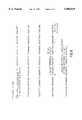
- FIGS. 1A-1CAutoradiography of labeled DNA products after fractionation on a polyacrylamide/urea gel.
- Panel Ashows products of the "A" extension reaction on oligonucleotide primer 182 (SEQ ID NO:1) directed by template oligonucleotides 180 (SEQ ID NO:2) or 181.
- Panel Bshows products of the "B" termination reaction on oligonucleotide primer 182 (SEQ ID NO:1) annealed to template oligonucleotides 180 or 181.
- Panel Cshows the same products as in panel B after purification on magnetic beads. Note: oligodeoxynucleotide 182 was used as supplied by Midland Certified Reagents with no further purification.
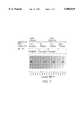
- FIG. 2.Detection of Sequence Polymorphisms in PCR Products.
- Target polymorphic DNA sequenceSEQ ID NO:13 showing amplification primers, detection primers, and molecular clone (plasmid) designations.
- sites of binding to one or the other strand of the target DNA sequenceare indicated by underlining, and the direction of DNA synthesis is indicated by an arrow. Numbering for the target sequence is shown in the righthand margin.
- Polymorphic sites at positions 114 and 190are indicated by bold lettering and a slash between the two polymorphic possibilities.
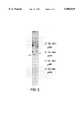
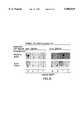
- FIG. 3Autoradiogram of gel-analyzed polymorphism test on PCR products. Templates from PCR products of p183, p624, or p814 were analyzed with the detection primers, TGL182 (SQ ID NO:1) and TGL166, (SEQ ID NO:12) in a template-directed chain extension experiment, as described in the specification. Reaction products were fractionated by size on a polyacrylamide/urea DNA sequencing gel, and incorporation of 35 S!- ⁇ -thio-dideoxy adenosine monophosphate was assayed by autoradiography.
- TGL182SQ ID NO:1
- TGL166SEQ ID NO:12
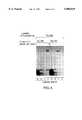
- FIG. 4Gel electrophoretic analysis of the labelled extension products of primers TGL346 (SEQ ID NO:5) and TGL391 (SEQ ID NO:4).
- Productive primer-template complexes of TGL346 or TGL391 with the bead-bound oligonucleotide template, TGL382, (SEQ ID NO:6)were subjected to primer extension labelling reactions with the four different ⁇ -thio- 35 S!dideoxynucleoside triphosphate mixes.
- Labelled primer DNAwas released from the washed beads and electrophoresed on an 8% polyacrylamide/8M urea DNA sequencing gel (2.5 pmoles of primer/lane), then analyzed by autoradiography.
- the four lanes shown for the primer TGL346indicate that labelling occurred predominantly with the ddC mix, indicating that the next unpaired base in the TGL382 template adjacent to the 3' end of TGL346 was a G (see sequence given in Example 4).
- the four lanes shown for the primer TGL391indicate that the labelling occurred predominantly with the ddT mix, indicating that the next unpaired base in the TGL382 template adjacent to the 3' end of TGL391 was an A.
- FIG. 5Autoradiographic analyses of total radioactivity bound to beads.
- the bead suspensions, containing the products of the extension reactions described in FIG. 5,were spotted onto filter paper (1 pmole of primer per spot) and exposed to X-ray film to assay total bead-bound radioactivity.
- TGL346SEQ ID NO:5
- TGL391SEQ ID NO:4
- FIG. 6PCR-amplified polymorphic locus of mammalian DNA (SEQ ID NO:14 and SEQ ID NO:15). Shown is a 327 basepair segment of mammalian DNA that was amplified from samples of genomic DNA using the PCR primers TGL240 (SEQ ID NO:7) (biotinylated) and TGL239 (SEQ ID NO:8) (unbiotinylated). Samples of DNA from two homozygous individuals, ESB164 (genotype AA) and EA2014 (genotype BB), were subjected to the analyses described in Example 5.
- the complete DNA sequence of the A allele at this locusis shown, as SEQ ID NO:14 with the polymorphic sites where the B allele sequence (SEQ ID NO:15) differs from the A allele sequence indicated by the bases underneath the A sequence.
- the detection primer, TGL308,(SEQ ID NO:9) is shown base-paired with the template strand extending from the biotinylated primer.
- the first unpaired template base immediately downstream of the 3' end of TGL308 (SEQ ID NO:9)is a C
- this baseis an A.
- the A alleleshould result in labelling of TGL308 by the ddG mix only
- the B alleleshould result in labelling by the ddT mix only.
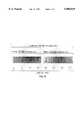
- FIG. 7Gel electrophoretic analysis of PCR products from two different homozygous individuals.
- Primers TGL240 (SEQ ID NO:7) and TGL239 (SEQ ID NO:8)were used to amplify genomic DNA (obtained from blood) from two individuals, ESB164 and EA2014.
- Shown for individual ESB164(genotype AA: labelling expected from the ddG mix) are 250 fmoles of extended primer from the four different ddNTP labelling reactions.
- Shown for individual EA2014(genotype BB: labelling expected from the ddT mix) are loadings of 25, 75, and 250 fmoles of extended primer from the four different ddNTP labelling reactions.
- FIG. 8Autoradiographic analyses of total and NaOH-eluted radioactivity from TGL308 (SEQ ID NO:9) primer extension reactions.
- Primer TGL308was used to analyze the genotypes of individuals ESB164 and EA2014 as outlined in Example 5 and FIGS. 7 and 8.
- Total bead-associated radioactivitywas determined by directly spotting a suspension of beads containing 75 fmoles of primer onto filter paper followed by autoradiographic detection of the label in the spot.
- Radioactivity specifically associated with the TGL308 primerwas determined by magnetically immobilizing the beads, eluting the primer with NaOH as described in Examples 4 and 5, and spotting on filter paper an amount corresponding to 75 fmoles. Label in these spots was also detected by autoradiography.
- the subject inventionprovides a reagent composition
- a reagent compositioncomprising an aqueous carrier and an admixture of at least two different terminators of a nucleic acid template-dependent, primer extension reaction.
- Each of the terminatorsis capable of specifically terminating the extension reaction in a manner strictly dependent on the identity of the unpaired nucleotide base in the template immediately adjacent to, and downstream of, the 3' end of the primer.
- at least one of the terminatorsis labeled with a detectable marker.
- the subject inventionfurther provides a reagent composition
- a reagent compositioncomprising an aqueous carrier and an admixture of four different terminators of a nucleic acid template-dependent, primer extension reaction.
- Each of the terminatorsis capable of specifically terminating the extension reaction as above and at least one of the terminators is labeled with a detectable marker.
- the subject inventionfurther provides a reagent composition
- a reagent compositioncomprising an aqueous carrier and an admixture of four different terminators of a nucleic acid template-dependent, primer extension reaction.
- Each of the terminatorsis capable of specifically terminating the extension reaction as above and two, three, or four of the terminators are labeled with a different detectable marker.
- the subject inventionfurther provides a reagent as described above wherein the terminators comprise nucleotides, nucleotide analogs, dideoxynucleotides, or arabinoside triphosphates.
- the subject inventionalso provides a reagent wherein the terminators comprise one or more of dideoxyadenosine triphosphate (ddATP), dideoxycytosine triphosphate (ddCTP), dideoxyguanosine triphosphate (ddGTP), dideoxythymidine triphosphate (ddTTP), or dideoxyuridine triphosphate (ddUTP).
- ddATPdideoxyadenosine triphosphate
- ddCTPdideoxycytosine triphosphate
- ddGTPdideoxyguanosine triphosphate
- ddTTPdideoxythymidine triphosphate
- ddUTPdideoxyuridine triphosphate
- the subject inventionfurther provides a reagent as described above wherein each of the detectable markers attached to the terminators is an isotopically labeled moiety, a chromophore, a fluorophore, a protein moiety, or a moiety to which an isotopically labeled moiety, a chromophore, a fluorophore, or a protein moiety can be attached.
- the subject inventionalso provides a reagent wherein each of the different detectable markers is a different fluorophore.
- the subject inventionalso provides a reagent as described above wherein the reagent further comprises pyrophosphatase.
- the invented reagentconsists of two or more chain terminators with one or more of the chain terminators being identifiably tagged.
- This reagentcan be used in a DNA polymerase primer extension reaction to type nucleic acid sequences of interest that are complementary to one or more oligonucleotide primers by chemically or physically separating the polymerase extended primers from the chain terminator reagent and analyzing the terminal additions.
- Any kind of terminator that inhibits further elongationcan be used, for example, a dideoxynucleoside triphosphate.
- each terminatorcan be determined individually, i.e., one at a time.
- methods which permit independent analyses of each of the terminatorspermit analysis of incorporation of up to four terminators simultaneously.
- the subject inventionalso provides a method for determining the identity of a nucleotide base at a specific position in a nucleic acid of interest.
- a sample containing the nucleic acid of interestis treated, if such nucleic acid is double-stranded, so as to obtain unpaired nucleotide bases spanning the specific position. If the nucleic acid of interest is single-stranded, this step is not necessary.
- the sample containing the nucleic acid of interestis contacted with an oligonucleotide primer under hybridizing conditions.
- the oligonucleotide primeris capable of hybridizing with a stretch of nucleotide bases present in the nucleic acid of interest, immediately adjacent to the nucleotide base to be identified, so as to form a duplex between the primer and the nucleic acid of interest such that the nucleotide base to be identified is the first unpaired base in the template immediately downstream of the 3' end of the primer in the duplex of primer and the nucleic acid of interest.
- Enzymatic extension of the oligonucleotide primer in the resultant duplex by one nucleotidecatalyzed, for example, by a DNA polymerase, thus depends on correct base pairing of the added nucleotide to the nucleotide base to be identified.
- the duplex of primer and the nucleic acid of interestis then contacted with a reagent containing four labeled terminators, each terminator being labeled with a different detectable marker.
- the duplex of primer and the nucleic acid of interestis contacted with the reagent under conditions permitting base pairing of a complementary terminator present in the reagent with the nucleotide base to be identified and the occurrence of a template-dependent, primer extension reaction so as to incorporate the terminator at the 3' end of the primer.
- the oligonucleotide primerhas been extended by one terminator.
- the identity of the detectable marker present at the 3' end of the extended primeris determined.
- the identity of the detectable markerindicates which terminator has base paired to the next base in the nucleic acid of interest. Since the terminator is complementary to the next base in the nucleic acid of interest, the identity of the next base in the nucleic acid of interest is thereby determined.
- the subject inventionalso provides another method for determining the identity of a nucleotide base at a specific position in a nucleic acid of interest.
- a sample containing the nucleic acid of interestis treated, if such nucleic acid is double-stranded, so as to obtain unpaired nucleotide bases spanning the specific position. If the nucleic acid of interest is single-stranded, this step is not necessary.
- the sample containing the nucleic acid of interestis contacted with an oligonucleotide primer under hybridizing conditions.
- the oligonucleotide primeris capable of hybridizing with nucleotide bases in the nucleic acid of interest, immediately adjacent to the nucleotide base to be identified, so as to form a duplex between the primer and the nucleic acid of interest such that the nucleotide base to be identified is the first unpaired base in the template immediately downstream of the 3' end of the primer in the duplex of primer and the nucleic acid of interest.
- the duplex of primer and the nucleic acid of interestis then contacted with a reagent containing four terminators, only one of the terminators having a detectable marker.
- the duplex of primer and the nucleic acid of interestis contacted with the reagent under conditions permitting base pairing of a complementary terminator present in the reagent with the nucleotide base to be identified and the occurrence of a template-dependent, primer extension reaction so as to incorporate the terminator at the 3' end of the primer.
- the net resultis that the oligonucleotide primer has been extended by one terminator.
- the original duplex of primer and the nucleic acid of interestis then contacted with three different reagents, with a different one of each of the four terminators being labeled in each of the four parallel reaction steps.
- the products of the four parallel template-dependent, primer extension reactionsare examined to determine which of the products has a detectable marker.
- the product with a detectable markerindicates which terminator has base paired to the next base in the nucleic acid of interest. Since the terminator is complementary to the next base in the nucleic acid of interest, the identity of the next base in the nucleic acid of interest is thereby determined.
- Both of the methods for determining the identity of a nucleotide base at a specific position in a nucleic acid of interestlabel the primer after hybridization between the primer and the template. If the template-dependent enzyme has no exonuclease function, the 3' end of the primer must be base paired for the labeling by a terminator to occur.
- the subject inventionalso provides a method for determining the presence or absence of a particular nucleotide sequence in a sample of nucleic acids.
- the sample of nucleic acidsis treated, if such sample of nucleic acids contains double-stranded nucleic acids, so as to obtain single-stranded nucleic acids. If the nucleic acids in the sample are single-stranded, this step is not necessary.
- the sample of nucleic acidsis contacted with an oligonucleotide primer under hybridizing conditions.
- the oligonucleotide primeris capable of hybridizing with the particular nucleotide sequence, if the particular nucleotide sequence is present, so as to form a duplex between the primer and the particular nucleotide sequence.
- the duplex of primer and the particular nucleotide sequence, if any,is then contacted with a reagent containing four labeled terminators, each terminator being labeled with a different detectable marker.
- the duplex of primer and the particular nucleotide sequence, if any,is contacted with the reagent under conditions permitting base pairing of a complementary terminator present in the reagent with the unpaired template nucleotide base downstream of the 3' end of the primer, the primer being hybridized with the particular nucleotide sequence in the template, and the occurrence of a template-dependent, primer extension reaction so as to incorporate the terminator at the 3' end of the primer.
- the absence or presence and identity of a detectable marker at the 3' end of the primerare determined.
- the presence or absence of the detectable markerindicates whether the primer has hybridized to the template. If a detectable marker is absent, the primer did not hybridize to the template, and, therefore, the particular nucleotide sequence is not present in the sample of nucleic acids. If a detectable marker is present, the primer did hybridize to the template, and, therefore, the particular nucleotide sequence is present in the sample of nucleic acids.
- the subject inventionalso provides another method for determining the presence or absence of a particular nucleotide sequence in a sample of nucleic acids.
- the sample of nucleic acidsis treated, if such sample of nucleic acids contains double-stranded nucleic acids, so as to obtain single-stranded nucleic acids.
- the sample of nucleic acidsis contacted with an oligonucleotide primer under hybridizing conditions.
- the oligonucleotide primeris capable of hybridizing with the particular nucleotide sequence, if the particular nucleotide sequence is present, so as to form a duplex between the primer and the particular nucleotide sequence.
- the duplex of primer and the particular nucleotide sequence, if any,is then contacted with a reagent containing four terminators, only one of the terminators having a detectable marker.
- the duplex of primer and the particular nucleotide sequence, if any,is contacted with the reagent under conditions permitting base pairing of a complementary terminator present in the reagent with the unpaired template nucleotide base downstream of the 3' end of the primer, the primer being hybridized with the particular nucleotide sequence in the template, and the occurrence of a template-dependent, primer extension reaction.
- the net resultis the incorporation of the terminator at the 3' end of the primer.
- the original duplex of primer and the particular nucleotide sequence, if any,is then contacted with three different reagents, with a different one of each of the four terminators being labeled in each of the four parallel reaction steps.
- the products of the four parallel, template-dependent, primer extension reactionsare examined to determine which, if any, of the products have detectable markers.
- the absence or presence and identity of the detectable markerindicates whether the primer has hybridized to the template. If no detectable marker is present in any of the products, the primer did not hybridize to the template, and, therefore, the particular nucleotide sequence was not present in the sample of nucleic acids. If a detectable marker is present in any of the products, the primer did hybridize to the template, and, therefore, the particular nucleotide sequence was present in the sample of nucleic acids.
- the templateis a deoxyribonucleic acid
- the primeris an oligodeoxyribonucleotide, oligoribonucleotide, or a copolymer of deoxyribonucleotides and ribonucleotides
- the template-dependent enzymeis a DNA polymerase.
- the templateis a ribonucleic acid
- the primeris an oligodeoxyribonucleotide, oligoribonucleotide, or a copolymer of deoxyribonucleotides and ribonucleotides
- the template-dependent enzymeis a reverse transcriptase.
- the templateis a deoxyribonucleic acid
- the primeris an oligoribonucleotide
- the enzymeis an RNA polymerase.
- the templateis a ribonucleic acid
- the primeris an oligoribonucleotide
- the template-dependent enzymeis an RNA replicase. This version gives an RNA product.
- the templateis capped by the addition of a terminator to the 3' end of the template.
- the terminatoris capable of terminating a template-dependent, primer extension reaction.
- the templateis capped so that no additional labeled terminator will attach at the 3' end of the template.
- the extension reactionshould occur on the primer, not on the template.
- a dideoxynucleotidecan be used as a terminator for capping the template.
- Another modification of the method for determining the identity of a nucleotide base at a specific position in a nucleic acid of interestis to separate the primer from the nucleic acid of interest after the extension reaction by using appropriate denaturing conditions.
- the denaturing conditionscan comprise heat, alkali, formamide, urea, glyoxal, enzymes, and combinations thereof.
- the denaturing conditionscan also comprise treatment with 2.0N NaOH.
- the nucleic acid of interestcan comprise non-natural nucleotide analogs such as deoxyinosine or 7-deaza-2-deoxyguanosine. These analogues destabilize DNA duplexes and could allow a primer annealing and extension reaction to occur in a double-stranded sample without completely separating the strands.
- the sample of nucleic acidscan be from any source.
- the sample of nucleic acidscan be natural or synthetic (i.e., synthesized enzymatically in vitro).
- the sample of nucleic acidscan comprise deoxyribonucleic acids, ribonucleic acids, or copolymers of deoxyribonucleic acid and ribonucleic acid.
- the nucleic acid of interestcan be a deoxyribonucleic acid, a ribonucleic acid, or a copolymer of deoxyribonucleic acid and ribonucleic acid.
- the nucleic acid of interestcan be synthesized enzymatically in vivo, synthesized enzymatically in vitro, or synthesized non-enzymatically.
- the sample containing the nucleic acid or acids of interestcan comprise genomic DNA from an organism, RNA transcripts thereof, or cDNA prepared from RNA transcripts thereof.
- the sample containing the nucleic acid or acids of interestcan also comprise extragenomic DNA from an organism, RNA transcripts thereof, or cDNA prepared from RNA transcripts thereof.
- the nucleic acid or acids of interestcan be synthesized by the polymerase chain reaction.
- the samplecan be taken from any organism.
- organisms to which the method of the subject invention is applicableinclude plants, microorganisms, viruses, birds, vertebrates, invertebrates, mammals, human beings, horses, dogs, cows, cats, pigs, or sheep.
- the nucleic acid of interestcan comprise one or more moieties that permit affinity separation of the nucleic acid of interest from the unincorporated reagent and/or the primer.
- the nucleic acid of interestcan comprise biotin which permits affinity separation of the nucleic acid of interest from the unincorporated reagent and/or the primer via binding of the biotin to streptavidin which is attached to a solid support.
- the sequence of the nucleic acid of interestcan comprise a DNA sequence that permits affinity separation of the nucleic acid of interest from the unincorporated reagent and/or the primer via base pairing to a complementary sequence present in a nucleic acid attached to a solid support.
- the nucleic acid of interestcan be labeled with a detectable marker; this detectable marker can be different from any detectable marker present in the reagent or attached to the primer.
- the oligonucleotide primercan be an oligodeoxyribonucleotide, an oligoribonucleotide, or a copolymer of deoxyribonucleotides and ribonucleotides.
- the oligonucleotide primercan be either natural or synthetic.
- the oligonucleotide primercan be synthesized either enzymatically in vivo, enzymatically in vitro, or non-enzymatically in vitro.
- the oligonucleotide primercan be labeled with a detectable marker; this detectable marker can be different from any detectable marker present in the reagent or attached to the nucleic acid of interest.
- the oligonucleotide primermust be capable of hybridizing or annealing with nucleotides present in the nucleic acid of interest, immediately adjacent to, and upstream of, the nucleotide base to be identified.
- One way to accomplish the desired hybridizationis to have the template-dependent primer be substantially complementary or fully complementary to the known base sequence immediately adjacent to the base to be identified.
- the oligonucleotide primercan comprise one or more moieties that permit affinity separation of the primer from the unincorporated reagent and/or the nucleic acid of interest.
- the oligonucleotide primercan comprise biotin which permits affinity separation of the primer from the unincorporated reagent and/or nucleic acid of interest via binding of the biotin to streptavidin which is attached to a solid support.
- the sequence of the oligonucleotide primercan comprise a DNA sequence that permits affinity separation of the primer from the unincorporated reagent and/or the nucleic acid of interest via base pairing to a complementary sequence present in a nucleic acid attached to a solid support.
- the subject inventionalso provides a method of typing a sample of nucleic acids which comprises identifying the base or bases present at each of one or more specific positions, each such nucleotide base being identified using one of the methods for determining the identity of a nucleotide base at a specific position in a nucleic acid of interest as outlined above.
- Each specific position in the nucleic acid of interestis determined using a different primer.
- the identity of each nucleotide base or bases at each positioncan be determined individually or the identities of the nucleotide bases at different positions can be determined simultaneously.
- the subject inventionalso provides another method of typing a sample of nucleic acids which comprises determining the presence or absence of one or more particular nucleotide sequences, the presence or absence of each such nucleotide sequence being determined using one of the methods for determining the presence or absence of a particular nucleotide sequence in a sample of nucleic acids as outlined above.
- the subject inventionalso provides an additional method of typing a sample containing nucleic acids.
- the subject inventionfurther provides a method for identifying different alleles in a sample containing nucleic acids which comprises identifying the base or bases present at each of one or more specific positions.
- the identity of each nucleotide baseis determined by the method for determining the identity of a nucleotide base at a specific position in a nucleic acid of interest as outlined above.
- the subject inventionalso provides a method for determining the genotype of an organism at one or more particular genetic loci which comprises obtaining from the organism a sample containing genomic DNA and identifying the nucleotide base or bases present at each of one or more specific positions in nucleic acids of interest.
- the identity of each such baseis determined by using one of the methods for determining the identity of a nucleotide base at a specific position in a nucleic acid of interest as outlined above.
- the identity of the nucleotide basesdetermine the different alleles and, thereby, determine the genotype of the organism at one or more particular genetic loci.
- the chain termination reagent in combination with an appropriate oligonucleotide primer, and a DNA polymerase with or without an associated 3' to 5' exonuclease function, and an appropriate salt and cofactor mixturecan be used under appropriate hybridization conditions as a kit for diagnosing or typing nucleic acids, if appropriate primer separation techniques are used.
- this inventionmakes use of oligonucleotides that are modified in such ways that permit affinity separation as well as polymerase extension.
- the 5' termini and internal nucleotides of synthetic oligonucleotidescan be modified in a number of different ways to permit different affinity separation approaches, e.g., biotinylation.
- affinity reagentscan be used with the terminator mixture to facilitate the analysis of extended oligonucleotide(s) in two ways:
- the oligonucleotide(s)can be separated from the unincorporated terminator reagent. This eliminates the need of physical or size separation.
- More than one oligonucleotidecan be separated from the terminator reagent and analyzed simultaneously if more than one affinity group is used. This permits the analysis of several nucleic acid species or more nucleic acid sequence information per extension reaction.
- the affinity group(s)need not be on the priming oligonucleotide but could, alternatively, be present on the template. As long as the primer remains hydrogen bonded to the template during the affinity separation step, this will allow efficient separation of the primer from unincorporated terminator reagent. This also has the additional benefit of leaving sites free on the primer for the convenient attachment of additional moieties.
- the 5'-terminus of the primercould be modified by coupling it to a suitable fluorescent group such as rhodamine, allowing the amount of primer in the primer:template complex to be easily quantified after the affinity separation step. The amounts of 3'-terminating terminators could then be normalized to the total amount of annealed primer.
- the oligonucleotide primers and templatecan be any length or sequence, can be DNA or RNA, or any modification thereof. It is necessary, however, that conditions are chosen to optimize stringent hybridization of the primers to the target sequences of interest.
- the conditions for the occurence of the template-dependent, primer extension reactioncan be created, in part, by the presence of a suitable template-dependent enzyme.
- suitable template-dependent enzymesare DNA polymerases.
- the DNA polymerasecan be of several types. The DNA polymerase must, however, be primer and template dependent. For example, E. coli DNA polymerase I or the "Klenow fragment" thereof, T4 DNA polymerase, T7 DNA polymerase ("Sequenase”), T. acuaticus DNA polymerase, or a retroviral reverse transcriptase can be used.
- RNA polymerasessuch as T3 or T7 RNA polymerase could also be used in some protocols. Depending upon the polymerase, different conditions must be used, and different temperatures ranges may be required for the hybridization and extension reactions.
- the reagents of the subject inventionpermit the typing of nucleic acids of interest by facilitating the analysis of the 3' terminal addition of terminators to a specific primer or primers under specific hybridization and polymerase chain extension conditions.
- Using only the terminator mixture as the nucleoside triphosphate substrateensures addition of only one nucleotide residue to the 3' terminus of the primer in the polymerase reaction.
- Using all four terminators simultaneouslyensures fidelity, i.e., suppression of misreading.
- the sequence of the extended primercan be deduced.
- more than one reaction productcan be analyzed per reaction if more than one terminator is specifically labeled.
- the extension product(s)can be separated post-reaction from the unincorporated terminators, other components of the reagents, and/or the template strand.
- affinity separationSeveral oligonucleotides can be analyzed per extension reaction if more than one affinity agent is used.
- Specificity in this diagnostic reactionis determined by (1) the stringency of oligonucleotide hybridization and (2) the sequence information gained by the single residue extension.
- Oligodeoxynucleotidesterminated at their 5'-ends with a primary amino group, were ordered from Midland Certified Reagents, Midland, Tex. These were biotinylated using biotin-XX-NHS ester (Clontech Laboratories, Inc., Palo Alto, Calif.), a derivative of biotin-N-hydroxysuccinimide. Reagents used were from the Clontech biotinylation kit.
- the oligonucleotide(9 nanomoles) was dissolved in 100 ⁇ l of 0.1M NaHCO/Na 2 CO 3 (pH 9), and 25 ⁇ l of N,N-dimethylformamide containing 2.5 mg biotin-XX-NHS-ester was added. The mixture was incubated overnight at room temperature. It was then passed over a 6 ml Sephadex G-25 column ("DNA grade"--Pharmacia) equilibrated with H 2 O. Eluate fractions containing DNA were identified by mixing 4 ⁇ l aliquots with an equal volume of ethidium bromide (2 ⁇ g/ml) and the DNA-induced fluorescence was monitored with a UV transilluminator. Unreacted ester was detected by UV absorption at 220 nm. The tubes containing DNA were pooled, concentrated in a Centricon-3 microconcentrator (Amicon), and passed over Sephadex again.
- Reactions Afor normalizing template concentrations--0.5 ⁇ l of 100 mM dithiothreitol, 1 ⁇ l each of 10 ⁇ M DATP, dGTP, ddCTP, 0.5 ⁇ l of "Mn buffer” (from Sequenase Version 2.0 kit, US Biochemical Corp.), 0.5 ⁇ l of 35 S!- ⁇ -thio-dTTP (10 mCi/ml, 1180 Ci/mmole) (Dupont-NEN), 1 ⁇ l of Sequenase (1:8 dilution, US Biochemical Corp.); Reactions B (for template-specific labeling of primer 3'-ends)--same additions as in Reactions A except the nucleotides used were ddCTP, ddGTP, ddTTP, and 35 S!- ⁇ -thio-d
- the biotinylated template or template-primerwas bound to an excess of M-280 streptavidin Dynabeads (Dynal) before or after the Sequenase reaction (see above, "1. Biotinylation of oligodeoxynucleotides", for binding conditions). Beads were washed three times with 0.1M NaCl to remove unincorporated label, then scintillation fluid was added and the radioactivity measured by liquid scintillation counting.
- PCRPolymerase chain reaction
- Each cycleconsisted of 1 min at 94° C., 2 min at 60° C., and 3 min at 72° C. Reaction products were purified by phenol/chloroform extraction and ethanol precipitation, then analyzed by ethidium bromide staining after electrophoresis on a polyacrylamide gel. The yield of duplex PCR product was typically about 10 ⁇ g.
- Oligonucleotides 180SEQ ID NO:2 and 181 (SEQ ID NO:3) were synthesized with primary amino groups attached to their 5' termini. These were coupled with biotin as described above. Oligonucleotide 182 (SEQ ID NO:4) was annealed as a primer and extension reactions "A” and "B” (see above) were carried out. The expected template-dependent 3'-terminal extensions to oligonucleotide 182 (SEQ ID NO:1) were as follows ("*" preceding a nucleotide signifies a radioactive label):
- both template oligonucleotideswill direct a radioactively-labelled five nucleotide extension of the primer; the amount of labeling should be proportional to the amount of productively primed template present in the reactions.
- both templateswill direct a one nucleotide extension of the primer, but only for template 181 (SEQ ID NO:3) should this result in labeling of the primer.
- the "B” reactiontherefore, is an example of template-directed, sequence-specific labeling of an oligonucleotide via DNA polymerase-catalyzed extension of a productive primer-template complex.
- the reaction productswere fractionated by size on a 15% polyacrylamide/8M urea sequencing gel and visualized by autoradiography.
- the results (FIG. 1)show that, as expected, the "A” reactions yield labeling and extension of both primers whereas the "B” reaction results in labeling that is strongly biased in favor of template 181 (SEQ ID NO:3).
- Panel C in FIG. 1shows a gel analysis of the same reaction products as in Panel B, except the reaction products were first purified as described above using M-280 streptavidin Dynabeads.
- Example 1shows template-directed labeling of oligonucleotide primer 182 (SEQ ID NO:4) in which the labeling is specific with respect to oligonucleotides or other species that migrate similarly on a polyacrylamide gel.
- SEQ ID NO:4template-directed specific labeling of oligonucleotide 182 (SEQ ID NO:1) with respect to all other labeled species, regardless of gel mobility.
- a direct measurement of incorporated radioactivitywas performed.
- both reactions "A” and "B”were performed, reaction products were purified using Dynabeads, and total radioactivity in the aliquots was measured by liquid scintillation counting.
- TGL 105SEQ ID NO:10
- TGL 106SEQ ID NO:11
- DNAs containing these polymorphismswere molecularly cloned and available on plasmids, as follows: plasmid p183, C114 and A190; plasmid p624, T114 and A190; plasmid p814, C114 and G190.
- Four PCR reactions with biotinylated primerswere performed to amplify and purify specific strands of these plasmids for use as templates:
- duplex PCR productswere bound to magnetic microspheres, denatured with NaOH, and the biotinylated strand purified as described above.
- Templates prepared with biotinylated TGL 105(SEQ ID NO:10) were subjected to analysis by DNA sequencing with unbiotinylated primer TGL 106 (SEQ ID NO:11) in order to measure the amount of template present.
- template prepared using biotinylated TGL 106was analyzed by sequencing with unbiotinylated TGL 105 (SEQ ID NO:10).
- Oligonucleotide TGL382(SEQ ID NO:6) was purchased from the Midland Certified Reagent Company, Midland, Tex. It was biotinylated using Midland Certified Reagent Company's "Biotin dX” reagent (a biotin derivative phosphoramidite) which is suitable for use in automated DNA synthesis in the 5' terminal nucleotide position. The biotinylated oligonucleotide was then purified by anion exchange HPLC.
- Streptavidin-conjugated M-280 Dynabeadswere washed in TNET buffer (10 mM Tris-HCl, pH 7.5, 100 mM NaCl, 1 mM EDTA, 0.1% Triton X-100) and resuspended in the same buffer at a concentration of 7 ⁇ 10 8 beads/ml. 10-100 pmoles of biotinylated oligonucleotide TGL382 (SEQ ID NO:6) was incubated with 100 ⁇ l of the Dynabead suspension in TNET for 30 minutes at 20° C. in order to allow the biotin moiety to bind to the streptavidin.
- TNET buffer10 mM Tris-HCl, pH 7.5, 100 mM NaCl, 1 mM EDTA, 0.1% Triton X-100
- the beadswere then washed (using a magnet to immobilize them) three times with 200 ⁇ l of TNET and resuspended in 100 ⁇ l of TNET.
- 25 ⁇ l of this suspension of the Dynabeads with the attached template oligonucleotidewas immobilized with the magnet, the TNET withdrawn, and 25 ⁇ l of 40 mM Tris-HCL, pH 7.5, 20 mM MgCl 2 , 50 mM NaCl, containing 2 ⁇ M of oligonucleotide primers 346 or 391, was added.
- the template and each primerwere annealled by incubating them for 5 minutes at 65° C., followed by slow cooling over a period of 20 minutes to room temperature. Beads containing the bound template-primer complexes were washed twice with 200 ⁇ l TNET, followed by resuspension in 25 ⁇ l of 40 mM Tris-HCl, pH 7.5, 20 mM MgCl 2 , 50 mM NaCl.
- the ddN*TPswere the four respective ⁇ -thio- 35 S!dideoxynucleoside triphosphates (purchased from New England Nuclear).
- Extension reactionscontained the following components: 5.0 ⁇ l bead suspension containing the annealled template-primer complex, 0.5 ⁇ l of 100 mM dithiothreitol, 0.5 ⁇ l of "Mn ++ solution" (100 mM MnCl 2 , 150 mM DL-isocitrate, pH 7.0; purchased from U.S.
- Reactionswere allowed to proceed for 15 minutes at 20° C., then stopped by washing the magnetically immobilized beads three times with 500 ⁇ l TNET. Beads were resuspended in final volume of 25 ⁇ l TNET prior to the detection assays.
- TGL240(SEQ ID NO:2) was synthesized with a primary amino group attached to its 5' terminus and coupled with biotin as described above.
- duplex PCR DNAwas incubated with 100 ⁇ l of streptavidin-conjugated M-280 Dynabeads (7 ⁇ 10 8 beads/ml) in TNET buffer in order to bind the biotinylated strand to the beads.
- the beadswere magnetically immobilized and washed three times with 200 ⁇ l of TNET, then resuspended in 100 ⁇ l of TNET.
- 500 ⁇ l of 0.15N NaOHwas added and the suspension incubated for 30 minutes at 20° C. The beads were then magnetically immobilized and washed once with 250 ⁇ l of 0.15N NaOH, three times with 500 ⁇ l TNET, and resuspended in 100 ⁇ l of TNET.
- Autoradiographic analyses of total bead-bound radioactivity, or primer-associated radioactivity after NaOH elution,are shown for these same individuals using the filter spotting assay (FIG. 8).
- a particularly advantageous way to practice the present inventioninvolves obtaining from a convenient source, such as blood, epithelium, hair, or other tissue, samples of DNA or RNA, then amplifying in vitro specific regions of the nucleic acid using the polymerase chain reaction, transcription-based amplification (see Kwoh, et al., Proc. Natl. Acad. Sci. 80:1173 (1989)), etc.
- Amplificationis accomplished using specific primers flanking the region of interest, with one or more of the primers being modified by having an attached affinity group (although in any given reaction only one such primer is modified at a time).
- a preferred modificationis attachment of biotin moieties to the 5'-termini of the primers.
- a sample (typically, 0.5-5 pmoles) of the amplified DNAis then bound to streptavidin-conjugated magnetic microspheres (e.g., Dynal M-280 "Dynabeads") via the attached biotin moiety on the amplification primer.
- streptavidin-conjugated magnetic microspherese.g., Dynal M-280 "Dynabeads"
- the DNAis denatured by adjusting the aqueous suspension containing the microspheres to a sufficiently alkaline pH, and the strand bound to the microspheres via the biotin-streptavidin link is separated from the complementary strand by washing under similar alkaline conditions.
- the microspheresare centrifuged or immobilized by the application of a magnetic field.
- the microsphere-bound strandis then used as a template in the remaining manipulations.
- a specific primer oligonucleotideis bound under high stringency annealing conditions, the sequence of the primer being consistent with unique binding to a site on the template strand immediately adjacent to a known DNA sequence polymorphism.
- a preferred sequence and mode of binding for the primerensures that the primer forms a duplex with the template such that the 3'-terminal nucleotide of the primer forms a Watson-Crick basepair with the template nucleotide immediately adjacent to the site of the first nucleotide in the sequence polymorphism, without the duplex overlapping any of the polymorphic sequence to be analyzed.
- This arrangementcauses the nucleotides added via template-directed, DNA polymerase-catalyzed, extension of the primer to be determined unambiguously by the polymorphic nucleotide sequence in the template.
- primer:template complexis contacted, under conditions of salt, pH, and temperature compatible with template-directed DNA synthesis, with a suitable DNA polymerase and four different chain-terminating nucleotide analogues known to form specific base pairs with the bases in the template.
- a suitable DNA polymeraseand four different chain-terminating nucleotide analogues known to form specific base pairs with the bases in the template.
- the bases in the template as well as the chain-terminating analoguesare based on the common nucleosides: adenosine, cytosine, guanine or inosine, thymidine or uridine.
- a preferred set of chain-terminating analoguesare the four dideoxynucleoside triphosphates, ddATP, ddCTP, ddGTP, and ddTTP, where each of the four ddNTPs has been modified by attachment of a different fluorescent reporter group.
- These fluorescent tagswould have the property of having spectroscopically distinguishable emission spectra, and in no case would the dideoxynucleoside triphosphate modification render the chain-terminating analogue unsuitable for DNA polymerase-catalyzed incorporation onto primer 3'-termini.
- the result of DNA polymerase-catalyzed chain extension in such a mixture with such a primer:template complexis the quantitative, specific and unambiguous incorporation of a fluorescent chain-terminating analogue onto the 3'-terminus of the primer, the particular fluorescent nucleotide added being solely dictated by the sequence of the polymorphic nucleotides in the template.
- the fluorescently-tagged primer:template complexis then separated from the reaction mix containing the unincorporated nucleotides by, for example, washing the magnetically immobilized beads in a suitable buffer. Additionally, it is desirable in some circumstances to then elute the primer from the immobilized template strand with NaOH, transfer the eluted primer to a separate medium or container, and subsequently determine the identity of the incorporated terminator. The identity of the attached fluorescent group is then assessed by illuminating the modified DNA strand with light, preferably provided by a laser, of a suitable wavelength and intensity and spectrophotometrically analyzing the emission spectrum produced.
Landscapes
- Life Sciences & Earth Sciences (AREA)
- Chemical & Material Sciences (AREA)
- Proteomics, Peptides & Aminoacids (AREA)
- Organic Chemistry (AREA)
- Zoology (AREA)
- Wood Science & Technology (AREA)
- Health & Medical Sciences (AREA)
- Engineering & Computer Science (AREA)
- Microbiology (AREA)
- Immunology (AREA)
- Biotechnology (AREA)
- Molecular Biology (AREA)
- Biophysics (AREA)
- Analytical Chemistry (AREA)
- Physics & Mathematics (AREA)
- Biochemistry (AREA)
- Bioinformatics & Cheminformatics (AREA)
- General Engineering & Computer Science (AREA)
- General Health & Medical Sciences (AREA)
- Genetics & Genomics (AREA)
- Measuring Or Testing Involving Enzymes Or Micro-Organisms (AREA)
Abstract
Description
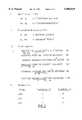
______________________________________Primer oligo 182: .sup.5' GCCTTGGCGTTGTAGAA.sup.3'Template oligos .sup.3' TCGGGTCGGAACCGCAACATCTT.sup.C /180(C)/181(T): TATAGACTA.sup.5'______________________________________
______________________________________Template Reaction A Reaction B______________________________________180 dG-*dT-dk-*dT-ddCddG 181 dA-*dT-dA-*dT-ddC*ddA______________________________________
______________________________________Reaction Template 180Template 181______________________________________A, complete 325,782 441,823A, no polymerase 5,187 5,416A, no primer 4,351 12,386B, complete 5,674 176,291B, no polymerase 2,988 1,419B, no primer 1,889 1,266______________________________________
______________________________________Primers Plasmids Detection Primers______________________________________105 biotinylated, p183 andp624 TGL 182106 unbiotinylated (SEQ ID NO: 1)105 unbiotinylated, p183 andp814 TGL 166106 biotinylated (SEQ ID NO: 12)______________________________________
______________________________________Primer oligo TGL391: .sup.5' TGTTTTGCACAAAAGCA.sup.3' (SEQ ID NO: 4)Primer oligo TGL346: .sup.5' GTTTTGCACAAAAGCAT.sup.3' (SEQ ID NO: 5)Template oligo TGL382: .sup.3' CACAAAACGTGTTTTCGTAGGA.sup.5' - biotin: (streptavidin-bead) (SEQ ID NO: 6)______________________________________
______________________________________.sup.35 S-labelled dideoxynucleoside triphosphate mixes(labelled nucleotide indicated in the form ddN*TP):______________________________________ddG Mix: 5 μM ddG*TP 10 μM ddATP 10 μM ddTTP 10 μM ddCTPddA Mix: 10μM ddGTP 5 μM ddA*TP 10 μM ddTTP 10 μM ddCTPddT Mix: 10 μM ddGTP 10μM ddATP 5 μM ddT*TP 10 μM ddCTPddC Mix: 10 μM ddGTP 10 μM ddATP 10μM ddTTP 5 μM ddC*TP______________________________________
______________________________________TGL240: .sup.5' AGATGATGCTTTTGTGCAAAACAC.sup.3' (SEQ ID NO: 7)TGL239: .sup.5' TCAATACCTGAGTCCCGACACCCTG.sup.3' (SEQ ID NO: 8)TGL308: .sup.5' AGCCTCAGACCGCGTGGTGCCTGGT.sup.3' (SEQ ID NO:______________________________________ 9)
__________________________________________________________________________SEQUENCE LISTING(1) GENERAL INFORMATION:(iii) NUMBER OF SEQUENCES: 15(2) INFORMATION FOR SEQ ID NO:1:(i) SEQUENCE CHARACTERISTICS:(A) LENGTH: 17 base pairs(B) TYPE: nucleic acid(C) STRANDEDNESS: single(D) TOPOLOGY: linear(ii) MOLECULE TYPE: Other nucleic acid(xi) SEQUENCE DESCRIPTION: SEQ ID NO:1:GCCTTGGCGTTGTAGAA17(2) INFORMATION FOR SEQ ID NO:2:(i) SEQUENCE CHARACTERISTICS:(A) LENGTH: 32 base pairs(B) TYPE: nucleic acid(C) STRANDEDNESS: single(D) TOPOLOGY: linear(ii) MOLECULE TYPE: Other nucleic acid(ix) FEATURE:(A) NAME/KEY: modified.sub.-- base(B) LOCATION: <1..2(D) OTHER INFORMATION: /note= "5'terminus biotinylatedusing biotin- XX-NHS ester, a derivative ofbiotin-N- hydroxysuccinimide, from Clontech(xi) SEQUENCE DESCRIPTION: SEQ ID NO:2:ATCAGATACTTCTACAACGCCAAGGCTGGGCT32(2) INFORMATION FOR SEQ ID NO:3:(i) SEQUENCE CHARACTERISTICS:(A) LENGTH: 32 base pairs(B) TYPE: nucleic acid(C) STRANDEDNESS: single(D) TOPOLOGY: linear(ii) MOLECULE TYPE: Other nucleic acid(ix) FEATURE:(A) NAME/KEY: modified.sub.-- base(B) LOCATION: <1..2(D) OTHER INFORMATION: /note= "5'terminus biotinylatedusing biotin- XX-NHS ester, a derivative ofbiotin-N- hydroxysuccinimide, from Clontech(xi) SEQUENCE DESCRIPTION: SEQ ID NO:3:ATCAGATATTTCTACAACGCCAAGGCTGGGCT32(2) INFORMATION FOR SEQ ID NO:4:(i) SEQUENCE CHARACTERISTICS:(A) LENGTH: 17 base pairs(B) TYPE: nucleic acid(C) STRANDEDNESS: single(D) TOPOLOGY: linear(ii) MOLECULE TYPE: Other nucleic acid(xi) SEQUENCE DESCRIPTION: SEQ ID NO:4:TGTTTTGCACAAAAGCA17(2) INFORMATION FOR SEQ ID NO:5:(i) SEQUENCE CHARACTERISTICS:(A) LENGTH: 17 base pairs(B) TYPE: nucleic acid(C) STRANDEDNESS: single(D) TOPOLOGY: linear(ii) MOLECULE TYPE: Other nucleic acid(xi) SEQUENCE DESCRIPTION: SEQ ID NO:5:GTTTTGCACAAAAGCAT17(2) INFORMATION FOR SEQ ID NO:6:(i) SEQUENCE CHARACTERISTICS:(A) LENGTH: 22 base pairs(B) TYPE: nucleic acid(C) STRANDEDNESS: single(D) TOPOLOGY: linear(ii) MOLECULE TYPE: Other nucleic acid(ix) FEATURE:(A) NAME/KEY: modified.sub.-- base(B) LOCATION: <1..2(D) OTHER INFORMATION: /note= "5'terminus biotinylatedusing Midland Certified Reagent Company's BiotindX reagent, a biotin derivative phosphoramidite."(xi) SEQUENCE DESCRIPTION: SEQ ID NO:6:AGGATGCTTTTGTGCAAAACAC22(2) INFORMATION FOR SEQ ID NO:7:(i) SEQUENCE CHARACTERISTICS:(A) LENGTH: 24 base pairs(B) TYPE: nucleic acid(C) STRANDEDNESS: single(D) TOPOLOGY: linear(ii) MOLECULE TYPE: Other nucleic acid(ix) FEATURE:(A) NAME/KEY: modified.sub.-- base(B) LOCATION: <1..2(D) OTHER INFORMATION: /note= "5'terminus biotinylatedusing biotin- XX-NHS ester, a derivative ofbiotin-N- hydroxysuccinimide, from Clontech(xi) SEQUENCE DESCRIPTION: SEQ ID NO:7:AGATGATGCTTTTGTGCAAAACAC24(2) INFORMATION FOR SEQ ID NO:8:(i) SEQUENCE CHARACTERISTICS:(A) LENGTH: 25 base pairs(B) TYPE: nucleic acid(C) STRANDEDNESS: single(D) TOPOLOGY: linear(ii) MOLECULE TYPE: Other nucleic acid(xi) SEQUENCE DESCRIPTION: SEQ ID NO:8:TCAATACCTGAGTCCCGACACCCTG25(2) INFORMATION FOR SEQ ID NO:9:(i) SEQUENCE CHARACTERISTICS:(A) LENGTH: 25 base pairs(B) TYPE: nucleic acid(C) STRANDEDNESS: single(D) TOPOLOGY: linear(ii) MOLECULE TYPE: Other nucleic acid(xi) SEQUENCE DESCRIPTION: SEQ ID NO:9:AGCCTCAGACCGCGTGGTGCCTGGT25(2) INFORMATION FOR SEQ ID NO:10:(i) SEQUENCE CHARACTERISTICS:(A) LENGTH: 21 base pairs(B) TYPE: nucleic acid(C) STRANDEDNESS: single(D) TOPOLOGY: linear(ii) MOLECULE TYPE: Other nucleic acid(xi) SEQUENCE DESCRIPTION: SEQ ID NO:10:TTCTTCTTGCATCTATGTTCG21(2) INFORMATION FOR SEQ ID NO:11:(i) SEQUENCE CHARACTERISTICS:(A) LENGTH: 21 base pairs(B) TYPE: nucleic acid(C) STRANDEDNESS: single(D) TOPOLOGY: linear(ii) MOLECULE TYPE: Other nucleic acid(xi) SEQUENCE DESCRIPTION: SEQ ID NO:11:TTAAGCACCACCACAGGTCCT21(2) INFORMATION FOR SEQ ID NO:12:(i) SEQUENCE CHARACTERISTICS:(A) LENGTH: 17 base pairs(B) TYPE: nucleic acid(C) STRANDEDNESS: single(D) TOPOLOGY: linear(ii) MOLECULE TYPE: Other nucleic acid(xi) SEQUENCE DESCRIPTION: SEQ ID NO:12:AGAGAAACAATTTCAAG17(2) INFORMATION FOR SEQ ID NO:13:(i) SEQUENCE CHARACTERISTICS:(A) LENGTH: 240 base pairs(B) TYPE: nucleic acid(C) STRANDEDNESS: double(D) TOPOLOGY: linear(ii) MOLECULE TYPE: DNA (genomic)(xi) SEQUENCE DESCRIPTION: SEQ ID NO:13:TTTCTTCTTGCATCTATGTTCGTTTTTTCTATTGCTACAAATGCCTATGCACGGCCTGAC60TTCTGCCTAGAGCCTCCATATACGGGTCCCTGCAAGGCCAGAATTATCAGATAYTTCTAC120AACGCCAAGGCTGGGCTCTGCCAGACCTTTGTATATGGTGGCTGCAGAGCTAAGAGAAAC180AATTTCAAGRGCGCAGAGGACTGCATGAGGACCTGTGGTGGTGCTTAAGGGCCCCGGGAA240(2) INFORMATION FOR SEQ ID NO:14:(i) SEQUENCE CHARACTERISTICS:(A) LENGTH: 327 base pairs(B) TYPE: nucleic acid(C) STRANDEDNESS: double(D) TOPOLOGY: linear(ii) MOLECULE TYPE: DNA (genomic)(xi) SEQUENCE DESCRIPTION: SEQ ID NO:14:AGATGATGCTTTTGTGCAAAACACTTTTTAACACCTCTTTTAAAATTTCTTTCAAATTCT60ACGGCATTTTTTTCCTGAAAATGCTTCGGTTTTAGGTCAAAGCTTTATTCTCCTAAGAAC120CTAACTCCCACTGGTCTCAGGCGCCCTCTCGGAGCCCTCGGGGAGTCTTTGCCCCCCAAT180CTTGGCATTCTCCCCTGACACTCGCCCAAGGCCCCTAACCTGCACCCGGGCACCAGGCAC240CACGCGGTCTGAGGCTTCAGCAGGGAAGGCCTGCTCTCCGTTCACACTGCTTTCAGGCCC300GGCAGGGTGTCGGGACTCAGGTATTGA327(2) INFORMATION FOR SEQ ID NO:15:(i) SEQUENCE CHARACTERISTICS:(A) LENGTH: 328 base pairs(B) TYPE: nucleic acid(C) STRANDEDNESS: double(D) TOPOLOGY: linear(ii) MOLECULE TYPE: DNA (genomic)(xi) SEQUENCE DESCRIPTION: SEQ ID NO:15:AGATGATGCTTTTGTGCAAAACACTTTTTAACACCTCTTTTAAAATTTCTTTCAAATTCT60ACGGCATTTTTTTCCTGAAAATGCTTCGGTTTTAGGTCAAAGCTTTATTCTCCTAAGAAC120CTAACTCCCACTGGTCTCAGGCGCCCTCTCGGAGCCCTCGGGGAGTCTTTGCCCCCCAAT180CTTGGCATTCTCCCCTGACACTCGCCCAAGGCCCCTAACCTGCACCCGGGGAACCAGGCA240CCACGCGGTCTGAGGCTTCAGTAGGCAAGGCCTGCTCTCCGTTCACACTGCTTTCAGGCC300CGGCAGGGTGTCGGGACTCAGGTATTGA328__________________________________________________________________________
Claims (48)
Priority Applications (16)
| Application Number | Priority Date | Filing Date | Title |
|---|---|---|---|
| US07/664,837US5888819A (en) | 1991-03-05 | 1991-03-05 | Method for determining nucleotide identity through primer extension |
| US07/775,786US6004744A (en) | 1991-03-05 | 1991-10-11 | Method for determining nucleotide identity through extension of immobilized primer |
| DE69233458TDE69233458T2 (en) | 1991-03-05 | 1992-03-04 | NUCLEIC ACIDIFYING BY POLYMERASE EXTENSION OF OLIGONUCLEOTIDES USING TERMINATOR MIXTURES |
| AT92908554TATE284973T1 (en) | 1991-03-05 | 1992-03-04 | NUCLEIC ACID TYPING BY POLYMERASE EXTENSION OF OLIGONUCLEOTIDES USING TERMINATOR MIXTURES |
| PCT/US1992/001905WO1992015712A1 (en) | 1991-03-05 | 1992-03-04 | Nucleic acid typing by polymerase extension of oligonucleotides using terminator mixtures |
| JP4508312AJPH06505394A (en) | 1991-03-05 | 1992-03-04 | Nucleic acid classification by polymerase extension of oligonucleotides using terminator complexes |
| CA002105060ACA2105060C (en) | 1991-03-05 | 1992-03-04 | Nucleic acid typing by polymerase extension of oligonucleotides using terminator mixtures |
| EP92908554AEP0576558B1 (en) | 1991-03-05 | 1992-03-04 | Nucleic acid typing by polymerase extension of oligonucleotides using terminator mixtures |
| AU15848/92AAU660173B2 (en) | 1991-03-05 | 1992-03-04 | Nucleic acid typing by polymerase extension of oligonucleotides using terminator mixtures |
| EP04029613AEP1591533A1 (en) | 1991-03-05 | 1992-03-04 | Nucleic acid typing by polymerase extension of oligonucleotides using terminator mixtures |
| NO933136ANO933136D0 (en) | 1991-03-05 | 1993-09-02 | DETERMINATION OF NUCLEIC ACIDS BY POLYMERASE EXTENSION OF OLIGON NUCLEOTIDES USING TERMINATOR MIXTURES |
| FI933870AFI106871B (en) | 1991-03-05 | 1993-09-03 | A method for identifying a nucleotide base at a given position in a nucleic acid |
| US08/362,266US5762876A (en) | 1991-03-05 | 1994-12-22 | Automatic genotype determination |
| US09/258,132US20030044778A1 (en) | 1991-03-05 | 1999-02-26 | Nucleic acid typing by polymerase extension of oligonucleotides using terminator mixtures |
| US09/258,133US6537748B1 (en) | 1991-03-05 | 1999-02-26 | Reagent for nucleic acid typing by primer extension |
| FI20010223AFI111554B (en) | 1991-03-05 | 2001-02-07 | Reagent composition and packaging for identification of nucleotide base at a specific position of nucleic acid |
Applications Claiming Priority (1)
| Application Number | Priority Date | Filing Date | Title |
|---|---|---|---|
| US07/664,837US5888819A (en) | 1991-03-05 | 1991-03-05 | Method for determining nucleotide identity through primer extension |
Related Child Applications (3)
| Application Number | Title | Priority Date | Filing Date |
|---|---|---|---|
| US07/775,786Continuation-In-PartUS6004744A (en) | 1991-03-05 | 1991-10-11 | Method for determining nucleotide identity through extension of immobilized primer |
| US09/258,133Continuation-In-PartUS6537748B1 (en) | 1991-03-05 | 1999-02-26 | Reagent for nucleic acid typing by primer extension |
| US09/258,132ContinuationUS20030044778A1 (en) | 1991-03-05 | 1999-02-26 | Nucleic acid typing by polymerase extension of oligonucleotides using terminator mixtures |
Publications (1)
| Publication Number | Publication Date |
|---|---|
| US5888819Atrue US5888819A (en) | 1999-03-30 |
Family
ID=24667654
Family Applications (2)
| Application Number | Title | Priority Date | Filing Date |
|---|---|---|---|
| US07/664,837Expired - LifetimeUS5888819A (en) | 1991-03-05 | 1991-03-05 | Method for determining nucleotide identity through primer extension |
| US09/258,132AbandonedUS20030044778A1 (en) | 1991-03-05 | 1999-02-26 | Nucleic acid typing by polymerase extension of oligonucleotides using terminator mixtures |
Family Applications After (1)
| Application Number | Title | Priority Date | Filing Date |
|---|---|---|---|
| US09/258,132AbandonedUS20030044778A1 (en) | 1991-03-05 | 1999-02-26 | Nucleic acid typing by polymerase extension of oligonucleotides using terminator mixtures |
Country Status (1)
| Country | Link |
|---|---|
| US (2) | US5888819A (en) |
Cited By (201)
| Publication number | Priority date | Publication date | Assignee | Title |
|---|---|---|---|---|
| US6051378A (en)* | 1996-03-04 | 2000-04-18 | Genetrace Systems Inc. | Methods of screening nucleic acids using mass spectrometry |
| US6090558A (en)* | 1997-09-19 | 2000-07-18 | Genetrace Systems, Inc. | DNA typing by mass spectrometry with polymorphic DNA repeat markers |
| US6104028A (en)* | 1998-05-29 | 2000-08-15 | Genetrace Systems Inc. | Volatile matrices for matrix-assisted laser desorption/ionization mass spectrometry |
| WO2000063437A2 (en) | 1999-04-20 | 2000-10-26 | Illumina, Inc. | Detection of nucleic acid reactions on bead arrays |
| US6180408B1 (en) | 1998-08-21 | 2001-01-30 | Washington University | Fluorescence polarization in nucleic acid analysis |
| US6204024B1 (en)* | 1997-09-12 | 2001-03-20 | Akzo Nobel N.V. | CCR5 RNA transcription based amplification assay |
| US6208941B1 (en)* | 1996-09-16 | 2001-03-27 | University Of Utah Research Foundation | Method and apparatus for analysis of chromatographic migration patterns |
| US6210891B1 (en) | 1996-09-27 | 2001-04-03 | Pyrosequencing Ab | Method of sequencing DNA |
| US6221605B1 (en) | 1995-03-17 | 2001-04-24 | Sequenom, Inc. | DNA diagnostics based on mass spectrometry |
| US6235480B1 (en) | 1998-03-13 | 2001-05-22 | Promega Corporation | Detection of nucleic acid hybrids |
| US6251639B1 (en) | 1999-09-13 | 2001-06-26 | Nugen Technologies, Inc. | Methods and compositions for linear isothermal amplification of polynucleotide sequences, using a RNA-DNA composite primer |
| US6258568B1 (en) | 1996-12-23 | 2001-07-10 | Pyrosequencing Ab | Method of sequencing DNA based on the detection of the release of pyrophosphate and enzymatic nucleotide degradation |
| US6268146B1 (en) | 1998-03-13 | 2001-07-31 | Promega Corporation | Analytical methods and materials for nucleic acid detection |
| US6270974B1 (en) | 1998-03-13 | 2001-08-07 | Promega Corporation | Exogenous nucleic acid detection |
| US6270973B1 (en) | 1998-03-13 | 2001-08-07 | Promega Corporation | Multiplex method for nucleic acid detection |
| US6277578B1 (en) | 1998-03-13 | 2001-08-21 | Promega Corporation | Deploymerization method for nucleic acid detection of an amplified nucleic acid target |
| US6294336B1 (en) | 1996-03-19 | 2001-09-25 | Orchid Biosciences, Inc. | Method for analyzing the nucleotide sequence of a polynucleotide by oligonucleotide extension on an array |
| US6297018B1 (en) | 1998-04-17 | 2001-10-02 | Ljl Biosystems, Inc. | Methods and apparatus for detecting nucleic acid polymorphisms |
| US6312902B1 (en) | 1998-03-13 | 2001-11-06 | Promega Corporation | Nucleic acid detection |
| US20020012930A1 (en)* | 1999-09-16 | 2002-01-31 | Rothberg Jonathan M. | Method of sequencing a nucleic acid |
| US6355433B1 (en) | 2000-06-02 | 2002-03-12 | Dna Sciences, Inc. | Determination of nucleotide sequence variations through limited primer extension |
| WO2002022881A1 (en)* | 2000-09-11 | 2002-03-21 | Dzgenes, Llc | Endothelin-1 promoter polymorphism |
| WO2001094546A3 (en)* | 2000-06-02 | 2002-03-28 | Dna Sciences Inc | Primer extension using a mixture of labelled and unlabelled nucleotides |
| US6391551B1 (en) | 1998-03-13 | 2002-05-21 | Promega Corporation | Detection of nucleic acid hybrids |
| US6428964B1 (en) | 2001-03-15 | 2002-08-06 | Exact Sciences Corporation | Method for alteration detection |
| US6458544B1 (en) | 1999-12-02 | 2002-10-01 | Dna Sciences, Inc. | Methods for determining single nucleotide variations and genotyping |
| US20020142336A1 (en)* | 2001-02-02 | 2002-10-03 | Genome Therapeutics Corporation | Methods for determining a nucleotide at a specific location within a nucleic acid molecule |
| US6475738B2 (en) | 1999-01-10 | 2002-11-05 | Exact Sciences Corporation | Methods for detecting mutations using primer extension for detecting disease |
| US6482595B2 (en) | 1999-08-11 | 2002-11-19 | Exact Sciences Corporation | Methods for detecting mutations using primer extension |
| EP1101824A3 (en)* | 1999-11-22 | 2003-01-08 | Xiao Bing Wang | Detection of sequence variation of nucleic acid by shifted termination analysis |
| US20030013117A1 (en)* | 1999-07-16 | 2003-01-16 | Aclara Biosciences, Inc. | Multiplexed differential displacement for nucleic acid determinations |
| US20030022225A1 (en)* | 1996-12-10 | 2003-01-30 | Monforte Joseph A. | Releasable nonvolatile mass-label molecules |
| US6528319B1 (en) | 1999-09-02 | 2003-03-04 | Amersham Biosciences Corp | Method for anchoring oligonucleotides to a substrate |
| US6533912B2 (en) | 1999-07-13 | 2003-03-18 | Molecular Dynamics, Inc. | Increased throughput analysis of small compounds using multiple temporally spaced injections |
| US6537748B1 (en)* | 1991-03-05 | 2003-03-25 | Orchid Biosciences, Inc. | Reagent for nucleic acid typing by primer extension |
| WO2002102980A3 (en)* | 2001-06-14 | 2003-04-10 | Genelink Inc | Kits and methods for assessing leptin-mediated lipid matabolism |
| US6548251B1 (en) | 2000-09-05 | 2003-04-15 | Fidelity Systems, Inc. | Inhibition of molecular and biological processes using modified oligonucleotides |
| WO2003020950A3 (en)* | 2001-08-28 | 2003-04-17 | Orchid Biosciences Inc | Methods and compositions for bi-directional polymorphism detection |
| US20030082613A1 (en)* | 1993-06-22 | 2003-05-01 | Baylor College Of Medicine | Parallel primer extension approach to nucleic acid sequence analysis |
| US20030082530A1 (en)* | 1990-02-16 | 2003-05-01 | Hans E. Soderlund | Reagent Kit for Determining Specific Nucleotide Variations |
| US20030082584A1 (en)* | 2001-06-29 | 2003-05-01 | Liang Shi | Enzymatic ligation-based identification of transcript expression |
| US20030087251A1 (en)* | 2001-03-09 | 2003-05-08 | Nurith Kurn | Methods and compositions for amplification of RNA sequences |
| US6566055B1 (en) | 1996-09-19 | 2003-05-20 | Sequenom, Inc. | Methods of preparing nucleic acids for mass spectrometric analysis |
| US20030099950A1 (en)* | 2001-10-30 | 2003-05-29 | Hanna Michelle M. | Molecular detection systems utilizing reiterative oligonucleotide synthesis |
| US6573047B1 (en) | 1999-04-13 | 2003-06-03 | Dna Sciences, Inc. | Detection of nucleotide sequence variation through fluorescence resonance energy transfer label generation |
| US20030113725A1 (en)* | 2000-04-17 | 2003-06-19 | Small Kersten M. | Alpha-2 adrenergic receptor polymorphisms |
| US20030127609A1 (en)* | 1998-08-31 | 2003-07-10 | Amer El-Hage | Sample analysis systems |
| US20030129607A1 (en)* | 2001-05-25 | 2003-07-10 | Invitrogen Corporation | Compositions and methods for extension of nucleic acids |
| WO2003057730A1 (en) | 2002-01-07 | 2003-07-17 | Euroscreen S.A. | Ligand for g-protein coupled receptor gpr43 and uses thereof |
| US6596483B1 (en) | 1999-11-12 | 2003-07-22 | Motorola, Inc. | System and method for detecting molecules using an active pixel sensor |
| US20030138838A1 (en)* | 2000-08-24 | 2003-07-24 | Guoqing Wang | Methods and compositions for identifying nucleic acid molecules using nucleolytic activities and hybridization |
| WO2002022870A3 (en)* | 2000-09-18 | 2003-09-04 | Eidgenoessische Forschungsanst | Method for the characterization and/or identification of genomes |
| US20030165865A1 (en)* | 2001-01-29 | 2003-09-04 | Hinkel Christopher A. | Methods of analysis of nucleic acids |
| US20030170674A1 (en)* | 2000-01-24 | 2003-09-11 | Dz Genes, Llc | Nitric oxide synthase gene diagnostic polymorphisms |
| US20030170637A1 (en)* | 2002-03-06 | 2003-09-11 | Pirrung Michael C. | Method of analyzing mRNA splice variants |
| US20030170695A1 (en)* | 2001-06-29 | 2003-09-11 | Liang Shi | Enzymatic ligation-based identification of nucleotide sequences |
| US20030186234A1 (en)* | 2000-12-13 | 2003-10-02 | Nurith Kurn | Methods and compositions for generation of multiple copies of nucleic acid sequences and methods of detection thereof |
| US20030190627A1 (en)* | 2002-04-09 | 2003-10-09 | Xiaodong Zhao | Primer extension using modified nucleotides |
| US6632641B1 (en) | 1999-10-08 | 2003-10-14 | Metrigen, Inc. | Method and apparatus for performing large numbers of reactions using array assembly with releasable primers |
| US20030203382A1 (en)* | 2002-02-15 | 2003-10-30 | Exact Sciences Corporation | Methods for analysis of molecular events |
| US6642001B1 (en) | 1999-07-13 | 2003-11-04 | Whitehead Institute For Biomedical Research | Generic SBE-FRET protocol |
| US6642000B1 (en) | 1999-11-12 | 2003-11-04 | University Of Chicago | PCR amplification on microarrays of gel immobilized oligonucleotides |
| US20030211489A1 (en)* | 2000-09-21 | 2003-11-13 | Shen Min-Jui Richard | Multiplex nucleic acid reactions |
| US6660229B2 (en) | 2000-06-13 | 2003-12-09 | The Trustees Of Boston University | Use of nucleotide analogs in the analysis of oligonucleotide mixtures and in highly multiplexed nucleic acid sequencing |
| US20030235827A1 (en)* | 2002-06-25 | 2003-12-25 | Orchid Biosciences, Inc. | Methods and compositions for monitoring primer extension and polymorphism detection reactions |
| WO2003062454A3 (en)* | 2002-01-24 | 2004-01-08 | Stratagene Inc | Compositions and methods for polynucleotide sequence determination |
| US20040011650A1 (en)* | 2002-07-22 | 2004-01-22 | Frederic Zenhausern | Method and apparatus for manipulating polarizable analytes via dielectrophoresis |
| US6686156B2 (en) | 2000-06-26 | 2004-02-03 | Nugen Technologies, Inc. | Methods and compositions for transcription-based nucleic acid amplification |
| US6692918B2 (en) | 1999-09-13 | 2004-02-17 | Nugen Technologies, Inc. | Methods and compositions for linear isothermal amplification of polynucleotide sequences |
| US20040038229A1 (en)* | 2001-11-01 | 2004-02-26 | Keating Christine Dolan | Enzymatic manipulation of metal particle-bound DNA |
| US6703211B1 (en) | 1998-03-13 | 2004-03-09 | Promega Corporation | Cellular detection by providing high energy phosphate donor other than ADP to produce ATP |
| US20040054162A1 (en)* | 2001-10-30 | 2004-03-18 | Hanna Michelle M. | Molecular detection systems utilizing reiterative oligonucleotide synthesis |
| US20040067492A1 (en)* | 2002-10-04 | 2004-04-08 | Allan Peng | Reverse transcription on microarrays |
| US6720148B1 (en) | 2001-02-22 | 2004-04-13 | Caliper Life Sciences, Inc. | Methods and systems for identifying nucleotides by primer extension |
| EP1162278A3 (en)* | 2000-06-08 | 2004-04-14 | Xiao Bing Wang | Isometric primer extension method and kit for detection and quantification of specific nucleic acid |
| US20040096870A1 (en)* | 2002-06-28 | 2004-05-20 | Sention, Inc. | Methods of detecting sequence differences |
| US6743578B1 (en)* | 1998-12-18 | 2004-06-01 | The Regents Of The University Of California | Method for the detection of specific nucleic acid sequences by polymerase nucleotide incorporation |
| US20040121342A1 (en)* | 2002-12-20 | 2004-06-24 | Orchid Biosciences, Inc. | Methods and compositions for conducting primer extension and polymorphism detection reactions |
| US20040126765A1 (en)* | 2002-12-27 | 2004-07-01 | Adams Craig W. | Method and compositions for sequencing nucleic acid molecules |
| US6762018B1 (en) | 1999-12-23 | 2004-07-13 | Tetragen Sa | Analysis of nucleotide polymorphisms at a site |
| WO2004059013A1 (en)* | 2002-12-23 | 2004-07-15 | Decode Genetics Ehf. | Single nucleotide polymorphism detection using nucleotide depletion genotyping |
| US6764822B1 (en) | 1997-09-19 | 2004-07-20 | Sequenom, Inc. | DNA typing by mass spectrometry with polymorphic DNA repeat markers |
| US20040166506A1 (en)* | 2002-08-02 | 2004-08-26 | Orchid Biosciences, Inc. | Methods and compositions for genotyping |
| US20040166491A1 (en)* | 2001-08-09 | 2004-08-26 | Henderson Lee A | Vhl promoter diagnostic polymorphism |
| US20040170992A1 (en)* | 2000-03-24 | 2004-09-02 | Moskowitz David W. | Diagnostic polymorphisms of tgf-beta1 promoter |
| US20040175716A1 (en)* | 2001-08-13 | 2004-09-09 | Shankar Balasubramanian | Dna sequence analysis |
| US20040176315A1 (en)* | 1999-11-29 | 2004-09-09 | Orchid Biosciences, Inc. | Methods of identifying optimal drug combinations and compositions thereof |
| US20040180412A1 (en)* | 2002-08-19 | 2004-09-16 | The President And Fellows Of Harvard College | Evolving new molecular function |
| WO2004081182A2 (en) | 2003-03-06 | 2004-09-23 | Stratagene | Compositions and methods for polynucleotide sequence detection |
| US20040191774A1 (en)* | 2001-09-11 | 2004-09-30 | Moskowitz David W | Endothelin-1 promoter polymorphism |
| US20040209254A1 (en)* | 2000-07-25 | 2004-10-21 | Henderson Lee A. | Diagnostic polymorphisms for the tgf-beta1 promoter |
| US20040229222A1 (en)* | 2001-03-30 | 2004-11-18 | Buena Chui | P450 single nucleotide polymorphism biochip analysis |
| US20040234967A1 (en)* | 2000-03-24 | 2004-11-25 | Moskowitz David W. | Diagnostic polymorphisms of tgf-beta-rii promoter |
| US20040248161A1 (en)* | 1999-09-16 | 2004-12-09 | Rothberg Jonathan M. | Method of sequencing a nucleic acid |
| US20040249586A1 (en)* | 1997-09-15 | 2004-12-09 | Annegret Boge | Molecular modification assays |
| US20040259105A1 (en)* | 2002-10-03 | 2004-12-23 | Jian-Bing Fan | Multiplex nucleic acid analysis using archived or fixed samples |
| US20040259100A1 (en)* | 2003-06-20 | 2004-12-23 | Illumina, Inc. | Methods and compositions for whole genome amplification and genotyping |
| US20050009016A1 (en)* | 2000-05-04 | 2005-01-13 | Moskowitz David W. | Tgfbeta-rII promoter polymorphisms |
| US20050019793A1 (en)* | 2003-04-14 | 2005-01-27 | Nurith Kurn | Global amplification using a randomly primed composite primer |
| US20050059035A1 (en)* | 2003-09-09 | 2005-03-17 | Quest Diagnostics Incorporated | Methods and compositions for the amplification of mutations in the diagnosis of cystic fibrosis |
| US20050074772A1 (en)* | 2000-08-10 | 2005-04-07 | Small Kersten M. | Alpha -2A-adrenergic receptor polymorphisms |
| US20050074787A1 (en)* | 1999-03-26 | 2005-04-07 | Whitehead Institute For Biomedical Research | Universal arrays |
| US20050084849A1 (en)* | 2000-07-25 | 2005-04-21 | Moskowitz David W. | Diagnostic polymorphisms for the ecnos promoter |
| US20050112591A1 (en)* | 2003-11-25 | 2005-05-26 | Applera Corporation | Novel method for isolating single stranded product |
| US6900013B1 (en) | 2000-08-25 | 2005-05-31 | Aviva Biosciences Corporation | Methods and compositions for identifying nucleic acid molecules using nucleolytic activities and hybridization |
| US20050136414A1 (en)* | 2003-12-23 | 2005-06-23 | Kevin Gunderson | Methods and compositions for making locus-specific arrays |
| US20050148002A1 (en)* | 1990-12-06 | 2005-07-07 | Affymetrix, Inc. | Sequence of surface immobilized polymers utilizing microfluorescence detection |
| US20050181394A1 (en)* | 2003-06-20 | 2005-08-18 | Illumina, Inc. | Methods and compositions for whole genome amplification and genotyping |
| US6943768B2 (en) | 2003-02-21 | 2005-09-13 | Xtellus Inc. | Thermal control system for liquid crystal cell |
| US6949633B1 (en) | 1995-05-22 | 2005-09-27 | Sequenom, Inc. | Primers useful for sizing nucleic acids |
| US20050214796A1 (en)* | 2003-10-29 | 2005-09-29 | Hanna Michelle M | Compositions, methods and detection technologies for reiterative oligonucleotide synthesis |
| US20050214825A1 (en)* | 2000-02-07 | 2005-09-29 | John Stuelpnagel | Multiplex sample analysis on universal arrays |
| US20050227294A1 (en)* | 1997-09-15 | 2005-10-13 | Molecular Devices Corporation | Molecular modification assays involving lipids |
| US20050233321A1 (en)* | 2001-12-20 | 2005-10-20 | Hess John W | Identification of novel polymorphic sites in the human mglur8 gene and uses thereof |
| SG115374A1 (en)* | 2000-07-17 | 2005-10-28 | Xiao Bing Wang | Detection of sequence variation of nucleic acid by shifted termination analysis |
| US20060014182A1 (en)* | 2001-03-09 | 2006-01-19 | Nugen Technologies, Inc. | Methods and compositions for amplification of RNA sequences |
| US6995841B2 (en) | 2001-08-28 | 2006-02-07 | Rice University | Pulsed-multiline excitation for color-blind fluorescence detection |
| EP1632778A2 (en) | 2001-07-09 | 2006-03-08 | Euroscreen S.A. | Natural ligand of gpcr chemr23 and uses thereof |
| US20060057766A1 (en)* | 2003-07-08 | 2006-03-16 | Quanxi Jia | Method for preparation of semiconductive films |
| US20060094010A1 (en)* | 2002-06-28 | 2006-05-04 | Giles Robert C | Methods and compositions for analyzing comprised sample using single nucleotide polymorphism panels |
| US20060121544A1 (en)* | 1997-09-15 | 2006-06-08 | Annegret Boge | Molecular modification assays |
| US7070921B2 (en) | 2000-04-28 | 2006-07-04 | Molecular Devices Corporation | Molecular modification assays |
| US7090975B2 (en)* | 1998-03-13 | 2006-08-15 | Promega Corporation | Pyrophosphorolysis and incorporation of nucleotide method for nucleic acid detection |
| US20060194232A1 (en)* | 2005-02-09 | 2006-08-31 | Stephen Turner | Nucleotide compositions and uses thereof |
| US20060199214A1 (en)* | 1999-09-30 | 2006-09-07 | Jack William E | Incorporation of modified nucleotides by archaeon DNA polymerases and related methods |
| US20060223086A1 (en)* | 2003-03-26 | 2006-10-05 | Liu David R | Free reactant use in nucleic acid-templated synthesis |
| US20060275782A1 (en)* | 1999-04-20 | 2006-12-07 | Illumina, Inc. | Detection of nucleic acid reactions on bead arrays |
| WO2007018843A2 (en) | 2005-07-01 | 2007-02-15 | Arbor Vita Corporation | Methods and compositions for diagnosis and treatment of influenza |
| US7198893B1 (en) | 1996-11-06 | 2007-04-03 | Sequenom, Inc. | DNA diagnostics based on mass spectrometry |
| EP1624058A3 (en)* | 2003-06-03 | 2007-05-09 | Agilent Technologies, Inc. | Methods and compositions for performing template dependent nucleic acid primer extension reactions that produce a reduced complexity product |
| US20070111235A1 (en)* | 1995-04-07 | 2007-05-17 | Southern Edwin M | Detecting DNA sequence variations |
| US7229756B1 (en) | 2000-10-19 | 2007-06-12 | University Of Cincinnati | Alpha-2B-adrenergic receptor polymorphisms |
| US20070134701A1 (en)* | 2003-11-24 | 2007-06-14 | Denise Sue | Method and markers for determining the genotype of horned/polled cattle |
| US20070141598A1 (en)* | 2005-02-09 | 2007-06-21 | Pacific Biosciences Of California, Inc. | Nucleotide Compositions and Uses Thereof |
| US20070161013A1 (en)* | 2005-08-18 | 2007-07-12 | Quest Diagnostics Inc | Cystic fibrosis transmembrane conductance regulator gene mutations |
| US20070256148A1 (en)* | 2006-04-26 | 2007-11-01 | Katz David A | DEP2 and its uses in major depressive disorder and other related disorders |
| US20070269801A1 (en)* | 2000-02-07 | 2007-11-22 | Jian-Bing Fan | Multiplexed Methylation Detection Methods |
| US20080075322A1 (en)* | 2006-09-13 | 2008-03-27 | Fluidigm Corporation | Methods and systems for determining a baseline during image processing |
| US20080075380A1 (en)* | 2006-09-13 | 2008-03-27 | Fluidigm Corporation | Methods and systems for image processing of microfluidic devices |
| US20080129736A1 (en)* | 2006-11-30 | 2008-06-05 | Fluidigm Corporation | Method and apparatus for biological sample analysis |
| US20080153088A1 (en)* | 2006-12-22 | 2008-06-26 | Weimin Sun | Cystic fibrosis transmembrane conductance regulator gene mutations |
| US20080176311A1 (en)* | 2000-06-26 | 2008-07-24 | Nurith Kurn | Methods and compositions for transcription-based nucleic acid amplification |
| EP1950305A1 (en) | 2001-05-09 | 2008-07-30 | Monsanto Technology, LLC | Tyr a genes and uses thereof |
| EP1967595A2 (en) | 2000-02-16 | 2008-09-10 | Illumina, Inc. | Parallel genotyping of multiple patient samples |
| US20080227844A1 (en)* | 2004-09-14 | 2008-09-18 | Liggett Stephen B | Methods for Treatment with Bucindolol Based on Genetic Targeting |
| US20080242560A1 (en)* | 2006-11-21 | 2008-10-02 | Gunderson Kevin L | Methods for generating amplified nucleic acid arrays |
| US20080241827A1 (en)* | 2004-05-10 | 2008-10-02 | Exact Sciences Corporation | Methods For Detecting A Mutant Nucleic Acid |
| US20080274493A1 (en)* | 2000-11-16 | 2008-11-06 | California Institute Of Technology | Apparatus and methods for conducting assays and high throughput screening |
| US20090130721A1 (en)* | 2005-09-07 | 2009-05-21 | Nurith Kurn | Improved nucleic acid amplification procedure |
| US20090170077A1 (en)* | 2004-08-27 | 2009-07-02 | Shuber Anthony P | Method for detecting recombinant event |
| US20090203531A1 (en)* | 2008-02-12 | 2009-08-13 | Nurith Kurn | Method for Archiving and Clonal Expansion |
| US7582420B2 (en) | 2001-07-12 | 2009-09-01 | Illumina, Inc. | Multiplex nucleic acid reactions |
| US20090263492A1 (en)* | 2006-09-19 | 2009-10-22 | Cashman John R | Diagnostic Methods and Genetic Markers for Alzheimer Disease |
| US20090325153A1 (en)* | 2005-04-21 | 2009-12-31 | Exact Sciences Corporation | Analysis of heterogeneous nucleic acid samples |
| US20100015622A1 (en)* | 2008-07-13 | 2010-01-21 | Hanna Michelle M | Molecular beacon-based methods for detection of targets using abscription |
| US7670810B2 (en) | 2003-06-20 | 2010-03-02 | Illumina, Inc. | Methods and compositions for whole genome amplification and genotyping |
| US7803548B1 (en) | 2004-03-05 | 2010-09-28 | Quest Diagnostics Investments Incorporated | Methods for diagnosing cystic fibrosis |
| US7803529B1 (en) | 1995-04-11 | 2010-09-28 | Sequenom, Inc. | Solid phase sequencing of biopolymers |
| US7846666B2 (en) | 2008-03-21 | 2010-12-07 | Nugen Technologies, Inc. | Methods of RNA amplification in the presence of DNA |
| US20100320364A1 (en)* | 2004-06-07 | 2010-12-23 | Fluidigm Corporation | Optical lens system and method for microfluidic devices |
| US20110045991A1 (en)* | 2005-06-23 | 2011-02-24 | Sadanand Gite | Methods for the Detection of Colorectal Cancer |
| WO2011039731A1 (en) | 2009-10-02 | 2011-04-07 | Actelion Pharmaceuticals Ltd | Natural peptide and derivatives as modulators of gpcr gpr1 and uses thereof |
| US7935481B1 (en) | 1999-07-26 | 2011-05-03 | Osmetech Technology Inc. | Sequence determination of nucleic acids using electronic detection |
| EP2340890A1 (en) | 2003-04-03 | 2011-07-06 | Fluidigm Corporation | Microfluidic devices and methods of using same |
| EP2360234A1 (en) | 2001-11-30 | 2011-08-24 | Fluidigm Corporation | Microfluidic device and methods of using same |
| US20110230365A1 (en)* | 2010-03-22 | 2011-09-22 | Elizabeth Rohlfs | Mutations Associated With Cystic Fibrosis |
| EP2371453A1 (en) | 2005-03-18 | 2011-10-05 | Fluidigm Corporation | Microfluidic device |
| WO2011123246A2 (en) | 2010-04-01 | 2011-10-06 | Illumina, Inc. | Solid-phase clonal amplification and related methods |
| WO2012042455A1 (en) | 2010-09-28 | 2012-04-05 | Actelion Pharmaceuticals Ltd | Neuropeptide q as modulator of gpcr galr2 and uses thereof |
| WO2012104817A1 (en) | 2011-02-03 | 2012-08-09 | X-Pol Biotech S.L. | Method for genotyping |
| US8242243B2 (en) | 2008-05-15 | 2012-08-14 | Ribomed Biotechnologies, Inc. | Methods and reagents for detecting CpG methylation with a methyl CpG binding protein (MBP) |
| US8263339B2 (en) | 2009-03-15 | 2012-09-11 | Ribomed Biotechnologies, Inc. | Abscription based molecular detection |
| EP2505661A1 (en) | 2011-03-28 | 2012-10-03 | Universitätsklinikum Hamburg-Eppendorf | Methods for detecting the mortality risk |
| EP2535717A1 (en) | 2011-06-13 | 2012-12-19 | Universitätsklinikum Hamburg-Eppendorf | Method for determining the mortality risk |
| EP2586787A1 (en) | 2006-04-26 | 2013-05-01 | Abbott Laboratories | DEP2 and its uses in major depressive disorder and other related disorders |
| US8536323B2 (en) | 2010-04-21 | 2013-09-17 | Pierce Biotechnology, Inc. | Modified nucleotides |
| EP2684964A1 (en) | 2012-07-09 | 2014-01-15 | OakLabs GmbH | Microarray-based methods for identifying single nucleotides at specific positions in nucleic acids |
| US9109256B2 (en) | 2004-10-27 | 2015-08-18 | Esoterix Genetic Laboratories, Llc | Method for monitoring disease progression or recurrence |
| EP2930246A1 (en) | 2014-04-07 | 2015-10-14 | QIAGEN GmbH | Novel single nucleotide polymorphisms associated with various diseases and disorders |
| US9206418B2 (en) | 2011-10-19 | 2015-12-08 | Nugen Technologies, Inc. | Compositions and methods for directional nucleic acid amplification and sequencing |
| US9206216B2 (en) | 2010-04-21 | 2015-12-08 | Pierce Biotechnology, Inc. | Modified nucleotides methods and kits |
| WO2016049531A1 (en) | 2014-09-26 | 2016-03-31 | Purecircle Usa Inc. | Single nucleotide polymorphism (snp) markers for stevia |
| WO2016164407A2 (en) | 2015-04-07 | 2016-10-13 | Polyskope Labs | Detection of one or more pathogens |
| US9650628B2 (en) | 2012-01-26 | 2017-05-16 | Nugen Technologies, Inc. | Compositions and methods for targeted nucleic acid sequence enrichment and high efficiency library regeneration |
| US9745614B2 (en) | 2014-02-28 | 2017-08-29 | Nugen Technologies, Inc. | Reduced representation bisulfite sequencing with diversity adaptors |
| US9822408B2 (en) | 2013-03-15 | 2017-11-21 | Nugen Technologies, Inc. | Sequential sequencing |
| US9957549B2 (en) | 2012-06-18 | 2018-05-01 | Nugen Technologies, Inc. | Compositions and methods for negative selection of non-desired nucleic acid sequences |
| US10030269B2 (en) | 2011-07-09 | 2018-07-24 | The Trustees Of Columbia University In The City Of New York | Biomarkers, methods, and compositions for inhibiting a multi-cancer mesenchymal transition mechanism |
| WO2018170436A1 (en) | 2017-03-16 | 2018-09-20 | Jacobs Farm Del Cabo | Basil with high tolerance to downy mildew |
| WO2018209218A1 (en) | 2017-05-12 | 2018-11-15 | Laboratory Corporation Of America Holdings | Compositions and methods for detection of diseases related to exposure to inhaled carcinogens |
| WO2018209180A1 (en) | 2017-05-12 | 2018-11-15 | Laboratory Corporation Of America Holdings | Compositions and methods to detect non-coeliac gluten sensitivity |
| US10233489B2 (en) | 2015-04-24 | 2019-03-19 | Agena Bioscience, Inc. | Multiplexed method for the identification and quantitation of minor alleles and polymorphisms |
| WO2019126249A1 (en) | 2017-12-20 | 2019-06-27 | Laboratory Corporation Of America Holdings | Compositions and methods to detect head and neck cancer |
| WO2019217899A2 (en) | 2018-05-11 | 2019-11-14 | Laboratory Corporation Of America Holdings | Compositions and methods to detect kidney fibrosis |
| US10570448B2 (en) | 2013-11-13 | 2020-02-25 | Tecan Genomics | Compositions and methods for identification of a duplicate sequencing read |
| US10604791B2 (en) | 2011-05-19 | 2020-03-31 | Agena Bioscience, Inc. | Products and processes for multiplex nucleic acid identification |
| US10640817B2 (en) | 2015-04-24 | 2020-05-05 | Agena Bioscience, Inc. | Multiplex methods for detection and quantification of minor variants |
| US11028430B2 (en) | 2012-07-09 | 2021-06-08 | Nugen Technologies, Inc. | Methods for creating directional bisulfite-converted nucleic acid libraries for next generation sequencing |
| US11099202B2 (en) | 2017-10-20 | 2021-08-24 | Tecan Genomics, Inc. | Reagent delivery system |
| US12059674B2 (en) | 2020-02-03 | 2024-08-13 | Tecan Genomics, Inc. | Reagent storage system |
| WO2025006972A1 (en) | 2023-06-30 | 2025-01-02 | Laboratory Corporation Of America Holdings | Methods, compositions, and systems to detect head and neck cancer in saliva samples |
Families Citing this family (30)
| Publication number | Priority date | Publication date | Assignee | Title |
|---|---|---|---|---|
| US7875440B2 (en) | 1998-05-01 | 2011-01-25 | Arizona Board Of Regents | Method of determining the nucleotide sequence of oligonucleotides and DNA molecules |
| US6780591B2 (en)* | 1998-05-01 | 2004-08-24 | Arizona Board Of Regents | Method of determining the nucleotide sequence of oligonucleotides and DNA molecules |
| US6818395B1 (en)* | 1999-06-28 | 2004-11-16 | California Institute Of Technology | Methods and apparatus for analyzing polynucleotide sequences |
| US7501245B2 (en)* | 1999-06-28 | 2009-03-10 | Helicos Biosciences Corp. | Methods and apparatuses for analyzing polynucleotide sequences |
| CA2440754A1 (en) | 2001-03-12 | 2002-09-19 | Stephen Quake | Methods and apparatus for analyzing polynucleotide sequences by asynchronous base extension |
| US20040023220A1 (en)* | 2002-07-23 | 2004-02-05 | Lawrence Greenfield | Integrated method for PCR cleanup and oligonucleotide removal |
| US20050170367A1 (en)* | 2003-06-10 | 2005-08-04 | Quake Stephen R. | Fluorescently labeled nucleoside triphosphates and analogs thereof for sequencing nucleic acids |
| EP1685380A2 (en)* | 2003-09-18 | 2006-08-02 | Parallele Bioscience, Inc. | System and methods for enhancing signal-to-noise ratios of microarray-based measurements |
| US7169560B2 (en) | 2003-11-12 | 2007-01-30 | Helicos Biosciences Corporation | Short cycle methods for sequencing polynucleotides |
| WO2005054441A2 (en)* | 2003-12-01 | 2005-06-16 | California Institute Of Technology | Device for immobilizing chemical and biomedical species and methods of using same |
| DE602005020421D1 (en) | 2004-02-19 | 2010-05-20 | Helicos Biosciences Corp | METHOD FOR THE ANALYSIS OF POLYNUCLEOTIDE SEQUENCES |
| US20060046258A1 (en)* | 2004-02-27 | 2006-03-02 | Lapidus Stanley N | Applications of single molecule sequencing |
| US20050239085A1 (en)* | 2004-04-23 | 2005-10-27 | Buzby Philip R | Methods for nucleic acid sequence determination |
| US20050260609A1 (en)* | 2004-05-24 | 2005-11-24 | Lapidus Stanley N | Methods and devices for sequencing nucleic acids |
| US20070117103A1 (en)* | 2005-11-22 | 2007-05-24 | Buzby Philip R | Nucleotide analogs |
| US20070117104A1 (en)* | 2005-11-22 | 2007-05-24 | Buzby Philip R | Nucleotide analogs |
| JP2008512084A (en)* | 2004-05-25 | 2008-04-24 | ヘリコス バイオサイエンシーズ コーポレイション | Methods and devices for nucleic acid sequencing |
| US7476734B2 (en)* | 2005-12-06 | 2009-01-13 | Helicos Biosciences Corporation | Nucleotide analogs |
| US20060024678A1 (en)* | 2004-07-28 | 2006-02-02 | Helicos Biosciences Corporation | Use of single-stranded nucleic acid binding proteins in sequencing |
| US20060118754A1 (en)* | 2004-12-08 | 2006-06-08 | Lapen Daniel C | Stabilizing a polyelectrolyte multilayer |
| US7220549B2 (en)* | 2004-12-30 | 2007-05-22 | Helicos Biosciences Corporation | Stabilizing a nucleic acid for nucleic acid sequencing |
| US20060172328A1 (en)* | 2005-01-05 | 2006-08-03 | Buzby Philip R | Methods and compositions for correcting misincorporation in a nucleic acid synthesis reaction |
| US7482120B2 (en)* | 2005-01-28 | 2009-01-27 | Helicos Biosciences Corporation | Methods and compositions for improving fidelity in a nucleic acid synthesis reaction |
| US20060263790A1 (en)* | 2005-05-20 | 2006-11-23 | Timothy Harris | Methods for improving fidelity in a nucleic acid synthesis reaction |
| US7666593B2 (en) | 2005-08-26 | 2010-02-23 | Helicos Biosciences Corporation | Single molecule sequencing of captured nucleic acids |
| US20070117102A1 (en)* | 2005-11-22 | 2007-05-24 | Buzby Philip R | Nucleotide analogs |
| US20070128610A1 (en)* | 2005-12-02 | 2007-06-07 | Buzby Philip R | Sample preparation method and apparatus for nucleic acid sequencing |
| US7397546B2 (en)* | 2006-03-08 | 2008-07-08 | Helicos Biosciences Corporation | Systems and methods for reducing detected intensity non-uniformity in a laser beam |
| US20080309926A1 (en)* | 2006-03-08 | 2008-12-18 | Aaron Weber | Systems and methods for reducing detected intensity non uniformity in a laser beam |
| US7932034B2 (en)* | 2006-12-20 | 2011-04-26 | The Board Of Trustees Of The Leland Stanford Junior University | Heat and pH measurement for sequencing of DNA |
Citations (2)
| Publication number | Priority date | Publication date | Assignee | Title |
|---|---|---|---|---|
| US4656127A (en)* | 1983-04-22 | 1987-04-07 | Amersham International Plc. | Method of detecting mutations in DNA and RNA |
| US4962020A (en)* | 1988-07-12 | 1990-10-09 | President And Fellows Of Harvard College | DNA sequencing |
Family Cites Families (9)
| Publication number | Priority date | Publication date | Assignee | Title |
|---|---|---|---|---|
| US4840892A (en)* | 1984-05-15 | 1989-06-20 | Smithkline Beckman Corporation | Polynucleotide hybridization probes |
| US4734363A (en)* | 1984-11-27 | 1988-03-29 | Molecular Diagnostics, Inc. | Large scale production of DNA probes |
| US4683202A (en)* | 1985-03-28 | 1987-07-28 | Cetus Corporation | Process for amplifying nucleic acid sequences |
| US4863849A (en)* | 1985-07-18 | 1989-09-05 | New York Medical College | Automatable process for sequencing nucleotide |
| US4800159A (en)* | 1986-02-07 | 1989-01-24 | Cetus Corporation | Process for amplifying, detecting, and/or cloning nucleic acid sequences |
| US5310893A (en)* | 1986-03-31 | 1994-05-10 | Hoffmann-La Roche Inc. | Method for HLA DP typing |
| CA1340806C (en)* | 1986-07-02 | 1999-11-02 | James Merrill Prober | Method, system and reagents for dna sequencing |
| AU622104B2 (en)* | 1987-03-11 | 1992-04-02 | Sangtec Molecular Diagnostics Ab | Method of assaying of nucleic acids, a reagent combination and kit therefore |
| US5846710A (en)* | 1990-11-02 | 1998-12-08 | St. Louis University | Method for the detection of genetic diseases and gene sequence variations by single nucleotide primer extension |
- 1991
- 1991-03-05USUS07/664,837patent/US5888819A/ennot_activeExpired - Lifetime
- 1999
- 1999-02-26USUS09/258,132patent/US20030044778A1/ennot_activeAbandoned
Patent Citations (2)
| Publication number | Priority date | Publication date | Assignee | Title |
|---|---|---|---|---|
| US4656127A (en)* | 1983-04-22 | 1987-04-07 | Amersham International Plc. | Method of detecting mutations in DNA and RNA |
| US4962020A (en)* | 1988-07-12 | 1990-10-09 | President And Fellows Of Harvard College | DNA sequencing |
Non-Patent Citations (4)
| Title |
|---|
| K. B. Mullis, Scientific American, (Apr. 1990), "The Unusual Origin of the Polymerase Chain Reaction", pp. 56-65. |
| K. B. Mullis, Scientific American, (Apr. 1990), The Unusual Origin of the Polymerase Chain Reaction , pp. 56 65.* |
| Prober et al. (1987) Science, vol. 238, pp. 336 341.* |
| Prober et al. (1987) Science, vol. 238, pp. 336-341. |
Cited By (419)
| Publication number | Priority date | Publication date | Assignee | Title |
|---|---|---|---|---|
| US7132235B2 (en) | 1990-02-16 | 2006-11-07 | Orchid Cellmark Inc. | Reagent kit for determining specific nucleotide variations |
| US7026117B2 (en)* | 1990-02-16 | 2006-04-11 | Orchid Biosciences, Inc. | Method for determining specific nucleotide variations |
| US20030082530A1 (en)* | 1990-02-16 | 2003-05-01 | Hans E. Soderlund | Reagent Kit for Determining Specific Nucleotide Variations |
| US20030082531A1 (en)* | 1990-02-16 | 2003-05-01 | Hans E. Soderlund | Method and reagent for determining specific nucleotide variations |
| US20050148002A1 (en)* | 1990-12-06 | 2005-07-07 | Affymetrix, Inc. | Sequence of surface immobilized polymers utilizing microfluorescence detection |
| US7329496B2 (en) | 1990-12-06 | 2008-02-12 | Affymetrix, Inc. | Sequencing of surface immobilized polymers utilizing microflourescence detection |
| US20090137419A1 (en)* | 1990-12-06 | 2009-05-28 | Affymetrix, Inc. | Sequencing of surface immobilized polymers utilizing microfluorescence detection |
| US20060172327A1 (en)* | 1990-12-06 | 2006-08-03 | Affymetrix, Inc. | Sequencing of surface immobilized polymers utilizing microflourescence detection |
| US6537748B1 (en)* | 1991-03-05 | 2003-03-25 | Orchid Biosciences, Inc. | Reagent for nucleic acid typing by primer extension |
| US7001722B1 (en) | 1993-06-22 | 2006-02-21 | Baylor College Of Medicine | Parallel primer extension approach to nucleic acid sequence analysis |
| US20030082613A1 (en)* | 1993-06-22 | 2003-05-01 | Baylor College Of Medicine | Parallel primer extension approach to nucleic acid sequence analysis |
| US6258538B1 (en)* | 1995-03-17 | 2001-07-10 | Sequenom, Inc. | DNA diagnostics based on mass spectrometry |
| US6589485B2 (en) | 1995-03-17 | 2003-07-08 | Sequenom, Inc. | Solid support for mass spectrometry |
| US6268144B1 (en) | 1995-03-17 | 2001-07-31 | Sequenom, Inc. | DNA diagnostics based on mass spectrometry |
| US20060223105A1 (en)* | 1995-03-17 | 2006-10-05 | Hubert Koster | Mass spectrometric methods for detecting mutations in a target nucleic acid |
| US20090092977A1 (en)* | 1995-03-17 | 2009-04-09 | Sequenom, Inc. | Mass spectrometric methods for detecting mutations in a target nucleic acid |
| US6602662B1 (en) | 1995-03-17 | 2003-08-05 | Sequenom, Inc. | DNA diagnostics based on mass spectrometry |
| US20090042203A1 (en)* | 1995-03-17 | 2009-02-12 | Sequenom, Inc. | Mass Spectrometric Methods for Detecting Mutations in a Target Nucleic Acid |
| US6500621B2 (en) | 1995-03-17 | 2002-12-31 | Sequenom, Inc. | DNA diagnostics based on mass spectrometry |
| US20030228594A1 (en)* | 1995-03-17 | 2003-12-11 | Hubert Koster | DNA diagnostics based on mass spectrometry |
| US6300076B1 (en) | 1995-03-17 | 2001-10-09 | Sequenom, Inc. | DNA diagnostics based on mass spectrometry |
| US7759065B2 (en) | 1995-03-17 | 2010-07-20 | Sequenom, Inc. | Mass spectrometric methods for detecting mutations in a target nucleic acid |
| US6221605B1 (en) | 1995-03-17 | 2001-04-24 | Sequenom, Inc. | DNA diagnostics based on mass spectrometry |
| US7074563B2 (en) | 1995-03-17 | 2006-07-11 | Sequenom, Inc. | Mass spectrometric methods for detecting mutations in a target nucleic acid |
| US7419787B2 (en) | 1995-03-17 | 2008-09-02 | Sequenom, Inc. | Mass spectrometric methods for detecting mutations in a target nucleic acid |
| US8084211B2 (en)* | 1995-04-07 | 2011-12-27 | Oxford Gene Technology Ip Limited | Method for analysing polynucleotide targets using tethered oligonucleotide probes |
| US20070111235A1 (en)* | 1995-04-07 | 2007-05-17 | Southern Edwin M | Detecting DNA sequence variations |
| US8758995B2 (en) | 1995-04-11 | 2014-06-24 | Sequenom, Inc. | Solid phase sequencing of biopolymers |
| US7803529B1 (en) | 1995-04-11 | 2010-09-28 | Sequenom, Inc. | Solid phase sequencing of biopolymers |
| US20110172111A1 (en)* | 1995-04-11 | 2011-07-14 | Sequenom, Inc. | Solid phase sequencing of biopolymers |
| US6949633B1 (en) | 1995-05-22 | 2005-09-27 | Sequenom, Inc. | Primers useful for sizing nucleic acids |
| US20030113745A1 (en)* | 1996-03-04 | 2003-06-19 | Monforte Joseph A. | Methods of screening nucleic acids using mass spectrometry |
| US6468748B1 (en) | 1996-03-04 | 2002-10-22 | Sequenom, Inc. | Methods of screening nucleic acids using volatile salts in mass spectrometry |
| US6051378A (en)* | 1996-03-04 | 2000-04-18 | Genetrace Systems Inc. | Methods of screening nucleic acids using mass spectrometry |
| US6294336B1 (en) | 1996-03-19 | 2001-09-25 | Orchid Biosciences, Inc. | Method for analyzing the nucleotide sequence of a polynucleotide by oligonucleotide extension on an array |
| US6208941B1 (en)* | 1996-09-16 | 2001-03-27 | University Of Utah Research Foundation | Method and apparatus for analysis of chromatographic migration patterns |
| US6566055B1 (en) | 1996-09-19 | 2003-05-20 | Sequenom, Inc. | Methods of preparing nucleic acids for mass spectrometric analysis |
| US6210891B1 (en) | 1996-09-27 | 2001-04-03 | Pyrosequencing Ab | Method of sequencing DNA |
| US7198893B1 (en) | 1996-11-06 | 2007-04-03 | Sequenom, Inc. | DNA diagnostics based on mass spectrometry |
| US20070202514A1 (en)* | 1996-11-06 | 2007-08-30 | Sequenom, Inc. | DNA diagnostics based on mass spectrometry |
| US7501251B2 (en) | 1996-11-06 | 2009-03-10 | Sequenom, Inc. | DNA diagnostics based on mass spectrometry |
| US20030022225A1 (en)* | 1996-12-10 | 2003-01-30 | Monforte Joseph A. | Releasable nonvolatile mass-label molecules |
| US6635452B1 (en) | 1996-12-10 | 2003-10-21 | Sequenom Inc. | Releasable nonvolatile mass label molecules |
| US8486623B2 (en) | 1996-12-10 | 2013-07-16 | Sequenom, Inc. | Releasable nonvolatile mass-label molecules |
| US7132519B2 (en) | 1996-12-10 | 2006-11-07 | Sequenom, Inc. | Releasable nonvolatile mass-label molecules |
| US6258568B1 (en) | 1996-12-23 | 2001-07-10 | Pyrosequencing Ab | Method of sequencing DNA based on the detection of the release of pyrophosphate and enzymatic nucleotide degradation |
| US6204024B1 (en)* | 1997-09-12 | 2001-03-20 | Akzo Nobel N.V. | CCR5 RNA transcription based amplification assay |
| US20050227294A1 (en)* | 1997-09-15 | 2005-10-13 | Molecular Devices Corporation | Molecular modification assays involving lipids |
| US20060121544A1 (en)* | 1997-09-15 | 2006-06-08 | Annegret Boge | Molecular modification assays |
| US7632651B2 (en) | 1997-09-15 | 2009-12-15 | Mds Analytical Technologies (Us) Inc. | Molecular modification assays |
| US7745142B2 (en) | 1997-09-15 | 2010-06-29 | Molecular Devices Corporation | Molecular modification assays |
| US20100304404A1 (en)* | 1997-09-15 | 2010-12-02 | Annegret Boge | Molecular modification assays |
| US20040249586A1 (en)* | 1997-09-15 | 2004-12-09 | Annegret Boge | Molecular modification assays |
| US6764822B1 (en) | 1997-09-19 | 2004-07-20 | Sequenom, Inc. | DNA typing by mass spectrometry with polymorphic DNA repeat markers |
| US6090558A (en)* | 1997-09-19 | 2000-07-18 | Genetrace Systems, Inc. | DNA typing by mass spectrometry with polymorphic DNA repeat markers |
| US20050214753A1 (en)* | 1998-03-13 | 2005-09-29 | Promega Corporation | Detection of nucleic acid hybrids |
| US6730479B2 (en) | 1998-03-13 | 2004-05-04 | Promega Corporation | Detection of nucleic acid hybrids |
| US6653078B2 (en) | 1998-03-13 | 2003-11-25 | Promega Corporation | Multiplex method for nucleic acid detection |
| US7090975B2 (en)* | 1998-03-13 | 2006-08-15 | Promega Corporation | Pyrophosphorolysis and incorporation of nucleotide method for nucleic acid detection |
| US6277578B1 (en) | 1998-03-13 | 2001-08-21 | Promega Corporation | Deploymerization method for nucleic acid detection of an amplified nucleic acid target |
| US6391551B1 (en) | 1998-03-13 | 2002-05-21 | Promega Corporation | Detection of nucleic acid hybrids |
| US6703211B1 (en) | 1998-03-13 | 2004-03-09 | Promega Corporation | Cellular detection by providing high energy phosphate donor other than ADP to produce ATP |
| US6312902B1 (en) | 1998-03-13 | 2001-11-06 | Promega Corporation | Nucleic acid detection |
| US6270973B1 (en) | 1998-03-13 | 2001-08-07 | Promega Corporation | Multiplex method for nucleic acid detection |
| US6270974B1 (en) | 1998-03-13 | 2001-08-07 | Promega Corporation | Exogenous nucleic acid detection |
| US6235480B1 (en) | 1998-03-13 | 2001-05-22 | Promega Corporation | Detection of nucleic acid hybrids |
| US6268146B1 (en) | 1998-03-13 | 2001-07-31 | Promega Corporation | Analytical methods and materials for nucleic acid detection |
| US6297018B1 (en) | 1998-04-17 | 2001-10-02 | Ljl Biosystems, Inc. | Methods and apparatus for detecting nucleic acid polymorphisms |
| US6104028A (en)* | 1998-05-29 | 2000-08-15 | Genetrace Systems Inc. | Volatile matrices for matrix-assisted laser desorption/ionization mass spectrometry |
| US6440707B1 (en) | 1998-08-21 | 2002-08-27 | Washington University | Fluorescence polarization in nucleic acid analysis |
| US6180408B1 (en) | 1998-08-21 | 2001-01-30 | Washington University | Fluorescence polarization in nucleic acid analysis |
| US6982431B2 (en) | 1998-08-31 | 2006-01-03 | Molecular Devices Corporation | Sample analysis systems |
| US20030127609A1 (en)* | 1998-08-31 | 2003-07-10 | Amer El-Hage | Sample analysis systems |
| US6743578B1 (en)* | 1998-12-18 | 2004-06-01 | The Regents Of The University Of California | Method for the detection of specific nucleic acid sequences by polymerase nucleotide incorporation |
| US6503718B2 (en) | 1999-01-10 | 2003-01-07 | Exact Sciences Corporation | Methods for detecting mutations using primer extension for detecting disease |
| US6498012B2 (en) | 1999-01-10 | 2002-12-24 | Exact Sciences Corporation | Methods for detecting mutations using primer extension for detecting disease |
| US6475738B2 (en) | 1999-01-10 | 2002-11-05 | Exact Sciences Corporation | Methods for detecting mutations using primer extension for detecting disease |
| US20050074787A1 (en)* | 1999-03-26 | 2005-04-07 | Whitehead Institute For Biomedical Research | Universal arrays |
| US6573047B1 (en) | 1999-04-13 | 2003-06-03 | Dna Sciences, Inc. | Detection of nucleotide sequence variation through fluorescence resonance energy transfer label generation |
| US9279148B2 (en) | 1999-04-20 | 2016-03-08 | Illumina, Inc. | Detection of nucleic acid reactions on bead arrays |
| US20090186349A1 (en)* | 1999-04-20 | 2009-07-23 | Illumina, Inc. | Detection of nucleic acid reactions on bead arrays |
| US8486625B2 (en) | 1999-04-20 | 2013-07-16 | Illumina, Inc. | Detection of nucleic acid reactions on bead arrays |
| US9441267B2 (en) | 1999-04-20 | 2016-09-13 | Illumina, Inc. | Detection of nucleic acid reactions on bead arrays |
| US20060275782A1 (en)* | 1999-04-20 | 2006-12-07 | Illumina, Inc. | Detection of nucleic acid reactions on bead arrays |
| WO2000063437A2 (en) | 1999-04-20 | 2000-10-26 | Illumina, Inc. | Detection of nucleic acid reactions on bead arrays |
| EP1923471A1 (en) | 1999-04-20 | 2008-05-21 | Illumina, Inc. | Detection of nucleic acid reactions on bead arrays |
| EP2264189A1 (en) | 1999-04-20 | 2010-12-22 | Illumina, Inc. | Detection of nucleic acid reactions on bead arrays |
| US6533912B2 (en) | 1999-07-13 | 2003-03-18 | Molecular Dynamics, Inc. | Increased throughput analysis of small compounds using multiple temporally spaced injections |
| US6642001B1 (en) | 1999-07-13 | 2003-11-04 | Whitehead Institute For Biomedical Research | Generic SBE-FRET protocol |
| US20030013117A1 (en)* | 1999-07-16 | 2003-01-16 | Aclara Biosciences, Inc. | Multiplexed differential displacement for nucleic acid determinations |
| US7935481B1 (en) | 1999-07-26 | 2011-05-03 | Osmetech Technology Inc. | Sequence determination of nucleic acids using electronic detection |
| US6482595B2 (en) | 1999-08-11 | 2002-11-19 | Exact Sciences Corporation | Methods for detecting mutations using primer extension |
| US6528319B1 (en) | 1999-09-02 | 2003-03-04 | Amersham Biosciences Corp | Method for anchoring oligonucleotides to a substrate |
| US6692918B2 (en) | 1999-09-13 | 2004-02-17 | Nugen Technologies, Inc. | Methods and compositions for linear isothermal amplification of polynucleotide sequences |
| US6251639B1 (en) | 1999-09-13 | 2001-06-26 | Nugen Technologies, Inc. | Methods and compositions for linear isothermal amplification of polynucleotide sequences, using a RNA-DNA composite primer |
| US20040203025A1 (en)* | 1999-09-13 | 2004-10-14 | Nurith Kurn | Methods and compositions for linear isothermal amplification of polynucleotide sequences using a RNA DNA composite primer |
| US20070092872A1 (en)* | 1999-09-16 | 2007-04-26 | Rothberg Jonathan M | Apparatus and method for sequencing a nucleic acid |
| US20030100102A1 (en)* | 1999-09-16 | 2003-05-29 | Rothberg Jonathan M. | Apparatus and method for sequencing a nucleic acid |
| US7335762B2 (en) | 1999-09-16 | 2008-02-26 | 454 Life Sciences Corporation | Apparatus and method for sequencing a nucleic acid |
| US20040248161A1 (en)* | 1999-09-16 | 2004-12-09 | Rothberg Jonathan M. | Method of sequencing a nucleic acid |
| US7211390B2 (en) | 1999-09-16 | 2007-05-01 | 454 Life Sciences Corporation | Method of sequencing a nucleic acid |
| US20030148344A1 (en)* | 1999-09-16 | 2003-08-07 | Rothberg Jonathan M. | Method of sequencing a nucleic acid |
| US7264929B2 (en) | 1999-09-16 | 2007-09-04 | 454 Life Sciences Corporation | Method of sequencing a nucleic acid |
| US7244559B2 (en) | 1999-09-16 | 2007-07-17 | 454 Life Sciences Corporation | Method of sequencing a nucleic acid |
| US20020012930A1 (en)* | 1999-09-16 | 2002-01-31 | Rothberg Jonathan M. | Method of sequencing a nucleic acid |
| US20060199214A1 (en)* | 1999-09-30 | 2006-09-07 | Jack William E | Incorporation of modified nucleotides by archaeon DNA polymerases and related methods |
| US6632641B1 (en) | 1999-10-08 | 2003-10-14 | Metrigen, Inc. | Method and apparatus for performing large numbers of reactions using array assembly with releasable primers |
| US6596483B1 (en) | 1999-11-12 | 2003-07-22 | Motorola, Inc. | System and method for detecting molecules using an active pixel sensor |
| US6642000B1 (en) | 1999-11-12 | 2003-11-04 | University Of Chicago | PCR amplification on microarrays of gel immobilized oligonucleotides |
| US20040096854A1 (en)* | 1999-11-12 | 2004-05-20 | Choong Vi-En | System and method for detecting molecules using an active pixel sensor |
| EP1101824A3 (en)* | 1999-11-22 | 2003-01-08 | Xiao Bing Wang | Detection of sequence variation of nucleic acid by shifted termination analysis |
| US20060141503A1 (en)* | 1999-11-22 | 2006-06-29 | Shinkatsu Morisawa | Detection of sequence variation of nucleic acid by shifted termination analysis |
| US20040176315A1 (en)* | 1999-11-29 | 2004-09-09 | Orchid Biosciences, Inc. | Methods of identifying optimal drug combinations and compositions thereof |
| US6458544B1 (en) | 1999-12-02 | 2002-10-01 | Dna Sciences, Inc. | Methods for determining single nucleotide variations and genotyping |
| US6762018B1 (en) | 1999-12-23 | 2004-07-13 | Tetragen Sa | Analysis of nucleotide polymorphisms at a site |
| US20030170674A1 (en)* | 2000-01-24 | 2003-09-11 | Dz Genes, Llc | Nitric oxide synthase gene diagnostic polymorphisms |
| US8003354B2 (en) | 2000-02-07 | 2011-08-23 | Illumina, Inc. | Multiplex nucleic acid reactions |
| US8076063B2 (en) | 2000-02-07 | 2011-12-13 | Illumina, Inc. | Multiplexed methylation detection methods |
| US20100015626A1 (en)* | 2000-02-07 | 2010-01-21 | Illumina, Inc. | Multiplex nucleic acid reactions |
| US8906626B2 (en) | 2000-02-07 | 2014-12-09 | Illumina, Inc. | Multiplex nucleic acid reactions |
| US8288103B2 (en) | 2000-02-07 | 2012-10-16 | Illumina, Inc. | Multiplex nucleic acid reactions |
| US10837059B2 (en) | 2000-02-07 | 2020-11-17 | Illumina, Inc. | Multiplex nucleic acid reactions |
| US20100311064A1 (en)* | 2000-02-07 | 2010-12-09 | Illumina, Inc. | Multiplex nucleic acid reactions |
| US20050214825A1 (en)* | 2000-02-07 | 2005-09-29 | John Stuelpnagel | Multiplex sample analysis on universal arrays |
| US9850536B2 (en) | 2000-02-07 | 2017-12-26 | Illumina, Inc. | Multiplex nucleic acid reactions |
| US20070269801A1 (en)* | 2000-02-07 | 2007-11-22 | Jian-Bing Fan | Multiplexed Methylation Detection Methods |
| EP1967595A2 (en) | 2000-02-16 | 2008-09-10 | Illumina, Inc. | Parallel genotyping of multiple patient samples |
| US20040170992A1 (en)* | 2000-03-24 | 2004-09-02 | Moskowitz David W. | Diagnostic polymorphisms of tgf-beta1 promoter |
| US20040234967A1 (en)* | 2000-03-24 | 2004-11-25 | Moskowitz David W. | Diagnostic polymorphisms of tgf-beta-rii promoter |
| US20060073508A1 (en)* | 2000-04-17 | 2006-04-06 | Small Kersten M | Alpha-2 adrenergic receptor polymorphisms |
| US7572603B2 (en) | 2000-04-17 | 2009-08-11 | University Of Cincinnati | Alpha-2 adrenergic receptor polymorphisms |
| US7041810B2 (en) | 2000-04-17 | 2006-05-09 | University Of Cincinnati | Alpha-2 adrenergic receptor polymorphisms |
| US20030113725A1 (en)* | 2000-04-17 | 2003-06-19 | Small Kersten M. | Alpha-2 adrenergic receptor polymorphisms |
| US7070921B2 (en) | 2000-04-28 | 2006-07-04 | Molecular Devices Corporation | Molecular modification assays |
| US20050009016A1 (en)* | 2000-05-04 | 2005-01-13 | Moskowitz David W. | Tgfbeta-rII promoter polymorphisms |
| WO2001094546A3 (en)* | 2000-06-02 | 2002-03-28 | Dna Sciences Inc | Primer extension using a mixture of labelled and unlabelled nucleotides |
| US6355433B1 (en) | 2000-06-02 | 2002-03-12 | Dna Sciences, Inc. | Determination of nucleotide sequence variations through limited primer extension |
| US6824980B2 (en) | 2000-06-08 | 2004-11-30 | Xiao Bing Wang | Isometric primer extension method and kit for detection and quantification of specific nucleic acid |
| EP1162278A3 (en)* | 2000-06-08 | 2004-04-14 | Xiao Bing Wang | Isometric primer extension method and kit for detection and quantification of specific nucleic acid |
| US20040137497A1 (en)* | 2000-06-08 | 2004-07-15 | Wang Xiao B. | Isometric primer extension method and kit for detection and quantification of polynucleotides |
| US20040077004A1 (en)* | 2000-06-13 | 2004-04-22 | Cantor Charles R. | Use of nucleotide analogs in the analysis of oligonucleotide mixtures and highly multiplexed nucleic acid sequencing |
| US6660229B2 (en) | 2000-06-13 | 2003-12-09 | The Trustees Of Boston University | Use of nucleotide analogs in the analysis of oligonucleotide mixtures and in highly multiplexed nucleic acid sequencing |
| US7846733B2 (en) | 2000-06-26 | 2010-12-07 | Nugen Technologies, Inc. | Methods and compositions for transcription-based nucleic acid amplification |
| US7294461B2 (en) | 2000-06-26 | 2007-11-13 | Nugen Technologies, Inc. | Methods and compositions for transcription-based nucleic acid amplification |
| US20040203019A1 (en)* | 2000-06-26 | 2004-10-14 | Nurith Kurn | Methods and compositions for transcription-based nucleic acid amplification |
| US6686156B2 (en) | 2000-06-26 | 2004-02-03 | Nugen Technologies, Inc. | Methods and compositions for transcription-based nucleic acid amplification |
| US20080182300A1 (en)* | 2000-06-26 | 2008-07-31 | Nurith Kurn | Methods And Compositions For Transcription-Based Nucleic Acid Amplification |
| US20080176311A1 (en)* | 2000-06-26 | 2008-07-24 | Nurith Kurn | Methods and compositions for transcription-based nucleic acid amplification |
| SG115374A1 (en)* | 2000-07-17 | 2005-10-28 | Xiao Bing Wang | Detection of sequence variation of nucleic acid by shifted termination analysis |
| US20050084849A1 (en)* | 2000-07-25 | 2005-04-21 | Moskowitz David W. | Diagnostic polymorphisms for the ecnos promoter |
| US20040209254A1 (en)* | 2000-07-25 | 2004-10-21 | Henderson Lee A. | Diagnostic polymorphisms for the tgf-beta1 promoter |
| US20050074772A1 (en)* | 2000-08-10 | 2005-04-07 | Small Kersten M. | Alpha -2A-adrenergic receptor polymorphisms |
| US7211386B2 (en) | 2000-08-10 | 2007-05-01 | University Of Cincinnati | Alpha-2A-adrenergic receptor polymorphisms |
| US20030138838A1 (en)* | 2000-08-24 | 2003-07-24 | Guoqing Wang | Methods and compositions for identifying nucleic acid molecules using nucleolytic activities and hybridization |
| US6900013B1 (en) | 2000-08-25 | 2005-05-31 | Aviva Biosciences Corporation | Methods and compositions for identifying nucleic acid molecules using nucleolytic activities and hybridization |
| US6548251B1 (en) | 2000-09-05 | 2003-04-15 | Fidelity Systems, Inc. | Inhibition of molecular and biological processes using modified oligonucleotides |
| WO2002022881A1 (en)* | 2000-09-11 | 2002-03-21 | Dzgenes, Llc | Endothelin-1 promoter polymorphism |
| WO2002022870A3 (en)* | 2000-09-18 | 2003-09-04 | Eidgenoessische Forschungsanst | Method for the characterization and/or identification of genomes |
| US20030211489A1 (en)* | 2000-09-21 | 2003-11-13 | Shen Min-Jui Richard | Multiplex nucleic acid reactions |
| US7955794B2 (en) | 2000-09-21 | 2011-06-07 | Illumina, Inc. | Multiplex nucleic acid reactions |
| US7229756B1 (en) | 2000-10-19 | 2007-06-12 | University Of Cincinnati | Alpha-2B-adrenergic receptor polymorphisms |
| US8673645B2 (en) | 2000-11-16 | 2014-03-18 | California Institute Of Technology | Apparatus and methods for conducting assays and high throughput screening |
| US10509018B2 (en) | 2000-11-16 | 2019-12-17 | California Institute Of Technology | Apparatus and methods for conducting assays and high throughput screening |
| EP2381116A1 (en) | 2000-11-16 | 2011-10-26 | California Institute of Technology | Apparatus and methods for conducting assays and high throughput screening |
| US20080274493A1 (en)* | 2000-11-16 | 2008-11-06 | California Institute Of Technology | Apparatus and methods for conducting assays and high throughput screening |
| US7887753B2 (en) | 2000-11-16 | 2011-02-15 | California Institute Of Technology | Apparatus and methods for conducting assays and high throughput screening |
| US8455258B2 (en) | 2000-11-16 | 2013-06-04 | California Insitute Of Technology | Apparatus and methods for conducting assays and high throughput screening |
| US9176137B2 (en) | 2000-11-16 | 2015-11-03 | California Institute Of Technology | Apparatus and methods for conducting assays and high throughput screening |
| US20110151498A1 (en)* | 2000-11-16 | 2011-06-23 | California Institute Of Technology | Apparatus and methods for conducting assays and high throughput screening |
| US8273574B2 (en) | 2000-11-16 | 2012-09-25 | California Institute Of Technology | Apparatus and methods for conducting assays and high throughput screening |
| US7771934B2 (en) | 2000-12-13 | 2010-08-10 | Nugen Technologies, Inc. | Methods and compositions for generation of multiple copies of nucleic acid sequences and methods of detection thereof |
| US20050064456A1 (en)* | 2000-12-13 | 2005-03-24 | Nugen Technologies | Methods and compositions for generation of multiple copies of nucleic acid sequences and methods of detection thereof |
| US6858413B2 (en) | 2000-12-13 | 2005-02-22 | Nugen Technologies, Inc. | Methods and compositions for generation of multiple copies of nucleic acid sequences and methods of detection thereof |
| US8334116B2 (en) | 2000-12-13 | 2012-12-18 | Nugen Technologies, Inc. | Methods and compositions for generation of multiple copies of nucleic acid sequences and methods of detection thereof |
| US20030186234A1 (en)* | 2000-12-13 | 2003-10-02 | Nurith Kurn | Methods and compositions for generation of multiple copies of nucleic acid sequences and methods of detection thereof |
| US20030165865A1 (en)* | 2001-01-29 | 2003-09-04 | Hinkel Christopher A. | Methods of analysis of nucleic acids |
| US20020142336A1 (en)* | 2001-02-02 | 2002-10-03 | Genome Therapeutics Corporation | Methods for determining a nucleotide at a specific location within a nucleic acid molecule |
| US6720148B1 (en) | 2001-02-22 | 2004-04-13 | Caliper Life Sciences, Inc. | Methods and systems for identifying nucleotides by primer extension |
| US7771946B2 (en) | 2001-03-09 | 2010-08-10 | Nugen Technologies, Inc. | Methods, kits and compositions for single primer linear isothermal amplification of nucleic acid sequences |
| US7094536B2 (en) | 2001-03-09 | 2006-08-22 | Nugen Technologies, Inc. | Methods and compositions for amplification of RNA sequences |
| US7351557B2 (en) | 2001-03-09 | 2008-04-01 | Nugen Technologies, Inc. | Amplification of RNA sequences using composite RNA-DNA primers and strand displacement |
| US20030087251A1 (en)* | 2001-03-09 | 2003-05-08 | Nurith Kurn | Methods and compositions for amplification of RNA sequences |
| US8071311B2 (en) | 2001-03-09 | 2011-12-06 | Nugen Technologies, Inc. | Methods and compositions for amplification of RNA sequences |
| US6946251B2 (en) | 2001-03-09 | 2005-09-20 | Nugen Technologies, Inc. | Methods and compositions for amplification of RNA sequences using RNA-DNA composite primers |
| US20060014182A1 (en)* | 2001-03-09 | 2006-01-19 | Nugen Technologies, Inc. | Methods and compositions for amplification of RNA sequences |
| US20100167354A1 (en)* | 2001-03-09 | 2010-07-01 | Nurith Kurn | Methods and compositions for amplification of rna sequences |
| US9181582B2 (en) | 2001-03-09 | 2015-11-10 | Nugen Technologies, Inc. | Compositions for amplification of RNA sequences using composite primers |
| US20090036663A1 (en)* | 2001-03-09 | 2009-02-05 | Nurith Kurn | Kits for amplification of RNA sequence using composite primers |
| US7354717B2 (en) | 2001-03-09 | 2008-04-08 | Nugen Technologies, Inc. | Methods and kits for amplification of RNA sequences using composite primers |
| US6750020B2 (en) | 2001-03-15 | 2004-06-15 | Exact Sciences Corporation | Method for alteration detection |
| US6428964B1 (en) | 2001-03-15 | 2002-08-06 | Exact Sciences Corporation | Method for alteration detection |
| US20040229222A1 (en)* | 2001-03-30 | 2004-11-18 | Buena Chui | P450 single nucleotide polymorphism biochip analysis |
| US6986992B2 (en) | 2001-03-30 | 2006-01-17 | Amersham Biosciences Ab | P450 single nucleotide polymorphism biochip analysis |
| EP1950305A1 (en) | 2001-05-09 | 2008-07-30 | Monsanto Technology, LLC | Tyr a genes and uses thereof |
| US20030129607A1 (en)* | 2001-05-25 | 2003-07-10 | Invitrogen Corporation | Compositions and methods for extension of nucleic acids |
| WO2002102980A3 (en)* | 2001-06-14 | 2003-04-10 | Genelink Inc | Kits and methods for assessing leptin-mediated lipid matabolism |
| US20050255463A1 (en)* | 2001-06-14 | 2005-11-17 | Dephillipo John R | Kits and methods for assessing leptin-mediated lipid metabolism |
| US20030170695A1 (en)* | 2001-06-29 | 2003-09-11 | Liang Shi | Enzymatic ligation-based identification of nucleotide sequences |
| US20030082584A1 (en)* | 2001-06-29 | 2003-05-01 | Liang Shi | Enzymatic ligation-based identification of transcript expression |
| EP1632778A2 (en) | 2001-07-09 | 2006-03-08 | Euroscreen S.A. | Natural ligand of gpcr chemr23 and uses thereof |
| US7582420B2 (en) | 2001-07-12 | 2009-09-01 | Illumina, Inc. | Multiplex nucleic acid reactions |
| US20040166491A1 (en)* | 2001-08-09 | 2004-08-26 | Henderson Lee A | Vhl promoter diagnostic polymorphism |
| US20040175716A1 (en)* | 2001-08-13 | 2004-09-09 | Shankar Balasubramanian | Dna sequence analysis |
| US7511811B2 (en) | 2001-08-28 | 2009-03-31 | Baylor College Of Medicine And Rice University | Pulsed-multiline excitation for color-blind fluorescence detection |
| WO2003020950A3 (en)* | 2001-08-28 | 2003-04-17 | Orchid Biosciences Inc | Methods and compositions for bi-directional polymorphism detection |
| US20060139634A1 (en)* | 2001-08-28 | 2006-06-29 | Baylor College Of Medicine | Pulsed-multiline excitation for color-blind fluorescence detection |
| US6995841B2 (en) | 2001-08-28 | 2006-02-07 | Rice University | Pulsed-multiline excitation for color-blind fluorescence detection |
| US8089628B2 (en) | 2001-08-28 | 2012-01-03 | Baylor College Of Medicine | Pulsed-multiline excitation for color-blind fluorescence detection |
| US20090156429A1 (en)* | 2001-08-28 | 2009-06-18 | Scott Graham B I | Pulsed-multiline excitation for color-blind fluorescence detection |
| US20040191774A1 (en)* | 2001-09-11 | 2004-09-30 | Moskowitz David W | Endothelin-1 promoter polymorphism |
| US7045319B2 (en) | 2001-10-30 | 2006-05-16 | Ribomed Biotechnologies, Inc. | Molecular detection systems utilizing reiterative oligonucleotide synthesis |
| US7226738B2 (en) | 2001-10-30 | 2007-06-05 | Ribomed Biotechnologies, Inc. | Molecular detection systems utilizing reiterative oligonucleotide synthesis |
| US20030099950A1 (en)* | 2001-10-30 | 2003-05-29 | Hanna Michelle M. | Molecular detection systems utilizing reiterative oligonucleotide synthesis |
| US7473775B2 (en) | 2001-10-30 | 2009-01-06 | Ribomed Biotechnologies, Inc. | Abortive promoter cassettes |
| US20040234996A1 (en)* | 2001-10-30 | 2004-11-25 | Ribomed Biotechnologies, Inc. | Molecular detection systems utilizing reiterative oligonucleotide synthesis |
| US20040157257A1 (en)* | 2001-10-30 | 2004-08-12 | Ribomed Biotechnologies, Inc. | Abortive promoter cassettes |
| US20050026150A1 (en)* | 2001-10-30 | 2005-02-03 | Ribomed Biotechnologies, Inc. | Molecular detection systems utilizing reiterative oligonucleotide synthesis |
| US20050064414A1 (en)* | 2001-10-30 | 2005-03-24 | Hanna Michelle M | Molecular detection systems utilizing reiterative oligonucleotide synthesis |
| US20040137461A1 (en)* | 2001-10-30 | 2004-07-15 | Designer Genes, Inc. | Molecular detection systems utilizing reiterative oligonucleotide synthesis |
| US7470511B2 (en) | 2001-10-30 | 2008-12-30 | Ribomed Biotechnologies, Inc. | Methods for determining nucleic acid methylation |
| US7468261B2 (en) | 2001-10-30 | 2008-12-23 | Ribomed Biotechnologies, Inc. | Molecular detection systems utilizing reiterative oligonucleotide synthesis |
| WO2003038042A3 (en)* | 2001-10-30 | 2004-03-25 | Ribomed Biotechnologies Inc | Molecular detection systems utilizing reiterative oligonucleotide synthesis |
| US7541165B2 (en) | 2001-10-30 | 2009-06-02 | Ribomed Biotechnologies, Inc. | Molecular detection systems utilizing reiterative oligonucleotide synthesis |
| US20040054162A1 (en)* | 2001-10-30 | 2004-03-18 | Hanna Michelle M. | Molecular detection systems utilizing reiterative oligonucleotide synthesis |
| US20040038229A1 (en)* | 2001-11-01 | 2004-02-26 | Keating Christine Dolan | Enzymatic manipulation of metal particle-bound DNA |
| EP2360234A1 (en) | 2001-11-30 | 2011-08-24 | Fluidigm Corporation | Microfluidic device and methods of using same |
| US20050233321A1 (en)* | 2001-12-20 | 2005-10-20 | Hess John W | Identification of novel polymorphic sites in the human mglur8 gene and uses thereof |
| WO2003057730A1 (en) | 2002-01-07 | 2003-07-17 | Euroscreen S.A. | Ligand for g-protein coupled receptor gpr43 and uses thereof |
| US20050118609A1 (en)* | 2002-01-24 | 2005-06-02 | Stratagene California | Compositions and methods for polynucleotide sequence determination |
| WO2003062454A3 (en)* | 2002-01-24 | 2004-01-08 | Stratagene Inc | Compositions and methods for polynucleotide sequence determination |
| US6803201B2 (en)* | 2002-01-24 | 2004-10-12 | Stratagene | Compositions and methods for polynucleotide sequence determination |
| US7776524B2 (en) | 2002-02-15 | 2010-08-17 | Genzyme Corporation | Methods for analysis of molecular events |
| US20030203382A1 (en)* | 2002-02-15 | 2003-10-30 | Exact Sciences Corporation | Methods for analysis of molecular events |
| US8409829B2 (en) | 2002-02-15 | 2013-04-02 | Esoterix Genetic Laboratories, Llc | Methods for analysis of molecular events |
| US20030170637A1 (en)* | 2002-03-06 | 2003-09-11 | Pirrung Michael C. | Method of analyzing mRNA splice variants |
| US7211382B2 (en) | 2002-04-09 | 2007-05-01 | Orchid Cellmark Inc. | Primer extension using modified nucleotides |
| US20030190627A1 (en)* | 2002-04-09 | 2003-10-09 | Xiaodong Zhao | Primer extension using modified nucleotides |
| EP1534858A4 (en)* | 2002-06-25 | 2006-06-21 | Orchid Cellmark Inc | Methods and compositions for monitoring primer extension and polymorphism detection reactions |
| US20030235827A1 (en)* | 2002-06-25 | 2003-12-25 | Orchid Biosciences, Inc. | Methods and compositions for monitoring primer extension and polymorphism detection reactions |
| WO2004001063A3 (en)* | 2002-06-25 | 2004-07-01 | Orchid Biosciences Inc | Methods and compositions for monitoring primer extension and polymorphism detection reactions |
| US20060094010A1 (en)* | 2002-06-28 | 2006-05-04 | Giles Robert C | Methods and compositions for analyzing comprised sample using single nucleotide polymorphism panels |
| EP1573037A4 (en)* | 2002-06-28 | 2007-05-09 | Orchid Cellmark Inc | Methods and compositions for analyzing compromised samples using single nucleotide polymorphism panels |
| US20040096870A1 (en)* | 2002-06-28 | 2004-05-20 | Sention, Inc. | Methods of detecting sequence differences |
| US20040011650A1 (en)* | 2002-07-22 | 2004-01-22 | Frederic Zenhausern | Method and apparatus for manipulating polarizable analytes via dielectrophoresis |
| US20040166506A1 (en)* | 2002-08-02 | 2004-08-26 | Orchid Biosciences, Inc. | Methods and compositions for genotyping |
| US7238476B2 (en) | 2002-08-02 | 2007-07-03 | Orchid Cellmark, Inc. | Methods and compositions for genotyping |
| US20040180412A1 (en)* | 2002-08-19 | 2004-09-16 | The President And Fellows Of Harvard College | Evolving new molecular function |
| US7491494B2 (en)* | 2002-08-19 | 2009-02-17 | President And Fellows Of Harvard College | Evolving new molecular function |
| US20040259105A1 (en)* | 2002-10-03 | 2004-12-23 | Jian-Bing Fan | Multiplex nucleic acid analysis using archived or fixed samples |
| WO2004033629A2 (en) | 2002-10-04 | 2004-04-22 | Mergen Ltd. | Reverse transcription on microarrays |
| US20040067492A1 (en)* | 2002-10-04 | 2004-04-08 | Allan Peng | Reverse transcription on microarrays |
| US20040121342A1 (en)* | 2002-12-20 | 2004-06-24 | Orchid Biosciences, Inc. | Methods and compositions for conducting primer extension and polymorphism detection reactions |
| US7192700B2 (en) | 2002-12-20 | 2007-03-20 | Orchid Cellmark Inc. | Methods and compositions for conducting primer extension and polymorphism detection reactions |
| WO2004059013A1 (en)* | 2002-12-23 | 2004-07-15 | Decode Genetics Ehf. | Single nucleotide polymorphism detection using nucleotide depletion genotyping |
| US20040126765A1 (en)* | 2002-12-27 | 2004-07-01 | Adams Craig W. | Method and compositions for sequencing nucleic acid molecules |
| US6943768B2 (en) | 2003-02-21 | 2005-09-13 | Xtellus Inc. | Thermal control system for liquid crystal cell |
| WO2004081182A2 (en) | 2003-03-06 | 2004-09-23 | Stratagene | Compositions and methods for polynucleotide sequence detection |
| US8017323B2 (en) | 2003-03-26 | 2011-09-13 | President And Fellows Of Harvard College | Free reactant use in nucleic acid-templated synthesis |
| US20060223086A1 (en)* | 2003-03-26 | 2006-10-05 | Liu David R | Free reactant use in nucleic acid-templated synthesis |
| EP2340890A1 (en) | 2003-04-03 | 2011-07-06 | Fluidigm Corporation | Microfluidic devices and methods of using same |
| US20100159559A1 (en)* | 2003-04-14 | 2010-06-24 | Nurith Kurn | Global amplification using random priming by a composite primer |
| US8465950B2 (en) | 2003-04-14 | 2013-06-18 | Nugen Technologies, Inc. | Global amplification using a randomly primed composite primer |
| US7402386B2 (en) | 2003-04-14 | 2008-07-22 | Nugen Technologies, Inc. | Global amplification using random priming by a composite primer |
| US9175325B2 (en) | 2003-04-14 | 2015-11-03 | Nugen Technologies, Inc. | Global amplification using a randomly primed composite primer |
| US20050019793A1 (en)* | 2003-04-14 | 2005-01-27 | Nurith Kurn | Global amplification using a randomly primed composite primer |
| US20090068709A1 (en)* | 2003-04-14 | 2009-03-12 | Nurith Kurn | Global Amplification Using A Randomly Primed Composite Primer |
| EP1624058A3 (en)* | 2003-06-03 | 2007-05-09 | Agilent Technologies, Inc. | Methods and compositions for performing template dependent nucleic acid primer extension reactions that produce a reduced complexity product |
| US10738350B2 (en) | 2003-06-20 | 2020-08-11 | Illumina, Inc. | Methods and compositions for whole genome amplification and genotyping |
| US20050181394A1 (en)* | 2003-06-20 | 2005-08-18 | Illumina, Inc. | Methods and compositions for whole genome amplification and genotyping |
| US20040259100A1 (en)* | 2003-06-20 | 2004-12-23 | Illumina, Inc. | Methods and compositions for whole genome amplification and genotyping |
| US11591641B2 (en) | 2003-06-20 | 2023-02-28 | Illumina, Inc. | Methods and compositions for whole genome amplification and genotyping |
| US9045796B2 (en) | 2003-06-20 | 2015-06-02 | Illumina, Inc. | Methods and compositions for whole genome amplification and genotyping |
| EP2264188A1 (en) | 2003-06-20 | 2010-12-22 | Illumina, Inc. | Methods and compositions for whole genome amplification and genotyping |
| US7670810B2 (en) | 2003-06-20 | 2010-03-02 | Illumina, Inc. | Methods and compositions for whole genome amplification and genotyping |
| DE202004021633U1 (en) | 2003-06-20 | 2009-11-26 | Illumina, Inc., San Diego | Compositions for total genome amplification and genotyping |
| US20040259106A1 (en)* | 2003-06-20 | 2004-12-23 | Illumina, Inc. | Methods and compositions for whole genome amplification and genotyping |
| US20060057766A1 (en)* | 2003-07-08 | 2006-03-16 | Quanxi Jia | Method for preparation of semiconductive films |
| US20050059035A1 (en)* | 2003-09-09 | 2005-03-17 | Quest Diagnostics Incorporated | Methods and compositions for the amplification of mutations in the diagnosis of cystic fibrosis |
| US20050214796A1 (en)* | 2003-10-29 | 2005-09-29 | Hanna Michelle M | Compositions, methods and detection technologies for reiterative oligonucleotide synthesis |
| US20110195414A1 (en)* | 2003-11-24 | 2011-08-11 | Denise Sue | Method and Markers for Determining the Genotype of Horned/Polled Cattle |
| US20070134701A1 (en)* | 2003-11-24 | 2007-06-14 | Denise Sue | Method and markers for determining the genotype of horned/polled cattle |
| US7972783B2 (en) | 2003-11-24 | 2011-07-05 | Branhaven LLC | Method and markers for determining the genotype of horned/polled cattle |
| US20050112591A1 (en)* | 2003-11-25 | 2005-05-26 | Applera Corporation | Novel method for isolating single stranded product |
| US20050136414A1 (en)* | 2003-12-23 | 2005-06-23 | Kevin Gunderson | Methods and compositions for making locus-specific arrays |
| US9840740B2 (en) | 2004-03-05 | 2017-12-12 | Quest Diagnostics Investments Incorporated | Cystic fibrosis gene mutations |
| US8460871B2 (en) | 2004-03-05 | 2013-06-11 | Quest Diagnostics Investments Incorporated | Cystic fibrosis gene mutations |
| US10793910B2 (en) | 2004-03-05 | 2020-10-06 | Quest Diagnostics Investments Incorporated | Cystic fibrosis gene mutations |
| US7803548B1 (en) | 2004-03-05 | 2010-09-28 | Quest Diagnostics Investments Incorporated | Methods for diagnosing cystic fibrosis |
| US20100317017A1 (en)* | 2004-03-05 | 2010-12-16 | Quest Diagnostics Investments Incorporated | Cystic fibrosis gene mutations |
| US8076078B2 (en) | 2004-03-05 | 2011-12-13 | Quest Diagnostics Investments Incorporated | Cystic fibrosis gene mutations |
| US9228237B2 (en) | 2004-03-05 | 2016-01-05 | Quest Diagnostics Investments Incorporated | Cystic fibrosis gene mutations |
| US8338578B1 (en) | 2004-03-05 | 2012-12-25 | Quest Diagnostics Investments Incorporated | Cystic fibrosis gene mutations |
| US20080241827A1 (en)* | 2004-05-10 | 2008-10-02 | Exact Sciences Corporation | Methods For Detecting A Mutant Nucleic Acid |
| EP2752874A1 (en) | 2004-06-07 | 2014-07-09 | Fluidigm Corporation | Method and apparatus for imaging a device under temperature control |
| US8926905B2 (en) | 2004-06-07 | 2015-01-06 | Fluidigm Corporation | Optical lens system and method for microfluidic devices |
| US10745748B2 (en) | 2004-06-07 | 2020-08-18 | Fluidigm Corporation | Optical lens system and method for microfluidic devices |
| US8048378B2 (en) | 2004-06-07 | 2011-11-01 | Fluidigm Corporation | Optical lens system and method for microfluidic devices |
| US9234237B2 (en) | 2004-06-07 | 2016-01-12 | Fluidigm Corporation | Optical lens system and method for microfluidic devices |
| US10106846B2 (en) | 2004-06-07 | 2018-10-23 | Fluidigm Corporation | Optical lens system and method for microfluidic devices |
| EP2701194A2 (en) | 2004-06-07 | 2014-02-26 | Fluidigm Corporation | Method and apparatus for imaging a device under temperature control |
| US20100320364A1 (en)* | 2004-06-07 | 2010-12-23 | Fluidigm Corporation | Optical lens system and method for microfluidic devices |
| US8512640B2 (en) | 2004-06-07 | 2013-08-20 | Fluidigm Corporation | Optical lens system and method for microfluidic devices |
| US8721968B2 (en) | 2004-06-07 | 2014-05-13 | Fluidigm Corporation | Optical lens system and method for microfluidic devices |
| EP2933630A2 (en) | 2004-06-07 | 2015-10-21 | Fluidigm Corporation | Optical lens system and method for microfluidic devices |
| US9663821B2 (en) | 2004-06-07 | 2017-05-30 | Fluidigm Corporation | Optical lens system and method for microfluidic devices |
| US7981607B2 (en) | 2004-08-27 | 2011-07-19 | Esoterix Genetic Laboratories LLC | Method for detecting recombinant event |
| US8389220B2 (en) | 2004-08-27 | 2013-03-05 | Esoterix Genetic Laboratories, Llc | Method for detecting a recombinant event |
| US20090170077A1 (en)* | 2004-08-27 | 2009-07-02 | Shuber Anthony P | Method for detecting recombinant event |
| US8916603B2 (en) | 2004-09-14 | 2014-12-23 | The Regents Of The University Of Colorado, A Body Corporate | Methods for treatment with bucindolol based on genetic targeting |
| US8093286B2 (en) | 2004-09-14 | 2012-01-10 | The Regents Of The University Of Colorado, A Body Corporate | Methods for treatment with bucindolol based on genetic targeting |
| US8080578B2 (en) | 2004-09-14 | 2011-12-20 | The Regents Of The University Of Colorado, A Body Corporate | Methods for treatment with bucindolol based on genetic targeting |
| US20080227844A1 (en)* | 2004-09-14 | 2008-09-18 | Liggett Stephen B | Methods for Treatment with Bucindolol Based on Genetic Targeting |
| US9109256B2 (en) | 2004-10-27 | 2015-08-18 | Esoterix Genetic Laboratories, Llc | Method for monitoring disease progression or recurrence |
| US20100240045A1 (en)* | 2005-02-09 | 2010-09-23 | Pacific Biosciences Of California, Inc. | Nucleotide compositions and uses thereof |
| US20070141598A1 (en)* | 2005-02-09 | 2007-06-21 | Pacific Biosciences Of California, Inc. | Nucleotide Compositions and Uses Thereof |
| US8927211B2 (en) | 2005-02-09 | 2015-01-06 | Pacific Biosciences Of California, Inc. | Nucleotide compositions and uses thereof |
| US20060194232A1 (en)* | 2005-02-09 | 2006-08-31 | Stephen Turner | Nucleotide compositions and uses thereof |
| US7767394B2 (en) | 2005-02-09 | 2010-08-03 | Pacific Biosciences Of California, Inc. | Nucleotide compositions and uses thereof |
| EP2371453A1 (en) | 2005-03-18 | 2011-10-05 | Fluidigm Corporation | Microfluidic device |
| EP2518161A1 (en) | 2005-03-18 | 2012-10-31 | Fluidigm Corporation | Method for detection of mutant alleles |
| US9777314B2 (en) | 2005-04-21 | 2017-10-03 | Esoterix Genetic Laboratories, Llc | Analysis of heterogeneous nucleic acid samples |
| US20090325153A1 (en)* | 2005-04-21 | 2009-12-31 | Exact Sciences Corporation | Analysis of heterogeneous nucleic acid samples |
| US20110045991A1 (en)* | 2005-06-23 | 2011-02-24 | Sadanand Gite | Methods for the Detection of Colorectal Cancer |
| WO2007018843A2 (en) | 2005-07-01 | 2007-02-15 | Arbor Vita Corporation | Methods and compositions for diagnosis and treatment of influenza |
| US9422606B2 (en) | 2005-08-18 | 2016-08-23 | Quest Diagnostics Investments Incorporated | Cystic fibrosis transmembrane conductance regulator gene mutations |
| US9863000B2 (en) | 2005-08-18 | 2018-01-09 | Quest Diagnostics Investments Incorporated | Cystic fibrosis transmembrane conductance regulator gene mutations |
| US20070161013A1 (en)* | 2005-08-18 | 2007-07-12 | Quest Diagnostics Inc | Cystic fibrosis transmembrane conductance regulator gene mutations |
| US10655179B2 (en) | 2005-08-18 | 2020-05-19 | Quest Diagnostics Investments Incorporated | Cystic fibrosis transmembrane conductance regulator gene mutations |
| US20110082050A1 (en)* | 2005-08-18 | 2011-04-07 | Quest Diagnostics Investments Incorporated | Cystic fibrosis transmembrane conductance regulator gene mutations |
| US7838646B2 (en) | 2005-08-18 | 2010-11-23 | Quest Diagnostics Investments Incorporated | Cystic fibrosis transmembrane conductance regulator gene mutations |
| US7939258B2 (en) | 2005-09-07 | 2011-05-10 | Nugen Technologies, Inc. | Nucleic acid amplification procedure using RNA and DNA composite primers |
| US8852867B2 (en) | 2005-09-07 | 2014-10-07 | Nugen Technologies, Inc. | Nucleic acid amplification procedure using RNA and DNA composite primers |
| US20090130721A1 (en)* | 2005-09-07 | 2009-05-21 | Nurith Kurn | Improved nucleic acid amplification procedure |
| EP2586787A1 (en) | 2006-04-26 | 2013-05-01 | Abbott Laboratories | DEP2 and its uses in major depressive disorder and other related disorders |
| US8933209B2 (en) | 2006-04-26 | 2015-01-13 | Abbvie Inc. | Dep2 and its uses in major depressive disorder and other related disorders |
| US20070256148A1 (en)* | 2006-04-26 | 2007-11-01 | Katz David A | DEP2 and its uses in major depressive disorder and other related disorders |
| US20080075322A1 (en)* | 2006-09-13 | 2008-03-27 | Fluidigm Corporation | Methods and systems for determining a baseline during image processing |
| US20080075380A1 (en)* | 2006-09-13 | 2008-03-27 | Fluidigm Corporation | Methods and systems for image processing of microfluidic devices |
| US8050516B2 (en) | 2006-09-13 | 2011-11-01 | Fluidigm Corporation | Methods and systems for determining a baseline during image processing |
| US8849037B2 (en) | 2006-09-13 | 2014-09-30 | Fluidigm Corporation | Methods and systems for image processing of microfluidic devices |
| US8600168B2 (en) | 2006-09-13 | 2013-12-03 | Fluidigm Corporation | Methods and systems for image processing of microfluidic devices |
| US8055034B2 (en) | 2006-09-13 | 2011-11-08 | Fluidigm Corporation | Methods and systems for image processing of microfluidic devices |
| US20090263492A1 (en)* | 2006-09-19 | 2009-10-22 | Cashman John R | Diagnostic Methods and Genetic Markers for Alzheimer Disease |
| US20080242560A1 (en)* | 2006-11-21 | 2008-10-02 | Gunderson Kevin L | Methods for generating amplified nucleic acid arrays |
| US20080129736A1 (en)* | 2006-11-30 | 2008-06-05 | Fluidigm Corporation | Method and apparatus for biological sample analysis |
| US8473216B2 (en) | 2006-11-30 | 2013-06-25 | Fluidigm Corporation | Method and program for performing baseline correction of amplification curves in a PCR experiment |
| US10501799B2 (en) | 2006-12-22 | 2019-12-10 | Quest Diagnostics Investments Incorporated | Cystic fibrosis transmembrane conductance regulator gene mutations |
| US11447826B2 (en) | 2006-12-22 | 2022-09-20 | Quest Diagnostics Investments Llc | Cystic fibrosis transmembrane conductance regulator gene mutations |
| US20110008790A1 (en)* | 2006-12-22 | 2011-01-13 | Quest Diagnostics Investments Incorporated | Cystic fibrosis transmembrane conductance regulator gene mutations |
| US9410203B2 (en) | 2006-12-22 | 2016-08-09 | Quest Diagnostics Investments Incorporated | Cystic fibrosis transmembrane conductance regulator gene mutations |
| US7820388B2 (en) | 2006-12-22 | 2010-10-26 | Quest Diagnostics Investments Incorporated | Cystic fibrosis transmembrane conductance regulator gene mutations |
| US8753817B2 (en) | 2006-12-22 | 2014-06-17 | Quest Diagnostics Investments Incorporated | Cystic fibrosis transmembrane conductance regulator gene mutations |
| US20080153088A1 (en)* | 2006-12-22 | 2008-06-26 | Weimin Sun | Cystic fibrosis transmembrane conductance regulator gene mutations |
| US7794937B2 (en) | 2006-12-22 | 2010-09-14 | Quest Diagnostics Investments Incorporated | Cystic fibrosis transmembrane conductance regulator gene mutations |
| US8124345B2 (en) | 2006-12-22 | 2012-02-28 | Quest Diagnostics Investments Incorporated | Cystic fibrosis transmembrane conductance regulator gene mutations |
| US9909183B2 (en) | 2006-12-22 | 2018-03-06 | Quest Diagnostics Investments Incorporated | Cystic fibrosis transmembrane conductance regulator gene mutations |
| US8034568B2 (en) | 2008-02-12 | 2011-10-11 | Nugen Technologies, Inc. | Isothermal nucleic acid amplification methods and compositions |
| US20090203531A1 (en)* | 2008-02-12 | 2009-08-13 | Nurith Kurn | Method for Archiving and Clonal Expansion |
| US20090203085A1 (en)* | 2008-02-12 | 2009-08-13 | Nurith Kurn | Isothermal Nucleic Acid Amplification Methods and Compositions |
| US7846666B2 (en) | 2008-03-21 | 2010-12-07 | Nugen Technologies, Inc. | Methods of RNA amplification in the presence of DNA |
| US8242243B2 (en) | 2008-05-15 | 2012-08-14 | Ribomed Biotechnologies, Inc. | Methods and reagents for detecting CpG methylation with a methyl CpG binding protein (MBP) |
| US20100015622A1 (en)* | 2008-07-13 | 2010-01-21 | Hanna Michelle M | Molecular beacon-based methods for detection of targets using abscription |
| US8211644B2 (en) | 2008-07-13 | 2012-07-03 | Ribomed Biotechnologies, Inc. | Molecular beacon-based methods for detection of targets using abscription |
| US8263339B2 (en) | 2009-03-15 | 2012-09-11 | Ribomed Biotechnologies, Inc. | Abscription based molecular detection |
| WO2011039731A1 (en) | 2009-10-02 | 2011-04-07 | Actelion Pharmaceuticals Ltd | Natural peptide and derivatives as modulators of gpcr gpr1 and uses thereof |
| US9234243B2 (en) | 2010-03-22 | 2016-01-12 | Laboratory Corporation Of America Holdings | Mutations associated with cystic fibrosis |
| US10233499B2 (en) | 2010-03-22 | 2019-03-19 | Laboratory Corporation Of America Holdings | Mutations associated with cystic fibrosis |
| US9631238B2 (en) | 2010-03-22 | 2017-04-25 | Laboratory Corporation Of America Holdings | Mutations associated with cystic fibrosis |
| US8728731B2 (en) | 2010-03-22 | 2014-05-20 | Laboratory Corporation Of America Holdings | Mutations associated with cystic fibrosis |
| US10865450B2 (en) | 2010-03-22 | 2020-12-15 | Laboratory Corporation Of America Holdings | Mutations associated with cystic fibrosis |
| US20110230365A1 (en)* | 2010-03-22 | 2011-09-22 | Elizabeth Rohlfs | Mutations Associated With Cystic Fibrosis |
| WO2011123246A2 (en) | 2010-04-01 | 2011-10-06 | Illumina, Inc. | Solid-phase clonal amplification and related methods |
| US8536323B2 (en) | 2010-04-21 | 2013-09-17 | Pierce Biotechnology, Inc. | Modified nucleotides |
| US9828633B1 (en) | 2010-04-21 | 2017-11-28 | Pierce Biotechnology, Inc. | Modified nucleotides methods and kits |
| US9206216B2 (en) | 2010-04-21 | 2015-12-08 | Pierce Biotechnology, Inc. | Modified nucleotides methods and kits |
| US10526652B2 (en) | 2010-04-21 | 2020-01-07 | Pierce Biotechnology, Inc. | Modified nucleotides methods and kits |
| US9057726B2 (en) | 2010-09-28 | 2015-06-16 | Actelion Pharmaceuticals Ltd. | Neuropeptide Q as modulator of GPCR GALR2 and uses thereof |
| WO2012042455A1 (en) | 2010-09-28 | 2012-04-05 | Actelion Pharmaceuticals Ltd | Neuropeptide q as modulator of gpcr galr2 and uses thereof |
| WO2012104817A1 (en) | 2011-02-03 | 2012-08-09 | X-Pol Biotech S.L. | Method for genotyping |
| EP2505661A1 (en) | 2011-03-28 | 2012-10-03 | Universitätsklinikum Hamburg-Eppendorf | Methods for detecting the mortality risk |
| US10604791B2 (en) | 2011-05-19 | 2020-03-31 | Agena Bioscience, Inc. | Products and processes for multiplex nucleic acid identification |
| US11667958B2 (en) | 2011-05-19 | 2023-06-06 | Agena Bioscience, Inc. | Products and processes for multiplex nucleic acid identification |
| EP2535717A1 (en) | 2011-06-13 | 2012-12-19 | Universitätsklinikum Hamburg-Eppendorf | Method for determining the mortality risk |
| US10030269B2 (en) | 2011-07-09 | 2018-07-24 | The Trustees Of Columbia University In The City Of New York | Biomarkers, methods, and compositions for inhibiting a multi-cancer mesenchymal transition mechanism |
| US9206418B2 (en) | 2011-10-19 | 2015-12-08 | Nugen Technologies, Inc. | Compositions and methods for directional nucleic acid amplification and sequencing |
| US10036012B2 (en) | 2012-01-26 | 2018-07-31 | Nugen Technologies, Inc. | Compositions and methods for targeted nucleic acid sequence enrichment and high efficiency library generation |
| US9650628B2 (en) | 2012-01-26 | 2017-05-16 | Nugen Technologies, Inc. | Compositions and methods for targeted nucleic acid sequence enrichment and high efficiency library regeneration |
| US10876108B2 (en) | 2012-01-26 | 2020-12-29 | Nugen Technologies, Inc. | Compositions and methods for targeted nucleic acid sequence enrichment and high efficiency library generation |
| US9957549B2 (en) | 2012-06-18 | 2018-05-01 | Nugen Technologies, Inc. | Compositions and methods for negative selection of non-desired nucleic acid sequences |
| US11028430B2 (en) | 2012-07-09 | 2021-06-08 | Nugen Technologies, Inc. | Methods for creating directional bisulfite-converted nucleic acid libraries for next generation sequencing |
| EP2684964A1 (en) | 2012-07-09 | 2014-01-15 | OakLabs GmbH | Microarray-based methods for identifying single nucleotides at specific positions in nucleic acids |
| US11697843B2 (en) | 2012-07-09 | 2023-07-11 | Tecan Genomics, Inc. | Methods for creating directional bisulfite-converted nucleic acid libraries for next generation sequencing |
| WO2014009007A1 (en) | 2012-07-09 | 2014-01-16 | Oaklabs Gmbh | Microarray-based methods for identifying single nucleotides at specific positions in nucleic acids |
| US10619206B2 (en) | 2013-03-15 | 2020-04-14 | Tecan Genomics | Sequential sequencing |
| US10760123B2 (en) | 2013-03-15 | 2020-09-01 | Nugen Technologies, Inc. | Sequential sequencing |
| US9822408B2 (en) | 2013-03-15 | 2017-11-21 | Nugen Technologies, Inc. | Sequential sequencing |
| US11098357B2 (en) | 2013-11-13 | 2021-08-24 | Tecan Genomics, Inc. | Compositions and methods for identification of a duplicate sequencing read |
| US10570448B2 (en) | 2013-11-13 | 2020-02-25 | Tecan Genomics | Compositions and methods for identification of a duplicate sequencing read |
| US11725241B2 (en) | 2013-11-13 | 2023-08-15 | Tecan Genomics, Inc. | Compositions and methods for identification of a duplicate sequencing read |
| US9745614B2 (en) | 2014-02-28 | 2017-08-29 | Nugen Technologies, Inc. | Reduced representation bisulfite sequencing with diversity adaptors |
| EP2930246A1 (en) | 2014-04-07 | 2015-10-14 | QIAGEN GmbH | Novel single nucleotide polymorphisms associated with various diseases and disorders |
| WO2016049531A1 (en) | 2014-09-26 | 2016-03-31 | Purecircle Usa Inc. | Single nucleotide polymorphism (snp) markers for stevia |
| WO2016164407A2 (en) | 2015-04-07 | 2016-10-13 | Polyskope Labs | Detection of one or more pathogens |
| US11965216B2 (en) | 2015-04-07 | 2024-04-23 | Polyskope Labs | Detection of one or more pathogens |
| US10513728B2 (en) | 2015-04-24 | 2019-12-24 | Agena Bioscience, Inc. | Multiplexed method for the identification and quantitation of minor alleles and polymorphisms |
| US10640817B2 (en) | 2015-04-24 | 2020-05-05 | Agena Bioscience, Inc. | Multiplex methods for detection and quantification of minor variants |
| US10865439B2 (en) | 2015-04-24 | 2020-12-15 | Agena Bioscience, Inc. | Multiplexed method for the identification and quantitation of minor alleles and polymorphisms |
| US11680289B2 (en) | 2015-04-24 | 2023-06-20 | Agena Bioscience, Inc. | Multiplexed method for the identification and quantitation of minor alleles and polymorphisms |
| US10233489B2 (en) | 2015-04-24 | 2019-03-19 | Agena Bioscience, Inc. | Multiplexed method for the identification and quantitation of minor alleles and polymorphisms |
| WO2018170436A1 (en) | 2017-03-16 | 2018-09-20 | Jacobs Farm Del Cabo | Basil with high tolerance to downy mildew |
| US11125759B2 (en) | 2017-05-12 | 2021-09-21 | Laboratory Corporation Of America Holdings | Compositions and methods to detect non-coeliac gluten sensitivity |
| WO2018209180A1 (en) | 2017-05-12 | 2018-11-15 | Laboratory Corporation Of America Holdings | Compositions and methods to detect non-coeliac gluten sensitivity |
| WO2018209218A1 (en) | 2017-05-12 | 2018-11-15 | Laboratory Corporation Of America Holdings | Compositions and methods for detection of diseases related to exposure to inhaled carcinogens |
| US11099202B2 (en) | 2017-10-20 | 2021-08-24 | Tecan Genomics, Inc. | Reagent delivery system |
| WO2019126249A1 (en) | 2017-12-20 | 2019-06-27 | Laboratory Corporation Of America Holdings | Compositions and methods to detect head and neck cancer |
| EP4455310A2 (en) | 2017-12-20 | 2024-10-30 | Laboratory Corporation of America Holdings | Identification of biomarkers for head and neck cancer |
| WO2019217899A2 (en) | 2018-05-11 | 2019-11-14 | Laboratory Corporation Of America Holdings | Compositions and methods to detect kidney fibrosis |
| US12059674B2 (en) | 2020-02-03 | 2024-08-13 | Tecan Genomics, Inc. | Reagent storage system |
| WO2025006972A1 (en) | 2023-06-30 | 2025-01-02 | Laboratory Corporation Of America Holdings | Methods, compositions, and systems to detect head and neck cancer in saliva samples |
Also Published As
| Publication number | Publication date |
|---|---|
| US20030044778A1 (en) | 2003-03-06 |
Similar Documents
| Publication | Publication Date | Title |
|---|---|---|
| US5888819A (en) | Method for determining nucleotide identity through primer extension | |
| US6004744A (en) | Method for determining nucleotide identity through extension of immobilized primer | |
| US5679524A (en) | Ligase/polymerase mediated genetic bit analysis of single nucleotide polymorphisms and its use in genetic analysis | |
| US5834181A (en) | High throughput screening method for sequences or genetic alterations in nucleic acids | |
| US5512441A (en) | Quantative method for early detection of mutant alleles and diagnostic kits for carrying out the method | |
| CA1338526C (en) | Mutation detection by competitive oligonucleotide priming | |
| EP0777747B1 (en) | Nucleotide sequencing method | |
| AU744746B2 (en) | High-throughput screening method for identification of genetic mutations or disease-causing microorganisms using segmented primers | |
| US7223536B2 (en) | Methods for detecting single nucleotide polymorphisms | |
| WO1992016657A1 (en) | Method of identifying a nucleotide present at a defined position in a nucleic acid | |
| WO1996030545A1 (en) | Mutation detection by differential primer extension of mutant and wildtype target sequences | |
| WO1996030545A9 (en) | Mutation detection by differential primer extension of mutant and wildtype target sequences | |
| JP2001501092A (en) | DNA sequencing | |
| JP3789317B2 (en) | Isometric primer extension method and kit for detecting and quantifying specific nucleic acids | |
| US6015675A (en) | Mutation detection by competitive oligonucleotide priming | |
| US20060141503A1 (en) | Detection of sequence variation of nucleic acid by shifted termination analysis | |
| AU4085400A (en) | Oligonucleotides for amplification and detection of hemochromatosis genes | |
| CA2205234A1 (en) | High throughput screening method for sequences or genetic alterations in nucleic acids |
Legal Events
| Date | Code | Title | Description |
|---|---|---|---|
| AS | Assignment | Owner name:MOLECULAR TOOL, INC., A CORPORATION OF DE, MARYLAN Free format text:ASSIGNMENT OF ASSIGNORS INTEREST.;ASSIGNORS:GOELET, PHILIP;KNAPP, MICHAEL R.;ANDERSON, STEPHEN;REEL/FRAME:005795/0269;SIGNING DATES FROM 19910612 TO 19910717 | |
| AS | Assignment | Owner name:ORCHID BIOCOMPUTER, INC., NEW JERSEY Free format text:ASSIGNMENT OF ASSIGNORS INTEREST;ASSIGNOR:MOLECULAR TOOL, INC.;REEL/FRAME:009827/0127 Effective date:19980311 | |
| STCF | Information on status: patent grant | Free format text:PATENTED CASE | |
| AS | Assignment | Owner name:ORCHID BIOSCIENCES, INC., NEW JERSEY Free format text:CHANGE OF NAME;ASSIGNOR:ORCHID BIOCOMPUTER, INC.;REEL/FRAME:010703/0477 Effective date:20000216 | |
| FEPP | Fee payment procedure | Free format text:PAT HOLDER NO LONGER CLAIMS SMALL ENTITY STATUS, ENTITY STATUS SET TO UNDISCOUNTED (ORIGINAL EVENT CODE: STOL); ENTITY STATUS OF PATENT OWNER: LARGE ENTITY | |
| FPAY | Fee payment | Year of fee payment:4 | |
| REMI | Maintenance fee reminder mailed | ||
| AS | Assignment | Owner name:ORCHID CELLMARK INC., NEW JERSEY Free format text:CHANGE OF NAME;ASSIGNOR:ORCHID BIOSCIENCES, INC.;REEL/FRAME:016593/0821 Effective date:20050608 | |
| FPAY | Fee payment | Year of fee payment:8 | |
| FPAY | Fee payment | Year of fee payment:12 | |
| AS | Assignment | Owner name:LABORATORY CORPORATION OF AMERICA HOLDINGS, NORTH Free format text:ACQUISITION;ASSIGNOR:ORCHID CELLMARK, INC.;REEL/FRAME:029722/0056 Effective date:20111215 |