US5883344A - Automatic calibration of field-oriented elevator motor drive parameters using standstill motor measurements - Google Patents
Automatic calibration of field-oriented elevator motor drive parameters using standstill motor measurementsDownload PDFInfo
- Publication number
- US5883344A US5883344AUS08/996,265US99626597AUS5883344AUS 5883344 AUS5883344 AUS 5883344AUS 99626597 AUS99626597 AUS 99626597AUS 5883344 AUS5883344 AUS 5883344A
- Authority
- US
- United States
- Prior art keywords
- motor
- sub
- rated
- calculating
- frequency
- Prior art date
- Legal status (The legal status is an assumption and is not a legal conclusion. Google has not performed a legal analysis and makes no representation as to the accuracy of the status listed.)
- Expired - Lifetime
Links
- 238000005259measurementMethods0.000titleclaimsdescription7
- 230000001052transient effectEffects0.000claimsabstractdescription18
- 238000000034methodMethods0.000claimsabstractdescription16
- 238000006243chemical reactionMethods0.000description7
- 238000012360testing methodMethods0.000description7
- 230000006698inductionEffects0.000description6
- 238000010586diagramMethods0.000description5
- 238000010845search algorithmMethods0.000description4
- 238000004804windingMethods0.000description4
- 238000004364calculation methodMethods0.000description2
- 230000004907fluxEffects0.000description2
- 230000006870functionEffects0.000description2
- 230000005415magnetizationEffects0.000description2
- 230000005355Hall effectEffects0.000description1
- 201000010743Lambert-Eaton myasthenic syndromeDiseases0.000description1
- 241001246312OtisSpecies0.000description1
- 238000007792additionMethods0.000description1
- 230000009977dual effectEffects0.000description1
- 238000011156evaluationMethods0.000description1
- 230000005284excitationEffects0.000description1
- 238000001914filtrationMethods0.000description1
- 230000006872improvementEffects0.000description1
- 230000004044responseEffects0.000description1
- 238000010183spectrum analysisMethods0.000description1
- 238000012546transferMethods0.000description1
- 230000009466transformationEffects0.000description1
Images

Classifications
- H—ELECTRICITY
- H03—ELECTRONIC CIRCUITRY
- H03H—IMPEDANCE NETWORKS, e.g. RESONANT CIRCUITS; RESONATORS
- H03H9/00—Networks comprising electromechanical or electro-acoustic elements; Electromechanical resonators
- H03H9/02—Details
- H03H9/05—Holders or supports
- H03H9/10—Mounting in enclosures
- H03H9/1007—Mounting in enclosures for bulk acoustic wave [BAW] devices
- H03H9/1035—Mounting in enclosures for bulk acoustic wave [BAW] devices the enclosure being defined by two sealing substrates sandwiching the piezoelectric layer of the BAW device
- H—ELECTRICITY
- H02—GENERATION; CONVERSION OR DISTRIBUTION OF ELECTRIC POWER
- H02P—CONTROL OR REGULATION OF ELECTRIC MOTORS, ELECTRIC GENERATORS OR DYNAMO-ELECTRIC CONVERTERS; CONTROLLING TRANSFORMERS, REACTORS OR CHOKE COILS
- H02P21/00—Arrangements or methods for the control of electric machines by vector control, e.g. by control of field orientation
- H02P21/14—Estimation or adaptation of machine parameters, e.g. flux, current or voltage
- H02P21/16—Estimation of constants, e.g. the rotor time constant
- H—ELECTRICITY
- H03—ELECTRONIC CIRCUITRY
- H03H—IMPEDANCE NETWORKS, e.g. RESONANT CIRCUITS; RESONATORS
- H03H9/00—Networks comprising electromechanical or electro-acoustic elements; Electromechanical resonators
- H03H9/02—Details
- H03H9/05—Holders or supports
- H03H9/0595—Holders or supports the holder support and resonator being formed in one body
Definitions
- This inventionrelates to calibrating a field-oriented motor drive and more particularly to automatic calibration of field-oriented (or vector-controlled) drive parameters for an elevator motor drive.
- Objects of the inventioninclude provision of automatic, on-site, calibration of motor parameters for field-oriented drives and/or controls for elevators, which does not require removal or uncoupling of the motor from the elevator system, and which uses only standstill measurements of the motor.
- the present inventionrepresents a significant improvement over the prior art by providing automatic calibration of a field-oriented (or vector-controlled) induction motor controller for an elevator system based on standstill measurements of the induction motor.
- the inventionprovides motor parameters such as the rotor time constant ( ⁇ R ), torque constant (K T *), and rated magnetizing current I dRATED , without disconnecting the motor from the elevator system or from the gearbox.
- the inventionalso computes transient inductance L ⁇ , magnetizing inductance L ⁇ , stator resistance Rs, and rated torque current I qRATED , as needed by a given application. Further, the invention does not require a specially trained engineer with special test equipment to tune the motor/drive system.
- the inventiongreatly reduces cost associated with tuning the motor drive when new motors drives are retrofit into job sites. Accordingly, automatic calibration of motor parameters at the field site saves both time and money. As a result, the present invention makes it more attractive for building owners to upgrade their elevator systems to modern controls, which are currently economically impractical due to the high cost of determining parameters of older motors found in modernization job sites.
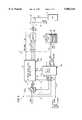
- FIG. 1is a schematic block diagram of a motor controller with auto-calibration logic, in accordance with the present invention.
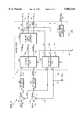
- FIG. 2is a schematic block diagram of a current regulator/motor drive, in accordance with the present invention.
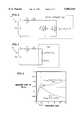
- FIG. 3is a schematic drawing of an equivalent circuit model of an induction motor controlled by field orientation, in accordance with the present invention.
- FIG. 4is a simplified schematic diagram of the equivalent circuit of FIG. 3, in accordance with the present invention.
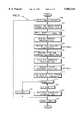
- FIG. 5is a logic flow diagram of the auto-calibration logic of FIG. 1, in accordance with the present invention.
- FIG. 6is a graph of the imaginary part of the rotor impedance and of the motor impedance versus frequency, in accordance with the present invention.
- FIG. 7is a logic flow diagram of a portion of the auto-calibration logic of FIG. 5, in accordance with the present invention.
- an elevator motor controller 7 shown to the left of the line 9includes a field-oriented (or vector-based) motor control that has two control loops each corresponding to a different control axis, a d-axis relating to motor magnetization, and a q-axis relating to torque.
- the d-axis loophas a d-axis current reference input signal I dREF provided on a line 14.
- I dREFis set to a predetermined constant value so as to provide appropriate magnetic flux in the motor based on motor magnetization curves, e.g., I dRATED or I NO-LOAD , discussed more hereinafter.
- the I dREF signalis fed to a field-oriented current regulator/motor drive circuit 20, described more hereinafter with FIG. 2.
- the q-axis current loophas a first q-axis current reference input signal I qREF1 on a line 15 is fed to one input of a switch 19.
- I qREF1is provided by other logic (not shown), such as speed loop compensation logic (not shown), which closes a motor speed control loop, such as that described in Copending U.S. patent application, Ser. No. (Otis Docket No. OT-3054), which provides the q-axis current reference signal to the controller when it is not in auto-calibration.
- the other input to the switch 19is a second q-axis current reference input signal I qREF2 on a line 17.
- the output of the switch 19is the q-axis current loop reference signal I qREF on a line 18, which is set equal to I qREF1 or I qREF2 based on the state of the MODE1 signal provided to the switch 19 on the line 13.
- the I qREF signalis fed to the field-oriented current regulator/motor drive circuit 20, described more hereinafter with FIG. 2.
- Model LUGA-225LB-04Aby Loher, having a rated power of 45 KW, rated voltage of 355 volts, rated speed of 1480, and rated frequency of 50 Hz, in a geared configuration
- Model 156MSTby Tatung (of Taiwan), having a rated power of 40 KW, rated voltage of 500 volts, rated speed of 251, and rated frequency of 16.7 Hz, in a gearless configuration.
- Other motorshaving other rated parameters may be used if desired.
- the circuit 20provides three phase voltage signals Vx,Vy,Vz on lines 22 to a motor 24, e.g., a three phase induction motor.
- the motor 24is connected by a mechanical linkage 26, e.g, a shaft and/or a gearbox, to a sheave 28.
- a rope or cable 30is wrapped around the sheave 28 and has one end connected to an elevator car 32 and the other end connected to a counterweight 34.
- the weight of the counterweightis typically equal to the weight of an empty car plus 40-50% of the max load in the car.
- elevator system configurationsand with or without a counterweight, with or without a gearbox, may be used if desired to convert the output torque of the motor 24 to movement of the elevator cab 32, such as dual lift (where two elevator cars are connected to a single rope, the cars move in opposite directions and each car provides a counterweight for the other car), drum machine (where the rope is wrapped around a drum driven by a motor), etc.
- dual liftwhere two elevator cars are connected to a single rope, the cars move in opposite directions and each car provides a counterweight for the other car
- drum machinewhere the rope is wrapped around a drum driven by a motor
- a brake 37e.g., an electromagnetic actuated disk brake, is disposed on the shaft 26, and is driven by an electrical brake command signal BRKCMD on a line 38 from the circuit 20.
- the brake 37when activated or “dropped”, clamps onto the shaft 26 and prevents the motor shaft 26 from turning, i.e., locks the rotor, and thus prevents the sheave 28 from moving.
- the field-oriented current regulator/motor drive 20 of FIG. 1comprises two current control loops, one for the d-axis current Id and one for q-axis current Iq.
- the Id loopreceives the I dREF signal on the line 14 to a positive input to a summer 102.
- a measured or feedback d-axis current signal Id on a line 104is fed to a negative input to the summer 102.
- the output of the summer 102is an error signal I dERR on a line 106 which is fed to control compensation logic 108, such as proportional-plus-integral (P-I) current loop control. Other current loop control compensation may be used if desired.
- the logic 108provides a d-axis voltage command signal V dCMD on a line 110.
- the Iq loopreceives the I qREF signal on the line 18 to a positive input to a summer 114.
- a measured or feedback q-axis current signal Iq on a line 116is fed to a negative input to the summer 114.
- the output of the summer 114is an error signal I qERR on a line 118 which is fed to control compensation logic 120, e.g., proportional-plus-integral (P-I) logic similar to the logic 108.
- control compensation logic 120e.g., proportional-plus-integral (P-I) logic similar to the logic 108.
- the output of the logic 120is a q-axis voltage command signal V qCMD on a line 122.
- Other control compensatione.g., proportional, lead-lag, etc., may be used for the logics 108,120.
- the form of compensation usedis not critical to the present invention.
- the voltage commands V dCMD and V qCMDare fed to known field-oriented to three-phase conversion logic 124 which converts the d-axis and q-axis voltage commands to three phase voltage commands V XCMD , V YCMD , V ZCMD on lines 126.
- the phase voltage commands V XCMD , V YCMD , V ZCMDare fed to a known three phase drive circuit (or inverter) 128 which provides three phase voltages V X ,V Y ,V Z on lines 130, 132, 134, respectively (collectively, the lines 22), to drive the motor 24.
- each of the voltage commands V XCMD , V YCMD , V ZCMD on lines 126are converted to percent duty cycle commands indicative of the corresponding input voltage level.
- the percent duty cycleis converted into a pulse-width-modulated drive signal which drives power transistors to provide the pulse-width-modulated, variable frequency, three phase voltages V X ,V Y ,V Z on lines 130, 132, 134, respectively.
- the conversions within the drive 128are performed using electronic components and/or software well known in the art of motor drive circuits. Any other type of drive circuit that receives input voltage commands and provides output phase voltages may be used, and the phase voltages need not be pulse-width modulated.
- Phase currents I X , I Y , I Z associated with the voltages V X ,V Y ,V Z , respectively,are measured by known current sensors 136, 138, 140, e.g., closed-loop Hall-effect current sensors (such as LEMS), respectively, and are provided on lines 132, 134, 136, respectively.
- the phase currents I X , I Y , I Zare fed to known three phase to field oriented conversion logic 142, which provides a known conversion from phase currents to d-axis and q-axis currents on the lines 104, 116 which are fed to the summers 102,114, respectively.
- the converters 124,150provide known conversions between vector (d and q axis) parameters and per-phase parameters, such as that described in D. Novotny, et al, "Vector Control and Dynamics of AC Drives", Oxford University Press, 1996, Ch 5, pp 203-251.
- the converters 124,15may likely implement such conversions in software using a microprocessor or the like.
- the motor drive logic 111also includes a brake drive circuit 145 which receives an input signal BRK on a line 146 and provides a BRKCMD signal on the line 38.
- the present inventioncomprises auto-calibration logic 48 which automatically computes the motor parameters ⁇ R , K T *, I dRATED , and provides ⁇ R on the line 144 to the circuit 20, provides I dRATED as I dREF on the line 14 to the circuit 20, and provides K T * on a line 160 to speed loop compensation logic (not shown) such as that described in Copending U.S. Patent Application (OT-3054), filed contemporaneously herewith.
- the logic 48also computes other motor parameters such as transient inductance L ⁇ , magnetizing inductance L ⁇ , stator resistance Rs (or R1) and rated torque current I qRATED .
- the logic 48receives Vq and Iq from the circuit 20.
- the logic 48also provides the current reference signal I qREF2 to the switch 19, and provides I dREF to the circuit 20 on the line 14.
- the logic 48comprises known electronic components, which may include a microprocessor, interface circuitry, memory, software, and/or firmware, capable of performing the functions described herein.
- the logic 48also provides the MODE1 signal on the line 13 to the switch 19.
- the MODE1 flagcauses the current reference signal I qREF2 from the calibration logic 48 to be fed to the logic 20.
- the logic 48also provides a break request signal BRK on the line 146 to the circuit 20.
- the calculation logic 48also communicates with a service tool 80 over a serial link 82.
- the service tool 80includes a display 84 and a keypad (or keyboard) 86 for entering data into the service tool 80 and over the link 82 to the controller 7.
- the logic 48receives a start command over the link 82 from the service tool 80, which controls when auto-calibration is started.
- the logic 66also provides a DONE signal and a FAULT signal to the service tool 80 over the link 82.
- the DONE signalindicates when auto-calibration has completed without faults and the FAULT signal indicates when a fault has been detected during auto-calibration.
- FIG. 3is a per-phase equivalent circuit for AC steady state operation where the current I1 and voltage V1 are phasor quantities.
- the circuit 90comprises a resistor Rs in series with an equivalent "transient” inductor L ⁇ in series with a rotor impedance Z R which comprises a "magnetizing” inductance L ⁇ in parallel with an equivalent resistance R 2 /S.
- Rrthe rotor winding resistance
- ⁇ Rmotor output rotational speed in radians per second referred to an electrical reference frame
- R 2(Lm 2 /Lr 2 )*Rr
- rotor time constant ⁇ R and motor torque constant K T *are related to the parameters of the circuit 90 as follows:
- the circuit 92is an equivalent to the circuit 90 of FIG. 3 with the rotor impedance Z R transformed into an equivalent series circuit impedance having a real part Real(Z R ) and an imaginary part Imag(Z R ) equal to ⁇ Lx.
- the equivalent circuit 92 with the transformation of Z Ris useful for determining the rotor time constant ⁇ R (discussed more hereinafter).
- a top level flow chart for the logic 48begins at a step 200 which determines whether a start command has been received from the service tool 80. If it has not, the logic exits. If a start command has been received, a step 202 requests and receives motor parameters from the service tool 80 over the link 82 (FIG. 1), which are entered by service personnel.
- the motor parameters receivedare: the rated motor shaft power in watts (PWR -- RATED); the rated motor speed in rpm (RPM -- RATED); the rated rms line-to-line voltage in volts (VLL -- RATED); the rated frequency in hertz (HZ -- RATED); and number of poles (POLES), all of which may be obtained from the motor nameplate data.
- a step 204measures the transient inductance L ⁇ , by providing a sinusoidal current signal into the q-axis of the reference current I qREF2 on the line 17 (FIG. 1) at a frequency F HIGH high enough such that the motor impedance will be dominated by the transient inductance L ⁇ , e.g., 31.25 Hertz. Other frequencies may be used if desired, e.g., greater than 30 Hz.
- the sinewave input signalis generated digitally by a signal processor, such as a digital signal processor, e.g., a Motorola DSP 56002 processor, with an update (or sample) rate of 5 KHz. Other hardware and/or software techniques or update rates may be used to generate the sinusoidal input signals.
- the step 204reads the q-axis feedback current Iq and the q-axis output voltage Vq (equal to the motor current I 1 and motor voltage V 1 , respectively, as discussed hereinbefore).
- the step 204uses the aforementioned digital signal processor to perform a Discrete Fourier Transform (DFT) of Iq and Vq to determine the first harmonic Fourier coefficients.
- DFTDiscrete Fourier Transform
- the first harmonicis used to calculate the impedance primarily so that non-linearities in the system do not distort the calculation.
- a DFTstandard sine and cosine waves of unit amplitude at the test frequency are generated within the logic 48.
- the measured signal (Iq,Vq)is multiplied by the standard sinewave and the product is integrated over one period of the excitation to yield the Fourier series coefficient A of the signal. Multiplying the signal by the standard cosine and integrating yields the B coefficient.
- integrating over 15 periods of the input signalit is sufficient to filter out any transients in the system response. Other numbers of periods may be used if desired.
- other types of Fourier transformsmay be used if desired, e.g., a Fast Fourier Transform (FFT), etc., provided the first harmonic of the desired signal is obtained.
- any other filtering or spectrum analysis techniquemay be used for determining the first harmonic of the desired signals.
- the step 204then computes the real and imaginary parts of Z M from the Fourier coefficients.
- the imaginary part of the motor impedance Z M at F HIGH Hertzis dominated by the transient term ⁇ L ⁇ .
- the transient inductance L ⁇is the transient reactance (or imaginary part of Z M ) with the input frequency equal to F HIGH Hz, divided by the frequency ⁇ in radians/sec (2 ⁇ F HIGH ), or:
- a step 208measures the rotor time constant ⁇ R as follows.
- the step 208produces a progression of low frequency sinusoidal input q-axis reference currents I qREF2 from 0.1 to 8.0 Hertz in increments defined by a search algorithm, discussed hereinafter.
- the sinewave input signalis generated digitally as discussed hereinbefore with step 204.
- the motor current Iq and voltage Vqare measured and a DFT of the current I 1 and the motor voltage V 1 signals are computed separately.
- the fundamental or first harmonic Fourier coefficientsare obtained as discussed hereinbefore with step 204.
- a known search algorithme.g., a "golden section line search" algorithm, varies the input frequency and determines the frequency Fpeak at which the maximum value of ⁇ Lx occurs.
- the type of search algorithm usedis not critical to the present invention, and any search algorithm that varies an input parameter and determines the maximum value of an output parameter may be used.
- the rotor time constant ⁇ Ris then calculated as follows:
- a step 210calculates the magnetizing inductance L ⁇ .
- the ⁇ L xis also equal to 1/2 ⁇ L ⁇ (the magnetizing reactance).
- the rotor impedance Z Ris equal to j ⁇ L ⁇ in parallel with R 2 , as shown below:
- R 2may be calculated using the equation:
- R Sfor the motor
- a step 214uses L ⁇ , ⁇ R , and the input parameters PWR -- RATED, RPM -- RATED, VLL -- RATED, HZ -- RATED, and POLES, obtained in the step 202, to simulate motor parameters and to iterate and calculate the rated magnetizing current I dRATED , and the torque constant K T *, as shown in FIG. 7.
- a step 300calculates the rated rotational speed of the motor referred to the electrical reference frame ⁇ R .sbsb.-- RATED.
- a step 302converts rated line-to-line voltage (VLL -- RATED) to rated line-to-neutral voltage (or per-phase voltage) Vph -- RATED.
- a step 303calculates the rated torque T -- RATED based on rated power and rated RPM.
- a step 304calculates the stator inductance Ls as the sum of the transient inductance L ⁇ and the magnetizing L ⁇ .
- a step 306calculates an initial value for simulated d-axis current Id* based on a first order approximation of Id using rated voltage and speed.
- a step 308sets a variable COUNT equal to zero.
- a series of steps 310-322calculates K T * and a simulated motor voltage V M * using various simulated motor parameters based on the value of L ⁇ calculated in step 210 (FIG. 5), the parameters calculated in steps 300-308 above, and using known relationships for a field-oriented motor controller, some of which are discussed hereinbefore.
- a step 310calculates the torque constant K T * based on L ⁇ calculated in step 210 (FIG. 5) and the current value of the magnetizing current Id*.
- a step 312calculates the torque current Iq*.
- a step 314calculates a simulated slip frequency ⁇ S * which is used in a next step 316 to calculate a simulated electrical current frequency ⁇ E * which is equal to the rotational frequency (or speed) of the motor (emulated as the rated speed) ⁇ R .sbsb.-- RATED plus the slip frequency ⁇ S *.
- a step 318calculates a simulated q-axis output voltage Vq* based on the magnetizing current Id* and a step 320 calculates a simulated d-axis output voltage Vd* based on the torque current Iq*.
- a step 322calculates a simulated vector sum total motor voltage Vm* equal to the square root of the sum of the squares of the d-axis and q-axis output voltages Vd*,Vq*, respectively.
- a step 324calculates a Ratio parameter equal to the ratio of the rated phase voltage Vph -- RATED to the simulated per-phase motor voltage Vm*. The logic iterates until the Ratio goes to 1 within the desired tolerance, e.g., 0.001. When the ratio equals 1 the value of Id* will produce the rated voltage at the rated RPM and rated torque.
- a step 326calculates a next value for Id* equal to the value of the Ratio times the current value of Id*.
- a step 328checks whether Ratio is within a predetermined tolerance of 1, e.g., 0.001. If it is not within the desired tolerance, a step 330 checks whether COUNT is greater than or equal to ten (i.e., whether the loop has iterated at least ten times). If the loop has iterated at least ten times, a FAULT flag is set equal to 1 at a step 332 and output to the service tool 80 over the link 82 (FIG. 1) and the logic is exited. If it has iterated less than ten times, a step 334 increments COUNT by one and the logic 214 goes the step 310 to iterate again.
- a step 340sets the d-axis current reference I dREF equal to Id* which is equal to I dRATED and a step 344 sets I qRATED equal to Iq*. Then the logic 214 exits and returns to the logic 48 of FIG. 5.
- step 224some or all of the motor parameters ⁇ R , K T *, I dRATED , L ⁇ , L ⁇ , Rs, and I qRATED are transmitted via the serial link 82 to the service tool 80 in a step 224.
- the service tool 80displays the parameters for use by the service personnel.
Landscapes
- Physics & Mathematics (AREA)
- Acoustics & Sound (AREA)
- Engineering & Computer Science (AREA)
- Power Engineering (AREA)
- Control Of Ac Motors In General (AREA)
- Elevator Control (AREA)
Abstract
Description
Co-pending U.S. patent applications, Ser. Nos. 08/996,234, 08/996,263, 08/996,262, 08/996,266, 08/996,264, filed contemporaneously herewith, contain subject matter related to that disclosed herein.
Co-pending U.S. patent applications, Ser. Nos. 08/996,234, 08/996,263, 08/996,262, 08/996,266, 08/996,264, filed contemporaneously herewith, contain subject matter related to that disclosed herein.
This invention relates to calibrating a field-oriented motor drive and more particularly to automatic calibration of field-oriented (or vector-controlled) drive parameters for an elevator motor drive.
It is known in the art of field-oriented (or vector-controlled) motor drives and motor speed controls that such drives and controls require knowledge of the motor parameters such as the rotor time constant (τR), torque constant (KT *), and rated magnetizing current IdRATED.
One technique used to determine these motor parameters is to analyze the motor in an engineering laboratory using a dynamometer and expensive test equipment and performing time consuming, highly technical tasks by a skilled technician or engineer. However, in modernization or retrofit applications, where a new drive replaces an older drive in an existing elevator system, it is not convenient or cost effective to remove the motor from the elevator system for evaluation of the motor.
Also, it is desirable to determine the motor parameters based on measurements made on the motor at standstill. While techniques exist to determine the motor parameters while the motor is running (at no-load and under-load), it is not always practical to run such tests in an elevator application. In particular, a no-load test is not practical because this would require unroping the elevator or disconnecting the motor from the gearbox. Further, performing a test under load, i.e., with the motor connected to an elevator, is not practical because it is necessary to have approximately correct motor parameters to start the elevator moving to obtain measurements of the motor running under-load. Also, it is desirable that the technique for determining such motor parameters be wholly contained within the drive control itself, so that field commissioning of retrofit or modernization drives may be performed by installers and service personnel without requiring specific motor/drive tuning skills.
Objects of the invention include provision of automatic, on-site, calibration of motor parameters for field-oriented drives and/or controls for elevators, which does not require removal or uncoupling of the motor from the elevator system, and which uses only standstill measurements of the motor.
According to the present invention, a method for calculating at least one parameter of an elevator motor operated by field-oriented control, using standstill measurements of the motor, the motor having a motor impedance ZM, a rotor impedance ZR, and a transient inductance Lσ, includes: a) providing a sinusoidal torque current reference signal at a high frequency (FHIGH) high enough such that the motor impedance (ZM) is dominated by the transient inductance (Lσ); b) measuring a feedback torque current (Iq) and a feedback torque voltage (Vq); c) calculating the transient inductance (Lσ) at the high frequency (FHIGH), by the equation: Lσ=Imag (ZM)@FHIGH /(2πFHIGH), where ZM =Vq/Iq; d) providing a sinusoidal torque current reference signal having a variable input frequency; e) measuring the feedback torque current (Iq) and the feedback torque voltage (Vq); f) calculating an imaginary part of the rotor impedance Imag(ZR) as follows: Imag(ZR)=Imag(ZM)-ωLσ, where ω is the input frequency, and ZM =Vq/Iq; g) varying the input frequency and performing steps (d)-(f) to obtain the frequency (FPEAK) at which the maximum value of Imag(ZR) occurs; and h) calculating a rotor time constant (τR) based on FPEAK.
According further to the present invention, τR is calculated as follows: τR =1/(2πFPEAK). According still further to the present invention, an additional step of calculating a magnetizing inductance Lφ is performed as follows: Lφ=2Imag(ZR)/ω@ω=1/τR.
According still further to the present invention, the following additional steps are performed: i) calculating a motor torque constant (KT *) using the equation: KT *=(3/2)(P/2)LφId*, where: P=number of motor poles, Id*=Vph-- RATED/(ωR-- RATED×Lφ), and Vph-- RATED =rated motor voltage, ωR-- RATED=rated motor speed; j) calculating a motor voltage (Vm*) using the equation: Vm*=(Vd*2 +Vq*2)1/2, where: Vd*=ωE LσIq*, Vq*=ωE LsId*, Iq*=T-- RATED/KT *, T-- RATED is the rated motor torque, ωE *=ωR.sbsb.--RATED +ωS * , and ωS *=(1/τR) (Iq*/Id*); k) calculating a ratio of Vph-- RATED to Vm*; and 1) varying Id* and performing steps (h)-(k) until the ratio is within a predetermined tolerance of 1.
The present invention represents a significant improvement over the prior art by providing automatic calibration of a field-oriented (or vector-controlled) induction motor controller for an elevator system based on standstill measurements of the induction motor. The invention provides motor parameters such as the rotor time constant (τR), torque constant (KT *), and rated magnetizing current IdRATED, without disconnecting the motor from the elevator system or from the gearbox. The invention also computes transient inductance Lσ, magnetizing inductance Lφ, stator resistance Rs, and rated torque current IqRATED, as needed by a given application. Further, the invention does not require a specially trained engineer with special test equipment to tune the motor/drive system. Thus, the invention greatly reduces cost associated with tuning the motor drive when new motors drives are retrofit into job sites. Accordingly, automatic calibration of motor parameters at the field site saves both time and money. As a result, the present invention makes it more attractive for building owners to upgrade their elevator systems to modern controls, which are currently economically impractical due to the high cost of determining parameters of older motors found in modernization job sites.
The foregoing and other objects, features and advantages of the present invention will become more apparent in light of the following detailed description of the exemplary embodiments thereof, as illustrated in the accompanying drawings.
FIG. 1 is a schematic block diagram of a motor controller with auto-calibration logic, in accordance with the present invention.
FIG. 2 is a schematic block diagram of a current regulator/motor drive, in accordance with the present invention.
FIG. 3 is a schematic drawing of an equivalent circuit model of an induction motor controlled by field orientation, in accordance with the present invention.
FIG. 4 is a simplified schematic diagram of the equivalent circuit of FIG. 3, in accordance with the present invention.
FIG. 5 is a logic flow diagram of the auto-calibration logic of FIG. 1, in accordance with the present invention.
FIG. 6 is a graph of the imaginary part of the rotor impedance and of the motor impedance versus frequency, in accordance with the present invention.
FIG. 7 is a logic flow diagram of a portion of the auto-calibration logic of FIG. 5, in accordance with the present invention.
Referring to FIG. 1, a portion of anelevator motor controller 7 shown to the left of the line 9, includes a field-oriented (or vector-based) motor control that has two control loops each corresponding to a different control axis, a d-axis relating to motor magnetization, and a q-axis relating to torque. The d-axis loop has a d-axis current reference input signal IdREF provided on aline 14. IdREF is set to a predetermined constant value so as to provide appropriate magnetic flux in the motor based on motor magnetization curves, e.g., IdRATED or INO-LOAD, discussed more hereinafter. The IdREF signal is fed to a field-oriented current regulator/motor drive circuit 20, described more hereinafter with FIG. 2.
The q-axis current loop has a first q-axis current reference input signal IqREF1 on aline 15 is fed to one input of aswitch 19. IqREF1 is provided by other logic (not shown), such as speed loop compensation logic (not shown), which closes a motor speed control loop, such as that described in Copending U.S. patent application, Ser. No. (Otis Docket No. OT-3054), which provides the q-axis current reference signal to the controller when it is not in auto-calibration.
The other input to theswitch 19 is a second q-axis current reference input signal IqREF2 on aline 17. The output of theswitch 19 is the q-axis current loop reference signal IqREF on aline 18, which is set equal to IqREF1 or IqREF2 based on the state of the MODE1 signal provided to theswitch 19 on theline 13. The IqREF signal is fed to the field-oriented current regulator/motor drive circuit 20, described more hereinafter with FIG. 2.
Two examples of three phase AC induction motors used with the present invention are, Model LUGA-225LB-04A, by Loher, having a rated power of 45 KW, rated voltage of 355 volts, rated speed of 1480, and rated frequency of 50 Hz, in a geared configuration; and Model 156MST, by Tatung (of Taiwan), having a rated power of 40 KW, rated voltage of 500 volts, rated speed of 251, and rated frequency of 16.7 Hz, in a gearless configuration. Other motors having other rated parameters may be used if desired.
Thecircuit 20 provides three phase voltage signals Vx,Vy,Vz onlines 22 to amotor 24, e.g., a three phase induction motor. Themotor 24 is connected by amechanical linkage 26, e.g, a shaft and/or a gearbox, to asheave 28. A rope orcable 30 is wrapped around thesheave 28 and has one end connected to anelevator car 32 and the other end connected to acounterweight 34. The weight of the counterweight is typically equal to the weight of an empty car plus 40-50% of the max load in the car.
Other elevator system configurations, and with or without a counterweight, with or without a gearbox, may be used if desired to convert the output torque of themotor 24 to movement of theelevator cab 32, such as dual lift (where two elevator cars are connected to a single rope, the cars move in opposite directions and each car provides a counterweight for the other car), drum machine (where the rope is wrapped around a drum driven by a motor), etc.
Abrake 37, e.g., an electromagnetic actuated disk brake, is disposed on theshaft 26, and is driven by an electrical brake command signal BRKCMD on aline 38 from thecircuit 20. Thebrake 37, when activated or "dropped", clamps onto theshaft 26 and prevents themotor shaft 26 from turning, i.e., locks the rotor, and thus prevents thesheave 28 from moving.
Referring to FIG. 2, it is known in the art of field-oriented motor control that such control uses current (Id,Iq) and voltage (Vd,Vq) parameters corresponding to the d and q axes, respectively. Using field orientation, the motor magnetic field (or flux) will be controlled by Id and the motor torque will be controlled by Iq, as is known. In particular, the field-oriented current regulator/motor drive 20 of FIG. 1 comprises two current control loops, one for the d-axis current Id and one for q-axis current Iq. The Id loop receives the IdREF signal on theline 14 to a positive input to asummer 102. A measured or feedback d-axis current signal Id on aline 104 is fed to a negative input to thesummer 102. The output of thesummer 102 is an error signal IdERR on aline 106 which is fed to controlcompensation logic 108, such as proportional-plus-integral (P-I) current loop control. Other current loop control compensation may be used if desired. Thelogic 108 provides a d-axis voltage command signal VdCMD on aline 110.
For the q-axis, the Iq loop receives the IqREF signal on theline 18 to a positive input to asummer 114. A measured or feedback q-axis current signal Iq on aline 116 is fed to a negative input to thesummer 114. The output of thesummer 114 is an error signal IqERR on aline 118 which is fed to controlcompensation logic 120, e.g., proportional-plus-integral (P-I) logic similar to thelogic 108. The output of thelogic 120 is a q-axis voltage command signal VqCMD on aline 122. Other control compensation, e.g., proportional, lead-lag, etc., may be used for the logics 108,120. The form of compensation used is not critical to the present invention.
The voltage commands VdCMD and VqCMD are fed to known field-oriented to three-phase conversion logic 124 which converts the d-axis and q-axis voltage commands to three phase voltage commands VXCMD, VYCMD, VZCMD onlines 126. The phase voltage commands VXCMD, VYCMD, VZCMD are fed to a known three phase drive circuit (or inverter) 128 which provides three phase voltages VX,VY,VZ onlines motor 24.
Within the drive circuit 128 (details not shown), each of the voltage commands VXCMD, VYCMD, VZCMD onlines 126 are converted to percent duty cycle commands indicative of the corresponding input voltage level. The percent duty cycle is converted into a pulse-width-modulated drive signal which drives power transistors to provide the pulse-width-modulated, variable frequency, three phase voltages VX,VY,VZ onlines drive 128 are performed using electronic components and/or software well known in the art of motor drive circuits. Any other type of drive circuit that receives input voltage commands and provides output phase voltages may be used, and the phase voltages need not be pulse-width modulated.
Phase currents IX, IY, IZ associated with the voltages VX,VY,VZ, respectively, are measured by knowncurrent sensors lines conversion logic 142, which provides a known conversion from phase currents to d-axis and q-axis currents on thelines
The converters 124,150 provide known conversions between vector (d and q axis) parameters and per-phase parameters, such as that described in D. Novotny, et al, "Vector Control and Dynamics of AC Drives", Oxford University Press, 1996, Ch 5, pp 203-251. Theconverters
It is known in the art of field oriented drives that the value of the rotor time constant τR of the motor being controlled is required to perform the conversion to and from the field oriented d and q axes. In particular, τR is used to establish the correct slip frequency ωS to achieve field orientation. The value of the rotor time constant τR is provided to the twoconverters line 144.
Themotor drive logic 111 also includes abrake drive circuit 145 which receives an input signal BRK on aline 146 and provides a BRKCMD signal on theline 38.
Referring to FIG. 1, the present invention comprises auto-calibration logic 48 which automatically computes the motor parameters τR, KT *, IdRATED, and provides τR on theline 144 to thecircuit 20, provides IdRATED as IdREF on theline 14 to thecircuit 20, and provides KT * on aline 160 to speed loop compensation logic (not shown) such as that described in Copending U.S. Patent Application (OT-3054), filed contemporaneously herewith. Thelogic 48 also computes other motor parameters such as transient inductance Lσ, magnetizing inductance Lφ, stator resistance Rs (or R1) and rated torque current IqRATED. Thelogic 48 receives Vq and Iq from thecircuit 20. Thelogic 48 also provides the current reference signal IqREF2 to theswitch 19, and provides IdREF to thecircuit 20 on theline 14.
Thelogic 48 comprises known electronic components, which may include a microprocessor, interface circuitry, memory, software, and/or firmware, capable of performing the functions described herein.
Thelogic 48 also provides the MODE1 signal on theline 13 to theswitch 19. The MODE1 flag causes the current reference signal IqREF2 from thecalibration logic 48 to be fed to thelogic 20. Thelogic 48 also provides a break request signal BRK on theline 146 to thecircuit 20.
Thecalculation logic 48 also communicates with aservice tool 80 over aserial link 82. Theservice tool 80 includes adisplay 84 and a keypad (or keyboard) 86 for entering data into theservice tool 80 and over thelink 82 to thecontroller 7. In particular, thelogic 48 receives a start command over thelink 82 from theservice tool 80, which controls when auto-calibration is started. The logic 66 also provides a DONE signal and a FAULT signal to theservice tool 80 over thelink 82. The DONE signal indicates when auto-calibration has completed without faults and the FAULT signal indicates when a fault has been detected during auto-calibration.
Referring to FIG. 3, a knownequivalent circuit 90 of an induction motor is similar to that described in "Vector Control and Dynamics of AC Drives", Novotny and Lipo, Oxford 1996, Chapter 5. FIG. 3 is a per-phase equivalent circuit for AC steady state operation where the current I1 and voltage V1 are phasor quantities. Thecircuit 90 comprises a resistor Rs in series with an equivalent "transient" inductor Lσ in series with a rotor impedance ZR which comprises a "magnetizing" inductance Lφ in parallel with an equivalent resistance R2 /S. Where:
Rs (or R1)=stator winding resistance
Ls=stator winding inductance
Lr=rotor winding inductance
Lm=mutual inductance
Rr=the rotor winding resistance
Lσ=Ls-Lm2 /Lr=transient inductance
Lφ=Lm2 /Lr=magnetizing inductance
ωE =electrical frequency of the input current I1
ωR =motor output rotational speed in radians per second referred to an electrical reference frame
S=Slip=(ωE -ωR)/ωE
ωS =slip frequency=ωE -ωR =(1/τR)(Iq/Id)
where τR =rotor time constant Iq=q-axis (or torque) current, and Id=d-axis (or magnetizing) current
R2 =(Lm2 /Lr2)*Rr
Also, the rotor time constant τR and motor torque constant KT * are related to the parameters of thecircuit 90 as follows:
τ.sub.R =Lr/Rr=Lφ/R.sub.2
K.sub.T *=(3/2)(P/2)LφId=torque/current
where P=number of poles.
Referring to FIG. 4, thecircuit 92 is an equivalent to thecircuit 90 of FIG. 3 with the rotor impedance ZR transformed into an equivalent series circuit impedance having a real part Real(ZR) and an imaginary part Imag(ZR) equal to ωLx. Theequivalent circuit 92 with the transformation of ZR is useful for determining the rotor time constant τR (discussed more hereinafter).
Referring now to FIG. 5, a top level flow chart for thelogic 48 begins at astep 200 which determines whether a start command has been received from theservice tool 80. If it has not, the logic exits. If a start command has been received, astep 202 requests and receives motor parameters from theservice tool 80 over the link 82 (FIG. 1), which are entered by service personnel. The motor parameters received are: the rated motor shaft power in watts (PWR-- RATED); the rated motor speed in rpm (RPM-- RATED); the rated rms line-to-line voltage in volts (VLL-- RATED); the rated frequency in hertz (HZ-- RATED); and number of poles (POLES), all of which may be obtained from the motor nameplate data.
Then, astep 203 sets MODE1=1, BRK=1 to cause the brake 37 (FIG. 1) to lock the rotor, and IdREF2 =0 amps. For each of the tests described herein, the rotor remains locked (rotor speed ωR =0) and IdREF2 =0 amps. When ωR =0 and IdREF2 =0, the slip S=1, and the motor current I1 is equal to the q-axis current Iq and the motor voltage V1 is equal to the q-axis voltage Vq. When Iq=0, the motor is operated in single phase operation, in accordance with the circuits of FIGS. 3,4.
Next, astep 204 measures the transient inductance Lσ, by providing a sinusoidal current signal into the q-axis of the reference current IqREF2 on the line 17 (FIG. 1) at a frequency FHIGH high enough such that the motor impedance will be dominated by the transient inductance Lσ, e.g., 31.25 Hertz. Other frequencies may be used if desired, e.g., greater than 30 Hz. The sinewave input signal is generated digitally by a signal processor, such as a digital signal processor, e.g., a Motorola DSP 56002 processor, with an update (or sample) rate of 5 KHz. Other hardware and/or software techniques or update rates may be used to generate the sinusoidal input signals.
Thestep 204 reads the q-axis feedback current Iq and the q-axis output voltage Vq (equal to the motor current I1 and motor voltage V1, respectively, as discussed hereinbefore). Next, thestep 204 uses the aforementioned digital signal processor to perform a Discrete Fourier Transform (DFT) of Iq and Vq to determine the first harmonic Fourier coefficients. The fundamental or first harmonic component of a measured signal from a DFT is A sin(ωt)+B cos(ωt), where ω=2πf is the input frequency (in rad/sec). The first harmonic is used to calculate the impedance primarily so that non-linearities in the system do not distort the calculation.
To compute a DFT, as is known, standard sine and cosine waves of unit amplitude at the test frequency are generated within thelogic 48. The measured signal (Iq,Vq) is multiplied by the standard sinewave and the product is integrated over one period of the excitation to yield the Fourier series coefficient A of the signal. Multiplying the signal by the standard cosine and integrating yields the B coefficient. We have found that integrating over 15 periods of the input signal it is sufficient to filter out any transients in the system response. Other numbers of periods may be used if desired. Also, for any DFT discussed herein, other types of Fourier transforms may be used if desired, e.g., a Fast Fourier Transform (FFT), etc., provided the first harmonic of the desired signal is obtained. Further, instead of a Fourier transform, any other filtering or spectrum analysis technique may be used for determining the first harmonic of the desired signals.
Then, thestep 204 computes the motor impedance ZM by calculating the ratio of voltage to current (V1 /I1 =Vq/Iq) using the first harmonic components of voltage and current computed above. Thestep 204 then computes the real and imaginary parts of ZM from the Fourier coefficients. The imaginary part of the motor impedance ZM at FHIGH Hertz is dominated by the transient term ωLσ. Thus, the transient inductance Lσ is the transient reactance (or imaginary part of ZM) with the input frequency equal to FHIGH Hz, divided by the frequency ω in radians/sec (2πFHIGH), or:
Lσ=Imag(Z.sub.M)@F.sub.HIGH Hz/(2πF.sub.HIGH)
Next, anoptional step 206 measures the total resistance of the circuit impedance (RTOT =Rs +R2), i.e., the sum of the stator and rotor resistances, as the real part of the motor impedance ZM determined instep 204. Thus:
R.sub.TOT =Real(Zm)@F.sub.HIGH
In particular, at the relatively high frequency FHIGH used instep 204, the inductance Lφ in thecircuit 90 is large and the real part of ZM will be equal to RTOT. The value of RTOT is saved for later use to calculate Rs (see step 212).
Next, astep 208 measures the rotor time constant τR as follows. Thestep 208 produces a progression of low frequency sinusoidal input q-axis reference currents IqREF2 from 0.1 to 8.0 Hertz in increments defined by a search algorithm, discussed hereinafter. The sinewave input signal is generated digitally as discussed hereinbefore withstep 204. At each frequency, the motor current Iq and voltage Vq (equal to the motor current I1 and voltage V1, respectively, as discussed hereinbefore) are measured and a DFT of the current I1 and the motor voltage V1 signals are computed separately. The fundamental or first harmonic Fourier coefficients are obtained as discussed hereinbefore withstep 204.
Then, thestep 208 computes the motor impedance ZM at each frequency by calculating the ratio of voltage to current (V1 /I1). Thestep 208 then calculates the real and imaginary parts of the ZM from the Fourier coefficients. Then, thestep 208 calculates the imaginary part of the rotor impedance Imag(ZR)=ωLx by subtracting the transient reactance (ωLσ) from the imaginary part of the motor impedance ZM, where Lσ was previously calculated instep 204 and ω is the input frequency, as follows:
Imag(Z.sub.R)=ωLx=Imag(Z.sub.M)-ωLσ
Referring to FIG. 6, acurve 250 shows the imaginary part of the motor impedance Imag(ZM)=ω(Lσ+Lx) and acurve 252 shows the imaginary part of the rotor impedance Imag(ZR)=ωLx. The frequency ω (radians/second) at which themaximum 254 of thecurve 252 occurs is the inverse of the rotor time constant, i.e., ω=1τR. A known search algorithm, e.g., a "golden section line search" algorithm, varies the input frequency and determines the frequency Fpeak at which the maximum value of ωLx occurs. The type of search algorithm used is not critical to the present invention, and any search algorithm that varies an input parameter and determines the maximum value of an output parameter may be used. The rotor time constant τR is then calculated as follows:
τ.sub.R =1/ωpeak=1/(2πFpeak)
Next astep 210 calculates the magnetizing inductance Lφ. In particular, at the frequency of rotor time constant (ω=1/τR) which is also the break frequency of the motor transfer function, the real and imaginary parts of the rotor impedance ZR are equal to each other, i.e., ω(Lx =Rx. Also, at this same frequency, it can be shown (below) that the ωLx is also equal to 1/2ωLφ (the magnetizing reactance). In particular, the rotor impedance ZR is equal to jωLφ in parallel with R2, as shown below:
Z.sub.R =jωLφR.sub.2 /(R.sub.2 +jωLφ)
Multiplying the numerator and denominator by the complex conjugate of the denominator (R2 -jωLφ), gives
Z.sub.R =ω.sup.2 Lφ.sup.2 R.sub.2 /(R.sub.2.sup.2 +ω.sup.2 Lφ.sup.2)+jωLφR.sub.2.sup.2 / (R.sub.2.sup.2 +ω.sup.2 Lφ.sup.2) Eq. 1
Which has the form of a series combination of impedances, or a real and imaginary part as indicated below:
Z.sub.R =Rx+jωLx
Z.sub.R =Real+j Imaginary
At thepeak 254 of thecurve 252 of Imag(ZR), the real and imaginary parts are equal, which gives:
ω.sup.2 Lφ.sup.2 R.sub.2 /(R.sub.2.sup.2 +ω.sup.2 Lφ.sup.2)=ωLφR.sub.2.sup.2 / (R.sub.2.sup.2 +ω.sup.2 Lφ.sup.2) Eq.2
Simplifying Eq. 2, gives:
ωLφ=R.sub.2
Substituting R2 =ωLφ into the Imaginary part of ZR, and setting equal to ωLx, gives:
Imag(Z.sub.R)=(ωLφ)(ω.sup.2 Lφ.sup.2)/(ω.sup.2 Lφ.sup.2 +ω.sup.2 Lφ.sup.2) =ωLx Eq. 3
Simplifying Eq. 3, gives:
ωLx=ωLφ/2 Eq. 4
Thus, the magnetizing inductance Lφ is calculated as follows:
Lφ=2Imag(Z.sub.R)/ω@ω=1/τ.sub.R
Next, anoptional step 212 calculates the stator resistance RS by first calculating the value of R2. It can be shown (below) that the real part of the rotor impedance Real(ZR) at ω=1/τR is equal to R2 /2. In particular, the real part of Eq. 1 is:
Real(Z.sub.R)=Rx=Lφ.sup.2 R.sub.2 /(R.sub.2.sup.2 +ω.sup.2 Lφ.sup.2)
Substituting R2=ωLφ, and simplifying, gives:
Rx=R.sub.2 /2
Thus,
R.sub.2 =2Real(Z.sub.R)@ω=1/τ.sub.R
Alternatively, R2 may be calculated using the equation:
R.sub.2 =Lφ/τ.sub.R
where Lφ and τR were previously calculated in steps 204,208, respectively. In either case, the stator resistance RS is then determined by subtracting R2 from the total resistance (RTOT =RS +R2) calculated instep 206. Thus,
R.sub.S =R.sub.TOT -R.sub.2
If the value for RS for the motor is already known, e.g., from the data sheet, it may be provided to the control over thelink 82 and then RS may also be range checked in thestep 212 to ensure it is within a predetermined percentage of the expected value. If RS is not within the desired range, thestep 212 sets a fault flag FAULT=1. Alternatively, the value of RS may be calculated and provided to the service tool to help service personnel determine the type of motor installed in the system.
Next, astep 214 uses Lφ, τR, and the input parameters PWR-- RATED, RPM-- RATED, VLL-- RATED, HZ-- RATED, and POLES, obtained in thestep 202, to simulate motor parameters and to iterate and calculate the rated magnetizing current IdRATED, and the torque constant KT *, as shown in FIG. 7.
Referring to FIG. 7, the simulated motor parameters are indicated by an asterisk (*) to avoid confusion with actual measured motor parameters discussed hereinbefore. In particular, astep 300 calculates the rated rotational speed of the motor referred to the electrical reference frame ωR.sbsb.-- RATED. Next, astep 302 converts rated line-to-line voltage (VLL-- RATED) to rated line-to-neutral voltage (or per-phase voltage) Vph-- RATED. Next, astep 303 calculates the rated torque T-- RATED based on rated power and rated RPM. Then, astep 304 calculates the stator inductance Ls as the sum of the transient inductance Lσ and the magnetizing Lφ. Next, astep 306 calculates an initial value for simulated d-axis current Id* based on a first order approximation of Id using rated voltage and speed. Next, astep 308 sets a variable COUNT equal to zero.
Next, a series of steps 310-322 calculates KT * and a simulated motor voltage VM * using various simulated motor parameters based on the value of Lφ calculated in step 210 (FIG. 5), the parameters calculated in steps 300-308 above, and using known relationships for a field-oriented motor controller, some of which are discussed hereinbefore. In particular, astep 310 calculates the torque constant KT * based on Lφ calculated in step 210 (FIG. 5) and the current value of the magnetizing current Id*. Next, astep 312 calculates the torque current Iq*. Next, astep 314 calculates a simulated slip frequency ωS * which is used in anext step 316 to calculate a simulated electrical current frequency ωE * which is equal to the rotational frequency (or speed) of the motor (emulated as the rated speed) ωR.sbsb.-- RATED plus the slip frequency ωS *. Next, astep 318 calculates a simulated q-axis output voltage Vq* based on the magnetizing current Id* and astep 320 calculates a simulated d-axis output voltage Vd* based on the torque current Iq*. Then, astep 322 calculates a simulated vector sum total motor voltage Vm* equal to the square root of the sum of the squares of the d-axis and q-axis output voltages Vd*,Vq*, respectively.
Next, astep 324 calculates a Ratio parameter equal to the ratio of the rated phase voltage Vph-- RATED to the simulated per-phase motor voltage Vm*. The logic iterates until the Ratio goes to 1 within the desired tolerance, e.g., 0.001. When the ratio equals 1 the value of Id* will produce the rated voltage at the rated RPM and rated torque.
Next, astep 326 calculates a next value for Id* equal to the value of the Ratio times the current value of Id*. Next, astep 328 checks whether Ratio is within a predetermined tolerance of 1, e.g., 0.001. If it is not within the desired tolerance, astep 330 checks whether COUNT is greater than or equal to ten (i.e., whether the loop has iterated at least ten times). If the loop has iterated at least ten times, a FAULT flag is set equal to 1 at astep 332 and output to theservice tool 80 over the link 82 (FIG. 1) and the logic is exited. If it has iterated less than ten times, astep 334 increments COUNT by one and thelogic 214 goes thestep 310 to iterate again.
If Ratio is within the desired tolerance instep 328, the logic is deemed to have converged and at convergence the values of Id* and Iq* are equal to the rated d-axis current IdRATED and the rated q-axis current IqRATED, respectively. Accordingly, astep 340 sets the d-axis current reference IdREF equal to Id* which is equal to IdRATED and astep 344 sets IqRATED equal to Iq*. Then thelogic 214 exits and returns to thelogic 48 of FIG. 5.
Referring to FIG. 5, next, astep 216 determines whether an error has been detected in any of the above steps 202-214 (i.e., if FAULT1=1). If a fault has been detected, astep 218 sets FAULT=1 which is sent to the service tool 80 (FIG. 1) over theserial link 82 and astep 220 sets MODE1=0, BRK=0, and the logic exits. If a fault has not occurred, astep 222 sets the DONE flag equal to 1 which is transmitted via theserial link 82 to theservice tool 80. Next, some or all of the motor parameters τR, KT *, IdRATED, Lσ, Lφ, Rs, and IqRATED are transmitted via theserial link 82 to theservice tool 80 in astep 224. Theservice tool 80 displays the parameters for use by the service personnel. Next, thestep 220 sets MODE1=0, BRK=0, and thelogic 48 exits.
Although the invention has been described and illustrated with respect to exemplary embodiments thereof, it should be understood by those skilled in the art that the foregoing, and various other changes, omissions and additions may be made without departing from the spirit and scope of the present invention.
Claims (10)
1. A method for calculating at least one parameter of an elevator motor operated by field-oriented control, using standstill measurements of the motor, the motor having a motor impedance ZM, a rotor impedance ZR, and a transient inductance Lσ, comprising the steps of:
a) providing a sinusoidal torque current reference signal at a high frequency (FHIGH) high enough such that the motor impedance (ZM) is dominated by the transient inductance (Lσ);
b) measuring a feedback torque current (Iq) and a feedback torque voltage (Vq);
c) calculating said transient inductance (Lσ) at said high frequency (FHIGH), by the equation:
Lσ=Imag(Z.sub.M)@F.sub.HIGH /(2πF.sub.HIGH)
where ZM =Vq/Iq;
d) providing a sinusoidal torque current reference signal having a variable input frequency;
e) measuring the feedback torque current (Iq) and the feedback torque voltage (Vq);
f) calculating an imaginary part of the rotor impedance Imag(ZR) as follows:
Imag(Z.sub.R)=Imag(Z.sub.M)-ωLσ
where ω is said input frequency, and ZM =Vq/Iq;
g) varying said input frequency and performing steps (d)-(f) to obtain the frequency (FPEAK) at which the maximum value of Imag(ZR) occurs; and
h) calculating a rotor time constant (τR) based on FPEAK.
2. The method of claim 1, wherein said τR is calculated as follows:
τ.sub.R =1/(2πF.sub.PEAK).
3. The method of claim 1, wherein said step of calculating Zm comprises computing a first harmonic of Vq and a first harmonic of Iq.
4. The method of claim 3, wherein said step of computing the first harmonic of Iq and Vq, comprises computing Fourier transforms of Iq and of Vq.
5. The method of claim 2, further comprising a step of calculating a magnetizing inductance Lφ as follows:
Lφ=2Imag(Z.sub.R)/ω@ω=1/τ.sub.R.
6. The method of claim 5, further comprising the steps of:
i) calculating a motor torque constant (KT *) using the equation:
K.sub.T *=(3/2)(P/2)LφId*
where:
P=number of motor poles;
Id*=Vph.sub.-- RATED/(ωR.sub.-- RATED×Lφ);
and
Vph-- RATED=rated motor voltage;
ωR-- RATED=rated motor speed;
j) calculating a motor voltage (Vm*) using the equation:
Vm*=(Vd*.sup.2 +Vq*.sup.2).sup.1/2
where:
Vd*=ωLσIq*;
Vq*=ωE LsId*;
Iq*=T-- RATED/KT *;
T-- RATED is the rated motor torque;
ωE =ωR--RATED +ωS *; and
ωS *=(1/τR)(Iq*/Id*);
k) calculating a ratio of Vph-- RATED to Vm*; and
l) varying Id* and performing steps (h)-(k) until said ratio is within a predetermined tolerance of 1.
7. The method of claim 6, wherein said step of varying Id* comprises calculating the next value of Id* as Id*×Ratio.
8. The method of claim 5, further comprising the steps of:
m) calculating a total resistance (RTOT) at said high frequency, by the equation:
R.sub.TOT =Real(Zm)@F.sub.HIGH
n) calculating a stator resistance (Rs) as follows:
R.sub.S =R.sub.TOT -R.sub.2
where R2 =Lφ/τR ; and
o) performing step (m) between the steps (b) and (d).
9. The method of claim 1, wherein said steps (a)-(h) are performed automatically upon receiving a command from a service tool.
10. The method of claim 6, wherein said steps (a)-(1) are performed automatically upon receiving a command from a service tool.
Priority Applications (5)
| Application Number | Priority Date | Filing Date | Title |
|---|---|---|---|
| US08/996,265US5883344A (en) | 1997-12-22 | 1997-12-22 | Automatic calibration of field-oriented elevator motor drive parameters using standstill motor measurements |
| JP36043298AJP4205795B2 (en) | 1997-12-22 | 1998-12-18 | Automatic calibration of field-directed elevator motor drive using static motor measurement |
| EP98310410AEP0924852B1 (en) | 1997-12-22 | 1998-12-18 | Automatic calibration of field-oriented elevator motor drive parameters using standstill motor measurements |
| DE69837073TDE69837073T2 (en) | 1997-12-22 | 1998-12-18 | Automatic calibration of driver parameters of a field-oriented elevator motor using standstill measurements |
| CN98125532ACN1090404C (en) | 1997-12-22 | 1998-12-21 | Automatic calibration of field-oriented elevator motor drive parameters using standstill motor measurements |
Applications Claiming Priority (1)
| Application Number | Priority Date | Filing Date | Title |
|---|---|---|---|
| US08/996,265US5883344A (en) | 1997-12-22 | 1997-12-22 | Automatic calibration of field-oriented elevator motor drive parameters using standstill motor measurements |
Publications (1)
| Publication Number | Publication Date |
|---|---|
| US5883344Atrue US5883344A (en) | 1999-03-16 |
Family
ID=25542696
Family Applications (1)
| Application Number | Title | Priority Date | Filing Date |
|---|---|---|---|
| US08/996,265Expired - LifetimeUS5883344A (en) | 1997-12-22 | 1997-12-22 | Automatic calibration of field-oriented elevator motor drive parameters using standstill motor measurements |
Country Status (5)
| Country | Link |
|---|---|
| US (1) | US5883344A (en) |
| EP (1) | EP0924852B1 (en) |
| JP (1) | JP4205795B2 (en) |
| CN (1) | CN1090404C (en) |
| DE (1) | DE69837073T2 (en) |
Cited By (23)
| Publication number | Priority date | Publication date | Assignee | Title |
|---|---|---|---|---|
| WO2001010009A1 (en)* | 1999-07-29 | 2001-02-08 | Otis Elevator Company | Method and apparatus for initialization and operation of field-commutated motors and machines incorporating field-commutated motors |
| US6320338B1 (en)* | 1998-04-08 | 2001-11-20 | Samsung Electronics Co., Ltd. | Method of estimating motor torque constant |
| US6452360B1 (en) | 1999-12-03 | 2002-09-17 | Square D. Company | Auto tuning and parameter identification of a control circuit |
| US6566840B1 (en) | 2002-02-11 | 2003-05-20 | Ford Global Technologies, Inc. | Method and system for self-calibration of an induction machine drive |
| GB2388208A (en)* | 2002-05-02 | 2003-11-05 | Visteon Global Tech Inc | Controlling induction motor using impedance model |
| US6646412B2 (en) | 2002-02-11 | 2003-11-11 | Ford Global Technologies, Llc | Method and system for controlling torque in a powertrain that includes an induction motor |
| US6670785B1 (en)* | 2002-06-20 | 2003-12-30 | Ford Motor Company | Electrical machine drive system and method |
| US6838852B1 (en) | 2003-04-01 | 2005-01-04 | General Motors Corporation | Plug and play electric machine |
| US20060273755A1 (en)* | 2005-06-02 | 2006-12-07 | Abb Oy | Method for estimating the rotor time constant of an induction machine |
| US20090057067A1 (en)* | 2007-08-31 | 2009-03-05 | Boyd John W | Hydraulic elevating platform assembly |
| ITVI20100066A1 (en)* | 2010-03-12 | 2011-09-13 | Sael S R L | PROCEDURE FOR ESTIMATING THE PARAMETERS OF THE EQUIVALENT CIRCUIT OF AN ASYNCHRONOUS MOTOR, PARTICULARLY IN A SENSORLESS VECTOR DRIVE. |
| US20120274248A1 (en)* | 2009-10-20 | 2012-11-01 | Robert Bosch Gmbh | Electronically commutated electrical motor having a calibrated motor torque constant |
| CN103064021A (en)* | 2011-10-18 | 2013-04-24 | 台达电子企业管理(上海)有限公司 | Measuring equipment and method of induction motor excitation parameter |
| CN103185839A (en)* | 2011-12-30 | 2013-07-03 | 台达电子企业管理(上海)有限公司 | Permanent magnet motor inductance parameter measurement device and permanent magnet motor inductance parameter measurement method |
| EP2779417A3 (en)* | 2013-03-12 | 2015-06-10 | Semiconductor Components Industries, LLC | Control method and device therefor |
| CN103326656B (en)* | 2013-06-09 | 2015-09-16 | 深圳市汇川技术股份有限公司 | Asynchronous machine rotor field orientation angle modification system and method |
| US9573789B2 (en) | 2014-03-27 | 2017-02-21 | Thyssenkrupp Elevator Corporation | Elevator load detection system and method |
| US10787340B2 (en) | 2016-06-13 | 2020-09-29 | Otis Elevator Company | Sensor and drive motor learn run for elevator systems |
| US11007101B2 (en) | 2017-05-02 | 2021-05-18 | Liko Research & Development Ab | Adaptive compensation of wear in person lifting assemblies |
| US11075596B2 (en) | 2019-05-08 | 2021-07-27 | Borgwarner Inc. | Method for determining motor parameters during commissioning of synchronous and asynchronous electric motors and related commissioned electric motor |
| EP3885300A1 (en)* | 2020-03-27 | 2021-09-29 | KONE Corporation | Method for identifying the magnetization-axis and torque-axis inductances of a permanent magnet motor of an elevator and an elevator drive unit |
| WO2024153849A1 (en)* | 2023-01-16 | 2024-07-25 | Kone Corporation | Method for determining torque constant of hoisting motor of elevator, elevator control unit, elevator system, and computer-readable memory medium |
| WO2025040255A1 (en)* | 2023-08-23 | 2025-02-27 | Kone Corporation | Method for determining torque scaling factor for elevator motion control system, elevator motion control system, elevator system, and computer program product |
Families Citing this family (8)
| Publication number | Priority date | Publication date | Assignee | Title |
|---|---|---|---|---|
| US5909018A (en)* | 1997-12-22 | 1999-06-01 | Otis Elevator Company | Automatic fine-tuning of rotor time constant and magnetizing current in field-oriented elevator motor drive |
| US5929400A (en)* | 1997-12-22 | 1999-07-27 | Otis Elevator Company | Self commissioning controller for field-oriented elevator motor/drive system |
| US5896954A (en)* | 1997-12-22 | 1999-04-27 | Otis Elevator Company | Automatic fine tuning of rotor time constant in field-oriented elevator motor drive |
| US5880415A (en)* | 1997-12-22 | 1999-03-09 | Otis Elevator Company | Automatic calibration of current regulator control compensation for an elevator motor drive with locked rotor |
| US6401875B1 (en)* | 2001-02-12 | 2002-06-11 | Otis Elevator Company | Absolute position sensing method and apparatus for synchronous elevator machines by detection stator iron saturation |
| EP1715576A1 (en)* | 2005-04-22 | 2006-10-25 | ABB Oy | Method for estimating the sum of stator and rotor resistances |
| JP4946118B2 (en)* | 2006-03-23 | 2012-06-06 | 株式会社Ihi | Rotating machine control device and rotating machine control method |
| CN105680751A (en)* | 2016-03-11 | 2016-06-15 | 深圳易能电气技术股份有限公司 | Method and system for reading resistance, inductance and flux linkage of motor in real time |
Citations (2)
| Publication number | Priority date | Publication date | Assignee | Title |
|---|---|---|---|---|
| US5476158A (en)* | 1993-03-31 | 1995-12-19 | Otis Elevator Company | Rotor time constant adaptation for induction motor in vector controlled elevator drive |
| US5689169A (en)* | 1995-03-10 | 1997-11-18 | Allen-Bradley Company, Inc. | Transient inductance identifier for motor control |
Family Cites Families (7)
| Publication number | Priority date | Publication date | Assignee | Title |
|---|---|---|---|---|
| JP2708408B2 (en)* | 1986-05-09 | 1998-02-04 | 株式会社日立製作所 | Control device of voltage control type vector control inverter |
| US5388052A (en)* | 1993-03-31 | 1995-02-07 | Otis Elevator Company | Method of operating an induction motor |
| DE4434749A1 (en)* | 1994-09-29 | 1996-04-04 | Lust Antriebstechnik Gmbh | Method for determining the electrical parameters of asynchronous motors |
| US5880415A (en)* | 1997-12-22 | 1999-03-09 | Otis Elevator Company | Automatic calibration of current regulator control compensation for an elevator motor drive with locked rotor |
| US5909018A (en)* | 1997-12-22 | 1999-06-01 | Otis Elevator Company | Automatic fine-tuning of rotor time constant and magnetizing current in field-oriented elevator motor drive |
| US5929400A (en)* | 1997-12-22 | 1999-07-27 | Otis Elevator Company | Self commissioning controller for field-oriented elevator motor/drive system |
| US5896954A (en)* | 1997-12-22 | 1999-04-27 | Otis Elevator Company | Automatic fine tuning of rotor time constant in field-oriented elevator motor drive |
- 1997
- 1997-12-22USUS08/996,265patent/US5883344A/ennot_activeExpired - Lifetime
- 1998
- 1998-12-18DEDE69837073Tpatent/DE69837073T2/ennot_activeExpired - Lifetime
- 1998-12-18JPJP36043298Apatent/JP4205795B2/ennot_activeExpired - Fee Related
- 1998-12-18EPEP98310410Apatent/EP0924852B1/ennot_activeExpired - Lifetime
- 1998-12-21CNCN98125532Apatent/CN1090404C/ennot_activeExpired - Fee Related
Patent Citations (2)
| Publication number | Priority date | Publication date | Assignee | Title |
|---|---|---|---|---|
| US5476158A (en)* | 1993-03-31 | 1995-12-19 | Otis Elevator Company | Rotor time constant adaptation for induction motor in vector controlled elevator drive |
| US5689169A (en)* | 1995-03-10 | 1997-11-18 | Allen-Bradley Company, Inc. | Transient inductance identifier for motor control |
Non-Patent Citations (36)
| Title |
|---|
| A. M. Khambadkone and J. Holtz, Vector Controlled Induction Motor Drive with a Self Commissioning Scheme , IEEE Transactions on Industrial Electronics, vol. 38, No. 5, Oct. 1991.* |
| A. M. Khambadkone and J. Holtz, Vector-Controlled Induction Motor Drive with a Self-Commissioning Scheme, IEEE Transactions on Industrial Electronics, vol. 38, No. 5, Oct. 1991. |
| Bunte et al, Parameter Identification of an Inverter fed Induction Motor at Standstill with Correlation Method, University Paderborn Germany, The European Power Electronics Association 1993, pp. 97 102.* |
| Bunte et al, Parameter Identification of an Inverter-fed Induction Motor at Standstill with Correlation Method, University Paderborn--Germany, The European Power Electronics Association 1993, pp. 97-102. |
| D. W. Novotny and T.A. Lipo, Vector Control and Dymanics of AC Drives, Oxform Science Publications, pp. 205 251.* |
| D. W. Novotny and T.A. Lipo, Vector Control and Dymanics of AC Drives, Oxform Science Publications, pp. 205-251. |
| DeDoncker et al, The Unversity Field Oriented Controller, Unversity of Wisconsin.* |
| Green et al, Measurement and On line Estimation Approaches to a Parameter Variation in Vector Controllers, IEEE Colloq. 1993. pp. 3/1 3/5.* |
| Green et al, Measurement and On-line Estimation Approaches to a Parameter Variation in Vector Controllers, IEEE Colloq. 1993. pp. 3/1-3/5. |
| H. Schierling, Self Commissioning A Novel Feature of Modern Inverter Fed Induction Motor Drives, pp. 287 290.* |
| H. Schierling, Self-Commissioning--A Novel Feature of Modern Inverter-Fed Induction Motor Drives, pp. 287-290. |
| J. Holtz and T. Thimm, Identification of the Machine Parameters in a Vector Controlled Induction Motor Drive, IEEE Transactions on Industry Applications, vol. 27, No. 6 Nov./Dec. 1991.* |
| J. Holtz and T. Thimm, Identification of the Machine Parameters in a Vector-Controlled Induction Motor Drive, IEEE Transactions on Industry Applications, vol. 27, No. 6 Nov./Dec. 1991. |
| Kudor et al, Self Commissioning for Vector Controller Inductor Motors, IEEE 1993, pp. 528 535.* |
| Kudor et al, Self-Commissioning for Vector Controller Inductor Motors, IEEE 1993, pp. 528-535. |
| Lorenz et al, A control systems Perspective of field oriented Control for AC Servo Drives, University of Wisconsin.* |
| Lorenz, Tuning of Field Oriented Induction Motor Controllers for High Performance Applications, IEEE Transactions on Industry Applications, vol. 1A 22, No. 2, Mar./Apr. 1986.* |
| Lorenz, Tuning of Field-Oriented Induction Motor Controllers for High-Performance Applications, IEEE Transactions on Industry Applications, vol. 1A-22, No. 2, Mar./Apr. 1986. |
| M. Depenbrock and N.R. Klaes, Determination of the Induction Machine Parameters and their Dependencies on Saturation , Ruhr University Bochum, Germany, pp. 17 22.* |
| M. Depenbrock and N.R. Klaes, Determination of the Induction Machine Parameters and their Dependencies on Saturation, Ruhr-University Bochum, Germany, pp. 17-22. |
| M. Summer and G. Asher, Autocommissioning for voltage referenced voltage fed vector controlled induction motor drives, IEEE Proceedings, vol. 140, No. 3, May 1993.* |
| M. Summer and G. Asher, Autocommissioning for voltage-referenced voltage-fed vector-controlled induction motor drives, IEEE Proceedings, vol. 140, No. 3, May 1993. |
| N.R. Klaes, Parameter Identification of an Induction Machine with Regard to Dependencies on Saturation , IEEE Transactions on Industry Application, vol. 29, No. 6, Nov. 1993.* |
| N.R. Klaes, Parameter Identification of an Induction Machine with Regard to Dependencies on Saturation, IEEE Transactions on Industry Application, vol. 29, No. 6, Nov. 1993. |
| Novotny and Lipo, WEMPEC, Wisconsin Electric Machines and Power Electronics Consortium, Tutorial Report, Chapter 4 1 4 73.* |
| Novotny and Lipo, WEMPEC, Wisconsin Electric Machines and Power Electronics Consortium, Tutorial Report, Chapter 4-1--4-73. |
| R. Kerkman, J. Thunes, T. Rowan and D. Schlegel, A Frequency Based Determination of Transient Inductance and Rotor Resistance for Field Commissioning Purposes, IEEE Transactions on Industry Applications, vol. 32, No. 3, May/Jun. 1996.* |
| R. Kerkman, J. Thunes, T. Rowan and D. Schlegel, A Frequency-Based Determination of Transient Inductance and Rotor Resistance for Field Commissioning Purposes, IEEE Transactions on Industry Applications, vol. 32, No. 3, May/Jun. 1996. |
| T. Rowan, R. Kerkman and D. Leggate, A Simple On Line Adaption for Indirect Field Orientation of an Induction Machine, IEEE Transactions on Industry Applications, vol. 27, No. 4 Jul./Aug. 1991.* |
| T. Rowan, R. Kerkman and D. Leggate, A Simple On-Line Adaption for Indirect Field Orientation of an Induction Machine, IEEE Transactions on Industry Applications, vol. 27, No. 4 Jul./Aug. 1991. |
| Tungpimolrut et al, A Direct Measuring Method of Machine Parameters for Vector Controlled Induction Motor Drives, 1993 IEEE pp. 997 1002.* |
| Tungpimolrut et al, A Direct Measuring Method of Machine Parameters for Vector-Controlled Induction Motor Drives, 1993 IEEE pp. 997-1002. |
| Wade et al, Parameter Identification for Vector Controlled Induction Machines, Heriot Wat University, UK, pp. 1187 1192.* |
| Wade et al, Parameter Identification for Vector Controlled Induction Machines, Heriot-Wat University, UK, pp. 1187-1192. |
| Wang et al, An Automated rotor time Constant Measurement System for Indirect Field Oreinted Drives, IEEE Transaction on Industry Applications, vol. 24, No. 1, Jan./Feb. 1988.* |
| Wang et al, An Automated rotor time Constant Measurement System for Indirect Field-Oreinted Drives, IEEE Transaction on Industry Applications, vol. 24, No. 1, Jan./Feb. 1988. |
Cited By (32)
| Publication number | Priority date | Publication date | Assignee | Title |
|---|---|---|---|---|
| US6320338B1 (en)* | 1998-04-08 | 2001-11-20 | Samsung Electronics Co., Ltd. | Method of estimating motor torque constant |
| WO2001010009A1 (en)* | 1999-07-29 | 2001-02-08 | Otis Elevator Company | Method and apparatus for initialization and operation of field-commutated motors and machines incorporating field-commutated motors |
| US6211634B1 (en) | 1999-07-29 | 2001-04-03 | Otis Elevator Company | Method and apparatus for initialization and operation of field-commutated motors and machines incorporating field-commutated motors |
| US6452360B1 (en) | 1999-12-03 | 2002-09-17 | Square D. Company | Auto tuning and parameter identification of a control circuit |
| US6566840B1 (en) | 2002-02-11 | 2003-05-20 | Ford Global Technologies, Inc. | Method and system for self-calibration of an induction machine drive |
| US6646412B2 (en) | 2002-02-11 | 2003-11-11 | Ford Global Technologies, Llc | Method and system for controlling torque in a powertrain that includes an induction motor |
| US20030205983A1 (en)* | 2002-05-02 | 2003-11-06 | Visteon Global Technologies, Inc. | Sensorless induction motor control |
| GB2388208A (en)* | 2002-05-02 | 2003-11-05 | Visteon Global Tech Inc | Controlling induction motor using impedance model |
| GB2388208B (en)* | 2002-05-02 | 2004-06-16 | Visteon Global Tech Inc | Sensorless induction motor control |
| US6756763B2 (en)* | 2002-05-02 | 2004-06-29 | Visteon Global Technologies, Inc. | Sensorless induction motor control |
| US6670785B1 (en)* | 2002-06-20 | 2003-12-30 | Ford Motor Company | Electrical machine drive system and method |
| US6838852B1 (en) | 2003-04-01 | 2005-01-04 | General Motors Corporation | Plug and play electric machine |
| US20060273755A1 (en)* | 2005-06-02 | 2006-12-07 | Abb Oy | Method for estimating the rotor time constant of an induction machine |
| US7250739B2 (en)* | 2005-06-02 | 2007-07-31 | Abb Oy | Method for estimating the rotor time constant of an induction machine |
| US8210319B2 (en)* | 2007-08-31 | 2012-07-03 | John W. Boyd | Hydraulic elevating platform assembly |
| US20090057067A1 (en)* | 2007-08-31 | 2009-03-05 | Boyd John W | Hydraulic elevating platform assembly |
| US20120274248A1 (en)* | 2009-10-20 | 2012-11-01 | Robert Bosch Gmbh | Electronically commutated electrical motor having a calibrated motor torque constant |
| ITVI20100066A1 (en)* | 2010-03-12 | 2011-09-13 | Sael S R L | PROCEDURE FOR ESTIMATING THE PARAMETERS OF THE EQUIVALENT CIRCUIT OF AN ASYNCHRONOUS MOTOR, PARTICULARLY IN A SENSORLESS VECTOR DRIVE. |
| CN103064021B (en)* | 2011-10-18 | 2015-12-09 | 台达电子企业管理(上海)有限公司 | The measurement mechanism of induction motor excitation parameter and method |
| CN103064021A (en)* | 2011-10-18 | 2013-04-24 | 台达电子企业管理(上海)有限公司 | Measuring equipment and method of induction motor excitation parameter |
| US9435864B2 (en) | 2011-10-18 | 2016-09-06 | Delta Electronics (Shanghai) Co., Ltd | Apparatus for measuring excitation parameters of induction motor and method thereof |
| CN103185839A (en)* | 2011-12-30 | 2013-07-03 | 台达电子企业管理(上海)有限公司 | Permanent magnet motor inductance parameter measurement device and permanent magnet motor inductance parameter measurement method |
| CN103185839B (en)* | 2011-12-30 | 2015-07-08 | 台达电子企业管理(上海)有限公司 | Permanent magnet motor inductance parameter measurement device and permanent magnet motor inductance parameter measurement method |
| EP2779417A3 (en)* | 2013-03-12 | 2015-06-10 | Semiconductor Components Industries, LLC | Control method and device therefor |
| CN103326656B (en)* | 2013-06-09 | 2015-09-16 | 深圳市汇川技术股份有限公司 | Asynchronous machine rotor field orientation angle modification system and method |
| US9573789B2 (en) | 2014-03-27 | 2017-02-21 | Thyssenkrupp Elevator Corporation | Elevator load detection system and method |
| US10787340B2 (en) | 2016-06-13 | 2020-09-29 | Otis Elevator Company | Sensor and drive motor learn run for elevator systems |
| US11007101B2 (en) | 2017-05-02 | 2021-05-18 | Liko Research & Development Ab | Adaptive compensation of wear in person lifting assemblies |
| US11075596B2 (en) | 2019-05-08 | 2021-07-27 | Borgwarner Inc. | Method for determining motor parameters during commissioning of synchronous and asynchronous electric motors and related commissioned electric motor |
| EP3885300A1 (en)* | 2020-03-27 | 2021-09-29 | KONE Corporation | Method for identifying the magnetization-axis and torque-axis inductances of a permanent magnet motor of an elevator and an elevator drive unit |
| WO2024153849A1 (en)* | 2023-01-16 | 2024-07-25 | Kone Corporation | Method for determining torque constant of hoisting motor of elevator, elevator control unit, elevator system, and computer-readable memory medium |
| WO2025040255A1 (en)* | 2023-08-23 | 2025-02-27 | Kone Corporation | Method for determining torque scaling factor for elevator motion control system, elevator motion control system, elevator system, and computer program product |
Also Published As
| Publication number | Publication date |
|---|---|
| CN1090404C (en) | 2002-09-04 |
| EP0924852B1 (en) | 2007-02-14 |
| DE69837073D1 (en) | 2007-03-29 |
| JP4205795B2 (en) | 2009-01-07 |
| EP0924852A3 (en) | 2000-05-24 |
| CN1221250A (en) | 1999-06-30 |
| DE69837073T2 (en) | 2007-11-08 |
| EP0924852A2 (en) | 1999-06-23 |
| JPH11252999A (en) | 1999-09-17 |
Similar Documents
| Publication | Publication Date | Title |
|---|---|---|
| US5883344A (en) | Automatic calibration of field-oriented elevator motor drive parameters using standstill motor measurements | |
| EP0924850B1 (en) | Automatic calibration of current regulator control compensation for an elevator motor drive with locked rotor | |
| EP0936730B1 (en) | Self-commissioning controller for a field-oriented elevator motor/drive system | |
| JP4160676B2 (en) | Automatic fine tuning of rotor time constant and magnetizing current in field-directed elevator motor drive | |
| TW307739B (en) | ||
| US5998958A (en) | Method for estimating resistance values of stator and rotor of induction motor | |
| US20020041171A1 (en) | Sensorless vector control system of induction motor and method thereof | |
| US8587250B2 (en) | Apparatus and method for rotating-sensor-less identification of magneto-mechanical parameters of an AC synchronous motor | |
| CA2017074C (en) | Frequency control based on sensing voltage fed to an induction motor | |
| CN109839830B (en) | Power level analog control method and device of three-phase alternating current motor | |
| US10100811B2 (en) | Noise control for a wind turbine | |
| CN111693864B (en) | Propeller characteristic simulation experiment device based on permanent magnet synchronous motor | |
| US10491146B2 (en) | System and method for compensating for generator-induced flicker in a wind turbine | |
| CN100430308C (en) | Elevator Control | |
| EP0933869A2 (en) | Automatic fine tuning of rotor time constant in field-oriented elevator motor drive | |
| EP3282538A1 (en) | System and method for controlling a negative sequence current in a wind turbine generator | |
| JP4160675B2 (en) | Automatic fine tuning of rotor time constant and magnetizing current in field-directed elevator motor drive | |
| US20200195176A1 (en) | Device and method for controlling rotary electric machine | |
| Wieser et al. | Dynamic brake test stands | |
| Zygmunt et al. | Control System of Cycloconverter Drive | |
| KR20040072880A (en) | Method for measuring magnetizing current of induction motor | |
| KR20020010995A (en) | Measuring method for mutual inductance of induction motor | |
| JPH09235079A (en) | DC elevator control system | |
| JP2004153949A (en) | Motor control device |
Legal Events
| Date | Code | Title | Description |
|---|---|---|---|
| AS | Assignment | Owner name:OTIS ELEVATOR COMPANY, CONNECTICUT Free format text:ASSIGNMENT OF ASSIGNORS INTEREST;ASSIGNORS:COLBY, ROY STEPHEN;VECCHIOTTI, ALBERTO;LAMONTAGNE, LESLIE M.;REEL/FRAME:008916/0518;SIGNING DATES FROM 19971218 TO 19971219 | |
| STCF | Information on status: patent grant | Free format text:PATENTED CASE | |
| FPAY | Fee payment | Year of fee payment:4 | |
| FPAY | Fee payment | Year of fee payment:8 | |
| FPAY | Fee payment | Year of fee payment:12 |