US5866469A - Method of anodic wafer bonding - Google Patents
Method of anodic wafer bondingDownload PDFInfo
- Publication number
- US5866469A US5866469AUS08/662,390US66239096AUS5866469AUS 5866469 AUS5866469 AUS 5866469AUS 66239096 AUS66239096 AUS 66239096AUS 5866469 AUS5866469 AUS 5866469A
- Authority
- US
- United States
- Prior art keywords
- substrate
- wafer
- covering
- microstructure
- covering wafer
- Prior art date
- Legal status (The legal status is an assumption and is not a legal conclusion. Google has not performed a legal analysis and makes no representation as to the accuracy of the status listed.)
- Expired - Lifetime
Links
- 238000000034methodMethods0.000titleclaimsabstractdescription39
- 239000000758substrateSubstances0.000claimsabstractdescription86
- 238000004377microelectronicMethods0.000claimsabstractdescription9
- 239000000463materialSubstances0.000abstractdescription8
- 239000004020conductorSubstances0.000abstractdescription7
- 235000012431wafersNutrition0.000description67
- 238000003698laser cuttingMethods0.000description4
- 238000010329laser etchingMethods0.000description3
- XUIMIQQOPSSXEZ-UHFFFAOYSA-NSiliconChemical compound[Si]XUIMIQQOPSSXEZ-UHFFFAOYSA-N0.000description2
- 230000015572biosynthetic processEffects0.000description2
- 238000005530etchingMethods0.000description2
- 238000012986modificationMethods0.000description2
- 230000004048modificationEffects0.000description2
- 238000000926separation methodMethods0.000description2
- 229910052710siliconInorganic materials0.000description2
- 239000010703siliconSubstances0.000description2
- 239000011248coating agentSubstances0.000description1
- 238000000576coating methodMethods0.000description1
- 238000005520cutting processMethods0.000description1
- PCHJSUWPFVWCPO-UHFFFAOYSA-NgoldChemical compound[Au]PCHJSUWPFVWCPO-UHFFFAOYSA-N0.000description1
- 239000010931goldSubstances0.000description1
- 229910052737goldInorganic materials0.000description1
- 239000011810insulating materialSubstances0.000description1
- 238000004519manufacturing processMethods0.000description1
- 229910052751metalInorganic materials0.000description1
- 239000002184metalSubstances0.000description1
- 150000002739metalsChemical class0.000description1
- 230000001681protective effectEffects0.000description1
- 238000007788rougheningMethods0.000description1
- 238000012876topographyMethods0.000description1
Images

Classifications
- B—PERFORMING OPERATIONS; TRANSPORTING
- B81—MICROSTRUCTURAL TECHNOLOGY
- B81C—PROCESSES OR APPARATUS SPECIALLY ADAPTED FOR THE MANUFACTURE OR TREATMENT OF MICROSTRUCTURAL DEVICES OR SYSTEMS
- B81C1/00—Manufacture or treatment of devices or systems in or on a substrate
- B81C1/00015—Manufacture or treatment of devices or systems in or on a substrate for manufacturing microsystems
- B81C1/00261—Processes for packaging MEMS devices
- B81C1/00269—Bonding of solid lids or wafers to the substrate
- B—PERFORMING OPERATIONS; TRANSPORTING
- B81—MICROSTRUCTURAL TECHNOLOGY
- B81C—PROCESSES OR APPARATUS SPECIALLY ADAPTED FOR THE MANUFACTURE OR TREATMENT OF MICROSTRUCTURAL DEVICES OR SYSTEMS
- B81C2203/00—Forming microstructural systems
- B81C2203/01—Packaging MEMS
- B81C2203/0109—Bonding an individual cap on the substrate
- B—PERFORMING OPERATIONS; TRANSPORTING
- B81—MICROSTRUCTURAL TECHNOLOGY
- B81C—PROCESSES OR APPARATUS SPECIALLY ADAPTED FOR THE MANUFACTURE OR TREATMENT OF MICROSTRUCTURAL DEVICES OR SYSTEMS
- B81C2203/00—Forming microstructural systems
- B81C2203/03—Bonding two components
- B81C2203/031—Anodic bondings
- Y—GENERAL TAGGING OF NEW TECHNOLOGICAL DEVELOPMENTS; GENERAL TAGGING OF CROSS-SECTIONAL TECHNOLOGIES SPANNING OVER SEVERAL SECTIONS OF THE IPC; TECHNICAL SUBJECTS COVERED BY FORMER USPC CROSS-REFERENCE ART COLLECTIONS [XRACs] AND DIGESTS
- Y10—TECHNICAL SUBJECTS COVERED BY FORMER USPC
- Y10S—TECHNICAL SUBJECTS COVERED BY FORMER USPC CROSS-REFERENCE ART COLLECTIONS [XRACs] AND DIGESTS
- Y10S148/00—Metal treatment
- Y10S148/012—Bonding, e.g. electrostatic for strain gauges
Definitions
- the present inventionrelates to wafer bonding during fabrication of microelectronic and microelectromechanical devices and, in particular, to a method of anodic wafer bonding in which temporary shorts are formed to prevent high voltage damage to fragile microstructures.
- the covering structure or capcan be formed by bonding a second wafer atop the first substrate.
- the second wafertypically includes raised areas or posts for bonding to certain regions of the first substrate and supporting the second wafer. Selected portions of the top wafer are then removed (by cutting or etching, for example) to leave a covering structure (or structures) over the fragile microstructures.
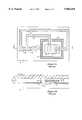
- FIG. 1Ais a top plan view of a low-conductivity (or semi-insulating) substrate 12 having various structures, devices, and circuits formed thereon.
- Substrate 12may comprise a low-conductivity material, or it may comprise a material that is coated or treated to reduce its conductivity (such as a thermal oxide grown on a silicon wafer substrate, for example).
- FIG. 1Bis a cross section taken at section line 1B--1B in FIG. 1A. In FIG. 1B, a second wafer 14 is shown positioned atop substrate 12.
- wafer 14is transparent in FIG. 1A (i.e., not shown) so that the underlying structures can be viewed.
- the exemplary structures on substrate 12include circuit lines 16, 17, and 18, and microelectromechanical (MEM) structure 20 supported by a foundation or base 22 bonded to substrate 12.
- circuit line 16forms an electrical connection to MEM structure
- circuit line 17serves as a capacitive pickoff for MEM structure
- circuit line 18is an example of another type of connection or interconnect.
- Wafer 14includes raised areas 24 that contact substrate 12 at selected regions 26 and 28 to support wafer 14 above structure 20.
- an electric potential of several hundred to a few thousand volts(typically on the order of 1000 volts, as shown as an example in FIG. 1B) is applied across substrate 12 and wafer 14.
- Substrate 12 and wafer 14may also be externally heated during the process.
- the high electric potentialcauses current to flow between substrate 12 and wafer 14, which bonds raised areas 24 of wafer 14 at contact regions 26 and 28 of substrate 12. In general, this process yields different mechanical strengths for bond joints between different materials.
- circuit lines 16, 17, and 18can be laid out so that they are joined together by slender conductors, such connector lines 32 and 34. With circuit lines 16, 17, and 18 connected by lines 32 and 34, structure 20 and the circuit lines are all at nearly the same electrical potential during anodic bonding of wafer 14 to low-conductivity substrate 12, thereby preventing arcing and damage to fragile structure 20 or circuit lines 16, 17, and 18.
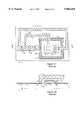
- circuit lines 16, 17, and 18must be disconnected from each other to form discrete conductive paths. This can be accomplished by eliminating connector lines 32 and 34 by laser cutting, sawing, etching, or other techniques, as shown in FIG. 3 where trenches 36 and 38 serve to separate the circuit lines.
- a useful alternativeis to place circuit connectors 32 and 34 at perimeter regions of the chip where they are eliminated when individual chips on the substrate are sawed apart. This embodiment avoids wasting chip surface area with temporary connector lines 32 and 34.
- a drawback of the foregoing prior art processis that temporary structures such as connector lines 32 and 34 may not be compatible with operation of the final device, and processing steps are usually required at some stage to eliminate them.
- the size, materials, or interconnect topography requirements for connectors 32 and 34may be very inconvenient.
- the processing steps needed for circuit separationhave a negative impact on cost and device yield.
- the temporary shortsare eliminated, multiple objects are shorted together and the device cannot be fully tested or operated for its design use. Therefore, there is a need for improved anodic bonding processes for forming covering structures or caps over fragile microelectronic or microelectromechanical structures.
- the present inventioncomprises an improved process for protecting fragile microelectronic and microelectromechanical (MEM) structures on a low conductivity substrate during anodic wafer bonding of a covering wafer.
- the covering waferincludes raised areas that contact the substrate at selected bonding regions to support the wafer as a cover to protect, contain, and/or complete the microstructures formed on a substrate.
- the covering waferis formed to include additional raised areas, such as pillars or posts, that contact selected areas of electric circuit lines on the substrate to form temporary shorts through the wafer.
- a high voltage electric potentialis applied across the substrate and covering wafer.
- the high electric potentialcauses current to flow for bonding the raised areas of the wafer to the regions of contact with the substrate.
- the temporary shortsmaintain the connected circuit lines and microstructures at nearly the same electric potential during anodic bonding of the wafer to the low-conductivity substrate. This prevents unwanted arcing and electrostatic forces that could cause flexing, contact, bonding, or other damage to the fragile structures and circuit lines.
- the additional pillars or posts that contact the circuit linesare formed at the same time as the raised bonding areas, but on the unwanted and otherwise unused portions of the covering wafer.
- the process of anodic bondingproduces only weak bonds between the wafer posts and the metallic conductor material of the electric circuit lines.
- the unwanted portions of the covering wafercan be removed by sawing, laser cutting, etching, or other suitable techniques, to leave covering structures over selected microstructures. Because of the weakly bonded temporary contacts of the wafer posts, removal of the unwanted portions of the wafer also removes the posts and eliminates the temporary shorts, all in one step, so that no additional processing is needed to electrically separate the circuit lines on the substrate.
- a principal object of the inventionis to protect pre-existing fragile structures during anodic wafer bonding.
- a feature of the inventionis the formation of temporary shorts between the covering wafer and electric circuit lines on the substrate.
- An advantage of the inventionis that removal of unwanted portions of the anodically bonded covering wafer also removes the temporary shorts without any additional processing steps.
- FIG. 1Ais a top plan view of a semi-insulating substrate having electronic circuitry, devices, and microstructures formed thereon as is known in the prior art;
- FIGS. 1Bis a cross section of the substrate and structures of FIG. 1A illustrating anodic bonding of a second wafer covering the substrate;
- FIGS. 2A and 2Bcorrespond to FIGS. 1A and 1B, respectively, illustrating the removal of unneeded portions of the covering wafer and the severing of protective electrical shorts as performed in the prior art;
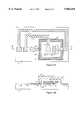
- FIG. 3Ais a top plan view of a semi-insulating substrate having electronic circuitry, devices, and microstructures formed thereon in accordance with the process of the present invention
- FIG. 3Bis a cross section of the substrate and structures of FIG. 3A illustrating anodic bonding of a covering wafer in accordance with the process of the present invention.
- FIGS. 4A and 4Bcorrespond to FIGS. 3A and 3B, respectively, illustrating the removal of the temporary shorts along with the unneeded portions of the covering wafer in accordance with the process of the present invention.
- the present inventioncomprises an improved process for protecting fragile microelectronic and microelectromechanical (MEM) structures during anodic wafer bonding.
- MEMmicroelectromechanical
- FIG. 3Ais a top plan view of a low-conductivity substrate 42 having various structures, devices, and circuits formed thereon.
- Substrate 42may comprise a semi-insulating material, a low-conductivity material, or a material that is coated or treated to reduce its conductivity (such as a thermal oxide grown on a silicon wafer substrate, for example).
- FIG. 3Bis a cross section taken at section line 3B--3B in FIG. 3A.
- a second, covering wafer 44is shown positioned atop substrate 42. Covering wafer 44 may function to protect, contain, and/or complete the various microstructures, devices, and circuits formed on substrate 42.
- wafer 44is transparent in FIG.
- the exemplary structures on substrate 42include circuit lines 46, 47, and 48, and microelectromechanical (MEM) structure 50 supported by a foundation or base 52 bonded to substrate 42.
- circuit line 46forms an electrical connection to MEM structure 50
- circuit line 47serves as a capacitive pickoff for MEM structure 50
- circuit line 48represents another type of connection or interconnect.
- Substrate 42typically includes many such circuits, devices, and structures.
- Wafer 44includes raised areas 54 that contact substrate 42 at selected bonding regions 56 and 58 to support wafer 44 as a covering structure above MEM structure 50. In some embodiments, the raised areas of wafer 44 can totally surround microstructures on substrate 42 to form hermetically sealed caps for the microstructures after anodic bonding of the wafers.
- covering wafer 44is formed to include additional raised areas, such as pillars or posts 62, 63, and 64, that contact selected circuit lines, such as lines 46, 47, and 48 on substrate 42.
- Posts 62, 63, and 64are shown to contact circuit lines 46, 47, and 48 at contact regions 66, 67, and 68, respectively, to form temporary shorts connecting circuit lines 46, 47, and 48 through wafer 44.
- an electric potential of several hundred to a few thousand volts(typically on the order of 1000 volts, as shown as an example in FIG. 3B) is applied across substrate 42 and wafer 44.
- the high electric potentialcauses current to flow between substrate 42 and wafer 44, which bonds raised areas 54 of wafer 44 at contact regions 56 and 58 of substrate 42.
- circuit lines 46, 47, and 48connected by temporary shorts through contact regions 66, 67, and 68 and posts 62, 63, and 64, the circuit lines and microstructure 50 are all held at nearly the same electric potential during anodic bonding of wafer 44 to low-conductivity substrate 42.
- the temporary shortsthus prevent unwanted arcing and electrostatic forces, which might otherwise cause flexing, contact, bonding, or other damage to fragile structures, such as MEM structure 50 and circuit lines 46, 47, and 48.
- Posts 62, 63, and 64are formed on the unwanted and otherwise unused portions of covering wafer 44.
- the formation of posts 62, 63, and 64 on wafer 44can be accomplished during the same steps used to form raised areas 54 for bonding to regions 56 and 58, so that no additional processing steps are required.
- the shorts provided by posts 62, 63, and 64eliminate the need for connector lines 32 and 34, and the subsequent process steps required to remove them, as described above in conjunction with FIGS. 1A and 1B.
- the process of anodic bonding of wafer 44 to substrate 42produces only weak bonds between posts 62, 63, and 64 and regions 66, 67, and 68.
- circuit lines 46, 47, and 48which typically comprise metallic conductors such as gold or other metals, are normally not mechanically strong.
- An easy way to form a weak contactis to ensure that the entire bond area, such as regions 66, 67, and 68, occurs on the conductor without contacting substrate 42 at any point, as illustrated in FIG. 3A. If the circuit lines required for a particular device are such that contact regions 66, 67, and 68 would produce strong joints during anodic bonding, the conductors can be treated first by surface roughening, coating with a thin layer of a sufficiently conductive material that does not bond well, or other such means to ensure that only weak bonds will be formed.
- FIGS. 4A and 4BAfter anodic bonding of wafer 44 to substrate 42, the unwanted portions of wafer 44 can be removed by sawing, laser cutting, etching, or other suitable techniques, as shown in FIGS. 4A and 4B.
- the remaining covering structure or cap provided by wafer 44 over microstructure 50is shown in FIG. 4A as being transparent, for purposes of illustration only, to reveal the underlying structures, circuits, and bonded regions. Because of the weakly bonded temporary contacts between posts 62, 63, and 64 and regions 66, 67, and 68, respectively, removal of the unwanted portions of wafer 44 also removes the posts and eliminates the temporary shorts, all in one step, so that no additional processing is needed to electrically separate circuit lines 46, 47, and 48. As a result, the device illustrated in FIGS. 4A and 4B can be fully tested and operated for its design use.
Landscapes
- Engineering & Computer Science (AREA)
- Microelectronics & Electronic Packaging (AREA)
- Manufacturing & Machinery (AREA)
- Micromachines (AREA)
Abstract
Description
Claims (15)
Priority Applications (1)
| Application Number | Priority Date | Filing Date | Title |
|---|---|---|---|
| US08/662,390US5866469A (en) | 1996-06-13 | 1996-06-13 | Method of anodic wafer bonding |
Applications Claiming Priority (1)
| Application Number | Priority Date | Filing Date | Title |
|---|---|---|---|
| US08/662,390US5866469A (en) | 1996-06-13 | 1996-06-13 | Method of anodic wafer bonding |
Publications (1)
| Publication Number | Publication Date |
|---|---|
| US5866469Atrue US5866469A (en) | 1999-02-02 |
Family
ID=24657518
Family Applications (1)
| Application Number | Title | Priority Date | Filing Date |
|---|---|---|---|
| US08/662,390Expired - LifetimeUS5866469A (en) | 1996-06-13 | 1996-06-13 | Method of anodic wafer bonding |
Country Status (1)
| Country | Link |
|---|---|
| US (1) | US5866469A (en) |
Cited By (33)
| Publication number | Priority date | Publication date | Assignee | Title |
|---|---|---|---|---|
| US6001673A (en)* | 1999-02-11 | 1999-12-14 | Ericsson Inc. | Methods for packaging integrated circuit devices including cavities adjacent active regions |
| WO2001029529A3 (en)* | 1999-10-21 | 2001-09-13 | Draper Lab Charles S | Integrated packaging of micromechanical sensors and control circuits |
| US6337465B1 (en)* | 1999-03-09 | 2002-01-08 | Mide Technology Corp. | Laser machining of electroactive ceramics |
| US20020130408A1 (en)* | 2000-12-19 | 2002-09-19 | Harris Corporation | Method for making electronic devices including silicon and LTCC and devices produced thereby |
| US20030020062A1 (en)* | 2001-05-18 | 2003-01-30 | Faris Sadeg M. | MEMS and method of manufacturing MEMS |
| US20030038327A1 (en)* | 2001-08-24 | 2003-02-27 | Honeywell International, Inc. | Hermetically sealed silicon micro-machined electromechanical system (MEMS) device having diffused conductors |
| US6582985B2 (en)* | 2000-12-27 | 2003-06-24 | Honeywell International Inc. | SOI/glass process for forming thin silicon micromachined structures |
| US20040132227A1 (en)* | 2003-01-06 | 2004-07-08 | Horning Robert D. | Methods and structure for improving wafer bow control |
| US20040180464A1 (en)* | 2003-03-10 | 2004-09-16 | Horning Robert D. | Methods and systems for buried electrical feedthroughs in a glass-silicon mems process |
| US6808955B2 (en)* | 2001-11-02 | 2004-10-26 | Intel Corporation | Method of fabricating an integrated circuit that seals a MEMS device within a cavity |
| US6808956B2 (en) | 2000-12-27 | 2004-10-26 | Honeywell International Inc. | Thin micromachined structures |
| US20050011669A1 (en)* | 2002-12-17 | 2005-01-20 | Finisar Corporation | Low temperature bonding of multilayer substrates |
| US20050059218A1 (en)* | 2001-05-18 | 2005-03-17 | Faris Sadeg M. | Thin films and production methods thereof |
| US20050059217A1 (en)* | 2003-09-17 | 2005-03-17 | Patrick Morrow | Methods of forming backside connections on a wafer stack |
| US20050112848A1 (en)* | 2001-09-12 | 2005-05-26 | Reveo, Inc. | Method of fabricating vertical integrated circuits |
| US20050173711A1 (en)* | 2000-12-07 | 2005-08-11 | Patel Satyadev R. | Methods for depositing, releasing and packaging micro-electromechanical devices on wafer substrates |
| US20050233543A1 (en)* | 2004-04-20 | 2005-10-20 | Agency For Science, Technology And Research | Method of fabricating microelectromechanical system structures |
| US20050285172A1 (en)* | 2002-12-17 | 2005-12-29 | Freeman William R | Methods of forming vias in multilayer substrates |
| US20060192272A1 (en)* | 2005-02-25 | 2006-08-31 | Rogier Receveur | Wafer level hermetically sealed MEMS device |
| US20070023850A1 (en)* | 2005-07-30 | 2007-02-01 | Chien-Hua Chen | Bonding surfaces together via plasma treatment on both surfaces with wet treatment on only one surface |
| US7192841B2 (en) | 2002-04-30 | 2007-03-20 | Agency For Science, Technology And Research | Method of wafer/substrate bonding |
| US20080164546A1 (en)* | 2007-01-10 | 2008-07-10 | Infineon Technologies Sensonor As | Design of MEMS Packaging |
| US20100181652A1 (en)* | 2009-01-16 | 2010-07-22 | Honeywell International Inc. | Systems and methods for stiction reduction in mems devices |
| US20120149152A1 (en)* | 2010-12-13 | 2012-06-14 | Taiwan Semiconductor Manufacturing Company, Ltd. | Method to prevent metal pad damage in wafer level package |
| US8919801B2 (en) | 2010-12-15 | 2014-12-30 | Symbotic, LLC | Suspension system for autonomous transports |
| US9187244B2 (en) | 2010-12-15 | 2015-11-17 | Symbotic, LLC | BOT payload alignment and sensing |
| US9321591B2 (en) | 2009-04-10 | 2016-04-26 | Symbotic, LLC | Autonomous transports for storage and retrieval systems |
| US9423796B2 (en) | 2010-12-15 | 2016-08-23 | Symbotic Llc | Bot having high speed stability |
| US9771217B2 (en) | 2009-04-10 | 2017-09-26 | Symbotic, LLC | Control system for storage and retrieval systems |
| US9908698B2 (en) | 2010-12-15 | 2018-03-06 | Symbotic, LLC | Automated bot transfer arm drive system |
| US10414586B2 (en) | 2010-12-15 | 2019-09-17 | Symbotic, LLC | Autonomous transport vehicle |
| US10894663B2 (en) | 2013-09-13 | 2021-01-19 | Symbotic Llc | Automated storage and retrieval system |
| US11078017B2 (en) | 2010-12-15 | 2021-08-03 | Symbotic Llc | Automated bot with transfer arm |
Citations (3)
| Publication number | Priority date | Publication date | Assignee | Title |
|---|---|---|---|---|
| US4802952A (en)* | 1987-03-06 | 1989-02-07 | Hitachi, Ltd. | Method for manufacturing semiconductor absolute pressure sensor units |
| US5343064A (en)* | 1988-03-18 | 1994-08-30 | Spangler Leland J | Fully integrated single-crystal silicon-on-insulator process, sensors and circuits |
| US5591679A (en)* | 1995-04-12 | 1997-01-07 | Sensonor A/S | Sealed cavity arrangement method |
- 1996
- 1996-06-13USUS08/662,390patent/US5866469A/ennot_activeExpired - Lifetime
Patent Citations (3)
| Publication number | Priority date | Publication date | Assignee | Title |
|---|---|---|---|---|
| US4802952A (en)* | 1987-03-06 | 1989-02-07 | Hitachi, Ltd. | Method for manufacturing semiconductor absolute pressure sensor units |
| US5343064A (en)* | 1988-03-18 | 1994-08-30 | Spangler Leland J | Fully integrated single-crystal silicon-on-insulator process, sensors and circuits |
| US5591679A (en)* | 1995-04-12 | 1997-01-07 | Sensonor A/S | Sealed cavity arrangement method |
Cited By (85)
| Publication number | Priority date | Publication date | Assignee | Title |
|---|---|---|---|---|
| US6001673A (en)* | 1999-02-11 | 1999-12-14 | Ericsson Inc. | Methods for packaging integrated circuit devices including cavities adjacent active regions |
| US20060006769A1 (en)* | 1999-03-09 | 2006-01-12 | Masters Brett P | Laser machining of electroactive ceramics |
| US6337465B1 (en)* | 1999-03-09 | 2002-01-08 | Mide Technology Corp. | Laser machining of electroactive ceramics |
| US7205707B2 (en) | 1999-03-09 | 2007-04-17 | Mide Technology Corporation | Laser machining of electroactive ceramics |
| WO2001029529A3 (en)* | 1999-10-21 | 2001-09-13 | Draper Lab Charles S | Integrated packaging of micromechanical sensors and control circuits |
| US20050173711A1 (en)* | 2000-12-07 | 2005-08-11 | Patel Satyadev R. | Methods for depositing, releasing and packaging micro-electromechanical devices on wafer substrates |
| US7586668B2 (en)* | 2000-12-07 | 2009-09-08 | Texas Instruments Incorporated | Methods for depositing, releasing and packaging micro-electromechanical devices on wafer substrates |
| US20050019986A1 (en)* | 2000-12-19 | 2005-01-27 | Harris Corporation | Method for making electronic devices including silicon and LTCC and devices produced thereby |
| US6987033B2 (en) | 2000-12-19 | 2006-01-17 | Harris Corporation | Method for making electronic devices including silicon and LTCC and devices produced thereby |
| US20020130408A1 (en)* | 2000-12-19 | 2002-09-19 | Harris Corporation | Method for making electronic devices including silicon and LTCC and devices produced thereby |
| US6809424B2 (en) | 2000-12-19 | 2004-10-26 | Harris Corporation | Method for making electronic devices including silicon and LTCC and devices produced thereby |
| US6582985B2 (en)* | 2000-12-27 | 2003-06-24 | Honeywell International Inc. | SOI/glass process for forming thin silicon micromachined structures |
| US6808956B2 (en) | 2000-12-27 | 2004-10-26 | Honeywell International Inc. | Thin micromachined structures |
| US20050059218A1 (en)* | 2001-05-18 | 2005-03-17 | Faris Sadeg M. | Thin films and production methods thereof |
| US6956268B2 (en)* | 2001-05-18 | 2005-10-18 | Reveo, Inc. | MEMS and method of manufacturing MEMS |
| US20030020062A1 (en)* | 2001-05-18 | 2003-01-30 | Faris Sadeg M. | MEMS and method of manufacturing MEMS |
| US6906395B2 (en)* | 2001-08-24 | 2005-06-14 | Honeywell International, Inc. | Hermetically sealed silicon micro-machined electromechanical system (MEMS) device having diffused conductors |
| US20050121735A1 (en)* | 2001-08-24 | 2005-06-09 | Honeywell International, Inc. | Hermetically sealed silicon micro-machined electromechanical system (MEMS) device having diffused conductors |
| US20030038327A1 (en)* | 2001-08-24 | 2003-02-27 | Honeywell International, Inc. | Hermetically sealed silicon micro-machined electromechanical system (MEMS) device having diffused conductors |
| US7145219B2 (en)* | 2001-09-12 | 2006-12-05 | Reveo, Inc. | Vertical integrated circuits |
| US20050112848A1 (en)* | 2001-09-12 | 2005-05-26 | Reveo, Inc. | Method of fabricating vertical integrated circuits |
| US20050042790A1 (en)* | 2001-11-02 | 2005-02-24 | Intel Corporation | Method of fabricating an integrated circuit that seals a MEMS device within a cavity |
| US6808955B2 (en)* | 2001-11-02 | 2004-10-26 | Intel Corporation | Method of fabricating an integrated circuit that seals a MEMS device within a cavity |
| US7030432B2 (en) | 2001-11-02 | 2006-04-18 | Intel Corporation | Method of fabricating an integrated circuit that seals a MEMS device within a cavity |
| US7192841B2 (en) | 2002-04-30 | 2007-03-20 | Agency For Science, Technology And Research | Method of wafer/substrate bonding |
| US7259466B2 (en) | 2002-12-17 | 2007-08-21 | Finisar Corporation | Low temperature bonding of multilayer substrates |
| US20050011669A1 (en)* | 2002-12-17 | 2005-01-20 | Finisar Corporation | Low temperature bonding of multilayer substrates |
| US7361593B2 (en) | 2002-12-17 | 2008-04-22 | Finisar Corporation | Methods of forming vias in multilayer substrates |
| US20050285172A1 (en)* | 2002-12-17 | 2005-12-29 | Freeman William R | Methods of forming vias in multilayer substrates |
| US20050050971A1 (en)* | 2003-01-06 | 2005-03-10 | Horning Robert D. | Methods and structure for improving wafer bow control |
| US6770504B2 (en) | 2003-01-06 | 2004-08-03 | Honeywell International Inc. | Methods and structure for improving wafer bow control |
| US20040132227A1 (en)* | 2003-01-06 | 2004-07-08 | Horning Robert D. | Methods and structure for improving wafer bow control |
| US6888233B2 (en) | 2003-03-10 | 2005-05-03 | Honeywell International Inc. | Systems for buried electrical feedthroughs in a glass-silicon MEMS process |
| US6924165B2 (en) | 2003-03-10 | 2005-08-02 | Honeywell International Inc. | Methods and systems for buried electrical feedthroughs in a glass-silicon MEMS process |
| US20040180464A1 (en)* | 2003-03-10 | 2004-09-16 | Horning Robert D. | Methods and systems for buried electrical feedthroughs in a glass-silicon mems process |
| US20040244484A1 (en)* | 2003-03-10 | 2004-12-09 | Horning Robert D. | Methods and systems for buried electrical feedthroughs in a glass-silicon MEMS process |
| US7056813B2 (en) | 2003-09-17 | 2006-06-06 | Intel Corporation | Methods of forming backside connections on a wafer stack |
| US20050164490A1 (en)* | 2003-09-17 | 2005-07-28 | Patrick Morrow | Methods of forming backside connections on a wafer stack |
| US6897125B2 (en) | 2003-09-17 | 2005-05-24 | Intel Corporation | Methods of forming backside connections on a wafer stack |
| US20050059217A1 (en)* | 2003-09-17 | 2005-03-17 | Patrick Morrow | Methods of forming backside connections on a wafer stack |
| US7405466B2 (en) | 2004-04-20 | 2008-07-29 | Agency For Science, Technology And Research | Method of fabricating microelectromechanical system structures |
| US20050233543A1 (en)* | 2004-04-20 | 2005-10-20 | Agency For Science, Technology And Research | Method of fabricating microelectromechanical system structures |
| US7153759B2 (en) | 2004-04-20 | 2006-12-26 | Agency For Science Technology And Research | Method of fabricating microelectromechanical system structures |
| US20070105342A1 (en)* | 2004-04-20 | 2007-05-10 | Jun Wei | Method of fabricating microelectromechanical system structures |
| US20110072646A1 (en)* | 2005-02-25 | 2011-03-31 | Medtronic, Inc. | Wafer level hermetically sealed mems device |
| US7816745B2 (en)* | 2005-02-25 | 2010-10-19 | Medtronic, Inc. | Wafer level hermetically sealed MEMS device |
| US20060192272A1 (en)* | 2005-02-25 | 2006-08-31 | Rogier Receveur | Wafer level hermetically sealed MEMS device |
| US20070023850A1 (en)* | 2005-07-30 | 2007-02-01 | Chien-Hua Chen | Bonding surfaces together via plasma treatment on both surfaces with wet treatment on only one surface |
| US20080164546A1 (en)* | 2007-01-10 | 2008-07-10 | Infineon Technologies Sensonor As | Design of MEMS Packaging |
| US20100181652A1 (en)* | 2009-01-16 | 2010-07-22 | Honeywell International Inc. | Systems and methods for stiction reduction in mems devices |
| US12358723B2 (en) | 2009-04-10 | 2025-07-15 | Symbotic Llc | Storage and retrieval system |
| US10239691B2 (en) | 2009-04-10 | 2019-03-26 | Symbotic, LLC | Storage and retrieval system |
| US10759600B2 (en) | 2009-04-10 | 2020-09-01 | Symbotic Llc | Autonomous transports for storage and retrieval systems |
| US11254501B2 (en) | 2009-04-10 | 2022-02-22 | Symbotic Llc | Storage and retrieval system |
| US9771217B2 (en) | 2009-04-10 | 2017-09-26 | Symbotic, LLC | Control system for storage and retrieval systems |
| US11124361B2 (en) | 2009-04-10 | 2021-09-21 | Symbotic Llc | Storage and retrieval system |
| US11939158B2 (en) | 2009-04-10 | 2024-03-26 | Symbotic Llc | Storage and retrieval system |
| US11858740B2 (en) | 2009-04-10 | 2024-01-02 | Symbotic Llc | Storage and retrieval system |
| US9321591B2 (en) | 2009-04-10 | 2016-04-26 | Symbotic, LLC | Autonomous transports for storage and retrieval systems |
| US10207870B2 (en) | 2009-04-10 | 2019-02-19 | Symbotic, LLC | Autonomous transports for storage and retrieval systems |
| US11661279B2 (en) | 2009-04-10 | 2023-05-30 | Symbotic Llc | Autonomous transports for storage and retrieval systems |
| US20120149152A1 (en)* | 2010-12-13 | 2012-06-14 | Taiwan Semiconductor Manufacturing Company, Ltd. | Method to prevent metal pad damage in wafer level package |
| TWI495049B (en)* | 2010-12-13 | 2015-08-01 | Taiwan Semiconductor Mfg Co Ltd | Method for manufacturing microelectronic device and integrated circuit to prevent metal pad damage in wafer level package |
| CN102556945B (en)* | 2010-12-13 | 2015-01-28 | 台湾积体电路制造股份有限公司 | Method for manufacturing microelectronic device and its integrated circuit |
| US8735260B2 (en)* | 2010-12-13 | 2014-05-27 | Taiwan Semiconductor Manufacturing Company, Ltd. | Method to prevent metal pad damage in wafer level package |
| CN102556945A (en)* | 2010-12-13 | 2012-07-11 | 台湾积体电路制造股份有限公司 | Method for manufacturing microelectronic device and its integrated circuit |
| US9327903B2 (en) | 2010-12-15 | 2016-05-03 | Symbotic, LLC | Suspension system for autonomous transports |
| US9676551B2 (en) | 2010-12-15 | 2017-06-13 | Symbotic, LLC | Bot payload alignment and sensing |
| US9908698B2 (en) | 2010-12-15 | 2018-03-06 | Symbotic, LLC | Automated bot transfer arm drive system |
| US10280000B2 (en) | 2010-12-15 | 2019-05-07 | Symbotic, LLC | Suspension system for autonomous transports |
| US10414586B2 (en) | 2010-12-15 | 2019-09-17 | Symbotic, LLC | Autonomous transport vehicle |
| US10683169B2 (en) | 2010-12-15 | 2020-06-16 | Symbotic, LLC | Automated bot transfer arm drive system |
| US9862543B2 (en) | 2010-12-15 | 2018-01-09 | Symbiotic, LLC | Bot payload alignment and sensing |
| US8919801B2 (en) | 2010-12-15 | 2014-12-30 | Symbotic, LLC | Suspension system for autonomous transports |
| US11078017B2 (en) | 2010-12-15 | 2021-08-03 | Symbotic Llc | Automated bot with transfer arm |
| US9946265B2 (en) | 2010-12-15 | 2018-04-17 | Symbotic, LLC | Bot having high speed stability |
| US9550225B2 (en) | 2010-12-15 | 2017-01-24 | Symbotic Llc | Bot having high speed stability |
| US11273981B2 (en) | 2010-12-15 | 2022-03-15 | Symbolic Llc | Automated bot transfer arm drive system |
| US9423796B2 (en) | 2010-12-15 | 2016-08-23 | Symbotic Llc | Bot having high speed stability |
| US12214959B2 (en) | 2010-12-15 | 2025-02-04 | Symbotic Llc | Automated bot with transfer arm |
| US9187244B2 (en) | 2010-12-15 | 2015-11-17 | Symbotic, LLC | BOT payload alignment and sensing |
| US9156394B2 (en) | 2010-12-15 | 2015-10-13 | Symbotic, LLC | Suspension system for autonomous transports |
| US11952214B2 (en) | 2010-12-15 | 2024-04-09 | Symbotic Llc | Automated bot transfer arm drive system |
| US11708218B2 (en) | 2013-09-13 | 2023-07-25 | Symbolic Llc | Automated storage and retrieval system |
| US10894663B2 (en) | 2013-09-13 | 2021-01-19 | Symbotic Llc | Automated storage and retrieval system |
Similar Documents
| Publication | Publication Date | Title |
|---|---|---|
| US5866469A (en) | Method of anodic wafer bonding | |
| US6828674B2 (en) | Hermetically sealed microstructure package | |
| US4897708A (en) | Semiconductor wafer array | |
| EP1070677B1 (en) | Microcap wafer-level package | |
| US8857805B2 (en) | Method, apparatus for holding and treatment of a substrate | |
| US5525549A (en) | Method for producing an acceleration sensor | |
| EP0810659A2 (en) | Semiconductor packaging apparatus and method | |
| EP0309805A1 (en) | Semiconductor device with airbridge interconnection | |
| EP0674768A4 (en) | CHIP HOLDER AND TEST SUPPORT FOR NON-PLUGGABLE SEMICONDUCTOR CHIP. | |
| US5888882A (en) | Process for separating electronic devices | |
| JP2743061B2 (en) | Structure in an integrated circuit including at least two conductive elements and method of manufacture thereof | |
| US5406108A (en) | Interconnection construction of semiconductor device | |
| US5474651A (en) | Method for filling via holes in a semiconductor layer structure | |
| US6972154B2 (en) | Anodically bonded device structure | |
| US20030077876A1 (en) | Method of anodically bonding a multilayer device with a free mass | |
| US8455996B1 (en) | Wafer level packaging method and a packaging structure using thereof | |
| US20240150166A1 (en) | Encapsulated MEMS Switching Element, Device and Production Method | |
| US10056305B2 (en) | Wafer arrangement, a method for testing a wafer, and a method for processing a wafer | |
| WO1996016435A3 (en) | Semiconductor device provided with a microcomponent having a fixed and a movable electrode | |
| US20050269688A1 (en) | Microelectromechanical systems (MEMS) devices integrated in a hermetically sealed package | |
| US20010015471A1 (en) | Integrated circuitry fuse forming methods, integrated circuitry programming methods, and related integrated circuitry | |
| US5969534A (en) | Semiconductor testing apparatus | |
| US5789307A (en) | Method of separating electronic devices contained in a carrier | |
| US20040183189A1 (en) | Multi-layer device and method for producing the same | |
| US7202108B2 (en) | Semiconductor wafer, semiconductor chip and method for manufacturing the same |
Legal Events
| Date | Code | Title | Description |
|---|---|---|---|
| AS | Assignment | Owner name:ROCKWELL INTERNATIONAL CORPORATION, CALIFORNIA Free format text:ASSIGNMENT OF ASSIGNORS INTEREST;ASSIGNOR:HAYS, KENNETH M.;REEL/FRAME:008042/0891 Effective date:19960610 | |
| AS | Assignment | Owner name:BOEING NORTH AMERICAN, INC., CALIFORNIA Free format text:MERGER;ASSIGNOR:ROCKWELL INTERNATIONAL CORPORATION;REEL/FRAME:009503/0349 Effective date:19961206 | |
| STCF | Information on status: patent grant | Free format text:PATENTED CASE | |
| AS | Assignment | Owner name:HONEYWELL INC., MINNESOTA Free format text:ASSIGNMENT OF ASSIGNORS INTEREST;ASSIGNOR:BOEING NORTH AMERICAN INC., FORMERLY KNOWN AS ROCKWELL INTERNATIONAL CORPORATION;REEL/FRAME:010238/0417 Effective date:19990903 | |
| FEPP | Fee payment procedure | Free format text:PAYOR NUMBER ASSIGNED (ORIGINAL EVENT CODE: ASPN); ENTITY STATUS OF PATENT OWNER: LARGE ENTITY | |
| FPAY | Fee payment | Year of fee payment:4 | |
| FPAY | Fee payment | Year of fee payment:8 | |
| FPAY | Fee payment | Year of fee payment:12 |