US5860998A - Deployment device for tubular expandable prosthesis - Google Patents
Deployment device for tubular expandable prosthesisDownload PDFInfo
- Publication number
- US5860998A US5860998AUS08/756,061US75606196AUS5860998AUS 5860998 AUS5860998 AUS 5860998AUS 75606196 AUS75606196 AUS 75606196AUS 5860998 AUS5860998 AUS 5860998A
- Authority
- US
- United States
- Prior art keywords
- implant
- trunk
- graft
- anchor
- cup
- Prior art date
- Legal status (The legal status is an assumption and is not a legal conclusion. Google has not performed a legal analysis and makes no representation as to the accuracy of the status listed.)
- Expired - Lifetime
Links
Images





Classifications
- A—HUMAN NECESSITIES
- A61—MEDICAL OR VETERINARY SCIENCE; HYGIENE
- A61F—FILTERS IMPLANTABLE INTO BLOOD VESSELS; PROSTHESES; DEVICES PROVIDING PATENCY TO, OR PREVENTING COLLAPSING OF, TUBULAR STRUCTURES OF THE BODY, e.g. STENTS; ORTHOPAEDIC, NURSING OR CONTRACEPTIVE DEVICES; FOMENTATION; TREATMENT OR PROTECTION OF EYES OR EARS; BANDAGES, DRESSINGS OR ABSORBENT PADS; FIRST-AID KITS
- A61F2/00—Filters implantable into blood vessels; Prostheses, i.e. artificial substitutes or replacements for parts of the body; Appliances for connecting them with the body; Devices providing patency to, or preventing collapsing of, tubular structures of the body, e.g. stents
- A61F2/02—Prostheses implantable into the body
- A61F2/04—Hollow or tubular parts of organs, e.g. bladders, tracheae, bronchi or bile ducts
- A61F2/06—Blood vessels
- A61F2/07—Stent-grafts
- A—HUMAN NECESSITIES
- A61—MEDICAL OR VETERINARY SCIENCE; HYGIENE
- A61F—FILTERS IMPLANTABLE INTO BLOOD VESSELS; PROSTHESES; DEVICES PROVIDING PATENCY TO, OR PREVENTING COLLAPSING OF, TUBULAR STRUCTURES OF THE BODY, e.g. STENTS; ORTHOPAEDIC, NURSING OR CONTRACEPTIVE DEVICES; FOMENTATION; TREATMENT OR PROTECTION OF EYES OR EARS; BANDAGES, DRESSINGS OR ABSORBENT PADS; FIRST-AID KITS
- A61F2/00—Filters implantable into blood vessels; Prostheses, i.e. artificial substitutes or replacements for parts of the body; Appliances for connecting them with the body; Devices providing patency to, or preventing collapsing of, tubular structures of the body, e.g. stents
- A61F2/82—Devices providing patency to, or preventing collapsing of, tubular structures of the body, e.g. stents
- A61F2/86—Stents in a form characterised by the wire-like elements; Stents in the form characterised by a net-like or mesh-like structure
- A61F2/89—Stents in a form characterised by the wire-like elements; Stents in the form characterised by a net-like or mesh-like structure the wire-like elements comprising two or more adjacent rings flexibly connected by separate members
- A—HUMAN NECESSITIES
- A61—MEDICAL OR VETERINARY SCIENCE; HYGIENE
- A61F—FILTERS IMPLANTABLE INTO BLOOD VESSELS; PROSTHESES; DEVICES PROVIDING PATENCY TO, OR PREVENTING COLLAPSING OF, TUBULAR STRUCTURES OF THE BODY, e.g. STENTS; ORTHOPAEDIC, NURSING OR CONTRACEPTIVE DEVICES; FOMENTATION; TREATMENT OR PROTECTION OF EYES OR EARS; BANDAGES, DRESSINGS OR ABSORBENT PADS; FIRST-AID KITS
- A61F2/00—Filters implantable into blood vessels; Prostheses, i.e. artificial substitutes or replacements for parts of the body; Appliances for connecting them with the body; Devices providing patency to, or preventing collapsing of, tubular structures of the body, e.g. stents
- A61F2/95—Instruments specially adapted for placement or removal of stents or stent-grafts
- A61F2/954—Instruments specially adapted for placement or removal of stents or stent-grafts for placing stents or stent-grafts in a bifurcation
- A—HUMAN NECESSITIES
- A61—MEDICAL OR VETERINARY SCIENCE; HYGIENE
- A61F—FILTERS IMPLANTABLE INTO BLOOD VESSELS; PROSTHESES; DEVICES PROVIDING PATENCY TO, OR PREVENTING COLLAPSING OF, TUBULAR STRUCTURES OF THE BODY, e.g. STENTS; ORTHOPAEDIC, NURSING OR CONTRACEPTIVE DEVICES; FOMENTATION; TREATMENT OR PROTECTION OF EYES OR EARS; BANDAGES, DRESSINGS OR ABSORBENT PADS; FIRST-AID KITS
- A61F2/00—Filters implantable into blood vessels; Prostheses, i.e. artificial substitutes or replacements for parts of the body; Appliances for connecting them with the body; Devices providing patency to, or preventing collapsing of, tubular structures of the body, e.g. stents
- A61F2/02—Prostheses implantable into the body
- A61F2/04—Hollow or tubular parts of organs, e.g. bladders, tracheae, bronchi or bile ducts
- A61F2/06—Blood vessels
- A61F2002/065—Y-shaped blood vessels
- A—HUMAN NECESSITIES
- A61—MEDICAL OR VETERINARY SCIENCE; HYGIENE
- A61F—FILTERS IMPLANTABLE INTO BLOOD VESSELS; PROSTHESES; DEVICES PROVIDING PATENCY TO, OR PREVENTING COLLAPSING OF, TUBULAR STRUCTURES OF THE BODY, e.g. STENTS; ORTHOPAEDIC, NURSING OR CONTRACEPTIVE DEVICES; FOMENTATION; TREATMENT OR PROTECTION OF EYES OR EARS; BANDAGES, DRESSINGS OR ABSORBENT PADS; FIRST-AID KITS
- A61F2/00—Filters implantable into blood vessels; Prostheses, i.e. artificial substitutes or replacements for parts of the body; Appliances for connecting them with the body; Devices providing patency to, or preventing collapsing of, tubular structures of the body, e.g. stents
- A61F2/02—Prostheses implantable into the body
- A61F2/04—Hollow or tubular parts of organs, e.g. bladders, tracheae, bronchi or bile ducts
- A61F2/06—Blood vessels
- A61F2/07—Stent-grafts
- A61F2002/075—Stent-grafts the stent being loosely attached to the graft material, e.g. by stitching
- A—HUMAN NECESSITIES
- A61—MEDICAL OR VETERINARY SCIENCE; HYGIENE
- A61F—FILTERS IMPLANTABLE INTO BLOOD VESSELS; PROSTHESES; DEVICES PROVIDING PATENCY TO, OR PREVENTING COLLAPSING OF, TUBULAR STRUCTURES OF THE BODY, e.g. STENTS; ORTHOPAEDIC, NURSING OR CONTRACEPTIVE DEVICES; FOMENTATION; TREATMENT OR PROTECTION OF EYES OR EARS; BANDAGES, DRESSINGS OR ABSORBENT PADS; FIRST-AID KITS
- A61F2/00—Filters implantable into blood vessels; Prostheses, i.e. artificial substitutes or replacements for parts of the body; Appliances for connecting them with the body; Devices providing patency to, or preventing collapsing of, tubular structures of the body, e.g. stents
- A61F2/82—Devices providing patency to, or preventing collapsing of, tubular structures of the body, e.g. stents
- A61F2002/826—Devices providing patency to, or preventing collapsing of, tubular structures of the body, e.g. stents more than one stent being applied sequentially
- A—HUMAN NECESSITIES
- A61—MEDICAL OR VETERINARY SCIENCE; HYGIENE
- A61F—FILTERS IMPLANTABLE INTO BLOOD VESSELS; PROSTHESES; DEVICES PROVIDING PATENCY TO, OR PREVENTING COLLAPSING OF, TUBULAR STRUCTURES OF THE BODY, e.g. STENTS; ORTHOPAEDIC, NURSING OR CONTRACEPTIVE DEVICES; FOMENTATION; TREATMENT OR PROTECTION OF EYES OR EARS; BANDAGES, DRESSINGS OR ABSORBENT PADS; FIRST-AID KITS
- A61F2220/00—Fixations or connections for prostheses classified in groups A61F2/00 - A61F2/26 or A61F2/82 or A61F9/00 or A61F11/00 or subgroups thereof
- A61F2220/0025—Connections or couplings between prosthetic parts, e.g. between modular parts; Connecting elements
- A61F2220/0058—Connections or couplings between prosthetic parts, e.g. between modular parts; Connecting elements soldered or brazed or welded
- A—HUMAN NECESSITIES
- A61—MEDICAL OR VETERINARY SCIENCE; HYGIENE
- A61F—FILTERS IMPLANTABLE INTO BLOOD VESSELS; PROSTHESES; DEVICES PROVIDING PATENCY TO, OR PREVENTING COLLAPSING OF, TUBULAR STRUCTURES OF THE BODY, e.g. STENTS; ORTHOPAEDIC, NURSING OR CONTRACEPTIVE DEVICES; FOMENTATION; TREATMENT OR PROTECTION OF EYES OR EARS; BANDAGES, DRESSINGS OR ABSORBENT PADS; FIRST-AID KITS
- A61F2220/00—Fixations or connections for prostheses classified in groups A61F2/00 - A61F2/26 or A61F2/82 or A61F9/00 or A61F11/00 or subgroups thereof
- A61F2220/0025—Connections or couplings between prosthetic parts, e.g. between modular parts; Connecting elements
- A61F2220/0075—Connections or couplings between prosthetic parts, e.g. between modular parts; Connecting elements sutured, ligatured or stitched, retained or tied with a rope, string, thread, wire or cable
Definitions
- the inventionrelates to devices and techniques for placing and securing an endoprosthesis in a patient's vascular system, including bifurcated blood vessels.
- vascular graftstypically are those formed from a woven or knitted tubular fabric as well as non-fabric tubes such as expanded polytetrafluoroethylene.
- vascular graftstypically are placed in a patient's vascular system in a highly invasive surgical procedure.
- the complexity of the surgical procedure required to place the graftwill depend on many factors, including the location and surgical accessibility of the portion of the patient's vasculature where the graft is to be placed.
- vascular conditions in which it would be desirable to place a graftcan be so treated.
- an abdominal aortic aneurysmin which a portion of the patient's aorta, the major artery carrying blood from the heart, has developed a weakened wall such that the weakened portion will tend to expand under the influence of the patient's blood pressure.
- An aortic aneurysmpresents a life threatening risk that the aneurysm may burst causing massive internal bleeding.
- Treatment of the conditiontypically has involved deeply invasive abdominal surgery in which the patient's abdominal cavity is opened to reach and expose the aortic aneurysm.
- the region of the aneurysmis incised lengthwise to enable insertion of the graft into the aorta to span the weakened region and define a structurally strong tubular flow path between the remaining healthy portions of the aorta.
- the graftso positioned, then is sutured in place.
- the graftthus serves as a reinforcing liner for the weakened portion of the aorta.
- Such surgical procedureshave been characterized by a relatively high mortality rate. Typically, patients suffering from the condition are elderly and are less able to survive the rigors of major abdominal surgery.
- the abdominal cavityis opened because the confining pressure of other abdominal organs on the aorta is released.
- the aortic wall in the region of the aneurysmis so weak that upon release of the confining pressure, the aneurysm may burst with resulting immediate massive hemorrhaging.
- abdominal aortic aneurysmsIn the case of abdominal aortic aneurysms, however, by the time the aneurysm is discovered, it may have advanced to a stage where there is insufficient healthy tissue in the region where the aorta bifurcates into the two iliac arteries for the end of a single tubular graft to be secured. Often the aneurysm has advanced into and involves the iliac arteries as well. Such a condition cannot be treated by a single lumen tubular prosthesis.
- the prosthesismust have a bifurcated configuration in order to extend fully through the regions of aneurysm in all of the involved arteries and with the device being in secure engagement with healthy tissue to insure that it provides full endoluminal support and will not migrate from its implanted position.
- a bifurcated deviceis formed in two sections, one of which includes a graft having a main body and one integral leg extension.
- the main bodyis intended to be placed in the aorta and the extension in one of iliac arteries.
- the main bodyalso has an opening adjacent the leg extension that can be aligned with the other iliac artery.
- the second section of the deviceincludes a tubular graft that can be advanced through the other iliac artery into engagement with the opening in the main body. This arrangement also is awkward to place and presents additional difficulties.
- the devicesimilarly does not lend itself to modular construction in which the individual components can be combined to match the dimensions of the particular patient's anatomy. Also among the difficulties with the device is that it employs stenting elements formed from a shape memory alloy that is not readily visualized under fluoroscopic examination and must be placed relatively quickly, before the stent expands as a consequence of exposure to body temperature.
- a third approachemploys an endovascular device for placement at the region of an arterial bifurcation that includes a three-component system including a main, bag-like body intended for placement in the aorta.
- the bag-like bodyhas a pair of openings formed at its lower end. Each of the openings is said to receive an end of a tubular prosthesis inserted through each of the iliac arteries.
- the tubular prosthesesare said to attach to the main bag-like body and extend into the iliac arteries.
- the endoprosthetic implant of the present inventionis formed from separate components that are individually and sequentially inserted transluminally to the region to be treated such as, for example, the region of the abdominal aorta and iliac arteries. Each is deployed in sequence by a catheter-like delivery device. Except for the first placed module, each module is connected to a previously placed module.
- the first placed modulecomprises a trunk adapted to be placed in the aorta and having a relatively large upstream opening and a pair of smaller downstream openings. Each of the downstream openings is adapted to receive the upstream end of one of two tubular leg extensions.
- the trunkwhich is constructed to be recapturable within the delivery device, includes a tubular synthetic graft having upstream and downstream ends and a resilient expandable frame assembly.
- the frame assemblyincludes a radially expandable anchor at its upstream end that serves to secure the endoprosthesis to healthy aortic tissue and also maintains the upstream end of the endoprosthesis expanded and in sealed engagement with the lumen of the aorta.
- a stent at the downstream end of the graftmaintains the downstream branches of the graft open and receptive to the leg extensions.
- the anchor and the stentare connected to each other by at least two longitudinal struts in a manner that enables the trunk to be recaptured within the delivery device and repositioned or removed.
- the struts, anchor and stentalso provide sufficient longitudinal stiffness and column strength for the trunk so that it will not buckle when engaged by the leg extensions or the delivery device by which the leg extensions are placed.
- the frame assemblyis such that the trunk is relatively stiff to assure that it will remain securely in place to present a stable target that can be accessed by the other modular components with improved facility.
- the leg extensionsare constructed to facilitate their bending without kinking in order to conform to the specific anatomy of the patient.
- the modular construction of the endoprosthesisenables it to be formed from components, each of which can be selected to fit the specific part of the vascular anatomy of the patient into which it is to be placed.
- Another object of the inventionis to provide an arrangement of modular endoluminal implant components by which an endoluminal graft may be constructed within the vascular lumen to a configuration conforming to the patient's vascular anatomy.
- Another object of the inventionis to provide an arrangement of modular endoluminal implant components including a trunk for placement within a blood vessel and legs connectible to the trunk for individual placement in a branch blood vessels.
- An additional object of the inventionis to provide a modular graft of the type described in which each of the individual modules can be positioned accurately and in which at least the first placeable module can be recaptured and repositioned, if necessary.
- Another object of the inventionis to provide an improved method for construction of an endoluminal inplant in situ at a bifurcated region.
- FIG. 1is a diagrammatic illustration of a portion of an abdominal aorta illustrating, in phantom, an aortic aneurysm confined to the aorta;
- FIG. 2is an enlarged illustration similar to FIG. 1 but with an aneurysm that has involved a substantial length of the abdominal aorta and has extended into the iliac arteries, with an implant in accordance with the invention operatively positioned in the region of the aneurysm.
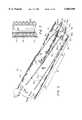
- FIG. 3is an illustration of the trunk module of the endoprosthetic implant
- FIG. 4is an illustration of an individual resilient component that may be used as an anchor or a stent
- FIG. 4Ais an illustration of the region of connection between a strut and a straight segment of the stent
- FIG. 5is an illustration of the juncture of the ends of the wire that forms the resilient component of FIG. 4;
- FIG. 6is an illustration of the frame assembly for the trunk component of the implant, including an anchor, a stent and a plurality of longitudinal struts extending between the anchor and stent;
- FIG. 7is a greatly enlarged longitudinal section of a portion of a strut of the trunk
- FIG. 8is an illustration of an embodiment of a hook and hook support attached to a portion of the anchor as seen from a location radially outward of the anchor and viewed in a radially inward direction;
- FIG. 9is an illustration of the hook and hook support of FIG. 8 as seen from the left of FIG. 8 and as viewed in a direction generally tangential of the anchor;
- FIG. 10is an illustration of an anchor having the hook configuration illustrated in FIGS. 8 and 9 as withdrawn into a pod at the distal end of a delivery device;
- FIG. 11is an illustration similar to FIG. 8 of a detent carried by the anchor at the upper end of the trunk engagable with the tissue of a body lumen to prevent movement of the anchor in an upstream direction after the endoprosthesis has been deployed;
- FIG. 12is an enlarged side elevation of the bent tip at the end of the detent of FIG. 11;
- FIG. 13is a top view of the detent arrangement of FIG. 11;
- FIG. 14is an illustration of the upstream end of a trunk embodying alternating hooks to resist downstream movement and detents to resist upstream movement of the endoprosthesis;
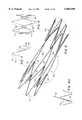
- FIG. 15is an illustration of an embodiment of a leg extension that may be used in the practice of the invention, shown in its low profile, unexpanded configuration;
- FIG. 16is a fragmented illustration of the leg segment shown in FIG. 15 after being expanded.
- FIG. 17is an illustration of the manner in which the upstream end of a leg extension engages the trunk when the two are connected;
- FIG. 18an illustration as seen along the line 18--18 of FIG. 17;
- FIG. 19is an illustration of a modified embodiment of the trunk module of the invention.
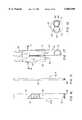
- FIG. 20is an end view of the lower end of the trunk as shown in FIG. 19 as seen from 20--20 of FIG. 19;
- FIG. 21is a reduced scale, longitudinal cross-section through the trunk of FIG. 19 as seen from 21--21 of FIG. 19;
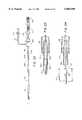
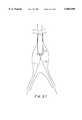
- FIG. 22is a fragmented illustration of a deployment catheter having a modified arrangement for releasably gripping the trailing end of an endoprosthesis module
- FIG. 23is a fragmented, sectional, diagrammatic illustration of the endoprosthesis gripping arrangement of FIG. 22, enlarged, and illustrating the gripping members projected distally of the end of the delivery sheath;
- FIG. 24is an illustration similar to FIG. 23 with the gripping mechanism having been operated to release the trailing end of the endoprosthesis and with the endoprosthesis as shown in an expanded configuration;
- FIGS. 25A-25Fillustrate, schematically, sequential steps in the placement of the endoprosthesis
- FIGS. 26D-26Gillustrate, schematically, a modified procedure of sequential steps in the placement of the endoprosthesis.
- FIG. 27is a diagrammatic illustration of the manner in which the modified trunk of FIG. 19 may be placed.
- FIG. 1illustrates, diagrammatically, the region of the human aorta 2 through which oxygenated blood is pumped from the heart in a downstream direction suggested at the arrows 4. Also shown are the renal arteries 6 that branch off of the aorta to direct blood to the kidneys and the iliac arteries 8 that branch at a bifurcation 10 to serve the lower extremities.
- FIG. 1also illustrates diagrammatically, and in phantom, an aneurysm 12 as may develop in the aorta 2 between the renal artery 6 and the bifurcation 10.
- the aneurysm 12defines a weakened region of the wall of the aorta and may be susceptible to rupture and subsequent hemorrhaging under the influence of arterial blood pressure.
- Such a conditionmay be treated by placement of an implant within the artery to line and reinforce the artery in the region of the aneurysm 12.
- the conditionhas been treated, if at all, by attempting to place the implant surgically.
- Surgical placementpresents a high risk to the patient.
- the present inventionis directed to placement of an implant assembly endoluminally by radially contracting the implant within a sheath of a delivery catheter, inserting the catheter into a blood vessel to access the aneurysm, positioning the device within the aneurysm and then releasing the implant assembly into engagement with supportive, healthy arterial tissue beyond each end of the aneurysm.
- tubular implantsmay be considered as having a leading end and a trailing end.
- leading end of the implantWhen an implant has been advanced into and through the blood vessel from a downstream location to an upstream deployment location, the leading end of the implant also may be considered as being “upstream” and the trailing end as “downstream”. For a device advanced in an upstream-to-downstream direction, the leading-trailing convention would be reversed.
- FIG. 2represents such a condition in which the aneurysm has developed at its lower end to include involvement with both iliac arteries 8.
- FIG. 2illustrates the assembled and deployed modules of an implant in accordance with the invention.
- the modulesinclude a trunk, indicated generally at 14, and a pair of legs extensions, indicated generally at 16, 18.
- the trunk 14is adapted to securely engage a region of healthy, supportive arterial tissue 20 above the aneurysm 12.
- the lower end of the trunk 14extends into the region of the aneurysm and is arranged to receive the upper ends of leg extensions 16 and 18 in a secure connection.
- the lower ends of the leg extensions 16, 18are arranged to extend into and engage healthy tissue in the iliac arteries.
- the endoprosthetic implantWhen the endoprosthetic implant is fully deployed, it will define flow channels for blood from healthy vessel tissue above the aneurysm to healthy vessel tissue below.
- tissuecan be expected to grow into the wall of the implant and ultimately approximate a natural biological luminal surface.
- the region 13 within the aneurysm exteriorly of the implanttypically can be expected to be filled with mural thrombus.
- Each of the trunk 14 and leg extensions 16, 18is placed endoluminally and separately, with the trunk 14 being placed first.
- the componentsare generally tubular and may be placed with a catheter-like delivery device, indicated diagrammatically at 15 in FIG. 19B, as described in European patent application 95114543.2 published Mar. 20, 1996 (Publication No. EP 701800A1), the disclosure of which is incorporated herein by reference, in its entirety.
- the delivery device 15includes an elongate flexible tubular sheath 17 that defines a tubular pod 19 at its leading end.
- the pod 19is adapted to contain an expandable tubular endoprosthesis, such as a trunk 14 or one of the leg extensions 16, 18, in a radially contracted, low profile configuration.
- the tubular endoprosthesisWhen the delivery device 15 has been advanced to the intended site of deployment, the tubular endoprosthesis is maintained in position by a staying member (not shown) disposed within the sheath while the delivery sheath and pod are withdrawn. As the sheath and pod withdraw, the leading end of the endoprosthesis is progressively exposed and progressively expands into engagement with the blood vessel.
- the delivery device and trailing end of the endoprosthesisare configured so that they remain attached to the delivery device 15 until the physician has had an opportunity to confirm that the endoprosthesis is in its desired position and orientation. The physician then can complete withdrawal of the sheath and pod to completely release the implant in the patient. Alternately, if the implant is not in the desired position for orientation, the sheath can be readvanced forwardly to recapture the endoprosthesis for repositioning or removal from the patient.
- the trunk 14includes an elongate flexible tubular graft 22 that may be of woven or other conventional vascular graft construction.
- the graft 22 of the trunk 14preferably is bifurcated to include an upper single lumen portion 24 having a relatively large expanded diameter and a lower two-lumen portion 26 that includes bifurcated first and second branch tubes 28, 30.
- the techniques for constructing grafts having such a bifurcated structureare well known to those skilled in the art.
- the graftis of woven construction.
- the graft 22includes the bifurcated branches 28, 30, the graft 22 is relatively short and is not intended itself to extend to the iliac arteries 8. Rather, the trunk 14 is constructed and selected so that the lower ends of the tubes 28, 30 will be disposed within the aneurysm, above the arterial bifurcation 10 and iliac arteries 8.
- the trunk 14should be formed to present a symmetrical internal configuration within its flow lumens, particularly in the bifurcated region 34.
- the bifurcate region 34should define a relatively thin, smooth edge 35 (see FIGS. 17, 18) to the blood stream to minimize turbulence or regions of blood stagnation and to assure that the blood flow will be balanced and symmetrical in each of the legs 28, 30. Lack of symmetry or presentation of a broad region of bifurcation 34 could result in turbulent or asymmetrical blood flow that could lead to development of blood clots or other obstruction.
- the first and second tubular branches 28, 30are attached to each other by one or more sutures 32 to maintain the tubes 28, 30 in close, generally parallel relation.
- the trunk 14includes a supporting frame, illustrated generally at 36 in FIG. 6.
- the frame 36is connected to the graft 22 and serves to maintain the graft 22 in its open configuration as the trunk 14 is released within the artery.
- the frame 36may include an anchor 38 at its upper end and a stent 40 at its lower end.
- the anchor 38 and stent 40may be formed from a suitable wire such as MP35N alloy in a zigzag configuration as illustrated in FIG. 4, including a plurality of alternating straight sections 42 and bends 44.
- the anchor and stentmay be formed by first bending the wire into the zigzag configuration and then connecting the free ends 46 together, as by welding (FIG. 5) to define a ring-like configuration.
- the anchor 38may be provided with hooks, indicated generally at 48 as illustrated in FIGS. 1 and 3.
- the stent 40is not intended to engage tissue and need not be provided with hooks 48 for that purpose.
- the lower ends of the stent 40may protrude downwardly out of the legs 28, 30 and may serve as a connector to the delivery device.
- the overall length of the trunk 14may be of the order of about six cm long, with the upper single lumen part 24 of the trunk being about three cm long and the lower portion 26 of the trunk also being about three cm long.
- the anchor 38 and stent 40may be of the order 2.5 cm long so that when they are attached to the graft 22, the adjacently facing ends of the anchor 38 and stent 40 contained within the graft 22 will be spaced from each other to define an internal exposed cylindrical band 37 of uninterrupted graft material.
- the internal surface characteristics of the graft materialpreferably are such as to facilitate secure engagement with the leg extensions 16, 18 when the leg extensions are connected to the trunk 14, as described in further detail below.
- the large single lumen portion 24 of the trunk 14may be of the order of fourteen to thirty mm in diameter.
- the diameter of the first and second tubular segments 28, 30 of the trunkmay each be approximately half of that of the single lumen segment, that is, of the order of seven to fifteen mm.
- a trunkwas made having a single lumen diameter of approximately 30 mm in diameter and a branch lumen diameter of approximately 14 mm.
- the anchor 38is formed to define a relaxed diameter that is slightly greater than the diameter defined by the single tube portion 24 of the trunk to assure that the anchor will expand the open end of the graft fully.
- the stent 40is constructed to define a relaxed diameter that will assure full expansion of the branches 28, 30 and lower portion 26 of the endoprosthesis.
- the frame 36also preferably includes a connection between the anchor 38 and stent 40 in the form of elongate struts 50.
- one end of each of the struts 50is attached to the stent 40, as by welding.
- the other end of each of the strutsis connected to the anchor 38, as with sutures 52 that also secure the struts to the graft 22.
- the struts 50which, preferably, are located exteriorly of the graft 22, also may be attached along their lengths to the exterior surface of the graft 22, as by heat bonding.
- the struts 50should be connected to the anchor 38 and stent 40 in a manner that will reduce the risk of development of stress concentrations on the frame when the device is flexed at any time during its use.
- the struts 50may be attached, as described below, as by welding to the stent 40 and by sutures 52 that also serve to attach the anchor 38 and stent 40 to the graft 22.
- FIG. 7shows, in greatly enlarged cross-sectional detail, the construction for the struts 50.
- the strutspreferably include an inner core wire 54 surrounded by a helical coil 56 wrapped tightly about the core wire 54.
- the coilis wrapped in a thin tube of thermoplastic polymeric material 58.
- the polymeric layermay comprise polypropylene, applied as a tube about the coil 56 and then heated sufficiently to cause the polypropylene to begin to melt and flow into close intimacy with the turns of the coil 56 and the graft 22.
- the polymeric layer 58may be formed from a lower melt temperature polymeric material from that of which the graft 22 is formed. By bonding the polymeric covering directly to the graft material, as suggested in FIG.
- the strutsmay be attached securely along their full lengths to the graft 22 to provide full longitudinal support for the graft 22.
- the struts 50also serve to prevent the graft 22 from becoming twisted in that the struts, being substantially straight and resilient, will resist such twisting.
- the core wire 54 and wire from which the coil 56 is formedmay be formed from MP35N alloy.
- the construction of the strutsprovides enhanced longitudinal rigidity and column strength after the device is assembled and during deployment, while at the same time allowing the device to collapse to a low profile.
- a strut so constructedmay have sufficient radiopacity to permit adequate X-ray or fluoroscopic visualization of the struts when implanted in the abdominal aorta.
- the radiopacity of the strutsmay be enhanced by adding a radiopaque filler material to the polymeric material 58.
- the lower, trailing end of the trunk 14includes a pair of branch tubes 28, 30, a single stent 40 can be used to maintain both tubes 28, 30, in an open configuration when the device is deployed.
- the zigzag construction of the stent 40is such that the adjacent portions 60 of the lower ends of the tubes 28, 30 can be placed between opposed pairs of straight sections 42 of the stent 40.
- FIG. 3illustrates such an arrangement in which the adjacent straight sections 42a, 42b and opposed straight sections 42c, 42d embrace the adjacent portion 60 of the first and second tubes 28, 30.
- FIG. 6illustrates the configuration of the frame with the stent 40 defining the generally oval shape.
- One or both of the tubes 28, 30may be provided with radiopaque means for enhancing fluoroscopic visualization of the openings of the tubes 28, 30.
- Such meansmay, for example, be in the form of a ring of radiopaque material.
- an anchor 38 adopted for use in an adult aortamay have twelve straight sections 42 disposed at an angle to each other of about 30°, when relaxed. It should be understood, however, that the dimensions and number of wire segments 42 of the anchor 38 may be varied, depending on the size of the lumen into which the endoprosthesis is to be placed and the specific condition to be treated.
- the diameter defined by the anchorshould not be less than that of the body lumen into which it is to be deployed in order that the anchor may expand the graft fully into firm and sealed engagement with the body lumen.
- the expanded diameter defined by the anchormay be slightly greater than that of the body lumen.
- the anchor 38presses radially outwardly against the inner luminal surface of the aorta and serves to retain the trunk in place.
- the security of the engagement between the trunk 14 and the blood vessel wallpreferably is enhanced by providing hooks 48 on the upper anchor 38.
- the hooks 48are formed on the upper ends of hook supports 47.
- the hook supports 47preferably are formed from the same material as the wire of the anchor 38, and may be attached to and along the straight sections 42 of the anchor 38.
- the hook supports 47 and hooks 48are arranged with the hooks 48 disposed above the bends 44 of the anchor 38.
- the hook supports 47preferably are welded to the straight sections of the anchor at two junctions.
- the hooks 48preferably are sharp and extend radially outward so that they can dig into the vessel to prevent migration of the device.
- the hooks 48may be oriented at a downward angle to present substantial resistance to shifting of the upper anchor 38 in a downstream direction.
- the hooks 48are arranged so that when the device is deployed, the hooks 48 will project radially outwardly beyond the outer portions of the endoprosthesis to assure that the hooks will engage securely the tissue of the
- the devicebe constructed so that the anchor 38 can be contracted to a low profile configuration in which the implant is insertable into and carried by the tubular pod 19 of the delivery device 15 but without the hooks 48 becoming entangled with each other or otherwise interfering with the ability of the device to be radially contracted or expanded.
- the hooksare supported in a manner such that they will extend radially outwardly of the upper end of the delivery device when the implant is deployed but can be withdrawn radially inwardly into the pod of the delivery device when the implant is contracted.
- FIGS. 3 and 8-10illustrate a preferred arrangement by which the hooks may be provided with such radial movement.
- the hook supports 47are shaped to include an S-shaped region that defines transverse extensions E, F that can engage the rim 21 at the leading end of the pod 19 as the anchor 38 is drawn, relatively, into the pod 19.
- the S-shaped portion 62 of the hook support 47may lie essentially in a single plane (see FIG. 9) that includes a center line 66 of the hook support 47 and extends approximately tangentially to the outer periphery of the anchor 38.
- the extent to which the transverse extensions E, F extend from the center line 66may be varied depending on the other dimensional requirements of the system.
- the transverse extensionsshould define a distance E+F that will assure the retraction of the hooks 48 to their intended radially inwardly disposed configuration so that they can be captured within the pod 19, without entanglement, as suggested in FIG. 10.
- E, F of the hook supports 47advancement of the pod 19 will depress and urge the hook supports 47 radially inwardly to cause the ends of the hooks 48 to be drawn radially inwardly toward the central axis of the anchor.
- the chordal segment defined by the length E +Fshould be such that the radial projection J of the hook 48 will be well within the circumference defined by the inner diameter of the pod 19.
- the anchor 38also may be provided with detents 70 that may be formed on the upper ends of each of one or more detent supports 72 in the same manner as the hooks 48 are disposed on the hook supports 47.
- the detent supports 72also may be provided with transverse extensions E' and F' to facilitate their controlled radial retraction when the pod 19 is advanced to recapture the trunk.
- the detent 70may be formed simply by providing a bent tip 74, at the upwardly extending ends of the supports 72, beyond the transverse extensions.
- the bent tip 74preferably is formed at an acute angle to the center line 76 of the support 72.
- the bent tip 74may be of the order of about 0.08" long and may extend radially outwardly by a dimension K about 0.04 inch from the center line 76.
- the uppermost end of the tipmay be beveled, as indicated at 78, to provide a sharp point oriented to dig into the tissue of the blood vessel should the device tend to shift in an upward direction. It should be noted that when the device is deployed the detents will press radially outwardly against the tissue of the vessel. The sharp tips will not fully dig into the tissue of the vessel unless and until the device is urged in an upstream direction.
- the anchor 38may be configured to have alternately downstream resistant hooks 48 and upstream resistant detents 70 as shown in FIG. 14.
- the stent 40may be assembled and integrated with the graft 22 by first attaching the lower ends of the inner core wires 54 to straight sections 42 of the stent 40, preferably in a manner that will avoid the development of significant stress concentrations at the region of attachment.
- the lower ends of the inner core wires 54may be spot welded, as suggested at 53 in FIG. 4A. After the lower ends of the core wires 54 have been so attached, the stent 40 is placed in the open ends of the branch tubes 28, 30, passing the free ends of the inner core wires 54 from the inside to the outside of the graft 22 through small holes 51 formed in the branch tubes 28, 30.
- the helical coils 56are slipped onto the core wires 54 and the polymeric tubes 58 are slipped over the helical coils 56.
- the anchor 38is assembled with its arrangement of hooks 48 and, if employed, detents 70
- the anchor 38is placed within the upper end of the graft 22, with the hooks 48, hook supports 47, detent 70 and detent support 72 being manipulated through small openings 53 formed about the upper end of the graft 22.
- the suturesare placed to further connect the anchor 38, stent 40, struts 52 and graft 22 together.
- the polymeric tubes 58then may be heat bonded to the graft 22.
- the upper ends of the struts 50need not be rigidly attached to the anchor 38 and, preferably, are attached to permit flexibility between the two without developing adverse stress concentrations.
- the sutures 52 associated with the anchor 38provide a connection between the anchor 38 and the struts 50 while also serving to attach the anchor 38 to the graft 22.
- the sutures 52 associated with the anchor 40serve to provide an additional connection between the frame 36 and the graft 22.
- FIGS. 19-21illustrate a modified embodiment of the anchor that may be constructed in similar fashion to that described above in connection with the embodiment of FIG. 3.
- the graft 22'is formed to include an additional single lumen segment 27 having an expanded diameter approximately equal to the sum of the diameters of the first and second branch tubes 28', 30'.
- the stent 40may be the same stent as that described above in connection with the embodiment of FIG. 3.
- the single lumen configuration of the segment 27enables the stent 40 to expand that segment to a generally circular cross-section (FIG. 20).
- the struts 50'may be constructed in the same manner discussed above.
- the devicethus may be considered to include a pair of generally circular cross-section lumens at its ends that communicate with a pair of smaller diameter parallel lumens defined by the tubes 28', 30'.
- the enlarged diameter opening defined by the segment 27presents a larger target to facilitate coupling of the leg extension 16, 18, with the trunk.
- each of the leg extensions 16, 18may include a flexible outer tube 90 of the type commonly used as a synthetic blood vessel.
- the tube 90may be formed from a conventional graft material, such as a fabric similar to the fabric from which the graft 22 is formed. It should be understood, however, that any of a variety of conventional graft materials may be employed including graft materials that have differing characteristics than other of the modular components in order to suit the particular requirements of the patient.
- the length of the graft 90may be varied to suit the anatomy of the particular lumens into which the implant is to be placed.
- the tube 90is supported internally by a stent 92 that, in the preferred embodiment, extends substantially the full length of the tube 90.
- the lower end of the extension leg 16, 18may be provided with a means by which it can be engaged by the delivery catheter to enable the leg extension to be recaptured, for repositioning or removal before release, should that be desired.
- To that end lower end of the stent 92may protrude downwardly beyond the lower end 91 of the tube 90 and preferably defines, when relaxed, a slightly flared configuration defining a plurality of downwardly facing projections 94.
- Stent 92is expandable from a low profile configuration (FIG. 15) in which it can be received within the tubular pod 19 of the delivery device and an expanded configuration in which it has fully expanded the graft 90.
- a number of stentsmay be employed, it is presently preferred to use the type of stent described in German patent number 43 03 181.1 issued to Angiomed A G of Düsseldorf, Germany and from whom such stents are
- the leg extensions 16, 18are deployed with the use of a delivery catheter such as that described above in connection with the trunk 94 and incorporated by reference herein.
- One of the leg extensions 16, 18is carried by the delivery device to a position in which the leg extension is disposed within one of the branch tubes 28, 30 of the previously placed trunk 14. While maintaining the position of the leg extension, the sheath and pod 19 are withdrawn to progressively enable the stent 92 to expand the tube 90 within and into engagement with the inner surface of the trunk 14.
- the leg extensions 16, 18are selected to have an expanded diameter to match the internal dimensions of the trunk 14 so that the upper end of the leg extension, when released, will firmly and securely engage the inner luminal surfaces of the trunk 14.
- leg extensionsare secured by cooperative engagement of the facing surfaces of the tube 90 and the inner surface of the graft 22 coupled with the radial expansive force with which the stent 92 presses the tube 90 against the interior of the truck 14.
- a substantially region of surface-to-surface engagementwill result between the coextensive circumferential band 37 of graft material 22 of the trunk 14 with the external engaged surface of the upper end of the tubular graft 90.
- the modified delivery deviceincludes an arrangement of an outer flexible tube 96 that defines a slightly enlarged diameter sheath 98 at its distal end. Disposed coaxially within the outer tube 96 is an intermediate tube 100 that is slidably longitudinally within the outer tube 98 and has a distally opening cup 102 at its distal end. A metal inner tube 104 is disposed coaxially within the intermediate tube 100 for longitudinal movement with respect to the intermediate tube 100.
- the inner tubehas an enlarged member 106 attached at a location that the member 106 can be disposed within the cup 102 (FIG. 23) or extended distally beyond and out of the cup 102 (FIG. 24).
- the cross-sectional dimensions of the member 106 and the inner surface of the cup 102are such that when brought together they can cooperate to wedge the trailing end of a radially contracted endovascular modular component such as a leg extension 16, 18 between the member 106 and the cup. As illustrated diagrammatically in FIG. 23, the trailing end of the leg extension 16 is securely gripped in the generally annular space between the member 106 and the cup 102.
- FIG. 23illustrates the relative configuration of the components after the outer tube 96 has been withdrawn sufficiently to withdraw the sheath 98 to project the gripped, trailing end of the endoprosthesis 16 out of the sheath.
- the intermediate and inner tubes 100, 104can be moved relative to each other to release the endoprosthesis 16 so that the endoprosthesis can expand (FIG. 24).
- the position of the tubes 96, 100, 104may be controlled by conventional lockable fittings at the proximal end of the device.
- a fitting 108is attached to the proximal end of the tubular shaft 96.
- the intermediate tube 100extends through the fitting 108 and itself has a fitting 110 at its proximal end.
- the inner tube 104extends through the fitting 1 10 and has another fitting 112 attached to its proximal end.
- the fitting 112is constructed to enable a guidewire (not shown) to be inserted through the lumen of the inner tube 104.
- FIGS. 25A-25Fillustrate, diagrammatically one sequence of the operations by which the modular endoprothesis may be deployed.
- FIG. 25Aillustrates, diagrammatically, a portion of a patient's abdominal aorta 2 and several branch vessels, including the renal arteries 6 and iliac arteries 8.
- the aneurysm 12is illustrated as having extended into and beyond the bifurcation 10, to include a portion of the iliac arteries 8.
- FIG. 25Aillustrates an access opening 82 formed in one of the iliac arteries 8.
- the access opening 82may be formed percutaneously or in a surgical cut-down technique.
- an introducer sheath(not shown) will be placed through the opening 82 to receive the various instruments and permit their manipulation without subjecting the patient to excessive trauma.
- FIG. 25Aillustrates, diagrammatically, a portion of a patient's abdominal aorta 2 and several branch vessels, including the renal arteries 6 and iliac arteries 8.
- the aneurysm 12is
- 25Aillustrates the patient anatomy with a guidewire 84 having been placed to extend upwardly to and through a region of healthy aortic tissue 3 above the aneurysm 12.
- the delivery devicewhich includes a guidewire lumen, is advanced over the guidewire 84 until the pod 19 at the distal end of the sheath 17, which contains the trunk 14 in a low profile, contracted configuration, is located at the intended placement site.
- the delivery catheter 15is manipulated to maintain the position of the trunk 14 relative the patient's vasculature, while withdrawing the sheath 17 and pod 19, as indicated by the arrow 85 in FIG. 25C.
- the desired position of the trunk 14, before deployment,is such that the anchor 38, including its hooks 48 and detents 70, will be disposed within healthy tissue capable of firmly supporting the upper end of the trunk 14.
- the trunk 14is progressively exposed to enable the anchor 38 to expand the endoprothesis toward an expanded diameter so that it will firmly and securely engage the region 3 of healthy aortic tissue above the aneurysm 12.
- FIG. 26Dillustrates the configuration of the trunk 14 after it has been released.
- the trunk 14is attached to the healthy aortic tissue only by the anchor 34.
- the lower end of the trunk 14, including the lower ends of the bifurcated tubes 28, 30depend downwardly but without support of engagement with any part of the body lumen.
- the construction of the trunkis such that it has sufficient longitudinal stiffness and the open lower ends are supported by the stent 40 so that it has sufficient rigidity to be self supporting and readiness to receive leg extensions 16,18.
- the delivery deviceis removed from the patient.
- the guidewire 84may remain in place in order to serve as a guide for delivery device for one of the leg extensions 16, 18.
- the trunk 14serves as a first, securely placed component of the endovascular prosthesis.
- the trunk 14is configured to present a stable pair of targets in the form the open lower ends of the branch tubes 28, 30 in order to facilitate advancement of the leg extensions into the branch tubes 28, 30.
- the frame associated with the trunk 14provides a firm stable shape for the trunk 14 that will be unaffected by engagement of the delivery device for the leg extensions.
- the trunk 14provides continuous wide inlet openings to receive the upper, leading ends of the leg extensions 16, 18.
- the lower openings of the branch tubes 28, 30may be provided with radiopaque markers, as in the form of rings 29 or the like by which the entry openings of the branch tubes 26, 28 can be visualized fluoroscopically.
- leg extensions 16, 18may be performed in essentially the same manner as the placement of the trunk 14, that is, by a catheter-like delivery device adapted to contain a leg extension in a low profile configuration, in readiness for expansion when released.
- a delivery deviceis loaded with one of the leg extensions 16, 18.
- the delivery devicethen can be advanced over the initially placed guidewire 84 until its leading, upper end is disposed, as desired, within the trunk 14.
- the leg extensionmay be advanced into a receptive of the branch tubes 28, 30 to dispose the upper end of the inserted leg extension beyond the stent 40 and into the intermediate 37 between the stent and anchor.
- the surface characteristics of the outside of the tube 90 and the interior of the trunk, including the internal surfaces of the graft material 22should be selected so that a secure and sealed connection will be formed when the tube 90 is in its expanded configuration, connected to the trunk 14.
- the sheath and pod of the delivery device 15are withdrawn to enable the leg extension to expand and with it's upper portion and secure overlapped engagement with the trunk 14.
- the exposed portion of the stentcan expand to it's expanded diameter.
- the length and diameters of the leg extensionare selected so that the upper end will securely engage the trunk and the lower end will expand into firm engagement with healthy tissue of the iliac artery 8, below the aneurysm 12.
- the lower of the leg extensionsinclude the downwardly and radially outwardly extended projections adapted to engage healthy tissue of the iliac arteries.
- the projectionswill remain in engagement with healthy iliac artery tissue.
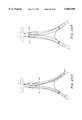
- FIG. 26Eillustrates the withdrawal of the delivery device as the other leg extension expands progressively.
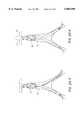
- FIG. 26Fillustrates the bifurcated endoprothesis, constructed in modular fashion after removal of the guide wires and delivery devices.
- FIGS. 26D-26Fillustrate a modified procedure for placing the modular endoprosthesis.
- the modified procedurebegins the same as that described above in connection with FIGS. 26A-26C.
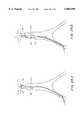
- the next step, of delivering and deploying one of the leg extensions 16, 18,is substantially similar in this modified procedure except that instead of directing the guidewire and delivery device into the bifurcated branch of the trunk on the same side as the iliac artery that was accessed, the delivery device is directed to the branch tube 30 on the opposite side.
- the delivery deviceis directed to the branch tube 30 on the opposite side.
- FIG. 26Dillustrates the first of the two leg extensions having been so cross-placed.
- FIG. 26Eillustrates the system after the leg extension has been attached to the trunk and the delivery device has been withdrawn, leaving one of the leg extensions in place connecting the trunk and its associated iliac artery.
- FIG. 26Fillustrates the similar placement of the other leg extension, showing the delivery device having partially deployed the leg extension in the other of the branch tubes.
- FIG. 26Fillustrates that the cross-placement results in the devices being crossed within the aneurysmal region.
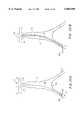
- FIG. 26Gillustrates the configuration after the second of the leg extensions has been fully deployed to directly connect its associated branch tube of the trunk with its associated iliac artery. It should be understood that variations of this modified procedure may be employed. For example, it may be desirable to first deploy both guidewires G1, G2 in a cross-configuration. Then, with the guidewires in place, the delivery devices may be advanced over the guidewires and the module deployed.
- FIG. 27illustrates, diagrammatically, the manner in which the modified trunk shown in FIG. 19 may be used in the practice of the invention.
- the placement and deployment of the trunk itself as well as the leg extensionsis essentially identical to the modes described above.
- the addition of the lower segment 27, however,provides a larger tubular target for the guidewires, illustrated diagrammatically as G1 and G2.
- the physicianmay find it easier to place the guidewire within the larger diameter lower extension than if the target were the smaller diameters as defined by the branch tubes 28, 30.
- the distal ends of the guidewirestypically will be provided with an atraumatic J-shape.
- Use of the cross-over technique described above in connection with FIGS. 27D-27Gmay be employed, as shown.
Landscapes
- Health & Medical Sciences (AREA)
- Gastroenterology & Hepatology (AREA)
- Pulmonology (AREA)
- Cardiology (AREA)
- Oral & Maxillofacial Surgery (AREA)
- Transplantation (AREA)
- Engineering & Computer Science (AREA)
- Biomedical Technology (AREA)
- Heart & Thoracic Surgery (AREA)
- Vascular Medicine (AREA)
- Life Sciences & Earth Sciences (AREA)
- Animal Behavior & Ethology (AREA)
- General Health & Medical Sciences (AREA)
- Public Health (AREA)
- Veterinary Medicine (AREA)
- Prostheses (AREA)
- Media Introduction/Drainage Providing Device (AREA)
- Materials For Medical Uses (AREA)
Abstract
Description
The invention relates to devices and techniques for placing and securing an endoprosthesis in a patient's vascular system, including bifurcated blood vessels.
Among the long accepted practices to treat a variety of vascular disorders are surgical procedures that involve placement of a tubular graft in a patient's blood vessels. The construction and characteristics of the graft typically are adapted to optimize its use in the specific surgical environment and condition to be treated and, accordingly, a number of different types of grafts are available. Among the most common vascular grafts are those formed from a woven or knitted tubular fabric as well as non-fabric tubes such as expanded polytetrafluoroethylene. Such grafts typically are placed in a patient's vascular system in a highly invasive surgical procedure. In general, the complexity of the surgical procedure required to place the graft will depend on many factors, including the location and surgical accessibility of the portion of the patient's vasculature where the graft is to be placed.
Not all vascular conditions in which it would be desirable to place a graft can be so treated. Among the particularly troublesome medical conditions in which it is desirable to place a graft is that of an abdominal aortic aneurysm, in which a portion of the patient's aorta, the major artery carrying blood from the heart, has developed a weakened wall such that the weakened portion will tend to expand under the influence of the patient's blood pressure. An aortic aneurysm presents a life threatening risk that the aneurysm may burst causing massive internal bleeding. Treatment of the condition typically has involved deeply invasive abdominal surgery in which the patient's abdominal cavity is opened to reach and expose the aortic aneurysm. While maintaining the patient on an independent life support system, the region of the aneurysm is incised lengthwise to enable insertion of the graft into the aorta to span the weakened region and define a structurally strong tubular flow path between the remaining healthy portions of the aorta. The graft, so positioned, then is sutured in place. The graft thus serves as a reinforcing liner for the weakened portion of the aorta. Such surgical procedures have been characterized by a relatively high mortality rate. Typically, patients suffering from the condition are elderly and are less able to survive the rigors of major abdominal surgery. Additionally, there is a substantial degree of risk when the abdominal cavity is opened because the confining pressure of other abdominal organs on the aorta is released. In some cases, the aortic wall in the region of the aneurysm is so weak that upon release of the confining pressure, the aneurysm may burst with resulting immediate massive hemorrhaging.
Significant effort has been directed to the development of less invasive techniques for placement of a graft, such as in the abdominal aortic region, in a manner that presents less risk to the patient. Various devices in the form of a single tubular implant have been described for that purpose. Typically, such single tube devices have a means for anchoring the ends of the graft to healthy vascular tissue at the opposite ends of the aneurysmal region.
In the case of abdominal aortic aneurysms, however, by the time the aneurysm is discovered, it may have advanced to a stage where there is insufficient healthy tissue in the region where the aorta bifurcates into the two iliac arteries for the end of a single tubular graft to be secured. Often the aneurysm has advanced into and involves the iliac arteries as well. Such a condition cannot be treated by a single lumen tubular prosthesis. If an endoluminal prosthesis is to be placed in such anatomy, the prosthesis must have a bifurcated configuration in order to extend fully through the regions of aneurysm in all of the involved arteries and with the device being in secure engagement with healthy tissue to insure that it provides full endoluminal support and will not migrate from its implanted position.
The necessity for the use of a bifurcated graft has been recognized. One approach is described in U.S. Pat. No. 5,489,295 (Piplani) in which a one-piece bifurcated graft is described as being placed in the bifurcated region of the aorta and iliac arteries. The procedure described is complex and requires many difficult manipulations by the physician. Additionally, the unpredictable variations and vascular anatomy of an individual patient can be expected to present blood vessels of shapes and diameters that do not readily match the preformed configuration of a one piece, preformed, bifurcated graft. Consequently, the use of such a graft is likely to result in mismatches between one or more of the three legs of the bifurcated graft with the corresponding aorta and iliac arteries.
Another device is described in PCT patent application PCT/US95/01466 (International Publication No. WO95/21592) in which a bifurcated device is formed in two sections, one of which includes a graft having a main body and one integral leg extension. The main body is intended to be placed in the aorta and the extension in one of iliac arteries. The main body also has an opening adjacent the leg extension that can be aligned with the other iliac artery. The second section of the device includes a tubular graft that can be advanced through the other iliac artery into engagement with the opening in the main body. This arrangement also is awkward to place and presents additional difficulties. Among those difficulties is that where the body and one of the legs is formed in a unitary structure, the device similarly does not lend itself to modular construction in which the individual components can be combined to match the dimensions of the particular patient's anatomy. Also among the difficulties with the device is that it employs stenting elements formed from a shape memory alloy that is not readily visualized under fluoroscopic examination and must be placed relatively quickly, before the stent expands as a consequence of exposure to body temperature.
A third approach, described in PCT application PCT/DK94/00468 (International Publication No. WO95/16406) employs an endovascular device for placement at the region of an arterial bifurcation that includes a three-component system including a main, bag-like body intended for placement in the aorta. The bag-like body has a pair of openings formed at its lower end. Each of the openings is said to receive an end of a tubular prosthesis inserted through each of the iliac arteries. The tubular prostheses are said to attach to the main bag-like body and extend into the iliac arteries. Among the apparent difficulties with this arrangement are that there is no way for the physician to visualize, fluoroscopically, the main bag-like body or the location of the openings that must be accessed in order to insert the leg segments into the openings. Additionally, the apparently flexible structure of the bag-like body would enable the bag to flex under the influence of blood flow, body movement and engagement with the apparatus for delivering and placing the leg segments, all of which would present considerable difficulties in the placement process. Moreover, even if the leg segments could be attached to the main body, the apparent relationship of the leg segments with the main body is such as to present an irregular, turbulent flow path from the main body to the leg extensions.
None of the prior art relating to the placement of a bifurcated tubular endoprosthetic implant within the region of the aortic-iliac arteries has suggested a modular construction by which the components can be accurately positioned, assembled and, if necessary, is recaptured within the delivery device so that the module can be redeployed in its proper position or removed in its entirety. Additionally, none embodies an arrangement in which the leg portions of the stent have a high degree of flexibility in order to conform easily to the configuration of the particular patient's vascular anatomy.
It would be desirable to provide a modular implant that can be constructed in situ with modules that can be accurately placed and connected easily with individual modules selected to conform closely to the vascular anatomy of the individual patient. It is among the general objects of the invention to provide such a modular implant construction.
The endoprosthetic implant of the present invention is formed from separate components that are individually and sequentially inserted transluminally to the region to be treated such as, for example, the region of the abdominal aorta and iliac arteries. Each is deployed in sequence by a catheter-like delivery device. Except for the first placed module, each module is connected to a previously placed module. The first placed module comprises a trunk adapted to be placed in the aorta and having a relatively large upstream opening and a pair of smaller downstream openings. Each of the downstream openings is adapted to receive the upstream end of one of two tubular leg extensions. The trunk, which is constructed to be recapturable within the delivery device, includes a tubular synthetic graft having upstream and downstream ends and a resilient expandable frame assembly. The frame assembly includes a radially expandable anchor at its upstream end that serves to secure the endoprosthesis to healthy aortic tissue and also maintains the upstream end of the endoprosthesis expanded and in sealed engagement with the lumen of the aorta. A stent at the downstream end of the graft maintains the downstream branches of the graft open and receptive to the leg extensions. The anchor and the stent are connected to each other by at least two longitudinal struts in a manner that enables the trunk to be recaptured within the delivery device and repositioned or removed. The struts, anchor and stent also provide sufficient longitudinal stiffness and column strength for the trunk so that it will not buckle when engaged by the leg extensions or the delivery device by which the leg extensions are placed. The frame assembly is such that the trunk is relatively stiff to assure that it will remain securely in place to present a stable target that can be accessed by the other modular components with improved facility. The leg extensions are constructed to facilitate their bending without kinking in order to conform to the specific anatomy of the patient. The modular construction of the endoprosthesis enables it to be formed from components, each of which can be selected to fit the specific part of the vascular anatomy of the patient into which it is to be placed.
It is among the general objects of the invention to provide an improved endoluminal implant adapted to be placed in a bifurcated vascular region.
Another object of the invention is to provide an arrangement of modular endoluminal implant components by which an endoluminal graft may be constructed within the vascular lumen to a configuration conforming to the patient's vascular anatomy.
Another object of the invention is to provide an arrangement of modular endoluminal implant components including a trunk for placement within a blood vessel and legs connectible to the trunk for individual placement in a branch blood vessels.
An additional object of the invention is to provide a modular graft of the type described in which each of the individual modules can be positioned accurately and in which at least the first placeable module can be recaptured and repositioned, if necessary.
Another object of the invention is to provide an improved method for construction of an endoluminal inplant in situ at a bifurcated region.
The foregoing and other object and advantages of the invention will be appreciated more fully from the following further description thereof, with reference to the accompanying drawings, of which:
FIG. 1 is a diagrammatic illustration of a portion of an abdominal aorta illustrating, in phantom, an aortic aneurysm confined to the aorta;
FIG. 2 is an enlarged illustration similar to FIG. 1 but with an aneurysm that has involved a substantial length of the abdominal aorta and has extended into the iliac arteries, with an implant in accordance with the invention operatively positioned in the region of the aneurysm.
FIG. 3 is an illustration of the trunk module of the endoprosthetic implant;
FIG. 4 is an illustration of an individual resilient component that may be used as an anchor or a stent;
FIG. 4A is an illustration of the region of connection between a strut and a straight segment of the stent;
FIG. 5 is an illustration of the juncture of the ends of the wire that forms the resilient component of FIG. 4;
FIG. 6 is an illustration of the frame assembly for the trunk component of the implant, including an anchor, a stent and a plurality of longitudinal struts extending between the anchor and stent;
FIG. 7 is a greatly enlarged longitudinal section of a portion of a strut of the trunk;
FIG. 8 is an illustration of an embodiment of a hook and hook support attached to a portion of the anchor as seen from a location radially outward of the anchor and viewed in a radially inward direction;
FIG. 9 is an illustration of the hook and hook support of FIG. 8 as seen from the left of FIG. 8 and as viewed in a direction generally tangential of the anchor;
FIG. 10 is an illustration of an anchor having the hook configuration illustrated in FIGS. 8 and 9 as withdrawn into a pod at the distal end of a delivery device;
FIG. 11 is an illustration similar to FIG. 8 of a detent carried by the anchor at the upper end of the trunk engagable with the tissue of a body lumen to prevent movement of the anchor in an upstream direction after the endoprosthesis has been deployed;
FIG. 12 is an enlarged side elevation of the bent tip at the end of the detent of FIG. 11;
FIG. 13 is a top view of the detent arrangement of FIG. 11;
FIG. 14 is an illustration of the upstream end of a trunk embodying alternating hooks to resist downstream movement and detents to resist upstream movement of the endoprosthesis;
FIG. 15 is an illustration of an embodiment of a leg extension that may be used in the practice of the invention, shown in its low profile, unexpanded configuration;
FIG. 16 is a fragmented illustration of the leg segment shown in FIG. 15 after being expanded; and
FIG. 17 is an illustration of the manner in which the upstream end of a leg extension engages the trunk when the two are connected;
FIG. 18 an illustration as seen along theline 18--18 of FIG. 17;
FIG. 19 is an illustration of a modified embodiment of the trunk module of the invention;
FIG. 20 is an end view of the lower end of the trunk as shown in FIG. 19 as seen from 20--20 of FIG. 19;
FIG. 21 is a reduced scale, longitudinal cross-section through the trunk of FIG. 19 as seen from 21--21 of FIG. 19;
FIG. 22 is a fragmented illustration of a deployment catheter having a modified arrangement for releasably gripping the trailing end of an endoprosthesis module;
FIG. 23 is a fragmented, sectional, diagrammatic illustration of the endoprosthesis gripping arrangement of FIG. 22, enlarged, and illustrating the gripping members projected distally of the end of the delivery sheath;
FIG. 24 is an illustration similar to FIG. 23 with the gripping mechanism having been operated to release the trailing end of the endoprosthesis and with the endoprosthesis as shown in an expanded configuration;
FIGS. 25A-25F illustrate, schematically, sequential steps in the placement of the endoprosthesis;
FIGS. 26D-26G illustrate, schematically, a modified procedure of sequential steps in the placement of the endoprosthesis; and
FIG. 27 is a diagrammatic illustration of the manner in which the modified trunk of FIG. 19 may be placed.
FIG. 1 illustrates, diagrammatically, the region of thehuman aorta 2 through which oxygenated blood is pumped from the heart in a downstream direction suggested at thearrows 4. Also shown are therenal arteries 6 that branch off of the aorta to direct blood to the kidneys and theiliac arteries 8 that branch at abifurcation 10 to serve the lower extremities. FIG. 1 also illustrates diagrammatically, and in phantom, ananeurysm 12 as may develop in theaorta 2 between therenal artery 6 and thebifurcation 10. Theaneurysm 12 defines a weakened region of the wall of the aorta and may be susceptible to rupture and subsequent hemorrhaging under the influence of arterial blood pressure. Such a condition may be treated by placement of an implant within the artery to line and reinforce the artery in the region of theaneurysm 12. The condition has been treated, if at all, by attempting to place the implant surgically. Surgical placement presents a high risk to the patient. The present invention is directed to placement of an implant assembly endoluminally by radially contracting the implant within a sheath of a delivery catheter, inserting the catheter into a blood vessel to access the aneurysm, positioning the device within the aneurysm and then releasing the implant assembly into engagement with supportive, healthy arterial tissue beyond each end of the aneurysm.
In this description, a direction along which the delivery device is advanced (i.e., toward the heart) will be referred to variously as "leading", "forward", "above" or "renal" and the opposite direction will be referred to variously as "trailing", "rearward", "below" or "iliac". Thus the tubular implants may be considered as having a leading end and a trailing end. When an implant has been advanced into and through the blood vessel from a downstream location to an upstream deployment location, the leading end of the implant also may be considered as being "upstream" and the trailing end as "downstream". For a device advanced in an upstream-to-downstream direction, the leading-trailing convention would be reversed.
It is not uncommon for the presence of an aneurysm to be undetected for a significant time, during which the extent of the aneurysm may increase. The aneurysm may develop both upstream and downstream along the abdominal aorta, extending into or beyond thebifurcation 10 into one or both of theiliac arteries 8. FIG. 2 represents such a condition in which the aneurysm has developed at its lower end to include involvement with bothiliac arteries 8. When an aneurysm has developed to that stage, there no longer is sufficient healthy tissue to be securely engaged by a single tubular implant. Consequently, if the condition is to be treated by endoluminal placement of a prosthesis, the prosthesis will have to extend into one or both of the branch vessels.
FIG. 2 illustrates the assembled and deployed modules of an implant in accordance with the invention. The modules include a trunk, indicated generally at 14, and a pair of legs extensions, indicated generally at 16, 18. Thetrunk 14 is adapted to securely engage a region of healthy, supportivearterial tissue 20 above theaneurysm 12. When deployed, the lower end of thetrunk 14 extends into the region of the aneurysm and is arranged to receive the upper ends ofleg extensions leg extensions region 13 within the aneurysm exteriorly of the implant typically can be expected to be filled with mural thrombus.
Each of thetrunk 14 andleg extensions trunk 14 being placed first. The components are generally tubular and may be placed with a catheter-like delivery device, indicated diagrammatically at 15 in FIG. 19B, as described in European patent application 95114543.2 published Mar. 20, 1996 (Publication No. EP 701800A1), the disclosure of which is incorporated herein by reference, in its entirety. Thedelivery device 15 includes an elongate flexibletubular sheath 17 that defines atubular pod 19 at its leading end. Thepod 19 is adapted to contain an expandable tubular endoprosthesis, such as atrunk 14 or one of theleg extensions delivery device 15 has been advanced to the intended site of deployment, the tubular endoprosthesis is maintained in position by a staying member (not shown) disposed within the sheath while the delivery sheath and pod are withdrawn. As the sheath and pod withdraw, the leading end of the endoprosthesis is progressively exposed and progressively expands into engagement with the blood vessel. The delivery device and trailing end of the endoprosthesis are configured so that they remain attached to thedelivery device 15 until the physician has had an opportunity to confirm that the endoprosthesis is in its desired position and orientation. The physician then can complete withdrawal of the sheath and pod to completely release the implant in the patient. Alternately, if the implant is not in the desired position for orientation, the sheath can be readvanced forwardly to recapture the endoprosthesis for repositioning or removal from the patient.
One embodiment of thetrunk component 14 of the invention is illustrated in FIG. 3. Thetrunk 14 includes an elongate flexibletubular graft 22 that may be of woven or other conventional vascular graft construction. Thegraft 22 of thetrunk 14 preferably is bifurcated to include an uppersingle lumen portion 24 having a relatively large expanded diameter and a lower two-lumen portion 26 that includes bifurcated first andsecond branch tubes graft 22 includes thebifurcated branches graft 22 is relatively short and is not intended itself to extend to theiliac arteries 8. Rather, thetrunk 14 is constructed and selected so that the lower ends of thetubes arterial bifurcation 10 andiliac arteries 8.
Thetrunk 14 should be formed to present a symmetrical internal configuration within its flow lumens, particularly in thebifurcated region 34. Thebifurcate region 34 should define a relatively thin, smooth edge 35 (see FIGS. 17, 18) to the blood stream to minimize turbulence or regions of blood stagnation and to assure that the blood flow will be balanced and symmetrical in each of thelegs bifurcation 34 could result in turbulent or asymmetrical blood flow that could lead to development of blood clots or other obstruction. The first and secondtubular branches more sutures 32 to maintain thetubes
Thetrunk 14 includes a supporting frame, illustrated generally at 36 in FIG. 6. Theframe 36 is connected to thegraft 22 and serves to maintain thegraft 22 in its open configuration as thetrunk 14 is released within the artery. In the preferred embodiment, theframe 36 may include ananchor 38 at its upper end and astent 40 at its lower end. Theanchor 38 andstent 40 may be formed from a suitable wire such as MP35N alloy in a zigzag configuration as illustrated in FIG. 4, including a plurality of alternatingstraight sections 42 and bends 44. The anchor and stent may be formed by first bending the wire into the zigzag configuration and then connecting the free ends 46 together, as by welding (FIG. 5) to define a ring-like configuration. Although omitted for clarity of illustration in FIG. 6, theanchor 38 may be provided with hooks, indicated generally at 48 as illustrated in FIGS. 1 and 3. Thestent 40 is not intended to engage tissue and need not be provided withhooks 48 for that purpose. The lower ends of thestent 40 may protrude downwardly out of thelegs
By way of dimensional example, in the device intended for placement in an adult abdominal aorta, the overall length of thetrunk 14 may be of the order of about six cm long, with the uppersingle lumen part 24 of the trunk being about three cm long and thelower portion 26 of the trunk also being about three cm long. Theanchor 38 andstent 40 may be of the order 2.5 cm long so that when they are attached to thegraft 22, the adjacently facing ends of theanchor 38 andstent 40 contained within thegraft 22 will be spaced from each other to define an internal exposedcylindrical band 37 of uninterrupted graft material. The internal surface characteristics of the graft material preferably are such as to facilitate secure engagement with theleg extensions trunk 14, as described in further detail below. The largesingle lumen portion 24 of thetrunk 14 may be of the order of fourteen to thirty mm in diameter. The diameter of the first and secondtubular segments anchor 38 is formed to define a relaxed diameter that is slightly greater than the diameter defined by thesingle tube portion 24 of the trunk to assure that the anchor will expand the open end of the graft fully. Similarly, thestent 40 is constructed to define a relaxed diameter that will assure full expansion of thebranches lower portion 26 of the endoprosthesis.
Theframe 36 also preferably includes a connection between theanchor 38 andstent 40 in the form of elongate struts 50. In the illustrative embodiment, one end of each of thestruts 50 is attached to thestent 40, as by welding. The other end of each of the struts is connected to theanchor 38, as withsutures 52 that also secure the struts to thegraft 22. Thestruts 50 which, preferably, are located exteriorly of thegraft 22, also may be attached along their lengths to the exterior surface of thegraft 22, as by heat bonding. Thestruts 50 should be connected to theanchor 38 andstent 40 in a manner that will reduce the risk of development of stress concentrations on the frame when the device is flexed at any time during its use. To that end, in the illustrative embodiment, thestruts 50 may be attached, as described below, as by welding to thestent 40 and bysutures 52 that also serve to attach theanchor 38 andstent 40 to thegraft 22.
FIG. 7 shows, in greatly enlarged cross-sectional detail, the construction for thestruts 50. The struts preferably include aninner core wire 54 surrounded by ahelical coil 56 wrapped tightly about thecore wire 54. The coil is wrapped in a thin tube of thermoplasticpolymeric material 58. The polymeric layer may comprise polypropylene, applied as a tube about thecoil 56 and then heated sufficiently to cause the polypropylene to begin to melt and flow into close intimacy with the turns of thecoil 56 and thegraft 22. Thepolymeric layer 58 may be formed from a lower melt temperature polymeric material from that of which thegraft 22 is formed. By bonding the polymeric covering directly to the graft material, as suggested in FIG. 7, the struts may be attached securely along their full lengths to thegraft 22 to provide full longitudinal support for thegraft 22. Thestruts 50 also serve to prevent thegraft 22 from becoming twisted in that the struts, being substantially straight and resilient, will resist such twisting. Thecore wire 54 and wire from which thecoil 56 is formed may be formed from MP35N alloy. The construction of the struts provides enhanced longitudinal rigidity and column strength after the device is assembled and during deployment, while at the same time allowing the device to collapse to a low profile. A strut so constructed may have sufficient radiopacity to permit adequate X-ray or fluoroscopic visualization of the struts when implanted in the abdominal aorta. The radiopacity of the struts may be enhanced by adding a radiopaque filler material to thepolymeric material 58.
Although, in this embodiment, the lower, trailing end of thetrunk 14 includes a pair ofbranch tubes single stent 40 can be used to maintain bothtubes stent 40 is such that theadjacent portions 60 of the lower ends of thetubes straight sections 42 of thestent 40. FIG. 3 illustrates such an arrangement in which the adjacentstraight sections 42a, 42b and opposedstraight sections adjacent portion 60 of the first andsecond tubes tubes stent 40 defines a generally oval cross-sectional configuration that includes the openadjacent tubes stent 40 defining the generally oval shape. One or both of thetubes tubes
By way of further example, ananchor 38 adopted for use in an adult aorta may have twelvestraight sections 42 disposed at an angle to each other of about 30°, when relaxed. It should be understood, however, that the dimensions and number ofwire segments 42 of theanchor 38 may be varied, depending on the size of the lumen into which the endoprosthesis is to be placed and the specific condition to be treated. The diameter defined by the anchor should not be less than that of the body lumen into which it is to be deployed in order that the anchor may expand the graft fully into firm and sealed engagement with the body lumen. Preferably, the expanded diameter defined by the anchor may be slightly greater than that of the body lumen. When the device is advanced to the site where it is to be implanted, it is released from the delivery device and, as it is released, the anchor expands to a larger diameter and into engagement with the inner surface of the body lumen. In the illustrative embodiment, theanchor 38 presses radially outwardly against the inner luminal surface of the aorta and serves to retain the trunk in place.
The security of the engagement between thetrunk 14 and the blood vessel wall preferably is enhanced by providinghooks 48 on theupper anchor 38. Thehooks 48 are formed on the upper ends of hook supports 47. The hook supports 47 preferably are formed from the same material as the wire of theanchor 38, and may be attached to and along thestraight sections 42 of theanchor 38. The hook supports 47 and hooks 48 are arranged with thehooks 48 disposed above thebends 44 of theanchor 38. The hook supports 47 preferably are welded to the straight sections of the anchor at two junctions. Thehooks 48 preferably are sharp and extend radially outward so that they can dig into the vessel to prevent migration of the device. Thehooks 48 may be oriented at a downward angle to present substantial resistance to shifting of theupper anchor 38 in a downstream direction. Thehooks 48 are arranged so that when the device is deployed, thehooks 48 will project radially outwardly beyond the outer portions of the endoprosthesis to assure that the hooks will engage securely the tissue of the blood vessel.
It is desirable that the device be constructed so that theanchor 38 can be contracted to a low profile configuration in which the implant is insertable into and carried by thetubular pod 19 of thedelivery device 15 but without thehooks 48 becoming entangled with each other or otherwise interfering with the ability of the device to be radially contracted or expanded. To that end, the hooks are supported in a manner such that they will extend radially outwardly of the upper end of the delivery device when the implant is deployed but can be withdrawn radially inwardly into the pod of the delivery device when the implant is contracted. FIGS. 3 and 8-10 illustrate a preferred arrangement by which the hooks may be provided with such radial movement. To that end the hook supports 47 are shaped to include an S-shaped region that defines transverse extensions E, F that can engage therim 21 at the leading end of thepod 19 as theanchor 38 is drawn, relatively, into thepod 19. The S-shaped portion 62 of thehook support 47 may lie essentially in a single plane (see FIG. 9) that includes acenter line 66 of thehook support 47 and extends approximately tangentially to the outer periphery of theanchor 38. The extent to which the transverse extensions E, F extend from thecenter line 66 may be varied depending on the other dimensional requirements of the system. The transverse extensions should define a distance E+F that will assure the retraction of thehooks 48 to their intended radially inwardly disposed configuration so that they can be captured within thepod 19, without entanglement, as suggested in FIG. 10. When therim 21 of thepod 19 engages the transverse extensions E, F of the hook supports 47, advancement of thepod 19 will depress and urge the hook supports 47 radially inwardly to cause the ends of thehooks 48 to be drawn radially inwardly toward the central axis of the anchor. The chordal segment defined by the length E +F should be such that the radial projection J of thehook 48 will be well within the circumference defined by the inner diameter of thepod 19. Reference is made to European patent application, publication number EP701800A1, for additional description of the arrangements for effecting radial movement of hooks in response to engagement of the advancing pod.
It also may be desirable to include vessel-engaging members that will prevent shifting of the implant in an upstream direction. To that end and as shown in FIGS. 11-14 theanchor 38 also may be provided withdetents 70 that may be formed on the upper ends of each of one or more detent supports 72 in the same manner as thehooks 48 are disposed on the hook supports 47. The detent supports 72 also may be provided with transverse extensions E' and F' to facilitate their controlled radial retraction when thepod 19 is advanced to recapture the trunk. Thedetent 70 may be formed simply by providing abent tip 74, at the upwardly extending ends of thesupports 72, beyond the transverse extensions. Thebent tip 74 preferably is formed at an acute angle to thecenter line 76 of thesupport 72. By way of dimensional example, thebent tip 74 may be of the order of about 0.08" long and may extend radially outwardly by a dimension K about 0.04 inch from thecenter line 76. The uppermost end of the tip may be beveled, as indicated at 78, to provide a sharp point oriented to dig into the tissue of the blood vessel should the device tend to shift in an upward direction. It should be noted that when the device is deployed the detents will press radially outwardly against the tissue of the vessel. The sharp tips will not fully dig into the tissue of the vessel unless and until the device is urged in an upstream direction. Theanchor 38 may be configured to have alternately downstreamresistant hooks 48 and upstreamresistant detents 70 as shown in FIG. 14.
Thestent 40 may be assembled and integrated with thegraft 22 by first attaching the lower ends of theinner core wires 54 tostraight sections 42 of thestent 40, preferably in a manner that will avoid the development of significant stress concentrations at the region of attachment. In the illustrative embodiment, the lower ends of theinner core wires 54 may be spot welded, as suggested at 53 in FIG. 4A. After the lower ends of thecore wires 54 have been so attached, thestent 40 is placed in the open ends of thebranch tubes inner core wires 54 from the inside to the outside of thegraft 22 throughsmall holes 51 formed in thebranch tubes stent 40 positioned in thegraft 22 as described with thecore wires 54 protruding outwardly through thegraft 22, thehelical coils 56 are slipped onto thecore wires 54 and thepolymeric tubes 58 are slipped over thehelical coils 56. After theanchor 38 is assembled with its arrangement ofhooks 48 and, if employed,detents 70, theanchor 38 is placed within the upper end of thegraft 22, with thehooks 48, hook supports 47,detent 70 anddetent support 72 being manipulated throughsmall openings 53 formed about the upper end of thegraft 22. The sutures are placed to further connect theanchor 38,stent 40, struts 52 andgraft 22 together. Thepolymeric tubes 58 then may be heat bonded to thegraft 22. It may be noted that the upper ends of thestruts 50 need not be rigidly attached to theanchor 38 and, preferably, are attached to permit flexibility between the two without developing adverse stress concentrations. To that end, thesutures 52 associated with theanchor 38 provide a connection between theanchor 38 and thestruts 50 while also serving to attach theanchor 38 to thegraft 22. Thesutures 52 associated with theanchor 40 serve to provide an additional connection between theframe 36 and thegraft 22.
FIGS. 19-21 illustrate a modified embodiment of the anchor that may be constructed in similar fashion to that described above in connection with the embodiment of FIG. 3. In this embodiment, the graft 22' is formed to include an additionalsingle lumen segment 27 having an expanded diameter approximately equal to the sum of the diameters of the first and second branch tubes 28', 30'. Thestent 40 may be the same stent as that described above in connection with the embodiment of FIG. 3. The single lumen configuration of thesegment 27 enables thestent 40 to expand that segment to a generally circular cross-section (FIG. 20). The struts 50' may be constructed in the same manner discussed above. The device thus may be considered to include a pair of generally circular cross-section lumens at its ends that communicate with a pair of smaller diameter parallel lumens defined by the tubes 28', 30'. As described below in connection with the description of the manner in which the device is used, the enlarged diameter opening defined by thesegment 27 presents a larger target to facilitate coupling of theleg extension
As shown in FIGS. 15-18, each of theleg extensions outer tube 90 of the type commonly used as a synthetic blood vessel. Although other constructions may be employed, in a presently preferred embodiment thetube 90 may be formed from a conventional graft material, such as a fabric similar to the fabric from which thegraft 22 is formed. It should be understood, however, that any of a variety of conventional graft materials may be employed including graft materials that have differing characteristics than other of the modular components in order to suit the particular requirements of the patient. The length of thegraft 90 may be varied to suit the anatomy of the particular lumens into which the implant is to be placed. Thetube 90 is supported internally by astent 92 that, in the preferred embodiment, extends substantially the full length of thetube 90. The lower end of theextension leg stent 92 may protrude downwardly beyond thelower end 91 of thetube 90 and preferably defines, when relaxed, a slightly flared configuration defining a plurality of downwardly facingprojections 94.Stent 92 is expandable from a low profile configuration (FIG. 15) in which it can be received within thetubular pod 19 of the delivery device and an expanded configuration in which it has fully expanded thegraft 90. Although a number of stents may be employed, it is presently preferred to use the type of stent described in German patent number 43 03 181.1 issued to Angiomed A G of Karlsruhe, Germany and from whom such stents are available commercially.
Theleg extensions trunk 94 and incorporated by reference herein. One of theleg extensions branch tubes trunk 14. While maintaining the position of the leg extension, the sheath andpod 19 are withdrawn to progressively enable thestent 92 to expand thetube 90 within and into engagement with the inner surface of thetrunk 14. Theleg extensions trunk 14 so that the upper end of the leg extension, when released, will firmly and securely engage the inner luminal surfaces of thetrunk 14. The dimensions and engagement should be such as to assure a firm and secure contact between the inserted end of the leg extensions to prevent separation of the leg extension from thetrunk 14 as well as to provide a seal between the two to prevent blood from leaking out of the implant. The preferred embodiment the leg extensions are secured by cooperative engagement of the facing surfaces of thetube 90 and the inner surface of thegraft 22 coupled with the radial expansive force with which thestent 92 presses thetube 90 against the interior of thetruck 14. Preferably a substantially region of surface-to-surface engagement will result between the coextensivecircumferential band 37 ofgraft material 22 of thetrunk 14 with the external engaged surface of the upper end of thetubular graft 90.
Depending on the configuration at the lower end of one or more of the modules, it may be desirable to provide a delivery device modified somewhat from that described in European published application No.EP 0 701 800 A1, particularly with the manner in which the lower (trailing) end of the module is held. As shown in FIGS. 22-24, the modified delivery device includes an arrangement of an outerflexible tube 96 that defines a slightlyenlarged diameter sheath 98 at its distal end. Disposed coaxially within theouter tube 96 is anintermediate tube 100 that is slidably longitudinally within theouter tube 98 and has adistally opening cup 102 at its distal end. A metalinner tube 104 is disposed coaxially within theintermediate tube 100 for longitudinal movement with respect to theintermediate tube 100. The inner tube has an enlarged member 106 attached at a location that the member 106 can be disposed within the cup 102 (FIG. 23) or extended distally beyond and out of the cup 102 (FIG. 24). The cross-sectional dimensions of the member 106 and the inner surface of thecup 102 are such that when brought together they can cooperate to wedge the trailing end of a radially contracted endovascular modular component such as aleg extension leg extension 16 is securely gripped in the generally annular space between the member 106 and thecup 102. The grip should be secure to assure that the trailing end of the endoprosthesis will not be released inadvertently so that the endoprosthesis can be recaptured, should that be desired. FIG. 23 illustrates the relative configuration of the components after theouter tube 96 has been withdrawn sufficiently to withdraw thesheath 98 to project the gripped, trailing end of theendoprosthesis 16 out of the sheath. When the physician is satisfied that theendoprosthesis 16 has been placed as desired, the intermediate andinner tubes endoprosthesis 16 so that the endoprosthesis can expand (FIG. 24).
The position of thetubes tubular shaft 96. Theintermediate tube 100 extends through the fitting 108 and itself has a fitting 110 at its proximal end. Theinner tube 104 extends through the fitting 1 10 and has another fitting 112 attached to its proximal end. The fitting 112 is constructed to enable a guidewire (not shown) to be inserted through the lumen of theinner tube 104.
FIGS. 25A-25F illustrate, diagrammatically one sequence of the operations by which the modular endoprothesis may be deployed. FIG. 25A illustrates, diagrammatically, a portion of a patient'sabdominal aorta 2 and several branch vessels, including therenal arteries 6 andiliac arteries 8. Theaneurysm 12 is illustrated as having extended into and beyond thebifurcation 10, to include a portion of theiliac arteries 8. FIG. 25A illustrates an access opening 82 formed in one of theiliac arteries 8. Theaccess opening 82 may be formed percutaneously or in a surgical cut-down technique. Typically, an introducer sheath (not shown) will be placed through theopening 82 to receive the various instruments and permit their manipulation without subjecting the patient to excessive trauma. FIG. 25A illustrates the patient anatomy with aguidewire 84 having been placed to extend upwardly to and through a region of healthy aortic tissue 3 above theaneurysm 12. With theguidewire 84 in place, the delivery device, which includes a guidewire lumen, is advanced over theguidewire 84 until thepod 19 at the distal end of thesheath 17, which contains thetrunk 14 in a low profile, contracted configuration, is located at the intended placement site. When the physician is satisfied that thepod 19 andtrunk 14 are at the desired location (FIG. 25B), thedelivery catheter 15 is manipulated to maintain the position of thetrunk 14 relative the patient's vasculature, while withdrawing thesheath 17 andpod 19, as indicated by thearrow 85 in FIG. 25C. The desired position of thetrunk 14, before deployment, is such that theanchor 38, including itshooks 48 anddetents 70, will be disposed within healthy tissue capable of firmly supporting the upper end of thetrunk 14. As suggested in FIG. 25C, as thesheath 19 is withdrawn, thetrunk 14 is progressively exposed to enable theanchor 38 to expand the endoprothesis toward an expanded diameter so that it will firmly and securely engage the region 3 of healthy aortic tissue above theaneurysm 12.
Should it be necessary reposition or withdraw thetrunk 14, even after itsanchor 38 has engaged the healthy tissue 3, that can be accomplished at any time before complete release by simply readvancing the sheath andpod 19 upwardly over thetrunk 14. As the rim of thesheath 19 engages the transverse extensions, thehooks 48 anddetents 70 are retracted radially inwardly within the circumference of the rim of thepod 19 so that further advancement of the pod will fully enclose thehooks 48 anddetents 70 in the manner suggested in FIG. 10. After the physician is satisfied that the device is in the desired positioned and orientation, the delivery catheter is manipulated to release the trailing end of thetrunk 14.
FIG. 26D illustrates the configuration of thetrunk 14 after it has been released. In this configuration thetrunk 14 is attached to the healthy aortic tissue only by theanchor 34. The lower end of thetrunk 14, including the lower ends of thebifurcated tubes stent 40 so that it has sufficient rigidity to be self supporting and readiness to receiveleg extensions trunk 14 has been deployed the delivery device is removed from the patient. In one method of deployment, theguidewire 84 may remain in place in order to serve as a guide for delivery device for one of theleg extensions
From foregoing it will be appreciated thetrunk 14 serves as a first, securely placed component of the endovascular prosthesis. Thetrunk 14 is configured to present a stable pair of targets in the form the open lower ends of thebranch tubes branch tubes trunk 14 provides a firm stable shape for thetrunk 14 that will be unaffected by engagement of the delivery device for the leg extensions. Thetrunk 14 provides continuous wide inlet openings to receive the upper, leading ends of theleg extensions branch tubes rings 29 or the like by which the entry openings of thebranch tubes
The placement of theleg extensions trunk 14, that is, by a catheter-like delivery device adapted to contain a leg extension in a low profile configuration, in readiness for expansion when released. After thetrunk 14 as been placed, a delivery device is loaded with one of theleg extensions guidewire 84 until its leading, upper end is disposed, as desired, within thetrunk 14. As shown in FIGS. 17 and 18 the leg extension may be advanced into a receptive of thebranch tubes stent 40 and into the intermediate 37 between the stent and anchor. As described, the surface characteristics of the outside of thetube 90 and the interior of the trunk, including the internal surfaces of thegraft material 22 should be selected so that a secure and sealed connection will be formed when thetube 90 is in its expanded configuration, connected to thetrunk 14. When the leg extension is so placed, the sheath and pod of thedelivery device 15 are withdrawn to enable the leg extension to expand and with it's upper portion and secure overlapped engagement with thetrunk 14. As the sheath and pod are progressively withdrawn the exposed portion of the stent can expand to it's expanded diameter. The length and diameters of the leg extension are selected so that the upper end will securely engage the trunk and the lower end will expand into firm engagement with healthy tissue of theiliac artery 8, below theaneurysm 12. Presently preferred embodiment, the lower of the leg extensions include the downwardly and radially outwardly extended projections adapted to engage healthy tissue of the iliac arteries. When the delivery device has been withdrawn, the projections will remain in engagement with healthy iliac artery tissue.
The in vivo construction of the bifurcated graft then can be completed by placing another guide wire 86 in the other iliac artery and advancing it upwardly through the other of thebifurcated tubes
FIGS. 26D-26F illustrate a modified procedure for placing the modular endoprosthesis. The modified procedure begins the same as that described above in connection with FIGS. 26A-26C. The next step, of delivering and deploying one of theleg extensions branch tube 30 on the opposite side. By so doing, the placement of the initial guidewire and the delivery device is facilitated in that thebranch tube 30 on the opposite side can be expected to be more directly in line with the iliac artery through which the device was placed. FIG. 26D illustrates the first of the two leg extensions having been so cross-placed. FIG. 26E illustrates the system after the leg extension has been attached to the trunk and the delivery device has been withdrawn, leaving one of the leg extensions in place connecting the trunk and its associated iliac artery. FIG. 26F illustrates the similar placement of the other leg extension, showing the delivery device having partially deployed the leg extension in the other of the branch tubes. FIG. 26F illustrates that the cross-placement results in the devices being crossed within the aneurysmal region. FIG. 26G illustrates the configuration after the second of the leg extensions has been fully deployed to directly connect its associated branch tube of the trunk with its associated iliac artery. It should be understood that variations of this modified procedure may be employed. For example, it may be desirable to first deploy both guidewires G1, G2 in a cross-configuration. Then, with the guidewires in place, the delivery devices may be advanced over the guidewires and the module deployed.
FIG. 27 illustrates, diagrammatically, the manner in which the modified trunk shown in FIG. 19 may be used in the practice of the invention. The placement and deployment of the trunk itself as well as the leg extensions is essentially identical to the modes described above. The addition of thelower segment 27, however, provides a larger tubular target for the guidewires, illustrated diagrammatically as G1 and G2. The physician may find it easier to place the guidewire within the larger diameter lower extension than if the target were the smaller diameters as defined by thebranch tubes
It should be understood that the foregoing description of the invention is intended merely to be illustrative thereof and other embodiments, modifications and equivalents will be apparent to those skilled in the art without the departing from the principles of the invention.
Claims (1)
1. An apparatus for delivering and deploying a radially expandable tubular implant within a body vessel comprising:
a tubular sheath for maintaining the radially expandable tubular implant in a radially contracted configuration, the sheath having a proximal end and a distal end and being open at its distal end and axially movable relative to the implant;
a gripping device disposed within and movable longitudinally of the sheath, the gripping device being constructed to releasably grip the trailing end of the implant;
the gripping device further comprising a cup having a distally facing open end adapted to receive the trailing end of the implant and a gripping member movably mounted with respect to the cup between a gripping position in which the gripping member is withdrawn into the cup to define an annular space between its periphery and the interior of the cup and a release position in which the gripping member is disposed out of the cup;
the annular space being sufficiently narrow to enable the trailing end of the implant to be securely wedged between the gripping member and the cup when the gripping member and cup are in the gripping position;
wherein the gripping member is axially movable with respect to the implant by axial remote movement of an inner member attached to the gripping member such that the implant is released from its wedged securement in the annular space.
Priority Applications (8)
| Application Number | Priority Date | Filing Date | Title |
|---|---|---|---|
| US08/756,061US5860998A (en) | 1996-11-25 | 1996-11-25 | Deployment device for tubular expandable prosthesis |
| PCT/US1997/021211WO1998023242A2 (en) | 1996-11-25 | 1997-11-13 | Modular endoprosthesis |
| EP97948409AEP0951253B1 (en) | 1996-11-25 | 1997-11-13 | Apparatus for delivering and deploying an endoprosthesis |
| JP52473398AJP4076235B2 (en) | 1996-11-25 | 1997-11-13 | Modular body cavity prosthesis |
| ES97948409TES2222523T3 (en) | 1996-11-25 | 1997-11-13 | APPLIANCE TO SUPPLY AND DISPLAY AN ENDOPROTESIS. |
| CA002272947ACA2272947A1 (en) | 1996-11-25 | 1997-11-13 | Modular endoprosthesis |
| DE69729475TDE69729475T2 (en) | 1996-11-25 | 1997-11-13 | DEVICE FOR INTRODUCING AND RELEASING AN ENDOPROTHESIS |
| AU54487/98AAU739695B2 (en) | 1996-11-25 | 1997-11-13 | Deployment device for a tubular expandable prosthesis |
Applications Claiming Priority (1)
| Application Number | Priority Date | Filing Date | Title |
|---|---|---|---|
| US08/756,061US5860998A (en) | 1996-11-25 | 1996-11-25 | Deployment device for tubular expandable prosthesis |
Publications (1)
| Publication Number | Publication Date |
|---|---|
| US5860998Atrue US5860998A (en) | 1999-01-19 |
Family
ID=25041868
Family Applications (1)
| Application Number | Title | Priority Date | Filing Date |
|---|---|---|---|
| US08/756,061Expired - LifetimeUS5860998A (en) | 1996-11-25 | 1996-11-25 | Deployment device for tubular expandable prosthesis |
Country Status (8)
| Country | Link |
|---|---|
| US (1) | US5860998A (en) |
| EP (1) | EP0951253B1 (en) |
| JP (1) | JP4076235B2 (en) |
| AU (1) | AU739695B2 (en) |
| CA (1) | CA2272947A1 (en) |
| DE (1) | DE69729475T2 (en) |
| ES (1) | ES2222523T3 (en) |
| WO (1) | WO1998023242A2 (en) |
Cited By (141)
| Publication number | Priority date | Publication date | Assignee | Title |
|---|---|---|---|---|
| WO1999043379A1 (en)* | 1998-02-26 | 1999-09-02 | Board Of Regents, The University Of Texas System | Delivery system and method for deployment and endovascular assembly of multi-stage stent graft |
| US6102940A (en)* | 1998-02-25 | 2000-08-15 | Legona Anstalt | Device forming an endoluminal intracorporeal endoprosthesis, in particular for the abdominal aorta |
| US6210422B1 (en) | 1997-02-20 | 2001-04-03 | Endologix, Inc. | Bifurcated vascular graft deployment device |
| US6331190B1 (en) | 1998-03-04 | 2001-12-18 | Endologix, Inc. | Endoluminal vascular prosthesis |
| US20010056297A1 (en)* | 1996-01-26 | 2001-12-27 | Hikmat Hojeibane | Bifurcated axially flexible stent |
| US20020016597A1 (en)* | 2000-08-02 | 2002-02-07 | Dwyer Clifford J. | Delivery apparatus for a self-expanding stent |
| US6383171B1 (en) | 1999-10-12 | 2002-05-07 | Allan Will | Methods and devices for protecting a passageway in a body when advancing devices through the passageway |
| US20020058986A1 (en)* | 2000-11-16 | 2002-05-16 | Landau George D. | Stent graft with branch leg |
| US6409750B1 (en) | 1999-02-01 | 2002-06-25 | Board Of Regents, The University Of Texas System | Woven bifurcated and trifurcated stents and methods for making the same |
| US6478813B1 (en) | 1997-08-01 | 2002-11-12 | Peter T. Keith | Method for joining grafts in a common body passageway |
| US6482227B1 (en) | 1998-03-30 | 2002-11-19 | Cordis Corporation | Stent graft having improved attachment within a body vessel |
| US6485513B1 (en) | 1999-10-08 | 2002-11-26 | The General Hospital Corporation | Percutaneous stent graft and method for vascular bypass |
| US6500202B1 (en) | 1998-12-11 | 2002-12-31 | Endologix, Inc. | Bifurcation graft deployment catheter |
| US6508835B1 (en) | 1998-12-11 | 2003-01-21 | Endologix, Inc. | Endoluminal vascular prosthesis |
| US20030024534A1 (en)* | 2001-07-26 | 2003-02-06 | Silvestri Gerard A. | Removable stent and method of using the same |
| US20030040771A1 (en)* | 1999-02-01 | 2003-02-27 | Hideki Hyodoh | Methods for creating woven devices |
| US6537284B1 (en)* | 1998-10-29 | 2003-03-25 | Kanji Inoue | Device for guiding an appliance |
| US6575994B1 (en) | 1994-02-10 | 2003-06-10 | Teramed, Inc. | Method and apparatus concerning bypass grafts |
| US20030130724A1 (en)* | 2002-01-08 | 2003-07-10 | Depalma Donald F. | Supra-renal anchoring prosthesis |
| US20030163188A1 (en)* | 2002-02-22 | 2003-08-28 | Haverkost Patrick A. | Method and system for deploying multi-part endoluminal devices |
| US20030163155A1 (en)* | 2002-02-22 | 2003-08-28 | Haverkost Patrick A. | Method and apparatus for deployment of an endoluminal device |
| US20030163189A1 (en)* | 2002-02-22 | 2003-08-28 | Richard Thompson | Apparatus and method for deployment of an endoluminal device |
| US6626938B1 (en) | 2000-11-16 | 2003-09-30 | Cordis Corporation | Stent graft having a pleated graft member |
| US6660030B2 (en) | 1998-12-11 | 2003-12-09 | Endologix, Inc. | Bifurcation graft deployment catheter |
| US6663665B2 (en) | 1999-03-11 | 2003-12-16 | Endologix, Inc. | Single puncture bifurcation graft deployment system |
| US20040006380A1 (en)* | 2002-07-05 | 2004-01-08 | Buck Jerrick C. | Stent delivery system |
| US20040059411A1 (en)* | 2000-10-26 | 2004-03-25 | Strecker Ernst Peter | Implantable valve system |
| US20040062891A1 (en)* | 2002-09-26 | 2004-04-01 | Horn Daniel James | Sheath materials and processes |
| US6733523B2 (en) | 1998-12-11 | 2004-05-11 | Endologix, Inc. | Implantable vascular graft |
| US6743219B1 (en) | 2000-08-02 | 2004-06-01 | Cordis Corporation | Delivery apparatus for a self-expanding stent |
| US20040116997A1 (en)* | 2002-09-20 | 2004-06-17 | Taylor Charles S. | Stent-graft with positioning anchor |
| US20040167607A1 (en)* | 2000-09-27 | 2004-08-26 | Frantzen John J. | Vascular stent-graft apparatus |
| US20040193245A1 (en)* | 2003-03-26 | 2004-09-30 | The Foundry, Inc. | Devices and methods for treatment of abdominal aortic aneurysm |
| US20040204754A1 (en)* | 2003-04-14 | 2004-10-14 | Anvil Medical, Inc. | Stent for placement at luminal os |
| US6843802B1 (en) | 2000-11-16 | 2005-01-18 | Cordis Corporation | Delivery apparatus for a self expanding retractable stent |
| US6849087B1 (en) | 1999-10-06 | 2005-02-01 | Timothy A. M. Chuter | Device and method for staged implantation of a graft for vascular repair |
| US20050049667A1 (en)* | 2003-09-03 | 2005-03-03 | Bolton Medical, Inc. | Self-aligning stent graft delivery system, kit, and method |
| US6887268B2 (en) | 1998-03-30 | 2005-05-03 | Cordis Corporation | Extension prosthesis for an arterial repair |
| US20050131451A1 (en)* | 2003-11-12 | 2005-06-16 | Phase-One Medical Llp | Medical device anchor and delivery system |
| US20050197687A1 (en)* | 2004-03-02 | 2005-09-08 | Masoud Molaei | Medical devices including metallic films and methods for making same |
| US20050197690A1 (en)* | 2004-03-02 | 2005-09-08 | Masoud Molaei | Medical devices including metallic films and methods for making same |
| US20050197689A1 (en)* | 2004-03-02 | 2005-09-08 | Masoud Molaei | Medical devices including metallic films and methods for making same |
| US6942692B2 (en) | 2000-11-16 | 2005-09-13 | Cordis Corporation | Supra-renal prosthesis and renal artery bypass |
| US6951572B1 (en) | 1997-02-20 | 2005-10-04 | Endologix, Inc. | Bifurcated vascular graft and method and apparatus for deploying same |
| US20050273151A1 (en)* | 2004-06-04 | 2005-12-08 | John Fulkerson | Stent delivery system |
| US20050276914A1 (en)* | 2004-06-15 | 2005-12-15 | Liu Ming-Dah | Method for manufacturing light guide plate mold cores |
| US20060025849A1 (en)* | 2003-04-14 | 2006-02-02 | Aaron Kaplan | Vascular bifurcation prosthesis with multiple linked thin fronds |
| US20060058820A1 (en)* | 2002-11-15 | 2006-03-16 | Claude Mialhe | Occlusive device for medical or surgical use |
| US20060064064A1 (en)* | 2004-09-17 | 2006-03-23 | Jang G D | Two-step/dual-diameter balloon angioplasty catheter for bifurcation and side-branch vascular anatomy |
| US20060079952A1 (en)* | 2004-10-13 | 2006-04-13 | Anvil Medical Inc. | Delivery system for placement of prosthesis at luminal os |
| WO2006044637A2 (en) | 2004-10-13 | 2006-04-27 | Tryton Medical, Inc. | Stepped balloon catheter for treating vascular bifurcations |
| US20060129224A1 (en)* | 2003-09-03 | 2006-06-15 | Bolton Medical, Inc. | Two-part expanding stent graft delivery system |
| US20060142851A1 (en)* | 2004-12-29 | 2006-06-29 | Masoud Molaei | Medical devices including metallic films and methods for making same |
| US20060142845A1 (en)* | 2004-12-29 | 2006-06-29 | Masoud Molaei | Medical devices including metallic films and methods for making same |
| US20060142842A1 (en)* | 2004-12-29 | 2006-06-29 | Masoud Molaei | Medical devices including metallic films and methods for making same |
| US20060142838A1 (en)* | 2004-12-29 | 2006-06-29 | Masoud Molaei | Medical devices including metallic films and methods for loading and deploying same |
| WO2006071244A1 (en)* | 2004-12-29 | 2006-07-06 | Boston Scientific Limited | Medical devices including metallic films and methods for making the same |
| US20060253184A1 (en)* | 2005-05-04 | 2006-11-09 | Kurt Amplatz | System for the controlled delivery of stents and grafts |
| US7135037B1 (en) | 2000-05-01 | 2006-11-14 | Endovascular Technologies, Inc. | System and method for forming a junction between elements of a modular endovascular prosthesis |
| US20060259131A1 (en)* | 2005-05-16 | 2006-11-16 | Masoud Molaei | Medical devices including metallic films and methods for making same |
| US7169175B2 (en) | 2000-05-22 | 2007-01-30 | Orbusneich Medical, Inc. | Self-expanding stent |
| US7169170B2 (en) | 2002-02-22 | 2007-01-30 | Cordis Corporation | Self-expanding stent delivery system |
| US20070060999A1 (en)* | 2005-08-17 | 2007-03-15 | Michael Randall | Variable speed stent delivery system |
| US20070118207A1 (en)* | 2005-05-04 | 2007-05-24 | Aga Medical Corporation | System for controlled delivery of stents and grafts |
| US7229472B2 (en) | 2000-11-16 | 2007-06-12 | Cordis Corporation | Thoracic aneurysm repair prosthesis and system |
| US20070135889A1 (en)* | 2003-09-03 | 2007-06-14 | Bolton Medical, Inc. | Lumen repair device with capture structure |
| US20070150041A1 (en)* | 2005-12-22 | 2007-06-28 | Nellix, Inc. | Methods and systems for aneurysm treatment using filling structures |
| US20070162109A1 (en)* | 2006-01-11 | 2007-07-12 | Luis Davila | Intraluminal stent graft |
| US20070168014A1 (en)* | 2006-01-13 | 2007-07-19 | Jimenez Teodoro S | Stent Delivery System |
| US20070198078A1 (en)* | 2003-09-03 | 2007-08-23 | Bolton Medical, Inc. | Delivery system and method for self-centering a Proximal end of a stent graft |
| US7267685B2 (en) | 2000-11-16 | 2007-09-11 | Cordis Corporation | Bilateral extension prosthesis and method of delivery |
| US20070213804A1 (en)* | 2003-04-14 | 2007-09-13 | Tryton Medical, Inc. | Kit for treating vascular bifurcations |
| US20070233225A1 (en)* | 1998-02-13 | 2007-10-04 | Rapacki Alan R | Delivering a conduit into a heart wall to place a coronary vessel in communication with a heart chamber and removing tissue from the vessel or heart wall to facilitate such communication |
| US20070299497A1 (en)* | 1998-12-11 | 2007-12-27 | Endologix, Inc. | Implantable vascular graft |
| US20080071343A1 (en)* | 2006-09-15 | 2008-03-20 | Kevin John Mayberry | Multi-segmented graft deployment system |
| US20080172122A1 (en)* | 2007-01-12 | 2008-07-17 | Mayberry Kevin J | Dual concentric guidewire and methods of bifurcated graft deployment |
| US20080188803A1 (en)* | 2005-02-03 | 2008-08-07 | Jang G David | Triple-profile balloon catheter |
| US20080290076A1 (en)* | 2006-10-22 | 2008-11-27 | Idev Technologies, Inc. | Methods for Securing Strand Ends and the Resulting Devices |
| US7479128B1 (en) | 2000-01-04 | 2009-01-20 | Boston Scientific Scimed, Inc. | Protective coatings for medical devices |
| US20090048664A1 (en)* | 2007-08-17 | 2009-02-19 | Cook Incorporated | Device |
| US20090082846A1 (en)* | 2007-09-26 | 2009-03-26 | Boston Scientific Corporation | Asymmetric stent apparatus and method |
| US20090187208A1 (en)* | 2008-01-18 | 2009-07-23 | William Cook Europe Aps | Introduction catheter set for a self-expandable implant |
| US20090318949A1 (en)* | 2008-06-04 | 2009-12-24 | Nellix, Inc. | Sealing apparatus and methods of use |
| US20090326641A1 (en)* | 2003-04-14 | 2009-12-31 | Tryton Medical, Inc. | Helical ostium support for treating vascular bifurcations |
| US20100030318A1 (en)* | 2003-09-03 | 2010-02-04 | Bolton Medical, Inc. | Dual Capture Device for Stent Graft Delivery System and Method for Capturing a Stent Graft |
| US20100094399A1 (en)* | 2001-04-30 | 2010-04-15 | C. R. Bard, Inc. | Variable speed self-expanding stent delivery system and luer locking connector |
| US20100106087A1 (en)* | 2005-07-07 | 2010-04-29 | Nellix, Inc. | System and methods for endovascular aneurysm treatment |
| US7731747B2 (en) | 2003-04-14 | 2010-06-08 | Tryton Medical, Inc. | Vascular bifurcation prosthesis with multiple thin fronds |
| US20100168756A1 (en)* | 2006-08-07 | 2010-07-01 | Dorn Juergen | Hand-held actuator device |
| US20100174290A1 (en)* | 2007-07-11 | 2010-07-08 | C.R. Bard, Inc. | Device for catheter sheath retraction |
| US20100234932A1 (en)* | 2009-03-13 | 2010-09-16 | Bolton Medical, Inc. | System and method for deploying an endoluminal prosthesis at a surgical site |
| US20100274276A1 (en)* | 2009-04-22 | 2010-10-28 | Ricky Chow | Aneurysm treatment system, device and method |
| US20100280588A1 (en)* | 2009-05-01 | 2010-11-04 | Endologix, Inc. | Percutaneous method and device to treat dissections |
| US20110004291A1 (en)* | 2009-07-02 | 2011-01-06 | Tryton Medical, Inc. | Ostium support for treating vascular bifurcations |
| US20110054586A1 (en)* | 2009-04-28 | 2011-03-03 | Endologix, Inc. | Apparatus and method of placement of a graft or graft system |
| US20110106237A1 (en)* | 2009-11-04 | 2011-05-05 | Craig Bonsignore | Alternating circumferential bridge stent design and methods for use thereof |
| US20110218617A1 (en)* | 2010-03-02 | 2011-09-08 | Endologix, Inc. | Endoluminal vascular prosthesis |
| US20110224772A1 (en)* | 2008-04-11 | 2011-09-15 | Endologix, Inc. | Bifurcated graft deployment systems and methods |
| US20110230957A1 (en)* | 2009-11-04 | 2011-09-22 | Bonsignore Craig L | Alternating circumferential bridge stent design and methods for use thereof |
| US8034100B2 (en) | 1999-03-11 | 2011-10-11 | Endologix, Inc. | Graft deployment system |
| US8118856B2 (en) | 2009-07-27 | 2012-02-21 | Endologix, Inc. | Stent graft |
| WO2012071542A2 (en) | 2010-11-24 | 2012-05-31 | Tryton Medical, Inc. | Support for treating vascular bifurcations |
| US8216295B2 (en) | 2008-07-01 | 2012-07-10 | Endologix, Inc. | Catheter system and methods of using same |
| US8491646B2 (en) | 2009-07-15 | 2013-07-23 | Endologix, Inc. | Stent graft |
| US20130253630A1 (en)* | 2006-06-23 | 2013-09-26 | W. L. Gore & Associates, Inc. | Branched stent delivery system |
| US20130274850A1 (en)* | 2012-04-12 | 2013-10-17 | Sanford Health | Visceral Double-Barreled Main Body Stent Graft and Methods for Use |
| WO2013162724A1 (en) | 2012-04-26 | 2013-10-31 | Tryton Medical, Inc. | Support for treating vascular bifurcations |
| US8801768B2 (en) | 2011-01-21 | 2014-08-12 | Endologix, Inc. | Graft systems having semi-permeable filling structures and methods for their use |
| US8808350B2 (en) | 2011-03-01 | 2014-08-19 | Endologix, Inc. | Catheter system and methods of using same |
| US8870941B2 (en) | 2004-07-22 | 2014-10-28 | Nellix | Graft systems having filling structures supported by scaffolds and methods for their use |
| US8876881B2 (en) | 2006-10-22 | 2014-11-04 | Idev Technologies, Inc. | Devices for stent advancement |
| US8926682B2 (en) | 2008-04-25 | 2015-01-06 | Nellix, Inc. | Stent graft delivery system |
| CN104363858A (en)* | 2012-04-12 | 2015-02-18 | 三福健康公司 | Debranching great vessel stent graft and methods for use |
| US8998970B2 (en) | 2012-04-12 | 2015-04-07 | Bolton Medical, Inc. | Vascular prosthetic delivery device and method of use |
| US9023095B2 (en) | 2010-05-27 | 2015-05-05 | Idev Technologies, Inc. | Stent delivery system with pusher assembly |
| US9039752B2 (en) | 2011-09-20 | 2015-05-26 | Aga Medical Corporation | Device and method for delivering a vascular device |
| US9132025B2 (en) | 2012-06-15 | 2015-09-15 | Trivascular, Inc. | Bifurcated endovascular prosthesis having tethered contralateral leg |
| US9289536B2 (en) | 2013-03-14 | 2016-03-22 | Endologix, Inc. | Method for forming materials in situ within a medical device |
| US9364314B2 (en) | 2008-06-30 | 2016-06-14 | Bolton Medical, Inc. | Abdominal aortic aneurysms: systems and methods of use |
| US9393100B2 (en) | 2010-11-17 | 2016-07-19 | Endologix, Inc. | Devices and methods to treat vascular dissections |
| US9402634B2 (en) | 2011-09-20 | 2016-08-02 | St. Jude Medical, Cardiology Division, Inc. | Device and method for treating vascular abnormalities |
| US9415195B2 (en) | 2011-04-06 | 2016-08-16 | Engologix, Inc. | Method and system for treating aneurysms |
| US9439751B2 (en) | 2013-03-15 | 2016-09-13 | Bolton Medical, Inc. | Hemostasis valve and delivery systems |
| US9498363B2 (en) | 2012-04-06 | 2016-11-22 | Trivascular, Inc. | Delivery catheter for endovascular device |
| US9801745B2 (en) | 2010-10-21 | 2017-10-31 | C.R. Bard, Inc. | System to deliver a bodily implant |
| US9877857B2 (en) | 2003-09-03 | 2018-01-30 | Bolton Medical, Inc. | Sheath capture device for stent graft delivery system and method for operating same |
| US9949818B2 (en) | 2012-12-14 | 2018-04-24 | Sanford Health | Combination double-barreled and debranching stent grafts and methods for use |
| US10245166B2 (en) | 2008-02-22 | 2019-04-02 | Endologix, Inc. | Apparatus and method of placement of a graft or graft system |
| US10357353B2 (en) | 2012-04-12 | 2019-07-23 | Sanford Health | Combination double-barreled and debranching stent grafts and methods for use |
| US10441449B1 (en) | 2018-05-30 | 2019-10-15 | Vesper Medical, Inc. | Rotary handle stent delivery system and method |
| US10449073B1 (en) | 2018-09-18 | 2019-10-22 | Vesper Medical, Inc. | Rotary handle stent delivery system and method |
| US10772717B2 (en) | 2009-05-01 | 2020-09-15 | Endologix, Inc. | Percutaneous method and device to treat dissections |
| US11026822B2 (en) | 2006-01-13 | 2021-06-08 | C. R. Bard, Inc. | Stent delivery system |
| US11129737B2 (en) | 2015-06-30 | 2021-09-28 | Endologix Llc | Locking assembly for coupling guidewire to delivery system |
| US11219541B2 (en) | 2020-05-21 | 2022-01-11 | Vesper Medical, Inc. | Wheel lock for thumbwheel actuated device |
| US11259945B2 (en) | 2003-09-03 | 2022-03-01 | Bolton Medical, Inc. | Dual capture device for stent graft delivery system and method for capturing a stent graft |
| US11406518B2 (en) | 2010-11-02 | 2022-08-09 | Endologix Llc | Apparatus and method of placement of a graft or graft system |
| US11596537B2 (en) | 2003-09-03 | 2023-03-07 | Bolton Medical, Inc. | Delivery system and method for self-centering a proximal end of a stent graft |
| US11638638B2 (en) | 2009-12-30 | 2023-05-02 | Endologix Llc | Filling structure for a graft system and methods of use |
| US11690742B2 (en)* | 2014-04-04 | 2023-07-04 | W. L. Gore & Associates, Inc. | Delivery and deployment systems for bifurcated stent grafts |
| US12409055B2 (en) | 2020-06-24 | 2025-09-09 | Bolton Medical, Inc. | Anti-backspin component for vascular prosthesis delivery device |
Families Citing this family (5)
| Publication number | Priority date | Publication date | Assignee | Title |
|---|---|---|---|---|
| US6214036B1 (en)* | 1998-11-09 | 2001-04-10 | Cordis Corporation | Stent which is easily recaptured and repositioned within the body |
| EP1621161B1 (en)* | 2004-07-28 | 2009-11-18 | Cordis Corporation | Device having connected bifurcated legs to treat abdominal aortic aneurysm |
| US8298281B2 (en)* | 2006-07-18 | 2012-10-30 | Cordis Corporation | Twisted anchoring barb for stent of abdominal aortic aneurysm (AAA) device |
| CA2726452A1 (en)* | 2008-06-04 | 2009-12-30 | Nellix, Inc. | Docking apparatus and methods of use |
| US9198791B2 (en) | 2010-07-22 | 2015-12-01 | Endobetix Ltd. | Pancreaticobiliary diversion device |
Citations (77)
| Publication number | Priority date | Publication date | Assignee | Title |
|---|---|---|---|---|
| US3570013A (en)* | 1968-06-19 | 1971-03-16 | Louis J Blumen | Cardiac implant |
| US3657744A (en)* | 1970-05-08 | 1972-04-25 | Univ Minnesota | Method for fixing prosthetic implants in a living body |
| US3880137A (en)* | 1973-02-12 | 1975-04-29 | Louis Bucalo | Two-piece implants |
| US3951132A (en)* | 1973-05-11 | 1976-04-20 | Investors In Ventures, Inc. | Implant and implanting method |
| US4056854A (en)* | 1976-09-28 | 1977-11-08 | The United States Of America As Represented By The Department Of Health, Education And Welfare | Aortic heart valve catheter |
| US4140126A (en)* | 1977-02-18 | 1979-02-20 | Choudhury M Hasan | Method for performing aneurysm repair |
| US4562596A (en)* | 1984-04-25 | 1986-01-07 | Elliot Kornberg | Aortic graft, device and method for performing an intraluminal abdominal aortic aneurysm repair |
| US4577631A (en)* | 1984-11-16 | 1986-03-25 | Kreamer Jeffry W | Aneurysm repair apparatus and method |
| US4580568A (en)* | 1984-10-01 | 1986-04-08 | Cook, Incorporated | Percutaneous endovascular stent and method for insertion thereof |
| US4617932A (en)* | 1984-04-25 | 1986-10-21 | Elliot Kornberg | Device and method for performing an intraluminal abdominal aortic aneurysm repair |
| US4732152A (en)* | 1984-12-05 | 1988-03-22 | Medinvent S.A. | Device for implantation and a method of implantation in a vessel using such device |
| US4768507A (en)* | 1986-02-24 | 1988-09-06 | Medinnovations, Inc. | Intravascular stent and percutaneous insertion catheter system for the dilation of an arterial stenosis and the prevention of arterial restenosis |
| SU1482672A1 (en)* | 1986-07-10 | 1989-05-30 | Научно-Исследовательский Институт Экспериментальной И Клинической Хирургии Им.Акад.К.Д.Эристави | Method of treating vascular impotence |
| WO1989008433A1 (en)* | 1988-03-09 | 1989-09-21 | Lazarus Harrison M | Artificial graft and implantation method |
| US4892539A (en)* | 1988-02-08 | 1990-01-09 | D-R Medical Systems, Inc. | Vascular graft |
| US4969891A (en)* | 1989-03-06 | 1990-11-13 | Gewertz Bruce L | Removable vascular filter |
| US4990151A (en)* | 1988-09-28 | 1991-02-05 | Medinvent S.A. | Device for transluminal implantation or extraction |
| US4994071A (en)* | 1989-05-22 | 1991-02-19 | Cordis Corporation | Bifurcating stent apparatus and method |
| US4998539A (en)* | 1987-12-18 | 1991-03-12 | Delsanti Gerard L | Method of using removable endo-arterial devices to repair detachments in the arterial walls |
| SU1641290A1 (en)* | 1988-11-15 | 1991-04-15 | И.И.Сухарев, А.К.Жане и В.А.Черн к | Method for prosthetic restoration of the abdominal aorta and iliac arteries |
| US5007926A (en)* | 1989-02-24 | 1991-04-16 | The Trustees Of The University Of Pennsylvania | Expandable transluminally implantable tubular prosthesis |
| US5019090A (en)* | 1988-09-01 | 1991-05-28 | Corvita Corporation | Radially expandable endoprosthesis and the like |
| US5035706A (en)* | 1989-10-17 | 1991-07-30 | Cook Incorporated | Percutaneous stent and method for retrieval thereof |
| US5047050A (en)* | 1987-02-17 | 1991-09-10 | Alberto Arpesani | Internal prosthesis with radiopaque annular portions |
| US5059205A (en)* | 1989-09-07 | 1991-10-22 | Boston Scientific Corporation | Percutaneous anti-migration vena cava filter |
| EP0466518A2 (en)* | 1990-07-13 | 1992-01-15 | Endovascular Technologies, Inc. | Endovascular grafting apparatus and system |
| EP0472731A1 (en)* | 1990-02-15 | 1992-03-04 | Kanji Inoue | Resilient and bendable instrument inserted into human organ |
| US5104404A (en)* | 1989-10-02 | 1992-04-14 | Medtronic, Inc. | Articulated stent |
| US5151105A (en)* | 1991-10-07 | 1992-09-29 | Kwan Gett Clifford | Collapsible vessel sleeve implant |
| US5197951A (en)* | 1983-12-14 | 1993-03-30 | Mahurkar Sakharam D | Simple double lumen catheter |
| US5197978A (en)* | 1991-04-26 | 1993-03-30 | Advanced Coronary Technology, Inc. | Removable heat-recoverable tissue supporting device |
| EP0539237A1 (en)* | 1991-10-25 | 1993-04-28 | Cook Incorporated | Expandable transluminal graft prosthesis for repair of aneurysm and method for implanting |
| US5207695A (en)* | 1989-06-19 | 1993-05-04 | Trout Iii Hugh H | Aortic graft, implantation device, and method for repairing aortic aneurysm |
| US5211658A (en)* | 1991-11-05 | 1993-05-18 | New England Deaconess Hospital Corporation | Method and device for performing endovascular repair of aneurysms |
| US5219355A (en)* | 1990-10-03 | 1993-06-15 | Parodi Juan C | Balloon device for implanting an aortic intraluminal prosthesis for repairing aneurysms |
| US5222971A (en)* | 1990-10-09 | 1993-06-29 | Scimed Life Systems, Inc. | Temporary stent and methods for use and manufacture |
| US5242452A (en)* | 1991-10-11 | 1993-09-07 | Kanji Inoue | Device for collapsing an appliance collapsible for insertion into human organs |
| US5242462A (en)* | 1989-09-07 | 1993-09-07 | Boston Scientific Corp. | Percutaneous anti-migration vena cava filter |
| US5282824A (en)* | 1990-10-09 | 1994-02-01 | Cook, Incorporated | Percutaneous stent assembly |
| US5290295A (en)* | 1992-07-15 | 1994-03-01 | Querals & Fine, Inc. | Insertion tool for an intraluminal graft procedure |
| US5290310A (en)* | 1991-10-30 | 1994-03-01 | Howmedica, Inc. | Hemostatic implant introducer |
| US5318586A (en)* | 1993-01-19 | 1994-06-07 | Erkan Ereren | Laparoscopic and thoracoscopic expandable instruments |
| US5354308A (en)* | 1992-05-01 | 1994-10-11 | Beth Israel Hospital Association | Metal wire stent |
| US5360443A (en)* | 1990-06-11 | 1994-11-01 | Barone Hector D | Aortic graft for repairing an abdominal aortic aneurysm |
| US5366504A (en)* | 1992-05-20 | 1994-11-22 | Boston Scientific Corporation | Tubular medical prosthesis |
| US5375612A (en)* | 1992-04-07 | 1994-12-27 | B. Braun Celsa | Possibly absorbable blood filter |
| US5383892A (en)* | 1991-11-08 | 1995-01-24 | Meadox France | Stent for transluminal implantation |
| US5387235A (en)* | 1991-10-25 | 1995-02-07 | Cook Incorporated | Expandable transluminal graft prosthesis for repair of aneurysm |
| US5391172A (en)* | 1993-05-24 | 1995-02-21 | Advanced Cardiovascular Systems, Inc. | Stent delivery system with coaxial catheter handle |
| EP0646365A1 (en)* | 1993-10-01 | 1995-04-05 | Juan Carlos Parodi | Aortic graft, and method and apparatus for repairing an abdominal aortic aneurysm |
| WO1995008966A1 (en)* | 1993-09-30 | 1995-04-06 | White Geoffrey H | Intraluminal graft |
| WO1995009586A1 (en)* | 1993-10-01 | 1995-04-13 | Emory University | Self-expanding intraluminal composite prosthesis |
| US5417708A (en)* | 1994-03-09 | 1995-05-23 | Cook Incorporated | Intravascular treatment system and percutaneous release mechanism therefor |
| EP0657147A2 (en)* | 1993-11-04 | 1995-06-14 | C.R. Bard, Inc. | Non-migrating vascular prosthesis and minimally invasive placement system therefor |
| US5425756A (en)* | 1992-05-27 | 1995-06-20 | Cardiac Pacemakers, Inc. | Positive fixation device |
| US5456695A (en)* | 1993-10-25 | 1995-10-10 | United States Surgical Corporation | Multi-tool surgical apparatus |
| US5456713A (en)* | 1991-10-25 | 1995-10-10 | Cook Incorporated | Expandable transluminal graft prosthesis for repairs of aneurysm and method for implanting |
| US5464449A (en)* | 1993-07-08 | 1995-11-07 | Thomas J. Fogarty | Internal graft prosthesis and delivery system |
| WO1995034255A1 (en)* | 1994-06-13 | 1995-12-21 | Endomed, Inc. | Expandable endovascular graft and method for deploying the same |
| US5480423A (en)* | 1993-05-20 | 1996-01-02 | Boston Scientific Corporation | Prosthesis delivery |
| FR2722678A1 (en)* | 1994-07-25 | 1996-01-26 | Braun Celsa Sa | Prosthesis for treatment of aneurysms esp. in abdominal aorta |
| US5489295A (en)* | 1991-04-11 | 1996-02-06 | Endovascular Technologies, Inc. | Endovascular graft having bifurcation and apparatus and method for deploying the same |
| EP0696447A2 (en)* | 1994-08-12 | 1996-02-14 | Cardiovascular Concepts, Inc. | Apparatus and methods for deployment release of intraluminal prostheses |
| EP0701800A1 (en)* | 1994-09-15 | 1996-03-20 | C.R. Bard, Inc. | Method and apparatus for recapture of hooked endoprosthesis |
| US5509931A (en)* | 1990-08-28 | 1996-04-23 | Meadox Medicals, Inc. | Ravel-resistant self-supporting woven vascular graft |
| WO1996023455A1 (en)* | 1995-01-31 | 1996-08-08 | Boston Scientific Corporation | Endovascular aortic graft |
| WO1996024308A1 (en)* | 1995-02-07 | 1996-08-15 | Cook Incorporated | Expandable transluminal graft prosthesis for repair of aneurysm and method for implanting |
| US5591195A (en)* | 1995-10-30 | 1997-01-07 | Taheri; Syde | Apparatus and method for engrafting a blood vessel |
| US5603698A (en)* | 1993-04-13 | 1997-02-18 | Boston Scientific Corporation | Prosthesis delivery system |
| US5605530A (en)* | 1995-03-23 | 1997-02-25 | Fischell; Robert E. | System for safe implantation of radioisotope stents |
| US5628788A (en)* | 1995-11-07 | 1997-05-13 | Corvita Corporation | Self-expanding endoluminal stent-graft |
| WO1997017913A1 (en)* | 1995-11-13 | 1997-05-22 | Corvita Corporation | Expandable supportive branched endoluminal grafts |
| WO1997017912A1 (en)* | 1995-11-13 | 1997-05-22 | Corvita Corporation | Expandable supportive bifurcated endoluminal grafts |
| WO1997017911A1 (en)* | 1995-11-10 | 1997-05-22 | Endogad Research Pty Limited | Positioning an intraluminal graft using a guidewire and a catheter therefor |
| WO1997026936A1 (en)* | 1996-01-25 | 1997-07-31 | Endogad Research Pty. Limited | Directional catheter |
| US5653743A (en)* | 1994-09-09 | 1997-08-05 | Martin; Eric C. | Hypogastric artery bifurcation graft and method of implantation |
| US5702418A (en)* | 1995-09-12 | 1997-12-30 | Boston Scientific Corporation | Stent delivery system |
Family Cites Families (3)
| Publication number | Priority date | Publication date | Assignee | Title |
|---|---|---|---|---|
| DE4303181A1 (en) | 1993-02-04 | 1994-08-11 | Angiomed Ag | Implantable catheter |
| DE9319267U1 (en) | 1993-12-15 | 1994-02-24 | Günther, Rudolf W., Prof. Dr., 52074 Aachen | Aortic endoprosthesis |
| US5609627A (en) | 1994-02-09 | 1997-03-11 | Boston Scientific Technology, Inc. | Method for delivering a bifurcated endoluminal prosthesis |
- 1996
- 1996-11-25USUS08/756,061patent/US5860998A/ennot_activeExpired - Lifetime
- 1997
- 1997-11-13JPJP52473398Apatent/JP4076235B2/ennot_activeExpired - Fee Related
- 1997-11-13WOPCT/US1997/021211patent/WO1998023242A2/enactiveIP Right Grant
- 1997-11-13ESES97948409Tpatent/ES2222523T3/ennot_activeExpired - Lifetime
- 1997-11-13CACA002272947Apatent/CA2272947A1/ennot_activeAbandoned
- 1997-11-13AUAU54487/98Apatent/AU739695B2/ennot_activeCeased
- 1997-11-13DEDE69729475Tpatent/DE69729475T2/ennot_activeExpired - Lifetime
- 1997-11-13EPEP97948409Apatent/EP0951253B1/ennot_activeExpired - Lifetime
Patent Citations (82)
| Publication number | Priority date | Publication date | Assignee | Title |
|---|---|---|---|---|
| US3570013A (en)* | 1968-06-19 | 1971-03-16 | Louis J Blumen | Cardiac implant |
| US3657744A (en)* | 1970-05-08 | 1972-04-25 | Univ Minnesota | Method for fixing prosthetic implants in a living body |
| US3880137A (en)* | 1973-02-12 | 1975-04-29 | Louis Bucalo | Two-piece implants |
| US3951132A (en)* | 1973-05-11 | 1976-04-20 | Investors In Ventures, Inc. | Implant and implanting method |
| US4056854A (en)* | 1976-09-28 | 1977-11-08 | The United States Of America As Represented By The Department Of Health, Education And Welfare | Aortic heart valve catheter |
| US4140126A (en)* | 1977-02-18 | 1979-02-20 | Choudhury M Hasan | Method for performing aneurysm repair |
| US5275622A (en)* | 1983-12-09 | 1994-01-04 | Harrison Medical Technologies, Inc. | Endovascular grafting apparatus, system and method and devices for use therewith |
| US5197951A (en)* | 1983-12-14 | 1993-03-30 | Mahurkar Sakharam D | Simple double lumen catheter |
| US4562596A (en)* | 1984-04-25 | 1986-01-07 | Elliot Kornberg | Aortic graft, device and method for performing an intraluminal abdominal aortic aneurysm repair |
| US4617932A (en)* | 1984-04-25 | 1986-10-21 | Elliot Kornberg | Device and method for performing an intraluminal abdominal aortic aneurysm repair |
| US4580568A (en)* | 1984-10-01 | 1986-04-08 | Cook, Incorporated | Percutaneous endovascular stent and method for insertion thereof |
| US4577631A (en)* | 1984-11-16 | 1986-03-25 | Kreamer Jeffry W | Aneurysm repair apparatus and method |
| US4732152A (en)* | 1984-12-05 | 1988-03-22 | Medinvent S.A. | Device for implantation and a method of implantation in a vessel using such device |
| US4768507A (en)* | 1986-02-24 | 1988-09-06 | Medinnovations, Inc. | Intravascular stent and percutaneous insertion catheter system for the dilation of an arterial stenosis and the prevention of arterial restenosis |
| SU1482672A1 (en)* | 1986-07-10 | 1989-05-30 | Научно-Исследовательский Институт Экспериментальной И Клинической Хирургии Им.Акад.К.Д.Эристави | Method of treating vascular impotence |
| US5104399A (en)* | 1986-12-10 | 1992-04-14 | Endovascular Technologies, Inc. | Artificial graft and implantation method |
| US5047050A (en)* | 1987-02-17 | 1991-09-10 | Alberto Arpesani | Internal prosthesis with radiopaque annular portions |
| US4998539A (en)* | 1987-12-18 | 1991-03-12 | Delsanti Gerard L | Method of using removable endo-arterial devices to repair detachments in the arterial walls |
| US4892539A (en)* | 1988-02-08 | 1990-01-09 | D-R Medical Systems, Inc. | Vascular graft |
| WO1989008433A1 (en)* | 1988-03-09 | 1989-09-21 | Lazarus Harrison M | Artificial graft and implantation method |
| US5019090A (en)* | 1988-09-01 | 1991-05-28 | Corvita Corporation | Radially expandable endoprosthesis and the like |
| US4990151A (en)* | 1988-09-28 | 1991-02-05 | Medinvent S.A. | Device for transluminal implantation or extraction |
| SU1641290A1 (en)* | 1988-11-15 | 1991-04-15 | И.И.Сухарев, А.К.Жане и В.А.Черн к | Method for prosthetic restoration of the abdominal aorta and iliac arteries |
| US5007926A (en)* | 1989-02-24 | 1991-04-16 | The Trustees Of The University Of Pennsylvania | Expandable transluminally implantable tubular prosthesis |
| US4969891A (en)* | 1989-03-06 | 1990-11-13 | Gewertz Bruce L | Removable vascular filter |
| US4994071A (en)* | 1989-05-22 | 1991-02-19 | Cordis Corporation | Bifurcating stent apparatus and method |
| US5207695A (en)* | 1989-06-19 | 1993-05-04 | Trout Iii Hugh H | Aortic graft, implantation device, and method for repairing aortic aneurysm |
| US5059205A (en)* | 1989-09-07 | 1991-10-22 | Boston Scientific Corporation | Percutaneous anti-migration vena cava filter |
| US5242462A (en)* | 1989-09-07 | 1993-09-07 | Boston Scientific Corp. | Percutaneous anti-migration vena cava filter |
| US5104404A (en)* | 1989-10-02 | 1992-04-14 | Medtronic, Inc. | Articulated stent |
| US5035706A (en)* | 1989-10-17 | 1991-07-30 | Cook Incorporated | Percutaneous stent and method for retrieval thereof |
| EP0472731A1 (en)* | 1990-02-15 | 1992-03-04 | Kanji Inoue | Resilient and bendable instrument inserted into human organ |
| US5360443A (en)* | 1990-06-11 | 1994-11-01 | Barone Hector D | Aortic graft for repairing an abdominal aortic aneurysm |
| EP0466518A2 (en)* | 1990-07-13 | 1992-01-15 | Endovascular Technologies, Inc. | Endovascular grafting apparatus and system |
| US5509931A (en)* | 1990-08-28 | 1996-04-23 | Meadox Medicals, Inc. | Ravel-resistant self-supporting woven vascular graft |
| US5219355A (en)* | 1990-10-03 | 1993-06-15 | Parodi Juan C | Balloon device for implanting an aortic intraluminal prosthesis for repairing aneurysms |
| US5282824A (en)* | 1990-10-09 | 1994-02-01 | Cook, Incorporated | Percutaneous stent assembly |
| US5222971A (en)* | 1990-10-09 | 1993-06-29 | Scimed Life Systems, Inc. | Temporary stent and methods for use and manufacture |
| US5489295A (en)* | 1991-04-11 | 1996-02-06 | Endovascular Technologies, Inc. | Endovascular graft having bifurcation and apparatus and method for deploying the same |
| US5197978B1 (en)* | 1991-04-26 | 1996-05-28 | Advanced Coronary Tech | Removable heat-recoverable tissue supporting device |
| US5197978A (en)* | 1991-04-26 | 1993-03-30 | Advanced Coronary Technology, Inc. | Removable heat-recoverable tissue supporting device |
| US5151105A (en)* | 1991-10-07 | 1992-09-29 | Kwan Gett Clifford | Collapsible vessel sleeve implant |
| US5242452A (en)* | 1991-10-11 | 1993-09-07 | Kanji Inoue | Device for collapsing an appliance collapsible for insertion into human organs |
| US5387235A (en)* | 1991-10-25 | 1995-02-07 | Cook Incorporated | Expandable transluminal graft prosthesis for repair of aneurysm |
| EP0539237A1 (en)* | 1991-10-25 | 1993-04-28 | Cook Incorporated | Expandable transluminal graft prosthesis for repair of aneurysm and method for implanting |
| US5562726A (en)* | 1991-10-25 | 1996-10-08 | Cook Incorporated | Expandable transluminal graft prosthesis for repair of aneurysm and method for implanting |
| US5456713A (en)* | 1991-10-25 | 1995-10-10 | Cook Incorporated | Expandable transluminal graft prosthesis for repairs of aneurysm and method for implanting |
| US5290310A (en)* | 1991-10-30 | 1994-03-01 | Howmedica, Inc. | Hemostatic implant introducer |
| US5211658A (en)* | 1991-11-05 | 1993-05-18 | New England Deaconess Hospital Corporation | Method and device for performing endovascular repair of aneurysms |
| US5383892A (en)* | 1991-11-08 | 1995-01-24 | Meadox France | Stent for transluminal implantation |
| US5375612A (en)* | 1992-04-07 | 1994-12-27 | B. Braun Celsa | Possibly absorbable blood filter |
| US5354308A (en)* | 1992-05-01 | 1994-10-11 | Beth Israel Hospital Association | Metal wire stent |
| US5366504A (en)* | 1992-05-20 | 1994-11-22 | Boston Scientific Corporation | Tubular medical prosthesis |
| US5425756A (en)* | 1992-05-27 | 1995-06-20 | Cardiac Pacemakers, Inc. | Positive fixation device |
| US5290295A (en)* | 1992-07-15 | 1994-03-01 | Querals & Fine, Inc. | Insertion tool for an intraluminal graft procedure |
| US5318586A (en)* | 1993-01-19 | 1994-06-07 | Erkan Ereren | Laparoscopic and thoracoscopic expandable instruments |
| US5603698A (en)* | 1993-04-13 | 1997-02-18 | Boston Scientific Corporation | Prosthesis delivery system |
| US5480423A (en)* | 1993-05-20 | 1996-01-02 | Boston Scientific Corporation | Prosthesis delivery |
| US5391172A (en)* | 1993-05-24 | 1995-02-21 | Advanced Cardiovascular Systems, Inc. | Stent delivery system with coaxial catheter handle |
| US5464449A (en)* | 1993-07-08 | 1995-11-07 | Thomas J. Fogarty | Internal graft prosthesis and delivery system |
| WO1995008966A1 (en)* | 1993-09-30 | 1995-04-06 | White Geoffrey H | Intraluminal graft |
| WO1995009586A1 (en)* | 1993-10-01 | 1995-04-13 | Emory University | Self-expanding intraluminal composite prosthesis |
| EP0646365A1 (en)* | 1993-10-01 | 1995-04-05 | Juan Carlos Parodi | Aortic graft, and method and apparatus for repairing an abdominal aortic aneurysm |
| US5639278A (en)* | 1993-10-21 | 1997-06-17 | Corvita Corporation | Expandable supportive bifurcated endoluminal grafts |
| US5456695A (en)* | 1993-10-25 | 1995-10-10 | United States Surgical Corporation | Multi-tool surgical apparatus |
| EP0657147A2 (en)* | 1993-11-04 | 1995-06-14 | C.R. Bard, Inc. | Non-migrating vascular prosthesis and minimally invasive placement system therefor |
| US5417708A (en)* | 1994-03-09 | 1995-05-23 | Cook Incorporated | Intravascular treatment system and percutaneous release mechanism therefor |
| WO1995034255A1 (en)* | 1994-06-13 | 1995-12-21 | Endomed, Inc. | Expandable endovascular graft and method for deploying the same |
| FR2722678A1 (en)* | 1994-07-25 | 1996-01-26 | Braun Celsa Sa | Prosthesis for treatment of aneurysms esp. in abdominal aorta |
| EP0696447A2 (en)* | 1994-08-12 | 1996-02-14 | Cardiovascular Concepts, Inc. | Apparatus and methods for deployment release of intraluminal prostheses |
| US5653743A (en)* | 1994-09-09 | 1997-08-05 | Martin; Eric C. | Hypogastric artery bifurcation graft and method of implantation |
| EP0701800A1 (en)* | 1994-09-15 | 1996-03-20 | C.R. Bard, Inc. | Method and apparatus for recapture of hooked endoprosthesis |
| WO1996023455A1 (en)* | 1995-01-31 | 1996-08-08 | Boston Scientific Corporation | Endovascular aortic graft |
| WO1996024308A1 (en)* | 1995-02-07 | 1996-08-15 | Cook Incorporated | Expandable transluminal graft prosthesis for repair of aneurysm and method for implanting |
| US5605530A (en)* | 1995-03-23 | 1997-02-25 | Fischell; Robert E. | System for safe implantation of radioisotope stents |
| US5702418A (en)* | 1995-09-12 | 1997-12-30 | Boston Scientific Corporation | Stent delivery system |
| US5591195A (en)* | 1995-10-30 | 1997-01-07 | Taheri; Syde | Apparatus and method for engrafting a blood vessel |
| US5628788A (en)* | 1995-11-07 | 1997-05-13 | Corvita Corporation | Self-expanding endoluminal stent-graft |
| WO1997017911A1 (en)* | 1995-11-10 | 1997-05-22 | Endogad Research Pty Limited | Positioning an intraluminal graft using a guidewire and a catheter therefor |
| WO1997017913A1 (en)* | 1995-11-13 | 1997-05-22 | Corvita Corporation | Expandable supportive branched endoluminal grafts |
| WO1997017912A1 (en)* | 1995-11-13 | 1997-05-22 | Corvita Corporation | Expandable supportive bifurcated endoluminal grafts |
| WO1997026936A1 (en)* | 1996-01-25 | 1997-07-31 | Endogad Research Pty. Limited | Directional catheter |
Non-Patent Citations (42)
| Title |
|---|
| A Clinical Survey of Aortobifemoral Bypass Using Two Inherently Different Graft Types, Ann Surg. vol. 208, issue 5, Cintora et al., Nov. 1988, pp. 625 630.* |
| A Clinical Survey of Aortobifemoral Bypass Using Two Inherently Different Graft Types, Ann Surg. vol. 208, issue 5, Cintora et al., Nov. 1988, pp. 625-630. |
| A Self Expanding Bifucated Endovascular Graft for Abdominal Aortic Aneurysm Repair, An Initial Study in a Canine Model, J ASAIO. vol. 42, Wilson et al., Sep. 1996, pp. M386 M393.* |
| A Self-Expanding Bifucated Endovascular Graft for Abdominal Aortic Aneurysm Repair, An Initial Study in a Canine Model, J ASAIO. vol. 42, Wilson et al., Sep. 1996, pp. M386-M393. |
| Bifurcated ( Y ) Internal Thoracic Coronary Artery Grafts, J Thorac Cardiovas Surg. vol. 106, issue 5, van Son et al., Nov. 1993, pp. 945 946.* |
| Bifurcated ( Y ) Internal Thoracic Coronary Artery Grafts, J Thorac Cardiovasc Surg. vol. 103, issue 3, Olearchyk et al., Mar. 1992, p. 601.* |
| Bifurcated ("Y") Internal Thoracic Coronary Artery Grafts, J Thorac Cardiovas Surg. vol. 106, issue 5, van Son et al., Nov. 1993, pp. 945-946. |
| Bifurcated ("Y") Internal Thoracic Coronary Artery Grafts, J Thorac Cardiovasc Surg. vol. 103, issue 3, Olearchyk et al., Mar. 1992, p. 601. |
| Bifurcated Grafts in the Aorto Femoral Tract, J Cardiovasc Surg., Manresa, et al., 1973, pp. 509 513.* |
| Bifurcated Grafts in the Aorto-Femoral Tract, J Cardiovasc Surg., Manresa, et al., 1973, pp. 509-513. |
| Bifurcated Stent Grafts for Endovascular Repair of Abdominal Aortic Aneurysm, J Surg. Endosc. vol. 8, issue 7, Chuter et al., Jul. 1994, pp. 800 802.* |
| Bifurcated Stent-Grafts for Endovascular Repair of Abdominal Aortic Aneurysm, J Surg. Endosc. vol. 8, issue 7, Chuter et al., Jul. 1994, pp. 800-802. |
| Dobben et al., "Prostatic Urethra Dilatation with the Gianturco Self-Expanding Metallic Stent . . .", AJF, Apr. 1991, pp. 757-761. |
| Dobben et al., Prostatic Urethra Dilatation with the Gianturco Self Expanding Metallic Stent . . . , AJF, Apr. 1991, pp. 757 761.* |
| Evolution of Technologies in Endovascular Grafting, J Cardiovasc Surg. vol. 3, issue 2, Green et al., Apr. 1995, pp. 101 107.* |
| Evolution of Technologies in Endovascular Grafting, J Cardiovasc Surg. vol. 3, issue 2, Green et al., Apr. 1995, pp. 101-107. |
| Infrarenal Aortic Aneurysm Structure: Implications for Transfemoral Repair, J Vasc Surg. vol. 20, issue 1, Chuter et al., Jul. 1994, pp. 44 50.* |
| Infrarenal Aortic Aneurysm Structure: Implications for Transfemoral Repair, J Vasc Surg. vol. 20, issue 1, Chuter et al., Jul. 1994, pp. 44-50. |
| Irie et al., "Relocatable Gianturco Expandanble Metallic Stents", Radiology, vol. 178, No. 2, pp. 575-578. |
| Irie et al., Relocatable Gianturco Expandanble Metallic Stents , Radiology, vol. 178, No. 2, pp. 575 578.* |
| Large Diameter Expanded Polytetrafluoroethylene Grafts for Infrarenal Aortic Aneurysm Surgery, J Cardiovasc Surg. vol. 31, issue 6, Corson, et al., 1990, pp. 702 705.* |
| Large Diameter Expanded Polytetrafluoroethylene Grafts for Infrarenal Aortic Aneurysm Surgery, J Cardiovasc Surg. vol. 31, issue 6, Corson, et al., 1990, pp. 702-705. |
| Late Iliac Artery Aneurysms and Occulusive Disease After Aortic Tube Grafts for Abdominal Aortic Aneurysm Repair, Ann Surg. vol. 214, issue 6, Calcagno et al., Dec. 1991, pp. 733 736.* |
| Late Iliac Artery Aneurysms and Occulusive Disease After Aortic Tube Grafts for Abdominal Aortic Aneurysm Repair, Ann Surg. vol. 214, issue 6, Calcagno et al., Dec. 1991, pp. 733-736. |
| Lawrence, Jr. et al., "Percutaneous Endovascular Graft: Experimental Evaluation", Radiology, May 1987, pp. 357-360. |
| Lawrence, Jr. et al., Percutaneous Endovascular Graft: Experimental Evaluation , Radiology, May 1987, pp. 357 360.* |
| Mirich et al., "Percutaneously Placed Endovascular Grafts for Aortic Aneurysms . . .", Radiology, Mar. 1989, pp. 1033-1037. |
| Mirich et al., Percutaneously Placed Endovascular Grafts for Aortic Aneurysms . . . , Radiology, Mar. 1989, pp. 1033 1037.* |
| Resection and Reconstruction of the Carotid Bifurcation with Polytetrafluoroethylene Grafts; Operative Techniques, J Coardiovasc Surg. vol. 32, issue 4, Castellani et al., 1991, pp. 426 435.* |
| Resection and Reconstruction of the Carotid Bifurcation with Polytetrafluoroethylene Grafts; Operative Techniques, J Coardiovasc Surg. vol. 32, issue 4, Castellani et al., 1991, pp. 426-435. |
| Rollins et al., "Self Expanding Metallic Stents: Preliminary Evaluation . . .", Radiology, Jun. 1987, pp. 739-742. |
| Rollins et al., Self Expanding Metallic Stents: Preliminary Evaluation . . . , Radiology, Jun. 1987, pp. 739 742.* |
| The Role of Endovascular Grafting Technique in the Treatment of Infrarenal Abdominal Aortic Aneurysm, J Cardiovasc Surg. vol. 3, issue 2, Moore, Apr. 1995, pp. 109 114.* |
| The Role of Endovascular Grafting Technique in the Treatment of Infrarenal Abdominal Aortic Aneurysm, J Cardiovasc Surg. vol. 3, issue 2, Moore, Apr. 1995, pp. 109-114. |
| Transfermoral Endoluminal Repair of Abdominal Aortic Aneurysm with Bifurcated Graft, Lancet. vol. 344, issue 8923, Yusuf et al., Sep. 3, 1994, pp. 650 651.* |
| Transfermoral Endoluminal Repair of Abdominal Aortic Aneurysm with Bifurcated Graft, Lancet. vol. 344, issue 8923, Yusuf et al., Sep. 3, 1994, pp. 650-651. |
| Transfermoral Insertation of a Bifucated Endovascular Graft for Aortic Aneurysm Repair: The First 22 Patients, J Cardiovasc Surg. vol. 3, issue 2, Chuter et al., Apr. 1995, pp. 121 128.* |
| Transfermoral Insertation of a Bifucated Endovascular Graft for Aortic Aneurysm Repair: The First 22 Patients, J Cardiovasc Surg. vol. 3, issue 2, Chuter et al., Apr. 1995, pp. 121-128. |
| Use of a Ringed Intraluminal Graft in the Operative Management of Abdominal Aortic Aneurysms, J Surg. vol. 72, issue 10, Cave Bigley et al., Oct. 1985, pp. 825 827.* |
| Use of a Ringed Intraluminal Graft in the Operative Management of Abdominal Aortic Aneurysms, J Surg. vol. 72, issue 10, Cave-Bigley et al., Oct. 1985, pp. 825-827. |
| Yoshioka et al., Self Expanding Endovascular Graft: An Experimental Study in dogs, AJR:151, Oct. 1988, pp. 673 676.* |
| Yoshioka et al., Self-Expanding Endovascular Graft: An Experimental Study in dogs, AJR:151, Oct. 1988, pp. 673-676. |
Cited By (384)
| Publication number | Priority date | Publication date | Assignee | Title |
|---|---|---|---|---|
| US6575994B1 (en) | 1994-02-10 | 2003-06-10 | Teramed, Inc. | Method and apparatus concerning bypass grafts |
| US20010056297A1 (en)* | 1996-01-26 | 2001-12-27 | Hikmat Hojeibane | Bifurcated axially flexible stent |
| US7105019B2 (en)* | 1996-01-26 | 2006-09-12 | Cordis Corporation | Bifurcated axially flexible stent |
| US20050288772A1 (en)* | 1997-02-20 | 2005-12-29 | Douglas Myles S | Bifurcated vascular graft and method and apparatus for deploying same |
| US6210422B1 (en) | 1997-02-20 | 2001-04-03 | Endologix, Inc. | Bifurcated vascular graft deployment device |
| US6951572B1 (en) | 1997-02-20 | 2005-10-04 | Endologix, Inc. | Bifurcated vascular graft and method and apparatus for deploying same |
| US6478813B1 (en) | 1997-08-01 | 2002-11-12 | Peter T. Keith | Method for joining grafts in a common body passageway |
| US7993356B2 (en)* | 1998-02-13 | 2011-08-09 | Medtronic, Inc. | Delivering a conduit into a heart wall to place a coronary vessel in communication with a heart chamber and removing tissue from the vessel or heart wall to facilitate such communication |
| US20070233225A1 (en)* | 1998-02-13 | 2007-10-04 | Rapacki Alan R | Delivering a conduit into a heart wall to place a coronary vessel in communication with a heart chamber and removing tissue from the vessel or heart wall to facilitate such communication |
| US6102940A (en)* | 1998-02-25 | 2000-08-15 | Legona Anstalt | Device forming an endoluminal intracorporeal endoprosthesis, in particular for the abdominal aorta |
| US6572645B2 (en)* | 1998-02-26 | 2003-06-03 | Medtronic Ave, Inc. | Delivery system for development and endovascular assembly of a multi-stage stented graft |
| WO1999043379A1 (en)* | 1998-02-26 | 1999-09-02 | Board Of Regents, The University Of Texas System | Delivery system and method for deployment and endovascular assembly of multi-stage stent graft |
| US6123723A (en)* | 1998-02-26 | 2000-09-26 | Board Of Regents, The University Of Texas System | Delivery system and method for depolyment and endovascular assembly of multi-stage stent graft |
| US20070112412A1 (en)* | 1998-03-04 | 2007-05-17 | Endologix, Inc. | Endoluminal vascular prosthesis |
| US20040204753A1 (en)* | 1998-03-04 | 2004-10-14 | Shokoohi Mehrdad M. | Endoluminal vascular prosthesis |
| US6331190B1 (en) | 1998-03-04 | 2001-12-18 | Endologix, Inc. | Endoluminal vascular prosthesis |
| US20060271163A1 (en)* | 1998-03-04 | 2006-11-30 | Shokoohi Mehrdad M | Endoluminal vascular prosthesis |
| US6887268B2 (en) | 1998-03-30 | 2005-05-03 | Cordis Corporation | Extension prosthesis for an arterial repair |
| US6482227B1 (en) | 1998-03-30 | 2002-11-19 | Cordis Corporation | Stent graft having improved attachment within a body vessel |
| US6537284B1 (en)* | 1998-10-29 | 2003-03-25 | Kanji Inoue | Device for guiding an appliance |
| US20040064146A1 (en)* | 1998-12-11 | 2004-04-01 | Shaolian Samuel M. | Bifurcation graft deployment catheter |
| US6733523B2 (en) | 1998-12-11 | 2004-05-11 | Endologix, Inc. | Implantable vascular graft |
| US8147535B2 (en) | 1998-12-11 | 2012-04-03 | Endologix, Inc. | Bifurcation graft deployment catheter |
| US20070299497A1 (en)* | 1998-12-11 | 2007-12-27 | Endologix, Inc. | Implantable vascular graft |
| US20060020320A1 (en)* | 1998-12-11 | 2006-01-26 | Shaolian Samuel M | Bifurcation graft deployment catheter |
| US20040230295A1 (en)* | 1998-12-11 | 2004-11-18 | Shaolian Samuel M. | Implantable vascular graft |
| US6660030B2 (en) | 1998-12-11 | 2003-12-09 | Endologix, Inc. | Bifurcation graft deployment catheter |
| US6500202B1 (en) | 1998-12-11 | 2002-12-31 | Endologix, Inc. | Bifurcation graft deployment catheter |
| US6508835B1 (en) | 1998-12-11 | 2003-01-21 | Endologix, Inc. | Endoluminal vascular prosthesis |
| US6953475B2 (en) | 1998-12-11 | 2005-10-11 | Endologix, Inc. | Bifurcation graft deployment catheter |
| US8974516B2 (en) | 1999-02-01 | 2015-03-10 | Board Of Regents, The University Of Texas System | Plain woven stents |
| US9925074B2 (en) | 1999-02-01 | 2018-03-27 | Board Of Regents, The University Of Texas System | Plain woven stents |
| US6792979B2 (en) | 1999-02-01 | 2004-09-21 | Board Of Regents, The University Of Texas System | Methods for creating woven devices |
| US7018401B1 (en) | 1999-02-01 | 2006-03-28 | Board Of Regents, The University Of Texas System | Woven intravascular devices and methods for making the same and apparatus for delivery of the same |
| US8876880B2 (en) | 1999-02-01 | 2014-11-04 | Board Of Regents, The University Of Texas System | Plain woven stents |
| US20030040771A1 (en)* | 1999-02-01 | 2003-02-27 | Hideki Hyodoh | Methods for creating woven devices |
| US6409750B1 (en) | 1999-02-01 | 2002-06-25 | Board Of Regents, The University Of Texas System | Woven bifurcated and trifurcated stents and methods for making the same |
| US8414635B2 (en) | 1999-02-01 | 2013-04-09 | Idev Technologies, Inc. | Plain woven stents |
| US7048014B2 (en) | 1999-02-01 | 2006-05-23 | Board Of Regents, The University Of Texas System | Methods for creating woven devices |
| US8034100B2 (en) | 1999-03-11 | 2011-10-11 | Endologix, Inc. | Graft deployment system |
| US8167925B2 (en) | 1999-03-11 | 2012-05-01 | Endologix, Inc. | Single puncture bifurcation graft deployment system |
| US20040138735A1 (en)* | 1999-03-11 | 2004-07-15 | Shaolian Samuel M. | Single puncture bifurcation graft deployment system |
| US6663665B2 (en) | 1999-03-11 | 2003-12-16 | Endologix, Inc. | Single puncture bifurcation graft deployment system |
| US7691135B2 (en) | 1999-03-11 | 2010-04-06 | Endologix, Inc. | Single puncture bifurcation graft deployment system |
| US6849087B1 (en) | 1999-10-06 | 2005-02-01 | Timothy A. M. Chuter | Device and method for staged implantation of a graft for vascular repair |
| US20050033400A1 (en)* | 1999-10-06 | 2005-02-10 | Chuter Timothy A.M. | Device and method for staged implantation of a graft for vascular repair |
| US6485513B1 (en) | 1999-10-08 | 2002-11-26 | The General Hospital Corporation | Percutaneous stent graft and method for vascular bypass |
| US6383171B1 (en) | 1999-10-12 | 2002-05-07 | Allan Will | Methods and devices for protecting a passageway in a body when advancing devices through the passageway |
| US6712842B1 (en) | 1999-10-12 | 2004-03-30 | Allan Will | Methods and devices for lining a blood vessel and opening a narrowed region of a blood vessel |
| US7479128B1 (en) | 2000-01-04 | 2009-01-20 | Boston Scientific Scimed, Inc. | Protective coatings for medical devices |
| US20090124969A1 (en)* | 2000-01-04 | 2009-05-14 | Boston Scientific Scimed, Inc. | Protective Coatings for Medical Devices |
| US8251962B2 (en) | 2000-01-04 | 2012-08-28 | Boston Scientific Scimed, Inc. | Protective coatings for medical devices |
| US8177833B2 (en) | 2000-05-01 | 2012-05-15 | Endovascular Technologies, Inc. | System and method for forming a junction between elements of a modular endovascular prosthesis |
| US7135037B1 (en) | 2000-05-01 | 2006-11-14 | Endovascular Technologies, Inc. | System and method for forming a junction between elements of a modular endovascular prosthesis |
| US20070055363A1 (en)* | 2000-05-01 | 2007-03-08 | Chuter Timothy A | System and method for forming a junction between elements of a modular endovascular prosthesis |
| US8419786B2 (en) | 2000-05-22 | 2013-04-16 | Orbusneich Medical, Inc. | Self-expanding stent |
| US7169175B2 (en) | 2000-05-22 | 2007-01-30 | Orbusneich Medical, Inc. | Self-expanding stent |
| US6773446B1 (en) | 2000-08-02 | 2004-08-10 | Cordis Corporation | Delivery apparatus for a self-expanding stent |
| US6743219B1 (en) | 2000-08-02 | 2004-06-01 | Cordis Corporation | Delivery apparatus for a self-expanding stent |
| US20020016597A1 (en)* | 2000-08-02 | 2002-02-07 | Dwyer Clifford J. | Delivery apparatus for a self-expanding stent |
| US20040167607A1 (en)* | 2000-09-27 | 2004-08-26 | Frantzen John J. | Vascular stent-graft apparatus |
| US7156872B2 (en)* | 2000-10-26 | 2007-01-02 | Ernst Peter Strecker | Implantable valve system |
| US20040059411A1 (en)* | 2000-10-26 | 2004-03-25 | Strecker Ernst Peter | Implantable valve system |
| US7314483B2 (en) | 2000-11-16 | 2008-01-01 | Cordis Corp. | Stent graft with branch leg |
| US20020058986A1 (en)* | 2000-11-16 | 2002-05-16 | Landau George D. | Stent graft with branch leg |
| US20040098092A1 (en)* | 2000-11-16 | 2004-05-20 | Frank Butaric | Stent graft having a pleated graft member |
| US7267685B2 (en) | 2000-11-16 | 2007-09-11 | Cordis Corporation | Bilateral extension prosthesis and method of delivery |
| US6626938B1 (en) | 2000-11-16 | 2003-09-30 | Cordis Corporation | Stent graft having a pleated graft member |
| US6843802B1 (en) | 2000-11-16 | 2005-01-18 | Cordis Corporation | Delivery apparatus for a self expanding retractable stent |
| US7229472B2 (en) | 2000-11-16 | 2007-06-12 | Cordis Corporation | Thoracic aneurysm repair prosthesis and system |
| US7862609B2 (en) | 2000-11-16 | 2011-01-04 | Cordis Corporation | Stent graft having a pleated graft member |
| US6942692B2 (en) | 2000-11-16 | 2005-09-13 | Cordis Corporation | Supra-renal prosthesis and renal artery bypass |
| US7500988B1 (en) | 2000-11-16 | 2009-03-10 | Cordis Corporation | Stent for use in a stent graft |
| US8062344B2 (en) | 2001-04-30 | 2011-11-22 | Angiomed Gmbh & Co. Medizintechnik Kg | Variable speed self-expanding stent delivery system and luer locking connector |
| US20100094399A1 (en)* | 2001-04-30 | 2010-04-15 | C. R. Bard, Inc. | Variable speed self-expanding stent delivery system and luer locking connector |
| US20030024534A1 (en)* | 2001-07-26 | 2003-02-06 | Silvestri Gerard A. | Removable stent and method of using the same |
| US7547321B2 (en) | 2001-07-26 | 2009-06-16 | Alveolus Inc. | Removable stent and method of using the same |
| US20030130724A1 (en)* | 2002-01-08 | 2003-07-10 | Depalma Donald F. | Supra-renal anchoring prosthesis |
| US7326237B2 (en) | 2002-01-08 | 2008-02-05 | Cordis Corporation | Supra-renal anchoring prosthesis |
| US7892272B2 (en) | 2002-02-22 | 2011-02-22 | Boston Scientific Scimed, Inc. | Method and apparatus for deployment of an endoluminal device |
| US20030163155A1 (en)* | 2002-02-22 | 2003-08-28 | Haverkost Patrick A. | Method and apparatus for deployment of an endoluminal device |
| US7887573B2 (en) | 2002-02-22 | 2011-02-15 | Boston Scientific Scimed, Inc. | Method and apparatus for deployment of an endoluminal device |
| US20030163188A1 (en)* | 2002-02-22 | 2003-08-28 | Haverkost Patrick A. | Method and system for deploying multi-part endoluminal devices |
| US20060142837A1 (en)* | 2002-02-22 | 2006-06-29 | Haverkost Patrick A | Method and apparatus for deployment of an endoluminal device |
| US20060136036A1 (en)* | 2002-02-22 | 2006-06-22 | Richard Thompson | Apparatus and method for deployment of an endoluminal device |
| US7235095B2 (en) | 2002-02-22 | 2007-06-26 | Scimed Life Systems, Inc. | Method and system for deploying multi-part endoluminal devices |
| US7169170B2 (en) | 2002-02-22 | 2007-01-30 | Cordis Corporation | Self-expanding stent delivery system |
| US20030163189A1 (en)* | 2002-02-22 | 2003-08-28 | Richard Thompson | Apparatus and method for deployment of an endoluminal device |
| US7331985B2 (en) | 2002-02-22 | 2008-02-19 | Scimed Life Systems, Inc. | Apparatus and method for deployment of an endoluminal device |
| US7004964B2 (en) | 2002-02-22 | 2006-02-28 | Scimed Life Systems, Inc. | Apparatus and method for deployment of an endoluminal device |
| US20110106235A1 (en)* | 2002-02-22 | 2011-05-05 | Boston Scientific Scimed, Inc. | Method and apparatus for deployment of an endoluminal device |
| WO2003071989A1 (en)* | 2002-02-22 | 2003-09-04 | Scimed Life Systems, Inc. | Method and system for deploying multi-part endoluminal devices |
| US20040006380A1 (en)* | 2002-07-05 | 2004-01-08 | Buck Jerrick C. | Stent delivery system |
| US20040116997A1 (en)* | 2002-09-20 | 2004-06-17 | Taylor Charles S. | Stent-graft with positioning anchor |
| US9814612B2 (en) | 2002-09-20 | 2017-11-14 | Nellix, Inc. | Stent-graft with positioning anchor |
| US9113999B2 (en) | 2002-09-20 | 2015-08-25 | Nellix, Inc. | Methods for deploying a positioning anchor with a stent-graft |
| US7744973B2 (en)* | 2002-09-26 | 2010-06-29 | Boston Scientific Scimed, Inc. | Medical device components and processes |
| US20100258984A1 (en)* | 2002-09-26 | 2010-10-14 | Boston Scientific Scimed, Inc. | Medical device components and processes |
| US20080051760A1 (en)* | 2002-09-26 | 2008-02-28 | Boston Scientific Scimed, Inc., A Minnesota Corporation | Medical device components |
| US20040131808A1 (en)* | 2002-09-26 | 2004-07-08 | Victor Schoenle | Medical device components and processes |
| US7541077B2 (en) | 2002-09-26 | 2009-06-02 | Boston Scientific Scimed, Inc. | Medical device components |
| US8973238B2 (en) | 2002-09-26 | 2015-03-10 | Boston Scientific Scimed, Inc. | Medical device components and processes |
| US7323233B2 (en)* | 2002-09-26 | 2008-01-29 | Scimed Life Systems, Inc. | Sheath materials and processes |
| US20080051757A1 (en)* | 2002-09-26 | 2008-02-28 | Boston Scientific Scimed, Inc., A Minnesota Corporation, | Medical device components |
| US20040062891A1 (en)* | 2002-09-26 | 2004-04-01 | Horn Daniel James | Sheath materials and processes |
| US7736714B2 (en) | 2002-09-26 | 2010-06-15 | Boston Scientific Scimed, Inc. | Medical device components |
| US7753925B2 (en)* | 2002-11-15 | 2010-07-13 | Claude Mialhe | Occlusive device for medical or surgical use |
| US20060058820A1 (en)* | 2002-11-15 | 2006-03-16 | Claude Mialhe | Occlusive device for medical or surgical use |
| EP1613242A4 (en)* | 2003-03-26 | 2009-04-08 | The Foundry Inc | Devices and methods for treatment of abdominal aortic aneurysm |
| US20040193245A1 (en)* | 2003-03-26 | 2004-09-30 | The Foundry, Inc. | Devices and methods for treatment of abdominal aortic aneurysm |
| US9408688B2 (en) | 2003-03-26 | 2016-08-09 | The Foundry, Llc | Devices and methods for treatment of abdominal aortic aneurysm |
| US8679171B2 (en) | 2003-03-26 | 2014-03-25 | The Foundry, Llc | Devices and methods for treatment of abdominal aortic aneurysm |
| US20060025849A1 (en)* | 2003-04-14 | 2006-02-02 | Aaron Kaplan | Vascular bifurcation prosthesis with multiple linked thin fronds |
| US20080039919A1 (en)* | 2003-04-14 | 2008-02-14 | Aaron Kaplan | Prosthesis And Deployment Catheter For Treating Vascular Bifurcations |
| US20040204754A1 (en)* | 2003-04-14 | 2004-10-14 | Anvil Medical, Inc. | Stent for placement at luminal os |
| US8876884B2 (en) | 2003-04-14 | 2014-11-04 | Tryton Medical, Inc. | Prosthesis and deployment catheter for treating vascular bifurcations |
| US20070213803A1 (en)* | 2003-04-14 | 2007-09-13 | Tryton Medical, Inc. | Prosthesis and deployment catheter for treating vascular bifurcations |
| US20080183269A2 (en)* | 2003-04-14 | 2008-07-31 | Tryton Medical, Inc. | Prosthesis for treating vascular bifurcations |
| US20070213804A1 (en)* | 2003-04-14 | 2007-09-13 | Tryton Medical, Inc. | Kit for treating vascular bifurcations |
| US20100222870A1 (en)* | 2003-04-14 | 2010-09-02 | Tryton Medical, Inc. | Vascular bifurcation prosthesis with at least one frond |
| US8672994B2 (en) | 2003-04-14 | 2014-03-18 | Tryton Medical, Inc. | Prosthesis for treating vascular bifurcations |
| US7481834B2 (en) | 2003-04-14 | 2009-01-27 | Tryton Medical, Inc. | Stent for placement at luminal os |
| US7758630B2 (en) | 2003-04-14 | 2010-07-20 | Tryton Medical, Inc. | Helical ostium support for treating vascular bifurcations |
| US7972372B2 (en) | 2003-04-14 | 2011-07-05 | Tryton Medical, Inc. | Kit for treating vascular bifurcations |
| US8641755B2 (en) | 2003-04-14 | 2014-02-04 | Tryton Medical, Inc. | Prosthesis for treating vascular bifurcations |
| US8641751B2 (en) | 2003-04-14 | 2014-02-04 | Tryton Medical, Inc. | Vascular bifurcation prosthesis with multiple linked thin fronds |
| US9775728B2 (en) | 2003-04-14 | 2017-10-03 | Tryton Medical, Inc. | Vascular bifurcation prosthesis |
| US8187314B2 (en) | 2003-04-14 | 2012-05-29 | Tryton Medical, Inc. | Prothesis and deployment catheter for treating vascular bifurcations |
| US8083791B2 (en) | 2003-04-14 | 2011-12-27 | Tryton Medical, Inc. | Method of treating a lumenal bifurcation |
| US8109987B2 (en) | 2003-04-14 | 2012-02-07 | Tryton Medical, Inc. | Method of treating a lumenal bifurcation |
| US20090163988A1 (en)* | 2003-04-14 | 2009-06-25 | Tryton Medical, Inc. | Stepped balloon catheter for treating vascular bifurcations |
| US20090163999A1 (en)* | 2003-04-14 | 2009-06-25 | Tryton Medical, Inc. | Vascular bifurcation prosthesis with multiple linked thin fronds |
| US8529618B2 (en) | 2003-04-14 | 2013-09-10 | Tryton Medical, Inc. | Ostium support for treating vascular bifurcations |
| US7731747B2 (en) | 2003-04-14 | 2010-06-08 | Tryton Medical, Inc. | Vascular bifurcation prosthesis with multiple thin fronds |
| US20090326641A1 (en)* | 2003-04-14 | 2009-12-31 | Tryton Medical, Inc. | Helical ostium support for treating vascular bifurcations |
| US8257432B2 (en) | 2003-04-14 | 2012-09-04 | Tryton Medical, Inc. | Vascular bifurcation prosthesis with at least one frond |
| US8007605B2 (en) | 2003-09-03 | 2011-08-30 | Bolton Medical, Inc. | Method of forming a non-circular stent |
| US8070790B2 (en) | 2003-09-03 | 2011-12-06 | Bolton Medical, Inc. | Capture device for stent graft delivery |
| US20100030318A1 (en)* | 2003-09-03 | 2010-02-04 | Bolton Medical, Inc. | Dual Capture Device for Stent Graft Delivery System and Method for Capturing a Stent Graft |
| US20050049667A1 (en)* | 2003-09-03 | 2005-03-03 | Bolton Medical, Inc. | Self-aligning stent graft delivery system, kit, and method |
| US8740963B2 (en) | 2003-09-03 | 2014-06-03 | Bolton Medical, Inc. | Methods of implanting a prosthesis and treating an aneurysm |
| US10646365B2 (en) | 2003-09-03 | 2020-05-12 | Bolton Medical, Inc. | Delivery system and method for self-centering a proximal end of a stent graft |
| US8636788B2 (en) | 2003-09-03 | 2014-01-28 | Bolton Medical, Inc. | Methods of implanting a prosthesis |
| US10918509B2 (en) | 2003-09-03 | 2021-02-16 | Bolton Medical, Inc. | Aligning device for stent graft delivery system |
| US10390929B2 (en) | 2003-09-03 | 2019-08-27 | Bolton Medical, Inc. | Methods of self-aligning stent grafts |
| US10213291B2 (en) | 2003-09-03 | 2019-02-26 | Bolto Medical, Inc. | Vascular repair devices |
| US10945827B2 (en) | 2003-09-03 | 2021-03-16 | Bolton Medical, Inc. | Vascular repair devices |
| US10182930B2 (en) | 2003-09-03 | 2019-01-22 | Bolton Medical, Inc. | Aligning device for stent graft delivery system |
| US9173755B2 (en) | 2003-09-03 | 2015-11-03 | Bolton Medical, Inc. | Vascular repair devices |
| US7763063B2 (en) | 2003-09-03 | 2010-07-27 | Bolton Medical, Inc. | Self-aligning stent graft delivery system, kit, and method |
| US8500792B2 (en) | 2003-09-03 | 2013-08-06 | Bolton Medical, Inc. | Dual capture device for stent graft delivery system and method for capturing a stent graft |
| US9198786B2 (en) | 2003-09-03 | 2015-12-01 | Bolton Medical, Inc. | Lumen repair device with capture structure |
| US8449595B2 (en) | 2003-09-03 | 2013-05-28 | Bolton Medical, Inc. | Delivery systems for delivering and deploying stent grafts |
| US11103341B2 (en) | 2003-09-03 | 2021-08-31 | Bolton Medical, Inc. | Stent graft delivery device |
| US10105250B2 (en) | 2003-09-03 | 2018-10-23 | Bolton Medical, Inc. | Dual capture device for stent graft delivery system and method for capturing a stent graft |
| US9220617B2 (en) | 2003-09-03 | 2015-12-29 | Bolton Medical, Inc. | Dual capture device for stent graft delivery system and method for capturing a stent graft |
| US20060129224A1 (en)* | 2003-09-03 | 2006-06-15 | Bolton Medical, Inc. | Two-part expanding stent graft delivery system |
| US11259945B2 (en) | 2003-09-03 | 2022-03-01 | Bolton Medical, Inc. | Dual capture device for stent graft delivery system and method for capturing a stent graft |
| US9320631B2 (en) | 2003-09-03 | 2016-04-26 | Bolton Medical, Inc. | Aligning device for stent graft delivery system |
| US11413173B2 (en) | 2003-09-03 | 2022-08-16 | Bolton Medical, Inc. | Stent graft with a longitudinal support member |
| US9925080B2 (en) | 2003-09-03 | 2018-03-27 | Bolton Medical, Inc. | Methods of implanting a prosthesis |
| US9913743B2 (en) | 2003-09-03 | 2018-03-13 | Bolton Medical, Inc. | Methods of implanting a prosthesis and treating an aneurysm |
| US9333104B2 (en) | 2003-09-03 | 2016-05-10 | Bolton Medical, Inc. | Delivery systems for delivering and deploying stent grafts |
| US20070198078A1 (en)* | 2003-09-03 | 2007-08-23 | Bolton Medical, Inc. | Delivery system and method for self-centering a Proximal end of a stent graft |
| US9907686B2 (en) | 2003-09-03 | 2018-03-06 | Bolton Medical, Inc. | System for implanting a prosthesis |
| US8308790B2 (en) | 2003-09-03 | 2012-11-13 | Bolton Medical, Inc. | Two-part expanding stent graft delivery system |
| US8292943B2 (en) | 2003-09-03 | 2012-10-23 | Bolton Medical, Inc. | Stent graft with longitudinal support member |
| US20070163668A1 (en)* | 2003-09-03 | 2007-07-19 | Bolton Medical, Inc. | Method of forming a non-circular stent |
| US9877857B2 (en) | 2003-09-03 | 2018-01-30 | Bolton Medical, Inc. | Sheath capture device for stent graft delivery system and method for operating same |
| US9408734B2 (en) | 2003-09-03 | 2016-08-09 | Bolton Medical, Inc. | Methods of implanting a prosthesis |
| US11596537B2 (en) | 2003-09-03 | 2023-03-07 | Bolton Medical, Inc. | Delivery system and method for self-centering a proximal end of a stent graft |
| US9408735B2 (en) | 2003-09-03 | 2016-08-09 | Bolton Medical, Inc. | Methods of implanting a prosthesis and treating an aneurysm |
| US11813158B2 (en) | 2003-09-03 | 2023-11-14 | Bolton Medical, Inc. | Stent graft delivery device |
| US20060188408A1 (en)* | 2003-09-03 | 2006-08-24 | Bolton Medical, Inc. | Capture device for stent graft delivery |
| US20110218607A1 (en)* | 2003-09-03 | 2011-09-08 | Samuel Arbefeuille | Methods of Self-Aligning Stent Grafts |
| US9561124B2 (en) | 2003-09-03 | 2017-02-07 | Bolton Medical, Inc. | Methods of self-aligning stent grafts |
| US20070142894A1 (en)* | 2003-09-03 | 2007-06-21 | Bolton Medical, Inc. | Method for aligning a stent graft delivery system |
| US9655712B2 (en) | 2003-09-03 | 2017-05-23 | Bolton Medical, Inc. | Vascular repair devices |
| US20070135818A1 (en)* | 2003-09-03 | 2007-06-14 | Bolton Medical, Inc. | Aligning device for stent graft delivery system |
| US20070135889A1 (en)* | 2003-09-03 | 2007-06-14 | Bolton Medical, Inc. | Lumen repair device with capture structure |
| US8062349B2 (en) | 2003-09-03 | 2011-11-22 | Bolton Medical, Inc. | Method for aligning a stent graft delivery system |
| US8062345B2 (en) | 2003-09-03 | 2011-11-22 | Bolton Medical, Inc. | Delivery systems for delivering and deploying stent grafts |
| US8409239B2 (en) | 2003-11-12 | 2013-04-02 | Nitinol Devices And Components, Inc. | Medical device anchor and delivery system |
| US20100222772A1 (en)* | 2003-11-12 | 2010-09-02 | Kleshinski Stephen J | Method for anchoring a medical device |
| US20050131451A1 (en)* | 2003-11-12 | 2005-06-16 | Phase-One Medical Llp | Medical device anchor and delivery system |
| US20100076545A1 (en)* | 2003-11-12 | 2010-03-25 | Kleshinski Stephen J | Medical device anchor and delivery system |
| US8398672B2 (en) | 2003-11-12 | 2013-03-19 | Nitinol Devices And Components, Inc. | Method for anchoring a medical device |
| US9283065B2 (en) | 2003-11-12 | 2016-03-15 | Nitinol Devices And Components, Inc. | Medical device anchor and delivery system |
| US20050197687A1 (en)* | 2004-03-02 | 2005-09-08 | Masoud Molaei | Medical devices including metallic films and methods for making same |
| US20050197690A1 (en)* | 2004-03-02 | 2005-09-08 | Masoud Molaei | Medical devices including metallic films and methods for making same |
| US20050197689A1 (en)* | 2004-03-02 | 2005-09-08 | Masoud Molaei | Medical devices including metallic films and methods for making same |
| US8998973B2 (en) | 2004-03-02 | 2015-04-07 | Boston Scientific Scimed, Inc. | Medical devices including metallic films |
| US8591568B2 (en) | 2004-03-02 | 2013-11-26 | Boston Scientific Scimed, Inc. | Medical devices including metallic films and methods for making same |
| US20050273151A1 (en)* | 2004-06-04 | 2005-12-08 | John Fulkerson | Stent delivery system |
| US20050276914A1 (en)* | 2004-06-15 | 2005-12-15 | Liu Ming-Dah | Method for manufacturing light guide plate mold cores |
| US11957608B2 (en) | 2004-07-22 | 2024-04-16 | Nellix, Inc. | Graft systems having filling structures supported by scaffolds and methods for their use |
| US8870941B2 (en) | 2004-07-22 | 2014-10-28 | Nellix | Graft systems having filling structures supported by scaffolds and methods for their use |
| US10905571B2 (en) | 2004-07-22 | 2021-02-02 | Nellix, Inc. | Graft systems having filling structures supported by scaffolds and methods for their use |
| US10022249B2 (en) | 2004-07-22 | 2018-07-17 | Nellix, Inc. | Graft systems having filling structures supported by scaffolds and methods for their use |
| US20090048655A1 (en)* | 2004-09-17 | 2009-02-19 | Jang G David | Two-step/dual-diameter balloon angioplasty catheter for bifurcation and side-branch vascular anatomy |
| US20060064064A1 (en)* | 2004-09-17 | 2006-03-23 | Jang G D | Two-step/dual-diameter balloon angioplasty catheter for bifurcation and side-branch vascular anatomy |
| US20080015610A1 (en)* | 2004-10-13 | 2008-01-17 | Tryton Medical, Inc. | System for delivering a prosthesis to a luminal os |
| US20060079952A1 (en)* | 2004-10-13 | 2006-04-13 | Anvil Medical Inc. | Delivery system for placement of prosthesis at luminal os |
| US8926685B2 (en) | 2004-10-13 | 2015-01-06 | Tryton Medical, Inc. | Prosthesis for placement at a luminal OS |
| US7717953B2 (en) | 2004-10-13 | 2010-05-18 | Tryton Medical, Inc. | Delivery system for placement of prosthesis at luminal OS |
| US20100211160A1 (en)* | 2004-10-13 | 2010-08-19 | Tryton Medical, Inc. | Prosthesis for placement at a luminal os |
| WO2006044637A2 (en) | 2004-10-13 | 2006-04-27 | Tryton Medical, Inc. | Stepped balloon catheter for treating vascular bifurcations |
| US7972369B2 (en) | 2004-10-13 | 2011-07-05 | Tryton Medical, Inc. | Method for delivering a luminal prosthesis |
| EP2462903A1 (en) | 2004-10-13 | 2012-06-13 | Tryton Medical, Inc. | Stepped balloon catheter and prosthesis for treating vascular bifurcations |
| US8252038B2 (en) | 2004-10-13 | 2012-08-28 | Tryton Medical, Inc. | System for delivering a prosthesis to a luminal OS |
| US20110144740A1 (en)* | 2004-12-29 | 2011-06-16 | Boston Scientific Scimed, Inc. | Medical Devices Including Metallic Film and at Least One Filament |
| US20060142838A1 (en)* | 2004-12-29 | 2006-06-29 | Masoud Molaei | Medical devices including metallic films and methods for loading and deploying same |
| US20060142851A1 (en)* | 2004-12-29 | 2006-06-29 | Masoud Molaei | Medical devices including metallic films and methods for making same |
| US8864815B2 (en) | 2004-12-29 | 2014-10-21 | Boston Scientific Scimed, Inc. | Medical devices including metallic film and at least one filament |
| US7901447B2 (en) | 2004-12-29 | 2011-03-08 | Boston Scientific Scimed, Inc. | Medical devices including a metallic film and at least one filament |
| US8992592B2 (en) | 2004-12-29 | 2015-03-31 | Boston Scientific Scimed, Inc. | Medical devices including metallic films |
| WO2006071244A1 (en)* | 2004-12-29 | 2006-07-06 | Boston Scientific Limited | Medical devices including metallic films and methods for making the same |
| US20060142845A1 (en)* | 2004-12-29 | 2006-06-29 | Masoud Molaei | Medical devices including metallic films and methods for making same |
| US8632580B2 (en) | 2004-12-29 | 2014-01-21 | Boston Scientific Scimed, Inc. | Flexible medical devices including metallic films |
| US20060142842A1 (en)* | 2004-12-29 | 2006-06-29 | Masoud Molaei | Medical devices including metallic films and methods for making same |
| US20080188803A1 (en)* | 2005-02-03 | 2008-08-07 | Jang G David | Triple-profile balloon catheter |
| US20070118207A1 (en)* | 2005-05-04 | 2007-05-24 | Aga Medical Corporation | System for controlled delivery of stents and grafts |
| US20060253184A1 (en)* | 2005-05-04 | 2006-11-09 | Kurt Amplatz | System for the controlled delivery of stents and grafts |
| US20100204784A1 (en)* | 2005-05-16 | 2010-08-12 | Boston Scientific Scimed, Inc. | Medical devices including metallic films |
| US7854760B2 (en) | 2005-05-16 | 2010-12-21 | Boston Scientific Scimed, Inc. | Medical devices including metallic films |
| US8152841B2 (en) | 2005-05-16 | 2012-04-10 | Boston Scientific Scimed, Inc. | Medical devices including metallic films |
| US20060259131A1 (en)* | 2005-05-16 | 2006-11-16 | Masoud Molaei | Medical devices including metallic films and methods for making same |
| US8906084B2 (en) | 2005-07-07 | 2014-12-09 | Nellix, Inc. | System and methods for endovascular aneurysm treatment |
| US9737425B2 (en) | 2005-07-07 | 2017-08-22 | Nellix, Inc. | System and methods for endovascular aneurysm treatment |
| US20100106087A1 (en)* | 2005-07-07 | 2010-04-29 | Nellix, Inc. | System and methods for endovascular aneurysm treatment |
| US7935141B2 (en) | 2005-08-17 | 2011-05-03 | C. R. Bard, Inc. | Variable speed stent delivery system |
| US20070060999A1 (en)* | 2005-08-17 | 2007-03-15 | Michael Randall | Variable speed stent delivery system |
| US20070150041A1 (en)* | 2005-12-22 | 2007-06-28 | Nellix, Inc. | Methods and systems for aneurysm treatment using filling structures |
| US20070162109A1 (en)* | 2006-01-11 | 2007-07-12 | Luis Davila | Intraluminal stent graft |
| EP1808149A1 (en)* | 2006-01-11 | 2007-07-18 | Cordis Corporation | Intraluminal stent graft |
| US20070168014A1 (en)* | 2006-01-13 | 2007-07-19 | Jimenez Teodoro S | Stent Delivery System |
| US11026822B2 (en) | 2006-01-13 | 2021-06-08 | C. R. Bard, Inc. | Stent delivery system |
| US9675486B2 (en) | 2006-01-13 | 2017-06-13 | C.R. Bard, Inc. | Stent delivery system |
| US8808346B2 (en) | 2006-01-13 | 2014-08-19 | C. R. Bard, Inc. | Stent delivery system |
| US8864812B2 (en)* | 2006-06-23 | 2014-10-21 | W.L. Gore & Associates, Inc. | Branched stent delivery system |
| US20130253630A1 (en)* | 2006-06-23 | 2013-09-26 | W. L. Gore & Associates, Inc. | Branched stent delivery system |
| US9078779B2 (en) | 2006-08-07 | 2015-07-14 | C. R. Bard, Inc. | Hand-held actuator device |
| US20100168756A1 (en)* | 2006-08-07 | 2010-07-01 | Dorn Juergen | Hand-held actuator device |
| US10993822B2 (en) | 2006-08-07 | 2021-05-04 | C. R. Bard, Inc. | Hand-held actuator device |
| US20100179636A1 (en)* | 2006-09-15 | 2010-07-15 | Endologix, Inc. | Graft deployment system |
| US20080071343A1 (en)* | 2006-09-15 | 2008-03-20 | Kevin John Mayberry | Multi-segmented graft deployment system |
| US10470902B2 (en) | 2006-10-22 | 2019-11-12 | Idev Technologies, Inc. | Secured strand end devices |
| US8419788B2 (en) | 2006-10-22 | 2013-04-16 | Idev Technologies, Inc. | Secured strand end devices |
| US9149374B2 (en) | 2006-10-22 | 2015-10-06 | Idev Technologies, Inc. | Methods for manufacturing secured strand end devices |
| US8966733B2 (en) | 2006-10-22 | 2015-03-03 | Idev Technologies, Inc. | Secured strand end devices |
| US9585776B2 (en) | 2006-10-22 | 2017-03-07 | Idev Technologies, Inc. | Secured strand end devices |
| US9895242B2 (en) | 2006-10-22 | 2018-02-20 | Idev Technologies, Inc. | Secured strand end devices |
| US20080290076A1 (en)* | 2006-10-22 | 2008-11-27 | Idev Technologies, Inc. | Methods for Securing Strand Ends and the Resulting Devices |
| US8876881B2 (en) | 2006-10-22 | 2014-11-04 | Idev Technologies, Inc. | Devices for stent advancement |
| US9629736B2 (en) | 2006-10-22 | 2017-04-25 | Idev Technologies, Inc. | Secured strand end devices |
| US9408730B2 (en) | 2006-10-22 | 2016-08-09 | Idev Technologies, Inc. | Secured strand end devices |
| US8739382B2 (en) | 2006-10-22 | 2014-06-03 | Idev Technologies, Inc. | Secured strand end devices |
| US9408729B2 (en) | 2006-10-22 | 2016-08-09 | Idev Technologies, Inc. | Secured strand end devices |
| US20080172122A1 (en)* | 2007-01-12 | 2008-07-17 | Mayberry Kevin J | Dual concentric guidewire and methods of bifurcated graft deployment |
| US8523931B2 (en) | 2007-01-12 | 2013-09-03 | Endologix, Inc. | Dual concentric guidewire and methods of bifurcated graft deployment |
| US10206800B2 (en) | 2007-07-11 | 2019-02-19 | C.R. Bard, Inc. | Device for catheter sheath retraction |
| US11026821B2 (en) | 2007-07-11 | 2021-06-08 | C. R. Bard, Inc. | Device for catheter sheath retraction |
| US8500789B2 (en) | 2007-07-11 | 2013-08-06 | C. R. Bard, Inc. | Device for catheter sheath retraction |
| US20100174290A1 (en)* | 2007-07-11 | 2010-07-08 | C.R. Bard, Inc. | Device for catheter sheath retraction |
| US9421115B2 (en) | 2007-07-11 | 2016-08-23 | C. R. Bard, Inc. | Device for catheter sheath retraction |
| US9237959B2 (en) | 2007-08-17 | 2016-01-19 | Cook Medical Technologies Llc | Stent and barb |
| US20090048664A1 (en)* | 2007-08-17 | 2009-02-19 | Cook Incorporated | Device |
| US20090082846A1 (en)* | 2007-09-26 | 2009-03-26 | Boston Scientific Corporation | Asymmetric stent apparatus and method |
| US8663309B2 (en) | 2007-09-26 | 2014-03-04 | Trivascular, Inc. | Asymmetric stent apparatus and method |
| US8114116B2 (en) | 2008-01-18 | 2012-02-14 | Cook Medical Technologies Llc | Introduction catheter set for a self-expandable implant |
| US20090187208A1 (en)* | 2008-01-18 | 2009-07-23 | William Cook Europe Aps | Introduction catheter set for a self-expandable implant |
| US10245166B2 (en) | 2008-02-22 | 2019-04-02 | Endologix, Inc. | Apparatus and method of placement of a graft or graft system |
| US8357192B2 (en) | 2008-04-11 | 2013-01-22 | Endologix, Inc. | Bifurcated graft deployment systems and methods |
| US20110224772A1 (en)* | 2008-04-11 | 2011-09-15 | Endologix, Inc. | Bifurcated graft deployment systems and methods |
| US8764812B2 (en) | 2008-04-11 | 2014-07-01 | Endologix, Inc. | Bifurcated graft deployment systems and methods |
| US8236040B2 (en) | 2008-04-11 | 2012-08-07 | Endologix, Inc. | Bifurcated graft deployment systems and methods |
| US10898201B2 (en) | 2008-04-25 | 2021-01-26 | Nellix, Inc. | Stent graft delivery system |
| US12193676B2 (en) | 2008-04-25 | 2025-01-14 | Nellix, Inc. | Stent graft delivery system |
| US9730700B2 (en) | 2008-04-25 | 2017-08-15 | Nellix, Inc. | Stent graft delivery system |
| US8926682B2 (en) | 2008-04-25 | 2015-01-06 | Nellix, Inc. | Stent graft delivery system |
| US8945199B2 (en) | 2008-06-04 | 2015-02-03 | Nellix, Inc. | Sealing apparatus and methods of use |
| US20090318949A1 (en)* | 2008-06-04 | 2009-12-24 | Nellix, Inc. | Sealing apparatus and methods of use |
| US9364314B2 (en) | 2008-06-30 | 2016-06-14 | Bolton Medical, Inc. | Abdominal aortic aneurysms: systems and methods of use |
| US10864097B2 (en) | 2008-06-30 | 2020-12-15 | Bolton Medical, Inc. | Abdominal aortic aneurysms: systems and methods of use |
| US10307275B2 (en) | 2008-06-30 | 2019-06-04 | Bolton Medical, Inc. | Abdominal aortic aneurysms: systems and methods of use |
| US11382779B2 (en) | 2008-06-30 | 2022-07-12 | Bolton Medical, Inc. | Abdominal aortic aneurysms: systems and methods of use |
| US10105248B2 (en) | 2008-06-30 | 2018-10-23 | Bolton Medical, Inc. | Abdominal aortic aneurysms: systems and methods of use |
| US9700701B2 (en) | 2008-07-01 | 2017-07-11 | Endologix, Inc. | Catheter system and methods of using same |
| US10512758B2 (en) | 2008-07-01 | 2019-12-24 | Endologix, Inc. | Catheter system and methods of using same |
| US8216295B2 (en) | 2008-07-01 | 2012-07-10 | Endologix, Inc. | Catheter system and methods of using same |
| US9827123B2 (en) | 2009-03-13 | 2017-11-28 | Bolton Medical, Inc. | System for deploying an endoluminal prosthesis at a surgical site |
| US10898357B2 (en) | 2009-03-13 | 2021-01-26 | Bolton Medical, Inc. | System for deploying an endoluminal prosthesis at a surgical site |
| US20100234932A1 (en)* | 2009-03-13 | 2010-09-16 | Bolton Medical, Inc. | System and method for deploying an endoluminal prosthesis at a surgical site |
| US9101506B2 (en) | 2009-03-13 | 2015-08-11 | Bolton Medical, Inc. | System and method for deploying an endoluminal prosthesis at a surgical site |
| US20100274276A1 (en)* | 2009-04-22 | 2010-10-28 | Ricky Chow | Aneurysm treatment system, device and method |
| US10603196B2 (en) | 2009-04-28 | 2020-03-31 | Endologix, Inc. | Fenestrated prosthesis |
| US8945202B2 (en) | 2009-04-28 | 2015-02-03 | Endologix, Inc. | Fenestrated prosthesis |
| US20110054586A1 (en)* | 2009-04-28 | 2011-03-03 | Endologix, Inc. | Apparatus and method of placement of a graft or graft system |
| US20100280588A1 (en)* | 2009-05-01 | 2010-11-04 | Endologix, Inc. | Percutaneous method and device to treat dissections |
| US9579103B2 (en) | 2009-05-01 | 2017-02-28 | Endologix, Inc. | Percutaneous method and device to treat dissections |
| US10772717B2 (en) | 2009-05-01 | 2020-09-15 | Endologix, Inc. | Percutaneous method and device to treat dissections |
| WO2011003095A1 (en) | 2009-07-02 | 2011-01-06 | Tryton Medical, Inc. | Ostium support for treating vascular bifurcations |
| US9149373B2 (en) | 2009-07-02 | 2015-10-06 | Tryton Medical, Inc. | Method of treating vascular bifurcations |
| US8382818B2 (en) | 2009-07-02 | 2013-02-26 | Tryton Medical, Inc. | Ostium support for treating vascular bifurcations |
| US8366763B2 (en) | 2009-07-02 | 2013-02-05 | Tryton Medical, Inc. | Ostium support for treating vascular bifurcations |
| US20110004291A1 (en)* | 2009-07-02 | 2011-01-06 | Tryton Medical, Inc. | Ostium support for treating vascular bifurcations |
| US8491646B2 (en) | 2009-07-15 | 2013-07-23 | Endologix, Inc. | Stent graft |
| US9757262B2 (en) | 2009-07-15 | 2017-09-12 | Endologix, Inc. | Stent graft |
| US8821564B2 (en) | 2009-07-27 | 2014-09-02 | Endologix, Inc. | Stent graft |
| US10874502B2 (en) | 2009-07-27 | 2020-12-29 | Endologix Llc | Stent graft |
| US8118856B2 (en) | 2009-07-27 | 2012-02-21 | Endologix, Inc. | Stent graft |
| US9907642B2 (en) | 2009-07-27 | 2018-03-06 | Endologix, Inc. | Stent graft |
| US20110106237A1 (en)* | 2009-11-04 | 2011-05-05 | Craig Bonsignore | Alternating circumferential bridge stent design and methods for use thereof |
| US10092427B2 (en) | 2009-11-04 | 2018-10-09 | Confluent Medical Technologies, Inc. | Alternating circumferential bridge stent design and methods for use thereof |
| US20110230957A1 (en)* | 2009-11-04 | 2011-09-22 | Bonsignore Craig L | Alternating circumferential bridge stent design and methods for use thereof |
| US9649211B2 (en) | 2009-11-04 | 2017-05-16 | Confluent Medical Technologies, Inc. | Alternating circumferential bridge stent design and methods for use thereof |
| US11638638B2 (en) | 2009-12-30 | 2023-05-02 | Endologix Llc | Filling structure for a graft system and methods of use |
| US20110218617A1 (en)* | 2010-03-02 | 2011-09-08 | Endologix, Inc. | Endoluminal vascular prosthesis |
| US12121460B2 (en) | 2010-05-27 | 2024-10-22 | Idev Technologies, Inc. | Stent delivery system with pusher assembly |
| US9023095B2 (en) | 2010-05-27 | 2015-05-05 | Idev Technologies, Inc. | Stent delivery system with pusher assembly |
| US9801745B2 (en) | 2010-10-21 | 2017-10-31 | C.R. Bard, Inc. | System to deliver a bodily implant |
| US10952879B2 (en) | 2010-10-21 | 2021-03-23 | C. R. Bard, Inc. | System to deliver a bodily implant |
| US11406518B2 (en) | 2010-11-02 | 2022-08-09 | Endologix Llc | Apparatus and method of placement of a graft or graft system |
| US9393100B2 (en) | 2010-11-17 | 2016-07-19 | Endologix, Inc. | Devices and methods to treat vascular dissections |
| WO2012071542A2 (en) | 2010-11-24 | 2012-05-31 | Tryton Medical, Inc. | Support for treating vascular bifurcations |
| US9707108B2 (en) | 2010-11-24 | 2017-07-18 | Tryton Medical, Inc. | Support for treating vascular bifurcations |
| US10500072B2 (en) | 2010-11-24 | 2019-12-10 | Poseidon Medical Inc. | Method of treating vascular bifurcations |
| US8801768B2 (en) | 2011-01-21 | 2014-08-12 | Endologix, Inc. | Graft systems having semi-permeable filling structures and methods for their use |
| US12239558B2 (en) | 2011-03-01 | 2025-03-04 | Endologix Llc | Catheter system and methods of using same |
| US9549835B2 (en) | 2011-03-01 | 2017-01-24 | Endologix, Inc. | Catheter system and methods of using same |
| US10660775B2 (en) | 2011-03-01 | 2020-05-26 | Endologix, Inc. | Catheter system and methods of using same |
| US8808350B2 (en) | 2011-03-01 | 2014-08-19 | Endologix, Inc. | Catheter system and methods of using same |
| US9687374B2 (en) | 2011-03-01 | 2017-06-27 | Endologix, Inc. | Catheter system and methods of using same |
| US9415195B2 (en) | 2011-04-06 | 2016-08-16 | Engologix, Inc. | Method and system for treating aneurysms |
| US10390836B2 (en) | 2011-04-06 | 2019-08-27 | Endologix, Inc. | Method and system for treating aneurysms |
| US10349946B2 (en) | 2011-04-06 | 2019-07-16 | Endologix, Inc. | Method and system for treating aneurysms |
| US11786252B2 (en) | 2011-04-06 | 2023-10-17 | Endologix Llc | Method and system for treating aneurysms |
| US9039752B2 (en) | 2011-09-20 | 2015-05-26 | Aga Medical Corporation | Device and method for delivering a vascular device |
| US9402634B2 (en) | 2011-09-20 | 2016-08-02 | St. Jude Medical, Cardiology Division, Inc. | Device and method for treating vascular abnormalities |
| US9498363B2 (en) | 2012-04-06 | 2016-11-22 | Trivascular, Inc. | Delivery catheter for endovascular device |
| US10350052B2 (en) | 2012-04-12 | 2019-07-16 | Sanford Health | Debranching visceral stent graft and methods for use |
| US8734504B2 (en) | 2012-04-12 | 2014-05-27 | Sanford Health | Aortic arch double-barreled main body stent graft and methods for use |
| US12201511B2 (en) | 2012-04-12 | 2025-01-21 | Sanford Health | Debranching visceral stent grant and methods for use |
| CN104363858B (en)* | 2012-04-12 | 2017-05-31 | 三福健康公司 | De- branch type great vessel strut graft and application method |
| US9393101B2 (en)* | 2012-04-12 | 2016-07-19 | Sanford Health | Visceral double-barreled main body stent graft and methods for use |
| US9283068B2 (en) | 2012-04-12 | 2016-03-15 | Sanford Health | Debranching visceral stent graft and methods for use |
| US9554929B2 (en) | 2012-04-12 | 2017-01-31 | Bolton Medical, Inc. | Vascular prosthetic delivery device and method of use |
| US12023237B2 (en) | 2012-04-12 | 2024-07-02 | Sanford Health | Debranching visceral stent grant and methods for use |
| US11998469B2 (en) | 2012-04-12 | 2024-06-04 | Bolton Medical, Inc. | Vascular prosthetic delivery device and method of use |
| US11998441B2 (en) | 2012-04-12 | 2024-06-04 | Sanford Health | Debranching visceral stent grant and methods for use |
| US10492900B2 (en) | 2012-04-12 | 2019-12-03 | Sanford Health | Debranching great vessel stent graft and methods for use |
| US10299951B2 (en) | 2012-04-12 | 2019-05-28 | Bolton Medical, Inc. | Vascular prosthetic delivery device and method of use |
| US9370413B2 (en) | 2012-04-12 | 2016-06-21 | Sanford Health | Combination double-barreled and debranching stent graft and methods for use |
| US10357353B2 (en) | 2012-04-12 | 2019-07-23 | Sanford Health | Combination double-barreled and debranching stent grafts and methods for use |
| CN104363858A (en)* | 2012-04-12 | 2015-02-18 | 三福健康公司 | Debranching great vessel stent graft and methods for use |
| US11419713B2 (en) | 2012-04-12 | 2022-08-23 | Sanford Health | Debranching visceral stent graft and methods for use |
| US9427308B2 (en) | 2012-04-12 | 2016-08-30 | Sanford Health | Debranching visceral stent graft and methods for use |
| US20130274850A1 (en)* | 2012-04-12 | 2013-10-17 | Sanford Health | Visceral Double-Barreled Main Body Stent Graft and Methods for Use |
| US8998970B2 (en) | 2012-04-12 | 2015-04-07 | Bolton Medical, Inc. | Vascular prosthetic delivery device and method of use |
| US11351049B2 (en) | 2012-04-12 | 2022-06-07 | Bolton Medical, Inc. | Vascular prosthetic delivery device and method of use |
| WO2013162724A1 (en) | 2012-04-26 | 2013-10-31 | Tryton Medical, Inc. | Support for treating vascular bifurcations |
| US10500077B2 (en) | 2012-04-26 | 2019-12-10 | Poseidon Medical Inc. | Support for treating vascular bifurcations |
| US9132025B2 (en) | 2012-06-15 | 2015-09-15 | Trivascular, Inc. | Bifurcated endovascular prosthesis having tethered contralateral leg |
| US9949818B2 (en) | 2012-12-14 | 2018-04-24 | Sanford Health | Combination double-barreled and debranching stent grafts and methods for use |
| US9289536B2 (en) | 2013-03-14 | 2016-03-22 | Endologix, Inc. | Method for forming materials in situ within a medical device |
| US9439751B2 (en) | 2013-03-15 | 2016-09-13 | Bolton Medical, Inc. | Hemostasis valve and delivery systems |
| US12232992B2 (en) | 2013-03-15 | 2025-02-25 | Bolton Medical, Inc. | Hemostasis valve and delivery systems |
| US10555826B2 (en) | 2013-03-15 | 2020-02-11 | Bolton Medical, Inc. | Hemostasis valve and delivery systems |
| US11666467B2 (en) | 2013-03-15 | 2023-06-06 | Bolton Medical, Inc. | Hemostasis valve and delivery systems |
| US11690742B2 (en)* | 2014-04-04 | 2023-07-04 | W. L. Gore & Associates, Inc. | Delivery and deployment systems for bifurcated stent grafts |
| US11129737B2 (en) | 2015-06-30 | 2021-09-28 | Endologix Llc | Locking assembly for coupling guidewire to delivery system |
| US12186215B2 (en) | 2015-06-30 | 2025-01-07 | Endologix Llc | Locking assembly for coupling guidewire to delivery system |
| US11234848B2 (en) | 2018-05-30 | 2022-02-01 | Vesper Medical, Inc. | Rotary handle stent delivery system and method |
| US10441449B1 (en) | 2018-05-30 | 2019-10-15 | Vesper Medical, Inc. | Rotary handle stent delivery system and method |
| US10987239B2 (en) | 2018-05-30 | 2021-04-27 | Vesper Medical, Inc. | Rotary handle stent delivery system and method |
| US10736762B2 (en) | 2018-09-18 | 2020-08-11 | Vesper Medical, Inc. | Rotary handle stent delivery system and method |
| US12115091B2 (en) | 2018-09-18 | 2024-10-15 | Vesper Medical, Inc. | Rotary sheath withdrawal system and method |
| US10993825B2 (en) | 2018-09-18 | 2021-05-04 | Vesper Medical, Inc. | Rotary handle stent delivery system and method |
| US11419744B2 (en) | 2018-09-18 | 2022-08-23 | Vesper Medical, Inc. | Rotary sheath withdrawal system and method |
| US10449073B1 (en) | 2018-09-18 | 2019-10-22 | Vesper Medical, Inc. | Rotary handle stent delivery system and method |
| US11160676B2 (en) | 2018-09-18 | 2021-11-02 | Vesper Medical, Inc. | Rotary handle stent delivery system and method |
| US11491037B2 (en) | 2020-05-21 | 2022-11-08 | Vesper Medical, Inc. | Wheel lock for thumbwheel actuated device |
| US11219541B2 (en) | 2020-05-21 | 2022-01-11 | Vesper Medical, Inc. | Wheel lock for thumbwheel actuated device |
| US12409055B2 (en) | 2020-06-24 | 2025-09-09 | Bolton Medical, Inc. | Anti-backspin component for vascular prosthesis delivery device |
Also Published As
| Publication number | Publication date |
|---|---|
| ES2222523T3 (en) | 2005-02-01 |
| DE69729475D1 (en) | 2004-07-15 |
| JP2001506876A (en) | 2001-05-29 |
| EP0951253A2 (en) | 1999-10-27 |
| AU739695B2 (en) | 2001-10-18 |
| EP0951253B1 (en) | 2004-06-09 |
| DE69729475T2 (en) | 2005-07-07 |
| AU5448798A (en) | 1998-06-22 |
| JP4076235B2 (en) | 2008-04-16 |
| CA2272947A1 (en) | 1998-06-04 |
| WO1998023242A3 (en) | 1998-08-13 |
| WO1998023242A2 (en) | 1998-06-04 |
Similar Documents
| Publication | Publication Date | Title |
|---|---|---|
| US5860998A (en) | Deployment device for tubular expandable prosthesis | |
| US6843802B1 (en) | Delivery apparatus for a self expanding retractable stent | |
| US6626938B1 (en) | Stent graft having a pleated graft member | |
| US6482227B1 (en) | Stent graft having improved attachment within a body vessel | |
| US6152956A (en) | Prosthesis for endovascular repair of abdominal aortic aneurysms | |
| EP0657147B1 (en) | Non-migrating vascular prosthesis | |
| US9974674B2 (en) | Branch vessel prothesis with positional indicator system and method | |
| CA2363314C (en) | A stent graft having a pleated graft member | |
| WO1998004212A1 (en) | Two-piece, bifurcated intraluminal graft for repair of aneurysm | |
| KR20010041603A (en) | Endoluminal Vascular Prosthesis | |
| US7122051B1 (en) | Universal length sizing and dock for modular bifurcated endovascular graft |
Legal Events
| Date | Code | Title | Description |
|---|---|---|---|
| AS | Assignment | Owner name:C.R. BARD, INC., NEW JERSEY Free format text:ASSIGNMENT OF ASSIGNORS INTEREST;ASSIGNORS:ROBINSON, TIMOTHY;WEISER, MICHAEL F.;KUJAWSKI, DENNIS;AND OTHERS;REEL/FRAME:008318/0922 Effective date:19961122 | |
| FEPP | Fee payment procedure | Free format text:PAYOR NUMBER ASSIGNED (ORIGINAL EVENT CODE: ASPN); ENTITY STATUS OF PATENT OWNER: LARGE ENTITY | |
| STCF | Information on status: patent grant | Free format text:PATENTED CASE | |
| FPAY | Fee payment | Year of fee payment:4 | |
| FPAY | Fee payment | Year of fee payment:8 | |
| FPAY | Fee payment | Year of fee payment:12 |