US5838750A - Binary data electronic communication system - Google Patents
Binary data electronic communication systemDownload PDFInfo
- Publication number
- US5838750A US5838750AUS08/550,973US55097395AUS5838750AUS 5838750 AUS5838750 AUS 5838750AUS 55097395 AUS55097395 AUS 55097395AUS 5838750 AUS5838750 AUS 5838750A
- Authority
- US
- United States
- Prior art keywords
- data
- format
- message signal
- type
- signal packet
- Prior art date
- Legal status (The legal status is an assumption and is not a legal conclusion. Google has not performed a legal analysis and makes no representation as to the accuracy of the status listed.)
- Expired - Fee Related
Links
- 238000004891communicationMethods0.000titleabstractdescription16
- 230000005540biological transmissionEffects0.000claimsdescription8
- 238000000034methodMethods0.000claimsdescription2
- 238000006243chemical reactionMethods0.000description5
- 238000001514detection methodMethods0.000description5
- 238000010586diagramMethods0.000description4
- 238000012544monitoring processMethods0.000description3
- 238000012986modificationMethods0.000description2
- 230000004048modificationEffects0.000description2
- 230000003190augmentative effectEffects0.000description1
- 238000004590computer programMethods0.000description1
- 238000012545processingMethods0.000description1
Images

Classifications
- H—ELECTRICITY
- H04—ELECTRIC COMMUNICATION TECHNIQUE
- H04L—TRANSMISSION OF DIGITAL INFORMATION, e.g. TELEGRAPHIC COMMUNICATION
- H04L69/00—Network arrangements, protocols or services independent of the application payload and not provided for in the other groups of this subclass
- H04L69/08—Protocols for interworking; Protocol conversion
Definitions
- the present inventionrelates to electronic communication systems and, more particularly, to binary data electronic communication systems useful for monitoring and/or diagnosing elevator systems.
- ASCIIAmerican Standard Code for Information Interchange
- ASCIIAmerican Standard Code for Information Interchange
- the standard ASCII formatconsists of 96 displayed upper and lower case letters, plus 32 non-displayed control characters.
- An individual character codeconsists of seven bits plus one parity bit for error checking.
- the present inventorshave found that security of the data within a message signal packet is enhanced if the data within the packet has multiple formats. For example, in one preferred embodiment, some data has an ASCII format, while other data has a format according to another protocol such as PPP, SLIP, or MODBUS RTU, or even according to custom protocols as desired.
- some datahas an ASCII format
- other datahas a format according to another protocol such as PPP, SLIP, or MODBUS RTU, or even according to custom protocols as desired.
- PPPis an acronym for point to point protocol
- SLIPis an acronym for serial fink interface protocol
- MODBUS RTUis an acronym for MODBUS® remote terminal unit protocol, all being protocols for asynchronous transmission, and, all well understood in the electronic data communications art.
- a binary data communication systemincludes a transmitter unit, a receiver unit, a communications link connected between said transmitter unit and said receiver unit, a binary communications packet including data having a Type 1 format and data having a Type 2 format, and a format detection and conversion routine stored within a, for example, a hard file or other direct access storage device (DASD) or other memory of the receiver unit.
- DASDdirect access storage device
- the transmitters and receiverare, e.g., personal computers which are connected to the link via suitable ports, interfaces and/or modems.
- the format detection conversion routineincludes instructions for identifying the Type 2 data format and for converting the Type 2 format data into the Type 1 format data by means of, for example, a suitable look-up table which converts a Type 2 byte into a Type 1 format data string.
- the Type 1 (for example, ASCII) stringis thereafter written or displayed to the output device such as the display screen or a printer.
- conversioncan be effected via suitable algorithms which are appropriately coded and stored within the DASD.
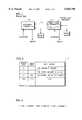
- FIG. 1is a block schematic diagram of a prior art binary data communication system in which the present invention may be implemented.
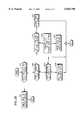
- FIG. 2Ais a high level logic flow diagram of a format detection and conversion routine according to the present invention.
- FIG. 2Bis an inventive modification to the routine of FIG. 2A.
- FIG. 3is a look-up table stored within the DASD memory of the receiver unit for facilitating conversion of Type 2 format data into Type 1 format data.
- FIG. 4is a schematic diagram of a message signal packet according to the instant invention including data having multiple (e.g., two) formats.
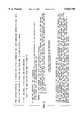
- FIG. 5is a schematic diagram of additional fields to augment Type 2 data formats according to a further preferred embodiment of the invention.
- FIG. 1shows a prior art binary data communication system in which the present invention is implemented in software.
- a transmitter/receiver unit 10e.g., including an electronic computer
- the unit 10is suitably configured in known fashion to transmit message signal packets (e.g., ASCII format) while the unit 20 receives and processes the message signal packets.
- Each computer unit 10,20includes an electronic processor (e.g., microprocessor) coupled, via suitable buses, etc., to a non-volatile memory (e.g., ROM, EE-Prom or FLASH EEProm), a volatile memory (e.g., RAM), and various controllers and Input/Output ports.
- a non-volatile memorye.g., ROM, EE-Prom or FLASH EEProm
- RAMvolatile memory
- the processoris coupled, via the I/O ports, to a mass storage device (e.g., DASD or hard disk), an input device (e.g., keyboard) and to output device(s) such as a CRT or printer.
- a mass storage devicee.g., DASD or hard disk
- the DASD memoryincludes instructions for processing and receiving data (e.g., alarm, alert, performance), and also includes data (e.g., a look-up table) and instructions useful for determining, for example, causes of an alarm and for causing notification of an alert or an alarm via the output devices, all as is well known. Further explanation, see, for example, U.S. Pat. Nos. 4,568,909, 4,662,538, and 5,398,782, which are all hereby incorporated in their entireties by reference.
- the unit 10is configured (e.g., by suitable software which would be well understood by those skilled in the art in view of the instant specification, to transmit a message signal packet (FIG. 4) to receiver 20 via link 15 (and, of course, suitable ports, modems, etc.).
- the packet (FIG. 4)is analyzed and certain data is converted via a routine according to FIG. 2A.
- FIG. 2Bis an improvement including steps 210 and 220.
- a number representing the number of Type 2 BYTEScan be suitably included as part of the message signal packet of FIG. 4.
- the routine of FIG. 2Acan be executed periodically or executed after detection of any suitable identification information (ID bits, not shown) contained within the packet of FIG. 4.
- a byte of the message signal packetis examined (step 100). If a Type 1 format (e.g., ASCII) is detected, transmit that byte directly to output device (e.g., display), step 700. If no in the step 100, is Type 2 format flag set, step 200? If yes in the step 200, convert byte to a Type 1 format data string by means of, for example, the look-up table (FIG. 3) which contains ASCII string data (or messages) corresponding to the binary byte, step 500. Write the ASCII string to the output device (step 600) and exit. If no in the step 200, is the received byte in a Type 2 format (step 300)? If no in the step 300, exit. If yes in the step 300, set the Type 2 flag (step 400) and exit.
- a Type 1 formate.g., ASCII
- the computer program for the instant inventionruns on, for example, an IBM compatible personal computer.
- Terminal emulatorstypically read one specific type of data (e.g., ASCII data) from a communication port, and display the data on the display screen or other output device soon after it is received.
- ASCII datae.g., ASCII data
- the present inventionpermits the data communication system to display both ASCII data soon after it is received, and a message originally formatted in a protocol different from the ASCII protocol.
- the present inventiondetects the different protocol anywhere within the ASCII data string.
- the data communication system of the instant inventionconverts the non-ASCII to ASCII data.
- the inventionoutputs all data in an ASCII format for display to the display screen.
- the Type 2 formatted datacan be augmented as shown in FIG. 5 with an 8 bit encryption key, and an 8 bit reference to an encrypted byte in the data that follows in the message signal packet.
- the Type 2 portion of the inventioncan then be understood to include the 8 bit encryption key together with the 8 bit reference to the encrypted byte in the data field.
- the transmitterpasses, to the terminal emulator (e.g., known software program), the 8 bit key used to unlock the 8 bit reference of the encrypted byte.
- the 8 bit referencepoints to one of the data bytes in the data portion of the Type 2 protocol. Once the target byte is identified, the encryption key is used to unlock the target byte. This saves CPU computing time and memory. Because all of the data together (both Type 1 and Type 2 formats) is required to use the message signal packet, corruption of one byte offers sufficient protection from an unauthorized access to the message signal packet. See, for example, FIG. 5.
Landscapes
- Engineering & Computer Science (AREA)
- Computer Security & Cryptography (AREA)
- Computer Networks & Wireless Communication (AREA)
- Signal Processing (AREA)
- Communication Control (AREA)
Abstract
Description
The present invention relates to electronic communication systems and, more particularly, to binary data electronic communication systems useful for monitoring and/or diagnosing elevator systems.
For safety, security and other reasons, it is often desirable to transmit elevator monitoring data in a form which is reasonably secure against unauthorized access.
Typically, such data is included within binary message signal packets transmitted in one format, such as the American Standard Code for Information Interchange (ASCII). The standard ASCII format consists of 96 displayed upper and lower case letters, plus 32 non-displayed control characters. An individual character code consists of seven bits plus one parity bit for error checking.
The present inventors have found that security of the data within a message signal packet is enhanced if the data within the packet has multiple formats. For example, in one preferred embodiment, some data has an ASCII format, while other data has a format according to another protocol such as PPP, SLIP, or MODBUS RTU, or even according to custom protocols as desired.
PPP is an acronym for point to point protocol, SLIP is an acronym for serial fink interface protocol , while MODBUS RTU is an acronym for MODBUS® remote terminal unit protocol, all being protocols for asynchronous transmission, and, all well understood in the electronic data communications art.
According to an essential feature of the present invention, data in a second format or protocol (hereinafter called, e.g., Type 2) is detected, and thereafter converted to another format (hereinafter called, e.g., Type 1) which is then written or transmitted to an output device such as a display screen. A binary data communication system according to the present invention includes a transmitter unit, a receiver unit, a communications link connected between said transmitter unit and said receiver unit, a binary communications packet including data having aType 1 format and data having aType 2 format, and a format detection and conversion routine stored within a, for example, a hard file or other direct access storage device (DASD) or other memory of the receiver unit. The transmitters and receiver are, e.g., personal computers which are connected to the link via suitable ports, interfaces and/or modems. The format detection conversion routine includes instructions for identifying theType 2 data format and for converting theType 2 format data into theType 1 format data by means of, for example, a suitable look-up table which converts aType 2 byte into aType 1 format data string. The Type 1 (for example, ASCII) string is thereafter written or displayed to the output device such as the display screen or a printer. Of course, in place of a look-up table, conversion can be effected via suitable algorithms which are appropriately coded and stored within the DASD.
It is a principal object of the present invention to increase the reliability and security of binary data communications systems.
It is an additional object of the present invention to reduce the amount of data necessary to transmit useful information within an elevator monitoring system.
Further and still other objects of the present invention will become more readily apparent in light of the detailed description when taken in conjunction with the accompanying drawing, in which:
FIG. 1 is a block schematic diagram of a prior art binary data communication system in which the present invention may be implemented.
FIG. 2A is a high level logic flow diagram of a format detection and conversion routine according to the present invention.
FIG. 2B is an inventive modification to the routine of FIG. 2A.
FIG. 3 is a look-up table stored within the DASD memory of the receiver unit for facilitating conversion ofType 2 format data intoType 1 format data.
FIG. 4 is a schematic diagram of a message signal packet according to the instant invention including data having multiple (e.g., two) formats.
FIG. 5 is a schematic diagram of additional fields to augmentType 2 data formats according to a further preferred embodiment of the invention.
FIG. 1 shows a prior art binary data communication system in which the present invention is implemented in software. A transmitter/receiver unit 10 (e.g., including an electronic computer) is electronically connected to a secondelectronic computer unit 20 via adata communications link 15, all as is well known. Theunit 10 is suitably configured in known fashion to transmit message signal packets (e.g., ASCII format) while theunit 20 receives and processes the message signal packets. Eachcomputer unit
According to the present invention, theunit 10 is configured (e.g., by suitable software which would be well understood by those skilled in the art in view of the instant specification, to transmit a message signal packet (FIG. 4) toreceiver 20 via link 15 (and, of course, suitable ports, modems, etc.). After reception by thereceiver unit 20, the packet (FIG. 4) is analyzed and certain data is converted via a routine according to FIG. 2A. FIG. 2B is animprovement including steps Type 2 BYTES can be suitably included as part of the message signal packet of FIG. 4.
The routine of FIG. 2A can be executed periodically or executed after detection of any suitable identification information (ID bits, not shown) contained within the packet of FIG. 4.
In astep 100, a byte of the message signal packet is examined (step 100). If aType 1 format (e.g., ASCII) is detected, transmit that byte directly to output device (e.g., display),step 700. If no in thestep 100, isType 2 format flag set,step 200? If yes in thestep 200, convert byte to aType 1 format data string by means of, for example, the look-up table (FIG. 3) which contains ASCII string data (or messages) corresponding to the binary byte,step 500. Write the ASCII string to the output device (step 600) and exit. If no in thestep 200, is the received byte in aType 2 format (step 300)? If no in thestep 300, exit. If yes in thestep 300, set theType 2 flag (step 400) and exit.
In summary, the computer program for the instant invention (FIG. 2A) runs on, for example, an IBM compatible personal computer. Terminal emulators (according to the prior art) typically read one specific type of data (e.g., ASCII data) from a communication port, and display the data on the display screen or other output device soon after it is received. The present invention permits the data communication system to display both ASCII data soon after it is received, and a message originally formatted in a protocol different from the ASCII protocol. The present invention detects the different protocol anywhere within the ASCII data string. Upon detection of the different protocol, the data communication system of the instant invention converts the non-ASCII to ASCII data. The invention outputs all data in an ASCII format for display to the display screen.
While it has been shown and described what is presently considered preferred embodiments of the present invention, it will be readily understood to those skilled in the art that various changes and modifications may be made therein without departing from the spirit and scope of the present invention which shall be defined only by claims. For example, theType 2 formatted data can be augmented as shown in FIG. 5 with an 8 bit encryption key, and an 8 bit reference to an encrypted byte in the data that follows in the message signal packet. TheType 2 portion of the invention can then be understood to include the 8 bit encryption key together with the 8 bit reference to the encrypted byte in the data field. The transmitter passes, to the terminal emulator (e.g., known software program), the 8 bit key used to unlock the 8 bit reference of the encrypted byte. Once unlocked, the 8 bit reference points to one of the data bytes in the data portion of theType 2 protocol. Once the target byte is identified, the encryption key is used to unlock the target byte. This saves CPU computing time and memory. Because all of the data together (bothType 1 andType 2 formats) is required to use the message signal packet, corruption of one byte offers sufficient protection from an unauthorized access to the message signal packet. See, for example, FIG. 5.
Claims (1)
1. A method of transmitting alphanumeric binary data with enhanced security, comprising:
providing a message signal packet having a portion in a first standard data transmission format selected from the group consisting of ASCII, PPP, SLP and MODBUS, and having a second portion of said message signal packet in a second standard data transmission format selected from said group;
transmitting said message signal packet including data in both of said first and second standard data transmission formats;
receiving said message signal packet including data in both of said first and second standard data transmission formats;
detecting the portion of said message signal packet that is in said second standard data transmission format and converting said portion into said first standard data transmission format; and
outputting said message signal packet in said first standard data transmission format to an output device.
Priority Applications (1)
| Application Number | Priority Date | Filing Date | Title |
|---|---|---|---|
| US08/550,973US5838750A (en) | 1995-10-31 | 1995-10-31 | Binary data electronic communication system |
Applications Claiming Priority (1)
| Application Number | Priority Date | Filing Date | Title |
|---|---|---|---|
| US08/550,973US5838750A (en) | 1995-10-31 | 1995-10-31 | Binary data electronic communication system |
Publications (1)
| Publication Number | Publication Date |
|---|---|
| US5838750Atrue US5838750A (en) | 1998-11-17 |
Family
ID=24199320
Family Applications (1)
| Application Number | Title | Priority Date | Filing Date |
|---|---|---|---|
| US08/550,973Expired - Fee RelatedUS5838750A (en) | 1995-10-31 | 1995-10-31 | Binary data electronic communication system |
Country Status (1)
| Country | Link |
|---|---|
| US (1) | US5838750A (en) |
Cited By (11)
| Publication number | Priority date | Publication date | Assignee | Title |
|---|---|---|---|---|
| US6351768B1 (en)* | 1997-12-19 | 2002-02-26 | At&T Corp | Performance monitor for leased transmission facilities |
| US20020144738A1 (en)* | 1999-06-28 | 2002-10-10 | California Institute Of Technology | Microfabricated elastomeric valve and pump systems |
| RU2249923C2 (en)* | 1999-09-13 | 2005-04-10 | Квэлкомм Инкорпорейтед | Mechanism for sorting frames of radio communication protocol for wireless dynamic capacity data channels |
| US6880015B1 (en)* | 2000-02-25 | 2005-04-12 | Square D Company | Agile mode for Modbus network protocol |
| US20050179560A1 (en)* | 2003-07-14 | 2005-08-18 | Halliburton Energy Services, Inc. | Method and apparatus for mud pulse telemetry |
| US20100074272A1 (en)* | 2008-09-25 | 2010-03-25 | Foxnum Technology Co., Ltd. | Communication protocol detection system and method |
| US20100095099A1 (en)* | 2008-10-14 | 2010-04-15 | International Business Machines Corporation | System and method for storing numbers in first and second formats in a register file |
| US20100100713A1 (en)* | 2008-10-22 | 2010-04-22 | International Business Machines Corporation | Fast floating point compare with slower backup for corner cases |
| US20120218095A1 (en)* | 2011-02-27 | 2012-08-30 | Joe Huayue Zhou | Dual Tire Pressure Monitor with Equalizer Apparatus and Tire Inflation System Integration |
| CN112678634A (en)* | 2020-12-23 | 2021-04-20 | 江苏睿科大器机器人有限公司 | Robot autonomous ladder taking method based on ModBus communication protocol |
| CN112888644A (en)* | 2018-10-16 | 2021-06-01 | 通力股份公司 | Network commissioning of transport infrastructure peripherals |
Citations (8)
| Publication number | Priority date | Publication date | Assignee | Title |
|---|---|---|---|---|
| US4568909A (en)* | 1983-12-19 | 1986-02-04 | United Technologies Corporation | Remote elevator monitoring system |
| US4662538A (en)* | 1984-09-28 | 1987-05-05 | Autotrol Corporation | Bactericidal pellet dispenser |
| US4700358A (en)* | 1985-11-18 | 1987-10-13 | Hayes Microcomputer Products, Inc. | Synchronous/asynchronous modem |
| US4814754A (en)* | 1984-12-01 | 1989-03-21 | Fuji Electric Company Ltd. | Monitoring system |
| US5398782A (en)* | 1993-11-12 | 1995-03-21 | Otis Elevator Company | Remote monitoring system with variable period communication check |
| US5416917A (en)* | 1990-03-27 | 1995-05-16 | International Business Machines Corporation | Heterogenous database communication system in which communicating systems identify themselves and convert any requests/responses into their own data format |
| US5444491A (en)* | 1993-02-26 | 1995-08-22 | Massachusetts Institute Of Technology | Television system with multiple transmission formats |
| US5530484A (en)* | 1995-05-19 | 1996-06-25 | Thomson Multimedia S.A | Image scanning format converter suitable for a high definition television system |
- 1995
- 1995-10-31USUS08/550,973patent/US5838750A/ennot_activeExpired - Fee Related
Patent Citations (8)
| Publication number | Priority date | Publication date | Assignee | Title |
|---|---|---|---|---|
| US4568909A (en)* | 1983-12-19 | 1986-02-04 | United Technologies Corporation | Remote elevator monitoring system |
| US4662538A (en)* | 1984-09-28 | 1987-05-05 | Autotrol Corporation | Bactericidal pellet dispenser |
| US4814754A (en)* | 1984-12-01 | 1989-03-21 | Fuji Electric Company Ltd. | Monitoring system |
| US4700358A (en)* | 1985-11-18 | 1987-10-13 | Hayes Microcomputer Products, Inc. | Synchronous/asynchronous modem |
| US5416917A (en)* | 1990-03-27 | 1995-05-16 | International Business Machines Corporation | Heterogenous database communication system in which communicating systems identify themselves and convert any requests/responses into their own data format |
| US5444491A (en)* | 1993-02-26 | 1995-08-22 | Massachusetts Institute Of Technology | Television system with multiple transmission formats |
| US5398782A (en)* | 1993-11-12 | 1995-03-21 | Otis Elevator Company | Remote monitoring system with variable period communication check |
| US5530484A (en)* | 1995-05-19 | 1996-06-25 | Thomson Multimedia S.A | Image scanning format converter suitable for a high definition television system |
Cited By (16)
| Publication number | Priority date | Publication date | Assignee | Title |
|---|---|---|---|---|
| US6351768B1 (en)* | 1997-12-19 | 2002-02-26 | At&T Corp | Performance monitor for leased transmission facilities |
| US20020144738A1 (en)* | 1999-06-28 | 2002-10-10 | California Institute Of Technology | Microfabricated elastomeric valve and pump systems |
| RU2249923C2 (en)* | 1999-09-13 | 2005-04-10 | Квэлкомм Инкорпорейтед | Mechanism for sorting frames of radio communication protocol for wireless dynamic capacity data channels |
| US6880015B1 (en)* | 2000-02-25 | 2005-04-12 | Square D Company | Agile mode for Modbus network protocol |
| US20050179560A1 (en)* | 2003-07-14 | 2005-08-18 | Halliburton Energy Services, Inc. | Method and apparatus for mud pulse telemetry |
| US7106210B2 (en)* | 2003-07-14 | 2006-09-12 | Halliburton Energy Services, Inc. | Method and apparatus for mud pulse telemetry |
| US20100074272A1 (en)* | 2008-09-25 | 2010-03-25 | Foxnum Technology Co., Ltd. | Communication protocol detection system and method |
| CN101686238A (en)* | 2008-09-25 | 2010-03-31 | 鸿富锦精密工业(深圳)有限公司 | Communication protocol detection system and method |
| US20100095099A1 (en)* | 2008-10-14 | 2010-04-15 | International Business Machines Corporation | System and method for storing numbers in first and second formats in a register file |
| US8346828B2 (en)* | 2008-10-14 | 2013-01-01 | International Business Machines Corporation | System and method for storing numbers in first and second formats in a register file |
| US20100100713A1 (en)* | 2008-10-22 | 2010-04-22 | International Business Machines Corporation | Fast floating point compare with slower backup for corner cases |
| US8407275B2 (en) | 2008-10-22 | 2013-03-26 | International Business Machines Corporation | Fast floating point compare with slower backup for corner cases |
| US20120218095A1 (en)* | 2011-02-27 | 2012-08-30 | Joe Huayue Zhou | Dual Tire Pressure Monitor with Equalizer Apparatus and Tire Inflation System Integration |
| US8564429B2 (en)* | 2011-02-27 | 2013-10-22 | Joe Huayue Zhou | Dual tire pressure monitor with equalizer apparatus and tire inflation system integration |
| CN112888644A (en)* | 2018-10-16 | 2021-06-01 | 通力股份公司 | Network commissioning of transport infrastructure peripherals |
| CN112678634A (en)* | 2020-12-23 | 2021-04-20 | 江苏睿科大器机器人有限公司 | Robot autonomous ladder taking method based on ModBus communication protocol |
Similar Documents
| Publication | Publication Date | Title |
|---|---|---|
| US6608557B1 (en) | Systems and methods for transmitting signals to a central station | |
| US5838750A (en) | Binary data electronic communication system | |
| US4688035A (en) | End user data stream syntax | |
| WO2001010079A1 (en) | Adapter having secure function and computer secure system using it | |
| US3980994A (en) | Text editing and display system having text insert capability | |
| US4943978A (en) | Digital interface unit | |
| CN113364512A (en) | Encapsulation analysis method and device for Beidou short message | |
| US7437560B1 (en) | Method and apparatus for establishing a secure smart card communication link through a communication network | |
| US7162530B2 (en) | System and method for encapsulating data within a formatted data protocol | |
| KR890702359A (en) | Error detection method and system of signal transmitted through transmission line | |
| US20020169959A1 (en) | Method and system for assuring security of an IC card | |
| JP3132203B2 (en) | Wireless input device | |
| WO1997016779A3 (en) | Input security and transactions unit and process for input security and transactions involving digital information | |
| KR900006975B1 (en) | Automatic detection method of data transmission speed | |
| CA2405613A1 (en) | Method, systems and computer program for reducing hacking susceptibility | |
| JPH0561988A (en) | Identification system | |
| JPH0313038A (en) | Asynchronous serial data transmission device | |
| CA1218466A (en) | End user data stream syntax | |
| KR970008681B1 (en) | Recognition apparatus for receiving identity address of hdlc protocol | |
| KR0175463B1 (en) | Simulation Control Character Processing Method for Binarization of Text Data in Asynchronous Network | |
| KR20250024697A (en) | The technology and method of communicating the hash value of data from LoRa devices through MQTT and verifying integrity. | |
| JPS6028359A (en) | Information transmitter and information receiver | |
| JPH05336106A (en) | Cryptographic communication method in data communication | |
| JPH10240644A (en) | Email system | |
| JPH0695901A (en) | Method for detecting transmission error in no-procedure communication |
Legal Events
| Date | Code | Title | Description |
|---|---|---|---|
| AS | Assignment | Owner name:OTIS ELEVATOR COMPANY, CONNECTICUT Free format text:ASSIGNMENT OF ASSIGNORS INTEREST;ASSIGNORS:RYNASKI, RICHARD;WILLIAMS, FRED;REEL/FRAME:007742/0088 Effective date:19951031 | |
| FEPP | Fee payment procedure | Free format text:PAYOR NUMBER ASSIGNED (ORIGINAL EVENT CODE: ASPN); ENTITY STATUS OF PATENT OWNER: LARGE ENTITY | |
| FPAY | Fee payment | Year of fee payment:4 | |
| FPAY | Fee payment | Year of fee payment:8 | |
| REMI | Maintenance fee reminder mailed | ||
| LAPS | Lapse for failure to pay maintenance fees | ||
| STCH | Information on status: patent discontinuation | Free format text:PATENT EXPIRED DUE TO NONPAYMENT OF MAINTENANCE FEES UNDER 37 CFR 1.362 | |
| FP | Lapsed due to failure to pay maintenance fee | Effective date:20101117 |