US5825195A - Method and apparatus for testing an unpackaged semiconductor die - Google Patents
Method and apparatus for testing an unpackaged semiconductor dieDownload PDFInfo
- Publication number
- US5825195A US5825195AUS08/550,340US55034095AUS5825195AUS 5825195 AUS5825195 AUS 5825195AUS 55034095 AUS55034095 AUS 55034095AUS 5825195 AUS5825195 AUS 5825195A
- Authority
- US
- United States
- Prior art keywords
- die
- contacts
- contact
- plate
- interconnect
- Prior art date
- Legal status (The legal status is an assumption and is not a legal conclusion. Google has not performed a legal analysis and makes no representation as to the accuracy of the status listed.)
- Expired - Lifetime
Links
- 238000012360testing methodMethods0.000titleclaimsabstractdescription51
- 238000000034methodMethods0.000titleclaimsabstractdescription24
- 239000004065semiconductorSubstances0.000titleclaimsdescription22
- 239000000463materialSubstances0.000claimsdescription21
- 239000000919ceramicSubstances0.000claimsdescription11
- 230000001070adhesive effectEffects0.000claimsdescription6
- 229920000642polymerPolymers0.000claimsdescription6
- 239000000853adhesiveSubstances0.000claimsdescription4
- 239000010454slateSubstances0.000claims2
- 229910010293ceramic materialInorganic materials0.000claims1
- 238000002955isolationMethods0.000claims1
- 230000035515penetrationEffects0.000abstractdescription2
- 230000006835compressionEffects0.000abstract1
- 238000007906compressionMethods0.000abstract1
- 230000003287optical effectEffects0.000abstract1
- 238000004806packaging method and processMethods0.000description17
- 239000000758substrateSubstances0.000description9
- 230000015654memoryEffects0.000description6
- 230000008878couplingEffects0.000description5
- 238000010168coupling processMethods0.000description5
- 238000005859coupling reactionMethods0.000description5
- 229910052751metalInorganic materials0.000description5
- 239000002184metalSubstances0.000description5
- 229910001020Au alloyInorganic materials0.000description4
- KDLHZDBZIXYQEI-UHFFFAOYSA-NPalladiumChemical compound[Pd]KDLHZDBZIXYQEI-UHFFFAOYSA-N0.000description4
- 230000006870functionEffects0.000description4
- 238000004519manufacturing processMethods0.000description4
- 239000004593EpoxySubstances0.000description3
- 102100034004Gamma-adducinHuman genes0.000description3
- 101000799011Homo sapiens Gamma-adducinProteins0.000description3
- 239000002998adhesive polymerSubstances0.000description3
- 229920001940conductive polymerPolymers0.000description3
- 238000005516engineering processMethods0.000description3
- PCHJSUWPFVWCPO-UHFFFAOYSA-NgoldChemical compound[Au]PCHJSUWPFVWCPO-UHFFFAOYSA-N0.000description3
- 239000010931goldSubstances0.000description3
- TWNQGVIAIRXVLR-UHFFFAOYSA-Noxo(oxoalumanyloxy)alumaneChemical compoundO=[Al]O[Al]=OTWNQGVIAIRXVLR-UHFFFAOYSA-N0.000description3
- 229910001252Pd alloyInorganic materials0.000description2
- 229910001260Pt alloyInorganic materials0.000description2
- XUIMIQQOPSSXEZ-UHFFFAOYSA-NSiliconChemical compound[Si]XUIMIQQOPSSXEZ-UHFFFAOYSA-N0.000description2
- 229910052782aluminiumInorganic materials0.000description2
- 229910000963austenitic stainless steelInorganic materials0.000description2
- 239000004020conductorSubstances0.000description2
- 229910052737goldInorganic materials0.000description2
- 239000003353gold alloySubstances0.000description2
- 238000012986modificationMethods0.000description2
- 230000004048modificationEffects0.000description2
- BASFCYQUMIYNBI-UHFFFAOYSA-NplatinumChemical compound[Pt]BASFCYQUMIYNBI-UHFFFAOYSA-N0.000description2
- 229920001296polysiloxanePolymers0.000description2
- 230000008569processEffects0.000description2
- 229910052710siliconInorganic materials0.000description2
- 239000010703siliconSubstances0.000description2
- 229920002379silicone rubberPolymers0.000description2
- 229910000679solderInorganic materials0.000description2
- 238000010998test methodMethods0.000description2
- 239000002699waste materialSubstances0.000description2
- 208000032368Device malfunctionDiseases0.000description1
- 239000002390adhesive tapeSubstances0.000description1
- 230000002411adverseEffects0.000description1
- XAGFODPZIPBFFR-UHFFFAOYSA-NaluminiumChemical compound[Al]XAGFODPZIPBFFR-UHFFFAOYSA-N0.000description1
- 238000005219brazingMethods0.000description1
- 229920001971elastomerPolymers0.000description1
- 239000000806elastomerSubstances0.000description1
- 230000007257malfunctionEffects0.000description1
- 230000013011matingEffects0.000description1
- 230000037361pathwayEffects0.000description1
- 230000008439repair processEffects0.000description1
- 239000000523sampleSubstances0.000description1
- 238000000926separation methodMethods0.000description1
- 239000004945silicone rubberSubstances0.000description1
- 230000003068static effectEffects0.000description1
Images

Classifications
- G—PHYSICS
- G01—MEASURING; TESTING
- G01R—MEASURING ELECTRIC VARIABLES; MEASURING MAGNETIC VARIABLES
- G01R31/00—Arrangements for testing electric properties; Arrangements for locating electric faults; Arrangements for electrical testing characterised by what is being tested not provided for elsewhere
- G01R31/28—Testing of electronic circuits, e.g. by signal tracer
- G01R31/2851—Testing of integrated circuits [IC]
- G01R31/2886—Features relating to contacting the IC under test, e.g. probe heads; chucks
- G—PHYSICS
- G01—MEASURING; TESTING
- G01R—MEASURING ELECTRIC VARIABLES; MEASURING MAGNETIC VARIABLES
- G01R1/00—Details of instruments or arrangements of the types included in groups G01R5/00 - G01R13/00 and G01R31/00
- G01R1/02—General constructional details
- G01R1/04—Housings; Supporting members; Arrangements of terminals
- G01R1/0408—Test fixtures or contact fields; Connectors or connecting adaptors; Test clips; Test sockets
- G01R1/0433—Sockets for IC's or transistors
- G01R1/0483—Sockets for un-leaded IC's having matrix type contact fields, e.g. BGA or PGA devices; Sockets for unpackaged, naked chips
- H—ELECTRICITY
- H01—ELECTRIC ELEMENTS
- H01L—SEMICONDUCTOR DEVICES NOT COVERED BY CLASS H10
- H01L2224/00—Indexing scheme for arrangements for connecting or disconnecting semiconductor or solid-state bodies and methods related thereto as covered by H01L24/00
- H01L2224/01—Means for bonding being attached to, or being formed on, the surface to be connected, e.g. chip-to-package, die-attach, "first-level" interconnects; Manufacturing methods related thereto
- H01L2224/42—Wire connectors; Manufacturing methods related thereto
- H01L2224/47—Structure, shape, material or disposition of the wire connectors after the connecting process
- H01L2224/48—Structure, shape, material or disposition of the wire connectors after the connecting process of an individual wire connector
- H01L2224/4805—Shape
- H01L2224/4809—Loop shape
- H01L2224/48091—Arched
- H—ELECTRICITY
- H01—ELECTRIC ELEMENTS
- H01L—SEMICONDUCTOR DEVICES NOT COVERED BY CLASS H10
- H01L2224/00—Indexing scheme for arrangements for connecting or disconnecting semiconductor or solid-state bodies and methods related thereto as covered by H01L24/00
- H01L2224/01—Means for bonding being attached to, or being formed on, the surface to be connected, e.g. chip-to-package, die-attach, "first-level" interconnects; Manufacturing methods related thereto
- H01L2224/42—Wire connectors; Manufacturing methods related thereto
- H01L2224/47—Structure, shape, material or disposition of the wire connectors after the connecting process
- H01L2224/48—Structure, shape, material or disposition of the wire connectors after the connecting process of an individual wire connector
- H01L2224/481—Disposition
- H01L2224/48151—Connecting between a semiconductor or solid-state body and an item not being a semiconductor or solid-state body, e.g. chip-to-substrate, chip-to-passive
- H01L2224/48221—Connecting between a semiconductor or solid-state body and an item not being a semiconductor or solid-state body, e.g. chip-to-substrate, chip-to-passive the body and the item being stacked
- H01L2224/48225—Connecting between a semiconductor or solid-state body and an item not being a semiconductor or solid-state body, e.g. chip-to-substrate, chip-to-passive the body and the item being stacked the item being non-metallic, e.g. insulating substrate with or without metallisation
- H01L2224/48227—Connecting between a semiconductor or solid-state body and an item not being a semiconductor or solid-state body, e.g. chip-to-substrate, chip-to-passive the body and the item being stacked the item being non-metallic, e.g. insulating substrate with or without metallisation connecting the wire to a bond pad of the item
- H—ELECTRICITY
- H01—ELECTRIC ELEMENTS
- H01L—SEMICONDUCTOR DEVICES NOT COVERED BY CLASS H10
- H01L2924/00—Indexing scheme for arrangements or methods for connecting or disconnecting semiconductor or solid-state bodies as covered by H01L24/00
- H01L2924/01—Chemical elements
- H01L2924/01046—Palladium [Pd]
- H—ELECTRICITY
- H01—ELECTRIC ELEMENTS
- H01L—SEMICONDUCTOR DEVICES NOT COVERED BY CLASS H10
- H01L2924/00—Indexing scheme for arrangements or methods for connecting or disconnecting semiconductor or solid-state bodies as covered by H01L24/00
- H01L2924/01—Chemical elements
- H01L2924/01078—Platinum [Pt]
- H—ELECTRICITY
- H01—ELECTRIC ELEMENTS
- H01L—SEMICONDUCTOR DEVICES NOT COVERED BY CLASS H10
- H01L2924/00—Indexing scheme for arrangements or methods for connecting or disconnecting semiconductor or solid-state bodies as covered by H01L24/00
- H01L2924/01—Chemical elements
- H01L2924/01079—Gold [Au]
Definitions
- This inventionrelates to the field of semiconductor device testing. More specifically, a method and apparatus for testing an unpackaged semiconductor die is described.
- a starting substrateusually a thin wafer of silicon
- a starting substrateis doped, masked, and etched through several process steps, the steps depending on the type of devices being manufactured. This process yields a number of die on each wafer produced.
- Each die on the waferis given a brief test for full functionality, and the nonfunctional die are mechanically marked or mapped in software. This brief test is only a gross measure of functionality, and does not insure that a die is completely functional or has specifications that would warrant its assembly in a package.
- the waferhas a yield of grossly functional die which indicates that a good quantity of die from the wafer are likely to be fully operative
- the dieare separated with a die saw, and the nonfunctional die are scrapped while the rest are individually encapsulated in plastic packages or mounted in ceramic packages with one die in each package. After the die are packaged they are rigorously electrically tested. Components which turn out to be nonfunctional or which operate at questionable specifications are scrapped or devoted to special uses.
- MCMmulti chip module
- MCMsmulti-chip modules
- KGDadditional cost of testing unpackaged die in order to produce known good die (KGD)
- C DIECost of the die
- This and other objects of the inventionwere realized by temporarily placing a die in a ceramic package, then testing the assembled package.
- a ceramic housingwas manufactured having input/output leads electrically coupled with contacts on the interior of the package.
- gold alloywas chosen as a material from which to manufacture the bumps because of its soft, conductive properties, but other workable materials are possible.
- the back (noncircuit) side of a discrete semiconductor diewas mounted to a lid, and bond pads on the die were aligned with the contacts on the interior of the package. The bond pads were then contacted with the contacts to form a temporary electrical contact therebetween. Since the semiconductor package had the form of a conventional package, conventional functional and parametric testing means was possible and completed. After testing the package, the lid was removed from the ceramic package body, and the gold bumps yielded without resulting damage to the die bond pads. The known good die is then available for packaging in a multichip module, for assembly in a conventional package, or for use in other systems using unpackaged die.
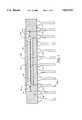
- FIG. 1is a cross section of a first embodiment of the invention having a die mounted to a lid;
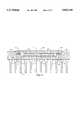
- FIG. 2is a top view of the FIG. 1 embodiment
- FIG. 4is a cross section of a third embodiment of the invention having a die mounted to the package housing.
- FIG. 5is a cross section of a fourth embodiment of the invention in which metal contacts couple an interconnect with a lower housing member.
- FIG. 1is a cross section
- FIG. 2is a top view, describing an embodiment of the present invention.
- a housing 10was manufactured from ceramic having a bottom shelf 12 for receiving a substrate insert 14 and a pair of "bond" shelves 16. Upon the bond shelves 16 were housing connection points 18 coupled with traces (not shown), the traces running through the housing 10 and terminating externally to the housing 10.
- the traces manufactured within the housingcomprised a gold alloy and the housing 10 was manufactured using standard technology used in the art of ceramic packaging of semiconductor die. Other materials may function adequately for the housing 10 and the traces.
- the bottom shelf 12 of the housing 10received the insert 14, the insert 14 being permanently attached to the bottom shelf 12 of the housing 10.
- This attachmentis preferably accomplished with a room temperature vulcanizing silicone rubber (RTV, not shown) or with an adhesive epoxy, although other attachment technology or materials can be used.
- the insert 14comprised a nonconductive support structure 14A, in the instant case manufactured from ceramic, having electrically conductive gold interconnection circuitry 14B, although other conductive materials may be used.
- the contacts 20were all coplanar to within 10% across the contact pattern.
- An insert 14 thickness of approximately 0.015"was sufficient, with outside dimensions being slightly smaller than the cavity in the bottom of the housing 10.
- the contacts 20mirrored the bond pads 22 on the die 24, and were spaced so as to contact the bond pads 22 on the semiconductor die 24 directly.
- the contacts 20were coupled with the insert substrate electrical traces 14B, the insert traces 14B running from the contacts 20 to the edge of the insert substrate 14A.
- the insert traces 14Bterminated near the edge of the insert substrate 14A.
- the interconnect insert 14is a separate component which is bonded to the bottom shelf 12 of the housing 10. It is also possible to construct the invention with an interconnect structure incorporated into the housing 10, rather than as a separate component.
- the insert traces 14B which terminated near the edge of the insert substrate 14Awere wire bonded 26 to the connection points 18 within the housing 10, and were therefore electrically coupled with leads 28 attached to the traces (not shown) on the exterior of the housing 10.
- the leads 28were coupled to the package using side brazing, but other coupling means may be available.
- the leads 28allow for coupling of the package with a test fixture.
- a package lid structure 30was used upon which was mounted the semiconductor die 24.
- the back (noncircuit) side of the die 24was attached to the lid 30 with a flat, soft sheet of a flexible adhesive polymer material 32 that performed as both an adhesive tape and a force loading material, although the use of such an adhesive material may not be necessary.
- a semi-cured silicone materialwas used, and in the instant case was silicone elastomer, from Gel Pak Corporation of Stanford, Calif.
- the polymerallowed for the removal of the die 24 when desired, but provided a sufficiently firm attachment to keep the die from shifting once it was attached.
- the adhesive properties of the polymertherefore, were relatively strong in shear but relatively weak in tension and allowed for separation from the die with no residual adhesive material left on the back of the die.
- the lid 30was a commercially available, low cost metal item. A lid approximately 0.01" in thickness was found to be sufficient, although any reasonable lid thickness would function sufficiently, and in the embodiment, the lid was a 0.045" thick austenitic stainless steel. Other materials may function adequately.
- metal clips(not shown) held the lid 30 in place to prevent shifting of the lid 30, and therefore the die 24, during testing.
- Removably "tacking" the lid 30 to the housing 10, for example with solder or epoxy,may also be sufficient as long as the lid 30 can be removed from the housing 10 without damage to the lid 30 or housing 10.
- the assembled packagewas similar to a conventional ceramic semiconductor package, a conventional test sequence, including burning in, was used to ensure functionality of the die.
- the lidwas removed- from the package by removing the clips, and the die was removed from the lid.
- Nonfunctional diecan be discarded while the known good die can be packaged or shipped directly to customers.
- packaging only known good dieincreases the yield of packaged devices. As long as the die is not damaged before packaging, any malfunctions of the packaged die results from an improperly packaged device. Poor wire bonds, cracked packages, and improper die attachments are the most likely causes of device malfunctions using such die.
- test package 10, 14, lid 30, and polymer 32could be used to test a plurality of semiconductor die 24.
- the substrate contacts 20flattened out slightly during the first use, but it was found that if the pressure between the lid assembly and the housing 10 are controlled, an adequate electrical contact would be maintained during subsequent die testing.
- a lid 40for example of a 0.045" thick austenitic stainless steel, had a hole 42 therethrough to aid in securing the die 24 in alignment with the lid 40 during a flip chip process.
- a vacuum device(not shown) picked up the lid 40 with the vacuum device placed over the hole 42. The vacuum was sufficient to hold the lid 40.
- the die 24was then aligned with the lid 40, and the vacuum also picked up the die 24 thereby holding the die 24 in aligned contact with the lid 40.
- the lid 40 and die 24were then lowered onto the insert 14, thereby permitting the alignment of the bond pads with the insert contacts 20. This vacuum arrangement was found to preclude the need for the adhesive polymer which was used in the previous embodiment.
- a third embodiment of the inventionmay also be used to test a discrete semiconductor die 24.
- a housing 10 with traces within as described for a first embodimentwas formed.
- a layer of adhesive polymer 32was placed on the bottom shelf 12 of the housing 10, and the noncircuit side of a die 24 is attached to the housing 10 with the polymer 32.
- the ends of the traces 44 on the insert 14were aligned with the contact points 18 on the bond shelf 16, and electrical contact was made using a sheet of Z-axis conductive polymer 46, available from A.I. Technology, of Princeton, N.J. Other coupling means are possible, and an alternative is described below.
- the conductive polymer 46was interposed between the contact points 18 on the bond shelf 16 and the insert traces 44 which extended to the edge of the insert 14. As long as a minimum force was maintained between the lid 30 and the housing 10, the electrical contact between the insert traces 44 and the contact points 18 was maintained.
- a number of folded or curved metal contacts 48were supported around an elastomer (not shown) and were attached to the contact points 18 on the housing bond shelf 16.
- the folded contacts 48made electrical connection with the insert interconnect traces (not shown) when contacts 20 on the insert 14 were brought down into contact with the bond pads on the die 24.
Landscapes
- Engineering & Computer Science (AREA)
- Computer Hardware Design (AREA)
- Microelectronics & Electronic Packaging (AREA)
- Physics & Mathematics (AREA)
- General Physics & Mathematics (AREA)
- General Engineering & Computer Science (AREA)
- Testing Or Measuring Of Semiconductors Or The Like (AREA)
Abstract
Description
This application is a continuation of application Ser. No. 08/192,391 filed Feb. 3, 1994, (U.S. Pat. No. 5,483,174), which is a continuation of application Ser. No. 07/896,297 filed Jun. 10, 1992, (U.S. Pat. No. 5,424,652).
This invention relates to the field of semiconductor device testing. More specifically, a method and apparatus for testing an unpackaged semiconductor die is described.
Many types of semiconductor devices are made using similar manufacturing procedures. A starting substrate, usually a thin wafer of silicon, is doped, masked, and etched through several process steps, the steps depending on the type of devices being manufactured. This process yields a number of die on each wafer produced. Each die on the wafer is given a brief test for full functionality, and the nonfunctional die are mechanically marked or mapped in software. This brief test is only a gross measure of functionality, and does not insure that a die is completely functional or has specifications that would warrant its assembly in a package.
If the wafer has a yield of grossly functional die which indicates that a good quantity of die from the wafer are likely to be fully operative, the die are separated with a die saw, and the nonfunctional die are scrapped while the rest are individually encapsulated in plastic packages or mounted in ceramic packages with one die in each package. After the die are packaged they are rigorously electrically tested. Components which turn out to be nonfunctional or which operate at questionable specifications are scrapped or devoted to special uses.
Packaging unusable die only to scrap them after testing is a waste of time and materials, and is therefore costly. Given the relatively low profit margins of commodity semiconductor components such as dynamic random access memories (DRAMs) and static random access memories (SRAMs), this practice is uneconomical. However, no thorough and cost effective method of testing an unpackaged die is available which would prevent this unnecessary packaging of nonfunctional and marginally functional die.
It is proposed that multiple integrated circuit devices be packaged as a single unit, known as a multi chip module (MCM). This can be accomplished with or without conventional lead frames. This creates two problems compared to conventional test methods. Firstly, discrete testing is more difficult because the conventional lead frame package is not used. Furthermore, when multiple devices are assembled into a single package, the performance of the package is reduced to that of the die with the lowest performance. In other words, the ability to presort the individual dice is limited to that obtained through probe testing. Secondly, the packaging may have other limitations which are aggravated by burn-in stress conditions so that the packaging becomes a limitation for burn-in testing.
The practice of packaging die only to find the component must be scrapped can especially adversely affect yields on multi-chip modules (MCMs). With MCMs, several unpackaged die are assembled into a single component, then the component is tested as a single functional unit. If a single die is nonfunctional or operates outside of acceptable specifications, the entire component fails and all die in the package are scrapped or an attempt is made to "re-work" the MCM. There is presently no cost-effective way to reclaim the functioning die. Statistically, the yields of MCMs decrease in proportion to the increasing number of die in each module. The highest density modules have the lowest yields due to their increased total silicon surface area. For discretely packaged parts, if the product yield of good parts from preliminary testing to final shipment (probe-to-ship) is, for example, 95%, one would not be particularly concerned with packaging costs for the failed parts, if packaging costs are 10% of the product manufacturing costs. Where packaging costs are considerably higher, however, as in ceramic packaged parts, testing a die before packaging is economical when the cost of packaging divided by the package yield is equal to or greater than the cost of testing:
C.sub.DIE ×(C.sub.PACKAGE /Package Yield)=C.sub.DIE ×C.sub.ADDL. KGD
where
C=cost
CDIE =manufacturing cost of functional die
CADDL. KGD =additional cost of testing unpackaged die in order to produce known good die (KGD)
Note that in the case of discretely packaged parts, the cost of the die (CDIE) is essentially not a factor since it is the same on both sides of the equation. This changes in the case of MCMs having more than one part type, for example memory and a microprocessor. Scrapping (or reclaiming) the microprocessor after packaging because of malfunctioning memory is much more costly than scrapping a module containing only memory:
(C.sub.DIE)×(Number of Die/Die Yield)×C.sub.PACKAGE =C.sub.DIE ×C.sub.ADDL. KGD
The above equation must be modified to account for varied costs and yields of die in modules with mixed part types. With MCMs, the cost of packaging a failed part is proportional to the number of die in the module. In the case of a memory module having 16 die, where probe-to-ship yield of the die is 95%, the costs are:
16/0.95×C.sub.PACKAGE =C.sub.ADDL. KGD
so the additional costs of testing for known good die (KGD) may be 16 times the cost of testing an unrepairable module and still be economical. This, of course, is modified by the ability to repair failed modules.
Testing of unpackaged die before packaging would be desirable as it would result in reduced material waste, increased profits, and increased throughput. Using only known good die in multichip modules would increase yields significantly.
An object of the invention is to provide a means for testing and burning in a semiconductor die before it is packaged.
This and other objects of the invention were realized by temporarily placing a die in a ceramic package, then testing the assembled package. To temporarily package the die, a ceramic housing was manufactured having input/output leads electrically coupled with contacts on the interior of the package. In one embodiment, gold alloy was chosen as a material from which to manufacture the bumps because of its soft, conductive properties, but other workable materials are possible.
The back (noncircuit) side of a discrete semiconductor die was mounted to a lid, and bond pads on the die were aligned with the contacts on the interior of the package. The bond pads were then contacted with the contacts to form a temporary electrical contact therebetween. Since the semiconductor package had the form of a conventional package, conventional functional and parametric testing means was possible and completed. After testing the package, the lid was removed from the ceramic package body, and the gold bumps yielded without resulting damage to the die bond pads. The known good die is then available for packaging in a multichip module, for assembly in a conventional package, or for use in other systems using unpackaged die.
FIG. 1 is a cross section of a first embodiment of the invention having a die mounted to a lid;
FIG. 2 is a top view of the FIG. 1 embodiment;
FIG. 3 is a cross section of a second embodiment of the invention in which a vacuum is used to secure a die to the lid during placement into a carrier;
FIG. 4 is a cross section of a third embodiment of the invention having a die mounted to the package housing; and
FIG. 5 is a cross section of a fourth embodiment of the invention in which metal contacts couple an interconnect with a lower housing member.
It should be emphasized that the drawings of the instant application are not to scale but are merely schematic representations and are not intended to portray the specific parameters or the structural details of the invention, which can be determined by one of skill in the art by examination of the information herein.
FIG. 1 is a cross section, and FIG. 2 is a top view, describing an embodiment of the present invention. Ahousing 10 was manufactured from ceramic having abottom shelf 12 for receiving asubstrate insert 14 and a pair of "bond"shelves 16. Upon thebond shelves 16 were housing connection points 18 coupled with traces (not shown), the traces running through thehousing 10 and terminating externally to thehousing 10. In the instant case the traces manufactured within the housing comprised a gold alloy and thehousing 10 was manufactured using standard technology used in the art of ceramic packaging of semiconductor die. Other materials may function adequately for thehousing 10 and the traces.
Thebottom shelf 12 of thehousing 10 received theinsert 14, theinsert 14 being permanently attached to thebottom shelf 12 of thehousing 10. This attachment is preferably accomplished with a room temperature vulcanizing silicone rubber (RTV, not shown) or with an adhesive epoxy, although other attachment technology or materials can be used. Theinsert 14 comprised anonconductive support structure 14A, in the instant case manufactured from ceramic, having electrically conductivegold interconnection circuitry 14B, although other conductive materials may be used.Precision contacts 20, manufactured in the instant case from an alloy of gold, platinum, and palladium allowed for coupling with thebond pads 22 on the semiconductor die 24 to be tested. Thecontacts 20 were approximately 0.001" in diameter, and extended 0.001" to 0.002" high above theinsert trace circuitry 14B. Thecontacts 20 were all coplanar to within 10% across the contact pattern. Aninsert 14 thickness of approximately 0.015" was sufficient, with outside dimensions being slightly smaller than the cavity in the bottom of thehousing 10. Thecontacts 20 mirrored thebond pads 22 on thedie 24, and were spaced so as to contact thebond pads 22 on the semiconductor die 24 directly. Thecontacts 20 were coupled with the insert substrateelectrical traces 14B, the insert traces 14B running from thecontacts 20 to the edge of theinsert substrate 14A. The insert traces 14B terminated near the edge of theinsert substrate 14A.
In this embodiment, theinterconnect insert 14 is a separate component which is bonded to thebottom shelf 12 of thehousing 10. It is also possible to construct the invention with an interconnect structure incorporated into thehousing 10, rather than as a separate component.
The insert traces 14B which terminated near the edge of theinsert substrate 14A were wire bonded 26 to the connection points 18 within thehousing 10, and were therefore electrically coupled withleads 28 attached to the traces (not shown) on the exterior of thehousing 10. The leads 28 were coupled to the package using side brazing, but other coupling means may be available. The leads 28 allow for coupling of the package with a test fixture.
Apackage lid structure 30 was used upon which was mounted the semiconductor die 24. The back (noncircuit) side of the die 24 was attached to thelid 30 with a flat, soft sheet of a flexibleadhesive polymer material 32 that performed as both an adhesive tape and a force loading material, although the use of such an adhesive material may not be necessary. A semi-cured silicone material was used, and in the instant case was silicone elastomer, from Gel Pak Corporation of Stanford, Calif. The polymer allowed for the removal of the die 24 when desired, but provided a sufficiently firm attachment to keep the die from shifting once it was attached. The adhesive properties of the polymer, therefore, were relatively strong in shear but relatively weak in tension and allowed for separation from the die with no residual adhesive material left on the back of the die. This property also allowed the polymer sheet to be removed from the lid and replaced, since the material may cure and lose its adhesive properties over time, or with elevated temperatures which may be present during the testing phase of the assembled package. Curing of the silicone material to a point that it is no longer sufficiently flexible and soft can cause problems with cushioning the semiconductor die and force loading of the insert substrate contacts.
Thelid 30 was a commercially available, low cost metal item. A lid approximately 0.01" in thickness was found to be sufficient, although any reasonable lid thickness would function sufficiently, and in the embodiment, the lid was a 0.045" thick austenitic stainless steel. Other materials may function adequately.
Once thedie 24 was attached to thelid 30, thelid 30 was positioned over theinsert 14. Thebond pads 22 on the die 24 were aligned with theinsert contacts 20 on theinsert 14. In the instant case, an alignment system, available from Research Devices of Piscataway, N.J., was used to vertically align thebond pads 22 on the die 24 with thecontacts 20 on theinsert 14. The alignment system is usually used for flip chip die attachment, but functions sufficiently in the inventive capacity. After vertical alignment, the alignment system lowered the lid assembly to contact thebond pads 22 on the die 24 with thecontacts 20 on theinsert 14. The "bumps" that made up thecontacts 20 contacted themetal bond pads 22 of the die 24 sufficiently to ensure a good electrical contact. Sufficient contact force must be maintained to insure good electrical contact between theinsert contacts 20 and thedie bond pads 22. Excessive contact force, however, will cause damage to the die bond pads 22 (usually manufactured from aluminum) and underlying die circuitry. The contact force must be sufficient to push theinsert substrate contacts 20 through the layer of aluminum oxide (not shown) which typically forms on thealuminum bond pads 22. Penetration of the aluminum oxide layer is necessary for good electrical contact, since aluminum oxide is a poor electrical conductor. A force of about 80 grams per contact was found to be sufficient for contacts and bond pads as described above.
After mating thebond pads 22 with thecontacts 20, metal clips (not shown) held thelid 30 in place to prevent shifting of thelid 30, and therefore thedie 24, during testing. Removably "tacking" thelid 30 to thehousing 10, for example with solder or epoxy, may also be sufficient as long as thelid 30 can be removed from thehousing 10 without damage to thelid 30 orhousing 10.
Since the assembled package was similar to a conventional ceramic semiconductor package, a conventional test sequence, including burning in, was used to ensure functionality of the die. After the die was tested, the lid was removed- from the package by removing the clips, and the die was removed from the lid. Nonfunctional die can be discarded while the known good die can be packaged or shipped directly to customers. In any case, packaging only known good die increases the yield of packaged devices. As long as the die is not damaged before packaging, any malfunctions of the packaged die results from an improperly packaged device. Poor wire bonds, cracked packages, and improper die attachments are the most likely causes of device malfunctions using such die.
It was found that thetest package lid 30, andpolymer 32 could be used to test a plurality of semiconductor die 24. Thesubstrate contacts 20 flattened out slightly during the first use, but it was found that if the pressure between the lid assembly and thehousing 10 are controlled, an adequate electrical contact would be maintained during subsequent die testing.
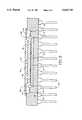
As shown in FIG. 3 embodiment, alid 40, for example of a 0.045" thick austenitic stainless steel, had ahole 42 therethrough to aid in securing the die 24 in alignment with thelid 40 during a flip chip process. To attach the die 24 to thelid 40, a vacuum device (not shown) picked up thelid 40 with the vacuum device placed over thehole 42. The vacuum was sufficient to hold thelid 40. The die 24 was then aligned with thelid 40, and the vacuum also picked up the die 24 thereby holding the die 24 in aligned contact with thelid 40. Thelid 40 and die 24 were then lowered onto theinsert 14, thereby permitting the alignment of the bond pads with theinsert contacts 20. This vacuum arrangement was found to preclude the need for the adhesive polymer which was used in the previous embodiment.
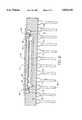
A third embodiment of the invention, described in FIG. 4, may also be used to test a discrete semiconductor die 24. In this embodiment, ahousing 10 with traces within as described for a first embodiment was formed. A layer ofadhesive polymer 32 was placed on thebottom shelf 12 of thehousing 10, and the noncircuit side of a die 24 is attached to thehousing 10 with thepolymer 32.
Next, alid 30 was formed and aninsert 14 of ceramic or other workable material was permanently attached thereto with epoxy or other material (not shown) Theinsert 14 had traces andcontacts 20 thereon as previously described for the embodiment of FIGS. 1 and 2. To electrically couple the bond pads of the die 24 to the input/output leads 28 that are attached to the traces (not shown) running through thehousing 10, thecontacts 20 on theinsert 14 were aligned with the bond pads of thedie 24. Thelid 30 was lowered, and thecontacts 20 on theinsert 14 contacted the bond pads on thedie 24, forming an electrical connection therewith. Theinsert 14 was larger than the insert of the first embodiment, and extended past the edge of thebond shelf 16. The ends of thetraces 44 on theinsert 14 were aligned with the contact points 18 on thebond shelf 16, and electrical contact was made using a sheet of Z-axis conductive polymer 46, available from A.I. Technology, of Princeton, N.J. Other coupling means are possible, and an alternative is described below. Theconductive polymer 46 was interposed between the contact points 18 on thebond shelf 16 and the insert traces 44 which extended to the edge of theinsert 14. As long as a minimum force was maintained between thelid 30 and thehousing 10, the electrical contact between the insert traces 44 and the contact points 18 was maintained. An electrical pathway extends from the bond pads on thedie 24, through thecontacts 20 on theinsert 14, through thetraces 44 on theinsert 14, through the Z-axis conductive polymer 46 to the contact points 18 on thebond shelf 16, through the traces (not shown) within thehousing 10, and finally to theleads 28 attached thereto.
After assembly, thelid 30 was attached to thehousing 30, for example by using clips, by solder tacking thelid 30 to thehousing 10, or by other workable means. Any means used, however, must allow for the removal of the lid without damage to either the lid or the housing.
As shown in FIG. 5, a number of folded orcurved metal contacts 48 were supported around an elastomer (not shown) and were attached to the contact points 18 on thehousing bond shelf 16. The foldedcontacts 48 made electrical connection with the insert interconnect traces (not shown) whencontacts 20 on theinsert 14 were brought down into contact with the bond pads on thedie 24.
While this invention has been described with reference to illustrative embodiments, this description is not meant to be construed in a limiting sense. Various modifications of the illustrative embodiments, as well as additional embodiments of the invention, will be apparent to persons skilled in the art upon reference to this description. It is therefore contemplated that the appended claims will cover any such modifications or embodiments as fall within the true scope of the invention. For example, contacts can be manufactured from another material other than the gold, palladium, and platinum alloy described, and indeed other means for coupling the bond pads with the traces on the insert may be contemplated.
Claims (18)
1. A method for testing a semiconductor die comprising:
providing a test apparatus comprising a first plate having a contact thereon for electrically contacting the die and a second plate for biasing the die against the contact;
aligning and establishing an electrical connection between a contact location on the die and the contact on the test apparatus by flip chip optically aligning the contact location on the die with the contact on the first plate, and then placing the contact location and contact in electrical contact; and
testing the die by applying test signals through the test apparatus.
2. The method as claimed in claim 1 wherein the test apparatus includes an interconnect mounted to the first plate and having the contact thereon.
3. The method as claimed in claim 1 wherein the test apparatus includes an interconnect comprising a material selected from the group consisting of semiconductors and ceramic.
4. The method as claimed in claim 1 wherein the first plate includes a die receiving location.
5. The method as claimed in claim 1 wherein the die is attached to the second plate during the aligning step using a vacuum.
6. A method for testing a semiconductor die comprising:
providing a test apparatus comprising a first plate with contacts thereon for establishing electrical communication with contact locations on the die and a second plate for biasing the die against the contacts;
placing the die and the second plate together with a biasing material therebetween;
flip chip optically aligning the contacts on the first plate with the contact locations on the die;
attaching the second slate to the first plate with the contact locations on the die in electrical contact with the contacts on the first plate; and
testing the die by applying test signals through the contacts to the contact locations.
7. The method as recited in claim 6 wherein the test apparatus includes an interconnect mounted to the first slate and having said contacts thereon.
8. The method as recited in claim 7 wherein said interconnect comprises a semiconductor material or a ceramic material.
9. The method as recited in claim 6 wherein said biasing material comprises a polymer.
10. A method for testing a semiconductor die, comprising:
a) providing a test apparatus comprising a first plate with electrical leads and a second plate for applying a force to the die;
b) providing an interconnect mountable within the test apparatus, said interconnect comprising a plurality of contacts adapted to establish electrical communication with contact locations on the die;
c) forming an assembly comprising the die and the second plate;
d) flip chin optically aligning the contacts on the interconnect with the contact locations on the die and attaching the assembly to the first plate with the contacts and contact locations in electrical contact;
e) establishing electrical communication between the electrical leads on the test apparatus and the contacts on the interconnect; and
f) applying test signals through the contacts to the contact locations.
11. The method as described in claim 10 further comprising:
forming each of said contacts with a member adapted to penetrate a selected contact location on the die.
12. The method as described in claim 10 further comprising:
a) providing a pad which is electrically conductive in a Z-axis, normal to a plane of the pad, and which provides electrical isolation across the plane of the pad; and
b) forming electrical contact between the die and the contacts on the interconnect.
13. The method as described in claim 10 wherein:
the assembly includes an adhesive adapted to secure the die to the second plate.
14. A method for testing a semiconductor die comprising:
providing a package for the die, said package comprising a housing, a lid, and an interconnect having a plurality of contacts;
providing electrical paths between the contacts on the interconnect and external leads on the housing;
forming an assembly comprising the die and the lid;
flip chip optically aligning the contacts on the interconnect with contact locations on the die;
attaching the lid to the housing with the contacts on the interconnect biased into electrical contact with the contact locations on the die;
testing the die by applying test signals through the external leads and contacts to the contact locations; and
following testing, removing the die from the package.
15. The method as claimed in claim 14 further comprising attaching the die to the lid using a vacuum.
16. The method as recited in claim 14 wherein attaching the lid to the housing comprises clipping.
17. The method as recited in claim 14 further comprising providing the package with a cavity adapted to retain the die and the interconnect.
18. The method as recited in claim 14 further comprising electrically connecting the interconnect to the housing by wire bonding.
Priority Applications (1)
| Application Number | Priority Date | Filing Date | Title |
|---|---|---|---|
| US08/550,340US5825195A (en) | 1992-06-10 | 1995-10-30 | Method and apparatus for testing an unpackaged semiconductor die |
Applications Claiming Priority (3)
| Application Number | Priority Date | Filing Date | Title |
|---|---|---|---|
| US07/896,297US5424652A (en) | 1992-06-10 | 1992-06-10 | Method and apparatus for testing an unpackaged semiconductor die |
| US08/192,391US5483174A (en) | 1992-06-10 | 1994-02-03 | Temporary connection of semiconductor die using optical alignment techniques |
| US08/550,340US5825195A (en) | 1992-06-10 | 1995-10-30 | Method and apparatus for testing an unpackaged semiconductor die |
Related Parent Applications (1)
| Application Number | Title | Priority Date | Filing Date |
|---|---|---|---|
| US08/192,391ContinuationUS5483174A (en) | 1992-06-10 | 1994-02-03 | Temporary connection of semiconductor die using optical alignment techniques |
Publications (1)
| Publication Number | Publication Date |
|---|---|
| US5825195Atrue US5825195A (en) | 1998-10-20 |
Family
ID=22709452
Family Applications (2)
| Application Number | Title | Priority Date | Filing Date |
|---|---|---|---|
| US08/192,391Expired - LifetimeUS5483174A (en) | 1992-06-10 | 1994-02-03 | Temporary connection of semiconductor die using optical alignment techniques |
| US08/550,340Expired - LifetimeUS5825195A (en) | 1992-06-10 | 1995-10-30 | Method and apparatus for testing an unpackaged semiconductor die |
Family Applications Before (1)
| Application Number | Title | Priority Date | Filing Date |
|---|---|---|---|
| US08/192,391Expired - LifetimeUS5483174A (en) | 1992-06-10 | 1994-02-03 | Temporary connection of semiconductor die using optical alignment techniques |
Country Status (2)
| Country | Link |
|---|---|
| US (2) | US5483174A (en) |
| WO (1) | WO1997015836A1 (en) |
Cited By (25)
| Publication number | Priority date | Publication date | Assignee | Title |
|---|---|---|---|---|
| US5990692A (en)* | 1996-05-10 | 1999-11-23 | Samsung Electronics Co., Ltd. | Testing apparatus for non-packaged semiconductor chip |
| US6064216A (en)* | 1996-12-31 | 2000-05-16 | Micron Technology, Inc. | Apparatus for testing semiconductor wafers |
| US6091250A (en)* | 1991-06-04 | 2000-07-18 | Micron Technology, Inc. | Discrete die burn-in for nonpackaged die |
| US6215322B1 (en) | 1991-06-04 | 2001-04-10 | Micron Technology, Inc. | Conventionally sized temporary package for testing semiconductor dice |
| US6255833B1 (en) | 1997-03-04 | 2001-07-03 | Micron Technology, Inc. | Method for testing semiconductor dice and chip scale packages |
| US6274214B1 (en)* | 1998-01-22 | 2001-08-14 | International Business Machines Corporation | Microelectronic package module with temporary lid |
| US6278286B1 (en) | 1997-08-22 | 2001-08-21 | Micron Technology, Inc. | Interconnect and system for making temporary electrical connections to semiconductor components |
| US6285202B1 (en) | 1999-02-19 | 2001-09-04 | Micron Technology, Inc. | Test carrier with force applying mechanism guide and terminal contact protector |
| US6297660B2 (en) | 1999-01-13 | 2001-10-02 | Micron Technology, Inc. | Test carrier with variable force applying mechanism for testing semiconductor components |
| US6353326B2 (en) | 1998-08-28 | 2002-03-05 | Micron Technology, Inc. | Test carrier with molded interconnect for testing semiconductor components |
| US6369600B2 (en) | 1998-07-06 | 2002-04-09 | Micron Technology, Inc. | Test carrier for testing semiconductor components including interconnect with support members for preventing component flexure |
| US6392427B1 (en) | 1998-12-21 | 2002-05-21 | Kaitech Engineering, Inc. | Testing electronic devices |
| US6583635B2 (en)* | 2001-03-15 | 2003-06-24 | Micron Technology, Inc. | Semiconductor die test carrier having conductive elastomeric interposer |
| US6639416B1 (en) | 1996-07-02 | 2003-10-28 | Micron Technology, Inc. | Method and apparatus for testing semiconductor dice |
| US20030237061A1 (en)* | 2002-06-19 | 2003-12-25 | Formfactor, Inc. | Test method for yielding a known good die |
| US6710454B1 (en) | 2000-02-16 | 2004-03-23 | Micron Technology, Inc. | Adhesive layer for an electronic apparatus having multiple semiconductor devices |
| US20050023663A1 (en)* | 2001-03-07 | 2005-02-03 | Tong Chen | Method of forming a package |
| US6998860B1 (en) | 1991-06-04 | 2006-02-14 | Micron Technology, Inc. | Method for burn-in testing semiconductor dice |
| US7036218B2 (en)* | 2000-12-15 | 2006-05-02 | Eaglestone Partners I, Llc | Method for producing a wafer interposer for use in a wafer interposer assembly |
| US20060267168A1 (en)* | 2005-05-31 | 2006-11-30 | Fuji Photo Film Co., Ltd. | Hollow package and semiconductor device using the same |
| US20070045808A1 (en)* | 1998-07-06 | 2007-03-01 | Farnworth Warren M | Test carrier for semiconductor components having conductors defined by grooves |
| US7656236B2 (en) | 2007-05-15 | 2010-02-02 | Teledyne Wireless, Llc | Noise canceling technique for frequency synthesizer |
| US20100155725A1 (en)* | 2008-12-19 | 2010-06-24 | Young-Chul Lee | Insert module for a test handler |
| US8179045B2 (en) | 2008-04-22 | 2012-05-15 | Teledyne Wireless, Llc | Slow wave structure having offset projections comprised of a metal-dielectric composite stack |
| US9202660B2 (en) | 2013-03-13 | 2015-12-01 | Teledyne Wireless, Llc | Asymmetrical slow wave structures to eliminate backward wave oscillations in wideband traveling wave tubes |
Families Citing this family (38)
| Publication number | Priority date | Publication date | Assignee | Title |
|---|---|---|---|---|
| US5578934A (en)* | 1991-06-04 | 1996-11-26 | Micron Technology, Inc. | Method and apparatus for testing unpackaged semiconductor dice |
| US5519332A (en)* | 1991-06-04 | 1996-05-21 | Micron Technology, Inc. | Carrier for testing an unpackaged semiconductor die |
| US5946553A (en)* | 1991-06-04 | 1999-08-31 | Micron Technology, Inc. | Process for manufacturing a semiconductor package with bi-substrate die |
| US5607818A (en)* | 1991-06-04 | 1997-03-04 | Micron Technology, Inc. | Method for making interconnects and semiconductor structures using electrophoretic photoresist deposition |
| US6828812B2 (en) | 1991-06-04 | 2004-12-07 | Micron Technology, Inc. | Test apparatus for testing semiconductor dice including substrate with penetration limiting contacts for making electrical connections |
| US5483174A (en)* | 1992-06-10 | 1996-01-09 | Micron Technology, Inc. | Temporary connection of semiconductor die using optical alignment techniques |
| US5633122A (en)* | 1993-08-16 | 1997-05-27 | Micron Technology, Inc. | Test fixture and method for producing a test fixture for testing unpackaged semiconductor die |
| EP0704106B1 (en) | 1994-04-18 | 2003-01-29 | Micron Technology, Inc. | Method and apparatus for automatically positioning electronic die within component packages |
| JP2877011B2 (en)* | 1994-12-20 | 1999-03-31 | 日本電気株式会社 | Bare chip test carrier |
| US5982185A (en)* | 1996-07-01 | 1999-11-09 | Micron Technology, Inc. | Direct connect carrier for testing semiconductor dice and method of fabrication |
| US5929647A (en)* | 1996-07-02 | 1999-07-27 | Micron Technology, Inc. | Method and apparatus for testing semiconductor dice |
| US5789278A (en)* | 1996-07-30 | 1998-08-04 | Micron Technology, Inc. | Method for fabricating chip modules |
| US6258609B1 (en) | 1996-09-30 | 2001-07-10 | Micron Technology, Inc. | Method and system for making known good semiconductor dice |
| US5783461A (en)* | 1996-10-03 | 1998-07-21 | Micron Technology, Inc. | Temporary semiconductor package having hard-metal, dense-array ball contacts and method of fabrication |
| US5834945A (en)* | 1996-12-31 | 1998-11-10 | Micron Technology, Inc. | High speed temporary package and interconnect for testing semiconductor dice and method of fabrication |
| US5893765A (en)* | 1997-01-29 | 1999-04-13 | Micron Technology, Inc. | Compliant contact integrator |
| US6072323A (en)* | 1997-03-03 | 2000-06-06 | Micron Technology, Inc. | Temporary package, and method system for testing semiconductor dice having backside electrodes |
| US6025730A (en) | 1997-03-17 | 2000-02-15 | Micron Technology, Inc. | Direct connect interconnect for testing semiconductor dice and wafers |
| US6025731A (en)* | 1997-03-21 | 2000-02-15 | Micron Technology, Inc. | Hybrid interconnect and system for testing semiconductor dice |
| US6025728A (en) | 1997-04-25 | 2000-02-15 | Micron Technology, Inc. | Semiconductor package with wire bond protective member |
| US6040702A (en)* | 1997-07-03 | 2000-03-21 | Micron Technology, Inc. | Carrier and system for testing bumped semiconductor components |
| US6048750A (en) | 1997-11-24 | 2000-04-11 | Micron Technology, Inc. | Method for aligning and connecting semiconductor components to substrates |
| US6018249A (en) | 1997-12-11 | 2000-01-25 | Micron Technolgoy, Inc. | Test system with mechanical alignment for semiconductor chip scale packages and dice |
| US6217232B1 (en) | 1998-03-24 | 2001-04-17 | Micron Technology, Inc. | Method and apparatus for aligning an optic fiber with an opto-electronic device |
| US6214716B1 (en)* | 1998-09-30 | 2001-04-10 | Micron Technology, Inc. | Semiconductor substrate-based BGA interconnection and methods of farication same |
| US6329832B1 (en) | 1998-10-05 | 2001-12-11 | Micron Technology, Inc. | Method for in-line testing of flip-chip semiconductor assemblies |
| US6278193B1 (en) | 1998-12-07 | 2001-08-21 | International Business Machines Corporation | Optical sensing method to place flip chips |
| US6285203B1 (en) | 1999-06-14 | 2001-09-04 | Micron Technology, Inc. | Test system having alignment member for aligning semiconductor components |
| US7132841B1 (en) | 2000-06-06 | 2006-11-07 | International Business Machines Corporation | Carrier for test, burn-in, and first level packaging |
| US7250310B1 (en)* | 2004-06-21 | 2007-07-31 | National Semiconductor Corporation | Process for forming and analyzing stacked die |
| US9435952B2 (en) | 2013-06-10 | 2016-09-06 | Freescale Semiconductor, Inc. | Integration of a MEMS beam with optical waveguide and deflection in two dimensions |
| US9091820B2 (en) | 2013-06-10 | 2015-07-28 | Freescale Semiconductor, Inc. | Communication system die stack |
| US9766409B2 (en) | 2013-06-10 | 2017-09-19 | Nxp Usa, Inc. | Optical redundancy |
| US10230458B2 (en) | 2013-06-10 | 2019-03-12 | Nxp Usa, Inc. | Optical die test interface with separate voltages for adjacent electrodes |
| US9094135B2 (en) | 2013-06-10 | 2015-07-28 | Freescale Semiconductor, Inc. | Die stack with optical TSVs |
| US9261556B2 (en) | 2013-06-10 | 2016-02-16 | Freescale Semiconductor, Inc. | Optical wafer and die probe testing |
| US9442254B2 (en) | 2013-06-10 | 2016-09-13 | Freescale Semiconductor, Inc. | Method and apparatus for beam control with optical MEMS beam waveguide |
| US9810843B2 (en) | 2013-06-10 | 2017-11-07 | Nxp Usa, Inc. | Optical backplane mirror |
Citations (17)
| Publication number | Priority date | Publication date | Assignee | Title |
|---|---|---|---|---|
| US4692839A (en)* | 1985-06-24 | 1987-09-08 | Digital Equipment Corporation | Multiple chip interconnection system and package |
| US4729166A (en)* | 1985-07-22 | 1988-03-08 | Digital Equipment Corporation | Method of fabricating electrical connector for surface mounting |
| US4899107A (en)* | 1988-09-30 | 1990-02-06 | Micron Technology, Inc. | Discrete die burn-in for nonpackaged die |
| US4899921A (en)* | 1988-10-28 | 1990-02-13 | The American Optical Corporation | Aligner bonder |
| US5073117A (en)* | 1989-03-30 | 1991-12-17 | Texas Instruments Incorporated | Flip-chip test socket adaptor and method |
| US5088190A (en)* | 1990-08-30 | 1992-02-18 | Texas Instruments Incorporated | Method of forming an apparatus for burn in testing of integrated circuit chip |
| US5123850A (en)* | 1990-04-06 | 1992-06-23 | Texas Instruments Incorporated | Non-destructive burn-in test socket for integrated circuit die |
| US5140405A (en)* | 1990-08-30 | 1992-08-18 | Micron Technology, Inc. | Semiconductor assembly utilizing elastomeric single axis conductive interconnect |
| US5177528A (en)* | 1991-05-27 | 1993-01-05 | Hitachi Techno Engineering Co., Ltd. | Aligning apparatus for substrate |
| US5206585A (en)* | 1991-12-02 | 1993-04-27 | At&T Bell Laboratories | Methods for testing integrated circuit devices |
| US5225037A (en)* | 1991-06-04 | 1993-07-06 | Texas Instruments Incorporated | Method for fabrication of probe card for testing of semiconductor devices |
| US5236118A (en)* | 1992-05-12 | 1993-08-17 | The Regents Of The University Of California | Aligned wafer bonding |
| US5302891A (en)* | 1991-06-04 | 1994-04-12 | Micron Technology, Inc. | Discrete die burn-in for non-packaged die |
| US5408190A (en)* | 1991-06-04 | 1995-04-18 | Micron Technology, Inc. | Testing apparatus having substrate interconnect for discrete die burn-in for nonpackaged die |
| US5414372A (en)* | 1993-06-23 | 1995-05-09 | Vlsi Technology, Inc. | Reusable test apparatus for integrated circuit chips |
| US5440240A (en)* | 1991-06-04 | 1995-08-08 | Micron Technology, Inc. | Z-axis interconnect for discrete die burn-in for nonpackaged die |
| US5483174A (en)* | 1992-06-10 | 1996-01-09 | Micron Technology, Inc. | Temporary connection of semiconductor die using optical alignment techniques |
Family Cites Families (6)
| Publication number | Priority date | Publication date | Assignee | Title |
|---|---|---|---|---|
| US3583561A (en)* | 1968-12-19 | 1971-06-08 | Transistor Automation Corp | Die sorting system |
| US3997963A (en)* | 1973-06-29 | 1976-12-21 | Ibm Corporation | Novel beam-lead integrated circuit structure and method for making the same including automatic registration of beam-leads with corresponding dielectric substrate leads |
| US4766371A (en)* | 1982-07-24 | 1988-08-23 | Risho Kogyo Co., Ltd. | Test board for semiconductor packages |
| US4554505A (en)* | 1983-06-10 | 1985-11-19 | Rockwell International Corporation | Test socket for a leadless chip carrier |
| US4968931A (en)* | 1989-11-03 | 1990-11-06 | Motorola, Inc. | Apparatus and method for burning in integrated circuit wafers |
| US5213676A (en)* | 1992-05-11 | 1993-05-25 | Eastman Kodak Company | Method of generating a substrate electrode for flip chip and other applications |
- 1994
- 1994-02-03USUS08/192,391patent/US5483174A/ennot_activeExpired - Lifetime
- 1995
- 1995-10-24WOPCT/US1995/013708patent/WO1997015836A1/enactiveSearch and Examination
- 1995-10-30USUS08/550,340patent/US5825195A/ennot_activeExpired - Lifetime
Patent Citations (17)
| Publication number | Priority date | Publication date | Assignee | Title |
|---|---|---|---|---|
| US4692839A (en)* | 1985-06-24 | 1987-09-08 | Digital Equipment Corporation | Multiple chip interconnection system and package |
| US4729166A (en)* | 1985-07-22 | 1988-03-08 | Digital Equipment Corporation | Method of fabricating electrical connector for surface mounting |
| US4899107A (en)* | 1988-09-30 | 1990-02-06 | Micron Technology, Inc. | Discrete die burn-in for nonpackaged die |
| US4899921A (en)* | 1988-10-28 | 1990-02-13 | The American Optical Corporation | Aligner bonder |
| US5073117A (en)* | 1989-03-30 | 1991-12-17 | Texas Instruments Incorporated | Flip-chip test socket adaptor and method |
| US5123850A (en)* | 1990-04-06 | 1992-06-23 | Texas Instruments Incorporated | Non-destructive burn-in test socket for integrated circuit die |
| US5088190A (en)* | 1990-08-30 | 1992-02-18 | Texas Instruments Incorporated | Method of forming an apparatus for burn in testing of integrated circuit chip |
| US5140405A (en)* | 1990-08-30 | 1992-08-18 | Micron Technology, Inc. | Semiconductor assembly utilizing elastomeric single axis conductive interconnect |
| US5177528A (en)* | 1991-05-27 | 1993-01-05 | Hitachi Techno Engineering Co., Ltd. | Aligning apparatus for substrate |
| US5225037A (en)* | 1991-06-04 | 1993-07-06 | Texas Instruments Incorporated | Method for fabrication of probe card for testing of semiconductor devices |
| US5302891A (en)* | 1991-06-04 | 1994-04-12 | Micron Technology, Inc. | Discrete die burn-in for non-packaged die |
| US5408190A (en)* | 1991-06-04 | 1995-04-18 | Micron Technology, Inc. | Testing apparatus having substrate interconnect for discrete die burn-in for nonpackaged die |
| US5440240A (en)* | 1991-06-04 | 1995-08-08 | Micron Technology, Inc. | Z-axis interconnect for discrete die burn-in for nonpackaged die |
| US5206585A (en)* | 1991-12-02 | 1993-04-27 | At&T Bell Laboratories | Methods for testing integrated circuit devices |
| US5236118A (en)* | 1992-05-12 | 1993-08-17 | The Regents Of The University Of California | Aligned wafer bonding |
| US5483174A (en)* | 1992-06-10 | 1996-01-09 | Micron Technology, Inc. | Temporary connection of semiconductor die using optical alignment techniques |
| US5414372A (en)* | 1993-06-23 | 1995-05-09 | Vlsi Technology, Inc. | Reusable test apparatus for integrated circuit chips |
Cited By (43)
| Publication number | Priority date | Publication date | Assignee | Title |
|---|---|---|---|---|
| US6998860B1 (en) | 1991-06-04 | 2006-02-14 | Micron Technology, Inc. | Method for burn-in testing semiconductor dice |
| US6091250A (en)* | 1991-06-04 | 2000-07-18 | Micron Technology, Inc. | Discrete die burn-in for nonpackaged die |
| US6091251A (en)* | 1991-06-04 | 2000-07-18 | Wood; Alan G. | Discrete die burn-in for nonpackaged die |
| US6215322B1 (en) | 1991-06-04 | 2001-04-10 | Micron Technology, Inc. | Conventionally sized temporary package for testing semiconductor dice |
| US6222379B1 (en) | 1991-06-04 | 2001-04-24 | Micron Technology, Inc. | Conventionally sized temporary package for testing semiconductor dice |
| US5990692A (en)* | 1996-05-10 | 1999-11-23 | Samsung Electronics Co., Ltd. | Testing apparatus for non-packaged semiconductor chip |
| US6639416B1 (en) | 1996-07-02 | 2003-10-28 | Micron Technology, Inc. | Method and apparatus for testing semiconductor dice |
| US6064216A (en)* | 1996-12-31 | 2000-05-16 | Micron Technology, Inc. | Apparatus for testing semiconductor wafers |
| US6362637B2 (en) | 1996-12-31 | 2002-03-26 | Micron Technology, Inc. | Apparatus for testing semiconductor wafers including base with contact members and terminal contacts |
| US6255833B1 (en) | 1997-03-04 | 2001-07-03 | Micron Technology, Inc. | Method for testing semiconductor dice and chip scale packages |
| US6329829B1 (en) | 1997-08-22 | 2001-12-11 | Micron Technology, Inc. | Interconnect and system for making temporary electrical connections to semiconductor components |
| US6278286B1 (en) | 1997-08-22 | 2001-08-21 | Micron Technology, Inc. | Interconnect and system for making temporary electrical connections to semiconductor components |
| US6529026B1 (en) | 1997-08-22 | 2003-03-04 | Micron Technology, Inc. | Method for fabricating an interconnect for making temporary electrical connections to semiconductor components |
| US6274214B1 (en)* | 1998-01-22 | 2001-08-14 | International Business Machines Corporation | Microelectronic package module with temporary lid |
| US6687989B1 (en) | 1998-07-06 | 2004-02-10 | Micron Technology, Inc. | Method for fabricating interconnect having support members for preventing component flexure |
| US6407570B1 (en) | 1998-07-06 | 2002-06-18 | Micron Technology, Inc. | Interconnect for testing semiconductor components having support members for preventing component flexure |
| US6369600B2 (en) | 1998-07-06 | 2002-04-09 | Micron Technology, Inc. | Test carrier for testing semiconductor components including interconnect with support members for preventing component flexure |
| US7256490B2 (en) | 1998-07-06 | 2007-08-14 | Micron Technology, Inc. | Test carrier for semiconductor components having conductors defined by grooves |
| US20070045808A1 (en)* | 1998-07-06 | 2007-03-01 | Farnworth Warren M | Test carrier for semiconductor components having conductors defined by grooves |
| US6353326B2 (en) | 1998-08-28 | 2002-03-05 | Micron Technology, Inc. | Test carrier with molded interconnect for testing semiconductor components |
| US6544461B1 (en) | 1998-08-28 | 2003-04-08 | Micron Technology, Inc. | Test carrier with molded interconnect for testing semiconductor components |
| US6642730B1 (en) | 1998-08-28 | 2003-11-04 | Micron Technology, Inc. | Test carrier with molded interconnect for testing semiconductor components |
| US6392427B1 (en) | 1998-12-21 | 2002-05-21 | Kaitech Engineering, Inc. | Testing electronic devices |
| US6307394B1 (en) | 1999-01-13 | 2001-10-23 | Micron Technology, Inc. | Test carrier with variable force applying mechanism for testing semiconductor components |
| US6297660B2 (en) | 1999-01-13 | 2001-10-02 | Micron Technology, Inc. | Test carrier with variable force applying mechanism for testing semiconductor components |
| US6285202B1 (en) | 1999-02-19 | 2001-09-04 | Micron Technology, Inc. | Test carrier with force applying mechanism guide and terminal contact protector |
| US7943422B2 (en) | 2000-02-16 | 2011-05-17 | Micron Technology, Inc. | Wafer level pre-packaged flip chip |
| US20040104486A1 (en)* | 2000-02-16 | 2004-06-03 | Micron Technology, Inc. | Electronic apparatus having an adhesive layer from wafer level packaging |
| US7812447B2 (en) | 2000-02-16 | 2010-10-12 | Micron Technology, Inc. | Wafer level pre-packaged flip chip |
| US6710454B1 (en) | 2000-02-16 | 2004-03-23 | Micron Technology, Inc. | Adhesive layer for an electronic apparatus having multiple semiconductor devices |
| US7808112B2 (en) | 2000-02-16 | 2010-10-05 | Micron Technology, Inc. | Wafer level pre-packaged flip chip system |
| US7646102B2 (en) | 2000-02-16 | 2010-01-12 | Micron Technology, Inc. | Wafer level pre-packaged flip chip systems |
| US7036218B2 (en)* | 2000-12-15 | 2006-05-02 | Eaglestone Partners I, Llc | Method for producing a wafer interposer for use in a wafer interposer assembly |
| US20050023663A1 (en)* | 2001-03-07 | 2005-02-03 | Tong Chen | Method of forming a package |
| US6583635B2 (en)* | 2001-03-15 | 2003-06-24 | Micron Technology, Inc. | Semiconductor die test carrier having conductive elastomeric interposer |
| US7694246B2 (en)* | 2002-06-19 | 2010-04-06 | Formfactor, Inc. | Test method for yielding a known good die |
| US20030237061A1 (en)* | 2002-06-19 | 2003-12-25 | Formfactor, Inc. | Test method for yielding a known good die |
| US20060267168A1 (en)* | 2005-05-31 | 2006-11-30 | Fuji Photo Film Co., Ltd. | Hollow package and semiconductor device using the same |
| US7656236B2 (en) | 2007-05-15 | 2010-02-02 | Teledyne Wireless, Llc | Noise canceling technique for frequency synthesizer |
| US8179045B2 (en) | 2008-04-22 | 2012-05-15 | Teledyne Wireless, Llc | Slow wave structure having offset projections comprised of a metal-dielectric composite stack |
| US20100155725A1 (en)* | 2008-12-19 | 2010-06-24 | Young-Chul Lee | Insert module for a test handler |
| US8008661B2 (en)* | 2008-12-19 | 2011-08-30 | Samsung Electronics Co., Ltd. | Insert module for a test handler |
| US9202660B2 (en) | 2013-03-13 | 2015-12-01 | Teledyne Wireless, Llc | Asymmetrical slow wave structures to eliminate backward wave oscillations in wideband traveling wave tubes |
Also Published As
| Publication number | Publication date |
|---|---|
| US5483174A (en) | 1996-01-09 |
| WO1997015836A1 (en) | 1997-05-01 |
Similar Documents
| Publication | Publication Date | Title |
|---|---|---|
| US5825195A (en) | Method and apparatus for testing an unpackaged semiconductor die | |
| US5424652A (en) | Method and apparatus for testing an unpackaged semiconductor die | |
| US5408190A (en) | Testing apparatus having substrate interconnect for discrete die burn-in for nonpackaged die | |
| US5367253A (en) | Clamped carrier for testing of semiconductor dies | |
| US6249052B1 (en) | Substrate on chip (SOC) multiple-chip module (MCM) with chip-size-package (CSP) ready configuration | |
| US7141997B2 (en) | Method for testing using a universal wafer carrier for wafer level die burn-in | |
| US5724230A (en) | Flexible laminate module including spacers embedded in an adhesive | |
| US6680212B2 (en) | Method of testing and constructing monolithic multi-chip modules | |
| Chen et al. | Ultra-thin electronic device package | |
| US5781022A (en) | Substrate having self limiting contacts for establishing an electrical connection with a semiconductor die | |
| US6429453B1 (en) | Substrate assembly for burn in test of integrated circuit chip | |
| US6340894B1 (en) | Semiconductor testing apparatus including substrate with contact members and conductive polymer interconnect | |
| WO1999054932A1 (en) | Leadless array package | |
| US20050078436A1 (en) | Method for stacking chips within a multichip module package | |
| US6828812B2 (en) | Test apparatus for testing semiconductor dice including substrate with penetration limiting contacts for making electrical connections | |
| US6251695B1 (en) | Multichip module packaging process for known good die burn-in | |
| US6894521B2 (en) | Burn-in carrier for a semiconductor die | |
| US6887777B2 (en) | Method for connecting an integrated circuit to a substrate and corresponding circuit arrangement | |
| US20020076854A1 (en) | System, method and apparatus for constructing a semiconductor wafer-interposer using B-Stage laminates | |
| TWI220785B (en) | Memory module with directly chip-attaching and method for making thereof | |
| JPH07174818A (en) | Test socket and KGD manufacturing method using the same | |
| Massénat | Known Good Die Techniques vs. Space Requirements. Phase A-KGD Survey | |
| JPH056951A (en) | Semiconductor device and manufacturing method thereof | |
| JPH06310576A (en) | Z-axis wiring for burn in of discrete die for non- packaged die |
Legal Events
| Date | Code | Title | Description |
|---|---|---|---|
| FEPP | Fee payment procedure | Free format text:PAYOR NUMBER ASSIGNED (ORIGINAL EVENT CODE: ASPN); ENTITY STATUS OF PATENT OWNER: LARGE ENTITY | |
| STCF | Information on status: patent grant | Free format text:PATENTED CASE | |
| CC | Certificate of correction | ||
| FPAY | Fee payment | Year of fee payment:4 | |
| FPAY | Fee payment | Year of fee payment:8 | |
| FPAY | Fee payment | Year of fee payment:12 |