US5812993A - Digital hardware architecture for realizing neural network - Google Patents
Digital hardware architecture for realizing neural networkDownload PDFInfo
- Publication number
- US5812993A US5812993AUS08/806,714US80671497AUS5812993AUS 5812993 AUS5812993 AUS 5812993AUS 80671497 AUS80671497 AUS 80671497AUS 5812993 AUS5812993 AUS 5812993A
- Authority
- US
- United States
- Prior art keywords
- layer
- neurons
- cascade
- data
- input
- Prior art date
- Legal status (The legal status is an assumption and is not a legal conclusion. Google has not performed a legal analysis and makes no representation as to the accuracy of the status listed.)
- Expired - Fee Related
Links
Images




Classifications
- G—PHYSICS
- G06—COMPUTING OR CALCULATING; COUNTING
- G06N—COMPUTING ARRANGEMENTS BASED ON SPECIFIC COMPUTATIONAL MODELS
- G06N3/00—Computing arrangements based on biological models
- G06N3/02—Neural networks
- G06N3/06—Physical realisation, i.e. hardware implementation of neural networks, neurons or parts of neurons
- G06N3/063—Physical realisation, i.e. hardware implementation of neural networks, neurons or parts of neurons using electronic means
Definitions
- the present inventionconcerns a digital hardware architecture for realizing neural networks.
- Neural networksoffer an attractive implementation for some complex image processing algorithms see e.g. 1!.
- the linear combination part of the standard neuroncan implement linear image convolutions, and the non-linear output function offers additional capabilities. While it is often extremely difficult to construct empirically a traditional image processing algorithm for non-trivial tasks, the self-learning capabilities of neural networks can be exploited for some image processing applications in an automatic way. However, available high performance architectures for neural network processing do not support such applications in an efficient manner.
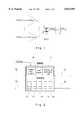
- FIG. 1A brief description of typical, known per se, forward algorithm is given below with reference to FIG. 1.
- layer Qprecedes layer R and each layer contains q and r neurons, respectively.
- an output from a neuron in layer Ris as follows: ##EQU1## where: Y.R(i) is the output of neuron i in layer R;
- Y.Q(j)is the output of neuron j in layer Q and is also the jth input to each neuron in layer R;
- W.R(i.j)is the weight assigned in neuron i (in layer R) to its jth input;
- B.R(i)is the bias for the neuron i in layer R;
- V.R(i)is the sum of the weighted inputs and bias for neuron i in layer R;
- f.Ris the output function for all the neurons in layer R.
- the Back Propagation supervised learning algorithm with variable learning rateis supported. Each example is presented to the network together with a corresponding desired output. The algorithm minimizes the difference (error) between the network and the desired outputs for every example. This is carried out by calculating the change that must be applied to each weight and bias for each example presented to the network. All weight and bias changes are accumulated over all input examples (an epoch). Subsequently, weights and biases are updated, and the next epoch can begin. This process is repeated until the error reaches the desired level or ceases to improve.
- the weights and biases in layer Rare changed as follows:
- ⁇ W.R(i,j) EPOCHis the total accumulated weight change associated with the jth input to neuron i in layer R during one epoch;
- ⁇ B.R(i) EPOCHis the total accumulated bias change for neuron i in layer R during one epoch.
- ⁇ .R(i)is the error of neuron i in layer R;
- ⁇is the learning rate
- ⁇ W.R(i.j) xis a single weight change to the weight of the jth input to neuron i in layer R; note that ##EQU2## ⁇ B.R(i) x is a single bias change for neuron i in layer R; note that ##EQU3##
- the errordepends on whether the present layer is the last one in the network. For the last layer of the network, say layer S, the error calculated for each neuron is:
- t(i)is the desired output from neuron i in layer S;
- f.S'is the derivative of the output function for layer S.
- Data Packet--a data unit(typically but not necessarily 9 bit long) that is fed to the digital neural network of the invention.
- the data packetpropagates in the internal bus(es) of the chip and is delivered as output from the network after having been processed by the network.
- data packet that is fed to the first layer of the network during the processing phasenormally corresponds to a pixel.
- a 5 ⁇ 5 (i.e. 25 data packets or 5 data sets) neighboring pixels of a given pixelform one data example.
- a Digital Systolic Neural Network Chip(e.g. DSNC) of the invention implements a high performance architecture for real-time image processing. It can be used as a single or a multi-layer neural network.
- the proposed architecturesupports many forward algorithms and the Back Propagation learning algorithms which are utilized in parallel.
- the chipis designed for fast execution of both forward processing and learning, and the latter can be carried out at essentially the same speed as the former.
- the output and derivative functions (i.e. f'.R) in each layer, as well as the network topology,are user defined.
- the output and derivative functionsare normally although not necessarily realized as a Look up Table (LUT).
- 25 data packetsare supported for each computation, making the DSNC suitable for real-time image processing of 5 ⁇ 5 pixel neighborhoods.
- signed integer arithmeticis employed with e.g. 9-bit input/output precision and e.g. 8-bits for weight and biases.
- the output forward value and the error calculated in each neuronare normalized to nine bits, thus taking advantage of the full dynamic range available to them.
- Four data channelsare employed, each capable of carrying five data packets, handling 20 parallel buses in total.
- the present inventionprovides for a digital neural network architecture that includes a forward cascade of layers of neurons, having one or more input channel and one or more output channels, for forward processing of data examples that include, each, a plurality of data packets.
- the forward cascadeis adapted to be fed, through the one or more input channels, with a succession of data examples and to deliver a succession of partially and fully processed data examples each consisting of a plurality of packets.
- the fully processed data examplesare delivered through said one or more output channels;
- Each one of the layersis adapted to receive as input in its input channel a first number of data packets per time unit and to deliver as output in its output channel a second number of data packets per said time unit;
- the forward cascade of layersis inter-connected to the backward cascade of layers by means that include inter-layer structure
- any given data example that is fed from a given layer in the forward cascade to a corresponding layer in the backward cascade, through said means,is essentially synchronized with the error of said given processed data example that is fed to said corresponding layer from a preceding layer in said backward cascade;
- the computationpropagates in a systolic manner.
- the inventionfurther provides for a digital neural network architecture that includes a forward cascade of layers of neurons, having one or more input channels and one or more output channels, for forward processing of data examples that include, each, a plurality of data packets; and a backward cascade of layers of neurons, having one or more input channels and one or more output channels, for backward propagation learning of respective errors of the processed data examples; each packet being of a given size;
- the forward cascadeis adapted to be fed, through the one or more input channels, with a succession of data examples and to deliver, a succession of partially and fully processed data examples each consisting of a plurality of packets; the fully processed data examples are delivered through the one or more output channels;
- Each one of the layersis adapted to receive a first number of data packets per time unit and to deliver as output a second number of data packets per said time unit;
- each layerincludes at least two banks of neurons operating in a systolic manner
- each data exampleis partitioned to plurality of data sets each consisting of at least two data packets;
- the forward cascade of layersis inter-connected to the backward cascade of layers by means that include plurality of inter-layer structure
- any given data example that is fed from a given layer of the forward cascade to a corresponding layer in the backward cascade, through said means,is essentially synchronized with the error of said given processed data example that is fed to said corresponding layer from a preceding layer in said backward cascade.
- the inventionprovides for a digital neural network architecture that includes a forward cascade of layers of neurons for forward processing of data examples that include, each, a plurality of data packets.
- a backward cascade of layers of neuronshaving one or more input channels and one or more output channel, for backward propagation learning of respective errors of the processed data examples; each packet being of a given size;
- said digital neural networkfurther includes:
- a backward cascade of l layers of neuronshaving respective indices (l+1, . . . 2l) and having each said layer structure, with the input layer of the backward cascade, having said index l+1, being inter-connected to both the output layer of said forward cascade, having said index l, and to additional output, thereby constituting a cascade of 2l layers each associated with essentially identical propagation period T where the latter being the elapsed time for propagating data between the at least one input channel and at least one output channel of each layer i from among said 2l layers.
- the networkfurther having inter-layer pipeline structure for attaining systolic operation of the backward and forward cascades such that the input to each layer having index i in the forward cascade is also fed as input, after having been delayed for a delay period T i by the inter-layer structure that include hard-wired logic to a corresponding layer having index (2l-i+1) in the backward cascade, such that said delay time T i equals (4l-4i+3) times said propagation period T.
- i i and/or j imay or may not be integers, all as required and appropriate.
- a chipmay constitute one layer with forward (and possibly also backward propagation) constituent.
- a neural network of n layersis realized by n distinct chips.
- a single chipmay encompass only portion of a layer, or if desired, more than one layer.
- FIG. 1illustrates schematically hardware architecture of a neuron in a forward processing neural network
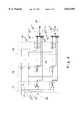
- FIG. 2illustrates generally a DSNC architecture realizing a single layer forward processing and backward learning, according to one embodiment of the invention
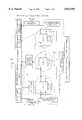
- FIG. 3illustrates schematically a 3-layer architecture for forward processing and back propagation learning, according to one embodiment of the invention
- FIG. 4illustrates a systolic structure of the forward processing constituent of the DSNC chip of FIG. 2;
- FIG. 5illustrates a typical neuron structure, according to one embodiment of the invention
- FIG. 6illustrates a typical structure of a Look Up Table (LUT).
- FIG. 7illustrates a layer that employs plurality of inter-connected Digital Systolic Network Chip (DSNC), according to one embodiment of the invention
- FIG. 8illustrates one possible hardware realization of a 3-layer architecture, according to one embodiment of the invention.
- FIGS. 9-11illustrate, respectively, an input image, desired output image and network output image in an image processing application of the digital neural network of the invention.
- VLSI architecturescan be designed for efficient execution of neural networks for real-time image processing tasks. For simplicity, and for network partitioning reasons, only architectures in which each chip computes a single layer of the neural network is considered.
- the architectureis preferably subject to two implementation constraints in order to be implemented with current technology, (i) the chips are limited to one million gates and (ii) 500 I/O pins.
- many useful image processing taskscan be accomplished with 5 ⁇ 5 pixel neighborhoods.
- the digital VLSI neural network architectureshaving up to 25 neurons and up to 25 inputs per layer are considered. The neurons will support multiple forward algorithms, as well as the Back Propagation learning algorithm. I/O data precision is chosen to be nine bits (to provide for signed 256 gray-levels) and weight precision is 8 bits.
- an optimal price performanceis sought.
- systolic architecturesare employed, and assume that each algebraic calculations (such as additions and multiplications) are completed during one clock cycle.
- the pipelineshould preferably be balanced, in the sense that all other operations should require substantially similar time to complete.
- the proposed architectureis by no means bound by the specified constraints.
- the proposed architectureis not bound to one layer.
- the maximal allowed number of gates and the I/O padsare determined depending upon the particular application.
- the implementationis not confined to 5 ⁇ 5 pixel neighborhoods.
- 25 neuronsnine bits data precision and weight precision of eight bits are only one example. It is not necessary to complete the algebraic operations during one clock cycle.
- the pipelineshould not necessarily be balanced and alternative combinations of parallel and serial architectures may be realized. Whilst balanced architecture is preferable this is not necessarily obligatory.
- the exemplary DSNC architecture 10implements one layer of 25 neurons and up to 25 data packets to each neuron for each computation. If desired, less than 25 data packets may be fed to the first layer (e.g. 3 ⁇ 3). In this case, several neurons (and possibly also in interim layers) in the first layer will be rendered inoperative.
- the 25 inputsare presented in five consecutive cycles of data sets of five data packets each.
- the 25 neuronsare grouped in five banks 12, 14, 16, 18, and 20, respectively, each containing five neurons.
- each neuronis capable of realizing both the forward and backward execution.
- Neurons residing in the same bankperform the same operations in parallel. All five banks operate systolically in parallel on different input data sets. Data to and from the chip are carried over two input channels 22, 28 and two output channels 24, 26.
- FIG. 3showing a 3-layer architecture for forward processing and back propagation learning, according to one embodiment of the invention.
- the 3-layer architectureconsists of 3 layers 30, 32, 34 each constituting a separate DSNC, such that 30.sup.(1), 32.sup.(1) and 34.sup.(1) constitute the forward processing constituents of respective DSNCs 30, 32 and 34 and 30.sup.(2), 32.sup.(2) and 34.sup.(2) constitute the back propagation learning constituents of said DSNCs.
- Each one of the DSNC chips 30, 32 and 34has a general structure, as illustrated in FIG. 2.
- the architectureis optimized for fast learning when using such networks.
- back propagation learning on an data exampleoccurs only after the forward processing of that example has already been completed throughout the network.
- weight-changes associated with that input exampleare calculated, and the same inputs are utilized again for this calculation.
- the architectureshould provide for intermediate internal storage of the inputs, since it is impractical to read them again.
- the total length of the inter-layer pipelineconsists of six layers (three forwards, three backwards) as shown in FIG. 3.
- the three-layer networkconfronts a time lag of eleven input data examples between the entry of the inputs of the first example and the time they are used again in the first layer. To ensure the availability of these inputs without inputting them again, e.g.
- a 275 9-bit entry FIFO bufferbeing an exemplary inter-layer structure is incorporated in the chip.
- 275stands for 11 registers each holding 25 data packets, 9-bit long each).
- the FIFO bufferis depicted as "past inputs" block 25 in the DSNC of FIG. 2.
- this FIFOstores the last 11 data examples (consisting each of 25 data packets) that have entered the chip, and presents them (over the Past Input Channel) at the proper time to the backward stages of the neurons.
- the last 11 data examplesare fed at the correct timing to the appropriate constituent of the back propagation section by means of hard-wired registers.
- the data example that is fed to constituent 30.sup.(1)should be fed after 11 time delays together with the error of the same processed data example after having been processed by 5 constituent 30.sup.(1), 32.sup.(1), 34.sup.(1) 34.sup.(2) and 32.sup.(1).
- 11registers 36.sup.(1) . . . 36.sup.(11) having the same time delay as constituents 30.sup.(1), 32.sup.(1), 34.sup.(1), 34.sup.(2) and 32.sup.(2) assure that constituent 30.sup.(2) will be fed essentially simultaneously with processed data example and data example from constituent 32.sup.(2) and 36.sup.(11), respectively.
- registers 38.sup.(1),38.sup.(2) and 38.sup.(7)assure that constituent 32.sup.(2) will be fed essentially simultaneously with processed data example and data example from constituents 34.sup.(2) . . . 38.sup.(7), respectively.
- 3 registers 40( 1 ), 40.sup.(2) and 40.sup.(3)assures that constituent 34.sup.(2) will be fed essentially simultaneously with data from constituents 32.sup.(1) 34.sup.(1) and also with desired data outputs.
- a desired data outputfed via channel 33 and fully processed output of constituent 34.sup.(1), fed to channel 33', will be synchronized with the inputs partially processed output from constituents 32.sup.(1) for proper execution of algorithmic expression No. 9.
- FIG. 3illustrates three-layer architecture
- the inventionis, of course, not bound by this configuration.
- a fourth layerwill be concatenated to layer 34
- thiswill require use of four constituent for each one of the forward and backward cascades of the network.
- the inter-layer registers that link input 31 to constituent 30.sup.(2)will amount for 15 registers
- the inter-layer registers that link the input of the second layer 32 in the forward cascade to constituent 30.sup.(2)will amount for 11 registers, and so forth.
- Lstands for the number of layers.
- said maximum number of registersequals 4*3-1, i.e. 11 registers.
- 4L-4i-3 registers out of the maximum of 4L-1are used.
- input data to the chipenters through two input channels; the Input Forward Channel 31 and the Input Learning Channel 33.
- Each channelconsists of five 9-bits buses in order to accommodate 5 inputs 9-bit long each.
- a channeltransfers a data set of five data packets, all of the same type. (Normally, during forward processing phase, each data packet (entered to the first layer) is indicative of a pixel value from among the 5 ⁇ 5 neighboring pixels).
- the channelsserve multiple purposes, depending on whether the chip is processing an image, being programmed, or finalizing an epoch.
- the Input Forward Channel 31loads the input image data and the Input Learning Channel loads errors from the next layer (or the desired output, if it is the last layer).
- the Input Forward Channelloads the initial weights, biases and the learning rate, and the Input Learning Channel loads the initial weights into the learning section. Finally, at the end of each epoch, the old weights are replaced by the new ones which have been learned. During that stage, the Input Learning Channel 33 receives the updated weights from the next layer.
- FIG. 4shows only the Forward Input Channel lines 22 and 26, but similar lines also bring systolically the other types of inputs (the Past Inputs and Input Learning Channels) to the neurons.
- the input channel 22consists of 5 buses each inputting one data packet of 9-bits. Only five data packets enter each neuron at each cycle (from each Channel), and 5 cycles are required if the maximum of 25 inputs are utilized.
- FIG. 4depicts only 2 input buses 22.sup.(1), 22.sup.(2) from among the 5 which are actually coupled thereto.
- the systolic approachin addition to reducing I/O pads and fan-out requirements for input data, also makes efficient use of the output and derivative functions.
- Output dataare produced on two channels, the Output Forward Channel 26 and the Output Learning Channel (24 in FIG. 4 or 35 in FIG. 5). Each channel consists of five 9-bit buses, and outputs a data set of five data packets, all of the same type.
- the Output Forward Channel 26is a bidirectional channel. When programming the chip for execution, the output function and its derivative are fed into the chip through this channel; when processing an image, the outputs of a whole bank (five neurons) are presented on the channel via the output LUTs 26.sup.(1) . . . 26.sup.(5) (of which only 26.sup.(1) and 26.sup.(5) are shown in FIG. 4).
- These channelscan also be used in a known per se manner by the host to monitor the learning progress of the network.
- the output function and its derivative associated with the layerare stored in look-up-tables. There are five identical LUTs for output functions and five for derivatives. All five LUTs of the same kind contain the same values. Each LUT contains 512 9-bit entries. The contents of the LUTs are user defined and are fed into the chip through the Output Forward Channel when programming the chip.
- Each neuroncomputes the sum of its weighted inputs. The sum is used to address the LUTs and retrieve the appropriate output and derivative values.
- An internal Sum Channel 70comprising five 9-bit buses, transfers in parallel the five sums of a single bank to the LUTs. In consecutive cycles, consecutive banks send their sum outputs over the Sum Channel, thus enabling efficient time sharing of the LUTs.
- a separate Distribution Channelenters each bank. Two of these channels operate simultaneously, carrying output and derivative values. Thus, a bank can start error calculations when receiving the output values. On the following cycle it receives the derivatives (which are only then required), while the next bank receives its output values (to start its own error calculations). In all layers other than the last one, only one Distribution Channel operates since only derivative values are required.
- weightsin forward and backward stages
- the organization of weights (in forward and backward stages) into register filesdepends on the order in which inputs enter the neuron. For example, the first pile of registers in each neuron holds the weights for inputs No. 1, 6, 11, 16, 21 out of the total 25 data packets which enter in five consecutive input cycles. In order to take advantage of the systolic architecture, the weights should be loaded into the banks from last bank to first bank. Weight initialization requires five input cycles per neuron, or 125 clock cycles to initialize all 25 neurons. The biases and the learning-rate are initialized likewise, each taking five clock cycles. An 8-bit weight is appended with an allow-change bit which controls the learning of the networks. If an allow-change bit is zero, the corresponding weight is not allowed to change during learning.
- the output and derivative functionsare loaded into the LUTs via the bi-directional Output Forward Channel.
- the dataare entered serially, and each entry is loaded simultaneously to all five identical LUTs.
- the two sets of LUTs(for the output and derivative functions) are loaded in series, taking 1024 clock cycles to complete.
- FIG. 6,illustrating one possible structure of a LUT 72 (shown also in FIG. 5).
- the 5 bus entry 70is delivered from the forward bias stage (68 in FIG. 5).
- Each neuron from among the 25 neurons of the forward cascadeutilized the f.R function whereas each neuron from among the 25 neurons of the backward cascade utilizes a derivative function f.R, thereby seemingly requiring 50 distinct LUTs, i.e. a LUT per neuron.
- the access to the LUTsis implemented in a systolic manner such that the output of the 50 neurons is subject to only 10 LUTs in five consecutive cycles.
- cycle 1the forward constituent 30.sup.(1) has been operating for a long time
- cycle 16the forward constituent continues to operate after the last cycle in the table
- FIG. 5depicting one possible hardware realization of a physical neuron 60. It should be noted that the operation of a physical neuron complies with the general concept that has been described with reference to FIG. 1.
- neurons N1-N5receive the input of a first data set of data example A containing data packets 1-5 (each being representative of a pixel from among the 5 ⁇ 5 neighboring pixels), so that each neuron receives all five packets.
- the input forward channel of the neuronis illustrated in FIG. 5 where, as shown, the neuron is capable of receiving the five single input packets by the intermediary of 5 9-bit input register 62.
- the other neurons(N6-N25) complete previous computations as will be further clarified in the description below.
- the LUT tableis depicted as an integral portion of the neuron architecture, this is normally not the case, since the LUT table is preferably utilized as a separate module shared by more than one neuron (and by this particular embodiment by all the neurons).
- a second data set containing data packets 6-10 of example Aare fed simultaneously to neurons N1-N5, whilst at the same time, the previous input 1-5 is fed from 5 input registers 27 to each one of neurons N6-N10 in the second bank 14. Put differently, N6-N10 receive a delayed input of the data packet 1-5.
- neurons N1-N5receive, each, the fifth data set consisting of data packets 21-25, neurons N6-N10 receive, each, delayed inputs of data packets 16-20; neurons N11-N15 receive, each, delayed inputs of data packets 11-15; neurons N16-N20 receive, each, delayed inputs of data packets 6-10 and neuron N21-N25 receive, each, delayed input of data packets 1-5 of data example A.
- neurons N1-N5receive data packets of a new data example B.
- each one of the neurons N1-N5is capable of producing an output since it has already processed the entire 25 input packets (in five cycles).
- the five cycle delay from the receipt of the last input sequence (i.e. data packets 21-25 in cycle 5) until the result (i.e. processed data example that is actually delivered from neurons N1-N5 (in cycle 11)stems from 3 cycles for summation (in unit 66) one cycle for bias calculation in module 68 and one cycle for LUT calculation (72).
- the resulting outputhas been fed from the forward biased stage 68 to a sum channel 70 (FIG. 5) and has been fed by means of output lines to a multiplexer which has routed its output to LUT 72 and therefrom to the output.
- the latter procedureis shown in FIG.
- the output result (9-bit long)is fed through line 29 to a multiplexer 50.sup.(1) and therefrom to output channel 26.sup.(1) after having been subject to output function 52.sup.(1).
- the remaining neurons N2-N5are fed through their respective multiplexer to their respective output channel to thereby generate five simultaneous results 9-bits long each.
- the resulting output of the first constituent 30.sup.(1)is fed to the next constituent 32.sup.(1).
- multiplexer 50.sup.(1)whilst enabling to route input 29 to the output disables the remaining four inputs that are coupled to neurons N6, and N11 (not shown), N16 (not shown) and N21.
- neurons N6-N10process delayed data packets 21-25 of data example B; neurons N11-N15 process delayed inputs 16-20; N16-N20 process delayed data packets 11-15 and N21-N25 process delayed data packets 6-10.
- neurons N1-N5also commence a new cycle of calculation and receive input packets (1-5) that belong to the next 25 inputs of data example C. During succeeding cycles 12, 13, 14 and 15 N1-N5 will process the remaining packets 6 to 25 in order to yield the next output in cycle 21 (not shown).
- neurons N6-N10are now capable of generating an output after having processed all 25 data packets of data example A.
- N11-N15, N16-N20 and N21-N25continue to receive the appropriate input for processing.
- neurons N11-N15produce an output
- neurons N16-N20produce their respective outputs.
- the resulting output of cycle 15has been fed from neuron N21 and N25 (neuron 22-24 are not shown in FIG. 4) through buses 33.sup.(1) and 33.sup.(2) respectively, and accordingly, multiplexers 50.sup.(1) and 52.sup.(2) have enabled the routing of theses buses to the respective outputs whilst having disabled the other inputs fed from N1, N6, N11 and N16 (multiplexer 50.sup.(1)) and N5, N10, N15 and N20 (multiplexer 51.sup.(2)).
- the procedure which has just been described with reference to the forward processingapplies mutatis mutandis to the backward processing which is carried out e.g. in the backward constituent chip 34( 2 )in FIG. 3.
- Table II-Aillustrates the operation of both the forward and backward cascade of neurons with respect to a succession of data examples (designated as A-P) and extending over 80 cycles of computation.
- A-Pdata examples
- Table II-Aillustrates the operation of both the forward and backward cascade of neurons with respect to a succession of data examples (designated as A-P) and extending over 80 cycles of computation.
- the rows in Table II-Aare broken down by layers, i.e. layer 1-layer 3 of the forward cascade and layer 3 layer-layer 1 of the backward cascade.
- the rows in Table II-Acorrespond to the six constituents 30 1 , 32 1 , 34 1 , 34 2 , 32 2 and 30.sup.(2), respectively.
- Each of the forward layersis further partitioned into “in” and “out” rows and each backward layer is further partitioned to "error in", "past input” and "error out” rows.
- partially processed data exampleit is meant that data example layer has been processed by neurons N1-N5 (see Table II) and is entering the first out of 7 registers that interconnect constituent 30.sup.(1) of the forward cascade with constituent 32.sup.(2) of the backward cascade. The latter is illustrated by indication of "A" in the past input row of backward layer 2 in cycles 11-15.
- Table II-Athe processing of the entire Example A by neurons N1-N25 takes 25 cycles and 5 more cycles are required for the specified summation, bias and LUT calculations, giving rise to the delivery of a fully processed data example A at the output of forward layer 3 at cycles 31-35.
- the output of forward layer 3presents a processed data example A in cycle 31-35.
- backward layer 3i.e. constituent 34.sup.(2), as indicated by the letter "A" in the "error in” line of backward layer 3.
- the desired output of example Ais fed simultaneously via channel 33.
- the partially processed example A that was fed to register 40(l) in cycle 21-25has now propagated through register 40.sup.(2) and 40.sup.(3) and is fed to a backward layer 3, (i.e. constituent 34 2 in FIG. 3).
- the backward layer 3is capable of producing an error of processed data example A on the basis of desired output of example A, fully processed example A and partially processed example A, in compliance with algorithmic expression 9.
- backward layer 3produces error of processed example A (designated as "error out") in backward layer 3 and the specified error is passed back to backward layer 2 (shown in the "error in” line of backward line 2).
- Backward layer 2is now capable of processing also the partially processed example A after the latter was subject to delay by 7 registers that interconnect the first layer in the forward cascade to the second layer in the backward cascade.
- the propagation of the latter partially processed example Ais depicted in Table II-A in the "past input" row of backward layer 2 commencing from cycle 11-15 and ending at cycle 41-45.
- Layer 2is now capable of calculating an error of processed example A in compliance with algorithmic expression 10.
- Layer 2will deliver "error out” results (in compliance with algorithmic expression 10) at cycles 51-55 and the latter will be fed at the same cycle to backward layer 1 as "error in” data ("error in” signifies an error of processed example).
- Layer 1will utilize at the same cycle the past input data that has been propagated through 11 registers 36.sup.(1) to 36.sup.(11) and is capable, in its turn, to calculate an error of processed example A in compliance with algorithmic expression 10.
- cycles 61-65 backward layer 1completes the learning phase with respect to Example A and produces as an output an error of processed example A.
- each registerholds one data example that contains 25 packets (each 9 bits long), the size of this register is 225 bits.
- the maximum size of images that may be processed in real-timedepends on the most heavily loaded layer in the network.
- the loadis a function of the number of inputs in a single data example and the number of neurons used.
- the overall network processing rateis limited by the processing speed of its most heavily loaded layer. Table III summarizes processing capabilities in terms of clock cycles as functions of the network and image neighborhood sizes, and shows the implication of real-time image processing.
- MISF/(30*BCO), where MIS stands for maximum image size, presented as sqrt(MIS) * sqrt(MIS))
- Updating the weights and biases of the DSNC neuronstakes place after the last weight-change calculation is concluded for the last input example of the epoch.
- Each cycleone weight in each forward weight register pile is updated, using the change-weight piles. This update is carried out from the last to first weight in the pile. This order exploits the systolic architecture in the same manner as explained above, and only 125 clock cycles are thus required for passing the new forward weights to the backward stages of the previous layer.
- FIG. 8The 3-layer architecture of FIG. 8 may reside, e.g. in an extension board that is installed in a conventional P.C. (hereinafter "host computer") Pentium® base P.C. employing a PCI communication bus for communicating with the specified board.
- the initial data for operationcan be stored in memories or supplied by a host computer.
- the processed imagescan come from an image acquisition systems, e.g CCD camera coupled to the host computer or, if desired, be retrieved from image files stored in or received by the host.
- neighborhood generatorsare responsible for arranging the pixels into the required data sets and feed them successively into the network.
- the calculated new weights and biasescan be sent to the host system.
- the host computercan track the learning process.
- the same 3-layer networkcan be built with only one DSNC, executing different layers at different times.
- This implementationis less expensive but performs slightly slower than three times when in Forward mode and slightly slower than six times while learning, due to the time required to store intermediate data packets in external memories and retrieve the same, and the time required to modify weights, biases, learning rates, output and derivative functions, for each layer.
- more than 25 neurons and/or 25 inputscan be incorporated into one layer by employing several DSNCs.
- the most obvious implementationis based on a two-level hierarchy: the first level, having multiple DSNCs, creates intermediate sums of 25 weighted inputs (in each DSNC). In the second level, another DSNC sums them up and applies the output function.
- 26 DSNCs arranged in two such levelscan emulate a single layer of 25 neurons capable of processing 625 data packets in one data example, e.g. representing 25 ⁇ 25 pixel neighborhood.
- the DSNChas been designed with a commercial 0.8 ⁇ CMOS standard cell VLSI library.
- This designintegrates 600K gates and 180 data I/O pins.
- the critical pathincludes a 22 nsec 9-bits multiplication (see Appendix), and consequently this DSNC design achieves a 45.4 MHz operating frequency.
- single chipcan process in real-time (30 images per second) an image of 550 ⁇ 550 pixels if a 5 ⁇ 5 pixel neighborhoods or 25 neurons in a single layer are used.
- larger imagesup to 1230 ⁇ 1230 pixels
- the numeric precision of the DSNC architecturehas been determined empirically. It is optimized for a certain class of algorithms, and accordingly a different precision other than 8 bits for weight and bias and 9 bits size for data may be required for other algorithms. Digital simulations should be carried out to compare the performance and the quality of the results over a number of different precisions, until the appropriate precision is identified.
- the DSNC architecturecombines both forward processing and learning. Certain applications may not require learning, and for them a subset of the architecture, with only forward processing hardware, can be designed. As explained in the Appendix hereinbelow, about 2/3 of the number of gates i.e. 447,595 out of 617,640 may be eliminated in such cases. This could lead to either smaller chips or to higher performance architectures. For instance, using the same technology and size of chip as in the Appendix, a 1230 ⁇ 1230 or larger images can be processed in real-time.
- Neural networkscan offer an attractive implementation for some complex image processing algorithms; their self-learning capability often helps overcome the extreme difficulty of constructing conventional image processing algorithm for non-trivial tasks.
- High performance architectures for neural network processingare required in order to execute image processing algorithms at video rates.
Landscapes
- Engineering & Computer Science (AREA)
- Physics & Mathematics (AREA)
- Health & Medical Sciences (AREA)
- Life Sciences & Earth Sciences (AREA)
- Biomedical Technology (AREA)
- Biophysics (AREA)
- Theoretical Computer Science (AREA)
- Evolutionary Computation (AREA)
- Computational Linguistics (AREA)
- Data Mining & Analysis (AREA)
- Artificial Intelligence (AREA)
- General Health & Medical Sciences (AREA)
- Molecular Biology (AREA)
- Computing Systems (AREA)
- General Engineering & Computer Science (AREA)
- General Physics & Mathematics (AREA)
- Mathematical Physics (AREA)
- Software Systems (AREA)
- Neurology (AREA)
- Image Processing (AREA)
Abstract
Description
This application claims the benefit of U.S. provisional application Ser. No. 60/812,988, filed Mar. 7, 1996.
The present invention concerns a digital hardware architecture for realizing neural networks.
Throughout the description, reference is made to the following list of references:
1. Vitsnudel, I., Ginosar, R., Zeevi, Y., "Neural Network Aided Design for Image Processing," SPIE Visual Comm. and Image Proc. 9, In Image Processing, 1606:1086-1091, November 1991.
2. Yasunaga, M., Masuda, N., Yagyu, M., Asai, M, Yamada, M., Masaki, A., Design, Fabrication and Evaluation of A 5-Inch Wafer Scale Neural Network LSI Composed of 576 Digital Neurons", IJCNN, 2:527-535, 1990.
3. Yasunaga, M., Masuda, N., Yagyu, M., Asai, M., Shibata, K., Ooyama, M., Yamada, M., Sakaguchi, T., and Hashimoto, M., "A Self-Learning Digital Neural Network Using Wafer-Scale LSI", IEEE Journal of Solid-State Circuits, 28(2):106-113, February 1993.
4. Wawrzynck, J., Asanovic, K., and Morgan, N., "The Design of a Neuro-Microprocessor", IEEE Trans. on Neural Networks, 4(3):394-399, May 1993.
5. Hammerstrom, D., "A VSLI Architecture for High-Performance, Low-Cost, On-chip Learning", IJCNN, 2:537-544, 1990.
6. Kung, S. Y., and Hwang, J. N., "Digital VLSI Architecture for Neural Networks", Proc. of the IEEE Int. Symp. on Circuits & Systems, 1:445-448, 1989.
7. Madraswala, T. H., Mohd, B. J., Ali, M., Premi, R., and Bayoumi, M. A., "A Reconfigurable ANN Architecture", IEEE Int. Symp. on Circuits & Systems, 3:1569-1572, 1992.
8. Watanabe, T., Kimura, K., Aoki, M., Sakata, T., and Ito, K., "A Single 1.5-V Digital Chip for a 106 Synapse Neural Network", IEEE Trans. on Neural Networks, 4(3):287-393, May 1993).
9. Lehmann, C., Viredaz, M., and Blayo, F., "A Generic Array Building Block for Neural Networks with On-Chip Learning", IEEE Trans. on Neural Networks, 4(3):400-406, May 1993.
10. Chang Chiz-Fen and Sheu, B. J., "Digital VLSI Multiprocessor Design for Neurocomputers", IJCNN, 2:1-6, 1992.
11. Myers, D. J., Vincent, J. M., Cox, A. L., Harbridge, J. R., Orrey, D. A., Williamson, C. A. and Naylor, D. J., "A High Performance Digital Processor for Implementing Large Artificial Neural Networks", BT Technology Journal,10(3):134-143, July, 1992.
12. Weinberg, N. and Ginosar, R., "A Digital Systolic Neural Network Chip (DSNC)", Technical Report, Electrical Engineering Department, Technion--Israel Institute of Technology, Israel, July 1995.
Neural networks offer an attractive implementation for some complex image processing algorithms see e.g. 1!. The linear combination part of the standard neuron can implement linear image convolutions, and the non-linear output function offers additional capabilities. While it is often extremely difficult to construct empirically a traditional image processing algorithm for non-trivial tasks, the self-learning capabilities of neural networks can be exploited for some image processing applications in an automatic way. However, available high performance architectures for neural network processing do not support such applications in an efficient manner.
A number of digital parallel architectures for neural network processing have been described in the literature 2-11!. Some of them are limited to forward processing only 2, 8!, while others support learning as well 3-7, 9-11!. Some architectures employsystolic data flow
There follows a brief description of known per se Forward Processing and Back Propagation learning algorithm in neural network architecture. A detailed discussion of these concepts is given in Richard P. Lippman, An introduction to computing with neural nets, IEEE ASSP Magazine, April 1987, pp. 4-22
Forward Processing
A brief description of typical, known per se, forward algorithm is given below with reference to FIG. 1. Consider a multi-layer network where layer Q precedes layer R and each layer contains q and r neurons, respectively. As illustrated in FIG. 1, an output from a neuron in layer R is as follows: ##EQU1## where: Y.R(i) is the output of neuron i in layer R;
Y.Q(j) is the output of neuron j in layer Q and is also the jth input to each neuron in layer R;
W.R(i.j) is the weight assigned in neuron i (in layer R) to its jth input;
B.R(i) is the bias for the neuron i in layer R;
V.R(i) is the sum of the weighted inputs and bias for neuron i in layer R;
f.R is the output function for all the neurons in layer R.
Still further, a typical, known per se, basic back propagation learning algorithm is given below:
Learning Algorithm
The Back Propagation supervised learning algorithm with variable learning rate is supported. Each example is presented to the network together with a corresponding desired output. The algorithm minimizes the difference (error) between the network and the desired outputs for every example. This is carried out by calculating the change that must be applied to each weight and bias for each example presented to the network. All weight and bias changes are accumulated over all input examples (an epoch). Subsequently, weights and biases are updated, and the next epoch can begin. This process is repeated until the error reaches the desired level or ceases to improve.
The weights and biases in layer R are changed as follows:
W.R(i.j).sub.NEW =W.R(i.j).sub.OLD +ΔW.R(i.j).sub.EPOCH( 3)
B.R(i).sub.NEW =B.R(i).sub.OLD +ΔB.R(i).sub.EPOCH ( 4)
where:
ΔW.R(i,j)EPOCH is the total accumulated weight change associated with the jth input to neuron i in layer R during one epoch;
ΔB.R(i)EPOCH is the total accumulated bias change for neuron i in layer R during one epoch.
For each input example x, a weight and bias change are calculated according to the following equations:
ΔW.R(i.j).sub.x =η*δ.R(i)*Y.Q(j) (5)
ΔB.R(i).sub.x =η*δ.R(i) (6)
where:
δ.R(i) is the error of neuron i in layer R;
η is the learning rate;
ΔW.R(i.j)x is a single weight change to the weight of the jth input to neuron i in layer R; note that ##EQU2## ΔB.R(i)x is a single bias change for neuron i in layer R; note that ##EQU3##
The error depends on whether the present layer is the last one in the network. For the last layer of the network, say layer S, the error calculated for each neuron is:
δ.S(i)=(t(i)-Y.S(i))*f.S'(V.S(i)) (9)
where:
t(i) is the desired output from neuron i in layer S;
f.S' is the derivative of the output function for layer S.
For a hidden layer, say layer R, preceded by Q and succeeded by S (containing s neurons), the error calculated for each neuron is: ##EQU4##
It is accordingly an object of the present invention to provide for a digital systolic neural network capable of realizing forward processing and back propagation learning simultaneously.
The four terms that will be used frequently in the following description and appended claims:
1. Data Packet--a data unit (typically but not necessarily 9 bit long) that is fed to the digital neural network of the invention. The data packet propagates in the internal bus(es) of the chip and is delivered as output from the network after having been processed by the network. Insofar as image processing application is concerned, data packet that is fed to the first layer of the network during the processing phase normally corresponds to a pixel.
2. Data set--the number of data packets that are fed simultaneously to the neural network on a single channel.
3. Data example--a collection of data packets that constitute one example during processing of the neural network. Thus, for example, a 5×5 (i.e. 25 data packets or 5 data sets) neighboring pixels of a given pixel, form one data example.
4. Epoch--a collection of data examples that should be fed to and processed by the neural network, during learning phase, in order to gather "sufficient error information" that will allow change of the network's parameters, i.e. weights and/or biases.
It should be noted that for clarity, the proposed architecture of the invention is described with reference to image processing application. Those versed in the art will readily appreciate that the invention is, by no means, bound by this exemplary application.
A Digital Systolic Neural Network Chip (e.g. DSNC) of the invention implements a high performance architecture for real-time image processing. It can be used as a single or a multi-layer neural network. The proposed architecture supports many forward algorithms and the Back Propagation learning algorithms which are utilized in parallel. The chip is designed for fast execution of both forward processing and learning, and the latter can be carried out at essentially the same speed as the former. The output and derivative functions (i.e. f'.R) in each layer, as well as the network topology, are user defined. The output and derivative functions are normally although not necessarily realized as a Look up Table (LUT).
In a specific example of 25 neurons, arranged in 5 consecutive banks, each holding 5 neurons, 25 data packets are supported for each computation, making the DSNC suitable for real-time image processing of 5×5 pixel neighborhoods. Preferably, although not necessarily signed integer arithmetic is employed with e.g. 9-bit input/output precision and e.g. 8-bits for weight and biases. The output forward value and the error calculated in each neuron are normalized to nine bits, thus taking advantage of the full dynamic range available to them. Four data channels are employed, each capable of carrying five data packets, handling 20 parallel buses in total. By concatenating multiple DSNCs, almost any size neural network can be constructed for real-time image processing.
Accordingly, the present invention provides for a digital neural network architecture that includes a forward cascade of layers of neurons, having one or more input channel and one or more output channels, for forward processing of data examples that include, each, a plurality of data packets. A backward cascade of layers of neurons, having one or more input channels and one or more output channels, for backward propagation learning of respective errors of the processed data examples; each packet being of a given size;
The forward cascade is adapted to be fed, through the one or more input channels, with a succession of data examples and to deliver a succession of partially and fully processed data examples each consisting of a plurality of packets. The fully processed data examples are delivered through said one or more output channels;
Each one of the layers is adapted to receive as input in its input channel a first number of data packets per time unit and to deliver as output in its output channel a second number of data packets per said time unit;
the improvement wherein:
(i) the forward cascade of layers is inter-connected to the backward cascade of layers by means that include inter-layer structure,
such that, during processing phase of the forward cascade of neurons, any given data example that is fed from a given layer in the forward cascade to a corresponding layer in the backward cascade, through said means, is essentially synchronized with the error of said given processed data example that is fed to said corresponding layer from a preceding layer in said backward cascade; and
(ii) The first number of data packets and the second number of data packets being essentially the same for all said layers.
Preferably, the computation propagates in a systolic manner.
The invention further provides for a digital neural network architecture that includes a forward cascade of layers of neurons, having one or more input channels and one or more output channels, for forward processing of data examples that include, each, a plurality of data packets; and a backward cascade of layers of neurons, having one or more input channels and one or more output channels, for backward propagation learning of respective errors of the processed data examples; each packet being of a given size;
The forward cascade is adapted to be fed, through the one or more input channels, with a succession of data examples and to deliver, a succession of partially and fully processed data examples each consisting of a plurality of packets; the fully processed data examples are delivered through the one or more output channels;
Each one of the layers is adapted to receive a first number of data packets per time unit and to deliver as output a second number of data packets per said time unit;
the improvement wherein:
(i) each layer includes at least two banks of neurons operating in a systolic manner;
(ii) each data example is partitioned to plurality of data sets each consisting of at least two data packets;
(iii) the forward cascade of layers is inter-connected to the backward cascade of layers by means that include plurality of inter-layer structure,
such that, during processing phase of said forward cascade of neurons, any given data example that is fed from a given layer of the forward cascade to a corresponding layer in the backward cascade, through said means, is essentially synchronized with the error of said given processed data example that is fed to said corresponding layer from a preceding layer in said backward cascade.
(iii) the first number of data packets and the second number of data packets being essentially the same for all said layers.
Still further the invention provides for a digital neural network architecture that includes a forward cascade of layers of neurons for forward processing of data examples that include, each, a plurality of data packets. A backward cascade of layers of neurons, having one or more input channels and one or more output channel, for backward propagation learning of respective errors of the processed data examples; each packet being of a given size;
a forward cascade of l(l>1) layers of neurons having respective indices (1, . . . l), wherein each layeri (i=1 . . . l) in the cascade having n neuron and having the following layer structure:
(a) it is coupled to an input channel of at least one ki1 input buses and an output channel of ki2 output buses;
(b) it comprises one or more banks of neurons where each bank includes mi neurons where mi =ki1 * ii, n=mi * ji and mi =k12 * oi ;
said digital neural network further includes:
a backward cascade of l layers of neurons having respective indices (l+1, . . . 2l) and having each said layer structure, with the input layer of the backward cascade, having said index l+1, being inter-connected to both the output layer of said forward cascade, having said index l, and to additional output, thereby constituting a cascade of 2l layers each associated with essentially identical propagation period T where the latter being the elapsed time for propagating data between the at least one input channel and at least one output channel of each layeri from among said 2l layers.
The network further having inter-layer pipeline structure for attaining systolic operation of the backward and forward cascades such that the input to each layer having index i in the forward cascade is also fed as input, after having been delayed for a delay period Ti by the inter-layer structure that include hard-wired logic to a corresponding layer having index (2l-i+1) in the backward cascade, such that said delay time Ti equals (4l-4i+3) times said propagation period T.
ii and/or ji may or may not be integers, all as required and appropriate.
The realization of the neural network of the invention is not confined to a specific chip arrangement. Thus, a chip may constitute one layer with forward (and possibly also backward propagation) constituent. By this embodiment a neural network of n layers is realized by n distinct chips. Alternatively a single chip may encompass only portion of a layer, or if desired, more than one layer. Those versed in the art will, therefore, appreciate that the design of the chip in terms of the neural network portion that is realized is determined as required and appropriate, depending upon the particular application.
For a better understanding, the invention will now be described with reference to the accompanying drawings, in which:
FIG. 1 illustrates schematically hardware architecture of a neuron in a forward processing neural network;
FIG. 2 illustrates generally a DSNC architecture realizing a single layer forward processing and backward learning, according to one embodiment of the invention;
FIG. 3 illustrates schematically a 3-layer architecture for forward processing and back propagation learning, according to one embodiment of the invention;
FIG. 4 illustrates a systolic structure of the forward processing constituent of the DSNC chip of FIG. 2;
FIG. 5 illustrates a typical neuron structure, according to one embodiment of the invention;
FIG. 6 illustrates a typical structure of a Look Up Table (LUT);
FIG. 7 illustrates a layer that employs plurality of inter-connected Digital Systolic Network Chip (DSNC), according to one embodiment of the invention;
FIG. 8 illustrates one possible hardware realization of a 3-layer architecture, according to one embodiment of the invention; and
FIGS. 9-11 illustrate, respectively, an input image, desired output image and network output image in an image processing application of the digital neural network of the invention.
Multiple alternative VLSI architectures can be designed for efficient execution of neural networks for real-time image processing tasks. For simplicity, and for network partitioning reasons, only architectures in which each chip computes a single layer of the neural network is considered. By this particular example, the architecture is preferably subject to two implementation constraints in order to be implemented with current technology, (i) the chips are limited to one million gates and (ii) 500 I/O pins. In addition, it is proposed that many useful image processing tasks can be accomplished with 5×5 pixel neighborhoods. Thus, the digital VLSI neural network architectures having up to 25 neurons and up to 25 inputs per layer are considered. The neurons will support multiple forward algorithms, as well as the Back Propagation learning algorithm. I/O data precision is chosen to be nine bits (to provide for signed 256 gray-levels) and weight precision is 8 bits.
Under the above exemplary constraints (1 MGates, 500 I/O pins, and 25 neurons/layer I/O data precision 9-bits and weight precision 8-bits) an optimal price performance is sought. Preferably, (although not necessary) systolic architectures are employed, and assume that each algebraic calculations (such as additions and multiplications) are completed during one clock cycle. To maximize hardware utilization, the pipeline should preferably be balanced, in the sense that all other operations should require substantially similar time to complete.
As will be explained in greater detail below, when the number of physical neurons is less than 25, multiple cycles are required for execution of the 25 logical neurons of the network layer, and similarly for the inputs. The proposed solution assumes balanced architectures, namely architectures containing no idle resources when fully loaded. For example, if each multiplication is completed in one clock cycle, there is no need for more multipliers than there are inputs to each neuron. If the algebraic operations (e.g. multiplication) requires more than one cycle then known per se techniques such as pipelining or time sharing of multipliers may be used in order to complete the operation while maintaining the same input and output throughput.
It is desired to design the architectures so as to execute Back Propagation learning at essentially the same speed as forward processing. This is motivated by the many research and development applications where learning constitutes the principal time consuming effort. Analyzing the algorithmic data flow of Back Propagation can be performed along similar directions, and the results are already incorporated in the architecture described herein. Note that if learning is eliminated, or is designed for substantially lower performance than forward processing, the chip size can be reduced or, alternatively, faster architectures which can process larger images in real-time can be designed under the same constraints.
Before turning to a detailed discussion of one proposed architecture, it should be noted that the various constraints specified in the above discussion exemplifies the motivation in designing a neural network that meets one's needs. It should be emphasized that the present invention is by no means bound by the specified constraints. Thus, for example, the proposed architecture is not bound to one layer. The maximal allowed number of gates and the I/O pads are determined depending upon the particular application. The implementation is not confined to 5×5 pixel neighborhoods. Likewise, 25 neurons, nine bits data precision and weight precision of eight bits are only one example. It is not necessary to complete the algebraic operations during one clock cycle. The pipeline should not necessarily be balanced and alternative combinations of parallel and serial architectures may be realized. Whilst balanced architecture is preferable this is not necessarily obligatory.
Accordingly, the various constraints that are mentioned herein may be adjusted or eliminated, and other constraints may be imposed all as required and appropriate, depending upon the particular application.
A Description of a Preferred DSNC Architecture
There follows a description of some variants of one exemplary architecture in which a Digital Systolic Neural Network Chip (DSNC) realize one-layer (both forward and backward propagation learning (hereinafter "one-layer DSNC architecture")). Referring at the onset to FIG. 2, theexemplary DSNC architecture 10 implements one layer of 25 neurons and up to 25 data packets to each neuron for each computation. If desired, less than 25 data packets may be fed to the first layer (e.g. 3×3). In this case, several neurons (and possibly also in interim layers) in the first layer will be rendered inoperative. The 25 inputs are presented in five consecutive cycles of data sets of five data packets each. The 25 neurons are grouped in fivebanks input channels output channels
Attention is now direct to FIG. 3, showing a 3-layer architecture for forward processing and back propagation learning, according to one embodiment of the invention. The 3-layer architecture consists of 3layers respective DSNCs
Since most networks make use of up to l=three layers, the architecture is optimized for fast learning when using such networks. As is well known, back propagation learning on an data example (several data packets) occurs only after the forward processing of that example has already been completed throughout the network. Immediately afterwards, weight-changes associated with that input example are calculated, and the same inputs are utilized again for this calculation. Hence, the architecture should provide for intermediate internal storage of the inputs, since it is impractical to read them again.
Learning is carried out in the network in the opposite direction to forward processing, i.e., from thelast layer 34 to the first 30 utilizing to this end DSNC constituents 34.sup.(2), 32.sup.(2) and 30.sup.(2). Thus, the total length of the inter-layer pipeline consists of six layers (three forwards, three backwards) as shown in FIG. 3. While learning at full speed (a new data set entering every clock cycle), the three-layer network confronts a time lag of eleven input data examples between the entry of the inputs of the first example and the time they are used again in the first layer. To ensure the availability of these inputs without inputting them again, e.g. a 275 9-bit entry FIFO buffer being an exemplary inter-layer structure is incorporated in the chip. (275 stands for 11 registers each holding 25 data packets, 9-bit long each). The FIFO buffer is depicted as "past inputs"block 25 in the DSNC of FIG. 2. At any given time this FIFO stores the last 11 data examples (consisting each of 25 data packets) that have entered the chip, and presents them (over the Past Input Channel) at the proper time to the backward stages of the neurons. The last 11 data examples are fed at the correct timing to the appropriate constituent of the back propagation section by means of hard-wired registers. Thus, the data example that is fed to constituent 30.sup.(1) should be fed after 11 time delays together with the error of the same processed data example after having been processed by 5 constituent 30.sup.(1), 32.sup.(1), 34.sup.(1) 34.sup.(2) and 32.sup.(1).
To this end, 11 registers 36.sup.(1) . . . 36.sup.(11) having the same time delay as constituents 30.sup.(1), 32.sup.(1), 34.sup.(1), 34.sup.(2) and 32.sup.(2) assure that constituent 30.sup.(2) will be fed essentially simultaneously with processed data example and data example from constituent 32.sup.(2) and 36.sup.(11), respectively.
In a similar manner, registers 38.sup.(1),38.sup.(2) and 38.sup.(7) assure that constituent 32.sup.(2) will be fed essentially simultaneously with processed data example and data example from constituents 34.sup.(2) . . . 38.sup.(7), respectively.
Similarly, 3 registers 40(1), 40.sup.(2) and 40.sup.(3) assures that constituent 34.sup.(2) will be fed essentially simultaneously with data from constituents 32.sup.(1) 34.sup.(1) and also with desired data outputs. In the latter case, a desired data output, fed viachannel 33 and fully processed output of constituent 34.sup.(1), fed to channel 33', will be synchronized with the inputs partially processed output from constituents 32.sup.(1) for proper execution of algorithmic expression No. 9.
It should be noted that whereas FIG. 3 illustrates three-layer architecture, the invention is, of course, not bound by this configuration. Thus, for example, should four layer architecture be employed, i.e. a fourth layer will be concatenated tolayer 34, this will require use of four constituent for each one of the forward and backward cascades of the network. Accordingly the inter-layer registers that linkinput 31 to constituent 30.sup.(2) will amount for 15 registers, the inter-layer registers that link the input of thesecond layer 32 in the forward cascade to constituent 30.sup.(2) will amount for 11 registers, and so forth.
Generally speaking, a maximum of L*4-1 registers are required for linking the input layer in the forward cascade to the last constituent of the learning cascade, where L stands for the number of layers. In the specific example of FIG. 3 said maximum number of registers equals 4*3-1, i.e. 11 registers. In layer i, 4L-4i-3 registers out of the maximum of 4L-1, are used.
As shown in FIG. 3, input data to the chip enters through two input channels; theInput Forward Channel 31 and theInput Learning Channel 33. Each channel consists of five 9-bits buses in order to accommodate 5 inputs 9-bit long each. A channel transfers a data set of five data packets, all of the same type. (Normally, during forward processing phase, each data packet (entered to the first layer) is indicative of a pixel value from among the 5×5 neighboring pixels). The channels serve multiple purposes, depending on whether the chip is processing an image, being programmed, or finalizing an epoch. When the chip processes an image, theInput Forward Channel 31 loads the input image data and the Input Learning Channel loads errors from the next layer (or the desired output, if it is the last layer). At chip initialization and programming time, the Input Forward Channel loads the initial weights, biases and the learning rate, and the Input Learning Channel loads the initial weights into the learning section. Finally, at the end of each epoch, the old weights are replaced by the new ones which have been learned. During that stage, theInput Learning Channel 33 receives the updated weights from the next layer.
The input data, as well as the previous inputs stored in the Past Inputs buffer, flow between the banks in a systolic manner as explained below with reference to FIG. 4.
To reduce the number of I/O pads required for the chip, as well as the internal fan-out of inputs, a systolic structure for input distribution is employed, as shown in FIG. 4. In FIGS. 2 and 4, like members are designated by like reference numerals. For simplicity, FIG. 4 shows only the ForwardInput Channel lines input channel 22 consists of 5 buses each inputting one data packet of 9-bits. Only five data packets enter each neuron at each cycle (from each Channel), and 5 cycles are required if the maximum of 25 inputs are utilized. For clarity only, FIG. 4 depicts only 2 input buses 22.sup.(1), 22.sup.(2) from among the 5 which are actually coupled thereto.
The systolic approach, in addition to reducing I/O pads and fan-out requirements for input data, also makes efficient use of the output and derivative functions.
Output data are produced on two channels, theOutput Forward Channel 26 and the Output Learning Channel (24 in FIG. 4 or 35 in FIG. 5). Each channel consists of five 9-bit buses, and outputs a data set of five data packets, all of the same type. TheOutput Forward Channel 26 is a bidirectional channel. When programming the chip for execution, the output function and its derivative are fed into the chip through this channel; when processing an image, the outputs of a whole bank (five neurons) are presented on the channel via the output LUTs 26.sup.(1) . . . 26.sup.(5) (of which only 26.sup.(1) and 26.sup.(5) are shown in FIG. 4). The Output Learning Channel carries the errors of a whole bank towards the previous layer, for each input example. Thus, when referring to FIG. 5, the output of 34.sup.(2) carries the errors of thethird layer 34 to the input of layer 32.sup.(2) in thesecond layer 32 and likewise, the output of 32.sup.(2) carries the errors of thesecond layer 32 to thefirst layer 30.
These channels can also be used in a known per se manner by the host to monitor the learning progress of the network.
Normally, DSNC accommodates ji banks each of which holding up to mi neurons, such that mi * ji =n; and if n is not an integral product of mi, then j1 can be a non-integer number. Moreover, the DSNC can receive inputs over ki1 buses and can generate outputs over ki2 buses, such that mi =ki1 * ii and if mi is not an integral product of ki1, then ii is not an integer number, and further mi =ki2 * o, and if mi is not an integral product of ki2, then oi is not an integer number.
The output function and its derivative associated with the layer are stored in look-up-tables. There are five identical LUTs for output functions and five for derivatives. All five LUTs of the same kind contain the same values. Each LUT contains 512 9-bit entries. The contents of the LUTs are user defined and are fed into the chip through the Output Forward Channel when programming the chip.
Each neuron computes the sum of its weighted inputs. The sum is used to address the LUTs and retrieve the appropriate output and derivative values. Aninternal Sum Channel 70, comprising five 9-bit buses, transfers in parallel the five sums of a single bank to the LUTs. In consecutive cycles, consecutive banks send their sum outputs over the Sum Channel, thus enabling efficient time sharing of the LUTs.
In learning mode, neurons in the last layer of the network need to receive from the LUTs both the derivative and the output values. In order to distribute these data, a separate Distribution Channel enters each bank. Two of these channels operate simultaneously, carrying output and derivative values. Thus, a bank can start error calculations when receiving the output values. On the following cycle it receives the derivatives (which are only then required), while the next bank receives its output values (to start its own error calculations). In all layers other than the last one, only one Distribution Channel operates since only derivative values are required.
Normally, when using a DSNC, there are three distinct operational modes: initialization, processing, and concluding an epoch. In order to use the chip efficiently and at the highest performance, every mode requires data to be entered in a well organized fashion. The principal rule to remember while using this architecture is that input data flows systolically between the five banks, and accordingly there is a time lag of one clock cycle between the composition of calculations in adjacent banks. The hereinbelow description will predominantly focus in the operation of the proposed architecture in the processing stage. The known per se aspects of the initialization and concluding an epoch stage will not be expounded upon herein.
Initialization
The organization of weights (in forward and backward stages) into register files depends on the order in which inputs enter the neuron. For example, the first pile of registers in each neuron holds the weights for inputs No. 1, 6, 11, 16, 21 out of the total 25 data packets which enter in five consecutive input cycles. In order to take advantage of the systolic architecture, the weights should be loaded into the banks from last bank to first bank. Weight initialization requires five input cycles per neuron, or 125 clock cycles to initialize all 25 neurons. The biases and the learning-rate are initialized likewise, each taking five clock cycles. An 8-bit weight is appended with an allow-change bit which controls the learning of the networks. If an allow-change bit is zero, the corresponding weight is not allowed to change during learning.
The output and derivative functions are loaded into the LUTs via the bi-directional Output Forward Channel. The data are entered serially, and each entry is loaded simultaneously to all five identical LUTs. The two sets of LUTs (for the output and derivative functions) are loaded in series, taking 1024 clock cycles to complete.
For a better understanding a LUT structure, attention is directed to FIG. 6, illustrating one possible structure of a LUT 72 (shown also in FIG. 5). The 5bus entry 70 is delivered from the forward bias stage (68 in FIG. 5). Each neuron from among the 25 neurons of the forward cascade utilized the f.R function whereas each neuron from among the 25 neurons of the backward cascade utilizes a derivative function f.R, thereby seemingly requiring 50 distinct LUTs, i.e. a LUT per neuron. Preferably, the access to the LUTs is implemented in a systolic manner such that the output of the 50 neurons is subject to only 10 LUTs in five consecutive cycles. Thus, in each cycle the output of distinct 5 neurons, from among the 25 neurons of the forward cascade is subject to respective 5 instances of a LUT 74.sup.(1), 74.sup.(2), 74.sup.(3), 74.sup.(4), and 74.sup.(5) (all realizing the same function f.R). In a similar manner, in each cycle the output of distinct 5 neurons, from among the 25 neurons of the backward cascade is subject to respective 5 instances of a LUT 74.sup.(6), 74.sup.(7), 74.sup.(8), 74.sup.(9), and 74.sup.(10) (all realizing the same derivative function f.R). To sum up, 5 instances of the same LUT (realizing f.R) are employed for the forward cascade and 5 instances of another LUT (realizing f.R) are employed for the backward cascade.
Those versed in the art will readily appreciate that the proposed realization of LUTs as depicted in FIG. 6, is only one out of many possible variants.
Processing
There follows a typical sequence of operations in a digital neural network of the kind depicted in FIG. 3 and FIG. 4 and with reference also to Table II below. As illustrated in the table, the lines are broken down by neuron banks, i.e. first line, N1-N5, which all reside in thefirst bank 12 in FIG. 4, the second line covers neuron N6-N10, all residing in asecond bank 14 in FIG. 4, and so forth. The description below will focus on the forward processing within the context of one layer as depicted in FIG. 4 (i.e. forward constituent 30.sup.(1) in FIG. 3). The columns in Table II are indicative of clock cycles and as shown the table extends to 16 clock cycles.
Assuming that the chips' forward constituent 30.sup.(1) has been operating for a long time, the hereinbelow description commences at a following cycle (designated as cycle 1) and the forward constituent continues to operate after the last cycle in the table (cycle 16).
The description below will, occasionally, refer also to FIG. 5, depicting one possible hardware realization of aphysical neuron 60. It should be noted that the operation of a physical neuron complies with the general concept that has been described with reference to FIG. 1.
Thus, atcycle 1, neurons N1-N5 receive the input of a first data set of data example A containing data packets 1-5 (each being representative of a pixel from among the 5×5 neighboring pixels), so that each neuron receives all five packets. The input forward channel of the neuron is illustrated in FIG. 5 where, as shown, the neuron is capable of receiving the five single input packets by the intermediary of 5 9-bit input register 62. Reverting now to FIG. 4, the other neurons (N6-N25) complete previous computations as will be further clarified in the description below.
The input packets are also fed to the five input registers designated collectively as 27 in the first bank of FIG. 4. Each one of the neurons N1-N5 processes the 5 data packets in the manner specified with reference to FIG. 1, i.e. weighted-multiplication summation and LUT operation, utilizing to this end sub-modules 64.sup.(1), 64.sup.(2), 64.sup.(3), 64.sup.(4), 64.sup.(5) 66, 68 and 72 that are depicted in FIG. 5. It should be noted that, whilst for simplicity, the LUT table is depicted as an integral portion of the neuron architecture, this is normally not the case, since the LUT table is preferably utilized as a separate module shared by more than one neuron (and by this particular embodiment by all the neurons).
Next, and as shown incolumn 2 of Table II, a second data set containing data packets 6-10 of example A are fed simultaneously to neurons N1-N5, whilst at the same time, the previous input 1-5 is fed from 5 input registers 27 to each one of neurons N6-N10 in thesecond bank 14. Put differently, N6-N10 receive a delayed input of the data packet 1-5. The procedure continues in a similar manner incycles cycle 5 neurons N1-N5 receive, each, the fifth data set consisting of data packets 21-25, neurons N6-N10 receive, each, delayed inputs of data packets 16-20; neurons N11-N15 receive, each, delayed inputs of data packets 11-15; neurons N16-N20 receive, each, delayed inputs of data packets 6-10 and neuron N21-N25 receive, each, delayed input of data packets 1-5 of data example A. Incycle 6, neurons N1-N5 receive data packets of a new data example B.
Incycle 11, each one of the neurons N1-N5 is capable of producing an output since it has already processed the entire 25 input packets (in five cycles). By this particular example the five cycle delay from the receipt of the last input sequence (i.e. data packets 21-25 in cycle 5) until the result (i.e. processed data example that is actually delivered from neurons N1-N5 (in cycle 11) stems from 3 cycles for summation (in unit 66) one cycle for bias calculation inmodule 68 and one cycle for LUT calculation (72). The resulting output has been fed from the forwardbiased stage 68 to a sum channel 70 (FIG. 5) and has been fed by means of output lines to a multiplexer which has routed its output toLUT 72 and therefrom to the output. The latter procedure is shown in FIG. 4 (which shows, for clarity, only N1 and N5 from among neurons N1-N5). Thus, as can be seen with respect to N1, the output result (9-bit long) is fed throughline 29 to a multiplexer 50.sup.(1) and therefrom to output channel 26.sup.(1) after having been subject to output function 52.sup.(1). Simultaneously, the remaining neurons N2-N5 are fed through their respective multiplexer to their respective output channel to thereby generate five simultaneous results 9-bits long each. In the case of multi-layer as illustrated in FIG. 3, the resulting output of the first constituent 30.sup.(1) is fed to the next constituent 32.sup.(1). Turning back to FIG. 4, those versed in the art will readily appreciate that the multiplexer 50.sup.(1) whilst enabling to routeinput 29 to the output disables the remaining four inputs that are coupled to neurons N6, and N11 (not shown), N16 (not shown) and N21.
Reverting now tocycle 11 of Table II, the remaining neurons N6-N10 process delayed data packets 21-25 of data example B; neurons N11-N15 process delayed inputs 16-20; N16-N20 process delayed data packets 11-15 and N21-N25 process delayed data packets 6-10.
During the same cycle (11), neurons N1-N5 also commence a new cycle of calculation and receive input packets (1-5) that belong to the next 25 inputs of data example C. During succeedingcycles packets 6 to 25 in order to yield the next output in cycle 21 (not shown).
Reverting now tocycle 12, neurons N6-N10 are now capable of generating an output after having processed all 25 data packets of data example A. Incycle 12, N11-N15, N16-N20 and N21-N25 continue to receive the appropriate input for processing. As shown, in cycles 13, neurons N11-N15 produce an output, and likewise incycles 14 and 15, neurons N16-N20 produce their respective outputs.
As shown in FIG. 4, the resulting output of cycle 15 has been fed from neuron N21 and N25 (neuron 22-24 are not shown in FIG. 4) through buses 33.sup.(1) and 33.sup.(2) respectively, and accordingly, multiplexers 50.sup.(1) and 52.sup.(2) have enabled the routing of theses buses to the respective outputs whilst having disabled the other inputs fed from N1, N6, N11 and N16 (multiplexer 50.sup.(1)) and N5, N10, N15 and N20 (multiplexer 51.sup.(2)). The procedure which has just been described with reference to the forward processing applies mutatis mutandis to the backward processing which is carried out e.g. in the backward constituent chip 34(2)in FIG. 3.
TABLE II __________________________________________________________________________ 1 2 3 4 5 6 7 8 9 10 __________________________________________________________________________Chip Data A B Input Example Data Sets 1 2 3 4 5 1 2 3 4 5 N1-N5 in 1-5 6-10 11-15 16-20 21-25 1-5 6-10 11-15 16-20 21-25 out YYY ZZZ N6-N10 in 21-25 1-5 6-10 11-15 16-20 21-25 1-5 6-10 11-15 16-20 out YYY ZZZ N11-N15 in 16-20 21-25 1-5 6-10 11-15 16-20 21-25 1-5 6-10 11-15 out YYY ZZZ N16-N20 in 11-15 16-20 21-25 1-5 6-10 11-15 16-20 21-25 1-5 6-10 out YYY ZZZ N21-N25 in 6-10 11-15 16-20 21-25 1-5 6-10 11-15 16-20 21-25 1-5 out YYY ZZZ Chip Processed Y Z Output Data Example From 1-5 6-10 11-15 16-20 21-25 1-5 6-10 11-15 16-20 21-25 Neurons __________________________________________________________________________ 11 12 13 14 15 16 __________________________________________________________________________ Chip Data C D Input Example Data Sets 1 2 3 4 5 1 N1-N5 in 1-5 6-10 11-15 16-20 21-25 1-5 out AAA BBB N6-N10 in 21-25 1-5 6-10 11-15 16-20 21-25 out AAA N11-N15 in 16-20 21-25 1-5 6-10 11-15 16-20 out AAA N16-N20 in 11-15 16-20 21-25 1-5 6-10 11-15 out AAA N21-N25 in 6-10 11-15 16-20 21-25 1-5 6-10 out AAA Chip Processed A B Output Data Example From 1-5 6-10 11-15 16-20 21-25 1-5 Neurons __________________________________________________________________________
Attention is now directed to Table II-A below which illustrates the operation of both the forward and backward cascade of neurons with respect to a succession of data examples (designated as A-P) and extending over 80 cycles of computation. As before, it is assumed that the neural network has been operating for a long time beforecycle 1 and continues to operate after cycle 80. Unlike Table II, the rows in Table II-A are broken down by layers, i.e. layer 1-layer 3 of the forward cascade andlayer 3 layer-layer 1 of the backward cascade. The rows in Table II-A correspond to the sixconstituents
As shown in Table II-A, in clock cycles 1-5 the five sets of data example A are fed to theforward layer 1, i.e. constituent 30.sup.(1) in FIG. 3. In cycles 11-15 partially processed data example A leaves forwardlayer 1 and enters forwardlayer 2 and past input oflayer 2. The partially processed data is referred to as the given data example that is fed from the forward to the backward layer. Said given data example may, likewise be a row data example that is fed to the first layer of the forward cascade or fully processed data as the case may be. By partially processed data example it is meant that data example layer has been processed by neurons N1-N5 (see Table II) and is entering the first out of 7 registers that interconnect constituent 30.sup.(1) of the forward cascade with constituent 32.sup.(2) of the backward cascade. The latter is illustrated by indication of "A" in the past input row ofbackward layer 2 in cycles 11-15. As clearly arises from Table II-A, the processing of the entire Example A by neurons N1-N25 takes 25 cycles and 5 more cycles are required for the specified summation, bias and LUT calculations, giving rise to the delivery of a fully processed data example A at the output offorward layer 3 at cycles 31-35. Indeed as shown in Table II-A the output offorward layer 3 presents a processed data example A in cycle 31-35. At the same time it is fed via bus 33' to the input ofbackward layer 3, (i.e. constituent 34.sup.(2), as indicated by the letter "A" in the "error in" line ofbackward layer 3. The desired output of example A is fed simultaneously viachannel 33. As is clearly shown in the "past input" line, the partially processed example A that was fed to register 40(l) in cycle 21-25 has now propagated through register 40.sup.(2) and 40.sup.(3) and is fed to abackward layer 3, (i.e. constituent 342 in FIG. 3). In cycles 31-35, thebackward layer 3 is capable of producing an error of processed data example A on the basis of desired output of example A, fully processed example A and partially processed example A, in compliance withalgorithmic expression 9. Accordingly and as shown in cycles 41-45,backward layer 3 produces error of processed example A (designated as "error out") inbackward layer 3 and the specified error is passed back to backward layer 2 (shown in the "error in" line of backward line 2).Backward layer 2 is now capable of processing also the partially processed example A after the latter was subject to delay by 7 registers that interconnect the first layer in the forward cascade to the second layer in the backward cascade. The propagation of the latter partially processed example A is depicted in Table II-A in the "past input" row ofbackward layer 2 commencing from cycle 11-15 and ending at cycle 41-45.Layer 2 is now capable of calculating an error of processed example A in compliance withalgorithmic expression 10.
It is accordingly appreciated that there are required 11 registers to interconnect the input of the first layer in the forward cascade tobackward layer 1 of the backward cascade and likewise 7 registers and 3 registers are required to interconnect the input of the second and third layer in the forward cascade to thecorresponding layer 3 andlayer 2 of the backward cascade. Since each register holds one data example that contains 25 packets (each 9 bits long), the size of this register is 225 bits.
The maximum size of images that may be processed in real-time (30 images per second) depends on the most heavily loaded layer in the network. The load is a function of the number of inputs in a single data example and the number of neurons used. The overall network processing rate is limited by the processing speed of its most heavily loaded layer. Table III summarizes processing capabilities in terms of clock cycles as functions of the network and image neighborhood sizes, and shows the implication of real-time image processing.
TABLE II-A __________________________________________________________________________ Clock Cycles 1-5 6-10 11-15 16-20 21-25 26-30 31-35 36-40 __________________________________________________________________________Network Input Data A B C D E F G HExample Forward Layer 1 in A B C D E F G H outA B C D E F Forward Layer 2 in A B C D E F outA B C D Forward Layer 3 in A B C D out A BBackward Layer 3 error in A B Past Input A B A B C A B C D error outBackward Layer 2 error in Past Input A A B A B C A B C D A B C D E A B C D E F error outBackward Layer 1 error in Past Input A A B A B C A B C D A B C D E A B C D E F A B C D E F G A B C D E F G H error out __________________________________________________________________________ Clock Cycles 41-45 46-50 51-55 56-60 61-65 66-70 71-75 76-80 __________________________________________________________________________Network Input Data I J K L M N O PExample Forward Layer 1 in I J K L M N O P outG H I J K L M N Forward Layer 2 in G H I J K L M N outE F G H I J K L Forward Layer 3 in E F G H I J K L out C D E F G H I JBackward Layer 3 error in C D E F G H I J Past Input C D E F G H I J D E F G H I J K E F G H I J K L error out A B C D E F G HBackward Layer 2 error in A B C D E F G H Past Input A B C D E F G H B C D E F G H I C D E F G H I J D E F G H I J K E F G H I J K L F G H I J K L M G H I J K L M N error out A B C D E FBackward Layer 1 error in A B C D E F Past Input A B C D E F A B C D E F G A B C D E F G H B C D E F G H I C D E F G H I J D E F G H I J K E F G H I J K L F G H I J K L M G H I J K L M N H I J K L M N O I J K L M N O P error out A B C D __________________________________________________________________________
In the following Table III:
column 1: Define as n (n≦25)
column 2: Define as e (e≦25)
column 3: BCO=max(n,e)/5, where BCO stands for "between consecutive inputs;
column 4: if n>=c
then CBE=(n-e)/5
else CBE=0, where CBE stands for cycles between the end of one example and the beginning of the next example
column 5: MIS=F/(30*BCO), where MIS stands for maximum image size, presented as sqrt(MIS) * sqrt(MIS))
TABLE III ______________________________________ Clock Cycles Max. RT Max. Max. Between Con- Clock Cycles Image Size Neurons Inputs secutive Outputs Between the Forward in a in a Data of the Same End of a Data Processed layer Example Neuron Example (CBE) (Pixels) ______________________________________ 5 5 1 0 1230 × 1230 5 10 2 0 850 × 850 5 15 3 0 700 × 700 5 20 4 0 600 × 600 5 25 5 0 550 × 550 10 5 2 1 850 × 850 10 10 2 0 850 × 850 10 15 3 0 750 × 750 10 20 4 0 600 × 600 10 25 5 0 550 × 550 15 5 3 2 700 × 700 15 10 3 1 700 × 700 15 15 3 0 700 × 700 15 20 4 0 600 × 600 15 25 5 0 550 × 550 20 5 4 3 600 × 600 20 10 4 2 600 × 600 20 15 4 1 600 × 600 20 20 4 0 600 × 600 20 25 5 0 550 × 550 25 5 5 4 550 × 550 25 10 5 3 550 × 550 25 15 5 2 550 × 550 25 20 5 1 550 × 550 25 25 5 0 550 × 550 ______________________________________
Concluding an Epoch
Updating the weights and biases of the DSNC neurons takes place after the last weight-change calculation is concluded for the last input example of the epoch. Each cycle, one weight in each forward weight register pile is updated, using the change-weight piles. This update is carried out from the last to first weight in the pile. This order exploits the systolic architecture in the same manner as explained above, and only 125 clock cycles are thus required for passing the new forward weights to the backward stages of the previous layer.
Network Architecture
There are several possibilities of employing DSNCs in constructing multi-layer neural networks. An entire network can be constructed easily using several DSNC (which, as recalled, by a specific non limited example that has been referred to above each DSNC realizes one layer) by simply interconnecting the appropriate channels. Such a 3-layer network system is demonstrated in FIG. 8. The 3-layer architecture of FIG. 8 may reside, e.g. in an extension board that is installed in a conventional P.C. (hereinafter "host computer") Pentium® base P.C. employing a PCI communication bus for communicating with the specified board. The initial data for operation (network topology, weights, biases, learning-rate, output and derivative function) can be stored in memories or supplied by a host computer. The processed images can come from an image acquisition systems, e.g CCD camera coupled to the host computer or, if desired, be retrieved from image files stored in or received by the host. In any case, neighborhood generators are responsible for arranging the pixels into the required data sets and feed them successively into the network. While learning, the calculated new weights and biases can be sent to the host system. By monitoring the Output Learning Channel the host computer can track the learning process.
The same 3-layer network can be built with only one DSNC, executing different layers at different times. This implementation is less expensive but performs slightly slower than three times when in Forward mode and slightly slower than six times while learning, due to the time required to store intermediate data packets in external memories and retrieve the same, and the time required to modify weights, biases, learning rates, output and derivative functions, for each layer.
As depicted for example in FIG. 7, more than 25 neurons and/or 25 inputs can be incorporated into one layer by employing several DSNCs. The most obvious implementation is based on a two-level hierarchy: the first level, having multiple DSNCs, creates intermediate sums of 25 weighted inputs (in each DSNC). In the second level, another DSNC sums them up and applies the output function. For example, 26 DSNCs arranged in two such levels can emulate a single layer of 25 neurons capable of processing 625 data packets in one data example, e.g. representing 25×25 pixel neighborhood.
Reverting now to the realization depicted in FIG. 2, by one non limiting embodiment,the DSNC has been designed with a commercial 0.8μ CMOS standard cell VLSI library. This design integrates 600K gates and 180 data I/O pins. The critical path includes a 22 nsec 9-bits multiplication (see Appendix), and consequently this DSNC design achieves a 45.4 MHz operating frequency. Thus, single chip can process in real-time (30 images per second) an image of 550×550 pixels if a 5×5 pixel neighborhoods or 25 neurons in a single layer are used. Those versed in the art will readily appreciate that larger images (up to 1230×1230 pixels) can be processed in real-time when using smaller neighborhoods and fewer neurons in each layer, depicted in Table II.
To test the ability of such a limited numeric precision architecture to learn and process early-vision tasks, an explicit structural simulation of the architecture was written in PASCAL. An edge detection task was then learned using a 256 gray level image (FIG. 9), 1024 examples of 3×3 pixel neighborhoods from the same image, and 1024 corresponding desired output pixels taken from a desired output image (FIG. 10). The network contained two layers with seven neurons in the first layer and one neuron in the second layer. The initial weights were empirically selected in random from the ranges -127,-120! and 120,127!. The output functions of the first and second layers were empirically set as hyperbolic tangent and sigmoid, respectively. The learning-rate was constantly equal to one. The number of epochs required was 49. The result image (FIG. 11) was generated by forwarding the input image (FIG. 9) through the network and thresholding it at the gray level of 221. The test indicates that, at least for some image processing tasks, the limited numeric precision of the architecture is quite sufficient.
The numeric precision of the DSNC architecture has been determined empirically. It is optimized for a certain class of algorithms, and accordingly a different precision other than 8 bits for weight and bias and 9 bits size for data may be required for other algorithms. Digital simulations should be carried out to compare the performance and the quality of the results over a number of different precisions, until the appropriate precision is identified.
The DSNC architecture combines both forward processing and learning. Certain applications may not require learning, and for them a subset of the architecture, with only forward processing hardware, can be designed. As explained in the Appendix hereinbelow, about 2/3 of the number of gates i.e. 447,595 out of 617,640 may be eliminated in such cases. This could lead to either smaller chips or to higher performance architectures. For instance, using the same technology and size of chip as in the Appendix, a 1230×1230 or larger images can be processed in real-time.
Combining the learning with forward processing, and providing for maximum rate learning, is highly desirable in some applications. When data attributes change often, continual learning is an integral part of processing, and it should not delay normal forward processing. When real-time image data are processed, additional large image storage buffers would have been required if learning were to be performed at rates slower than the real-time data input rate. Finally, training neural networks is an important task by itself, and often requires a large number of empirical iterations. Thus, the DSNC is also intended for use in special purpose workstations for neural network development.
Neural networks can offer an attractive implementation for some complex image processing algorithms; their self-learning capability often helps overcome the extreme difficulty of constructing conventional image processing algorithm for non-trivial tasks. High performance architectures for neural network processing are required in order to execute image processing algorithms at video rates.
Appendix
In this appendix the hardware and timing complexity that are used in evaluating the architectures inSection 3 are shown. The analysis is based on a CMOS 0.8μ standard cell library.
Hardware Complexity is shown in Table A-I and A-II.
Timing considerations are shown in Table A-I.
TABLE A-I ______________________________________ Timing for dominant functional units Name Time in nsec ______________________________________ CMOS Static RAM - 512 entry, 13.6 10 bit width,access time 9 × 9 bit signed 2'scomplement 22 multiplier +output register 9 bit signed 2's complement 12.9 full adder + output register 18 bit signed 2's complement 13.4 full adder + output register ______________________________________
TABLE A-II __________________________________________________________________________ ONE neuron ONE neuron Total Gate (Forward) (Backward) Total in ONE Entity Equivalent #parts total #parts total neuron __________________________________________________________________________ 8 bit register 80 -- -- 6 480 480 9 bit register 89 13 1157 34 3026 4183 10 bit register 97 2 194 2 194 388 11 tit register 106 1 106 1 106 212 12 bit register 115 1 115 1 115 230 14 bit register 132 1 132 1 132 264 18 bit register 166 -- -- 26 4316 4316 bias 153 1 153 -- -- 153 9 bit adder 70.5 2 141 3 211.5 353 10 bit adder 78.0 1 78 1 78 156 11 bit adder 85.5 1 85.5 1 85.5 171 14 bit adder 100.5 1 100.5 1 100.5 201 18 bit adder 130.5 -- -- 6 783 783 8 × 9 bit 574 5 2870 11 6314 9184multiplier 9 × 9 bit 622 -- -- 1 622 622multiplier 5 8-bit weights 140.5 5 702.5 5 702.5 1405 9 out-of 14 bit 148.5 1 148.5 1 148.5 297 selector Total ONE Neuron 5983 17415 23398 Total 25 Neurons 149,575 435,375 584,950 stack of 5 9-bit ˜150 55 8250 registers (past (estimate) inputs) 512 9-bit RAM 2444 5 12,220 5 12,220 24,440 (LUT) Total DSNC 161,795 447,595 617,640 __________________________________________________________________________
The invention has been particularly described with a certain degree of particularity, but it should be understood that various alterations and modifications may be performed, without departing from the spirit and scope of the invention as hereinafter claimed.
Claims (7)
1. A digital neural network architecture comprising a forward cascade of layers of neurons for forward processing of data examples that include, each, a plurality of data packets; and a backward cascade of layers neurons, having at least one input channel and at least one output channel, for backward propagation learning of respective errors of said processed data examples; each packet being of a given size;
a forward cascade of l(l>1) layers of neurons having respective indices (1, . . . l), each layeri (i=1 . . . l) in said cascade having n neurons and the following layer structure
(a) being coupled to an input channel of at least one ki1 input busses and an output channel of ki2 output busses; and
(b) having at least one bank of neurons where each bank includes mi neurons where mi =ki1 *ii, ni =mi *ji and mi =ki2 *oi ; ni constituting the number of neurons in each layer; ji constituting the number of banks in each layer; mi constituting the number of neurons in each bank; ii and oi being integers;
said digital neural network architecture further comprising:
a backward cascade of l layers of neurons having respective indices (l+1, . . . 2l) and having each said layer structure, with the input layer of the backward cascade, having said index l+1, being inter-connected to both the output layer of said forward cascade, having said index l, and to--additional output, thereby constituting a cascade of 2l layers each associated with essentially identical propagation period T where the latter being the elapsed time for propagating data between the at least one input channel and at least one output channel of each layer, from among said 2l layers;
said digital neural network architecture further having inter-layer pipeline structure for attaining systolic operation of said backward and forward cascades such that the input to each layer having index i in the forward cascade is also fed as input, after having been delayed for a delay period Ti by said inter-layer structure that include hard-wired logic to a corresponding layer having index (2l-i+1) in the backward cascade, such that said delay time Ti equals (4l-4i+3) times said propagation period T.
2. The digital network according to claim 1, wherein either or both of ii and ji are integers.
3. A digital neural network architecture according to claim 1, wherein said network is successively fed with data examples for continuously updating a set of weights associated with each one of said 2 l layers, thereby accomplishing fast training mode of operation.
4. The digital network according to claim 1, wherein each one of said layers is realized as a separate Digital Systolic Network Chip (DSNC).
5. The digital network according to claim 1, wherein each one of said layers is realized as at least two interlinked Digital Systolic Network Chip (DSNC).
6. A digital neural network according to claim 1, for use in real-time image processing.
7. A digital neural network according to claim 6, wherein l=3, mi =5 for 1≦i≦5, n=5, for real-time image processing of images, wherein each image consists of essentially 550*550 pixels.
Priority Applications (1)
| Application Number | Priority Date | Filing Date | Title |
|---|---|---|---|
| US08/806,714US5812993A (en) | 1996-03-07 | 1997-02-27 | Digital hardware architecture for realizing neural network |
Applications Claiming Priority (2)
| Application Number | Priority Date | Filing Date | Title |
|---|---|---|---|
| US1298896P | 1996-03-07 | 1996-03-07 | |
| US08/806,714US5812993A (en) | 1996-03-07 | 1997-02-27 | Digital hardware architecture for realizing neural network |
Publications (1)
| Publication Number | Publication Date |
|---|---|
| US5812993Atrue US5812993A (en) | 1998-09-22 |
Family
ID=26684278
Family Applications (1)
| Application Number | Title | Priority Date | Filing Date |
|---|---|---|---|
| US08/806,714Expired - Fee RelatedUS5812993A (en) | 1996-03-07 | 1997-02-27 | Digital hardware architecture for realizing neural network |
Country Status (1)
| Country | Link |
|---|---|
| US (1) | US5812993A (en) |
Cited By (37)
| Publication number | Priority date | Publication date | Assignee | Title |
|---|---|---|---|---|
| EP1001373A1 (en)* | 1998-11-09 | 2000-05-17 | Sony Corporation | Data processing apparatus and data processing methods |
| EP1001371A1 (en) | 1998-11-09 | 2000-05-17 | Sony Corporation | Data processing apparatus and data processing methods |
| US20030177450A1 (en)* | 2002-03-12 | 2003-09-18 | Alex Nugent | Physical neural network design incorporating nanotechnology |
| US20030193561A1 (en)* | 2002-04-12 | 2003-10-16 | Giampietro Tecchiolli | "Electro-optical device for the acquisition and processing of images" |
| US20040039717A1 (en)* | 2002-08-22 | 2004-02-26 | Alex Nugent | High-density synapse chip using nanoparticles |
| US6728310B1 (en) | 1998-11-09 | 2004-04-27 | Sony Corporation | Data processing apparatus and data processing method |
| US20040153426A1 (en)* | 2002-03-12 | 2004-08-05 | Alex Nugent | Physical neural network liquid state machine utilizing nanotechnology |
| US20040162796A1 (en)* | 2002-03-12 | 2004-08-19 | Alex Nugent | Application of Hebbian and anti-Hebbian learning to nanotechnology-based physical neural networks |
| US20050015351A1 (en)* | 2003-07-18 | 2005-01-20 | Alex Nugent | Nanotechnology neural network methods and systems |
| US20050157938A1 (en)* | 1999-06-01 | 2005-07-21 | Tetsujiro Kondo | Image processing apparatus, image processing method, noise-amount estimate apparatus, noise-amount estimate method, and storage medium |
| US20060184466A1 (en)* | 2005-01-31 | 2006-08-17 | Alex Nugent | Fractal memory and computational methods and systems based on nanotechnology |
| US20070005532A1 (en)* | 2005-05-23 | 2007-01-04 | Alex Nugent | Plasticity-induced self organizing nanotechnology for the extraction of independent components from a data stream |
| US20070176643A1 (en)* | 2005-06-17 | 2007-08-02 | Alex Nugent | Universal logic gate utilizing nanotechnology |
| US7398259B2 (en) | 2002-03-12 | 2008-07-08 | Knowmtech, Llc | Training of a physical neural network |
| US20090043722A1 (en)* | 2003-03-27 | 2009-02-12 | Alex Nugent | Adaptive neural network utilizing nanotechnology-based components |
| US20090228415A1 (en)* | 2002-06-05 | 2009-09-10 | Alex Nugent | Multilayer training in a physical neural network formed utilizing nanotechnology |
| US20090228416A1 (en)* | 2002-08-22 | 2009-09-10 | Alex Nugent | High density synapse chip using nanoparticles |
| US7599895B2 (en) | 2005-07-07 | 2009-10-06 | Knowm Tech, Llc | Methodology for the configuration and repair of unreliable switching elements |
| US7930257B2 (en) | 2007-01-05 | 2011-04-19 | Knowm Tech, Llc | Hierarchical temporal memory utilizing nanotechnology |
| US9269043B2 (en) | 2002-03-12 | 2016-02-23 | Knowm Tech, Llc | Memristive neural processor utilizing anti-hebbian and hebbian technology |
| US9697463B2 (en) | 2015-05-21 | 2017-07-04 | Google Inc. | Computing convolutions using a neural network processor |
| US9710748B2 (en) | 2015-05-21 | 2017-07-18 | Google Inc. | Neural network processor |
| US9747548B2 (en) | 2015-05-21 | 2017-08-29 | Google Inc. | Rotating data for neural network computations |
| US20170308324A1 (en)* | 2016-04-25 | 2017-10-26 | Huawei Technologies Co., Ltd. | Systems, methods and devices for a multistage sequential data process |
| US9805304B2 (en) | 2015-05-21 | 2017-10-31 | Google Inc. | Prefetching weights for use in a neural network processor |
| CN107369108A (en)* | 2016-05-11 | 2017-11-21 | 耐能有限公司 | Multilayer artificial neural networks and its control method |
| US9842293B2 (en) | 2015-05-21 | 2017-12-12 | Google Inc. | Batch processing in a neural network processor |
| US10074051B2 (en) | 2015-05-21 | 2018-09-11 | Google Llc | Vector computation unit in a neural network processor |
| EP3451237A4 (en)* | 2016-04-28 | 2019-04-17 | Sony Corporation | INFORMATION PROCESSING DEVICE AND INFORMATION PROCESSING METHOD |
| WO2019156746A1 (en) | 2018-02-08 | 2019-08-15 | Western Digital Technologies, Inc. | Systolic neural network engine capable of backpropagation |
| US10417525B2 (en) | 2014-09-22 | 2019-09-17 | Samsung Electronics Co., Ltd. | Object recognition with reduced neural network weight precision |
| US10956330B2 (en)* | 2017-04-17 | 2021-03-23 | Intel Corporation | Extend GPU/CPU coherency to multi-GPU cores |
| US11372577B2 (en) | 2019-03-25 | 2022-06-28 | Western Digital Technologies, Inc. | Enhanced memory device architecture for machine learning |
| US11399079B2 (en) | 2018-02-14 | 2022-07-26 | Eingot Llc | Zero-knowledge environment based networking engine |
| US11435981B2 (en) | 2019-09-03 | 2022-09-06 | Samsung Electronics Co., Ltd. | Arithmetic circuit, and neural processing unit and electronic apparatus including the same |
| US11461579B2 (en) | 2018-02-08 | 2022-10-04 | Western Digital Technologies, Inc. | Configurable neural network engine for convolutional filter sizes |
| US11783176B2 (en) | 2019-03-25 | 2023-10-10 | Western Digital Technologies, Inc. | Enhanced storage device memory architecture for machine learning |
Citations (2)
| Publication number | Priority date | Publication date | Assignee | Title |
|---|---|---|---|---|
| US5485548A (en)* | 1992-08-01 | 1996-01-16 | Ricoh Company, Ltd. | Signal processing apparatus using a hierarchical neural network |
| US5604840A (en)* | 1989-10-25 | 1997-02-18 | Hitachi, Ltd. | Information processing apparatus |
- 1997
- 1997-02-27USUS08/806,714patent/US5812993A/ennot_activeExpired - Fee Related
Patent Citations (2)
| Publication number | Priority date | Publication date | Assignee | Title |
|---|---|---|---|---|
| US5604840A (en)* | 1989-10-25 | 1997-02-18 | Hitachi, Ltd. | Information processing apparatus |
| US5485548A (en)* | 1992-08-01 | 1996-01-16 | Ricoh Company, Ltd. | Signal processing apparatus using a hierarchical neural network |
Non-Patent Citations (22)
| Title |
|---|
| A Generic Systolic Array Building Block For Neural Networks with On Chip Learning, Christian Lehmann et al, IEEE Transactions on Neural Networks, vol. 4, No. 3, May 1993, pp. 400 406.* |
| A Generic Systolic Array Building Block For Neural Networks with On-Chip Learning, Christian Lehmann et al, IEEE Transactions on Neural Networks, vol. 4, No. 3, May 1993, pp. 400-406. |
| A Reconfigurable ANN Architecture, T.H. Madraswaia et al, 1992 IEEE, pp. 1569 1572.* |
| A Reconfigurable 'ANN' Architecture, T.H. Madraswaia et al, 1992 IEEE, pp. 1569-1572. |
| A Self Learning Digital Neural Network Using Wafer Scale LSI, Moritoshi Yasunaga et al, IEEE Journal of Solid State Circuits, vol. 28, No. 2, Feb. 1993, pp. 106 114.* |
| A Self-Learning Digital Neural Network Using Wafer-Scale LSI, Moritoshi Yasunaga et al, IEEE Journal of Solid-State Circuits, vol. 28, No. 2, Feb. 1993, pp. 106-114. |
| A Single 1.5 V Digital Chip for a 10 Synapse Neural Network, Takao Watanabe, IEEE Transactions on Neural Networks, vol. 4, No. 3, May 1993, pp. 387 393.* |
| A Single 1.5-V Digital Chip for a 10 Synapse Neural Network, Takao Watanabe, IEEE Transactions on Neural Networks, vol. 4, No. 3, May 1993, pp. 387-393. |
| Design, Fabrication and Evaluation of a 5 Inch Wafer Scale Neural Network LSI Composed of 576 Digital Neurons, Moritoshi Yasunaga et al, pp. II 527 535.* |
| Design, Fabrication and Evaluation of a 5-Inch Wafer Scale Neural Network LSI Composed of 576 Digital Neurons, Moritoshi Yasunaga et al, pp. II -527-535. |
| Digital VLSI Architecture for Neural Netrworks, S.Y. Kung and J.N. Hwang, ISCAS 89 IEEE, pp. 445 448.* |
| Digital VLSI Architecture for Neural Netrworks, S.Y. Kung and J.N. Hwang, ISCAS '89 IEEE, pp. 445-448. |
| Digital VLSI Multiprocessor Design for Nuerocomputers, Chia Fen and Bing J. Sheu, 1992 IEEE, pp. II 1 6.* |
| Digital VLSI Multiprocessor Design for Nuerocomputers, Chia-Fen and Bing J. Sheu, 1992 IEEE, pp. II 1-6. |
| J. Chung et al. "Exploiting the Inherent Parallelisms of Back-Propagation Neural Networks to Design a Systolic Array," 1991 IEEE International Conference on Nueral Networks, pp. 2204-2209, 1991. |
| J. Chung et al. Exploiting the Inherent Parallelisms of Back Propagation Neural Networks to Design a Systolic Array, 1991 IEEE International Conference on Nueral Networks, pp. 2204 2209, 1991.* |
| M. Yasungaga et al. "A Self-Learning Digital Neural Network Using Wafer-Scale LSI," IEEE Journal of Solid-State Circuits, vol. 28, No. 2, pp. 106-114, Feb. 1993. |
| M. Yasungaga et al. A Self Learning Digital Neural Network Using Wafer Scale LSI, IEEE Journal of Solid State Circuits, vol. 28, No. 2, pp. 106 114, Feb. 1993.* |
| Neural Network Aided Design for Image Processing, Ilia Vitsnudel, Ran Ginosar and Yehoshua Zeevi, SPIE vol. 1606, Visual Communication and Image Processing 91: Image Processing, pp. 1086 1091.* |
| Neural Network Aided Design for Image Processing, Ilia Vitsnudel, Ran Ginosar and Yehoshua Zeevi, SPIE vol. 1606, Visual Communication and Image Processing '91: Image Processing, pp. 1086-1091. |
| The Design of a Neuro Microprocessor, John Wawrzynek et al, IEEE Transactions on Neural Networks, vol. 4, No. 3, May 1993, pp. 394 399.* |
| The Design of a Neuro-Microprocessor, John Wawrzynek et al, IEEE Transactions on Neural Networks, vol. 4, No. 3, May 1993, pp. 394-399. |
Cited By (111)
| Publication number | Priority date | Publication date | Assignee | Title |
|---|---|---|---|---|
| US7031513B1 (en) | 1998-11-09 | 2006-04-18 | Sony Corporation | Data processing apparatus and data processing method |
| EP1001371A1 (en) | 1998-11-09 | 2000-05-17 | Sony Corporation | Data processing apparatus and data processing methods |
| US6564180B1 (en) | 1998-11-09 | 2003-05-13 | Sony Corporation | Data processing apparatus and data processing method |
| US20090285472A1 (en)* | 1998-11-09 | 2009-11-19 | Tetsujiro Kondo | Data processing apparatus and data processing method |
| US7747069B2 (en) | 1998-11-09 | 2010-06-29 | Sony Corporation | Data processing apparatus and data processing method |
| US7912277B2 (en) | 1998-11-09 | 2011-03-22 | Sony Corporation | Data processing apparatus and data processing method |
| US6728310B1 (en) | 1998-11-09 | 2004-04-27 | Sony Corporation | Data processing apparatus and data processing method |
| EP1001373A1 (en)* | 1998-11-09 | 2000-05-17 | Sony Corporation | Data processing apparatus and data processing methods |
| US7088768B2 (en) | 1998-11-09 | 2006-08-08 | Sony Corporation | Data processing apparatus and data processing method |
| US20040174930A1 (en)* | 1998-11-09 | 2004-09-09 | Tetsujiro Kondo | Data processing apparatus and data processing method |
| US20060126930A1 (en)* | 1998-11-09 | 2006-06-15 | Tetsujiro Kondo | Data processing apparatus and data processing method |
| EP1650709A1 (en)* | 1998-11-09 | 2006-04-26 | Sony Corporation | Data processing apparatus and data processing methods |
| US20060274975A1 (en)* | 1999-06-01 | 2006-12-07 | Tetsujiro Kondo | Image processing apparatus, image processing method, noise-amount estimate apparatus, noise-amount estimate method, and storage medium |
| US6970605B1 (en) | 1999-06-01 | 2005-11-29 | Sony Corporation | Image processing apparatus, image processing method, noise-amount estimate apparatus, noise-amount estimate method, and storage medium |
| US20050157938A1 (en)* | 1999-06-01 | 2005-07-21 | Tetsujiro Kondo | Image processing apparatus, image processing method, noise-amount estimate apparatus, noise-amount estimate method, and storage medium |
| US7454083B2 (en) | 1999-06-01 | 2008-11-18 | Sony Corporation | Image processing apparatus, image processing method, noise-amount estimate apparatus, noise-amount estimate method, and storage medium |
| US7209595B2 (en) | 1999-06-01 | 2007-04-24 | Sony Corporation | Image processing apparatus, image processing method, noise-amount estimate apparatus, noise-amount estimate method, and storage medium |
| US20040153426A1 (en)* | 2002-03-12 | 2004-08-05 | Alex Nugent | Physical neural network liquid state machine utilizing nanotechnology |
| US7107252B2 (en) | 2002-03-12 | 2006-09-12 | Knowm Tech, Llc | Pattern recognition utilizing a nanotechnology-based neural network |
| US7028017B2 (en) | 2002-03-12 | 2006-04-11 | Knowm Tech, Llc | Temporal summation device utilizing nanotechnology |
| US20050149464A1 (en)* | 2002-03-12 | 2005-07-07 | Knowmtech, Llc. | Pattern recognition utilizing a nanotechnology-based neural network |
| US6889216B2 (en) | 2002-03-12 | 2005-05-03 | Knowm Tech, Llc | Physical neural network design incorporating nanotechnology |
| US7039619B2 (en) | 2002-03-12 | 2006-05-02 | Knowm Tech, Llc | Utilized nanotechnology apparatus using a neutral network, a solution and a connection gap |
| US9269043B2 (en) | 2002-03-12 | 2016-02-23 | Knowm Tech, Llc | Memristive neural processor utilizing anti-hebbian and hebbian technology |
| US20040162796A1 (en)* | 2002-03-12 | 2004-08-19 | Alex Nugent | Application of Hebbian and anti-Hebbian learning to nanotechnology-based physical neural networks |
| US20050151615A1 (en)* | 2002-03-12 | 2005-07-14 | Knowmtech, Llc. | Variable resistor apparatus formed utilizing nanotechnology |
| US7412428B2 (en) | 2002-03-12 | 2008-08-12 | Knowmtech, Llc. | Application of hebbian and anti-hebbian learning to nanotechnology-based physical neural networks |
| US6995649B2 (en) | 2002-03-12 | 2006-02-07 | Knowmtech, Llc | Variable resistor apparatus formed utilizing nanotechnology |
| US20030177450A1 (en)* | 2002-03-12 | 2003-09-18 | Alex Nugent | Physical neural network design incorporating nanotechnology |
| US20050256816A1 (en)* | 2002-03-12 | 2005-11-17 | Knowmtech, Llc. | Solution-based apparatus of an artificial neural network formed utilizing nanotechnology |
| US7398259B2 (en) | 2002-03-12 | 2008-07-08 | Knowmtech, Llc | Training of a physical neural network |
| US7392230B2 (en) | 2002-03-12 | 2008-06-24 | Knowmtech, Llc | Physical neural network liquid state machine utilizing nanotechnology |
| US20030193561A1 (en)* | 2002-04-12 | 2003-10-16 | Giampietro Tecchiolli | "Electro-optical device for the acquisition and processing of images" |
| US6930597B2 (en)* | 2002-04-12 | 2005-08-16 | Neuricam Spa | Electro-optical device for the acquisition and processing of images |
| US7752151B2 (en) | 2002-06-05 | 2010-07-06 | Knowmtech, Llc | Multilayer training in a physical neural network formed utilizing nanotechnology |
| US20090228415A1 (en)* | 2002-06-05 | 2009-09-10 | Alex Nugent | Multilayer training in a physical neural network formed utilizing nanotechnology |
| US7827131B2 (en) | 2002-08-22 | 2010-11-02 | Knowm Tech, Llc | High density synapse chip using nanoparticles |
| US20040039717A1 (en)* | 2002-08-22 | 2004-02-26 | Alex Nugent | High-density synapse chip using nanoparticles |
| US20090228416A1 (en)* | 2002-08-22 | 2009-09-10 | Alex Nugent | High density synapse chip using nanoparticles |
| US8156057B2 (en) | 2003-03-27 | 2012-04-10 | Knowm Tech, Llc | Adaptive neural network utilizing nanotechnology-based components |
| US20090043722A1 (en)* | 2003-03-27 | 2009-02-12 | Alex Nugent | Adaptive neural network utilizing nanotechnology-based components |
| US7426501B2 (en) | 2003-07-18 | 2008-09-16 | Knowntech, Llc | Nanotechnology neural network methods and systems |
| US20050015351A1 (en)* | 2003-07-18 | 2005-01-20 | Alex Nugent | Nanotechnology neural network methods and systems |
| US7827130B2 (en) | 2005-01-31 | 2010-11-02 | Knowm Tech, Llc | Fractal memory and computational methods and systems based on nanotechnology |
| US20090138419A1 (en)* | 2005-01-31 | 2009-05-28 | Alex Nugent | Fractal memory and computational methods and systems based on nanotechnology |
| US7502769B2 (en) | 2005-01-31 | 2009-03-10 | Knowmtech, Llc | Fractal memory and computational methods and systems based on nanotechnology |
| US20060184466A1 (en)* | 2005-01-31 | 2006-08-17 | Alex Nugent | Fractal memory and computational methods and systems based on nanotechnology |
| US20070005532A1 (en)* | 2005-05-23 | 2007-01-04 | Alex Nugent | Plasticity-induced self organizing nanotechnology for the extraction of independent components from a data stream |
| US7409375B2 (en) | 2005-05-23 | 2008-08-05 | Knowmtech, Llc | Plasticity-induced self organizing nanotechnology for the extraction of independent components from a data stream |
| US20070176643A1 (en)* | 2005-06-17 | 2007-08-02 | Alex Nugent | Universal logic gate utilizing nanotechnology |
| US7420396B2 (en) | 2005-06-17 | 2008-09-02 | Knowmtech, Llc | Universal logic gate utilizing nanotechnology |
| US7599895B2 (en) | 2005-07-07 | 2009-10-06 | Knowm Tech, Llc | Methodology for the configuration and repair of unreliable switching elements |
| US7930257B2 (en) | 2007-01-05 | 2011-04-19 | Knowm Tech, Llc | Hierarchical temporal memory utilizing nanotechnology |
| US20110145177A1 (en)* | 2007-01-05 | 2011-06-16 | Knowmtech, Llc. | Hierarchical temporal memory |
| US8041653B2 (en) | 2007-01-05 | 2011-10-18 | Knowm Tech, Llc | Method and system for a hierarchical temporal memory utilizing a router hierarchy and hebbian and anti-hebbian learning |
| US8311958B2 (en) | 2007-01-05 | 2012-11-13 | Knowm Tech, Llc | Hierarchical temporal memory methods and systems |
| US10417525B2 (en) | 2014-09-22 | 2019-09-17 | Samsung Electronics Co., Ltd. | Object recognition with reduced neural network weight precision |
| US11875268B2 (en) | 2014-09-22 | 2024-01-16 | Samsung Electronics Co., Ltd. | Object recognition with reduced neural network weight precision |
| US11593586B2 (en) | 2014-09-22 | 2023-02-28 | Samsung Electronics Co., Ltd. | Object recognition with reduced neural network weight precision |
| US10699188B2 (en) | 2015-05-21 | 2020-06-30 | Google Llc | Neural network processor |
| US11210580B2 (en) | 2015-05-21 | 2021-12-28 | Google Llc | Rotating data for neural network computations |
| US9805304B2 (en) | 2015-05-21 | 2017-10-31 | Google Inc. | Prefetching weights for use in a neural network processor |
| US9805303B2 (en) | 2015-05-21 | 2017-10-31 | Google Inc. | Rotating data for neural network computations |
| US12333417B2 (en) | 2015-05-21 | 2025-06-17 | Google Llc | Rotating data for neural network computations |
| US9842293B2 (en) | 2015-05-21 | 2017-12-12 | Google Inc. | Batch processing in a neural network processor |
| US10049322B2 (en) | 2015-05-21 | 2018-08-14 | Google Llc | Prefetching weights for use in a neural network processor |
| US10074051B2 (en) | 2015-05-21 | 2018-09-11 | Google Llc | Vector computation unit in a neural network processor |
| US10083395B2 (en) | 2015-05-21 | 2018-09-25 | Google Llc | Batch processing in a neural network processor |
| US10192162B2 (en) | 2015-05-21 | 2019-01-29 | Google Llc | Vector computation unit in a neural network processor |
| US12277499B2 (en) | 2015-05-21 | 2025-04-15 | Google Llc | Vector computation unit in a neural network processor |
| US12277496B2 (en) | 2015-05-21 | 2025-04-15 | Google Llc | Batch processing in a neural network processor |
| US12014272B2 (en) | 2015-05-21 | 2024-06-18 | Google Llc | Vector computation unit in a neural network processor |
| US9747546B2 (en) | 2015-05-21 | 2017-08-29 | Google Inc. | Neural network processor |
| US10438117B1 (en) | 2015-05-21 | 2019-10-08 | Google Llc | Computing convolutions using a neural network processor |
| US9747548B2 (en) | 2015-05-21 | 2017-08-29 | Google Inc. | Rotating data for neural network computations |
| US9697463B2 (en) | 2015-05-21 | 2017-07-04 | Google Inc. | Computing convolutions using a neural network processor |
| US11853865B2 (en) | 2015-05-21 | 2023-12-26 | Google Llc | Prefetching weights for use in a neural network processor |
| US10878316B2 (en) | 2015-05-21 | 2020-12-29 | Google Llc | Prefetching weights for use in a neural network processor |
| US11755895B2 (en) | 2015-05-21 | 2023-09-12 | Google Llc | Rotating data for neural network computations |
| US11620508B2 (en) | 2015-05-21 | 2023-04-04 | Google Llc | Vector computation unit in a neural network processor |
| US11049016B2 (en) | 2015-05-21 | 2021-06-29 | Google Llc | Neural network processor |
| US11620513B2 (en) | 2015-05-21 | 2023-04-04 | Google Llc | Computing convolutions using a neural network processor |
| US9710748B2 (en) | 2015-05-21 | 2017-07-18 | Google Inc. | Neural network processor |
| US11586920B2 (en) | 2015-05-21 | 2023-02-21 | Google Llc | Neural network processor |
| US11170291B2 (en) | 2015-05-21 | 2021-11-09 | Google Llc | Rotating data for neural network computations |
| US11281966B2 (en) | 2015-05-21 | 2022-03-22 | Google Llc | Prefetching weights for use in a neural network processor |
| US11216726B2 (en) | 2015-05-21 | 2022-01-04 | Google Llc | Batch processing in a neural network processor |
| US11227216B2 (en) | 2015-05-21 | 2022-01-18 | Google Llc | Batch processing in a neural network processor |
| US10942671B2 (en)* | 2016-04-25 | 2021-03-09 | Huawei Technologies Co., Ltd. | Systems, methods and devices for a multistage sequential data process |
| US20170308324A1 (en)* | 2016-04-25 | 2017-10-26 | Huawei Technologies Co., Ltd. | Systems, methods and devices for a multistage sequential data process |
| EP3451237A4 (en)* | 2016-04-28 | 2019-04-17 | Sony Corporation | INFORMATION PROCESSING DEVICE AND INFORMATION PROCESSING METHOD |
| CN107369108A (en)* | 2016-05-11 | 2017-11-21 | 耐能有限公司 | Multilayer artificial neural networks and its control method |
| US11609856B2 (en) | 2017-04-17 | 2023-03-21 | Intel Corporation | Extend GPU/CPU coherency to multi-GPU cores |
| US10956330B2 (en)* | 2017-04-17 | 2021-03-23 | Intel Corporation | Extend GPU/CPU coherency to multi-GPU cores |
| US11494582B2 (en) | 2018-02-08 | 2022-11-08 | Western Digital Technologies, Inc. | Configurable neural network engine of tensor arrays and memory cells |
| US11769042B2 (en) | 2018-02-08 | 2023-09-26 | Western Digital Technologies, Inc. | Reconfigurable systolic neural network engine |
| US11164072B2 (en) | 2018-02-08 | 2021-11-02 | Western Digital Technologies, Inc. | Convolution engines for systolic neural network processor |
| US11164073B2 (en)* | 2018-02-08 | 2021-11-02 | Western Digital Technologies, Inc. | Systolic neural network processor with feedback control |
| US11494620B2 (en) | 2018-02-08 | 2022-11-08 | Western Digital Technologies, Inc. | Systolic neural network engine capable of backpropagation |
| US11164074B2 (en) | 2018-02-08 | 2021-11-02 | Western Digital Technologies, Inc. | Multi-core systolic processor system for neural network processing |
| US11461579B2 (en) | 2018-02-08 | 2022-10-04 | Western Digital Technologies, Inc. | Configurable neural network engine for convolutional filter sizes |
| US11741346B2 (en)* | 2018-02-08 | 2023-08-29 | Western Digital Technologies, Inc. | Systolic neural network engine with crossover connection optimization |
| WO2019156746A1 (en) | 2018-02-08 | 2019-08-15 | Western Digital Technologies, Inc. | Systolic neural network engine capable of backpropagation |
| US11551064B2 (en) | 2018-02-08 | 2023-01-10 | Western Digital Technologies, Inc. | Systolic neural network engine capable of forward propagation |
| WO2019156748A1 (en) | 2018-02-08 | 2019-08-15 | Western Digital Technologies, Inc. | Systolic neural network engine with crossover connection optimization |
| EP3669304A4 (en)* | 2018-02-08 | 2020-09-09 | Western Digital Technologies, Inc. | ENGINE OF A SYSTOLIC NEURAL NETWORK WITH CROSS CONNECTION OPTIMIZATION |
| EP3669303A4 (en)* | 2018-02-08 | 2020-09-09 | Western Digital Technologies, Inc. | BACKPROPAGATION ENGINE FOR SYSTOLIC NEURONAL NETWORK |
| US11399079B2 (en) | 2018-02-14 | 2022-07-26 | Eingot Llc | Zero-knowledge environment based networking engine |
| US11783176B2 (en) | 2019-03-25 | 2023-10-10 | Western Digital Technologies, Inc. | Enhanced storage device memory architecture for machine learning |
| US11372577B2 (en) | 2019-03-25 | 2022-06-28 | Western Digital Technologies, Inc. | Enhanced memory device architecture for machine learning |
| US11435981B2 (en) | 2019-09-03 | 2022-09-06 | Samsung Electronics Co., Ltd. | Arithmetic circuit, and neural processing unit and electronic apparatus including the same |
Similar Documents
| Publication | Publication Date | Title |
|---|---|---|
| US5812993A (en) | Digital hardware architecture for realizing neural network | |
| US5138695A (en) | Systolic array image processing system | |
| CN111897579B (en) | Image data processing method, device, computer equipment and storage medium | |
| US5506998A (en) | Parallel data processing system using a plurality of processing elements to process data and a plurality of trays connected to some of the processing elements to store and transfer data | |
| JP2703010B2 (en) | Neural net signal processing processor | |
| US5285524A (en) | Neural network with daisy chain control | |
| JP2662000B2 (en) | Neural network and circuit used for the network | |
| KR100336266B1 (en) | Neural processor, saturation unit, calculation unit and adder circuit | |
| US5500811A (en) | Finite impulse response filter | |
| US5600843A (en) | Ring systolic array system for synchronously performing matrix/neuron computation using data transferred through cyclic shift register connected in cascade of trays | |
| US5274832A (en) | Systolic array for multidimensional matrix computations | |
| US5748849A (en) | Neural processor comprising distributed synaptic cells | |
| US4675836A (en) | Discrete cosine transform calculation processor | |
| WO1989006014A1 (en) | An intelligent memory chip for matrix multiplication | |
| JP7435602B2 (en) | Computing equipment and computing systems | |
| US20160292566A1 (en) | Signal processing module, especially for a neural network and a neuronal circuit | |
| CN110826710A (en) | Hardware acceleration implementation system and method of RNN forward propagation model based on transverse pulse array | |
| EP0459222A2 (en) | Neural network | |
| Li et al. | Optimized data reuse via reordering for sparse matrix-vector multiplication on fpgas | |
| CN111767994A (en) | A neuron computing module | |
| CN110232441B (en) | Stack type self-coding system and method based on unidirectional pulsation array | |
| GB2352309A (en) | A system for performing modular multiplication | |
| CN114519425A (en) | Convolution neural network acceleration system with expandable scale | |
| Kim et al. | An Asynchronous Inter-Processor Communication Based, Input Recycling Parallel Architecture for Large Scale Neural Network Simulation | |
| US20230244902A1 (en) | Device, Method and Apparatus for Improving Processing Capabilities for Computer Visual Applications |
Legal Events
| Date | Code | Title | Description |
|---|---|---|---|
| AS | Assignment | Owner name:TECHNION RESEARCH AND DEVELOPMENT FOUNDATION,LTD., Free format text:ASSIGNMENT OF ASSIGNORS INTEREST;ASSIGNORS:GINOSAR, RAN;WEINBERG, NITZAN;REEL/FRAME:008398/0237 Effective date:19970213 | |
| REMI | Maintenance fee reminder mailed | ||
| LAPS | Lapse for failure to pay maintenance fees | ||
| STCH | Information on status: patent discontinuation | Free format text:PATENT EXPIRED DUE TO NONPAYMENT OF MAINTENANCE FEES UNDER 37 CFR 1.362 | |
| FP | Lapsed due to failure to pay maintenance fee | Effective date:20020922 |