US5782762A - Method and system for producing interactive, three-dimensional renderings of selected body organs having hollow lumens to enable simulated movement through the lumen - Google Patents
Method and system for producing interactive, three-dimensional renderings of selected body organs having hollow lumens to enable simulated movement through the lumenDownload PDFInfo
- Publication number
- US5782762A US5782762AUS08/331,352US33135294AUS5782762AUS 5782762 AUS5782762 AUS 5782762AUS 33135294 AUS33135294 AUS 33135294AUS 5782762 AUS5782762 AUS 5782762A
- Authority
- US
- United States
- Prior art keywords
- interest
- dimensional
- region
- volume
- physical property
- Prior art date
- Legal status (The legal status is an assumption and is not a legal conclusion. Google has not performed a legal analysis and makes no representation as to the accuracy of the status listed.)
- Expired - Lifetime
Links
Images









Classifications
- G—PHYSICS
- G06—COMPUTING OR CALCULATING; COUNTING
- G06T—IMAGE DATA PROCESSING OR GENERATION, IN GENERAL
- G06T7/00—Image analysis
- G06T7/0002—Inspection of images, e.g. flaw detection
- G06T7/0012—Biomedical image inspection
- G—PHYSICS
- G06—COMPUTING OR CALCULATING; COUNTING
- G06T—IMAGE DATA PROCESSING OR GENERATION, IN GENERAL
- G06T15/00—3D [Three Dimensional] image rendering
- G06T15/08—Volume rendering
- G—PHYSICS
- G06—COMPUTING OR CALCULATING; COUNTING
- G06T—IMAGE DATA PROCESSING OR GENERATION, IN GENERAL
- G06T17/00—Three dimensional [3D] modelling, e.g. data description of 3D objects
- G06T17/20—Finite element generation, e.g. wire-frame surface description, tesselation
- G—PHYSICS
- G06—COMPUTING OR CALCULATING; COUNTING
- G06T—IMAGE DATA PROCESSING OR GENERATION, IN GENERAL
- G06T19/00—Manipulating 3D models or images for computer graphics
- G06T19/003—Navigation within 3D models or images
- G—PHYSICS
- G06—COMPUTING OR CALCULATING; COUNTING
- G06T—IMAGE DATA PROCESSING OR GENERATION, IN GENERAL
- G06T7/00—Image analysis
- G06T7/10—Segmentation; Edge detection
- G06T7/11—Region-based segmentation
- G—PHYSICS
- G06—COMPUTING OR CALCULATING; COUNTING
- G06T—IMAGE DATA PROCESSING OR GENERATION, IN GENERAL
- G06T7/00—Image analysis
- G06T7/10—Segmentation; Edge detection
- G06T7/155—Segmentation; Edge detection involving morphological operators
- G—PHYSICS
- G09—EDUCATION; CRYPTOGRAPHY; DISPLAY; ADVERTISING; SEALS
- G09B—EDUCATIONAL OR DEMONSTRATION APPLIANCES; APPLIANCES FOR TEACHING, OR COMMUNICATING WITH, THE BLIND, DEAF OR MUTE; MODELS; PLANETARIA; GLOBES; MAPS; DIAGRAMS
- G09B23/00—Models for scientific, medical, or mathematical purposes, e.g. full-sized devices for demonstration purposes
- G09B23/28—Models for scientific, medical, or mathematical purposes, e.g. full-sized devices for demonstration purposes for medicine
- G09B23/285—Models for scientific, medical, or mathematical purposes, e.g. full-sized devices for demonstration purposes for medicine for injections, endoscopy, bronchoscopy, sigmoidscopy, insertion of contraceptive devices or enemas
- A—HUMAN NECESSITIES
- A61—MEDICAL OR VETERINARY SCIENCE; HYGIENE
- A61B—DIAGNOSIS; SURGERY; IDENTIFICATION
- A61B6/00—Apparatus or devices for radiation diagnosis; Apparatus or devices for radiation diagnosis combined with radiation therapy equipment
- A61B6/02—Arrangements for diagnosis sequentially in different planes; Stereoscopic radiation diagnosis
- A61B6/027—Arrangements for diagnosis sequentially in different planes; Stereoscopic radiation diagnosis characterised by the use of a particular data acquisition trajectory, e.g. helical or spiral
- G—PHYSICS
- G06—COMPUTING OR CALCULATING; COUNTING
- G06T—IMAGE DATA PROCESSING OR GENERATION, IN GENERAL
- G06T2207/00—Indexing scheme for image analysis or image enhancement
- G06T2207/10—Image acquisition modality
- G06T2207/10072—Tomographic images
- G06T2207/10081—Computed x-ray tomography [CT]
- G—PHYSICS
- G06—COMPUTING OR CALCULATING; COUNTING
- G06T—IMAGE DATA PROCESSING OR GENERATION, IN GENERAL
- G06T2207/00—Indexing scheme for image analysis or image enhancement
- G06T2207/10—Image acquisition modality
- G06T2207/10132—Ultrasound image
- G06T2207/10136—3D ultrasound image
- G—PHYSICS
- G06—COMPUTING OR CALCULATING; COUNTING
- G06T—IMAGE DATA PROCESSING OR GENERATION, IN GENERAL
- G06T2207/00—Indexing scheme for image analysis or image enhancement
- G06T2207/30—Subject of image; Context of image processing
- G06T2207/30004—Biomedical image processing
- G06T2207/30028—Colon; Small intestine
- G—PHYSICS
- G06—COMPUTING OR CALCULATING; COUNTING
- G06T—IMAGE DATA PROCESSING OR GENERATION, IN GENERAL
- G06T2207/00—Indexing scheme for image analysis or image enhancement
- G06T2207/30—Subject of image; Context of image processing
- G06T2207/30004—Biomedical image processing
- G06T2207/30028—Colon; Small intestine
- G06T2207/30032—Colon polyp
- G—PHYSICS
- G06—COMPUTING OR CALCULATING; COUNTING
- G06T—IMAGE DATA PROCESSING OR GENERATION, IN GENERAL
- G06T2207/00—Indexing scheme for image analysis or image enhancement
- G06T2207/30—Subject of image; Context of image processing
- G06T2207/30004—Biomedical image processing
- G06T2207/30061—Lung
- G06T2207/30064—Lung nodule
- G—PHYSICS
- G06—COMPUTING OR CALCULATING; COUNTING
- G06T—IMAGE DATA PROCESSING OR GENERATION, IN GENERAL
- G06T2210/00—Indexing scheme for image generation or computer graphics
- G06T2210/08—Bandwidth reduction
- G—PHYSICS
- G06—COMPUTING OR CALCULATING; COUNTING
- G06T—IMAGE DATA PROCESSING OR GENERATION, IN GENERAL
- G06T2210/00—Indexing scheme for image generation or computer graphics
- G06T2210/41—Medical
- H—ELECTRICITY
- H04—ELECTRIC COMMUNICATION TECHNIQUE
- H04N—PICTORIAL COMMUNICATION, e.g. TELEVISION
- H04N9/00—Details of colour television systems
- H04N9/12—Picture reproducers
- H04N9/31—Projection devices for colour picture display, e.g. using electronic spatial light modulators [ESLM]
- H04N9/3141—Constructional details thereof
- Y—GENERAL TAGGING OF NEW TECHNOLOGICAL DEVELOPMENTS; GENERAL TAGGING OF CROSS-SECTIONAL TECHNOLOGIES SPANNING OVER SEVERAL SECTIONS OF THE IPC; TECHNICAL SUBJECTS COVERED BY FORMER USPC CROSS-REFERENCE ART COLLECTIONS [XRACs] AND DIGESTS
- Y10—TECHNICAL SUBJECTS COVERED BY FORMER USPC
- Y10S—TECHNICAL SUBJECTS COVERED BY FORMER USPC CROSS-REFERENCE ART COLLECTIONS [XRACs] AND DIGESTS
- Y10S128/00—Surgery
- Y10S128/92—Computer assisted medical diagnostics
Definitions
- Colon canceris the second leading cause of cancer death in the United States today. Fortunately, most colorectal carcinomas arise from preexisting adenomatous polyps, and the risk of cancer is directly related to the size of the polyp (1% in polyps less than 1 cm, 10% in polyps between 1 and 2 cm, and 30% in polyps 2 cm or greater). Scientific studies suggest that the early detection and removal of small carcinomas and precursor adenomatous polyps reduces mortality. Therefore, current strategies for colon cancer screening focus on the early discovery of polyps.
- the techniques used to screen for colorectal cancerinclude flexible sigmoidoscopy (the use of a fiberoptic scope to examine the distal half of the colon) and fecal occult blood testing (wherein hemorrhage is detected). There is some debate on the effectiveness of colorectal cancer screening, but it has been predicted that a 30-40% reduction in mortality can be achieved with proper screening using a combination of fecal occult blood testing and sigmoidoscopy.
- Transbronchial Needle Aspirationis a bronchoscopy technique that permits the outpatient diagnosis and staging of mediastinal disease. This procedure allows for the outpatient sampling of tissue specimens that might otherwise require a surgical procedure.
- TBNATransbronchial Needle Aspiration
- a needleis placed through an airway wall in the vicinity of a suspected lesion to retrieve a tissue sample.
- CTcomputed tomography
- the techniqueshould allow for the discovery of polyps of 1 cm or greater in size in the colon and 5 mm or greater in the airways.
- the methodshould reduce the amount of discomfort encountered by the patient, decrease the risk of injury to the patient, and be conducted in a reasonable amount of time without being prohibitively expensive.
- the methodshould be noninvasive or minimally invasive.
- a system and methodare provided for producing two-dimensional images of a selected structure, such as a portion of the body, to enable the creation of a three-dimensional rendering of the selected structure. More specifically, two-dimensional images of a selected body portion are acquired with use of a scanner, for example, a helical computed tomography (CT) scanner. The two-dimensional images are then stacked to create a three-dimensional image volume. From the three-dimensional volume, image features of one or more selected body organs are isolated or segmented. Isosurfaces of the segmented organs are produced and wireframe models are then generated from each of the isosurfaces for the respective segmented organs. The wireframe models are used to generate real time, three-dimensional images (renderings) of the selected organs.
- CTcomputed tomography
- the patientinitially undergoes a selected preparation procedure.
- the patient's colonis initially cleansed and then inflated with air to permit the acquisition of unobstructed two-dimensional images of the colon.
- the patientundergoes a CT scan to produce a series of two-dimensional images of the patient's internal organs.
- a spiral or helical CT scanneris employed to provide a series of uninterrupted two-dimensional images through the body.
- the series of two-dimensional imagesare transferred from the scanner to a graphics computer to effect various image processing procedures.
- the dataset corresponding to the series of two-dimensional imagesmay be transferred to the graphics computer in a compressed format for decompression on the graphics computer.
- the dataset representing the series of two-dimensional imagesmay be decompressed on the computer console of the scanner prior to transfer to the graphics computer.
- the series of two-dimensional imagesare stacked in order to form a three-dimensional volume file.
- the three-dimensional volume filemay be subjected to various optional dataset reduction techniques. For example, a reduction of pixel resolution on the series of two-dimensional images may be effected.
- the three-dimensional volume filemay be separated into selected subvolumes.
- an image segmentation processis performed in order to isolate features of a selected organ or region of interest from the three-dimensional volume file.
- Image segmentationmay be effected by various techniques. For example, an image slice through the three-dimensional volume file may be subjected to a thresholding process in which a physical property of the two-dimensional image slice, such as x-ray attenuation, may be used to establish a particular threshold range, such as a range of x-ray attenuation values, that corresponds to the organ of interest. After an appropriate threshold range is determined, the entire three-dimensional volume file is then thresholded to segment the organ of interest. For example, in order to segment the colon, a threshold range corresponding to the air column within the colon could be selected to isolate the inner wall of the colon.
- An alternative segmentation techniquemay be employed in which a region growing technique is used to isolate the air column within the colon.
- a region growing techniqueUsing the region growing technique, a "seed" is planted by selecting a data point or voxel within the air column of the colon. Neighboring voxels are progressively tested for compliance with a selected acceptance criteria, such as x-ray attenuation values falling within a selected threshold range representing air. As such, the seed region continues to expand or grow until the entire air column within the lumen of the colon is filled.
- a surface, or isosurface, of the air column representing the colonis then produced.
- a wireframe model of the isosurfaceis then generated using a selected image processing technique such as a marching cubes algorithm. From the wireframe model of the colon, a three-dimensional interactive rendering is produced that enables the user to rapidly view a series of three-dimensional images of the lumen of the colon for purpose of detection of pathological conditions. As such, a user has the perception of flying through the lumen and virtual reality environment is achieved.
- a three-dimensional rendering of the colonmay be split open so that the interior half of the colon along a selected length may be viewed.
- selected flights or paths of movement through the lumen of the colonmay be recorded on videotape or, alternatively, stored in the memory of the graphics computer as a path of coordinates for subsequent reproduction and display.
- various areas of pathologymay be marked by different colors during a flight through the lumen of the colon to facilitate subsequent detection.
- the method and system of the present inventionmay also be used to isolate other organs.
- the system and methodmay be used to isolate the tracheobronchial airways, as well as the surrounding lymph nodes and blood vessels.
- a selected organmay be rendered transparent to facilitate or permit a view of the remaining (surrounding/neighboring) organs.
- the airway wallsmay be made transparent so that the surrounding blood vessels and lymph nodes become visible from a perspective within the interior of the airways.
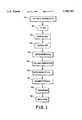
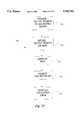
- FIG. 1is a flowchart representing a method in accordance with the present invention of producing interactive, three-dimensional renderings of selected structures such as a selected body organ;
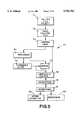
- FIG. 2is a flowchart representing a general process in accordance with the present invention of converting two-dimensional images of a selected body organ into a three-dimensional image;
- FIG. 3is a block diagram of a system used in the method of the present invention.
- FIG. 4is a flowchart representing the steps involved in a data reduction process used in the method of the present invention.
- FIG. 5is a flowchart representing the steps involved in segmentation of an image of the selected body organ from a three-dimensional volume
- FIG. 6is a flowchart representing the steps involved in a region growing procedure for segmentation of an image of the selected body organ from a three-dimensional volume
- FIG. 7is a perspective view of a three-dimensional rendering showing the selection of coordinates X min , X max , Y min , Y max , Z min , and Z max to define a selected subvolume containing a colon;
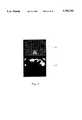
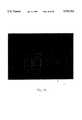
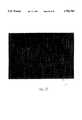
- FIG. 8is a view of a thresholded two-dimensional image slice of a colon displayed together with the corresponding gray-scale image
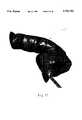
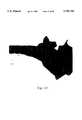
- FIG. 9is a representation of a wireframe model of a selected portion of the colon.
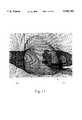
- FIG. 10is a three-dimensional rendering of the portion of the colon represented by the wireframe model shown in FIG. 9;
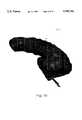
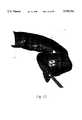
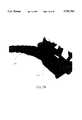
- FIG. 11is an external perspective view of a three-dimensional rendering of a selected portion of the colon
- FIG. 12is a split-open view of the selected portion of the colon shown in FIG. 11;
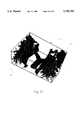
- FIG. 13is a map view showing a three-dimensional rendering of the colon on which a location marker is superimposed on the image;
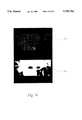
- FIG. 14is a three-dimensional rendering of a selected section of the colon corresponding to the location of the marker shown in FIG. 13;
- FIG. 15is a perspective view of a three-dimensional rendering showing the selection of coordinates X min , X max , Y min , Y max , Z min , and Z max to define a selected subvolume containing a tracheobronchial tree;
- FIG. 16is a view of a thresholded two-dimensional image slice of a tracheobronchial tree displayed together with the corresponding gray-scale image;
- FIG. 17is a representation of a wireframe model of a selected portion of the tracheobronchial tree
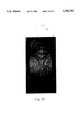
- FIG. 18is a three-dimensional rendering of the portion of the tracheobronchial tree represented by the wireframe model shown in FIG. 17;
- FIG. 19is an external perspective view of a three-dimensional rendering of a selected portion of the tracheobronchial tree
- FIG. 20is a split-open view of the selected portion of the tracheobronchial tree shown in FIG. 19;
- FIG. 21is a map view showing a three-dimensional rendering of the tracheobronchial tree on which a location marker is superimposed on the image;
- FIG. 22is a three-dimensional rendering of a selected section of the tracheobronchial tree corresponding to the location of the marker shown in FIG. 21;
- FIG. 23is a diagrammatic view depicting a model for determining a center line through a lumen
- FIG. 24is a flowchart representing a procedure for making a three-dimensional rendering of a selected organ transparent relative to three-dimensional renderings of remaining organs;
- FIG. 25is a flowchart representing a procedure for establishing "go to" points at selected locations on a three-dimensional rendering to cause the display of a three-dimensional rendering of the specific location selected by a respective "go to” point;
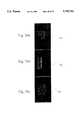
- FIG. 26is a three-dimensional rendering of a selected region of the tracheobronchial tree
- FIG. 26ais a gray-scale image of the selected region of the tracheobronchial tree shown in FIG. 26 taken along an axial plane passing through a selected pick point in the tracheobronchial tree;
- FIG. 26bis a gray-scale image of the selected region of the tracheobronchial tree shown in FIG. 26 taken along a sagittal plane passing through a selected pick point in the tracheobronchial tree;
- FIG. 26cis a gray-scale image of the selected region of the tracheobronchial tree shown in FIG. 26 taken along a coronal plane passing through a selected pick point in the tracheobronchial tree.
- the present inventiongenerally relates to a method and system, as schematically represented in FIGS. 1, 2, and 3, for generating and displaying interactive, three-dimensional structures.
- the three-dimensional structuresare in the general form of selected regions of the body and, in particular, body organs with hollow lumens such as colons, tracheobronchial airways, blood vessels, and the like.
- interactive, three-dimensional renderings of a selected body organare generated from a series of acquired two-dimensional images.
- a scanner 22such as a spiral or helical CT (Computed Tomography) scanner, operated by a computer console 24 is used to scan a selected three-dimensional structure, such as a selected anatomy, thereby generating a series of two-dimensional images 12 through that structure.
- a general procedure for converting or transforming the set of two-dimensional images 12 of the structure into a three-dimensional rendered image 17is schematically illustrated in FIG. 2.
- Any type of digital image(CT, MR, US, SPECT, PET) is amendable to three-dimensional image processing.
- the acquisition of contiguous thin slicesis imperative for generating acceptable three-dimensional images.
- Recent developments of volume acquisition devicessuch as spiral/helical CT, three-dimensional MRI, and three-dimensional ultrasound equipment make it feasible to render three-dimensional images of any organ system.
- each of the individual two-dimensional images 12defines a two-dimensional (X-Y) matrix of picture elements, or pixels, with each pixel representing a predetermined physical property associated with the three-dimensional structure or organ at a particular location within the three-dimensional structure.
- Successive two-dimensional images 12are spaced in a third-dimensional direction (Z) throughout the three-dimensional structure.
- the two-dimensional images 12are typically obtained from a helical computed tomography (CT) scanner 22 operated by a computer console 24.
- CTcomputed tomography
- the scannermay be a General Electric HiSpeed Advantage Helical CT Scanner connected with an optional General Electric Independent computer console or physician's console.
- the computer console 24may, however, be an integral part of the helical CT scanner 22 instead of a separate independent console.
- the two-dimensional images 12can also be obtained from ultrasound, positron emission tomography, emission computed tomography, and magnetic resonance imaging.
- the physical property measuredis directly associated with the scanning technique used to produce the two-dimensional images 12.
- CT imagesthe physical property measured is x-ray attenuation
- MRImagnetic resonance images
- the physical property measuredis related to various properties such as proton density.
- the series of two-dimensional images 12is stacked to form a three-dimensional volume 13, thereby defining a three-dimensional matrix (X, Y, Z axes) that represents at least one physical property associated with the three-dimensional structure at coordinates positioned throughout the three-dimensional volume.
- the three-dimensional matrixis composed of three-dimensional volume elements, or voxels, which are analogous to two-dimensional pixels.
- a targeted volume 14is selected for three-dimensional rendering.
- the targeted volume 14may include a selected organ or region of interest that is to be isolated from the original three-dimensional volume 13.
- the targeted volume 14may include an entire organ or, alternatively, may include an air column or volume confined within an organ or a lumen of the organ.
- a dataset representing the original three-dimensional volume 13may be optionally subjected to a dataset reduction process to decrease image or spatial resolution or to divide the original volume into smaller subvolumes of data prior to isolating the targeted volume 14.
- Dataset reduction and/or subvolume selectionare only necessary if the capabilities of the graphics computer 26 are inadequate to process the full three-dimensional volume 13 for effective or efficient three-dimensional rendering.
- the dataset of the original three-dimensional volume 13may need to be reduced from an original size of 100-250 Megabytes to a reduced size of about 5-10 Megabytes.
- the amount of reduction, if anymay vary depending upon the size of the original dataset and the processing speed and capability of the graphics computer 26 used for three-dimensional rendering.
- An optional dataset reduction process 65is generally represented in FIG. 4.
- dataset reductioncan be accomplished by reducing the pixel resolution, for example, from 16 bits per pixel to 8 bits per pixel.
- the reduction in pixel resolutionrepresented by step 67 in FIG. 4, decreases the image contrast in the final displayed three-dimensional images by reducing the number of shades of gray from 2 16 to 2 8 .
- dataset reductionmay also be effected by decreasing spatial resolution, as represented by step 69 in FIG. 4. For example, each two-dimensional image 12 stored on a matrix of 512 pixels ⁇ 512 pixels may be reduced to a matrix of 256 pixels ⁇ 256 pixels through spatial manipulation of information.
- the coloncan be subdivided into the rectum, the sigmoid colon, the descending colon, the splenic flexure, the transverse colon, the hepatic flexure, the ascending colon, and the cecum.
- a separate subvolumemay then be created for one or more of such subdivisions of the colon.
- the three-dimensional image of the organ or region of interestis segmented (isolated) from the volume of data.
- a range of tissue valueswhich depends on the physical property measured (e.g., x-ray attenuation), may be selected to designate the organ or region of interest.
- the organ or region of interestis then isolated from the volume of data.
- a general method or process 70 for segmenting an image of a selected organ or region of interestis represented in FIG. 5.
- the region of interestmay, for example, be the air column comprising the colon or tracheobronchial airways, or some other body part having a lumen filled with a homogeneous substance (i.e., air, blood, urine, etc.).
- the region of interestmay be a section of bone.
- the segmentation process 70may be effected, for example, by designating a range of physical property values bounded by threshold limits that function to designate the organ of interest.
- voxels falling within a selected thresholding rangeare assigned a single value, for example, 255 to provide a white color
- voxels falling outside of the selected thresholding rangeare assigned a different single value, for example, 0 to provide a black color.
- the selected volumeis thresholded by comparing each voxel in the selected volume to the threshold limits and by assigning the appropriate color value 0 or 255 to each such voxel depending on whether each such voxel falls inside or outside the threshold range defined by the threshold limits.
- the target volume 14is formed having equal voxel values. More specifically, a target organ 14 is produced having a white color while all volumes outside the threshold limits are produced having a black color. With the exception of various artifacts, which can be eliminated using image-processing techniques, only the thresholded target organ 14 is colored white and everything else is colored black.
- the isosurface 15is an exterior surface of equal voxel value on the thresholded target volume 14 which is established by the selected thresholding range.
- a wireframe model 16is generated from the isosurface 15.
- the wireframe model 16is formed as a series of polygonal surfaces that approximates the surface of the region of interest such as the selected organ.
- the wireframe model 16is defined by a series of vertices which are interconnected by a set of line segments.
- the wireframe model 16appears as a three-dimensional wire mesh object which can be rendered into a three-dimensional image 17.
- the three-dimensional image 17is generated by appropriately shading the polygons of the wireframe model 16 to provide a three-dimensional image of the selected organ.
- the three-dimensional image 17is displayed on a computer monitor 28. Additionally, the displayed imagery 17 can be recorded on a video recorder 30 or photographed for future viewing.
- An input, in the form of a computer mouse 27,is provided on the graphics computer 26 to permit a user to manipulate the displayed imagery.
- the method of the present inventioncan be used to display a colon in three dimensions and, in a more specific application, to enable real-time or interactive three-dimensional rendering of the colon which thereby enables user interaction with the colon imagery, i.e. virtual reality. While user interaction with the three-dimensional images of the colon is simulated, the three-dimensional image itself is an accurate, three-dimensional view of the actual colon.
- a method for generating interactive, three-dimensional renderings of a patient's colon in accordance with the present inventionis generally set forth in FIG. 1.
- a patientis initially prepared for imaging by cleansing the patient's colon.
- the cleansing procedurecan be accomplished with a clear liquid diet in conjunction with laxatives.
- a Golytely prepcan be administered on the day before the exam.
- the purpose of the cleansing procedureis to eliminate feces from the colon.
- an absolutely clean colonis desired prior to computed tomography (CT) scanning. Any retained feces or fluid can simulate or mask small polyps because it is sometimes difficult to differentiate feces from the colon wall.
- CTcomputed tomography
- the effectiveness of using a clear liquid diet or a Golytely prep proceduremay still be somewhat hindered by small amounts of retained feces.
- the patientcan be fed a low residue diet combined with a contrast agent (such as a low density barium, for example, 1.5% W/V barium) for about three days.
- a contrast agentsuch as a low density barium, for example, 1.5% W/V barium
- Such a proceduremay serve to homogeneously opacify any retained stool so that the image of the feces can then be subtracted from the final display, or at least from selected images, using image processing techniques.
- the colonis insufflated with gas to distend the colon. Distending the colon assures that the interior surface of the colon will be clearly visible in the final image display.
- a rectal catheteri.e., a standard barium enema catheter (0.5 inch (1.27 cm) diameter is inserted and gas is introduced into the colon.
- the colonis filled to a predetermined pressure or volume by introducing the gas either as discrete puffs or at a constant flow rate.
- CO 2may be preferred since CO 2 passes through the colonic mucosa into the bloodstream and is subsequently exhaled, thereby decreasing the amount of bloating and cramping experienced by a patient after the examination. Unlike conventional colonoscopy, there is no need to sedate the patient for this procedure.
- the colonis then scanned, at step 45 of FIG. 1, by a helical CT scanner 22 to produce a series of two-dimensional images 12 of the colon.
- the picture elements, or pixels, in the images 12represent at least one physical property associated with the colon.
- the physical propertyfor example, may be the x-ray attenuation of the colon wall or of the air column within the colon.
- the images 12are generally taken at regularly spaced locations throughout the abdominal region of the patient. The smaller the spacing between successive images 12, the better the resolution in the final displayed imagery. Preferably, the spacing between successive images 12 is approximately 1 mm to produce isocubic voxels since the X and Y dimensions are each approximately 1 mm.
- the scanning parametersmay consist of a 0.20 inch (5 mm) x-ray beam collimation, 0.4 inch/sec (10 mm/sec) table speed to provide 2:1 pitch, and a 0.04 inch (1 mm) image reconstruction interval.
- the x-ray beam collimationis the width of the x-ray beam which thereby establishes the CT slice thickness and Z-axis spatial resolution.
- the pitchis the CT table speed divided by the collimation.
- the image reconstruction intervalreflects the interval at which two-dimensional images are reconstructed.
- a 50 second scan at a table speed of 10 mm per second in a Z-axis directioncreates a volume of data having a Z-axis length of 500 mm.
- Using a 1 mm reconstruction interval over the length of the Z-axis of the volume of dataproduces 500 images with each image representing a 5 mm thick section along the Z-axis. Consequently, up to 500 images may need to be stored in compressed format on the CT scanner console or on a GE Independent Console (physician computer console) 24 associated with the scanner 22.
- the rectal catheteris removed, the gas is expelled, and the patient is discharged.
- the set of CT images 12consisting of up to 500 images is then extracted, at step 50 of FIG. 1, from a database on the computer console 24 in compressed format.
- the datais transferred from the console 24 at step 52 of FIG. 1, over a fiberoptic network 25, to a graphics computer work station 26, such as a Crimson VGXT computer work station (150 MHz processor, 256 Mbytes RAM) from Silicon Graphics, Inc. (SGI, Mountain View, Calif.).
- the image files 12are preferably transferred in the compressed format and then decompressed on the SGI graphics computer 26. Alternatively, the image files can be decompressed on the GE computer console 24 and then transferred to the SGI graphics computer 26.
- the fiberoptic network 25may comprise an ethernet network, asynchronous transfer mode (ATM) network, or a Fiber Distributed Data Interface (FDDI) network.
- ATMasynchronous transfer mode
- FDDIFiber Distributed Data Interface
- the extraction and transfer processes, 50 and 52are performed by three program modules.
- the first module residing on the computer console 24extracts the images one at a time from the image database on the computer console and places each extracted image file in a subdirectory on the computer console 24.
- a text file containing information about the patient and the type of casee.g. colon
- the second modulewhich resides on the graphics computer 26 is initiated every 5 minutes. The purpose of the second module is to transfer the text file and corresponding image files from the computer console 24 to the graphics computer 26 and to delete such files from the computer console.
- the text file and image filesare stored in a temporary directory on the graphics computer 26.
- the third moduleis also initiated every 5 minutes and is interleaved with the second module.
- the third moduledetermines if all of the files associated with a specific patient have been transferred to the graphics computer. If all of the files of the specific patient have been transferred, the third module then organizes the transferred files in a patient subdirectory on the graphics computer 26 according to the case type.
- the entire processgenerally takes about 1 hour and is a rate limiting step.
- the image transfer timecan be reduced, however, by using the DICOM 3 image standard for data transmission.
- the compressed image datais then decompressed, at step 55 of FIG. 1.
- the decompression of the image datais effected in accordance with a decompression scheme that is dependent on the specific compression formula used to originally compress the data. Different compression-decompression formulas may be used.
- a volume of data 13is then formed at step 60 of FIG. 1 by stacking the series of CT images 12 in computer memory.
- the formation of the volume of data 13can be performed by using existing volume formation programs, such as VoxelViewTM (VitalImages, Fairfield, Iowa), or by using a customized program. Since each CT image 12 is approximately 0.5 megabytes in size, 500 images equates to about 250 megabytes. Therefore, a graphics computer 26 with sufficient memory, such as 256 Mbyte RAM, and adequate disc storage, such as greater than 1 gigabyte, is required.
- the process of dataset reductionis shown at step 65 of FIG. 1 and is illustrated in greater detail in FIG. 4.
- the datasetis reduced from its original size, such as 250 megabytes, to a reduced size, such as 5-10 megabytes to expedite three-dimensional rendering.
- the dataset reductionmay be partially accomplished by reducing the pixel resolution, for example, from 16 bits/pixel to 8 bits/pixel, as shown at step 67.
- the reduction in pixel resolutionreduces the contrast in the final three-dimensional image by reducing the number of shades of gray from 2 16 or 65,536 shades to 2 8 or 256 shades.
- the gray-scale shading of CT imagescorrelates to x-ray attenuation which is measured in Hounsfield units (HU), and which ranges in value from -1024 to +3072.
- Wateris assigned a value of 0 HU, soft tissue falls between 20 and 200 HU, contrast enhanced blood is >125 HU, bones are >250 HU, and air is less than -300 HU.
- the entire range of Hounsfield unitsmay not be needed. Accordingly, a selected region of the scale may be used. For example, the upper and lower values of the region may be clipped prior to scaling.
- FIG. 4Further reduction of the dataset size can be effected by selecting a subvolume of the dataset to be displayed, as represented at step 68 of FIG. 4.
- the colonis subdivided into the rectum, the sigmoid colon, the descending colon, the splenic flexure, the transverse colon, the hepatic flexure, the ascending colon, and the cecum.
- a separate subvolumemay be assigned to selected subdivisions or sections of the colon. As shown in FIG.
- a selected subvolume 114 containing the entire colon and portions of the small bowelis specified by determining a set of minimum and maximum coordinates (X min , X max , Y min , Y max , Z min , and Z max ) such that the selected subvolume 114 is defined by the selected coordinates.
- vertex 125indicates X min , Y min , and Z min
- vertex 126indicates X max , Y max , and Z max .
- the dataset sizecan be decreased at step 69 of FIG. 4 by reducing the spatial resolution of the three-dimensional volume, for example, in the case of 500 images, from 512 ⁇ 512 ⁇ 500 voxels to 256 ⁇ 256 ⁇ 250 voxels. Since, reducing the spatial resolution can blur the final three-dimensional image, decreasing the spatial resolution is generally not a preferred process for dataset reduction.
- the data reduction process 65converts the initial volume of original CT images into a transformed volume made of reduced CT images.
- the transformed volumeis thereafter used to permit isolation of the targeted organ or other area of interest.
- the reduction of the dataset sizemay not be necessary, however, if the graphics computer 26 has sufficient memory and processing capability relative to the size of the initial volume of original CT images to effect efficient three-dimensional renderings.
- the colonIn order to produce a three-dimensional rendering of only the colon, the colon must be isolated from the volume of data by image segmentation, as generally represented at step 70 in FIG. 1 and as represented in greater detail in FIG. 5.
- Image segmentationcan be performed before or after dataset reduction.
- a volume file pertaining to a patientis selected at step 71 of FIG. 1 and read at step 72 into the active RAM memory of the computer 26.
- An optional Sample Crop procedure 73 for subcropping and/or subsampling the volume of datacan be invoked to further reduce the volume of the dataset if desired.
- the Sample Crop procedure 73enables the user to crop the volume of data along the X-axis, the Y-axis and the Z-axis and further permits the user to subsample data, if desired, along each axis in order to further reduce the volume dataset.
- an Orthoslice procedureas represented at step 74 in FIG. 5, is utilized to select a slice through the volume.
- an orthogonal slice through the volumeis taken along the axial plane (a cross-sectional (X-Y) plane through the body perpendicular to the Z-axis and to the patient's spine), the coronal plane (a side-to-side (X-Z) plane through the body normal to the Y-axis), or a sagittal plane (a front-to-back (Y-Z) plane through the body normal to the X-axis).
- axial planea cross-sectional (X-Y) plane through the body perpendicular to the Z-axis and to the patient's spine
- the coronal planea side-to-side (X-Z) plane through the body normal to the Y-axis
- a sagittal planea front-to-back (Y-Z) plane through the body normal to the X-axis.
- the particular orthogonal plane and the specific location of the slice planemay be selected by the user.
- the orthosliceis selected to pass through a complex portion of the anatomy.
- the selected orthosliceis displayed at step 76 on the display monitor 28 of the graphics computer 26.
- a thresholded version of the same imageis also displayed on the monitor 28.
- a threshold rangeis used at step 75 to define a range of x-ray attenuation values that represent the organ of interest.
- the region of interestmay be the air column which designates the air and soft tissue interface of the colon wall.
- each pixel in the orthoslicecorresponds to a physical property such as the x-ray attenuation at the location of each such pixel.
- each individual pixel or grid position in the orthosliceis compared, at step 75, to the selected threshold range to determine if each such pixel value lies in the designated threshold range. If an input pixel from the orthoslice falls within the thresholded range, such input pixel is set to a selected maximum value, e.g. a value of 255 corresponding to a white color, in the thresholded image. Otherwise, the input pixel is set to a selected minimum value, e.g. a value of 0 corresponding to a black color, in the thresholded image to indicate that such input pixel from the orthoslice falls outside the designated threshold range.
- a selected maximum valuee.g. a value of 255 corresponding to a white color
- the threshold rangecan be deduced by the physician based on his/her experience as well as a visual comparison of the orthoslice with the thresholded image.
- the thresholded imageis displayed simultaneously with the orthoslice on display monitor 28, as indicated at step 76 of FIG. 5, to enable the threshold range to be manually adjusted in real time to produce a good match between the thresholded image and the anatomical detail of the orthoslice.
- the orthosliceis one of the reduced CT images 112 through the volume and it is displayed alongside a corresponding thresholded image 115.
- the thresholded image 115is a single reduced CT image that has been subjected to the acceptance criterion of the thresholding process.
- the threshold rangeis varied until the thresholded image 115 closely matches the organ of interest in the orthoslice 112.
- the threshold range thus obtained by thresholding the orthosliceis then applied globally to the volume of data at step 79 of FIG. 5 to create a thresholded volume.
- An exterior surface of equal voxel value, or an isosurface 15,may be defined on the thresholded volume.
- the isosurface 15 of the thresholded volumeis then used as the basis for generating a wireframe model 16 of the colon as set forth in FIG. 5.
- a wireframe model 116 of the rectum portion of the colonis depicted in which the spatial resolution has been reduced from 512 3 to 256 3 .
- the vertices of the wireframe model 116define a series of polygonal surfaces 136 that approximate the surface of the organ of interest. Associated with each of the polygonal surfaces 136 is a vector which is perpendicular or normal to the surface 136.
- Various algorithmscan be used for creating the wireframe model 116 including, but not limited to, marching cubes, dividing cubes, and marching tetrahedrons.
- the wireframe model 116 of the colonis assembled by fitting a polygon or polygons through each voxel that is deemed to sit astride the isosurface 15 (i.e., through each voxel on the isosurface 15).
- the way in which the polygon or polygons are situated within each voxeldepends upon the distribution of the vertices of the voxel that lie inside and outside the surface. It is generally assumed that there are 15 possible distributions.
- the final position and orientation of each polygon within each voxelis determined by the strength of the measured property at the vertices.
- the polygon or polygonsare therefore an accurate representation of the surface as it passes through the voxel.
- region growing and edge detection methodsmay be employed for segmenting the colon.
- a generalized region growing procedure 81is set forth in FIG. 6. Region growing 81 can be used instead of the thresholding procedure to effect segmentation of the organ or selected region of interest.
- a seed voxelis selected at step 82 which lies within the organ or region of interest.
- the seed voxelis set to a first value (i.e., 255 for white).
- the value of a neighboring voxelis then read at step 84.
- the value of the neighboring voxelis compared to a threshold range to determine if such neighboring voxel falls within the acceptance threshold range at step 85. If the neighboring voxel falls within the acceptance range, the neighboring voxel is set to the same first value as the seed at step 86.
- the processthen returns to the seed voxel (i.e., neighbor-1) at step 87.
- the neighboring voxelis set to a second value (i.e., 0 for black), at step 61, thereby indicating that the neighboring voxel lies at the edge of the region of interest.
- the processthen returns to the seed voxel (i.e., neighbor-1) at step 87'.
- a checkis then made, at step 88', to determine if all the voxels neighboring the seed voxel have been tested. If all the neighboring voxels have not been tested, another voxel neighboring the seed voxel is read at step 84 and processing continues as described above.
- a new seed type voxelis picked at step 89'.
- a checkis then made, at step 88", to determine if all the voxels neighboring the new seed type voxel have been tested. If all the neighboring voxels have not been tested, a voxel neighboring the new seed type voxel is read at step 84 and processing continues as described above. If all the neighboring voxels have been tested, processing stops at step 62, thereby indicating that the region of interest is completely bounded by edge voxels. In this manner, the organ of interest can be detected without subjecting the entire volume of data to thresholding. This technique is therefore capable of reducing the occurrence of artifacts (e.g., air filled organs other than the organ of interest) in the final three-dimensional rendering.
- artifactse.g., air filled organs other than the organ of interest
- the geometry of the wireframe model 16is stored at step 78 of FIG. 5.
- the wireframe modelis stored in the form of a set of vertices and interconnecting line segments that define the wireframe model 16.
- the wireframe model 16is then rendered into a three-dimensional image 17, as represented at step 80 in FIGS. 1 and 5.
- a three-dimensional image 117 of the rectum section of the colonhas been rendered with reduced spatial resolution from the wireframe model 116 depicted in FIG. 9.
- Images of three-dimensional objects (wireframe models) in world coordinates (X, Y, Z)are projected to two-dimensional screen coordinates using ray-tracing techniques.
- Imaginary rays sent from a user's viewpointpass through a viewing plane (referenced to a monitor screen) and into the object (wireframe model). If a ray intersects an object, the corresponding viewing plane pixel is painted with a color; if no intersection is found, the pixel is painted as background. The criteria used to stop a ray determines what value is projected onto the viewing plane pixel.
- Surface rendering as used to render the image of the rectum shown in FIG. 10projects the first visible voxel.
- Volume renderingprojects a weighted average of all voxels along a ray.
- Animation of three-dimensional objectsis achieved by rapidly displaying multiple three-dimensional views of the volume.
- Surface rendering calculationsare fast enough to allow interactive manipulation (i.e., virtual reality) of the volume.
- Additional lighting techniquesenhance an object's features by altering the shade of color of each viewing plane pixel. For example, "shaded surface” images add an illusion of depth by coloring pixels closer to the camera viewpoint with lighter shades. Pixels in a shaded surface image reflect the distance between the anatomical structure and the user's viewpoint (not the original voxel values).
- Information on the relative "position" of the user and a virtual light source, along with the information about the wireframe model 16,are used to appropriately shade the wireframe model 16 to produce a realistic impression of the anatomy.
- the rendering process 80can be accomplished using a general purpose volume visualization program, such as IRIS ExplorerTM.
- the rendering step 80occurs rapidly and interactively, thus giving the user the ability to "fly” through the volume of data.
- the direction of "flight”is controlled by the computer mouse 27 through directional pointing of the cursor, and the speed (both backwards and forwards) is controlled by pressing buttons on the computer mouse 27.
- the speed of interactive three-dimensional renderingproduces a "virtual reality" environment and allows the user to examine the image data in a manner that is analogous to real endoscopy.
- the path (camera coordinates) of each simulated flightcan be recorded and used in a "playback" mode to retrace the flight path. Individual three-dimensional scenes (views, images) may also be recorded (stored) on the computer like photographs.
- the geometric representation of the wireframe model 16 of the colon and the volume dataset used to create the wireframe modelare stored, at step 78 of FIG. 5, on digital audio tape (DAT) or, preferably, on read/write optical discs.
- DATdigital audio tape
- Each simulated "flight" through the coloncan be recorded on VHS videotape on a video recorder 30 for archival purposes at step 90 of FIG. 1. Each flight may be recorded for later review by, for example, gastroenterologists and surgeons.
- the method of the present inventioncan be used to take the user on a guided tour of the colon in an "auto-pilot" mode of operation.
- the “auto-pilot” modethe user is moved at a preselected speed through the three-dimensional representation of the colon along the center line of the lumen of the colon.
- the center line of the coloncan be determined in one of several ways.
- One method of determining the central path through the lumen of the colonis illustrated in FIG. 23.
- a seed point 91is selected which lies within the lumen of the segmented colon 117'".
- the plane 92, passing through point 91 that has the minimum area 93 of colon dissectionis determined and the center 95 of such area 93 is calculated.
- a new pointis then selected which lies 1 cm away from center point 95 in a perpendicular direction relative to the surface area 93 in plane 92 as shown by arrow 94.
- a new plane of minimum area that dissects the colon and passes through the new pointis determined and the corresponding center of that new area is calculated. This iterative process is continued until a central path connecting the center points is determined.
- repetitive morphological "erosions"can be performed on the segmented colon through an iterative process analogous to removing "layers" of voxels. As each layer is eroded, the iterative level at which voxels disappear in each such layer is recorded. The erosion process is continued until all of the voxels disappear. The central path through the colon is then constructed by connecting the highest valued voxels (i.e., the last voxels to disappear by erosion).
- a single oblique (reformatted) plane(gray scale image) that is perpendicular to the central path at a certain point can be displayed thereby allowing simultaneous viewing of the wall thickness of the colon and surrounding anatomy and/or pathology during the automatic flight.
- the oblique planeis perpendicular to the central path but is usually oblique relative to the three orthogonal planes.
- the method of the present inventioncan also be used to display the colon in a "split" open view 118, as shown in FIG. 12.
- a three-dimensional external rendering of the rectum 117' of the colon, as depicted in FIG. 11,can be split along the center line to expose the interior surface 119 of a selected half of the colon.
- This split display modeis particularly advantageous when simultaneous viewing of extended sectional lengths of the colon is desired or when viewing of the anatomy must be done with a computer that is not capable of rendering with real-time speed (i.e., not allowing the user to "fly" through the colon at a sufficiently fast speed).
- the "split" viewcan be generated in one of several ways.
- the first methodis to define a cutting plane that is disposed parallel to the plane of the screen of the monitor 28 such that all portions of objects passing through the imaginary plane are made invisible as the objects are pulled closer to the viewer and intersect the cutting plane.
- Defining a cutting planeis a standard part of Explorer's renderer (viewer).
- the three-dimensional object (colon)is rotated in space and moved closer to the user (viewer). As the colon passes through the cutting plane, the half or portion of the colon closer to the user becomes invisible but the distant half or portion, with its surface detail, is available for inspection.
- Another method for producing a split viewis to predefine subvolumes in accordance with step 68 of FIG. 4 so that a selected sectional length of colon is contained in two separate subvolumes corresponding to the two separate halves of the sectional length of the colon. That is, two separate subvolumes can be created so that one subvolume shows one open half of the colon and the second subvolume shows the other open half. Defining the bounding points to thereby define a bounding subvolume may be done visually by looking at orthoslices for representing the subvolume. It is faster to manipulate the two-dimensional orthoslice images rather than the three-dimensional volume. Once the bounding coordinates (X min , Y min , Z min , and X max , Y max , and Z max ) are defined, then the subvolume representing one-half of a colon section is processed (rendered).
- Another desired method for splitting the colonis to use an imaginary cutting plane (line) that passes through the colon perpendicular to the central path through the lumen of the colon.
- the cutting lineis maintained at a constant level parallel to the X-Z plane. All voxels on one side of the cutting line are made invisible (i.e., set to zero value or black, since voxels in the segmented colon have been previously set to value 255 or white) and the white half of the colon is rendered. Then, the process is reversed and the other half of the colon is rendered.
- the wireframe model 16may be split in half prior to rendering.
- an additional feature of the present inventionis that an external map view 137 of the selected organ can be displayed, as shown in FIG. 13, to assist the user if the user loses orientation or location during a flight through the lumen of the organ.
- FIG. 14shows a three-dimensional rendering 117" from inside the colon. If the user requests the display of a map view while inside the rendering 117" of the rectum shown in FIG. 14, the external map view 137 of FIG. 13 will be displayed with an indicator 138 for indicating the position of the three-dimensional rendering 117" of FIG. 14.
- the indicator 138can be a "+", as shown in FIG. 13, or any other selected symbol.
- the indicator 138may be in the form of an arrow which also indicates the line of sight within the three-dimensional imagery.
- the method of the present inventionis particularly well suited for identifying polyps and growths that extend into the lumen of the colon. However, some precancerous growths are manifested as a subtle thickening of the colon wall.
- the present inventioncan also be used to identify the areas of thickening as well. This can be accomplished by calculating and displaying a two-dimensional oblique plane perpendicular to the central axis of the colon whose location relative to the central path corresponds to the three-dimensional view at hand. Alternatively, a segmentation process could be used to isolate the colon wall instead of the air column within the colon to determine the wall thickness.
- thickened areas or other areas of pathologycan be visually distinguished from the normal wall of the colon in the three-dimensional imagery by displaying the polygonal surfaces on the wireframe model that represent the thickened or pathological areas with a distinguishable color.
- the method of the present inventioncan also be used to display a tracheobronchial airway in three dimensions, in accordance with the general methods described in connection with FIGS. 1 and 2 and with the system described in connection with FIG. 3. More specifically, a patient is initially prepared at step 40 by administering a nonionic intravenous bolus of iodinated contrast agent with a power injector to aid in distinguishing the blood vessels surrounding the tracheobronchial airway. After an appropriate time delay (approximately 70 seconds), the patient is scanned at step 45 from the thoracic inlet to the lung base to produce a series of two-dimensional images 12.
- the images 12represent at least one physical property associated with the tracheobronchial airway. This property may be, for example, the x-ray attenuation value measured with helical CT scanning. Preferably, the spacing between successive images 12 is approximately 1 mm to produce isocubic voxels.
- the scansmay be performed with a GE HiSpeed Advantage Helical CT Scanner 22 during a single breath-hold acquisition which is completed in about 30 seconds.
- the scanning parametersmay consist of a 0.12 inch (3 mm) x-ray beam collimation, 0.24 inch/sec (6 mm/sec) table speed (2:1 pitch), and a 0.04 inch (1 mm) image reconstruction interval.
- the beam collimation and the reconstruction interval selectedthere is considerable (2 mm) overlap between successive images 12.
- up to about 200 imagesare obtained.
- the imagesare stored in a compressed format on a GE computer console 24 associated with the scanner 22.
- the series of CT scansis then extracted at step 50 from the image database on the computer console 24 in compressed format.
- Each compressed imagerepresents a 512 ⁇ 512 image of picture elements, or pixels, and each pixel is comprised of 16 bits of data (16 bits/pixel).
- the datais transferred at step 52 over a fiberoptic network 25 to the graphics computer work station 26, such as the Silicon Graphics Crimson VGXT computer work station (150 MHz processor, 256 Mbytes RAM).
- the image files 12are preferably transferred in the compressed format and then decompressed at step 55 on the graphics computer 26.
- the extraction and transfer stepsare performed by three program modules.
- the first module residing on the computer console 24extracts the images one at a time from the image database and places each extracted image in a subdirectory on the computer console 24.
- a text file containing information about the patient and the type of casei.e., lung
- the second modulewhich resides on the graphics computer 26, is initiated every 5 minutes and transfers the patient's text file and image files from the computer console 24 to the graphics computer 26 and deletes such files from the computer console 24.
- the third modulewhich resides on the graphics computer, is also initiated every 5 minutes and is interleaved with the second module. The third module determines if all of the files associated with a patient have been transferred.
- the third moduleorganizes the transferred files in a patient subdirectory according to the case type.
- the entire processgenerally takes about 1 hour and is a rate limiting step.
- the image transfer timecan be reduced by utilizing the DICOM 3 image standard. Once the data transfer is complete, the remaining steps are performed on the graphics computer 26.
- a volume of data 13is then formed at step 60 by stacking the series of CT images 12 in the computer memory. Since each CT image 12 is approximately 0.5 megabytes in size, 200 images equates to about 100 megabytes. Therefore, a machine with sufficient memory and adequate storage is needed.
- Dataset reductionis generally shown at step 65 of FIG. 1 and, more specifically, in FIG. 4.
- the datasetis reduced from 100 megabytes to about 5-10 megabytes.
- Dataset reductionis partially accomplished by reducing the pixel resolution from 16 to 8 bits/pixel, as represented at step 67. The reduction in pixel resolution reduces the contrast in the final displayed images by reducing the number of shades of gray to 256.
- the gray scale shading of CT imagescorresponds to x-ray attenuation values measured in Hounsfield units (HU), which range in value from -1024 HU to +3072 HU.
- Wateris assigned a value of 0 HU
- soft tissuefalls between 20 and 200 HU
- contrast enhanced bloodis >125 HU
- bonesare >250 HU
- airis less than -300 HU.
- the regions above 500 HU and below -700 HUdo not contain information useful for rendering the bronchial airways, or the surrounding blood vessels and lymph nodes
- the region between 500 and -700 HUis scaled to the 256 shades of gray.
- the scalingis linear. However, non-linear scaling could be used to emphasize a particular region.
- a selected subvolume 214is depicted containing the entire tracheobronchial airways.
- the bronchial airwaysare isolated from the entire thorax.
- the subvolume 214is defined, as shown in FIG. 15, by determining a set of minimum and maximum coordinates (X min , X max , Y min , Y max , Z min , and Z max ) so that the airways are contained within the subvolume 214 defined by the selected coordinates.
- vertex 225indicates coordinate X min , Y min , and Z min
- vertex 226indicates coordinate X max , Y max , and Z max .
- the dataset sizecan be reduced further at step 69 of FIG. 4 by decreasing the spatial resolution, for example in the case of 200 images, from 512 ⁇ 512 ⁇ 200 voxels to 256 ⁇ 256 ⁇ 100 voxels. Since reducing the spatial resolution can blur the final displayed images, decreasing the spatial resolution is generally not preferred.
- the data reduction step 65functions to convert the original volume of CT images into a volume of reduced CT images.
- the volume of reduced CT imagesis then used to construct the three-dimensional imagery.
- the bronchial airwaysare isolated within the volume of data by image segmentation.
- Image segmentationcan be performed before or after dataset reduction.
- the volume file pertaining to the patient and case of interestare selected at step 71 of FIG. 5 and read at step 72 into the active RAM memory of the computer 26.
- An optional subcropping and/or subsampling step 73can be performed, if desired, to further reduce the size of the dataset.
- a threshold rangeis used to define a selected range of x-ray attenuation values contained within the organ of interest.
- the region of interestis the air column which designates the air and soft tissue interface of the bronchial wall.
- an orthosliceis selected through a complex portion of the anatomy.
- the orthosliceis a cross-sectional two-dimensional slice (image) through the dataset parallel to one of the primary planes (X-Y, X-Z, or Y-Z).
- the orthosliceis displayed on the monitor at step 76 as one of the reduced CT images through the volume.
- a thresholded imageis also displayed at step 76.
- the displayed thresholded imagerepresents the orthoslice of the reduced CT image that has been subjected to an acceptance criterion of the thresholding process as previously described.
- an orthoslice image 212 of the airwaysis simultaneously displayed with a corresponding thresholded image 215.
- the thresholded image 215 in FIG. 16is shown with the region of interest, the air column within the airways, in black.
- the threshold rangeis varied until the displayed thresholded image 215 best matches the anatomical detail of the organ of interest in the displayed gray scale orthoslice image 212.
- the threshold rangethus obtained is applied throughout the selected volume of data to create a thresholded volume representing the airways.
- a region growing procedureas previously described and as represented in FIG. 6, may be employed to isolate the organ or region of interest.
- the region growing procedureis able to reduce the occurrence of artifacts (i.e., air filled structures other than the organ of interest) in the three-dimensional imagery.
- An isosurface 15 of the thresholded volumeis then used as the basis for forming a wireframe model 16 of the bronchial airways.
- a wireframe model 216 of the tracheobronchial airwaysis depicted.
- the vertices of the wireframe model 216define a series of polygonal surfaces 236 that approximates the surface of the organ of interest.
- Various algorithmscan be used for creating the wireframe model 216 including, but not limited to, marching cubes, dividing cubes, and marching tetrahedrons.
- the wireframe model 216is rendered at step 80 of FIG. 1 into an interactive, three-dimensional display 217, as illustrated in FIG. 18.
- the rendering procedurecan be accomplished using a general purpose volume visualization program, such as IRIS ExplorerTM.
- the rendering proceduregives the user the ability to "fly” through the volume of data.
- the direction of "flight”is controlled by the orientation of the computer mouse.
- the speed of the "flight”(both backwards and forwards) is controlled by pressing computer mouse buttons.
- Information on the relative "position" of the user and a virtual light source, along with the information from the wireframe model 216,are used to appropriately shade the wireframe model 216 to give a realistic impression of the anatomy.
- Interactive three-dimensional renderingcreates a perception of "virtual reality", and allows the user to examine the CT data in a way which is analogous to real bronchoscopy.
- Each "flight" through the bronchial airwayscan be recorded on VHS videotape at video recorder 30, for archival purposes, as represented at step 90 of FIG. 1, and for later review by, for example, bronchoscopists and surgeons.
- each flight through the airwayscan be recorded on the computer 26 by storing the path of movement as a set of coordinates reflecting the flight path through the three-dimensional imagery.
- the appropriate coordinates of the path of movementmay be stored in computer memory as the path of movement is generated.
- the coordinates of the path of movementmay be stored in a setting file on the computer 26 so that the path of movement may be reproduced (replayed) on the computer 26 at a later time.
- the wireframe computer model of the bronchial airwayscan also be stored as represented at step 78 in FIG. 5 on digital audio tape (DAT) or, preferably, on read/write optical discs.
- DATdigital audio tape
- selected “go to” pointsmay be generated and stored during a flight through the lumen of the organ.
- a “go to” procedure, generally designated 130,is represented in the flow chart of FIG. 25.
- selected points of interestsuch as three-dimensional scenes or views, may be recorded and assigned, at step 131, to buttons appearing on a general diagrammatic map of the particular organ being examined.
- the "go to" points on the mapare stored, at step 132, in an appropriate setting file on the computer 26.
- the userrequests the display of the map of the organ at step 133.
- the "go to" pointsappear on the map of the organ so that the user can move the mouse cursor to a selected button, at step 134, and then click a mouse button so that the displayed three-dimensional view is transformed to the chosen view at step 135.
- separate "go to” pointsmay be assigned to respective sections corresponding to the rectum, sigmoid colon, descending colon, splenic flexure, transverse colon, hepatic flexure, ascending colon and cecum.
- separate "go to" pointsmay be assigned to respective sections corresponding to the trachea, carina, right upper lobe bronchus, right middle lobe bronchus, right lower lobe bronchus, left upper lobe bronchus, and left lower lobe bronchus.
- the system 20also provides the user with the ability to display the three orthogonal slices (along the axial, coronal, and sagittal axes) which pass through any selected "pick point" in the three-dimensional imagery. This is accomplished by pointing the computer mouse cursor at the desired location in the three-dimensional imagery and "clicking" on that point with a computer mouse button. The point of intersection with the first visible surface in the three-dimensional imagery is captured. The three-dimensional coordinate (X,Y,Z position) of the point of intersection is used to calculate the three orthogonal planes (axial, sagittal, coronal) that pass through that point.
- the axial planeis parallel to the X-Y axes
- the sagittal planeis parallel to the Y-Z axes
- the coronal planeis parallel to the X-Z axes.
- the three orthogonal planes passing through a selected pick point in the tracheobronchial airwaysare displayed in three separate windows (140, 141, and 142) together with a main window 143 containing the three-dimensional image 217'" of the tracheobronchial airways.
- Cross-hairsare overlaid on each orthogonal plane image indicating the position of the pick point. By moving the mouse cursor over one of the orthogonal images, the cross-hairs in that image follow the position of the cursor.
- the other two orthogonal images and their cross-hairschange to reflect the new position of the point in three-dimensional space.
- the three-dimensional image in the main windowremains frozen during this time and does not change.
- the usefulness of this functionis that it allows a physician to view and pan through the reduced volume CT image data that surrounds the pick point.
- wall thickness at a selected locationmay be determined.
- surrounding anatomical structure or pathologymay also be viewed.
- the usermay activate a selected combination of mouse buttons while moving the mouse through the three-dimensional imagery. The points of intersection are immediately calculated and the corresponding orthogonal planes are displayed. This mouse dragging procedure is analogous to "dragging" you finger across the surface of the anatomy and displaying the orthoslices interactively.
- the method of the present inventionalso provides the ability to render portions of a region of interest transparent or semi-transparent.
- the tracheobronchial airwaycan be rendered semi-transparent or completely transparent to allow the user to "see” beyond the wall of the airway and locate various anatomical structures, such as lymph nodes and blood vessels.
- This aspect of the present inventionis particularly useful as a guide for Transbronchial Needle Aspiration (TBNA).
- TBNATransbronchial Needle Aspiration
- needle placementcan be guided to a selected location through the tracheobronchial wall. Making the tracheobronchial wall transparent to reveal surrounding blood vessels and lymph nodes may serve to prevent unintentional puncture of blood vessels and lymph nodes during needle insertion.
- a procedure 100 for making a selected organ transparent for the purpose of revealing surrounding organsis depicted.
- selected organssuch as the tracheobronchial airway, the surrounding blood vessels and the surrounding lymph nodes, are segmented from the volume of reduced CT images.
- the air column representing the tracheobronchial airwayis segmented.
- the blood vesselsare segmented and at step 70'" the lymph nodes are segmented.
- the order in which selected organs are segmentedmay be varied.
- each organmay be segmented using a thresholding procedure or the region growing technique.
- the air column representing the tracheobronchial airwaymay be assigned a range less than -300 HU.
- the soft tissue representing the lymph nodesmay be thresholded in the range of 30 to 80 HU.
- the blood vesselsmay be thresholded according to the contrast agent contained within the blood so that the blood vessels are thresholded in the range greater than 125 HU.
- each wireframe model 16is produced in a separate color.
- one of the organsis selected for transparency.
- the degree of transparencyis selected.
- the degree of transparencymay be selected by a sliding scale from 0 to 100%.
- the walls of the tracheobronchial airwaymay be selected to be displayed transparently, therefore the view from within the lumen of the tracheobronchial airway enables the location of the surrounding blood vessels and lymph nodes to be seen.
- the method of the present inventioncan also be used to display the tracheobronchial tree in a "split" view 218, as shown in FIG. 20.
- a three-dimensional rendering 217' of a selected section of the tracheobronchial tree, as shown in FIG. 19,can be split along the center line to expose the interior surface 219 of the tracheobronchial tree.
- FIG. 21shows a three-dimensional rendering 217" from inside the tracheobronchial tree entering the left mainstem bronchus.
- FIG. 21shows an external map view 237 with an indicator 238 for indicating the position within the tracheobronchial tree from which the rendering 217" in FIG. 22 is taken.
- the indicator 238can be a "+", as shown in FIG. 21, or any other symbol, such as an arrow which also indicates the line of sight within the three-dimensional imagery.
- the present inventionis not limited to the use of images obtained from CT scanners.
- the present inventionworks equally well with tomographic x-ray data, ultrasound, positron emission tomography, emission computed tomography, and magnetic resonance images.
- the present inventionhas been discussed in reference to its usefulness in examining the colon and the tracheobronchial tree, the present invention is also useful in rendering three-dimensional images of other passageways and anatomical structures, such as arteries, veins, solid viscera, stomachs, bladders, bone, and ventricles of the brain.
Landscapes
- Engineering & Computer Science (AREA)
- Physics & Mathematics (AREA)
- General Physics & Mathematics (AREA)
- Theoretical Computer Science (AREA)
- Software Systems (AREA)
- Computer Vision & Pattern Recognition (AREA)
- Health & Medical Sciences (AREA)
- Computer Graphics (AREA)
- General Health & Medical Sciences (AREA)
- Medical Informatics (AREA)
- Radiology & Medical Imaging (AREA)
- General Engineering & Computer Science (AREA)
- Mathematical Analysis (AREA)
- Radar, Positioning & Navigation (AREA)
- Quality & Reliability (AREA)
- Computer Hardware Design (AREA)
- Nuclear Medicine, Radiotherapy & Molecular Imaging (AREA)
- Pulmonology (AREA)
- Chemical & Material Sciences (AREA)
- Medicinal Chemistry (AREA)
- Algebra (AREA)
- Computational Mathematics (AREA)
- Remote Sensing (AREA)
- Mathematical Optimization (AREA)
- Mathematical Physics (AREA)
- Pure & Applied Mathematics (AREA)
- Business, Economics & Management (AREA)
- Educational Administration (AREA)
- Educational Technology (AREA)
- Geometry (AREA)
- Apparatus For Radiation Diagnosis (AREA)
- Image Generation (AREA)
Abstract
Description
Claims (156)
Priority Applications (17)
| Application Number | Priority Date | Filing Date | Title |
|---|---|---|---|
| US08/331,352US5782762A (en) | 1994-10-27 | 1994-10-27 | Method and system for producing interactive, three-dimensional renderings of selected body organs having hollow lumens to enable simulated movement through the lumen |
| EP95939644AEP0794728A4 (en) | 1994-10-27 | 1995-10-27 | Method and system for producing interactive, three-dimensional renderings of selected body organs having hollow lumens to enable simulated movement through the lumen |
| PCT/US1995/014022WO1996013207A1 (en) | 1994-10-27 | 1995-10-27 | Method and system for producing interactive, three-dimensional renderings of selected body organs having hollow lumens to enable simulated movement through the lumen |
| AU41380/96AAU706280B2 (en) | 1994-10-27 | 1995-10-27 | Method and system for producing interactive, three-dimensional renderings of selected body organs having hollow lumens to enable simulated movement through the lumen |
| CA002202401ACA2202401A1 (en) | 1994-10-27 | 1995-10-27 | Method and system for producing interactive, three-dimensional renderings of selected body organs having hollow lumens to enable simulated movement through the lumen |
| JP8514803AJPH10507954A (en) | 1994-10-27 | 1995-10-27 | Method and system for creating an interactive three-dimensional rendering that allows simulated movement within a lumen of a selected body organ having a hollow lumen |
| US08/817,901US6083162A (en) | 1994-10-27 | 1995-10-27 | Method and system for producing interactive, three-dimensional renderings of selected body organs having hollow lumens to enable simulated movement through the lumen |
| US08/734,427US6272366B1 (en) | 1994-10-27 | 1996-10-16 | Method and system for producing interactive three-dimensional renderings of selected body organs having hollow lumens to enable simulated movement through the lumen |
| US08/805,584US5920319A (en) | 1994-10-27 | 1997-02-25 | Automatic analysis in virtual endoscopy |
| US09/299,061US6366800B1 (en) | 1994-10-27 | 1999-04-23 | Automatic analysis in virtual endoscopy |
| US09/594,383US6694163B1 (en) | 1994-10-27 | 2000-06-15 | Method and system for producing interactive, three-dimensional renderings of selected body organs having hollow lumens to enable simulated movement through the lumen |
| US09/898,141US6909913B2 (en) | 1994-10-27 | 2001-07-03 | Method and system for producing interactive three-dimensional renderings of selected body organs having hollow lumens to enable simulated movement through the lumen |
| US10/109,547US7149564B2 (en) | 1994-10-27 | 2002-03-28 | Automatic analysis in virtual endoscopy |
| US11/157,136US7792565B2 (en) | 1994-10-27 | 2005-06-20 | Method and system for producing interactive, three-dimensional renderings of selected body organs having hollow lumens to enable simulated movement through the lumen |
| US11/637,207US7853310B2 (en) | 1994-10-27 | 2006-12-11 | Automatic analysis in virtual endoscopy |
| US12/874,833US8145292B2 (en) | 1994-10-27 | 2010-09-02 | Method and system for producing interactive, three-dimensional renderings of selected body organs having hollow lumens to enable simulated movement through the lumen |
| US12/967,205US8275446B2 (en) | 1994-10-27 | 2010-12-14 | Automatic analysis in virtual endoscopy |
Applications Claiming Priority (1)
| Application Number | Priority Date | Filing Date | Title |
|---|---|---|---|
| US08/331,352US5782762A (en) | 1994-10-27 | 1994-10-27 | Method and system for producing interactive, three-dimensional renderings of selected body organs having hollow lumens to enable simulated movement through the lumen |
Related Parent Applications (2)
| Application Number | Title | Priority Date | Filing Date |
|---|---|---|---|
| US08/331,352Continuation-In-PartUS5782762A (en) | 1994-10-27 | 1994-10-27 | Method and system for producing interactive, three-dimensional renderings of selected body organs having hollow lumens to enable simulated movement through the lumen |
| PCT/US1995/014022Continuation-In-PartWO1996013207A1 (en) | 1994-10-27 | 1995-10-27 | Method and system for producing interactive, three-dimensional renderings of selected body organs having hollow lumens to enable simulated movement through the lumen |
Related Child Applications (5)
| Application Number | Title | Priority Date | Filing Date |
|---|---|---|---|
| US08/331,352Continuation-In-PartUS5782762A (en) | 1994-10-27 | 1994-10-27 | Method and system for producing interactive, three-dimensional renderings of selected body organs having hollow lumens to enable simulated movement through the lumen |
| US08/817,901Continuation-In-PartUS6083162A (en) | 1994-10-27 | 1995-10-27 | Method and system for producing interactive, three-dimensional renderings of selected body organs having hollow lumens to enable simulated movement through the lumen |
| PCT/US1995/014022Continuation-In-PartWO1996013207A1 (en) | 1994-10-27 | 1995-10-27 | Method and system for producing interactive, three-dimensional renderings of selected body organs having hollow lumens to enable simulated movement through the lumen |
| US08/734,427ContinuationUS6272366B1 (en) | 1994-10-27 | 1996-10-16 | Method and system for producing interactive three-dimensional renderings of selected body organs having hollow lumens to enable simulated movement through the lumen |
| US08/805,584Continuation-In-PartUS5920319A (en) | 1994-10-27 | 1997-02-25 | Automatic analysis in virtual endoscopy |
Publications (1)
| Publication Number | Publication Date |
|---|---|
| US5782762Atrue US5782762A (en) | 1998-07-21 |
Family
ID=23293597
Family Applications (6)
| Application Number | Title | Priority Date | Filing Date |
|---|---|---|---|
| US08/331,352Expired - LifetimeUS5782762A (en) | 1994-10-27 | 1994-10-27 | Method and system for producing interactive, three-dimensional renderings of selected body organs having hollow lumens to enable simulated movement through the lumen |
| US08/817,901Expired - LifetimeUS6083162A (en) | 1994-10-27 | 1995-10-27 | Method and system for producing interactive, three-dimensional renderings of selected body organs having hollow lumens to enable simulated movement through the lumen |
| US08/734,427Expired - LifetimeUS6272366B1 (en) | 1994-10-27 | 1996-10-16 | Method and system for producing interactive three-dimensional renderings of selected body organs having hollow lumens to enable simulated movement through the lumen |
| US09/898,141Expired - Fee RelatedUS6909913B2 (en) | 1994-10-27 | 2001-07-03 | Method and system for producing interactive three-dimensional renderings of selected body organs having hollow lumens to enable simulated movement through the lumen |
| US11/157,136Expired - Fee RelatedUS7792565B2 (en) | 1994-10-27 | 2005-06-20 | Method and system for producing interactive, three-dimensional renderings of selected body organs having hollow lumens to enable simulated movement through the lumen |
| US12/874,833Expired - Fee RelatedUS8145292B2 (en) | 1994-10-27 | 2010-09-02 | Method and system for producing interactive, three-dimensional renderings of selected body organs having hollow lumens to enable simulated movement through the lumen |
Family Applications After (5)
| Application Number | Title | Priority Date | Filing Date |
|---|---|---|---|
| US08/817,901Expired - LifetimeUS6083162A (en) | 1994-10-27 | 1995-10-27 | Method and system for producing interactive, three-dimensional renderings of selected body organs having hollow lumens to enable simulated movement through the lumen |
| US08/734,427Expired - LifetimeUS6272366B1 (en) | 1994-10-27 | 1996-10-16 | Method and system for producing interactive three-dimensional renderings of selected body organs having hollow lumens to enable simulated movement through the lumen |
| US09/898,141Expired - Fee RelatedUS6909913B2 (en) | 1994-10-27 | 2001-07-03 | Method and system for producing interactive three-dimensional renderings of selected body organs having hollow lumens to enable simulated movement through the lumen |
| US11/157,136Expired - Fee RelatedUS7792565B2 (en) | 1994-10-27 | 2005-06-20 | Method and system for producing interactive, three-dimensional renderings of selected body organs having hollow lumens to enable simulated movement through the lumen |
| US12/874,833Expired - Fee RelatedUS8145292B2 (en) | 1994-10-27 | 2010-09-02 | Method and system for producing interactive, three-dimensional renderings of selected body organs having hollow lumens to enable simulated movement through the lumen |
Country Status (6)
| Country | Link |
|---|---|
| US (6) | US5782762A (en) |
| EP (1) | EP0794728A4 (en) |
| JP (1) | JPH10507954A (en) |
| AU (1) | AU706280B2 (en) |
| CA (1) | CA2202401A1 (en) |
| WO (1) | WO1996013207A1 (en) |
Cited By (253)
| Publication number | Priority date | Publication date | Assignee | Title |
|---|---|---|---|---|
| US5971767A (en)* | 1996-09-16 | 1999-10-26 | The Research Foundation Of State University Of New York | System and method for performing a three-dimensional virtual examination |
| US6016439A (en)* | 1996-10-15 | 2000-01-18 | Biosense, Inc. | Method and apparatus for synthetic viewpoint imaging |
| US6026143A (en)* | 1998-02-11 | 2000-02-15 | Analogic Corporation | Apparatus and method for detecting sheet objects in computed tomography data |
| WO2000032106A1 (en) | 1998-07-02 | 2000-06-08 | Wake Forest University | Virtual endoscopy with improved image segmentation and lesion detection |
| US6181348B1 (en)* | 1997-09-22 | 2001-01-30 | Siemens Corporate Research, Inc. | Method for selective volume visualization via texture mapping |
| WO2001011548A1 (en)* | 1999-08-09 | 2001-02-15 | Wake Forest University | A method and computer-implemented procedure for creating electronic, multimedia reports |
| US6201543B1 (en) | 1997-12-17 | 2001-03-13 | Siemens Corporate Research, Inc. | Framework for segmentation of cylindrical structures using two dimensional hybrid models |
| US6219059B1 (en)* | 1996-10-16 | 2001-04-17 | Vital Images, Inc. | Interactive control of voxel attributes using selectable characteristics |
| FR2800189A1 (en)* | 1999-10-26 | 2001-04-27 | Ge Medical Syst Sa | METHOD FOR MULTI-RESOLUTION RECONSTRUCTION OF A THREE-DIMENSIONAL IMAGE OF AN OBJECT, IN PARTICULAR A THREE-DIMENSIONAL ANGIOGRAPHIC IMAGE |
| US6246784B1 (en) | 1997-08-19 | 2001-06-12 | The United States Of America As Represented By The Department Of Health And Human Services | Method for segmenting medical images and detecting surface anomalies in anatomical structures |
| WO2001054066A1 (en)* | 2000-01-18 | 2001-07-26 | The University Of Chicago | Automated method and system for the segmentation of lung regions in computed tomography scans |
| US6272366B1 (en) | 1994-10-27 | 2001-08-07 | Wake Forest University | Method and system for producing interactive three-dimensional renderings of selected body organs having hollow lumens to enable simulated movement through the lumen |
| WO2001069539A2 (en) | 2000-03-10 | 2001-09-20 | Mayo Foundation For Medical Education And Research | Colonography of an unprepared colon |
| US20010031920A1 (en)* | 1999-06-29 | 2001-10-18 | The Research Foundation Of State University Of New York | System and method for performing a three-dimensional virtual examination of objects, such as internal organs |
| US6331116B1 (en) | 1996-09-16 | 2001-12-18 | The Research Foundation Of State University Of New York | System and method for performing a three-dimensional virtual segmentation and examination |
| US6343936B1 (en) | 1996-09-16 | 2002-02-05 | The Research Foundation Of State University Of New York | System and method for performing a three-dimensional virtual examination, navigation and visualization |
| US6346940B1 (en) | 1997-02-27 | 2002-02-12 | Kabushiki Kaisha Toshiba | Virtualized endoscope system |
| US6366800B1 (en) | 1994-10-27 | 2002-04-02 | Wake Forest University | Automatic analysis in virtual endoscopy |
| US6396939B1 (en) | 1998-05-28 | 2002-05-28 | Orthosoft Inc. | Method and system for segmentation of medical images |
| WO2002029717A3 (en)* | 2000-10-02 | 2002-08-15 | Univ New York State Res Found | Centerline and tree branch skeleton determination for virtual objects |
| WO2002067202A1 (en)* | 2001-02-16 | 2002-08-29 | The Government Of The United States Of America, Represented By The Secretary, Department Of Health And Human Services | Real-time, interactive volumetric mri |
| US20020126884A1 (en)* | 2001-02-13 | 2002-09-12 | Gerritsen Frans Andreas | Processing of images in a direction of succession |
| US20020131625A1 (en)* | 1999-08-09 | 2002-09-19 | Vining David J. | Image reporting method and system |
| US20020165689A1 (en)* | 2001-04-18 | 2002-11-07 | Callegari Andres C. | Volume body renderer |
| RU2202276C2 (en)* | 2000-03-06 | 2003-04-20 | Институт хирургии им. А.В. Вишневского РАМН | Method for modeling surgical intervention on visceral organs |
| US20030076991A1 (en)* | 2001-10-22 | 2003-04-24 | Akihiko Nishide | Three-dimensional labeling apparatus and method |
| US20030108145A1 (en)* | 2001-12-10 | 2003-06-12 | Jerome Knoplioch | Methods and apparatus to assist and facilitate vessel analysis |
| US20030152897A1 (en)* | 2001-12-20 | 2003-08-14 | Bernhard Geiger | Automatic navigation for virtual endoscopy |
| US20030156747A1 (en)* | 2002-02-15 | 2003-08-21 | Siemens Aktiengesellschaft | Method for the presentation of projection images or tomograms from 3D volume data of an examination volume |
| US20030176780A1 (en)* | 2001-11-24 | 2003-09-18 | Arnold Ben A. | Automatic detection and quantification of coronary and aortic calcium |
| WO2003086172A2 (en) | 2002-04-06 | 2003-10-23 | E-Z-Em, Inc. | Method for tagging colonic residue |
| US20030208116A1 (en)* | 2000-06-06 | 2003-11-06 | Zhengrong Liang | Computer aided treatment planning and visualization with image registration and fusion |
| WO2003058553A3 (en)* | 2001-12-27 | 2003-12-11 | Us Gov Health & Human Serv | Automated centerline detection algorithm for colon-like 3d surfaces |
| US6671349B1 (en) | 2000-11-13 | 2003-12-30 | Olganix Corporation | Tomosynthesis system and registration method |
| US20040015070A1 (en)* | 2001-02-05 | 2004-01-22 | Zhengrong Liang | Computer aided treatment planning |
| US6694163B1 (en) | 1994-10-27 | 2004-02-17 | Wake Forest University Health Sciences | Method and system for producing interactive, three-dimensional renderings of selected body organs having hollow lumens to enable simulated movement through the lumen |
| DE10233668A1 (en)* | 2002-07-24 | 2004-02-19 | Siemens Ag | Data record processing method for a data record for capacity describing a tubular vessel in the body and its surroundings defines a working point for a cutting area |
| US20040064029A1 (en)* | 2002-09-30 | 2004-04-01 | The Government Of The Usa As Represented By The Secretary Of The Dept. Of Health & Human Services | Computer-aided classification of anomalies in anatomical structures |
| WO2004006833A3 (en)* | 2002-07-15 | 2004-04-08 | George M Halow | Bowel cleansing composition |
| US20040075658A1 (en)* | 2001-03-28 | 2004-04-22 | Yoshihiro Goto | Three-dimensional image display device |
| US20040101104A1 (en)* | 2002-11-27 | 2004-05-27 | Avinash Gopal B. | Method and apparatus for soft-tissue volume visualization |
| US20040101179A1 (en)* | 2002-11-26 | 2004-05-27 | Srikanth Suryanarayanan | Method and apparatus for partitioning a volume |
| US6771262B2 (en) | 1998-11-25 | 2004-08-03 | Siemens Corporate Research, Inc. | System and method for volume rendering-based segmentation |
| US20040167400A1 (en)* | 2002-11-27 | 2004-08-26 | Accuimage Diagnostics Corp. | Method and apparatus for improving a virtual colonoscopy and A CT angiography |
| US20040202990A1 (en)* | 2003-03-12 | 2004-10-14 | Bernhard Geiger | System and method for performing a virtual endoscopy |
| US6807292B1 (en) | 1998-03-09 | 2004-10-19 | Hitachi Medical Corporation | Image displaying method and apparatus |
| US6816607B2 (en) | 2001-05-16 | 2004-11-09 | Siemens Corporate Research, Inc. | System for modeling static and dynamic three dimensional anatomical structures by 3-D models |
| US6829379B1 (en)* | 2000-11-27 | 2004-12-07 | Ge Medical Systems Global Technology Company, Llc | Methods and apparatus to assist and facilitate vessel analysis |
| US20050015004A1 (en)* | 2003-07-17 | 2005-01-20 | Hertel Sarah Rose | Systems and methods for combining an anatomic structure and metabolic activity for an object |
| US20050024724A1 (en)* | 2002-01-09 | 2005-02-03 | Bo-Hyoung Kim | Apparatus and method for displaying virtual endoscopy display |
| US20050036679A1 (en)* | 2001-12-07 | 2005-02-17 | Rafael Wiemker | Method and device for forming an isolated visualization of body structures |
| US20050046644A1 (en)* | 2003-08-28 | 2005-03-03 | Satoru Ohishi | 3D image processing apparatus |
| US20050049494A1 (en)* | 2003-08-29 | 2005-03-03 | Arthur Gritzky | Method and apparatus for presenting multiple enhanced images |
| US20050104904A1 (en)* | 2001-08-02 | 2005-05-19 | Shouhei Numata | Data processing method and data processing apparatus |
| US20050107691A1 (en)* | 2000-04-07 | 2005-05-19 | The General Hospital Corporation | Methods for digital bowel subtraction and polyp detection |
| US20050114831A1 (en)* | 2001-04-18 | 2005-05-26 | Andres Callegari | Volume body renderer |
| US20050111714A1 (en)* | 2003-11-03 | 2005-05-26 | Hong Shen | Method and system for patient identification in 3D digital medical images |
| US20050110793A1 (en)* | 2003-11-21 | 2005-05-26 | Steen Erik N. | Methods and systems for graphics processing in a medical imaging system |
| US6928314B1 (en) | 1998-01-23 | 2005-08-09 | Mayo Foundation For Medical Education And Research | System for two-dimensional and three-dimensional imaging of tubular structures in the human body |
| US20050180921A1 (en)* | 2004-02-13 | 2005-08-18 | Taylor Andrew J. | Contrast agents to improve gastrointestinal tract opacification during abdominal and pelvic CT scans |
| US6947584B1 (en)* | 1998-08-25 | 2005-09-20 | General Electric Company | Volume imaging system |
| US20050245803A1 (en)* | 2002-03-14 | 2005-11-03 | Glenn Jr William V | System and method for analyzing and displaying computed tomography data |
| US20050253841A1 (en)* | 2004-05-17 | 2005-11-17 | Stefan Brabec | Volume rendering processing distribution in a graphics processing unit |
| US20050281381A1 (en)* | 2004-06-07 | 2005-12-22 | Lutz Guendel | Method for automatically detecting a structure in medical imaging methods, computed tomograph, workstation and computer program product |
| US20050283075A1 (en)* | 2004-06-16 | 2005-12-22 | Siemens Medical Solutions Usa, Inc. | Three-dimensional fly-through systems and methods using ultrasound data |
| US6980682B1 (en)* | 2000-11-22 | 2005-12-27 | Ge Medical Systems Group, Llc | Method and apparatus for extracting a left ventricular endocardium from MR cardiac images |
| US20060007188A1 (en)* | 2004-07-09 | 2006-01-12 | Gesturerad, Inc. | Gesture-based reporting method and system |
| US20060079746A1 (en)* | 2004-10-11 | 2006-04-13 | Perret Florence M | Apparatus and method for analysis of tissue classes along tubular structures |
| US20060098010A1 (en)* | 2004-03-09 | 2006-05-11 | Jeff Dwyer | Anatomical visualization and measurement system |
| US20060152510A1 (en)* | 2002-06-19 | 2006-07-13 | Jochen Dick | Cross-platform and data-specific visualisation of 3d data records |
| US20060157069A1 (en)* | 2005-01-19 | 2006-07-20 | Ziosoft, Inc. | Identification method and computer readable medium |
| US20060171590A1 (en)* | 2004-12-09 | 2006-08-03 | National Tsing Hua University | Automated landmark extraction from three-dimensional whole body scanned data |
| US20060221074A1 (en)* | 2004-09-02 | 2006-10-05 | Ziosoft, Inc. | Image processing method and image processing program |
| US20070013710A1 (en)* | 2005-05-23 | 2007-01-18 | Higgins William E | Fast 3D-2D image registration method with application to continuously guided endoscopy |
| US20070015997A1 (en)* | 2005-05-23 | 2007-01-18 | Higgins William E | Guidance method based on 3D-2D pose estimation and 3D-CT registration with application to live bronchoscopy |
| US20070046661A1 (en)* | 2005-08-31 | 2007-03-01 | Siemens Medical Solutions Usa, Inc. | Three or four-dimensional medical imaging navigation methods and systems |
| US20070052724A1 (en)* | 2005-09-02 | 2007-03-08 | Alan Graham | Method for navigating a virtual camera along a biological object with a lumen |
| US7191101B2 (en)* | 1997-12-10 | 2007-03-13 | Ge Medical Systems Sa | Method of semiautomatic segmentation for the estimation of three-dimensional volumes |
| US7197181B1 (en)* | 2003-04-09 | 2007-03-27 | Bentley Systems, Inc. | Quick method for color-based selection of objects in a raster image |
| US20070094094A1 (en)* | 1999-02-26 | 2007-04-26 | Skyline Acquisition Corporation | Sending three-dimensional images over a network |
| US20070100238A1 (en)* | 2005-10-17 | 2007-05-03 | Medison Co., Ltd. | System and method for forming 3-dimensional images using multiple sectional plane images |
| US20070104356A1 (en)* | 2005-10-07 | 2007-05-10 | Siemens Corporate Research Inc | Method and Apparatus for Calculating a Virtual Image Plane for Magnetic Resonance Imaging |
| US20070103464A1 (en)* | 1999-06-29 | 2007-05-10 | Kaufman Arie E | System and method for performing a three-dimensional virtual examination of objects, such as internal organs |
| US20070129631A1 (en)* | 2005-11-18 | 2007-06-07 | Siemens Medical Solutions Usa, Inc. | Synchronized three or four-dimensional medical ultrasound imaging and measurements |
| US20070136090A1 (en)* | 2005-12-12 | 2007-06-14 | General Electric Company | System and method for macro-enhanced clinical workflow |
| US7236620B1 (en) | 2002-06-24 | 2007-06-26 | Icad, Inc. | Computer-aided detection methods in volumetric imagery |
| US20070168467A1 (en)* | 2006-01-15 | 2007-07-19 | Telesecurity Sciences Inc. | Method and system for providing remote access to baggage scanned images |
| US20070172019A1 (en)* | 2006-01-25 | 2007-07-26 | General Electric Company | Methods and apparatus for generating thick images in cone beam volumetric CT |
| US20070237378A1 (en)* | 2005-07-08 | 2007-10-11 | Bruce Reiner | Multi-input reporting and editing tool |
| WO2007118235A2 (en) | 2006-04-07 | 2007-10-18 | Nxstage Medical Inc. | Filtration system for preparation of fluids for medical applications. |
| US20070253610A1 (en)* | 1995-12-29 | 2007-11-01 | Pieper Steven D | Anatomical visualization and measurement system |
| US20070255161A1 (en)* | 2004-10-05 | 2007-11-01 | Wilfried De Backer | Diagnostics and Treatment of Sleep Apnea |
| US7302092B1 (en)* | 1998-03-20 | 2007-11-27 | London Health Sciences Research Inc. | Three-dimensional imaging system |
| US20070288064A1 (en)* | 2006-03-09 | 2007-12-13 | Butson Christopher R | Systems and methods for determining volume of activation for deep brain stimulation |
| US20080009760A1 (en)* | 2006-06-30 | 2008-01-10 | Broncus Technologies, Inc. | Airway bypass site selection and treatment planning |
| US20080012852A1 (en)* | 2005-05-09 | 2008-01-17 | Stefan Brabec | Volume rendering processing distribution in a graphics processing unit |
| US20080018645A1 (en)* | 2003-11-10 | 2008-01-24 | Jeff Dwyer | Anatomical visualization and measurement system |
| US7324104B1 (en) | 2001-09-14 | 2008-01-29 | The Research Foundation Of State University Of New York | Method of centerline generation in virtual objects |
| US20080033418A1 (en)* | 2006-08-04 | 2008-02-07 | Nields Morgan W | Methods for monitoring thermal ablation |
| US20080033417A1 (en)* | 2006-08-04 | 2008-02-07 | Nields Morgan W | Apparatus for planning and performing thermal ablation |
| US20080033420A1 (en)* | 2006-08-04 | 2008-02-07 | Nields Morgan W | Methods for planning and performing thermal ablation |
| US20080031408A1 (en)* | 2006-08-07 | 2008-02-07 | Predrag Sukovic | Quantification of sinus problems in a patient |
| US20080055308A1 (en)* | 2004-06-23 | 2008-03-06 | Koninklijke Philips Electronics N.V. | Virtual Endoscopy |
| US20080088621A1 (en)* | 2006-10-11 | 2008-04-17 | Jean-Jacques Grimaud | Follower method for three dimensional images |
| US20080114233A1 (en)* | 2004-07-07 | 2008-05-15 | The Cleveland Clinic Foundation | Brain stimulation models, systems, devices, and methods |
| US20080117209A1 (en)* | 2006-11-22 | 2008-05-22 | Barco N.V. | Medical image segmentation |
| US20080117210A1 (en)* | 2006-11-22 | 2008-05-22 | Barco N.V. | Virtual endoscopy |
| US20080118117A1 (en)* | 2006-11-22 | 2008-05-22 | Barco N.V. | Virtual endoscopy |
| US20080144901A1 (en)* | 2006-10-25 | 2008-06-19 | General Electric Company | Cartoon-like exaggeration of medical images to emphasize abnormalities |
| US20080194968A1 (en)* | 2000-07-26 | 2008-08-14 | Rhett Drugge | Method for Total Immersion Photography |
| US20080207997A1 (en)* | 2007-01-31 | 2008-08-28 | The Penn State Research Foundation | Method and apparatus for continuous guidance of endoscopy |
| US20080203023A1 (en)* | 2002-06-06 | 2008-08-28 | Nxstage Medical, Inc. | Last-chance quality check and/or air/pathogen filtger for infusion systems |
| US20080210606A1 (en)* | 2004-01-07 | 2008-09-04 | Jeffrey Burbank | Filtration System Preparation of Fluids for Medical Applications |
| US20080219533A1 (en)* | 2005-03-07 | 2008-09-11 | Koninklijke Philips Electronics, N.V. | Apparatus and Method For Correlating First and Second 3D Images of Tubular Object |
| US20080228067A1 (en)* | 2005-10-21 | 2008-09-18 | Koninklijke Philips Electronics N.V. | Rendering Method and Apparatus |
| US20080230450A1 (en)* | 2005-01-07 | 2008-09-25 | Burbank Jeffrey H | Filtration System for Preparation of Fluids for Medical Applications |
| US20080240548A1 (en)* | 2007-03-28 | 2008-10-02 | Terence Sern-Wei Yeoh | Isosurfacial three-dimensional imaging system and method |
| US20080273781A1 (en)* | 2005-02-14 | 2008-11-06 | Mayo Foundation For Medical Education And Research | Electronic Stool Subtraction in Ct Colonography |
| US20080281182A1 (en)* | 2007-05-07 | 2008-11-13 | General Electric Company | Method and apparatus for improving and/or validating 3D segmentations |
| US20080279435A1 (en)* | 2001-11-24 | 2008-11-13 | Image Analysis, Inc. | Automated Calcium Scoring of the Aorta |
| US20080304615A1 (en)* | 2004-08-17 | 2008-12-11 | Koninklijke Philips Electronics, N.V. | Method For Fleixble 3Dra-Ct Fusion |
| US20090018867A1 (en)* | 2004-07-09 | 2009-01-15 | Bruce Reiner | Gesture-based communication and reporting system |
| US20090052754A1 (en)* | 2006-02-17 | 2009-02-26 | Hitachi Medical Corporation | Image display device and program |
| US20090097611A1 (en)* | 2007-10-15 | 2009-04-16 | Ge Medical Systems Global Technology Company, Llc | X-ray ct apparatus and method for processing x-ray projection data |
| US20090156895A1 (en)* | 2007-01-31 | 2009-06-18 | The Penn State Research Foundation | Precise endoscopic planning and visualization |
| US20090211975A1 (en)* | 2003-01-07 | 2009-08-27 | Brugger James M | Batch Filtration System for Preparation of Sterile Fluid for Renal Replacement Therapy |
| US20090220050A1 (en)* | 2006-05-04 | 2009-09-03 | Jens Guhring | Method for Determining and Displaying at Least One Piece of Information on a Target Volume |
| US7596256B1 (en) | 2001-09-14 | 2009-09-29 | The Research Foundation For The State University Of New York | Computer assisted detection of lesions in volumetric medical images |
| US20090252378A1 (en)* | 2008-04-02 | 2009-10-08 | Siemens Aktiengesellschaft | Operating method for an imaging system for the time-resolved mapping of an iteratively moving examination object |
| US20090287272A1 (en)* | 2008-05-15 | 2009-11-19 | Intelect Medical, Inc. | Clinician programmer system and method for steering volumesof activation |
| US20090303507A1 (en)* | 2008-06-06 | 2009-12-10 | Virginia Venture Industries, Llc | Methods and apparatuses for printing three dimensional images |
| US20090310835A1 (en)* | 2006-07-17 | 2009-12-17 | Koninklijke Philips Electronics N. V. | Efficient user interaction with polygonal meshes for medical image segmentation |
| US20100067763A1 (en)* | 2008-09-01 | 2010-03-18 | Guendel Lutz | Method for displaying image data of a large intestine of a patient on the basis of tomographic examination data |
| US20100123715A1 (en)* | 2008-11-14 | 2010-05-20 | General Electric Company | Method and system for navigating volumetric images |
| US7747055B1 (en)* | 1998-11-25 | 2010-06-29 | Wake Forest University Health Sciences | Virtual endoscopy with improved image segmentation and lesion detection |
| US20100189326A1 (en)* | 2009-01-29 | 2010-07-29 | Mcginnis Ryan | Computer-aided detection of folds in medical imagery of the colon |
| US20100195919A1 (en)* | 2003-05-22 | 2010-08-05 | Eve Coste-Maniere | Device and method for superimposing patterns on images in real-time, particularly for geographic guidance |
| US20100208956A1 (en)* | 2005-11-30 | 2010-08-19 | The Research Foundation Of State University Of New York | Electronic colon cleansing method for virtual colonoscopy |
| US20100215237A1 (en)* | 2009-02-23 | 2010-08-26 | Kabushiki Kaisha Toshiba | Medical image processing apparatus and medical image processing method |
| US20100260390A1 (en)* | 2005-11-30 | 2010-10-14 | The Research Foundation Of State University Of New York | System and method for reduction of false positives during computer aided polyp detection |
| US7815590B2 (en) | 1999-08-05 | 2010-10-19 | Broncus Technologies, Inc. | Devices for maintaining patency of surgically created channels in tissue |
| US20100265251A1 (en)* | 1997-02-25 | 2010-10-21 | Vining David J | Virtual Endoscopy with Improved Image Segmentation and Lesion Detection |
| US20110040351A1 (en)* | 2008-12-04 | 2011-02-17 | The Cleveland Clinic Foundation | System and method to define target volume for stimulation of the spinal cord and peripheral nerves |
| US20110066407A1 (en)* | 2006-03-09 | 2011-03-17 | The Cleveland Clinic Foundation | Systems and methods for determining volume of activation for spinal cord and peripheral nerve stimulation |
| CN101646386B (en)* | 2007-03-28 | 2011-07-27 | 索尼株式会社 | Surface extraction method, surface extractor and program |
| US8002740B2 (en) | 2003-07-18 | 2011-08-23 | Broncus Technologies, Inc. | Devices for maintaining patency of surgically created channels in tissue |
| US20110234588A1 (en)* | 1997-06-03 | 2011-09-29 | At&T Intellectual Property Ii, L.P. | Computer readable medium for modifying an animation wire frame |
| US20110242097A1 (en)* | 2010-03-31 | 2011-10-06 | Fujifilm Corporation | Projection image generation method, apparatus, and program |
| US20110255763A1 (en)* | 2010-04-15 | 2011-10-20 | Siemens Medical Solutions Usa, Inc. | Enhanced Visualization of Medical Image Data |
| US20110285695A1 (en)* | 2008-03-07 | 2011-11-24 | Georg-Friedemann Rust | Pictorial Representation in Virtual Endoscopy |
| US8155416B2 (en) | 2008-02-04 | 2012-04-10 | INTIO, Inc. | Methods and apparatuses for planning, performing, monitoring and assessing thermal ablation |
| US8157742B2 (en) | 2010-08-12 | 2012-04-17 | Heartflow, Inc. | Method and system for patient-specific modeling of blood flow |
| US20120128218A1 (en)* | 2008-09-25 | 2012-05-24 | Cae Healthcare Inc. | Simulation of Medical Imaging |
| US8186880B1 (en) | 2008-11-27 | 2012-05-29 | Arnold Ben A | Extended and fixed INTable simultaneously imaged calibration and correction methods and references for 3-D imaging devices |
| US8200466B2 (en) | 2008-07-21 | 2012-06-12 | The Board Of Trustees Of The Leland Stanford Junior University | Method for tuning patient-specific cardiovascular simulations |
| US8209027B2 (en) | 2004-07-07 | 2012-06-26 | The Cleveland Clinic Foundation | System and method to design structure for delivering electrical energy to tissue |
| US20120207369A1 (en)* | 2011-02-14 | 2012-08-16 | Siemens Medical Solutions Usa, Inc. | Presentation of Locations in Medical Diagnosis |
| US8249815B2 (en) | 2010-08-12 | 2012-08-21 | Heartflow, Inc. | Method and system for patient-specific modeling of blood flow |
| US20120278711A1 (en)* | 2003-09-16 | 2012-11-01 | Labtest International, Inc. D/B/A Intertek Consumer Goods North America | Haptic response system and method of use |
| US8308682B2 (en) | 2003-07-18 | 2012-11-13 | Broncus Medical Inc. | Devices for maintaining patency of surgically created channels in tissue |
| US8430667B2 (en) | 2011-02-02 | 2013-04-30 | Warsaw Orthopedic, Inc. | Reflected gingival tissue retractor device for surgical dental procedures, kit and method for use thereof |
| US20130137926A1 (en)* | 2010-07-28 | 2013-05-30 | Fujifilm Corporation | Image processing apparatus, method, and program |
| US8517608B1 (en) | 2011-08-03 | 2013-08-27 | Ben A. Arnold | System and method for calibration of CT scanners and display of images in density units without the use of water phantoms |
| US8548778B1 (en) | 2012-05-14 | 2013-10-01 | Heartflow, Inc. | Method and system for providing information from a patient-specific model of blood flow |
| US8556888B2 (en) | 2006-08-04 | 2013-10-15 | INTIO, Inc. | Methods and apparatuses for performing and monitoring thermal ablation |
| US8606346B2 (en) | 1999-04-22 | 2013-12-10 | University Of Miami | Intraoperative monitoring of temperature-induced tissue changes with a high-resolution digital X-ray system during thermotherapy |
| US8608724B2 (en) | 2004-07-19 | 2013-12-17 | Broncus Medical Inc. | Devices for delivering substances through an extra-anatomic opening created in an airway |
| US8633929B2 (en) | 2010-08-30 | 2014-01-21 | Apteryx, Inc. | System and method of rendering interior surfaces of 3D volumes to be viewed from an external viewpoint |
| US8649577B1 (en) | 2008-11-30 | 2014-02-11 | Image Analysis, Inc. | Automatic method and system for measurements of bone density and structure of the hip from 3-D X-ray imaging devices |
| US8675945B2 (en) | 2011-03-29 | 2014-03-18 | Boston Scientific Neuromodulation Corporation | System and method for image registration |
| US8709034B2 (en) | 2011-05-13 | 2014-04-29 | Broncus Medical Inc. | Methods and devices for diagnosing, monitoring, or treating medical conditions through an opening through an airway wall |
| US20140129200A1 (en)* | 2007-01-16 | 2014-05-08 | Simbionix Ltd. | Preoperative surgical simulation |
| US8751008B2 (en) | 2011-08-09 | 2014-06-10 | Boston Scientific Neuromodulation Corporation | Remote control data management with correlation of patient condition to stimulation settings and/or with clinical mode providing a mismatch between settings and interface data |
| US8958615B2 (en) | 2011-08-09 | 2015-02-17 | Boston Scientific Neuromodulation Corporation | System and method for weighted atlas generation |
| US9037256B2 (en) | 2011-09-01 | 2015-05-19 | Boston Scientific Neuromodulation Corporation | Methods and system for targeted brain stimulation using electrical parameter maps |
| US9037215B2 (en) | 2007-01-31 | 2015-05-19 | The Penn State Research Foundation | Methods and apparatus for 3D route planning through hollow organs |
| US9081488B2 (en) | 2011-10-19 | 2015-07-14 | Boston Scientific Neuromodulation Corporation | Stimulation leadwire and volume of activation control and display interface |
| US20150269775A1 (en)* | 2014-03-21 | 2015-09-24 | St. Jude Medical, Cardiology Division, Inc. | Methods and systems for generating a multi-dimensional surface model of a geometric structure |
| US9248296B2 (en) | 2012-08-28 | 2016-02-02 | Boston Scientific Neuromodulation Corporation | Point-and-click programming for deep brain stimulation using real-time monopolar review trendlines |
| US9254387B2 (en) | 2011-08-09 | 2016-02-09 | Boston Scientific Neuromodulation Corporation | VOA generation system and method using a fiber specific analysis |
| US9272153B2 (en) | 2008-05-15 | 2016-03-01 | Boston Scientific Neuromodulation Corporation | VOA generation system and method using a fiber specific analysis |
| US20160093044A1 (en)* | 2014-09-29 | 2016-03-31 | Kabushiki Kaisha Toshiba | Medical diagnosis apparatus, image processing apparatus, and method for image processing |
| US9345532B2 (en) | 2011-05-13 | 2016-05-24 | Broncus Medical Inc. | Methods and devices for ablation of tissue |
| US9364665B2 (en) | 2011-08-09 | 2016-06-14 | Boston Scientific Neuromodulation Corporation | Control and/or quantification of target stimulation volume overlap and interface therefor |
| WO2016154571A1 (en) | 2015-03-25 | 2016-09-29 | Zaxis Labs | System and method for medical procedure planning |
| US9474903B2 (en) | 2013-03-15 | 2016-10-25 | Boston Scientific Neuromodulation Corporation | Clinical response data mapping |
| US20160343117A1 (en)* | 2015-05-18 | 2016-11-24 | Toshiba Medical Systems Corporation | Apparatus, method, and computer-readable medium for quad reconstruction using hybrid filter convolution and high dynamic range tone-mapping |
| US9530219B2 (en) | 2014-07-02 | 2016-12-27 | Covidien Lp | System and method for detecting trachea |
| US20170011516A1 (en)* | 2014-02-12 | 2017-01-12 | Koninklijke Philips N.V. | Systems for monitoring lesion size trends and methods of operation thereof |
| US9545510B2 (en) | 2008-02-12 | 2017-01-17 | Intelect Medical, Inc. | Directional lead assembly with electrode anchoring prongs |
| US9586053B2 (en) | 2013-11-14 | 2017-03-07 | Boston Scientific Neuromodulation Corporation | Systems, methods, and visualization tools for stimulation and sensing of neural systems with system-level interaction models |
| US9592389B2 (en) | 2011-05-27 | 2017-03-14 | Boston Scientific Neuromodulation Corporation | Visualization of relevant stimulation leadwire electrodes relative to selected stimulation information |
| US9603668B2 (en) | 2014-07-02 | 2017-03-28 | Covidien Lp | Dynamic 3D lung map view for tool navigation inside the lung |
| US9604067B2 (en) | 2012-08-04 | 2017-03-28 | Boston Scientific Neuromodulation Corporation | Techniques and methods for storing and transferring registration, atlas, and lead information between medical devices |
| US20170124726A1 (en)* | 2015-11-02 | 2017-05-04 | Canon Kabushiki Kaisha | System and method for determining wall thickness |
| US20170169609A1 (en)* | 2014-02-19 | 2017-06-15 | Koninklijke Philips N.V. | Motion adaptive visualization in medical 4d imaging |
| US9754367B2 (en) | 2014-07-02 | 2017-09-05 | Covidien Lp | Trachea marking |
| US9770216B2 (en) | 2014-07-02 | 2017-09-26 | Covidien Lp | System and method for navigating within the lung |
| US9792412B2 (en) | 2012-11-01 | 2017-10-17 | Boston Scientific Neuromodulation Corporation | Systems and methods for VOA model generation and use |
| US20170336706A1 (en)* | 2016-05-20 | 2017-11-23 | Li-Cor, Inc. | X-ray biopsy specimen imager and methods |
| US9836848B2 (en) | 2014-07-02 | 2017-12-05 | Covidien Lp | System and method for segmentation of lung |
| US9867989B2 (en) | 2010-06-14 | 2018-01-16 | Boston Scientific Neuromodulation Corporation | Programming interface for spinal cord neuromodulation |
| US9956419B2 (en) | 2015-05-26 | 2018-05-01 | Boston Scientific Neuromodulation Corporation | Systems and methods for analyzing electrical stimulation and selecting or manipulating volumes of activation |
| US9959388B2 (en) | 2014-07-24 | 2018-05-01 | Boston Scientific Neuromodulation Corporation | Systems, devices, and methods for providing electrical stimulation therapy feedback |
| US9974959B2 (en) | 2014-10-07 | 2018-05-22 | Boston Scientific Neuromodulation Corporation | Systems, devices, and methods for electrical stimulation using feedback to adjust stimulation parameters |
| US9996968B2 (en) | 2011-07-18 | 2018-06-12 | Cadens Medical Imaging Inc. | Method and system for performing rendering using first and second projections |
| US20180220883A1 (en)* | 2010-01-28 | 2018-08-09 | The Penn State Research Foundation | Image-based global registration system and method applicable to bronchoscopy guidance |
| US10071249B2 (en) | 2015-10-09 | 2018-09-11 | Boston Scientific Neuromodulation Corporation | System and methods for clinical effects mapping for directional stimulation leads |
| CN109034841A (en)* | 2018-07-11 | 2018-12-18 | 宁波艾腾湃智能科技有限公司 | Art work identification, displaying and the transaction platform compared based on digitized image/model |
| US10163262B2 (en) | 2015-06-19 | 2018-12-25 | Covidien Lp | Systems and methods for navigating through airways in a virtual bronchoscopy view |
| US10189728B2 (en) | 2011-12-13 | 2019-01-29 | Nxstage Medical, Inc. | Fluid purification methods, devices, and systems |
| US10265528B2 (en) | 2014-07-30 | 2019-04-23 | Boston Scientific Neuromodulation Corporation | Systems and methods for electrical stimulation-related patient population volume analysis and use |
| US10272260B2 (en) | 2011-11-23 | 2019-04-30 | Broncus Medical Inc. | Methods and devices for diagnosing, monitoring, or treating medical conditions through an opening through an airway wall |
| US10272247B2 (en) | 2014-07-30 | 2019-04-30 | Boston Scientific Neuromodulation Corporation | Systems and methods for stimulation-related volume analysis, creation, and sharing with integrated surgical planning and stimulation programming |
| CN109949322A (en)* | 2019-03-27 | 2019-06-28 | 中山大学 | A segmentation method of cerebrovascular images based on T1-enhanced magnetic resonance images |
| US10354050B2 (en) | 2009-03-17 | 2019-07-16 | The Board Of Trustees Of Leland Stanford Junior University | Image processing method for determining patient-specific cardiovascular information |
| US10350404B2 (en) | 2016-09-02 | 2019-07-16 | Boston Scientific Neuromodulation Corporation | Systems and methods for visualizing and directing stimulation of neural elements |
| US10360511B2 (en) | 2005-11-28 | 2019-07-23 | The Cleveland Clinic Foundation | System and method to estimate region of tissue activation |
| US10434302B2 (en) | 2008-02-11 | 2019-10-08 | Intelect Medical, Inc. | Directional electrode devices with locating features |
| US10441800B2 (en) | 2015-06-29 | 2019-10-15 | Boston Scientific Neuromodulation Corporation | Systems and methods for selecting stimulation parameters by targeting and steering |
| US10515452B2 (en)* | 2014-04-24 | 2019-12-24 | Koninklijke Philips N.V. | System for monitoring lesion size trends and methods of operation thereof |
| US10589104B2 (en) | 2017-01-10 | 2020-03-17 | Boston Scientific Neuromodulation Corporation | Systems and methods for creating stimulation programs based on user-defined areas or volumes |
| US10603498B2 (en) | 2016-10-14 | 2020-03-31 | Boston Scientific Neuromodulation Corporation | Systems and methods for closed-loop determination of stimulation parameter settings for an electrical simulation system |
| US10625082B2 (en) | 2017-03-15 | 2020-04-21 | Boston Scientific Neuromodulation Corporation | Visualization of deep brain stimulation efficacy |
| US10643371B2 (en) | 2014-08-11 | 2020-05-05 | Covidien Lp | Treatment procedure planning system and method |
| US10709352B2 (en) | 2015-10-27 | 2020-07-14 | Covidien Lp | Method of using lung airway carina locations to improve ENB registration |
| US10716505B2 (en) | 2017-07-14 | 2020-07-21 | Boston Scientific Neuromodulation Corporation | Systems and methods for estimating clinical effects of electrical stimulation |
| US10716942B2 (en) | 2016-04-25 | 2020-07-21 | Boston Scientific Neuromodulation Corporation | System and methods for directional steering of electrical stimulation |
| US10775309B2 (en) | 2017-04-25 | 2020-09-15 | Li-Cor, Inc. | Top-down and rotational side view biopsy specimen imager and methods |
| US10776456B2 (en) | 2016-06-24 | 2020-09-15 | Boston Scientific Neuromodulation Corporation | Systems and methods for visual analytics of clinical effects |
| US10772532B2 (en) | 2014-07-02 | 2020-09-15 | Covidien Lp | Real-time automatic registration feedback |
| US10780282B2 (en) | 2016-09-20 | 2020-09-22 | Boston Scientific Neuromodulation Corporation | Systems and methods for steering electrical stimulation of patient tissue and determining stimulation parameters |
| US10780283B2 (en) | 2015-05-26 | 2020-09-22 | Boston Scientific Neuromodulation Corporation | Systems and methods for analyzing electrical stimulation and selecting or manipulating volumes of activation |
| US10792501B2 (en) | 2017-01-03 | 2020-10-06 | Boston Scientific Neuromodulation Corporation | Systems and methods for selecting MRI-compatible stimulation parameters |
| US10948415B2 (en) | 2015-06-26 | 2021-03-16 | Li-Cor, Inc. | Method of determining surgical margins using fluorescence biopsy specimen imager |
| US10960214B2 (en) | 2017-08-15 | 2021-03-30 | Boston Scientific Neuromodulation Corporation | Systems and methods for controlling electrical stimulation using multiple stimulation fields |
| USD916750S1 (en) | 2014-07-02 | 2021-04-20 | Covidien Lp | Display screen or portion thereof with graphical user interface |
| US10986990B2 (en) | 2015-09-24 | 2021-04-27 | Covidien Lp | Marker placement |
| US10993622B2 (en) | 2016-11-23 | 2021-05-04 | Li-Cor, Inc. | Motion-adaptive interactive imaging method |
| US11051696B2 (en) | 2016-06-23 | 2021-07-06 | Li-Cor, Inc. | Complementary color flashing for multichannel image presentation |
| WO2021155238A1 (en)* | 2020-01-29 | 2021-08-05 | Vertex Software Llc | Visualizing and evaluating 3d cross-sections |
| US11160981B2 (en) | 2015-06-29 | 2021-11-02 | Boston Scientific Neuromodulation Corporation | Systems and methods for selecting stimulation parameters based on stimulation target region, effects, or side effects |
| US11224392B2 (en) | 2018-02-01 | 2022-01-18 | Covidien Lp | Mapping disease spread |
| US11285329B2 (en) | 2018-04-27 | 2022-03-29 | Boston Scientific Neuromodulation Corporation | Systems and methods for visualizing and programming electrical stimulation |
| US11298553B2 (en) | 2018-04-27 | 2022-04-12 | Boston Scientific Neuromodulation Corporation | Multi-mode electrical stimulation systems and methods of making and using |
| US11357986B2 (en) | 2017-04-03 | 2022-06-14 | Boston Scientific Neuromodulation Corporation | Systems and methods for estimating a volume of activation using a compressed database of threshold values |
| US11653853B2 (en) | 2016-11-29 | 2023-05-23 | Biosense Webster (Israel) Ltd. | Visualization of distances to walls of anatomical cavities |
| US11847738B2 (en)* | 2015-12-18 | 2023-12-19 | Autodesk, Inc. | Voxelization of mesh representations |
| US12089902B2 (en) | 2019-07-30 | 2024-09-17 | Coviden Lp | Cone beam and 3D fluoroscope lung navigation |
| CN120392291A (en)* | 2025-07-03 | 2025-08-01 | 复旦大学 | Method of using CT images to simulate X-ray imaging effects in prosthesis planning |
| US12390567B2 (en) | 2005-01-07 | 2025-08-19 | Nxstage Medical, Inc. | Filtration system for preparation of fluids for medical applications |
| US12403313B2 (en) | 2021-06-15 | 2025-09-02 | Boston Scientific Neuromodulation Corporation | Methods and systems for estimating neural activation by stimulation using a stimulation system |
| US12403315B2 (en) | 2021-04-27 | 2025-09-02 | Boston Scientific Neuromodulation Corporation | Systems and methods for automated programming of electrical stimulation |
Families Citing this family (217)
| Publication number | Priority date | Publication date | Assignee | Title |
|---|---|---|---|---|
| US5800179A (en)* | 1996-07-23 | 1998-09-01 | Medical Simulation Corporation | System for training persons to perform minimally invasive surgical procedures |
| AU742919B2 (en)* | 1997-02-25 | 2002-01-17 | Wake Forest University | Automatic analysis in virtual endoscopy |
| DE59805342D1 (en)* | 1997-10-30 | 2002-10-02 | Baldeweg Ag Dr | METHOD AND DEVICE FOR PROCESSING IMAGE OBJECTS |
| DE69809538T2 (en)* | 1998-03-30 | 2003-09-25 | Tomtec Imaging Systems Gmbh | Method and device for image acquisition with ultrasound |
| US6765570B1 (en)* | 1998-07-21 | 2004-07-20 | Magic Earth, Inc. | System and method for analyzing and imaging three-dimensional volume data sets using a three-dimensional sampling probe |
| US6314125B1 (en)* | 1998-12-09 | 2001-11-06 | Qualcomm Incorporated | Method and apparatus for the construction and transmission of binary quasi orthogonal vectors |
| WO2000041134A1 (en) | 1999-01-04 | 2000-07-13 | Koninklijke Philips Electronics N.V. | Method, system and apparatus for processing an image representing a tubular structure and for constructing a path through said structure |
| US6478735B1 (en)* | 1999-01-28 | 2002-11-12 | The United States Of America As Represented By The Administrator Of The National Aeronautics And Space Administration | Physiological feedback method and system |
| US6421060B1 (en)* | 1999-03-31 | 2002-07-16 | International Business Machines Corporation | Memory efficient system and method for creating anti-aliased images |
| WO2000074567A1 (en)* | 1999-06-03 | 2000-12-14 | Teijin Limited | Bone measuring method |
| FR2795207B1 (en)* | 1999-06-21 | 2001-08-17 | Ge Medical Syst Sa | METHOD FOR VIEWING A PART OF A THREE-DIMENSIONAL IMAGE |
| US6856322B1 (en)* | 1999-08-03 | 2005-02-15 | Sony Corporation | Unified surface model for image based and geometric scene composition |
| EP1400204A1 (en)* | 1999-08-05 | 2004-03-24 | Broncus Technologies, Inc. | Methods and devices for creating collateral channels in the lungs |
| US6546271B1 (en)* | 1999-10-01 | 2003-04-08 | Bioscience, Inc. | Vascular reconstruction |
| US6370413B1 (en)* | 1999-11-02 | 2002-04-09 | Siemens Medical Solutions Usa, Inc. | Ultrasound imaging system and method to archive and review 3-D ultrasound data |
| US6254540B1 (en)* | 1999-11-19 | 2001-07-03 | Olympus Optical Co., Ltd. | Ultrasonic image processing apparatus for constructing three-dimensional image using volume-rendering data and surface-rendering data simultaneously |
| US7591998B2 (en)* | 2000-03-07 | 2009-09-22 | Kevin Tait | Stool marker |
| US20020033454A1 (en)* | 2000-08-04 | 2002-03-21 | Xuefeng Cheng | Optical imaging system with direct image construction |
| AU2002238152A1 (en)* | 2000-09-02 | 2002-03-22 | Emageon, Inc. | Methods and apparatus for streaming dicom images through data element sources and sinks |
| DE10046111A1 (en)* | 2000-09-18 | 2002-04-11 | Siemens Ag | Device for four-dimensional representation of a structural change, in particular a course of the disease |
| JP2002133438A (en)* | 2000-10-19 | 2002-05-10 | Mitsubishi Electric Corp | Three-dimensional graphics drawing device, three-dimensional graphics drawing method, and computer-readable recording medium recording three-dimensional polygon data |
| US7006085B1 (en)* | 2000-10-30 | 2006-02-28 | Magic Earth, Inc. | System and method for analyzing and imaging three-dimensional volume data sets |
| US7072501B2 (en)* | 2000-11-22 | 2006-07-04 | R2 Technology, Inc. | Graphical user interface for display of anatomical information |
| US6925200B2 (en)* | 2000-11-22 | 2005-08-02 | R2 Technology, Inc. | Graphical user interface for display of anatomical information |
| WO2002041767A1 (en)* | 2000-11-25 | 2002-05-30 | Infinitt Co., Ltd. | System and method for displaying a virtual endoscopy and computer readable medium storing thereof |
| WO2002043007A1 (en)* | 2000-11-25 | 2002-05-30 | Infinitt Co., Ltd. | 3-dimensional multiplanar reformatting system and method and computer-readable recording medium having 3-dimensional multiplanar reformatting program recorded thereon |
| US6421413B1 (en)* | 2000-11-27 | 2002-07-16 | Ge Medical Systems Global Technology Company, Llc | Methods and apparatus for interactively displaying curved reformation images |
| KR100426396B1 (en)* | 2000-11-28 | 2004-04-08 | 김종찬 | Virtual reality endoscopy method using 3D image processing method |
| MXPA03004692A (en)* | 2001-01-31 | 2005-07-01 | Magic Earth Inc | System and method for analyzing and imaging an enhanced three-dimensional volume data set using one or more attributes. |
| US6690820B2 (en) | 2001-01-31 | 2004-02-10 | Magic Earth, Inc. | System and method for analyzing and imaging and enhanced three-dimensional volume data set using one or more attributes |
| DE10107765A1 (en)* | 2001-02-17 | 2002-08-29 | Siemens Ag | Process for image processing based on a computed tomography (CT) image of a lung taken using a contrast medium and CT device for carrying out such a process |
| US7176936B2 (en)* | 2001-03-27 | 2007-02-13 | Siemens Corporate Research, Inc. | Augmented reality guided instrument positioning with modulated guiding graphics |
| US6856324B2 (en)* | 2001-03-27 | 2005-02-15 | Siemens Corporate Research, Inc. | Augmented reality guided instrument positioning with guiding graphics |
| US7043064B2 (en)* | 2001-05-04 | 2006-05-09 | The Board Of Trustees Of The Leland Stanford Junior University | Method for characterizing shapes in medical images |
| EP1393260A1 (en)* | 2001-05-15 | 2004-03-03 | Koninklijke Philips Electronics N.V. | Analysis of a multi-dimensional data set |
| JP4584575B2 (en)* | 2001-07-06 | 2010-11-24 | クゥアルコム・インコーポレイテッド | Image processing method for interacting with 3D surface displayed in 3D image |
| US6901277B2 (en) | 2001-07-17 | 2005-05-31 | Accuimage Diagnostics Corp. | Methods for generating a lung report |
| US20030028401A1 (en)* | 2001-07-17 | 2003-02-06 | Leon Kaufman | Customizable lung report generator |
| US7130457B2 (en)* | 2001-07-17 | 2006-10-31 | Accuimage Diagnostics Corp. | Systems and graphical user interface for analyzing body images |
| US7650044B2 (en)* | 2001-07-30 | 2010-01-19 | Cedara Software (Usa) Limited | Methods and systems for intensity matching of a plurality of radiographic images |
| US7127090B2 (en)* | 2001-07-30 | 2006-10-24 | Accuimage Diagnostics Corp | Methods and systems for combining a plurality of radiographic images |
| US20030051733A1 (en)* | 2001-09-10 | 2003-03-20 | Pulmonx | Method and apparatus for endobronchial diagnosis |
| JP3529373B2 (en)* | 2001-11-09 | 2004-05-24 | ファナック株式会社 | Work machine simulation equipment |
| US7127096B2 (en)* | 2001-11-20 | 2006-10-24 | Accuimage Diagnostics Corp. | Method and software for improving coronary calcium scoring consistency |
| EP1458328B1 (en)* | 2001-11-21 | 2013-01-30 | Bracco Diagnostics Inc. | Formulations comprising locust bean gum as stabilizing agent and mannitol as osmotic agent for use in medical or diagnostic procedures |
| CA2642135C (en)* | 2001-11-21 | 2013-04-09 | E-Z-Em, Inc. | Device, system, kit or method for collecting effluent from an individual |
| WO2003043490A1 (en)* | 2001-11-23 | 2003-05-30 | Infinitt Co., Ltd. | Medical image segmentation apparatus and method thereof |
| US6678399B2 (en)* | 2001-11-23 | 2004-01-13 | University Of Chicago | Subtraction technique for computerized detection of small lung nodules in computer tomography images |
| US7336809B2 (en)* | 2001-11-23 | 2008-02-26 | R2 Technology, Inc. | Segmentation in medical images |
| US7397937B2 (en)* | 2001-11-23 | 2008-07-08 | R2 Technology, Inc. | Region growing in anatomical images |
| US7019760B2 (en)* | 2002-01-02 | 2006-03-28 | Xerox Corporation | Method and apparatus for fast computation of associative operations over fixed size regions of a digital image |
| US7203349B2 (en)* | 2002-01-29 | 2007-04-10 | Siemens Corporate Research, Inc. | Bronchial wall thickening recognition for reduced false-positives in pulmonary nodule detection |
| US20110306997A9 (en)* | 2002-02-21 | 2011-12-15 | Roschak Edmund J | Devices for creating passages and sensing for blood vessels |
| WO2003083781A1 (en)* | 2002-03-29 | 2003-10-09 | Koninklijke Philips Electronics N.V. | Method, system and computer program for stereoscopic viewing of 3d medical images |
| US7113183B1 (en) | 2002-04-25 | 2006-09-26 | Anark Corporation | Methods and systems for real-time, interactive image composition |
| US7421100B2 (en)* | 2002-04-26 | 2008-09-02 | Koninklijke Philips Electronics N.V. | Method, computer program and system of visualizing image data |
| US20040034849A1 (en)* | 2002-06-17 | 2004-02-19 | Microsoft Corporation | Volume image views and methods of creating volume images in which a file similar to a base file is stored as a patch of the base file |
| US7230616B2 (en)* | 2002-07-31 | 2007-06-12 | International Business Machines Corporation | Bi-level iso-surface compression |
| US20040044282A1 (en)* | 2002-08-28 | 2004-03-04 | Mixon Lonnie Mark | Medical imaging systems and methods |
| US7149331B1 (en) | 2002-09-03 | 2006-12-12 | Cedara Software Corp. | Methods and software for improving thresholding of coronary calcium scoring |
| FR2844899B1 (en)* | 2002-09-23 | 2005-03-11 | Inst Nat Des Telecommunication | METHOD AND DEVICE FOR MODELING AND RECONSTRUCTING AERIAL PATHWAY OF A PATIENT |
| US7224827B2 (en)* | 2002-09-27 | 2007-05-29 | The Board Of Trustees Of The Leland Stanford Junior University | Method for matching and registering medical image data |
| SE0202864D0 (en)* | 2002-09-30 | 2002-09-30 | Goeteborgs University Surgical | Device and method for generating a virtual anatomic environment |
| US7346209B2 (en)* | 2002-09-30 | 2008-03-18 | The Board Of Trustees Of The Leland Stanford Junior University | Three-dimensional pattern recognition method to detect shapes in medical images |
| US7272251B2 (en)* | 2002-09-30 | 2007-09-18 | The Board Of Trustees Of The Leland Stanford Junior University | Method for detecting and classifying a structure of interest in medical images |
| US7499048B2 (en)* | 2002-10-31 | 2009-03-03 | Medtronic, Inc. | Body region indication |
| US7466848B2 (en)* | 2002-12-13 | 2008-12-16 | Rutgers, The State University Of New Jersey | Method and apparatus for automatically detecting breast lesions and tumors in images |
| ATE342555T1 (en)* | 2003-01-15 | 2006-11-15 | Koninkl Philips Electronics Nv | IMAGE PROCESSING METHOD FOR AUTOMATICALLY ADJUSTING A DEFORMABLE 3D MODEL TO A ESSENTIAL TUBULAR SURFACE OF A 3D OBJECT |
| EP1455307A1 (en)* | 2003-03-06 | 2004-09-08 | MeVis GmbH | Partial volume visualization |
| WO2005008587A1 (en)* | 2003-07-16 | 2005-01-27 | Philips Intellectual Property & Standards Gmbh | Object-specific segmentation |
| DE10345073A1 (en)* | 2003-09-26 | 2005-05-04 | Siemens Ag | Multislice tomographic imaging unit control procedure uses display of volume rendered overview for selection of relevant area for calculation of final image |
| US7498018B2 (en)* | 2003-10-03 | 2009-03-03 | Bracco Diagnostics Inc. | Contrast media for use in medical and diagnostic procedures and methods of using the same |
| KR100520708B1 (en)* | 2003-10-20 | 2005-10-14 | 엘지전자 주식회사 | Method for displaying three dimensional map |
| CA2543635A1 (en)* | 2003-11-03 | 2005-08-11 | Bracco Imaging S.P.A. | System and methods for screening a luminal organ "lumen viewer" |
| US7346203B2 (en)* | 2003-11-19 | 2008-03-18 | General Electric Company | Methods and apparatus for processing image data to aid in detecting disease |
| US7729739B2 (en)* | 2003-12-03 | 2010-06-01 | The Board Of Trustees Of The Leland Stanford Junior University | Heat diffusion based detection of structures of interest in medical images |
| US8131028B2 (en)* | 2004-01-19 | 2012-03-06 | Koninlijke Philips Electronics N.V. | Method and apparatus providing flexible measurement functionality for medical images |
| US20060036162A1 (en)* | 2004-02-02 | 2006-02-16 | Ramin Shahidi | Method and apparatus for guiding a medical instrument to a subsurface target site in a patient |
| US7668285B2 (en)* | 2004-02-16 | 2010-02-23 | Kabushiki Kaisha Toshiba | X-ray computed tomographic apparatus and image processing apparatus |
| DE102004011155A1 (en)* | 2004-03-08 | 2005-08-18 | Siemens Ag | Medical image data visualization method, especially for viewing two- dimensional blood vessel data recorded with an endoluminal instrument, whereby the coordinates of the instrument are also recorded and subsequently used |
| WO2005096229A1 (en)* | 2004-04-01 | 2005-10-13 | Koninklijke Philips Electronics N.V. | Method and imaging diagnostic apparatus for finding a stenosis |
| WO2005105198A1 (en)* | 2004-04-23 | 2005-11-10 | E-Z-Em, Inc. | Manually operated insufflator |
| US20090024001A1 (en)* | 2004-05-17 | 2009-01-22 | Parks Thomas R | Manometry probe and data visualization |
| US20080071160A1 (en)* | 2004-06-22 | 2008-03-20 | Koninklijke Philips Electronics N.V. | Displaying A Tracheobronchial Tree |
| US7724258B2 (en)* | 2004-06-30 | 2010-05-25 | Purdue Research Foundation | Computer modeling and animation of natural phenomena |
| US7601121B2 (en)* | 2004-07-12 | 2009-10-13 | Siemens Medical Solutions Usa, Inc. | Volume rendering quality adaptations for ultrasound imaging |
| US7715608B2 (en)* | 2004-08-10 | 2010-05-11 | Siemens Medical Solutions Usa, Inc. | System and method for 3D visualization of lung perfusion or density and statistical analysis thereof |
| JP3943563B2 (en)* | 2004-08-11 | 2007-07-11 | ザイオソフト株式会社 | Image display method and image display program |
| GB2418094B (en)* | 2004-09-10 | 2010-05-12 | Medicsight Plc | User interface for CT scan analysis |
| US7583829B2 (en)* | 2004-09-13 | 2009-09-01 | Siemens Medical Solutions Usa, Inc. | Method and apparatus for embolism analysis |
| US20060103678A1 (en)* | 2004-11-18 | 2006-05-18 | Pascal Cathier | Method and system for interactive visualization of locally oriented structures |
| TWI268148B (en)* | 2004-11-25 | 2006-12-11 | Univ Chung Yuan Christian | Image analysis method for vertebral disease which comprises 3D reconstruction method and characteristic identification method of unaligned transversal slices |
| WO2006069231A2 (en)* | 2004-12-22 | 2006-06-29 | E-Z-Em, Inc. | System, imaging suite, and method for using an electro-pneumatic insufflator for magnetic resonance imaging |
| US7477360B2 (en)* | 2005-02-11 | 2009-01-13 | Deltasphere, Inc. | Method and apparatus for displaying a 2D image data set combined with a 3D rangefinder data set |
| US7974461B2 (en)* | 2005-02-11 | 2011-07-05 | Deltasphere, Inc. | Method and apparatus for displaying a calculated geometric entity within one or more 3D rangefinder data sets |
| US7477359B2 (en)* | 2005-02-11 | 2009-01-13 | Deltasphere, Inc. | Method and apparatus for making and displaying measurements based upon multiple 3D rangefinder data sets |
| JP4950071B2 (en)* | 2005-02-11 | 2012-06-13 | コーニンクレッカ フィリップス エレクトロニクス エヌ ヴィ | Method for automatic extraction of pulmonary artery tree from 3D medical images |
| US7777761B2 (en)* | 2005-02-11 | 2010-08-17 | Deltasphere, Inc. | Method and apparatus for specifying and displaying measurements within a 3D rangefinder data set |
| US7403268B2 (en)* | 2005-02-11 | 2008-07-22 | Deltasphere, Inc. | Method and apparatus for determining the geometric correspondence between multiple 3D rangefinder data sets |
| JP2006346022A (en)* | 2005-06-14 | 2006-12-28 | Ziosoft Inc | Image display method and image display program |
| US20080246770A1 (en)* | 2005-08-26 | 2008-10-09 | Koninklijke Philips Electronics, N.V. | Method of Generating a 2-D Image of a 3-D Object |
| US7551771B2 (en)* | 2005-09-20 | 2009-06-23 | Deltasphere, Inc. | Methods, systems, and computer program products for acquiring three-dimensional range information |
| US7760941B2 (en)* | 2005-09-23 | 2010-07-20 | Mevis Research Gmbh | Method and apparatus of segmenting an object in a data set and of determination of the volume of segmented object |
| US20070083099A1 (en)* | 2005-09-29 | 2007-04-12 | Henderson Stephen W | Path related three dimensional medical imaging |
| US20070092864A1 (en)* | 2005-09-30 | 2007-04-26 | The University Of Iowa Research Foundation | Treatment planning methods, devices and systems |
| US7806850B2 (en) | 2005-10-24 | 2010-10-05 | Bracco Diagnostics Inc. | Insufflating system, method, and computer program product for controlling the supply of a distending media to an endoscopic device |
| JP5289966B2 (en)* | 2005-11-02 | 2013-09-11 | コーニンクレッカ フィリップス エレクトロニクス エヌ ヴィ | Image processing system and method for displaying silhouette rendering and images during interventional procedures |
| EP1952357A1 (en)* | 2005-11-14 | 2008-08-06 | Koninklijke Philips Electronics N.V. | Silhouette blend rendering of anatomical structures |
| WO2007089721A2 (en)* | 2006-01-27 | 2007-08-09 | Michael Valdiserri | Automatic engine for 3d object generation from volumetric scan data and method |
| DE102006013476B4 (en)* | 2006-03-23 | 2012-11-15 | Siemens Ag | Method for positionally accurate representation of tissue regions of interest |
| JP2007260144A (en)* | 2006-03-28 | 2007-10-11 | Olympus Medical Systems Corp | Medical image processing apparatus and medical image processing method |
| US20070236496A1 (en)* | 2006-04-06 | 2007-10-11 | Charles Keller | Graphic arts image production process using computer tomography |
| RU2469404C2 (en)* | 2006-05-11 | 2012-12-10 | Конинклейке Филипс Электроникс Н.В. | Image reconstruction method and apparatus |
| US20070279436A1 (en)* | 2006-06-02 | 2007-12-06 | Hern Ng | Method and system for selective visualization and interaction with 3D image data, in a tunnel viewer |
| US20070279435A1 (en)* | 2006-06-02 | 2007-12-06 | Hern Ng | Method and system for selective visualization and interaction with 3D image data |
| WO2008015620A2 (en)* | 2006-07-31 | 2008-02-07 | Koninklijke Philips Electronics N.V. | A method, apparatus and computer-readable medium for creating a preset map for the visualization of an image dataset |
| US7965291B1 (en)* | 2006-11-03 | 2011-06-21 | Nvidia Corporation | Isosurface extraction utilizing a graphics processing unit |
| EP2091439B1 (en)* | 2006-11-22 | 2012-10-24 | Broncus Technologies, Inc. | Devices for creating passages and sensing for blood vessels |
| US11275242B1 (en) | 2006-12-28 | 2022-03-15 | Tipping Point Medical Images, Llc | Method and apparatus for performing stereoscopic rotation of a volume on a head display unit |
| US11228753B1 (en) | 2006-12-28 | 2022-01-18 | Robert Edwin Douglas | Method and apparatus for performing stereoscopic zooming on a head display unit |
| US11315307B1 (en) | 2006-12-28 | 2022-04-26 | Tipping Point Medical Images, Llc | Method and apparatus for performing rotating viewpoints using a head display unit |
| US10795457B2 (en) | 2006-12-28 | 2020-10-06 | D3D Technologies, Inc. | Interactive 3D cursor |
| WO2008089492A2 (en)* | 2007-01-19 | 2008-07-24 | Mayo Foundation For Medical Education And Research | Electronic stool subtraction using quadratic regression and intelligent morphology |
| WO2008089483A2 (en)* | 2007-01-19 | 2008-07-24 | Mayo Foundation For Medical Education And Research | Oblique centerline following display of ct colonography images |
| US8442290B2 (en) | 2007-01-19 | 2013-05-14 | Mayo Foundation For Medical Education And Research | Simultaneous dual window/level settings for display of CT colonography images |
| US20100142783A1 (en)* | 2007-01-19 | 2010-06-10 | Mayo Foundation For Medical Education And Research | Axial centerline following display of ct colonography images |
| US7991211B2 (en)* | 2007-01-22 | 2011-08-02 | Siemens Aktiengesellschaft | Method and system for guided two dimensional colon screening |
| EP2114255A4 (en)* | 2007-03-03 | 2012-08-15 | Activiews Ltd | Method, system and computer product for planning needle procedures |
| JP4545169B2 (en)* | 2007-04-12 | 2010-09-15 | 富士フイルム株式会社 | Image display method, apparatus and program |
| US20090003528A1 (en) | 2007-06-19 | 2009-01-01 | Sankaralingam Ramraj | Target location by tracking of imaging device |
| US9883818B2 (en) | 2007-06-19 | 2018-02-06 | Accuray Incorporated | Fiducial localization |
| US7912266B2 (en)* | 2007-08-07 | 2011-03-22 | Siemens Medical Solutions Usa, Inc. | System and method for robust segmentation of tubular structures in 2D and 3D images |
| EP2209416A4 (en)* | 2007-10-15 | 2014-05-14 | Univ Maryland | APPARATUS AND METHOD FOR ANALYZING THE INTESTINES OF A PATIENT |
| CN101842814B (en)* | 2007-11-02 | 2013-02-13 | 皇家飞利浦电子股份有限公司 | Automatic movie fly-path calculation |
| US8605096B2 (en)* | 2007-11-02 | 2013-12-10 | Koninklijke Philips N.V. | Enhanced coronary viewing |
| US20110093243A1 (en)* | 2007-11-14 | 2011-04-21 | Tawhai Merryn H | Method for multi-scale meshing of branching biological structures |
| US8175363B2 (en)* | 2007-11-21 | 2012-05-08 | Siemens Medical Solutions Usa, Inc. | System and method for additive spatial/intensity decomposition of medical images |
| EP2068281A1 (en) | 2007-11-28 | 2009-06-10 | Dublin City University | A method for detecting flat polyps in the colon |
| US9672631B2 (en)* | 2008-02-14 | 2017-06-06 | The Penn State Research Foundation | Medical image reporting system and method |
| US20090309874A1 (en)* | 2008-06-11 | 2009-12-17 | Siemens Medical Solutions Usa, Inc. | Method for Display of Pre-Rendered Computer Aided Diagnosis Results |
| US8560969B2 (en)* | 2008-06-26 | 2013-10-15 | Landmark Graphics Corporation | Systems and methods for imaging operations data in a three-dimensional image |
| US20100079580A1 (en)* | 2008-09-30 | 2010-04-01 | Waring Iv George O | Apparatus and method for biomedical imaging |
| US8611629B2 (en)* | 2008-12-10 | 2013-12-17 | Koninklijke Philips N.V. | Vessel analysis |
| DE102009035441B4 (en)* | 2009-07-31 | 2016-11-24 | Siemens Healthcare Gmbh | Method and image processing system for generating a volume view image from inside a body |
| US8311791B1 (en)* | 2009-10-19 | 2012-11-13 | Surgical Theater LLC | Method and system for simulating surgical procedures |
| US8692774B2 (en)* | 2009-11-24 | 2014-04-08 | General Electric Company | Virtual colonoscopy navigation methods using a mobile device |
| US8348831B2 (en)* | 2009-12-15 | 2013-01-08 | Zhejiang University | Device and method for computer simulated marking targeting biopsy |
| EP2526871A4 (en)* | 2010-01-18 | 2017-04-05 | Hitachi, Ltd. | Ultrasonic diagnostic device and ultrasonic image display method |
| JP5650248B2 (en)* | 2010-02-01 | 2015-01-07 | コビディエン エルピー | Region expansion algorithm |
| US8570343B2 (en)* | 2010-04-20 | 2013-10-29 | Dassault Systemes | Automatic generation of 3D models from packaged goods product images |
| JP5622461B2 (en)* | 2010-07-07 | 2014-11-12 | オリンパス株式会社 | Image processing apparatus, image processing method, and image processing program |
| EP2439988B1 (en) | 2010-10-08 | 2014-06-25 | Alcatel Lucent | Optimizing power consumption of a base station |
| US20120123799A1 (en)* | 2010-11-15 | 2012-05-17 | Cerner Innovation, Inc. | Interactive organ diagrams |
| JP5961623B2 (en)* | 2010-11-19 | 2016-08-02 | コーニンクレッカ フィリップス エヌ ヴェKoninklijke Philips N.V. | Method for guiding the insertion of surgical instruments using three-dimensional ultrasound imaging |
| US9561335B2 (en) | 2010-11-24 | 2017-02-07 | Bracco Diagnostics Inc. | System, device, and method for providing and controlling the supply of a distending media for CT colonography |
| JP5369078B2 (en)* | 2010-11-26 | 2013-12-18 | 富士フイルム株式会社 | Medical image processing apparatus and method, and program |
| TW201221117A (en)* | 2010-11-29 | 2012-06-01 | Iner Aec Executive Yuan | Enhancing segmentation for molecular image quantification system and the method thereof |
| US10019812B2 (en) | 2011-03-04 | 2018-07-10 | General Electric Company | Graphic overlay for measuring dimensions of features using a video inspection device |
| US10157495B2 (en) | 2011-03-04 | 2018-12-18 | General Electric Company | Method and device for displaying a two-dimensional image of a viewed object simultaneously with an image depicting the three-dimensional geometry of the viewed object |
| US9013469B2 (en)* | 2011-03-04 | 2015-04-21 | General Electric Company | Method and device for displaying a three-dimensional view of the surface of a viewed object |
| US10586341B2 (en) | 2011-03-04 | 2020-03-10 | General Electric Company | Method and device for measuring features on or near an object |
| US9984474B2 (en) | 2011-03-04 | 2018-05-29 | General Electric Company | Method and device for measuring features on or near an object |
| US9875574B2 (en) | 2013-12-17 | 2018-01-23 | General Electric Company | Method and device for automatically identifying the deepest point on the surface of an anomaly |
| US20120245465A1 (en)* | 2011-03-25 | 2012-09-27 | Joger Hansegard | Method and system for displaying intersection information on a volumetric ultrasound image |
| US20120290976A1 (en)* | 2011-05-13 | 2012-11-15 | Medtronic, Inc. | Network distribution of anatomical models |
| US9557281B2 (en)* | 2011-06-09 | 2017-01-31 | The Regents Of The University Of California | Excised specimen imaging using a combined PET and micro CT scanner |
| US8907944B2 (en)* | 2011-06-28 | 2014-12-09 | General Electric Company | Method and system for navigating, segmenting, and extracting a three-dimensional image |
| JP2013022086A (en)* | 2011-07-15 | 2013-02-04 | Aze Ltd | Medical image generation device and medical image generation program |
| US8867809B2 (en) | 2011-08-18 | 2014-10-21 | Imorphics Limited | Image processing method |
| US20130050207A1 (en)* | 2011-08-24 | 2013-02-28 | General Electric Company | Method and system for navigating, segmenting, and extracting a three-dimensional image |
| US20130104083A1 (en)* | 2011-10-21 | 2013-04-25 | Digital Artforms, Inc. | Systems and methods for human-computer interaction using a two handed interface |
| KR101334188B1 (en) | 2011-11-25 | 2013-11-28 | 삼성전자주식회사 | Apparatus and method for rendering of volume data |
| JP5670945B2 (en)* | 2012-04-02 | 2015-02-18 | 株式会社東芝 | Image processing apparatus, method, program, and stereoscopic image display apparatus |
| KR101287383B1 (en) | 2012-04-27 | 2013-07-19 | 주식회사 인피니트헬스케어 | Apparatus for processing, generating, storing and displaying images in picture archiving communication system, and method thereof |
| US8750568B2 (en) | 2012-05-22 | 2014-06-10 | Covidien Lp | System and method for conformal ablation planning |
| US9439627B2 (en) | 2012-05-22 | 2016-09-13 | Covidien Lp | Planning system and navigation system for an ablation procedure |
| US9498182B2 (en) | 2012-05-22 | 2016-11-22 | Covidien Lp | Systems and methods for planning and navigation |
| US9439623B2 (en) | 2012-05-22 | 2016-09-13 | Covidien Lp | Surgical planning system and navigation system |
| US9439622B2 (en) | 2012-05-22 | 2016-09-13 | Covidien Lp | Surgical navigation system |
| JP6273266B2 (en)* | 2012-06-01 | 2018-01-31 | コーニンクレッカ フィリップス エヌ ヴェKoninklijke Philips N.V. | Segmentation highlighting |
| US20130328874A1 (en)* | 2012-06-06 | 2013-12-12 | Siemens Medical Solutions Usa, Inc. | Clip Surface for Volume Rendering in Three-Dimensional Medical Imaging |
| US9459770B2 (en) | 2013-03-15 | 2016-10-04 | Covidien Lp | Pathway planning system and method |
| US9925009B2 (en) | 2013-03-15 | 2018-03-27 | Covidien Lp | Pathway planning system and method |
| US9639666B2 (en) | 2013-03-15 | 2017-05-02 | Covidien Lp | Pathway planning system and method |
| CN104156935B (en)* | 2013-05-14 | 2018-01-02 | 东芝医疗系统株式会社 | Image segmentation device, image segmentation method and medical image equipment |
| US9842430B2 (en) | 2013-12-17 | 2017-12-12 | General Electric Company | Method and device for automatically identifying a point of interest on a viewed object |
| US9600928B2 (en) | 2013-12-17 | 2017-03-21 | General Electric Company | Method and device for automatically identifying a point of interest on the surface of an anomaly |
| US9818039B2 (en) | 2013-12-17 | 2017-11-14 | General Electric Company | Method and device for automatically identifying a point of interest in a depth measurement on a viewed object |
| US9652590B2 (en) | 2014-06-26 | 2017-05-16 | General Electric Company | System and method to simulate maintenance of a device |
| US10140715B2 (en)* | 2014-07-31 | 2018-11-27 | Siemens Aktiengesellschaft | Method and system for computing digital tomosynthesis images |
| EP3247300B1 (en)* | 2015-01-09 | 2020-07-15 | Azevedo Da Silva, Sara Isabel | Orthopedic surgery planning system |
| US10242488B1 (en)* | 2015-03-02 | 2019-03-26 | Kentucky Imaging Technologies, LLC | One-sided transparency: a novel visualization for tubular objects |
| EP3440632B1 (en) | 2016-04-04 | 2020-09-09 | Koninklijke Philips N.V. | Imaging system and method |
| CN106384377B (en)* | 2016-09-22 | 2020-03-17 | 上海联影医疗科技有限公司 | Method and device for volume rendering of medical data |
| US10777324B2 (en) | 2016-11-03 | 2020-09-15 | The University Of Akron | Engineered 3D lung airway tree |
| CN110574074B (en) | 2017-03-29 | 2024-01-09 | 皇家飞利浦有限公司 | Embedded virtual light sources in 3D volumes linked to MPR view cross hairs |
| US12380572B2 (en)* | 2018-04-12 | 2025-08-05 | Veran Medical Technologies, Inc. | Methods for the segmentation of lungs, lung vasculature and lung lobes from CT data and clinical applications |
| CN112566581B (en) | 2018-08-10 | 2024-03-19 | 柯惠有限合伙公司 | System for ablation visualization |
| US10896492B2 (en)* | 2018-11-09 | 2021-01-19 | Qwake Technologies, Llc | Cognitive load reducing platform having image edge enhancement |
| US10417497B1 (en) | 2018-11-09 | 2019-09-17 | Qwake Technologies | Cognitive load reducing platform for first responders |
| US11890494B2 (en) | 2018-11-09 | 2024-02-06 | Qwake Technologies, Inc. | Retrofittable mask mount system for cognitive load reducing platform |
| US11393167B2 (en)* | 2018-12-31 | 2022-07-19 | Biosense Webster (Israel) Ltd. | Volume rendering optimization with known transfer function |
| US11151789B1 (en) | 2019-03-25 | 2021-10-19 | Kentucky Imaging Technologies | Fly-in visualization for virtual colonoscopy |
| US11044400B1 (en) | 2019-04-03 | 2021-06-22 | Kentucky Imaging Technologies | Frame stitching in human oral cavity environment using intraoral camera |
| US11521316B1 (en) | 2019-04-03 | 2022-12-06 | Kentucky Imaging Technologies | Automatic extraction of interdental gingiva regions |
| US11069125B2 (en)* | 2019-04-09 | 2021-07-20 | Intuitive Research And Technology Corporation | Geometry buffer slice tool |
| JP7331524B2 (en)* | 2019-07-24 | 2023-08-23 | 富士フイルムビジネスイノベーション株式会社 | Information processing device and program |
| US11915376B2 (en) | 2019-08-28 | 2024-02-27 | Qwake Technologies, Inc. | Wearable assisted perception module for navigation and communication in hazardous environments |
| EP3786899A1 (en) | 2019-08-28 | 2021-03-03 | SO REAL Digital Twins AG | A computer-implemented method for generating a 3-dimensional wireframe model of an object comprising a plurality of parts |
| CN110992804B (en)* | 2019-12-05 | 2022-03-15 | 河南中博科技有限公司 | 3D printing method for physical specimen |
| CN111105348A (en)* | 2019-12-25 | 2020-05-05 | 北京市商汤科技开发有限公司 | Image processing method and apparatus, image processing device, and storage medium |
| US10976806B1 (en) | 2019-12-27 | 2021-04-13 | GE Precision Healthcare LLC | Methods and systems for immersive reality in a medical environment |
| CN111223186B (en)* | 2020-01-15 | 2022-03-25 | 中南大学 | Physical modeling method, system and equipment of three-dimensional random hole structure model |
| CN116097311A (en)* | 2020-08-20 | 2023-05-09 | 皇家飞利浦有限公司 | Presentation of two-dimensional data sets |
| EP4295778A4 (en) | 2021-02-22 | 2024-07-24 | FUJIFILM Corporation | Medical image processing device, medical image processing method, and program |
| KR102822044B1 (en)* | 2022-08-12 | 2025-06-18 | 주식회사 데카사이트 | Method and Apparatus for Providing of Surgery Simulation |
| US12182929B2 (en)* | 2022-11-30 | 2024-12-31 | Mazor Robotics Ltd. | Systems and methods for volume reconstructions using a priori patient data |
Citations (37)
| Publication number | Priority date | Publication date | Assignee | Title |
|---|---|---|---|---|
| US4367216A (en)* | 1979-06-28 | 1983-01-04 | Schering Aktiengesellschaft | Triiodinated 5-aminoisophthalic acid derivatives |
| US4630203A (en)* | 1983-12-27 | 1986-12-16 | Thomas Szirtes | Contour radiography: a system for determining 3-dimensional contours of an object from its 2-dimensional images |
| EP0231950A2 (en)* | 1986-02-07 | 1987-08-12 | Fuji Photo Film Co., Ltd. | Method of nonlinear A/D conversion |
| US4710876A (en)* | 1985-06-05 | 1987-12-01 | General Electric Company | System and method for the display of surface structures contained within the interior region of a solid body |
| US4719585A (en)* | 1985-08-28 | 1988-01-12 | General Electric Company | Dividing cubes system and method for the display of surface structures contained within the interior region of a solid body |
| US4729098A (en)* | 1985-06-05 | 1988-03-01 | General Electric Company | System and method employing nonlinear interpolation for the display of surface structures contained within the interior region of a solid body |
| US4737921A (en)* | 1985-06-03 | 1988-04-12 | Dynamic Digital Displays, Inc. | Three dimensional medical image display system |
| US4751643A (en)* | 1986-08-04 | 1988-06-14 | General Electric Company | Method and apparatus for determining connected substructures within a body |
| US4791567A (en)* | 1986-09-15 | 1988-12-13 | General Electric Company | Three dimensional connectivity system employing an equivalence schema for determining connected substructures within a body |
| US4821213A (en)* | 1986-12-19 | 1989-04-11 | General Electric Co. | System for the simultaneous display of two or more internal surfaces within a solid object |
| US4823129A (en)* | 1987-02-24 | 1989-04-18 | Bison Instruments, Inc. | Analog-to-digital converter |
| US4831528A (en)* | 1987-11-09 | 1989-05-16 | General Electric Company | Apparatus and method for improvement of 3D images derived from tomographic data |
| US4879668A (en)* | 1986-12-19 | 1989-11-07 | General Electric Company | Method of displaying internal surfaces of three-dimensional medical images |
| US4958932A (en)* | 1988-08-18 | 1990-09-25 | Mcdonnell Douglas Corporation | Optical measuring apparatus |
| US4984157A (en)* | 1988-09-21 | 1991-01-08 | General Electric Company | System and method for displaying oblique planar cross sections of a solid body using tri-linear interpolation to determine pixel position dataes |
| US4985834A (en)* | 1988-11-22 | 1991-01-15 | General Electric Company | System and method employing pipelined parallel circuit architecture for displaying surface structures of the interior region of a solid body |
| US5047772A (en)* | 1990-06-04 | 1991-09-10 | General Electric Company | Digital error correction system for subranging analog-to-digital converters |
| US5056020A (en)* | 1988-09-16 | 1991-10-08 | General Electric Cge Sa | Method and system for the correction of image defects of a scanner due to the movements of the latter |
| US5127037A (en)* | 1990-08-15 | 1992-06-30 | Bynum David K | Apparatus for forming a three-dimensional reproduction of an object from laminations |
| US5166876A (en)* | 1991-01-16 | 1992-11-24 | General Electric Company | System and method for detecting internal structures contained within the interior region of a solid object |
| EP0514587A2 (en)* | 1991-05-24 | 1992-11-25 | Samsung Electronics Co., Ltd. | A process of linearizing non-linear analog-to-digital conversion the process and circuit for performing |
| US5170347A (en)* | 1987-11-27 | 1992-12-08 | Picker International, Inc. | System to reformat images for three-dimensional display using unique spatial encoding and non-planar bisectioning |
| US5187658A (en)* | 1990-01-17 | 1993-02-16 | General Electric Company | System and method for segmenting internal structures contained within the interior region of a solid object |
| US5204625A (en)* | 1990-12-20 | 1993-04-20 | General Electric Company | Segmentation of stationary and vascular surfaces in magnetic resonance imaging |
| US5229935A (en)* | 1989-07-31 | 1993-07-20 | Kabushiki Kaisha Toshiba | 3-dimensional image display apparatus capable of displaying a 3-D image by manipulating a positioning encoder |
| US5245538A (en)* | 1987-04-17 | 1993-09-14 | General Electric Cgr S.A. | Process for representing views of an object |
| GB2265775A (en)* | 1992-03-30 | 1993-10-06 | Hughes Aircraft Co | Feed forward predictive analog-to-digital converter |
| US5261404A (en)* | 1991-07-08 | 1993-11-16 | Mick Peter R | Three-dimensional mammal anatomy imaging system and method |
| US5265012A (en)* | 1989-06-12 | 1993-11-23 | Commissariat A L'energie Atomique | Method to determine a space from a known discrete space for the reconstruction of bidimensional or tridimensional images, as well as a device to implement and apply the method |
| US5270926A (en)* | 1990-12-21 | 1993-12-14 | General Electric Company | Method and apparatus for reconstructing a three-dimensional computerized tomography (CT) image of an object from incomplete cone beam projection data |
| US5283837A (en)* | 1991-08-27 | 1994-02-01 | Picker International, Inc. | Accurate estimation of surface normals in 3-D data sets |
| US5295488A (en)* | 1992-08-05 | 1994-03-22 | General Electric Company | Method and apparatus for projecting diagnostic images from volumed diagnostic data |
| US5299288A (en)* | 1990-05-11 | 1994-03-29 | International Business Machines Corporation | Image-directed robotic system for precise robotic surgery including redundant consistency checking |
| US5345490A (en)* | 1991-06-28 | 1994-09-06 | General Electric Company | Method and apparatus for converting computed tomography (CT) data into finite element models |
| US5365927A (en)* | 1993-11-02 | 1994-11-22 | General Electric Company | Magnetic resonance imaging system with pointing device |
| WO1995020270A1 (en)* | 1994-01-19 | 1995-07-27 | National Semiconductor Corporation | Pipelined analog-to-digital converter with curvefit digital correction |
| US5458111A (en)* | 1994-09-06 | 1995-10-17 | William C. Bond | Computed tomographic colonoscopy |
Family Cites Families (81)
| Publication number | Priority date | Publication date | Assignee | Title |
|---|---|---|---|---|
| US1315309A (en)* | 1919-09-09 | Planoobapm co | ||
| US4243652A (en) | 1978-07-14 | 1981-01-06 | The Procter & Gamble Company | Gastrointestinal scanning agent |
| US4315309A (en) | 1979-06-25 | 1982-02-09 | Coli Robert D | Integrated medical test data storage and retrieval system |
| US4391280A (en) | 1980-04-04 | 1983-07-05 | Miller Roscoe E | Enema apparata improvements relating to double contrast studies |
| JPS6113374A (en) | 1984-06-28 | 1986-01-21 | Toshiba Corp | Image diagnostic equipment |
| US4668915A (en)* | 1985-03-15 | 1987-05-26 | Honda Giken Kogyo Kabushiki Kaisha | Non-uniform field magnetic resonance dual patient imaging system |
| DE3611018C1 (en) | 1986-03-27 | 1987-06-19 | Wiest Peter P | Insufflation device for gas |
| US5165410A (en)* | 1987-05-15 | 1992-11-24 | Medical & Scientific Enterprises, Inc. | Position indicating system for a multidiagnostic scanner |
| US5038302A (en) | 1988-07-26 | 1991-08-06 | The Research Foundation Of State University Of New York | Method of converting continuous three-dimensional geometrical representations into discrete three-dimensional voxel-based representations within a three-dimensional voxel-based system |
| US5023072A (en) | 1988-08-10 | 1991-06-11 | University Of New Mexico | Paramagnetic/superparamagnetic/ferromagnetic sucrose sulfate compositions for magnetic resonance imaging of the gastrointestinal tract |
| US4993415A (en) | 1988-08-19 | 1991-02-19 | Alliance Pharmaceutical Corp. | Magnetic resonance imaging with perfluorocarbon hydrides |
| US5115501A (en)* | 1988-11-04 | 1992-05-19 | International Business Machines Corporation | Procedure for automatically customizing the user interface of application programs |
| US4985856A (en) | 1988-11-10 | 1991-01-15 | The Research Foundation Of State University Of New York | Method and apparatus for storing, accessing, and processing voxel-based data |
| US5205289A (en)* | 1988-12-23 | 1993-04-27 | Medical Instrumentation And Diagnostics Corporation | Three-dimensional computer graphics simulation and computerized numerical optimization for dose delivery and treatment planning |
| US5006109A (en) | 1989-09-12 | 1991-04-09 | Donald D. Douglas | Method and device for controlling pressure, volumetric flow rate and temperature during gas insuffication procedures |
| US5148366A (en)* | 1989-10-16 | 1992-09-15 | Medical Documenting Systems, Inc. | Computer-assisted documentation system for enhancing or replacing the process of dictating and transcribing |
| CA2079094A1 (en)* | 1990-03-28 | 1991-09-29 | Tyrone L. Hardy | Three-dimensional graphics simulation and actual imaging data composite display |
| FR2662525B1 (en)* | 1990-05-25 | 1992-08-28 | Gen Electric Cgr | METHOD FOR VISUALIZATION OF A PART OF THE IMAGE OF A PHYSICAL STRUCTURE. |
| JP3231810B2 (en)* | 1990-08-28 | 2001-11-26 | アーチ・デベロップメント・コーポレーション | Differential diagnosis support method using neural network |
| US5581460A (en)* | 1990-11-06 | 1996-12-03 | Kabushiki Kaisha Toshiba | Medical diagnostic report forming apparatus capable of attaching image data on report |
| JP3083606B2 (en)* | 1990-11-22 | 2000-09-04 | 株式会社東芝 | Medical diagnosis support system |
| US5779634A (en)* | 1991-05-10 | 1998-07-14 | Kabushiki Kaisha Toshiba | Medical information processing system for supporting diagnosis |
| DE4117117A1 (en) | 1991-05-25 | 1992-11-26 | Hoehne Karl Heinz Prof Dr | Three=dimensional imaging display of object - scanning object to generate sequence of images that can be reconstructed to display specific features |
| US5313567A (en)* | 1991-06-13 | 1994-05-17 | At&T Bell Laboratories | Arrangement for determining and displaying volumetric data in an imaging system |
| US5608849A (en)* | 1991-08-27 | 1997-03-04 | King, Jr.; Donald | Method of visual guidance for positioning images or data in three-dimensional space |
| GB2259432A (en) | 1991-09-06 | 1993-03-10 | Canon Res Ct Europe Ltd | Three dimensional graphics processing |
| JPH0567160A (en)* | 1991-09-06 | 1993-03-19 | Toshiba Corp | How to use the material identification information in the database sharing network |
| US5437278A (en)* | 1992-01-10 | 1995-08-01 | Wilk; Peter J. | Medical diagnosis system and method |
| US5384862A (en)* | 1992-05-29 | 1995-01-24 | Cimpiter Corporation | Radiographic image evaluation apparatus and method |
| US5322070A (en) | 1992-08-21 | 1994-06-21 | E-Z-Em, Inc. | Barium enema insufflation system |
| US5517602A (en)* | 1992-12-03 | 1996-05-14 | Hewlett-Packard Company | Method and apparatus for generating a topologically consistent visual representation of a three dimensional surface |
| US5452416A (en)* | 1992-12-30 | 1995-09-19 | Dominator Radiology, Inc. | Automated system and a method for organizing, presenting, and manipulating medical images |
| EP0973116A1 (en)* | 1993-03-01 | 2000-01-19 | Kabushiki Kaisha Toshiba | Medical information processing system for supporting diagnosis |
| US5898793A (en)* | 1993-04-13 | 1999-04-27 | Karron; Daniel | System and method for surface rendering of internal structures within the interior of a solid object |
| WO1994024631A1 (en)* | 1993-04-20 | 1994-10-27 | General Electric Company | Computer graphic and live video system for enhancing visualisation of body structures during surgery |
| US5506984A (en)* | 1993-06-30 | 1996-04-09 | Digital Equipment Corporation | Method and system for data retrieval in a distributed system using linked location references on a plurality of nodes |
| US5793969A (en)* | 1993-07-09 | 1998-08-11 | Neopath, Inc. | Network review and analysis of computer encoded slides |
| US5587833A (en)* | 1993-07-09 | 1996-12-24 | Compucyte Corporation | Computerized microscope specimen encoder |
| US5878746A (en)* | 1993-08-25 | 1999-03-09 | Lemelson; Jerome H. | Computerized medical diagnostic system |
| US5542003A (en)* | 1993-09-13 | 1996-07-30 | Eastman Kodak | Method for maximizing fidelity and dynamic range for a region of interest within digitized medical image display |
| US5412563A (en)* | 1993-09-16 | 1995-05-02 | General Electric Company | Gradient image segmentation method |
| US6415048B1 (en)* | 1993-10-12 | 2002-07-02 | Schneider Medical Technologies, Inc. | Compositional analysis system |
| JPH07114652A (en)* | 1993-10-18 | 1995-05-02 | Hitachi Medical Corp | Device and method for moving picture display for three-dimensional image |
| JP3483929B2 (en) | 1994-04-05 | 2004-01-06 | 株式会社日立製作所 | 3D image generation method |
| US5715449A (en)* | 1994-06-20 | 1998-02-03 | Oceania, Inc. | Method for generating structured medical text through user selection of displayed text and rules |
| US5666400A (en)* | 1994-07-07 | 1997-09-09 | Bell Atlantic Network Services, Inc. | Intelligent recognition |
| US5782762A (en) | 1994-10-27 | 1998-07-21 | Wake Forest University | Method and system for producing interactive, three-dimensional renderings of selected body organs having hollow lumens to enable simulated movement through the lumen |
| US5920319A (en)* | 1994-10-27 | 1999-07-06 | Wake Forest University | Automatic analysis in virtual endoscopy |
| US6694163B1 (en)* | 1994-10-27 | 2004-02-17 | Wake Forest University Health Sciences | Method and system for producing interactive, three-dimensional renderings of selected body organs having hollow lumens to enable simulated movement through the lumen |
| US5611025A (en)* | 1994-11-23 | 1997-03-11 | General Electric Company | Virtual internal cavity inspection system |
| KR0185911B1 (en)* | 1994-11-30 | 1999-05-01 | 김광호 | A decoding apparatus which considers the moving direction of a moving picture with respect to error concealment |
| JP3390802B2 (en)* | 1995-03-28 | 2003-03-31 | 日本光電工業株式会社 | Respiration monitor |
| US5742291A (en)* | 1995-05-09 | 1998-04-21 | Synthonics Incorporated | Method and apparatus for creation of three-dimensional wire frames |
| US6252979B1 (en)* | 1995-06-07 | 2001-06-26 | Tripath Imaging, Inc. | Interactive method and apparatus for sorting biological specimens |
| US5825908A (en) | 1995-12-29 | 1998-10-20 | Medical Media Systems | Anatomical visualization and measurement system |
| US5920317A (en)* | 1996-06-11 | 1999-07-06 | Vmi Technologies Incorporated | System and method for storing and displaying ultrasound images |
| US5971767A (en) | 1996-09-16 | 1999-10-26 | The Research Foundation Of State University Of New York | System and method for performing a three-dimensional virtual examination |
| US5986662A (en) | 1996-10-16 | 1999-11-16 | Vital Images, Inc. | Advanced diagnostic viewer employing automated protocol selection for volume-rendered imaging |
| US5891030A (en)* | 1997-01-24 | 1999-04-06 | Mayo Foundation For Medical Education And Research | System for two dimensional and three dimensional imaging of tubular structures in the human body |
| AU757981B2 (en) | 1997-02-25 | 2003-03-13 | Wake Forest University | Automatic analysis in virtual endoscopy |
| US5898760A (en)* | 1997-03-05 | 1999-04-27 | Bellsouth Corporation | Method and apparatus for automating the management of a database |
| US6032678A (en)* | 1997-03-14 | 2000-03-07 | Shraga Rottem | Adjunct to diagnostic imaging systems for analysis of images of an object or a body part or organ |
| JPH10326286A (en)* | 1997-05-27 | 1998-12-08 | Mitsubishi Electric Corp | Similarity search device and recording medium storing similarity search program |
| US6317617B1 (en)* | 1997-07-25 | 2001-11-13 | Arch Development Corporation | Method, computer program product, and system for the automated analysis of lesions in magnetic resonance, mammogram and ultrasound images |
| US6058322A (en)* | 1997-07-25 | 2000-05-02 | Arch Development Corporation | Methods for improving the accuracy in differential diagnosis on radiologic examinations |
| US6246784B1 (en)* | 1997-08-19 | 2001-06-12 | The United States Of America As Represented By The Department Of Health And Human Services | Method for segmenting medical images and detecting surface anomalies in anatomical structures |
| US5957138A (en) | 1997-08-25 | 1999-09-28 | Diasonics Ultrasound, Inc. | Method and apparatus for three-dimensional flow lumen imaging |
| US5999639A (en)* | 1997-09-04 | 1999-12-07 | Qualia Computing, Inc. | Method and system for automated detection of clustered microcalcifications from digital mammograms |
| US6630937B2 (en)* | 1997-10-30 | 2003-10-07 | University Of South Florida | Workstation interface for use in digital mammography and associated methods |
| US6807256B1 (en)* | 1997-11-04 | 2004-10-19 | Bellsouth Intellectual Property Corporation | Call screening method and apparatus |
| US6117073A (en)* | 1998-03-02 | 2000-09-12 | Jones; Scott J. | Integrated emergency medical transportation database system |
| US6014581A (en)* | 1998-03-26 | 2000-01-11 | Ep Technologies, Inc. | Interface for performing a diagnostic or therapeutic procedure on heart tissue with an electrode structure |
| US6282305B1 (en)* | 1998-06-05 | 2001-08-28 | Arch Development Corporation | Method and system for the computerized assessment of breast cancer risk |
| US6434572B2 (en)* | 1998-11-25 | 2002-08-13 | Ge Medical Technology Services, Inc. | Medical diagnostic system management method and apparatus |
| US6490370B1 (en)* | 1999-01-28 | 2002-12-03 | Koninklijke Philips Electronics N.V. | System and method for describing multimedia content |
| US6366683B1 (en)* | 1999-03-16 | 2002-04-02 | Curtis P. Langlotz | Apparatus and method for recording image analysis information |
| JP2003506797A (en) | 1999-08-09 | 2003-02-18 | ウェイク フォレスト ユニバーシティ | Methods and systems for generating reports |
| US20010025279A1 (en)* | 1999-12-16 | 2001-09-27 | Lora Krulak | Method and system for planning customized menu |
| US6551243B2 (en)* | 2001-01-24 | 2003-04-22 | Siemens Medical Solutions Health Services Corporation | System and user interface for use in providing medical information and health care delivery support |
| US6813373B1 (en)* | 2001-04-03 | 2004-11-02 | Koninklijke Philips Electronics, N.V. | Image segmentation of embedded shapes using constrained morphing |
| US6879668B2 (en)* | 2002-05-01 | 2005-04-12 | Sbc Technology Resources, Inc. | System and method for communicating with an out of service telephone number |
- 1994
- 1994-10-27USUS08/331,352patent/US5782762A/ennot_activeExpired - Lifetime
- 1995
- 1995-10-27USUS08/817,901patent/US6083162A/ennot_activeExpired - Lifetime
- 1995-10-27AUAU41380/96Apatent/AU706280B2/ennot_activeExpired
- 1995-10-27WOPCT/US1995/014022patent/WO1996013207A1/ennot_activeApplication Discontinuation
- 1995-10-27CACA002202401Apatent/CA2202401A1/ennot_activeAbandoned
- 1995-10-27JPJP8514803Apatent/JPH10507954A/ennot_activeCeased
- 1995-10-27EPEP95939644Apatent/EP0794728A4/ennot_activeCeased
- 1996
- 1996-10-16USUS08/734,427patent/US6272366B1/ennot_activeExpired - Lifetime
- 2001
- 2001-07-03USUS09/898,141patent/US6909913B2/ennot_activeExpired - Fee Related
- 2005
- 2005-06-20USUS11/157,136patent/US7792565B2/ennot_activeExpired - Fee Related
- 2010
- 2010-09-02USUS12/874,833patent/US8145292B2/ennot_activeExpired - Fee Related
Patent Citations (37)
| Publication number | Priority date | Publication date | Assignee | Title |
|---|---|---|---|---|
| US4367216A (en)* | 1979-06-28 | 1983-01-04 | Schering Aktiengesellschaft | Triiodinated 5-aminoisophthalic acid derivatives |
| US4630203A (en)* | 1983-12-27 | 1986-12-16 | Thomas Szirtes | Contour radiography: a system for determining 3-dimensional contours of an object from its 2-dimensional images |
| US4737921A (en)* | 1985-06-03 | 1988-04-12 | Dynamic Digital Displays, Inc. | Three dimensional medical image display system |
| US4710876A (en)* | 1985-06-05 | 1987-12-01 | General Electric Company | System and method for the display of surface structures contained within the interior region of a solid body |
| US4729098A (en)* | 1985-06-05 | 1988-03-01 | General Electric Company | System and method employing nonlinear interpolation for the display of surface structures contained within the interior region of a solid body |
| US4719585A (en)* | 1985-08-28 | 1988-01-12 | General Electric Company | Dividing cubes system and method for the display of surface structures contained within the interior region of a solid body |
| EP0231950A2 (en)* | 1986-02-07 | 1987-08-12 | Fuji Photo Film Co., Ltd. | Method of nonlinear A/D conversion |
| US4751643A (en)* | 1986-08-04 | 1988-06-14 | General Electric Company | Method and apparatus for determining connected substructures within a body |
| US4791567A (en)* | 1986-09-15 | 1988-12-13 | General Electric Company | Three dimensional connectivity system employing an equivalence schema for determining connected substructures within a body |
| US4879668A (en)* | 1986-12-19 | 1989-11-07 | General Electric Company | Method of displaying internal surfaces of three-dimensional medical images |
| US4821213A (en)* | 1986-12-19 | 1989-04-11 | General Electric Co. | System for the simultaneous display of two or more internal surfaces within a solid object |
| US4823129A (en)* | 1987-02-24 | 1989-04-18 | Bison Instruments, Inc. | Analog-to-digital converter |
| US5245538A (en)* | 1987-04-17 | 1993-09-14 | General Electric Cgr S.A. | Process for representing views of an object |
| US4831528A (en)* | 1987-11-09 | 1989-05-16 | General Electric Company | Apparatus and method for improvement of 3D images derived from tomographic data |
| US5170347A (en)* | 1987-11-27 | 1992-12-08 | Picker International, Inc. | System to reformat images for three-dimensional display using unique spatial encoding and non-planar bisectioning |
| US4958932A (en)* | 1988-08-18 | 1990-09-25 | Mcdonnell Douglas Corporation | Optical measuring apparatus |
| US5056020A (en)* | 1988-09-16 | 1991-10-08 | General Electric Cge Sa | Method and system for the correction of image defects of a scanner due to the movements of the latter |
| US4984157A (en)* | 1988-09-21 | 1991-01-08 | General Electric Company | System and method for displaying oblique planar cross sections of a solid body using tri-linear interpolation to determine pixel position dataes |
| US4985834A (en)* | 1988-11-22 | 1991-01-15 | General Electric Company | System and method employing pipelined parallel circuit architecture for displaying surface structures of the interior region of a solid body |
| US5265012A (en)* | 1989-06-12 | 1993-11-23 | Commissariat A L'energie Atomique | Method to determine a space from a known discrete space for the reconstruction of bidimensional or tridimensional images, as well as a device to implement and apply the method |
| US5229935A (en)* | 1989-07-31 | 1993-07-20 | Kabushiki Kaisha Toshiba | 3-dimensional image display apparatus capable of displaying a 3-D image by manipulating a positioning encoder |
| US5187658A (en)* | 1990-01-17 | 1993-02-16 | General Electric Company | System and method for segmenting internal structures contained within the interior region of a solid object |
| US5299288A (en)* | 1990-05-11 | 1994-03-29 | International Business Machines Corporation | Image-directed robotic system for precise robotic surgery including redundant consistency checking |
| US5047772A (en)* | 1990-06-04 | 1991-09-10 | General Electric Company | Digital error correction system for subranging analog-to-digital converters |
| US5127037A (en)* | 1990-08-15 | 1992-06-30 | Bynum David K | Apparatus for forming a three-dimensional reproduction of an object from laminations |
| US5204625A (en)* | 1990-12-20 | 1993-04-20 | General Electric Company | Segmentation of stationary and vascular surfaces in magnetic resonance imaging |
| US5270926A (en)* | 1990-12-21 | 1993-12-14 | General Electric Company | Method and apparatus for reconstructing a three-dimensional computerized tomography (CT) image of an object from incomplete cone beam projection data |
| US5166876A (en)* | 1991-01-16 | 1992-11-24 | General Electric Company | System and method for detecting internal structures contained within the interior region of a solid object |
| EP0514587A2 (en)* | 1991-05-24 | 1992-11-25 | Samsung Electronics Co., Ltd. | A process of linearizing non-linear analog-to-digital conversion the process and circuit for performing |
| US5345490A (en)* | 1991-06-28 | 1994-09-06 | General Electric Company | Method and apparatus for converting computed tomography (CT) data into finite element models |
| US5261404A (en)* | 1991-07-08 | 1993-11-16 | Mick Peter R | Three-dimensional mammal anatomy imaging system and method |
| US5283837A (en)* | 1991-08-27 | 1994-02-01 | Picker International, Inc. | Accurate estimation of surface normals in 3-D data sets |
| GB2265775A (en)* | 1992-03-30 | 1993-10-06 | Hughes Aircraft Co | Feed forward predictive analog-to-digital converter |
| US5295488A (en)* | 1992-08-05 | 1994-03-22 | General Electric Company | Method and apparatus for projecting diagnostic images from volumed diagnostic data |
| US5365927A (en)* | 1993-11-02 | 1994-11-22 | General Electric Company | Magnetic resonance imaging system with pointing device |
| WO1995020270A1 (en)* | 1994-01-19 | 1995-07-27 | National Semiconductor Corporation | Pipelined analog-to-digital converter with curvefit digital correction |
| US5458111A (en)* | 1994-09-06 | 1995-10-17 | William C. Bond | Computed tomographic colonoscopy |
Non-Patent Citations (7)
| Title |
|---|
| Strong et al., "Applications of three-dimensional display techniques in medical imaging", J. Biomed. Eng. 1990, vol. 12. May, pp. 233-238. |
| Strong et al., Applications of three dimensional display techniques in medical imaging , J. Biomed. Eng. 1990, vol. 12. May, pp. 233 238.* |
| T.L. Schulley, et al. "A High Resolution Nonlinearity Correcting A/D Converter Architecture," 3-6 Jun. 1993, pp. 1212-1215, 1993 IEEE International Symposium on Circuits and Systems. |
| T.L. Schulley, et al. A High Resolution Nonlinearity Correcting A/D Converter Architecture, 3 6 Jun. 1993, pp. 1212 1215, 1993 IEEE International Symposium on Circuits and Systems.* |
| Vining, D.J., Padhani, A.R., Wood, S., Zerhouni, E. A., Fishman, E. K., and Kuhlman, J. E., Virtual Bronchoscopy: A New Perspective for Viewing the Tracheobronchial Tree. Radiology. Nov. 1993 vol. 189 (P).* |
| Watt, "3d Computer Graphics," Second Edition, Addison-Wesley Publishing Co., 1993, pp. 320-323. |
| Watt, 3d Computer Graphics , Second Edition, Addison Wesley Publishing Co., 1993, pp. 320 323.* |
Cited By (641)
| Publication number | Priority date | Publication date | Assignee | Title |
|---|---|---|---|---|
| US20100328305A1 (en)* | 1994-10-27 | 2010-12-30 | Vining David J | Method and System for Producing Interactive, Three-Dimensional Renderings of Selected Body Organs Having Hollow Lumens to Enable Simulated Movement Through the Lumen |
| US6366800B1 (en) | 1994-10-27 | 2002-04-02 | Wake Forest University | Automatic analysis in virtual endoscopy |
| US20060023966A1 (en)* | 1994-10-27 | 2006-02-02 | Vining David J | Method and system for producing interactive, three-dimensional renderings of selected body organs having hollow lumens to enable simulated movement through the lumen |
| US7792565B2 (en) | 1994-10-27 | 2010-09-07 | Wake Forest University Health Sciences | Method and system for producing interactive, three-dimensional renderings of selected body organs having hollow lumens to enable simulated movement through the lumen |
| US20070276228A1 (en)* | 1994-10-27 | 2007-11-29 | Vining David J | Automatic analysis in virtual endoscopy |
| US6272366B1 (en) | 1994-10-27 | 2001-08-07 | Wake Forest University | Method and system for producing interactive three-dimensional renderings of selected body organs having hollow lumens to enable simulated movement through the lumen |
| US8145292B2 (en) | 1994-10-27 | 2012-03-27 | Wake Forest University Health Sciences | Method and system for producing interactive, three-dimensional renderings of selected body organs having hollow lumens to enable simulated movement through the lumen |
| US7149564B2 (en)* | 1994-10-27 | 2006-12-12 | Wake Forest University Health Sciences | Automatic analysis in virtual endoscopy |
| US6909913B2 (en) | 1994-10-27 | 2005-06-21 | Wake Forest University Health Sciences | Method and system for producing interactive three-dimensional renderings of selected body organs having hollow lumens to enable simulated movement through the lumen |
| US7853310B2 (en)* | 1994-10-27 | 2010-12-14 | Wake Forest University Health Sciences | Automatic analysis in virtual endoscopy |
| US8275446B2 (en) | 1994-10-27 | 2012-09-25 | Wake Forest University Health Sciences | Automatic analysis in virtual endoscopy |
| US20110118596A1 (en)* | 1994-10-27 | 2011-05-19 | Vining David J | Automatic analysis in virtual endoscopy |
| US6694163B1 (en) | 1994-10-27 | 2004-02-17 | Wake Forest University Health Sciences | Method and system for producing interactive, three-dimensional renderings of selected body organs having hollow lumens to enable simulated movement through the lumen |
| US20020193687A1 (en)* | 1994-10-27 | 2002-12-19 | Vining David J. | Automatic analysis in virtual endoscopy |
| US20070253610A1 (en)* | 1995-12-29 | 2007-11-01 | Pieper Steven D | Anatomical visualization and measurement system |
| US6343936B1 (en) | 1996-09-16 | 2002-02-05 | The Research Foundation Of State University Of New York | System and method for performing a three-dimensional virtual examination, navigation and visualization |
| US6331116B1 (en) | 1996-09-16 | 2001-12-18 | The Research Foundation Of State University Of New York | System and method for performing a three-dimensional virtual segmentation and examination |
| US7148887B2 (en) | 1996-09-16 | 2006-12-12 | The Research Foundation Of State University Of New York | System and method for performing a three-dimensional virtual segmentation and examination with optical texture mapping |
| AU734557B2 (en)* | 1996-09-16 | 2001-06-14 | Research Foundation Of The State University Of New York, The | System and method for performing a three-dimensional virtual examination |
| US7474776B2 (en)* | 1996-09-16 | 2009-01-06 | The Research Foundation Of State Of New York | System and method for performing a three-dimensional virtual examination of objects, such as internal organs |
| US20020045153A1 (en)* | 1996-09-16 | 2002-04-18 | Kaufman Arie E. | System and method for performing a three-dimensional virtual segmentation and examination with optical texture mapping |
| US7486811B2 (en) | 1996-09-16 | 2009-02-03 | The Research Foundation Of State University Of New York | System and method for performing a three-dimensional virtual examination of objects, such as internal organs |
| US20070276225A1 (en)* | 1996-09-16 | 2007-11-29 | Kaufman Arie E | System and method for performing a three-dimensional virtual examination of objects, such as internal organs |
| US5971767A (en)* | 1996-09-16 | 1999-10-26 | The Research Foundation Of State University Of New York | System and method for performing a three-dimensional virtual examination |
| US6514082B2 (en) | 1996-09-16 | 2003-02-04 | The Research Foundation Of State University Of New York | System and method for performing a three-dimensional examination with collapse correction |
| US6016439A (en)* | 1996-10-15 | 2000-01-18 | Biosense, Inc. | Method and apparatus for synthetic viewpoint imaging |
| US6219059B1 (en)* | 1996-10-16 | 2001-04-17 | Vital Images, Inc. | Interactive control of voxel attributes using selectable characteristics |
| US8682045B2 (en)* | 1997-02-25 | 2014-03-25 | Wake Forest University Health Sciences | Virtual endoscopy with improved image segmentation and lesion detection |
| US20100265251A1 (en)* | 1997-02-25 | 2010-10-21 | Vining David J | Virtual Endoscopy with Improved Image Segmentation and Lesion Detection |
| US6346940B1 (en) | 1997-02-27 | 2002-02-12 | Kabushiki Kaisha Toshiba | Virtualized endoscope system |
| US20110234588A1 (en)* | 1997-06-03 | 2011-09-29 | At&T Intellectual Property Ii, L.P. | Computer readable medium for modifying an animation wire frame |
| US8654130B2 (en)* | 1997-06-03 | 2014-02-18 | Rakuten, Inc. | Computer readable medium for modifying an animation wire frame |
| US6556696B1 (en) | 1997-08-19 | 2003-04-29 | The United States Of America As Represented By The Department Of Health And Human Services | Method for segmenting medical images and detecting surface anomalies in anatomical structures |
| US6345112B1 (en) | 1997-08-19 | 2002-02-05 | The United States Of America As Represented By The Department Of Health And Human Services | Method for segmenting medical images and detecting surface anomalies in anatomical structures |
| US6246784B1 (en) | 1997-08-19 | 2001-06-12 | The United States Of America As Represented By The Department Of Health And Human Services | Method for segmenting medical images and detecting surface anomalies in anatomical structures |
| US6181348B1 (en)* | 1997-09-22 | 2001-01-30 | Siemens Corporate Research, Inc. | Method for selective volume visualization via texture mapping |
| US7191101B2 (en)* | 1997-12-10 | 2007-03-13 | Ge Medical Systems Sa | Method of semiautomatic segmentation for the estimation of three-dimensional volumes |
| US6201543B1 (en) | 1997-12-17 | 2001-03-13 | Siemens Corporate Research, Inc. | Framework for segmentation of cylindrical structures using two dimensional hybrid models |
| US6928314B1 (en) | 1998-01-23 | 2005-08-09 | Mayo Foundation For Medical Education And Research | System for two-dimensional and three-dimensional imaging of tubular structures in the human body |
| US6026143A (en)* | 1998-02-11 | 2000-02-15 | Analogic Corporation | Apparatus and method for detecting sheet objects in computed tomography data |
| US6807292B1 (en) | 1998-03-09 | 2004-10-19 | Hitachi Medical Corporation | Image displaying method and apparatus |
| US7302092B1 (en)* | 1998-03-20 | 2007-11-27 | London Health Sciences Research Inc. | Three-dimensional imaging system |
| US6396939B1 (en) | 1998-05-28 | 2002-05-28 | Orthosoft Inc. | Method and system for segmentation of medical images |
| WO2000032106A1 (en) | 1998-07-02 | 2000-06-08 | Wake Forest University | Virtual endoscopy with improved image segmentation and lesion detection |
| US6947584B1 (en)* | 1998-08-25 | 2005-09-20 | General Electric Company | Volume imaging system |
| EP2302594A2 (en) | 1998-11-25 | 2011-03-30 | Wake Forest University | Virtual endoscopy with improved image segmentation and lesion detection |
| US7747055B1 (en)* | 1998-11-25 | 2010-06-29 | Wake Forest University Health Sciences | Virtual endoscopy with improved image segmentation and lesion detection |
| US6771262B2 (en) | 1998-11-25 | 2004-08-03 | Siemens Corporate Research, Inc. | System and method for volume rendering-based segmentation |
| EP2302595A2 (en) | 1998-11-25 | 2011-03-30 | Wake Forest University Health Sciences | Virtual endoscopy with improved image segmentation and lesion detection |
| EP2302596A1 (en) | 1998-11-25 | 2011-03-30 | Wake Forest University | Virtual endoscopy with improved image segmentation and lesion detection |
| US20090231333A1 (en)* | 1999-02-26 | 2009-09-17 | Ronnie Yaron | Sending three-dimensional images over a network |
| US8462151B2 (en) | 1999-02-26 | 2013-06-11 | Skyline Software Systems, Inc. | Sending three-dimensional images over a network |
| US7551172B2 (en) | 1999-02-26 | 2009-06-23 | Skyline Software Systems, Inc. | Sending three-dimensional images over a network |
| US8237713B2 (en) | 1999-02-26 | 2012-08-07 | Skyline Software Systems, Inc | Sending three-dimensional images over a network |
| US20070094094A1 (en)* | 1999-02-26 | 2007-04-26 | Skyline Acquisition Corporation | Sending three-dimensional images over a network |
| US8606346B2 (en) | 1999-04-22 | 2013-12-10 | University Of Miami | Intraoperative monitoring of temperature-induced tissue changes with a high-resolution digital X-ray system during thermotherapy |
| US7477768B2 (en) | 1999-06-29 | 2009-01-13 | The Research Foundation Of State University Of New York | System and method for performing a three-dimensional virtual examination of objects, such as internal organs |
| US20010031920A1 (en)* | 1999-06-29 | 2001-10-18 | The Research Foundation Of State University Of New York | System and method for performing a three-dimensional virtual examination of objects, such as internal organs |
| US20070103464A1 (en)* | 1999-06-29 | 2007-05-10 | Kaufman Arie E | System and method for performing a three-dimensional virtual examination of objects, such as internal organs |
| US7194117B2 (en) | 1999-06-29 | 2007-03-20 | The Research Foundation Of State University Of New York | System and method for performing a three-dimensional virtual examination of objects, such as internal organs |
| US7815590B2 (en) | 1999-08-05 | 2010-10-19 | Broncus Technologies, Inc. | Devices for maintaining patency of surgically created channels in tissue |
| US8320651B2 (en) | 1999-08-09 | 2012-11-27 | Wake Forest University Health Sciences | Image reporting method and system |
| US7835560B2 (en) | 1999-08-09 | 2010-11-16 | Wake Forest University Health Sciences | Image reporting method and system |
| US7995823B2 (en) | 1999-08-09 | 2011-08-09 | Wake Forest University Health Sciences | Image reporting method and system |
| US20110135174A1 (en)* | 1999-08-09 | 2011-06-09 | Vining David J | Image reporting method and system |
| US6819785B1 (en)* | 1999-08-09 | 2004-11-16 | Wake Forest University Health Sciences | Image reporting method and system |
| WO2001011548A1 (en)* | 1999-08-09 | 2001-02-15 | Wake Forest University | A method and computer-implemented procedure for creating electronic, multimedia reports |
| US20080152206A1 (en)* | 1999-08-09 | 2008-06-26 | Vining David J | Image reporting method and system |
| US7289651B2 (en) | 1999-08-09 | 2007-10-30 | Wake Forest University Health Science | Image reporting method and system |
| US6785410B2 (en) | 1999-08-09 | 2004-08-31 | Wake Forest University Health Sciences | Image reporting method and system |
| US7693317B2 (en) | 1999-08-09 | 2010-04-06 | Wake Forest University Health Sciences | Image reporting method and system |
| US20050147284A1 (en)* | 1999-08-09 | 2005-07-07 | Vining David J. | Image reporting method and system |
| US20020131625A1 (en)* | 1999-08-09 | 2002-09-19 | Vining David J. | Image reporting method and system |
| US20050135662A1 (en)* | 1999-08-09 | 2005-06-23 | Vining David J. | Image reporting method and system |
| FR2800189A1 (en)* | 1999-10-26 | 2001-04-27 | Ge Medical Syst Sa | METHOD FOR MULTI-RESOLUTION RECONSTRUCTION OF A THREE-DIMENSIONAL IMAGE OF AN OBJECT, IN PARTICULAR A THREE-DIMENSIONAL ANGIOGRAPHIC IMAGE |
| EP1096428A1 (en)* | 1999-10-26 | 2001-05-02 | Ge Medical Systems Sa | Method of multiresolution reconstruction of a three-dimensional image of an object |
| US6766048B1 (en) | 1999-10-26 | 2004-07-20 | Ge Medical Systems Sa | Method of multiresolution reconstruction of a three-dimensional image of an object |
| WO2001054066A1 (en)* | 2000-01-18 | 2001-07-26 | The University Of Chicago | Automated method and system for the segmentation of lung regions in computed tomography scans |
| RU2202276C2 (en)* | 2000-03-06 | 2003-04-20 | Институт хирургии им. А.В. Вишневского РАМН | Method for modeling surgical intervention on visceral organs |
| US7035681B2 (en)* | 2000-03-10 | 2006-04-25 | Mayo Foundation For Medical Education And Research | Colonography of an unprepared colon |
| US20060184015A1 (en)* | 2000-03-10 | 2006-08-17 | Mayo Foundation For Medical Education And Research | Colonography of an unprepared colon |
| US7620442B2 (en)* | 2000-03-10 | 2009-11-17 | Mayo Foundation For Medical Education And Research | Colonography on an unprepared colon |
| US6477401B1 (en) | 2000-03-10 | 2002-11-05 | Mayo Foundation For Medical Education And Research | Colonography of an unprepared colon |
| US20030023163A1 (en)* | 2000-03-10 | 2003-01-30 | Mayo Foundation For Medical Education | Colonography of an unprepared colon |
| WO2001069539A2 (en) | 2000-03-10 | 2001-09-20 | Mayo Foundation For Medical Education And Research | Colonography of an unprepared colon |
| WO2001069539A3 (en)* | 2000-03-10 | 2002-01-24 | Mayo Foundation | Colonography of an unprepared colon |
| US20050107691A1 (en)* | 2000-04-07 | 2005-05-19 | The General Hospital Corporation | Methods for digital bowel subtraction and polyp detection |
| US7630529B2 (en)* | 2000-04-07 | 2009-12-08 | The General Hospital Corporation | Methods for digital bowel subtraction and polyp detection |
| US20030208116A1 (en)* | 2000-06-06 | 2003-11-06 | Zhengrong Liang | Computer aided treatment planning and visualization with image registration and fusion |
| US7356367B2 (en) | 2000-06-06 | 2008-04-08 | The Research Foundation Of State University Of New York | Computer aided treatment planning and visualization with image registration and fusion |
| US10342431B2 (en) | 2000-07-26 | 2019-07-09 | Melanoscan Llc | Method for total immersion photography |
| US20080194968A1 (en)* | 2000-07-26 | 2008-08-14 | Rhett Drugge | Method for Total Immersion Photography |
| US7706600B2 (en) | 2000-10-02 | 2010-04-27 | The Research Foundation Of State University Of New York | Enhanced virtual navigation and examination |
| US7574024B2 (en) | 2000-10-02 | 2009-08-11 | The Research Foundation Of State University Of New York | Centerline and tree branch skeleton determination for virtual objects |
| WO2002029717A3 (en)* | 2000-10-02 | 2002-08-15 | Univ New York State Res Found | Centerline and tree branch skeleton determination for virtual objects |
| US6671349B1 (en) | 2000-11-13 | 2003-12-30 | Olganix Corporation | Tomosynthesis system and registration method |
| US6980682B1 (en)* | 2000-11-22 | 2005-12-27 | Ge Medical Systems Group, Llc | Method and apparatus for extracting a left ventricular endocardium from MR cardiac images |
| US6829379B1 (en)* | 2000-11-27 | 2004-12-07 | Ge Medical Systems Global Technology Company, Llc | Methods and apparatus to assist and facilitate vessel analysis |
| US7630750B2 (en) | 2001-02-05 | 2009-12-08 | The Research Foundation For The State University Of New York | Computer aided treatment planning |
| US20040015070A1 (en)* | 2001-02-05 | 2004-01-22 | Zhengrong Liang | Computer aided treatment planning |
| US20020126884A1 (en)* | 2001-02-13 | 2002-09-12 | Gerritsen Frans Andreas | Processing of images in a direction of succession |
| US8509510B2 (en)* | 2001-02-13 | 2013-08-13 | Koninklijke Philips N.V. | Processing of images in a direction of succession |
| US8068893B2 (en) | 2001-02-16 | 2011-11-29 | The United States Of America, As Represented By The Secretary, Department Of Health And Human Services | Real-time, interactive volumetric magnetic resonance imaging |
| WO2002067202A1 (en)* | 2001-02-16 | 2002-08-29 | The Government Of The United States Of America, Represented By The Secretary, Department Of Health And Human Services | Real-time, interactive volumetric mri |
| US20020177771A1 (en)* | 2001-02-16 | 2002-11-28 | Michael Guttman | Real-time, interactive volumetric magnetic resonance imaging |
| US9008751B2 (en) | 2001-02-16 | 2015-04-14 | The United States Of America, As Represented By The Secretary, Department Of Health & Human Services | Real time, interactive volumetric magnetic resonance imaging |
| US20040075658A1 (en)* | 2001-03-28 | 2004-04-22 | Yoshihiro Goto | Three-dimensional image display device |
| US7019745B2 (en)* | 2001-03-28 | 2006-03-28 | Hitachi Medical Corporation | Three-dimensional image display device |
| US7991600B2 (en) | 2001-04-18 | 2011-08-02 | Landmark Graphics Corporation | Volume body renderer |
| US7412363B2 (en) | 2001-04-18 | 2008-08-12 | Landmark Graphics Corporation | Volume body renderer |
| US20100286972A1 (en)* | 2001-04-18 | 2010-11-11 | Landmark Graphics Corporation, A Halliburton Company | Volume Body Renderer |
| US20050114831A1 (en)* | 2001-04-18 | 2005-05-26 | Andres Callegari | Volume body renderer |
| US20020165689A1 (en)* | 2001-04-18 | 2002-11-07 | Callegari Andres C. | Volume body renderer |
| US6816607B2 (en) | 2001-05-16 | 2004-11-09 | Siemens Corporate Research, Inc. | System for modeling static and dynamic three dimensional anatomical structures by 3-D models |
| US7142702B2 (en)* | 2001-08-02 | 2006-11-28 | Hitachi, Ltd. | Data processing method and data processing apparatus |
| US7394922B2 (en) | 2001-08-02 | 2008-07-01 | Hitachi, Ltd. | Data processing method and data processing apparatus |
| US20070154076A1 (en)* | 2001-08-02 | 2007-07-05 | Hitachi, Ltd. | Data processing method and data processing apparatus |
| US20050104904A1 (en)* | 2001-08-02 | 2005-05-19 | Shouhei Numata | Data processing method and data processing apparatus |
| US7203352B2 (en) | 2001-08-02 | 2007-04-10 | Hitachi, Ltd. | Data processing method and data processing apparatus |
| US7324104B1 (en) | 2001-09-14 | 2008-01-29 | The Research Foundation Of State University Of New York | Method of centerline generation in virtual objects |
| US7596256B1 (en) | 2001-09-14 | 2009-09-29 | The Research Foundation For The State University Of New York | Computer assisted detection of lesions in volumetric medical images |
| US7251355B2 (en)* | 2001-10-22 | 2007-07-31 | Ge Medical Systems Global Technology Company, Llc | Three-dimensional labeling apparatus and method |
| US20030076991A1 (en)* | 2001-10-22 | 2003-04-24 | Akihiko Nishide | Three-dimensional labeling apparatus and method |
| US7970196B2 (en) | 2001-11-24 | 2011-06-28 | Ben A. Arnold | Automatic detection and quantification of plaque in the coronary arteries of subjects from CT scans |
| US7558611B2 (en) | 2001-11-24 | 2009-07-07 | Image Analysis, Inc. | Automatic detection and quantification of coronary and aortic calcium |
| US20080279435A1 (en)* | 2001-11-24 | 2008-11-13 | Image Analysis, Inc. | Automated Calcium Scoring of the Aorta |
| US8139836B2 (en) | 2001-11-24 | 2012-03-20 | Ben A. Arnold | Automatic segmentation of the heart and aorta in medical 3-D scans without contrast media injections |
| US8649843B2 (en) | 2001-11-24 | 2014-02-11 | Ben A. Arnold | Automated calcium scoring of the aorta |
| US8605979B2 (en) | 2001-11-24 | 2013-12-10 | Ben A. Arnold | Automatic detection and quantification of plaque in the coronary arteries of subjects from CT scans |
| US20030176780A1 (en)* | 2001-11-24 | 2003-09-18 | Arnold Ben A. | Automatic detection and quantification of coronary and aortic calcium |
| US20110229002A1 (en)* | 2001-11-24 | 2011-09-22 | Ben A. Arnold | Automatic Detection and Quantification of Plaque in the Coronary Arteries of Subjects from CT Scans |
| US20080273652A1 (en)* | 2001-11-24 | 2008-11-06 | Image Analysis, Inc. | Automatic Detection and Quantification of Plaque in the Coronary Arteries of Subjects from CT Scans |
| US20090136107A1 (en)* | 2001-11-24 | 2009-05-28 | Image Analysis, Inc. | Automatic Segmentation of the Heart and Aorta in Medical 3-D Scans Without Contrast Media Injections |
| US20050036679A1 (en)* | 2001-12-07 | 2005-02-17 | Rafael Wiemker | Method and device for forming an isolated visualization of body structures |
| US7349569B2 (en) | 2001-12-07 | 2008-03-25 | Koninklijke Philips Electronics N.V. | Method and device for forming an isolated visualization of body structures |
| EP1324272A3 (en)* | 2001-12-10 | 2003-07-09 | GE Medical Systems Global Technology Company LLC | Methods and apparatus to assist and facilitate vessel analysis |
| US6711231B2 (en) | 2001-12-10 | 2004-03-23 | Ge Medical Systems Global Technology Company, Llc | Methods and apparatus to assist and facilitate vessel analysis |
| US20030108145A1 (en)* | 2001-12-10 | 2003-06-12 | Jerome Knoplioch | Methods and apparatus to assist and facilitate vessel analysis |
| US20030152897A1 (en)* | 2001-12-20 | 2003-08-14 | Bernhard Geiger | Automatic navigation for virtual endoscopy |
| US7570802B2 (en)* | 2001-12-27 | 2009-08-04 | The United States Of America As Represented By The Secretary Of The Department Of Health And Human Services | Automated centerline detection algorithm for colon-like 3D surfaces |
| WO2003058553A3 (en)* | 2001-12-27 | 2003-12-11 | Us Gov Health & Human Serv | Automated centerline detection algorithm for colon-like 3d surfaces |
| US20050117787A1 (en)* | 2001-12-27 | 2005-06-02 | The Govenment Of The United States Of America As Represented By The Seceretary Of The Department | Automated centerline detection algorithm for colon-like 3d surfaces |
| US20050024724A1 (en)* | 2002-01-09 | 2005-02-03 | Bo-Hyoung Kim | Apparatus and method for displaying virtual endoscopy display |
| US7102634B2 (en)* | 2002-01-09 | 2006-09-05 | Infinitt Co., Ltd | Apparatus and method for displaying virtual endoscopy display |
| US20030156747A1 (en)* | 2002-02-15 | 2003-08-21 | Siemens Aktiengesellschaft | Method for the presentation of projection images or tomograms from 3D volume data of an examination volume |
| US7088848B2 (en)* | 2002-02-15 | 2006-08-08 | Siemens Aktiengesellschaft | Method for the presentation of projection images or tomograms from 3D volume data of an examination volume |
| US7640050B2 (en) | 2002-03-14 | 2009-12-29 | Netkiser, Inc. | System and method for analyzing and displaying computed tomography data |
| US20050245803A1 (en)* | 2002-03-14 | 2005-11-03 | Glenn Jr William V | System and method for analyzing and displaying computed tomography data |
| US20050175542A1 (en)* | 2002-04-06 | 2005-08-11 | Philippe Lefere | System, formulation, kit and method for tagging colonic residue in an individual |
| WO2003086172A2 (en) | 2002-04-06 | 2003-10-23 | E-Z-Em, Inc. | Method for tagging colonic residue |
| WO2003086172A3 (en)* | 2002-04-06 | 2004-04-29 | E Z Em Inc | Method for tagging colonic residue |
| US7684852B2 (en)* | 2002-04-06 | 2010-03-23 | Bracco Diagnostics Inc. | System, formulation, kit and method for tagging colonic residue in an individual |
| US20080203023A1 (en)* | 2002-06-06 | 2008-08-28 | Nxstage Medical, Inc. | Last-chance quality check and/or air/pathogen filtger for infusion systems |
| US8192387B2 (en) | 2002-06-06 | 2012-06-05 | Nxstage Medical, Inc. | Last-chance quality check and/or air/pathogen filter for infusion systems |
| US20060152510A1 (en)* | 2002-06-19 | 2006-07-13 | Jochen Dick | Cross-platform and data-specific visualisation of 3d data records |
| US7236620B1 (en) | 2002-06-24 | 2007-06-26 | Icad, Inc. | Computer-aided detection methods in volumetric imagery |
| US20040170698A1 (en)* | 2002-07-15 | 2004-09-02 | Halow George M. | Bowel cleansing composition |
| WO2004006833A3 (en)* | 2002-07-15 | 2004-04-08 | George M Halow | Bowel cleansing composition |
| US8361452B2 (en)* | 2002-07-15 | 2013-01-29 | Halow George M | Bowel cleansing composition |
| DE10233668A1 (en)* | 2002-07-24 | 2004-02-19 | Siemens Ag | Data record processing method for a data record for capacity describing a tubular vessel in the body and its surroundings defines a working point for a cutting area |
| US20040210403A1 (en)* | 2002-07-24 | 2004-10-21 | Benno Heigl | Processing method for a volume dataset |
| US7260250B2 (en) | 2002-09-30 | 2007-08-21 | The United States Of America As Represented By The Secretary Of The Department Of Health And Human Services | Computer-aided classification of anomalies in anatomical structures |
| US20040064029A1 (en)* | 2002-09-30 | 2004-04-01 | The Government Of The Usa As Represented By The Secretary Of The Dept. Of Health & Human Services | Computer-aided classification of anomalies in anatomical structures |
| US20080015419A1 (en)* | 2002-09-30 | 2008-01-17 | The Gov. Of The U.S.A. As Represented By The Secretary Of The Dept. Of Health And Human Service | Computer-aided classification of anomalies in anatomical structures |
| US7646904B2 (en) | 2002-09-30 | 2010-01-12 | The United States Of America As Represented By The Department Of Health And Human Services | Computer-aided classification of anomalies in anatomical structures |
| US20100074491A1 (en)* | 2002-09-30 | 2010-03-25 | The Government of the United States of America as represented by the Secretary of Health and Human | Computer-aided classification of anomalies in anatomical structures |
| US8189890B2 (en) | 2002-09-30 | 2012-05-29 | The United States Of America As Represented By The Secretary Of The Department Of Health And Human Services | Computer-aided classification of anomalies in anatomical structures |
| US20040101179A1 (en)* | 2002-11-26 | 2004-05-27 | Srikanth Suryanarayanan | Method and apparatus for partitioning a volume |
| US7177453B2 (en)* | 2002-11-26 | 2007-02-13 | General Electric Company | Method and apparatus for partitioning a volume |
| US20050180541A1 (en)* | 2002-11-27 | 2005-08-18 | Ge Medical Systems Global Technology Company Llc | Method and apparatus for soft-tissue volume visualization |
| US6898263B2 (en) | 2002-11-27 | 2005-05-24 | Ge Medical Systems Global Technology Company, Llc | Method and apparatus for soft-tissue volume visualization |
| US20040101104A1 (en)* | 2002-11-27 | 2004-05-27 | Avinash Gopal B. | Method and apparatus for soft-tissue volume visualization |
| US7397886B2 (en) | 2002-11-27 | 2008-07-08 | General Electric Company | Method and apparatus for soft-tissue volume visualization |
| US20040167400A1 (en)* | 2002-11-27 | 2004-08-26 | Accuimage Diagnostics Corp. | Method and apparatus for improving a virtual colonoscopy and A CT angiography |
| US10130746B2 (en) | 2003-01-07 | 2018-11-20 | Nxstage Medical, Inc. | Filtration system for preparation of fluids for medical applications |
| US20100228177A1 (en)* | 2003-01-07 | 2010-09-09 | Brugger James M | Batch filtration system for preparation of sterile fluid for renal replacement therapy |
| US8545428B2 (en) | 2003-01-07 | 2013-10-01 | Nxstage Medical, Inc. | Filtration system for preparation of fluids for medical applications |
| US20090211975A1 (en)* | 2003-01-07 | 2009-08-27 | Brugger James M | Batch Filtration System for Preparation of Sterile Fluid for Renal Replacement Therapy |
| US9388059B2 (en) | 2003-01-07 | 2016-07-12 | Nxstage Medical, Inc. | Filtration system for preparation of fluids for medical applications |
| US10420871B2 (en) | 2003-01-07 | 2019-09-24 | Nxstage Medical, Inc. | Filtration system for preparation of fluids for medical applications |
| US8460558B2 (en) | 2003-01-07 | 2013-06-11 | Nxstage Medical, Inc. | Batch filtration system for preparation of sterile fluid for renal replacement therapy |
| US8202420B2 (en) | 2003-01-07 | 2012-06-19 | Nxstage Medical, Inc. | Batch filtration system for preparation of sterile fluid for renal replacement therapy |
| US8679348B2 (en) | 2003-01-07 | 2014-03-25 | Nxstage Medical, Inc. | Filtration system for preparation of fluids for medical applications |
| US7976711B2 (en) | 2003-01-07 | 2011-07-12 | Nxstage Medical, Inc. | Batch filtration system for preparation of sterile fluid for renal replacement therapy |
| US7749393B2 (en) | 2003-01-07 | 2010-07-06 | Nxstage Medical, Inc. | Batch filtration system for preparation of sterile fluid for renal replacement therapy |
| US20110186521A1 (en)* | 2003-01-07 | 2011-08-04 | Nxstage Medical, Inc. | Filtration system for preparation of fluids for medical applications |
| US11446417B2 (en) | 2003-01-07 | 2022-09-20 | Nxstage Medical, Inc. | Filtration system for preparation of fluids for medical applications |
| US7304644B2 (en)* | 2003-03-12 | 2007-12-04 | Siemens Medical Solutions Usa, Inc. | System and method for performing a virtual endoscopy |
| US20040202990A1 (en)* | 2003-03-12 | 2004-10-14 | Bernhard Geiger | System and method for performing a virtual endoscopy |
| US7197181B1 (en)* | 2003-04-09 | 2007-03-27 | Bentley Systems, Inc. | Quick method for color-based selection of objects in a raster image |
| US10231642B2 (en) | 2003-05-22 | 2019-03-19 | Intuitive Surgical Operations, Inc. | Apparatus and method for registering images in real-time |
| US10987022B2 (en) | 2003-05-22 | 2021-04-27 | Intuitive Surgical Operations, Inc. | Apparatus and method for registering images in real-time |
| US11842503B2 (en) | 2003-05-22 | 2023-12-12 | Intuitive Surgical Operations, Inc. | Apparatus and method for registering images in real-time |
| US20100195919A1 (en)* | 2003-05-22 | 2010-08-05 | Eve Coste-Maniere | Device and method for superimposing patterns on images in real-time, particularly for geographic guidance |
| US9486159B2 (en) | 2003-05-22 | 2016-11-08 | Intuitive Surgical Operations, Inc. | Device and method for superimposing patterns on images in real time, particularly for guidance by location |
| US20050015004A1 (en)* | 2003-07-17 | 2005-01-20 | Hertel Sarah Rose | Systems and methods for combining an anatomic structure and metabolic activity for an object |
| US8002740B2 (en) | 2003-07-18 | 2011-08-23 | Broncus Technologies, Inc. | Devices for maintaining patency of surgically created channels in tissue |
| US8308682B2 (en) | 2003-07-18 | 2012-11-13 | Broncus Medical Inc. | Devices for maintaining patency of surgically created channels in tissue |
| US9533128B2 (en) | 2003-07-18 | 2017-01-03 | Broncus Medical Inc. | Devices for maintaining patency of surgically created channels in tissue |
| US20050046644A1 (en)* | 2003-08-28 | 2005-03-03 | Satoru Ohishi | 3D image processing apparatus |
| US7432924B2 (en)* | 2003-08-28 | 2008-10-07 | Kabushiki Kaisha Toshiba | 3D digital subtraction angiography image processing apparatus |
| US20050049494A1 (en)* | 2003-08-29 | 2005-03-03 | Arthur Gritzky | Method and apparatus for presenting multiple enhanced images |
| CN1589747B (en)* | 2003-08-29 | 2010-12-01 | Ge医药系统环球科技公司 | Method and apparatus for presenting multiple enhanced images |
| US20120278711A1 (en)* | 2003-09-16 | 2012-11-01 | Labtest International, Inc. D/B/A Intertek Consumer Goods North America | Haptic response system and method of use |
| US20050111714A1 (en)* | 2003-11-03 | 2005-05-26 | Hong Shen | Method and system for patient identification in 3D digital medical images |
| US7379576B2 (en)* | 2003-11-03 | 2008-05-27 | Siemens Medical Solutions Usa, Inc. | Method and system for patient identification in 3D digital medical images |
| US20080018645A1 (en)* | 2003-11-10 | 2008-01-24 | Jeff Dwyer | Anatomical visualization and measurement system |
| US20050110793A1 (en)* | 2003-11-21 | 2005-05-26 | Steen Erik N. | Methods and systems for graphics processing in a medical imaging system |
| US20080210606A1 (en)* | 2004-01-07 | 2008-09-04 | Jeffrey Burbank | Filtration System Preparation of Fluids for Medical Applications |
| US7582283B2 (en)* | 2004-02-13 | 2009-09-01 | Wisconsin Alumni Research Foundation | Contrast agents to improve gastrointestinal tract opacification during abdominal and pelvic CT scans |
| US20050180921A1 (en)* | 2004-02-13 | 2005-08-18 | Taylor Andrew J. | Contrast agents to improve gastrointestinal tract opacification during abdominal and pelvic CT scans |
| US20060098010A1 (en)* | 2004-03-09 | 2006-05-11 | Jeff Dwyer | Anatomical visualization and measurement system |
| US20050253841A1 (en)* | 2004-05-17 | 2005-11-17 | Stefan Brabec | Volume rendering processing distribution in a graphics processing unit |
| US20080018642A1 (en)* | 2004-05-17 | 2008-01-24 | Stefan Brabec | Volume rendering processing distribution in a graphics processing unit |
| US8018454B2 (en) | 2004-05-17 | 2011-09-13 | Siemens Medical Solutions Usa, Inc. | Volume rendering processing distribution in a graphics processing unit |
| US7714855B2 (en)* | 2004-05-17 | 2010-05-11 | Siemens Medical Solutions Usa, Inc. | Volume rendering processing distribution in a graphics processing unit |
| US20050281381A1 (en)* | 2004-06-07 | 2005-12-22 | Lutz Guendel | Method for automatically detecting a structure in medical imaging methods, computed tomograph, workstation and computer program product |
| US20050283075A1 (en)* | 2004-06-16 | 2005-12-22 | Siemens Medical Solutions Usa, Inc. | Three-dimensional fly-through systems and methods using ultrasound data |
| US8021300B2 (en)* | 2004-06-16 | 2011-09-20 | Siemens Medical Solutions Usa, Inc. | Three-dimensional fly-through systems and methods using ultrasound data |
| US8009167B2 (en) | 2004-06-23 | 2011-08-30 | Koninklijke Philips Electronics N.V. | Virtual endoscopy |
| US7839402B2 (en) | 2004-06-23 | 2010-11-23 | Koninklijke Philips Electronics N.V. | Virtual endoscopy |
| US20110116692A1 (en)* | 2004-06-23 | 2011-05-19 | Koninklijke Philips Electronics N.V. | Virtual endoscopy |
| US20080055308A1 (en)* | 2004-06-23 | 2008-03-06 | Koninklijke Philips Electronics N.V. | Virtual Endoscopy |
| US9760688B2 (en) | 2004-07-07 | 2017-09-12 | Cleveland Clinic Foundation | Method and device for displaying predicted volume of influence |
| US20080154341A1 (en)* | 2004-07-07 | 2008-06-26 | The Cleveland Clinic Foundation | Brain stimulation models, systems, devices, and methods |
| US7904134B2 (en) | 2004-07-07 | 2011-03-08 | The Cleveland Clinic Foundation | Brain stimulation models, systems, devices, and methods |
| US9020789B2 (en) | 2004-07-07 | 2015-04-28 | The Cleveland Clinic Foundation | Systems and methods for determining volume of activation for deep brain stimulation |
| US8379952B2 (en) | 2004-07-07 | 2013-02-19 | The Cleveland Clinic Foundation | Method and device for displaying predicted volume of influence with patient-specific atlas of neural tissue |
| US8983155B2 (en) | 2004-07-07 | 2015-03-17 | Cleveland Clinic Foundation | Method and device for displaying predicted volume of influence with patient-specific atlas of neural tissue |
| US7860548B2 (en) | 2004-07-07 | 2010-12-28 | The Cleveland Clinic Foundation | Tissue stimulation models, systems, devices, and methods |
| US10322285B2 (en) | 2004-07-07 | 2019-06-18 | Cleveland Clinic Foundation | Method and device for displaying predicted volume of influence |
| US9135400B2 (en) | 2004-07-07 | 2015-09-15 | The Cleveland Clinic Foundation | Method and system for displaying a volume of influence by an electrode inserted in neural tissue |
| US9235685B2 (en) | 2004-07-07 | 2016-01-12 | The Cleveland Clinic Foundation | Brain stimulation models, systems, devices, and methods |
| US20110196253A1 (en)* | 2004-07-07 | 2011-08-11 | The Cleveland Clinic Foundation | Brain stimulation models, systems, devices, and methods |
| US8209027B2 (en) | 2004-07-07 | 2012-06-26 | The Cleveland Clinic Foundation | System and method to design structure for delivering electrical energy to tissue |
| US11452871B2 (en) | 2004-07-07 | 2022-09-27 | Cleveland Clinic Foundation | Method and device for displaying predicted volume of influence |
| US8538543B2 (en) | 2004-07-07 | 2013-09-17 | The Cleveland Clinic Foundation | System and method to design structure for delivering electrical energy to tissue |
| US20080114233A1 (en)* | 2004-07-07 | 2008-05-15 | The Cleveland Clinic Foundation | Brain stimulation models, systems, devices, and methods |
| US20090208073A1 (en)* | 2004-07-07 | 2009-08-20 | The Cleveland Clinic Foundation | Brain stimulation models, systems, devices, and methods |
| US20060007188A1 (en)* | 2004-07-09 | 2006-01-12 | Gesturerad, Inc. | Gesture-based reporting method and system |
| US8335694B2 (en) | 2004-07-09 | 2012-12-18 | Bruce Reiner | Gesture-based communication and reporting system |
| US7421647B2 (en) | 2004-07-09 | 2008-09-02 | Bruce Reiner | Gesture-based reporting method and system |
| US20090018867A1 (en)* | 2004-07-09 | 2009-01-15 | Bruce Reiner | Gesture-based communication and reporting system |
| US11357960B2 (en) | 2004-07-19 | 2022-06-14 | Broncus Medical Inc. | Devices for delivering substances through an extra-anatomic opening created in an airway |
| US10369339B2 (en) | 2004-07-19 | 2019-08-06 | Broncus Medical Inc. | Devices for delivering substances through an extra-anatomic opening created in an airway |
| US8608724B2 (en) | 2004-07-19 | 2013-12-17 | Broncus Medical Inc. | Devices for delivering substances through an extra-anatomic opening created in an airway |
| US8784400B2 (en) | 2004-07-19 | 2014-07-22 | Broncus Medical Inc. | Devices for delivering substances through an extra-anatomic opening created in an airway |
| US20080304615A1 (en)* | 2004-08-17 | 2008-12-11 | Koninklijke Philips Electronics, N.V. | Method For Fleixble 3Dra-Ct Fusion |
| US8055044B2 (en)* | 2004-08-17 | 2011-11-08 | Koninklijke Philips Electronics N V | Flexible 3D rotational angiography and computed tomography fusion |
| US7502025B2 (en)* | 2004-09-02 | 2009-03-10 | Ziosoft, Inc. | Image processing method and program for visualization of tubular tissue |
| US20060221074A1 (en)* | 2004-09-02 | 2006-10-05 | Ziosoft, Inc. | Image processing method and image processing program |
| US7540843B2 (en)* | 2004-10-05 | 2009-06-02 | Universiteit Antwerpen | Diagnostics and treatment of sleep apnea |
| US20070255161A1 (en)* | 2004-10-05 | 2007-11-01 | Wilfried De Backer | Diagnostics and Treatment of Sleep Apnea |
| US20060079746A1 (en)* | 2004-10-11 | 2006-04-13 | Perret Florence M | Apparatus and method for analysis of tissue classes along tubular structures |
| US20060171590A1 (en)* | 2004-12-09 | 2006-08-03 | National Tsing Hua University | Automated landmark extraction from three-dimensional whole body scanned data |
| US7561726B2 (en)* | 2004-12-09 | 2009-07-14 | National Tsing Hua University | Automated landmark extraction from three-dimensional whole body scanned data |
| US10973969B2 (en) | 2005-01-07 | 2021-04-13 | Nxstage Medical, Inc. | Filtration system for preparation of fluids for medical applications |
| US11896750B2 (en) | 2005-01-07 | 2024-02-13 | Nxstage Medical, Inc. | Filtration system for preparation of fluids for medical applications |
| US9700663B2 (en) | 2005-01-07 | 2017-07-11 | Nxstage Medical, Inc. | Filtration system for preparation of fluids for medical applications |
| US12390567B2 (en) | 2005-01-07 | 2025-08-19 | Nxstage Medical, Inc. | Filtration system for preparation of fluids for medical applications |
| US20080230450A1 (en)* | 2005-01-07 | 2008-09-25 | Burbank Jeffrey H | Filtration System for Preparation of Fluids for Medical Applications |
| US20060157069A1 (en)* | 2005-01-19 | 2006-07-20 | Ziosoft, Inc. | Identification method and computer readable medium |
| US8031921B2 (en) | 2005-02-14 | 2011-10-04 | Mayo Foundation For Medical Education And Research | Electronic stool subtraction in CT colonography |
| US20080273781A1 (en)* | 2005-02-14 | 2008-11-06 | Mayo Foundation For Medical Education And Research | Electronic Stool Subtraction in Ct Colonography |
| US20080219533A1 (en)* | 2005-03-07 | 2008-09-11 | Koninklijke Philips Electronics, N.V. | Apparatus and Method For Correlating First and Second 3D Images of Tubular Object |
| US20080012852A1 (en)* | 2005-05-09 | 2008-01-17 | Stefan Brabec | Volume rendering processing distribution in a graphics processing unit |
| US7852335B2 (en)* | 2005-05-09 | 2010-12-14 | Siemens Medical Solutions Usa, Inc. | Volume rendering processing distribution in a graphics processing unit |
| US8064669B2 (en) | 2005-05-23 | 2011-11-22 | The Penn State Research Foundation | Fast 3D-2D image registration system with application to continuously guided endoscopy |
| US8675935B2 (en) | 2005-05-23 | 2014-03-18 | The Penn State Research Foundation | Fast 3D-2D image registration method with application to continuously guided endoscopy |
| US7889905B2 (en) | 2005-05-23 | 2011-02-15 | The Penn State Research Foundation | Fast 3D-2D image registration method with application to continuously guided endoscopy |
| US20070013710A1 (en)* | 2005-05-23 | 2007-01-18 | Higgins William E | Fast 3D-2D image registration method with application to continuously guided endoscopy |
| US20100280365A1 (en)* | 2005-05-23 | 2010-11-04 | The Penn State Research Foundation | Guidance method based on 3d-2d pose estimation and 3d-ct registration with application to live bronchoscopy |
| US20070015997A1 (en)* | 2005-05-23 | 2007-01-18 | Higgins William E | Guidance method based on 3D-2D pose estimation and 3D-CT registration with application to live bronchoscopy |
| US20110128352A1 (en)* | 2005-05-23 | 2011-06-02 | The Penn State Research Foundation | Fast 3d-2d image registration method with application to continuously guided endoscopy |
| US7756563B2 (en) | 2005-05-23 | 2010-07-13 | The Penn State Research Foundation | Guidance method based on 3D-2D pose estimation and 3D-CT registration with application to live bronchoscopy |
| US20070237378A1 (en)* | 2005-07-08 | 2007-10-11 | Bruce Reiner | Multi-input reporting and editing tool |
| US7607079B2 (en) | 2005-07-08 | 2009-10-20 | Bruce Reiner | Multi-input reporting and editing tool |
| US20070046661A1 (en)* | 2005-08-31 | 2007-03-01 | Siemens Medical Solutions Usa, Inc. | Three or four-dimensional medical imaging navigation methods and systems |
| US20070052724A1 (en)* | 2005-09-02 | 2007-03-08 | Alan Graham | Method for navigating a virtual camera along a biological object with a lumen |
| US7623900B2 (en) | 2005-09-02 | 2009-11-24 | Toshiba Medical Visualization Systems Europe, Ltd. | Method for navigating a virtual camera along a biological object with a lumen |
| US20070104356A1 (en)* | 2005-10-07 | 2007-05-10 | Siemens Corporate Research Inc | Method and Apparatus for Calculating a Virtual Image Plane for Magnetic Resonance Imaging |
| US7848556B2 (en) | 2005-10-07 | 2010-12-07 | Siemens Medical Solutions Usa, Inc. | Method and apparatus for calculating a virtual image plane for magnetic resonance imaging |
| US20070100238A1 (en)* | 2005-10-17 | 2007-05-03 | Medison Co., Ltd. | System and method for forming 3-dimensional images using multiple sectional plane images |
| US20080228067A1 (en)* | 2005-10-21 | 2008-09-18 | Koninklijke Philips Electronics N.V. | Rendering Method and Apparatus |
| US8548566B2 (en) | 2005-10-21 | 2013-10-01 | Koninklijke Philips N.V. | Rendering method and apparatus |
| US8079957B2 (en) | 2005-11-18 | 2011-12-20 | Siemens Medical Solutions Usa, Inc. | Synchronized three or four-dimensional medical ultrasound imaging and measurements |
| US20070129631A1 (en)* | 2005-11-18 | 2007-06-07 | Siemens Medical Solutions Usa, Inc. | Synchronized three or four-dimensional medical ultrasound imaging and measurements |
| US10360511B2 (en) | 2005-11-28 | 2019-07-23 | The Cleveland Clinic Foundation | System and method to estimate region of tissue activation |
| US8812126B2 (en) | 2005-11-28 | 2014-08-19 | The Cleveland Clinic Foundation | System and method to define target volume for stimulation of the spinal cord and peripheral nerves |
| US8452061B2 (en) | 2005-11-30 | 2013-05-28 | The Research Foundation Of State University Of New York | Electronic colon cleansing method for virtual colonoscopy |
| US20100260390A1 (en)* | 2005-11-30 | 2010-10-14 | The Research Foundation Of State University Of New York | System and method for reduction of false positives during computer aided polyp detection |
| US20100208956A1 (en)* | 2005-11-30 | 2010-08-19 | The Research Foundation Of State University Of New York | Electronic colon cleansing method for virtual colonoscopy |
| US20070136090A1 (en)* | 2005-12-12 | 2007-06-14 | General Electric Company | System and method for macro-enhanced clinical workflow |
| US20070168467A1 (en)* | 2006-01-15 | 2007-07-19 | Telesecurity Sciences Inc. | Method and system for providing remote access to baggage scanned images |
| US7269244B2 (en) | 2006-01-25 | 2007-09-11 | General Electric Company | Methods and apparatus for generating thick images in cone beam volumetric CT |
| US20070172019A1 (en)* | 2006-01-25 | 2007-07-26 | General Electric Company | Methods and apparatus for generating thick images in cone beam volumetric CT |
| US20090052754A1 (en)* | 2006-02-17 | 2009-02-26 | Hitachi Medical Corporation | Image display device and program |
| US8180601B2 (en) | 2006-03-09 | 2012-05-15 | The Cleveland Clinic Foundation | Systems and methods for determining volume of activation for deep brain stimulation |
| US20110066407A1 (en)* | 2006-03-09 | 2011-03-17 | The Cleveland Clinic Foundation | Systems and methods for determining volume of activation for spinal cord and peripheral nerve stimulation |
| US8606360B2 (en) | 2006-03-09 | 2013-12-10 | The Cleveland Clinic Foundation | Systems and methods for determining volume of activation for spinal cord and peripheral nerve stimulation |
| US20070288064A1 (en)* | 2006-03-09 | 2007-12-13 | Butson Christopher R | Systems and methods for determining volume of activation for deep brain stimulation |
| US12364795B2 (en) | 2006-04-07 | 2025-07-22 | Nxstage Medical, Inc. | Filtration system for preparation of fluids for medical applications |
| US9636444B2 (en) | 2006-04-07 | 2017-05-02 | Nxstage Medical, Inc. | Filtration system for preparation of fluids for medical applications |
| WO2007118235A2 (en) | 2006-04-07 | 2007-10-18 | Nxstage Medical Inc. | Filtration system for preparation of fluids for medical applications. |
| US20090182263A1 (en)* | 2006-04-07 | 2009-07-16 | Burbank Jeffrey H | Filtration system for preparation of fluids for medical applications |
| US8469331B2 (en) | 2006-04-07 | 2013-06-25 | Nxstage Medical, Inc. | Filtration system for preparation of fluids for medical applications |
| US10926016B2 (en) | 2006-04-07 | 2021-02-23 | Nxstage Medical, Inc. | Filtration system for preparation of fluids for medical applications |
| US11633527B2 (en) | 2006-04-07 | 2023-04-25 | Nxstage Medical, Inc. | Filtration system for preparation of fluids for medical applications |
| US8290226B2 (en)* | 2006-05-04 | 2012-10-16 | Siemens Aktiengesellschaft | Method for determining and displaying at least one piece of information on a target volume |
| US20090220050A1 (en)* | 2006-05-04 | 2009-09-03 | Jens Guhring | Method for Determining and Displaying at Least One Piece of Information on a Target Volume |
| US20080009760A1 (en)* | 2006-06-30 | 2008-01-10 | Broncus Technologies, Inc. | Airway bypass site selection and treatment planning |
| US8668652B2 (en) | 2006-06-30 | 2014-03-11 | Broncus Medical Inc. | Airway bypass site selection and treatment planning |
| US7517320B2 (en) | 2006-06-30 | 2009-04-14 | Broncus Technologies, Inc. | Airway bypass site selection and treatment planning |
| US20100305463A1 (en)* | 2006-06-30 | 2010-12-02 | Macklem Peter J | Airway bypass site selection and treatment planning |
| US7985187B2 (en) | 2006-06-30 | 2011-07-26 | Broncus Technologies, Inc. | Airway bypass site selection and treatment planning |
| US20090310835A1 (en)* | 2006-07-17 | 2009-12-17 | Koninklijke Philips Electronics N. V. | Efficient user interaction with polygonal meshes for medical image segmentation |
| US9014446B2 (en) | 2006-07-17 | 2015-04-21 | Koninklijke Philips N.V. | Efficient user interaction with polygonal meshes for medical image segmentation |
| US8660325B2 (en)* | 2006-07-17 | 2014-02-25 | Koninklijke Philips N.V. | Efficient user interaction with polygonal meshes for medical image segmentation |
| US20080033417A1 (en)* | 2006-08-04 | 2008-02-07 | Nields Morgan W | Apparatus for planning and performing thermal ablation |
| US7871406B2 (en)* | 2006-08-04 | 2011-01-18 | INTIO, Inc. | Methods for planning and performing thermal ablation |
| US20080033418A1 (en)* | 2006-08-04 | 2008-02-07 | Nields Morgan W | Methods for monitoring thermal ablation |
| US8556888B2 (en) | 2006-08-04 | 2013-10-15 | INTIO, Inc. | Methods and apparatuses for performing and monitoring thermal ablation |
| US20080033420A1 (en)* | 2006-08-04 | 2008-02-07 | Nields Morgan W | Methods for planning and performing thermal ablation |
| US20080031408A1 (en)* | 2006-08-07 | 2008-02-07 | Predrag Sukovic | Quantification of sinus problems in a patient |
| US9913969B2 (en) | 2006-10-05 | 2018-03-13 | Broncus Medical Inc. | Devices for delivering substances through an extra-anatomic opening created in an airway |
| US20080088621A1 (en)* | 2006-10-11 | 2008-04-17 | Jean-Jacques Grimaud | Follower method for three dimensional images |
| US20080144901A1 (en)* | 2006-10-25 | 2008-06-19 | General Electric Company | Cartoon-like exaggeration of medical images to emphasize abnormalities |
| US20080117209A1 (en)* | 2006-11-22 | 2008-05-22 | Barco N.V. | Medical image segmentation |
| US20080118117A1 (en)* | 2006-11-22 | 2008-05-22 | Barco N.V. | Virtual endoscopy |
| US7840051B2 (en) | 2006-11-22 | 2010-11-23 | Toshiba Medical Visualization Systems Europe, Limited | Medical image segmentation |
| US20080117210A1 (en)* | 2006-11-22 | 2008-05-22 | Barco N.V. | Virtual endoscopy |
| US7853058B2 (en) | 2006-11-22 | 2010-12-14 | Toshiba Medical Visualization Systems Europe, Limited | Determining a viewpoint for navigating a virtual camera through a biological object with a lumen |
| US20140129200A1 (en)* | 2007-01-16 | 2014-05-08 | Simbionix Ltd. | Preoperative surgical simulation |
| US9037215B2 (en) | 2007-01-31 | 2015-05-19 | The Penn State Research Foundation | Methods and apparatus for 3D route planning through hollow organs |
| US9675420B2 (en) | 2007-01-31 | 2017-06-13 | The Penn State Research Foundation | Methods and apparatus for 3D route planning through hollow organs |
| US20090156895A1 (en)* | 2007-01-31 | 2009-06-18 | The Penn State Research Foundation | Precise endoscopic planning and visualization |
| US8672836B2 (en) | 2007-01-31 | 2014-03-18 | The Penn State Research Foundation | Method and apparatus for continuous guidance of endoscopy |
| US20080207997A1 (en)* | 2007-01-31 | 2008-08-28 | The Penn State Research Foundation | Method and apparatus for continuous guidance of endoscopy |
| CN101646386B (en)* | 2007-03-28 | 2011-07-27 | 索尼株式会社 | Surface extraction method, surface extractor and program |
| US8217937B2 (en)* | 2007-03-28 | 2012-07-10 | The Aerospace Corporation | Isosurfacial three-dimensional imaging system and method |
| US20080240548A1 (en)* | 2007-03-28 | 2008-10-02 | Terence Sern-Wei Yeoh | Isosurfacial three-dimensional imaging system and method |
| US20080281182A1 (en)* | 2007-05-07 | 2008-11-13 | General Electric Company | Method and apparatus for improving and/or validating 3D segmentations |
| US20090097611A1 (en)* | 2007-10-15 | 2009-04-16 | Ge Medical Systems Global Technology Company, Llc | X-ray ct apparatus and method for processing x-ray projection data |
| US7949088B2 (en) | 2007-10-15 | 2011-05-24 | Ge Medical Systems Global Technology Company, Llc | X-ray CT apparatus and method for processing X-ray projection data |
| US8155416B2 (en) | 2008-02-04 | 2012-04-10 | INTIO, Inc. | Methods and apparatuses for planning, performing, monitoring and assessing thermal ablation |
| US10434302B2 (en) | 2008-02-11 | 2019-10-08 | Intelect Medical, Inc. | Directional electrode devices with locating features |
| US9545510B2 (en) | 2008-02-12 | 2017-01-17 | Intelect Medical, Inc. | Directional lead assembly with electrode anchoring prongs |
| US20110285695A1 (en)* | 2008-03-07 | 2011-11-24 | Georg-Friedemann Rust | Pictorial Representation in Virtual Endoscopy |
| US8855391B2 (en)* | 2008-04-02 | 2014-10-07 | Siemens Aktiengesellschaft | Operating method for an imaging system for the time-resolved mapping of an iteratively moving examination object |
| US20090252378A1 (en)* | 2008-04-02 | 2009-10-08 | Siemens Aktiengesellschaft | Operating method for an imaging system for the time-resolved mapping of an iteratively moving examination object |
| US20090287273A1 (en)* | 2008-05-15 | 2009-11-19 | Intelect Medical, Inc. | Clinician programmer system interface for monitoring patient progress |
| US9072905B2 (en) | 2008-05-15 | 2015-07-07 | Intelect Medical, Inc. | Clinician programmer system and method for steering volumes of activation |
| US9272153B2 (en) | 2008-05-15 | 2016-03-01 | Boston Scientific Neuromodulation Corporation | VOA generation system and method using a fiber specific analysis |
| US9302110B2 (en) | 2008-05-15 | 2016-04-05 | Intelect Medical, Inc. | Clinician programmer system and method for steering volumes of activation |
| US9308372B2 (en) | 2008-05-15 | 2016-04-12 | Intelect Medical, Inc. | Clinician programmer system and method for generating interface models and displays of volumes of activation |
| US9084896B2 (en) | 2008-05-15 | 2015-07-21 | Intelect Medical, Inc. | Clinician programmer system and method for steering volumes of activation |
| US9310985B2 (en) | 2008-05-15 | 2016-04-12 | Boston Scientific Neuromodulation Corporation | System and method for determining target stimulation volumes |
| US20090287467A1 (en)* | 2008-05-15 | 2009-11-19 | Intellect Medical, Inc. | Clinician programmer system and method for generating interface models and displays of volumes of activation |
| US8855773B2 (en) | 2008-05-15 | 2014-10-07 | Intelect Medical, Inc. | Clinician programmer system and method for steering volumes of activation |
| US9026217B2 (en) | 2008-05-15 | 2015-05-05 | Intelect Medical, Inc. | Clinician programmer system and method for steering volumes of activation |
| US20100049276A1 (en)* | 2008-05-15 | 2010-02-25 | Intellect Medical, Inc. | Clinician programmer system and method for calculating volumes of activation for monopolar and bipolar electrode configurations |
| US8849632B2 (en) | 2008-05-15 | 2014-09-30 | Intelect Medical, Inc. | Clinician programmer system and method for generating interface models and displays of volumes of activation |
| US8326433B2 (en) | 2008-05-15 | 2012-12-04 | Intelect Medical, Inc. | Clinician programmer system and method for calculating volumes of activation for monopolar and bipolar electrode configurations |
| US8831731B2 (en) | 2008-05-15 | 2014-09-09 | Intelect Medical, Inc. | Clinician programmer system and method for calculating volumes of activation |
| US9050470B2 (en) | 2008-05-15 | 2015-06-09 | Intelect Medical, Inc. | Clinician programmer system interface for monitoring patient progress |
| US20090287272A1 (en)* | 2008-05-15 | 2009-11-19 | Intelect Medical, Inc. | Clinician programmer system and method for steering volumesof activation |
| US9526902B2 (en) | 2008-05-15 | 2016-12-27 | Boston Scientific Neuromodulation Corporation | VOA generation system and method using a fiber specific analysis |
| US8693056B2 (en) | 2008-06-06 | 2014-04-08 | Virginia Venture Industries, Llc | Methods and apparatuses for printing three dimensional images |
| US8243334B2 (en) | 2008-06-06 | 2012-08-14 | Virginia Venture Industries, Llc | Methods and apparatuses for printing three dimensional images |
| US9047553B2 (en) | 2008-06-06 | 2015-06-02 | Virginia Venture Industries, Llc | Methods and apparatuses for printing three dimensional images |
| US9457519B2 (en) | 2008-06-06 | 2016-10-04 | Virginia Venture Industries, Llc | Methods and apparatuses for printing three dimensional images |
| US8488197B2 (en) | 2008-06-06 | 2013-07-16 | Virginia Venture Industries, Llc | Methods and apparatuses for printing three dimensional images |
| US20090303507A1 (en)* | 2008-06-06 | 2009-12-10 | Virginia Venture Industries, Llc | Methods and apparatuses for printing three dimensional images |
| US8200466B2 (en) | 2008-07-21 | 2012-06-12 | The Board Of Trustees Of The Leland Stanford Junior University | Method for tuning patient-specific cardiovascular simulations |
| US11107587B2 (en) | 2008-07-21 | 2021-08-31 | The Board Of Trustees Of The Leland Stanford Junior University | Method for tuning patient-specific cardiovascular simulations |
| US20100067763A1 (en)* | 2008-09-01 | 2010-03-18 | Guendel Lutz | Method for displaying image data of a large intestine of a patient on the basis of tomographic examination data |
| US8351564B2 (en)* | 2008-09-01 | 2013-01-08 | Siemens Aktiengesellachaft | Method for displaying image data of a large intestine of a patient on the basis of tomographic examination data |
| US20120128218A1 (en)* | 2008-09-25 | 2012-05-24 | Cae Healthcare Inc. | Simulation of Medical Imaging |
| US9020217B2 (en)* | 2008-09-25 | 2015-04-28 | Cae Healthcare Canada Inc. | Simulation of medical imaging |
| US20100123715A1 (en)* | 2008-11-14 | 2010-05-20 | General Electric Company | Method and system for navigating volumetric images |
| US8186880B1 (en) | 2008-11-27 | 2012-05-29 | Arnold Ben A | Extended and fixed INTable simultaneously imaged calibration and correction methods and references for 3-D imaging devices |
| US8649577B1 (en) | 2008-11-30 | 2014-02-11 | Image Analysis, Inc. | Automatic method and system for measurements of bone density and structure of the hip from 3-D X-ray imaging devices |
| US8644946B2 (en) | 2008-12-04 | 2014-02-04 | The Cleveland Clinic Foundation | System and method to define target volume for stimulation in brain |
| US8594800B2 (en) | 2008-12-04 | 2013-11-26 | The Cleveland Clinic Foundation | System and method to define target volume for stimulation of the spinal cord and peripheral nerves |
| US20110040351A1 (en)* | 2008-12-04 | 2011-02-17 | The Cleveland Clinic Foundation | System and method to define target volume for stimulation of the spinal cord and peripheral nerves |
| US20110218818A1 (en)* | 2008-12-04 | 2011-09-08 | Butson Christopher R | System and method to define target volume for stimulation in brain |
| US20100189326A1 (en)* | 2009-01-29 | 2010-07-29 | Mcginnis Ryan | Computer-aided detection of folds in medical imagery of the colon |
| US9330481B2 (en)* | 2009-02-23 | 2016-05-03 | Kabushiki Kaisha Toshiba | Medical image processing apparatus and medical image processing method |
| US20140241607A1 (en)* | 2009-02-23 | 2014-08-28 | Kabushiki Kaisha Toshiba | Medical image processing apparatus and medical image processing method |
| US20100215237A1 (en)* | 2009-02-23 | 2010-08-26 | Kabushiki Kaisha Toshiba | Medical image processing apparatus and medical image processing method |
| US10354050B2 (en) | 2009-03-17 | 2019-07-16 | The Board Of Trustees Of Leland Stanford Junior University | Image processing method for determining patient-specific cardiovascular information |
| US12176094B2 (en) | 2009-03-17 | 2024-12-24 | The Board Of Trustees Of Leland Stanford Junior University | Systems and methods for processing electronic images |
| US11944821B2 (en) | 2009-08-27 | 2024-04-02 | The Cleveland Clinic Foundation | System and method to estimate region of tissue activation |
| US10981013B2 (en) | 2009-08-27 | 2021-04-20 | The Cleveland Clinic Foundation | System and method to estimate region of tissue activation |
| US20180220883A1 (en)* | 2010-01-28 | 2018-08-09 | The Penn State Research Foundation | Image-based global registration system and method applicable to bronchoscopy guidance |
| US10667679B2 (en)* | 2010-01-28 | 2020-06-02 | The Penn State Research Foundation | Image-based global registration system and method applicable to bronchoscopy guidance |
| US9865079B2 (en)* | 2010-03-31 | 2018-01-09 | Fujifilm Corporation | Virtual endoscopic image generated using an opacity curve |
| US20110242097A1 (en)* | 2010-03-31 | 2011-10-06 | Fujifilm Corporation | Projection image generation method, apparatus, and program |
| US9401047B2 (en)* | 2010-04-15 | 2016-07-26 | Siemens Medical Solutions, Usa, Inc. | Enhanced visualization of medical image data |
| US20110255763A1 (en)* | 2010-04-15 | 2011-10-20 | Siemens Medical Solutions Usa, Inc. | Enhanced Visualization of Medical Image Data |
| US9867989B2 (en) | 2010-06-14 | 2018-01-16 | Boston Scientific Neuromodulation Corporation | Programming interface for spinal cord neuromodulation |
| US20130137926A1 (en)* | 2010-07-28 | 2013-05-30 | Fujifilm Corporation | Image processing apparatus, method, and program |
| US9723971B2 (en)* | 2010-07-28 | 2017-08-08 | Fujifilm Corporation | Image processing apparatus, method, and program |
| US8386188B2 (en) | 2010-08-12 | 2013-02-26 | Heartflow, Inc. | Method and system for patient-specific modeling of blood flow |
| US9888971B2 (en) | 2010-08-12 | 2018-02-13 | Heartflow, Inc. | Method and system for image processing to determine patient-specific blood flow characteristics |
| US8157742B2 (en) | 2010-08-12 | 2012-04-17 | Heartflow, Inc. | Method and system for patient-specific modeling of blood flow |
| US9226672B2 (en) | 2010-08-12 | 2016-01-05 | Heartflow, Inc. | Method and system for patient-specific modeling of blood flow |
| US9167974B2 (en) | 2010-08-12 | 2015-10-27 | Heartflow, Inc. | Method and system for patient-specific modeling of blood flow |
| US9235679B2 (en) | 2010-08-12 | 2016-01-12 | Heartflow, Inc. | Method and system for patient-specific modeling of blood flow |
| US12357387B2 (en) | 2010-08-12 | 2025-07-15 | Heartflow, Inc. | Method and system for image processing to determine blood flow |
| US8249815B2 (en) | 2010-08-12 | 2012-08-21 | Heartflow, Inc. | Method and system for patient-specific modeling of blood flow |
| US9268902B2 (en) | 2010-08-12 | 2016-02-23 | Heartflow, Inc. | Method and system for patient-specific modeling of blood flow |
| US9152757B2 (en) | 2010-08-12 | 2015-10-06 | Heartflow, Inc. | Method and system for patient-specific modeling of blood flow |
| US9271657B2 (en) | 2010-08-12 | 2016-03-01 | Heartflow, Inc. | Method and system for patient-specific modeling of blood flow |
| US12029494B2 (en) | 2010-08-12 | 2024-07-09 | Heartflow, Inc. | Method and system for image processing to determine blood flow |
| US9149197B2 (en) | 2010-08-12 | 2015-10-06 | Heartflow, Inc. | Method and system for patient-specific modeling of blood flow |
| US12016635B2 (en) | 2010-08-12 | 2024-06-25 | Heartflow, Inc. | Method and system for image processing to determine blood flow |
| US8311750B2 (en) | 2010-08-12 | 2012-11-13 | Heartflow, Inc. | Method and system for patient-specific modeling of blood flow |
| US9081882B2 (en) | 2010-08-12 | 2015-07-14 | HeartFlow, Inc | Method and system for patient-specific modeling of blood flow |
| US8311748B2 (en) | 2010-08-12 | 2012-11-13 | Heartflow, Inc. | Method and system for patient-specific modeling of blood flow |
| US8311747B2 (en) | 2010-08-12 | 2012-11-13 | Heartflow, Inc. | Method and system for patient-specific modeling of blood flow |
| US9078564B2 (en) | 2010-08-12 | 2015-07-14 | Heartflow, Inc. | Method and system for patient-specific modeling of blood flow |
| US11793575B2 (en) | 2010-08-12 | 2023-10-24 | Heartflow, Inc. | Method and system for image processing to determine blood flow |
| US8315814B2 (en) | 2010-08-12 | 2012-11-20 | Heartflow, Inc. | Method and system for patient-specific modeling of blood flow |
| US9449147B2 (en) | 2010-08-12 | 2016-09-20 | Heartflow, Inc. | Method and system for patient-specific modeling of blood flow |
| US11583340B2 (en) | 2010-08-12 | 2023-02-21 | Heartflow, Inc. | Method and system for image processing to determine blood flow |
| US8315812B2 (en) | 2010-08-12 | 2012-11-20 | Heartflow, Inc. | Method and system for patient-specific modeling of blood flow |
| US8315813B2 (en) | 2010-08-12 | 2012-11-20 | Heartflow, Inc. | Method and system for patient-specific modeling of blood flow |
| US8321150B2 (en) | 2010-08-12 | 2012-11-27 | Heartflow, Inc. | Method and system for patient-specific modeling of blood flow |
| US11298187B2 (en) | 2010-08-12 | 2022-04-12 | Heartflow, Inc. | Method and system for image processing to determine patient-specific blood flow characteristics |
| US11154361B2 (en) | 2010-08-12 | 2021-10-26 | Heartflow, Inc. | Method and system for image processing to determine blood flow |
| US11135012B2 (en) | 2010-08-12 | 2021-10-05 | Heartflow, Inc. | Method and system for image processing to determine patient-specific blood flow characteristics |
| US11116575B2 (en) | 2010-08-12 | 2021-09-14 | Heartflow, Inc. | Method and system for image processing to determine blood flow |
| US11090118B2 (en) | 2010-08-12 | 2021-08-17 | Heartflow, Inc. | Method and system for image processing and patient-specific modeling of blood flow |
| US11083524B2 (en) | 2010-08-12 | 2021-08-10 | Heartflow, Inc. | Method and system for patient-specific modeling of blood flow |
| US11033332B2 (en) | 2010-08-12 | 2021-06-15 | Heartflow, Inc. | Method and system for image processing to determine blood flow |
| US8496594B2 (en) | 2010-08-12 | 2013-07-30 | Heartflow, Inc. | Method and system for patient-specific modeling of blood flow |
| US8523779B2 (en) | 2010-08-12 | 2013-09-03 | Heartflow, Inc. | Method and system for patient-specific modeling of blood flow |
| US10702340B2 (en) | 2010-08-12 | 2020-07-07 | Heartflow, Inc. | Image processing and patient-specific modeling of blood flow |
| US9585723B2 (en) | 2010-08-12 | 2017-03-07 | Heartflow, Inc. | Method and system for image processing to determine patient-specific blood flow characteristics |
| US10702339B2 (en) | 2010-08-12 | 2020-07-07 | Heartflow, Inc. | Method and system for patient-specific modeling of blood flow |
| US10682180B2 (en) | 2010-08-12 | 2020-06-16 | Heartflow, Inc. | Method and system for patient-specific modeling of blood flow |
| US8594950B2 (en) | 2010-08-12 | 2013-11-26 | Heartflow, Inc. | Method and system for patient-specific modeling of blood flow |
| US10531923B2 (en) | 2010-08-12 | 2020-01-14 | Heartflow, Inc. | Method and system for image processing to determine blood flow |
| US10492866B2 (en) | 2010-08-12 | 2019-12-03 | Heartflow, Inc. | Method and system for image processing to determine blood flow |
| US10478252B2 (en) | 2010-08-12 | 2019-11-19 | Heartflow, Inc. | Method and system for patient-specific modeling of blood flow |
| US10441361B2 (en) | 2010-08-12 | 2019-10-15 | Heartflow, Inc. | Method and system for image processing and patient-specific modeling of blood flow |
| US8606530B2 (en) | 2010-08-12 | 2013-12-10 | Heartflow, Inc. | Method and system for patient-specific modeling of blood flow |
| US8630812B2 (en) | 2010-08-12 | 2014-01-14 | Heartflow, Inc. | Method and system for patient-specific modeling of blood flow |
| US10376317B2 (en) | 2010-08-12 | 2019-08-13 | Heartflow, Inc. | Method and system for image processing and patient-specific modeling of blood flow |
| US9697330B2 (en) | 2010-08-12 | 2017-07-04 | Heartflow, Inc. | Method and system for image processing to determine patient-specific blood flow characteristics |
| US10327847B2 (en) | 2010-08-12 | 2019-06-25 | Heartflow, Inc. | Method and system for patient-specific modeling of blood flow |
| US9706925B2 (en) | 2010-08-12 | 2017-07-18 | Heartflow, Inc. | Method and system for image processing to determine patient-specific blood flow characteristics |
| US10321958B2 (en) | 2010-08-12 | 2019-06-18 | Heartflow, Inc. | Method and system for image processing to determine patient-specific blood flow characteristics |
| US8734357B2 (en) | 2010-08-12 | 2014-05-27 | Heartflow, Inc. | Method and system for patient-specific modeling of blood flow |
| US10179030B2 (en) | 2010-08-12 | 2019-01-15 | Heartflow, Inc. | Method and system for patient-specific modeling of blood flow |
| US9743835B2 (en) | 2010-08-12 | 2017-08-29 | Heartflow, Inc. | Method and system for image processing to determine patient-specific blood flow characteristics |
| US10166077B2 (en) | 2010-08-12 | 2019-01-01 | Heartflow, Inc. | Method and system for image processing to determine patient-specific blood flow characteristics |
| US8812245B2 (en) | 2010-08-12 | 2014-08-19 | Heartflow, Inc. | Method and system for patient-specific modeling of blood flow |
| US10159529B2 (en) | 2010-08-12 | 2018-12-25 | Heartflow, Inc. | Method and system for patient-specific modeling of blood flow |
| US10154883B2 (en) | 2010-08-12 | 2018-12-18 | Heartflow, Inc. | Method and system for image processing and patient-specific modeling of blood flow |
| US9801689B2 (en) | 2010-08-12 | 2017-10-31 | Heartflow, Inc. | Method and system for patient-specific modeling of blood flow |
| US10149723B2 (en) | 2010-08-12 | 2018-12-11 | Heartflow, Inc. | Method and system for image processing and patient-specific modeling of blood flow |
| US8734356B2 (en) | 2010-08-12 | 2014-05-27 | Heartflow, Inc. | Method and system for patient-specific modeling of blood flow |
| US10092360B2 (en) | 2010-08-12 | 2018-10-09 | Heartflow, Inc. | Method and system for image processing and patient-specific modeling of blood flow |
| US9839484B2 (en) | 2010-08-12 | 2017-12-12 | Heartflow, Inc. | Method and system for image processing and patient-specific modeling of blood flow |
| US10080613B2 (en) | 2010-08-12 | 2018-09-25 | Heartflow, Inc. | Systems and methods for determining and visualizing perfusion of myocardial muscle |
| US9855105B2 (en) | 2010-08-12 | 2018-01-02 | Heartflow, Inc. | Method and system for image processing to determine patient-specific blood flow characteristics |
| US10080614B2 (en) | 2010-08-12 | 2018-09-25 | Heartflow, Inc. | Method and system for image processing to determine patient-specific blood flow characteristics |
| US9861284B2 (en) | 2010-08-12 | 2018-01-09 | Heartflow, Inc. | Method and system for image processing to determine patient-specific blood flow characteristics |
| US8812246B2 (en) | 2010-08-12 | 2014-08-19 | Heartflow, Inc. | Method and system for patient-specific modeling of blood flow |
| US10052158B2 (en) | 2010-08-12 | 2018-08-21 | Heartflow, Inc. | Method and system for image processing to determine patient-specific blood flow characteristics |
| US8633929B2 (en) | 2010-08-30 | 2014-01-21 | Apteryx, Inc. | System and method of rendering interior surfaces of 3D volumes to be viewed from an external viewpoint |
| US8430667B2 (en) | 2011-02-02 | 2013-04-30 | Warsaw Orthopedic, Inc. | Reflected gingival tissue retractor device for surgical dental procedures, kit and method for use thereof |
| US20120207369A1 (en)* | 2011-02-14 | 2012-08-16 | Siemens Medical Solutions Usa, Inc. | Presentation of Locations in Medical Diagnosis |
| US8655036B2 (en)* | 2011-02-14 | 2014-02-18 | Siemens Medical Solutions Usa, Inc. | Presentation of locations in medical diagnosis |
| US8675945B2 (en) | 2011-03-29 | 2014-03-18 | Boston Scientific Neuromodulation Corporation | System and method for image registration |
| US9501829B2 (en) | 2011-03-29 | 2016-11-22 | Boston Scientific Neuromodulation Corporation | System and method for atlas registration |
| US9207845B2 (en) | 2011-03-29 | 2015-12-08 | Boston Scientific Neuromodulation Corporation | System and method for atlas registration |
| US9063643B2 (en) | 2011-03-29 | 2015-06-23 | Boston Scientific Neuromodulation Corporation | System and method for leadwire location |
| US10342972B2 (en) | 2011-03-29 | 2019-07-09 | Boston Scientific Neuromodulation Corporation | System and method for determining target stimulation volumes |
| US8709034B2 (en) | 2011-05-13 | 2014-04-29 | Broncus Medical Inc. | Methods and devices for diagnosing, monitoring, or treating medical conditions through an opening through an airway wall |
| US9993306B2 (en) | 2011-05-13 | 2018-06-12 | Broncus Medical Inc. | Methods and devices for diagnosing, monitoring, or treating medical conditions through an opening through an airway wall |
| US9421070B2 (en) | 2011-05-13 | 2016-08-23 | Broncus Medical Inc. | Methods and devices for diagnosing, monitoring, or treating medical conditions through an opening through an airway wall |
| US9345532B2 (en) | 2011-05-13 | 2016-05-24 | Broncus Medical Inc. | Methods and devices for ablation of tissue |
| US8932316B2 (en) | 2011-05-13 | 2015-01-13 | Broncus Medical Inc. | Methods and devices for diagnosing, monitoring, or treating medical conditions through an opening through an airway wall |
| US12016640B2 (en) | 2011-05-13 | 2024-06-25 | Broncus Medical Inc. | Methods and devices for diagnosing, monitoring, or treating medical conditions through an opening through an airway wall |
| US9486229B2 (en) | 2011-05-13 | 2016-11-08 | Broncus Medical Inc. | Methods and devices for excision of tissue |
| US10631938B2 (en) | 2011-05-13 | 2020-04-28 | Broncus Medical Inc. | Methods and devices for diagnosing, monitoring, or treating medical conditions through an opening through an airway wall |
| US9592389B2 (en) | 2011-05-27 | 2017-03-14 | Boston Scientific Neuromodulation Corporation | Visualization of relevant stimulation leadwire electrodes relative to selected stimulation information |
| US9996968B2 (en) | 2011-07-18 | 2018-06-12 | Cadens Medical Imaging Inc. | Method and system for performing rendering using first and second projections |
| US8517608B1 (en) | 2011-08-03 | 2013-08-27 | Ben A. Arnold | System and method for calibration of CT scanners and display of images in density units without the use of water phantoms |
| US10112052B2 (en) | 2011-08-09 | 2018-10-30 | Boston Scientific Neuromodulation Corporation | Control and/or quantification of target stimulation volume overlap and interface therefor |
| US9364665B2 (en) | 2011-08-09 | 2016-06-14 | Boston Scientific Neuromodulation Corporation | Control and/or quantification of target stimulation volume overlap and interface therefor |
| US9925382B2 (en) | 2011-08-09 | 2018-03-27 | Boston Scientific Neuromodulation Corporation | Systems and methods for stimulation-related volume analysis, creation, and sharing |
| US8751008B2 (en) | 2011-08-09 | 2014-06-10 | Boston Scientific Neuromodulation Corporation | Remote control data management with correlation of patient condition to stimulation settings and/or with clinical mode providing a mismatch between settings and interface data |
| US10716946B2 (en) | 2011-08-09 | 2020-07-21 | Boston Scientific Neuromodulation Corporation | Control and/or quantification of target stimulation volume overlap and interface therefor |
| US8918183B2 (en) | 2011-08-09 | 2014-12-23 | Boston Scientific Neuromodulation Corporation | Systems and methods for stimulation-related volume analysis, creation, and sharing |
| US9254387B2 (en) | 2011-08-09 | 2016-02-09 | Boston Scientific Neuromodulation Corporation | VOA generation system and method using a fiber specific analysis |
| US8958615B2 (en) | 2011-08-09 | 2015-02-17 | Boston Scientific Neuromodulation Corporation | System and method for weighted atlas generation |
| US9037256B2 (en) | 2011-09-01 | 2015-05-19 | Boston Scientific Neuromodulation Corporation | Methods and system for targeted brain stimulation using electrical parameter maps |
| US9081488B2 (en) | 2011-10-19 | 2015-07-14 | Boston Scientific Neuromodulation Corporation | Stimulation leadwire and volume of activation control and display interface |
| US10272260B2 (en) | 2011-11-23 | 2019-04-30 | Broncus Medical Inc. | Methods and devices for diagnosing, monitoring, or treating medical conditions through an opening through an airway wall |
| US12180096B2 (en) | 2011-12-13 | 2024-12-31 | Nxstage Medical, Inc. | Fluid purification methods, devices, and systems |
| US10947135B2 (en) | 2011-12-13 | 2021-03-16 | Nxstage Medical, Inc. | Fluid purification methods, devices, and systems |
| US10189728B2 (en) | 2011-12-13 | 2019-01-29 | Nxstage Medical, Inc. | Fluid purification methods, devices, and systems |
| US10189727B2 (en) | 2011-12-13 | 2019-01-29 | Nxstage Medical, Inc. | Fluid purification methods, devices, and systems |
| US8768669B1 (en) | 2012-05-14 | 2014-07-01 | Heartflow, Inc. | Method and system for providing information from a patient-specific model of blood flow |
| US10842568B2 (en) | 2012-05-14 | 2020-11-24 | Heartflow, Inc. | Method and system for providing information from a patient-specific model of blood flow |
| US9517040B2 (en) | 2012-05-14 | 2016-12-13 | Heartflow, Inc. | Method and system for providing information from a patient-specific model of blood flow |
| US11826106B2 (en) | 2012-05-14 | 2023-11-28 | Heartflow, Inc. | Method and system for providing information from a patient-specific model of blood flow |
| US9002690B2 (en) | 2012-05-14 | 2015-04-07 | Heartflow, Inc. | Method and system for providing information from a patient-specific model of blood flow |
| US8855984B2 (en) | 2012-05-14 | 2014-10-07 | Heartflow, Inc. | Method and system for providing information from a patient-specific model of blood flow |
| US8914264B1 (en) | 2012-05-14 | 2014-12-16 | Heartflow, Inc. | Method and system for providing information from a patient-specific model of blood flow |
| US8768670B1 (en) | 2012-05-14 | 2014-07-01 | Heartflow, Inc. | Method and system for providing information from a patient-specific model of blood flow |
| US8548778B1 (en) | 2012-05-14 | 2013-10-01 | Heartflow, Inc. | Method and system for providing information from a patient-specific model of blood flow |
| US8706457B2 (en) | 2012-05-14 | 2014-04-22 | Heartflow, Inc. | Method and system for providing information from a patient-specific model of blood flow |
| US9063635B2 (en) | 2012-05-14 | 2015-06-23 | Heartflow, Inc. | Method and system for providing information from a patient-specific model of blood flow |
| US9063634B2 (en) | 2012-05-14 | 2015-06-23 | Heartflow, Inc. | Method and system for providing information from a patient-specific model of blood flow |
| US9168012B2 (en) | 2012-05-14 | 2015-10-27 | Heartflow, Inc. | Method and system for providing information from a patient-specific model of blood flow |
| US9604067B2 (en) | 2012-08-04 | 2017-03-28 | Boston Scientific Neuromodulation Corporation | Techniques and methods for storing and transferring registration, atlas, and lead information between medical devices |
| US9643017B2 (en) | 2012-08-28 | 2017-05-09 | Boston Scientific Neuromodulation Corporation | Capture and visualization of clinical effects data in relation to a lead and/or locus of stimulation |
| US9561380B2 (en) | 2012-08-28 | 2017-02-07 | Boston Scientific Neuromodulation Corporation | Point-and-click programming for deep brain stimulation using real-time monopolar review trendlines |
| US12144995B2 (en) | 2012-08-28 | 2024-11-19 | Boston Scientific Neuromodulation Corporation | Point-and-click programming for deep brain stimulation using real-time monopolar review trendlines |
| US9248296B2 (en) | 2012-08-28 | 2016-02-02 | Boston Scientific Neuromodulation Corporation | Point-and-click programming for deep brain stimulation using real-time monopolar review trendlines |
| US10946201B2 (en) | 2012-08-28 | 2021-03-16 | Boston Scientific Neuromodulation Corporation | Point-and-click programming for deep brain stimulation using real-time monopolar review trendlines |
| US10265532B2 (en) | 2012-08-28 | 2019-04-23 | Boston Scientific Neuromodulation Corporation | Point-and-click programming for deep brain stimulation using real-time monopolar review trendlines |
| US11633608B2 (en) | 2012-08-28 | 2023-04-25 | Boston Scientific Neuromodulation Corporation | Point-and-click programming for deep brain stimulation using real-time monopolar review trendlines |
| US11938328B2 (en) | 2012-08-28 | 2024-03-26 | Boston Scientific Neuromodulation Corporation | Point-and-click programming for deep brain stimulation using real-time monopolar review trendlines |
| US9821167B2 (en) | 2012-08-28 | 2017-11-21 | Boston Scientific Neuromodulation Corporation | Point-and-click programming for deep brain stimulation using real-time monopolar review trendlines |
| US10016610B2 (en) | 2012-08-28 | 2018-07-10 | Boston Scientific Neuromodulation Corporation | Point-and-click programming for deep brain stimulation using real-time monopolar review trendlines |
| US11923093B2 (en) | 2012-11-01 | 2024-03-05 | Boston Scientific Neuromodulation Corporation | Systems and methods for VOA model generation and use |
| US9959940B2 (en) | 2012-11-01 | 2018-05-01 | Boston Scientific Neuromodulation Corporation | Systems and methods for VOA model generation and use |
| US9792412B2 (en) | 2012-11-01 | 2017-10-17 | Boston Scientific Neuromodulation Corporation | Systems and methods for VOA model generation and use |
| US9474903B2 (en) | 2013-03-15 | 2016-10-25 | Boston Scientific Neuromodulation Corporation | Clinical response data mapping |
| US9586053B2 (en) | 2013-11-14 | 2017-03-07 | Boston Scientific Neuromodulation Corporation | Systems, methods, and visualization tools for stimulation and sensing of neural systems with system-level interaction models |
| US10350413B2 (en) | 2013-11-14 | 2019-07-16 | Boston Scientific Neuromodulation Corporation | Systems, methods, and visualization tools for stimulation and sensing of neural systems with system-level interaction models |
| US20170011516A1 (en)* | 2014-02-12 | 2017-01-12 | Koninklijke Philips N.V. | Systems for monitoring lesion size trends and methods of operation thereof |
| US10140714B2 (en)* | 2014-02-12 | 2018-11-27 | Koninklijke Philips N.V. | Systems for monitoring lesion size trends and methods of operation thereof |
| US20170169609A1 (en)* | 2014-02-19 | 2017-06-15 | Koninklijke Philips N.V. | Motion adaptive visualization in medical 4d imaging |
| US20150269775A1 (en)* | 2014-03-21 | 2015-09-24 | St. Jude Medical, Cardiology Division, Inc. | Methods and systems for generating a multi-dimensional surface model of a geometric structure |
| US9865086B2 (en)* | 2014-03-21 | 2018-01-09 | St. Jude Medical, Cardiololgy Division, Inc. | Methods and systems for generating a multi-dimensional surface model of a geometric structure |
| CN105917389B (en)* | 2014-03-21 | 2018-10-30 | 圣犹达医疗用品心脏病学部门有限公司 | Method and system for generating geometrically structured multidimensional surface models |
| US10515452B2 (en)* | 2014-04-24 | 2019-12-24 | Koninklijke Philips N.V. | System for monitoring lesion size trends and methods of operation thereof |
| US10799297B2 (en) | 2014-07-02 | 2020-10-13 | Covidien Lp | Dynamic 3D lung map view for tool navigation inside the lung |
| US9770216B2 (en) | 2014-07-02 | 2017-09-26 | Covidien Lp | System and method for navigating within the lung |
| US9990721B2 (en) | 2014-07-02 | 2018-06-05 | Covidien Lp | System and method for detecting trachea |
| US10062166B2 (en) | 2014-07-02 | 2018-08-28 | Covidien Lp | Trachea marking |
| US10660708B2 (en) | 2014-07-02 | 2020-05-26 | Covidien Lp | Dynamic 3D lung map view for tool navigation inside the lung |
| US10074185B2 (en) | 2014-07-02 | 2018-09-11 | Covidien Lp | System and method for segmentation of lung |
| US9848953B2 (en) | 2014-07-02 | 2017-12-26 | Covidien Lp | Dynamic 3D lung map view for tool navigation inside the lung |
| US9836848B2 (en) | 2014-07-02 | 2017-12-05 | Covidien Lp | System and method for segmentation of lung |
| US10772532B2 (en) | 2014-07-02 | 2020-09-15 | Covidien Lp | Real-time automatic registration feedback |
| US10776914B2 (en) | 2014-07-02 | 2020-09-15 | Covidien Lp | System and method for detecting trachea |
| US10105185B2 (en) | 2014-07-02 | 2018-10-23 | Covidien Lp | Dynamic 3D lung map view for tool navigation |
| US11877804B2 (en) | 2014-07-02 | 2024-01-23 | Covidien Lp | Methods for navigation of catheters inside lungs |
| US9607395B2 (en) | 2014-07-02 | 2017-03-28 | Covidien Lp | System and method for detecting trachea |
| US11823431B2 (en) | 2014-07-02 | 2023-11-21 | Covidien Lp | System and method for detecting trachea |
| US10653485B2 (en) | 2014-07-02 | 2020-05-19 | Covidien Lp | System and method of intraluminal navigation using a 3D model |
| US10878573B2 (en) | 2014-07-02 | 2020-12-29 | Covidien Lp | System and method for segmentation of lung |
| US10646277B2 (en) | 2014-07-02 | 2020-05-12 | Covidien Lp | Methods of providing a map view of a lung or luminal network using a 3D model |
| US9754367B2 (en) | 2014-07-02 | 2017-09-05 | Covidien Lp | Trachea marking |
| US9741115B2 (en) | 2014-07-02 | 2017-08-22 | Covidien Lp | System and method for detecting trachea |
| US11607276B2 (en) | 2014-07-02 | 2023-03-21 | Covidien Lp | Dynamic 3D lung map view for tool navigation inside the lung |
| US11583205B2 (en) | 2014-07-02 | 2023-02-21 | Covidien Lp | Real-time automatic registration feedback |
| US11576556B2 (en) | 2014-07-02 | 2023-02-14 | Covidien Lp | System and method for navigating within the lung |
| US11547485B2 (en) | 2014-07-02 | 2023-01-10 | Covidien Lp | Dynamic 3D lung map view for tool navigation inside the lung |
| USD916750S1 (en) | 2014-07-02 | 2021-04-20 | Covidien Lp | Display screen or portion thereof with graphical user interface |
| USD916749S1 (en) | 2014-07-02 | 2021-04-20 | Covidien Lp | Display screen or portion thereof with graphical user interface |
| US11529192B2 (en) | 2014-07-02 | 2022-12-20 | Covidien Lp | Dynamic 3D lung map view for tool navigation inside the lung |
| US9603668B2 (en) | 2014-07-02 | 2017-03-28 | Covidien Lp | Dynamic 3D lung map view for tool navigation inside the lung |
| US11389247B2 (en) | 2014-07-02 | 2022-07-19 | Covidien Lp | Methods for navigation of a probe inside a lung |
| US11026644B2 (en) | 2014-07-02 | 2021-06-08 | Covidien Lp | System and method for navigating within the lung |
| US10460441B2 (en) | 2014-07-02 | 2019-10-29 | Covidien Lp | Trachea marking |
| US11361439B2 (en) | 2014-07-02 | 2022-06-14 | Covidien Lp | System and method for detecting trachea |
| US11172989B2 (en) | 2014-07-02 | 2021-11-16 | Covidien Lp | Dynamic 3D lung map view for tool navigation inside the lung |
| US9530219B2 (en) | 2014-07-02 | 2016-12-27 | Covidien Lp | System and method for detecting trachea |
| US9959388B2 (en) | 2014-07-24 | 2018-05-01 | Boston Scientific Neuromodulation Corporation | Systems, devices, and methods for providing electrical stimulation therapy feedback |
| US11602635B2 (en) | 2014-07-30 | 2023-03-14 | Boston Scientific Neuromodulation Corporation | Systems and methods for stimulation-related volume analysis of therapeutic effects and other clinical indications |
| US10265528B2 (en) | 2014-07-30 | 2019-04-23 | Boston Scientific Neuromodulation Corporation | Systems and methods for electrical stimulation-related patient population volume analysis and use |
| US10272247B2 (en) | 2014-07-30 | 2019-04-30 | Boston Scientific Neuromodulation Corporation | Systems and methods for stimulation-related volume analysis, creation, and sharing with integrated surgical planning and stimulation programming |
| US11806534B2 (en) | 2014-07-30 | 2023-11-07 | Boston Scientific Neuromodulation Corporation | Systems and methods for stimulation-related biological circuit element analysis and use |
| US11238642B2 (en) | 2014-08-11 | 2022-02-01 | Covidien Lp | Treatment procedure planning system and method |
| US11769292B2 (en) | 2014-08-11 | 2023-09-26 | Covidien Lp | Treatment procedure planning system and method |
| US10643371B2 (en) | 2014-08-11 | 2020-05-05 | Covidien Lp | Treatment procedure planning system and method |
| US11227427B2 (en) | 2014-08-11 | 2022-01-18 | Covidien Lp | Treatment procedure planning system and method |
| US9888905B2 (en)* | 2014-09-29 | 2018-02-13 | Toshiba Medical Systems Corporation | Medical diagnosis apparatus, image processing apparatus, and method for image processing |
| US20160093044A1 (en)* | 2014-09-29 | 2016-03-31 | Kabushiki Kaisha Toshiba | Medical diagnosis apparatus, image processing apparatus, and method for image processing |
| US9974959B2 (en) | 2014-10-07 | 2018-05-22 | Boston Scientific Neuromodulation Corporation | Systems, devices, and methods for electrical stimulation using feedback to adjust stimulation parameters |
| US10357657B2 (en) | 2014-10-07 | 2019-07-23 | Boston Scientific Neuromodulation Corporation | Systems, devices, and methods for electrical stimulation using feedback to adjust stimulation parameters |
| US12208268B2 (en) | 2014-10-07 | 2025-01-28 | Boston Scientific Neuromodulation Corporation | Systems, devices, and methods for electrical stimulation using feedback to adjust stimulation parameters |
| US11202913B2 (en) | 2014-10-07 | 2021-12-21 | Boston Scientific Neuromodulation Corporation | Systems, devices, and methods for electrical stimulation using feedback to adjust stimulation parameters |
| WO2016154571A1 (en) | 2015-03-25 | 2016-09-29 | Zaxis Labs | System and method for medical procedure planning |
| US9741104B2 (en)* | 2015-05-18 | 2017-08-22 | Toshiba Medical Systems Corporation | Apparatus, method, and computer-readable medium for quad reconstruction using hybrid filter convolution and high dynamic range tone-mapping |
| US20160343117A1 (en)* | 2015-05-18 | 2016-11-24 | Toshiba Medical Systems Corporation | Apparatus, method, and computer-readable medium for quad reconstruction using hybrid filter convolution and high dynamic range tone-mapping |
| US9956419B2 (en) | 2015-05-26 | 2018-05-01 | Boston Scientific Neuromodulation Corporation | Systems and methods for analyzing electrical stimulation and selecting or manipulating volumes of activation |
| US10780283B2 (en) | 2015-05-26 | 2020-09-22 | Boston Scientific Neuromodulation Corporation | Systems and methods for analyzing electrical stimulation and selecting or manipulating volumes of activation |
| US10453257B2 (en) | 2015-06-19 | 2019-10-22 | Covidien Lp | Systems and methods for navigating through airways in a virtual bronchoscopy view |
| US10163262B2 (en) | 2015-06-19 | 2018-12-25 | Covidien Lp | Systems and methods for navigating through airways in a virtual bronchoscopy view |
| US10948415B2 (en) | 2015-06-26 | 2021-03-16 | Li-Cor, Inc. | Method of determining surgical margins using fluorescence biopsy specimen imager |
| US11160981B2 (en) | 2015-06-29 | 2021-11-02 | Boston Scientific Neuromodulation Corporation | Systems and methods for selecting stimulation parameters based on stimulation target region, effects, or side effects |
| US11110280B2 (en) | 2015-06-29 | 2021-09-07 | Boston Scientific Neuromodulation Corporation | Systems and methods for selecting stimulation parameters by targeting and steering |
| US10441800B2 (en) | 2015-06-29 | 2019-10-15 | Boston Scientific Neuromodulation Corporation | Systems and methods for selecting stimulation parameters by targeting and steering |
| US10986990B2 (en) | 2015-09-24 | 2021-04-27 | Covidien Lp | Marker placement |
| US11672415B2 (en) | 2015-09-24 | 2023-06-13 | Covidien Lp | Marker placement |
| US10071249B2 (en) | 2015-10-09 | 2018-09-11 | Boston Scientific Neuromodulation Corporation | System and methods for clinical effects mapping for directional stimulation leads |
| US10709352B2 (en) | 2015-10-27 | 2020-07-14 | Covidien Lp | Method of using lung airway carina locations to improve ENB registration |
| US11576588B2 (en) | 2015-10-27 | 2023-02-14 | Covidien Lp | Method of using lung airway carina locations to improve ENB registration |
| US20170124726A1 (en)* | 2015-11-02 | 2017-05-04 | Canon Kabushiki Kaisha | System and method for determining wall thickness |
| US11847738B2 (en)* | 2015-12-18 | 2023-12-19 | Autodesk, Inc. | Voxelization of mesh representations |
| US10716942B2 (en) | 2016-04-25 | 2020-07-21 | Boston Scientific Neuromodulation Corporation | System and methods for directional steering of electrical stimulation |
| US20170336706A1 (en)* | 2016-05-20 | 2017-11-23 | Li-Cor, Inc. | X-ray biopsy specimen imager and methods |
| US11051696B2 (en) | 2016-06-23 | 2021-07-06 | Li-Cor, Inc. | Complementary color flashing for multichannel image presentation |
| US10776456B2 (en) | 2016-06-24 | 2020-09-15 | Boston Scientific Neuromodulation Corporation | Systems and methods for visual analytics of clinical effects |
| US10350404B2 (en) | 2016-09-02 | 2019-07-16 | Boston Scientific Neuromodulation Corporation | Systems and methods for visualizing and directing stimulation of neural elements |
| US10780282B2 (en) | 2016-09-20 | 2020-09-22 | Boston Scientific Neuromodulation Corporation | Systems and methods for steering electrical stimulation of patient tissue and determining stimulation parameters |
| US11752348B2 (en) | 2016-10-14 | 2023-09-12 | Boston Scientific Neuromodulation Corporation | Systems and methods for closed-loop determination of stimulation parameter settings for an electrical simulation system |
| US10603498B2 (en) | 2016-10-14 | 2020-03-31 | Boston Scientific Neuromodulation Corporation | Systems and methods for closed-loop determination of stimulation parameter settings for an electrical simulation system |
| US10993622B2 (en) | 2016-11-23 | 2021-05-04 | Li-Cor, Inc. | Motion-adaptive interactive imaging method |
| US11653853B2 (en) | 2016-11-29 | 2023-05-23 | Biosense Webster (Israel) Ltd. | Visualization of distances to walls of anatomical cavities |
| US10792501B2 (en) | 2017-01-03 | 2020-10-06 | Boston Scientific Neuromodulation Corporation | Systems and methods for selecting MRI-compatible stimulation parameters |
| US10589104B2 (en) | 2017-01-10 | 2020-03-17 | Boston Scientific Neuromodulation Corporation | Systems and methods for creating stimulation programs based on user-defined areas or volumes |
| US10625082B2 (en) | 2017-03-15 | 2020-04-21 | Boston Scientific Neuromodulation Corporation | Visualization of deep brain stimulation efficacy |
| US11357986B2 (en) | 2017-04-03 | 2022-06-14 | Boston Scientific Neuromodulation Corporation | Systems and methods for estimating a volume of activation using a compressed database of threshold values |
| US10775309B2 (en) | 2017-04-25 | 2020-09-15 | Li-Cor, Inc. | Top-down and rotational side view biopsy specimen imager and methods |
| US10716505B2 (en) | 2017-07-14 | 2020-07-21 | Boston Scientific Neuromodulation Corporation | Systems and methods for estimating clinical effects of electrical stimulation |
| US10960214B2 (en) | 2017-08-15 | 2021-03-30 | Boston Scientific Neuromodulation Corporation | Systems and methods for controlling electrical stimulation using multiple stimulation fields |
| US11224392B2 (en) | 2018-02-01 | 2022-01-18 | Covidien Lp | Mapping disease spread |
| US11298553B2 (en) | 2018-04-27 | 2022-04-12 | Boston Scientific Neuromodulation Corporation | Multi-mode electrical stimulation systems and methods of making and using |
| US11944823B2 (en) | 2018-04-27 | 2024-04-02 | Boston Scientific Neuromodulation Corporation | Multi-mode electrical stimulation systems and methods of making and using |
| US11583684B2 (en) | 2018-04-27 | 2023-02-21 | Boston Scientific Neuromodulation Corporation | Systems and methods for visualizing and programming electrical stimulation |
| US11285329B2 (en) | 2018-04-27 | 2022-03-29 | Boston Scientific Neuromodulation Corporation | Systems and methods for visualizing and programming electrical stimulation |
| CN109034841A (en)* | 2018-07-11 | 2018-12-18 | 宁波艾腾湃智能科技有限公司 | Art work identification, displaying and the transaction platform compared based on digitized image/model |
| CN109949322A (en)* | 2019-03-27 | 2019-06-28 | 中山大学 | A segmentation method of cerebrovascular images based on T1-enhanced magnetic resonance images |
| US12089902B2 (en) | 2019-07-30 | 2024-09-17 | Coviden Lp | Cone beam and 3D fluoroscope lung navigation |
| US11468623B2 (en) | 2020-01-29 | 2022-10-11 | Vertex Software, Inc. | Visualizing and evaluating 3D cross-sections |
| US12374025B2 (en) | 2020-01-29 | 2025-07-29 | Vertex Software, Inc. | Visualizing and evaluating 3D cross-sections |
| WO2021155238A1 (en)* | 2020-01-29 | 2021-08-05 | Vertex Software Llc | Visualizing and evaluating 3d cross-sections |
| US12403315B2 (en) | 2021-04-27 | 2025-09-02 | Boston Scientific Neuromodulation Corporation | Systems and methods for automated programming of electrical stimulation |
| US12403313B2 (en) | 2021-06-15 | 2025-09-02 | Boston Scientific Neuromodulation Corporation | Methods and systems for estimating neural activation by stimulation using a stimulation system |
| CN120392291A (en)* | 2025-07-03 | 2025-08-01 | 复旦大学 | Method of using CT images to simulate X-ray imaging effects in prosthesis planning |
Also Published As
| Publication number | Publication date |
|---|---|
| US20060023966A1 (en) | 2006-02-02 |
| US20010044576A1 (en) | 2001-11-22 |
| US8145292B2 (en) | 2012-03-27 |
| EP0794728A1 (en) | 1997-09-17 |
| CA2202401A1 (en) | 1996-05-09 |
| JPH10507954A (en) | 1998-08-04 |
| EP0794728A4 (en) | 1998-03-11 |
| AU4138096A (en) | 1996-05-23 |
| US6909913B2 (en) | 2005-06-21 |
| US7792565B2 (en) | 2010-09-07 |
| WO1996013207A1 (en) | 1996-05-09 |
| US20100328305A1 (en) | 2010-12-30 |
| US6083162A (en) | 2000-07-04 |
| US6272366B1 (en) | 2001-08-07 |
| AU706280B2 (en) | 1999-06-10 |
Similar Documents
| Publication | Publication Date | Title |
|---|---|---|
| US5782762A (en) | Method and system for producing interactive, three-dimensional renderings of selected body organs having hollow lumens to enable simulated movement through the lumen | |
| US6694163B1 (en) | Method and system for producing interactive, three-dimensional renderings of selected body organs having hollow lumens to enable simulated movement through the lumen | |
| EP1487333B1 (en) | System and method for analyzing and displaying computed tomography data | |
| AU759501B2 (en) | Virtual endoscopy with improved image segmentation and lesion detection | |
| JP4257867B2 (en) | Automatic analysis in endoscopy that cannot be detected directly | |
| US8682045B2 (en) | Virtual endoscopy with improved image segmentation and lesion detection | |
| WO2000032106A1 (en) | Virtual endoscopy with improved image segmentation and lesion detection | |
| JP2001511031A (en) | System for two- and three-dimensional imaging of tubular structures in the human body | |
| WO2006112895A1 (en) | Display and analysis of vessel lumen interiors | |
| HK1122974B (en) | System and method for analyzing and displaying computed tomography data | |
| HK1156137A (en) | Virtual endoscopy with improved image segmentation and lesion detection | |
| HK1156135A (en) | Virtual endoscopy with improved image segmentation and lesion detection | |
| HK1156136A (en) | Virtual endoscopy with improved image segmentation and lesion detection |
Legal Events
| Date | Code | Title | Description |
|---|---|---|---|
| AS | Assignment | Owner name:WAKE FOREST UNIVERSITY, NORTH CAROLINA Free format text:ASSIGNMENT OF ASSIGNORS INTEREST;ASSIGNOR:VINING, DAVID J.;REEL/FRAME:007279/0453 Effective date:19941221 | |
| FEPP | Fee payment procedure | Free format text:PAYOR NUMBER ASSIGNED (ORIGINAL EVENT CODE: ASPN); ENTITY STATUS OF PATENT OWNER: LARGE ENTITY | |
| STCF | Information on status: patent grant | Free format text:PATENTED CASE | |
| FPAY | Fee payment | Year of fee payment:4 | |
| AS | Assignment | Owner name:WAKE FOREST UNIVERSITY HEALTH SCIENCES, NORTH CARO Free format text:ASSIGNMENT OF ASSIGNORS INTEREST;ASSIGNOR:WAKE FOREST UNIVERSITY;REEL/FRAME:014484/0839 Effective date:20020701 Owner name:WAKE FOREST UNIVERSITY HEALTH SCIENCES,NORTH CAROL Free format text:ASSIGNMENT OF ASSIGNORS INTEREST;ASSIGNOR:WAKE FOREST UNIVERSITY;REEL/FRAME:014484/0839 Effective date:20020701 | |
| FEPP | Fee payment procedure | Free format text:PAT HOLDER NO LONGER CLAIMS SMALL ENTITY STATUS, ENTITY STATUS SET TO UNDISCOUNTED (ORIGINAL EVENT CODE: STOL); ENTITY STATUS OF PATENT OWNER: LARGE ENTITY | |
| REFU | Refund | Free format text:REFUND - PAYMENT OF MAINTENANCE FEE, 8TH YR, SMALL ENTITY (ORIGINAL EVENT CODE: R2552); ENTITY STATUS OF PATENT OWNER: LARGE ENTITY | |
| FPAY | Fee payment | Year of fee payment:8 | |
| CC | Certificate of correction | ||
| FPAY | Fee payment | Year of fee payment:12 |