US5781455A - Article of manufacture comprising computer usable medium for a portable blood sugar value measuring apparatus - Google Patents
Article of manufacture comprising computer usable medium for a portable blood sugar value measuring apparatusDownload PDFInfo
- Publication number
- US5781455A US5781455AUS08/696,742US69674296AUS5781455AUS 5781455 AUS5781455 AUS 5781455AUS 69674296 AUS69674296 AUS 69674296AUS 5781455 AUS5781455 AUS 5781455A
- Authority
- US
- United States
- Prior art keywords
- computer
- electrode
- program code
- causing
- measuring
- Prior art date
- Legal status (The legal status is an assumption and is not a legal conclusion. Google has not performed a legal analysis and makes no representation as to the accuracy of the status listed.)
- Expired - Fee Related
Links
- 238000004519manufacturing processMethods0.000titleclaimsabstractdescription29
- 210000004369bloodAnatomy0.000titleclaimsdescription127
- 239000008280bloodSubstances0.000titleclaimsdescription127
- 210000001124body fluidAnatomy0.000claimsabstractdescription30
- 239000010839body fluidSubstances0.000claimsabstractdescription30
- HVYWMOMLDIMFJA-DPAQBDIFSA-NcholesterolChemical compoundC1C=C2C[C@@H](O)CC[C@]2(C)[C@@H]2[C@@H]1[C@@H]1CC[C@H]([C@H](C)CCCC(C)C)[C@@]1(C)CC2HVYWMOMLDIMFJA-DPAQBDIFSA-N0.000claimsdescription18
- JVTAAEKCZFNVCJ-UHFFFAOYSA-Nlactic acidChemical groupCC(O)C(O)=OJVTAAEKCZFNVCJ-UHFFFAOYSA-N0.000claimsdescription18
- WQZGKKKJIJFFOK-GASJEMHNSA-NGlucoseNatural productsOC[C@H]1OC(O)[C@H](O)[C@@H](O)[C@@H]1OWQZGKKKJIJFFOK-GASJEMHNSA-N0.000claimsdescription15
- 239000008103glucoseSubstances0.000claimsdescription15
- 235000012000cholesterolNutrition0.000claimsdescription9
- 235000014655lactic acidNutrition0.000claimsdescription9
- 239000004310lactic acidSubstances0.000claimsdescription9
- LEHOTFFKMJEONL-UHFFFAOYSA-NUric AcidChemical groupN1C(=O)NC(=O)C2=C1NC(=O)N2LEHOTFFKMJEONL-UHFFFAOYSA-N0.000claimsdescription3
- TVWHNULVHGKJHS-UHFFFAOYSA-NUric acidNatural productsN1C(=O)NC(=O)C2NC(=O)NC21TVWHNULVHGKJHS-UHFFFAOYSA-N0.000claimsdescription3
- 210000002381plasmaAnatomy0.000claimsdescription3
- 210000002966serumAnatomy0.000claimsdescription3
- 229940116269uric acidDrugs0.000claimsdescription3
- 210000002700urineAnatomy0.000claimsdescription3
- 125000005457triglyceride groupChemical group0.000claims1
- 238000000034methodMethods0.000description44
- 239000007788liquidSubstances0.000description35
- 230000008569processEffects0.000description31
- 238000012360testing methodMethods0.000description25
- 230000006870functionEffects0.000description24
- 238000006243chemical reactionMethods0.000description13
- 238000005259measurementMethods0.000description12
- 238000010276constructionMethods0.000description7
- 238000001514detection methodMethods0.000description7
- -1e.g.Substances0.000description7
- 239000000758substrateSubstances0.000description7
- 239000000276potassium ferrocyanideSubstances0.000description6
- XOGGUFAVLNCTRS-UHFFFAOYSA-Ntetrapotassium;iron(2+);hexacyanideChemical compound[K+].[K+].[K+].[K+].[Fe+2].N#[C-].N#[C-].N#[C-].N#[C-].N#[C-].N#[C-]XOGGUFAVLNCTRS-UHFFFAOYSA-N0.000description6
- 108090000854OxidoreductasesProteins0.000description5
- 102000004316OxidoreductasesHuman genes0.000description5
- 230000003647oxidationEffects0.000description5
- 238000007254oxidation reactionMethods0.000description5
- 239000004065semiconductorSubstances0.000description5
- 230000008859changeEffects0.000description4
- WQZGKKKJIJFFOK-VFUOTHLCSA-Nbeta-D-glucoseChemical compoundOC[C@H]1O[C@@H](O)[C@H](O)[C@@H](O)[C@@H]1OWQZGKKKJIJFFOK-VFUOTHLCSA-N0.000description3
- 239000003153chemical reaction reagentSubstances0.000description3
- 238000003780insertionMethods0.000description3
- 230000037431insertionEffects0.000description3
- 230000000087stabilizing effectEffects0.000description3
- 108090000790EnzymesProteins0.000description2
- 102000004190EnzymesHuman genes0.000description2
- 230000002159abnormal effectEffects0.000description2
- 238000010586diagramMethods0.000description2
- 229940088598enzymeDrugs0.000description2
- 235000001727glucoseNutrition0.000description2
- 125000002791glucosyl groupChemical groupC1([C@H](O)[C@@H](O)[C@H](O)[C@H](O1)CO)*0.000description2
- 238000012986modificationMethods0.000description2
- 230000004048modificationEffects0.000description2
- 230000035484reaction timeEffects0.000description2
- 230000004044responseEffects0.000description2
- UFTFJSFQGQCHQW-UHFFFAOYSA-NtriforminChemical compoundO=COCC(OC=O)COC=OUFTFJSFQGQCHQW-UHFFFAOYSA-N0.000description2
- 108010089254Cholesterol oxidaseProteins0.000description1
- 108010015776Glucose oxidaseProteins0.000description1
- 239000004366Glucose oxidaseSubstances0.000description1
- 108010073450Lactate 2-monooxygenaseProteins0.000description1
- 101100386054Saccharomyces cerevisiae (strain ATCC 204508 / S288c) CYS3 geneProteins0.000description1
- 230000009471actionEffects0.000description1
- 230000003321amplificationEffects0.000description1
- 150000001875compoundsChemical class0.000description1
- 238000012937correctionMethods0.000description1
- 230000007547defectEffects0.000description1
- 230000000994depressogenic effectEffects0.000description1
- 206010012601diabetes mellitusDiseases0.000description1
- 229940116332glucose oxidaseDrugs0.000description1
- 235000019420glucose oxidaseNutrition0.000description1
- 239000004973liquid crystal related substanceSubstances0.000description1
- 238000012544monitoring processMethods0.000description1
- 238000003199nucleic acid amplification methodMethods0.000description1
- 238000012545processingMethods0.000description1
- 125000006850spacer groupChemical group0.000description1
- 101150035983str1 geneProteins0.000description1
- 239000000126substanceSubstances0.000description1
Images





Classifications
- G—PHYSICS
- G01—MEASURING; TESTING
- G01N—INVESTIGATING OR ANALYSING MATERIALS BY DETERMINING THEIR CHEMICAL OR PHYSICAL PROPERTIES
- G01N27/00—Investigating or analysing materials by the use of electric, electrochemical, or magnetic means
- G01N27/26—Investigating or analysing materials by the use of electric, electrochemical, or magnetic means by investigating electrochemical variables; by using electrolysis or electrophoresis
- G01N27/28—Electrolytic cell components
- G01N27/30—Electrodes, e.g. test electrodes; Half-cells
- G01N27/327—Biochemical electrodes, e.g. electrical or mechanical details for in vitro measurements
- G01N27/3271—Amperometric enzyme electrodes for analytes in body fluids, e.g. glucose in blood
- G01N27/3274—Corrective measures, e.g. error detection, compensation for temperature or hematocrit, calibration
Definitions
- the present inventionrelates to an article of manufacture comprising a computer usable medium, including computer-readable program code means embodied therein, for causing a computer to manage data in a measuring apparatus.
- the measuring apparatuscan be used by a patient himself/herself to measure his/her blood sugar value.
- a portable blood sugar value-measuring apparatuswhich stores data of blood sugar values sequentially measured by a diabetic for himself/herself.
- an operation buttonprovided on the surface thereof is depressed to display them sequentially on a display portion.
- the present applicantproposed a blood sugar value-measuring apparatus having no operation buttons provided thereon.
- various types of electrodessuch as a blood sugar value-measuring one, a correcting one, and the like, each having its own resistance value, are installed on the blood sugar value-measuring apparatus. When one of them is mounted on the blood sugar value-measuring apparatus, its resistance value is detected and then, the blood sugar value-measuring apparatus is set to an operation state.
- the type of electrode which has been installed on the blood sugar value-measuring apparatuscan be detected based on its resistance value. In this manner, a function of each type of electrode is performed in the blood sugar value-measuring apparatus. This construction eliminates the need for the provision of an operation switch.
- An object of the present inventionis to provide an article of manufacture comprising a computer usable medium, including computer-readable program code means embodied therein, for causing a computer to manage data in a measuring apparatus having no operation buttons in order to eliminate the provision of the operation on reading a plurality of measured values with respect to biological body fluid, storing the measured values in a storing means sequentially, and reading the measured values from the storing means, or the like.
- a computer usable mediumincluding computer-readable program code means embodied therein, for causing a computer to manage data in a measuring apparatus, the computer-readable program code means in the article of manufacture comprising:
- computer-readable program code clocking meansfor causing the computer to clock a first period of time after the computer has measured the characteristic of the electrode
- the article of manufacturemay further comprise computer-readable program code erasing means for causing the computer to determine whether to erase the measured density data in the storing means.
- the article of manufacturemay further comprise computer-readable program code writing permission/nonpermission determining means for causing the computer to determine whether to store the measured density data to the storing means.
- the article of manufacturemay further comprise computer-readable program code value displaying means for causing the computer to display a value based on a resistance value of an electrode mounted on the measuring apparatus when the type of electrode mounted on the measuring apparatus is a type for measuring the resistance value.
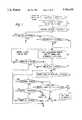
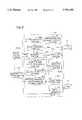
- FIG. 1is a flowchart showing the operation of a data managing method read from computer-readable program code means embodied in a computer usable medium in an article of manufacture according to an embodiment of the present invention
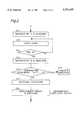
- FIG. 2is a flowchart subsequent to the flowchart shown in FIG. 1;
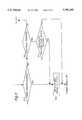
- FIG. 3is a flowchart subsequent to the flowchart shown in FIG. 2;
- FIG. 4is a flowchart showing an embodiment of the operation of a measuring function to be executed by means of a testing electrode
- FIG. 5is a flowchart showing an embodiment of the operation of a correcting function
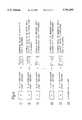
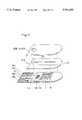
- FIG. 6is a view showing the display method of data of a blood sugar value stored in a RAM
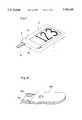
- FIG. 7is a perspective view of an example of a blood sugar value-measuring apparatus to which the data managing method is applied;
- FIG. 8is a block diagram showing an embodiment of the construction of the blood sugar value-measuring apparatus shown in FIG. 7;
- FIG. 9is a block diagram showing the construction of a CPU shown in FIG. 8.
- FIG. 10is a perspective view showing the electrode shown in FIG. 7;
- FIG. 11is an exploded perspective view showing another electrode
- FIG. 12is an exploded perspective view showing still another electrode.
- FIG. 13is a perspective view showing the assembled electrode shown in FIG. 12.
- an article of manufacturecomprising a computer usable medium is used in a portable measuring apparatus.
- the computer usable mediumincludes computer-readable program code means embodied therein and causes the computer to manage data in the portable measuring apparatus.
- the portable measuring apparatus of the embodimentis used to measure density of an element included in biological body fluid such as total blood, blood plasma, blood serum, urine, and so on.
- biological body fluidsuch as total blood, blood plasma, blood serum, urine, and so on.
- Glucose, lactic acid, cholesterol, uric acid, triglyceride, and so onare included.
- the portable measuring apparatusdoes not have an operation switch, similarly to the blood sugar value-measuring apparatus disclosed in the Patent Publication previously described.
- the operation switchmeans a switch which is mounted on an outer surface of the measuring apparatus and can be manually operated by a user. An example of the outline of the construction of the measuring apparatus is described below.
- the measuring apparatus 1is rectangular and plate-shaped. There is formed on a side surface 1a of the measuring apparatus 1 in the thickness direction thereof a connector 3 into which various electrodes 45 such as a measuring electrode 4 for measuring density of the element included in the biological body fluid, e.g., blood sugar value as shown in FIG. 10 are inserted. A liquid crystal display (LCD) 2 occupying a large area of the upper surface 1b of the measuring apparatus 1 is formed thereon.
- LCDliquid crystal display
- the circuit construction of the measuring apparatus 1is described below with reference to FIG. 8.
- a power battery 57 incorporated in the measuring apparatus 1is connected with a battery checking device 58 which decides whether the voltage of the power battery 57 is in a predetermined range.
- the output side of the battery checking device 58is connected with a CPU 50.
- the power battery 57is connected with the CPU 50 via a voltage stabilizing circuit 62, thus supplying the CPU 50 with a predetermined electric power.
- the connector 3is connected with the input side of a detecting circuit 52 which detects whether or not the electrode 45 has been mounted on the connector 3, thus outputting a signal indicating that the electrode 45 has been mounted on the connector 3 if the electrode 45 has been mounted thereon.
- the connector 3is also connected with the input side of a current/voltage converter 53 for converting electric current flowing through the electrode 45 connected with the connector 3 into a voltage.
- the output side of the detecting circuit 52is connected with the CPU 50 so that the detecting circuit 52 outputs a signal indicating that the electrode 45 has been mounted on the connector 3 to the CPU 50.
- the current/voltage converter 53is connected with the output side of a reaction voltage setting circuit 63 connected with the output side of the voltage stabilizing circuit 62.
- the reaction voltage setting circuit 63supplies a predetermined reaction voltage to the electrode 45 mounted on the connector 3 via the current/voltage converter 53, when the reaction voltage setting circuit 63 has been supplied with a control signal outputted from the CPU. 50 upon receipt of a signal from the detecting circuit 52.
- the current/voltage converter 53is connected with the output side of a gain control circuit 65, the input side of which is connected with the CPU 50.
- the output side of the current/voltage converter 53is connected with the CPU 50 via an A/D converter 54.
- the CPU 50is connected with a RAM (random access memory) 70 for storing the data of density value of the element included in the biological body fluid measured by the measuring electrode 4.
- the RAM 70can store the data of latest 10 measured density values and the data of measured values of control liquid which will be described later.
- the CPU 50is also connected with the output side of a resetting circuit 64, the input side of which is connected with the output side of the voltage stabilizing circuit 62; the output side of a temperature sensor 55; the output side of an oscillator 60 for outputting clock signals; the input side of the LCD 2; the input side of a buzzer 59 for generating an alarm; and the input and output sides of a semiconductor memory 61 for storing the correction value for each measuring apparatus.
- the semiconductor memory 61includes computer-readable program code means read out by the CPU 50 for managing data in operations as described below of the measuring apparatus.
- the main program code means included in the semiconductor memory 61comprises computer-readable program code detecting means for causing the computer to detect whether an electrode has been mounted on the measuring apparatus;
- computer-readable program code clocking meansfor causing the computer to clock a first period of time after the computer has measured the characteristic of the electrode
- program code meansmay further comprise computer-readable program code erasing means for causing the computer to determine whether to erase the measured density data in the storing means.
- program code meansmay further comprise computer-readable program code writing means for causing the computer to determine whether to store the measured density data to the storing means.
- the program code meansmay further comprise computer-readable program code value displaying means for causing the computer to display a value based on a resistance value of an electrode mounted on the measuring apparatus when the type of electrode mounted on the measuring apparatus is a type for measuring the resistance value.
- the portable measuring apparatus of the embodimentmeasures density of glucose and then displays a blood sugar value based on the measured density of glucose. Accordingly, the semiconductor memory 61 in the portable measuring apparatus of the embodiment includes computer-readable program code means with respect to managing the blood sugar value data.
- Each of the portable measuring apparatuseshas each semiconductor memory respectively including computer-readable program code means with respect to managing the data of the to-be-measured element.
- the main component contained in the reagent layer of the measuring electrode 4consists of oxidoreductase having a substrate contained in biological body fluid and a redox compound serving as a substance for transporting electrons of the oxidoreductase.
- the measuring object measured by the measuring electrode 4is biological body fluid such as total blood, blood plasma, blood serum, urine, and so on.
- the measuring element of the biological body fluidis glucose, lactic acid, cholesterol, uric acid, triglyceride, and so on.
- the glucose oxidase(hereinafter referred to as GOD) is used as oxidoreductase and potassium ferricyanide serving as mediator.
- GODglucose oxidase
- the mediatornamely, potassium ferricyanide and glucose react with each other in the presence of GOD as shown by an equation 1 shown below to form potassium ferrocyanide corresponding to the density of glucose.
- an electric circuitis used in this embodiment to apply a certain voltage to both ends of a lead of the electrode.
- the intensity of oxidation currentthus obtained is proportional to the density of potassium ferrocyanide formed by the reaction shown by the equation 1, namely, the density of glucose.
- the density of glucose contained in the measured liquidcan be measured by measuring the intensity of electric current generated by the application of the voltage to the electrode.
- the lactate oxidase(hereinafter referred to as LOD) is used as oxidoreductase and potassium ferricyanide serving as mediator.
- LODlactate oxidase
- the mediatornamely, potassium ferricyanide and lactic acid react with each other in the presence of LOD as shown by an equation 2 shown below to form potassium ferrocyanide corresponding to the density of lactic acid.
- an electric circuitis used in this embodiment to apply a certain voltage to both ends of a lead of the electrode.
- the intensity of oxidation currentthus obtained is proportional to the density of potassium ferrocyanide formed by the reaction shown by the equation 2, namely, the density of lactic acid.
- the density of lactic acid contained in the measured liquidcan be measured by measuring the intensity of electric current generated by the application of the voltage to the electrode.
- the cholesterol oxidase(hereinafter referred to as ChOD) is used as oxidoreductase and potassium ferricyanide serving as mediator.
- ChODcholesterol oxidase
- the mediatornamely, potassium ferricyanide and cholesterol react with each other in the presence of ChOD as shown by an equation 3 shown below to form potassium ferrocyanide corresponding to the density of cholesterol.
- an electric circuitis used in this embodiment to apply a certain voltage to both ends of a lead of the electrode.
- the intensity of oxidation currentthus obtained is proportional to the density of potassium ferrocyanide formed by the reaction shown by the equation 3, namely, the density of cholesterol.
- the density of cholesterol contained in the measured liquidcan be measured by measuring the intensity of electric current generated by the application of the voltage to the electrode.
- the bloodis selected from among the biological body fluid and then the blood sugar value is measured by the measuring apparatus.
- the measuring electrode 4is inserted into the connector 3.
- the reaction voltage setting circuit 63 serving as the power supplyapplies a predetermined voltage necessary for obtaining response electric current to the terminal of the connector 3.
- the response electric current flowing through the measuring electrode 4 inserted into the connector 3is converted into a voltage by the current/voltage converter 53 and then, the voltage is converted into binary data by the A/D converter 54.
- the CPU 50reads an output signal of the A/D converter 54, thus executing processing.
- the measuring electrode 4 containing enzymeis considered to be a kind of a resistor. Supposing that the resistance value of the measuring electrode 4 is Rs; the amplification resistance of the current/voltage converter 53 is Rf; and a voltage to be applied to the terminal of the connector 3 is E, the output voltage E 0 of the current/voltage converter 53 is found by the following equation:
- the resistance value Rs of the measuring electrode 4is as great as an infinite quantity when the measuring electrode 4 is not supplied with to-be-measured liquid. Accordingly, the intensity (i) of electric current is very small and thus, the output voltage E 0 of the current/voltage converter 53 is nearly equal to E.
- the resistance value Rs of the measuring electrode 4drops rapidly. Consequently, the output voltage E 0 increases rapidly. Therefore, the dropping of the liquid to the measuring electrode 4 can be detected by always monitoring the output voltage E 0 of the current/voltage converter 53.
- the CPU 50detects the change in the output voltage E 0 of the current/voltage converter 53 based on a signal supplied thereto from the A/D converter 54, thus starting a measuring timer automatically.
- an adjusting electrodeis used.
- the adjusting electrodehas a configuration similar to that of the measuring electrode 4 and a constant resistance value much smaller than that (infinite quantity) of an unused electrode. That is, when the voltage of the adjusting electrode is measured, the adjusting electrode indicates a stable and constant voltage from the beginning of measurement.
- the CPU 50can discriminate several kinds of adjusting electrodes from each other based on different voltages.
- adjusting electrodeis used generically to describe several types of electrodes including an adjusting mode switch-over electrode, an electrode for correcting error between the apparatuses, a calibrating electrode, a testing electrode, a unit-switching electrode, and the like. If the adjusting electrode is determined to be the calibrating electrode, the CPU 50 automatically discriminates and selects a proper working curve corresponding to the calibrating electrode from a plurality of working curves stored in the measuring apparatus, according to the resistance value (voltage) thereof.
- the adjusting electrodeWhen the adjusting electrode is determined to be the testing electrode, the voltage thereof is converted into a density, and the density is displayed on the LCD 2.
- the CPU 50decides whether or not the measuring apparatus is abnormal based on the density.
- the adjusting electrodeWhen the adjusting electrode is determined to be the unit-switching electrode, the voltage thereof is automatically altered/converted into each density unit (for example, mg/dl, mmol/L) so as to display the density unit on the LCD 2.
- Table 1shows relations between the resistance value and the working curve for each calibrating electrode.
- a voltage E 01 of an electrode inserted into the connector 3is measured when the power supply is turned on, and a voltage E 02 thereof is measured again at an interval of several seconds in relation to the point when the power supply is turned on.
- the rate of change ( ⁇ E) in the two voltagesis calculated. If the rate of change is greater than a predetermined level, it is decided that the electrode is the used one, and the result is displayed on the LCD 2. If the rate of change in the voltages is smaller than the predetermined level, it is decided that the electrode is the calibrating one or the testing one.
- liquid junction detecting terminals 9a and 9bare disposed alongside the electrode as shown in FIG. 11. Supposing that the liquid junction detecting terminals 9a and 9b are provided, when the resistance value therebetween is infinite, it is decided by the CPU 50 that there is no liquid junctions and that the electrode inserted into the connector 3 is unused, whereas if the resistance value therebetween is low, it is decided that the electrode has been already used.
- FIG. 12is a detailed exploded perspective view showing another embodiment of an electrode.
- FIG. 13is a perspective view showing the assembled electrode.
- a counter electrode 34there are provided on a substrate 31 a counter electrode 34, a measuring pole 35, leads 33, 32 connected with the counter electrode 34 and the measuring pole 35, respectively, and an insulating layer 36.
- a reaction layer containing an enzyme and a mediator formed on the substrate 31covers the counter electrode 34 and the measuring pole 35.
- a cover 39is fixed to the upper surface of the substrate 31 via a spacer 37.
- To-be-measured liquidis introduced from a supply hole 38 to the counter electrode 34 and the measuring pole 35 by means of capillary action.
- Reference numeral 40denotes an air introducing hole.
- An inverse insertion-preventing projection 41projects from a side surface of the electrode 45. When the electrode 45 is inserted into the connector 3 normally, the projection 41 is inserted into the gap, whereas if the electrode 45 is inserted into the connector 3 upside down, the projection 41 prevents the electrode 45 from being inserted into the gap.
- the operation of the blood sugar value-measuring apparatus disclosed in the above-described Patent Publicationcan be carried out by the measuring apparatus 1.
- the measuring apparatus 1has each function of storing a measured blood sugar value, measuring the blood sugar value of the control liquid, reading the data of the measured blood sugar value stored in the RAM 70, and erasing the data of the measured blood sugar values.
- the CPU 50executes the following various controls which will be described below.
- FIGS. 1 and 2are connected with each other via a reference character (P) and FIGS. 2 and 3 are connected with each other via a reference character (T).
- the detecting circuit 52When the measuring electrode 4 is inserted into the connector 3 of the apparatus 1 at step S1, the detecting circuit 52 outputs a mounting detection signal to the CPU 50. Upon receipt of the signal, the CPU 50 outputs a signal to the buzzer 59. Then, the buzzer 59 generates an alarm indicating that the measuring electrode 4 has been inserted into the connector 3. At step S2, all segments of the LCD 2 are turned on for two seconds under the control of the CPU 50.
- the connector 3 and the detecting circuit 52correspond to the electrode detecting means.
- the battery checking device 58detects the voltage of the power battery 57 incorporated in the measuring apparatus 1.
- the CPU 50under the control of the CPU 50, electric current is applied to the electrode 45 inserted into the connector 3 via the reaction voltage setting circuit 63 and the current/voltage converter 53. In this manner, the CPU 50 detects the resistance value of the electrode 45.
- the CPU 50decides whether the electrode 45 is the testing one, the calibrating one or the measuring one by detecting the resistance value of the electrode 45 through the current/voltage converter 53 and the A/D converter 54.
- the current/voltage converter 53 and the A/D converter 54correspond to the signal output means.
- the testing electrodemeans an electrode having a predetermined resistance value so that a predetermined blood sugar value is displayed on the LCD 2.
- step S4If it is decided at step S4 that the electrode 45 inserted into the connector 3 is the testing electrode, the program goes to a process, shown in FIG. 4 via a reference character (Q), which will be described later, whereas if it is decided at step S4 that the electrode 45 inserted into the connector 3 is the calibrating one, the program goes to a process, shown in FIG. 5, via a reference character (R) which will be described later.
- Qa reference character
- Rreference character
- the CPU 50decides that the electrode 45 is the electrode for measuring a blood sugar value, thus starting the execution of the blood sugar value-measuring function.
- the preparatory process of functions to be executedterminates at steps S1 through S4.
- a preparatory portion 50a of the CPU 50 shown in FIG. 9executes the preparatory process.
- the portable measuring apparatus 1can store 10 latest measured blood sugar values. After the preparatory process terminates at steps S1 through S4, a measurement number of the first time measurement through the 10th time measurement indicating a current measurement and a working curve number (F-0 through F-9, as shown in Table 1) indicating the kind of the working curve are alternately displayed on the LCD 2 at intervals of one second at step S5.
- the CPU 50starts clocking one minute from the point when the preparatory process has terminated, namely, from the point when the alternate display of the measurement number and the working curve number has been started. It is to be noted that the clocking time period is not limited to one minute.
- a first clocking portion 50b of the CPU 50 shown in FIG. 9executes the first clocking process.
- step S7the CPU 50 decides whether or not the resistance value of the measuring electrode 4 has changed rapidly due to the dropping of blood to the measuring electrode 4 during the period of time from the point when clocking operation has started until the termination of one minute. If the dropping of the blood has been detected at step S7, the program goes to step S11 which will be described later to measure the blood sugar value, whereas if the dropping of the blood has not been detected at step S7, the program returns to step S5.
- the operation to be executed at step S7corresponds to the deciding process.
- a deciding portion 50c of the CPU 50 shown in FIG. 9executes the deciding process.
- control liquidto the measuring electrode 4 instead of blood.
- the control liquid-measuring functionis described below.
- the control liquidmeans liquid having a density adjusted to a known, or predetermined density of measuring element in the biological body fluid.
- the measuring elementis glucose, so the control liquid has a predetermined density of glucose.
- the control liquid-measuring functionmeans a function of checking whether or not a measuring/calculating circuit or the like of the portable measuring apparatus 1 is abnormal and whether or not measuring electrodes having the same lot number as that of the measuring electrode 4 used to the control liquid-measuring function of the control liquid has a defect, based on the operator's decision that a blood sugar value, corresponding to the density of glucose of the control liquid, indicated on the LCD 2 by dropping the control liquid to the measuring electrode 4 is included within a predesignated blood sugar value.
- the blood sugar value measured by using the control liquidis stored in the RAM 70.
- the following operationis performed in dropping the control liquid to the measuring electrode 4.
- the measuring electrode 4is pulled out from the portable measuring apparatus 1.
- the alternate display of the measurement number and the working curve numberterminates, and either the former or the latter remains displayed on the LCD 2 for three seconds.
- the measuring electrode 4is inserted into the connector 3 again during the three seconds, as a display indicating that the control liquid is measured next, for example, the display of a character "C" and the display of characters "F-0" indicating the display of the working curve number are made alternately on the LCD 2. In this manner, the control liquid-measuring function is performed.
- the power supplyis turned off.
- the RAM 70stores the character, for example, "C" indicating the measured value of the control liquid and the blood sugar value measured by using the control liquid.
- the method of measuring a blood sugar value by dropping blood to the measuring electrode 4is described later.
- step S6If it is decided at step S6 that blood has not been dropped on the measuring electrode 4 within one minute, the program goes to step S8.
- step S8the CPU 50 reads the data of measured blood sugar values stored in the RAM 70, thus outputting memory numbers and the data of the measured blood sugar values corresponding to the respective memory numbers to the LCD 2 in this order.
- the LCD 2displays the memory numbers and the data of the measured blood sugar values corresponding to the respective memory numbers in this order.
- the operation to be executed at step S8corresponds to the read-out process.
- a read-out portion 50d of the CPU 50 shown in FIG. 9executes the read-out process.
- the display of the memory numbers and that of the data of the measured blood sugar values corresponding to the respective memory numbersare described below with reference to FIG. 6 and Tables 2-4.
- the display of a characterfor example, "A” indicating the average value of all measured blood sugar values stored in the RAM 70 is displayed on the LCD 2 for one second and then, the display of the character "A” is terminated and then, the average value is displayed for two seconds.
- a latest measured blood sugar value through an oldest oneare sequentially displayed. That is, when the two seconds have elapsed, the display of the average value is terminated and then, "3" which is the memory number storing the latest measured blood sugar value is displayed for one second.
- the read-out method of the data of the measured blood sugar values stored in the RAM 70is not limited to the above-described one, but it is possible to display the measured blood sugar values in the order from the oldest one to the latest one and alter the above-described display time period of each data to a different one.
- Table 4shows an example the read-out of the data of measured blood sugar values from the RAM 70 when the control liquid-measuring function is executed and a blood sugar value measured by using the control liquid is stored in the RAM 70.
- a character "C" in Table 4shows a portion in which the control liquid-measuring function has been executed.
- step S9it is decided whether the display of all the measured blood sugar values stored in the RAM 70 has terminated. If the display of all the measured blood sugar values stored in the RAM 70 has terminated at step S9, the power supply of the measuring apparatus 1 is turned off.
- step S10If it is detected at step S10 that the blood or the control liquid has been dropped to the measuring electrode 4 before the displays of all the measured blood sugar values terminate at step S9, the program goes to step S11.
- the measuring apparatus 1can display the blood sugar values stored in the RAM without providing with an operation button.
- the operation to be executed at step S10corresponds to the dropping deciding process.
- a dropping deciding portion 50k of the CPU 50 shown in FIG. 9executes the dropping deciding process.
- the electrodeis installed on or removed from the portable measuring apparatus 1 between the operation to be executed at step S8 and the operation to be executed at step S9, namely, while the data of the measured blood sugar values read out from the RAM 70 is being outputted to the LCD 2, the data of all the measured blood sugar values stored in the RAM 70 is erased.
- step S50it is decided at step S50 whether the electrode is removed from the portable measuring apparatus 1. If the electrode is not removed therefrom at step S50, the program goes to step S9, whereas if the electrode is removed therefrom at step S50, the program goes to step S51.
- step S51It is decided at step S51 whether the electrode has been mounted again on the portable measuring apparatus 1 within three seconds after the electrode is removed therefrom. If the answer is "no" at step S51, the power supply is turned off. At this time, the data of the measured blood sugar values stored in the RAM 70 is not erased. If the answer is "yes” at step S51, the program goes to step S52 at which the data of all the measured blood sugar values stored in the RAM 70 is erased. Then, the power supply is turned off.
- the operations to be executed at steps S50 through S52correspond to the data erasing process.
- a data erasing portion 50j shown in FIG. 9executes the data erasing process.
- the period of time between the point when the electrode is removed from the connector 3 and the point when the electrode is mounted thereon againis not limited to three seconds. It is also possible to erase a part of all the data stored in the RAM 70.
- the kind of the electrode to be mounted on or removed from the portable measuring apparatus 1is not limited to a specific kind of electrode.
- the measuring apparatus 1can erase the data of the blood sugar values stored in the RAM 70 without providing with the operation button.
- the CPU 50measures atmospheric temperature T1 at step S11 by using a thermistor mounted on the portable measuring apparatus 1 immediately before the blood sugar value is measured.
- the CPU 50waits for a predetermined reaction time period from the point when the dropping of the blood to the measuring electrode 4 has been detected at step S1 until the point when the reaction of the blood dropped to the measuring electrode 4 and a reagent layer formed in the measuring electrode 4 takes place.
- the CPU 50measures a temperature T2 by using the thermistor immediately after the blood sugar value is measured.
- the CPU 50subtracts the temperature T1 measured at step S11 from the temperature T2 measured at step S14, thus deciding whether the absolute value of a value obtained by the subtraction is greater than a predetermined value K. If the absolute value is greater than the value K, the LCD 2 executes an error display under the control of the CPU 50.
- the temperature in the reaction of the blood and the reagent layer of the measuring electrode 4affects greatly on a measured blood sugar value. Thus, when the temperature difference between the temperature before the measurement and that after the measurement is higher than the predetermined value K, the measured blood sugar value is not reliable.
- step S15the program goes to step S17 at which the CPU 50 issues an instruction to the reaction voltage setting circuit 63 to apply a predetermined voltage to the measuring electrode 4, thus measuring the value of oxidation current. Based on the measured value of the oxidation current, the CPU 50 calculates a blood sugar value, thus outputting a signal to the LCD 2 at step S18 so that the blood sugar value is displayed thereon. In displaying the blood sugar value, the CPU 50 also outputs a signal to the buzzer 59 to inform a user of the completion of the measurement.
- the operations to be executed at steps S11 through S17correspond to the blood sugar value-measuring process.
- a blood sugar value-measuring portion 50e of the CPU 50 shown in FIG. 9executes the blood sugar value-measuring process in this embodiment.
- the CPU 50decides whether three minutes have elapsed from the start point of the display of the measured blood sugar value executed at step S18, namely, from the point when the process of measuring the blood sugar value has been completed.
- the operations to be executed at steps S18 and S19correspond to the second clocking process.
- a second clocking portion 50f of the CPU 50 shown in FIG. 9executes the second clocking process.
- step S20It is decided at step S20 whether or not the user has pulled out the measuring electrode 4 from the connector 3 before the three minutes elapse. This decision is made based on whether the mounting detection signal has been supplied from the detecting circuit 52 to the CPU 50. If the measuring electrode 4 is not pulled out therefrom at step S20, the program returns to step S18, thus executing operations between steps S18 and S20, whereas if the measuring electrode 4 is pulled out therefrom at step S20, the program goes to step S21.
- the decision as to whether the mounting detection signal has been supplied from the detecting circuit 52 to the CPU 50is made based on the level, namely, a high level and a low level of the mounting detection signal.
- the CPU 50starts counting three seconds from the point when the CPU 50 has detected the removal of the measuring electrode 4 from the connector 3 at step S20, thus deciding whether or not the measuring electrode 4 has been inserted into the connector 3 again within the three seconds based on whether the mounting detection signal has been supplied from the detecting circuit 52 to the CPU 50. If the CPU 50 has detected the insertion of the measuring electrode 4 within three seconds at step S21, the CPU 50 outputs a signal to the RAM 70 not to store the data of the currently measured blood sugar value, namely, to execute the measurement result-erasing function, the power supply of the measuring apparatus 1 is turned off under the control of the CPU 50. If the CPU 50 has not detected the insertion of the measuring electrode 4 within three seconds at step S21, the program goes to step S22 at which the RAM 70 stores the data of the currently measured blood sugar value. Then, the power supply is turned off.
- step S20If the measuring electrode 4 is not removal from the connector 3 at step S20, the program returns to step S18 to continue the operations at steps S18 through S20.
- step S19When it is decided at step S19 that three minutes have elapsed, the program goes to step S22 at which the RAM 70 stores the data of the currently measured blood sugar value.
- the operations to be executed at steps S20 and S21correspond to the writing permission/nonpermission deciding process.
- a writing permission/nonpermission deciding portion 50g of the CPU 50 shown in FIG. 9executes the writing permission/nonpermission deciding process.
- the operation to be executed at step S22corresponds to the writing process.
- a writing portion 50h of the CPU 50 shown in FIG. 9executes the writing process.
- the measuring function by means of the testing electrodemeans a function to check whether or not the portable measuring apparatus 1 operates normally.
- the CPU 50decides that the electrode inserted into the connector 3 is the testing electrode according to a predetermined resistance value of the testing electrode and converts the resistance value into a blood sugar value in case of this embodiment, thus outputting a signal to the LCD 2 so that the measured blood sugar value is displayed thereon.
- step S4the electrode inserted into the connector 3 is the testing electrode
- the programgoes to step S30 at which the CPU 50 converts the resistance value of the testing electrode into a blood sugar value, thus outputting a signal to the LCD 2 so that the measured blood sugar value measured by means of the testing electrode is displayed thereon.
- step S31It is decided at step S31 whether or not the testing electrode has been pulled out from the connector 3.
- the CPU 50makes the decision based on whether or not the detecting circuit 52 has supplied the mounting detection signal to the CPU 50. If the testing electrode has been pulled out therefrom at step S31, the power supply of the portable measuring apparatus 1 is turned off under the control of the CPU 50. If the testing electrode has not been pulled out therefrom at step S31, the CPU 50 decides at step S32 whether or not 10 seconds have elapsed from the point when the electrode was inserted into the connector 3 at step S1. If 10 seconds have not elapsed and the testing electrode has not been pulled out from the connector 3, the program returns to step S30 to repeatedly perform the operations at steps S30 through S32.
- step S32When 10 seconds have elapsed at step S32 without the testing electrode being removed from the connector 3, the program goes to step S33 at which the CPU 50 reads out the data of the past 10 measured blood sugar values stored in the RAM 70, thus outputting the data of the 10 measured blood sugar values sequentially to the LCD 2.
- the data of the 10 measured blood sugar valuesis displayed in the same procedure as that to be performed at step S8.
- step S50it is probable that the CPU 50 performs the data erasing operation (step S50 through S52) as described above before the output of the data of all the measured blood sugar values read out from the RAM 70 is completed. That is, it is decided at step S50 subsequent to step S33 whether or not the electrode has been removed from the portable measuring apparatus 1. If the electrode has not been removed therefrom at step S50, the program goes to step S53, whereas if the electrode has been removed therefrom at step S50, the program goes to step S51.
- step S51it is decided at step S51 whether or not the electrode has been mounted again on the portable measuring apparatus 1 within three seconds after the removal of the electrode therefrom. If the electrode has not been mounted again at step S51, the power supply is turned off under the control of the CPU 50. At this time, the data of the measured blood sugar values stored in the RAM 70 is not erased. If the electrode has been mounted again at step S51, the program goes to step S52 at which the CPU 50 erases the data of all the measured blood sugar values stored in the RAM 70. Then, the power supply is turned off under the control of the CPU 50.
- step S53It is decided at step S53 whether the output of the data of all the measured blood sugar values read out from the RAM 70 is completed. If the output is not completed at step S53, the program returns to step S33, whereas if the output is completed at step 53, the power supply is turned off.
- the calibrating (switch-over of working curve) functionmeans a function to specify one working curve from among data of a plurality of working curve stored in the portable measuring apparatus 1.
- the CPU 50decides that an electrode inserted into the connector 3 is the calibrating electrode according to a predetermined resistance value of the electrode, thus specifying a working curve designated by the calibrating electrode.
- step S4If it is decided at step S4 that an electrode inserted into the connector 3 is the calibrating electrode, the program goes to step S40 at which the working curve number is displayed on the LCD 2 under the control of the CPU 50, based on the resistance value of the calibrating electrode.
- step S41It is decided at step S41 whether or not the calibrating electrode has been pulled out from the connector 3.
- the CPU 50makes the decision based on whether or not the detecting circuit 52 has outputted the mounting detection signal to the CPU 50. If the calibrating electrode has been pulled out from the connection 3 at step S41, the power supply of the portable measuring apparatus 1 is turned off under the control of the CPU 50. If the calibrating electrode has not been pulled out from the connection 3 at step S41, the CPU 50 decides whether or not 10 seconds have elapsed from the point when the electrode was inserted into the connector 3 at step S1. If 10 seconds have not elapsed and the calibrating electrode has not been pulled out from the connector 3, the program returns to step S40 to repeatedly perform the operations at steps S40 through S42.
- step S42When 10 seconds have elapsed at step S42 without the calibrating electrode being removed from the connector 3, the program goes to step S43 at which the CPU 50 reads out the data of the past 10 measured blood sugar values stored in the RAM 70, thus outputting the data of the read-out measured blood sugar values sequentially to the LCD 2.
- the data of the read-out measured blood sugar valuesis displayed in the same procedure as that to be performed at step S8.
- step S50executes the data erasing operation (step S50 through S52) as described above before the output of the data of all the measured blood sugar values read out from the RAM 70 is completed. That is, it is decided at step S50 subsequent to step S43 whether or not the electrode has been removed from the portable measuring apparatus 1. If the electrode has not been removed therefrom at step S50, the program goes to step S53, whereas if the electrode has been removed therefrom at step S50, the program goes to step S51.
- step S51it is decided at step S51 whether or not the electrode has been mounted again on the portable measuring apparatus 1 within three seconds after the removal of the electrode therefrom. If the electrode has not been mounted again at step S51, the power supply is turned off under the control of the CPU 50. At this time, the data of the measured blood sugar values stored in the RAM 70 is not erased. If the electrode has been mounted again at step S51, the program goes to step S52 at which the CPU 50 erases the data of all the measured blood sugar values stored in the RAM 70. Then, the power supply is turned off.
- step S53It is decided at step S53 whether the output of the data of all the measured blood sugar values read out from the RAM 70 is completed. If the output is not completed at step S53, the program returns to step S43, whereas if the output is completed at step 53, the power supply is turned off.
- the data stored in the RAM 70can be displayed as short as 10 seconds after the testing electrode or the calibrating electrode is inserted into the connector 3, whereas the data stored in the RAM 70 is displayed as long as one minute after the measuring electrode 4 is inserted into the connector 3.
- the operations to be executed at steps S30 and S40correspond to the predetermined value-display process.
- a predetermined value-display portion 50i of the CPU 50 shown in FIG. 9executes the predetermined value display process.
- the operations to be executed at steps S31 through S33 and S41correspond to the first clocking process, the deciding process, and the read-out process, respectively.
- the portable measuring apparatus 1has no operation button, so, the operations, e.g. the operation for reading out the measured blood sugar value, the operation for erasing the measured blood sugar value and so on, are executed by mounting the electrode on the portable measuring apparatus 1 and removing the electrode therefrom.
- the portable measuring apparatusmay have at least one operation button, and thus at least one of the operations may be executed by the operation button.
- the article of manufacturecomprising a computer usable medium of the present invention
- the computer usable mediumembodies computer-readable program code detecting means, computer-readable program code characteristic measuring means, computer-readable program code clocking means, computer-readable program code determining means, computer-readable program code density measuring means, computer-readable program code density storing means, computer-readable program code read out means, and computer-readable program code output means
- the measuring apparatuscomprising the article of manufacture can smoothly measure the density data, store the measured density data to the storing means, and read out the measured density data from the storing means.
Landscapes
- Health & Medical Sciences (AREA)
- Chemical & Material Sciences (AREA)
- Hematology (AREA)
- Life Sciences & Earth Sciences (AREA)
- Electrochemistry (AREA)
- Chemical Kinetics & Catalysis (AREA)
- Molecular Biology (AREA)
- Physics & Mathematics (AREA)
- Analytical Chemistry (AREA)
- Biochemistry (AREA)
- General Health & Medical Sciences (AREA)
- General Physics & Mathematics (AREA)
- Immunology (AREA)
- Pathology (AREA)
- Investigating Or Analysing Biological Materials (AREA)
Abstract
Description
This is a Continuation-In-Part of application Ser. No. 08/331,813, filed on Oct. 31, 1994, U.S. Pat. No. 5,587,045.
1. Field of the Invention
The present invention relates to an article of manufacture comprising a computer usable medium, including computer-readable program code means embodied therein, for causing a computer to manage data in a measuring apparatus. Particularly, the measuring apparatus can be used by a patient himself/herself to measure his/her blood sugar value.
2. Conventional Art
A portable blood sugar value-measuring apparatus is known which stores data of blood sugar values sequentially measured by a diabetic for himself/herself. In reading out a plurality of the stored data of the measured blood sugar values in such a conventional blood sugar value-measuring apparatus, an operation button provided on the surface thereof is depressed to display them sequentially on a display portion.
As disclosed in Japanese Laid-Open Patent Publication No. 357452/1992, the present applicant proposed a blood sugar value-measuring apparatus having no operation buttons provided thereon. In the blood sugar value-measuring apparatus disclosed in the Patent Publication, various types of electrodes, such as a blood sugar value-measuring one, a correcting one, and the like, each having its own resistance value, are installed on the blood sugar value-measuring apparatus. When one of them is mounted on the blood sugar value-measuring apparatus, its resistance value is detected and then, the blood sugar value-measuring apparatus is set to an operation state. In addition, the type of electrode which has been installed on the blood sugar value-measuring apparatus can be detected based on its resistance value. In this manner, a function of each type of electrode is performed in the blood sugar value-measuring apparatus. This construction eliminates the need for the provision of an operation switch.
An object of the present invention is to provide an article of manufacture comprising a computer usable medium, including computer-readable program code means embodied therein, for causing a computer to manage data in a measuring apparatus having no operation buttons in order to eliminate the provision of the operation on reading a plurality of measured values with respect to biological body fluid, storing the measured values in a storing means sequentially, and reading the measured values from the storing means, or the like.
In accomplishing the aforementioned object, according to one aspect of the present invention of the article of manufacture comprising a computer usable medium, there is provided a computer usable medium, including computer-readable program code means embodied therein, for causing a computer to manage data in a measuring apparatus, the computer-readable program code means in the article of manufacture comprising:
computer-readable program code detecting means for causing the computer to detect whether an electrode has been mounted on the measuring apparatus;
computer-readable program code characteristic measuring means for causing the computer to measure a characteristic of the electrode to determine what type of electrode has been mounted on the measuring apparatus;
computer-readable program code clocking means for causing the computer to clock a first period of time after the computer has measured the characteristic of the electrode;
computer-readable program code determining means for causing the computer to determine whether to measure density of an element included in a biological body fluid or whether to read out measured density data;
computer-readable program code density measuring means for causing the computer to measure density of the element included in the biological body fluid which has been placed on the electrode;
computer-readable program code density storing means for causing the computer to store a measured density of the element included in the biological body fluid in a storing means;
computer-readable program code read out means for causing the computer to read out measured density data stored in the storing means; and
computer-readable program code output means for causing the computer to output the measured density data read out from the storing means.
The article of manufacture may further comprise computer-readable program code erasing means for causing the computer to determine whether to erase the measured density data in the storing means.
The article of manufacture may further comprise computer-readable program code writing permission/nonpermission determining means for causing the computer to determine whether to store the measured density data to the storing means.
The article of manufacture may further comprise computer-readable program code value displaying means for causing the computer to display a value based on a resistance value of an electrode mounted on the measuring apparatus when the type of electrode mounted on the measuring apparatus is a type for measuring the resistance value.
These and other objects and features of the present invention will become clear from the following description taken in conjunction with the preferred embodiments thereof with reference to the accompanying drawings throughout in which like parts are designated by like reference numerals, and in which:
FIG. 1 is a flowchart showing the operation of a data managing method read from computer-readable program code means embodied in a computer usable medium in an article of manufacture according to an embodiment of the present invention;
FIG. 2 is a flowchart subsequent to the flowchart shown in FIG. 1;
FIG. 3 is a flowchart subsequent to the flowchart shown in FIG. 2;
FIG. 4 is a flowchart showing an embodiment of the operation of a measuring function to be executed by means of a testing electrode;
FIG. 5 is a flowchart showing an embodiment of the operation of a correcting function;
FIG. 6 is a view showing the display method of data of a blood sugar value stored in a RAM;
FIG. 7 is a perspective view of an example of a blood sugar value-measuring apparatus to which the data managing method is applied;
FIG. 8 is a block diagram showing an embodiment of the construction of the blood sugar value-measuring apparatus shown in FIG. 7;
FIG. 9 is a block diagram showing the construction of a CPU shown in FIG. 8;
FIG. 10 is a perspective view showing the electrode shown in FIG. 7;
FIG. 11 is an exploded perspective view showing another electrode;
FIG. 12 is an exploded perspective view showing still another electrode; and
FIG. 13 is a perspective view showing the assembled electrode shown in FIG. 12.
Before the description of the present invention proceeds, it is to be noted that like parts are designated by like reference numerals throughout the accompanying drawings.
In the embodiment, an article of manufacture comprising a computer usable medium is used in a portable measuring apparatus. The computer usable medium includes computer-readable program code means embodied therein and causes the computer to manage data in the portable measuring apparatus.
The portable measuring apparatus of the embodiment is used to measure density of an element included in biological body fluid such as total blood, blood plasma, blood serum, urine, and so on. As the element, Glucose, lactic acid, cholesterol, uric acid, triglyceride, and so on are included.
The portable measuring apparatus does not have an operation switch, similarly to the blood sugar value-measuring apparatus disclosed in the Patent Publication previously described. The operation switch means a switch which is mounted on an outer surface of the measuring apparatus and can be manually operated by a user. An example of the outline of the construction of the measuring apparatus is described below.
Referring to FIG. 7, themeasuring apparatus 1 is rectangular and plate-shaped. There is formed on a side surface 1a of themeasuring apparatus 1 in the thickness direction thereof aconnector 3 into whichvarious electrodes 45 such as ameasuring electrode 4 for measuring density of the element included in the biological body fluid, e.g., blood sugar value as shown in FIG. 10 are inserted. A liquid crystal display (LCD) 2 occupying a large area of theupper surface 1b of themeasuring apparatus 1 is formed thereon.
The circuit construction of themeasuring apparatus 1 is described below with reference to FIG. 8.
Apower battery 57 incorporated in themeasuring apparatus 1 is connected with abattery checking device 58 which decides whether the voltage of thepower battery 57 is in a predetermined range. The output side of thebattery checking device 58 is connected with aCPU 50. Thepower battery 57 is connected with theCPU 50 via avoltage stabilizing circuit 62, thus supplying theCPU 50 with a predetermined electric power.
Theconnector 3 is connected with the input side of a detectingcircuit 52 which detects whether or not theelectrode 45 has been mounted on theconnector 3, thus outputting a signal indicating that theelectrode 45 has been mounted on theconnector 3 if theelectrode 45 has been mounted thereon. Theconnector 3 is also connected with the input side of a current/voltage converter 53 for converting electric current flowing through theelectrode 45 connected with theconnector 3 into a voltage. The output side of the detectingcircuit 52 is connected with theCPU 50 so that the detectingcircuit 52 outputs a signal indicating that theelectrode 45 has been mounted on theconnector 3 to theCPU 50. The current/voltage converter 53 is connected with the output side of a reactionvoltage setting circuit 63 connected with the output side of thevoltage stabilizing circuit 62. The reactionvoltage setting circuit 63 supplies a predetermined reaction voltage to theelectrode 45 mounted on theconnector 3 via the current/voltage converter 53, when the reactionvoltage setting circuit 63 has been supplied with a control signal outputted from the CPU. 50 upon receipt of a signal from the detectingcircuit 52. The current/voltage converter 53 is connected with the output side of again control circuit 65, the input side of which is connected with theCPU 50. The output side of the current/voltage converter 53 is connected with theCPU 50 via an A/D converter 54. Thus, the intensity of electric current flowing through theelectrode 45 is converted into a digital value and the digital value is supplied to theCPU 50 as data.
TheCPU 50 is connected with a RAM (random access memory) 70 for storing the data of density value of the element included in the biological body fluid measured by the measuringelectrode 4. TheRAM 70 can store the data of latest 10 measured density values and the data of measured values of control liquid which will be described later.
TheCPU 50 is also connected with the output side of a resettingcircuit 64, the input side of which is connected with the output side of thevoltage stabilizing circuit 62; the output side of atemperature sensor 55; the output side of anoscillator 60 for outputting clock signals; the input side of theLCD 2; the input side of abuzzer 59 for generating an alarm; and the input and output sides of asemiconductor memory 61 for storing the correction value for each measuring apparatus.
Also, thesemiconductor memory 61 includes computer-readable program code means read out by theCPU 50 for managing data in operations as described below of the measuring apparatus. The main program code means included in thesemiconductor memory 61 comprises computer-readable program code detecting means for causing the computer to detect whether an electrode has been mounted on the measuring apparatus;
computer-readable program code characteristic measuring means for causing the computer to measure a characteristic of the electrode to determine what type of electrode has been mounted on the measuring apparatus;
computer-readable program code clocking means for causing the computer to clock a first period of time after the computer has measured the characteristic of the electrode;
computer-readable program code determining means for causing the computer to determine whether to measure density of an element included in a biological body fluid or whether to read out measured density data;
computer-readable program code density measuring means for causing the computer to measure density of the element included in the biological body fluid which has been placed on the electrode;
computer-readable program code density storing means for causing the computer to store a measured density of the element included in the biological body fluid in a storing means;
computer-readable program code read out means for causing the computer to read out measured density data stored in the storing means; and
computer-readable program code output means for causing the computer to output the measured density data read out from the storing means.
Also, the program code means may further comprise computer-readable program code erasing means for causing the computer to determine whether to erase the measured density data in the storing means.
Also, the program code means may further comprise computer-readable program code writing means for causing the computer to determine whether to store the measured density data to the storing means.
Also, the program code means may further comprise computer-readable program code value displaying means for causing the computer to display a value based on a resistance value of an electrode mounted on the measuring apparatus when the type of electrode mounted on the measuring apparatus is a type for measuring the resistance value.
The portable measuring apparatus of the embodiment measures density of glucose and then displays a blood sugar value based on the measured density of glucose. Accordingly, thesemiconductor memory 61 in the portable measuring apparatus of the embodiment includes computer-readable program code means with respect to managing the blood sugar value data.
Each of the portable measuring apparatuses has each semiconductor memory respectively including computer-readable program code means with respect to managing the data of the to-be-measured element.
The outline of the fundamental operation, similar to that disclosed in the above-described Patent Publication, of the measuringapparatus 1 having the above construction is described below.
The main component contained in the reagent layer of the measuringelectrode 4 consists of oxidoreductase having a substrate contained in biological body fluid and a redox compound serving as a substance for transporting electrons of the oxidoreductase.
The measuring object measured by the measuringelectrode 4 is biological body fluid such as total blood, blood plasma, blood serum, urine, and so on.
The measuring element of the biological body fluid is glucose, lactic acid, cholesterol, uric acid, triglyceride, and so on.
For example, when the substrate is glucose, the glucose oxidase (hereinafter referred to as GOD) is used as oxidoreductase and potassium ferricyanide serving as mediator. When the electrode is supplied with measured liquid containing glucose, the mediator, namely, potassium ferricyanide and glucose react with each other in the presence of GOD as shown by anequation 1 shown below to form potassium ferrocyanide corresponding to the density of glucose. At a certain interval, an electric circuit is used in this embodiment to apply a certain voltage to both ends of a lead of the electrode. The intensity of oxidation current thus obtained is proportional to the density of potassium ferrocyanide formed by the reaction shown by theequation 1, namely, the density of glucose. Thus, the density of glucose contained in the measured liquid can be measured by measuring the intensity of electric current generated by the application of the voltage to the electrode.
For example, when the substrate is lactic acid, the lactate oxidase (hereinafter referred to as LOD) is used as oxidoreductase and potassium ferricyanide serving as mediator. When the electrode is supplied with measured liquid containing lactic acid, the mediator, namely, potassium ferricyanide and lactic acid react with each other in the presence of LOD as shown by anequation 2 shown below to form potassium ferrocyanide corresponding to the density of lactic acid. At a certain interval, an electric circuit is used in this embodiment to apply a certain voltage to both ends of a lead of the electrode. The intensity of oxidation current thus obtained is proportional to the density of potassium ferrocyanide formed by the reaction shown by theequation 2, namely, the density of lactic acid. Thus, the density of lactic acid contained in the measured liquid can be measured by measuring the intensity of electric current generated by the application of the voltage to the electrode.
For example, when the substrate is cholesterol, the cholesterol oxidase (hereinafter referred to as ChOD) is used as oxidoreductase and potassium ferricyanide serving as mediator. When the electrode is supplied with measured liquid containing cholesterol, the mediator, namely, potassium ferricyanide and cholesterol react with each other in the presence of ChOD as shown by anequation 3 shown below to form potassium ferrocyanide corresponding to the density of cholesterol. At a certain interval, an electric circuit is used in this embodiment to apply a certain voltage to both ends of a lead of the electrode. The intensity of oxidation current thus obtained is proportional to the density of potassium ferrocyanide formed by the reaction shown by theequation 3, namely, the density of cholesterol. Thus, the density of cholesterol contained in the measured liquid can be measured by measuring the intensity of electric current generated by the application of the voltage to the electrode.
In a following explanation, it is taken as an example that the blood is selected from among the biological body fluid and then the blood sugar value is measured by the measuring apparatus.
First, the measuringelectrode 4 is inserted into theconnector 3. When the detectingcircuit 52 has detected the insertion of the measuringelectrode 4 into theconnector 3, the reactionvoltage setting circuit 63 serving as the power supply applies a predetermined voltage necessary for obtaining response electric current to the terminal of theconnector 3. Thus, the response electric current flowing through the measuringelectrode 4 inserted into theconnector 3 is converted into a voltage by the current/voltage converter 53 and then, the voltage is converted into binary data by the A/D converter 54.
TheCPU 50 reads an output signal of the A/D converter 54, thus executing processing. The measuringelectrode 4 containing enzyme is considered to be a kind of a resistor. Supposing that the resistance value of the measuringelectrode 4 is Rs; the amplification resistance of the current/voltage converter 53 is Rf; and a voltage to be applied to the terminal of theconnector 3 is E, the output voltage E0 of the current/voltage converter 53 is found by the following equation:
E.sub.0 =E+i×Rf=E+(E/Rs)×Rf
The resistance value Rs of the measuringelectrode 4 is as great as an infinite quantity when the measuringelectrode 4 is not supplied with to-be-measured liquid. Accordingly, the intensity (i) of electric current is very small and thus, the output voltage E0 of the current/voltage converter 53 is nearly equal to E.
When the measuringelectrode 4 is supplied with the to-be-measured liquid, the resistance value Rs of the measuringelectrode 4 drops rapidly. Consequently, the output voltage E0 increases rapidly. Therefore, the dropping of the liquid to the measuringelectrode 4 can be detected by always monitoring the output voltage E0 of the current/voltage converter 53.
Thus, theCPU 50 detects the change in the output voltage E0 of the current/voltage converter 53 based on a signal supplied thereto from the A/D converter 54, thus starting a measuring timer automatically.
In adjusting the measuringapparatus 1, an adjusting electrode is used. The adjusting electrode has a configuration similar to that of the measuringelectrode 4 and a constant resistance value much smaller than that (infinite quantity) of an unused electrode. That is, when the voltage of the adjusting electrode is measured, the adjusting electrode indicates a stable and constant voltage from the beginning of measurement. Thus, theCPU 50 can discriminate several kinds of adjusting electrodes from each other based on different voltages.
The term adjusting electrode is used generically to describe several types of electrodes including an adjusting mode switch-over electrode, an electrode for correcting error between the apparatuses, a calibrating electrode, a testing electrode, a unit-switching electrode, and the like. If the adjusting electrode is determined to be the calibrating electrode, theCPU 50 automatically discriminates and selects a proper working curve corresponding to the calibrating electrode from a plurality of working curves stored in the measuring apparatus, according to the resistance value (voltage) thereof.
When the adjusting electrode is determined to be the testing electrode, the voltage thereof is converted into a density, and the density is displayed on theLCD 2. TheCPU 50 decides whether or not the measuring apparatus is abnormal based on the density.
When the adjusting electrode is determined to be the unit-switching electrode, the voltage thereof is automatically altered/converted into each density unit (for example, mg/dl, mmol/L) so as to display the density unit on theLCD 2. Table 1 shows relations between the resistance value and the working curve for each calibrating electrode.
TABLE 1 ______________________________________ calibrating resistance value working curve electrode No. (KΩ) No. ______________________________________ 0 27 F - 0 1 30 F - 1 2 33 F - 2 3 36 F - 3 4 39 F - 4 5 43 F - 5 6 47 F - 6 7 51 F - 7 8 56 F - 8 9 62 F - 9 ______________________________________
It is possible to increase the number of terminals of theconnector 3 so as to insert the calibrating electrode or the testing electrode into the terminals other than the terminal into which the electrode is inserted.
There is a possibility that a method of discriminating the calibrating electrode or the testing electrode from other kinds of electrodes based on only the resistance value thereof leads to a decision that an electrode used which has been erroneously inserted into theconnector 3 is the calibrating electrode or the testing electrode. In order to prevent such an erroneous decision, the following method is adopted in theportable measuring apparatus 1.
A voltage E01 of an electrode inserted into theconnector 3 is measured when the power supply is turned on, and a voltage E02 thereof is measured again at an interval of several seconds in relation to the point when the power supply is turned on. The rate of change (ΔE) in the two voltages is calculated. If the rate of change is greater than a predetermined level, it is decided that the electrode is the used one, and the result is displayed on theLCD 2. If the rate of change in the voltages is smaller than the predetermined level, it is decided that the electrode is the calibrating one or the testing one.
ΔE=.linevert split.(E.sub.01 -E.sub.02)÷E.sub.01 .linevert split.
If an unused electrode behaves similarly to an electrode used because the former absorbs moisture at a high humidity, liquidjunction detecting terminals 9a and 9b are disposed alongside the electrode as shown in FIG. 11. Supposing that the liquidjunction detecting terminals 9a and 9b are provided, when the resistance value therebetween is infinite, it is decided by theCPU 50 that there is no liquid junctions and that the electrode inserted into theconnector 3 is unused, whereas if the resistance value therebetween is low, it is decided that the electrode has been already used.
FIG. 12 is a detailed exploded perspective view showing another embodiment of an electrode. FIG. 13 is a perspective view showing the assembled electrode.
There are provided on a substrate 31 acounter electrode 34, ameasuring pole 35, leads 33, 32 connected with thecounter electrode 34 and themeasuring pole 35, respectively, and an insulatinglayer 36. Although not shown in FIG. 12, a reaction layer containing an enzyme and a mediator formed on thesubstrate 31 covers thecounter electrode 34 and themeasuring pole 35. Acover 39 is fixed to the upper surface of thesubstrate 31 via aspacer 37. To-be-measured liquid is introduced from asupply hole 38 to thecounter electrode 34 and themeasuring pole 35 by means of capillary action.Reference numeral 40 denotes an air introducing hole. An inverse insertion-preventingprojection 41 projects from a side surface of theelectrode 45. When theelectrode 45 is inserted into theconnector 3 normally, theprojection 41 is inserted into the gap, whereas if theelectrode 45 is inserted into theconnector 3 upside down, theprojection 41 prevents theelectrode 45 from being inserted into the gap.
The operation of the blood sugar value-measuring apparatus disclosed in the above-described Patent Publication can be carried out by the measuringapparatus 1.
Furthermore, the measuringapparatus 1 according to this embodiment has each function of storing a measured blood sugar value, measuring the blood sugar value of the control liquid, reading the data of the measured blood sugar value stored in theRAM 70, and erasing the data of the measured blood sugar values. TheCPU 50 executes the following various controls which will be described below.
An embodiment of the data managing method applied to theportable measuring apparatus 1 having the above-described construction and performing the above-described operation is described below.
First, an embodiment of the data managing method to be carried out by theportable measuring apparatus 1 in performing a normal blood sugar value-measuring function is described below with reference to FIGS. 1, 2, and 3. FIGS. 1 and 2 are connected with each other via a reference character (P) and FIGS. 2 and 3 are connected with each other via a reference character (T).
When the measuringelectrode 4 is inserted into theconnector 3 of theapparatus 1 at step S1, the detectingcircuit 52 outputs a mounting detection signal to theCPU 50. Upon receipt of the signal, theCPU 50 outputs a signal to thebuzzer 59. Then, thebuzzer 59 generates an alarm indicating that the measuringelectrode 4 has been inserted into theconnector 3. At step S2, all segments of theLCD 2 are turned on for two seconds under the control of theCPU 50. Theconnector 3 and the detectingcircuit 52 correspond to the electrode detecting means.
At step S3, thebattery checking device 58 detects the voltage of thepower battery 57 incorporated in the measuringapparatus 1. At step S4, under the control of theCPU 50, electric current is applied to theelectrode 45 inserted into theconnector 3 via the reactionvoltage setting circuit 63 and the current/voltage converter 53. In this manner, theCPU 50 detects the resistance value of theelectrode 45. TheCPU 50 decides whether theelectrode 45 is the testing one, the calibrating one or the measuring one by detecting the resistance value of theelectrode 45 through the current/voltage converter 53 and the A/D converter 54. The current/voltage converter 53 and the A/D converter 54 correspond to the signal output means. The testing electrode means an electrode having a predetermined resistance value so that a predetermined blood sugar value is displayed on theLCD 2.
If it is decided at step S4 that theelectrode 45 inserted into theconnector 3 is the testing electrode, the program goes to a process, shown in FIG. 4 via a reference character (Q), which will be described later, whereas if it is decided at step S4 that theelectrode 45 inserted into theconnector 3 is the calibrating one, the program goes to a process, shown in FIG. 5, via a reference character (R) which will be described later.
Because the measuringelectrode 4 has been inserted into theconnector 3, theCPU 50 decides that theelectrode 45 is the electrode for measuring a blood sugar value, thus starting the execution of the blood sugar value-measuring function. The preparatory process of functions to be executed terminates at steps S1 through S4.
The operations to be executed at steps S1 through S4 correspond to the preparatory process. Apreparatory portion 50a of theCPU 50 shown in FIG. 9 executes the preparatory process.
Theportable measuring apparatus 1 can store 10 latest measured blood sugar values. After the preparatory process terminates at steps S1 through S4, a measurement number of the first time measurement through the 10th time measurement indicating a current measurement and a working curve number (F-0 through F-9, as shown in Table 1) indicating the kind of the working curve are alternately displayed on theLCD 2 at intervals of one second at step S5.
At step S6, theCPU 50 starts clocking one minute from the point when the preparatory process has terminated, namely, from the point when the alternate display of the measurement number and the working curve number has been started. It is to be noted that the clocking time period is not limited to one minute.
The operations to be executed at steps S5 and S6 correspond to the first clocking process. Afirst clocking portion 50b of theCPU 50 shown in FIG. 9 executes the first clocking process.
At step S7, theCPU 50 decides whether or not the resistance value of the measuringelectrode 4 has changed rapidly due to the dropping of blood to the measuringelectrode 4 during the period of time from the point when clocking operation has started until the termination of one minute. If the dropping of the blood has been detected at step S7, the program goes to step S11 which will be described later to measure the blood sugar value, whereas if the dropping of the blood has not been detected at step S7, the program returns to step S5.
The operation to be executed at step S7 corresponds to the deciding process. A decidingportion 50c of theCPU 50 shown in FIG. 9 executes the deciding process.
At steps S6 and S7, it is possible to drop control liquid to the measuringelectrode 4 instead of blood. The control liquid-measuring function is described below.
The control liquid means liquid having a density adjusted to a known, or predetermined density of measuring element in the biological body fluid. In this embodiment, the measuring element is glucose, so the control liquid has a predetermined density of glucose. The control liquid-measuring function means a function of checking whether or not a measuring/calculating circuit or the like of theportable measuring apparatus 1 is abnormal and whether or not measuring electrodes having the same lot number as that of the measuringelectrode 4 used to the control liquid-measuring function of the control liquid has a defect, based on the operator's decision that a blood sugar value, corresponding to the density of glucose of the control liquid, indicated on theLCD 2 by dropping the control liquid to the measuringelectrode 4 is included within a predesignated blood sugar value. The blood sugar value measured by using the control liquid is stored in theRAM 70. In order to distinguish the blood sugar value, measured by using blood, to be stored in theRAM 70 and the blood sugar value, measured by using the control liquid, to be stored in theRAM 70 from each other, the following operation is performed in dropping the control liquid to the measuringelectrode 4.
At steps S6 and S7, the measuringelectrode 4 is pulled out from theportable measuring apparatus 1. As a result, the alternate display of the measurement number and the working curve number terminates, and either the former or the latter remains displayed on theLCD 2 for three seconds. When the measuringelectrode 4 is inserted into theconnector 3 again during the three seconds, as a display indicating that the control liquid is measured next, for example, the display of a character "C" and the display of characters "F-0" indicating the display of the working curve number are made alternately on theLCD 2. In this manner, the control liquid-measuring function is performed. When the measuringelectrode 4 is not inserted into theconnector 3 within the three seconds, the power supply is turned off. When the control liquid is dropped to the measuringelectrode 4, a measuring operation is performed similarly to the method of dropping blood to the measuringelectrode 4, and theRAM 70 stores the character, for example, "C" indicating the measured value of the control liquid and the blood sugar value measured by using the control liquid. The method of measuring a blood sugar value by dropping blood to the measuringelectrode 4 is described later.
If it is decided at step S6 that blood has not been dropped on the measuringelectrode 4 within one minute, the program goes to step S8. At step S8, theCPU 50 reads the data of measured blood sugar values stored in theRAM 70, thus outputting memory numbers and the data of the measured blood sugar values corresponding to the respective memory numbers to theLCD 2 in this order. TheLCD 2 displays the memory numbers and the data of the measured blood sugar values corresponding to the respective memory numbers in this order.
The operation to be executed at step S8 corresponds to the read-out process. A read-outportion 50d of theCPU 50 shown in FIG. 9 executes the read-out process.
The display of the memory numbers and that of the data of the measured blood sugar values corresponding to the respective memory numbers are described below with reference to FIG. 6 and Tables 2-4. First, the display of a character, for example, "A" indicating the average value of all measured blood sugar values stored in theRAM 70 is displayed on theLCD 2 for one second and then, the display of the character "A" is terminated and then, the average value is displayed for two seconds. Then, as shown in Table 2, a latest measured blood sugar value through an oldest one are sequentially displayed. That is, when the two seconds have elapsed, the display of the average value is terminated and then, "3" which is the memory number storing the latest measured blood sugar value is displayed for one second. When one second has elapsed, the display of the character "3" is terminated and then, a measured blood sugar value corresponding to the memory number "3" is displayed for two seconds. At the termination of two seconds during which the measured blood sugar value corresponding to the memory number "3" is displayed, the display of the measured blood sugar value corresponding to the memory number "3" is terminated. Then, a memory number "2" is displayed for one second. When one second has elapsed, the display of the character "2" is terminated and then, a measured blood sugar value corresponding to the memory number "2" is displayed for two seconds. Similarly, the displays of measured blood sugar values corresponding to the memory numbers "5" and "4" are sequentially executed.
The read-out method of the data of the measured blood sugar values stored in theRAM 70 is not limited to the above-described one, but it is possible to display the measured blood sugar values in the order from the oldest one to the latest one and alter the above-described display time period of each data to a different one.
Table 4 shows an example the read-out of the data of measured blood sugar values from theRAM 70 when the control liquid-measuring function is executed and a blood sugar value measured by using the control liquid is stored in theRAM 70. A character "C" in Table 4 shows a portion in which the control liquid-measuring function has been executed. When the control liquid-measuring function is executed and the blood sugar value measured by using the control liquid is stored in theRAM 70, the above-described average value is calculated based on only the data of the blood sugar values measured by using blood. That is, the data of the blood sugar values measured by using the control liquid is not used in finding the average value.
TABLE 2 ______________________________________ memory No. 4 5 6 7 8 9 10 1 2 3 data oldest --→ latest read-out order A 3 2 1 10 9 8 7 6 5 4 ______________________________________
TABLE 3 ______________________________________ memory No. 4 5 6 7 8 9 10 1 2 3 data oldest --→ latest read-out order A 4 5 6 7 8 9 10 1 2 3 ______________________________________
TABLE 4 ______________________________________ memory No. 4 5 6C 7 8 9 10 1 2 data oldest --→ latest read-out order A 2 1 10 9 8 7C 6 5 4 ______________________________________
At step S9, it is decided whether the display of all the measured blood sugar values stored in theRAM 70 has terminated. If the display of all the measured blood sugar values stored in theRAM 70 has terminated at step S9, the power supply of the measuringapparatus 1 is turned off.
If it is detected at step S10 that the blood or the control liquid has been dropped to the measuringelectrode 4 before the displays of all the measured blood sugar values terminate at step S9, the program goes to step S11.
As described above, in the embodiment, the measuringapparatus 1 can display the blood sugar values stored in the RAM without providing with an operation button.
The operation to be executed at step S10 corresponds to the dropping deciding process. Adropping deciding portion 50k of theCPU 50 shown in FIG. 9 executes the dropping deciding process.
Furthermore, if the electrode is installed on or removed from theportable measuring apparatus 1 between the operation to be executed at step S8 and the operation to be executed at step S9, namely, while the data of the measured blood sugar values read out from theRAM 70 is being outputted to theLCD 2, the data of all the measured blood sugar values stored in theRAM 70 is erased.
That is, it is decided at step S50 whether the electrode is removed from theportable measuring apparatus 1. If the electrode is not removed therefrom at step S50, the program goes to step S9, whereas if the electrode is removed therefrom at step S50, the program goes to step S51.
It is decided at step S51 whether the electrode has been mounted again on theportable measuring apparatus 1 within three seconds after the electrode is removed therefrom. If the answer is "no" at step S51, the power supply is turned off. At this time, the data of the measured blood sugar values stored in theRAM 70 is not erased. If the answer is "yes" at step S51, the program goes to step S52 at which the data of all the measured blood sugar values stored in theRAM 70 is erased. Then, the power supply is turned off.
The operations to be executed at steps S50 through S52 correspond to the data erasing process. Adata erasing portion 50j shown in FIG. 9 executes the data erasing process.
The period of time between the point when the electrode is removed from theconnector 3 and the point when the electrode is mounted thereon again is not limited to three seconds. It is also possible to erase a part of all the data stored in theRAM 70.
Further, the kind of the electrode to be mounted on or removed from theportable measuring apparatus 1 is not limited to a specific kind of electrode.
As described above, in the embodiment, the measuringapparatus 1 can erase the data of the blood sugar values stored in theRAM 70 without providing with the operation button.
The operation of starting the measurement of a blood sugar value is described below, supposing that blood or the control liquid has been dropped to the measuringelectrode 4 within one minute at steps S6 and S7 or the dropping of the blood or the control liquid has been detected at step S10.
In this case, theCPU 50 measures atmospheric temperature T1 at step S11 by using a thermistor mounted on theportable measuring apparatus 1 immediately before the blood sugar value is measured.
At steps S12 and S13, theCPU 50 waits for a predetermined reaction time period from the point when the dropping of the blood to the measuringelectrode 4 has been detected at step S1 until the point when the reaction of the blood dropped to the measuringelectrode 4 and a reagent layer formed in the measuringelectrode 4 takes place. At step S14, when the reaction time period has terminated, theCPU 50 measures a temperature T2 by using the thermistor immediately after the blood sugar value is measured.
At step S15, theCPU 50 subtracts the temperature T1 measured at step S11 from the temperature T2 measured at step S14, thus deciding whether the absolute value of a value obtained by the subtraction is greater than a predetermined value K. If the absolute value is greater than the value K, theLCD 2 executes an error display under the control of theCPU 50. The temperature in the reaction of the blood and the reagent layer of the measuringelectrode 4 affects greatly on a measured blood sugar value. Thus, when the temperature difference between the temperature before the measurement and that after the measurement is higher than the predetermined value K, the measured blood sugar value is not reliable. If the absolute value is equal or less to the value K at step S15, the program goes to step S17 at which theCPU 50 issues an instruction to the reactionvoltage setting circuit 63 to apply a predetermined voltage to the measuringelectrode 4, thus measuring the value of oxidation current. Based on the measured value of the oxidation current, theCPU 50 calculates a blood sugar value, thus outputting a signal to theLCD 2 at step S18 so that the blood sugar value is displayed thereon. In displaying the blood sugar value, theCPU 50 also outputs a signal to thebuzzer 59 to inform a user of the completion of the measurement.
The operations to be executed atsteps
The operations to be executed at steps S11 through S17 correspond to the blood sugar value-measuring process. A blood sugar value-measuringportion 50e of theCPU 50 shown in FIG. 9 executes the blood sugar value-measuring process in this embodiment.
At step S19, theCPU 50 decides whether three minutes have elapsed from the start point of the display of the measured blood sugar value executed at step S18, namely, from the point when the process of measuring the blood sugar value has been completed. The operations to be executed at steps S18 and S19 correspond to the second clocking process. Asecond clocking portion 50f of theCPU 50 shown in FIG. 9 executes the second clocking process.
It is decided at step S20 whether or not the user has pulled out the measuringelectrode 4 from theconnector 3 before the three minutes elapse. This decision is made based on whether the mounting detection signal has been supplied from the detectingcircuit 52 to theCPU 50. If the measuringelectrode 4 is not pulled out therefrom at step S20, the program returns to step S18, thus executing operations between steps S18 and S20, whereas if the measuringelectrode 4 is pulled out therefrom at step S20, the program goes to step S21. The decision as to whether the mounting detection signal has been supplied from the detectingcircuit 52 to theCPU 50 is made based on the level, namely, a high level and a low level of the mounting detection signal.
At step S21, theCPU 50 starts counting three seconds from the point when theCPU 50 has detected the removal of the measuringelectrode 4 from theconnector 3 at step S20, thus deciding whether or not the measuringelectrode 4 has been inserted into theconnector 3 again within the three seconds based on whether the mounting detection signal has been supplied from the detectingcircuit 52 to theCPU 50. If theCPU 50 has detected the insertion of the measuringelectrode 4 within three seconds at step S21, theCPU 50 outputs a signal to theRAM 70 not to store the data of the currently measured blood sugar value, namely, to execute the measurement result-erasing function, the power supply of the measuringapparatus 1 is turned off under the control of theCPU 50. If theCPU 50 has not detected the insertion of the measuringelectrode 4 within three seconds at step S21, the program goes to step S22 at which theRAM 70 stores the data of the currently measured blood sugar value. Then, the power supply is turned off.
If the measuringelectrode 4 is not removal from theconnector 3 at step S20, the program returns to step S18 to continue the operations at steps S18 through S20. When it is decided at step S19 that three minutes have elapsed, the program goes to step S22 at which theRAM 70 stores the data of the currently measured blood sugar value.
The operations to be executed at steps S20 and S21 correspond to the writing permission/nonpermission deciding process. A writing permission/nonpermission deciding portion 50g of theCPU 50 shown in FIG. 9 executes the writing permission/nonpermission deciding process. The operation to be executed at step S22 corresponds to the writing process. A writingportion 50h of theCPU 50 shown in FIG. 9 executes the writing process.
Description is made on an embodiment of the data managing method in performing a measuring function by means of the testing electrode and the calibrating (switch-over of working curve) function with reference to FIGS. 4 and 5, supposing that the testing electrode or the calibrating electrode has been inserted into theconnector 3.
The measuring function by means of the testing electrode means a function to check whether or not theportable measuring apparatus 1 operates normally. TheCPU 50 decides that the electrode inserted into theconnector 3 is the testing electrode according to a predetermined resistance value of the testing electrode and converts the resistance value into a blood sugar value in case of this embodiment, thus outputting a signal to theLCD 2 so that the measured blood sugar value is displayed thereon.
Referring to FIG. 4, the operation of the measuring function by means of the testing electrode is described below. When it is decided at step S4 that the electrode inserted into theconnector 3 is the testing electrode, the program goes to step S30 at which theCPU 50 converts the resistance value of the testing electrode into a blood sugar value, thus outputting a signal to theLCD 2 so that the measured blood sugar value measured by means of the testing electrode is displayed thereon.
It is decided at step S31 whether or not the testing electrode has been pulled out from theconnector 3. TheCPU 50 makes the decision based on whether or not the detectingcircuit 52 has supplied the mounting detection signal to theCPU 50. If the testing electrode has been pulled out therefrom at step S31, the power supply of theportable measuring apparatus 1 is turned off under the control of theCPU 50. If the testing electrode has not been pulled out therefrom at step S31, theCPU 50 decides at step S32 whether or not 10 seconds have elapsed from the point when the electrode was inserted into theconnector 3 at step S1. If 10 seconds have not elapsed and the testing electrode has not been pulled out from theconnector 3, the program returns to step S30 to repeatedly perform the operations at steps S30 through S32. When 10 seconds have elapsed at step S32 without the testing electrode being removed from theconnector 3, the program goes to step S33 at which theCPU 50 reads out the data of the past 10 measured blood sugar values stored in theRAM 70, thus outputting the data of the 10 measured blood sugar values sequentially to theLCD 2. The data of the 10 measured blood sugar values is displayed in the same procedure as that to be performed at step S8.
It is probable that theCPU 50 performs the data erasing operation (step S50 through S52) as described above before the output of the data of all the measured blood sugar values read out from theRAM 70 is completed. That is, it is decided at step S50 subsequent to step S33 whether or not the electrode has been removed from theportable measuring apparatus 1. If the electrode has not been removed therefrom at step S50, the program goes to step S53, whereas if the electrode has been removed therefrom at step S50, the program goes to step S51.
It is decided at step S51 whether or not the electrode has been mounted again on theportable measuring apparatus 1 within three seconds after the removal of the electrode therefrom. If the electrode has not been mounted again at step S51, the power supply is turned off under the control of theCPU 50. At this time, the data of the measured blood sugar values stored in theRAM 70 is not erased. If the electrode has been mounted again at step S51, the program goes to step S52 at which theCPU 50 erases the data of all the measured blood sugar values stored in theRAM 70. Then, the power supply is turned off under the control of theCPU 50.
It is decided at step S53 whether the output of the data of all the measured blood sugar values read out from theRAM 70 is completed. If the output is not completed at step S53, the program returns to step S33, whereas if the output is completed atstep 53, the power supply is turned off.
The calibrating (switch-over of working curve) function means a function to specify one working curve from among data of a plurality of working curve stored in theportable measuring apparatus 1. TheCPU 50 decides that an electrode inserted into theconnector 3 is the calibrating electrode according to a predetermined resistance value of the electrode, thus specifying a working curve designated by the calibrating electrode.
The operation of the calibrating function is described below with reference to FIG. 5. If it is decided at step S4 that an electrode inserted into theconnector 3 is the calibrating electrode, the program goes to step S40 at which the working curve number is displayed on theLCD 2 under the control of theCPU 50, based on the resistance value of the calibrating electrode.
It is decided at step S41 whether or not the calibrating electrode has been pulled out from theconnector 3. TheCPU 50 makes the decision based on whether or not the detectingcircuit 52 has outputted the mounting detection signal to theCPU 50. If the calibrating electrode has been pulled out from theconnection 3 at step S41, the power supply of theportable measuring apparatus 1 is turned off under the control of theCPU 50. If the calibrating electrode has not been pulled out from theconnection 3 at step S41, theCPU 50 decides whether or not 10 seconds have elapsed from the point when the electrode was inserted into theconnector 3 at step S1. If 10 seconds have not elapsed and the calibrating electrode has not been pulled out from theconnector 3, the program returns to step S40 to repeatedly perform the operations at steps S40 through S42. When 10 seconds have elapsed at step S42 without the calibrating electrode being removed from theconnector 3, the program goes to step S43 at which theCPU 50 reads out the data of the past 10 measured blood sugar values stored in theRAM 70, thus outputting the data of the read-out measured blood sugar values sequentially to theLCD 2. The data of the read-out measured blood sugar values is displayed in the same procedure as that to be performed at step S8.
It is probable that theCPU 50 executes the data erasing operation (step S50 through S52) as described above before the output of the data of all the measured blood sugar values read out from theRAM 70 is completed. That is, it is decided at step S50 subsequent to step S43 whether or not the electrode has been removed from theportable measuring apparatus 1. If the electrode has not been removed therefrom at step S50, the program goes to step S53, whereas if the electrode has been removed therefrom at step S50, the program goes to step S51.
It is decided at step S51 whether or not the electrode has been mounted again on theportable measuring apparatus 1 within three seconds after the removal of the electrode therefrom. If the electrode has not been mounted again at step S51, the power supply is turned off under the control of theCPU 50. At this time, the data of the measured blood sugar values stored in theRAM 70 is not erased. If the electrode has been mounted again at step S51, the program goes to step S52 at which theCPU 50 erases the data of all the measured blood sugar values stored in theRAM 70. Then, the power supply is turned off.
It is decided at step S53 whether the output of the data of all the measured blood sugar values read out from theRAM 70 is completed. If the output is not completed at step S53, the program returns to step S43, whereas if the output is completed atstep 53, the power supply is turned off.
As described above, the data stored in theRAM 70 can be displayed as short as 10 seconds after the testing electrode or the calibrating electrode is inserted into theconnector 3, whereas the data stored in theRAM 70 is displayed as long as one minute after the measuringelectrode 4 is inserted into theconnector 3.
The operations to be executed at steps S30 and S40 correspond to the predetermined value-display process. A predetermined value-display portion 50i of theCPU 50 shown in FIG. 9 executes the predetermined value display process. The operations to be executed at steps S31 through S33 and S41 correspond to the first clocking process, the deciding process, and the read-out process, respectively.
In the above embodiment, theportable measuring apparatus 1 has no operation button, so, the operations, e.g. the operation for reading out the measured blood sugar value, the operation for erasing the measured blood sugar value and so on, are executed by mounting the electrode on theportable measuring apparatus 1 and removing the electrode therefrom.
However, the portable measuring apparatus may have at least one operation button, and thus at least one of the operations may be executed by the operation button.
As described above, according to the article of manufacture comprising a computer usable medium of the present invention, as the computer usable medium embodies computer-readable program code detecting means, computer-readable program code characteristic measuring means, computer-readable program code clocking means, computer-readable program code determining means, computer-readable program code density measuring means, computer-readable program code density storing means, computer-readable program code read out means, and computer-readable program code output means, the measuring apparatus comprising the article of manufacture can smoothly measure the density data, store the measured density data to the storing means, and read out the measured density data from the storing means.
Although the present invention has been fully described in connection with the preferred embodiments thereof with reference to the accompanying drawings, it is to be noted that various changes and modifications are apparent to those skilled in the art. Such changes and modifications are to be understood as included within the scope of the present invention as defined by the appended claims unless they depart therefrom.
Claims (15)
1. An article of manufacture comprising:
a computer usable medium, including computer-readable program code means embodied therein, for causing a computer to manage data in a measuring apparatus, the computer-readable program code means in the article of manufacture comprising:
computer-readable program code detecting means for causing the computer to detect whether an electrode has been mounted on the measuring apparatus;
computer-readable program code characteristic measuring means for causing the computer to measure a characteristic of the electrode to determine what type of electrode has been mounted on the measuring apparatus;
computer-readable program code clocking means for causing the computer to clock a first period of time after the computer has measured the characteristic of the electrode;
computer-readable program code determining means for causing the computer to determine whether an execution for clocking the first period of time has been switched over to an execution for measuring density of an element included in a biological body fluid before a termination point of the first period of time;
computer-readable program code density measuring means for causing the computer to measure density of the element included in the biological body fluid which has been placed on the electrode when the execution for the first period of time has been switched over to the execution for measuring density of the element included in the biological body fluid before a termination point of the first period of time;
computer-readable program code density storing means for causing the computer to store a measured density of the element included in the biological body fluid in a storing means; and
computer-readable program code read out and output means for causing the computer to read out measured density data stored in the storing means
and then output the measured density data read out from the storing means when the first period of time has reached a termination point without being switched over to the execution for measuring density of the element included in the biological body fluid.
2. The article of manufacture as claimed in claim 1, wherein the program code means further comprises:
computer-readable program code erasing means for causing the computer to determine whether to erase the measured density data in the storing means when the mounted electrode has been removed from the measuring apparatus before all of the measured density data read out from the storing means is outputted and then the electrode has been mounted thereon.
3. The article of manufacture as claimed in claim 1, wherein the program code means further comprises:
computer-readable program code writing permission/nonpermission determining means for causing the computer to determine whether to store the measured density data to the storing means.
4. The article of manufacture as claimed in claim 2, wherein the program code means further comprises:
computer-readable program code writing permission/nonpermission determining means for causing the computer to determine whether to store the measured density data to the storing means.
5. The article of manufacture as claimed in claim 1, wherein the program code means further comprises:
computer-readable program code value displaying means for causing the computer to display a value based on a resistance value of an electrode mounted on the measuring apparatus when a resistance value measuring electrode has been mounted on the measuring apparatus.
6. The article of manufacture as claimed in claim 4, wherein the program code means further comprises:
computer-readable program code value displaying means for causing the computer to display a value based on a resistance value of an electrode mounted on the measuring apparatus when a resistance value measuring electrode has been mounted on the measuring apparatus.
7. The article of manufacture as claimed in claim 1, wherein the biological body fluid is blood, the element of the biological body fluid is glucose, and the density data of the element is a blood sugar value.
8. The article of manufacture as claimed in claim 4, wherein the biological body fluid is blood, the element of the biological body fluid is glucose, and the density data of the element is a blood sugar value.
9. The article of manufacture as claimed in claim 1, wherein the biological body fluid is blood plasma.
10. The article of manufacture as claimed in claim 1, wherein the biological body fluid is blood serum.
11. The article of manufacture as claimed in claim 1, wherein the biological body fluid is urine.
12. The article of manufacture as claimed in claim 1, wherein the element is lactic acid.
13. The article of manufacture as claimed in claim 1, wherein the element is cholesterol.
14. The article of manufacture as claimed in claim 1, wherein the element is uric acid.
15. The article of manufacture as claimed in claim 1, wherein the element is triglyceride.
Priority Applications (1)
| Application Number | Priority Date | Filing Date | Title |
|---|---|---|---|
| US08/696,742US5781455A (en) | 1993-11-02 | 1996-08-14 | Article of manufacture comprising computer usable medium for a portable blood sugar value measuring apparatus |
Applications Claiming Priority (4)
| Application Number | Priority Date | Filing Date | Title |
|---|---|---|---|
| JP5274228AJPH07128338A (en) | 1993-11-02 | 1993-11-02 | Convenient blood sugar meter and data managing method therefor |
| JP5-274228 | 1993-11-02 | ||
| US08/331,813US5589045A (en) | 1993-11-02 | 1994-10-31 | Data managing method in portable blood sugar value-measuring and portable blood sugar value-measuring apparatus using same |
| US08/696,742US5781455A (en) | 1993-11-02 | 1996-08-14 | Article of manufacture comprising computer usable medium for a portable blood sugar value measuring apparatus |
Related Parent Applications (1)
| Application Number | Title | Priority Date | Filing Date |
|---|---|---|---|
| US08/331,813Continuation-In-PartUS5589045A (en) | 1993-11-02 | 1994-10-31 | Data managing method in portable blood sugar value-measuring and portable blood sugar value-measuring apparatus using same |
Publications (1)
| Publication Number | Publication Date |
|---|---|
| US5781455Atrue US5781455A (en) | 1998-07-14 |
Family
ID=26550940
Family Applications (1)
| Application Number | Title | Priority Date | Filing Date |
|---|---|---|---|
| US08/696,742Expired - Fee RelatedUS5781455A (en) | 1993-11-02 | 1996-08-14 | Article of manufacture comprising computer usable medium for a portable blood sugar value measuring apparatus |
Country Status (1)
| Country | Link |
|---|---|
| US (1) | US5781455A (en) |
Cited By (62)
| Publication number | Priority date | Publication date | Assignee | Title |
|---|---|---|---|---|
| WO2001033216A1 (en)* | 1999-11-04 | 2001-05-10 | Therasense, Inc. | Small volume in vitro analyte sensor and related methods |
| US6299757B1 (en) | 1998-10-08 | 2001-10-09 | Therasense, Inc. | Small volume in vitro analyte sensor with diffusible or non-leachable redox mediator |
| US6576117B1 (en)* | 1998-05-20 | 2003-06-10 | Arkray | Method and apparatus for electrochemical measurement using statistical technique |
| US20050126929A1 (en)* | 2001-05-31 | 2005-06-16 | Instrumentation Laboratory | Analytical instruments, biosensors and methods thereof |
| US20050285599A1 (en)* | 2004-06-23 | 2005-12-29 | Tanita Corporation | Polarographic densitometer |
| US7058437B2 (en) | 1998-10-08 | 2006-06-06 | Therasense, Inc. | Methods of determining concentration of glucose |
| US20070038044A1 (en)* | 2004-07-13 | 2007-02-15 | Dobbles J M | Analyte sensor |
| US20080194936A1 (en)* | 2003-08-01 | 2008-08-14 | Dexcom, Inc. | System and methods for processing analyte sensor data |
| US7860544B2 (en) | 1998-04-30 | 2010-12-28 | Abbott Diabetes Care Inc. | Analyte monitoring device and methods of use |
| US7885697B2 (en) | 2004-07-13 | 2011-02-08 | Dexcom, Inc. | Transcutaneous analyte sensor |
| US7905833B2 (en) | 2004-07-13 | 2011-03-15 | Dexcom, Inc. | Transcutaneous analyte sensor |
| US7906009B2 (en) | 1997-02-06 | 2011-03-15 | Abbott Diabetes Care Inc. | Small volume in vitro analyte sensor |
| US7914450B2 (en) | 2003-08-01 | 2011-03-29 | Dexcom, Inc. | System and methods for processing analyte sensor data |
| US7920907B2 (en) | 2006-06-07 | 2011-04-05 | Abbott Diabetes Care Inc. | Analyte monitoring system and method |
| US20110155585A1 (en)* | 2009-12-30 | 2011-06-30 | Lifescan, Inc. | Systems, Devices, and Methods for Improving Accuracy of Biosensors Using Fill Time |
| US20110155584A1 (en)* | 2009-12-30 | 2011-06-30 | Lifescan, Inc. | Systems, Devices, and Methods for Measuring Whole Blood Hematocrit Based on Initial Fill Velocity |
| US7976492B2 (en) | 2004-02-26 | 2011-07-12 | Dexcom, Inc. | Integrated delivery device for continuous glucose sensor |
| US7998071B2 (en) | 2003-08-22 | 2011-08-16 | Dexcom, Inc. | Systems and methods for replacing signal artifacts in a glucose sensor data stream |
| US8000901B2 (en) | 2003-08-01 | 2011-08-16 | Dexcom, Inc. | Transcutaneous analyte sensor |
| US8005524B2 (en) | 2003-12-09 | 2011-08-23 | Dexcom, Inc. | Signal processing for continuous analyte sensor |
| US8160671B2 (en) | 2003-12-05 | 2012-04-17 | Dexcom, Inc. | Calibration techniques for a continuous analyte sensor |
| US8233959B2 (en) | 2003-08-22 | 2012-07-31 | Dexcom, Inc. | Systems and methods for processing analyte sensor data |
| US8251904B2 (en) | 2005-06-09 | 2012-08-28 | Roche Diagnostics Operations, Inc. | Device and method for insulin dosing |
| US8260393B2 (en) | 2003-07-25 | 2012-09-04 | Dexcom, Inc. | Systems and methods for replacing signal data artifacts in a glucose sensor data stream |
| US8287454B2 (en) | 1998-04-30 | 2012-10-16 | Abbott Diabetes Care Inc. | Analyte monitoring device and methods of use |
| US8287453B2 (en) | 2003-12-05 | 2012-10-16 | Dexcom, Inc. | Analyte sensor |
| US8346337B2 (en) | 1998-04-30 | 2013-01-01 | Abbott Diabetes Care Inc. | Analyte monitoring device and methods of use |
| US8369919B2 (en) | 2003-08-01 | 2013-02-05 | Dexcom, Inc. | Systems and methods for processing sensor data |
| US8423113B2 (en) | 2003-07-25 | 2013-04-16 | Dexcom, Inc. | Systems and methods for processing sensor data |
| US8465425B2 (en) | 1998-04-30 | 2013-06-18 | Abbott Diabetes Care Inc. | Analyte monitoring device and methods of use |
| US8548553B2 (en) | 2003-08-01 | 2013-10-01 | Dexcom, Inc. | System and methods for processing analyte sensor data |
| US8560037B2 (en) | 2005-03-10 | 2013-10-15 | Dexcom, Inc. | System and methods for processing analyte sensor data for sensor calibration |
| US8560039B2 (en) | 2008-09-19 | 2013-10-15 | Dexcom, Inc. | Particle-containing membrane and particulate electrode for analyte sensors |
| US8565848B2 (en) | 2004-07-13 | 2013-10-22 | Dexcom, Inc. | Transcutaneous analyte sensor |
| US8612159B2 (en) | 1998-04-30 | 2013-12-17 | Abbott Diabetes Care Inc. | Analyte monitoring device and methods of use |
| US8617370B2 (en) | 2010-09-30 | 2013-12-31 | Cilag Gmbh International | Systems and methods of discriminating between a control sample and a test fluid using capacitance |
| US8622905B2 (en) | 2003-08-01 | 2014-01-07 | Dexcom, Inc. | System and methods for processing analyte sensor data |
| US8652043B2 (en) | 2001-01-02 | 2014-02-18 | Abbott Diabetes Care Inc. | Analyte monitoring device and methods of use |
| US8688188B2 (en) | 1998-04-30 | 2014-04-01 | Abbott Diabetes Care Inc. | Analyte monitoring device and methods of use |
| US8777853B2 (en) | 2003-08-22 | 2014-07-15 | Dexcom, Inc. | Systems and methods for replacing signal artifacts in a glucose sensor data stream |
| US8792955B2 (en) | 2004-05-03 | 2014-07-29 | Dexcom, Inc. | Transcutaneous analyte sensor |
| US8808228B2 (en) | 2004-02-26 | 2014-08-19 | Dexcom, Inc. | Integrated medicament delivery device for use with continuous analyte sensor |
| US8932445B2 (en) | 2010-09-30 | 2015-01-13 | Cilag Gmbh International | Systems and methods for improved stability of electrochemical sensors |
| US8974386B2 (en) | 1998-04-30 | 2015-03-10 | Abbott Diabetes Care Inc. | Analyte monitoring device and methods of use |
| US9066695B2 (en) | 1998-04-30 | 2015-06-30 | Abbott Diabetes Care Inc. | Analyte monitoring device and methods of use |
| US9282925B2 (en) | 2002-02-12 | 2016-03-15 | Dexcom, Inc. | Systems and methods for replacing signal artifacts in a glucose sensor data stream |
| US9446194B2 (en) | 2009-03-27 | 2016-09-20 | Dexcom, Inc. | Methods and systems for promoting glucose management |
| US9451908B2 (en) | 2006-10-04 | 2016-09-27 | Dexcom, Inc. | Analyte sensor |
| US9538946B2 (en) | 2003-11-19 | 2017-01-10 | Dexcom, Inc. | Integrated receiver for continuous analyte sensor |
| US9986942B2 (en) | 2004-07-13 | 2018-06-05 | Dexcom, Inc. | Analyte sensor |
| US10653835B2 (en) | 2007-10-09 | 2020-05-19 | Dexcom, Inc. | Integrated insulin delivery system with continuous glucose sensor |
| US10813577B2 (en) | 2005-06-21 | 2020-10-27 | Dexcom, Inc. | Analyte sensor |
| US10980461B2 (en) | 2008-11-07 | 2021-04-20 | Dexcom, Inc. | Advanced analyte sensor calibration and error detection |
| US11000215B1 (en) | 2003-12-05 | 2021-05-11 | Dexcom, Inc. | Analyte sensor |
| US11294407B2 (en) | 2001-04-27 | 2022-04-05 | Roche Diabetes Care, Inc. | Device and method for insulin dosing |
| US11331022B2 (en) | 2017-10-24 | 2022-05-17 | Dexcom, Inc. | Pre-connected analyte sensors |
| US11350862B2 (en) | 2017-10-24 | 2022-06-07 | Dexcom, Inc. | Pre-connected analyte sensors |
| US11373347B2 (en) | 2007-06-08 | 2022-06-28 | Dexcom, Inc. | Integrated medicament delivery device for use with continuous analyte sensor |
| US11382539B2 (en) | 2006-10-04 | 2022-07-12 | Dexcom, Inc. | Analyte sensor |
| US11399745B2 (en) | 2006-10-04 | 2022-08-02 | Dexcom, Inc. | Dual electrode system for a continuous analyte sensor |
| US11559260B2 (en) | 2003-08-22 | 2023-01-24 | Dexcom, Inc. | Systems and methods for processing analyte sensor data |
| US11633133B2 (en) | 2003-12-05 | 2023-04-25 | Dexcom, Inc. | Dual electrode system for a continuous analyte sensor |
Citations (6)
| Publication number | Priority date | Publication date | Assignee | Title |
|---|---|---|---|---|
| EP0245073A2 (en)* | 1986-05-06 | 1987-11-11 | The Regents Of The University Of California | A complete glucose monitoring system with an implantable, telemetered sensor module |
| US5266179A (en)* | 1990-07-20 | 1993-11-30 | Matsushita Electric Industrial Co., Ltd. | Quantitative analysis method and its system using a disposable sensor |
| US5352351A (en)* | 1993-06-08 | 1994-10-04 | Boehringer Mannheim Corporation | Biosensing meter with fail/safe procedures to prevent erroneous indications |
| WO1994029705A1 (en)* | 1993-06-08 | 1994-12-22 | Boehringer Mannheim Corporation | Biosensing meter which detects proper electrode engagement and distinguishes sample and check strips |
| EP0645626A1 (en)* | 1993-09-21 | 1995-03-29 | Asulab S.A. | Measuring device for detachable sensors |
| US5589045A (en)* | 1993-11-02 | 1996-12-31 | Kyoto Daiichi Kagaku Co., Ltd. | Data managing method in portable blood sugar value-measuring and portable blood sugar value-measuring apparatus using same |
- 1996
- 1996-08-14USUS08/696,742patent/US5781455A/ennot_activeExpired - Fee Related
Patent Citations (6)
| Publication number | Priority date | Publication date | Assignee | Title |
|---|---|---|---|---|
| EP0245073A2 (en)* | 1986-05-06 | 1987-11-11 | The Regents Of The University Of California | A complete glucose monitoring system with an implantable, telemetered sensor module |
| US5266179A (en)* | 1990-07-20 | 1993-11-30 | Matsushita Electric Industrial Co., Ltd. | Quantitative analysis method and its system using a disposable sensor |
| US5352351A (en)* | 1993-06-08 | 1994-10-04 | Boehringer Mannheim Corporation | Biosensing meter with fail/safe procedures to prevent erroneous indications |
| WO1994029705A1 (en)* | 1993-06-08 | 1994-12-22 | Boehringer Mannheim Corporation | Biosensing meter which detects proper electrode engagement and distinguishes sample and check strips |
| EP0645626A1 (en)* | 1993-09-21 | 1995-03-29 | Asulab S.A. | Measuring device for detachable sensors |
| US5589045A (en)* | 1993-11-02 | 1996-12-31 | Kyoto Daiichi Kagaku Co., Ltd. | Data managing method in portable blood sugar value-measuring and portable blood sugar value-measuring apparatus using same |
Cited By (381)
| Publication number | Priority date | Publication date | Assignee | Title |
|---|---|---|---|---|
| US7906009B2 (en) | 1997-02-06 | 2011-03-15 | Abbott Diabetes Care Inc. | Small volume in vitro analyte sensor |
| US7909984B2 (en) | 1997-02-06 | 2011-03-22 | Abbott Diabetes Care Inc. | Small volume in vitro analyte sensor |
| US9234864B2 (en) | 1997-02-06 | 2016-01-12 | Abbott Diabetes Care Inc. | Small volume in vitro analyte sensor |
| US7988845B2 (en) | 1997-02-06 | 2011-08-02 | Abbott Diabetes Care Inc. | Integrated lancing and measurement device and analyte measuring methods |
| US8142643B2 (en) | 1997-02-06 | 2012-03-27 | Abbott Diabetes Care Inc. | Small volume in vitro analyte sensor |
| US8142642B2 (en) | 1997-02-06 | 2012-03-27 | Abbott Diabetes Care Inc. | Small volume in vitro analyte sensor |
| US8123929B2 (en) | 1997-02-06 | 2012-02-28 | Abbott Diabetes Care Inc. | Small volume in vitro analyte sensor |
| US8118992B2 (en) | 1997-02-06 | 2012-02-21 | Abbott Diabetes Care Inc. | Small volume in vitro analyte sensor |
| US8114271B2 (en) | 1997-02-06 | 2012-02-14 | Abbott Diabetes Care Inc. | Small volume in vitro analyte sensor |
| US8114270B2 (en) | 1997-02-06 | 2012-02-14 | Abbott Diabetes Care Inc. | Small volume in vitro analyte sensor |
| US8105476B2 (en) | 1997-02-06 | 2012-01-31 | Abbott Diabetes Care Inc. | Integrated lancing and measurement device |
| US8808531B2 (en) | 1997-02-06 | 2014-08-19 | Abbott Diabetes Care Inc. | Small volume in vitro analyte sensor |
| US10478108B2 (en) | 1998-04-30 | 2019-11-19 | Abbott Diabetes Care Inc. | Analyte monitoring device and methods of use |
| US8380273B2 (en) | 1998-04-30 | 2013-02-19 | Abbott Diabetes Care Inc. | Analyte monitoring device and methods of use |
| US8688188B2 (en) | 1998-04-30 | 2014-04-01 | Abbott Diabetes Care Inc. | Analyte monitoring device and methods of use |
| US8672844B2 (en) | 1998-04-30 | 2014-03-18 | Abbott Diabetes Care Inc. | Analyte monitoring device and methods of use |
| US8670815B2 (en) | 1998-04-30 | 2014-03-11 | Abbott Diabetes Care Inc. | Analyte monitoring device and methods of use |
| US8666469B2 (en) | 1998-04-30 | 2014-03-04 | Abbott Diabetes Care Inc. | Analyte monitoring device and methods of use |
| US9014773B2 (en) | 1998-04-30 | 2015-04-21 | Abbott Diabetes Care Inc. | Analyte monitoring device and methods of use |
| US8660627B2 (en) | 1998-04-30 | 2014-02-25 | Abbott Diabetes Care Inc. | Analyte monitoring device and methods of use |
| US8649841B2 (en) | 1998-04-30 | 2014-02-11 | Abbott Diabetes Care Inc. | Analyte monitoring device and methods of use |
| US8641619B2 (en) | 1998-04-30 | 2014-02-04 | Abbott Diabetes Care Inc. | Analyte monitoring device and methods of use |
| US9042953B2 (en)* | 1998-04-30 | 2015-05-26 | Abbott Diabetes Care Inc. | Analyte monitoring device and methods of use |
| US8622906B2 (en) | 1998-04-30 | 2014-01-07 | Abbott Diabetes Care Inc. | Analyte monitoring device and methods of use |
| US9066695B2 (en) | 1998-04-30 | 2015-06-30 | Abbott Diabetes Care Inc. | Analyte monitoring device and methods of use |
| US7860544B2 (en) | 1998-04-30 | 2010-12-28 | Abbott Diabetes Care Inc. | Analyte monitoring device and methods of use |
| US7869853B1 (en) | 1998-04-30 | 2011-01-11 | Abbott Diabetes Care Inc. | Analyte monitoring device and methods of use |
| US7885699B2 (en) | 1998-04-30 | 2011-02-08 | Abbott Diabetes Care Inc. | Analyte monitoring device and methods of use |
| US8617071B2 (en) | 1998-04-30 | 2013-12-31 | Abbott Diabetes Care Inc. | Analyte monitoring device and methods of use |
| US9066697B2 (en) | 1998-04-30 | 2015-06-30 | Abbott Diabetes Care Inc. | Analyte monitoring device and methods of use |
| US8612159B2 (en) | 1998-04-30 | 2013-12-17 | Abbott Diabetes Care Inc. | Analyte monitoring device and methods of use |
| US8597189B2 (en) | 1998-04-30 | 2013-12-03 | Abbott Diabetes Care Inc. | Analyte monitoring device and methods of use |
| US9066694B2 (en) | 1998-04-30 | 2015-06-30 | Abbott Diabetes Care Inc. | Analyte monitoring device and methods of use |
| US9072477B2 (en) | 1998-04-30 | 2015-07-07 | Abbott Diabetes Care Inc. | Analyte monitoring device and methods of use |
| US8480580B2 (en) | 1998-04-30 | 2013-07-09 | Abbott Diabetes Care Inc. | Analyte monitoring device and methods of use |
| US9326714B2 (en) | 1998-04-30 | 2016-05-03 | Abbott Diabetes Care Inc. | Analyte monitoring device and methods of use |
| US8974386B2 (en) | 1998-04-30 | 2015-03-10 | Abbott Diabetes Care Inc. | Analyte monitoring device and methods of use |
| US8473021B2 (en) | 1998-04-30 | 2013-06-25 | Abbott Diabetes Care Inc. | Analyte monitoring device and methods of use |
| US8465425B2 (en) | 1998-04-30 | 2013-06-18 | Abbott Diabetes Care Inc. | Analyte monitoring device and methods of use |
| US8409131B2 (en) | 1998-04-30 | 2013-04-02 | Abbott Diabetes Care Inc. | Analyte monitoring device and methods of use |
| US8391945B2 (en) | 1998-04-30 | 2013-03-05 | Abbott Diabetes Care Inc. | Analyte monitoring device and methods of use |
| US9011331B2 (en) | 1998-04-30 | 2015-04-21 | Abbott Diabetes Care Inc. | Analyte monitoring device and methods of use |
| US8372005B2 (en) | 1998-04-30 | 2013-02-12 | Abbott Diabetes Care Inc. | Analyte monitoring device and methods of use |
| US8366614B2 (en) | 1998-04-30 | 2013-02-05 | Abbott Diabetes Care Inc. | Analyte monitoring device and methods of use |
| US8357091B2 (en) | 1998-04-30 | 2013-01-22 | Abbott Diabetes Care Inc. | Analyte monitoring device and methods of use |
| US8353829B2 (en) | 1998-04-30 | 2013-01-15 | Abbott Diabetes Care Inc. | Analyte monitoring device and methods of use |
| US8346337B2 (en) | 1998-04-30 | 2013-01-01 | Abbott Diabetes Care Inc. | Analyte monitoring device and methods of use |
| US8346336B2 (en) | 1998-04-30 | 2013-01-01 | Abbott Diabetes Care Inc. | Analyte monitoring device and methods of use |
| US8306598B2 (en) | 1998-04-30 | 2012-11-06 | Abbott Diabetes Care Inc. | Analyte monitoring device and methods of use |
| US8287454B2 (en) | 1998-04-30 | 2012-10-16 | Abbott Diabetes Care Inc. | Analyte monitoring device and methods of use |
| US8273022B2 (en) | 1998-04-30 | 2012-09-25 | Abbott Diabetes Care Inc. | Analyte monitoring device and methods of use |
| US8275439B2 (en) | 1998-04-30 | 2012-09-25 | Abbott Diabetes Care Inc. | Analyte monitoring device and methods of use |
| US8734346B2 (en) | 1998-04-30 | 2014-05-27 | Abbott Diabetes Care Inc. | Analyte monitoring device and methods of use |
| US8265726B2 (en) | 1998-04-30 | 2012-09-11 | Abbott Diabetes Care Inc. | Analyte monitoring device and methods of use |
| US8260392B2 (en) | 1998-04-30 | 2012-09-04 | Abbott Diabetes Care Inc. | Analyte monitoring device and methods of use |
| US8734348B2 (en) | 1998-04-30 | 2014-05-27 | Abbott Diabetes Care Inc. | Analyte monitoring device and methods of use |
| US8738109B2 (en) | 1998-04-30 | 2014-05-27 | Abbott Diabetes Care Inc. | Analyte monitoring device and methods of use |
| US8744545B2 (en) | 1998-04-30 | 2014-06-03 | Abbott Diabetes Care Inc. | Analyte monitoring device and methods of use |
| US8774887B2 (en) | 1998-04-30 | 2014-07-08 | Abbott Diabetes Care Inc. | Analyte monitoring device and methods of use |
| US8255031B2 (en) | 1998-04-30 | 2012-08-28 | Abbott Diabetes Care Inc. | Analyte monitoring device and methods of use |
| US8880137B2 (en) | 1998-04-30 | 2014-11-04 | Abbott Diabetes Care Inc. | Analyte monitoring device and methods of use |
| US8235896B2 (en) | 1998-04-30 | 2012-08-07 | Abbott Diabetes Care Inc. | Analyte monitoring device and methods of use |
| US8840553B2 (en) | 1998-04-30 | 2014-09-23 | Abbott Diabetes Care Inc. | Analyte monitoring device and methods of use |
| US8177716B2 (en) | 1998-04-30 | 2012-05-15 | Abbott Diabetes Care Inc. | Analyte monitoring device and methods of use |
| US8231532B2 (en) | 1998-04-30 | 2012-07-31 | Abbott Diabetes Care Inc. | Analyte monitoring device and methods of use |
| US8226555B2 (en) | 1998-04-30 | 2012-07-24 | Abbott Diabetes Care Inc. | Analyte monitoring device and methods of use |
| US8226557B2 (en) | 1998-04-30 | 2012-07-24 | Abbott Diabetes Care Inc. | Analyte monitoring device and methods of use |
| US8162829B2 (en) | 1998-04-30 | 2012-04-24 | Abbott Diabetes Care Inc. | Analyte monitoring device and methods of use |
| US8226558B2 (en) | 1998-04-30 | 2012-07-24 | Abbott Diabetes Care Inc. | Analyte monitoring device and methods of use |
| US8224413B2 (en) | 1998-04-30 | 2012-07-17 | Abbott Diabetes Care Inc. | Analyte monitoring device and methods of use |
| US8175673B2 (en) | 1998-04-30 | 2012-05-08 | Abbott Diabetes Care Inc. | Analyte monitoring device and methods of use |
| US6576117B1 (en)* | 1998-05-20 | 2003-06-10 | Arkray | Method and apparatus for electrochemical measurement using statistical technique |
| US8087162B2 (en) | 1998-10-08 | 2012-01-03 | Abbott Diabetes Care Inc. | Methods of making small volume in vitro analyte sensors |
| US8083924B2 (en) | 1998-10-08 | 2011-12-27 | Abbott Diabetes Care Inc. | Small volume in vitro analyte sensor and methods of making |
| US8182670B2 (en) | 1998-10-08 | 2012-05-22 | Abbott Diabetes Care Inc. | Small volume in vitro analyte sensor and methods of making |
| US8186044B2 (en) | 1998-10-08 | 2012-05-29 | Abbott Diabetes Care Inc. | Method of manufacturing small volume in vitro analyte sensors |
| US8187895B2 (en) | 1998-10-08 | 2012-05-29 | Abbott Diabetes Care Inc. | Small volume in vitro analyte sensor and methods of making |
| US8192611B2 (en) | 1998-10-08 | 2012-06-05 | Abbott Diabetes Care Inc. | Small volume in vitro analyte sensor and methods of making |
| US8377378B2 (en) | 1998-10-08 | 2013-02-19 | Abbott Diabetes Care Inc. | Small volume in vitro analyte sensor and methods of making |
| US6299757B1 (en) | 1998-10-08 | 2001-10-09 | Therasense, Inc. | Small volume in vitro analyte sensor with diffusible or non-leachable redox mediator |
| US8211363B2 (en) | 1998-10-08 | 2012-07-03 | Abbott Diabetes Care Inc. | Small volume in vitro analyte sensor and methods of making |
| US8425743B2 (en) | 1998-10-08 | 2013-04-23 | Abbott Diabetes Care Inc. | Small volume in vitro analyte sensor and methods of making |
| US8221685B2 (en) | 1998-10-08 | 2012-07-17 | Abbott Diabetes Care Inc. | Small volume in vitro sensor and methods of making |
| US6461496B1 (en) | 1998-10-08 | 2002-10-08 | Therasense, Inc. | Small volume in vitro analyte sensor with diffusible or non-leachable redox mediator |
| US8163164B2 (en) | 1998-10-08 | 2012-04-24 | Abbott Diabetes Care Inc. | Small volume in vitro analyte sensor and methods of making |
| US6592745B1 (en) | 1998-10-08 | 2003-07-15 | Therasense, Inc. | Method of using a small volume in vitro analyte sensor with diffusible or non-leachable redox mediator |
| US8226815B2 (en) | 1998-10-08 | 2012-07-24 | Abbott Diabetes Care Inc. | Small volume in vitro sensor and methods of making |
| US8153063B2 (en) | 1998-10-08 | 2012-04-10 | Abbott Diabetes Care Inc. | Small volume in vitro analyte sensor and methods of making |
| US8425758B2 (en) | 1998-10-08 | 2013-04-23 | Abbott Diabetes Care Inc. | Small volume in vitro analyte sensor and methods of making |
| US6618934B1 (en) | 1998-10-08 | 2003-09-16 | Therasense, Inc. | Method of manufacturing small volume in vitro analyte sensor |
| US8449758B2 (en) | 1998-10-08 | 2013-05-28 | Abbott Diabetes Care Inc. | Small volume in vitro analyte sensor and methods of making |
| US9341591B2 (en) | 1998-10-08 | 2016-05-17 | Abbott Diabetes Care Inc. | Small volume in vitro analyte sensor |
| US8728297B2 (en) | 1998-10-08 | 2014-05-20 | Abbott Diabetes Care Inc. | Small volume in vitro analyte sensor |
| US8701282B2 (en) | 1998-10-08 | 2014-04-22 | Abbott Diabetes Care Inc. | Method for manufacturing a biosensor |
| US7058437B2 (en) | 1998-10-08 | 2006-06-06 | Therasense, Inc. | Methods of determining concentration of glucose |
| US7225535B2 (en) | 1998-10-08 | 2007-06-05 | Abbott Diabetes Care, Inc. | Method of manufacturing electrochemical sensors |
| US9891185B2 (en) | 1998-10-08 | 2018-02-13 | Abbott Diabetes Care Inc. | Small volume in vitro analyte sensor |
| US8118993B2 (en) | 1998-10-08 | 2012-02-21 | Abbott Diabetes Care Inc. | Small volume in vitro analyte sensor and methods of making |
| US9316609B2 (en) | 1998-10-08 | 2016-04-19 | Abbott Diabetes Care Inc. | Small volume in vitro analyte sensor |
| US8182671B2 (en) | 1998-10-08 | 2012-05-22 | Abbott Diabetes Care Inc. | Small volume in vitro analyte sensor and methods of making |
| US8650751B2 (en) | 1998-10-08 | 2014-02-18 | Abbott Diabetes Care Inc. | Methods of making small volume in vitro analyte sensors |
| US8091220B2 (en) | 1998-10-08 | 2012-01-10 | Abbott Diabetes Care Inc. | Methods of making small volume in vitro analyte sensors |
| US7550069B2 (en) | 1998-10-08 | 2009-06-23 | Abbott Diabetes Care Inc. | Small volume in vitro analyte sensor |
| US8262996B2 (en) | 1998-10-08 | 2012-09-11 | Abbott Diabetes Care Inc. | Small volume in vitro sensor and methods of making |
| US8268144B2 (en) | 1998-10-08 | 2012-09-18 | Abbott Diabetes Care Inc. | Small volume in vitro analyte sensor and methods of making |
| US8268163B2 (en) | 1998-10-08 | 2012-09-18 | Abbott Diabetes Care Inc. | Small volume in vitro analyte sensor and methods of making |
| US8083929B2 (en) | 1998-10-08 | 2011-12-27 | Abbott Diabetes Care Inc. | Small volume in vitro sensor and methods of making |
| US8273241B2 (en) | 1998-10-08 | 2012-09-25 | Abbott Diabetes Care Inc. | Small volume in vitro analyte sensor and methods of making |
| US8272125B2 (en) | 1998-10-08 | 2012-09-25 | Abbott Diabetes Care Inc. | Method of manufacturing in vitro analyte sensors |
| US8372261B2 (en) | 1998-10-08 | 2013-02-12 | Abbott Diabetes Care Inc. | Small volume in vitro analyte sensor and methods of making |
| US7563350B2 (en)* | 1998-10-08 | 2009-07-21 | Abbott Diabetes Care Inc. | Small volume in vitro analyte sensor |
| US9234863B2 (en) | 1998-10-08 | 2016-01-12 | Abbott Diabetes Care Inc. | Small volume in vitro analyte sensor |
| US8083928B2 (en) | 1998-10-08 | 2011-12-27 | Abbott Diabetes Care Inc. | Small volume in vitro analyte sensor and methods of making |
| US9291592B2 (en) | 1998-10-08 | 2016-03-22 | Abbott Diabetes Care Inc. | Small volume in vitro analyte sensor |
| WO2001033216A1 (en)* | 1999-11-04 | 2001-05-10 | Therasense, Inc. | Small volume in vitro analyte sensor and related methods |
| US6942518B2 (en) | 1999-11-04 | 2005-09-13 | Therasense, Inc. | Small volume in vitro analyte sensor and methods |
| US6749740B2 (en) | 1999-11-04 | 2004-06-15 | Therasense, Inc. | Small volume in vitro analyte sensor and methods |
| US6616819B1 (en) | 1999-11-04 | 2003-09-09 | Therasense, Inc. | Small volume in vitro analyte sensor and methods |
| US8066858B2 (en) | 1999-11-04 | 2011-11-29 | Abbott Diabetes Care Inc. | Analyte sensor with insertion monitor, and methods |
| US8532731B2 (en) | 2000-06-27 | 2013-09-10 | Abbott Diabetes Care Inc. | Methods of determining analyte concentration |
| US9271669B2 (en) | 2000-06-27 | 2016-03-01 | Abbott Diabetes Care Inc. | Method for integrated sample acquisition and analyte measurement device |
| US9017259B2 (en) | 2000-06-27 | 2015-04-28 | Abbott Diabetes Care Inc. | Integrated sample acquisition and analyte measurement device |
| US9662057B2 (en) | 2000-06-27 | 2017-05-30 | Abbott Diabetes Care Inc. | Integrated sample acquisition and analyte measurement method |
| US8795176B2 (en) | 2000-06-27 | 2014-08-05 | Abbott Diabetes Care Inc. | Integrated sample acquisition and analyte measurement device |
| US8652043B2 (en) | 2001-01-02 | 2014-02-18 | Abbott Diabetes Care Inc. | Analyte monitoring device and methods of use |
| US9610034B2 (en) | 2001-01-02 | 2017-04-04 | Abbott Diabetes Care Inc. | Analyte monitoring device and methods of use |
| US9011332B2 (en) | 2001-01-02 | 2015-04-21 | Abbott Diabetes Care Inc. | Analyte monitoring device and methods of use |
| US8668645B2 (en) | 2001-01-02 | 2014-03-11 | Abbott Diabetes Care Inc. | Analyte monitoring device and methods of use |
| US9498159B2 (en) | 2001-01-02 | 2016-11-22 | Abbott Diabetes Care Inc. | Analyte monitoring device and methods of use |
| US11294407B2 (en) | 2001-04-27 | 2022-04-05 | Roche Diabetes Care, Inc. | Device and method for insulin dosing |
| US20050126929A1 (en)* | 2001-05-31 | 2005-06-16 | Instrumentation Laboratory | Analytical instruments, biosensors and methods thereof |
| US9282925B2 (en) | 2002-02-12 | 2016-03-15 | Dexcom, Inc. | Systems and methods for replacing signal artifacts in a glucose sensor data stream |
| US8423113B2 (en) | 2003-07-25 | 2013-04-16 | Dexcom, Inc. | Systems and methods for processing sensor data |
| US8260393B2 (en) | 2003-07-25 | 2012-09-04 | Dexcom, Inc. | Systems and methods for replacing signal data artifacts in a glucose sensor data stream |
| US7826981B2 (en) | 2003-08-01 | 2010-11-02 | Dexcom, Inc. | System and methods for processing analyte sensor data |
| US8428679B2 (en) | 2003-08-01 | 2013-04-23 | Dexcom, Inc. | System and methods for processing analyte sensor data |
| US8808182B2 (en) | 2003-08-01 | 2014-08-19 | Dexcom, Inc. | System and methods for processing analyte sensor data |
| US7986986B2 (en) | 2003-08-01 | 2011-07-26 | Dexcom, Inc. | System and methods for processing analyte sensor data |
| US8801612B2 (en) | 2003-08-01 | 2014-08-12 | Dexcom, Inc. | System and methods for processing analyte sensor data |
| US8332008B2 (en) | 2003-08-01 | 2012-12-11 | Dexcom, Inc. | System and methods for processing analyte sensor data |
| US8206297B2 (en) | 2003-08-01 | 2012-06-26 | Dexcom, Inc. | System and methods for processing analyte sensor data |
| US8788008B2 (en) | 2003-08-01 | 2014-07-22 | Dexcom, Inc. | System and methods for processing analyte sensor data |
| US8788006B2 (en) | 2003-08-01 | 2014-07-22 | Dexcom, Inc. | System and methods for processing analyte sensor data |
| US8442610B2 (en) | 2003-08-01 | 2013-05-14 | Dexcom, Inc. | System and methods for processing analyte sensor data |
| US8321149B2 (en) | 2003-08-01 | 2012-11-27 | Dexcom, Inc. | Transcutaneous analyte sensor |
| US8311749B2 (en) | 2003-08-01 | 2012-11-13 | Dexcom, Inc. | Transcutaneous analyte sensor |
| US8774888B2 (en) | 2003-08-01 | 2014-07-08 | Dexcom, Inc. | System and methods for processing analyte sensor data |
| US9895089B2 (en) | 2003-08-01 | 2018-02-20 | Dexcom, Inc. | System and methods for processing analyte sensor data |
| US8761856B2 (en) | 2003-08-01 | 2014-06-24 | Dexcom, Inc. | System and methods for processing analyte sensor data |
| US8915849B2 (en) | 2003-08-01 | 2014-12-23 | Dexcom, Inc. | Transcutaneous analyte sensor |
| US7955261B2 (en) | 2003-08-01 | 2011-06-07 | Dexcom, Inc. | System and methods for processing analyte sensor data |
| US8369919B2 (en) | 2003-08-01 | 2013-02-05 | Dexcom, Inc. | Systems and methods for processing sensor data |
| US8000901B2 (en) | 2003-08-01 | 2011-08-16 | Dexcom, Inc. | Transcutaneous analyte sensor |
| US8290562B2 (en) | 2003-08-01 | 2012-10-16 | Dexcom, Inc. | System and methods for processing analyte sensor data |
| US8700117B2 (en) | 2003-08-01 | 2014-04-15 | Dexcom, Inc. | System and methods for processing analyte sensor data |
| US8548553B2 (en) | 2003-08-01 | 2013-10-01 | Dexcom, Inc. | System and methods for processing analyte sensor data |
| US8676287B2 (en) | 2003-08-01 | 2014-03-18 | Dexcom, Inc. | System and methods for processing analyte sensor data |
| US8052601B2 (en) | 2003-08-01 | 2011-11-08 | Dexcom, Inc. | System and methods for processing analyte sensor data |
| US10786185B2 (en) | 2003-08-01 | 2020-09-29 | Dexcom, Inc. | System and methods for processing analyte sensor data |
| US20080194936A1 (en)* | 2003-08-01 | 2008-08-14 | Dexcom, Inc. | System and methods for processing analyte sensor data |
| US7933639B2 (en) | 2003-08-01 | 2011-04-26 | Dexcom, Inc. | System and methods for processing analyte sensor data |
| US7925321B2 (en) | 2003-08-01 | 2011-04-12 | Dexcom, Inc. | System and methods for processing analyte sensor data |
| US8588882B2 (en) | 2003-08-01 | 2013-11-19 | Dexcom, Inc. | System and methods for processing analyte sensor data |
| US7979104B2 (en) | 2003-08-01 | 2011-07-12 | Dexcom, Inc. | System and methods for processing analyte sensor data |
| US7914450B2 (en) | 2003-08-01 | 2011-03-29 | Dexcom, Inc. | System and methods for processing analyte sensor data |
| US7959569B2 (en) | 2003-08-01 | 2011-06-14 | Dexcom, Inc. | System and methods for processing analyte sensor data |
| US8285354B2 (en) | 2003-08-01 | 2012-10-09 | Dexcom, Inc. | System and methods for processing analyte sensor data |
| US7778680B2 (en) | 2003-08-01 | 2010-08-17 | Dexcom, Inc. | System and methods for processing analyte sensor data |
| US8622905B2 (en) | 2003-08-01 | 2014-01-07 | Dexcom, Inc. | System and methods for processing analyte sensor data |
| US7797028B2 (en) | 2003-08-01 | 2010-09-14 | Dexcom, Inc. | System and methods for processing analyte sensor data |
| US8777853B2 (en) | 2003-08-22 | 2014-07-15 | Dexcom, Inc. | Systems and methods for replacing signal artifacts in a glucose sensor data stream |
| US8435179B2 (en) | 2003-08-22 | 2013-05-07 | Dexcom, Inc. | Systems and methods for replacing signal artifacts in a glucose sensor data stream |
| US9750460B2 (en) | 2003-08-22 | 2017-09-05 | Dexcom, Inc. | Systems and methods for replacing signal artifacts in a glucose sensor data stream |
| US11559260B2 (en) | 2003-08-22 | 2023-01-24 | Dexcom, Inc. | Systems and methods for processing analyte sensor data |
| US8812073B2 (en) | 2003-08-22 | 2014-08-19 | Dexcom, Inc. | Systems and methods for replacing signal artifacts in a glucose sensor data stream |
| US8657747B2 (en) | 2003-08-22 | 2014-02-25 | Dexcom, Inc. | Systems and methods for processing analyte sensor data |
| US9420968B2 (en) | 2003-08-22 | 2016-08-23 | Dexcom, Inc. | Systems and methods for replacing signal artifacts in a glucose sensor data stream |
| US9149219B2 (en) | 2003-08-22 | 2015-10-06 | Dexcom, Inc. | Systems and methods for replacing signal artifacts in a glucose sensor data stream |
| US8412301B2 (en) | 2003-08-22 | 2013-04-02 | Dexcom, Inc. | Systems and methods for replacing signal artifacts in a glucose sensor data stream |
| US9585607B2 (en) | 2003-08-22 | 2017-03-07 | Dexcom, Inc. | Systems and methods for replacing signal artifacts in a glucose sensor data stream |
| US8821400B2 (en) | 2003-08-22 | 2014-09-02 | Dexcom, Inc. | Systems and methods for replacing signal artifacts in a glucose sensor data stream |
| US8346338B2 (en) | 2003-08-22 | 2013-01-01 | Dexcom, Inc. | System and methods for replacing signal artifacts in a glucose sensor data stream |
| US8672845B2 (en) | 2003-08-22 | 2014-03-18 | Dexcom, Inc. | Systems and methods for processing analyte sensor data |
| US9427183B2 (en) | 2003-08-22 | 2016-08-30 | Dexcom, Inc. | Systems and methods for replacing signal artifacts in a glucose sensor data stream |
| US11589823B2 (en) | 2003-08-22 | 2023-02-28 | Dexcom, Inc. | Systems and methods for replacing signal artifacts in a glucose sensor data stream |
| US8073519B2 (en) | 2003-08-22 | 2011-12-06 | Dexcom, Inc. | Systems and methods for replacing signal artifacts in a glucose sensor data stream |
| US8491474B2 (en) | 2003-08-22 | 2013-07-23 | Dexcom, Inc. | Systems and methods for replacing signal artifacts in a glucose sensor data stream |
| US8195265B2 (en) | 2003-08-22 | 2012-06-05 | Dexcom, Inc. | Systems and methods for replacing signal artifacts in a glucose sensor data stream |
| US8128562B2 (en) | 2003-08-22 | 2012-03-06 | Dexcom, Inc. | Systems and methods for replacing signal artifacts in a glucose sensor data stream |
| US8005525B2 (en) | 2003-08-22 | 2011-08-23 | Dexcom, Inc. | Systems and methods for replacing signal artifacts in a glucose sensor data stream |
| US7998071B2 (en) | 2003-08-22 | 2011-08-16 | Dexcom, Inc. | Systems and methods for replacing signal artifacts in a glucose sensor data stream |
| US9724045B1 (en) | 2003-08-22 | 2017-08-08 | Dexcom, Inc. | Systems and methods for replacing signal artifacts in a glucose sensor data stream |
| US8790260B2 (en) | 2003-08-22 | 2014-07-29 | Dexcom, Inc. | Systems and methods for replacing signal artifacts in a glucose sensor data stream |
| US8233959B2 (en) | 2003-08-22 | 2012-07-31 | Dexcom, Inc. | Systems and methods for processing analyte sensor data |
| US8150488B2 (en) | 2003-08-22 | 2012-04-03 | Dexcom, Inc. | Systems and methods for replacing signal artifacts in a glucose sensor data stream |
| US8229536B2 (en) | 2003-08-22 | 2012-07-24 | Dexcom, Inc. | Systems and methods for replacing signal artifacts in a glucose sensor data stream |
| US8292810B2 (en) | 2003-08-22 | 2012-10-23 | Dexcom, Inc. | Systems and methods for replacing signal artifacts in a glucose sensor data stream |
| US9510782B2 (en) | 2003-08-22 | 2016-12-06 | Dexcom, Inc. | Systems and methods for replacing signal artifacts in a glucose sensor data stream |
| US8843187B2 (en) | 2003-08-22 | 2014-09-23 | Dexcom, Inc. | Systems and methods for replacing signal artifacts in a glucose sensor data stream |
| US8073520B2 (en) | 2003-08-22 | 2011-12-06 | Dexcom, Inc. | Systems and methods for replacing signal artifacts in a glucose sensor data stream |
| US8167801B2 (en) | 2003-08-22 | 2012-05-01 | Dexcom, Inc. | Systems and methods for replacing signal artifacts in a glucose sensor data stream |
| US9649069B2 (en) | 2003-08-22 | 2017-05-16 | Dexcom, Inc. | Systems and methods for replacing signal artifacts in a glucose sensor data stream |
| US11564602B2 (en) | 2003-11-19 | 2023-01-31 | Dexcom, Inc. | Integrated receiver for continuous analyte sensor |
| US9538946B2 (en) | 2003-11-19 | 2017-01-10 | Dexcom, Inc. | Integrated receiver for continuous analyte sensor |
| US8428678B2 (en) | 2003-12-05 | 2013-04-23 | Dexcom, Inc. | Calibration techniques for a continuous analyte sensor |
| US8287453B2 (en) | 2003-12-05 | 2012-10-16 | Dexcom, Inc. | Analyte sensor |
| US8160671B2 (en) | 2003-12-05 | 2012-04-17 | Dexcom, Inc. | Calibration techniques for a continuous analyte sensor |
| US11020031B1 (en) | 2003-12-05 | 2021-06-01 | Dexcom, Inc. | Analyte sensor |
| US11633133B2 (en) | 2003-12-05 | 2023-04-25 | Dexcom, Inc. | Dual electrode system for a continuous analyte sensor |
| US8386004B2 (en) | 2003-12-05 | 2013-02-26 | Dexcom, Inc. | Calibration techniques for a continuous analyte sensor |
| US8249684B2 (en) | 2003-12-05 | 2012-08-21 | Dexcom, Inc. | Calibration techniques for a continuous analyte sensor |
| US11000215B1 (en) | 2003-12-05 | 2021-05-11 | Dexcom, Inc. | Analyte sensor |
| US8251906B2 (en) | 2003-12-09 | 2012-08-28 | Dexcom, Inc. | Signal processing for continuous analyte sensor |
| US8005524B2 (en) | 2003-12-09 | 2011-08-23 | Dexcom, Inc. | Signal processing for continuous analyte sensor |
| US8801610B2 (en) | 2003-12-09 | 2014-08-12 | Dexcom, Inc. | Signal processing for continuous analyte sensor |
| US8282549B2 (en) | 2003-12-09 | 2012-10-09 | Dexcom, Inc. | Signal processing for continuous analyte sensor |
| US9351668B2 (en) | 2003-12-09 | 2016-05-31 | Dexcom, Inc. | Signal processing for continuous analyte sensor |
| US9498155B2 (en) | 2003-12-09 | 2016-11-22 | Dexcom, Inc. | Signal processing for continuous analyte sensor |
| US8265725B2 (en) | 2003-12-09 | 2012-09-11 | Dexcom, Inc. | Signal processing for continuous analyte sensor |
| US11638541B2 (en) | 2003-12-09 | 2023-05-02 | Dexconi, Inc. | Signal processing for continuous analyte sensor |
| US9364173B2 (en) | 2003-12-09 | 2016-06-14 | Dexcom, Inc. | Signal processing for continuous analyte sensor |
| US9192328B2 (en) | 2003-12-09 | 2015-11-24 | Dexcom, Inc. | Signal processing for continuous analyte sensor |
| US8747315B2 (en) | 2003-12-09 | 2014-06-10 | Dexcom. Inc. | Signal processing for continuous analyte sensor |
| US8374667B2 (en) | 2003-12-09 | 2013-02-12 | Dexcom, Inc. | Signal processing for continuous analyte sensor |
| US8257259B2 (en) | 2003-12-09 | 2012-09-04 | Dexcom, Inc. | Signal processing for continuous analyte sensor |
| US9107623B2 (en) | 2003-12-09 | 2015-08-18 | Dexcom, Inc. | Signal processing for continuous analyte sensor |
| US8233958B2 (en) | 2003-12-09 | 2012-07-31 | Dexcom, Inc. | Signal processing for continuous analyte sensor |
| US8216139B2 (en) | 2003-12-09 | 2012-07-10 | Dexcom, Inc. | Signal processing for continuous analyte sensor |
| US8290561B2 (en) | 2003-12-09 | 2012-10-16 | Dexcom, Inc. | Signal processing for continuous analyte sensor |
| US9750441B2 (en) | 2003-12-09 | 2017-09-05 | Dexcom, Inc. | Signal processing for continuous analyte sensor |
| US10898113B2 (en) | 2003-12-09 | 2021-01-26 | Dexcom, Inc. | Signal processing for continuous analyte sensor |
| US9420965B2 (en) | 2003-12-09 | 2016-08-23 | Dexcom, Inc. | Signal processing for continuous analyte sensor |
| US8657745B2 (en) | 2003-12-09 | 2014-02-25 | Dexcom, Inc. | Signal processing for continuous analyte sensor |
| US8469886B2 (en) | 2003-12-09 | 2013-06-25 | Dexcom, Inc. | Signal processing for continuous analyte sensor |
| US8926585B2 (en) | 2004-02-26 | 2015-01-06 | Dexcom, Inc. | Integrated delivery device for continuous glucose sensor |
| US8920401B2 (en) | 2004-02-26 | 2014-12-30 | Dexcom, Inc. | Integrated delivery device for continuous glucose sensor |
| US9937293B2 (en) | 2004-02-26 | 2018-04-10 | Dexcom, Inc. | Integrated delivery device for continuous glucose sensor |
| US7976492B2 (en) | 2004-02-26 | 2011-07-12 | Dexcom, Inc. | Integrated delivery device for continuous glucose sensor |
| US10835672B2 (en) | 2004-02-26 | 2020-11-17 | Dexcom, Inc. | Integrated insulin delivery system with continuous glucose sensor |
| US8721585B2 (en) | 2004-02-26 | 2014-05-13 | Dex Com, Inc. | Integrated delivery device for continuous glucose sensor |
| US9050413B2 (en) | 2004-02-26 | 2015-06-09 | Dexcom, Inc. | Integrated delivery device for continuous glucose sensor |
| US10966609B2 (en) | 2004-02-26 | 2021-04-06 | Dexcom, Inc. | Integrated medicament delivery device for use with continuous analyte sensor |
| US10278580B2 (en) | 2004-02-26 | 2019-05-07 | Dexcom, Inc. | Integrated medicament delivery device for use with continuous analyte sensor |
| US8808228B2 (en) | 2004-02-26 | 2014-08-19 | Dexcom, Inc. | Integrated medicament delivery device for use with continuous analyte sensor |
| US11246990B2 (en) | 2004-02-26 | 2022-02-15 | Dexcom, Inc. | Integrated delivery device for continuous glucose sensor |
| US9155843B2 (en) | 2004-02-26 | 2015-10-13 | Dexcom, Inc. | Integrated delivery device for continuous glucose sensor |
| US8882741B2 (en) | 2004-02-26 | 2014-11-11 | Dexcom, Inc. | Integrated delivery device for continuous glucose sensor |
| US12102410B2 (en) | 2004-02-26 | 2024-10-01 | Dexcom, Inc | Integrated medicament delivery device for use with continuous analyte sensor |
| US12115357B2 (en) | 2004-02-26 | 2024-10-15 | Dexcom, Inc. | Integrated delivery device for continuous glucose sensor |
| US12226617B2 (en) | 2004-02-26 | 2025-02-18 | Dexcom, Inc. | Integrated delivery device for continuous glucose sensor |
| US10327638B2 (en) | 2004-05-03 | 2019-06-25 | Dexcom, Inc. | Transcutaneous analyte sensor |
| US9833143B2 (en) | 2004-05-03 | 2017-12-05 | Dexcom, Inc. | Transcutaneous analyte sensor |
| US8792955B2 (en) | 2004-05-03 | 2014-07-29 | Dexcom, Inc. | Transcutaneous analyte sensor |
| US7123019B2 (en)* | 2004-06-23 | 2006-10-17 | Tanita Corporation | Polarographic densitometer |
| US20050285599A1 (en)* | 2004-06-23 | 2005-12-29 | Tanita Corporation | Polarographic densitometer |
| US10993641B2 (en) | 2004-07-13 | 2021-05-04 | Dexcom, Inc. | Analyte sensor |
| US9986942B2 (en) | 2004-07-13 | 2018-06-05 | Dexcom, Inc. | Analyte sensor |
| US8463350B2 (en) | 2004-07-13 | 2013-06-11 | Dexcom, Inc. | Transcutaneous analyte sensor |
| US8825127B2 (en) | 2004-07-13 | 2014-09-02 | Dexcom, Inc. | Transcutaneous analyte sensor |
| US8792953B2 (en) | 2004-07-13 | 2014-07-29 | Dexcom, Inc. | Transcutaneous analyte sensor |
| US8663109B2 (en) | 2004-07-13 | 2014-03-04 | Dexcom, Inc. | Transcutaneous analyte sensor |
| US8483791B2 (en) | 2004-07-13 | 2013-07-09 | Dexcom, Inc. | Transcutaneous analyte sensor |
| US8858434B2 (en) | 2004-07-13 | 2014-10-14 | Dexcom, Inc. | Transcutaneous analyte sensor |
| US9414777B2 (en) | 2004-07-13 | 2016-08-16 | Dexcom, Inc. | Transcutaneous analyte sensor |
| US8515516B2 (en) | 2004-07-13 | 2013-08-20 | Dexcom, Inc. | Transcutaneous analyte sensor |
| US8548551B2 (en) | 2004-07-13 | 2013-10-01 | Dexcom, Inc. | Transcutaneous analyte sensor |
| US10827956B2 (en) | 2004-07-13 | 2020-11-10 | Dexcom, Inc. | Analyte sensor |
| US11883164B2 (en) | 2004-07-13 | 2024-01-30 | Dexcom, Inc. | System and methods for processing analyte sensor data for sensor calibration |
| US8792954B2 (en) | 2004-07-13 | 2014-07-29 | Dexcom, Inc. | Transcutaneous analyte sensor |
| US20070038044A1 (en)* | 2004-07-13 | 2007-02-15 | Dobbles J M | Analyte sensor |
| US8565848B2 (en) | 2004-07-13 | 2013-10-22 | Dexcom, Inc. | Transcutaneous analyte sensor |
| US10813576B2 (en) | 2004-07-13 | 2020-10-27 | Dexcom, Inc. | Analyte sensor |
| US8565849B2 (en) | 2004-07-13 | 2013-10-22 | Dexcom, Inc. | Transcutaneous analyte sensor |
| US20070173708A9 (en)* | 2004-07-13 | 2007-07-26 | Dobbles J M | Analyte sensor |
| US7885697B2 (en) | 2004-07-13 | 2011-02-08 | Dexcom, Inc. | Transcutaneous analyte sensor |
| US10799158B2 (en) | 2004-07-13 | 2020-10-13 | Dexcom, Inc. | Analyte sensor |
| US11064917B2 (en) | 2004-07-13 | 2021-07-20 | Dexcom, Inc. | Analyte sensor |
| US8231531B2 (en) | 2004-07-13 | 2012-07-31 | Dexcom, Inc. | Analyte sensor |
| US10799159B2 (en) | 2004-07-13 | 2020-10-13 | Dexcom, Inc. | Analyte sensor |
| US7949381B2 (en) | 2004-07-13 | 2011-05-24 | Dexcom, Inc. | Transcutaneous analyte sensor |
| US8571625B2 (en) | 2004-07-13 | 2013-10-29 | Dexcom, Inc. | Transcutaneous analyte sensor |
| US10722152B2 (en) | 2004-07-13 | 2020-07-28 | Dexcom, Inc. | Analyte sensor |
| US9775543B2 (en) | 2004-07-13 | 2017-10-03 | Dexcom, Inc. | Transcutaneous analyte sensor |
| US9801572B2 (en) | 2004-07-13 | 2017-10-31 | Dexcom, Inc. | Transcutaneous analyte sensor |
| US10709363B2 (en) | 2004-07-13 | 2020-07-14 | Dexcom, Inc. | Analyte sensor |
| US11045120B2 (en) | 2004-07-13 | 2021-06-29 | Dexcom, Inc. | Analyte sensor |
| US11026605B1 (en) | 2004-07-13 | 2021-06-08 | Dexcom, Inc. | Analyte sensor |
| US10709362B2 (en) | 2004-07-13 | 2020-07-14 | Dexcom, Inc. | Analyte sensor |
| US7905833B2 (en) | 2004-07-13 | 2011-03-15 | Dexcom, Inc. | Transcutaneous analyte sensor |
| US9060742B2 (en) | 2004-07-13 | 2015-06-23 | Dexcom, Inc. | Transcutaneous analyte sensor |
| US8690775B2 (en) | 2004-07-13 | 2014-04-08 | Dexcom, Inc. | Transcutaneous analyte sensor |
| US10918315B2 (en) | 2004-07-13 | 2021-02-16 | Dexcom, Inc. | Analyte sensor |
| US10993642B2 (en) | 2004-07-13 | 2021-05-04 | Dexcom, Inc. | Analyte sensor |
| US10980452B2 (en) | 2004-07-13 | 2021-04-20 | Dexcom, Inc. | Analyte sensor |
| US8731630B2 (en) | 2004-07-13 | 2014-05-20 | Dexcom, Inc. | Transcutaneous analyte sensor |
| US10932700B2 (en) | 2004-07-13 | 2021-03-02 | Dexcom, Inc. | Analyte sensor |
| US9044199B2 (en) | 2004-07-13 | 2015-06-02 | Dexcom, Inc. | Transcutaneous analyte sensor |
| US10918313B2 (en) | 2004-07-13 | 2021-02-16 | Dexcom, Inc. | Analyte sensor |
| US10524703B2 (en) | 2004-07-13 | 2020-01-07 | Dexcom, Inc. | Transcutaneous analyte sensor |
| US10918314B2 (en) | 2004-07-13 | 2021-02-16 | Dexcom, Inc. | Analyte sensor |
| US8611978B2 (en) | 2005-03-10 | 2013-12-17 | Dexcom, Inc. | System and methods for processing analyte sensor data for sensor calibration |
| US9918668B2 (en) | 2005-03-10 | 2018-03-20 | Dexcom, Inc. | System and methods for processing analyte sensor data for sensor calibration |
| US10918316B2 (en) | 2005-03-10 | 2021-02-16 | Dexcom, Inc. | System and methods for processing analyte sensor data for sensor calibration |
| US10856787B2 (en) | 2005-03-10 | 2020-12-08 | Dexcom, Inc. | System and methods for processing analyte sensor data for sensor calibration |
| US10610135B2 (en) | 2005-03-10 | 2020-04-07 | Dexcom, Inc. | System and methods for processing analyte sensor data for sensor calibration |
| US10610137B2 (en) | 2005-03-10 | 2020-04-07 | Dexcom, Inc. | System and methods for processing analyte sensor data for sensor calibration |
| US10610136B2 (en) | 2005-03-10 | 2020-04-07 | Dexcom, Inc. | System and methods for processing analyte sensor data for sensor calibration |
| US11000213B2 (en) | 2005-03-10 | 2021-05-11 | Dexcom, Inc. | System and methods for processing analyte sensor data for sensor calibration |
| US10617336B2 (en) | 2005-03-10 | 2020-04-14 | Dexcom, Inc. | System and methods for processing analyte sensor data for sensor calibration |
| US10918317B2 (en) | 2005-03-10 | 2021-02-16 | Dexcom, Inc. | System and methods for processing analyte sensor data for sensor calibration |
| US10898114B2 (en) | 2005-03-10 | 2021-01-26 | Dexcom, Inc. | System and methods for processing analyte sensor data for sensor calibration |
| US8560037B2 (en) | 2005-03-10 | 2013-10-15 | Dexcom, Inc. | System and methods for processing analyte sensor data for sensor calibration |
| US10925524B2 (en) | 2005-03-10 | 2021-02-23 | Dexcom, Inc. | System and methods for processing analyte sensor data for sensor calibration |
| US9314196B2 (en) | 2005-03-10 | 2016-04-19 | Dexcom, Inc. | System and methods for processing analyte sensor data for sensor calibration |
| US10918318B2 (en) | 2005-03-10 | 2021-02-16 | Dexcom, Inc. | System and methods for processing analyte sensor data for sensor calibration |
| US8579816B2 (en) | 2005-03-10 | 2013-11-12 | Dexcom, Inc. | System and methods for processing analyte sensor data for sensor calibration |
| US10743801B2 (en) | 2005-03-10 | 2020-08-18 | Dexcom, Inc. | System and methods for processing analyte sensor data for sensor calibration |
| US11051726B2 (en) | 2005-03-10 | 2021-07-06 | Dexcom, Inc. | System and methods for processing analyte sensor data for sensor calibration |
| US9078608B2 (en) | 2005-03-10 | 2015-07-14 | Dexcom, Inc. | System and methods for processing analyte sensor data for sensor calibration |
| US10716498B2 (en) | 2005-03-10 | 2020-07-21 | Dexcom, Inc. | System and methods for processing analyte sensor data for sensor calibration |
| US9220449B2 (en) | 2005-03-10 | 2015-12-29 | Dexcom, Inc. | System and methods for processing analyte sensor data for sensor calibration |
| US10709364B2 (en) | 2005-03-10 | 2020-07-14 | Dexcom, Inc. | System and methods for processing analyte sensor data for sensor calibration |
| US8251904B2 (en) | 2005-06-09 | 2012-08-28 | Roche Diagnostics Operations, Inc. | Device and method for insulin dosing |
| US10311209B2 (en) | 2005-06-09 | 2019-06-04 | Roche Diabetes Care, Inc. | Device and method for insulin dosing |
| US10813577B2 (en) | 2005-06-21 | 2020-10-27 | Dexcom, Inc. | Analyte sensor |
| US8920319B2 (en) | 2005-11-01 | 2014-12-30 | Abbott Diabetes Care Inc. | Analyte monitoring device and methods of use |
| US9078607B2 (en) | 2005-11-01 | 2015-07-14 | Abbott Diabetes Care Inc. | Analyte monitoring device and methods of use |
| US11363975B2 (en) | 2005-11-01 | 2022-06-21 | Abbott Diabetes Care Inc. | Analyte monitoring device and methods of use |
| US11399748B2 (en) | 2005-11-01 | 2022-08-02 | Abbott Diabetes Care Inc. | Analyte monitoring device and methods of use |
| US11272867B2 (en) | 2005-11-01 | 2022-03-15 | Abbott Diabetes Care Inc. | Analyte monitoring device and methods of use |
| US9326716B2 (en) | 2005-11-01 | 2016-05-03 | Abbott Diabetes Care Inc. | Analyte monitoring device and methods of use |
| US11103165B2 (en) | 2005-11-01 | 2021-08-31 | Abbott Diabetes Care Inc. | Analyte monitoring device and methods of use |
| US8915850B2 (en) | 2005-11-01 | 2014-12-23 | Abbott Diabetes Care Inc. | Analyte monitoring device and methods of use |
| US11911151B1 (en) | 2005-11-01 | 2024-02-27 | Abbott Diabetes Care Inc. | Analyte monitoring device and methods of use |
| US10231654B2 (en) | 2005-11-01 | 2019-03-19 | Abbott Diabetes Care Inc. | Analyte monitoring device and methods of use |
| US10952652B2 (en) | 2005-11-01 | 2021-03-23 | Abbott Diabetes Care Inc. | Analyte monitoring device and methods of use |
| US10201301B2 (en) | 2005-11-01 | 2019-02-12 | Abbott Diabetes Care Inc. | Analyte monitoring device and methods of use |
| US7920907B2 (en) | 2006-06-07 | 2011-04-05 | Abbott Diabetes Care Inc. | Analyte monitoring system and method |
| US11432772B2 (en) | 2006-08-02 | 2022-09-06 | Dexcom, Inc. | Systems and methods for replacing signal artifacts in a glucose sensor data stream |
| US11382539B2 (en) | 2006-10-04 | 2022-07-12 | Dexcom, Inc. | Analyte sensor |
| US9451908B2 (en) | 2006-10-04 | 2016-09-27 | Dexcom, Inc. | Analyte sensor |
| US11399745B2 (en) | 2006-10-04 | 2022-08-02 | Dexcom, Inc. | Dual electrode system for a continuous analyte sensor |
| US10349873B2 (en) | 2006-10-04 | 2019-07-16 | Dexcom, Inc. | Analyte sensor |
| US12394120B2 (en) | 2007-06-08 | 2025-08-19 | Dexcom, Inc. | Integrated medicament delivery device for use with continuous analyte sensor |
| US11373347B2 (en) | 2007-06-08 | 2022-06-28 | Dexcom, Inc. | Integrated medicament delivery device for use with continuous analyte sensor |
| US12397110B2 (en) | 2007-10-09 | 2025-08-26 | Dexcom, Inc. | Integrated insulin delivery system with continuous glucose sensor |
| US10653835B2 (en) | 2007-10-09 | 2020-05-19 | Dexcom, Inc. | Integrated insulin delivery system with continuous glucose sensor |
| US11744943B2 (en) | 2007-10-09 | 2023-09-05 | Dexcom, Inc. | Integrated insulin delivery system with continuous glucose sensor |
| US12246166B2 (en) | 2007-10-09 | 2025-03-11 | Dexcom, Inc. | Integrated insulin delivery system with continuous glucose sensor |
| US11160926B1 (en) | 2007-10-09 | 2021-11-02 | Dexcom, Inc. | Pre-connected analyte sensors |
| US12397113B2 (en) | 2007-10-09 | 2025-08-26 | Dexcom, Inc. | Integrated insulin delivery system with continuous glucose sensor |
| US9339222B2 (en) | 2008-09-19 | 2016-05-17 | Dexcom, Inc. | Particle-containing membrane and particulate electrode for analyte sensors |
| US11918354B2 (en) | 2008-09-19 | 2024-03-05 | Dexcom, Inc. | Particle-containing membrane and particulate electrode for analyte sensors |
| US10028684B2 (en) | 2008-09-19 | 2018-07-24 | Dexcom, Inc. | Particle-containing membrane and particulate electrode for analyte sensors |
| US10561352B2 (en) | 2008-09-19 | 2020-02-18 | Dexcom, Inc. | Particle-containing membrane and particulate electrode for analyte sensors |
| US8560039B2 (en) | 2008-09-19 | 2013-10-15 | Dexcom, Inc. | Particle-containing membrane and particulate electrode for analyte sensors |
| US10028683B2 (en) | 2008-09-19 | 2018-07-24 | Dexcom, Inc. | Particle-containing membrane and particulate electrode for analyte sensors |
| US10980461B2 (en) | 2008-11-07 | 2021-04-20 | Dexcom, Inc. | Advanced analyte sensor calibration and error detection |
| US9446194B2 (en) | 2009-03-27 | 2016-09-20 | Dexcom, Inc. | Methods and systems for promoting glucose management |
| US10610642B2 (en) | 2009-03-27 | 2020-04-07 | Dexcom, Inc. | Methods and systems for promoting glucose management |
| US10537678B2 (en) | 2009-03-27 | 2020-01-21 | Dexcom, Inc. | Methods and systems for promoting glucose management |
| US10675405B2 (en) | 2009-03-27 | 2020-06-09 | Dexcom, Inc. | Methods and systems for simulating glucose response to simulated actions |
| US9927388B2 (en) | 2009-12-30 | 2018-03-27 | Lifescan, Inc. | Systems, devices, and methods for measuring whole blood hematocrit based on initial fill velocity |
| US20110155584A1 (en)* | 2009-12-30 | 2011-06-30 | Lifescan, Inc. | Systems, Devices, and Methods for Measuring Whole Blood Hematocrit Based on Initial Fill Velocity |
| US8877034B2 (en) | 2009-12-30 | 2014-11-04 | Lifescan, Inc. | Systems, devices, and methods for measuring whole blood hematocrit based on initial fill velocity |
| US8101065B2 (en) | 2009-12-30 | 2012-01-24 | Lifescan, Inc. | Systems, devices, and methods for improving accuracy of biosensors using fill time |
| US20110155585A1 (en)* | 2009-12-30 | 2011-06-30 | Lifescan, Inc. | Systems, Devices, and Methods for Improving Accuracy of Biosensors Using Fill Time |
| US8623198B2 (en) | 2009-12-30 | 2014-01-07 | Lifescan, Inc. | Systems, devices, and methods for improving accuracy of biosensors using fill time |
| US9404888B2 (en) | 2009-12-30 | 2016-08-02 | Lifescan, Inc. | Systems, devices and methods for improving accuracy of biosensors using fill time |
| US10151724B2 (en) | 2010-09-30 | 2018-12-11 | Lifescan Ip Holdings, Llc | Systems and methods of discriminating between a control sample and a test fluid using capacitance |
| US8617370B2 (en) | 2010-09-30 | 2013-12-31 | Cilag Gmbh International | Systems and methods of discriminating between a control sample and a test fluid using capacitance |
| US9575026B2 (en) | 2010-09-30 | 2017-02-21 | Cilag Gmbh International | Systems and methods of discriminating between a control sample and a test fluid using capacitance |
| US8932445B2 (en) | 2010-09-30 | 2015-01-13 | Cilag Gmbh International | Systems and methods for improved stability of electrochemical sensors |
| US9575027B2 (en) | 2010-09-30 | 2017-02-21 | Cilag Gmbh International | Systems and methods of discriminating between a control sample and a test fluid using capacitance |
| US9347910B2 (en) | 2010-09-30 | 2016-05-24 | Cilag Gmbh International | Systems and methods for improved stability of electrochemical sensors |
| US11706876B2 (en) | 2017-10-24 | 2023-07-18 | Dexcom, Inc. | Pre-connected analyte sensors |
| US12150250B2 (en) | 2017-10-24 | 2024-11-19 | Dexcom, Inc. | Pre-connected analyte sensors |
| US11943876B2 (en) | 2017-10-24 | 2024-03-26 | Dexcom, Inc. | Pre-connected analyte sensors |
| US11382540B2 (en) | 2017-10-24 | 2022-07-12 | Dexcom, Inc. | Pre-connected analyte sensors |
| US11331022B2 (en) | 2017-10-24 | 2022-05-17 | Dexcom, Inc. | Pre-connected analyte sensors |
| US11350862B2 (en) | 2017-10-24 | 2022-06-07 | Dexcom, Inc. | Pre-connected analyte sensors |
Similar Documents
| Publication | Publication Date | Title |
|---|---|---|
| US5781455A (en) | Article of manufacture comprising computer usable medium for a portable blood sugar value measuring apparatus | |
| US5589045A (en) | Data managing method in portable blood sugar value-measuring and portable blood sugar value-measuring apparatus using same | |
| US5366609A (en) | Biosensing meter with pluggable memory key | |
| EP0471986B1 (en) | Quantitative analysis method and its system using a disposable sensor | |
| US10641725B2 (en) | Analyte determination method and analyte meter | |
| EP1376115A2 (en) | Portable multi-functional electrochemical sensor | |
| CA2153877C (en) | Biosensing meter with fail/safe procedures to prevent erroneous indications | |
| US5320732A (en) | Biosensor and measuring apparatus using the same | |
| JP4836457B2 (en) | Sample testing equipment with improved versatility | |
| US7351323B2 (en) | Quantitative analyzing method and quantitative analyzer using sensor | |
| JPH0810208B2 (en) | Biosensor and biosensor measuring device | |
| JPH08503304A (en) | Biosensing meter and system with ambient temperature evaluation method | |
| JP2011502263A (en) | Test strip and system for measuring the concentration of an analyte in a liquid sample | |
| US20030204313A1 (en) | Biosensing meter | |
| JPH05126792A (en) | Concentration measurement device, biosensor and measuring method for urinary component | |
| AU2013204104B2 (en) | Analyte determination method and analyte meter | |
| CA2063297C (en) | Biosensor and measuring apparatus using the same | |
| JP3239636B2 (en) | Function switching method of small simple sensor |
Legal Events
| Date | Code | Title | Description |
|---|---|---|---|
| AS | Assignment | Owner name:KYOTO DAIICHI KAGAKU CO., LTD., JAPAN Free format text:ASSIGNMENT OF ASSIGNORS INTEREST;ASSIGNOR:HYODO, HIROSHI;REEL/FRAME:008150/0611 Effective date:19960802 | |
| FEPP | Fee payment procedure | Free format text:PAYOR NUMBER ASSIGNED (ORIGINAL EVENT CODE: ASPN); ENTITY STATUS OF PATENT OWNER: LARGE ENTITY | |
| REMI | Maintenance fee reminder mailed | ||
| LAPS | Lapse for failure to pay maintenance fees | ||
| STCH | Information on status: patent discontinuation | Free format text:PATENT EXPIRED DUE TO NONPAYMENT OF MAINTENANCE FEES UNDER 37 CFR 1.362 | |
| FP | Lapsed due to failure to pay maintenance fee | Effective date:20020714 |