US5758506A - Method and apparatus for servicing automotive refrigeration systems - Google Patents
Method and apparatus for servicing automotive refrigeration systemsDownload PDFInfo
- Publication number
- US5758506A US5758506AUS08/675,043US67504396AUS5758506AUS 5758506 AUS5758506 AUS 5758506AUS 67504396 AUS67504396 AUS 67504396AUS 5758506 AUS5758506 AUS 5758506A
- Authority
- US
- United States
- Prior art keywords
- refrigerant
- pressure
- mass
- temperature
- recharging
- Prior art date
- Legal status (The legal status is an assumption and is not a legal conclusion. Google has not performed a legal analysis and makes no representation as to the accuracy of the status listed.)
- Expired - Fee Related
Links
Images
Classifications
- F—MECHANICAL ENGINEERING; LIGHTING; HEATING; WEAPONS; BLASTING
- F25—REFRIGERATION OR COOLING; COMBINED HEATING AND REFRIGERATION SYSTEMS; HEAT PUMP SYSTEMS; MANUFACTURE OR STORAGE OF ICE; LIQUEFACTION SOLIDIFICATION OF GASES
- F25B—REFRIGERATION MACHINES, PLANTS OR SYSTEMS; COMBINED HEATING AND REFRIGERATION SYSTEMS; HEAT PUMP SYSTEMS
- F25B45/00—Arrangements for charging or discharging refrigerant
- B—PERFORMING OPERATIONS; TRANSPORTING
- B60—VEHICLES IN GENERAL
- B60H—ARRANGEMENTS OF HEATING, COOLING, VENTILATING OR OTHER AIR-TREATING DEVICES SPECIALLY ADAPTED FOR PASSENGER OR GOODS SPACES OF VEHICLES
- B60H1/00—Heating, cooling or ventilating [HVAC] devices
- B60H1/00507—Details, e.g. mounting arrangements, desaeration devices
- B60H1/00585—Means for monitoring, testing or servicing the air-conditioning
- F—MECHANICAL ENGINEERING; LIGHTING; HEATING; WEAPONS; BLASTING
- F25—REFRIGERATION OR COOLING; COMBINED HEATING AND REFRIGERATION SYSTEMS; HEAT PUMP SYSTEMS; MANUFACTURE OR STORAGE OF ICE; LIQUEFACTION SOLIDIFICATION OF GASES
- F25B—REFRIGERATION MACHINES, PLANTS OR SYSTEMS; COMBINED HEATING AND REFRIGERATION SYSTEMS; HEAT PUMP SYSTEMS
- F25B2345/00—Details for charging or discharging refrigerants; Service stations therefor
- F25B2345/001—Charging refrigerant to a cycle
- F—MECHANICAL ENGINEERING; LIGHTING; HEATING; WEAPONS; BLASTING
- F25—REFRIGERATION OR COOLING; COMBINED HEATING AND REFRIGERATION SYSTEMS; HEAT PUMP SYSTEMS; MANUFACTURE OR STORAGE OF ICE; LIQUEFACTION SOLIDIFICATION OF GASES
- F25B—REFRIGERATION MACHINES, PLANTS OR SYSTEMS; COMBINED HEATING AND REFRIGERATION SYSTEMS; HEAT PUMP SYSTEMS
- F25B2345/00—Details for charging or discharging refrigerants; Service stations therefor
- F25B2345/002—Collecting refrigerant from a cycle
Definitions
- the present inventionrelates generally to servicing refrigeration systems, including vehicular air conditioning systems, and more particularly to methods and apparatus for recharging such refrigeration systems with refrigerant and to methods and apparatus for determining refrigerant density and refrigerant mass used in recharging such refrigeration systems.
- refrigeration servicing apparatusTo avoid releasing fluorocarbons into the atmosphere, refrigeration servicing apparatus have been constructed that are designed to recover the refrigerant from refrigeration systems. Such servicing apparatus often include means for processing the recovered refrigerant so that the refrigerant can be recycled.
- these systemstypically include a compressor, a condenser, a recovery tank, and various filters and valves to control the flow of refrigerant.
- Such servicing apparatusfrequently present restrictions in the flow path of the refrigerant that may lead to flowing liquid refrigerant to change to a gaseous state.
- Prior art systemshave also included constant flow valves for direct mass-flow measurement or load cells or other weight-determining devices for determining the mass of refrigerant being recharged into the refrigeration system.
- the constant flow valvesinclude moving parts whose reliable operation can be adversely effected by contaminants in the refrigerant.
- load cells or other weight-determining devicesare typically subject to inaccuracies due to extraneous loadings introduced by permanently connected piping, frost and wind.
- the vapor pressureis increased by a heating blanket or by recirculating the refrigerant through the entire system to increase the pressure of the refrigerant tank.
- the refrigerantis taken from the recovery tank and pumped through the system to an evaporator, which adds heat to the refrigerant, then to the compressor and condenser and back to the recovery tank.
- the refrigerantis continually recirculated until the pressure in the recovery tank is adequate.
- a major drawback of such conventional systemsis that the recirculating process must be stopped while recharging the refrigeration system.
- the time required to raise the tank pressure during recirculationis extended by flowing through the condenser, and the amount of superheat is also reduced because heat is removed from the refrigerant as it passes through the condenser.
- the inventionprovides novel systems for servicing and recharging refrigeration systems that are less expensive and more reliable than older, prior art systems.
- the inventionprovides a method and apparatus for determining refrigerant density and mass flow rate, and for pressurizing a refrigerant source while the refrigeration system is being recharged therefrom, and eliminates the need for a constant flow valve and its moving parts and eliminates load cells or weight-determining devices as well as visual indicators as used in prior art systems.
- the mass of a flowing refrigerantis automatically continually determined by reliable static means in a controlled recharging process.
- Flow-dependent pressure and temperature dataare taken from the recharging system and are connected to a data processor which uses the pressure and temperature data to determine the mass of the flowing refrigerant that has been used.
- the processordetermines the density of the flowing refrigerant by using a look-up table of refrigerant density as a function of temperature. Using the pressure, temperature and density data, the processor can calculate the volume flow rate, and the mass flow rate of refrigerant being used in the recharging process.
- the processortotalizes the refrigerant mass flowing during recharging until a preselected total mass has been used.
- the processorcan shut down the recharging system or alert an operator to take appropriate action.
- the inventionalso includes the use of pressure and temperature data to determine if refrigerant in gaseous phase is being used in recharging and permits adjustment of the density accordingly.
- a fixed orificeis placed in a conduit connecting a source of refrigerant and the refrigeration system to be recharged.
- Pressure sensorsare located on either side of the orifice.
- a temperature sensoris located between the refrigerant source and the orifice to determine the temperature of refrigerant being used in recharging the refrigeration system.
- the processoruses the signals from the pressure sensors to determine the pressure drop across the orifice and uses the temperature data to determine the refrigerant density from a first look-up table.
- the saturation pressure of the recharging refrigerantis determined from a second look-up table to determine if refrigerant is reaching the orifice in a gaseous phase.
- the systemwill adjust the calculation of refrigerant mass by reducing the density data to reflect presence of gaseous refrigerant.
- the present inventionthus provides an apparatus for controlling the mass of refrigerant used in recharging refrigeration systems including an orifice, means for determining the mass flow rate of refrigerant through the orifice, and for controlling therefrom the refrigerant mass used in recharging the refrigeration system.
- the inventionfurther comprises means for determining the volume flow rate of refrigerant and means for determining the density of refrigerant.
- the means for determining the densityincludes a temperature sensor disposed between a source of refrigerant and the orifice and a look-up table of density as a function of temperature.
- the present inventionfurther includes a method of determining the mass of refrigerant used in recharging a refrigeration system.
- the methodcomprises the steps of providing a source of refrigerant, providing conduit means for directing the refrigerant from the source to the refrigeration system, determining the temperature of refrigerant in the conduit means, determining a flow-dependent pressure in said conduit and determining the mass of refrigerant that has flowed through said conduit with said temperature and pressure.
- the methodfurther includes the steps of providing an orifice in the conduit means and determining a pressure difference across the orifice, and using a data processor for receiving pressure difference data and refrigerant temperature data for determining mass flow rate.
- the mass flow determining stepincludes the step of looking up the density of the refrigerant in a look-up table of refrigerant density as a function of temperature and calculating the mass flow of refrigerant through the orifice based on the pressure difference and density.
- the inventionfurther provides a method for determining refrigerant density in a conduit of a refrigeration servicing system by using a temperature sensor to generate a temperate signal indicative of the temperature of a refrigerant in the conduit and using the temperature signal to determine the density of the refrigerant, and includes the further steps of using a pressure sensor to generate a pressure signal indicative a pressure of the refrigerant at one site in the conduit, and also using the temperature signal and pressure signal to determine if refrigerant in gaseous phase is present at said one site, and if refrigerant in the gaseous phase is present, adjusting refrigerant density calculations in the servicing system accordingly.
- the present inventionalso provides a novel system for maintaining pressure in a refrigerant recovery tank while simultaneously recharging a refrigerant system from the tank.
- the inventionprovides an improved method and apparatus for heating refrigerant during the recharging process and pumping the heated refrigerant to the vapor side of the recovery tank, thus, maintaining pressure in the recovery tank while recharging the refrigeration system.
- apparatus for heating refrigerant in a refrigeration recharging systemcan comprise a compressor, a condenser, and a recovery tank having a liquid connection and a vapor connection, and a refrigerant flow path including the compressor and the recovery tank for heating the refrigerant, one aspect of the invention being a bypass conduit for bypassing the condenser so refrigerant can be withdrawn by the compressor from the recovery tank, heated and returned to the vapor side of the recovery tank.
- a heating meansis charged with a mass of liquid refrigerant.
- the massed liquid refrigerantis heated, and the compressor draws superheated refrigerant vapor from the heating means and pumps the vapor to the vapor side of the recovery tank through a conduit bypassing the condenser.
- the heating meanscan comprise a filter/dryer with a filter/dryer inlet valve including a closed position for preventing refrigerant from entering the filter/dryer during recharging.
- the inventionprovides a method for pressurizing a recovery tank which includes the steps of: providing a mass of liquid refrigerant, heating the mass of liquid refrigerant and providing heated refrigerant vapor, and drawing heated vapor from the liquid refrigerant and pumping the heated vapor directly to the vapor side of the recovery tank.
- the methodfurther includes the step of recharging the refrigeration system, while the drawing step and pumping step occur during the recharging step.
- the providing stepcan include the step of charging a predetermined mass of liquid refrigerant into a heating means and the drawing step can include the step of using a compressor to draw the vapor from the heating means.
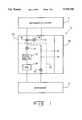
- FIG. 1is a block diagram of one embodiment of the invention
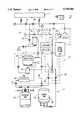
- FIG. 2schematically illustrates a refrigerant recharging system of FIG. 1 according to the present invention.
- FIG. 1is a simplified block diagram of the invention.
- a refrigeration servicing system 10is connectable with a refrigeration system 11 and with means for receiving and dispensing refrigerant 12, which can comprise a pressurized source of refrigerant for recharging the refrigeration system 11.
- the refrigeration servicing system 10comprises means 10a for transferring refrigerant between the refrigeration system 11 and refrigerant receiving and dispensing means 12, and means 10b for controlling the transferring means 10a.
- means 10acan evacuate the refrigeration system 11, recovering its refrigerant in means 12, and can recharge the refrigeration system with an accurate mass of refrigerant.
- control means 10breceives signals with temperature and flow dependent pressure data from sensors connected with transfer means 10a.
- Control means 10buses the temperature and pressure data to determine the volume and mass flow rates of refrigerant in transfer means 10a and can totalize the mass flow rate with time to determine a mass of refrigerant that has flowed in the system.
- Control means 10bincludes inputs that permit a systems user to select modes of operation, such as a refrigeration system "purge” mode (in which refrigerant is transferred from the refrigeration system 11 to receiving-dispensing means 12) and a refrigeration system “charge” mode (in which the refrigeration system is refilled with refrigerant).
- the inputsalso permit the operation to select and predetermine masses of refrigerant to be transferred by the transfer means 10a.
- other user inputsmay be provided for operation of servicing refrigeration systems.
- an orificecan be used to measure volume flow rates of fluids.
- Volume and mass flow ratescan be determined from the area of the orifice, the pressure drop across the orifice, the specific weight or density of the fluid, and flow coefficients that can be determined empirically. Basically, higher pressure differentials across the orifice and higher fluid densities indicate higher mass flow rates.
- the transfer means 10acan be provided with an orifice 16 for the generation of the flow-dependent pressure data
- control means 10bcan be provided with pressure sensors 18, 20 connected to the transfer means 10a upstream and downstream of orifice 16, and with a temperature sensor 14 connected to the transfer means 10a upstream of orifice 16.
- Control means 10bcan include a data processor 13 connected with the pressure and temperature sensors 14, 16, 18 and including memory with two look-up tables 13a, 13b, one table 13a of refrigerant density as a function of temperature and a second table 13b of refrigerant saturation pressure as a function temperature.
- Data on the pressure drop in transfer means 10a between the pressurized source of refrigerant 12 and the orifice 16can also be included in control means 10b.
- control means 10bcan function as means for determining the volume and mass rates of flow of refrigerant and means for determining the density of refrigerant at the site of the orifice 16, whether entirely or partially in liquid state.
- the transfer means 10acan further comprise means 10c for pressurizing and maintaining pressure in the pressurized source of refrigerant 12, and the control means 10b can control the pressure maintaining means 10c by operating the transfer means 10a to remove refrigerant from pressurized source 12, to direct the refrigerant through a heating means 22 in transfer means 10a, and to return heated refrigerant vapor directly to the pressurized source to pressurize and maintain the pressure of pressurized source 12.
- refrigeration systems 11can be recharged while the system 10a is operating to maintain the source pressure, and the control means 10b an operate the pressure maintaining means 10c whenever the source pressure drops to unacceptable levels and operate transfer means 10a to recharge a refrigeration system when the source pressure is at an acceptable pressure.
- FIG. 2illustrates one preferred refrigeration servicing means 10 of the invention for connecting refrigeration system 11, such as an automotive air conditioning system, with a source of refrigerant 12, including a data processor 13 for controlling said transferring means 10a and for accurately and reliably recharging said refrigeration system 11 with selectable mass of refrigerant.
- the preferred system 10includes a tank 12a providing a virgin source of refrigerant, a processor 13, a temperature sensor 14, an orifice 16, and a pair of pressure sensors 18, 20 located on the input and output side of the orifice 16, respectively.
- the preferred system 10can further include a filter/dryer (or other heating means) 22, compressor 24, condenser 26, and recovery tank 12b.
- a plurality of conduitsconnect the various components as shown in FIG.
- controllable valves, switches, and gaugescan control and monitor the flow of refrigerant through the conduits between the various components.
- the electrical connections between processor 13 and the various controllable valveshave been shown in dashed lines and, in some cases, omitted from FIG. 2 to simplify FIG. 2
- system 10provides with means for determining accurately the mass flow rate of refrigerant to the refrigeration system 11.
- the means for determining the mass flow rateincludes orifice 16, pressure sensors 18, 20, and temperature sensor 14.
- the signal outputs of pressure sensors 18, 20 and temperature sensor 14are electrically connected to a processor 13.
- the pressure sensors 18, 20provide flow-dependent refrigerant pressure data related to the change of refrigerant pressure across the orifice 16, and the temperature sensor 14 provides refrigerant temperature data.
- the processor 13takes the inputs from the pressure sensors 18, 20 and the temperature sensor 14 and uses the inputs to calculate the mass flow rate.
- the processor 13uses the temperature input to enter a look-up table 13a of data on refrigerant density as a function of temperature to determine the density of refrigerant being used to recharge the refrigeration system 11.
- the processor 13also uses the inputs from pressure sensors 18, 20 to determine the volume flow rate of refrigerant through the orifice 16, and calculates the mass flow rate from the density and volume flow rate.
- the processor 13samples the pressure and temperature inputs and calculates the mass flow rate several times a second (e.g., every 0.2 seconds) and totalizes the calculated mass flow. When the totalized mass flow equals a preselected recharging mass of refrigerant, which can be selected by the system user, the processor 13 stops recharging the refrigeration system 11.
- One advantage of calculating the mass flow rate as in the present inventionis the elimination of the scales, weight-determining devices, and constant flow valves that have been typically used in prior art systems to determine the amount of refrigerant being charged into a refrigeration system. While prior art weight determining devices and constant flow valves have been generally adequate, the present invention offers a less expensive system with increased accuracy and improved reliability over prior art systems. For example, with the present invention, an operator can preselect a desired mass of refrigerant for recharging a particular refrigeration system 11.
- the processor 13can be connected to control the operation of one or more electrically operated valves (e.g., valve 60), either directly or through a main control board 40, and can control the operation of those valves so as to stop recharging when the totalized mass of refrigerant, as calculated by the controller 13, equals the desired mass preselected by an operator. Since the calculated mass is unaffected by extraneous loadings, such as frost, wind and permanently connected lines attached to the source of refrigerant 12, the present system 10 can achieve increased accuracy. Also, the pressure sensors, 18, 20, orifice 16 and temperature sensor 14 are less affected by contamination in the refrigerant, whereas such contamination can pose a reliability and maintenance problem for prior art constant flow valves.
- a preferred orifice 16is a 0.028 inch diameter sapphire produced by Bird Precision, Waltham, Mass.
- the 0.028 inch orifice sizeis small enough to give a sufficiently large pressure drop (minimum 20 psi) when charging a normal (1.5 to 4.0 pound) automotive A/C system, and it is large enough so it is not easily restricted by debris in the refrigerant flow stream that is not filtered out by a 15 micron filter 21 upstream of the orifice 16.
- a sapphire orificeis desirable because of the high degree of precision that can be achieved in the orifice size. The close tolerances available with the sapphire (plus or minus 0.0002 inch) are directly related to the accuracy achieved in predicting the flow rate.
- the pressure sensors 18, 20are preferably 0-5 volt analog transducers of the type manufactured by Integrated Sensor Solutions, Inc., as Model XKP-9056219, and are disposed on the input side and output side, respectively, of the orifice 16.
- the transducersare preferably scaled to produce one psi per one digital count in an analog-to-digital converter.
- the temperature sensor 14is preferably a 10 k ohm, plus or minus 2 percent at 25° C., thermistor similar to that manufactured by Thermodisc, Inc. as Model No. P1H103.
- the temperature sensor 14is disposed between the source of refrigerant 12 and the orifice 16 and is positioned directly in the refrigerant flow stream. Placing the temperature sensor 14 in the refrigerant flow stream creates a very low thermal mass in the temperature sensing element to give fast response to the flowing refrigerant.
- the sensor 14is preferably located near the source of refrigerant 12, for example, upstream of the outlets of the virgin and recycled refrigerant charge valves 60, 42. Such placement avoids errors in refrigerant temperature that may be due to heat added to the refrigerant by the coils of the solenoid valves 60, 42 and provides faster response time at the start of a charge measurement.
- Processor 13includes a data processor, preferably a microprocessor, such as a Motorola Model No. MC68HC705P6.
- the processor 13also includes a data memory with a look-up table 13a of refrigerant density as a function of temperature.
- the look-up tablecan be maintained on a floppy disk, a hard disk or a CD-ROM or the like.
- the processor 13can also be electrically connected with AC drivers on a main control board 40 that are operated by the processor 13 for opening and closing valves and actuating the compressor 24.
- a servicemancan select the system recovery mode of operation and the main control board 40 can operate valves 44, 46, 50 and 52 and compressor 24 to transfer refrigerant from the automotive refrigeration system 11 to recovery tank 12b.
- the recovery tank 12bis pressurized before recharging the refrigeration system 11 through means 10c for maintaining pressure in the source of refrigerant 12.
- the transfer means 10ais provided with a refrigerant flow path including the compressor 24, the source of refrigerant 12 (i.e., the recovery tank 12b) and a heating means, such as filter/dryer 22.
- the recycle charge valve 42is opened, the high side and low side valves 44, 46 leading to the refrigeration system 11 are closed, the filter/dryer inlet valve 50 is opened, and the liquid valve 52 at the output of the condenser 24 is closed.
- Refrigerantis sent from the liquid side of the recovery tank 12b through the orifice 16, where the refrigerant mass flowing through the orifice 16 to the filter/dryer 22 is determined as previously described.
- liquid refrigerantis vaporized by the addition of heat. For example, when the processor 13 calculates that 12 ounces have been charged into the filter/dryer 22, the recycle charge valve 42 and filter/dryer inlet valve 50 are closed and the compressor 24 is turned ON.
- the compressor 24draws off vapor from the refrigerant in the filter/dryer 22 and pumps the vapor through a compressor oil separator 54. Since the liquid valve 52 is closed, the vapor from the filter/dryer 22 bypasses the condenser 26 and is routed through a bypass conduit 56 directly into the vapor side of the recovery tank 12b.
- the filter/dryer 22thus comprises heating means for the withdrawn refrigerant. Liquid refrigerant from recovery tank 12b is thus superheated and returned directly to the recovery tank 12b to pressurize the recovery tank 12b.
- the processor 13samples the pressure in the recovery tank 12b by momentarily opening the recycle charge valve 42 to expose pressure sensor 18 to recovery tank pressure.
- the processor 13opens the recycle charge valve 42 and the high side and low side valves 44, 46, allowing liquid refrigerant to flow into the refrigeration system 11.
- the filter/dryer inlet valve 50remains closed while the recovery tank pressure is acceptably high enough for recharging the refrigeration system 11.
- the processor 13continuously calculates and totalizes the mass of refrigerant passing through the orifice 16 and compares the totalized mass against a desired mass of refrigerant preselected by the operator. When the totalized mass equals the desired mass, the controller 13 closes the recycle charge valve 42 and the high side and low side valves 44, 46.
- this means for pressurizing and maintaining pressure in the source of refrigerant 12b of the present inventionadvantageously increases the vapor pressure in the recovery tank 12b without the use of heating blankets, and maintains a satisfactory vapor pressure in the recovery tank 12b during the recharging process. That is, experience teaches that it takes about 5 minutes to completely draw down the refrigerant vapor from the 12 ounces of refrigerant initially loaded into the filter/dryer 22, while it only takes about 1 to 2 minutes to superheat the refrigerant vapor to reach the 10 psi vapor pressure increase in the recovery tank 12b.
- the system 10is ready to recharge the refrigerant system 11 from the recovery tank 12b before all of the refrigerant vapor has been removed from the filter/dryer 22.
- the present systemadvantageously allows for continued superheating of the refrigerant vapor simultaneously with the recharging of the refrigeration system 11, thereby maintaining an acceptable vapor pressure in the recovery tank 12b.
- the pressure in the recovery tankwill increase very slowly, requiring possibly 30 minutes to reach a pressure sufficient for charging, and decreases as liquid refrigerant is used to recharge the refrigeration system because the superheating process must be discontinued in order to recharge the refrigeration system.
- the preferred system 10also allows for recharging a refrigeration system 11 from a tank 12a of virgin refrigerant.
- a conventional heating blanket 60raises the vapor pressure in the tank 12a.
- Virgin charge valve 62is periodically opened momentarily so the virgin tank pressure can be sensed by pressure sensor 18.
- the virgin charge valve 62 and the high side and low side valves 44, 46are opened and the refrigerant is allowed to recharge the refrigeration system 11.
- the recycle charge valve 42remains closed.
- the processor 13determines that the desired mass of refrigerant has passed through the orifice 16, it closes the virgin charge valve 60 and the high side and low side valves 44, 46.
- the processor 13also uses the pressure and temperature data to determine the presence of gaseous refrigerant at the orifice 16 and adjusts the refrigerant density data accordingly.
- This featurepermits the accommodation of restrictions in the refrigerant flow path with little loss of accuracy in the determination of the mass of refrigerant used in recharging.
- Processor 13can be provided with a second look-up table 13b of refrigerant saturation pressure as a function of refrigerant temperature and of conduit pressure drop as a function of refrigerant flow rate.
- the processor 13compares the orifice input pressure from pressure sensor 18 with the sum of the refrigerant saturation pressure and pressure drop in the conduit connecting the source 12 and the orifice 16 to determine the presence of gaseous refrigerant at the orifice input. Gaseous refrigerant will be present at the orifice input if the sum of the saturation pressure, as determined from look-up table 13b of refrigerant saturation pressure vs. temperature (measured by temperature sensor 14), plus the pressure drop in the conduit connecting the source of refrigerant 12 (tanks 12a, 12b) and the orifice 16 is less than the tank pressure as measured by the pressure sensor 18.
- the look-up tables 13bcan also be stored in data storage means, such as a CD-ROM, connected to the microprocessor. If the processor 13 determines that gaseous refrigerant is present at the input of orifice 16, the processor 13 reduces the density value used to calculate the mass flow rate to reflect the decreased density. The data for density reduction can also be stored in look-up table 13b.
- the inventionthus provides means for servicing automotive refrigeration systems which is less expensive, more reliable and more accurate in recharging the refrigeration system than the prior art systems.
Landscapes
- Engineering & Computer Science (AREA)
- Physics & Mathematics (AREA)
- Thermal Sciences (AREA)
- Mechanical Engineering (AREA)
- General Engineering & Computer Science (AREA)
- Air-Conditioning For Vehicles (AREA)
Abstract
Description
The present invention relates generally to servicing refrigeration systems, including vehicular air conditioning systems, and more particularly to methods and apparatus for recharging such refrigeration systems with refrigerant and to methods and apparatus for determining refrigerant density and refrigerant mass used in recharging such refrigeration systems.
It is estimated that more than 85 million passenger cars currently on the road in the United States are equipped with air conditioning systems. In addition, trucks, vans, motor homes and other vehicles are air conditioned, and many trucks and trailers have refrigeration systems for refrigerated food stuffs and other goods. This large number of vehicles represents a wide variety of mechanical refrigeration systems. Those familiar with mechanical refrigeration systems recognize that such vehicular refrigeration systems require servicing periodically. Typically, servicing requires the addition of refrigerant to replace refrigerant which has escaped from the system. Before adding refrigerant, it is often necessary to evacuate the refrigerant remaining in the system, which in the past meant bleeding the refrigerant off into the atmosphere.
In recent years, however, concern has risen regarding the practice of releasing fluorocarbon-based refrigerants into the atmosphere. It is believed that releasing fluorocarbon-based refrigerants into the atmosphere adversely impacts the environment and human health.
To avoid releasing fluorocarbons into the atmosphere, refrigeration servicing apparatus have been constructed that are designed to recover the refrigerant from refrigeration systems. Such servicing apparatus often include means for processing the recovered refrigerant so that the refrigerant can be recycled.
Typically, these systems include a compressor, a condenser, a recovery tank, and various filters and valves to control the flow of refrigerant. Such servicing apparatus frequently present restrictions in the flow path of the refrigerant that may lead to flowing liquid refrigerant to change to a gaseous state. Prior art systems have also included constant flow valves for direct mass-flow measurement or load cells or other weight-determining devices for determining the mass of refrigerant being recharged into the refrigeration system. A major disadvantage of prior art systems is that the constant flow valves include moving parts whose reliable operation can be adversely effected by contaminants in the refrigerant. Another disadvantage is that load cells or other weight-determining devices are typically subject to inaccuracies due to extraneous loadings introduced by permanently connected piping, frost and wind.
Prior to recharging a refrigeration system, it is necessary to ensure adequate refrigerant vapor pressure in the recovery tank. In conventional recharging systems, the vapor pressure is increased by a heating blanket or by recirculating the refrigerant through the entire system to increase the pressure of the refrigerant tank. In the latter case, the refrigerant is taken from the recovery tank and pumped through the system to an evaporator, which adds heat to the refrigerant, then to the compressor and condenser and back to the recovery tank. The refrigerant is continually recirculated until the pressure in the recovery tank is adequate.
A major drawback of such conventional systems is that the recirculating process must be stopped while recharging the refrigeration system. In addition, the time required to raise the tank pressure during recirculation is extended by flowing through the condenser, and the amount of superheat is also reduced because heat is removed from the refrigerant as it passes through the condenser.
The invention provides novel systems for servicing and recharging refrigeration systems that are less expensive and more reliable than older, prior art systems. The invention provides a method and apparatus for determining refrigerant density and mass flow rate, and for pressurizing a refrigerant source while the refrigeration system is being recharged therefrom, and eliminates the need for a constant flow valve and its moving parts and eliminates load cells or weight-determining devices as well as visual indicators as used in prior art systems.
In the present invention, the mass of a flowing refrigerant is automatically continually determined by reliable static means in a controlled recharging process. Flow-dependent pressure and temperature data are taken from the recharging system and are connected to a data processor which uses the pressure and temperature data to determine the mass of the flowing refrigerant that has been used. The processor determines the density of the flowing refrigerant by using a look-up table of refrigerant density as a function of temperature. Using the pressure, temperature and density data, the processor can calculate the volume flow rate, and the mass flow rate of refrigerant being used in the recharging process. The processor totalizes the refrigerant mass flowing during recharging until a preselected total mass has been used. At that point, the processor can shut down the recharging system or alert an operator to take appropriate action. The invention also includes the use of pressure and temperature data to determine if refrigerant in gaseous phase is being used in recharging and permits adjustment of the density accordingly.
In preferred apparatus of the invention, a fixed orifice is placed in a conduit connecting a source of refrigerant and the refrigeration system to be recharged. Pressure sensors are located on either side of the orifice. A temperature sensor is located between the refrigerant source and the orifice to determine the temperature of refrigerant being used in recharging the refrigeration system. The processor uses the signals from the pressure sensors to determine the pressure drop across the orifice and uses the temperature data to determine the refrigerant density from a first look-up table. The saturation pressure of the recharging refrigerant is determined from a second look-up table to determine if refrigerant is reaching the orifice in a gaseous phase. If the sum of the saturation pressure plus the pressure drop in the refrigerant flow path between the refrigerant source and orifice is less than the refrigerant source pressure, the system will adjust the calculation of refrigerant mass by reducing the density data to reflect presence of gaseous refrigerant.
The present invention thus provides an apparatus for controlling the mass of refrigerant used in recharging refrigeration systems including an orifice, means for determining the mass flow rate of refrigerant through the orifice, and for controlling therefrom the refrigerant mass used in recharging the refrigeration system. The invention further comprises means for determining the volume flow rate of refrigerant and means for determining the density of refrigerant. The means for determining the density includes a temperature sensor disposed between a source of refrigerant and the orifice and a look-up table of density as a function of temperature.
The present invention further includes a method of determining the mass of refrigerant used in recharging a refrigeration system. The method comprises the steps of providing a source of refrigerant, providing conduit means for directing the refrigerant from the source to the refrigeration system, determining the temperature of refrigerant in the conduit means, determining a flow-dependent pressure in said conduit and determining the mass of refrigerant that has flowed through said conduit with said temperature and pressure. The method further includes the steps of providing an orifice in the conduit means and determining a pressure difference across the orifice, and using a data processor for receiving pressure difference data and refrigerant temperature data for determining mass flow rate. The mass flow determining step includes the step of looking up the density of the refrigerant in a look-up table of refrigerant density as a function of temperature and calculating the mass flow of refrigerant through the orifice based on the pressure difference and density.
The invention further provides a method for determining refrigerant density in a conduit of a refrigeration servicing system by using a temperature sensor to generate a temperate signal indicative of the temperature of a refrigerant in the conduit and using the temperature signal to determine the density of the refrigerant, and includes the further steps of using a pressure sensor to generate a pressure signal indicative a pressure of the refrigerant at one site in the conduit, and also using the temperature signal and pressure signal to determine if refrigerant in gaseous phase is present at said one site, and if refrigerant in the gaseous phase is present, adjusting refrigerant density calculations in the servicing system accordingly.
The present invention also provides a novel system for maintaining pressure in a refrigerant recovery tank while simultaneously recharging a refrigerant system from the tank. The invention provides an improved method and apparatus for heating refrigerant during the recharging process and pumping the heated refrigerant to the vapor side of the recovery tank, thus, maintaining pressure in the recovery tank while recharging the refrigeration system.
In the invention, apparatus for heating refrigerant in a refrigeration recharging system can comprise a compressor, a condenser, and a recovery tank having a liquid connection and a vapor connection, and a refrigerant flow path including the compressor and the recovery tank for heating the refrigerant, one aspect of the invention being a bypass conduit for bypassing the condenser so refrigerant can be withdrawn by the compressor from the recovery tank, heated and returned to the vapor side of the recovery tank.
In a further aspect of this invention, a heating means is charged with a mass of liquid refrigerant. The massed liquid refrigerant is heated, and the compressor draws superheated refrigerant vapor from the heating means and pumps the vapor to the vapor side of the recovery tank through a conduit bypassing the condenser. The heating means can comprise a filter/dryer with a filter/dryer inlet valve including a closed position for preventing refrigerant from entering the filter/dryer during recharging.
The invention provides a method for pressurizing a recovery tank which includes the steps of: providing a mass of liquid refrigerant, heating the mass of liquid refrigerant and providing heated refrigerant vapor, and drawing heated vapor from the liquid refrigerant and pumping the heated vapor directly to the vapor side of the recovery tank. The method further includes the step of recharging the refrigeration system, while the drawing step and pumping step occur during the recharging step. The providing step can include the step of charging a predetermined mass of liquid refrigerant into a heating means and the drawing step can include the step of using a compressor to draw the vapor from the heating means.
In addition to the various aspects of the invention summarized above, additional objects, features, and advantages of the invention will become apparent to those skilled in the art upon consideration of the following more detailed description and drawing of a preferred embodiment exemplifying the best mode of carrying out the invention as presently perceived.
FIG. 1 is a block diagram of one embodiment of the invention;
FIG. 2 schematically illustrates a refrigerant recharging system of FIG. 1 according to the present invention.
FIG. 1 is a simplified block diagram of the invention. As shown in FIG. 1, arefrigeration servicing system 10 is connectable with arefrigeration system 11 and with means for receiving and dispensingrefrigerant 12, which can comprise a pressurized source of refrigerant for recharging therefrigeration system 11. Therefrigeration servicing system 10 comprises means 10a for transferring refrigerant between therefrigeration system 11 and refrigerant receiving and dispensing means 12, and means 10b for controlling thetransferring means 10a. With the control means 10b, means 10a can evacuate therefrigeration system 11, recovering its refrigerant inmeans 12, and can recharge the refrigeration system with an accurate mass of refrigerant. In the invention, control means 10b receives signals with temperature and flow dependent pressure data from sensors connected with transfer means 10a. Control means 10b uses the temperature and pressure data to determine the volume and mass flow rates of refrigerant in transfer means 10a and can totalize the mass flow rate with time to determine a mass of refrigerant that has flowed in the system.
Control means 10b includes inputs that permit a systems user to select modes of operation, such as a refrigeration system "purge" mode (in which refrigerant is transferred from therefrigeration system 11 to receiving-dispensing means 12) and a refrigeration system "charge" mode (in which the refrigeration system is refilled with refrigerant). The inputs also permit the operation to select and predetermine masses of refrigerant to be transferred by the transfer means 10a. As those skilled in the art will recognize, other user inputs may be provided for operation of servicing refrigeration systems.
As well known in fluid mechanics, an orifice can be used to measure volume flow rates of fluids. (See, for example, Fluid Mechanics, Second Edition, by R.C. Binder, Prentice Hall, Inc., 1949, pp. 129-130). Volume and mass flow rates can be determined from the area of the orifice, the pressure drop across the orifice, the specific weight or density of the fluid, and flow coefficients that can be determined empirically. Basically, higher pressure differentials across the orifice and higher fluid densities indicate higher mass flow rates.
In preferred systems of the invention, the transfer means 10a can be provided with anorifice 16 for the generation of the flow-dependent pressure data, and control means 10b can be provided withpressure sensors orifice 16, and with atemperature sensor 14 connected to the transfer means 10a upstream oforifice 16. Control means 10b can include adata processor 13 connected with the pressure andtemperature sensors refrigerant 12 and theorifice 16 can also be included in control means 10b. As explained in greater detail below, control means 10b can function as means for determining the volume and mass rates of flow of refrigerant and means for determining the density of refrigerant at the site of theorifice 16, whether entirely or partially in liquid state.
As also indicated in FIG. 1 and described in greater detail below, the transfer means 10a can further comprise means 10c for pressurizing and maintaining pressure in the pressurized source ofrefrigerant 12, and the control means 10b can control thepressure maintaining means 10c by operating the transfer means 10a to remove refrigerant frompressurized source 12, to direct the refrigerant through a heating means 22 in transfer means 10a, and to return heated refrigerant vapor directly to the pressurized source to pressurize and maintain the pressure ofpressurized source 12. With systems of the invention,refrigeration systems 11 can be recharged while thesystem 10a is operating to maintain the source pressure, and the control means 10b an operate thepressure maintaining means 10c whenever the source pressure drops to unacceptable levels and operate transfer means 10a to recharge a refrigeration system when the source pressure is at an acceptable pressure.
FIG. 2 illustrates one preferred refrigeration servicing means 10 of the invention for connectingrefrigeration system 11, such as an automotive air conditioning system, with a source ofrefrigerant 12, including adata processor 13 for controlling said transferring means 10a and for accurately and reliably recharging saidrefrigeration system 11 with selectable mass of refrigerant. Thepreferred system 10 includes atank 12a providing a virgin source of refrigerant, aprocessor 13, atemperature sensor 14, anorifice 16, and a pair ofpressure sensors orifice 16, respectively. Thepreferred system 10 can further include a filter/dryer (or other heating means) 22,compressor 24,condenser 26, andrecovery tank 12b. A plurality of conduits connect the various components as shown in FIG. 2, and a plurality of controllable valves, switches, and gauges can control and monitor the flow of refrigerant through the conduits between the various components. The electrical connections betweenprocessor 13 and the various controllable valves have been shown in dashed lines and, in some cases, omitted from FIG. 2 to simplify FIG. 2
In the invention,system 10 provides with means for determining accurately the mass flow rate of refrigerant to therefrigeration system 11. The means for determining the mass flow rate includesorifice 16,pressure sensors temperature sensor 14. The signal outputs ofpressure sensors temperature sensor 14 are electrically connected to aprocessor 13. Thepressure sensors orifice 16, and thetemperature sensor 14 provides refrigerant temperature data.
Theprocessor 13 takes the inputs from thepressure sensors temperature sensor 14 and uses the inputs to calculate the mass flow rate. In particular, theprocessor 13 uses the temperature input to enter a look-up table 13a of data on refrigerant density as a function of temperature to determine the density of refrigerant being used to recharge therefrigeration system 11. Theprocessor 13 also uses the inputs frompressure sensors orifice 16, and calculates the mass flow rate from the density and volume flow rate. Theprocessor 13 samples the pressure and temperature inputs and calculates the mass flow rate several times a second (e.g., every 0.2 seconds) and totalizes the calculated mass flow. When the totalized mass flow equals a preselected recharging mass of refrigerant, which can be selected by the system user, theprocessor 13 stops recharging therefrigeration system 11.
One advantage of calculating the mass flow rate as in the present invention is the elimination of the scales, weight-determining devices, and constant flow valves that have been typically used in prior art systems to determine the amount of refrigerant being charged into a refrigeration system. While prior art weight determining devices and constant flow valves have been generally adequate, the present invention offers a less expensive system with increased accuracy and improved reliability over prior art systems. For example, with the present invention, an operator can preselect a desired mass of refrigerant for recharging aparticular refrigeration system 11. Theprocessor 13 can be connected to control the operation of one or more electrically operated valves (e.g., valve 60), either directly or through amain control board 40, and can control the operation of those valves so as to stop recharging when the totalized mass of refrigerant, as calculated by thecontroller 13, equals the desired mass preselected by an operator. Since the calculated mass is unaffected by extraneous loadings, such as frost, wind and permanently connected lines attached to the source ofrefrigerant 12, thepresent system 10 can achieve increased accuracy. Also, the pressure sensors, 18, 20,orifice 16 andtemperature sensor 14 are less affected by contamination in the refrigerant, whereas such contamination can pose a reliability and maintenance problem for prior art constant flow valves.
Apreferred orifice 16 is a 0.028 inch diameter sapphire produced by Bird Precision, Waltham, Mass. The 0.028 inch orifice size is small enough to give a sufficiently large pressure drop (minimum 20 psi) when charging a normal (1.5 to 4.0 pound) automotive A/C system, and it is large enough so it is not easily restricted by debris in the refrigerant flow stream that is not filtered out by a 15micron filter 21 upstream of theorifice 16. A sapphire orifice is desirable because of the high degree of precision that can be achieved in the orifice size. The close tolerances available with the sapphire (plus or minus 0.0002 inch) are directly related to the accuracy achieved in predicting the flow rate.
Thepressure sensors orifice 16. The transducers are preferably scaled to produce one psi per one digital count in an analog-to-digital converter.
Thetemperature sensor 14 is preferably a 10 k ohm, plus or minus 2 percent at 25° C., thermistor similar to that manufactured by Thermodisc, Inc. as Model No. P1H103. Thetemperature sensor 14 is disposed between the source ofrefrigerant 12 and theorifice 16 and is positioned directly in the refrigerant flow stream. Placing thetemperature sensor 14 in the refrigerant flow stream creates a very low thermal mass in the temperature sensing element to give fast response to the flowing refrigerant. Thesensor 14 is preferably located near the source ofrefrigerant 12, for example, upstream of the outlets of the virgin and recycledrefrigerant charge valves solenoid valves
In servicing an automotive refrigeration system, a serviceman can select the system recovery mode of operation and themain control board 40 can operatevalves compressor 24 to transfer refrigerant from theautomotive refrigeration system 11 torecovery tank 12b.
In operation, therecovery tank 12b is pressurized before recharging therefrigeration system 11 throughmeans 10c for maintaining pressure in the source ofrefrigerant 12. To accomplish pressurization, the transfer means 10a is provided with a refrigerant flow path including thecompressor 24, the source of refrigerant 12 (i.e., therecovery tank 12b) and a heating means, such as filter/dryer 22.
In operation of thesystem 10 by the control means 10b, therecycle charge valve 42 is opened, the high side andlow side valves refrigeration system 11 are closed, the filter/dryer inlet valve 50 is opened, and theliquid valve 52 at the output of thecondenser 24 is closed. Refrigerant is sent from the liquid side of therecovery tank 12b through theorifice 16, where the refrigerant mass flowing through theorifice 16 to the filter/dryer 22 is determined as previously described. In the filter/dryer 22 liquid refrigerant is vaporized by the addition of heat. For example, when theprocessor 13 calculates that 12 ounces have been charged into the filter/dryer 22, therecycle charge valve 42 and filter/dryer inlet valve 50 are closed and thecompressor 24 is turned ON. Thecompressor 24 draws off vapor from the refrigerant in the filter/dryer 22 and pumps the vapor through acompressor oil separator 54. Since theliquid valve 52 is closed, the vapor from the filter/dryer 22 bypasses thecondenser 26 and is routed through abypass conduit 56 directly into the vapor side of therecovery tank 12b. The filter/dryer 22 thus comprises heating means for the withdrawn refrigerant. Liquid refrigerant fromrecovery tank 12b is thus superheated and returned directly to therecovery tank 12b to pressurize therecovery tank 12b.
At periodic intervals during the recharging process, theprocessor 13 samples the pressure in therecovery tank 12b by momentarily opening therecycle charge valve 42 to exposepressure sensor 18 to recovery tank pressure. When the recovery tank vapor pressure has been increased 10 psi above the first sampling pressure, theprocessor 13 opens therecycle charge valve 42 and the high side andlow side valves refrigeration system 11. The filter/dryer inlet valve 50 remains closed while the recovery tank pressure is acceptably high enough for recharging therefrigeration system 11. Theprocessor 13 continuously calculates and totalizes the mass of refrigerant passing through theorifice 16 and compares the totalized mass against a desired mass of refrigerant preselected by the operator. When the totalized mass equals the desired mass, thecontroller 13 closes therecycle charge valve 42 and the high side andlow side valves
Unlike conventional systems, this means for pressurizing and maintaining pressure in the source of refrigerant 12b of the present invention advantageously increases the vapor pressure in therecovery tank 12b without the use of heating blankets, and maintains a satisfactory vapor pressure in therecovery tank 12b during the recharging process. That is, experience teaches that it takes about 5 minutes to completely draw down the refrigerant vapor from the 12 ounces of refrigerant initially loaded into the filter/dryer 22, while it only takes about 1 to 2 minutes to superheat the refrigerant vapor to reach the 10 psi vapor pressure increase in therecovery tank 12b. Thus, thesystem 10 is ready to recharge therefrigerant system 11 from therecovery tank 12b before all of the refrigerant vapor has been removed from the filter/dryer 22. The present system advantageously allows for continued superheating of the refrigerant vapor simultaneously with the recharging of therefrigeration system 11, thereby maintaining an acceptable vapor pressure in therecovery tank 12b. In conventional systems, on the other hand, the pressure in the recovery tank will increase very slowly, requiring possibly 30 minutes to reach a pressure sufficient for charging, and decreases as liquid refrigerant is used to recharge the refrigeration system because the superheating process must be discontinued in order to recharge the refrigeration system.
Thepreferred system 10 also allows for recharging arefrigeration system 11 from atank 12a of virgin refrigerant. When refrigerant is taken from thevirgin tank 12a of the preferred system, aconventional heating blanket 60 raises the vapor pressure in thetank 12a.Virgin charge valve 62 is periodically opened momentarily so the virgin tank pressure can be sensed bypressure sensor 18. When the desired tank pressure is achieved, thevirgin charge valve 62 and the high side andlow side valves refrigeration system 11. Of course, when avirgin tank 12a is used, therecycle charge valve 42 remains closed. When theprocessor 13 determines that the desired mass of refrigerant has passed through theorifice 16, it closes thevirgin charge valve 60 and the high side andlow side valves
According to another feature of the present invention, theprocessor 13 also uses the pressure and temperature data to determine the presence of gaseous refrigerant at theorifice 16 and adjusts the refrigerant density data accordingly. This feature permits the accommodation of restrictions in the refrigerant flow path with little loss of accuracy in the determination of the mass of refrigerant used in recharging.Processor 13 can be provided with a second look-up table 13b of refrigerant saturation pressure as a function of refrigerant temperature and of conduit pressure drop as a function of refrigerant flow rate. Theprocessor 13 compares the orifice input pressure frompressure sensor 18 with the sum of the refrigerant saturation pressure and pressure drop in the conduit connecting thesource 12 and theorifice 16 to determine the presence of gaseous refrigerant at the orifice input. Gaseous refrigerant will be present at the orifice input if the sum of the saturation pressure, as determined from look-up table 13b of refrigerant saturation pressure vs. temperature (measured by temperature sensor 14), plus the pressure drop in the conduit connecting the source of refrigerant 12 (tanks orifice 16 is less than the tank pressure as measured by thepressure sensor 18. That is, if the pressure in the conduit upstream of theorifice 16 drops below the saturation pressure at the temperature of the refrigerant, the refrigerant begins changing into a gas. The look-up tables 13b can also be stored in data storage means, such as a CD-ROM, connected to the microprocessor. If theprocessor 13 determines that gaseous refrigerant is present at the input oforifice 16, theprocessor 13 reduces the density value used to calculate the mass flow rate to reflect the decreased density. The data for density reduction can also be stored in look-up table 13b.
The invention thus provides means for servicing automotive refrigeration systems which is less expensive, more reliable and more accurate in recharging the refrigeration system than the prior art systems.
Although the invention has been described in detail with reference to a certain preferred embodiment, variations and modifications exist within the scope and spirit of the invention as described and defined in the following claims.
Claims (44)
1. Apparatus for servicing an automotive refrigeration system, compromising,
a pressurized source of refrigerant;
means for transferring refrigerant between said automotive refrigeration system and said pressurized source of refrigerant,
means for controlling said refrigerant transferring means to refill the automotive refrigeration system with a selected mass of refrigerant,
said transferring means including a fixed orifice through which refrigerant is directed in refilling the automotive refrigeration system,
said control means including pressure sensor means for sensing refrigerant pressures upstream and downstream of said fixed orifice, temperature sensor means for sensing the temperature of the refrigerant upstream of the fixed orifice, means for determining from said refrigerant temperature and from the refrigerant pressures upstream and downstream of the fixed orifice the mass flow rate of the refrigerant being transferred in refilling, and for controlling the refrigerant flow to refill the automotive refrigerant system with a preselected mass of refrigerant.
2. The apparatus of claim 1 wherein said controlling means comprises a microprocessor connected with said pressure sensors and said temperature sensor and a look up table of refrigerant density as a function of temperature, said microprocessor calculating refrigerant mass flow rate from said volume flow rate and said refrigerant density and totalizing refrigerant mass until the preselected total mass has passed said orifice, and providing an output to close one or more valves controlling refrigerant flow.
3. The apparatus of claim 2 wherein said microprocessor further includes a second look up table of refrigerant saturation pressure as a function of temperature and determines from said saturation pressure, refrigerant source pressure, and a transfer means pressure drop if refrigerant in gaseous phase is passing through said orifice, said microprocessor adjusting the refrigerant density data used in calculating mass flow rate to compensate for the gaseous refrigerant being used in refilling the automotive refrigeration system.
4. The apparatus of claim 2 wherein said transferring means further comprises means for maintaining pressure in said refrigerant tank during refilling, and wherein said controller controls said pressure maintaining means by directing refrigerant from said recovery tank through said orifice and into a refrigerant heating means until a preselected mass of refrigerant has been delivered to the heating means for vaporization, and directing vaporized refrigerant from said heating means to said refrigerant tank.
5. The apparatus of claim 4 wherein said controller samples the upstream orifice pressure and controls said transferring means to refill said automotive refrigeration system when said upstream pressure is at an acceptable level.
6. The apparatus of claim 1 wherein said means for determining from said refrigerant temperature and from the refrigerant pressures upstream and downstream of said fixed orifice the mass flow rate of the refrigerant being transferred in refilling and controlling the refrigerant flow to refill the automotive refrigerant system with preselected mass of refrigerant comprises:
means for determining the density of refrigerant;
means for determining the volume flow rate of refrigerant; and
a processor for determining the mass flow rate of refrigerant based on the volume flow rate and density of the refrigerant.
7. The apparatus of claim 6 wherein the means for sensing refrigerant pressures upstream and downstream of said fixed orifice comprises first and second pressure sensors, the first pressure sensor being disposed on the input side of the fixed orifice and the second pressure sensor being disposed on the output side of the fixed orifice.
8. The apparatus of claim 7 wherein the processor receives pressure signals from the first and second pressure sensors and calculates the volume flow rate of refrigerant with the pressure signals.
9. The apparatus of claim 7 wherein the means for determining the density of refrigerant includes a temperature sensor disposed between the source of refrigerant and the orifice.
10. The apparatus of claim 7 wherein the processor receives a temperature signal from the temperature sensor means and determines the density of the refrigerant from a look-up table of density as a function of temperature.
11. Apparatus for metering the flow of refrigerant in recharging refrigeration systems, the apparatus comprising:
means for determining a flow related refrigerant pressure;
means for determining a refrigerant temperature;
means for determining the mass flow rate of refrigerant from said refrigerant pressure and temperature;
means for inputting a desired mass of refrigerant to be used in recharging; and
a processor for controlling the flow of refrigerant based on the mass flow rate and the desired mass of refrigerant.
12. The apparatus of claim 11 wherein the means for determining a flow related pressure comprises an orifice disposed in the flow of refrigerant and a pair of pressure sensors, with one of the pair of pressure sensors being located on each side of the orifice, said pressure sensors determining the pressures of the refrigerant on both sides of the orifice.
13. The apparatus of claim 12 wherein the means for determining refrigerant temperature comprises a temperature sensor for determining the temperature of the refrigerant upstream of the orifice and the processor receives a signal from each pressure sensor and the temperature sensor and calculates the mass flow of refrigerant using the received signals.
14. The apparatus of claim 11 wherein said means for determining refrigerant temperature comprises:
a temperature sensor for providing a refrigerant temperature signal; and
said processor determines the refrigerant density based on the refrigerant temperature signal.
15. The apparatus of claim 14 wherein the processor includes a look-up table of refrigerant density as a function of temperature.
16. In a system for recharging a refrigeration system, the improvement, comprising:
means for determining the mass of recharging refrigerant based on temperature and pressure inputs taken from the refrigerant recharging system, and
a processor for receiving said temperature and pressure inputs and for using said inputs to determine refrigerant density and whether refrigerant in the gaseous phase is present in the mass of recharging refrigerant and, if it is determined that refrigerant in the gaseous phase is present, adjusting refrigerant density in the calculation of refrigerant mass.
17. The refrigerant recharging system of claim 16 further comprising:
a temperature sensor that provides a signal of refrigerant temperature to said processor;
said processor providing a mass flow calculation system using the determined refrigerant density to meter refrigerant in the refrigerant recharging system.
18. The refrigerant recharging system of claim 16 wherein said means for determining the mass of recharging refrigerant includes an orifice through which the recharging refrigerant flows; and said pressure inputs are taken upstream and downstream of said orifice, said temperature is measured upstream of said orifice;
the density of said refrigerant is determined by said processor from said temperature;
and said upstream temperature and pressure are used to determine if refrigerant in gaseous phase is present at said orifice, said processor adjusting the calculation of refrigerant mass by reducing the refrigerant density value.
19. A refrigeration recharging system comprising:
a refrigerant conduit, connectable to a source of refrigerant;
an orifice disposed in the conduit;
a pressure sensor connected with said conduit for providing an orifice input pressure signal;
a temperature sensor connected with said conduit for providing a refrigerant temperature signal from upstream of said orifice; and
means for receiving the orifice input pressure signal and the refrigerant temperature signal and determining whether refrigerant in the gaseous phase is being used in recharging.
20. A method of recharging an automotive refrigeration system, the method comprising the steps of:
providing a source of refrigerant;
transferring refrigerant between said source of refrigerant and said automotive refrigeration system.
directing the transferred refrigerant from the source of refrigerant through a conduit means to the automotive refrigeration system to be recharged;
determining the temperature of refrigerant in the conduit means;
determining a flow dependent pressure in said conduit means;
determining the mass of refrigerant that is flowing through said conduit means with said determined temperature and pressure; and
controlling the transfer of refrigerant in response to the determined mass of refrigerant.
21. The method of claim 20 wherein the step of determining a flow dependent pressure comprises providing an orifice in the conduit means and determining a pressure difference across the orifice.
22. The method of claim 21 further including using a data processor for receiving pressure difference data and a refrigerant temperature data and for determining therefrom said mass of refrigerant.
23. The method of claim 22 wherein the step of determining said mass of refrigerant further includes the step of looking up the density of the refrigerant in a look-up table of refrigerant density as a function of temperature and calculating the mass of refrigerant that is flowing through the orifice using the pressure difference data and the refrigerant density.
24. The method of claim 20 wherein the step of determining the mass of refrigerant comprises using said temperature to determine refrigerant density and adjusting said refrigerant density for the presence of refrigerant in gaseous phase by using said temperature and pressure.
25. The method of claim 24 further comprising the step of using the flow dependent pressure and temperature for determining the presence of refrigerant in gaseous phase that is flowing through said conduit and adjusting the refrigerant density used in determining the refrigerant mass if refrigerant in gaseous phase is present in said conduit.
26. The apparatus of claim 11 further comprising:
a source of recharging refrigerant; and
a conduit for carrying recharging refrigerant to a refrigeration system to be recharged,
wherein said means for determining the temperature of the recharging refrigerant comprises temperature sensor for the refrigerant in said conduit; and
said processor includes means for determining the density of the recharging refrigerant based on the temperature.
27. The apparatus of claim 26 wherein the density determining means includes a processor-accessed look-up table of refrigerant density as a function of temperature.
28. The apparatus of claim 26 further comprising an orifice disposed in the conduit between the source of recharging refrigerant and the system to be recharged and said means for determining a flow related refrigerant pressure comprises at least one pressure sensor for the pressure difference across the orifice.
29. The apparatus of claim 28 wherein said processor receives a temperature signal from the temperature sensor and a pressure signal indicative of the pressure difference from said pressure sensor, said processor determining the mass flow of refrigerant flowing through the orifice based on the temperature and pressure signals.
30. The apparatus of claim 1 wherein said pressurized source of refrigerant comprises:
a recovery tank having a vapor connection and a liquid connection from which refrigerant is withdrawn for recharging;
and wherein said means for transferring refrigerant between said automotive refrigeration system and said pressurized source of refrigerant comprises:
a compressor;
heating means for adding heat to refrigerant withdrawn from said tank; and
conduit means for connecting said liquid connection, said compressor, said heating means and said vapor connection of the recovery tank,
said control means operating said compressor to deliver liquid refrigerant from the liquid connection to said heating means and to return heated refrigerant to said vapor connection of said tank.
31. The apparatus of claim 30 wherein the recharging system includes a condenser and the conduit means includes a bypass conduit for bypassing the condenser.
32. In the refrigerant recharging system of claim 17 wherein the recharging system includes a compressor, condenser, and a recovery tank having a liquid connection and a vapor connection, the further improvement comprising:
a refrigerant flow path including said compressor and recovery tank for heating refrigerant, and
a bypass conduit for bypassing the condenser so refrigerant can be withdrawn by the compressor from said liquid connection of the recovery tank, heated and returned to the vapor connection of the recovery tank.
33. The improvement of claim 32 further including means for heating refrigerant in said refrigerant flow path, said heating means being charged with a mass of liquid refrigerant, the compressor being coupled to the heating means to draw vapor from the heating means for pressurizing the recovery tank.
34. The improvement of claim 33 further comprising refrigerant control means for allowing simultaneous recharging of a refrigeration system and heating refrigerant in the recovery tank.
35. The method of claim 20 further comprising the steps of:
providing a heating means,
charging said heating means with a predetermined mass of liquid refrigerant from said source of refrigerant;
heating said predetermined mass of liquid refrigerant and providing thereby refrigerant vapor;
providing said source of liquid refrigerant with a vapor connection; and
drawing refrigerant vapor from the heating means and passing refrigerant vapor to said vapor connection of said source of refrigerant.
36. The method of claim 20 further comprising the steps of:
providing a mass of liquid refrigerant;
heating said mass of liquid refrigerant and providing refrigerant vapor; and
drawing vapor from the liquid refrigerant and pumping the vapor to a vapor side of said source of refrigerant.
37. The method of claim 36 wherein the drawing step and pumping step occur during the transferring step.
38. The method of claim 36 wherein the providing step includes the step of charging a predetermined mass of liquid refrigerant into a heating means for heating the liquid refrigerant and the drawing step includes using a compressor to draw vapor from the heating means.
39. The method of claim 38 wherein the recovery tank includes a liquid side and a vapor side and the pumping step includes the step of pumping the vapor directly to the vapor side of the recovery tank while liquid refrigerant is being drawn from the liquid side of the recovery tank to recharge the refrigeration system.
40. The refrigerant recharging system of claim 19 further comprising:
a compressor;
a recovery tank, as said source of refrigerant, having a vapor connection and a liquid connection, said liquid connection being connected with said refrigerant conduit; and
means for superheating refrigerant vapor and directing superheated refrigerant vapor to the vapor connection while recharging a refrigeration system from the liquid connection of the recovery tank through said refrigerant conduit.
41. The system of claim 40 wherein the means for superheating refrigerant vapor includes a filter/dryer charged with a mass of liquid refrigerant, the compressor being coupled to the filter/dryer to draw vapor from the filter/dryer.
42. The refrigeration recharging system of claim 19 further comprising:
a tank of recharging refrigerant having a liquid connection and a vapor connection; and
means for maintaining vapor pressure in the tank while the recharging system recharges a refrigeration system through said refrigerant conduit by removing liquid refrigerant from the liquid connection of the tank, by adding heat to said removed refrigerant to provide superheated refrigerant vapor, and by returning said superheated refrigerant to said tank.
43. The system of claim 42 wherein the maintaining means includes means for superheating refrigerant vapor comprising a conduit coupled to the vapor side of the tank.
44. The system of claim 43 wherein the superheating means includes a filter/dryer charged with a mass of liquid refrigerant and a compressor for drawing vapor from the liquid refrigerant and directing the vapor to the conduit.
Priority Applications (1)
| Application Number | Priority Date | Filing Date | Title |
|---|---|---|---|
| US08/675,043US5758506A (en) | 1996-07-03 | 1996-07-03 | Method and apparatus for servicing automotive refrigeration systems |
Applications Claiming Priority (1)
| Application Number | Priority Date | Filing Date | Title |
|---|---|---|---|
| US08/675,043US5758506A (en) | 1996-07-03 | 1996-07-03 | Method and apparatus for servicing automotive refrigeration systems |
Publications (1)
| Publication Number | Publication Date |
|---|---|
| US5758506Atrue US5758506A (en) | 1998-06-02 |
Family
ID=24708841
Family Applications (1)
| Application Number | Title | Priority Date | Filing Date |
|---|---|---|---|
| US08/675,043Expired - Fee RelatedUS5758506A (en) | 1996-07-03 | 1996-07-03 | Method and apparatus for servicing automotive refrigeration systems |
Country Status (1)
| Country | Link |
|---|---|
| US (1) | US5758506A (en) |
Cited By (48)
| Publication number | Priority date | Publication date | Assignee | Title |
|---|---|---|---|---|
| US6029472A (en)* | 1996-09-27 | 2000-02-29 | Galbreath, Sr.; Charles E. | Refrigerant recycle and reclaim system |
| US6079217A (en)* | 1998-08-03 | 2000-06-27 | York International Corporation | Method and system for the determination of a ternary refrigerant mixture composition |
| US6141977A (en)* | 1996-12-16 | 2000-11-07 | Hudson Technologies, Inc. | Apparatus and method for recovering volatile refrigerants |
| US6185945B1 (en) | 1998-07-22 | 2001-02-13 | Snap-On Tools Company | Isolated refrigerant identifier |
| US6202433B1 (en) | 1999-03-19 | 2001-03-20 | Spx Corporation | Protection system for refrigerant identification detector |
| US6240733B1 (en)* | 1998-11-23 | 2001-06-05 | Delphi Technologies, Inc. | Method for the diagnosis of an air conditioning system |
| US6263684B1 (en) | 2000-02-22 | 2001-07-24 | George W. Plante | Refrigerant flow meter |
| WO2001059374A1 (en)* | 2000-02-09 | 2001-08-16 | Honeywell International Inc. | Refrigerant charging device |
| US6354100B1 (en) | 2001-01-16 | 2002-03-12 | Schrader Bridgeport International, Inc. | Air conditioner charge valve |
| US20030188545A1 (en)* | 2002-03-21 | 2003-10-09 | Ritchie Engineering Company, Inc. | Compressor head, internal discriminator, external discriminator, manifold design for refrigerant recovery apparatus and vacuum sensor |
| WO2003089853A1 (en)* | 2002-04-16 | 2003-10-30 | Frostpack Limited | Compressed gas monitoring system |
| FR2851328A1 (en)* | 2003-02-14 | 2004-08-20 | Pascal Maurice Bequet | Refrigerant load control device for air conditioning system, has three temperature sensors and one pressure sensor connected functionally to microcontroller unit in analyzing and calculating unit which pilots display unit |
| US6832491B2 (en)* | 2002-03-21 | 2004-12-21 | Ritchie Engineering Company, Inc. | Compressor head, internal discriminator, external discriminator, manifold design for refrigerant recovery apparatus |
| US20060010898A1 (en)* | 2004-07-16 | 2006-01-19 | Snap-On Incorporated | System for refrigerant charging with constant volume tank |
| US20060101834A1 (en)* | 2004-11-18 | 2006-05-18 | Snap-On Incorporated | Refrigerant charging system and method using vapor-phase refrigerant |
| US20060228242A1 (en)* | 2005-04-11 | 2006-10-12 | Ritchie Engineering Company, Inc. | Vacuum pump |
| US20060228246A1 (en)* | 2005-04-11 | 2006-10-12 | Ritchie Engineering Company, Inc. | Vacuum pump |
| US20060236705A1 (en)* | 2005-04-25 | 2006-10-26 | Snap-On Incorporated | Refrigerant charging system and method using cartridges and scale |
| US20070113575A1 (en)* | 2003-12-05 | 2007-05-24 | Ritchie Engineering Company, Inc. | Valve manifold assembly |
| US7293419B1 (en)* | 2004-05-27 | 2007-11-13 | Snap-On Incorporated | Refrigerant transfer system and method |
| US20080000240A1 (en)* | 2006-06-30 | 2008-01-03 | Travis Bakker | Method and apparatus for refrigerant recovery unit filter dryer maintenance |
| US20080276634A1 (en)* | 2007-05-10 | 2008-11-13 | Spx Corporation | Refrigerant recovery apparatus with variable vacuum time and method |
| US20090100849A1 (en)* | 2006-06-26 | 2009-04-23 | Daikin Industries, Ltd. | Air conditioner |
| US20090151377A1 (en)* | 2006-03-23 | 2009-06-18 | Tsuyoshi Yonemori | Refrigeration System and Refrigeration System Analyzer |
| US20090158756A1 (en)* | 2007-12-20 | 2009-06-25 | Spx Corporation | Method for accurately recharging a/c systems |
| US20090188263A1 (en)* | 2008-01-29 | 2009-07-30 | Murray Gary P | Apparatus to Clear Oil from the Hoses and Front End of a Recovery Recharge Machine |
| US20090241560A1 (en)* | 2008-03-31 | 2009-10-01 | Spx Corporation (A Delaware Corporation) | Method for recovery and recharge of blend refrigerants with blend sent for reclamation |
| US20100050668A1 (en)* | 2006-11-30 | 2010-03-04 | Carrier Corporation | Refrigerant Charge Storage |
| US20110146304A1 (en)* | 2004-11-30 | 2011-06-23 | Spx Corporation | Internal clearing function for a refrigerant recovery/recharge machine |
| US20120011863A1 (en)* | 2010-07-14 | 2012-01-19 | Honeywell International Inc. | Methods of servicing mobile air conditioning systems |
| US20120079839A1 (en)* | 2010-10-05 | 2012-04-05 | Spx Corporation | Vacuum pump oil changing method and apparatus |
| US20130047636A1 (en)* | 2011-08-24 | 2013-02-28 | Louis Cording | Method and system for filling a refrigerant into a refrigeration system |
| CN103237671A (en)* | 2010-09-14 | 2013-08-07 | 多美达韦希科国际有限公司 | Service unit for vehicle air-conditioning systems and method for removing the coolant or a coolant/compressor oil mixture from a vehicle air-conditioning system |
| WO2013114383A1 (en)* | 2011-12-14 | 2013-08-08 | Robert Bosch Engineering And Business Solutions Limited | A method of operating a refrigerant recovery and recharge device |
| WO2013169963A1 (en)* | 2012-05-11 | 2013-11-14 | Bosch Automotive Service Solutions Llc | Methods and systems for reducing refrigerant loss during air purge |
| US20140216073A1 (en)* | 2013-02-04 | 2014-08-07 | Agramkow Fluid Systems A/S | Method Of Charging A Coolant |
| AT515239A3 (en)* | 2015-04-20 | 2015-12-15 | Avl Ditest Gmbh | Method and device for determining an actual filling compound in an air conditioning system |
| WO2016019940A1 (en)* | 2014-08-08 | 2016-02-11 | Dürr Somac GmbH | Device for filling vehicle air conditioning systems with coolant r744 |
| CN105466087A (en)* | 2015-12-25 | 2016-04-06 | 珠海格力电器股份有限公司 | Heat recovery multi-online external machine system and valve failure detection method |
| US20160138843A1 (en)* | 2014-11-13 | 2016-05-19 | Bosch Automotive Service Solutions Llc | System and Method for Charging Refrigerant into a Refrigeration Circuit |
| US20160187042A1 (en)* | 2014-12-30 | 2016-06-30 | Bosch Automotive Service Solutions Inc. | System and method for recovering refrigerant |
| US20170030617A1 (en)* | 2015-07-28 | 2017-02-02 | Brain Bee Holding S.P.A. | Method for transferring coolant from a loading unit to an air conditioning system |
| US9759465B2 (en) | 2011-12-27 | 2017-09-12 | Carrier Corporation | Air conditioner self-charging and charge monitoring system |
| US20180094841A1 (en)* | 2016-10-05 | 2018-04-05 | Johnson Controls Technology Company | Parallel capillary expansion tube systems and methods |
| US20180120008A1 (en)* | 2016-10-27 | 2018-05-03 | Bosch Automotive Service Solutions Inc. | Apparatus and Method for Determining the Quantity of Dissolved Refrigerant in Oil Recovered from an Air Conditioning System |
| US11092367B2 (en) | 2017-09-27 | 2021-08-17 | Bosch Automotive Service Solutions Inc. | Refrigerant recovery and recycling system with serviceable debris filter |
| US20210301189A1 (en)* | 2019-03-08 | 2021-09-30 | The Chemours Company Fc, Llc | Process and methods for reclaiming flammable and non-flammable hydrofluoro-olefin containing refrigerants |
| CN114046619A (en)* | 2021-11-17 | 2022-02-15 | 清华大学 | Heat pump and refrigeration system vacuumizing and refrigerant charging and discharging system and control method thereof |
Citations (69)
| Publication number | Priority date | Publication date | Assignee | Title |
|---|---|---|---|---|
| US1938205A (en)* | 1929-11-01 | 1933-12-05 | Lucien I Yeomans | Refrigeration system |
| US2044096A (en)* | 1935-05-27 | 1936-06-16 | Matthew F Moran | Dry cleaning system |
| US2321964A (en)* | 1941-08-08 | 1943-06-15 | York Ice Machinery Corp | Purge system for refrigerative circuits |
| US2341430A (en)* | 1941-07-19 | 1944-02-08 | Westinghouse Electric & Mfg Co | Method of reconditioning refrigerating apparatus and reclaiming refrigerant |
| US2341429A (en)* | 1940-07-19 | 1944-02-08 | Westinghouse Electric & Mfg Co | Method of reconditioning refrigerating apparatus and reclaiming refrigerant |
| US2511967A (en)* | 1950-06-20 | Gas and liquto separator | ||
| US2577598A (en)* | 1950-04-01 | 1951-12-04 | Worthington Pump & Mach Corp | Water remover and air concentrator for refrigerating systems |
| US2590061A (en)* | 1949-09-01 | 1952-03-18 | Gen Electric | Industrial liquid cooler automatic liquid level control |
| US2865442A (en)* | 1953-07-29 | 1958-12-23 | Havilland Engine Co Ltd | Fuel supply systems for liquid fuel engines |
| US2917110A (en)* | 1956-10-11 | 1959-12-15 | Gen Motors Corp | Vapor lock preventing device |
| US2972235A (en)* | 1958-12-05 | 1961-02-21 | Exxon Research Engineering Co | Purification of refrigerant |
| US2986894A (en)* | 1958-02-03 | 1961-06-06 | Carrier Corp | Purge recovery arrangement for refrigeration systems |
| US3070977A (en)* | 1961-03-31 | 1963-01-01 | Heat X Inc | Refrigeration system, including oil separator and muffler unit and oil return arrangement |
| US3131548A (en)* | 1962-11-01 | 1964-05-05 | Worthington Corp | Refrigeration purge control |
| US3177680A (en)* | 1962-11-30 | 1965-04-13 | Freightlines Corp | Refrigeration system with oil return means |
| US3232070A (en)* | 1963-05-17 | 1966-02-01 | Spormac Sales Company | Refrigerant saver |
| US3357197A (en)* | 1966-06-03 | 1967-12-12 | John L Massengale | Process and apparatus for purging refrigeration system |
| US3478529A (en)* | 1968-04-17 | 1969-11-18 | Phillips Petroleum Co | Purification of refrigerant |
| US3729949A (en)* | 1971-12-06 | 1973-05-01 | J Talbot | Refrigerant charging control unit |
| US3811291A (en)* | 1971-12-28 | 1974-05-21 | Svenska Rotor Maskiner Ab | Method of operating a refrigeration plant and a plant for performing the method |
| US3872687A (en)* | 1969-07-11 | 1975-03-25 | Refrigeration Research | Vehicle air conditioning system |
| US3874192A (en)* | 1973-03-08 | 1975-04-01 | Maekawa Seisakusho Kk | Oil cooling apparatus for refrigerators |
| US3915857A (en)* | 1974-01-18 | 1975-10-28 | Winston O Olson | Method and apparatus for conserving water |
| US3978685A (en)* | 1975-07-14 | 1976-09-07 | Thermo King Corporation | Means for trapping oil lost during startup of refrigerant compressors |
| US4110998A (en)* | 1977-05-27 | 1978-09-05 | Charles Owen | Apparatus for detecting and removing contaminants from a refrigeration system |
| US4180986A (en)* | 1978-04-25 | 1980-01-01 | Dunham-Bush, Inc. | Refrigeration system on/off cycle |
| US4236381A (en)* | 1979-02-23 | 1980-12-02 | Intertherm Inc. | Suction-liquid heat exchanger having accumulator and receiver |
| GB2056646A (en)* | 1979-07-26 | 1981-03-18 | Schultze E Kg | Liquid/gas separating apparatus for refrigeration installations |
| US4261178A (en)* | 1979-01-19 | 1981-04-14 | Robinair Manufacturing Corporation | Environmental protection refrigeration disposal and charging system |
| US4285206A (en)* | 1979-02-05 | 1981-08-25 | Draf Tool Co., Inc. | Automatic refrigerant recovery, purification and recharge apparatus |
| US4304102A (en)* | 1980-04-28 | 1981-12-08 | Carrier Corporation | Refrigeration purging system |
| US4363222A (en)* | 1979-01-19 | 1982-12-14 | Robinair Manufacturing Corporation | Environmental protection refrigerant disposal and charging system |
| US4364236A (en)* | 1980-12-01 | 1982-12-21 | Robinair Manufacturing Corporation | Refrigerant recovery and recharging system |
| EP0071062A1 (en)* | 1981-07-23 | 1983-02-09 | Giuseppe Tuberoso | Multiple function thermodynamic fluid reservoir |
| US4441330A (en)* | 1980-12-01 | 1984-04-10 | Robinair Manufacturing Corporation | Refrigerant recovery and recharging system |
| US4456149A (en)* | 1981-10-21 | 1984-06-26 | Venturon Corporation, Inc. | Water dispensing system |
| US4470265A (en)* | 1982-05-10 | 1984-09-11 | Gerlach Industries | Refrigerant charging system |
| US4476688A (en)* | 1983-02-18 | 1984-10-16 | Goddard Lawrence A | Refrigerant recovery and purification system |
| US4480446A (en)* | 1981-07-08 | 1984-11-06 | Margulefsky Allen L | Method and apparatus for rehabilitating refrigerant |
| US4513578A (en)* | 1983-05-23 | 1985-04-30 | Murray Corporation | Weight-monitored air-conditioner charging station |
| US4523897A (en)* | 1982-06-11 | 1985-06-18 | Robinair Division | Two stage vacuum pump |
| US4539817A (en)* | 1983-12-23 | 1985-09-10 | Staggs Michael J | Refrigerant recovery and charging device |
| US4554792A (en)* | 1981-07-08 | 1985-11-26 | Margulefsky Allen L | Method and apparatus for rehabilitating refrigerant |
| US4614231A (en)* | 1982-08-09 | 1986-09-30 | Murray Corporation | Evaporators |
| US4624112A (en)* | 1985-08-26 | 1986-11-25 | Murray Corporation | Automotive air conditioner charging station with over-ride controls |
| US4646527A (en)* | 1985-10-22 | 1987-03-03 | Taylor Shelton E | Refrigerant recovery and purification system |
| USRE32451E (en)* | 1983-05-23 | 1987-07-07 | Murray Corporation | Weight-monitored air-conditioner charging station |
| US4688388A (en)* | 1985-04-29 | 1987-08-25 | Kent-Moore Corporation | Service station for refrigeration equipment |
| US4755957A (en)* | 1986-03-27 | 1988-07-05 | K-White Tools, Incorporated | Automotive air-conditioning servicing system and method |
| US4768347A (en)* | 1987-11-04 | 1988-09-06 | Kent-Moore Corporation | Refrigerant recovery and purification system |
| US4776733A (en)* | 1986-08-15 | 1988-10-11 | Sandvik Ab | Cutting tool |
| US4798055A (en)* | 1987-10-28 | 1989-01-17 | Kent-Moore Corporation | Refrigeration system analyzer |
| EP0313079A2 (en)* | 1987-10-23 | 1989-04-26 | Hitachi, Ltd. | Falling film evaporator |
| US4862699A (en)* | 1987-09-29 | 1989-09-05 | Said Lounis | Method and apparatus for recovering, purifying and separating refrigerant from its lubricant |
| US4878356A (en)* | 1988-10-28 | 1989-11-07 | Kent-Moore Corporation | Storage tank scale for a refrigerant recovery system |
| US4909042A (en)* | 1987-12-10 | 1990-03-20 | Murray Corporation | Air conditioner charging station with same refrigerant reclaiming and liquid refrigerant return and method |
| US4916915A (en)* | 1988-08-12 | 1990-04-17 | Murray Corporation | Method of and system for determining refrigerant/lubricant ratio within enclosed flow apparatus |
| USRE33212E (en)* | 1985-04-29 | 1990-05-08 | Kent-Moore Corporation | Service station for refrigeration equipment |
| US4934390A (en)* | 1988-12-15 | 1990-06-19 | Thermo King Corporation | Methods and apparatus for cleaning refrigeration equipment |
| US4938031A (en)* | 1987-11-04 | 1990-07-03 | Kent-Moore Corporation | Refrigerant recovery and purification system |
| US4939905A (en)* | 1989-12-04 | 1990-07-10 | Kent-Moore Corporation | Recovery system for differing refrigerants |
| US4942741A (en)* | 1989-07-03 | 1990-07-24 | Hancock John P | Refrigerant recovery device |
| US5005375A (en)* | 1989-04-06 | 1991-04-09 | Kent-Moore Corporation | Refrigeration equipment service apparatus with quick-disconnect couplings |
| US5036675A (en)* | 1988-06-23 | 1991-08-06 | Anderson Marine Enterprises, Inc. | Refrigeration cleaning and flushing system |
| US5040382A (en)* | 1990-06-19 | 1991-08-20 | 501 Wynn's Climate Systems, Inc. | Refrigerant recovery system |
| US5042271A (en)* | 1990-01-22 | 1991-08-27 | Kent-Moore Corporation | Refrigerant handling system with compressor oil separation |
| US5161385A (en)* | 1991-03-18 | 1992-11-10 | Schumacher Ernest W | Refrigerant recovery and recycle system with flexible storage bag |
| US5335512A (en)* | 1991-03-28 | 1994-08-09 | K-Whit Tools, Inc. | Refrigerant recovery device |
| US5353603A (en)* | 1994-02-23 | 1994-10-11 | Wynn's Climate Systems, Inc. | Dual refrigerant recovery apparatus with single vacuum pump and control means |
- 1996
- 1996-07-03USUS08/675,043patent/US5758506A/ennot_activeExpired - Fee Related
Patent Citations (70)
| Publication number | Priority date | Publication date | Assignee | Title |
|---|---|---|---|---|
| US2511967A (en)* | 1950-06-20 | Gas and liquto separator | ||
| US1938205A (en)* | 1929-11-01 | 1933-12-05 | Lucien I Yeomans | Refrigeration system |
| US2044096A (en)* | 1935-05-27 | 1936-06-16 | Matthew F Moran | Dry cleaning system |
| US2341429A (en)* | 1940-07-19 | 1944-02-08 | Westinghouse Electric & Mfg Co | Method of reconditioning refrigerating apparatus and reclaiming refrigerant |
| US2341430A (en)* | 1941-07-19 | 1944-02-08 | Westinghouse Electric & Mfg Co | Method of reconditioning refrigerating apparatus and reclaiming refrigerant |
| US2321964A (en)* | 1941-08-08 | 1943-06-15 | York Ice Machinery Corp | Purge system for refrigerative circuits |
| US2590061A (en)* | 1949-09-01 | 1952-03-18 | Gen Electric | Industrial liquid cooler automatic liquid level control |
| US2577598A (en)* | 1950-04-01 | 1951-12-04 | Worthington Pump & Mach Corp | Water remover and air concentrator for refrigerating systems |
| US2865442A (en)* | 1953-07-29 | 1958-12-23 | Havilland Engine Co Ltd | Fuel supply systems for liquid fuel engines |
| US2917110A (en)* | 1956-10-11 | 1959-12-15 | Gen Motors Corp | Vapor lock preventing device |
| US2986894A (en)* | 1958-02-03 | 1961-06-06 | Carrier Corp | Purge recovery arrangement for refrigeration systems |
| US2972235A (en)* | 1958-12-05 | 1961-02-21 | Exxon Research Engineering Co | Purification of refrigerant |
| US3070977A (en)* | 1961-03-31 | 1963-01-01 | Heat X Inc | Refrigeration system, including oil separator and muffler unit and oil return arrangement |
| US3131548A (en)* | 1962-11-01 | 1964-05-05 | Worthington Corp | Refrigeration purge control |
| US3177680A (en)* | 1962-11-30 | 1965-04-13 | Freightlines Corp | Refrigeration system with oil return means |
| US3232070A (en)* | 1963-05-17 | 1966-02-01 | Spormac Sales Company | Refrigerant saver |
| US3357197A (en)* | 1966-06-03 | 1967-12-12 | John L Massengale | Process and apparatus for purging refrigeration system |
| US3478529A (en)* | 1968-04-17 | 1969-11-18 | Phillips Petroleum Co | Purification of refrigerant |
| US3872687A (en)* | 1969-07-11 | 1975-03-25 | Refrigeration Research | Vehicle air conditioning system |
| US3729949A (en)* | 1971-12-06 | 1973-05-01 | J Talbot | Refrigerant charging control unit |
| US3811291A (en)* | 1971-12-28 | 1974-05-21 | Svenska Rotor Maskiner Ab | Method of operating a refrigeration plant and a plant for performing the method |
| US3874192A (en)* | 1973-03-08 | 1975-04-01 | Maekawa Seisakusho Kk | Oil cooling apparatus for refrigerators |
| US3915857A (en)* | 1974-01-18 | 1975-10-28 | Winston O Olson | Method and apparatus for conserving water |
| US3978685A (en)* | 1975-07-14 | 1976-09-07 | Thermo King Corporation | Means for trapping oil lost during startup of refrigerant compressors |
| US4110998A (en)* | 1977-05-27 | 1978-09-05 | Charles Owen | Apparatus for detecting and removing contaminants from a refrigeration system |
| US4180986A (en)* | 1978-04-25 | 1980-01-01 | Dunham-Bush, Inc. | Refrigeration system on/off cycle |
| US4261178A (en)* | 1979-01-19 | 1981-04-14 | Robinair Manufacturing Corporation | Environmental protection refrigeration disposal and charging system |
| US4363222A (en)* | 1979-01-19 | 1982-12-14 | Robinair Manufacturing Corporation | Environmental protection refrigerant disposal and charging system |
| US4285206A (en)* | 1979-02-05 | 1981-08-25 | Draf Tool Co., Inc. | Automatic refrigerant recovery, purification and recharge apparatus |
| US4236381A (en)* | 1979-02-23 | 1980-12-02 | Intertherm Inc. | Suction-liquid heat exchanger having accumulator and receiver |
| GB2056646A (en)* | 1979-07-26 | 1981-03-18 | Schultze E Kg | Liquid/gas separating apparatus for refrigeration installations |
| US4304102A (en)* | 1980-04-28 | 1981-12-08 | Carrier Corporation | Refrigeration purging system |
| US4364236A (en)* | 1980-12-01 | 1982-12-21 | Robinair Manufacturing Corporation | Refrigerant recovery and recharging system |
| US4441330A (en)* | 1980-12-01 | 1984-04-10 | Robinair Manufacturing Corporation | Refrigerant recovery and recharging system |
| US4480446A (en)* | 1981-07-08 | 1984-11-06 | Margulefsky Allen L | Method and apparatus for rehabilitating refrigerant |
| US4554792A (en)* | 1981-07-08 | 1985-11-26 | Margulefsky Allen L | Method and apparatus for rehabilitating refrigerant |
| EP0071062A1 (en)* | 1981-07-23 | 1983-02-09 | Giuseppe Tuberoso | Multiple function thermodynamic fluid reservoir |
| US4456149A (en)* | 1981-10-21 | 1984-06-26 | Venturon Corporation, Inc. | Water dispensing system |
| US4470265A (en)* | 1982-05-10 | 1984-09-11 | Gerlach Industries | Refrigerant charging system |
| US4523897A (en)* | 1982-06-11 | 1985-06-18 | Robinair Division | Two stage vacuum pump |
| US4614231A (en)* | 1982-08-09 | 1986-09-30 | Murray Corporation | Evaporators |
| US4476688A (en)* | 1983-02-18 | 1984-10-16 | Goddard Lawrence A | Refrigerant recovery and purification system |
| US4513578A (en)* | 1983-05-23 | 1985-04-30 | Murray Corporation | Weight-monitored air-conditioner charging station |
| USRE32451E (en)* | 1983-05-23 | 1987-07-07 | Murray Corporation | Weight-monitored air-conditioner charging station |
| US4539817A (en)* | 1983-12-23 | 1985-09-10 | Staggs Michael J | Refrigerant recovery and charging device |
| US4688388A (en)* | 1985-04-29 | 1987-08-25 | Kent-Moore Corporation | Service station for refrigeration equipment |
| USRE33212E (en)* | 1985-04-29 | 1990-05-08 | Kent-Moore Corporation | Service station for refrigeration equipment |
| US4624112A (en)* | 1985-08-26 | 1986-11-25 | Murray Corporation | Automotive air conditioner charging station with over-ride controls |
| US4646527A (en)* | 1985-10-22 | 1987-03-03 | Taylor Shelton E | Refrigerant recovery and purification system |
| US4755957A (en)* | 1986-03-27 | 1988-07-05 | K-White Tools, Incorporated | Automotive air-conditioning servicing system and method |
| US4776733A (en)* | 1986-08-15 | 1988-10-11 | Sandvik Ab | Cutting tool |
| US4862699A (en)* | 1987-09-29 | 1989-09-05 | Said Lounis | Method and apparatus for recovering, purifying and separating refrigerant from its lubricant |
| EP0313079A2 (en)* | 1987-10-23 | 1989-04-26 | Hitachi, Ltd. | Falling film evaporator |
| US4798055A (en)* | 1987-10-28 | 1989-01-17 | Kent-Moore Corporation | Refrigeration system analyzer |
| US4768347A (en)* | 1987-11-04 | 1988-09-06 | Kent-Moore Corporation | Refrigerant recovery and purification system |
| US4938031A (en)* | 1987-11-04 | 1990-07-03 | Kent-Moore Corporation | Refrigerant recovery and purification system |
| US4809520A (en)* | 1987-11-04 | 1989-03-07 | Kent-Moore Corporation | Refrigerant recovery and purification system |
| US4909042A (en)* | 1987-12-10 | 1990-03-20 | Murray Corporation | Air conditioner charging station with same refrigerant reclaiming and liquid refrigerant return and method |
| US5036675A (en)* | 1988-06-23 | 1991-08-06 | Anderson Marine Enterprises, Inc. | Refrigeration cleaning and flushing system |
| US4916915A (en)* | 1988-08-12 | 1990-04-17 | Murray Corporation | Method of and system for determining refrigerant/lubricant ratio within enclosed flow apparatus |
| US4878356A (en)* | 1988-10-28 | 1989-11-07 | Kent-Moore Corporation | Storage tank scale for a refrigerant recovery system |
| US4934390A (en)* | 1988-12-15 | 1990-06-19 | Thermo King Corporation | Methods and apparatus for cleaning refrigeration equipment |
| US5005375A (en)* | 1989-04-06 | 1991-04-09 | Kent-Moore Corporation | Refrigeration equipment service apparatus with quick-disconnect couplings |
| US4942741A (en)* | 1989-07-03 | 1990-07-24 | Hancock John P | Refrigerant recovery device |
| US4939905A (en)* | 1989-12-04 | 1990-07-10 | Kent-Moore Corporation | Recovery system for differing refrigerants |
| US5042271A (en)* | 1990-01-22 | 1991-08-27 | Kent-Moore Corporation | Refrigerant handling system with compressor oil separation |
| US5040382A (en)* | 1990-06-19 | 1991-08-20 | 501 Wynn's Climate Systems, Inc. | Refrigerant recovery system |
| US5161385A (en)* | 1991-03-18 | 1992-11-10 | Schumacher Ernest W | Refrigerant recovery and recycle system with flexible storage bag |
| US5335512A (en)* | 1991-03-28 | 1994-08-09 | K-Whit Tools, Inc. | Refrigerant recovery device |
| US5353603A (en)* | 1994-02-23 | 1994-10-11 | Wynn's Climate Systems, Inc. | Dual refrigerant recovery apparatus with single vacuum pump and control means |
Cited By (96)
| Publication number | Priority date | Publication date | Assignee | Title |
|---|---|---|---|---|
| US6029472A (en)* | 1996-09-27 | 2000-02-29 | Galbreath, Sr.; Charles E. | Refrigerant recycle and reclaim system |
| US6141977A (en)* | 1996-12-16 | 2000-11-07 | Hudson Technologies, Inc. | Apparatus and method for recovering volatile refrigerants |
| US6185945B1 (en) | 1998-07-22 | 2001-02-13 | Snap-On Tools Company | Isolated refrigerant identifier |
| US6079217A (en)* | 1998-08-03 | 2000-06-27 | York International Corporation | Method and system for the determination of a ternary refrigerant mixture composition |
| US6240733B1 (en)* | 1998-11-23 | 2001-06-05 | Delphi Technologies, Inc. | Method for the diagnosis of an air conditioning system |
| US6202433B1 (en) | 1999-03-19 | 2001-03-20 | Spx Corporation | Protection system for refrigerant identification detector |
| WO2001059374A1 (en)* | 2000-02-09 | 2001-08-16 | Honeywell International Inc. | Refrigerant charging device |
| US6338255B1 (en)* | 2000-02-09 | 2002-01-15 | Honeywell International Inc. | Refrigerant charging device |
| US6263684B1 (en) | 2000-02-22 | 2001-07-24 | George W. Plante | Refrigerant flow meter |
| US6354100B1 (en) | 2001-01-16 | 2002-03-12 | Schrader Bridgeport International, Inc. | Air conditioner charge valve |
| US7073346B2 (en) | 2002-03-21 | 2006-07-11 | Ritchie Engineering Company, Inc. | Compressor head, internal discriminator, external discriminator, manifold design for refrigerant recovery apparatus and vacuum sensor |
| US20060032257A1 (en)* | 2002-03-21 | 2006-02-16 | Ajit Ramachandran | Compressor head, internal discriminator, external discriminator, manifold design for refrigeration recovery apparatus |
| US20070017244A1 (en)* | 2002-03-21 | 2007-01-25 | Ritchie Engineering Company, Inc. | Compressor head, internal discriminator, external discriminator, manifold design for refrigerant recovery apparatus and vacuum sensor |
| US6779350B2 (en)* | 2002-03-21 | 2004-08-24 | Ritchie Enginerring Company, Inc. | Compressor head, internal discriminator, external discriminator, manifold design for refrigerant recovery apparatus and vacuum sensor |
| US7159412B2 (en)* | 2002-03-21 | 2007-01-09 | Ritchie Engineering Company, Inc. | Compressor head, internal discriminator, external discriminator, manifold design for refrigeration recovery apparatus |
| US6832491B2 (en)* | 2002-03-21 | 2004-12-21 | Ritchie Engineering Company, Inc. | Compressor head, internal discriminator, external discriminator, manifold design for refrigerant recovery apparatus |
| US20050076718A1 (en)* | 2002-03-21 | 2005-04-14 | Ajit Ramachandran | Compressor head, internal discriminator, external discriminator, manifold design for refrigerant recovery apparatus and vacuum sensor |
| US20050092010A1 (en)* | 2002-03-21 | 2005-05-05 | Ritchie Engineering Company, Inc. | Compressor head, internal discriminator, external discriminator, manifold design for refrigeration recovery apparatus |
| US7310965B2 (en)* | 2002-03-21 | 2007-12-25 | Ritchie Engineering Company, Inc. | Compressor head, internal discriminator, external discriminator, manifold design for refrigeration recovery apparatus |
| US7428822B2 (en) | 2002-03-21 | 2008-09-30 | Ritchie Engineering Company, Inc. | Vacuum sensor |
| US20030188545A1 (en)* | 2002-03-21 | 2003-10-09 | Ritchie Engineering Company, Inc. | Compressor head, internal discriminator, external discriminator, manifold design for refrigerant recovery apparatus and vacuum sensor |
| WO2003089853A1 (en)* | 2002-04-16 | 2003-10-30 | Frostpack Limited | Compressed gas monitoring system |
| WO2004076943A3 (en)* | 2003-02-14 | 2004-11-04 | Pascal Maurice Bequet | Device for controlling the refrigerant charge of an air-conditioning system |
| FR2851328A1 (en)* | 2003-02-14 | 2004-08-20 | Pascal Maurice Bequet | Refrigerant load control device for air conditioning system, has three temperature sensors and one pressure sensor connected functionally to microcontroller unit in analyzing and calculating unit which pilots display unit |
| US20070113575A1 (en)* | 2003-12-05 | 2007-05-24 | Ritchie Engineering Company, Inc. | Valve manifold assembly |
| US7293419B1 (en)* | 2004-05-27 | 2007-11-13 | Snap-On Incorporated | Refrigerant transfer system and method |
| US7905095B2 (en)* | 2004-07-16 | 2011-03-15 | Spx Corporation | System for refrigerant charging with constant volume tank |
| US20060010898A1 (en)* | 2004-07-16 | 2006-01-19 | Snap-On Incorporated | System for refrigerant charging with constant volume tank |
| US8887516B2 (en) | 2004-11-18 | 2014-11-18 | Bosch Automotive Service Solutions Llc | Refrigerant charging system and method for using vapor-phase refrigerant |
| US7762089B2 (en)* | 2004-11-18 | 2010-07-27 | Spx Corporation | Refrigerant charging system and method using vapor-phase refrigerant |
| US20060101834A1 (en)* | 2004-11-18 | 2006-05-18 | Snap-On Incorporated | Refrigerant charging system and method using vapor-phase refrigerant |
| US8616011B2 (en)* | 2004-11-30 | 2013-12-31 | Bosch Automotive Service Solutions Llc | Internal clearing function for a refrigerant recovery/recharge machine |
| US20110146304A1 (en)* | 2004-11-30 | 2011-06-23 | Spx Corporation | Internal clearing function for a refrigerant recovery/recharge machine |
| US20060228246A1 (en)* | 2005-04-11 | 2006-10-12 | Ritchie Engineering Company, Inc. | Vacuum pump |
| US20060228242A1 (en)* | 2005-04-11 | 2006-10-12 | Ritchie Engineering Company, Inc. | Vacuum pump |
| US20060236705A1 (en)* | 2005-04-25 | 2006-10-26 | Snap-On Incorporated | Refrigerant charging system and method using cartridges and scale |
| US7254954B2 (en)* | 2005-04-25 | 2007-08-14 | Snap-On Incorporated | Refrigerant charging system and method using cartridges and scale |
| US8132419B2 (en)* | 2006-03-23 | 2012-03-13 | Daikin Industries, Ltd. | Refrigeration system and refrigeration system analyzer |
| US20090151377A1 (en)* | 2006-03-23 | 2009-06-18 | Tsuyoshi Yonemori | Refrigeration System and Refrigeration System Analyzer |
| US20090100849A1 (en)* | 2006-06-26 | 2009-04-23 | Daikin Industries, Ltd. | Air conditioner |
| EP2034261A4 (en)* | 2006-06-26 | 2014-07-30 | Daikin Ind Ltd | AIR CONDITIONER |
| US8733114B2 (en) | 2006-06-30 | 2014-05-27 | Bosch Automotive Service Solutions Llc | Method and apparatus for refrigerant recovery unit filter dryer maintenance |
| US7726137B2 (en)* | 2006-06-30 | 2010-06-01 | Spx Corporation | Method and apparatus for refrigerant recovery unit filter dryer maintenance |
| US20100050459A1 (en)* | 2006-06-30 | 2010-03-04 | Travis Bakker | Method and Apparatus for Refrigerant Recovery Unit Filter Dryer Maintenance |
| US20080000240A1 (en)* | 2006-06-30 | 2008-01-03 | Travis Bakker | Method and apparatus for refrigerant recovery unit filter dryer maintenance |
| US20100050668A1 (en)* | 2006-11-30 | 2010-03-04 | Carrier Corporation | Refrigerant Charge Storage |
| US8261564B2 (en)* | 2007-05-10 | 2012-09-11 | Spx Corporation | Refrigerant recovery apparatus with variable vacuum time and method |
| US20080276634A1 (en)* | 2007-05-10 | 2008-11-13 | Spx Corporation | Refrigerant recovery apparatus with variable vacuum time and method |
| US9207006B2 (en) | 2007-12-20 | 2015-12-08 | Bosch Automotive Service Solutions Inc. | Method for accurately recharging A/C systems |
| US8079226B2 (en)* | 2007-12-20 | 2011-12-20 | Spx Corporation | Method for accurately recharging A/C systems |
| US20090158756A1 (en)* | 2007-12-20 | 2009-06-25 | Spx Corporation | Method for accurately recharging a/c systems |
| US8590335B2 (en) | 2008-01-29 | 2013-11-26 | Bosch Automotive Service Solutions Llc | Method and apparatus for clearing oil inject circuit for changing oil types |
| US8272228B2 (en)* | 2008-01-29 | 2012-09-25 | Spx Corporation | Apparatus to clear oil from the hoses and front end of a recovery recharge machine |
| US20090188263A1 (en)* | 2008-01-29 | 2009-07-30 | Murray Gary P | Apparatus to Clear Oil from the Hoses and Front End of a Recovery Recharge Machine |
| US8661836B2 (en) | 2008-01-29 | 2014-03-04 | Bosch Automotive Service Solutions Llc | Apparatus to clear oil from the hoses and front end of a recovery recharge machine |
| US20090241560A1 (en)* | 2008-03-31 | 2009-10-01 | Spx Corporation (A Delaware Corporation) | Method for recovery and recharge of blend refrigerants with blend sent for reclamation |
| US8572992B2 (en)* | 2008-03-31 | 2013-11-05 | Service Solutions U.S. Llc | Method for recovery and recharge of blend refrigerants with blend sent for reclamation |
| US20120011863A1 (en)* | 2010-07-14 | 2012-01-19 | Honeywell International Inc. | Methods of servicing mobile air conditioning systems |
| CN103237671A (en)* | 2010-09-14 | 2013-08-07 | 多美达韦希科国际有限公司 | Service unit for vehicle air-conditioning systems and method for removing the coolant or a coolant/compressor oil mixture from a vehicle air-conditioning system |
| CN103237671B (en)* | 2010-09-14 | 2016-09-07 | 多美达韦希科国际有限公司 | For the attending device of vehicle air conditioner with for removing cooling agent or the method for cooling agent/compressor reducer machine oil mixture from vehicle air conditioner |
| US8590321B2 (en)* | 2010-10-05 | 2013-11-26 | Bosch Automotive Service Solutions Llc | Vacuum pump oil changing method and apparatus |
| US20120079839A1 (en)* | 2010-10-05 | 2012-04-05 | Spx Corporation | Vacuum pump oil changing method and apparatus |
| CN102954637A (en)* | 2011-08-24 | 2013-03-06 | 罗伯特·博世有限公司 | Method and system for filling refrigerant into refrigeration system |
| US20130047636A1 (en)* | 2011-08-24 | 2013-02-28 | Louis Cording | Method and system for filling a refrigerant into a refrigeration system |
| US8950198B2 (en)* | 2011-08-24 | 2015-02-10 | Mahle International Gmbh | Method and system for filling a refrigerant into a refrigeration system |
| WO2013114383A1 (en)* | 2011-12-14 | 2013-08-08 | Robert Bosch Engineering And Business Solutions Limited | A method of operating a refrigerant recovery and recharge device |
| US9759465B2 (en) | 2011-12-27 | 2017-09-12 | Carrier Corporation | Air conditioner self-charging and charge monitoring system |
| CN104487788B (en)* | 2012-05-11 | 2016-10-05 | 博世汽车服务解决方案公司 | For reducing the method and system of the cryogen loss during air is got rid of |
| CN104487788A (en)* | 2012-05-11 | 2015-04-01 | 博世汽车服务解决方案有限责任公司 | Methods and systems for reducing refrigerant loss during air purge |
| US9194620B2 (en) | 2012-05-11 | 2015-11-24 | Service Solutions U.S. Llc | Methods and systems for reducing refrigerant loss during air purge |
| WO2013169963A1 (en)* | 2012-05-11 | 2013-11-14 | Bosch Automotive Service Solutions Llc | Methods and systems for reducing refrigerant loss during air purge |
| CN104034104A (en)* | 2013-02-04 | 2014-09-10 | 阿格拉姆科流体系统有限公司 | A Method Of Charging A Coolant |
| DK201300156A1 (en)* | 2013-02-04 | 2014-09-25 | Agramkow Fluid Systems As | Refrigerant filling process |
| CN104034104B (en)* | 2013-02-04 | 2017-05-24 | 阿格拉姆科流体系统有限公司 | A Method Of Charging A Coolant |
| US9488397B2 (en)* | 2013-02-04 | 2016-11-08 | Agramkow Fluid Systems A/S | Method of charging a coolant |
| US20140216073A1 (en)* | 2013-02-04 | 2014-08-07 | Agramkow Fluid Systems A/S | Method Of Charging A Coolant |
| WO2016019940A1 (en)* | 2014-08-08 | 2016-02-11 | Dürr Somac GmbH | Device for filling vehicle air conditioning systems with coolant r744 |
| CN106687755A (en)* | 2014-08-08 | 2017-05-17 | 杜尔索马克有限公司 | Device for filling vehicle air conditioning systems with coolant R744 |
| US10101068B2 (en)* | 2014-11-13 | 2018-10-16 | Bosch Automotive Service Solutions Inc. | System and method for charging refrigerant into a refrigeration circuit |
| US20160138843A1 (en)* | 2014-11-13 | 2016-05-19 | Bosch Automotive Service Solutions Llc | System and Method for Charging Refrigerant into a Refrigeration Circuit |
| US20160187042A1 (en)* | 2014-12-30 | 2016-06-30 | Bosch Automotive Service Solutions Inc. | System and method for recovering refrigerant |
| US10429110B2 (en)* | 2014-12-30 | 2019-10-01 | Bosch Automotive Service Solutions Inc. | System and method for recovering refrigerant |
| AT515239B1 (en)* | 2015-04-20 | 2016-04-15 | Avl Ditest Gmbh | Method and device for determining an actual filling compound in an air conditioning system |
| AT515239A3 (en)* | 2015-04-20 | 2015-12-15 | Avl Ditest Gmbh | Method and device for determining an actual filling compound in an air conditioning system |
| US10054345B2 (en)* | 2015-07-28 | 2018-08-21 | Mahle Aftermarket Italy S.P.A. | Method for transferring coolant from a loading unit to an air conditioning system |
| US20170030617A1 (en)* | 2015-07-28 | 2017-02-02 | Brain Bee Holding S.P.A. | Method for transferring coolant from a loading unit to an air conditioning system |
| CN105466087A (en)* | 2015-12-25 | 2016-04-06 | 珠海格力电器股份有限公司 | Heat recovery multi-online external machine system and valve failure detection method |
| CN105466087B (en)* | 2015-12-25 | 2018-01-23 | 珠海格力电器股份有限公司 | Heat recovery multi-online external machine system and valve failure detection method |
| US20180094841A1 (en)* | 2016-10-05 | 2018-04-05 | Johnson Controls Technology Company | Parallel capillary expansion tube systems and methods |
| US10488089B2 (en)* | 2016-10-05 | 2019-11-26 | Johnson Controls Technology Company | Parallel capillary expansion tube systems and methods |
| US20180120008A1 (en)* | 2016-10-27 | 2018-05-03 | Bosch Automotive Service Solutions Inc. | Apparatus and Method for Determining the Quantity of Dissolved Refrigerant in Oil Recovered from an Air Conditioning System |
| US10627142B2 (en)* | 2016-10-27 | 2020-04-21 | Bosch Automotive Service Solutions Inc. | Apparatus and method for determining the quantity of dissolved refrigerant in oil recovered from an air conditioning system |
| US11092367B2 (en) | 2017-09-27 | 2021-08-17 | Bosch Automotive Service Solutions Inc. | Refrigerant recovery and recycling system with serviceable debris filter |
| US20210301189A1 (en)* | 2019-03-08 | 2021-09-30 | The Chemours Company Fc, Llc | Process and methods for reclaiming flammable and non-flammable hydrofluoro-olefin containing refrigerants |
| US12071582B2 (en)* | 2019-03-08 | 2024-08-27 | The Chemours Company Fc, Llc | Process and methods for reclaiming flammable and non-flammable hydrofluoro-olefin containing refrigerants |
| CN114046619A (en)* | 2021-11-17 | 2022-02-15 | 清华大学 | Heat pump and refrigeration system vacuumizing and refrigerant charging and discharging system and control method thereof |
Similar Documents
| Publication | Publication Date | Title |
|---|---|---|
| US5758506A (en) | Method and apparatus for servicing automotive refrigeration systems | |
| US4967567A (en) | System and method for diagnosing the operation of air conditioner systems | |
| US4982576A (en) | Air conditioner charging station with same refrigerant return and method | |
| US10429110B2 (en) | System and method for recovering refrigerant | |
| JP4071486B2 (en) | How to monitor refrigerant charge | |
| US9207006B2 (en) | Method for accurately recharging A/C systems | |
| US4909042A (en) | Air conditioner charging station with same refrigerant reclaiming and liquid refrigerant return and method | |
| US8082752B2 (en) | Pressure-reducing module for dual evaporator air conditioning system | |
| US7832222B2 (en) | Background tank fill based on refrigerant composition | |
| EP0437021B1 (en) | Refrigerant purification with automatic air purge | |
| CN104764261B (en) | Method and apparatus for recovering refrigerant from air conditioning system | |
| US6134896A (en) | Background tank fill | |
| US9528734B2 (en) | Apparatus and method for identifying and operating air purge in safe mode and having a dip tube | |
| JP5787604B2 (en) | Vehicle air conditioner failure diagnosis system and failure diagnosis device | |
| CN105209838A (en) | Method and apparatus for improving the charging accuracy of a refrigerant recovery unit having a check valve arrangement and a temperature-controlled service hose | |
| US20010025496A1 (en) | Filling device for motor vehicle air-conditioning systems | |
| EP1037799A1 (en) | Vapor recovery system employing oxygen detection | |
| CN109631435B (en) | Refrigerant charging system and method | |
| US12338958B2 (en) | Gas filling device | |
| US20130205806A1 (en) | Method and Apparatus for Improving Accuracy of A/C Diagnostic Tests | |
| US10378804B2 (en) | System and method for injecting oil into an air conditioning circuit | |
| US9447998B2 (en) | Method and apparatus for improving the charge accuracy of a refrigerant recovery unit | |
| US11149998B2 (en) | Apparatus for maintaining a motor vehicle air conditioning system provided with carbon dioxide and operating method thereof | |
| US9823001B2 (en) | Method and system for measuring volume of fluid drained from an air conditioning service unit | |
| US20150159930A1 (en) | System and Method for Calculating Temperature in an Air Conditioning System |
Legal Events
| Date | Code | Title | Description |
|---|---|---|---|
| AS | Assignment | Owner name:WHITE INDUSTRIES, LLC, INDIANA Free format text:ASSIGNMENT OF ASSIGNORS INTEREST;ASSIGNORS:HANCOCK, JOHN P.;LAWSON, JACK L.;MILLER, JAMES D.;REEL/FRAME:008101/0290 Effective date:19960702 | |
| AS | Assignment | Owner name:SNAP-ON TECHNOLOGIES, INC., ILLINOIS Free format text:ASSIGNMENT OF ASSIGNORS INTEREST;ASSIGNOR:WHITE INDUSTRIES, LLC;REEL/FRAME:009197/0984 Effective date:19980504 | |
| REMI | Maintenance fee reminder mailed | ||
| LAPS | Lapse for failure to pay maintenance fees | ||
| STCH | Information on status: patent discontinuation | Free format text:PATENT EXPIRED DUE TO NONPAYMENT OF MAINTENANCE FEES UNDER 37 CFR 1.362 | |
| FP | Lapsed due to failure to pay maintenance fee | Effective date:20020602 |