US5734252A - Method and apparatus for charging a battery of an electronic device using an intelligent external charger - Google Patents
Method and apparatus for charging a battery of an electronic device using an intelligent external chargerDownload PDFInfo
- Publication number
- US5734252A US5734252AUS08/770,860US77086096AUS5734252AUS 5734252 AUS5734252 AUS 5734252AUS 77086096 AUS77086096 AUS 77086096AUS 5734252 AUS5734252 AUS 5734252A
- Authority
- US
- United States
- Prior art keywords
- electronic device
- charging
- direct current
- battery charger
- controller
- Prior art date
- Legal status (The legal status is an assumption and is not a legal conclusion. Google has not performed a legal analysis and makes no representation as to the accuracy of the status listed.)
- Expired - Fee Related
Links
- 238000000034methodMethods0.000titleclaimsabstractdescription20
- 230000006854communicationEffects0.000claimsdescription18
- 238000004891communicationMethods0.000claimsdescription18
- 230000003252repetitive effectEffects0.000claimsdescription17
- 230000004044responseEffects0.000claimsdescription11
- 238000005070samplingMethods0.000claimsdescription3
- 238000001514detection methodMethods0.000claims6
- 230000001413cellular effectEffects0.000description36
- 230000008569processEffects0.000description12
- 238000010586diagramMethods0.000description6
- 238000013459approachMethods0.000description4
- 238000012544monitoring processMethods0.000description3
- 238000003780insertionMethods0.000description2
- 230000037431insertionEffects0.000description2
- 230000007704transitionEffects0.000description2
- 230000009471actionEffects0.000description1
- 230000002411adverseEffects0.000description1
- 230000007175bidirectional communicationEffects0.000description1
- 238000012986modificationMethods0.000description1
- 230000004048modificationEffects0.000description1
- 230000008707rearrangementEffects0.000description1
- 238000006467substitution reactionMethods0.000description1
Images

Classifications
- H—ELECTRICITY
- H02—GENERATION; CONVERSION OR DISTRIBUTION OF ELECTRIC POWER
- H02J—CIRCUIT ARRANGEMENTS OR SYSTEMS FOR SUPPLYING OR DISTRIBUTING ELECTRIC POWER; SYSTEMS FOR STORING ELECTRIC ENERGY
- H02J7/00—Circuit arrangements for charging or depolarising batteries or for supplying loads from batteries
- H02J7/00032—Circuit arrangements for charging or depolarising batteries or for supplying loads from batteries characterised by data exchange
- H02J7/00036—Charger exchanging data with battery
- H—ELECTRICITY
- H02—GENERATION; CONVERSION OR DISTRIBUTION OF ELECTRIC POWER
- H02J—CIRCUIT ARRANGEMENTS OR SYSTEMS FOR SUPPLYING OR DISTRIBUTING ELECTRIC POWER; SYSTEMS FOR STORING ELECTRIC ENERGY
- H02J7/00—Circuit arrangements for charging or depolarising batteries or for supplying loads from batteries
- H02J7/00047—Circuit arrangements for charging or depolarising batteries or for supplying loads from batteries with provisions for charging different types of batteries
- H—ELECTRICITY
- H02—GENERATION; CONVERSION OR DISTRIBUTION OF ELECTRIC POWER
- H02J—CIRCUIT ARRANGEMENTS OR SYSTEMS FOR SUPPLYING OR DISTRIBUTING ELECTRIC POWER; SYSTEMS FOR STORING ELECTRIC ENERGY
- H02J7/00—Circuit arrangements for charging or depolarising batteries or for supplying loads from batteries
- H02J7/007—Regulation of charging or discharging current or voltage
- H02J7/0071—Regulation of charging or discharging current or voltage with a programmable schedule
Definitions
- the present inventionpertains in general to the charging of batteries, and more particularly, to the charging of a cellular telephone battery by an external charger while the battery is attached to a cellular telephone.
- the in-line cellular telephone controller and the external controlleroperate independently through the use of separate battery charging pins.
- the pins which are connected to a current sourcedetermine which controller controls the charging process.
- a second approachinvolves the use of a closed loop communication between the two microprocessors where parameters such as charge time, battery type, battery size, battery temperature, battery voltage, and delta voltage are exchanged between the two microprocessors.
- the present inventioncomprises an external battery charger having a controller for implementing a battery charging algorithm.
- the controller of the chargerrepetitively connects and disconnects a current source to the battery using a switch to produce a charging current which has a varying voltage level.
- An internal controller of a cellular telephone attached to the battery being chargedsenses the varying nature of the charging current, passes the charging current onto the battery, and disables its internal charging algorithm in response thereto to allow the controller of the external charger to control the charging process.
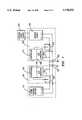
- FIG. 1is a functional block diagram of a system for charging a battery attached to a cellular telephone using an external charger in accordance with the present invention
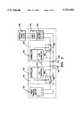
- FIG. 2is a flow diagram describing the process for disabling the internal charging algorithm of a cellular telephone in accordance with the present invention.
- FIG. 3is a functional block diagram of an embodiment of the present invention wherein communication messages are transmitted in both directions between a charger and a device to be charged.
- a cellular telephone 100is shown as electrically and physically attached to battery 110.
- the cellular telephone 100includes an internal controller/microprocessor 120 which controls a switch 130.
- the cellular telephonefurther includes an analog to digital converter 140.
- the analog to digital converter 140includes input lines 150 for sampling a voltage across a direct current input 160 and ground 170. The voltage levels sampled by the analog to digital converter 140 are communicated to the microprocessor 120 for use in controlling charging of the battery 110.
- the internal controller 120monitors various parameters of the charging process such as ambient temperature, battery temperature, battery voltage, and delta voltage for use in a charging algorithm. Based on the value of these parameters, the controller 120 follows a preprogrammed charging algorithm and accordingly opens and closes switch 130 to allow direct current output from a charger to be applied to charge the battery 110.
- FIG. 1further shows the connection of an intelligent external battery charger 200 to the telephone 100.
- an intelligent chargerhas a controller for controlling the charging of a battery.
- the battery charger 200includes a controller 210 for controlling, among other functions, switch 220.
- a current source 230receiving power from an external power source 231.
- the external power source 231can be either alternating or direct current.
- the current source 230supplies direct current for the charging process via direct current output 240 and ground 250.
- the charger 200further includes an analog to digital converter 260 having input lines 270 connected to the direct current output 240 and ground 250.
- the analog to digital converter 260samples voltage levels across direct current output 240 and ground 250 and communicates the sampled voltage levels to the controller 210. Similar to controller 120 of the cellular telephone 100, the controller 210 uses the sampled voltage levels from the analog to digital converter 260 together with other measured parameters as inputs to a preprogrammed charging algorithm.
- the controller 210repeatedly turns switch 220 on and off to respectively connect and disconnect to and from the current source 230 resulting in the generation of a varying charger output voltage with a defined duty cycle and cycle period.
- the controller 210chooses a duty cycle and cycle period such that the generated wave-form has distinct voltage values when sampled by an analog to digital converter. For example, if a duty cycle of fifty percent is chosen the charging voltage wave-form would have the general appearance of a square wave with the charging voltage superimposed on the battery voltage.
- the duty cycle and cycle periodare chosen so that the rise and fall times of the wave-form are insignificant as compared to the time that the charging current is applied to the battery 110.
- the analog to digital converter 140samples the wave-form in synchronization with any known circuit switching such as alternating current ripple frequency and power supply switching characteristics to prevent false voltage level readings.
- the defined duty cycle and cycle period and repetitive nature of the signaldistinguishes the signal as intentional and not spurious noise.
- the cellular telephone 100 and battery 110are placed in a slot of the charger 200 so that the direct current input 160 of the cellular telephone 100 is connected to the direct current output 240 of the charger 200 and the ground 170 of the cellular telephone 100 is connected to the ground 250 of the charger 200.
- the charger 200may have multiple slots.
- the analog to digital converter 140 of the cellular telephone 100monitors the varying voltage level across its input lines 150 and communicates the sampled voltage levels to the controller 120.
- Controller 120recognizes that the voltage reaching the cellular telephone 100 from the charger 200 is varying with a defined duty cycle and cycle period.
- the varying voltagedistinguishes the charger 200 as a smart charger having an independent controller 210 for implementing a charging algorithm as compared to a dumb charger which supplies the cellular telephone 100 with a continuous current.
- the controller 120realizing that the charger 200 is equipped with its own controller 210 for controlling the charging of the cellular telephone battery 110, insures that switch 130 is closed to allow the charging current from current source 230 to reach the internal battery 110 of the cellular telephone 100.
- the controller 120deactivates its own internal control algorithm for charging of the battery 110 and allows the controller 210 to implement its internal charging algorithm. If charger 200 provides a non-varying signal to the cellular telephone 100, the cellular telephone 100 implements its internal charging algorithm.
- the controller 120disables its own internal charging algorithm for as long as a varying voltage is present across the direct current input 160 and ground 170, the controller 120 continues to monitor various parameters such as the ambient temperature, battery voltage, battery temperature, and total charging time to insure that these parameters do not exceed maximum charging limits. Should these limits be exceeded, the controller 120 opens switch 130 to terminate the charging process and protect the battery from damage. In addition to monitoring for too high of a battery voltage value, the controller 120 also checks for too low of a voltage which would indicate a short circuit.
- the controller 210selectively turns switch 220 on and off to create a repetitive digital binary signal across direct current output 240 and ground 250 which is recognized by the controller 120.
- This repetitive digital signalcan be preset to any data rate and may or may not have a start and stop bit.
- the repetitive digital signalcan also represent an eight bit ASCII code which can be associated with messages or instructions from the charger related to the charging process.
- the data ratecan be a family of data rates, such that one data rate and corresponding digital code and another different data rate and corresponding digital code could signal concurrently the action to start or terminate the changing algorithm.
- the direct current for charging of the battery 110comprises a digital signal and the analog to digital converter 140 samples the signal across its input lines 150 and communicates the sampled signal to controller 120.
- the controller 120recognizes this digital signal, and as in the earlier embodiment of the present invention, closes switch 130 to allow charging of the battery 110. As in the earlier embodiment, controller 120 continues to monitor various parameters such as ambient temperature, battery voltage, battery temperature, and total charging time to open switch 130 if maximum or minimum values for these parameters are exceeded.
- the controller 120 of the cellular telephone 100relinquishes control for charging of the battery 110 to the controller 210 of the external charger 200.
- the controller 210following its internal charging algorithm turns switch 220 on and off to charge the battery 110.
- the embodiments of the present inventionsupply the phone battery 110 with a current that is switched on and off repetitively, and therefore, varies in voltage. The varying nature of the supplied voltage will not adversely affect the charging of the battery 110, however, the charging time will increase.
- FIG. 2there is illustrated a flow diagram illustrating the process for disabling the internal charging algorithm of a cellular telephone in accordance with the present invention.
- the cellular telephone 100 and battery 110are placed in a slot of the external charger 200 and the charging current is applied to direct current input 160 and ground 170 (step 300).
- the insertion of the cellular telephone 100 and battery 110results in a voltage drop detected by the analog to digital converter 260 thereby informing the charger 200 to begin charging.
- switches 130 and 220are normally closed thereby allowing the drop in voltage detected by the analog to digital converter 260.
- switch 130 or 220is normally open, provisions would need to be made to periodically close the switch to allow analog to digital converter 260 to detect a voltage drop caused by insertion of the cellular telephone 100 and battery 110 into a charging slot of charger 200.
- the controller 210 of the charger 200turns switch 220 on and off to create either,a charger output with a varying voltage or to create a digital binary signal as an output charging current.
- the controller 120 of cellular telephone 100detects the varying nature of the applied signal (step 310) and insures that switch 130 is closed (step 320) to allow charging of the battery 110.
- the controller 120also disables its internal charging algorithm (step 330) to allow the controller 210 of the charger 200 to control the charging process.
- FIG. 3there is illustrated a functional block diagram for a third and fourth embodiment of the present invention where an electronic device 400 and a battery charger 405 can each communicate with the other.
- the embodiment depicted in FIG. 3allows for communication in both directions.
- the embodiment depicted in FIG. 3allows the electronic device 400 and battery charger 405 to also send communication messages between each other.
- This bidirectional communication between the controls 420 and 580include such messages as charge started, charge interrupted, charge waiting, charge completed, charging error, reason for charge completion, type of battery, size of battery, set charging status, read charging status, and etc.
- the electronic device 400includes an analog to digital converter 410, a controller 420, an internal battery 430, and a switch 440.
- the analog to digital converter 410samples voltage levels on the charging bus 460 and communicates the sampled signal to the controller 420 in accordance with the previous embodiment.
- the controller 420sends control signals to turn switch 440 on and off.
- the switch 440connects battery 430 of the electronic device 400 to the charging bus 460. By turning the switch 440 on and off, the controller 420 can modulate the voltage on charging bus 460.
- Direct current input 480 and direct current output 490connect and extend the charging bus 460 of the electronic device 400 to the charging bus 460 of the external battery charger 405.
- ground pins 500 and 510connect the grounds of the electronic device 400 and the external battery charger 405 to each other.
- the external battery charger 405includes a power supply 520 connected to an external power source 530.
- the external power source 530can be either alternating or direct current.
- the power supply 520supplies power to the external battery charger 405.
- the external battery charger 405,also includes charging circuitry 550, switch 560, analog to digital converter 570, and controller 580.
- the analog to digital converter 570receives communication messages over the charging bus 460 in accordance with the previous embodiment, and communicates the communication messages to the controller 580.
- the controller 580sends commands to the switch 560, which turns the switch 560 on and off.
- the switch 560allows charging power from the charging circuitry 550 to reach the charging bus 460. By turning switch 560 on and off the controller modulates the charging voltage on the charging bus 460.
- the voltage sampled by the analog to digital converters 410 and 570will vary between four voltage levels.
- the voltagevaries between an open charger voltage (switch 440 open and switch 560 closed) and a voltage of the battery 430 being charged (switch 440 closed and switch 560 closed). This latter voltage slowly increases as the battery charges.
- the charger 405sends messages to the electronic device 400, the voltage varies between the previously mentioned voltage of the battery 430 being charged (switch 440 closed and switch 560 closed) which slowly increases as the battery charges and a battery voltage (switch 440 closed and switch 560 opened).
- both switch 440 and switch 560are open the voltage floats at an undetermined level.
- the charging bus 460is powered by unfiltered rectified current.
- the unfiltered rectified currentcontains a voltage ripple which has a frequency equal to the external power source frequency for a half-waved rectified signal and twice the external power source frequency for a full-wave rectified signal.
- Controllers 420 and 580turn switches 440 and 560, respectively, on and off in synchronization with the ripple frequency present on the charging bus 460 to prevent false voltage level readings during transitions between low and high voltage levels.
- the charging bus 460is powered by continuous direct current. In this situation, there is no ripple frequency which the controllers 420 and 580 synchronize to. Therefore, controllers 420 and 580 can turn switches 440 and 460, respectively, on and off at any preset data rate.
- the electronic device 400 and external battery charger 405normally monitor the charging bus 460.
- Communication messagesbegin with a start sequence, for example, a high to low transition which both devices listen for to indicate the beginning of a communication message.
- the starting sequenceis followed by a binary code which represents a command or message.
- the sending deviceAfter sending a communication message, the sending device returns to monitoring the charging bus 460 for the start sequence.
- the description of the present inventiongives an example of a cellular telephone as the electronic device whose attached battery is being recharged, it is understood that the present invention applies to any electronic device having an internal charging algorithm for charging an attached battery including single and multi-slot chargers.
Landscapes
- Engineering & Computer Science (AREA)
- Power Engineering (AREA)
- Charge And Discharge Circuits For Batteries Or The Like (AREA)
Abstract
Description
1. Technical Field of the Invention
The present invention pertains in general to the charging of batteries, and more particularly, to the charging of a cellular telephone battery by an external charger while the battery is attached to a cellular telephone.
2. Description of Related Art
Techniques for charging batteries have improved in recent years. To achieve optimum charging of batteries, current methods incorporate a controller and one or more analog to digital convertors for monitoring various parameters during the charging process. Such parameters include ambient temperature, battery temperature, battery voltage, delta voltage, and charging time. These parameters are used in a charging algorithm implemented by the controller to output a charging signal and obtain optimum charging of the battery. When a battery attached to a cellular telephone is to be charged, a direct current is applied to the battery via a switch controlled by a cellular telephone microprocessor. The microprocessor, following a charging algorithm, closes and opens the switch in response to the various monitored parameters in accordance with the charging algorithm to generate the charging signal.
A problem arises, however, when the cellular telephone and battery are connected to an external battery charger which also contains a microprocessor and one or more analog to digital converters for implementing its own charging algorithm. The problem occurs when each of the controllers and their associated analog to digital converters attempt to independently and simultaneously control the charging of the battery attached to the cellular telephone resulting in less than optimal charging of the battery.
To avoid conflict between the two controllers and their charging algorithms, two approaches have been used in the past. In a first approach, the in-line cellular telephone controller and the external controller operate independently through the use of separate battery charging pins. The pins which are connected to a current source determine which controller controls the charging process. A second approach involves the use of a closed loop communication between the two microprocessors where parameters such as charge time, battery type, battery size, battery temperature, battery voltage, and delta voltage are exchanged between the two microprocessors. Each of these approaches is cumbersome, and therefore, it would be advantageous to provide an apparatus and method for charging of batteries which disables the internal charging algorithm of the cellular telephone when the cellular telephone and battery are attached to an external smart charger.
The present invention comprises an external battery charger having a controller for implementing a battery charging algorithm. The controller of the charger repetitively connects and disconnects a current source to the battery using a switch to produce a charging current which has a varying voltage level. An internal controller of a cellular telephone attached to the battery being charged senses the varying nature of the charging current, passes the charging current onto the battery, and disables its internal charging algorithm in response thereto to allow the controller of the external charger to control the charging process.
For a more complete understanding of the present invention, reference is made to the following detailed description taken in conjunction with the accompanying drawings wherein:
FIG. 1 is a functional block diagram of a system for charging a battery attached to a cellular telephone using an external charger in accordance with the present invention;
FIG. 2 is a flow diagram describing the process for disabling the internal charging algorithm of a cellular telephone in accordance with the present invention; and
FIG. 3 is a functional block diagram of an embodiment of the present invention wherein communication messages are transmitted in both directions between a charger and a device to be charged.
Referring now to FIG. 1, there is illustrated a functional block diagram of the present invention. Acellular telephone 100 is shown as electrically and physically attached tobattery 110. Thecellular telephone 100 includes an internal controller/microprocessor 120 which controls aswitch 130. The cellular telephone further includes an analog todigital converter 140. The analog todigital converter 140 includesinput lines 150 for sampling a voltage across a directcurrent input 160 and ground 170. The voltage levels sampled by the analog todigital converter 140 are communicated to themicroprocessor 120 for use in controlling charging of thebattery 110.
Theinternal controller 120 monitors various parameters of the charging process such as ambient temperature, battery temperature, battery voltage, and delta voltage for use in a charging algorithm. Based on the value of these parameters, thecontroller 120 follows a preprogrammed charging algorithm and accordingly opens and closesswitch 130 to allow direct current output from a charger to be applied to charge thebattery 110.
FIG. 1 further shows the connection of an intelligentexternal battery charger 200 to thetelephone 100. Unlike a dumb charger which simply supplies current to the battery, an intelligent charger has a controller for controlling the charging of a battery. Thebattery charger 200 includes acontroller 210 for controlling, among other functions, switch 220. Also included in thecharger 200 is acurrent source 230, receiving power from anexternal power source 231. Theexternal power source 231 can be either alternating or direct current. Thecurrent source 230 supplies direct current for the charging process via directcurrent output 240 andground 250. Thecharger 200 further includes an analog todigital converter 260 havinginput lines 270 connected to the directcurrent output 240 andground 250. The analog todigital converter 260 samples voltage levels across directcurrent output 240 and ground 250 and communicates the sampled voltage levels to thecontroller 210. Similar tocontroller 120 of thecellular telephone 100, thecontroller 210 uses the sampled voltage levels from the analog todigital converter 260 together with other measured parameters as inputs to a preprogrammed charging algorithm.
In situations where thecellular telephone battery 110 attached to thecellular telephone 100 is connected to the intelligentexternal charger 200, a conflict arises between operation of thecontroller 120 of thecellular telephone 100 and operation of thecontroller 210 of theexternal charger 200. Unless one of thecontrollers
In a first embodiment of the present invention, thecontroller 210 repeatedly turns switch 220 on and off to respectively connect and disconnect to and from thecurrent source 230 resulting in the generation of a varying charger output voltage with a defined duty cycle and cycle period. Thecontroller 210 chooses a duty cycle and cycle period such that the generated wave-form has distinct voltage values when sampled by an analog to digital converter. For example, if a duty cycle of fifty percent is chosen the charging voltage wave-form would have the general appearance of a square wave with the charging voltage superimposed on the battery voltage. Depending on the component values and tolerances, the duty cycle and cycle period are chosen so that the rise and fall times of the wave-form are insignificant as compared to the time that the charging current is applied to thebattery 110. Furthermore, the analog todigital converter 140 samples the wave-form in synchronization with any known circuit switching such as alternating current ripple frequency and power supply switching characteristics to prevent false voltage level readings. The defined duty cycle and cycle period and repetitive nature of the signal distinguishes the signal as intentional and not spurious noise. To initiate the charging process thecellular telephone 100 andbattery 110 are placed in a slot of thecharger 200 so that the directcurrent input 160 of thecellular telephone 100 is connected to the directcurrent output 240 of thecharger 200 and the ground 170 of thecellular telephone 100 is connected to theground 250 of thecharger 200. Although a single charging slot is shown, thecharger 200 may have multiple slots. The analog todigital converter 140 of thecellular telephone 100 monitors the varying voltage level across itsinput lines 150 and communicates the sampled voltage levels to thecontroller 120.Controller 120 recognizes that the voltage reaching thecellular telephone 100 from thecharger 200 is varying with a defined duty cycle and cycle period. The varying voltage distinguishes thecharger 200 as a smart charger having anindependent controller 210 for implementing a charging algorithm as compared to a dumb charger which supplies thecellular telephone 100 with a continuous current. Thecontroller 120, realizing that thecharger 200 is equipped with itsown controller 210 for controlling the charging of thecellular telephone battery 110, insures thatswitch 130 is closed to allow the charging current fromcurrent source 230 to reach theinternal battery 110 of thecellular telephone 100. Thecontroller 120 deactivates its own internal control algorithm for charging of thebattery 110 and allows thecontroller 210 to implement its internal charging algorithm. Ifcharger 200 provides a non-varying signal to thecellular telephone 100, thecellular telephone 100 implements its internal charging algorithm.
Although thecontroller 120 disables its own internal charging algorithm for as long as a varying voltage is present across the directcurrent input 160 and ground 170, thecontroller 120 continues to monitor various parameters such as the ambient temperature, battery voltage, battery temperature, and total charging time to insure that these parameters do not exceed maximum charging limits. Should these limits be exceeded, thecontroller 120 opensswitch 130 to terminate the charging process and protect the battery from damage. In addition to monitoring for too high of a battery voltage value, thecontroller 120 also checks for too low of a voltage which would indicate a short circuit.
In a second embodiment of the present invention, thecontroller 210 selectively turnsswitch 220 on and off to create a repetitive digital binary signal across directcurrent output 240 andground 250 which is recognized by thecontroller 120. This repetitive digital signal can be preset to any data rate and may or may not have a start and stop bit. The repetitive digital signal can also represent an eight bit ASCII code which can be associated with messages or instructions from the charger related to the charging process. Furthermore, the data rate can be a family of data rates, such that one data rate and corresponding digital code and another different data rate and corresponding digital code could signal concurrently the action to start or terminate the changing algorithm. The direct current for charging of thebattery 110 comprises a digital signal and the analog todigital converter 140 samples the signal across itsinput lines 150 and communicates the sampled signal tocontroller 120. Thecontroller 120 recognizes this digital signal, and as in the earlier embodiment of the present invention, closesswitch 130 to allow charging of thebattery 110. As in the earlier embodiment,controller 120 continues to monitor various parameters such as ambient temperature, battery voltage, battery temperature, and total charging time to openswitch 130 if maximum or minimum values for these parameters are exceeded.
In each of the embodiments of the present invention thus far described, thecontroller 120 of thecellular telephone 100 relinquishes control for charging of thebattery 110 to thecontroller 210 of theexternal charger 200. Thus, thecontroller 210 following its internal charging algorithm turns switch 220 on and off to charge thebattery 110. Unlike situations where a dumb charger provides thebattery 110 with a continuous current, the embodiments of the present invention supply thephone battery 110 with a current that is switched on and off repetitively, and therefore, varies in voltage. The varying nature of the supplied voltage will not adversely affect the charging of thebattery 110, however, the charging time will increase.
Referring additionally now to FIG. 2, there is illustrated a flow diagram illustrating the process for disabling the internal charging algorithm of a cellular telephone in accordance with the present invention. To initiate the charging process, thecellular telephone 100 andbattery 110 are placed in a slot of theexternal charger 200 and the charging current is applied to directcurrent input 160 and ground 170 (step 300). The insertion of thecellular telephone 100 andbattery 110 results in a voltage drop detected by the analog todigital converter 260 thereby informing thecharger 200 to begin charging. In the preferred embodiment of the present invention, switches 130 and 220 are normally closed thereby allowing the drop in voltage detected by the analog todigital converter 260. In an embodiment where either switch 130 or 220 is normally open, provisions would need to be made to periodically close the switch to allow analog todigital converter 260 to detect a voltage drop caused by insertion of thecellular telephone 100 andbattery 110 into a charging slot ofcharger 200. Thecontroller 210 of thecharger 200 turns switch 220 on and off to create either,a charger output with a varying voltage or to create a digital binary signal as an output charging current. In either event, thecontroller 120 ofcellular telephone 100 detects the varying nature of the applied signal (step 310) and insures thatswitch 130 is closed (step 320) to allow charging of thebattery 110. Thecontroller 120 also disables its internal charging algorithm (step 330) to allow thecontroller 210 of thecharger 200 to control the charging process.
Referring additionally now to FIG. 3, there is illustrated a functional block diagram for a third and fourth embodiment of the present invention where anelectronic device 400 and abattery charger 405 can each communicate with the other. Unlike previous embodiments of the present invention, where communication is unidirectional from the battery charger to the electronic device, the embodiment depicted in FIG. 3 allows for communication in both directions. Furthermore, while the earlier embodiments simply deactivated the internal charging algorithm of the electronic device, the embodiment depicted in FIG. 3 allows theelectronic device 400 andbattery charger 405 to also send communication messages between each other. This bidirectional communication between thecontrols
Theelectronic device 400 includes an analog todigital converter 410, acontroller 420, aninternal battery 430, and aswitch 440. The analog todigital converter 410 samples voltage levels on the chargingbus 460 and communicates the sampled signal to thecontroller 420 in accordance with the previous embodiment. To send messages over the chargingbus 460, thecontroller 420 sends control signals to turnswitch 440 on and off. Theswitch 440 connectsbattery 430 of theelectronic device 400 to the chargingbus 460. By turning theswitch 440 on and off, thecontroller 420 can modulate the voltage on chargingbus 460.
Directcurrent input 480 and direct current output 490 connect and extend the chargingbus 460 of theelectronic device 400 to the chargingbus 460 of theexternal battery charger 405. Likewise, ground pins 500 and 510 connect the grounds of theelectronic device 400 and theexternal battery charger 405 to each other.
Theexternal battery charger 405 includes apower supply 520 connected to anexternal power source 530. Theexternal power source 530 can be either alternating or direct current. Thepower supply 520 supplies power to theexternal battery charger 405. Theexternal battery charger 405, also includes chargingcircuitry 550,switch 560, analog todigital converter 570, andcontroller 580. The analog todigital converter 570 receives communication messages over the chargingbus 460 in accordance with the previous embodiment, and communicates the communication messages to thecontroller 580. To send communication messages to theelectronic device 400, thecontroller 580 sends commands to theswitch 560, which turns theswitch 560 on and off. Theswitch 560 allows charging power from the chargingcircuitry 550 to reach the chargingbus 460. By turningswitch 560 on and off the controller modulates the charging voltage on the chargingbus 460.
Depending on wether theelectronic device 400 or thecharger 405 is turning on and offswitches digital converters electronic device 400 sends messages to thecharger 405, the voltage varies between an open charger voltage (switch 440 open and switch 560 closed) and a voltage of thebattery 430 being charged (switch 440 closed and switch 560 closed). This latter voltage slowly increases as the battery charges. On the other hand, when thecharger 405 sends messages to theelectronic device 400, the voltage varies between the previously mentioned voltage of thebattery 430 being charged (switch 440 closed and switch 560 closed) which slowly increases as the battery charges and a battery voltage (switch 440 closed and switch 560 opened). Lastly, if both switch 440 and switch 560 are open the voltage floats at an undetermined level.
In a third embodiment of the present invention, the chargingbus 460 is powered by unfiltered rectified current. The unfiltered rectified current contains a voltage ripple which has a frequency equal to the external power source frequency for a half-waved rectified signal and twice the external power source frequency for a full-wave rectified signal.Controllers bus 460 to prevent false voltage level readings during transitions between low and high voltage levels.
In a fourth embodiment of the present invention, the chargingbus 460 is powered by continuous direct current. In this situation, there is no ripple frequency which thecontrollers controllers switches
In both the third and fourth embodiments of the present invention, theelectronic device 400 andexternal battery charger 405 normally monitor the chargingbus 460. Communication messages begin with a start sequence, for example, a high to low transition which both devices listen for to indicate the beginning of a communication message. The starting sequence is followed by a binary code which represents a command or message. After sending a communication message, the sending device returns to monitoring the chargingbus 460 for the start sequence.
Although the description of the present invention gives an example of a cellular telephone as the electronic device whose attached battery is being recharged, it is understood that the present invention applies to any electronic device having an internal charging algorithm for charging an attached battery including single and multi-slot chargers.
Although preferred embodiments of the method and apparatus of the present invention have been illustrated in the accompanying Drawings and described in the foregoing Detailed Description, it is understood that the invention is not limited to the embodiments disclosed, but is capable of numerous rearrangements, modifications, and substitutions without departing from the spirit of the invention as set forth and defined by the following claims.
Claims (12)
1. A system for overriding an internal controller recharging algorithm of an electronic device when the electronic device is connected to an external battery charger having an independent controller comprising:
means for producing a varying voltage having a defined duty cycle and cycle period on a charging current by the external battery charger;
means for detecting the varying voltage on the charging current by the electronic device; and
means for disabling the internal controller recharging algorithm in response to detection of the varying voltage.
2. The system recited in claim 1, wherein the means for producing the varying voltage on the charging current comprises a switch controlled by the external battery charger which turns the charging current on and off.
3. The system recited in claim 1, wherein the means for detecting the varying voltage on the charging current comprises an analog to digital converter for sampling voltage levels of the charging current.
4. The system recited in claim 1, wherein the means for disabling the internal controller comprises the internal controller disabling the recharging algorithm in response to recognition by the controller of the sampled voltage levels communicated from the analog to digital converter as varying in voltage.
5. A system for overriding an internal controller recharging algorithm of an electronic device when the electronic device is connected to an external battery charger having an independent controller comprising:
a direct current output of the external battery charger for connecting to a direct current input of the electronic device, the external battery charger producing a repetitive digital signal on the direct current output;
a means for detecting the repetitive digital signal on the direct current input; and
a means for disabling the internal controller recharging algorithm in response to detection of the repetitive digital signal on the direct current input.
6. The system recited in claim 5, wherein the means for detecting the repetitive digital signal on the direct current input comprises an analog to digital converter for sampling voltage levels at the direct current input.
7. The system recited in claim 6, wherein the means for detecting the repetitive digital signal further includes the analog to digital converter communicating the sampled voltage levels to the internal controller, the internal controller recognizing the sampled voltage levels as the repetitive signal, and the internal controller disabling the internal controller recharging algorithm in response to recognition of the repetitive digital signal.
8. An system for overriding an internal controller recharging algorithm of an electronic device when the electronic device is connected to an external battery charger having an independent controller comprising:
a direct current output of an external battery charger for applying a repetitive digital signal to a direct current input of the electronic device;
an analog to digital converter for generating a sampled voltage level of the voltage level applied to the direct current input; and
an internal controller recognizing the sampled voltage level as the repetitive digital signal and disabling the recharging algorithm in response to the recognition.
9. A method for overriding an internal controller recharging algorithm of an electronic device when the electronic device is connected to an external battery charger having an independent controller comprising the steps of:
connecting an external battery charger to a direct current input of the electronic device to facilitate recharging of an electronic device battery, the external battery charger producing a varying direct current voltage having a defined duty cycle and cycle period;
detecting the varying direct current voltage at the direct current input of the electronic device;
connecting the direct current input to the electronic device battery in response to detection of the varying direct current voltage; and
disabling the internal controller recharging algorithm during recharging of the electronic device battery by the external battery charger in response to detection of the varying direct current voltage.
10. A method for overriding an internal controller recharging algorithm of an electronic device when the electronic device is connected to an external battery charger having an independent controller comprising the steps of:
connecting an external battery charger to a direct current input of the electronic device to facilitate recharging of an electronic device battery, the external battery charger producing a repetitive digital signal;
detecting the repetitive digital signal present at the direct current input of the electronic device;
connecting the direct current input to the electronic device battery in response to detection of the repetitive digital signal; and
disabling the internal controller recharging algorithm of the electronic device during recharging of the electronic device battery by the external battery charger in response to detection of the repetitive digital signal.
11. A system for communicating between an electronic device and an external battery charger comprising:
a charging bus connecting the electronic device to the external battery charger;
a first analog to digital converter located within the electronic device for receiving communication messages over the charging bus;
a first switch located within the electronic device connecting the charging bus to a battery of the electronic device, the first switch for modulating the battery output to send communication messages over the charging bus;
a second analog to digital converter located within the external battery charger for receiving communication messages over the charging bus; and
a second switch located within the external battery charger connecting the charging bus to a charging power supply of the external battery charger, the second switch for modulating the charging power supply output to send communication messages over the charging bus.
12. An apparatus for sending and receiving communication messages over a charging bus comprising:
an analog to digital converter for receiving communication messages over the charging bus;
a switch for connecting the charging bus to a power supply for modulating the power supply output applied to the charging bus; and
a controller for controlling the switch for sending communication messages over the charging bus.
Priority Applications (1)
| Application Number | Priority Date | Filing Date | Title |
|---|---|---|---|
| US08/770,860US5734252A (en) | 1996-12-20 | 1996-12-20 | Method and apparatus for charging a battery of an electronic device using an intelligent external charger |
Applications Claiming Priority (1)
| Application Number | Priority Date | Filing Date | Title |
|---|---|---|---|
| US08/770,860US5734252A (en) | 1996-12-20 | 1996-12-20 | Method and apparatus for charging a battery of an electronic device using an intelligent external charger |
Publications (1)
| Publication Number | Publication Date |
|---|---|
| US5734252Atrue US5734252A (en) | 1998-03-31 |
Family
ID=25089926
Family Applications (1)
| Application Number | Title | Priority Date | Filing Date |
|---|---|---|---|
| US08/770,860Expired - Fee RelatedUS5734252A (en) | 1996-12-20 | 1996-12-20 | Method and apparatus for charging a battery of an electronic device using an intelligent external charger |
Country Status (1)
| Country | Link |
|---|---|
| US (1) | US5734252A (en) |
Cited By (18)
| Publication number | Priority date | Publication date | Assignee | Title |
|---|---|---|---|---|
| US6044280A (en)* | 1997-02-28 | 2000-03-28 | U.S. Philips Corporation | Arrangement in which a useful signal is transmitted between at least two device units |
| US6137265A (en)* | 1999-01-11 | 2000-10-24 | Dell Usa, L.P. | Adaptive fast charging of lithium-ion batteries |
| US6169341B1 (en)* | 1998-03-10 | 2001-01-02 | Sony Corporation | Power supplying adapter, electronic equipment, and signal transmission system |
| US6194874B1 (en) | 1999-03-17 | 2001-02-27 | Telefonaktiebolaget Lm Ericsson (Publ) | System and method for maintenance charging of battery cells |
| US6353305B1 (en)* | 2000-05-26 | 2002-03-05 | Agere Systems Guardian Corp. | Battery charger where the charge current rate is set by a switch modulated with a variable duty cycle |
| US6429622B1 (en) | 2000-11-14 | 2002-08-06 | Telefonaktiebolaget L M Ericsson (Publ) | Method and apparatus for authenticating a charging unit by a portable battery-operated electronic device |
| US20020136380A1 (en)* | 2000-07-14 | 2002-09-26 | Shinji Aoyama | Data backup system for portable telephone and method for backing up data for portable telephone |
| FR2842360A1 (en)* | 2002-07-12 | 2004-01-16 | Hawker Sa | Control system management battery charge profile application having charger mechanism generating high frequency signal cable sending charger and charger adapting charge profile following signal. |
| US20040012396A1 (en)* | 2001-04-06 | 2004-01-22 | Microchip Technology Incorporated | Battery cover assembly having integrated battery condition monitoring |
| US20040108834A1 (en)* | 2002-11-29 | 2004-06-10 | Nobuhiro Takano | Universal battery charger |
| US20040111320A1 (en)* | 2002-12-05 | 2004-06-10 | Jorg Schlieffers | Electronic shopping system |
| US20040169494A1 (en)* | 2002-12-13 | 2004-09-02 | Samsung Electronics Co., Ltd. | Built-in battery controller for personal telecommunication device |
| US20040212342A1 (en)* | 2001-04-06 | 2004-10-28 | Microchip Technology Incorporated | Battery cover assembly having integrated battery condition monitoring |
| WO2009032058A3 (en)* | 2007-09-05 | 2009-04-30 | Eveready Battery Inc | Intelligent device and power source interaction |
| US20100207571A1 (en)* | 2009-02-19 | 2010-08-19 | SunCore Corporation | Solar chargeable battery for portable devices |
| WO2010096709A3 (en)* | 2009-02-19 | 2011-04-21 | Suncore, Inc. | Solar chargeable battery for portable devices |
| US8319470B2 (en) | 2010-02-12 | 2012-11-27 | Suncore, Inc. | Stand alone solar battery charger |
| US11451067B2 (en)* | 2017-12-19 | 2022-09-20 | Intel Corporation | Method, apparatus and system to enhance a device policy manager to manage devices based on battery condition |
Citations (10)
| Publication number | Priority date | Publication date | Assignee | Title |
|---|---|---|---|---|
| US4700375A (en)* | 1986-10-10 | 1987-10-13 | Motorola, Inc. | Battery charging, reset, and data transfer system |
| US4709202A (en)* | 1982-06-07 | 1987-11-24 | Norand Corporation | Battery powered system |
| US5274319A (en)* | 1992-06-08 | 1993-12-28 | Thomas Keener | Rechargeable battery manager |
| US5371453A (en)* | 1993-01-28 | 1994-12-06 | Motorola, Inc. | Battery charger system with common charge and data exchange port |
| US5420493A (en)* | 1992-06-30 | 1995-05-30 | Apple Computer, Inc. | Power supply and battery charger |
| US5511240A (en)* | 1991-11-05 | 1996-04-23 | Nec Corporation | Radio telephone system capable of transmitting data communication through a battery charger |
| US5534765A (en)* | 1993-03-05 | 1996-07-09 | Motorola, Inc. | Battery with memory for storing charge procedure |
| US5539298A (en)* | 1993-03-19 | 1996-07-23 | Compaq Computer Corporation | Pulse charge technique to trickle charge a rechargeable battery |
| US5572110A (en)* | 1994-12-15 | 1996-11-05 | Intel Corporation | Smart battery charger system |
| US5589756A (en)* | 1994-11-29 | 1996-12-31 | Wilson; Nathaniel B. | Battery charger having a multiple function sense line |
- 1996
- 1996-12-20USUS08/770,860patent/US5734252A/ennot_activeExpired - Fee Related
Patent Citations (10)
| Publication number | Priority date | Publication date | Assignee | Title |
|---|---|---|---|---|
| US4709202A (en)* | 1982-06-07 | 1987-11-24 | Norand Corporation | Battery powered system |
| US4700375A (en)* | 1986-10-10 | 1987-10-13 | Motorola, Inc. | Battery charging, reset, and data transfer system |
| US5511240A (en)* | 1991-11-05 | 1996-04-23 | Nec Corporation | Radio telephone system capable of transmitting data communication through a battery charger |
| US5274319A (en)* | 1992-06-08 | 1993-12-28 | Thomas Keener | Rechargeable battery manager |
| US5420493A (en)* | 1992-06-30 | 1995-05-30 | Apple Computer, Inc. | Power supply and battery charger |
| US5371453A (en)* | 1993-01-28 | 1994-12-06 | Motorola, Inc. | Battery charger system with common charge and data exchange port |
| US5534765A (en)* | 1993-03-05 | 1996-07-09 | Motorola, Inc. | Battery with memory for storing charge procedure |
| US5539298A (en)* | 1993-03-19 | 1996-07-23 | Compaq Computer Corporation | Pulse charge technique to trickle charge a rechargeable battery |
| US5589756A (en)* | 1994-11-29 | 1996-12-31 | Wilson; Nathaniel B. | Battery charger having a multiple function sense line |
| US5572110A (en)* | 1994-12-15 | 1996-11-05 | Intel Corporation | Smart battery charger system |
Cited By (26)
| Publication number | Priority date | Publication date | Assignee | Title |
|---|---|---|---|---|
| US6044280A (en)* | 1997-02-28 | 2000-03-28 | U.S. Philips Corporation | Arrangement in which a useful signal is transmitted between at least two device units |
| US6169341B1 (en)* | 1998-03-10 | 2001-01-02 | Sony Corporation | Power supplying adapter, electronic equipment, and signal transmission system |
| KR100605737B1 (en)* | 1998-03-10 | 2006-07-31 | 소니 가부시끼 가이샤 | Power supplying adapter, electronic equipment, and signal transmission system |
| US6137265A (en)* | 1999-01-11 | 2000-10-24 | Dell Usa, L.P. | Adaptive fast charging of lithium-ion batteries |
| US6194874B1 (en) | 1999-03-17 | 2001-02-27 | Telefonaktiebolaget Lm Ericsson (Publ) | System and method for maintenance charging of battery cells |
| US6353305B1 (en)* | 2000-05-26 | 2002-03-05 | Agere Systems Guardian Corp. | Battery charger where the charge current rate is set by a switch modulated with a variable duty cycle |
| US20020136380A1 (en)* | 2000-07-14 | 2002-09-26 | Shinji Aoyama | Data backup system for portable telephone and method for backing up data for portable telephone |
| US6429622B1 (en) | 2000-11-14 | 2002-08-06 | Telefonaktiebolaget L M Ericsson (Publ) | Method and apparatus for authenticating a charging unit by a portable battery-operated electronic device |
| US20040212342A1 (en)* | 2001-04-06 | 2004-10-28 | Microchip Technology Incorporated | Battery cover assembly having integrated battery condition monitoring |
| US7012404B2 (en) | 2001-04-06 | 2006-03-14 | Microchip Technology Incorporated | Battery cover assembly having integrated battery condition monitoring |
| US7205746B2 (en) | 2001-04-06 | 2007-04-17 | Microchip Technology Inc. | Battery cover assembly having integrated battery condition monitoring |
| US20040012396A1 (en)* | 2001-04-06 | 2004-01-22 | Microchip Technology Incorporated | Battery cover assembly having integrated battery condition monitoring |
| FR2842360A1 (en)* | 2002-07-12 | 2004-01-16 | Hawker Sa | Control system management battery charge profile application having charger mechanism generating high frequency signal cable sending charger and charger adapting charge profile following signal. |
| EP1424758A3 (en)* | 2002-11-29 | 2005-05-18 | Hitachi Koki Co., Ltd. | Universal battery charger |
| US20040108834A1 (en)* | 2002-11-29 | 2004-06-10 | Nobuhiro Takano | Universal battery charger |
| US7365515B2 (en) | 2002-11-29 | 2008-04-29 | Hitachi Koki Co., Ltd. | Universal battery charger |
| US20040111320A1 (en)* | 2002-12-05 | 2004-06-10 | Jorg Schlieffers | Electronic shopping system |
| US7026790B2 (en)* | 2002-12-13 | 2006-04-11 | Samsung Electronics Co., Ltd. | Built-in battery controller for personal telecommunication device |
| US20040169494A1 (en)* | 2002-12-13 | 2004-09-02 | Samsung Electronics Co., Ltd. | Built-in battery controller for personal telecommunication device |
| WO2009032058A3 (en)* | 2007-09-05 | 2009-04-30 | Eveready Battery Inc | Intelligent device and power source interaction |
| US20100264875A1 (en)* | 2007-09-05 | 2010-10-21 | Eveready Battery Company, Inc. | Intelligent device and power source interaction |
| US7960944B2 (en) | 2007-09-05 | 2011-06-14 | Eveready Battery Company, Inc. | Power supply that supplies power to and communicates with an electrical appliance |
| US20100207571A1 (en)* | 2009-02-19 | 2010-08-19 | SunCore Corporation | Solar chargeable battery for portable devices |
| WO2010096709A3 (en)* | 2009-02-19 | 2011-04-21 | Suncore, Inc. | Solar chargeable battery for portable devices |
| US8319470B2 (en) | 2010-02-12 | 2012-11-27 | Suncore, Inc. | Stand alone solar battery charger |
| US11451067B2 (en)* | 2017-12-19 | 2022-09-20 | Intel Corporation | Method, apparatus and system to enhance a device policy manager to manage devices based on battery condition |
Similar Documents
| Publication | Publication Date | Title |
|---|---|---|
| US5734252A (en) | Method and apparatus for charging a battery of an electronic device using an intelligent external charger | |
| CA1292336C (en) | Cordless telephone with battery saving function | |
| EP0406858B1 (en) | A battery charger and method for a portable wireless telephone set having means for tricklingly charging the battery with an increased current during a stand-by period of the telephone set | |
| CN104319830B (en) | Near field communication (NFC)-based charging system and method | |
| EP0479248B1 (en) | Quick charge control apparatus and control method thereof | |
| EP0479249B1 (en) | Charge control apparatus for use with electronic equipment | |
| CN106849387B (en) | Wireless charging transmitting device and intelligent charging input and output method thereof | |
| CN113991762B (en) | Charging device, electronic device, charging system and charging method | |
| EP0408028B1 (en) | Apparatus for controlling a power supply of an electric machine in a vehicle | |
| US20240083282A1 (en) | Electric vehicle charging system | |
| CN1075266C (en) | Intelligent variable battery charger current control device and electronic unit charging method | |
| US5446364A (en) | Fast charging arrangement | |
| EP0405714A2 (en) | Self-powered base and remote telephone communication set | |
| EP0684680B1 (en) | Identification apparatus and method | |
| CN112865236B (en) | Charging system capable of achieving wired and wireless intelligent switching, implementation method and charging equipment | |
| CN1134876C (en) | Two-wire multi-rate communication device and external power supply | |
| CN117639131A (en) | Battery management circuit, battery assembly and electric tool system | |
| US6172477B1 (en) | Apparatus for charging a battery of a portable terminal | |
| US5467007A (en) | Charging apparatus | |
| CA2083813A1 (en) | Battery charging | |
| US5589756A (en) | Battery charger having a multiple function sense line | |
| CN108336789B (en) | Wireless power supply system and control method of set top box | |
| JP3282194B2 (en) | Charging device | |
| CN221150996U (en) | Wireless charging transmitting device and transmitting equipment | |
| JP3273946B2 (en) | Portable electronic devices |
Legal Events
| Date | Code | Title | Description |
|---|---|---|---|
| AS | Assignment | Owner name:ERICSSON INC., NORTH CAROLINA Free format text:ASSIGNMENT OF ASSIGNORS INTEREST;ASSIGNORS:GRIFFIN, LEE DANIEL;WAKEFIELD, IVAN NELSON;REEL/FRAME:008365/0113 Effective date:19961218 | |
| FEPP | Fee payment procedure | Free format text:PAYOR NUMBER ASSIGNED (ORIGINAL EVENT CODE: ASPN); ENTITY STATUS OF PATENT OWNER: LARGE ENTITY | |
| FPAY | Fee payment | Year of fee payment:4 | |
| FPAY | Fee payment | Year of fee payment:8 | |
| REMI | Maintenance fee reminder mailed | ||
| LAPS | Lapse for failure to pay maintenance fees | ||
| STCH | Information on status: patent discontinuation | Free format text:PATENT EXPIRED DUE TO NONPAYMENT OF MAINTENANCE FEES UNDER 37 CFR 1.362 | |
| FP | Lapsed due to failure to pay maintenance fee | Effective date:20100331 |