US5688220A - Medical appliance for treatment by ionizing radiation - Google Patents
Medical appliance for treatment by ionizing radiationDownload PDFInfo
- Publication number
- US5688220A US5688220AUS08/489,464US48946495AUS5688220AUS 5688220 AUS5688220 AUS 5688220AUS 48946495 AUS48946495 AUS 48946495AUS 5688220 AUS5688220 AUS 5688220A
- Authority
- US
- United States
- Prior art keywords
- radioactive radiation
- manipulation
- medical appliance
- radioactive
- radiation means
- Prior art date
- Legal status (The legal status is an assumption and is not a legal conclusion. Google has not performed a legal analysis and makes no representation as to the accuracy of the status listed.)
- Expired - Lifetime
Links
Images




Classifications
- A—HUMAN NECESSITIES
- A61—MEDICAL OR VETERINARY SCIENCE; HYGIENE
- A61N—ELECTROTHERAPY; MAGNETOTHERAPY; RADIATION THERAPY; ULTRASOUND THERAPY
- A61N5/00—Radiation therapy
- A61N5/10—X-ray therapy; Gamma-ray therapy; Particle-irradiation therapy
- A61N5/1001—X-ray therapy; Gamma-ray therapy; Particle-irradiation therapy using radiation sources introduced into or applied onto the body; brachytherapy
- A61N5/1002—Intraluminal radiation therapy
- A—HUMAN NECESSITIES
- A61—MEDICAL OR VETERINARY SCIENCE; HYGIENE
- A61N—ELECTROTHERAPY; MAGNETOTHERAPY; RADIATION THERAPY; ULTRASOUND THERAPY
- A61N5/00—Radiation therapy
- A61N5/10—X-ray therapy; Gamma-ray therapy; Particle-irradiation therapy
- A61N5/1001—X-ray therapy; Gamma-ray therapy; Particle-irradiation therapy using radiation sources introduced into or applied onto the body; brachytherapy
- A61N2005/1019—Sources therefor
- A61N2005/1025—Wires
Definitions
- This inventionrelates to a medical appliance for the treatment of a portion of body vessel by ionizing radiation, comprising a radioactive radiation means, and manipulation means.
- Endoluminal brachytherapy and more particularity percutaneous transluminal brachytherapycurrently face difficulties for handling, energizing, transporting and sterilizing the equipment used for applying the therapy.
- U.S. Pat. No. 5,147,282discloses a manual irradiation leading apparatus particularly suitable for intrabronchial and gynecological irradiation treatment.
- the apparatuscomprises a lead or equivalent radiation shielding body with a longitudinally extending cable-receiving passage therein.
- a cable having radioactive seeds provided on one end thereofis received in the cable-receiving passage.
- the portion of the cable bearing the radioactive sourceAs located in the cable-receiving passage within the shielding body.
- a catheter placed in a patientis joined to the shielding body and the portion of the cable bearing the radioactive source material is advanced through the cable receiving passage in the shielding body and into the catheter.
- the disclosureprovides for using commercially available cable having radioactive seeds provided on an end portion thereof or radioactive wire.
- this documentprovides for a shielding body constructed to receive a radiation source other than a seeded cable.
- a shielding bodyis therefore constructed with a metallic tube running therein from end to end extending through one end of the shielding body and extending through and beyond the other end thereof.
- This metallic tubeis for allowing free passage of a plastic tandem closed at one end and containing Cesium tube sources maintained in the tandem by a plastic stopper insert.
- an empty metal tandemis positioned in the patient and a docking tube with quick release connectors of the spring clip type with actuating levers at both ends is attached one end to the shielding body and the other end to the patient's metal tandem.
- the plastic tandem containing the radioactive sources and the stopper insertis pushed through the shielding body via the docking tube and into the metal tandem inserted into the patient.
- the empty shielding body and the docking tubemay then be temporarily removed and stored nearby.
- the radioactive sourcesWhen the irradiation treatment has been completed, the radioactive sources must be removed by means of the loading-retrival cable assembly. To this effect, the stopper insert is first removed from the plastic tandem and the docking tube and shielding body are again connected to the patient.
- the loading- retrival cable assemblycomprises a steel cable surrounded by a teflon tube, this steel cable being terminated by a solid tap extending out of the teflon tube and bearing against a soft rubber ring located between the solid tip and the end of the teflon tube; the other end of the steel cable is attached to a retracting mechanism comprising a return spring urging the end of the steel cable and controlled by a set screw with eccentic lock-up.
- the loading-retrival cable assemblyis advanced through the shielding body and docking tube and stopped at the opening of the plastic tandem containing the radioactive sources and the cable solid tip and soft rubber ring and passed inside the plastic tandem.
- the set screw of the retracting mechanismis triggered to retract the steel cable thereby forcing the solid tip to squeeze the soft rubber ring against the end of the teflon tube so that the soft rubber ring expands radially and firmly grips the inner wall of the plastic tandem.
- the loading-retrival cable assemblybeing thus connected to the plastic tandem containing the radioactive sources, one may pull the cable out of the docking tube and retrieve the plastic tandem and radioactive sources back to storage position inside the shielding apparatus. Reverse operation of the retracting mechanism disconnects the steel cable from the plastic tandem and the stopper insert maybe reinserted into the plastic tandem.
- radioactive radiation sourceIn the case of usage of radioactive guidewires, there is the problem to safety secure the radioactive radiation source to the manipulating wire.
- the sourcecan of course only be made of radiating material and will therefore always have only certain limited material properties.
- Another problemis that the source always has to be activated for itself without the manipulation wire. An activation together with the manipulation wire would also activate the wire, which would result in harmful radiation from the wire.
- the part of the radioactive radiation means making part of a detachable interlocking engagement between the radioactive radiation means and the manipulation meansallows the manufacture of a tolerance free assembly which can be used without particularly precise or skill demanding manipulations. It also allows the realization of a place saving assembly capable of being inserted into very narrow vessels. And as it is not dependent on any mechanism it can be safely used for treatment of remote locations.
- the radioactive radiation meanscan be easily energized and handled separately from the advancing and removing means, whereby e sample and safe circulation of radioactive materials may be organized between the hospital and the energizing center or the manufacturer.
- the radioactive radiation meansmay be handled alone, there is a substantial place saving in the energizing reactor, whereby a better and cheapest organization of the occupation of the reactor.
- sterilization of the manipulation meanscan be achieved conventionally and without any particular shielding, while sterilization of the radioactive radiation means is systematically assured by the radioactive radiation.
- the inventionthus solves the aforesaid problems by proposing a detachable connection between radiation source and manipulation wire which is formed by the radiation source itself. With this solution no complicated welding or other manipulation of the activated source is necessary. And as the radiation source can be activated for its own, separated from the manipulating wire, only the desired radiation is generated in purity.
- the medical appliancecomprises proximal recess means and stone means on the radioactive radiation means for cooperation with distal recess means and stone means arranged on the manipulation means
- an assemblyis achieved which allows selection at will of any desired longitudinal play in the assembly to combine a good pushability of the system with an appreciable capacity to handle narrow and tortuous vessels. And this interlocking engagement may be locked by mere insertion into a lumen.
- the medical appliancemay comprise proximal and distal wall means on the radioactive radiation means for cooperation with distal recess means arranged on the manipulation means, thereby achieving a detachable interlocking engagement which requires a very simple shaping of the radioactive radiation means and of the manipulation means.
- This interlocking engagementmay also be locked by engagement into a lumen.
- the appliancecomprises proximal coil means on the radioactive radiation means for meshing with distal thread means on the manipulation means
- a playless assemblyis achieved which combines extreme flexibility and good pushability in a fully positive assembly which can be designed to reach the smallest dimensions.
- the detachable interlocking engagementmay be locked by insertion into a lumen which may extend longitudinally into a catheter, whereby safest and fastest positioning of the radioactive radiation means may be achieved into the body vessel.
- the detachable interlocking engagementmay be guided by insertion into a lumen which may also extend longitudinally into a catheter, thereby facilitating meshing of the thread means into the coil means if the latter have a great flexibility.
- the medical appliancefurther may comprise a shielding applicator means for supporting the radioactive radiation means in its orientation towards the manipulation means, thereby allowing an operator to lock the detachable interlocking engagement between the radioactive radiation means and the manipulation means by manipulating the manipulation means. This shielding applicator means also facilitates transport and circulation of the radioactive radiation means.
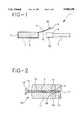
- FIG. 1is an axial cut of a first embodiment.
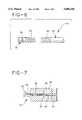
- FIGS. 2 to 5are axial cuts showing operation of the embodiment of FIG. 1.
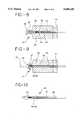
- FIG. 6is an axial view of a second embodiment.
- FIGS. 7 to 10are axial cuts showing operation of the embodiment of FIG. 6.
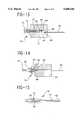
- FIG. 11is an axial cut of a third embodiment.
- FIGS. 12 to 15are axial cuts showing operation of the embodiment of FIG. 11.
- FIG. 16is an axial view of a fourth embodiment.
- FIGS. 17 to 20are axial cuts showing operation of the embodiment of FIG. 16.
- FIG. 1shows a medical appliance 1 for the treatment of a portion of body vessel (not shown) by ionizing radiation, comprising a radioactive radiation means 2 and manipulation means 3 for instance for advancing, resp. removing, the radioactive radiation means 2 into, resp. from, the portion of body vessel.
- a part 4 of the radioactive radiation means 2forms part of a detachable interlocking engagement between the radioactive radiation means 2 and the manipulation means 3.
- the radioactive radiation means 2is constituted by a bar 6 of radioactive material, for instance a bar of 90 Yttrium, embedded in a cover 7 of neutral material, for instance a cover of Titanium, for non-contamination purposes.
- the part 4 of the radioactive radiation means 2is formed here by an upwardly curved elastic arm 8 terminating by a stone 9 forming a recess 99 on arm 8 which is intended to engage with a circularly shapes recess 5 formed by a stone 55 at the end of a guidewire forming the manipulation means 3.
- Part 9thus forms a proximal recess and stone means elastically connected to the radioactive radiation means which is for cooperation with distal recess and stone means arranged on the manipulation means.
- the detachable interlocking engagement of stone 9 in recess 5may be locked by insertion into a lumen devised into an applicator and/or catheter in which the lumen extends longitudinally, as will be described hereafter.
- a shielding applicator 10 for supporting the radioactive radiation means 2 in its orientation towards the manipulation means 3is formed by a base box 11 with a lumen 12 extending therethrough, ending on one side in a tapered mouth 13 and on the other side in a flared entry 14.
- Base box 11is terminated by a cover 15.
- Within the 1omen 12is positioned the radioactive radiation means 2 with its upwardly curved arm 8 extending along the flared entry 14.
- the tapered end 13 of box 11is closed by a plug 16 extending into lumen 12 and the cover 15 is also closed by a plug 17 extending through flared entry 14 and into lumen 12, thereby holding the radioactive radiation means 2.
- the plug 17is first removed from the shielding applicator 10 and the distal end of the guide wire forming the manipulation means 3 is inserted into the flared entry 14 as shown in FIG. 3.
- the tapered end 13 of box 11is then inserted into a conventional luer connector 18 connected to the proximal end 19 of a balloon catheter 20 located in the body vessel (not shown) and having a lumen 21 extending longitudinally therethrough, as shown in FIGS. 4 and 5.
- the shielding applicator 10may be removed from the proximal end of the catheter and placed apart. It may also remain affixed to the luer connector 18.
- the guide wire 3After completion of tile radioactive treatment, and if needed reconnection of the shielding applicator to the luer connector 18 after insertion of the proximal end of guide wire 3 through lumen 12, the guide wire 3 is withdrawn from the balloon catheter 20. Pulling of the guidewire draws proximally the radioactive radiation means 2 by interlocking of stone 9 and recess 5. When the assembly of stone 9 and recess 5 reaches the flared entry 14 of box 11, the arm 4 is freed and stone 9 withdraws from recess 5. The guidewire 3 may thus be removed from the applicator 10 while the radioactive radiation means 3 remains in the lumen 12 of applicator 10. The latter may be closed by plugs 16 and 17 and stored or sent back to the energizing reactor.
- FIG. 6also shows a medical appliance 31 for the treatment of a portion of body vessel (not shown) by ionizing radiation, comprising a radioactive radiation means 32 and manipulation means 33 for instance for advancing, resp. removing, the radioactive radiation means 32 into, resp. from, the portion of the body vessel.
- a part 34 of the radioactive radiation means 32also forms part of a detachable interlocking engagement between the radioactive radiation means 32 and the manipulation means 33.
- the radioactive radiation means 32is constituted by a coiled filament 35 of radioactive material, for instance a filament of 90 Yttrium which may be coated by a neutral material such as Titanium for non contamination purposes.
- the part 34 of the radioactive radiation means 33is formed by a coiled filament of larger pitch than the coiled filament 35 and which is intended to mesh with a thread 36 formed at the end of a guidewire forming the manipulation means 33.
- Part 34thus forms a proximal coil means on the radioactive radiation means which is for meshing with distal thread means arranged on the manipulation means.
- the detachable interlocking engagement of coil 34 with thread 36may me guided by insertion into a lumen devised into an applicator and/or catheter in which the lumen extends longitudinally, as will be described hereafter.
- a shielding applicator 37may also be used for supporting radioactive radiation means 32 in its orientation towards the manipulation means, being formed of a base box 38 with a lumen 39 extending therethrough, ending on one side in a tapered mouth 40 and on the other side connecting with a cover 41.
- the radioactive radiation means 32with its large pitch coil 34 properly extending coaxially in the lumen.
- the tapered end of box 38is closed by a plug 42 extending into lumen 39 and the cover 41 is also closed by a plug 43. extending some distance into lumen 39, thereby holding the radioactive radiation means 32.
- the tapered mouth 40is inserted into a conventional luer connector 44 connected to the proximal end 45 of a balloon catheter 46 located in the body vessel (not shown) and having a longitudinal lumen 47 extending therethrough, as shown in FIGS. 9 and 10.
- the radioactive radiation means 32may be brought at the site of treatment, as shown in FIG. 10.
- the shielding applicator 37may be removed or left in place once the radioactive radiation means are in the lumen 47 of the balloon catheter 46.
- FIG. 11also shows a medical appliance 61 for the treatment of a portion of body vessel (not shown) by ionizing radiation, comprising a radioactive radiation means 62 and manipulation means 63.
- a part 64 of the radioactive radiation means 62forms part of a detachable interlocking engagement between the radioactive radiation means 62 and the manipulation means 63.
- the radioactive radiation means 62is constituted by a bar 65 of radioactive material such as for instance 90 Yttrium, preferably embedded in a cover of neutral material such as Titanium (not shown).
- the part 64 of the radioactive radiation means 62is formed here by a longitudinally extending straight rigid arm terminating by a stone 66 defining a recess 67 at the end of bar 65, which is intended to engage with a recess 69 formed by a cylindrical or cubical stone 68 at the end of a guidewire forming the manipulation means 63.
- a proximal recess and stone meansrigidly connected to the radioactive radiation means cooperating with distal recess and stone means arranged on the manipulation means.
- this detachable interlocking engagementmay be locked by insertion into a lumen devised in an applicator and/or catheter in which the lumen extends longitudinally, as will be described.
- a shielding applicator 70for supporting the radioactive radiation means 62 in its orientation towards the manipulation means 63 is formed by a box 70 with a lumen 72 extending therethrough ending on one side in a tapered mouth 71 and on the other side in a downwardly flaring entry 73.
- Within lumen 72is positioned the radioactive radiation means 62 with part 64 protruding into flaring entry 73 and recess 67 oriented downwardly.
- the tapered mouth 71 of box 70is closed by a plug 74 and the downwardly flaring entry 73 is closed by a plug 75 formed to maintain the radioactive radiation means 62 in the described orientation.
- the plug 75is removed and the distal end of the guidewire 63 is inserted into the flared entry 73 as shown in FIG. 13, and distal stone 68 of guidewire 63 is inserted into proximal recess 67 of part 64 of the radioactive radiation means 62.
- Plug 74is removed and tapered end 71 of box 70 is inserted into a conventional luer connector 76 connected to the proximal end 77 of a balloon catheter 78 located in the body vessel (not shown) and having a lumen 79 extending longitudinally therethrough.
- the box 70may be turned upside-down.
- the distal end of stone 68abuts against the distal wall of recess 67 and pushes the radioactive radiation means 63 into lumen 72, towards the luer connector 76 and into lumen 79 of balloon catheter 78. Passage of the radioactive radiation means into lumens 72 and 79 locks the detachable interlocking engagement of stone 68 into recess 67. The operator thus locks the detachable interlocking engagement between radioactive radiation means and manipulation means by manipulating the manipulation means.
- the shielding applicator 70may be removed from the proximal end of the catheter or remain affixed to the luer connector.
- the guidewire 63is withdrawn from the balloon catheter 78. Pulling of the guidewire proximally causes recess 69 of stone 68 to engage stone 66 of part 64 thereby drawing proximally the radioactive radiation means 63 by interlocking of stone 68 and recess 67.
- stone 68is freed from recess 67, thereby allowing removal of the guidewire 63 while the radioactive radiation means means 62 remains in the lumen 72 of applicator 70.
- the lattermay be closed by plugs 74 and 75 for storage or circulation towards the energizing reactor.
- FIG. 16shows a further embodiment of the medical appliance for the treatment of a portion of a body vessel (not shown) by ionizing radiation; this appliance 101 comprises a radioactive radiation means 102 and manipulation means 103, for instance for advancing or removing the radioactive radiation means into or from the portion of body vessel.
- this appliancea part 104 of the radioactive radiation means 102 also makes part of a detachable interlocking engagement between the radioactive radiation means 102 and the manipulation means 103.
- the radioactive radiation means 102is constituted by a bar 105 of radioactive material such as for instance 90 Yttrium. This bar of material may also be coated or embedded in a layer of neutral material such as a cover of Titanium.
- Bar 105is seated into a recess 106 formed at the distal end of a guidewire forming the manipulation means 103, with its proximal and distal walls 104 thereby cooperating with the distal recess 106 to assure the detachable interlocking engagement.
- This detachable interlocking engagement of bar 105 into recess 106may be locked by insertion into a lumen devised into an applicator and/or catheter as will be described hereafter.
- a shielding applicator 107is formed of an upper box portion 108 assembled to a lower box portion 109 with a lumen 111 extending therethrough, ending on one side in a tapered mouth 112 and on the other side ending out of the box for entry of the manipulation means 103.
- a recess 110is arranged in the lower box portion 109, opening into lumen 111, which recess is sized to accomodate radioactive radiation means 102.
- the tapered mouth 112 of box 107is closed by a plug 113 extending into lumen 111 and some distance over radioactive radiation means 102 and the other end of lumen 111 is also closed by a plug 114 extending therethrough and some distance over radioactive radiation means 102 thereby maintaining radioactive radiation means 102 in recess 110.
- Shielding applicator 107thus supports the radoactive radiation means 102 in its orientation towards the manipulation means 103.
- the plugs 113 and 114are removed and the distal end of the guidewire 103 is inserted into the lumen 111 of box 107 and pushed therein a distance sufficient to have the recess 106 facing the radioactive radiation means 102.
- the box 107 and manipulation means 103are turned upside-down as shown in FIG. 19, whereby the radioactive radiation means 2 may fall into recess 106 of manipulation means 103.
- the radioactive radiation means 102Upon further pushing manipulation means 103, the radioactive radiation means 102 further enters lumen 111.
- the tapered mouth 112 of shielding applicator 107is then connected to a conventional luer connector 115 connected to the proximal end 116 of a balloon catheter 117 located in the body vessel (not shown).
- the recess 106abuts against proximal wall 104 of bar 105 and pushes the radioactive radiation means 102 through lumen 111, towards luer connector 115 and into lumen 118 of catheter 117.
- the operatormay thus lock the detachable interlocking engagement between radioactive radiation means and manipulation means by manipulating the manipulation means.
- the shielding applicator 107may be removed, by disassembly of box parts 108 and 109 and placed apart. It may also remain affixed to the luer connector 115.
- the guidewire 103When the radioactive treatment is completed, and if needed after reconnection of the shielding applicator to the luer connector 115, the guidewire 103 is withdrawn from balloon catheter 117; pulling of the guidewire draws proximally the radioactive radiation means 102 by interlocking of recess 106 and distal wall 104 of bar 105. The guidewire 103 may thus be pulled up to the moment radioactive radiation means 102 faces recess 110, at which time the shielding applicator 107 and guidewire 103 maybe turned upside-down in the position shown in FIG. 18, whereby radioactive bar 105 may fall back into recess 110.
- the guidewire 103may then be removed from shielding applicator 107 and plugs 113 and 114 reinserted into the ends of lumen 111, and the shielding applicator containing radioactive radiation means 102 may be stored or sent back to the energizing center.
- the upwardly curved elastic arm 4may be replaced by a straight elastic arm also terminated by a stone.
- the distance or play 22 (FIG. 4) between recess 5 and stone 9may be substantially reduced to assure a more direct control of the radioactive radiation means 2.
- FIGS. 1 to 15may be replaced by any equivalent configuration assuring a detachable interlocking engagement, for instance an elastic hook and counter-hook interlocking with the hook arranged at the proximal end of the radioactive radiation means and the counter-hook arranged at the distal end of the manipulation means.
- the bar or embedded bar of radioactive materialas shown in FIG. 1 by a non-solid substance, for instance powder of radioactive material such as 32 Phosphor embedded in a cover of neutral material such as Titanium. Other materials may also be envisaged such as phosphoric acid absorbed in some appropriate substance.
- the bar of radioactive materialmay be replaced by a filament or by a coiled filament, possibly also coated by a neutral material such as Titanium.
- the coil and thread interlocking engagementmay also vary in its relative dimensions: for instance, the coil part 34 of FIG. 6 may have the same pitch as the coiled filament 35, the thread 36 of the manipulation means being then smaller in diameter to be threaded inside the coiled filament 35.
- the coil part 34can also be on both ends of the coiled filament 35 so that the coil needs not to be oriented when filled into the shielding applicator means 37.
- the bar 105 of radioactive material as shown in FIG. 16may be replaced by two or more bars of smaller size in order to modify the intensity of the radiation and/or to modify the flexibility of the manipulation means in that region.
- Such bar or barsmay also be replaced by coils as described hereabove.
- the recess 106 formed at the distal area of the manipulation means 103may be formed either by grinding the material forming the manipulation means or by a deformation thereof; transverse shape of this recess may be devised as desired.
- the recessed configuration of the lumen 111 of shielding applicator 107may be replaced by any other configuration allowing passage of the recessed guidewire over the radioactive radiation means to accomodate it in the recess 106; for instance a tapered lumen allowing in its large portion passage of the recessed portion 106 over the radioactive radiation means 102 and then forcing in its narrow portion the said radioactive radiation means 102 into recess 106.
Landscapes
- Health & Medical Sciences (AREA)
- Engineering & Computer Science (AREA)
- Biomedical Technology (AREA)
- Pathology (AREA)
- Nuclear Medicine, Radiotherapy & Molecular Imaging (AREA)
- Radiology & Medical Imaging (AREA)
- Life Sciences & Earth Sciences (AREA)
- Animal Behavior & Ethology (AREA)
- General Health & Medical Sciences (AREA)
- Public Health (AREA)
- Veterinary Medicine (AREA)
- Radiation-Therapy Devices (AREA)
- Apparatus For Disinfection Or Sterilisation (AREA)
Abstract
Description
I. Field of the Invention
This invention relates to a medical appliance for the treatment of a portion of body vessel by ionizing radiation, comprising a radioactive radiation means, and manipulation means.
Endoluminal brachytherapy and more particularity percutaneous transluminal brachytherapy currently face difficulties for handling, energizing, transporting and sterilizing the equipment used for applying the therapy.
II. Discussion of the Prior Art
For example U.S. Pat. No. 5,147,282 discloses a manual irradiation leading apparatus particularly suitable for intrabronchial and gynecological irradiation treatment. The apparatus comprises a lead or equivalent radiation shielding body with a longitudinally extending cable-receiving passage therein. A cable having radioactive seeds provided on one end thereof is received in the cable-receiving passage. During storage, the portion of the cable bearing the radioactive source As located in the cable-receiving passage within the shielding body. During use, a catheter placed in a patient is joined to the shielding body and the portion of the cable bearing the radioactive source material is advanced through the cable receiving passage in the shielding body and into the catheter. The disclosure provides for using commercially available cable having radioactive seeds provided on an end portion thereof or radioactive wire.
According to one embodiment, this document provides for a shielding body constructed to receive a radiation source other than a seeded cable. A shielding body is therefore constructed with a metallic tube running therein from end to end extending through one end of the shielding body and extending through and beyond the other end thereof. This metallic tube is for allowing free passage of a plastic tandem closed at one end and containing Cesium tube sources maintained in the tandem by a plastic stopper insert. For loading the radiation sources into the patient, an empty metal tandem is positioned in the patient and a docking tube with quick release connectors of the spring clip type with actuating levers at both ends is attached one end to the shielding body and the other end to the patient's metal tandem. Then, using a loading-retrival cable assembly, the plastic tandem containing the radioactive sources and the stopper insert is pushed through the shielding body via the docking tube and into the metal tandem inserted into the patient. The empty shielding body and the docking tube may then be temporarily removed and stored nearby.
When the irradiation treatment has been completed, the radioactive sources must be removed by means of the loading-retrival cable assembly. To this effect, the stopper insert is first removed from the plastic tandem and the docking tube and shielding body are again connected to the patient. To remove the radioactive sources the loading- retrival cable assembly comprises a steel cable surrounded by a teflon tube, this steel cable being terminated by a solid tap extending out of the teflon tube and bearing against a soft rubber ring located between the solid tip and the end of the teflon tube; the other end of the steel cable is attached to a retracting mechanism comprising a return spring urging the end of the steel cable and controlled by a set screw with eccentic lock-up. Within this configuration, the loading-retrival cable assembly is advanced through the shielding body and docking tube and stopped at the opening of the plastic tandem containing the radioactive sources and the cable solid tip and soft rubber ring and passed inside the plastic tandem. The set screw of the retracting mechanism is triggered to retract the steel cable thereby forcing the solid tip to squeeze the soft rubber ring against the end of the teflon tube so that the soft rubber ring expands radially and firmly grips the inner wall of the plastic tandem. The loading-retrival cable assembly being thus connected to the plastic tandem containing the radioactive sources, one may pull the cable out of the docking tube and retrieve the plastic tandem and radioactive sources back to storage position inside the shielding apparatus. Reverse operation of the retracting mechanism disconnects the steel cable from the plastic tandem and the stopper insert maybe reinserted into the plastic tandem.
In the case of usage of radioactive guidewires, there is the problem to safety secure the radioactive radiation source to the manipulating wire. The source can of course only be made of radiating material and will therefore always have only certain limited material properties. Another problem is that the source always has to be activated for itself without the manipulation wire. An activation together with the manipulation wire would also activate the wire, which would result in harmful radiation from the wire.
It is an object of this invention to improve the conditions of handling, energizing, transporting and sterilizing the materials used for endoluminal and more particularly percutaneous transluminal brachytherapy. It is a further object of the invention to improve such conditions by means of appliances that are simple to manufacture and easy to use. Still a further object of the invention is an equipment that is safe and devoid of hazardous structures, and which allows treatment in remote locations and narrow vessels.
To this effect the invention complies with the definitions given in the claims.
Accordingly, the part of the radioactive radiation means making part of a detachable interlocking engagement between the radioactive radiation means and the manipulation means allows the manufacture of a tolerance free assembly which can be used without particularly precise or skill demanding manipulations. It also allows the realization of a place saving assembly capable of being inserted into very narrow vessels. And as it is not dependent on any mechanism it can be safely used for treatment of remote locations. The radioactive radiation means can be easily energized and handled separately from the advancing and removing means, whereby e sample and safe circulation of radioactive materials may be organized between the hospital and the energizing center or the manufacturer. In addition, as the radioactive radiation means may be handled alone, there is a substantial place saving in the energizing reactor, whereby a better and cheapest organization of the occupation of the reactor. In parallel, sterilization of the manipulation means can be achieved conventionally and without any particular shielding, while sterilization of the radioactive radiation means is systematically assured by the radioactive radiation. The invention thus solves the aforesaid problems by proposing a detachable connection between radiation source and manipulation wire which is formed by the radiation source itself. With this solution no complicated welding or other manipulation of the activated source is necessary. And as the radiation source can be activated for its own, separated from the manipulating wire, only the desired radiation is generated in purity.
Where the medical appliance comprises proximal recess means and stone means on the radioactive radiation means for cooperation with distal recess means and stone means arranged on the manipulation means, an assembly is achieved which allows selection at will of any desired longitudinal play in the assembly to combine a good pushability of the system with an appreciable capacity to handle narrow and tortuous vessels. And this interlocking engagement may be locked by mere insertion into a lumen.
The medical appliance may comprise proximal and distal wall means on the radioactive radiation means for cooperation with distal recess means arranged on the manipulation means, thereby achieving a detachable interlocking engagement which requires a very simple shaping of the radioactive radiation means and of the manipulation means. This interlocking engagement may also be locked by engagement into a lumen.
Where the appliance comprises proximal coil means on the radioactive radiation means for meshing with distal thread means on the manipulation means, a playless assembly is achieved which combines extreme flexibility and good pushability in a fully positive assembly which can be designed to reach the smallest dimensions.
In the case of the medical appliance comprising proximal recess means and stone means, resp. proximal and distal wall means, on the radioactive radiation means for cooperation with distal recess means and stone means, resp. distal recess means, on the manipulation means, the detachable interlocking engagement may be locked by insertion into a lumen which may extend longitudinally into a catheter, whereby safest and fastest positioning of the radioactive radiation means may be achieved into the body vessel. In the case of the medical appliance comprising proximal coil means for meshing with distal thread means of the manipulation means, the detachable interlocking engagement may be guided by insertion into a lumen which may also extend longitudinally into a catheter, thereby facilitating meshing of the thread means into the coil means if the latter have a great flexibility. And In both cases, the medical appliance further may comprise a shielding applicator means for supporting the radioactive radiation means in its orientation towards the manipulation means, thereby allowing an operator to lock the detachable interlocking engagement between the radioactive radiation means and the manipulation means by manipulating the manipulation means. This shielding applicator means also facilitates transport and circulation of the radioactive radiation means.
These and other objects of the invention will become readily apparent from the following detailed description with reference to the accompanying drawings which show, diagrammatically and by way of example only, embodiments of the invention.
FIG. 1 is an axial cut of a first embodiment.
FIGS. 2 to 5 are axial cuts showing operation of the embodiment of FIG. 1.
FIG. 6 is an axial view of a second embodiment.
FIGS. 7 to 10 are axial cuts showing operation of the embodiment of FIG. 6.
FIG. 11 is an axial cut of a third embodiment.
FIGS. 12 to 15 are axial cuts showing operation of the embodiment of FIG. 11.
FIG. 16 is an axial view of a fourth embodiment.
FIGS. 17 to 20 are axial cuts showing operation of the embodiment of FIG. 16.
FIG. 1 shows amedical appliance 1 for the treatment of a portion of body vessel (not shown) by ionizing radiation, comprising a radioactive radiation means 2 and manipulation means 3 for instance for advancing, resp. removing, the radioactive radiation means 2 into, resp. from, the portion of body vessel. In this medical appliance, apart 4 of the radioactive radiation means 2 forms part of a detachable interlocking engagement between the radioactive radiation means 2 and the manipulation means 3. In the example shown, the radioactive radiation means 2 is constituted by abar 6 of radioactive material, for instance a bar of 90 Yttrium, embedded in acover 7 of neutral material, for instance a cover of Titanium, for non-contamination purposes.
Thepart 4 of the radioactive radiation means 2 is formed here by an upwardly curvedelastic arm 8 terminating by astone 9 forming arecess 99 onarm 8 which is intended to engage with a circularly shapesrecess 5 formed by astone 55 at the end of a guidewire forming the manipulation means 3.Part 9 thus forms a proximal recess and stone means elastically connected to the radioactive radiation means which is for cooperation with distal recess and stone means arranged on the manipulation means. The detachable interlocking engagement ofstone 9 inrecess 5 may be locked by insertion into a lumen devised into an applicator and/or catheter in which the lumen extends longitudinally, as will be described hereafter.
As shown in FIG. 2, a shieldingapplicator 10 for supporting the radioactive radiation means 2 in its orientation towards the manipulation means 3 is formed by abase box 11 with alumen 12 extending therethrough, ending on one side in atapered mouth 13 and on the other side in a flaredentry 14.Base box 11 is terminated by acover 15. Within the1omen 12 is positioned the radioactive radiation means 2 with its upwardlycurved arm 8 extending along the flaredentry 14. Thetapered end 13 ofbox 11 is closed by aplug 16 extending intolumen 12 and thecover 15 is also closed by aplug 17 extending through flaredentry 14 and intolumen 12, thereby holding the radioactive radiation means 2.
To operate the medical appliance (FIGS. 3 to 5), theplug 17 is first removed from the shieldingapplicator 10 and the distal end of the guide wire forming the manipulation means 3 is inserted into the flaredentry 14 as shown in FIG. 3. After removal ofplug 16 thetapered end 13 ofbox 11 is then inserted into aconventional luer connector 18 connected to theproximal end 19 of aballoon catheter 20 located in the body vessel (not shown) and having alumen 21 extending longitudinally therethrough, as shown in FIGS. 4 and 5. By pushing theguidewire 3 towards the radioactive radiation means 2 the distal end of the guide wire abuts against the proximal end of the radioactive radiation means 2 and pushes said radioactive radiation means 2 intolumen 12, towards theluer connector 18 and into thelumen 21 ofballoon catheter 20.
Passage of the radioactive radiation means 2 intolumens part 4 towards theguidewire 3. At that time, reverse movement of theguidewire 3 will recover the longitudinal distance or play 22 (FIG. 4) betweenrecess 5 andstone 9, thereby achieving the interlocking engagement ofrecess 99 ofstone 9 andrecess 5 ofstone 55 which is locked by the lumens. The operator may thus lock the detachable interlocking engagement between radioactive radiation means and manipulation means by manipulating the manipulation means.
When the radioactive radiation means 2 is in the shaft of theballoon catheter 20, the shieldingapplicator 10 may be removed from the proximal end of the catheter and placed apart. It may also remain affixed to theluer connector 18.
After completion of tile radioactive treatment, and if needed reconnection of the shielding applicator to theluer connector 18 after insertion of the proximal end ofguide wire 3 throughlumen 12, theguide wire 3 is withdrawn from theballoon catheter 20. Pulling of the guidewire draws proximally the radioactive radiation means 2 by interlocking ofstone 9 andrecess 5. When the assembly ofstone 9 andrecess 5 reaches the flaredentry 14 ofbox 11, thearm 4 is freed andstone 9 withdraws fromrecess 5. Theguidewire 3 may thus be removed from theapplicator 10 while the radioactive radiation means 3 remains in thelumen 12 ofapplicator 10. The latter may be closed byplugs
FIG. 6 also shows amedical appliance 31 for the treatment of a portion of body vessel (not shown) by ionizing radiation, comprising a radioactive radiation means 32 and manipulation means 33 for instance for advancing, resp. removing, the radioactive radiation means 32 into, resp. from, the portion of the body vessel. In this medical appliance, apart 34 of the radioactive radiation means 32 also forms part of a detachable interlocking engagement between the radioactive radiation means 32 and the manipulation means 33.
In this exemple the radioactive radiation means 32 is constituted by a coiledfilament 35 of radioactive material, for instance a filament of 90 Yttrium which may be coated by a neutral material such as Titanium for non contamination purposes.
Thepart 34 of the radioactive radiation means 33 is formed by a coiled filament of larger pitch than the coiledfilament 35 and which is intended to mesh with athread 36 formed at the end of a guidewire forming the manipulation means 33.Part 34 thus forms a proximal coil means on the radioactive radiation means which is for meshing with distal thread means arranged on the manipulation means. The detachable interlocking engagement ofcoil 34 withthread 36 may me guided by insertion into a lumen devised into an applicator and/or catheter in which the lumen extends longitudinally, as will be described hereafter.
As shown in FIG. 7, a shieldingapplicator 37 may also be used for supporting radioactive radiation means 32 in its orientation towards the manipulation means, being formed of abase box 38 with alumen 39 extending therethrough, ending on one side in atapered mouth 40 and on the other side connecting with acover 41. Within thelumen 39 is positioned the radioactive radiation means 32 with itslarge pitch coil 34 properly extending coaxially in the lumen. The tapered end ofbox 38 is closed by aplug 42 extending intolumen 39 and thecover 41 is also closed by aplug 43. extending some distance intolumen 39, thereby holding the radioactive radiation means 32.
Operation of this medical appliance is as follows (FIGS. 8 to 10): plug 43 is first removed from theapplicator 37 and the distal end of the guidewire forming the manipulation means 33 is inserted into thelumen 39 as shown in FIG. 8. Thethread 36 of the distal end of the guidewire As then pushed againstcoil 34 and screwed therein. Thecoil 35 rests thereby against plug 42 (as shown in FIG. 8). The resulting. friction is sufficient to facilitate screwing ofthread 36 intocoal 34. Here again the operator may thus lock the detachable interlocking engagement between radioactive radiation means and manipulation means by manipulating the manipulation means. After removal ofplug 42, the taperedmouth 40 is inserted into aconventional luer connector 44 connected to theproximal end 45 of aballoon catheter 46 located in the body vessel (not shown) and having alongitudinal lumen 47 extending therethrough, as shown in FIGS. 9 and 10. By pushing theguidewire 33, the radioactive radiation means 32 may be brought at the site of treatment, as shown in FIG. 10. As for the embodiment previously described, the shieldingapplicator 37 may be removed or left in place once the radioactive radiation means are in thelumen 47 of theballoon catheter 46.
When the radioactive radiation treatment as completed, and if needed the shielding applicator reconnected to theluer connector 44, it suffices to withdraw the guidewire form thecatheter 46 by mere pulling theguidewire 33. Once the radioactive radiation means 32 is back in the shieldingapplicator 37, it suffices to unscrew thethread 36 fromcoil 34 to remove the guidewire and thereafter close the applicator withplugs thread 36 fromcoil 34 may also be helped by pressure friction againstplug 42 as outlined for the screwing thereof.
FIG. 11 also shows amedical appliance 61 for the treatment of a portion of body vessel (not shown) by ionizing radiation, comprising a radioactive radiation means 62 and manipulation means 63. In this embodiment as well, apart 64 of the radioactive radiation means 62 forms part of a detachable interlocking engagement between the radioactive radiation means 62 and the manipulation means 63.
In this example, the radioactive radiation means 62 is constituted by abar 65 of radioactive material such as for instance 90 Yttrium, preferably embedded in a cover of neutral material such as Titanium (not shown).
Thepart 64 of the radioactive radiation means 62 is formed here by a longitudinally extending straight rigid arm terminating by astone 66 defining arecess 67 at the end ofbar 65, which is intended to engage with arecess 69 formed by a cylindrical orcubical stone 68 at the end of a guidewire forming the manipulation means 63. There is thus a proximal recess and stone means rigidly connected to the radioactive radiation means cooperating with distal recess and stone means arranged on the manipulation means. As for the embodiment shown in FIG. 1, this detachable interlocking engagement may be locked by insertion into a lumen devised in an applicator and/or catheter in which the lumen extends longitudinally, as will be described.
A shielding applicator 70 (FIG. 12) for supporting the radioactive radiation means 62 in its orientation towards the manipulation means 63 is formed by abox 70 with alumen 72 extending therethrough ending on one side in atapered mouth 71 and on the other side in a downwardly flaringentry 73. Withinlumen 72 is positioned the radioactive radiation means 62 withpart 64 protruding into flaringentry 73 andrecess 67 oriented downwardly. The taperedmouth 71 ofbox 70 is closed by aplug 74 and the downwardly flaringentry 73 is closed by aplug 75 formed to maintain the radioactive radiation means 62 in the described orientation.
To operate this medical appliance (FIGS. 13 to 15), theplug 75 is removed and the distal end of theguidewire 63 is inserted into the flaredentry 73 as shown in FIG. 13, anddistal stone 68 ofguidewire 63 is inserted intoproximal recess 67 ofpart 64 of the radioactive radiation means 62.Plug 74 is removed and taperedend 71 ofbox 70 is inserted into aconventional luer connector 76 connected to theproximal end 77 of aballoon catheter 78 located in the body vessel (not shown) and having alumen 79 extending longitudinally therethrough. In order to facilitate maintaining thestone 68 in recess thebox 70 may be turned upside-down. By pushing theguidewire 63 towards thecatheter 78 the distal end ofstone 68 abuts against the distal wall ofrecess 67 and pushes the radioactive radiation means 63 intolumen 72, towards theluer connector 76 and intolumen 79 ofballoon catheter 78. Passage of the radioactive radiation means intolumens stone 68 intorecess 67. The operator thus locks the detachable interlocking engagement between radioactive radiation means and manipulation means by manipulating the manipulation means. When the radioactive radiation means 62 is in the shaft of balloon catheter the shieldingapplicator 70 may be removed from the proximal end of the catheter or remain affixed to the luer connector.
After completion of the radioactive treatment and if needed reconnection of the shielding applicator to theluer connector 76, theguidewire 63 is withdrawn from theballoon catheter 78. Pulling of the guidewire proximally causesrecess 69 ofstone 68 to engagestone 66 ofpart 64 thereby drawing proximally the radioactive radiation means 63 by interlocking ofstone 68 andrecess 67. When the assembly ofstone 68 andrecess 67 reaches the flaredentry 73 ofbox 70,stone 68 is freed fromrecess 67, thereby allowing removal of theguidewire 63 while the radioactive radiation means means 62 remains in thelumen 72 ofapplicator 70. The latter may be closed byplugs
FIG. 16 shows a further embodiment of the medical appliance for the treatment of a portion of a body vessel (not shown) by ionizing radiation; thisappliance 101 comprises a radioactive radiation means 102 and manipulation means 103, for instance for advancing or removing the radioactive radiation means into or from the portion of body vessel. In this appliance, apart 104 of the radioactive radiation means 102 also makes part of a detachable interlocking engagement between the radioactive radiation means 102 and the manipulation means 103.
In this embodiment, the radioactive radiation means 102 is constituted by abar 105 of radioactive material such as for instance 90 Yttrium. This bar of material may also be coated or embedded in a layer of neutral material such as a cover of Titanium.
As shown in FIG. 17, a shieldingapplicator 107 is formed of anupper box portion 108 assembled to alower box portion 109 with alumen 111 extending therethrough, ending on one side in atapered mouth 112 and on the other side ending out of the box for entry of the manipulation means 103. Arecess 110 is arranged in thelower box portion 109, opening intolumen 111, which recess is sized to accomodate radioactive radiation means 102. Thetapered mouth 112 ofbox 107 is closed by aplug 113 extending intolumen 111 and some distance over radioactive radiation means 102 and the other end oflumen 111 is also closed by aplug 114 extending therethrough and some distance over radioactive radiation means 102 thereby maintaining radioactive radiation means 102 inrecess 110.Shielding applicator 107 thus supports the radoactive radiation means 102 in its orientation towards the manipulation means 103.
To operate the medical appliance, as shown in FIG. 17 to 20, theplugs guidewire 103 is inserted into thelumen 111 ofbox 107 and pushed therein a distance sufficient to have therecess 106 facing the radioactive radiation means 102. At that time, thebox 107 and manipulation means 103 are turned upside-down as shown in FIG. 19, whereby the radioactive radiation means 2 may fall intorecess 106 of manipulation means 103. Upon further pushing manipulation means 103, the radioactive radiation means 102 further enterslumen 111. Thetapered mouth 112 of shieldingapplicator 107 is then connected to aconventional luer connector 115 connected to theproximal end 116 of aballoon catheter 117 located in the body vessel (not shown). By pushing further theguidewire 103, therecess 106 abuts againstproximal wall 104 ofbar 105 and pushes the radioactive radiation means 102 throughlumen 111, towardsluer connector 115 and intolumen 118 ofcatheter 117. The operator may thus lock the detachable interlocking engagement between radioactive radiation means and manipulation means by manipulating the manipulation means. When the radioactive radiation means 102 is in the shaft of theballoon catheter 117, the shieldingapplicator 107 may be removed, by disassembly ofbox parts luer connector 115.
When the radioactive treatment is completed, and if needed after reconnection of the shielding applicator to theluer connector 115, theguidewire 103 is withdrawn fromballoon catheter 117; pulling of the guidewire draws proximally the radioactive radiation means 102 by interlocking ofrecess 106 anddistal wall 104 ofbar 105. Theguidewire 103 may thus be pulled up to the moment radioactive radiation means 102 facesrecess 110, at which time the shieldingapplicator 107 and guidewire 103 maybe turned upside-down in the position shown in FIG. 18, wherebyradioactive bar 105 may fall back intorecess 110. Theguidewire 103 may then be removed from shieldingapplicator 107 and plugs 113 and 114 reinserted into the ends oflumen 111, and the shielding applicator containing radioactive radiation means 102 may be stored or sent back to the energizing center.
Variants may be envisaged.
For instance, the upwardly curvedelastic arm 4 may be replaced by a straight elastic arm also terminated by a stone.
The distance or play 22 (FIG. 4) betweenrecess 5 andstone 9 may be substantially reduced to assure a more direct control of the radioactive radiation means 2.
Thestone 9 and recess arrangements of FIGS. 1 to 15 may be replaced by any equivalent configuration assuring a detachable interlocking engagement, for instance an elastic hook and counter-hook interlocking with the hook arranged at the proximal end of the radioactive radiation means and the counter-hook arranged at the distal end of the manipulation means.
It is possible to replace the bar or embedded bar of radioactive material as shown in FIG. 1 by a non-solid substance, for instance powder of radioactive material such as 32 Phosphor embedded in a cover of neutral material such as Titanium. Other materials may also be envisaged such as phosphoric acid absorbed in some appropriate substance. Similarly, the bar of radioactive material may be replaced by a filament or by a coiled filament, possibly also coated by a neutral material such as Titanium.
It is also possible to replace the coiledfilament 35 as shown in FIG. 6 by a straight filament, or by an embedded bar as shown in FIG. 1, or still by an embedded radioactive powder, while retaining the proximal coil means and distal thread means for the detachable interlocking arrangement as shown in FIG. 6 to 10.
And the coil and thread interlocking engagement may also vary in its relative dimensions: for instance, thecoil part 34 of FIG. 6 may have the same pitch as the coiledfilament 35, thethread 36 of the manipulation means being then smaller in diameter to be threaded inside the coiledfilament 35. Thecoil part 34 can also be on both ends of the coiledfilament 35 so that the coil needs not to be oriented when filled into the shielding applicator means 37.
Thebar 105 of radioactive material as shown in FIG. 16 may be replaced by two or more bars of smaller size in order to modify the intensity of the radiation and/or to modify the flexibility of the manipulation means in that region. Such bar or bars may also be replaced by coils as described hereabove.
Therecess 106 formed at the distal area of the manipulation means 103 may be formed either by grinding the material forming the manipulation means or by a deformation thereof; transverse shape of this recess may be devised as desired.
The recessed configuration of thelumen 111 of shieldingapplicator 107 may be replaced by any other configuration allowing passage of the recessed guidewire over the radioactive radiation means to accomodate it in therecess 106; for instance a tapered lumen allowing in its large portion passage of the recessedportion 106 over the radioactive radiation means 102 and then forcing in its narrow portion the said radioactive radiation means 102 intorecess 106.
Claims (18)
1. A medical appliance for the endoluminal treatment of a portion of a body vessel by ionizing radiation, comprising radioactive radiation means, a catheter for insertion into the lumen of the body vessel, the catheter having a longitudinal lumen extending therethrough, a manipulation wire for advancing and removing the radioactive radiation means into and from the longitudinal lumen of the catheter, and detachable interlocking engagement means disposed within the catheter lumen, wherein the engagement means secures a detachable interlocking engagement between at least a part of the radioactive radiation means and the manipulation wire.
2. The medical appliance of claim 1, wherein the manipulation wire comprises distal recess means and stone means and the radioactive radiation means comprises proximal recess means and stone means for cooperation with the distal recess means and stone means of the manipulation wire.
3. The medical appliance of claim 2, wherein the stone means on the radioactive radiation means is elastically connected to the radioactive radiation means.
4. The medical appliance of claim 1, wherein the manipulation wire comprises distal recess means and the radioactive radiation means comprises proximal and distal wall means for cooperation with the distal recess means of the manipulation wire.
5. The medical appliance of claim 4, wherein the distal recess means is formed by a deformation of the manipulation wire.
6. The medical appliance of claim 1, wherein the detachable interlocking engagement is locked by insertion into the catheter lumen.
7. The medical appliance of claim 1, wherein the manipulation wire comprises distal thread means and the radioactive radiation means comprises proximal coil means for meshing with the distal thread means of the manipulation wire.
8. The medical appliance of claim 7, wherein the detachable interlocking engagement is guided by insertion into the catheter lumen.
9. The medical appliance of claim 1, further comprising shielding applicator means for supporting the radioactive radiation means in its orientation towards the manipulation wire, whereby an operator locks the detachable interlocking engagement between the radioactive radiation means and the manipulation wire by manipulating the manipulation wire.
10. The medical appliance of claim 9, further comprising lumen means in the shielding applicator means for positioning the detachable interlocking engagement.
11. The medical appliance of claim 1, wherein the radioactive radiation means consist of a filament.
12. The medical appliance of claim 11, wherein the radioactive radiation means consist of a coiled filament.
13. The medical appliance of claim 1, wherein the radioactive radiation means consists of a radioactive radiation source embedded in a cover of neutral material.
14. The medical appliance of claim 13, wherein the radioactive radiation means is a non-solid substance.
15. A medical appliance for the treatment of a portion of a body vessel by ionizing radiation, comprising radioactive radiation means and manipulation means, wherein at least a part of the radioactive radiation means forms part of a detachable interlocking engagement between the radioactive radiation means and the manipulation means, the manipulation means comprising distal recess means and stone means and the radioactive radiation means comprising proximal recess means and stone means for cooperation with the distal recess means and stone means of the manipulation means, the stone means of the radioactive radiation means being elastically connected to the radioactive radiation means.
16. A medical appliance for the treatment of a portion of a body vessel by ionizing radiation, comprising radioactive radiation means and manipulation means, wherein at least a part of the radioactive radiation means forms part of a detachable interlocking engagement between the radioactive radiation means and the manipulation means, the manipulation means comprising distal thread means and the radioactive radiation means comprising proximal coil means for meshing with the distal thread means of the manipulation means.
17. The medical appliance of claim 16, wherein the detachable interlocking engagement is guided by insertion into a lumen.
18. A medical appliance for the treatment of a portion of body vessel by ionizing radiation, comprising radioactive radiation means and manipulation means, wherein at least a part of the radioactive radiation means forms part of a detachable interlocking engagement between the radioactive radiation means and the manipulation means, the radioactive radiation means consisting of a non-solid radioactive radiation source embedded in a cover of neutral material.
Priority Applications (2)
| Application Number | Priority Date | Filing Date | Title |
|---|---|---|---|
| US08/972,107US6231494B1 (en) | 1994-06-10 | 1997-11-17 | Medical device with radiation source |
| US09/753,531US6582352B2 (en) | 1994-06-10 | 2001-01-02 | Medical appliance for treatment by ionizing radiation |
Applications Claiming Priority (2)
| Application Number | Priority Date | Filing Date | Title |
|---|---|---|---|
| EP94108913 | 1994-06-10 | ||
| EP94108913AEP0686342B1 (en) | 1994-06-10 | 1994-06-10 | A medical appliance for the treatment of a portion of body vessel by ionising radiation |
Related Child Applications (1)
| Application Number | Title | Priority Date | Filing Date |
|---|---|---|---|
| US08/972,107DivisionUS6231494B1 (en) | 1994-06-10 | 1997-11-17 | Medical device with radiation source |
Publications (1)
| Publication Number | Publication Date |
|---|---|
| US5688220Atrue US5688220A (en) | 1997-11-18 |
Family
ID=8216007
Family Applications (3)
| Application Number | Title | Priority Date | Filing Date |
|---|---|---|---|
| US08/489,464Expired - LifetimeUS5688220A (en) | 1994-06-10 | 1995-06-12 | Medical appliance for treatment by ionizing radiation |
| US08/972,107Expired - LifetimeUS6231494B1 (en) | 1994-06-10 | 1997-11-17 | Medical device with radiation source |
| US09/753,531Expired - Fee RelatedUS6582352B2 (en) | 1994-06-10 | 2001-01-02 | Medical appliance for treatment by ionizing radiation |
Family Applications After (2)
| Application Number | Title | Priority Date | Filing Date |
|---|---|---|---|
| US08/972,107Expired - LifetimeUS6231494B1 (en) | 1994-06-10 | 1997-11-17 | Medical device with radiation source |
| US09/753,531Expired - Fee RelatedUS6582352B2 (en) | 1994-06-10 | 2001-01-02 | Medical appliance for treatment by ionizing radiation |
Country Status (7)
| Country | Link |
|---|---|
| US (3) | US5688220A (en) |
| EP (1) | EP0686342B1 (en) |
| JP (1) | JP2898221B2 (en) |
| AT (1) | ATE170708T1 (en) |
| AU (1) | AU2160295A (en) |
| CA (1) | CA2148656A1 (en) |
| DE (1) | DE69413209T2 (en) |
Cited By (47)
| Publication number | Priority date | Publication date | Assignee | Title |
|---|---|---|---|---|
| US5882290A (en)* | 1996-02-29 | 1999-03-16 | Scimed Life Systems, Inc. | Intravascular radiation delivery system |
| US6019718A (en)* | 1997-05-30 | 2000-02-01 | Scimed Life Systems, Inc. | Apparatus for intravascular radioactive treatment |
| US6024690A (en)* | 1997-07-01 | 2000-02-15 | Endosonics Corporation | Radiation source with delivery wire |
| US6036631A (en)* | 1998-03-09 | 2000-03-14 | Urologix, Inc. | Device and method for intracavitary cancer treatment |
| US6048299A (en)* | 1997-11-07 | 2000-04-11 | Radiance Medical Systems, Inc. | Radiation delivery catheter |
| US6059713A (en)* | 1997-03-06 | 2000-05-09 | Scimed Life Systems, Inc. | Catheter system having tubular radiation source with movable guide wire |
| US6059812A (en)* | 1997-03-21 | 2000-05-09 | Schneider (Usa) Inc. | Self-expanding medical device for centering radioactive treatment sources in body vessels |
| US6071227A (en)* | 1993-07-01 | 2000-06-06 | Schneider (Europe) A.G. | Medical appliances for the treatment of blood vessels by means of ionizing radiation |
| WO2000043066A1 (en)* | 1999-01-20 | 2000-07-27 | Advanced Cardiovascular Systems, Inc. | Tip configuration for radiation source wires |
| US6099454A (en)* | 1996-02-29 | 2000-08-08 | Scimed Life Systems, Inc. | Perfusion balloon and radioactive wire delivery system |
| US6099528A (en)* | 1997-05-29 | 2000-08-08 | Sofamor S.N.C. | Vertebral rod for spinal osteosynthesis instrumentation and osteosynthesis instrumentation, including said rod |
| US6110097A (en)* | 1997-03-06 | 2000-08-29 | Scimed Life Systems, Inc. | Perfusion balloon catheter with radioactive source |
| US6113528A (en)* | 1998-06-10 | 2000-09-05 | Moran; Brian J. | Needle manipulation rule |
| US6146322A (en) | 1995-12-05 | 2000-11-14 | Schneider (Europe) Ag | Irradiating filament and method of making same |
| US6149574A (en)* | 1997-12-19 | 2000-11-21 | Radiance Medical Systems, Inc. | Dual catheter radiation delivery system |
| US6176821B1 (en) | 1997-01-31 | 2001-01-23 | Radiance Medical Systems, Inc. | Radiation delivery balloon catheter |
| US6179768B1 (en)* | 1996-07-08 | 2001-01-30 | Delft Instruments Intellectual Property B.V. | Capsule for use in brachytherapy and a combination of a capsule for brachytherapy and a guidewire |
| US6196964B1 (en)* | 1996-07-05 | 2001-03-06 | Delft Instruments Intellectual Property B.V. | Combination of a capsule for brachytherapy and a guidewire |
| US6196963B1 (en) | 1999-03-02 | 2001-03-06 | Medtronic Ave, Inc. | Brachytherapy device assembly and method of use |
| US6203485B1 (en) | 1999-10-07 | 2001-03-20 | Scimed Life Systems, Inc. | Low attenuation guide wire for intravascular radiation delivery |
| US6231494B1 (en) | 1994-06-10 | 2001-05-15 | Schneider (Europe) A.G. | Medical device with radiation source |
| US6234951B1 (en) | 1996-02-29 | 2001-05-22 | Scimed Life Systems, Inc. | Intravascular radiation delivery system |
| US6258019B1 (en) | 1997-09-26 | 2001-07-10 | Scimed Life Systems, Inc. | Catheter for intraluminal treatment of a vessel segment with ionizing radiation |
| US6261320B1 (en) | 1996-11-21 | 2001-07-17 | Radiance Medical Systems, Inc. | Radioactive vascular liner |
| US6264596B1 (en) | 1997-11-03 | 2001-07-24 | Meadox Medicals, Inc. | In-situ radioactive medical device |
| US6287249B1 (en) | 1998-02-19 | 2001-09-11 | Radiance Medical Systems, Inc. | Thin film radiation source |
| US6302865B1 (en) | 2000-03-13 | 2001-10-16 | Scimed Life Systems, Inc. | Intravascular guidewire with perfusion lumen |
| US6352501B1 (en) | 1999-09-23 | 2002-03-05 | Scimed Life Systems, Inc. | Adjustable radiation source |
| US6398709B1 (en) | 1999-10-19 | 2002-06-04 | Scimed Life Systems, Inc. | Elongated member for intravascular delivery of radiation |
| US6398708B1 (en) | 1996-02-29 | 2002-06-04 | Scimed Life Systems, Inc. | Perfusion balloon and radioactive wire delivery system |
| US6413203B1 (en) | 1998-09-16 | 2002-07-02 | Scimed Life Systems, Inc. | Method and apparatus for positioning radioactive fluids within a body lumen |
| US6416457B1 (en) | 2000-03-09 | 2002-07-09 | Scimed Life Systems, Inc. | System and method for intravascular ionizing tandem radiation therapy |
| US20020115902A1 (en)* | 2001-02-22 | 2002-08-22 | Dejuan Eugene | Beta radiotherapy emitting surgical device and methods of use thereof |
| US6458069B1 (en) | 1998-02-19 | 2002-10-01 | Endology, Inc. | Multi layer radiation delivery balloon |
| US6488628B1 (en) | 2001-07-31 | 2002-12-03 | Scimed Life Systems, Inc. | Method for ultrasonically profiling the distribution of an administered medicament |
| US6491619B1 (en) | 1997-01-31 | 2002-12-10 | Endologix, Inc | Radiation delivery catheters and dosimetry methods |
| US6579221B1 (en) | 2001-05-31 | 2003-06-17 | Advanced Cardiovascular Systems, Inc. | Proximal catheter shaft design and catheters incorporating the proximal shaft design |
| US6616629B1 (en)* | 1994-06-24 | 2003-09-09 | Schneider (Europe) A.G. | Medical appliance with centering balloon |
| US6676590B1 (en) | 1997-03-06 | 2004-01-13 | Scimed Life Systems, Inc. | Catheter system having tubular radiation source |
| US20040152941A1 (en)* | 2003-02-03 | 2004-08-05 | Scimed Life Systems, Inc. | Medical device with changeable tip flexibility |
| US20070055089A1 (en)* | 2004-02-12 | 2007-03-08 | Larsen Charles E | Methods and apparatus for intraocular brachytherapy |
| US7563222B2 (en) | 2004-02-12 | 2009-07-21 | Neovista, Inc. | Methods and apparatus for intraocular brachytherapy |
| US20090326314A1 (en)* | 2005-12-16 | 2009-12-31 | Cutrer L Michael | Brachytherapy apparatus for asymmetrical body cavities |
| US7803103B2 (en) | 2005-02-11 | 2010-09-28 | Neovista Inc. | Methods and apparatus for intraocular brachytherapy |
| US7862497B2 (en) | 2006-04-21 | 2011-01-04 | Portola Medical, Inc. | Brachytherapy device having seed tubes with individually-settable tissue spacings |
| US8137256B2 (en) | 2005-12-16 | 2012-03-20 | Portola Medical, Inc. | Brachytherapy apparatus |
| US8353812B2 (en) | 2008-06-04 | 2013-01-15 | Neovista, Inc. | Handheld radiation delivery system |
Families Citing this family (17)
| Publication number | Priority date | Publication date | Assignee | Title |
|---|---|---|---|---|
| DE69516679T2 (en)* | 1995-06-22 | 2000-11-23 | Schneider (Europe) Gmbh, Buelach | Medicinal device for the treatment of a part of a body vessel by means of ionizing radiation |
| US5938582A (en)* | 1997-09-26 | 1999-08-17 | Medtronic, Inc. | Radiation delivery centering catheter |
| EP0997163B1 (en) | 1998-10-30 | 2003-07-09 | Acrostak Co | A method for producing a coiled body for radioactive irradiation |
| US6221543B1 (en) | 1999-05-14 | 2001-04-24 | 3M Innovatives Properties | Process for making active substrates for color displays |
| DE69930568T2 (en)* | 1999-06-18 | 2006-11-09 | Aea Technology Qsa Gmbh | Radiation source for endovascular irradiation |
| US6228543B1 (en) | 1999-09-09 | 2001-05-08 | 3M Innovative Properties Company | Thermal transfer with a plasticizer-containing transfer layer |
| US6994688B2 (en)* | 2000-05-18 | 2006-02-07 | Theragenics Corporation | Catheter attachment and catheter for brachytherapy |
| US6471671B1 (en) | 2000-08-23 | 2002-10-29 | Scimed Life Systems, Inc. | Preloaded gas inflation device for balloon catheter |
| US6416492B1 (en) | 2000-09-28 | 2002-07-09 | Scimed Life Systems, Inc. | Radiation delivery system utilizing intravascular ultrasound |
| US20020169354A1 (en)* | 2001-05-10 | 2002-11-14 | Munro John J. | Brachytherapy systems and methods |
| US7041047B2 (en)* | 2002-10-04 | 2006-05-09 | Boston Scientific Scimed, Inc. | Method and apparatus for the delivery of brachytherapy |
| US7658738B2 (en) | 2004-05-14 | 2010-02-09 | Ethicon Endo-Surgery, Inc. | Medical devices for use with endoscope |
| US8409069B1 (en) | 2006-06-15 | 2013-04-02 | Ethan J. Schuman | Brachytherapy appliance and method |
| AU2007333731A1 (en)* | 2006-12-19 | 2008-06-26 | Cytyc Corporation | Asymmetric radiation dosing devices and methods for brachytherapy |
| US20100292526A1 (en)* | 2008-01-14 | 2010-11-18 | Schuman Ethan J | Brachytherapy appliance and method |
| US8079964B2 (en)* | 2008-02-25 | 2011-12-20 | Devicor Medical Products, Inc. | Method and apparatus for inserting biopsy site marker in marker body |
| WO2017083412A1 (en) | 2015-11-11 | 2017-05-18 | Devicor Medical Products, Inc. | Marker delivery device and method of deploying a marker |
Citations (23)
| Publication number | Priority date | Publication date | Assignee | Title |
|---|---|---|---|---|
| US1442051A (en)* | 1921-05-10 | 1923-01-16 | William L Cummings | Radium needle |
| GB793158A (en)* | 1953-03-26 | 1958-04-09 | Karl Heinz Rummert | Means for the treatment of cavities in the human body with beta and gamma radiation |
| US3674006A (en)* | 1968-05-02 | 1972-07-04 | Atomenergi Ab | Appliance for interstitial radiation of organs in the body |
| US3970073A (en)* | 1975-01-30 | 1976-07-20 | Howlin Enterprises, Inc. | Positioning device for radiation treatment of cervical carcinoma |
| US4402308A (en)* | 1980-11-03 | 1983-09-06 | Scott Walter P | Medical implantation device |
| EP0152124A2 (en)* | 1984-01-12 | 1985-08-21 | Eric Van 't Hooft | A method and an apparatus for treating a part of the body with radioactive material |
| US4697575A (en)* | 1984-11-21 | 1987-10-06 | Henry Ford Hospital | Delivery system for interstitial radiation therapy including substantially non-deflecting elongated member |
| US4994013A (en)* | 1988-07-28 | 1991-02-19 | Best Industries, Inc. | Pellet for a radioactive seed |
| EP0447745A2 (en)* | 1990-02-06 | 1991-09-25 | Isotopen-Technik Dr. Sauerwein Gmbh | Device for the radioactive radiation treatment of a body cavity |
| US5059166A (en)* | 1989-12-11 | 1991-10-22 | Medical Innovative Technologies R & D Limited Partnership | Intra-arterial stent with the capability to inhibit intimal hyperplasia |
| EP0466681A1 (en)* | 1990-07-11 | 1992-01-15 | Österreichisches Forschungszentrum Seibersdorf Ges.m.b.H. | Seedholder and process and device for its manufacture |
| WO1992000776A1 (en)* | 1990-07-13 | 1992-01-23 | Mallinckrodt Medical, Inc. | Device for introducing a radioactive source into the body |
| EP0474994A1 (en)* | 1990-09-08 | 1992-03-18 | Isotopen-Technik Dr. Sauerwein Gmbh | Device for installing a radioactive source in an applicator and for retracting the source from the applicator |
| US5106360A (en)* | 1987-09-17 | 1992-04-21 | Olympus Optical Co., Ltd. | Thermotherapeutic apparatus |
| DE9102312U1 (en)* | 1991-02-27 | 1992-06-25 | Merkel, Volkmar, Dipl.-Ing. (FH), 8520 Erlangen | Device for the treatment of stenoses or growths |
| US5147282A (en)* | 1989-05-04 | 1992-09-15 | William Kan | Irradiation loading apparatus |
| US5199939A (en)* | 1990-02-23 | 1993-04-06 | Dake Michael D | Radioactive catheter |
| US5213561A (en)* | 1990-09-06 | 1993-05-25 | Weinstein Joseph S | Method and devices for preventing restenosis after angioplasty |
| US5411466A (en)* | 1991-09-05 | 1995-05-02 | Robert L. Hess | Apparatus for restenosis treatment |
| WO1996006654A1 (en)* | 1994-08-30 | 1996-03-07 | Teirstein Paul S | Irradiation catheter and method of use |
| US5498227A (en)* | 1993-09-15 | 1996-03-12 | Mawad; Michel E. | Retrievable, shielded radiotherapy implant |
| US5503613A (en)* | 1994-01-21 | 1996-04-02 | The Trustees Of Columbia University In The City Of New York | Apparatus and method to reduce restenosis after arterial intervention |
| US5503614A (en)* | 1994-06-08 | 1996-04-02 | Liprie; Samuel F. | Flexible source wire for radiation treatment of diseases |
Family Cites Families (214)
| Publication number | Priority date | Publication date | Assignee | Title |
|---|---|---|---|---|
| US2546761A (en) | 1950-01-13 | 1951-03-27 | Radium Chemical Company Inc | Radium nasopharyngeal applicator |
| GB725067A (en) | 1952-07-02 | 1955-03-02 | Asea Ab | A device for containing and exposing a radioactive material |
| US2955208A (en) | 1955-05-10 | 1960-10-04 | Technical Operations Inc | Radiographic device |
| US3060924A (en) | 1960-06-01 | 1962-10-30 | Joseph C Rush | Apparatus for application of radioactive substance to pelvic cancer |
| US3147383A (en) | 1962-05-16 | 1964-09-01 | Technical Operations Inc | Apparatus for manipulating radioactive material to and from a storage chamber |
| US3324847A (en) | 1964-06-01 | 1967-06-13 | Elias G Zoumboulis | Radioactive catheter |
| US3505991A (en) | 1968-02-13 | 1970-04-14 | Us Air Force | Intracorporeal vascular prosthetic blood irradiator |
| US3643096A (en) | 1969-02-27 | 1972-02-15 | Gen Nuclear Inc | Radioactive source shield with safe position indicator |
| FR2033653A5 (en) | 1969-02-28 | 1970-12-04 | Commissariat Energie Atomique | |
| DE1945015A1 (en) | 1969-09-05 | 1971-03-11 | Kurt Dr Sauerwein | Device for medical treatment with radiation from radioactive substances |
| US3750653A (en) | 1970-09-08 | 1973-08-07 | School Of Medicine University | Irradiators for treating the body |
| CA980022A (en) | 1972-05-15 | 1975-12-16 | Douglas Whitfield | Remotely controlled brachytherapy unit |
| US3811426A (en) | 1973-05-21 | 1974-05-21 | Atomic Energy Commission | Method and apparatus for the in-vessel radiation treatment of blood |
| US3927325A (en) | 1974-07-10 | 1975-12-16 | Us Energy | Tissue irradiator |
| US4096862A (en) | 1976-05-17 | 1978-06-27 | Deluca Salvatore A | Locating of tubes in the human body |
| DE2727359C2 (en) | 1977-06-16 | 1986-02-20 | Sauerwein, Kurt, Dr., 5657 Haan | Radiography machine with radiator capsule |
| US4588395A (en) | 1978-03-10 | 1986-05-13 | Lemelson Jerome H | Catheter and method |
| US4281252A (en) | 1978-11-27 | 1981-07-28 | Technical Operations, Inc. | Coupling apparatus for portable radiography systems |
| US4225790A (en) | 1978-11-27 | 1980-09-30 | Technical Operations, Incorporated | Storage reel assembly |
| US4244357A (en) | 1979-01-05 | 1981-01-13 | Morrison Richard A | Method and apparatus for homogeneously irradiating the vaginal mucosa with a linear source uterovaginal applicator |
| US4314157A (en) | 1979-06-21 | 1982-02-02 | Industrial Nuclear Company, Inc. | Safety lock for radiography exposure device |
| US4364376A (en) | 1979-12-26 | 1982-12-21 | Bigham Keith E | Method and device for injecting a bolus of material into a body |
| DE3335438C2 (en) | 1983-09-30 | 1985-09-05 | Sauerwein, Kurt, Dr., 5657 Haan | Radiation treatment device |
| US4584991A (en) | 1983-12-15 | 1986-04-29 | Tokita Kenneth M | Medical device for applying therapeutic radiation |
| EP0165993A1 (en) | 1983-12-27 | 1986-01-02 | The Board Of Trustees Of The Leland Stanford Junior University | Catheter for treatment of tumors and method for using same |
| AT385195B (en)* | 1984-04-10 | 1988-02-25 | Oesterr Forsch Seibersdorf | DEVICE FOR THE SAFE INSERTION OF RADIOACTIVE RADIATION SOURCES IN INTERSTITIALLY INTRODUCED RADIATION DEVICES |
| DE3442762A1 (en) | 1984-11-23 | 1986-06-26 | Anwer Dipl.-Ing. 8520 Erlangen Puthawala | REMOTE CONTROLLED AFTERLOADING DEVICE FOR BRACHYCURIE THERAPY OF TUMORS |
| US4702228A (en) | 1985-01-24 | 1987-10-27 | Theragenics Corporation | X-ray-emitting interstitial implants |
| US5141487A (en) | 1985-09-20 | 1992-08-25 | Liprie Sam F | Attachment of radioactive source and guidewire in a branchy therapy source wire |
| US4706652A (en) | 1985-12-30 | 1987-11-17 | Henry Ford Hospital | Temporary radiation therapy |
| US4763642A (en) | 1986-04-07 | 1988-08-16 | Horowitz Bruce S | Intracavitational brachytherapy |
| NL8601808A (en) | 1986-07-10 | 1988-02-01 | Hooft Eric T | METHOD FOR TREATING A BODY PART WITH RADIOACTIVE MATERIAL AND CART USED THEREIN |
| US4819618A (en) | 1986-08-18 | 1989-04-11 | Liprie Sam F | Iridium/platinum implant, method of encapsulation, and method of implantation |
| US4976266A (en) | 1986-08-29 | 1990-12-11 | United States Department Of Energy | Methods of in vivo radiation measurement |
| US4782834A (en) | 1987-01-06 | 1988-11-08 | Advanced Cardiovascular Systems, Inc. | Dual lumen dilatation catheter and method of manufacturing the same |
| FR2609898B1 (en) | 1987-01-28 | 1989-03-31 | Commissariat Energie Atomique | DEVICE FOR DRIVING AND POSITIONING A SOURCE HOLDER IN AN APPLICATOR USED IN CURIETHERAPY |
| DE3730267A1 (en) | 1987-09-09 | 1989-03-23 | Chmiel Horst | DEVICE FOR WAXING AND DEWARNING SKIS |
| DE3731946A1 (en)* | 1987-09-23 | 1989-04-13 | Kurt Dr Sauerwein | MAGNETIC COUPLING |
| US4936823A (en) | 1988-05-04 | 1990-06-26 | Triangle Research And Development Corp. | Transendoscopic implant capsule |
| US5242437A (en) | 1988-06-10 | 1993-09-07 | Trimedyne Laser Systems, Inc. | Medical device applying localized high intensity light and heat, particularly for destruction of the endometrium |
| US5084002A (en) | 1988-08-04 | 1992-01-28 | Omnitron International, Inc. | Ultra-thin high dose iridium source for remote afterloader |
| US4976680A (en) | 1988-10-07 | 1990-12-11 | Hayman Michael H | Apparatus for in situ radiotherapy |
| US5103395A (en) | 1988-10-07 | 1992-04-07 | Spako David W | System for remote positioning of a radioactive source into a patient including means for protection against improper patient exposure to radiation |
| US5183455A (en) | 1988-10-07 | 1993-02-02 | Omnitron International, Inc. | Apparatus for in situ radiotherapy |
| US4969863A (en) | 1988-10-28 | 1990-11-13 | Eric van't Hooft | Adaptor for remote after-loading apparatus for radiotherapy |
| US4861520A (en) | 1988-10-28 | 1989-08-29 | Eric van't Hooft | Capsule for radioactive source |
| US5032113A (en) | 1989-04-13 | 1991-07-16 | Scimed Life Systems, Inc. | Innerless catheter |
| US4963128A (en) | 1989-03-21 | 1990-10-16 | University Of Virginia Alumni Patents Foundation | Chest tube and catheter grid for intrathoracic afterload radiotherapy |
| US4976690A (en) | 1989-08-10 | 1990-12-11 | Scimed Life Systems, Inc. | Variable stiffness angioplasty catheter |
| US5176617A (en) | 1989-12-11 | 1993-01-05 | Medical Innovative Technologies R & D Limited Partnership | Use of a stent with the capability to inhibit malignant growth in a vessel such as a biliary duct |
| US5267960A (en) | 1990-03-19 | 1993-12-07 | Omnitron International Inc. | Tissue engaging catheter for a radioactive source wire |
| US5053033A (en) | 1990-10-10 | 1991-10-01 | Boston Advanced Technologies, Inc. | Inhibition of restenosis by ultraviolet radiation |
| US5092834A (en) | 1990-10-12 | 1992-03-03 | Omnitron International, Inc. | Apparatus and method for the remote handling of highly radioactive sources in the treatment of cancer |
| US5282781A (en) | 1990-10-25 | 1994-02-01 | Omnitron International Inc. | Source wire for localized radiation treatment of tumors |
| US5354257A (en) | 1991-01-29 | 1994-10-11 | Med Institute, Inc. | Minimally invasive medical device for providing a radiation treatment |
| US5484384A (en) | 1991-01-29 | 1996-01-16 | Med Institute, Inc. | Minimally invasive medical device for providing a radiation treatment |
| JPH0564660A (en) | 1991-05-21 | 1993-03-19 | Sumitomo Bakelite Co Ltd | Medical catheter and making thereof |
| US5395300A (en) | 1991-06-07 | 1995-03-07 | Omnitron International, Inc. | High dosage radioactive source |
| US5429582A (en) | 1991-06-14 | 1995-07-04 | Williams; Jeffery A. | Tumor treatment |
| US5370685A (en) | 1991-07-16 | 1994-12-06 | Stanford Surgical Technologies, Inc. | Endovascular aortic valve replacement |
| CN1026755C (en) | 1991-08-17 | 1994-11-30 | 王力平 | Internal radiotherapy method and device for human body |
| US5391139A (en) | 1992-09-03 | 1995-02-21 | William Beaumont Hospital | Real time radiation treatment planning system |
| US5425720A (en) | 1993-01-27 | 1995-06-20 | Rogalsky; Alena | Medical needle unit |
| US5405309A (en) | 1993-04-28 | 1995-04-11 | Theragenics Corporation | X-ray emitting interstitial implants |
| CA2161242A1 (en) | 1993-05-04 | 1994-11-10 | Anthony J. Bradshaw | Radioactive source wire, apparatus and treatment methods |
| US5643171A (en) | 1993-05-04 | 1997-07-01 | Neocardia, Llc | Method and apparatus for uniform radiation treatment of vascular lumens |
| DE4315002C1 (en) | 1993-05-06 | 1994-08-18 | Kernforschungsz Karlsruhe | Vascular implant |
| US5409015A (en) | 1993-05-11 | 1995-04-25 | Target Therapeutics, Inc. | Deformable tip super elastic guidewire |
| ATE184496T1 (en) | 1993-07-01 | 1999-10-15 | Schneider Europ Gmbh | MEDICAL DEVICES FOR THE TREATMENT OF BLOOD VESSELS USING IONIZATION RADIATION |
| US6196996B1 (en) | 1993-07-15 | 2001-03-06 | Paul S. Teirstein | Irradiation catheter and method of use |
| US5532122A (en) | 1993-10-12 | 1996-07-02 | Biotraces, Inc. | Quantitation of gamma and x-ray emitting isotopes |
| US5707332A (en) | 1994-01-21 | 1998-01-13 | The Trustees Of Columbia University In The City Of New York | Apparatus and method to reduce restenosis after arterial intervention |
| US6217503B1 (en) | 1994-01-21 | 2001-04-17 | The Trustees Of Columbia University In The City Of New York | Apparatus and method to treat a disease process in a luminal structure |
| US5538494A (en) | 1994-03-17 | 1996-07-23 | Hitachi, Ltd. | Radioactive beam irradiation method and apparatus taking movement of the irradiation area into consideration |
| US5618266A (en) | 1994-03-31 | 1997-04-08 | Liprie; Samuel F. | Catheter for maneuvering radioactive source wire to site of treatment |
| US5556389A (en) | 1994-03-31 | 1996-09-17 | Liprie; Samuel F. | Method and apparatus for treating stenosis or other constriction in a bodily conduit |
| US5840064A (en) | 1994-03-31 | 1998-11-24 | United States Surgical Corporation | Method and apparatus for treating stenosis or other constriction in a bodily conduit |
| US5857956A (en) | 1994-06-08 | 1999-01-12 | United States Surgical Corporation | Flexible source wire for localized internal irradiation of tissue |
| DE69413209T2 (en) | 1994-06-10 | 1999-03-04 | Schneider Europ Gmbh | Medicinal device for the treatment of a part of body vessels by means of ionizing radiation |
| ATE196742T1 (en) | 1994-06-24 | 2000-10-15 | Schneider Europ Gmbh | MEDICINAL DEVICE FOR THE TREATMENT OF A PART OF A BODY VESSEL USING IONIZATION RADIATION |
| US5683345A (en) | 1994-10-27 | 1997-11-04 | Novoste Corporation | Method and apparatus for treating a desired area in the vascular system of a patient |
| US5899882A (en) | 1994-10-27 | 1999-05-04 | Novoste Corporation | Catheter apparatus for radiation treatment of a desired area in the vascular system of a patient |
| US5616114A (en) | 1994-12-08 | 1997-04-01 | Neocardia, Llc. | Intravascular radiotherapy employing a liquid-suspended source |
| US6059752A (en) | 1994-12-09 | 2000-05-09 | Segal; Jerome | Mechanical apparatus and method for dilating and irradiating a site of treatment |
| JPH11505435A (en) | 1995-01-17 | 1999-05-21 | ヘールライン・クリストフ | Balloon catheter for preventing restenosis of blood vessels after angioplasty and method for constructing the balloon catheter |
| US5653683A (en) | 1995-02-28 | 1997-08-05 | D'andrea; Mark A. | Intracavitary catheter for use in therapeutic radiation procedures |
| US5605530A (en) | 1995-03-23 | 1997-02-25 | Fischell; Robert E. | System for safe implantation of radioisotope stents |
| WO1996029943A1 (en) | 1995-03-28 | 1996-10-03 | Eli Lilly And Company | Photodynamic therapy system and method |
| US5851172A (en) | 1995-05-08 | 1998-12-22 | Omnitron International, Inc. | Afterloader with active force feedback |
| US5730698A (en) | 1995-05-09 | 1998-03-24 | Fischell; Robert E. | Balloon expandable temporary radioisotope stent system |
| DE69516679T2 (en) | 1995-06-22 | 2000-11-23 | Schneider (Europe) Gmbh, Buelach | Medicinal device for the treatment of a part of a body vessel by means of ionizing radiation |
| DE19526690A1 (en) | 1995-07-21 | 1997-01-23 | Huels Chemische Werke Ag | Process for the production of a flexible fixation material with catheters or tubes for radiotherapy |
| DE19526680A1 (en) | 1995-07-21 | 1997-01-23 | Huels Chemische Werke Ag | Flexible, adaptable plastic body with single catheters or equidistantly embedded catheters or sleeves for the introduction of catheters for radiation therapy |
| US5947958A (en) | 1995-09-14 | 1999-09-07 | Conceptus, Inc. | Radiation-transmitting sheath and methods for its use |
| US5833593A (en) | 1995-11-09 | 1998-11-10 | United States Surgical Corporation | Flexible source wire for localized internal irradiation of tissue |
| US5840008A (en) | 1995-11-13 | 1998-11-24 | Localmed, Inc. | Radiation emitting sleeve catheter and methods |
| US5713828A (en) | 1995-11-27 | 1998-02-03 | International Brachytherapy S.A | Hollow-tube brachytherapy device |
| EP0778051B1 (en) | 1995-12-05 | 2003-04-09 | Schneider (Europe) GmbH | Filament for irradiating a living body and method for producing a filament for irradiating a living body |
| US5840009A (en) | 1995-12-05 | 1998-11-24 | Isostent, Inc. | Radioisotope stent with increased radiation field strength at the ends of the stent |
| NL1002044C2 (en) | 1996-01-08 | 1997-07-09 | Optische Ind De Oude Delft Nv | Radioactive source that has clinically relevant beta radiation |
| US5722984A (en) | 1996-01-16 | 1998-03-03 | Iso Stent, Inc. | Antithrombogenic radioactive coating for an intravascular stent |
| US5800333A (en) | 1996-02-20 | 1998-09-01 | United States Surgical Corporation | Afterloader provided with remote control unit |
| US5882290A (en) | 1996-02-29 | 1999-03-16 | Scimed Life Systems, Inc. | Intravascular radiation delivery system |
| US6234951B1 (en) | 1996-02-29 | 2001-05-22 | Scimed Life Systems, Inc. | Intravascular radiation delivery system |
| US5855546A (en) | 1996-02-29 | 1999-01-05 | Sci-Med Life Systems | Perfusion balloon and radioactive wire delivery system |
| US5849036A (en) | 1996-03-29 | 1998-12-15 | Zarate; Alfredo R. | Vascular graft prosthesis |
| US5897573A (en) | 1996-04-26 | 1999-04-27 | Rosenthal; David | Radioactive medical suture and method of making the same |
| US5916143A (en) | 1996-04-30 | 1999-06-29 | Apple; Marc G. | Brachytherapy catheter system |
| CA2202421A1 (en) | 1996-05-29 | 1997-11-29 | Joseph P. Loeffler | Radiation-emitting flow-through temporary stent |
| US5843163A (en) | 1996-06-06 | 1998-12-01 | Wall; William H. | Expandable stent having radioactive treatment means |
| NL1003528C2 (en) | 1996-07-05 | 1998-01-07 | Optische Ind Oede Oude Delftoe | Assembly of a capsule for brachytherapy and a guide. |
| NL1003529C2 (en) | 1996-07-05 | 1998-01-07 | Optische Ind Oede Oude Delftoe | Catheter with centering means. |
| NL1003543C2 (en) | 1996-07-08 | 1998-01-12 | Optische Ind Oede Oude Delftoe | Brachytherapy capsule and brachytherapy capsule assembly and guide. |
| US5871436A (en) | 1996-07-19 | 1999-02-16 | Advanced Cardiovascular Systems, Inc. | Radiation therapy method and device |
| US5795286A (en) | 1996-08-15 | 1998-08-18 | Cathco, Inc. | Radioisotope impregnated sheet of biocompatible material for preventing scar tissue formation |
| US5820553A (en) | 1996-08-16 | 1998-10-13 | Siemens Medical Systems, Inc. | Identification system and method for radiation therapy |
| US5782740A (en) | 1996-08-29 | 1998-07-21 | Advanced Cardiovascular Systems, Inc. | Radiation dose delivery catheter with reinforcing mandrel |
| US5910101A (en) | 1996-08-29 | 1999-06-08 | Advanced Cardiovascular Systems, Inc. | Device for loading and centering a vascular radiation therapy source |
| US5947924A (en) | 1996-09-13 | 1999-09-07 | Angiorad, L.L.C. | Dilatation/centering catheter used for the treatment of stenosis or other constriction in a bodily passageway and method thereof |
| EP0927060B1 (en) | 1996-09-23 | 2009-04-01 | Best Vascular, Inc. | Intraluminal radiation treatment system |
| US5924973A (en) | 1996-09-26 | 1999-07-20 | The Trustees Of Columbia University In The City Of New York | Method of treating a disease process in a luminal structure |
| US5882291A (en) | 1996-12-10 | 1999-03-16 | Neocardia, Llc | Device and method for controlling dose rate during intravascular radiotherapy |
| US5871437A (en) | 1996-12-10 | 1999-02-16 | Inflow Dynamics, Inc. | Radioactive stent for treating blood vessels to prevent restenosis |
| US6231719B1 (en) | 1996-12-31 | 2001-05-15 | Kimberly-Clark Worldwide, Inc. | Uncreped throughdried tissue with controlled coverage additive |
| US6117064A (en) | 1997-01-06 | 2000-09-12 | Apple; Marc G. | Catheter system |
| US5910102A (en) | 1997-01-10 | 1999-06-08 | Scimed Life Systems, Inc. | Conversion of beta radiation to gamma radiation for intravascular radiation therapy |
| US5873811A (en) | 1997-01-10 | 1999-02-23 | Sci-Med Life Systems | Composition containing a radioactive component for treatment of vessel wall |
| US5816259A (en) | 1997-01-13 | 1998-10-06 | Rose; Samuel | Method for the diagnosis and treatment of cancer by the accumulation of radioactive precipitates in targeted cells |
| US5879282A (en) | 1997-01-21 | 1999-03-09 | Cordis A Johnson And Johnson Company | Catheter having an expandable radioactive source |
| US5863285A (en) | 1997-01-30 | 1999-01-26 | Cordis Corporation | Balloon catheter with radioactive means |
| US5782742A (en) | 1997-01-31 | 1998-07-21 | Cardiovascular Dynamics, Inc. | Radiation delivery balloon |
| EP0860181B1 (en) | 1997-02-21 | 2004-04-28 | Medtronic Ave, Inc. | X-ray device having a dilatation structure for delivering localized radiation to an interior of a body |
| US5865720A (en) | 1997-03-06 | 1999-02-02 | Scimed Life Systems, Inc. | Expandable and retrievable radiation delivery system |
| US6110097A (en) | 1997-03-06 | 2000-08-29 | Scimed Life Systems, Inc. | Perfusion balloon catheter with radioactive source |
| US6059713A (en) | 1997-03-06 | 2000-05-09 | Scimed Life Systems, Inc. | Catheter system having tubular radiation source with movable guide wire |
| US6059812A (en) | 1997-03-21 | 2000-05-09 | Schneider (Usa) Inc. | Self-expanding medical device for centering radioactive treatment sources in body vessels |
| US6033357A (en) | 1997-03-28 | 2000-03-07 | Navius Corporation | Intravascular radiation delivery device |
| US5925353A (en) | 1997-04-01 | 1999-07-20 | Set Ltd | Targeted radioimmunotherapy |
| DE69821360T2 (en) | 1997-04-26 | 2004-12-09 | Universität Karlsruhe | Radionuclide microparticles bound to an elastomer tube for endovascular therapy |
| DE19724229C1 (en) | 1997-04-30 | 1999-04-01 | Schering Ag | Radioactive stents used in the production of implant for restenosis prophylaxis |
| US6210312B1 (en) | 1997-05-20 | 2001-04-03 | Advanced Cardiovascular Systems, Inc. | Catheter and guide wire assembly for delivery of a radiation source |
| US6200307B1 (en) | 1997-05-22 | 2001-03-13 | Illumenex Corporation | Treatment of in-stent restenosis using cytotoxic radiation |
| US6019718A (en) | 1997-05-30 | 2000-02-01 | Scimed Life Systems, Inc. | Apparatus for intravascular radioactive treatment |
| DE19724233C2 (en) | 1997-06-03 | 2003-10-16 | Sms Demag Ag | Process for avoiding or reducing trumpet-shaped widenings at the pipe end when cross-rolling thin-walled pipes and device for carrying out the process |
| US6106454A (en) | 1997-06-17 | 2000-08-22 | Medtronic, Inc. | Medical device for delivering localized radiation |
| US5906573A (en) | 1997-07-18 | 1999-05-25 | Radiomed Corporation | Radioactive surgical fastening devices and methods of making same |
| US6024690A (en) | 1997-07-01 | 2000-02-15 | Endosonics Corporation | Radiation source with delivery wire |
| US6048300A (en) | 1997-07-03 | 2000-04-11 | Guidant Corporation | Compact cartridge for afterloader |
| US5919126A (en) | 1997-07-07 | 1999-07-06 | Implant Sciences Corporation | Coronary stent with a radioactive, radiopaque coating |
| US5913813A (en) | 1997-07-24 | 1999-06-22 | Proxima Therapeutics, Inc. | Double-wall balloon catheter for treatment of proliferative tissue |
| US5816999A (en) | 1997-07-24 | 1998-10-06 | Bischoff; Jeffrey | Flexible catheter for the delivery of ionizing radiation to the interior of a living body |
| AU738093B2 (en) | 1997-09-11 | 2001-09-06 | Marc G. Apple | Medical radiation treatment delivery apparatus |
| US6010445A (en) | 1997-09-11 | 2000-01-04 | Implant Sciences Corporation | Radioactive medical device and process |
| US5938582A (en) | 1997-09-26 | 1999-08-17 | Medtronic, Inc. | Radiation delivery centering catheter |
| EP0904799A1 (en) | 1997-09-26 | 1999-03-31 | Schneider (Europe) GmbH | Dilation catheter with balloon having a determined ration of balloon volume and square surface of the inflation lumen |
| ATE227145T1 (en) | 1997-09-26 | 2002-11-15 | Schneider Europ Gmbh | BALLOON CATHETER INFLATED WITH CARBON DIOXIDE FOR RADIOTHERAPY |
| US6254552B1 (en) | 1997-10-03 | 2001-07-03 | E.I. Du Pont De Nemours And Company | Intra-coronary radiation devices containing Ce-144 or Ru-106 |
| US6030333A (en) | 1997-10-24 | 2000-02-29 | Radiomed Corporation | Implantable radiotherapy device |
| US6264596B1 (en) | 1997-11-03 | 2001-07-24 | Meadox Medicals, Inc. | In-situ radioactive medical device |
| US5851171A (en) | 1997-11-04 | 1998-12-22 | Advanced Cardiovascular Systems, Inc. | Catheter assembly for centering a radiation source within a body lumen |
| US6162165A (en) | 1997-12-05 | 2000-12-19 | Cook Incorporated | Medical radiation treatment device |
| US5957829A (en) | 1997-12-17 | 1999-09-28 | Advanced Cardiovascular Systems, Inc. | Apparatus and method for radiotherapy using a radioactive source wire having a magnetic insert |
| US6149574A (en) | 1997-12-19 | 2000-11-21 | Radiance Medical Systems, Inc. | Dual catheter radiation delivery system |
| KR100228187B1 (en) | 1997-12-24 | 1999-11-01 | 김성년 | Radioactive balun used in balloon pottery apparatus and manufacturing method thereof |
| KR100228188B1 (en) | 1997-12-24 | 1999-11-01 | 김성년 | Radioactive stents and a method of manufacturing the same |
| DE19758234C2 (en) | 1997-12-30 | 2003-04-17 | Anwer Puthawala | Use of a radioactive catheter |
| US5997462A (en) | 1998-01-08 | 1999-12-07 | Delft Instruments Intellectual Property B.V. | Method and apparatus for treating a blood vessel lesion |
| US5961439A (en) | 1998-05-06 | 1999-10-05 | United States Surgical Corporation | Device and method for radiation therapy |
| WO1999039765A2 (en) | 1998-02-10 | 1999-08-12 | Implant Sciences Corporation | Soft x-ray emitting medical devices |
| US6159140A (en) | 1998-02-17 | 2000-12-12 | Advanced Cardiovascular Systems | Radiation shielded catheter for delivering a radioactive source and method of use |
| US6224535B1 (en) | 1998-02-17 | 2001-05-01 | Advanced Cardiovascular Systems, Inc. | Radiation centering catheters |
| US6159139A (en) | 1998-02-17 | 2000-12-12 | Advanced Cardiovascular Systems Inc. | Radiation delivery catheter with a spring wire centering mechanism |
| US6187037B1 (en) | 1998-03-11 | 2001-02-13 | Stanley Satz | Metal stent containing radioactivatable isotope and method of making same |
| US5997463A (en) | 1998-03-26 | 1999-12-07 | North American Scientific | Laser welded brachytherapy source and method of making the same |
| US6267717B1 (en) | 1998-03-31 | 2001-07-31 | Advanced Research & Technology Institute | Apparatus and method for treating a body structure with radiation |
| US6013019A (en) | 1998-04-06 | 2000-01-11 | Isostent, Inc. | Temporary radioisotope stent |
| US6099499A (en) | 1998-04-28 | 2000-08-08 | Medtronic, Inc. | Device for in vivo radiation delivery and method for delivery |
| US6093142A (en) | 1998-04-30 | 2000-07-25 | Medtronic Inc. | Device for in vivo radiation delivery and method for delivery |
| KR20010020580A (en) | 1998-05-04 | 2001-03-15 | 노보스트 코포레이션 | Intraluminal radiation treatment system |
| US6238332B1 (en) | 1998-05-07 | 2001-05-29 | Uni-Cath Inc. | Radiation device with shield portion |
| US6050930A (en) | 1998-06-02 | 2000-04-18 | Teirstein; Paul S. | Irradiation catheter with expandable source |
| US6053858A (en) | 1998-06-04 | 2000-04-25 | Advanced Cardiovascular Systems, Inc. | Radiation source |
| DE19825563C1 (en) | 1998-06-08 | 1999-12-02 | Siemens Ag | Catheter X=ray tube |
| DE19825999A1 (en) | 1998-06-10 | 1999-12-23 | Siemens Ag | System for intracorporeal and intraluminal X-ray therapy |
| DE19826000C1 (en) | 1998-06-10 | 1999-12-30 | Siemens Ag | Catheter assembly for intracorporal X-ray therapeutic treatment |
| US6159143A (en) | 1998-06-17 | 2000-12-12 | Scimed Life Systems, Inc. | Method and device for delivery of therapeutic agents in conjunction with isotope seed placement |
| JP3090314B2 (en) | 1998-06-24 | 2000-09-18 | エックスアールティー コーポレイション | Apparatus for applying localized X-ray radiation inside a target object and method for manufacturing the same |
| DE19829444A1 (en) | 1998-07-01 | 2000-01-27 | Siemens Ag | Miniature X=ray tube for insertion into blood vessel of organism |
| DE19829447A1 (en) | 1998-07-01 | 2000-01-05 | Siemens Ag | X-ray radiation catheter for treatment of vascular wall |
| US6149575A (en) | 1998-07-07 | 2000-11-21 | World Medical Manufacturing Corporation | Radiation delivery catheter |
| KR20010071512A (en) | 1998-07-20 | 2001-07-28 | 찰스 더블유 프란즈 | Brachytherapy Device Including An Anti-Static Handle |
| WO2000006243A2 (en) | 1998-07-28 | 2000-02-10 | Innerdyne, Inc. | Absorbable brachytherapy and chemotherapy delivery devices and methods |
| US6264598B1 (en) | 1998-08-06 | 2001-07-24 | Implant Sciences Corporation | Palladium coated implant |
| US6210316B1 (en) | 1998-08-12 | 2001-04-03 | Syntheon, Llc | Radioactive therapeutic seeds and methods of making the same |
| JP3386724B2 (en) | 1998-09-08 | 2003-03-17 | 株式会社椿本チエイン | Synchronous belt with positioning confirmation function |
| IL126341A0 (en) | 1998-09-24 | 1999-05-09 | Medirad I R T Ltd | Radiation delivery devices and methods of making same |
| US6120533A (en) | 1998-11-13 | 2000-09-19 | Isostent, Inc. | Stent delivery system for a radioisotope stent |
| US6099455A (en) | 1998-11-25 | 2000-08-08 | Isostent, Inc. | Radioisotope stent with non-radioactive end sections |
| US6066083A (en) | 1998-11-27 | 2000-05-23 | Syntheon Llc | Implantable brachytherapy device having at least partial deactivation capability |
| US6132358A (en) | 1999-01-25 | 2000-10-17 | Isostent, Inc. | Shield assembly for radioactive stents |
| US6264595B1 (en) | 1999-02-04 | 2001-07-24 | Mobeta, Inc. | Radioactive transition metal stents |
| US6224536B1 (en) | 1999-02-08 | 2001-05-01 | Advanced Cardiovascular Systems | Method for delivering radiation therapy to an intravascular site in a body |
| US6196963B1 (en) | 1999-03-02 | 2001-03-06 | Medtronic Ave, Inc. | Brachytherapy device assembly and method of use |
| US6200256B1 (en) | 1999-03-17 | 2001-03-13 | The Trustees Of Columbia University In The City Of New York | Apparatus and method to treat a disease process in a luminal structure |
| US6090035A (en) | 1999-03-19 | 2000-07-18 | Isostent, Inc. | Stent loading assembly for a self-expanding stent |
| US6200257B1 (en) | 1999-03-24 | 2001-03-13 | Proxima Therapeutics, Inc. | Catheter with permeable hydrogel membrane |
| US6192271B1 (en) | 1999-04-20 | 2001-02-20 | Michael Hayman | Radiotherapy stent |
| US6179789B1 (en) | 1999-05-03 | 2001-01-30 | Lily Chen Tu | Enhanced radioactive stent for reduction of restenosis |
| US6183410B1 (en) | 1999-05-06 | 2001-02-06 | Precision Vascular Systems, Inc. | Radiation exposure device for blood vessels, body cavities and the like |
| US6241719B1 (en) | 1999-05-13 | 2001-06-05 | Micro Therapeutics, Inc. | Method for forming a radioactive stent |
| US6146323A (en) | 1999-05-14 | 2000-11-14 | Isostent, Inc. | Delivery catheter for a radioisotope stent |
| JP3190642B2 (en) | 1999-06-28 | 2001-07-23 | オリンパス光学工業株式会社 | Laser probe |
| US6213976B1 (en) | 1999-07-22 | 2001-04-10 | Advanced Research And Technology Institute, Inc. | Brachytherapy guide catheter |
| US6203485B1 (en) | 1999-10-07 | 2001-03-20 | Scimed Life Systems, Inc. | Low attenuation guide wire for intravascular radiation delivery |
- 1994
- 1994-06-10DEDE69413209Tpatent/DE69413209T2/ennot_activeExpired - Fee Related
- 1994-06-10ATAT94108913Tpatent/ATE170708T1/ennot_activeIP Right Cessation
- 1994-06-10EPEP94108913Apatent/EP0686342B1/ennot_activeExpired - Lifetime
- 1995
- 1995-05-04CACA002148656Apatent/CA2148656A1/ennot_activeAbandoned
- 1995-06-09JPJP7143178Apatent/JP2898221B2/ennot_activeExpired - Fee Related
- 1995-06-09AUAU21602/95Apatent/AU2160295A/ennot_activeAbandoned
- 1995-06-12USUS08/489,464patent/US5688220A/ennot_activeExpired - Lifetime
- 1997
- 1997-11-17USUS08/972,107patent/US6231494B1/ennot_activeExpired - Lifetime
- 2001
- 2001-01-02USUS09/753,531patent/US6582352B2/ennot_activeExpired - Fee Related
Patent Citations (25)
| Publication number | Priority date | Publication date | Assignee | Title |
|---|---|---|---|---|
| US1442051A (en)* | 1921-05-10 | 1923-01-16 | William L Cummings | Radium needle |
| GB793158A (en)* | 1953-03-26 | 1958-04-09 | Karl Heinz Rummert | Means for the treatment of cavities in the human body with beta and gamma radiation |
| US3674006A (en)* | 1968-05-02 | 1972-07-04 | Atomenergi Ab | Appliance for interstitial radiation of organs in the body |
| US3970073A (en)* | 1975-01-30 | 1976-07-20 | Howlin Enterprises, Inc. | Positioning device for radiation treatment of cervical carcinoma |
| US4402308A (en)* | 1980-11-03 | 1983-09-06 | Scott Walter P | Medical implantation device |
| EP0152124A2 (en)* | 1984-01-12 | 1985-08-21 | Eric Van 't Hooft | A method and an apparatus for treating a part of the body with radioactive material |
| US4697575A (en)* | 1984-11-21 | 1987-10-06 | Henry Ford Hospital | Delivery system for interstitial radiation therapy including substantially non-deflecting elongated member |
| US5106360A (en)* | 1987-09-17 | 1992-04-21 | Olympus Optical Co., Ltd. | Thermotherapeutic apparatus |
| US4994013A (en)* | 1988-07-28 | 1991-02-19 | Best Industries, Inc. | Pellet for a radioactive seed |
| US5147282A (en)* | 1989-05-04 | 1992-09-15 | William Kan | Irradiation loading apparatus |
| EP0433011B1 (en)* | 1989-12-11 | 1994-07-20 | Robert E. Fischell | Intra-arterial stent with the capability to inhibit intimal hyperplasia |
| US5059166A (en)* | 1989-12-11 | 1991-10-22 | Medical Innovative Technologies R & D Limited Partnership | Intra-arterial stent with the capability to inhibit intimal hyperplasia |
| EP0447745A2 (en)* | 1990-02-06 | 1991-09-25 | Isotopen-Technik Dr. Sauerwein Gmbh | Device for the radioactive radiation treatment of a body cavity |
| US5199939B1 (en)* | 1990-02-23 | 1998-08-18 | Michael D Dake | Radioactive catheter |
| US5199939A (en)* | 1990-02-23 | 1993-04-06 | Dake Michael D | Radioactive catheter |
| EP0466681A1 (en)* | 1990-07-11 | 1992-01-15 | Österreichisches Forschungszentrum Seibersdorf Ges.m.b.H. | Seedholder and process and device for its manufacture |
| WO1992000776A1 (en)* | 1990-07-13 | 1992-01-23 | Mallinckrodt Medical, Inc. | Device for introducing a radioactive source into the body |
| US5213561A (en)* | 1990-09-06 | 1993-05-25 | Weinstein Joseph S | Method and devices for preventing restenosis after angioplasty |
| EP0474994A1 (en)* | 1990-09-08 | 1992-03-18 | Isotopen-Technik Dr. Sauerwein Gmbh | Device for installing a radioactive source in an applicator and for retracting the source from the applicator |
| DE9102312U1 (en)* | 1991-02-27 | 1992-06-25 | Merkel, Volkmar, Dipl.-Ing. (FH), 8520 Erlangen | Device for the treatment of stenoses or growths |
| US5411466A (en)* | 1991-09-05 | 1995-05-02 | Robert L. Hess | Apparatus for restenosis treatment |
| US5498227A (en)* | 1993-09-15 | 1996-03-12 | Mawad; Michel E. | Retrievable, shielded radiotherapy implant |
| US5503613A (en)* | 1994-01-21 | 1996-04-02 | The Trustees Of Columbia University In The City Of New York | Apparatus and method to reduce restenosis after arterial intervention |
| US5503614A (en)* | 1994-06-08 | 1996-04-02 | Liprie; Samuel F. | Flexible source wire for radiation treatment of diseases |
| WO1996006654A1 (en)* | 1994-08-30 | 1996-03-07 | Teirstein Paul S | Irradiation catheter and method of use |
Cited By (71)
| Publication number | Priority date | Publication date | Assignee | Title |
|---|---|---|---|---|
| US6071227A (en)* | 1993-07-01 | 2000-06-06 | Schneider (Europe) A.G. | Medical appliances for the treatment of blood vessels by means of ionizing radiation |
| US6514191B1 (en) | 1993-07-01 | 2003-02-04 | Schneider (Europe) A.G. | Medical appliances for the treatment of blood vessels by means of ionizing radiation |
| US6074338A (en) | 1993-07-01 | 2000-06-13 | Schneider (Europe) A.G. | Medical appliances for the treatment of blood vessels by means of ionizing radiation |
| US6582352B2 (en)* | 1994-06-10 | 2003-06-24 | Schneider (Europe) A.G. | Medical appliance for treatment by ionizing radiation |
| US6231494B1 (en) | 1994-06-10 | 2001-05-15 | Schneider (Europe) A.G. | Medical device with radiation source |
| US6616629B1 (en)* | 1994-06-24 | 2003-09-09 | Schneider (Europe) A.G. | Medical appliance with centering balloon |
| US6146322A (en) | 1995-12-05 | 2000-11-14 | Schneider (Europe) Ag | Irradiating filament and method of making same |
| US6099454A (en)* | 1996-02-29 | 2000-08-08 | Scimed Life Systems, Inc. | Perfusion balloon and radioactive wire delivery system |
| US6234951B1 (en) | 1996-02-29 | 2001-05-22 | Scimed Life Systems, Inc. | Intravascular radiation delivery system |
| US6398708B1 (en) | 1996-02-29 | 2002-06-04 | Scimed Life Systems, Inc. | Perfusion balloon and radioactive wire delivery system |
| US6599230B2 (en) | 1996-02-29 | 2003-07-29 | Scimed Life Systems, Inc. | Intravascular radiation delivery system |
| US5882290A (en)* | 1996-02-29 | 1999-03-16 | Scimed Life Systems, Inc. | Intravascular radiation delivery system |
| US6196964B1 (en)* | 1996-07-05 | 2001-03-06 | Delft Instruments Intellectual Property B.V. | Combination of a capsule for brachytherapy and a guidewire |
| US6179768B1 (en)* | 1996-07-08 | 2001-01-30 | Delft Instruments Intellectual Property B.V. | Capsule for use in brachytherapy and a combination of a capsule for brachytherapy and a guidewire |
| US6261320B1 (en) | 1996-11-21 | 2001-07-17 | Radiance Medical Systems, Inc. | Radioactive vascular liner |
| US6699170B1 (en) | 1997-01-31 | 2004-03-02 | Endologix, Inc. | Radiation delivery balloon catheter |
| US6491619B1 (en) | 1997-01-31 | 2002-12-10 | Endologix, Inc | Radiation delivery catheters and dosimetry methods |
| US6176821B1 (en) | 1997-01-31 | 2001-01-23 | Radiance Medical Systems, Inc. | Radiation delivery balloon catheter |
| US6676590B1 (en) | 1997-03-06 | 2004-01-13 | Scimed Life Systems, Inc. | Catheter system having tubular radiation source |
| US6117065A (en)* | 1997-03-06 | 2000-09-12 | Scimed Life Systems, Inc. | Perfusion balloon catheter with radioactive source |
| US6110097A (en)* | 1997-03-06 | 2000-08-29 | Scimed Life Systems, Inc. | Perfusion balloon catheter with radioactive source |
| US6059713A (en)* | 1997-03-06 | 2000-05-09 | Scimed Life Systems, Inc. | Catheter system having tubular radiation source with movable guide wire |
| US6267775B1 (en) | 1997-03-21 | 2001-07-31 | Schneider (Usa) Inc. | Self-expanding medical device for centering radioactive treatment sources in body vessels |
| US6059812A (en)* | 1997-03-21 | 2000-05-09 | Schneider (Usa) Inc. | Self-expanding medical device for centering radioactive treatment sources in body vessels |
| US6099528A (en)* | 1997-05-29 | 2000-08-08 | Sofamor S.N.C. | Vertebral rod for spinal osteosynthesis instrumentation and osteosynthesis instrumentation, including said rod |
| US6019718A (en)* | 1997-05-30 | 2000-02-01 | Scimed Life Systems, Inc. | Apparatus for intravascular radioactive treatment |
| US6422989B1 (en) | 1997-05-30 | 2002-07-23 | Scimed Life Systems, Inc. | Method for intravascular radioactive treatment |
| US6024690A (en)* | 1997-07-01 | 2000-02-15 | Endosonics Corporation | Radiation source with delivery wire |
| US6258019B1 (en) | 1997-09-26 | 2001-07-10 | Scimed Life Systems, Inc. | Catheter for intraluminal treatment of a vessel segment with ionizing radiation |
| US6264596B1 (en) | 1997-11-03 | 2001-07-24 | Meadox Medicals, Inc. | In-situ radioactive medical device |
| US6048299A (en)* | 1997-11-07 | 2000-04-11 | Radiance Medical Systems, Inc. | Radiation delivery catheter |
| US6149574A (en)* | 1997-12-19 | 2000-11-21 | Radiance Medical Systems, Inc. | Dual catheter radiation delivery system |
| US6287249B1 (en) | 1998-02-19 | 2001-09-11 | Radiance Medical Systems, Inc. | Thin film radiation source |
| US6685618B2 (en) | 1998-02-19 | 2004-02-03 | Endologix, Inc. | Method for delivering radiation to an intraluminal site in the body |
| US6458069B1 (en) | 1998-02-19 | 2002-10-01 | Endology, Inc. | Multi layer radiation delivery balloon |
| EP1062000A4 (en)* | 1998-03-05 | 2008-09-03 | Boston Scient Ltd | CATHETER SYSTEM WITH TUBULAR RADIATION SOURCE WITH MOVABLE GUIDE WIRE |
| US6036631A (en)* | 1998-03-09 | 2000-03-14 | Urologix, Inc. | Device and method for intracavitary cancer treatment |
| US6113528A (en)* | 1998-06-10 | 2000-09-05 | Moran; Brian J. | Needle manipulation rule |
| US6413203B1 (en) | 1998-09-16 | 2002-07-02 | Scimed Life Systems, Inc. | Method and apparatus for positioning radioactive fluids within a body lumen |
| US6402676B2 (en)* | 1999-01-20 | 2002-06-11 | Advanced Cardiovascular Systems, Inc. | Tip configuration for radiation source wires |
| WO2000043066A1 (en)* | 1999-01-20 | 2000-07-27 | Advanced Cardiovascular Systems, Inc. | Tip configuration for radiation source wires |
| US6196963B1 (en) | 1999-03-02 | 2001-03-06 | Medtronic Ave, Inc. | Brachytherapy device assembly and method of use |
| US6352501B1 (en) | 1999-09-23 | 2002-03-05 | Scimed Life Systems, Inc. | Adjustable radiation source |
| US6203485B1 (en) | 1999-10-07 | 2001-03-20 | Scimed Life Systems, Inc. | Low attenuation guide wire for intravascular radiation delivery |
| US6398709B1 (en) | 1999-10-19 | 2002-06-04 | Scimed Life Systems, Inc. | Elongated member for intravascular delivery of radiation |
| US6416457B1 (en) | 2000-03-09 | 2002-07-09 | Scimed Life Systems, Inc. | System and method for intravascular ionizing tandem radiation therapy |
| US6302865B1 (en) | 2000-03-13 | 2001-10-16 | Scimed Life Systems, Inc. | Intravascular guidewire with perfusion lumen |
| US7220225B2 (en) | 2001-02-22 | 2007-05-22 | Retinalabs, Inc. | Intraocular radiotherapy treatment |
| US6875165B2 (en) | 2001-02-22 | 2005-04-05 | Retinalabs, Inc. | Method of radiation delivery to the eye |
| US20060142629A1 (en)* | 2001-02-22 | 2006-06-29 | Dejuan Eugene Jr | Intraocular radiotherapy treatment for macular degeneration |
| US8100818B2 (en) | 2001-02-22 | 2012-01-24 | TDH Partners, Inc. | Beta radiotherapy emitting surgical device and methods of use thereof |
| US7223225B2 (en) | 2001-02-22 | 2007-05-29 | Retinalabs, Inc. | Intraocular radiotherapy treatment for macular degeneration |
| US7276019B2 (en) | 2001-02-22 | 2007-10-02 | Retinalabs, Inc. | Ophthalmic treatment apparatus |
| US20020115902A1 (en)* | 2001-02-22 | 2002-08-22 | Dejuan Eugene | Beta radiotherapy emitting surgical device and methods of use thereof |
| US6579221B1 (en) | 2001-05-31 | 2003-06-17 | Advanced Cardiovascular Systems, Inc. | Proximal catheter shaft design and catheters incorporating the proximal shaft design |
| US6488628B1 (en) | 2001-07-31 | 2002-12-03 | Scimed Life Systems, Inc. | Method for ultrasonically profiling the distribution of an administered medicament |
| US20040152941A1 (en)* | 2003-02-03 | 2004-08-05 | Scimed Life Systems, Inc. | Medical device with changeable tip flexibility |
| US7044921B2 (en)* | 2003-02-03 | 2006-05-16 | Scimed Life Systems, Inc | Medical device with changeable tip flexibility |
| US7563222B2 (en) | 2004-02-12 | 2009-07-21 | Neovista, Inc. | Methods and apparatus for intraocular brachytherapy |
| US7744520B2 (en) | 2004-02-12 | 2010-06-29 | Neovista, Inc. | Method and apparatus for intraocular brachytherapy |
| US7803102B2 (en) | 2004-02-12 | 2010-09-28 | Neovista, Inc. | Methods and apparatus for intraocular brachytherapy |
| US7951060B2 (en) | 2004-02-12 | 2011-05-31 | Neovista, Inc. | Methods and apparatus for intraocular brachytherapy |
| US20070055089A1 (en)* | 2004-02-12 | 2007-03-08 | Larsen Charles E | Methods and apparatus for intraocular brachytherapy |
| US8365721B2 (en) | 2004-02-12 | 2013-02-05 | Neovista Inc. | Methods and apparatus for intraocular brachytherapy |
| US7803103B2 (en) | 2005-02-11 | 2010-09-28 | Neovista Inc. | Methods and apparatus for intraocular brachytherapy |
| US8292795B2 (en) | 2005-02-11 | 2012-10-23 | Neovista, Inc. | Methods and apparatus for intraocular brachytherapy |
| US20090326314A1 (en)* | 2005-12-16 | 2009-12-31 | Cutrer L Michael | Brachytherapy apparatus for asymmetrical body cavities |
| US8137256B2 (en) | 2005-12-16 | 2012-03-20 | Portola Medical, Inc. | Brachytherapy apparatus |
| US8226539B2 (en) | 2005-12-16 | 2012-07-24 | Portola Medical, Inc. | Brachytherapy apparatus for asymmetrical body cavities |
| US7862497B2 (en) | 2006-04-21 | 2011-01-04 | Portola Medical, Inc. | Brachytherapy device having seed tubes with individually-settable tissue spacings |
| US8353812B2 (en) | 2008-06-04 | 2013-01-15 | Neovista, Inc. | Handheld radiation delivery system |
Also Published As
| Publication number | Publication date |
|---|---|
| CA2148656A1 (en) | 1995-12-11 |
| JP2898221B2 (en) | 1999-05-31 |
| DE69413209T2 (en) | 1999-03-04 |
| AU2160295A (en) | 1995-12-21 |
| EP0686342B1 (en) | 1998-09-09 |
| US6231494B1 (en) | 2001-05-15 |
| DE69413209D1 (en) | 1998-10-15 |
| JPH0838629A (en) | 1996-02-13 |
| US20010002427A1 (en) | 2001-05-31 |
| ATE170708T1 (en) | 1998-09-15 |
| US6582352B2 (en) | 2003-06-24 |
| EP0686342A1 (en) | 1995-12-13 |
Similar Documents
| Publication | Publication Date | Title |
|---|---|---|
| US5688220A (en) | Medical appliance for treatment by ionizing radiation | |
| US5728042A (en) | Medical appliance for ionizing radiation treatment having radiopaque markers | |
| EP0668746B1 (en) | Embolization device including apparatus for delivering | |
| US6251060B1 (en) | Apparatus and method for temporarily inserting a radioactive source in an animal body | |
| US6190303B1 (en) | Shield assembly with removable inner-tube apparatus for radioactive stents | |
| JP2552812B2 (en) | Releasable pusher-vasoocclusive coil assembly with bite ball and keyway connection | |
| US20040225233A1 (en) | Magnetic guidewires | |
| JPH02119877A (en) | implant capsule | |
| US6132358A (en) | Shield assembly for radioactive stents | |
| DE69930568T2 (en) | Radiation source for endovascular irradiation | |
| US6635008B1 (en) | System and method for delivering a medical treatment to a treatment site | |
| EP3714831B1 (en) | Medical device holding and delivery assembly and kit therefor | |
| MX2007008884A (en) | Resheathing tool. | |
| CN111494789B (en) | Controllable iodine 125 particle spiral system release device | |
| Tam et al. | Pitfalls of percutaneous-endoscopic biliary stent placement. | |
| US20060122452A1 (en) | Brachytherapy catheter needle | |
| AU749886B2 (en) | System and method for delivering a medical treatment to a treatment site | |
| US20080269540A1 (en) | Seed cartridge adaptor and methods for use therewith | |
| RU2020127039A (en) | RADIOACTIVE SEEDS AND APPLICATORS | |
| WO2001008750A1 (en) | Brachytherapy catheter docking system |
Legal Events
| Date | Code | Title | Description |
|---|---|---|---|
| AS | Assignment | Owner name:SCHNEIDER (EUROPE) A.G., SWITZERLAND Free format text:ASSIGNMENT OF ASSIGNORS INTEREST;ASSIGNORS:VERIN, VITALI;POPOWSKI, YOURI;REEL/FRAME:007704/0330 Effective date:19950808 | |
| STCF | Information on status: patent grant | Free format text:PATENTED CASE | |
| FEPP | Fee payment procedure | Free format text:PAYOR NUMBER ASSIGNED (ORIGINAL EVENT CODE: ASPN); ENTITY STATUS OF PATENT OWNER: LARGE ENTITY | |
| FPAY | Fee payment | Year of fee payment:4 | |
| FPAY | Fee payment | Year of fee payment:8 | |
| FEPP | Fee payment procedure | Free format text:PAYER NUMBER DE-ASSIGNED (ORIGINAL EVENT CODE: RMPN); ENTITY STATUS OF PATENT OWNER: LARGE ENTITY | |
| FPAY | Fee payment | Year of fee payment:12 | |
| AS | Assignment | Owner name:BOSTON SCIENTIFIC CORPORATION, MASSACHUSETTS Free format text:ASSIGNMENT OF ASSIGNORS INTEREST;ASSIGNOR:SCHNEIDER (EUROPE) GMBH (FKA SCHNEIDER (EUROPE) AG);REEL/FRAME:037359/0669 Effective date:20150723 |