US5657406A - Efficient optical wavelength multiplexer/de-multiplexer - Google Patents
Efficient optical wavelength multiplexer/de-multiplexerDownload PDFInfo
- Publication number
- US5657406A US5657406AUS08/311,333US31133394AUS5657406AUS 5657406 AUS5657406 AUS 5657406AUS 31133394 AUS31133394 AUS 31133394AUS 5657406 AUS5657406 AUS 5657406A
- Authority
- US
- United States
- Prior art keywords
- input
- light
- port
- coupled
- couplers
- Prior art date
- Legal status (The legal status is an assumption and is not a legal conclusion. Google has not performed a legal analysis and makes no representation as to the accuracy of the status listed.)
- Expired - Lifetime
Links
Images

Classifications
- G—PHYSICS
- G02—OPTICS
- G02B—OPTICAL ELEMENTS, SYSTEMS OR APPARATUS
- G02B6/00—Light guides; Structural details of arrangements comprising light guides and other optical elements, e.g. couplings
- G02B6/24—Coupling light guides
- G02B6/26—Optical coupling means
- G02B6/28—Optical coupling means having data bus means, i.e. plural waveguides interconnected and providing an inherently bidirectional system by mixing and splitting signals
- G02B6/293—Optical coupling means having data bus means, i.e. plural waveguides interconnected and providing an inherently bidirectional system by mixing and splitting signals with wavelength selective means
- G02B6/29304—Optical coupling means having data bus means, i.e. plural waveguides interconnected and providing an inherently bidirectional system by mixing and splitting signals with wavelength selective means operating by diffraction, e.g. grating
- G02B6/29316—Light guides comprising a diffractive element, e.g. grating in or on the light guide such that diffracted light is confined in the light guide
- G02B6/29317—Light guides of the optical fibre type
- G02B6/29319—With a cascade of diffractive elements or of diffraction operations
- G02B6/2932—With a cascade of diffractive elements or of diffraction operations comprising a directional router, e.g. directional coupler, circulator
- G—PHYSICS
- G02—OPTICS
- G02B—OPTICAL ELEMENTS, SYSTEMS OR APPARATUS
- G02B6/00—Light guides; Structural details of arrangements comprising light guides and other optical elements, e.g. couplings
- G02B6/24—Coupling light guides
- G02B6/26—Optical coupling means
- G02B6/28—Optical coupling means having data bus means, i.e. plural waveguides interconnected and providing an inherently bidirectional system by mixing and splitting signals
- G02B6/293—Optical coupling means having data bus means, i.e. plural waveguides interconnected and providing an inherently bidirectional system by mixing and splitting signals with wavelength selective means
- G02B6/29379—Optical coupling means having data bus means, i.e. plural waveguides interconnected and providing an inherently bidirectional system by mixing and splitting signals with wavelength selective means characterised by the function or use of the complete device
- G02B6/2938—Optical coupling means having data bus means, i.e. plural waveguides interconnected and providing an inherently bidirectional system by mixing and splitting signals with wavelength selective means characterised by the function or use of the complete device for multiplexing or demultiplexing, i.e. combining or separating wavelengths, e.g. 1xN, NxM
- H—ELECTRICITY
- H04—ELECTRIC COMMUNICATION TECHNIQUE
- H04J—MULTIPLEX COMMUNICATION
- H04J14/00—Optical multiplex systems
- H04J14/02—Wavelength-division multiplex systems
- H04J14/0201—Add-and-drop multiplexing
- H04J14/0202—Arrangements therefor
- H04J14/0206—Express channels arrangements
- H—ELECTRICITY
- H04—ELECTRIC COMMUNICATION TECHNIQUE
- H04J—MULTIPLEX COMMUNICATION
- H04J14/00—Optical multiplex systems
- H04J14/02—Wavelength-division multiplex systems
- H04J14/0201—Add-and-drop multiplexing
- H04J14/0202—Arrangements therefor
- H04J14/0213—Groups of channels or wave bands arrangements
- H—ELECTRICITY
- H04—ELECTRIC COMMUNICATION TECHNIQUE
- H04J—MULTIPLEX COMMUNICATION
- H04J14/00—Optical multiplex systems
- H04J14/02—Wavelength-division multiplex systems
- H04J14/0201—Add-and-drop multiplexing
- H04J14/0215—Architecture aspects
- H04J14/0219—Modular or upgradable architectures
- H—ELECTRICITY
- H04—ELECTRIC COMMUNICATION TECHNIQUE
- H04Q—SELECTING
- H04Q11/00—Selecting arrangements for multiplex systems
- H04Q11/0001—Selecting arrangements for multiplex systems using optical switching
- H04Q11/0003—Details
- H—ELECTRICITY
- H04—ELECTRIC COMMUNICATION TECHNIQUE
- H04J—MULTIPLEX COMMUNICATION
- H04J14/00—Optical multiplex systems
- H04J14/02—Wavelength-division multiplex systems
- H04J14/0201—Add-and-drop multiplexing
- H04J14/0202—Arrangements therefor
- H04J14/0209—Multi-stage arrangements, e.g. by cascading multiplexers or demultiplexers
- H—ELECTRICITY
- H04—ELECTRIC COMMUNICATION TECHNIQUE
- H04Q—SELECTING
- H04Q11/00—Selecting arrangements for multiplex systems
- H04Q11/0001—Selecting arrangements for multiplex systems using optical switching
- H04Q11/0005—Switch and router aspects
- H04Q2011/0007—Construction
- H04Q2011/0009—Construction using wavelength filters
- H—ELECTRICITY
- H04—ELECTRIC COMMUNICATION TECHNIQUE
- H04Q—SELECTING
- H04Q11/00—Selecting arrangements for multiplex systems
- H04Q11/0001—Selecting arrangements for multiplex systems using optical switching
- H04Q11/0005—Switch and router aspects
- H04Q2011/0007—Construction
- H04Q2011/0015—Construction using splitting combining
- H—ELECTRICITY
- H04—ELECTRIC COMMUNICATION TECHNIQUE
- H04Q—SELECTING
- H04Q11/00—Selecting arrangements for multiplex systems
- H04Q11/0001—Selecting arrangements for multiplex systems using optical switching
- H04Q11/0005—Switch and router aspects
- H04Q2011/0007—Construction
- H04Q2011/0022—Construction using fibre gratings
- H—ELECTRICITY
- H04—ELECTRIC COMMUNICATION TECHNIQUE
- H04Q—SELECTING
- H04Q11/00—Selecting arrangements for multiplex systems
- H04Q11/0001—Selecting arrangements for multiplex systems using optical switching
- H04Q11/0005—Switch and router aspects
- H04Q2011/0007—Construction
- H04Q2011/0026—Construction using free space propagation (e.g. lenses, mirrors)
Definitions
- This inventionrelates to wavelength coupling and more particularly to efficient wavelength coupling of a plurality of wavelengths onto an optical fiber.
- each optical wavelengthmay be a carrier for digital or analog communication signals.
- an optical switchmay be used to discriminate on a wavelength basis as to which wavelengths get routed to which output(s) of the switch.
- One prior art technique to couple a plurality, of wavelengths, e.g., 8, onto a signal fiberemploys an arrangement of 2 ⁇ 2 couplers as shown in FIG. 1.
- two different wavelengthsare fed into each 2 ⁇ 2 coupler in an input stage.
- a single output from each of the 2 ⁇ 2 couplersis fed to a second stage, where a single output from each pair of couplers is combined by another 2 ⁇ 2 coupler.
- a single output from each of the 2 ⁇ 2 couplers in the second stageis then fed to a third stage where each pair of outputs from the second stage is combined by another 2 ⁇ 2 coupler in the third stage.
- the prior art arrangement shown in FIG. 1couples eight wavelengths on eight separate fibers at the input stage to a single fiber at the output of the output stage.
- the total loss for a eight wavelength to one fiber couplingwould be 87.5% loss (or 9 dB).
- Objects of the inventioninclude provision of an efficient multiplexing configuration for coupling a plurality of wavelengths on to a single optical fiber.
- an optical wavelength multiplexerincludes an optical coupler, having an input port, two bi-directional ports, and an output port, which couples a predetermined amount of a first input signal at the input port to the two bi-directional ports as coupled input light; a pair of reflective elements, each in the path of light exiting from one of the two bi-directional ports, and each having a predetermined reflectivity profile; the reflective elements each reflecting a predetermined wavelength-band of the coupled input light incident thereon back into a corresponding one of the two bi-directional ports as reflected input light; a predetermined amount of each of the reflected input light re-entering the corresponding one of the two bi-directional ports and being coupled by the coupler to the output port and the input port; the reflective elements, the coupler, and optical path lengths traveled by the coupled input light and the reflected input light having a cumulative phase shift such that light which is coupled to the input port destructively interferes at the input port and the light which is coupled to the output port constructively interferes at the output port
- the other of the pair of reflective elementshaving a third input signal incident thereon and passing a predetermined wavelength-band of the third input signal which enters a corresponding one of the two bi-directional ports; a predetermined amount of the third input signal entering the corresponding one of the two bi-directional ports being coupled by the coupler to the output port; and thereby coupling a predetermined wavelength-band of the first input signal, the second input signal and the third input signal to the output port.
- the pair of reflective elementshave matching reflectivity profiles.
- an optical wavelength de-multiplexerincludes an optical coupler, having an input port, two bi-directional ports, and an output port, which couples a predetermined amount of a first input signal at the input port to the two bi-directional ports as coupled input light; a pair of reflective elements, each in the path of light exiting from one of the two bi-directional ports, and each having a predetermined reflectivity profile; the reflective elements each reflecting a predetermined wavelength-band of the coupled input light incident thereon back into a corresponding one of the two bi-directional ports as reflected input light and at least one of the pair of reflective elements passing a predetermined wavelength band of the coupled input light to an associated output waveguide; a predetermined amount of each of the reflected input light re-entering the corresponding one of the two bi-directional ports being coupled by the coupler to the output port and the input port; the reflective elements, the coupler, and optical path lengths traveled by the coupled input light and the reflected input light having a cumulative phase shift such that light which is coupled
- the pair of reflective elementshave matching reflectivity profiles.
- the inventionrepresents a significant improvement over the prior art by providing an efficient multiplexing configuration that simply and inexpensively couples a plurality of individual wavelengths onto a single optical fiber.
- the inventionmay also be used as a demultiplexer to separate out individual wavelengths from one input having a plurality of wavelengths to a plurality of separate outputs.
- FIG. 1is a prior art wavelength multiplexing arrangement.
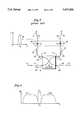
- FIG. 2is a prior art bandpass filter having a Michelson interferometer arrangement.
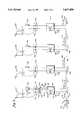
- FIG. 3is a schematic block diagram of a multiplexing configuration for coupling a plurality of wavelengths onto a single optical fiber, in accordance with the present invention.
- FIG. 4is a graph of reflectivity against wavelength for a bandpass filter function created by one or more Bragg gratings, in accordance with the present invention.
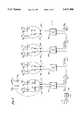
- FIG. 5is a schematic block diagram of an alternative embodiment for a multiplexing configuration for coupling a plurality of wavelengths onto a single optical fiber using less couplers, in accordance with the present invention.
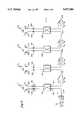
- FIG. 6is a schematic block diagram of an alternative application of the present invention as a demultiplexer, in accordance with the present invention.
- a prior art Michelson interferometer-based bandpass filter arrangement of the prior artcomprises a 2 ⁇ 2 optical coupler 10, e.g., a 3 dB or 50% or 50/50 optical coupler, which receives an input signal 12 along an optical fiber 14 which is fed to a port 16 of the coupler 10.
- the remaining portion of the light 12is coupled to a port 24 of the optical coupler 10 as indicated by a line 26 along a fiber 28.
- the light 20travels along the fiber 22 and is incident on a Bragg grating 30 which reflects a narrow wavelength band of light centered at a reflection wavelength ⁇ G , as indicated by a line 32 and passes all remaining wavelengths, as indicated by a line 34.
- the light 26 that exits the coupler 10 along the fiber 28is incident on a grating 38, identical to (or matching) the grating 30, having a central reflection wavelength centered at the wavelength ⁇ g .
- a reflectivity profile (or filter function) of the gratings 30,38is shown by the curve 39.
- the light reflected at the wavelength ⁇ g by the grating 38is indicated by a line 40 and all remaining wavelengths are passed by the grating 38 as indicated by a line 42.
- the light 32re-enters the coupler 10 at the port 18 and the reflected light 40 re-enters the coupler 10 at the port 24. This is similar to the basic principle of a Michelson interferometer that well known in the optical art.
- the signal 12 which enters the port 16 of the coupler 10incurs a phase shift of ⁇ /2 upon coupling to the opposite leg and exiting the output port 24 along the fiber 28.
- the signal 26Upon reflecting off the grating 38, the signal 26 experiences another ⁇ /2 due the reflection from the grating 38.
- the light 12 entering the coupler 16is also coupled to the output port 18 on the fiber 22 as the signal 20 without any phase shift.
- the signal 20is reflected off the grating 30 as the signal 32 which experiences a ⁇ /2 or 90° phase shift.
- the signal 32re-enters the coupler 10 at the port 18 and the portion which crosses-over to the port 50 experiences an additional ⁇ /2 phase shift due to the crossover.
- the signal 54 exiting the coupler 50comprises the wavelength ⁇ g of the input signal 12 which has been split 50/50 and then recombined completely in-phase so as to constructively interfere at the output port 50 of the coupler 10, thereby providing substantially the input signal 12 at the wavelength ⁇ g at the output fiber 152.
- there is destructive interference at the port 16thereby preventing any light 56 from exiting the coupler 10 along the fiber 14.
- the reflected light 40 from the grating 38 which re-enters the coupler 10 at the port 24is coupled over to the port 16 and incurs an additional ⁇ /2 phase shift, thereby having incurred a total of 270° (or 3 ⁇ /2) phase shift.
- the reflected light 32 from the grating 30 which re-enters the port 18has experienced a ⁇ /2 or 90° phase shift and is coupled to the port 16 without experiencing any additional phase shift.
- the returning signal 32has incurred a total of 90° phase shift and the returning signal 40 at the port 16 has incurred a total of 270° phase shift, thereby having a 180° phase shift between the signals and thus destructively interfering at the input port 16.
- the length of the optical path from the port 18 to the grating 30must be the same as, or an integral 1/2 number of wavelengths of, the optical path length from the port 24 to the grating 38.
- these optical path lengthsmay cause the total phase shift for the signals to be different than the example discussed hereinbefore; however, it is only required that the phases cancel at the input port 16 and add at the output port 50, to provide no reflection of the input wavelengths to the couplers. If the phases do not perfectly cancel, some amount of reflection will be seen. The amount of allowable reflection is determined by the application. Consequently, thermal effects should also be kept constant or matched for both path lengths to avoid changes in the amount of light reflected.
- a first embodiment of the present inventionaccepts an input signal 110 which propagates along an optical fiber 112 to an optical isolator 114.
- the output of the isolator 114provides an optical signal 116 on an optical fiber 118 to a port 120 of a 2 ⁇ 2 optical coupler 122, e.g., a 3 dB or 50/50 or 50% optical coupler.
- a predetermined portion, e.g., 50% of the input signal 116is coupled to an output port 124 of the coupler 122 as indicated by a line 126, along a fiber 128.
- the light 126is incident on the fiber Bragg grating 130.
- the grating 130has a reflection profile, as indicated by a curve 131, of a narrow bandpass or filter having central part of the bandpass region at the wavelength ⁇ 1 which is the same as the reflection wavelength of the grating 130.
- the grating 130passes a narrow wavelength band of light ⁇ 1 as indicated by a line 132 and reflects the remaining wavelengths as indicated by a line 134.
- the remaining portion of the light 116exits the coupler 122 from a port 136 on a fiber 138 as indicated by a line 140.
- Line 140is incident on a grating 142 which is identically matched in reflectivity profile to that of the grating 130.
- the grating 142passes a narrow wavelength band of light centered at the wavelength ⁇ 1 as indicated by a line 144 and passes the remaining wavelengths as indicated by a line 146.
- the reflected light 132,144 from the matched gratings 130,142re-enter the coupler 122 at the ports 124,136, respectively, and constructively interfere within the coupler 122 as discussed hereinbefore with respect to FIG. 2 such that all the reflected light at the wavelength ⁇ 0 exits a port 150 of the coupler 122. Because light both exits and re-enters the ports 124,136, they may be referred to as "bi-directional" ports herein.
- another input signal 154travels along the fiber 138 and is incident on the fiber grating 142, such signal 154 having a wavelength ⁇ 1 which passes through the grating 142 and enters the coupler 120 at the port 136.
- a predetermined portion, e.g., 50%, of the light 56is coupled to the port 120 along the fiber 118 as indicated by a line 158.
- the remaining portion, e.g., 50%, of the light 156is coupled to the output port 150 along the fiber 152.
- the wavelengths ⁇ 0 and ⁇ 1 which exit the coupler 122 at the port 150 along the fiber 152are collectively indicated by a line 160.
- the light 158travels along the fiber 118 and enters the isolator 114 which prevents the light 158 from exiting the input port along the line 112.
- the wavelength ⁇ 1has been coupled onto the fiber 52 along with the wavelength ⁇ 0 . Also, the wavelength ⁇ 1 on the fiber 152 experiences a 3 dB or 50% attenuation. However, the input signal 110 of ⁇ 0 experiences minimum attenuation.
- the fiber 152is fed to a similar configuration as that discussed hereinbefore with the coupler 122 comprising a 2 ⁇ 2 coupler 180 and a pair of matched gratings 182,184 each of which has a bandpass reflectivity profile as shown by a curve 185 such that the wavelength ⁇ 2 is passed and all other wavelengths are reflected. Consequently, the wavelengths ⁇ 0 , ⁇ 1 on the input line 160 to the coupler 180 are coupled directly to the output along a fiber 186 as indicated by a line 188. Additionally, an input signal 190 comprising a wavelength ⁇ 2 is incident on the grating 184 and exits the coupler along the fiber 152 as indicated by a line 192 and a line 188.
- the light 190is coupled 50/50 along each of the fibers 152,186, respectively.
- the wavelengths ⁇ 0 , ⁇ 1 , ⁇ 2propagate along the fiber 186.
- the fiber 186is fed again to a similar arrangement comprising a 2 ⁇ 2 coupler 200 and a pair of matched gratings 202,204 each having a bandpass reflectivity characteristic centered at ⁇ 3 , as shown by a curve 205.
- an input signal 206is incident on the grating 204 which passes the wavelength ⁇ 3 and enters the coupler 200, and a portion thereof, e.g., 50%, exits the coupler 200 as indicated by a line 208, and the remaining portion exits the coupler 200 on a fiber 210, as indicated by a line 212.
- the wavelengths ⁇ 0 , ⁇ 1 , ⁇ 2are coupled in their entirely to the fiber 210, thereby adding in the wavelength ⁇ 3 to the prior chain of ⁇ 0 , ⁇ 1 , ⁇ .sub. 2 , all along the fiber 210.
- the fiber 210is fed to a similar arrangement as the prior configurations comprising a 2 ⁇ 2 coupler 220 and a pair of matched gratings 222,224 which both have a bandpass reflectivity profile centered at the wavelength ⁇ 4 as indicated by a curve 225 and which provide the Michelson interferometer effect discussed hereinbefore.
- the entire signal 212comprising the wavelengths ⁇ 0 , ⁇ 1 , ⁇ 2 , ⁇ 3 is coupled over to an output fiber 226, as indicated by a line 228.
- an input signal 230 having a wavelength ⁇ 4is incident on the grating 224 which passes the wavelength ⁇ 4 .
- the signal 230then passes to the coupler 220 which couples a predetermined portion, e.g., 50%, of the signal 230 onto the fiber 226, which is combined with the other wavelengths to provide an output signal 228 on the fiber 226 having the wavelengths ⁇ 0 , ⁇ 1 , ⁇ 2 , ⁇ 3 , ⁇ 4 .
- the rest of the signal 230is coupled to the fiber 210 as indicated by the line 232.
- the reflected signals 158,192,208,232 from the couplers 122,180,200,220are successively passed backwards along the chain as indicated by the lines 249,242,244 which ultimately pass to the isolator 114 which does not allow such signals to exit the input fiber 112 and disrupt up-stream sources, and does not reflect such signals back into the coupler 122.
- the gratingmay be made by two broad reflectivity band gratings 100,102 placed side by side having a predetermined wavelength spacing ⁇ S therebetween.
- the wavelength spacing ⁇ Sis the bandpass region, with the center of that region ⁇ B being the center of the bandpass profile as indicated in FIG. 4.
- the broadband reflectivity profiles 100,102may be created as is known by a chirped or aperiodic refractive index variation distribution along the core of the fiber such as is discussed in co-pending U.S. patent application Ser. No. 08/169,796 entitled “Method and Apparatus for Forming Aperiodic Gratings and Optical Fibers.”
- broadband (e.g., 15 nm) gratingshave been fabricated in highly photosensitive hydrogen load fibers.
- Broader chirped gratingscan be fabricated interferometrically by placing appropriate radii of curvatures on the interfering beams.
- Another techniqueis to use known phase masks, with the grating chirp and transmission notch profiles encoded, which exposes the proper grating profile into the fibers in a reliable and repeatable way.
- the coupler 122,180,200,220may be a fused tapered coupler which is currently commercially available in photosensitive fibers such as a Corning SMF 28. Since this technology is well established it is possible to procure these tapered couplers in more highly photosensitive specialty fibers. In addition, the use of techniques such as hydrogen loading to increase fiber photosensitivity is also possible. In order to maximize efficiency, the gratings should be highly reflective and sufficiently broadband to cover the required bandwidth of the wavelength division multiplexed system. Maintenance of relatively short interferometer arms that the gratings are located on help to minimize interferometer sensitivity due to environmental effects.
- the gratingsmay be written before the fused tapered coupler is packaged, thereby providing very short distance between the gratings the point where the signals are coupled. Also, as discussed hereinbefore and in the aforementioned OFC proceedings paper, the optical path lengths between each of the matched gratings and its respective coupler must be the same or differ by an integral number of wavelengths for constructive interference to occur.
- an alternative embodiment of the present inventionuses the same basic coupler/grating arrangement as in FIG. 3 except that input signals are provided into both arms of the coupler.
- the gratings associated with a given couplereach have a different bandpass wavelength, as indicated by the curves 300-314. This allows the coupling of two wavelengths onto the output fiber of a given coupler instead of coupling only one wavelength. This configuration is more efficient than the embodiment of FIG. 3 by requiring only one-half the number couplers to couple the same number of wavelengths.
- phase shift and reflectivityshould be the same for gratings at the wavelengths being reflected back into the couplers (i.e., at other than the bandpass wavelengths) to ensure proper phase interaction (constructive and destructive interference) for the Michelson interferometer portion of the configuration, discussed hereinbefore.
- the two gratings associated with a given couplermay pass both wavelengths (e.g., ⁇ 1 and ⁇ 2 for the coupler 122, FIG. 5), thus placing two wavelength bandpass regions on each grating, as indicated by the curve 320.
- the gratings for a given couplerwould have identical filter functions, thereby allowing the gratings to be made simultaneously and ensuring that the phase shift of each grating is the same at non-bandpass wavelengths, to ensure proper phase interaction (constructive and destructive interference) for the Michelson interferometer portion of the configuration, discussed hereinbefore.
- the inventionmay be used as a demultiplexer.
- the input signal 110is a broad wavelength-band signal comprising a plurality of wavelengths, e.g., ⁇ 1 - ⁇ 8 .
- the gratingsare configured with the reflectivity profiles shown by the curves 300-314 of FIG. 5, each leg of the couplers that have a grating associated therewith allows the passband wavelength to pass as an output signal, as indicated by the solid lines 400-414. In that case, some of each input wavelength will exit the ports 120,150.
- the gratingsare matched and configured with the reflectivity profiles shown by the curves 131,185, 205,225 of FIG. 3, both legs of each coupler having gratings associated therewith pass the same passband wavelength so only one leg need be used as an output signal, as indicated by the dashed lines 420-426. Also, in that case, the isolator 114 is not needed.
- the inventiontakes an input signal having a plurality of wavelengths and demultiplexes the wavelengths onto a plurality individual output lines, thereby providing an efficient all-fiber wavelength demultiplexer.
- the isolator 114 at the input to the devicemay not be needed if the Michelson interferometer coupler/grating arrangement discussed hereinbefore provides no reflected wavelengths out of the input port 120 of the coupler 120, as would typically be the case.
Landscapes
- Engineering & Computer Science (AREA)
- Computer Networks & Wireless Communication (AREA)
- Physics & Mathematics (AREA)
- Signal Processing (AREA)
- General Physics & Mathematics (AREA)
- Optics & Photonics (AREA)
- Optical Communication System (AREA)
Abstract
Description
Copending U.S. patent applications U.S. Pat. No. 5,446,809, entitled "All Fiber Wavelength Selective Optical Switch" and Ser. No. 08/311,332, abandoned, entitled "Low-Loss Low-Reflection Wavelength Selective Optical Switch", both filed contemporaneously herewith, contain subject matter related to that disclosed herein.
This invention relates to wavelength coupling and more particularly to efficient wavelength coupling of a plurality of wavelengths onto an optical fiber.
It is known in the art of high speed optical communication systems that more than one wavelength may be used to carry information. In particular, each optical wavelength may be a carrier for digital or analog communication signals. Also, an optical switch may be used to discriminate on a wavelength basis as to which wavelengths get routed to which output(s) of the switch.
One prior art technique to couple a plurality, of wavelengths, e.g., 8, onto a signal fiber employs an arrangement of 2×2 couplers as shown in FIG. 1. In particular, two different wavelengths are fed into each 2×2 coupler in an input stage. A single output from each of the 2×2 couplers is fed to a second stage, where a single output from each pair of couplers is combined by another 2×2 coupler. A single output from each of the 2×2 couplers in the second stage is then fed to a third stage where each pair of outputs from the second stage is combined by another 2×2 coupler in the third stage.
The prior art arrangement shown in FIG. 1 couples eight wavelengths on eight separate fibers at the input stage to a single fiber at the output of the output stage. However, because there are three stages of coupling which occurs, and each stage incurs a 3 dB loss in the signal coupled, the total loss for a eight wavelength to one fiber coupling would be 87.5% loss (or 9 dB).
Thus, it would be desirable to obtain a device for efficient low loss multiplexing of a plurality of wavelengths onto a single optical fiber.
Objects of the invention include provision of an efficient multiplexing configuration for coupling a plurality of wavelengths on to a single optical fiber.
According to a first aspect of the present invention an optical wavelength multiplexer includes an optical coupler, having an input port, two bi-directional ports, and an output port, which couples a predetermined amount of a first input signal at the input port to the two bi-directional ports as coupled input light; a pair of reflective elements, each in the path of light exiting from one of the two bi-directional ports, and each having a predetermined reflectivity profile; the reflective elements each reflecting a predetermined wavelength-band of the coupled input light incident thereon back into a corresponding one of the two bi-directional ports as reflected input light; a predetermined amount of each of the reflected input light re-entering the corresponding one of the two bi-directional ports and being coupled by the coupler to the output port and the input port; the reflective elements, the coupler, and optical path lengths traveled by the coupled input light and the reflected input light having a cumulative phase shift such that light which is coupled to the input port destructively interferes at the input port and the light which is coupled to the output port constructively interferes at the output port, thereby providing substantially all of the first input light to the output port; one of the pair of reflective elements having a second input signal incident thereon and passing a predetermined wavelength-band of the second input signal which enters a corresponding one of the two bi-directional ports; a predetermined amount of the second input signal entering the corresponding one of the two bi-directional ports being coupled by the coupler to the output port; and thereby coupling a predetermined wavelength-band of the first input signal and a predetermined wavelength-band of the second input signal to the output port.
According further to the first aspect of the present invention, the other of the pair of reflective elements having a third input signal incident thereon and passing a predetermined wavelength-band of the third input signal which enters a corresponding one of the two bi-directional ports; a predetermined amount of the third input signal entering the corresponding one of the two bi-directional ports being coupled by the coupler to the output port; and thereby coupling a predetermined wavelength-band of the first input signal, the second input signal and the third input signal to the output port.
Still further according to the first aspect of the present invention, the pair of reflective elements have matching reflectivity profiles.
According to a second aspect of the present invention, an optical wavelength de-multiplexer includes an optical coupler, having an input port, two bi-directional ports, and an output port, which couples a predetermined amount of a first input signal at the input port to the two bi-directional ports as coupled input light; a pair of reflective elements, each in the path of light exiting from one of the two bi-directional ports, and each having a predetermined reflectivity profile; the reflective elements each reflecting a predetermined wavelength-band of the coupled input light incident thereon back into a corresponding one of the two bi-directional ports as reflected input light and at least one of the pair of reflective elements passing a predetermined wavelength band of the coupled input light to an associated output waveguide; a predetermined amount of each of the reflected input light re-entering the corresponding one of the two bi-directional ports being coupled by the coupler to the output port and the input port; the reflective elements, the coupler, and optical path lengths traveled by the coupled input light and the reflected input light having a cumulative phase shift such that light which is coupled to the input port destructively interferes at the input port and the light which is coupled to the output port constructively interferes at the output port, thereby providing substantially all of the first input light to the output port; and thereby coupling a predetermined wavelength-band of the first input signal to the output waveguide.
According further to the second aspect of the present invention, the pair of reflective elements have matching reflectivity profiles.
The invention represents a significant improvement over the prior art by providing an efficient multiplexing configuration that simply and inexpensively couples a plurality of individual wavelengths onto a single optical fiber. Alternatively, the invention may also be used as a demultiplexer to separate out individual wavelengths from one input having a plurality of wavelengths to a plurality of separate outputs.
The foregoing and other objects, features and advantages of the present invention will become more apparent in light of the following detailed description of exemplary embodiments thereof as illustrated in the accompanying drawings.
FIG. 1 is a prior art wavelength multiplexing arrangement.
FIG. 2 is a prior art bandpass filter having a Michelson interferometer arrangement.
FIG. 3 is a schematic block diagram of a multiplexing configuration for coupling a plurality of wavelengths onto a single optical fiber, in accordance with the present invention.
FIG. 4 is a graph of reflectivity against wavelength for a bandpass filter function created by one or more Bragg gratings, in accordance with the present invention.
FIG. 5 is a schematic block diagram of an alternative embodiment for a multiplexing configuration for coupling a plurality of wavelengths onto a single optical fiber using less couplers, in accordance with the present invention.
FIG. 6 is a schematic block diagram of an alternative application of the present invention as a demultiplexer, in accordance with the present invention.
Referring to FIG. 2, a prior art Michelson interferometer-based bandpass filter arrangement of the prior art comprises a 2×2optical coupler 10, e.g., a 3 dB or 50% or 50/50 optical coupler, which receives aninput signal 12 along anoptical fiber 14 which is fed to aport 16 of thecoupler 10. A predetermined portion of theinput light 12, e.g., 50%, exits aport 18 of thecoupler 10 as indicated by aline 20 along afiber 22. The remaining portion of thelight 12 is coupled to aport 24 of theoptical coupler 10 as indicated by aline 26 along afiber 28.
Thelight 20 travels along thefiber 22 and is incident on a Bragg grating 30 which reflects a narrow wavelength band of light centered at a reflection wavelength λG, as indicated by aline 32 and passes all remaining wavelengths, as indicated by aline 34.
Thelight 26 that exits thecoupler 10 along thefiber 28 is incident on agrating 38, identical to (or matching) thegrating 30, having a central reflection wavelength centered at the wavelength λg. A reflectivity profile (or filter function) of thegratings curve 39. The light reflected at the wavelength λg by thegrating 38 is indicated by aline 40 and all remaining wavelengths are passed by thegrating 38 as indicated by aline 42. Thelight 32 re-enters thecoupler 10 at theport 18 and thereflected light 40 re-enters thecoupler 10 at theport 24. This is similar to the basic principle of a Michelson interferometer that well known in the optical art. Thesignal 12 which enters theport 16 of thecoupler 10 incurs a phase shift of π/2 upon coupling to the opposite leg and exiting theoutput port 24 along thefiber 28. Upon reflecting off thegrating 38, thesignal 26 experiences another π/2 due the reflection from thegrating 38. As a consequence, there is a net total phase shift of 180° or π from theinput signal 12 to thereflected signal 40. Similarly, thelight 12 entering thecoupler 16 is also coupled to theoutput port 18 on thefiber 22 as thesignal 20 without any phase shift. Thesignal 20 is reflected off the grating 30 as thesignal 32 which experiences a π/2 or 90° phase shift. Thesignal 32 re-enters thecoupler 10 at theport 18 and the portion which crosses-over to theport 50 experiences an additional π/2 phase shift due to the crossover. Thus, thesignal 54 exiting thecoupler 50 comprises the wavelength λg of theinput signal 12 which has been split 50/50 and then recombined completely in-phase so as to constructively interfere at theoutput port 50 of thecoupler 10, thereby providing substantially theinput signal 12 at the wavelength λg at theoutput fiber 152. Similarly, there is destructive interference at theport 16 thereby preventing any light 56 from exiting thecoupler 10 along thefiber 14. In particular, the reflectedlight 40 from thegrating 38 which re-enters thecoupler 10 at theport 24 is coupled over to theport 16 and incurs an additional π/2 phase shift, thereby having incurred a total of 270° (or 3π/2) phase shift. However, thereflected light 32 from thegrating 30 which re-enters theport 18 has experienced a π/2 or 90° phase shift and is coupled to theport 16 without experiencing any additional phase shift. Thus, the returningsignal 32 has incurred a total of 90° phase shift and the returningsignal 40 at theport 16 has incurred a total of 270° phase shift, thereby having a 180° phase shift between the signals and thus destructively interfering at theinput port 16. Therefore, no light 56 from exits theinput port 16 along thefiber 14. Such a device is described in the publication W. W. Morey, "Tunable Narrow-Line Bandpass Filter Using Fiber Gratings," Technical Digest, Optical Fiber Communication Conference, San Diego, Calif. Feb. 18-22, 1991, which is incorporated herein by reference.
Because the amount of phase shift of each signal is important for proper operation, the length of the optical path from theport 18 to thegrating 30 must be the same as, or an integral 1/2 number of wavelengths of, the optical path length from theport 24 to thegrating 38. Also, it should be understood that these optical path lengths may cause the total phase shift for the signals to be different than the example discussed hereinbefore; however, it is only required that the phases cancel at theinput port 16 and add at theoutput port 50, to provide no reflection of the input wavelengths to the couplers. If the phases do not perfectly cancel, some amount of reflection will be seen. The amount of allowable reflection is determined by the application. Consequently, thermal effects should also be kept constant or matched for both path lengths to avoid changes in the amount of light reflected. Also, it should be understood that the amount of phase shift may be other than 90 degrees after being reflected from the grating for wavelengths of the incident light at other than the reflection wavelength of the grating. Referring now to FIG. 3, a first embodiment of the present invention accepts aninput signal 110 which propagates along anoptical fiber 112 to anoptical isolator 114. The output of theisolator 114 provides anoptical signal 116 on anoptical fiber 118 to aport 120 of a 2×2optical coupler 122, e.g., a 3 dB or 50/50 or 50% optical coupler. A predetermined portion, e.g., 50% of theinput signal 116 is coupled to anoutput port 124 of thecoupler 122 as indicated by aline 126, along afiber 128. The light 126 is incident on the fiber Bragg grating 130. The grating 130 has a reflection profile, as indicated by acurve 131, of a narrow bandpass or filter having central part of the bandpass region at the wavelength λ1 which is the same as the reflection wavelength of thegrating 130. Thus, the grating 130 passes a narrow wavelength band of light λ1 as indicated by aline 132 and reflects the remaining wavelengths as indicated by a line 134.
Symmetrically, the remaining portion of the light 116 exits thecoupler 122 from aport 136 on afiber 138 as indicated by aline 140.Line 140 is incident on a grating 142 which is identically matched in reflectivity profile to that of thegrating 130. The grating 142 passes a narrow wavelength band of light centered at the wavelength λ1 as indicated by aline 144 and passes the remaining wavelengths as indicated by a line 146. The reflected light 132,144 from the matched gratings 130,142 re-enter thecoupler 122 at the ports 124,136, respectively, and constructively interfere within thecoupler 122 as discussed hereinbefore with respect to FIG. 2 such that all the reflected light at the wavelength λ0 exits aport 150 of thecoupler 122. Because light both exits and re-enters the ports 124,136, they may be referred to as "bi-directional" ports herein.
Additionally, anotherinput signal 154 travels along thefiber 138 and is incident on the fiber grating 142,such signal 154 having a wavelength λ1 which passes through the grating 142 and enters thecoupler 120 at theport 136. As indicated by aline 156, a predetermined portion, e.g., 50%, of the light 56 is coupled to theport 120 along thefiber 118 as indicated by aline 158. Similarly, the remaining portion, e.g., 50%, of the light 156 is coupled to theoutput port 150 along thefiber 152. The wavelengths λ0 and λ1 which exit thecoupler 122 at theport 150 along thefiber 152 are collectively indicated by aline 160. The light 158 travels along thefiber 118 and enters theisolator 114 which prevents the light 158 from exiting the input port along theline 112.
Therefore, the wavelength λ1 has been coupled onto thefiber 52 along with the wavelength λ0. Also, the wavelength λ1 on thefiber 152 experiences a 3 dB or 50% attenuation. However, theinput signal 110 of λ0 experiences minimum attenuation.
Thefiber 152 is fed to a similar configuration as that discussed hereinbefore with thecoupler 122 comprising a 2×2coupler 180 and a pair of matched gratings 182,184 each of which has a bandpass reflectivity profile as shown by acurve 185 such that the wavelength λ2 is passed and all other wavelengths are reflected. Consequently, the wavelengths λ0, λ1 on theinput line 160 to thecoupler 180 are coupled directly to the output along afiber 186 as indicated by aline 188. Additionally, aninput signal 190 comprising a wavelength λ2 is incident on thegrating 184 and exits the coupler along thefiber 152 as indicated by aline 192 and aline 188. The light 190 is coupled 50/50 along each of the fibers 152,186, respectively. Thus, the wavelengths λ0, λ1, λ2 propagate along thefiber 186. Thefiber 186 is fed again to a similar arrangement comprising a 2×2coupler 200 and a pair of matched gratings 202,204 each having a bandpass reflectivity characteristic centered at λ3, as shown by acurve 205. Additionally, aninput signal 206 is incident on the grating 204 which passes the wavelength λ3 and enters thecoupler 200, and a portion thereof, e.g., 50%, exits thecoupler 200 as indicated by aline 208, and the remaining portion exits thecoupler 200 on afiber 210, as indicated by aline 212. The wavelengths λ0, λ1, λ2 are coupled in their entirely to thefiber 210, thereby adding in the wavelength λ3 to the prior chain of λ0, λ1, λ.sub.2, all along thefiber 210.
Thefiber 210 is fed to a similar arrangement as the prior configurations comprising a 2×2coupler 220 and a pair of matched gratings 222,224 which both have a bandpass reflectivity profile centered at the wavelength λ4 as indicated by acurve 225 and which provide the Michelson interferometer effect discussed hereinbefore. Thus, theentire signal 212 comprising the wavelengths λ0, λ1, λ2, λ3 is coupled over to anoutput fiber 226, as indicated by aline 228. Additionally, aninput signal 230 having a wavelength λ4 is incident on the grating 224 which passes the wavelength λ4. Thesignal 230 then passes to thecoupler 220 which couples a predetermined portion, e.g., 50%, of thesignal 230 onto thefiber 226, which is combined with the other wavelengths to provide anoutput signal 228 on thefiber 226 having the wavelengths λ0, λ1, λ2, λ3, λ4. The rest of thesignal 230 is coupled to thefiber 210 as indicated by theline 232. Also, the reflected signals 158,192,208,232 from the couplers 122,180,200,220 are successively passed backwards along the chain as indicated by the lines 249,242,244 which ultimately pass to theisolator 114 which does not allow such signals to exit theinput fiber 112 and disrupt up-stream sources, and does not reflect such signals back into thecoupler 122.
It should be understood that this progression may continue for any number of wavelengths and the maximum degradation or attenuation which occurs on any of the input signals is an initial 3 dB attenuation only (plus any additional small loss due to coupler loss or due to not having gratings with 100% reflection), independent of the number of wavelengths to be coupled onto the output fiber. Referring to FIG. 4, to make the narrow bandpass reflectivity profile shown by the curves 131,185,205,225 of FIG. 3, the grating may be made by two broad reflectivity band gratings 100,102 placed side by side having a predetermined wavelength spacing λS therebetween. The wavelength spacing λS is the bandpass region, with the center of that region λB being the center of the bandpass profile as indicated in FIG. 4. The broadband reflectivity profiles 100,102 may be created as is known by a chirped or aperiodic refractive index variation distribution along the core of the fiber such as is discussed in co-pending U.S. patent application Ser. No. 08/169,796 entitled "Method and Apparatus for Forming Aperiodic Gratings and Optical Fibers."
To date, broadband (e.g., 15 nm) gratings have been fabricated in highly photosensitive hydrogen load fibers. Broader chirped gratings can be fabricated interferometrically by placing appropriate radii of curvatures on the interfering beams. Another technique is to use known phase masks, with the grating chirp and transmission notch profiles encoded, which exposes the proper grating profile into the fibers in a reliable and repeatable way.
Referring again to FIG. 3, the coupler 122,180,200,220 may be a fused tapered coupler which is currently commercially available in photosensitive fibers such as aCorning SMF 28. Since this technology is well established it is possible to procure these tapered couplers in more highly photosensitive specialty fibers. In addition, the use of techniques such as hydrogen loading to increase fiber photosensitivity is also possible. In order to maximize efficiency, the gratings should be highly reflective and sufficiently broadband to cover the required bandwidth of the wavelength division multiplexed system. Maintenance of relatively short interferometer arms that the gratings are located on help to minimize interferometer sensitivity due to environmental effects. Also, the gratings may be written before the fused tapered coupler is packaged, thereby providing very short distance between the gratings the point where the signals are coupled. Also, as discussed hereinbefore and in the aforementioned OFC proceedings paper, the optical path lengths between each of the matched gratings and its respective coupler must be the same or differ by an integral number of wavelengths for constructive interference to occur.
Referring now to FIG. 5, an alternative embodiment of the present invention uses the same basic coupler/grating arrangement as in FIG. 3 except that input signals are provided into both arms of the coupler. In this configuration, the gratings associated with a given coupler each have a different bandpass wavelength, as indicated by the curves 300-314. This allows the coupling of two wavelengths onto the output fiber of a given coupler instead of coupling only one wavelength. This configuration is more efficient than the embodiment of FIG. 3 by requiring only one-half the number couplers to couple the same number of wavelengths. It should be understood that the phase shift and reflectivity should be the same for gratings at the wavelengths being reflected back into the couplers (i.e., at other than the bandpass wavelengths) to ensure proper phase interaction (constructive and destructive interference) for the Michelson interferometer portion of the configuration, discussed hereinbefore.
Alternatively, for ease of fabrication with the embodiment of FIG. 5 and to maximize matching of gratings, the two gratings associated with a given coupler may pass both wavelengths (e.g., λ1 and λ2 for thecoupler 122, FIG. 5), thus placing two wavelength bandpass regions on each grating, as indicated by thecurve 320. In that case, the gratings for a given coupler would have identical filter functions, thereby allowing the gratings to be made simultaneously and ensuring that the phase shift of each grating is the same at non-bandpass wavelengths, to ensure proper phase interaction (constructive and destructive interference) for the Michelson interferometer portion of the configuration, discussed hereinbefore.
Referring now to FIG. 6, alternatively, the invention may be used as a demultiplexer. In that case, theinput signal 110 is a broad wavelength-band signal comprising a plurality of wavelengths, e.g., λ1 -λ8. If the gratings are configured with the reflectivity profiles shown by the curves 300-314 of FIG. 5, each leg of the couplers that have a grating associated therewith allows the passband wavelength to pass as an output signal, as indicated by the solid lines 400-414. In that case, some of each input wavelength will exit the ports 120,150. Alternatively, if the gratings are matched and configured with the reflectivity profiles shown by the curves 131,185, 205,225 of FIG. 3, both legs of each coupler having gratings associated therewith pass the same passband wavelength so only one leg need be used as an output signal, as indicated by the dashed lines 420-426. Also, in that case, theisolator 114 is not needed.
Thus, when used in this application, the invention takes an input signal having a plurality of wavelengths and demultiplexes the wavelengths onto a plurality individual output lines, thereby providing an efficient all-fiber wavelength demultiplexer. Also, theisolator 114 at the input to the device may not be needed if the Michelson interferometer coupler/grating arrangement discussed hereinbefore provides no reflected wavelengths out of theinput port 120 of thecoupler 120, as would typically be the case.
Although the invention has been described and illustrated with respect to the exemplary embodiments thereof, it should be understood by those skilled in the art that the foregoing and various other changes, omissions and additions may be made without departing from the spirit and scope of the invention.
Claims (10)
1. An optical wavelength multiplexer, comprising:
a plurality of optical couplers, each having a corresponding input port, two corresponding bi-directional ports, and a corresponding output port, and each coupling a predetermined amount of a corresponding first input signal at said corresponding input port to said corresponding two bi-directional ports as coupled input light;
said couplers being connected to each other in a sequential series, said output port of each coupler being connected to the input port of the next coupler in said series, except for the last of said couplers in said series;
a pair of reflective elements corresponding to each of said couplers, each of said pair being in the path of light exiting from one of said two bi-directional ports, and each of said elements having a predetermined reflectivity profile;
said reflective elements each reflecting a predetermined wavelength-band of said coupled input light incident thereon back into a corresponding one of said two bi-directional ports as reflected input light;
a predetermined amount of each of said reflected input light re-entering said corresponding one of said two bi-directional ports being coupled by said coupler to said corresponding output port and said corresponding input port;
said reflective elements, each of said couplers, and optical path lengths traveled by said coupled input light and said reflected input light having a cumulative phase shift such that light which is coupled to said corresponding input port destructively interferes at said corresponding input port and the light which is coupled to said corresponding output port constructively interferes at said corresponding output port, thereby providing substantially all of said corresponding first input light to said corresponding output port;
one of said pair of reflective elements for each of said couplers having a second corresponding input signal incident thereon and passing a predetermined wavelength-band of said second corresponding input signal which enters a corresponding one of said two bi-directional ports;
a predetermined amount of said second corresponding input signal entering said corresponding one of said two bi-directional ports being coupled by said coupler to said corresponding output port for each of said couplers; and
thereby coupling a predetermined wavelength-band of said first corresponding input signal and a predetermined wavelength-band of each of said second corresponding input signals for each of said couplers to the output port of said last of said couplers in said series.
2. The optical wavelength multiplexer of claim 1 further comprising:
the other of said pair of reflective elements having a third corresponding input signal incident thereon and passing a predetermined wavelength-band of said third corresponding input signal which enters a corresponding one of said two bi-directional ports;
a predetermined amount of said third corresponding input signal entering said corresponding one of said two bi-directional ports being coupled by said coupler to said output port; and
thereby coupling a predetermined wavelength-band of said first corresponding input signal, said second corresponding input signal and said third corresponding input signal to said output port.
3. The optical wavelength multiplexer of claim 1 wherein said pair of reflective elements have matching reflectivity profiles.
4. The optical wavelength multiplexer of claim 2 wherein said pair of reflective elements have matching reflectivity profiles.
5. The optical wavelength multiplexer of claim 1 wherein said reflective elements comprise Bragg gratings.
6. An optical wavelength de-multiplexer, comprising:
a plurality of optical couplers, each having a corresponding input port, two corresponding bi-directional ports, and a corresponding output port, and each coupling a predetermined amount of a corresponding first input signal at said corresponding input port to said corresponding two bi-directional ports as coupled input light;
said couplers being connected to each other in a sequential series, said output port of each coupler being connected to the input port of the next coupler in said series, except for the last of said couplers in said series;
a pair of reflective elements corresponding to each of said couplers, each of said pair being in the path of light exiting from one of said two bi-directional ports, and each of said elements having a predetermined reflectivity profile;
said reflective elements each reflecting a predetermined wavelength-band of said coupled input light incident thereon back into a corresponding one of said two bi-directional ports as reflected input light and at least one of said pair of reflective elements passing a predetermined wavelength band of said coupled input light to a corresponding output waveguide;
a predetermined amount of each of said reflected input light re-entering said corresponding one of said two bi-directional ports being coupled by said coupler to said corresponding output port and said corresponding input port;
said reflective elements, each of said couplers, and optical path lengths traveled by said coupled input light and said reflected input light having a cumulative phase shift such that light which is coupled to said corresponding input port destructively interferes at said corresponding input port and the light which is coupled to said corresponding output port constructively interferes at said corresponding output port, thereby providing substantially all of said corresponding first input light to said corresponding output port; and
thereby coupling a corresponding predetermined wavelength-band of said first corresponding input signal to said output waveguides of each of said couplers.
7. The optical wavelength de-multiplexer of claim 6 wherein said pair of reflective elements have matching reflectivity profiles.
8. The optical wavelength de-multiplexer of claim 6 wherein no light is reflected out of said corresponding input port.
9. The optical wavelength de-multiplexer of claim 6 wherein said reflective elements comprise Bragg gratings.
10. The optical wavelength de-multiplexer of claim 6 wherein said output waveguide is an optical fiber.
Priority Applications (7)
| Application Number | Priority Date | Filing Date | Title |
|---|---|---|---|
| US08/311,333US5657406A (en) | 1994-09-23 | 1994-09-23 | Efficient optical wavelength multiplexer/de-multiplexer |
| DE69526587TDE69526587T2 (en) | 1994-09-23 | 1995-09-22 | EFFICIENT OPTICAL WAVELENGTH MULTIPLEXER / DEMULTIPLEXER |
| EP95933937AEP0782799B1 (en) | 1994-09-23 | 1995-09-22 | Efficient optical wavelength multiplexer/de-multiplexer |
| JP51112096AJP3683588B2 (en) | 1994-09-23 | 1995-09-22 | Effective optical wavelength multiplexer / demultiplexer |
| CA002200300ACA2200300C (en) | 1994-09-23 | 1995-09-22 | Efficient optical wavelength multiplexer/de-multiplexer |
| PCT/US1995/012231WO1996009703A1 (en) | 1994-09-23 | 1995-09-22 | Efficient optical wavelength multiplexer/de-multiplexer |
| ES95933937TES2176340T3 (en) | 1994-09-23 | 1995-09-22 | EFFICIENT MULTIPLEXOR-DEMULTIPLEXOR OF WAVE LENGTHS ON AN OPTICAL FIBER. |
Applications Claiming Priority (1)
| Application Number | Priority Date | Filing Date | Title |
|---|---|---|---|
| US08/311,333US5657406A (en) | 1994-09-23 | 1994-09-23 | Efficient optical wavelength multiplexer/de-multiplexer |
Publications (1)
| Publication Number | Publication Date |
|---|---|
| US5657406Atrue US5657406A (en) | 1997-08-12 |
Family
ID=23206425
Family Applications (1)
| Application Number | Title | Priority Date | Filing Date |
|---|---|---|---|
| US08/311,333Expired - LifetimeUS5657406A (en) | 1994-09-23 | 1994-09-23 | Efficient optical wavelength multiplexer/de-multiplexer |
Country Status (7)
| Country | Link |
|---|---|
| US (1) | US5657406A (en) |
| EP (1) | EP0782799B1 (en) |
| JP (1) | JP3683588B2 (en) |
| CA (1) | CA2200300C (en) |
| DE (1) | DE69526587T2 (en) |
| ES (1) | ES2176340T3 (en) |
| WO (1) | WO1996009703A1 (en) |
Cited By (37)
| Publication number | Priority date | Publication date | Assignee | Title |
|---|---|---|---|---|
| US5740289A (en)* | 1996-12-30 | 1998-04-14 | At&T Corp | Optical arrangement for amplifying WDM signals |
| US5742714A (en)* | 1995-12-22 | 1998-04-21 | Northern Telecom Limited | Optical FM to AM conversion |
| US5838848A (en)* | 1996-01-09 | 1998-11-17 | Instruments, S.A. | N×N wavelength router, optical routing method and associated communication network |
| US5943457A (en)* | 1998-03-24 | 1999-08-24 | Telecommunications Research Laboratories | Generalized resonant coupler filters |
| US6011884A (en)* | 1997-12-13 | 2000-01-04 | Lightchip, Inc. | Integrated bi-directional axial gradient refractive index/diffraction grating wavelength division multiplexer |
| US6011885A (en)* | 1997-12-13 | 2000-01-04 | Lightchip, Inc. | Integrated bi-directional gradient refractive index wavelength division multiplexer |
| FR2782588A1 (en)* | 1998-08-24 | 2000-02-25 | Alsthom Cge Alcatel | WAVELENGTH MULTIPLEX OPTICAL SIGNAL INSERTION / EXTRACTION DEVICE |
| WO2000050943A1 (en)* | 1999-02-22 | 2000-08-31 | Sumicem Opto-Electronics (Ireland) Ltd. | High isolation couplers |
| US6137933A (en)* | 1997-12-13 | 2000-10-24 | Lightchip, Inc. | Integrated bi-directional dual axial gradient refractive index/diffraction grating wavelength division multiplexer |
| US6236780B1 (en) | 1997-12-13 | 2001-05-22 | Light Chip, Inc. | Wavelength division multiplexing/demultiplexing devices using dual diffractive optic lenses |
| US6243513B1 (en) | 1997-12-13 | 2001-06-05 | Lightchip, Inc. | Wavelength division multiplexing/demultiplexing devices using diffractive optic lenses |
| US6256431B1 (en)* | 1999-02-11 | 2001-07-03 | Eci Telecom Ltd. | WDM multiplexer |
| US6263135B1 (en) | 1997-12-13 | 2001-07-17 | Lightchip, Inc. | Wavelength division multiplexing/demultiplexing devices using high index of refraction crystalline lenses |
| US20010008453A1 (en)* | 2000-01-13 | 2001-07-19 | Sumitomo Electric Industries, Ltd. | Optical transmission system and channel assigning method |
| US6271970B1 (en) | 1997-12-13 | 2001-08-07 | Lightchip, Inc. | Wavelength division multiplexing/demultiplexing devices using dual homogeneous refractive index lenses |
| US6289155B1 (en) | 1997-12-13 | 2001-09-11 | Lightchip, Inc. | Wavelength division multiplexing/demultiplexing devices using dual high index of refraction crystalline lenses |
| US20010024543A1 (en)* | 2000-03-22 | 2001-09-27 | Tellamon Photonic Networks Inc. | Mach-zehnder based filter demultiplexers and method |
| US6298182B1 (en) | 1997-12-13 | 2001-10-02 | Light Chip, Inc. | Wavelength division multiplexing/demultiplexing devices using polymer lenses |
| US6330090B1 (en)* | 1997-02-14 | 2001-12-11 | Photonetics | Optical fiber wavelength, multiplexer and demultiplexer |
| US6341025B1 (en) | 1996-02-23 | 2002-01-22 | Ciena Corporation | WDM optical communication systems with wavelength-stabilized optical selectors |
| US6343169B1 (en) | 1999-02-25 | 2002-01-29 | Lightchip, Inc. | Ultra-dense wavelength division multiplexing/demultiplexing device |
| US6404945B1 (en) | 1997-12-13 | 2002-06-11 | Lightchip, Inc. | Wavelength division multiplexing/demultiplexing devices using homogeneous refractive index lenses |
| US6415073B1 (en) | 2000-04-10 | 2002-07-02 | Lightchip, Inc. | Wavelength division multiplexing/demultiplexing devices employing patterned optical components |
| US6434299B1 (en) | 1999-06-01 | 2002-08-13 | Lightchip, Inc. | Wavelength division multiplexing/demultiplexing devices having concave diffraction gratings |
| EP1243951A1 (en)* | 2001-03-20 | 2002-09-25 | Agilent Technologies, Inc. (a Delaware corporation) | An optical multiplexer/demultiplexer |
| US6480648B1 (en) | 1999-02-25 | 2002-11-12 | Lightchip, Inc. | Technique for detecting the status of WDM optical signals |
| US6516112B1 (en) | 1996-11-28 | 2003-02-04 | Samsung Electronics Co., Ltd. | Optical wavelength filter and demultiplexer |
| US6522797B1 (en) | 1998-09-01 | 2003-02-18 | Input/Output, Inc. | Seismic optical acoustic recursive sensor system |
| US6535331B2 (en)* | 2000-01-19 | 2003-03-18 | Advantest, Corp. | Wideband optical amplifier and wideband variable wavelength optical source |
| US6546160B1 (en)* | 1997-10-21 | 2003-04-08 | Robert Bosch Gmbh | Transceiver for wavelength multiplexing processes |
| US6661942B1 (en) | 1998-07-20 | 2003-12-09 | Trans Photonics, Llc | Multi-functional optical switch (optical wavelength division multiplexer/demultiplexer, add-drop multiplexer and inter-connect device) and its methods of manufacture |
| US20040013375A1 (en)* | 2000-10-19 | 2004-01-22 | Alireza Gharavi | Novel substituted-polyaryl chromophoric compounds |
| US6724950B2 (en) | 2000-03-31 | 2004-04-20 | Board Of Regents, The University Of Texas System | Electro-optically tunable filter with mesh structure to filter optical signal |
| US6829096B1 (en) | 1999-02-25 | 2004-12-07 | Confluent Photonics Corporation | Bi-directional wavelength division multiplexing/demultiplexing devices |
| WO2012082375A1 (en)* | 2010-12-13 | 2012-06-21 | Neophotonics Corporation | Optical network communication system with optical line terminal transceiver and method of operation thereof |
| US11002980B1 (en)* | 2020-03-10 | 2021-05-11 | Cisco Technology, Inc. | Cascaded arrangement of two-mode Bragg gratings in multiplexing applications |
| US11249246B2 (en) | 2019-06-18 | 2022-02-15 | Cisco Technology, Inc. | Multiple stage Bragg gratings in multiplexing applications |
Families Citing this family (5)
| Publication number | Priority date | Publication date | Assignee | Title |
|---|---|---|---|---|
| US5721796A (en)* | 1996-06-21 | 1998-02-24 | Lucent Technologies Inc. | Optical fiber cross connect with active routing for wavelength multiplexing and demultiplexing |
| KR100207602B1 (en) | 1996-12-06 | 1999-07-15 | 윤종용 | Optical filter for preventing loss of optical power and optical demultiplexer using same |
| KR19980068452A (en)* | 1997-02-19 | 1998-10-15 | 김광호 | Demultiplexer of WDM transmission system |
| FI112569B (en) | 1997-05-13 | 2003-12-15 | Nokia Corp | Optical add / drop device |
| AUPR606501A0 (en)* | 2001-07-02 | 2001-07-26 | Adc Australia Pty Ltd | A multiple wavelength combiner |
Citations (9)
| Publication number | Priority date | Publication date | Assignee | Title |
|---|---|---|---|---|
| US4900119A (en)* | 1988-04-01 | 1990-02-13 | Canadian Patents & Development Ltd. | Wavelength selective optical devices using optical directional coupler |
| US5048909A (en)* | 1990-07-27 | 1991-09-17 | At&T Bell Laboratories | Adiabatic reflection apparatus |
| US5093876A (en)* | 1990-07-27 | 1992-03-03 | At&T Bell Laboratories | WDM systems incorporating adiabatic reflection filters |
| EP0475016A2 (en)* | 1990-08-24 | 1992-03-18 | Hitachi, Ltd. | Wavelength-multiplexed optical network system |
| US5218655A (en)* | 1992-05-29 | 1993-06-08 | At&T Bell Laboratories | Article comprising an optical waveguide with in-line refractive index grating |
| US5271024A (en)* | 1992-07-27 | 1993-12-14 | General Instrument Corporation | Optical fiber amplifier and laser with flattened gain slope |
| DE4302133A1 (en)* | 1993-01-27 | 1994-07-28 | Kabelmetal Electro Gmbh | Three wavelength multiplexer-demultiplexer |
| US5425116A (en)* | 1993-11-16 | 1995-06-13 | At&T Corp. | Tunable optical waveguide grating arrangement |
| US5446809A (en)* | 1994-09-23 | 1995-08-29 | United Technologies Corporation | All fiber wavelength selective optical switch |
Family Cites Families (1)
| Publication number | Priority date | Publication date | Assignee | Title |
|---|---|---|---|---|
| JPS5851248B2 (en)* | 1983-01-31 | 1983-11-15 | 日本電信電話株式会社 | Optical wavelength selective coupling device |
- 1994
- 1994-09-23USUS08/311,333patent/US5657406A/ennot_activeExpired - Lifetime
- 1995
- 1995-09-22WOPCT/US1995/012231patent/WO1996009703A1/enactiveIP Right Grant
- 1995-09-22EPEP95933937Apatent/EP0782799B1/ennot_activeExpired - Lifetime
- 1995-09-22ESES95933937Tpatent/ES2176340T3/ennot_activeExpired - Lifetime
- 1995-09-22CACA002200300Apatent/CA2200300C/ennot_activeExpired - Lifetime
- 1995-09-22JPJP51112096Apatent/JP3683588B2/ennot_activeExpired - Lifetime
- 1995-09-22DEDE69526587Tpatent/DE69526587T2/ennot_activeExpired - Lifetime
Patent Citations (9)
| Publication number | Priority date | Publication date | Assignee | Title |
|---|---|---|---|---|
| US4900119A (en)* | 1988-04-01 | 1990-02-13 | Canadian Patents & Development Ltd. | Wavelength selective optical devices using optical directional coupler |
| US5048909A (en)* | 1990-07-27 | 1991-09-17 | At&T Bell Laboratories | Adiabatic reflection apparatus |
| US5093876A (en)* | 1990-07-27 | 1992-03-03 | At&T Bell Laboratories | WDM systems incorporating adiabatic reflection filters |
| EP0475016A2 (en)* | 1990-08-24 | 1992-03-18 | Hitachi, Ltd. | Wavelength-multiplexed optical network system |
| US5218655A (en)* | 1992-05-29 | 1993-06-08 | At&T Bell Laboratories | Article comprising an optical waveguide with in-line refractive index grating |
| US5271024A (en)* | 1992-07-27 | 1993-12-14 | General Instrument Corporation | Optical fiber amplifier and laser with flattened gain slope |
| DE4302133A1 (en)* | 1993-01-27 | 1994-07-28 | Kabelmetal Electro Gmbh | Three wavelength multiplexer-demultiplexer |
| US5425116A (en)* | 1993-11-16 | 1995-06-13 | At&T Corp. | Tunable optical waveguide grating arrangement |
| US5446809A (en)* | 1994-09-23 | 1995-08-29 | United Technologies Corporation | All fiber wavelength selective optical switch |
Non-Patent Citations (10)
| Title |
|---|
| C. M. Ragdale et al., "Integrated three channel laser and optical multiplexer for narrowband wavelength division multiplexing," Electronics Letters, vol. 30, No. 11, 26 May 1994, pp. 897-898. |
| C. M. Ragdale et al., Integrated three channel laser and optical multiplexer for narrowband wavelength division multiplexing, Electronics Letters, vol. 30, No. 11, 26 May 1994, pp. 897 898.* |
| F. Bilodeau et al., "High-Return-Loss Narrowband All-Fiber Bandpass Bragg Transmission Filter," IEEE Photonics Technology Letters, vol. 6, No. 1, Jan. 1994, pp. 80-32. |
| F. Bilodeau et al., High Return Loss Narrowband All Fiber Bandpass Bragg Transmission Filter, IEEE Photonics Technology Letters, vol. 6, No. 1, Jan. 1994, pp. 80 32.* |
| Manuel Lopez Amo et al., Wavelength division multiplexed distributed optical fiber amplifier bus network for data and sensors, Optic Letters, vol. 18, No. 14, Jul. 15, 1993, pp. 1159 1161.* |
| Manuel Lopez-Amo et al., "Wavelength-division-multiplexed distributed optical fiber amplifier bus network for data and sensors," Optic Letters, vol. 18, No. 14, Jul. 15, 1993, pp. 1159-1161. |
| Patent Abstracts of Japan, vol. 7, No. 239 (E 206) 25 Oct. 1983 &JP,A,58 129848 (Nippon Denshin Denwa Kosha) 3 Aug. 1983.* |
| Patent Abstracts of Japan, vol. 7, No. 239 (E-206) 25 Oct. 1983 &JP,A,58 129848 (Nippon Denshin Denwa Kosha) 3 Aug. 1983. |
| Technical Digest OFC 91, San Diego, California, Feb. 18 22, 1991, pp. 96 99, W. W. Morey, Tunable Narrow Line Bandpass Filter Using Fiber Gratings .* |
| Technical Digest OFC '91, San Diego, California, Feb. 18-22, 1991, pp. 96-99, W. W. Morey, "Tunable Narrow-Line Bandpass Filter Using Fiber Gratings". |
Cited By (49)
| Publication number | Priority date | Publication date | Assignee | Title |
|---|---|---|---|---|
| US5742714A (en)* | 1995-12-22 | 1998-04-21 | Northern Telecom Limited | Optical FM to AM conversion |
| US5838848A (en)* | 1996-01-09 | 1998-11-17 | Instruments, S.A. | N×N wavelength router, optical routing method and associated communication network |
| US6341025B1 (en) | 1996-02-23 | 2002-01-22 | Ciena Corporation | WDM optical communication systems with wavelength-stabilized optical selectors |
| US6466346B1 (en) | 1996-02-23 | 2002-10-15 | Ciena Corporation | WDM optical communication systems with wavelength-stabilized optical selectors |
| US6516112B1 (en) | 1996-11-28 | 2003-02-04 | Samsung Electronics Co., Ltd. | Optical wavelength filter and demultiplexer |
| US5740289A (en)* | 1996-12-30 | 1998-04-14 | At&T Corp | Optical arrangement for amplifying WDM signals |
| US6330090B1 (en)* | 1997-02-14 | 2001-12-11 | Photonetics | Optical fiber wavelength, multiplexer and demultiplexer |
| US6546160B1 (en)* | 1997-10-21 | 2003-04-08 | Robert Bosch Gmbh | Transceiver for wavelength multiplexing processes |
| US6236780B1 (en) | 1997-12-13 | 2001-05-22 | Light Chip, Inc. | Wavelength division multiplexing/demultiplexing devices using dual diffractive optic lenses |
| US6137933A (en)* | 1997-12-13 | 2000-10-24 | Lightchip, Inc. | Integrated bi-directional dual axial gradient refractive index/diffraction grating wavelength division multiplexer |
| US6580856B1 (en) | 1997-12-13 | 2003-06-17 | Confluent Photonics Corporation | Wavelength division multiplexing/demultiplexing devices using homogeneous refractive index lenses |
| US6243513B1 (en) | 1997-12-13 | 2001-06-05 | Lightchip, Inc. | Wavelength division multiplexing/demultiplexing devices using diffractive optic lenses |
| US6011885A (en)* | 1997-12-13 | 2000-01-04 | Lightchip, Inc. | Integrated bi-directional gradient refractive index wavelength division multiplexer |
| US6263135B1 (en) | 1997-12-13 | 2001-07-17 | Lightchip, Inc. | Wavelength division multiplexing/demultiplexing devices using high index of refraction crystalline lenses |
| US6404945B1 (en) | 1997-12-13 | 2002-06-11 | Lightchip, Inc. | Wavelength division multiplexing/demultiplexing devices using homogeneous refractive index lenses |
| US6271970B1 (en) | 1997-12-13 | 2001-08-07 | Lightchip, Inc. | Wavelength division multiplexing/demultiplexing devices using dual homogeneous refractive index lenses |
| US6289155B1 (en) | 1997-12-13 | 2001-09-11 | Lightchip, Inc. | Wavelength division multiplexing/demultiplexing devices using dual high index of refraction crystalline lenses |
| US6298182B1 (en) | 1997-12-13 | 2001-10-02 | Light Chip, Inc. | Wavelength division multiplexing/demultiplexing devices using polymer lenses |
| US6011884A (en)* | 1997-12-13 | 2000-01-04 | Lightchip, Inc. | Integrated bi-directional axial gradient refractive index/diffraction grating wavelength division multiplexer |
| US5943457A (en)* | 1998-03-24 | 1999-08-24 | Telecommunications Research Laboratories | Generalized resonant coupler filters |
| US6661942B1 (en) | 1998-07-20 | 2003-12-09 | Trans Photonics, Llc | Multi-functional optical switch (optical wavelength division multiplexer/demultiplexer, add-drop multiplexer and inter-connect device) and its methods of manufacture |
| FR2782588A1 (en)* | 1998-08-24 | 2000-02-25 | Alsthom Cge Alcatel | WAVELENGTH MULTIPLEX OPTICAL SIGNAL INSERTION / EXTRACTION DEVICE |
| US6498665B1 (en) | 1998-08-24 | 2002-12-24 | Cit Alcatel | System for adding/dropping wavelength division multiplexed optical signals |
| EP0982891A1 (en)* | 1998-08-24 | 2000-03-01 | Alcatel | Device for add-dropping wavelength multiplexed optical signals |
| US6522797B1 (en) | 1998-09-01 | 2003-02-18 | Input/Output, Inc. | Seismic optical acoustic recursive sensor system |
| US6256431B1 (en)* | 1999-02-11 | 2001-07-03 | Eci Telecom Ltd. | WDM multiplexer |
| WO2000050943A1 (en)* | 1999-02-22 | 2000-08-31 | Sumicem Opto-Electronics (Ireland) Ltd. | High isolation couplers |
| US6829096B1 (en) | 1999-02-25 | 2004-12-07 | Confluent Photonics Corporation | Bi-directional wavelength division multiplexing/demultiplexing devices |
| US6480648B1 (en) | 1999-02-25 | 2002-11-12 | Lightchip, Inc. | Technique for detecting the status of WDM optical signals |
| US6591040B1 (en) | 1999-02-25 | 2003-07-08 | Confluent Photonics Corporation | Ultra-dense wavelength division multiplexing/demultiplexing devices |
| US6343169B1 (en) | 1999-02-25 | 2002-01-29 | Lightchip, Inc. | Ultra-dense wavelength division multiplexing/demultiplexing device |
| US6434299B1 (en) | 1999-06-01 | 2002-08-13 | Lightchip, Inc. | Wavelength division multiplexing/demultiplexing devices having concave diffraction gratings |
| US20010008453A1 (en)* | 2000-01-13 | 2001-07-19 | Sumitomo Electric Industries, Ltd. | Optical transmission system and channel assigning method |
| US6763194B2 (en)* | 2000-01-13 | 2004-07-13 | Sumitomo Electric Industries, Ltd. | Optical transmission system and channel assigning method |
| US6535331B2 (en)* | 2000-01-19 | 2003-03-18 | Advantest, Corp. | Wideband optical amplifier and wideband variable wavelength optical source |
| US20010024543A1 (en)* | 2000-03-22 | 2001-09-27 | Tellamon Photonic Networks Inc. | Mach-zehnder based filter demultiplexers and method |
| US6724950B2 (en) | 2000-03-31 | 2004-04-20 | Board Of Regents, The University Of Texas System | Electro-optically tunable filter with mesh structure to filter optical signal |
| US6594415B1 (en) | 2000-04-10 | 2003-07-15 | Confluent Photonics Corporation | Wavelength division multiplexing/demultiplexing devices employing patterned optical components |
| US6415073B1 (en) | 2000-04-10 | 2002-07-02 | Lightchip, Inc. | Wavelength division multiplexing/demultiplexing devices employing patterned optical components |
| US20040013375A1 (en)* | 2000-10-19 | 2004-01-22 | Alireza Gharavi | Novel substituted-polyaryl chromophoric compounds |
| US7205347B2 (en) | 2000-10-19 | 2007-04-17 | Trans Photonics, Llc. | Substituted-polyaryl chromophoric compounds |
| US20070197699A1 (en)* | 2000-10-19 | 2007-08-23 | Transphotonics, Llc | Novel substituted-polyaryl chromophoric compounds |
| EP1243951A1 (en)* | 2001-03-20 | 2002-09-25 | Agilent Technologies, Inc. (a Delaware corporation) | An optical multiplexer/demultiplexer |
| US20020136489A1 (en)* | 2001-03-20 | 2002-09-26 | Luigi Tallone | Optical multiplexer/demultiplexer |
| WO2012082375A1 (en)* | 2010-12-13 | 2012-06-21 | Neophotonics Corporation | Optical network communication system with optical line terminal transceiver and method of operation thereof |
| US9544668B2 (en) | 2010-12-13 | 2017-01-10 | Neophotonics Corporation | Optical network communication system with optical line terminal transceiver and method of operation thereof |
| US11249246B2 (en) | 2019-06-18 | 2022-02-15 | Cisco Technology, Inc. | Multiple stage Bragg gratings in multiplexing applications |
| US11002980B1 (en)* | 2020-03-10 | 2021-05-11 | Cisco Technology, Inc. | Cascaded arrangement of two-mode Bragg gratings in multiplexing applications |
| US11467420B2 (en)* | 2020-03-10 | 2022-10-11 | Cisco Technology, Inc. | Cascaded arrangement of two-mode Bragg gratings in multiplexing applications |
Also Published As
| Publication number | Publication date |
|---|---|
| JP3683588B2 (en) | 2005-08-17 |
| DE69526587D1 (en) | 2002-06-06 |
| EP0782799B1 (en) | 2002-05-02 |
| DE69526587T2 (en) | 2002-11-28 |
| CA2200300A1 (en) | 1996-03-28 |
| ES2176340T3 (en) | 2002-12-01 |
| CA2200300C (en) | 2001-06-26 |
| JPH10506203A (en) | 1998-06-16 |
| WO1996009703A1 (en) | 1996-03-28 |
| EP0782799A1 (en) | 1997-07-09 |
Similar Documents
| Publication | Publication Date | Title |
|---|---|---|
| US5657406A (en) | Efficient optical wavelength multiplexer/de-multiplexer | |
| Bilodeau et al. | An all-fiber dense wavelength-division multiplexer/demultiplexer using photoimprinted Bragg gratings | |
| JP3448182B2 (en) | All-optical fiber optical router | |
| US4900119A (en) | Wavelength selective optical devices using optical directional coupler | |
| US5748349A (en) | Gratings-based optical add-drop multiplexers for WDM optical communication system | |
| US5457758A (en) | Add-drop device for a wavelength division multiple, fiber optic transmission system | |
| US6256433B1 (en) | Expandable interleaving optical add/drop filter module | |
| US5889899A (en) | Article comprising a Bragg reflective Mach-Zehnder filter of reduced coupled dependence | |
| EP0468715A2 (en) | Adiabatic reflection apparatus | |
| US5717798A (en) | Optical waveguide system comprising a mode coupling grating and a mode discrimination coupler | |
| EP0493132B1 (en) | Waveguide-type coupler/splitter | |
| CA2283361C (en) | Optical fiber mach-zehnder interferometer fabricated with asymmetric couplers | |
| US6226428B1 (en) | Optical multiplexer/demultiplexer with optical waveguides and a diffraction grating | |
| US6205269B1 (en) | Optical add/drop multiplexer | |
| US6324322B1 (en) | Fused-fiber multi-window wavelength filter using unbalanced Michelson Interferometer | |
| US6212318B1 (en) | Add/drop filters and multiplexers fabricated from cladding mode couplers and fiber bragg gratings | |
| Mahlein | Fiber-optic communication in the wavelength-division multiplex mode | |
| Riziotis et al. | Performance comparison of Bragg grating-based optical add–drop multiplexers in WDM transmission systems | |
| US7330658B2 (en) | Device and method for optical add/drop multiplexing | |
| US6222957B1 (en) | Dispersion slope compensator | |
| Mlzuochi et al. | Interferometric cross talk-free optical add/drop multiplexer using cascaded Mach-Zehnder fiber gratings | |
| US20020136489A1 (en) | Optical multiplexer/demultiplexer | |
| JP2600507B2 (en) | Optical multiplexer / demultiplexer | |
| Yvernault et al. | Fully functional optical add & drop multiplexer using twin-core fiber based Mach-Zehnder interferometer with photoimprinted fiber Bragg gratings | |
| JPH09135206A (en) | Optical communication system |
Legal Events
| Date | Code | Title | Description |
|---|---|---|---|
| AS | Assignment | Owner name:UNITED TECHNOLOGIES CORPORATION, CONNECTICUT Free format text:ASSIGNMENT OF ASSIGNORS INTEREST;ASSIGNOR:BALL, GARY;REEL/FRAME:007171/0392 Effective date:19940923 | |
| STCF | Information on status: patent grant | Free format text:PATENTED CASE | |
| FPAY | Fee payment | Year of fee payment:4 | |
| FEPP | Fee payment procedure | Free format text:PAYOR NUMBER ASSIGNED (ORIGINAL EVENT CODE: ASPN); ENTITY STATUS OF PATENT OWNER: LARGE ENTITY | |
| FPAY | Fee payment | Year of fee payment:8 | |
| FPAY | Fee payment | Year of fee payment:12 |