US5651534A - Modular fencing system - Google Patents
Modular fencing systemDownload PDFInfo
- Publication number
- US5651534A US5651534AUS08/415,536US41553695AUS5651534AUS 5651534 AUS5651534 AUS 5651534AUS 41553695 AUS41553695 AUS 41553695AUS 5651534 AUS5651534 AUS 5651534A
- Authority
- US
- United States
- Prior art keywords
- tubular body
- generally tubular
- post
- fencing system
- enclosing
- Prior art date
- Legal status (The legal status is an assumption and is not a legal conclusion. Google has not performed a legal analysis and makes no representation as to the accuracy of the status listed.)
- Expired - Lifetime
Links
- 230000003014reinforcing effectEffects0.000claimsabstractdescription73
- 238000007373indentationMethods0.000claimsdescription6
- 239000003000extruded plasticSubstances0.000claimsdescription5
- 238000005452bendingMethods0.000claimsdescription3
- 230000015572biosynthetic processEffects0.000claimsdescription3
- 230000002093peripheral effectEffects0.000claims4
- 238000009434installationMethods0.000abstractdescription10
- 210000002414legAnatomy0.000description12
- 239000000463materialSubstances0.000description8
- 241001465754MetazoaSpecies0.000description7
- 238000004519manufacturing processMethods0.000description5
- 238000010276constructionMethods0.000description4
- 238000000034methodMethods0.000description4
- 239000002689soilSubstances0.000description4
- 230000008859changeEffects0.000description3
- 230000004888barrier functionEffects0.000description2
- 229920000915polyvinyl chloridePolymers0.000description2
- 239000004800polyvinyl chlorideSubstances0.000description2
- 229910052782aluminiumInorganic materials0.000description1
- XAGFODPZIPBFFR-UHFFFAOYSA-NaluminiumChemical compound[Al]XAGFODPZIPBFFR-UHFFFAOYSA-N0.000description1
- 239000004568cementSubstances0.000description1
- GUJOJGAPFQRJSV-UHFFFAOYSA-Ndialuminum;dioxosilane;oxygen(2-);hydrateChemical compoundO.[O-2].[O-2].[O-2].[Al+3].[Al+3].O=[Si]=O.O=[Si]=O.O=[Si]=O.O=[Si]=OGUJOJGAPFQRJSV-UHFFFAOYSA-N0.000description1
- 230000005489elastic deformationEffects0.000description1
- 238000001125extrusionMethods0.000description1
- 230000002452interceptive effectEffects0.000description1
- 210000003127kneeAnatomy0.000description1
- 230000007774longtermEffects0.000description1
- 238000012423maintenanceMethods0.000description1
- 230000013011matingEffects0.000description1
- 230000007246mechanismEffects0.000description1
- 229910052751metalInorganic materials0.000description1
- 239000002184metalSubstances0.000description1
- 230000004048modificationEffects0.000description1
- 238000012986modificationMethods0.000description1
- 231100000252nontoxicToxicity0.000description1
- 230000003000nontoxic effectEffects0.000description1
- 230000002787reinforcementEffects0.000description1
- 230000000717retained effectEffects0.000description1
- 239000007787solidSubstances0.000description1
- 239000002023woodSubstances0.000description1
Images


Classifications
- E—FIXED CONSTRUCTIONS
- E04—BUILDING
- E04H—BUILDINGS OR LIKE STRUCTURES FOR PARTICULAR PURPOSES; SWIMMING OR SPLASH BATHS OR POOLS; MASTS; FENCING; TENTS OR CANOPIES, IN GENERAL
- E04H12/00—Towers; Masts or poles; Chimney stacks; Water-towers; Methods of erecting such structures
- E04H12/22—Sockets or holders for poles or posts
- E04H12/2207—Sockets or holders for poles or posts not used
- E04H12/2215—Sockets or holders for poles or posts not used driven into the ground
- E—FIXED CONSTRUCTIONS
- E04—BUILDING
- E04H—BUILDINGS OR LIKE STRUCTURES FOR PARTICULAR PURPOSES; SWIMMING OR SPLASH BATHS OR POOLS; MASTS; FENCING; TENTS OR CANOPIES, IN GENERAL
- E04H17/00—Fencing, e.g. fences, enclosures, corrals
- E04H17/14—Fences constructed of rigid elements, e.g. with additional wire fillings or with posts
- E04H17/1413—Post-and-rail fences, e.g. without vertical cross-members
- E—FIXED CONSTRUCTIONS
- E04—BUILDING
- E04H—BUILDINGS OR LIKE STRUCTURES FOR PARTICULAR PURPOSES; SWIMMING OR SPLASH BATHS OR POOLS; MASTS; FENCING; TENTS OR CANOPIES, IN GENERAL
- E04H17/00—Fencing, e.g. fences, enclosures, corrals
- E04H17/14—Fences constructed of rigid elements, e.g. with additional wire fillings or with posts
- E04H17/1413—Post-and-rail fences, e.g. without vertical cross-members
- E04H17/1447—Details of connections between rails and posts
- E04H17/1465—Details of connections between rails and posts the rails being supported within blind or through holes of the posts
- E—FIXED CONSTRUCTIONS
- E04—BUILDING
- E04H—BUILDINGS OR LIKE STRUCTURES FOR PARTICULAR PURPOSES; SWIMMING OR SPLASH BATHS OR POOLS; MASTS; FENCING; TENTS OR CANOPIES, IN GENERAL
- E04H17/00—Fencing, e.g. fences, enclosures, corrals
- E04H17/006—Caps or covers for posts
Definitions
- the present inventionrelates to a modular fencing system which may be used in a wide variety of applications. According to the preferred embodiment, the present invention relates to a modular fencing system which is of enhanced strength and function, able to be adapted to temporary and permanent installations, and which is aesthetically pleasing in configuration.
- Modular fencing systemsare known in the art and typically include a plurality of rails as well as a plurality of posts which are able to engage each of the rails. Modular fencing system may be used to provide a confined area for horses or other animals, or may also be used to provide a barrier to guide the movement of individuals during public or private events. In addition, the modular fencing systems may be oriented in many different configurations and are generally mounted permanently in either gravel or in concrete. One particular type of modular fencing system is currently available under the trade name Triple Crown FenceTM, manufactured by Chore-Time/Brock of Milford, Ind. In addition, U.S. Pat. No. 4,691,897, which is hereby incorporated by reference, also discloses information relating to a modular fencing system.
- Modular fencing systemsare typically made from an extruded plastic material such as polyvinyl chloride. Modular fencing systems made from such materials are typically low maintenance and have long-term durability which make such fencing systems a relatively attractive alternative to wood fencing systems. In addition, the natural resilience of such extruded plastic materials provides elastic deformation of the components of the modular fencing system which permits such fencing systems to absorb impact without breaking. These materials are also generally non-toxic and therefore often safe for animals which may attempt to eat the components of a modular fencing system. Finally, the materials from which such modular fencing systems are made are typically recyclable and therefore are environmentally friendly. These advantages of modular fencing systems make such systems particularly attractive for ornamental purposes, both in urban and rural areas.
- While such fencing systemsare currently well suited for their intended uses, they are nevertheless susceptible to certain improvements. For example, for a horse corral, one may select a modular fencing system which includes posts having rectangular cross-sections. However, the corners which are located on such posts can create an objectionable obstruction to the foot or knee of a rider.
- the posts and railsbecause modular fencing systems have to be relatively strong to withstand the lateral loading of animals which often lean against the posts and rails, the posts and rails generally have to have sufficiently thick walls to withstand such loading. This is particularly important with posts and rails having round cross-sections, in that a relatively large circumferential portion of the cross-section of the post has to be removed to form the aperture for receiving the rail.
- such modular fencing systemsdid not generally have a mechanism by which the fencing system could be moved relatively quickly between various locations so as to rapidly change the configuration of the fencing system.
- a further object of the present inventionis to provide a modular fencing system that can be easily assembled in one location and then easily disassembled for reinstallation in a new location.
- Another object of the present inventionis to provide a modular fencing system in which the posts of the fencing system have reinforcing members disposed in their interior.
- Another object of one embodiment of the present inventionis to provide a post for a modular fencing system which has a cross-section in the shape of a rounded-square.
- a modular fencing systemthat includes a post which has longitudinal reinforcing walls located in the interior of the post.
- the reinforcing wallsprovide an increased resistance to bending upon lateral loading as well as provide means for temporary or semi-permanently mounting of the post.
- the posts of the modular fencing system according to the present inventioninclude at least two longitudinally extending reinforcing walls which are located on opposite sides of an opening in the post which is used for receiving the rail of the fence.
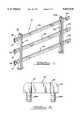
- FIG. 1is an elevational view in perspective showing one embodiment of the modular fencing system according to a preferred embodiment of the present invention.
- FIG. 2is an enlarged fragmentary exploded view of the top of a post and the post cover of the modular fencing system shown in FIG. 1 according to a preferred embodiment of the present invention.
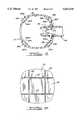
- FIG. 3is an enlarged cross-sectional view of a post and rail shown in FIG. 1 according to a preferred embodiment of the present invention, with the view being transverse to the axis of the post and perpendicular to major faces of the rail.
- FIG. 4is an enlarged fragmentary cross-sectional view showing one corner of the post shown in FIG. 3 according to a preferred embodiment of the present invention.
- FIG. 5is an enlarged side elevational view illustrating the post cover shown in FIG. 1 according to a preferred embodiment of the present invention.
- FIG. 6is a top plan view showing the post cover illustrated in FIG. 5 according to a preferred embodiment of the present invention.
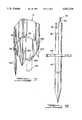
- FIG. 7is an enlarged fragmentary elevational view in perspective showing the bottom end of the post illustrated in FIG. 1 according to a preferred embodiment of the present invention, with mounting stakes nested in longitudinally extending internal cavities located in the corners of the post.
- FIG. 8is an enlarged elevational view showing an alternative embodiment of the mounting stakes shown in FIG. 7 according to a preferred embodiment of the present invention.
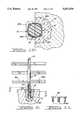
- FIG. 9is an elevational view in partial section showing semi-permanent mounting installation of the modular fencing system shown in FIG. 1 according to a preferred embodiment of the present invention.
- FIG. 10is a sectional view along the line 10--10 of FIG. 9 according to a preferred embodiment of the present invention.
- FIG. 11is a side elevational view showing a closure cap that can be used for the top and/or bottom of the embedded portion of the post shown in FIG. 9 according to a preferred embodiment of the present invention.
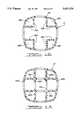
- FIG. 12is a transverse cross-sectional view of a post shown in FIG. 1 having an alternative cross-sectional configuration according to the preferred embodiment of the present invention.
- FIG. 13is a transverse cross-sectional view of the post shown in FIG. 11 according to another embodiment of the present invention.
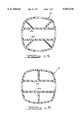
- FIG. 14is a transverse cross-sectional view showing a single functional post of this invention, which can be used as an alternative to the post shown in FIG. 3.
- FIG. 15is a transverse cross-sectional view showing a variation of the post shown in FIG. 14 according to another embodiment of the present invention.
- FIG. 16is a transverse cross-sectional view showing an alternative construction to the post construction shown in FIG. 3 according to another embodiment of the present invention.
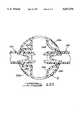
- FIG. 17is a transverse cross-sectional view showing another post according to another embodiment of the present invention, which has a round cross-sectional periphery and linear internal walls such as shown in FIG. 3.
- FIG. 18is a transverse cross-sectional view showing a round tubular post according to another embodiment of the present invention but with internal walls of two different types.
- modular fencing system 10according to the preferred embodiment of the preferred invention is shown.
- the modular fencing system 10may be used in a wide variety of applications, including defining an enclosed area for animals as well as providing a barrier for guiding individuals in a particular direction.
- the modular fencing system 10is preferably made from an extruded plastic material such as polyvinyl chloride or an extruded metal such as aluminum. It will be appreciated that other types of manufacturing techniques in addition to extrusion may be used and that the modular fencing system may also be made from other types of materials.
- the modular fencing system 10includes a plurality of hollow extruded posts 12 and 12a as well as a number of hollow extruded fence rails.
- Each of the posts 12 and 12ahas a plurality of spaced openings along its length which are operable to receive the rails.
- a pair of openingsare located in opposed walls of the posts 12 and 12a at selected locations along the length of the post. Accordingly, paired openings on the opposite sides of the posts 12 and 12a are horizontally aligned, which horizontally aligns the rails of the modular fencing system 10.
- FIG. 1shows only two posts 12 and 12a, it is to be understood that the modular fencing system 10 will typically include many additional posts.
- all the posts of the modular fencing system 10may have generally the same internal cross-section.
- various alternative embodiments of the postscan be concurrently used in the modular fencing system 10.
- the posts shown in FIGS. 2-3, 7, 12-13 and 16-18can be used for in-line applications, as well as for posts located at the end of a fence (hereinafter “end posts”) and at corner locations along the fence (hereinafter “corner posts”).
- the posts of FIGS. 14-15are primarily intended for in-line applications but could be used for end posts as well.
- the modular fencing system 10may be installed in a variety of ways depending on the particular situation.
- the posts 12 and 12a of the modular fencing system 10may be secured to the ground by embedding the posts 12 and 12a in cement.
- the posts 12 and 12a of the modular system 10may also be installed by simply embedding the posts 12 and 12a in the ground.
- the modular fencing system 10may be secured by means of stakes which are embedded in the ground as will be discussed below. Because of the large number of methods by which the modular fencing system 10 may be secured to the ground, only some of the methods will be presented below. It is to be understood, however, that any suitable method for securing the modular fencing system 10 to the ground may be used.
- the modular fencing system 10has three levels of rails, including the lower rail 14, middle rail 16 and top rail 18.
- Each of the rails 14, 16, and 18are formed of rail sections of a suitable length.
- the rail 14is shown to include rail sections 14a and 14b, while the rail 16 is formed by rail sections 16a and 16b.
- the rail 18is formed from the rail section 18a. All the rail sections of the modular fencing system 10 are identical in cross-section and length but terminate within different posts than those of the other levels.
- the lower rail section 14apasses through the opposed openings in the post 12.
- the opposed ends of the lower rail sections 14a and 14bare nested within the opposed openings in the post 12a.
- the middle rail section 16bpasses through the opposed openings in the post 12a, while the opposed ends of middle rail sections 16a and 16b are nested within the post 12. Finally, the top rail section 18a passes through openings in each of the posts 12 and 12a.
- each of the rail sections 14a, 14b, 16a, 16b, and 18aincludes two internal longitudinal walls which are disposed in parallel planes. The internal walls divide the interior of the rail sections 14a, 14b, 16a, 16b and 18a into three elongated cavities.
- the rails of the modular fencing system 10 for rural applicationswould generally be prepared in 18 foot lengths.
- a fastener 34is provided.
- the fastener 34is operable to be located within the end of the rail sections 14a, 14b, 16a, 16b and 18a in such a manner as to be compressed to allow the rail sections 14a, 14b, 16a, 16b and 18a to enter through the openings in the posts 12 and 12a during assembly of the modular fencing system 10, while preventing the unintended removal of the rail sections 14a, 14b, 16a, 16b and 18a from the posts 12 and 12a after the modular fencing system 10 has been assembled.
- the release for the fastener 34is preferably accessed from inside the post so as to protect the fastener 34 from unwanted release by animals or persons.
- the releasable fastener 34can be that which is disclosed in U.S. Pat. No. 4,691,897, which is incorporated herein by reference. However, any other suitable fastener can be used.
- the posts 12 and 12afurther include the post covers 20 and 20a.
- the post covers 20 and 20aeach comprise an inverted bowl portion 22 and integral depending leg portions 24a-24d.
- the bowl portion 22has a rounded-square outer periphery with four corners that matches the transverse rounded-square outer periphery of the posts 12 and 12a.
- One of the leg portions 24a-24dis located at each of the four corners of post covers 20 and 20a on the concave side of the rounded-square bowl portion 22.
- diagonally opposed leg portions 24a and 24care flat and parallel, and are angled to match the reinforcing walls within the posts 12 and 12a as will be more fully described below.
- the inwardly facing surfaces of diagonally opposed leg portions 24b and 24dare flat and parallel, and are also angled to match the reinforcing walls within the posts 12 and 12a as described below.
- each of the posts 12 and 12ahave longitudinally extending internal reinforcing walls 26a-26d as shown in FIGS. 3 and 4.
- the reinforcing walls 26a-26dsubdivide the interior of each of the posts 12 and 12a into a plurality of outer longitudinal recesses 28a-28d and a central longitudinal cavity 30, all of which extend the length of the post.
- the reinforcing walls 26a-26dserve at least two functions. First, the reinforcing walls 26a-26d serve to increase the ability of the posts 12 and 12a to resist lateral loading without failing.
- the reinforcing walls 26a-26dserve to reinforce the corners of the posts 12 and 12a by forming a generally triangular substructure represented by the transverse cross-section of each of the longitudinal recesses 28a-28d.
- the corners of each of the posts 12 and 12aare generally arcuate in configuration which provides an additional arching reinforcement for the posts 12 and 12a.
- the reinforcing walls 26a-26dalso serve to secure the post covers 20 and 20a respectively to the posts 12 and 12a.
- the leg portions 24a-24d of the post covers 20 and 20aare located in the corners of each of the covers 20 and 20a which correspond to the locations of the longitudinal recesses 28a-28d in the posts 12 and 12a.
- the leg portions 24a-24d of the post covers 20 and 20aare sized to provide frictional engagement with walls defining the longitudinal recesses 28a-28d so as to retain the post covers 20 and 20a on the top ends of the posts 12 and 12a.
- each of the leg portions 24a-24dgenerally conform to the transverse cross-sectional configuration of the longitudinal recesses 28a-28d, while the disposition of the leg portions 24a-24d on the post covers 20 and 20a correspond to the radial orientation of the longitudinal recesses 28a-28d of the posts 12 and 12a.
- the outer-facing surfaces of the leg portions 24a-24dcan include special conformations, such as serration or barbs, for engagement with the mating inner walls of the posts 12 and 12a that define the longitudinal recesses 28a-28d.
- the outer periphery of bowl portion 22is registered with the outer periphery of the posts 12 and 12a so that the top end edges of the posts 12 and 12a are not exposed.
- shrinkage of the material from which the posts 12 and 12a are mademay occur during fabrication. If it occurs, the shrinkage can result in unwanted indentations on the external surface of the posts 12 and 12a.
- the indentationswill be located on the side wall external surface of the posts 12 and 12a, opposite the intersection of internal walls 26a-26d with the side walls of the post.
- a plurality of longitudinal external grooves 23can be formed on the external surface of the side walls of the posts 12 and 12a. The grooves 23 permit such shrinkage to occur without causing unwanted indentations during fabrication. If the grooves 23 are present in the posts 12 and 12a, matching grooves 23' may also be placed on the post covers 20 and 20a to enhance the appearance of the modular fencing system 10.
- the modular fencing system 10can be used in a wide variety of applications.
- the modular fencing system 10can be used in applications where it is desirable to have the modular fencing system 10 be temporarily installed so that the modular fencing system 10 can be quickly and easily moved. When such a temporary installation is desired, the modular fencing system 10 can be secured to the ground with stakes in the manner discussed below.
- the modular fencing system 10can be used in applications where it is desirable to have the modular fencing system 10 either semi-permanently or permanently installed. The manner in which the modular fencing system 10 can be either semi-permanently or permanently installed will also be discussed below.
- the modular fencing system 10can be used with a plurality of stakes 36a-36d in the manner shown in FIG. 7.
- the stakes 36a-36dare shown as being nested within the lower ends of longitudinal recesses 28a-28d on the post 12. This nesting is achieved by selecting the transverse cross-section of the stakes 36a-36d, which are to be inserted within the longitudinal recesses 28a-28d, be similar but slightly smaller than the transverse cross-section of the longitudinal recesses 28a-28d.
- Each of the stakes 36a-36dhave a projection 38 along their length.
- the projections 38provide a shoulder that butts against a lower end edge of the post 12 so that the stakes 36a-36d do not slide completely into the longitudinal recesses 28a-28d. It is to be understood that projections 38 could be enlarged to form a flange entirely around each of the stakes 36a-36d. Such a flange would provide additional ruggedness, which may be desirable if the stakes 36a-36d are to be driven into ground which is relatively firm. It should be understood that means other than the projection 38 can be used to form an abutment on the stakes 36a-36d and/or the post 12.
- a pin(not shown) could be disposed in a transverse hole in each of the stakes 36a-36d.
- the pinwould have a portion that extends out of the hole to provide an abutting shoulder.
- transverse pins(not shown) could also be disposed in apertures located within the post 12 to provide an internal abutment for the top ends of each of the stakes 36a-36d.
- such pinscould be either temporarily or permanently disposed in the stakes 36a-36d or in the post 12, as may be desired.
- the structure of the stakes 36a-36dmay vary depending on a variety of factors, including the intended application for the modular fencing system 10 as well as the consistency of the soil into which the stakes 36a-36d are to be placed.
- the stakes 36a-36d shown in FIG. 7 as well as the stake 36' shown in FIG. 8may be used.
- the stake 36' shown in FIG. 8has an upper end portion 40 that is intended to be received within one of longitudinal recesses 28a-28d of the posts 12 and 12a, and a lower end portion 42 that is intended to be embedded into the ground.
- the upper end portion 40 of the stake 36'has a transverse cross-section similar to, but slightly smaller than, the transverse cross-section of the longitudinal recess 28a-28d of the post 12.
- stake 36'further includes a flange 44 of a width that is appropriate for the particular type of ground in which stake 36' is to be embedded.
- the flange 44serves not only to prevent the stake 36' from being entirely received within the longitudinal recesses 28a-28d, but also prevents the stake 36' from being entirely embedded in the ground.
- the flange 44 on the stake 36'is made relatively wide, the flange 44 can be used to improve the lateral stability of the stake 36' in relatively soft soil and therefore the lateral stability of the modular fencing system 10.
- the stake 36'may have a thin integral appendage 46 upstanding on the upper end of the stake 36' with a projection 48 thereon that can interlock with a corresponding small aperture in the side wall of the posts 12 and 12a.
- Other meanscould also be provided to lock the stake 36' to the post 12.
- the lockwould be a positive means for preventing the upper portion of the stake 36' from accidentally sliding out of the post 12 before embedding the stake 36' into the ground.
- a single large stake(not shown) could be used in place of the stakes 36a-36d.
- a single large stakewould have an upper portion with lateral surfaces that engage interior surfaces of the post 12 that define longitudinal central cavity 30 of the post 12.
- the single large stakecould be a solid body having an upper portion that has a transverse cross-section similar to but slightly smaller than the transverse periphery of the central cavity 30 that would receive it.
- the upper portion of the single large stakecould have other transverse cross-sectional configurations as well. If so, each one should have an external periphery that fits closely within the central cavity 30 of the post 12 to provide the desired lateral stability.
- a single large stakemay have a large circumferential transverse flange, similar to the flange 44 on stake 36' of FIG. 8, could be used.
- the modular fencing system 10can not only be used in temporary installations, but can also be used in semi-permanent installations as well.
- the modular fencing system 10may be installed in a manner similar to that shown in FIGS. 9 and 10. In this regard, FIGS.
- FIGS. 9 and 10show that the lower portion of the post 12 engages a post extension 12' which is embedded in a concrete footing 50.
- a connector member 52Disposed between the post 12 and the post extension 12' is a connector member 52.
- the lower portion of a connector member 52is nested within the hollow interior of post extension 12'.
- the lower portion of connector member 52can have a transverse cross-section similar to, but slightly smaller than, the transverse periphery of the receiving cavity of the in post extension 12'.
- the connector member 52includes means for preventing the connector member from being completely received into the central cavity of the post extension 12'.
- the meansmay be a circumferential flange 54 which insures that an upper portion of connector member 52 is left exposed to support the post 12.
- the upper portion of connector member 52is nested within the interior of the lower end of the post 12 to provide support for the post 12.
- the upper portion of the connector member 52has a transverse cross-section selected to engage the central cavity 30 in the lower end of the post 12.
- the upper portion of connector member 52can have a transverse cross-section similar to, but slightly smaller than, the transverse periphery of the central cavity 30 of the post 12.
- post extension 12'has the same transverse cross-section as the post 12
- the transverse cross-section of upper and lower portions of connector member 52can be the same.
- the upper portion of connector member 52can be of any length, up to the bottom of the rails 56 and 56a, thus providing considerable strength to the upper portion of the post 12 and therefore to the modular fencing system 10. If the upper portion of connector member 52 has a configuration to nest in the outer longitudinal cavities 28a-28d of the post 12, the upper portion of the connector member 52 could have a longer length without interfering with the internal connectors for rails of the modular fencing system 10.
- connector member 52may wish to lock connector member 52 to either or both of the post extension 12' and the post 12. Any of a variety of means can be used for this purpose.
- a simple lag screw 53is shown in FIG. 9 for locking the upper portion of the connector member 52 to the post 12.
- Another meansmight be preferred if one elects to more fully lock the lower portion of the connector member 52 to the post extension 12'.
- the modular fencing system 10 shown in FIGS. 9 and 10can readily be removed from post extension 12'.
- the rails 56 and 56awould be removed, along with the lag screw 53.
- the post 12would be lifted up until clear of the upper portion of the connector member 52.
- the connector member 52can then pulled up from the post extension 12', and then the post extension 12' preferably capped.
- the modular fence components, including the connector member 52,would then be transported to a new location (not shown) where a second post extension 12' was previously embedded in a concrete footing.
- the second post extension 12'is then uncapped, the lower end of the connector member 52 slid down into the second post extension 12', the post 12 mounted on the upper portion of the connector member 52, and the modular fencing system 10 reassembled.
- the second post extension 12'need not be identical to the first one. It need only have a longitudinal cavity that nests with the particular connector used.
- the second post extension 12'has a longitudinal cavity that matches the lower end of the same connector member 52 used in the first post extension 12'. Accordingly, this new and improved modular fencing system 10 can disassembled and moved to a new previously prepared location quite readily, and immediately be reassembled to form a modular fencing system 10 of a different configuration.
- the first post extension 12'can be covered with a cap member that is analogous to post covers 20 and 20a.
- a cap memberis shown in FIG. 11.
- the cap member 58includes a flat plate portion with depending legs 60 that are made to nest in corner recesses 28a'-28d' of the upper end of the post extension 12'.
- the legs 60could be identical to legs 24a-24d of post covers 20 and 20a, and thus be identically frictionally retained in recesses 28a'-28d' at the top end of the post extension 12'.
- the cap member 58is disposed at the top of the post extension 12' when the post extension 12' is not in use so as to prevent the post extension 12' from filling with dirt or the like.
- the cap member 58could also be used at the bottom of the post extension 12' to prevent concrete from filling the bottom of the post extension 12' when the post extension 12' is initially embedded in the concrete footing 50. Still further, it is recognized that in the alternative, the post covers 20 and 20a could also be used for covering the top and bottom of the post extension 12' if a lower profile cap is not needed.
- the modular fencing system 10 of this inventioncan be varied in other ways as well.
- the transverse outer periphery of the posts 12 and 12ais preferably a rounded-square previously described for greatest strength.
- the transverse outer periphery of the posts 12 and 12abe round or square.
- the outer peripherycould also be oval, rectangular, hexagonal, octagonal, etc.
- the improved post strength in this inventionis most advantageously used with rails which have a rectangular or at least generally rectangular transverse cross-section.
- improved postsmight also be used with rails of other transverse cross-sectional configurations, as for example, round.
- the preferred transverse cross-sectional configuration for the internal longitudinal reinforcing walls 26a-26d in the posts 12 and 12ais a straight line, as has already been described herein.
- the reinforcing walls 26a-26dcan have other transverse cross-sectional configurations.
- each of the reinforcing walls 26a-26dneed not be transversely straight as shown in FIG. 12 in which they are illustrated as transversely right-angled. It may be preferred that the transverse cross-section of the reinforcing walls 26a-26d be arcuate or even semi-hexagonal. Each of these variations would effectively increase the cross-sectional area of the recesses of 28a-28d.
- This increase in transverse cross-sectional area of the recesses 28a-28dmay be desirable because it would allow an increase in the transverse cross-sectional area of any conformal stakes that would be inserted in the recesses 28a-28d at the bottom of the post 12 so as to increase the strength of the stake.
- one or more of the different wall configurationsmay provide selective manufacturing advantages and/or enhanced resistance to selected types of bending or other loads applied to the post 12. Accordingly, a particular type of transverse wall configuration other than straight may be desired for particular applications.
- FIG. 12shows internal walls 26a-26d as each having a transverse cross-section that is in the shape of a right angle. This configuration leaves the center of the post 12 clear free from any obstruction. If the center of the post 12 does not have to be free from obstructions, the walls 26a-26d in the FIG. 12 embodiment could each be extended across the interior of the post 12 in a manner similar to that shown in FIG. 13 so as to increase the strength of the post 12. However, it should be understood that the construction of the post 12 in FIG. 13 requires twice the number of openings in the walls for receiving the rails. This tends to increase the manufacturing cost of the post 12.
- the post 12 according to the embodiments shown in FIGS. 14 and 15are primarily intended for use as in-line posts or as end posts, and they are not preferably used as corner posts.
- the post 12 illustrated in FIGS. 14 and 15show that a variety of transverse configurations for interior reinforcing walls are available that permit the rail to pass through the center of the post 12 without obstruction.
- the post 12has two major interior walls 64 that are spaced apart and are parallel.
- the walls 64can be additionally reinforced with auxiliary reinforcing walls in the manner shown.
- the auxiliary reinforcing walls in FIG. 14allow for a side wall opening in post 12 that is perpendicular to the walls 64.
- the auxiliary reinforcing walls in FIG. 15do not.
- the wall construction shown in FIG. 15might permit the post 12 to be used as a corner post, though this would not be particularly convenient.
- the end of a rail(not shown) could be inserted into the post 12 perpendicular to the walls 64. However, there is not much room within the post 12 for the end of the rail, or means for fastening the rail within the post 12.
- the auxiliary reinforcing wallwould have to be cut which reduces the strength of the post 12.
- a second set of reinforcing walls 26aa-26ddis included within the post 12.
- the addition of the second set of reinforcing walls 26aa-26ddmay require the first set of reinforcing walls 26a-26d to be displaced inwardly. Since using the second set of reinforcing walls 26aa-26dd tends to make the first set of reinforcing walls 26a-26d encroach on areas where the side wall openings are to be cut, use of the second set of reinforcing walls 26aa-26dd is not ordinarily preferred.
- a second set of reinforcing walls 26aa-26ddtends to increase the thickness of the side walls of the post 12 where the openings are to be formed, which is objectionable.
- the post 12could have a round or polygonal transverse outer periphery.
- FIGS. 17 and 18are included to illustrate such a round transverse outer periphery, as well as to illustrate that transversely straight interior reinforcing walls 26a-26d can be used in a post 12 having a round transverse outer periphery.
- FIGS. 16 and 17are also included to show that, if desired, the rail sections 14a and 14b could be used with a round post that has interior reinforcing walls in accordance with this invention.
- the rectangular rail sections 14a and 14d with round posts 12may not be as aesthetically pleasing as using a round rail section with a round post. However, use of a rectangular rail section with a round post of this invention may allow a round post to be used in applications where it was previously desired but for limitations involving strength.
- FIG. 17One can see from FIG. 17 that in a round post, recesses 28a-28d are quite thin if walls 26a-26d are straight in transverse extension. This may not be objectionable for some applications, especially where the post 12 is to be embedded in ground or concrete, or where use of a single large mounting stake or other similar support is to be used. If the thin recesses 28a-28d shown in FIG. 17 are in fact objectionable, a different configuration for interior reinforcing walls 26a-26d can be used.
- FIG. 18illustrates two such different configurations that can be used for the transversely straight reinforcing walls 26a-26d of the post 12 shown in FIG. 17.
- the reinforcing walls 26a and 26deach have a right-angled transverse configuration, analogous to the transverse configuration of the reinforcing walls 26a-26d in FIG. 12.
- the reinforcing walls 26b and 26chave an arcuate transverse configuration. Both the angular and arcuate configurations can make the transverse area of recesses 28a-28d much greater. Accordingly, they may be preferred for posts having a round transverse outer periphery.
- FIG. 18also shows that the interior reinforcing walls 26a-26d do not all have to have the same transverse configuration. For some applications, differences in the transverse configurations of the reinforcing walls 26a-26d may prove to be desirable.
- the posts 12may only have openings in their side walls where rails are to be inserted, as this provides the strongest resultant posts.
Landscapes
- Engineering & Computer Science (AREA)
- Architecture (AREA)
- Civil Engineering (AREA)
- Structural Engineering (AREA)
- Devices Affording Protection Of Roads Or Walls For Sound Insulation (AREA)
Abstract
Description
Claims (29)
Priority Applications (2)
| Application Number | Priority Date | Filing Date | Title |
|---|---|---|---|
| US08/415,536US5651534A (en) | 1995-04-03 | 1995-04-03 | Modular fencing system |
| US08/901,011US5931450A (en) | 1995-04-03 | 1997-07-28 | Modular fencing system |
Applications Claiming Priority (1)
| Application Number | Priority Date | Filing Date | Title |
|---|---|---|---|
| US08/415,536US5651534A (en) | 1995-04-03 | 1995-04-03 | Modular fencing system |
Related Child Applications (1)
| Application Number | Title | Priority Date | Filing Date |
|---|---|---|---|
| US08/901,011ContinuationUS5931450A (en) | 1995-04-03 | 1997-07-28 | Modular fencing system |
Publications (1)
| Publication Number | Publication Date |
|---|---|
| US5651534Atrue US5651534A (en) | 1997-07-29 |
Family
ID=23646092
Family Applications (2)
| Application Number | Title | Priority Date | Filing Date |
|---|---|---|---|
| US08/415,536Expired - LifetimeUS5651534A (en) | 1995-04-03 | 1995-04-03 | Modular fencing system |
| US08/901,011Expired - Fee RelatedUS5931450A (en) | 1995-04-03 | 1997-07-28 | Modular fencing system |
Family Applications After (1)
| Application Number | Title | Priority Date | Filing Date |
|---|---|---|---|
| US08/901,011Expired - Fee RelatedUS5931450A (en) | 1995-04-03 | 1997-07-28 | Modular fencing system |
Country Status (1)
| Country | Link |
|---|---|
| US (2) | US5651534A (en) |
Cited By (26)
| Publication number | Priority date | Publication date | Assignee | Title |
|---|---|---|---|---|
| US5931450A (en)* | 1995-04-03 | 1999-08-03 | Royal Crown Limited | Modular fencing system |
| US6299142B1 (en) | 1999-09-27 | 2001-10-09 | Dayton Technologies, L.L.C. | Post and railing system |
| USD451212S1 (en) | 2000-03-21 | 2001-11-27 | T.M.C, Inc. | Stanford deluxe fence post finial |
| USD451614S1 (en) | 2000-03-21 | 2001-12-04 | T.M.C., Inc. | Stanford fence post finial |
| USD451613S1 (en) | 2000-03-21 | 2001-12-04 | T.M.C., Inc. | Opinion fence post finial |
| USD452018S1 (en) | 2000-03-21 | 2001-12-11 | T.M.C., Inc. | Pinion fence post finial |
| USD452333S1 (en) | 2000-03-21 | 2001-12-18 | T.M.C., Inc. | Sarepta fence post finial |
| USD454404S1 (en) | 2000-01-03 | 2002-03-12 | T.M.C., Inc. | Century fence post finial |
| USD456087S1 (en) | 2000-01-03 | 2002-04-23 | T.M.C., Inc. | Fence post finial skirt |
| WO2002014627A3 (en)* | 2000-08-14 | 2002-07-18 | Plastics Res Corp | Plastic fence post assembly and method of manufacture |
| US6508457B1 (en)* | 2001-08-23 | 2003-01-21 | Modern Fence Technologies | Vinyl fence post mount |
| US6688583B2 (en) | 2000-01-03 | 2004-02-10 | Tmc, Inc. | Fence post finials |
| US20050082518A1 (en)* | 2001-12-18 | 2005-04-21 | Kunitz Walter M. | Fencing system |
| US20050084324A1 (en)* | 2003-08-14 | 2005-04-21 | York International Corporation | Corner cap member construction for an air handling unit |
| US20060086930A1 (en)* | 2004-10-22 | 2006-04-27 | Rosario Esposito | Fence system with insect barrier |
| US20070158630A1 (en)* | 2005-12-14 | 2007-07-12 | Chong-Yi Lo | Post and rod linking device for a railing |
| US20080038508A1 (en)* | 2006-06-28 | 2008-02-14 | Zell William R | Deck system |
| US20080035904A1 (en)* | 2006-08-14 | 2008-02-14 | Bradley Jefferson Jones | Ribbed post |
| US20090194753A1 (en)* | 2008-02-01 | 2009-08-06 | Stucker Justin D | Fence Post with Selectively Covered, Molded Channel |
| US20100024342A1 (en)* | 2006-12-28 | 2010-02-04 | Intex Recreation Corp. | Retainer Frame for a Swimming Pool |
| USD665510S1 (en) | 2011-02-03 | 2012-08-14 | Lisa Esposito | Railing unit for a fence |
| US9988825B1 (en)* | 2014-05-30 | 2018-06-05 | Dwayne Scott Parks | Clip facilitating quick assembly and disassembly of fence components |
| US11060254B2 (en)* | 2019-01-15 | 2021-07-13 | Columbia Cascade Company | Top-locking bollard |
| US11549279B2 (en)* | 2016-06-03 | 2023-01-10 | Tomm Tech Pty Ltd | Panel systems and components |
| US11598117B2 (en)* | 2018-04-23 | 2023-03-07 | Eastern Wholesale Fence Llc | Gate corner insert |
| US12320142B1 (en) | 2021-08-12 | 2025-06-03 | Richard Curran | Modular fence system |
Families Citing this family (20)
| Publication number | Priority date | Publication date | Assignee | Title |
|---|---|---|---|---|
| US6076807A (en)* | 1997-07-16 | 2000-06-20 | Spence; Jonathan P. | Fence or deck post cap |
| USD465036S1 (en) | 2000-03-03 | 2002-10-29 | James F. Spruill | Fence cap insulator |
| AU2002326914A1 (en)* | 2001-09-14 | 2003-04-01 | Crane Plastics Company Llc | Fence assembly with connectors |
| US6804921B2 (en) | 2001-12-10 | 2004-10-19 | Associated Materials, Inc. | Cap for tubular construction components and connector |
| US7165372B1 (en)* | 2004-12-10 | 2007-01-23 | Skulsky Bryan S | Pergola end cap method |
| US7025335B2 (en)* | 2002-03-01 | 2006-04-11 | Alan Qing Zhu | Modular fence |
| US20060202186A1 (en)* | 2003-01-21 | 2006-09-14 | On The Fence Technologies, Llc. Corporation | Methods and apparatus for fencing and other outdoor structures |
| US7032891B2 (en) | 2003-01-21 | 2006-04-25 | On The Fence Technologies, Llc Corporation | Methods and apparatus for fencing and other structures |
| US20060033091A1 (en)* | 2004-07-23 | 2006-02-16 | Lmt Mercer Group Inc. | Thermoplastic fencing construction and method of assembly thereof |
| US7204898B2 (en)* | 2004-07-23 | 2007-04-17 | Lmt Mercer Group Inc. | Thermoplastic fencing construction and method of assembly thereof |
| US8668797B2 (en)* | 2004-07-23 | 2014-03-11 | Lmt Mercer Group Inc. | Method of assembly of thermoplastic fencing |
| US8282083B1 (en)* | 2006-06-21 | 2012-10-09 | Poma & Sons, Inc. | Corrosion resistant railing insert and method for installation |
| US7789377B2 (en)* | 2006-11-03 | 2010-09-07 | Gallea Kimberly A | Fence post cap assembly |
| US20080111118A1 (en)* | 2006-11-15 | 2008-05-15 | David Powell | Rail fence retractor |
| US20080250749A1 (en)* | 2007-04-16 | 2008-10-16 | Weldon Industries, Inc. | Fixative device for decorative finial |
| CA2645688A1 (en)* | 2007-12-04 | 2009-06-04 | Robert Cantatore | Ornamental fencing system and method for assembling the same |
| US8803844B1 (en) | 2013-10-02 | 2014-08-12 | DigiPuppets LLC | Capacitive finger puppet for use on touchscreen devices |
| CN207848127U (en)* | 2014-11-22 | 2018-09-11 | 因特梅特罗工业公司 | Shelf frame component system |
| TWM539274U (en)* | 2017-01-17 | 2017-04-11 | Timotion Technology Co Ltd | Telescopic column structure |
| US11540624B2 (en)* | 2017-01-17 | 2023-01-03 | Timotion Technology Co., Ltd. | Retractable column structure |
Citations (11)
| Publication number | Priority date | Publication date | Assignee | Title |
|---|---|---|---|---|
| US3822053A (en)* | 1971-12-16 | 1974-07-02 | Daily Corp | Tubular picket fence |
| US3875699A (en)* | 1973-04-18 | 1975-04-08 | Arthur P Lamarre | Plastic grape stake |
| US3955801A (en)* | 1975-08-01 | 1976-05-11 | Vinylife Industries | Pre-fabricated fences |
| US3957250A (en)* | 1975-04-14 | 1976-05-18 | Murphy Stanley E | Plastic fence post |
| US4007919A (en)* | 1975-07-24 | 1977-02-15 | Totten Clyde D | Fence structure |
| US4540160A (en)* | 1984-03-28 | 1985-09-10 | Zanavich James K | Rail fence |
| US4691897A (en)* | 1986-03-18 | 1987-09-08 | Ctb, Inc. | Rail lock device for tubular fence |
| US4702459A (en)* | 1986-10-30 | 1987-10-27 | Moschner Vernon D | Fence assembly |
| US4722514A (en)* | 1984-11-08 | 1988-02-02 | Pettit Frederick M | Plastic fence construction |
| US4958807A (en)* | 1986-04-21 | 1990-09-25 | Wylie Glenn J | Decorative posts for crowd control |
| US5255897A (en)* | 1991-03-11 | 1993-10-26 | Bemis Manufacturing Company | Modular fence |
Family Cites Families (2)
| Publication number | Priority date | Publication date | Assignee | Title |
|---|---|---|---|---|
| DE2948230C2 (en)* | 1979-11-30 | 1982-11-18 | Josef 7611 Steinach Maier | Batter board support with anchoring device |
| US5651534A (en)* | 1995-04-03 | 1997-07-29 | Ctb, Inc. | Modular fencing system |
- 1995
- 1995-04-03USUS08/415,536patent/US5651534A/ennot_activeExpired - Lifetime
- 1997
- 1997-07-28USUS08/901,011patent/US5931450A/ennot_activeExpired - Fee Related
Patent Citations (11)
| Publication number | Priority date | Publication date | Assignee | Title |
|---|---|---|---|---|
| US3822053A (en)* | 1971-12-16 | 1974-07-02 | Daily Corp | Tubular picket fence |
| US3875699A (en)* | 1973-04-18 | 1975-04-08 | Arthur P Lamarre | Plastic grape stake |
| US3957250A (en)* | 1975-04-14 | 1976-05-18 | Murphy Stanley E | Plastic fence post |
| US4007919A (en)* | 1975-07-24 | 1977-02-15 | Totten Clyde D | Fence structure |
| US3955801A (en)* | 1975-08-01 | 1976-05-11 | Vinylife Industries | Pre-fabricated fences |
| US4540160A (en)* | 1984-03-28 | 1985-09-10 | Zanavich James K | Rail fence |
| US4722514A (en)* | 1984-11-08 | 1988-02-02 | Pettit Frederick M | Plastic fence construction |
| US4691897A (en)* | 1986-03-18 | 1987-09-08 | Ctb, Inc. | Rail lock device for tubular fence |
| US4958807A (en)* | 1986-04-21 | 1990-09-25 | Wylie Glenn J | Decorative posts for crowd control |
| US4702459A (en)* | 1986-10-30 | 1987-10-27 | Moschner Vernon D | Fence assembly |
| US5255897A (en)* | 1991-03-11 | 1993-10-26 | Bemis Manufacturing Company | Modular fence |
Cited By (31)
| Publication number | Priority date | Publication date | Assignee | Title |
|---|---|---|---|---|
| US5931450A (en)* | 1995-04-03 | 1999-08-03 | Royal Crown Limited | Modular fencing system |
| US6299142B1 (en) | 1999-09-27 | 2001-10-09 | Dayton Technologies, L.L.C. | Post and railing system |
| US6688583B2 (en) | 2000-01-03 | 2004-02-10 | Tmc, Inc. | Fence post finials |
| USD456087S1 (en) | 2000-01-03 | 2002-04-23 | T.M.C., Inc. | Fence post finial skirt |
| USD454404S1 (en) | 2000-01-03 | 2002-03-12 | T.M.C., Inc. | Century fence post finial |
| USD452333S1 (en) | 2000-03-21 | 2001-12-18 | T.M.C., Inc. | Sarepta fence post finial |
| USD452018S1 (en) | 2000-03-21 | 2001-12-11 | T.M.C., Inc. | Pinion fence post finial |
| USD451613S1 (en) | 2000-03-21 | 2001-12-04 | T.M.C., Inc. | Opinion fence post finial |
| USD451614S1 (en) | 2000-03-21 | 2001-12-04 | T.M.C., Inc. | Stanford fence post finial |
| USD451212S1 (en) | 2000-03-21 | 2001-11-27 | T.M.C, Inc. | Stanford deluxe fence post finial |
| WO2002014627A3 (en)* | 2000-08-14 | 2002-07-18 | Plastics Res Corp | Plastic fence post assembly and method of manufacture |
| US6508457B1 (en)* | 2001-08-23 | 2003-01-21 | Modern Fence Technologies | Vinyl fence post mount |
| US20050082518A1 (en)* | 2001-12-18 | 2005-04-21 | Kunitz Walter M. | Fencing system |
| US20050084324A1 (en)* | 2003-08-14 | 2005-04-21 | York International Corporation | Corner cap member construction for an air handling unit |
| US20060086930A1 (en)* | 2004-10-22 | 2006-04-27 | Rosario Esposito | Fence system with insect barrier |
| US20090121206A1 (en)* | 2004-10-22 | 2009-05-14 | Rosario Esposito | Fence system with insect barrier |
| US8167276B2 (en) | 2004-10-22 | 2012-05-01 | Royal Aluminum & Steel, Inc. | Fence system with insect barrier |
| US7857292B2 (en) | 2004-10-22 | 2010-12-28 | Rosario Esposito | Fence system with insect barrier |
| US20110147688A1 (en)* | 2004-10-22 | 2011-06-23 | Rosario Esposito | Fence system with insect barrier |
| US20070158630A1 (en)* | 2005-12-14 | 2007-07-12 | Chong-Yi Lo | Post and rod linking device for a railing |
| US20080038508A1 (en)* | 2006-06-28 | 2008-02-14 | Zell William R | Deck system |
| US20080035904A1 (en)* | 2006-08-14 | 2008-02-14 | Bradley Jefferson Jones | Ribbed post |
| US20100024342A1 (en)* | 2006-12-28 | 2010-02-04 | Intex Recreation Corp. | Retainer Frame for a Swimming Pool |
| US8132791B2 (en)* | 2008-02-01 | 2012-03-13 | Stucker Justin D | Fence post with selectively covered, molded channel |
| US20090194753A1 (en)* | 2008-02-01 | 2009-08-06 | Stucker Justin D | Fence Post with Selectively Covered, Molded Channel |
| USD665510S1 (en) | 2011-02-03 | 2012-08-14 | Lisa Esposito | Railing unit for a fence |
| US9988825B1 (en)* | 2014-05-30 | 2018-06-05 | Dwayne Scott Parks | Clip facilitating quick assembly and disassembly of fence components |
| US11549279B2 (en)* | 2016-06-03 | 2023-01-10 | Tomm Tech Pty Ltd | Panel systems and components |
| US11598117B2 (en)* | 2018-04-23 | 2023-03-07 | Eastern Wholesale Fence Llc | Gate corner insert |
| US11060254B2 (en)* | 2019-01-15 | 2021-07-13 | Columbia Cascade Company | Top-locking bollard |
| US12320142B1 (en) | 2021-08-12 | 2025-06-03 | Richard Curran | Modular fence system |
Also Published As
| Publication number | Publication date |
|---|---|
| US5931450A (en) | 1999-08-03 |
Similar Documents
| Publication | Publication Date | Title |
|---|---|---|
| US5651534A (en) | Modular fencing system | |
| US4922678A (en) | Structural assembly for producing interconnecting structures | |
| US4953830A (en) | Railing assembly | |
| US4968005A (en) | Picket attachment | |
| US20060113517A1 (en) | Modular fencing system and method for constructing same | |
| US6499725B2 (en) | Fence rail and post assembly | |
| US5362030A (en) | Fence post module | |
| US4483119A (en) | Bar support for use with reinforced concrete | |
| US4976063A (en) | Lawn edging system and associated edging components | |
| US6883786B2 (en) | Fence post and rail assembly with concealed strengthening bars | |
| US6601831B2 (en) | Modular fence system | |
| US5601279A (en) | Picket fence including slats having U-shaped attachment rails | |
| US20120000142A1 (en) | Modular blow molded shed with connectors | |
| US6070859A (en) | Gap blocker and vegetation barrier for the bottom of fences | |
| US9416559B2 (en) | Steel supported polymeric fence post | |
| US6418675B1 (en) | Landscaping timber system | |
| US7857292B2 (en) | Fence system with insect barrier | |
| KR100736852B1 (en) | Precast R.C Retaining Wall Structure | |
| US5586753A (en) | Fence vegetation barrier | |
| US4893807A (en) | Playground slide | |
| US4884378A (en) | Structural assembly for producing walls | |
| US20070158628A1 (en) | Fence | |
| US20100327246A1 (en) | Modular fence system and method | |
| US6505819B1 (en) | Barrier for the bottom of fences | |
| US5123221A (en) | Modular wall structure and units therefor |
Legal Events
| Date | Code | Title | Description |
|---|---|---|---|
| AS | Assignment | Owner name:CTB INC., INDIANA Free format text:ASSIGNMENT OF ASSIGNORS INTEREST;ASSIGNOR:YODER, DENNIS G.;REEL/FRAME:007454/0984 Effective date:19950327 | |
| AS | Assignment | Owner name:SOCIETY NATIONAL BANK, OHIO Free format text:COLLATERAL ASSIGNMENT & SECURITY AGREEMENT;ASSIGNOR:CTB, INC.;REEL/FRAME:007795/0681 Effective date:19960104 | |
| STCF | Information on status: patent grant | Free format text:PATENTED CASE | |
| AS | Assignment | Owner name:CTR, INC., INDIANA Free format text:RESLEASE OF SECURITY INTEREST;ASSIGNOR:KEYBANK NATIONAL ASSOCIATION;REEL/FRAME:008669/0642 Effective date:19970529 Owner name:ROYAL CROWN LIMITED, INDIANA Free format text:ASSIGNMENT OF ASSIGNORS INTEREST;ASSIGNOR:CTB, INC.;REEL/FRAME:008669/0618 Effective date:19970529 | |
| AS | Assignment | Owner name:CTB, INC., INDIANA Free format text:RELEASE AND ASSIGNMENT OF PATENTS;ASSIGNOR:KEYBANK NATIONAL ASSOCIATION (FORMERLY KNOWN AS, SOCIETY NATIONAL BANK), AS AGENT;REEL/FRAME:008907/0257 Effective date:19970902 | |
| FEPP | Fee payment procedure | Free format text:PAYOR NUMBER ASSIGNED (ORIGINAL EVENT CODE: ASPN); ENTITY STATUS OF PATENT OWNER: LARGE ENTITY | |
| FPAY | Fee payment | Year of fee payment:4 | |
| FPAY | Fee payment | Year of fee payment:8 | |
| FPAY | Fee payment | Year of fee payment:12 | |
| AS | Assignment | Owner name:CTB, INC., INDIANA Free format text:ASSIGNMENT OF ASSIGNORS INTEREST;ASSIGNOR:CTB IP, INC.;REEL/FRAME:022846/0288 Effective date:20090327 Owner name:CTB, INC.,INDIANA Free format text:ASSIGNMENT OF ASSIGNORS INTEREST;ASSIGNOR:CTB IP, INC.;REEL/FRAME:022846/0288 Effective date:20090327 |