US5638186A - Multi-function machine for combining and routing image data - Google Patents
Multi-function machine for combining and routing image dataDownload PDFInfo
- Publication number
- US5638186A US5638186AUS08/377,480US37748095AUS5638186AUS 5638186 AUS5638186 AUS 5638186AUS 37748095 AUS37748095 AUS 37748095AUS 5638186 AUS5638186 AUS 5638186A
- Authority
- US
- United States
- Prior art keywords
- image data
- function machine
- data
- option
- merge
- Prior art date
- Legal status (The legal status is an assumption and is not a legal conclusion. Google has not performed a legal analysis and makes no representation as to the accuracy of the status listed.)
- Expired - Lifetime
Links
Images





Classifications
- H—ELECTRICITY
- H04—ELECTRIC COMMUNICATION TECHNIQUE
- H04N—PICTORIAL COMMUNICATION, e.g. TELEVISION
- H04N1/00—Scanning, transmission or reproduction of documents or the like, e.g. facsimile transmission; Details thereof
- H04N1/387—Composing, repositioning or otherwise geometrically modifying originals
- H—ELECTRICITY
- H04—ELECTRIC COMMUNICATION TECHNIQUE
- H04N—PICTORIAL COMMUNICATION, e.g. TELEVISION
- H04N1/00—Scanning, transmission or reproduction of documents or the like, e.g. facsimile transmission; Details thereof
- H04N1/387—Composing, repositioning or otherwise geometrically modifying originals
- H04N1/3871—Composing, repositioning or otherwise geometrically modifying originals the composed originals being of different kinds, e.g. low- and high-resolution originals
Definitions
- This inventionrelates generally to a multi-function machine which is capable of reproducing an electronic image into printed matter. More particularly, this invention relates to a multi-function machine which combines two or more separate electronic images into a single image which may be printed, stored, or faxed.
- Multi-function machineshave been recently developed. These machines commonly include the capability to print a digitally formatted document which is downloaded from a host computer. As is known in the art, the print function of the multi-function machine is realized by utilizing a laser and a polygon mirror to write information on a photoreceptor. The photoreceptor is subsequently placed in contact with a piece of paper which acquires the image written on the photoreceptor.
- Prior art multi-function machinesalso commonly include the capability to digitally copy a document.
- the digital copying aspect of these machinesis realized through a Charge Coupled Device (CCD) which acquires a digital data representation of an image.
- CCDCharge Coupled Device
- the digital image datais then conveyed to the printer portion of the machine which yields a printed document.
- CCDCharge Coupled Device
- Prior art multi-function machinesmay also include a capability to send and receive facsimile data.
- Received facsimile datais usually printed in accordance with the printer aspect of the multi-function machine.
- a document to be sent by facsimileis typically scanned and encoded by the CCD element of the multi-function machine.
- the multi-function machineincludes a number of functional units, for instance, a digital copier which produces scanned image data, a printer which prints data from a computer, and a facsimile device which receives and sends facsimile image data.
- Image data from one or a number of sourcesmay be combined to form merged image data, corresponding to a merger of the individual images.
- the merged image datamay then be conveyed to any of a number of user selectable destinations, including a printer, a host computer, or a facsimile device.
- FIG. 1is a simplified depiction of a multi-function machine which may be used in accordance with the present invention.
- FIG. 2is a depiction of a control panel for a multi-function machine which may be used in accordance with the present invention.
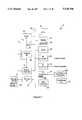
- FIG. 3is a block diagram of an electronic system board of a multi-function machine which may be used in accordance with the present invention.
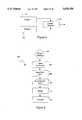
- FIG. 4is a simplified depiction of the merge process between computer image data and scanned image data.
- FIG. 5is a simplified block depiction of the merge operation.
- FIG. 6is a flow chart depicting the merging operations of the present invention.
- FIG. 7is a flow chart depicting an alternate embodiment of the merging operations of the present invention.
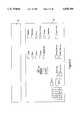
- FIG. 8is an example of a registered image selection menu that may be used in accordance with the present invention.
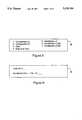
- FIG. 9is an example of a registered image selection menu with an identification number incrementation option.
- FIG. 10is an example of a printed document wherein the first set of image data is a page from the U.S. Constitution and the second set of image data is a pre-registered horizontal confidential statement.
- FIG. 11is an example of a printed document wherein the first set of image data is a page from the U.S. Constitution and the second set of image data is a pre-registered diagonal confidential statement.
- FIG. 12is an example of a printed document wherein the first set of image data is a page from the U.S. Constitution and the second set of image data is a pre-registered diagonal confidential statement which includes an identification number.
- the machine 10includes a housing 11. Within the housing 11 is a light source 12 for scanning images.
- the housing 11also includes a photoreceptor 14 for creating latent images for the printer, copier and facsimile functions of the machine.
- a paper tray 16 and output bins 18are also provided for the output aspect of the machine 10.
- a document feed 20 and automatic document transport 22may also be provided.
- the machine 10also includes a Charge Coupled Device (CCD) to realize scanning functions.
- CCDCharge Coupled Device
- the machine 10also includes a laser element 26 and a polygon mirror 28.
- the laser element 26 and polygon mirror 28are utilized to write information on photoreceptor 14 and thereby achieve a printing function, as is known in the art. This printing function may be used in accordance with telephone input 30 to provide a facsimile capability to the machine 10.
- a telephone handset 32is also provided.
- the machine 10may include a copier, a scanner, a printer, and a facsimile apparatus. Selection of the individual functions may be achieved through a control panel 34.
- the machine 10also includes an LCD 36 which provides status information.
- the machine 10also includes a host interface 38 which may be coupled to a host computer. The host computer may be used to provide commands to the machine 10. Printing jobs may be conveyed from the host computer to the machine 10. In addition, scanned images may be conveyed through the host interface 38 to the host computer.
- FIG. 2depicts a control panel 34 which may be used with a multi-function machine in accordance with the present invention.
- the control panel 34preferably includes a "merge” button.
- the control panel 34also preferably includes a number of operations such as "copy”, “print”, and "fax”. Status information is provided on LCD 36.
- System bus 44connects all the modules of the system.
- CPU 42services multiple tasks while monitoring the state of the machine.
- DRAM 46 and EEPROM 48are preferably provided.
- ROM module 50includes initial values, default values, and firmware.
- the firmwaremay include printing instructions to handle popular printer commands such as PCL5 from Hewlett-Packard or PostScript from Adobe Systems.
- Interface controller 1is coupled to control panel 34.
- Interface controller 2is preferably coupled to a host computer through host interface 38.
- Interface controller 3 (56)includes DRAM 58 and is coupled to fax/telephone processor 60.
- the fax/telephone processor 60has a module which distinguishes the incoming information as either voice or fax data, and automatically switches the system to the appropriate mode by notifying the CPU 42.
- the fax/telephone processor 60is coupled to telephone handset 32 to handle voice information.
- Interface controller 3 (56)is preferably coupled to an answering unit 62.
- a direct memory access controller 64is also provided.
- Printer interface 66is coupled to the printing elements (laser 26, polygon mirror 28, and photoreceptor 14) to create the desired output image.
- Scanner interface 68interfaces with the CCD 24 so that scanned digital images can be obtained.
- System controller 70is connected with scanner interface 68 and printer interface 66 through bus 44 and bus 76, which allows the input-output related functions such as copying.
- bus 75provides an interface between the scanner and printer which enables the movement of image data.
- Arithmetic Logic Unit (ALU) 77is used to merge data from the scanner interface 68 with data from other sources "on the fly", as the scan data is being sent to the printer interface 66.
- merge data from the scannercan be directed to DRAM 46, either for temporary storage or for merging with other image data already stored in DRAM 46.
- Storage interface 72is coupled to external storage units 74, which may be hard disks, optical disks, and/or floppy disks.
- the storage device 74may store sets of instructions to be used in accordance with the invention. In the alternative, these instructions may be stored in ROM 50.
- Multi-function machine 10is coupled to a host computer 80.
- Host computer 80includes a monitor 82 which depicts data in the form of the letter "A".
- a document 84which includes a "circle”.
- the document 84is electronically scanned and the resultant scanned image data is combined with the image data from the computer corresponding to the letter "A”.
- the resultant merged imageis printed on paper 86.
- host computer 80may convey image data to the multi-function machine 10 or coded data which must be converted by the multi-function machine 10 (through known techniques such as coding "A" as Hex 41) to image data.
- image datafrom the host computer refers to either class of data.
- FIG. 5is a simplified depiction of this merge process.
- each pixel (picture element) of image 1 (87)is combined with the corresponding positional pixel in image 2 (88) by a logical operator 90.
- the logical operatoris an "OR" operation. That is, the logical operator receives two pixels, one from each image, if either of the two pixels is dark, the output is dark, otherwise the output is light.
- the logical operatormay also be an "AND", “OR", “NOT”, or a "XOR” operator.
- the logical operationis preferably user selectable through the operation panel 34 or through the host computer.
- the merged imagealways results in a printed document.
- the merged image datamay be conveyed to any of a number of user selectable output destinations.
- the merge and route operation 100 of the present inventionbegins with a merge request (block 102).
- the merge requestmay be initiated from the "Merge" button on the operation panel 36 or from host computer 80.
- a promptis provided to input the routing destination (block 104).
- the promptmay be provided on LCD 36, or on the monitor 82 of host computer 80.
- the routing destinationis where the merged image data is sent. For instance, the merged image data may be sent to the printer for printing, to the host computer, to DRAM, to a storage device, or to the facsimile, as to be more fully described below.
- the multi-function machine 10then provides a prompt to read the first input (block 106).
- the promptmay be provided on LCD 36, or on the monitor 82 of host computer 80.
- the first inputmay be image data from host computer 80, scanned image data, or stored facsimile image data.
- the multi-function machine 10then provides a prompt to read the second input (block 108).
- the promptmay be provided on LCD 36, or on the monitor 82 of host computer 80.
- the second inputmay be any of a number of classes of image data, as was the case with the first input.
- the merged datais transmitted to the user selectable destination (block 112).
- the destinationwas previously determined at block 104.
- the merged image datais routed to any of a number of locations including the printer, the host computer, DRAM, an optional disk, or the facsimile output.
- the particular execution of these instructions on the multi-function machine 10is more fully appreciated with reference to FIG. 3.
- the merge requestis received by CPU 42 via bus 44 through either interface controller 1 (52), in the case of a request from the control panel 34, or through interface controller 2 (54), in the case of a request from the host computer 80.
- merge and route routine 100 of FIG. 6is stored by storage device 74.
- merge and route routine 100may be stored in ROM 50, DRAM 46, or EEPROM 48. Regardless of where the merge and route routine 100 is stored, CPU 42 executes the appropriate instructions corresponding to the routine. Thus, the merge request block 102 of FIG. 6 invokes the merge and route routine 100.
- the instructions of the routineprovide a prompt for the destination of the merged data.
- This promptis sent by bus 44 through interface controller 1 (52) or through interface controller 2, depending upon where the merge request originated from.
- a promptis provided on LCD 36.
- a suitable promptwould be "Enter Merged Data Destination”.
- the data destinationwould then be entered through the use of one of the control panel 34 keys, for instance, the "print” key, or by using the cursor control keys 35 on the control panel 34.
- promptsare provided in an analogous manner for the first input and the second input.
- the first and second inputsare read and stored in one of the memory devices.
- the merge instructionis executed.
- the merge instructionmay be executed in any of a number of manners.
- the first inputmay be fax image data which is stored in DRAM 58.
- the second inputmay be image data from host computer 80.
- CPU 42will consider each pixel from the respective inputs and perform the required logical operation.
- the merged image data output from the logical operationmay be conveyed to DRAM 46 or storage device 74 until the merge operation is completed. Thereafter, the CPU 42 uses the stored user-selected destination to create a route command.
- the CPU 42would provide instructions to move the stored image data over bus 44 through interface controller 56 into fax processor 60.
- Mergingmay also be performed without subsequent storing of the merged image data. For instance, if image data from a host computer is to be merged with scanned imaged data, the merged image data may be directly routed to the printer, without storing.
- An Arithmetic Logic Unit (ALU) 77may be provided to receive image data from bus 44. The image data from bus 44 may be received from host computer 80 through interface controller 54. The ALU provides a logical operation with data received from the scanner interface 68. The output from the ALU is then fed directly to the printer interface 66 for subsequent printing. The ALU and printer interface 66 may also be used to route the merged image data onto bus 44 for conveyance to another output device, such as host computer 80.
- ALUArithmetic Logic Unit
- the CPU 42can merge image data in the DRAM 46 from a first source with image data from a second source (e.g., the scanner 68) and send that merged data directly to a specified destination (such as a host computer via interface 54) without storing the merged image in DRAM 46.
- a second sourcee.g., the scanner 68
- a specified destinationsuch as a host computer via interface 54
- FIG. 7depicts an alternate embodiment of the present invention.
- a logical operatoris selected.
- a promptmay be provided (block 103) on LCD 36 or on monitor 82 of host computer 80 to input a logical operation, such as "AND”, “OR”, “NOT” or "XOR". Thereafter, all steps would be performed in accordance with the previously disclosed embodiment.
- FIG. 2illustrates a "registered” key to select a registered image.
- the LCD 36displays a registered image selection menu.
- FIG. 8illustrates a set of available registered images on a registered image selection menu. A registered image may be selected using a corresponding number from the number pad on the control panel 34.
- the first available registered imageis a "Confidential" statement that is positioned horizontally, as indicated by the (H), on the merged document.
- the second available registered imageis a "Confidential" statement that is positioned diagonally, as indicated by the (D), on the merged document.
- a registered date stamp (option 3) and a combination of a date stamp and time stamp (option 4)are also available.
- the first and second registered image optionsmay be stored in EEPROM 48.
- the date and time stampmay be formed by relying upon the system clock that is used by the CPU 42.
- the date and time stampis preferably positioned at the top or bottom of the document.
- a fifth option that is preferably availableis an identification number.
- the identification number optionis selected, the LCD display 36 is changed to provide a menu as shown in FIG. 9.
- the identification numbermay be entered by using the number pad on the control panel 34.
- the entered numberis then stored in DRAM 46 and merged with a second image.
- the identification numbersay on a printed document, is used to ascribe the document to an individual assigned to the identification number.
- an optionis provided to increment the identification number, as illustrated in FIG. 9.
- the first merged documenthas the entered identification number
- the next merged documenthas the entered identification number incremented by one, etc.
- the incrementation operationmay be executed by the CPU 42. This option is useful, for instance, when the second document to be merged is a single document that needs to be copied several times. The incrementation of the identification number allows one to keep track of the different copies made.
- the identification number feature of the inventionmay be combined with other registered images.
- the identification numbermay be combined with a horizontal confidential statement (option 6), or the identification number may be combined with a diagonal confidential statement (option 7).
- selection of a registered imageis analogous to the selection of any other image to be merged.
- a merge requestis made (block 102) and then the merge destination is selected (block 104).
- the first input read(block 106) may be a copy
- the second input read(block 108) may be a registered image, as selected from the registered image selection menu of FIG. 8.
- the merge operationis executed (block 110) and the merged document is transmitted (block 112).
- FIG. 10is an example of a printed document which has a pre-registered confidential statement merged therein.
- FIG. 10illustrates one page from the U.S. Constitution, which may be viewed as a first set of electronic image data, for instance obtained from the copier of the multi-function machine 10.
- FIG. 10also includes a pre-registered horizontally-oriented confidential statement ("Confidential Don't Make Copy"), which may be viewed as a second set of electronic image data, selected as item 1 in FIG. 8.
- FIG. 11is similar to FIG. 10, but the confidential statement is oriented diagonally. This option is available as item 2 in FIG. 8.
- FIG. 12is similar to FIG. 11, but further includes an identification number ("19"). The identification number may be selected as item 5 in FIG. 8, and may then be keyed in, as shown in FIG. 9.
- FIGS. 10-12show the merged image data as being directly printed. However, as previously indicated, the merged image data may also be routed to any of a number of user selectable destinations. Thus, the multi-function machine of the present invention provides a flexible merge and route operation.
Landscapes
- Engineering & Computer Science (AREA)
- Multimedia (AREA)
- Signal Processing (AREA)
- Facsimiles In General (AREA)
- Record Information Processing For Printing (AREA)
Abstract
Description
This application is a continuation-in-part of Ser. No. 07/811,463, filed Dec. 19, 1991, now issued as U.S. Pat. No. 5,396,345.
This invention relates generally to a multi-function machine which is capable of reproducing an electronic image into printed matter. More particularly, this invention relates to a multi-function machine which combines two or more separate electronic images into a single image which may be printed, stored, or faxed.
Multi-function machines have been recently developed. These machines commonly include the capability to print a digitally formatted document which is downloaded from a host computer. As is known in the art, the print function of the multi-function machine is realized by utilizing a laser and a polygon mirror to write information on a photoreceptor. The photoreceptor is subsequently placed in contact with a piece of paper which acquires the image written on the photoreceptor.
Prior art multi-function machines also commonly include the capability to digitally copy a document. As is known in the art, the digital copying aspect of these machines is realized through a Charge Coupled Device (CCD) which acquires a digital data representation of an image. The digital image data is then conveyed to the printer portion of the machine which yields a printed document.
Prior art multi-function machines may also include a capability to send and receive facsimile data. Received facsimile data is usually printed in accordance with the printer aspect of the multi-function machine. A document to be sent by facsimile is typically scanned and encoded by the CCD element of the multi-function machine.
Recently, a multi-function machine has been developed which has the capability of combining one or more individual functions. For instance, image data from a computer may be combined with a scanned image to produce a printed image. This device directly prints any merged image data. No capability is provided for routing the merged image data to other data processing devices.
It is a general object of the present invention to provide a multi-function machine capable of combining two separate images into a single electronic image.
It is a related object of the present invention to provide a multi-function machine which combines different image data into a combined image data file which may be routed to memory or to an output device such as a fax or a host computer.
These and other objects are achieved by a multi-function machine for combining and routing image data. The multi-function machine includes a number of functional units, for instance, a digital copier which produces scanned image data, a printer which prints data from a computer, and a facsimile device which receives and sends facsimile image data. Image data from one or a number of sources may be combined to form merged image data, corresponding to a merger of the individual images. The merged image data may then be conveyed to any of a number of user selectable destinations, including a printer, a host computer, or a facsimile device.
For a better understanding of the nature and objects of the invention, reference should be made to the following detailed description taken in conjunction with the accompanying drawings, in which:
FIG. 1 is a simplified depiction of a multi-function machine which may be used in accordance with the present invention.
FIG. 2 is a depiction of a control panel for a multi-function machine which may be used in accordance with the present invention.
FIG. 3 is a block diagram of an electronic system board of a multi-function machine which may be used in accordance with the present invention.
FIG. 4 is a simplified depiction of the merge process between computer image data and scanned image data.
FIG. 5 is a simplified block depiction of the merge operation.
FIG. 6 is a flow chart depicting the merging operations of the present invention.
FIG. 7 is a flow chart depicting an alternate embodiment of the merging operations of the present invention.
FIG. 8 is an example of a registered image selection menu that may be used in accordance with the present invention.
FIG. 9 is an example of a registered image selection menu with an identification number incrementation option.
FIG. 10 is an example of a printed document wherein the first set of image data is a page from the U.S. Constitution and the second set of image data is a pre-registered horizontal confidential statement.
FIG. 11 is an example of a printed document wherein the first set of image data is a page from the U.S. Constitution and the second set of image data is a pre-registered diagonal confidential statement.
FIG. 12 is an example of a printed document wherein the first set of image data is a page from the U.S. Constitution and the second set of image data is a pre-registered diagonal confidential statement which includes an identification number.
Like reference numerals refer to corresponding parts throughout the several views of the drawings.
Referring to FIG. 1, amulti-function machine 10 is depicted. Themachine 10 includes a housing 11. Within the housing 11 is alight source 12 for scanning images. The housing 11 also includes a photoreceptor 14 for creating latent images for the printer, copier and facsimile functions of the machine. A paper tray 16 andoutput bins 18 are also provided for the output aspect of themachine 10. Adocument feed 20 andautomatic document transport 22 may also be provided.
Themachine 10 also includes a Charge Coupled Device (CCD) to realize scanning functions. In addition, themachine 10 also includes a laser element 26 and a polygon mirror 28. The laser element 26 and polygon mirror 28 are utilized to write information on photoreceptor 14 and thereby achieve a printing function, as is known in the art. This printing function may be used in accordance with telephone input 30 to provide a facsimile capability to themachine 10. Atelephone handset 32 is also provided.
In sum, themachine 10 may include a copier, a scanner, a printer, and a facsimile apparatus. Selection of the individual functions may be achieved through acontrol panel 34. Preferably, themachine 10 also includes anLCD 36 which provides status information. Themachine 10 also includes a host interface 38 which may be coupled to a host computer. The host computer may be used to provide commands to themachine 10. Printing jobs may be conveyed from the host computer to themachine 10. In addition, scanned images may be conveyed through the host interface 38 to the host computer.
FIG. 2 depicts acontrol panel 34 which may be used with a multi-function machine in accordance with the present invention. As will be more fully described, thecontrol panel 34 preferably includes a "merge" button. Thecontrol panel 34 also preferably includes a number of operations such as "copy", "print", and "fax". Status information is provided onLCD 36.
Turning to FIG. 3, a block diagram of the primaryelectronic components 40 of themachine 10 is provided.System bus 44 connects all the modules of the system.CPU 42 services multiple tasks while monitoring the state of the machine.DRAM 46 andEEPROM 48 are preferably provided.ROM module 50 includes initial values, default values, and firmware. The firmware may include printing instructions to handle popular printer commands such as PCL5 from Hewlett-Packard or PostScript from Adobe Systems. Interface controller 1 (52) is coupled to controlpanel 34. Interface controller 2 (54) is preferably coupled to a host computer through host interface 38.
Interface controller 3 (56) includesDRAM 58 and is coupled to fax/telephone processor 60. Preferably, the fax/telephone processor 60 has a module which distinguishes the incoming information as either voice or fax data, and automatically switches the system to the appropriate mode by notifying theCPU 42. The fax/telephone processor 60 is coupled totelephone handset 32 to handle voice information. Interface controller 3 (56) is preferably coupled to an answeringunit 62.
A directmemory access controller 64 is also provided.Printer interface 66 is coupled to the printing elements (laser 26, polygon mirror 28, and photoreceptor 14) to create the desired output image.Scanner interface 68 interfaces with theCCD 24 so that scanned digital images can be obtained.System controller 70 is connected withscanner interface 68 andprinter interface 66 throughbus 44 andbus 76, which allows the input-output related functions such as copying. For copying,bus 75 provides an interface between the scanner and printer which enables the movement of image data.
Arithmetic Logic Unit (ALU) 77 is used to merge data from thescanner interface 68 with data from other sources "on the fly", as the scan data is being sent to theprinter interface 66. In addition, merge data from the scanner can be directed toDRAM 46, either for temporary storage or for merging with other image data already stored inDRAM 46.
The combination of image data is illustrated in reference to FIG. 4.Multi-function machine 10 is coupled to a host computer 80. Host computer 80 includes a monitor 82 which depicts data in the form of the letter "A". On the platten ofmulti-function machine 10 is adocument 84 which includes a "circle". Thedocument 84 is electronically scanned and the resultant scanned image data is combined with the image data from the computer corresponding to the letter "A". The resultant merged image is printed on paper 86. As is known in the art, host computer 80 may convey image data to themulti-function machine 10 or coded data which must be converted by the multi-function machine 10 (through known techniques such as coding "A" as Hex 41) to image data. As used herein, "image data" from the host computer refers to either class of data.
FIG. 5 is a simplified depiction of this merge process. In a sequential fashion, each pixel (picture element) of image 1 (87) is combined with the corresponding positional pixel in image 2 (88) by alogical operator 90. For instance, starting with the pixel in the upper left corner of image 1 (87), this pixel is combined with the pixel in the upper left corner of image 2 (88). Subsequently, the remaining pixels in image 1 (87) are combined with the corresponding positional pixels in image 2 (88). Typically, the logical operator is an "OR" operation. That is, the logical operator receives two pixels, one from each image, if either of the two pixels is dark, the output is dark, otherwise the output is light. If desired, the logical operator may also be an "AND", "OR", "NOT", or a "XOR" operator. The logical operation is preferably user selectable through theoperation panel 34 or through the host computer.
This merge function is known in the art. However, in the prior art, the merged image always results in a printed document. In accordance with the present invention, the merged image data may be conveyed to any of a number of user selectable output destinations.
The operation of a multi-function machine in accordance with the present invention is more fully described in relation to FIG. 6. The merge androute operation 100 of the present invention begins with a merge request (block 102). The merge request may be initiated from the "Merge" button on theoperation panel 36 or from host computer 80. In either event, a prompt is provided to input the routing destination (block 104). The prompt may be provided onLCD 36, or on the monitor 82 of host computer 80. The routing destination is where the merged image data is sent. For instance, the merged image data may be sent to the printer for printing, to the host computer, to DRAM, to a storage device, or to the facsimile, as to be more fully described below.
Themulti-function machine 10 then provides a prompt to read the first input (block 106). As before, the prompt may be provided onLCD 36, or on the monitor 82 of host computer 80. The first input may be image data from host computer 80, scanned image data, or stored facsimile image data.
Themulti-function machine 10 then provides a prompt to read the second input (block 108). The prompt may be provided onLCD 36, or on the monitor 82 of host computer 80. The second input may be any of a number of classes of image data, as was the case with the first input.
Subsequently, the merge operation transpires (block 110). The nature of the merge operation has been described in relation to FIGS. 4 and 5, and will be more fully described below.
Finally, the merged data is transmitted to the user selectable destination (block 112). The destination was previously determined atblock 104. Thus, the merged image data is routed to any of a number of locations including the printer, the host computer, DRAM, an optional disk, or the facsimile output.
The particular execution of these instructions on themulti-function machine 10 is more fully appreciated with reference to FIG. 3. The merge request is received byCPU 42 viabus 44 through either interface controller 1 (52), in the case of a request from thecontrol panel 34, or through interface controller 2 (54), in the case of a request from the host computer 80.
The merge and route routine 100 of FIG. 6 is stored bystorage device 74. In the alternative, merge and route routine 100 may be stored inROM 50,DRAM 46, orEEPROM 48. Regardless of where the merge and route routine 100 is stored,CPU 42 executes the appropriate instructions corresponding to the routine. Thus, the merge request block 102 of FIG. 6 invokes the merge and route routine 100.
The instructions of the routine provide a prompt for the destination of the merged data. This prompt is sent bybus 44 through interface controller 1 (52) or throughinterface controller 2, depending upon where the merge request originated from. In the case of an instruction routed throughinterface controller 1, a prompt is provided onLCD 36. For instance, a suitable prompt would be "Enter Merged Data Destination". The data destination would then be entered through the use of one of thecontrol panel 34 keys, for instance, the "print" key, or by using thecursor control keys 35 on thecontrol panel 34.
An analogous procedure is undertaken in the case of an instruction routed throughinterface controller 2. In this instance, the prompt is provided on computer monitor 82 of host computer 80. The data destination would then be entered through the keyboard or mouse associated with the host computer. In either embodiment, the destination is read and stored in one of the memory devices (DRAM 46 or storage device 74).
Subsequently, prompts are provided in an analogous manner for the first input and the second input. The first and second inputs are read and stored in one of the memory devices.
Afterwards, the merge instruction is executed. The merge instruction may be executed in any of a number of manners. For instance, the first input may be fax image data which is stored inDRAM 58. The second input may be image data from host computer 80.CPU 42 will consider each pixel from the respective inputs and perform the required logical operation. The merged image data output from the logical operation may be conveyed toDRAM 46 orstorage device 74 until the merge operation is completed. Thereafter, theCPU 42 uses the stored user-selected destination to create a route command. Thus, if the merged image data of the present example is to be routed to the facsimile output, then theCPU 42 would provide instructions to move the stored image data overbus 44 throughinterface controller 56 intofax processor 60.
Merging may also be performed without subsequent storing of the merged image data. For instance, if image data from a host computer is to be merged with scanned imaged data, the merged image data may be directly routed to the printer, without storing. An Arithmetic Logic Unit (ALU) 77 may be provided to receive image data frombus 44. The image data frombus 44 may be received from host computer 80 throughinterface controller 54. The ALU provides a logical operation with data received from thescanner interface 68. The output from the ALU is then fed directly to theprinter interface 66 for subsequent printing. The ALU andprinter interface 66 may also be used to route the merged image data ontobus 44 for conveyance to another output device, such as host computer 80.
Similarly, theCPU 42 can merge image data in theDRAM 46 from a first source with image data from a second source (e.g., the scanner 68) and send that merged data directly to a specified destination (such as a host computer via interface 54) without storing the merged image inDRAM 46.
FIG. 7 depicts an alternate embodiment of the present invention. Instead of relying upon a default logical operator, such as the "OR" function, in accordance with this embodiment, a logical operator is selected. After the merge request (block 102), a prompt may be provided (block 103) onLCD 36 or on monitor 82 of host computer 80 to input a logical operation, such as "AND", "OR", "NOT" or "XOR". Thereafter, all steps would be performed in accordance with the previously disclosed embodiment.
One of the images to be merged during a merge operation in accordance with the invention may be a "registered" image. FIG. 2 illustrates a "registered" key to select a registered image. When the registered key is pressed, theLCD 36 displays a registered image selection menu. By way of example, FIG. 8 illustrates a set of available registered images on a registered image selection menu. A registered image may be selected using a corresponding number from the number pad on thecontrol panel 34.
The first available registered image is a "Confidential" statement that is positioned horizontally, as indicated by the (H), on the merged document. The second available registered image is a "Confidential" statement that is positioned diagonally, as indicated by the (D), on the merged document. A registered date stamp (option 3) and a combination of a date stamp and time stamp (option 4) are also available. The first and second registered image options may be stored inEEPROM 48. The date and time stamp may be formed by relying upon the system clock that is used by theCPU 42. The date and time stamp is preferably positioned at the top or bottom of the document.
A fifth option that is preferably available is an identification number. When the identification number option is selected, theLCD display 36 is changed to provide a menu as shown in FIG. 9. Preferably, there is a prompt to enter an identification number. The identification number may be entered by using the number pad on thecontrol panel 34. The entered number is then stored inDRAM 46 and merged with a second image. The identification number, say on a printed document, is used to ascribe the document to an individual assigned to the identification number.
Preferably, an option is provided to increment the identification number, as illustrated in FIG. 9. When this option is selected, the first merged document has the entered identification number, the next merged document has the entered identification number incremented by one, etc. The incrementation operation may be executed by theCPU 42. This option is useful, for instance, when the second document to be merged is a single document that needs to be copied several times. The incrementation of the identification number allows one to keep track of the different copies made.
The identification number feature of the invention may be combined with other registered images. For example, the identification number may be combined with a horizontal confidential statement (option 6), or the identification number may be combined with a diagonal confidential statement (option 7).
As indicated above, selection of a registered image is analogous to the selection of any other image to be merged. For example, returning to FIG. 6, a merge request is made (block 102) and then the merge destination is selected (block 104). By way of example, the first input read (block 106) may be a copy, and the second input read (block 108) may be a registered image, as selected from the registered image selection menu of FIG. 8. Thereafter, the merge operation is executed (block 110) and the merged document is transmitted (block 112).
FIG. 10 is an example of a printed document which has a pre-registered confidential statement merged therein. In particular, FIG. 10 illustrates one page from the U.S. Constitution, which may be viewed as a first set of electronic image data, for instance obtained from the copier of themulti-function machine 10. FIG. 10 also includes a pre-registered horizontally-oriented confidential statement ("Confidential Don't Make Copy"), which may be viewed as a second set of electronic image data, selected asitem 1 in FIG. 8. FIG. 11 is similar to FIG. 10, but the confidential statement is oriented diagonally. This option is available asitem 2 in FIG. 8. FIG. 12 is similar to FIG. 11, but further includes an identification number ("19"). The identification number may be selected asitem 5 in FIG. 8, and may then be keyed in, as shown in FIG. 9.
FIGS. 10-12 show the merged image data as being directly printed. However, as previously indicated, the merged image data may also be routed to any of a number of user selectable destinations. Thus, the multi-function machine of the present invention provides a flexible merge and route operation.
The foregoing descriptions of specific embodiments of the present invention have been presented for purposes of illustration and description. They are not intended to be exhaustive or to limit the invention to the precise forms disclosed, and obviously many modifications and variations are possible in light of the above teaching. The embodiments were chosen and described in order to best explain the principles of the invention and its practical application, to thereby enable others skilled in the art to best utilize the invention and various embodiments with various modifications as are suited to the particular use contemplated. It is intended that the scope of the invention be defined by the claims appended hereto and their equivalents.
Claims (22)
1. A multi-function machine, comprising:
means for superimposing a first set of electronic image data over a second set of electronic image data on a pixel-by-pixel basis to form superimposed image data,
wherein either said first set of electronic image data or said second set of electronic image data is registered image data and wherein said registered image data is selected from a registered image selection menu, and
wherein said superimposing means superimposes said first set of electronic image data over said second set of electronic image data on said pixel-by-pixel basis by executing a logical operation between pixels of said first set of electronic image data and corresponding pixels of said second set of electronic image data; and
means for conveying said superimposed image data to a printer.
2. The multi-function machine of claim 1 wherein said logical operation is a logical OR operation.
3. The multi-function machine of claim 1 wherein said logical operation is selected from the group including a logical AND operation, a logical NOT operation, and a logical XOR operation.
4. The multi-function machine of claim 1 wherein said logical operation is selected from an operation panel.
5. The multi-function machine of claim 1 wherein said logical operation is selected from a host computer.
6. The multi-function machine of claim 1 wherein said first set of electronic image data and said second set of electronic image data is selected from the group including: facsimile image data, scanned image data, or image data based upon host computer data.
7. The multi-function machine of claim 1 wherein said registed image selection menu includes a confidential imprint option, a data stamp option, a date and time stamp option, and an identification number option.
8. The multi-function machine of claim 7 wherein said identification number option includes an identification number incrementation option.
9. The multi-function machine of claim 1 wherein said first set of electronic image data is generated by said multi-function machine from coded data received from a host computer.
10. A multi-function machine, comprising:
means for receiving a merge command:
means, responsive to said receiving means, for reading one of a plurality of user selectable logical operations;
means, responsive to said receiving means, for accepting one of a plurality of user selectable merge destinations within said multi-function machine;
means, responsive to said receiving means, for identifying a source of a first set of digital data;
means, responsive to said receiving means, for selecting a source of a second set of digital data, wherein said source of said first set of digital data or said second set of digital data includes registered image data:
means, responsive to said receiving means, for executing a merge operation according to said user selectable logical operation, wherein said first set of digital data is merged with said second set of digital data to form merged image data; and
means for transmitting said merged image data to one of said merge destinations.
11. The multi-function machine of claim 10 wherein said registered image data is selected from a registered image selection menu.
12. The multi-function machine of claim 11 wherein said registered image selection menu includes at least one of the following registered image options: a confidential imprint option, a date stamp option, a date and time stamp option, and an identification number option.
13. The multi-function machine of claim 12 wherein said identification number option includes an identification number incrementation option.
14. A method of operating a multi-function machine, comprising the steps of:
receiving a merge command;
reading data representing one of a plurality of user selectable merge destinations within said multi-function machine;
identifying a first set of digital image data;
selecting a second set of digital image data from a registered image selection menu;
executing a merge operation wherein said first set of digital image data is merged with said second set of digital image data to form merged image data; and
transmitting said merged image data to one of said merge destinations.
15. The method of claim 14 wherein said registered image selection menu of said selecting step includes at least one of the following registered image options: a confidential imprint option, a data stamp option, a data and time stamp option, and an identification number option.
16. The method of claim 15 wherein said registered image selection menu of said selecting step includes an identification number incrementation option.
17. The method of claim 14 further including the step of reading one of a plurality of user selectable logical operations to generate a selected logic operation which is executed during said executing step to merge said first set of digital image data and said second set of digital image data.
18. A multi-function machine, comprising:
means for merging a first set of electronic image data with a second set of electronic image data to form merged image data, wherein either said first set of electronic image data or said second set of electronic image data is registered image data, wherein said registered image data is selected from a registered image selection menu including at least one of the following registered image options: a confidential imprint option, a data stamp option, a data and time stamp option, and identification number option, wherein said identification number option includes an identification number incrementation option; and
means for conveying said merged image data to one of a plurality of user selectable destinations within said multi-function machine.
19. A multi-function machine, comprising:
means for merging a first set of electronic image data with a second set of electronic image data to form merged image data, wherein either said first set of electronic image data or said second set of electronic image data is registered image data selected from a registered image selection menu;
means for reading one of a plurality of user selectable logical operations to generate a selected logic operation which is executed by said merging means when merging said first set of electronic image data with said second set of electronic image data; and
means for conveying said merged image data to one of a plurality of user selectable destinations within said multi-function machine.
20. The apparatus of claim 10 further including means for reading one of a plurality of user selectable logical operations to generate a selected logic operation which is executed by said merging means when merging said first set of digital data with said second set of digital data.
21. A method of operating a multi-function machine, comprising the steps of:
receiving a merge command;
reading data representing one of a plurality of user selectable merge destinations within said multi-function machine;
identifying a first set of digital image data;
selecting a second set of digital image data;
executing a merge operation wherein said first set of digital image data is merged with said second set of digital image data to form merged image data; and
transmitting said merged image data to one of said merge destinations.
22. The method of claim 21 further including the step of reading one of a plurality of user selectable logical operations to generate a selected logic operation which is executed during said executing step to merge said first set of digital image data and said second set of digital image data.
Priority Applications (7)
| Application Number | Priority Date | Filing Date | Title |
|---|---|---|---|
| US08/377,480US5638186A (en) | 1991-12-19 | 1995-01-24 | Multi-function machine for combining and routing image data |
| US08/670,016US5701184A (en) | 1991-12-19 | 1996-06-25 | Multi-function machine for combining and routing image data |
| US08/912,828US5995678A (en) | 1991-12-19 | 1997-08-19 | Multi-function machine for combining and routing image data |
| US09/418,583US6456402B1 (en) | 1991-12-19 | 1999-10-15 | Device and method for combining images |
| US09/989,035US6825946B2 (en) | 1991-12-19 | 2001-11-21 | Multi-function machine for combining and routing image data and method of operating same |
| US10/788,265US7221484B2 (en) | 1991-12-19 | 2004-03-01 | Multi-function machine for combining and routing image data and method of operating same |
| US10/849,881US7099050B2 (en) | 1991-12-19 | 2004-05-21 | Multi-function machine for combining and routing image data and method of operating same |
Applications Claiming Priority (2)
| Application Number | Priority Date | Filing Date | Title |
|---|---|---|---|
| US07/811,463US5396345A (en) | 1991-12-19 | 1991-12-19 | Multi-function machine for combining and routing image data |
| US08/377,480US5638186A (en) | 1991-12-19 | 1995-01-24 | Multi-function machine for combining and routing image data |
Related Parent Applications (1)
| Application Number | Title | Priority Date | Filing Date |
|---|---|---|---|
| US07/811,463Continuation-In-PartUS5396345A (en) | 1991-12-19 | 1991-12-19 | Multi-function machine for combining and routing image data |
Related Child Applications (1)
| Application Number | Title | Priority Date | Filing Date |
|---|---|---|---|
| US08/670,016ContinuationUS5701184A (en) | 1991-12-19 | 1996-06-25 | Multi-function machine for combining and routing image data |
Publications (1)
| Publication Number | Publication Date |
|---|---|
| US5638186Atrue US5638186A (en) | 1997-06-10 |
Family
ID=27007838
Family Applications (7)
| Application Number | Title | Priority Date | Filing Date |
|---|---|---|---|
| US08/377,480Expired - LifetimeUS5638186A (en) | 1991-12-19 | 1995-01-24 | Multi-function machine for combining and routing image data |
| US08/670,016Expired - LifetimeUS5701184A (en) | 1991-12-19 | 1996-06-25 | Multi-function machine for combining and routing image data |
| US08/912,828Expired - LifetimeUS5995678A (en) | 1991-12-19 | 1997-08-19 | Multi-function machine for combining and routing image data |
| US09/418,583Expired - Fee RelatedUS6456402B1 (en) | 1991-12-19 | 1999-10-15 | Device and method for combining images |
| US09/989,035Expired - Fee RelatedUS6825946B2 (en) | 1991-12-19 | 2001-11-21 | Multi-function machine for combining and routing image data and method of operating same |
| US10/788,265Expired - Fee RelatedUS7221484B2 (en) | 1991-12-19 | 2004-03-01 | Multi-function machine for combining and routing image data and method of operating same |
| US10/849,881Expired - Fee RelatedUS7099050B2 (en) | 1991-12-19 | 2004-05-21 | Multi-function machine for combining and routing image data and method of operating same |
Family Applications After (6)
| Application Number | Title | Priority Date | Filing Date |
|---|---|---|---|
| US08/670,016Expired - LifetimeUS5701184A (en) | 1991-12-19 | 1996-06-25 | Multi-function machine for combining and routing image data |
| US08/912,828Expired - LifetimeUS5995678A (en) | 1991-12-19 | 1997-08-19 | Multi-function machine for combining and routing image data |
| US09/418,583Expired - Fee RelatedUS6456402B1 (en) | 1991-12-19 | 1999-10-15 | Device and method for combining images |
| US09/989,035Expired - Fee RelatedUS6825946B2 (en) | 1991-12-19 | 2001-11-21 | Multi-function machine for combining and routing image data and method of operating same |
| US10/788,265Expired - Fee RelatedUS7221484B2 (en) | 1991-12-19 | 2004-03-01 | Multi-function machine for combining and routing image data and method of operating same |
| US10/849,881Expired - Fee RelatedUS7099050B2 (en) | 1991-12-19 | 2004-05-21 | Multi-function machine for combining and routing image data and method of operating same |
Country Status (1)
| Country | Link |
|---|---|
| US (7) | US5638186A (en) |
Cited By (12)
| Publication number | Priority date | Publication date | Assignee | Title |
|---|---|---|---|---|
| US6263438B1 (en) | 1996-03-21 | 2001-07-17 | Walker Digital, Llc | Method and apparatus for secure document timestamping |
| US6282648B1 (en) | 1996-04-08 | 2001-08-28 | Walker Digital, Llc | Method and apparatus for secure measurement certification |
| US20020085244A1 (en)* | 2000-12-28 | 2002-07-04 | Anthony Blasio | Systems and methods for simplified scanning using multi-function devices |
| US6456402B1 (en)* | 1991-12-19 | 2002-09-24 | Ricoh Company, Ltd. | Device and method for combining images |
| US6473812B2 (en) | 1995-06-05 | 2002-10-29 | Ricoh Company, Ltd. | System using internet email for communicating status information from business office printing device when it is in normal operating condition |
| US20020183978A1 (en)* | 2001-05-02 | 2002-12-05 | Kiyohisa Koyama | Remote maintenance and diagnosis of office or domestic appliances |
| US20030164973A1 (en)* | 2002-02-19 | 2003-09-04 | Kenji Hisatomi | Printing method, broadcast data generation device, reception device and printing device |
| US6959387B2 (en) | 1996-03-21 | 2005-10-25 | Walker Digital, Llc | Method and apparatus for verifying secure document timestamping |
| US20060218011A1 (en)* | 1995-11-22 | 2006-09-28 | Walker Jay S | Systems and methods for improved health care compliance |
| US20060218014A1 (en)* | 2000-03-10 | 2006-09-28 | Walker Jay S | Methods and apparatus for increasing and/or for monitoring a party's compliance with a schedule for taking medicines |
| US20060219717A1 (en)* | 1995-11-22 | 2006-10-05 | Walker Jay S | Method and apparatus for outputting a result of a game via a container |
| US7359070B1 (en) | 1999-09-30 | 2008-04-15 | Sharp Laboratories Of America, Incorporated | Multi-function peripheral with camera |
Families Citing this family (34)
| Publication number | Priority date | Publication date | Assignee | Title |
|---|---|---|---|---|
| US5530558A (en)* | 1994-04-11 | 1996-06-25 | Nachman; Bruce | Interface circuit for utilizing a facsimile coupled to a PC as a scanner or printer |
| US6108672A (en)* | 1996-10-07 | 2000-08-22 | Moore Business Forms, Inc. | Multiple company integrated documents production |
| US5982672A (en)* | 1996-10-18 | 1999-11-09 | Samsung Electronics Co., Ltd. | Simultaneous data transfer through read and write buffers of a DMA controller |
| US5926187A (en)* | 1996-10-18 | 1999-07-20 | Samsung Electronics Co., Ltd. | Video interface and overlay system and process |
| JP3172108B2 (en)* | 1997-01-20 | 2001-06-04 | 株式会社東芝 | Image forming device |
| JP3832015B2 (en)* | 1997-04-04 | 2006-10-11 | 富士ゼロックス株式会社 | Multi-function machine, server, and network system having multi-function machine |
| JPH1175050A (en)* | 1997-08-29 | 1999-03-16 | Fujitsu Ltd | Image data synthesizer |
| JP3745136B2 (en)* | 1997-12-15 | 2006-02-15 | キヤノン株式会社 | Printing apparatus, information processing apparatus, and control method thereof |
| US6304927B1 (en)* | 1998-11-13 | 2001-10-16 | Ricoh Company, Ltd. | Digital copier with scalable architecture |
| US6298404B1 (en)* | 1998-11-13 | 2001-10-02 | Ricoh Company, Ltd. | Digital copier with an unified memory which stores computer instructions and image data |
| US6956844B2 (en)* | 1999-12-22 | 2005-10-18 | Pitney Bowes Inc. | Facsimile machine having multi-purpose data ports for signal routing and data management |
| US7142690B2 (en)* | 2001-02-20 | 2006-11-28 | Ricoh Company, Ltd. | System, computer program product and method for managing documents |
| WO2003026277A1 (en)* | 2001-09-12 | 2003-03-27 | Seiko Epson Corporation | Composite printer and scan image copying method |
| US7742198B2 (en)* | 2001-09-12 | 2010-06-22 | Seiko Epson Corporation | Image processing apparatus and method |
| US20030202210A1 (en)* | 2002-04-24 | 2003-10-30 | Anderson James E. | Printing system and method for combining print job data with background image data |
| US20040139399A1 (en)* | 2003-01-14 | 2004-07-15 | Toshiba Tec Kabushiki Kaisha | Image forming apparatus and image forming method |
| JP4181881B2 (en)* | 2003-01-22 | 2008-11-19 | キヤノン株式会社 | Image processing apparatus and method |
| US7443548B2 (en)* | 2003-01-31 | 2008-10-28 | Xerox Corporation | Systems and methods for creating a single electronic scanned job from multiple scanned documents |
| KR100538224B1 (en)* | 2003-06-09 | 2005-12-21 | 삼성전자주식회사 | Method and apparatus for scanning and printing in inkjet printer |
| JP2005057600A (en)* | 2003-08-06 | 2005-03-03 | Minolta Co Ltd | Image transmission apparatus and control method therefor, and computer program |
| US20050088711A1 (en)* | 2003-10-24 | 2005-04-28 | Daniel Stuart W. | Scanning device with preview |
| US20050179961A1 (en)* | 2004-02-12 | 2005-08-18 | Czyszczewski Joseph S. | Method system and apparatus for scriptable multifunction device controller |
| USD531175S1 (en) | 2004-04-16 | 2006-10-31 | Hewlett-Packard Development Company, L.P. | All-in-one personal computer, printer, fax, scanner and copier |
| US20050237705A1 (en)* | 2004-04-22 | 2005-10-27 | Raymond Moskaluk | All-in-one personal computer and related methods |
| US8094324B2 (en)* | 2004-08-19 | 2012-01-10 | Sharp Laboratories Of America, Inc. | Combined host and imaging device menu interface |
| JP2006352628A (en)* | 2005-06-17 | 2006-12-28 | Viva Computer Co Ltd | Digital image generating/transmitting/receiving apparatus and distribution and reproducing system thereof |
| JP4164510B2 (en)* | 2005-12-22 | 2008-10-15 | キヤノン株式会社 | Image processing apparatus and image processing method |
| JP4765687B2 (en)* | 2006-03-08 | 2011-09-07 | コニカミノルタビジネステクノロジーズ株式会社 | Image processing apparatus, image processing method, and program |
| US20080144066A1 (en)* | 2006-10-26 | 2008-06-19 | Andrew Rodney Ferlitsch | Composition Print Method Using Translators |
| US20080165382A1 (en)* | 2007-01-05 | 2008-07-10 | Sharp Laboratories Of America, Inc. | Systems and methods for variable form printing using removable storage |
| US7843594B2 (en) | 2007-02-09 | 2010-11-30 | Sharp Laboratories Of America, Inc. | Systems and methods for walkup filing using removable storage |
| US8054497B2 (en)* | 2007-02-12 | 2011-11-08 | Sharp Laboratories Of America, Inc. | Direct composition printing method for rapid streaming |
| US20090121057A1 (en)* | 2007-11-14 | 2009-05-14 | Brown Sr Edward L | Multi-Functional Office Equipment |
| JP2010226304A (en)* | 2009-03-23 | 2010-10-07 | Seiko Epson Corp | Facsimile machine |
Citations (4)
| Publication number | Priority date | Publication date | Assignee | Title |
|---|---|---|---|---|
| JPS5538513A (en)* | 1978-09-10 | 1980-03-18 | Yoshihiro Yonahara | Copying preventing device |
| JPS58176668A (en)* | 1982-04-12 | 1983-10-17 | Fuji Xerox Co Ltd | Original for preventig copying |
| US4586811A (en)* | 1982-04-23 | 1986-05-06 | Ricoh Company, Ltd. | Confidential document reproduction prevention method |
| US5257119A (en)* | 1991-03-25 | 1993-10-26 | Canon Kabushiki Kaisha | Image processing apparatus which adds apparatus identification data to images |
Family Cites Families (35)
| Publication number | Priority date | Publication date | Assignee | Title |
|---|---|---|---|---|
| US3713861A (en)* | 1969-12-04 | 1973-01-30 | Xerox Corp | Inhibitor device |
| US4972776A (en)* | 1973-05-18 | 1990-11-27 | The United States Of America As Represented By The Secretary Of The Navy | Submarine minesweeper |
| DE2907249A1 (en)* | 1979-02-26 | 1980-08-28 | Siemens Ag | DEVICE FOR DISCOVERING AND DEFENDING MASKED HELICOPTERS |
| US4342052A (en)* | 1980-06-16 | 1982-07-27 | International Business Machines Corporation | Multiple image facsimile |
| US4908873A (en)* | 1983-05-13 | 1990-03-13 | Philibert Alex C | Document reproduction security system |
| JPS6069778A (en) | 1983-09-27 | 1985-04-20 | Canon Inc | Document processor |
| US4999620A (en)* | 1986-08-21 | 1991-03-12 | Ascii Corporation | Apparatus for storing and accessing image data to be displayed on a display unit |
| JP2733220B2 (en) | 1986-09-30 | 1998-03-30 | シャープ株式会社 | Composite image processing device |
| US4739377A (en)* | 1986-10-10 | 1988-04-19 | Eastman Kodak Company | Confidential document reproduction method and apparatus |
| US4821107A (en)* | 1987-01-26 | 1989-04-11 | Minolta Camera Kabushiki Kaisha | Multi-functional imaging apparatus |
| US5109281A (en)* | 1987-05-25 | 1992-04-28 | Hitachi, Ltd. | Video printer with separately stored digital signals printed in separate areas to form a print of multiple images |
| US5042078A (en)* | 1987-06-19 | 1991-08-20 | Fuji Photo Film Co., Ltd. | Method of effecting gradation and color correction of a composite image |
| JP2695802B2 (en)* | 1987-11-16 | 1998-01-14 | 株式会社日立製作所 | Electronic file device |
| JP2614252B2 (en)* | 1988-01-19 | 1997-05-28 | キヤノン株式会社 | Image synthesis device |
| US4916739A (en)* | 1988-03-31 | 1990-04-10 | Jerry R. Iggulden | Adhesive photocopyable transparency for use in a secure facsimile transmission system |
| GB8822062D0 (en)* | 1988-09-20 | 1988-10-19 | Quantel Ltd | Video processing |
| JPH02153373A (en)* | 1988-12-06 | 1990-06-13 | Minolta Camera Co Ltd | Multifunctional copying machine |
| DE59004907D1 (en) | 1989-12-13 | 1994-04-14 | Gretag Imaging Ag | Color photographic machine. |
| US5157782A (en)* | 1990-01-31 | 1992-10-20 | Hewlett-Packard Company | System and method for testing computer hardware and software |
| JP2817856B2 (en)* | 1990-11-29 | 1998-10-30 | キヤノン株式会社 | Image processing device |
| US5309558A (en)* | 1990-12-14 | 1994-05-03 | Xerox Corporation | Set addressing for electronic printing machines |
| US5384861A (en)* | 1991-06-24 | 1995-01-24 | Picker International, Inc. | Multi-parameter image display with real time interpolation |
| JPH0542078A (en)* | 1991-08-19 | 1993-02-23 | Hitachi Ltd | Vacuum cleaner mouthpiece |
| CA2052500C (en)* | 1991-09-30 | 1995-09-19 | Jozef Z. Babiarz | Pabx common channel relay system |
| US5638186A (en)* | 1991-12-19 | 1997-06-10 | Ricoh Company Ltd. | Multi-function machine for combining and routing image data |
| US5396345A (en)* | 1991-12-19 | 1995-03-07 | Ricoh Company, Ltd. | Multi-function machine for combining and routing image data |
| US5379129A (en)* | 1992-05-08 | 1995-01-03 | Apple Computer, Inc. | Method for compositing a source and destination image using a mask image |
| US5381526A (en)* | 1992-09-11 | 1995-01-10 | Eastman Kodak Company | Method and apparatus for storing and retrieving generalized image data |
| JP3581389B2 (en)* | 1993-02-23 | 2004-10-27 | キヤノン株式会社 | Image communication method and apparatus |
| JPH06326841A (en)* | 1993-05-11 | 1994-11-25 | Ricoh Co Ltd | MFP |
| US5485563A (en)* | 1993-09-30 | 1996-01-16 | Canon Information Systems, Inc. | System for scaling computerized images |
| JPH07221971A (en)* | 1994-02-01 | 1995-08-18 | Canon Inc | Image processing method and apparatus |
| EP0742677A3 (en)* | 1995-05-08 | 1999-09-15 | Fujitsu Limited | Header converting method |
| US5726915A (en)* | 1995-10-17 | 1998-03-10 | Hughes Aircraft Company | Automated system for testing an imaging sensor |
| JPH09326917A (en)* | 1996-06-06 | 1997-12-16 | Fuji Photo Film Co Ltd | Image synthesis device and its method |
- 1995
- 1995-01-24USUS08/377,480patent/US5638186A/ennot_activeExpired - Lifetime
- 1996
- 1996-06-25USUS08/670,016patent/US5701184A/ennot_activeExpired - Lifetime
- 1997
- 1997-08-19USUS08/912,828patent/US5995678A/ennot_activeExpired - Lifetime
- 1999
- 1999-10-15USUS09/418,583patent/US6456402B1/ennot_activeExpired - Fee Related
- 2001
- 2001-11-21USUS09/989,035patent/US6825946B2/ennot_activeExpired - Fee Related
- 2004
- 2004-03-01USUS10/788,265patent/US7221484B2/ennot_activeExpired - Fee Related
- 2004-05-21USUS10/849,881patent/US7099050B2/ennot_activeExpired - Fee Related
Patent Citations (4)
| Publication number | Priority date | Publication date | Assignee | Title |
|---|---|---|---|---|
| JPS5538513A (en)* | 1978-09-10 | 1980-03-18 | Yoshihiro Yonahara | Copying preventing device |
| JPS58176668A (en)* | 1982-04-12 | 1983-10-17 | Fuji Xerox Co Ltd | Original for preventig copying |
| US4586811A (en)* | 1982-04-23 | 1986-05-06 | Ricoh Company, Ltd. | Confidential document reproduction prevention method |
| US5257119A (en)* | 1991-03-25 | 1993-10-26 | Canon Kabushiki Kaisha | Image processing apparatus which adds apparatus identification data to images |
Non-Patent Citations (7)
| Title |
|---|
| Hildenbrandt; Document Security for Copiers; IBM Tech Discl. vol. 19 No. 9 (Feb. 1977) pp. 3293 3294.* |
| Hildenbrandt; Document Security for Copiers; IBM Tech Discl. vol. 19 No. 9 (Feb. 1977) pp. 3293-3294. |
| Hobgood, Jr.; Secure Document Feature for Copy Machines; IBM Tech. Discl. vol. 15, No. 2 (Jul. 1972) pp. 453 454.* |
| Hobgood, Jr.; Secure Document Feature for Copy Machines; IBM Tech. Discl. vol. 15, No. 2 (Jul. 1972) pp. 453-454. |
| Munzel; Document Security, 1977; p. 820; IBM Tech Disc. vol. 20 No. 1.* |
| The Ricoh DS5330 Digital Copier/Printer Product Literature, Nov., 1992.* |
| Weinberg; Document Copying Inhibitor Method; IBM Tech Discl. vol. 17 No. 12 May 75 p. 3786.* |
Cited By (38)
| Publication number | Priority date | Publication date | Assignee | Title |
|---|---|---|---|---|
| US7221484B2 (en) | 1991-12-19 | 2007-05-22 | Ricoh Company, Ltd. | Multi-function machine for combining and routing image data and method of operating same |
| US7099050B2 (en) | 1991-12-19 | 2006-08-29 | Ricoh Company, Ltd. | Multi-function machine for combining and routing image data and method of operating same |
| US6456402B1 (en)* | 1991-12-19 | 2002-09-24 | Ricoh Company, Ltd. | Device and method for combining images |
| US20040165208A1 (en)* | 1991-12-19 | 2004-08-26 | Tetsuro Motoyama | Multi-function machine for combining and routing image data and method of operating same |
| US6825946B2 (en)* | 1991-12-19 | 2004-11-30 | Ricoh Company, Ltd. | Multi-function machine for combining and routing image data and method of operating same |
| US20040239987A1 (en)* | 1991-12-19 | 2004-12-02 | Tetsuro Motoyama | Multi-function machine for combining and routing image data and method of operating same |
| US20050033872A1 (en)* | 1995-06-05 | 2005-02-10 | Tetsuro Motoyama | Method and system for diagnosis and control of machines using connection and connectionless modes of communication |
| US7620744B2 (en) | 1995-06-05 | 2009-11-17 | Ricoh Company, Ltd. | Method and system for diagnosis and control of machines using connection and connectionless modes of communication |
| US6473812B2 (en) | 1995-06-05 | 2002-10-29 | Ricoh Company, Ltd. | System using internet email for communicating status information from business office printing device when it is in normal operating condition |
| US6928493B2 (en) | 1995-06-05 | 2005-08-09 | Ricoh Company, Ltd. | System using internet electronic mail for communicating status of a monitored device to a monitoring device |
| US6889263B2 (en) | 1995-06-05 | 2005-05-03 | Ricoh Company, Ltd. | System uses internet electronic mail for requesting status of a monitored device from a monitoring device |
| US8092224B2 (en) | 1995-11-22 | 2012-01-10 | James A. Jorasch | Systems and methods for improved health care compliance |
| US8262394B2 (en) | 1995-11-22 | 2012-09-11 | James A. Jorasch | Systems and methods for improved health care compliance |
| US8353752B2 (en) | 1995-11-22 | 2013-01-15 | James A. Jorasch | Method and apparatus for outputting a result of a game via a container |
| US7821404B2 (en) | 1995-11-22 | 2010-10-26 | James A. Jorasch | Systems and methods for improved health care compliance |
| US20060285441A1 (en)* | 1995-11-22 | 2006-12-21 | Walker Jay S | Systems and methods for improved health care compliance |
| US8556728B2 (en) | 1995-11-22 | 2013-10-15 | James A. Jorasch | Method and apparatus for outputting a result of a game via a container |
| US20060218011A1 (en)* | 1995-11-22 | 2006-09-28 | Walker Jay S | Systems and methods for improved health care compliance |
| US20060280035A1 (en)* | 1995-11-22 | 2006-12-14 | Walker Jay S | Systems and methods for improved health care compliance |
| US20060219717A1 (en)* | 1995-11-22 | 2006-10-05 | Walker Jay S | Method and apparatus for outputting a result of a game via a container |
| USRE42893E1 (en) | 1996-03-21 | 2011-11-01 | Walker Digital, Llc | Method and apparatus for verifying secure document timestamping |
| US6263438B1 (en) | 1996-03-21 | 2001-07-17 | Walker Digital, Llc | Method and apparatus for secure document timestamping |
| US6959387B2 (en) | 1996-03-21 | 2005-10-25 | Walker Digital, Llc | Method and apparatus for verifying secure document timestamping |
| USRE42018E1 (en) | 1996-03-21 | 2010-12-28 | Walker Digital, Llc | Method and apparatus for verifying secure document timestamping |
| USRE41960E1 (en) | 1996-03-21 | 2010-11-23 | Walker Digital, Llc | Method and apparatus for verifying secure document timestamping |
| US6289453B1 (en) | 1996-04-08 | 2001-09-11 | Walker Digital, Llc | Method and apparatus for secure measurement certification |
| US6282648B1 (en) | 1996-04-08 | 2001-08-28 | Walker Digital, Llc | Method and apparatus for secure measurement certification |
| US7359070B1 (en) | 1999-09-30 | 2008-04-15 | Sharp Laboratories Of America, Incorporated | Multi-function peripheral with camera |
| US20060218014A1 (en)* | 2000-03-10 | 2006-09-28 | Walker Jay S | Methods and apparatus for increasing and/or for monitoring a party's compliance with a schedule for taking medicines |
| US7801745B2 (en) | 2000-03-10 | 2010-09-21 | Walker Digital, Llc | Methods and apparatus for increasing and/or monitoring a party's compliance with a schedule for taking medicines |
| US20070073560A1 (en)* | 2000-03-10 | 2007-03-29 | Walker Jay S | Methods and apparatus for increasing and/or for monitoring a party's compliance with a schedule for taking medicines |
| US8055509B1 (en) | 2000-03-10 | 2011-11-08 | Walker Digital, Llc | Methods and apparatus for increasing and/or for monitoring a party's compliance with a schedule for taking medicines |
| US8069056B2 (en) | 2000-03-10 | 2011-11-29 | Walker Digital, Llc | Methods and apparatus for increasing and/or for monitoring a party's compliance with a schedule for taking medicines |
| US7139094B2 (en)* | 2000-12-28 | 2006-11-21 | Xerox Corporation | Systems and methods for simplified scanning using multi-function devices |
| US20020085244A1 (en)* | 2000-12-28 | 2002-07-04 | Anthony Blasio | Systems and methods for simplified scanning using multi-function devices |
| US6947675B2 (en) | 2001-05-02 | 2005-09-20 | Ricoh Company, Ltd. | Remote maintenance and diagnosis of office or domestic appliances |
| US20020183978A1 (en)* | 2001-05-02 | 2002-12-05 | Kiyohisa Koyama | Remote maintenance and diagnosis of office or domestic appliances |
| US20030164973A1 (en)* | 2002-02-19 | 2003-09-04 | Kenji Hisatomi | Printing method, broadcast data generation device, reception device and printing device |
Also Published As
| Publication number | Publication date |
|---|---|
| US20040239987A1 (en) | 2004-12-02 |
| US6456402B1 (en) | 2002-09-24 |
| US5995678A (en) | 1999-11-30 |
| US5701184A (en) | 1997-12-23 |
| US7099050B2 (en) | 2006-08-29 |
| US6825946B2 (en) | 2004-11-30 |
| US7221484B2 (en) | 2007-05-22 |
| US20040165208A1 (en) | 2004-08-26 |
| US20020030836A1 (en) | 2002-03-14 |
Similar Documents
| Publication | Publication Date | Title |
|---|---|---|
| US5638186A (en) | Multi-function machine for combining and routing image data | |
| US5396345A (en) | Multi-function machine for combining and routing image data | |
| JP3226109B2 (en) | Image processing device | |
| US7843578B2 (en) | Image forming apparatus and method of controlling the same | |
| US5191429A (en) | Electronic printing system for printing multiple images with determination of the maximum number of reduced size images to be optimally printed on a sheet of detected size without interference | |
| JP4849536B2 (en) | Image processing system, control method, and program | |
| US20070146791A1 (en) | Printing apparatus, printing system, printing method, program, and storage medium | |
| EP2249555A1 (en) | Method of and apparatus for image formation and computer product | |
| JP3426079B2 (en) | Image forming system | |
| JP2977947B2 (en) | Electronic printing device | |
| US11336782B2 (en) | Image forming apparatus for creating image including multiple document images, and image forming method, and recording medium therefore | |
| JPH11133816A (en) | Image forming apparatus, setting information input method, and storage medium | |
| US7679777B2 (en) | Job supplement for electronic printing machines | |
| EP1519558B1 (en) | Image processing apparatus | |
| JPH08101850A (en) | Compound image input / output device | |
| US8656033B2 (en) | Information processing apparatus and data processing method | |
| JP3349567B2 (en) | Image processing device | |
| JP2002033868A (en) | Printing apparatus, scanner, data processing apparatus, and control method for data processing apparatus | |
| JP2006203874A (en) | Image output method and image forming apparatus | |
| JP2004153567A (en) | Image input / output device and control method therefor, image input / output system, and control program | |
| JP2001337797A (en) | Communication device, communication system, image input device, image input system, image forming device, image forming system | |
| JPH0720976A (en) | Multifunction device control device | |
| JP2006159729A (en) | Image processing system | |
| JPH09247347A (en) | Image processing apparatus and method | |
| JP2006205442A (en) | Image forming apparatus, information processing method, program, and storage medium |
Legal Events
| Date | Code | Title | Description |
|---|---|---|---|
| AS | Assignment | Owner name:RICOH COMPANY, LTD, CALIFORNIA Free format text:ASSIGNMENT OF ASSIGNORS INTEREST;ASSIGNOR:MOTOYAMA, TETSURO;REEL/FRAME:007325/0772 Effective date:19950123 Owner name:RICOH CORPORATION, CALIFORNIA Free format text:ASSIGNMENT OF ASSIGNORS INTEREST;ASSIGNOR:MOTOYAMA, TETSURO;REEL/FRAME:007325/0772 Effective date:19950123 | |
| FEPP | Fee payment procedure | Free format text:PAYOR NUMBER ASSIGNED (ORIGINAL EVENT CODE: ASPN); ENTITY STATUS OF PATENT OWNER: LARGE ENTITY | |
| STCF | Information on status: patent grant | Free format text:PATENTED CASE | |
| FPAY | Fee payment | Year of fee payment:4 | |
| FPAY | Fee payment | Year of fee payment:8 | |
| FPAY | Fee payment | Year of fee payment:12 |