US5627915A - Pattern recognition system employing unlike templates to detect objects having distinctive features in a video field - Google Patents
Pattern recognition system employing unlike templates to detect objects having distinctive features in a video fieldDownload PDFInfo
- Publication number
- US5627915A US5627915AUS08/381,088US38108895AUS5627915AUS 5627915 AUS5627915 AUS 5627915AUS 38108895 AUS38108895 AUS 38108895AUS 5627915 AUS5627915 AUS 5627915A
- Authority
- US
- United States
- Prior art keywords
- template
- feature
- pattern
- features
- landmark
- Prior art date
- Legal status (The legal status is an assumption and is not a legal conclusion. Google has not performed a legal analysis and makes no representation as to the accuracy of the status listed.)
- Expired - Lifetime
Links
Images



Classifications
- H—ELECTRICITY
- H04—ELECTRIC COMMUNICATION TECHNIQUE
- H04N—PICTORIAL COMMUNICATION, e.g. TELEVISION
- H04N5/00—Details of television systems
- H04N5/222—Studio circuitry; Studio devices; Studio equipment
- H04N5/262—Studio circuits, e.g. for mixing, switching-over, change of character of image, other special effects ; Cameras specially adapted for the electronic generation of special effects
- H04N5/272—Means for inserting a foreground image in a background image, i.e. inlay, outlay
- H04N5/2723—Insertion of virtual advertisement; Replacing advertisements physical present in the scene by virtual advertisement
- G—PHYSICS
- G06—COMPUTING OR CALCULATING; COUNTING
- G06F—ELECTRIC DIGITAL DATA PROCESSING
- G06F18/00—Pattern recognition
- G06F18/20—Analysing
- G06F18/24—Classification techniques
- G06F18/243—Classification techniques relating to the number of classes
- G06F18/24323—Tree-organised classifiers
Definitions
- This inventionrelates to a device for inserting realistic indicia into video images.
- Electronic devices for inserting electronic images into live video signalshave been developed for the purpose of inserting advertising into broadcast events, especially sports events. These devices are capable of seamlessly and realistically incorporating new logos or other indicia into the original video in real time, even as the original scene is zoomed, panned, or otherwise altered in size or perspective.
- electronic insertion deviceshave to be capable of dealing with scene cuts. This requires recognizing a feature or features reliably and accurately within a very short time, typically a few fields of video or about 1/30th of a second.
- Pyramid processingis a well known technique in which an image is decomposed, sometimes referred to as "decimated,” into a series of images, each of which comprises the whole original scene, but each with progressively less detailed information. Typically each successive image will have one quarter of the number of pixels of its predecessor.
- a level 3 (or third generation) imagehas 1/64th the number of pixels of the original.
- a search for a gross featurecan thus be done 64 times faster on a level 3 pyramid image and this result quickly related back to the level 0 or original image.
- Speedis also improvable by searching for a small number of distinct landmarks or features that characterize the target object.
- the computerFor a three hour football game, the computer must therefore make, on average, no more than one false insertion per 1.3 million fields of video.
- the search strategymust be kept sufficiently simple and invariant to changes in lighting conditions, video noise and incidental artifacts that may occur in the scene that it is attempting to recognize, that the recognition strategy can be performed by an affordable computing system in no more than 1/30th of a second.
- the final problemis that the systems capable of meeting these stringent requirements must be developed in a timely and efficient manner. This includes verifying that performance goals are being attained.
- the preferred prior art dynamic pattern recognition methodconsists of representing a target pattern within a computer as a set of component patterns in a "pattern tree". Components near the root of the tree typically represent large scale features of the target pattern, while components away from the root represent progressively finer detail. The coarse patterns are represented at reduced resolution, while the detailed patterns are represented at high resolution.
- the search procedurematches the stored component patterns in the pattern tree to patterns in the scene.
- a matchcan be found, for example, by correlating the stored pattern with the image (represented in pyramid format). Patterns are matched sequentially, starting at the root or the tree. As a candidate match is found for each component pattern, its position in the image is used to guide the search for the next component. In this way a complex pattern can be located with relatively little computation.
- correlation methodswhile having the advantage of speed when the search tree is kept to a reasonable size--typically no more than twenty correlation's in current hardware implementations--are liable to significant false turn on rate. This is caused in part by the need for a simple search tree and in part by a problem fundamental to correlation techniques.
- the fundamental problem with correlation techniques in image pattern matchis that the stored pattern for each element of the search tree represents a particular pose of the object being looked for--i.e. a particular magnification and orientation. Even if the system only requires recognition on the same or similar orientation, magnification remains a significant problem as in a typical broadcast application, such as recognizing football goal posts.
- the difficultyis that the magnification of the goal post in the initial shot (i.e. the first image of the required goal post in a sequence of images containing it) may vary by a factor of two. This means that the stored pattern is in general of the wrong size, making the correlation's weaker than in the case where the search pattern matches the image pattern exactly and thus more difficult to distinguish from other partially similar features.
- Tenenbaum, et al.describes a pattern recognition system which uses parallel processing of the video input to attain speed. This system is directed towards inspection techniques in which the camera is under control of the recognition system and in which real-time performance is not required.
- the Tenenbaum, et al. systemtherefore, uses time averaging of a number of frames of video to obtain high signal-to-noise in the image.
- the heart of that recognition strategywhich in the preferred embodiment is set up to locate rectangles of varying size, is to look for corners, because of their invariance to magnification, using corner templates and standard correlation techniques.
- Tenenbaum, et al.describes a system which has templates representing a corner at all possible orientations.
- the inventioncomprises an improved method for the recognition of target patterns in a digitized image.
- the preferred method of the inventioncombines speed of search with robustness in practical environments, especially to false alarms.
- the methodincludes all the tools for successfully implementing the method in a practical situation.
- the preferred methoduses a structured search tree, in which the initial elements of the are kept simple, comprising zoom invariant features such as corners or edges. Then in the "outer branches" of the search tree, the method of the invention is to switch from standard matching techniques (i.e. correlation of a given pattern looking for a match to the same pattern in the image), to a technique referred to here as "unlike feature correlation" in which patterns of one feature are deliberately used in a correlation over an area we believe to comprise another feature. For example, a pattern of a line is correlated centered on a part of an image we believe to be a left handed corner. Suitable interpretation of the resultant correlation pattern of the two unlike features allows the method, for example, to verify the existence of a left hand corner very quickly and accurately.
- the combined strategy of search trees with built in "other feature correlation" feature verifiers, and the subsequent structure verification by a strict sub-pixel geometrical check of known relative positions of the overall structureprovides electronic insertion devices with the ability to accurately identify features within a full video image within one to two video fields, with a false turn on rates in the 1 in 2 million range on random video fields, which is roughly two orders of magnitude better than the conventional search tree strategies with just the peak value check of the structure.
- the final part of the invention which allows this improvement in performance to be implemented on a routine basisis the verification or test part of the strategy.
- the second part of the test strategyfirst requires a reiteration of the way electronic video insertion devices operate. Having found the required object with the initial search strategy, the assumption is that for a while, the video will display a continuous scene, in which each video field is very similar to the previous one, with only relatively small changes in magnification, translation, with a smaller amount of shear or rotation.
- the computerthus has the much simpler task of, given the objects position and size in one field, finding it in the next. Totally different and much simpler strategies are then able to track the object from field to field.
- the test strategy to allow rapid assessment of the robustness of the preferred search-strategyis to force the system back to doing a search from scratch on every field or frame of video, even if the previous one was successful. This simple, but novel test allows the system to use relatively short video sequences to assess how given search trees will perform over a large number of initial scenes.
- the combined search and testing strategiescomprise a method of producing practical, robust search mechanisms that allow electronic insertion devices to be used in real time in realistic broadcast environments and, if necessary, with multi-camera feeds and downstream of editing and video effects machines.
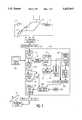
- FIG. 1is a schematic representation of a live video insertion system, according to the preferred embodiment of the invention.
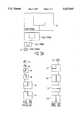
- FIG. 2ais a schematic representation of pyramid decimation of an image as used in the preferred embodiment.
- FIG. 2billustrates both a schematic representation of a search tree as used in the prior art.
- FIG. 2cillustrates a search tree as used in the preferred embodiment.
- FIG. 4aillustrates the method of verifying existence of a specific object by multiple correlation, as used in the prior art.
- FIG. 4billustrates an example of mismatch when using only the verification of existence of a specific object by multiple correlation.
- FIG. 5illustrates the 2-D method of sub-pixel interpolation on correlation surfaces.
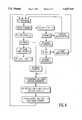
- FIG. 6is a flow diagram of a live video insertion system incorporating the modifications of the preferred embodiment.
- FIGS. 7A-7Cshow the three classes of two dimensional linear invariant features of the type that the preferred embodiment of the invention may seek to identify.
- FIG. 8illustrates a reverse L shaped target.
- the method of the unlike feature correlationis best understood by considering how electronic insertion devices do rapid pattern recognition.
- the electronic insertion system 10gets an image taken by a conventional television camera 12 of a scene 14.
- the views from different cameras 12are routed through an editor's switching controller 16 by means of which the director of the program (typically a trained human, not shown) edits together different camera shots to produce the television program that is sent to the end viewer over the network.
- the video feedis passed through the electronic insertion device 10.
- the incoming signaltypically in analog NTSC format, is converted into a digital format by an encoder 20.
- the digital image 22is then converted into a pyramid of images 24 by a pyramid producing device 26.
- the pyramid of the incoming live image 24is then compared against a pyramid of a prestored reference image 28 which contains the target being looked for.
- This comparison of incoming live image against the prestored reference imageis done by a search comparator device 30 using a search tree of templates 32 which comprises a sequence of small (typically 8 pixel by 8 pixel) sub-images (or templates) taken from the pyramid of the reference image 28.
- the search device 30uses these search templates 32 in a predetermined sequence in order to rapidly ascertain if the sought after target appears in the current image of interest and, if so, in what pose--i.e. what is the target's current magnification, translation and rotation with respect to the target represented in the pyramid of the reference image 28.
- the unlike feature correlation part of this inventionis an improvement to existing practice which allows the search device 30 to do a rapid and robust search for the target.
- a typical search treelooks like that shown schematically in FIG. 2b.
- the first node 32is an eight by eight pixel sub-image of the level 3 reference image 34 (derived by 3 sequences of appropriate decimation from the level 0 image 36) representing, for example, a right hand corner of a football goal post.
- the pyramidmay, in addition, be Gaussian filtered, or Laplacian filtered (or any other suitable filtering), as discussed in detail by Burt.
- a typical mode of searchis to step through the level 3 pyramid of the incoming image in a raster fashion doing correlations with the first node template 32.
- the size of the image of a single fieldis 90 pixels long by 30 pixels deep.
- the first node of the search treecan be searched for in 12 passes or correlations, each of which takes about 1 millisecond. (A field time of NTSC video is 1/60th of second, or 16.6 milliseconds).
- the maximum correlationis found and, if above an experimentally determined threshold, it is assumed to have found a right hand corner, as that is the pattern that will give the single highest match or correlation. Having found the right hand corner, the search algorithm then looks to see if there is a left hand corner in the appropriate place. It does this by taking the template 38 of a left hand corner taken from the reference pyramid image 34, and does a single correlation at the offset from the position of the right hand corner just located, based on the distance between corners in the reference level 3 image 34. The magnification between the incoming live image and the prestored reference image is assumed to be 1.0.
- the correlationis over a 15 by 15 region there is some tolerance in the magnification of the incoming image that can be detected, even with this initial assumption that the incoming image has the same magnification as the reference image.
- This tolerancevaries with the size of the feature being looked for. For example, if the goalpost in the reference level 3 image spans half the image, i.e., is 45 pixels wide, the allowed range of magnification for the search to be successful is ⁇ 18% of the reference image.
- a correlation of the right hand reference template 38produces a peak value greater than a predetermined threshold, then a matching left hand corner is assumed to have been found.
- the search algorithmupdates the estimate of the magnification of the incoming image with respect to the reference image. The search then proceeds to the next search template, 40 which in this example is the level 2 right hand corner, and runs a correlation using the position of the right hand corner predicted by the level 1 search. The maximum of this correlation is assumed to be a more accurate position for the right hand corner of the goalpost.
- the algorithmlooks for the right hand corner of the goal post with the right hand goal post reference template 44.
- the peak correlation positionif above an acceptable threshold, is assumed to be a more accurate position of the right hand post in the incoming image.
- the proceduremay be repeated one more time using level one templates 46 and 48 taken from the level 1 reference pyramid image 50 for greater positional accuracy.
- the total search of this exampletakes 17 correlations, or just over one field, with a magnification tolerance of roughly ⁇ 20%.
- FIG. 2ca typical search tree employed by the method of the preferred embodiment of this invention, i.e., unlike feature correlation, is shown in FIG. 2c.
- the target of the searchis the same as in the previous example.
- the method of unlike feature correlationstarts in a similar manner, using a level 3 pyramid of the right hand corner 52, and does an exhaustive search of the level 3 pyramid of the incoming pyramid image in 12 correlations of 15 by 15. As before, it initially assumes that maximum peak of all 12 correlations indicates a right hand corner.
- the searchtakes a level 1 right hand corner template 54 and does a correlation of this pattern on the level 1 pyramid of the incoming image in order to get an accurate position of the right hand corner.
- the next stepis to do an unlike feature correlation of a vertical line template 56 centered on the suspected corner. This is done to verify that the corner is indeed a corner and not some similar geometric figure that would give a similar correlation.
- FIG. 3shows how a reference template of a right hand corner 58, when correlated against a right hand corner 60 gives correlation surface 62, which is in practice indistinguishable from the correlation surface 66 resulting from the correlation of the right hand corner template 58 against a cross 64.
- the correlation of the right hand corner template 58 against a T feature 68results in a correlation surface 70, indistinguishable in a real, noisy environment from correlation surface 62.
- the correlation of the horizontal bar 80 against a horizontal, inverted, T 68 and a left hand corner 72result in the correlation surfaces 90 and 94, with corresponding intensity maps of the peak row 92 and 96. Both correlation surfaces 90 and 94 are readily distinguishable from the correct surface 82. Only in the case of the correlation of the horizontal bar 80 against a vertical T 76 are the resultant correlation surface 98 and peak row intensity map 100 virtually indistinguishable from the correct correlation surface 82. However, in this case the correlation of a vertical bar 102 shown in the right hand corner can be used in conjunction with the horizontal bar.
- correlation surface 104obtained by correlating the vertical bar 102 against a right hand corner 60
- correlation surface 108obtained from correlating the vertical bar 102 against the vertical T 76.
- the correlation surfaces 108 and 104are readily distinguishable.
- the search tree of the unlike correlation method of the inventionlocates a candidate right hand corner by correlation of the level 3 right hand corner template 52 on the level 3 incoming image.
- the position of the most likely candidateis chosen, and its location defined more accurately by a level 1 correlation using the level 1 right hand template 54.
- a checkis then done to see if the candidate really is a right hand corner by first doing a level one unlike correlation using a vertical line 56, and checking both that the peak of that correlation occurs in one of the upper three positions of the peak row of the correlation surface, as shown in 104, and that the intensity of the peak row falls off rapidly as show in 106. If the candidate corner does not match, it is possible to go back to the second most likely candidate in the initial level 3 search, and investigate that.
- the candidatedoes pass the vertical bar test, it can be further investigated by the level 1 horizontal bar reference template 112.
- the correlation surfaceshould now correspond to that shown in 82 and the intensity of the peak row to that in 84. From these two tests it is now evident that we have located a right hand corner.
- the left hand cornercan then be sought using the reference template 112, and doing the correlation one step to the left of the position of the right hand corner. This stepping allows us to simultaneously check for continuity of the horizontal bar and to determine that when we do reach the end, the peak line of the correlation surface falls of in the appropriate staircase fashion indicated by the correlation surface 94 in FIG. 3.
- a final verification to ensure that the search has arrived at a left hand cornerwould be to run a correlation of a level 1 vertical bar reference template 114 and check against the expected correlation surface 116 with a corresponding map of peak row intensity 118.
- the total search indicatedwould take about 19 correlations (assuming the stepping along the bar takes 4 level 1 correlations, covering 60 pixels or 0.16 of the image. The stepping may be done at either level 2 or level 3 to increase the span for a given number of correlations).
- unlike feature correlationssuch as checking for ends of lines.
- the principal advantages of the unlike correlation methodare that by doing strict element analysis early on it not only drastically reduces the number of false alarms, but does so early enough to allow lesser candidates to be considered without wasting correlations researching the entire image.
- the next phase of the conventional live video insertion systemis to do a verification by doing a larger number of correlations (typically between 10 and 15 with existing Datacube Max20 hardware) on the level 1 pyramid of the incoming image to further check that the object identified is in fact the object being sought.
- these correlationsare centered on points 120 that model the target in the incoming image using the pose (translation, magnification and rotation) identified by the search.
- the verificationdoes cut down on the number of false alarms, it has a problem shown in FIG. 4b.
- each of the correlationsthough centered on the model 120, extends over a range of 15 by 15 pixels 122, so that a random collection of arbitrary objects 126 (players, for example) can give rise to correlations whose peak value 124 is above the required experimental threshold indicating an adequate match).
- the algorithmtreats the random collection of arbitrary objects as being equivalent to having verified the existence of the goalpost 128. This effect can be reduced by reducing the area 122 over which the correlation's are done or even more effectively, by first doing sub-pixel interpolation on the correlation surfaces to determine the exact coordinates of the matches 124, and then checking that these coordinates are aligned to each other to fit a model of the search object (i.e.
- Sub-pixel interpolation at a verification stageis known. It is an infrequently used and poorly documented, but very effective technique, and is illustrated in FIG. 5 for a one dimensional case.
- the peak correlation value 132 and the two values on either side of it, 130 and 134are considered.
- the first stepis to determine which is the smaller of the two values on either side of the peak 132, which in FIG. 5 is 130.
- a line 136is then drawn through the peak 132 and the lesser value 130 to obtain the angle 138.
- a second line 140is then drawn through the higher peak 134 at an angle to the horizontal which is 180 degrees minus the angle 138.
- the intersection 142 of the two lines 136 and 140give subpixel value 144 of the correlation.
- This method of reconstructing a trianglehas some theoretical justification in that the correlation of a rectangle function with itself is a triangle.
- the methodhas also been found to be the most consistent and accurate experimentally and can readily be extended to the two dimensional case.
- This sub-pixel techniquethough occasionally used in other contexts, lends itself well to usage with the novel aspects of this invention.
- the false alarm casecan be handled most readily by having a simple logging function incorporated in the software as shown in the flow chart in FIG. 6.
- This logging functionwhen activated, stores the first image the machine sees each time it turns on. This may be done by directly loading down one of the delay memories 150 in FIG. 1, or by first copying that image to a special memory surface 152, which is not in the stream of continuous video and then down loading that memory in non real time to the control computer 153.
- the systemcan then be run unattended for extended periods of time, (i.e. overnight, which is roughly 2 million fields of video) and effectively watch a random video stream. At the end of the period, i.e. the next morning, an operator can then see how many images the machine recognized, and which ones they where. This not only allows the false turn on rate to be calculated, but gives the operator insight into what caused the false turn-ons, allowing the operator to take corrective action by altering the search strategy if necessary.
- the positive turn on testingrequires a more subtle tool, also indicted in the flow diagram in FIG. 6. Because the testing is typically done from a limited set of tape recordings of a prior event in the same stadium, and because once the search has been successfully completed, the live video insertion machine 10 switches into a tracking mode, in which the tracking comparator 154 compares a set of tracking templates 156 with the incoming scene, bypassing the search comparator 30, the operator would typically only have a limited number of transition scenes at which the machine does its recognition. However, by incorporating a flag that allows the machine to always fail after one insertion, i.e.
- the machinecan be required to attempt to recognize every video field in a given sequence. This always fail flag allows an operator to very quickly see, even on a limited tape sample of a prior game, if the current search strategy would be applicable over any of the camera angles and magnifications that might be an initial field in some future game.
- Invariant linear featuresare defined as ones that in a two dimensional plane provide x and y information, but whose appearance is independent of zoom--i.e., the features look the same at any zoom.
- FIGS. 7a-7cThree classes of 2--dimensional linear invariant features are shown in FIGS. 7a-7c.
- the simplest invariant linear featureis a line 200, of any orientation, that ends within the region of interest as shown in FIG. 7a.
- the next most complex, and the most practically useful set, of invariant linear featuresconsist of two lines shown as 202 and 204 in FIG. 7b, of any orientation, though not identical, which either meet, or cross. As shown in FIG. 7b there are three cases of such lines: either they meet at two endpoints as shown by feature 206 (L shaped); or they meet at one end point as shown by feature 208 (T shaped); or they intersect each other as shown by feature 208 (X shaped).
- Three or more lines such as lines 212, 214, 216 and 218 illustrated in FIG. 7care only zoom invariant if they meet or cross at a single point as shown by feature 220. Such structures are less common in video images.
- a reversed L shaped feature 300 as shown in FIG. 8can be detected with a considerably reduced chance of confusion with related two line structures by maximizing the function T:
- ⁇ P(col,90,n,m+y)is interpreted as being the sum of the values of the peak column of the correlation of a line at 90 degrees to the horizontal (i.e., a vertical line template), centered at the nth horizontal correlation position, and the mth vertical correlation position).
- the correlation of a line with a linegives a correlation surface with a corresponding line of high values.
- more discriminating go-nogo checksmay be included, such as checking on either side of the column with the highest sum of correlations for either a column with negative sum, or individual negative values.
- the variance of the individual values in the peak column, or other statistical quantitymay also be included, either as a go-nogo check or as a weighting factor in slightly modified variants of the function T defined above.
- FIG. 9illustrates more specifically the correlation surfaces 400 generated when looking for the reverse L-shaped feature 300 of FIG. 8.
- a first correlation search rectanglelooks for row correlation and generates a first and a second pair of correlation surfaces 406 and 410.
- Correlation surface 406correlates the horizontal line 304, centered on correlation point (n-h, m) and correlation surface 410 is the resulting correlation surface centered on correlation position (n+h, m).
- the correlation search rectangle 404produces two correlation surfaces 408 and 412 which look for column feature 302 of reverse L-shaped feature 300 of FIG. 8.
- ⁇ 1angle of line 1 with respect to abscissa (x axis)
- ⁇ 2angle of line 2 with respect to abscissa (x axis)
Landscapes
- Engineering & Computer Science (AREA)
- Data Mining & Analysis (AREA)
- Theoretical Computer Science (AREA)
- Bioinformatics & Cheminformatics (AREA)
- General Engineering & Computer Science (AREA)
- Bioinformatics & Computational Biology (AREA)
- Computer Vision & Pattern Recognition (AREA)
- Evolutionary Biology (AREA)
- Evolutionary Computation (AREA)
- Physics & Mathematics (AREA)
- Artificial Intelligence (AREA)
- General Physics & Mathematics (AREA)
- Life Sciences & Earth Sciences (AREA)
- Business, Economics & Management (AREA)
- Marketing (AREA)
- Multimedia (AREA)
- Signal Processing (AREA)
- Image Analysis (AREA)
- Testing, Inspecting, Measuring Of Stereoscopic Televisions And Televisions (AREA)
Abstract
Description
T=Σ[ΣP(col,90,n,m+v)-ΣP(row,O,n-h,m)+ΣP(row,O,n+h,m)-ΣP(col,90,n,m-v)]=maximum
T=surface 406-surface 410+surface 408-surface 412=maximum
T=Σ[Σrow.sub.1 ±Σrow.sub.2 +Σcol.sub.1 ±Σcol.sub.2 ]=maximum
T=Σ[Σrowα.sub.1 ±Σrowα.sub.1 ±180°+Σcolα.sub.2 ±Σcolα.sub.2 ±180°]=maximum
Claims (27)
TΣ(ΣPα.sub.i (m,n)±ΣPα.sub.i (m+v,n+h))=maximum
T=Σ(ΣP(col,90,n,m+v)-ΣP(row,O,n-h,m)+ΣP(row,O,n+h,m)-ΣP(col,90,n,m-v))=maximum.
T=Σ(ΣPα.sub.i (m,n)±ΣPα.sub.i (m+v,n+h))=maximum
T=Σ(ΣP(col,90,n,m+v)-ΣP(row,O,n-h,m)+ΣP(row,O,n+h,m)-ΣP(col,90,n,m-v))=maximum.
T=Σ[ΣPα.sub.i (m,n)±ΣPα.sub.i (m+v,n+h)]=maximum
T=Σ[ΣPα.sub.i (m,n)±ΣPα.sub.i (m-v,n+h)]=maximum
Priority Applications (5)
| Application Number | Priority Date | Filing Date | Title |
|---|---|---|---|
| US08/381,088US5627915A (en) | 1995-01-31 | 1995-01-31 | Pattern recognition system employing unlike templates to detect objects having distinctive features in a video field |
| AU49054/96AAU4905496A (en) | 1995-01-31 | 1996-01-23 | Live video insertion system including template matching |
| EP96905244AEP0804775A1 (en) | 1995-01-31 | 1996-01-23 | Live video insertion system including template matching |
| PCT/US1996/001125WO1996024115A1 (en) | 1995-01-31 | 1996-01-23 | Live video insertion system including template matching |
| ARP960101193AAR000829A1 (en) | 1995-01-31 | 1996-01-29 | CONFIGURATION RECOGNITION METHOD AND ARRANGEMENT TO RECOGNIZE AN OBJECT THAT HAS DISTINCTIVE FEATURES DISPLAYED IN A VIDEO FIELD. |
Applications Claiming Priority (1)
| Application Number | Priority Date | Filing Date | Title |
|---|---|---|---|
| US08/381,088US5627915A (en) | 1995-01-31 | 1995-01-31 | Pattern recognition system employing unlike templates to detect objects having distinctive features in a video field |
Publications (1)
| Publication Number | Publication Date |
|---|---|
| US5627915Atrue US5627915A (en) | 1997-05-06 |
Family
ID=23503604
Family Applications (1)
| Application Number | Title | Priority Date | Filing Date |
|---|---|---|---|
| US08/381,088Expired - LifetimeUS5627915A (en) | 1995-01-31 | 1995-01-31 | Pattern recognition system employing unlike templates to detect objects having distinctive features in a video field |
Country Status (5)
| Country | Link |
|---|---|
| US (1) | US5627915A (en) |
| EP (1) | EP0804775A1 (en) |
| AR (1) | AR000829A1 (en) |
| AU (1) | AU4905496A (en) |
| WO (1) | WO1996024115A1 (en) |
Cited By (121)
| Publication number | Priority date | Publication date | Assignee | Title |
|---|---|---|---|---|
| US5777622A (en)* | 1996-01-05 | 1998-07-07 | International Business Machines Corporation | Method for identifying invisible objects ordered in a tree-like data structure by finding adjoining hidden objects |
| US5790691A (en)* | 1996-03-12 | 1998-08-04 | The Regents Of The University Of Colorado | Method and apparatus for robust shape detection using a hit/miss transform |
| US5912700A (en)* | 1996-01-10 | 1999-06-15 | Fox Sports Productions, Inc. | System for enhancing the television presentation of an object at a sporting event |
| US5917553A (en)* | 1996-10-22 | 1999-06-29 | Fox Sports Productions Inc. | Method and apparatus for enhancing the broadcast of a live event |
| US5953077A (en)* | 1997-01-17 | 1999-09-14 | Fox Sports Productions, Inc. | System for displaying an object that is not visible to a camera |
| US5963272A (en)* | 1995-10-31 | 1999-10-05 | Sarnoff Corporation | Method and apparatus for generating a reference image from an image sequence |
| US6229541B1 (en)* | 1999-09-03 | 2001-05-08 | Isurftv | Use of templates for cost-effective secure linking of video stream objects |
| US6229550B1 (en) | 1998-09-04 | 2001-05-08 | Sportvision, Inc. | Blending a graphic |
| US6252632B1 (en) | 1997-01-17 | 2001-06-26 | Fox Sports Productions, Inc. | System for enhancing a video presentation |
| US6252986B1 (en) | 1998-04-03 | 2001-06-26 | Cognex Corporation | Locating an image of an object having a concentric profile |
| US6266100B1 (en) | 1998-09-04 | 2001-07-24 | Sportvision, Inc. | System for enhancing a video presentation of a live event |
| US6266442B1 (en) | 1998-10-23 | 2001-07-24 | Facet Technology Corp. | Method and apparatus for identifying objects depicted in a videostream |
| US6324299B1 (en)* | 1998-04-03 | 2001-11-27 | Cognex Corporation | Object image search using sub-models |
| US20020057364A1 (en)* | 1999-05-28 | 2002-05-16 | Anderson Tazwell L. | Electronic handheld audio/video receiver and listening/viewing device |
| US20020063799A1 (en)* | 2000-10-26 | 2002-05-30 | Ortiz Luis M. | Providing multiple perspectives of a venue activity to electronic wireless hand held devices |
| US6400996B1 (en) | 1999-02-01 | 2002-06-04 | Steven M. Hoffberg | Adaptive pattern recognition based control system and method |
| US6411734B1 (en) | 1998-04-03 | 2002-06-25 | Cognex Corporation | Object image search using validated sub-model poses |
| US6418424B1 (en) | 1991-12-23 | 2002-07-09 | Steven M. Hoffberg | Ergonomic man-machine interface incorporating adaptive pattern recognition based control system |
| US6424734B1 (en) | 1998-04-03 | 2002-07-23 | Cognex Corporation | Fiducial mark search using sub-models |
| US20020106109A1 (en)* | 2000-08-12 | 2002-08-08 | Retterath James E. | System for road sign sheeting classification |
| EP1242976A1 (en)* | 1999-12-13 | 2002-09-25 | Howard J.Jr. Kennedy | 2-d/3-d recognition and tracking algorithm for soccer application |
| US6459822B1 (en)* | 1998-08-26 | 2002-10-01 | The United States Of America As Represented By The Administrator Of The National Aeronautics And Space Administration | Video image stabilization and registration |
| US6459820B1 (en) | 1998-08-25 | 2002-10-01 | Cognex Corporation | Gauging using sub-model poses |
| US20020152476A1 (en)* | 1999-05-28 | 2002-10-17 | Anderson Tazwell L. | Audio/video programming and charging system and method |
| US6477275B1 (en)* | 1999-06-16 | 2002-11-05 | Coreco Imaging, Inc. | Systems and methods for locating a pattern in an image |
| US20020170970A1 (en)* | 2001-05-15 | 2002-11-21 | Welch Allyn Data Collection, Inc. | Optical reader having decoding and image capturing functionality |
| US20030007166A1 (en)* | 2000-03-02 | 2003-01-09 | Fujitsu Limited | Image correction method and image correcting apparatus |
| US6516092B1 (en) | 1998-05-29 | 2003-02-04 | Cognex Corporation | Robust sub-model shape-finder |
| US6542639B2 (en)* | 1997-08-22 | 2003-04-01 | Fujitsu Limited | Region extraction apparatus, region extraction method and computer readable recording medium |
| US20030095687A1 (en)* | 2001-11-21 | 2003-05-22 | Montgomery Dennis L. | System and method for generating alert conditions in a surveillance system |
| US20030112354A1 (en)* | 2001-12-13 | 2003-06-19 | Ortiz Luis M. | Wireless transmission of in-play camera views to hand held devices |
| US6614926B1 (en) | 1999-06-29 | 2003-09-02 | Cognex Corporation | Methods and apparatuses for generating from an image a model of an object |
| EP1137281A3 (en)* | 2000-03-15 | 2003-09-24 | Television Monitoring Services Limited | Method of measuring brand exposure and apparatus therefor |
| US20030202124A1 (en)* | 2002-04-26 | 2003-10-30 | Alden Ray M. | Ingrained field video advertising process |
| US6674878B2 (en) | 2001-06-07 | 2004-01-06 | Facet Technology Corp. | System for automated determination of retroreflectivity of road signs and other reflective objects |
| US20040005082A1 (en)* | 2002-07-05 | 2004-01-08 | Lee Harry C. | Method and apparatus for image processing using sub-pixel differencing |
| US20040006774A1 (en)* | 1999-03-08 | 2004-01-08 | Anderson Tazwell L. | Video/audio system and method enabling a user to select different views and sounds associated with an event |
| US20040032495A1 (en)* | 2000-10-26 | 2004-02-19 | Ortiz Luis M. | Providing multiple synchronized camera views for broadcast from a live venue activity to remote viewers |
| US20040086153A1 (en)* | 2002-10-30 | 2004-05-06 | Yichang Tsai | Methods and systems for recognizing road signs in a digital image |
| US6748104B1 (en)* | 2000-03-24 | 2004-06-08 | Cognex Corporation | Methods and apparatus for machine vision inspection using single and multiple templates or patterns |
| US6750919B1 (en) | 1998-01-23 | 2004-06-15 | Princeton Video Image, Inc. | Event linked insertion of indicia into video |
| US6785427B1 (en)* | 2000-09-20 | 2004-08-31 | Arcsoft, Inc. | Image matching using resolution pyramids with geometric constraints |
| US6804416B1 (en) | 2001-03-16 | 2004-10-12 | Cognex Corporation | Method and system for aligning geometric object models with images |
| US6813377B1 (en) | 1999-08-06 | 2004-11-02 | Cognex Corporation | Methods and apparatuses for generating a model of an object from an image of the object |
| US6816186B2 (en)* | 1999-07-31 | 2004-11-09 | International Business Machines Corporation | Automatic zone monitoring |
| US20050001852A1 (en)* | 2003-07-03 | 2005-01-06 | Dengler John D. | System and method for inserting content into an image sequence |
| US20050018904A1 (en)* | 2003-07-22 | 2005-01-27 | Jason Davis | Methods for finding and characterizing a deformed pattern in an image |
| US20050083355A1 (en)* | 2003-10-17 | 2005-04-21 | Tadanori Tezuka | Apparatus and method for image-processing, and display apparatus |
| US6898333B1 (en) | 1999-08-06 | 2005-05-24 | Cognex Corporation | Methods and apparatus for determining the orientation of an object in an image |
| US20050117801A1 (en)* | 2003-07-22 | 2005-06-02 | Jason Davis | Method for partitioning a pattern into optimized sub-patterns |
| US6909438B1 (en) | 2000-02-04 | 2005-06-21 | Sportvision, Inc. | Video compositor |
| US20050167504A1 (en)* | 1997-10-17 | 2005-08-04 | Meier Timothy P. | Bar code reading device having image processing mode |
| US20050210512A1 (en)* | 2003-10-07 | 2005-09-22 | Anderson Tazwell L Jr | System and method for providing event spectators with audio/video signals pertaining to remote events |
| US6950548B1 (en) | 2000-05-17 | 2005-09-27 | Cognex Corporation | Creating geometric model descriptions for use in machine vision inspection systems |
| US20050216299A1 (en)* | 2004-03-12 | 2005-09-29 | Anderson Tazwell L Jr | Methods and systems for acquiring rights to content for transmission at an event |
| US6959112B1 (en) | 2001-06-29 | 2005-10-25 | Cognex Technology And Investment Corporation | Method for finding a pattern which may fall partially outside an image |
| US6963338B1 (en) | 1998-07-31 | 2005-11-08 | Cognex Corporation | Method for refining geometric description models using images |
| US6965397B1 (en) | 1999-11-22 | 2005-11-15 | Sportvision, Inc. | Measuring camera attitude |
| US6973207B1 (en)* | 1999-11-30 | 2005-12-06 | Cognex Technology And Investment Corporation | Method and apparatus for inspecting distorted patterns |
| US20050271304A1 (en)* | 2004-05-05 | 2005-12-08 | Retterath Jamie E | Methods and apparatus for automated true object-based image analysis and retrieval |
| US20050276514A1 (en)* | 2004-06-14 | 2005-12-15 | Fisher Paul A | Image monitoring method and system |
| US20050280705A1 (en)* | 2004-05-20 | 2005-12-22 | Immersion Entertainment | Portable receiver device |
| US20050286053A1 (en)* | 2004-06-25 | 2005-12-29 | Konica Minolta Sensing, Inc. | Multi-angle colorimeter |
| US7013428B1 (en) | 1999-09-03 | 2006-03-14 | Yakov Kamen | Use of templates for cost-effective secure linking of video stream objects |
| US20060087504A1 (en)* | 1999-10-21 | 2006-04-27 | Meier Kevin R | Telestrator system |
| US20060174297A1 (en)* | 1999-05-28 | 2006-08-03 | Anderson Tazwell L Jr | Electronic handheld audio/video receiver and listening/viewing device |
| US7111787B2 (en) | 2001-05-15 | 2006-09-26 | Hand Held Products, Inc. | Multimode image capturing and decoding optical reader |
| US20060268009A1 (en)* | 2003-07-01 | 2006-11-30 | Lionel Oisel | Automatic resetting method intended for a geometric model of a scene over a picture of the scene, implementing device and programming medium |
| US7149549B1 (en) | 2000-10-26 | 2006-12-12 | Ortiz Luis M | Providing multiple perspectives for a venue activity through an electronic hand held device |
| US7206434B2 (en) | 2001-07-10 | 2007-04-17 | Vistas Unlimited, Inc. | Method and system for measurement of the duration an area is included in an image stream |
| US7230653B1 (en) | 1999-11-08 | 2007-06-12 | Vistas Unlimited | Method and apparatus for real time insertion of images into video |
| US7242988B1 (en) | 1991-12-23 | 2007-07-10 | Linda Irene Hoffberg | Adaptive pattern recognition based controller apparatus and method and human-factored interface therefore |
| US7287697B2 (en) | 2001-07-13 | 2007-10-30 | Hand Held Products, Inc. | Optical reader having a color imager |
| US7293712B2 (en) | 2004-10-05 | 2007-11-13 | Hand Held Products, Inc. | System and method to automatically discriminate between a signature and a dataform |
| US20080012988A1 (en)* | 2006-07-16 | 2008-01-17 | Ray Baharav | System and method for virtual content placement |
| US20080088627A1 (en)* | 2005-03-29 | 2008-04-17 | Fujitsu Limited | Video management system |
| DE202005021607U1 (en) | 2005-06-06 | 2008-11-20 | Tomtom International B.V. | Navigation device with camera information |
| US20090009605A1 (en)* | 2000-06-27 | 2009-01-08 | Ortiz Luis M | Providing multiple video perspectives of activities through a data network to a remote multimedia server for selective display by remote viewing audiences |
| US20090028440A1 (en)* | 2007-07-27 | 2009-01-29 | Sportvision, Inc. | Detecting an object in an image using multiple templates |
| US20090125226A1 (en)* | 2005-05-06 | 2009-05-14 | Laumeyer Robert A | Network-based navigation system having virtual drive-thru advertisements integrated with actual imagery from along a physical route |
| US20090232358A1 (en)* | 2008-03-11 | 2009-09-17 | Geoffrey Mark Timothy Cross | Method and apparatus for processing an image |
| US7637430B2 (en) | 2003-05-12 | 2009-12-29 | Hand Held Products, Inc. | Picture taking optical reader |
| US7639861B2 (en) | 2005-09-14 | 2009-12-29 | Cognex Technology And Investment Corporation | Method and apparatus for backlighting a wafer during alignment |
| US7725073B2 (en) | 2002-10-07 | 2010-05-25 | Immersion Entertainment, Llc | System and method for providing event spectators with audio/video signals pertaining to remote events |
| US20100165113A1 (en)* | 2007-03-16 | 2010-07-01 | Nikon Corporation | Subject tracking computer program product, subject tracking device and camera |
| US7974714B2 (en) | 1999-10-05 | 2011-07-05 | Steven Mark Hoffberg | Intelligent electronic appliance system and method |
| US20110205077A1 (en)* | 2010-02-24 | 2011-08-25 | Cavallaro Richard H | Tracking system using proximity and/or presence |
| US20110217030A1 (en)* | 2010-03-04 | 2011-09-08 | Digital Imaging Systems Gmbh | Method to determine auto focus of a digital camera |
| US8046313B2 (en) | 1991-12-23 | 2011-10-25 | Hoffberg Steven M | Ergonomic man-machine interface incorporating adaptive pattern recognition based control system |
| EP2398238A2 (en) | 2001-10-12 | 2011-12-21 | Comcast IP Holdings I, LLC | Method and apparatus for targeting of interactive virtual objects |
| US8111904B2 (en) | 2005-10-07 | 2012-02-07 | Cognex Technology And Investment Corp. | Methods and apparatus for practical 3D vision system |
| US8162584B2 (en) | 2006-08-23 | 2012-04-24 | Cognex Corporation | Method and apparatus for semiconductor wafer alignment |
| US8170372B2 (en) | 2010-08-06 | 2012-05-01 | Kennedy Michael B | System and method to find the precise location of objects of interest in digital images |
| US8229222B1 (en) | 1998-07-13 | 2012-07-24 | Cognex Corporation | Method for fast, robust, multi-dimensional pattern recognition |
| US20120209123A1 (en)* | 2011-02-10 | 2012-08-16 | Timothy King | Surgeon's Aid for Medical Display |
| US20120323612A1 (en)* | 2010-06-15 | 2012-12-20 | Ticketmaster, Llc | Methods and systems for computer aided event and venue setup and modeling and interactive maps |
| US8369967B2 (en) | 1999-02-01 | 2013-02-05 | Hoffberg Steven M | Alarm system controller and a method for controlling an alarm system |
| US20130138442A1 (en)* | 2000-07-31 | 2013-05-30 | Shazam Investments Limited | Systems and Methods for Recognizing Sound and Music Signals in High Noise and Distortion |
| WO2013112517A1 (en)* | 2012-01-25 | 2013-08-01 | Sony Corporation | Applying motion blur to only select objects in video |
| US8583027B2 (en) | 2000-10-26 | 2013-11-12 | Front Row Technologies, Llc | Methods and systems for authorizing computing devices for receipt of venue-based data based on the location of a user |
| US8657200B2 (en) | 2011-06-20 | 2014-02-25 | Metrologic Instruments, Inc. | Indicia reading terminal with color frame processing |
| US8666655B2 (en)* | 2012-07-30 | 2014-03-04 | Aleksandr Shtukater | Systems and methods for navigation |
| US8892495B2 (en) | 1991-12-23 | 2014-11-18 | Blanding Hovenweep, Llc | Adaptive pattern recognition based controller apparatus and method and human-interface therefore |
| US9215383B2 (en) | 2011-08-05 | 2015-12-15 | Sportsvision, Inc. | System for enhancing video from a mobile camera |
| US20160125234A1 (en)* | 2013-03-14 | 2016-05-05 | Nike,Inc. | Athletic Attribute Determinations from Image Data |
| US20160203367A1 (en)* | 2013-08-23 | 2016-07-14 | Nec Corporation | Video processing apparatus, video processing method, and video processing program |
| US9514381B1 (en) | 2013-03-15 | 2016-12-06 | Pandoodle Corporation | Method of identifying and replacing an object or area in a digital image with another object or area |
| US9646444B2 (en) | 2000-06-27 | 2017-05-09 | Mesa Digital, Llc | Electronic wireless hand held multimedia device |
| US9659236B2 (en) | 2013-06-28 | 2017-05-23 | Cognex Corporation | Semi-supervised method for training multiple pattern recognition and registration tool models |
| US9781170B2 (en) | 2010-06-15 | 2017-10-03 | Live Nation Entertainment, Inc. | Establishing communication links using routing protocols |
| US10223926B2 (en) | 2013-03-14 | 2019-03-05 | Nike, Inc. | Skateboard system |
| US10290119B2 (en) | 2016-09-15 | 2019-05-14 | Sportsmedia Technology Corporation | Multi view camera registration |
| US10361802B1 (en) | 1999-02-01 | 2019-07-23 | Blanding Hovenweep, Llc | Adaptive pattern recognition based control system and method |
| CN110287917A (en)* | 2019-06-28 | 2019-09-27 | 广东电网有限责任公司 | The security management and control system and method in capital construction building site |
| US10573084B2 (en) | 2010-06-15 | 2020-02-25 | Live Nation Entertainment, Inc. | Generating augmented reality images using sensor and location data |
| US20200142978A1 (en)* | 2018-11-02 | 2020-05-07 | A9.Com, Inc. | Visual attribute determination for content selection |
| US10674968B2 (en)* | 2011-02-10 | 2020-06-09 | Karl Storz Imaging, Inc. | Adjustable overlay patterns for medical display |
| US20200200544A1 (en)* | 2018-12-21 | 2020-06-25 | Volkswagen Aktiengesellschaft | Positioning system and method for operating a mobile unit positioning system |
| US10769458B2 (en) | 2008-02-12 | 2020-09-08 | DBI/CIDAUT Technologies, LLC | Determination procedure of the luminance of traffic signs and device for its embodiment |
| US10922871B2 (en) | 2018-01-19 | 2021-02-16 | Bamtech, Llc | Casting a ray projection from a perspective view |
| US12073740B2 (en) | 2013-03-14 | 2024-08-27 | Nike, Inc. | Skateboard system |
Families Citing this family (4)
| Publication number | Priority date | Publication date | Assignee | Title |
|---|---|---|---|---|
| US6993245B1 (en) | 1999-11-18 | 2006-01-31 | Vulcan Patents Llc | Iterative, maximally probable, batch-mode commercial detection for audiovisual content |
| US6968565B1 (en) | 2000-02-25 | 2005-11-22 | Vulcan Patents Llc | Detection of content display observers with prevention of unauthorized access to identification signal |
| US8910199B2 (en) | 2000-02-25 | 2014-12-09 | Interval Licensing Llc | Targeted television content display |
| US20020062481A1 (en) | 2000-02-25 | 2002-05-23 | Malcolm Slaney | Method and system for selecting advertisements |
Citations (10)
| Publication number | Priority date | Publication date | Assignee | Title |
|---|---|---|---|---|
| US4651341A (en)* | 1982-09-14 | 1987-03-17 | Fujitsu Limited | Pattern recognition apparatus and a pattern recognition method |
| US4802231A (en)* | 1987-11-24 | 1989-01-31 | Elliot Davis | Pattern recognition error reduction system |
| US4817175A (en)* | 1986-08-26 | 1989-03-28 | Schlumberger Systems And Services, Inc. | Video stream processing system |
| WO1990006691A1 (en)* | 1988-12-22 | 1990-06-28 | Great Lakes Chemical Corporation | Thermally stable and light stable flame retardant thermoplastic polyolefin and polystyrene compositions |
| US4972499A (en)* | 1988-03-29 | 1990-11-20 | Kabushiki Kaisha Toshiba | Pattern recognition apparatus |
| US5063603A (en)* | 1989-11-06 | 1991-11-05 | David Sarnoff Research Center, Inc. | Dynamic method for recognizing objects and image processing system therefor |
| JPH05101223A (en)* | 1991-10-09 | 1993-04-23 | Mitsubishi Heavy Ind Ltd | Adaptive pattern recognizer |
| US5264933A (en)* | 1991-07-19 | 1993-11-23 | Princeton Electronic Billboard, Inc. | Television displays having selected inserted indicia |
| US5353392A (en)* | 1990-04-11 | 1994-10-04 | Multi Media Techniques | Method and device for modifying a zone in successive images |
| US5363212A (en)* | 1991-05-14 | 1994-11-08 | Fuji Xerox Co., Ltd. | Marker dot detecting device for color image recording apparatus |
Family Cites Families (1)
| Publication number | Priority date | Publication date | Assignee | Title |
|---|---|---|---|---|
| GB9119964D0 (en)* | 1991-09-18 | 1991-10-30 | Sarnoff David Res Center | Pattern-key video insertion |
- 1995
- 1995-01-31USUS08/381,088patent/US5627915A/ennot_activeExpired - Lifetime
- 1996
- 1996-01-23EPEP96905244Apatent/EP0804775A1/ennot_activeWithdrawn
- 1996-01-23AUAU49054/96Apatent/AU4905496A/ennot_activeAbandoned
- 1996-01-23WOPCT/US1996/001125patent/WO1996024115A1/ennot_activeApplication Discontinuation
- 1996-01-29ARARP960101193Apatent/AR000829A1/enunknown
Patent Citations (10)
| Publication number | Priority date | Publication date | Assignee | Title |
|---|---|---|---|---|
| US4651341A (en)* | 1982-09-14 | 1987-03-17 | Fujitsu Limited | Pattern recognition apparatus and a pattern recognition method |
| US4817175A (en)* | 1986-08-26 | 1989-03-28 | Schlumberger Systems And Services, Inc. | Video stream processing system |
| US4802231A (en)* | 1987-11-24 | 1989-01-31 | Elliot Davis | Pattern recognition error reduction system |
| US4972499A (en)* | 1988-03-29 | 1990-11-20 | Kabushiki Kaisha Toshiba | Pattern recognition apparatus |
| WO1990006691A1 (en)* | 1988-12-22 | 1990-06-28 | Great Lakes Chemical Corporation | Thermally stable and light stable flame retardant thermoplastic polyolefin and polystyrene compositions |
| US5063603A (en)* | 1989-11-06 | 1991-11-05 | David Sarnoff Research Center, Inc. | Dynamic method for recognizing objects and image processing system therefor |
| US5353392A (en)* | 1990-04-11 | 1994-10-04 | Multi Media Techniques | Method and device for modifying a zone in successive images |
| US5363212A (en)* | 1991-05-14 | 1994-11-08 | Fuji Xerox Co., Ltd. | Marker dot detecting device for color image recording apparatus |
| US5264933A (en)* | 1991-07-19 | 1993-11-23 | Princeton Electronic Billboard, Inc. | Television displays having selected inserted indicia |
| JPH05101223A (en)* | 1991-10-09 | 1993-04-23 | Mitsubishi Heavy Ind Ltd | Adaptive pattern recognizer |
Non-Patent Citations (2)
| Title |
|---|
| English Translation of Japanese Kokai 5 101223, Kawase et al., Apr. 1993.* |
| English Translation of Japanese Kokai 5-101223, Kawase et al., Apr. 1993. |
Cited By (294)
| Publication number | Priority date | Publication date | Assignee | Title |
|---|---|---|---|---|
| US8046313B2 (en) | 1991-12-23 | 2011-10-25 | Hoffberg Steven M | Ergonomic man-machine interface incorporating adaptive pattern recognition based control system |
| US6418424B1 (en) | 1991-12-23 | 2002-07-09 | Steven M. Hoffberg | Ergonomic man-machine interface incorporating adaptive pattern recognition based control system |
| US8892495B2 (en) | 1991-12-23 | 2014-11-18 | Blanding Hovenweep, Llc | Adaptive pattern recognition based controller apparatus and method and human-interface therefore |
| US7242988B1 (en) | 1991-12-23 | 2007-07-10 | Linda Irene Hoffberg | Adaptive pattern recognition based controller apparatus and method and human-factored interface therefore |
| US5963272A (en)* | 1995-10-31 | 1999-10-05 | Sarnoff Corporation | Method and apparatus for generating a reference image from an image sequence |
| US5777622A (en)* | 1996-01-05 | 1998-07-07 | International Business Machines Corporation | Method for identifying invisible objects ordered in a tree-like data structure by finding adjoining hidden objects |
| US5912700A (en)* | 1996-01-10 | 1999-06-15 | Fox Sports Productions, Inc. | System for enhancing the television presentation of an object at a sporting event |
| US5790691A (en)* | 1996-03-12 | 1998-08-04 | The Regents Of The University Of Colorado | Method and apparatus for robust shape detection using a hit/miss transform |
| US20010026319A1 (en)* | 1996-10-22 | 2001-10-04 | Fox Sports Productions, Inc. | Method and apparatus for enhancing the broadcast of a live event |
| US6141060A (en)* | 1996-10-22 | 2000-10-31 | Fox Sports Productions, Inc. | Method and apparatus for adding a graphic indication of a first down to a live video of a football game |
| US7154540B2 (en) | 1996-10-22 | 2006-12-26 | Fox Sports Productions, Inc. | System for enhancing video |
| US5917553A (en)* | 1996-10-22 | 1999-06-29 | Fox Sports Productions Inc. | Method and apparatus for enhancing the broadcast of a live event |
| US6252632B1 (en) | 1997-01-17 | 2001-06-26 | Fox Sports Productions, Inc. | System for enhancing a video presentation |
| US5953077A (en)* | 1997-01-17 | 1999-09-14 | Fox Sports Productions, Inc. | System for displaying an object that is not visible to a camera |
| US6542639B2 (en)* | 1997-08-22 | 2003-04-01 | Fujitsu Limited | Region extraction apparatus, region extraction method and computer readable recording medium |
| US7523866B2 (en) | 1997-10-17 | 2009-04-28 | Hand Held Products, Inc. | Bar code reading device having image processing mode |
| US7841532B2 (en) | 1997-10-17 | 2010-11-30 | Hand Held Products, Inc. | Bar code reading device having image processing mode |
| US7222789B2 (en) | 1997-10-17 | 2007-05-29 | Hand Held Products, Inc. | Bar code reading device having image processing mode |
| US8282006B2 (en) | 1997-10-17 | 2012-10-09 | Hand Held Products, Inc. | Imaging device operative for image processing |
| US20090200380A1 (en)* | 1997-10-17 | 2009-08-13 | Hand Held Products, Inc. | Bar code reading device having image processing mode |
| US20050167504A1 (en)* | 1997-10-17 | 2005-08-04 | Meier Timothy P. | Bar code reading device having image processing mode |
| US6750919B1 (en) | 1998-01-23 | 2004-06-15 | Princeton Video Image, Inc. | Event linked insertion of indicia into video |
| US6324299B1 (en)* | 1998-04-03 | 2001-11-27 | Cognex Corporation | Object image search using sub-models |
| US6424734B1 (en) | 1998-04-03 | 2002-07-23 | Cognex Corporation | Fiducial mark search using sub-models |
| US6411734B1 (en) | 1998-04-03 | 2002-06-25 | Cognex Corporation | Object image search using validated sub-model poses |
| US6681039B1 (en) | 1998-04-03 | 2004-01-20 | Cognex Corporation | Fiducial mark search using sub-models |
| US6252986B1 (en) | 1998-04-03 | 2001-06-26 | Cognex Corporation | Locating an image of an object having a concentric profile |
| US6516092B1 (en) | 1998-05-29 | 2003-02-04 | Cognex Corporation | Robust sub-model shape-finder |
| US8867847B2 (en) | 1998-07-13 | 2014-10-21 | Cognex Technology And Investment Corporation | Method for fast, robust, multi-dimensional pattern recognition |
| US8320675B1 (en) | 1998-07-13 | 2012-11-27 | Cognex Corporation | Method for fast, robust, multi-dimensional pattern recognition |
| US8363942B1 (en) | 1998-07-13 | 2013-01-29 | Cognex Technology And Investment Corporation | Method for fast, robust, multi-dimensional pattern recognition |
| US8363972B1 (en) | 1998-07-13 | 2013-01-29 | Cognex Corporation | Method for fast, robust, multi-dimensional pattern recognition |
| US8363956B1 (en) | 1998-07-13 | 2013-01-29 | Cognex Corporation | Method for fast, robust, multi-dimensional pattern recognition |
| US8335380B1 (en) | 1998-07-13 | 2012-12-18 | Cognex Corporation | Method for fast, robust, multi-dimensional pattern recognition |
| US8331673B1 (en) | 1998-07-13 | 2012-12-11 | Cognex Corporation | Method for fast, robust, multi-dimensional pattern recognition |
| US8295613B1 (en) | 1998-07-13 | 2012-10-23 | Cognex Corporation | Method for fast, robust, multi-dimensional pattern recognition |
| US8270748B1 (en) | 1998-07-13 | 2012-09-18 | Cognex Corporation | Method for fast, robust, multi-dimensional pattern recognition |
| US8265395B1 (en) | 1998-07-13 | 2012-09-11 | Cognex Corporation | Method for fast, robust, multi-dimensional pattern recognition |
| US8254695B1 (en) | 1998-07-13 | 2012-08-28 | Cognex Corporation | Method for fast, robust, multi-dimensional pattern recognition |
| US8249362B1 (en) | 1998-07-13 | 2012-08-21 | Cognex Corporation | Method for fast, robust, multi-dimensional pattern recognition |
| US8229222B1 (en) | 1998-07-13 | 2012-07-24 | Cognex Corporation | Method for fast, robust, multi-dimensional pattern recognition |
| US8244041B1 (en) | 1998-07-13 | 2012-08-14 | Cognex Corporation | Method for fast, robust, multi-dimensional pattern recognition |
| US6963338B1 (en) | 1998-07-31 | 2005-11-08 | Cognex Corporation | Method for refining geometric description models using images |
| US6459820B1 (en) | 1998-08-25 | 2002-10-01 | Cognex Corporation | Gauging using sub-model poses |
| US6459822B1 (en)* | 1998-08-26 | 2002-10-01 | The United States Of America As Represented By The Administrator Of The National Aeronautics And Space Administration | Video image stabilization and registration |
| US6560375B1 (en) | 1998-08-26 | 2003-05-06 | The United States Of America As Represented By The Administrator Of The National Aeronautics And Space Administration | Video image stabilization and registration |
| US6597406B2 (en) | 1998-09-04 | 2003-07-22 | Sportvision, Inc. | System for enhancing a video presentation of a live event |
| US6229550B1 (en) | 1998-09-04 | 2001-05-08 | Sportvision, Inc. | Blending a graphic |
| US6266100B1 (en) | 1998-09-04 | 2001-07-24 | Sportvision, Inc. | System for enhancing a video presentation of a live event |
| US6266442B1 (en) | 1998-10-23 | 2001-07-24 | Facet Technology Corp. | Method and apparatus for identifying objects depicted in a videostream |
| US7092548B2 (en) | 1998-10-23 | 2006-08-15 | Facet Technology Corporation | Method and apparatus for identifying objects depicted in a videostream |
| US6625315B2 (en) | 1998-10-23 | 2003-09-23 | Facet Technology Corp. | Method and apparatus for identifying objects depicted in a videostream |
| US7444003B2 (en) | 1998-10-23 | 2008-10-28 | Facet Technology Corporation | Method and apparatus for identifying objects depicted in a videostream |
| US6453056B2 (en) | 1998-10-23 | 2002-09-17 | Facet Technology Corporation | Method and apparatus for generating a database of road sign images and positions |
| US20070154067A1 (en)* | 1998-10-23 | 2007-07-05 | Facet Technology Corp. | Method and apparatus for identifying objects depicted in a videostream |
| US6449384B2 (en) | 1998-10-23 | 2002-09-10 | Facet Technology Corp. | Method and apparatus for rapidly determining whether a digitized image frame contains an object of interest |
| US20040062442A1 (en)* | 1998-10-23 | 2004-04-01 | Facet Technology Corp. | Method and apparatus for identifying objects depicted in a videostream |
| US6363161B2 (en) | 1998-10-23 | 2002-03-26 | Facet Technology Corp. | System for automatically generating database of objects of interest by analysis of images recorded by moving vehicle |
| US8583263B2 (en) | 1999-02-01 | 2013-11-12 | Steven M. Hoffberg | Internet appliance system and method |
| US8369967B2 (en) | 1999-02-01 | 2013-02-05 | Hoffberg Steven M | Alarm system controller and a method for controlling an alarm system |
| US6400996B1 (en) | 1999-02-01 | 2002-06-04 | Steven M. Hoffberg | Adaptive pattern recognition based control system and method |
| US9535563B2 (en) | 1999-02-01 | 2017-01-03 | Blanding Hovenweep, Llc | Internet appliance system and method |
| US6640145B2 (en) | 1999-02-01 | 2003-10-28 | Steven Hoffberg | Media recording device with packet data interface |
| US10361802B1 (en) | 1999-02-01 | 2019-07-23 | Blanding Hovenweep, Llc | Adaptive pattern recognition based control system and method |
| US8239910B2 (en) | 1999-03-08 | 2012-08-07 | Immersion Entertainment | Video/audio system and method enabling a user to select different views and sounds associated with an event |
| US20040006774A1 (en)* | 1999-03-08 | 2004-01-08 | Anderson Tazwell L. | Video/audio system and method enabling a user to select different views and sounds associated with an event |
| US9374548B2 (en) | 1999-03-08 | 2016-06-21 | Immersion Entertainment, Llc | Video/audio system and method enabling a user to select different views and sounds associated with an event |
| US8732781B2 (en) | 1999-03-08 | 2014-05-20 | Immersion Entertainment, Llc | Video/audio system and method enabling a user to select different views and sounds associated with an event |
| US20070256107A1 (en)* | 1999-05-28 | 2007-11-01 | Anderson Tazwell L Jr | Audio/video entertainment system and method |
| US20020057364A1 (en)* | 1999-05-28 | 2002-05-16 | Anderson Tazwell L. | Electronic handheld audio/video receiver and listening/viewing device |
| US9300924B2 (en) | 1999-05-28 | 2016-03-29 | Immersion Entertainment, Llc. | Electronic handheld audio/video receiver and listening/viewing device |
| US20020152476A1 (en)* | 1999-05-28 | 2002-10-17 | Anderson Tazwell L. | Audio/video programming and charging system and method |
| US7859597B2 (en) | 1999-05-28 | 2010-12-28 | Immersion Entertainment, Llc | Audio/video entertainment system and method |
| US20110083158A1 (en)* | 1999-05-28 | 2011-04-07 | Immersion Entertainment, Llc | Audio/video entertainment system and method |
| US20060174297A1 (en)* | 1999-05-28 | 2006-08-03 | Anderson Tazwell L Jr | Electronic handheld audio/video receiver and listening/viewing device |
| US20080284851A1 (en)* | 1999-05-28 | 2008-11-20 | Anderson Jr Tazwell L | Electronic handheld audio/video receiver and listening/viewing device |
| US7210160B2 (en) | 1999-05-28 | 2007-04-24 | Immersion Entertainment, L.L.C. | Audio/video programming and charging system and method |
| US8253865B2 (en) | 1999-05-28 | 2012-08-28 | Immersion Entertainment | Audio/video entertainment system and method |
| US9674491B2 (en) | 1999-05-28 | 2017-06-06 | Immersion Entertainment, Llc | Audio/video entertainment system and method |
| US6477275B1 (en)* | 1999-06-16 | 2002-11-05 | Coreco Imaging, Inc. | Systems and methods for locating a pattern in an image |
| US6614926B1 (en) | 1999-06-29 | 2003-09-02 | Cognex Corporation | Methods and apparatuses for generating from an image a model of an object |
| US6816186B2 (en)* | 1999-07-31 | 2004-11-09 | International Business Machines Corporation | Automatic zone monitoring |
| US6898333B1 (en) | 1999-08-06 | 2005-05-24 | Cognex Corporation | Methods and apparatus for determining the orientation of an object in an image |
| US6813377B1 (en) | 1999-08-06 | 2004-11-02 | Cognex Corporation | Methods and apparatuses for generating a model of an object from an image of the object |
| US7013428B1 (en) | 1999-09-03 | 2006-03-14 | Yakov Kamen | Use of templates for cost-effective secure linking of video stream objects |
| US6229541B1 (en)* | 1999-09-03 | 2001-05-08 | Isurftv | Use of templates for cost-effective secure linking of video stream objects |
| US7974714B2 (en) | 1999-10-05 | 2011-07-05 | Steven Mark Hoffberg | Intelligent electronic appliance system and method |
| US7075556B1 (en) | 1999-10-21 | 2006-07-11 | Sportvision, Inc. | Telestrator system |
| US7928976B2 (en) | 1999-10-21 | 2011-04-19 | Sportvision, Inc. | Telestrator system |
| US7750901B2 (en) | 1999-10-21 | 2010-07-06 | Sportvision, Inc. | Telestrator system |
| US20100238163A1 (en)* | 1999-10-21 | 2010-09-23 | Sportvision, Inc. | Telestrator System |
| US20060087504A1 (en)* | 1999-10-21 | 2006-04-27 | Meier Kevin R | Telestrator system |
| US7492363B2 (en) | 1999-10-21 | 2009-02-17 | Sportsvision, Inc. | Telestrator system |
| US20090128580A1 (en)* | 1999-10-21 | 2009-05-21 | Sportvision, Inc. | Telestrator System |
| US7230653B1 (en) | 1999-11-08 | 2007-06-12 | Vistas Unlimited | Method and apparatus for real time insertion of images into video |
| US6965397B1 (en) | 1999-11-22 | 2005-11-15 | Sportvision, Inc. | Measuring camera attitude |
| US6973207B1 (en)* | 1999-11-30 | 2005-12-06 | Cognex Technology And Investment Corporation | Method and apparatus for inspecting distorted patterns |
| EP1242976A1 (en)* | 1999-12-13 | 2002-09-25 | Howard J.Jr. Kennedy | 2-d/3-d recognition and tracking algorithm for soccer application |
| US6909438B1 (en) | 2000-02-04 | 2005-06-21 | Sportvision, Inc. | Video compositor |
| US6781718B2 (en)* | 2000-03-02 | 2004-08-24 | Fuji Xerox Co., Ltd. | Image correction method and image correcting apparatus |
| US20030007166A1 (en)* | 2000-03-02 | 2003-01-09 | Fujitsu Limited | Image correction method and image correcting apparatus |
| EP1137281A3 (en)* | 2000-03-15 | 2003-09-24 | Television Monitoring Services Limited | Method of measuring brand exposure and apparatus therefor |
| US6748104B1 (en)* | 2000-03-24 | 2004-06-08 | Cognex Corporation | Methods and apparatus for machine vision inspection using single and multiple templates or patterns |
| US6950548B1 (en) | 2000-05-17 | 2005-09-27 | Cognex Corporation | Creating geometric model descriptions for use in machine vision inspection systems |
| US8184169B2 (en) | 2000-06-27 | 2012-05-22 | Front Row Technologies, Llc | Providing multiple video perspectives of activities through a data network to a remote multimedia server for selective display by remote viewing audiences |
| US20090237505A1 (en)* | 2000-06-27 | 2009-09-24 | Ortiz Luis M | Processing of entertainment venue-based data utilizing wireless hand held devices |
| US7782363B2 (en) | 2000-06-27 | 2010-08-24 | Front Row Technologies, Llc | Providing multiple video perspectives of activities through a data network to a remote multimedia server for selective display by remote viewing audiences |
| US20100289900A1 (en)* | 2000-06-27 | 2010-11-18 | Ortiz Luis M | Providing multiple video perspectives of activities through a data network to a remote multimedia server for selective display by remote viewing audiences |
| US8610786B2 (en) | 2000-06-27 | 2013-12-17 | Front Row Technologies, Llc | Providing multiple video perspectives of activities through a data network to a remote multimedia server for selective display by remote viewing audiences |
| US20080016534A1 (en)* | 2000-06-27 | 2008-01-17 | Ortiz Luis M | Processing of entertainment venue-based data utilizing wireless hand held devices |
| US9646444B2 (en) | 2000-06-27 | 2017-05-09 | Mesa Digital, Llc | Electronic wireless hand held multimedia device |
| US20090009605A1 (en)* | 2000-06-27 | 2009-01-08 | Ortiz Luis M | Providing multiple video perspectives of activities through a data network to a remote multimedia server for selective display by remote viewing audiences |
| US8700407B2 (en)* | 2000-07-31 | 2014-04-15 | Shazam Investments Limited | Systems and methods for recognizing sound and music signals in high noise and distortion |
| US9899030B2 (en) | 2000-07-31 | 2018-02-20 | Shazam Investments Limited | Systems and methods for recognizing sound and music signals in high noise and distortion |
| US20130138442A1 (en)* | 2000-07-31 | 2013-05-30 | Shazam Investments Limited | Systems and Methods for Recognizing Sound and Music Signals in High Noise and Distortion |
| US9401154B2 (en) | 2000-07-31 | 2016-07-26 | Shazam Investments Limited | Systems and methods for recognizing sound and music signals in high noise and distortion |
| US10497378B2 (en) | 2000-07-31 | 2019-12-03 | Apple Inc. | Systems and methods for recognizing sound and music signals in high noise and distortion |
| US7995796B2 (en) | 2000-08-12 | 2011-08-09 | Facet Technology Corp. | System for road sign sheeting classification |
| US9989457B2 (en) | 2000-08-12 | 2018-06-05 | Mandli Communications, Inc. | System and assessment of reflective objects along a roadway |
| US20050249378A1 (en)* | 2000-08-12 | 2005-11-10 | Facet Technology, Inc. | System for road sign sheeting classification |
| US7515736B2 (en) | 2000-08-12 | 2009-04-07 | Facet Technology, Corp. | System for road sign sheeting classification |
| US20090252376A1 (en)* | 2000-08-12 | 2009-10-08 | Retterath Jamie E | System for Road Sign Sheeting Classification |
| US9989456B2 (en) | 2000-08-12 | 2018-06-05 | Facet Technology Corp. | System for the determination of retroreflectivity of road signs and other reflective objects |
| US8860944B2 (en) | 2000-08-12 | 2014-10-14 | Facet Technology Corp. | System and assessment of reflective objects along a roadway |
| US20020106109A1 (en)* | 2000-08-12 | 2002-08-08 | Retterath James E. | System for road sign sheeting classification |
| US8660311B2 (en) | 2000-08-12 | 2014-02-25 | Facet Technology Corp. | System for assessment reflective objects along a roadway |
| US9335255B2 (en) | 2000-08-12 | 2016-05-10 | Facet Technology Corp. | System and assessment of reflective objects along a roadway |
| US6891960B2 (en) | 2000-08-12 | 2005-05-10 | Facet Technology | System for road sign sheeting classification |
| US9671328B2 (en) | 2000-08-12 | 2017-06-06 | Facet Technology Corp. | System and assessment of reflective objects along a roadway |
| US6785427B1 (en)* | 2000-09-20 | 2004-08-31 | Arcsoft, Inc. | Image matching using resolution pyramids with geometric constraints |
| US7812856B2 (en) | 2000-10-26 | 2010-10-12 | Front Row Technologies, Llc | Providing multiple perspectives of a venue activity to electronic wireless hand held devices |
| US8750784B2 (en) | 2000-10-26 | 2014-06-10 | Front Row Technologies, Llc | Method, system and server for authorizing computing devices for receipt of venue-based data based on the geographic location of a user |
| US20020063799A1 (en)* | 2000-10-26 | 2002-05-30 | Ortiz Luis M. | Providing multiple perspectives of a venue activity to electronic wireless hand held devices |
| US20110230133A1 (en)* | 2000-10-26 | 2011-09-22 | Ortiz Luis M | Transmitting sports and entertainment data to wireless hand held devices over a telecommunications network |
| US10129569B2 (en) | 2000-10-26 | 2018-11-13 | Front Row Technologies, Llc | Wireless transmission of sports venue-based data including video to hand held devices |
| US8086184B2 (en) | 2000-10-26 | 2011-12-27 | Front Row Technologies, Llc | Transmitting sports and entertainment data to wireless hand held devices over a telecommunications network |
| US20040032495A1 (en)* | 2000-10-26 | 2004-02-19 | Ortiz Luis M. | Providing multiple synchronized camera views for broadcast from a live venue activity to remote viewers |
| US8090321B2 (en) | 2000-10-26 | 2012-01-03 | Front Row Technologies, Llc | Transmitting sports and entertainment data to wireless hand held devices over a telecommunications network |
| US7149549B1 (en) | 2000-10-26 | 2006-12-12 | Ortiz Luis M | Providing multiple perspectives for a venue activity through an electronic hand held device |
| US20110230134A1 (en)* | 2000-10-26 | 2011-09-22 | Ortiz Luis M | Transmitting sports and entertainment data to wireless hand held devices over a telecommunications network |
| US7376388B2 (en) | 2000-10-26 | 2008-05-20 | Ortiz Luis M | Broadcasting venue data to a wireless hand held device |
| US8319845B2 (en) | 2000-10-26 | 2012-11-27 | Front Row Technologies | In-play camera associated with headgear used in sporting events and configured to provide wireless transmission of captured video for broadcast to and display at remote video monitors |
| US20070216783A1 (en)* | 2000-10-26 | 2007-09-20 | Ortiz Luis M | Providing video of a venue activity to a hand held device through a cellular communications network |
| US7796162B2 (en) | 2000-10-26 | 2010-09-14 | Front Row Technologies, Llc | Providing multiple synchronized camera views for broadcast from a live venue activity to remote viewers |
| US8583027B2 (en) | 2000-10-26 | 2013-11-12 | Front Row Technologies, Llc | Methods and systems for authorizing computing devices for receipt of venue-based data based on the location of a user |
| US20090221230A1 (en)* | 2000-10-26 | 2009-09-03 | Ortiz Luis M | Transmitting sports and entertainment data to wireless hand held devices over a telecommunications network |
| US7826877B2 (en)* | 2000-10-26 | 2010-11-02 | Front Row Technologies, Llc | Transmitting sports and entertainment data to wireless hand held devices over a telecommunications network |
| US8270895B2 (en) | 2000-10-26 | 2012-09-18 | Front Row Technologies, Llc | Transmitting sports and entertainment data to wireless hand held devices over a telecommunications network |
| US20090141130A1 (en)* | 2000-10-26 | 2009-06-04 | Ortiz Luis M | In-play camera associated with headgear used in sporting events and configured to provide wireless transmission of captured video for broadcast to and display at remote video monitors |
| US20060288375A1 (en)* | 2000-10-26 | 2006-12-21 | Ortiz Luis M | Broadcasting venue data to a wireless hand held device |
| US20090128631A1 (en)* | 2000-10-26 | 2009-05-21 | Ortiz Luis M | Displaying broadcasts of multiple camera perspective recordings from live activities at entertainment venues on remote video monitors |
| US7884855B2 (en) | 2000-10-26 | 2011-02-08 | Front Row Technologies, Llc | Displaying broadcasts of multiple camera perspective recordings from live activities at entertainment venues on remote video monitors |
| US8401460B2 (en) | 2000-10-26 | 2013-03-19 | Front Row Technologies, Llc | Transmitting sports and entertainment data to wireless hand held devices over a telecommunications network |
| US6804416B1 (en) | 2001-03-16 | 2004-10-12 | Cognex Corporation | Method and system for aligning geometric object models with images |
| US6942151B2 (en) | 2001-05-15 | 2005-09-13 | Welch Allyn Data Collection, Inc. | Optical reader having decoding and image capturing functionality |
| US7111787B2 (en) | 2001-05-15 | 2006-09-26 | Hand Held Products, Inc. | Multimode image capturing and decoding optical reader |
| US8439262B2 (en) | 2001-05-15 | 2013-05-14 | Hand Held Products, Inc. | Image capture apparatus and method |
| US7543747B2 (en) | 2001-05-15 | 2009-06-09 | Hand Held Products, Inc. | Image capture apparatus and method |
| US8794522B2 (en) | 2001-05-15 | 2014-08-05 | Hand Held Products, Inc. | Image capture apparatus and method |
| US20020170970A1 (en)* | 2001-05-15 | 2002-11-21 | Welch Allyn Data Collection, Inc. | Optical reader having decoding and image capturing functionality |
| US7043057B2 (en) | 2001-06-07 | 2006-05-09 | Facet Technology, Corporation | System for automated determination of retroreflectivity of road signs and other reflective objects |
| US20040156531A1 (en)* | 2001-06-07 | 2004-08-12 | Facet Technology Corporation | System for automated determination of retroreflectivity of road signs and other reflective objects |
| US6674878B2 (en) | 2001-06-07 | 2004-01-06 | Facet Technology Corp. | System for automated determination of retroreflectivity of road signs and other reflective objects |
| US6959112B1 (en) | 2001-06-29 | 2005-10-25 | Cognex Technology And Investment Corporation | Method for finding a pattern which may fall partially outside an image |
| US7206434B2 (en) | 2001-07-10 | 2007-04-17 | Vistas Unlimited, Inc. | Method and system for measurement of the duration an area is included in an image stream |
| US8528818B2 (en) | 2001-07-13 | 2013-09-10 | Hand Held Products, Inc. | Optical reader having an imager |
| US7413127B2 (en) | 2001-07-13 | 2008-08-19 | Hand Held Products, Inc. | Optical reader for classifying an image |
| US7686222B2 (en) | 2001-07-13 | 2010-03-30 | Hand Held Products, Inc. | Optical reader having a color imager |
| US8292180B2 (en) | 2001-07-13 | 2012-10-23 | Hand Held Products, Inc. | Optical reader having an imager |
| US7287697B2 (en) | 2001-07-13 | 2007-10-30 | Hand Held Products, Inc. | Optical reader having a color imager |
| EP2398238A2 (en) | 2001-10-12 | 2011-12-21 | Comcast IP Holdings I, LLC | Method and apparatus for targeting of interactive virtual objects |
| US20030095687A1 (en)* | 2001-11-21 | 2003-05-22 | Montgomery Dennis L. | System and method for generating alert conditions in a surveillance system |
| US20030112354A1 (en)* | 2001-12-13 | 2003-06-19 | Ortiz Luis M. | Wireless transmission of in-play camera views to hand held devices |
| US20100321499A1 (en)* | 2001-12-13 | 2010-12-23 | Ortiz Luis M | Wireless transmission of sports venue-based data including video to hand held devices operating in a casino |
| US20030202124A1 (en)* | 2002-04-26 | 2003-10-30 | Alden Ray M. | Ingrained field video advertising process |
| US6961481B2 (en) | 2002-07-05 | 2005-11-01 | Lockheed Martin Corporation | Method and apparatus for image processing using sub-pixel differencing |
| US20040005082A1 (en)* | 2002-07-05 | 2004-01-08 | Lee Harry C. | Method and apparatus for image processing using sub-pixel differencing |
| US7725073B2 (en) | 2002-10-07 | 2010-05-25 | Immersion Entertainment, Llc | System and method for providing event spectators with audio/video signals pertaining to remote events |
| US20040086153A1 (en)* | 2002-10-30 | 2004-05-06 | Yichang Tsai | Methods and systems for recognizing road signs in a digital image |
| US7637430B2 (en) | 2003-05-12 | 2009-12-29 | Hand Held Products, Inc. | Picture taking optical reader |
| US8104686B2 (en) | 2003-05-12 | 2012-01-31 | Hand Held Products, Inc. | Apparatus comprising image sensor |
| US20100140356A1 (en)* | 2003-05-12 | 2010-06-10 | Hand Held Products, Inc. | Apparatus comprising image sensor |
| US8789758B2 (en) | 2003-05-12 | 2014-07-29 | Hand Held Products, Inc. | Picture taking reading apparatus |
| US20060268009A1 (en)* | 2003-07-01 | 2006-11-30 | Lionel Oisel | Automatic resetting method intended for a geometric model of a scene over a picture of the scene, implementing device and programming medium |
| US7742062B2 (en)* | 2003-07-01 | 2010-06-22 | Thomson Licensing | Automatic resetting method intended for a geometric model of a scene over a picture of the scene, implementing device and programming medium |
| US20050001852A1 (en)* | 2003-07-03 | 2005-01-06 | Dengler John D. | System and method for inserting content into an image sequence |
| US20110057941A1 (en)* | 2003-07-03 | 2011-03-10 | Sportsmedia Technology Corporation | System and method for inserting content into an image sequence |
| US20060164439A1 (en)* | 2003-07-03 | 2006-07-27 | Dengler John D | System and method for inserting content into an image sequence |
| US7116342B2 (en) | 2003-07-03 | 2006-10-03 | Sportsmedia Technology Corporation | System and method for inserting content into an image sequence |
| US8345979B2 (en) | 2003-07-22 | 2013-01-01 | Cognex Technology And Investment Corporation | Methods for finding and characterizing a deformed pattern in an image |
| US9147252B2 (en) | 2003-07-22 | 2015-09-29 | Cognex Technology And Investment Llc | Method for partitioning a pattern into optimized sub-patterns |
| US8081820B2 (en) | 2003-07-22 | 2011-12-20 | Cognex Technology And Investment Corporation | Method for partitioning a pattern into optimized sub-patterns |
| US20070183668A1 (en)* | 2003-07-22 | 2007-08-09 | Jason Davis | Methods for finding and characterizing a deformed pattern in an image |
| US20050018904A1 (en)* | 2003-07-22 | 2005-01-27 | Jason Davis | Methods for finding and characterizing a deformed pattern in an image |
| US7190834B2 (en) | 2003-07-22 | 2007-03-13 | Cognex Technology And Investment Corporation | Methods for finding and characterizing a deformed pattern in an image |
| US20050117801A1 (en)* | 2003-07-22 | 2005-06-02 | Jason Davis | Method for partitioning a pattern into optimized sub-patterns |
| US7593687B2 (en) | 2003-10-07 | 2009-09-22 | Immersion Entertainment, Llc | System and method for providing event spectators with audio/video signals pertaining to remote events |
| US7929903B2 (en) | 2003-10-07 | 2011-04-19 | Immersion Entertainment, Llc | System and method for providing event spectators with audio/video signals pertaining to remote events |
| US20050210512A1 (en)* | 2003-10-07 | 2005-09-22 | Anderson Tazwell L Jr | System and method for providing event spectators with audio/video signals pertaining to remote events |
| US20110179440A1 (en)* | 2003-10-07 | 2011-07-21 | Immersion Entertainment, Llc. | System and method for providing event spectators with audio/video signals pertaining to remote events |
| US8725064B2 (en) | 2003-10-07 | 2014-05-13 | Immersion Entertainment, Llc | System and method for providing event spectators with audio/video signals pertaining to remote events |
| USRE46360E1 (en) | 2003-10-07 | 2017-04-04 | Immersion Entertainment, Llc | System and method for providing event spectators with audio/video signals pertaining to remote events |
| US20100060740A1 (en)* | 2003-10-07 | 2010-03-11 | Immersion Entertainment, Llc | System and method for providing event spectators with audio/video signals pertaining to remote events |
| US20050083355A1 (en)* | 2003-10-17 | 2005-04-21 | Tadanori Tezuka | Apparatus and method for image-processing, and display apparatus |
| US20050216299A1 (en)* | 2004-03-12 | 2005-09-29 | Anderson Tazwell L Jr | Methods and systems for acquiring rights to content for transmission at an event |
| US8150216B2 (en) | 2004-05-05 | 2012-04-03 | Google Inc. | Methods and apparatus for automated true object-based image analysis and retrieval |
| US9424277B2 (en) | 2004-05-05 | 2016-08-23 | Google Inc. | Methods and apparatus for automated true object-based image analysis and retrieval |
| US20100082597A1 (en)* | 2004-05-05 | 2010-04-01 | Facet Technology Corp. | Methods and apparatus for automated true object-based image analysis and retrieval |
| US20050271304A1 (en)* | 2004-05-05 | 2005-12-08 | Retterath Jamie E | Methods and apparatus for automated true object-based image analysis and retrieval |
| US7590310B2 (en) | 2004-05-05 | 2009-09-15 | Facet Technology Corp. | Methods and apparatus for automated true object-based image analysis and retrieval |
| US8908997B2 (en) | 2004-05-05 | 2014-12-09 | Google Inc. | Methods and apparatus for automated true object-based image analysis and retrieval |
| US8908996B2 (en) | 2004-05-05 | 2014-12-09 | Google Inc. | Methods and apparatus for automated true object-based image analysis and retrieval |
| US8903199B2 (en) | 2004-05-05 | 2014-12-02 | Google Inc. | Methods and apparatus for automated true object-based image analysis and retrieval |
| US20050280705A1 (en)* | 2004-05-20 | 2005-12-22 | Immersion Entertainment | Portable receiver device |
| US20050276514A1 (en)* | 2004-06-14 | 2005-12-15 | Fisher Paul A | Image monitoring method and system |
| US20050286053A1 (en)* | 2004-06-25 | 2005-12-29 | Konica Minolta Sensing, Inc. | Multi-angle colorimeter |
| US7922088B2 (en) | 2004-10-05 | 2011-04-12 | Hand Held Products, Inc. | System and method to automatically discriminate between different data types |
| US20110188752A1 (en)* | 2004-10-05 | 2011-08-04 | Hand Held Products, Inc. | System and method to automatically discriminate between different data types |
| US8636224B2 (en) | 2004-10-05 | 2014-01-28 | Hand Held Products, Inc. | System and method to automatically discriminate between different data types |
| US7293712B2 (en) | 2004-10-05 | 2007-11-13 | Hand Held Products, Inc. | System and method to automatically discriminate between a signature and a dataform |
| US8196842B2 (en) | 2004-10-05 | 2012-06-12 | Hand Held Products, Inc. | System and method to automatically discriminate between different data types |
| US9317763B2 (en) | 2004-10-05 | 2016-04-19 | Hand Held Products, Inc. | System and method to automatically discriminate between different data types |
| US20080088627A1 (en)* | 2005-03-29 | 2008-04-17 | Fujitsu Limited | Video management system |
| US7941269B2 (en) | 2005-05-06 | 2011-05-10 | Rialcardo Tice B.V. Llc | Network-based navigation system having virtual drive-thru advertisements integrated with actual imagery from along a physical route |
| US8406992B2 (en) | 2005-05-06 | 2013-03-26 | Rialcardo Tice B.V. Llc | Network-based navigation system having virtual drive-thru advertisements integrated with actual imagery from along a physical route |
| US20090125226A1 (en)* | 2005-05-06 | 2009-05-14 | Laumeyer Robert A | Network-based navigation system having virtual drive-thru advertisements integrated with actual imagery from along a physical route |
| EP2003423A1 (en) | 2005-06-06 | 2008-12-17 | TomTom International B.V. | Navigation device with camera-info |
| DE202005021607U1 (en) | 2005-06-06 | 2008-11-20 | Tomtom International B.V. | Navigation device with camera information |
| US7639861B2 (en) | 2005-09-14 | 2009-12-29 | Cognex Technology And Investment Corporation | Method and apparatus for backlighting a wafer during alignment |
| US8111904B2 (en) | 2005-10-07 | 2012-02-07 | Cognex Technology And Investment Corp. | Methods and apparatus for practical 3D vision system |
| US20080012988A1 (en)* | 2006-07-16 | 2008-01-17 | Ray Baharav | System and method for virtual content placement |
| US7689062B2 (en) | 2006-07-16 | 2010-03-30 | Seambi Ltd. | System and method for virtual content placement |
| US8162584B2 (en) | 2006-08-23 | 2012-04-24 | Cognex Corporation | Method and apparatus for semiconductor wafer alignment |
| US8355048B2 (en)* | 2007-03-16 | 2013-01-15 | Nikon Corporation | Subject tracking computer program product, subject tracking device and camera |
| US20100165113A1 (en)* | 2007-03-16 | 2010-07-01 | Nikon Corporation | Subject tracking computer program product, subject tracking device and camera |
| US20090028440A1 (en)* | 2007-07-27 | 2009-01-29 | Sportvision, Inc. | Detecting an object in an image using multiple templates |
| US8385658B2 (en)* | 2007-07-27 | 2013-02-26 | Sportvision, Inc. | Detecting an object in an image using multiple templates |
| US10769458B2 (en) | 2008-02-12 | 2020-09-08 | DBI/CIDAUT Technologies, LLC | Determination procedure of the luminance of traffic signs and device for its embodiment |
| US20090232358A1 (en)* | 2008-03-11 | 2009-09-17 | Geoffrey Mark Timothy Cross | Method and apparatus for processing an image |
| US10241205B2 (en) | 2010-02-24 | 2019-03-26 | Sportsmedia Technology Corporation | Tracking system |
| US10613226B2 (en) | 2010-02-24 | 2020-04-07 | Sportsmedia Technology Corporation | Tracking system |
| US12345816B2 (en) | 2010-02-24 | 2025-07-01 | Sportsmedia Technology Corporation | Tracking system |
| US11397264B2 (en) | 2010-02-24 | 2022-07-26 | Sportsmedia Technology Corporation | Tracking system |
| US20110205077A1 (en)* | 2010-02-24 | 2011-08-25 | Cavallaro Richard H | Tracking system using proximity and/or presence |
| US8786415B2 (en) | 2010-02-24 | 2014-07-22 | Sportvision, Inc. | Tracking system using proximity and/or presence |
| US20110205022A1 (en)* | 2010-02-24 | 2011-08-25 | Cavallaro Richard H | Tracking system |
| US11022690B2 (en) | 2010-02-24 | 2021-06-01 | Sportsmedia Technology Corporation | Tracking system |
| US9625321B2 (en) | 2010-02-24 | 2017-04-18 | Sportvision, Inc. | Tracking system |
| US8884741B2 (en) | 2010-02-24 | 2014-11-11 | Sportvision, Inc. | Tracking system |
| US11874373B2 (en) | 2010-02-24 | 2024-01-16 | Sportsmedia Technology Corporation | Tracking system |
| US8064761B2 (en)* | 2010-03-04 | 2011-11-22 | Digital Imaging Systems Gmbh | Method to determine auto focus of a digital camera |
| US20110217030A1 (en)* | 2010-03-04 | 2011-09-08 | Digital Imaging Systems Gmbh | Method to determine auto focus of a digital camera |
| US10051018B2 (en) | 2010-06-15 | 2018-08-14 | Live Nation Entertainment, Inc. | Establishing communication links using routing protocols |
| US11223660B2 (en) | 2010-06-15 | 2022-01-11 | Live Nation Entertainment, Inc. | Establishing communication links using routing protocols |
| US10778730B2 (en) | 2010-06-15 | 2020-09-15 | Live Nation Entertainment, Inc. | Establishing communication links using routing protocols |
| US9781170B2 (en) | 2010-06-15 | 2017-10-03 | Live Nation Entertainment, Inc. | Establishing communication links using routing protocols |
| US8676615B2 (en)* | 2010-06-15 | 2014-03-18 | Ticketmaster Llc | Methods and systems for computer aided event and venue setup and modeling and interactive maps |
| US9954907B2 (en) | 2010-06-15 | 2018-04-24 | Live Nation Entertainment, Inc. | Establishing communication links using routing protocols |
| US10573084B2 (en) | 2010-06-15 | 2020-02-25 | Live Nation Entertainment, Inc. | Generating augmented reality images using sensor and location data |
| US20120323612A1 (en)* | 2010-06-15 | 2012-12-20 | Ticketmaster, Llc | Methods and systems for computer aided event and venue setup and modeling and interactive maps |
| US11532131B2 (en) | 2010-06-15 | 2022-12-20 | Live Nation Entertainment, Inc. | Generating augmented reality images using sensor and location data |
| US8170372B2 (en) | 2010-08-06 | 2012-05-01 | Kennedy Michael B | System and method to find the precise location of objects of interest in digital images |
| US20120209123A1 (en)* | 2011-02-10 | 2012-08-16 | Timothy King | Surgeon's Aid for Medical Display |
| US10674968B2 (en)* | 2011-02-10 | 2020-06-09 | Karl Storz Imaging, Inc. | Adjustable overlay patterns for medical display |
| US10631712B2 (en)* | 2011-02-10 | 2020-04-28 | Karl Storz Imaging, Inc. | Surgeon's aid for medical display |
| US8657200B2 (en) | 2011-06-20 | 2014-02-25 | Metrologic Instruments, Inc. | Indicia reading terminal with color frame processing |
| US8910875B2 (en) | 2011-06-20 | 2014-12-16 | Metrologic Instruments, Inc. | Indicia reading terminal with color frame processing |
| US9215383B2 (en) | 2011-08-05 | 2015-12-15 | Sportsvision, Inc. | System for enhancing video from a mobile camera |
| US9560308B2 (en) | 2012-01-25 | 2017-01-31 | Sony Corporation | Applying motion blur to only select objects in video |
| WO2013112517A1 (en)* | 2012-01-25 | 2013-08-01 | Sony Corporation | Applying motion blur to only select objects in video |
| US8666655B2 (en)* | 2012-07-30 | 2014-03-04 | Aleksandr Shtukater | Systems and methods for navigation |
| US10223926B2 (en) | 2013-03-14 | 2019-03-05 | Nike, Inc. | Skateboard system |
| US10121065B2 (en)* | 2013-03-14 | 2018-11-06 | Nike, Inc. | Athletic attribute determinations from image data |
| US10607497B2 (en) | 2013-03-14 | 2020-03-31 | Nike, Inc. | Skateboard system |
| US11594145B2 (en) | 2013-03-14 | 2023-02-28 | Nike, Inc. | Skateboard system |
| US20160125234A1 (en)* | 2013-03-14 | 2016-05-05 | Nike,Inc. | Athletic Attribute Determinations from Image Data |
| US12073740B2 (en) | 2013-03-14 | 2024-08-27 | Nike, Inc. | Skateboard system |
| US9754166B2 (en) | 2013-03-15 | 2017-09-05 | Pandoodle Corporation | Method of identifying and replacing an object or area in a digital image with another object or area |
| US9514381B1 (en) | 2013-03-15 | 2016-12-06 | Pandoodle Corporation | Method of identifying and replacing an object or area in a digital image with another object or area |
| US9659236B2 (en) | 2013-06-28 | 2017-05-23 | Cognex Corporation | Semi-supervised method for training multiple pattern recognition and registration tool models |
| US9679224B2 (en) | 2013-06-28 | 2017-06-13 | Cognex Corporation | Semi-supervised method for training multiple pattern recognition and registration tool models |
| US20160203367A1 (en)* | 2013-08-23 | 2016-07-14 | Nec Corporation | Video processing apparatus, video processing method, and video processing program |
| US10037466B2 (en)* | 2013-08-23 | 2018-07-31 | Nec Corporation | Video processing apparatus, video processing method, and video processing program |
| US11875537B2 (en) | 2016-09-15 | 2024-01-16 | Sportsmedia Technology Corporation | Multi view camera registration |
| US10846886B2 (en) | 2016-09-15 | 2020-11-24 | Sportsmedia Technology Corporation | Multi view camera registration |
| US11386581B2 (en) | 2016-09-15 | 2022-07-12 | Sportsmedia Technology Corporation | Multi view camera registration |
| US10290119B2 (en) | 2016-09-15 | 2019-05-14 | Sportsmedia Technology Corporation | Multi view camera registration |
| US10922871B2 (en) | 2018-01-19 | 2021-02-16 | Bamtech, Llc | Casting a ray projection from a perspective view |
| US20200142978A1 (en)* | 2018-11-02 | 2020-05-07 | A9.Com, Inc. | Visual attribute determination for content selection |
| US10846327B2 (en)* | 2018-11-02 | 2020-11-24 | A9.Com, Inc. | Visual attribute determination for content selection |
| US12007238B2 (en)* | 2018-12-21 | 2024-06-11 | Volkswagen Aktiengesellschaft | Positioning system and method for operating a mobile unit positioning system |
| US20200200544A1 (en)* | 2018-12-21 | 2020-06-25 | Volkswagen Aktiengesellschaft | Positioning system and method for operating a mobile unit positioning system |
| CN110287917A (en)* | 2019-06-28 | 2019-09-27 | 广东电网有限责任公司 | The security management and control system and method in capital construction building site |
| CN110287917B (en)* | 2019-06-28 | 2024-04-05 | 广东电网有限责任公司 | Safety control system and method for construction site |
Also Published As
| Publication number | Publication date |
|---|---|
| EP0804775A1 (en) | 1997-11-05 |
| AR000829A1 (en) | 1997-08-06 |
| AU4905496A (en) | 1996-08-21 |
| WO1996024115A1 (en) | 1996-08-08 |
Similar Documents
| Publication | Publication Date | Title |
|---|---|---|
| US5627915A (en) | Pattern recognition system employing unlike templates to detect objects having distinctive features in a video field | |
| Rossi et al. | Tracking and counting moving people | |
| EP0684732B1 (en) | Video processing system | |
| EP0669593B1 (en) | Two-dimensional code recognition method | |
| US6477275B1 (en) | Systems and methods for locating a pattern in an image | |
| US5341439A (en) | System for texture-based automatic detection of man-made objects in representations of sensed natural environmental scenes | |
| US8805001B2 (en) | Image processing method | |
| KR100362328B1 (en) | Face-image processing apparatus | |
| US6584224B2 (en) | Template matching using correlative auto-predicative search | |
| US7181047B2 (en) | Methods and apparatus for identifying and localizing an area of relative movement in a scene | |
| GB2389178A (en) | Method for inspecting patterns | |
| CN106447701A (en) | Methods and devices for image similarity determining, object detecting and object tracking | |
| WO2000011610A1 (en) | Image processing apparatus and method | |
| Cavallaro et al. | Detecting shadows in image sequences | |
| JPH0644292B2 (en) | Two-dimensional visual recognition device | |
| Haritaoglu et al. | Ghost/sup 3D: detecting body posture and parts using stereo | |
| Cho et al. | Fast color fiducial detection and dynamic workspace extension in video see-through self-tracking augmented reality | |
| Colombari et al. | Background initialization in cluttered sequences | |
| JP4728795B2 (en) | Person object determination apparatus and person object determination program | |
| EP2528019A1 (en) | Apparatus and method for detecting objects in moving images | |
| JP2002027480A (en) | Moving image processing method and moving image processing apparatus | |
| Lee et al. | Moving object performance analysis system using multi-camera video and position sensors | |
| Li et al. | Qualitative representation of outdoor environment along route | |
| Ohata et al. | A Human Detector Based on Flexible Pattern Matching of Silhouette Projection. | |
| Teal et al. | Target tracking in open world scenes using motion cues and target dynamics |
Legal Events
| Date | Code | Title | Description |
|---|---|---|---|
| AS | Assignment | Owner name:PRINCETON ELECTRONIC BILLBOARD, NEW JERSEY Free format text:ASSIGNMENT OF ASSIGNORS INTEREST;ASSIGNORS:ROSSER, ROY;DAS, SUBHODEV;TAN, YI;AND OTHERS;REEL/FRAME:007350/0434 Effective date:19950130 | |
| AS | Assignment | Owner name:PRINCETON VIDEO IMAGE, INC., NEW JERSEY Free format text:CHANGE OF NAME;ASSIGNOR:PRINCETON ELECTRONIC BILLBOARD, INC., A CORP. OF NJ;REEL/FRAME:007824/0781 Effective date:19951031 | |
| STCF | Information on status: patent grant | Free format text:PATENTED CASE | |
| FPAY | Fee payment | Year of fee payment:4 | |
| AS | Assignment | Owner name:PVI HOLDING, LLC, NEW YORK Free format text:SECURITY AGREEMENT;ASSIGNOR:PRINCETON VIDEO IMAGE, INC.;REEL/FRAME:012841/0001 Effective date:20020625 | |
| AS | Assignment | Owner name:PRESENCIA EN MEDIOS, S.A. DE C.V., MEXICO Free format text:SECURITY AGREEMENT;ASSIGNOR:PRINCETON VIDEO IMAGE, INC.;REEL/FRAME:013835/0372 Effective date:20030218 | |
| AS | Assignment | Owner name:PRESENCIA EN MEDIOS, S.A. DE C. V., MEXICO Free format text:SECURITY INTEREST;ASSIGNOR:PRINCETON VIDEO IMAGE, INC.;REEL/FRAME:013684/0001 Effective date:20030218 | |
| AS | Assignment | Owner name:PVI VIRTUAL MEDIA SERVICES, LLC, MEXICO Free format text:SECURITY INTEREST;ASSIGNORS:PVI HOLDING, LLC;PRESENCE IN MEDIA, LLC;REEL/FRAME:013691/0260;SIGNING DATES FROM 20020522 TO 20030522 | |
| AS | Assignment | Owner name:PRESENCE IN MEDIA, LLC, MEXICO Free format text:ASSIGNMENT OF SECURITY AGREEMENT;ASSIGNOR:PRESENCIA EN MEDIOS, S.A. DE C.V.;REEL/FRAME:014137/0082 Effective date:20030521 Owner name:PVI VIRTUAL MEDIA SERVICES, MEXICO Free format text:SECURITY INTEREST;ASSIGNOR:PRESENCE IN MEDIA, LLC;REEL/FRAME:014108/0892 Effective date:20030521 | |
| AS | Assignment | Owner name:PVI VIRTUAL MEDIA SERVICES, LLC, MEXICO Free format text:SECURITY INTEREST;ASSIGNOR:PRINCETON VIDEO IMAGE, INC.;REEL/FRAME:013718/0176 Effective date:20030529 | |
| AS | Assignment | Owner name:PVI VIRTUAL MEDIA SERVICES, LLC, NEW JERSEY Free format text:ASSIGNMENT OF ASSIGNORS INTEREST;ASSIGNOR:PRINCETON VIDEO IMAGE, INC.;REEL/FRAME:014394/0184 Effective date:20030819 | |
| AS | Assignment | Owner name:PVI HOLDING, LLC, NEW YORK Free format text:SECURITY AGREEMENT;ASSIGNOR:PVI VIRTUAL MEDIA SERVICES, LLC;REEL/FRAME:015286/0818 Effective date:20040503 | |
| FPAY | Fee payment | Year of fee payment:8 | |
| AS | Assignment | Owner name:PVI VIRTUAL MEDIA SERVICES, LLC, NEW YORK Free format text:CANCELATION OF SECURITY INTEREST;ASSIGNOR:PVI HOLDING, LLC;REEL/FRAME:016105/0244 Effective date:20050520 | |
| FPAY | Fee payment | Year of fee payment:12 | |
| FEPP | Fee payment procedure | Free format text:PAT HOLDER NO LONGER CLAIMS SMALL ENTITY STATUS, ENTITY STATUS SET TO UNDISCOUNTED (ORIGINAL EVENT CODE: STOL); ENTITY STATUS OF PATENT OWNER: LARGE ENTITY | |
| SULP | Surcharge for late payment | ||
| AS | Assignment | Owner name:PRINCETON VIDEO IMAGE, INC. (A DELAWARE CORPORATIO Free format text:MERGER;ASSIGNOR:PRINCETON VIDEO IMAGE, INC. (A NEW JERSEY CORPORATION);REEL/FRAME:025204/0424 Effective date:20010913 | |
| AS | Assignment | Owner name:ESPN TECHNOLOGY SERVICES, INC., CONNECTICUT Free format text:ASSIGNMENT OF ASSIGNORS INTEREST;ASSIGNOR:PVI VIRTUAL MEDIA SERVICES, LLC;REEL/FRAME:026054/0053 Effective date:20101210 | |
| AS | Assignment | Owner name:DISNEY ENTERPRISES, INC., CALIFORNIA Free format text:ASSIGNMENT OF ASSIGNORS INTEREST;ASSIGNOR:ESPN TECHNOLOGY SERVICES, INC.;REEL/FRAME:026061/0159 Effective date:20110330 |