US5616396A - Automotive door trim with attachment joined during molding - Google Patents
Automotive door trim with attachment joined during moldingDownload PDFInfo
- Publication number
- US5616396A US5616396AUS08/363,584US36358494AUS5616396AUS 5616396 AUS5616396 AUS 5616396AUS 36358494 AUS36358494 AUS 36358494AUS 5616396 AUS5616396 AUS 5616396A
- Authority
- US
- United States
- Prior art keywords
- attachment
- core member
- main body
- resin core
- attachment member
- Prior art date
- Legal status (The legal status is an assumption and is not a legal conclusion. Google has not performed a legal analysis and makes no representation as to the accuracy of the status listed.)
- Expired - Fee Related
Links
Images




Classifications
- B—PERFORMING OPERATIONS; TRANSPORTING
- B60—VEHICLES IN GENERAL
- B60R—VEHICLES, VEHICLE FITTINGS, OR VEHICLE PARTS, NOT OTHERWISE PROVIDED FOR
- B60R13/00—Elements for body-finishing, identifying, or decorating; Arrangements or adaptations for advertising purposes
- B60R13/02—Internal Trim mouldings ; Internal Ledges; Wall liners for passenger compartments; Roof liners
- B60R13/0206—Arrangements of fasteners and clips specially adapted for attaching inner vehicle liners or mouldings
- B—PERFORMING OPERATIONS; TRANSPORTING
- B29—WORKING OF PLASTICS; WORKING OF SUBSTANCES IN A PLASTIC STATE IN GENERAL
- B29C—SHAPING OR JOINING OF PLASTICS; SHAPING OF MATERIAL IN A PLASTIC STATE, NOT OTHERWISE PROVIDED FOR; AFTER-TREATMENT OF THE SHAPED PRODUCTS, e.g. REPAIRING
- B29C37/00—Component parts, details, accessories or auxiliary operations, not covered by group B29C33/00 or B29C35/00
- B29C37/0078—Measures or configurations for obtaining anchoring effects in the contact areas between layers
- B29C37/0082—Mechanical anchoring
- B—PERFORMING OPERATIONS; TRANSPORTING
- B29—WORKING OF PLASTICS; WORKING OF SUBSTANCES IN A PLASTIC STATE IN GENERAL
- B29C—SHAPING OR JOINING OF PLASTICS; SHAPING OF MATERIAL IN A PLASTIC STATE, NOT OTHERWISE PROVIDED FOR; AFTER-TREATMENT OF THE SHAPED PRODUCTS, e.g. REPAIRING
- B29C37/00—Component parts, details, accessories or auxiliary operations, not covered by group B29C33/00 or B29C35/00
- B29C37/0078—Measures or configurations for obtaining anchoring effects in the contact areas between layers
- B29C37/0082—Mechanical anchoring
- B29C37/0085—Mechanical anchoring by means of openings in the layers
- B—PERFORMING OPERATIONS; TRANSPORTING
- B29—WORKING OF PLASTICS; WORKING OF SUBSTANCES IN A PLASTIC STATE IN GENERAL
- B29C—SHAPING OR JOINING OF PLASTICS; SHAPING OF MATERIAL IN A PLASTIC STATE, NOT OTHERWISE PROVIDED FOR; AFTER-TREATMENT OF THE SHAPED PRODUCTS, e.g. REPAIRING
- B29C43/00—Compression moulding, i.e. applying external pressure to flow the moulding material; Apparatus therefor
- B29C43/02—Compression moulding, i.e. applying external pressure to flow the moulding material; Apparatus therefor of articles of definite length, i.e. discrete articles
- B29C43/18—Compression moulding, i.e. applying external pressure to flow the moulding material; Apparatus therefor of articles of definite length, i.e. discrete articles incorporating preformed parts or layers, e.g. compression moulding around inserts or for coating articles
- B—PERFORMING OPERATIONS; TRANSPORTING
- B29—WORKING OF PLASTICS; WORKING OF SUBSTANCES IN A PLASTIC STATE IN GENERAL
- B29C—SHAPING OR JOINING OF PLASTICS; SHAPING OF MATERIAL IN A PLASTIC STATE, NOT OTHERWISE PROVIDED FOR; AFTER-TREATMENT OF THE SHAPED PRODUCTS, e.g. REPAIRING
- B29C43/00—Compression moulding, i.e. applying external pressure to flow the moulding material; Apparatus therefor
- B29C43/02—Compression moulding, i.e. applying external pressure to flow the moulding material; Apparatus therefor of articles of definite length, i.e. discrete articles
- B29C43/18—Compression moulding, i.e. applying external pressure to flow the moulding material; Apparatus therefor of articles of definite length, i.e. discrete articles incorporating preformed parts or layers, e.g. compression moulding around inserts or for coating articles
- B29C43/183—Compression moulding, i.e. applying external pressure to flow the moulding material; Apparatus therefor of articles of definite length, i.e. discrete articles incorporating preformed parts or layers, e.g. compression moulding around inserts or for coating articles the preformed layer being a lining, e.g. shaped in the mould before compression moulding, or a preformed shell adapted to the shape of the mould
- B29C43/184—Compression moulding, i.e. applying external pressure to flow the moulding material; Apparatus therefor of articles of definite length, i.e. discrete articles incorporating preformed parts or layers, e.g. compression moulding around inserts or for coating articles the preformed layer being a lining, e.g. shaped in the mould before compression moulding, or a preformed shell adapted to the shape of the mould shaped by the compression of the material during moulding
- B—PERFORMING OPERATIONS; TRANSPORTING
- B29—WORKING OF PLASTICS; WORKING OF SUBSTANCES IN A PLASTIC STATE IN GENERAL
- B29C—SHAPING OR JOINING OF PLASTICS; SHAPING OF MATERIAL IN A PLASTIC STATE, NOT OTHERWISE PROVIDED FOR; AFTER-TREATMENT OF THE SHAPED PRODUCTS, e.g. REPAIRING
- B29C70/00—Shaping composites, i.e. plastics material comprising reinforcements, fillers or preformed parts, e.g. inserts
- B29C70/68—Shaping composites, i.e. plastics material comprising reinforcements, fillers or preformed parts, e.g. inserts by incorporating or moulding on preformed parts, e.g. inserts or layers, e.g. foam blocks
- B29C70/78—Moulding material on one side only of the preformed part
- B—PERFORMING OPERATIONS; TRANSPORTING
- B29—WORKING OF PLASTICS; WORKING OF SUBSTANCES IN A PLASTIC STATE IN GENERAL
- B29C—SHAPING OR JOINING OF PLASTICS; SHAPING OF MATERIAL IN A PLASTIC STATE, NOT OTHERWISE PROVIDED FOR; AFTER-TREATMENT OF THE SHAPED PRODUCTS, e.g. REPAIRING
- B29C70/00—Shaping composites, i.e. plastics material comprising reinforcements, fillers or preformed parts, e.g. inserts
- B29C70/68—Shaping composites, i.e. plastics material comprising reinforcements, fillers or preformed parts, e.g. inserts by incorporating or moulding on preformed parts, e.g. inserts or layers, e.g. foam blocks
- B29C70/84—Shaping composites, i.e. plastics material comprising reinforcements, fillers or preformed parts, e.g. inserts by incorporating or moulding on preformed parts, e.g. inserts or layers, e.g. foam blocks by moulding material on preformed parts to be joined
- B—PERFORMING OPERATIONS; TRANSPORTING
- B60—VEHICLES IN GENERAL
- B60R—VEHICLES, VEHICLE FITTINGS, OR VEHICLE PARTS, NOT OTHERWISE PROVIDED FOR
- B60R13/00—Elements for body-finishing, identifying, or decorating; Arrangements or adaptations for advertising purposes
- B60R13/02—Internal Trim mouldings ; Internal Ledges; Wall liners for passenger compartments; Roof liners
- B60R13/0237—Side or rear panels
- B60R13/0243—Doors
- B—PERFORMING OPERATIONS; TRANSPORTING
- B29—WORKING OF PLASTICS; WORKING OF SUBSTANCES IN A PLASTIC STATE IN GENERAL
- B29L—INDEXING SCHEME ASSOCIATED WITH SUBCLASS B29C, RELATING TO PARTICULAR ARTICLES
- B29L2031/00—Other particular articles
- B29L2031/30—Vehicles, e.g. ships or aircraft, or body parts thereof
- B29L2031/3005—Body finishings
- B29L2031/3014—Door linings
- B—PERFORMING OPERATIONS; TRANSPORTING
- B60—VEHICLES IN GENERAL
- B60R—VEHICLES, VEHICLE FITTINGS, OR VEHICLE PARTS, NOT OTHERWISE PROVIDED FOR
- B60R13/00—Elements for body-finishing, identifying, or decorating; Arrangements or adaptations for advertising purposes
- B60R13/02—Internal Trim mouldings ; Internal Ledges; Wall liners for passenger compartments; Roof liners
- B60R2013/0281—Internal Trim mouldings ; Internal Ledges; Wall liners for passenger compartments; Roof liners made of a plurality of visible parts
- B—PERFORMING OPERATIONS; TRANSPORTING
- B60—VEHICLES IN GENERAL
- B60R—VEHICLES, VEHICLE FITTINGS, OR VEHICLE PARTS, NOT OTHERWISE PROVIDED FOR
- B60R13/00—Elements for body-finishing, identifying, or decorating; Arrangements or adaptations for advertising purposes
- B60R13/02—Internal Trim mouldings ; Internal Ledges; Wall liners for passenger compartments; Roof liners
- B60R2013/0293—Connection or positioning of adjacent panels
- Y—GENERAL TAGGING OF NEW TECHNOLOGICAL DEVELOPMENTS; GENERAL TAGGING OF CROSS-SECTIONAL TECHNOLOGIES SPANNING OVER SEVERAL SECTIONS OF THE IPC; TECHNICAL SUBJECTS COVERED BY FORMER USPC CROSS-REFERENCE ART COLLECTIONS [XRACs] AND DIGESTS
- Y10—TECHNICAL SUBJECTS COVERED BY FORMER USPC
- Y10T—TECHNICAL SUBJECTS COVERED BY FORMER US CLASSIFICATION
- Y10T428/00—Stock material or miscellaneous articles
- Y10T428/24—Structurally defined web or sheet [e.g., overall dimension, etc.]
- Y10T428/24008—Structurally defined web or sheet [e.g., overall dimension, etc.] including fastener for attaching to external surface
- Y—GENERAL TAGGING OF NEW TECHNOLOGICAL DEVELOPMENTS; GENERAL TAGGING OF CROSS-SECTIONAL TECHNOLOGIES SPANNING OVER SEVERAL SECTIONS OF THE IPC; TECHNICAL SUBJECTS COVERED BY FORMER USPC CROSS-REFERENCE ART COLLECTIONS [XRACs] AND DIGESTS
- Y10—TECHNICAL SUBJECTS COVERED BY FORMER USPC
- Y10T—TECHNICAL SUBJECTS COVERED BY FORMER US CLASSIFICATION
- Y10T428/00—Stock material or miscellaneous articles
- Y10T428/24—Structurally defined web or sheet [e.g., overall dimension, etc.]
- Y10T428/24273—Structurally defined web or sheet [e.g., overall dimension, etc.] including aperture
- Y10T428/24281—Struck out portion type
- Y—GENERAL TAGGING OF NEW TECHNOLOGICAL DEVELOPMENTS; GENERAL TAGGING OF CROSS-SECTIONAL TECHNOLOGIES SPANNING OVER SEVERAL SECTIONS OF THE IPC; TECHNICAL SUBJECTS COVERED BY FORMER USPC CROSS-REFERENCE ART COLLECTIONS [XRACs] AND DIGESTS
- Y10—TECHNICAL SUBJECTS COVERED BY FORMER USPC
- Y10T—TECHNICAL SUBJECTS COVERED BY FORMER US CLASSIFICATION
- Y10T428/00—Stock material or miscellaneous articles
- Y10T428/24—Structurally defined web or sheet [e.g., overall dimension, etc.]
- Y10T428/24273—Structurally defined web or sheet [e.g., overall dimension, etc.] including aperture
- Y10T428/24281—Struck out portion type
- Y10T428/24289—Embedded or interlocked
- Y—GENERAL TAGGING OF NEW TECHNOLOGICAL DEVELOPMENTS; GENERAL TAGGING OF CROSS-SECTIONAL TECHNOLOGIES SPANNING OVER SEVERAL SECTIONS OF THE IPC; TECHNICAL SUBJECTS COVERED BY FORMER USPC CROSS-REFERENCE ART COLLECTIONS [XRACs] AND DIGESTS
- Y10—TECHNICAL SUBJECTS COVERED BY FORMER USPC
- Y10T—TECHNICAL SUBJECTS COVERED BY FORMER US CLASSIFICATION
- Y10T428/00—Stock material or miscellaneous articles
- Y10T428/24—Structurally defined web or sheet [e.g., overall dimension, etc.]
- Y10T428/24273—Structurally defined web or sheet [e.g., overall dimension, etc.] including aperture
- Y10T428/24322—Composite web or sheet
- Y10T428/24331—Composite web or sheet including nonapertured component
- Y10T428/24339—Keyed
- Y—GENERAL TAGGING OF NEW TECHNOLOGICAL DEVELOPMENTS; GENERAL TAGGING OF CROSS-SECTIONAL TECHNOLOGIES SPANNING OVER SEVERAL SECTIONS OF THE IPC; TECHNICAL SUBJECTS COVERED BY FORMER USPC CROSS-REFERENCE ART COLLECTIONS [XRACs] AND DIGESTS
- Y10—TECHNICAL SUBJECTS COVERED BY FORMER USPC
- Y10T—TECHNICAL SUBJECTS COVERED BY FORMER US CLASSIFICATION
- Y10T428/00—Stock material or miscellaneous articles
- Y10T428/24—Structurally defined web or sheet [e.g., overall dimension, etc.]
- Y10T428/24273—Structurally defined web or sheet [e.g., overall dimension, etc.] including aperture
- Y10T428/24322—Composite web or sheet
- Y10T428/24331—Composite web or sheet including nonapertured component
- Y10T428/24339—Keyed
- Y10T428/24347—From both sides
- Y—GENERAL TAGGING OF NEW TECHNOLOGICAL DEVELOPMENTS; GENERAL TAGGING OF CROSS-SECTIONAL TECHNOLOGIES SPANNING OVER SEVERAL SECTIONS OF THE IPC; TECHNICAL SUBJECTS COVERED BY FORMER USPC CROSS-REFERENCE ART COLLECTIONS [XRACs] AND DIGESTS
- Y10—TECHNICAL SUBJECTS COVERED BY FORMER USPC
- Y10T—TECHNICAL SUBJECTS COVERED BY FORMER US CLASSIFICATION
- Y10T428/00—Stock material or miscellaneous articles
- Y10T428/31504—Composite [nonstructural laminate]
- Y10T428/31678—Of metal
- Y10T428/31692—Next to addition polymer from unsaturated monomers
- Y10T428/31699—Ester, halide or nitrile of addition polymer
Definitions
- the present inventionrelates to an automotive interior component such as an automotive door trim and a method for fabricating the same.
- the grade of the material for the interior componentssuch as automotive door trims is improved or ornamental materials such as cloth and carpet are attached to the surface of the door trims.
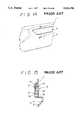
- FIGS. 14 and 15show perspective and sectional views of an automotive door trim
- this conventional door trim 1essentially consists of a door trim main body 4 consisting of a core member 2 formed into a desired shape, and a surface skin member 3 which is integrally attached to the surface of the resin core member 2, and an attachment member 5 which is mounted on a suitable location of the surface of the door trim main body 4 for ornamental purpose.
- the attachment member 5is formed by laminating an attachment pad member 5b consisting of such material as urethane foam having a suitable cushioning capability over the surface of an attachment core member 5a having a supporting capability, covering the outer surface of this assembly with an attachment surface skin member 5c made of such materials as synthetic leather and cloth, and folding back a peripheral edge of the attachment surface skin member 5c over a peripheral part of the reverse surface of the attachment core member 5a.
- pawls 6made of steel plate are provided in the attachment core member 6 of the attachment member 5, and corresponding mounting holes 4a are provided in the door trim main body 4.
- the attachment member 5is attached to the door trim main body 4 by inserting the pawls in the mounting holes 4a and bending the tips of the pawls 6.
- the pawls 6are not capable of accurately joining the attachment member 5 to the door trim main body 4, and the gap which often develops between the peripheral part of the attachment member 5 and the door trim main body 4 impairs the appearance of the door trim 1.
- the attachment member 5may become so displaced from its proper position due to vibrations of the automobile during its motion that the attachment member 5 may be placed in an unstable condition.
- an object of the present inventionis to provide an automotive interior component such as an automotive door trim integrally combining a main body fabricated by a mold press forming process with an attachment member which can be efficiently fabricated.
- a second object of the present inventionis to provide such an automotive interior component which is provided with a favorable appearance owing to the accurate positioning of the attachment member.
- a third object of the present inventionis to provide a method for efficiently fabricating such an automotive interior component.
- an automotive interior componentsuch as an automotive door trim comprising a main body integrally combining a resin core member and a surface skin member by a mold press forming process and an attachment member attached to a part of the main body, wherein: the attachment member is attached to the main body by way of a connecting part of the resin core member still at least in semi molten state as a result of the mold press forming process, the connecting part eventually solidifying so as to achieve a secure engagement between the resin core member and the attachment member.
- the connecting partmay consist of an extension of the resin core member which is pushed out of openings provided in the surface skin member and adhered to the attachment member.
- the extensionmay be adhered to an attachment core member of the attachment member having a resin compatibility or to an attachment surface skin member made of fabric sheet so as to ensure a secure attachment.
- the connecting partmay consist of parts of the resin core member into which engagement pawls provided in the attachment member, in particular, an attachment core member thereof are penetrated through the surface skin member.
- the engagement pawlsmay be provided with notches or openings, or may be slanted so as to ensure a secure anchoring of the engagement pawls in the resin core member of the main body.
- the attachment membercomprises an attachment core member consisting of metallic plate, and the engagement pawls are formed in the attachment core member by cutting out tabs from the metallic plate and bending them.
- FIG. 1is a perspective view showing an automotive door trim to which the present invention is applied;
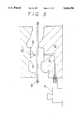
- FIG. 2is a sectional view taken along line II--II of FIG. 1;
- FIG. 3is a sectional view showing the structure of a mold press forming device which may be used to fabricate the automotive door trim according to the method of the present invention
- FIG. 4is a sectional view showing a step of setting up and supplying the material
- FIG. 5is a sectional view showing a step of mold press forming
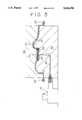
- FIG. 6is a sectional view similar to FIG. 2 showing a second embodiment of the present invention.
- FIG. 7is a sectional view similar to FIG. 2 showing a third embodiment of the present invention.
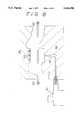
- FIG. 8is a sectional view showing the structure of a mold press forming device which may be used to fabricate the third embodiment of the automotive door trim according the present invention.
- FIG. 9 and 10are views similar to FIGS. 4 and 5, respectively, showing different steps of the operation of the device shown in FIG. 8;
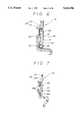
- FIG. 11is a sectional view of the attachment member according to a fourth embodiment of the present invention.
- FIGS. 12 and 13are views similar to FIG. 11 showing different embodiments of the means for preventing the disengagement of the engagement pawls from the resin core member;
- FIG. 14is a perspective view showing a conventional automotive door trim
- FIG. 15is a sectional view taken along line XV--XV of FIG. 14.
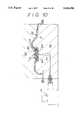
- the automotive door trim 10essentially consists of a door trim main body 20, and an attachment member 30 mounted on a suitable part of the surface of the door trim member 20.
- the door trim main body 20consists of a resin core member 21 formed into a required shape by a mold press forming, and a surface skin member 22 integrally attached over the surface of the resin core member 21.
- the resin core member 21is made of composite resin material consisting of polypropylene mixed with a filler material such as talc so that a desired moldability, low cost and high mechanical strength may be achieved.
- the surface skin membermay typically consist of a sheet such as a PVC sheet mixed with ABS resin laminated with a layer of polypropylene foam or polyethylene foam.
- an attachment pad member 32such as polyurethane foam is laminated over the surface of an attachment core member 31 such as hard board, and an attachment surface skin member 33 made of such materials as cloth and synthetic leather is placed over the outer surface of this assembly with a peripheral part of the attachment surface skin member 33 folded back onto the reverse surface of the attachment core member 31. Further, to achieve a favorable adhesion to the door trim main body 20, polyolefin film 34 is laminated over the reverse surface of the attachment core member 31.
- the door trim main body 20 and the attachment member 30are securely attached to each other since the resin core member 21 and the polyolefin film 34 on the reverse surface of the attachment core member 31 are securely joined together through a favorable resin compatibility by way of a plurality of openings 23 provided in the surface skin member 22.
- the structure of the automotive door trim 10 of the present inventionit is possible to omit the pawls for engagement which were used for mounting the attachment member by being bent in the conventional structure, and the attachment member 30 can be mounted without involving any wobbling or dislocation.
- FIG. 3is a sectional view showing the structure of the device for mold press forming which can be employed for carrying out the method of the present invention, and this molding device comprises a lower die 40 for mold press forming and an upper die 50 for mold press forming which is located above the lower die and provided with a substantially same die surface.
- the upper die 50can be moved vertically by a lifting device not shown in the drawings, and can be engaged with the lower die 40 defining a small gap therebetween.
- An extruder 41is attached to this lower die 40 for mold press forming, and the lower die 40 is provided with gates 42 for distributing the resin material in semi molten state from the extruder 41 over the die surface of the lower die 40.
- An annular support frame 60is provided between the upper and lower dies 40 and 50 for mold press forming to support the peripheral part of the surface skin member 22.
- the upper die 50 for mold press formingis provided with an attachment member retaining means for setting up the attachment member 30.
- the retaining meansconsists of a plurality of needles 51 for retaining the attachment member 30, and the upper die 50 is provided with a guide wall for accurate positioning of the attachment member 30 on the die surface of the upper die 50.
- the peripheral part of the surface skin member 22is retained by the support frame 60, and is heated by a heating device not shown in the drawings.
- the temperature condition of this heating processmay vary depending on the material.
- the surface temperature of the surface skin member 22may be in the range of 100° to 120° C.
- the surface temperature of the surface skin member 22may be in the range of 80° to 100° C.
- attachment member 30is placed on the upper die 50 for mold press forming as illustrated in FIG. 4. Substantially at the same time as setting up the surface skin member 22 and the attachment member 30, composite PP resin material 70 in semi molten state is distributed over the die surface of the lower die 40 for mold press forming from three gates 42 provided in suitable locations.
- the openings 23 provided in the surface skin member 22are located in a region spaced inwardly 5 to 20 mm from the peripheral edge of the attachment member 30, and are each 10 mm in diameter and distributed at the pitch of 50 to 100 mm. These openings 23 may be formed either before or after the surface skin member 22 is retained by the retaining frame 60.
- the upper die 50 carrying the attachment member 30is lowered and the upper and lower dies for mold press forming are engaged to each other leaving a prescribed clearance therebetween.
- the press pressure in this stepis 80 kg/cm 2 and the time duration of pressure application is 40 seconds.
- the resin material 70is formed into a resin core member 21 of a desired shape, and a surface skin member 22 is integrally attached to the resin core member 21 so as to form a completed door trim main body 20.
- the resin material 70is exposed to the surface of the door trim main body 20 through the openings 23 provided in the surface skin member 22 and comes into contact with the attachment core member 31 of the attachment member 30 so that the resin core member 21 and the attachment member 30 may be securely bonded or adhered to each other by virtue of the resin compatibility between the polyolefin film 34 and the resin material 70.
- an automotive door trim 10 as illustrated in FIGS. 1 and 2can be obtained.
- the polyolefin film 34was laminated over the reverse surface of the attachment core member 31 to improve its adhesion to the resin core member 21, but it is possible to omit the polyolefin film 34 if a resin plate containing polypropylene at least partly therein is used instead of the hard board as the material for the attachment resin core member 31 whereby the overall structure may be simplified.
- the attachment surface skin member 33 of the attachment memberif a fabric sheet such as cloth is used for the attachment surface skin member 33 of the attachment member, and the folded-back portion 35 along the peripheral edge of the attachment surface skin member is made larger than in the previous embodiment so that the folded-back portion 35 of the attachment surface skin member 33 may be contacted by the resin material through the openings 23 of the surface skin member 22, the door trim member 20 and the attachment member 30 are securely joined to each other by an anchoring effect owing to intrusion of the resin material 70 into the fibers of the attachment surface skin member 33.
- the film for improving the adhesion to the attachment core member 31can be omitted, and the material of the attachment core member 31 is not required to be compatible with the resin core member 31, it is possible to use an arbitrary material for the attachment core member 31.
- the first and second embodimentsoffer the following advantages:
- the attachment memberis securely attached to the trim main body by exposing the molten resin for forming the resin core member from the reverse surface of the trim main body through the openings provided in the surface skin member, it is possible to achieve a secure bonding compared to the conventional structure involving the bending of pawls, and the appearance of the peripheral part of the attachment member can be improved in addition to the advantage of a highly secure attachment without involving any wobbliness and dislocation of the attachment member.
- the attachment memberis integrally mounted during the process of mold press forming the trim main body, the step of forming holes in the trim main body can be omitted, and the fabrication process can be simplified.
- FIG. 7shows a third embodiment of the present invention which is based on a slightly different principle from that of the preceding embodiments.
- an attachment pad member 82such as polyurethane foam is laminated over the surface of an attachment core member 81 made of steel plate, and an attachment surface skin member 83 made of such materials as cloth and synthetic leather is placed over the outer surface of this assembly with a peripheral part of the attachment surface skin member 83 folded back onto the reverse surface of the attachment core member 81.
- the attachment core member 81is provided with a plurality of engagement pawls 84 formed as tabs which are cut out and lifted from the attachment core member 81, and these engagement pawls 84 are passed through the surface skin member 22 of the door trim main body 20 and fixedly embedded or penetrated in the resin core member 21 at their free ends.
- the engagement pawls 84 of the attachment member 80are fixedly anchored in the resin core member 21 of the door trim main body 20, it is possible to achieve a stable and secure attachment without involving any gap around the peripheral part of the attachment member with a favorable appearance as opposed to the conventional structure involving bending of pawls.
- FIG. 8is a sectional view showing the structure of the device for mold press forming which can be employed for carrying out the method of the present invention for fabricating the automotive door trim 10 illustrated in FIG. 7, and this molding device comprises a lower die 40 for mold press forming and an upper die 50 for mold press forming which is located above the lower die and provided with a substantially same die surface.
- the upper die 50can be moved vertically by a lifting device not shown in the drawings, and can be engaged with the lower die 40 defining a small gap therebetween.
- annular support frame 60for setting up the surface skin member 22
- retaining meansfor retaining the attachment member 80.
- the retaining means provided in the upper die 50consists of magnets 53 so that the attachment member 80 may be retained on the die surface by the magnetic attraction between the magnets 53 and the attachment core member 81.
- An extruder 41is attached to this lower die 40 for mold press forming, and the lower die 40 is provided with passages or gates 42 for distributing the resin material in semi molten state from the extruder 41 over the die surface of the lower die 40.
- the surface skin member 22is pre-heated to a prescribed temperature in the same manner as mentioned in connection with FIG. 4 and 5.
- the attachment core member 81is magnetically attracted to the magnets 53 embedded in the upper die 50 for mold press forming, and the attachment core member 81 is thereby magnetically and securely attached to the die surface of the upper die 50 for mold press forming.
- the engagement pawls 84 lifted from the attachment core member 81are directed downward.
- a prescribed amount of the semi molten resin material 70is supplied to and distributed over the die surface of the lower die 40 for mold press forming by way of the extruder 41 and the gates 42 for supplying resin material.
- the upper die 50 for mold press formingis lowered as illustrated in FIG. 10, and the upper and lower dies 40 and 50 for mold press forming are engaged to each other leaving a prescribed clearance therebetween.
- the press pressurewas 80 kg/cm 2 , and the time duration of pressure application was 40 seconds.
- the resin material 70is formed into a desired curved shape by this mold press forming, and a surface skin member 22 is integrally attached to the surface of the resin core member 21.
- the engagement pawls 84 provided in the attachment core member 81are passed through the surface skin member 22, and are forced into the resin core member 21 in semi molten state, and the eventual solidification of the resin core member 21 finally secures the engagement pawls 84 in the resin core member 21.
- the integral attachment of the attachment core member 81 to the door trim main body 20can be carried out at the same time as mold press forming the door trim main body 20, and the need for forming holes in the door trim main body and the work involved in the mounting of the engagement pawls 84 can be omitted so that the process of fabricating the door trim can be significantly reduced.
- the present embodimentis characterized by the securing or anchoring of the engagement pawls 84 provided in the attachment core member 81 of the attachment member 80 in the resin core member 21 of the door trim main body 20.
- the engagement pawls 84may be provided with an angle of 10 to 20 degrees with respect to the direction of mounting the attachment member so that the engagement pawls 84 may not easily come off from the resin core member 84.
- the engagement pawls 84may be separately provided in and fixedly secured to the attachment core member 81 by any suitable known means.
- FIGS. 7 and 11 through 13offer the following advantages in place of or in addition to the advantages of the previous embodiments:
- the embodimentallows the attachment member to be attached to the trim main body more securely than the conventional structure of bending the attachment pawls by anchoring the engagement pawls provided in the attachment core member in the resin core member of the door trim main body, it is possible to prevent the attachment member from becoming wobbly, prevent the creation of a gap between the peripheral part of the attachment member and the trim main body, improve the appearance of the peripheral part, and ensure a secure attachment.
Landscapes
- Engineering & Computer Science (AREA)
- Mechanical Engineering (AREA)
- Chemical & Material Sciences (AREA)
- Composite Materials (AREA)
- Casting Or Compression Moulding Of Plastics Or The Like (AREA)
Abstract
Description
This application is a continuation of application Ser. No. 08/119,901 filed Sep. 13, 1993, now abandoned, which is a continuation of application Ser. No. 07/796,668 filed Nov. 25, 1991, now abandoned.
The present invention relates to an automotive interior component such as an automotive door trim and a method for fabricating the same.
Typically, to the end of improving the comfort of the passenger compartment of an automobile, the grade of the material for the interior components such as automotive door trims is improved or ornamental materials such as cloth and carpet are attached to the surface of the door trims.
FIGS. 14 and 15 show perspective and sectional views of an automotive door trim, and thisconventional door trim 1 essentially consists of a door trimmain body 4 consisting of a core member 2 formed into a desired shape, and asurface skin member 3 which is integrally attached to the surface of the resin core member 2, and anattachment member 5 which is mounted on a suitable location of the surface of the door trimmain body 4 for ornamental purpose.
As shown in FIG. 15, theattachment member 5 is formed by laminating anattachment pad member 5b consisting of such material as urethane foam having a suitable cushioning capability over the surface of an attachment core member 5a having a supporting capability, covering the outer surface of this assembly with an attachmentsurface skin member 5c made of such materials as synthetic leather and cloth, and folding back a peripheral edge of the attachmentsurface skin member 5c over a peripheral part of the reverse surface of the attachment core member 5a.
To attach theattachment member 5 having such a structure to the door trimmain body 4,pawls 6 made of steel plate are provided in theattachment core member 6 of theattachment member 5, and corresponding mounting holes 4a are provided in the door trimmain body 4. Theattachment member 5 is attached to the door trimmain body 4 by inserting the pawls in the mounting holes 4a and bending the tips of thepawls 6.
In this conventionalautomotive door trim 1, since thepawls 6 provided in the attachment core member 5a are inserted in the mounting holes 4a of the door trimmain body 4 and thepawls 6 are bent for securing purpose, it was necessary to provide the mounting holes 4a in positions precisely corresponding to thepawls 6 of theattachment member 5, and this contributed to the increase in the cost of the product due to the complication of the fabrication steps.
Further, since inserting the pawls provided in theattachment member 5 in the mounting holes 4a of the door trimmain body 4 is required to be carried out without the benefit of any visual aid, the work efficiency is extremely low. The need for the step to bend the pawls presents an additional complication to the fabrication process.
Furthermore, thepawls 6 are not capable of accurately joining theattachment member 5 to the door trimmain body 4, and the gap which often develops between the peripheral part of theattachment member 5 and the door trimmain body 4 impairs the appearance of thedoor trim 1. In an extreme case, theattachment member 5 may become so displaced from its proper position due to vibrations of the automobile during its motion that theattachment member 5 may be placed in an unstable condition.
In view of such problems of the prior art, an object of the present invention is to provide an automotive interior component such as an automotive door trim integrally combining a main body fabricated by a mold press forming process with an attachment member which can be efficiently fabricated.
A second object of the present invention is to provide such an automotive interior component which is provided with a favorable appearance owing to the accurate positioning of the attachment member.
A third object of the present invention is to provide a method for efficiently fabricating such an automotive interior component.
These and other objects of the present invention can be accomplished by providing an automotive interior component such as an automotive door trim comprising a main body integrally combining a resin core member and a surface skin member by a mold press forming process and an attachment member attached to a part of the main body, wherein: the attachment member is attached to the main body by way of a connecting part of the resin core member still at least in semi molten state as a result of the mold press forming process, the connecting part eventually solidifying so as to achieve a secure engagement between the resin core member and the attachment member.
The connecting part may consist of an extension of the resin core member which is pushed out of openings provided in the surface skin member and adhered to the attachment member. In this case, the extension may be adhered to an attachment core member of the attachment member having a resin compatibility or to an attachment surface skin member made of fabric sheet so as to ensure a secure attachment.
Alternatively, the connecting part may consist of parts of the resin core member into which engagement pawls provided in the attachment member, in particular, an attachment core member thereof are penetrated through the surface skin member. In this case, the engagement pawls may be provided with notches or openings, or may be slanted so as to ensure a secure anchoring of the engagement pawls in the resin core member of the main body. Preferably, the attachment member comprises an attachment core member consisting of metallic plate, and the engagement pawls are formed in the attachment core member by cutting out tabs from the metallic plate and bending them.
In either case, solidification of the connecting parts completes the attachment of the automotive door trim. Thus, the process of mounting the attachment member is simplified, and accurate positioning of the attachment member can be achieved at the same time.
Now the present invention is described in the following in terms of specific embodiments with reference to the appended drawings, in which:
FIG. 1 is a perspective view showing an automotive door trim to which the present invention is applied;
FIG. 2 is a sectional view taken along line II--II of FIG. 1;
FIG. 3 is a sectional view showing the structure of a mold press forming device which may be used to fabricate the automotive door trim according to the method of the present invention;
FIG. 4 is a sectional view showing a step of setting up and supplying the material;
FIG. 5 is a sectional view showing a step of mold press forming;
FIG. 6 is a sectional view similar to FIG. 2 showing a second embodiment of the present invention;
FIG. 7 is a sectional view similar to FIG. 2 showing a third embodiment of the present invention;
FIG. 8 is a sectional view showing the structure of a mold press forming device which may be used to fabricate the third embodiment of the automotive door trim according the present invention;
FIG. 9 and 10 are views similar to FIGS. 4 and 5, respectively, showing different steps of the operation of the device shown in FIG. 8;
FIG. 11 is a sectional view of the attachment member according to a fourth embodiment of the present invention;
FIGS. 12 and 13 are views similar to FIG. 11 showing different embodiments of the means for preventing the disengagement of the engagement pawls from the resin core member;
FIG. 14 is a perspective view showing a conventional automotive door trim;
FIG. 15 is a sectional view taken along line XV--XV of FIG. 14.
Referring to FIGS. 1 and 2, theautomotive door trim 10 essentially consists of a door trimmain body 20, and anattachment member 30 mounted on a suitable part of the surface of thedoor trim member 20.
Specifically, the door trimmain body 20 consists of aresin core member 21 formed into a required shape by a mold press forming, and asurface skin member 22 integrally attached over the surface of theresin core member 21. Theresin core member 21 is made of composite resin material consisting of polypropylene mixed with a filler material such as talc so that a desired moldability, low cost and high mechanical strength may be achieved. The surface skin member may typically consist of a sheet such as a PVC sheet mixed with ABS resin laminated with a layer of polypropylene foam or polyethylene foam.
In theattachment member 30, anattachment pad member 32 such as polyurethane foam is laminated over the surface of anattachment core member 31 such as hard board, and an attachmentsurface skin member 33 made of such materials as cloth and synthetic leather is placed over the outer surface of this assembly with a peripheral part of the attachmentsurface skin member 33 folded back onto the reverse surface of theattachment core member 31. Further, to achieve a favorable adhesion to the door trimmain body 20,polyolefin film 34 is laminated over the reverse surface of theattachment core member 31.
The door trimmain body 20 and theattachment member 30 are securely attached to each other since theresin core member 21 and thepolyolefin film 34 on the reverse surface of theattachment core member 31 are securely joined together through a favorable resin compatibility by way of a plurality ofopenings 23 provided in thesurface skin member 22.
Therefore, according to the structure of theautomotive door trim 10 of the present invention, it is possible to omit the pawls for engagement which were used for mounting the attachment member by being bent in the conventional structure, and theattachment member 30 can be mounted without involving any wobbling or dislocation.
FIG. 3 is a sectional view showing the structure of the device for mold press forming which can be employed for carrying out the method of the present invention, and this molding device comprises alower die 40 for mold press forming and anupper die 50 for mold press forming which is located above the lower die and provided with a substantially same die surface. Theupper die 50 can be moved vertically by a lifting device not shown in the drawings, and can be engaged with thelower die 40 defining a small gap therebetween.
Anextruder 41 is attached to thislower die 40 for mold press forming, and thelower die 40 is provided withgates 42 for distributing the resin material in semi molten state from theextruder 41 over the die surface of thelower die 40.
Anannular support frame 60 is provided between the upper andlower dies surface skin member 22.
Theupper die 50 for mold press forming is provided with an attachment member retaining means for setting up theattachment member 30. According to the present embodiment, the retaining means consists of a plurality ofneedles 51 for retaining theattachment member 30, and theupper die 50 is provided with a guide wall for accurate positioning of theattachment member 30 on the die surface of theupper die 50.
Now, referring to FIG. 4 and 5, the process of fabricating theautomotive door trim 10 is described in the following.
As shown in FIG. 4, with the upper andlower dies surface skin member 22 is retained by thesupport frame 60, and is heated by a heating device not shown in the drawings.
The temperature condition of this heating process may vary depending on the material. In the case of a laminated sheet consisting of a PVC sheet lined with polyethylene foam, the surface temperature of thesurface skin member 22 may be in the range of 100° to 120° C. In the cases of a simple PVC sheet and a simple foamed PVC sheet, the surface temperature of thesurface skin member 22 may be in the range of 80° to 100° C.
Then, theattachment member 30 is placed on theupper die 50 for mold press forming as illustrated in FIG. 4. Substantially at the same time as setting up thesurface skin member 22 and theattachment member 30, compositePP resin material 70 in semi molten state is distributed over the die surface of thelower die 40 for mold press forming from threegates 42 provided in suitable locations.
In this material setting up step, theopenings 23 provided in thesurface skin member 22 are located in a region spaced inwardly 5 to 20 mm from the peripheral edge of theattachment member 30, and are each 10 mm in diameter and distributed at the pitch of 50 to 100 mm. Theseopenings 23 may be formed either before or after thesurface skin member 22 is retained by the retainingframe 60.
Thereafter, theupper die 50 carrying theattachment member 30 is lowered and the upper and lower dies for mold press forming are engaged to each other leaving a prescribed clearance therebetween. The press pressure in this step is 80 kg/cm2 and the time duration of pressure application is 40 seconds.
By this mold press forming, theresin material 70 is formed into aresin core member 21 of a desired shape, and asurface skin member 22 is integrally attached to theresin core member 21 so as to form a completed door trimmain body 20.
During this step, theresin material 70 is exposed to the surface of the door trimmain body 20 through theopenings 23 provided in thesurface skin member 22 and comes into contact with theattachment core member 31 of theattachment member 30 so that theresin core member 21 and theattachment member 30 may be securely bonded or adhered to each other by virtue of the resin compatibility between thepolyolefin film 34 and theresin material 70.
When the molded object is removed from the upper and lower dies for mold press forming by opening them up, an automotive door trim 10 as illustrated in FIGS. 1 and 2 can be obtained.
In this embodiment, thepolyolefin film 34 was laminated over the reverse surface of theattachment core member 31 to improve its adhesion to theresin core member 21, but it is possible to omit thepolyolefin film 34 if a resin plate containing polypropylene at least partly therein is used instead of the hard board as the material for the attachmentresin core member 31 whereby the overall structure may be simplified.
Further, as illustrated in FIG. 6, if a fabric sheet such as cloth is used for the attachmentsurface skin member 33 of the attachment member, and the folded-back portion 35 along the peripheral edge of the attachment surface skin member is made larger than in the previous embodiment so that the folded-back portion 35 of the attachmentsurface skin member 33 may be contacted by the resin material through theopenings 23 of thesurface skin member 22, the doortrim member 20 and theattachment member 30 are securely joined to each other by an anchoring effect owing to intrusion of theresin material 70 into the fibers of the attachmentsurface skin member 33.
According to this embodiment, since the film for improving the adhesion to theattachment core member 31 can be omitted, and the material of theattachment core member 31 is not required to be compatible with theresin core member 31, it is possible to use an arbitrary material for theattachment core member 31.
As described above, the first and second embodiments offer the following advantages:
(1) Since the attachment member is securely attached to the trim main body by exposing the molten resin for forming the resin core member from the reverse surface of the trim main body through the openings provided in the surface skin member, it is possible to achieve a secure bonding compared to the conventional structure involving the bending of pawls, and the appearance of the peripheral part of the attachment member can be improved in addition to the advantage of a highly secure attachment without involving any wobbliness and dislocation of the attachment member.
(2) Since the attachment member is integrally mounted during the process of mold press forming the trim main body, the step of forming holes in the trim main body can be omitted, and the fabrication process can be simplified.
(3) Since the attachment member is integrally mounted during the process of mold press forming the trim main body, the cumbersome step of mounting the attachment member on the molded trim main body by bending the pawls can be omitted, and the fabrication process can be significantly simplified.
FIG. 7 shows a third embodiment of the present invention which is based on a slightly different principle from that of the preceding embodiments.
Referring to FIG. 7, in theattachment member 80, anattachment pad member 82 such as polyurethane foam is laminated over the surface of anattachment core member 81 made of steel plate, and an attachmentsurface skin member 83 made of such materials as cloth and synthetic leather is placed over the outer surface of this assembly with a peripheral part of the attachmentsurface skin member 83 folded back onto the reverse surface of theattachment core member 81.
Theattachment core member 81 is provided with a plurality ofengagement pawls 84 formed as tabs which are cut out and lifted from theattachment core member 81, and theseengagement pawls 84 are passed through thesurface skin member 22 of the door trimmain body 20 and fixedly embedded or penetrated in theresin core member 21 at their free ends.
Thus, according to the automotive door trim 10 of the present invention, since theengagement pawls 84 of theattachment member 80 are fixedly anchored in theresin core member 21 of the door trimmain body 20, it is possible to achieve a stable and secure attachment without involving any gap around the peripheral part of the attachment member with a favorable appearance as opposed to the conventional structure involving bending of pawls.
FIG. 8 is a sectional view showing the structure of the device for mold press forming which can be employed for carrying out the method of the present invention for fabricating the automotive door trim 10 illustrated in FIG. 7, and this molding device comprises alower die 40 for mold press forming and anupper die 50 for mold press forming which is located above the lower die and provided with a substantially same die surface. The upper die 50 can be moved vertically by a lifting device not shown in the drawings, and can be engaged with thelower die 40 defining a small gap therebetween.
Between thelower die 40 and theupper die 50 for mold press forming is provided anannular support frame 60 for setting up thesurface skin member 22, and theupper die 50 for mold press forming is provided with retaining means for retaining theattachment member 80.
Since theattachment core member 81 of theattachment member 80 is made of steel plate, the retaining means provided in theupper die 50 consists ofmagnets 53 so that theattachment member 80 may be retained on the die surface by the magnetic attraction between themagnets 53 and theattachment core member 81.
Anextruder 41 is attached to this lower die 40 for mold press forming, and thelower die 40 is provided with passages orgates 42 for distributing the resin material in semi molten state from theextruder 41 over the die surface of thelower die 40.
Now, referring to FIG. 9 and 10, the process of fabricating the automotive door trim 10 illustrated in FIG. 7 is described in the following.
As shown in FIG. 9, with the upper and lower dies 40 and 50 for mold press forming opened up, the peripheral part of thesurface skin member 22 is retained by thesupport frame 60 with theattachment member 80 placed on the die surface of theupper die 50 for mold press forming.
At this time point, thesurface skin member 22 is pre-heated to a prescribed temperature in the same manner as mentioned in connection with FIG. 4 and 5.
Theattachment core member 81 is magnetically attracted to themagnets 53 embedded in theupper die 50 for mold press forming, and theattachment core member 81 is thereby magnetically and securely attached to the die surface of theupper die 50 for mold press forming. The engagement pawls 84 lifted from theattachment core member 81 are directed downward.
A prescribed amount of the semimolten resin material 70 is supplied to and distributed over the die surface of thelower die 40 for mold press forming by way of theextruder 41 and thegates 42 for supplying resin material.
Thereafter, theupper die 50 for mold press forming is lowered as illustrated in FIG. 10, and the upper and lower dies 40 and 50 for mold press forming are engaged to each other leaving a prescribed clearance therebetween. The press pressure was 80 kg/cm2, and the time duration of pressure application was 40 seconds.
Theresin material 70 is formed into a desired curved shape by this mold press forming, and asurface skin member 22 is integrally attached to the surface of theresin core member 21.
At this point, theengagement pawls 84 provided in theattachment core member 81 are passed through thesurface skin member 22, and are forced into theresin core member 21 in semi molten state, and the eventual solidification of theresin core member 21 finally secures theengagement pawls 84 in theresin core member 21.
Therefore, the integral attachment of theattachment core member 81 to the door trimmain body 20 can be carried out at the same time as mold press forming the door trimmain body 20, and the need for forming holes in the door trim main body and the work involved in the mounting of theengagement pawls 84 can be omitted so that the process of fabricating the door trim can be significantly reduced.
Thus, the present embodiment is characterized by the securing or anchoring of theengagement pawls 84 provided in theattachment core member 81 of theattachment member 80 in theresin core member 21 of the door trimmain body 20. To further improve the strength of securing theengagement pawls 84, it is possible to providenotches 85 in theengagement pawls 84 as illustrated in FIG. 11, and throughholes 86 in theengagement pawls 84 as illustrated in FIG. 12 so as to achieve a favorable anchoring effect to more securely embed theengagement pawls 84 in theresin core member 21.
As illustrated in FIG. 13, theengagement pawls 84 may be provided with an angle of 10 to 20 degrees with respect to the direction of mounting the attachment member so that theengagement pawls 84 may not easily come off from theresin core member 84.
As an alternative embodiment, it is possible to use light weight attachment core member such as hard board instead of theattachment core member 81 made of steel plate in the previous embodiment, and, in this case, theengagement pawls 84 may be separately provided in and fixedly secured to theattachment core member 81 by any suitable known means.
Thus, the embodiments illustrated in FIGS. 7 and 11 through 13 offer the following advantages in place of or in addition to the advantages of the previous embodiments:
(4) Since the embodiment allows the attachment member to be attached to the trim main body more securely than the conventional structure of bending the attachment pawls by anchoring the engagement pawls provided in the attachment core member in the resin core member of the door trim main body, it is possible to prevent the attachment member from becoming wobbly, prevent the creation of a gap between the peripheral part of the attachment member and the trim main body, improve the appearance of the peripheral part, and ensure a secure attachment.
Although the present invention has been described in terms of preferred embodiments thereof, it is obvious to a person skilled in the art that various alterations and modifications are possible without departing from the scope of the present invention which is set forth in the appended claims.
Claims (9)
1. An automotive interior component, comprising:
a main body integrally combining a resin core member and a surface skin member;
said surface skin member having an outer surface having a mounting area defined on a portion thereof, said surface skin member defining a plurality of openings extending therethrough, said plurality of openings being located within said mounting area;
an attachment member having an outer surface having a mounting side outer surface portion and an exterior side surface portion, said mounting side outer surface portion being in direct contact with said mounting area;
said resin core member having a plurality of integral connecting parts corresponding in number to the plurality of openings in said surface skin member and extending therethrough, each of said integral connecting parts extending outwardly from said resin core member and having an end portion in secure engagement with said mounting side of said attachment member;
wherein said attachment member is contacted with each of said connecting parts while said respective connecting part is in a semi-molten state and the attachment of said attachment member to said main body is achieved by the solidification of said respective connecting part.
2. An automotive interior component comprising:
a main body integrally combining a resin core member and a surface skin member, said main body having a mounting area;
said surface skin member having an outer surface having a mounting area defined on a portion thereof;
an attachment member having an outer surface having a mounting side outer surface portion and an exterior side surface portion, said mounting side outer surface portion being in direct contact with said mounting area, said attachment member having a plurality of engagement pawls pierced through said surface skin member and anchored in said resin core member while said resin core member is in a semi-molten state and the attachment of said attachment member is achieved by the solidification of said resin core member.
3. An automotive interior component according to claim 1, wherein said connecting parts comprise an extension of said resin core member extending from said resin core member through an opening provided in said surface skin member and connected to a part of said attachment member by inherent adhesion of a free end of said extension to a part of said attachment member while said resin core member is still at least in semi molten state.
4. An automotive interior component according to claim 3, wherein said attachment member comprises an attachment core member forming an integral part of said attachment member, and said free end of each of said connecting parts is attached to said attachment core member by adhesion, said core member at least partly consisting of a resin material having a compatibility with a material of said resin core member of said main body.
5. An automotive interior component according to claim 2, wherein said attachment member comprises an attachment core member consisting of metallic plate, and said engagement pawls are formed in said attachment core member by cutting out tabs from said metallic plate and bending them.
6. An automotive interior component according to claim 2, wherein said engagement pawls are provided with means for preventing disengagement from said resin core member of said main body.
7. An automotive interior component according to claim 2, wherein said engagement pawls are at an angle non-parallel to a direction of mounting said attachment member onto said main body.
8. An automotive interior component according to claim 1, wherein said integral connecting parts and said attachment member adhere to each other.
9. An automotive interior component according to claim 1, wherein said attachment member includes a fabric sheet that has fibers and said connecting part intrudes into said fibers so as to anchor said fabric sheet to said connecting part.
Priority Applications (1)
| Application Number | Priority Date | Filing Date | Title |
|---|---|---|---|
| US08/363,584US5616396A (en) | 1991-11-25 | 1994-12-23 | Automotive door trim with attachment joined during molding |
Applications Claiming Priority (3)
| Application Number | Priority Date | Filing Date | Title |
|---|---|---|---|
| US79666891A | 1991-11-25 | 1991-11-25 | |
| US11990193A | 1993-09-13 | 1993-09-13 | |
| US08/363,584US5616396A (en) | 1991-11-25 | 1994-12-23 | Automotive door trim with attachment joined during molding |
Related Parent Applications (1)
| Application Number | Title | Priority Date | Filing Date |
|---|---|---|---|
| US11990193AContinuation | 1991-11-25 | 1993-09-13 |
Publications (1)
| Publication Number | Publication Date |
|---|---|
| US5616396Atrue US5616396A (en) | 1997-04-01 |
Family
ID=27394919
Family Applications (2)
| Application Number | Title | Priority Date | Filing Date |
|---|---|---|---|
| US08/363,584Expired - Fee RelatedUS5616396A (en) | 1991-11-25 | 1994-12-23 | Automotive door trim with attachment joined during molding |
| US08/403,562Expired - Fee RelatedUS5486329A (en) | 1991-11-25 | 1995-03-14 | Automotive door trim and method for fabricating the same |
Family Applications After (1)
| Application Number | Title | Priority Date | Filing Date |
|---|---|---|---|
| US08/403,562Expired - Fee RelatedUS5486329A (en) | 1991-11-25 | 1995-03-14 | Automotive door trim and method for fabricating the same |
Country Status (1)
| Country | Link |
|---|---|
| US (2) | US5616396A (en) |
Cited By (14)
| Publication number | Priority date | Publication date | Assignee | Title |
|---|---|---|---|---|
| US6019923A (en)* | 1992-08-25 | 2000-02-01 | Hp-Chemie Pelzer Research & Development Ltd. | Process for manufacturing decorable moulded parts |
| US6171428B1 (en)* | 1999-09-03 | 2001-01-09 | Dongseo Kiyeon Co., Ltd. | Method for fabricating automotive door trims |
| US6235138B1 (en) | 1999-04-28 | 2001-05-22 | Kristen L. Parks | Polyurethane foam/PVC laminate for automotive instrument panels |
| US6308488B1 (en)* | 1998-10-14 | 2001-10-30 | Ts Tech Co., Ltd. | Trim assembly for vehicle |
| US6492000B1 (en)* | 1997-02-10 | 2002-12-10 | Kaneka Corporation | Skin-carrying in-mold expanded molded body manufacturing method, the molded body, and mold used for manufacturing the same |
| US20040169397A1 (en)* | 2002-03-07 | 2004-09-02 | Daniel Hock | Car body part and method of its production |
| DE10320210A1 (en)* | 2003-05-07 | 2004-12-02 | Volkswagen Ag | Internal door lining for motor vehicles has opening in front lining wall with edge engaging over and fastened to edge of decorative batten on inside of back lining wall |
| US20060108715A1 (en)* | 2004-11-23 | 2006-05-25 | Yu-Keng Huang | Method for making a decorative ring of a ceiling fan |
| US20080029919A1 (en)* | 2004-04-08 | 2008-02-07 | Tesa Ag | Method for Permanently Obturating Holes, Especially in Metal Sheets of Plastic Part of an Automobile |
| US20080054614A1 (en)* | 2004-06-03 | 2008-03-06 | Gm Global Technology Operations, Inc. | Safety Arrangement for the Interior of a Motor Vehicle |
| US20080098655A1 (en)* | 2006-10-31 | 2008-05-01 | Jeffrey Valentage | Integrated bracket for mounting pulley |
| US7784241B1 (en)* | 2003-08-18 | 2010-08-31 | Patterson Richard M | Architectural detailings |
| US8658269B1 (en)* | 2013-01-29 | 2014-02-25 | Timothy H. Parkes | Mat with over-molded web |
| US20140105675A1 (en)* | 2006-10-02 | 2014-04-17 | Johnson Controls Technology Company | Multi-part equipment piece for a vehicle and connecting method |
Families Citing this family (11)
| Publication number | Priority date | Publication date | Assignee | Title |
|---|---|---|---|---|
| US5774966A (en)* | 1996-10-16 | 1998-07-07 | Yates; Paul M. | Fabric article and method of manufacture |
| DE19734666A1 (en) | 1997-08-11 | 1999-02-18 | Bayer Ag | Flame-retardant polycarbonate ABS molding compounds |
| DE19734686A1 (en)* | 1997-08-11 | 1999-02-18 | Otto Deuschle Modell Und Forme | Plastic molding and method and device for its production |
| US5904396A (en)* | 1997-10-22 | 1999-05-18 | Yates; Paul M. | Cushioned bicycle saddle |
| US6017407A (en)* | 1997-10-22 | 2000-01-25 | Yates; Paul M. | Method of manufacturing a cushion article |
| US7055888B2 (en)* | 2004-03-15 | 2006-06-06 | Lear Corporation | Armrest having armrest bun and method of manufacture |
| JP2007536935A (en)* | 2004-05-14 | 2007-12-20 | ベクトン・ディキンソン・アンド・カンパニー | Cell culture environment for serum-free growth of mesenchymal stem cells |
| JP4777930B2 (en)* | 2007-03-29 | 2011-09-21 | カルソニックカンセイ株式会社 | Foam molded product with soft insert parts and molding method thereof |
| JP4858544B2 (en)* | 2007-09-11 | 2012-01-18 | 東レ株式会社 | Composite molded article and manufacturing method thereof |
| WO2014013634A1 (en)* | 2012-07-20 | 2014-01-23 | 難波プレス工業株式会社 | Press molding with reinforcing rib and manufacturing method therefor |
| JP5866398B2 (en) | 2013-05-15 | 2016-02-17 | 東芝機械株式会社 | Molding system and method for manufacturing molded article |
Citations (20)
| Publication number | Priority date | Publication date | Assignee | Title |
|---|---|---|---|---|
| GB544878A (en)* | 1940-07-22 | 1942-04-30 | Norman Adrian De Bruyne | Improvements in or relating to laminated structures |
| US2837455A (en)* | 1954-10-11 | 1958-06-03 | Wood Conversion Co | Composite upholstery material and method of manufacture |
| US3522343A (en)* | 1968-02-12 | 1970-07-28 | United Shoe Machinery Corp | Shoemaking by molding with an adhesive |
| FR2029994A5 (en)* | 1969-04-30 | 1970-10-23 | Sifma | Injection moulded plastic decoration |
| US3715256A (en)* | 1969-09-08 | 1973-02-06 | Allied Chem | Method of making an embossed panel |
| US3753846A (en)* | 1970-03-17 | 1973-08-21 | Calor Sa | Cushioning and covering means for portable electrical devices |
| US3821052A (en)* | 1971-10-04 | 1974-06-28 | J Tanzer | Method of attaching plate members to each other |
| US3890679A (en)* | 1973-11-09 | 1975-06-24 | Athlone Ind Inc | Garment fastener subassembly and method for making the same |
| US4004774A (en)* | 1975-01-08 | 1977-01-25 | Du Pont Of Canada Limited | Coated panel |
| US4020207A (en)* | 1972-12-07 | 1977-04-26 | Dynamit Nobel Aktiengesellschaft | Interior covering with reinforcement |
| US4251086A (en)* | 1979-12-06 | 1981-02-17 | M. O. Sales Ltd. | Ice skate |
| US4456644A (en)* | 1981-02-02 | 1984-06-26 | Gebr. Happich Gmbh. | Cushioning body for the interior of a vehicle, or the like |
| JPS6468230A (en)* | 1987-09-08 | 1989-03-14 | Olympus Optical Co | Endoscope |
| US4873045A (en)* | 1987-07-14 | 1989-10-10 | Kasai Kogyo Co., Ltd. | Method for manufacturing automotive interior components |
| US4919470A (en)* | 1987-12-03 | 1990-04-24 | R. Schmidt Gmbh | Motor vehicle door panel |
| US4956139A (en)* | 1987-10-06 | 1990-09-11 | Canon Denshi Kabushiki Kaisha | Method of producing an exposure blade |
| JPH02261613A (en)* | 1989-04-03 | 1990-10-24 | Kasai Kogyo Co Ltd | Felt insert injection method |
| US5091031A (en)* | 1990-05-02 | 1992-02-25 | Vittorio Strapazzini | Method for forming plastic molded panels with inserts |
| US5151237A (en)* | 1990-06-11 | 1992-09-29 | Siebolt Hettinga | Method of injection molding a flat deformable laminate |
| US5281383A (en)* | 1991-03-13 | 1994-01-25 | Kasai Kogyo Co., Ltd. | Method for molding a laminated molded article using a vented mold |
Family Cites Families (7)
| Publication number | Priority date | Publication date | Assignee | Title |
|---|---|---|---|---|
| US3740918A (en)* | 1971-06-23 | 1973-06-26 | Usm Corp | Decorative trim strip fastener and method of making same |
| JPS5211520A (en)* | 1975-07-16 | 1977-01-28 | Meiwa Sangyo Kk | Interior board for vehicles and a method of making the same |
| JPS6168230A (en)* | 1984-09-12 | 1986-04-08 | Mikuni Seisakusho:Kk | Fixing of resin bracket to polypropylene composite material |
| US4740417A (en)* | 1986-07-22 | 1988-04-26 | Cone Mills Corporation | Thermoplastic vacuum molding method and article produced thereby |
| US4758395A (en)* | 1986-11-04 | 1988-07-19 | Owens-Corning Fiberglas Corporation | Method of molding thick parts of fibrous-ply-reinforced resin |
| US4923539A (en)* | 1988-09-16 | 1990-05-08 | Stanztechnik Gmbh R+S | Method and apparatus for manufacturing trim panels including several trim components |
| US5117549A (en)* | 1989-02-21 | 1992-06-02 | Davidson Textron Inc. | Automotive door panels and method of assembly therefor |
- 1994
- 1994-12-23USUS08/363,584patent/US5616396A/ennot_activeExpired - Fee Related
- 1995
- 1995-03-14USUS08/403,562patent/US5486329A/ennot_activeExpired - Fee Related
Patent Citations (20)
| Publication number | Priority date | Publication date | Assignee | Title |
|---|---|---|---|---|
| GB544878A (en)* | 1940-07-22 | 1942-04-30 | Norman Adrian De Bruyne | Improvements in or relating to laminated structures |
| US2837455A (en)* | 1954-10-11 | 1958-06-03 | Wood Conversion Co | Composite upholstery material and method of manufacture |
| US3522343A (en)* | 1968-02-12 | 1970-07-28 | United Shoe Machinery Corp | Shoemaking by molding with an adhesive |
| FR2029994A5 (en)* | 1969-04-30 | 1970-10-23 | Sifma | Injection moulded plastic decoration |
| US3715256A (en)* | 1969-09-08 | 1973-02-06 | Allied Chem | Method of making an embossed panel |
| US3753846A (en)* | 1970-03-17 | 1973-08-21 | Calor Sa | Cushioning and covering means for portable electrical devices |
| US3821052A (en)* | 1971-10-04 | 1974-06-28 | J Tanzer | Method of attaching plate members to each other |
| US4020207A (en)* | 1972-12-07 | 1977-04-26 | Dynamit Nobel Aktiengesellschaft | Interior covering with reinforcement |
| US3890679A (en)* | 1973-11-09 | 1975-06-24 | Athlone Ind Inc | Garment fastener subassembly and method for making the same |
| US4004774A (en)* | 1975-01-08 | 1977-01-25 | Du Pont Of Canada Limited | Coated panel |
| US4251086A (en)* | 1979-12-06 | 1981-02-17 | M. O. Sales Ltd. | Ice skate |
| US4456644A (en)* | 1981-02-02 | 1984-06-26 | Gebr. Happich Gmbh. | Cushioning body for the interior of a vehicle, or the like |
| US4873045A (en)* | 1987-07-14 | 1989-10-10 | Kasai Kogyo Co., Ltd. | Method for manufacturing automotive interior components |
| JPS6468230A (en)* | 1987-09-08 | 1989-03-14 | Olympus Optical Co | Endoscope |
| US4956139A (en)* | 1987-10-06 | 1990-09-11 | Canon Denshi Kabushiki Kaisha | Method of producing an exposure blade |
| US4919470A (en)* | 1987-12-03 | 1990-04-24 | R. Schmidt Gmbh | Motor vehicle door panel |
| JPH02261613A (en)* | 1989-04-03 | 1990-10-24 | Kasai Kogyo Co Ltd | Felt insert injection method |
| US5091031A (en)* | 1990-05-02 | 1992-02-25 | Vittorio Strapazzini | Method for forming plastic molded panels with inserts |
| US5151237A (en)* | 1990-06-11 | 1992-09-29 | Siebolt Hettinga | Method of injection molding a flat deformable laminate |
| US5281383A (en)* | 1991-03-13 | 1994-01-25 | Kasai Kogyo Co., Ltd. | Method for molding a laminated molded article using a vented mold |
Cited By (15)
| Publication number | Priority date | Publication date | Assignee | Title |
|---|---|---|---|---|
| US6019923A (en)* | 1992-08-25 | 2000-02-01 | Hp-Chemie Pelzer Research & Development Ltd. | Process for manufacturing decorable moulded parts |
| US6492000B1 (en)* | 1997-02-10 | 2002-12-10 | Kaneka Corporation | Skin-carrying in-mold expanded molded body manufacturing method, the molded body, and mold used for manufacturing the same |
| US6308488B1 (en)* | 1998-10-14 | 2001-10-30 | Ts Tech Co., Ltd. | Trim assembly for vehicle |
| US6235138B1 (en) | 1999-04-28 | 2001-05-22 | Kristen L. Parks | Polyurethane foam/PVC laminate for automotive instrument panels |
| US6171428B1 (en)* | 1999-09-03 | 2001-01-09 | Dongseo Kiyeon Co., Ltd. | Method for fabricating automotive door trims |
| US6938946B2 (en)* | 2002-03-07 | 2005-09-06 | Arvinmeritor Gmbh | Car body part and method of its production |
| US20040169397A1 (en)* | 2002-03-07 | 2004-09-02 | Daniel Hock | Car body part and method of its production |
| DE10320210A1 (en)* | 2003-05-07 | 2004-12-02 | Volkswagen Ag | Internal door lining for motor vehicles has opening in front lining wall with edge engaging over and fastened to edge of decorative batten on inside of back lining wall |
| US7784241B1 (en)* | 2003-08-18 | 2010-08-31 | Patterson Richard M | Architectural detailings |
| US20080029919A1 (en)* | 2004-04-08 | 2008-02-07 | Tesa Ag | Method for Permanently Obturating Holes, Especially in Metal Sheets of Plastic Part of an Automobile |
| US20080054614A1 (en)* | 2004-06-03 | 2008-03-06 | Gm Global Technology Operations, Inc. | Safety Arrangement for the Interior of a Motor Vehicle |
| US20060108715A1 (en)* | 2004-11-23 | 2006-05-25 | Yu-Keng Huang | Method for making a decorative ring of a ceiling fan |
| US20140105675A1 (en)* | 2006-10-02 | 2014-04-17 | Johnson Controls Technology Company | Multi-part equipment piece for a vehicle and connecting method |
| US20080098655A1 (en)* | 2006-10-31 | 2008-05-01 | Jeffrey Valentage | Integrated bracket for mounting pulley |
| US8658269B1 (en)* | 2013-01-29 | 2014-02-25 | Timothy H. Parkes | Mat with over-molded web |
Also Published As
| Publication number | Publication date |
|---|---|
| US5486329A (en) | 1996-01-23 |
Similar Documents
| Publication | Publication Date | Title |
|---|---|---|
| US5616396A (en) | Automotive door trim with attachment joined during molding | |
| US5509990A (en) | Process for producing a multilayer molded article | |
| US20070193673A1 (en) | Vehicular interior parts and manufacturing method thereof | |
| CN101547812A (en) | Molded article including decorative element and method of attaching a decorative element to a vehicle component | |
| US20100193108A1 (en) | Manufacturing method of a vehicular interior part | |
| EP0543066B1 (en) | Automotive door trim and method for fabricating the same | |
| JP6492364B2 (en) | Interior material for automobile and manufacturing method thereof | |
| WO1994004386A1 (en) | Instrument panel for automobile | |
| US6468371B1 (en) | Method for producing a moulded part, especially a sheet member for a car or plane passenger seat | |
| JP2620003B2 (en) | Automotive interior parts and method of manufacturing the same | |
| JP2803790B2 (en) | Manufacturing method for automotive interior parts | |
| JPS62248611A (en) | Manufacture of monolithic laminated molded material of structural member for vehicle and trim material | |
| JP2564597B2 (en) | Mounting structure for decorative parts | |
| JPH0716365Y2 (en) | Back plate of vehicle seat back | |
| JPH05192939A (en) | Method for producing molded body and molded body | |
| JP2583705B2 (en) | Automotive interior parts and method of manufacturing the same | |
| JPH10687A (en) | Press-bonding method for decorative sheet | |
| JP2687200B2 (en) | Interior material with decorative member and method for producing the interior material | |
| JP3009029B2 (en) | Vehicle interior material and method of manufacturing the same | |
| JPS5924017B2 (en) | Automotive interior materials | |
| JPH05208426A (en) | Interior trim product and its manufacture | |
| JP2540122B2 (en) | Manufacturing method of interior materials | |
| US20090026788A1 (en) | Door panel with self-gripping hooks | |
| WO2025160466A1 (en) | Seat with bonded features | |
| JPH0339316Y2 (en) |
Legal Events
| Date | Code | Title | Description |
|---|---|---|---|
| FPAY | Fee payment | Year of fee payment:4 | |
| FPAY | Fee payment | Year of fee payment:8 | |
| REMI | Maintenance fee reminder mailed | ||
| LAPS | Lapse for failure to pay maintenance fees | ||
| STCH | Information on status: patent discontinuation | Free format text:PATENT EXPIRED DUE TO NONPAYMENT OF MAINTENANCE FEES UNDER 37 CFR 1.362 | |
| FP | Lapsed due to failure to pay maintenance fee | Effective date:20090401 |