US5594567A - Spatial light modulator with a photoconductor having uneven conductivity in a lateral direction and a method for fabricating the same - Google Patents
Spatial light modulator with a photoconductor having uneven conductivity in a lateral direction and a method for fabricating the sameDownload PDFInfo
- Publication number
- US5594567A US5594567AUS08/445,208US44520895AUS5594567AUS 5594567 AUS5594567 AUS 5594567AUS 44520895 AUS44520895 AUS 44520895AUS 5594567 AUS5594567 AUS 5594567A
- Authority
- US
- United States
- Prior art keywords
- layer
- photoconductor layer
- photoconductor
- light modulator
- spatial light
- Prior art date
- Legal status (The legal status is an assumption and is not a legal conclusion. Google has not performed a legal analysis and makes no representation as to the accuracy of the status listed.)
- Expired - Fee Related
Links
Images
Classifications
- G—PHYSICS
- G02—OPTICS
- G02F—OPTICAL DEVICES OR ARRANGEMENTS FOR THE CONTROL OF LIGHT BY MODIFICATION OF THE OPTICAL PROPERTIES OF THE MEDIA OF THE ELEMENTS INVOLVED THEREIN; NON-LINEAR OPTICS; FREQUENCY-CHANGING OF LIGHT; OPTICAL LOGIC ELEMENTS; OPTICAL ANALOGUE/DIGITAL CONVERTERS
- G02F1/00—Devices or arrangements for the control of the intensity, colour, phase, polarisation or direction of light arriving from an independent light source, e.g. switching, gating or modulating; Non-linear optics
- G02F1/01—Devices or arrangements for the control of the intensity, colour, phase, polarisation or direction of light arriving from an independent light source, e.g. switching, gating or modulating; Non-linear optics for the control of the intensity, phase, polarisation or colour
- G02F1/13—Devices or arrangements for the control of the intensity, colour, phase, polarisation or direction of light arriving from an independent light source, e.g. switching, gating or modulating; Non-linear optics for the control of the intensity, phase, polarisation or colour based on liquid crystals, e.g. single liquid crystal display cells
- G02F1/133—Constructional arrangements; Operation of liquid crystal cells; Circuit arrangements
- G02F1/135—Liquid crystal cells structurally associated with a photoconducting or a ferro-electric layer, the properties of which can be optically or electrically varied
- G—PHYSICS
- G02—OPTICS
- G02F—OPTICAL DEVICES OR ARRANGEMENTS FOR THE CONTROL OF LIGHT BY MODIFICATION OF THE OPTICAL PROPERTIES OF THE MEDIA OF THE ELEMENTS INVOLVED THEREIN; NON-LINEAR OPTICS; FREQUENCY-CHANGING OF LIGHT; OPTICAL LOGIC ELEMENTS; OPTICAL ANALOGUE/DIGITAL CONVERTERS
- G02F1/00—Devices or arrangements for the control of the intensity, colour, phase, polarisation or direction of light arriving from an independent light source, e.g. switching, gating or modulating; Non-linear optics
- G02F1/01—Devices or arrangements for the control of the intensity, colour, phase, polarisation or direction of light arriving from an independent light source, e.g. switching, gating or modulating; Non-linear optics for the control of the intensity, phase, polarisation or colour
- G02F1/13—Devices or arrangements for the control of the intensity, colour, phase, polarisation or direction of light arriving from an independent light source, e.g. switching, gating or modulating; Non-linear optics for the control of the intensity, phase, polarisation or colour based on liquid crystals, e.g. single liquid crystal display cells
- G02F1/133—Constructional arrangements; Operation of liquid crystal cells; Circuit arrangements
- G02F1/135—Liquid crystal cells structurally associated with a photoconducting or a ferro-electric layer, the properties of which can be optically or electrically varied
- G02F1/1354—Liquid crystal cells structurally associated with a photoconducting or a ferro-electric layer, the properties of which can be optically or electrically varied having a particular photoconducting structure or material
- G—PHYSICS
- G02—OPTICS
- G02F—OPTICAL DEVICES OR ARRANGEMENTS FOR THE CONTROL OF LIGHT BY MODIFICATION OF THE OPTICAL PROPERTIES OF THE MEDIA OF THE ELEMENTS INVOLVED THEREIN; NON-LINEAR OPTICS; FREQUENCY-CHANGING OF LIGHT; OPTICAL LOGIC ELEMENTS; OPTICAL ANALOGUE/DIGITAL CONVERTERS
- G02F1/00—Devices or arrangements for the control of the intensity, colour, phase, polarisation or direction of light arriving from an independent light source, e.g. switching, gating or modulating; Non-linear optics
- G02F1/01—Devices or arrangements for the control of the intensity, colour, phase, polarisation or direction of light arriving from an independent light source, e.g. switching, gating or modulating; Non-linear optics for the control of the intensity, phase, polarisation or colour
- G02F1/13—Devices or arrangements for the control of the intensity, colour, phase, polarisation or direction of light arriving from an independent light source, e.g. switching, gating or modulating; Non-linear optics for the control of the intensity, phase, polarisation or colour based on liquid crystals, e.g. single liquid crystal display cells
- G02F1/133—Constructional arrangements; Operation of liquid crystal cells; Circuit arrangements
- G02F1/135—Liquid crystal cells structurally associated with a photoconducting or a ferro-electric layer, the properties of which can be optically or electrically varied
- G02F1/1352—Light-reflecting layers
Definitions
- the present inventionrelates to a spatial light modulator used for an optical processor, a projection display, a rewritable hologram display, and the like, and a method for fabricating the same.
- a spatial light modulator(hereinafter, referred to as an SLM) of an optically addressable type having a modulating portion and a photoconductor layer (the SLM as used herein refers to this optically addressable type) have many functions including optical thresholding operation, wavelength conversion, incoherent/coherent conversion, and image storing.
- the SLMis therefore recognized as a key device for optical information processing.
- the SLMalso has a function of optical amplification, allowing for the use for a projection display. It therefore has excellent versatility.
- the modulating portion and the photoconductor layer of the SLMare sandwiched by two transparent conductive electrodes.
- the optical transmittance of the modulating portionchanges depending on the voltage applied between the transparent conductive electrodes.
- the principle of the operation of the SLMis as follows: the photoconductor layer is illuminated by a writing light while a voltage is applied between the transparent conductive electrodes, so as to change the electric resistivity of the photoconductor layer. This causes a change in the voltage applied to the modulating portion, and by this change the transmittance of the modulating portion is modulated.
- FIG. 18shows a typical example of this type of the SLM (refer to G. Moddel et al., Appl. Phys. Lett., 55 (1989), p. 537). Referring to FIG.
- the SLMincludes a photoconductor layer 701 which is a pin diode made of a--Si:H and an FLC layer 702.
- the photoconductor layer 701 and the FLC layer 702are sandwiched by transparent insulating substrates 705 and 706 on which transparent conductive electrodes 703 and 704 are formed, respectively.
- the SLMis applicable to a projection display by utilizing the function of optical amplification.
- an imageis written into a photoconductor layer with a weak writing light, which is then transferred onto a liquid crystal layer (hereinafter, referred to an LC layer) and read therefrom with an intensive reading light, so as to project a magnified image on a large screen.
- a reflecting mirrorcomposed of multilayers of dielectrics is formed between the photoconductor layer and the LC layer.
- U.S. Pat. No. 4,913,531describes the use of separated pixels of reflector 801 as the reflecting mirror as shown in FIG. 19.
- the conventional SLMhas disadvantages as described below.
- the photoconductor layer of the conventional SLMwhich is formed of a diode, is illuminated by the writing light while a reverse bias is applied. This results in that only the current which flows in the photoconductor layer is the primary photocurrent.
- the amount of a photocurrent flowing in the photoconductor layeris determined by the number of photons entering the photoconductor layer when the photoconductor layer is illuminated by the writing light. This indicates that the current with a quantum efficiency of more than 1 does not flow in the photoconductor layer.
- the amount of charges for a unit area at the interface of the photoconductor layer and the LC layer required to induce a voltage large enough to switch the state of the LC layerdepends on the liquid crystal material and the cell thickness. Accordingly, given the ideal conditions where the photocurrent with a quantum efficiency of 1 flows in the photoconductor layer at a response speed sufficiently higher than that of the liquid crystal, the intensity of the incident light (photosensitivity) required to switch the LC layer is independent of the properties of the photoconductor layer.
- the a--Si:H pin diode structureis known to provide these ideal conditions (refer to K. Akiyama et al., Jpn. J. Appl. Phys., 30 (1991) p. 3887, for example).
- the reflecting mirror composed of multilayers of dielectricsis formed between the photoconductor layer and the LC layer in order to prevent the reading light from leaking into the photoconductor layer.
- a grooveis formed in a portion of a photoconductor layer 802 corresponding to the gap between reflector pixels 801, and another reflector 803 made of Al or the like is formed in the groove. In this structure, however, short-circuiting tends to occur between the reflector pixels 801 and the reflector 803.
- the spatial light modulator of this inventioncomprises a modulating layer having optical properties changeable depending on the strength of an applied electric field; a pair of transparent electrode layers sandwiching the modulating layer for generating the electric field; and a photoconductor layer disposed between one of the pair of transparent electrode layers and the modulating layer for generating a photocurrent corresponding to the illumination by light, wherein the photoconductor layer has a quantum efficiency of more than 1.
- the spatial light modulatorcomprises: a modulating layer having optical properties changeable depending on the strength of an applied electric field; a pair of transparent electrode layers sandwiching the modulating layer for generating the electric field; a photoconductor layer disposed between one of the pair of transparent electrode layers and the modulating layer for generating a photocurrent corresponding to the illumination by light; and a plurality of reflecting layers arranged in a matrix between the modulating layer and the photoconductor layer, wherein the plurality of reflecting layers respectively reflect part of light incident to the modulating layer from outside of the spatial light modulator, and wherein the photoconductivity of uncovered portions of the photoconductor layer into which the light is transmitted without being reflected from the plurality of reflecting layers is smaller than that of the other portions of the photoconductor layer.
- the spatial light modulatorcomprises: a modulating layer having optical properties changeable depending on the strength of an applied electric field; a pair of transparent electrode layers sandwiching the modulating layer for generating the electric field; a photoconductor layer disposed between one of the pair of transparent electrode layers and the modulating layer for generating a photocurrent corresponding to the illumination by light; and a plurality of reflecting layers arranged in a matrix between the modulating layer and the photoconductor layer, wherein the plurality of reflecting layers respectively reflect part of light incident to the modulating layer from outside of the spatial light modulator, and wherein element impurities are distributed unevenly along the depth of the photoconductor layer in portions of the photoconductor layer into which the light is transmitted without being reflected from the plurality of reflecting layers.
- the method for fabricating a spatial light modulatorcomprising: a modulating layer having optical properties changeable depending on the strength of an applied electric field; a pair of transparent electrode layers sandwiching the modulating layer for generating the electric field; a photoconductor layer disposed between one of the pair of transparent electrode layers and the modulating layer for generating a photocurrent corresponding to the illumination by light; and a plurality of reflecting layers arranged in a matrix between the modulating layer and the photoconductor layer, comprises a step of: illuminating portions of the photoconductor layer uncovered with the plurality of reflecting layers by light after the formation of the plurality of reflecting layers using the plurality of reflecting layers as a mask.
- the method for fabricating a spatial light modulatorcomprising: a modulating layer having optical properties changeable depending on the strength of an applied electric field; a pair of transparent electrode layers sandwiching the modulating layer for generating the electric field; a photoconductor layer disposed between one of the pair of transparent electrode layers and the modulating layer for generating a photocurrent corresponding to the illumination by light; and a plurality of reflecting layers arranged in a matrix between the modulating layer and the photoconductor layer, comprises a step of: implanting impurities to the photoconductor layer after the formation of the plurality of reflecting layers using the plurality of reflecting layers as a mask.
- the modulating portionoperates as a blocking layer for the photoconductor layer. Accordingly, a primary photocurrent is induced in the photoconductor layer at the illumination by a writing light, indicating that a photocurrent having a quantum efficiency of more than 1 does not flow therein.
- the quantum efficiencyis increased to more than 1 by multiplying the number of carriers by the electron avalanche effect.
- a comparatively intensive reading lightmay be used to read images.
- itis required to prevent the reading light from leaking into the photoconductor layer through gaps between the reflector pixels and causing a malfunction of the SLM. This may be prevented by blocking the reading light from entering the photoconductor layer by some physical means.
- a more effective methodis to make it difficult for the photocurrent to flow into the photoconductor layer even when the reading light enters the photoconductor layer.
- uncovered portionsportions of the photoconductor layer corresponding to the gaps between the reflector pixels (hereinafter, referred to as "uncovered portions") so as to prevent the movement of carriers.
- defectscan be induced by illuminating the photoconductor layer with intensive light to generate unpaired electrons called dangling bonds. The existence of the dangling bonds deteriorates the photoconductivity of the layer.
- ions accelerated by the application of an electric fieldmay be easily implanted as impurities into the photoconductor layer through the gaps. According to this method, since the bonding between atoms is released due to the ion bombardment, unpaired electrons can be generated simultaneously.
- the invention described hereinmakes possible the advantages of (1) providing a spatial light modulator operable at high speed with high photosensitivity, in which the photocurrent having a quantum efficiency of more than 1 flows into the photoconductor layer, (2) providing a spatial light modulator in which the liquid crystal layer can be prevented from being switched on by a reading light, to allow for the projection with high-intensity light, and (3) providing methods for fabricating such a spatial light modulator.
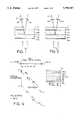
- FIG. 1is a sectional view of a spatial light modulator according to the present invention.
- FIG. 2is a sectional view of a modification of the spatial light modulator of FIG. 1.
- FIG. 3is a sectional view of a photoconductor layer used for the spatial light modulator of the present invention.
- FIG. 4is a band model of the photoconductor layer of FIG. 3.
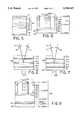
- FIG. 5is a sectional view of another photoconductor layer used for the spatial light modulator of the present invention.
- FIG. 6is a sectional view of a spatial light modulator of the present invention, in which liquid crystal is used as the optical modulating layer of FIG. 1.
- FIG. 7is a sectional view of a modification of the spatial light modulator of FIG. 6.
- FIG. 8is a sectional view of a photoconductor layer used for the spatial light modulator of FIG. 7.
- FIG. 9is a sectional view of another photoconductor layer used for the spatial light modulator of FIG. 7.
- FIG. 10is a sectional view of another spatial light modulator according to the present invention.
- FIG. 11is a sectional view of a photoconductor layer used for the spatial light modulator of FIG. 10.
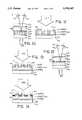
- FIG. 12is a sectional view of still another spatial light modulator according to the present invention.
- FIG. 13is a sectional view of a photoconductor layer used for the spatial light modulator of FIG. 12.
- FIG. 14is a sectional view of another photoconductor layer of the spatial light modulator of FIG. 13.
- FIG. 15is a sectional view of a photoconductor layer of the spatial light modulator of the present invention.
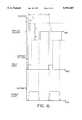
- FIG. 16is a timing chart of applied voltage, input light, and output light used for the spatial light modulator according to the present invention.
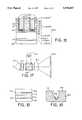
- FIG. 17is a structural view of a projection-type display apparatus incorporating the spatial light modulator according to the present invention.
- FIG. 18is a sectional view of a conventional spatial light modulator.
- FIG. 19is a sectional view of a photoconductor layer used for a conventional spatial light modulator.
- FIG. 1shows an embodiment of a spatial light modulator according to the present invention.
- a transparent conductive electrode 102made of a conductive oxide such as indium tin oxide (ITO), ZnO, or SnO 2 , for example
- ITOindium tin oxide
- ZnOzinc oxide
- SnO 2silicon dioxide
- an optical modulating layer 103, a reflecting mirror 104, a photoconductor layer 105, and a transparent conductive electrode 106are formed on the transparent conductive electrode 102 in this order.
- a thin film or thin plate of an electro-optical crystalmade of KD 2 PO 4 , Bi 12 SiO 20 , PLZT, LiNbO 3 , LiTiO 3 , Bi 4 Ti 3 O 12 , or the like is used.
- the thin filmis formed by a sputtering method or a chemical vapor deposition (CVD) method, for example.
- the thin plateis obtained by slicing a lump of crystal and polishing the sliced crystal.
- the transparent conductive electrode 102can be formed without the use of the transparent insulating substrate 101.
- the photoconductor layer 105When the photoconductor layer 105 is illuminated by a writing light 107 while a voltage is applied between the transparent conductive electrodes 102 and 106, the voltage applied to portions of the optical modulating layer 103 corresponding to portions of the photoconductor layer 105 illuminated by the light increases, causing a change in the refractive index at the former portions.
- a reading light 110is incident to the SLM from the side thereof opposite to the side from which the writing light 107 is incident, and reflected from the reflecting mirror 104.
- the change in the refractive indexis observed by detecting the reflecting light through an optical system composed of a polarizer 108 and an analyzer 109.
- the reflecting mirror 104may have a multilayer structure in which thin films made of material having a large dielectric coefficient such as TaO 2 and Si and thin films made of material having a small dielectric coefficient such as MgF and SiO 2 are alternately layered.
- a thin film made of metal having a large reflectancesuch as Al, Ag, Mo, Ni, Cr, and Mg can be used.
- the reflecting mirror 104needs to be an array of reflector pixels as shown in FIG. 2.
- the photoconductor layer 105has a pin diode structure and is formed on the transparent conductive electrode 106 to which the writing light 107 is incident.
- This pin diode structureprovides the photoconductor layer 105 with a rectification property, which increases the dark resistance of the photoconductor layer 105, and as a result a significant change in the voltage applied to the optical modulating layer 103 is obtained.
- the photoconductor layer 105provides the electron avalanche effect, which occurs when the writing light 107 is incident to the photoconductor layer 105 while a reverse bias is applied between the transparent conductive electrodes 102 and 106 from outside. This causes the primary photocurrent having a quantum efficiency of more than 1 to flow in the photoconductor layer 105. This effect can be obtained simply by applying a high reverse bias to the pin junction to accelerate carriers.
- the ionization rate of carriersdepends on the materials constituting the pin junction. The ionization rate can be controlled by using a superlattice.
- FIG. 3shows the structure of the photoconductor layer 105 having a superlattice.
- the pin diode structureis composed of a p-layer 111, an n-layer 112, and an i-layer 113 having a superlattice interposed therebetween.
- the i-layer 113is composed of n periods of the barrier layers A i /well layers B i plus the well layer B 0 .
- Pairs of electrons and holes generated in the well layers B i by optical absorptionare separated by the application of an electric field, allowing the electrons to enter the bulk and the holes to move toward the p-layer.
- stepsare present between the barrier layers A i and the well layers B i by ⁇ E C in the conduction band and by ⁇ E V in the valence electron band ( ⁇ E C > ⁇ E V ).
- ⁇ E C> ⁇ E V
- the photoconductor layer 105is preferably made of materials which can form a film over a wide range at a comparatively low temperature (400° C. or less). Examples include hydrogenated amorphous Si, Ge, Si 1-x C x , Si 1-x Ge x , Ge 1-x C x , Si 1-x N x , (hereinafter, referred to as a--Si:H, a--Ge:H, a--Si 1-x C x :H, respectively). As is known, in order to effectively decrease the number of the dangling bonds, halogen atoms such as F and Cl may be added in place of hydrogen to, and/or a minute amount (e.g., 0.1-10 at.
- a minute amounte.g., 0.1-10 at.
- % of oxygen atomsmay be contained in the above materials.
- the ionization energies of these materialsare not so widely different from one another (i.e., ⁇ E V is small; 0.1 eV or less). Accordingly, when any two of these materials of which band-gaps are largely different from each other are combined to form a superlattice, the difference of the band-gaps of these materials is neatly equal with ⁇ E C . This makes it possible to selectively increase the electron ionization rate. Also, these materials have a mobility of electrons larger than that of holes. This allows for high speed operation, as well as low-noise avalanche multiplication.
- Concrete combinations of these materialsinclude a--Si:H (A layer) and a--Ge:H (B layer), a--Si 1-x C x :H (A layer) and a--Si:H (B layer), a--Si 1-x C x :H (A layer) and a--Si 1-x Ge x :H (B layer), a--Si 1-x C x :H (A layer) and a--Ge:H (B layer), a--Si:H (A layer) and a--Si 1-x Ge x :H (B layer), a--Si 1-x C x :H (A layer) and a--Ge 1-x C x :H (B layer), a--Ge 1-x C x :H (A layer) and a--Si:H (B layer), a--Ge 1-x C x :H (A layer) and a--Si
- the above materialsare also characterized by the fact that the band-gap largely changes depending on the hydrogen content in the layers, the combination of layers of the same material having a large hydrogen content (A layer) and a small hydrogen content (B layer) is also possible.
- insulating layers with a large forbidden bande.g., a--C:H, GeN x , SiN x , and SiO x
- a--C:H, GeN x , SiN x , and SiO xcan be used to form a blocking structure.
- FIG. 5shows another structure of the photoconductor layer 105 using a superlattice.
- the generation of photocarriers and the avalanche multiplicationoccur in the superlattice portion.
- a p-layer 114 and a single i-layer 115are added to operate as layers for generating carriers by the absorption of an incident light.
- the multiplication coefficientcan be further increased.
- FIG. 6shows an alternative example of the SLM of the above embodiment, in which liquid crystal is used for the optical modulating layer.
- a transparent insulating substrate 202made of glass, for example
- a transparent conductive electrode 201made of a conductive oxide such as ITO, SnO 2 , and ZnO, for example
- a photoconductor layer 203 and a reflecting mirror 204 made of dielectric materialare formed in this order.
- the transparent insulating substrate 202 with the above multilayer structure and a transparent insulating substrate 206 coated with a transparent conductive electrode 205sandwich an LC layer 207.
- alignment layers 208which are obliquely evaporated SiO x films or rubbed polymer films.
- the SLM with the above-described structureoperates as described earlier for the SLM of FIG. 1.
- the SLMis illuminated by a writing light 209
- the voltage applied to the LC layer 207changes, resulting in the change of the alignment of liquid crystal molecules.
- This change of the alignmentis detected by radiating a reading light 211 through a polarizer 210 into the SLM and receiving the reflecting light thereof through an analyzer 212.
- the LC layer 207is preferably made of nematic liquid crystal, FLC, polymer dispersed liquid crystal in which liquid crystal is dispersed in a polymer, or the like.
- FLCnematic liquid crystal
- the electric impedancecan be small, which allows the photoconductor layer 203 to be made thinner; (2) high-speed response is possible, and (3) a memory function can be provided.
- the transmittance of the FLCsharply changes when the applied voltage is beyond a threshold value. This property makes the FLC an optimal material for the processing of light by a threshold.
- the polymer dispersed liquid crystalis advantageous in that since a polarizer and an alignment film are unnecessary, the SLM and the optical system can be simplified.
- FIG. 7shows a modification of the SLM of FIG. 6, in which the reflecting mirror 204 is replaced with an array of reflector pixels 204'.
- the array of reflector pixels 204'can be made of the dielectric material or metal films described earlier relating to the SLM of FIG. 2.
- the distance between the adjacent reflector pixels 204'may be as small as 10 ⁇ m or less in order to enhance the resolution.
- portions of the photoconductor layer 203 having the superlattice structure corresponding to the gaps between the adjacent reflector pixels 204' (uncovered portions)need to be removed by etching as shown in FIGS. 8 and 9 for the photoconductor layers 203 of FIGS. 3 and 5, respectively, so that the diffusion of carriers in the lateral direction inside the superlattice can be prevented. By this etching, the diffusion of carriers in the lateral direction is minimized, and thus the resolution of the SLM can be enhanced.
- the SLMs of FIGS. 1, 2, 6, and 7are of the reflection type. However, they can be modified to a transmission type by removing the reflecting mirror 104 or 204 or replacing the array of reflector pixels with a transparent conductive electrode made of ITO, SnO 2 , ZnO, or the like, by disposing the polarizer and the analyzer in opposite sides of the SLM, and by allowing the reading light and the writing light to be incident to the SLM from the same side.
- FIG. 10A second embodiment of the SLM of the present invention is shown in FIG. 10.
- a photoconductor layer 303made of amorphous semiconductor material containing Si as a main component as described earlier and an array of reflector pixels 304 are formed in this order.
- the transparent insulating substrate 302 with the above multilayer structure and a transparent insulating substrate 306 coated with a transparent conductive electrode 305sandwich an LC layer 307.
- Alignment layers 308are formed on both surfaces of the LC layer 307. Materials used for these layers are the same as those described earlier.
- the photoconductor layer 303 in this embodimentneed not have the rectification property.
- the SLM of this embodimentoperates as described earlier as for the SLM of FIG. 6.
- the voltage applied to the LC layer 307changes, resulting in the change of the alignment of liquid crystal molecules.
- This change of the alignmentis detected by radiating a reading light 311 through a polarizer 310 into the SLM and receiving the reflecting light thereof through an analyzer 312.
- the hatched portions of the photoconductor layer 303 in FIG. 10which correspond to the gaps between the reflector pixels 304 (i.e., the uncovered portions) are made inferior in the photoconductivity as described below, compared with the remaining portions which are covered with the reflector pixels 304.
- the photoconductor layer 303When the photoconductor layer 303 has the pin diode structure, the uncovered portions of an n-layer which may cause a decrease in the resolution are desirably removed as shown in FIG. 11.
- One method for lowering the photoconductivity of the uncovered portions of the photoconductor layer 303is as follows: as shown in FIG. 11, the photoconductor layer 303 is illuminated by intensive visible light for a predetermined period of time (e.g., AM-1 100 mW/cm 2 at least one hour; i.e., 360 J/cm 2 or more). By this method, the photoconductivity of the amorphous silicon semiconductor is lowered.
- a predetermined period of timee.g., AM-1 100 mW/cm 2 at least one hour; i.e., 360 J/cm 2 or more.
- the decrease of the photoconductivity thereofis lowered more than an order of magnitude.
- light absorption layers 313are formed on the uncovered portions of the photoconductor layer 303 (by applying a polymer containing a black pigment, for example). With this structure, the LC layer 307 can be prevented from being switched by the illumination of the intensive reading light 311.
- FIG. 12A third embodiment of the SLM of the present invention is shown in FIG. 12.
- the structure of the SLM of this embodimentis the same as that of the second embodiment. That is, transparent insulating substrates 403 and 404 coated with transparent conductive electrodes 401 and 402, respectively, sandwich a photoconductor layer 405 made of amorphous semiconductor material containing Si as a main component as described earlier, an array of reflector pixels 406, and an LC layer 408 with alignment layers 407 disposed on both surfaces thereof. Materials used for these layers are the same as those described above.
- the photoconductor layer 405 in this embodimentneed not have the rectification property.
- the SLM of this embodimentoperates as described earlier as for the SLM of FIG. 6.
- the voltage applied to the LC layer 408changes, resulting in the change of the alignment of liquid crystal molecules.
- This change in the alignmentis detected by radiating a reading light 411 through a polarizer 410 into the SLM and receiving the reflecting light thereof through an analyzer 412.
- the hatched portions of the photoconductor layer 405 in FIG. 12which correspond to the gaps between the reflector pixels 406 (i.e., uncovered portions) indicate portions into which specific impurities have been implanted.
- the uncovered portions of an n-layer which may cause a decrease in the resolutionare desirably removed as shown in FIG. 13.
- One method for implanting impurities into the uncovered portions of the photoconductor layer 405is as follows: after the patterning by photolithography to form the array of reflector pixels 406 (after the removal of the uncovered portions of the n-layer and part of an i-layer in the case of FIG. 13), accelerated impurity ions are implanted into the photoconductor layer 405 by the application of an electric field with a resist 413 kept unremoved.
- the resist 413is removed, and light absorption layers 414 are formed on the uncovered portions of the photoconductor layer 405 (by applying a polymer containing a black pigment, for example).
- the LC layer 408can be prevented from being switched by the illumination with the intensive reading light 411.
- Impurities to be implantedinclude rare gases such as helium, neon, argon, krypton, and xenon, halogen gases such as fluorine and chlorine, hydrogen, carbon, nitrogen, and oxygen.
- Rare gasesrelease the bonding of atoms composing the film at the time of implantation, but do not bond with other atoms in the film.
- the density of unpaired electronsincreases, resulting in greatly lowering the photoconductivity of the impurity-implanted portions.
- Halogen gases or hydrogen which are univalent atomsrelease the Si--Si bonding, and, in the case of hydrogen, Si--H bonding and --Si (an unpaired electron) are formed, thus increasing the density of unpaired electrons.
- Carbon, nitrogen, and oxygenare effective as impurities in lowering the photoconductivity in amorphous silicon.
- the photoconductivity of the impurity-implanted portionslowers, and thus the photoconductor layer 405 become inactive. This prevents the LC layer 408 from being switched by the illumination with the reading light 411.
- a large amount of a halogen gas, hydrogen, carbon, nitrogen, or oxygenis contained in an amorphous silicon film, the dark resistivity of the film increases. This minimizes the leakage of charges through the gaps between the reflector pixels 406, and thus improves the resolution.
- boroncan be added when the photoconductor layer 405 has the pin structure as shown in FIG.
- the pip structuregenerates an internal electric field, which suppresses the movement of electrons toward the LC layer 408. This produces an effect of lowering the photoconductivity.
- This effectcan be enhanced by adding boron ions in an amount larger than that of impurities contained in another p-layer formed on the transparent conductive electrode 401 and by annealing at 150° to 300° C. after the ion implantation.
- the p-layersince the p-layer has higher resistivity compared with the n-layer and the i-layer in general, leakage of charges through the reflector pixels 406 can be minimized, and thus the resolution can be further improved.
- the spatial light modulator of this examplewas fabricated as follows: ITO was deposited to a thickness of 0.05-0.2 ⁇ m on the transparent insulating substrate 202 by sputtering to form the transparent conductive electrode 201. Then, the photoconductor layer 203 was formed by depositing 0.01-0.1 ⁇ m of p-type a--Si:H as the p-layer, 10-50 periods of 50-500 angstroms of a--Si:H well layers/50-500 angstroms of a--Si 1-x C x :H (0.2 ⁇ x ⁇ 0.35) barrier layers as the i-layer, and 0.05-0.5 ⁇ m of n-type a--Si:H as the n-layer by plasma CVD in this order.
- Al metalwas deposited to a thickness of 0.05-0.5 ⁇ m on the photoconductor layer 203. Then, the Al metal film was covered with a resist and patterned by photolithography in order to form the array of reflector pixels 204'. Then, using the resist, the n-layer and the i-layer of the photoconductor layer 203 were selectively removed by etching. Thereafter, the rubbed alignment layer 208 made of polyimide was formed to cover the reflector pixels 204'. In this way, the substrate 202 having the multilayer structure shown in FIG. 8 was fabricated. Referring to FIG.
- the patterned transparent conductive electrode 205 made of ITO and the alignment layer 208 made of polyimidewere formed in this order on the other transparent insulating substrate 206.
- These transparent insulating substrates 202 and 206 with the multilayer structureswere attached together with the ferroelectric LC layer 207 having a thickness of 0.5-2 ⁇ m sandwiched therebetween, and thus an SLM (1) was fabricated.
- Another SLM (2)was also fabricated by the same method except that the i-layer of the photoconductor layer 203 was formed of undoped a--Si:H having the same thickness as that of the above superlattice structure.
- Green LED lightcenter wavelength: 565 nm
- He--Ne laser lightwavelength: 633 nm
- the testwas performed by focusing these two kinds of light onto a single one of the reflector pixels 204'.
- the operation of the SLMwill be briefly described. Note that the voltage is applied so as to be positive at the transparent conductive electrode 205.
- the SLMis illuminated by the input the writing light 209 when a positive pulse is applied and the photoconductor layer 203 is reversely biased.
- the voltage applied to the LC layer 207increases. With the increase in the voltage, the liquid crystal is switched from the OFF state to the ON state, allowing the reading light 211 to be output from the SLM through the LC layer 207. Then, when a negative pulse is applied and the photoconductor layer 203 is forward-biased, the liquid crystal is switched to the OFF state regardless of the illumination by light.
- the photosensitivity and the rise time of the SLMs (1) and (2)were measured.
- the resultswere 1.5-3 ⁇ W and 30 ⁇ s for the SLM (1) and 15 ⁇ W and 30 ⁇ s for the SLM (2).
- the photocurrent of the photoconductor layer 203 of the SLM (1)was also measured, and the quantum efficiency thereof was 3 to 10.
- the optical band gap determined by h ⁇ -( ⁇ h ⁇ ) 1/2 plottingwas 1.75-1.8 eV for the a--Si:H well layers and 2.0-2.3 eV for the a--Si 1-x C x :H barrier layers.
- the spatial light modulator of this examplewas fabricated as follows: ITO was deposited to a thickness of 0.05-0.2 ⁇ m on the transparent insulating substrate 202 by sputtering to form the transparent conductive electrode 201. Then, the photoconductor layer 203 was formed by depositing 0.01-0.1 ⁇ m of p-type a--Si:H as the first p-layer, 10-50 periods of 0.2-1 ⁇ m of a--Si:H as the i-layer, 0.01-0.1 ⁇ m of a--Si:H as the second p-layer, 10-50 periods of 50-500 angstroms of a--Si 1-x Ge x :H (0.1 ⁇ x ⁇ 0.7) well layers/50-500 angstroms of a--Si 1-x C x :H (0.05 ⁇ x ⁇ 0.25) barrier layers as the superlattice i-layer, and 0.05-0.5 ⁇ m of n-type a--Si:
- Al metalwas deposited to a thickness of 0.05-0.5 ⁇ m on the photoconductor layer 203. Then, the Al metal was covered with a resist and patterned by photolithography to form the array of reflector pixels 204'. Then, using the resist, the n-layer and the superlattice i-layer of the photoconductor layer 203 were selectively removed by etching. Thereafter, the rubbed alignment layer 208 made of polyimide was formed to cover the reflector pixels 204'. In this way, the substrate 202 having the multilayer structure as shown in FIG. 9 was fabricated. Referring to FIG.
- the patterned transparent conductive electrode 205 made of ITO and the alignment layer 208 made of polyimidewere formed in this order on the other transparent insulating substrate 206.
- These transparent insulating substrates 202 and 206 with the multilayer structureswere attached together with the ferroelectric LC layer 207 having a thickness of 0.5-2 ⁇ m sandwiched therebetween, and thus an SLM (3) was fabricated.
- Another SLM (4)was also fabricated by the same method except that the superlattice i-layer of the photoconductor layer 203 was formed of undoped a--Si:H having the same thickness as that of the above superlattice structure.
- Green LED lightcenter wavelength: 565 nm
- He--Ne laser lightwavelength: 633 nm
- the testwas performed by focusing these two kinds of light onto a single one of the reflector pixels 204'.
- the photosensitivity and the rise time of the SLMs (3) and (4)were measured.
- the resultswere 0.3-1.5 ⁇ W and 30 ⁇ s for the SLM (3) and 15 ⁇ W and 30 ⁇ s for the SLM (4).
- the photocurrent of the photoconductor layer 203 of the SLM (3)was also measured, and the quantum efficiency thereof was 10 to 50.
- the SLM of this examplewas fabricated as follows: ITO was deposited to a thickness of 0.05-0.2 ⁇ m on the transparent insulating substrate 302 by sputtering to form the transparent conductive electrode 301. Then, an a--Si 1-x C x :H (0.15 ⁇ x ⁇ 0.25) film of the pin diode structure having thicknesses of 0.01-0.3 ⁇ m, 0.1-1.2 ⁇ m, and 0.05-0.3 ⁇ m for pin, respectively, was deposited by plasma CVD to form the photoconductor layer 303.
- MgF and TaO 2were alternately deposited on the photoconductor layer 303 to form a multilayered dielectric mirror, which was then patterned to form the array of the reflector pixels 304 (1000 ⁇ 2000 pcs., each 20-50 ⁇ m square, 23-55 ⁇ m pitch). Thereafter, portions of the n-layer and part of the i-layer of the photoconductor layer 303 corresponding to the gaps between reflector pixels 304 (uncovered portions) were removed. Then, as shown in FIG.
- the photoconductor layer 303was illuminated by light of AM-1 0.1 W/cm 2 from the side of the array of reflector pixels 304 for at least one hour (corresponding to an exposure of 360 J/cm 2 ), so as to optically deteriorate the uncovered portions of the photoconductor layer 303. Then, a polymer containing a black pigment was applied to the removed portions of the photoconductor layer 303 to form the light absorption layers 313. Thereafter, the rubbed alignment layer 308 made of polyimide was formed to cover the reflector pixels 304 and the light absorption layers 313. The patterned transparent conductive electrode 305 made of ITO and the alignment layer 308 made of polyimide were formed in this order on the other transparent insulating substrate 306. These transparent insulating substrates 302 and 306 with the multilayer structures were attached together with the ferroelectric LC layer 307 having a thickness of 0.5-2 ⁇ m sandwiched therebetween, and thus an SLM (5) was fabricated.
- Another SLM (6)was also fabricated by the same method except that the exposure of the AM-1 light was 36 J/cm 2 or less.
- a projection-type display apparatus as shown in FIG. 17was manufactured to test the above SLMs (5) and (6).
- the display apparatusincludes an SLM 601, a writing light source (CRT) 602, a projection light source (a halogen lamp with a reflector) 603, a projection lens system 604, a polarizing beam splitter 605, and a screen 606.
- V p10-30 V
- the current-voltage characteristics of the photoconductor layer 303was evaluated by placing an Al electrode in place of the above dielectric mirror. As a result, the photocurrent having a quantum efficiency of 5 to 100 was obtained under the conditions of the application of the reverse bias large enough to generate an electric field of 2 ⁇ 10 5 V/cm and the illumination by light of 400-600 nm.
- Photoconductors identical to the photoconductor layer 303 used for the SLM (5)were formed on two silicon wafers. One of the silicon wafers was illuminated by light of AM-1 1 W/cm 2 for at least one hour, and the other was left unilluminated. These two silicon wafers were subjected to electron spin resonance (ESR) to measure the density of unpaired electrons. The results were 5-10 ⁇ 10 17 cm -3 for the illuminated one and 8 ⁇ 10 16 cm -3 for the unilluminated one.
- ESRelectron spin resonance
- the SLM of this examplewas fabricated as follows: ITO was deposited to a thickness of 0.05-0.2 ⁇ m on a transparent insulating substrate 403 by sputtering to form the transparent conductive electrode 401. Then, an a--Si:H film of the pin diode structure having thicknesses of 0.01-0.1 ⁇ m, 0.5-1.6 ⁇ m, and 0.05-0.5 ⁇ m for pin, respectively, was deposited by plasma CVD to form the photoconductor layer 405. Subsequently, Al metal was deposited to a thickness of 0.05-0.5 ⁇ m on the photoconductor layer 405. Then, as shown in FIG.
- the Al metal filmwas covered with a resist 413 and patterned by photolithography to form the array of reflector pixels 406 (1000 ⁇ 2000 pcs., each 20-50 ⁇ m square, 23-55 ⁇ m pitch). Then, the n-layer and part of the i-layer of the photoconductor layer 405 were selectively removed by etching, and boron ions were implanted by applying a negative bias to the transparent conductive electrode 401 under the glow discharge of B 2 H 6 diluted with hydrogen. Thereafter, after removing the resist 413, the multilayer structure was annealed at 250° C. A polymer containing a black pigment was then applied to the removed portions of the photoconductor layer 405 to form the light absorption layers 414.
- the rubbing-processed alignment layer 407 made of polyimidewas formed to cover the reflector pixels 406 and the light absorption layers 414.
- the patterned transparent conductive electrode 402 made of ITO and the alignment layer 407 made of polyimidewere formed in this order on the other transparent insulating substrate 404.
- These transparent insulating substrates 403 and 404 with the multilayer structureswere attached together with the ferroelectric LC layer 408 having a thickness of 0.5-2 ⁇ m sandwiched therebetween, and thus an SLM (7) was fabricated.
- Another SLM (8)was also fabricated by the same method except that the ion implantation of boron was not conducted.
- the SLMs (7) and (8)were disposed in the projection-type display apparatus as shown in FIG. 17.
- an optical reflecting layers 415 made of Cr, Al, or Mowere formed between the light absorption layers 414 and the photoconductor layer 405 of the SLMs (7) and (8) obtained in Example 4, after the ion implantation (or after removing portions of the n-layer and part of i-layer for the SLM (8)).
- SLMs (9) and (10)were fabricated, respectively.
- fluorine ionswere implanted, instead of boron ions, using plasma of SiF 4 , SiH 2 F 2 , or CF 4 gas under the application of a positive bias to the transparent conductive electrode 401.
- the SLMs (9) and (10)were disposed in the projection-type display apparatus as shown in FIG. 17.
- the projection light source 603 with a higher intensitycould be used than in the case of using the SLMs in Example 4 by ten times or more.
- the imagewas projected by a light intensity higher than that in the case of using the SLM (10) by ten times or more.
- an SLM (11)was fabricated by the same method as that for the SLM (9) in Example 5, except that the photoconductor layer 203 in Example 2 was used in place of the photoconductor layer 405 as shown in FIG. 15. As in Example 5, fluorine ions were implanted to form ion implanted regions 416.
- the SLM (11)was disposed in the projection-type display apparatus as shown in FIG. 17.
- V p10-50 V
- SLMs (1), (3), (5), (7), (9), and (11) according to the present inventioncan also be used for the display of a rewritable hologram.
- the light modulating layers, the photoconductive layers, and the transparent conductive electrodes to be used for the SLMs of the present inventionare not limited to those described in the above examples.
Landscapes
- Physics & Mathematics (AREA)
- Nonlinear Science (AREA)
- Mathematical Physics (AREA)
- Chemical & Material Sciences (AREA)
- Crystallography & Structural Chemistry (AREA)
- General Physics & Mathematics (AREA)
- Optics & Photonics (AREA)
- Liquid Crystal (AREA)
- Photo Coupler, Interrupter, Optical-To-Optical Conversion Devices (AREA)
Abstract
Description
This is a divisional of application Ser. No. 08/096,470 filed on Jul. 22, 1993 now U.S. Pat. No. 5,453,860.
1. Field of the Invention
The present invention relates to a spatial light modulator used for an optical processor, a projection display, a rewritable hologram display, and the like, and a method for fabricating the same.
2. Description of the Related Art
A spatial light modulator (hereinafter, referred to as an SLM) of an optically addressable type having a modulating portion and a photoconductor layer (the SLM as used herein refers to this optically addressable type) have many functions including optical thresholding operation, wavelength conversion, incoherent/coherent conversion, and image storing. The SLM is therefore recognized as a key device for optical information processing. The SLM also has a function of optical amplification, allowing for the use for a projection display. It therefore has excellent versatility.
The modulating portion and the photoconductor layer of the SLM are sandwiched by two transparent conductive electrodes. The optical transmittance of the modulating portion changes depending on the voltage applied between the transparent conductive electrodes. The principle of the operation of the SLM is as follows: the photoconductor layer is illuminated by a writing light while a voltage is applied between the transparent conductive electrodes, so as to change the electric resistivity of the photoconductor layer. This causes a change in the voltage applied to the modulating portion, and by this change the transmittance of the modulating portion is modulated.
The most convenient type of such an SLM with high photosensitivity, high-speed response, and low operating voltage is the one using hydrogenated amorphous silicon (hereinafter, referred to as "a--Si:H") as the photoconductor layer and ferroelectric liquid crystal (hereinafter, referred to as FLC) as the modulating portion. Currently, this type of SLM has been most actively studied and developed. FIG. 18 shows a typical example of this type of the SLM (refer to G. Moddel et al., Appl. Phys. Lett., 55 (1989), p. 537). Referring to FIG. 18, the SLM includes aphotoconductor layer 701 which is a pin diode made of a--Si:H and an FLC layer 702. Thephotoconductor layer 701 and the FLC layer 702 are sandwiched by transparentinsulating substrates 705 and 706 on which transparentconductive electrodes
As mentioned above, the SLM is applicable to a projection display by utilizing the function of optical amplification. In this application, an image is written into a photoconductor layer with a weak writing light, which is then transferred onto a liquid crystal layer (hereinafter, referred to an LC layer) and read therefrom with an intensive reading light, so as to project a magnified image on a large screen. In order to prevent the intensive reading light from leaking into the photoconductor layer, a reflecting mirror composed of multilayers of dielectrics is formed between the photoconductor layer and the LC layer. In order to enhance the resolution of the image to be read, U.S. Pat. No. 4,913,531, for example, describes the use of separated pixels ofreflector 801 as the reflecting mirror as shown in FIG. 19.
However, the conventional SLM has disadvantages as described below. The photoconductor layer of the conventional SLM, which is formed of a diode, is illuminated by the writing light while a reverse bias is applied. This results in that only the current which flows in the photoconductor layer is the primary photocurrent. In other words, the amount of a photocurrent flowing in the photoconductor layer is determined by the number of photons entering the photoconductor layer when the photoconductor layer is illuminated by the writing light. This indicates that the current with a quantum efficiency of more than 1 does not flow in the photoconductor layer.
Further, the amount of charges for a unit area at the interface of the photoconductor layer and the LC layer required to induce a voltage large enough to switch the state of the LC layer depends on the liquid crystal material and the cell thickness. Accordingly, given the ideal conditions where the photocurrent with a quantum efficiency of 1 flows in the photoconductor layer at a response speed sufficiently higher than that of the liquid crystal, the intensity of the incident light (photosensitivity) required to switch the LC layer is independent of the properties of the photoconductor layer. The a--Si:H pin diode structure is known to provide these ideal conditions (refer to K. Akiyama et al., Jpn. J. Appl. Phys., 30 (1991) p. 3887, for example).
Since the photoconductor layer of the conventional SLM is already in such ideal conditions, it is impossible to seek for an SLM with higher photosensitivity unless a novel liquid crystal material having a higher response speed at a low-voltage operation can be developed. In the meantime, realization of an SLM with higher photosensitivity is a most critical issue in the field of optical computation which conducts a massively parallel processing. This is because, as the level of the parallel processing enhances, the total amount of writing light increases and thus a light source capable of supplying a larger power of light is required. This results in the light source to be used is determined on the required amount of light, and the power consumption of the light source, so, as a result the operation cost increases. For these reasons, higher photosensitivity in the SLM is strongly desired.
As mentioned earlier, the reflecting mirror composed of multilayers of dielectrics is formed between the photoconductor layer and the LC layer in order to prevent the reading light from leaking into the photoconductor layer. As shown in FIG. 19, to ensure the prevention of the leaking, a groove is formed in a portion of aphotoconductor layer 802 corresponding to the gap betweenreflector pixels 801, and anotherreflector 803 made of Al or the like is formed in the groove. In this structure, however, short-circuiting tends to occur between thereflector pixels 801 and thereflector 803. On the other hand, without thereflector 803, the trouble of short-circuiting is prevented, but a number of photocarriers are generated around the groove in thephotoconductor layer 802 by the illumination of an intensive reading light, and diffuse laterally in thephotoconductor layer 802. This lowers the resistivity of portions of thephotoconductor layer 802 covered with thereflector pixels 801, causing the LC layer to be switched on even when a writing light is not incident.
The spatial light modulator of this invention comprises a modulating layer having optical properties changeable depending on the strength of an applied electric field; a pair of transparent electrode layers sandwiching the modulating layer for generating the electric field; and a photoconductor layer disposed between one of the pair of transparent electrode layers and the modulating layer for generating a photocurrent corresponding to the illumination by light, wherein the photoconductor layer has a quantum efficiency of more than 1.
According to another aspect of the present invention, the spatial light modulator comprises: a modulating layer having optical properties changeable depending on the strength of an applied electric field; a pair of transparent electrode layers sandwiching the modulating layer for generating the electric field; a photoconductor layer disposed between one of the pair of transparent electrode layers and the modulating layer for generating a photocurrent corresponding to the illumination by light; and a plurality of reflecting layers arranged in a matrix between the modulating layer and the photoconductor layer, wherein the plurality of reflecting layers respectively reflect part of light incident to the modulating layer from outside of the spatial light modulator, and wherein the photoconductivity of uncovered portions of the photoconductor layer into which the light is transmitted without being reflected from the plurality of reflecting layers is smaller than that of the other portions of the photoconductor layer.
According to yet another aspect of the present invention, the spatial light modulator comprises: a modulating layer having optical properties changeable depending on the strength of an applied electric field; a pair of transparent electrode layers sandwiching the modulating layer for generating the electric field; a photoconductor layer disposed between one of the pair of transparent electrode layers and the modulating layer for generating a photocurrent corresponding to the illumination by light; and a plurality of reflecting layers arranged in a matrix between the modulating layer and the photoconductor layer, wherein the plurality of reflecting layers respectively reflect part of light incident to the modulating layer from outside of the spatial light modulator, and wherein element impurities are distributed unevenly along the depth of the photoconductor layer in portions of the photoconductor layer into which the light is transmitted without being reflected from the plurality of reflecting layers.
According to yet another aspect of the present invention, the method for fabricating a spatial light modulator comprising: a modulating layer having optical properties changeable depending on the strength of an applied electric field; a pair of transparent electrode layers sandwiching the modulating layer for generating the electric field; a photoconductor layer disposed between one of the pair of transparent electrode layers and the modulating layer for generating a photocurrent corresponding to the illumination by light; and a plurality of reflecting layers arranged in a matrix between the modulating layer and the photoconductor layer, comprises a step of: illuminating portions of the photoconductor layer uncovered with the plurality of reflecting layers by light after the formation of the plurality of reflecting layers using the plurality of reflecting layers as a mask.
According to yet another aspect of the present invention, the method for fabricating a spatial light modulator comprising: a modulating layer having optical properties changeable depending on the strength of an applied electric field; a pair of transparent electrode layers sandwiching the modulating layer for generating the electric field; a photoconductor layer disposed between one of the pair of transparent electrode layers and the modulating layer for generating a photocurrent corresponding to the illumination by light; and a plurality of reflecting layers arranged in a matrix between the modulating layer and the photoconductor layer, comprises a step of: implanting impurities to the photoconductor layer after the formation of the plurality of reflecting layers using the plurality of reflecting layers as a mask.
In general, in a spatial light modulator including a modulating portion made of dielectric or ferroelectric material and a photoconductor layer which are sandwiched by two transparent conductive electrodes, the modulating portion operates as a blocking layer for the photoconductor layer. Accordingly, a primary photocurrent is induced in the photoconductor layer at the illumination by a writing light, indicating that a photocurrent having a quantum efficiency of more than 1 does not flow therein. According to the present invention, in order to enhance the photosensitivity of the SLM, the quantum efficiency is increased to more than 1 by multiplying the number of carriers by the electron avalanche effect.
In a reflection-mode spatical light modulator having an array of reflector pixels between the photoconductor layer and the optical modulating layer, a comparatively intensive reading light may be used to read images. In this case, it is required to prevent the reading light from leaking into the photoconductor layer through gaps between the reflector pixels and causing a malfunction of the SLM. This may be prevented by blocking the reading light from entering the photoconductor layer by some physical means. However, a more effective method is to make it difficult for the photocurrent to flow into the photoconductor layer even when the reading light enters the photoconductor layer. This is done by inducing defects or implanting impurities in portions of the photoconductor layer corresponding to the gaps between the reflector pixels (hereinafter, referred to as "uncovered portions") so as to prevent the movement of carriers. When an amorphous silicon material is used for the photoconductor layer, such defects can be induced by illuminating the photoconductor layer with intensive light to generate unpaired electrons called dangling bonds. The existence of the dangling bonds deteriorates the photoconductivity of the layer. Alternatively, ions accelerated by the application of an electric field may be easily implanted as impurities into the photoconductor layer through the gaps. According to this method, since the bonding between atoms is released due to the ion bombardment, unpaired electrons can be generated simultaneously.
Thus, the invention described herein makes possible the advantages of (1) providing a spatial light modulator operable at high speed with high photosensitivity, in which the photocurrent having a quantum efficiency of more than 1 flows into the photoconductor layer, (2) providing a spatial light modulator in which the liquid crystal layer can be prevented from being switched on by a reading light, to allow for the projection with high-intensity light, and (3) providing methods for fabricating such a spatial light modulator.
These and other advantages of the present invention will become apparent to those skilled in the art upon reading and understanding the following detailed description with reference to the accompanying figures.
FIG. 1 is a sectional view of a spatial light modulator according to the present invention.
FIG. 2 is a sectional view of a modification of the spatial light modulator of FIG. 1.
FIG. 3 is a sectional view of a photoconductor layer used for the spatial light modulator of the present invention.
FIG. 4 is a band model of the photoconductor layer of FIG. 3.
FIG. 5 is a sectional view of another photoconductor layer used for the spatial light modulator of the present invention.
FIG. 6 is a sectional view of a spatial light modulator of the present invention, in which liquid crystal is used as the optical modulating layer of FIG. 1.
FIG. 7 is a sectional view of a modification of the spatial light modulator of FIG. 6.
FIG. 8 is a sectional view of a photoconductor layer used for the spatial light modulator of FIG. 7.
FIG. 9 is a sectional view of another photoconductor layer used for the spatial light modulator of FIG. 7.
FIG. 10 is a sectional view of another spatial light modulator according to the present invention.
FIG. 11 is a sectional view of a photoconductor layer used for the spatial light modulator of FIG. 10.
FIG. 12 is a sectional view of still another spatial light modulator according to the present invention.
FIG. 13 is a sectional view of a photoconductor layer used for the spatial light modulator of FIG. 12.
FIG. 14 is a sectional view of another photoconductor layer of the spatial light modulator of FIG. 13.
FIG. 15 is a sectional view of a photoconductor layer of the spatial light modulator of the present invention.
FIG. 16 is a timing chart of applied voltage, input light, and output light used for the spatial light modulator according to the present invention.
FIG. 17 is a structural view of a projection-type display apparatus incorporating the spatial light modulator according to the present invention.
FIG. 18 is a sectional view of a conventional spatial light modulator.
FIG. 19 is a sectional view of a photoconductor layer used for a conventional spatial light modulator.
The present invention is described by way of example with reference to the attached drawings as follows:
FIG. 1 shows an embodiment of a spatial light modulator according to the present invention. Referring to FIG. 1, a transparent conductive electrode 102 (made of a conductive oxide such as indium tin oxide (ITO), ZnO, or SnO2, for example) is formed on a transparent insulating substrate 101 (made of glass, for example), and anoptical modulating layer 103, a reflectingmirror 104, aphotoconductor layer 105, and a transparentconductive electrode 106 are formed on the transparentconductive electrode 102 in this order.
For theoptical modulating layer 103, a thin film or thin plate of an electro-optical crystal made of KD2 PO4, Bi12 SiO20, PLZT, LiNbO3, LiTiO3, Bi4 Ti3 O12, or the like is used. The thin film is formed by a sputtering method or a chemical vapor deposition (CVD) method, for example. The thin plate is obtained by slicing a lump of crystal and polishing the sliced crystal. When the thin plate is used, the transparentconductive electrode 102 can be formed without the use of the transparent insulatingsubstrate 101.
When thephotoconductor layer 105 is illuminated by a writing light 107 while a voltage is applied between the transparentconductive electrodes optical modulating layer 103 corresponding to portions of thephotoconductor layer 105 illuminated by the light increases, causing a change in the refractive index at the former portions. A readinglight 110 is incident to the SLM from the side thereof opposite to the side from which thewriting light 107 is incident, and reflected from the reflectingmirror 104. The change in the refractive index is observed by detecting the reflecting light through an optical system composed of apolarizer 108 and ananalyzer 109.
The reflectingmirror 104 may have a multilayer structure in which thin films made of material having a large dielectric coefficient such as TaO2 and Si and thin films made of material having a small dielectric coefficient such as MgF and SiO2 are alternately layered. Alternatively, a thin film made of metal having a large reflectance such as Al, Ag, Mo, Ni, Cr, and Mg can be used. When metal is used, the reflectingmirror 104 needs to be an array of reflector pixels as shown in FIG. 2.
Thephotoconductor layer 105 has a pin diode structure and is formed on the transparentconductive electrode 106 to which thewriting light 107 is incident. This pin diode structure provides thephotoconductor layer 105 with a rectification property, which increases the dark resistance of thephotoconductor layer 105, and as a result a significant change in the voltage applied to theoptical modulating layer 103 is obtained.
Also, thephotoconductor layer 105 provides the electron avalanche effect, which occurs when the writinglight 107 is incident to thephotoconductor layer 105 while a reverse bias is applied between the transparentconductive electrodes photoconductor layer 105. This effect can be obtained simply by applying a high reverse bias to the pin junction to accelerate carriers. The ionization rate of carriers depends on the materials constituting the pin junction. The ionization rate can be controlled by using a superlattice. FIG. 3 shows the structure of thephotoconductor layer 105 having a superlattice. The pin diode structure is composed of a p-layer 111, an n-layer 112, and an i-layer 113 having a superlattice interposed therebetween. The superlattice is formed by alternately stacking barrier layers Ai (i=1, 2, . . . , n) having a large band-gap and well layers Bi (i=0, 1, . . . , n) having a small band-gap. In FIG. 3, the i-layer 113 is composed of n periods of the barrier layers Ai /well layers Bi plus the well layer B0. The carrier multiplication by using the superlattice will be briefly described using a band model of thephotoconductor layer 105 shown in FIG. 4. Refer to R. Chin et al., Electron. Lett. 16(12) (1980), p. 467 for details.
Pairs of electrons and holes generated in the well layers Bi by optical absorption are separated by the application of an electric field, allowing the electrons to enter the bulk and the holes to move toward the p-layer. As shown in FIG. 4, assume that steps are present between the barrier layers Ai and the well layers Bi by ΔEC in the conduction band and by ΔEV in the valence electron band (ΔEC >ΔEV). When electrons move from the barrier layers Ai to the well layers Bi, they gain a kinetic energy by ΔEC. The electrons which have gained such a large kinetic energy and have been sufficiently accelerated collide with other electrons, causing excitation of electrons to the conduction band (ionization). This causes new electrons and holes to be generated, thus multiplying the photocurrent. The newly generated electrons and holes are also accelerated and ionized. Thus, the number of carriers is multiplied in an avalanche (avalanche multiplication). As a result, the photocurrent having a quantum efficiency largely exceeding 1 flows into thephotoconductor layer 105.
Thephotoconductor layer 105 is preferably made of materials which can form a film over a wide range at a comparatively low temperature (400° C. or less). Examples include hydrogenated amorphous Si, Ge, Si1-x Cx, Si1-x Gex, Ge1-x Cx, Si1-x Nx, (hereinafter, referred to as a--Si:H, a--Ge:H, a--Si1-x Cx :H, respectively). As is known, in order to effectively decrease the number of the dangling bonds, halogen atoms such as F and Cl may be added in place of hydrogen to, and/or a minute amount (e.g., 0.1-10 at. %) of oxygen atoms may be contained in the above materials. The ionization energies of these materials are not so widely different from one another (i.e., ΔEV is small; 0.1 eV or less). Accordingly, when any two of these materials of which band-gaps are largely different from each other are combined to form a superlattice, the difference of the band-gaps of these materials is neatly equal with ΔEC. This makes it possible to selectively increase the electron ionization rate. Also, these materials have a mobility of electrons larger than that of holes. This allows for high speed operation, as well as low-noise avalanche multiplication. Concrete combinations of these materials include a--Si:H (A layer) and a--Ge:H (B layer), a--Si1-x Cx :H (A layer) and a--Si:H (B layer), a--Si1-x Cx :H (A layer) and a--Si1-x Gex :H (B layer), a--Si1-x Cx :H (A layer) and a--Ge:H (B layer), a--Si:H (A layer) and a--Si1-x Gex :H (B layer), a--Si1-x Cx :H (A layer) and a--Ge1-x Cx :H (B layer), a--Ge1-x Cx :H (A layer) and a--Si:H (B layer), a--Ge1-x Cx :H (A layer) and a--Ge:H (B layer), a--Si1-x Nx :H (A layer) and a--Si:H (B layer), a--Si1-x Nx :H (A layer) and a--Si1-x Gex :H (B layer), a--Si1-x Nx :H (A layer) and a--Ge:H (B layer). Furthermore, since the above materials are also characterized by the fact that the band-gap largely changes depending on the hydrogen content in the layers, the combination of layers of the same material having a large hydrogen content (A layer) and a small hydrogen content (B layer) is also possible.
For the formation of the p-layer 111 and the n-layer 112, B, Al, Ga, or the like is preferably used as a p-type impurity, and N, P, As, Sb, Se, or the like is preferably used as an n-type impurity. Instead of forming the p-layer and n-layer, insulating layers with a large forbidden band (e.g., a--C:H, GeNx, SiNx, and SiOx) can be used to form a blocking structure.
FIG. 5 shows another structure of thephotoconductor layer 105 using a superlattice. In the structure of FIG. 3, the generation of photocarriers and the avalanche multiplication occur in the superlattice portion. In the structure of FIG. 5, however, a p-layer 114 and a single i-layer 115 are added to operate as layers for generating carriers by the absorption of an incident light. By this structure, the multiplication coefficient can be further increased.
FIG. 6 shows an alternative example of the SLM of the above embodiment, in which liquid crystal is used for the optical modulating layer. Referring to FIG. 6, on a transparent insulating substrate 202 (made of glass, for example) coated with a transparent conductive electrode 201 (made of a conductive oxide such as ITO, SnO2, and ZnO, for example), aphotoconductor layer 203 and a reflectingmirror 204 made of dielectric material are formed in this order. Then, the transparent insulatingsubstrate 202 with the above multilayer structure and a transparent insulatingsubstrate 206 coated with a transparentconductive electrode 205 sandwich anLC layer 207. On both surfaces of theLC layer 207 are disposedalignment layers 208 which are obliquely evaporated SiOx films or rubbed polymer films.
The SLM with the above-described structure operates as described earlier for the SLM of FIG. 1. When the SLM is illuminated by a writing light 209, the voltage applied to theLC layer 207 changes, resulting in the change of the alignment of liquid crystal molecules. This change of the alignment is detected by radiating a reading light 211 through apolarizer 210 into the SLM and receiving the reflecting light thereof through ananalyzer 212.
TheLC layer 207 is preferably made of nematic liquid crystal, FLC, polymer dispersed liquid crystal in which liquid crystal is dispersed in a polymer, or the like. Using FLC is advantageous in that: (1) since the LC layer can be thinner, the electric impedance can be small, which allows thephotoconductor layer 203 to be made thinner; (2) high-speed response is possible, and (3) a memory function can be provided. Also, the transmittance of the FLC sharply changes when the applied voltage is beyond a threshold value. This property makes the FLC an optimal material for the processing of light by a threshold. On the other hand, the polymer dispersed liquid crystal is advantageous in that since a polarizer and an alignment film are unnecessary, the SLM and the optical system can be simplified.
FIG. 7 shows a modification of the SLM of FIG. 6, in which the reflectingmirror 204 is replaced with an array of reflector pixels 204'. The array of reflector pixels 204' can be made of the dielectric material or metal films described earlier relating to the SLM of FIG. 2. The distance between the adjacent reflector pixels 204' may be as small as 10 μm or less in order to enhance the resolution. In such a case, portions of thephotoconductor layer 203 having the superlattice structure corresponding to the gaps between the adjacent reflector pixels 204' (uncovered portions) need to be removed by etching as shown in FIGS. 8 and 9 for the photoconductor layers 203 of FIGS. 3 and 5, respectively, so that the diffusion of carriers in the lateral direction inside the superlattice can be prevented. By this etching, the diffusion of carriers in the lateral direction is minimized, and thus the resolution of the SLM can be enhanced.
The SLMs of FIGS. 1, 2, 6, and 7 are of the reflection type. However, they can be modified to a transmission type by removing the reflectingmirror
A second embodiment of the SLM of the present invention is shown in FIG. 10. Referring to FIG. 10, on a transparent insulatingsubstrate 302 coated with a transparentconductive electrode 301, aphotoconductor layer 303 made of amorphous semiconductor material containing Si as a main component as described earlier and an array ofreflector pixels 304 are formed in this order. Then, the transparent insulatingsubstrate 302 with the above multilayer structure and a transparent insulatingsubstrate 306 coated with a transparentconductive electrode 305 sandwich anLC layer 307. Alignment layers 308 are formed on both surfaces of theLC layer 307. Materials used for these layers are the same as those described earlier. Thephotoconductor layer 303 in this embodiment need not have the rectification property.
The SLM of this embodiment operates as described earlier as for the SLM of FIG. 6. When the SLM is illuminated by a writing light 309, the voltage applied to theLC layer 307 changes, resulting in the change of the alignment of liquid crystal molecules. This change of the alignment is detected by radiating a reading light 311 through apolarizer 310 into the SLM and receiving the reflecting light thereof through ananalyzer 312. The hatched portions of thephotoconductor layer 303 in FIG. 10 which correspond to the gaps between the reflector pixels 304 (i.e., the uncovered portions) are made inferior in the photoconductivity as described below, compared with the remaining portions which are covered with thereflector pixels 304.
When thephotoconductor layer 303 has the pin diode structure, the uncovered portions of an n-layer which may cause a decrease in the resolution are desirably removed as shown in FIG. 11. One method for lowering the photoconductivity of the uncovered portions of the photoconductor layer 303 (the hatched portions in FIGS. 10 and 11) is as follows: as shown in FIG. 11, thephotoconductor layer 303 is illuminated by intensive visible light for a predetermined period of time (e.g., AM-1 100 mW/cm2 at least one hour; i.e., 360 J/cm2 or more). By this method, the photoconductivity of the amorphous silicon semiconductor is lowered. In this way, the decrease of the photoconductivity thereof is lowered more than an order of magnitude. Thereafter, light absorption layers 313 are formed on the uncovered portions of the photoconductor layer 303 (by applying a polymer containing a black pigment, for example). With this structure, theLC layer 307 can be prevented from being switched by the illumination of theintensive reading light 311.
A third embodiment of the SLM of the present invention is shown in FIG. 12. The structure of the SLM of this embodiment is the same as that of the second embodiment. That is, transparent insulatingsubstrates conductive electrodes photoconductor layer 405 made of amorphous semiconductor material containing Si as a main component as described earlier, an array ofreflector pixels 406, and anLC layer 408 withalignment layers 407 disposed on both surfaces thereof. Materials used for these layers are the same as those described above. Thephotoconductor layer 405 in this embodiment need not have the rectification property.
The SLM of this embodiment operates as described earlier as for the SLM of FIG. 6. When the SLM is illuminated by a writing light 409, the voltage applied to theLC layer 408 changes, resulting in the change of the alignment of liquid crystal molecules. This change in the alignment is detected by radiating a reading light 411 through apolarizer 410 into the SLM and receiving the reflecting light thereof through ananalyzer 412. The hatched portions of thephotoconductor layer 405 in FIG. 12 which correspond to the gaps between the reflector pixels 406 (i.e., uncovered portions) indicate portions into which specific impurities have been implanted.
When thephotoconductor layer 405 has the pin diode structure, the uncovered portions of an n-layer which may cause a decrease in the resolution are desirably removed as shown in FIG. 13. One method for implanting impurities into the uncovered portions of the photoconductor layer 405 (the hatched portions in FIGS. 12 and 13) is as follows: after the patterning by photolithography to form the array of reflector pixels 406 (after the removal of the uncovered portions of the n-layer and part of an i-layer in the case of FIG. 13), accelerated impurity ions are implanted into thephotoconductor layer 405 by the application of an electric field with a resist 413 kept unremoved. Then, the resist 413 is removed, and light absorption layers 414 are formed on the uncovered portions of the photoconductor layer 405 (by applying a polymer containing a black pigment, for example). With this structure, theLC layer 408 can be prevented from being switched by the illumination with theintensive reading light 411.
Impurities to be implanted include rare gases such as helium, neon, argon, krypton, and xenon, halogen gases such as fluorine and chlorine, hydrogen, carbon, nitrogen, and oxygen. Rare gases release the bonding of atoms composing the film at the time of implantation, but do not bond with other atoms in the film. Thus, the density of unpaired electrons increases, resulting in greatly lowering the photoconductivity of the impurity-implanted portions. Halogen gases or hydrogen which are univalent atoms release the Si--Si bonding, and, in the case of hydrogen, Si--H bonding and --Si (an unpaired electron) are formed, thus increasing the density of unpaired electrons. Carbon, nitrogen, and oxygen are effective as impurities in lowering the photoconductivity in amorphous silicon.
As described above, by implanting the above impurities into the uncovered portions of thephotoconductor layer 405, the photoconductivity of the impurity-implanted portions lowers, and thus thephotoconductor layer 405 become inactive. This prevents theLC layer 408 from being switched by the illumination with thereading light 411. Moreover, when a large amount of a halogen gas, hydrogen, carbon, nitrogen, or oxygen is contained in an amorphous silicon film, the dark resistivity of the film increases. This minimizes the leakage of charges through the gaps between thereflector pixels 406, and thus improves the resolution. Besides the above elements, boron can be added when thephotoconductor layer 405 has the pin structure as shown in FIG. 13, to form a pip structure in the uncovered portions of thephotoconductor layer 405. The pip structure generates an internal electric field, which suppresses the movement of electrons toward theLC layer 408. This produces an effect of lowering the photoconductivity. This effect can be enhanced by adding boron ions in an amount larger than that of impurities contained in another p-layer formed on the transparentconductive electrode 401 and by annealing at 150° to 300° C. after the ion implantation. In this structure, since the p-layer has higher resistivity compared with the n-layer and the i-layer in general, leakage of charges through thereflector pixels 406 can be minimized, and thus the resolution can be further improved.
The above-described SLMs according to the present invention will be further described in detail as examples as follows:
Referring to FIG. 8, the spatial light modulator of this example was fabricated as follows: ITO was deposited to a thickness of 0.05-0.2 μm on the transparent insulatingsubstrate 202 by sputtering to form the transparentconductive electrode 201. Then, thephotoconductor layer 203 was formed by depositing 0.01-0.1 μm of p-type a--Si:H as the p-layer, 10-50 periods of 50-500 angstroms of a--Si:H well layers/50-500 angstroms of a--Si1-x Cx :H (0.2≦x≦0.35) barrier layers as the i-layer, and 0.05-0.5 μm of n-type a--Si:H as the n-layer by plasma CVD in this order. Subsequently, Al metal was deposited to a thickness of 0.05-0.5 μm on thephotoconductor layer 203. Then, the Al metal film was covered with a resist and patterned by photolithography in order to form the array of reflector pixels 204'. Then, using the resist, the n-layer and the i-layer of thephotoconductor layer 203 were selectively removed by etching. Thereafter, the rubbedalignment layer 208 made of polyimide was formed to cover the reflector pixels 204'. In this way, thesubstrate 202 having the multilayer structure shown in FIG. 8 was fabricated. Referring to FIG. 7, the patterned transparentconductive electrode 205 made of ITO and thealignment layer 208 made of polyimide were formed in this order on the other transparent insulatingsubstrate 206. These transparent insulatingsubstrates ferroelectric LC layer 207 having a thickness of 0.5-2 μm sandwiched therebetween, and thus an SLM (1) was fabricated.
Another SLM (2) was also fabricated by the same method except that the i-layer of thephotoconductor layer 203 was formed of undoped a--Si:H having the same thickness as that of the above superlattice structure.
The SLMs (1) and (2) were test operated by applying an AC voltage having the waveform as shown in FIG. 16 (Vp =10-50 V, Tp :T=1:10, T=333 μs) between the two transparentconductive electrodes writing light 209, and He--Ne laser light (wavelength: 633 nm) was used for thereading light 211. The test was performed by focusing these two kinds of light onto a single one of the reflector pixels 204'.
Referring to FIG. 16, the operation of the SLM will be briefly described. Note that the voltage is applied so as to be positive at the transparentconductive electrode 205. The SLM is illuminated by the input the writing light 209 when a positive pulse is applied and thephotoconductor layer 203 is reversely biased. By this operation, the voltage applied to theLC layer 207 increases. With the increase in the voltage, the liquid crystal is switched from the OFF state to the ON state, allowing the reading light 211 to be output from the SLM through theLC layer 207. Then, when a negative pulse is applied and thephotoconductor layer 203 is forward-biased, the liquid crystal is switched to the OFF state regardless of the illumination by light.
Under the above operating conditions, the photosensitivity and the rise time of the SLMs (1) and (2) were measured. The results were 1.5-3 μW and 30 μs for the SLM (1) and 15 μW and 30 μs for the SLM (2).
The photocurrent of thephotoconductor layer 203 of the SLM (1) was also measured, and the quantum efficiency thereof was 3 to 10. The optical band gap determined by hν-(αhν)1/2 plotting was 1.75-1.8 eV for the a--Si:H well layers and 2.0-2.3 eV for the a--Si1-x Cx :H barrier layers.
Referring to FIG. 9, the spatial light modulator of this example was fabricated as follows: ITO was deposited to a thickness of 0.05-0.2 μm on the transparent insulatingsubstrate 202 by sputtering to form the transparentconductive electrode 201. Then, thephotoconductor layer 203 was formed by depositing 0.01-0.1 μm of p-type a--Si:H as the first p-layer, 10-50 periods of 0.2-1 μm of a--Si:H as the i-layer, 0.01-0.1 μm of a--Si:H as the second p-layer, 10-50 periods of 50-500 angstroms of a--Si1-x Gex :H (0.1≦x≦0.7) well layers/50-500 angstroms of a--Si1-x Cx :H (0.05≦x≦0.25) barrier layers as the superlattice i-layer, and 0.05-0.5 μm of n-type a--Si:H as the n-layer by plasma CVD in this order. Subsequently, Al metal was deposited to a thickness of 0.05-0.5 μm on thephotoconductor layer 203. Then, the Al metal was covered with a resist and patterned by photolithography to form the array of reflector pixels 204'. Then, using the resist, the n-layer and the superlattice i-layer of thephotoconductor layer 203 were selectively removed by etching. Thereafter, the rubbedalignment layer 208 made of polyimide was formed to cover the reflector pixels 204'. In this way, thesubstrate 202 having the multilayer structure as shown in FIG. 9 was fabricated. Referring to FIG. 7, the patterned transparentconductive electrode 205 made of ITO and thealignment layer 208 made of polyimide were formed in this order on the other transparent insulatingsubstrate 206. These transparent insulatingsubstrates ferroelectric LC layer 207 having a thickness of 0.5-2 μm sandwiched therebetween, and thus an SLM (3) was fabricated.
Another SLM (4) was also fabricated by the same method except that the superlattice i-layer of thephotoconductor layer 203 was formed of undoped a--Si:H having the same thickness as that of the above superlattice structure.
The SLMs (3) and (4) were test operated by applying an AC voltage having the waveform as shown in FIG. 16 (Vp =10-50 V, Tp :T=1:10, T=333 μs) between the two transparentconductive electrodes writing light 209, and He--Ne laser light (wavelength: 633 nm) was used for thereading light 211. The test was performed by focusing these two kinds of light onto a single one of the reflector pixels 204'.
Under the above operating conditions, the photosensitivity and the rise time of the SLMs (3) and (4) were measured. The results were 0.3-1.5 μW and 30 μs for the SLM (3) and 15 μW and 30 μs for the SLM (4).
The photocurrent of thephotoconductor layer 203 of the SLM (3) was also measured, and the quantum efficiency thereof was 10 to 50.
Referring to FIG. 10, the SLM of this example was fabricated as follows: ITO was deposited to a thickness of 0.05-0.2 μm on the transparent insulatingsubstrate 302 by sputtering to form the transparentconductive electrode 301. Then, an a--Si1-x Cx :H (0.15≦x≦0.25) film of the pin diode structure having thicknesses of 0.01-0.3 μm, 0.1-1.2 μm, and 0.05-0.3 μm for pin, respectively, was deposited by plasma CVD to form thephotoconductor layer 303. Subsequently, MgF and TaO2 were alternately deposited on thephotoconductor layer 303 to form a multilayered dielectric mirror, which was then patterned to form the array of the reflector pixels 304 (1000×2000 pcs., each 20-50 μm square, 23-55 μm pitch). Thereafter, portions of the n-layer and part of the i-layer of thephotoconductor layer 303 corresponding to the gaps between reflector pixels 304 (uncovered portions) were removed. Then, as shown in FIG. 11, thephotoconductor layer 303 was illuminated by light of AM-1 0.1 W/cm2 from the side of the array ofreflector pixels 304 for at least one hour (corresponding to an exposure of 360 J/cm2), so as to optically deteriorate the uncovered portions of thephotoconductor layer 303. Then, a polymer containing a black pigment was applied to the removed portions of thephotoconductor layer 303 to form the light absorption layers 313. Thereafter, the rubbedalignment layer 308 made of polyimide was formed to cover thereflector pixels 304 and the light absorption layers 313. The patterned transparentconductive electrode 305 made of ITO and thealignment layer 308 made of polyimide were formed in this order on the other transparent insulatingsubstrate 306. These transparent insulatingsubstrates ferroelectric LC layer 307 having a thickness of 0.5-2 μm sandwiched therebetween, and thus an SLM (5) was fabricated.
Another SLM (6) was also fabricated by the same method except that the exposure of the AM-1 light was 36 J/cm2 or less.
A projection-type display apparatus as shown in FIG. 17 was manufactured to test the above SLMs (5) and (6). The display apparatus includes anSLM 601, a writing light source (CRT) 602, a projection light source (a halogen lamp with a reflector) 603, aprojection lens system 604, apolarizing beam splitter 605, and ascreen 606. An AC voltage having the waveform as shown in FIG. 16 (Vp =10-30 V, Tp :T=1:10, T=333 μs) was applied to theSLM 601. As a result, it was observed that an image displayed on theCRT 602 was projected on thescreen 606 as a magnified image with high resolution. It was also observed that using the SLM (5) the image was projected with a light intensity higher than that in the case of using the SLM (6) by ten times or more.
The current-voltage characteristics of thephotoconductor layer 303 was evaluated by placing an Al electrode in place of the above dielectric mirror. As a result, the photocurrent having a quantum efficiency of 5 to 100 was obtained under the conditions of the application of the reverse bias large enough to generate an electric field of 2×10⁵ V/cm and the illumination by light of 400-600 nm.
Photoconductors identical to thephotoconductor layer 303 used for the SLM (5) were formed on two silicon wafers. One of the silicon wafers was illuminated by light of AM-1 1 W/cm2 for at least one hour, and the other was left unilluminated. These two silicon wafers were subjected to electron spin resonance (ESR) to measure the density of unpaired electrons. The results were 5-10×1017 cm-3 for the illuminated one and 8×1016 cm-3 for the unilluminated one.
Referring to FIG. 12, the SLM of this example was fabricated as follows: ITO was deposited to a thickness of 0.05-0.2 μm on a transparent insulatingsubstrate 403 by sputtering to form the transparentconductive electrode 401. Then, an a--Si:H film of the pin diode structure having thicknesses of 0.01-0.1 μm, 0.5-1.6 μm, and 0.05-0.5 μm for pin, respectively, was deposited by plasma CVD to form thephotoconductor layer 405. Subsequently, Al metal was deposited to a thickness of 0.05-0.5 μm on thephotoconductor layer 405. Then, as shown in FIG. 13, the Al metal film was covered with a resist 413 and patterned by photolithography to form the array of reflector pixels 406 (1000×2000 pcs., each 20-50 μm square, 23-55 μm pitch). Then, the n-layer and part of the i-layer of thephotoconductor layer 405 were selectively removed by etching, and boron ions were implanted by applying a negative bias to the transparentconductive electrode 401 under the glow discharge of B2 H6 diluted with hydrogen. Thereafter, after removing the resist 413, the multilayer structure was annealed at 250° C. A polymer containing a black pigment was then applied to the removed portions of thephotoconductor layer 405 to form the light absorption layers 414. Thereafter, the rubbing-processedalignment layer 407 made of polyimide was formed to cover thereflector pixels 406 and the light absorption layers 414. The patterned transparentconductive electrode 402 made of ITO and thealignment layer 407 made of polyimide were formed in this order on the other transparent insulatingsubstrate 404. These transparent insulatingsubstrates ferroelectric LC layer 408 having a thickness of 0.5-2 μm sandwiched therebetween, and thus an SLM (7) was fabricated.
Another SLM (8) was also fabricated by the same method except that the ion implantation of boron was not conducted.
The SLMs (7) and (8) were disposed in the projection-type display apparatus as shown in FIG. 17. An AC voltage having the waveform as shown in FIG. 16 (Vp =3-10 V, Tp :T=1:10, T=333 μs) was applied between the two transparentconductive electrodes CRT 602 was projected on thescreen 606 as a magnified image with high resolution. It was also observed that using the SLM (7) the image was projected with a light intensity higher than that in the case of using the SLM (8) by twenty times or more.
In this example, an optical reflectinglayers 415 made of Cr, Al, or Mo were formed between the light absorption layers 414 and thephotoconductor layer 405 of the SLMs (7) and (8) obtained in Example 4, after the ion implantation (or after removing portions of the n-layer and part of i-layer for the SLM (8)). In this way, SLMs (9) and (10) were fabricated, respectively. In this example, fluorine ions were implanted, instead of boron ions, using plasma of SiF4, SiH2 F2, or CF4 gas under the application of a positive bias to the transparentconductive electrode 401.
The SLMs (9) and (10) were disposed in the projection-type display apparatus as shown in FIG. 17. An AC voltage having the waveform as shown in FIG. 16 (Vp =3-10 V, Tp :T=1:10, T=333 μs) was applied between the two transparentconductive electrodes CRT 602 was projected on thescreen 606 as a magnified image with high resolution. It was also observed that, using the SLMs (9) and (10), theprojection light source 603 with a higher intensity could be used than in the case of using the SLMs in Example 4 by ten times or more. Further, it was observed that using the SLM (9) the image was projected by a light intensity higher than that in the case of using the SLM (10) by ten times or more.
In this example, an SLM (11) was fabricated by the same method as that for the SLM (9) in Example 5, except that thephotoconductor layer 203 in Example 2 was used in place of thephotoconductor layer 405 as shown in FIG. 15. As in Example 5, fluorine ions were implanted to form ion implantedregions 416.
The SLM (11) was disposed in the projection-type display apparatus as shown in FIG. 17. An AC voltage having the waveform as shown in FIG. 16 (Vp =10-50 V, Tp :T=1:10, T=333 μs) was applied between the two transparentconductive electrodes CRT 602 was projected on thescreen 606 as a magnified image with high resolution. It was also confirmed that using the SLM (11) the image could be projected on thescreen 606 by the writing light with an intensity of only one-tenth or less of that in the case of the SLM (9) in Example 5.
The above SLMs (1), (3), (5), (7), (9), and (11) according to the present invention can also be used for the display of a rewritable hologram.
The light modulating layers, the photoconductive layers, and the transparent conductive electrodes to be used for the SLMs of the present invention are not limited to those described in the above examples.
Various other modifications will be apparent to and can be readily made by those skilled in the art without departing from the scope and spirit of this invention. Accordingly, it is not intended that the scope of the claims appended hereto be limited to the description as set forth herein, but rather that the claims be broadly construed.
Claims (17)
1. A spatial light modulator, comprising:
a modulating layer having optical properties changeable depending on the strength of an applied electric field;
a pair of transparent electrode layers sandwiching said modulating layer for generating the electric field;
a photoconductor layer disposed between one of said pair of transparent electrode layers and said modulating layer for generating a photocurrent corresponding to the illumination by light; and
a plurality of reflecting layers arranged in a matrix between said modulating layer and said photoconductor layer,
wherein said plurality of reflecting layers respectively reflect part of light incident to said modulating layer from outside of said spatial light modulator, and
wherein the photoconductivity of uncovered portions of said photoconductor layer into which said light is transmitted without being reflected from said plurality of reflecting layers is smaller than that of the other portions of said photoconductor layer.
2. A spatial light modulator according to claim 1, wherein the density of unpaired electrons in said uncovered portions of said photoconductor layer is larger than that in said other portions thereof.
3. A spatial light modulator, comprising:
a modulating layer having optical properties changeable depending on the strength of an applied electric field;
a pair of transparent electrode layers sandwiching said modulating layer for generating the electric field;
a photoconductor layer disposed between one of said pair of transparent electrode layers and said modulating layer for generating a photocurrent corresponding to the illumination by light; and
a plurality of reflecting layers arranged in a matrix between said modulating layer and said photoconductor layer,
wherein said plurality of reflecting layers respectively reflect part of light incident to said modulating layer from outside of said spatial light modulator, and
wherein element impurities are distributed unevenly along the depth of said photoconductor layer in portions of said photoconductor layer into which said light is transmitted without being reflected from said plurality of reflecting layers, and a concentration of the element impurities in said portions of said photoconductor layer is higher than that in the other portions of said photoconductor layer covered with said plurality of reflecting layers.
4. A special light modulator according to claim 3, wherein said element impurities are selected from the group consisting of hydrogen, helium, boron, carbon, nitrogen, oxygen, fluorine, chlorine, neon, argon, and xenon.
5. A spatial light modulator according to claim 3, wherein said photoconductor layer is made of amorphous semiconductor containing silicon as a main component.
6. A method for fabricating a spatial light modulator comprising;
a modulating layer having optical properties changeable depending on the strength of an applied electric field;
a pair of transparent electrode layers sandwiching said modulating layer for generating the electric field;
a photoconductor layer disposed between one of said pair of transparent electrode layers and said modulating layer for generating a photocurrent corresponding to the illumination by light; and
a plurality of reflecting layers arranged in a matrix between said modulating layer and said photoconductor layer.
said method comprising steps of:
illuminating portions of said photoconductor layer uncovered with said plurality of reflecting layers with light after the formation of said plurality of reflecting layers using said plurality of reflecting layers as a mask: and
forming light absorption layers on said photoconductor layer uncovered with the reflecting layers after the step of illuminating portions of said photoconductor layer.
7. A method according to claim 6, wherein the amount of said illuminated light is 360 joules/cm2 or more.
8. A method for fabricating a spatial light modulator comprising:
a modulating layer having optical properties changeable depending on the strength of an applied electric field;
a pair of transparent electrode layers sandwiching said modulating layer for generating the electric field;
a photoconductor layer disposed between one of said pair of transparent electrode layers and said modulating layer for generating a photocurrent corresponding to the illumination by light; and
a plurality of reflecting layers arranged in a matrix between said modulating layer and said photoconductor layer,
said method comprising a step of:
implanting impurities to said photoconductor layer after the formation of said plurality of reflecting layers using said plurality of reflecting layers as a mask.
9. A spatial light modulator, comprising:
a liquid crystal layer;
a pair of transparent electrode layers sandwiching said liquid crystal layer for generating an electric field;
a photoconductor layer disposed between one of said pair of transparent electrode layers and said liquid crystal layer for generating a photocurrent corresponding to illumination by light;
a plurality of reflecting layers arranged in a matrix between said liquid crystal layer and said photoconductor layer, each of said plurality of reflecting layers reflecting part of light incident on said liquid crystal layer from outside of said spatial light modulator; and
means for lowering photoconductivity of portions of said photoconductor layer which are exposed by gaps between said plurality of reflecting layers.
10. A spatial light modulator according to claim 9, wherein said exposed portions of said photoconductor layer are partially removed to form grooves in said photoconductor layer.
11. A spatial light modulator according to claim 10, wherein said lowering means is at least one impurity element selected from a group consisting of hydrogen, helium, boron, carbon, nitrogen, oxygen, fluorine, neon, argon, and xenon implanted in said exposed portions of said photoconductor layer.
12. A spatial light modulator according to claim 10, wherein said lowering means includes at least one impurity element selected from a group consisting of hydrogen, helium, boron, carbon, nitrogen, oxygen, fluorine, chlorine, neon, argon, and xenon implanted in said grooves in said photoconductor layer.
13. A spatial light modulator according to claim 12, further comprising a light absorption layer formed over said grooves.
14. A spatial light modulator according to claim 10, further comprising a light absorption layer formed over said grooves.
15. A spatial light modulator comprising:
a modulating layer having optical properties changeable depending on the strength of an applied electric field,
a pair of transparent electrode layers sandwiching said modulating layer for generating the electric field,
a photoconductor layer disposed between one of said pair of transparent electrode layers and said modulating layer for generating a photocurrent corresponding to the illumination by light; and
a plurality of reflecting layers arranged in a matrix between said modulating layer and said photoconductor layer,
wherein said plurality of reflecting layers respectively reflect part of light incident to said modulating layer from outside of said spatial light modulator, and
wherein element impurities are distributed unevenly along the depth of said photoconductor layer in portions of said photoconductor layer into which said light is transmitted without being reflected from said plurality of reflecting layers, and the element impurities are at least distributed unevenly in a lateral direction within the photoconductor layer.
16. A spatial light modulator according to claim 15, wherein grooves are formed in said photoconductor layer between said plurality of reflecting layers.
17. A spatial light modulator according to claim 15, wherein said element impurities are selected from the group consisting of hydrogen, helium, boron, carbon, nitrogen, oxygen, fluorine, chlorine, neon, argon, and xenon.
Priority Applications (1)
| Application Number | Priority Date | Filing Date | Title |
|---|---|---|---|
| US08/445,208US5594567A (en) | 1992-07-24 | 1995-05-18 | Spatial light modulator with a photoconductor having uneven conductivity in a lateral direction and a method for fabricating the same |
Applications Claiming Priority (4)
| Application Number | Priority Date | Filing Date | Title |
|---|---|---|---|
| JP4-198596 | 1992-07-24 | ||
| JP19859692AJPH0643482A (en) | 1992-07-24 | 1992-07-24 | Space optical modulating element and its production |
| US08/096,470US5453860A (en) | 1992-07-24 | 1993-07-22 | Spatial light modulator having a photoconductor with grooves and a quantum efficiency greater than unity |
| US08/445,208US5594567A (en) | 1992-07-24 | 1995-05-18 | Spatial light modulator with a photoconductor having uneven conductivity in a lateral direction and a method for fabricating the same |
Related Parent Applications (1)
| Application Number | Title | Priority Date | Filing Date |
|---|---|---|---|
| US08/096,470DivisionUS5453860A (en) | 1992-07-24 | 1993-07-22 | Spatial light modulator having a photoconductor with grooves and a quantum efficiency greater than unity |
Publications (1)
| Publication Number | Publication Date |
|---|---|
| US5594567Atrue US5594567A (en) | 1997-01-14 |
Family
ID=16393825
Family Applications (2)
| Application Number | Title | Priority Date | Filing Date |
|---|---|---|---|
| US08/096,470Expired - Fee RelatedUS5453860A (en) | 1992-07-24 | 1993-07-22 | Spatial light modulator having a photoconductor with grooves and a quantum efficiency greater than unity |
| US08/445,208Expired - Fee RelatedUS5594567A (en) | 1992-07-24 | 1995-05-18 | Spatial light modulator with a photoconductor having uneven conductivity in a lateral direction and a method for fabricating the same |
Family Applications Before (1)
| Application Number | Title | Priority Date | Filing Date |
|---|---|---|---|
| US08/096,470Expired - Fee RelatedUS5453860A (en) | 1992-07-24 | 1993-07-22 | Spatial light modulator having a photoconductor with grooves and a quantum efficiency greater than unity |
Country Status (4)
| Country | Link |
|---|---|
| US (2) | US5453860A (en) |
| EP (1) | EP0584543B1 (en) |
| JP (1) | JPH0643482A (en) |
| DE (1) | DE69326299T2 (en) |
Cited By (53)
| Publication number | Priority date | Publication date | Assignee | Title |
|---|---|---|---|---|
| US5798806A (en)* | 1996-04-11 | 1998-08-25 | Matsushita Electric Industrial Co., Ltd. | Spatial light modulator and projector |
| US20050087738A1 (en)* | 2003-06-26 | 2005-04-28 | R.J. Mears Llc | Method for making a semiconductor device including band-engineered superlattice having 3/1-5/1 germanium layer structure |
| US20050167653A1 (en)* | 2003-06-26 | 2005-08-04 | Rj Mears, Llc | Semiconductor device including a superlattice with regions defining a semiconductor junction |
| US20050170590A1 (en)* | 2003-06-26 | 2005-08-04 | Rj Mears, Llc. | Method for making a semiconductor device including a superlattice with regions defining a semiconductor junction |
| US20050170591A1 (en)* | 2003-06-26 | 2005-08-04 | Rj Mears, Llc | Method for making a semiconductor device including a superlattice and adjacent semiconductor layer with doped regions defining a semiconductor junction |
| US20050167649A1 (en)* | 2003-06-26 | 2005-08-04 | Rj Mears, Llc | Semiconductor device including a superlattice and adjacent semiconductor layer with doped regions defining a semiconductor junction |
| US20050282330A1 (en)* | 2003-06-26 | 2005-12-22 | Rj Mears, Llc | Method for making a semiconductor device including a superlattice having at least one group of substantially undoped layers |
| US20050279991A1 (en)* | 2003-06-26 | 2005-12-22 | Rj Mears, Llc | Semiconductor device including a superlattice having at least one group of substantially undoped layers |
| US20060011905A1 (en)* | 2003-06-26 | 2006-01-19 | Rj Mears, Llc | Semiconductor device comprising a superlattice dielectric interface layer |
| US20060019454A1 (en)* | 2003-06-26 | 2006-01-26 | Rj Mears, Llc | Method for making a semiconductor device comprising a superlattice dielectric interface layer |
| US20060202189A1 (en)* | 2003-06-26 | 2006-09-14 | Rj Mears, Llc | Semiconductor device including a memory cell with a negative differential resistance (ndr) device |
| US20060220118A1 (en)* | 2003-06-26 | 2006-10-05 | Rj Mears, Llc | Semiconductor device including a dopant blocking superlattice |
| US20060226502A1 (en)* | 2003-06-26 | 2006-10-12 | Rj Mears, Llc | Microelectromechanical Systems (MEMS) Device Including a Superlattice |
| US20060231857A1 (en)* | 2003-06-26 | 2006-10-19 | Rj Mears, Llc | Method for making a semiconductor device including a memory cell with a negative differential resistance (ndr) device |
| US20060243964A1 (en)* | 2003-06-26 | 2006-11-02 | Rj Mears, Llc | Method for making a semiconductor device having a semiconductor-on-insulator configuration and a superlattice |
| US20060261327A1 (en)* | 2003-06-26 | 2006-11-23 | Rj Mears, Llc | Semiconductor device having a semiconductor-on-insulator configuration and a superlattice |
| US20060270169A1 (en)* | 2003-06-26 | 2006-11-30 | Rj Mears, Llc | Method for Making a Semiconductor Device Including Shallow Trench Isolation (STI) Regions with a Superlattice Therebetween |
| US20060267130A1 (en)* | 2003-06-26 | 2006-11-30 | Rj Mears, Llc | Semiconductor Device Including Shallow Trench Isolation (STI) Regions with a Superlattice Therebetween |
| US20060273299A1 (en)* | 2003-06-26 | 2006-12-07 | Rj Mears, Llc | Method for making a semiconductor device including a dopant blocking superlattice |
| US7153763B2 (en) | 2003-06-26 | 2006-12-26 | Rj Mears, Llc | Method for making a semiconductor device including band-engineered superlattice using intermediate annealing |
| US20060292889A1 (en)* | 2003-06-26 | 2006-12-28 | Rj Mears, Llc | FINFET Including a Superlattice |
| US20060292765A1 (en)* | 2003-06-26 | 2006-12-28 | Rj Mears, Llc | Method for Making a FINFET Including a Superlattice |
| US20060289049A1 (en)* | 2003-06-26 | 2006-12-28 | Rj Mears, Llc | Semiconductor Device Having a Semiconductor-on-Insulator (SOI) Configuration and Including a Superlattice on a Thin Semiconductor Layer |
| US20060292818A1 (en)* | 2003-06-26 | 2006-12-28 | Rj Mears, Llc | Method for Making a Semiconductor Device Having a Semiconductor-on-Insulator (SOI) Configuration and Including a Superlattice on a Thin Semiconductor Layer |
| US20070010040A1 (en)* | 2003-06-26 | 2007-01-11 | Rj Mears, Llc | Method for Making a Semiconductor Device Including a Strained Superlattice Layer Above a Stress Layer |
| US20070007508A1 (en)* | 2003-06-26 | 2007-01-11 | Rj Mears, Llc | Semiconductor Device Including a Strained Superlattice Layer Above a Stress Layer |
| US20070012912A1 (en)* | 2003-06-26 | 2007-01-18 | Rj Mears, Llc | Semiconductor Device Including a Strained Superlattice and Overlying Stress Layer and Related Methods |
| US20070012911A1 (en)* | 2003-06-26 | 2007-01-18 | Rj Mears, Llc | Semiconductor Device Including Regions of Band-Engineered Semiconductor Superlattice to Reduce Device-On Resistance |
| US20070012909A1 (en)* | 2003-06-26 | 2007-01-18 | Rj Mears, Llc | Semiconductor Device Including a Strained Superlattice Between at Least One Pair of Spaced Apart Stress Regions |
| US20070012999A1 (en)* | 2003-06-26 | 2007-01-18 | Rj Mears, Llc | Method for Making a Semiconductor Device Including Regions of Band-Engineered Semiconductor Superlattice to Reduce Device-On Resistance |
| US20070015344A1 (en)* | 2003-06-26 | 2007-01-18 | Rj Mears, Llc | Method for Making a Semiconductor Device Including a Strained Superlattice Between at Least One Pair of Spaced Apart Stress Regions |
| US20070020860A1 (en)* | 2003-06-26 | 2007-01-25 | Rj Mears, Llc | Method for Making Semiconductor Device Including a Strained Superlattice and Overlying Stress Layer and Related Methods |
| US20070020833A1 (en)* | 2003-06-26 | 2007-01-25 | Rj Mears, Llc | Method for Making a Semiconductor Device Including a Channel with a Non-Semiconductor Layer Monolayer |
| US20070063185A1 (en)* | 2003-06-26 | 2007-03-22 | Rj Mears, Llc | Semiconductor device including a front side strained superlattice layer and a back side stress layer |
| US20070063186A1 (en)* | 2003-06-26 | 2007-03-22 | Rj Mears, Llc | Method for making a semiconductor device including a front side strained superlattice layer and a back side stress layer |
| US20070158640A1 (en)* | 2005-12-22 | 2007-07-12 | Rj Mears, Llc | Electronic device including a poled superlattice having a net electrical dipole moment |
| US20070161138A1 (en)* | 2005-12-22 | 2007-07-12 | Rj Mears, Llc | Method for making an electronic device including a poled superlattice having a net electrical dipole moment |
| US20070194298A1 (en)* | 2006-02-21 | 2007-08-23 | Rj Mears, Llc | Semiconductor device comprising a lattice matching layer |
| US20080179588A1 (en)* | 2007-01-25 | 2008-07-31 | Mears Technologies, Inc. | Semiconductor device including a metal-to-semiconductor superlattice interface layer and related methods |
| US20080197340A1 (en)* | 2007-02-16 | 2008-08-21 | Rj Mears, Llc | Multiple-wavelength opto-electronic device including a superlattice |
| US20080197341A1 (en)* | 2007-02-16 | 2008-08-21 | Rj Mears, Llc | Method for making a multiple-wavelength opto-electronic device including a superlattice |
| US20080258134A1 (en)* | 2007-04-23 | 2008-10-23 | Mears Technologies, Inc. | Method for making a semiconductor device including shallow trench isolation (sti) regions with maskless superlattice deposition following sti formation and related structures |
| US7659539B2 (en) | 2003-06-26 | 2010-02-09 | Mears Technologies, Inc. | Semiconductor device including a floating gate memory cell with a superlattice channel |
| US7781827B2 (en) | 2007-01-24 | 2010-08-24 | Mears Technologies, Inc. | Semiconductor device with a vertical MOSFET including a superlattice and related methods |
| US20150061715A1 (en)* | 2013-09-04 | 2015-03-05 | Kla-Tencor Corporation | Method and Apparatus for Non-Contact Measurement of Forward Voltage, Saturation Current Density, Ideality Factor and I-V Curves in P-N Junctions |
| US9275996B2 (en) | 2013-11-22 | 2016-03-01 | Mears Technologies, Inc. | Vertical semiconductor devices including superlattice punch through stop layer and related methods |
| US9406753B2 (en) | 2013-11-22 | 2016-08-02 | Atomera Incorporated | Semiconductor devices including superlattice depletion layer stack and related methods |
| US9558939B1 (en) | 2016-01-15 | 2017-01-31 | Atomera Incorporated | Methods for making a semiconductor device including atomic layer structures using N2O as an oxygen source |
| US9716147B2 (en) | 2014-06-09 | 2017-07-25 | Atomera Incorporated | Semiconductor devices with enhanced deterministic doping and related methods |
| US9722046B2 (en) | 2014-11-25 | 2017-08-01 | Atomera Incorporated | Semiconductor device including a superlattice and replacement metal gate structure and related methods |
| US9721790B2 (en) | 2015-06-02 | 2017-08-01 | Atomera Incorporated | Method for making enhanced semiconductor structures in single wafer processing chamber with desired uniformity control |
| US9899479B2 (en) | 2015-05-15 | 2018-02-20 | Atomera Incorporated | Semiconductor devices with superlattice layers providing halo implant peak confinement and related methods |
| WO2022087139A1 (en)* | 2020-10-23 | 2022-04-28 | Seurat Technologies, Inc. | Laser damage hardening of light modulator components for use with high optical fluence systems |
Families Citing this family (10)
| Publication number | Priority date | Publication date | Assignee | Title |
|---|---|---|---|---|
| EP0642050B1 (en)* | 1993-09-02 | 2002-01-30 | Matsushita Electric Industrial Co., Ltd. | Spatial light modulator, method of production thereof and projection type display |
| US5784187A (en)* | 1996-07-23 | 1998-07-21 | Lucent Technologies Inc. | Wafer level integration of an optical modulator and III-V photodetector |
| US7196390B1 (en)* | 1999-09-26 | 2007-03-27 | 3Dv Systems Ltd. | Solid state image wavelength converter |
| US7038242B2 (en)* | 2001-02-28 | 2006-05-02 | Agilent Technologies, Inc. | Amorphous semiconductor open base phototransistor array |
| US6710758B2 (en)* | 2001-12-20 | 2004-03-23 | Corning Incorporated | Spatial light modulators with improved inter-pixel performance |
| DE10350643B4 (en)* | 2003-10-29 | 2008-12-04 | Infineon Technologies Ag | Method for producing an anti-reflective surface on optical integrated circuits |
| US7965375B2 (en)* | 2007-07-03 | 2011-06-21 | Qimoda Ag | Lithography mask, rewritable mask, process for manufacturing a mask, device for processing a substrate, lithographic system and a semiconductor device |
| US20130341623A1 (en)* | 2012-06-20 | 2013-12-26 | International Business Machines Corporation | Photoreceptor with improved blocking layer |
| CN105629564B (en)* | 2016-03-29 | 2019-01-22 | 电子科技大学 | A photovoltaic type reflective liquid crystal spatial light modulator |
| EP4020068A1 (en)* | 2020-12-23 | 2022-06-29 | IHP GmbH - Innovations for High Performance Microelectronics / Leibniz-Institut für innovative Mikroelektronik | Slot waveguide for a phase shifter based on ferroelectric materials |
Citations (16)
| Publication number | Priority date | Publication date | Assignee | Title |
|---|---|---|---|---|
| DE1955915A1 (en)* | 1968-11-14 | 1970-06-18 | Rca Corp | Optical equipment, especially image converters or amplifiers |
| US3958207A (en)* | 1974-07-17 | 1976-05-18 | Xerox Corporation | Injection current device and method |
| US3976361A (en)* | 1974-11-18 | 1976-08-24 | Hughes Aircraft Company | Charge storage diode with graded defect density photocapacitive layer |
| US4119840A (en)* | 1976-03-31 | 1978-10-10 | Xerox Corporation | Fast acting gain photocurrent device |
| US4693561A (en)* | 1985-12-23 | 1987-09-15 | The United States Of America As Represented By The Secretary Of The Army | Amorphous silicon spatial light modulator |
| EP0265903A2 (en)* | 1986-10-31 | 1988-05-04 | International Business Machines Corporation | A light-activated light valve with a silicon control element |
| JPH01216581A (en)* | 1988-02-25 | 1989-08-30 | Fuji Electric Co Ltd | semiconductor equipment |
| JPH022507A (en)* | 1988-06-17 | 1990-01-08 | Nippon Hoso Kyokai <Nhk> | spatial light modulator |
| US4909606A (en)* | 1986-04-22 | 1990-03-20 | Seiko Epson Corporation | Liquid crystal display device |
| US4913531A (en)* | 1988-09-07 | 1990-04-03 | Hughes Aircraft Company | Liquid crystal light valve with grooved microgrid and method of forming the same |
| JPH02269307A (en)* | 1989-04-10 | 1990-11-02 | Nec Corp | Face type optical modulator |
| US5073010A (en)* | 1990-05-11 | 1991-12-17 | University Of Colorado Foundation, Inc. | Optically addressable spatial light modulator having a distorted helix ferroelectric liquid crystal member |
| EP0494666A2 (en)* | 1991-01-09 | 1992-07-15 | Matsushita Electric Industrial Co., Ltd. | Spatial light modulator |
| US5132814A (en)* | 1990-01-26 | 1992-07-21 | Victor Company Of Japan, Ltd. | Liquid crystal spatial light modulator with multilayer photoconductor |
| US5384649A (en)* | 1991-12-26 | 1995-01-24 | Matsushita Electric Industrial Co., Ltd. | Liquid crystal spatial light modulator with electrically isolated reflecting films connected to electrically isolated pixel portions of photo conductor |
| US5446563A (en)* | 1992-03-10 | 1995-08-29 | Sharp Kabushiki Kaisha | Photoconductor coupled liquid crystal light valve with impurity doping which varies in the thickness direction |
- 1992
- 1992-07-24JPJP19859692Apatent/JPH0643482A/enactivePending
- 1993
- 1993-07-22USUS08/096,470patent/US5453860A/ennot_activeExpired - Fee Related
- 1993-07-23DEDE69326299Tpatent/DE69326299T2/ennot_activeExpired - Fee Related
- 1993-07-23EPEP93111845Apatent/EP0584543B1/ennot_activeExpired - Lifetime
- 1995
- 1995-05-18USUS08/445,208patent/US5594567A/ennot_activeExpired - Fee Related
Patent Citations (16)
| Publication number | Priority date | Publication date | Assignee | Title |
|---|---|---|---|---|
| DE1955915A1 (en)* | 1968-11-14 | 1970-06-18 | Rca Corp | Optical equipment, especially image converters or amplifiers |
| US3958207A (en)* | 1974-07-17 | 1976-05-18 | Xerox Corporation | Injection current device and method |
| US3976361A (en)* | 1974-11-18 | 1976-08-24 | Hughes Aircraft Company | Charge storage diode with graded defect density photocapacitive layer |
| US4119840A (en)* | 1976-03-31 | 1978-10-10 | Xerox Corporation | Fast acting gain photocurrent device |
| US4693561A (en)* | 1985-12-23 | 1987-09-15 | The United States Of America As Represented By The Secretary Of The Army | Amorphous silicon spatial light modulator |
| US4909606A (en)* | 1986-04-22 | 1990-03-20 | Seiko Epson Corporation | Liquid crystal display device |
| EP0265903A2 (en)* | 1986-10-31 | 1988-05-04 | International Business Machines Corporation | A light-activated light valve with a silicon control element |
| JPH01216581A (en)* | 1988-02-25 | 1989-08-30 | Fuji Electric Co Ltd | semiconductor equipment |
| JPH022507A (en)* | 1988-06-17 | 1990-01-08 | Nippon Hoso Kyokai <Nhk> | spatial light modulator |
| US4913531A (en)* | 1988-09-07 | 1990-04-03 | Hughes Aircraft Company | Liquid crystal light valve with grooved microgrid and method of forming the same |
| JPH02269307A (en)* | 1989-04-10 | 1990-11-02 | Nec Corp | Face type optical modulator |
| US5132814A (en)* | 1990-01-26 | 1992-07-21 | Victor Company Of Japan, Ltd. | Liquid crystal spatial light modulator with multilayer photoconductor |
| US5073010A (en)* | 1990-05-11 | 1991-12-17 | University Of Colorado Foundation, Inc. | Optically addressable spatial light modulator having a distorted helix ferroelectric liquid crystal member |
| EP0494666A2 (en)* | 1991-01-09 | 1992-07-15 | Matsushita Electric Industrial Co., Ltd. | Spatial light modulator |
| US5384649A (en)* | 1991-12-26 | 1995-01-24 | Matsushita Electric Industrial Co., Ltd. | Liquid crystal spatial light modulator with electrically isolated reflecting films connected to electrically isolated pixel portions of photo conductor |
| US5446563A (en)* | 1992-03-10 | 1995-08-29 | Sharp Kabushiki Kaisha | Photoconductor coupled liquid crystal light valve with impurity doping which varies in the thickness direction |
Non-Patent Citations (14)
| Title |
|---|
| Akiyama et al., "A new Optical Neuron Device for All Optical Neural Networks", Japanese Journal of Applied Physics, vol. 30, No. 12B, Dec. 1991, pp. 3887-3892. |
| Akiyama et al., A new Optical Neuron Device for All Optical Neural Networks , Japanese Journal of Applied Physics, vol. 30, No. 12B, Dec. 1991, pp. 3887 3892.* |
| Chang et al., "A morphous Si/SiC phototransistors and avalanche photodiodes", IEE Proceedings-J, vol. 138, No. 3, Jun. 1991, pp. 226-234. |
| Chang et al., A morphous Si/SiC phototransistors and avalanche photodiodes , IEE Proceedings J, vol. 138, No. 3, Jun. 1991, pp. 226 234.* |
| Chin et al., "Impact Ionisation in Multilayer Heterojuntion Structures", Electronics Letters, vol. 16, No. 12, Jun. 5, 1980, pp. 467-469. |
| Chin et al., Impact Ionisation in Multilayer Heterojuntion Structures , Electronics Letters, vol. 16, No. 12, Jun. 5, 1980, pp. 467 469.* |
| Hong et al., "Optical and Noise Characteristics of Amorphous Si/SiC Supperlattice Reach-Through Avalanche Photodiodes", IEEE Transactions on Electron Devices, vol. 37, No. 8, Aug. 1990, pp. 1804-1808. |
| Hong et al., "The Hydrogenated Amorphous Silicon Reach-through Avalanche Photodiodes (a-Si:H RAPD'S)", IEEE Journal of Quantum Electronics, vol. 26, No. 2, Feb. 1990, pp. 280-284. |
| Hong et al., Optical and Noise Characteristics of Amorphous Si/SiC Supperlattice Reach Through Avalanche Photodiodes , IEEE Transactions on Electron Devices, vol. 37, No. 8, Aug. 1990, pp. 1804 1808.* |
| Hong et al., The Hydrogenated Amorphous Silicon Reach through Avalanche Photodiodes (a Si:H RAPD S) , IEEE Journal of Quantum Electronics, vol. 26, No. 2, Feb. 1990, pp. 280 284.* |
| Jwo et al., "A morphous Silicon/Silicon Carbide Supper-lattice Avalanch Photodiodes", IEEE Transactions on Electron devices, vol. 35, No. 8, Aug. 1988, pp. 1279-1282. |
| Jwo et al., A morphous Silicon/Silicon Carbide Supper lattice Avalanch Photodiodes , IEEE Transactions on Electron devices, vol. 35, No. 8, Aug. 1988, pp. 1279 1282.* |
| Moddel et al., "High Speed Binary Optically Addressed Spatial light Modulator", Appl. Phys. Lett. vol. 55, No. 6, Aug. 7, 1989, pp. 537-539. |
| Moddel et al., High Speed Binary Optically Addressed Spatial light Modulator , Appl. Phys. Lett. vol. 55, No. 6, Aug. 7, 1989, pp. 537 539.* |
Cited By (89)
| Publication number | Priority date | Publication date | Assignee | Title |
|---|---|---|---|---|
| US5798806A (en)* | 1996-04-11 | 1998-08-25 | Matsushita Electric Industrial Co., Ltd. | Spatial light modulator and projector |
| US7491587B2 (en) | 2003-06-26 | 2009-02-17 | Mears Technologies, Inc. | Method for making a semiconductor device having a semiconductor-on-insulator (SOI) configuration and including a superlattice on a thin semiconductor layer |
| US20070007508A1 (en)* | 2003-06-26 | 2007-01-11 | Rj Mears, Llc | Semiconductor Device Including a Strained Superlattice Layer Above a Stress Layer |
| US20050167653A1 (en)* | 2003-06-26 | 2005-08-04 | Rj Mears, Llc | Semiconductor device including a superlattice with regions defining a semiconductor junction |
| US20050170590A1 (en)* | 2003-06-26 | 2005-08-04 | Rj Mears, Llc. | Method for making a semiconductor device including a superlattice with regions defining a semiconductor junction |
| US20050170591A1 (en)* | 2003-06-26 | 2005-08-04 | Rj Mears, Llc | Method for making a semiconductor device including a superlattice and adjacent semiconductor layer with doped regions defining a semiconductor junction |
| US20050167649A1 (en)* | 2003-06-26 | 2005-08-04 | Rj Mears, Llc | Semiconductor device including a superlattice and adjacent semiconductor layer with doped regions defining a semiconductor junction |
| US20050282330A1 (en)* | 2003-06-26 | 2005-12-22 | Rj Mears, Llc | Method for making a semiconductor device including a superlattice having at least one group of substantially undoped layers |
| US20050279991A1 (en)* | 2003-06-26 | 2005-12-22 | Rj Mears, Llc | Semiconductor device including a superlattice having at least one group of substantially undoped layers |
| US20060011905A1 (en)* | 2003-06-26 | 2006-01-19 | Rj Mears, Llc | Semiconductor device comprising a superlattice dielectric interface layer |
| US20060019454A1 (en)* | 2003-06-26 | 2006-01-26 | Rj Mears, Llc | Method for making a semiconductor device comprising a superlattice dielectric interface layer |
| US7034329B2 (en) | 2003-06-26 | 2006-04-25 | Rj Mears, Llc | Semiconductor device including band-engineered superlattice having 3/1-5/1 germanium layer structure |
| US7045813B2 (en) | 2003-06-26 | 2006-05-16 | Rj Mears, Llc | Semiconductor device including a superlattice with regions defining a semiconductor junction |
| US7045377B2 (en) | 2003-06-26 | 2006-05-16 | Rj Mears, Llc | Method for making a semiconductor device including a superlattice and adjacent semiconductor layer with doped regions defining a semiconductor junction |
| US7071119B2 (en) | 2003-06-26 | 2006-07-04 | Rj Mears, Llc | Method for making a semiconductor device including band-engineered superlattice having 3/1-5/1 germanium layer structure |
| US20060202189A1 (en)* | 2003-06-26 | 2006-09-14 | Rj Mears, Llc | Semiconductor device including a memory cell with a negative differential resistance (ndr) device |
| US20060220118A1 (en)* | 2003-06-26 | 2006-10-05 | Rj Mears, Llc | Semiconductor device including a dopant blocking superlattice |
| US20060226502A1 (en)* | 2003-06-26 | 2006-10-12 | Rj Mears, Llc | Microelectromechanical Systems (MEMS) Device Including a Superlattice |
| US20060231857A1 (en)* | 2003-06-26 | 2006-10-19 | Rj Mears, Llc | Method for making a semiconductor device including a memory cell with a negative differential resistance (ndr) device |
| US20060243964A1 (en)* | 2003-06-26 | 2006-11-02 | Rj Mears, Llc | Method for making a semiconductor device having a semiconductor-on-insulator configuration and a superlattice |
| US20060261327A1 (en)* | 2003-06-26 | 2006-11-23 | Rj Mears, Llc | Semiconductor device having a semiconductor-on-insulator configuration and a superlattice |
| US20060270169A1 (en)* | 2003-06-26 | 2006-11-30 | Rj Mears, Llc | Method for Making a Semiconductor Device Including Shallow Trench Isolation (STI) Regions with a Superlattice Therebetween |
| US20060267130A1 (en)* | 2003-06-26 | 2006-11-30 | Rj Mears, Llc | Semiconductor Device Including Shallow Trench Isolation (STI) Regions with a Superlattice Therebetween |
| US20060273299A1 (en)* | 2003-06-26 | 2006-12-07 | Rj Mears, Llc | Method for making a semiconductor device including a dopant blocking superlattice |
| US7153763B2 (en) | 2003-06-26 | 2006-12-26 | Rj Mears, Llc | Method for making a semiconductor device including band-engineered superlattice using intermediate annealing |
| US7446002B2 (en) | 2003-06-26 | 2008-11-04 | Mears Technologies, Inc. | Method for making a semiconductor device comprising a superlattice dielectric interface layer |
| US20060292765A1 (en)* | 2003-06-26 | 2006-12-28 | Rj Mears, Llc | Method for Making a FINFET Including a Superlattice |
| US20060289049A1 (en)* | 2003-06-26 | 2006-12-28 | Rj Mears, Llc | Semiconductor Device Having a Semiconductor-on-Insulator (SOI) Configuration and Including a Superlattice on a Thin Semiconductor Layer |
| US20060292818A1 (en)* | 2003-06-26 | 2006-12-28 | Rj Mears, Llc | Method for Making a Semiconductor Device Having a Semiconductor-on-Insulator (SOI) Configuration and Including a Superlattice on a Thin Semiconductor Layer |
| US20070010040A1 (en)* | 2003-06-26 | 2007-01-11 | Rj Mears, Llc | Method for Making a Semiconductor Device Including a Strained Superlattice Layer Above a Stress Layer |
| US7659539B2 (en) | 2003-06-26 | 2010-02-09 | Mears Technologies, Inc. | Semiconductor device including a floating gate memory cell with a superlattice channel |
| US20070012912A1 (en)* | 2003-06-26 | 2007-01-18 | Rj Mears, Llc | Semiconductor Device Including a Strained Superlattice and Overlying Stress Layer and Related Methods |
| US20070012911A1 (en)* | 2003-06-26 | 2007-01-18 | Rj Mears, Llc | Semiconductor Device Including Regions of Band-Engineered Semiconductor Superlattice to Reduce Device-On Resistance |
| US20070012909A1 (en)* | 2003-06-26 | 2007-01-18 | Rj Mears, Llc | Semiconductor Device Including a Strained Superlattice Between at Least One Pair of Spaced Apart Stress Regions |
| US20070012999A1 (en)* | 2003-06-26 | 2007-01-18 | Rj Mears, Llc | Method for Making a Semiconductor Device Including Regions of Band-Engineered Semiconductor Superlattice to Reduce Device-On Resistance |
| US20070015344A1 (en)* | 2003-06-26 | 2007-01-18 | Rj Mears, Llc | Method for Making a Semiconductor Device Including a Strained Superlattice Between at Least One Pair of Spaced Apart Stress Regions |
| US20070020860A1 (en)* | 2003-06-26 | 2007-01-25 | Rj Mears, Llc | Method for Making Semiconductor Device Including a Strained Superlattice and Overlying Stress Layer and Related Methods |
| US20070020833A1 (en)* | 2003-06-26 | 2007-01-25 | Rj Mears, Llc | Method for Making a Semiconductor Device Including a Channel with a Non-Semiconductor Layer Monolayer |
| US20070063185A1 (en)* | 2003-06-26 | 2007-03-22 | Rj Mears, Llc | Semiconductor device including a front side strained superlattice layer and a back side stress layer |
| US20070063186A1 (en)* | 2003-06-26 | 2007-03-22 | Rj Mears, Llc | Method for making a semiconductor device including a front side strained superlattice layer and a back side stress layer |
| US7202494B2 (en) | 2003-06-26 | 2007-04-10 | Rj Mears, Llc | FINFET including a superlattice |
| US7227174B2 (en) | 2003-06-26 | 2007-06-05 | Rj Mears, Llc | Semiconductor device including a superlattice and adjacent semiconductor layer with doped regions defining a semiconductor junction |
| US7229902B2 (en) | 2003-06-26 | 2007-06-12 | Rj Mears, Llc | Method for making a semiconductor device including a superlattice with regions defining a semiconductor junction |
| US20060292889A1 (en)* | 2003-06-26 | 2006-12-28 | Rj Mears, Llc | FINFET Including a Superlattice |
| US20050087736A1 (en)* | 2003-06-26 | 2005-04-28 | Rj Mears, Llc. | Semiconductor device including band-engineered superlattice having 3/1-5/1 germanium layer structure |
| US7514328B2 (en) | 2003-06-26 | 2009-04-07 | Mears Technologies, Inc. | Method for making a semiconductor device including shallow trench isolation (STI) regions with a superlattice therebetween |
| US7531850B2 (en) | 2003-06-26 | 2009-05-12 | Mears Technologies, Inc. | Semiconductor device including a memory cell with a negative differential resistance (NDR) device |
| US7612366B2 (en) | 2003-06-26 | 2009-11-03 | Mears Technologies, Inc. | Semiconductor device including a strained superlattice layer above a stress layer |
| US7598515B2 (en) | 2003-06-26 | 2009-10-06 | Mears Technologies, Inc. | Semiconductor device including a strained superlattice and overlying stress layer and related methods |
| US7586165B2 (en) | 2003-06-26 | 2009-09-08 | Mears Technologies, Inc. | Microelectromechanical systems (MEMS) device including a superlattice |
| US7586116B2 (en) | 2003-06-26 | 2009-09-08 | Mears Technologies, Inc. | Semiconductor device having a semiconductor-on-insulator configuration and a superlattice |
| US7535041B2 (en) | 2003-06-26 | 2009-05-19 | Mears Technologies, Inc. | Method for making a semiconductor device including regions of band-engineered semiconductor superlattice to reduce device-on resistance |
| US20050087738A1 (en)* | 2003-06-26 | 2005-04-28 | R.J. Mears Llc | Method for making a semiconductor device including band-engineered superlattice having 3/1-5/1 germanium layer structure |
| US7531828B2 (en) | 2003-06-26 | 2009-05-12 | Mears Technologies, Inc. | Semiconductor device including a strained superlattice between at least one pair of spaced apart stress regions |
| US7531829B2 (en) | 2003-06-26 | 2009-05-12 | Mears Technologies, Inc. | Semiconductor device including regions of band-engineered semiconductor superlattice to reduce device-on resistance |
| US7517702B2 (en) | 2005-12-22 | 2009-04-14 | Mears Technologies, Inc. | Method for making an electronic device including a poled superlattice having a net electrical dipole moment |
| US20070187667A1 (en)* | 2005-12-22 | 2007-08-16 | Rj Mears, Llc | Electronic device including a selectively polable superlattice |
| US20070166928A1 (en)* | 2005-12-22 | 2007-07-19 | Rj Mears, Llc | Method for making an electronic device including a selectively polable superlattice |
| US20070161138A1 (en)* | 2005-12-22 | 2007-07-12 | Rj Mears, Llc | Method for making an electronic device including a poled superlattice having a net electrical dipole moment |
| US20070158640A1 (en)* | 2005-12-22 | 2007-07-12 | Rj Mears, Llc | Electronic device including a poled superlattice having a net electrical dipole moment |
| US7700447B2 (en) | 2006-02-21 | 2010-04-20 | Mears Technologies, Inc. | Method for making a semiconductor device comprising a lattice matching layer |
| US20070194298A1 (en)* | 2006-02-21 | 2007-08-23 | Rj Mears, Llc | Semiconductor device comprising a lattice matching layer |
| US7718996B2 (en) | 2006-02-21 | 2010-05-18 | Mears Technologies, Inc. | Semiconductor device comprising a lattice matching layer |
| US20070197006A1 (en)* | 2006-02-21 | 2007-08-23 | Rj Mears, Llc | Method for making a semiconductor device comprising a lattice matching layer |
| US7781827B2 (en) | 2007-01-24 | 2010-08-24 | Mears Technologies, Inc. | Semiconductor device with a vertical MOSFET including a superlattice and related methods |
| US7928425B2 (en) | 2007-01-25 | 2011-04-19 | Mears Technologies, Inc. | Semiconductor device including a metal-to-semiconductor superlattice interface layer and related methods |
| US20080179588A1 (en)* | 2007-01-25 | 2008-07-31 | Mears Technologies, Inc. | Semiconductor device including a metal-to-semiconductor superlattice interface layer and related methods |
| US20080197341A1 (en)* | 2007-02-16 | 2008-08-21 | Rj Mears, Llc | Method for making a multiple-wavelength opto-electronic device including a superlattice |
| US7863066B2 (en) | 2007-02-16 | 2011-01-04 | Mears Technologies, Inc. | Method for making a multiple-wavelength opto-electronic device including a superlattice |
| US7880161B2 (en) | 2007-02-16 | 2011-02-01 | Mears Technologies, Inc. | Multiple-wavelength opto-electronic device including a superlattice |
| US8389974B2 (en) | 2007-02-16 | 2013-03-05 | Mears Technologies, Inc. | Multiple-wavelength opto-electronic device including a superlattice |
| US20080197340A1 (en)* | 2007-02-16 | 2008-08-21 | Rj Mears, Llc | Multiple-wavelength opto-electronic device including a superlattice |
| US20080258134A1 (en)* | 2007-04-23 | 2008-10-23 | Mears Technologies, Inc. | Method for making a semiconductor device including shallow trench isolation (sti) regions with maskless superlattice deposition following sti formation and related structures |
| US7812339B2 (en) | 2007-04-23 | 2010-10-12 | Mears Technologies, Inc. | Method for making a semiconductor device including shallow trench isolation (STI) regions with maskless superlattice deposition following STI formation and related structures |
| US9880200B2 (en)* | 2013-09-04 | 2018-01-30 | Kla-Tencor Corporation | Method and apparatus for non-contact measurement of forward voltage, saturation current density, ideality factor and I-V curves in P-N junctions |
| US20150061715A1 (en)* | 2013-09-04 | 2015-03-05 | Kla-Tencor Corporation | Method and Apparatus for Non-Contact Measurement of Forward Voltage, Saturation Current Density, Ideality Factor and I-V Curves in P-N Junctions |
| US9275996B2 (en) | 2013-11-22 | 2016-03-01 | Mears Technologies, Inc. | Vertical semiconductor devices including superlattice punch through stop layer and related methods |
| US9406753B2 (en) | 2013-11-22 | 2016-08-02 | Atomera Incorporated | Semiconductor devices including superlattice depletion layer stack and related methods |
| US9972685B2 (en) | 2013-11-22 | 2018-05-15 | Atomera Incorporated | Vertical semiconductor devices including superlattice punch through stop layer and related methods |
| US9716147B2 (en) | 2014-06-09 | 2017-07-25 | Atomera Incorporated | Semiconductor devices with enhanced deterministic doping and related methods |
| US10170560B2 (en) | 2014-06-09 | 2019-01-01 | Atomera Incorporated | Semiconductor devices with enhanced deterministic doping and related methods |
| US9722046B2 (en) | 2014-11-25 | 2017-08-01 | Atomera Incorporated | Semiconductor device including a superlattice and replacement metal gate structure and related methods |
| US10084045B2 (en) | 2014-11-25 | 2018-09-25 | Atomera Incorporated | Semiconductor device including a superlattice and replacement metal gate structure and related methods |
| US9899479B2 (en) | 2015-05-15 | 2018-02-20 | Atomera Incorporated | Semiconductor devices with superlattice layers providing halo implant peak confinement and related methods |
| US9941359B2 (en) | 2015-05-15 | 2018-04-10 | Atomera Incorporated | Semiconductor devices with superlattice and punch-through stop (PTS) layers at different depths and related methods |
| US9721790B2 (en) | 2015-06-02 | 2017-08-01 | Atomera Incorporated | Method for making enhanced semiconductor structures in single wafer processing chamber with desired uniformity control |
| US9558939B1 (en) | 2016-01-15 | 2017-01-31 | Atomera Incorporated | Methods for making a semiconductor device including atomic layer structures using N2O as an oxygen source |
| WO2022087139A1 (en)* | 2020-10-23 | 2022-04-28 | Seurat Technologies, Inc. | Laser damage hardening of light modulator components for use with high optical fluence systems |
| US11656511B2 (en) | 2020-10-23 | 2023-05-23 | Seurat Technologies, Inc. | Laser damage hardening of light modulator components for use with high optical fluence systems |
Also Published As
| Publication number | Publication date |
|---|---|
| US5453860A (en) | 1995-09-26 |
| DE69326299D1 (en) | 1999-10-14 |
| DE69326299T2 (en) | 2000-05-11 |
| EP0584543A3 (en) | 1994-09-14 |
| EP0584543A2 (en) | 1994-03-02 |
| EP0584543B1 (en) | 1999-09-08 |
| JPH0643482A (en) | 1994-02-18 |
Similar Documents
| Publication | Publication Date | Title |
|---|---|---|
| US5594567A (en) | Spatial light modulator with a photoconductor having uneven conductivity in a lateral direction and a method for fabricating the same | |
| US5084777A (en) | Light addressed liquid crystal light valve incorporating electrically insulating light blocking material of a-SiGe:H | |
| JP2762808B2 (en) | Spatial light modulator and projection display device | |
| US4925276A (en) | Liquid crystal light valve utilizing hydrogenated amorphous silicon photodiode | |
| US4114991A (en) | Visible-to-infrared converter light valve | |
| US5384649A (en) | Liquid crystal spatial light modulator with electrically isolated reflecting films connected to electrically isolated pixel portions of photo conductor | |
| US5583676A (en) | Spatial light modulator, method of production thereof and projection-type display | |
| US5057244A (en) | Transparent, electrically conductive film | |
| EP0707304B1 (en) | Driving method for spatial light modulator and projection display system | |
| JPH0862623A (en) | Liquid crystal light valve | |
| US5220445A (en) | Optical image processor | |
| JP3202574B2 (en) | Optical writing type liquid crystal element | |
| JP3043956B2 (en) | Spatial light modulator, method of manufacturing the same, and projection display | |
| Akiyama et al. | Hydrogenated amorphous silicon carbide photoreceptor for photoaddressed spatial light modulator | |
| JPH1020328A (en) | Spatial light modulator | |
| US5612800A (en) | LCLV having photoconductive pedestals each having a cross-sectional area no greater than 5 percent of the area of its respective reflective pad | |
| JP2809540B2 (en) | Photoconductive liquid crystal light valve and method of manufacturing the same | |
| JPH07191343A (en) | Spatial light modulator | |
| JPH04261520A (en) | liquid crystal display element | |
| JPH08122811A (en) | Spatial light modulator and method of manufacturing the same | |
| JPH0784282A (en) | Method for manufacturing spatial light modulator | |
| JPH08286205A (en) | Spatial light modulator and projection display | |
| JPH05333367A (en) | Spatial light modulator and display device | |
| Efron et al. | Development of a Silicon Liquid-Crystal Light Valve for Multimode Operation. | |
| JPS5835516A (en) | Electrooptic device |
Legal Events
| Date | Code | Title | Description |
|---|---|---|---|
| FEPP | Fee payment procedure | Free format text:PAYOR NUMBER ASSIGNED (ORIGINAL EVENT CODE: ASPN); ENTITY STATUS OF PATENT OWNER: LARGE ENTITY | |
| FPAY | Fee payment | Year of fee payment:4 | |
| REMI | Maintenance fee reminder mailed | ||
| LAPS | Lapse for failure to pay maintenance fees | ||
| STCH | Information on status: patent discontinuation | Free format text:PATENT EXPIRED DUE TO NONPAYMENT OF MAINTENANCE FEES UNDER 37 CFR 1.362 | |
| FP | Lapsed due to failure to pay maintenance fee | Effective date:20050114 |