US5563665A - Video signal controller for use with a multi-sync monitor for displaying a plurality of different types of video signals - Google Patents
Video signal controller for use with a multi-sync monitor for displaying a plurality of different types of video signalsDownload PDFInfo
- Publication number
- US5563665A US5563665AUS08/174,713US17471393AUS5563665AUS 5563665 AUS5563665 AUS 5563665AUS 17471393 AUS17471393 AUS 17471393AUS 5563665 AUS5563665 AUS 5563665A
- Authority
- US
- United States
- Prior art keywords
- video signal
- signal
- video
- display
- digital computer
- Prior art date
- Legal status (The legal status is an assumption and is not a legal conclusion. Google has not performed a legal analysis and makes no representation as to the accuracy of the status listed.)
- Expired - Lifetime
Links
Images
Classifications
- G—PHYSICS
- G06—COMPUTING OR CALCULATING; COUNTING
- G06F—ELECTRIC DIGITAL DATA PROCESSING
- G06F3/00—Input arrangements for transferring data to be processed into a form capable of being handled by the computer; Output arrangements for transferring data from processing unit to output unit, e.g. interface arrangements
- G06F3/14—Digital output to display device ; Cooperation and interconnection of the display device with other functional units
- G—PHYSICS
- G09—EDUCATION; CRYPTOGRAPHY; DISPLAY; ADVERTISING; SEALS
- G09G—ARRANGEMENTS OR CIRCUITS FOR CONTROL OF INDICATING DEVICES USING STATIC MEANS TO PRESENT VARIABLE INFORMATION
- G09G5/00—Control arrangements or circuits for visual indicators common to cathode-ray tube indicators and other visual indicators
- G09G5/14—Display of multiple viewports
- H—ELECTRICITY
- H04—ELECTRIC COMMUNICATION TECHNIQUE
- H04N—PICTORIAL COMMUNICATION, e.g. TELEVISION
- H04N5/00—Details of television systems
- H04N5/44—Receiver circuitry for the reception of television signals according to analogue transmission standards
- H—ELECTRICITY
- H04—ELECTRIC COMMUNICATION TECHNIQUE
- H04N—PICTORIAL COMMUNICATION, e.g. TELEVISION
- H04N5/00—Details of television systems
- H04N5/44—Receiver circuitry for the reception of television signals according to analogue transmission standards
- H04N5/445—Receiver circuitry for the reception of television signals according to analogue transmission standards for displaying additional information
- H04N5/45—Picture in picture, e.g. displaying simultaneously another television channel in a region of the screen
- G—PHYSICS
- G09—EDUCATION; CRYPTOGRAPHY; DISPLAY; ADVERTISING; SEALS
- G09G—ARRANGEMENTS OR CIRCUITS FOR CONTROL OF INDICATING DEVICES USING STATIC MEANS TO PRESENT VARIABLE INFORMATION
- G09G2340/00—Aspects of display data processing
- G09G2340/12—Overlay of images, i.e. displayed pixel being the result of switching between the corresponding input pixels
- G09G2340/125—Overlay of images, i.e. displayed pixel being the result of switching between the corresponding input pixels wherein one of the images is motion video
- G—PHYSICS
- G09—EDUCATION; CRYPTOGRAPHY; DISPLAY; ADVERTISING; SEALS
- G09G—ARRANGEMENTS OR CIRCUITS FOR CONTROL OF INDICATING DEVICES USING STATIC MEANS TO PRESENT VARIABLE INFORMATION
- G09G5/00—Control arrangements or circuits for visual indicators common to cathode-ray tube indicators and other visual indicators
- G09G5/36—Control arrangements or circuits for visual indicators common to cathode-ray tube indicators and other visual indicators characterised by the display of a graphic pattern, e.g. using an all-points-addressable [APA] memory
- G09G5/363—Graphics controllers
Definitions
- the present inventionrelates to a video signal controller having a tuner for generating a broadcast video signal and more particularly to a controller which can be used with a digital computer and a display device to display the video signal generated by the digital computer and the broadcast video signal generated by the tuner.
- Apparatuses to receive and display raster scan video signals as well as digital video signalsare well known in the art. See, for example, U.S. Pat. Nos. 4,899,139; 4,954,819; 4,961,071; 5,027,212; 5,065,143; and 5,179,639.
- Micro-processor controlled monitorsare also well known in the art. See for example, U.S. Pat. Nos. 4,746,983; 4,774,582; 4,855,813; and 4,991,023.
- prior art deviceshave taught the use of an add-on card for a PC computer with a tuner on the card. The tuner on the add-on card would receive "off the air" broadcast video signal and convert them into a raster scan-type signal.
- the cardwould then convert the analog raster scan signal into digital format and through the computer, the signals would then be displayed on the display monitor of the computer.
- the software executed by the computerpermitted alternating the display of the video signal from the tuner as well as the video signal generated by the computer.
- a video signal controlleris used with a digital computer to control the display of the video signal which is the output of the digital computer and a raster scan-type video signal with optimal display for both types of signals, on a monitor.
- the video signal controllerhas a tuner for producing a raster scan video signal.
- a first multiplexerreceives a first input video signal and a second input video signal and produces an output video signal which is supplied to the monitor.
- the output video signalis either the first or the second input video signal in response to a first control signal controlling the first multiplexer.
- the controlleralso comprises a first means for supplying a first video signal to the first multiplexer means as the first input video signal thereof.
- a second meanssupplies a second video signal to the first multiplexer means as the second input video signal thereof.
- a control meansgenerates the first control signal supplied to the first multiplexer such that the monitor receives either the first video signal which is generated from the tuner or the monitor displays the second input video signal which is the output of the digital computer.
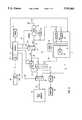
- FIG. 1is a schematic block level diagram of the apparatus of the present invention.
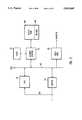
- FIG. 2is a block level diagram showing another aspect of the present invention wherein the digital computer is optimally controlled to respond to the video signals supplied thereto.
- a video signal controller 10 of the present inventionis particularly suitable for use with a digital computer such as an IBM PC compatible computer 12.
- the computer 12generates a first video signal 14 having a well-known conventional format such as EGA, VGA, or Super VGA.
- the first video signal 14is displayed on a dual sync or multi-sync monitor 16 also of conventional design, such as that from Sanyo Corporation.
- the dual sync monitor 16is so named because its ability to display video signals having different sync rates.
- the controller 10comprises a conventional tuner 18 having an associated antenna 20 for receiving "off the air" broadcast video signals.
- the tuner 18generates a second audio/video signal 22 which is supplied to a first multiplexer 24 along one input thereof.
- the second audio/video signal 22 received from the "off the air” broadcastis also of well-known standard, such as NTSC in the United States.
- the second audio/video signal 22is supplied to a liquid crystal display 15, which can display the video signal portion of the second audio/video signal 22.
- the LCD display 15is controlled by a control signal 17.
- the first multiplexer 24also receives as another input thereof a third audio/video signal 26.
- the third audio/video signal 26has the same standard, e.g. NTSC, as the second audio/video signal 22, and can be from any other type of source, such as VCR, video disk etc.
- the output of the first multiplexer 24is a fourth audio/video signal 28.
- the first multiplexer 24receives a control signal 25.
- the control signal 25causes either the second audio/video signal 22 or the third audio/video signal 26 to be supplied from the first multiplexer 24 as the fourth audio/video signal 28.
- the fourth audio/video signal 28has its audio portion supplied to a mixer 30.
- the video portion of the fourth audio/video signal 28is supplied to a decoder 32.
- the decoder 32is a single chip of conventional design, available from, for example Phillips TDA 3566A, to convert the received baseband video signal 28 to its component video signals, such as RGB. It is controlled by a control signal 31, which serves to control the chroma portion of the output RGB signal 34.
- the output of the decoder 32is a fifth video signal 34.
- the fifth video signal 34as a result of being operated upon by the decoder 32, would be a monitor signal such as RGB or YUV format.
- the fifth video signal 34is supplied to a second multiplexer 36.
- the first video signal 14which is the output of the computer 12, and is in video monitor format, such as RGB, is also supplied to the second multiplexer 36.
- the output of the second multiplexer 36is an output video signal 38 which is supplied to the dual sync monitor 16.
- the second multiplexer 36is controlled by a control signal 35.
- the control signal 35causes either the fifth video signal 34 or the first video signal 14 to be supplied from the second multiplexer 36 as the output video signal 38.
- the tuner 18, the first multiplexer 24, the decoder 32, the LCD display 15, and the second multiplexer 36are all under the control of a control 40.
- the control 40is an Intel 8052 microcontroller, operating its associated software 42. A listing of the functional specifications for the software 42 is set forth hereinafter.
- the control 40generates a control signal 19 to control the tuner 18 such as, to change channels, increase/decrease volume, adjust tint, etc.
- the control 40also generates the control signal 17 to activate the LCD display 15 to display the signal 22.
- the control 40also generates the control signal 25 that controls the first multiplexer 24 to output the fourth audio/video signal 28 as from either the second audio/video signal 22 or the third audio/video signal 26.
- the control 40also controls the decoder 32 by adjusting the chroma signal portion of the output. Finally, the control 40 generates a control signal 35 which is supplied to the second multiplexer 36 and causes the output video signal 38 to be either the first video signal 14 or the fifth video signal 34.
- the control 40also communicates with the digital computer 12.
- the control 40communicates with the RS-232 serial port of the digital computer 12.
- the second audio/video signal 22, which is the output of the tuner 18,is also supplied to the digital computer 12.
- an expansion cardis added to the digital computer 12 in one of its expansion slots.
- the expansion cardcomprises a first analog-to-digital converter 50 which receives the audio signal portion of the second audio/video signal 22.
- the expansion cardalso has a second analog-to-digital converter 52 which receives the video signal portion of the second audio/video signal 22.
- the output of the first and second analog-to-digital converters 50 and 52respectively are digital signals which are supplied to a buffer 54.
- the microprocessor 56 within the digital computer 12accesses the buffer 54 (as will be explained in greater detail hereinafter).
- the digital computer 12generates a first video signal 14 which is supplied to the second multiplexer 36 along one input thereof.
- the digital computer 12generates an audio signal 60 which is also supplied to the mixer 30.
- the output of the mixer 30is a composite audio signal 62 which is supplied to an amplifier 64.
- the output of the amplifier 64is supplied to a plurality of speakers 66.
- the digital computer 12executes its associated software 70. A copy of the functional specifications for the software 70 is set forth hereinafter.
- control 40has an infrared (IR) decoder 72 which is responsive to a hand held, portable, remote unit 80, generating appropriate infrared signals.
- IRinfrared
- the tuner 18In the first mode, the tuner 18 generates the second audio/video signal 22 which is a broadcast video signal in a standard, such as NTSC.
- the control 40controls the first multiplexer 24 such that the fourth audio/video signal 28 is the second audio/video signal 22.
- the video signal portion of the fourth audio/video signal 28is then supplied to the decoder 32.
- the control 40causes the decoder 32 to generate the fifth video signal 34.
- the fifth video signal 34 supplied to the second multiplexer 36 and the control 40causes the fifth video signal 34 to be supplied as the output video signal 38.
- the output video signal 38is then supplied to the dual sync monitor 16 for display.
- the dual sync monitor 16displays the broadcast television signal from the tuner 18.
- the 15.75 kHz interlaced, overscanned, raster NTSC signal generated by the tuner 18,is received by the monitor 16 and is displayed on the monitor.
- the dual sync monitor 16is perfectly sized to display the NTSC signal from the tuner 18.
- the control 40 through the IR decoder 72is responsive to the infrared signals generated by the remote unit 80.
- the remote unit 80has a plurality of key buttons 81 for entering data or commands.
- the control 40is responsive to the infrared signal generated by the remote unit 80, as decoded by the IR decoder 72 to cause changes in the tuner 18. In this manner, the remote 80 functions as a conventional hand-held remote unit for a television device.
- control 40can cause the keys 81 on the remote unit 80 to be redefinable by the user, initially, or dynamically.
- each user of the system 10can have his or her own favorite set of keys 81, defined in his or her own particular definition, such as particular buttons 81 to denote favorite pre-selected channels.
- the video signal controller 10 of the present inventioncan enter into its second mode of operation.
- the control 40activates the control signal 35 to switch the second multiplexer 36.
- the output video signal 38 of the second multiplexer 36is then from the first video signal 14 which is generated by the computer 12.
- the video signal controller 10permits the digital computer 12 to display its video signal, such as EGA, VGA or Super VGA, on the dual sync monitor 16 as if the digital computer 12 were operating in a stand alone mode of operation.
- the remote unit 80transmits infrared signals to the IR decoder 72 which is received by the control 40, the signals from the remote unit 80 can be mapped by the control 40 to supply command to the digital computer 12 along its RS-232 serial input port.
- data or commandcan be supplied from the remote unit 80 to the digital computer 12 as if the remote unit 80 were a portable input device such as a portable keyboard.
- control 40can interpret the IR signals generated by the remote 80 as decoded by the IR decoder 72, the control 40 can cause the keys 81 on the remote unit 80 to be redefinable by the user, initially, or dynamically.
- each user of the system 10can have his or her own favorite set of keys 81, defined in his or her own particular definition as command or data keys for the digital computer 12.
- the controller 10can display two video signals simultaneously in a number of different possible ways.
- the tuner 18can receive video signals from one channel and display that on the monitor 16, while simultaneously a video signal from another channel on the LCD display 15. This, of course, would require two tuners 16.
- the computer 12can be displaying its video signals on the monitor 16, while the video signals from the tuner 18 is displayed on the LCD display 15.
- the second audio/video signal 22can be supplied to the digital computer 12.
- the control signal 35 to the second multiplexer 36is switched such that the output video signal 38 to the dual sync monitor 16 is supplied from the first video signal 14 from the digital computer 12.
- the second audio/video signal 22is also supplied to the digital computer 12, the second audio/video signal 22 is digitized and is placed in the buffer 54.
- the CPU 56 of the digital computer 12can retrieve the data from the buffer 54 and place it as a "window" in a location within its display, thereby accomplishing a "picture-in-picture" (P-I-P) display.
- P-I-Ppicture-in-picture
- one channel of the second audio/video signal 22can be supplied to the digital computer 12.
- the control signal 35 to the second multiplexer 36is switched such that the output video signal 38 to the dual sync monitor 16 is supplied from another channel of video signal from the tuner 18.
- the one channel of video signals from the audio/video signal 22is digitized and is placed in the buffer 54. Thereafter, the CPU 56 of the digital computer 12 can retrieve the data from the buffer 54 and place it as a "window"
- the mux 36can be continually switched back and forth to accomplish the prior art technique of displaying a broadcast picture-in-broadcast picture.
- the CPU 56is an Intel or Intel-compatible X86 processor, where X86 is preferably of the type 386 or 486. These processors 56 have four modes of operation: real, virtual, protect, and system management.
- FIG. 2there is shown a block level diagram of the typical components of the digital computer 12.
- the CPU 56 and the buffer 54are connected to and communicate with an internal bus 90 of the computer 12.
- a memory control unit 92communicates with the bus 90.
- the memory control 92controls a main memory 96 comprises an access memory portion 96a and a system management memory portion 96b.
- the memory control 92communicates with a cache memory 94.
- a video memory 98communicates with a bus 90 and supplies the necessary video signals to the video monitor 16.
- the computer 12when the computer 12 is operational, it executes an operating system program such as MS DOS (available from Microsoft Corporation) and Windows (also available from Microsoft Corporation). These operating system programs are stored in the access memory 96a portion of the main memory 96.
- the Windows programcauses the video memory 98 to contain a display to be displayed on the monitor 16 showing various "windows" or application programs that are operational.
- the application programs operating under the Windows environmentare also stored in the access memory portion 96a of the main memory 96.
- an interrupt signalis generated and is transmitted to the CPU 56.
- the interrupt signaltypically, can be generated after one raster scan full of data and is based upon the sync signal. Since the CPU 56 is executing an application program under the Windows environment, the CPU 56, would seek an instruction from the application program that is designed to handle the interrupt by sending a signal to the bus 90, through the memory control 92 and into the access memory 96a. The instruction from the application program in 96a is then retrieved back through the memory control 92 through the bus 90 and into the CPU 56. The instruction is then processed.
- the particular instructionfor example, if it is to service the data in the buffer 54 by moving it into the video memory 98, must again be passed into the Windows operating instruction environment.
- the CPU 56would then send a signal, to the bus 90, through the memory control 92 and into the access memory portion 96a into the portion of the Windows program residing in the access memory 96a and retrieve an instruction therefrom.
- the instruction retrieved from the Window programmust be passed back through the memory control 92 through the bus 90 and into the CPU 56 for execution.
- Each byte of data in the buffer 54must be operated upon in this manner, i.e. by going entirely through the application program into the Windows operating system program before the data is operated upon.
- the CPU 56again receives an interrupt signal from the buffer 54. Upon receiving the interrupt signal from the buffer 54, the CPU 56 enters into the system management mode of operation. In the system management mode of operation, the CPU 56 accesses a system management program located in the system management memory portion 96b of the main memory.
- the system management mode of operationas designed by the manufacturer of the microprocessor 56 is intended solely to "power down" the processor 56 and the entire digital computer 12.
- a software program 70is written and is stored in the system management memory portion 96b of the main memory 96. Upon receiving the interrupt from the buffer 54, the program from the system management memory 96b is then retrieved by the CPU 56.
- the program from the system management memory 96bthen executes on the data in the buffer 54 by moving them from the buffer 54 into the video memory 98.
- Terminate and Stay Resident (TSR) programs of the prior artin which a program reside in the same memory as the operating system and application programs, the program residing in the system management memory portion 96b of the main memory 96 is not accessible and cannot be altered by any of the programs (application or operating system) from the access memory 96a.
- TSRTerminate and Stay Resident
- raster scan television devicesare able to provide only one channel of audio although it is common to display two or more channels of video, such as in P-I-P.
- the audio signal portion of the audio/video signal 22 from the tuner 18can be mixed in a mixer 30 with the audio signal portion of another audio/video signal, which is passed through the digital computer 12 by the mixer 30.
- the output of the mixer 30is then supplied to an amplifier 64 which is then produced at the speakers 66.
- the speakers 66comprise a plurality of stereo sound system, one sound for one of the channels can be directed to, e.g. the left speaker, and another audio signal for a different channel can be directed to, e.g.
- a video signal controlleroperating with a computer monitor and a computer, can display conventional television signals without interrupting or taking away the processing capabilities of the digital computer 12 as in the prior art. Furthermore, the computer 12 can display P-I-P type images with substantially reduced overhead.
Landscapes
- Engineering & Computer Science (AREA)
- Theoretical Computer Science (AREA)
- Physics & Mathematics (AREA)
- General Physics & Mathematics (AREA)
- Multimedia (AREA)
- Signal Processing (AREA)
- Human Computer Interaction (AREA)
- General Engineering & Computer Science (AREA)
- Computer Hardware Design (AREA)
- Studio Circuits (AREA)
- Compression Or Coding Systems Of Tv Signals (AREA)
- Controls And Circuits For Display Device (AREA)
Abstract
Description
The present invention relates to a video signal controller having a tuner for generating a broadcast video signal and more particularly to a controller which can be used with a digital computer and a display device to display the video signal generated by the digital computer and the broadcast video signal generated by the tuner.
Apparatuses to receive and display raster scan video signals as well as digital video signals are well known in the art. See, for example, U.S. Pat. Nos. 4,899,139; 4,954,819; 4,961,071; 5,027,212; 5,065,143; and 5,179,639. Micro-processor controlled monitors are also well known in the art. See for example, U.S. Pat. Nos. 4,746,983; 4,774,582; 4,855,813; and 4,991,023. In addition, prior art devices have taught the use of an add-on card for a PC computer with a tuner on the card. The tuner on the add-on card would receive "off the air" broadcast video signal and convert them into a raster scan-type signal. In addition, the card would then convert the analog raster scan signal into digital format and through the computer, the signals would then be displayed on the display monitor of the computer. The software executed by the computer permitted alternating the display of the video signal from the tuner as well as the video signal generated by the computer.
One of the drawbacks of the aforementioned prior art add-on card is that with the video signals supplied through the computer, much of the computing resources is consumed. In addition, because the scanning rate and the sizing for a raster scan video signal (such as that broadcast over the air) differs for a video signal which is the output of a digital computer, the display of both types of signals on a computer monitor has resulted in compromise in picture quality.
In accordance with the present invention, a video signal controller is used with a digital computer to control the display of the video signal which is the output of the digital computer and a raster scan-type video signal with optimal display for both types of signals, on a monitor. The video signal controller has a tuner for producing a raster scan video signal. A first multiplexer receives a first input video signal and a second input video signal and produces an output video signal which is supplied to the monitor. The output video signal is either the first or the second input video signal in response to a first control signal controlling the first multiplexer. The controller also comprises a first means for supplying a first video signal to the first multiplexer means as the first input video signal thereof. A second means supplies a second video signal to the first multiplexer means as the second input video signal thereof. Finally, a control means generates the first control signal supplied to the first multiplexer such that the monitor receives either the first video signal which is generated from the tuner or the monitor displays the second input video signal which is the output of the digital computer.
FIG. 1 is a schematic block level diagram of the apparatus of the present invention.
FIG. 2 is a block level diagram showing another aspect of the present invention wherein the digital computer is optimally controlled to respond to the video signals supplied thereto.
Referring to FIG. 1, there is shown avideo signal controller 10 of the present invention. Thesignal controller 10 is particularly suitable for use with a digital computer such as an IBM PCcompatible computer 12. In a preferred embodiment, thecomputer 12 generates afirst video signal 14 having a well-known conventional format such as EGA, VGA, or Super VGA. Thefirst video signal 14 is displayed on a dual sync ormulti-sync monitor 16 also of conventional design, such as that from Sanyo Corporation. Thedual sync monitor 16 is so named because its ability to display video signals having different sync rates.
Thecontroller 10 comprises aconventional tuner 18 having an associatedantenna 20 for receiving "off the air" broadcast video signals. Thetuner 18 generates a second audio/video signal 22 which is supplied to afirst multiplexer 24 along one input thereof. The second audio/video signal 22 received from the "off the air" broadcast is also of well-known standard, such as NTSC in the United States. In addition, the second audio/video signal 22 is supplied to aliquid crystal display 15, which can display the video signal portion of the second audio/video signal 22. TheLCD display 15 is controlled by acontrol signal 17.
Thefirst multiplexer 24 also receives as another input thereof a third audio/video signal 26. The third audio/video signal 26, has the same standard, e.g. NTSC, as the second audio/video signal 22, and can be from any other type of source, such as VCR, video disk etc. The output of thefirst multiplexer 24 is a fourth audio/video signal 28. Thefirst multiplexer 24 receives acontrol signal 25. Thecontrol signal 25 causes either the second audio/video signal 22 or the third audio/video signal 26 to be supplied from thefirst multiplexer 24 as the fourth audio/video signal 28. The fourth audio/video signal 28 has its audio portion supplied to amixer 30. The video portion of the fourth audio/video signal 28 is supplied to adecoder 32.
Thedecoder 32 is a single chip of conventional design, available from, for example Phillips TDA 3566A, to convert the receivedbaseband video signal 28 to its component video signals, such as RGB. It is controlled by acontrol signal 31, which serves to control the chroma portion of theoutput RGB signal 34. The output of thedecoder 32 is afifth video signal 34. Thefifth video signal 34, as a result of being operated upon by thedecoder 32, would be a monitor signal such as RGB or YUV format.
Thefifth video signal 34 is supplied to asecond multiplexer 36. Thefirst video signal 14 which is the output of thecomputer 12, and is in video monitor format, such as RGB, is also supplied to thesecond multiplexer 36. The output of thesecond multiplexer 36 is anoutput video signal 38 which is supplied to thedual sync monitor 16. Thesecond multiplexer 36 is controlled by acontrol signal 35. Thecontrol signal 35 causes either thefifth video signal 34 or thefirst video signal 14 to be supplied from thesecond multiplexer 36 as theoutput video signal 38.
Thetuner 18, thefirst multiplexer 24, thedecoder 32, theLCD display 15, and thesecond multiplexer 36 are all under the control of acontrol 40. In the preferred embodiment, thecontrol 40 is an Intel 8052 microcontroller, operating its associatedsoftware 42. A listing of the functional specifications for thesoftware 42 is set forth hereinafter. Thecontrol 40 generates acontrol signal 19 to control thetuner 18 such as, to change channels, increase/decrease volume, adjust tint, etc. Thecontrol 40 also generates thecontrol signal 17 to activate theLCD display 15 to display thesignal 22. In addition, thecontrol 40 also generates thecontrol signal 25 that controls thefirst multiplexer 24 to output the fourth audio/video signal 28 as from either the second audio/video signal 22 or the third audio/video signal 26. Thecontrol 40 also controls thedecoder 32 by adjusting the chroma signal portion of the output. Finally, thecontrol 40 generates acontrol signal 35 which is supplied to thesecond multiplexer 36 and causes theoutput video signal 38 to be either thefirst video signal 14 or thefifth video signal 34.
Thecontrol 40 also communicates with thedigital computer 12. In the case where thedigital computer 12 is an IBM PC compatible computer, thecontrol 40 communicates with the RS-232 serial port of thedigital computer 12.
The second audio/video signal 22, which is the output of thetuner 18, is also supplied to thedigital computer 12. In the preferred embodiment, an expansion card is added to thedigital computer 12 in one of its expansion slots. The expansion card comprises a first analog-to-digital converter 50 which receives the audio signal portion of the second audio/video signal 22. The expansion card also has a second analog-to-digital converter 52 which receives the video signal portion of the second audio/video signal 22. The output of the first and second analog-to-digital converters buffer 54. Themicroprocessor 56 within thedigital computer 12 accesses the buffer 54 (as will be explained in greater detail hereinafter). Finally, thedigital computer 12, as previously stated, generates afirst video signal 14 which is supplied to thesecond multiplexer 36 along one input thereof. In addition, thedigital computer 12 generates anaudio signal 60 which is also supplied to themixer 30. The output of themixer 30 is acomposite audio signal 62 which is supplied to anamplifier 64. The output of theamplifier 64 is supplied to a plurality ofspeakers 66. In addition, thedigital computer 12 executes its associatedsoftware 70. A copy of the functional specifications for thesoftware 70 is set forth hereinafter.
Finally, thecontrol 40 has an infrared (IR)decoder 72 which is responsive to a hand held, portable,remote unit 80, generating appropriate infrared signals.
There are three modes of operation for thesystem controller 10 of the present invention.
In the first mode, thetuner 18 generates the second audio/video signal 22 which is a broadcast video signal in a standard, such as NTSC. Thecontrol 40 controls thefirst multiplexer 24 such that the fourth audio/video signal 28 is the second audio/video signal 22. The video signal portion of the fourth audio/video signal 28 is then supplied to thedecoder 32. Thecontrol 40 causes thedecoder 32 to generate thefifth video signal 34. Thefifth video signal 34 supplied to thesecond multiplexer 36 and thecontrol 40 causes thefifth video signal 34 to be supplied as theoutput video signal 38. Theoutput video signal 38 is then supplied to the dual sync monitor 16 for display.
In this mode, the dual sync monitor 16 displays the broadcast television signal from thetuner 18. The 15.75 kHz interlaced, overscanned, raster NTSC signal generated by thetuner 18, is received by themonitor 16 and is displayed on the monitor. Thus, thedual sync monitor 16 is perfectly sized to display the NTSC signal from thetuner 18. In addition, in this mode of operation, thecontrol 40 through theIR decoder 72 is responsive to the infrared signals generated by theremote unit 80. Theremote unit 80 has a plurality of key buttons 81 for entering data or commands. Thecontrol 40 is responsive to the infrared signal generated by theremote unit 80, as decoded by theIR decoder 72 to cause changes in thetuner 18. In this manner, the remote 80 functions as a conventional hand-held remote unit for a television device.
Moreover, thecontrol 40 with its software, can cause the keys 81 on theremote unit 80 to be redefinable by the user, initially, or dynamically. Thus, each user of thesystem 10 can have his or her own favorite set of keys 81, defined in his or her own particular definition, such as particular buttons 81 to denote favorite pre-selected channels.
Through a single key on theremote unit 80, thevideo signal controller 10 of the present invention can enter into its second mode of operation. In the second mode of operation, thecontrol 40 activates thecontrol signal 35 to switch thesecond multiplexer 36. Theoutput video signal 38 of thesecond multiplexer 36 is then from thefirst video signal 14 which is generated by thecomputer 12. Thus, in this second mode of operation, thevideo signal controller 10 permits thedigital computer 12 to display its video signal, such as EGA, VGA or Super VGA, on the dual sync monitor 16 as if thedigital computer 12 were operating in a stand alone mode of operation.
In addition, however, because theremote unit 80 transmits infrared signals to theIR decoder 72 which is received by thecontrol 40, the signals from theremote unit 80 can be mapped by thecontrol 40 to supply command to thedigital computer 12 along its RS-232 serial input port. Thus, data or command can be supplied from theremote unit 80 to thedigital computer 12 as if theremote unit 80 were a portable input device such as a portable keyboard.
Moreover, because thecontrol 40 can interpret the IR signals generated by the remote 80 as decoded by theIR decoder 72, thecontrol 40 can cause the keys 81 on theremote unit 80 to be redefinable by the user, initially, or dynamically. Thus, each user of thesystem 10 can have his or her own favorite set of keys 81, defined in his or her own particular definition as command or data keys for thedigital computer 12.
Finally, in a third mode of operation, thecontroller 10 can display two video signals simultaneously in a number of different possible ways. In the first way, thetuner 18 can receive video signals from one channel and display that on themonitor 16, while simultaneously a video signal from another channel on theLCD display 15. This, of course, would require twotuners 16.
In another way, thecomputer 12 can be displaying its video signals on themonitor 16, while the video signals from thetuner 18 is displayed on theLCD display 15.
Finally, the second audio/video signal 22 can be supplied to thedigital computer 12. Thecontrol signal 35 to thesecond multiplexer 36 is switched such that theoutput video signal 38 to thedual sync monitor 16 is supplied from thefirst video signal 14 from thedigital computer 12. However, because the second audio/video signal 22 is also supplied to thedigital computer 12, the second audio/video signal 22 is digitized and is placed in thebuffer 54. Thereafter, theCPU 56 of thedigital computer 12 can retrieve the data from thebuffer 54 and place it as a "window" in a location within its display, thereby accomplishing a "picture-in-picture" (P-I-P) display. However, unlike conventional, prior art P-I-P displays, wherein two signals having the same format, e.g. two NTSC signals are displayed on the same screen, or two digital signals forming windows for a digital computer display, in this mode of operation, two video signals having different standards are displayed in a P-I-P format.
In yet another variation, one channel of the second audio/video signal 22 can be supplied to thedigital computer 12. Thecontrol signal 35 to thesecond multiplexer 36 is switched such that theoutput video signal 38 to thedual sync monitor 16 is supplied from another channel of video signal from thetuner 18. The one channel of video signals from the audio/video signal 22 is digitized and is placed in thebuffer 54. Thereafter, theCPU 56 of thedigital computer 12 can retrieve the data from thebuffer 54 and place it as a "window" Themux 36 can be continually switched back and forth to accomplish the prior art technique of displaying a broadcast picture-in-broadcast picture.
Another aspect of the present invention is the particular manner in which the P-I-P display is accomplished. In the preferred embodiment, theCPU 56 is an Intel or Intel-compatible X86 processor, where X86 is preferably of the type 386 or 486. Theseprocessors 56 have four modes of operation: real, virtual, protect, and system management. Referring to FIG. 2, there is shown a block level diagram of the typical components of thedigital computer 12. TheCPU 56 and thebuffer 54 are connected to and communicate with aninternal bus 90 of thecomputer 12. In addition, amemory control unit 92 communicates with thebus 90. Thememory control 92 controls a main memory 96 comprises an access memory portion 96a and a system management memory portion 96b. In addition, thememory control 92 communicates with acache memory 94. Finally, avideo memory 98 communicates with abus 90 and supplies the necessary video signals to thevideo monitor 16.
In the prior art, when thecomputer 12 is operational, it executes an operating system program such as MS DOS (available from Microsoft Corporation) and Windows (also available from Microsoft Corporation). These operating system programs are stored in the access memory 96a portion of the main memory 96. Typically, the Windows program causes thevideo memory 98 to contain a display to be displayed on themonitor 16 showing various "windows" or application programs that are operational. The application programs operating under the Windows environment are also stored in the access memory portion 96a of the main memory 96.
In the prior art, as thebuffer 54 is filled with video data generated by thetuner 18, periodically, an interrupt signal is generated and is transmitted to theCPU 56. The interrupt signal typically, can be generated after one raster scan full of data and is based upon the sync signal. Since theCPU 56 is executing an application program under the Windows environment, theCPU 56, would seek an instruction from the application program that is designed to handle the interrupt by sending a signal to thebus 90, through thememory control 92 and into the access memory 96a. The instruction from the application program in 96a is then retrieved back through thememory control 92 through thebus 90 and into theCPU 56. The instruction is then processed. However, since the application program is running under the Windows environment, the particular instruction, for example, if it is to service the data in thebuffer 54 by moving it into thevideo memory 98, must again be passed into the Windows operating instruction environment. TheCPU 56 would then send a signal, to thebus 90, through thememory control 92 and into the access memory portion 96a into the portion of the Windows program residing in the access memory 96a and retrieve an instruction therefrom. The instruction retrieved from the Window program must be passed back through thememory control 92 through thebus 90 and into theCPU 56 for execution. Each byte of data in thebuffer 54 must be operated upon in this manner, i.e. by going entirely through the application program into the Windows operating system program before the data is operated upon.
In the present invention, theCPU 56 again receives an interrupt signal from thebuffer 54. Upon receiving the interrupt signal from thebuffer 54, theCPU 56 enters into the system management mode of operation. In the system management mode of operation, theCPU 56 accesses a system management program located in the system management memory portion 96b of the main memory. The system management mode of operation, as designed by the manufacturer of themicroprocessor 56 is intended solely to "power down" theprocessor 56 and the entiredigital computer 12. However, in the present invention, asoftware program 70 is written and is stored in the system management memory portion 96b of the main memory 96. Upon receiving the interrupt from thebuffer 54, the program from the system management memory 96b is then retrieved by theCPU 56. The program from the system management memory 96b then executes on the data in thebuffer 54 by moving them from thebuffer 54 into thevideo memory 98. By bypassing the need to go through the application program, and its associated operating system program under which the application program executes, using the system management mode of operation, greater throughput is achieved.
Unlike the Terminate and Stay Resident (TSR) programs of the prior art, in which a program reside in the same memory as the operating system and application programs, the program residing in the system management memory portion 96b of the main memory 96 is not accessible and cannot be altered by any of the programs (application or operating system) from the access memory 96a.
In another aspect of the present invention, in the prior art, raster scan television devices are able to provide only one channel of audio although it is common to display two or more channels of video, such as in P-I-P. In this mode of operation, the audio signal portion of the audio/video signal 22 from thetuner 18, can be mixed in amixer 30 with the audio signal portion of another audio/video signal, which is passed through thedigital computer 12 by themixer 30. The output of themixer 30 is then supplied to anamplifier 64 which is then produced at thespeakers 66. In this manner, if for example, thespeakers 66 comprise a plurality of stereo sound system, one sound for one of the channels can be directed to, e.g. the left speaker, and another audio signal for a different channel can be directed to, e.g. the right speaker. If the speakers are sufficiently spatially separated, the two channels of sound can be active simultaneously with the display of the two video signals from the two different channels on thedisplay 16. Furthermore, the user can mentally distinguish between these two channels. The following is a listing of the functional specifications for thesoftware 42. ##SPC1##
From the foregoing, it can be seen that a video signal controller, operating with a computer monitor and a computer, can display conventional television signals without interrupting or taking away the processing capabilities of thedigital computer 12 as in the prior art. Furthermore, thecomputer 12 can display P-I-P type images with substantially reduced overhead.
Claims (30)
1. A video signal controller for use with a digital computer generating a first video signal having a first sync rate, and a video display means for receiving an output video signal and for displaying said output video signal, said controller comprising:
tuner means for producing a second video signal having a second sync rate, different from the first sync rate;
a first multiplexer means for receiving a first input video signal and a second input video signal and for outputting said output video signal to said display means, said output video signal is either said first or second input video signal, in response to a first control signal;
first means for supplying said first video signal having the first sync rate, to said first multiplexer means as said first input video signal thereof;
second means for supplying said second video signal having said second sync rate, to said first multiplexer means as said second input video signal thereof; and
control means for generating said first control signal supplied to said first multiplexer means.
2. The controller of claim 1 wherein said control means further comprises:
means for communicating with the digital computer and for supplying commands thereto for controlling the digital computer.
3. The controller of claim 2 wherein said digital computer executes a software program responsive to said commands from said control means.
4. The controller of claim 2 further comprising:
portable control means for transmitting a command signal to said control means; and
wherein said control means further comprises means for receiving said command signal.
5. The controller of claim 1 wherein said second means further comprises:
a second multiplexer means for receiving said second video signal and a third video signal and generating said second input video signal in response to a second control signal.
6. The controller of claim 5 wherein said control means generates said second control signal supplied to said second multiplexer means.
7. The controller of claim 1 further comprising:
means for digitizing said second video signal to produce a digitized second video signal; and
means for supplying said digitized second video signal to said digital computer.
8. The controller of claim 7 wherein said digital computer executes a software program to process said digitized second video signal to form a processed second video signal and to generate said first video signal with said processed second video signal being a portion thereof.
9. The controller of claim 1 wherein said first input video signal has a first sync rate and said second input video signal has a second sync rate and wherein said video display means being adapted to display said output video signal having one of a plurality of possible sync rates.
10. The controller of claim 1 further comprising a second display means for receiving said second video signal and for displaying said second video signal while said first video signal is displayed by said video display means.
11. The controller of claim 1 wherein said tuner means further comprises means for producing a plurality of different video signals, each having an associated audio signal.
12. The controller of claim 11 further comprising a second display means for receiving one of said plurality of different video signals and for displaying one of said plurality of different video signals while another of said plurality of video signals is displayed by said video display means.
13. The controller of claim 12 further comprising means for generating different audio sounds from each of the different audio signals associated with each of said plurality of different video signals.
14. A display system for use with a digital computer generating a first video signal having a first sync rate, said system comprising:
a display means for receiving a display video signal having one of a plurality of sync rates and adapted to display said display video signal;
means for generating a second video signal having a second sync rate, different from the first sync rate;
first multiplexer means having a first input and a second input and an output, said first multiplexer means responsive to a first control signal for connecting said first input or said second input to said output;
means for connecting said output of said first multiplexer to said display means;
first means for supplying said first video signal to said first input of said first multiplexer means;
second means for supplying said second video signal to said second input of said first multiplexer means; and
control means for generating said first control signal supplied to said first multiplexer means.
15. The system of claim 14 wherein said control means further comprises:
means for communicating with the digital computer and for supplying commands thereto for controlling the digital computer.
16. The system of claim 15 wherein said digital computer executes a software program responsive to said commands from said control means.
17. The system of claim 15 further comprising:
portable control means for transmitting a command signal to said control means; and
wherein said control means further comprises means for receiving said command signal.
18. The system of claim 14 wherein said second means further comprises:
a second multiplexer means for receiving said second video signal and a third video signal and generates said second input video signal in response to a second control signal.
19. The system of claim 18 wherein said control means generates said second control signal supplied to said second multiplexer means.
20. The system of claim 14 further comprising:
means for digitizing said second video signal to produce a digitized second video signal; and
means for supplying said digitized second video signal to said digital computer.
21. The system of claim 20 wherein said digital computer executes a software program to process said digitized second video signal to form a processed second video signal and to generate said first video signal with said processed second video signal being a portion thereof.
22. The system of claim 14 wherein said means for generating said second video signal having said second sync rate, generates a plurality of different second video signals, each having a second sync rate and each having an associated audio signal.
23. The system of claim 22 further comprising a second display means for receiving one of said second video signals and for displaying said one second video signal while another of said second video signals is displayed by said display means.
24. The system of claim 23 further comprising means for generating different audio sounds from each of the different audio signals associated with each of said plurality of different second video signals.
25. The system of claim 14 further comprising a second display means for receiving said second video signal and for displaying said second video signal while said first video signal is displayed by said display means.
26. A method of displaying a plurality of video signals, each having a different sync rate, said method comprising:
generating a first video signal having a first sync rate by a digital computer means;
generating a broadcast signal having a second sync rate, different from said first sync rate, by a tuner means;
converting said broadcast video signal into a second video signal;
supplying said first and second video signals to a switch means;
outputting the video signal of said switch means to a display means for display; and
switching said switch means to provide either said first video signal or said second video signal to said display means for display.
27. The method of claim 26 further comprising:
processing said broadcast video signal by said digital computer means to produce a processed video signal; and
incorporating said processed video signal in said first video signal.
28. A video display apparatus for displaying a plurality of video signals, each having a different sync rate, said apparatus adapted to display a first video signal having a first sync rate generated by a digital computer means, said apparatus comprising:
tuner means for generating a broadcast video signal having a second sync rate, different from the first sync rate;
means for converting said broadcast video signal into a second video signal having said second sync rate;
a switch means responsive to a control signal, for receiving said first and second video signals and for providing either said first or said second video signals as an output signal thereof;
display means for receiving said output signal and for displaying said output signal; and
means for generating said control signal supplied to said switch means.
29. The apparatus of claim 28 wherein said broadcast video signal is supplied to said digital computer.
30. The apparatus of claim 29 wherein said digital computer includes means for processing said broadcast video signal to produce a processed video signal and means for incorporating said processed video signal in said first video signal.
Priority Applications (3)
| Application Number | Priority Date | Filing Date | Title |
|---|---|---|---|
| US08/174,713US5563665A (en) | 1993-12-29 | 1993-12-29 | Video signal controller for use with a multi-sync monitor for displaying a plurality of different types of video signals |
| JP6299545AJPH07222073A (en) | 1993-12-29 | 1994-12-02 | Video signal controller, display system, method and video display device for displaying plurality of video signals |
| PCT/US1994/014453WO1995018507A1 (en) | 1993-12-29 | 1994-12-16 | Video signal controller |
Applications Claiming Priority (1)
| Application Number | Priority Date | Filing Date | Title |
|---|---|---|---|
| US08/174,713US5563665A (en) | 1993-12-29 | 1993-12-29 | Video signal controller for use with a multi-sync monitor for displaying a plurality of different types of video signals |
Publications (1)
| Publication Number | Publication Date |
|---|---|
| US5563665Atrue US5563665A (en) | 1996-10-08 |
Family
ID=22637205
Family Applications (1)
| Application Number | Title | Priority Date | Filing Date |
|---|---|---|---|
| US08/174,713Expired - LifetimeUS5563665A (en) | 1993-12-29 | 1993-12-29 | Video signal controller for use with a multi-sync monitor for displaying a plurality of different types of video signals |
Country Status (3)
| Country | Link |
|---|---|
| US (1) | US5563665A (en) |
| JP (1) | JPH07222073A (en) |
| WO (1) | WO1995018507A1 (en) |
Cited By (47)
| Publication number | Priority date | Publication date | Assignee | Title |
|---|---|---|---|---|
| US5949497A (en)* | 1995-03-09 | 1999-09-07 | Lg Electronics Inc. | Optional operation control apparatus for monitor and control method thereof |
| US6008795A (en)* | 1995-07-11 | 1999-12-28 | Fujitsu Limited | Video processor which outputs a selected RGB or NTSC video display signal from a video memory that stores RGB data |
| US6012112A (en)* | 1997-09-30 | 2000-01-04 | Compaq Computer Corporation | DVD assembly, and associated apparatus, for a convergent device |
| US6119172A (en)* | 1997-01-21 | 2000-09-12 | Compaq Computer Corporation | Access control for a TV/PC convergence device |
| US6202212B1 (en) | 1997-04-01 | 2001-03-13 | Compaq Computer Corporation | System for changing modalities |
| US6300980B1 (en)* | 1997-02-19 | 2001-10-09 | Compaq Computer Corporation | Computer system design for distance viewing of information and media and extensions to display data channel for control panel interface |
| US20020167610A1 (en)* | 2001-05-09 | 2002-11-14 | Samsung Electronics Co., Ltd. | Display apparatus and method of controlling the same |
| US6489933B1 (en) | 1997-12-24 | 2002-12-03 | Kabushiki Kaisha Toshiba | Display controller with motion picture display function, computer system, and motion picture display control method |
| US6496802B1 (en) | 2000-01-07 | 2002-12-17 | Mp3.Com, Inc. | System and method for providing access to electronic works |
| US20020190919A1 (en)* | 2000-02-21 | 2002-12-19 | Lee Eun Seog | Data processing system using a dual monitor and controlling method of network system thereby |
| US20030066085A1 (en)* | 1996-12-10 | 2003-04-03 | United Video Properties, Inc., A Corporation Of Delaware | Internet television program guide system |
| US6753881B1 (en)* | 2000-11-01 | 2004-06-22 | Ati International Srl | Adapter and method to connect a component video input television to a video providing unit |
| US20050160364A1 (en)* | 2001-12-21 | 2005-07-21 | Matsushita Electric Industrial Co., Ltd | Computer display system, computer apparatus and display apparatus |
| DE19744712B4 (en)* | 1996-10-11 | 2006-05-11 | Lg Electronics Inc. | Device for the simultaneous display of TV and PC pictures |
| US8006263B2 (en) | 1998-07-17 | 2011-08-23 | United Video Properties, Inc. | Interactive television program guide with remote access |
| US8010979B2 (en) | 1998-07-07 | 2011-08-30 | United Video Properties, Inc. | Electronic program guide using markup language |
| US8112776B2 (en) | 1995-10-02 | 2012-02-07 | Starsight Telecast, Inc. | Interactive computer system for providing television schedule information |
| US8272011B2 (en) | 1996-12-19 | 2012-09-18 | Index Systems, Inc. | Method and system for displaying advertisements between schedule listings |
| US8453174B2 (en) | 1995-10-02 | 2013-05-28 | Starsight Telecast, Inc. | Method and system for displaying advertising, video, and program schedule listing |
| US8528032B2 (en) | 1998-07-14 | 2013-09-03 | United Video Properties, Inc. | Client-server based interactive television program guide system with remote server recording |
| US8762492B2 (en) | 1997-09-18 | 2014-06-24 | United Video Properties, Inc. | Electronic mail reminder for an internet television program guide |
| US8761584B2 (en) | 1993-03-05 | 2014-06-24 | Gemstar Development Corporation | System and method for searching a database of television schedule information |
| US8776125B2 (en) | 1996-05-03 | 2014-07-08 | Starsight Telecast Inc. | Method and system for displaying advertisements in an electronic program guide |
| US8793738B2 (en) | 1994-05-04 | 2014-07-29 | Starsight Telecast Incorporated | Television system with downloadable features |
| US8806536B2 (en) | 1998-03-04 | 2014-08-12 | United Video Properties, Inc. | Program guide system with preference profiles |
| US8806533B1 (en) | 2004-10-08 | 2014-08-12 | United Video Properties, Inc. | System and method for using television information codes |
| US8832742B2 (en) | 2006-10-06 | 2014-09-09 | United Video Properties, Inc. | Systems and methods for acquiring, categorizing and delivering media in interactive media guidance applications |
| US8892495B2 (en) | 1991-12-23 | 2014-11-18 | Blanding Hovenweep, Llc | Adaptive pattern recognition based controller apparatus and method and human-interface therefore |
| US8904441B2 (en) | 2003-11-06 | 2014-12-02 | United Video Properties, Inc. | Systems and methods for providing program suggestions in an interactive television program guide |
| US9071872B2 (en) | 2003-01-30 | 2015-06-30 | Rovi Guides, Inc. | Interactive television systems with digital video recording and adjustable reminders |
| US9075861B2 (en) | 2006-03-06 | 2015-07-07 | Veveo, Inc. | Methods and systems for segmenting relative user preferences into fine-grain and coarse-grain collections |
| US9113107B2 (en) | 2005-11-08 | 2015-08-18 | Rovi Guides, Inc. | Interactive advertising and program promotion in an interactive television system |
| US9113207B2 (en) | 1995-10-02 | 2015-08-18 | Rovi Guides, Inc. | Systems and methods for contextually linking television program information |
| US9118958B2 (en) | 1999-12-10 | 2015-08-25 | Rovi Guides, Inc. | Systems and methods for coordinating interactive and passive advertisement and merchandising opportunities |
| US9125169B2 (en) | 2011-12-23 | 2015-09-01 | Rovi Guides, Inc. | Methods and systems for performing actions based on location-based rules |
| US9166714B2 (en) | 2009-09-11 | 2015-10-20 | Veveo, Inc. | Method of and system for presenting enriched video viewing analytics |
| US9191722B2 (en) | 1997-07-21 | 2015-11-17 | Rovi Guides, Inc. | System and method for modifying advertisement responsive to EPG information |
| US9197943B2 (en) | 1998-12-03 | 2015-11-24 | Rovi Guides, Inc. | Electronic program guide with related-program search feature |
| US9288521B2 (en) | 2014-05-28 | 2016-03-15 | Rovi Guides, Inc. | Systems and methods for updating media asset data based on pause point in the media asset |
| US9294799B2 (en) | 2000-10-11 | 2016-03-22 | Rovi Guides, Inc. | Systems and methods for providing storage of data on servers in an on-demand media delivery system |
| US9319735B2 (en) | 1995-06-07 | 2016-04-19 | Rovi Guides, Inc. | Electronic television program guide schedule system and method with data feed access |
| US9326025B2 (en) | 2007-03-09 | 2016-04-26 | Rovi Technologies Corporation | Media content search results ranked by popularity |
| US9426509B2 (en) | 1998-08-21 | 2016-08-23 | Rovi Guides, Inc. | Client-server electronic program guide |
| US9535563B2 (en) | 1999-02-01 | 2017-01-03 | Blanding Hovenweep, Llc | Internet appliance system and method |
| US9736524B2 (en) | 2011-01-06 | 2017-08-15 | Veveo, Inc. | Methods of and systems for content search based on environment sampling |
| US9749693B2 (en) | 2006-03-24 | 2017-08-29 | Rovi Guides, Inc. | Interactive media guidance application with intelligent navigation and display features |
| US10063934B2 (en) | 2008-11-25 | 2018-08-28 | Rovi Technologies Corporation | Reducing unicast session duration with restart TV |
Families Citing this family (3)
| Publication number | Priority date | Publication date | Assignee | Title |
|---|---|---|---|---|
| US5801785A (en)* | 1996-02-13 | 1998-09-01 | International Business Machines Corporation | Method and system for processing two analog composite video signals |
| KR100223644B1 (en)* | 1997-01-14 | 1999-10-15 | 윤종용 | Personal computer monitor and multi-system TV set |
| US6262713B1 (en) | 1997-03-31 | 2001-07-17 | Compaq Computer Corporation | Mechanism and method for focusing remote control input in a PC/TV convergence system |
Citations (12)
| Publication number | Priority date | Publication date | Assignee | Title |
|---|---|---|---|---|
| US4746983A (en)* | 1985-12-28 | 1988-05-24 | Sony Corporation | Picture-in-picture television receiver with separate channel display |
| US4774582A (en)* | 1985-12-28 | 1988-09-27 | Sony Corporation | Picture-in picture television receiver with step-by-step still picture control |
| US4855813A (en)* | 1987-12-11 | 1989-08-08 | Russell David P | Television image processing system having capture, merge and display capability |
| US4899139A (en)* | 1982-08-24 | 1990-02-06 | Sharp Kabushiki Kaisha | Display control device for superimposing data with a broad case signal on a television screen |
| US4954819A (en)* | 1987-06-29 | 1990-09-04 | Evans & Sutherland Computer Corp. | Computer graphics windowing system for the display of multiple dynamic images |
| US4961071A (en)* | 1988-09-23 | 1990-10-02 | Krooss John R | Apparatus for receipt and display of raster scan imagery signals in relocatable windows on a video monitor |
| US4991023A (en)* | 1989-05-22 | 1991-02-05 | Hewlett-Packard Company | Microprocessor controlled universal video monitor |
| US5027212A (en)* | 1989-12-06 | 1991-06-25 | Videologic Limited | Computer based video/graphics display system |
| US5065143A (en)* | 1988-09-26 | 1991-11-12 | Apple Computer, Inc. | Apparatus for converting an RGB signal into a composite video signal and its use in providing computer generated video overlays |
| US5179639A (en)* | 1990-06-13 | 1993-01-12 | Massachusetts General Hospital | Computer display apparatus for simultaneous display of data of differing resolution |
| US5189401A (en)* | 1991-06-14 | 1993-02-23 | Unisys Corporation | AX and EGA video display apparatus utilizing a VGA monitor |
| US5276458A (en)* | 1990-05-14 | 1994-01-04 | International Business Machines Corporation | Display system |
Family Cites Families (1)
| Publication number | Priority date | Publication date | Assignee | Title |
|---|---|---|---|---|
| US4010448A (en)* | 1974-10-30 | 1977-03-01 | Motorola, Inc. | Interrupt circuitry for microprocessor chip |
- 1993
- 1993-12-29USUS08/174,713patent/US5563665A/ennot_activeExpired - Lifetime
- 1994
- 1994-12-02JPJP6299545Apatent/JPH07222073A/enactivePending
- 1994-12-16WOPCT/US1994/014453patent/WO1995018507A1/enactiveApplication Filing
Patent Citations (12)
| Publication number | Priority date | Publication date | Assignee | Title |
|---|---|---|---|---|
| US4899139A (en)* | 1982-08-24 | 1990-02-06 | Sharp Kabushiki Kaisha | Display control device for superimposing data with a broad case signal on a television screen |
| US4746983A (en)* | 1985-12-28 | 1988-05-24 | Sony Corporation | Picture-in-picture television receiver with separate channel display |
| US4774582A (en)* | 1985-12-28 | 1988-09-27 | Sony Corporation | Picture-in picture television receiver with step-by-step still picture control |
| US4954819A (en)* | 1987-06-29 | 1990-09-04 | Evans & Sutherland Computer Corp. | Computer graphics windowing system for the display of multiple dynamic images |
| US4855813A (en)* | 1987-12-11 | 1989-08-08 | Russell David P | Television image processing system having capture, merge and display capability |
| US4961071A (en)* | 1988-09-23 | 1990-10-02 | Krooss John R | Apparatus for receipt and display of raster scan imagery signals in relocatable windows on a video monitor |
| US5065143A (en)* | 1988-09-26 | 1991-11-12 | Apple Computer, Inc. | Apparatus for converting an RGB signal into a composite video signal and its use in providing computer generated video overlays |
| US4991023A (en)* | 1989-05-22 | 1991-02-05 | Hewlett-Packard Company | Microprocessor controlled universal video monitor |
| US5027212A (en)* | 1989-12-06 | 1991-06-25 | Videologic Limited | Computer based video/graphics display system |
| US5276458A (en)* | 1990-05-14 | 1994-01-04 | International Business Machines Corporation | Display system |
| US5179639A (en)* | 1990-06-13 | 1993-01-12 | Massachusetts General Hospital | Computer display apparatus for simultaneous display of data of differing resolution |
| US5189401A (en)* | 1991-06-14 | 1993-02-23 | Unisys Corporation | AX and EGA video display apparatus utilizing a VGA monitor |
Non-Patent Citations (3)
| Title |
|---|
| Advertisement on PC Sources, Mar. 1993, PC Primetime.* |
| Advertisement on Personal Computing Tools, Oct. Dec. 1992 Issue, p. 39, Desktop TV.* |
| Advertisement on Personal Computing Tools, Oct.-Dec. 1992 Issue, p. 39, Desktop TV. |
Cited By (88)
| Publication number | Priority date | Publication date | Assignee | Title |
|---|---|---|---|---|
| US8892495B2 (en) | 1991-12-23 | 2014-11-18 | Blanding Hovenweep, Llc | Adaptive pattern recognition based controller apparatus and method and human-interface therefore |
| US8761584B2 (en) | 1993-03-05 | 2014-06-24 | Gemstar Development Corporation | System and method for searching a database of television schedule information |
| US8793738B2 (en) | 1994-05-04 | 2014-07-29 | Starsight Telecast Incorporated | Television system with downloadable features |
| US5949497A (en)* | 1995-03-09 | 1999-09-07 | Lg Electronics Inc. | Optional operation control apparatus for monitor and control method thereof |
| US9319735B2 (en) | 1995-06-07 | 2016-04-19 | Rovi Guides, Inc. | Electronic television program guide schedule system and method with data feed access |
| US6008795A (en)* | 1995-07-11 | 1999-12-28 | Fujitsu Limited | Video processor which outputs a selected RGB or NTSC video display signal from a video memory that stores RGB data |
| US8112776B2 (en) | 1995-10-02 | 2012-02-07 | Starsight Telecast, Inc. | Interactive computer system for providing television schedule information |
| US8205232B2 (en) | 1995-10-02 | 2012-06-19 | Starsight Telecast, Inc. | Interactive computer system for providing television schedule information |
| US9667903B2 (en) | 1995-10-02 | 2017-05-30 | Rovi Guides, Inc. | Interactive computer system for providing television schedule information |
| US9402102B2 (en) | 1995-10-02 | 2016-07-26 | Rovi Guides, Inc. | System and method for using television schedule information |
| US8453174B2 (en) | 1995-10-02 | 2013-05-28 | Starsight Telecast, Inc. | Method and system for displaying advertising, video, and program schedule listing |
| US9918035B2 (en) | 1995-10-02 | 2018-03-13 | Rovi Guides, Inc. | Interactive computer system for providing television schedule information |
| US9113207B2 (en) | 1995-10-02 | 2015-08-18 | Rovi Guides, Inc. | Systems and methods for contextually linking television program information |
| US9124932B2 (en) | 1995-10-02 | 2015-09-01 | Rovi Guides, Inc. | Systems and methods for contextually linking television program information |
| US8776125B2 (en) | 1996-05-03 | 2014-07-08 | Starsight Telecast Inc. | Method and system for displaying advertisements in an electronic program guide |
| US8869204B2 (en) | 1996-05-03 | 2014-10-21 | Starsight Telecast, Inc. | Method and system for displaying advertisements in an electronic program guide |
| DE19744712B4 (en)* | 1996-10-11 | 2006-05-11 | Lg Electronics Inc. | Device for the simultaneous display of TV and PC pictures |
| US20060253869A1 (en)* | 1996-12-10 | 2006-11-09 | Boyer Franklin E | Internet television program guide system |
| US20060015906A1 (en)* | 1996-12-10 | 2006-01-19 | Boyer Franklin E | Internet television program guide system |
| US9003451B2 (en) | 1996-12-10 | 2015-04-07 | Rovi Guides, Inc. | Internet television program guide system |
| US20030066085A1 (en)* | 1996-12-10 | 2003-04-03 | United Video Properties, Inc., A Corporation Of Delaware | Internet television program guide system |
| US8272011B2 (en) | 1996-12-19 | 2012-09-18 | Index Systems, Inc. | Method and system for displaying advertisements between schedule listings |
| US6119172A (en)* | 1997-01-21 | 2000-09-12 | Compaq Computer Corporation | Access control for a TV/PC convergence device |
| US6300980B1 (en)* | 1997-02-19 | 2001-10-09 | Compaq Computer Corporation | Computer system design for distance viewing of information and media and extensions to display data channel for control panel interface |
| US6202212B1 (en) | 1997-04-01 | 2001-03-13 | Compaq Computer Corporation | System for changing modalities |
| US9191722B2 (en) | 1997-07-21 | 2015-11-17 | Rovi Guides, Inc. | System and method for modifying advertisement responsive to EPG information |
| US8762492B2 (en) | 1997-09-18 | 2014-06-24 | United Video Properties, Inc. | Electronic mail reminder for an internet television program guide |
| US6012112A (en)* | 1997-09-30 | 2000-01-04 | Compaq Computer Corporation | DVD assembly, and associated apparatus, for a convergent device |
| US6489933B1 (en) | 1997-12-24 | 2002-12-03 | Kabushiki Kaisha Toshiba | Display controller with motion picture display function, computer system, and motion picture display control method |
| US8806536B2 (en) | 1998-03-04 | 2014-08-12 | United Video Properties, Inc. | Program guide system with preference profiles |
| US8010979B2 (en) | 1998-07-07 | 2011-08-30 | United Video Properties, Inc. | Electronic program guide using markup language |
| US9172987B2 (en) | 1998-07-07 | 2015-10-27 | Rovi Guides, Inc. | Methods and systems for updating functionality of a set-top box using markup language |
| US9232254B2 (en) | 1998-07-14 | 2016-01-05 | Rovi Guides, Inc. | Client-server based interactive television guide with server recording |
| US9021538B2 (en) | 1998-07-14 | 2015-04-28 | Rovi Guides, Inc. | Client-server based interactive guide with server recording |
| US9154843B2 (en) | 1998-07-14 | 2015-10-06 | Rovi Guides, Inc. | Client-server based interactive guide with server recording |
| US9226006B2 (en) | 1998-07-14 | 2015-12-29 | Rovi Guides, Inc. | Client-server based interactive guide with server recording |
| US8776126B2 (en) | 1998-07-14 | 2014-07-08 | United Video Properties, Inc. | Client-server based interactive television guide with server recording |
| US9118948B2 (en) | 1998-07-14 | 2015-08-25 | Rovi Guides, Inc. | Client-server based interactive guide with server recording |
| US9055318B2 (en) | 1998-07-14 | 2015-06-09 | Rovi Guides, Inc. | Client-server based interactive guide with server storage |
| US8528032B2 (en) | 1998-07-14 | 2013-09-03 | United Video Properties, Inc. | Client-server based interactive television program guide system with remote server recording |
| US9055319B2 (en) | 1998-07-14 | 2015-06-09 | Rovi Guides, Inc. | Interactive guide with recording |
| US10075746B2 (en) | 1998-07-14 | 2018-09-11 | Rovi Guides, Inc. | Client-server based interactive television guide with server recording |
| US8755666B2 (en) | 1998-07-17 | 2014-06-17 | United Video Properties, Inc. | Interactive television program guide with remote access |
| US8578413B2 (en) | 1998-07-17 | 2013-11-05 | United Video Properties, Inc. | Interactive television program guide with remote access |
| US9204184B2 (en) | 1998-07-17 | 2015-12-01 | Rovi Guides, Inc. | Interactive television program guide with remote access |
| US8046801B2 (en) | 1998-07-17 | 2011-10-25 | United Video Properties, Inc. | Interactive television program guide with remote access |
| US10271088B2 (en) | 1998-07-17 | 2019-04-23 | Rovi Guides, Inc. | Interactive television program guide with remote access |
| US8578423B2 (en) | 1998-07-17 | 2013-11-05 | United Video Properties, Inc. | Interactive television program guide with remote access |
| US8584172B2 (en) | 1998-07-17 | 2013-11-12 | United Video Properties, Inc. | Interactive television program guide with remote access |
| US8768148B2 (en) | 1998-07-17 | 2014-07-01 | United Video Properties, Inc. | Interactive television program guide with remote access |
| US8006263B2 (en) | 1998-07-17 | 2011-08-23 | United Video Properties, Inc. | Interactive television program guide with remote access |
| US9426509B2 (en) | 1998-08-21 | 2016-08-23 | Rovi Guides, Inc. | Client-server electronic program guide |
| US9197943B2 (en) | 1998-12-03 | 2015-11-24 | Rovi Guides, Inc. | Electronic program guide with related-program search feature |
| US9535563B2 (en) | 1999-02-01 | 2017-01-03 | Blanding Hovenweep, Llc | Internet appliance system and method |
| US9118958B2 (en) | 1999-12-10 | 2015-08-25 | Rovi Guides, Inc. | Systems and methods for coordinating interactive and passive advertisement and merchandising opportunities |
| US7376581B2 (en) | 2000-01-07 | 2008-05-20 | Universal Music Group, Inc. | System and method for providing access to electronic works |
| US6609105B2 (en) | 2000-01-07 | 2003-08-19 | Mp3.Com, Inc. | System and method for providing access to electronic works |
| US6496802B1 (en) | 2000-01-07 | 2002-12-17 | Mp3.Com, Inc. | System and method for providing access to electronic works |
| US20020190919A1 (en)* | 2000-02-21 | 2002-12-19 | Lee Eun Seog | Data processing system using a dual monitor and controlling method of network system thereby |
| US7203904B2 (en)* | 2000-02-21 | 2007-04-10 | Tophead.Com | Data processing system using a dual monitor and controlling method of network system thereby |
| US9294799B2 (en) | 2000-10-11 | 2016-03-22 | Rovi Guides, Inc. | Systems and methods for providing storage of data on servers in an on-demand media delivery system |
| US6753881B1 (en)* | 2000-11-01 | 2004-06-22 | Ati International Srl | Adapter and method to connect a component video input television to a video providing unit |
| US7298424B2 (en) | 2001-05-09 | 2007-11-20 | Samsung Electronics Co., Ltd. | Display apparatus and method of controlling the same |
| US20020167610A1 (en)* | 2001-05-09 | 2002-11-14 | Samsung Electronics Co., Ltd. | Display apparatus and method of controlling the same |
| US20050160364A1 (en)* | 2001-12-21 | 2005-07-21 | Matsushita Electric Industrial Co., Ltd | Computer display system, computer apparatus and display apparatus |
| US7487450B2 (en)* | 2001-12-21 | 2009-02-03 | Panasonic Corporation | Computer display system, computer apparatus and display apparatus |
| US9369741B2 (en) | 2003-01-30 | 2016-06-14 | Rovi Guides, Inc. | Interactive television systems with digital video recording and adjustable reminders |
| US9071872B2 (en) | 2003-01-30 | 2015-06-30 | Rovi Guides, Inc. | Interactive television systems with digital video recording and adjustable reminders |
| US10880607B2 (en) | 2003-11-06 | 2020-12-29 | Rovi Guides, Inc. | Systems and methods for providing program suggestions in an interactive television program guide |
| US8904441B2 (en) | 2003-11-06 | 2014-12-02 | United Video Properties, Inc. | Systems and methods for providing program suggestions in an interactive television program guide |
| US9191719B2 (en) | 2003-11-06 | 2015-11-17 | Rovi Guides, Inc. | Systems and methods for providing program suggestions in an interactive television program guide |
| US10986407B2 (en) | 2003-11-06 | 2021-04-20 | Rovi Guides, Inc. | Systems and methods for providing program suggestions in an interactive television program guide |
| US8806533B1 (en) | 2004-10-08 | 2014-08-12 | United Video Properties, Inc. | System and method for using television information codes |
| US9113107B2 (en) | 2005-11-08 | 2015-08-18 | Rovi Guides, Inc. | Interactive advertising and program promotion in an interactive television system |
| US9075861B2 (en) | 2006-03-06 | 2015-07-07 | Veveo, Inc. | Methods and systems for segmenting relative user preferences into fine-grain and coarse-grain collections |
| US10984037B2 (en) | 2006-03-06 | 2021-04-20 | Veveo, Inc. | Methods and systems for selecting and presenting content on a first system based on user preferences learned on a second system |
| US9092503B2 (en) | 2006-03-06 | 2015-07-28 | Veveo, Inc. | Methods and systems for selecting and presenting content based on dynamically identifying microgenres associated with the content |
| US9128987B2 (en) | 2006-03-06 | 2015-09-08 | Veveo, Inc. | Methods and systems for selecting and presenting content based on a comparison of preference signatures from multiple users |
| US9749693B2 (en) | 2006-03-24 | 2017-08-29 | Rovi Guides, Inc. | Interactive media guidance application with intelligent navigation and display features |
| US8832742B2 (en) | 2006-10-06 | 2014-09-09 | United Video Properties, Inc. | Systems and methods for acquiring, categorizing and delivering media in interactive media guidance applications |
| US9326025B2 (en) | 2007-03-09 | 2016-04-26 | Rovi Technologies Corporation | Media content search results ranked by popularity |
| US10694256B2 (en) | 2007-03-09 | 2020-06-23 | Rovi Technologies Corporation | Media content search results ranked by popularity |
| US10063934B2 (en) | 2008-11-25 | 2018-08-28 | Rovi Technologies Corporation | Reducing unicast session duration with restart TV |
| USRE50355E1 (en) | 2008-11-25 | 2025-03-25 | Adeia Technologies Inc. | Reducing unicast session duration with restart TV |
| US9166714B2 (en) | 2009-09-11 | 2015-10-20 | Veveo, Inc. | Method of and system for presenting enriched video viewing analytics |
| US9736524B2 (en) | 2011-01-06 | 2017-08-15 | Veveo, Inc. | Methods of and systems for content search based on environment sampling |
| US9125169B2 (en) | 2011-12-23 | 2015-09-01 | Rovi Guides, Inc. | Methods and systems for performing actions based on location-based rules |
| US9288521B2 (en) | 2014-05-28 | 2016-03-15 | Rovi Guides, Inc. | Systems and methods for updating media asset data based on pause point in the media asset |
Also Published As
| Publication number | Publication date |
|---|---|
| JPH07222073A (en) | 1995-08-18 |
| WO1995018507A1 (en) | 1995-07-06 |
Similar Documents
| Publication | Publication Date | Title |
|---|---|---|
| US5563665A (en) | Video signal controller for use with a multi-sync monitor for displaying a plurality of different types of video signals | |
| US7568029B2 (en) | Apparatus and system for managing multiple computers | |
| US7283104B2 (en) | PIP processing system and a method of controlling the same | |
| KR100500231B1 (en) | Computer system with tv card | |
| CN100479506C (en) | Method for controlling video display apparatus with multiple signal source | |
| US5734437A (en) | Character display apparatus for an intelligence television | |
| US6020863A (en) | Multi-media processing system with wireless communication to a remote display and method using same | |
| US20020054020A1 (en) | Multimedia computer and television apparatus | |
| TW351901B (en) | Signal swap apparatus for a television receiver having an HDTV main picture signal processor and an NTSC Pix-in-Pix signal processor | |
| CA1318391C (en) | Television system user-accessible component display apparatus | |
| KR100197838B1 (en) | Information Television's Signal Selection Circuit | |
| US7853878B2 (en) | System and method for the control of image processing and storing devices | |
| US6209044B1 (en) | Method and apparatus for controlling a display monitor in a PC/TV convergence system | |
| JPH11305917A (en) | Image display system | |
| US6172715B1 (en) | Picture-in-picture control method and apparatus for video television system | |
| EP0697689B1 (en) | Integrated computer and television with remote control of cursor position | |
| JPH09135406A (en) | Video display device and video signal processing device | |
| JPH11327867A (en) | Computer control device using set-top box | |
| EP1356373A1 (en) | Multi-windows on screen display control system and method thereof | |
| US20030038896A1 (en) | Display system and control method thereof | |
| US20020066112A1 (en) | Computer/television compatibility system | |
| JP3414183B2 (en) | Image display device | |
| US20040257332A1 (en) | Personal computer and television display system | |
| KR100257190B1 (en) | Device and method for connecting between handheld computer and video display device | |
| KR0119882Y1 (en) | TV compatible as a CGA computer monitor |
Legal Events
| Date | Code | Title | Description |
|---|---|---|---|
| STCF | Information on status: patent grant | Free format text:PATENTED CASE | |
| FEPP | Fee payment procedure | Free format text:PAYOR NUMBER ASSIGNED (ORIGINAL EVENT CODE: ASPN); ENTITY STATUS OF PATENT OWNER: SMALL ENTITY | |
| FPAY | Fee payment | Year of fee payment:4 | |
| SULP | Surcharge for late payment | ||
| FPAY | Fee payment | Year of fee payment:8 | |
| FPAY | Fee payment | Year of fee payment:12 | |
| AS | Assignment | Owner name:SARALABS LLC, CALIFORNIA Free format text:ASSIGNMENT OF ASSIGNORS INTEREST;ASSIGNOR:CHANG, DARWIN, MR.;REEL/FRAME:023668/0718 Effective date:20090624 | |
| AS | Assignment | Owner name:CHANG, DARWIN, CALIFORNIA Free format text:ASSIGNMENT OF ASSIGNORS INTEREST;ASSIGNOR:SARALABS LLC;REEL/FRAME:026554/0716 Effective date:20110701 |