US5537410A - Subsequent frame variable data rate indication method - Google Patents
Subsequent frame variable data rate indication methodDownload PDFInfo
- Publication number
- US5537410A US5537410AUS08/306,777US30677794AUS5537410AUS 5537410 AUS5537410 AUS 5537410AUS 30677794 AUS30677794 AUS 30677794AUS 5537410 AUS5537410 AUS 5537410A
- Authority
- US
- United States
- Prior art keywords
- data
- frame
- rate
- data rate
- speech
- Prior art date
- Legal status (The legal status is an assumption and is not a legal conclusion. Google has not performed a legal analysis and makes no representation as to the accuracy of the status listed.)
- Expired - Lifetime
Links
Images
Classifications
- H—ELECTRICITY
- H04—ELECTRIC COMMUNICATION TECHNIQUE
- H04L—TRANSMISSION OF DIGITAL INFORMATION, e.g. TELEGRAPHIC COMMUNICATION
- H04L1/00—Arrangements for detecting or preventing errors in the information received
- H04L1/0001—Systems modifying transmission characteristics according to link quality, e.g. power backoff
- H04L1/0023—Systems modifying transmission characteristics according to link quality, e.g. power backoff characterised by the signalling
- H04L1/0028—Formatting
- H—ELECTRICITY
- H04—ELECTRIC COMMUNICATION TECHNIQUE
- H04B—TRANSMISSION
- H04B1/00—Details of transmission systems, not covered by a single one of groups H04B3/00 - H04B13/00; Details of transmission systems not characterised by the medium used for transmission
- H04B1/69—Spread spectrum techniques
- H04B1/707—Spread spectrum techniques using direct sequence modulation
- H—ELECTRICITY
- H04—ELECTRIC COMMUNICATION TECHNIQUE
- H04L—TRANSMISSION OF DIGITAL INFORMATION, e.g. TELEGRAPHIC COMMUNICATION
- H04L1/00—Arrangements for detecting or preventing errors in the information received
- H04L1/0001—Systems modifying transmission characteristics according to link quality, e.g. power backoff
- H04L1/0014—Systems modifying transmission characteristics according to link quality, e.g. power backoff by adapting the source coding
- H—ELECTRICITY
- H04—ELECTRIC COMMUNICATION TECHNIQUE
- H04L—TRANSMISSION OF DIGITAL INFORMATION, e.g. TELEGRAPHIC COMMUNICATION
- H04L1/00—Arrangements for detecting or preventing errors in the information received
- H04L1/0001—Systems modifying transmission characteristics according to link quality, e.g. power backoff
- H04L1/0036—Systems modifying transmission characteristics according to link quality, e.g. power backoff arrangements specific to the receiver
- H04L1/0039—Systems modifying transmission characteristics according to link quality, e.g. power backoff arrangements specific to the receiver other detection of signalling, e.g. detection of TFCI explicit signalling
- H—ELECTRICITY
- H04—ELECTRIC COMMUNICATION TECHNIQUE
- H04L—TRANSMISSION OF DIGITAL INFORMATION, e.g. TELEGRAPHIC COMMUNICATION
- H04L1/00—Arrangements for detecting or preventing errors in the information received
- H04L1/08—Arrangements for detecting or preventing errors in the information received by repeating transmission, e.g. Verdan system
- H—ELECTRICITY
- H04—ELECTRIC COMMUNICATION TECHNIQUE
- H04B—TRANSMISSION
- H04B2201/00—Indexing scheme relating to details of transmission systems not covered by a single group of H04B3/00 - H04B13/00
- H04B2201/69—Orthogonal indexing scheme relating to spread spectrum techniques in general
- H04B2201/707—Orthogonal indexing scheme relating to spread spectrum techniques in general relating to direct sequence modulation
- H04B2201/70703—Orthogonal indexing scheme relating to spread spectrum techniques in general relating to direct sequence modulation using multiple or variable rates
- H04B2201/70705—Rate detection
- H—ELECTRICITY
- H04—ELECTRIC COMMUNICATION TECHNIQUE
- H04L—TRANSMISSION OF DIGITAL INFORMATION, e.g. TELEGRAPHIC COMMUNICATION
- H04L1/00—Arrangements for detecting or preventing errors in the information received
- H04L1/0001—Systems modifying transmission characteristics according to link quality, e.g. power backoff
- H04L1/0023—Systems modifying transmission characteristics according to link quality, e.g. power backoff characterised by the signalling
- H04L1/0025—Transmission of mode-switching indication
- H—ELECTRICITY
- H04—ELECTRIC COMMUNICATION TECHNIQUE
- H04L—TRANSMISSION OF DIGITAL INFORMATION, e.g. TELEGRAPHIC COMMUNICATION
- H04L1/00—Arrangements for detecting or preventing errors in the information received
- H04L1/004—Arrangements for detecting or preventing errors in the information received by using forward error control
- H04L1/0045—Arrangements at the receiver end
- H04L1/0046—Code rate detection or code type detection
Definitions
- the present inventionrelates generally to the field of data communications, and more specifically, to the field of synchronous, fixed boundary, Variable data rate communication systems, such as code division multiple access (CDMA) North American digital cellular telephone systems.
- CDMAcode division multiple access
- Synchronous communication systemswhich utilize fixed frame boundary data frames including data at variable rates are known in the art.
- One exampleis the CDMA North American digital cellular system, a well-known class of modulation using specialized codes to provide multiple communication channels in a designated segment of the electromagnetic spectrum.
- the Telecommunications Industry Association (TIA)has standardized a CDMA implementation in the "Mobile Station-Base Station Compatibility Standard for Dual-Mode Wideband Spread Spectrum Cellular System TIA/EIA/IS-95 Interim Standard" (IS-95) and the "Speech Service Option Standard for Wideband Spread Spectrum Digital Cellular System TIA/EIA/IS-96 Interim Standard" (IS-96). Sections 6-6.2.4 and 7-7.2.4 of IS-95 and the entire IS-96 are hereby incorporated by reference.
- variable data ratesare utilized by reducing the data transmission rate during times of reduced speech activity.
- This data rate reductionresults both in a reduction of interference with other users (thereby increasing capacity in the system) as well as in a reduction in average transmit power of the CDMA mobile station (thereby increasing battery life).
- a vocodervoice or speech encoder/decoder
- the vocoderuses a code excited linear prediction (CELP) method to reduce the number of bits required to represent speech by exploiting the intrinsic properties of speech signals to remove redundancy. Subsequently, the speech encoded data is convolutionally encoded for forward error correction before being interleaved and modulated for transmission.
- CELPcode excited linear prediction
- the CDMA receiverSince the data rate may change at each frame boundary, the CDMA receiver must first determine the data rate of each frame of data. The process by which this is accomplished in the conventional CDMA digital cellular system is a source of wasted time and processing energy. According to the current CDMA digital cellular system, each data frame must be separately processed at each of the various possible data rates (including convolutional decoding) before a decision is made regarding which data rate was utilized on the transmitter end. Since this method is clearly inefficient, there is a need in the industry for a new method for determining the data rate of each frame of data in the CDMA digital cellular system, as well as other systems using fixed boundary frames with variable data rates.
- the present inventionincludes a subsequent (or "next") frame variable data rate indication method whereby a transmitter inserts into the frame structure of a current frame an indication of the data rate of the next frame.
- a subsequent (or "next") frame variable data rate indication methodwhereby a transmitter inserts into the frame structure of a current frame an indication of the data rate of the next frame.
- the data rates of subsequent framesare known before processing, thereby reducing processing load.
- the rate indicationis inserted into the current frame to be error protected along with the rest of the frame information, reliability is high, while additional data overhead and complexity are very low.
- a transmitting station modem(located in either the mobile station or the base station) assembles a current traffic channel frame for convolutional encoding
- the transmitting SMinserts an indication of the data rate of the subsequent channel frame of data.
- a vocoder speechencodes PCM data for the SM and notifies the transmitting SM through a central processing unit (CPU) of the appropriate data rate for the subsequent frame, and in other cases, the CPU issues commands to the SM and the vocoder to influence the selection of the data rate.
- CPUcentral processing unit
- the number of bits necessary to provide a one-to-one representation of the various ratesequals the smallest integer greater or equal to the Log 2 of the total number of possible rates, e.g., since the current CDMA system utilizes four possible data rates, two bits are adequate to provide a one-to-one indication of each of the possible data rates, whereas three bit would be required to similarly represent five to eight possible rates, etc.
- the two indication bitsare, for example, easily substituted for two frame quality indication bits for the top two rates and for two information bits for the lower two rates. Since the rate indication is embedded in the structure of the frame itself, the rate indication bits receive the same error protection (error correction and error detection) as the other information in the data frame. Consequently, the current inventive method exhibits high reliability without the need for great complexity or expense.
- the receiving SMdiscovers the data rate of each frame of data subsequent to the first frame of data by analyzing the information contained in the immediately preceding frame of data.
- the receiving SMis able to determine the data rate of the second frame of data before needing to process the second frame of data. This process continues so that the data rates of each of the subsequent data frames are determined in the frames preceding each of the subsequent frames.
- the rate selection processis continually examined, such as through monitoring frame quality indicators and symbol error rates. If FQI (frame quality indication) checking fails and/or if the symbol error rate is too high for any particular frame, the method further includes conventionally processing the frame at each of the remaining multiple rates to ensure accurate data rate determination for that particular frame, after which rate determinations proceed according to the new method. If the rate still cannot be determined after being processed at the various possible data rates, the frame is classified as an erasure frame, and the process continues by processing the next frame as the first frame was processed. As should be evident, the processing load on the receiving SM is greatly reduced by not needing to process each frame at each of the various rates. Thus, for the mobile and base SMs, clearly understood benefits can be realized in reduced power consumption and reduced processing time.
- FQIframe quality indication
- the present inventionalso includes various alternate embodiments.
- the vocoderhas a process delay greater than the sampled time in a frame of data, thus the vocoder speech encodes multiple frames of data simultaneously. Because of this time overlap, the vocoder is able to determine a data rate of a subsequent frame of data before speech encoding is complete on the current frame of data. This subsequent rate indication is output to the transmitting SM before the current frame of data is output to the transmitting SM.
- Other alternate embodimentsinclude utilizing faster vocoders which provide more information per frame, thus generating alternate frame structures.
- error rate evaluationsare omitted or employed only occasionally under the assumption that transmission errors are very rare.
- Other alternate embodimentsinclude inserting subsequent frame rate indications in other locations within the data frame (such as in an encoder tail) or inserting incremental subsequent frame rate indications which indicate changes in rates (i.e., upward, downward, no change, maximum, minimum, etc.) rather than providing one-to-one indications of the rates.
- Other alternate embodimentsalso include inserting subsequent frame rate indications only in selective frames, such as inserting indications only when a change in rates is about to occur or only for certain types of data frames, such as when assumptions can be made about other types of frames or when it is better to simply allow the other types of frames to be processed conventionally.
- variable data rate communication systemsin addition to the CDMA digital cellular systems, including personal communication systems (PCS) and other data communication systems.
- PCSpersonal communication systems
- other alternate embodimentsincluding receiving and buffering variable rate data frames from other sources besides the vocoder, such as external variable data rate devices.
- Another object of the present inventionis to provide a method for indicating a data rate of a subsequent frame of data in a synchronous, fixed frame boundary system including frames of data at variable data rates.
- Another object of the present inventionis to provide an apparatus and a method for inserting a subsequent frame data rate indication into a current frame of data and subsequently error protecting the frame of data.
- Another object of the present inventionis to provide an apparatus and a method for indicating and determining subsequent frame data rates in a CDMA digital cellular system.
- Yet another object of the present inventionis to provide an apparatus and a method for generating a current frame of data, including determining a desired data rate of a subsequent frame of data and inserting an indication of the subsequent frame data rate into the current frame of data.
- Still another object of the present inventionis to provide an apparatus and a method for receiving a current frame of data and analyzing the current frame of data to determine a data rate of a subsequent frame of data.
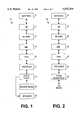
- FIG. 1is a block diagram representation of circuital elements of a speech path in a CDMA digital cellular telephone in accordance with a preferred embodiment of the present invention.
- FIG. 2is a block diagram representation of circuital elements of a speech path in a CDMA base station in accordance with the preferred embodiment of the present invention.
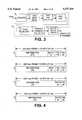
- FIG. 3is a block diagram representation of selected frame generation functions provided by a vocoder, a CPU, and an SM in accordance with a preferred embodiment of the present invention.
- FIG. 4shows frame structure diagrams for the CDMA traffic channel frames at various rates before being convolutionally encoded in accordance with a preferred embodiment of the present invention.
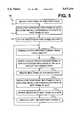
- FIG. 5is a flow chart representation of selected frame generation steps taken by a vocoder in accordance with a preferred embodiment of the present invention.
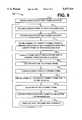
- FIG. 6is a flow chart representation of selected frame generation steps taken by a SM in accordance with a preferred embodiment of the present invention.
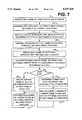
- FIG. 7is a flow chart representation of selected frame analysis steps taken by a vocoder and a SM in accordance with a preferred embodiment of the present invention.
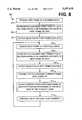
- FIG. 8is a flow chart representation of selected frame generation steps taken by a vocoder in accordance with an alternate embodiment of the present invention.
- FIGS. 1 and 2are very similar to each other since a CDMA mobile station 10, circuital portions of which are represented in FIG. 1, and a CDMA base station 30, circuital portions of which are represented in FIG. 2, both transmit and receive CDMA signals, including traffic channel frames of data.
- the term "mobile station”is understood to refer to any type of cellular telephone, including units installed in vehicles and hand-held units, including conventional cellular hand-held devices and PCS personal stations.
- Both the CDMA mobile station 10 and the CDMA base station 30include, respectively, an antenna 12, 32, a radio frequency (RF) section 14, 34, a CDMA baseband application specific integrated circuit (BB ASIC) 16, 36, a station modem (SM) 18, 38, a central processing unit (CPU) 20, 40, and a vocoder (voice or speech encoder/decoder) 22, 42.
- the CDMA mobile station 10further includes, connected to the vocoder 22, an analog-to-digital/digital-to-analog (A-to-D/D-to-A) converter 24 connected to a microphone 26 and a speaker 28 for interaction with a mobile station user.
- A-to-D/D-to-Aanalog-to-digital/digital-to-analog
- the CDMA base station 30further includes a public switched telephone network (PSTN) interface 44 for interaction with the PSTN, as well as other conventional interfaces.
- PSTNpublic switched telephone network
- the remaining elements of the CDMA mobile station 10 and the CDMA base station 30are conventional elements and circuital combinations functioning as would be understood by those reasonably skilled in the art.
- the new elementsalso maintain a large degree of similarity to conventional elements, differing only to accommodate the teachings in this specification, as would be understood by one reasonably skilled in the art after review of this specification.
- Transmissions from the CDMA base station 30 to the CDMA mobile station 10are often referred to as the forward channel link, whereas transmissions from the CDMA mobile station 10 to the CDMA base station 30 are often referred to as the reverse channel link.
- frames of data generated by the CDMA base station 30 and transmitted in the forward channel link between the base station antenna 32 and the mobile station antenna 12are often referred to as forward channel data frames
- frames of data generated by the CDMA mobile station 10 and transmitted in the reverse channel link between the mobile station antenna 12 and the base station antenna 32are often referred to as reverse channel data frames.
- both the CDMA mobile station 10 and the CDMA base station 30are transceivers capable of sending and receiving information, most of the elements of the CDMA mobile station 10 and the CDMA base station 30 are capable of performing transmitter and receiver functions, e.g., both the mobile SM 18 and the base SM 38 are each capable of performing transmitting and receiving functions.
- the typical process of speech communication in the forward channel linkbegins with the PSTN interface 44 receiving pulse code modulated (PCM) speech data from the PSTN.
- PCM speech datais digital data representing digital samples of a user's voice.
- the dataarrives at the base station vocoder at 64 kbps (8 kHz samples of ⁇ -law 8 bits per sample).
- speechis received into the microphone 26 and supplied in analog form to the A-to-D/D-to-A converter 24 which converts the speech into a digital signal which is similar to that supplied to the base station vocoder 42.
- the input for both the base station vocoder 42 and the mobile station vocoder 22are streams of PCM speech data.
- the transmitting functions for both the CDMA mobile station 10 and the CDMA base station 30are relatively similar.
- the vocoders 22, 42, CPUs 20, 40, and SMs 18, 38cooperate to assemble channel frames of data, as discussed in more detail below.
- the channel frames of dataare processed in a conventional manner by the BB ASICs 16, 36 and RF sections 14, 34 to be converted to analog signals, modulated and transmitted through the antennas 12, 32.
- the CDMA base station 30 and the CDMA mobile station 10reverse the above-stated functions to finally produce PCM speech data output from the vocoders 22, 42.
- the A-to-D/D-to-A converter 24converts the PCM speech data into an analog signal which is output to the user through the speaker 28, and, likewise, the PSTN interface 44 converts the PCM speech data into a format for transmission through the PSTN
- FIG. 3shows a block diagram representation of selected frame generation functions.
- a vocode function 50is shown preceding a group of selected station modem functions 52.
- the vocoder 22 and the SM 18are responsible for performing the functions shown, thus the CPU 20 mainly acts as an interface between the vocoder 22 and SM 18, according to the preferred embodiment of the present invention.
- the CPU 20 of the preferred embodiment of the present inventionis relatively unchanged from its conventional implementation.
- the PCM speech datais first vocoded (speech encoded) as indicated by the vocode function 50.
- the selected SM functions 52include an add next rate function 54, an add frame quality indicator (FQI) for full and half rates function 56 (i.e., CRC for error detection), an add encoder tail function 58, a convolutionally encode function 62 for forward error correction, a repeat symbols for half, quarter, and eighth rates function 64, and a block interleave function 66 for combating burst errors.
- FQIadd frame quality indicator
- CRCadd frame quality indicator
- FIG. 4shows frame structure diagrams for CDMA traffic channel frames at various rates as the frames exist immediately before the convolutionally encode function 62.
- the frame structuresinclude a full rate frame structure 70, a half rate frame structure 72, a quarter rate frame structure 74, and an eighth rate frame structure 76.
- other conventional SM functionsare also performed by the SM 18 (FIG. 1) and/or the SM 38 (FIG. 2), including 64-ary orthogonal modulating, data burst randomizing, long code generating, quadrature phase shift key modulating, filtering, etc.
- the vocode function 50includes converting frames of PCM speech data into frames of speech encoded data at variable data rates to be included as information in subsequently formed traffic channel frames of data.
- the term "frame of data”can refer to a frame of PCM data, a frame of speech encoded data and/or a channel frame of data (traffic channel) which includes as information a frame of speech encoded data.
- the vocode function 50includes comparing voice energy levels to adaptive thresholds based on detected background noise levels to determine an appropriate data rate for each frame of speech encoded data, and, using a code excited linear prediction (CELP) method, removing intrinsic redundancies to reduce the number of bits required to represent the speech.
- CELPcode excited linear prediction
- the conventional vocode (speech encoding) functionincludes receiving PCM speech data and outputting frames of speech encoded data at variable data rates.
- the vocode function 50 of the present inventionalso includes determining a data rate of a subsequent frame of speech encoded data and outputting an indication of that rate for being included in the current channel frame of data, as shown by the add next rate function 54.
- the vocoderoutputs frames of speech encoded data at, for example, 8600 bps, 4000 bps, 1900 bps, and 700 bps. After next frame data rate indicator bits, FQI bits, and encoder tail bits are added, the frames represent 9600 bps, 4800 bps, 2400 bps, and 1200 bps as shown in FIG. 4.
- a first step 100includes receiving a first frame of PCM speech data for processing into a first frame of speech encoded data (also referred to as a speech encoded frame of data).
- step 102the vocoding (speech encoding) process begins for the first frame, including an initial step of determining a data rate for the first frame of data through the above-discussed adaptive threshold method.
- Step 104shows that an indication of the first data rate is then output from the vocoder (transmitted to the SM 18 through the CPU 20).
- Speech encodingcontinues in step 106 until complete, after which the current speech encoded data frame is output in step 108 (during the initial pass through the vocode function 50, the "current" frame is equivalent to the "first” frame and the "next" frame is the "second” frame).
- the next frame of PCM datais received in step 110, and the data rate of the next frame is quickly determined in step 112.
- the present methodis one in which an indication of this newly determined data rate of the next frame is generated early and then output from the vocoder 22 in step 114. Also, any extra delay in generating the traffic channel data frame will most likely be offset by the reduction in time required to determine the data rate on the receiving end of the transmission. Subsequently, as indicated at step 116, the process loops back to step 106 where yet another frame of PCM speech data is received and the process continues.
- the CPU 20is able to direct the vocoder 22 to use or not use particular data rates (e.g., for signaling frames, etc.) the steps of determining and outputting data rates are readily replaced by direct communication between the SM 18 and the CPU 20 during such special rate situations.
- the next frame indicationconsists of two bits in the preferred embodiment of the present invention since two bits are adequate to provide a one-to-one representation of the four possible data rates. With any number of possible rates, the number of bits necessary to provide a one-to-one representation of the various rates equals the smallest integer greater or equal to the Log 2 of the total number of possible rates.
- FIG. 6shows a flow chart representation of selected frame generation steps taken by the SM 18 (and SM 38).
- the first frame data rate indication(for the first pass, "current” is equivalent to “first”, and “subsequent” is equivalent to “second”) is stored in the SM 18 (step 118) until the current frame of speech encoded data (step 12) and the next frame data rate indication (step 122) arrive from the vocoder 22, as explained above.
- the SM 18has both the subsequent frame data rate indication and the current frame of speech encoded data, both are combined into the beginnings of a current traffic channel frame of data (step 124), as indicated by the add next rate function 54 (FIG. 3).
- Another way of expressing this combining functionis that the subsequent frame data rate indication is embedded or inserted into the current channel frame of data which contains the current frame of speech encoded data as the information portion of the current channel frame of data.
- a frame quality indicatoris computed and added to the current channel frame of data, as also indicated by the add FQI function 56 of FIG. 3.
- encoder tail bitsare added to the current channel frame of data, as shown by step 128 of FIG. 6 and the add encoder tail function of 58.
- the pre-encoder frame structures of the preferred embodimentdiffer from conventional channel frame structures in that the subsequent frame data rate indication is substituted for two FQI bits for the full and half rate structures 70, 72, and for two information bits in the quarter and eighth rate structures 74, 76 (i.e., the conventional frame structures include 12 FQI bits for full rate, 8 FQI bits for half rate, 40 information bits for quarter rate, and 16 information bits for eighth rate).
- the add FQI function 56includes computing the FQI based upon the information and subsequent frame data rate indication, additional error detection capabilities are realized.
- the current channel frame of datais convolutionally encoded at the data rate for the current frame of data, as indicated by step 130 of FIG. 6 and the convolutionally encode function 62 of FIG. 3.
- the subsequent frame data rate indicationis also encoded along with the information bits to provide good error correction for the subsequent frame data rate indication without additional overhead or complexity.
- encoder symbolsrepresentative of pre-encoder bits
- block interleavingis used to further protect the integrity of the current channel frame, including the indication of the next frame data rate (step 134, function 66).
- step 136Both of these functions, as well as the remaining steps necessary for completing the processing (step 136), including modulation, etc., are conventional steps as would be understood by those reasonably skilled in the art. Finally, this process loops back through step 138 to step 120 as shown in FIG. 6 for processing the next channel frame of data.
- a first stepincludes receiving a first channel frame of data (convolutionally encoded data) at one of the four potential data rates (step 152). Subsequently, the SM 18 processes the first channel frame of data at all of the four possible data rates to determine (through conventional analysis of FQI bits and symbol error rates, etc.) the correct data rate of the first frame of data.
- step 156the data rate of the next channel frame of data is determined by isolating and analyzing the subsequent frame data rate indication of the current channel frame of data.
- Step 158indicates that processing of the first channel frame of data is then completed, including speech decoding the information at the current data rate.
- the SM 18receives the next channel frame of data in step 160, at which point that "next" becomes “current”. Then, the frame of data is processed at the expected data rate, including reversing functions 64 and 62 of FIG. 3. In an effort to prevent transmission errors from propagating through the series of data frames, the validity of the rate chosen for each processed frame is evaluated at decision block 164 through, as an example, a FQI analysis and a symbol error rate analysis.
- step 166For example, for the full and half rates, if FQI checking passes, or if FQI checking fails and the symbol error rate is below a predetermined threshold, and for the quarter and eighth rates, if the symbol error rate is below the threshold, the rate is determined to be valid, and the operation proceeds through the YES branch to step 166. At that point, the current frame is analyzed to isolate the subsequent frame data rate indication and determine the data rate of the next channel frame of data. Subsequently, in step 168, processing of the current frame of data is continued until complete, and the process loops back to step 160 to continue processing.
- step 170determines the appropriate data rate for the current frame and then, in step 172, determine the data rate of the next frame of data from the subsequent frame data rate indication before continuing with step 168 as shown. Also, though not shown, in FIG. 7, if the rate still cannot be determined after being processed at the various possible data rates, the frame is classified as an erasure frame, and the process continues by processing the next frame as the first frame was processed in step 152.
- the present inventionalso includes various alternate embodiments.
- PCM data for the next frame of speech encoded datais received in step 204, before the speech encoding processing on the first frame of data is complete.
- the vocode functionrequiring more time than (have a process delay greater than) the amount of time represented by one frame of data, e.g., 20 ms.
- the vocoder of this alternate embodimentprocesses multiple frames of data simultaneously, as evidenced by step 206 where the speech encoding process also begins on the next (subsequent) frame of data.
- the alternate vocoderis able to determine and output a data rate of the next frame of data before speech encoding is complete on the current frame of data, as evidence by steps 208-212. Accordingly, the process of FIG. 6 would be changed by reversing the order between steps 120 and 122 since the next frame data rate would arrive at the SM before the current frame of speech encoded data.
- steps 104-114 of FIG. 5are, in a way, combined so that only one vocoder output is made per frame. After the first frame, such an output to the SM would include the current speech encoded data and the indication of the subsequent frame data rate, and the first frame output would include the first and second frame data rates along with the speech encoded data.
- Yet another alternate embodimentincludes a combination of the last two alternate embodiments where, depending on the amount of time required by the vocoder for any particular frame, data (speech data or rate indication data) is output to the SM whenever available. Since vocoders often take more or less time depending on the rates used, the next frame data rate indication may be available and output before or after the current frame speech encoded data.
- error rate evaluation steps 164, 170, and 172are omitted or only performed occasionally under the assumption that transmission errors are very rare.
- Other alternate embodimentsinclude inserting the subsequent frame data rate indications in alternate locations within the data frame (e.g., the encoder tail bits, etc.) or inserting incremental subsequent frame data rate indications which indicate changes in rates (i.e., upward, downward, no change, maximum, minimum, etc.) rather than providing one-to-one indications of the rates.
- Other alternate embodimentsalso include inserting subsequent frame data rate indications only in selective frames, such as inserting indications only when a change in rates is about to occur or for certain types of data frames, such as when assumptions can be made about other types of frames or when it is better to simply allow the other types of frames to be processed conventionally.
- a system in which only one direction of communication utilizing subsequent frame rate identificationsis also contemplated.
- forward traffic channel frames transmitted by the base stationwould include subsequent frame rate identifications
- reverse traffic channel frames transmitted by the mobile stationwould not include such indications.
- Such a systemwould be applicable when base station receiving resources are freely available for conventional rate determinations and/or when it is advantageous not to use mobile station transmitting resources to include such subsequent frame rate indications.
- Yet another alternate embodimentincludes establishing a convention that the first frame of data in any transmission is generated at a particular data rate so that such an assumption may be relied upon at the receiving end.
- Such a conventionwould eliminate step 154 of FIG. 7, and change step 152 to include receiving a first frame of coded data at a predetermined data rate and change step 156 to include analyzing the only version of convolutionally decoded data to determine the data rate of the next frame of coded data.
- Another alternate embodiment of the present inventionincludes utilizing a higher rate vocoder, such as vocoders operating on traffic channel frames at 14.4 kbps and/or above.
- a higher rate vocodersuch as vocoders operating on traffic channel frames at 14.4 kbps and/or above.
- a similar rate breakdowncan be utilized, i.e., a 14.4 kbps vocoder would have a full (traffic channel) data rate of 14.4 kbps, a half rate of 7200 bps, a quarter rate of 3600 bps, and an eighth rate of 1800 bps.
- Higher data ratesare also often accompanied by alternate frame structures with more bits (also included within the scope of the present invention) such as frame structures where all four possible rates include frame quality indicator bits for being partially substituted with subsequent frame data rate indication bits.
- Still other alternate embodimentsinclude speech encoding processes which receive PCM data in other formats and at other rates, such as linear PCM as opposed to ⁇ -law PCM, as well as outputting frames of alternate lengths, such as those encompassing 10 ms of sampled speech.
- variable data rate communication systemsin addition to the CDMA digital cellular systems and PCS systems.
- other alternate embodimentsincluding receiving and buffering variable rate data frames from other sources besides the vocoder, such as external data devices communicating at variable data rates.
- Still other embodimentsinclude utilizing alternate error protection (error detection and error correction) methods, such as various block encoding methods as opposed to the convolutional encoding method disclosed.
- error protectionerror detection and error correction
- many of the elements of the present inventioncan easily be split into combinations of more discrete elements or combined into fewer, more complex elements.
- the scope of the present inventioncertainly includes any such increase or decrease in the number and complexity of elements necessary to perform the described functions.
Landscapes
- Engineering & Computer Science (AREA)
- Computer Networks & Wireless Communication (AREA)
- Signal Processing (AREA)
- Quality & Reliability (AREA)
- Mobile Radio Communication Systems (AREA)
Abstract
Description
Claims (33)
Priority Applications (3)
| Application Number | Priority Date | Filing Date | Title |
|---|---|---|---|
| US08/306,777US5537410A (en) | 1994-09-15 | 1994-09-15 | Subsequent frame variable data rate indication method |
| US08/465,881US5673266A (en) | 1994-09-15 | 1995-06-06 | Subsequent frame variable data rate indication method |
| US08/813,537US6141353A (en) | 1994-09-15 | 1997-03-07 | Subsequent frame variable data rate indication method for various variable data rate systems |
Applications Claiming Priority (1)
| Application Number | Priority Date | Filing Date | Title |
|---|---|---|---|
| US08/306,777US5537410A (en) | 1994-09-15 | 1994-09-15 | Subsequent frame variable data rate indication method |
Related Child Applications (2)
| Application Number | Title | Priority Date | Filing Date |
|---|---|---|---|
| US08/465,881ContinuationUS5673266A (en) | 1994-09-15 | 1995-06-06 | Subsequent frame variable data rate indication method |
| US47440995AContinuation-In-Part | 1994-09-15 | 1995-06-07 |
Publications (1)
| Publication Number | Publication Date |
|---|---|
| US5537410Atrue US5537410A (en) | 1996-07-16 |
Family
ID=23186791
Family Applications (2)
| Application Number | Title | Priority Date | Filing Date |
|---|---|---|---|
| US08/306,777Expired - LifetimeUS5537410A (en) | 1994-09-15 | 1994-09-15 | Subsequent frame variable data rate indication method |
| US08/465,881Expired - LifetimeUS5673266A (en) | 1994-09-15 | 1995-06-06 | Subsequent frame variable data rate indication method |
Family Applications After (1)
| Application Number | Title | Priority Date | Filing Date |
|---|---|---|---|
| US08/465,881Expired - LifetimeUS5673266A (en) | 1994-09-15 | 1995-06-06 | Subsequent frame variable data rate indication method |
Country Status (1)
| Country | Link |
|---|---|
| US (2) | US5537410A (en) |
Cited By (75)
| Publication number | Priority date | Publication date | Assignee | Title |
|---|---|---|---|---|
| WO1997005717A1 (en)* | 1995-07-25 | 1997-02-13 | Motorola Inc. | Apparatus and method for rate determination in on-off variable-rate communication systems |
| WO1998002979A1 (en)* | 1996-07-11 | 1998-01-22 | Dsc/Celcore, Inc. | Multi-channel transcoder rate adapter having low delay and integral echo cancellation |
| WO1998018218A1 (en)* | 1996-10-18 | 1998-04-30 | Telefonaktiebolaget Lm Ericsson (Publ) | Method for multiplexing of parallel information streams in a cdma system |
| US5757277A (en)* | 1994-12-28 | 1998-05-26 | Nec Corporation | Wireless selective call receiver and method and system for writing desired data in the same |
| US5761623A (en)* | 1995-10-13 | 1998-06-02 | Telefonaktiebologet Lm Ericsson (Publ) | Cellular telecommunications network having seamless interoperability between exchanges while supporting operation in multiple frequency hyperbands |
| US5778338A (en)* | 1991-06-11 | 1998-07-07 | Qualcomm Incorporated | Variable rate vocoder |
| WO1998052368A1 (en)* | 1997-05-16 | 1998-11-19 | Motorola Inc. | Transmission of data within a digital wireless communication system |
| US5857153A (en)* | 1995-10-13 | 1999-01-05 | Telefonaktiebolaget Lm Ericsson (Publ) | Cellular telecommunications network having seamless interoperability between exchanges while providing voice, asynchronous data and facsimile services in multiple frequency hyperbands |
| US5862141A (en)* | 1996-06-14 | 1999-01-19 | Lucent Technologies Inc. | Variable bitrate radio modem system to enhance data transmission and reduce error rates |
| US5883923A (en)* | 1995-09-18 | 1999-03-16 | Oki Electric Industry Co., Ltd. | Data receiver with symbol rate discrimination and statistical analysis functions |
| US5914950A (en)* | 1997-04-08 | 1999-06-22 | Qualcomm Incorporated | Method and apparatus for reverse link rate scheduling |
| WO1999038265A1 (en)* | 1998-01-23 | 1999-07-29 | Dspc Technologies Ltd. | Method and device for detecting rate |
| US6011801A (en)* | 1997-10-09 | 2000-01-04 | Timeplex, Inc. | Rate control of channels on a time division multiplex bus |
| US6014375A (en)* | 1997-02-13 | 2000-01-11 | Ericsson Inc. | TDMA radio protocol with adaptive vocoder selection |
| WO2000024140A1 (en)* | 1998-10-22 | 2000-04-27 | Sony Electronics Inc. | Neural network is-95 rate determination |
| WO2000036781A1 (en)* | 1998-12-17 | 2000-06-22 | Siemens Aktiengesellschaft | Method and arrangement for channel coding or decoding of frame-structured information |
| US6141353A (en)* | 1994-09-15 | 2000-10-31 | Oki Telecom, Inc. | Subsequent frame variable data rate indication method for various variable data rate systems |
| US6181738B1 (en)* | 1998-02-13 | 2001-01-30 | Northern Telecom Limited | Reverse link power control using a frame quality metric |
| US6182260B1 (en)* | 1997-06-16 | 2001-01-30 | Electronics And Telecommunications Research Institute | Channel encoding apparatus using single concatenated encoder |
| US6195348B1 (en)* | 1998-01-22 | 2001-02-27 | Dialogic Corporation | Dynamic realtime protocol for facsimile and the like |
| US6205130B1 (en)* | 1996-09-25 | 2001-03-20 | Qualcomm Incorporated | Method and apparatus for detecting bad data packets received by a mobile telephone using decoded speech parameters |
| US20010004356A1 (en)* | 1999-12-08 | 2001-06-21 | Nec Corporation | Wireless communication device and method of predicting a frame rate in a CDMA communication system |
| US6252854B1 (en) | 1996-06-17 | 2001-06-26 | International Business Machines Corporation | Rate selection in adaptive data rate systems |
| US6324172B1 (en) | 1999-03-08 | 2001-11-27 | Qualcomm Incorporated | Method of rate allocation in a data communications network |
| US20010046289A1 (en)* | 2000-04-07 | 2001-11-29 | Robinson Timothy B. | Method and apparatus for transceiver noise reduction in a frame-based communications network |
| US6335922B1 (en) | 1997-02-11 | 2002-01-01 | Qualcomm Incorporated | Method and apparatus for forward link rate scheduling |
| US6366588B1 (en)* | 1998-02-27 | 2002-04-02 | Lucent Technologies Inc. | Method and apparatus for achieving data rate variability in orthogonal spread spectrum communication systems |
| WO2001093486A3 (en)* | 2000-05-26 | 2002-04-04 | Nortel Networks Ltd | Communications using adaptive multi-rate codecs |
| US6418163B2 (en)* | 1996-10-30 | 2002-07-09 | Qualcomm Incorporated | Method and apparatus for decoding variable rate data using hypothesis testing to determine data rate |
| US6421331B1 (en)* | 1998-04-30 | 2002-07-16 | Roke Manor Research Limited | Power control and rate information method for a mobile radio communication system |
| US20020106015A1 (en)* | 1996-10-29 | 2002-08-08 | Ephraim Zehavi | Method and apparatus for providing high speed data communications in a cellular environment |
| US6493838B1 (en)* | 1995-09-29 | 2002-12-10 | Kabushiki Kaisha Toshiba | Coding apparatus and decoding apparatus for transmission/storage of information |
| US20030035389A1 (en)* | 2001-08-20 | 2003-02-20 | Tao Chen | Method and system for utilization of an outer decoder in a broadcast services communication system |
| US6574211B2 (en) | 1997-11-03 | 2003-06-03 | Qualcomm Incorporated | Method and apparatus for high rate packet data transmission |
| RU2208297C2 (en)* | 1999-06-25 | 2003-07-10 | Самсунг Электроникс Ко., Лтд. | Channel coding and multiplexing device and method for code-division multiple access communication system |
| US20030153369A1 (en)* | 2002-02-14 | 2003-08-14 | Nokia Corporation | Clock-based time slicing |
| EP0827312A3 (en)* | 1996-08-22 | 2003-10-01 | Marconi Communications GmbH | Method for changing the configuration of data packets |
| US6687510B2 (en) | 1999-03-12 | 2004-02-03 | Qualcomm Incorporated | Methods and apparatus for power allocation on a reverse link power control channel of a communication system |
| US20040042508A1 (en)* | 2000-07-14 | 2004-03-04 | Christian Menzel | Method for rapidly allocating radio resources to logical channels in a down-link direction |
| US6775521B1 (en)* | 1999-08-09 | 2004-08-10 | Broadcom Corporation | Bad frame indicator for radio telephone receivers |
| US20040156690A1 (en)* | 2002-12-06 | 2004-08-12 | Rohm Gmbh & Co. Kg | Opening actuator for collet chuck |
| US20040179506A1 (en)* | 2002-12-12 | 2004-09-16 | Roberto Padovani | Method and apparatus for burst pilot for a time division multiplex system |
| US20040185868A1 (en)* | 2002-09-10 | 2004-09-23 | Avinash Jain | System and method for multilevel scheduling |
| KR100450952B1 (en)* | 2002-10-09 | 2004-10-06 | 삼성전자주식회사 | Method and apparatus for receiving multiplexing packet data control channels |
| US20040202142A1 (en)* | 2003-04-08 | 2004-10-14 | Batariere Mickael D. | Method and apparatus for transmission and reception of data |
| US20040248603A1 (en)* | 2003-06-03 | 2004-12-09 | Canoy Michael-David N. | Method and apparatus for controlling a broadcast communication data rate in a wireless communication system |
| US20050004970A1 (en)* | 2003-01-13 | 2005-01-06 | Avinash Jain | System and method for a time-scalable priority-based scheduler |
| US20050107108A1 (en)* | 1997-01-24 | 2005-05-19 | Nokia Telecommunications Oy | Power control method of discontinuous transmission |
| US20050169205A1 (en)* | 2003-08-21 | 2005-08-04 | Francesco Grilli | Methods for seamless delivery of broadcast and multicast content across cell borders and/or between different transmission schemes and related apparatus |
| US20050193309A1 (en)* | 2003-08-21 | 2005-09-01 | Francesco Grilli | Methods for forward error correction coding above a radio link control layer and related apparatus |
| US20050213535A1 (en)* | 1997-12-10 | 2005-09-29 | Mitsubishi Denki Kabushiki Kaisha | Mobile communication system |
| KR100550727B1 (en)* | 2000-12-28 | 2006-02-08 | 엘지전자 주식회사 | Rate Indication Method and Rate Determination Method of High-Speed Data Channel in Mobile Communication System |
| KR100530277B1 (en)* | 1997-03-17 | 2006-02-28 | 해리스 코포레이션 | High Communication Speed Diffusion Spectrum Transceiver and Related Methods |
| US20060176966A1 (en)* | 2005-02-07 | 2006-08-10 | Stewart Kenneth A | Variable cyclic prefix in mixed-mode wireless communication systems |
| US7116653B1 (en) | 1999-03-12 | 2006-10-03 | T-Mobile Deutschland Gmbh | Method for adapting the mode of operation of a multi-mode code to the changing conditions of radio transfer in a CDMA mobile radio network |
| US20060245384A1 (en)* | 2005-05-02 | 2006-11-02 | Talukdar Anup K | Method and apparatus for transmitting data |
| US20070074264A1 (en)* | 2003-05-13 | 2007-03-29 | Nokia Corporation | Method for signalling time-slicing parameters in the service information |
| US7236466B1 (en)* | 1999-05-07 | 2007-06-26 | Siemens Aktiengesellschaft | Pulsing the transmit mode for reducing the power when redundancy is involved in transmission |
| US20080008136A1 (en)* | 1997-11-03 | 2008-01-10 | Qualcomm Incorporated | Pilot reference transmission for a wireless communication system |
| US20080027710A1 (en)* | 1996-09-25 | 2008-01-31 | Jacobs Paul E | Method and apparatus for detecting bad data packets received by a mobile telephone using decoded speech parameters |
| US20080141097A1 (en)* | 2003-08-21 | 2008-06-12 | Qualcomm Incorporated | Outer coding methods for broadcast/multicast content and related apparatus |
| US20090097412A1 (en)* | 2002-09-10 | 2009-04-16 | Qualcomm Incorporated | System and method for rate assignment |
| US20100036668A1 (en)* | 2000-12-04 | 2010-02-11 | Qualcomm Incorporated | Method and apparatus for improved detection of rate errors in variable rate receivers |
| US20100040158A1 (en)* | 2008-08-15 | 2010-02-18 | Qualcomm Incorporated | Embedding information in an 802.11 signal field |
| US20100046656A1 (en)* | 2008-08-20 | 2010-02-25 | Qualcomm Incorporated | Preamble extensions |
| US7751370B2 (en) | 2001-07-13 | 2010-07-06 | Qualcomm Incorporated | Method and apparatus for forward link rate scheduling |
| US20100172279A1 (en)* | 2002-05-06 | 2010-07-08 | Qualcomm Incorporated | Multi-media broadcast and multicast service (mbms) in a wireless communication system |
| US20100290449A1 (en)* | 2008-08-20 | 2010-11-18 | Qualcomm Incorporated | Preamble extensions |
| US7961616B2 (en) | 2001-06-07 | 2011-06-14 | Qualcomm Incorporated | Method and apparatus for congestion control in a wireless communication system |
| US8064409B1 (en) | 1999-08-25 | 2011-11-22 | Qualcomm Incorporated | Method and apparatus using a multi-carrier forward link in a wireless communication system |
| US8068453B2 (en) | 1999-10-07 | 2011-11-29 | Qualcomm Incorporated | Method and apparatus for predicting favored supplemental channel transmission slots using transmission power measurements of a fundamental channel |
| US8400998B2 (en) | 2006-08-23 | 2013-03-19 | Motorola Mobility Llc | Downlink control channel signaling in wireless communication systems |
| US8811200B2 (en) | 2009-09-22 | 2014-08-19 | Qualcomm Incorporated | Physical layer metrics to support adaptive station-dependent channel state information feedback rate in multi-user communication systems |
| US9107109B2 (en) | 2000-10-25 | 2015-08-11 | Qualcomm Incorporated | Method and apparatus for determining a data rate in a high rate packet data wireless communications system |
| US9426821B2 (en) | 2000-10-25 | 2016-08-23 | Qualcomm Incorporated | Method and apparatus for high rate packet data and low delay data transmissions |
Families Citing this family (37)
| Publication number | Priority date | Publication date | Assignee | Title |
|---|---|---|---|---|
| US5953647A (en)* | 1995-12-18 | 1999-09-14 | Paradyne Corporation | Technique for sending faxes over cellular communications channels |
| US5757367A (en)* | 1996-02-06 | 1998-05-26 | Motorola, Inc. | Numbering scheme for dynamic error encoding and method therefore |
| JPH09233054A (en)* | 1996-02-27 | 1997-09-05 | Oki Electric Ind Co Ltd | Decoder |
| US5781598A (en)* | 1996-08-14 | 1998-07-14 | Hardy, Iii; Harmon S. | System and method of asynchronous data transfer through a plurality of modems |
| JPH1065604A (en)* | 1996-08-23 | 1998-03-06 | Sony Corp | Communication method, base station and terminal equipment |
| US6345039B1 (en)* | 1996-10-30 | 2002-02-05 | Mitsubishi Denki Kabushiki Kaisha | Device and method for controlling ATM traffic |
| US6094428A (en)* | 1997-04-30 | 2000-07-25 | Motorola, Inc. | Method and apparatus for transmission and reception of a transmission rate in a CDMA communication system |
| JP3335570B2 (en)* | 1997-11-17 | 2002-10-21 | 沖電気工業株式会社 | Spread spectrum communication equipment |
| US6449288B1 (en) | 1998-05-09 | 2002-09-10 | Centillium Communications, Inc. | Bi-level framing structure for improved efficiency DSL over noisy lines |
| US6529730B1 (en)* | 1998-05-15 | 2003-03-04 | Conexant Systems, Inc | System and method for adaptive multi-rate (AMR) vocoder rate adaption |
| CA2239060A1 (en)* | 1998-05-28 | 1999-11-28 | Newbridge Networks Corporation | Rate monitoring of connections in a communications network using history buffer |
| EP1667392B1 (en)* | 1998-06-26 | 2018-01-10 | TQ Delta, LLC | Multicarrier communication with variable overhead rate |
| ES2709692T3 (en)* | 1998-06-26 | 2019-04-17 | Tq Delta Llc | Communication through multiple carriers with variable airspeed |
| KR20000009140A (en)* | 1998-07-21 | 2000-02-15 | 윤종용 | Apparatus and method for initial capture and frame synchronization of spread spectrum communication system |
| FI112425B (en)* | 1998-09-16 | 2003-11-28 | Nokia Corp | Method and apparatus for dynamic control of radio resources |
| US6452941B1 (en)* | 1998-09-16 | 2002-09-17 | Telefonaktiebolaget Lm Ericsson (Publ) | Method and system for alternating transmission of codec mode information |
| US6381455B1 (en)* | 1998-10-15 | 2002-04-30 | Lucent Technologies Inc. | System and method for warning of and providing greater immunity from an impeding call drop in a digital wireless system |
| WO2000027162A2 (en)* | 1998-11-04 | 2000-05-11 | Siemens Aktiengesellschaft | Method for transmitting information signals in loops |
| FI105961B (en)* | 1998-12-14 | 2000-10-31 | Nokia Networks Oy | Reception procedure and recipients |
| EP1073224A3 (en)* | 1999-05-07 | 2002-08-14 | Sony International (Europe) GmbH | Strategy for switching to Alternative Frequencies (AF) for Digital Radio Mondiale (DRM) |
| US6226283B1 (en)* | 1999-05-13 | 2001-05-01 | Motorola, Inc. | Method and selector for performing selection in a communication system |
| US6463292B1 (en)* | 1999-06-04 | 2002-10-08 | Lucent Technologies Inc. | System and method for redirecting data messages |
| EP1069710A1 (en)* | 1999-07-15 | 2001-01-17 | Alcatel | Method of multimode access in satellite communications and frame structure for said multimode access |
| US6697343B1 (en)* | 1999-08-26 | 2004-02-24 | Lucent Technologies Inc. | Method and apparatus for controlling power for variable-rate vocoded communications |
| US7545774B1 (en)* | 1999-08-26 | 2009-06-09 | Nokia Corporation | Method for indicating power consumption in a packet switched communication system |
| US6532250B1 (en)* | 1999-12-21 | 2003-03-11 | Telefonaktiebolaget Lm Ericsson (Publ) | Methods and apparatus for spreading and despreading information signals in code division multiple access communications systems |
| GB0008119D0 (en)* | 2000-04-03 | 2000-05-24 | Nokia Networks Oy | Estimating communication quality |
| US6285682B1 (en)* | 2000-05-01 | 2001-09-04 | Motorola, Inc. | Method and apparatus for determining the frame rate of a frame |
| KR100434459B1 (en)* | 2000-06-27 | 2004-06-05 | 삼성전자주식회사 | Method and apparatus for controlling transmission of data packet in mobile telecommunication system |
| KR100387058B1 (en)* | 2000-07-08 | 2003-06-12 | 삼성전자주식회사 | Method and apparatus for flexible data rate matching by symbol insertion for a data communication system |
| ITVA20000028A1 (en)* | 2000-08-11 | 2002-02-11 | Siemens Inf & Comm Networks | TRANSMISSION METHOD WITH DIFFERENT OPERATING MODES. |
| US6760576B2 (en)* | 2001-03-27 | 2004-07-06 | Qualcomm Incorporated | Method and apparatus for enhanced rate determination in high data rate wireless communication systems |
| US8090536B2 (en)* | 2001-06-06 | 2012-01-03 | Broadcom Corporation | Method and apparatus for compression of long term orbit data |
| ES2215870T3 (en)* | 2001-06-14 | 2004-10-16 | Alcatel | TERMINAL, ACCESS SERVER SYSTEM, METHOD AND COMPUTER PROGRAM PRODUCT THAT ALLOWS AT LEAST A USER CONTACT WITH AT LEAST A SERVICE SYSTEM. |
| US6539051B1 (en)* | 2002-03-11 | 2003-03-25 | Cypress Semiconductor Corporation | Parallel framer and transport protocol with distributed framing and continuous data |
| US7570621B2 (en)* | 2004-03-31 | 2009-08-04 | Motorola, Inc. | Method and apparatus for reducing erroneous frame classifications |
| DE102006021543A1 (en)* | 2006-05-08 | 2007-11-15 | Abb Technology Ag | System and method for the automated acceptance and evaluation of the quality of mass data of a technical process or a technical project |
Citations (8)
| Publication number | Priority date | Publication date | Assignee | Title |
|---|---|---|---|---|
| WO1986001357A1 (en)* | 1984-08-03 | 1986-02-27 | National Information Utilities Corporation | Data transmission method and apparatus |
| US4779266A (en)* | 1986-03-10 | 1988-10-18 | Bell Communications Research, Inc. | Encoding and decoding for code division multiple access communication systems |
| US4860315A (en)* | 1987-04-21 | 1989-08-22 | Oki Electric Industry Co., Ltd. | ADPCM encoding and decoding circuits |
| US5115429A (en)* | 1990-08-02 | 1992-05-19 | Codex Corporation | Dynamic encoding rate control minimizes traffic congestion in a packet network |
| US5259003A (en)* | 1991-11-08 | 1993-11-02 | Teknekron Communications Systems, Inc. | Method of encoding two digital data signals |
| US5341456A (en)* | 1992-12-02 | 1994-08-23 | Qualcomm Incorporated | Method for determining speech encoding rate in a variable rate vocoder |
| US5367523A (en)* | 1993-08-26 | 1994-11-22 | International Business Machines Corporation | Adaptive rate-based congestion and flow control in packet communications networks |
| US5442625A (en)* | 1994-05-13 | 1995-08-15 | At&T Ipm Corp | Code division multiple access system providing variable data rate access to a user |
Family Cites Families (1)
| Publication number | Priority date | Publication date | Assignee | Title |
|---|---|---|---|---|
| CA2568984C (en)* | 1991-06-11 | 2007-07-10 | Qualcomm Incorporated | Variable rate vocoder |
- 1994
- 1994-09-15USUS08/306,777patent/US5537410A/ennot_activeExpired - Lifetime
- 1995
- 1995-06-06USUS08/465,881patent/US5673266A/ennot_activeExpired - Lifetime
Patent Citations (8)
| Publication number | Priority date | Publication date | Assignee | Title |
|---|---|---|---|---|
| WO1986001357A1 (en)* | 1984-08-03 | 1986-02-27 | National Information Utilities Corporation | Data transmission method and apparatus |
| US4779266A (en)* | 1986-03-10 | 1988-10-18 | Bell Communications Research, Inc. | Encoding and decoding for code division multiple access communication systems |
| US4860315A (en)* | 1987-04-21 | 1989-08-22 | Oki Electric Industry Co., Ltd. | ADPCM encoding and decoding circuits |
| US5115429A (en)* | 1990-08-02 | 1992-05-19 | Codex Corporation | Dynamic encoding rate control minimizes traffic congestion in a packet network |
| US5259003A (en)* | 1991-11-08 | 1993-11-02 | Teknekron Communications Systems, Inc. | Method of encoding two digital data signals |
| US5341456A (en)* | 1992-12-02 | 1994-08-23 | Qualcomm Incorporated | Method for determining speech encoding rate in a variable rate vocoder |
| US5367523A (en)* | 1993-08-26 | 1994-11-22 | International Business Machines Corporation | Adaptive rate-based congestion and flow control in packet communications networks |
| US5442625A (en)* | 1994-05-13 | 1995-08-15 | At&T Ipm Corp | Code division multiple access system providing variable data rate access to a user |
Non-Patent Citations (4)
| Title |
|---|
| "Mobile Station-Base Station Compatability Standard For Dual-Mode Wideband Spread Spectrum Cellular System TIA/EIA/15-95 Interim Standard"-Sections 6-6.2.4 and 7-7.2.4-15-95. |
| "Speech Service Option Standard For Wideband Spread Spectrum Digital Cellular System TIA/EIA/15-96 Interim Standard"-Entire 15-96. |
| Mobile Station Base Station Compatability Standard For Dual Mode Wideband Spread Spectrum Cellular System TIA/EIA/15 95 Interim Standard Sections 6 6.2.4 and 7 7.2.4 15 95.* |
| Speech Service Option Standard For Wideband Spread Spectrum Digital Cellular System TIA/EIA/15 96 Interim Standard Entire 15 96.* |
Cited By (179)
| Publication number | Priority date | Publication date | Assignee | Title |
|---|---|---|---|---|
| US5778338A (en)* | 1991-06-11 | 1998-07-07 | Qualcomm Incorporated | Variable rate vocoder |
| US6141353A (en)* | 1994-09-15 | 2000-10-31 | Oki Telecom, Inc. | Subsequent frame variable data rate indication method for various variable data rate systems |
| US5757277A (en)* | 1994-12-28 | 1998-05-26 | Nec Corporation | Wireless selective call receiver and method and system for writing desired data in the same |
| WO1997005717A1 (en)* | 1995-07-25 | 1997-02-13 | Motorola Inc. | Apparatus and method for rate determination in on-off variable-rate communication systems |
| US5883923A (en)* | 1995-09-18 | 1999-03-16 | Oki Electric Industry Co., Ltd. | Data receiver with symbol rate discrimination and statistical analysis functions |
| US6038253A (en)* | 1995-09-18 | 2000-03-14 | Oki Electric Industry Co., Ltd. | Data receiver with symbol rate discrimination and statistical analysis functions |
| US7506221B2 (en) | 1995-09-29 | 2009-03-17 | Kabushiki Kaisha Toshiba | Coding apparatus and decoding apparatus for transmission/storage of information using synchronization code |
| US7441162B2 (en) | 1995-09-29 | 2008-10-21 | Kabushiki Kaisha Toshiba | Coding apparatus and decoding apparatus for transmission/storage of information using synchronization code |
| US20060195764A1 (en)* | 1995-09-29 | 2006-08-31 | Kabushiki Kaisha Toshiba | Coding apparatus and decoding apparatus for transmission/storage of information |
| US20060195763A1 (en)* | 1995-09-29 | 2006-08-31 | Kabushiki Kaisha Toshiba | Coding apparatus and decoding apparatus for transmission/storage of information |
| US20060206786A1 (en)* | 1995-09-29 | 2006-09-14 | Kabushiki Kaisha Toshiba | Coding apparatus and decoding apparatus for transmission/storage of information |
| US7051248B2 (en) | 1995-09-29 | 2006-05-23 | Kabushiki Kaisha Toshiba | Coding apparatus and decoding apparatus for transmission/storage of information |
| US20060206788A1 (en)* | 1995-09-29 | 2006-09-14 | Kabushiki Kaisha Toshiba | Coding apparatus and decoding apparatus for transmission/storage of information |
| US7469364B2 (en) | 1995-09-29 | 2008-12-23 | Kabushiki Kaisha Toshiba | Coding apparatus and decoding apparatus for transmission/storage of information using synchronization code |
| US7457994B2 (en) | 1995-09-29 | 2008-11-25 | Kabushiki Kaisha Toshiba | Coding apparatus and decoding apparatus for transmission/storage of information using synchronization code |
| US7093170B2 (en) | 1995-09-29 | 2006-08-15 | Kabushiki Kaisha Toshiba | Coding apparatus and decoding apparatus for transmission/storage of information |
| US20030066007A1 (en)* | 1995-09-29 | 2003-04-03 | Kabushiki Kaisha Toshiba | Coding apparatus and decoding apparatus for transmission/storage of information |
| US7441161B2 (en) | 1995-09-29 | 2008-10-21 | Kabushiki Kaisha Toshiba | Coding apparatus and decoding apparatus for transmission/storage of information using synchronization code |
| US20060206787A1 (en)* | 1995-09-29 | 2006-09-14 | Kabushiki Kaisha Toshiba | Coding apparatus and decoding apparatus for transmission/storage of information |
| US20060218473A1 (en)* | 1995-09-29 | 2006-09-28 | Kabushiki Kaisha Toshiba | Coding apparatus and decoding apparatus for transmission/storage of information |
| US6493838B1 (en)* | 1995-09-29 | 2002-12-10 | Kabushiki Kaisha Toshiba | Coding apparatus and decoding apparatus for transmission/storage of information |
| US20060206785A1 (en)* | 1995-09-29 | 2006-09-14 | Kabushiki Kaisha Toshiba | Coding apparatus and decoding apparatus for transmission/storage of information |
| US20060218463A1 (en)* | 1995-09-29 | 2006-09-28 | Kabushiki Kaisha Toshiba | Coding apparatus and decoding apparatus for transmission/storage of information |
| US20060218462A1 (en)* | 1995-09-29 | 2006-09-28 | Kabushiki Kaisha Toshiba | Coding apparatus and decoding apparatus for transmission/storage of information |
| US5857153A (en)* | 1995-10-13 | 1999-01-05 | Telefonaktiebolaget Lm Ericsson (Publ) | Cellular telecommunications network having seamless interoperability between exchanges while providing voice, asynchronous data and facsimile services in multiple frequency hyperbands |
| US5761623A (en)* | 1995-10-13 | 1998-06-02 | Telefonaktiebologet Lm Ericsson (Publ) | Cellular telecommunications network having seamless interoperability between exchanges while supporting operation in multiple frequency hyperbands |
| US5862141A (en)* | 1996-06-14 | 1999-01-19 | Lucent Technologies Inc. | Variable bitrate radio modem system to enhance data transmission and reduce error rates |
| US6252854B1 (en) | 1996-06-17 | 2001-06-26 | International Business Machines Corporation | Rate selection in adaptive data rate systems |
| US5835486A (en)* | 1996-07-11 | 1998-11-10 | Dsc/Celcore, Inc. | Multi-channel transcoder rate adapter having low delay and integral echo cancellation |
| WO1998002979A1 (en)* | 1996-07-11 | 1998-01-22 | Dsc/Celcore, Inc. | Multi-channel transcoder rate adapter having low delay and integral echo cancellation |
| EP0827312A3 (en)* | 1996-08-22 | 2003-10-01 | Marconi Communications GmbH | Method for changing the configuration of data packets |
| US7788092B2 (en)* | 1996-09-25 | 2010-08-31 | Qualcomm Incorporated | Method and apparatus for detecting bad data packets received by a mobile telephone using decoded speech parameters |
| US6205130B1 (en)* | 1996-09-25 | 2001-03-20 | Qualcomm Incorporated | Method and apparatus for detecting bad data packets received by a mobile telephone using decoded speech parameters |
| US20080027710A1 (en)* | 1996-09-25 | 2008-01-31 | Jacobs Paul E | Method and apparatus for detecting bad data packets received by a mobile telephone using decoded speech parameters |
| RU2192100C2 (en)* | 1996-10-18 | 2002-10-27 | Телефонактиеболагет Лм Эрикссон (Пабл) | Method for multiplexing parallel dataflows in code-division multiple-access systems |
| US5831978A (en)* | 1996-10-18 | 1998-11-03 | Telefonaktiebolaget L M Ericsson Publ. | Method for multiplexing of parallel information streams in a CDMA system |
| WO1998018218A1 (en)* | 1996-10-18 | 1998-04-30 | Telefonaktiebolaget Lm Ericsson (Publ) | Method for multiplexing of parallel information streams in a cdma system |
| AU728763B2 (en)* | 1996-10-18 | 2001-01-18 | Telefonaktiebolaget Lm Ericsson (Publ) | Method for multiplexing of parallel information streams in CDMA system |
| US20030053432A1 (en)* | 1996-10-29 | 2003-03-20 | Qualcomm Incorporated | Method and apparatus for providing high speed data communications in a cellular environment |
| US8891663B2 (en) | 1996-10-29 | 2014-11-18 | Qualcomm Incorporated | Method and apparatus for providing high speed data communications in a cellular environment |
| US20050053030A1 (en)* | 1996-10-29 | 2005-03-10 | Ephraim Zehavi | Method and apparatus for providing high speed data communications in a cellular environment |
| US6496543B1 (en) | 1996-10-29 | 2002-12-17 | Qualcomm Incorporated | Method and apparatus for providing high speed data communications in a cellular environment |
| US20020106015A1 (en)* | 1996-10-29 | 2002-08-08 | Ephraim Zehavi | Method and apparatus for providing high speed data communications in a cellular environment |
| US8085865B2 (en) | 1996-10-29 | 2011-12-27 | Qualcomm Incorporated | Method and apparatus for providing high speed data communications in a cellular environment |
| US7949066B2 (en) | 1996-10-29 | 2011-05-24 | Qualcomm Incorporated | Method and apparatus for providing high speed data communications in a cellular environment |
| US6418163B2 (en)* | 1996-10-30 | 2002-07-09 | Qualcomm Incorporated | Method and apparatus for decoding variable rate data using hypothesis testing to determine data rate |
| US7263077B1 (en)* | 1997-01-24 | 2007-08-28 | Nokia Corporation | Power control method of discontinuous transmission |
| US8543153B2 (en) | 1997-01-24 | 2013-09-24 | Nokia Corporation | Power control method of discontinuous transmission |
| US20050107108A1 (en)* | 1997-01-24 | 2005-05-19 | Nokia Telecommunications Oy | Power control method of discontinuous transmission |
| US20100311461A1 (en)* | 1997-01-24 | 2010-12-09 | Nokia Corporation | Power control method of discontinuous transmission |
| US7801545B2 (en)* | 1997-01-24 | 2010-09-21 | Nokia Corporation | Power control method of discontinuous transmission |
| US8396033B2 (en) | 1997-02-11 | 2013-03-12 | Qualcomm Incorporated | Method and apparatus for forward link rate scheduling |
| US6335922B1 (en) | 1997-02-11 | 2002-01-01 | Qualcomm Incorporated | Method and apparatus for forward link rate scheduling |
| US7054293B2 (en) | 1997-02-11 | 2006-05-30 | Qualcomm Incorporated | Method and apparatus for forward link rate scheduling |
| US20100273503A1 (en)* | 1997-02-11 | 2010-10-28 | Qualcomm Incorporated | Method and apparatus for forward link rate scheduling |
| US6014375A (en)* | 1997-02-13 | 2000-01-11 | Ericsson Inc. | TDMA radio protocol with adaptive vocoder selection |
| KR100530277B1 (en)* | 1997-03-17 | 2006-02-28 | 해리스 코포레이션 | High Communication Speed Diffusion Spectrum Transceiver and Related Methods |
| US5914950A (en)* | 1997-04-08 | 1999-06-22 | Qualcomm Incorporated | Method and apparatus for reverse link rate scheduling |
| WO1998052368A1 (en)* | 1997-05-16 | 1998-11-19 | Motorola Inc. | Transmission of data within a digital wireless communication system |
| US6182260B1 (en)* | 1997-06-16 | 2001-01-30 | Electronics And Telecommunications Research Institute | Channel encoding apparatus using single concatenated encoder |
| US6011801A (en)* | 1997-10-09 | 2000-01-04 | Timeplex, Inc. | Rate control of channels on a time division multiplex bus |
| US7079550B2 (en) | 1997-11-03 | 2006-07-18 | Qualcomm, Incorporated | Method and apparatus for high rate packet data transmission |
| US9118387B2 (en) | 1997-11-03 | 2015-08-25 | Qualcomm Incorporated | Pilot reference transmission for a wireless communication system |
| US20070025269A1 (en)* | 1997-11-03 | 2007-02-01 | Roberto Padovani | Method and apparatus for high rate packet data transmission |
| US8077655B2 (en) | 1997-11-03 | 2011-12-13 | Qualcomm Incorporated | Method and apparatus for high rate packet data transmission |
| US8189540B2 (en) | 1997-11-03 | 2012-05-29 | Qualcomm Incorporated | Method and apparatus for high rate packet data transmission |
| US20080008136A1 (en)* | 1997-11-03 | 2008-01-10 | Qualcomm Incorporated | Pilot reference transmission for a wireless communication system |
| US8311027B2 (en) | 1997-11-03 | 2012-11-13 | Qualcomm Incorporated | Method and apparatus for high rate packet data transmission |
| US8009625B2 (en) | 1997-11-03 | 2011-08-30 | Qualcomm Incorporated | Method and apparatus for high rate packet data transmission |
| US8005042B2 (en) | 1997-11-03 | 2011-08-23 | Qualcomm Incorporated | Method and apparatus for high rate packet data transmission |
| US6574211B2 (en) | 1997-11-03 | 2003-06-03 | Qualcomm Incorporated | Method and apparatus for high rate packet data transmission |
| US7995531B2 (en) | 1997-11-03 | 2011-08-09 | Qualcomm Incorporated | Method and apparatus for high rate packet data transmission |
| US8351372B2 (en) | 1997-11-03 | 2013-01-08 | Qualcomm Incorporated | Method and apparatus for high rate packet data transmission |
| US9124344B2 (en) | 1997-11-03 | 2015-09-01 | Qualcomm Incorporated | Pilot reference transmission for a wireless communication system |
| US7499427B2 (en) | 1997-11-03 | 2009-03-03 | Qualcomm Incorporated | Method and apparatus for high rate packet data transmission |
| US8089924B2 (en) | 1997-11-03 | 2012-01-03 | Qualcomm Incorporated | Method and apparatus for high rate packet data transmission |
| US20070025260A1 (en)* | 1997-11-03 | 2007-02-01 | Roberto Padovani | Method and apparatus for high rate packet data transmission |
| US20070025321A1 (en)* | 1997-11-03 | 2007-02-01 | Roberto Padovani | Method and apparatus for high rate packet data transmission |
| US20070019567A1 (en)* | 1997-11-03 | 2007-01-25 | Roberto Padovani | Method and apparatus for high rate packet data transmission |
| US9001735B2 (en) | 1997-11-03 | 2015-04-07 | Qualcomm Incorporated | Method and apparatus for high rate packet data transmission |
| US7848283B2 (en) | 1997-11-03 | 2010-12-07 | Qualcomm Incorporated | Method and apparatus for high rate packet data transmission |
| US20070019608A1 (en)* | 1997-11-03 | 2007-01-25 | Roberto Padovani | Method and apparatus for high rate packet data transmission |
| US7848282B2 (en) | 1997-11-03 | 2010-12-07 | Qualcomm Incorporated | Method and apparatus for high rate packet data transmission |
| US7848285B2 (en) | 1997-11-03 | 2010-12-07 | Qualcomm Incorporated | Method and apparatus for high rate packet data transmission |
| US20070066235A1 (en)* | 1997-11-03 | 2007-03-22 | Roberto Padovani | Method and apparatus for high rate packet data transmission |
| US7848284B2 (en) | 1997-11-03 | 2010-12-07 | Qualcomm Incorporated | Method and apparatus for high rate packet data transmission |
| US20050213535A1 (en)* | 1997-12-10 | 2005-09-29 | Mitsubishi Denki Kabushiki Kaisha | Mobile communication system |
| US9288768B2 (en) | 1997-12-10 | 2016-03-15 | BlackBerrry Limited | Mobile communication system |
| US20080125135A1 (en)* | 1997-12-10 | 2008-05-29 | Mitsubishi Denki Kabushiki Kaisha | Mobile Communication System |
| US7349368B2 (en)* | 1997-12-10 | 2008-03-25 | Mitsubishi Denki Kabushiki Kaisha | Data rate change notification for a communication system |
| US8406203B2 (en) | 1997-12-10 | 2013-03-26 | Research In Motion Limited | Transmission rate switching based on rate switching time information |
| US8140088B2 (en) | 1997-12-10 | 2012-03-20 | Research In Motion Limited | Transmission rate switching in a mobile communication system |
| US6195348B1 (en)* | 1998-01-22 | 2001-02-27 | Dialogic Corporation | Dynamic realtime protocol for facsimile and the like |
| US6112325A (en)* | 1998-01-23 | 2000-08-29 | Dspc Technologies, Ltd. | Method and device for detecting rate |
| US6560744B1 (en) | 1998-01-23 | 2003-05-06 | D.S.P.C. Technologies Ltd. | Method and device for detecting rate |
| WO1999038265A1 (en)* | 1998-01-23 | 1999-07-29 | Dspc Technologies Ltd. | Method and device for detecting rate |
| US6181738B1 (en)* | 1998-02-13 | 2001-01-30 | Northern Telecom Limited | Reverse link power control using a frame quality metric |
| US6366588B1 (en)* | 1998-02-27 | 2002-04-02 | Lucent Technologies Inc. | Method and apparatus for achieving data rate variability in orthogonal spread spectrum communication systems |
| US6421331B1 (en)* | 1998-04-30 | 2002-07-16 | Roke Manor Research Limited | Power control and rate information method for a mobile radio communication system |
| US6233230B1 (en) | 1998-10-22 | 2001-05-15 | Sony Corporation | Neural network IS-95 rate determination |
| WO2000024140A1 (en)* | 1998-10-22 | 2000-04-27 | Sony Electronics Inc. | Neural network is-95 rate determination |
| CN1319301C (en)* | 1998-12-17 | 2007-05-30 | 西门子公司 | Method and arrangement for channel coding or decoding of frame-structure information |
| WO2000036781A1 (en)* | 1998-12-17 | 2000-06-22 | Siemens Aktiengesellschaft | Method and arrangement for channel coding or decoding of frame-structured information |
| US6324172B1 (en) | 1999-03-08 | 2001-11-27 | Qualcomm Incorporated | Method of rate allocation in a data communications network |
| US7106713B2 (en) | 1999-03-08 | 2006-09-12 | Qualcomm Incorporated | Method of rate allocation in a data communications network |
| US20020012357A1 (en)* | 1999-03-08 | 2002-01-31 | Pankaj Rajesh K. | Method of rate allocation in a data communications network |
| US20040067767A1 (en)* | 1999-03-12 | 2004-04-08 | Esteves Eduardo A.S. | Methods and apparatus for power allocation on a reverse link power control channel of a communication system |
| US7228148B2 (en) | 1999-03-12 | 2007-06-05 | Qualcomm Incorporated | Methods and apparatus for power allocation on a reverse link power control channel of a communication system |
| US7116653B1 (en) | 1999-03-12 | 2006-10-03 | T-Mobile Deutschland Gmbh | Method for adapting the mode of operation of a multi-mode code to the changing conditions of radio transfer in a CDMA mobile radio network |
| US6687510B2 (en) | 1999-03-12 | 2004-02-03 | Qualcomm Incorporated | Methods and apparatus for power allocation on a reverse link power control channel of a communication system |
| US7236466B1 (en)* | 1999-05-07 | 2007-06-26 | Siemens Aktiengesellschaft | Pulsing the transmit mode for reducing the power when redundancy is involved in transmission |
| RU2208297C2 (en)* | 1999-06-25 | 2003-07-10 | Самсунг Электроникс Ко., Лтд. | Channel coding and multiplexing device and method for code-division multiple access communication system |
| US20080198792A1 (en)* | 1999-06-25 | 2008-08-21 | Samsung Electronics Co., Ltd. | Apparatus and method for channel coding and multiplexing in cdma communication system |
| US8073016B2 (en) | 1999-06-25 | 2011-12-06 | Samsung Electronics Co., Ltd | Apparatus and method for channel coding and multiplexing in CDMA communication system |
| US6775521B1 (en)* | 1999-08-09 | 2004-08-10 | Broadcom Corporation | Bad frame indicator for radio telephone receivers |
| US8064409B1 (en) | 1999-08-25 | 2011-11-22 | Qualcomm Incorporated | Method and apparatus using a multi-carrier forward link in a wireless communication system |
| US8068453B2 (en) | 1999-10-07 | 2011-11-29 | Qualcomm Incorporated | Method and apparatus for predicting favored supplemental channel transmission slots using transmission power measurements of a fundamental channel |
| US20010004356A1 (en)* | 1999-12-08 | 2001-06-21 | Nec Corporation | Wireless communication device and method of predicting a frame rate in a CDMA communication system |
| US6888810B2 (en)* | 1999-12-08 | 2005-05-03 | Nec Corporation | Wireless communication device and method of predicting a frame rate in a CDMA communication system |
| US7254116B2 (en) | 2000-04-07 | 2007-08-07 | Broadcom Corporation | Method and apparatus for transceiver noise reduction in a frame-based communications network |
| US20010046289A1 (en)* | 2000-04-07 | 2001-11-29 | Robinson Timothy B. | Method and apparatus for transceiver noise reduction in a frame-based communications network |
| US20020057717A1 (en)* | 2000-04-07 | 2002-05-16 | Mallory Tracy D. | Method of sharing information among a plurality of stations in a frame-based communications networK |
| US7406106B2 (en) | 2000-04-07 | 2008-07-29 | Broadcom Corporation | Method of sharing information among a plurality of stations in a frame-based communications network |
| US20020041570A1 (en)* | 2000-04-07 | 2002-04-11 | Ptasinski Henry S. | Method for providing dynamic adjustment of frame encoding parameters in a frame-based communications network |
| US7822005B2 (en) | 2000-04-07 | 2010-10-26 | Broadcom Corporation | Method for providing dynamic adjustment of frame encoding parameters in a frame-based communications network |
| US7388853B2 (en)* | 2000-04-07 | 2008-06-17 | Broadcom Corporation | Method for providing dynamic adjustment of frame encoding parameters in a frame-based communications network |
| US20090046593A1 (en)* | 2000-04-07 | 2009-02-19 | Ptasinski Henry S | Method for providing dynamic adjustment of frame encoding parameters in a frame-based communications network |
| WO2001093486A3 (en)* | 2000-05-26 | 2002-04-04 | Nortel Networks Ltd | Communications using adaptive multi-rate codecs |
| US20030189900A1 (en)* | 2000-05-26 | 2003-10-09 | Barany Peter A. | Communications using adaptive multi-rate codecs |
| US7072336B2 (en) | 2000-05-26 | 2006-07-04 | Nortel Networks Limited | Communications using adaptive multi-rate codecs |
| US20040042508A1 (en)* | 2000-07-14 | 2004-03-04 | Christian Menzel | Method for rapidly allocating radio resources to logical channels in a down-link direction |
| US9426821B2 (en) | 2000-10-25 | 2016-08-23 | Qualcomm Incorporated | Method and apparatus for high rate packet data and low delay data transmissions |
| US9107109B2 (en) | 2000-10-25 | 2015-08-11 | Qualcomm Incorporated | Method and apparatus for determining a data rate in a high rate packet data wireless communications system |
| US20100036668A1 (en)* | 2000-12-04 | 2010-02-11 | Qualcomm Incorporated | Method and apparatus for improved detection of rate errors in variable rate receivers |
| US8243695B2 (en)* | 2000-12-04 | 2012-08-14 | Qualcomm Incorporated | Method and apparatus for improved detection of rate errors in variable rate receivers |
| KR100550727B1 (en)* | 2000-12-28 | 2006-02-08 | 엘지전자 주식회사 | Rate Indication Method and Rate Determination Method of High-Speed Data Channel in Mobile Communication System |
| US7961616B2 (en) | 2001-06-07 | 2011-06-14 | Qualcomm Incorporated | Method and apparatus for congestion control in a wireless communication system |
| US7751370B2 (en) | 2001-07-13 | 2010-07-06 | Qualcomm Incorporated | Method and apparatus for forward link rate scheduling |
| US7787389B2 (en)* | 2001-08-20 | 2010-08-31 | Qualcomm Incorporated | Method and system for utilization of an outer decoder in a broadcast services communication system |
| US20030035389A1 (en)* | 2001-08-20 | 2003-02-20 | Tao Chen | Method and system for utilization of an outer decoder in a broadcast services communication system |
| US20030153369A1 (en)* | 2002-02-14 | 2003-08-14 | Nokia Corporation | Clock-based time slicing |
| US20050157650A1 (en)* | 2002-02-14 | 2005-07-21 | Nokia Corporation | Clock-based time slicing |
| US6907028B2 (en)* | 2002-02-14 | 2005-06-14 | Nokia Corporation | Clock-based time slicing |
| US8451770B2 (en) | 2002-05-06 | 2013-05-28 | Qualcomm Incorporated | Multi-media broadcast and multicast service (MBMS) in a wireless communication system |
| US20100172279A1 (en)* | 2002-05-06 | 2010-07-08 | Qualcomm Incorporated | Multi-media broadcast and multicast service (mbms) in a wireless communication system |
| US8504047B2 (en) | 2002-09-10 | 2013-08-06 | Qualcomm Incorporated | System and method for multilevel scheduling |
| US20090170523A1 (en)* | 2002-09-10 | 2009-07-02 | Qualcomm Incorporated | System and method for multilevel scheduling |
| US20090097412A1 (en)* | 2002-09-10 | 2009-04-16 | Qualcomm Incorporated | System and method for rate assignment |
| US8787180B2 (en) | 2002-09-10 | 2014-07-22 | Qualcomm Incorporated | System and method for rate assignment |
| US8504054B2 (en) | 2002-09-10 | 2013-08-06 | Qualcomm Incorporated | System and method for multilevel scheduling |
| US20040185868A1 (en)* | 2002-09-10 | 2004-09-23 | Avinash Jain | System and method for multilevel scheduling |
| KR100450952B1 (en)* | 2002-10-09 | 2004-10-06 | 삼성전자주식회사 | Method and apparatus for receiving multiplexing packet data control channels |
| US20040156690A1 (en)* | 2002-12-06 | 2004-08-12 | Rohm Gmbh & Co. Kg | Opening actuator for collet chuck |
| US7184426B2 (en) | 2002-12-12 | 2007-02-27 | Qualcomm, Incorporated | Method and apparatus for burst pilot for a time division multiplex system |
| US20040179506A1 (en)* | 2002-12-12 | 2004-09-16 | Roberto Padovani | Method and apparatus for burst pilot for a time division multiplex system |
| US20050004970A1 (en)* | 2003-01-13 | 2005-01-06 | Avinash Jain | System and method for a time-scalable priority-based scheduler |
| US8165148B2 (en) | 2003-01-13 | 2012-04-24 | Qualcomm Incorporated | System and method for rate assignment |
| US7145862B2 (en)* | 2003-04-08 | 2006-12-05 | Motorola, Inc. | Method and apparatus for transmission and reception of data |
| US20040202142A1 (en)* | 2003-04-08 | 2004-10-14 | Batariere Mickael D. | Method and apparatus for transmission and reception of data |
| US20070074264A1 (en)* | 2003-05-13 | 2007-03-29 | Nokia Corporation | Method for signalling time-slicing parameters in the service information |
| US8782732B2 (en)* | 2003-05-13 | 2014-07-15 | Nokia Corporation | Method for signalling time-slicing parameters in the service information |
| US20040248603A1 (en)* | 2003-06-03 | 2004-12-09 | Canoy Michael-David N. | Method and apparatus for controlling a broadcast communication data rate in a wireless communication system |
| US20080141097A1 (en)* | 2003-08-21 | 2008-06-12 | Qualcomm Incorporated | Outer coding methods for broadcast/multicast content and related apparatus |
| US20050169205A1 (en)* | 2003-08-21 | 2005-08-04 | Francesco Grilli | Methods for seamless delivery of broadcast and multicast content across cell borders and/or between different transmission schemes and related apparatus |
| US20050193309A1 (en)* | 2003-08-21 | 2005-09-01 | Francesco Grilli | Methods for forward error correction coding above a radio link control layer and related apparatus |
| US8291300B2 (en) | 2003-08-21 | 2012-10-16 | Qualcomm Incorporated | Outer coding methods for broadcast/multicast content and related apparatus |
| US8694869B2 (en) | 2003-08-21 | 2014-04-08 | QUALCIMM Incorporated | Methods for forward error correction coding above a radio link control layer and related apparatus |
| US8804761B2 (en) | 2003-08-21 | 2014-08-12 | Qualcomm Incorporated | Methods for seamless delivery of broadcast and multicast content across cell borders and/or between different transmission schemes and related apparatus |
| US20060176966A1 (en)* | 2005-02-07 | 2006-08-10 | Stewart Kenneth A | Variable cyclic prefix in mixed-mode wireless communication systems |
| US20060245384A1 (en)* | 2005-05-02 | 2006-11-02 | Talukdar Anup K | Method and apparatus for transmitting data |
| US9271270B2 (en) | 2006-08-23 | 2016-02-23 | Google Technology Holdings LLC | Downlink control channel signaling in wireless communication systems |
| US8400998B2 (en) | 2006-08-23 | 2013-03-19 | Motorola Mobility Llc | Downlink control channel signaling in wireless communication systems |
| US8351519B2 (en)* | 2008-08-15 | 2013-01-08 | Qualcomm Incorporated | Embedding information in an 802.11 signal field |
| US20100040158A1 (en)* | 2008-08-15 | 2010-02-18 | Qualcomm Incorporated | Embedding information in an 802.11 signal field |
| CN102106130A (en)* | 2008-08-15 | 2011-06-22 | 高通股份有限公司 | Embedding information in AN 802.11 signal field |
| US20100046656A1 (en)* | 2008-08-20 | 2010-02-25 | Qualcomm Incorporated | Preamble extensions |
| US9231806B2 (en) | 2008-08-20 | 2016-01-05 | Qualcomm Incorporated | Preamble extensions |
| US20100290449A1 (en)* | 2008-08-20 | 2010-11-18 | Qualcomm Incorporated | Preamble extensions |
| US8811200B2 (en) | 2009-09-22 | 2014-08-19 | Qualcomm Incorporated | Physical layer metrics to support adaptive station-dependent channel state information feedback rate in multi-user communication systems |
Also Published As
| Publication number | Publication date |
|---|---|
| US5673266A (en) | 1997-09-30 |
Similar Documents
| Publication | Publication Date | Title |
|---|---|---|
| US5537410A (en) | Subsequent frame variable data rate indication method | |
| US6141353A (en) | Subsequent frame variable data rate indication method for various variable data rate systems | |
| EP0669026B1 (en) | Method and apparatus for erasing bad frames of information in a communication system | |
| US6345251B1 (en) | Low-rate speech coder for non-speech data transmission | |
| US6421527B1 (en) | System for dynamic adaptation of data/channel coding in wireless communications | |
| JP3475176B2 (en) | Coding mode coding using known information | |
| US5774496A (en) | Method and apparatus for determining data rate of transmitted variable rate data in a communications receiver | |
| FI100566B (en) | Procedure for identifying frame quality and receiver | |
| US6122271A (en) | Digital communication system with integral messaging and method therefor | |
| AU739176B2 (en) | An information coding method and devices utilizing error correction and error detection | |
| WO1996028809A1 (en) | Arrangement and method relating to speech transmission and a telecommunications system comprising such arrangement | |
| JPH08500949A (en) | PCM link failure detection and lost block handling | |
| US5799039A (en) | Method and apparatus for error mitigating a received communication signal | |
| US5351245A (en) | Bit error rate detection method | |
| FI108825B (en) | Procedure for estimating bit error rate of channel and receiver | |
| CN1255788A (en) | Method and appts. for improving speech signal quality transmitted in radio communication installation | |
| CN1232056C (en) | Method and system for robust frame type protection in system employing variable bit rates | |
| GB2344722A (en) | Method of trasmitting ackground noise information | |
| EP0680034A1 (en) | Mobile radio communication system using a sound or voice activity detector and convolutional coding | |
| US20020141507A1 (en) | Method and apparatus for error correction | |
| US20060036434A1 (en) | Resource reservation in transmission networks | |
| US7024602B2 (en) | Transmission format detection method | |
| EP0916203A1 (en) | Subsequent frame variable data rate indication method for various variable data rate systems | |
| KR100721704B1 (en) | Channel coding method | |
| US7272131B2 (en) | TFCI decoding circuit and decoding method |
Legal Events
| Date | Code | Title | Description |
|---|---|---|---|
| AS | Assignment | Owner name:OKI TELECOM, GEORGIA Free format text:ASSIGNMENT OF ASSIGNORS INTEREST;ASSIGNOR:LI, KAIPING;REEL/FRAME:007259/0068 Effective date:19941206 | |
| AS | Assignment | Owner name:ELECSYS INCORPORATED, ILLINOIS Free format text:ASSIGNMENT OF ASSIGNORS INTEREST;ASSIGNOR:TRANSTECHNOLOGY CORPORATION;REEL/FRAME:007722/0266 Effective date:19950818 | |
| STCF | Information on status: patent grant | Free format text:PATENTED CASE | |
| AS | Assignment | Owner name:OKI TELECOM, INC., GEORGIA Free format text:ASSIGNMENT OF ASSIGNORS INTEREST;ASSIGNORS:OKI TELECOM, A DIVISION OF OKI AMERICA, INC.;LI, KAIPING;REEL/FRAME:009703/0260;SIGNING DATES FROM 19980723 TO 19980915 | |
| FEPP | Fee payment procedure | Free format text:PAYOR NUMBER ASSIGNED (ORIGINAL EVENT CODE: ASPN); ENTITY STATUS OF PATENT OWNER: LARGE ENTITY | |
| FPAY | Fee payment | Year of fee payment:4 | |
| FEPP | Fee payment procedure | Free format text:PAYER NUMBER DE-ASSIGNED (ORIGINAL EVENT CODE: RMPN); ENTITY STATUS OF PATENT OWNER: LARGE ENTITY Free format text:PAYOR NUMBER ASSIGNED (ORIGINAL EVENT CODE: ASPN); ENTITY STATUS OF PATENT OWNER: LARGE ENTITY | |
| FPAY | Fee payment | Year of fee payment:8 | |
| AS | Assignment | Owner name:CANON KABUSHIKI KAISHA, JAPAN Free format text:ASSIGNMENT OF ASSIGNORS INTEREST;ASSIGNOR:OKI TELECOM, INC.;REEL/FRAME:018668/0576 Effective date:20060630 | |
| FPAY | Fee payment | Year of fee payment:12 |