US5465313A - Optical fiber connector and method of fabricating same - Google Patents
Optical fiber connector and method of fabricating sameDownload PDFInfo
- Publication number
- US5465313A US5465313AUS08/268,155US26815594AUS5465313AUS 5465313 AUS5465313 AUS 5465313AUS 26815594 AUS26815594 AUS 26815594AUS 5465313 AUS5465313 AUS 5465313A
- Authority
- US
- United States
- Prior art keywords
- tube
- housing
- optical fiber
- passageway
- ferrule
- Prior art date
- Legal status (The legal status is an assumption and is not a legal conclusion. Google has not performed a legal analysis and makes no representation as to the accuracy of the status listed.)
- Expired - Lifetime
Links
- 239000013307optical fiberSubstances0.000titleclaimsabstractdescription45
- 238000004519manufacturing processMethods0.000titledescription6
- 239000004593EpoxySubstances0.000claimsabstractdescription39
- 239000000835fiberSubstances0.000claimsabstractdescription15
- 239000000463materialSubstances0.000claimsdescription8
- 238000000034methodMethods0.000claimsdescription7
- 229920006362Teflon®Polymers0.000claimsdescription6
- 238000007789sealingMethods0.000claimsdescription3
- 238000011179visual inspectionMethods0.000claimsdescription3
- 238000002788crimpingMethods0.000description10
- 238000005253claddingMethods0.000description5
- 239000004033plasticSubstances0.000description4
- 230000002950deficientEffects0.000description3
- 230000000712assemblyEffects0.000description2
- 238000000429assemblyMethods0.000description2
- 239000003989dielectric materialSubstances0.000description2
- 239000007769metal materialSubstances0.000description2
- 230000000717retained effectEffects0.000description2
- 229910001229Pot metalInorganic materials0.000description1
- 239000000919ceramicSubstances0.000description1
- 229910010293ceramic materialInorganic materials0.000description1
- 239000002131composite materialSubstances0.000description1
- 238000010276constructionMethods0.000description1
- 230000008878couplingEffects0.000description1
- 238000010168coupling processMethods0.000description1
- 238000005859coupling reactionMethods0.000description1
- 239000011888foilSubstances0.000description1
- 238000002347injectionMethods0.000description1
- 239000007924injectionSubstances0.000description1
- 238000003780insertionMethods0.000description1
- 230000037431insertionEffects0.000description1
- 239000002184metalSubstances0.000description1
- 229910052751metalInorganic materials0.000description1
- 238000003860storageMethods0.000description1
Images
Classifications
- G—PHYSICS
- G02—OPTICS
- G02B—OPTICAL ELEMENTS, SYSTEMS OR APPARATUS
- G02B6/00—Light guides; Structural details of arrangements comprising light guides and other optical elements, e.g. couplings
- G02B6/24—Coupling light guides
- G02B6/36—Mechanical coupling means
- G02B6/38—Mechanical coupling means having fibre to fibre mating means
- G—PHYSICS
- G02—OPTICS
- G02B—OPTICAL ELEMENTS, SYSTEMS OR APPARATUS
- G02B6/00—Light guides; Structural details of arrangements comprising light guides and other optical elements, e.g. couplings
- G02B6/24—Coupling light guides
- G02B6/36—Mechanical coupling means
- G02B6/38—Mechanical coupling means having fibre to fibre mating means
- G02B6/3807—Dismountable connectors, i.e. comprising plugs
- G02B6/3833—Details of mounting fibres in ferrules; Assembly methods; Manufacture
- G02B6/3855—Details of mounting fibres in ferrules; Assembly methods; Manufacture characterised by the method of anchoring or fixing the fibre within the ferrule
- G02B6/3861—Adhesive bonding
- G—PHYSICS
- G02—OPTICS
- G02B—OPTICAL ELEMENTS, SYSTEMS OR APPARATUS
- G02B6/00—Light guides; Structural details of arrangements comprising light guides and other optical elements, e.g. couplings
- G02B6/24—Coupling light guides
- G02B6/36—Mechanical coupling means
- G02B6/38—Mechanical coupling means having fibre to fibre mating means
- G02B6/3807—Dismountable connectors, i.e. comprising plugs
- G02B6/3833—Details of mounting fibres in ferrules; Assembly methods; Manufacture
- G02B6/3847—Details of mounting fibres in ferrules; Assembly methods; Manufacture with means preventing fibre end damage, e.g. recessed fibre surfaces
- G—PHYSICS
- G02—OPTICS
- G02B—OPTICAL ELEMENTS, SYSTEMS OR APPARATUS
- G02B6/00—Light guides; Structural details of arrangements comprising light guides and other optical elements, e.g. couplings
- G02B6/24—Coupling light guides
- G02B6/36—Mechanical coupling means
- G02B6/38—Mechanical coupling means having fibre to fibre mating means
- G02B6/3807—Dismountable connectors, i.e. comprising plugs
- G02B6/3887—Anchoring optical cables to connector housings, e.g. strain relief features
- G02B6/3888—Protection from over-extension or over-compression
Definitions
- This inventiongenerally relates to the field of optical fiber connectors and, particularly, to a fiber optic connector assembly which includes a unique system for applying epoxy internally of a substantially assembled connector, including for field applications.
- Fiber optic connector assembliessuch as a conventional optical fiber SC type connector, generally include some sort of generally hollow housing which mounts an interior ferrule assembly.
- the ferrule assemblyincludes a forwardly projecting ferrule, such as of ceramic material, for receiving the bare fiber end of an optical fiber cable inserted into a rear end of the housing.
- the housingnormally includes a passageway; the ferrule assembly includes a passage; and the ferrule, itself, includes a hole, all of which are coaxially aligned through the connector assembly.
- a springsuch as a coil spring, normally is sandwiched between the ferrule assembly and the housing to spring-load the forwardly projecting ferrule.
- the connector assemblymay include an outer shell or coupling nut, a rear crimping tube, as well as a rear strain relief boot. All of these various components, in one form or another, are fairly conventional in these types of optical fiber connector assemblies.
- a major problem in assembling and using optical fiber connectorsinvolves storing, shipping and handling all of the various components of the connector.
- epoxyis used extensively in assembling the connectors, particularly in holding the optical fiber cable within the connector. It is quite typical for a manufacturer to manufacture all of the components which then are stored separately until assembly with an optical fiber cable.
- the multiple componentsthen are transferred to a work station for assembly. Or, the multiple components are shipped to a customer where the optical fiber cable is installed. Or the multiple components are shipped to the field where a field operator assembles the components and installs the optical fiber cable. Storage, shipping and handling of such multiple components generally is very inefficient and expensive, in addition to the costs involved in maintaining so many components in inventory.
- This inventionis directed to solving the various problems outlined above by providing a unique system wherein an implement, such as a tube, is removably assembled with the connector assembly, itself, to facilitate applying epoxy interiorly of a pre-assembled connector.
- An object, therefore, of the inventionis to provide a new and improved optical fiber connector assembly of the character described above, and including a method of manufacturing or fabricating the assembly.
- an optical fiber connectorin the exemplary embodiment of the invention, includes housing means having a forward end, a rearward end and an axially extending passageway therethrough.
- a ferrule assemblyis mounted within the passageway and includes a forwardly projecting ferrule near a forward end of the connector for axially receiving the fiber end of an optical fiber cable inserted into the passageway from the rearward end of the housing means.
- the inventioncontemplates providing a tube removably positioned in the passageway in the housing means, with a front end of the tube at the ferrule assembly and a rear end of the tube exposed at the rearward end of the housing means for receiving epoxy injected into the tube. Therefore, the connector assembly can be substantially assembled and transported with the tube in position in the passageway; the epoxy later can be injected through the tube to the ferrule assembly; the tube can be removed; and the optical fiber cable can be inserted into the passageway into engagement with the injected epoxy.
- the ferrule assemblyincludes a plug having an axially extending cable-receiving passage that is aligned with the passageway in the housing means.
- the ferruleprojects forwardly of the plug and has a fiber-receiving hole that is aligned with the passage.
- the tubeextends through the passageway and into abutment with the plug about the passage therein.
- the plugincludes a recess for sealingly receiving the front end of the tube.
- an interior interfaceis formed between the housing and the ferrule assembly and whereat relative movement therebetween takes place. The tube extends past the interface to prevent epoxy from moving to or through the interface.
- the tubeextends rearwardly beyond the rearward end of the housing.
- the tubepreferably is transparent to afford visual inspection of the amount of epoxy therewithin.
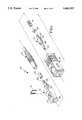
- FIG. 1is an exploded perspective view of an optical fiber connector assembly with which the invention is applicable;
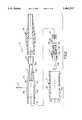
- FIG. 2is an exploded axial section through the connector assembly
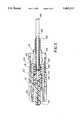
- FIG. 3is an axial section through the connector assembly, substantially assembled except for the boot and crimping tube, and with the epoxy-injecting tube in place;
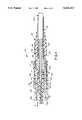
- FIG. 4is an axial section through the completely assembled connector assembly, with the optical fiber cable in position.
- an optical fiber connector assemblygenerally designated 10 which includes an outer shell, generally designated 12, an inner housing, generally designated 14, and a ferrule assembly, generally designated 16, mounted within housing 14 and retained within the housing 14 by a clip 17.
- a coil spring 18is sandwiched between housing 14 and ferrule assembly 16 to provide for relative movement therebetween, as will be described in greater detail hereinafter.
- a washer 20is sandwiched between the coil spring and the ferrule assembly.
- a rear crimping tube 22is provided for crimping the strength members of the optical fiber cable, and a strain relief boot 24 surrounds the cable, all of which will be described hereinafter.
- ferrule assembly 16includes a plug portion 26 and a forwardly projecting ferrule 28.
- Outer shell 12is a one-piece structure unitarily molded of dielectric material such as plastic or the like.
- Inner housing 14is a one-piece structure unitarily fabricated of metal material, such as die cast zinc.
- Plug portion 26 of ferrule assembly 16is unitarily molded of dielectric material, such as plastic or the like, and ferrule 28 is fabricated of ceramic or like material.
- Coil spring 18, washer 20, clip 17 and crimping tube 22are fabricated of metal material.
- Strain relief boot 24is fabricated of a flexible material of a rubber-like or plastic nature.
- FIG. 4shows optical fiber connector assembly 10 in fully assembled condition.
- ferrule assembly 16is mounted within housing 14 and retained therein by clip 17 which engages grooves 27 in plug portion 26.
- the housing 14is mounted within shell 12.
- the housinghas a pair of snap-latch protuberances 30 which engage within apertures 32 of shell 12.
- the housinghas a rearwardly extending barrel portion 34 which defines a passageway 36 extending forwardly to an enlarged cavity area 38 of the passageway which receives ferrule assembly 16.
- Plug 26 of the ferrule assemblyincludes an axial passage 40
- ferrule 28includes an axial hole 42, whereby passageway 36 of the housing, passage 40 of the plug and hole 42 of the ferrule all are coaxially aligned through the connector assembly for receiving portions of the optical fiber cable.
- an optical fiber cableis of conventional construction and includes an outer plastic sheath 46 and a bare fiber end 48 which is disposed within hole 42 of ferrule 28.
- the inner fiber of the cableis surrounded by a dielectric cladding 50.
- strength memberssuch as a braid, may be provided between outer sheath 46 and inner cladding 50.
- a shielding foilalso may be provided between those components, all of which is conventional in the field.
- FIG. 4shows that outer cladding 46 (along with any strength members) is located about barrel portion 34 of housing 14 and inside metal crimping tube 22.
- the crimping tube 22is mechanically crimped onto the sheath to effectively grip the composite cable.
- Dielectric cladding 50 and the inner fiberextend forwardly through passageway 36 in housing 14 and through passage 40 in plug 26 of the ferrule assembly.
- the bare fiber end 48then extends through hole 42 in ferrule 28.
- epoxyis used extensively in the assembly of optical fiber connectors, particularly in holding the inner components of the optical fiber cable within the connector. More particularly, epoxy conventionally is injected into passage 40 within plug 26 of the ferrule assembly, and the epoxy migrates into hole 42 in ferrule 28. Therefore, when the optical fiber cable is inserted or assembled within the connector as shown in FIG. 4 and described above, the bare fiber end and a portion of the cladding 50 adjacent thereto, are fixed by the epoxy within the ferrule assembly. Considerable problems are encountered in applying the epoxy both during manufacture as well as in field assembly which is quite prominent. If the epoxy migrates out of its intended locations, the entire connector assembly can be rendered defective. For instance, an interface area 56 (FIG. 4) is defined between ferrule assembly 16 and housing 14. Should epoxy migrate into this area and into cavity 38 about coil spring 18, the coil spring could be rendered immobile and, thereby, render the entire connector assembly defective.
- an interface area 56(FIG. 4) is defined between ferrule assembly 16 and housing 14. Should epoxy migrate into this area and into cavity 38
- the inventioncontemplates substantially assembling the connector assembly, (i.e. except for crimping tube 22 and strain relief boot 24) and installing a tube 58 made of Teflon® material or the like through a rearward end 60 of housing 14.
- This assemblyas shown in FIG. 3 provides for a number of advantages.
- the connector assemblyis substantially assembled. This can be performed at the manufacturing point, and this assembly can be shipped to other work stations, to customers and/or to personnel out in the field.
- Such an assemblyavoids maintaining inventories of all of the separate components, such as outer shell 12, inner housing 14, ferrule assembly 16, coil spring 18 and washer 20. This also obviates the necessity of field personnel or assembly customers in having to assemble all of these components.
- the assembly shown in FIG. 3also is fabricated with tube 58 in position.
- the tubeis provided for facilitating the injection of epoxy into ferrule assembly 16, past the other components of the assembly, in a neat and precise manner. Once the epoxy is injected through the tube into the ferrule assembly, the tube is removed, and optical fiber cable 44 (FIG. 4) and its various components can be assembled as described above, fixing the cable in place by the injected epoxy and crimping tube 22.
- recess 64is an enlarged portion of passage 40 through the plug.
- the recessis sized to allow free insertion of the inner end of tube 58 therein, but the recess is not large enough for any epoxy to pass outwardly therefrom.
- recess 64is chamfered, as at 68, to provide an inwardly oblique surface against which inner end 62 of tube 58 can abut and seal. Sealing is achieved by light press fit of tube 58 into the end of the plug 26.
- a positive sealing meansis provided to prevent epoxy from migrating outwardly into interface area 56 toward coil spring 18 and the other interior components of the connector assembly.
- a feature of the inventionincludes providing tube 58 of a sufficient length so that a rear end 69 of the tube projects outwardly beyond rearward end 60 of housing 14 as can be seen in FIG. 3.
- the tubeis transparent. Therefore, with the transparent tube projecting rearwardly of the housing, visual inspection can be made to ensure that epoxy has been injected through the tube if the tube is filled at least to the visually observable projecting portion thereof.
- the inventioncontemplates a method of assembling optical fiber connector assembly 10.
- the methodwill be set forth, as follows, and sets forth a general summary of the structural features of the invention. More particularly, the method includes the steps of providing housing 14 with a forward end 70 and rearward end 60 with the axially extending passageway 36 therethrough.
- Ferrule assembly 16is mounted in the passageway, with the ferrule assembly including forwardly projecting ferrule 28 for axially receiving fiber end 48 of optical fiber cable 44 inserted into the passageway from the rearward end of the housing.
- Tube 44is inserted into the passageway from the rearward end of the housing until front end 62 of the tube is located in recess 64 of plug 26 of ferrule assembly 16. Epoxy is injected through the tube to the ferrule assembly. The tube then is withdrawn, and the optical fiber cable is installed into the connector assembly and secured therein by the epoxy and crimping tube 22.
Landscapes
- Physics & Mathematics (AREA)
- General Physics & Mathematics (AREA)
- Optics & Photonics (AREA)
- Mechanical Coupling Of Light Guides (AREA)
Abstract
Description
This invention generally relates to the field of optical fiber connectors and, particularly, to a fiber optic connector assembly which includes a unique system for applying epoxy internally of a substantially assembled connector, including for field applications.
Fiber optic connector assemblies, such as a conventional optical fiber SC type connector, generally include some sort of generally hollow housing which mounts an interior ferrule assembly. The ferrule assembly includes a forwardly projecting ferrule, such as of ceramic material, for receiving the bare fiber end of an optical fiber cable inserted into a rear end of the housing. The housing normally includes a passageway; the ferrule assembly includes a passage; and the ferrule, itself, includes a hole, all of which are coaxially aligned through the connector assembly. A spring, such as a coil spring, normally is sandwiched between the ferrule assembly and the housing to spring-load the forwardly projecting ferrule. The connector assembly may include an outer shell or coupling nut, a rear crimping tube, as well as a rear strain relief boot. All of these various components, in one form or another, are fairly conventional in these types of optical fiber connector assemblies.
A major problem in assembling and using optical fiber connectors, as described above, involves storing, shipping and handling all of the various components of the connector. In addition, epoxy is used extensively in assembling the connectors, particularly in holding the optical fiber cable within the connector. It is quite typical for a manufacturer to manufacture all of the components which then are stored separately until assembly with an optical fiber cable. The multiple components then are transferred to a work station for assembly. Or, the multiple components are shipped to a customer where the optical fiber cable is installed. Or the multiple components are shipped to the field where a field operator assembles the components and installs the optical fiber cable. Storage, shipping and handling of such multiple components generally is very inefficient and expensive, in addition to the costs involved in maintaining so many components in inventory.
In addition, when epoxy is used to install an optical fiber cable in a connector during assembly, there is a tendency for the epoxy to migrate into areas of relative movement within the connector assembly. In other words, as stated above, the forwardly projecting ferrule or the entire ferrule assembly is spring-loaded to afford relative movement of the ferrule/ferrule assembly and the housing component or components of the connector. If some of the epoxy "freezes" these relatively movable components, the entire connector assembly is defective. Controlled application of the epoxy in situations wherein the connector, itself, also must be assembled is very difficult, particularly for field applications.
This invention is directed to solving the various problems outlined above by providing a unique system wherein an implement, such as a tube, is removably assembled with the connector assembly, itself, to facilitate applying epoxy interiorly of a pre-assembled connector.
An object, therefore, of the invention is to provide a new and improved optical fiber connector assembly of the character described above, and including a method of manufacturing or fabricating the assembly.
In the exemplary embodiment of the invention, an optical fiber connector includes housing means having a forward end, a rearward end and an axially extending passageway therethrough. A ferrule assembly is mounted within the passageway and includes a forwardly projecting ferrule near a forward end of the connector for axially receiving the fiber end of an optical fiber cable inserted into the passageway from the rearward end of the housing means.
The invention contemplates providing a tube removably positioned in the passageway in the housing means, with a front end of the tube at the ferrule assembly and a rear end of the tube exposed at the rearward end of the housing means for receiving epoxy injected into the tube. Therefore, the connector assembly can be substantially assembled and transported with the tube in position in the passageway; the epoxy later can be injected through the tube to the ferrule assembly; the tube can be removed; and the optical fiber cable can be inserted into the passageway into engagement with the injected epoxy.
As disclosed herein, the ferrule assembly includes a plug having an axially extending cable-receiving passage that is aligned with the passageway in the housing means. The ferrule projects forwardly of the plug and has a fiber-receiving hole that is aligned with the passage. The tube extends through the passageway and into abutment with the plug about the passage therein. Preferably, the plug includes a recess for sealingly receiving the front end of the tube. Actually, an interior interface is formed between the housing and the ferrule assembly and whereat relative movement therebetween takes place. The tube extends past the interface to prevent epoxy from moving to or through the interface.
Lastly, the tube extends rearwardly beyond the rearward end of the housing. The tube preferably is transparent to afford visual inspection of the amount of epoxy therewithin.
Other objects, features and advantages of the invention will be apparent from the following detailed description taken in connection with the accompanying drawings.
The features of this invention which are believed to be novel are set forth with particularity in the appended claims. The invention, together with its objects and the advantages thereof, may be best understood by reference to the following description taken in conjunction with the accompanying drawings, in which like reference numerals identify like elements in the figures and in which:
FIG. 1 is an exploded perspective view of an optical fiber connector assembly with which the invention is applicable;
FIG. 2 is an exploded axial section through the connector assembly;
FIG. 3 is an axial section through the connector assembly, substantially assembled except for the boot and crimping tube, and with the epoxy-injecting tube in place; and
FIG. 4 is an axial section through the completely assembled connector assembly, with the optical fiber cable in position.
Referring to the drawings in greater detail, and first to FIGS. 1 and 2, the invention is embodied in an optical fiber connector assembly, generally designated 10, which includes an outer shell, generally designated 12, an inner housing, generally designated 14, and a ferrule assembly, generally designated 16, mounted withinhousing 14 and retained within thehousing 14 by a clip 17. Acoil spring 18 is sandwiched betweenhousing 14 andferrule assembly 16 to provide for relative movement therebetween, as will be described in greater detail hereinafter. Awasher 20 is sandwiched between the coil spring and the ferrule assembly. Arear crimping tube 22 is provided for crimping the strength members of the optical fiber cable, and astrain relief boot 24 surrounds the cable, all of which will be described hereinafter. Lastly,ferrule assembly 16 includes aplug portion 26 and a forwardly projectingferrule 28.
Before proceeding with a description of the invention as is depicted in FIG. 3, reference is made to FIG. 4 which shows opticalfiber connector assembly 10 in fully assembled condition. It can be seen thatferrule assembly 16 is mounted withinhousing 14 and retained therein by clip 17 which engagesgrooves 27 inplug portion 26. Thehousing 14, in turn, is mounted withinshell 12. The housing has a pair of snap-latch protuberances 30 which engage withinapertures 32 ofshell 12. The housing has a rearwardly extendingbarrel portion 34 which defines apassageway 36 extending forwardly to an enlargedcavity area 38 of the passageway which receivesferrule assembly 16.Plug 26 of the ferrule assembly includes anaxial passage 40, andferrule 28 includes anaxial hole 42, wherebypassageway 36 of the housing,passage 40 of the plug andhole 42 of the ferrule all are coaxially aligned through the connector assembly for receiving portions of the optical fiber cable.
More particularly, still referring to FIG. 4, an optical fiber cable, generally designated 44, is of conventional construction and includes an outerplastic sheath 46 and abare fiber end 48 which is disposed withinhole 42 offerrule 28. The inner fiber of the cable is surrounded by adielectric cladding 50. Although not shown in the drawings, strength members, such as a braid, may be provided betweenouter sheath 46 andinner cladding 50. A shielding foil also may be provided between those components, all of which is conventional in the field.
FIG. 4 shows that outer cladding 46 (along with any strength members) is located aboutbarrel portion 34 ofhousing 14 and insidemetal crimping tube 22. The crimpingtube 22 is mechanically crimped onto the sheath to effectively grip the composite cable.Dielectric cladding 50 and the inner fiber extend forwardly throughpassageway 36 inhousing 14 and throughpassage 40 inplug 26 of the ferrule assembly. Thebare fiber end 48 then extends throughhole 42 inferrule 28.
Lastly in referring to FIG. 4, it can be seen thatcoil spring 18 is sandwiched betweenhousing 14 and plug 26 offerrule assembly 16 to spring-load the ferrule assembly. Therefore,ferrule 28 and fiber end 48 (along with the entire ferrule assembly) can move relative tohousing 14,shell 12, etc. as indicated by double-headed arrow "A".
As stated in the "Background", above, epoxy is used extensively in the assembly of optical fiber connectors, particularly in holding the inner components of the optical fiber cable within the connector. More particularly, epoxy conventionally is injected intopassage 40 withinplug 26 of the ferrule assembly, and the epoxy migrates intohole 42 inferrule 28. Therefore, when the optical fiber cable is inserted or assembled within the connector as shown in FIG. 4 and described above, the bare fiber end and a portion of thecladding 50 adjacent thereto, are fixed by the epoxy within the ferrule assembly. Considerable problems are encountered in applying the epoxy both during manufacture as well as in field assembly which is quite prominent. If the epoxy migrates out of its intended locations, the entire connector assembly can be rendered defective. For instance, an interface area 56 (FIG. 4) is defined betweenferrule assembly 16 andhousing 14. Should epoxy migrate into this area and intocavity 38 aboutcoil spring 18, the coil spring could be rendered immobile and, thereby, render the entire connector assembly defective.
Referring to FIG. 3, the invention contemplates substantially assembling the connector assembly, (i.e. except for crimpingtube 22 and strain relief boot 24) and installing atube 58 made of Teflon® material or the like through arearward end 60 ofhousing 14. This assembly as shown in FIG. 3 provides for a number of advantages. In particular, it can be seen that the connector assembly is substantially assembled. This can be performed at the manufacturing point, and this assembly can be shipped to other work stations, to customers and/or to personnel out in the field. Such an assembly avoids maintaining inventories of all of the separate components, such asouter shell 12,inner housing 14,ferrule assembly 16,coil spring 18 andwasher 20. This also obviates the necessity of field personnel or assembly customers in having to assemble all of these components.
The assembly shown in FIG. 3 also is fabricated withtube 58 in position. The tube is provided for facilitating the injection of epoxy intoferrule assembly 16, past the other components of the assembly, in a neat and precise manner. Once the epoxy is injected through the tube into the ferrule assembly, the tube is removed, and optical fiber cable 44 (FIG. 4) and its various components can be assembled as described above, fixing the cable in place by the injected epoxy and crimpingtube 22.
More particularly, it can be seen that afront end 62 oftube 58 is fitted into arecess 64 at arear end 66 ofplug 26 offerrule assembly 16. Actually,recess 64 is an enlarged portion ofpassage 40 through the plug. The recess is sized to allow free insertion of the inner end oftube 58 therein, but the recess is not large enough for any epoxy to pass outwardly therefrom. In addition,recess 64 is chamfered, as at 68, to provide an inwardly oblique surface against whichinner end 62 oftube 58 can abut and seal. Sealing is achieved by light press fit oftube 58 into the end of theplug 26. Therefore, a positive sealing means is provided to prevent epoxy from migrating outwardly intointerface area 56 towardcoil spring 18 and the other interior components of the connector assembly. Once epoxy is injected intopassage 40 andhole 42 of the ferrule assembly, the tube is removed and the assembly is ready to immediately receive the optical fiber cable.Tube 58 does not get wet with epoxy due to the property of Teflon® material or the like.
A feature of the invention includes providingtube 58 of a sufficient length so that a rear end 69 of the tube projects outwardly beyondrearward end 60 ofhousing 14 as can be seen in FIG. 3. Preferably, the tube is transparent. Therefore, with the transparent tube projecting rearwardly of the housing, visual inspection can be made to ensure that epoxy has been injected through the tube if the tube is filled at least to the visually observable projecting portion thereof.
Lastly, the invention contemplates a method of assembling opticalfiber connector assembly 10. The method will be set forth, as follows, and sets forth a general summary of the structural features of the invention. More particularly, the method includes the steps of providinghousing 14 with aforward end 70 and rearward end 60 with theaxially extending passageway 36 therethrough.Ferrule assembly 16 is mounted in the passageway, with the ferrule assembly including forwardly projectingferrule 28 for axially receivingfiber end 48 ofoptical fiber cable 44 inserted into the passageway from the rearward end of the housing.Tube 44 is inserted into the passageway from the rearward end of the housing untilfront end 62 of the tube is located inrecess 64 ofplug 26 offerrule assembly 16. Epoxy is injected through the tube to the ferrule assembly. The tube then is withdrawn, and the optical fiber cable is installed into the connector assembly and secured therein by the epoxy and crimpingtube 22.
It will be understood that the invention may be embodied in other specific forms without departing from the spirit or central characteristics thereof. The present examples and embodiments, therefore, are to be considered in all respects as illustrative and not restrictive, and the invention is not to be limited to the details given herein.
Claims (10)
1. In a partial optical fiber connector assembly which includes,
a housing having a forward end and an axially extending passageway therethrough,
a ferrule assembly inserted into said passageway from the forward end of said housing, said ferrule assembly having a spring providing a biasing force and a means for maintaining said ferrule assembly in said housing,
a ferrule positioned at the front end of said ferrule assembly and extending out of the forward end of said housing for axially receiving a fiber end of an optical fiber cable inserted into said passageway from the rearward end of the housing,
an outer shell having a forward end and a rearward end movably mounted about said housing, wherein the forward end of said shell is in its most forward position substantially flush with the forward end of said housing, and the rearward end of said housing extends past the rearward end of said shell,
wherein the improvement comprises
a tube removably positioned in said passageway with a front end of the tube at the ferrule assembly and a rear end of the tube exposed at the rearward end of the housing for receiving epoxy injected into the tube,
wherein said ferrule assembly includes a chamfered recess for sealingly receiving the front end of the tube,
whereby the connector assembly can be transported with the tube in a position in the passageway, epoxy later can be injected through the tube to the ferrule assembly, the tube can be removed and the optical fiber end of the optical fiber cable can be inserted into the passageway into engagement with the injected epoxy.
2. In an optical fiber connector as set forth in claim 1, wherein an interior interface is formed between the housing and the ferrule assembly, and said tube extends past the interface to prevent epoxy from moving to or through the interface.
3. In an optical fiber connector as set forth in claim 1, wherein said tube extends rearwardly beyond the rearward end of the housing.
4. In an optical fiber connector as set forth in claim 3, wherein said tube is translucent to afford visual inspection of the amount of epoxy therewith.
5. In an optical fiber connector as set forth in claim 4, wherein said tube is made of Teflon® material or the like.
6. In an optical fiber connector as set forth in claim 4, wherein said tube has its inside diameter coated with Teflon® material or the like.
7. A method of assembling an optical fiber connector assembly, comprising the steps of:
providing a housing means with a forward end, a rearward end and an axially extending passageway therethrough;
mounting a ferrule assembly in said passageway, with the ferrule assembly including a forwardly projecting ferrule for axially receiving the fiber end of an optical fiber cable inserted into the passageway from the rearward end of the housing means;
inserting a tube into the passageway from the rearward end of the housing means until a front end of the tube is located at the ferrule assembly;
injecting an epoxy through the tube to the ferrule assembly;
withdrawing the tube; and
inserting the optical fiber cable into the passageway into engagement with the epoxy until the fiber end is located in said ferrule.
8. The method of claim 7, including inserting the tube into sealing engagement with the ferrule assembly.
9. The method of claim 7, wherein said tube is made of Teflon® material or the like.
10. The method of claim 7, wherein said tube has its inside diameter coated with Teflon® material or the like.
Priority Applications (7)
| Application Number | Priority Date | Filing Date | Title |
|---|---|---|---|
| US08/268,155US5465313A (en) | 1994-06-29 | 1994-06-29 | Optical fiber connector and method of fabricating same |
| TW084104724ATW287242B (en) | 1994-06-29 | 1995-05-12 | |
| JP1995006960UJP3019449U (en) | 1994-06-29 | 1995-06-15 | Fiber optic connector |
| EP95109483AEP0690320B1 (en) | 1994-06-29 | 1995-06-20 | Optical fiber connector and method of fabricating same |
| DE69528687TDE69528687T2 (en) | 1994-06-29 | 1995-06-20 | Fiber optic connector and process for its manufacture |
| KR1019950017759AKR0170029B1 (en) | 1994-06-29 | 1995-06-28 | Optical fiber connector and method of fabricating the same |
| CN95108047ACN1059744C (en) | 1994-06-29 | 1995-06-28 | Optical fiber connector and method of fabricating same |
Applications Claiming Priority (1)
| Application Number | Priority Date | Filing Date | Title |
|---|---|---|---|
| US08/268,155US5465313A (en) | 1994-06-29 | 1994-06-29 | Optical fiber connector and method of fabricating same |
Publications (1)
| Publication Number | Publication Date |
|---|---|
| US5465313Atrue US5465313A (en) | 1995-11-07 |
Family
ID=23021725
Family Applications (1)
| Application Number | Title | Priority Date | Filing Date |
|---|---|---|---|
| US08/268,155Expired - LifetimeUS5465313A (en) | 1994-06-29 | 1994-06-29 | Optical fiber connector and method of fabricating same |
Country Status (7)
| Country | Link |
|---|---|
| US (1) | US5465313A (en) |
| EP (1) | EP0690320B1 (en) |
| JP (1) | JP3019449U (en) |
| KR (1) | KR0170029B1 (en) |
| CN (1) | CN1059744C (en) |
| DE (1) | DE69528687T2 (en) |
| TW (1) | TW287242B (en) |
Cited By (40)
| Publication number | Priority date | Publication date | Assignee | Title |
|---|---|---|---|---|
| US5699466A (en)* | 1994-09-28 | 1997-12-16 | Miyachi Technos Corporation | Optical fiber connector |
| EP0823648A1 (en)* | 1996-08-06 | 1998-02-11 | Seiko Instruments Inc. | Optical connector assembling adhesive injection pipe and method of assembling an optical connector using the same |
| US5768455A (en)* | 1996-11-19 | 1998-06-16 | Lucent Technologies Inc. | Fiber optic connector |
| US5858161A (en)* | 1995-06-02 | 1999-01-12 | Seiko Instruments Inc. | Method of assembling an optical fiber connector and an adhesive agent injecting jig for use therewith |
| US6085004A (en)* | 1998-02-03 | 2000-07-04 | 3M Innovative Properties Company | Optical fiber connector using photocurable adhesive |
| GB2371374A (en)* | 2001-01-18 | 2002-07-24 | Mao-Hsiang Chen | Optical fibre plug connector with opposing holes for elastic inserts |
| US20060115219A1 (en)* | 2004-11-29 | 2006-06-01 | Mudd Ronald L | Optical fiber connector |
| WO2008030432A3 (en)* | 2006-09-06 | 2008-06-26 | Afl Telecommunications Llc | Spliced-on connector system and method, splicer, and connector holder for producing the same |
| US7572065B2 (en) | 2007-01-24 | 2009-08-11 | Adc Telecommunications, Inc. | Hardened fiber optic connector |
| US7591595B2 (en) | 2007-01-24 | 2009-09-22 | Adc Telelcommunications, Inc. | Hardened fiber optic adapter |
| US7614797B2 (en) | 2007-01-24 | 2009-11-10 | Adc Telecommunications, Inc. | Fiber optic connector mechanical interface converter |
| US20090310916A1 (en)* | 2006-08-15 | 2009-12-17 | Luther James P | Ruggedized Fiber Optic Connector Assembly |
| US7677814B2 (en) | 2007-05-06 | 2010-03-16 | Adc Telecommunications, Inc. | Mechanical interface converter for making non-ruggedized fiber optic connectors compatible with a ruggedized fiber optic adapter |
| US7686519B2 (en) | 2007-06-18 | 2010-03-30 | Adc Telecommunications, Inc. | Hardened fiber optic housing and cable assembly |
| US7722258B2 (en) | 2007-05-06 | 2010-05-25 | Adc Telecommunications, Inc. | Interface converter for SC fiber optic connectors |
| US7744286B2 (en) | 2007-12-11 | 2010-06-29 | Adc Telecommunications, Inc. | Hardened fiber optic connection system with multiple configurations |
| USRE42522E1 (en) | 2003-09-08 | 2011-07-05 | Adc Telecommunications, Inc. | Ruggedized fiber optic connection |
| US20110189876A1 (en)* | 2010-02-03 | 2011-08-04 | Tyco Electronics Nederland Bv | Enclosure assembly for a connector, strain relief element and method |
| CN102565956A (en)* | 2010-12-31 | 2012-07-11 | 深圳日海通讯技术股份有限公司 | Optical fiber plug |
| US20120219253A1 (en)* | 2009-11-17 | 2012-08-30 | Ntt Electronics Corporation | Optical connector plug |
| EP2579396A1 (en) | 2011-10-04 | 2013-04-10 | Tyco Electronics Nederland B.V. | Shielded enclosure assembly for at least one in particular standardized connector on a cable |
| US8939655B2 (en) | 2012-06-29 | 2015-01-27 | Corning Cable Systems Llc | Dust caps, fiber optic connectors, and fiber optic splitter modules incorporating interlocking key features |
| US8939654B2 (en) | 2012-09-27 | 2015-01-27 | Adc Telecommunications, Inc. | Ruggedized multi-fiber fiber optic connector with sealed dust cap |
| US9016953B2 (en) | 2012-02-20 | 2015-04-28 | Adc Telecommunications, Inc. | Fiber optic connector, fiber optic connector and cable assembly, and methods for manufacturing |
| US9052469B2 (en) | 2013-04-26 | 2015-06-09 | Corning Cable Systems Llc | Preterminated fiber optic connector sub-assemblies, and related fiber optic connectors, cable assemblies, and methods |
| AU2014202329B2 (en)* | 2007-12-11 | 2015-10-29 | Commscope Technologies Llc | Hardened fiber optic connector compatible with hardened and non-hardened fiber optic adapters |
| US9268102B2 (en) | 2012-02-07 | 2016-02-23 | Tyco Electronics Raychem Bvba | Cable termination assembly and method for connectors |
| US9306315B2 (en) | 2011-05-10 | 2016-04-05 | Te Connectivity Nederland B.V. | End fitting for a cable with sealing protrusion and enclosure assembly with end fitting |
| US9304262B2 (en) | 2011-11-23 | 2016-04-05 | Commscope Technologies Llc | Multi-fiber optic connector |
| US9563024B2 (en) | 2012-02-27 | 2017-02-07 | Sunsea Telecommunications Co., Ltd. | High-density fiber connector with front casing defining engagement recess and rear casing including hook engaging with each other |
| WO2017106514A1 (en)* | 2015-12-16 | 2017-06-22 | Commscope Technologies Llc | Field installed fiber optic connector |
| US20170212313A1 (en)* | 2014-07-21 | 2017-07-27 | Te Connectivity Nederland B.V. | Fiber optic connector and fiber optic cable assembly with fiber optic cable anchored to boot of fiber optic connector |
| US9720185B2 (en) | 2014-05-23 | 2017-08-01 | Commscope Technologies Llc | Systems and method for processing optical cable assemblies |
| US10444443B2 (en) | 2013-06-27 | 2019-10-15 | CommScope Connectivity Belgium BVBA | Fiber optic cable anchoring device for use with fiber optic connectors and methods of using the same |
| US10895698B2 (en) | 2015-11-30 | 2021-01-19 | Commscope Technologies Llc | Fiber optic connector and assembly thereof |
| US11002917B2 (en) | 2014-02-14 | 2021-05-11 | Commscope Telecommunications (Shanghai) Co. Ltd. | Fiber optic connector and method of assembling the same |
| US11119283B2 (en) | 2014-07-09 | 2021-09-14 | Commscope Telecommunications (Shanghai) Co. Ltd. | Optical fiber connector and method of assembling the same on site |
| US11372172B2 (en) | 2012-11-30 | 2022-06-28 | Commscope Technologies Llc | Fiber optic connector with field installable outer connector housing |
| US11474306B2 (en) | 2014-02-14 | 2022-10-18 | Commscope Telecommunications (Shanghai) Co. Ltd. | Fiber optic connector and method of assembling the same |
| JP2022547242A (en)* | 2020-08-05 | 2022-11-11 | 華為技術有限公司 | connector |
Families Citing this family (13)
| Publication number | Priority date | Publication date | Assignee | Title |
|---|---|---|---|---|
| US7503395B2 (en) | 2005-05-21 | 2009-03-17 | Schlumberger Technology Corporation | Downhole connection system |
| KR100724076B1 (en)* | 2005-12-16 | 2007-06-04 | 네트워크케이블 주식회사 | Field Assembly Optical Connector |
| EP2283390B1 (en)* | 2008-04-21 | 2016-11-09 | ADC Telecommunications, INC. | Hardened fiber optic connector with connector body joined to cylindrical cable by unitary housing |
| CN101881865B (en)* | 2010-06-17 | 2012-03-07 | 深圳日海通讯技术股份有限公司 | Optical fiber connector |
| CN103018850B (en)* | 2011-09-28 | 2015-08-12 | 富士康(昆山)电脑接插件有限公司 | Opto-electric connector |
| CN102520489B (en) | 2012-01-11 | 2016-04-13 | 深圳日海通讯技术股份有限公司 | A kind of joints of optical fibre and assembly method thereof |
| CN202758106U (en)* | 2012-09-06 | 2013-02-27 | 深圳日海通讯技术股份有限公司 | Improved optical fiber access plug |
| KR101939378B1 (en) | 2017-04-06 | 2019-04-11 | (주)엠에스전자 | Connector for optical fiber cable |
| CN107193088A (en)* | 2017-07-28 | 2017-09-22 | 天津华宁电子有限公司 | A kind of new type mining optical fiber Quick Connect Kit |
| CN110174727A (en)* | 2018-05-30 | 2019-08-27 | 中航光电科技股份有限公司 | A kind of tail portion sheath and the connector using the tail portion sheath |
| CN110174728A (en)* | 2018-05-30 | 2019-08-27 | 中航光电科技股份有限公司 | Connector and its tail portion sheath |
| CN110007407A (en)* | 2019-04-25 | 2019-07-12 | 芜湖乐知智能科技有限公司 | A kind of optical fiber connector |
| JPWO2023089971A1 (en)* | 2021-11-19 | 2023-05-25 |
Citations (5)
| Publication number | Priority date | Publication date | Assignee | Title |
|---|---|---|---|---|
| US4333705A (en)* | 1976-09-25 | 1982-06-08 | Plessey Mandel Und Investments A.G. | Jig for coupling of optic-waveguide elements |
| US5222169A (en)* | 1992-02-18 | 1993-06-22 | Foxconn International, Inc. | Optical fiber connector assembly |
| US5283849A (en)* | 1993-02-01 | 1994-02-01 | Siecor Corporation | Optical connector preassembly |
| US5285510A (en)* | 1992-12-15 | 1994-02-08 | The Whitaker Corporation | Fiber optic connector |
| US5287425A (en)* | 1993-02-26 | 1994-02-15 | Foxconn International, Inc. | Optical fiber SC type connector assembly with partly pre-assembled components |
Family Cites Families (3)
| Publication number | Priority date | Publication date | Assignee | Title |
|---|---|---|---|---|
| DE68915032T2 (en)* | 1988-02-23 | 1995-01-26 | Whitaker Corp | Sheathed plug for optical cable. |
| US5096276A (en)* | 1988-02-23 | 1992-03-17 | Amp Incorporated | Sheath connector for an optical cable |
| JP2896802B2 (en)* | 1990-06-05 | 1999-05-31 | セイコーインスツルメンツ株式会社 | Manufacturing method of optical fiber connector plug |
- 1994
- 1994-06-29USUS08/268,155patent/US5465313A/ennot_activeExpired - Lifetime
- 1995
- 1995-05-12TWTW084104724Apatent/TW287242B/zhactive
- 1995-06-15JPJP1995006960Upatent/JP3019449U/ennot_activeExpired - Lifetime
- 1995-06-20EPEP95109483Apatent/EP0690320B1/ennot_activeExpired - Lifetime
- 1995-06-20DEDE69528687Tpatent/DE69528687T2/ennot_activeExpired - Fee Related
- 1995-06-28KRKR1019950017759Apatent/KR0170029B1/ennot_activeExpired - Fee Related
- 1995-06-28CNCN95108047Apatent/CN1059744C/ennot_activeExpired - Fee Related
Patent Citations (5)
| Publication number | Priority date | Publication date | Assignee | Title |
|---|---|---|---|---|
| US4333705A (en)* | 1976-09-25 | 1982-06-08 | Plessey Mandel Und Investments A.G. | Jig for coupling of optic-waveguide elements |
| US5222169A (en)* | 1992-02-18 | 1993-06-22 | Foxconn International, Inc. | Optical fiber connector assembly |
| US5285510A (en)* | 1992-12-15 | 1994-02-08 | The Whitaker Corporation | Fiber optic connector |
| US5283849A (en)* | 1993-02-01 | 1994-02-01 | Siecor Corporation | Optical connector preassembly |
| US5287425A (en)* | 1993-02-26 | 1994-02-15 | Foxconn International, Inc. | Optical fiber SC type connector assembly with partly pre-assembled components |
Cited By (97)
| Publication number | Priority date | Publication date | Assignee | Title |
|---|---|---|---|---|
| US5699466A (en)* | 1994-09-28 | 1997-12-16 | Miyachi Technos Corporation | Optical fiber connector |
| US5858161A (en)* | 1995-06-02 | 1999-01-12 | Seiko Instruments Inc. | Method of assembling an optical fiber connector and an adhesive agent injecting jig for use therewith |
| EP0823648A1 (en)* | 1996-08-06 | 1998-02-11 | Seiko Instruments Inc. | Optical connector assembling adhesive injection pipe and method of assembling an optical connector using the same |
| US5913001A (en)* | 1996-08-06 | 1999-06-15 | Seiko Instruments Inc. | Optical connector assembling adhesive injection pipe and method of assembling an optical connector using the same |
| US5768455A (en)* | 1996-11-19 | 1998-06-16 | Lucent Technologies Inc. | Fiber optic connector |
| US6085004A (en)* | 1998-02-03 | 2000-07-04 | 3M Innovative Properties Company | Optical fiber connector using photocurable adhesive |
| GB2371374A (en)* | 2001-01-18 | 2002-07-24 | Mao-Hsiang Chen | Optical fibre plug connector with opposing holes for elastic inserts |
| USRE42522E1 (en) | 2003-09-08 | 2011-07-05 | Adc Telecommunications, Inc. | Ruggedized fiber optic connection |
| US20060115219A1 (en)* | 2004-11-29 | 2006-06-01 | Mudd Ronald L | Optical fiber connector |
| US8523455B2 (en)* | 2006-08-15 | 2013-09-03 | Corning Cable Systems Llc | Ruggedized fiber optic connector assembly |
| US20090310916A1 (en)* | 2006-08-15 | 2009-12-17 | Luther James P | Ruggedized Fiber Optic Connector Assembly |
| WO2008030432A3 (en)* | 2006-09-06 | 2008-06-26 | Afl Telecommunications Llc | Spliced-on connector system and method, splicer, and connector holder for producing the same |
| US20090162019A1 (en)* | 2006-09-06 | 2009-06-25 | Afl Telecommunications Llc | Spliced-on connector system and method, splicer, and connector holder for producing the same |
| US8043013B2 (en) | 2006-09-06 | 2011-10-25 | Afl Telecommunications Llc | Spliced-on connector system and method, splicer, and connector holder for producing the same |
| US8770862B2 (en) | 2007-01-24 | 2014-07-08 | Adc Telecommunications, Inc. | Hardened fiber optic connector |
| US7572065B2 (en) | 2007-01-24 | 2009-08-11 | Adc Telecommunications, Inc. | Hardened fiber optic connector |
| US9664862B2 (en) | 2007-01-24 | 2017-05-30 | Commscope Technologies Llc | Hardened fiber optic connector |
| US10877224B2 (en) | 2007-01-24 | 2020-12-29 | Commscope Technologies Llc | Fiber optic adapter |
| US11409057B2 (en) | 2007-01-24 | 2022-08-09 | Commscope Technologies Llc | Hardened fiber optic connector |
| US12111502B2 (en) | 2007-01-24 | 2024-10-08 | Commscope Technologies Llc | Hardened fiber optic connector |
| US7591595B2 (en) | 2007-01-24 | 2009-09-22 | Adc Telelcommunications, Inc. | Hardened fiber optic adapter |
| US7614797B2 (en) | 2007-01-24 | 2009-11-10 | Adc Telecommunications, Inc. | Fiber optic connector mechanical interface converter |
| US8137002B2 (en) | 2007-05-06 | 2012-03-20 | Adc Telecommunications, Inc. | Mechanical interface converter for making non-ruggedized fiber optic connectors compatible with a ruggedized fiber optic adapter |
| US7722258B2 (en) | 2007-05-06 | 2010-05-25 | Adc Telecommunications, Inc. | Interface converter for SC fiber optic connectors |
| US7677814B2 (en) | 2007-05-06 | 2010-03-16 | Adc Telecommunications, Inc. | Mechanical interface converter for making non-ruggedized fiber optic connectors compatible with a ruggedized fiber optic adapter |
| US8128294B2 (en) | 2007-05-06 | 2012-03-06 | Adc Telecommunications, Inc. | Interface converter for SC fiber optic connectors |
| US7686519B2 (en) | 2007-06-18 | 2010-03-30 | Adc Telecommunications, Inc. | Hardened fiber optic housing and cable assembly |
| US8414196B2 (en) | 2007-12-11 | 2013-04-09 | Adc Telecommunications, Inc. | Optical fiber connection system with locking member |
| US7744288B2 (en) | 2007-12-11 | 2010-06-29 | Adc Telecommunications, Inc. | Hardened fiber optic connector compatible with hardened and non-hardened fiber optic adapters |
| US9482829B2 (en) | 2007-12-11 | 2016-11-01 | Commscope Technologies Llc | Hardened fiber optic connector compatible with hardened and non-hardened fiber optic adapters |
| US10746939B2 (en) | 2007-12-11 | 2020-08-18 | Commscope Technologies Llc | Hardened fiber optic connector compatible with hardened and non-hardened fiber optic adapters |
| US7744286B2 (en) | 2007-12-11 | 2010-06-29 | Adc Telecommunications, Inc. | Hardened fiber optic connection system with multiple configurations |
| US12181718B2 (en) | 2007-12-11 | 2024-12-31 | Commscope Technologies Llc | Hardened fiber optic connector compatible with hardened and non-hardened fiber optic adapters |
| US8202008B2 (en) | 2007-12-11 | 2012-06-19 | Adc Telecommunications, Inc. | Hardened fiber optic connection system with multiple configurations |
| AU2014202329B2 (en)* | 2007-12-11 | 2015-10-29 | Commscope Technologies Llc | Hardened fiber optic connector compatible with hardened and non-hardened fiber optic adapters |
| US7762726B2 (en) | 2007-12-11 | 2010-07-27 | Adc Telecommunications, Inc. | Hardened fiber optic connection system |
| US10101538B2 (en) | 2007-12-11 | 2018-10-16 | Commscope Technologies Llc | Hardened fiber optic connector compatible with hardened and non-hardened fiber optic adapters |
| US7959361B2 (en) | 2007-12-11 | 2011-06-14 | Adc Telecommunications, Inc. | Hardened fiber optic connection system |
| US11867950B2 (en) | 2007-12-11 | 2024-01-09 | Commscope Technologies Llc | Hardened fiber optic connector compatible with hardened and non-hardened fiber optic adapters |
| US7942590B2 (en) | 2007-12-11 | 2011-05-17 | Adc Telecommunications, Inc. | Hardened fiber optic connector and cable assembly with multiple configurations |
| US11275220B2 (en) | 2007-12-11 | 2022-03-15 | Commscope Technologies Llc | Hardened fiber optic connector compatible with hardened and non-hardened fiber optic adapters |
| US8764313B2 (en)* | 2009-11-17 | 2014-07-01 | Ntt Electronics Corporation | Optical connector plug |
| US20120219253A1 (en)* | 2009-11-17 | 2012-08-30 | Ntt Electronics Corporation | Optical connector plug |
| US20110189876A1 (en)* | 2010-02-03 | 2011-08-04 | Tyco Electronics Nederland Bv | Enclosure assembly for a connector, strain relief element and method |
| EP2927720A1 (en)* | 2010-02-03 | 2015-10-07 | Tyco Electronics Nederland B.V. | Enclosure assembly for a connector, strain relief element, and method |
| US9379488B2 (en) | 2010-02-03 | 2016-06-28 | Te Connectivity Nederland B.V. | Enclosure assembly for a connector, strain relief element, and method |
| US8672705B2 (en)* | 2010-02-03 | 2014-03-18 | Te Connectivity Nederland B.V. | Enclosure assembly for a connector, strain relief element and method |
| EP2354825A1 (en)* | 2010-02-03 | 2011-08-10 | Tyco Electronics Nederland B.V. | Enclosure assembly for a connector, strain relief element, and method |
| CN102565956A (en)* | 2010-12-31 | 2012-07-11 | 深圳日海通讯技术股份有限公司 | Optical fiber plug |
| US9306315B2 (en) | 2011-05-10 | 2016-04-05 | Te Connectivity Nederland B.V. | End fitting for a cable with sealing protrusion and enclosure assembly with end fitting |
| EP2579396A1 (en) | 2011-10-04 | 2013-04-10 | Tyco Electronics Nederland B.V. | Shielded enclosure assembly for at least one in particular standardized connector on a cable |
| US9153898B2 (en) | 2011-10-04 | 2015-10-06 | Te Connectivity Nederland B.V. | Shielded enclosure assembly for at least one in particular standardized connector on a cable |
| US10782487B2 (en) | 2011-11-23 | 2020-09-22 | Commscope Technologies Llc | Multi-fiber fiber optic connector |
| US12019282B2 (en) | 2011-11-23 | 2024-06-25 | Commscope Technologies Llc | Multi-fiber fiber optic connector |
| US11237331B2 (en) | 2011-11-23 | 2022-02-01 | Commscope Technologies Llc | Multi-fiber fiber optic connector |
| US9304262B2 (en) | 2011-11-23 | 2016-04-05 | Commscope Technologies Llc | Multi-fiber optic connector |
| US10451817B2 (en) | 2011-11-23 | 2019-10-22 | Commscope Technologies Llc | Multi-fiber fiber optic connector |
| US9442257B2 (en) | 2011-11-23 | 2016-09-13 | Commscope Technologies Llc | Multi-fiber fiber optic connector |
| US9864151B2 (en) | 2011-11-23 | 2018-01-09 | CommScope Technologies LCC | Multi-fiber fiber optic connector |
| US9964715B2 (en) | 2011-11-23 | 2018-05-08 | Commscope Technologies Llc | Multi-fiber fiber optic connector |
| US9625660B2 (en) | 2012-02-07 | 2017-04-18 | CommScope Connectivity Belgium BVBA | Cable termination assembly and method for connectors |
| US10036859B2 (en) | 2012-02-07 | 2018-07-31 | CommScope Connectivity Belgium BVBA | Cable termination assembly and method for connectors |
| US9268102B2 (en) | 2012-02-07 | 2016-02-23 | Tyco Electronics Raychem Bvba | Cable termination assembly and method for connectors |
| US9016953B2 (en) | 2012-02-20 | 2015-04-28 | Adc Telecommunications, Inc. | Fiber optic connector, fiber optic connector and cable assembly, and methods for manufacturing |
| US10353154B2 (en) | 2012-02-20 | 2019-07-16 | Commscope Technologies Llc | Fiber optic connector, fiber optic connector and cable assembly, and methods for manufacturing |
| US9470850B2 (en) | 2012-02-20 | 2016-10-18 | Commscope Technologies Llc | Fiber optic connector, fiber optic connector and cable assembly, and methods for manufacturing |
| US11125951B2 (en) | 2012-02-20 | 2021-09-21 | Commscope Technologies Llc | Fiber optic connector, fiber optic connector and cable assembly, and methods for manufacturing |
| US9563024B2 (en) | 2012-02-27 | 2017-02-07 | Sunsea Telecommunications Co., Ltd. | High-density fiber connector with front casing defining engagement recess and rear casing including hook engaging with each other |
| US8939655B2 (en) | 2012-06-29 | 2015-01-27 | Corning Cable Systems Llc | Dust caps, fiber optic connectors, and fiber optic splitter modules incorporating interlocking key features |
| US8939654B2 (en) | 2012-09-27 | 2015-01-27 | Adc Telecommunications, Inc. | Ruggedized multi-fiber fiber optic connector with sealed dust cap |
| US9291780B2 (en) | 2012-09-27 | 2016-03-22 | Commscope Technologies Llc | Ruggedized multi-fiber fiber optic connector with sealed dust cap |
| US11880074B2 (en) | 2012-11-30 | 2024-01-23 | Commscope Technologies Llc | Fiber optic connector with field installable outer connector housing |
| US11372172B2 (en) | 2012-11-30 | 2022-06-28 | Commscope Technologies Llc | Fiber optic connector with field installable outer connector housing |
| US9151905B2 (en) | 2013-04-26 | 2015-10-06 | Corning Optical Communications LLC | Preterminated fiber optic connector sub-assemblies, and related fiber optic connectors, cable assemblies, and methods |
| US9052469B2 (en) | 2013-04-26 | 2015-06-09 | Corning Cable Systems Llc | Preterminated fiber optic connector sub-assemblies, and related fiber optic connectors, cable assemblies, and methods |
| US12117658B2 (en) | 2013-06-27 | 2024-10-15 | CommScope Connectivity Belgium BVBA | Fiber optic cable anchoring device for use with fiber optic connectors and methods of using the same |
| US10444443B2 (en) | 2013-06-27 | 2019-10-15 | CommScope Connectivity Belgium BVBA | Fiber optic cable anchoring device for use with fiber optic connectors and methods of using the same |
| US11002917B2 (en) | 2014-02-14 | 2021-05-11 | Commscope Telecommunications (Shanghai) Co. Ltd. | Fiber optic connector and method of assembling the same |
| US12072537B2 (en) | 2014-02-14 | 2024-08-27 | Commscope Telecommunications (Shanghai) Co. Ltd. | Fiber optic connector and method of assembling the same |
| US11474306B2 (en) | 2014-02-14 | 2022-10-18 | Commscope Telecommunications (Shanghai) Co. Ltd. | Fiber optic connector and method of assembling the same |
| US11506844B2 (en) | 2014-02-14 | 2022-11-22 | Commscope Telecommunications (Shanghai) Co. Ltd. | Fiber optic connector and method of assembling the same |
| US12228773B1 (en) | 2014-02-14 | 2025-02-18 | Commscope Telecommunications (Shanghai) Co., Ltd. | Fiber optic connector and method of assembling the same |
| US9720185B2 (en) | 2014-05-23 | 2017-08-01 | Commscope Technologies Llc | Systems and method for processing optical cable assemblies |
| US11119283B2 (en) | 2014-07-09 | 2021-09-14 | Commscope Telecommunications (Shanghai) Co. Ltd. | Optical fiber connector and method of assembling the same on site |
| US12287518B2 (en) | 2014-07-09 | 2025-04-29 | Commscope Telecommunications (Shanghai) Co. Ltd. | Optical fiber connector and method of assembling the same on site |
| US11726270B2 (en) | 2014-07-09 | 2023-08-15 | CommScope Telecommunications (Shanghai) Co. Ltd | Optical fiber connector and method of assembling the same on site |
| US20170212313A1 (en)* | 2014-07-21 | 2017-07-27 | Te Connectivity Nederland B.V. | Fiber optic connector and fiber optic cable assembly with fiber optic cable anchored to boot of fiber optic connector |
| US11409051B2 (en) | 2015-11-30 | 2022-08-09 | Commscope Technologies Llc | Fiber optic connector and assembly thereof |
| US10895698B2 (en) | 2015-11-30 | 2021-01-19 | Commscope Technologies Llc | Fiber optic connector and assembly thereof |
| US12072539B2 (en) | 2015-11-30 | 2024-08-27 | Commscope Technologies Llc | Fiber optic connector and assembly thereof |
| US10976500B2 (en) | 2015-12-16 | 2021-04-13 | Commscope Technologies Llc | Field installed fiber optic connector |
| US10641970B2 (en) | 2015-12-16 | 2020-05-05 | Commscope Technologies Llc | Field installed fiber optic connector |
| US11378756B2 (en) | 2015-12-16 | 2022-07-05 | Commscope Technologies Llc | Field installed fiber optic connector |
| WO2017106514A1 (en)* | 2015-12-16 | 2017-06-22 | Commscope Technologies Llc | Field installed fiber optic connector |
| US11789216B2 (en) | 2015-12-16 | 2023-10-17 | Commscope Technologies Llc | Field installed fiber optic connector |
| US11899264B2 (en) | 2020-08-05 | 2024-02-13 | Huawei Technologies Co., Ltd. | Connector |
| JP2022547242A (en)* | 2020-08-05 | 2022-11-11 | 華為技術有限公司 | connector |
Also Published As
| Publication number | Publication date |
|---|---|
| KR0170029B1 (en) | 1999-05-01 |
| CN1059744C (en) | 2000-12-20 |
| KR960001793A (en) | 1996-01-25 |
| EP0690320A1 (en) | 1996-01-03 |
| TW287242B (en) | 1996-10-01 |
| EP0690320B1 (en) | 2002-10-30 |
| JP3019449U (en) | 1995-12-19 |
| DE69528687D1 (en) | 2002-12-05 |
| DE69528687T2 (en) | 2003-07-17 |
| CN1121180A (en) | 1996-04-24 |
Similar Documents
| Publication | Publication Date | Title |
|---|---|---|
| US5465313A (en) | Optical fiber connector and method of fabricating same | |
| US10451811B2 (en) | Hardened fiber optic connector with pre-compressed spring | |
| US6178283B1 (en) | End piece for a fiber-optic cable | |
| US6068410A (en) | Splice housing assembly and associated assembly method for mechanically decoupling a ferrule from a splice body | |
| EP0576973B1 (en) | Fiber optic connector and tool for assembling same | |
| EP0784218A1 (en) | Optical fiber connector plug and optical fiber connector | |
| US5943462A (en) | Fiber optic stub assembly having a water resistant barrier and method for manufacturing the same | |
| MXPA06010746A (en) | Field installable optical fiber connector. | |
| CA1247419A (en) | Optical fiber connector | |
| EP0717859B1 (en) | Plug-type connector | |
| US5953475A (en) | Fiber optic plug connector | |
| KR20030060061A (en) | Contoured internal stub crimp backbone | |
| US6604867B2 (en) | Fiber optic connector | |
| US5768455A (en) | Fiber optic connector | |
| JP3226755B2 (en) | Optical fiber connector assembling method and adhesive injection jig | |
| US4676588A (en) | Fiber optic connector | |
| JP2656004B2 (en) | Connector assembly for optical fiber cable | |
| US6282348B1 (en) | Optical ferrule and method for installing fiber without adhesives | |
| JP5160706B2 (en) | Fiber optic cable terminal equipment | |
| US7192194B2 (en) | Universal adapter for fiber optic connectors | |
| EP4502688A1 (en) | Optical fiber cable with optical connector, method for manufacturing optical fiber cable with optical connector, and optical connector | |
| EP0398613B1 (en) | Cable fixing element for a connector of a multicore type optical fiber cable | |
| CA3133649C (en) | Fiber optic connectors with funnel-shaped boots and methods of installing the same | |
| EP0024959B1 (en) | Connector for optical waveguides | |
| US20240369777A1 (en) | Fiber optic connectors having an internal retention body |
Legal Events
| Date | Code | Title | Description |
|---|---|---|---|
| AS | Assignment | Owner name:MOLEX INCORPORATED, ILLINOIS Free format text:ASSIGNMENT OF ASSIGNORS INTEREST;ASSIGNORS:BELENKIY, YURIY;GUMIN, IRINA L.;MARGOLIN, MARK;AND OTHERS;REEL/FRAME:007073/0217 Effective date:19940628 | |
| STCF | Information on status: patent grant | Free format text:PATENTED CASE | |
| FPAY | Fee payment | Year of fee payment:4 | |
| FPAY | Fee payment | Year of fee payment:8 | |
| REMI | Maintenance fee reminder mailed | ||
| FPAY | Fee payment | Year of fee payment:12 |