US5465145A - Semiconductor wafer inspection apparatus - Google Patents
Semiconductor wafer inspection apparatusDownload PDFInfo
- Publication number
- US5465145A US5465145AUS08/309,999US30999994AUS5465145AUS 5465145 AUS5465145 AUS 5465145AUS 30999994 AUS30999994 AUS 30999994AUS 5465145 AUS5465145 AUS 5465145A
- Authority
- US
- United States
- Prior art keywords
- light
- reflection adjustment
- semiconductor wafer
- adjustment portion
- inspection apparatus
- Prior art date
- Legal status (The legal status is an assumption and is not a legal conclusion. Google has not performed a legal analysis and makes no representation as to the accuracy of the status listed.)
- Expired - Fee Related
Links
Images



Classifications
- G—PHYSICS
- G01—MEASURING; TESTING
- G01N—INVESTIGATING OR ANALYSING MATERIALS BY DETERMINING THEIR CHEMICAL OR PHYSICAL PROPERTIES
- G01N21/00—Investigating or analysing materials by the use of optical means, i.e. using sub-millimetre waves, infrared, visible or ultraviolet light
- G01N21/84—Systems specially adapted for particular applications
- G01N21/88—Investigating the presence of flaws or contamination
- G01N21/94—Investigating contamination, e.g. dust
- G—PHYSICS
- G01—MEASURING; TESTING
- G01N—INVESTIGATING OR ANALYSING MATERIALS BY DETERMINING THEIR CHEMICAL OR PHYSICAL PROPERTIES
- G01N21/00—Investigating or analysing materials by the use of optical means, i.e. using sub-millimetre waves, infrared, visible or ultraviolet light
- G01N21/84—Systems specially adapted for particular applications
- G01N21/88—Investigating the presence of flaws or contamination
- G01N21/95—Investigating the presence of flaws or contamination characterised by the material or shape of the object to be examined
- G01N21/9501—Semiconductor wafers
- H—ELECTRICITY
- H01—ELECTRIC ELEMENTS
- H01L—SEMICONDUCTOR DEVICES NOT COVERED BY CLASS H10
- H01L22/00—Testing or measuring during manufacture or treatment; Reliability measurements, i.e. testing of parts without further processing to modify the parts as such; Structural arrangements therefor
- H01L22/10—Measuring as part of the manufacturing process
- H01L22/12—Measuring as part of the manufacturing process for structural parameters, e.g. thickness, line width, refractive index, temperature, warp, bond strength, defects, optical inspection, electrical measurement of structural dimensions, metallurgic measurement of diffusions
- H—ELECTRICITY
- H01—ELECTRIC ELEMENTS
- H01L—SEMICONDUCTOR DEVICES NOT COVERED BY CLASS H10
- H01L2924/00—Indexing scheme for arrangements or methods for connecting or disconnecting semiconductor or solid-state bodies as covered by H01L24/00
- H01L2924/0001—Technical content checked by a classifier
- H01L2924/0002—Not covered by any one of groups H01L24/00, H01L24/00 and H01L2224/00
Definitions
- the present inventionrelates to semiconductor wafer inspection apparatuses, and more particularly, to a semiconductor wafer inspection apparatus for measuring diameters of particles and counting those particles on a surface of a semiconductor wafer.
- a semiconductor wafer inspection apparatusthat is used for measuring diameter of particles and counting those particles on a surface of a semiconductor wafer according to a distribution of intensity of scattered light with respect to angles of scattering, using the Layleigh-Debye approximation or the like.
- Such an apparatusis disclosed, for example, in Leon L. Pesotchinsky and Zinovy Fichtenholz: IEEE Transactions Semiconductor Manufacturing, Vol. 1, No. 1, pp. 16-22, 1988.
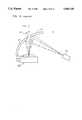
- FIG. 17is a schematic diagram showing a structure of a conventional semiconductor wafer inspection apparatus.
- a sample placing portion 200having a stage 220 for scanning a sample (semiconductor wafer) 210 two dimensionally.
- a light projecting portion 100for generating a beam of light 110 with which a surface of sample 210 is irradiated.
- a light collecting portion 300is provided between light projecting portion 100 and sample placing portion 200 for collecting light scattered from the surface of sample 210.
- Light collecting portion 300includes a ellipsoid of revolution.
- a light receiving portion 500is provided at the focus (F2) of scattered light collected by light collecting portion 300 for measuring a total amount of collected light.
- a measurement control portion 600for driving light projecting portion 100 and sample placing portion 200 and for processing an output signal supplied from light receiving portion 500.
- measurement control portion 600transmits a drive signal to light projecting portion 100 for generating a beam of light 110 from light projecting portion 100.
- Beam of light 110passes through an optical beam inlet hole 310 provided at light collecting portion 300 to become an incident light 120.
- a particle 230 on the surface of sample 210is irradiated with incident light 120.
- a point where incident light 120 crosses sample 210is the focus (F1) of light collecting portion 300.
- Beams of light scattered by irradiation of particle 230 with incident light 120are collected to the other focus (F2) by light collecting portion 300.
- the scattered light collected to the focus (F2)is received by light receiving portion 500, whereby an intensity of scattered light corresponding to particle 230 is measured. Accordingly, a diameter of particle 230 can be measured.
- the above operationis carried out with stage 220 moved so that measurement and counting of particles 230 on the surface of sample 210 can be carried out.
- FIG. 18is a schematic diagram showing scattering of light caused by a very small pit on the surface of sample 210.
- FIG. 19is a graph showing a distribution of intensity of scattered light with respect to angles of scattering in the case when the particle exists on the surface of the sample (P), when a pit exists on the surface of the sample (S), and when neither the particle nor the pit exists on the surface of the sample (N).
- ratio of a total amount of scattered light of (P) to that of (S)becomes smaller if the difference between (P) and (S) is negligible in the range of smaller angles (0- ⁇ s ) of light scattering.
- the scattered light (S) caused by pit 240could erroneously be identified as scattered light (P) caused by particles. Correct measurement of diameters of particles on the surface of sample 210 and counting the number of those particles have been difficult with the conventional semiconductor wafer inspection apparatus 700.
- An object of the present inventionis to correctly measure diameters and count the number of particles on a surface of a semiconductor wafer in a semiconductor wafer inspection apparatus.
- Another object of the present inventionis to clearly distinguish scattered light caused by particles from scattered light caused by pits in a semiconductor wafer inspection apparatus.
- a semiconductor wafer inspection apparatusincludes a light projecting means, a light collecting means, and a light receiving means.
- the light projecting meansis provided for directing a beam of light onto a main surface of the semiconductor of wafer.
- the light collecting meansis provided for collecting beams of light scattered from the main surface of the semiconductor wafer.
- the light receiving meansis provided for receiving scattered light collected by the light collecting means and measuring intensity of scattered light.
- the light collecting meansincludes a light collecting portion having a first light reflectance and a reflection adjustment portion having a second light reflectance different from the first light reflectance.
- the light collecting meansincludes the light collecting portion having the first light reflectance and the reflection adjustment portion having the second light reflectance different from the first light reflectance, when, for example, the second light reflectance is made smaller than the first light reflectance, intensity of scattered light emitted from the reflection adjustment portion is made smaller than intensity of scattered light emitted from the light collecting portion even if intensity of scattered light incident on the light collecting portion is equal to intensity of scattered light incident on the reflection adjustment portion.
- the reflection adjustment portionis provided to include a first reflection adjustment portion having a third light reflectance and a second reflection adjustment portion having a fourth light reflectance different from the third light reflectance, a distribution of intensity of scattered light reflected on the reflection adjustment portion can be adjusted more properly. If the reflection adjustment portion is provided to include a liquid crystal having a dynamic scattering mode, the reflectance of the reflection adjustment portion can be easily changed by altering a voltage value applied to the liquid crystal.
- a semiconductor wafer inspection apparatusincludes a light projecting means, a light collecting means, a light receiving means, a reference light detecting means, and a light reflectance control means.
- the light collecting meansis provided for collecting beams of light scattered from a main surface of a semiconductor wafer and includes a light collecting portion having a first light reflectance and a reflection adjustment portion made of a liquid crystal having a second light reflectance different from the first light reflectance.
- the reference light detecting meansis provided for detecting reference light transmitted through the liquid crystal of the reflection adjustment portion.
- the light reflectance control meansis provided for controlling a light reflectance of the reflection adjustment portion according to a detection output of the reference light detecting means.
- the reflection adjustment portion made of liquid crystal and having the second light reflectanceis included in the light collecting portion, the reference light transmitted through the liquid crystal of the reflection adjustment portion is detected by the reference light detecting means, and the light reflectance of the reflection adjustment portion is controlled by the light reflectance control means according to the detection output of a reference light detecting means.
- the dynamic scattering mode of the liquid crystalcan be easily controlled in a feedback loop by the reference light reflecting the reflectance of the reflection adjustment portion.
- the light reflectance of the reflection adjustment portioncan be controlled more correctly.
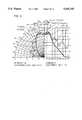
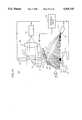
- FIG. 1is a schematic diagram showing a structure of a semiconductor wafer inspection apparatus according to a first embodiment of the present invention.
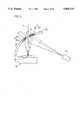
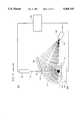
- FIG. 2is a schematic diagram showing scattering light when pits on a surface of a sample are detected by the semiconductor wafer inspection apparatus according to the first embodiment shown in FIG. 1.
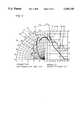
- FIG. 3is a graph showing measurement results of intensity of scattered light in the cases of the presence of pits, the presence of particles, and the absence of particles and the pits on the surface of the sample, using the semiconductor wafer inspection apparatus according to the first embodiment as shown in FIG. 1.
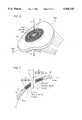
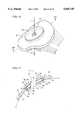
- FIG. 4is a oblique projection view showing a light collecting portion and a reflection adjustment portion of the semiconductor wafer inspection apparatus according to the first embodiment shown in FIG. 1.
- FIG. 5is a sectional view taken of the reflection adjustment portion and the light collecting portion taken along line 800--800 shown in FIG. 4.
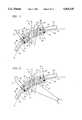
- FIG. 6is a oblique projection view showing a light collecting portion and a reflection adjustment portion of a semiconductor wafer inspection apparatus according to a second embodiment of the present invention.
- FIG. 7is a sectional view of the light collecting portion and the reflection adjustment portion taken along line 850--850 shown in FIG. 6.
- FIG. 8is a sectional view showing a modified example of the reflection adjustment portion according to the second embodiment shown in FIG. 7.
- FIG. 9is a graph showing measurement results of intensity of scattered light in the cases of the presence of particles, the presence of pits, and the absence of pits and particles on the surface of the sample, using the reflection adjustment portion and the light collecting portion according to the second embodiment as shown in FIGS. 6 and 7.
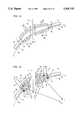
- FIG. 10is a oblique projection view showing a reflection adjustment portion and a light collection portion of a semiconductor wafer inspection apparatus according to a third embodiment of the present invention.
- FIG. 11is a sectional view of the reflection adjustment portion and the light collection portion according to the third embodiment taken along line 900--900 shown in FIG. 10.
- FIG. 12is a sectional view showing in greater detail the reflection adjustment portion according to the third embodiment shown in FIG. 11.
- FIG. 13is a sectional view showing an operation of the reflection adjustment portion according to the third embodiment shown in FIG. 12.
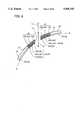
- FIG. 14is a sectional view showing a reflection adjustment portion and a light collecting portion of a semiconductor wafer inspection apparatus according to a fourth embodiment of the present invention.
- FIG. 15is a sectional view showing an operation of the reflection adjustment portion according to the fourth embodiment shown in FIG. 14.
- FIG. 16is a schematic diagram showing a structure of a semiconductor wafer inspection apparatus according to a fifth embodiment of the present invention.
- FIG. 17is a schematic diagram showing a structure of a conventional semiconductor wafer inspection apparatus.
- FIG. 18is a schematic diagram showing scattering light when pits on the surface of the sample are detected by the conventional semiconductor wafer inspection apparatus shown in FIG. 17.
- FIG. 19is a graph showing measurement results of intensity of scattered light in the cases of the presence of particles, the presence of pits, and the absence of pits and particles on the surface of the sample, using the conventional semiconductor wafer inspection apparatus as shown in FIG. 17.
- a sample placing portion 20 including a stage 22is provided for scanning a sample (semiconductor wafer) 21 two dimensionally.
- a light projecting portion 10 for generating a beam of light 11 with which a surface of sample 21 is irradiatedis also provided.
- a light collecting portion 30 and a reflection adjustment portion 40 formed continuously with light collecting portion 30are provided between light projecting portion 10 and sample placing portion 20.
- Light collecting portion 30 and reflection adjustment portion 40are constituted by a portion of a ellipsoid of revolution having two focus of F1 and F2.
- Light collecting portion 30has a mirror surface A p
- reflection adjustment portion 40has a mirror surface A s .
- Mirror surface A p and mirror surface A sform a mirror surface A.
- An optical beam inlet hole 41is provided in reflection adjustment portion 40 for passing beam of light 11 therethrough.
- Reflection adjustment portion 40has a circular shape in a planar layout. Radius of the circle is a distance from optical beam inlet hole 41 to focus F1 multiplied by tan ⁇ s .
- Reflection adjustment portion 40is thus structured so that the light scattered within a certain range of angles (0- ⁇ s ) are incident on reflection adjustment portion 40.
- a reflectance of mirror surface A s of reflection adjustment portion 40is set to 1/10 of a reflectance of mirror surface A p of light collecting portion 30, for example.
- a light receiving portion 80is provided for measuring intensity of scattered light at focus F2 where scattered light reflected from light collecting portion 30 and reflection adjustment portion 40 are collected.
- Light projecting portion 10, sample placing portion 20, and light receiving portion 80connect to a measurement control portion 90.
- Measurement control portion 90controls driving of light projecting portion 10 and sample placing portion 20 and processes an output signal supplied from light receiving portion 80. More particularly, measurement control portion 90 controls operation and adjustment of beam of light 11 and controls scanning operation of stage 22.
- Measurement control portion 90also controls operation of light receiving portion 80 and analyzes input/output signals supplied from light receiving portion 80 to calculate diameters and the number of particle 23. Measurement control portion 90 can display the result of calculation.
- the reflectance of mirror surface A s of reflection adjustment portion 40is set to 1/10 of the reflectance of mirror surface A p of light collecting portion 30, as described earlier.
- the intensity of scattered light emitted from reflection adjustment portion 40is 1/10 of the intensity of scattered light emitted from light collecting portion 30.
- the distribution of intensity of scattered light reflected from light collecting portion 30is emphasized compared with that reflected from reflection adjustment portion 40.
- FIG. 2is a schematic diagram illustrating a distribution of intensity of scattered light when a pit 24 exists on sample (semiconductor wafer) 21.
- intensity of scattered light at the other scattering anglesis represented by I
- the normalized log (I/I 0 )is plotted. It is noted that intensity of scattered light (log (I/I 0 )) is smaller in the range of scattering angles of 0- ⁇ s corresponding to reflection adjustment portion 40 than in the range of scattering angles of ⁇ s or more (see FIG. 3). This is because the light reflectance of reflection adjustment portion 40 has been set to 1/10 of the light reflectance of light collecting portion 30.
- intensity of scattered light within the range of scattering angles 0- ⁇ swhere the intensity of scattered light caused by particle (P1) is almost equal to the intensity of scattered light caused by pit (S1), can be made smaller than the intensity of scattered light within the other range of scattering angles of ⁇ s or more. Accordingly, the intensity of scattered light within the range of scattering angles of ⁇ s or more where the difference between the intensity of scattered light caused by particle (P2) and the intensity of scattered light caused by pit (S2) is apparent can be increased relatively.
- the ratio of the total amount of scattered light caused by particles to that caused by pitsis made greater than before.
- the scattered light caused by pits and the scattered light caused by particlescan thus be distinguished from each other clearly. This can prevents effectively an erroneous identification of the scattered light caused by pits as the scattered light caused by particles as before. This also improves an accuracy of measurement of diameters and the number of particles than before. Although the intensity I of scattered light within the range of scattering angles of 0- ⁇ s is reduced to 1/10 of the intensity at the other angles, such a reduced intensity is sufficient to detect the presence of particle 23 on the surface of sample 21.
- Light collecting portion 30is formed by a base material 32 of the light collecting portion having mirror surface A p of a ellipsoid of revolution, and a light collecting film 33 having a large reflectance and formed on mirror surface A p of base material 32 of the light collecting portion.
- Reflection adjustment portion 40is formed by a base material 42 of the reflection adjustment portion having mirror surface A s continuous with mirror surface A p , and a reflection adjustment film 43 having a reflectance smaller than that of light collecting film 33 and formed on mirror surface A s of base material 42 of the reflection adjustment portion.
- Base material 32 of the light collecting portionis made by, for example, plastic forming (press molding) of a stainless steel plate or an aluminum alloy plate.
- the base material 32 of the light collecting portionmay be formed by injection molding of a plastic material.
- An arrangement of sample placing portion 20 (see FIG. 1), a light path of scattered light, and light receiving portion 80should be taken into consideration when base material 32 of the light collecting portion is formed.
- Base material 32 of the light collection portionhas a hole portion 31 having a predetermined radius with beam of light 11 being a central axis, when viewed as a plane.
- Light collecting film 33is made of a film having a large spectral reflectance with respect to a wavelength of beam of light 11, or a dielectric multi-layer film. In other words, light collecting film 33 is obtained by quick evaporation of aluminum, silver or the like in high vacuum on mirror surface A p of base material 32 of the light collecting portion.
- Base material 42 of the reflection adjustment portionhas an external diameter slightly smaller than the diameter of hole portion 31 provided in light collecting portion 30.
- Base material 42 of the reflection adjustment portionalso has optical beam inlet hole 41 which is coaxially provided with hole portion 31.
- Base material 42 of the reflection adjustment portionis made of a transparent, semi-transparent or opaque organic glass, or inorganic glass or metal.
- Reflection adjustment film 43is made of such a dielectric multi-layer film that has spectral reflectance of 1/10 of the spectral reflectance of light collecting film 33 with respect to the wavelength of beam of light 11.
- a thin film of magnesium fluoridemay be provided for improving endurance of those films.
- Base material 42 of reflection adjustment portion 42is bonded to hole portion 31 of base material 32 of the light collecting portion with an epoxy resin or the like.
- Light receiving portion 80(see FIG. 1) is formed by an optical fiber cable (not shown) having one end placed at focus F2, and a light detector (not shown) connected to the other end of the optical fiber cable.
- a light detector(not shown) connected to the other end of the optical fiber cable.
- Light collecting portion 80includes an electronic circuit allowing adjustment of output gains by changing voltages applied to the photomultiplier (the light detector).
- a laser light source and an optical systemare incorporated in light projecting portion 10 (see FIG. 1).
- ArII gas laserhaving a wavelength of 488 nm is used, for instance.
- the optical systemconsists of such lenses that have the diameter of about 45 ⁇ m of incident light 12 with which sample 21 is irradiated.
- Measurement control portion 90(see FIG. 1) can control the operation of the laser light source constituting light projecting portion 10 and controls output of incident light 12.
- Sample placing portion 20(see FIG. 1) has an attach/detach mechanism of sample (semiconductor wafer) 21.
- An X-Y stage using a stepping motor or any stage allowing scanning of X-axis and rotating of the sampleis used as stage 22.
- Measurement control portion 90instructs the operation of stage 22 or changes the scanning speed of the X-Y stage or the rotating speed of the rotating stage.
- the reflection adjustment portionconsists of the first through third reflection adjustment portions each having a different reflectance. More particularly, the first reflection adjustment portion is formed of a first base material 42a of the reflection adjustment portion and a first reflection adjustment film 43a.
- the second reflection adjustment portionis formed of a second base material 42b of the reflection adjustment portion and a second reflection adjustment film 43b.
- the third reflection adjustment portionis formed of a third base material 42c of the reflection adjustment portion and a third reflection adjustment film 43c.
- Optical beam inlet hole 41 lightis provided in first base material 42a of the reflection adjustment portion.
- Third base material 42c of the reflection adjustment portionis fitted in hole portion 31 of base material 32 of the light collecting portion.
- Second base material 42bis fitted in an internal hole of third base material 42c
- first base material 42ais fitted in an internal hole of second base material 42b.
- a stepped portionis provided at hole 31, the internal hole of third base material 42c, the internal hole of second base material 42b, the outer peripheral portion of third base material 42c, the outer peripheral portion of second base material 42b, and the outer peripheral portion of first base material 42a, respectively.
- First through third base materials 42a, 42b, and 42c of the reflection adjustment portioncan therefore be assembled easily with such stepped portions.
- stepped portionsmay not be provided at a first base material 42d of the reflection adjustment portion, a second base material 42e, and a third base material 42f.
- an adhesivesuch as epoxy resin is applied to bond base material 32 of the light collecting portion to third base material 42f, third base material 42f to second base material 42e, and second base material 42e to first base material 42b.
- First reflection adjustment film 43d, second reflection adjustment film 43e and third reflection adjustment film 43fare respectively provided on the surfaces of first base material 42d, second base material 43e, and third base material 42f.
- first reflection adjustment films 43a, 43d, second films 43b, 43e, and third films 43c, 43fcorrespond to ⁇ s /3 of the scattering angle ⁇ s shown in FIG. 1.
- Reflectance of mirror surface A s 1, A s 2, A s 3are 1/10, 1/5, and 1/2 of the reflectance of mirror surface A p , respectively.
- the dielectric multi-layer filmfor example, is used as first through third reflection adjustment films 43a-43f.
- the distribution of intensity of scattered light when there are particles on the sample measured by the semiconductor wafer inspection apparatus according to the second embodimentare represented by P1a, P1b, P1c, and P2.
- the distribution of intensity of scattered light when there are pits on the sampleare represented by S1a, S1b, S1c, and S2.
- Distribution when there are neither pits nor particles on the surface of the sampleis represented by N.
- measurement control portion 90calculates the total amount of the intensity of scattered light with the change of the intensity of scattered light in the range of scattering angles of 0- ⁇ s taken into consideration, resulting in improvement of accurate measurement of diameters and the number of particles.
- FIGS. 10 and 11A third embodiment is shown in FIGS. 10 and 11 in which a liquid crystal 55 having a dynamic scattering mode is used as the reflection adjustment portion.
- a transparent electrode 54is formed to sandwich liquid crystal 55.
- a glass base material 52 of the reflection adjustment portion and a reflection adjustment glass material 53are formed to sandwich transparent electrode 54.
- a liquid crystal sealing material 56is arranged to seal liquid crystal 55.
- Lead lines 57, 57are connected to transparent electrodes 54, 54, respectively, for applying a voltage to transparent electrodes 54.
- One lead line 57is connected to transparent electrode 54 through liquid crystal sealing material 56.
- Glass base material 52 of the reflection adjustment portion and reflection adjustment glass material 53are made of inorganic or organic glass.
- Transparent electrode 54is made of a transparent or semi-transparent conductive film such as a tin oxide film, an indium oxide film, or an evaporated-metal thin film.
- liquid crystal 55the liquid crystal having the dynamic scattering mode, such as MBBA (Methoxy Butyl Benzylidene Aniline) which is one of the liquid crystals in the nematic state is used.
- Liquid crystal sealing material 56is made of a low melting point glass, an epoxy resin or the like.
- the surface of transparent electrode 54is arranged such that longitudinal axes of molecules of liquid crystal 55 are oriented in a certain direction with respect to the surface of transparent electrode 54.
- Liquid crystal 55is set to have a thickness d of about 8-about 60 ⁇ m.
- a voltage of 0 Vis applied to transparent electrode 54 through lead line 57. Since molecules of liquid crystal 55 are arranged in one direction, most of the scattered light 13 passes through liquid crystal 55. Scattered light 13 then passes through glass base material 52 of the reflection adjustment portion. As a result, there is very little scattered light directed to the light receiving portion (not shown).
- a voltage of at least V thwhich is a starting voltage value of the dynamic scattering mode (DSM) is applied to transparent electrode 54 through lead line 57.
- the applied voltagecauses ions present in liquid crystal 55 to move, resulting in disarray of molecules of liquid crystal 55. Accordingly, light 13 is reflected from liquid crystal 55, and most of the scattered light is directed to the light receiving portion (not shown). If the voltage applied to liquid crystal 55 is V th or more, the reflectance of liquid crystal 55 increases as the applied voltage increases. Therefore, the reflectance of liquid crystal 55 can be changed easily by changing the voltage applied to liquid crystal 55.
- a fourth embodimentis shown in FIGS. 14 and 15 in which a thickness of a liquid crystal 65 is changed continuously compared with the third embodiment. More particularly, a thickness d on the side of base material 32 of the light collecting portion of liquid crystal 65 is set to, for example, 8-10 ⁇ m, and a thickness D on the side of optical beam inlet hole 51 of liquid crystal 65 is set to 50-60 ⁇ m. Changing the thickness of liquid crystal 65 continuously as above, the light reflectance of liquid crystal 65 can be changed continuously. In other words, in this fourth embodiment, if the voltage applied to liquid crystal 65 is less than V th which represents the starting voltage of the dynamic scattering mode, most of the scattered light passes through liquid crystal 65.
- V threpresents the starting voltage of the dynamic scattering mode
- the dynamic scattering modestarts from the thin base material 32 side of the light collecting portion (see FIG. 15). As the applied voltage is further increased, the dynamic scattering mode spreads to the side of optical beam inlet hole 51. When the applied voltage becomes V th ⁇ (D/d) or more, the dynamic scattering mode can be seen in the entire liquid crystal 65. In those portions where the dynamic scattering mode has already started, the disorder of molecule arrangement of liquid crystal 65 becomes more apparent according to the increase of the applied voltage, resulting in a still larger reflectance in those portions.
- the reflectance of the reflection adjustment portion within the range of scattering of angles 0- ⁇ scan be changed continuously and gradually from the base material 32 side of the light collecting portion, compared with the third embodiment.
- Thisallows very fine adjustment of the distribution of the intensity of scattered light.
- the distribution of the intensity of scattered lightcan be adjusted easily so as to optimize the signal-to-noise ratio.
- FIG. 16A semiconductor wafer inspection apparatus according to the fifth embodiment is shown in FIG. 16 in which reflection adjustment portion 50 is similar to that of the third embodiment shown in FIG. 11.
- a reference light portion 70is provided for detecting a reference light transmitted through reflection adjustment portion 50.
- Reference light portion 70includes a collimator lens 71, a reflection mirror 72, a light condenser lens 73, and an optical detector 74.
- a reference light 14 transmitted through liquid crystal 55passes through collimater lens 71.
- Reflection mirror 72changes the light path of reference light 14.
- reference light 14is projected to light detector 74 from light collecting lens 73.
- Optical detector 74is made of, for example, a photomultiplier.
- Reference light 14 reflected at an average reflectance of reflection adjustment portion 50is photoelectrically converted to an output signal by optical detector 74.
- Optical detector 74sends the output signal to a feedback circuit (not shown) in measurement control portion 90.
- the feedback circuitsets an applied voltage which provides the average reflectance of reflection adjustment portion 50 of a predetermined value.
- the set voltageis applied to transparent electrode 54 in reflection adjustment portion 50.
- the fifth embodimentrealizes control of the average reflectance of reflection adjustment portion 50 correctly to the predetermined value by using the feedback circuit.
- Such an average reflectance of reflection adjustment portion 50can be changed easily by changing the set value of the feedback circuit.
- the reflectance of the reflection adjustment portionis made smaller than that of the light collecting portion.
- the present inventionis not limited thereto and instead the reflectance of the reflection adjustment portion may be made larger than the reflectance of the light collecting portion.
- measurementsare made mainly in the range of scattering angles where intensity of scattered light is large, so that abnormal conditions on the surface of the sample such as the presence of pits and particles can be detected with high sensitivity.
- a light collecting meansincludes a light collecting portion having a first light reflectance and a reflection adjustment portion having a second light reflectance different from the first light reflectance, so that, for example, if the second light reflectance is made smaller than the first light reflectance, an intensity of light emitted from the reflection adjustment portion becomes smaller than that emitted from the light collecting portion even though an intensity of light entered the light collecting portion is equal to that entered the reflection adjustment portion.
- the reflection adjustment portionis made to include a first reflection adjustment portion having a third light reflectance and a second reflection adjustment portion having a fourth light reflectance different from the third light reflectance, the distribution of intensity of scattered light reflected from the reflection adjustment portion can be adjusted more properly. Further, if the reflection adjustment portion is made to include a liquid crystal having a dynamic scattering mode, the reflectance of the reflection adjustment portion can be easily changed by changing a voltage value applied to the liquid crystal.
- a light collecting meansis made to include a reflection adjustment portion made of a liquid crystal and having a second light reflectance, a reference light detecting means detects a reference light transmitted through the liquid crystal of the reflection adjustment portion, and light reflectance control means controls the light reflectance of the reflection adjustment portion based on a detection output of the reference by detecting means. Therefore, the dynamic scattering mode of the liquid crystal can be controlled easily in a feedback loop by the reference light reflected at the reflectance of the reflection adjustment portion. The light reflectance of the reflection adjustment portion can thus be controlled correctly to a predetermined value.
Landscapes
- General Health & Medical Sciences (AREA)
- Life Sciences & Earth Sciences (AREA)
- Chemical & Material Sciences (AREA)
- Analytical Chemistry (AREA)
- Biochemistry (AREA)
- Immunology (AREA)
- General Physics & Mathematics (AREA)
- Health & Medical Sciences (AREA)
- Pathology (AREA)
- Physics & Mathematics (AREA)
- Testing Or Measuring Of Semiconductors Or The Like (AREA)
- Investigating Materials By The Use Of Optical Means Adapted For Particular Applications (AREA)
- Length Measuring Devices By Optical Means (AREA)
- Investigating Or Analysing Materials By Optical Means (AREA)
Abstract
Description
Claims (11)
Applications Claiming Priority (2)
| Application Number | Priority Date | Filing Date | Title |
|---|---|---|---|
| JP26020193AJP3246811B2 (en) | 1993-10-18 | 1993-10-18 | Semiconductor wafer inspection equipment |
| JP5-260201 | 1993-10-18 |
Publications (1)
| Publication Number | Publication Date |
|---|---|
| US5465145Atrue US5465145A (en) | 1995-11-07 |
Family
ID=17344744
Family Applications (1)
| Application Number | Title | Priority Date | Filing Date |
|---|---|---|---|
| US08/309,999Expired - Fee RelatedUS5465145A (en) | 1993-10-18 | 1994-09-20 | Semiconductor wafer inspection apparatus |
Country Status (4)
| Country | Link |
|---|---|
| US (1) | US5465145A (en) |
| EP (1) | EP0649170B1 (en) |
| JP (1) | JP3246811B2 (en) |
| DE (1) | DE69416771T2 (en) |
Cited By (24)
| Publication number | Priority date | Publication date | Assignee | Title |
|---|---|---|---|---|
| US5585918A (en)* | 1994-06-28 | 1996-12-17 | Canon Kabushiki Kaisha | Foreign particle inspecting system |
| US5798829A (en)* | 1996-03-05 | 1998-08-25 | Kla-Tencor Corporation | Single laser bright field and dark field system for detecting anomalies of a sample |
| US5923430A (en)* | 1993-06-17 | 1999-07-13 | Ultrapointe Corporation | Method for characterizing defects on semiconductor wafers |
| US5942763A (en)* | 1997-04-11 | 1999-08-24 | Mitsubishi Denki Kabushiki Kaisha | Apparatus and method for identifying an identification mark of a wafer |
| US5963314A (en)* | 1993-06-17 | 1999-10-05 | Ultrapointe Corporation | Laser imaging system for inspection and analysis of sub-micron particles |
| US6118525A (en)* | 1995-03-06 | 2000-09-12 | Ade Optical Systems Corporation | Wafer inspection system for distinguishing pits and particles |
| US6148114A (en) | 1996-11-27 | 2000-11-14 | Ultrapointe Corporation | Ring dilation and erosion techniques for digital image processing |
| US6169601B1 (en) | 1998-06-23 | 2001-01-02 | Ade Optical Systems | Method and apparatus for distinguishing particles from subsurface defects on a substrate using polarized light |
| US20010000977A1 (en)* | 1997-09-19 | 2001-05-10 | Mehdi Vaez-Iravani | Sample inspection system |
| US6449037B2 (en)* | 1999-08-23 | 2002-09-10 | Samsung Electronics Co., Ltd. | Method of and device for detecting micro-scratches |
| US6486946B1 (en) | 1999-06-15 | 2002-11-26 | Ade Corporation | Method for discriminating between holes in and particles on a film covering a substrate |
| US6515742B1 (en) | 2000-11-28 | 2003-02-04 | Memc Electronic Materials, Inc. | Defect classification using scattered light intensities |
| US20040057045A1 (en)* | 2000-12-21 | 2004-03-25 | Mehdi Vaez-Iravani | Sample inspection system |
| US20050134841A1 (en)* | 1998-09-18 | 2005-06-23 | Mehdi Vacz-Iravani | Sample inspection system |
| US6982794B1 (en)* | 1995-06-07 | 2006-01-03 | The Boeing Company | Directional reflectometer |
| US20060007435A1 (en)* | 1997-09-19 | 2006-01-12 | Steve Biellak | Systems and methods for a wafer inspection system using multiple angles and multiple wavelength illumination |
| US20070103676A1 (en)* | 1994-03-24 | 2007-05-10 | Kla-Tencor Corporation | Process and Assembly for Non-Destructive Surface Inspections |
| US7319518B2 (en) | 2005-08-24 | 2008-01-15 | Cree, Inc. | Double side polished wafer scratch inspection tool |
| US20080052021A1 (en)* | 2006-08-22 | 2008-02-28 | Hiroyuki Morinaga | Defect inspecting apparatus, defect inspecting method, semiconductor device manufacturing system, and semiconductor device manufacturing method |
| US20090059236A1 (en)* | 2007-08-30 | 2009-03-05 | Kla-Tencor Technologies Corporation | Wafer Edge Inspection |
| US20090093071A1 (en)* | 2007-10-09 | 2009-04-09 | Fujitsu Microelectronics Limited | Thermal treatment apparatus, thermal treatment method and method of manufacturing semiconductor device |
| USD612879S1 (en)* | 1920-10-18 | 2010-03-30 | Tokyo Electron Limited | Semiconductor wafer inspection apparatus |
| US20110293151A1 (en)* | 2008-06-26 | 2011-12-01 | Commissariat A L'energie Atomique Et Aux Energies Alternatives | Method and device for quantifying surface particulate contaminants by improved analysis |
| US20170067833A1 (en)* | 2015-09-09 | 2017-03-09 | Samsung Electronics Co., Ltd. | Substrate inspection apparatus |
Families Citing this family (4)
| Publication number | Priority date | Publication date | Assignee | Title |
|---|---|---|---|---|
| JP3514555B2 (en)* | 1995-07-06 | 2004-03-31 | 株式会社ルネサステクノロジ | Foreign matter evaluation device and foreign matter evaluation method |
| JP4135347B2 (en)* | 2001-10-02 | 2008-08-20 | 株式会社日立製作所 | Method for producing polysilicon film |
| JP6531579B2 (en)* | 2015-09-10 | 2019-06-19 | 株式会社Sumco | Wafer inspection method and wafer inspection apparatus |
| EP3561489B1 (en)* | 2018-04-27 | 2020-10-28 | Jeanología, S.L. | System and method for characterization of patterns marked on a fabric |
Citations (3)
| Publication number | Priority date | Publication date | Assignee | Title |
|---|---|---|---|---|
| US4601576A (en)* | 1983-12-09 | 1986-07-22 | Tencor Instruments | Light collector for optical contaminant and flaw detector |
| JPH04170543A (en)* | 1990-11-02 | 1992-06-18 | Canon Inc | Surface condition inspecting device |
| JPH04305951A (en)* | 1990-05-31 | 1992-10-28 | Tencor Instr | Method for approximating number of particles on patterned region of wafer surface and precise inspecting device for surface |
Family Cites Families (2)
| Publication number | Priority date | Publication date | Assignee | Title |
|---|---|---|---|---|
| US3248551A (en)* | 1962-10-22 | 1966-04-26 | Joseph C Frommer | Optical arrangement for sensing very small particles |
| WO1992001923A1 (en)* | 1990-07-17 | 1992-02-06 | Tencor Instruments | Optical scatter imaging |
- 1993
- 1993-10-18JPJP26020193Apatent/JP3246811B2/ennot_activeExpired - Fee Related
- 1994
- 1994-09-06EPEP94113974Apatent/EP0649170B1/ennot_activeExpired - Lifetime
- 1994-09-06DEDE69416771Tpatent/DE69416771T2/ennot_activeExpired - Fee Related
- 1994-09-20USUS08/309,999patent/US5465145A/ennot_activeExpired - Fee Related
Patent Citations (3)
| Publication number | Priority date | Publication date | Assignee | Title |
|---|---|---|---|---|
| US4601576A (en)* | 1983-12-09 | 1986-07-22 | Tencor Instruments | Light collector for optical contaminant and flaw detector |
| JPH04305951A (en)* | 1990-05-31 | 1992-10-28 | Tencor Instr | Method for approximating number of particles on patterned region of wafer surface and precise inspecting device for surface |
| JPH04170543A (en)* | 1990-11-02 | 1992-06-18 | Canon Inc | Surface condition inspecting device |
Non-Patent Citations (6)
| Title |
|---|
| "Comparison of Two Wafer Inspection Methods for Particle Monitoring in Semiconductor Manufacturing", Leon Pesotchinsky et al., IEEE Transactions on Semiconductor Manufacturing, vol. 1, No. 1, Feb. 1988, pp. 16-22. |
| "Particle Deposition and Removal in Wet Cleaning Processes for ULSI Manufacturing", Mitsushi Itano et al., IEEE Transactions on Semiconductor Manufacturing, vol. 5, No. 2, May 1992, pp. 114-120. |
| "Particle-Free Wafer Cleaning and Drying Technology", H. Mishima et al., IEEE Transactions on Semiconductor Manufacturing, vol. 2., No. 3 Aug. 1989, pp. 69-75. |
| Comparison of Two Wafer Inspection Methods for Particle Monitoring in Semiconductor Manufacturing , Leon Pesotchinsky et al., IEEE Transactions on Semiconductor Manufacturing, vol. 1, No. 1, Feb. 1988, pp. 16 22.* |
| Particle Deposition and Removal in Wet Cleaning Processes for ULSI Manufacturing , Mitsushi Itano et al., IEEE Transactions on Semiconductor Manufacturing, vol. 5, No. 2, May 1992, pp. 114 120.* |
| Particle Free Wafer Cleaning and Drying Technology , H. Mishima et al., IEEE Transactions on Semiconductor Manufacturing, vol. 2., No. 3 Aug. 1989, pp. 69 75.* |
Cited By (47)
| Publication number | Priority date | Publication date | Assignee | Title |
|---|---|---|---|---|
| USD612879S1 (en)* | 1920-10-18 | 2010-03-30 | Tokyo Electron Limited | Semiconductor wafer inspection apparatus |
| US7384806B2 (en) | 1993-06-17 | 2008-06-10 | Kla-Tencor Corporation | Method for characterizing defects on semiconductor wafers |
| US6661515B2 (en) | 1993-06-17 | 2003-12-09 | Kla-Tencor Corporation | Method for characterizing defects on semiconductor wafers |
| US5963314A (en)* | 1993-06-17 | 1999-10-05 | Ultrapointe Corporation | Laser imaging system for inspection and analysis of sub-micron particles |
| US7154605B2 (en) | 1993-06-17 | 2006-12-26 | Kla-Tencor Corporation | Method for characterizing defects on semiconductor wafers |
| US5923430A (en)* | 1993-06-17 | 1999-07-13 | Ultrapointe Corporation | Method for characterizing defects on semiconductor wafers |
| US6288782B1 (en) | 1993-06-17 | 2001-09-11 | Ultrapointe Corporation | Method for characterizing defects on semiconductor wafers |
| US7477371B2 (en) | 1994-03-24 | 2009-01-13 | Kla-Tencor Corporation | Process and assembly for non-destructive surface inspections |
| US20070103676A1 (en)* | 1994-03-24 | 2007-05-10 | Kla-Tencor Corporation | Process and Assembly for Non-Destructive Surface Inspections |
| US5585918A (en)* | 1994-06-28 | 1996-12-17 | Canon Kabushiki Kaisha | Foreign particle inspecting system |
| US6118525A (en)* | 1995-03-06 | 2000-09-12 | Ade Optical Systems Corporation | Wafer inspection system for distinguishing pits and particles |
| US6292259B1 (en)* | 1995-03-06 | 2001-09-18 | Ade Optical Systems Corporation | Wafer inspection system for distinguishing pits and particles |
| US6509965B2 (en) | 1995-03-06 | 2003-01-21 | Ade Optical Systems Corporation | Wafer inspection system for distinguishing pits and particles |
| US6982794B1 (en)* | 1995-06-07 | 2006-01-03 | The Boeing Company | Directional reflectometer |
| US5798829A (en)* | 1996-03-05 | 1998-08-25 | Kla-Tencor Corporation | Single laser bright field and dark field system for detecting anomalies of a sample |
| US6148114A (en) | 1996-11-27 | 2000-11-14 | Ultrapointe Corporation | Ring dilation and erosion techniques for digital image processing |
| US5942763A (en)* | 1997-04-11 | 1999-08-24 | Mitsubishi Denki Kabushiki Kaisha | Apparatus and method for identifying an identification mark of a wafer |
| US20010000977A1 (en)* | 1997-09-19 | 2001-05-10 | Mehdi Vaez-Iravani | Sample inspection system |
| US6618134B2 (en) | 1997-09-19 | 2003-09-09 | Kla-Tencor Corporation | Sample inspection system |
| US6639662B2 (en)* | 1997-09-19 | 2003-10-28 | Kla-Tencor Corporation | Sample inspection system |
| US6891611B1 (en) | 1997-09-19 | 2005-05-10 | Kla- Tencor Corporation | Sample inspection system |
| US20050099621A1 (en)* | 1997-09-19 | 2005-05-12 | Mehdi Vaez-Iravani | Sample inspection system |
| US7218392B2 (en) | 1997-09-19 | 2007-05-15 | Kla-Tencor Technologies Corporation | Systems and methods for a wafer inspection system using multiple angles and multiple wavelength illumination |
| US20050174568A1 (en)* | 1997-09-19 | 2005-08-11 | Mehdi Vaez-Iravani | Sample inspection system |
| US6657715B2 (en) | 1997-09-19 | 2003-12-02 | Kla-Tencor Corporation | Sample inspection system |
| US20060007435A1 (en)* | 1997-09-19 | 2006-01-12 | Steve Biellak | Systems and methods for a wafer inspection system using multiple angles and multiple wavelength illumination |
| US7064821B2 (en) | 1997-09-19 | 2006-06-20 | Kla-Tencor Technologies Corporation | Sample inspection system |
| US7079238B2 (en) | 1997-09-19 | 2006-07-18 | Kla-Tencor Technologies Corporation | Sample inspection system |
| US7119897B2 (en) | 1997-09-19 | 2006-10-10 | Kla-Tencor Technologies Corporation | Sample inspection system |
| US6169601B1 (en) | 1998-06-23 | 2001-01-02 | Ade Optical Systems | Method and apparatus for distinguishing particles from subsurface defects on a substrate using polarized light |
| US20050134841A1 (en)* | 1998-09-18 | 2005-06-23 | Mehdi Vacz-Iravani | Sample inspection system |
| US6486946B1 (en) | 1999-06-15 | 2002-11-26 | Ade Corporation | Method for discriminating between holes in and particles on a film covering a substrate |
| US6449037B2 (en)* | 1999-08-23 | 2002-09-10 | Samsung Electronics Co., Ltd. | Method of and device for detecting micro-scratches |
| US6515742B1 (en) | 2000-11-28 | 2003-02-04 | Memc Electronic Materials, Inc. | Defect classification using scattered light intensities |
| US20040057045A1 (en)* | 2000-12-21 | 2004-03-25 | Mehdi Vaez-Iravani | Sample inspection system |
| US7319518B2 (en) | 2005-08-24 | 2008-01-15 | Cree, Inc. | Double side polished wafer scratch inspection tool |
| US20080052021A1 (en)* | 2006-08-22 | 2008-02-28 | Hiroyuki Morinaga | Defect inspecting apparatus, defect inspecting method, semiconductor device manufacturing system, and semiconductor device manufacturing method |
| US7512501B2 (en)* | 2006-08-22 | 2009-03-31 | Kabushiki Kaisha Toshiba | Defect inspecting apparatus for semiconductor wafer |
| US7656519B2 (en)* | 2007-08-30 | 2010-02-02 | Kla-Tencor Corporation | Wafer edge inspection |
| US20090059236A1 (en)* | 2007-08-30 | 2009-03-05 | Kla-Tencor Technologies Corporation | Wafer Edge Inspection |
| US20090093071A1 (en)* | 2007-10-09 | 2009-04-09 | Fujitsu Microelectronics Limited | Thermal treatment apparatus, thermal treatment method and method of manufacturing semiconductor device |
| US7927892B2 (en)* | 2007-10-09 | 2011-04-19 | Fujitsu Semiconductor Limited | Thermal treatment apparatus, thermal treatment method and method of manufacturing semiconductor device |
| US20110165703A1 (en)* | 2007-10-09 | 2011-07-07 | Fujitsu Semiconductor Limited | Thermal treatment apparatus, thermal treatment method and method of manufacturing semiconductor device |
| US8304261B2 (en)* | 2007-10-09 | 2012-11-06 | Fujitsu Semiconductor Limited | Thermal treatment apparatus, thermal treatment method and method of manufacturing semiconductor device |
| US20110293151A1 (en)* | 2008-06-26 | 2011-12-01 | Commissariat A L'energie Atomique Et Aux Energies Alternatives | Method and device for quantifying surface particulate contaminants by improved analysis |
| US20170067833A1 (en)* | 2015-09-09 | 2017-03-09 | Samsung Electronics Co., Ltd. | Substrate inspection apparatus |
| US10067067B2 (en)* | 2015-09-09 | 2018-09-04 | Samsung Electronics Co., Ltd. | Substrate inspection apparatus |
Also Published As
| Publication number | Publication date |
|---|---|
| JPH07115111A (en) | 1995-05-02 |
| EP0649170B1 (en) | 1999-03-03 |
| DE69416771T2 (en) | 1999-07-22 |
| JP3246811B2 (en) | 2002-01-15 |
| DE69416771D1 (en) | 1999-04-08 |
| EP0649170A3 (en) | 1995-10-18 |
| EP0649170A2 (en) | 1995-04-19 |
Similar Documents
| Publication | Publication Date | Title |
|---|---|---|
| US5465145A (en) | Semiconductor wafer inspection apparatus | |
| US5159412A (en) | Optical measurement device with enhanced sensitivity | |
| JP3296239B2 (en) | Proximity exposure apparatus with gap setting mechanism | |
| US4643566A (en) | Particle analyzing apparatus | |
| US20090103851A1 (en) | Surface plasmon resonance fiber sensor | |
| US11255796B2 (en) | Region prober optical inspector | |
| US12146830B2 (en) | Slope, p-component and s-component measurement | |
| US12147033B2 (en) | Scanning micro profiler | |
| US12146732B2 (en) | Surface contour measurement | |
| US11988615B2 (en) | Region prober optical inspector | |
| US10767977B1 (en) | Scattered radiation defect depth detection | |
| US5017008A (en) | Particle measuring apparatus | |
| JP3365809B2 (en) | Measurement device using surface plasmon resonance | |
| JP4104924B2 (en) | Optical measuring method and apparatus | |
| JPH11173946A (en) | Optical property measurement device | |
| CN1132348A (en) | Equipment for non-contact measurement of the thickness of objects made of transparent materials | |
| JP4732569B2 (en) | Method for continuously determining the optical layer thickness of a coating | |
| US12130243B2 (en) | Angle independent optical surface inspector | |
| US6697158B2 (en) | Measuring apparatus utilizing attenuated total reflection | |
| US6819419B2 (en) | Method for illuminating particles contained in a medium for optical analysis, and optical particle analyser | |
| JP2004170102A (en) | Foreign matter inspection device for liquid crystal display panel | |
| US10648928B1 (en) | Scattered radiation optical scanner | |
| CN1049492C (en) | Measurement of transparent container wall thickness | |
| JP3220252B2 (en) | EO probe | |
| JP3519605B2 (en) | Ellipsometry equipment |
Legal Events
| Date | Code | Title | Description |
|---|---|---|---|
| AS | Assignment | Owner name:RYODEN SEMICONDUCTOR SYSTEM ENGINEERING CORPORATIO Free format text:ASSIGNMENT OF ASSIGNORS INTEREST;ASSIGNORS:NAKASHIGE, YUKIKO;NISHIOKA, TADASHI;REEL/FRAME:007207/0615 Effective date:19940620 Owner name:MITSUBISHI DENKI KABUSHIKI KAISHA, JAPAN Free format text:ASSIGNMENT OF ASSIGNORS INTEREST;ASSIGNORS:NAKASHIGE, YUKIKO;NISHIOKA, TADASHI;REEL/FRAME:007207/0615 Effective date:19940620 | |
| FEPP | Fee payment procedure | Free format text:PAYOR NUMBER ASSIGNED (ORIGINAL EVENT CODE: ASPN); ENTITY STATUS OF PATENT OWNER: LARGE ENTITY | |
| FEPP | Fee payment procedure | Free format text:PAYOR NUMBER ASSIGNED (ORIGINAL EVENT CODE: ASPN); ENTITY STATUS OF PATENT OWNER: LARGE ENTITY Free format text:PAYER NUMBER DE-ASSIGNED (ORIGINAL EVENT CODE: RMPN); ENTITY STATUS OF PATENT OWNER: LARGE ENTITY | |
| FPAY | Fee payment | Year of fee payment:4 | |
| FEPP | Fee payment procedure | Free format text:PAYER NUMBER DE-ASSIGNED (ORIGINAL EVENT CODE: RMPN); ENTITY STATUS OF PATENT OWNER: LARGE ENTITY Free format text:PAYOR NUMBER ASSIGNED (ORIGINAL EVENT CODE: ASPN); ENTITY STATUS OF PATENT OWNER: LARGE ENTITY | |
| REMI | Maintenance fee reminder mailed | ||
| LAPS | Lapse for failure to pay maintenance fees | ||
| STCH | Information on status: patent discontinuation | Free format text:PATENT EXPIRED DUE TO NONPAYMENT OF MAINTENANCE FEES UNDER 37 CFR 1.362 | |
| FP | Lapsed due to failure to pay maintenance fee | Effective date:20031107 |