US5462866A - Semipermeable microspheres encapsulating biological material - Google Patents
Semipermeable microspheres encapsulating biological materialDownload PDFInfo
- Publication number
- US5462866A US5462866AUS08/126,787US12678793AUS5462866AUS 5462866 AUS5462866 AUS 5462866AUS 12678793 AUS12678793 AUS 12678793AUS 5462866 AUS5462866 AUS 5462866A
- Authority
- US
- United States
- Prior art keywords
- solution
- polyanion
- microspheres
- droplets
- biological material
- Prior art date
- Legal status (The legal status is an assumption and is not a legal conclusion. Google has not performed a legal analysis and makes no representation as to the accuracy of the status listed.)
- Expired - Lifetime
Links
- 239000004005microsphereSubstances0.000titleclaimsabstractdescription38
- 239000012620biological materialSubstances0.000titleclaimsabstractdescription19
- 229920000447polyanionic polymerPolymers0.000claimsabstractdescription56
- 239000012528membraneSubstances0.000claimsabstractdescription54
- 239000012466permeateSubstances0.000claimsabstract2
- 239000000243solutionSubstances0.000description75
- 239000007788liquidSubstances0.000description38
- 238000000034methodMethods0.000description28
- 229920000642polymerPolymers0.000description22
- 230000015572biosynthetic processEffects0.000description19
- 210000004027cellAnatomy0.000description18
- 238000005755formation reactionMethods0.000description15
- UXVMQQNJUSDDNG-UHFFFAOYSA-LCalcium chlorideChemical compound[Cl-].[Cl-].[Ca+2]UXVMQQNJUSDDNG-UHFFFAOYSA-L0.000description14
- 239000000178monomerSubstances0.000description13
- 239000000126substanceSubstances0.000description12
- IXPNQXFRVYWDDI-UHFFFAOYSA-N1-methyl-2,4-dioxo-1,3-diazinane-5-carboximidamideChemical compoundCN1CC(C(N)=N)C(=O)NC1=OIXPNQXFRVYWDDI-UHFFFAOYSA-N0.000description11
- 229920001661ChitosanPolymers0.000description11
- 239000000463materialSubstances0.000description11
- 235000010413sodium alginateNutrition0.000description11
- 239000000661sodium alginateSubstances0.000description11
- 229940005550sodium alginateDrugs0.000description11
- 239000001110calcium chlorideSubstances0.000description9
- 229910001628calcium chlorideInorganic materials0.000description9
- 238000006243chemical reactionMethods0.000description9
- 230000008569processEffects0.000description9
- 235000010443alginic acidNutrition0.000description8
- 229920000615alginic acidPolymers0.000description8
- 206010012601diabetes mellitusDiseases0.000description8
- 239000003814drugSubstances0.000description8
- 238000005538encapsulationMethods0.000description8
- 210000004153islets of langerhanAnatomy0.000description8
- 229920000867polyelectrolytePolymers0.000description8
- 238000006116polymerization reactionMethods0.000description8
- FHVDTGUDJYJELY-UHFFFAOYSA-N6-{[2-carboxy-4,5-dihydroxy-6-(phosphanyloxy)oxan-3-yl]oxy}-4,5-dihydroxy-3-phosphanyloxane-2-carboxylic acidChemical compoundO1C(C(O)=O)C(P)C(O)C(O)C1OC1C(C(O)=O)OC(OP)C(O)C1OFHVDTGUDJYJELY-UHFFFAOYSA-N0.000description7
- 229940072056alginateDrugs0.000description7
- 239000011324beadSubstances0.000description7
- 229940079593drugDrugs0.000description7
- 230000000694effectsEffects0.000description7
- 239000010408filmSubstances0.000description7
- 239000012530fluidSubstances0.000description7
- 230000002706hydrostatic effectEffects0.000description7
- 210000001519tissueAnatomy0.000description7
- 229920001577copolymerPolymers0.000description6
- 239000002253acidSubstances0.000description5
- 230000009918complex formationEffects0.000description5
- 239000008393encapsulating agentSubstances0.000description5
- 238000002474experimental methodMethods0.000description5
- 150000002632lipidsChemical class0.000description5
- 239000000203mixtureSubstances0.000description5
- 230000035699permeabilityEffects0.000description5
- 239000012071phaseSubstances0.000description5
- NLXLAEXVIDQMFP-UHFFFAOYSA-NAmmonia chlorideChemical compound[NH4+].[Cl-]NLXLAEXVIDQMFP-UHFFFAOYSA-N0.000description4
- 229920002678cellulosePolymers0.000description4
- 239000001913celluloseSubstances0.000description4
- 230000008859changeEffects0.000description4
- 238000013270controlled releaseMethods0.000description4
- 230000005284excitationEffects0.000description4
- 239000000499gelSubstances0.000description4
- NOESYZHRGYRDHS-UHFFFAOYSA-NinsulinChemical compoundN1C(=O)C(NC(=O)C(CCC(N)=O)NC(=O)C(CCC(O)=O)NC(=O)C(C(C)C)NC(=O)C(NC(=O)CN)C(C)CC)CSSCC(C(NC(CO)C(=O)NC(CC(C)C)C(=O)NC(CC=2C=CC(O)=CC=2)C(=O)NC(CCC(N)=O)C(=O)NC(CC(C)C)C(=O)NC(CCC(O)=O)C(=O)NC(CC(N)=O)C(=O)NC(CC=2C=CC(O)=CC=2)C(=O)NC(CSSCC(NC(=O)C(C(C)C)NC(=O)C(CC(C)C)NC(=O)C(CC=2C=CC(O)=CC=2)NC(=O)C(CC(C)C)NC(=O)C(C)NC(=O)C(CCC(O)=O)NC(=O)C(C(C)C)NC(=O)C(CC(C)C)NC(=O)C(CC=2NC=NC=2)NC(=O)C(CO)NC(=O)CNC2=O)C(=O)NCC(=O)NC(CCC(O)=O)C(=O)NC(CCCNC(N)=N)C(=O)NCC(=O)NC(CC=3C=CC=CC=3)C(=O)NC(CC=3C=CC=CC=3)C(=O)NC(CC=3C=CC(O)=CC=3)C(=O)NC(C(C)O)C(=O)N3C(CCC3)C(=O)NC(CCCCN)C(=O)NC(C)C(O)=O)C(=O)NC(CC(N)=O)C(O)=O)=O)NC(=O)C(C(C)CC)NC(=O)C(CO)NC(=O)C(C(C)O)NC(=O)C1CSSCC2NC(=O)C(CC(C)C)NC(=O)C(NC(=O)C(CCC(N)=O)NC(=O)C(CC(N)=O)NC(=O)C(NC(=O)C(N)CC=1C=CC=CC=1)C(C)C)CC1=CN=CN1NOESYZHRGYRDHS-UHFFFAOYSA-N0.000description4
- 238000002955isolationMethods0.000description4
- 239000002502liposomeSubstances0.000description4
- 150000003839saltsChemical class0.000description4
- 238000003786synthesis reactionMethods0.000description4
- 239000010409thin filmSubstances0.000description4
- KIUKXJAPPMFGSW-DNGZLQJQSA-N(2S,3S,4S,5R,6R)-6-[(2S,3R,4R,5S,6R)-3-Acetamido-2-[(2S,3S,4R,5R,6R)-6-[(2R,3R,4R,5S,6R)-3-acetamido-2,5-dihydroxy-6-(hydroxymethyl)oxan-4-yl]oxy-2-carboxy-4,5-dihydroxyoxan-3-yl]oxy-5-hydroxy-6-(hydroxymethyl)oxan-4-yl]oxy-3,4,5-trihydroxyoxane-2-carboxylic acidChemical compoundCC(=O)N[C@H]1[C@H](O)O[C@H](CO)[C@@H](O)[C@@H]1O[C@H]1[C@H](O)[C@@H](O)[C@H](O[C@H]2[C@@H]([C@@H](O[C@H]3[C@@H]([C@@H](O)[C@H](O)[C@H](O3)C(O)=O)O)[C@H](O)[C@@H](CO)O2)NC(C)=O)[C@@H](C(O)=O)O1KIUKXJAPPMFGSW-DNGZLQJQSA-N0.000description3
- WSFSSNUMVMOOMR-UHFFFAOYSA-NFormaldehydeChemical compoundO=CWSFSSNUMVMOOMR-UHFFFAOYSA-N0.000description3
- HTTJABKRGRZYRN-UHFFFAOYSA-NHeparinChemical compoundOC1C(NC(=O)C)C(O)OC(COS(O)(=O)=O)C1OC1C(OS(O)(=O)=O)C(O)C(OC2C(C(OS(O)(=O)=O)C(OC3C(C(O)C(O)C(O3)C(O)=O)OS(O)(=O)=O)C(CO)O2)NS(O)(=O)=O)C(C(O)=O)O1HTTJABKRGRZYRN-UHFFFAOYSA-N0.000description3
- KDXKERNSBIXSRK-YFKPBYRVSA-NL-lysineChemical compoundNCCCC[C@H](N)C(O)=OKDXKERNSBIXSRK-YFKPBYRVSA-N0.000description3
- 241000700159RattusSpecies0.000description3
- 238000005516engineering processMethods0.000description3
- 229920000669heparinPolymers0.000description3
- 229960002897heparinDrugs0.000description3
- 230000003993interactionEffects0.000description3
- 229920000831ionic polymerPolymers0.000description3
- 230000007774longtermEffects0.000description3
- 238000002156mixingMethods0.000description3
- 210000000496pancreasAnatomy0.000description3
- 229920001282polysaccharidePolymers0.000description3
- 239000005017polysaccharideSubstances0.000description3
- 150000004804polysaccharidesChemical class0.000description3
- 239000011148porous materialSubstances0.000description3
- 230000004044responseEffects0.000description3
- 230000004083survival effectEffects0.000description3
- 229920002554vinyl polymerPolymers0.000description3
- XLYOFNOQVPJJNP-UHFFFAOYSA-NwaterSubstancesOXLYOFNOQVPJJNP-UHFFFAOYSA-N0.000description3
- 102000009027AlbuminsHuman genes0.000description2
- 108010088751AlbuminsProteins0.000description2
- VEXZGXHMUGYJMC-UHFFFAOYSA-MChloride anionChemical compound[Cl-]VEXZGXHMUGYJMC-UHFFFAOYSA-M0.000description2
- 229920001287Chondroitin sulfatePolymers0.000description2
- 229920002307DextranPolymers0.000description2
- 108010010803GelatinProteins0.000description2
- 229920002153Hydroxypropyl cellulosePolymers0.000description2
- 102000004877InsulinHuman genes0.000description2
- 108090001061InsulinProteins0.000description2
- 239000004472LysineSubstances0.000description2
- 241000699670Mus sp.Species0.000description2
- KEAYESYHFKHZAL-UHFFFAOYSA-NSodiumChemical compound[Na]KEAYESYHFKHZAL-UHFFFAOYSA-N0.000description2
- PMZURENOXWZQFD-UHFFFAOYSA-LSodium SulfateChemical compound[Na+].[Na+].[O-]S([O-])(=O)=OPMZURENOXWZQFD-UHFFFAOYSA-L0.000description2
- FAPWRFPIFSIZLT-UHFFFAOYSA-MSodium chlorideChemical compound[Na+].[Cl-]FAPWRFPIFSIZLT-UHFFFAOYSA-M0.000description2
- 229960001040ammonium chlorideDrugs0.000description2
- 235000019270ammonium chlorideNutrition0.000description2
- 239000003990capacitorSubstances0.000description2
- 239000001768carboxy methyl celluloseSubstances0.000description2
- 229920001525carrageenanPolymers0.000description2
- 125000002091cationic groupChemical group0.000description2
- 238000005354coacervationMethods0.000description2
- 230000003111delayed effectEffects0.000description2
- 229960002086dextranDrugs0.000description2
- 238000009792diffusion processMethods0.000description2
- 238000009826distributionMethods0.000description2
- 239000004744fabricSubstances0.000description2
- 239000008273gelatinSubstances0.000description2
- 229920000159gelatinPolymers0.000description2
- 235000019322gelatineNutrition0.000description2
- 235000011852gelatine dessertsNutrition0.000description2
- 230000009931harmful effectEffects0.000description2
- 229920002674hyaluronanPolymers0.000description2
- 229960003160hyaluronic acidDrugs0.000description2
- 239000000017hydrogelSubstances0.000description2
- 230000002209hydrophobic effectEffects0.000description2
- 239000001863hydroxypropyl celluloseSubstances0.000description2
- 235000010977hydroxypropyl celluloseNutrition0.000description2
- 238000002513implantationMethods0.000description2
- 229940125396insulinDrugs0.000description2
- 238000011835investigationMethods0.000description2
- 238000004519manufacturing processMethods0.000description2
- 239000001814pectinSubstances0.000description2
- 235000010987pectinNutrition0.000description2
- 229920001277pectinPolymers0.000description2
- 230000035515penetrationEffects0.000description2
- 150000003904phospholipidsChemical class0.000description2
- 229920003023plasticPolymers0.000description2
- 239000004033plasticSubstances0.000description2
- 229920005597polymer membranePolymers0.000description2
- 229920001184polypeptidePolymers0.000description2
- 229920002717polyvinylpyridinePolymers0.000description2
- 102000004196processed proteins & peptidesHuman genes0.000description2
- 108090000765processed proteins & peptidesProteins0.000description2
- 235000018102proteinsNutrition0.000description2
- 102000004169proteins and genesHuman genes0.000description2
- 108090000623proteins and genesProteins0.000description2
- 150000003384small moleculesChemical class0.000description2
- 239000011780sodium chlorideSubstances0.000description2
- 231100000331toxicToxicity0.000description2
- 230000002588toxic effectEffects0.000description2
- GGTYBZJRPHEQDG-WCCKRBBISA-N(2s)-2,5-diaminopentanoic acid hydrochlorideChemical compoundCl.NCCC[C@H](N)C(O)=OGGTYBZJRPHEQDG-WCCKRBBISA-N0.000description1
- WCDDVEOXEIYWFB-VXORFPGASA-N(2s,3s,4r,5r,6r)-3-[(2s,3r,5s,6r)-3-acetamido-5-hydroxy-6-(hydroxymethyl)oxan-2-yl]oxy-4,5,6-trihydroxyoxane-2-carboxylic acidChemical compoundCC(=O)N[C@@H]1C[C@H](O)[C@@H](CO)O[C@H]1O[C@@H]1[C@@H](C(O)=O)O[C@@H](O)[C@H](O)[C@H]1OWCDDVEOXEIYWFB-VXORFPGASA-N0.000description1
- 229920002818(Hydroxyethyl)methacrylatePolymers0.000description1
- 229920000985(beta-D-Mannuronate)nPolymers0.000description1
- JVIPLYCGEZUBIO-UHFFFAOYSA-N2-(4-fluorophenyl)-1,3-dioxoisoindole-5-carboxylic acidChemical compoundO=C1C2=CC(C(=O)O)=CC=C2C(=O)N1C1=CC=C(F)C=C1JVIPLYCGEZUBIO-UHFFFAOYSA-N0.000description1
- DNHDSWZXBHTLDP-UHFFFAOYSA-N3-(2-ethenylpyridin-1-ium-1-yl)propane-1-sulfonateChemical compound[O-]S(=O)(=O)CCC[N+]1=CC=CC=C1C=CDNHDSWZXBHTLDP-UHFFFAOYSA-N0.000description1
- FUGYGGDSWSUORM-UHFFFAOYSA-N4-hydroxystyreneChemical classOC1=CC=C(C=C)C=C1FUGYGGDSWSUORM-UHFFFAOYSA-N0.000description1
- GJCOSYZMQJWQCA-UHFFFAOYSA-N9H-xantheneChemical compoundC1=CC=C2CC3=CC=CC=C3OC2=C1GJCOSYZMQJWQCA-UHFFFAOYSA-N0.000description1
- 229920001817AgarPolymers0.000description1
- 241000234282AlliumSpecies0.000description1
- 235000002732Allium cepa var. cepaNutrition0.000description1
- CXLHRNBKYJLSAO-UHFFFAOYSA-NC(C(=C)C)(=O)OCCN(CC)CC.C(C=C)(=O)OCCN(C)C.C(C(=C)C)(=O)OCCN(C)CChemical compoundC(C(=C)C)(=O)OCCN(CC)CC.C(C=C)(=O)OCCN(C)C.C(C(=C)C)(=O)OCCN(C)CCXLHRNBKYJLSAO-UHFFFAOYSA-N0.000description1
- 101100493711Caenorhabditis elegans bath-41 geneProteins0.000description1
- 239000004215Carbon black (E152)Substances0.000description1
- 229920002134Carboxymethyl cellulosePolymers0.000description1
- 229920002101ChitinPolymers0.000description1
- 102000008186CollagenHuman genes0.000description1
- 108010035532CollagenProteins0.000description1
- 241000238557DecapodaSpecies0.000description1
- 229920001425Diethylaminoethyl cellulosePolymers0.000description1
- 229920002491Diethylaminoethyl-dextranPolymers0.000description1
- 238000005033Fourier transform infrared spectroscopyMethods0.000description1
- 229920000855FucoidanPolymers0.000description1
- FZHXIRIBWMQPQF-UHFFFAOYSA-NGlc-NH2Natural productsO=CC(N)C(O)C(O)C(O)COFZHXIRIBWMQPQF-UHFFFAOYSA-N0.000description1
- WHUUTDBJXJRKMK-UHFFFAOYSA-NGlutamic acidNatural productsOC(=O)C(N)CCC(O)=OWHUUTDBJXJRKMK-UHFFFAOYSA-N0.000description1
- SXRSQZLOMIGNAQ-UHFFFAOYSA-NGlutaraldehydeChemical compoundO=CCCCC=OSXRSQZLOMIGNAQ-UHFFFAOYSA-N0.000description1
- 102000008100Human Serum AlbuminHuman genes0.000description1
- 108091006905Human Serum AlbuminProteins0.000description1
- WOBHKFSMXKNTIM-UHFFFAOYSA-NHydroxyethyl methacrylateChemical compoundCC(=C)C(=O)OCCOWOBHKFSMXKNTIM-UHFFFAOYSA-N0.000description1
- DGAQECJNVWCQMB-PUAWFVPOSA-MIlexoside XXIXChemical compoundC[C@@H]1CC[C@@]2(CC[C@@]3(C(=CC[C@H]4[C@]3(CC[C@@H]5[C@@]4(CC[C@@H](C5(C)C)OS(=O)(=O)[O-])C)C)[C@@H]2[C@]1(C)O)C)C(=O)O[C@H]6[C@@H]([C@H]([C@@H]([C@H](O6)CO)O)O)O.[Na+]DGAQECJNVWCQMB-PUAWFVPOSA-M0.000description1
- 108060003951ImmunoglobulinProteins0.000description1
- 206010061218InflammationDiseases0.000description1
- 235000019766L-LysineNutrition0.000description1
- ODKSFYDXXFIFQN-BYPYZUCNSA-NL-arginineChemical compoundOC(=O)[C@@H](N)CCCN=C(N)NODKSFYDXXFIFQN-BYPYZUCNSA-N0.000description1
- 229930064664L-arginineNatural products0.000description1
- 235000014852L-arginineNutrition0.000description1
- ROHFNLRQFUQHCH-UHFFFAOYSA-NLeucineNatural productsCC(C)CC(N)C(O)=OROHFNLRQFUQHCH-UHFFFAOYSA-N0.000description1
- 239000000232Lipid BilayerSubstances0.000description1
- KDXKERNSBIXSRK-UHFFFAOYSA-NLysineNatural productsNCCCCC(N)C(O)=OKDXKERNSBIXSRK-UHFFFAOYSA-N0.000description1
- OVRNDRQMDRJTHS-FMDGEEDCSA-NN-acetyl-beta-D-glucosamineChemical compoundCC(=O)N[C@H]1[C@H](O)O[C@H](CO)[C@@H](O)[C@@H]1OOVRNDRQMDRJTHS-FMDGEEDCSA-N0.000description1
- MBLBDJOUHNCFQT-LXGUWJNJSA-NN-acetylglucosamineNatural productsCC(=O)N[C@@H](C=O)[C@@H](O)[C@H](O)[C@H](O)COMBLBDJOUHNCFQT-LXGUWJNJSA-N0.000description1
- 229920002230Pectic acidPolymers0.000description1
- 229920001665Poly-4-vinylphenolPolymers0.000description1
- 239000004952PolyamideSubstances0.000description1
- 239000002202Polyethylene glycolSubstances0.000description1
- 229920002873PolyethyleniminePolymers0.000description1
- 108010020346Polyglutamic AcidProteins0.000description1
- 229920000954PolyglycolidePolymers0.000description1
- 108010039918PolylysineProteins0.000description1
- 229920001710PolyorthoesterPolymers0.000description1
- 229920000388PolyphosphatePolymers0.000description1
- 239000004793PolystyreneSubstances0.000description1
- 239000004372Polyvinyl alcoholSubstances0.000description1
- 238000001069Raman spectroscopyMethods0.000description1
- GYSKGGPPBPKCRV-UHFFFAOYSA-LS(=O)(=O)([O-])[O-].C(C=C)(=O)NC(C)(C)C.[Na+].C(C(=C)C)(=O)OCCOS(=O)(=O)O.[Na+]Chemical compoundS(=O)(=O)([O-])[O-].C(C=C)(=O)NC(C)(C)C.[Na+].C(C(=C)C)(=O)OCCOS(=O)(=O)O.[Na+]GYSKGGPPBPKCRV-UHFFFAOYSA-L0.000description1
- MTCFGRXMJLQNBG-UHFFFAOYSA-NSerineNatural productsOCC(N)C(O)=OMTCFGRXMJLQNBG-UHFFFAOYSA-N0.000description1
- 229920002472StarchPolymers0.000description1
- 229930182558SterolNatural products0.000description1
- QAOWNCQODCNURD-UHFFFAOYSA-LSulfateChemical compound[O-]S([O-])(=O)=OQAOWNCQODCNURD-UHFFFAOYSA-L0.000description1
- 206010067584Type 1 diabetes mellitusDiseases0.000description1
- 230000001133accelerationEffects0.000description1
- 230000002378acidificating effectEffects0.000description1
- 150000007513acidsChemical class0.000description1
- 125000002252acyl groupChemical group0.000description1
- 230000006978adaptationEffects0.000description1
- 239000008272agarSubstances0.000description1
- 150000001299aldehydesChemical class0.000description1
- FZHXIRIBWMQPQF-SLPGGIOYSA-Naldehydo-D-glucosamineChemical compoundO=C[C@H](N)[C@@H](O)[C@H](O)[C@H](O)COFZHXIRIBWMQPQF-SLPGGIOYSA-N0.000description1
- 229960001126alginic acidDrugs0.000description1
- 239000000783alginic acidSubstances0.000description1
- 150000004781alginic acidsChemical class0.000description1
- 235000001014amino acidNutrition0.000description1
- 150000001413amino acidsChemical class0.000description1
- BFNBIHQBYMNNAN-UHFFFAOYSA-Nammonium sulfateChemical compoundN.N.OS(O)(=O)=OBFNBIHQBYMNNAN-UHFFFAOYSA-N0.000description1
- 229910052921ammonium sulfateInorganic materials0.000description1
- 235000011130ammonium sulphateNutrition0.000description1
- 125000000129anionic groupChemical group0.000description1
- 229920006318anionic polymerPolymers0.000description1
- 150000001558benzoic acid derivativesChemical class0.000description1
- MSWZFWKMSRAUBD-UHFFFAOYSA-Nbeta-D-galactosamineNatural productsNC1C(O)OC(CO)C(O)C1OMSWZFWKMSRAUBD-UHFFFAOYSA-N0.000description1
- 210000004369bloodAnatomy0.000description1
- 239000008280bloodSubstances0.000description1
- 210000000601blood cellAnatomy0.000description1
- 239000008364bulk solutionSubstances0.000description1
- 235000010410calcium alginateNutrition0.000description1
- 239000000648calcium alginateSubstances0.000description1
- 229960002681calcium alginateDrugs0.000description1
- OKHHGHGGPDJQHR-YMOPUZKJSA-Lcalcium;(2s,3s,4s,5s,6r)-6-[(2r,3s,4r,5s,6r)-2-carboxy-6-[(2r,3s,4r,5s,6r)-2-carboxylato-4,5,6-trihydroxyoxan-3-yl]oxy-4,5-dihydroxyoxan-3-yl]oxy-3,4,5-trihydroxyoxane-2-carboxylateChemical compound[Ca+2].O[C@@H]1[C@H](O)[C@H](O)O[C@@H](C([O-])=O)[C@H]1O[C@H]1[C@@H](O)[C@@H](O)[C@H](O[C@H]2[C@H]([C@@H](O)[C@H](O)[C@H](O2)C([O-])=O)O)[C@H](C(O)=O)O1OKHHGHGGPDJQHR-YMOPUZKJSA-L0.000description1
- 238000007707calorimetryMethods0.000description1
- 239000002775capsuleSubstances0.000description1
- 235000010948carboxy methyl celluloseNutrition0.000description1
- 239000008112carboxymethyl-celluloseSubstances0.000description1
- 235000010418carrageenanNutrition0.000description1
- 238000003889chemical engineeringMethods0.000description1
- 238000002512chemotherapyMethods0.000description1
- 229940107200chondroitin sulfatesDrugs0.000description1
- 238000004587chromatography analysisMethods0.000description1
- 239000011248coating agentSubstances0.000description1
- 238000000576coating methodMethods0.000description1
- 229920001436collagenPolymers0.000description1
- 230000000536complexating effectEffects0.000description1
- 238000010668complexation reactionMethods0.000description1
- 150000001875compoundsChemical class0.000description1
- 238000009833condensationMethods0.000description1
- 230000005494condensationEffects0.000description1
- 239000000470constituentSubstances0.000description1
- 238000004132cross linkingMethods0.000description1
- 230000003247decreasing effectEffects0.000description1
- 230000002950deficientEffects0.000description1
- 230000001419dependent effectEffects0.000description1
- 229960000633dextran sulfateDrugs0.000description1
- 238000000113differential scanning calorimetryMethods0.000description1
- 238000006073displacement reactionMethods0.000description1
- 239000000975dyeSubstances0.000description1
- 238000000635electron micrographMethods0.000description1
- 238000001962electrophoresisMethods0.000description1
- 210000003743erythrocyteAnatomy0.000description1
- 230000003328fibroblastic effectEffects0.000description1
- 235000013922glutamic acidNutrition0.000description1
- 239000004220glutamic acidSubstances0.000description1
- 230000005484gravityEffects0.000description1
- -1gumsPolymers0.000description1
- 229920001519homopolymerPolymers0.000description1
- 229940088597hormoneDrugs0.000description1
- 239000005556hormoneSubstances0.000description1
- 210000005260human cellAnatomy0.000description1
- 229940014041hyaluronateDrugs0.000description1
- 229930195733hydrocarbonNatural products0.000description1
- 150000002430hydrocarbonsChemical class0.000description1
- 125000001183hydrocarbyl groupChemical group0.000description1
- 229910052739hydrogenInorganic materials0.000description1
- 239000001257hydrogenSubstances0.000description1
- 102000018358immunoglobulinHuman genes0.000description1
- 229940072221immunoglobulinsDrugs0.000description1
- 230000004054inflammatory processEffects0.000description1
- 239000003999initiatorSubstances0.000description1
- 238000002347injectionMethods0.000description1
- 239000007924injectionSubstances0.000description1
- 230000002427irreversible effectEffects0.000description1
- 150000002605large moleculesChemical class0.000description1
- 239000007791liquid phaseSubstances0.000description1
- 235000018977lysineNutrition0.000description1
- 229920002521macromoleculePolymers0.000description1
- 238000005259measurementMethods0.000description1
- 238000002844meltingMethods0.000description1
- 230000008018meltingEffects0.000description1
- 230000003458metachromatic effectEffects0.000description1
- 239000000693micelleSubstances0.000description1
- 230000004048modificationEffects0.000description1
- 238000012986modificationMethods0.000description1
- 229920005615natural polymerPolymers0.000description1
- 238000004848nephelometryMethods0.000description1
- 235000015097nutrientsNutrition0.000description1
- 210000000056organAnatomy0.000description1
- 238000001139pH measurementMethods0.000description1
- 239000002245particleSubstances0.000description1
- 230000000149penetrating effectEffects0.000description1
- 238000000614phase inversion techniqueMethods0.000description1
- 210000002381plasmaAnatomy0.000description1
- 229920000747poly(lactic acid)Polymers0.000description1
- 229920001495poly(sodium acrylate) polymerPolymers0.000description1
- 229920002401polyacrylamidePolymers0.000description1
- 229920000058polyacrylatePolymers0.000description1
- 229920002647polyamidePolymers0.000description1
- 229920000728polyesterPolymers0.000description1
- 229920001223polyethylene glycolPolymers0.000description1
- 239000010318polygalacturonic acidSubstances0.000description1
- 229920002643polyglutamic acidPolymers0.000description1
- 239000004633polyglycolic acidSubstances0.000description1
- 229950008885polyglycolic acidDrugs0.000description1
- 239000004626polylactic acidSubstances0.000description1
- 229920000656polylysinePolymers0.000description1
- 229920000193polymethacrylatePolymers0.000description1
- 108010039177polyphenylalanineProteins0.000description1
- 239000001205polyphosphateSubstances0.000description1
- 235000011176polyphosphatesNutrition0.000description1
- 229920002223polystyrenePolymers0.000description1
- 229920002451polyvinyl alcoholPolymers0.000description1
- 238000004313potentiometryMethods0.000description1
- 239000002244precipitateSubstances0.000description1
- 238000001556precipitationMethods0.000description1
- 239000000047productSubstances0.000description1
- 238000000425proton nuclear magnetic resonance spectrumMethods0.000description1
- 150000003254radicalsChemical class0.000description1
- 230000035484reaction timeEffects0.000description1
- 238000011160researchMethods0.000description1
- 239000011734sodiumSubstances0.000description1
- 229910052708sodiumInorganic materials0.000description1
- 235000019812sodium carboxymethyl celluloseNutrition0.000description1
- 229920001027sodium carboxymethylcellulosePolymers0.000description1
- 229910052938sodium sulfateInorganic materials0.000description1
- 235000011152sodium sulphateNutrition0.000description1
- UYQMMKJPYKVVIC-UHFFFAOYSA-Msodium;3-methyl-3-(prop-2-enoylamino)butanoateChemical compound[Na+].[O-]C(=O)CC(C)(C)NC(=O)C=CUYQMMKJPYKVVIC-UHFFFAOYSA-M0.000description1
- 239000007787solidSubstances0.000description1
- 239000008247solid mixtureSubstances0.000description1
- 241000894007speciesSpecies0.000description1
- 230000002269spontaneous effectEffects0.000description1
- 238000010561standard procedureMethods0.000description1
- 239000008107starchSubstances0.000description1
- 235000019698starchNutrition0.000description1
- 235000003702sterolsNutrition0.000description1
- 238000003860storageMethods0.000description1
- 239000012536storage bufferSubstances0.000description1
- 125000001424substituent groupChemical group0.000description1
- BDHFUVZGWQCTTF-UHFFFAOYSA-Nsulfonic acidChemical classOS(=O)=OBDHFUVZGWQCTTF-UHFFFAOYSA-N0.000description1
- 229910021653sulphate ionInorganic materials0.000description1
- 239000004094surface-active agentSubstances0.000description1
- 230000008961swellingEffects0.000description1
- 229920002994synthetic fiberPolymers0.000description1
- 229920001059synthetic polymerPolymers0.000description1
- 238000002054transplantationMethods0.000description1
- GPRLSGONYQIRFK-MNYXATJNSA-NtritonChemical compound[3H+]GPRLSGONYQIRFK-MNYXATJNSA-N0.000description1
- 238000002525ultrasonicationMethods0.000description1
- 229920003169water-soluble polymerPolymers0.000description1
- 229920001285xanthan gumPolymers0.000description1
Images
Classifications
- C—CHEMISTRY; METALLURGY
- C12—BIOCHEMISTRY; BEER; SPIRITS; WINE; VINEGAR; MICROBIOLOGY; ENZYMOLOGY; MUTATION OR GENETIC ENGINEERING
- C12N—MICROORGANISMS OR ENZYMES; COMPOSITIONS THEREOF; PROPAGATING, PRESERVING, OR MAINTAINING MICROORGANISMS; MUTATION OR GENETIC ENGINEERING; CULTURE MEDIA
- C12N11/00—Carrier-bound or immobilised enzymes; Carrier-bound or immobilised microbial cells; Preparation thereof
- C12N11/02—Enzymes or microbial cells immobilised on or in an organic carrier
- C12N11/04—Enzymes or microbial cells immobilised on or in an organic carrier entrapped within the carrier, e.g. gel or hollow fibres
- A—HUMAN NECESSITIES
- A61—MEDICAL OR VETERINARY SCIENCE; HYGIENE
- A61K—PREPARATIONS FOR MEDICAL, DENTAL OR TOILETRY PURPOSES
- A61K9/00—Medicinal preparations characterised by special physical form
- A61K9/14—Particulate form, e.g. powders, Processes for size reducing of pure drugs or the resulting products, Pure drug nanoparticles
- A61K9/16—Agglomerates; Granulates; Microbeadlets ; Microspheres; Pellets; Solid products obtained by spray drying, spray freeze drying, spray congealing,(multiple) emulsion solvent evaporation or extraction
- A61K9/1682—Processes
- A61K9/1694—Processes resulting in granules or microspheres of the matrix type containing more than 5% of excipient
- B—PERFORMING OPERATIONS; TRANSPORTING
- B01—PHYSICAL OR CHEMICAL PROCESSES OR APPARATUS IN GENERAL
- B01J—CHEMICAL OR PHYSICAL PROCESSES, e.g. CATALYSIS OR COLLOID CHEMISTRY; THEIR RELEVANT APPARATUS
- B01J13/00—Colloid chemistry, e.g. the production of colloidal materials or their solutions, not otherwise provided for; Making microcapsules or microballoons
- B01J13/02—Making microcapsules or microballoons
- B01J13/04—Making microcapsules or microballoons by physical processes, e.g. drying, spraying
- B—PERFORMING OPERATIONS; TRANSPORTING
- B29—WORKING OF PLASTICS; WORKING OF SUBSTANCES IN A PLASTIC STATE IN GENERAL
- B29B—PREPARATION OR PRETREATMENT OF THE MATERIAL TO BE SHAPED; MAKING GRANULES OR PREFORMS; RECOVERY OF PLASTICS OR OTHER CONSTITUENTS OF WASTE MATERIAL CONTAINING PLASTICS
- B29B9/00—Making granules
- B—PERFORMING OPERATIONS; TRANSPORTING
- B29—WORKING OF PLASTICS; WORKING OF SUBSTANCES IN A PLASTIC STATE IN GENERAL
- B29B—PREPARATION OR PRETREATMENT OF THE MATERIAL TO BE SHAPED; MAKING GRANULES OR PREFORMS; RECOVERY OF PLASTICS OR OTHER CONSTITUENTS OF WASTE MATERIAL CONTAINING PLASTICS
- B29B9/00—Making granules
- B29B9/12—Making granules characterised by structure or composition
- Y—GENERAL TAGGING OF NEW TECHNOLOGICAL DEVELOPMENTS; GENERAL TAGGING OF CROSS-SECTIONAL TECHNOLOGIES SPANNING OVER SEVERAL SECTIONS OF THE IPC; TECHNICAL SUBJECTS COVERED BY FORMER USPC CROSS-REFERENCE ART COLLECTIONS [XRACs] AND DIGESTS
- Y10—TECHNICAL SUBJECTS COVERED BY FORMER USPC
- Y10T—TECHNICAL SUBJECTS COVERED BY FORMER US CLASSIFICATION
- Y10T428/00—Stock material or miscellaneous articles
- Y10T428/29—Coated or structually defined flake, particle, cell, strand, strand portion, rod, filament, macroscopic fiber or mass thereof
- Y10T428/2982—Particulate matter [e.g., sphere, flake, etc.]
- Y10T428/2984—Microcapsule with fluid core [includes liposome]
Definitions
- the present inventionrelates to a method and apparatus for producing uniform polymeric spheres with membrane permeability varying from semipermeable to impermeable.
- This inventionmay be used for encapsulating living cells, or tissue, chemicals or medicines, in these spheres.
- This type of treatmentmay be a solution for hormone deficient patients including insulin-dependent diabetes patients.
- Other applications for semipermeable microspheresare being developed for the controlled release of drugs and chemicals.
- the common technique for producing polymer membranesis through the ionic interaction between polycation and polyanion polymers.
- concentration or molecular weight of the polymer solutions and the number of membrane layersBy controlling the concentration or molecular weight of the polymer solutions and the number of membrane layers, the permeability of the resulting membrane can be altered.
- the most widely used methods for forming the polymer microspheresmay be described as follows: the liquid droplets from one polyanion monomer solution are formed by means of a drop generator; these droplets are then immersed either directly into another polycation polymer solution to produce the polymer spheres (J. M. Kendall, M. Chang and T. G. Wang, Fluid and Chemical Dynamics Relating to Encapsulation Technology, AIP Proceedings 197, Third Int'l Colloquium on Drops and Bubbles, Monterey, Calif.
- Droplets of this solutionare formed by using a syringe pump with a syringe connected to a controlled air jet and are impacted into 1.1% calcium chloride solution to harden.
- the gel dropletsi.e. calcium alginate
- polylysine solutionpolycationic
- the present inventionprovides a method for producing uniform polymeric spheres from polyanion and the polycation monomers.
- this methodinvolves providing droplets of a polyanion monomer solution; providing a stream of polycation monomer solution; and mixing the droplets of a polyanion solution and the stream of polycation solution at minimal impact velocities under polymerization conditions to form uniform polymeric spheres.
- This inventionalso provides a method for encapsulating living cells or tissue in uniform polymeric spheres.
- This methodinvolves: selecting polycation and polyanion monomers to form a membrane of the desired porosity; admixing a polyanion monomer solution and biological material; generating droplets consisting of the polyanion monomer solution and the biological material falling at a certain vertical velocity; providing a stream of polycation monomer solution wherein the stream of polycation solution forms an annular jet; at approximately the same vertical velocity as the polyanion solution; adjusting the radial collapsing velocity of the polycation jet to minimize impact velocities and mixing the droplets and polycation jet under polymerization conditions for a set period of time to form uniform spheres of the desired porosity.
- This inventionalso provides an apparatus for producing uniform polymeric spheres.
- the apparatusincludes an air-tight chamber housing; a first chamber containing a reservoir for a biocompatible polyanion solution; a nozzle to produce a jet of polyanion solution; an oscillator to produce droplets; means for deflecting a certain number of droplets to obtain an optimum ratio of polyanion droplets to polycation (e.g.
- FIG. 1shows a schematic side view of the apparatus for producing uniform spheres.
- Top chamber 3includes an air pressure regulator 5 to increase pressure in the top chamber.
- Top chamber 3also includes stationary polyanion solution reservoir 7 and feed line 9 to adjustable tank 11.
- Tank 11is associated with oscillator 13 and nozzle 14.
- Nozzle 14is used to produce a jet of polyanion solution.
- the oscillator 13is used to disperse the jet of polyanion liquid into droplets.
- the oscillatoris tuned to a specific frequency for the solution in Tank 11 to produce a narrow distribution of drops.
- a liquid columnis unstable and will spontaneously break up into droplets due to the disturbance from either the jet itself or external excitation. In general, a wide distribution of drop sizes usually appears when a liquid jet disrupts. This tendency can be suppressed by perturbation of the jet at a single frequency near the most unstable frequency of the jet.
- the height of the tank 11can be adjusted to change the hydrostatic pressure of the solution in the tank and thus, the flow rate of the drops.
- Tank 11has a 3 axis traverse 15 to adjust the stream of droplets 17.
- Capacitance plates 19are used to deflect polyanion droplets 17 to a storage tank 21 to adjust the flow rate of droplets 23 into the bottom chamber 25 of the two chamber housing.
- the flow rate of polyanion dropletsis adjusted to obtain an optimum ratio of polyanion to polycation droplets. This ratio is experimentally determined based on the polycation and polyanion solution used to form the sphere. For example, a more uniform sphere may be obtained by a flow rate of 2 to 1 polyanion to polycation droplets. If the ratio is not experimentally adjusted the sphere may not have a uniform coating of polymer.
- Top chamber 3also includes a second reservoir 27 containing polycation solution. This reservoir rests on adjustable plate 29. The height of the adjustable plate 29 allows for controlling the flow through rate of the polycation solution.
- the droplet diameter produced by this methodwill be about 1.8 times that of the nozzle diameter.
- the droplet size as well as the drop formationmay be controlled.
- the rate of formationis the same as the frequency of the excitation, typically between 1-4 kHz.
- the nozzle diameter found to be useful in producing microsphereswas in the range from 100 to 700 microns.
- the vertical jet velocity found to be usefulwas in the range from 0.5 m/sec to 5 m/sec.
- the excitation frequency found to be usefulwas in the range from 1 to 4 kHz, while a minimal amplitude displacement of about 10 microns was observed.
- the droplets' sizewas found to vary from about 200 microns to 2 milimeters, although droplets' size directly relates to the monomers and biological material selected, and length of polymerization.
- a feed line 31 from reservoir 27feeds polycation solution from reservoir 27 to nozzle 50.
- Nozzle 50provides for an annular jet of polycation solution.
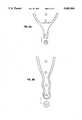
- FIG. 2the nozzle 50 in FIG. 1 that produces an annular jet is generally shown.
- the nozzleis comprised of top plate 52 which is the dividing plane between top chamber 3 and bottom chamber 25. Opening 54 allows droplets 23 to enter the nozzle 50.
- Funnel 56conveys droplets to nozzle tip 58.
- Solution from reservoir 27enters nozzle 50 at opening 60 and is conveyed to tip 58 by annular space 62. The two solutions flowing at approximately the same relative velocities mix at substantially tip 58.
- a surfactantsuch as TRITON can be added to the mixture to reduce the surface tension of the annular jet.
- the point of collapsecan also be delayed in this manner to reduce or eliminate the impact velocities of the droplet and solution.
- the alternative method proposed here for producing spheresis that, instead of submerging the droplets into a stationary liquid surface, the stream of droplets is directed into a collapsing annular liquid sheet. By matching the speed of the liquid sheet to that of the droplets, and controlling the collapsing velocity of the liquid sheet on to that of the drops impact may be minimized.
- An oscillator 35caused the polymer to disperse as a droplet 37.
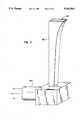
- a tapered tube 39the falling droplet 37 polymerizes to form a microsphere.
- the tube 39is used to allow droplets to completely polymerize prior to contacting the wash solution.
- the tubeis used to provide spheres wherein the biological material is in substantially the center of the sphere. It has been observed by the inventor that when an encapsulating solution has low viscosity the biological material may sink to the bottom or rise to the top of the sphere. If this occurs the microsphere may contain a bump or protrusion and not be uniformly concentric. The inventor has discovered that if air is withdrawn at tube 40 at the rate of acceleration of the sphere, then no gravitational forces will act on the sphere. The required air velocity depends on the configuration of the tube and the viscosity of the polymerization solution and the density of the encapsulated material.
- a tapered tube 39is used to reduce gravitational effects so that any contents of microsphere do not settle to the bottom or rise to the top of the microsphere while falling, Kendall et al., U.S. Pat. No. 4,960,351.
- the tapered tube 39has an air intake 44 that is two feet by 8 inches wide.
- the tube 39is 10 feet long and tapers to square 7.22 inches wide on a side.
- a tube 42 to a servo-controlled exhaust fandraws air through the tapered tube 39. It should be noted that the tube may be straight or tapered.
- the polymerization solutionhas a high viscosity air is pumped into the bottom of the tapered tube 39 at pump 40 to slow the fall of the sphere and rotate the sphere to prevent settling of any contents to one side of the microsphere.
- the porosity of the membranecan be experimentally controlled from impermeable to semi-permeable.
- the factors affecting porosityare 1) selection of the monomers 2) length of polymerization time 3) and, monomer molecular weight.
- Gelatinis the most common polycation used for film complexation since is coacervates with many polyanions.
- Alginate, polyphosphate, carageenan and mixed ethylene-maleic acid copolymershave traditionally been employed for the polyanion.
- Crosslinkingcan be enhanced by the addition of small molecules such as aldehydes.
- the selection of the polyelectrolytes usedis critical in terms of biocompatibility and nondegradability. It is also important in the control of molecular weight since different naturally occurring polymers will have a fixed molecular weight.
- the polyanion and polycation selectionwill also influence the complex reaction time and thereby the pore size. This will facilitate the control of the membrane properties by choosing alternate systems should it not be possible to synthesize less porous structures by varying the contact time between two polyions or molecular weight.
- Polyelectrolyte complexesform through the reaction of a polycation and a polyanion.
- the resulting complexcan either remain in solution, precipitate as a gel or separate into two phases: dilute and a concentrated complex coacervate phase.
- a complex coacervateis simply defined as a liquid phase containing a high concentration of two oppositely charged polyions.
- the primary forces of attractionare electrostatic, however, hydrogen bonding, ion-dipole and hydrophobic interactions can also contribute.
- the most suitable complexeshave been formed by the reaction of polyacids and polybases with pK values below two. Since the ionic content of the polyelectrolyte is strongly dependent of the pH of the solution the microstructure of the resulting membrane is also highly pH sensitive.
- Saltsdue to their ion-shielding ability, also have a large influence on the membrane formation kinetics and the final properties.
- Another important parameteris the ratio of cationic to anionic polymer.
- the complex formationcan be strengthened (tighter network) by increasing the charge density along the polymeric backbone. This variable can be particularly well adjusted if a synthetic polyelectrolyte is employed.
- Typical polymershave chain lengths in the 500-3000 range.
- the thin film polysalt complexeshave been reported to form either "spontaneously" or in a "rapid and complete reaction". This rapid formation occurs as long as the polyanion and polycation exceed a critical concentration of approximately 0.6% wt. %. Because of the impermeability of this film to large molecules such as the two polyions the reaction stops after the initial formation of the membrane. In terms of the network microstructure the ionic crosslinks are random with properties similar to other hydrogels.
- Kamidehas indicated that the polymer concentration has little effect on the pore structure or size for phase inversion membranes (K. Kamide and S.-I. Manabe, "Materials Science of Synthetic Membranes," American Chemical Society, Washington, D.C. 1985). However, others have found very small polymer concentration dependencies for polymers made from cellulose or polyamides (increasing the polymer concentration decreased the pore size and porosity).
- the binding between the polyanion and polycationis nearly athermal, with a typical heat of reaction of 1.9 kcal/mol.
- the driving force for the complex formationis entropic and is governed by the release of microions from the network domain to the bulk solution.
- Several techniqueshave been employed in the investigation of complex formation including nephelometry, conductance, potentiometry, electrophoresis, pH measurements, calorimetry, and metachromatic dyes.
- the polymerized sphereenters bath 41 with filter cloth 43. Finally, the spheres are washed 45 and deposited in a storage buffer 47.
- Suitable polymers for the formations of polyelectrolyte complexeswould include three categories of materials: 1) those materials with prior NIH approval for human implantation (Table 1), 2) natural polymers (Table 2), and 3) synthetic materials (Table 3).
- Table 1those materials with prior NIH approval for human implantation
- Table 2natural polymers
- Table 3synthetic materials
- the present inventionmay be used for encapsulating living cells, or tissue, chemicals or medicine, in uniform spheres.
- the material so encapsulatedis referred to as an encapsulant.
- the encapsulantmay be liquid or solid.
- a drugcan be encapsulated in the sphere or microsphere for either timed release or chemical release of the drug in the body.
- the thickness of the sphere or microsphere wallcan be adjusted, for example by increasing the number of membrane layers to facilitate timed delivery of the drug.
- certain organs or tissuescan be targeted for specific release of the drug.
- the sphere or microsphere wallcan degrade in the presence of certain chemicals or heat. One good example of this use would be in localized chemotherapy.
- Fresh solution of polyanion, e.g. 1.4% sodium alginate and polycation solution, e.g. 0.2% chitosan solutionwere prepared.
- the viscosity of the polyanion solutionwas determined to be 54 cp.
- Plastic beads with density of 1.04 and sizes between 100 and 150 micronswere used to stimulate the encapsulation process of islets cells which has a density of about 1.05 and size of about 150 ⁇ m.
- the beadswere admixed with the polyanion solution.
- the polyanion-beads solutionwas transferred to the first reservoir. Air pressure was supplied to the reservoir to force the liquid flow to the first nozzle through a tube.
- the barrel diameter of the nozzlewas 200 microns.
- the air pressurewas adjusted to obtain a hydrostatic pressure needed to have laminar flow of the polyanion jet.
- the oscillator connected to the first nozzlewas then turned on.
- the frequency and amplitude of the oscillatorwere adjusted so that the polyanion jet broke up into uniform size droplets.
- the frequency of the oscillatorwas adjusted to between 1-4 KHz.
- the droplet size selectedwas between 300 to 400 microns. The microspheres were observed to determine if each sphere contained a bead. If not, the concentration of beads in the sodium alginate solution of reservoir one was increased. At this time the polyanion jet is turned off.
- the polycation solution0.2% chitosan
- Air pressurewas supplied to the reservoir to force the liquid flow to the annular nozzle through a tube.
- the air pressurewas adjusted to obtain a hydrostatic pressure needed to have laminar flow of the polycation annular jet.
- the polyanion jet along with the oscillatorwere turned on.
- the direction of the droplet streamwas adjusted such that the stream was falling in the annular jet.
- the air pressures in the two reservoirswere adjusted such that the vertical speed of the droplet and collapsing annular jet matching each other.
- Deformation of the sphereswas avoided by minimizing the impact velocities.
- the dropletwas submerged into the liquid sheet at approximately the same relative vertical velocity, i.e. they were falling almost at the same rate.
- the velocity of the droplet and the annular jetwas about 2.2 m/sec and the polyanion droplet was placed slightly off the center of the polycation stream to avoid turbulence.
- This exampleshows using an annular jet to minimize the impact deformation by matching the vertical velocities of droplet and annular jet. In this case, there was no attempt to minimize the radial velocity of the annular jet caused by the collapsing of the liquid sheet. Uniformely concentric microspheres with encapsulated plastic beads were produced. The size of the spheres is about 700 ⁇ m.
- This exampleillustrates the effect of impact on the deformation of a sodium alginate droplet entering a stationary calcium chloride solution.
- larger sodium alginate dropletsi.e, size of 2.8 mm, were used.
- the Weber numberwhich is a ratio of kinetic energy and surface energy, was used to ensure that the larger droplet would have about the same impact response as the smaller one.
- the surface tension of the alginate solutionis close to that of water.
- the droplets used for producing microspheresare in the range of 350 ⁇ m to 450 ⁇ m with an impact speed between 2 m/sec and 4 m/sec. Because of the size difference, the impact speed of the 2.8 mm droplets was reduced to 1 m/sec to keep the ratio of the Weber number between the small droplets and the larger ones in the range of 0.5 to 2.
- the dropletswere made of 1.4% sodium alginate and 0.8% NaCl solution with a viscosity of about 54 cp. Deformation of the droplet occurs when entering the CaCl 2 solution. The impact reduces the velocity of the droplet to almost zero within a couple of milliseconds and the dimension of the droplet in the direction of impact is flattened to less that half of the droplet diameter. If the droplet contains a seed, the deceleration due to the impact will push the seed on to the boundary of the droplet, hence a small bump on the outer surface will be produced. This nonperfect surface is then "frozen" by the chemical reaction of sodium alginate and CaCl 2 solution.
- This exampleillustrates the impact process when the annular jet was used.
- the impact responsewas studied by using an annular nozzle of 1 cm size with the thickness of the liquid sheet about 0.3 mm.
- the speed of the liquid sheet at the nozzle exitwas measured by volume rate, which was controlled by feeding reservoir.
- the speed of the 2.8 mm single alginate droplet, which was generated through a fine syringe needle,was adjusted by changing the location of the syringe needle tip to match that of the CaCl 2 liquid sheet at the annular jet exit.
- the speed used in this studywas about 1.5 m/sec for both the droplet and the annular jet.
- the dropletwas kept slightly off center to avoid the turbulence at the center of the collapsing sheet.
- This exampleillustrates the applicability of this invention to produce microspheres directly from polyanion and polycation polymers.
- the tested materialswere chosen as alginate droplets and chitosan solution.
- the size of the dropletwas about 400 ⁇ m.
- the size of the annular jetis about 4.5 mm with the thickness of the liquid sheet about 0.15 mm.
- the free fall time of the droplet in the chitosan liquid columnis kept such that the chemical reaction is completed before the liquid is collected into a beaker. Note that the reaction between the alginate droplet and the chitosan solution only takes place on the surface of the droplet.
- the spheresare about 700 ⁇ m.
- the forming of a membrane on the surface of the alginate dropletincreases the drop size from 400 ⁇ m to 700 ⁇ m.
- Fresh solution of polyanion, e.g. 1.4% sodium alginate and 0.8% NaCl 2 solutionwas prepared.
- the viscosity of the polyanion solutionwas determined to be 54 cp.
- Whole blood cellswere admixed to the polyanion solution.
- the polyanion-cell solutionwas transferred to the first reservoir.
- a liquid jet flow from the first nozzlewas observed.
- the barrel diameter of the first nozzlewas 0.2 inch.
- the height of the first tank 14was adjusted to obtain a hydrostatic pressure needed to have laminar flow of the polyanion jet, approximately three feet above the initial position. Then the hydrostatic pressure was adjusted to approximately the mid-range.
- the first oscillatorwas turned on.
- the polycation solution, CaCl 2was transferred to reservoir 27.
- the height of reservoir 27was adjusted to produce a laminar annular flow from the nozzle.
- the hydrostatic pressurewas set at one half of the maximum hydrostatic pressure to produce a laminar flow.
- the internal pressure between top and bottom chamber of the housingwas then adjusted to slightly increase pressure within the top chamber. In the present apparatus about one psi of pressure is required to lengthen the annular jet without causing the stream to blow out.
- the pressurewas set at two-thirds of the maximum pressure level in this apparatus.
- the second oscillatorwas turned on and the frequency was adjusted so that the annular polycation jet broke into uniform size droplets. In this example the oscillator was set at 0.5-2 kilohertz. The polyanion jet was then restarted.
- the air flow pumpwas then turned on to adjust the rate so that the falling polycation droplets suffer minimum aerodynamic drag effects and remain spherical.
- the filter cloth belt and wash solutionare used to collect encapsulated red blood cells.
- solutions capable of forming a solid mixture upon mixingcan be used in this invention.
- These solutionsinclude inorganic membranes and biological membranes.
- Biological membranescan exist in three forms: as monolayers, planar bilayers or as liposomes. All these are liquid structures.
- a liposomesis simply any bilayer structure that encloses a volume, such as a micelle.
- the most common example of this type of membraneis a phospholipid, where multiple bilayers exist and form concentric shells much like an onion. These typically have diameters between 200 and 5000 ⁇ .
- the internal structure of each bilayer vescicleincludes a polar, or hydrophilic, head attached to a long chain hydrocarbon tail(s). If the tails contain unsaturated groups then the bilayer can be post-polymerized with the addition of a free radical initiator such as AIBN (azobisisobutrylnitrile). Under such conditions we would no longer speak of a liquid membrane.
- AIBNazobisisobutrylnitrile
- Tcgel-to-liquid crystal-transition temperature
- the interior of the lipid bilayerscan be probed with a variety of a standard techniques including Raman and FTIR spectroscopy as well as proton NMR. Differential Scanning Calorimetry (DSC) is often used to obtain information on the thermodynamics of membrane formation.
- DSCDifferential Scanning Calorimetry
- the "multimellar" vesciles or lipid membranesare very heterodisperse with respect to size.
- the particle diameteris often lowered by exposing the vesicles to ultrasonication.
- the sizeis generally measured through liquid chromatographic techniques.
- Thin film polymeric membranesare advantageous for many biological applications since the permeation of solutes across the membrane in inversely related to the thickness.
- These thin film porous membranesare typically produced by either a "phase inversion” process or a complex coacervation reaction. Both processes can yield stable biocompatible microspheres and it remains to be resolved which process is superior.
- Phase inversioninvolves the synthesis of a membrane from an initially homogeneous polymer solution through the application of a temperature for composition change. Thermal inversion is more common and produced a fibrous like membrane structure. Sefton shows some electron micrographs of example capsules. He has also concluded that as the speed of precipitation increases the porosity also rises. M. V.
Landscapes
- Chemical & Material Sciences (AREA)
- Engineering & Computer Science (AREA)
- Health & Medical Sciences (AREA)
- Organic Chemistry (AREA)
- Bioinformatics & Cheminformatics (AREA)
- Life Sciences & Earth Sciences (AREA)
- Mechanical Engineering (AREA)
- Dispersion Chemistry (AREA)
- General Health & Medical Sciences (AREA)
- Zoology (AREA)
- Wood Science & Technology (AREA)
- Genetics & Genomics (AREA)
- Microbiology (AREA)
- Pharmacology & Pharmacy (AREA)
- Biomedical Technology (AREA)
- Biochemistry (AREA)
- General Engineering & Computer Science (AREA)
- Chemical Kinetics & Catalysis (AREA)
- Medicinal Chemistry (AREA)
- Biotechnology (AREA)
- Epidemiology (AREA)
- Animal Behavior & Ethology (AREA)
- Public Health (AREA)
- Veterinary Medicine (AREA)
- Manufacturing Of Micro-Capsules (AREA)
- Medicinal Preparation (AREA)
Abstract
Description
TABLE 1 ______________________________________ Materials with NIH Approval for Implantation ______________________________________ 1) Polyacids: Polyacrylates (e.g. sodium) Polymethacrylates Olefin-Maleic anhydride copolymers 2) Polyesters: Poly glycolic acid Poly lactic acid Poly caprolactane copolymers of the above species 3) Polyorthoesters: Polydioxyalkyltetrahydrofuran Poly 3,9-bismethylene-2, 4,8,10tetra aspiro 5,5 undecane-co-1,6 hexanediol 4) Hydrogels: Hydroxyethylmethacrylate Polyethyleneglycol monomethyacrylate Gelatin crosslinked with formaldehyde 5) Polysaccharides: Cellulose Dextran 6) Polypeptides: Poly glutamic acid Glutamic acid leucine copolymers Polyaminotriozole alkyleneaminotriozole copolymers Albumin beads (Albumin crosslinked with glutaraldehyde 7) Amino Acid Polymers Poly D- or L-lysine HCL Poly D- or L-ornithine HCL Poly D- or L-arginine ______________________________________
TABLE 2 ______________________________________ Naturally occurring Water Soluble Polymers and Polyelectrolytes ______________________________________ Polysaccharides (-): starch, gums, carrageenans, dextran, xanthan Sulfated algal Polysaccharide (-) Alginate (-) Hyaluronic acid films (-) Heparin (-) Chondroitin sulfates (-) Polygalacturonic acid (-) Alginic acid (-) Sodium carboxymethylcellulose (-) Sodium carcoxymethylcellulose-diethylaminoethyldextran copolymer.sup.1 (-) Agar Hyaluronate (-) Sulfated hyaluronic acid (-) Sulfated deacetylated hyaluronic acid (-) Heparin (-) Polyguluronate (normal or acetylated) (-) Polymannuronate (-) Chondrditin sulphate (-) Ascopyllan (-) Pectin (made of 1,4 polyglacteronic acid) (-) Dextran sulfate (-) Fucoidan (-) Oxdized cellulose (-) Polypeptides and Proteins (4 types): 1) hydrophobic e.g. polyphenylalanine 2) polar e.g. serine 3) acidic (-) e.g. asparatic acid, chondroitin-6-sulfate, heparin, human serum albumin 4) basic (+) e.g. lysine, 1-argine, collagen Polyneucleic acids (RNA,DNA) (nonionic) Pullan (nonionic) Cellulose (nonionic) Algal Pectin Modified Celuloses: Hydroxypropylcellulose (nonionic, forms a thin film), Hydroxypropylcellulose (nonionic), Carboxymethylcellulose (nonionic); forms a gel/film Diethylaminohydroxypropylcellulose (+), Diethylaminoethylcellulose (+) Chitosan (+).sup.2 ______________________________________ .sup.1 By varying the pH you can adjust the copolymer composition in the membrane. pH, therefore, may be an important tool in the complex formation. .sup.2 Chitosan is composed of 2amino-2-deoxy-D-glucose (Dglucosamine) an 2acetamido-2-deoxy-D-glucose (Nacetyl-D-glucosamine) which are both commo substituents in the human body. It is commercially available from crab or shrimp shells, to form chitin, which is then converted to Chitosanammoniu salt. It is therefore a logical starting point for the polycomplex membrane formation.
TABLE 3 ______________________________________ Synthetic Polymers for film of Polyelectrolyte complex formation ______________________________________ Nonionic. Polyacrylamide Polymethacrylamide Polyvinyl alcohol films. Anionic. Poly sodium acrylate polystyrene sodium sulphate Polyvinyl sulphonic acid salts Polyvinyl benzoic acid salts Polyvinyloxypropanesulphonic acid salts Poly 4-vinylphenol salts Polyvinylsucciniumidum acid salts Sodium-2-sulfoxyethyl methacrylate Sodium-2-acrylamido-2-methylpropane sulphate Sodium-3-acrylamido-3-methyl butanoate Cationics. Dimethylaminoethyl methacrylate Dimethylaminoethyl acrylate Diethylaminoethyl methacrylate Diallydimethylammonium chloride Metharylryloxyethyltrimethyl ammonium sulfate Metharylryloxyethyltrimethyl ammoniumchloride 3-methacrylamidepropyltrimethyl ammonium chloride Polyvinyl pyridine (Blood plasma substitude) Quaternerized polyvinylpyridine Polyethyleneimin, linear Polymethylene-N,N-dimethyl piperdinium Polyvinyl 4-alkyl pyridinium Polyvinylbenzenetrimethyl ammonium chloride 2-acrylamido-2-methylpropanedimethylammonium chloride 1,3 sulfopropyl-2-vinyl pyridinium ______________________________________
Claims (6)
Priority Applications (1)
| Application Number | Priority Date | Filing Date | Title |
|---|---|---|---|
| US08/126,787US5462866A (en) | 1991-12-23 | 1993-09-23 | Semipermeable microspheres encapsulating biological material |
Applications Claiming Priority (2)
| Application Number | Priority Date | Filing Date | Title |
|---|---|---|---|
| US07/812,647US5260002A (en) | 1991-12-23 | 1991-12-23 | Method and apparatus for producing uniform polymeric spheres |
| US08/126,787US5462866A (en) | 1991-12-23 | 1993-09-23 | Semipermeable microspheres encapsulating biological material |
Related Parent Applications (1)
| Application Number | Title | Priority Date | Filing Date |
|---|---|---|---|
| US07/812,647DivisionUS5260002A (en) | 1991-12-23 | 1991-12-23 | Method and apparatus for producing uniform polymeric spheres |
Publications (1)
| Publication Number | Publication Date |
|---|---|
| US5462866Atrue US5462866A (en) | 1995-10-31 |
Family
ID=25210222
Family Applications (2)
| Application Number | Title | Priority Date | Filing Date |
|---|---|---|---|
| US07/812,647Expired - LifetimeUS5260002A (en) | 1991-12-23 | 1991-12-23 | Method and apparatus for producing uniform polymeric spheres |
| US08/126,787Expired - LifetimeUS5462866A (en) | 1991-12-23 | 1993-09-23 | Semipermeable microspheres encapsulating biological material |
Family Applications Before (1)
| Application Number | Title | Priority Date | Filing Date |
|---|---|---|---|
| US07/812,647Expired - LifetimeUS5260002A (en) | 1991-12-23 | 1991-12-23 | Method and apparatus for producing uniform polymeric spheres |
Country Status (2)
| Country | Link |
|---|---|
| US (2) | US5260002A (en) |
| WO (1) | WO1993012875A1 (en) |
Cited By (58)
| Publication number | Priority date | Publication date | Assignee | Title |
|---|---|---|---|---|
| WO1996010454A1 (en)* | 1994-10-03 | 1996-04-11 | Michigan State University | Polyhydroxybutyrate and polyphosphate membranes with channels |
| US5658622A (en)* | 1993-04-29 | 1997-08-19 | Tetra Laval Holdings & Finance S.A. | Packaging laminate and a method of producing the same |
| US5701955A (en)* | 1994-12-02 | 1997-12-30 | Allied Colloids Limited | Downhole fluid control processes |
| US5716981A (en)* | 1993-07-19 | 1998-02-10 | Angiogenesis Technologies, Inc. | Anti-angiogenic compositions and methods of use |
| WO1999058134A1 (en)* | 1998-05-11 | 1999-11-18 | Purdue Research Foundation | Methods and compositions for nucleic acid delivery |
| WO2000001373A1 (en)* | 1998-07-06 | 2000-01-13 | Ecole Polytechnique Federale De Lausanne | Materials and methods relating to encapsulation |
| US6183640B1 (en)* | 1999-04-09 | 2001-02-06 | Usf Filtration And Separations Group, Inc. | Highly asymmetric anionic membranes |
| US6303355B1 (en) | 1999-03-22 | 2001-10-16 | Duke University | Method of culturing, cryopreserving and encapsulating pancreatic islet cells |
| US6365385B1 (en) | 1999-03-22 | 2002-04-02 | Duke University | Methods of culturing and encapsulating pancreatic islet cells |
| US20020151060A1 (en)* | 2000-09-25 | 2002-10-17 | Board Of Regents, The University Of Texas System | PEI: DNA vector formulations for in vitro and in vivo gene delivery |
| US6482439B2 (en)* | 1999-12-29 | 2002-11-19 | Nanodelivery, Inc. | Drug delivery system exhibiting permeability control |
| US6506411B2 (en) | 1993-07-19 | 2003-01-14 | Angiotech Pharmaceuticals, Inc. | Anti-angiogenic compositions and methods of use |
| US6521431B1 (en) | 1999-06-22 | 2003-02-18 | Access Pharmaceuticals, Inc. | Biodegradable cross-linkers having a polyacid connected to reactive groups for cross-linking polymer filaments |
| US6527799B2 (en) | 1998-10-29 | 2003-03-04 | Conor Medsystems, Inc. | Expandable medical device with ductile hinges |
| US6562065B1 (en) | 1998-03-30 | 2003-05-13 | Conor Medsystems, Inc. | Expandable medical device with beneficial agent delivery mechanism |
| US20030165686A1 (en)* | 2001-12-27 | 2003-09-04 | Blackburn William P. | Photochromic optical article |
| KR20030073296A (en)* | 2002-03-09 | 2003-09-19 | 박종윤 | Blower for manufacturing microcapsules |
| US6649384B2 (en) | 2000-07-05 | 2003-11-18 | Islet Technology, Inc. | System and method for encapsulating biological material by applying electrostatic charge to capsules |
| US20040013721A1 (en)* | 2000-08-28 | 2004-01-22 | Alexei Antipov | Controlled and sustained release properties of polyelectrolyte multilayer capsules |
| US6726934B1 (en)* | 1997-10-09 | 2004-04-27 | Vanderbilt University | Micro-particulate and nano-particulate polymeric delivery system |
| US6764507B2 (en) | 2000-10-16 | 2004-07-20 | Conor Medsystems, Inc. | Expandable medical device with improved spatial distribution |
| US20040185517A1 (en)* | 2003-02-04 | 2004-09-23 | Marfurt Karen L. | Method and test strip for determining glucose in blood |
| US20040207809A1 (en)* | 2001-12-27 | 2004-10-21 | Blackburn William P | Photochromic optical article |
| US6855125B2 (en) | 1999-05-20 | 2005-02-15 | Conor Medsystems, Inc. | Expandable medical device delivery system and method |
| WO2005022136A1 (en)* | 2003-08-26 | 2005-03-10 | University Of Cincinnati | Selectively permeable film supported membrane |
| US20050123614A1 (en)* | 2003-12-04 | 2005-06-09 | Kyekyoon Kim | Microparticles |
| US20050161844A1 (en)* | 2004-01-27 | 2005-07-28 | Dunfield John S. | Method of making microcapsules utilizing a fluid ejector |
| US20050196616A1 (en)* | 2004-03-04 | 2005-09-08 | Stewart Kevin J. | Photochromic optical article |
| US20050196696A1 (en)* | 2004-03-04 | 2005-09-08 | King Eric M. | Photochromic optical article |
| US20050197472A1 (en)* | 2004-03-04 | 2005-09-08 | Swaminathan Ramesh | Acrylic composition for use in coating applications and a method of forming the same |
| US20050196618A1 (en)* | 2004-03-04 | 2005-09-08 | Knox Carol L. | Photochromic optical article |
| US20050196617A1 (en)* | 2004-03-04 | 2005-09-08 | King Eric M. | Photochromic optical article |
| US20050196626A1 (en)* | 2004-03-04 | 2005-09-08 | Knox Carol L. | Photochromic optical article |
| US6964680B2 (en) | 2001-02-05 | 2005-11-15 | Conor Medsystems, Inc. | Expandable medical device with tapered hinge |
| US20050282264A1 (en)* | 2004-06-16 | 2005-12-22 | Agency For Science, Technology And Research | Apparatus for encapsulating cells |
| US7056338B2 (en) | 2003-03-28 | 2006-06-06 | Conor Medsystems, Inc. | Therapeutic agent delivery device with controlled therapeutic agent release rates |
| US7094372B1 (en)* | 2003-06-12 | 2006-08-22 | Chung Yuan Christian University | Chitosan membrane containing nano-inorganic particles and the method for forming the same |
| US7169179B2 (en) | 2003-06-05 | 2007-01-30 | Conor Medsystems, Inc. | Drug delivery device and method for bi-directional drug delivery |
| US7179288B2 (en) | 1998-03-30 | 2007-02-20 | Conor Medsystems, Inc. | Expandable medical device for delivery of beneficial agent |
| US20070078513A1 (en)* | 2002-09-18 | 2007-04-05 | Medtronic Vascular, Inc. | Controllable drug releasing gradient coatings for medical devices |
| US7208010B2 (en) | 2000-10-16 | 2007-04-24 | Conor Medsystems, Inc. | Expandable medical device for delivery of beneficial agent |
| US7208011B2 (en) | 2001-08-20 | 2007-04-24 | Conor Medsystems, Inc. | Implantable medical device with drug filled holes |
| US20070197754A1 (en)* | 2003-12-23 | 2007-08-23 | Hyaltech Limited | Compositions of semi-interpenetrating polymer network |
| US20070237749A1 (en)* | 2006-04-07 | 2007-10-11 | Wang Taylor G | Multi-membrane immunoisolation system for cellular transplant |
| US20080175915A1 (en)* | 2000-08-15 | 2008-07-24 | Kyekyoon Kim | Microparticles |
| US7748343B2 (en) | 2004-11-22 | 2010-07-06 | The Board Of Trustees Of The University Of Illinois | Electrohydrodynamic spraying system |
| US20100278922A1 (en)* | 2008-01-08 | 2010-11-04 | Oshadi Drug Administration Ltd. | Methods and compositions for oral administration of insulin |
| US20110014089A1 (en)* | 2009-07-16 | 2011-01-20 | Seiko Epson Corporation | Gel manufacturing apparatus |
| RU2420579C2 (en)* | 2009-08-11 | 2011-06-10 | Закрытое Акционерное Общество "Маркетинг-Бюро" | Method of immobilising microorganism cells in sorbent used for oil cleaning |
| US8197881B2 (en) | 2003-09-22 | 2012-06-12 | Conor Medsystems, Inc. | Method and apparatus for loading a beneficial agent into an expandable medical device |
| US8349390B2 (en) | 2002-09-20 | 2013-01-08 | Conor Medsystems, Inc. | Method and apparatus for loading a beneficial agent into an expandable medical device |
| US8361537B2 (en) | 1998-03-30 | 2013-01-29 | Innovational Holdings, Llc | Expandable medical device with beneficial agent concentration gradient |
| US8449901B2 (en) | 2003-03-28 | 2013-05-28 | Innovational Holdings, Llc | Implantable medical device with beneficial agent concentration gradient |
| US9060932B2 (en) | 2009-07-09 | 2015-06-23 | Oshadi Drug Administration Ltd. | Matrix carrier compositions, methods and uses |
| US9212358B2 (en) | 2012-06-15 | 2015-12-15 | Microvi Biotech, Inc. | Biocatalyst compositions and processes for their use |
| US9255281B2 (en) | 2012-06-15 | 2016-02-09 | Microvi Biotech Inc. | Bioconversion processes using water-insoluble liquids |
| US9334507B2 (en) | 2012-06-15 | 2016-05-10 | Microvi Biotech, Inc. | Bioprocesses for making butanol |
| US9752164B2 (en) | 2012-06-15 | 2017-09-05 | Microvi Biotech, Inc. | Enhanced efficiency ethanol and sugar conversion processes |
Families Citing this family (90)
| Publication number | Priority date | Publication date | Assignee | Title |
|---|---|---|---|---|
| AU655445B2 (en)* | 1990-11-29 | 1994-12-22 | Iatron Laboratories, Inc. | Polyelectrolyte complex antibacterial agent and antibacterial material |
| US5260002A (en)* | 1991-12-23 | 1993-11-09 | Vanderbilt University | Method and apparatus for producing uniform polymeric spheres |
| JPH0731871A (en) | 1993-05-18 | 1995-02-03 | Canon Inc | Membrane structure |
| WO1995003789A1 (en)* | 1993-07-28 | 1995-02-09 | The Johns Hopkins University School Of Medicine | Controlled release of pharmaceutically active substances from coacervate microcapsules |
| US5686115A (en)* | 1993-12-01 | 1997-11-11 | Marine Polymer Technologies, Inc. | Poly-β-1→4-N-acetylucosamine copolymer composition with collagen |
| US5635493A (en)* | 1993-12-01 | 1997-06-03 | Marine Polymer Technologies, Inc. | Methods and compositions for poly-β-1-4-N-acetylglucosamine chemotherapeutics |
| US6063911A (en)* | 1993-12-01 | 2000-05-16 | Marine Polymer Technologies, Inc. | Methods and compositions for treatment of cell proliferative disorders |
| US5622834A (en)* | 1993-12-01 | 1997-04-22 | Marine Polymer Technologies, Inc. | Method of isolating poly-β-1-4-N-acetylglucosamine from microalgal culture |
| US5624679A (en)* | 1993-12-01 | 1997-04-29 | Marine Polymer Technologies, Inc. | Methods and compositions for poly-β-1-4-N-acetylglucosamine biological barriers |
| US5846952A (en)* | 1993-12-01 | 1998-12-08 | Marine Polymer Technologies, Inc. | Methods and compositions for poly-β-1-4-N-acetylglucosamine drug delivery |
| US5858350A (en) | 1993-12-01 | 1999-01-12 | Marine Polymer Technologies | Methods and compositions for poly-β-1→4-N-acetylglucosamine cell therapy system |
| US5651980A (en)* | 1994-04-15 | 1997-07-29 | Biohybrid Technologies, Inc. | Methods of use of uncoated gel particles |
| DE4426396A1 (en)* | 1994-07-26 | 1996-02-01 | Ulrich Prof Dr Zimmermann | Process for the preparation of concentrated solutions of microencapsulated cells or of suspended active substances in microencapsulated form |
| US5530111A (en)* | 1994-08-29 | 1996-06-25 | The Center For Innovative Technology | Chemical modification of shaped hydrogels in non-aqueous medium |
| WO1996028247A1 (en)* | 1995-03-15 | 1996-09-19 | Inotech Ag | Encapsulation equipment |
| US7071913B2 (en) | 1995-07-20 | 2006-07-04 | E Ink Corporation | Retroreflective electrophoretic displays and materials for making the same |
| US7106296B1 (en) | 1995-07-20 | 2006-09-12 | E Ink Corporation | Electronic book with multiple page displays |
| US5855613A (en)* | 1995-10-13 | 1999-01-05 | Islet Sheet Medical, Inc. | Retrievable bioartificial implants having dimensions allowing rapid diffusion of oxygen and rapid biological response to physiological change |
| US6228340B1 (en) | 1997-08-25 | 2001-05-08 | The Regents Of The University Of California | Method for the production of macroporous ceramics |
| US6067185A (en) | 1997-08-28 | 2000-05-23 | E Ink Corporation | Process for creating an encapsulated electrophoretic display |
| EA004702B1 (en)* | 1998-02-17 | 2004-06-24 | Такара Сузо Ко., Лтд. | Sulfated saccharides |
| US7075502B1 (en) | 1998-04-10 | 2006-07-11 | E Ink Corporation | Full color reflective display with multichromatic sub-pixels |
| US6224794B1 (en) | 1998-05-06 | 2001-05-01 | Angiotech Pharmaceuticals, Inc. | Methods for microsphere production |
| WO1999059101A2 (en) | 1998-05-12 | 1999-11-18 | E-Ink Corporation | Microencapsulated electrophoretic electrostatically-addressed media for drawing device applications |
| US6238677B1 (en)* | 1998-08-18 | 2001-05-29 | The United States Of America As Represented By The Secretary Of Agriculture | Starch microcapsules for delivery of active agents |
| AU6293499A (en) | 1998-10-07 | 2000-04-26 | E-Ink Corporation | Capsules for electrophoretic displays and methods for making the same |
| US6248268B1 (en) | 1998-11-16 | 2001-06-19 | Xc Corporation | Process of making microparticles of a thermally-gelled polysaccharide |
| EP1169121B1 (en) | 1999-04-06 | 2012-10-31 | E Ink Corporation | Methods for producing droplets for use in capsule-based electrophoretic displays |
| EP1181383B1 (en)* | 1999-05-28 | 2004-10-20 | Inotech Ag | Method and device for in-situ extraction |
| US6780507B2 (en) | 2000-02-09 | 2004-08-24 | Analytical Research Systems, Inc. | Hydrocapsules and method of preparation thereof |
| US20110301569A1 (en) | 2001-01-20 | 2011-12-08 | Gordon Wayne Dyer | Methods and apparatus for the CVCS |
| US20050156340A1 (en) | 2004-01-20 | 2005-07-21 | E Ink Corporation | Preparation of capsules |
| AU2002246950A1 (en)* | 2002-01-08 | 2003-07-30 | Analytical Research Systems | Hydrocapsules and method of preparation |
| US7462366B2 (en) | 2002-03-29 | 2008-12-09 | Boston Scientific Scimed, Inc. | Drug delivery particle |
| US7131997B2 (en) | 2002-03-29 | 2006-11-07 | Scimed Life Systems, Inc. | Tissue treatment |
| US7094369B2 (en) | 2002-03-29 | 2006-08-22 | Scimed Life Systems, Inc. | Processes for manufacturing polymeric microspheres |
| US7053134B2 (en) | 2002-04-04 | 2006-05-30 | Scimed Life Systems, Inc. | Forming a chemically cross-linked particle of a desired shape and diameter |
| US7276254B2 (en)* | 2002-05-07 | 2007-10-02 | Xerox Corporation | Emulsion/aggregation polymeric microspheres for biomedical applications and methods of making same |
| US7932674B1 (en) | 2002-05-21 | 2011-04-26 | Imaging Systems Technology | Plasma-dome article of manufacture |
| US8513887B1 (en) | 2002-05-21 | 2013-08-20 | Imaging Systems Technology, Inc. | Plasma-dome article of manufacture |
| US7628666B1 (en) | 2002-05-21 | 2009-12-08 | Imaging Systems Technology | Process for manufacturing plasma-dome PDP |
| US8198812B1 (en) | 2002-05-21 | 2012-06-12 | Imaging Systems Technology | Gas filled detector shell with dipole antenna |
| US7727040B1 (en) | 2002-05-21 | 2010-06-01 | Imaging Systems Technology | Process for manufacturing plasma-disc PDP |
| US7405516B1 (en) | 2004-04-26 | 2008-07-29 | Imaging Systems Technology | Plasma-shell PDP with organic luminescent substance |
| US6958848B2 (en)* | 2002-05-23 | 2005-10-25 | E Ink Corporation | Capsules, materials for use therein and electrophoretic media and displays containing such capsules |
| AU2003240000A1 (en) | 2002-06-12 | 2003-12-31 | Boston Scientific Limited | Bulking agents |
| US7312916B2 (en) | 2002-08-07 | 2007-12-25 | E Ink Corporation | Electrophoretic media containing specularly reflective particles |
| US7449236B2 (en) | 2002-08-09 | 2008-11-11 | Boston Scientific Scimed, Inc. | Porous polymeric particle comprising polyvinyl alcohol and having interior to surface porosity-gradient |
| US7842377B2 (en) | 2003-08-08 | 2010-11-30 | Boston Scientific Scimed, Inc. | Porous polymeric particle comprising polyvinyl alcohol and having interior to surface porosity-gradient |
| US6998074B1 (en) | 2002-08-30 | 2006-02-14 | Microfab Technologies, Inc. | Method for forming polymer microspheres |
| US8012454B2 (en) | 2002-08-30 | 2011-09-06 | Boston Scientific Scimed, Inc. | Embolization |
| US7588825B2 (en) | 2002-10-23 | 2009-09-15 | Boston Scientific Scimed, Inc. | Embolic compositions |
| US7883490B2 (en) | 2002-10-23 | 2011-02-08 | Boston Scientific Scimed, Inc. | Mixing and delivery of therapeutic compositions |
| US7976823B2 (en) | 2003-08-29 | 2011-07-12 | Boston Scientific Scimed, Inc. | Ferromagnetic particles and methods |
| US7772773B1 (en) | 2003-11-13 | 2010-08-10 | Imaging Systems Technology | Electrode configurations for plasma-dome PDP |
| US7736671B2 (en) | 2004-03-02 | 2010-06-15 | Boston Scientific Scimed, Inc. | Embolization |
| US8173176B2 (en) | 2004-03-30 | 2012-05-08 | Boston Scientific Scimed, Inc. | Embolization |
| US8129906B1 (en) | 2004-04-26 | 2012-03-06 | Imaging Systems Technology, Inc. | Lumino-shells |
| US7311861B2 (en) | 2004-06-01 | 2007-12-25 | Boston Scientific Scimed, Inc. | Embolization |
| US8113898B1 (en) | 2004-06-21 | 2012-02-14 | Imaging Systems Technology, Inc. | Gas discharge device with electrical conductive bonding material |
| US8368303B1 (en) | 2004-06-21 | 2013-02-05 | Imaging Systems Technology, Inc. | Gas discharge device with electrical conductive bonding material |
| JP2008515434A (en)* | 2004-10-08 | 2008-05-15 | ジョージア テック リサーチ コーポレイション | Microencapsulation of cells in hydrogels using electrostatic potential |
| US8951608B1 (en) | 2004-10-22 | 2015-02-10 | Imaging Systems Technology, Inc. | Aqueous manufacturing process and article |
| US8425550B2 (en) | 2004-12-01 | 2013-04-23 | Boston Scientific Scimed, Inc. | Embolic coils |
| US8299696B1 (en) | 2005-02-22 | 2012-10-30 | Imaging Systems Technology | Plasma-shell gas discharge device |
| US7727555B2 (en) | 2005-03-02 | 2010-06-01 | Boston Scientific Scimed, Inc. | Particles |
| US7858183B2 (en) | 2005-03-02 | 2010-12-28 | Boston Scientific Scimed, Inc. | Particles |
| US7963287B2 (en) | 2005-04-28 | 2011-06-21 | Boston Scientific Scimed, Inc. | Tissue-treatment methods |
| US9463426B2 (en) | 2005-06-24 | 2016-10-11 | Boston Scientific Scimed, Inc. | Methods and systems for coating particles |
| US7730746B1 (en)* | 2005-07-14 | 2010-06-08 | Imaging Systems Technology | Apparatus to prepare discrete hollow microsphere droplets |
| US8007509B2 (en) | 2005-10-12 | 2011-08-30 | Boston Scientific Scimed, Inc. | Coil assemblies, components and methods |
| US8152839B2 (en) | 2005-12-19 | 2012-04-10 | Boston Scientific Scimed, Inc. | Embolic coils |
| US8101197B2 (en) | 2005-12-19 | 2012-01-24 | Stryker Corporation | Forming coils |
| US7947368B2 (en) | 2005-12-21 | 2011-05-24 | Boston Scientific Scimed, Inc. | Block copolymer particles |
| US7501179B2 (en) | 2005-12-21 | 2009-03-10 | Boston Scientific Scimed, Inc. | Block copolymer particles |
| US7863815B1 (en) | 2006-01-26 | 2011-01-04 | Imaging Systems Technology | Electrode configurations for plasma-disc PDP |
| US7535175B1 (en) | 2006-02-16 | 2009-05-19 | Imaging Systems Technology | Electrode configurations for plasma-dome PDP |
| US8035303B1 (en) | 2006-02-16 | 2011-10-11 | Imaging Systems Technology | Electrode configurations for gas discharge device |
| US7531334B2 (en)* | 2006-04-14 | 2009-05-12 | Xerox Corporation | Polymeric microcarriers for cell culture functions |
| JP2009540248A (en)* | 2006-06-12 | 2009-11-19 | シー.イーエヌ.リミテッド | Compressed hydrogen gas storage device and storage cartridge |
| US8414927B2 (en) | 2006-11-03 | 2013-04-09 | Boston Scientific Scimed, Inc. | Cross-linked polymer particles |
| US7985058B2 (en)* | 2007-01-12 | 2011-07-26 | Mark Gray | Method and apparatus for making uniformly sized particles |
| ES2552842T3 (en) | 2007-02-19 | 2015-12-02 | Marine Polymer Technologies, Inc. | Hemostatic compositions and therapeutic regimens |
| EP2599508B1 (en)* | 2008-01-24 | 2016-05-25 | University of Utah Research Foundation | Adhesive complex coacervates and methods of making and using thereof |
| CN107412772A (en) | 2010-04-15 | 2017-12-01 | 海洋聚合物技术公司 | The antibacterial applications of poly- N acetylglucosamines nanofiber |
| US9102087B2 (en) | 2011-03-23 | 2015-08-11 | Department Of The Navy | Foams made of amorphous hollow spheres and methods of manufacture thereof |
| NZ732118A (en) | 2011-04-15 | 2018-11-30 | Marine Polymer Tech Inc | Treatment of disease with poly-n-acetylglucosamine nanofibers |
| US9527049B2 (en)* | 2012-06-20 | 2016-12-27 | Bio-Rad Laboratories, Inc. | Stabilized droplets for calibration and testing |
| US9919280B2 (en)* | 2014-11-24 | 2018-03-20 | The Florida State University Research Foundation, Inc. | Method of forming polyelectrolyte complex capsules |
| WO2025093556A1 (en)* | 2023-11-02 | 2025-05-08 | Universität Heidelberg | Device to generate capsules, spheres, beads or filaments optionally with an enclosed compound using earth gravity, centrifugation forces or negative pressure or positive pressure |
Citations (16)
| Publication number | Priority date | Publication date | Assignee | Title |
|---|---|---|---|---|
| US4279632A (en)* | 1979-05-08 | 1981-07-21 | Nasa | Method and apparatus for producing concentric hollow spheres |
| US4324683A (en)* | 1975-08-20 | 1982-04-13 | Damon Corporation | Encapsulation of labile biological material |
| US4344787A (en)* | 1979-05-08 | 1982-08-17 | Beggs James M Administrator Of | Method and apparatus for producing gas-filled hollow spheres |
| US4352883A (en)* | 1979-03-28 | 1982-10-05 | Damon Corporation | Encapsulation of biological material |
| US4391909A (en)* | 1979-03-28 | 1983-07-05 | Damon Corporation | Microcapsules containing viable tissue cells |
| US4643854A (en)* | 1982-04-26 | 1987-02-17 | California Institute Of Technology | Shell forming system |
| US4673566A (en)* | 1983-06-01 | 1987-06-16 | Connaught Laboratories Limited | Microencapsulation of living tissue and cells |
| US4689293A (en)* | 1983-06-06 | 1987-08-25 | Connaught Laboratories Limited | Microencapsulation of living tissue and cells |
| US4743545A (en)* | 1984-08-09 | 1988-05-10 | Torobin Leonard B | Hollow porous microspheres containing biocatalyst |
| US4749620A (en)* | 1984-02-15 | 1988-06-07 | Massachusetts Institute Of Technology | Encapsulated active material system |
| US4806357A (en)* | 1987-11-25 | 1989-02-21 | The Regents Of The University Of California | Apparatus and method for encapsulating seeds and the like |
| US4806355A (en)* | 1983-06-06 | 1989-02-21 | Connaught Laboratories Limited | Microencapsulation of living tissue and cells |
| US4956128A (en)* | 1984-05-25 | 1990-09-11 | Connaught Laboratories Limited | Droplet generation |
| US4960351A (en)* | 1982-04-26 | 1990-10-02 | California Institute Of Technology | Shell forming system |
| US4996150A (en)* | 1984-10-29 | 1991-02-26 | Amoco Corporation | Biocatalyst immobilization in a gel of anionic polysaccharide and cationic polymer |
| US5260002A (en)* | 1991-12-23 | 1993-11-09 | Vanderbilt University | Method and apparatus for producing uniform polymeric spheres |
Family Cites Families (6)
| Publication number | Priority date | Publication date | Assignee | Title |
|---|---|---|---|---|
| GB1096640A (en)* | 1964-12-07 | 1967-12-29 | Monsanto Co | Micro-fiber spinning process |
| DE3126854C2 (en)* | 1981-07-08 | 1984-09-27 | Nukem Gmbh, 6450 Hanau | Process and apparatus for the production of spherical particles from spontaneously reacting liquid components |
| JPS6251957A (en)* | 1985-08-30 | 1987-03-06 | Hitachi Ltd | Seaweed gel enclosing bacterial particle gel production device and method |
| JPH0628570B2 (en)* | 1986-02-13 | 1994-04-20 | 雪印乳業株式会社 | Method and device for manufacturing capsule body |
| CA1321048C (en)* | 1987-03-05 | 1993-08-10 | Robert W. J. Lencki | Microspheres and method of producing same |
| JPH039926A (en)* | 1989-06-08 | 1991-01-17 | Kanebo Ltd | Preparation of fine particle of chitosan |
- 1991
- 1991-12-23USUS07/812,647patent/US5260002A/ennot_activeExpired - Lifetime
- 1992
- 1992-11-19WOPCT/US1992/009781patent/WO1993012875A1/enactiveApplication Filing
- 1993
- 1993-09-23USUS08/126,787patent/US5462866A/ennot_activeExpired - Lifetime
Patent Citations (16)
| Publication number | Priority date | Publication date | Assignee | Title |
|---|---|---|---|---|
| US4324683A (en)* | 1975-08-20 | 1982-04-13 | Damon Corporation | Encapsulation of labile biological material |
| US4352883A (en)* | 1979-03-28 | 1982-10-05 | Damon Corporation | Encapsulation of biological material |
| US4391909A (en)* | 1979-03-28 | 1983-07-05 | Damon Corporation | Microcapsules containing viable tissue cells |
| US4344787A (en)* | 1979-05-08 | 1982-08-17 | Beggs James M Administrator Of | Method and apparatus for producing gas-filled hollow spheres |
| US4279632A (en)* | 1979-05-08 | 1981-07-21 | Nasa | Method and apparatus for producing concentric hollow spheres |
| US4643854A (en)* | 1982-04-26 | 1987-02-17 | California Institute Of Technology | Shell forming system |
| US4960351A (en)* | 1982-04-26 | 1990-10-02 | California Institute Of Technology | Shell forming system |
| US4673566A (en)* | 1983-06-01 | 1987-06-16 | Connaught Laboratories Limited | Microencapsulation of living tissue and cells |
| US4806355A (en)* | 1983-06-06 | 1989-02-21 | Connaught Laboratories Limited | Microencapsulation of living tissue and cells |
| US4689293A (en)* | 1983-06-06 | 1987-08-25 | Connaught Laboratories Limited | Microencapsulation of living tissue and cells |
| US4749620A (en)* | 1984-02-15 | 1988-06-07 | Massachusetts Institute Of Technology | Encapsulated active material system |
| US4956128A (en)* | 1984-05-25 | 1990-09-11 | Connaught Laboratories Limited | Droplet generation |
| US4743545A (en)* | 1984-08-09 | 1988-05-10 | Torobin Leonard B | Hollow porous microspheres containing biocatalyst |
| US4996150A (en)* | 1984-10-29 | 1991-02-26 | Amoco Corporation | Biocatalyst immobilization in a gel of anionic polysaccharide and cationic polymer |
| US4806357A (en)* | 1987-11-25 | 1989-02-21 | The Regents Of The University Of California | Apparatus and method for encapsulating seeds and the like |
| US5260002A (en)* | 1991-12-23 | 1993-11-09 | Vanderbilt University | Method and apparatus for producing uniform polymeric spheres |
Non-Patent Citations (51)
| Title |
|---|
| A. M. Sun et al. "Microencapsulation of Living Cells--A Long-Term Delivery System," Journal of Controlled Release, vol. 2, 1985, pp. 137-141. |
| A. M. Sun et al. Microencapsulation of Living Cells A Long Term Delivery System, Journal of Controlled Release, vol. 2, 1985, pp. 137 141.* |
| Ales Prokop "An integration of cultivation and purification in membrane bioreactors: production of monoclonal antibodies and lymphokines by microencapsulated hybridomas", Mol. Biother., vol. 1. No. 2 (1988). |
| Ales Prokop An integration of cultivation and purification in membrane bioreactors: production of monoclonal antibodies and lymphokines by microencapsulated hybridomas , Mol. Biother., vol. 1. No. 2 (1988).* |
| Anthony Sun et al. "An Artificial Endocrine Pancreas Containing Cultured Islets of Langerhans", Artificial Endocrine Pancreas, vol. 4, No. 4, pp. 275-278 (Nov. 1980). |
| Anthony Sun et al. An Artificial Endocrine Pancreas Containing Cultured Islets of Langerhans , Artificial Endocrine Pancreas, vol. 4, No. 4, pp. 275 278 (Nov. 1980).* |
| C. P. Lee et al. "A theoretical model for the annular jet instability", Phys. Fluids, vol. 29, No. 7, Jul. 1986, pp. 2076-2085. |
| C. P. Lee et al. A theoretical model for the annular jet instability , Phys. Fluids, vol. 29, No. 7, Jul. 1986, pp. 2076 2085.* |
| Camillo Ricordi et al. "A Method for the Mass Isolation of Islets From the Adult Pig Pancreas," Diabetes, vol. 35, Jun. 1986, pp. 649-653. |
| Camillo Ricordi et al. "Automated Islet Isolation From Human Pancreas," Diabetes, vol. 38, Suppl. 1, Jan. 1989, pp. 140-142. |
| Camillo Ricordi et al. A Method for the Mass Isolation of Islets From the Adult Pig Pancreas, Diabetes, vol. 35, Jun. 1986, pp. 649 653.* |
| Camillo Ricordi et al. Automated Islet Isolation From Human Pancreas, Diabetes, vol. 38, Suppl. 1, Jan. 1989, pp. 140 142.* |
| Elizabeth G. Posillico "Microencapsulation Technology For Large-Scale Antibody Production," Bio/Technology, vol. 4, Feb. 1986, pp. 114-117. |
| Elizabeth G. Posillico Microencapsulation Technology For Large Scale Antibody Production, Bio/Technology, vol. 4, Feb. 1986, pp. 114 117.* |
| Franklin Lim "Biomedical Applications of Microencapsulation", 1984. |
| Franklin Lim Biomedical Applications of Microencapsulation , 1984.* |
| Franklin Lim et al. "Microencapsulated Islets as Bioartificial Endocrine Pancreas," Science, vol. 210, Nov. 21, 1980, pp. 908-910. |
| Franklin Lim et al. Microencapsulated Islets as Bioartificial Endocrine Pancreas, Science, vol. 210, Nov. 21, 1980, pp. 908 910.* |
| G. M. O Shea et al. Encapsulation of Rat Islets of Langerhans Prolongs Xenograft Survival in Diabetic Mice, Diabetes, vol. 35, Aug. 1986, pp. 943 946.* |
| G. M. O'Shea et al. "Encapsulation of Rat Islets of Langerhans Prolongs Xenograft Survival in Diabetic Mice," Diabetes, vol. 35, Aug. 1986, pp. 943-946. |
| Gregory F. Klomp et al. "Macroporous hydrogel membranes for a hybrid artificial pancreas. II. Biocompatibility," Journal of Biomedical Materials Research, vol. 17, pp. 865-871, 1983. |
| Gregory F. Klomp et al. Macroporous hydrogel membranes for a hybrid artificial pancreas. II. Biocompatibility, Journal of Biomedical Materials Research, vol. 17, pp. 865 871, 1983.* |
| H. Gharapetian et al. "Encapsulation of Viable Cells Within Polyacrylate Membranes", Biotech. and Bioeng., vol. 28, pp. 1595-1600 (1986). |
| H. Gharapetian et al. Encapsulation of Viable Cells Within Polyacrylate Membranes , Biotech. and Bioeng., vol. 28, pp. 1595 1600 (1986).* |
| Hiroo Iwata et al. "Evaluation of Microencapsulated Islets in Agarose Gel as Bioartificial Pancreas by Studies of Hormone Secretion in Culture and by Xenotransplantation", Diabetes vol. 38, Suppl. 1, pp. 224-225 (Jan. 1989). |
| Hiroo Iwata et al. Evaluation of Microencapsulated Islets in Agarose Gel as Bioartificial Pancreas by Studies of Hormone Secretion in Culture and by Xenotransplantation , Diabetes vol. 38, Suppl. 1, pp. 224 225 (Jan. 1989).* |
| Horace Lamb Hydrodynamics, Table Of Contents, 1930.* |
| J. M. Kendall et al. "Fluid- and Chemical-Dynamics Relating To Encapsulation Technology," Drops and Bubbles, American Institute of Physics, AIP Conference Proceedings 197, pp. 487-495. |
| J. M. Kendall et al. "Metal shell technology based upon hollow jet instability," J.Vac.Sci.Technol., vol. 20, No. 4, Apr. 1982, pp. 1091-1093. |
| J. M. Kendall et al. Fluid and Chemical Dynamics Relating To Encapsulation Technology, Drops and Bubbles, American Institute of Physics, AIP Conference Proceedings 197, pp. 487 495.* |
| J. M. Kendall et al. Metal shell technology based upon hollow jet instability, J.Vac.Sci.Technol., vol. 20, No. 4, Apr. 1982, pp. 1091 1093.* |
| James M. Kendall "Experiments on annular liquid jet instability and on the formation of liquid shells," Phys. Fluids, vol. 29, No. 7, Jul. 1986, pp. 2086-2094. |
| James M. Kendall Experiments on annular liquid jet instability and on the formation of liquid shells, Phys. Fluids, vol. 29, No. 7, Jul. 1986, pp. 2086 2094.* |
| John C. Shen "Comparative in Vitro and in Vivo Studies of Microencapsulated and Non-encapsulated Adrenocortical Cells," Agriculture, Animal Culture and Nutrition, Dissertation Abstracts International, vol. 45, No. 4, Oct. 1984, p. 1072-B. |
| John C. Shen Comparative in Vitro and in Vivo Studies of Microencapsulated and Non encapsulated Adrenocortical Cells, Agriculture, Animal Culture and Nutrition, Dissertation Abstracts International, vol. 45, No. 4, Oct. 1984, p. 1072 B.* |
| John W. Pollard et al. "Culture of Rabbit Embryos and Isolated Blastomeres in Hydrogel Chambers Implanted in the Peritoneal Cavity of Intermediate Mouse Recipients," Journal of in Vitro Fertilization and Embryo Transfer, vol. 5, No. 4, 1988, pp. 207-215. |
| John W. Pollard et al. Culture of Rabbit Embryos and Isolated Blastomeres in Hydrogel Chambers Implanted in the Peritoneal Cavity of Intermediate Mouse Recipients, Journal of in Vitro Fertilization and Embryo Transfer, vol. 5, No. 4, 1988, pp. 207 215.* |
| M. A. Hoffman et al. "Annular Liquid Jet Experiments," Transactions of the ASME, vol. 102, Sep. 1980, pp. 344-349. |
| M. A. Hoffman et al. Annular Liquid Jet Experiments, Transactions of the ASME, vol. 102, Sep. 1980, pp. 344 349.* |
| M. C. Lee et al. "Sensational Spherical Shells," Aerospace America, Jan. 1986, pp. 72-76. |
| M. C. Lee et al. Sensational Spherical Shells, Aerospace America, Jan. 1986, pp. 72 76.* |
| Mattheus F. A. Goosen et al. "Optimization of Microencapsulation Parameters: Semipermeable Microcapsules as a Bioartificial Pancreas", Biotech. and Bioeng., vol. 27, pp. 146-150 (1985). |
| Mattheus F. A. Goosen et al. Optimization of Microencapsulation Parameters: Semipermeable Microcapsules as a Bioartificial Pancreas , Biotech. and Bioeng., vol. 27, pp. 146 150 (1985).* |
| P. D. Esser et al. "Dynamics of Vertical Annular Liquid Jets," Journal of Fluids Engineering, Mar. 1984, vol. 106, pp. 45-51. |
| P. D. Esser et al. Dynamics of Vertical Annular Liquid Jets, Journal of Fluids Engineering, Mar. 1984, vol. 106, pp. 45 51.* |
| Patrick Soon Shiong Successful Long Term Exocrine and Endocrine Function of the Autotransplanted Pancreas in Humans , Pancreas, vol. 2. No. 3, pp. 357 361 (1987).* |
| Patrick Soon-Shiong "Successful Long-Term Exocrine and Endocrine Function of the Autotransplanted Pancreas in Humans", Pancreas, vol. 2. No. 3, pp. 357-361 (1987). |
| Samuel H. Ronel et al. "Macroporous hydrogel membranes for a hybrid artificial pancreas. I. Synthesis and chamber fabrication," Journal of Biomedical Materials Research, vol. 17, pp. 855-864, 1983. |
| Samuel H. Ronel et al. Macroporous hydrogel membranes for a hybrid artificial pancreas. I. Synthesis and chamber fabrication, Journal of Biomedical Materials Research, vol. 17, pp. 855 864, 1983.* |
| Wilbert M. Fritschy et al. "Effect of Alginate-Polylysine-Alginate Microencapsulation on In Vitro Insulin Release From Rat Pancreatic Islets," Diabetes, vol. 40, Jan. 1991, pp. 37-43. |
| Wilbert M. Fritschy et al. Effect of Alginate Polylysine Alginate Microencapsulation on In Vitro Insulin Release From Rat Pancreatic Islets, Diabetes, vol. 40, Jan. 1991, pp. 37 43.* |
Cited By (99)
| Publication number | Priority date | Publication date | Assignee | Title |
|---|---|---|---|---|
| US5658622A (en)* | 1993-04-29 | 1997-08-19 | Tetra Laval Holdings & Finance S.A. | Packaging laminate and a method of producing the same |
| US6506411B2 (en) | 1993-07-19 | 2003-01-14 | Angiotech Pharmaceuticals, Inc. | Anti-angiogenic compositions and methods of use |
| US5716981A (en)* | 1993-07-19 | 1998-02-10 | Angiogenesis Technologies, Inc. | Anti-angiogenic compositions and methods of use |
| US5886026A (en)* | 1993-07-19 | 1999-03-23 | Angiotech Pharmaceuticals Inc. | Anti-angiogenic compositions and methods of use |
| US20050123605A1 (en)* | 1993-07-19 | 2005-06-09 | Angiotech Pharmaceuticals, Inc. | Anti-angiogenic compositions and methods of use |
| US7820193B2 (en) | 1993-07-19 | 2010-10-26 | Angiotech Pharmaceuticals, Inc. | Anti-angiogenic compositions and methods of use |
| US20050208137A1 (en)* | 1993-07-19 | 2005-09-22 | Angiotech Pharmaceuticals, Inc. | Anti-angiogenic compositions and methods of use |
| US20060240113A1 (en)* | 1993-07-19 | 2006-10-26 | Angiotech Pharmaceuticals, Inc. | Anti-angiogenic compositions and methods of use |
| US20070003630A1 (en)* | 1993-07-19 | 2007-01-04 | Angiotech Pharmaceuticals, Inc. | Anti-angiogenic compositions and methods of use |
| WO1996010454A1 (en)* | 1994-10-03 | 1996-04-11 | Michigan State University | Polyhydroxybutyrate and polyphosphate membranes with channels |
| US5701955A (en)* | 1994-12-02 | 1997-12-30 | Allied Colloids Limited | Downhole fluid control processes |
| US6726934B1 (en)* | 1997-10-09 | 2004-04-27 | Vanderbilt University | Micro-particulate and nano-particulate polymeric delivery system |
| US6562065B1 (en) | 1998-03-30 | 2003-05-13 | Conor Medsystems, Inc. | Expandable medical device with beneficial agent delivery mechanism |
| US7896912B2 (en) | 1998-03-30 | 2011-03-01 | Innovational Holdings, Llc | Expandable medical device with S-shaped bridging elements |
| US8052735B2 (en) | 1998-03-30 | 2011-11-08 | Innovational Holdings, Llc | Expandable medical device with ductile hinges |
| US7909865B2 (en) | 1998-03-30 | 2011-03-22 | Conor Medsystems, LLC | Expandable medical device for delivery of beneficial agent |
| US8052734B2 (en) | 1998-03-30 | 2011-11-08 | Innovational Holdings, Llc | Expandable medical device with beneficial agent delivery mechanism |
| US7179288B2 (en) | 1998-03-30 | 2007-02-20 | Conor Medsystems, Inc. | Expandable medical device for delivery of beneficial agent |
| US8623068B2 (en) | 1998-03-30 | 2014-01-07 | Conor Medsystems, Inc. | Expandable medical device with ductile hinges |
| US8439968B2 (en) | 1998-03-30 | 2013-05-14 | Innovational Holdings, Llc | Expandable medical device for delivery of beneficial agent |
| US8206435B2 (en) | 1998-03-30 | 2012-06-26 | Conor Medsystems, Inc. | Expandable medical device for delivery of beneficial agent |
| US8361537B2 (en) | 1998-03-30 | 2013-01-29 | Innovational Holdings, Llc | Expandable medical device with beneficial agent concentration gradient |
| US7819912B2 (en) | 1998-03-30 | 2010-10-26 | Innovational Holdings Llc | Expandable medical device with beneficial agent delivery mechanism |
| WO1999058134A1 (en)* | 1998-05-11 | 1999-11-18 | Purdue Research Foundation | Methods and compositions for nucleic acid delivery |
| WO2000001373A1 (en)* | 1998-07-06 | 2000-01-13 | Ecole Polytechnique Federale De Lausanne | Materials and methods relating to encapsulation |
| US6527799B2 (en) | 1998-10-29 | 2003-03-04 | Conor Medsystems, Inc. | Expandable medical device with ductile hinges |
| US6783964B2 (en) | 1999-03-22 | 2004-08-31 | Duke University | Microencapsulated pancreatic islet cells |
| US6303355B1 (en) | 1999-03-22 | 2001-10-16 | Duke University | Method of culturing, cryopreserving and encapsulating pancreatic islet cells |
| US6365385B1 (en) | 1999-03-22 | 2002-04-02 | Duke University | Methods of culturing and encapsulating pancreatic islet cells |
| US6183640B1 (en)* | 1999-04-09 | 2001-02-06 | Usf Filtration And Separations Group, Inc. | Highly asymmetric anionic membranes |
| US6855125B2 (en) | 1999-05-20 | 2005-02-15 | Conor Medsystems, Inc. | Expandable medical device delivery system and method |
| US6521431B1 (en) | 1999-06-22 | 2003-02-18 | Access Pharmaceuticals, Inc. | Biodegradable cross-linkers having a polyacid connected to reactive groups for cross-linking polymer filaments |
| US20030078339A1 (en)* | 1999-06-22 | 2003-04-24 | Kiser Patrick F. | Degradable cross-linking agents and cross-linked network polymers formed therewith |
| US6482439B2 (en)* | 1999-12-29 | 2002-11-19 | Nanodelivery, Inc. | Drug delivery system exhibiting permeability control |
| US6589563B2 (en) | 1999-12-29 | 2003-07-08 | Nanodelivery, Inc. | Drug delivery system exhibiting permeability control |
| US20040048358A1 (en)* | 2000-07-05 | 2004-03-11 | Islet Technology, Inc. | System and method for encapsulating biological material by applying electrostatic charge to capsules |
| US6649384B2 (en) | 2000-07-05 | 2003-11-18 | Islet Technology, Inc. | System and method for encapsulating biological material by applying electrostatic charge to capsules |
| US20080175915A1 (en)* | 2000-08-15 | 2008-07-24 | Kyekyoon Kim | Microparticles |
| US20040013721A1 (en)* | 2000-08-28 | 2004-01-22 | Alexei Antipov | Controlled and sustained release properties of polyelectrolyte multilayer capsules |
| US6846809B2 (en) | 2000-09-25 | 2005-01-25 | Board Of Regents, The University Of Texas System | PEI: DNA vector formulations for in vitro and in vivo gene delivery |
| US20020151060A1 (en)* | 2000-09-25 | 2002-10-17 | Board Of Regents, The University Of Texas System | PEI: DNA vector formulations for in vitro and in vivo gene delivery |
| US8187321B2 (en) | 2000-10-16 | 2012-05-29 | Innovational Holdings, Llc | Expandable medical device for delivery of beneficial agent |
| US7850728B2 (en) | 2000-10-16 | 2010-12-14 | Innovational Holdings Llc | Expandable medical device for delivery of beneficial agent |
| US6764507B2 (en) | 2000-10-16 | 2004-07-20 | Conor Medsystems, Inc. | Expandable medical device with improved spatial distribution |
| US7208010B2 (en) | 2000-10-16 | 2007-04-24 | Conor Medsystems, Inc. | Expandable medical device for delivery of beneficial agent |
| US6964680B2 (en) | 2001-02-05 | 2005-11-15 | Conor Medsystems, Inc. | Expandable medical device with tapered hinge |
| US7850727B2 (en) | 2001-08-20 | 2010-12-14 | Innovational Holdings, Llc | Expandable medical device for delivery of beneficial agent |
| US7208011B2 (en) | 2001-08-20 | 2007-04-24 | Conor Medsystems, Inc. | Implantable medical device with drug filled holes |
| US7517362B2 (en) | 2001-08-20 | 2009-04-14 | Innovational Holdings Llc. | Therapeutic agent delivery device with controlled therapeutic agent release rates |
| US7410691B2 (en) | 2001-12-27 | 2008-08-12 | Ppg Industries Ohio, Inc. | Photochromic optical article |
| US20030165686A1 (en)* | 2001-12-27 | 2003-09-04 | Blackburn William P. | Photochromic optical article |
| US20040207809A1 (en)* | 2001-12-27 | 2004-10-21 | Blackburn William P | Photochromic optical article |
| US7452611B2 (en) | 2001-12-27 | 2008-11-18 | Transitions Optical, Inc. | Photochromic optical article |
| KR20030073296A (en)* | 2002-03-09 | 2003-09-19 | 박종윤 | Blower for manufacturing microcapsules |
| US20070078513A1 (en)* | 2002-09-18 | 2007-04-05 | Medtronic Vascular, Inc. | Controllable drug releasing gradient coatings for medical devices |
| US9254202B2 (en) | 2002-09-20 | 2016-02-09 | Innovational Holdings Llc | Method and apparatus for loading a beneficial agent into an expandable medical device |
| US8349390B2 (en) | 2002-09-20 | 2013-01-08 | Conor Medsystems, Inc. | Method and apparatus for loading a beneficial agent into an expandable medical device |
| US20040185517A1 (en)* | 2003-02-04 | 2004-09-23 | Marfurt Karen L. | Method and test strip for determining glucose in blood |
| US7439033B2 (en)* | 2003-02-04 | 2008-10-21 | Bayer Healthcare Llc | Method and test strip for determining a fluid analyte |
| US8449901B2 (en) | 2003-03-28 | 2013-05-28 | Innovational Holdings, Llc | Implantable medical device with beneficial agent concentration gradient |
| US7056338B2 (en) | 2003-03-28 | 2006-06-06 | Conor Medsystems, Inc. | Therapeutic agent delivery device with controlled therapeutic agent release rates |
| US7169179B2 (en) | 2003-06-05 | 2007-01-30 | Conor Medsystems, Inc. | Drug delivery device and method for bi-directional drug delivery |
| US7094372B1 (en)* | 2003-06-12 | 2006-08-22 | Chung Yuan Christian University | Chitosan membrane containing nano-inorganic particles and the method for forming the same |
| WO2005022136A1 (en)* | 2003-08-26 | 2005-03-10 | University Of Cincinnati | Selectively permeable film supported membrane |
| US8197881B2 (en) | 2003-09-22 | 2012-06-12 | Conor Medsystems, Inc. | Method and apparatus for loading a beneficial agent into an expandable medical device |
| US7309500B2 (en) | 2003-12-04 | 2007-12-18 | The Board Of Trustees Of The University Of Illinois | Microparticles |
| US8409621B2 (en) | 2003-12-04 | 2013-04-02 | The Board Of Trustees Of The University Of Illinois | Microparticles |
| US20050123614A1 (en)* | 2003-12-04 | 2005-06-09 | Kyekyoon Kim | Microparticles |
| US20080181964A1 (en)* | 2003-12-04 | 2008-07-31 | Kyekyoon Kim | Microparticles |
| US20070197754A1 (en)* | 2003-12-23 | 2007-08-23 | Hyaltech Limited | Compositions of semi-interpenetrating polymer network |
| US20110117198A1 (en)* | 2003-12-23 | 2011-05-19 | Barry James White | Compositions of semi-interpenetrating polymer network |
| US20050161844A1 (en)* | 2004-01-27 | 2005-07-28 | Dunfield John S. | Method of making microcapsules utilizing a fluid ejector |
| US7578951B2 (en)* | 2004-01-27 | 2009-08-25 | Hewlett-Packard Development Company, L.P. | Method of making microcapsules utilizing a fluid ejector |
| US20050197472A1 (en)* | 2004-03-04 | 2005-09-08 | Swaminathan Ramesh | Acrylic composition for use in coating applications and a method of forming the same |
| US20050196696A1 (en)* | 2004-03-04 | 2005-09-08 | King Eric M. | Photochromic optical article |
| US20050196616A1 (en)* | 2004-03-04 | 2005-09-08 | Stewart Kevin J. | Photochromic optical article |
| US20050196618A1 (en)* | 2004-03-04 | 2005-09-08 | Knox Carol L. | Photochromic optical article |
| US7189456B2 (en) | 2004-03-04 | 2007-03-13 | Transitions Optical, Inc. | Photochromic optical article |
| US20050196617A1 (en)* | 2004-03-04 | 2005-09-08 | King Eric M. | Photochromic optical article |
| US20050196626A1 (en)* | 2004-03-04 | 2005-09-08 | Knox Carol L. | Photochromic optical article |
| US7261843B2 (en) | 2004-03-04 | 2007-08-28 | Transitions Optical, Inc. | Photochromic optical article |
| US7811480B2 (en) | 2004-03-04 | 2010-10-12 | Transitions Optical, Inc. | Photochromic optical article |
| US7723086B2 (en) | 2004-06-16 | 2010-05-25 | Agency For Science, Technology + Research | Apparatus for encapsulating cells |
| US20050282264A1 (en)* | 2004-06-16 | 2005-12-22 | Agency For Science, Technology And Research | Apparatus for encapsulating cells |
| US7748343B2 (en) | 2004-11-22 | 2010-07-06 | The Board Of Trustees Of The University Of Illinois | Electrohydrodynamic spraying system |
| US20070237749A1 (en)* | 2006-04-07 | 2007-10-11 | Wang Taylor G | Multi-membrane immunoisolation system for cellular transplant |
| US20100297245A1 (en)* | 2008-01-08 | 2010-11-25 | Oshadi Drug Administration Ltd. | Methods and compositions for oral administration of protein and peptide therapeutic agents |
| US20100278922A1 (en)* | 2008-01-08 | 2010-11-04 | Oshadi Drug Administration Ltd. | Methods and compositions for oral administration of insulin |
| US8936786B2 (en) | 2008-01-08 | 2015-01-20 | Oshadi Drug Administration Ltd. | Methods and compositions for oral administration of protein and peptide therapeutic agents |
| US9949924B2 (en) | 2008-01-08 | 2018-04-24 | Oshadi Drug Administration Ltd. | Methods and compositions for oral administration of protein and peptide therapeutic agents |
| US9060932B2 (en) | 2009-07-09 | 2015-06-23 | Oshadi Drug Administration Ltd. | Matrix carrier compositions, methods and uses |
| US9504648B2 (en) | 2009-07-09 | 2016-11-29 | Oshadi Drug Administration Ltd. | Matrix carrier compositions, methods and uses |
| US8313702B2 (en)* | 2009-07-16 | 2012-11-20 | Seiko Epson Corporation | Gel manufacturing apparatus |
| US20110014089A1 (en)* | 2009-07-16 | 2011-01-20 | Seiko Epson Corporation | Gel manufacturing apparatus |
| RU2420579C2 (en)* | 2009-08-11 | 2011-06-10 | Закрытое Акционерное Общество "Маркетинг-Бюро" | Method of immobilising microorganism cells in sorbent used for oil cleaning |
| US9212358B2 (en) | 2012-06-15 | 2015-12-15 | Microvi Biotech, Inc. | Biocatalyst compositions and processes for their use |
| US9255281B2 (en) | 2012-06-15 | 2016-02-09 | Microvi Biotech Inc. | Bioconversion processes using water-insoluble liquids |
| US9334507B2 (en) | 2012-06-15 | 2016-05-10 | Microvi Biotech, Inc. | Bioprocesses for making butanol |
| US9752164B2 (en) | 2012-06-15 | 2017-09-05 | Microvi Biotech, Inc. | Enhanced efficiency ethanol and sugar conversion processes |
Also Published As
| Publication number | Publication date |
|---|---|
| WO1993012875A1 (en) | 1993-07-08 |
| US5260002A (en) | 1993-11-09 |
Similar Documents
| Publication | Publication Date | Title |
|---|---|---|
| US5462866A (en) | Semipermeable microspheres encapsulating biological material | |
| Yow et al. | Formation of liquid core–polymer shell microcapsules | |
| US4789550A (en) | Microcapsule composition suitable for cardiovascular injection | |
| US4956128A (en) | Droplet generation | |
| US4933185A (en) | System for controlled release of biologically active compounds | |
| Rabanel et al. | Progress technology in microencapsulation methods for cell therapy | |
| Zou et al. | Interfacial complexation induced controllable fabrication of stable polyelectrolyte microcapsules using all-aqueous droplet microfluidics for enzyme release | |
| Andrianov et al. | Controlled release using ionotropic polyphosphazene hydrogels | |
| KR100348935B1 (en) | Apparatus and method for producing solid form with controlled release of active ingredient | |
| US7101575B2 (en) | Production of nanocapsules and microcapsules by layer-wise polyelectrolyte self-assembly | |
| US6649384B2 (en) | System and method for encapsulating biological material by applying electrostatic charge to capsules | |
| Heinzen et al. | Use of vibration technology for jet break-up for encapsulation of cells and liquids in monodisperse microcapsules | |
| CN102068409A (en) | Method for preparing mono-disperse microemulsion, liposome and microsphere based on microfluidic technology | |
| JP2002538194A (en) | Cell-protecting biocompatible encapsulation system for bioactive substances and method for producing the same | |
| JP2007515392A (en) | Process for the production of emulsion-based microparticles | |
| CA1240815A (en) | Droplet generation | |
| EP0831785A1 (en) | Method for the manufacture of minimal volume capsules containing biological material | |
| EP0113749A1 (en) | PRODUCTION OF A CRYSTALLIZED HYDROCARBON MATTRESS FOR BIOLOGICALLY ACTIVE SUBSTANCES. | |
| Schwinger et al. | High throughput encapsulation of murine fibroblasts in alginate using the JetCutter technology | |
| JP2003525258A (en) | Nanocapsules with one polyelectrolyte jacket | |
| Gutiérrez | Processing nano-and microcapsules for industrial applications | |
| US10149826B2 (en) | Method of preparing microspheres | |
| Jacobs et al. | Polymer delivery systems concepts | |
| Lewińska et al. | Electrostatic microencapsulation of living cells | |
| WO2012099482A2 (en) | Device, method and system for preparing microcapsules |
Legal Events
| Date | Code | Title | Description |
|---|---|---|---|
| CC | Certificate of correction | ||
| REMI | Maintenance fee reminder mailed | ||
| REIN | Reinstatement after maintenance fee payment confirmed | ||
| FP | Lapsed due to failure to pay maintenance fee | Effective date:19991031 | |
| FEPP | Fee payment procedure | Free format text:PETITION RELATED TO MAINTENANCE FEES FILED (ORIGINAL EVENT CODE: PMFP); ENTITY STATUS OF PATENT OWNER: LARGE ENTITY | |
| FEPP | Fee payment procedure | Free format text:PETITION RELATED TO MAINTENANCE FEES FILED (ORIGINAL EVENT CODE: PMFP); ENTITY STATUS OF PATENT OWNER: LARGE ENTITY | |
| FPAY | Fee payment | Year of fee payment:8 Year of fee payment:4 | |
| SULP | Surcharge for late payment | ||
| FEPP | Fee payment procedure | Free format text:PETITION RELATED TO MAINTENANCE FEES GRANTED (ORIGINAL EVENT CODE: PMFG); ENTITY STATUS OF PATENT OWNER: LARGE ENTITY | |
| FEPP | Fee payment procedure | Free format text:PETITION RELATED TO MAINTENANCE FEES FILED (ORIGINAL EVENT CODE: PMFP); ENTITY STATUS OF PATENT OWNER: LARGE ENTITY | |
| FEPP | Fee payment procedure | Free format text:PETITION RELATED TO MAINTENANCE FEES FILED (ORIGINAL EVENT CODE: PMFP); ENTITY STATUS OF PATENT OWNER: LARGE ENTITY | |
| FEPP | Fee payment procedure | Free format text:PETITION RELATED TO MAINTENANCE FEES GRANTED (ORIGINAL EVENT CODE: PMFG); ENTITY STATUS OF PATENT OWNER: LARGE ENTITY | |
| PRDP | Patent reinstated due to the acceptance of a late maintenance fee | Effective date:20061208 | |
| REMI | Maintenance fee reminder mailed | ||
| FPAY | Fee payment | Year of fee payment:12 | |
| REIN | Reinstatement after maintenance fee payment confirmed | ||
| PRDP | Patent reinstated due to the acceptance of a late maintenance fee | Effective date:20071214 | |
| STCF | Information on status: patent grant | Free format text:PATENTED CASE | |
| FP | Lapsed due to failure to pay maintenance fee | Effective date:20071031 |