US5431582A - Module retention apparatus - Google Patents
Module retention apparatusDownload PDFInfo
- Publication number
- US5431582A US5431582AUS08/218,799US21879994AUS5431582AUS 5431582 AUS5431582 AUS 5431582AUS 21879994 AUS21879994 AUS 21879994AUS 5431582 AUS5431582 AUS 5431582A
- Authority
- US
- United States
- Prior art keywords
- module
- tray
- tubular assembly
- recited
- assembly
- Prior art date
- Legal status (The legal status is an assumption and is not a legal conclusion. Google has not performed a legal analysis and makes no representation as to the accuracy of the status listed.)
- Expired - Fee Related
Links
- 230000014759maintenance of locationEffects0.000titleclaimsabstractdescription13
- 230000033001locomotionEffects0.000claimsabstractdescription41
- 230000006835compressionEffects0.000claimsabstractdescription5
- 238000007906compressionMethods0.000claimsabstractdescription5
- 238000000034methodMethods0.000claimsdescription16
- 238000003780insertionMethods0.000claimsdescription8
- 230000037431insertionEffects0.000claimsdescription8
- 238000013519translationMethods0.000claimsdescription7
- 230000013011matingEffects0.000claimsdescription6
- 230000000717retained effectEffects0.000claimsdescription6
- 244000309464bullSpecies0.000claims1
- 230000009977dual effectEffects0.000abstractdescription8
- 238000009434installationMethods0.000abstractdescription4
- 239000007787solidSubstances0.000abstractdescription2
- 239000011521glassSubstances0.000description4
- 230000008569processEffects0.000description4
- 239000000956alloySubstances0.000description3
- 229910001030Iron–nickel alloyInorganic materials0.000description2
- 238000013459approachMethods0.000description2
- 238000001816coolingMethods0.000description2
- 229910052751metalInorganic materials0.000description2
- 239000002184metalSubstances0.000description2
- 230000001681protective effectEffects0.000description2
- 239000010453quartzSubstances0.000description2
- VYPSYNLAJGMNEJ-UHFFFAOYSA-Nsilicon dioxideInorganic materialsO=[Si]=OVYPSYNLAJGMNEJ-UHFFFAOYSA-N0.000description2
- 239000000758substrateSubstances0.000description2
- 239000004593EpoxySubstances0.000description1
- 229910001182Mo alloyInorganic materials0.000description1
- 230000009471actionEffects0.000description1
- 230000004075alterationEffects0.000description1
- PNEYBMLMFCGWSK-UHFFFAOYSA-Naluminium oxideInorganic materials[O-2].[O-2].[O-2].[Al+3].[Al+3]PNEYBMLMFCGWSK-UHFFFAOYSA-N0.000description1
- 239000000919ceramicSubstances0.000description1
- 238000010276constructionMethods0.000description1
- WUUZKBJEUBFVMV-UHFFFAOYSA-Ncopper molybdenumChemical compound[Cu].[Mo]WUUZKBJEUBFVMV-UHFFFAOYSA-N0.000description1
- 230000008878couplingEffects0.000description1
- 238000010168coupling processMethods0.000description1
- 238000005859coupling reactionMethods0.000description1
- 230000001419dependent effectEffects0.000description1
- 239000012530fluidSubstances0.000description1
- 229910052734heliumInorganic materials0.000description1
- 239000001307heliumSubstances0.000description1
- SWQJXJOGLNCZEY-UHFFFAOYSA-Nhelium atomChemical compound[He]SWQJXJOGLNCZEY-UHFFFAOYSA-N0.000description1
- 238000001746injection mouldingMethods0.000description1
- 238000002955isolationMethods0.000description1
- 239000007788liquidSubstances0.000description1
- 238000003754machiningMethods0.000description1
- 238000012423maintenanceMethods0.000description1
- 239000000463materialSubstances0.000description1
- 238000012986modificationMethods0.000description1
- 230000004048modificationEffects0.000description1
- 230000008439repair processEffects0.000description1
- 230000000284resting effectEffects0.000description1
- 239000005394sealing glassSubstances0.000description1
- 239000002356single layerSubstances0.000description1
- 238000012360testing methodMethods0.000description1
- 238000002076thermal analysis methodMethods0.000description1
- 239000010409thin filmSubstances0.000description1
Images


Classifications
- H—ELECTRICITY
- H01—ELECTRIC ELEMENTS
- H01Q—ANTENNAS, i.e. RADIO AERIALS
- H01Q21/00—Antenna arrays or systems
- H01Q21/0087—Apparatus or processes specially adapted for manufacturing antenna arrays
- H—ELECTRICITY
- H01—ELECTRIC ELEMENTS
- H01Q—ANTENNAS, i.e. RADIO AERIALS
- H01Q21/00—Antenna arrays or systems
- H01Q21/0006—Particular feeding systems
- H01Q21/0025—Modular arrays
- H—ELECTRICITY
- H05—ELECTRIC TECHNIQUES NOT OTHERWISE PROVIDED FOR
- H05K—PRINTED CIRCUITS; CASINGS OR CONSTRUCTIONAL DETAILS OF ELECTRIC APPARATUS; MANUFACTURE OF ASSEMBLAGES OF ELECTRICAL COMPONENTS
- H05K7/00—Constructional details common to different types of electric apparatus
- H05K7/14—Mounting supporting structure in casing or on frame or rack
- H05K7/1401—Mounting supporting structure in casing or on frame or rack comprising clamping or extracting means
- H05K7/1402—Mounting supporting structure in casing or on frame or rack comprising clamping or extracting means for securing or extracting printed circuit boards
- H05K7/1407—Mounting supporting structure in casing or on frame or rack comprising clamping or extracting means for securing or extracting printed circuit boards by turn-bolt or screw member
- Y—GENERAL TAGGING OF NEW TECHNOLOGICAL DEVELOPMENTS; GENERAL TAGGING OF CROSS-SECTIONAL TECHNOLOGIES SPANNING OVER SEVERAL SECTIONS OF THE IPC; TECHNICAL SUBJECTS COVERED BY FORMER USPC CROSS-REFERENCE ART COLLECTIONS [XRACs] AND DIGESTS
- Y10—TECHNICAL SUBJECTS COVERED BY FORMER USPC
- Y10S—TECHNICAL SUBJECTS COVERED BY FORMER USPC CROSS-REFERENCE ART COLLECTIONS [XRACs] AND DIGESTS
- Y10S439/00—Electrical connectors
- Y10S439/953—Electrical connectors with latch rod to be retainingly received by opening of mating connector
Definitions
- the present inventionrelates to an electronic module retention apparatus and more particularly to a dual action module retention apparatus for a transmit/receive module of a phased array radar antenna.
- a solid state phased array radar system utilizing monolithic microwave integrated circuit (MMIC) transmit/receive modules in a phased array antennaare generally constructed such that each individual T/R module is mechanically fastened to a liquid cooled cold plate which is sized in some multiple of array elements to form an array subassembly or tray.
- Typical subassembliesmay comprise between 32 to 48 elements and are plugged into a backplane which comprises electrical connections as well as input and output cooling manifold arrangements.
- Each subassemblyrequires expensive, leakproof, blind-mate, quick disconnect fluid coupling pairs.
- T/R module retention in a phased array radar systemis described in U.S. Pat. No. 4,998,181, to James L. Haws et al. and assigned to Texas Instruments, Inc.
- This attachment deviceis used to affect engagement and disengagement of the electrical connector by jacking the module in and out of the main assembly. However, it does not hold the module in intimate contact with the cooling plate.
- T/R module constructionhas been to form a metal enclosure with large cutouts for connectors, procure hermetic multipin and RF connectors, and weld or braze them into the housing.
- This methodologyresults in large perimeter hermetic joints with a potential risk for leakage due to voids in the weld or braze. Rework and scrap costs can be high.
- a module retention apparatuscomprising a tubular assembly disposed in a module having an offset inner diameter, a helical groove provided in a first portion of the tubular assembly, means disposed in an end of a second portion of the tubular assembly for inserting a tool to rotate the tubular assembly, a stud assembly disposed in each module location of a tray, a cylindrical hole in the tray at each module location for insertion of the tubular assembly of the module, and the stud assembly comprises a ball stud protruding into the cylindrical hole of the tray and engaging the helical groove of the tubular assembly of the module wherein a rotation of the tubular assembly translates into linear motions in two orthogonal directions causing the module to be retained in the tray.
- the offset of the inner diameterdetermines an amount of orthogonal translation of the module for bringing the module into contact with the tray.
- the helical grooveprovides for appropriately 180° rotation of the tubular assembly.
- the tool inserting means in an end of the second portion of the tubular assemblycomprises recessed means for locking the tool to enable removal of the module from the tray.
- the stud assemblycomprises a nut retainer, a conical washer disposed between an upper portion of the nut retainer and an inner surface area of the tray, the ball stud being screwed into the nut retainer, and a retaining ring means inserted around a lower portion of the nut retainer. A compression of the conical washer provides a pull down force for holding the module in contact with the tray.
- the traycomprises an adjustment hole above a location of the ball stud to enable adjustment of the height of the ball stud into the cylindrical hole.
- the linear motions in two orthogonal directionscomprise a first motion along a longitudinal axis of the assembly for inserting a connector of the module into a tray connector and a second motion orthogonal to the longitudinal motion for moving the module into forced contact with the tray. The first motion and the second motion in two orthogonal directions occur simultaneously.
- the modulecomprises connector means for mating with a connector in the tray.
- a first ramp and a second rampare provided on each side of the connector means of the module for providing a hold down force at the connector means end of the module.
- the objectsare further accomplished by providing a method for retaining a module in an assembly comprising the steps of disposing in the module a tubular assembly having an offset inner diameter, providing a helical groove in a first portion of the tubular assembly, providing a stud assembly disposed in each module location of a tray, inserting the tubular assembly into a cylindrical hole in the tray at each module location, protruding a ball stud of the stud assembly into the cylindrical hole of the tray, engaging the ball stud in the helical groove of the tubular assembly, and rotating the tubular assembly to provide linear motions in two orthogonal directions causing the module to be retained in the tray.
- the step of disposing in the module a tubular assembly having an offset inner diametercomprises the step of the offset determining an amount of orthogonal translation of the module for bringing the module into contact with the tray.
- the step of providing a helical groove in a first portion of the tubular assemblycomprises the step of the helical groove providing for approximately 180° rotation of the tubular assembly.
- the step of inserting a tool to rotate the tubular assembly in a clockwise directioncomprises the step of rotating the tool in a counter clockwise direction into a recessed means of the second portion end of the tubular assembly to enable removal of the module from the tray.
- the step of providing a stud assemblycomprises the steps of providing a nut retainer, disposing a conical washer between an upper portion of the nut retainer and an inner surface area of the tray, screwing the ball stud into the nut retainer, and inserting a retaining ring means around a lower portion of the nut retainer.
- the step of disposing a conical washer between an upper portion of the nut retainer and an inner surface of the traycomprises the step of compressing the conical washer to provide a pull down force to hold the module in contact with the tray.
- the step of protruding a ball stud into a cylindrical hole of the traycomprises the step of adjusting the height of the ball stud protruding into the cylindrical by providing an adjustment hole in the tray above the stud assembly.
- the step of rotating the tubular assembly to provide linear motions in the orthogonal directionsfurther comprises the step of providing the linear motions in two orthogonal directions simultaneously.
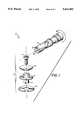
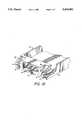
- FIG. 1is an exploded isometric view of the invention comprising a tubular cam assembly portion and a stud assembly portion;
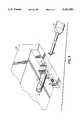
- FIG. 2is a perspective view of an subassembly tray having a plurality of modules connected therein showing an exploded view of a tray connector plate, and a removed dual channel T/R module comprising a tubular cam assembly portion of the invention, and it also shows a tool for insertion and removal of the T/R module to and from the subassembly tray;
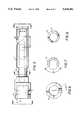
- FIG. 3is an isometric view of the tubular cam assembly showing a helical groove, a retaining set screw and a tool slot in a head of the cam assembly.
- FIG. 4is an isometric view of a portion of a subassembly tray having a T/R module removed and showing a cut away of a stud assembly portion of the invention
- FIG. 5is a top view of a tubular cam assembly
- FIG. 6is an end view of the tubular cam assembly of FIG. 5 at the end where an insertion tool is inserted;
- FIG. 7is a sectional view of the tubular cam assembly taken substantially on lines 7--7 of FIG. 5 showing a cut-out for a retaining set screw that also provides for a 180° rotation of the cam assembly;
- FIG. 8is an end view of the tubular cam assembly of FIG. 5 at the helical cam end showing the offset inner diameter
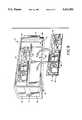
- FIG. 9is an isometric view of a dual channel T/R module having a unified housing with electronics circuit boards included therein;
- FIG. 10is an isometric view of a connector end of the T/R module of FIG. 9 showing the utilization of the module housing as the connector body, DC and RF pins hermetically sealed in the housing, and hold down ramps.
- FIG. 1shows an exploded isometric view of the invention of a dual action module retention apparatus 10 comprising a tubular cam assembly 12 and a stud assembly 14.
- FIG. 2shows a dual channel T/R module 52 comprising the tubular cam assembly 12 disposed therein and a subassembly tray 60 with the stud assembly 14 disposed therein, and such tray 60 in the preferred embodiment comprises a cold plate 62.
- T/Rtransmit/receive
- the tool 50is used for inserting the module 52 into a subassembly tray 60.
- An exploded view of a connector plate 64 of the subassembly tray 60is shown having a connector 66 for each module 52 inserted into the tray 60.
- a cover plate 68is attached over the connector plate 64.
- FIG. 1shows an isometric view of the tubular cam assembly 12
- FIG. 3is an isometric view of the tubular cam assembly 12 disposed in an end of the T/R module 52.
- the tubular cam assembly 12comprises a helical groove 28, a retaining set screw 34, a tool slot 38 in an end of the tubular cam assembly 12, and the tool 50.
- the tool 50which has a roll pin forming a "T" shape is inserted into the head of tubular cam assembly 12 in order to insert the module 52 into the tray 60.
- a set screw 34is inserted into the module 52 and extends into a slot 36 in the body of the tubular cam assembly 12 for locking the tubular cam assembly 12 to the module 52.
- the end of the set screwprotrudes into slot 36 of the tubular cam assembly 12 allowing rotation of the tubular cam assembly 12, but at the same time preventing axial motion of the tubular cam assembly 12.
- the tubular cam assembly 12comprises a helical groove 28 formed in its body to provide an axial translation of 0.180 inches in the present embodiment when the tubular cam assembly 12 is rotated 180° in order to engage connector pins at the module 52 in a mating tray connector 66.
- a required contact force between the module 52 and tray 60is determined by thermal analysis, and in the present embodiment such force is 54 pounds.
- This contact forceis provided by the tubular cam assembly 12 by compressing the conical washer 46 between an upper flange portion of a nut retainer 42 and an inner surface of the tray 60.
- the tubular cam assembly 12is captivated in the module housing by the set screw 34 to prevent unwanted axial motion relative to the module housing.
- a detentis machined into the end of the helical groove 28 which in conjunction with a compliant thrust washer on the cam screw 34 provides a lockout of the module.
- FIG. 1shows an exploded view of the stud assembly 14
- FIG. 4is an isometric view of a portion of the subassembly tray 60 having a T/R module 52 removed showing a cut away of the stud assembly 14 disposed in the tray 60.
- the stud assembly 14comprises a cylindrical nut retainer 42 having a circular flange 41 at approximately the center of the nut retainer 42.
- a conical washeris disposed over an upper portion of the nut retainer 42 resting on the flange 41.
- a threaded ball stud 44is screwed into the upper end of the nut retainer 42.
- a retaining ring 40is inserted around a lower portion of the nut retainer 42 to secure it in the tray 50.
- An adjustment hole 63is provided in the tray 60 above the location of the stud assembly 14 to allow for adjustment of the height of the ball stud 44.
- a cylindrical hole 61is provided for insertion of the tubular cam assembly 12 disposed in a module 52.
- the ball stud 44extends into the cylindrical hole 61 and when a T/R module 52 is inserted, the ball stud 44 engages with the helical groove 28 of the tubular cam assembly 12 wherein a rotation of the tubular assembly 12 translates into linear motion in two orthogonal directions causing the module 52 to be retained in the tray 60.
- a first motion along a longitudinal axis of the tubular cam assembly 12provides for inserting a module connector 54 into a tray connector 66, and a second motion orthogonal to the longitudinal motion provides for moving the module 52 into forced contact with the tray 60. Both of these motions occur simultaneously.
- FIG. 5is a top view of the tubular cam assembly 12.
- the head 18 of the tubular cam assembly 12comprises an opening for insertion of the tool 50.
- FIG. 6is an end view of the head 18 showing the opening for the tool 50 and a recessed channel 19 within the head 18 for rotating the tool for removal of the T/R module 52 from the tray 60.
- the helical groove 28At the other end of the tubular cam assembly 12 is the helical groove 28.
- “A”represents the width of the helical groove 28 which is just slightly wider than the body of the ball stud 44.
- “B”represents the outside diameter of the tubular cam assembly 12 which is slightly smaller than a hole in the front face of module 52 into which the tubular assembly 12 is disposed.
- “C”represents the distance along the longitudinal axis that the tubular cam assembly 12 must move, which in the present embodiment is 0.180 inches, in order to have the pins of the module 52 properly inserted into the tray connector.
- FIG. 7is a sectional view of the tubular cam assembly 12 taken substantially on lines 7--7 of FIG. 5 at the point where the slot 36 is provided for insertion of the set screw 34. This slot 36 provides the limits for the 180° rotation in conjunction with the set screw.
- FIG. 8shows an end view of the inner diameter and outer diameter of the tubular cam assembly 12 which are offset and configured such that rotation about the longitudinal axis while engaging in the helical groove 28 a stud assembly 14 disposed in a tray 60 produces a translation of motion in a plane orthogonal to the longitudinal axis of the tubular cam assembly 12.
- the amount of motion along the longitudinal axisis determined by the required amount of engagement for the module electrical connector 54 and it is controlled by the length of the helical grove 28 in the tubular cam assembly 12.
- the contact force between the module 52 and the subassembly tray 60is determined by the size, quantity and type of the conical washer 46.
- the module retention apparatus 10 of FIG. 1translates a singular rotational motion into simultaneous straight line motions in two orthogonal directions.
- FIG. 9shows two monolithic microwave integrated (MMIC) circuit boards 78, 79 which are packaged in a unified housing 53 of module 52.
- the DC signal connector 54 end of the module 52comprises two wedges 56, 58 disposed on each side of the signal connector 54; an RF connector 76 is disposed under the first wedge 56 and a DC power connector 74 is disposed under the second wedge 58 structure (see FIG. 10).
- the tubular cam assembly 12 having a tool operated actuationis located at the end of the module 52 having the antenna radiators 85, 86.
- the tubular cam assembly 12translates the module 52 into a mating tray connector 66 and mating wedge structures 70, 72 on each side of the tray connector 66 as shown in FIG. 2, while simultaneously locking the module 52 in place by applying compressive forces that press the base of module 52 at the antenna radiator end of the module 52 against the cold plate 62 of the tray 60.
- the wedge structures 70, 72 of the connector plate 64force the base of module 52 at the connector 54 end of the module 52 against the cold plate 62 as the module connectors 54, 74, 76 mate with corresponding connectors on the connector plates 64.
- the helical groove 28 of the tubular cam assembly 12fits over the neck of the ball stud 44 during module 52 installation and forces the antenna radiator end of the module 52 against the cold plate 62 of tray 60 in accordance with forces provided by compressing the conical spring washer 46.
- the unified housing 53 of dual channel T/R module 52is generally rectangular shaped and comprises two sidewalls, a rear end where connectors 54, 74, 76 are located and a front end where the tubular cam assembly 12 and antenna radiators 85, 86 are located.
- the antenna radiators 85, 86may be embodied with quartz windows.
- the unified housing 53is fabricated from nickel iron alloy material by a metal injection molding (MIM) process readily known in the art.
- MIMmetal injection molding
- the connector 54 end of the unified housing 53includes all of the features necessary to provide DC power, RF and DC signal connectors.
- the front end of the housing 53has surfaces for mounting the antenna radiators 85, 86.
- each antenna radiator 85, 86for making the electrical connections from the MMIC boards 78, 79.
- the number of such holesis dependent on a particular application.
- An interface ceramic substrate 51distributes signals such as from connector pins 59 to the MMIC boards 78, 79, in each channel and the substrate 51 comprises single layer or multilayer printed circuits commonly known in the art.
- the material for the unified housing 53is selected to provide an optimum thermal coefficient of expansion (TCE) match between a sealing glass around each connector pin and a copper-molybdenum (C u M o ) alloy material for the housing base 88.
- TCEthermal coefficient of expansion
- C u M ocopper-molybdenum
- the MIM processis a cost-effective methodology for providing large quantities of housings as are required in a phased array antenna.
- Each T/R module channelcomprises a MMIC board 78, 79 which comprises a plurality of microwave components 80 on an alumina thin film network 82 assembled onto a C u M o carrier plate 84.
- a septum 87 made of C u M o alloy materialis positioned between the two channels of MMIC boards 78, 79 to provide electrical isolation between the two T/R module channels; the septum 87 may be brazed or soldered in place or secured with conductive epoxy.
- the electronics of the MMIC boards 78, 79are tested after assembly into the unified housing 53, and then a cover is seam sealed to a top surface of the housing 53 creating a hermetic module 52.
- a helium leak testis performed on the module 52 to determine the adequacy of its level of hermeticity.
- an isometric view of the rear end of the unified housing 53shows the utilization of the unified housing 53 as the body or protective shell of connector 54. Also, the connectors 74, 76 for the DC power pin 55 and RF signal pin 57 respectively are formed in the housing 53 using the housing 53 as their outer protective shell.
- the DC signal pins 59are glass sealed at high temperatures into the housing 53. Also shown are the hold down ramps 56, 58, the DC power pin 55 and the RF signal pin 57 which are also glass sealed into the housing 53.
- the unified module housing 53may be configured to have connectors formed on more than one side of the housing for other applications. Therefore, it is intended that the scope of this invention be limited only by the appended claims.
Landscapes
- Engineering & Computer Science (AREA)
- Microelectronics & Electronic Packaging (AREA)
- Manufacturing & Machinery (AREA)
- Manufacturing Of Electrical Connectors (AREA)
Abstract
Description
The Government has rights in this invention pursuant to Contract No. DASG60-90-C-0210 awarded by the Department of the Army.
The present invention relates to an electronic module retention apparatus and more particularly to a dual action module retention apparatus for a transmit/receive module of a phased array radar antenna.
A solid state phased array radar system utilizing monolithic microwave integrated circuit (MMIC) transmit/receive modules in a phased array antenna are generally constructed such that each individual T/R module is mechanically fastened to a liquid cooled cold plate which is sized in some multiple of array elements to form an array subassembly or tray. Typical subassemblies may comprise between 32 to 48 elements and are plugged into a backplane which comprises electrical connections as well as input and output cooling manifold arrangements. Each subassembly requires expensive, leakproof, blind-mate, quick disconnect fluid coupling pairs.
To perform repairs in the field an entire tray subassembly containing many good modules must be removed, replaced with an all good subassembly, and returned to a maintenance facility for replacement of the failed module. This scheme forces a very costly spares penalty on any system inasmuch as full trays become the least replaceable unit (LRU).
One prior art approach to T/R module retention is described in U.S. Pat. No. 3,818,386, to Doyle S. Granberry, and assigned to Texas Instruments, Inc. An H shaped plate is used to secure the T/R module in place in their respective sockets of a support structure. However, the H plate is not captive to the module and comprises loose parts. Also, DC signal connection pins are provided at one end wall of the T/R module housing; they extend through a connector block which requires a hermetic seal to the end wall of the housing.
Another approach to T/R module retention in a phased array radar system is described in U.S. Pat. No. 4,998,181, to James L. Haws et al. and assigned to Texas Instruments, Inc. An all monolithic round T/R module with electrical connectors on an end wall having tiedown/eject screws attached on the side of and at the antenna end of the T/R module. This attachment device is used to affect engagement and disengagement of the electrical connector by jacking the module in and out of the main assembly. However, it does not hold the module in intimate contact with the cooling plate.
It is very desirable to be able to install or remove individual T/R modules from the tray using a single tool without the need to remove the tray from the radar antenna subsystem nor any other parts. This significantly reduces system and life cycle costs by allowing individual modules to become the least replacement unit (LRU) thereby eliminating extra tray, module, and hardware costs.
In the prior art the methodology of T/R module construction has been to form a metal enclosure with large cutouts for connectors, procure hermetic multipin and RF connectors, and weld or braze them into the housing. This methodology results in large perimeter hermetic joints with a potential risk for leakage due to voids in the weld or braze. Rework and scrap costs can be high.
It is very desirable to eliminate as many hermetic interfaces as possible. The glass compression seal around each pin is a highly reliable, well understood process that is employed to seal each pin into a connector. It follows then that if the connector pins are glassed directly into the module housing, a very large redundant hermetic joint can be eliminated. Further, if the interface features of the connectors are included in the basic housing configuration, the T/R module housing will now also serve as the connector housing. This results in lower costs, fewer components, higher reliability and a vastly reduced scrap rate.
Accordingly, it is therefore an object of this invention to provide a dual action module retention apparatus for securing an electronic module into an assembly having a cold plate.
It is also an object of this invention to provide a module retention apparatus that translates a rotational action into simultaneous linear motions in two orthogonal directions.
It is a further object of this invention to provide for inserting and removing a T/R module from a phased array antenna structure with a simple 180° rotation of a single tool inserted in an end of the T/R module.
The objects are further accomplished by providing a module retention apparatus comprising a tubular assembly disposed in a module having an offset inner diameter, a helical groove provided in a first portion of the tubular assembly, means disposed in an end of a second portion of the tubular assembly for inserting a tool to rotate the tubular assembly, a stud assembly disposed in each module location of a tray, a cylindrical hole in the tray at each module location for insertion of the tubular assembly of the module, and the stud assembly comprises a ball stud protruding into the cylindrical hole of the tray and engaging the helical groove of the tubular assembly of the module wherein a rotation of the tubular assembly translates into linear motions in two orthogonal directions causing the module to be retained in the tray. The offset of the inner diameter determines an amount of orthogonal translation of the module for bringing the module into contact with the tray. The helical groove provides for appropriately 180° rotation of the tubular assembly. The tool inserting means in an end of the second portion of the tubular assembly comprises recessed means for locking the tool to enable removal of the module from the tray. The stud assembly comprises a nut retainer, a conical washer disposed between an upper portion of the nut retainer and an inner surface area of the tray, the ball stud being screwed into the nut retainer, and a retaining ring means inserted around a lower portion of the nut retainer. A compression of the conical washer provides a pull down force for holding the module in contact with the tray. The tray comprises an adjustment hole above a location of the ball stud to enable adjustment of the height of the ball stud into the cylindrical hole. The linear motions in two orthogonal directions comprise a first motion along a longitudinal axis of the assembly for inserting a connector of the module into a tray connector and a second motion orthogonal to the longitudinal motion for moving the module into forced contact with the tray. The first motion and the second motion in two orthogonal directions occur simultaneously. The module comprises connector means for mating with a connector in the tray. A first ramp and a second ramp are provided on each side of the connector means of the module for providing a hold down force at the connector means end of the module.
The objects are further accomplished by providing a method for retaining a module in an assembly comprising the steps of disposing in the module a tubular assembly having an offset inner diameter, providing a helical groove in a first portion of the tubular assembly, providing a stud assembly disposed in each module location of a tray, inserting the tubular assembly into a cylindrical hole in the tray at each module location, protruding a ball stud of the stud assembly into the cylindrical hole of the tray, engaging the ball stud in the helical groove of the tubular assembly, and rotating the tubular assembly to provide linear motions in two orthogonal directions causing the module to be retained in the tray. The step of disposing in the module a tubular assembly having an offset inner diameter comprises the step of the offset determining an amount of orthogonal translation of the module for bringing the module into contact with the tray. The step of providing a helical groove in a first portion of the tubular assembly comprises the step of the helical groove providing for approximately 180° rotation of the tubular assembly. The step of inserting a tool to rotate the tubular assembly in a clockwise direction comprises the step of rotating the tool in a counter clockwise direction into a recessed means of the second portion end of the tubular assembly to enable removal of the module from the tray. The step of providing a stud assembly comprises the steps of providing a nut retainer, disposing a conical washer between an upper portion of the nut retainer and an inner surface area of the tray, screwing the ball stud into the nut retainer, and inserting a retaining ring means around a lower portion of the nut retainer. The step of disposing a conical washer between an upper portion of the nut retainer and an inner surface of the tray comprises the step of compressing the conical washer to provide a pull down force to hold the module in contact with the tray. The step of protruding a ball stud into a cylindrical hole of the tray comprises the step of adjusting the height of the ball stud protruding into the cylindrical by providing an adjustment hole in the tray above the stud assembly. The step of rotating the tubular assembly to provide linear motions in the orthogonal directions further comprises the step of providing the linear motions in two orthogonal directions simultaneously.
Other and further features and advantages of the invention will become apparent in connection with the accompanying drawings wherein:
FIG. 1 is an exploded isometric view of the invention comprising a tubular cam assembly portion and a stud assembly portion;
FIG. 2 is a perspective view of an subassembly tray having a plurality of modules connected therein showing an exploded view of a tray connector plate, and a removed dual channel T/R module comprising a tubular cam assembly portion of the invention, and it also shows a tool for insertion and removal of the T/R module to and from the subassembly tray;
FIG. 3 is an isometric view of the tubular cam assembly showing a helical groove, a retaining set screw and a tool slot in a head of the cam assembly.
FIG. 4 is an isometric view of a portion of a subassembly tray having a T/R module removed and showing a cut away of a stud assembly portion of the invention;
FIG. 5 is a top view of a tubular cam assembly;
FIG. 6 is an end view of the tubular cam assembly of FIG. 5 at the end where an insertion tool is inserted;
FIG. 7 is a sectional view of the tubular cam assembly taken substantially on lines 7--7 of FIG. 5 showing a cut-out for a retaining set screw that also provides for a 180° rotation of the cam assembly;
FIG. 8 is an end view of the tubular cam assembly of FIG. 5 at the helical cam end showing the offset inner diameter;
FIG. 9 is an isometric view of a dual channel T/R module having a unified housing with electronics circuit boards included therein; and
FIG. 10 is an isometric view of a connector end of the T/R module of FIG. 9 showing the utilization of the module housing as the connector body, DC and RF pins hermetically sealed in the housing, and hold down ramps.
Referring to FIG. 1 and FIG. 2, FIG. 1 shows an exploded isometric view of the invention of a dual actionmodule retention apparatus 10 comprising atubular cam assembly 12 and astud assembly 14. FIG. 2 shows a dual channel T/R module 52 comprising thetubular cam assembly 12 disposed therein and asubassembly tray 60 with thestud assembly 14 disposed therein, andsuch tray 60 in the preferred embodiment comprises a cold plate 62. In a phased array radar antenna comprising a plurality oftrays 60 having in each of the trays 60 a plurality of transmit/receive (T/R)modules 52, this invention permits individual T/R modules 52 to be installed and removed in and from asubassembly tray 60 with asingle tool 50. Thetool 50 is used for inserting themodule 52 into asubassembly tray 60. An exploded view of aconnector plate 64 of thesubassembly tray 60 is shown having a connector 66 for eachmodule 52 inserted into thetray 60. A cover plate 68 is attached over theconnector plate 64.
Referring now to FIG. 1 and FIG. 3, FIG. 1 shows an isometric view of thetubular cam assembly 12, and FIG. 3 is an isometric view of thetubular cam assembly 12 disposed in an end of the T/R module 52. Thetubular cam assembly 12 comprises ahelical groove 28, a retaining setscrew 34, a tool slot 38 in an end of thetubular cam assembly 12, and thetool 50. Thetool 50 which has a roll pin forming a "T" shape is inserted into the head oftubular cam assembly 12 in order to insert themodule 52 into thetray 60. Aset screw 34 is inserted into themodule 52 and extends into aslot 36 in the body of thetubular cam assembly 12 for locking thetubular cam assembly 12 to themodule 52. The end of the set screw protrudes intoslot 36 of thetubular cam assembly 12 allowing rotation of thetubular cam assembly 12, but at the same time preventing axial motion of thetubular cam assembly 12.
Referring to FIG. 1, FIG. 2 and FIG. 3, thetubular cam assembly 12 comprises ahelical groove 28 formed in its body to provide an axial translation of 0.180 inches in the present embodiment when thetubular cam assembly 12 is rotated 180° in order to engage connector pins at themodule 52 in a mating tray connector 66. A required contact force between themodule 52 andtray 60 is determined by thermal analysis, and in the present embodiment such force is 54 pounds. This contact force is provided by thetubular cam assembly 12 by compressing theconical washer 46 between an upper flange portion of anut retainer 42 and an inner surface of thetray 60. Thetubular cam assembly 12 is captivated in the module housing by theset screw 34 to prevent unwanted axial motion relative to the module housing. A detent is machined into the end of thehelical groove 28 which in conjunction with a compliant thrust washer on thecam screw 34 provides a lockout of the module.
Referring now to FIG. 1 and FIG. 4, FIG. 1 shows an exploded view of thestud assembly 14, and FIG. 4 is an isometric view of a portion of thesubassembly tray 60 having a T/R module 52 removed showing a cut away of thestud assembly 14 disposed in thetray 60. Thestud assembly 14 comprises acylindrical nut retainer 42 having a circular flange 41 at approximately the center of thenut retainer 42. A conical washer is disposed over an upper portion of thenut retainer 42 resting on the flange 41. A threaded ball stud 44 is screwed into the upper end of thenut retainer 42. A retainingring 40 is inserted around a lower portion of thenut retainer 42 to secure it in thetray 50. Anadjustment hole 63 is provided in thetray 60 above the location of thestud assembly 14 to allow for adjustment of the height of the ball stud 44. Acylindrical hole 61 is provided for insertion of thetubular cam assembly 12 disposed in amodule 52. The ball stud 44 extends into thecylindrical hole 61 and when a T/R module 52 is inserted, the ball stud 44 engages with thehelical groove 28 of thetubular cam assembly 12 wherein a rotation of thetubular assembly 12 translates into linear motion in two orthogonal directions causing themodule 52 to be retained in thetray 60. A first motion along a longitudinal axis of thetubular cam assembly 12 provides for inserting amodule connector 54 into a tray connector 66, and a second motion orthogonal to the longitudinal motion provides for moving themodule 52 into forced contact with thetray 60. Both of these motions occur simultaneously.
Referring now to FIG. 5 and FIG. 6, FIG. 5 is a top view of thetubular cam assembly 12. Thehead 18 of thetubular cam assembly 12 comprises an opening for insertion of thetool 50. FIG. 6 is an end view of thehead 18 showing the opening for thetool 50 and a recessedchannel 19 within thehead 18 for rotating the tool for removal of the T/R module 52 from thetray 60. At the other end of thetubular cam assembly 12 is thehelical groove 28. "A" represents the width of thehelical groove 28 which is just slightly wider than the body of the ball stud 44. "B" represents the outside diameter of thetubular cam assembly 12 which is slightly smaller than a hole in the front face ofmodule 52 into which thetubular assembly 12 is disposed. "C" represents the distance along the longitudinal axis that thetubular cam assembly 12 must move, which in the present embodiment is 0.180 inches, in order to have the pins of themodule 52 properly inserted into the tray connector.
Referring to FIG. 3, FIG. 5 and FIG. 7, FIG. 7 is a sectional view of thetubular cam assembly 12 taken substantially on lines 7--7 of FIG. 5 at the point where theslot 36 is provided for insertion of theset screw 34. Thisslot 36 provides the limits for the 180° rotation in conjunction with the set screw.
Referring to FIG. 1, FIG. 5 and FIG. 8, FIG. 8 shows an end view of the inner diameter and outer diameter of thetubular cam assembly 12 which are offset and configured such that rotation about the longitudinal axis while engaging in the helical groove 28 astud assembly 14 disposed in atray 60 produces a translation of motion in a plane orthogonal to the longitudinal axis of thetubular cam assembly 12. As noted above the amount of motion along the longitudinal axis is determined by the required amount of engagement for the moduleelectrical connector 54 and it is controlled by the length of thehelical grove 28 in thetubular cam assembly 12. The contact force between themodule 52 and thesubassembly tray 60 is determined by the size, quantity and type of theconical washer 46. Themodule retention apparatus 10 of FIG. 1 translates a singular rotational motion into simultaneous straight line motions in two orthogonal directions.
Referring to FIG. 2, FIG. 3 and FIG. 9, FIG. 9 shows two monolithic microwave integrated (MMIC)circuit boards unified housing 53 ofmodule 52. TheDC signal connector 54 end of themodule 52 comprises twowedges signal connector 54; anRF connector 76 is disposed under thefirst wedge 56 and aDC power connector 74 is disposed under thesecond wedge 58 structure (see FIG. 10). Thetubular cam assembly 12 having a tool operated actuation is located at the end of themodule 52 having theantenna radiators 85, 86. During installation of themodule 52 into thesubassembly tray 60, thetubular cam assembly 12 translates themodule 52 into a mating tray connector 66 andmating wedge structures 70, 72 on each side of the tray connector 66 as shown in FIG. 2, while simultaneously locking themodule 52 in place by applying compressive forces that press the base ofmodule 52 at the antenna radiator end of themodule 52 against the cold plate 62 of thetray 60. Thewedge structures 70, 72 of theconnector plate 64 force the base ofmodule 52 at theconnector 54 end of themodule 52 against the cold plate 62 as themodule connectors connector plates 64. Thehelical groove 28 of thetubular cam assembly 12 fits over the neck of the ball stud 44 duringmodule 52 installation and forces the antenna radiator end of themodule 52 against the cold plate 62 oftray 60 in accordance with forces provided by compressing theconical spring washer 46.
Still referring to FIG. 9, theunified housing 53 of dual channel T/R module 52 is generally rectangular shaped and comprises two sidewalls, a rear end whereconnectors tubular cam assembly 12 andantenna radiators 85, 86 are located. Theantenna radiators 85, 86 may be embodied with quartz windows. Theunified housing 53 is fabricated from nickel iron alloy material by a metal injection molding (MIM) process readily known in the art. Theconnector 54 end of theunified housing 53 includes all of the features necessary to provide DC power, RF and DC signal connectors. The front end of thehousing 53 has surfaces for mounting theantenna radiators 85, 86. Two holes (not shown) are provided behind eachantenna radiator 85, 86 for making the electrical connections from theMMIC boards interface ceramic substrate 51 distributes signals such as from connector pins 59 to theMMIC boards substrate 51 comprises single layer or multilayer printed circuits commonly known in the art. The material for theunified housing 53 is selected to provide an optimum thermal coefficient of expansion (TCE) match between a sealing glass around each connector pin and a copper-molybdenum (Cu Mo) alloy material for thehousing base 88. The MIM process is a cost-effective methodology for providing large quantities of housings as are required in a phased array antenna. It would be obvious to one of ordinary skill in the art that other processes such as machining could be used to fabricate theunified housing 53. The connector pins are high temperature glass sealed into the nickel-iron alloy housing 53. Subsequently, the Cu Mo base 88 is brazed to a bottom surface of thehousing 53, and the quartz windows,antenna radiators 85, 86 are brazed to the front end of thehousing 53; the assembly is then leak tested. Each T/R module channel comprises aMMIC board microwave components 80 on an aluminathin film network 82 assembled onto a Cu Mo carrier plate 84. A septum 87 made of Cu Mo alloy material is positioned between the two channels ofMMIC boards MMIC boards unified housing 53, and then a cover is seam sealed to a top surface of thehousing 53 creating ahermetic module 52. A helium leak test is performed on themodule 52 to determine the adequacy of its level of hermeticity.
Referring now to FIG. 10, an isometric view of the rear end of theunified housing 53 shows the utilization of theunified housing 53 as the body or protective shell ofconnector 54. Also, theconnectors DC power pin 55 andRF signal pin 57 respectively are formed in thehousing 53 using thehousing 53 as their outer protective shell. The DC signal pins 59 are glass sealed at high temperatures into thehousing 53. Also shown are the hold downramps DC power pin 55 and theRF signal pin 57 which are also glass sealed into thehousing 53.
This concludes the description of the preferred embodiment. However, many modifications and alterations will be obvious to one of ordinary skill in the art without departing from the spirit and scope of the inventive concept. For example, theunified module housing 53 may be configured to have connectors formed on more than one side of the housing for other applications. Therefore, it is intended that the scope of this invention be limited only by the appended claims.
Claims (28)
1. A module retention apparatus comprising:
a tubular assembly disposed in a module having an offset inner diameter;
a helical groove provided in a first portion of said tubular assembly;
means disposed in an end of a second portion of said tubular assembly for inserting a tool to rotate said tubular assembly;
a stud assembly disposed in each module location of a tray;
a cylindrical hole in said tray at each module location for insertion of said tubular assembly of said module; and
said stud assembly comprises a ball stud protruding into said cylindrical hole of said tray and engaging said helical groove of said tubular assembly of said module wherein a rotation of said tubular assembly translates into linear motions in two orthogonal directions causing said module to be retained in said tray.
2. The apparatus as recited in claim 1 wherein said offset of said inner diameter determines an amount of orthogonal translation of said module for bringing said module into contact with said tray.
3. The apparatus as recited in claim 1 wherein said helical groove provides for appropriately 180° rotation of said tubular assembly.
4. The apparatus as recited in claim 1 wherein said tool inserting means in an end of said second portion of said tubular assembly comprises recessed means for locking said tool to enable removal of said module from said tray.
5. The apparatus as recited in claim 1 wherein said stud assembly comprises:
a nut retainer;
a conical washer disposed between an upper portion of said nut retainer and an inner surface area of said tray;
said ball stud being screwed into said nut retainer; and
a retaining ring means inserted around a lower portion of said nut retainer.
6. The apparatus as recited in claim 5 wherein a compression of said conical washer provides a pull down force for holding said module in contact with said tray.
7. The apparatus as recited in claim 5 wherein said tray comprises an adjustment hole above a location of said ball stud to enable adjustment of the height of said ball stud into said cylindrical hole.
8. The apparatus as recited in claim 1 wherein said linear motions in two orthogonal directions comprises a first motion along a longitudinal axis of said assembly for inserting a connector of said module into a tray connector and a second motion orthogonal to said longitudinal motion for moving said module into forced contact with said tray.
9. The apparatus as recited in claim 8 wherein said first motion and said second motion in two orthogonal directions occur simultaneously.
10. The apparatus as recited in claim 1 wherein said module comprises connector means for mating with a connector in said tray.
11. The apparatus as recited in claim 10 wherein a first ramp and a second ramp are provided on each side of said connector means of said module for providing a hold down force at said connector means end of said module.
12. A module retention apparatus comprising:
a tubular assembly disposed in a module having an offset inner diameter;
a helical groove provided in a first portion of said tubular assembly, said helical ground providing for approximately 180° rotation of said tubular assembly;
means disposed in an end of a second portion of said tubular assembly for inserting a tool to rotate said tubular assembly;
a stud assembly disposed in each module location of a tray, said stud assembly comprises a nut retainer, a conical washer disposed between an upper portion of said nut retainer and an inner surface area of said tray, a ball stud screwed into said nut retainer, and a retaining ring means inserted around a lower portion of said nut retainer;
a cylindrical hole in said tray at each module location for insertion of said tubular assembly of said module; and
said ball stud protrudes into said cylindrical hole of said tray and engages said helical groove of said tubular assembly of said module wherein a rotation of said tubular assembly translates into linear motions in two orthogonal directions causing said module to be retained in said tray.
13. The apparatus as recited in claim 12 wherein said offset of said inner diameter determines an amount of orthogonal translation of said module for bringing said module into contact with said tray.
14. The apparatus as recited in claim 12 wherein said tool inserting means in an end of said second portion of said tubular assembly comprises recessed means for locking said tool to enable removal of said module from said tray.
15. The apparatus as recited in claim 12 wherein a compression of said conical washer provides a pull down force for holding said module in contact with said tray.
16. The apparatus as recited in claim 12 wherein said tray comprises an adjustment hole above a location of said ball stud to enable adjustment of the height of said ball stud into said cylindrical hole.
17. The apparatus as recited in claim 12 wherein said linear motions in two orthogonal directions comprises a first motion along a longitudinal axis of said assembly for inserting a connector of said module into a tray connector and a second motion orthogonal to said longitudinal motion for moving said module into forced contact with said tray.
18. The apparatus as recited in claim 17 wherein said first motion and said second motion in two orthogonal directions occur simultaneously.
19. The apparatus as recited in claim 12 wherein said module comprises a connector means for mating with a connector in said tray.
20. The apparatus as recited in claim 19 wherein a first ramp and a second ramp are provided on each side of said connector means of said module for providing a hold down force at said connector means end of said module.
21. A method for retaining a module in an assembly comprising the steps of:
disposing in said module a tubular assembly having an offset inner diameter;
providing a helical groove in a first portion of said tubular assembly;
providing a stud assembly disposed in each module location of a tray;
inserting said tubular assembly into a cylindrical hole in said tray at each module location;
protruding a bull stud of said stud assembly into said cylindrical hole of said tray;
engaging said ball stud in said helical groove of said tubular assembly; and
rotating said tubular assembly to provide linear motions in two orthogonal directions causing said module to be retained in said tray.
22. The method as recited in claim 21 wherein said step of disposing in said module a tubular assembly having an offset inner diameter comprises the step of said offset determining an amount of orthogonal translation of said module for bringing said module into contact with said tray.
23. The method as recited in claim 21 wherein said step of providing a helical groove in a first portion of said tubular assembly comprises the step of said helical groove providing for approximately 180° rotation of said tubular assembly.
24. The method as recited in claim 21 wherein said step of inserting a tool to rotate said tubular assembly in a clockwise direction comprises the step of rotating said tool in a counter clockwise direction into a recessed means of said second portion end of said tubular assembly to enable removal of said module from said tray.
25. The method as recited in claim 21 wherein said step of providing a stud assembly comprises the steps of:
providing a nut retainer;
disposing a conical washer between an upper portion of said nut retainer and an inner surface area of said tray;
screwing said ball stud into said nut retainer; and
inserting a retaining ring means around a lower portion of said nut retainer.
26. The method as recited in claim 25 wherein said step of disposing a conical washer between an upper portion of said nut retainer and an inner surface of said tray comprises the step of compressing said conical washer to provide a pull down force to hold said module in contact with said tray.
27. The method as recited in claim 21 wherein said step of protruding a ball stud into a cylindrical hole of said tray comprises the step of adjusting the height of said ball stud protruding into said cylindrical by providing an adjustment hole in said tray above said stud assembly.
28. The method as recited in claim 21 wherein said step of rotating said tubular assembly to provide linear motions in the orthogonal directions further comprises the step of providing said linear motions in two orthogonal directions simultaneously.
Priority Applications (1)
| Application Number | Priority Date | Filing Date | Title |
|---|---|---|---|
| US08/218,799US5431582A (en) | 1994-03-28 | 1994-03-28 | Module retention apparatus |
Applications Claiming Priority (1)
| Application Number | Priority Date | Filing Date | Title |
|---|---|---|---|
| US08/218,799US5431582A (en) | 1994-03-28 | 1994-03-28 | Module retention apparatus |
Publications (1)
| Publication Number | Publication Date |
|---|---|
| US5431582Atrue US5431582A (en) | 1995-07-11 |
Family
ID=22816563
Family Applications (1)
| Application Number | Title | Priority Date | Filing Date |
|---|---|---|---|
| US08/218,799Expired - Fee RelatedUS5431582A (en) | 1994-03-28 | 1994-03-28 | Module retention apparatus |
Country Status (1)
| Country | Link |
|---|---|
| US (1) | US5431582A (en) |
Cited By (17)
| Publication number | Priority date | Publication date | Assignee | Title |
|---|---|---|---|---|
| EP0718907A1 (en)* | 1994-12-23 | 1996-06-26 | Daimler-Benz Aerospace Aktiengesellschaft | Phased array antenna and method of its manufacturing |
| EP0762816A3 (en)* | 1995-08-25 | 1997-06-25 | Mitsubishi Electric Corp | System for mounting electronic modules in a rack |
| US6005531A (en)* | 1998-09-23 | 1999-12-21 | Northrop Grumman Corporation | Antenna assembly including dual channel microwave transmit/receive modules |
| US6033268A (en)* | 1997-04-30 | 2000-03-07 | Westinghouse Electric Corporation | Modular I/O system with two-way connectors between units and a common lock for multiple plug-in modules |
| US6094161A (en)* | 1998-09-23 | 2000-07-25 | Northrop Grumman Corporation | Dual channel microwave transmit/receive module for an active aperture of a radar system |
| US6425777B1 (en)* | 2001-04-03 | 2002-07-30 | Cray Inc. | Electrical cabinet including remote connector insertion |
| US20080169973A1 (en)* | 2006-10-20 | 2008-07-17 | Lockheed Martin Corporation | Antenna with compact LRU array |
| US20080204350A1 (en)* | 2007-02-23 | 2008-08-28 | Northrop Grumman Systems Corporation | Modular active phased array |
| US20100073899A1 (en)* | 2008-09-19 | 2010-03-25 | The Boeing Company | Bulkhead mount equipment shelf rack tray |
| US20110279343A1 (en)* | 2008-07-18 | 2011-11-17 | Selex Sistemi Integrati S.P.A. | Device for supporting, housing and cooling radiant modules of an antenna, particularly array antenna |
| US20120052710A1 (en)* | 2010-08-25 | 2012-03-01 | Deehr Mark G | Apparatus and method for attaching a header to a housing of an implantable device |
| US8659499B1 (en) | 2010-01-15 | 2014-02-25 | Lockheed Martin Corporation | Fastener-less joint for radar array |
| US8810448B1 (en)* | 2010-11-18 | 2014-08-19 | Raytheon Company | Modular architecture for scalable phased array radars |
| USD734861S1 (en)* | 2010-04-12 | 2015-07-21 | Pentair Water Pool And Spa, Inc. | Front face for an illuminating water bubbler |
| US9655280B1 (en) | 2015-12-31 | 2017-05-16 | Lockheed Martin Corporation | Multi-directional force generating line-replaceable unit chassis by means of a linear spring |
| USD845708S1 (en)* | 2018-12-04 | 2019-04-16 | Ez Flame Bbq, Inc. | Charcoal starter platform |
| CN114094348A (en)* | 2020-06-29 | 2022-02-25 | 西南电子技术研究所(中国电子科技集团公司第十研究所) | PCB substrate antenna and carrier structural member assembling process method |
Citations (8)
| Publication number | Priority date | Publication date | Assignee | Title |
|---|---|---|---|---|
| US3818386A (en)* | 1967-04-03 | 1974-06-18 | Texas Instruments Inc | Solid-state modular microwave system |
| US4704872A (en)* | 1986-11-25 | 1987-11-10 | The United States Of America As Represented By The Secretary Of The Air Force | Thermally controlled T/R module test apparatus |
| US4967201A (en)* | 1987-10-22 | 1990-10-30 | Westinghouse Electric Corp. | Multi-layer single substrate microwave transmit/receive module |
| US4998181A (en)* | 1987-12-15 | 1991-03-05 | Texas Instruments Incorporated | Coldplate for cooling electronic equipment |
| US5264860A (en)* | 1991-10-28 | 1993-11-23 | Hughes Aircraft Company | Metal flared radiator with separate isolated transmit and receive ports |
| US5276455A (en)* | 1991-05-24 | 1994-01-04 | The Boeing Company | Packaging architecture for phased arrays |
| US5368496A (en)* | 1993-12-10 | 1994-11-29 | Tetrad Corporation | Connector assembly having control lever actuation |
| US5382175A (en)* | 1993-07-28 | 1995-01-17 | E-Systems, Inc. | Thermal core wedge clamp |
- 1994
- 1994-03-28USUS08/218,799patent/US5431582A/ennot_activeExpired - Fee Related
Patent Citations (8)
| Publication number | Priority date | Publication date | Assignee | Title |
|---|---|---|---|---|
| US3818386A (en)* | 1967-04-03 | 1974-06-18 | Texas Instruments Inc | Solid-state modular microwave system |
| US4704872A (en)* | 1986-11-25 | 1987-11-10 | The United States Of America As Represented By The Secretary Of The Air Force | Thermally controlled T/R module test apparatus |
| US4967201A (en)* | 1987-10-22 | 1990-10-30 | Westinghouse Electric Corp. | Multi-layer single substrate microwave transmit/receive module |
| US4998181A (en)* | 1987-12-15 | 1991-03-05 | Texas Instruments Incorporated | Coldplate for cooling electronic equipment |
| US5276455A (en)* | 1991-05-24 | 1994-01-04 | The Boeing Company | Packaging architecture for phased arrays |
| US5264860A (en)* | 1991-10-28 | 1993-11-23 | Hughes Aircraft Company | Metal flared radiator with separate isolated transmit and receive ports |
| US5382175A (en)* | 1993-07-28 | 1995-01-17 | E-Systems, Inc. | Thermal core wedge clamp |
| US5368496A (en)* | 1993-12-10 | 1994-11-29 | Tetrad Corporation | Connector assembly having control lever actuation |
Cited By (31)
| Publication number | Priority date | Publication date | Assignee | Title |
|---|---|---|---|---|
| EP0718907A1 (en)* | 1994-12-23 | 1996-06-26 | Daimler-Benz Aerospace Aktiengesellschaft | Phased array antenna and method of its manufacturing |
| EP0762816A3 (en)* | 1995-08-25 | 1997-06-25 | Mitsubishi Electric Corp | System for mounting electronic modules in a rack |
| EP0928131A3 (en)* | 1995-08-25 | 1999-08-25 | Mitsubishi Denki Kabushiki Kaisha | System for mounting an electronic module in a rack |
| US6033268A (en)* | 1997-04-30 | 2000-03-07 | Westinghouse Electric Corporation | Modular I/O system with two-way connectors between units and a common lock for multiple plug-in modules |
| US6114986A (en)* | 1998-03-04 | 2000-09-05 | Northrop Grumman Corporation | Dual channel microwave transmit/receive module for an active aperture of a radar system |
| US6005531A (en)* | 1998-09-23 | 1999-12-21 | Northrop Grumman Corporation | Antenna assembly including dual channel microwave transmit/receive modules |
| US6094161A (en)* | 1998-09-23 | 2000-07-25 | Northrop Grumman Corporation | Dual channel microwave transmit/receive module for an active aperture of a radar system |
| WO2000021159A3 (en)* | 1998-09-23 | 2000-07-27 | Northrop Grumman Corp | Transmit/receive module having multiple transmit/receive paths with shared circuitry |
| WO2000022451A3 (en)* | 1998-09-23 | 2000-07-27 | Northrop Grumman Corp | A dual channel microwave transmit/receive module for an active aperture of a radar system |
| US6097335A (en)* | 1998-09-23 | 2000-08-01 | Northrop Grumman Corporation | Transmit/receive module having multiple transmit/receive paths with shared circuitry |
| KR100758554B1 (en)* | 1998-09-23 | 2007-09-13 | 노드롭 그루만 코포레이션 | 2-channel microwave transmit / receive module for active aperture in radar systems |
| US6425777B1 (en)* | 2001-04-03 | 2002-07-30 | Cray Inc. | Electrical cabinet including remote connector insertion |
| US7508338B2 (en)* | 2006-10-20 | 2009-03-24 | Lockheed Martin Corporation | Antenna with compact LRU array |
| US20080169973A1 (en)* | 2006-10-20 | 2008-07-17 | Lockheed Martin Corporation | Antenna with compact LRU array |
| US20080204350A1 (en)* | 2007-02-23 | 2008-08-28 | Northrop Grumman Systems Corporation | Modular active phased array |
| US7889147B2 (en) | 2007-02-23 | 2011-02-15 | Northrop Grumman Systems Corporation | Modular active phased array |
| US20110279343A1 (en)* | 2008-07-18 | 2011-11-17 | Selex Sistemi Integrati S.P.A. | Device for supporting, housing and cooling radiant modules of an antenna, particularly array antenna |
| US8837148B2 (en)* | 2008-07-18 | 2014-09-16 | Selex Sistemi Integrati S.p.A. P.A. | Device for supporting, housing and cooling radiant modules of an antenna, particularly array antenna |
| US20100073899A1 (en)* | 2008-09-19 | 2010-03-25 | The Boeing Company | Bulkhead mount equipment shelf rack tray |
| US8035956B2 (en)* | 2008-09-19 | 2011-10-11 | The Boeing Company | Bulkhead mount equipment shelf rack tray |
| US8659499B1 (en) | 2010-01-15 | 2014-02-25 | Lockheed Martin Corporation | Fastener-less joint for radar array |
| USD734861S1 (en)* | 2010-04-12 | 2015-07-21 | Pentair Water Pool And Spa, Inc. | Front face for an illuminating water bubbler |
| USD780319S1 (en) | 2010-04-12 | 2017-02-28 | Pentair Water Pool And Spa, Inc. | Front face for an illuminating water bubbler |
| US8585445B2 (en)* | 2010-08-25 | 2013-11-19 | Cardiac Pacemakers, Inc. | Apparatus and method for attaching a header to a housing of an implantable device |
| US20120052710A1 (en)* | 2010-08-25 | 2012-03-01 | Deehr Mark G | Apparatus and method for attaching a header to a housing of an implantable device |
| US8810448B1 (en)* | 2010-11-18 | 2014-08-19 | Raytheon Company | Modular architecture for scalable phased array radars |
| US9116222B1 (en) | 2010-11-18 | 2015-08-25 | Raytheon Company | Modular architecture for scalable phased array radars |
| US9655280B1 (en) | 2015-12-31 | 2017-05-16 | Lockheed Martin Corporation | Multi-directional force generating line-replaceable unit chassis by means of a linear spring |
| USD845708S1 (en)* | 2018-12-04 | 2019-04-16 | Ez Flame Bbq, Inc. | Charcoal starter platform |
| CN114094348A (en)* | 2020-06-29 | 2022-02-25 | 西南电子技术研究所(中国电子科技集团公司第十研究所) | PCB substrate antenna and carrier structural member assembling process method |
| CN114094348B (en)* | 2020-06-29 | 2023-06-09 | 西南电子技术研究所(中国电子科技集团公司第十研究所) | PCB substrate antenna and carrier structural member assembling process method |
Similar Documents
| Publication | Publication Date | Title |
|---|---|---|
| US5457607A (en) | Unified module housing | |
| US5431582A (en) | Module retention apparatus | |
| KR100204617B1 (en) | Method and apparatus for locating electrical circuit members | |
| US5310352A (en) | Substrate interfacing electrical connector system | |
| US5768104A (en) | Cooling approach for high power integrated circuits mounted on printed circuit boards | |
| US5213511A (en) | Dimple interconnect for flat cables and printed wiring boards | |
| US5199889A (en) | Leadless grid array socket | |
| US5381314A (en) | Heat dissipating EMI/RFI protective function box | |
| US7416415B2 (en) | Multiple position push-on electrical connector and a mating connector therefor | |
| US4922376A (en) | Spring grid array interconnection for active microelectronic elements | |
| US4879629A (en) | Liquid cooled multi-chip integrated circuit module incorporating a seamless compliant member for leakproof operation | |
| US4960391A (en) | Hermetically sealed electrical bulkhead connector | |
| US6469671B1 (en) | Low-temperature-difference TR module mounting, and antenna array using such mounting | |
| US6430052B1 (en) | Techniques for cooling a circuit board component | |
| US4854377A (en) | Liquid cooling system for integrated circuit chips | |
| US4922381A (en) | Stacked circuit cards and guided configurations | |
| US5761043A (en) | Daughter card assembly | |
| EP0791234B1 (en) | Avionic connector interface distribution unit | |
| US4888663A (en) | Cooling system for electronic assembly | |
| CN112469236A (en) | Cell body and switching module thereof | |
| US5621617A (en) | Circuit card mounting system having a cylindrical housing and circular card locks | |
| EP0932330B1 (en) | Electronic apparatus | |
| US10939582B2 (en) | Methodology for blindmating and cooling electronic modules | |
| US5393931A (en) | Electrical access to a hermetically sealed chamber using a printed circuit board | |
| EP0511930B1 (en) | An apparatus and a method for an electrical transmission-line interface |
Legal Events
| Date | Code | Title | Description |
|---|---|---|---|
| AS | Assignment | Owner name:RAYTHEON COMPANY, MASSACHUSETTS Free format text:ASSIGNMENT OF ASSIGNORS INTEREST;ASSIGNORS:CARVALHO, RONALD M.;JASKOLA, HENRY K.;REEL/FRAME:006947/0137;SIGNING DATES FROM 19940324 TO 19940325 | |
| REMI | Maintenance fee reminder mailed | ||
| LAPS | Lapse for failure to pay maintenance fees | ||
| FP | Lapsed due to failure to pay maintenance fee | Effective date:19990711 | |
| STCH | Information on status: patent discontinuation | Free format text:PATENT EXPIRED DUE TO NONPAYMENT OF MAINTENANCE FEES UNDER 37 CFR 1.362 |