US5419009A - Packaging handle - Google Patents
Packaging handleDownload PDFInfo
- Publication number
- US5419009A US5419009AUS08/142,934US14293493AUS5419009AUS 5419009 AUS5419009 AUS 5419009AUS 14293493 AUS14293493 AUS 14293493AUS 5419009 AUS5419009 AUS 5419009A
- Authority
- US
- United States
- Prior art keywords
- strap member
- adhesive material
- package
- recited
- improved packaging
- Prior art date
- Legal status (The legal status is an assumption and is not a legal conclusion. Google has not performed a legal analysis and makes no representation as to the accuracy of the status listed.)
- Expired - Fee Related
Links
- 238000004806packaging method and processMethods0.000titleclaimsabstractdescription32
- 239000000463materialSubstances0.000claimsdescription58
- 239000000853adhesiveSubstances0.000claimsdescription42
- 230000001070adhesive effectEffects0.000claimsdescription42
- 230000001681protective effectEffects0.000claimsdescription11
- 239000002184metalSubstances0.000claimsdescription3
- 238000010276constructionMethods0.000description1
- 238000004519manufacturing processMethods0.000description1
- 238000000034methodMethods0.000description1
- 238000012986modificationMethods0.000description1
- 230000004048modificationEffects0.000description1
- 238000006467substitution reactionMethods0.000description1
Images
Classifications
- B—PERFORMING OPERATIONS; TRANSPORTING
- B65—CONVEYING; PACKING; STORING; HANDLING THIN OR FILAMENTARY MATERIAL
- B65D—CONTAINERS FOR STORAGE OR TRANSPORT OF ARTICLES OR MATERIALS, e.g. BAGS, BARRELS, BOTTLES, BOXES, CANS, CARTONS, CRATES, DRUMS, JARS, TANKS, HOPPERS, FORWARDING CONTAINERS; ACCESSORIES, CLOSURES, OR FITTINGS THEREFOR; PACKAGING ELEMENTS; PACKAGES
- B65D5/00—Rigid or semi-rigid containers of polygonal cross-section, e.g. boxes, cartons or trays, formed by folding or erecting one or more blanks made of paper
- B65D5/42—Details of containers or of foldable or erectable container blanks
- B65D5/44—Integral, inserted or attached portions forming internal or external fittings
- B65D5/46—Handles
- B65D5/46008—Handles formed separately from the container body
- B65D5/46016—Straps used as handles fixed to the container by glueing, stapling, heat-sealing
- Y—GENERAL TAGGING OF NEW TECHNOLOGICAL DEVELOPMENTS; GENERAL TAGGING OF CROSS-SECTIONAL TECHNOLOGIES SPANNING OVER SEVERAL SECTIONS OF THE IPC; TECHNICAL SUBJECTS COVERED BY FORMER USPC CROSS-REFERENCE ART COLLECTIONS [XRACs] AND DIGESTS
- Y10—TECHNICAL SUBJECTS COVERED BY FORMER USPC
- Y10S—TECHNICAL SUBJECTS COVERED BY FORMER USPC CROSS-REFERENCE ART COLLECTIONS [XRACs] AND DIGESTS
- Y10S16/00—Miscellaneous hardware, e.g. bushing, carpet fastener, caster, door closer, panel hanger, attachable or adjunct handle, hinge, window sash balance
- Y10S16/24—Handle fastening means
- Y—GENERAL TAGGING OF NEW TECHNOLOGICAL DEVELOPMENTS; GENERAL TAGGING OF CROSS-SECTIONAL TECHNOLOGIES SPANNING OVER SEVERAL SECTIONS OF THE IPC; TECHNICAL SUBJECTS COVERED BY FORMER USPC CROSS-REFERENCE ART COLLECTIONS [XRACs] AND DIGESTS
- Y10—TECHNICAL SUBJECTS COVERED BY FORMER USPC
- Y10S—TECHNICAL SUBJECTS COVERED BY FORMER USPC CROSS-REFERENCE ART COLLECTIONS [XRACs] AND DIGESTS
- Y10S16/00—Miscellaneous hardware, e.g. bushing, carpet fastener, caster, door closer, panel hanger, attachable or adjunct handle, hinge, window sash balance
- Y10S16/25—Handle fastening means, clamp band
Definitions
- the instant inventionrelates generally to carrying devices and more specifically it relates to an improved packaging handle.
- a primary object of the present inventionis to provide an improved packaging handle that will overcome the shortcomings of the prior art devices.
- Another objectis to provide an improved packaging handle that contains a strap member which can be attached to a package with adhesive, so that a grasping component can be engaged by the hand of a person to carry the package therefrom.
- An additional objectis to provide an improved packaging handle in which the strap member can be imprinted with indicia for advertising purposes.
- a further objectis to provide an improved packaging handle that is simple and easy to use.
- a still further objectis to provide an improved packaging handle that is economical in cost to manufacture.
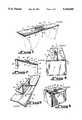
- FIG. 1is a top perspective view of a first embodiment of the instant invention.
- FIG. 2is a bottom perspective view of the first embodiment taken in the direction of arrow in FIG. 1.
- FIG. 3is an enlarged top perspective view of the first embodiment with parts broken away taken in the direction of arrow 3 in FIG. 2.
- FIG. 4is a top perspective view showing the first embodiment attached to a package.
- FIG. 5is a top perspective view taken in the direction of arrow 5 in FIG. 4, showing indicia imprinted on the strap member.
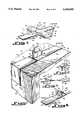
- FIG. 6is a top perspective view of a second embodiment of the instant invention.
- FIG. 7is a top perspective view showing the second embodiment attached to a package that is broken away.
- FIG. 8is a top perspective view of a third embodiment of the instant invention with parts broken away.
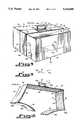
- FIG. 9is a top perspective view of a fourth embodiment of the instant invention attached to a package that is broken away.
- FIG. 10is a bottom perspective view of the fourth embodiment per se taken in the direction of arrow 10 in FIG. 9.
- FIG. 11is a bottom view of a fifth embodiment of the instant invention.
- FIG. 12is a top perspective view of the fifth embodiment attached to a package
- FIGS. 1 through 12illustrate an improved packaging handle 11, which consists of a strap member 12.
- a structure 14is for adhering the strap member 12 to a package 18.
- a component 20 for graspingis on the strap member 12, so that a person can carry the package 18 therefrom with one hand.
- the strap member 12is fabricated out of a narrow flat thin piece of pliant material 22.
- the grasping component 20is a grip member 24.
- the grip member 24is fabricated out of a narrow flat thin piece of pliant material 22.
- the strap member 12 and the grip member 24are integral and fabricated out of the same narrow flat thin piece of pliant material 22.
- the adhering structure 14includes adhesive material 26, applied to an inner surface of the strap member 12.
- Protective strips 28are applied to the adhesive material 26. When the protective strips 28 are manually removed, the adhesive material 26 will be exposed to allow the strap member 12 to stick fast to a top surface 16 of the package 18.
- the grip member 24consists of a pair of rectangular shaped segments 30, formed longitudinally into a recessed central portion 31 of an outer surface of the strap member 12, with a living hinge 32 therebetween.
- the strap member 12further includes a pair of flap members 34.
- a pair of living hinges 36are provided, with each hinged 36 connected between one end of the strap member 12 and one end of one flap member 34.
- the flap members 34 in a first positioncan be folded against the inner surface of the strap member 12 and in a second position can be moved approximately at a ninety degree angle away from the inner surface of the strap member 12.
- the adhering structure 14includes adhesive material 26 applied to the inner surface of each flap member 34. When the flap members 34 go into the second position, the adhesive material 26 will stick fast to the side surfaces 38 of the package 18. Adhesive material 26, as shown in FIGS. 6 and 7, can also be applied to the inner surface of the strap member 12. When the flap members 34 go into the second position, the adhesive material 26 on the inner surface of the strap member 12 will also stick fast to the top surface 16 of the package 18.
- the strap member 12as shown in FIGS. 9 and 10, further includes a pair of second flap members 34a.
- a pair of second living hinges 36aare provided, with each second hinge 36a connected between a second end of one first flap member 34 and an end of the second flap member 34a.
- the adhering structure 14includes adhesive material 26 applied to an inner surface of each second flap member 34a. When the first flap members 34 go into the second position, adhesive material 26 on the inner surface of each second flap member 34a will stick fast to a bottom surface 39 of the package 18. Adhesive material 26 can also be applied to an inner surface of each first flap member 34. When the first flap members 34 go into the second position, the adhesive material 26 on the inner surfaces of the first flap member 34 will stick fast to the side surfaces 38 of the package 18.
- Adhesive material 26can also be applied to the inner surface of the strap member 12. When the first flap members 34 and the second flap members 34a go into the second position, the adhesive material 26 on the inner surface of the strap member 12 will also stick fast to the top surface 16 of the package 12.
- the grip member 24contains a pair of arms 40 extending from opposite central edges of the strap member 12, with each arm 40 having a D-shaped distal end 42.
- each arm 40When the arms 40 are manually lifted upwardly and folded into an abutting vertical position, as shown in FIG. 7, the person can hold onto the D-shaped distal ends 42 with one hand and carry the package 18.
- the grip member 24includes a pair of rectangular shaped segments 44, formed transversely into a recessed central portion 45 of the outer surface of the strap member 12, with a living hinge 46 therebetween.
- the rectangular shaped segments 44are manually lifted upwardly into an abutting vertical position, the person can hold onto the rectangular shaped segments 44 with one hand and carry the package 18.
- indicia 48is imprinted onto the outer surface of the strap member 12, so as to be used for advertising purposes.
- the narrow flat piece of pliant material 22can be paper 50, plastic 52, metal 54 or any other durable materials.
- the grip member 24is fabricated out of a narrow cylindrical piece of pliant material 56.
- the strap member 12 and the grip member 24are integral.
- the grip member 24is in the center dividing the strap member 12 into two segments 58. All are out of the same pliant material 56.
- the adhering structure 14includes adhesive material 26, applied to an inner surface of the two segments 58 of the strap member 12. Two protective strips 28 are provided, with each applied to the adhesive material 26 on one segment 58 of the strap member 12. When the two protective strips 28 are manually removed, the adhesive material 26 will be exposed, to allow the two segments 58 of the strap member 12 to stick fast to the front and rear surfaces 60 and 62 of the package 18.
Landscapes
- Engineering & Computer Science (AREA)
- Mechanical Engineering (AREA)
- Details Of Rigid Or Semi-Rigid Containers (AREA)
Abstract
Description
1. Field of the Invention
The instant invention relates generally to carrying devices and more specifically it relates to an improved packaging handle.
2. Description of the Prior Art
Numerous carrying devices have been provided in prior art that are utilized by being attached to parcels and similar articles which have been tied with cord or wire, so that the carrying devices can be held with the hand to deliver the parcels to other locations. While these units may be suitable for the particular purpose to which they address, they would not be as suitable for the purposes of the present invention as heretofore described.
A primary object of the present invention is to provide an improved packaging handle that will overcome the shortcomings of the prior art devices.
Another object is to provide an improved packaging handle that contains a strap member which can be attached to a package with adhesive, so that a grasping component can be engaged by the hand of a person to carry the package therefrom.
An additional object is to provide an improved packaging handle in which the strap member can be imprinted with indicia for advertising purposes.
A further object is to provide an improved packaging handle that is simple and easy to use.
A still further object is to provide an improved packaging handle that is economical in cost to manufacture.
Further objects of the invention will appear as the description proceeds.
To the accomplishment of the above and related objects, this invention may be embodied in the form illustrated in the accompanying drawings, attention being called to the fact, however, that the drawings are illustrative only, and that changes may be made in the specific construction illustrated and described within the scope of the appended claims.
FIG. 1 is a top perspective view of a first embodiment of the instant invention.
FIG. 2 is a bottom perspective view of the first embodiment taken in the direction of arrow in FIG. 1.
FIG. 3 is an enlarged top perspective view of the first embodiment with parts broken away taken in the direction ofarrow 3 in FIG. 2.
FIG. 4 is a top perspective view showing the first embodiment attached to a package.
FIG. 5 is a top perspective view taken in the direction ofarrow 5 in FIG. 4, showing indicia imprinted on the strap member.
FIG. 6 is a top perspective view of a second embodiment of the instant invention.
FIG. 7 is a top perspective view showing the second embodiment attached to a package that is broken away.
FIG. 8 is a top perspective view of a third embodiment of the instant invention with parts broken away.
FIG. 9 is a top perspective view of a fourth embodiment of the instant invention attached to a package that is broken away.
FIG. 10 is a bottom perspective view of the fourth embodiment per se taken in the direction ofarrow 10 in FIG. 9.
FIG. 11 is a bottom view of a fifth embodiment of the instant invention,
FIG. 12 is a top perspective view of the fifth embodiment attached to a package,
Turning now descriptively to the drawings, in which similar reference characters denote similar elements throughout the several views, FIGS. 1 through 12 illustrate an improvedpackaging handle 11, which consists of astrap member 12. Astructure 14 is for adhering thestrap member 12 to apackage 18. Acomponent 20 for grasping is on thestrap member 12, so that a person can carry thepackage 18 therefrom with one hand.
Thestrap member 12 is fabricated out of a narrow flat thin piece ofpliant material 22. Thegrasping component 20 is agrip member 24. Thegrip member 24 is fabricated out of a narrow flat thin piece ofpliant material 22. Thestrap member 12 and thegrip member 24 are integral and fabricated out of the same narrow flat thin piece ofpliant material 22.
As best seen in FIGS. 1 through 3, theadhering structure 14 includesadhesive material 26, applied to an inner surface of thestrap member 12.Protective strips 28 are applied to theadhesive material 26. When theprotective strips 28 are manually removed, theadhesive material 26 will be exposed to allow thestrap member 12 to stick fast to atop surface 16 of thepackage 18.
Thegrip member 24 consists of a pair of rectangularshaped segments 30, formed longitudinally into a recessedcentral portion 31 of an outer surface of thestrap member 12, with aliving hinge 32 therebetween. When the rectangularshaped segments 30 are manually lifted upwardly into an abutting vertical position, the person can hold onto the rectangularshaped segments 30 with one hand and carry thepackage 18.
As shown in FIGS. 6, 7 and 8, thestrap member 12 further includes a pair offlap members 34. A pair ofliving hinges 36 are provided, with each hinged 36 connected between one end of thestrap member 12 and one end of oneflap member 34. Theflap members 34 in a first position can be folded against the inner surface of thestrap member 12 and in a second position can be moved approximately at a ninety degree angle away from the inner surface of thestrap member 12.
Theadhering structure 14 includesadhesive material 26 applied to the inner surface of eachflap member 34. When theflap members 34 go into the second position, theadhesive material 26 will stick fast to theside surfaces 38 of thepackage 18.Adhesive material 26, as shown in FIGS. 6 and 7, can also be applied to the inner surface of thestrap member 12. When theflap members 34 go into the second position, theadhesive material 26 on the inner surface of thestrap member 12 will also stick fast to thetop surface 16 of thepackage 18.
Thestrap member 12, as shown in FIGS. 9 and 10, further includes a pair ofsecond flap members 34a. A pair ofsecond living hinges 36a are provided, with eachsecond hinge 36a connected between a second end of onefirst flap member 34 and an end of thesecond flap member 34a. When thefirst flap members 34 go into the second position, thesecond flap members 34a can be moved away from thefirst flap members 34 at approximately a ninety degree angle.
Theadhering structure 14 includesadhesive material 26 applied to an inner surface of eachsecond flap member 34a. When thefirst flap members 34 go into the second position,adhesive material 26 on the inner surface of eachsecond flap member 34a will stick fast to abottom surface 39 of thepackage 18.Adhesive material 26 can also be applied to an inner surface of eachfirst flap member 34. When thefirst flap members 34 go into the second position, theadhesive material 26 on the inner surfaces of thefirst flap member 34 will stick fast to theside surfaces 38 of thepackage 18.
In FIGS. 6 and 7, thegrip member 24 contains a pair ofarms 40 extending from opposite central edges of thestrap member 12, with eacharm 40 having a D-shapeddistal end 42. When thearms 40 are manually lifted upwardly and folded into an abutting vertical position, as shown in FIG. 7, the person can hold onto the D-shapeddistal ends 42 with one hand and carry thepackage 18.
In FIG. 8, thegrip member 24 includes a pair of rectangularshaped segments 44, formed transversely into a recessedcentral portion 45 of the outer surface of thestrap member 12, with aliving hinge 46 therebetween. When the rectangularshaped segments 44 are manually lifted upwardly into an abutting vertical position, the person can hold onto the rectangularshaped segments 44 with one hand and carry thepackage 18.
In FIG. 5indicia 48 is imprinted onto the outer surface of thestrap member 12, so as to be used for advertising purposes. The narrow flat piece ofpliant material 22 can be paper 50, plastic 52, metal 54 or any other durable materials.
In FIGS. 11 and 12 thegrip member 24 is fabricated out of a narrow cylindrical piece ofpliant material 56. Thestrap member 12 and thegrip member 24 are integral. Thegrip member 24 is in the center dividing thestrap member 12 into twosegments 58. All are out of the samepliant material 56.
The adheringstructure 14 includesadhesive material 26, applied to an inner surface of the twosegments 58 of thestrap member 12. Twoprotective strips 28 are provided, with each applied to theadhesive material 26 on onesegment 58 of thestrap member 12. When the twoprotective strips 28 are manually removed, theadhesive material 26 will be exposed, to allow the twosegments 58 of thestrap member 12 to stick fast to the front andrear surfaces package 18.
To use the improved packaging handle 11 as shown in FIGS. 1 through 5, the following steps should be taken:
1. Remove theprotective strips 28 from thestrap member 12.
2. Press theadhesive material 26 against thetop surface 16 of thepackage 18.
3. Lift up the rectangular shapedsegments 30 of thegrip member 24 until they are in the abutting vertical position.
4. Hold onto the rectangular shapedsegments 30, so that one hand can carry thepackage 18.
To Use the improved packaging handle 11 as shown in FIGS. 6 and 7, the following steps should be taken:
1. Pull down theflap members 34 away from the inner surface of thestrap member 12.
2. Make sure that theflap members 34 are approximately at a ninety degree angle to thestrap member 12.
3. Press theadhesive material 26 on thestrap member 12 against thetop surfaces 16 of thepackage 18.
4. Press theadhesive material 26 on theflap members 34 against the side surfaces 38 of thepackage 18.
5. Lift up thearms 40 of thegrip member 24 and fold them until the D-shaped distal ends 42 are in the abutting vertical position.
6. Hold onto the D-shaped distal ends 42, so that one hand can carry thepackage 18.
To use the improved packaging handle 11 as shown in FIG. 8, the following steps should be taken:
1. Pull down theflap members 34 away from the inner surface of thestrap member 12.
2. Make sure that theflap members 34 are approximately at a ninety degree angle to thestrap member 12.
3. Press theadhesive material 26 on theflap members 34 against the side surfaces 38 of thepackage 18.
4. Lift up the rectangular shapedsegments 44 of thegrip member 24 until they are in the abutting vertical position.
5. Hold onto the rectangular shapedsegments 44, so that one hand can carry thepackage 18.
To use the improvedpackaging handle 11, as shown in FIGS. 9 and 10, the following steps should be taken:
1. Pull down thefirst flap members 34 away from the inner surface of thestrap member 12.
2. Make sure that thefirst flap members 34 are approximately at a ninety degree angle to thestrap member 12.
3. Pull down thesecond flap members 34a away from thefirst flap members 34 to approximately at a ninety degree angle.
4. Press theadhesive material 26 on thestrap member 12 against thetop surface 16 of thepackage 18.
5. Press theadhesive material 26 on thefirst flap members 34 against the side surfaces 38 of thepackage 18.
6. Press theadhesive material 26 on thesecond flap members 34a against thebottom surface 39 of thepackage 18.
7. Lift up thearms 40a of thegrip member 24 and fold them until the distal ends 42a are in the abutting vertical position.
8. Hold thedistal ends 42a, so that one hand can carry thepackage 18.
To use the improvedpackaging handle 11, as shown in FIGS. 11 and 12, the following steps should be taken:
1. Remove the twoprotective strips 28 from the twosegments 58 of thestrap member 12.
2. Press theadhesive material 26 against the front andrear surfaces package 18.
3. Hold onto thegrip member 24, so that one hand can carry thepackage 18.
11 improved packaging handle
12 strap member
14 adhering structure
16 top surface of 18
18 package
20 grasping component
22 narrow flat thin piece of pliant material
24 grip member for 20
26 adhesive material
28 protective strip
30 rectangular shaped segment
31 recessed central portion of 12
32 living hinge between 12 and 30
34 first flap member
34a second flap member
36 first living hinge between 12 and 34
36a second living hinge between 34 and 34a
38 side surface of 18
39 bottom surface of 18
40 arm
40a arm
42 D-shaped distal end of 40
42a distal end of 40a
44 rectangular shaped segment
45 recessed central portion of 12
46 living hinge between 12 and 44
48 indicia on 12
50 paper for 22
52 plastic for 22
54 metal for 22
56 narrow cylindrical piece of pliant material for 24
58 segment of 12
60 front surface of 18
62 rear surface of 18
It will be understood that each of the elements described above, or two or more together may also find a useful application in other types of methods differing from the type described above.
While certain novel features of this invention have been shown and described and are pointed out in the annexed claims, it is not intended to be limited to the details above, since it will be understood that various omissions, modifications, substitutions and changes in the forms and details of the device illustrated and in its operation can be made by those skilled in the art without departing in any way from the spirit of the present invention.
Without further analysis, the foregoing will so fully reveal the gist of the present invention that others can, by applying current knowledge, readily adapt it for various applications without omitting features that, from the standpoint of prior art, fairly constitute essential characteristics of the generic or specific aspects of this invention.
Claims (17)
1. An improved packaging handle which comprises:
a) a strap member, said strap member being fabricated out of a narrow flat thin piece of pliant material;
b) means for adhering said strap member to a package, said adhering means including adhesive material applied to an inner surface of said strap member, and at least one protective strip applied to said adhesive material, so that when at least one protective strip is manually removed, said adhesive material will be exposed to allow said strap member to stick fast to a top surface of the package; and
c) means for grasping, on said strap member, so that a person can carry the package therefrom with one hand, said grasping means being a grip member, said grip member being fabricated out of a narrow flat thin piece of pliant material, said strap member and said grip member being integral and fabricated out of the same narrow flat thin piece of pliant material, said grip member including a pair of rectangular shaped segments formed longitudinally into a recessed central portion of an outer surface of said strap member with a living hinge therebetween, so that when said rectangular shaped segments are manually lifted upwardly into an abutting vertical position, the person can hold onto said rectangular shaped segments with one hand and carry the package.
2. An improved packaging handle as recited in claim 1, wherein said strap member further includes:
a) a pair of flap members; and
b) a pair of living hinges, each said hinge connected between one end of one said strap member and one end of said flap member, so that said flap members in a first position can be folded against an inner surface of said strap member and in a second position can be moved approximately at a ninety degree angle away from the inner surface of said strap member.
3. An improved packaging handle as recited in claim 2, wherein said adhering means includes adhesive material applied to an inner surface of each said flap member, so that when said flap members go into the second position said adhesive material will stick fast to the side surfaces of the package.
4. An improved packaging handle as recited in claim 3, wherein said adhering means further includes adhesive material applied to the inner surface of said strap member, so that when said flap members go into the second position, said adhesive material on the inner surface of said strap member will also stick fast to a top surface of the package.
5. An improved packaging handle as recited in claim 2, wherein said strap member further includes:
a) a pair of second flap members; and
b) a pair of second living hinges, each said second hinge connected between a second end of one said first flap member and an end of said second flap member, so that when said first flap members go into the second position said second flap members can be moved away from said first flap members at approximately a ninety degree angle.
6. An improved packaging handle as recited in claim 5, wherein said adhering means includes adhesive material applied to an inner surface of each said second flap member, so that when said first flap members go into the second position, said adhesive material on the inner surface of each said second flap member will stick fast to a bottom surface of the package.
7. An improved packaging handle as recited in claim 6, wherein said adhering means further includes adhesive material applied to an inner surface of each said first flap member, so that when said first flap members go into the second position, said adhesive material on the inner surfaces of said first flap members will stick fast to the side surfaces of the package.
8. An improved packaging handle as recited in claim 7, wherein said adhering means further includes adhesive material applied to the inner surface of said strap member, so that when said first flap members and said second flap members go into the second position, said adhesive material on the inner surface of said strap member will also stick fast to a top surface of the package.
9. An improved packaging handle as recited in claim 4, wherein said grip member includes a pair of arms extending from opposite central edges of said strap member, with each said arm having a D-shaped distal end, so that when said arms are manually lifted upwardly and folded into an abutting vertical position, the person can hold onto the D-shaped distal ends with one hand and carry the package.
10. An improved packaging handle as recited in claim 9, wherein said grip member includes a pair of rectangular shaped segments formed transversely into a recessed central portion of an outer surface of said strap member with a living hinge therebetween, so that when said rectangular shaped segments are manually lifted upwardly into an abutting vertical position, the person can hold onto said rectangular shaped segments with one hand and carry the package.
11. An improved packaging handle as recited in claim 1, further including indicia imprinted onto an outer surface of said strap member, so as to be used for advertising purposes.
12. An improved packaging handle as recited in claim 1, wherein said narrow flat piece of pliant material is paper.
13. An improved packaging handle as recited in claim 1, wherein said narrow flat piece of pliant material is plastic.
14. An improved packaging handle as recited in claim 1, wherein said narrow flat piece of pliant material is metal.
15. An improved packaging handle as recited in claim 1 wherein said grip member is fabricated out of a narrow cylindrical piece of pliant material.
16. An improved packaging handle as recited in claim 15, wherein said strap member and said grip member are integral, with said grip member in the center dividing said strap member into two segments and are all fabricated out of the same pliant material.
17. An improved packaging handle as recited in claim 16, wherein said adhering means includes:
a) adhesive material applied to an inner surface of said two segments of said strap member; and
b) two protective strips, each applied to said adhesive material on said one segment of said strap member, so that when said two protective strips are manually removed, said adhesive material will be exposed to allow said two segments of said strap member to stick fast to a front and rear surface of the package.
Priority Applications (1)
| Application Number | Priority Date | Filing Date | Title |
|---|---|---|---|
| US08/142,934US5419009A (en) | 1993-10-29 | 1993-10-29 | Packaging handle |
Applications Claiming Priority (1)
| Application Number | Priority Date | Filing Date | Title |
|---|---|---|---|
| US08/142,934US5419009A (en) | 1993-10-29 | 1993-10-29 | Packaging handle |
Publications (1)
| Publication Number | Publication Date |
|---|---|
| US5419009Atrue US5419009A (en) | 1995-05-30 |
Family
ID=22501867
Family Applications (1)
| Application Number | Title | Priority Date | Filing Date |
|---|---|---|---|
| US08/142,934Expired - Fee RelatedUS5419009A (en) | 1993-10-29 | 1993-10-29 | Packaging handle |
Country Status (1)
| Country | Link |
|---|---|
| US (1) | US5419009A (en) |
Cited By (19)
| Publication number | Priority date | Publication date | Assignee | Title |
|---|---|---|---|---|
| US5787687A (en)* | 1996-05-01 | 1998-08-04 | Mueller; Martin J. | Servo-controlled container filling and weighing system |
| US5876081A (en)* | 1996-10-30 | 1999-03-02 | Equitable Bag Co., Ltd. | Package carrier and method of making same |
| US6375239B1 (en)* | 2000-07-21 | 2002-04-23 | Darrell W. Reed | Handle attachment for a box |
| EP1477410A1 (en)* | 2003-05-13 | 2004-11-17 | Ernst Kraemer & Söhne GmbH & Co. KG | Supporting and carrying handle |
| EP1538095A1 (en)* | 2003-11-05 | 2005-06-08 | Bischof + Klein GmbH & Co. KG | Cover sheet for sacks, bags or similar packages |
| US6997340B1 (en) | 2003-04-21 | 2006-02-14 | Honda Giken Kogyo Kabushiki Kaisha | Ergonomic packs for production supply |
| US20060061246A1 (en)* | 2004-09-17 | 2006-03-23 | Johnson Donald E | Pull-tab for use as handle on notebooks, binders, boxes, or drawers |
| US20060085949A1 (en)* | 2004-10-22 | 2006-04-27 | Handisolutions, Inc. | Apparatus and method for facilitating the lifting and carrying of objects without handles |
| US20060085950A1 (en)* | 2004-10-22 | 2006-04-27 | Handisolutions, Inc. | Apparatus and method for facilitating the lifting and carrying of objects without handles |
| US20100065457A1 (en)* | 2006-10-31 | 2010-03-18 | Virginia Deely Halstrom | Beverage package with incorporated handles |
| US20140135629A1 (en)* | 2012-11-15 | 2014-05-15 | Richard A. Hoppmann | Ultrasound Barrier Devices and Methods Related Thereto |
| US20140326625A1 (en)* | 2013-05-06 | 2014-11-06 | Reelex Packaging Solutions, Inc. | Packaging for Wound Coil |
| US20140326624A1 (en)* | 2013-05-06 | 2014-11-06 | Reelex Packaging Solutions, Inc. | Packaging for Wound Coil |
| US9205853B2 (en) | 2012-02-16 | 2015-12-08 | International Paper Company | Box with a wheel assembly and a tow strap |
| WO2016028203A1 (en)* | 2014-08-18 | 2016-02-25 | Stick A Grip Ab | Stick-on handle device |
| KR20170002659U (en)* | 2016-01-15 | 2017-07-26 | 주식회사 파리크라상 | Paper box for packing |
| CN107000888A (en)* | 2014-10-15 | 2017-08-01 | 维实洛克包装系统有限公司 | Carton and carton blank |
| US20180208380A1 (en)* | 2017-01-26 | 2018-07-26 | Dykam Ein Harod (Meuhad) Agricultural Cooperative Association Ltd. | Linerless Adhesive Carry Handle, Roll of Linerless Adhesive Carry Handles, and Method of Manufacture Thereof |
| US20220396390A1 (en)* | 2019-11-12 | 2022-12-15 | Yucel HUTHER BEKAR | Portable box |
Citations (11)
| Publication number | Priority date | Publication date | Assignee | Title |
|---|---|---|---|---|
| US1524399A (en)* | 1921-01-07 | 1925-01-27 | Theodore H Krueger | Carrier for packages and the like |
| US1829533A (en)* | 1928-05-29 | 1931-10-27 | Ondricek Adolph | Package handle |
| US1909368A (en)* | 1930-09-08 | 1933-05-16 | Eugene M Lloyd | Handle structure |
| US2059643A (en)* | 1935-02-23 | 1936-11-03 | Firm Kobler & Co | Handling device for packages or the like |
| US2179037A (en)* | 1936-01-07 | 1939-11-07 | Goldschmidt Martha | Sealing and handle attaching device for packages |
| US2194232A (en)* | 1938-10-27 | 1940-03-19 | George W Peters | Handle for boxes or cartons |
| US3031359A (en)* | 1957-02-04 | 1962-04-24 | Blank Lawrence | Pressure-sensitive adhesive tape handle construction |
| US3656205A (en)* | 1970-07-22 | 1972-04-18 | Keystone Consolidated Ind Inc | Plastic lay-down handle |
| US4679823A (en)* | 1984-10-18 | 1987-07-14 | Nagy Francis J | Shelf filing system with identification handle for file pockets |
| US4735601A (en)* | 1986-05-02 | 1988-04-05 | Wrapmatic S.P.A. | Device serving to fashion carrying handles for attachment to sheet wrapping material |
| US4981255A (en)* | 1988-06-23 | 1991-01-01 | Unilever Patent Holdings | Carry pack |
- 1993
- 1993-10-29USUS08/142,934patent/US5419009A/ennot_activeExpired - Fee Related
Patent Citations (11)
| Publication number | Priority date | Publication date | Assignee | Title |
|---|---|---|---|---|
| US1524399A (en)* | 1921-01-07 | 1925-01-27 | Theodore H Krueger | Carrier for packages and the like |
| US1829533A (en)* | 1928-05-29 | 1931-10-27 | Ondricek Adolph | Package handle |
| US1909368A (en)* | 1930-09-08 | 1933-05-16 | Eugene M Lloyd | Handle structure |
| US2059643A (en)* | 1935-02-23 | 1936-11-03 | Firm Kobler & Co | Handling device for packages or the like |
| US2179037A (en)* | 1936-01-07 | 1939-11-07 | Goldschmidt Martha | Sealing and handle attaching device for packages |
| US2194232A (en)* | 1938-10-27 | 1940-03-19 | George W Peters | Handle for boxes or cartons |
| US3031359A (en)* | 1957-02-04 | 1962-04-24 | Blank Lawrence | Pressure-sensitive adhesive tape handle construction |
| US3656205A (en)* | 1970-07-22 | 1972-04-18 | Keystone Consolidated Ind Inc | Plastic lay-down handle |
| US4679823A (en)* | 1984-10-18 | 1987-07-14 | Nagy Francis J | Shelf filing system with identification handle for file pockets |
| US4735601A (en)* | 1986-05-02 | 1988-04-05 | Wrapmatic S.P.A. | Device serving to fashion carrying handles for attachment to sheet wrapping material |
| US4981255A (en)* | 1988-06-23 | 1991-01-01 | Unilever Patent Holdings | Carry pack |
Cited By (27)
| Publication number | Priority date | Publication date | Assignee | Title |
|---|---|---|---|---|
| US5787687A (en)* | 1996-05-01 | 1998-08-04 | Mueller; Martin J. | Servo-controlled container filling and weighing system |
| US5876081A (en)* | 1996-10-30 | 1999-03-02 | Equitable Bag Co., Ltd. | Package carrier and method of making same |
| US6375239B1 (en)* | 2000-07-21 | 2002-04-23 | Darrell W. Reed | Handle attachment for a box |
| US7503463B1 (en) | 2003-04-21 | 2009-03-17 | Honda Giken Kogyo Kabushiki Kaisha | Ergonomic packs for production supply |
| US6997340B1 (en) | 2003-04-21 | 2006-02-14 | Honda Giken Kogyo Kabushiki Kaisha | Ergonomic packs for production supply |
| EP1477410A1 (en)* | 2003-05-13 | 2004-11-17 | Ernst Kraemer & Söhne GmbH & Co. KG | Supporting and carrying handle |
| EP1538095A1 (en)* | 2003-11-05 | 2005-06-08 | Bischof + Klein GmbH & Co. KG | Cover sheet for sacks, bags or similar packages |
| US20060061246A1 (en)* | 2004-09-17 | 2006-03-23 | Johnson Donald E | Pull-tab for use as handle on notebooks, binders, boxes, or drawers |
| US20060085950A1 (en)* | 2004-10-22 | 2006-04-27 | Handisolutions, Inc. | Apparatus and method for facilitating the lifting and carrying of objects without handles |
| US7093324B2 (en) | 2004-10-22 | 2006-08-22 | Handisolutions, Inc. | Apparatus and method for facilitating the lifting and carrying of objects without handles |
| US20060085949A1 (en)* | 2004-10-22 | 2006-04-27 | Handisolutions, Inc. | Apparatus and method for facilitating the lifting and carrying of objects without handles |
| US20100065457A1 (en)* | 2006-10-31 | 2010-03-18 | Virginia Deely Halstrom | Beverage package with incorporated handles |
| US9205853B2 (en) | 2012-02-16 | 2015-12-08 | International Paper Company | Box with a wheel assembly and a tow strap |
| US20140135629A1 (en)* | 2012-11-15 | 2014-05-15 | Richard A. Hoppmann | Ultrasound Barrier Devices and Methods Related Thereto |
| US9801611B2 (en)* | 2012-11-15 | 2017-10-31 | University Of South Carolina | Ultrasound barrier devices and methods related thereto |
| US10492759B2 (en) | 2012-11-15 | 2019-12-03 | University Of South Carolina | Ultrasound barrier devices and methods related thereto |
| US20140326625A1 (en)* | 2013-05-06 | 2014-11-06 | Reelex Packaging Solutions, Inc. | Packaging for Wound Coil |
| US20140326624A1 (en)* | 2013-05-06 | 2014-11-06 | Reelex Packaging Solutions, Inc. | Packaging for Wound Coil |
| US9061814B2 (en)* | 2013-05-06 | 2015-06-23 | Reelex Packaging Solutions, Inc. | Packaging for wound coil |
| US8960431B2 (en)* | 2013-05-06 | 2015-02-24 | Reelex Packaging Solutions, Inc. | Packaging for wound coil |
| WO2016028203A1 (en)* | 2014-08-18 | 2016-02-25 | Stick A Grip Ab | Stick-on handle device |
| CN107000888A (en)* | 2014-10-15 | 2017-08-01 | 维实洛克包装系统有限公司 | Carton and carton blank |
| CN107000888B (en)* | 2014-10-15 | 2021-01-05 | 维实洛克包装系统有限公司 | Carton and carton blank |
| KR20170002659U (en)* | 2016-01-15 | 2017-07-26 | 주식회사 파리크라상 | Paper box for packing |
| US20180208380A1 (en)* | 2017-01-26 | 2018-07-26 | Dykam Ein Harod (Meuhad) Agricultural Cooperative Association Ltd. | Linerless Adhesive Carry Handle, Roll of Linerless Adhesive Carry Handles, and Method of Manufacture Thereof |
| US20220396390A1 (en)* | 2019-11-12 | 2022-12-15 | Yucel HUTHER BEKAR | Portable box |
| EP4057878A4 (en)* | 2019-11-12 | 2022-12-28 | Huther Bekar, Yucel | Portable box |
Similar Documents
| Publication | Publication Date | Title |
|---|---|---|
| US5419009A (en) | Packaging handle | |
| US5664281A (en) | Suntan lotion applicator | |
| US6854597B1 (en) | Package which demonstrates utility of two cooperating attachable pieces | |
| US4101032A (en) | Ornamental article for packages or the like | |
| USD436036S1 (en) | Ergonomic handle for carrying bags | |
| US2021787A (en) | Handle for carrying parcels | |
| US6062622A (en) | Handle clasp for bags | |
| PT1233914E (en) | PACKAGING FOR HUMID WATERCOLOR OR SIMILAR CONSUMER GOODS | |
| US3331626A (en) | Food holder | |
| US6113267A (en) | Means for attaching handles useful on packages | |
| US5967319A (en) | Bottle carrier | |
| CA2146225A1 (en) | Improved packaging handle | |
| US5352042A (en) | Handles means for packages | |
| US5743652A (en) | Resealable bag | |
| US5232287A (en) | Handles means for packages | |
| US7165678B2 (en) | Gift packaging | |
| US20060145472A1 (en) | Folded self-adhesive label | |
| US20020071919A1 (en) | Reusable gift bows and method of using same | |
| CA2635858C (en) | Handgrip for carrying multiple bags | |
| GB2092546A (en) | Handle for can carrier | |
| US20040041391A1 (en) | Selectively adjustable label | |
| US5336155A (en) | Method for folding paper sheets | |
| US651710A (en) | Wrapping case or bag. | |
| US487127A (en) | Glove-package holder | |
| US20070007303A1 (en) | Decoration means for collapsible tube and bag retainers |
Legal Events
| Date | Code | Title | Description |
|---|---|---|---|
| REMI | Maintenance fee reminder mailed | ||
| LAPS | Lapse for failure to pay maintenance fees | ||
| FP | Lapsed due to failure to pay maintenance fee | Effective date:19990530 | |
| STCH | Information on status: patent discontinuation | Free format text:PATENT EXPIRED DUE TO NONPAYMENT OF MAINTENANCE FEES UNDER 37 CFR 1.362 |