US5357258A - Arrangement for converting a plan position indicator radar display to a scaled perspective display - Google Patents
Arrangement for converting a plan position indicator radar display to a scaled perspective displayDownload PDFInfo
- Publication number
- US5357258A US5357258AUS08/157,252US15725293AUS5357258AUS 5357258 AUS5357258 AUS 5357258AUS 15725293 AUS15725293 AUS 15725293AUS 5357258 AUS5357258 AUS 5357258A
- Authority
- US
- United States
- Prior art keywords
- image data
- display
- position indicator
- converting
- plan position
- Prior art date
- Legal status (The legal status is an assumption and is not a legal conclusion. Google has not performed a legal analysis and makes no representation as to the accuracy of the status listed.)
- Expired - Lifetime
Links
- 230000015654memoryEffects0.000claimsabstractdescription79
- 238000000034methodMethods0.000claimsdescription8
- 238000006243chemical reactionMethods0.000claimsdescription6
- 238000013500data storageMethods0.000claims1
- 125000004122cyclic groupChemical group0.000description2
- 238000010586diagramMethods0.000description2
- 230000000694effectsEffects0.000description2
- 230000006870functionEffects0.000description2
- 230000009466transformationEffects0.000description2
- 238000009795derivationMethods0.000description1
- 239000004973liquid crystal related substanceSubstances0.000description1
- 238000013507mappingMethods0.000description1
- 230000010363phase shiftEffects0.000description1
- 238000001556precipitationMethods0.000description1
- XLYOFNOQVPJJNP-UHFFFAOYSA-NwaterSubstancesOXLYOFNOQVPJJNP-UHFFFAOYSA-N0.000description1
Images
Classifications
- G—PHYSICS
- G01—MEASURING; TESTING
- G01S—RADIO DIRECTION-FINDING; RADIO NAVIGATION; DETERMINING DISTANCE OR VELOCITY BY USE OF RADIO WAVES; LOCATING OR PRESENCE-DETECTING BY USE OF THE REFLECTION OR RERADIATION OF RADIO WAVES; ANALOGOUS ARRANGEMENTS USING OTHER WAVES
- G01S7/00—Details of systems according to groups G01S13/00, G01S15/00, G01S17/00
- G01S7/02—Details of systems according to groups G01S13/00, G01S15/00, G01S17/00 of systems according to group G01S13/00
- G01S7/28—Details of pulse systems
- G01S7/285—Receivers
- G01S7/295—Means for transforming co-ordinates or for evaluating data, e.g. using computers
- G01S7/298—Scan converters
- G—PHYSICS
- G01—MEASURING; TESTING
- G01S—RADIO DIRECTION-FINDING; RADIO NAVIGATION; DETERMINING DISTANCE OR VELOCITY BY USE OF RADIO WAVES; LOCATING OR PRESENCE-DETECTING BY USE OF THE REFLECTION OR RERADIATION OF RADIO WAVES; ANALOGOUS ARRANGEMENTS USING OTHER WAVES
- G01S7/00—Details of systems according to groups G01S13/00, G01S15/00, G01S17/00
- G01S7/02—Details of systems according to groups G01S13/00, G01S15/00, G01S17/00 of systems according to group G01S13/00
- G01S7/04—Display arrangements
- G01S7/06—Cathode-ray tube displays or other two dimensional or three-dimensional displays
- G01S7/20—Stereoscopic displays; Three-dimensional displays; Pseudo-three-dimensional displays
Definitions
- Landing an aircraft in zero-zero conditionsrequires, in effect, seeing through fog and rain. While there has not heretofore been a viable way to accomplish this, systems are being developed which take advantage of the latest advances in electronic imagery to make the aforementioned a reality.
- Synthetic Visionincorporates an electronic image derived at least in the millimeter-wave frequency range, and in the infrared frequency range if necessary, and presents the image to a pilot in a head-up or head-down display. Such an arrangement will enable the pilot to effectively see through precipitation, particularly fog, for achieving safe day or night landings under zero-zero conditions.
- the background and history of the Synthetic Vision conceptis described in an article entitled "Synthetic Vision Will Let Pilots See through Precip" by C. V. Glines and published in the August, 1990 issue of Professional Pilot.
- a system of the type describedrequires an arrangement wherein a plan position indicator (PPI) cartesian map radar display is converted to a correctly scaled perspective display based on aircraft altitude, physical display dimensions and the viewing distance to a display screen.
- PPIplan position indicator
- U.S. Pat. No. 3,866,218relates to an arrangement wherein the horizontal position of echo signals displayed on a display screen are repositioned by operating adjusting means to shift the phase of a cyclic wave form by an amount to correct any phase shift between the output of a beam position sensor means and an actual azimuth position of the beam as a consequence of errors occurring in conversion by the beam position sensor means of the actual azimuth position of the beam and the generation of the cyclic wave form representing the actual position.
- the inventionmay advantageously be used with a perspective radar system wherein the generated beam is fan shaped in a vertical plane, but is acknowledged as being applicable to any scanning system wherein the beam is scanned back and forth through a given sector.
- U.S. Pat. No. 3,866,222relates to an arrangement for providing a perspective radar display on a radar cathode ray tube wherein a linear sweep is used so that the brightness of the picture is uniform throughout and the size of the display is not limited. Moreover, because the cathode ray tube includes a conventional linear sweep, it is adaptable for use with other input information normally requiring a linear sweep, as is the case in, for example, television.
- U.S. Pat. No. 3,896,432relates to a perspective radar system and a guidance control arrangement incorporating known information relative to an airport complex, including the range and heading of an aircraft to the airport runway from a given fixed point of the aircraft for comparisons with the perspective display provided by the perspective radar system.
- U.S. Pat. No. 3,988,731relates to altering a display provided by a perspective radar system to provide a display in perspective as would appear if the observer were at a different position from his actual position.
- the different positionmay be in altitude, in range, or a combination of both.
- the present inventionfeatures providing a correctly scaled and registered perspective image in real-time, based on known constants and airframe supplied altitude data using exact derivations and no approximations.
- the arrangement disclosedcompletely refreshes all pixels in a display memory so that "fill” or "clean-up” operations are not needed. There are no Moire patterns due to partial fill.
- This inventioncontemplates an arrangement for converting a plan position indicator (PPI) radar display to a scaled perspective display which features the real time transformation from the PPI cartesian map radar display to the perspective display with speed and efficiency.
- the speed and efficiencyare derived from three basic features of the invention: (1) the conversion is implemented in reverse form which eliminates wasted computations on non-visible source pixels and provides 100 percent efficiency in filling a display memory; (2) the equations that are implemented are reduced to incremental form which reduces high speed computational requirements; (3) the conversion starts at the top center of an output memory and moves outward and downward which allows all out-of-range conditions to be detected efficiently and handled correctly; and (4) when all control parameters are supplied correctly the resulting presentation is properly registered and scaled in relationship to the "real world" objects in the presentation.
- PPIplan position indicator
- this inventioncontemplates an arrangement for converting first memory means for storing plan position indicator image data, second memory means, converting means connected to the first memory means and to the second memory means for converting the stored plan position indicator image data to perspective display image data, and for transferring the perspective display image data to the second memory means, whereby said perspective display image data is stored in the second memory means ready for direct display on a bit-mapped display means, and means for addressing the first memory means for each pixel of the data stored in the second memory means, whereby the second memory means is completely filled with the most appropriate pixel values at a frame rate for eliminating further pixel filling and erasing.
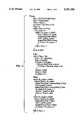
- FIG. 1is a pseudocode description of a control sequence according to the invention.
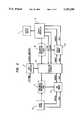
- FIG. 2is a block diagram generally illustrating a system incorporating the invention.
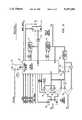
- FIG. 3is a block diagram particularly illustrating converting apparatus shown generally in FIG. 1.
- Xoaphysical x axis address in target memory (pixels)
- Yoaphysical y axis address in target memory (pixels)
- Xox axis dimension of target memory (pixels).
- Equation (4)assumes that all the memory is mapped to a display screen. If this is not the case then the appropriate fraction of Xo and Yo are to be used.
- these computationsare performed by a host microprocessor since the execution rate would typically be low. The results would then be loaded into registers for use in transform hardware.
- the x axis addressesare symmetric about Xs/2.
- the line rate and pixel rate computationsare performed in specialized hardware because of the execution speeds required as will be appreciated by those skilled in the art. If one or more DSP (digital signal processing) devices is used, all of the computations can be done in software inside the DSP(s).
- DSPdigital signal processing
- FIG. 2wherein a host processor is designated by the numeral 2, and which host processor may be a digital signal processing device which is responsive to an aircraft altitude input for driving perspective transform hardware 4.
- a display controller 6applies control signals to a display device 7 and applies synchronizing (horizontal and vertical) and clock signals to converting apparatus 4.
- Converting apparatus 4applies signals to read/write arbitration logic 8 and to read/write arbitration logic 10.
- Display device 7may be a bit mapped display device such as, for example, a cathode ray tube (CRT) or a liquid crystal display (LCD).
- Display controller 6applies signals to read/write arbitration logic 10 and a radar system 12 applies signals to read/write arbitration logic 8.
- Read/write arbitration logic 10applies read/write logic signals to a memory 13 which receives address and data signals from display controller 6 and applies data signals to the video controller.
- Display memory 13stores perspective display data.
- Radar system 12applies address and data signals to a memory 14.
- Memory 14stores plan position indicator (PPI) data.
- Memory 14receives read/write logic signals from read/write arbitration logic 8.
- PPI memory 14receives address signals from converting apparatus 4 and applies data signals to said converting apparatus.
- Converting apparatus 4applies address and data signals to display memory 13. The arrangement is such that the address signals from converting apparatus 4 applied to PPI memory 14 and to perspective display memory 13 effect a pixel address for each pixel in the display memory.
- Converting apparatus 4 shown generally in FIG. 2is more particularly shown in FIG. 3, wherein the several applied and received signals are more specifically illustrated, as are the several components of converting apparatus 4.
- Converting apparatus 4includes a control sequencer 18, an output data multiplexer 20, an X address counter 22, an output memory/X address multiplexer 24, an output memory/Y address counter 26, a reciprocal programmable read only memory (PROM) 28, multipliers 30 and 32, an adder 34, subtractors 36 and 38, and a source memory/X address multiplexer 40.
- PROMreciprocal programmable read only memory
- Control sequencer 18is a finite state machine type controller for performing the computational elements implementing the transform operation of the invention as defined in the aforegoing computational summary and as illustrated in FIG. 3. Control sequencer 18 synchronizes the operation of these computational elements to the rest of the system and provides an interface to host processor 2. Control sequencer 18 also contains latches for holding constants computed by the host processor and used by the hardware of the invention such as, for example Ylim, Ky, and Kxf. The control sequencer also holds system constants such as Yo and Xo. These values are tested against the generated addresses to control multiplexer 20.
- control sequencer 18is responsible for all tasks done at the line and pixel rates.
- control sequencer 18can be implemented with a single digital processor (DSP) built from conventional components to satisfy the requirements of the invention.
- DSPdigital processor
- Multiplexer 20is used to switch in "0" values to blank data in display memory 13 when no mappable data exists in PPI memory 14.
- X address counter 22is a basic "up" counter with a range equal to one-half the X dimension of the output memory. X address counter 22 is used to generate the X output address values and is clocked (CLK) and cleared (CLR) by control sequencer 18.
- Output memory/X address multiplexer 24simplifies the generation of the X output address by using the compliment (via an inverter 25) of the value of X address counter 22 to access the left half of display memory 12.
- the select control bit combined with the direct counter valueis used to access the right half of the memory.
- Output memory/Y address counter 26is a basic counter with a range equal to the Y dimension of the output memory. It is used to generate the Y output address values and is clocked (CLK) and cleared (CLR) by control sequencer 18.
- Reciprocal PROM 28is a non-volatile memory device and is used to store pre-calculated values of the reciprocal function. When combined with multipliers such as 30 and 32 as illustrated, a divide function is realized.
- the value of the Y source memory addressis generated by differencing the Ky/Yoa value generated by multiplier 32 and constant Ys (via subtractor 38) which defines the Y dimension of source (PPI) memory 14.
- Source memory X address multiplexer 40simplifies the generation of the X source address by selecting one of two values.
- One valueis the sum of the Kxl value and the constant Xs/2 taken via adder 34. These represent source pixel selections from the right side of source (PPI) memory 14 and are coincident with mapping to the right side of the output memory. The other value is the difference of those same quantities via subtractor 36 and is similarly used to access the left side of the source memory.
- the conversionoccurs between two cartesian based display memories, i.e. the PPI memory and the display memory.
- the PPI memorycontains the plan position indicator image to be converted and the display memory contains the converted image ready for direct display on a bit map display device.
- a source pixel addressis determined for each pixel in the target memory array. This reversed process allows the target memory to completely fill with the most appropriate pixel values at the frame rate with no other filling or erasing operation being required, as will be recognized as advantageous.
- the inventionhas been described with relation to an altitude input to host processor 2 as from an air frame.
- the inventioncan be used as well with a ship-board radar system, and in which event the input to the host processor is the height of the radar antenna above the water line, or any reasonable value for providing a display at that altitude.
Landscapes
- Engineering & Computer Science (AREA)
- Computer Networks & Wireless Communication (AREA)
- Physics & Mathematics (AREA)
- General Physics & Mathematics (AREA)
- Radar, Positioning & Navigation (AREA)
- Remote Sensing (AREA)
- Radar Systems Or Details Thereof (AREA)
Abstract
Description
Landing an aircraft in zero-zero conditions requires, in effect, seeing through fog and rain. While there has not heretofore been a viable way to accomplish this, systems are being developed which take advantage of the latest advances in electronic imagery to make the aforementioned a reality.
One such system is designated as Synthetic Vision and incorporates an electronic image derived at least in the millimeter-wave frequency range, and in the infrared frequency range if necessary, and presents the image to a pilot in a head-up or head-down display. Such an arrangement will enable the pilot to effectively see through precipitation, particularly fog, for achieving safe day or night landings under zero-zero conditions. The background and history of the Synthetic Vision concept is described in an article entitled "Synthetic Vision Will Let Pilots See through Precip" by C. V. Glines and published in the August, 1990 issue of Professional Pilot.
A system of the type described requires an arrangement wherein a plan position indicator (PPI) cartesian map radar display is converted to a correctly scaled perspective display based on aircraft altitude, physical display dimensions and the viewing distance to a display screen.
The present applicant is aware of the following patents directed generally to perspective radar displays, all of which patents were issued to David W. Young and are classified in U.S. Class 343/5 LS: U.S. Pat. No. 3,866,218 which issued on Feb. 11, 1975; U.S. Pat. No. 3,866,222 which issued on Feb. 11, 1975; U.S. Pat. No. 3,896,432 which issued on Jul. 22, 1975; and U.S. Pat. No. 3,988,731 which issued on Oct. 26, 1976.
U.S. Pat. No. 3,866,218 relates to an arrangement wherein the horizontal position of echo signals displayed on a display screen are repositioned by operating adjusting means to shift the phase of a cyclic wave form by an amount to correct any phase shift between the output of a beam position sensor means and an actual azimuth position of the beam as a consequence of errors occurring in conversion by the beam position sensor means of the actual azimuth position of the beam and the generation of the cyclic wave form representing the actual position. The invention may advantageously be used with a perspective radar system wherein the generated beam is fan shaped in a vertical plane, but is acknowledged as being applicable to any scanning system wherein the beam is scanned back and forth through a given sector.
U.S. Pat. No. 3,866,222 relates to an arrangement for providing a perspective radar display on a radar cathode ray tube wherein a linear sweep is used so that the brightness of the picture is uniform throughout and the size of the display is not limited. Moreover, because the cathode ray tube includes a conventional linear sweep, it is adaptable for use with other input information normally requiring a linear sweep, as is the case in, for example, television.
U.S. Pat. No. 3,896,432 relates to a perspective radar system and a guidance control arrangement incorporating known information relative to an airport complex, including the range and heading of an aircraft to the airport runway from a given fixed point of the aircraft for comparisons with the perspective display provided by the perspective radar system.
U.S. Pat. No. 3,988,731 relates to altering a display provided by a perspective radar system to provide a display in perspective as would appear if the observer were at a different position from his actual position. The different position may be in altitude, in range, or a combination of both.
The present invention features providing a correctly scaled and registered perspective image in real-time, based on known constants and airframe supplied altitude data using exact derivations and no approximations. The arrangement disclosed completely refreshes all pixels in a display memory so that "fill" or "clean-up" operations are not needed. There are no Moire patterns due to partial fill.
Iterative implementation minimizes computational requirements. Divide operations are only required at the line rate and not the pixel rate for simplification purposes. Simple equations allow the use of a minimum number of common components and all out-of-range conditions are handled efficiently with data blanking provided when needed.
The above features of the invention which are seen to distinguish over the prior art noted above will be readily discerned from the detailed description of the invention which follows.
This invention contemplates an arrangement for converting a plan position indicator (PPI) radar display to a scaled perspective display which features the real time transformation from the PPI cartesian map radar display to the perspective display with speed and efficiency. The speed and efficiency are derived from three basic features of the invention: (1) the conversion is implemented in reverse form which eliminates wasted computations on non-visible source pixels and provides 100 percent efficiency in filling a display memory; (2) the equations that are implemented are reduced to incremental form which reduces high speed computational requirements; (3) the conversion starts at the top center of an output memory and moves outward and downward which allows all out-of-range conditions to be detected efficiently and handled correctly; and (4) when all control parameters are supplied correctly the resulting presentation is properly registered and scaled in relationship to the "real world" objects in the presentation.
Accordingly, this invention contemplates an arrangement for converting first memory means for storing plan position indicator image data, second memory means, converting means connected to the first memory means and to the second memory means for converting the stored plan position indicator image data to perspective display image data, and for transferring the perspective display image data to the second memory means, whereby said perspective display image data is stored in the second memory means ready for direct display on a bit-mapped display means, and means for addressing the first memory means for each pixel of the data stored in the second memory means, whereby the second memory means is completely filled with the most appropriate pixel values at a frame rate for eliminating further pixel filling and erasing.
FIG. 1 is a pseudocode description of a control sequence according to the invention.
FIG. 2 is a block diagram generally illustrating a system incorporating the invention.
FIG. 3 is a block diagram particularly illustrating converting apparatus shown generally in FIG. 1.
The following equation definitions are applicable to the description of the invention. ##EQU1## Ysa=Physical y axis address in source memory (pixels) Ys=y axis dimension of source memory (pixels)
Yoa=Physical y axis address in target memory (pixels)
Ky=Conversion value computed at any required rate. ##EQU2## Vd=Viewing distance from eye to screen (feet) Yo=y axis dimension of target memory (pixels)
H=aircraft altitude (feet)
hd=height of the display screen (feet)
Sys=Scaling constant for the y axis of source memory (feet/pixel). ##EQU3## Xsa=physical x axis address in source memory (pixels) Xs=x axis dimension of source memory (pixels)
Xoa=physical x axis address in target memory (pixels)
H=aircraft altitude (feet)
SSTs=Scaling constant for the x axis of source memory (feet/pixel)
Yoa=physical y axis address in target memory (pixels)
Sar=aspect ratio of target memory pixels
Xo=x axis dimension of target memory (pixels).
Definition of Sar:
Ypix=(output screen width)/Yo
Xpix=(output screen height)/Xo ##EQU4##
Equation (4) assumes that all the memory is mapped to a display screen. If this is not the case then the appropriate fraction of Xo and Yo are to be used.
The following computational summary is applicable to the disclosed invention.
At frame rate: ##EQU5##
Typically, these computations are performed by a host microprocessor since the execution rate would typically be low. The results would then be loaded into registers for use in transform hardware.
At line rate:
Ysa=Ys-(Ky/Yoa)
Kxl=Kxf/Yoa
Xlim=Xs/(2*Kxl)+Xo/2)
Xsa(+)=Xs/2
Xsa(-)=Xs/2
At pixel rate:
Xsa(+)=Xsa+Kxl
Xsa=Xsa-Kxl
Note: The x axis addresses are symmetric about Xs/2.
The line rate and pixel rate computations are performed in specialized hardware because of the execution speeds required as will be appreciated by those skilled in the art. If one or more DSP (digital signal processing) devices is used, all of the computations can be done in software inside the DSP(s). The pseudocode illustrated in FIG. 1 describes the overall control flow needed to realize the described transformation.
With the aforegoing equation definitions, computational summary and the pseudocode illustrated in FIG. 1 in mind, reference is now made to FIG. 2 wherein a host processor is designated by thenumeral 2, and which host processor may be a digital signal processing device which is responsive to an aircraft altitude input for driving perspective transform hardware 4.
Adisplay controller 6 applies control signals to a display device 7 and applies synchronizing (horizontal and vertical) and clock signals to converting apparatus 4. Converting apparatus 4 applies signals to read/writearbitration logic 8 and to read/writearbitration logic 10. Display device 7 may be a bit mapped display device such as, for example, a cathode ray tube (CRT) or a liquid crystal display (LCD).
Read/write arbitration logic 10 applies read/write logic signals to amemory 13 which receives address and data signals fromdisplay controller 6 and applies data signals to the video controller.Display memory 13 stores perspective display data.
Converting apparatus 4 shown generally in FIG. 2 is more particularly shown in FIG. 3, wherein the several applied and received signals are more specifically illustrated, as are the several components of converting apparatus 4. Converting apparatus 4 includes acontrol sequencer 18, anoutput data multiplexer 20, anX address counter 22, an output memory/X address multiplexer 24, an output memory/Y address counter 26, a reciprocal programmable read only memory (PROM) 28,multipliers adder 34, subtractors 36 and 38, and a source memory/X address multiplexer 40.
The pseudocode description illustrated in FIG. 1 illustrates whatcontrol sequencer 18 must accomplish. In summary,control sequencer 18 is responsible for all tasks done at the line and pixel rates. In this regard, it is noted thatcontrol sequencer 18 can be implemented with a single digital processor (DSP) built from conventional components to satisfy the requirements of the invention.
Output memory/X address multiplexer 24 simplifies the generation of the X output address by using the compliment (via an inverter 25) of the value of X address counter 22 to access the left half ofdisplay memory 12. The select control bit combined with the direct counter value is used to access the right half of the memory.
Output memory/Y address counter 26 is a basic counter with a range equal to the Y dimension of the output memory. It is used to generate the Y output address values and is clocked (CLK) and cleared (CLR) bycontrol sequencer 18.
The value of the Y source memory address is generated by differencing the Ky/Yoa value generated bymultiplier 32 and constant Ys (via subtractor 38) which defines the Y dimension of source (PPI)memory 14.
Source memory X address multiplexer 40 simplifies the generation of the X source address by selecting one of two values. One value is the sum of the Kxl value and the constant Xs/2 taken viaadder 34. These represent source pixel selections from the right side of source (PPI)memory 14 and are coincident with mapping to the right side of the output memory. The other value is the difference of those same quantities viasubtractor 36 and is similarly used to access the left side of the source memory.
It will now be discerned that an arrangement is provided for converting a conventional plan position indicator radar display to a correctly scaled perspective display based on aircraft altitude, physical display dimensions and the viewing distance to the display screen. The conversion occurs between two cartesian based display memories, i.e. the PPI memory and the display memory. The PPI memory contains the plan position indicator image to be converted and the display memory contains the converted image ready for direct display on a bit map display device. A source pixel address is determined for each pixel in the target memory array. This reversed process allows the target memory to completely fill with the most appropriate pixel values at the frame rate with no other filling or erasing operation being required, as will be recognized as advantageous.
The invention has been described with relation to an altitude input to hostprocessor 2 as from an air frame. The invention can be used as well with a ship-board radar system, and in which event the input to the host processor is the height of the radar antenna above the water line, or any reasonable value for providing a display at that altitude. In this regard, it will be understood that the higher the altitude the more PPI-like the display becomes.
Unless otherwise described the components of the invention are conventional in nature, with the novelty of the invention going to the arrangement of the components and not to said components themselves.
With the above description of the invention in mind, reference is made to the claims appended hereto for a definition of the scope of the invention.
Claims (14)
1. An arrangement for converting a plan position indicator radar display to a scaled perspective display, comprising:
first memory means for storing plan position indicator image data;
second memory means;
converting means connected to the first memory means and to the second memory means for converting the stored plan position indicator image data to perspective display image data, and for transferring the perspective display image data to the second memory means, whereby said perspective display image data is stored in the second memory means ready for direct display on a bit-mapped display means; and
means for addressing the first memory means for each pixel of the data stored in the second memory means, whereby the second memory means is completely filled with the most appropriate pixel values at a frame rate for eliminating further pixel filling and erasing.
2. An arrangement as described by claim 1, including:
a radar system;
the first memory means connected to the radar system for being addressed to receive plan position indicator image data therefrom;
first read/write arbitration logic means connected to the radar system and to the converting means for providing a first logic signal; and
the first memory means connected to the first logic means and to the converting means and addressed by the converting means for receiving the first logic signal and for applying the stored plan position indicator data to said converting means.
3. An arrangement as described by claim 2, including:
host processing means responsive to the altitude of the radar system and to known bit-mapped display means constants for providing scaling and registering signals; and
the converting means connected to the host processor and responsive to the scaling and registering signals for converting the plan position indicator data applied thereto to perspective display image data.
4. An arrangement as described by claim 3, wherein the bit-mapped display means includes:
a display controller for providing control signals; and
a display device connected to the display controller and controlled by the control signals for displaying the perspective display image data as a correctly scaled and registered image in real time.
5. An arrangement as described by claim 4, including:
second read/write arbitration logic means connected to the display controller and to the converting means and controlled by said controller and said converting means for providing a second logic signal; and
the second memory means connected to the second logic means and responsive to the second logic signal for being addressed by the converting means to receive the perspective display image data applied thereto by said converting means.
6. An arrangement as described by claim 5, including:
the second memory means connected to the display controller and being addressed thereby for applying the perspective image data to said display controller.
7. An arrangement as described by claim 6, wherein:
the display controller is connected to the converting means for clocking and synchronizing said converter means for addressing the second memory means and for applying the display image data thereto.
8. A method for converting a plan position indicator radar display to a scaled perspective display, comprising:
storing plan position indicator image data;
converting the stored plan position indicator image data to perspective display image data;
storing the perspective display image data;
directly displaying the perspective display image data on a bit-mapped display means; and
addressing the stored plan position indicator image data for each pixel of the stored perspective display image data for filling said stored plan position indicator image data with the most appropriate pixel values at a frame rate for eliminating further pixel filling and erasing.
9. A method as described by claim 8, including:
using a radar system for addressing storing the plan position indicator image data;
using the radar system for generating a logic signal; and
using the logic signal for converting the stored plan position indicator image data to the perspective display image data.
10. A method as described by claim 9, including:
responding to the altitude of the radar system and to known bit-mapped display means constants for providing scaling and registering signals; and
using the scaling and registering signals for converting the plan position indicator image data applied thereto to the perspective display image data.
11. A method as described by claim 10, including:
providing control signals; and
using the control signals to control a display device for displaying the perspective display image data as a correctly scaled and registered image in real time.
12. A method as described by claim 11, including:
using the control signal to provide an other logic signal; and
using the other logic signal for addressing a perspective display image data storage means for receiving and storing the perspective display image data.
13. A method as described by claim 12, including:
using the control signals for addressing the display device for applying the perspective image data signals to the display device.
14. A method as described by claim 13, including:
clocking and synchronizing the conversion of the stored plan position indicator image data to the perspective display image data and the addressing of the display device.
Priority Applications (1)
| Application Number | Priority Date | Filing Date | Title |
|---|---|---|---|
| US08/157,252US5357258A (en) | 1993-11-26 | 1993-11-26 | Arrangement for converting a plan position indicator radar display to a scaled perspective display |
Applications Claiming Priority (1)
| Application Number | Priority Date | Filing Date | Title |
|---|---|---|---|
| US08/157,252US5357258A (en) | 1993-11-26 | 1993-11-26 | Arrangement for converting a plan position indicator radar display to a scaled perspective display |
Publications (1)
| Publication Number | Publication Date |
|---|---|
| US5357258Atrue US5357258A (en) | 1994-10-18 |
Family
ID=22562958
Family Applications (1)
| Application Number | Title | Priority Date | Filing Date |
|---|---|---|---|
| US08/157,252Expired - LifetimeUS5357258A (en) | 1993-11-26 | 1993-11-26 | Arrangement for converting a plan position indicator radar display to a scaled perspective display |
Country Status (1)
| Country | Link |
|---|---|
| US (1) | US5357258A (en) |
Cited By (7)
| Publication number | Priority date | Publication date | Assignee | Title |
|---|---|---|---|---|
| US5455591A (en)* | 1994-06-30 | 1995-10-03 | Hughes Aircraft Company | Precision high speed perspective transformation from range-azimuth format to elevation-azimuth format |
| US5742297A (en)* | 1994-11-04 | 1998-04-21 | Lockheed Martin Corporation | Apparatus and method for constructing a mosaic of data |
| EP0964266A2 (en) | 1998-06-11 | 1999-12-15 | Japan Radio Co., Ltd | Three-dimensionally designed radar display |
| WO2000011492A1 (en)* | 1998-08-21 | 2000-03-02 | Furuno Electric Co., Ltd. | Radar device, similar device, and received data write method |
| EP0978730A3 (en)* | 1998-08-04 | 2000-11-22 | Japan Radio Co., Ltd | Three-dimensional radar apparatus and method for displaying three-dimensional radar image |
| US20060026460A1 (en)* | 2004-07-28 | 2006-02-02 | International Business Machines Corporation | Bit map write logging with write order preservation in support of asynchronous update of secondary storage |
| US20100085244A1 (en)* | 2008-10-03 | 2010-04-08 | Tatsuya Kojima | Radar device and radar device component |
Citations (3)
| Publication number | Priority date | Publication date | Assignee | Title |
|---|---|---|---|---|
| US3739385A (en)* | 1970-07-15 | 1973-06-12 | Texas Instruments Inc | Mechanically swept radar antenna for use with an aircraft landing monitor system |
| US3866222A (en)* | 1973-08-27 | 1975-02-11 | David W Young | Perspective radar display using linear vertical sweep |
| US3988731A (en)* | 1973-08-03 | 1976-10-26 | Young David W | Augmented perspective radar display |
- 1993
- 1993-11-26USUS08/157,252patent/US5357258A/ennot_activeExpired - Lifetime
Patent Citations (3)
| Publication number | Priority date | Publication date | Assignee | Title |
|---|---|---|---|---|
| US3739385A (en)* | 1970-07-15 | 1973-06-12 | Texas Instruments Inc | Mechanically swept radar antenna for use with an aircraft landing monitor system |
| US3988731A (en)* | 1973-08-03 | 1976-10-26 | Young David W | Augmented perspective radar display |
| US3866222A (en)* | 1973-08-27 | 1975-02-11 | David W Young | Perspective radar display using linear vertical sweep |
Cited By (14)
| Publication number | Priority date | Publication date | Assignee | Title |
|---|---|---|---|---|
| US6198428B1 (en) | 1919-06-11 | 2001-03-06 | Japan Radio Co., Ltd. | Three-dimensionally designed display radar |
| US5455591A (en)* | 1994-06-30 | 1995-10-03 | Hughes Aircraft Company | Precision high speed perspective transformation from range-azimuth format to elevation-azimuth format |
| US5742297A (en)* | 1994-11-04 | 1998-04-21 | Lockheed Martin Corporation | Apparatus and method for constructing a mosaic of data |
| EP0964266A2 (en) | 1998-06-11 | 1999-12-15 | Japan Radio Co., Ltd | Three-dimensionally designed radar display |
| EP0964266A3 (en)* | 1998-06-11 | 2000-11-22 | Japan Radio Co., Ltd | Three-dimensionally designed radar display |
| US6212132B1 (en) | 1998-08-04 | 2001-04-03 | Japan Radio Co., Ltd. | Three-dimensional radar apparatus and method for displaying three-dimensional radar image |
| EP0978730A3 (en)* | 1998-08-04 | 2000-11-22 | Japan Radio Co., Ltd | Three-dimensional radar apparatus and method for displaying three-dimensional radar image |
| WO2000011492A1 (en)* | 1998-08-21 | 2000-03-02 | Furuno Electric Co., Ltd. | Radar device, similar device, and received data write method |
| GB2358537A (en)* | 1998-08-21 | 2001-07-25 | Furuno Electric Co | Radar device similar device and received data write method |
| GB2358537B (en)* | 1998-08-21 | 2003-09-17 | Furuno Electric Co | Radar, sonar and other data processing apparatus, and a method of processing data received therein |
| US20060026460A1 (en)* | 2004-07-28 | 2006-02-02 | International Business Machines Corporation | Bit map write logging with write order preservation in support of asynchronous update of secondary storage |
| US7318168B2 (en)* | 2004-07-28 | 2008-01-08 | International Business Machines Corporation | Bit map write logging with write order preservation in support asynchronous update of secondary storage |
| US20100085244A1 (en)* | 2008-10-03 | 2010-04-08 | Tatsuya Kojima | Radar device and radar device component |
| US8405545B2 (en)* | 2008-10-03 | 2013-03-26 | Furuno Electric Company, Limited | Radar device and radar device component |
Similar Documents
| Publication | Publication Date | Title |
|---|---|---|
| US4660157A (en) | Real time video perspective digital map display method | |
| US6052100A (en) | Computer controlled three-dimensional volumetric display | |
| US5339085A (en) | Three-dimensional radar display | |
| US4484192A (en) | Moving map display | |
| US4343037A (en) | Visual display systems of the computer generated image type | |
| US4682160A (en) | Real time perspective display employing digital map generator | |
| US4583185A (en) | Incremental terrain image generation | |
| US4862388A (en) | Dynamic comprehensive distortion correction in a real time imaging system | |
| US4714428A (en) | Method of comprehensive distortion correction for a computer image generation system | |
| US6600489B2 (en) | System and method of processing digital terrain information | |
| US4205389A (en) | Apparatus for generating a raster image from line segments | |
| US4656467A (en) | TV graphic displays without quantizing errors from compact image memory | |
| EP0139384A2 (en) | Display systems | |
| US4245321A (en) | Rotating raster generator | |
| EP0145249A2 (en) | Image distortion correction system for electro-optic sensors | |
| US4263726A (en) | Visual display apparatus | |
| US4774516A (en) | Method for smoothing an image generated by coordinate conversion and a digital scan converter using the method | |
| EP0169638A2 (en) | Raster image manipulator | |
| US4656521A (en) | Digital distortion-correcting circuit for projection a flat image on a curved screen from a digital data source for a simulator projected-image visual system | |
| US5357258A (en) | Arrangement for converting a plan position indicator radar display to a scaled perspective display | |
| EP0248626B1 (en) | Video signal processing | |
| US4815012A (en) | Apparatus and method for real time reconstruction of digital map data | |
| JPH02297086A (en) | Method and apparatus for converting scanning type | |
| US4884220A (en) | Address generator with variable scan patterns | |
| EP0353952B1 (en) | Reduced viewport for graphics display |
Legal Events
| Date | Code | Title | Description |
|---|---|---|---|
| AS | Assignment | Owner name:ALLIEDSIGNAL INC., NEW JERSEY Free format text:ASSIGNMENT OF ASSIGNORS INTEREST;ASSIGNOR:MAY, REED R.;REEL/FRAME:006791/0944 Effective date:19931109 | |
| STCF | Information on status: patent grant | Free format text:PATENTED CASE | |
| FEPP | Fee payment procedure | Free format text:PAYOR NUMBER ASSIGNED (ORIGINAL EVENT CODE: ASPN); ENTITY STATUS OF PATENT OWNER: LARGE ENTITY | |
| FPAY | Fee payment | Year of fee payment:4 | |
| FPAY | Fee payment | Year of fee payment:8 | |
| FPAY | Fee payment | Year of fee payment:12 |