US5354296A - Electrocautery probe with variable morphology electrode - Google Patents
Electrocautery probe with variable morphology electrodeDownload PDFInfo
- Publication number
- US5354296A US5354296AUS08/036,458US3645893AUS5354296AUS 5354296 AUS5354296 AUS 5354296AUS 3645893 AUS3645893 AUS 3645893AUS 5354296 AUS5354296 AUS 5354296A
- Authority
- US
- United States
- Prior art keywords
- electrode
- probe
- electrocautery
- arms
- arm
- Prior art date
- Legal status (The legal status is an assumption and is not a legal conclusion. Google has not performed a legal analysis and makes no representation as to the accuracy of the status listed.)
- Expired - Fee Related
Links
- 239000000523sampleSubstances0.000titleclaimsabstractdescription127
- 230000008878couplingEffects0.000claimsdescription7
- 238000010168coupling processMethods0.000claimsdescription7
- 238000005859coupling reactionMethods0.000claimsdescription7
- 230000013011matingEffects0.000claimsdescription4
- 229910052751metalInorganic materials0.000description18
- 239000002184metalSubstances0.000description18
- 239000004020conductorSubstances0.000description15
- 230000007246mechanismEffects0.000description15
- 238000000034methodMethods0.000description14
- 238000002679ablationMethods0.000description9
- 210000004696endometriumAnatomy0.000description9
- 210000004291uterusAnatomy0.000description7
- 230000002357endometrial effectEffects0.000description6
- 238000010276constructionMethods0.000description5
- 230000001154acute effectEffects0.000description4
- 230000002093peripheral effectEffects0.000description4
- 229910052782aluminiumInorganic materials0.000description3
- XAGFODPZIPBFFR-UHFFFAOYSA-NaluminiumChemical compound[Al]XAGFODPZIPBFFR-UHFFFAOYSA-N0.000description3
- 230000008859changeEffects0.000description3
- 230000000694effectsEffects0.000description3
- 210000003813thumbAnatomy0.000description3
- 230000009471actionEffects0.000description2
- 210000003101oviductAnatomy0.000description2
- 238000005096rolling processMethods0.000description2
- 238000005476solderingMethods0.000description2
- 230000007480spreadingEffects0.000description2
- 238000003892spreadingMethods0.000description2
- 208000032544CicatrixDiseases0.000description1
- 206010046788Uterine haemorrhageDiseases0.000description1
- 230000002159abnormal effectEffects0.000description1
- 238000004026adhesive bondingMethods0.000description1
- 239000011324beadSubstances0.000description1
- 210000003679cervix uteriAnatomy0.000description1
- 230000001112coagulating effectEffects0.000description1
- 230000015271coagulationEffects0.000description1
- 238000005345coagulationMethods0.000description1
- 230000006835compressionEffects0.000description1
- 238000007906compressionMethods0.000description1
- 238000002788crimpingMethods0.000description1
- 238000002681cryosurgeryMethods0.000description1
- 230000006378damageEffects0.000description1
- 230000003247decreasing effectEffects0.000description1
- 238000006073displacement reactionMethods0.000description1
- 238000009802hysterectomyMethods0.000description1
- 238000002430laser surgeryMethods0.000description1
- 239000000463materialSubstances0.000description1
- 208000007106menorrhagiaDiseases0.000description1
- 230000004048modificationEffects0.000description1
- 238000012986modificationMethods0.000description1
- 231100000241scarToxicity0.000description1
- 230000037387scarsEffects0.000description1
- 230000009897systematic effectEffects0.000description1
- 238000003466weldingMethods0.000description1
Images





Classifications
- A—HUMAN NECESSITIES
- A61—MEDICAL OR VETERINARY SCIENCE; HYGIENE
- A61B—DIAGNOSIS; SURGERY; IDENTIFICATION
- A61B18/00—Surgical instruments, devices or methods for transferring non-mechanical forms of energy to or from the body
- A61B18/04—Surgical instruments, devices or methods for transferring non-mechanical forms of energy to or from the body by heating
- A61B18/12—Surgical instruments, devices or methods for transferring non-mechanical forms of energy to or from the body by heating by passing a current through the tissue to be heated, e.g. high-frequency current
- A61B18/14—Probes or electrodes therefor
- A61B18/1485—Probes or electrodes therefor having a short rigid shaft for accessing the inner body through natural openings
- A—HUMAN NECESSITIES
- A61—MEDICAL OR VETERINARY SCIENCE; HYGIENE
- A61B—DIAGNOSIS; SURGERY; IDENTIFICATION
- A61B17/00—Surgical instruments, devices or methods
- A61B17/42—Gynaecological or obstetrical instruments or methods
- A61B2017/4216—Operations on uterus, e.g. endometrium
Definitions
- This inventionrelates generally to medical instruments. More particularly, this invention relates to an electrocautery probe which has an electrode of adjustable shape and/or size. The invention finds particular application in endometrial ablation and other electrocautery procedures.
- Endometrial ablationis an alternative procedure to hysterectomy for women with menorrhagia (abnormal or excessive uterine bleeding).
- various methods of ablationincluding cryosurgery and laser surgery, have been used.
- electrocautery techniqueshave also been used.
- Endometrial ablation by electrocauteryis usually accomplished with a resectoscope and a coagulation electrode mounted on the distal end of an electrocautery probe.
- the resectoscopeincludes a telescope for viewing the interior of the uterus, a handle assembly commonly referred to as the working element, and an outer sheath.
- the working elementis generally capable of sliding the probe with a distally mounted electrode axially through the telescope.
- the outer sheathis placed into the uterus prior to introducing the other elements of the resectoscope.
- the actual endometrial ablation procedureinvolves applying a cauterizing voltage to the electrode and moving the electrode slowly over the entire endometrium (uterine lining) while viewing through the scope.
- Thermal energyis applied to the endometrial lining of the uterus by the electrode so that the endometrium is destroyed by cauterization and subsequently scars.
- the electrodeis moved in a systematic manner, generally beginning at the Fallopian tube ostia (mouth), proceeding to the fundus (above the uterine tubes), and continuing on the anterior, posterior, and lateral uterine walls down to the internal os of the cervix.
- the uterine cavityhas acute corners (the cornua and tubulo-interstitial areas) as shown by reference 102 in FIG. 1 and that a relatively small electrode must be used to effectively cauterize these portions of the endometrium.
- Other portions of the uterusare relatively broad (104 and 106 in FIG. 1) and the use of a small electrode in these areas is tedious and time consuming.
- Electrodes for use in resectoscopesare available in many different shapes and sizes.
- U.S. Pat. No. 4,917,082 to Grossi et al.discloses several embodiments of a "Resectoscope Electrode” including a coagulating electrode, a knife electrode, a punctate electrode, and a roller electrode, among others. Electrodes for use with resectoscopes are also widely available from Olsen Electrosurgical, Inc., Concord, Calif. They are available as blades, needles, balls, loops, spear tips, flexible wires, semi-circular wires, hooks, spatulas and blunt tips.
- roller baroften referred to as "roller bar” or “roller ball”
- roller ball electrodedepicted in prior art FIGS. 2a-2c.
- roller ball electrodesare available from Richard Wolf Medical Instruments Corp., Rosemont, Ill. or from Olympus Corp., Lake Success, N.Y.
- the roller bar 202 or roller ball 204is approximately 2.5 mm long (e.g., 2.5 mm in diameter for the ball) and, as shown in FIGS. 2a-2c, is mounted on the distal end of an electrocautery probe 206.
- the distal ball or baris supplied with a cauterizing voltage through conductors 208, 210 in the probe and is rolled across the endometrial surface methodically until all areas of the endometrium have been cauterized. Because of its small size, the ball or bar fits easily into the acute corners of the uterus. Its relatively small size, however, also renders it inefficient when used in the other portions of the uterus.
- morphologyrefers to the shape and/or size of an object, such as an electrode.
- the electrocautery probe of the present inventionbroadly includes an electrode of variable morphology mounted at the distal end of a probe, with actuation for adjustment means means is operable from a proximal end of the probe for changing the morphology of the electrode, and means for applying a voltage across the electrode.
- actuation for adjustment means meansis operable from a proximal end of the probe for changing the morphology of the electrode, and means for applying a voltage across the electrode.
- the actuation mechanisms for adjusting the morphology of the variable morphology electrodeare also varied. These mechanisms include means for moving one or two arms holding an electrode toward each other such as an actuating lever coacting with scissor arms; a sliding loop or a wedge member; a thumb wheel coacting with the sliding loop or wedge member or scissor arms.
- the actuation/adjusting mechanismcan be a mechanism such as disclosed in the parent application hereto with an actuating member including a rod, a clevis, and a means coupling the rod to the arms.
- the mechanism for adjustmentpreferably includes means for axial movement of the proximal end of the electrode.
- the means for axial movementtypically comprises a push rod activated by a lever, a thumbwheel or the like.
- FIG. 1is a schematic view of the uterine walls showing the acute angles and broad portions of the endometrium.
- FIGS. 2a and 2bshow top view schematics
- FIG. 2cshows a side view schematic of prior art roller ball and roller bar electrodes.
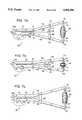
- FIGS. 3a and 3bshow schematic side views of one embodiment of the invention.
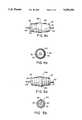
- FIGS. 4a and 4bare side and cross section views of a telescoping cylinder electrode useful for the embodiment of FIG. 3.
- FIGS. 5a and 5bare side and cross section views of a volute spring electrode useful for the embodiment of FIG. 3.
- FIGS. 6, and 6a and 6bare respectively a perspective and plan views of a multiple roller ball or springy wire electrode useful for the embodiment of FIG. 3.
- FIGS. 7a-7hare schematic side views of four different means for adjusting the variable morphology electrode of FIGS. 4-6 with the electrodes and adjusting means shown in open and closed positions.
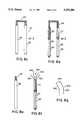
- FIGS. 8a-8bare schematic open and closed side views of another embodiment of the invention where the electrode changes morphology by movement into and out of a hollow cylinder.
- FIG. 8c and 8dare schematic side views of another embodiment of the invention with the electrode adjusted to closed and open positions respectively.
- FIG. 8e and 8fare schematic side views of the embodiment of FIG. 8c and 8d looking in the direction of the arrows B and D respectively thereof.
- FIG. 8gis a perspective view of a portion of the electrode used in the embodiment of FIGS. 8c-8f.
- FIGS. 8h and 8iare schematic side views of another embodiment of the invention.
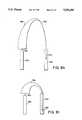
- FIGS. 9a-9bare schematic side views of means for adjusting the electrodes in the embodiments of FIGS. 8a-8i.
- the electrocautery probecomprises two arms 306, 308 having a pivot point 310 near their proximal ends 311, 309.
- the distal ends 315, 313 of the arms 306, 308are provided with additional pivot points 316, 314.
- Telescoping electrode 304is mounted for rotation between the distal ends 315, 313 of the arms 306, 308 and coupled with electrode leads 334, 332.
- the electrode leads 334, 332are insulated from and fed through the arms 306, 308 to voltage connections 334a, 332a at the proximal ends 311, 309 of the arms 306, 308.
- Electrode 304is adjusted by movement of the distal ends 315, 313 of arms 06, 308 relative to each other.
- the clevis means 30is advantageously a separately formed aluminum piece which fixedly engages aluminum tube 20 at a distal end 21 of the aluminum tube, e.g. by crimping of tube 20 as indicated at 32.
- the clevis 30also engages the probe arms 306, 308 at pivot point 310, as the probe arms pivot around the pivot point 310.
- the probe armsare also coupled at their proxial ends to the distal end of push rod 330 via coupling elements 62, 64.
- the reciprocal motion 65 of push rod 330is effected by the lever action motion 70 of lever arm 75, of the actuating apparatus 50, which is pivotally engaged by means of pivot rod 80 to handle member 85.
- Handle member 85 and lever arm 75are configured for one-hand operation.
- the actuating apparatus 50can be rotated to any convenient orientation, and back and forth, through 360°, without causing any rotational movement of the probe arms 306, 308 or electrode 304.
- Actuating apparatusgenerally comprises a sleeve (ferrule) member 90, the handle means 85 and the lever arm 75.
- the sleeve member 90surrounds a portion of metal tube 20 which is remote from the probe arms 306, 308 and which is just forwardly adjacent to the proximal end 23 of metal tube 20.
- Sleeve member 90is movable axially back and forth along metal tube 20 as indicated at 101 of FIG. 3a. However, sleeve member 90 is restrained in it movement by a resilient spring or biasing means 103.
- Resilient spring 103is shown as a coil spring peripherally surrounding metal tube 20 and seated in an inner peripheral slot or undercut section 105 of sleeve 90.
- the resilient spring 103is held in compression by a retaining ring 107 an an inwardly projecting portion 95 of the sleeve member 90.
- the retaining ring 107is seated in peripheral slot 109 of metal tube 20.
- the retaining ring 107can be fixedly engaged to the metal tube 20 in the absence of such a peripheral slot.
- sleeve 90is coupled by resilient spring 103 to hollow tube 20 and is urged thereby toward the proximal end 23 of the metal tube 20.
- metal tube 20is preferably provided with a plurality of axially extending peripherally spaced apart disposed slots 145 (although only one such slot is required) in a portion of the tube 20 surrounded by sleeve 90.
- One or more guide rods or inwardly extending protrusions 150are seated in sleeve 90 and extend therethrough to slidably engage the axial slots 145. With this mating engagement, sleeve 90 is restrained from rotation about metal tube 20, but is movable axially as indicated at 101 in FIG. 3a.
- Handle member 85has a hollow distal portion 120 in the form of a bore coaxial with metal tube 20. Attached internally to the distal portion of handle 85 is a ring 124 which extends loosely around the tube 20. Ring 124 has a peripheral outer surface portion having integral ribs 123 which engage and are preferably sealed (e.g. by gluing) in slots 126 of hollow-bore portion 120 of handle 85. Thus, ring 124 is fixed relative to the handle 85. In order to prevent handle 85 from sliding off the proximal end of tube 20, a retaining ring 160 is provided. Retaining ring 160 is seated in slot 165 of metal tube 20 and sits adjacent the proximal end of ring 124 and in slot 170 of handle member 85. Metal tube 20 is free to rotate in ring 124 as it is only slidably engaged therewith and slightly spaced therefrom.
- a push rod coupling meansfor accomplishing the relative rotation.
- the push rod coupling meansis shown as a generally spherical surfaced element 190.
- Spherical element 190is coaxial to push rod 330 and includes a diametrically located bore 191 through which push rod 330 extends.
- Push rod 330is coupled to the spherical element 190 suitably by means of a recessed set screw 192 which threadably engages spherically surfaced element 190 and bears against and frictionally engages push rod 330 at 194.
- the lever arm 75is provided with a cylindrical bore 200.
- Bore 200is parallel to pivot rod 80 which engages the handle member 85 to the lever arm 75, and is transverse to the push rod 330 and the longitudinal axis 185 of metal tube 20.
- cylindrical bore 200has a diameter just slightly larger than that of element 190 and closely encloses spherically surface element 190.
- a slot 210is provided in lever arm 75. Slot 210 transversely intersects the cylindrical bore 200 and receives push rod 60.
- the slot 212is dimensioned to accommodate the displacement indicated at 215 of push rod 330 during movement of lever arm 75 and the spherically surfaced element 190.
- the bore 200 in lever arm 75is suitably open at least on one side of the lever arm 75 to facilitate assembly and engagement of the push rod 330 with spherically surfaced element 190.
- a closely fitting capis preferably provided to close the bore and closely secure the spherical element 190 therein.
- lever arm 75In operation, the pivotal movement of lever arm 75 as indicated at 70 in FIG. 3a causes the spherically surface element 190 to slidably bear against and contact the forward surface 230 of bore 200, or the rearward surface 240 of bore 200. In this manner, the engaged push rod 330 is moved backward and forward to impart the rotational motion to arms 306, 308 about pivot point 310.
- the sleeve member 90is moved away from the rearward end 23 of metal tube 20 (i.e., distally), toward the probe arms against the force exerted by resilient spring 103.
- a ratchet mechanismis also provided in FIG. 3a to enable the probe arms 306, 308 to be locked in any of many positions (two such positions being shown in FIGS. 3a and 3b such that further movement of the probe arms toward each other is permitted, but further movement of the probe arms away from each other is not permitted except if the ratchet mechanism is purposely unlocked.
- the ratchet mechanismcomprises a cantilevered resilient strip 400 with a locking barb 412, where the strip 400 is located on the handle 85 and a ratchet element 499 located on the lever 75.
- the ratchet element 499has a plurality of teeth 419 radially displaced from a pivot 80 coupling the handle and lever.
- the teeth 419have edge surfaces 418 on parallel axes which are parallel to the axis of the pivot 80.
- a camming lever means 440is provided in a first position forces the locking barb 412 into contact with the ratchet 499, and in a second position does not force the locking barb 412 into contact with the ratchet 499.
- the edge of the teeth 419 of the ratchet 499are preferably located along an arc of a circle having its center point being the pivot 80 which couples the handle and the lever.
- the cantilevered resilient strip or leaf spring 400has a downwardly extending punched out barb 401 for fixing the resilient strip 400 in the handle 85 and an upwardly extending barb or locking element 412 for mating with the ratchet 499 in the lever member 75.
- Locking element 412is preferably punched out of the resilient strip 400 and preferably makes a forty-five degree angle relative thereto. Locking element 412 preferably has an edge surface which is parallel to the axis of pivot 80.
- the resilient strip 400is inserted into a slot 402 in handle member 85 with the downwardly extending barb 401 extending into slot 402 of the handle member 85 so the resilient strip 400 is engaged in the handle member 85.
- the resilient strip 400is preferably positioned at the portion 410 of handle member 85 which extends furthest and is most remote from the pivotal engagement 80 of lever arm 75 with handle member 85. Likewise, the resilient strip 400 extends at its free end portion 408 toward the portion 414 of the lever arm 75 which is most remote from pivotal engagement 80.
- the ratchet mechanism of the inventionincludes a ratchet 499 including teeth 419 and grooves 418 in the lever arm 75.
- an elongate arm 416extends fro lever arm 75 adjacent its remote portion 414.
- the elongate arm 416includes the plurality of teeth 419 and grooves 418. Rotation of lever 75 relative to handle 85 causes each tooth 419 to pass the barb 412 at the same relative height.
- the camming lever or latching means pivot arms 440has an integral post 442 intermediate its trigger end 450 and its cammed bearing end 451.
- the post 442fixes the camming lever bearing end 451 adjacent the resilient strip 400 at a location adjacently forward the leaf spring fixing surface 401 towards the free end of resilient strip 400.
- Bearing end 451 of camming lever 440has two distinct intersecting planar bearing faces 444 and 446.
- elongate arm 416moves upon rotational movement of lever arm 75.
- the elongate arm 416is arranged so that the ratchet comprised of the teeth 418 and groove 419 is brought into a closely adjacent opposed relationship with the resilient strip 400.
- the camming lever 440may be advanced to the position 440F to lock the lever arm 75 relative to the handle 85 (and hence to lock the probe arms at a set position).
- the lever arm 75 and handle 85may then be squeezed and moved closer together if desired, with the barb 412 riding over each tooth 419 and into another groove 418.
- Each locking positioncorresponds to a respective position of the probe arms 306, 308 (two such positions being indicated in FIGS. 3a and 3b). However, unless the camming lever is returned to position 440, barb 412 will not disengage from the ratchet 499 in the transverse arm 416 to permit the probe arms to move away from each other.
- the essence of this first embodimentis an adjustable electrode mounted between the distal ends of two arms of an electrocautery probe whereby the morphology of the electrode is adjusted by moving the distal ends of the probe arms closer together or farther apart. Therefore, in accordance with this embodiment, the probe arms 306, 308 may take many forms other than the pivoting arms described above and the means for moving the arms together or apart may take many forms other than the scissor arms described above. Alternative embodiments of the arms and means for moving them are described in more detail below with reference to FIGS. 7a-7d.
- the electrodemay take many forms. Different types of electrodes suitable for use with this embodiment of the probe are shown in FIGS. 4-6.
- Electrode 404comprises a plurality of concentric hollow telescoping tube sections 405.
- the tube sections 405are so arranged for electrode 404 to collapse and expand in a manner as shown in FIGS. 3a and 3b with electrode 304.
- the tube sections 405are connected to each other by flaring lips (not shown) or in another manner whereby they will not come apart while mounted to the probe and whereby an axial or otherwise appropriate electrode connection may be made.
- electrode leads 432, 434are coupled to end portions 401, 403 of the electrode 404 by means of roller bearings or bushings 431, 433 or other means obvious to those of ordinary skill in the art. It will be appreciated that, alternatively, the electrode leads 432, 434 may be fixedly coupled to the electrode and rotatably coupled to the probe arms in order to effect rotation of the electrode.
- FIG. 5a and 5bAn alternative embodiment of the electrode is shown in FIG. 5a and 5b.
- the electrode 504is constructed of a conductive volute spring 505 which provides a similar appearance in FIG. 5a as the tube segments shown in FIG. 4a.
- the construction of the electrode from a single piece of conductive materialeliminates the need to be concerned about pieces staying together and insofar as the electrode is constructed as a volute spring it is by its construction biased in an expanded configuration as shown in FIG. 5a.
- FIG. 5aAs with the embodiment of FIG.
- the electrodes 404 and 504 used with the probe embodiment of FIG. 3take a form similar to a "roller bar" electrode mentioned in the Background of the Invention.
- the longitudinal size of the roller bar of FIGS. 4 and 5is adjustable.
- the shape of the electrodeis also somewhat changed since in its compressed form it is most nearly a circular cylinder and in its expanded form, it is slightly tapered from the center to the ends.
- the amount of tapercan be controlled during construction of the electrode so that the expanded electrode can be virtually a cylinder (i.e. no taper) or can be substantially conical, depending on the desired application.
- the electrode configuration shown in FIG. 3bis ideal for this purpose. When ablating the broader portions of the uterine cavity (104, 106 in FIG. 1), however, the electrode configuration shown in FIG. 3a is more efficient.
- FIGS. 6, 6a and 6bshow another type of electrode 604 which may be used with a probe 602 having two movable arms 606, 608 between which the electrode 604 is mounted.
- FIG. 6shows a perspective view of the electrode 604 mounted on the distal ends of probe arms 606, 608.
- Electrode 604comprises a plurality of balls 607 mounted (preferably rotatably mounted) on a springy wire 605 so that when the ends of the wire are brought close together the electrode has an arcuate or semi-circular relatively rigid form as shown in FIG. 6b; and when the ends of the wire 605 are spread apart, the electrode 604 is a nearly straight line as shown in FIG. 6a.
- this embodimentis similar to a "roller ball” electrode except that this electrode is adjustable to cover a small or relatively large area.
- the electrode wire 605is compressed as shown in FIG. 6b, the effective operating surface of the electrode is relatively small and similar to a single roller ball electrode, but when the electrode wire is expanded as shown in FIG. 6a, the operating surface of the electrode is relatively broad and acts like several roller ball electrodes operating side by side.
- the number and size of balls 607will provide for different results and may be varied according to the desired application.
- All of the electrode embodiments discussed aboveinvolve a probe having two arms and the electrode mounted between the distal ends of the arms where the morphology of the electrode is adjusted by moving the distal ends of at least one of the two probe arms together or apart with adjustment means.
- FIGS. 7a-7bdisclose different embodiments of probe arms and adjustment means for moving the probe arms.
- the electrocautery probe 702comprises two arms 706, 708 having a pivot point 710 near their proximal ends 711, 709.
- the distal ends 715, 713 of the arms 706, 708are provided with additional pivot points 716, 714.
- Telescoping electrode 704is mounted for rotation between the distal ends 715, 713 of the arms 706, 708 and coupled with electrode leads 734,732.
- the electrode leads 734, 732are insulated from and fed through the arms 706, 708 to voltage connections 734a, 732a at the proximal ends 711, 709 of the arms 706, 708.
- Electrode 704is adjusted by movement of the distal ends 715, 713 of arms 706, 708 relative to each other.
- Movement of the distal ends of the arms in this embodimentis accomplished by links 722, 720 pivotally mounted at 724,728 on arms 706, 708 and pivotally mounted to each other at pivot point 726 of actuation rod or member 730.
- the actuation member 730is attached to the links pivot point 726 and passes between arms 706, 708 to their proximal ends 711, 709 where actuation member 730 is connected to a lever means 731 having pivot point 733 near the proximal end of the arms.
- Movement of the lever means 731 about its pivot point 733causes member 330 to move the pivot point 726 of links 722,720 thereby moving arms 706, 708 closer together or farther apart. Movement of arms 706, 708, in turn, causes electrode 304 to telescope in or out as respectively shown in FIGS. 7a and 7b thereby changing the morphology of electrode 704.
- the electrocautery probe 702has two resilient arms 706, 708 each having a proximal ends 711, 709 and respective distal ends 715, 713.
- Each arm 706, 708is provided with a preferably continuous springy bend 712,710 so that their distal ends 715, 713 are biased apart from each other.
- An electrode 704is mounted for rotation between the distal ends 715, 713 of arms 706, 708.
- the distal ends 715, 713 of the armsare advantageously provided with pivot points 716, 714.
- Electrode 704is coupled with electrode leads 734,732 which are insulated from and fed through arms 706, 708 to voltage connections 734a, 732a at the proximal ends 711, 709 of arms 706, 708.
- the electrodeis adjusted by movement of the distal ends 715, 713 relative to each other.
- movementis effected by a sliding ring 720 which encircles arms 706, 708 and is slidable from a position nearer the springy bends 712,710 of the arms to a position nearer the distal ends 715, 713 of the arms.
- the diameter of the ring 720 and its materialare chosen so that the ring 720 fits snugly but is still slidable.
- Ring 720is attached to an actuating member 730 which is moved by a lever means 713 having a pivot point 733 near the proximal end of the arms. As the ring 720 is moved towards the distal ends of the arms, it biases the arms 706, 708 against their springy bends 712,710 to move the distal ends 715, 713 closer together as shown in FIG. 7d. As the ring is moved away from the distal ends of the arms, the springy bends 712, 710 bias the arms apart as shown in FIG. 7c.
- FIGS. 7e and 7fshow another embodiment similar to the embodiment shown in FIGS. 7c and 7d.
- the distal ends of arms 706, 708are not provided with pivot points because the electrode 704a (compare FIG. 6) does not require them.
- the arms 706, 708are provided, however, with springy bends 712,710 and a sliding ring 720.
- the ring 720is threadably mounted on a rotatable threaded shaft 730a which is rotated by a thumb wheel 731a near the proximal ends 711, 709 of the arms. Rotation of the shaft 730a moves ring 720 towards the the distal or proximal ends of the probe effecting the same action as described in reference to FIGS. 7c and 7d.
- FIGS. 7g and 7hshow another embodiment similar to the embodiment shown in FIGS. 7c and 7d.
- arms 706, 708are provided with springy bends 712, 710 so that their distal ends 715, 713 are biased towards each other. Movement of arms 706, 708 is effected by a sliding wedge 720 attached to a slidable member 730 which is moved by a lever means 713 having a pivot point 733 near the proximal end of the arms.
- the wedge 720As the wedge 720 is moved toward the proximal ends of the arms, it biases the arms 706, 708 against their springy bends 712, 710 to move the distal ends 715, 713 apart as shown in FIG. 7g.
- the springy bends 712, 710bias the arms together as shown in FIG. 7h.
- FIGS. 8a-8ishow different related embodiments of the probe.
- the probe 802comprises a single hollow cylinder 806 and the electrode 804 comprises a plurality of loops 805 of springy wire to form a whisk-like structure with enough resiliency so that it may be compressed when inserted into the cylinder 806 (FIG. 8a) and expand when pushed out from the cylinder 806 (FIG. 8b).
- the electrode 804is provided with electrode connections 832,834 for connection with a cauterizing voltage source which is provided by conductors inside the cylinder 806.
- the means for adjusting the electrode in this embodimentis simply the coaction of the cylinder 806 with the electrode 804 as the electrode is moved in and out of the cylinder.
- Movement of the electrode in this respectis accomplished by means 830 which comprises a relatively rigid member slidably mounted within the cylinder 806 and connected to the electrode 804 such that movement of the member 830 moves the electrode into and out of the cylinder 806.
- FIG. 8bshows the member 830 schematically with an arrow pointing towards the proximal end of the probe. Movement of the member 830 may be effected by a lever means or other means or may be effected simply by extending the length of the member beyond and through the proximal end of the probe.
- FIGS. 9a and 9bschematically show two possible means for moving member 830 such as lever means 931 or thumb slide 931a. Another such means was disclosed with reference to the push rod of FIG. 3.
- the electrode 804is pulled into the cylinder 806 in which configuration the electrode assumes the size and shape of small semi-circular wires.
- the electrode 804is pushed out of the cylinder 806 and expands to a configuration having the size and shape of several loop electrodes as shown in FIG. 8b.
- FIGS. 8c-8gshow yet another embodiment of probe and electrode and while this embodiment of the probe 802 comprises two arms 806 and 808, the electrode 804 is not adjusted by moving the arms together or apart.
- the electrode 904is adjusted in a manner similar to the embodiment of FIGS. 8a and 8b.
- Probe 802comprises two parallel arms 806 and 808 which are hollow cylinders.
- the cylindrical armsmay have a circular cross section or a rectangular cross section or some other cross section depending on the exact construction of electrode 804. In the embodiment shown, a circular or rectangular cross section is intended.
- the electrode 804comprises a plurality of C-shaped conductors 804a-804e arranged parallel to each other and inserted into cylinders 806 and 808 as shown. Although FIGS. 8e and 8f show five such C-shaped conductors, any number may be used depending on the size of the probe and the thickness of the conductors.
- the C-shape of the conductorsmay be considered as having a connecting section 804x, and two leg sections 804y and 804z.
- At least one of the conductorsis formed with a springy bend in its legs 804y and 804z.
- conductor 804ahas a similar bend and conductors 804b and 804d have similar but lesser bends and conductor 804c has no bend. All of the conductors are connected at or near the end point of their legs and are connected to leads 832, 834.
- the means for adjusting electrode 804is the coaction of the cylinders 806, 808 with the electrode 804 as the electrode is moved in and out of the cylinders. Movement of the electrode in this respect is effected by means 830 which comprises a pair of relatively rigid members slidably mounted within the cylinders 806, 808 and connected to the electrode 804 such that movement of the members 830 moves the electrode into and out of the cylinders 806, 808.
- FIGS. 8c and 8dshow the electrode 804 pulled into the cylinders in which configuration the electrode assumes the size and shape of a small loop.
- the electrode 804is pushed out of the cylinders and expands to a configuration having the size and shape of several larger loop electrodes spread apart in a fan-like configuration.
- the spreading of the electrodeis seen in FIG. 8f and it will be appreciated how the bend discussed in reference to FIG. 8g effects this spreading.
- FIGS. 8h and 8ishow yet another embodiment of electrode 1804 and probe 1802, again having two arms 1806 and 1808 but where the electrode 1804 is not necessarily adjusted by moving the arms relative to each other.
- electrode 1804is a band of varying width (such as a metal band of decreasing width which terminates by soldering, welding or fitting to a wire) attached to leads 1832, 1834 and probe arm 1808 is a hollow cylinder.
- Probe arm 1806need not be a cylinder and need not be hollow so long as electrode lead 1834 can pass through it in a manner as described in reference to the other embodiments.
- Lead 1832is attached to or comprises part of means 1830 for moving the electrode into and out of cylindrical probe arm 1808.
- Means 1830 for moving the electrodemay comprise any known means or any of the means discussed above.
- FIG. 8hshows the electrode 1804 in its expanded configuration where it has a large size and broad shape and
- FIG. 8ishows the electrode 1804 partially pulled into cylindrical probe arm 1808 whereby the electrode has a smaller size.
Landscapes
- Health & Medical Sciences (AREA)
- Surgery (AREA)
- Engineering & Computer Science (AREA)
- Life Sciences & Earth Sciences (AREA)
- Biomedical Technology (AREA)
- Molecular Biology (AREA)
- Nuclear Medicine, Radiotherapy & Molecular Imaging (AREA)
- Plasma & Fusion (AREA)
- Physics & Mathematics (AREA)
- Heart & Thoracic Surgery (AREA)
- Medical Informatics (AREA)
- Otolaryngology (AREA)
- Animal Behavior & Ethology (AREA)
- General Health & Medical Sciences (AREA)
- Public Health (AREA)
- Veterinary Medicine (AREA)
- Measurement And Recording Of Electrical Phenomena And Electrical Characteristics Of The Living Body (AREA)
- Endoscopes (AREA)
Abstract
Description
This invention relates to commonly owned Ser. Nos. 07/680,389, 07/780,076, and 07/989,984 (which a continuation of 07/833,842), which are all hereby incorporated by reference herein in their entireties.
1. Field of the Invention
This invention relates generally to medical instruments. More particularly, this invention relates to an electrocautery probe which has an electrode of adjustable shape and/or size. The invention finds particular application in endometrial ablation and other electrocautery procedures.
2. State of the Art
Endometrial ablation is an alternative procedure to hysterectomy for women with menorrhagia (abnormal or excessive uterine bleeding). In the past, various methods of ablation, including cryosurgery and laser surgery, have been used. More recently, electrocautery techniques have also been used. Endometrial ablation by electrocautery is usually accomplished with a resectoscope and a coagulation electrode mounted on the distal end of an electrocautery probe. The resectoscope includes a telescope for viewing the interior of the uterus, a handle assembly commonly referred to as the working element, and an outer sheath. The working element is generally capable of sliding the probe with a distally mounted electrode axially through the telescope. The outer sheath is placed into the uterus prior to introducing the other elements of the resectoscope.
The actual endometrial ablation procedure involves applying a cauterizing voltage to the electrode and moving the electrode slowly over the entire endometrium (uterine lining) while viewing through the scope. Thermal energy is applied to the endometrial lining of the uterus by the electrode so that the endometrium is destroyed by cauterization and subsequently scars. In order to effect complete destruction of the endometrium, the electrode is moved in a systematic manner, generally beginning at the Fallopian tube ostia (mouth), proceeding to the fundus (above the uterine tubes), and continuing on the anterior, posterior, and lateral uterine walls down to the internal os of the cervix. It is well known, however, that the uterine cavity has acute corners (the cornua and tubulo-interstitial areas) as shown byreference 102 in FIG. 1 and that a relatively small electrode must be used to effectively cauterize these portions of the endometrium. Other portions of the uterus, however, are relatively broad (104 and 106 in FIG. 1) and the use of a small electrode in these areas is tedious and time consuming.
Known electrodes for use in resectoscopes are available in many different shapes and sizes. U.S. Pat. No. 4,917,082 to Grossi et al., for example, discloses several embodiments of a "Resectoscope Electrode" including a coagulating electrode, a knife electrode, a punctate electrode, and a roller electrode, among others. Electrodes for use with resectoscopes are also widely available from Olsen Electrosurgical, Inc., Concord, Calif. They are available as blades, needles, balls, loops, spear tips, flexible wires, semi-circular wires, hooks, spatulas and blunt tips.
Recently, the generally preferred electrode for use in endometrial ablation is the roller (often referred to as "roller bar" or "roller ball") electrode depicted in prior art FIGS. 2a-2c. Such roller ball electrodes are available from Richard Wolf Medical Instruments Corp., Rosemont, Ill. or from Olympus Corp., Lake Success, N.Y. Theroller bar 202 orroller ball 204 is approximately 2.5 mm long (e.g., 2.5 mm in diameter for the ball) and, as shown in FIGS. 2a-2c, is mounted on the distal end of anelectrocautery probe 206. The distal ball or bar is supplied with a cauterizing voltage throughconductors
While it is possible to change electrodes during the ablation procedure, the changing of electrodes adds time to the procedure, increases the chance that the entire endometrium will not be properly ablated, and requires that a plurality of tools which are typically disposed of after use be utilized. Moreover, it has not been the general practice to change electrodes during the ablation procedure. Thus, by using such a small electrode throughout the uterus, the ablation procedure takes longer and the chance of missing one or more portions of the endometrium is enhanced. Similar problems exist in other electrocautery procedures where an electrode of one shape or size is necessary for part of the procedure but is inefficient or inapplicable for another part of the procedure.
As used herein, the term "morphology" refers to the shape and/or size of an object, such as an electrode.
It is therefore an object of the invention to provide an electrode for use in electrocautery procedures where the morphology of the electrode is adjustable.
It is another object of the invention to provide an electrocautery probe having means for easily and rapidly adjusting the morphology of the electrode while the electrocautery probe is inserted in a resectoscope.
It is a further object of the invention to provide a rolling electrode on an electrocautery probe where the morphology of the rolling electrode is adjustable while inserted in a resectoscope.
It is also an object of the invention to provide an electrocautery probe with an electrode having a variable surface area and where the surface area of the electrode is adjustable while the electrocautery probe is inserted in a resectoscope.
In accord with these objects which will be discussed in detail below, the electrocautery probe of the present invention broadly includes an electrode of variable morphology mounted at the distal end of a probe, with actuation for adjustment means means is operable from a proximal end of the probe for changing the morphology of the electrode, and means for applying a voltage across the electrode. Numerous embodiments of variable morphology electrodes and being of adjusting means are provided. Among the electrodes which vary in shape and or size are: a volute spring electrode or an electrode formed of cylinder elements rotatably mounted between two arms where movement of the arms relative to each other changes the morphology of the electrode; an electrode constructed of a plurality of beads mounted on a springy wire attached to two arms where movement of the arms relative to each other changes the morphology of the electrode; a plurality of loop electrodes slidably mounted inside a cylindrical probe where sliding the loops into and out of the probe changes the morphology of the electrode; an electrode constructed of a band of tapering width, one end of which is connected to an arm and the other end of which is slidable into and out of a cylindrical arm, where sliding the band into and out of the cylindrical arm changes the morphology of the electrode; and an electrode composed of a plurality of C-shaped springy conductors, legs of which are inserted into cylindrical arms and where sliding the conductors into and out of the arms changes the size and/or shape of the electrode.
The actuation mechanisms for adjusting the morphology of the variable morphology electrode are also varied. These mechanisms include means for moving one or two arms holding an electrode toward each other such as an actuating lever coacting with scissor arms; a sliding loop or a wedge member; a thumb wheel coacting with the sliding loop or wedge member or scissor arms. Alternatively, the actuation/adjusting mechanism can be a mechanism such as disclosed in the parent application hereto with an actuating member including a rod, a clevis, and a means coupling the rod to the arms. For the adjustable morphology electrodes which slide in and out of the cylindrical arm, the mechanism for adjustment preferably includes means for axial movement of the proximal end of the electrode. The means for axial movement typically comprises a push rod activated by a lever, a thumbwheel or the like.
Additional objects and advantages of the invention will become apparent to those skilled in the art upon reference to the detailed description taken in conjunction with the provided figures.
FIG. 1 is a schematic view of the uterine walls showing the acute angles and broad portions of the endometrium.
FIGS. 2a and 2b show top view schematics, and FIG. 2c shows a side view schematic of prior art roller ball and roller bar electrodes.
FIGS. 3a and 3b show schematic side views of one embodiment of the invention.
FIGS. 4a and 4b are side and cross section views of a telescoping cylinder electrode useful for the embodiment of FIG. 3.
FIGS. 5a and 5b are side and cross section views of a volute spring electrode useful for the embodiment of FIG. 3.
FIGS. 6, and 6a and 6b are respectively a perspective and plan views of a multiple roller ball or springy wire electrode useful for the embodiment of FIG. 3.
FIGS. 7a-7h are schematic side views of four different means for adjusting the variable morphology electrode of FIGS. 4-6 with the electrodes and adjusting means shown in open and closed positions.
FIGS. 8a-8b are schematic open and closed side views of another embodiment of the invention where the electrode changes morphology by movement into and out of a hollow cylinder.
FIG. 8c and 8d are schematic side views of another embodiment of the invention with the electrode adjusted to closed and open positions respectively.
FIG. 8e and 8f are schematic side views of the embodiment of FIG. 8c and 8d looking in the direction of the arrows B and D respectively thereof.
FIG. 8g is a perspective view of a portion of the electrode used in the embodiment of FIGS. 8c-8f.
FIGS. 8h and 8i are schematic side views of another embodiment of the invention; and
FIGS. 9a-9b are schematic side views of means for adjusting the electrodes in the embodiments of FIGS. 8a-8i.
Referring now to FIGS. 3a and 3b, the electrocautery probe comprises twoarms pivot point 310 near their proximal ends 311, 309. The distal ends 315, 313 of thearms Telescoping electrode 304 is mounted for rotation between the distal ends 315, 313 of thearms arms voltage connections arms Electrode 304 is adjusted by movement of the distal ends 315, 313 ofarms 06, 308 relative to each other. Movement of the distal ends of the arms in this embodiment is accomplished by a clevis means 30, actuating apparatus 50, and apush rod 330. The clevis means 30 is advantageously a separately formed aluminum piece which fixedly engagesaluminum tube 20 at adistal end 21 of the aluminum tube, e.g. by crimping oftube 20 as indicated at 32. Theclevis 30 also engages theprobe arms pivot point 310, as the probe arms pivot around thepivot point 310. The probe arms are also coupled at their proxial ends to the distal end ofpush rod 330 viacoupling elements push rod 330 into movement of the probe arms together or apart. Also, as discussed more fully in related application Ser. No. 07/680,389, now U.S. Pat. No. 5,275,612,metal tube 20 is provided with an insulating plastic shrinkwrap layer 97 which provides protection when electrical energy is applied at terminal 99 for cauterization procedures.
The reciprocal movement ofpush rod 330 back and forth, as indicated at 65 in FIG. 3, imparts pivoting or rotational motion to probearms reciprocal motion 65 ofpush rod 330 is effected by the lever action motion 70 oflever arm 75, of the actuating apparatus 50, which is pivotally engaged by means ofpivot rod 80 to handlemember 85.Handle member 85 andlever arm 75 are configured for one-hand operation. The actuating apparatus 50 can be rotated to any convenient orientation, and back and forth, through 360°, without causing any rotational movement of theprobe arms electrode 304.
Actuating apparatus generally comprises a sleeve (ferrule) member 90, the handle means 85 and thelever arm 75. The sleeve member 90 surrounds a portion ofmetal tube 20 which is remote from theprobe arms proximal end 23 ofmetal tube 20. Sleeve member 90 is movable axially back and forth alongmetal tube 20 as indicated at 101 of FIG. 3a. However, sleeve member 90 is restrained in it movement by a resilient spring or biasing means 103.Resilient spring 103 is shown as a coil spring peripherally surroundingmetal tube 20 and seated in an inner peripheral slot or undercutsection 105 of sleeve 90. Theresilient spring 103 is held in compression by a retaining ring 107 an an inwardly projecting portion 95 of the sleeve member 90. The retaining ring 107 is seated inperipheral slot 109 ofmetal tube 20. Alternatively, the retaining ring 107 can be fixedly engaged to themetal tube 20 in the absence of such a peripheral slot. With the provided arrangement, sleeve 90 is coupled byresilient spring 103 tohollow tube 20 and is urged thereby toward theproximal end 23 of themetal tube 20.
As shown in FIG. 3a,metal tube 20 is preferably provided with a plurality of axially extending peripherally spaced apart disposed slots 145 (although only one such slot is required) in a portion of thetube 20 surrounded by sleeve 90. One or more guide rods or inwardly extendingprotrusions 150 are seated in sleeve 90 and extend therethrough to slidably engage theaxial slots 145. With this mating engagement, sleeve 90 is restrained from rotation aboutmetal tube 20, but is movable axially as indicated at 101 in FIG. 3a.
To enable the rotation of themetal tube 20, probearms lever arm 75 and handle 85, some mechanism for permitting rotation of thepush rod 330 which is coupled at itsproximal portion 180 to thelever arm 75 is required. One embodiment of a push rod coupling means is shown for accomplishing the relative rotation. In particular, the push rod coupling means is shown as a generally spherical surfacedelement 190.Spherical element 190 is coaxial to pushrod 330 and includes a diametrically located bore 191 through which pushrod 330 extends. Pushrod 330 is coupled to thespherical element 190 suitably by means of a recessedset screw 192 which threadably engages spherically surfacedelement 190 and bears against and frictionally engagespush rod 330 at 194.
In order to accommodate a spherical push rod coupling element, thelever arm 75 is provided with acylindrical bore 200.Bore 200 is parallel to pivotrod 80 which engages thehandle member 85 to thelever arm 75, and is transverse to thepush rod 330 and thelongitudinal axis 185 ofmetal tube 20.cylindrical bore 200 has a diameter just slightly larger than that ofelement 190 and closely enclosesspherically surface element 190.
Aslot 210 is provided inlever arm 75. Slot 210 transversely intersects thecylindrical bore 200 and receives push rod 60. Theslot 212 is dimensioned to accommodate the displacement indicated at 215 ofpush rod 330 during movement oflever arm 75 and the spherically surfacedelement 190. Thebore 200 inlever arm 75 is suitably open at least on one side of thelever arm 75 to facilitate assembly and engagement of thepush rod 330 with spherically surfacedelement 190. A closely fitting cap is preferably provided to close the bore and closely secure thespherical element 190 therein.
In operation, the pivotal movement oflever arm 75 as indicated at 70 in FIG. 3a causes thespherically surface element 190 to slidably bear against and contact theforward surface 230 ofbore 200, or therearward surface 240 ofbore 200. In this manner, the engagedpush rod 330 is moved backward and forward to impart the rotational motion toarms pivot point 310. When it is desired to change the rotational orientation of the actuating mechanism 50 (comprisinghandle member 85 and pivotally engaged lever arm 75), the sleeve member 90 is moved away from therearward end 23 of metal tube 20 (i.e., distally), toward the probe arms against the force exerted byresilient spring 103. When sleeve member 90 is moved in that way,handle member 85 in the disengaged position, the actuating mechanism 50 (handle member 85 and pivoted lever arms 75) is rotatable about metal tube 20 (and vice versa) to any desired position (from 0° to 360°). When the desired amount of rotation is obtained, sleeve 90 is released, andspring 103 forces sleeve 90 back into engagement withhandle member 85 with the respective tooth-like elements and slots of the ring and the sleeve mating with each other.
A ratchet mechanism is also provided in FIG. 3a to enable theprobe arms resilient strip 400 with a lockingbarb 412, where thestrip 400 is located on thehandle 85 and aratchet element 499 located on thelever 75. Theratchet element 499 has a plurality ofteeth 419 radially displaced from apivot 80 coupling the handle and lever. Theteeth 419 haveedge surfaces 418 on parallel axes which are parallel to the axis of thepivot 80. A camming lever means 440 is provided in a first position forces the lockingbarb 412 into contact with theratchet 499, and in a second position does not force the lockingbarb 412 into contact with theratchet 499. The edge of theteeth 419 of theratchet 499 are preferably located along an arc of a circle having its center point being thepivot 80 which couples the handle and the lever.
The cantilevered resilient strip orleaf spring 400 has a downwardly extending punched outbarb 401 for fixing theresilient strip 400 in thehandle 85 and an upwardly extending barb or lockingelement 412 for mating with theratchet 499 in thelever member 75. Lockingelement 412 is preferably punched out of theresilient strip 400 and preferably makes a forty-five degree angle relative thereto. Lockingelement 412 preferably has an edge surface which is parallel to the axis ofpivot 80. Theresilient strip 400 is inserted into aslot 402 inhandle member 85 with the downwardly extendingbarb 401 extending intoslot 402 of thehandle member 85 so theresilient strip 400 is engaged in thehandle member 85.
As seen in FIG. 3a, theresilient strip 400 is preferably positioned at theportion 410 ofhandle member 85 which extends furthest and is most remote from thepivotal engagement 80 oflever arm 75 withhandle member 85. Likewise, theresilient strip 400 extends at itsfree end portion 408 toward theportion 414 of thelever arm 75 which is most remote frompivotal engagement 80. By providing the ratchet mechanism at a distance from the point ofpivotal engagement 80, finer resolution of possible locked positions is obtainable, as the arc segment for one degree of rotation is larger than an arc segment for one degree of rotation which would be located along an arc closer to thepivot point 80.
As aforementioned, the ratchet mechanism of the invention includes aratchet 499 includingteeth 419 andgrooves 418 in thelever arm 75. As seen in FIG. 3a, anelongate arm 416 extendsfro lever arm 75 adjacent itsremote portion 414. Theelongate arm 416 includes the plurality ofteeth 419 andgrooves 418. Rotation oflever 75 relative to handle 85 causes eachtooth 419 to pass thebarb 412 at the same relative height. With theteeth 419 and with thebarb 412 of theleaf spring 400 at a similar angle when thebarb 412 is mated into agroove 418 betweenteeth 419, theteeth 419 can still ride pass thebarb 412 in the direction of the barb such that further movement of the provearms
The camming lever or latching means pivotarms 440 has anintegral post 442 intermediate itstrigger end 450 and its cammedbearing end 451. Thepost 442 fixes the camminglever bearing end 451 adjacent theresilient strip 400 at a location adjacently forward the leafspring fixing surface 401 towards the free end ofresilient strip 400. Bearingend 451 ofcamming lever 440 has two distinct intersecting planar bearing faces 444 and 446. Withpivot arm 440 positioned as in FIG. 3a with bearingface 444 abuttingresilient strip 400, thelever arm 75 and it transverseelongate arm 416 are freely movable with respect toresilient strip 400 and withoutbarb 412 engaging theteeth 419 andgrooves 418 of the transverseelongate arm 416. Upon advancing thecamming lever 400 to theposition 440F thebearing face 446 is brought into coplanar abutting contact withresilient strip 400 thereby causing thestrip 400 to be resiliently deformed with its lockingbarbed element 412 at itsfree end 408 in engagement with an oppositely located receiver element orgroove 418.
It will be appreciated thatelongate arm 416 moves upon rotational movement oflever arm 75. As aforementioned, theelongate arm 416 is arranged so that the ratchet comprised of theteeth 418 and groove 419 is brought into a closely adjacent opposed relationship with theresilient strip 400. Either prior to moving the elongatetransverse arm 416 adjacent thebarb 412 of theleaf spring 400, or withlever arm 75 and its elongatetransverse arm 416 in a desired position (which represents a desired position ofprobe arms camming lever 440 may be advanced to theposition 440F to lock thelever arm 75 relative to the handle 85 (and hence to lock the probe arms at a set position). Thelever arm 75 and handle 85 may then be squeezed and moved closer together if desired, with thebarb 412 riding over eachtooth 419 and into anothergroove 418. Each locking position corresponds to a respective position of theprobe arms 306, 308 (two such positions being indicated in FIGS. 3a and 3b). However, unless the camming lever is returned toposition 440,barb 412 will not disengage from theratchet 499 in thetransverse arm 416 to permit the probe arms to move away from each other.
The essence of this first embodiment is an adjustable electrode mounted between the distal ends of two arms of an electrocautery probe whereby the morphology of the electrode is adjusted by moving the distal ends of the probe arms closer together or farther apart. Therefore, in accordance with this embodiment, theprobe arms
Moreover, in this first embodiment where an adjustable electrode is mounted between the distal ends of two arms of an electrocautery probe, the electrode may take many forms. Different types of electrodes suitable for use with this embodiment of the probe are shown in FIGS. 4-6.
Referring now to FIGS. 4a and 4b, anelectrode 404 is shown in side and cross-sectional views.Electrode 404 comprises a plurality of concentric hollowtelescoping tube sections 405. Thetube sections 405 are so arranged forelectrode 404 to collapse and expand in a manner as shown in FIGS. 3a and 3b withelectrode 304. Thus, thetube sections 405 are connected to each other by flaring lips (not shown) or in another manner whereby they will not come apart while mounted to the probe and whereby an axial or otherwise appropriate electrode connection may be made. Moreover, it may be advantageous to spring load the assembly oftube sections 405 so they are biased to an expanded configuration as shown in FIG. 4a. Also, as mentioned above, it is preferable that the electrode be mounted for rotation, although this is not absolutely necessary to the invention. Thus, electrode leads 432, 434 are coupled to endportions electrode 404 by means of roller bearings orbushings
An alternative embodiment of the electrode is shown in FIG. 5a and 5b. In this embodiment, theelectrode 504 is constructed of aconductive volute spring 505 which provides a similar appearance in FIG. 5a as the tube segments shown in FIG. 4a. A side view, FIG. 5b, however, reveals that thespring 505 comprises a single piece of conductive material wound in a spiral. In the embodiment of FIG. 5, the construction of the electrode from a single piece of conductive material eliminates the need to be concerned about pieces staying together and insofar as the electrode is constructed as a volute spring it is by its construction biased in an expanded configuration as shown in FIG. 5a. As with the embodiment of FIG. 4, though, it is still necessary to provide means for attaching the electrode at itsends bushings
Theelectrodes
FIGS. 6, 6a and 6b show another type ofelectrode 604 which may be used with aprobe 602 having twomovable arms electrode 604 is mounted. FIG. 6 shows a perspective view of theelectrode 604 mounted on the distal ends ofprobe arms Electrode 604 comprises a plurality ofballs 607 mounted (preferably rotatably mounted) on aspringy wire 605 so that when the ends of the wire are brought close together the electrode has an arcuate or semi-circular relatively rigid form as shown in FIG. 6b; and when the ends of thewire 605 are spread apart, theelectrode 604 is a nearly straight line as shown in FIG. 6a. When theballs 607 are mounted for rotation about thewire 605, this embodiment is similar to a "roller ball" electrode except that this electrode is adjustable to cover a small or relatively large area. When theelectrode wire 605 is compressed as shown in FIG. 6b, the effective operating surface of the electrode is relatively small and similar to a single roller ball electrode, but when the electrode wire is expanded as shown in FIG. 6a, the operating surface of the electrode is relatively broad and acts like several roller ball electrodes operating side by side. Clearly, the number and size ofballs 607 will provide for different results and may be varied according to the desired application.
All of the electrode embodiments discussed above involve a probe having two arms and the electrode mounted between the distal ends of the arms where the morphology of the electrode is adjusted by moving the distal ends of at least one of the two probe arms together or apart with adjustment means.
Having described and illustrated several different embodiments of an adjustable electrode mountable on probe arms and adjusted by movement of the probe arms relative to each other, it will be appreciated that many other embodiments of electrodes may be conceived with the knowledge and understanding of the principles disclosed herein. Thus, FIGS. 7a-7b, disclose different embodiments of probe arms and adjustment means for moving the probe arms.
Referring now to FIGS. 7a and 7b, theelectrocautery probe 702 comprises twoarms pivot point 710 near their proximal ends 711, 709. The distal ends 715, 713 of thearms Telescoping electrode 704 is mounted for rotation between the distal ends 715, 713 of thearms arms voltage connections arms Electrode 704 is adjusted by movement of the distal ends 715, 713 ofarms links arms pivot point 726 of actuation rod ormember 730. Theactuation member 730 is attached to thelinks pivot point 726 and passes betweenarms actuation member 730 is connected to a lever means 731 havingpivot point 733 near the proximal end of the arms.
Movement of the lever means 731 about itspivot point 733 causesmember 330 to move thepivot point 726 of links 722,720 thereby movingarms arms electrode 304 to telescope in or out as respectively shown in FIGS. 7a and 7b thereby changing the morphology ofelectrode 704.
Referring now to FIG. 7c, theelectrocautery probe 702 has tworesilient arms arm distal ends electrode 704 is mounted for rotation between the distal ends 715, 713 ofarms pivot points Electrode 704 is coupled with electrode leads 734,732 which are insulated from and fed througharms voltage connections arms ring 720 which encirclesarms ring 720 and its material are chosen so that thering 720 fits snugly but is still slidable.Ring 720 is attached to anactuating member 730 which is moved by a lever means 713 having apivot point 733 near the proximal end of the arms. As thering 720 is moved towards the distal ends of the arms, it biases thearms springy bends
FIGS. 7e and 7f show another embodiment similar to the embodiment shown in FIGS. 7c and 7d. In this embodiment, the distal ends ofarms arms ring 720. In this embodiment, thering 720 is threadably mounted on a rotatable threadedshaft 730a which is rotated by athumb wheel 731a near the proximal ends 711, 709 of the arms. Rotation of theshaft 730a movesring 720 towards the the distal or proximal ends of the probe effecting the same action as described in reference to FIGS. 7c and 7d.
FIGS. 7g and 7h show another embodiment similar to the embodiment shown in FIGS. 7c and 7d. In this embodiment,arms springy bends distal ends arms wedge 720 attached to aslidable member 730 which is moved by a lever means 713 having apivot point 733 near the proximal end of the arms. As thewedge 720 is moved toward the proximal ends of the arms, it biases thearms springy bends springy bends
Having described and illustrated several different embodiments of mechanisms for adjusting the morphology of the electrodes, it will be appreciated that many other embodiments of such mechanisms could be conceived with the knowledge and understanding of the principles disclosed herein.
FIGS. 8a-8i show different related embodiments of the probe. In FIGS. 8a and 8b, theprobe 802 comprises a singlehollow cylinder 806 and theelectrode 804 comprises a plurality ofloops 805 of springy wire to form a whisk-like structure with enough resiliency so that it may be compressed when inserted into the cylinder 806 (FIG. 8a) and expand when pushed out from the cylinder 806 (FIG. 8b). Theelectrode 804 is provided with electrode connections 832,834 for connection with a cauterizing voltage source which is provided by conductors inside thecylinder 806. The means for adjusting the electrode in this embodiment is simply the coaction of thecylinder 806 with theelectrode 804 as the electrode is moved in and out of the cylinder. Movement of the electrode in this respect is accomplished bymeans 830 which comprises a relatively rigid member slidably mounted within thecylinder 806 and connected to theelectrode 804 such that movement of themember 830 moves the electrode into and out of thecylinder 806. FIG. 8b shows themember 830 schematically with an arrow pointing towards the proximal end of the probe. Movement of themember 830 may be effected by a lever means or other means or may be effected simply by extending the length of the member beyond and through the proximal end of the probe. FIGS. 9a and 9b schematically show two possible means for movingmember 830 such as lever means 931 or thumb slide 931a. Another such means was disclosed with reference to the push rod of FIG. 3.
Returning to FIG. 8a it is seen that theelectrode 804 is pulled into thecylinder 806 in which configuration the electrode assumes the size and shape of small semi-circular wires. By pushing therigid member 830 towards the distal end of the probe, theelectrode 804 is pushed out of thecylinder 806 and expands to a configuration having the size and shape of several loop electrodes as shown in FIG. 8b.
FIGS. 8c-8g show yet another embodiment of probe and electrode and while this embodiment of theprobe 802 comprises twoarms electrode 804 is not adjusted by moving the arms together or apart. In this embodiment, the electrode 904 is adjusted in a manner similar to the embodiment of FIGS. 8a and 8b.
The means for adjustingelectrode 804, like the embodiment of FIGS. 8a and 8b, is the coaction of thecylinders electrode 804 as the electrode is moved in and out of the cylinders. Movement of the electrode in this respect is effected bymeans 830 which comprises a pair of relatively rigid members slidably mounted within thecylinders electrode 804 such that movement of themembers 830 moves the electrode into and out of thecylinders electrode 804 pulled into the cylinders in which configuration the electrode assumes the size and shape of a small loop. By pushing therigid members 830 towards the distal end of the probe (using means such as those shown, e.g. in FIGS. 9a or 9b), theelectrode 804 is pushed out of the cylinders and expands to a configuration having the size and shape of several larger loop electrodes spread apart in a fan-like configuration. The spreading of the electrode is seen in FIG. 8f and it will be appreciated how the bend discussed in reference to FIG. 8g effects this spreading.
FIGS. 8h and 8i show yet another embodiment ofelectrode 1804 and probe 1802, again having twoarms electrode 1804 is not necessarily adjusted by moving the arms relative to each other. In this embodiment,electrode 1804 is a band of varying width (such as a metal band of decreasing width which terminates by soldering, welding or fitting to a wire) attached toleads probe arm 1808 is a hollow cylinder.Probe arm 1806 need not be a cylinder and need not be hollow so long aselectrode lead 1834 can pass through it in a manner as described in reference to the other embodiments.Lead 1832 is attached to or comprises part ofmeans 1830 for moving the electrode into and out ofcylindrical probe arm 1808.Means 1830 for moving the electrode may comprise any known means or any of the means discussed above. FIG. 8h shows theelectrode 1804 in its expanded configuration where it has a large size and broad shape and FIG. 8i shows theelectrode 1804 partially pulled intocylindrical probe arm 1808 whereby the electrode has a smaller size.
There have been described and illustrated herein several embodiments of an electrocautery probe having an electrode of variable morphology electrode. While particular embodiments of the invention have been described, it is not intended that the invention be limited thereto, as it is intended that the invention be as broad in scope as the art will allow and that the specification be read likewise. Thus, while particular means for moving probe arms together and apart have been disclosed, it will be appreciated that other means could be utilized. Moreover, while these means have been described as moving probe arms together and apart, means which move the probe arms in only one direction could be used resulting in the limitation that the electrode could be adjusted in only one direction. In addition, while it has been described that the distal ends of both arms move, constructions in which only one of the arms moves will readily suggest themselves. Also, while several types of adjustable electrodes have been shown, it will be recognized that other types of electrodes could be used with the probe arms of the invention with similar results obtained. In addition, while several embodiments of cylindrical probes have been described, it will be appreciated that cylinders of different configuration and cross section could be used; and while several embodiments of electrodes for use with cylindrical probes have been disclosed, it will be appreciated that other types of electrodes could be used with the cylindrical probes to achieve the same results in substantially the same manner. It will therefore be appreciated by those skilled in the art that yet other modifications could be made to the provided invention without deviating from its spirit and scope as so claimed.
Claims (20)
1. An electrocautery probe, comprising:
a) a first and second probe arm each having a distal end and a proximal end;
b) an electrode of variable morphology mounted between said distal ends of said first and second probe arm;
c) voltage supply means coupled to said electrode for supplying an electrical potential to said electrode; and
d) actuation means coupled to at least one of said first and second probe arm for moving at least one of said distal ends relative to the other of said distal ends,
wherein the morphology of said electrode is changed when at least one of said distal ends is moved.
2. An electrocautery probe according to claim 1, wherein:
said electrode is mounted along a mounting axis substantially perpendicular to an axis of said actuation means and said electrode rotates around said mounting axis.
3. An electrocautery probe according to claim 1, wherein:
said electrode comprises a volute spring.
4. An electrocautery probe according to claim 1, wherein:
said electrode comprises a plurality of concentric mating telescoping tube sections.
5. An electrocautery probe according to claim 1, wherein:
said electrode comprises a resilient wire and a plurality of balls mounted on said wire.
6. An electrocautery probe according to claim 1, wherein:
said first probe arm comprises a resilient member diverging from said second probe arm, and
said means for moving comprises a slidable ring encircling both of said probe arms.
7. An electrocautery probe according to claim 6, wherein:
said means for moving further comprises a slidable member connected to said slidable ring.
8. An electrocautery probe according to claim 6, wherein:
said means for moving further comprises a rotatable threaded member threadably connected to said slidable ring.
9. An electrocautery probe according to claim 1, wherein:
said means for moving includes means for moving said first and second distal ends.
10. An electrocautery probe according to claim 9, wherein:
said first probe arm is provided with a first pivot point between said first distal end and said first proximal end whereby said first distal end pivots relative to said first proximal end,
said second probe arm is provided with a second pivot point between said second distal end and said second proximal end whereby said second distal end pivots relative to said second proximal end, and
said means for moving comprises a first link means pivotally connected to said first probe arm between said first pivot point and said first distal end a second link means pivotally connected to said second probe arm between said second pivot point and said second distal end, said first and second link means being pivotally connected to each other at a pivot point such that movement of said pivot point moves said first and second distal ends relative to each other.
11. An electrocautery probe according to claim 10, wherein:
said means for moving comprises a slidable member connected to said pivot point.
12. An electrocautery probe according to claim 10, wherein:
said means for moving further comprises a rotatable threaded member threadably connected to said pivot point.
13. An electrocautery probe according to claim 9, wherein:
said first probe arm comprises a resilient member diverging from said second probe arm,
said second probe arm comprises a resilient member diverging from said first probe arm,
whereby said first and second distal ends are biased to a position away from each other, and
said means for moving comprises a slidable ring encircling both of said probe arms.
14. An electrocautery probe according to claim 13, wherein: said means for moving further comprises a slidable member connected to said slidable ring.
15. An electrocautery probe according to claim 13, wherein:
said means for moving further comprises a rotatable threaded member threadably connected to said slidable ring.
16. An electrocautery probe according to claim 1, further comprising:
e) a hollow tube having a proximal end and a distal end; and
f) a push rod having a proximal end and a distal end and extending through said hollow tube,
said first and second probe arm being coupled to said distal end of said hollow tube,
said at least one of said first and second probe arm being coupled to said distal end of said push rod,
said actuation means being coupled to said proximal end of said hollow tube and to said proximal end of said push rod for imparting reciprocal axial movement of said push rod relative to said hollow tube.
17. An electrocautery probe according to claim 16, further comprising:
g) clevis means for coupling said at least one of said first and second probe arm to said distal end of said hollow tube,
said at least one of said first and second probe arm being coupled to said clevis means at a pivot point, said pivot point being intermediate of said proximal end and said distal end of said at least one of said first and second probe arm,
said proximal end of said at least one of said first and second probe arm being coupled to said distal end of said push rod.
18. An electrocautery probe according to claim 17, wherein:
the other of said first and second probe arm is coupled to said clevis means at a pivot point, said pivot point being intermediate of said proximal end and said distal end of said other one of said first and second probe arm,
said proximal end of said other one of said first and second probe arm being coupled to said distal end of said push rod.
19. An electrocautery probe according to claim 16, wherein:
said voltage supply means comprises a terminal connector coupled to said hollow tube.
20. An electrocautery probe according to claim 16, wherein:
said actuation means comprises a handle member fixedly coupled to one of said hollow tube and said push rod, and a lever member pivotally coupled to said handle member and coupled to the other of said hollow tube and said push rod.
Priority Applications (1)
| Application Number | Priority Date | Filing Date | Title |
|---|---|---|---|
| US08/036,458US5354296A (en) | 1993-03-24 | 1993-03-24 | Electrocautery probe with variable morphology electrode |
Applications Claiming Priority (1)
| Application Number | Priority Date | Filing Date | Title |
|---|---|---|---|
| US08/036,458US5354296A (en) | 1993-03-24 | 1993-03-24 | Electrocautery probe with variable morphology electrode |
Publications (1)
| Publication Number | Publication Date |
|---|---|
| US5354296Atrue US5354296A (en) | 1994-10-11 |
Family
ID=21888712
Family Applications (1)
| Application Number | Title | Priority Date | Filing Date |
|---|---|---|---|
| US08/036,458Expired - Fee RelatedUS5354296A (en) | 1993-03-24 | 1993-03-24 | Electrocautery probe with variable morphology electrode |
Country Status (1)
| Country | Link |
|---|---|
| US (1) | US5354296A (en) |
Cited By (87)
| Publication number | Priority date | Publication date | Assignee | Title |
|---|---|---|---|---|
| US5445168A (en)* | 1993-01-25 | 1995-08-29 | Krebs; Helmut | Method for treating interuterine walls using a resectoscope |
| EP0717965A1 (en)* | 1994-12-21 | 1996-06-26 | Laser Industries Limited | Device for treating the interior of body cavities with laser energy |
| US5536267A (en)* | 1993-11-08 | 1996-07-16 | Zomed International | Multiple electrode ablation apparatus |
| US5549605A (en)* | 1995-04-20 | 1996-08-27 | Symbiosis Corporation | Roller electrodes for electrocautery probes for use with a resectoscope |
| US5569244A (en)* | 1995-04-20 | 1996-10-29 | Symbiosis Corporation | Loop electrodes for electrocautery probes for use with a resectoscope |
| DE19526244C1 (en)* | 1995-07-18 | 1997-01-09 | Wolf Gmbh Richard | Electrode for vaporizing tissue |
| US5599349A (en)* | 1994-09-30 | 1997-02-04 | Circon Corporation | V shaped grooved roller electrode for a resectoscope |
| WO1997017027A1 (en)* | 1995-11-08 | 1997-05-15 | Femrx, Inc. | Electrosurgical device having rollers for ablating and segmenting of tissues |
| WO1997034534A1 (en)* | 1996-03-18 | 1997-09-25 | Femrx, Inc. | Method and device for tissue vaporization and extraction |
| WO1997040759A1 (en)* | 1996-05-02 | 1997-11-06 | Applied Medical Resources Corporation | Wire-form electrosurgical instruments |
| WO1998007377A1 (en)* | 1996-08-23 | 1998-02-26 | Nebl, Inc. | Electrode for coagulation and resection |
| US5746746A (en)* | 1996-08-30 | 1998-05-05 | Garito; Jon C. | Electrosurgical electrode and method for skin resurfacing |
| WO1998018393A1 (en)* | 1996-10-30 | 1998-05-07 | Hearten Medical, Inc. | Device for the treatment of patent ductus arteriosus and method of using the device |
| WO1998019612A1 (en)* | 1996-11-05 | 1998-05-14 | Vandusseldorp Gregg A | Vaporizing roller for an electrosurgical probe |
| US5766215A (en)* | 1995-09-27 | 1998-06-16 | Endocare, Inc. | Electrosurgical loop providing enhanced tissue coagulation |
| US5776130A (en)* | 1995-09-19 | 1998-07-07 | Valleylab, Inc. | Vascular tissue sealing pressure control |
| US5779700A (en)* | 1995-04-20 | 1998-07-14 | Symbiosis Corporation | Roller electrodes for electrocautery probes for use with a resectroscope |
| US5827274A (en)* | 1995-07-18 | 1998-10-27 | Richard Wolf Gmbh | Electrode for vaporizing tissue |
| USD401338S (en) | 1996-06-18 | 1998-11-17 | Northgate Technologies, Inc. | Tip of a resectoscope electrode assembly design |
| US5902300A (en)* | 1997-02-05 | 1999-05-11 | Symbiosis Corporation | Electrodes having upper and lower operating surfaces for electrocautery probes for use with a resectoscope |
| US5908419A (en)* | 1997-02-05 | 1999-06-01 | Symbiosis Corporation | Resectoscope roller electrode having high heat zone insert |
| US5913855A (en) | 1995-08-15 | 1999-06-22 | Rita Medical Systems, Inc. | Multiple antenna ablation apparatus and method |
| US5925042A (en) | 1995-08-15 | 1999-07-20 | Rita Medical Systems, Inc. | Multiple antenna ablation apparatus and method |
| US5928229A (en) | 1993-11-08 | 1999-07-27 | Rita Medical Systems, Inc. | Tumor ablation apparatus |
| US5935125A (en)* | 1996-04-17 | 1999-08-10 | Uros Corporation | Fulguration and cauterization device |
| US5938661A (en)* | 1997-02-05 | 1999-08-17 | Symbosis Corporation | Single arm electrocautery probes for use with a resectoscope |
| US5944715A (en) | 1996-06-20 | 1999-08-31 | Gyrus Medical Limited | Electrosurgical instrument |
| US5951547A (en) | 1995-08-15 | 1999-09-14 | Rita Medical Systems, Inc. | Multiple antenna ablation apparatus and method |
| US5957923A (en)* | 1995-04-20 | 1999-09-28 | Symbiosis Corporation | Loop electrodes for electrocautery probes for use with a resectoscope |
| US5980519A (en)* | 1996-07-30 | 1999-11-09 | Symbiosis Corporation | Electrocautery probe with variable morphology electrode |
| US5980517A (en) | 1995-08-15 | 1999-11-09 | Rita Medical Systems, Inc. | Cell necrosis apparatus |
| US5993445A (en)* | 1995-05-22 | 1999-11-30 | Advanced Closure Systems, Inc. | Resectoscope electrode assembly with simultaneous cutting and coagulation |
| US6004319A (en) | 1995-06-23 | 1999-12-21 | Gyrus Medical Limited | Electrosurgical instrument |
| US6013076A (en) | 1996-01-09 | 2000-01-11 | Gyrus Medical Limited | Electrosurgical instrument |
| US6015406A (en) | 1996-01-09 | 2000-01-18 | Gyrus Medical Limited | Electrosurgical instrument |
| US6027501A (en) | 1995-06-23 | 2000-02-22 | Gyrus Medical Limited | Electrosurgical instrument |
| US6033400A (en)* | 1996-04-19 | 2000-03-07 | Circon Corporation | Shaped electrode for a resectoscope |
| US6032673A (en)* | 1994-10-13 | 2000-03-07 | Femrx, Inc. | Methods and devices for tissue removal |
| US6050993A (en)* | 1998-07-27 | 2000-04-18 | Quantum Therapeutics Corp. | Medical device and methods for treating hemorrhoids |
| US6059780A (en) | 1995-08-15 | 2000-05-09 | Rita Medical Systems, Inc. | Multiple antenna ablation apparatus and method with cooling element |
| US6071280A (en) | 1993-11-08 | 2000-06-06 | Rita Medical Systems, Inc. | Multiple electrode ablation apparatus |
| US6080150A (en) | 1995-08-15 | 2000-06-27 | Rita Medical Systems, Inc. | Cell necrosis apparatus |
| US6090105A (en) | 1995-08-15 | 2000-07-18 | Rita Medical Systems, Inc. | Multiple electrode ablation apparatus and method |
| US6090106A (en) | 1996-01-09 | 2000-07-18 | Gyrus Medical Limited | Electrosurgical instrument |
| US6093186A (en) | 1996-12-20 | 2000-07-25 | Gyrus Medical Limited | Electrosurgical generator and system |
| US6132425A (en) | 1995-08-15 | 2000-10-17 | Gough; Edward J. | Cell necrosis apparatus |
| US6210405B1 (en) | 1996-06-20 | 2001-04-03 | Gyrus Medical Limited | Under water treatment |
| US6238390B1 (en)* | 1998-05-27 | 2001-05-29 | Irvine Biomedical, Inc. | Ablation catheter system having linear lesion capabilities |
| US6261286B1 (en) | 1995-06-23 | 2001-07-17 | Gyrus Medical Limited | Electrosurgical generator and system |
| US6277114B1 (en) | 1998-04-03 | 2001-08-21 | Gyrus Medical Limited | Electrode assembly for an electrosurical instrument |
| US6394949B1 (en) | 1998-10-05 | 2002-05-28 | Scimed Life Systems, Inc. | Large area thermal ablation |
| US6428538B1 (en) | 1995-10-20 | 2002-08-06 | United States Surgical Corporation | Apparatus and method for thermal treatment of body tissue |
| US20020111621A1 (en)* | 1999-01-22 | 2002-08-15 | Intuitive Surgical, Inc. | Surgical tools for use in minimally invasive telesurgical applications |
| US6471692B1 (en) | 1998-06-24 | 2002-10-29 | Laser Industries Ltd. | System and method for manipulating movement of an energy emitting device within a body cavity |
| US6565561B1 (en) | 1996-06-20 | 2003-05-20 | Cyrus Medical Limited | Electrosurgical instrument |
| US6780180B1 (en) | 1995-06-23 | 2004-08-24 | Gyrus Medical Limited | Electrosurgical instrument |
| US20050096643A1 (en)* | 2003-10-30 | 2005-05-05 | Medical Cv, Inc. | Apparatus and method for laser treatment |
| US20050182392A1 (en)* | 2003-10-30 | 2005-08-18 | Medical Cv, Inc. | Apparatus and method for guided ablation treatment |
| US20050209589A1 (en)* | 2003-10-30 | 2005-09-22 | Medical Cv, Inc. | Assessment of lesion transmurality |
| US6958062B1 (en) | 1993-11-08 | 2005-10-25 | Rita Medical Systems, Inc. | Multiple antenna ablation apparatus and method |
| US6997926B2 (en) | 2002-02-04 | 2006-02-14 | Boston Scientific Scimed, Inc. | Resistance heated tissue morcellation |
| US20060084960A1 (en)* | 2003-10-30 | 2006-04-20 | Medicalcv Inc. | Guided ablation with end-fire fiber |
| US20060167448A1 (en)* | 2002-11-15 | 2006-07-27 | Kozel Peter D | Electrophysiology catheter with ablation electrode |
| US20060189975A1 (en)* | 1996-12-19 | 2006-08-24 | Whayne James G | Structures For Supporting Multiple Electrode Elements |
| WO2006100046A1 (en)* | 2005-03-24 | 2006-09-28 | Erbe Elektromedizin Gmbh | Electrosurgical instrument |
| US20070073280A1 (en)* | 2005-09-16 | 2007-03-29 | Medicalcv, Inc. | End-fire guided ablation |
| US20070073277A1 (en)* | 2005-09-16 | 2007-03-29 | Medicalcv, Inc. | Controlled guided ablation treatment |
| US20070073281A1 (en)* | 2005-09-16 | 2007-03-29 | Medicalcv, Inc. | Guided ablation with motion control |
| US20070198005A1 (en)* | 2006-02-22 | 2007-08-23 | Hiroshi Ichihashi | Coagulating cutter |
| US20070276361A1 (en)* | 2003-03-28 | 2007-11-29 | Debbie Stevens-Wright | Method and apparatus for adjusting electrode dimensions |
| US20080045785A1 (en)* | 2006-06-23 | 2008-02-21 | Fujinon Corporation | High frequency operation device |
| USD569522S1 (en)* | 2004-08-24 | 2008-05-20 | Eli Eliachar | Roller bar electrode |
| CN100457054C (en)* | 2007-03-19 | 2009-02-04 | 孙茂莲 | Forceps for removing submucous myoma of uterus |
| US20100137960A1 (en)* | 2008-12-03 | 2010-06-03 | Boston Scientific Neuromodulation Corporation | Implantable neurostimulators having reduced pocket stimulation |
| US8734439B2 (en) | 1995-08-15 | 2014-05-27 | Angiodynamics, Inc | Ablation apparatus and method |
| US8998930B2 (en) | 2005-12-20 | 2015-04-07 | Intuitive Surgical Operations, Inc. | Disposable sterile surgical adaptor |
| US8998799B2 (en) | 1996-12-12 | 2015-04-07 | Intuitive Surgical Operations, Inc. | Sterile surgical adaptor |
| US9017327B2 (en) | 2012-03-01 | 2015-04-28 | Stewart And Stien Enterprises, Llc | Medical instrument and method of performing a surgical procedure with the medical instrument |
| US20150265332A1 (en)* | 2014-03-24 | 2015-09-24 | Terumo Kabushiki Kaisha | Treatment device |
| US9198722B2 (en) | 2012-03-01 | 2015-12-01 | Stewart And Stien Enterprises, Llc | Medical instrument and method of performing a surgical procedure with the medical instrument |
| US9320568B2 (en) | 1997-11-21 | 2016-04-26 | Intuitive Surgical Operations, Inc. | Sterile surgical drape |
| US9439732B2 (en) | 1996-12-12 | 2016-09-13 | Intuitive Surgical Operations, Inc. | Instrument interface of a robotic surgical system |
| US9532849B2 (en) | 1997-11-21 | 2017-01-03 | Intuitive Surgical Operations, Inc. | Surgical accessory clamp and system |
| US9795453B2 (en) | 1996-12-12 | 2017-10-24 | Intuitive Surgical Operations, Inc. | Surgical robotic tools, data architecture, and use |
| US9827140B2 (en) | 2013-07-17 | 2017-11-28 | William Thomas McClellan | Percutaneous blepharoplasty device and method |
| EP3122273A4 (en)* | 2014-03-27 | 2017-12-06 | Endomedical Concepts, Inc. | Vaporization electrodes and electrosurgical devices equipped therewith |
| US9949802B2 (en) | 1996-12-12 | 2018-04-24 | Intuitive Surgical Operations, Inc. | Multi-component telepresence system and method |
Citations (3)
| Publication number | Priority date | Publication date | Assignee | Title |
|---|---|---|---|---|
| US4003380A (en)* | 1974-09-05 | 1977-01-18 | F.L. Fisher | Bipolar coagulation instrument |
| US4054143A (en)* | 1975-04-26 | 1977-10-18 | Richard Wolf Gmbh | Single-pole coagulation forceps |
| US5234429A (en)* | 1992-07-06 | 1993-08-10 | Goldhaber Neil G | Cauterization instrument and associated surgical method |
- 1993
- 1993-03-24USUS08/036,458patent/US5354296A/ennot_activeExpired - Fee Related
Patent Citations (3)
| Publication number | Priority date | Publication date | Assignee | Title |
|---|---|---|---|---|
| US4003380A (en)* | 1974-09-05 | 1977-01-18 | F.L. Fisher | Bipolar coagulation instrument |
| US4054143A (en)* | 1975-04-26 | 1977-10-18 | Richard Wolf Gmbh | Single-pole coagulation forceps |
| US5234429A (en)* | 1992-07-06 | 1993-08-10 | Goldhaber Neil G | Cauterization instrument and associated surgical method |
Cited By (130)
| Publication number | Priority date | Publication date | Assignee | Title |
|---|---|---|---|---|
| US5445168A (en)* | 1993-01-25 | 1995-08-29 | Krebs; Helmut | Method for treating interuterine walls using a resectoscope |
| US5928229A (en) | 1993-11-08 | 1999-07-27 | Rita Medical Systems, Inc. | Tumor ablation apparatus |
| US5536267A (en)* | 1993-11-08 | 1996-07-16 | Zomed International | Multiple electrode ablation apparatus |
| US6071280A (en) | 1993-11-08 | 2000-06-06 | Rita Medical Systems, Inc. | Multiple electrode ablation apparatus |
| US6958062B1 (en) | 1993-11-08 | 2005-10-25 | Rita Medical Systems, Inc. | Multiple antenna ablation apparatus and method |
| US5599349A (en)* | 1994-09-30 | 1997-02-04 | Circon Corporation | V shaped grooved roller electrode for a resectoscope |
| US6032673A (en)* | 1994-10-13 | 2000-03-07 | Femrx, Inc. | Methods and devices for tissue removal |
| EP0717965A1 (en)* | 1994-12-21 | 1996-06-26 | Laser Industries Limited | Device for treating the interior of body cavities with laser energy |
| US5569244A (en)* | 1995-04-20 | 1996-10-29 | Symbiosis Corporation | Loop electrodes for electrocautery probes for use with a resectoscope |
| US5549605A (en)* | 1995-04-20 | 1996-08-27 | Symbiosis Corporation | Roller electrodes for electrocautery probes for use with a resectoscope |
| US5779700A (en)* | 1995-04-20 | 1998-07-14 | Symbiosis Corporation | Roller electrodes for electrocautery probes for use with a resectroscope |
| EP0955921A4 (en)* | 1995-04-20 | 1999-11-17 | ||
| US5957923A (en)* | 1995-04-20 | 1999-09-28 | Symbiosis Corporation | Loop electrodes for electrocautery probes for use with a resectoscope |
| US5993445A (en)* | 1995-05-22 | 1999-11-30 | Advanced Closure Systems, Inc. | Resectoscope electrode assembly with simultaneous cutting and coagulation |
| US6306134B1 (en) | 1995-06-23 | 2001-10-23 | Gyrus Medical Limited | Electrosurgical generator and system |
| US6056746A (en) | 1995-06-23 | 2000-05-02 | Gyrus Medical Limited | Electrosurgical instrument |
| US6174308B1 (en) | 1995-06-23 | 2001-01-16 | Gyrus Medical Limited | Electrosurgical instrument |
| US6293942B1 (en) | 1995-06-23 | 2001-09-25 | Gyrus Medical Limited | Electrosurgical generator method |
| US6261286B1 (en) | 1995-06-23 | 2001-07-17 | Gyrus Medical Limited | Electrosurgical generator and system |
| US6027501A (en) | 1995-06-23 | 2000-02-22 | Gyrus Medical Limited | Electrosurgical instrument |
| US6780180B1 (en) | 1995-06-23 | 2004-08-24 | Gyrus Medical Limited | Electrosurgical instrument |
| US6004319A (en) | 1995-06-23 | 1999-12-21 | Gyrus Medical Limited | Electrosurgical instrument |
| US6364877B1 (en) | 1995-06-23 | 2002-04-02 | Gyrus Medical Limited | Electrosurgical generator and system |
| US6416509B1 (en) | 1995-06-23 | 2002-07-09 | Gyrus Medical Limited | Electrosurgical generator and system |
| DE19526244C1 (en)* | 1995-07-18 | 1997-01-09 | Wolf Gmbh Richard | Electrode for vaporizing tissue |
| US5827274A (en)* | 1995-07-18 | 1998-10-27 | Richard Wolf Gmbh | Electrode for vaporizing tissue |
| US6080150A (en) | 1995-08-15 | 2000-06-27 | Rita Medical Systems, Inc. | Cell necrosis apparatus |
| US6132425A (en) | 1995-08-15 | 2000-10-17 | Gough; Edward J. | Cell necrosis apparatus |
| US5951547A (en) | 1995-08-15 | 1999-09-14 | Rita Medical Systems, Inc. | Multiple antenna ablation apparatus and method |
| US8734439B2 (en) | 1995-08-15 | 2014-05-27 | Angiodynamics, Inc | Ablation apparatus and method |
| US6090105A (en) | 1995-08-15 | 2000-07-18 | Rita Medical Systems, Inc. | Multiple electrode ablation apparatus and method |
| US5980517A (en) | 1995-08-15 | 1999-11-09 | Rita Medical Systems, Inc. | Cell necrosis apparatus |
| US5925042A (en) | 1995-08-15 | 1999-07-20 | Rita Medical Systems, Inc. | Multiple antenna ablation apparatus and method |
| US5913855A (en) | 1995-08-15 | 1999-06-22 | Rita Medical Systems, Inc. | Multiple antenna ablation apparatus and method |
| US6059780A (en) | 1995-08-15 | 2000-05-09 | Rita Medical Systems, Inc. | Multiple antenna ablation apparatus and method with cooling element |
| US6179834B1 (en) | 1995-09-19 | 2001-01-30 | Sherwood Services Ag | Vascular tissue sealing pressure control and method |
| US5776130A (en)* | 1995-09-19 | 1998-07-07 | Valleylab, Inc. | Vascular tissue sealing pressure control |
| US6039733A (en)* | 1995-09-19 | 2000-03-21 | Valleylab, Inc. | Method of vascular tissue sealing pressure control |
| US5766215A (en)* | 1995-09-27 | 1998-06-16 | Endocare, Inc. | Electrosurgical loop providing enhanced tissue coagulation |
| US6428538B1 (en) | 1995-10-20 | 2002-08-06 | United States Surgical Corporation | Apparatus and method for thermal treatment of body tissue |
| WO1997017027A1 (en)* | 1995-11-08 | 1997-05-15 | Femrx, Inc. | Electrosurgical device having rollers for ablating and segmenting of tissues |
| US6090106A (en) | 1996-01-09 | 2000-07-18 | Gyrus Medical Limited | Electrosurgical instrument |
| US6013076A (en) | 1996-01-09 | 2000-01-11 | Gyrus Medical Limited | Electrosurgical instrument |
| US6015406A (en) | 1996-01-09 | 2000-01-18 | Gyrus Medical Limited | Electrosurgical instrument |
| US6234178B1 (en) | 1996-01-09 | 2001-05-22 | Gyrus Medical Limited | Electrosurgical instrument |
| WO1997034534A1 (en)* | 1996-03-18 | 1997-09-25 | Femrx, Inc. | Method and device for tissue vaporization and extraction |
| US5935125A (en)* | 1996-04-17 | 1999-08-10 | Uros Corporation | Fulguration and cauterization device |
| US6033400A (en)* | 1996-04-19 | 2000-03-07 | Circon Corporation | Shaped electrode for a resectoscope |
| WO1997040759A1 (en)* | 1996-05-02 | 1997-11-06 | Applied Medical Resources Corporation | Wire-form electrosurgical instruments |
| USD401338S (en) | 1996-06-18 | 1998-11-17 | Northgate Technologies, Inc. | Tip of a resectoscope electrode assembly design |
| US6565561B1 (en) | 1996-06-20 | 2003-05-20 | Cyrus Medical Limited | Electrosurgical instrument |
| US6482202B1 (en) | 1996-06-20 | 2002-11-19 | Gyrus Medical Limited | Under water treatment |
| US5944715A (en) | 1996-06-20 | 1999-08-31 | Gyrus Medical Limited | Electrosurgical instrument |
| US6210405B1 (en) | 1996-06-20 | 2001-04-03 | Gyrus Medical Limited | Under water treatment |
| US5980519A (en)* | 1996-07-30 | 1999-11-09 | Symbiosis Corporation | Electrocautery probe with variable morphology electrode |
| US5749870A (en)* | 1996-08-23 | 1998-05-12 | Nebl, Inc. | Electrode for coagulation and resection |
| AU742541B2 (en)* | 1996-08-23 | 2002-01-03 | Nebl, Inc. | Electrode for coagulation and resection |
| WO1998007377A1 (en)* | 1996-08-23 | 1998-02-26 | Nebl, Inc. | Electrode for coagulation and resection |
| US5746746A (en)* | 1996-08-30 | 1998-05-05 | Garito; Jon C. | Electrosurgical electrode and method for skin resurfacing |
| WO1998018393A1 (en)* | 1996-10-30 | 1998-05-07 | Hearten Medical, Inc. | Device for the treatment of patent ductus arteriosus and method of using the device |
| WO1998019612A1 (en)* | 1996-11-05 | 1998-05-14 | Vandusseldorp Gregg A | Vaporizing roller for an electrosurgical probe |
| US9439732B2 (en) | 1996-12-12 | 2016-09-13 | Intuitive Surgical Operations, Inc. | Instrument interface of a robotic surgical system |
| US8998799B2 (en) | 1996-12-12 | 2015-04-07 | Intuitive Surgical Operations, Inc. | Sterile surgical adaptor |
| US9949802B2 (en) | 1996-12-12 | 2018-04-24 | Intuitive Surgical Operations, Inc. | Multi-component telepresence system and method |
| US9724163B2 (en) | 1996-12-12 | 2017-08-08 | Intuitive Surgical Operations, Inc. | Disposable sterile surgical adaptor |
| US9795453B2 (en) | 1996-12-12 | 2017-10-24 | Intuitive Surgical Operations, Inc. | Surgical robotic tools, data architecture, and use |
| US20060189975A1 (en)* | 1996-12-19 | 2006-08-24 | Whayne James G | Structures For Supporting Multiple Electrode Elements |
| US7837681B2 (en)* | 1996-12-19 | 2010-11-23 | Ep Technologies, Inc. | Structures for supporting multiple electrode elements |
| US20110166569A1 (en)* | 1996-12-19 | 2011-07-07 | Whayne James G | Structures For Supporting Multiple Electrode Elements |
| US8114073B2 (en) | 1996-12-19 | 2012-02-14 | Ep Technologies, Inc. | Structures for supporting electrode elements |
| US6093186A (en) | 1996-12-20 | 2000-07-25 | Gyrus Medical Limited | Electrosurgical generator and system |
| US5902300A (en)* | 1997-02-05 | 1999-05-11 | Symbiosis Corporation | Electrodes having upper and lower operating surfaces for electrocautery probes for use with a resectoscope |
| US5908419A (en)* | 1997-02-05 | 1999-06-01 | Symbiosis Corporation | Resectoscope roller electrode having high heat zone insert |
| US5938661A (en)* | 1997-02-05 | 1999-08-17 | Symbosis Corporation | Single arm electrocautery probes for use with a resectoscope |
| US9320568B2 (en) | 1997-11-21 | 2016-04-26 | Intuitive Surgical Operations, Inc. | Sterile surgical drape |
| US9532849B2 (en) | 1997-11-21 | 2017-01-03 | Intuitive Surgical Operations, Inc. | Surgical accessory clamp and system |
| US6277114B1 (en) | 1998-04-03 | 2001-08-21 | Gyrus Medical Limited | Electrode assembly for an electrosurical instrument |
| US6238390B1 (en)* | 1998-05-27 | 2001-05-29 | Irvine Biomedical, Inc. | Ablation catheter system having linear lesion capabilities |
| US6471692B1 (en) | 1998-06-24 | 2002-10-29 | Laser Industries Ltd. | System and method for manipulating movement of an energy emitting device within a body cavity |
| US6050993A (en)* | 1998-07-27 | 2000-04-18 | Quantum Therapeutics Corp. | Medical device and methods for treating hemorrhoids |
| US20060020264A1 (en)* | 1998-10-05 | 2006-01-26 | Boston Scientific Scimed, Inc. | Large area thermal ablation |
| US6932812B2 (en) | 1998-10-05 | 2005-08-23 | Scimed Life Systems, Inc. | Large area thermal ablation |
| US20100256632A1 (en)* | 1998-10-05 | 2010-10-07 | Boston Scientific Scimed, Inc. | Large area thermal ablation |
| US7749159B2 (en) | 1998-10-05 | 2010-07-06 | Boston Scientific Scimed, Inc. | Large area thermal ablation |
| US6394949B1 (en) | 1998-10-05 | 2002-05-28 | Scimed Life Systems, Inc. | Large area thermal ablation |
| US6936042B2 (en)* | 1999-01-22 | 2005-08-30 | Intuitive Surgical | Surgical tools for use in minimally invasive telesurgical applications |
| US20020111621A1 (en)* | 1999-01-22 | 2002-08-15 | Intuitive Surgical, Inc. | Surgical tools for use in minimally invasive telesurgical applications |
| US6997926B2 (en) | 2002-02-04 | 2006-02-14 | Boston Scientific Scimed, Inc. | Resistance heated tissue morcellation |
| US20060167448A1 (en)* | 2002-11-15 | 2006-07-27 | Kozel Peter D | Electrophysiology catheter with ablation electrode |
| US20070276361A1 (en)* | 2003-03-28 | 2007-11-29 | Debbie Stevens-Wright | Method and apparatus for adjusting electrode dimensions |
| US7267674B2 (en) | 2003-10-30 | 2007-09-11 | Medical Cv, Inc. | Apparatus and method for laser treatment |
| US20050143721A1 (en)* | 2003-10-30 | 2005-06-30 | Medical Cv, Inc. | Malleable energy wand for maze procedure |
| US7238179B2 (en) | 2003-10-30 | 2007-07-03 | Medical Cv, Inc. | Apparatus and method for guided ablation treatment |
| US7238180B2 (en) | 2003-10-30 | 2007-07-03 | Medicalcv Inc. | Guided ablation with end-fire fiber |
| US20060084960A1 (en)* | 2003-10-30 | 2006-04-20 | Medicalcv Inc. | Guided ablation with end-fire fiber |
| US20050171521A1 (en)* | 2003-10-30 | 2005-08-04 | Medical Cv, Inc. | Cardiac lesions with continuity testing |
| US20050182392A1 (en)* | 2003-10-30 | 2005-08-18 | Medical Cv, Inc. | Apparatus and method for guided ablation treatment |
| US20050209589A1 (en)* | 2003-10-30 | 2005-09-22 | Medical Cv, Inc. | Assessment of lesion transmurality |
| US7338485B2 (en) | 2003-10-30 | 2008-03-04 | Medical Cv, Inc. | Cardiac lesions with continuity testing |
| US7163534B2 (en) | 2003-10-30 | 2007-01-16 | Medical Cv, Inc. | Laser-based maze procedure for atrial fibrillation |
| US7169142B2 (en) | 2003-10-30 | 2007-01-30 | Medical Cv, Inc. | Malleable energy wand for maze procedure |
| US7232437B2 (en) | 2003-10-30 | 2007-06-19 | Medical Cv, Inc. | Assessment of lesion transmurality |
| US20050096643A1 (en)* | 2003-10-30 | 2005-05-05 | Medical Cv, Inc. | Apparatus and method for laser treatment |
| US7137977B2 (en) | 2003-10-30 | 2006-11-21 | Medical Cv, Inc. | Atraumatic laser tip for atrial fibrillation treatment |
| US20050143722A1 (en)* | 2003-10-30 | 2005-06-30 | Medical Cv, Inc. | Laser-based maze procedure for atrial fibrillation |
| US20050159734A1 (en)* | 2003-10-30 | 2005-07-21 | Medical Cv, Inc. | Atraumatic laser tip for atrial fibrillation treatment |
| USD569522S1 (en)* | 2004-08-24 | 2008-05-20 | Eli Eliachar | Roller bar electrode |
| US20090036887A1 (en)* | 2005-03-24 | 2009-02-05 | Dieter Hafner | Electrosurgical Instrument |
| WO2006100046A1 (en)* | 2005-03-24 | 2006-09-28 | Erbe Elektromedizin Gmbh | Electrosurgical instrument |
| US8100906B2 (en) | 2005-03-24 | 2012-01-24 | Erbe Elektromedizin Gmbh | Electrosurgical instrument |
| US20070073280A1 (en)* | 2005-09-16 | 2007-03-29 | Medicalcv, Inc. | End-fire guided ablation |
| US20070073277A1 (en)* | 2005-09-16 | 2007-03-29 | Medicalcv, Inc. | Controlled guided ablation treatment |
| US20070073281A1 (en)* | 2005-09-16 | 2007-03-29 | Medicalcv, Inc. | Guided ablation with motion control |
| US8998930B2 (en) | 2005-12-20 | 2015-04-07 | Intuitive Surgical Operations, Inc. | Disposable sterile surgical adaptor |
| US20070198005A1 (en)* | 2006-02-22 | 2007-08-23 | Hiroshi Ichihashi | Coagulating cutter |
| US7645278B2 (en)* | 2006-02-22 | 2010-01-12 | Olympus Corporation | Coagulating cutter |
| US20080045785A1 (en)* | 2006-06-23 | 2008-02-21 | Fujinon Corporation | High frequency operation device |
| CN100457054C (en)* | 2007-03-19 | 2009-02-04 | 孙茂莲 | Forceps for removing submucous myoma of uterus |
| US20100137962A1 (en)* | 2008-12-03 | 2010-06-03 | Boston Scientific Neuromodulation Corporation | Implantable neurostimulators having reduced pocket stimulation |
| US8494626B2 (en) | 2008-12-03 | 2013-07-23 | Boston Scientific Neuromodulation Corporation | Implantable neurostimulators having reduced pocket stimulation |
| US20100137961A1 (en)* | 2008-12-03 | 2010-06-03 | Boston Scientific Neuromodulation Corporation | Implantable neurostimulators having reduced pocket stimulation |
| US9393422B2 (en)* | 2008-12-03 | 2016-07-19 | Boston Scientific Neuromodulation Corporation | Implantable neurostimulators having reduced pocket stimulation |
| US20100137960A1 (en)* | 2008-12-03 | 2010-06-03 | Boston Scientific Neuromodulation Corporation | Implantable neurostimulators having reduced pocket stimulation |
| US9198722B2 (en) | 2012-03-01 | 2015-12-01 | Stewart And Stien Enterprises, Llc | Medical instrument and method of performing a surgical procedure with the medical instrument |
| US9017327B2 (en) | 2012-03-01 | 2015-04-28 | Stewart And Stien Enterprises, Llc | Medical instrument and method of performing a surgical procedure with the medical instrument |
| US9827140B2 (en) | 2013-07-17 | 2017-11-28 | William Thomas McClellan | Percutaneous blepharoplasty device and method |
| US20150265332A1 (en)* | 2014-03-24 | 2015-09-24 | Terumo Kabushiki Kaisha | Treatment device |
| US9962215B2 (en)* | 2014-03-24 | 2018-05-08 | Terumo Kabushiki Kaisha | Treatment device |
| EP3122273A4 (en)* | 2014-03-27 | 2017-12-06 | Endomedical Concepts, Inc. | Vaporization electrodes and electrosurgical devices equipped therewith |
| US11147612B2 (en)* | 2014-03-27 | 2021-10-19 | Endomedical Concepts, Inc. | Vaporization electrodes and electrosurgical devices equipped therewith |
Similar Documents
| Publication | Publication Date | Title |
|---|---|---|
| US5354296A (en) | Electrocautery probe with variable morphology electrode | |
| US5192280A (en) | Pivoting multiple loop bipolar cutting device | |
| US5980519A (en) | Electrocautery probe with variable morphology electrode | |
| US5735849A (en) | Endoscopic forceps with thumb-slide lock release mechanism | |
| US5458598A (en) | Cutting and coagulating forceps | |
| US6929642B2 (en) | RF device for treating the uterus | |
| US6468286B2 (en) | Ultrasonic curved blade | |
| US5342381A (en) | Combination bipolar scissors and forceps instrument | |
| US5403342A (en) | Articulating endoscopic surgical apparatus | |
| US4174715A (en) | Multi-pronged laparoscopy forceps | |
| US5549605A (en) | Roller electrodes for electrocautery probes for use with a resectoscope | |
| US6852111B1 (en) | Laparoscopic electrotome | |
| US6833000B2 (en) | Tissue cutting and retrieval device and method | |
| JP2019103870A (en) | Laparoscopic forceps assembly | |
| US6730085B2 (en) | Surgical biopsy instrument | |
| EP0630211A1 (en) | Surgical retractor and surgical method | |
| EP0623002A1 (en) | Hermaprhoditic endoscopic claw extractors | |
| US5766215A (en) | Electrosurgical loop providing enhanced tissue coagulation | |
| US20120059219A1 (en) | Bipolar resection device having simplified rotational control and better visualization | |
| US5902300A (en) | Electrodes having upper and lower operating surfaces for electrocautery probes for use with a resectoscope | |
| US20190125428A1 (en) | Deployable electrodes for resecting tissue, electrosurgical instruments incorporating the same, and surgical methods | |
| JP4137610B2 (en) | Incision tool | |
| US5908419A (en) | Resectoscope roller electrode having high heat zone insert | |
| US5779700A (en) | Roller electrodes for electrocautery probes for use with a resectroscope | |
| US20210361287A1 (en) | Trigger mechanisms for surgical instruments and surgical instruments including the same |
Legal Events
| Date | Code | Title | Description |
|---|---|---|---|
| AS | Assignment | Owner name:SYMBIOSIS CORPORATION, FLORIDA Free format text:ASSIGNMENT OF ASSIGNORS INTEREST.;ASSIGNOR:TURKEL, DAVID;REEL/FRAME:006502/0224 Effective date:19930322 | |
| FPAY | Fee payment | Year of fee payment:4 | |
| FEPP | Fee payment procedure | Free format text:PAYOR NUMBER ASSIGNED (ORIGINAL EVENT CODE: ASPN); ENTITY STATUS OF PATENT OWNER: LARGE ENTITY | |
| REMI | Maintenance fee reminder mailed | ||
| LAPS | Lapse for failure to pay maintenance fees | ||
| STCH | Information on status: patent discontinuation | Free format text:PATENT EXPIRED DUE TO NONPAYMENT OF MAINTENANCE FEES UNDER 37 CFR 1.362 | |
| FP | Lapsed due to failure to pay maintenance fee | Effective date:20021011 |