US5305740A - Sealing means for endotracheal tubes - Google Patents
Sealing means for endotracheal tubesDownload PDFInfo
- Publication number
- US5305740A US5305740AUS07/878,784US87878492AUS5305740AUS 5305740 AUS5305740 AUS 5305740AUS 87878492 AUS87878492 AUS 87878492AUS 5305740 AUS5305740 AUS 5305740A
- Authority
- US
- United States
- Prior art keywords
- endotracheal tube
- endotracheal
- tubular member
- sealing means
- tube according
- Prior art date
- Legal status (The legal status is an assumption and is not a legal conclusion. Google has not performed a legal analysis and makes no representation as to the accuracy of the status listed.)
- Expired - Lifetime
Links
Images

Classifications
- B—PERFORMING OPERATIONS; TRANSPORTING
- B29—WORKING OF PLASTICS; WORKING OF SUBSTANCES IN A PLASTIC STATE IN GENERAL
- B29C—SHAPING OR JOINING OF PLASTICS; SHAPING OF MATERIAL IN A PLASTIC STATE, NOT OTHERWISE PROVIDED FOR; AFTER-TREATMENT OF THE SHAPED PRODUCTS, e.g. REPAIRING
- B29C70/00—Shaping composites, i.e. plastics material comprising reinforcements, fillers or preformed parts, e.g. inserts
- B29C70/04—Shaping composites, i.e. plastics material comprising reinforcements, fillers or preformed parts, e.g. inserts comprising reinforcements only, e.g. self-reinforcing plastics
- B29C70/28—Shaping operations therefor
- B29C70/30—Shaping by lay-up, i.e. applying fibres, tape or broadsheet on a mould, former or core; Shaping by spray-up, i.e. spraying of fibres on a mould, former or core
- B29C70/36—Shaping by lay-up, i.e. applying fibres, tape or broadsheet on a mould, former or core; Shaping by spray-up, i.e. spraying of fibres on a mould, former or core and impregnating by casting, e.g. vacuum casting
- A—HUMAN NECESSITIES
- A61—MEDICAL OR VETERINARY SCIENCE; HYGIENE
- A61M—DEVICES FOR INTRODUCING MEDIA INTO, OR ONTO, THE BODY; DEVICES FOR TRANSDUCING BODY MEDIA OR FOR TAKING MEDIA FROM THE BODY; DEVICES FOR PRODUCING OR ENDING SLEEP OR STUPOR
- A61M16/00—Devices for influencing the respiratory system of patients by gas treatment, e.g. ventilators; Tracheal tubes
- A61M16/04—Tracheal tubes
- A—HUMAN NECESSITIES
- A61—MEDICAL OR VETERINARY SCIENCE; HYGIENE
- A61M—DEVICES FOR INTRODUCING MEDIA INTO, OR ONTO, THE BODY; DEVICES FOR TRANSDUCING BODY MEDIA OR FOR TAKING MEDIA FROM THE BODY; DEVICES FOR PRODUCING OR ENDING SLEEP OR STUPOR
- A61M16/00—Devices for influencing the respiratory system of patients by gas treatment, e.g. ventilators; Tracheal tubes
- A61M16/04—Tracheal tubes
- A61M16/0402—Special features for tracheal tubes not otherwise provided for
- A61M16/0425—Metal tubes
- A—HUMAN NECESSITIES
- A61—MEDICAL OR VETERINARY SCIENCE; HYGIENE
- A61M—DEVICES FOR INTRODUCING MEDIA INTO, OR ONTO, THE BODY; DEVICES FOR TRANSDUCING BODY MEDIA OR FOR TAKING MEDIA FROM THE BODY; DEVICES FOR PRODUCING OR ENDING SLEEP OR STUPOR
- A61M16/00—Devices for influencing the respiratory system of patients by gas treatment, e.g. ventilators; Tracheal tubes
- A61M16/04—Tracheal tubes
- A61M16/0402—Special features for tracheal tubes not otherwise provided for
- A61M16/0431—Special features for tracheal tubes not otherwise provided for with a cross-sectional shape other than circular
- A—HUMAN NECESSITIES
- A61—MEDICAL OR VETERINARY SCIENCE; HYGIENE
- A61M—DEVICES FOR INTRODUCING MEDIA INTO, OR ONTO, THE BODY; DEVICES FOR TRANSDUCING BODY MEDIA OR FOR TAKING MEDIA FROM THE BODY; DEVICES FOR PRODUCING OR ENDING SLEEP OR STUPOR
- A61M16/00—Devices for influencing the respiratory system of patients by gas treatment, e.g. ventilators; Tracheal tubes
- A61M16/04—Tracheal tubes
- A61M16/0434—Cuffs
- A61M16/0443—Special cuff-wall materials
- A—HUMAN NECESSITIES
- A61—MEDICAL OR VETERINARY SCIENCE; HYGIENE
- A61M—DEVICES FOR INTRODUCING MEDIA INTO, OR ONTO, THE BODY; DEVICES FOR TRANSDUCING BODY MEDIA OR FOR TAKING MEDIA FROM THE BODY; DEVICES FOR PRODUCING OR ENDING SLEEP OR STUPOR
- A61M16/00—Devices for influencing the respiratory system of patients by gas treatment, e.g. ventilators; Tracheal tubes
- A61M16/04—Tracheal tubes
- A61M16/0434—Cuffs
- A61M16/0445—Special cuff forms, e.g. undulated
- A61M16/0447—Bell, canopy or umbrella shaped
- A—HUMAN NECESSITIES
- A61—MEDICAL OR VETERINARY SCIENCE; HYGIENE
- A61M—DEVICES FOR INTRODUCING MEDIA INTO, OR ONTO, THE BODY; DEVICES FOR TRANSDUCING BODY MEDIA OR FOR TAKING MEDIA FROM THE BODY; DEVICES FOR PRODUCING OR ENDING SLEEP OR STUPOR
- A61M16/00—Devices for influencing the respiratory system of patients by gas treatment, e.g. ventilators; Tracheal tubes
- A61M16/04—Tracheal tubes
- A61M16/0434—Cuffs
- A61M16/0454—Redundant cuffs
- A61M16/0459—Redundant cuffs one cuff behind another
- B—PERFORMING OPERATIONS; TRANSPORTING
- B29—WORKING OF PLASTICS; WORKING OF SUBSTANCES IN A PLASTIC STATE IN GENERAL
- B29C—SHAPING OR JOINING OF PLASTICS; SHAPING OF MATERIAL IN A PLASTIC STATE, NOT OTHERWISE PROVIDED FOR; AFTER-TREATMENT OF THE SHAPED PRODUCTS, e.g. REPAIRING
- B29C41/00—Shaping by coating a mould, core or other substrate, i.e. by depositing material and stripping-off the shaped article; Apparatus therefor
- B29C41/02—Shaping by coating a mould, core or other substrate, i.e. by depositing material and stripping-off the shaped article; Apparatus therefor for making articles of definite length, i.e. discrete articles
- B29C41/04—Rotational or centrifugal casting, i.e. coating the inside of a mould by rotating the mould
- B29C41/042—Rotational or centrifugal casting, i.e. coating the inside of a mould by rotating the mould by rotating a mould around its axis of symmetry
- B—PERFORMING OPERATIONS; TRANSPORTING
- B29—WORKING OF PLASTICS; WORKING OF SUBSTANCES IN A PLASTIC STATE IN GENERAL
- B29C—SHAPING OR JOINING OF PLASTICS; SHAPING OF MATERIAL IN A PLASTIC STATE, NOT OTHERWISE PROVIDED FOR; AFTER-TREATMENT OF THE SHAPED PRODUCTS, e.g. REPAIRING
- B29C41/00—Shaping by coating a mould, core or other substrate, i.e. by depositing material and stripping-off the shaped article; Apparatus therefor
- B29C41/02—Shaping by coating a mould, core or other substrate, i.e. by depositing material and stripping-off the shaped article; Apparatus therefor for making articles of definite length, i.e. discrete articles
- B29C41/08—Coating a former, core or other substrate by spraying or fluidisation, e.g. spraying powder
- B29C41/085—Coating a former, core or other substrate by spraying or fluidisation, e.g. spraying powder by rotating the former around its axis of symmetry
- B—PERFORMING OPERATIONS; TRANSPORTING
- B29—WORKING OF PLASTICS; WORKING OF SUBSTANCES IN A PLASTIC STATE IN GENERAL
- B29C—SHAPING OR JOINING OF PLASTICS; SHAPING OF MATERIAL IN A PLASTIC STATE, NOT OTHERWISE PROVIDED FOR; AFTER-TREATMENT OF THE SHAPED PRODUCTS, e.g. REPAIRING
- B29C41/00—Shaping by coating a mould, core or other substrate, i.e. by depositing material and stripping-off the shaped article; Apparatus therefor
- B29C41/02—Shaping by coating a mould, core or other substrate, i.e. by depositing material and stripping-off the shaped article; Apparatus therefor for making articles of definite length, i.e. discrete articles
- B29C41/20—Shaping by coating a mould, core or other substrate, i.e. by depositing material and stripping-off the shaped article; Apparatus therefor for making articles of definite length, i.e. discrete articles incorporating preformed parts or layers, e.g. moulding inserts or for coating articles
- B—PERFORMING OPERATIONS; TRANSPORTING
- B29—WORKING OF PLASTICS; WORKING OF SUBSTANCES IN A PLASTIC STATE IN GENERAL
- B29C—SHAPING OR JOINING OF PLASTICS; SHAPING OF MATERIAL IN A PLASTIC STATE, NOT OTHERWISE PROVIDED FOR; AFTER-TREATMENT OF THE SHAPED PRODUCTS, e.g. REPAIRING
- B29C41/00—Shaping by coating a mould, core or other substrate, i.e. by depositing material and stripping-off the shaped article; Apparatus therefor
- B29C41/34—Component parts, details or accessories; Auxiliary operations
- B29C41/52—Measuring, controlling or regulating
- B—PERFORMING OPERATIONS; TRANSPORTING
- B29—WORKING OF PLASTICS; WORKING OF SUBSTANCES IN A PLASTIC STATE IN GENERAL
- B29C—SHAPING OR JOINING OF PLASTICS; SHAPING OF MATERIAL IN A PLASTIC STATE, NOT OTHERWISE PROVIDED FOR; AFTER-TREATMENT OF THE SHAPED PRODUCTS, e.g. REPAIRING
- B29C70/00—Shaping composites, i.e. plastics material comprising reinforcements, fillers or preformed parts, e.g. inserts
- B29C70/04—Shaping composites, i.e. plastics material comprising reinforcements, fillers or preformed parts, e.g. inserts comprising reinforcements only, e.g. self-reinforcing plastics
- B29C70/28—Shaping operations therefor
- B29C70/30—Shaping by lay-up, i.e. applying fibres, tape or broadsheet on a mould, former or core; Shaping by spray-up, i.e. spraying of fibres on a mould, former or core
- B29C70/32—Shaping by lay-up, i.e. applying fibres, tape or broadsheet on a mould, former or core; Shaping by spray-up, i.e. spraying of fibres on a mould, former or core on a rotating mould, former or core
- A—HUMAN NECESSITIES
- A61—MEDICAL OR VETERINARY SCIENCE; HYGIENE
- A61M—DEVICES FOR INTRODUCING MEDIA INTO, OR ONTO, THE BODY; DEVICES FOR TRANSDUCING BODY MEDIA OR FOR TAKING MEDIA FROM THE BODY; DEVICES FOR PRODUCING OR ENDING SLEEP OR STUPOR
- A61M16/00—Devices for influencing the respiratory system of patients by gas treatment, e.g. ventilators; Tracheal tubes
- A61M16/04—Tracheal tubes
- A61M16/0434—Cuffs
- A—HUMAN NECESSITIES
- A61—MEDICAL OR VETERINARY SCIENCE; HYGIENE
- A61M—DEVICES FOR INTRODUCING MEDIA INTO, OR ONTO, THE BODY; DEVICES FOR TRANSDUCING BODY MEDIA OR FOR TAKING MEDIA FROM THE BODY; DEVICES FOR PRODUCING OR ENDING SLEEP OR STUPOR
- A61M2205/00—General characteristics of the apparatus
- A61M2205/02—General characteristics of the apparatus characterised by a particular materials
- A61M2205/0266—Shape memory materials
- A—HUMAN NECESSITIES
- A61—MEDICAL OR VETERINARY SCIENCE; HYGIENE
- A61M—DEVICES FOR INTRODUCING MEDIA INTO, OR ONTO, THE BODY; DEVICES FOR TRANSDUCING BODY MEDIA OR FOR TAKING MEDIA FROM THE BODY; DEVICES FOR PRODUCING OR ENDING SLEEP OR STUPOR
- A61M25/00—Catheters; Hollow probes
- A61M25/0009—Making of catheters or other medical or surgical tubes
- A61M25/0012—Making of catheters or other medical or surgical tubes with embedded structures, e.g. coils, braids, meshes, strands or radiopaque coils
- A—HUMAN NECESSITIES
- A61—MEDICAL OR VETERINARY SCIENCE; HYGIENE
- A61M—DEVICES FOR INTRODUCING MEDIA INTO, OR ONTO, THE BODY; DEVICES FOR TRANSDUCING BODY MEDIA OR FOR TAKING MEDIA FROM THE BODY; DEVICES FOR PRODUCING OR ENDING SLEEP OR STUPOR
- A61M25/00—Catheters; Hollow probes
- A61M25/0021—Catheters; Hollow probes characterised by the form of the tubing
- A61M25/0041—Catheters; Hollow probes characterised by the form of the tubing pre-formed, e.g. specially adapted to fit with the anatomy of body channels
- A—HUMAN NECESSITIES
- A61—MEDICAL OR VETERINARY SCIENCE; HYGIENE
- A61M—DEVICES FOR INTRODUCING MEDIA INTO, OR ONTO, THE BODY; DEVICES FOR TRANSDUCING BODY MEDIA OR FOR TAKING MEDIA FROM THE BODY; DEVICES FOR PRODUCING OR ENDING SLEEP OR STUPOR
- A61M25/00—Catheters; Hollow probes
- A61M25/0043—Catheters; Hollow probes characterised by structural features
- A61M25/005—Catheters; Hollow probes characterised by structural features with embedded materials for reinforcement, e.g. wires, coils, braids
- B—PERFORMING OPERATIONS; TRANSPORTING
- B29—WORKING OF PLASTICS; WORKING OF SUBSTANCES IN A PLASTIC STATE IN GENERAL
- B29K—INDEXING SCHEME ASSOCIATED WITH SUBCLASSES B29B, B29C OR B29D, RELATING TO MOULDING MATERIALS OR TO MATERIALS FOR MOULDS, REINFORCEMENTS, FILLERS OR PREFORMED PARTS, e.g. INSERTS
- B29K2995/00—Properties of moulding materials, reinforcements, fillers, preformed parts or moulds
- B29K2995/0037—Other properties
- B29K2995/0094—Geometrical properties
- B29K2995/0097—Thickness
- B—PERFORMING OPERATIONS; TRANSPORTING
- B29—WORKING OF PLASTICS; WORKING OF SUBSTANCES IN A PLASTIC STATE IN GENERAL
- B29L—INDEXING SCHEME ASSOCIATED WITH SUBCLASS B29C, RELATING TO PARTICULAR ARTICLES
- B29L2023/00—Tubular articles
- B—PERFORMING OPERATIONS; TRANSPORTING
- B29—WORKING OF PLASTICS; WORKING OF SUBSTANCES IN A PLASTIC STATE IN GENERAL
- B29L—INDEXING SCHEME ASSOCIATED WITH SUBCLASS B29C, RELATING TO PARTICULAR ARTICLES
- B29L2031/00—Other particular articles
- B29L2031/753—Medical equipment; Accessories therefor
- B—PERFORMING OPERATIONS; TRANSPORTING
- B29—WORKING OF PLASTICS; WORKING OF SUBSTANCES IN A PLASTIC STATE IN GENERAL
- B29L—INDEXING SCHEME ASSOCIATED WITH SUBCLASS B29C, RELATING TO PARTICULAR ARTICLES
- B29L2031/00—Other particular articles
- B29L2031/753—Medical equipment; Accessories therefor
- B29L2031/7532—Artificial members, protheses
Definitions
- the present inventionis directed to endotracheal tubes, their use and fabrication. More particularly, the present invention is directed to a novel seal means for endotracheal and similar tubes which seal means effectively provides a fluid seal between the outer wall of the tube and the lumen into which the tube is to be inserted.
- the present inventionis further directed to the novel seal means used in conjunction with an ultra thin walled wire reinforced endotracheal tubing.
- the ultra thin walled tubingcomprises a polymer tube having incorporated therewith a stainless steel spring material.
- Endotracheal tubesare widely used in anesthesia and critical care medicine. In use, endotracheal tubes provide access to the upper airways for controlled, assisted ventilation or spontaneous unassisted ventilation with positive end expiratory pressure.
- the wall thickness of an endotracheal tubeneeds to be such to provide sufficient strength so as to be safely handled by the using physician or technician during insertion and to maintain the tube stable after insertion.
- adult endotracheal tubesrange between 7 to 9 millimeters in internal diameter with a total wall thickness ranging between 1.4 and 1.5 millimeters.
- the decrease in lumen internal diameter as a result of the required wall thicknessamounts to approximately 0.5 millimeters or more.
- Extrusion technologyhas the advantage of low cost, but has little flexibility. With extrusion, the resulting thin wall catheters are rather stiff and are liable to kink or bend and thus obstruct the inner passageway.
- the dip coating technique used for currently available catheters and tubesis not reproducible in thin wall gauges and, therefore, wall thickness remain substantial.
- the present inventionprovides an ultra thin walled wire reinforced endotracheal tube which provides reduced airway resistance to permit easier breathing by a patient.
- the ultra thin walled endotracheal tubecomprises a polymer having incorporated therewith a stainless steel spring material to form a continuous tubing.
- the combination of the polymer and stainless steel spring materialprovides an ultra thin wall of the tubing which permits the use of an endotracheal tube having similar diameters as prior art tubings but with increased internal diameters and resultant reductions in airway resistance.
- the present inventionfurther provides a novel sealing means which avoids the use of inflatable cuffs, and which is applicable to endotracheal and similar tubes of all sizes including those having an outside diameter which is less that about 5 mm.
- Another object of the present inventionis to provide endotracheal and similar tubes which have sealing means on outer walls thereof.
- a further object of the present inventionis to provide ultra thin walled wire reinforced endotracheal tubing having sealing means on an outer wall thereof.
- the present inventionprovides a sealing means for a tubular member which comprises a circular collar portion having a through hole centrally located therein and a pliable flange attached to an outer circumferential surface of the circular collar portion, the pliable flange being continuous along the entire circumferential surface of the circular collar portion.
- the present inventionfurther provides for a device comprising a tubular member and a sealing means provided on the tubular member, the sealing means including a circular collar portion having a through hole centrally located therein and a pliable flange attached to an outer circumferential surface of the circular collar portion, the pliable flange being continuous along the entire circumferential surface of the circular collar portion.
- the present inventionprovides an endotracheal tube comprising a tubular member and a sealing means on the tubular member, the sealing means including a circular collar portion having a through hole centrally located therein and a pliable flange attached to an outer circumferential surface of the circular collar portion, the pliable flange being continuous along the entire circumferential surface of the circular collar portion.
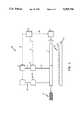
- FIG. 1shows a schematic representation of one embodiment of the apparatus utilized for making the ultra thin walled wire reinforced endotracheal tubing
- FIG. 2Ashows an end view of a prior art endotracheal tube
- FIG. 2Bshows an end view of an endotracheal tube according to the present invention
- FIG. 3Ashows an end view of another prior art endotracheal tube
- FIG. 3Bshows an end view of a smaller size ultra thin walled wire reinforced endotracheal tube of the present invention
- FIG. 4shows a graph comparing air resistance in the inventive ultra thin walled endotracheal tube as compared to prior art endotracheal tubes
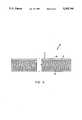
- FIG. 5shows an exemplary ultra thin walled wire reinforced endotracheal tube showing the spring material incorporated in the endotracheal tubing wall.
- FIG. 6Ais a perspective view of a sealing means according to one embodiment of the present invention.
- FIG. 6Bis a cross sectional view of the sealing means of FIG. 6A.
- FIG. 7shows an endotracheal tube according to one embodiment of the present invention which includes the sealing means of FIG. 6A.
- FIG. 8shows an endotracheal tube with a sealing means according to the present invention positioned in a larynx-trachea.
- the present inventionis concerned with endotracheal tubes which provide artificial airways in applications such as anesthesia and critical medicine.
- the present inventionprovides ultra thin walled wire reinforced endotracheal tubes which offer advantages over prior art tubing by providing, for the same outer diameter of tubing, an increased inner diameter and reduced airway resistance.
- an endotracheal tubeis provided which has sufficient strength to be safely handled by a user.
- CPAPcontinuous positive airway pressure
- inventive tubingreduces the wall thickness by 50-80%, thereby resulting in a two- to four-fold decrease in air flow resistance.
- the present inventionis also directed to a sealing means for endotracheal and similar tubes which are designed to be inserted into a lumen and sealed therein to provide a fluid flow passage.
- a sealing means for endotracheal and similar tubeswhich are designed to be inserted into a lumen and sealed therein to provide a fluid flow passage.
- the sealing means of the present inventioncould also be used in conjunction with ureteral catheters and similar devices.
- the sealing means of the present inventionincludes one or more thin, soft, pliable gills or flanges which are provided on the outer wall of a tubular member such as an endotracheal tube.
- the gills or flangesare sufficiently flexible to form a fluid tight seal between the outer wall of the tubular member and the corresponding or adjacent inner wall of a lumen into which the tubular member is inserted and positioned.
- the gills or flangesare made of a suitably pliable material such as polyvinyl chloride, silicone rubber, polyethylene, and the like, which are biocompatable for their intended use.
- the apparatusis generally designated by the reference numeral 10 and is seen to include a cylindrical mandrel 1 having a release agent coating on the surface 2 thereof.
- the release agent 2is designed to facilitate removal of the ultra thin walled wire reinforced endotracheal tubing from the cylindrical mandrel 1.
- the release agentmay be any agent known in the art such as Teflon®.
- the cylindrical mandrelmay be made of any material having sufficient strength to provide support for the tubing, preferably a steel rod.
- the cylindrical mandrelis connected to a lathe means 3 which includes drive means therewith to rotate the mandrel at a predetermined speed.
- a lathe means 3which includes drive means therewith to rotate the mandrel at a predetermined speed.
- any known means capable of rotating a cylindrical mandrelmay be utilized in substitution for the lathe 3.
- the apparatus for making the ultra thin walled wire reinforce endotracheal tubingalso includes a polymer source means 5 which supplies a dissolvable polymer such as polyurethane Lycra® under pressure to a metering pump 9 via the line 7.
- the polymer source meansmay be a closed container including a source of inert gas to provide the pressure to supply the dissolved polymer to the metering pumping 9.
- the source of the pressureis a dry nitrogen or other inert gas.
- the metering pump 9includes a nozzle 11 made out of a flexible tubing such as Teflon®.
- the tubing 11should have sufficient flexibility and thickness to follow the contours of the cylindrical mandrel 1 and float on the polymer layer as it emerges from the nozzle.
- the flexibility of the tubing 1may be enhanced by the addition of a spring material surrounding the tubing.
- the metering pump 9may be a gear fluid pump designed to meter a solution of polymer onto the mandrel.
- the polymer source means 5 and metering pump means 9also include a cross feed means which permits the source means 5, metering means 9 and nozzle 11 to traverse the length of the mandrel 1. As illustrated by the reference numeral 21 in FIG. 1, the source means 5, metering pump 9 and nozzle 11 are displaced along the longitudinal axis of the cylindrical mandrel 1. The longitudinal movement of the nozzle 11 permits that polymer to be continuous applied to the mandrel over a preselected pattern.
- a control means 13is provided that regulates the deposition of the polymer on the mandrel 1.
- the control meansis connected to the polymer source means 5 via the line 15, the metering pump 9 via the line 17 and the lathe 3 via the line 19.
- the thickness of polymer applied to the mandrel or wall thickness of the ultra thin walled and wire reinforced endotracheal tubingmay be controlled and varied.
- the control means 13also provides control over longitudinal traversing of the nozzle 11 and associated components and the cylindrical mandrel 1.
- nozzle 11, metering pump 9 and polymer source means 5are depicted as longitudinally traversing the length of the cylindrical mandrel 1, in another embodiment, the polymer source means 5 may be stationery with the metering pump 9 and nozzle 11 traversing the length of the mandrel 1. It should be understood that the mechanism for providing the longitudinal traversing movement of either the metering pump 9 and nozzle 11 or these components with the polymer source means 5 are well recognized in the prior art. For example, these components may be longitudinally traversed using a drive means and rack and pinion gearing.
- the apparatus 10also includes a heating means 23 which supplies heat such as hot air to the mandrel 1 to dry the polymer solution after deposition on the mandrel.
- the heating meansmay a strip heater or other known heating means.
- the heating means 23may also include individually adjustable baffles 25 which facilitate directing the hot air toward the mandrel 1.
- the adjustable feature of the baffles 25permit varying the amount of drying air along the length of the mandrel 1. For example, when producing a tapered endotracheal tube, certain areas of the tube having increased wall thickness require a higher heat input for drying purposes. In this situation, the individually adjustable baffles are arranged to direct more hot air to the portion of the cylindrical mandrel having the endotracheal tube with increased wall thickness.
- FIG. 1also depicts a coil spring 27 which is designed to be inserted over the Teflon® coated cylindrical mandrel 1.
- the spring 27may be manually inserted over the rod or, alternatively, by known mechanical means.
- the spring materialmay be in the form of an unwound wire or flat material and be wound around the cylindrical mandrel in a known fashion.
- the spring 27may be applied to the mandrel 1 after or during the deposition of the polymeric material.
- a polymeric materialsuch as a polyurethane Lycra® is dissolved in a compatible solvent.
- a typical concentration of polymeric materialwould range between 25-28 weight percent polymer in the solvent. This range is only exemplary and more or less concentrations of polymeric material may be utilized depending on the particular polymer being employed.
- the dissolved polymeris supplied to a metering pump under pressure such as dry nitrogen.
- the metering pumpsuch as a fluid gear pump, meters the dissolved polymer unto the rotating surface of the mandrel while the nozzle traverses the length of the cylindrical mandrel.
- the deposited polymeris permitted to air dry, or alternatively, dry by application of a source of heat such as a strip heater or the like. This sequence may be repeated if an increased thickness of polymeric material is desired on the surface of the cylindrical mandrel.
- the solvent evaporation ratecan be optimized such that one layer of polymer can be deposited onto the previously deposited and dried layer to build up thickness.
- successive deposition of several layers of polymeric solutionmay be performed while traversing the cylindrical mandrel on a single run.
- a plurality of nozzlesmay be utilized which are spaced apart from each other such that following nozzles are depositing polymeric material to an already dried polymeric material layer.
- a spring materialpreferably a stainless steel spring
- the stainless steel springmay be in an uncoiled configuration, either flat or round in size, and wound around the polymer-coated mandrel by known mechanical means.
- the stainless steel springmay be provided in a pre-coiled configuration and inserted over the mandrel.
- the choice of winding per inch for the spring or the diameter or cross-sectional area of the spring materialmay vary depending upon the desired spring properties and flexibility of the ultra thin walled wire reinforced endotracheal tube.
- the spring material cross-sectional area, or diameter if the spring material is roundis sized to provide the ultra thin walled wire reinforced endotracheal tubing having a reduced wall thickness while maintaining sufficient strength to avoid kinking or bending during handling and subsequent constriction of an airway passage.
- the spring materialmay be wound around the mandrel or inserted thereover, simultaneously with the application of the polymer solution.
- the sealing means described belowis positioned on the form polymer tubing either before or after the tubing is removed from the mandrel.
- the sealing meansare fixed to the tubing by means of a suitable, biocompatable cement, selected from those known in the art.
- the sealing meansmay be positioned on the tubular member prior to complete curing of the polymer. Thereafter, the curing of the polymer may be used to secure the sealing means.
- Other suitable meanssuch as welding or heat sealing the sealing means on the tubular member could also be used.
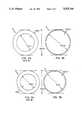
- FIGS. 2A and 2Ba comparison is illustrated between prior art endotracheal tubes and the ultra thin walled wire reinforced endotracheal tubing of the present invention.
- the prior art endotracheal tube having an outer diameter of 10.7 millimetershas an inner diameter of 7.5 millimeters due to the wall thickness of 1.6 millimeters.
- the ultra thin wall wire reinforced endotracheal tubing of the present inventionmay be made having the same outer diameter of 10.7 millimeters but with an increased inner diameter of 10.2 millimeters as a result of the reduced wall thickness of 0.25 millimeters.
- the prior art endotracheal tubing 33is compared to the ultra thin walled wire reinforced endotracheal tubing 35 of the present invention.
- the prior art endotracheal tubing 33 having an outer diameter of 9.3 millimetershas an inner diameter of 6.5 millimeters.
- the ultra thin walled wire reinforced endotracheal tubing 35has an increase in the inner diameter to 8.8 millimeters for the same 9.3 millimeter outside diameter.
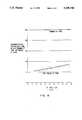
- FIG. 4a graph is depicted which compares standard endotracheal tubes such as those depicted in FIG. 2A and 3A with the ultra thin walled wire reinforced tubing of the present invention having a wall thickness of approximately 0.25 millimeters or 0.0098 in.
- the graphcompares the resistance of the inventive thin walled endotracheal tubing as a percent of the air resistance of the standard endotracheal tubing for a range of endotracheal tubing based upon inner diameters.
- the inventive thin walled endotracheal tubingresults in a substantial decrease in resistance as compared to prior art endotracheal tubing.
- the construction of the instant inventionallows tubes with an inner diameter starting from about 1.5 mm, as shown in FIG. 4, and concomitantly having and outer diameter appreciably less than 5 mm.
- air flow resistanceis further lowered for smaller sized endotracheal tubes which provides reduced air resistance in endotracheal tubing adapted for newborn patients.
- an exemplary ultra thin walled wire reinforced endotracheal tubingis generally designated by the reference numeral 40.
- the thin walled wire reinforced endotracheal tubingincludes a tubing wall 41 having an inner surface 43 and outer surface 45. Incorporated within the tubing wall 41 is a spring 47.
- the diameter of the spring material 47is sized in conjunction with the applied layers of polymeric material to provide the minimum wall thickness while maintaining sufficient strength to permit handling of the endotracheal tube.
- a wall thickness of about 0.25 millimetersis attainable using the inventive method and apparatus for making the ultra thin walled wire reinforced endotracheal tubing.
- the wall thickness of about 0.25 mmis a preferred thickness with the wall thickness ranging between about 0.1 mm and 0.5 mm.
- a preferred range for the wall thicknessincludes between about 0.15 (0.0059 in) and 0.35 mm (0.0138 in).
- the diameter of the wire spring materialis less than the wall thickness to provide a polymeric layer along the inner and outer surfaces, 43 and 45 respectively of the tube 40.
- the wire spring material when positioned on the cylindrical mandrel prior to deposition of polymeric materialmay form part of the inner surface 43 of the tubing 40.
- the apparatus and method of making the ultra thin walled wire reinforced endotracheal tubingprovides a endotracheal tube having a thin wall thickness not attainable in prior art endotracheal tube making apparatus or method.
- the inventive apparatus and methodalso provide flexibility in adapting the manufacture of the inventive endotracheal tubing for various configurations for operating conditions such as an eccentric or slightly out of round mandrel. By having the nozzle of the metering pump 9 float or follow the contour of the mandrel, any slight out of roundness and/or eccentricity of the mandrel can be easily accommodated without effecting the quality of the tube.
- the method of applying the polymer solution along the length of the mandrelpermits programming of the control means to achieve different tubing configuration. For example, by increasing the flow rate of the dissolved polymer or reducing the rotation of the mandrel in conjunction with controlling the travel of the nozzle 11 along the mandrel, varying thicknesses of wall tubing may be obtained. By programming of more layers of different thicknesses on different parts of the mandrel, utilizing the control means, tapered endotracheal tubes may be manufactured.
- the mandrel 1may be made having a tapered configuration wherein a tapered spring material may be used in conjunction with a uniform coating to produce a tapered tube having a uniform wall thickness.
- FIG. 6Ashows a sealing means 50 according to one embodiment of the present invention.
- the sealing means 50is a gilled- or flanged-collar.
- the collar portion 51includes a through-bore 52 which allows a tubular member to be inserted within the sealing means 50 and fixed thereto as shown in FIG. 7.
- the gill or flange 53 of the sealing means 50is a thin, soft, pliable element made of a suitable biocompatable plastic material such as polyvinyl chloride, silicon rubber, polyethylene or the like, and is preferably integral with the collar portion 51, which may be made of a similar plastic material.
- the gill or flange 53 of the sealing means 50is made of a thin, e.g., 0.002 inches plasticized vinyl sheet, vacuum formed, and then cut and punched to an appropriate size.
- Other suitable methods of fabricating the sealing memberssuch as injection molding, separately fabricating and attaching the collar and flange portions, etc. could also be utilized.
- the thickness of the gill or flange portionshould be relatively thin to ensure that the gill or flange is suitable soft and pliable.
- the gills or flangeswere as thin as about 0.0005 inches. In another embodiment the gills or flanges were between about 0.001-0.002 inches thick.
- the thickness of the gills or flangescan be greater than 0.002 inches, depending on the pliability of the material from which they are formed, the limiting factor on this thickness is the ability of the gills or flange portions to provide the desire seal discussed above.
- FIG. 6Bshow a cross section of the seal means of FIG. 6A.
- the gill or flange 53extends from collar portion 51.
- the cross sectional area of the gill or flange 53is tapered as illustrated so as to be thicker near the collar 51.
- the free edge 54 of the gill or flange 53is feathered as shown.
- the gill or flange 53may extend perpendicular from the collar 51 either straight or with a slight curve.
- the curved shape of the gill or flange 53which is illustrated in FIG.
- the curve shapecan provide a small bias force to the seal means.
- the diameter of the gills or flange portionscan range from as small as 0.02 inches to 0.200 inches.
- the diameter or the gills or flangescan be determined from the outside diameter of the tubular member and the inner diameter of the lumen.
- the diameter of the gills or flanges as measured from the collar to the free endis between about 0.5-1.5 mm.
- the thickness of the gills or flanges at the collaris about 0.06 mm and the feathered edge is about 0.025 mm thick.
- FIG. 7shows an endotracheal tube 55 having the sealing means 50 of FIG. 6A attached thereto. As shown, the sealing means 50 are located near the distal end 56 of the endotracheal tube 55. In FIG. 7, six sealing members are shown on the endotracheal tube 55. However, it is noted that any number of sealing means including one, ten, twenty, thirty or more could be utilized.
- FIG. 8shows an endotracheal tube according to the present invention which is positioned in a larynxtrachea.
- the endotracheal tube 60is inserted through the epiglottis 61, vocal cord area 62 and the cricoid 63.
- the gills or flanges 64 of the sealing means(collars are not shown) which are located within the narrow or constricted portion of the lumen adjust to the inner diameter of this portion of the lumen due to their pliability and form a seal between the endotracheal tube 60 and the inner wall of the lumen.
- the gills or flangeswill accommodate the anatomy of the trachea and that some tracheal bronchial secretions are likely to be entrapped between the gills or flanges, thus assisting sealing off air/oxygen leakage. More importantly, there is almost negligible pressure on the adjacent epithelium of the trachea. This greatly reduces or eliminates tracheal wall injury. It is further noted that the tapering of the gills or flanges as discussed above helps protect the tracheal epithelium from possible undue physical trauma.
- the diameter of the gills or flanges 64 of the sealing meansshould be slightly larger than the distance between the outer wall of the tubular member 60 and the inner wall of the lumen. Accordingly, for a given lumen diameter, the diameter of the gills or flanges as measured above will be smaller for larger diameter tubular member and larger for smaller tubular members.
- the sealing means of the present inventioncan utilize in conjunction with any tubular member which is designed to be sealing positioned in a lumen.
- the sealing meansmay be utilized in conjunction with endotracheal tubes, ureteral catheters, and other similar tubes.
- the sealing means of the present inventionhave a particular advantage in that they can be utilized in conjunction with endotracheal tubes which are less than about 5 mm in diameter.
- no sealing meanse.g. inflatable cuffs, was provided for such small endotracheal tubes.
- the sealing means of the present inventioncould also be suitable sized and utilized with larger diameter tubes.
- the sealing means of the present inventionhas been found to be especially useful in conjunction with the above-discussed ultra thin wall walled wire reinforced endotracheal tubes.
- This combinationprovides endotracheal tubes which have low airway resistance and a maximum inside diameter for a given outside diameter.
- sealing means of the present inventionin place of inflatable cuffs avoids the need for additional fluid passages needed to inflate and deflate the cuffs, thus allowing reduction of the overall diameter of the tubes.
Landscapes
- Health & Medical Sciences (AREA)
- Engineering & Computer Science (AREA)
- Pulmonology (AREA)
- Heart & Thoracic Surgery (AREA)
- Anesthesiology (AREA)
- Biomedical Technology (AREA)
- Emergency Medicine (AREA)
- Hematology (AREA)
- Life Sciences & Earth Sciences (AREA)
- Animal Behavior & Ethology (AREA)
- General Health & Medical Sciences (AREA)
- Public Health (AREA)
- Veterinary Medicine (AREA)
- Mechanical Engineering (AREA)
- Chemical & Material Sciences (AREA)
- Composite Materials (AREA)
- Joints With Sleeves (AREA)
- Materials For Medical Uses (AREA)
- Media Introduction/Drainage Providing Device (AREA)
- Lining Or Joining Of Plastics Or The Like (AREA)
- Moulding By Coating Moulds (AREA)
- External Artificial Organs (AREA)
- Shaping Of Tube Ends By Bending Or Straightening (AREA)
- Coating Apparatus (AREA)
- Application Of Or Painting With Fluid Materials (AREA)
- Superconductors And Manufacturing Methods Therefor (AREA)
- Prostheses (AREA)
- Infusion, Injection, And Reservoir Apparatuses (AREA)
Abstract
Description
This application is a Continuation-In-Part of Application Ser. No. 07/758,824, filed Sep. 12, 1991, the complete disclosure of which is expressly incorporated herein by reference.
The present invention is directed to endotracheal tubes, their use and fabrication. More particularly, the present invention is directed to a novel seal means for endotracheal and similar tubes which seal means effectively provides a fluid seal between the outer wall of the tube and the lumen into which the tube is to be inserted.
The present invention is further directed to the novel seal means used in conjunction with an ultra thin walled wire reinforced endotracheal tubing. The ultra thin walled tubing comprises a polymer tube having incorporated therewith a stainless steel spring material.
Endotracheal tubes are widely used in anesthesia and critical care medicine. In use, endotracheal tubes provide access to the upper airways for controlled, assisted ventilation or spontaneous unassisted ventilation with positive end expiratory pressure.
One of the drawbacks of inserting an endotracheal tube into an upper airway of a patient results in the reduction of the lumen of the airway. One cause by which the lumen is reduced is the inability to use the largest possible endotracheal tube for a given patient without subjecting the patient to increased risks. Generally, it is not advisable to insert the largest possible endotracheal tube in a patient since such an attempt will entail many trials and errors which may take additional time which should be avoided especially in critical care or emergency situations.
In addition, the wall thickness of an endotracheal tube needs to be such to provide sufficient strength so as to be safely handled by the using physician or technician during insertion and to maintain the tube stable after insertion. At present, adult endotracheal tubes range between 7 to 9 millimeters in internal diameter with a total wall thickness ranging between 1.4 and 1.5 millimeters. For newborn endotracheal tubes, the decrease in lumen internal diameter as a result of the required wall thickness amounts to approximately 0.5 millimeters or more.
Any decrease in the lumen due to wall thickness of an endotracheal tube has a profound effect on the airway resistance, since the resistance to air flow is inversely proportional to the fourth power of the radius.
As a result of the deficiencies in prior art endotracheal tubes, a need has developed to provide an endotracheal tube having reduced airway resistance so as to facilitate establishment of artificial airways other than those using mechanical ventilators.
Conventional technology used in the fabrication of blood catheters uses either extrusion or dip coating onto mandrels. Extrusion technology has the advantage of low cost, but has little flexibility. With extrusion, the resulting thin wall catheters are rather stiff and are liable to kink or bend and thus obstruct the inner passageway. The dip coating technique used for currently available catheters and tubes is not reproducible in thin wall gauges and, therefore, wall thickness remain substantial.
For successful use, it is important to provide a good seal between the outer wall of an endotracheal tube and the tracheal into which it is inserted. Conventionally, such a seal is provided by using an inflatable cuff attached to the endotracheal tube. Such inflatable cuffs utilize either low or high pressure fluids to cause them to inflate and thus require additional fluid passageways that are connected to the inflatable cuffs.
Unfortunately, the use of inflatable cuffs is sometimes injurious to the tracheal, causing pressure necrosis, bleeding, fistula formation, etc. Following removal of endotracheal tubes having inflatable cuffs, particularly following long term use, there is a significant potential for scar formation with resultant tracheal stenosis. Because of the above sequelae, the use of inflatable cuffs is frowned on in conjunction with newborns and small children, because such adverse effects oftentimes are far more debilitating were they to occur in patients other than adults.
As a result of the above problems and concerns and design limitations, endotracheal tubes up tosize 5 mm do not presently employ inflatable cuffs. As an adverse side effect to this accepted design which lacks a sealing means, there is likely to be a significant air leak that can at times be very troublesome.
The present invention provides an ultra thin walled wire reinforced endotracheal tube which provides reduced airway resistance to permit easier breathing by a patient. The ultra thin walled endotracheal tube comprises a polymer having incorporated therewith a stainless steel spring material to form a continuous tubing. The combination of the polymer and stainless steel spring material provides an ultra thin wall of the tubing which permits the use of an endotracheal tube having similar diameters as prior art tubings but with increased internal diameters and resultant reductions in airway resistance.
The present invention further provides a novel sealing means which avoids the use of inflatable cuffs, and which is applicable to endotracheal and similar tubes of all sizes including those having an outside diameter which is less that about 5 mm.
It is accordingly an object of the present invention to provide a sealing means for endotracheal and similar tubes which are designed to be inserted and sealed in a lumen.
Another object of the present invention is to provide endotracheal and similar tubes which have sealing means on outer walls thereof.
A further object of the present invention is to provide ultra thin walled wire reinforced endotracheal tubing having sealing means on an outer wall thereof.
It is a further object of the present invention to provide an apparatus for and a method of making ultra thin walled wire reinforced endotracheal tubing having sealing means on an outer wall thereof.
It is a still further object of the present invention to provide sealing means on endotracheal and similar tubes which have outside diameters of less than about 5 mm.
It is a yet further object of the present invention to provide endotracheal tubing which is particularly useful in conjunction with newborn, infants and children.
In accordance with these and further objects of the invention which will become apparent as the disclosure thereof is presented below, the present invention provides a sealing means for a tubular member which comprises a circular collar portion having a through hole centrally located therein and a pliable flange attached to an outer circumferential surface of the circular collar portion, the pliable flange being continuous along the entire circumferential surface of the circular collar portion.
The present invention further provides for a device comprising a tubular member and a sealing means provided on the tubular member, the sealing means including a circular collar portion having a through hole centrally located therein and a pliable flange attached to an outer circumferential surface of the circular collar portion, the pliable flange being continuous along the entire circumferential surface of the circular collar portion.
In addition, the present invention provides an endotracheal tube comprising a tubular member and a sealing means on the tubular member, the sealing means including a circular collar portion having a through hole centrally located therein and a pliable flange attached to an outer circumferential surface of the circular collar portion, the pliable flange being continuous along the entire circumferential surface of the circular collar portion.
The present invention will be described with reference to that attached drawings which are given by way of non-limiting examples only, in which:
FIG. 1 shows a schematic representation of one embodiment of the apparatus utilized for making the ultra thin walled wire reinforced endotracheal tubing;
FIG. 2A shows an end view of a prior art endotracheal tube;
FIG. 2B shows an end view of an endotracheal tube according to the present invention;
FIG. 3A shows an end view of another prior art endotracheal tube;
FIG. 3B shows an end view of a smaller size ultra thin walled wire reinforced endotracheal tube of the present invention;
FIG. 4 shows a graph comparing air resistance in the inventive ultra thin walled endotracheal tube as compared to prior art endotracheal tubes; and
FIG. 5 shows an exemplary ultra thin walled wire reinforced endotracheal tube showing the spring material incorporated in the endotracheal tubing wall.
FIG. 6A is a perspective view of a sealing means according to one embodiment of the present invention.
FIG. 6B is a cross sectional view of the sealing means of FIG. 6A.
FIG. 7 shows an endotracheal tube according to one embodiment of the present invention which includes the sealing means of FIG. 6A.
FIG. 8 shows an endotracheal tube with a sealing means according to the present invention positioned in a larynx-trachea.
The present invention is concerned with endotracheal tubes which provide artificial airways in applications such as anesthesia and critical medicine. According to one embodiment, the present invention provides ultra thin walled wire reinforced endotracheal tubes which offer advantages over prior art tubing by providing, for the same outer diameter of tubing, an increased inner diameter and reduced airway resistance. By incorporating a stainless steel spring material with a polymeric material in a thin walled tubing configuration, an endotracheal tube is provided which has sufficient strength to be safely handled by a user.
By providing low air resistance endotracheal tube, whereby patient breathing is made easier, patients may be able to utilize a simpler means of respiratory assistance such as continuous positive airway pressure (CPAP) rather than mechanical ventilation means.
In the newborn patient population, the lowering of airway resistance is of vital importance since newborns are more likely to become exhausted or have further difficulty in breathing by using prior art endotracheal tube having significant airway resistance. By utilizing the inventive ultra thin wall wire reinforced endotracheal tubes in newborn patient application, significant reductions in airway resistance are attainable.
In addition, developments and other alternatives for mechanical ventilation such as intratracheal pulmonary ventilation which include a reduction in dead space ventilation and a decrease in airway pressure favor the utilization of establishment of artificial airways having reduced resistance to air flow. As will be described hereinafter, the inventive tubing reduces the wall thickness by 50-80%, thereby resulting in a two- to four-fold decrease in air flow resistance.
The present invention is also directed to a sealing means for endotracheal and similar tubes which are designed to be inserted into a lumen and sealed therein to provide a fluid flow passage. For example, in addition a to being useful in conjunction with endotracheal tubes, the sealing means of the present invention could also be used in conjunction with ureteral catheters and similar devices.
As discussed in detail below, the sealing means of the present invention includes one or more thin, soft, pliable gills or flanges which are provided on the outer wall of a tubular member such as an endotracheal tube. The gills or flanges are sufficiently flexible to form a fluid tight seal between the outer wall of the tubular member and the corresponding or adjacent inner wall of a lumen into which the tubular member is inserted and positioned. The gills or flanges are made of a suitably pliable material such as polyvinyl chloride, silicone rubber, polyethylene, and the like, which are biocompatable for their intended use.
With reference now to FIG. 1, a schematic representation of an apparatus adapted for making ultra thin walled wire reinforced endotracheal tube is illustrated. The apparatus is generally designated by thereference numeral 10 and is seen to include acylindrical mandrel 1 having a release agent coating on thesurface 2 thereof. Therelease agent 2 is designed to facilitate removal of the ultra thin walled wire reinforced endotracheal tubing from thecylindrical mandrel 1. The release agent may be any agent known in the art such as Teflon®. The cylindrical mandrel may be made of any material having sufficient strength to provide support for the tubing, preferably a steel rod.
The cylindrical mandrel is connected to a lathe means 3 which includes drive means therewith to rotate the mandrel at a predetermined speed. Of course, any known means capable of rotating a cylindrical mandrel may be utilized in substitution for thelathe 3.
The apparatus for making the ultra thin walled wire reinforce endotracheal tubing also includes a polymer source means 5 which supplies a dissolvable polymer such as polyurethane Lycra® under pressure to ametering pump 9 via theline 7. The polymer source means may be a closed container including a source of inert gas to provide the pressure to supply the dissolved polymer to themetering pumping 9. Preferably, the source of the pressure is a dry nitrogen or other inert gas.
Themetering pump 9 includes a nozzle 11 made out of a flexible tubing such as Teflon®. The tubing 11 should have sufficient flexibility and thickness to follow the contours of thecylindrical mandrel 1 and float on the polymer layer as it emerges from the nozzle. The flexibility of thetubing 1 may be enhanced by the addition of a spring material surrounding the tubing. Themetering pump 9 may be a gear fluid pump designed to meter a solution of polymer onto the mandrel.
The polymer source means 5 and metering pump means 9 also include a cross feed means which permits the source means 5, metering means 9 and nozzle 11 to traverse the length of themandrel 1. As illustrated by the reference numeral 21 in FIG. 1, the source means 5,metering pump 9 and nozzle 11 are displaced along the longitudinal axis of thecylindrical mandrel 1. The longitudinal movement of the nozzle 11 permits that polymer to be continuous applied to the mandrel over a preselected pattern.
A control means 13 is provided that regulates the deposition of the polymer on themandrel 1. The control means is connected to the polymer source means 5 via the line 15, themetering pump 9 via the line 17 and thelathe 3 via the line 19. By controlling the rotation of themandrel 1 via thelathe 3 and the amount of polymer deposited on themandrel 1, the thickness of polymer applied to the mandrel or wall thickness of the ultra thin walled and wire reinforced endotracheal tubing may be controlled and varied. The control means 13 also provides control over longitudinal traversing of the nozzle 11 and associated components and thecylindrical mandrel 1. It should be understood that, although the nozzle 11,metering pump 9 and polymer source means 5 are depicted as longitudinally traversing the length of thecylindrical mandrel 1, in another embodiment, the polymer source means 5 may be stationery with themetering pump 9 and nozzle 11 traversing the length of themandrel 1. It should be understood that the mechanism for providing the longitudinal traversing movement of either themetering pump 9 and nozzle 11 or these components with the polymer source means 5 are well recognized in the prior art. For example, these components may be longitudinally traversed using a drive means and rack and pinion gearing.
Theapparatus 10 also includes a heating means 23 which supplies heat such as hot air to themandrel 1 to dry the polymer solution after deposition on the mandrel.
The heating means may a strip heater or other known heating means. The heating means 23 may also include individuallyadjustable baffles 25 which facilitate directing the hot air toward themandrel 1. The adjustable feature of thebaffles 25 permit varying the amount of drying air along the length of themandrel 1. For example, when producing a tapered endotracheal tube, certain areas of the tube having increased wall thickness require a higher heat input for drying purposes. In this situation, the individually adjustable baffles are arranged to direct more hot air to the portion of the cylindrical mandrel having the endotracheal tube with increased wall thickness.
FIG. 1 also depicts acoil spring 27 which is designed to be inserted over the Teflon® coatedcylindrical mandrel 1. Thespring 27 may be manually inserted over the rod or, alternatively, by known mechanical means. As an alternative embodiment, the spring material may be in the form of an unwound wire or flat material and be wound around the cylindrical mandrel in a known fashion. As will be described hereinafter, thespring 27 may be applied to themandrel 1 after or during the deposition of the polymeric material.
The method of making the ultra thin walled wire reinforced endotracheal tubing will now be described. In the first embodiment, a polymeric material such as a polyurethane Lycra® is dissolved in a compatible solvent. A typical concentration of polymeric material would range between 25-28 weight percent polymer in the solvent. This range is only exemplary and more or less concentrations of polymeric material may be utilized depending on the particular polymer being employed. The dissolved polymer is supplied to a metering pump under pressure such as dry nitrogen. The metering pump, such as a fluid gear pump, meters the dissolved polymer unto the rotating surface of the mandrel while the nozzle traverses the length of the cylindrical mandrel. The deposited polymer is permitted to air dry, or alternatively, dry by application of a source of heat such as a strip heater or the like. This sequence may be repeated if an increased thickness of polymeric material is desired on the surface of the cylindrical mandrel.
By choosing a particular rate of deposition of polymeric material, the solvent evaporation rate can be optimized such that one layer of polymer can be deposited onto the previously deposited and dried layer to build up thickness. In a further embodiment, successive deposition of several layers of polymeric solution may be performed while traversing the cylindrical mandrel on a single run. In this embodiment, a plurality of nozzles may be utilized which are spaced apart from each other such that following nozzles are depositing polymeric material to an already dried polymeric material layer.
Once the initial layer or layers of polymeric solution are deposited on the cylindrical mandrel a spring material, preferably a stainless steel spring, is applied to the cylindrical mandrel. In one embodiment, the stainless steel spring may be in an uncoiled configuration, either flat or round in size, and wound around the polymer-coated mandrel by known mechanical means. Alternatively, the stainless steel spring may be provided in a pre-coiled configuration and inserted over the mandrel.
The choice of winding per inch for the spring or the diameter or cross-sectional area of the spring material may vary depending upon the desired spring properties and flexibility of the ultra thin walled wire reinforced endotracheal tube. Furthermore, it should be understood that the spring material cross-sectional area, or diameter if the spring material is round, is sized to provide the ultra thin walled wire reinforced endotracheal tubing having a reduced wall thickness while maintaining sufficient strength to avoid kinking or bending during handling and subsequent constriction of an airway passage.
Once the spring wire is applied to the mandrel, further deposition of polymeric material may be performed to yield a smooth outside surface having the desired final diameter.
In a further embodiment, the spring material may be wound around the mandrel or inserted thereover, simultaneously with the application of the polymer solution.
After the polymer has been applied, the sealing means described below is positioned on the form polymer tubing either before or after the tubing is removed from the mandrel. The sealing means are fixed to the tubing by means of a suitable, biocompatable cement, selected from those known in the art. According to another embodiment, the sealing means may be positioned on the tubular member prior to complete curing of the polymer. Thereafter, the curing of the polymer may be used to secure the sealing means. Other suitable means such as welding or heat sealing the sealing means on the tubular member could also be used.
With reference to FIGS. 2A and 2B, a comparison is illustrated between prior art endotracheal tubes and the ultra thin walled wire reinforced endotracheal tubing of the present invention. As can be seen from FIG. 2A, the prior art endotracheal tube having an outer diameter of 10.7 millimeters has an inner diameter of 7.5 millimeters due to the wall thickness of 1.6 millimeters. In contrast, the ultra thin wall wire reinforced endotracheal tubing of the present invention may be made having the same outer diameter of 10.7 millimeters but with an increased inner diameter of 10.2 millimeters as a result of the reduced wall thickness of 0.25 millimeters.
Referring to FIGS. 3A and 3B, a similar comparison is made wherein the prior artendotracheal tubing 33 is compared to the ultra thin walled wire reinforcedendotracheal tubing 35 of the present invention. In this manner, the prior artendotracheal tubing 33 having an outer diameter of 9.3 millimeters has an inner diameter of 6.5 millimeters. The ultra thin walled wire reinforcedendotracheal tubing 35 has an increase in the inner diameter to 8.8 millimeters for the same 9.3 millimeter outside diameter.
With reference now to FIG. 4, a graph is depicted which compares standard endotracheal tubes such as those depicted in FIG. 2A and 3A with the ultra thin walled wire reinforced tubing of the present invention having a wall thickness of approximately 0.25 millimeters or 0.0098 in. The graph compares the resistance of the inventive thin walled endotracheal tubing as a percent of the air resistance of the standard endotracheal tubing for a range of endotracheal tubing based upon inner diameters. As can be seen from the graph in FIG. 4, the inventive thin walled endotracheal tubing results in a substantial decrease in resistance as compared to prior art endotracheal tubing. Also, the construction of the instant invention allows tubes with an inner diameter starting from about 1.5 mm, as shown in FIG. 4, and concomitantly having and outer diameter appreciably less than 5 mm. In addition, air flow resistance is further lowered for smaller sized endotracheal tubes which provides reduced air resistance in endotracheal tubing adapted for newborn patients.
With reference now to FIG. 5, an exemplary ultra thin walled wire reinforced endotracheal tubing is generally designated by thereference numeral 40. The thin walled wire reinforced endotracheal tubing includes atubing wall 41 having aninner surface 43 andouter surface 45. Incorporated within thetubing wall 41 is aspring 47. The diameter of thespring material 47 is sized in conjunction with the applied layers of polymeric material to provide the minimum wall thickness while maintaining sufficient strength to permit handling of the endotracheal tube. As disclosed above, a wall thickness of about 0.25 millimeters is attainable using the inventive method and apparatus for making the ultra thin walled wire reinforced endotracheal tubing. The wall thickness of about 0.25 mm is a preferred thickness with the wall thickness ranging between about 0.1 mm and 0.5 mm. A preferred range for the wall thickness includes between about 0.15 (0.0059 in) and 0.35 mm (0.0138 in). For a given wall thickness of 0.25 millimeters, it should be understood that the diameter of the wire spring material is less than the wall thickness to provide a polymeric layer along the inner and outer surfaces, 43 and 45 respectively of thetube 40. Alternatively, the wire spring material when positioned on the cylindrical mandrel prior to deposition of polymeric material may form part of theinner surface 43 of thetubing 40.
The apparatus and method of making the ultra thin walled wire reinforced endotracheal tubing provides a endotracheal tube having a thin wall thickness not attainable in prior art endotracheal tube making apparatus or method. The inventive apparatus and method also provide flexibility in adapting the manufacture of the inventive endotracheal tubing for various configurations for operating conditions such as an eccentric or slightly out of round mandrel. By having the nozzle of themetering pump 9 float or follow the contour of the mandrel, any slight out of roundness and/or eccentricity of the mandrel can be easily accommodated without effecting the quality of the tube.
In addition, the method of applying the polymer solution along the length of the mandrel permits programming of the control means to achieve different tubing configuration. For example, by increasing the flow rate of the dissolved polymer or reducing the rotation of the mandrel in conjunction with controlling the travel of the nozzle 11 along the mandrel, varying thicknesses of wall tubing may be obtained. By programming of more layers of different thicknesses on different parts of the mandrel, utilizing the control means, tapered endotracheal tubes may be manufactured. Alternatively, themandrel 1 may be made having a tapered configuration wherein a tapered spring material may be used in conjunction with a uniform coating to produce a tapered tube having a uniform wall thickness.
FIG. 6A shows a sealing means 50 according to one embodiment of the present invention. As shown, the sealing means 50 is a gilled- or flanged-collar. Thecollar portion 51 includes a through-bore 52 which allows a tubular member to be inserted within the sealing means 50 and fixed thereto as shown in FIG. 7. The gill orflange 53 of the sealing means 50 is a thin, soft, pliable element made of a suitable biocompatable plastic material such as polyvinyl chloride, silicon rubber, polyethylene or the like, and is preferably integral with thecollar portion 51, which may be made of a similar plastic material.
In a preferred embodiment, the gill orflange 53 of the sealing means 50 is made of a thin, e.g., 0.002 inches plasticized vinyl sheet, vacuum formed, and then cut and punched to an appropriate size. Other suitable methods of fabricating the sealing members, such as injection molding, separately fabricating and attaching the collar and flange portions, etc. could also be utilized. The thickness of the gill or flange portion should be relatively thin to ensure that the gill or flange is suitable soft and pliable. According to one embodiment of the present invention, the gills or flanges were as thin as about 0.0005 inches. In another embodiment the gills or flanges were between about 0.001-0.002 inches thick. While the thickness of the gills or flanges can be greater than 0.002 inches, depending on the pliability of the material from which they are formed, the limiting factor on this thickness is the ability of the gills or flange portions to provide the desire seal discussed above.
FIG. 6B show a cross section of the seal means of FIG. 6A. As shown, the gill orflange 53 extends fromcollar portion 51. The cross sectional area of the gill orflange 53 is tapered as illustrated so as to be thicker near thecollar 51. Thefree edge 54 of the gill orflange 53 is feathered as shown. The gill orflange 53 may extend perpendicular from thecollar 51 either straight or with a slight curve. The curved shape of the gill orflange 53 which is illustrated in FIG. 6B may provide a better seal when a tubular member having curved gills orflanges 53 is first inserted then backed out a short distance to reverse the curve of the gills orflanges 53 from the direction in which they are oriented when being inserted. In this embodiment, the curve shape can provide a small bias force to the seal means.
For an endotracheal tube, the diameter of the gills or flange portions can range from as small as 0.02 inches to 0.200 inches. The diameter or the gills or flanges can be determined from the outside diameter of the tubular member and the inner diameter of the lumen.
According to one design, the diameter of the gills or flanges as measured from the collar to the free end is between about 0.5-1.5 mm. The thickness of the gills or flanges at the collar is about 0.06 mm and the feathered edge is about 0.025 mm thick.
FIG. 7 shows anendotracheal tube 55 having the sealing means 50 of FIG. 6A attached thereto. As shown, the sealing means 50 are located near thedistal end 56 of theendotracheal tube 55. In FIG. 7, six sealing members are shown on theendotracheal tube 55. However, it is noted that any number of sealing means including one, ten, twenty, thirty or more could be utilized.
FIG. 8 shows an endotracheal tube according to the present invention which is positioned in a larynxtrachea. As shown in FIG. 8 theendotracheal tube 60 is inserted through theepiglottis 61,vocal cord area 62 and thecricoid 63. The gills orflanges 64 of the sealing means (collars are not shown) which are located within the narrow or constricted portion of the lumen adjust to the inner diameter of this portion of the lumen due to their pliability and form a seal between theendotracheal tube 60 and the inner wall of the lumen.
It has been found that the gills or flanges will accommodate the anatomy of the trachea and that some tracheal bronchial secretions are likely to be entrapped between the gills or flanges, thus assisting sealing off air/oxygen leakage. More importantly, there is almost negligible pressure on the adjacent epithelium of the trachea. This greatly reduces or eliminates tracheal wall injury. It is further noted that the tapering of the gills or flanges as discussed above helps protect the tracheal epithelium from possible undue physical trauma.
As can be understood from FIG. 8, the diameter of the gills orflanges 64 of the sealing means should be slightly larger than the distance between the outer wall of thetubular member 60 and the inner wall of the lumen. Accordingly, for a given lumen diameter, the diameter of the gills or flanges as measured above will be smaller for larger diameter tubular member and larger for smaller tubular members.
The sealing means of the present invention can utilize in conjunction with any tubular member which is designed to be sealing positioned in a lumen. For example, the sealing means may be utilized in conjunction with endotracheal tubes, ureteral catheters, and other similar tubes.
The sealing means of the present invention have a particular advantage in that they can be utilized in conjunction with endotracheal tubes which are less than about 5 mm in diameter. Heretofore, no sealing means, e.g. inflatable cuffs, was provided for such small endotracheal tubes. Of course, in addition to being particularly useful for small (less than about 5 mm) diameter endotracheal tubes, the sealing means of the present invention could also be suitable sized and utilized with larger diameter tubes.
The sealing means of the present invention has been found to be especially useful in conjunction with the above-discussed ultra thin wall walled wire reinforced endotracheal tubes. This combination provides endotracheal tubes which have low airway resistance and a maximum inside diameter for a given outside diameter. By utilizing the sealing means of the present invention in stead of inflatable cuffs on these ultra thin walled endotracheal tubes, possible deformation of the tubes caused by inflating or over inflating of the cuffs can be avoided. Moreover, as in the case of any type of endotracheal tube, use of the sealing means of the present invention in place of inflatable cuffs avoids the need for additional fluid passages needed to inflate and deflate the cuffs, thus allowing reduction of the overall diameter of the tubes.
Although the present invention has been described with reference to particular means, materials and embodiments, from the foregoing description, one skilled in the art can ascertain the essential characteristics of the present invention and various changes and modification may be made to adapt the various uses and characteristics thereof without departing from the spirit and scope of the present invention as describe in the claims which follow.
Claims (15)
1. An endotracheal tube comprising a tubular member and a sealing means on said tubular member, said sealing means including a circular collar portion having a through hole centrally located therein and a pliable flange attached to an outer circumferential surface of said circular collar portion, said pliable flange being continuous along the entire circumferential surface of said circular collar portion and having a thickness of less than about 0.002 inches, said pliable flange providing a means to collect tracheal bronchial secretions and thereby assist in sealing said endotracheal tube in a tracheal when inserted therein.
2. An endotracheal tube according to claim 1, wherein said tubular member has an end and said sealing means is provided on said tubular member adjacent said end.
3. An endotracheal tube according to claim 1, wherein a plurality of said sealing means are provided on said tubular member.
4. An endotracheal tube according to claim 1, wherein said circular collar and said pliable flange are made from a polymeric material.
5. An endotracheal tube according to claim 1, wherein said tubular member has an outer diameter which is less than about 5 mm.
6. An endotracheal tube according to claim 1, wherein said pliable flange has a free edge and a thickness which is greater near said circular collar portion than said free edge so as to be tapered.
7. An endotracheal tube according to claim 6, wherein said pliable flange has a thickness between about 0.002 to 0.0005 inches.
8. An endotracheal tube according to claim 6, wherein said free edge of said pliable flange is feathered.
9. An endotracheal tube according to claim 1, wherein said tubular member is wire reinforced.
10. An endotracheal tube according to claim 9, wherein a plurality of said sealing means are provided on said tubular member.
11. An endotracheal tube according to claim 9, wherein said tubular member has an end and said sealing means is provided on said tubular member adjacent said end.
12. An endotracheal tube according to claim 9, wherein said pliable flange has a thickness between about 0.002 to 0.0005 inches.
13. An endotracheal tube according to claim 9, wherein said circular collar and said pliable flange are made from a polymeric material.
14. An endotracheal tube according to claim 9, wherein said pliable flange has a free edge and a thickness which is greater near said circular collar portion than said free edge so as to be tapered.
15. An endotracheal tube according to claim 14, wherein said free edge of said pliable flange is feathered.
Priority Applications (19)
| Application Number | Priority Date | Filing Date | Title |
|---|---|---|---|
| US07/878,784US5305740A (en) | 1991-09-12 | 1992-05-06 | Sealing means for endotracheal tubes |
| JP5505493AJP2868314B2 (en) | 1991-09-12 | 1992-09-11 | Endotracheal tube, endotracheal tube manufacturing apparatus, and endotracheal tube manufacturing method |
| DE69233000TDE69233000T2 (en) | 1991-09-12 | 1992-09-11 | Device and method for producing endotracheal tubes |
| CA002117061ACA2117061A1 (en) | 1991-09-12 | 1992-09-11 | Sealing means for endotracheal tubes |
| DK92919776TDK0603295T3 (en) | 1991-09-12 | 1992-09-11 | Endotracheal tubes with sealants |
| PCT/US1992/007643WO1993004725A1 (en) | 1991-09-12 | 1992-09-11 | Sealing means for endotracheal tubes |
| AU25813/92AAU676463B2 (en) | 1991-09-12 | 1992-09-11 | Sealing means for endotracheal tubes |
| AT98122704TATE236677T1 (en) | 1991-09-12 | 1992-09-11 | DEVICE AND METHOD FOR PRODUCING ENDOTRACHEAL TUBE |
| EP98122704AEP0909625B1 (en) | 1991-09-12 | 1992-09-11 | Apparatus and method for making endotracheal tubes |
| AT92919776TATE180982T1 (en) | 1991-09-12 | 1992-09-11 | ENDOTRACHEAL TUBES WITH SEALING ELEMENT |
| ES98122704TES2196463T3 (en) | 1991-09-12 | 1992-09-11 | APPARATUS AND PROCEDURE TO PRODUCE ENDOTRACHICAL TUBES. |
| EP92919776AEP0603295B1 (en) | 1991-09-12 | 1992-09-11 | Endotracheal tubes with sealing means |
| DE69229396TDE69229396T2 (en) | 1991-09-12 | 1992-09-11 | ENDOTRACHEAL TUBES WITH SEALING ELEMENT |
| DK98122704TDK0909625T3 (en) | 1991-09-12 | 1992-09-11 | Apparatus and method for making endotracheal tubes |
| ES92919776TES2134812T3 (en) | 1991-09-12 | 1992-09-11 | ENDOTRACHAL TUBES WITH SEALING MEDIA. |
| US08/085,948US5429127A (en) | 1991-09-12 | 1993-07-06 | Thin wall endotracheal tube |
| US08/231,718US5711296A (en) | 1991-09-12 | 1994-04-22 | Continuous positive airway pressure system |
| AU60700/96AAU697260B2 (en) | 1991-09-12 | 1996-07-25 | Apparatus and method for making ultra thin walled wire reinforced endotracheal tubing |
| GR990402221TGR3031136T3 (en) | 1991-09-12 | 1999-09-01 | Sealing means for endotracheal tubes. |
Applications Claiming Priority (2)
| Application Number | Priority Date | Filing Date | Title |
|---|---|---|---|
| US75882491A | 1991-09-12 | 1991-09-12 | |
| US07/878,784US5305740A (en) | 1991-09-12 | 1992-05-06 | Sealing means for endotracheal tubes |
Related Parent Applications (1)
| Application Number | Title | Priority Date | Filing Date |
|---|---|---|---|
| US75882491AContinuation-In-Part | 1991-09-12 | 1991-09-12 |
Related Child Applications (1)
| Application Number | Title | Priority Date | Filing Date |
|---|---|---|---|
| US08/085,948Continuation-In-PartUS5429127A (en) | 1991-09-12 | 1993-07-06 | Thin wall endotracheal tube |
Publications (1)
| Publication Number | Publication Date |
|---|---|
| US5305740Atrue US5305740A (en) | 1994-04-26 |
Family
ID=27116584
Family Applications (1)
| Application Number | Title | Priority Date | Filing Date |
|---|---|---|---|
| US07/878,784Expired - LifetimeUS5305740A (en) | 1991-09-12 | 1992-05-06 | Sealing means for endotracheal tubes |
Country Status (11)
| Country | Link |
|---|---|
| US (1) | US5305740A (en) |
| EP (2) | EP0603295B1 (en) |
| JP (1) | JP2868314B2 (en) |
| AT (2) | ATE236677T1 (en) |
| AU (2) | AU676463B2 (en) |
| CA (1) | CA2117061A1 (en) |
| DE (2) | DE69229396T2 (en) |
| DK (2) | DK0603295T3 (en) |
| ES (2) | ES2196463T3 (en) |
| GR (1) | GR3031136T3 (en) |
| WO (1) | WO1993004725A1 (en) |
Cited By (35)
| Publication number | Priority date | Publication date | Assignee | Title |
|---|---|---|---|---|
| US5484409A (en)* | 1989-08-25 | 1996-01-16 | Scimed Life Systems, Inc. | Intravascular catheter and method for use thereof |
| US5638813A (en)* | 1995-06-07 | 1997-06-17 | Augustine Medical, Inc. | Tracheal tube with self-supporting tracheal tube cuff |
| US5976107A (en) | 1991-07-05 | 1999-11-02 | Scimed Life Systems. Inc. | Catheter having extendable guide wire lumen |
| US6526977B1 (en)* | 1998-03-09 | 2003-03-04 | Goebel Fred G. | Tracheal breathing apparatus |
| US6702972B1 (en)* | 1998-06-09 | 2004-03-09 | Diametrics Medical Limited | Method of making a kink-resistant catheter |
| US6877512B2 (en)* | 2001-09-05 | 2005-04-12 | The Regents Of The University Of California | Airway device |
| US20050145252A1 (en)* | 2004-01-07 | 2005-07-07 | James Loyd | Transtracheal oxygen stent |
| US7107991B2 (en) | 2001-09-28 | 2006-09-19 | The United States Of America As Represented By The Department Of Health & Human Services | Endotracheal tube using leak hole to lower dead space |
| US20060207602A1 (en)* | 2005-03-15 | 2006-09-21 | The Gov't Of The Us, As Represented By The Secretary Of Hhs, Nih Ofc Of Technology Transfer | Mucus slurping endotracheal tube |
| US20070295337A1 (en)* | 2006-06-22 | 2007-12-27 | Nelson Donald S | Endotracheal cuff and technique for using the same |
| US20080021386A1 (en)* | 2006-07-18 | 2008-01-24 | Nellcor Puritan Bennett Incorporated | Medical tube including an inflatable cuff having a notched collar |
| US20080078406A1 (en)* | 2006-09-29 | 2008-04-03 | Jessica Clayton | Endotracheal tube and technique for using the same |
| US20080236593A1 (en)* | 2006-06-22 | 2008-10-02 | Nellcor Puritan Bennett Llc | Endotracheal cuff and technique for using the same |
| US20090177143A1 (en)* | 2007-11-21 | 2009-07-09 | Markle William H | Use of an equilibrium intravascular sensor to achieve tight glycemic control |
| US20090264719A1 (en)* | 2008-04-17 | 2009-10-22 | Glumetrics, Inc. | Sensor for percutaneous intravascular deployment without an indwelling cannula |
| US20100206453A1 (en)* | 2009-02-18 | 2010-08-19 | AUST Development, LLC | Apparatus and methods for making coated liners and tubular devices including such liners |
| US20110073115A1 (en)* | 2009-09-30 | 2011-03-31 | Nellcor Puritan Bennett Llc | Tracheal cuff for providing seal with reduced pressure on the tracheal walls |
| US20110087122A1 (en)* | 2001-09-10 | 2011-04-14 | Pulmonx Corporation | Minimally invasive determination of collateral ventilation in lungs |
| US20110105866A1 (en)* | 2009-11-04 | 2011-05-05 | Glumetrics, Inc. | Optical sensor configuration for ratiometric correction of blood glucose measurement |
| US20110152658A1 (en)* | 2009-12-17 | 2011-06-23 | Glumetrics, Inc. | Identification of aberrant measurements of in vivo glucose concentration using temperature |
| US8434487B2 (en) | 2006-06-22 | 2013-05-07 | Covidien Lp | Endotracheal cuff and technique for using the same |
| US8523782B2 (en) | 2005-12-07 | 2013-09-03 | Pulmonx Corporation | Minimally invasive determination of collateral ventilation in lungs |
| US8555887B2 (en) | 2010-04-30 | 2013-10-15 | Covidien Lp | Tracheal tube with dividing membrane |
| US8590534B2 (en) | 2009-06-22 | 2013-11-26 | Covidien Lp | Cuff for use with medical tubing and method and apparatus for making the same |
| US8715589B2 (en) | 2009-09-30 | 2014-05-06 | Medtronic Minimed, Inc. | Sensors with thromboresistant coating |
| US8738107B2 (en) | 2007-05-10 | 2014-05-27 | Medtronic Minimed, Inc. | Equilibrium non-consuming fluorescence sensor for real time intravascular glucose measurement |
| US8838195B2 (en) | 2007-02-06 | 2014-09-16 | Medtronic Minimed, Inc. | Optical systems and methods for ratiometric measurement of blood glucose concentration |
| US20150090270A1 (en)* | 2013-10-02 | 2015-04-02 | Elwha Llc | Device and Method for Detection and Treatment of Ventilator Associated Pneumonia in a Mammalian Subject |
| US9119927B1 (en) | 2009-05-19 | 2015-09-01 | Jerry Blaine Ratterree | Apparatus and method for intubating humans and non-human animals |
| US20150306350A1 (en)* | 2013-01-18 | 2015-10-29 | Sri International | Anchoring Nerve Block Catheter |
| US20180221623A1 (en)* | 2004-01-28 | 2018-08-09 | Applied Medical Resources Corporation | Medical tubing having variable characteristics and method of making same |
| US11426548B2 (en)* | 2018-05-11 | 2022-08-30 | Gary Zhou | Combined laryngeal-bronchial lung separation system |
| US11583647B2 (en) | 2019-02-20 | 2023-02-21 | Gary Zhou | Multi-channel flexible laryngeal mask airway device |
| US11793961B2 (en) | 2016-10-18 | 2023-10-24 | University of Pittsburgh—of the Commonwealth System of Higher Education | Esophageal temporary occlusion device and method for endotracheal intubation and orogastric tube insertion |
| WO2024151270A1 (en)* | 2023-01-13 | 2024-07-18 | Respair, Inc. | Endotracheal tubes and methods thereof |
Families Citing this family (7)
| Publication number | Priority date | Publication date | Assignee | Title |
|---|---|---|---|---|
| US5429127A (en)* | 1991-09-12 | 1995-07-04 | The United States Of America As Represented By The Department Of Health And Human Services | Thin wall endotracheal tube |
| AU2575992A (en)* | 1991-09-12 | 1993-04-05 | United States, as represented by Secretary Department of Health and Human Services, The | Apparatus for and method of making ultra thin walled wire reinforced endotracheal tubing and product thereof |
| US5711296A (en)* | 1991-09-12 | 1998-01-27 | The United States Of America As Represented By The Department Of Health And Human Services | Continuous positive airway pressure system |
| GB0614362D0 (en)* | 2006-07-20 | 2006-08-30 | Smiths Group Plc | Tracheal tubes |
| GB0701315D0 (en)* | 2007-01-24 | 2007-03-07 | Smiths Group Plc | Medico-surgical devices |
| KR101635443B1 (en)* | 2014-08-24 | 2016-07-01 | 신상우 | Endotracheal tube |
| WO2023287963A1 (en)* | 2021-07-14 | 2023-01-19 | University Of Pittsburgh - Of The Commonwealth System Of Higher Education | Endotracheal tubes with baffles |
Citations (3)
| Publication number | Priority date | Publication date | Assignee | Title |
|---|---|---|---|---|
| US724913A (en)* | 1901-06-27 | 1903-04-07 | John Theodore Montgomery | Syringe-nozzle. |
| US5090408A (en)* | 1985-10-18 | 1992-02-25 | Bryan T. Spofford | Transtracheal catheter system and method |
| US5096454A (en)* | 1990-08-16 | 1992-03-17 | Samples Charles R | Method of catheterization and bladder drainage |
Family Cites Families (13)
| Publication number | Priority date | Publication date | Assignee | Title |
|---|---|---|---|---|
| GB933307A (en)* | 1959-01-02 | 1963-08-08 | British Oxygen Co Ltd | Catheters |
| US3443564A (en)* | 1965-06-22 | 1969-05-13 | Drager Otto H | Tracheal tube |
| US3659611A (en)* | 1969-12-15 | 1972-05-02 | Dow Corning | Tracheal tube seal |
| DE2806030C2 (en)* | 1978-02-14 | 1984-02-02 | B. Braun Melsungen Ag, 3508 Melsungen | Process for the production of a tubular blood vessel prosthesis |
| DK71779A (en)* | 1979-02-19 | 1980-08-20 | Surgimed As | PROCEDURE AND APPARATUS FOR MANUFACTURING PIPE PRODUCTS ISA Catheters |
| IL62281A (en)* | 1980-03-17 | 1985-03-31 | Armco Inc | Method and apparatus for producing thermosetting resin tubes |
| FR2510944B1 (en)* | 1981-08-04 | 1985-11-08 | Verre Tisse Sa | MACHINE FOR THE PRODUCTION OF TUBULAR STRUCTURES BASED ON RESIN REINFORCED BY A TEXTILE REINFORCEMENT |
| US4484586A (en)* | 1982-05-27 | 1984-11-27 | Berkley & Company, Inc. | Hollow conductive medical tubing |
| US4588397A (en)* | 1983-12-08 | 1986-05-13 | Giacalone Joseph J | External catheter for incontinent males |
| FR2608037A1 (en)* | 1986-12-10 | 1988-06-17 | Lenck Lucien | INTUBATION METHOD FOR PERMITTING THE TRANSPLANTATION OF EGG OR EMBRYONIC MATTER, AND MEANS FOR IMPLEMENTING THE SAME |
| JPH029623A (en)* | 1988-06-29 | 1990-01-12 | Yotsugi Kk | Spring-containing hose and manufacture thereof |
| US4913683A (en)* | 1988-07-05 | 1990-04-03 | Medical Engineering Corporation | Infusion stent system |
| US5003918A (en)* | 1989-12-28 | 1991-04-02 | Interventional Technologies, Inc. | Apparatus for manufacturing atherectomy torque tubes |
- 1992
- 1992-05-06USUS07/878,784patent/US5305740A/ennot_activeExpired - Lifetime
- 1992-09-11ATAT98122704Tpatent/ATE236677T1/ennot_activeIP Right Cessation
- 1992-09-11DEDE69229396Tpatent/DE69229396T2/ennot_activeExpired - Fee Related
- 1992-09-11WOPCT/US1992/007643patent/WO1993004725A1/enactiveIP Right Grant
- 1992-09-11EPEP92919776Apatent/EP0603295B1/ennot_activeExpired - Lifetime
- 1992-09-11DEDE69233000Tpatent/DE69233000T2/ennot_activeExpired - Fee Related
- 1992-09-11DKDK92919776Tpatent/DK0603295T3/enactive
- 1992-09-11AUAU25813/92Apatent/AU676463B2/ennot_activeCeased
- 1992-09-11CACA002117061Apatent/CA2117061A1/ennot_activeAbandoned
- 1992-09-11ESES98122704Tpatent/ES2196463T3/ennot_activeExpired - Lifetime
- 1992-09-11ATAT92919776Tpatent/ATE180982T1/ennot_activeIP Right Cessation
- 1992-09-11EPEP98122704Apatent/EP0909625B1/ennot_activeExpired - Lifetime
- 1992-09-11DKDK98122704Tpatent/DK0909625T3/enactive
- 1992-09-11ESES92919776Tpatent/ES2134812T3/ennot_activeExpired - Lifetime
- 1992-09-11JPJP5505493Apatent/JP2868314B2/ennot_activeExpired - Fee Related
- 1996
- 1996-07-25AUAU60700/96Apatent/AU697260B2/ennot_activeCeased
- 1999
- 1999-09-01GRGR990402221Tpatent/GR3031136T3/enunknown
Patent Citations (3)
| Publication number | Priority date | Publication date | Assignee | Title |
|---|---|---|---|---|
| US724913A (en)* | 1901-06-27 | 1903-04-07 | John Theodore Montgomery | Syringe-nozzle. |
| US5090408A (en)* | 1985-10-18 | 1992-02-25 | Bryan T. Spofford | Transtracheal catheter system and method |
| US5096454A (en)* | 1990-08-16 | 1992-03-17 | Samples Charles R | Method of catheterization and bladder drainage |
Cited By (62)
| Publication number | Priority date | Publication date | Assignee | Title |
|---|---|---|---|---|
| US5484409A (en)* | 1989-08-25 | 1996-01-16 | Scimed Life Systems, Inc. | Intravascular catheter and method for use thereof |
| US5976107A (en) | 1991-07-05 | 1999-11-02 | Scimed Life Systems. Inc. | Catheter having extendable guide wire lumen |
| US5638813A (en)* | 1995-06-07 | 1997-06-17 | Augustine Medical, Inc. | Tracheal tube with self-supporting tracheal tube cuff |
| US6526977B1 (en)* | 1998-03-09 | 2003-03-04 | Goebel Fred G. | Tracheal breathing apparatus |
| US20030066532A1 (en)* | 1998-03-09 | 2003-04-10 | Gobel Fred G. | Tracheal ventilating device |
| US6802317B2 (en)* | 1998-03-09 | 2004-10-12 | Fred Goebel Patentvarwaltung Gmbh | Tracheal ventilating device |
| US6702972B1 (en)* | 1998-06-09 | 2004-03-09 | Diametrics Medical Limited | Method of making a kink-resistant catheter |
| US6877512B2 (en)* | 2001-09-05 | 2005-04-12 | The Regents Of The University Of California | Airway device |
| US20110087122A1 (en)* | 2001-09-10 | 2011-04-14 | Pulmonx Corporation | Minimally invasive determination of collateral ventilation in lungs |
| US8454527B2 (en)* | 2001-09-10 | 2013-06-04 | Pulmonx Corporation | Minimally invasive determination of collateral ventilation in lungs |
| US7107991B2 (en) | 2001-09-28 | 2006-09-19 | The United States Of America As Represented By The Department Of Health & Human Services | Endotracheal tube using leak hole to lower dead space |
| US20050145252A1 (en)* | 2004-01-07 | 2005-07-07 | James Loyd | Transtracheal oxygen stent |
| US7195016B2 (en)* | 2004-01-07 | 2007-03-27 | E. Benson Hood Laboratories | Transtracheal oxygen stent |
| US20180221623A1 (en)* | 2004-01-28 | 2018-08-09 | Applied Medical Resources Corporation | Medical tubing having variable characteristics and method of making same |
| US10765832B2 (en)* | 2004-01-28 | 2020-09-08 | Applied Medical Resources Corporation | Medical tubing having variable characteristics and method of making same |
| US20060207602A1 (en)* | 2005-03-15 | 2006-09-21 | The Gov't Of The Us, As Represented By The Secretary Of Hhs, Nih Ofc Of Technology Transfer | Mucus slurping endotracheal tube |
| US7503328B2 (en) | 2005-03-15 | 2009-03-17 | The United States Of America As Represented By The Secretary Of The Department Of Health And Human Services | Mucus slurping endotracheal tube |
| US8523782B2 (en) | 2005-12-07 | 2013-09-03 | Pulmonx Corporation | Minimally invasive determination of collateral ventilation in lungs |
| US10888677B2 (en) | 2006-06-22 | 2021-01-12 | Covidien Lp | Endotracheal cuff and technique for using the same |
| US9289567B2 (en) | 2006-06-22 | 2016-03-22 | Covidien Lp | Endotracheal cuff and technique for using the same |
| US8636010B2 (en) | 2006-06-22 | 2014-01-28 | Covidien Lp | Endotracheal cuff and technique for using the same |
| US9032957B2 (en) | 2006-06-22 | 2015-05-19 | Covidien Lp | Endotracheal cuff and technique for using the same |
| US10485942B2 (en) | 2006-06-22 | 2019-11-26 | Covidien Lp | Endotracheal cuff and technique for using the same |
| US20070295337A1 (en)* | 2006-06-22 | 2007-12-27 | Nelson Donald S | Endotracheal cuff and technique for using the same |
| US10076623B2 (en) | 2006-06-22 | 2018-09-18 | Covidien Lp | Endotracheal cuff and technique for using the same |
| US20080236593A1 (en)* | 2006-06-22 | 2008-10-02 | Nellcor Puritan Bennett Llc | Endotracheal cuff and technique for using the same |
| US8434487B2 (en) | 2006-06-22 | 2013-05-07 | Covidien Lp | Endotracheal cuff and technique for using the same |
| US8096299B2 (en) | 2006-07-18 | 2012-01-17 | Nellcor Puritan Bennett Llc | Medical tube including an inflatable cuff having a notched collar |
| US20080021386A1 (en)* | 2006-07-18 | 2008-01-24 | Nellcor Puritan Bennett Incorporated | Medical tube including an inflatable cuff having a notched collar |
| US7654264B2 (en) | 2006-07-18 | 2010-02-02 | Nellcor Puritan Bennett Llc | Medical tube including an inflatable cuff having a notched collar |
| US20100088876A1 (en)* | 2006-07-18 | 2010-04-15 | Nellcor Puritan Bennett Incorporated | Medical Tube Including an Inflatable Cuff Having a Notched Collar |
| US20080078406A1 (en)* | 2006-09-29 | 2008-04-03 | Jessica Clayton | Endotracheal tube and technique for using the same |
| US9839378B2 (en) | 2007-02-06 | 2017-12-12 | Medtronic Minimed, Inc. | Optical systems and methods for ratiometric measurement of blood glucose concentration |
| US8838195B2 (en) | 2007-02-06 | 2014-09-16 | Medtronic Minimed, Inc. | Optical systems and methods for ratiometric measurement of blood glucose concentration |
| US8738107B2 (en) | 2007-05-10 | 2014-05-27 | Medtronic Minimed, Inc. | Equilibrium non-consuming fluorescence sensor for real time intravascular glucose measurement |
| US8088097B2 (en) | 2007-11-21 | 2012-01-03 | Glumetrics, Inc. | Use of an equilibrium intravascular sensor to achieve tight glycemic control |
| US20090177143A1 (en)* | 2007-11-21 | 2009-07-09 | Markle William H | Use of an equilibrium intravascular sensor to achieve tight glycemic control |
| US8535262B2 (en) | 2007-11-21 | 2013-09-17 | Glumetrics, Inc. | Use of an equilibrium intravascular sensor to achieve tight glycemic control |
| US8979790B2 (en) | 2007-11-21 | 2015-03-17 | Medtronic Minimed, Inc. | Use of an equilibrium sensor to monitor glucose concentration |
| US8512245B2 (en) | 2008-04-17 | 2013-08-20 | Glumetrics, Inc. | Sensor for percutaneous intravascular deployment without an indwelling cannula |
| US20090264719A1 (en)* | 2008-04-17 | 2009-10-22 | Glumetrics, Inc. | Sensor for percutaneous intravascular deployment without an indwelling cannula |
| US9737684B2 (en)* | 2009-02-18 | 2017-08-22 | AUST Development, LLC | Apparatus and methods for making coated liners and tubular devices including such liners |
| US8927048B2 (en)* | 2009-02-18 | 2015-01-06 | AUST Development, LLC | Apparatus and methods for making coated liners and tubular devices including such liners |
| US20100206453A1 (en)* | 2009-02-18 | 2010-08-19 | AUST Development, LLC | Apparatus and methods for making coated liners and tubular devices including such liners |
| US20150182723A1 (en)* | 2009-02-18 | 2015-07-02 | AUST Development, LLC | Apparatus and methods for making coated liners and tubular devices including such liners |
| US9119927B1 (en) | 2009-05-19 | 2015-09-01 | Jerry Blaine Ratterree | Apparatus and method for intubating humans and non-human animals |
| US8590534B2 (en) | 2009-06-22 | 2013-11-26 | Covidien Lp | Cuff for use with medical tubing and method and apparatus for making the same |
| US20110073115A1 (en)* | 2009-09-30 | 2011-03-31 | Nellcor Puritan Bennett Llc | Tracheal cuff for providing seal with reduced pressure on the tracheal walls |
| US8715589B2 (en) | 2009-09-30 | 2014-05-06 | Medtronic Minimed, Inc. | Sensors with thromboresistant coating |
| US8700115B2 (en) | 2009-11-04 | 2014-04-15 | Glumetrics, Inc. | Optical sensor configuration for ratiometric correction of glucose measurement |
| US8467843B2 (en) | 2009-11-04 | 2013-06-18 | Glumetrics, Inc. | Optical sensor configuration for ratiometric correction of blood glucose measurement |
| US20110105866A1 (en)* | 2009-11-04 | 2011-05-05 | Glumetrics, Inc. | Optical sensor configuration for ratiometric correction of blood glucose measurement |
| US20110152658A1 (en)* | 2009-12-17 | 2011-06-23 | Glumetrics, Inc. | Identification of aberrant measurements of in vivo glucose concentration using temperature |
| US8555887B2 (en) | 2010-04-30 | 2013-10-15 | Covidien Lp | Tracheal tube with dividing membrane |
| US9511206B2 (en)* | 2013-01-18 | 2016-12-06 | Sri International | Anchoring nerve block catheter |
| US20150306350A1 (en)* | 2013-01-18 | 2015-10-29 | Sri International | Anchoring Nerve Block Catheter |
| US9480807B2 (en)* | 2013-10-02 | 2016-11-01 | Elwha Llc | Device and method for detection and treatment of ventilator associated pneumonia in a mammalian subject |
| US20150090270A1 (en)* | 2013-10-02 | 2015-04-02 | Elwha Llc | Device and Method for Detection and Treatment of Ventilator Associated Pneumonia in a Mammalian Subject |
| US11793961B2 (en) | 2016-10-18 | 2023-10-24 | University of Pittsburgh—of the Commonwealth System of Higher Education | Esophageal temporary occlusion device and method for endotracheal intubation and orogastric tube insertion |
| US11426548B2 (en)* | 2018-05-11 | 2022-08-30 | Gary Zhou | Combined laryngeal-bronchial lung separation system |
| US11583647B2 (en) | 2019-02-20 | 2023-02-21 | Gary Zhou | Multi-channel flexible laryngeal mask airway device |
| WO2024151270A1 (en)* | 2023-01-13 | 2024-07-18 | Respair, Inc. | Endotracheal tubes and methods thereof |
Also Published As
| Publication number | Publication date |
|---|---|
| AU676463B2 (en) | 1997-03-13 |
| DE69229396D1 (en) | 1999-07-15 |
| EP0603295B1 (en) | 1999-06-09 |
| GR3031136T3 (en) | 1999-12-31 |
| ES2134812T3 (en) | 1999-10-16 |
| CA2117061A1 (en) | 1993-03-18 |
| EP0909625A3 (en) | 2001-02-14 |
| DE69233000D1 (en) | 2003-05-15 |
| ES2196463T3 (en) | 2003-12-16 |
| EP0603295A4 (en) | 1995-04-19 |
| EP0909625B1 (en) | 2003-04-09 |
| DK0909625T3 (en) | 2003-07-28 |
| WO1993004725A1 (en) | 1993-03-18 |
| AU697260B2 (en) | 1998-10-01 |
| JP2868314B2 (en) | 1999-03-10 |
| DE69229396T2 (en) | 2000-01-20 |
| ATE180982T1 (en) | 1999-06-15 |
| AU6070096A (en) | 1996-10-10 |
| ATE236677T1 (en) | 2003-04-15 |
| EP0603295A1 (en) | 1994-06-29 |
| EP0909625A2 (en) | 1999-04-21 |
| DE69233000T2 (en) | 2004-02-26 |
| JPH07501955A (en) | 1995-03-02 |
| DK0603295T3 (en) | 1999-11-15 |
| AU2581392A (en) | 1993-04-05 |
Similar Documents
| Publication | Publication Date | Title |
|---|---|---|
| US5305740A (en) | Sealing means for endotracheal tubes | |
| US5722395A (en) | Ultra thin walled wire reinforced endotracheal tubing | |
| US5429127A (en) | Thin wall endotracheal tube | |
| US5711296A (en) | Continuous positive airway pressure system | |
| US9032957B2 (en) | Endotracheal cuff and technique for using the same | |
| US20070295337A1 (en) | Endotracheal cuff and technique for using the same | |
| US20130000650A1 (en) | Endotracheal cuff and technique for using the same | |
| CA2188268C (en) | Continuous positive airway pressure system |
Legal Events
| Date | Code | Title | Description |
|---|---|---|---|
| AS | Assignment | Owner name:TEXAS COMMERCE BANK NATIONAL ASSOICATION, TEXAS Free format text:SECURITY INTEREST;ASSIGNOR:WEATHERFORD U.S., INC.;REEL/FRAME:006677/0420 Effective date:19930331 | |
| FEPP | Fee payment procedure | Free format text:PAYOR NUMBER ASSIGNED (ORIGINAL EVENT CODE: ASPN); ENTITY STATUS OF PATENT OWNER: LARGE ENTITY | |
| AS | Assignment | Owner name:HEALTH AND HUMAN SERVICES, THE UNITED STATES OF AM Free format text:ASSIGNMENT OF ASSIGNORS INTEREST;ASSIGNOR:KOLOBOW, THEODOR;REEL/FRAME:006794/0755 Effective date:19931129 | |
| STCF | Information on status: patent grant | Free format text:PATENTED CASE | |
| AS | Assignment | Owner name:WEATHERFORD U.S., INC., TEXAS Free format text:RELEASE FROM SECURITY AGREEMENT;ASSIGNOR:TEXAS COMMERCE BANK NATIONAL ASSOCIATION;REEL/FRAME:006968/0187 Effective date:19940415 | |
| FPAY | Fee payment | Year of fee payment:4 | |
| SULP | Surcharge for late payment | ||
| FPAY | Fee payment | Year of fee payment:8 | |
| FPAY | Fee payment | Year of fee payment:12 |