US5296838A - Wireless input system for computer - Google Patents
Wireless input system for computerDownload PDFInfo
- Publication number
- US5296838A US5296838AUS07/870,955US87095592AUS5296838AUS 5296838 AUS5296838 AUS 5296838AUS 87095592 AUS87095592 AUS 87095592AUS 5296838 AUS5296838 AUS 5296838A
- Authority
- US
- United States
- Prior art keywords
- lens
- detecting
- incident light
- light
- input device
- Prior art date
- Legal status (The legal status is an assumption and is not a legal conclusion. Google has not performed a legal analysis and makes no representation as to the accuracy of the status listed.)
- Expired - Fee Related
Links
Images

Classifications
- G—PHYSICS
- G06—COMPUTING OR CALCULATING; COUNTING
- G06F—ELECTRIC DIGITAL DATA PROCESSING
- G06F3/00—Input arrangements for transferring data to be processed into a form capable of being handled by the computer; Output arrangements for transferring data from processing unit to output unit, e.g. interface arrangements
- G06F3/01—Input arrangements or combined input and output arrangements for interaction between user and computer
- G06F3/03—Arrangements for converting the position or the displacement of a member into a coded form
- G06F3/0304—Detection arrangements using opto-electronic means
- G—PHYSICS
- G06—COMPUTING OR CALCULATING; COUNTING
- G06F—ELECTRIC DIGITAL DATA PROCESSING
- G06F3/00—Input arrangements for transferring data to be processed into a form capable of being handled by the computer; Output arrangements for transferring data from processing unit to output unit, e.g. interface arrangements
Definitions
- This inventionrelates to a wireless input system for a computer. More particularly it relates to improvements in the earlier invention described in the U.S. patent application Ser. No. 07/831,944 filed on Feb. 6, 1992, issued as U.S. Pat. No. 5,227,622 on Jul. 13, 1993 which was assigned to the same applicant.
- the present invention and the earlier inventiondiffers in that in the earlier invention two incident angle detectors are used while in the present invention only one incident angle detector is used to make the system to be compact. Furthermore, since the construction and operation of the incident angle detector is the same, the detailed explanation thereof is omitted.
- miceThere are provided a mouse, a joy stick, a light-pen and others. However, they are all mechanically connected with wires to the bodies of computers.
- the computer input devices which use wireshave disadvantages that a smooth surface is required in using a mouse, a wire become entangled and input operation must be carried out with hands being touched off the keyboard.
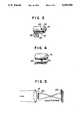
- FIG. 1is a perspective view showing main components of a wireless input system for a computer according to the present invention.
- FIG. 2is a diagrammatic perspective view showing one embodiment of a main component of a focus detecting section
- FIG. 3is a diagrammatic perspective view showing another embodiment of a main component of a focus detecting section
- FIG. 4is a diagrammatic perspective view showing a mechanism for detecting the position of a movable lens
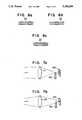
- FIG. 5is a side view showing one embodiment of a focusing mechanism
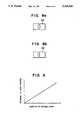
- FIGS. 6a through 6care front views showing light receiving status of a light receiving element of FIG. 5, respectively.
- FIGS. 7a and 7bare side views showing another embodiments of a focusing mechanism, respectively.
- FIGS. 8a and 8bare front views showing light receiving status of a light receiving element used in the focusing mechanism of FIGS. 7a and 7b, respectively,
- FIG. 9is a graph showing a relationship between the position of a movable lens and a source of light
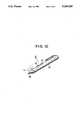
- FIG. 10is a perspective view showing a wireless pen-type input unit.
- a wireless input system for a computer 10comprises a cylindrical frame 12 disposed in a body of a wireless input device, 5 as shown in FIG. 10.
- a movable lens 14is mounted on the cylindrical frame 12 at its outer wall. Furthermore, a mechanism for moving a lens 14 will be described hereinafter with reference to FIGS. 2 and 3.
- a beam splitter 16is disposed in the cylindrical frame 12.
- the beam splitter 16splits a light which is emitted from a pen-type input unit having a source of light capable of emitting pulses and passes through the movable lens 14 into two lights one light impinging on a light receiving element (for example, two division photo-detector) 18 of an incident angle detecting section and the other light impinging on light detecting means 22 such as a light receiving element (for example, a CCD line sensor or two division photo-detector). Furthermore, the light receiving elements 18 and 22 are attached to the cylindrical frame 12 at its inner wall.
- a linear motor coil 20is attached to the cylindrical frame 12 at its rear lower portion.
- the linear motor coil 20constitutes a linear motor together with a yoke and a magnet attached to the frame, not shown, of the device.
- the linear motorforms an incident angle detecting section together with the movable lens 14, the light receiving element 18 and a feedback circuit, not shown.
- the incident angle detecting sectioncauses the cylindrical frame 12 to rotate so that the movable lens 14 is directed to the pen-type input unit.
- FIGS. 2 and 3diagrammatically showing two embodiments in which the light incident on the light receiving element 22 through the movable lens 14 and the beam splitter 16 can cause the movable lens 14 to move.
- the movable lens 14is adapted to be moved by a linear motor. That is, the movable lens 14 is attached to a cylindrical support 24 at its end, a linear motor coil 26 is disposed on the rear outer wall of the cylindrical support 24, and a yoke 28 on which a magnet 30 is disposed is attached to the cylindrical frame 12 so that it is in operating relationship with the coil 26. Therefore, the coil 26, the yoke 28 and the magnet 30 constitutes a linear motor.
- the linear motorthus constituted is supplied through a feedback circuit, not shown, with an electric current based on the light incident on the light receiving element 22 to cause the movable lens 14 to move.
- a rack and pinion mechanismcauses the movable lens 14 to move.
- the movable lens 14is supported on a cylindrical support 32, and a rack is attached to the cylindrical support 32 at its outer wall.
- the rack 34is disposed so that it is engaged with a pinion 36 attached to the shaft of a motor 38 attached to the cylindrical frame 12. Therefore, in a similar manner to the control of the linear motor, the motor 38 is supplied through a feedback circuit, not shown, with an electric current based on the light incident on the light receiving element 22 to cause the movable lens 14 to move.
- a light emitting element 40such as an LED is mounted on the outer wall of the cylindrical support 26/32 of FIG. 2 or FIG. 3, and a light receiving element 42 such as a CCD line sensor is disposed in the cylindrical frame so that it receives a light from the light emitting element 40. From the position of light which the light receiving element 42 senses, the position of the movable lens can be detected.
- the detection of position of movable lenscan be made by a PSD (position sensing device) or a linear encoder instead of the CCD line sensor.
- the quantity of rotation of the motormay be detected by a rotary encoder.
- FIGS. 5 and 6a through 6cone embodiment of focusing construction will be explained.
- a CCD line sensoris used as a light receiving element
- a light intercepting plate 44is disposed between the CCD line sensor and the movable lens 14.
- the FIGS. 6a through 6cshow the status of light where the CCD line sensor is nearer than the focus position, the status of light where the CCD line sensor is on the focus position and the status of light where the CCD line sensor is more far away than the focus position, respectively.
- the movable lens 14is controlled to move so as to take a position as shown in FIGS. 6b from other positions as shown in FIGS. 6a and 6c through the mechanism described with reference to FIGS. 2 and 3.
- FIGS. 7a, 7b, 8a and 8bshowing another embodiment of focusing constructions
- two division photo-detectoris used instead of the light receiving element and a knife edge 46 is used instead of the light intercepting plate.
- a knife edge 46is used instead of the light intercepting plate.
- FIGS. 7a and 8awhen the knife edge is on the focus position, two light receiving portions of two division photo-detector receives equivalent quantities of light.
- FIGS. 7b and 8bwhen the knife edge is nearer than the focus position, one light receiving portion receives more quantity of light than the other receives.
- the movable lensis controlled to move on the basis of difference in quantities of light.
- FIG. 9a graph of FIG. 9 showing a relationship between the position of the movable lens and a source of light, as clearly shown in FIG. 9.
- the position of the movable lensis linearly proportional to the distance from the movable lens to a source of light and thus the distance from the position of the movable lens to the source of light can be easily calculated.
- the cylindrical frame 12is caused to rotate by the incident angle detecting portion so that the movable lens 14 is directed to the source of light (or the pen-type input unit).
- the cylindrical support 24/32is moved by the focus detecting section so that the focus is positioned on the light receiving element or on any suitable position.
- the position of the cylindrical support, therefore, the movable lensis detected by the CCD line sensor 42 or the like.
- the distance between the movable lens and the source of lightis calculated on the basis of the position thus obtained.
Landscapes
- Engineering & Computer Science (AREA)
- Theoretical Computer Science (AREA)
- General Engineering & Computer Science (AREA)
- Human Computer Interaction (AREA)
- Physics & Mathematics (AREA)
- General Physics & Mathematics (AREA)
- Position Input By Displaying (AREA)
- Focusing (AREA)
- Optical Communication System (AREA)
- Automatic Focus Adjustment (AREA)
- Image Input (AREA)
- Length Measuring Devices By Optical Means (AREA)
Abstract
Description
This invention relates to a wireless input system for a computer. More particularly it relates to improvements in the earlier invention described in the U.S. patent application Ser. No. 07/831,944 filed on Feb. 6, 1992, issued as U.S. Pat. No. 5,227,622 on Jul. 13, 1993 which was assigned to the same applicant.
The present invention and the earlier invention differs in that in the earlier invention two incident angle detectors are used while in the present invention only one incident angle detector is used to make the system to be compact. Furthermore, since the construction and operation of the incident angle detector is the same, the detailed explanation thereof is omitted.
There are provided a mouse, a joy stick, a light-pen and others. However, they are all mechanically connected with wires to the bodies of computers.
The computer input devices which use wires have disadvantages that a smooth surface is required in using a mouse, a wire become entangled and input operation must be carried out with hands being touched off the keyboard.
It is, therefore, an object of the invention to provide a wireless input system for a computer which eliminates the above-mentioned disadvantages.
It is another object of the invention to provide a wireless input system for a computer which makes improvements in the earlier invention.
The present invention will be now described in detail with reference to the preferred embodiments illustrated in the accompanying drawings in which:
FIG. 1 is a perspective view showing main components of a wireless input system for a computer according to the present invention.
FIG. 2 is a diagrammatic perspective view showing one embodiment of a main component of a focus detecting section,
FIG. 3 is a diagrammatic perspective view showing another embodiment of a main component of a focus detecting section,
FIG. 4 is a diagrammatic perspective view showing a mechanism for detecting the position of a movable lens,
FIG. 5 is a side view showing one embodiment of a focusing mechanism,
FIGS. 6a through 6c are front views showing light receiving status of a light receiving element of FIG. 5, respectively,
FIGS. 7a and 7b are side views showing another embodiments of a focusing mechanism, respectively,
FIGS. 8a and 8b are front views showing light receiving status of a light receiving element used in the focusing mechanism of FIGS. 7a and 7b, respectively,
FIG. 9 is a graph showing a relationship between the position of a movable lens and a source of light,
FIG. 10 is a perspective view showing a wireless pen-type input unit.
Referring now to FIG. 1, there is shown an incident angle detecting section and a focus detecting section of a wireless input system for a computer according to the present invention. A wireless input system for acomputer 10 comprises acylindrical frame 12 disposed in a body of a wireless input device, 5 as shown in FIG. 10. Amovable lens 14 is mounted on thecylindrical frame 12 at its outer wall. Furthermore, a mechanism for moving alens 14 will be described hereinafter with reference to FIGS. 2 and 3. Abeam splitter 16 is disposed in thecylindrical frame 12. Thebeam splitter 16 splits a light which is emitted from a pen-type input unit having a source of light capable of emitting pulses and passes through themovable lens 14 into two lights one light impinging on a light receiving element (for example, two division photo-detector) 18 of an incident angle detecting section and the other light impinging on light detectingmeans 22 such as a light receiving element (for example, a CCD line sensor or two division photo-detector). Furthermore, thelight receiving elements cylindrical frame 12 at its inner wall.
Alinear motor coil 20 is attached to thecylindrical frame 12 at its rear lower portion. Thelinear motor coil 20 constitutes a linear motor together with a yoke and a magnet attached to the frame, not shown, of the device. The linear motor forms an incident angle detecting section together with themovable lens 14, thelight receiving element 18 and a feedback circuit, not shown. The incident angle detecting section causes thecylindrical frame 12 to rotate so that themovable lens 14 is directed to the pen-type input unit.
Since the wireless input device body, the pen-type input unit, the linear motor and the incident angle detecting section are explained in detail in the above-mentioned earlier patent application, the detailed explanation thereof is omitted herein.
Referring now to FIGS. 2 and 3 diagrammatically showing two embodiments in which the light incident on thelight receiving element 22 through themovable lens 14 and thebeam splitter 16 can cause themovable lens 14 to move. In the embodiment of FIG. 2, themovable lens 14 is adapted to be moved by a linear motor. That is, themovable lens 14 is attached to acylindrical support 24 at its end, alinear motor coil 26 is disposed on the rear outer wall of thecylindrical support 24, and ayoke 28 on which amagnet 30 is disposed is attached to thecylindrical frame 12 so that it is in operating relationship with thecoil 26. Therefore, thecoil 26, theyoke 28 and themagnet 30 constitutes a linear motor. The linear motor thus constituted is supplied through a feedback circuit, not shown, with an electric current based on the light incident on thelight receiving element 22 to cause themovable lens 14 to move.
In the embodiment of FIG. 3, a rack and pinion mechanism causes themovable lens 14 to move. Themovable lens 14 is supported on acylindrical support 32, and a rack is attached to thecylindrical support 32 at its outer wall. Therack 34 is disposed so that it is engaged with apinion 36 attached to the shaft of amotor 38 attached to thecylindrical frame 12. Therefore, in a similar manner to the control of the linear motor, themotor 38 is supplied through a feedback circuit, not shown, with an electric current based on the light incident on thelight receiving element 22 to cause themovable lens 14 to move.
Referring now to FIG. 4 showing a construction for detecting the position of themovable lens 14, alight emitting element 40 such as an LED is mounted on the outer wall of thecylindrical support 26/32 of FIG. 2 or FIG. 3, and alight receiving element 42 such as a CCD line sensor is disposed in the cylindrical frame so that it receives a light from thelight emitting element 40. From the position of light which thelight receiving element 42 senses, the position of the movable lens can be detected.
Furthermore, the detection of position of movable lens can be made by a PSD (position sensing device) or a linear encoder instead of the CCD line sensor. Furthermore, in the embodiment of FIG. 3, the quantity of rotation of the motor may be detected by a rotary encoder.
Referring now to FIGS. 5 and 6a through 6c, one embodiment of focusing construction will be explained. In the embodiment, a CCD line sensor is used as a light receiving element, alight intercepting plate 44 is disposed between the CCD line sensor and themovable lens 14. The FIGS. 6a through 6c show the status of light where the CCD line sensor is nearer than the focus position, the status of light where the CCD line sensor is on the focus position and the status of light where the CCD line sensor is more far away than the focus position, respectively. Themovable lens 14 is controlled to move so as to take a position as shown in FIGS. 6b from other positions as shown in FIGS. 6a and 6c through the mechanism described with reference to FIGS. 2 and 3.
Referring now to FIGS. 7a, 7b, 8a and 8b showing another embodiment of focusing constructions, in these embodiments, two division photo-detector is used instead of the light receiving element and aknife edge 46 is used instead of the light intercepting plate. As shown in FIGS. 7a and 8a, when the knife edge is on the focus position, two light receiving portions of two division photo-detector receives equivalent quantities of light. However, as shown in FIGS. 7b and 8b, when the knife edge is nearer than the focus position, one light receiving portion receives more quantity of light than the other receives. The movable lens is controlled to move on the basis of difference in quantities of light.
Referring now to a graph of FIG. 9 showing a relationship between the position of the movable lens and a source of light, as clearly shown in FIG. 9. The position of the movable lens is linearly proportional to the distance from the movable lens to a source of light and thus the distance from the position of the movable lens to the source of light can be easily calculated.
Now, the explanation on the operation of the wireless input system for a computer will be briefly made. Firstly, thecylindrical frame 12 is caused to rotate by the incident angle detecting portion so that themovable lens 14 is directed to the source of light (or the pen-type input unit). Then, thecylindrical support 24/32 is moved by the focus detecting section so that the focus is positioned on the light receiving element or on any suitable position. Thereafter, the position of the cylindrical support, therefore, the movable lens is detected by theCCD line sensor 42 or the like. Finally, the distance between the movable lens and the source of light is calculated on the basis of the position thus obtained.
Claims (13)
1. A wireless input device for a computer which is capable of detecting the position of a source of incident light, such as a movable, pen-type input unit that emits light pulses, comprising:
a substantially cylindrical frame which is rotatably supported;
a light source distance detecting section mounted on said cylindrical frame for detecting a distance of the incident light source from said input device, said light source distance detecting section comprising: (a) a lens movably mounted on said cylindrical frame for receiving the incident light from the light source; (b) focus detecting means for detecting when the incident light received through said lens becomes focused; (d) lens moving means coupled to said focus detecting means for controllably moving said lens to the focus position; and (d) focus position detecting means for detecting the focus position to which said movable lens is moved, wherein the detected focus position of said movable lens has a predetermined relationship in correspondence to the distance of the light source from said lens;
an incident angle detecting section mounted on said cylindrical frame for detecting an angle at which the incident light is received by said lens, said incident angle detecting section including: (a) a two-division photo-detector mounted on said cylindrical frame at a position for receiving incident light passing through said movable lens, said two-division photo-detector having two light detecting portions for comparatively measuring two quantities of the incident light received through said movable lens; (b) frame rotating means for rotating the cylindrical frame to an angle position corresponding to the angle of the incident light at which a difference between the two measured quantities of the incident light is eliminated; and (c) angle position detecting means for detecting the angle position to which said frame is rotated corresponding to the angle of the incident light; and
a calculating section for calculating the position of the source of incident light based upon the focus position of the incident light detected by said focus position detecting means and the angle position of the incident light detected by said incident angle detecting section.
2. A wireless input device for a computer according to claim 1, wherein said focus detecting means includes a CCD line sensor for detecting the incident light received through said movable lens, and a light intercepting plate disposed between said CCD line sensor and said lens, said lens being movable relative to said light intercepting plate such that the light detected by said CCD line sensor becomes focused when said lens is moved to the focus position.
3. A wireless input device for a computer according to claim 1, wherein said focus detecting means includes a two-division photo-detector for detecting the incident light received through said movable lens, and a knife edge disposed between said two-division photo-detector and said lens, said two-division photo-detector comparatively measuring two quantities of the incident light, and said lens being movable relative to said knife edge such that a difference between the two quantities of the incident light detected by said two-division photo-detector becomes eliminated when said lens is moved to the focus position.
4. A wireless input device for a computer according to claim 1, wherein said frame rotating means comprises a linear motor coil attached to said cylindrical frame and coupled to an output of said two-division photo-detector comparatively measuring the two quantities of the incident light.
5. A wireless input device for a computer according to claim 1, wherein said lens moving means comprises a cylindrical support to which said lens is attached at one end thereof, a linear motor coil attached to said cylindrical support, a yoke on which a magnet is disposed attached to said cylindrical frame and disposed so that it is in operating relationship with said coil, and said coil being coupled to an output of said focus detecting means for detecting when the incident light received through said movable lens becomes focused.
6. A wireless input device for a computer according to claim 1, wherein said lens moving means comprises a cylindrical support to which said lens is attached at one end thereof, a linear rack attached to said cylindrical support, a pinion gear output of a motor attached to said cylindrical frame and disposed in mesh with said rack, and the motor being coupled to an output of said focus detecting means for detecting when the incident light received through said lens becomes focused.
7. A wireless input device for a computer according to claim 1, wherein said focus position detecting means comprises a light emitting element mounted to a support on which said movable lens is mounted, and a light-receiving, position-sensing element attached to said frame and disposed to detect the position of the light emitting element when said movable lens is moved to the focus position at which the incident light becomes focused.
8. A wireless input device for a computer according to claim 7, wherein said light emitting element of said focus position detecting means is an LED, and the light-receiving, position-sensing element is a CCD line sensor.
9. A wireless input device for a computer according to claim 1, further comprising a light dividing means mounted on said frame for dividing the light received through said movable lens into one portion which impinges on said focus detecting means of said light source distance detecting section and another portion which impinges on said two-division photo-detector of said incident angle detecting section.
10. A wireless input device for a computer according to claim 9, wherein said light dividing means comprises a beam splitter.
11. A wireless input device for a computer according to claim 1, wherein the detected focus position of said movable lens is in linear proportion to the distance of the light source from said lens.
12. A wireless input device for a computer which is capable of detecting the position of a source of incident light, such as a movable, pen-type input unit that emits light pulses, comprising:
a light source distance detecting section mounted with said wireless input device for detecting a distance of the incident light source from said input device, said light source distance detecting section comprising: (a) a lens movably mounted on said input device for receiving the incident light from the light source; (b) focus detecting means for detecting when the incident light received through said lens becomes focused; (d) lens moving means coupled to said focus detecting means for controllably moving said lens to the focus position; and (d) focus position detecting means for detecting the focus position to which said movable lens is moved, wherein the detected focus position of said movable lens has a predetermined relationship in correspondence to the distance of the light source from said input device;
an incident angle detecting section mounted with said wireless input device for detecting an angle at which the incident light is received by said lens; and
a calculating section for calculating the position of the source of incident light based upon the focus position of said movable lens detected by said focus position detecting means and the angle position of the incident light detected by said incident angle detecting section,
wherein said focus detecting means includes a CCD line sensor for detecting the incident light received through said movable lens, and a light intercepting plate disposed between said CCD line sensor and said lens, said lens being movable relative to said light intercepting plate such that the light detected by said CCD line sensor becomes focused when said lens is moved to the focus position.
13. A wireless input device for a computer which is capable of detecting the position of a source of incident light, such as a movable, pen-type input unit that emits light pulses, comprising:
a light source distance detecting section mounted with said wireless input device for detecting a distance of the incident light source from said input device, said light source distance detecting section comprising: (a) a lens movably mounted on said input device for receiving the incident light from the light source; (b) focus detecting means for detecting when the incident light received through said lens becomes focused; (d) lens moving means coupled to said focus detecting means for controllably moving said lens to the focus position; and (d) focus position detecting means for detecting the focus position to which said movable lens is moved, wherein the detected focus position of said movable lens has a predetermined relationship in correspondence to the distance of the light source from said input device;
an incident angle detecting section mounted with said wireless input device for detecting an angle at which the incident light is received by said lens; and
a calculating section for calculating the position of the source of incident light based upon the focus position of said movable lens detected by said focus position detecting means and the angle position of the incident light detected by said incident angle detecting section,
wherein said focusing means includes a two-division photo-detector for detecting the incident light received through said movable lens, and a knife edge disposed between said two-division photo-detector and said lens, said two-division photo-detector comparatively measuring two quantities of the incident light, and said lens being movable relative to said knife edge such that a difference between the two quantities of the incident light detected by said two-division photo-detector becomes eliminated when said lens is moved to the focus position.
Applications Claiming Priority (2)
| Application Number | Priority Date | Filing Date | Title |
|---|---|---|---|
| JP11811891AJPH07117872B2 (en) | 1991-04-22 | 1991-04-22 | Wireless computer input device |
| JP3-118118 | 1991-04-22 |
Publications (1)
| Publication Number | Publication Date |
|---|---|
| US5296838Atrue US5296838A (en) | 1994-03-22 |
Family
ID=14728481
Family Applications (1)
| Application Number | Title | Priority Date | Filing Date |
|---|---|---|---|
| US07/870,955Expired - Fee RelatedUS5296838A (en) | 1991-04-22 | 1992-04-20 | Wireless input system for computer |
Country Status (8)
| Country | Link |
|---|---|
| US (1) | US5296838A (en) |
| JP (1) | JPH07117872B2 (en) |
| KR (1) | KR950005218B1 (en) |
| CA (1) | CA2066484C (en) |
| DE (1) | DE4213229C2 (en) |
| FR (1) | FR2675599B1 (en) |
| GB (1) | GB2255822B (en) |
| TW (1) | TW221503B (en) |
Cited By (21)
| Publication number | Priority date | Publication date | Assignee | Title |
|---|---|---|---|---|
| USD356306S (en) | 1993-06-17 | 1995-03-14 | Motorola | Touchscreen stylus |
| US5502568A (en)* | 1993-03-23 | 1996-03-26 | Wacom Co., Ltd. | Optical position detecting unit, optical coordinate input unit and optical position detecting method employing a pattern having a sequence of 1's and 0's |
| USD389131S (en) | 1996-09-10 | 1998-01-13 | Pilot Precision Kabushiki Kaisha | Input pen |
| USD395875S (en) | 1997-03-13 | 1998-07-07 | Motorola, Inc. | Stylus |
| US5963194A (en)* | 1993-11-25 | 1999-10-05 | Alps Electric Co. Ltd. | Apparatus for inclination detection and input apparatus using this apparatus |
| US5969712A (en)* | 1996-03-27 | 1999-10-19 | Seiko Instruments Information Devices Inc. | Coordinate reading apparatus and status converting method, interface unit, and coordinate reading system therefor |
| US6172354B1 (en) | 1998-01-28 | 2001-01-09 | Microsoft Corporation | Operator input device |
| US6271832B1 (en) | 1997-01-07 | 2001-08-07 | Matsushita Electric Industrial Co., Ltd. | Wireless input apparatus |
| US6303924B1 (en) | 1998-12-21 | 2001-10-16 | Microsoft Corporation | Image sensing operator input device |
| USD452707S1 (en) | 2000-10-13 | 2002-01-01 | Kabushiki Kaisha Pilot | Stylus pen with ball-point pen |
| USD453354S1 (en) | 2000-10-06 | 2002-02-05 | Sony Kabushki Kaisha | Input pen with ball-point pen |
| US20020031243A1 (en)* | 1998-08-18 | 2002-03-14 | Ilya Schiller | Using handwritten information |
| US20020190953A1 (en)* | 1998-03-30 | 2002-12-19 | Agilent Technologies, Inc. | Seeing eye mouse for a computer system |
| US6531692B1 (en) | 1999-03-22 | 2003-03-11 | Microsoft Corporation | Optical coupling assembly for image sensing operator input device |
| US6552714B1 (en) | 2000-06-30 | 2003-04-22 | Lyle A. Vust | Portable pointing device |
| US20030095708A1 (en)* | 2001-11-21 | 2003-05-22 | Arkady Pittel | Capturing hand motion |
| US20050073508A1 (en)* | 1998-08-18 | 2005-04-07 | Digital Ink, Inc., A Massachusetts Corporation | Tracking motion of a writing instrument |
| US20050270494A1 (en)* | 2004-05-28 | 2005-12-08 | Banning Erik J | Easily deployable interactive direct-pointing system and presentation control system and calibration method therefor |
| US20070013657A1 (en)* | 2005-07-13 | 2007-01-18 | Banning Erik J | Easily deployable interactive direct-pointing system and calibration method therefor |
| US20070262246A1 (en)* | 2006-05-04 | 2007-11-15 | Arkady Pittel | Efficiently focusing light |
| US20080166175A1 (en)* | 2007-01-05 | 2008-07-10 | Candledragon, Inc. | Holding and Using an Electronic Pen and Paper |
Families Citing this family (1)
| Publication number | Priority date | Publication date | Assignee | Title |
|---|---|---|---|---|
| US8513547B2 (en) | 2009-03-23 | 2013-08-20 | Fuji Xerox Co., Ltd. | Image reading apparatus and image reading method |
Citations (7)
| Publication number | Priority date | Publication date | Assignee | Title |
|---|---|---|---|---|
| US4123765A (en)* | 1976-04-23 | 1978-10-31 | Nihon Beru-Haueru Kabushiki Kaisha | Automatic focus adjusting device |
| US4562346A (en)* | 1982-05-18 | 1985-12-31 | Olympus Optical Company Limited | Apparatus and method for detecting focus condition of imaging optical system employing both sharpness detection and lateral shift detection |
| US4626077A (en)* | 1983-05-20 | 1986-12-02 | Canon Kabushiki Kaisha | Lens mount with built-in motor |
| US4688933A (en)* | 1985-05-10 | 1987-08-25 | The Laitram Corporation | Electro-optical position determining system |
| US5045843A (en)* | 1988-12-06 | 1991-09-03 | Selectech, Ltd. | Optical pointing device |
| JPH0425924A (en)* | 1990-05-22 | 1992-01-29 | Digital Sutoriimu:Kk | Wireless type computer input device |
| US5166668A (en)* | 1991-04-10 | 1992-11-24 | Data Stream Corporation | Wireless pen-type input device for use with a computer |
Family Cites Families (10)
| Publication number | Priority date | Publication date | Assignee | Title |
|---|---|---|---|---|
| DE3333830C2 (en)* | 1983-09-20 | 1985-08-01 | Ralf 6751 Katzweiler Hinkel | Method for laser distance measurement with high resolution for close range |
| US4550250A (en)* | 1983-11-14 | 1985-10-29 | Hei, Inc. | Cordless digital graphics input device |
| GB2152780B (en)* | 1983-11-15 | 1987-06-03 | Gec Avionics | Distance measurement |
| JPS62106535A (en)* | 1985-11-05 | 1987-05-18 | Canon Inc | Optical coordinate input device |
| JPH0683145B2 (en)* | 1986-05-26 | 1994-10-19 | 株式会社日立製作所 | Optical wireless communication device for moving body |
| US4742217A (en)* | 1986-06-02 | 1988-05-03 | Honeywell Inc. | Projection alignment and focusing aid |
| JPH0652171B2 (en)* | 1987-02-10 | 1994-07-06 | 株式会社オカダ | Optical non-contact position measuring device |
| JPH01236834A (en)* | 1988-03-17 | 1989-09-21 | Sony Corp | Automatic searching device in optical space transmitter |
| JPH0298619A (en)* | 1988-10-05 | 1990-04-11 | Komatsu Ltd | 3D length measuring device |
| NL8901442A (en)* | 1989-06-07 | 1991-01-02 | Philips Nv | METHOD AND APPARATUS FOR DETERMINING THE POSITION OF A SURFACE |
- 1991
- 1991-04-22JPJP11811891Apatent/JPH07117872B2/ennot_activeExpired - Fee Related
- 1992
- 1992-04-20USUS07/870,955patent/US5296838A/ennot_activeExpired - Fee Related
- 1992-04-21CACA002066484Apatent/CA2066484C/ennot_activeExpired - Fee Related
- 1992-04-21TWTW081103123Apatent/TW221503B/zhactive
- 1992-04-22FRFR9204948Apatent/FR2675599B1/ennot_activeExpired - Fee Related
- 1992-04-22GBGB9208681Apatent/GB2255822B/ennot_activeExpired - Fee Related
- 1992-04-22DEDE4213229Apatent/DE4213229C2/ennot_activeExpired - Fee Related
- 1992-04-23KRKR1019920006862Apatent/KR950005218B1/ennot_activeExpired - Fee Related
Patent Citations (8)
| Publication number | Priority date | Publication date | Assignee | Title |
|---|---|---|---|---|
| US4123765A (en)* | 1976-04-23 | 1978-10-31 | Nihon Beru-Haueru Kabushiki Kaisha | Automatic focus adjusting device |
| US4562346A (en)* | 1982-05-18 | 1985-12-31 | Olympus Optical Company Limited | Apparatus and method for detecting focus condition of imaging optical system employing both sharpness detection and lateral shift detection |
| US4626077A (en)* | 1983-05-20 | 1986-12-02 | Canon Kabushiki Kaisha | Lens mount with built-in motor |
| US4688933A (en)* | 1985-05-10 | 1987-08-25 | The Laitram Corporation | Electro-optical position determining system |
| US5045843A (en)* | 1988-12-06 | 1991-09-03 | Selectech, Ltd. | Optical pointing device |
| US5045843B1 (en)* | 1988-12-06 | 1996-07-16 | Selectech Ltd | Optical pointing device |
| JPH0425924A (en)* | 1990-05-22 | 1992-01-29 | Digital Sutoriimu:Kk | Wireless type computer input device |
| US5166668A (en)* | 1991-04-10 | 1992-11-24 | Data Stream Corporation | Wireless pen-type input device for use with a computer |
Cited By (57)
| Publication number | Priority date | Publication date | Assignee | Title |
|---|---|---|---|---|
| US5502568A (en)* | 1993-03-23 | 1996-03-26 | Wacom Co., Ltd. | Optical position detecting unit, optical coordinate input unit and optical position detecting method employing a pattern having a sequence of 1's and 0's |
| USD356306S (en) | 1993-06-17 | 1995-03-14 | Motorola | Touchscreen stylus |
| US5963194A (en)* | 1993-11-25 | 1999-10-05 | Alps Electric Co. Ltd. | Apparatus for inclination detection and input apparatus using this apparatus |
| US6014129A (en)* | 1993-11-25 | 2000-01-11 | Alps Electric Co., Ltd. | Coordinate position of moving light source by using separated groups of detectors each group having an iris |
| US20070103439A1 (en)* | 1995-10-06 | 2007-05-10 | Avago Technologies, Ltd. | Method of operating an optical mouse |
| US7791590B1 (en) | 1995-10-06 | 2010-09-07 | Avago Technologies Ecbu Ip (Singapore) Pte. Ltd. | Optical mouse with uniform level detection |
| US7800585B2 (en) | 1995-10-06 | 2010-09-21 | Avago Technologies Ecbu Ip (Singapore) Pte. Ltd. | Method of operating an optical mouse |
| US20080048983A1 (en)* | 1995-10-06 | 2008-02-28 | Gordon Gary B | Method of operating an optical mouse |
| US7808485B2 (en) | 1995-10-06 | 2010-10-05 | Avago Technologies Ecbu Ip (Singapore) Pte. Ltd. | Method of operating an optical mouse |
| US8350812B2 (en) | 1995-10-06 | 2013-01-08 | Pixart Imaging Inc. | Method and arrangement for tracking movement relative to a surface |
| US8212778B2 (en) | 1995-10-06 | 2012-07-03 | Avago Technologies Ecbu Ip (Singapore) Pte. Ltd. | Imaging and navigation arrangement for controlling a cursor |
| US20110141022A1 (en)* | 1995-10-06 | 2011-06-16 | Avago Technologies Ecbu Ip (Singapore) Pte. Ltd. | Method and arrangement for tracking movement relative to a surface |
| US20050231484A1 (en)* | 1995-10-06 | 2005-10-20 | Agilent Technologies, Inc. | Optical mouse with uniform level detection method |
| US7907120B2 (en) | 1995-10-06 | 2011-03-15 | Avago Technologies Ecbu Ip (Singapore) Pte. Ltd. | Optical mouse with uniform level detection method |
| US5969712A (en)* | 1996-03-27 | 1999-10-19 | Seiko Instruments Information Devices Inc. | Coordinate reading apparatus and status converting method, interface unit, and coordinate reading system therefor |
| USD389131S (en) | 1996-09-10 | 1998-01-13 | Pilot Precision Kabushiki Kaisha | Input pen |
| US6271832B1 (en) | 1997-01-07 | 2001-08-07 | Matsushita Electric Industrial Co., Ltd. | Wireless input apparatus |
| USD395875S (en) | 1997-03-13 | 1998-07-07 | Motorola, Inc. | Stylus |
| US6172354B1 (en) | 1998-01-28 | 2001-01-09 | Microsoft Corporation | Operator input device |
| US6950094B2 (en) | 1998-03-30 | 2005-09-27 | Agilent Technologies, Inc | Seeing eye mouse for a computer system |
| US20020190953A1 (en)* | 1998-03-30 | 2002-12-19 | Agilent Technologies, Inc. | Seeing eye mouse for a computer system |
| US20050073508A1 (en)* | 1998-08-18 | 2005-04-07 | Digital Ink, Inc., A Massachusetts Corporation | Tracking motion of a writing instrument |
| US20060176287A1 (en)* | 1998-08-18 | 2006-08-10 | Arkady Pittel | Light sources for digital pen |
| US7773076B2 (en) | 1998-08-18 | 2010-08-10 | CandleDragon Inc. | Electronic pen holding |
| US20070030258A1 (en)* | 1998-08-18 | 2007-02-08 | Arkady Pittel | Capturing handwriting |
| US20020031243A1 (en)* | 1998-08-18 | 2002-03-14 | Ilya Schiller | Using handwritten information |
| US20100008551A9 (en)* | 1998-08-18 | 2010-01-14 | Ilya Schiller | Using handwritten information |
| US7268774B2 (en) | 1998-08-18 | 2007-09-11 | Candledragon, Inc. | Tracking motion of a writing instrument |
| US6373047B1 (en) | 1998-12-21 | 2002-04-16 | Microsoft Corp | Image sensing operator input device |
| US6303924B1 (en) | 1998-12-21 | 2001-10-16 | Microsoft Corporation | Image sensing operator input device |
| US6531692B1 (en) | 1999-03-22 | 2003-03-11 | Microsoft Corporation | Optical coupling assembly for image sensing operator input device |
| US6552714B1 (en) | 2000-06-30 | 2003-04-22 | Lyle A. Vust | Portable pointing device |
| USD453354S1 (en) | 2000-10-06 | 2002-02-05 | Sony Kabushki Kaisha | Input pen with ball-point pen |
| USD452707S1 (en) | 2000-10-13 | 2002-01-01 | Kabushiki Kaisha Pilot | Stylus pen with ball-point pen |
| US20030095708A1 (en)* | 2001-11-21 | 2003-05-22 | Arkady Pittel | Capturing hand motion |
| US7257255B2 (en) | 2001-11-21 | 2007-08-14 | Candledragon, Inc. | Capturing hand motion |
| US20070182725A1 (en)* | 2001-11-21 | 2007-08-09 | Arkady Pittel | Capturing Hand Motion |
| US20050270494A1 (en)* | 2004-05-28 | 2005-12-08 | Banning Erik J | Easily deployable interactive direct-pointing system and presentation control system and calibration method therefor |
| US9063586B2 (en) | 2004-05-28 | 2015-06-23 | Ultimatepointer, Llc | Easily deployable interactive direct-pointing system and presentation control system and calibration method therefor |
| US20100283732A1 (en)* | 2004-05-28 | 2010-11-11 | Erik Jan Banning | Easily deployable interactive direct-pointing system and presentation control system and calibration method therefor |
| US11755127B2 (en) | 2004-05-28 | 2023-09-12 | UltimatePointer, L.L.C. | Multi-sensor device with an accelerometer for enabling user interaction through sound or image |
| US11416084B2 (en) | 2004-05-28 | 2022-08-16 | UltimatePointer, L.L.C. | Multi-sensor device with an accelerometer for enabling user interaction through sound or image |
| US8049729B2 (en) | 2004-05-28 | 2011-11-01 | Erik Jan Banning | Easily deployable interactive direct-pointing system and presentation control system and calibration method therefor |
| US7746321B2 (en) | 2004-05-28 | 2010-06-29 | Erik Jan Banning | Easily deployable interactive direct-pointing system and presentation control system and calibration method therefor |
| US11409376B2 (en) | 2004-05-28 | 2022-08-09 | UltimatePointer, L.L.C. | Multi-sensor device with an accelerometer for enabling user interaction through sound or image |
| US8866742B2 (en) | 2004-05-28 | 2014-10-21 | Ultimatepointer, Llc | Easily deployable interactive direct-pointing system and presentation control system and calibration method therefor |
| US11402927B2 (en) | 2004-05-28 | 2022-08-02 | UltimatePointer, L.L.C. | Pointing device |
| US11073919B2 (en) | 2004-05-28 | 2021-07-27 | UltimatePointer, L.L.C. | Multi-sensor device with an accelerometer for enabling user interaction through sound or image |
| US9411437B2 (en) | 2004-05-28 | 2016-08-09 | UltimatePointer, L.L.C. | Easily deployable interactive direct-pointing system and presentation control system and calibration method therefor |
| US9785255B2 (en) | 2004-05-28 | 2017-10-10 | UltimatePointer, L.L.C. | Apparatus for controlling contents of a computer-generated image using three dimensional measurements |
| US10372237B2 (en) | 2005-07-13 | 2019-08-06 | UltimatePointer, L.L.C. | Apparatus for controlling contents of a computer-generated image using 3D measurements |
| US9285897B2 (en) | 2005-07-13 | 2016-03-15 | Ultimate Pointer, L.L.C. | Easily deployable interactive direct-pointing system and calibration method therefor |
| US20070013657A1 (en)* | 2005-07-13 | 2007-01-18 | Banning Erik J | Easily deployable interactive direct-pointing system and calibration method therefor |
| US11841997B2 (en) | 2005-07-13 | 2023-12-12 | UltimatePointer, L.L.C. | Apparatus for controlling contents of a computer-generated image using 3D measurements |
| US20070262246A1 (en)* | 2006-05-04 | 2007-11-15 | Arkady Pittel | Efficiently focusing light |
| US7755026B2 (en) | 2006-05-04 | 2010-07-13 | CandleDragon Inc. | Generating signals representative of sensed light that is associated with writing being done by a user |
| US20080166175A1 (en)* | 2007-01-05 | 2008-07-10 | Candledragon, Inc. | Holding and Using an Electronic Pen and Paper |
Also Published As
| Publication number | Publication date |
|---|---|
| KR920020304A (en) | 1992-11-21 |
| CA2066484A1 (en) | 1992-10-23 |
| DE4213229A1 (en) | 1992-11-05 |
| DE4213229C2 (en) | 1994-08-04 |
| JPH07117872B2 (en) | 1995-12-18 |
| GB2255822B (en) | 1994-11-30 |
| FR2675599B1 (en) | 1997-03-28 |
| CA2066484C (en) | 1996-07-23 |
| GB2255822A (en) | 1992-11-18 |
| JPH06222871A (en) | 1994-08-12 |
| KR950005218B1 (en) | 1995-05-22 |
| GB9208681D0 (en) | 1992-06-10 |
| FR2675599A1 (en) | 1992-10-23 |
| TW221503B (en) | 1994-03-01 |
Similar Documents
| Publication | Publication Date | Title |
|---|---|---|
| US5296838A (en) | Wireless input system for computer | |
| JP3960653B2 (en) | Electro-optic device | |
| GB2264016A (en) | Wireless input device for computer. | |
| JP3193605B2 (en) | Position pointing device and system | |
| JPS5931814B2 (en) | reflective photoelectric switch | |
| JPS625428A (en) | Optical positioning apparatus | |
| US20100001162A1 (en) | Rotation mechanism for laser emitter | |
| US10108276B2 (en) | Mouse device | |
| US20100073289A1 (en) | 3d control of data processing through handheld pointing device | |
| US20240159573A1 (en) | Apparatus and method for detecting movement along an axis | |
| US5291900A (en) | Instrument for measuring the length of infants | |
| JPH02235130A (en) | Cursor controller | |
| JPH0630045B2 (en) | Optical pointing device | |
| WO2004086210A1 (en) | Wireless device for controlling a display | |
| US7442915B2 (en) | Signal conditioning circuitry | |
| JP4141612B2 (en) | Information input / detection / display device | |
| KR930018354A (en) | Wireless input device for computer | |
| JPH0629727B2 (en) | Tracking device for moving body using laser beam | |
| JPH01227001A (en) | Detecting apparatus of position | |
| JPH05223563A (en) | Laser displacement meter | |
| BG106810A (en) | Computer input system | |
| JPH0227419A (en) | Optical three-dimensional coordinate input device | |
| JPH0117795B2 (en) | ||
| JPS6393239U (en) |
Legal Events
| Date | Code | Title | Description |
|---|---|---|---|
| AS | Assignment | Owner name:DIGITAL STREAM CORP., JAPAN Free format text:ASSIGNMENT OF ASSIGNORS INTEREST.;ASSIGNOR:SUZUKI, TORU;REEL/FRAME:006102/0506 Effective date:19920410 | |
| FEPP | Fee payment procedure | Free format text:PAYOR NUMBER ASSIGNED (ORIGINAL EVENT CODE: ASPN); ENTITY STATUS OF PATENT OWNER: LARGE ENTITY | |
| FPAY | Fee payment | Year of fee payment:4 | |
| REMI | Maintenance fee reminder mailed | ||
| FPAY | Fee payment | Year of fee payment:8 | |
| SULP | Surcharge for late payment | Year of fee payment:7 | |
| REMI | Maintenance fee reminder mailed | ||
| LAPS | Lapse for failure to pay maintenance fees | ||
| LAPS | Lapse for failure to pay maintenance fees | Free format text:PATENT EXPIRED FOR FAILURE TO PAY MAINTENANCE FEES (ORIGINAL EVENT CODE: EXP.); ENTITY STATUS OF PATENT OWNER: LARGE ENTITY | |
| STCH | Information on status: patent discontinuation | Free format text:PATENT EXPIRED DUE TO NONPAYMENT OF MAINTENANCE FEES UNDER 37 CFR 1.362 | |
| FP | Lapsed due to failure to pay maintenance fee | Effective date:20060322 |