US5275169A - Apparatus and method for determining physiologic characteristics of body lumens - Google Patents
Apparatus and method for determining physiologic characteristics of body lumensDownload PDFInfo
- Publication number
- US5275169A US5275169AUS07/822,032US82203292AUS5275169AUS 5275169 AUS5275169 AUS 5275169AUS 82203292 AUS82203292 AUS 82203292AUS 5275169 AUS5275169 AUS 5275169A
- Authority
- US
- United States
- Prior art keywords
- balloon
- pressure
- volume
- fluid
- lumen
- Prior art date
- Legal status (The legal status is an assumption and is not a legal conclusion. Google has not performed a legal analysis and makes no representation as to the accuracy of the status listed.)
- Expired - Lifetime
Links
- 238000000034methodMethods0.000titleclaimsdescription50
- 239000012530fluidSubstances0.000claimsabstractdescription106
- 210000004204blood vesselAnatomy0.000claimsabstractdescription21
- 230000003068static effectEffects0.000claimsdescription16
- 238000009530blood pressure measurementMethods0.000claimsdescription11
- 210000000936intestineAnatomy0.000claimsdescription8
- 210000003708urethraAnatomy0.000claimsdescription8
- 210000003679cervix uteriAnatomy0.000claimsdescription7
- 238000006073displacement reactionMethods0.000claimsdescription6
- 238000001802infusionMethods0.000abstractdescription32
- 238000005259measurementMethods0.000description24
- 238000002399angioplastyMethods0.000description14
- 210000001367arteryAnatomy0.000description13
- 239000000463materialSubstances0.000description11
- 201000010099diseaseDiseases0.000description7
- 208000037265diseases, disorders, signs and symptomsDiseases0.000description7
- 230000002792vascularEffects0.000description6
- 230000004044responseEffects0.000description5
- 230000017531blood circulationEffects0.000description4
- 238000012937correctionMethods0.000description4
- 238000010586diagramMethods0.000description4
- 201000001320AtherosclerosisDiseases0.000description3
- 230000036772blood pressureEffects0.000description3
- 230000000747cardiac effectEffects0.000description3
- 239000002872contrast mediaSubstances0.000description3
- 238000001356surgical procedureMethods0.000description3
- 238000011282treatmentMethods0.000description3
- FAPWRFPIFSIZLT-UHFFFAOYSA-MSodium chlorideChemical compound[Na+].[Cl-]FAPWRFPIFSIZLT-UHFFFAOYSA-M0.000description2
- 238000004458analytical methodMethods0.000description2
- 230000003466anti-cipated effectEffects0.000description2
- 230000004872arterial blood pressureEffects0.000description2
- 230000036760body temperatureEffects0.000description2
- 230000004087circulationEffects0.000description2
- 238000003745diagnosisMethods0.000description2
- 238000001727in vivoMethods0.000description2
- 230000003902lesionEffects0.000description2
- 239000007788liquidSubstances0.000description2
- 230000007246mechanismEffects0.000description2
- 238000012544monitoring processMethods0.000description2
- 230000008569processEffects0.000description2
- 239000004065semiconductorSubstances0.000description2
- 238000006467substitution reactionMethods0.000description2
- 238000002560therapeutic procedureMethods0.000description2
- 208000019553vascular diseaseDiseases0.000description2
- XLYOFNOQVPJJNP-UHFFFAOYSA-NwaterChemical compoundOXLYOFNOQVPJJNP-UHFFFAOYSA-N0.000description2
- 206010003210ArteriosclerosisDiseases0.000description1
- 208000037260Atherosclerotic PlaqueDiseases0.000description1
- 241000282412HomoSpecies0.000description1
- 241001465754MetazoaSpecies0.000description1
- 230000002159abnormal effectEffects0.000description1
- 230000005856abnormalityEffects0.000description1
- 230000009471actionEffects0.000description1
- 230000002411adverseEffects0.000description1
- 230000032683agingEffects0.000description1
- 230000004075alterationEffects0.000description1
- 210000000709aortaAnatomy0.000description1
- 230000008859changeEffects0.000description1
- 238000012512characterization methodMethods0.000description1
- 229940039231contrast mediaDrugs0.000description1
- 230000001419dependent effectEffects0.000description1
- 238000013461designMethods0.000description1
- 230000003205diastolic effectEffects0.000description1
- 230000010339dilationEffects0.000description1
- 230000000694effectsEffects0.000description1
- 239000000835fiberSubstances0.000description1
- 238000003384imaging methodMethods0.000description1
- 238000000338in vitroMethods0.000description1
- 230000001788irregularEffects0.000description1
- 238000013507mappingMethods0.000description1
- QSHDDOUJBYECFT-UHFFFAOYSA-NmercuryChemical compound[Hg]QSHDDOUJBYECFT-UHFFFAOYSA-N0.000description1
- 229910052753mercuryInorganic materials0.000description1
- 238000012986modificationMethods0.000description1
- 230000004048modificationEffects0.000description1
- 210000000056organAnatomy0.000description1
- 230000035479physiological effects, processes and functionsEffects0.000description1
- 239000002861polymer materialSubstances0.000description1
- 239000011780sodium chlorideSubstances0.000description1
- 230000002966stenotic effectEffects0.000description1
- 239000008223sterile waterSubstances0.000description1
- 230000001052transient effectEffects0.000description1
- 238000011269treatment regimenMethods0.000description1
- 210000003462veinAnatomy0.000description1
Images



Classifications
- A—HUMAN NECESSITIES
- A61—MEDICAL OR VETERINARY SCIENCE; HYGIENE
- A61B—DIAGNOSIS; SURGERY; IDENTIFICATION
- A61B5/00—Measuring for diagnostic purposes; Identification of persons
- A61B5/02—Detecting, measuring or recording for evaluating the cardiovascular system, e.g. pulse, heart rate, blood pressure or blood flow
- A61B5/021—Measuring pressure in heart or blood vessels
- A61B5/0215—Measuring pressure in heart or blood vessels by means inserted into the body
Definitions
- the present inventionrelates generally to the field of medical diagnostics. More particularly, the present invention relates to the design and use of catheters for determining physiologic characteristics of body lumens, such as the diameter and wall compliance of blood vessels.
- vascular disease atherosclerosiswhich involves the narrowing of a blood vessel such as an artery. Such narrowed regions are often referred to as lesions, stenosed regions, and the like. The narrowing of the blood vessel in turn results in the restriction, and in extreme cases, the cessation, of blood flow to the capillary system served by that particular artery.
- Treatment for atherosclerosishas included both surgical and non-surgical techniques.
- the surgical techniquesinvolve the removal of the portion of the vessel containing the disease and replacement thereof with a vessel segment taken from another part of the body.
- Non-surgical techniquesinvolve the use of an intravascular catheter. These techniques include mechanical devices which remove the occluding material in the vessel, laser devices which vaporize the occluding material, and balloon catheter devices which compress the occluding material against the vascular wall.
- Atherosclerosishas usually been diagnosed by inserting a catheter into the vessel of interest and then injecting a contrast agent into the vessel through the catheter.
- the blood flowwill carry the contrast agent along the vessel so that the vessel can be radiographically imaged with a display device such as a fluoroscope.
- the radiographic image of the vesselis then reviewed in order to estimate the internal diameter of the vessel to determine if there is any abnormal narrowing of the vessel which may have occurred due to disease. If any narrowing is observed, the extent (percentage) of narrowing is estimated from the radiographic image by measuring the vessel diameter both at and immediately before the region of narrowing with a ruler, calipers or similar device.
- Such a measurementis typically not particularly accurate since it relies on discerning an ill-defined boundary in a single plane. Additionally, stenotic material outside of the image plane can be missed. These results in average errors of approximately 30%. Such inaccuracy hinders adequate characterization of vascular disease.
- Another significant vascular condition known as "hardening of the arteries”typically occurs with aging and is characterized by the vessel wall becoming rigid, resulting in a lost capacity to expand and contract during the cardiac cycle.
- the vessel wallis sufficiently compliant that it expands as blood pressure rises and contracts as blood pressure falls within each cardiac cycle. It would be quite useful to accurately measure the compliance of vessel walls to determine the location and extent of non-compliant portions of the vascular system. It would be particularly useful to make such a determination prior to any interventional therapy, such as balloon angioplasty, which results in physical alteration of the atheroma and/or, blood vessel wall. Such early determinations would be of great value in selecting the mode of interventional therapy, best suited for the patient's condition.
- U.S. Pat. No. 4,651,7308describes a method and system for monitoring the pressure-volume relationship in an angioplasty balloon during conventional angioplasty procedures.
- the pressure-volume relationshipmay be plotted on a cathode ray tube display, and the shape of the resulting curve may be used to predict the likelihood of success of the angioplasty treatment.
- the methodrelies on balloon inflation to high pressures (up to 12 atmospheres), and no suggestion is made that lumen diameter or cross-sectional area should be measured, either before or during the angioplasty treatment.
- the measurement of the pressure-volume relationship during angioplasty procedures to elucidate the mechanism of lesion dilationis also described in the medical literature. See, for example, Demer et al. (1991) J. Am. Coll.
- the present inventioncomprises methods, systems and apparatus for determining a physiologic characteristic, such as an internal dimension or wall compliance, of a body lumen, such as a blood vessel, the intestines, the urethra, the cervix, or the like.
- the methodrelies on introducing an incompressible fluid to a balloon disposed within the body lumen. Both the static pressure and the total volume of incompressible fluid within the balloon are monitored, and the physiologic characteristic is calculated based on the measured fluid volume at one or more pressures.
- the methodsare carried out at balloon inflation pressures which are at or only slightly above the average physiologic pressure for the particular body lumen.
- the balloonwill usually be inflated to a pressure of no greater than 200 Mm Hg, preferably being in the range from 50 mm Hg to 150 Mm Hg, with the particular value depending at least in part on vessel location.
- the methods of the present inventionhave a minimum impact on the characteristic being determined as well as on the physical structure of the lumen itself.
- the structure of the plaque and blood vessel wallcan be assessed without significant mechanical disruption (as would be the case with methods that determine wall compliance during high pressure angioplasty procedures). An optimum treatment strategy can then be selected.
- Measurement of an internal dimension, such as cross-sectional area or diameter, of the body lumenis performed by measuring the total volume of an incompressible fluid within the balloon at at least one static pressure, preferably within the ranges set forth above. The internal dimension is then calculated based on the volume of fluid required to fill the balloon, where the static pressure is sufficient to cause the balloon to contact the interior wall of the lumen.
- the cross-sectional areais calculated simply by dividing the volume by the known balloon length.
- Measurement of body lumen wall compliancerequires determination of the total volume of fluid within the balloon at at least two static pressures within the ranges set forth above. The wall compliance is then calculated based on the observed difference in fluid volume at the two static pressures.
- Systems according the present inventioncomprise a catheter body having an inflatable balloon disposed near a distal end thereof.
- a means for introducing a measured volume of an incompressible inflation mediumis connected to the balloon through an inflation lumen which extends from the proximal end of the catheter body.
- a means for measuring the pressure of the inflation medium within the balloonis provided, and another means is connected to both the introducing means and the measuring means for calculating the desired physiologic characteristic based on the measured volume of the inflation medium at one or more pressures below 200 Mm Hg.
- the preferred inflatable balloonis generally cylindrical and has a length which depends on the characteristic being measured, usually being in the range from 3 mm to 10 mm for dimensional measurements in blood vessels.
- the diameterwill be slightly greater than that of the lumen being measured, typically being in the range from 1 mm to 5 mm for blood vessels.
- the pressure measuring meanscomprises a pressure sensor which is preferably disposed either within the balloon or within a separate pressure measurement lumen within the catheter body.
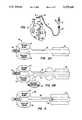
- FIG. 1is a simplified schematic diagram showing a catheter useful in the present invention in place for one specific application in a section of an artery adjacent the heart.
- FIG. 2Ais a simplified illustration of a catheter system constructed in accordance with the principles of the present invention.
- FIG. 2Bis a simplified illustration of a catheter system of the present invention which employs an occluding balloon.
- FIG. 2Cis a simplified illustration of a catheter system of the present invention which has a pressure transducer within the balloon.
- FIG. 3is a simplified illustration of a catheter system of the present invention which employs a pressure sensor disposed in a separate lumen.
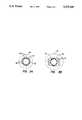
- FIG. 3Bis a cross-sectional view of a second exemplary balloon profile.
- FIG. 4is a block diagram of the control portion of the system of the present invention.
- FIG. 5is a detailed block diagram of the fluid infusion pump portion of the system of the present invention.
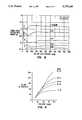
- FIG. 6is a set of ideal curves of fluid volume infusion against pressure for the system of the present invention, when the balloon portion of the catheter is unrestrained and then inside various sizes of rigid tubing.
- FIG. 8is a set of calculated curves of tubing cross-sectional area against pressure for the system of the present invention, when the balloon portion of the catheter is unrestrained and then inside various sizes of rigid tubing.
- FIG. 9is a set of curves showing compliance of human aortas at various ages.
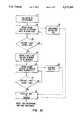
- FIG. 10is a simplified flow diagram for the software of the present invention.
- physiologic characteristicis intended to mean a physical or mechanical characteristic of a body lumen, particularly including internal dimensions and wall compliance.
- Exemplary internal dimensionsinclude cross-sectional area, diameter, and the like. These dimensions will typically be average values determined over a preselected length of the body lumen, where the preselected length is usually defined by the length of an inflatable balloon, as described in more detail below.
- Wall compliancegenerally refers to the elasticity or resilience of the body lumen in response to an increase in internal pressurization. Wall compliance may be expressed as a percentage increase in a cross-sectional area in response to a given increase in pressure.
- static pressureis intended to refer to the gauge pressure, i.e. pressure above ambient, within the balloon which is free from pressure transients, back pressure (dynamic pressure drop), and the like. Static pressure within the balloon is thus preferably measured by a pressure sensor element within the balloon itself or by a pressure sensor located within a separate balloon pressure measurement lumen where a static column of fluid can be maintained. It will also be possible to measure the static pressure at the inlet of the balloon inflation lumen (as described in more detail below), but any transient pressure variations, such as pressure drop during fluid infusion, must be taken into account in determining the true internal pressure of the balloon.
- measured volumerefers to the volume of incompressible inflation medium within the balloon.
- the volumewill be measured using a calibrated positive displacement mechanism for introducing the incompressible inflation medium to the balloon, usually a calibrated syringe which may be driven by a stepper motor or a servo-controlled motor.
- a calibrated positive displacement mechanism for introducing the incompressible inflation medium to the balloonusually a calibrated syringe which may be driven by a stepper motor or a servo-controlled motor.
- itwill be necessary to determine the absolute volume of fluid within the balloon, excluding volumes within the inflation lumen, pressure measurement lumen (if employed), fluid introducing means, and the like.
- wall compliance measurementsit will usually be necessary to measure only differential volume between two different values of static pressure.
- incompressible fluidis intended to include a variety of liquids of the type normally employed for the inflation of intravascular balloons, e.g., angioplasty balloons.
- exemplary incompressible fluidsinclude sterile water, saline, contrast media (typically diluted with water), and the like.
- an apparatus 10 constructed in accordance with the principles of the present inventionincludes a catheter body having a balloon portion 12 near its distal end and a housing or manifold 13 at its proximal end.
- the balloon 12is illustrated in an artery 14 (shown in broken line) adjacent the heart 16.
- an unconstrained (such as in air) balloon catheteris inflated and infused fluid volume measurements are made for successive selected balloon fluid pressures, typically in the range of 0-200 millimeters of mercury (mm Hg).
- the balloonis then deflated and inserted into the vessel or other body member of interest, and measurements of infused fluid volume are made again for the same successive selected balloon fluid pressures.
- the data from these two sets of measurementsare then used to calculate vessel internal dimensions, such as cross-sectional area or diameter, at each selected balloon fluid pressure.
- the balloon catheter 10can be similar to that which is commercially available and conventionally used for the intravascular angioplasty technique, provided that the balloon portion of the catheter is shortened and the balloon material selected to facilitate balloon operation at low fluid pressures.
- Conventional balloons used for angioplastyare relatively long while the balloon of the present invention will vary between a few millimeters to several centimeters (typically having a length from 3-10 mm for dimensional measurements in blood vessels) and hence can be more location specific along the vessel being measured.
- the balloon diameterwill be slightly greater than the lumen being measured (typically being from 1 mm to 5 mm for dimensional and/or compliance measurements in blood vessels).
- Conventional angioplasty balloonsare designed to withstand 6-15 atmospheres of pressure (one atmosphere equaling 760 Mm Hg).
- the angioplasty balloon materialis necessarily fairly thick (typically approximately 3 mils) to prevent rupture.
- a thick wall balloondoes not readily conform to vessel internal geometry.
- thick wall balloonsare characterized by irregular balloon fluid pressure during inflation, due to the unfolding of the stiff balloon material.
- the balloon portion of the present inventionis designed to operate at much lower pressures, typically within the range of 0-200 mm Hg, since this is the range of pressures normally present in a blood vessel or other body member.
- a low pressure balloonmay be made of thinner material (1 mil or less), resulting in the balloon having improved conformance to vessel walls and reducing balloon unfolding pressure artifacts during inflation. Thinner material allows the balloon to be folded in such a manner to further reduce inflation artifacts. A low pressure balloon thus will likely provide more accurate, reliable results in the physiologic pressure range.
- the tip of the catheteris inserted, for example, into a vessel at a convenient point, with the catheter then being manipulated by a trained operator through the vascular system, until the balloon portion thereof reaches the point of interest in the vascular system.
- the infusion of fluid into the catheter balloonmay be accomplished by a positive displacement device, such as a fluid-infusion pump 20 which is driven under the control of a servo system 21 which is responsive to a predetermined fluid infusion rate schedule and a measured (feedback) value of actual infused fluid volume.
- a positive displacement devicesuch as a fluid-infusion pump 20 which is driven under the control of a servo system 21 which is responsive to a predetermined fluid infusion rate schedule and a measured (feedback) value of actual infused fluid volume.
- the rate of infusionmay be varied during the infusion process according to a predetermined pattern or schedule. Such a schedule, for instance, may be important because of inertial forces associated with starting and stopping the fluid infusion pump.
- rate schedulespermits the cancellation of viscous flow effects associated with fluid flow in the catheter.
- the pump 20may be driven by a stepper motor with no need to provide feedback control.
- a fluid infusion pump 20 in the form of a calibrated syringeis driven by a linear stepper motor 30 by a control system comprising a 5 megahertz clock signal from a source 22 thereof applied to a counter 24 which is set to produce drive pulses on output line 25 to a stepper motor drive 26, which is also responsive to a direction command from circuit 27.
- the stepper motor drive 26controls the stepper motor 28 which in turn controls a gas-tight syringe 32.
- the syringeinfuses the fluid into the catheter and eventually into the balloon portion located at the tip thereof.
- the infusion systemis designed to produce a precise fluid infusion of 10-200 microliters ( ⁇ l) of fluid at a selected rate of 10-50 ⁇ l/sec.
- the fluid in the syringeshould be sterile, relatively bubble-free, and substantially incompressible.
- the action of syringe 32may optionally be detected by a displacement monitor 30 which confirms the actual infused volume. It should be understood, however, that both the fluid infusion rate schedule and the total infused volume can be varied depending upon the application. Also, while the above-described system produces satisfactory results in the system of the present application, it should be understood that other arrangements, and/or other components, could be used for fluid infusion. For example, in some applications, the feedback signal from pump 20 may not be necessary.
- a single lumen catheter 38is shown for illustration.
- fluidis directed through the single lumen opening 40 by an infusion system 41, such as discussed above, to the balloon 42, resulting in the balloon 42 being filled.
- the same lumen opening 40 through which fluid is infused into the balloon 42is used for measurement of the fluid pressure in the balloon, such as by pressure sensor 43 in FIG. 2A.
- Both the fluid infusion system 41 and the pressure sensor 43are connected to a computer 44.
- pressure sensor 43is a standard semiconductor strain gauge pressure transducer, having a pressure rating of 50-1000 mm Hg, and a resolution of 0.5 Mm Hg.
- a microminiature pressure transducercould be positioned in the lumen opening 40 near the balloon 42 or perhaps and preferably within the balloon itself in a particular application.
- a catheter system having a microminiature pressure transducer 43 located within the balloonis depicted in FIG. 2C.
- Semiconductor strain gauge pressure transducers or fiber optic pressure sensorsare available in sufficiently small sizes for such alternative embodiments.
- the balloon pressureis generally not identical to the pressure at the proximal end 45 of the catheter.
- the pressure measurements at the proximal end of the catheterare influenced by the back pressure caused by the viscous forward flow of fluid toward the balloon.
- the pressure transducerwhen it is relatively remote from the balloon, will produce a pressure measurement which in fact is influenced by several variables, in addition to balloon fluid pressure, including catheter wall compliance, catheter wall movement, external catheter wall pressure, and the fluid infusion rate.
- a double lumen catheter 46is used, in which one lumen 48 is used for fluid infusion from a fluid infusion system 50 to balloon 52, while a second fluid-filled lumen 54 is for fluid pressure measurement in the balloon 52, by pressure sensor 56. Both the infusion system 50 and pressure sensor 56 are connected to a computer 57. There is essentially no net fluid flow in lumen 54 during a given pressure measurement. The fluid infusion and the fluid pressure measurements are separated completely. Typically, this improves the accuracy of the balloon fluid pressure measurements, although, in some cases, such increased accuracy is not necessary.
- the balloon 42/52 in the embodiments of FIG. 2A or 3is designed to readily withstand a pressure of up to at least 200 mm Hg without significant stretching, yet also be flexible enough to conform to irregularities in the arterial walls, and unfold and open without significant resistance.
- the typical range of human arterial blood pressureis 70-120 mm Hg, with 100 mm Hg being a mean arterial blood pressure at the heart level.
- the low pressure balloon of the present inventionis designed to operate over this physiologic pressure range normally experienced by the artery. In its fully inflated state, the balloon will form a cylinder, the length of which will typically be iv the range of 3-10 mm.
- the ballooncan be made in several different sizes (outside diameter) so that measurements of small, medium, and relatively large arteries (or veins or other tubular body members) can be more readily accommodated. Normal requirements of stiffness/flexibility apply to the catheter body itself for intravascular maneuvering.
- FIGS. 3A and 3BExemplary balloon profiles which are useful in the catheter devices of the present invention are illustrated in FIGS. 3A and 3B.
- a balloon element 60is disposed coaxially over catheter body 62.
- the balloon element 60is folded in a "flower petal" pattern with a plurality of discrete folds 64 which extend axially along the entire length of balloon 60.
- the balloon 60may be inflated to the dimensions shown in broken line 66 by internal pressurization, as described previously. It is believed that the use of the segmented folding pattern provides for a smooth and uniform expansion which is substantially free from induced pressure transients and other unfolding artifacts which could adversely affect monitoring of the internal balloon pressurization.
- FIG. 3BThe pattern of FIG. 3B is similar to that of FIG. 3A, with a balloon 70 disposed coaxially about catheter body 72.
- the balloon 70includes a plurality of axial folds 74 which are stacked in an "accordion" pattern. Upon internal pressurization, the balloon 70 expands to the pattern shown in broken line 76.
- FIG. 2Bis a variation of FIG. 2, with the addition of an occluding balloon 58, an occluding balloon inflator 59 and an occluding balloon lumen 61.
- the locations of the respective balloonscan be reversed, depending on blood flow direction.
- the cathetercould be a closed system, with a sterile fluid being moved within the catheter by a bellows arrangement used as the infusion system.
- FIGS. 6, 7 and 8illustrate the theoretical analysis performed by the inventors which led to the present invention, specifically a system for accurately determining size and compliance information from pressure-infused volume data using a balloon catheter.
- V a (P)the infused fluid volume of a catheter with an unrestrained balloon at a selected pressure (P) which is greater than zero
- d othe outside diameter of the inflated balloon at the selected pressure
- Lballoon length (inflated)
- tballoon wall thickness
- V cthe volume of the catheter lumen at the selected pressure
- FIG. 6also shows the pressure-volume response curves for the ideal balloon catheter of curve 160 positioned in a number of different rigid tubes, all having a smaller inside diameter than the outside diameter of the fully inflated ideal balloon.
- the balloonwill fill with fluid while the pressure remains near zero until the balloon contacts the internal surface of the rigid tubing, at which point the balloon fluid pressure will increase substantially. This is shown as curves 162-164 in FIG. 6.
- V t (P)volume of the balloon when it contacts the inner surface of the rigid tubing--volume of balloon wall+volume of catheter lumen.
- the interior cross-sectional area of the tubingcan be calculated if the length of the balloon is known, and if V a and V t are known for a particular pressure P. Since the length of the balloon and the outside diameter of the inflated balloon are known characteristics of the balloon, and since V t and V a can be measured at one or more discrete pressures with the system of the present invention, the system of the present invention can hence be used to determine the interior cross-sectional area of the tubing at the discrete pressures.
- FIG. 7shows experimental results in which a commercially available angioplasty balloon catheter was infused with fluid, first in ambient pressure air (unrestrained) and then in rigid tubing of different internal diameters.
- the pressure-volume response curves of FIG. 7are not flat,, like those for an ideal catheter, but rather show a gradual continual increase in infused fluid volume as pressure increases, beyond the point of nominal filling of the balloon. This is due to many factors, including the compliance of the catheter wall and fluid frictional forces, among others.
- FIG. 7does demonstrate, however, that the pressure-volume curves of an angioplasty catheter in different size rigid wall tubings have the same basic shape, and that they are displaced from the pressure volume curve of the same catheter in air (unrestrained).
- infused fluid volumeis first measured at one or more preselected pressure values for the particular balloon catheter being used when the balloon is unrestrained.
- a typical range of pressure valuesis 0-200 mm Hg.
- the deflated balloon catheteris then positioned in the vessel or other body member such as the intestine or the urethra and the balloon manipulated to the point of interest.
- the infused fluid volumeis then measured at the same preselected pressure values, again for the range of 0-200 mm Hg.
- fluidis infused into the balloon in accordance with a predetermined rate schedule involving known fluid infusion rate amounts at specific pressure intervals.
- FIG. 10is a flow chart showing the software which controls the operation of the present invention, in combination with successive process steps.
- a balloon catheteris positioned such that the balloon is unrestrained, such as in air, shown at block 77. This could be done, for instance, by laying the catheter on a table top and then inflating it. Since the polymer materials of the balloon and catheter have mechanical properties that are generally temperature dependent, it may be helpful to perform the steps of inflation at body temperature, i.e. 37° C.
- the volume of infused fluidwhich could be a liquid such as a normal saline solution, is measured and recorded at preselected values of pressure within the specified pressure range, as the balloon is being filled, as shown at block 78.
- the temperature of the infused fluidshould preferably, but not necessarily, be at body temperature.
- This datais stored in an unrestrained balloon data file, as shown by block 80.
- the measuring, recording and storing processis terminated and the fluid is removed from the balloon, as shown in blocks 82 and 84.
- the balloon catheteris then placed in a vessel or other body member and then manipulated so that the balloon portion is at the particular point of interest,, as shown in block 84.
- the pressure/volume measurementsare repeated, as shown in block 86, and the data is stored in an in-member data file, as shown in block 88.
- the fluidis removed from the balloon, as shown in block 90.
- a single pressure-volume curvecan be obtained in approximately 1-3 seconds. If it is desired to remove certain artifacts from the recorded pressure-volume data, such as that caused by blood pressure, the pressure-volume data can be recorded only during the low pressure (diastolic) phase of the cardiac cycle or averaged over a number of cycles.
- the cross-sectional area of the vessel or other body memberis then calculated at a number of balloon fluid pressures using equation 4 above, as shown by block 92.
- the effective inside diameter d e of the membercan then be calculated from the various area determinations by use of the formula d e ⁇ 4A/ ⁇ .
- the most physiologically useful area determinationis one made at the mean vessel pressure, which is typically about 100 Mm Hg for arteries. Resulting area information is anticipated to be accurate to ⁇ 2%, with a repeatability error of less than ⁇ 2%, providing significant improvements over existing dimension measuring techniques.
- the balloon fluid pressure P at which the determinations are madeis not exactly the pressure at the vessel wall itself. It is important, particularly with respect to compliance determinations, that the pressure in fact be the vessel wall pressure. Corrections can be made, if necessary, as follows.
- the measured pressureis very close to the actual balloon fluid pressure, because there is essentially no net fluid flow in lumen 54.
- the actual pressure within the vesselis slightly less than the balloon pressure, because the balloon wall has a finite thickness and the surface area inside of the balloon is hence less than the surface area of the outside of the balloon.
- the actual pressure within the vesseli.e. the pressure at the vessel wall, referred to as P i , is calculated as follows: ##EQU5## where d c is the inside diameter of the vessel and t is the thickness of the balloon wall.
- P ithe pressure at the vessel wall
- an accurate and fast apparatus and methodwhich provides size and compliance information for blood vessels.
- the apparatuscan be used to obtain similar information for other body members having an opening therein (some of which are tube-like), such as the intestines, the urethra, the cervix, etc. This information is particularly useful in the diagnosis of certain diseases affecting vessels and such body members.
- the accuracy of the apparatus and methodexceeds significantly that of existing methods relative to size determination.
- the apparatus and methodfurther provide compliance information which heretofore has not been available.
Landscapes
- Health & Medical Sciences (AREA)
- Life Sciences & Earth Sciences (AREA)
- Cardiology (AREA)
- Engineering & Computer Science (AREA)
- Heart & Thoracic Surgery (AREA)
- Physiology (AREA)
- Biophysics (AREA)
- Pathology (AREA)
- Vascular Medicine (AREA)
- Biomedical Technology (AREA)
- Physics & Mathematics (AREA)
- Medical Informatics (AREA)
- Molecular Biology (AREA)
- Surgery (AREA)
- Animal Behavior & Ethology (AREA)
- General Health & Medical Sciences (AREA)
- Public Health (AREA)
- Veterinary Medicine (AREA)
- Media Introduction/Drainage Providing Device (AREA)
Abstract
Description
Claims (35)
Priority Applications (6)
| Application Number | Priority Date | Filing Date | Title |
|---|---|---|---|
| US07/822,032US5275169A (en) | 1992-01-15 | 1992-01-15 | Apparatus and method for determining physiologic characteristics of body lumens |
| AU34238/93AAU3423893A (en) | 1992-01-15 | 1992-12-29 | Apparatus and method for determining physiologic characteristics of body lumens |
| PCT/US1992/011247WO1993013709A1 (en) | 1992-01-15 | 1992-12-29 | Apparatus and method for determining physiologic characteristics of body lumens |
| EP93902783AEP0632709B1 (en) | 1992-01-15 | 1992-12-29 | Apparatus for determining internal dimensions of body lumens |
| CA002130255ACA2130255C (en) | 1992-01-15 | 1992-12-29 | Apparatus and method for determining physiologic characteristics of body lumens |
| DE69232491TDE69232491T2 (en) | 1992-01-15 | 1992-12-29 | DEVICE FOR DETERMINING INTERNAL DIMENSIONS OF BODY CAVES |
Applications Claiming Priority (1)
| Application Number | Priority Date | Filing Date | Title |
|---|---|---|---|
| US07/822,032US5275169A (en) | 1992-01-15 | 1992-01-15 | Apparatus and method for determining physiologic characteristics of body lumens |
Publications (1)
| Publication Number | Publication Date |
|---|---|
| US5275169Atrue US5275169A (en) | 1994-01-04 |
Family
ID=25234930
Family Applications (1)
| Application Number | Title | Priority Date | Filing Date |
|---|---|---|---|
| US07/822,032Expired - LifetimeUS5275169A (en) | 1992-01-15 | 1992-01-15 | Apparatus and method for determining physiologic characteristics of body lumens |
Country Status (6)
| Country | Link |
|---|---|
| US (1) | US5275169A (en) |
| EP (1) | EP0632709B1 (en) |
| AU (1) | AU3423893A (en) |
| CA (1) | CA2130255C (en) |
| DE (1) | DE69232491T2 (en) |
| WO (1) | WO1993013709A1 (en) |
Cited By (108)
| Publication number | Priority date | Publication date | Assignee | Title |
|---|---|---|---|---|
| US5423323A (en)* | 1993-08-30 | 1995-06-13 | Rocky Mountain Research, Inc. | System for calculating compliance and cardiac hemodynamic parameters |
| WO1995031245A1 (en)* | 1994-05-17 | 1995-11-23 | Hadasit Medical Research Services & Development Company Ltd. | A system and method for cononary angioplasty |
| EP0723786A1 (en) | 1995-01-30 | 1996-07-31 | Cardiovascular Concepts, Inc. | Lesion measurement catheter and method |
| US5545133A (en)* | 1994-09-16 | 1996-08-13 | Scimed Life Systems, Inc. | Balloon catheter with improved pressure source |
| US5551300A (en)* | 1995-12-18 | 1996-09-03 | Abbott Laboratories | User-restricted passage in reusable portion of device for monitoring a physiological pressure |
| US5647847A (en)* | 1994-09-16 | 1997-07-15 | Scimed Life Systems, Inc. | Balloon catheter with improved pressure source |
| WO1997042871A1 (en) | 1996-05-10 | 1997-11-20 | Cardiovascular Concepts, Inc. | Lesion diameter measurement catheter and method |
| US5695468A (en)* | 1994-09-16 | 1997-12-09 | Scimed Life Systems, Inc. | Balloon catheter with improved pressure source |
| US5752522A (en)* | 1995-05-04 | 1998-05-19 | Cardiovascular Concepts, Inc. | Lesion diameter measurement catheter and method |
| US5865801A (en)* | 1995-07-18 | 1999-02-02 | Houser; Russell A. | Multiple compartmented balloon catheter with external pressure sensing |
| WO1999034724A3 (en)* | 1998-01-12 | 1999-09-16 | Florence Medical Ltd | Characterizing blood vessel using multi-point pressure measurements |
| US5964732A (en)* | 1997-02-07 | 1999-10-12 | Abbeymoor Medical, Inc. | Urethral apparatus with position indicator and methods of use thereof |
| US5971967A (en)* | 1997-08-19 | 1999-10-26 | Abbeymoor Medical, Inc. | Urethral device with anchoring system |
| US6039701A (en)* | 1996-09-05 | 2000-03-21 | Ob Inovations, Inc. | Method and apparatus for monitoring cervical diameter |
| US6190354B1 (en) | 1994-09-16 | 2001-02-20 | Scimed Life Systems, Inc. | Balloon catheter with improved pressure source |
| US20030158550A1 (en)* | 1999-11-16 | 2003-08-21 | Ganz Robert A. | Method of treating abnormal tissue in the human esophagus |
| US20030171894A1 (en)* | 2002-03-08 | 2003-09-11 | Giovanni Battista Mancini A.K.A. G.B. John Mancini | Vessel evaluation methods, apparatus, computer-readable media and signals |
| US20040010209A1 (en)* | 2002-07-15 | 2004-01-15 | Spiration, Inc. | Device and method for measuring the diameter of an air passageway |
| WO2003020124A3 (en)* | 2001-09-06 | 2004-03-18 | Univ Aalborg | Method an apparatus for stimulating a bodily hollow system and method and apparatus for measuring reactions to stimuli of such system |
| US20040059263A1 (en)* | 2002-09-24 | 2004-03-25 | Spiration, Inc. | Device and method for measuring the diameter of an air passageway |
| WO2004034900A1 (en)* | 2002-10-15 | 2004-04-29 | Janssen Pharmaceutica N.V. | Animal model to evaluate visceral pain perception |
| US20040087936A1 (en)* | 2000-11-16 | 2004-05-06 | Barrx, Inc. | System and method for treating abnormal tissue in an organ having a layered tissue structure |
| US20040215235A1 (en)* | 1999-11-16 | 2004-10-28 | Barrx, Inc. | Methods and systems for determining physiologic characteristics for treatment of the esophagus |
| US6819951B2 (en) | 2002-09-24 | 2004-11-16 | Mayo Foundation For Medical Education And Research | Peripherally inserted central catheter with continuous central venous oximetry and proximal high flow port |
| US20040237321A1 (en)* | 2003-05-29 | 2004-12-02 | Rudko Robert I. | Replacement heart valve sizing device |
| US20040260322A1 (en)* | 2003-06-20 | 2004-12-23 | Rudko Robert I. | Endovascular tissue removal device |
| US20050027337A1 (en)* | 2003-07-28 | 2005-02-03 | Rudko Robert I. | Endovascular tissue removal device |
| US20050075662A1 (en)* | 2003-07-18 | 2005-04-07 | Wesley Pedersen | Valvuloplasty catheter |
| US20050171524A1 (en)* | 2004-01-09 | 2005-08-04 | Barrx, Inc. | Devices and methods for treatment of luminal tissue |
| US6974422B1 (en)* | 1999-11-06 | 2005-12-13 | Millar Instruments, Inc. | Catheter pressure transducer with pressure sensing module |
| US20060018528A1 (en)* | 2004-04-27 | 2006-01-26 | Northwestern University | Imaging, diagnostic, and therapeutic devices and methods of use thereof |
| US20060095032A1 (en)* | 1999-11-16 | 2006-05-04 | Jerome Jackson | Methods and systems for determining physiologic characteristics for treatment of the esophagus |
| US20060106321A1 (en)* | 2003-01-16 | 2006-05-18 | Galil Medical Ltd. | Device, system, and method for detecting, localizing, and characterizing plaque-induced stenosis of a blood vessel |
| US20060259030A1 (en)* | 1998-02-19 | 2006-11-16 | Utley David S | Method for Vacuum-Assisted Tissue Ablation |
| WO2007036035A1 (en)* | 2005-09-27 | 2007-04-05 | Angiometrx Inc. | Apparatus and method for determining physiologic characteristics of body lumens |
| US20070118106A1 (en)* | 2005-11-23 | 2007-05-24 | Utley David S | Precision ablating method |
| US20070118104A1 (en)* | 2005-11-23 | 2007-05-24 | Wallace Michael P | Auto-aligning ablating device and method of use |
| US20070129667A1 (en)* | 1997-04-26 | 2007-06-07 | Convergenza Ag | Device with a therapeutic catheter |
| US20070156067A1 (en)* | 2005-12-29 | 2007-07-05 | Dharmesh Dubey | Cervimeter |
| US20070239197A1 (en)* | 2006-04-10 | 2007-10-11 | Intrapartum Ventures, Llc | Method for cervical dilation and/or measurement |
| US20070255185A1 (en)* | 2005-12-29 | 2007-11-01 | Intrapartum Ventures, Llc. | Cervical dilation measurement apparatus |
| WO2007089319A3 (en)* | 2005-12-29 | 2007-12-06 | Intrapartum Ventures Llc | Cervimetry control apparatus |
| WO2004006767A3 (en)* | 2002-07-15 | 2007-12-27 | Spiration Inc | Device and method for measuring the diameter of an air passageway |
| US20080027358A1 (en)* | 2004-06-30 | 2008-01-31 | Ditens A/S | Morphometry of a Bodily Hollow System |
| US20080086044A1 (en)* | 2006-10-04 | 2008-04-10 | Dexcom, Inc. | Analyte sensor |
| US20080119866A1 (en)* | 2002-03-20 | 2008-05-22 | Alferness Clifton A | Removable anchored lung volume reduction devices and methods |
| US20080200789A1 (en)* | 2006-10-04 | 2008-08-21 | Dexcom, Inc. | Analyte sensor |
| US20080200788A1 (en)* | 2006-10-04 | 2008-08-21 | Dexcorn, Inc. | Analyte sensor |
| US20080197024A1 (en)* | 2003-12-05 | 2008-08-21 | Dexcom, Inc. | Analyte sensor |
| US20080200791A1 (en)* | 2006-10-04 | 2008-08-21 | Dexcom, Inc. | Analyte sensor |
| US20090012518A1 (en)* | 2007-07-06 | 2009-01-08 | Utley David S | Method and Apparatus for Ablation of Benign, Pre-Cancerous and Early Cancerous Lesions That Originate Within the Epithelium and are Limited to the Mucosal Layer of the Gastrointestinal Tract |
| US20090012513A1 (en)* | 2007-07-06 | 2009-01-08 | Utley David S | Ablation in the Gastrointestinal Tract to Achieve Hemostasis and Eradicate Lesions With a Propensity for Bleeding |
| US20090018424A1 (en)* | 2006-10-04 | 2009-01-15 | Dexcom, Inc. | Analyte sensor |
| US20090076439A1 (en)* | 2007-09-14 | 2009-03-19 | Dollar Michael L | Inflation System for Balloon Catheter |
| US20090099530A1 (en)* | 2007-10-12 | 2009-04-16 | Martin Neal Adams | Valve loader method, system, and apparatus |
| US20090124964A1 (en)* | 2003-12-05 | 2009-05-14 | Dexcom, Inc. | Integrated device for continuous in vivo analyte detection and simultaneous control of an infusion device |
| US20090131768A1 (en)* | 2006-10-04 | 2009-05-21 | Dexcom, Inc. | Analyte sensor |
| US20090131776A1 (en)* | 2006-10-04 | 2009-05-21 | Dexcom, Inc. | Analyte sensor |
| US20090131769A1 (en)* | 2006-10-04 | 2009-05-21 | Dexcom, Inc. | Analyte sensor |
| US20090131777A1 (en)* | 2006-10-04 | 2009-05-21 | Dexcom, Inc. | Analyte sensor |
| US20090137886A1 (en)* | 2006-10-04 | 2009-05-28 | Dexcom, Inc. | Analyte sensor |
| US20090137887A1 (en)* | 2006-10-04 | 2009-05-28 | Dexcom, Inc. | Analyte sensor |
| US20090178459A1 (en)* | 2003-08-01 | 2009-07-16 | Dexcom, Inc. | Analyte sensor |
| US20090287118A1 (en)* | 2008-05-15 | 2009-11-19 | Malek Michel H | Functional discography catheter |
| US20090292262A1 (en)* | 2007-10-12 | 2009-11-26 | Martin Neal Adams | Valve loader method, system, and apparatus |
| US20090318914A1 (en)* | 2008-06-18 | 2009-12-24 | Utley David S | System and method for ablational treatment of uterine cervical neoplasia |
| WO2010042869A1 (en)* | 2008-10-10 | 2010-04-15 | Intervalve, Inc. | Valvuloplasty catheter and methods |
| US20100094328A1 (en)* | 2007-06-27 | 2010-04-15 | Flip Technologies Limited | System, device and a method for dilating a stricture in a lumen and for determining the transverse cross-sectional area of a lumen or cavity |
| WO2010075371A1 (en)* | 2008-12-22 | 2010-07-01 | Automedics Medical Systems, Inc. | Integrated patient management and control system for medication delivery |
| US20100256714A1 (en)* | 2003-04-08 | 2010-10-07 | Springmeyer Steven C | Bronchoscopic lung volume reduction method |
| US20100256506A1 (en)* | 2009-04-03 | 2010-10-07 | Miracor Medical Systems Gmbh | Device for the intermittent occlusion of the coronary sinus |
| US20100262071A1 (en)* | 2006-03-31 | 2010-10-14 | James Kutsko | Articulable anchor |
| US20100305479A1 (en)* | 2009-05-28 | 2010-12-02 | Flip Technologies Limited | method and apparatus for determining the distensibility of a vessel, lumen or a sphincter |
| US20110082450A1 (en)* | 2009-10-02 | 2011-04-07 | Cardiofocus, Inc. | Cardiac ablation system with inflatable member having multiple inflation settings |
| US7942931B2 (en) | 2002-02-21 | 2011-05-17 | Spiration, Inc. | Device and method for intra-bronchial provision of a therapeutic agent |
| US7947001B1 (en) | 2010-06-07 | 2011-05-24 | Sarvazyan Armen P | Methods and devices for measuring structural and elastic properties of a hollow organ |
| US7959627B2 (en) | 2005-11-23 | 2011-06-14 | Barrx Medical, Inc. | Precision ablating device |
| US20110202084A1 (en)* | 2010-02-16 | 2011-08-18 | Miracor Medical Systems Gmbh | Operating A Vessel Occlusion Catheter |
| US20110203581A1 (en)* | 2001-10-25 | 2011-08-25 | Spiration, Inc. | Apparatus and method for deployment of a bronchial obstruction device |
| US20120035642A1 (en)* | 2009-03-09 | 2012-02-09 | Flip Technologies Limited | Catheter, a balloon catheter and a method and apparatus for monitoring the transverse cross-section of a stoma |
| US8251992B2 (en) | 2007-07-06 | 2012-08-28 | Tyco Healthcare Group Lp | Method and apparatus for gastrointestinal tract ablation to achieve loss of persistent and/or recurrent excess body weight following a weight-loss operation |
| US20120220902A1 (en)* | 2009-11-20 | 2012-08-30 | Sumitomo Bakelite Co., Ltd. | Inner diameter measurement instrument and priming method therefor |
| US8273012B2 (en) | 2007-07-30 | 2012-09-25 | Tyco Healthcare Group, Lp | Cleaning device and methods |
| CN102949210A (en)* | 2011-08-25 | 2013-03-06 | 西门子公司 | Endoscopic device for minimum-invasive linear measurement |
| WO2014009950A1 (en)* | 2012-07-11 | 2014-01-16 | Lunguard Ltd. | Method for monitoring pressures exerted along the length of a biological channel |
| US8641711B2 (en) | 2007-05-04 | 2014-02-04 | Covidien Lp | Method and apparatus for gastrointestinal tract ablation for treatment of obesity |
| US8646460B2 (en) | 2007-07-30 | 2014-02-11 | Covidien Lp | Cleaning device and methods |
| WO2014041532A1 (en)* | 2012-09-11 | 2014-03-20 | Lunguard Ltd. | Method for calibrating an expandable means of a medical device and method for monitoring the pressure exerted by the interior wall of a biological channel |
| US8784338B2 (en) | 2007-06-22 | 2014-07-22 | Covidien Lp | Electrical means to normalize ablational energy transmission to a luminal tissue surface of varying size |
| US8795241B2 (en) | 2011-05-13 | 2014-08-05 | Spiration, Inc. | Deployment catheter |
| WO2014149708A1 (en)* | 2013-03-15 | 2014-09-25 | Cook Medical Technologies Llc | Pressure sensing catheter |
| US8873900B2 (en) | 2011-04-21 | 2014-10-28 | Medtronic Vascular, Inc. | Balloon catheter with integrated optical sensor for determining balloon diameter |
| WO2014210450A1 (en)* | 2013-06-28 | 2014-12-31 | Cardiovascular Systems, Inc. | Devices, systems and methods for locally measuring biological conduit and/or lesion compliance, opposition force and inner diameter of a biological conduit |
| US8974484B2 (en) | 2001-09-11 | 2015-03-10 | Spiration, Inc. | Removable lung reduction devices, systems, and methods |
| US8974527B2 (en) | 2003-08-08 | 2015-03-10 | Spiration, Inc. | Bronchoscopic repair of air leaks in a lung |
| US9238126B2 (en) | 2011-04-08 | 2016-01-19 | Sanovas Inc. | Biofeedback controlled deformation of sinus ostia |
| US9242081B2 (en) | 2010-09-13 | 2016-01-26 | Intervalve, Inc. | Positionable valvuloplasty catheter |
| WO2016011309A3 (en)* | 2014-07-18 | 2016-03-10 | Cardiovascular Systems, Inc. | Systems for sensing, measuring and characterizing compliance and/or elastic changes of vessels or lesions |
| WO2017009668A1 (en)* | 2015-07-16 | 2017-01-19 | Diasolve Limited | Fluid delivery apparatus |
| CN108392217A (en)* | 2018-02-12 | 2018-08-14 | 深圳世格赛思医疗科技有限公司 | A kind of expansion parameters determine method, system, computer and storage medium |
| EP2376175B1 (en)* | 2008-12-12 | 2019-01-30 | Corindus, Inc. | Remote catheter procedure system |
| US10278774B2 (en) | 2011-03-18 | 2019-05-07 | Covidien Lp | Selectively expandable operative element support structure and methods of use |
| US10433790B2 (en) | 2015-09-25 | 2019-10-08 | C. R. Bard, Inc. | Catheter assembly including monitoring capabilities |
| KR20190127342A (en)* | 2018-05-04 | 2019-11-13 | 가톨릭관동대학교산학협력단 | 3-dimensional measuring apparatus and method for vascular function |
| US10980461B2 (en) | 2008-11-07 | 2021-04-20 | Dexcom, Inc. | Advanced analyte sensor calibration and error detection |
| US11000215B1 (en) | 2003-12-05 | 2021-05-11 | Dexcom, Inc. | Analyte sensor |
| US11246644B2 (en) | 2018-04-05 | 2022-02-15 | Covidien Lp | Surface ablation using bipolar RF electrode |
| US11992292B2 (en) | 2020-01-07 | 2024-05-28 | Bard Access Systems, Inc. | Diagnostic systems and methods including temperature-sensing vascular devices |
Families Citing this family (6)
| Publication number | Priority date | Publication date | Assignee | Title |
|---|---|---|---|---|
| FR2754701B1 (en)* | 1996-10-18 | 1999-01-08 | Vermed | URETRAL COMPLIANCE MEASURING DEVICE |
| IL143255A (en) | 2001-05-20 | 2015-09-24 | Simbionix Ltd | Endoscopic ultrasonography simulation |
| SE0203567D0 (en) | 2002-12-03 | 2002-12-03 | Mentice Ab | In interventional simulator control system |
| US7850456B2 (en) | 2003-07-15 | 2010-12-14 | Simbionix Ltd. | Surgical simulation device, system and method |
| US8543338B2 (en) | 2007-01-16 | 2013-09-24 | Simbionix Ltd. | System and method for performing computerized simulations for image-guided procedures using a patient specific model |
| WO2008087629A2 (en) | 2007-01-16 | 2008-07-24 | Simbionix Ltd. | Preoperative surgical simulation |
Citations (10)
| Publication number | Priority date | Publication date | Assignee | Title |
|---|---|---|---|---|
| US4329993A (en)* | 1980-06-18 | 1982-05-18 | American Hospital Supply Corporation | Catheter with trans-luminal electrical conductor |
| US4444188A (en)* | 1980-08-15 | 1984-04-24 | Seymour Bazell | Balloon catheter |
| US4464175A (en)* | 1982-08-25 | 1984-08-07 | Altman Alan R | Multipurpose tamponade and thrombosclerotherapy tube |
| US4651738A (en)* | 1985-08-02 | 1987-03-24 | Baylor College Of Medicine | Method and device for performing transluminal angioplasty |
| US4723556A (en)* | 1986-04-14 | 1988-02-09 | Cordis Corporation | Intracranial ventricular catheter assembly |
| US4776347A (en)* | 1980-05-20 | 1988-10-11 | E. R. Squibb & Sons, Inc. | Device for devloping control of spincter-type muscles |
| US4981470A (en)* | 1989-06-21 | 1991-01-01 | Synectics Medical, Inc. | Intraesophageal catheter with pH sensor |
| US5135488A (en)* | 1989-03-17 | 1992-08-04 | Merit Medical Systems, Inc. | System and method for monitoring, displaying and recording balloon catheter inflation data |
| US5163906A (en)* | 1988-09-27 | 1992-11-17 | Schneider (Europe) Ag | Dilatation catheter and method for widening of strictures |
| US5171299A (en)* | 1991-08-02 | 1992-12-15 | Baxter International Inc. | Balloon catheter inflation pressure and diameter display apparatus and method |
Family Cites Families (3)
| Publication number | Priority date | Publication date | Assignee | Title |
|---|---|---|---|---|
| US4621646A (en)* | 1983-12-15 | 1986-11-11 | The United States Of America As Represented By The Secretary Of The Army | Blood flow measuring method |
| US4848344A (en)* | 1987-11-13 | 1989-07-18 | Cook, Inc. | Balloon guide |
| US5045070A (en)* | 1988-12-22 | 1991-09-03 | Pentotech, Ltd. | Body cavity probe with everting tube |
- 1992
- 1992-01-15USUS07/822,032patent/US5275169A/ennot_activeExpired - Lifetime
- 1992-12-29WOPCT/US1992/011247patent/WO1993013709A1/enactiveIP Right Grant
- 1992-12-29AUAU34238/93Apatent/AU3423893A/ennot_activeAbandoned
- 1992-12-29CACA002130255Apatent/CA2130255C/ennot_activeExpired - Fee Related
- 1992-12-29DEDE69232491Tpatent/DE69232491T2/ennot_activeExpired - Fee Related
- 1992-12-29EPEP93902783Apatent/EP0632709B1/ennot_activeExpired - Lifetime
Patent Citations (10)
| Publication number | Priority date | Publication date | Assignee | Title |
|---|---|---|---|---|
| US4776347A (en)* | 1980-05-20 | 1988-10-11 | E. R. Squibb & Sons, Inc. | Device for devloping control of spincter-type muscles |
| US4329993A (en)* | 1980-06-18 | 1982-05-18 | American Hospital Supply Corporation | Catheter with trans-luminal electrical conductor |
| US4444188A (en)* | 1980-08-15 | 1984-04-24 | Seymour Bazell | Balloon catheter |
| US4464175A (en)* | 1982-08-25 | 1984-08-07 | Altman Alan R | Multipurpose tamponade and thrombosclerotherapy tube |
| US4651738A (en)* | 1985-08-02 | 1987-03-24 | Baylor College Of Medicine | Method and device for performing transluminal angioplasty |
| US4723556A (en)* | 1986-04-14 | 1988-02-09 | Cordis Corporation | Intracranial ventricular catheter assembly |
| US5163906A (en)* | 1988-09-27 | 1992-11-17 | Schneider (Europe) Ag | Dilatation catheter and method for widening of strictures |
| US5135488A (en)* | 1989-03-17 | 1992-08-04 | Merit Medical Systems, Inc. | System and method for monitoring, displaying and recording balloon catheter inflation data |
| US4981470A (en)* | 1989-06-21 | 1991-01-01 | Synectics Medical, Inc. | Intraesophageal catheter with pH sensor |
| US5171299A (en)* | 1991-08-02 | 1992-12-15 | Baxter International Inc. | Balloon catheter inflation pressure and diameter display apparatus and method |
Non-Patent Citations (12)
| Title |
|---|
| Abele (1980) AJR 135:901 906.* |
| Abele (1980) AJR 135:901-906. |
| Demer et al. (1991) J. Am. Coll. Cardiol. 18:1259 1262.* |
| Demer et al. (1991) J. Am. Coll. Cardiol. 18:1259-1262. |
| Hjemdahl Monsen et al. (1990) J. Am. Coll. Cardiol. 16:569.* |
| Hjemdahl-Monsen et al. (1990) J. Am. Coll. Cardiol. 16:569. |
| Nichols et al. (1984) Circulation 69:512 522.* |
| Nichols et al. (1984) Circulation 69:512-522. |
| Serruys et al. (1984) Am. J. Cardiol. 54:482 488.* |
| Serruys et al. (1984) Am. J. Cardiol. 54:482-488. |
| Zollikofer et al. (1985) Fortschr. R ntgenstr. 142, 5:527 530.* |
| Zollikofer et al. (1985) Fortschr. Rontgenstr. 142, 5:527-530. |
Cited By (247)
| Publication number | Priority date | Publication date | Assignee | Title |
|---|---|---|---|---|
| US5423323A (en)* | 1993-08-30 | 1995-06-13 | Rocky Mountain Research, Inc. | System for calculating compliance and cardiac hemodynamic parameters |
| WO1995031245A1 (en)* | 1994-05-17 | 1995-11-23 | Hadasit Medical Research Services & Development Company Ltd. | A system and method for cononary angioplasty |
| US5545133A (en)* | 1994-09-16 | 1996-08-13 | Scimed Life Systems, Inc. | Balloon catheter with improved pressure source |
| US5647847A (en)* | 1994-09-16 | 1997-07-15 | Scimed Life Systems, Inc. | Balloon catheter with improved pressure source |
| US6190354B1 (en) | 1994-09-16 | 2001-02-20 | Scimed Life Systems, Inc. | Balloon catheter with improved pressure source |
| US5695468A (en)* | 1994-09-16 | 1997-12-09 | Scimed Life Systems, Inc. | Balloon catheter with improved pressure source |
| US5728064A (en)* | 1994-09-16 | 1998-03-17 | Scimed Life Systems, Inc. | Balloon catheter with improved pressure source |
| US5860923A (en)* | 1995-01-30 | 1999-01-19 | Cardiovascular Concepts, Inc. | Lesion measurement catheter and method |
| EP0723786A1 (en) | 1995-01-30 | 1996-07-31 | Cardiovascular Concepts, Inc. | Lesion measurement catheter and method |
| US6078832A (en)* | 1995-01-30 | 2000-06-20 | Medtronic, Inc. | Lesion measurement catheter and method |
| US6010511A (en)* | 1995-05-04 | 2000-01-04 | Murphy; Richard | Lesion diameter measurement catheter and method |
| US5902308A (en)* | 1995-05-04 | 1999-05-11 | Medtronic, Inc. | Lesion diameter measurement catheter and method |
| US5752522A (en)* | 1995-05-04 | 1998-05-19 | Cardiovascular Concepts, Inc. | Lesion diameter measurement catheter and method |
| US5865801A (en)* | 1995-07-18 | 1999-02-02 | Houser; Russell A. | Multiple compartmented balloon catheter with external pressure sensing |
| US5551300A (en)* | 1995-12-18 | 1996-09-03 | Abbott Laboratories | User-restricted passage in reusable portion of device for monitoring a physiological pressure |
| WO1997042871A1 (en) | 1996-05-10 | 1997-11-20 | Cardiovascular Concepts, Inc. | Lesion diameter measurement catheter and method |
| US6039701A (en)* | 1996-09-05 | 2000-03-21 | Ob Inovations, Inc. | Method and apparatus for monitoring cervical diameter |
| US7507234B2 (en) | 1996-10-11 | 2009-03-24 | BÂRRX Medical, Inc. | Method for cryogenic tissue ablation |
| US20060259028A1 (en)* | 1996-10-11 | 2006-11-16 | Utley David S | System for Tissue Ablation |
| US20100063495A1 (en)* | 1996-10-11 | 2010-03-11 | Edwards Stuart D | System for tissue ablation |
| US7632268B2 (en) | 1996-10-11 | 2009-12-15 | BÂRRX Medical, Inc. | System for tissue ablation |
| US7556628B2 (en) | 1996-10-11 | 2009-07-07 | BÂRRX Medical, Inc. | Method for tissue ablation |
| US6258060B1 (en) | 1997-02-07 | 2001-07-10 | Abbeymoon Medical, Inc. | Urethral apparatus with position indicator and methods of use thereof |
| US5964732A (en)* | 1997-02-07 | 1999-10-12 | Abbeymoor Medical, Inc. | Urethral apparatus with position indicator and methods of use thereof |
| US7959602B2 (en)* | 1997-04-26 | 2011-06-14 | Convergenza Ag | Device with a therapeutic catheter |
| US20070129667A1 (en)* | 1997-04-26 | 2007-06-07 | Convergenza Ag | Device with a therapeutic catheter |
| US6221060B1 (en) | 1997-08-19 | 2001-04-24 | Abbeymoor Medical, Inc. | Urethral device with anchoring system |
| US5971967A (en)* | 1997-08-19 | 1999-10-26 | Abbeymoor Medical, Inc. | Urethral device with anchoring system |
| WO1999034724A3 (en)* | 1998-01-12 | 1999-09-16 | Florence Medical Ltd | Characterizing blood vessel using multi-point pressure measurements |
| US7507238B2 (en) | 1998-02-19 | 2009-03-24 | Barrx Medical, Inc | Method for vacuum-assisted tissue ablation |
| US20060259030A1 (en)* | 1998-02-19 | 2006-11-16 | Utley David S | Method for Vacuum-Assisted Tissue Ablation |
| US6974422B1 (en)* | 1999-11-06 | 2005-12-13 | Millar Instruments, Inc. | Catheter pressure transducer with pressure sensing module |
| US20130131661A1 (en)* | 1999-11-16 | 2013-05-23 | Covidien Lp | Methods and systems for determining physiologic characteristics for treatment of the esophagus |
| US20040215235A1 (en)* | 1999-11-16 | 2004-10-28 | Barrx, Inc. | Methods and systems for determining physiologic characteristics for treatment of the esophagus |
| US8012149B2 (en)* | 1999-11-16 | 2011-09-06 | Barrx Medical, Inc. | Methods and systems for determining physiologic characteristics for treatment of the esophagus |
| US7993336B2 (en) | 1999-11-16 | 2011-08-09 | Barrx Medical, Inc. | Methods and systems for determining physiologic characteristics for treatment of the esophagus |
| EP2604213A1 (en) | 1999-11-16 | 2013-06-19 | BARRx Medical, Inc. | Systems for determining physiologic characteristics for treatment of the esophagus |
| US9597147B2 (en) | 1999-11-16 | 2017-03-21 | Covidien Lp | Methods and systems for treatment of tissue in a body lumen |
| US9555222B2 (en) | 1999-11-16 | 2017-01-31 | Covidien Lp | Methods and systems for determining physiologic characteristics for treatment of the esophagus |
| US20090048593A1 (en)* | 1999-11-16 | 2009-02-19 | Ganz Robert A | System and method of treating abnormal tissue in the human esophagus |
| US20030158550A1 (en)* | 1999-11-16 | 2003-08-21 | Ganz Robert A. | Method of treating abnormal tissue in the human esophagus |
| US8398631B2 (en) | 1999-11-16 | 2013-03-19 | Covidien Lp | System and method of treating abnormal tissue in the human esophagus |
| US9039699B2 (en) | 1999-11-16 | 2015-05-26 | Covidien Lp | Methods and systems for treatment of tissue in a body lumen |
| US7530979B2 (en) | 1999-11-16 | 2009-05-12 | BÂRRX Medical, Inc. | Method of treating abnormal tissue in the human esophagus |
| US20060095032A1 (en)* | 1999-11-16 | 2006-05-04 | Jerome Jackson | Methods and systems for determining physiologic characteristics for treatment of the esophagus |
| US20100234840A1 (en)* | 1999-11-16 | 2010-09-16 | Jerome Jackson | Methods and systems for determining physiologic characteristics for treatment of the esophagus |
| US8876818B2 (en)* | 1999-11-16 | 2014-11-04 | Covidien Lp | Methods and systems for determining physiologic characteristics for treatment of the esophagus |
| EP2604212A1 (en) | 1999-11-16 | 2013-06-19 | BARRx Medical, Inc. | Systems for determining physiologic characteristics for treatment of the esophagus |
| WO2007044244A2 (en) | 1999-11-16 | 2007-04-19 | Barrx Medical, Inc. | Methods and systems for determining physiologic characteristics for treatment of the esophagus |
| US8377055B2 (en)* | 1999-11-16 | 2013-02-19 | Covidien Lp | Methods and systems for determining physiologic characteristics for treatment of the esophagus |
| EP2799027A1 (en) | 1999-11-16 | 2014-11-05 | Covidien LP | System for treatment of body lumens |
| US20120004654A1 (en)* | 1999-11-16 | 2012-01-05 | Barrx Medical, Inc. | Methods and Systems for Determining Physiologic Characteristics for Treatment of the Esophagus |
| US20040087936A1 (en)* | 2000-11-16 | 2004-05-06 | Barrx, Inc. | System and method for treating abnormal tissue in an organ having a layered tissue structure |
| WO2003020124A3 (en)* | 2001-09-06 | 2004-03-18 | Univ Aalborg | Method an apparatus for stimulating a bodily hollow system and method and apparatus for measuring reactions to stimuli of such system |
| US20050049475A1 (en)* | 2001-09-06 | 2005-03-03 | Hans Gregersen | Method and apparatus for stimulating a bodily hollow system and method and apparatus for measuring reactions to stimuli of such system |
| US8974484B2 (en) | 2001-09-11 | 2015-03-10 | Spiration, Inc. | Removable lung reduction devices, systems, and methods |
| US20110203581A1 (en)* | 2001-10-25 | 2011-08-25 | Spiration, Inc. | Apparatus and method for deployment of a bronchial obstruction device |
| US8986336B2 (en) | 2001-10-25 | 2015-03-24 | Spiration, Inc. | Apparatus and method for deployment of a bronchial obstruction device |
| US7942931B2 (en) | 2002-02-21 | 2011-05-17 | Spiration, Inc. | Device and method for intra-bronchial provision of a therapeutic agent |
| US7165010B2 (en)* | 2002-03-08 | 2007-01-16 | The University Of British Columbia | Vessel evaluation methods, apparatus, computer-readable media and signals |
| US20030171894A1 (en)* | 2002-03-08 | 2003-09-11 | Giovanni Battista Mancini A.K.A. G.B. John Mancini | Vessel evaluation methods, apparatus, computer-readable media and signals |
| US8926647B2 (en) | 2002-03-20 | 2015-01-06 | Spiration, Inc. | Removable anchored lung volume reduction devices and methods |
| US8021385B2 (en) | 2002-03-20 | 2011-09-20 | Spiration, Inc. | Removable anchored lung volume reduction devices and methods |
| US20080119866A1 (en)* | 2002-03-20 | 2008-05-22 | Alferness Clifton A | Removable anchored lung volume reduction devices and methods |
| US8177805B2 (en) | 2002-03-20 | 2012-05-15 | Spiration, Inc. | Removable anchored lung volume reduction devices and methods |
| US20040010209A1 (en)* | 2002-07-15 | 2004-01-15 | Spiration, Inc. | Device and method for measuring the diameter of an air passageway |
| WO2004006767A3 (en)* | 2002-07-15 | 2007-12-27 | Spiration Inc | Device and method for measuring the diameter of an air passageway |
| US6819951B2 (en) | 2002-09-24 | 2004-11-16 | Mayo Foundation For Medical Education And Research | Peripherally inserted central catheter with continuous central venous oximetry and proximal high flow port |
| US20050054975A1 (en)* | 2002-09-24 | 2005-03-10 | Bhavesh Patel | Peripherally inserted central catheter with continuous central venous oximetry and proximal high flow port |
| US7476203B2 (en) | 2002-09-24 | 2009-01-13 | Spiration, Inc. | Device and method for measuring the diameter of an air passageway |
| US20060155217A1 (en)* | 2002-09-24 | 2006-07-13 | Devore Lauri J | Device and method for measuring the diameter of an air passageway |
| US7458938B2 (en) | 2002-09-24 | 2008-12-02 | Mayo Foundation For Medical Education & Research | Peripherally inserted central catheter with continuous central venous oximetry and proximal high flow port |
| US20040059263A1 (en)* | 2002-09-24 | 2004-03-25 | Spiration, Inc. | Device and method for measuring the diameter of an air passageway |
| WO2004034900A1 (en)* | 2002-10-15 | 2004-04-29 | Janssen Pharmaceutica N.V. | Animal model to evaluate visceral pain perception |
| US20060058589A1 (en)* | 2002-10-15 | 2006-03-16 | Nijsen Maria Johanna M A | Animal model to evaluate visceral pain perception |
| WO2004034901A1 (en)* | 2002-10-15 | 2004-04-29 | Janssen Pharmaceutica N.V. | Animal model to evaluate visceral pain perception |
| AU2003267444B2 (en)* | 2002-10-15 | 2008-09-11 | Janssen Pharmaceutica N.V. | Animal model to evaluate visceral pain perception |
| US20060106321A1 (en)* | 2003-01-16 | 2006-05-18 | Galil Medical Ltd. | Device, system, and method for detecting, localizing, and characterizing plaque-induced stenosis of a blood vessel |
| US8079368B2 (en) | 2003-04-08 | 2011-12-20 | Spiration, Inc. | Bronchoscopic lung volume reduction method |
| US20100256714A1 (en)* | 2003-04-08 | 2010-10-07 | Springmeyer Steven C | Bronchoscopic lung volume reduction method |
| US7007396B2 (en)* | 2003-05-29 | 2006-03-07 | Plc Medical Systems, Inc. | Replacement heart valve sizing device |
| US20040237321A1 (en)* | 2003-05-29 | 2004-12-02 | Rudko Robert I. | Replacement heart valve sizing device |
| US20040260322A1 (en)* | 2003-06-20 | 2004-12-23 | Rudko Robert I. | Endovascular tissue removal device |
| US7377916B2 (en) | 2003-06-20 | 2008-05-27 | Plc Medical Systems, Inc. | Endovascular tissue removal device |
| US7537592B2 (en) | 2003-06-20 | 2009-05-26 | Plc Medical Systems, Inc. | Endovascular tissue removal device |
| US20040260276A1 (en)* | 2003-06-20 | 2004-12-23 | Rudko Robert I. | Endovascular tissue removal device |
| US7744620B2 (en) | 2003-07-18 | 2010-06-29 | Intervalve, Inc. | Valvuloplasty catheter |
| US9375555B2 (en) | 2003-07-18 | 2016-06-28 | Intervalve, Inc. | Valvuloplasty catheter |
| US8486102B2 (en) | 2003-07-18 | 2013-07-16 | Intervalve, Inc. | Valvuloplasty catheter |
| US20050075662A1 (en)* | 2003-07-18 | 2005-04-07 | Wesley Pedersen | Valvuloplasty catheter |
| US7204255B2 (en) | 2003-07-28 | 2007-04-17 | Plc Medical Systems, Inc. | Endovascular tissue removal device |
| US20050027337A1 (en)* | 2003-07-28 | 2005-02-03 | Rudko Robert I. | Endovascular tissue removal device |
| US20070129710A1 (en)* | 2003-07-28 | 2007-06-07 | Rudko Robert I | Endovascular tissue removal device |
| US10052055B2 (en) | 2003-08-01 | 2018-08-21 | Dexcom, Inc. | Analyte sensor |
| US20090178459A1 (en)* | 2003-08-01 | 2009-07-16 | Dexcom, Inc. | Analyte sensor |
| US8626257B2 (en) | 2003-08-01 | 2014-01-07 | Dexcom, Inc. | Analyte sensor |
| US8974527B2 (en) | 2003-08-08 | 2015-03-10 | Spiration, Inc. | Bronchoscopic repair of air leaks in a lung |
| US9622752B2 (en) | 2003-08-08 | 2017-04-18 | Spiration, Inc. | Bronchoscopic repair of air leaks in a lung |
| US11020031B1 (en) | 2003-12-05 | 2021-06-01 | Dexcom, Inc. | Analyte sensor |
| US20090124964A1 (en)* | 2003-12-05 | 2009-05-14 | Dexcom, Inc. | Integrated device for continuous in vivo analyte detection and simultaneous control of an infusion device |
| US8425417B2 (en) | 2003-12-05 | 2013-04-23 | Dexcom, Inc. | Integrated device for continuous in vivo analyte detection and simultaneous control of an infusion device |
| US11000215B1 (en) | 2003-12-05 | 2021-05-11 | Dexcom, Inc. | Analyte sensor |
| US20080197024A1 (en)* | 2003-12-05 | 2008-08-21 | Dexcom, Inc. | Analyte sensor |
| US7150745B2 (en) | 2004-01-09 | 2006-12-19 | Barrx Medical, Inc. | Devices and methods for treatment of luminal tissue |
| US20070066973A1 (en)* | 2004-01-09 | 2007-03-22 | Stern Roger A | Devices and methods for treatment of luminal tissue |
| US8192426B2 (en) | 2004-01-09 | 2012-06-05 | Tyco Healthcare Group Lp | Devices and methods for treatment of luminal tissue |
| US7344535B2 (en) | 2004-01-09 | 2008-03-18 | Barrx Medical, Inc. | Devices and methods for treatment of luminal tissue |
| US10856939B2 (en) | 2004-01-09 | 2020-12-08 | Covidien Lp | Devices and methods for treatment of luminal tissue |
| US10278776B2 (en) | 2004-01-09 | 2019-05-07 | Covidien Lp | Devices and methods for treatment of luminal tissue |
| US20050171524A1 (en)* | 2004-01-09 | 2005-08-04 | Barrx, Inc. | Devices and methods for treatment of luminal tissue |
| US9393069B2 (en) | 2004-01-09 | 2016-07-19 | Covidien Lp | Devices and methods for treatment of luminal tissue |
| US20060018528A1 (en)* | 2004-04-27 | 2006-01-26 | Northwestern University | Imaging, diagnostic, and therapeutic devices and methods of use thereof |
| US20080027358A1 (en)* | 2004-06-30 | 2008-01-31 | Ditens A/S | Morphometry of a Bodily Hollow System |
| US20070083126A1 (en)* | 2005-09-27 | 2007-04-12 | Angiometrx, Inc. | Apparatus & method for determining physiologic characteristics of body lumens |
| EP1928298A4 (en)* | 2005-09-27 | 2010-07-07 | Angiometrx Inc | Apparatus and method for determining physiologic characteristics of body lumens |
| WO2007036035A1 (en)* | 2005-09-27 | 2007-04-05 | Angiometrx Inc. | Apparatus and method for determining physiologic characteristics of body lumens |
| US8702695B2 (en) | 2005-11-23 | 2014-04-22 | Covidien Lp | Auto-aligning ablating device and method of use |
| US8702694B2 (en) | 2005-11-23 | 2014-04-22 | Covidien Lp | Auto-aligning ablating device and method of use |
| US9918794B2 (en) | 2005-11-23 | 2018-03-20 | Covidien Lp | Auto-aligning ablating device and method of use |
| US20070118104A1 (en)* | 2005-11-23 | 2007-05-24 | Wallace Michael P | Auto-aligning ablating device and method of use |
| US20070118106A1 (en)* | 2005-11-23 | 2007-05-24 | Utley David S | Precision ablating method |
| US7997278B2 (en) | 2005-11-23 | 2011-08-16 | Barrx Medical, Inc. | Precision ablating method |
| US9179970B2 (en) | 2005-11-23 | 2015-11-10 | Covidien Lp | Precision ablating method |
| US7959627B2 (en) | 2005-11-23 | 2011-06-14 | Barrx Medical, Inc. | Precision ablating device |
| US9918793B2 (en) | 2005-11-23 | 2018-03-20 | Covidien Lp | Auto-aligning ablating device and method of use |
| US7654970B2 (en) | 2005-12-29 | 2010-02-02 | Intrapartum, Llc | Cervical dilation measurement apparatus |
| US20070156068A1 (en)* | 2005-12-29 | 2007-07-05 | Intrapartum Ventures, Llc; | Cervimetry control apparatus |
| US20080114268A1 (en)* | 2005-12-29 | 2008-05-15 | Intrapartum Ventures, Llc | Cervical dilation measurement apparatus |
| US7527601B2 (en) | 2005-12-29 | 2009-05-05 | Intrapartum Ventures, Llc | Cervimeter |
| US20070156067A1 (en)* | 2005-12-29 | 2007-07-05 | Dharmesh Dubey | Cervimeter |
| WO2007089319A3 (en)* | 2005-12-29 | 2007-12-06 | Intrapartum Ventures Llc | Cervimetry control apparatus |
| US20080188774A1 (en)* | 2005-12-29 | 2008-08-07 | Intrapartum Ventures, Llc | Cervical dilation measurement apparatus |
| US7811239B2 (en) | 2005-12-29 | 2010-10-12 | Intrapartum, Llc | Cervical dilation measurement apparatus |
| US7749176B2 (en) | 2005-12-29 | 2010-07-06 | Intrapartum, Llc | Cervical dilation measurement apparatus |
| US20070255185A1 (en)* | 2005-12-29 | 2007-11-01 | Intrapartum Ventures, Llc. | Cervical dilation measurement apparatus |
| US20100262071A1 (en)* | 2006-03-31 | 2010-10-14 | James Kutsko | Articulable anchor |
| US9198669B2 (en) | 2006-03-31 | 2015-12-01 | Spiration, Inc. | Articulable anchor |
| US8647392B2 (en) | 2006-03-31 | 2014-02-11 | Spiration, Inc. | Articulable anchor |
| US8454708B2 (en) | 2006-03-31 | 2013-06-04 | Spiration, Inc. | Articulable anchor |
| US7713216B2 (en) | 2006-04-10 | 2010-05-11 | Intrapartum, Llc | Method for cervical dilation and/or measurement |
| US20070239197A1 (en)* | 2006-04-10 | 2007-10-11 | Intrapartum Ventures, Llc | Method for cervical dilation and/or measurement |
| US20100081910A1 (en)* | 2006-10-04 | 2010-04-01 | Dexcom, Inc. | Analyte sensor |
| US20090131777A1 (en)* | 2006-10-04 | 2009-05-21 | Dexcom, Inc. | Analyte sensor |
| US20090131768A1 (en)* | 2006-10-04 | 2009-05-21 | Dexcom, Inc. | Analyte sensor |
| US10349873B2 (en) | 2006-10-04 | 2019-07-16 | Dexcom, Inc. | Analyte sensor |
| US20100298684A1 (en)* | 2006-10-04 | 2010-11-25 | Dexcom, Inc. | Analyte sensor |
| US20090131776A1 (en)* | 2006-10-04 | 2009-05-21 | Dexcom, Inc. | Analyte sensor |
| US20080119703A1 (en)* | 2006-10-04 | 2008-05-22 | Mark Brister | Analyte sensor |
| US20090131769A1 (en)* | 2006-10-04 | 2009-05-21 | Dexcom, Inc. | Analyte sensor |
| US8275438B2 (en) | 2006-10-04 | 2012-09-25 | Dexcom, Inc. | Analyte sensor |
| US8298142B2 (en) | 2006-10-04 | 2012-10-30 | Dexcom, Inc. | Analyte sensor |
| US8364231B2 (en) | 2006-10-04 | 2013-01-29 | Dexcom, Inc. | Analyte sensor |
| US8364230B2 (en) | 2006-10-04 | 2013-01-29 | Dexcom, Inc. | Analyte sensor |
| US20080119706A1 (en)* | 2006-10-04 | 2008-05-22 | Mark Brister | Analyte sensor |
| US8774886B2 (en) | 2006-10-04 | 2014-07-08 | Dexcom, Inc. | Analyte sensor |
| US20080119704A1 (en)* | 2006-10-04 | 2008-05-22 | Mark Brister | Analyte sensor |
| US20080108942A1 (en)* | 2006-10-04 | 2008-05-08 | Dexcom, Inc. | Analyte sensor |
| US8425416B2 (en) | 2006-10-04 | 2013-04-23 | Dexcom, Inc. | Analyte sensor |
| US9451908B2 (en) | 2006-10-04 | 2016-09-27 | Dexcom, Inc. | Analyte sensor |
| US8447376B2 (en) | 2006-10-04 | 2013-05-21 | Dexcom, Inc. | Analyte sensor |
| US8911367B2 (en) | 2006-10-04 | 2014-12-16 | Dexcom, Inc. | Analyte sensor |
| US8449464B2 (en) | 2006-10-04 | 2013-05-28 | Dexcom, Inc. | Analyte sensor |
| US20080086044A1 (en)* | 2006-10-04 | 2008-04-10 | Dexcom, Inc. | Analyte sensor |
| US20080200789A1 (en)* | 2006-10-04 | 2008-08-21 | Dexcom, Inc. | Analyte sensor |
| US20080200788A1 (en)* | 2006-10-04 | 2008-08-21 | Dexcorn, Inc. | Analyte sensor |
| US8478377B2 (en) | 2006-10-04 | 2013-07-02 | Dexcom, Inc. | Analyte sensor |
| US20090137886A1 (en)* | 2006-10-04 | 2009-05-28 | Dexcom, Inc. | Analyte sensor |
| US8532730B2 (en) | 2006-10-04 | 2013-09-10 | Dexcom, Inc. | Analyte sensor |
| US20090137887A1 (en)* | 2006-10-04 | 2009-05-28 | Dexcom, Inc. | Analyte sensor |
| US11382539B2 (en) | 2006-10-04 | 2022-07-12 | Dexcom, Inc. | Analyte sensor |
| US8562528B2 (en) | 2006-10-04 | 2013-10-22 | Dexcom, Inc. | Analyte sensor |
| US20080200791A1 (en)* | 2006-10-04 | 2008-08-21 | Dexcom, Inc. | Analyte sensor |
| US20090018424A1 (en)* | 2006-10-04 | 2009-01-15 | Dexcom, Inc. | Analyte sensor |
| US8641711B2 (en) | 2007-05-04 | 2014-02-04 | Covidien Lp | Method and apparatus for gastrointestinal tract ablation for treatment of obesity |
| US9993281B2 (en) | 2007-05-04 | 2018-06-12 | Covidien Lp | Method and apparatus for gastrointestinal tract ablation for treatment of obesity |
| US10575902B2 (en) | 2007-06-22 | 2020-03-03 | Covidien Lp | Electrical means to normalize ablational energy transmission to a luminal tissue surface of varying size |
| US9198713B2 (en) | 2007-06-22 | 2015-12-01 | Covidien Lp | Electrical means to normalize ablational energy transmission to a luminal tissue surface of varying size |
| US8784338B2 (en) | 2007-06-22 | 2014-07-22 | Covidien Lp | Electrical means to normalize ablational energy transmission to a luminal tissue surface of varying size |
| US20100094328A1 (en)* | 2007-06-27 | 2010-04-15 | Flip Technologies Limited | System, device and a method for dilating a stricture in a lumen and for determining the transverse cross-sectional area of a lumen or cavity |
| US8251992B2 (en) | 2007-07-06 | 2012-08-28 | Tyco Healthcare Group Lp | Method and apparatus for gastrointestinal tract ablation to achieve loss of persistent and/or recurrent excess body weight following a weight-loss operation |
| US20090012513A1 (en)* | 2007-07-06 | 2009-01-08 | Utley David S | Ablation in the Gastrointestinal Tract to Achieve Hemostasis and Eradicate Lesions With a Propensity for Bleeding |
| US8439908B2 (en) | 2007-07-06 | 2013-05-14 | Covidien Lp | Ablation in the gastrointestinal tract to achieve hemostasis and eradicate lesions with a propensity for bleeding |
| US20090012518A1 (en)* | 2007-07-06 | 2009-01-08 | Utley David S | Method and Apparatus for Ablation of Benign, Pre-Cancerous and Early Cancerous Lesions That Originate Within the Epithelium and are Limited to the Mucosal Layer of the Gastrointestinal Tract |
| US9364283B2 (en) | 2007-07-06 | 2016-06-14 | Covidien Lp | Method and apparatus for gastrointestinal tract ablation to achieve loss of persistent and/or recurrent excess body weight following a weight loss operation |
| US9839466B2 (en) | 2007-07-06 | 2017-12-12 | Covidien Lp | Method and apparatus for gastrointestinal tract ablation to achieve loss of persistent and/or recurrent excess body weight following a weight loss operation |
| US8273012B2 (en) | 2007-07-30 | 2012-09-25 | Tyco Healthcare Group, Lp | Cleaning device and methods |
| US8646460B2 (en) | 2007-07-30 | 2014-02-11 | Covidien Lp | Cleaning device and methods |
| US9314289B2 (en) | 2007-07-30 | 2016-04-19 | Covidien Lp | Cleaning device and methods |
| US20090076439A1 (en)* | 2007-09-14 | 2009-03-19 | Dollar Michael L | Inflation System for Balloon Catheter |
| US8136230B2 (en) | 2007-10-12 | 2012-03-20 | Spiration, Inc. | Valve loader method, system, and apparatus |
| US9326873B2 (en) | 2007-10-12 | 2016-05-03 | Spiration, Inc. | Valve loader method, system, and apparatus |
| US8043301B2 (en) | 2007-10-12 | 2011-10-25 | Spiration, Inc. | Valve loader method, system, and apparatus |
| US20090099530A1 (en)* | 2007-10-12 | 2009-04-16 | Martin Neal Adams | Valve loader method, system, and apparatus |
| US20090292262A1 (en)* | 2007-10-12 | 2009-11-26 | Martin Neal Adams | Valve loader method, system, and apparatus |
| US8777870B2 (en)* | 2008-05-15 | 2014-07-15 | Michel H. Malek | Functional discography catheter |
| US20090287118A1 (en)* | 2008-05-15 | 2009-11-19 | Malek Michel H | Functional discography catheter |
| US20090318914A1 (en)* | 2008-06-18 | 2009-12-24 | Utley David S | System and method for ablational treatment of uterine cervical neoplasia |
| US20100094209A1 (en)* | 2008-10-10 | 2010-04-15 | Intervalve, Inc. | Valvuloplasty Catheter And Methods |
| US8900264B2 (en) | 2008-10-10 | 2014-12-02 | Intervalve, Inc. | Valvuloplasty catheter and methods |
| US9504807B2 (en) | 2008-10-10 | 2016-11-29 | Intervalve, Inc. | Valvuloplasty catheter and methods |
| US20110218564A1 (en)* | 2008-10-10 | 2011-09-08 | William Drasler | Valvuloplasty Catheter And Methods |
| US7951111B2 (en) | 2008-10-10 | 2011-05-31 | Intervalve, Inc. | Valvuloplasty catheter and methods |
| WO2010042869A1 (en)* | 2008-10-10 | 2010-04-15 | Intervalve, Inc. | Valvuloplasty catheter and methods |
| US10980461B2 (en) | 2008-11-07 | 2021-04-20 | Dexcom, Inc. | Advanced analyte sensor calibration and error detection |
| EP2376175B1 (en)* | 2008-12-12 | 2019-01-30 | Corindus, Inc. | Remote catheter procedure system |
| WO2010075371A1 (en)* | 2008-12-22 | 2010-07-01 | Automedics Medical Systems, Inc. | Integrated patient management and control system for medication delivery |
| US9931061B2 (en) | 2009-03-09 | 2018-04-03 | Flip Technologies Limited | Method and apparatus for forming a stoma and a balloon catheter |
| US9131898B2 (en)* | 2009-03-09 | 2015-09-15 | Flip Technologies Limited | Catheter, a balloon catheter and a method and apparatus for monitoring the transverse cross-section of a stoma |
| US20120035642A1 (en)* | 2009-03-09 | 2012-02-09 | Flip Technologies Limited | Catheter, a balloon catheter and a method and apparatus for monitoring the transverse cross-section of a stoma |
| US8626316B2 (en) | 2009-04-03 | 2014-01-07 | Miracor Medical Systems Gmbh | Device for the intermittent occlusion of the coronary sinus |
| US20100256506A1 (en)* | 2009-04-03 | 2010-10-07 | Miracor Medical Systems Gmbh | Device for the intermittent occlusion of the coronary sinus |
| US8827929B2 (en)* | 2009-05-28 | 2014-09-09 | Flip Technologies Limited | Method and apparatus for determining the distensibility of a vessel, lumen or a sphincter |
| US20100305479A1 (en)* | 2009-05-28 | 2010-12-02 | Flip Technologies Limited | method and apparatus for determining the distensibility of a vessel, lumen or a sphincter |
| US20110082450A1 (en)* | 2009-10-02 | 2011-04-07 | Cardiofocus, Inc. | Cardiac ablation system with inflatable member having multiple inflation settings |
| US20120220902A1 (en)* | 2009-11-20 | 2012-08-30 | Sumitomo Bakelite Co., Ltd. | Inner diameter measurement instrument and priming method therefor |
| US8646325B2 (en)* | 2010-02-16 | 2014-02-11 | Miracor Medical Systems Gmbh | Operating a vessel occlusion catheter |
| US10729446B2 (en) | 2010-02-16 | 2020-08-04 | Miracor Medical Sa | Operating a vessel occlusion catheter |
| US8667838B2 (en) | 2010-02-16 | 2014-03-11 | Miracor Medical Systems Gmbh | Operating a vessel occlusion catheter |
| US11660096B2 (en) | 2010-02-16 | 2023-05-30 | Miracor Medical Sa | Operating a vessel occlusion catheter |
| US10258342B2 (en) | 2010-02-16 | 2019-04-16 | Miracor Medical Sa | Operating a vessel occlusion catheter |
| US20110202084A1 (en)* | 2010-02-16 | 2011-08-18 | Miracor Medical Systems Gmbh | Operating A Vessel Occlusion Catheter |
| US9364643B2 (en) | 2010-02-16 | 2016-06-14 | Miracor Medical Systems Gmbh | Operating a vessel occlusion catheter |
| US7947001B1 (en) | 2010-06-07 | 2011-05-24 | Sarvazyan Armen P | Methods and devices for measuring structural and elastic properties of a hollow organ |
| US9242081B2 (en) | 2010-09-13 | 2016-01-26 | Intervalve, Inc. | Positionable valvuloplasty catheter |
| US10245419B2 (en) | 2010-09-13 | 2019-04-02 | Intervalve Medical, Inc. | Positionable valvuloplasty catheter |
| US10278774B2 (en) | 2011-03-18 | 2019-05-07 | Covidien Lp | Selectively expandable operative element support structure and methods of use |
| US9238126B2 (en) | 2011-04-08 | 2016-01-19 | Sanovas Inc. | Biofeedback controlled deformation of sinus ostia |
| US8873900B2 (en) | 2011-04-21 | 2014-10-28 | Medtronic Vascular, Inc. | Balloon catheter with integrated optical sensor for determining balloon diameter |
| US8795241B2 (en) | 2011-05-13 | 2014-08-05 | Spiration, Inc. | Deployment catheter |
| CN102949210A (en)* | 2011-08-25 | 2013-03-06 | 西门子公司 | Endoscopic device for minimum-invasive linear measurement |
| WO2014009950A1 (en)* | 2012-07-11 | 2014-01-16 | Lunguard Ltd. | Method for monitoring pressures exerted along the length of a biological channel |
| US9848790B2 (en) | 2012-07-11 | 2017-12-26 | Lunguard Ltd. | Method for monitoring pressure exerted along the length of a biological channel |
| WO2014041532A1 (en)* | 2012-09-11 | 2014-03-20 | Lunguard Ltd. | Method for calibrating an expandable means of a medical device and method for monitoring the pressure exerted by the interior wall of a biological channel |
| WO2014149708A1 (en)* | 2013-03-15 | 2014-09-25 | Cook Medical Technologies Llc | Pressure sensing catheter |
| CN105338889A (en)* | 2013-06-28 | 2016-02-17 | 心血管系统股份有限公司 | Devices, systems and methods for locally measuring biological conduit and/or lesion compliance, opposition force and inner diameter of a biological conduit |
| US10335042B2 (en) | 2013-06-28 | 2019-07-02 | Cardiovascular Systems, Inc. | Methods, devices and systems for sensing, measuring and/or characterizing vessel and/or lesion compliance and/or elastance changes during vascular procedures |
| WO2014210450A1 (en)* | 2013-06-28 | 2014-12-31 | Cardiovascular Systems, Inc. | Devices, systems and methods for locally measuring biological conduit and/or lesion compliance, opposition force and inner diameter of a biological conduit |
| JP2017527333A (en)* | 2014-07-18 | 2017-09-21 | カーディオバスキュラー システムズ, インコーポレイテッド | System for detecting, measuring and characterizing changes in compliance and / or elasticity of blood vessels or lesions |
| WO2016011309A3 (en)* | 2014-07-18 | 2016-03-10 | Cardiovascular Systems, Inc. | Systems for sensing, measuring and characterizing compliance and/or elastic changes of vessels or lesions |
| WO2017009668A1 (en)* | 2015-07-16 | 2017-01-19 | Diasolve Limited | Fluid delivery apparatus |
| US11826171B2 (en) | 2015-09-25 | 2023-11-28 | C. R. Bard, Inc. | Catheter assembly including monitoring capabilities |
| US10433790B2 (en) | 2015-09-25 | 2019-10-08 | C. R. Bard, Inc. | Catheter assembly including monitoring capabilities |
| US11129573B2 (en) | 2015-09-25 | 2021-09-28 | C. R. Bard, Inc. | Catheter assembly including monitoring capabilities |
| CN108392217A (en)* | 2018-02-12 | 2018-08-14 | 深圳世格赛思医疗科技有限公司 | A kind of expansion parameters determine method, system, computer and storage medium |
| US11246644B2 (en) | 2018-04-05 | 2022-02-15 | Covidien Lp | Surface ablation using bipolar RF electrode |
| KR20190127342A (en)* | 2018-05-04 | 2019-11-13 | 가톨릭관동대학교산학협력단 | 3-dimensional measuring apparatus and method for vascular function |
| US11992292B2 (en) | 2020-01-07 | 2024-05-28 | Bard Access Systems, Inc. | Diagnostic systems and methods including temperature-sensing vascular devices |
Also Published As
| Publication number | Publication date |
|---|---|
| CA2130255A1 (en) | 1993-07-22 |
| EP0632709A1 (en) | 1995-01-11 |
| EP0632709A4 (en) | 1998-11-04 |
| DE69232491T2 (en) | 2002-07-04 |
| DE69232491D1 (en) | 2002-04-18 |
| CA2130255C (en) | 2003-11-11 |
| AU3423893A (en) | 1993-08-03 |
| WO1993013709A1 (en) | 1993-07-22 |
| EP0632709B1 (en) | 2002-03-13 |
Similar Documents
| Publication | Publication Date | Title |
|---|---|---|
| US5275169A (en) | Apparatus and method for determining physiologic characteristics of body lumens | |
| US20070083126A1 (en) | Apparatus & method for determining physiologic characteristics of body lumens | |
| US4901731A (en) | Single sensor pressure differential device | |
| JP3121845B2 (en) | Peripheral artery monitoring equipment | |
| US6616597B2 (en) | Intra-aortic balloon catheter having a dual sensor pressure sensing system | |
| US5431628A (en) | Pressure-sensing diagnostic catheter | |
| US4024873A (en) | Balloon catheter assembly | |
| NL1001217C2 (en) | Balloon catheter with an improved pressure source. | |
| EP2091431B1 (en) | Collection catheter and kit | |
| US7947001B1 (en) | Methods and devices for measuring structural and elastic properties of a hollow organ | |
| WO1995006433A1 (en) | System calculating compliance and cardiac hemodynamic parameters | |
| US5724981A (en) | Peripheral arterial monitoring instruments | |
| US5472424A (en) | Syringe with volume displacement apparatus | |
| US20090076439A1 (en) | Inflation System for Balloon Catheter | |
| JPH05115487A (en) | Device that compresses the thigh | |
| JPS5867266A (en) | Expansion device | |
| WO2009132396A1 (en) | Method and apparatus for determining the pressure of a fluid | |
| WO2022108539A1 (en) | A catheter assembly and system | |
| HK1067288B (en) | Intra-aortic balloon catheter having a dual sensor pressure sensing system |
Legal Events
| Date | Code | Title | Description |
|---|---|---|---|
| AS | Assignment | Owner name:INNOVATION ASSOCIATES A GENERAL PARTNERSHIP OF W Free format text:ASSIGNMENT OF ASSIGNORS INTEREST.;ASSIGNORS:AFROMOWITZ, MARTIN A.;WOLTHUIS, ROGER A.;MITCHELL, GORDON L.;REEL/FRAME:005987/0490 Effective date:19920111 | |
| STCF | Information on status: patent grant | Free format text:PATENTED CASE | |
| FEPP | Fee payment procedure | Free format text:PAT HLDR NO LONGER CLAIMS SMALL ENT STAT AS SMALL BUSINESS (ORIGINAL EVENT CODE: LSM2); ENTITY STATUS OF PATENT OWNER: SMALL ENTITY | |
| FPAY | Fee payment | Year of fee payment:4 | |
| AS | Assignment | Owner name:INNOVATION ASSOCIATES CATHETER COMPANY, LLC, WASHI Free format text:ASSIGNMENT OF ASSIGNORS INTEREST;ASSIGNOR:INNOVATION ASSOCIATES;REEL/FRAME:008800/0782 Effective date:19971023 | |
| FEPP | Fee payment procedure | Free format text:PAT HOLDER CLAIMS SMALL ENTITY STATUS - SMALL BUSINESS (ORIGINAL EVENT CODE: SM02); ENTITY STATUS OF PATENT OWNER: SMALL ENTITY | |
| FPAY | Fee payment | Year of fee payment:8 | |
| FEPP | Fee payment procedure | Free format text:PAYOR NUMBER ASSIGNED (ORIGINAL EVENT CODE: ASPN); ENTITY STATUS OF PATENT OWNER: SMALL ENTITY | |
| FPAY | Fee payment | Year of fee payment:12 |