US5271547A - Method for brazing tungsten carbide particles and diamond crystals to a substrate and products made therefrom - Google Patents
Method for brazing tungsten carbide particles and diamond crystals to a substrate and products made therefromDownload PDFInfo
- Publication number
- US5271547A US5271547AUS07/945,235US94523592AUS5271547AUS 5271547 AUS5271547 AUS 5271547AUS 94523592 AUS94523592 AUS 94523592AUS 5271547 AUS5271547 AUS 5271547A
- Authority
- US
- United States
- Prior art keywords
- based alloy
- percent
- copper
- alloy material
- nickel
- Prior art date
- Legal status (The legal status is an assumption and is not a legal conclusion. Google has not performed a legal analysis and makes no representation as to the accuracy of the status listed.)
- Expired - Fee Related
Links
- 239000002245particleSubstances0.000titleclaimsabstractdescription80
- 229910003460diamondInorganic materials0.000titleclaimsabstractdescription50
- 239000010432diamondSubstances0.000titleclaimsabstractdescription50
- 238000005219brazingMethods0.000titleclaimsabstractdescription49
- 239000000758substrateSubstances0.000titleclaimsabstractdescription44
- UONOETXJSWQNOL-UHFFFAOYSA-Ntungsten carbideChemical compound[W+]#[C-]UONOETXJSWQNOL-UHFFFAOYSA-N0.000titleclaimsabstractdescription42
- 238000000034methodMethods0.000titleclaimsdescription60
- 239000013078crystalSubstances0.000titleabstractdescription26
- 239000000956alloySubstances0.000claimsabstractdescription92
- PXHVJJICTQNCMI-UHFFFAOYSA-NNickelChemical compound[Ni]PXHVJJICTQNCMI-UHFFFAOYSA-N0.000claimsabstractdescription88
- RYGMFSIKBFXOCR-UHFFFAOYSA-NCopperChemical compound[Cu]RYGMFSIKBFXOCR-UHFFFAOYSA-N0.000claimsabstractdescription57
- 229910052802copperInorganic materials0.000claimsabstractdescription57
- 239000010949copperSubstances0.000claimsabstractdescription57
- 229910052759nickelInorganic materials0.000claimsabstractdescription44
- 229910052751metalInorganic materials0.000claimsabstractdescription32
- 239000002184metalSubstances0.000claimsabstractdescription32
- LYCAIKOWRPUZTN-UHFFFAOYSA-NEthylene glycolChemical compoundOCCOLYCAIKOWRPUZTN-UHFFFAOYSA-N0.000claimsdescription19
- 238000000576coating methodMethods0.000claimsdescription16
- IJGRMHOSHXDMSA-UHFFFAOYSA-NAtomic nitrogenChemical compoundN#NIJGRMHOSHXDMSA-UHFFFAOYSA-N0.000claimsdescription15
- 239000011248coating agentSubstances0.000claimsdescription15
- VYZAMTAEIAYCRO-UHFFFAOYSA-NChromiumChemical compound[Cr]VYZAMTAEIAYCRO-UHFFFAOYSA-N0.000claimsdescription11
- 229910052804chromiumInorganic materials0.000claimsdescription11
- 239000011651chromiumSubstances0.000claimsdescription11
- XEEYBQQBJWHFJM-UHFFFAOYSA-NIronChemical compound[Fe]XEEYBQQBJWHFJM-UHFFFAOYSA-N0.000claimsdescription10
- ZOXJGFHDIHLPTG-UHFFFAOYSA-NBoronChemical compound[B]ZOXJGFHDIHLPTG-UHFFFAOYSA-N0.000claimsdescription9
- 229910052796boronInorganic materials0.000claimsdescription9
- 229910052710siliconInorganic materials0.000claimsdescription9
- 239000010703siliconSubstances0.000claimsdescription9
- 239000000843powderSubstances0.000claimsdescription8
- 229910052757nitrogenInorganic materials0.000claimsdescription7
- BERDEBHAJNAUOM-UHFFFAOYSA-Ncopper(I) oxideInorganic materials[Cu]O[Cu]BERDEBHAJNAUOM-UHFFFAOYSA-N0.000claimsdescription6
- KRFJLUBVMFXRPN-UHFFFAOYSA-Ncuprous oxideChemical compound[O-2].[Cu+].[Cu+]KRFJLUBVMFXRPN-UHFFFAOYSA-N0.000claimsdescription6
- 229940112669cuprous oxideDrugs0.000claimsdescription6
- 238000002844meltingMethods0.000claimsdescription6
- 238000004320controlled atmosphereMethods0.000claimsdescription5
- 229910052742ironInorganic materials0.000claimsdescription5
- 230000008018meltingEffects0.000claimsdescription5
- UFHFLCQGNIYNRP-UHFFFAOYSA-NHydrogenChemical compound[H][H]UFHFLCQGNIYNRP-UHFFFAOYSA-N0.000claimsdescription4
- 238000001816coolingMethods0.000claimsdescription4
- 239000001257hydrogenSubstances0.000claimsdescription3
- 229910052739hydrogenInorganic materials0.000claimsdescription3
- 238000010438heat treatmentMethods0.000claims5
- 229910045601alloyInorganic materials0.000abstractdescription74
- 239000000463materialSubstances0.000abstractdescription14
- 238000004519manufacturing processMethods0.000abstractdescription5
- XUIMIQQOPSSXEZ-UHFFFAOYSA-NSiliconChemical compound[Si]XUIMIQQOPSSXEZ-UHFFFAOYSA-N0.000description8
- 238000005520cutting processMethods0.000description8
- 229910000990Ni alloyInorganic materials0.000description6
- 239000000203mixtureSubstances0.000description6
- 229910000881Cu alloyInorganic materials0.000description5
- 239000010941cobaltSubstances0.000description5
- 229910017052cobaltInorganic materials0.000description5
- GUTLYIVDDKVIGB-UHFFFAOYSA-Ncobalt atomChemical compound[Co]GUTLYIVDDKVIGB-UHFFFAOYSA-N0.000description5
- BQCADISMDOOEFD-UHFFFAOYSA-NSilverChemical compound[Ag]BQCADISMDOOEFD-UHFFFAOYSA-N0.000description4
- 239000003082abrasive agentSubstances0.000description4
- 229910052709silverInorganic materials0.000description4
- 239000004332silverSubstances0.000description4
- 229910000831SteelInorganic materials0.000description3
- 239000007789gasSubstances0.000description3
- 230000005923long-lasting effectEffects0.000description3
- 239000010959steelSubstances0.000description3
- 238000009736wettingMethods0.000description3
- QVGXLLKOCUKJST-UHFFFAOYSA-Natomic oxygenChemical compound[O]QVGXLLKOCUKJST-UHFFFAOYSA-N0.000description2
- 239000011230binding agentSubstances0.000description2
- 238000000227grindingMethods0.000description2
- 239000001301oxygenSubstances0.000description2
- 229910052760oxygenInorganic materials0.000description2
- 238000005507sprayingMethods0.000description2
- XLYOFNOQVPJJNP-UHFFFAOYSA-NwaterSubstancesOXLYOFNOQVPJJNP-UHFFFAOYSA-N0.000description2
- 229910000531Co alloyInorganic materials0.000description1
- VGGSQFUCUMXWEO-UHFFFAOYSA-NEtheneChemical compoundC=CVGGSQFUCUMXWEO-UHFFFAOYSA-N0.000description1
- 239000005977EthyleneSubstances0.000description1
- 229910000640Fe alloyInorganic materials0.000description1
- 229910001209Low-carbon steelInorganic materials0.000description1
- ATJFFYVFTNAWJD-UHFFFAOYSA-NTinChemical compound[Sn]ATJFFYVFTNAWJD-UHFFFAOYSA-N0.000description1
- DAZWMJDZEPDDGO-UHFFFAOYSA-N[O].[O].[Cu]Chemical compound[O].[O].[Cu]DAZWMJDZEPDDGO-UHFFFAOYSA-N0.000description1
- 230000001680brushing effectEffects0.000description1
- 230000015556catabolic processEffects0.000description1
- 239000003795chemical substances by applicationSubstances0.000description1
- 150000001875compoundsChemical class0.000description1
- 230000003750conditioning effectEffects0.000description1
- 238000006731degradation reactionMethods0.000description1
- 230000001419dependent effectEffects0.000description1
- 229910001873dinitrogenInorganic materials0.000description1
- 238000001035dryingMethods0.000description1
- 239000008187granular materialSubstances0.000description1
- WGCNASOHLSPBMP-UHFFFAOYSA-NhydroxyacetaldehydeNatural productsOCC=OWGCNASOHLSPBMP-UHFFFAOYSA-N0.000description1
- 229910052738indiumInorganic materials0.000description1
- APFVFJFRJDLVQX-UHFFFAOYSA-Nindium atomChemical compound[In]APFVFJFRJDLVQX-UHFFFAOYSA-N0.000description1
- 230000006698inductionEffects0.000description1
- 239000011159matrix materialSubstances0.000description1
- 150000002739metalsChemical class0.000description1
- 230000002028prematureEffects0.000description1
- 230000001681protective effectEffects0.000description1
- 239000000126substanceSubstances0.000description1
Images
Classifications
- B—PERFORMING OPERATIONS; TRANSPORTING
- B24—GRINDING; POLISHING
- B24D—TOOLS FOR GRINDING, BUFFING OR SHARPENING
- B24D3/00—Physical features of abrasive bodies, or sheets, e.g. abrasive surfaces of special nature; Abrasive bodies or sheets characterised by their constituents
- B24D3/02—Physical features of abrasive bodies, or sheets, e.g. abrasive surfaces of special nature; Abrasive bodies or sheets characterised by their constituents the constituent being used as bonding agent
- B24D3/04—Physical features of abrasive bodies, or sheets, e.g. abrasive surfaces of special nature; Abrasive bodies or sheets characterised by their constituents the constituent being used as bonding agent and being essentially inorganic
- B24D3/06—Physical features of abrasive bodies, or sheets, e.g. abrasive surfaces of special nature; Abrasive bodies or sheets characterised by their constituents the constituent being used as bonding agent and being essentially inorganic metallic or mixture of metals with ceramic materials, e.g. hard metals, "cermets", cements
- B24D3/08—Physical features of abrasive bodies, or sheets, e.g. abrasive surfaces of special nature; Abrasive bodies or sheets characterised by their constituents the constituent being used as bonding agent and being essentially inorganic metallic or mixture of metals with ceramic materials, e.g. hard metals, "cermets", cements for close-grained structure, e.g. using metal with low melting point
- B—PERFORMING OPERATIONS; TRANSPORTING
- B23—MACHINE TOOLS; METAL-WORKING NOT OTHERWISE PROVIDED FOR
- B23K—SOLDERING OR UNSOLDERING; WELDING; CLADDING OR PLATING BY SOLDERING OR WELDING; CUTTING BY APPLYING HEAT LOCALLY, e.g. FLAME CUTTING; WORKING BY LASER BEAM
- B23K35/00—Rods, electrodes, materials, or media, for use in soldering, welding, or cutting
- B23K35/22—Rods, electrodes, materials, or media, for use in soldering, welding, or cutting characterised by the composition or nature of the material
- B23K35/24—Selection of soldering or welding materials proper
- B23K35/30—Selection of soldering or welding materials proper with the principal constituent melting at less than 1550 degrees C
- B23K35/302—Cu as the principal constituent
- B—PERFORMING OPERATIONS; TRANSPORTING
- B23—MACHINE TOOLS; METAL-WORKING NOT OTHERWISE PROVIDED FOR
- B23K—SOLDERING OR UNSOLDERING; WELDING; CLADDING OR PLATING BY SOLDERING OR WELDING; CUTTING BY APPLYING HEAT LOCALLY, e.g. FLAME CUTTING; WORKING BY LASER BEAM
- B23K35/00—Rods, electrodes, materials, or media, for use in soldering, welding, or cutting
- B23K35/22—Rods, electrodes, materials, or media, for use in soldering, welding, or cutting characterised by the composition or nature of the material
- B23K35/24—Selection of soldering or welding materials proper
- B23K35/30—Selection of soldering or welding materials proper with the principal constituent melting at less than 1550 degrees C
- B23K35/3033—Ni as the principal constituent
- B23K35/304—Ni as the principal constituent with Cr as the next major constituent
- B—PERFORMING OPERATIONS; TRANSPORTING
- B23—MACHINE TOOLS; METAL-WORKING NOT OTHERWISE PROVIDED FOR
- B23K—SOLDERING OR UNSOLDERING; WELDING; CLADDING OR PLATING BY SOLDERING OR WELDING; CUTTING BY APPLYING HEAT LOCALLY, e.g. FLAME CUTTING; WORKING BY LASER BEAM
- B23K35/00—Rods, electrodes, materials, or media, for use in soldering, welding, or cutting
- B23K35/22—Rods, electrodes, materials, or media, for use in soldering, welding, or cutting characterised by the composition or nature of the material
- B23K35/24—Selection of soldering or welding materials proper
- B23K35/32—Selection of soldering or welding materials proper with the principal constituent melting at more than 1550 degrees C
- B23K35/327—Selection of soldering or welding materials proper with the principal constituent melting at more than 1550 degrees C comprising refractory compounds, e.g. carbides
- B—PERFORMING OPERATIONS; TRANSPORTING
- B23—MACHINE TOOLS; METAL-WORKING NOT OTHERWISE PROVIDED FOR
- B23K—SOLDERING OR UNSOLDERING; WELDING; CLADDING OR PLATING BY SOLDERING OR WELDING; CUTTING BY APPLYING HEAT LOCALLY, e.g. FLAME CUTTING; WORKING BY LASER BEAM
- B23K35/00—Rods, electrodes, materials, or media, for use in soldering, welding, or cutting
- B23K35/02—Rods, electrodes, materials, or media, for use in soldering, welding, or cutting characterised by mechanical features, e.g. shape
- B23K35/0222—Rods, electrodes, materials, or media, for use in soldering, welding, or cutting characterised by mechanical features, e.g. shape for use in soldering, brazing
- B23K35/0244—Powders, particles or spheres; Preforms made therefrom
- B23K35/025—Pastes, creams, slurries
Definitions
- This inventiongenerally relates to a method for brazing tungsten carbide particles and diamond crystals in one operation, and more specifically relates to a method for brazing tungsten carbide particles and diamond crystal in one operation to a metal substrate to produce an improved abrasive tool.
- Abrasive toolstypically comprise a hard abrasive particle, such as diamond crystals or tungsten carbide particles, adhered to a substrate, such as a metal substrate.
- abrasive toolscomprising tungsten carbide particles brazed to a metal substrate and abrasive tools comprising diamond crystals brazed to a metal substrate are known in the art.
- prior techniquespredominantly have involved either independently brazing tungsten carbide particles to a substrate or independently brazing diamond crystals to a substrate. Due to production and material costs of diamond tooling, tungsten carbide has been commonly used as an economical replacement when cutting or grinding requirements would allow.
- the primary brazing alloy for brazing diamond crystals to metal substratescomprises a cobalt or nickel base and contains a certain percentage of chromium.
- Prior art methods of brazing tungsten carbide to metal substratesutilize similar procedures and equipment to the methods for brazing diamond crystals to metal substrates.
- braze alloyswhich are suitable for wetting to the tungsten carbide particles than there are for wetting to the diamond crystals.
- These braze alloysinclude the cobalt, nickel, and copper based alloy families.
- Prior attempts at utilizing copper as a braze alloy in diamond brazinghas had limited success due to the lack of the ability of the copper to wet to the diamond crystal. This would produce little or no adhesion of the particle to the substrate.
- U.S. Pat. No. 4,018,576 to Lowder et al.discloses a diamond abrasive tool and method of manufacture.
- the Lowder patentteaches a direct brazing technique of diamond crystals to a substrate surface using a brazing alloy of the cobalt and/or nickel base type which contains certain percentages of chromium.
- the Lowder methodis characterized in that it teaches that by using a specific composition for the brazing alloy, no pre-conditioning of the diamond surface is necessary to obtain the wetting of the diamond surface by the brazing alloy.
- the brazing alloy used in the Lowder methodcomprises from 60 percent to 90 percent nickel or cobalt or mixtures thereof, up to 12 percent boron, silicon and/or phophorous, and 2 percent to 30 percent chromium.
- U.S. Pat. No. 4,039,700 to Sohmer et al.discloses a hard metal coating process for metal objects.
- hard metal granules containing tungsten carbideare deposited onto a steel saw blade with a binder material comprising nickel alloys, cobalt alloys or low-melting iron alloys with boron and/or silicon.
- the steel bladethen is heated in a protective gas atmosphere using a high-frequency electric current which provides an induction loop to cause the brazing.
- the preferred binder materialcomprises 84 percent nickel, 10 percent cobalt and no copper or chromium.
- U.S. Pat. No. 4,749,594 to Malikowski et al.discloses a method for coating surfaces with hard substances.
- the Malikowski processutilizes a silver-based brazing alloy comprising 60 percent to 90 percent silver, 2 percent to 35 percent copper, 2 percent to 30 percent tin and/or indium, and 2 percent to 20 percent of certain other metals.
- Silver-based brazing alloystypically are less economical than copper-based and/or nickel-based alloys. Further, silver-based brazing alloys do not have the range of applicability as do copper-based alloys and nickel-based alloys.
- Diamond crystalshave exceptional durability and long lasting characteristics when used in the abrasive setting.
- Tungsten carbide particleshave the ability to develop extremely sharp cutting edges and make exceptional abrasive tools.
- the brazing alloys most suitable for eachare not the same. Therefore, it can be seen that there is a need for a method for brazing combinations of diamond crystals and tungsten carbide particles to metal substrates utilizing a single, economical brazing alloy.
- the present inventionrelates to an abrasive tool utilizing two abrasives interfaced together in one application process, and a process for producing such an abrasive tool.
- This processconsists of a newly developed procedure for brazing which employs the combination of a nickel-based alloy and copper-based alloy to braze a combination of tungsten carbide particles and diamond crystals to a metal substrate, giving the ability to take advantage of both abrasives superior qualities in one abrasive tool.
- This inventioncombines the advantage of the diamond crystals' durability and long lasting characteristics with the advantage of the tungsten carbide's ability to develop extremely sharp cutting edges, producing an abrasive tool that gives extremely fast cutting abilities along with exceptional tool life.
- a combination of a nickel-based alloy and a copper-based alloyis used as the brazing medium for brazing a combination of diamond crystals and tungsten carbide particles to a metal substrate.
- the brazing mediumhas an overall composition of from 40 percent to 50 percent copper-based alloy and from 50 percent to 60 percent nickel-based alloy, with the copper-based alloy comprising 50 percent to 60 percent cuprous oxide, 20 percent to 30 percent copper, and 11 percent to 17 percent ethylene glycol, and the nickel-based alloy comprising 60 percent to 80 percent nickel, 7 percent to 20 percent chromium, and the balance comprising boron, silicon, and iron not to exceed 8 percent each.
- the copper-based alloyin the form of a paste, is applied to the surface of the metal substrate.
- the abrasive particlesthen are applied over the copper-based alloy paste in a predetermined density depending upon the product use.
- the nickel-based alloyin the form of a powder, then is applied over the abrasive particles and copper-based alloy.
- the coated toolthen is preheated at approximately 500° F. and then brazed in an atmosphere controlled furnace at approximately 2150° F.
- the preferred atmosphere within the furnaceconsists essentially of 70 percent nitrogen gas and 30 percent hydrogen gas with less than 0.05 percent oxygen. After brazing, the tool is cooled in a water cooled chamber in a controlled atmosphere using a nitrogen flush.
- a further object of the present inventionis to produce an abrasive tool which utilizes a combination of diamond crystals and tungsten carbide particles as the abrading medium.
- Yet another object of the present inventionis to provide a method for brazing combinations of diamond crystals and tungsten carbide particles to a metal substrate.
- a further object of the present inventionis to provide a brazing material comprising copper-based alloys and nickel-based alloys which is suitable for brazing a combination of diamond crystals and tungsten carbide particles to a metal substrate.
- a further object of the present inventionis to produce an abrasive tool which has long lasting characteristics, extremely sharp cutting edges, resulting in an abrasive tool that has extremely good cutting abilities combined with exceptional tool life.
- Another object of the present inventionis to produce an abrasive tool which is economical, durable, and simple to manufacture, and a method for producing an abrasive tool which is economical, and simple and efficient in procedure.
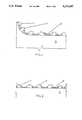
- FIG. 1is a cross-section of a wide wheel abrasive tool made by the process of the present invention.
- FIG. 2is a cross-section of a strip abrasive tool made by the process of the present invention.
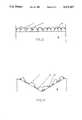
- FIG. 3is a cross-section of a second strip abrasive tool made by the process of the present invention in which the amount of abrasive particles is increased.
- FIG. 4is a cross-section of a V profile abrasive tool made by the process of the present invention.
- the basic abrasive tool of the present inventioncomprises diamond crystals 1 and tungsten carbide particles 2 brazed to a metal substrate 4 by way of a copper/nickel-chrome alloy brazing material 3.
- the present inventionis a brazed abrasive cutting or grinding tool utilizing individual particles of tungsten carbide 2 and diamond crystals 1 applied jointly to one substrate 4.
- a new methodhas been developed utilizing the combination of nickel-based alloys and copper-based alloys to form a braze material 3 capable of bonding both the diamond crystals 1 and the tungsten carbide particles 2 to a metal substrate 4.
- the copper-based alloyis used in a paste form and comprises 50 to 60 percent cuprous oxide, 20 to 30 percent copper and 11 to 17 percent ethylene glycol.
- the nickel-based alloyis used in a powder form and comprises 60 to 80 percent nickel, 7 to 20 percent chromium, and the balance being made up of boron, silicon, and iron not to exceed 8 percent each.
- the ratio of copper alloy to nickel alloy in the brazing material 3must be maintained to stay within the range of 40 to 50 percent copper alloy to 50 to 60 percent nickel alloy in the brazing material 3.
- the copper alloy, nickel alloy and brazing material composition rangesare shown in Table I.
- the metal substrate 4first is coated with the copper-based alloy paste.
- the abrasive particles 1,2then are applied to the copper-based alloy paste.
- the nickel-based alloy powderthen is applied to the surface of the abrasive particles 1,2 and the copper-based alloy paste.
- the coated piece partis preheated and then brazed.
- the method of brazing the abrasives particles 1,2 to the metal substrate 4comprises the first step of applying the copper-based alloy paste to the metal substrate 4 by means of spraying or brushing to achieve the desired coating thickness.
- the coating thickness of the copper-based alloy pasteis determined by the diamond particles 1 and tungsten carbide particle 2 sizes relative to how much protrusion is required of the abrasive particles 1,2 out of the braze matrix. For example, for smaller diamond and tungsten carbide particle sizes or for greater protrusion of the particles from the metal substrate, a smaller coating thickness of the copper-based alloy paste is required, while for larger particle sizes or for less protrusion of the particles from the metal substrate, a greater coating thickness of the copper-based alloy paste is required.
- the consistency of the copper pastemay be varied by thinning with ethylene glycol, depending on particle sizes being applied to the surface.
- the abrasive particles 1,2are applied in the required density dependent on product use.
- the size and quantity ratio of the abrasive particles 1,2is selected depending on the type of abrasive tool being made and the use for which the abrasive tool is to be put. In general, it is preferable for the abrasive particles 1,2 to be of similar and consistent sizes. However, there can be situations in which it is preferable to have a range of abrasive particle 1,2 sizes.
- abrasive particles 1,2such as: consistently sized diamond particles 1 combined with equivalently consistently sized tungsten carbide particles 2; consistently sized diamond particles 1 which are larger than or small than consistently sized tungsten carbide particles; a range of sizes of diamond particles 1 combined with consistently sized tungsten carbide particles 2; consistently sized diamond particles 1 combined with a range of sizes of tungsten carbide particles 2; and a range of sizes of diamond particles 1 combined with a range of sizes of tungsten carbide particles 2.
- certain abrasive tools and usesmay require a higher or lower ratio of diamond particles 1 to tungsten carbide particles 2.
- the nickel-based alloy powderthen is applied to the surface of the copper-based alloy and abrasive particles 1,2. It is preferred to use a nickel-based alloy powder which will fit through a 325 mesh (U.S.) sieve. While other mesh sizes of nickel-based alloy powder are suitable, a 325 mesh size allows for the more efficient brazing.
- the nickel-based alloyis held suspended in the copper-based alloy paste due to the liquidity consistency of the paste. Fluxing agents are not used or required in the present brazing procedure.
- the piece partthen is preheated in a non-atmosphere controlled furnace at approximately 500° F. to bake out any existing moisture.
- the piece partmay be preheated at any temperature above 212° F. to evaporate any moisture on the piece part, in the copper-based alloy or the nickel-based alloy, or on the abrasive particles 1,2. It is preferred to keep the preheating temperature below about 1000° F. to prevent premature melting and degradation of the various components.
- the preheat time and temperatureare determined by part size and weight so as to assure that complete drying is accomplished.
- the piece partthen is brazed in an atmosphere controlled furnace maintained at a temperature of between approximately 2080° F. and 2200° F., and preferably approximately 2150° F. ⁇ 10° F. Purity of the atmosphere within the furnace is maintained using a mix of hydrogen and nitrogen gases at a ratio of approximately 70 percent nitrogen to 30 percent hydrogen. Oxygen levels during the braze cycle must be maintained below 0.05 percent or insufficient bonding of the abrasive particles 1,2 to the metal substrate 4 will occur.
- the abrasive toolis left in the furnace until the entire part has achieved the 2150° F. set point temperature. After set point temperature has been achieved, the piece part remains in the furnace for an additional 15 minute saturation time to allow all braze materials to alloy together.
- the furnacemust be maintained at a temperature above the melting points of both the copper-based alloy and the nickel-based alloy for proper brazing of the abrasive particles 1,2 to the metal substrate 4 to occur.
- both the nickel-based alloy and copper-based alloyare above their melting points, become molten and combine to produce a braze alloy 3 which consists of approximately 25 to 30 percent cuprous oxide, 10 to 15 percent copper, 3 to 10 percent chromium, 30 to 40 percent nickel, with the balance being boron, silicon, iron and any other compounds present prior to brazing.
- the piece partis cooled, preferably using a water cooled chamber, to bring the piece part back to below approximately 120° F., and preferably approximately 70° F.
- the atmospheremust be maintained in the cooling chamber, typically utilizing a nitrogen flush.
- the brazing processmay be accomplished, and the same results may be obtained, by use of a continuous feed furnace that has the ability to maintain the same purity levels.
- the above-described processcan be used to make a variety of abrasive tools of different shapes and sizes and for different uses, comprising varying amounts and sizes of the respective abrasive particles 1,2.
- the following examplesillustrate the above-described process as used in producing the illustrative abrasive tools shown in FIGS. 1-4.
- a copper-based alloy pastecomprising 60 percent cuprous oxide, 30 percent copper and 10 percent ethylene glycol is applied by brush to a 7" diameter by 23/8" wide wheel machined from 1018 HRS. Tungsten carbide particles sized at 0.008" maximum and 0.006" minimum are applied to the outside diameter of the wheel at 25 percent coverage. Immediately after, diamond particles of 60/80 mesh are applied to the copper-based alloy paste to achieve a total density of 50 percent coverage. Nickel alloy powder consisting of 14.6 percent chromium, 2.9 percent boron and 4.7 percent silicon and the remainder being nickel is applied to the outside diameter of the wheel where it adheres to the copper alloy paste. The part then is dryed at 500° F.
- the piece partthen is placed into a 2150° F. atmosphere controlled furnace and allowed to come up to the set-point temperature (2150° F.). A saturation time of 15 minutes is given to the part to achieve the set-point temperature to allow the braze materials to alloy together.
- the piece partthen is cooled in a nitrogen flushed cool zone and allowed to cool to 70° F.
- the abrasive particlesare brazed to the metal substrate with excess of 50 percent of each individual abrasive particle protruding out of the braze alloy.
- Example 2a strip of 1018 mild steel 1/2" wide by 0.125" thick by 8" long is coated in the same procedure as Example 1.
- the reduced weight of this partallowed this item to have the braze cycle performed in a continuous feed atmosphere controlled furnace. All temperature and gas ratios were maintained as in Example 1.
- the feed ratewas set at 1.6 inches per minute to achieve a 15 minute time cycle in a 24" heat zone. Braze results were the same as accomplished in Example 1.
- Example 3all procedures are followed as in Example 1, with the exception of the amount of abrasive applied.
- a ratio of 50 percent tungsten carbide to 50 percent diamondis applied to achieve a full 100 percent density coverage.
- a second layer of copper-based alloyis applied to the abrasives by means of spraying to give a surface for the nickel-based alloy to adhere.
- the braze resultsgive a tool with less abrasive protruding, but a much more dense coating. This gives a tool with reduced cutting speed capability, but much more durability for extended life.
- Example 1With respect to FIG. 4, the procedures of Example 1 are changed to accommodate a special V profile in the face of the tool.
- the toolconsists of a 12" diameter by 2" wide steel wheel. Copper-based alloy paste is applied as in Example 1 and the 25 percent coverage of carbide was applied to the V profile only. At this point the part is run through a braze cycle just as in Example 1. After part is cooled, a second coat of copper-based alloy past is applied to the V area. Procedures were followed as in Example 1 to apply the balance of diamond particles and nickel-based alloy. The braze cycle then is repeated to allow the copper-based alloy to remelt and alloy in with the molten nickel-based alloy. This produces the same braze alloy as in Example 1. This procedure is used when difficulty is encountered due to special part configuration.
Landscapes
- Engineering & Computer Science (AREA)
- Mechanical Engineering (AREA)
- Chemical & Material Sciences (AREA)
- Ceramic Engineering (AREA)
- Inorganic Chemistry (AREA)
- Polishing Bodies And Polishing Tools (AREA)
Abstract
Description
1. Field of the Invention
This invention generally relates to a method for brazing tungsten carbide particles and diamond crystals in one operation, and more specifically relates to a method for brazing tungsten carbide particles and diamond crystal in one operation to a metal substrate to produce an improved abrasive tool.
2. Prior Art
Abrasive tools typically comprise a hard abrasive particle, such as diamond crystals or tungsten carbide particles, adhered to a substrate, such as a metal substrate. For example, abrasive tools comprising tungsten carbide particles brazed to a metal substrate and abrasive tools comprising diamond crystals brazed to a metal substrate are known in the art. Thus, prior techniques predominantly have involved either independently brazing tungsten carbide particles to a substrate or independently brazing diamond crystals to a substrate. Due to production and material costs of diamond tooling, tungsten carbide has been commonly used as an economical replacement when cutting or grinding requirements would allow.
Prior art methods of brazing diamond crystals to metal substrates have required the use of vacuum or reducing atmosphere furnaces operating at 1300° C. or less. The primary brazing alloy for brazing diamond crystals to metal substrates comprises a cobalt or nickel base and contains a certain percentage of chromium.
Prior art methods of brazing tungsten carbide to metal substrates utilize similar procedures and equipment to the methods for brazing diamond crystals to metal substrates. However, there is a wider range of braze alloys which are suitable for wetting to the tungsten carbide particles than there are for wetting to the diamond crystals. These braze alloys include the cobalt, nickel, and copper based alloy families. Prior attempts at utilizing copper as a braze alloy in diamond brazing has had limited success due to the lack of the ability of the copper to wet to the diamond crystal. This would produce little or no adhesion of the particle to the substrate.
U.S. Pat. No. 4,018,576 to Lowder et al. discloses a diamond abrasive tool and method of manufacture. The Lowder patent teaches a direct brazing technique of diamond crystals to a substrate surface using a brazing alloy of the cobalt and/or nickel base type which contains certain percentages of chromium. The Lowder method is characterized in that it teaches that by using a specific composition for the brazing alloy, no pre-conditioning of the diamond surface is necessary to obtain the wetting of the diamond surface by the brazing alloy. The brazing alloy used in the Lowder method comprises from 60 percent to 90 percent nickel or cobalt or mixtures thereof, up to 12 percent boron, silicon and/or phophorous, and 2 percent to 30 percent chromium.
U.S. Pat. No. 4,039,700 to Sohmer et al. discloses a hard metal coating process for metal objects. In the Sohmer patent, hard metal granules containing tungsten carbide are deposited onto a steel saw blade with a binder material comprising nickel alloys, cobalt alloys or low-melting iron alloys with boron and/or silicon. The steel blade then is heated in a protective gas atmosphere using a high-frequency electric current which provides an induction loop to cause the brazing. The preferred binder material comprises 84 percent nickel, 10 percent cobalt and no copper or chromium.
U.S. Pat. No. 4,749,594 to Malikowski et al. discloses a method for coating surfaces with hard substances. The Malikowski process utilizes a silver-based brazing alloy comprising 60 percent to 90 percent silver, 2 percent to 35 percent copper, 2 percent to 30 percent tin and/or indium, and 2 percent to 20 percent of certain other metals. Silver-based brazing alloys typically are less economical than copper-based and/or nickel-based alloys. Further, silver-based brazing alloys do not have the range of applicability as do copper-based alloys and nickel-based alloys.
Diamond crystals have exceptional durability and long lasting characteristics when used in the abrasive setting. Tungsten carbide particles have the ability to develop extremely sharp cutting edges and make exceptional abrasive tools. Typically, while the methods for brazing diamond crystals and tungsten carbide particles independently to substrates are similar, the brazing alloys most suitable for each are not the same. Therefore, it can be seen that there is a need for a method for brazing combinations of diamond crystals and tungsten carbide particles to metal substrates utilizing a single, economical brazing alloy.
The present invention relates to an abrasive tool utilizing two abrasives interfaced together in one application process, and a process for producing such an abrasive tool. This process consists of a newly developed procedure for brazing which employs the combination of a nickel-based alloy and copper-based alloy to braze a combination of tungsten carbide particles and diamond crystals to a metal substrate, giving the ability to take advantage of both abrasives superior qualities in one abrasive tool. This invention combines the advantage of the diamond crystals' durability and long lasting characteristics with the advantage of the tungsten carbide's ability to develop extremely sharp cutting edges, producing an abrasive tool that gives extremely fast cutting abilities along with exceptional tool life.
A combination of a nickel-based alloy and a copper-based alloy is used as the brazing medium for brazing a combination of diamond crystals and tungsten carbide particles to a metal substrate. The brazing medium has an overall composition of from 40 percent to 50 percent copper-based alloy and from 50 percent to 60 percent nickel-based alloy, with the copper-based alloy comprising 50 percent to 60 percent cuprous oxide, 20 percent to 30 percent copper, and 11 percent to 17 percent ethylene glycol, and the nickel-based alloy comprising 60 percent to 80 percent nickel, 7 percent to 20 percent chromium, and the balance comprising boron, silicon, and iron not to exceed 8 percent each.
To produce the abrasive tool, the copper-based alloy, in the form of a paste, is applied to the surface of the metal substrate. The abrasive particles then are applied over the copper-based alloy paste in a predetermined density depending upon the product use. The nickel-based alloy, in the form of a powder, then is applied over the abrasive particles and copper-based alloy. The coated tool then is preheated at approximately 500° F. and then brazed in an atmosphere controlled furnace at approximately 2150° F. The preferred atmosphere within the furnace consists essentially of 70 percent nitrogen gas and 30 percent hydrogen gas with less than 0.05 percent oxygen. After brazing, the tool is cooled in a water cooled chamber in a controlled atmosphere using a nitrogen flush.
Therefore, it is the primary object of the present invention to produce an economical abrasive tool providing the versatility associated with brazing tungsten carbide particles while at the same time achieving the proven ability of diamond crystals.
It is another object of the present invention to provide an improved method for brazing abrasive particles onto a metal substrate.
A further object of the present invention is to produce an abrasive tool which utilizes a combination of diamond crystals and tungsten carbide particles as the abrading medium.
Yet another object of the present invention is to provide a method for brazing combinations of diamond crystals and tungsten carbide particles to a metal substrate.
A further object of the present invention is to provide a brazing material comprising copper-based alloys and nickel-based alloys which is suitable for brazing a combination of diamond crystals and tungsten carbide particles to a metal substrate.
A further object of the present invention is to produce an abrasive tool which has long lasting characteristics, extremely sharp cutting edges, resulting in an abrasive tool that has extremely good cutting abilities combined with exceptional tool life.
Another object of the present invention is to produce an abrasive tool which is economical, durable, and simple to manufacture, and a method for producing an abrasive tool which is economical, and simple and efficient in procedure.
Further objects and advantages of the present invention will be apparent from the following description with reference to the accompanying drawings in which preferred embodiments of the invention are shown.
FIG. 1 is a cross-section of a wide wheel abrasive tool made by the process of the present invention.
FIG. 2 is a cross-section of a strip abrasive tool made by the process of the present invention.
FIG. 3 is a cross-section of a second strip abrasive tool made by the process of the present invention in which the amount of abrasive particles is increased.
FIG. 4 is a cross-section of a V profile abrasive tool made by the process of the present invention.
With reference now to FIGS. 1-4, preferred embodiments of the abrasive tools of the present invention made by the process of the present invention are shown. Like reference numerals used in FIGS. 1-4 represent corresponding parts throughout the several views. The basic abrasive tool of the present invention comprisesdiamond crystals 1 andtungsten carbide particles 2 brazed to ametal substrate 4 by way of a copper/nickel-chrome alloy brazingmaterial 3.
The present invention is a brazed abrasive cutting or grinding tool utilizing individual particles oftungsten carbide 2 anddiamond crystals 1 applied jointly to onesubstrate 4. A new method has been developed utilizing the combination of nickel-based alloys and copper-based alloys to form abraze material 3 capable of bonding both thediamond crystals 1 and thetungsten carbide particles 2 to ametal substrate 4. The copper-based alloy is used in a paste form and comprises 50 to 60 percent cuprous oxide, 20 to 30 percent copper and 11 to 17 percent ethylene glycol. The nickel-based alloy is used in a powder form and comprises 60 to 80 percent nickel, 7 to 20 percent chromium, and the balance being made up of boron, silicon, and iron not to exceed 8 percent each. The ratio of copper alloy to nickel alloy in thebrazing material 3 must be maintained to stay within the range of 40 to 50 percent copper alloy to 50 to 60 percent nickel alloy in thebrazing material 3. The copper alloy, nickel alloy and brazing material composition ranges are shown in Table I.
TABLE I ______________________________________ Compositions (% by weight) Copper Alloy Nickel Alloy Brazing Material ______________________________________ 50-60% Cuprous 60-80% Nickel 20-30 Copper Oxide Oxide 20-30% Copper 7-20% Chromium 10-15% Copper 11-17% Ethylene <8% Boron 3-10% Chrom- Glycol ium <8% Silicon 30-40% Nickel <8% Iron <5% Boron <5% Silicon <5% Nickel ______________________________________
To produce the abrasive tools, also referred to as piece parts or parts, of the present invention, themetal substrate 4 first is coated with the copper-based alloy paste. Theabrasive particles abrasive particles
More specifically the method of brazing theabrasives particles metal substrate 4 comprises the first step of applying the copper-based alloy paste to themetal substrate 4 by means of spraying or brushing to achieve the desired coating thickness. The coating thickness of the copper-based alloy paste is determined by thediamond particles 1 andtungsten carbide particle 2 sizes relative to how much protrusion is required of theabrasive particles
After application of the copper-based alloy to themetal substrate 4, theabrasive particles abrasive particles abrasive particles abrasive particle abrasive particles sized diamond particles 1 combined with equivalently consistently sizedtungsten carbide particles 2; consistentlysized diamond particles 1 which are larger than or small than consistently sized tungsten carbide particles; a range of sizes ofdiamond particles 1 combined with consistently sizedtungsten carbide particles 2; consistentlysized diamond particles 1 combined with a range of sizes oftungsten carbide particles 2; and a range of sizes ofdiamond particles 1 combined with a range of sizes oftungsten carbide particles 2. Further, although it is preferable to have relatively equal quantities ofdiamond particles 1 andtungsten carbide particles 2, certain abrasive tools and uses may require a higher or lower ratio ofdiamond particles 1 totungsten carbide particles 2.
The nickel-based alloy powder then is applied to the surface of the copper-based alloy andabrasive particles
The piece part then is preheated in a non-atmosphere controlled furnace at approximately 500° F. to bake out any existing moisture. Obviously, the piece part may be preheated at any temperature above 212° F. to evaporate any moisture on the piece part, in the copper-based alloy or the nickel-based alloy, or on theabrasive particles
The piece part then is brazed in an atmosphere controlled furnace maintained at a temperature of between approximately 2080° F. and 2200° F., and preferably approximately 2150° F. ±10° F. Purity of the atmosphere within the furnace is maintained using a mix of hydrogen and nitrogen gases at a ratio of approximately 70 percent nitrogen to 30 percent hydrogen. Oxygen levels during the braze cycle must be maintained below 0.05 percent or insufficient bonding of theabrasive particles metal substrate 4 will occur. The abrasive tool is left in the furnace until the entire part has achieved the 2150° F. set point temperature. After set point temperature has been achieved, the piece part remains in the furnace for an additional 15 minute saturation time to allow all braze materials to alloy together. The furnace must be maintained at a temperature above the melting points of both the copper-based alloy and the nickel-based alloy for proper brazing of theabrasive particles metal substrate 4 to occur.
At approximately 2000° F., both the nickel-based alloy and copper-based alloy are above their melting points, become molten and combine to produce abraze alloy 3 which consists of approximately 25 to 30 percent cuprous oxide, 10 to 15 percent copper, 3 to 10 percent chromium, 30 to 40 percent nickel, with the balance being boron, silicon, iron and any other compounds present prior to brazing.
After the braze cycle, the piece part is cooled, preferably using a water cooled chamber, to bring the piece part back to below approximately 120° F., and preferably approximately 70° F. The atmosphere must be maintained in the cooling chamber, typically utilizing a nitrogen flush.
The brazing process may be accomplished, and the same results may be obtained, by use of a continuous feed furnace that has the ability to maintain the same purity levels.
The above-described process can be used to make a variety of abrasive tools of different shapes and sizes and for different uses, comprising varying amounts and sizes of the respectiveabrasive particles
With respect to FIG. 1, a copper-based alloy paste comprising 60 percent cuprous oxide, 30 percent copper and 10 percent ethylene glycol is applied by brush to a 7" diameter by 23/8" wide wheel machined from 1018 HRS. Tungsten carbide particles sized at 0.008" maximum and 0.006" minimum are applied to the outside diameter of the wheel at 25 percent coverage. Immediately after, diamond particles of 60/80 mesh are applied to the copper-based alloy paste to achieve a total density of 50 percent coverage. Nickel alloy powder consisting of 14.6 percent chromium, 2.9 percent boron and 4.7 percent silicon and the remainder being nickel is applied to the outside diameter of the wheel where it adheres to the copper alloy paste. The part then is dryed at 500° F. for 30 minutes until all moisture is removed from the part. The piece part then is placed into a 2150° F. atmosphere controlled furnace and allowed to come up to the set-point temperature (2150° F.). A saturation time of 15 minutes is given to the part to achieve the set-point temperature to allow the braze materials to alloy together. The piece part then is cooled in a nitrogen flushed cool zone and allowed to cool to 70° F. The abrasive particles are brazed to the metal substrate with excess of 50 percent of each individual abrasive particle protruding out of the braze alloy.
With respect to FIG. 2, a strip of 1018mild steel 1/2" wide by 0.125" thick by 8" long is coated in the same procedure as Example 1. The reduced weight of this part allowed this item to have the braze cycle performed in a continuous feed atmosphere controlled furnace. All temperature and gas ratios were maintained as in Example 1. The feed rate was set at 1.6 inches per minute to achieve a 15 minute time cycle in a 24" heat zone. Braze results were the same as accomplished in Example 1.
With respect to FIG. 3, all procedures are followed as in Example 1, with the exception of the amount of abrasive applied. A ratio of 50 percent tungsten carbide to 50 percent diamond is applied to achieve a full 100 percent density coverage. A second layer of copper-based alloy is applied to the abrasives by means of spraying to give a surface for the nickel-based alloy to adhere. The braze results give a tool with less abrasive protruding, but a much more dense coating. This gives a tool with reduced cutting speed capability, but much more durability for extended life.
With respect to FIG. 4, the procedures of Example 1 are changed to accommodate a special V profile in the face of the tool. The tool consists of a 12" diameter by 2" wide steel wheel. Copper-based alloy paste is applied as in Example 1 and the 25 percent coverage of carbide was applied to the V profile only. At this point the part is run through a braze cycle just as in Example 1. After part is cooled, a second coat of copper-based alloy past is applied to the V area. Procedures were followed as in Example 1 to apply the balance of diamond particles and nickel-based alloy. The braze cycle then is repeated to allow the copper-based alloy to remelt and alloy in with the molten nickel-based alloy. This produces the same braze alloy as in Example 1. This procedure is used when difficulty is encountered due to special part configuration.
The above description of preferred embodiments, examples and figures are for illustrative purposes only and are not intended to limit the scope and spirit of the present invention, and its equivalents, as defined by the appended claims. One skilled in the art will recognize that many variations may be made to the procedure described in this specification to result in abrasive tools different from those described herein without departing from the scope and spirit of the invention.
Claims (20)
1. A method for brazing tungsten carbide particles and diamond particles to a substrate, comprising the steps of:
a. applying a coating of a copper-based alloy material to the substrate;
b. applying a coating of tungsten carbide particles and a coating of diamond particles to said copper-based alloy material;
c. applying a coating of a nickel-based alloy material over said copper-based alloy material, said tungsten carbide particles and said diamond particles; and
d. heating said substrate coated with said copper-based alloy material, said tungsten carbide particles, said diamond particles and said nickel-based alloy material to a temperature greater than the melting point of both said copper-based alloy material and said nickel-based alloy material.
2. The method as claimed in claim 1, wherein said copper-based alloy material comprises cuprous oxide, copper, and ethylene glycol.
3. The method as claimed in claim 2, wherein said nickel-based alloy material comprises nickel and chromium.
4. The method as claimed in claim 3, wherein said nickel-based alloy material comprises from 60 to 80 percent nickel, from 7 to 20 percent chromium, up to 8 percent boron, up to 8 percent silicon, and up to 8 percent iron.
5. The method as claimed in claim 3, wherein said heating step occurs at a temperature greater than approximately 2000° F.
6. The method as claimed in claim 5, further comprising a preheating step prior to said heating step, wherein said preheating step occurs at a temperature above at least 212° F. and below the melting point of both said copper-based alloy material and said nickel-based alloy material.
7. The method as claimed in claim 6, further comprising a cooling step after said heating step.
8. The method as claimed in claim 7, wherein said cooling step cools the heated coated substrate to a temperature of below approximately 120° F.
9. The method as claimed in claim 7, wherein said cooling step occurs in a controlled atmosphere.
10. The method as claimed in claim 9, wherein said controlled atmosphere consists essentially of a nitrogen flush.
11. The method as claimed in claim 3, wherein said copper-based alloy material is in paste form.
12. The method as claimed in claim 11, wherein said nickel-based alloy material is in powder form.
13. The method as claimed in claim 12, wherein said nickel-based alloy material has a mesh size of less than or equal to 325.
14. The method as claimed in claim 3, further comprising a step of applying over said tungsten carbide particles and said diamond particles a second coating of said copper-based alloy material.
15. The method as claimed in claim 14, wherein said coating of tungsten carbide particles covers approximately 50 percent of the surface area of said substrate and said coating of diamond particles covers approximately 50 percent of the surface area of said substrate.
16. The method as claimed in claim 3, wherein said coating of tungsten carbide particles covers up to 50 percent of the surface area of said substrate and said coating of diamond particles covers up to 50 percent of the surface area of said substrate.
17. The method as claimed in claim 3, wherein said substrate is a metal.
18. The method as claimed in claim 3, wherein said heating step occurs in a controlled atmosphere.
19. The method as claimed in claim 18, wherein said controlled atmosphere consists essentially of nitrogen and hydrogen.
20. The method as claimed in claim 2, wherein said copper-based alloy material comprises from 50 to 60 percent by weight cuprous oxide, from 20 to 30 percent copper, and from 11 to 17 percent ethylene glycol.
Priority Applications (1)
| Application Number | Priority Date | Filing Date | Title |
|---|---|---|---|
| US07/945,235US5271547A (en) | 1992-09-15 | 1992-09-15 | Method for brazing tungsten carbide particles and diamond crystals to a substrate and products made therefrom |
Applications Claiming Priority (1)
| Application Number | Priority Date | Filing Date | Title |
|---|---|---|---|
| US07/945,235US5271547A (en) | 1992-09-15 | 1992-09-15 | Method for brazing tungsten carbide particles and diamond crystals to a substrate and products made therefrom |
Publications (1)
| Publication Number | Publication Date |
|---|---|
| US5271547Atrue US5271547A (en) | 1993-12-21 |
Family
ID=25482831
Family Applications (1)
| Application Number | Title | Priority Date | Filing Date |
|---|---|---|---|
| US07/945,235Expired - Fee RelatedUS5271547A (en) | 1992-09-15 | 1992-09-15 | Method for brazing tungsten carbide particles and diamond crystals to a substrate and products made therefrom |
Country Status (1)
| Country | Link |
|---|---|
| US (1) | US5271547A (en) |
Cited By (45)
| Publication number | Priority date | Publication date | Assignee | Title |
|---|---|---|---|---|
| EP0704393A1 (en) | 1994-09-28 | 1996-04-03 | Rapistan Demag Corp. | A conveyor diverter system |
| US5656045A (en)* | 1995-06-07 | 1997-08-12 | Wiand Ronald C | Method of spaced distribution for diamond abrasive articles |
| US5762660A (en)* | 1996-04-03 | 1998-06-09 | Regents Of The University Of California | Precision replenishable grinding tool and manufacturing process |
| US5925154A (en)* | 1997-08-14 | 1999-07-20 | Materials Specialties Scandinavia, Inc. | Carbon bonded abrasive tools and method for producing |
| US6045029A (en)* | 1993-04-16 | 2000-04-04 | Baker Hughes Incorporated | Earth-boring bit with improved rigid face seal |
| US6209185B1 (en) | 1993-04-16 | 2001-04-03 | Baker Hughes Incorporated | Earth-boring bit with improved rigid face seal |
| US6436470B1 (en)* | 1998-04-25 | 2002-08-20 | Penn State Research Foundation | Method of applying a hard-facing material to a substrate |
| US6470558B1 (en)* | 1994-04-08 | 2002-10-29 | Cutting And Wear Resistant Developments, Limited | Method for facing a substrate |
| US20020173234A1 (en)* | 1999-11-22 | 2002-11-21 | Chien-Min Sung | Diamond grid CMP pad dresser |
| US20030145843A1 (en)* | 2002-01-25 | 2003-08-07 | Wendt Gmbh | Dressing wheel and method of making same |
| US20050095959A1 (en)* | 1999-11-22 | 2005-05-05 | Chien-Min Sung | Contoured CMP pad dresser and associated methods |
| US20090283089A1 (en)* | 1997-04-04 | 2009-11-19 | Chien-Min Sung | Brazed Diamond Tools and Methods for Making the Same |
| US20100316880A1 (en)* | 2009-06-16 | 2010-12-16 | Tix Corporation | High-toughness wear-resistant composite material and a method of manufacturing the same |
| US20110008532A1 (en)* | 2007-12-21 | 2011-01-13 | Mold-Masters (2007) Limited | Method of manufacturing hot-runner component and hot-runner components thereof |
| US20110045124A1 (en)* | 2007-09-21 | 2011-02-24 | Mold-Masters (2007) Limited | Injection Molding Nozzle Having A Nozzle Tip With Diamond Crown |
| US8393934B2 (en) | 2006-11-16 | 2013-03-12 | Chien-Min Sung | CMP pad dressers with hybridized abrasive surface and related methods |
| US8398466B2 (en) | 2006-11-16 | 2013-03-19 | Chien-Min Sung | CMP pad conditioners with mosaic abrasive segments and associated methods |
| US8622787B2 (en) | 2006-11-16 | 2014-01-07 | Chien-Min Sung | CMP pad dressers with hybridized abrasive surface and related methods |
| US8777699B2 (en) | 2010-09-21 | 2014-07-15 | Ritedia Corporation | Superabrasive tools having substantially leveled particle tips and associated methods |
| US8808870B2 (en) | 2011-11-28 | 2014-08-19 | Kennametal Inc. | Functionally graded coating |
| US8974270B2 (en) | 2011-05-23 | 2015-03-10 | Chien-Min Sung | CMP pad dresser having leveled tips and associated methods |
| US9011563B2 (en) | 2007-12-06 | 2015-04-21 | Chien-Min Sung | Methods for orienting superabrasive particles on a surface and associated tools |
| CN104646852A (en)* | 2014-12-31 | 2015-05-27 | 苏州铜宝锐新材料有限公司 | Braze coating paste and application thereof |
| US9138862B2 (en) | 2011-05-23 | 2015-09-22 | Chien-Min Sung | CMP pad dresser having leveled tips and associated methods |
| US9199357B2 (en) | 1997-04-04 | 2015-12-01 | Chien-Min Sung | Brazed diamond tools and methods for making the same |
| US9204693B2 (en) | 2012-08-20 | 2015-12-08 | Forever Mount, LLC | Brazed joint for attachment of gemstones to each other and/or a metallic mount |
| US9221154B2 (en) | 1997-04-04 | 2015-12-29 | Chien-Min Sung | Diamond tools and methods for making the same |
| US9238207B2 (en) | 1997-04-04 | 2016-01-19 | Chien-Min Sung | Brazed diamond tools and methods for making the same |
| US9346101B2 (en) | 2013-03-15 | 2016-05-24 | Kennametal Inc. | Cladded articles and methods of making the same |
| US20160214230A1 (en)* | 2013-10-17 | 2016-07-28 | Shin-Etsu Handotai Co., Ltd. | Apparatus for dressing urethane foam pad for use in polishing |
| US9409280B2 (en) | 1997-04-04 | 2016-08-09 | Chien-Min Sung | Brazed diamond tools and methods for making the same |
| US9463552B2 (en) | 1997-04-04 | 2016-10-11 | Chien-Min Sung | Superbrasvie tools containing uniformly leveled superabrasive particles and associated methods |
| US9475169B2 (en) | 2009-09-29 | 2016-10-25 | Chien-Min Sung | System for evaluating and/or improving performance of a CMP pad dresser |
| CN106141493A (en)* | 2015-08-25 | 2016-11-23 | 洛阳新巨能高热技术有限公司 | A kind of diamond compact brazing solder and welding procedure thereof |
| US9561562B2 (en) | 2011-04-06 | 2017-02-07 | Esco Corporation | Hardfaced wearpart using brazing and associated method and assembly for manufacturing |
| US9724802B2 (en) | 2005-05-16 | 2017-08-08 | Chien-Min Sung | CMP pad dressers having leveled tips and associated methods |
| US20170252875A1 (en)* | 2016-03-02 | 2017-09-07 | General Electric Company | Braze composition, brazing process, and brazed article |
| US9862029B2 (en) | 2013-03-15 | 2018-01-09 | Kennametal Inc | Methods of making metal matrix composite and alloy articles |
| US9868100B2 (en) | 1997-04-04 | 2018-01-16 | Chien-Min Sung | Brazed diamond tools and methods for making the same |
| US10221702B2 (en) | 2015-02-23 | 2019-03-05 | Kennametal Inc. | Imparting high-temperature wear resistance to turbine blade Z-notches |
| CN109706445A (en)* | 2018-12-13 | 2019-05-03 | 郑州机械研究所有限公司 | A kind of double-layer rotary tiller wear-resistant coating |
| US10543528B2 (en) | 2012-01-31 | 2020-01-28 | Esco Group Llc | Wear resistant material and system and method of creating a wear resistant material |
| CN112453763A (en)* | 2020-12-03 | 2021-03-09 | 广东省石油化工职业技术学校 | Preparation method of diamond grinding tool |
| CN112570928A (en)* | 2021-01-06 | 2021-03-30 | 长沙理工大学 | Doped CeSi2Ni-based brazing filler metal for alloy and brazed diamond thereof |
| US11117208B2 (en) | 2017-03-21 | 2021-09-14 | Kennametal Inc. | Imparting wear resistance to superalloy articles |
Citations (8)
| Publication number | Priority date | Publication date | Assignee | Title |
|---|---|---|---|---|
| US3378361A (en)* | 1965-01-29 | 1968-04-16 | Dexco Corp | Method of making a tool for removing material from workpieces and product thereof |
| US3751283A (en)* | 1971-03-08 | 1973-08-07 | Remington Arms Co Inc | Armored metal tools and production thereof |
| US3854898A (en)* | 1970-02-19 | 1974-12-17 | Remington Arms Co Inc | A method for producing armored rod and wire saws |
| US4018576A (en)* | 1971-11-04 | 1977-04-19 | Abrasive Technology, Inc. | Diamond abrasive tool |
| US4039700A (en)* | 1973-05-09 | 1977-08-02 | Robert Bosch G.M.B.H. | Hard metal coating process for metal objects |
| US4749594A (en)* | 1986-10-17 | 1988-06-07 | Degussa Aktiengesellschaft | Method for coating surfaces with hard substances |
| US4776862A (en)* | 1987-12-08 | 1988-10-11 | Wiand Ronald C | Brazing of diamond |
| US4931069A (en)* | 1987-10-30 | 1990-06-05 | Wiand Ronald C | Abrasive tool with improved swarf clearance and method of making |
- 1992
- 1992-09-15USUS07/945,235patent/US5271547A/ennot_activeExpired - Fee Related
Patent Citations (8)
| Publication number | Priority date | Publication date | Assignee | Title |
|---|---|---|---|---|
| US3378361A (en)* | 1965-01-29 | 1968-04-16 | Dexco Corp | Method of making a tool for removing material from workpieces and product thereof |
| US3854898A (en)* | 1970-02-19 | 1974-12-17 | Remington Arms Co Inc | A method for producing armored rod and wire saws |
| US3751283A (en)* | 1971-03-08 | 1973-08-07 | Remington Arms Co Inc | Armored metal tools and production thereof |
| US4018576A (en)* | 1971-11-04 | 1977-04-19 | Abrasive Technology, Inc. | Diamond abrasive tool |
| US4039700A (en)* | 1973-05-09 | 1977-08-02 | Robert Bosch G.M.B.H. | Hard metal coating process for metal objects |
| US4749594A (en)* | 1986-10-17 | 1988-06-07 | Degussa Aktiengesellschaft | Method for coating surfaces with hard substances |
| US4931069A (en)* | 1987-10-30 | 1990-06-05 | Wiand Ronald C | Abrasive tool with improved swarf clearance and method of making |
| US4776862A (en)* | 1987-12-08 | 1988-10-11 | Wiand Ronald C | Brazing of diamond |
Cited By (59)
| Publication number | Priority date | Publication date | Assignee | Title |
|---|---|---|---|---|
| US6045029A (en)* | 1993-04-16 | 2000-04-04 | Baker Hughes Incorporated | Earth-boring bit with improved rigid face seal |
| US6209185B1 (en) | 1993-04-16 | 2001-04-03 | Baker Hughes Incorporated | Earth-boring bit with improved rigid face seal |
| US6470558B1 (en)* | 1994-04-08 | 2002-10-29 | Cutting And Wear Resistant Developments, Limited | Method for facing a substrate |
| US5630495A (en)* | 1994-09-28 | 1997-05-20 | Rapistan Demag Corp. | Conveyor system diverter components having friction-enhancing surfaces and related methods of use |
| US5735388A (en)* | 1994-09-28 | 1998-04-07 | Mannesmann Dematic Rapistan Corp. | Conveyor system diverter components having friction-enhancing surfaces and related methods of use |
| EP0704393A1 (en) | 1994-09-28 | 1996-04-03 | Rapistan Demag Corp. | A conveyor diverter system |
| US5656045A (en)* | 1995-06-07 | 1997-08-12 | Wiand Ronald C | Method of spaced distribution for diamond abrasive articles |
| EP0747168A3 (en)* | 1995-06-07 | 1997-10-08 | Wiand Ronald C | Method of spaced distribution for diamond abrasive articles |
| US5762660A (en)* | 1996-04-03 | 1998-06-09 | Regents Of The University Of California | Precision replenishable grinding tool and manufacturing process |
| US9868100B2 (en) | 1997-04-04 | 2018-01-16 | Chien-Min Sung | Brazed diamond tools and methods for making the same |
| US8104464B2 (en) | 1997-04-04 | 2012-01-31 | Chien-Min Sung | Brazed diamond tools and methods for making the same |
| US9238207B2 (en) | 1997-04-04 | 2016-01-19 | Chien-Min Sung | Brazed diamond tools and methods for making the same |
| US9199357B2 (en) | 1997-04-04 | 2015-12-01 | Chien-Min Sung | Brazed diamond tools and methods for making the same |
| US9409280B2 (en) | 1997-04-04 | 2016-08-09 | Chien-Min Sung | Brazed diamond tools and methods for making the same |
| US9463552B2 (en) | 1997-04-04 | 2016-10-11 | Chien-Min Sung | Superbrasvie tools containing uniformly leveled superabrasive particles and associated methods |
| US9221154B2 (en) | 1997-04-04 | 2015-12-29 | Chien-Min Sung | Diamond tools and methods for making the same |
| US20090283089A1 (en)* | 1997-04-04 | 2009-11-19 | Chien-Min Sung | Brazed Diamond Tools and Methods for Making the Same |
| US5925154A (en)* | 1997-08-14 | 1999-07-20 | Materials Specialties Scandinavia, Inc. | Carbon bonded abrasive tools and method for producing |
| US6436470B1 (en)* | 1998-04-25 | 2002-08-20 | Penn State Research Foundation | Method of applying a hard-facing material to a substrate |
| US7201645B2 (en) | 1999-11-22 | 2007-04-10 | Chien-Min Sung | Contoured CMP pad dresser and associated methods |
| US20070254566A1 (en)* | 1999-11-22 | 2007-11-01 | Chien-Min Sung | Contoured CMP pad dresser and associated methods |
| US20020173234A1 (en)* | 1999-11-22 | 2002-11-21 | Chien-Min Sung | Diamond grid CMP pad dresser |
| US6884155B2 (en)* | 1999-11-22 | 2005-04-26 | Kinik | Diamond grid CMP pad dresser |
| US20050095959A1 (en)* | 1999-11-22 | 2005-05-05 | Chien-Min Sung | Contoured CMP pad dresser and associated methods |
| US20030145843A1 (en)* | 2002-01-25 | 2003-08-07 | Wendt Gmbh | Dressing wheel and method of making same |
| US6827072B2 (en)* | 2002-01-25 | 2004-12-07 | Wendt Gmbh | Dressing wheel and method of making same |
| US9067301B2 (en) | 2005-05-16 | 2015-06-30 | Chien-Min Sung | CMP pad dressers with hybridized abrasive surface and related methods |
| US9724802B2 (en) | 2005-05-16 | 2017-08-08 | Chien-Min Sung | CMP pad dressers having leveled tips and associated methods |
| US8622787B2 (en) | 2006-11-16 | 2014-01-07 | Chien-Min Sung | CMP pad dressers with hybridized abrasive surface and related methods |
| US8398466B2 (en) | 2006-11-16 | 2013-03-19 | Chien-Min Sung | CMP pad conditioners with mosaic abrasive segments and associated methods |
| US8393934B2 (en) | 2006-11-16 | 2013-03-12 | Chien-Min Sung | CMP pad dressers with hybridized abrasive surface and related methods |
| US20110045124A1 (en)* | 2007-09-21 | 2011-02-24 | Mold-Masters (2007) Limited | Injection Molding Nozzle Having A Nozzle Tip With Diamond Crown |
| US9011563B2 (en) | 2007-12-06 | 2015-04-21 | Chien-Min Sung | Methods for orienting superabrasive particles on a surface and associated tools |
| US20110008532A1 (en)* | 2007-12-21 | 2011-01-13 | Mold-Masters (2007) Limited | Method of manufacturing hot-runner component and hot-runner components thereof |
| US8415034B2 (en)* | 2009-06-16 | 2013-04-09 | Tix Corporation | High-toughness wear-resistant composite material and a method of manufacturing the same |
| US20100316880A1 (en)* | 2009-06-16 | 2010-12-16 | Tix Corporation | High-toughness wear-resistant composite material and a method of manufacturing the same |
| US9475169B2 (en) | 2009-09-29 | 2016-10-25 | Chien-Min Sung | System for evaluating and/or improving performance of a CMP pad dresser |
| US8777699B2 (en) | 2010-09-21 | 2014-07-15 | Ritedia Corporation | Superabrasive tools having substantially leveled particle tips and associated methods |
| US9561562B2 (en) | 2011-04-06 | 2017-02-07 | Esco Corporation | Hardfaced wearpart using brazing and associated method and assembly for manufacturing |
| US8974270B2 (en) | 2011-05-23 | 2015-03-10 | Chien-Min Sung | CMP pad dresser having leveled tips and associated methods |
| US9138862B2 (en) | 2011-05-23 | 2015-09-22 | Chien-Min Sung | CMP pad dresser having leveled tips and associated methods |
| US8808870B2 (en) | 2011-11-28 | 2014-08-19 | Kennametal Inc. | Functionally graded coating |
| US10543528B2 (en) | 2012-01-31 | 2020-01-28 | Esco Group Llc | Wear resistant material and system and method of creating a wear resistant material |
| US9204693B2 (en) | 2012-08-20 | 2015-12-08 | Forever Mount, LLC | Brazed joint for attachment of gemstones to each other and/or a metallic mount |
| US10562101B2 (en) | 2013-03-15 | 2020-02-18 | Kennametal Inc. | Methods of making metal matrix composite and alloy articles |
| US9862029B2 (en) | 2013-03-15 | 2018-01-09 | Kennametal Inc | Methods of making metal matrix composite and alloy articles |
| US9346101B2 (en) | 2013-03-15 | 2016-05-24 | Kennametal Inc. | Cladded articles and methods of making the same |
| US20160214230A1 (en)* | 2013-10-17 | 2016-07-28 | Shin-Etsu Handotai Co., Ltd. | Apparatus for dressing urethane foam pad for use in polishing |
| US9981361B2 (en)* | 2013-10-17 | 2018-05-29 | Shin-Etsu Handotai Co., Ltd. | Apparatus for dressing urethane foam pad for use in polishing |
| CN104646852A (en)* | 2014-12-31 | 2015-05-27 | 苏州铜宝锐新材料有限公司 | Braze coating paste and application thereof |
| CN104646852B (en)* | 2014-12-31 | 2017-06-23 | 苏州铜宝锐新材料有限公司 | Pricker applies cream and its application |
| US10221702B2 (en) | 2015-02-23 | 2019-03-05 | Kennametal Inc. | Imparting high-temperature wear resistance to turbine blade Z-notches |
| CN106141493A (en)* | 2015-08-25 | 2016-11-23 | 洛阳新巨能高热技术有限公司 | A kind of diamond compact brazing solder and welding procedure thereof |
| US10052724B2 (en)* | 2016-03-02 | 2018-08-21 | General Electric Company | Braze composition, brazing process, and brazed article |
| US20170252875A1 (en)* | 2016-03-02 | 2017-09-07 | General Electric Company | Braze composition, brazing process, and brazed article |
| US11117208B2 (en) | 2017-03-21 | 2021-09-14 | Kennametal Inc. | Imparting wear resistance to superalloy articles |
| CN109706445A (en)* | 2018-12-13 | 2019-05-03 | 郑州机械研究所有限公司 | A kind of double-layer rotary tiller wear-resistant coating |
| CN112453763A (en)* | 2020-12-03 | 2021-03-09 | 广东省石油化工职业技术学校 | Preparation method of diamond grinding tool |
| CN112570928A (en)* | 2021-01-06 | 2021-03-30 | 长沙理工大学 | Doped CeSi2Ni-based brazing filler metal for alloy and brazed diamond thereof |
Similar Documents
| Publication | Publication Date | Title |
|---|---|---|
| US5271547A (en) | Method for brazing tungsten carbide particles and diamond crystals to a substrate and products made therefrom | |
| US4018576A (en) | Diamond abrasive tool | |
| US3894673A (en) | Method of manufacturing diamond abrasive tools | |
| US6102024A (en) | Brazed superabrasive wire saw and method therefor | |
| US5492771A (en) | Method of making monolayer abrasive tools | |
| US4968326A (en) | Method of brazing of diamond to substrate | |
| EP1378323B1 (en) | Bond for abrasive tool | |
| AU759766B2 (en) | Superabrasive wire saw and method for making the saw | |
| US4725508A (en) | Composite hard chromium compounds for thermal spraying | |
| CA1202768A (en) | Method for forming braze-bonded abrasive turbine blade tip | |
| JPH01301070A (en) | Manufacture of diamond cutting grinding tool | |
| US2833030A (en) | Method of joining metal parts with flexible composite joining material | |
| DE2411785A1 (en) | IMPROVED DIAMOND GRINDING TOOL AND METHOD OF MANUFACTURING IT | |
| US3868235A (en) | Process for applying hard carbide particles upon a substrate | |
| CN101821047A (en) | Braze-metal coated articles and process for making same | |
| CN108972387B (en) | A kind of preparation method of induction brazing single-layer diamond grinding wheel | |
| US3455019A (en) | Method for producing carbide containing materials | |
| US4596691A (en) | Process for forming a laminated strip containing a brazing alloy | |
| CN111250807B (en) | Diamond tool and preparation method thereof | |
| US3523569A (en) | Method of producing carbide containing materials | |
| JPH11207630A (en) | Manufacturing method of super abrasive tool | |
| JPH08108369A (en) | Grinding wheel tool and its manufacture | |
| US3304604A (en) | Method for producing carbide containing materials | |
| US5013587A (en) | Metal filler composition and method of employing same | |
| JPH09272060A (en) | Grinding wheel tool and its manufacture |
Legal Events
| Date | Code | Title | Description |
|---|---|---|---|
| AS | Assignment | Owner name:TUNCO MANUFACTURING, INC., GEORGIA Free format text:ASSIGNMENT OF ASSIGNORS INTEREST.;ASSIGNOR:CARLSON, STEVEN K.;REEL/FRAME:006277/0103 Effective date:19920914 | |
| FPAY | Fee payment | Year of fee payment:4 | |
| REMI | Maintenance fee reminder mailed | ||
| LAPS | Lapse for failure to pay maintenance fees | ||
| LAPS | Lapse for failure to pay maintenance fees | Free format text:PATENT EXPIRED FOR FAILURE TO PAY MAINTENANCE FEES (ORIGINAL EVENT CODE: EXP.); ENTITY STATUS OF PATENT OWNER: SMALL ENTITY | |
| STCH | Information on status: patent discontinuation | Free format text:PATENT EXPIRED DUE TO NONPAYMENT OF MAINTENANCE FEES UNDER 37 CFR 1.362 | |
| FP | Lapsed due to failure to pay maintenance fee | Effective date:20011221 |