US5250182A - Membrane-based process for the recovery of lactic acid and glycerol from a "corn thin stillage" stream - Google Patents
Membrane-based process for the recovery of lactic acid and glycerol from a "corn thin stillage" streamDownload PDFInfo
- Publication number
- US5250182A US5250182AUS07/912,320US91232092AUS5250182AUS 5250182 AUS5250182 AUS 5250182AUS 91232092 AUS91232092 AUS 91232092AUS 5250182 AUS5250182 AUS 5250182A
- Authority
- US
- United States
- Prior art keywords
- permeate
- membrane
- concentrate
- zone
- thin stillage
- Prior art date
- Legal status (The legal status is an assumption and is not a legal conclusion. Google has not performed a legal analysis and makes no representation as to the accuracy of the status listed.)
- Expired - Fee Related
Links
- PEDCQBHIVMGVHV-UHFFFAOYSA-NGlycerineChemical compoundOCC(O)COPEDCQBHIVMGVHV-UHFFFAOYSA-N0.000titleclaimsabstractdescription192
- JVTAAEKCZFNVCJ-UHFFFAOYSA-Nlactic acidChemical compoundCC(O)C(O)=OJVTAAEKCZFNVCJ-UHFFFAOYSA-N0.000titleclaimsabstractdescription150
- 239000012528membraneSubstances0.000titleclaimsabstractdescription122
- 239000004310lactic acidSubstances0.000titleclaimsabstractdescription75
- 235000014655lactic acidNutrition0.000titleclaimsabstractdescription75
- 238000011084recoveryMethods0.000titleclaimsabstractdescription43
- 240000008042Zea maysSpecies0.000titleclaimsabstractdescription33
- 235000005824Zea mays ssp. parviglumisNutrition0.000titleclaimsabstractdescription33
- 235000002017Zea mays subsp maysNutrition0.000titleclaimsabstractdescription33
- 235000005822cornNutrition0.000titleclaimsabstractdescription33
- 238000000034methodMethods0.000titleclaimsdescription44
- 230000008569processEffects0.000titleclaimsdescription44
- 239000012466permeateSubstances0.000claimsabstractdescription110
- 238000000108ultra-filtrationMethods0.000claimsabstractdescription107
- 238000001728nano-filtrationMethods0.000claimsabstractdescription95
- 239000012141concentrateSubstances0.000claimsabstractdescription77
- 239000007787solidSubstances0.000claimsabstractdescription73
- LFQSCWFLJHTTHZ-UHFFFAOYSA-NEthanolChemical compoundCCOLFQSCWFLJHTTHZ-UHFFFAOYSA-N0.000claimsabstractdescription63
- 238000001223reverse osmosisMethods0.000claimsabstractdescription61
- 238000000926separation methodMethods0.000claimsabstractdescription34
- XLYOFNOQVPJJNP-UHFFFAOYSA-NwaterSubstancesOXLYOFNOQVPJJNP-UHFFFAOYSA-N0.000claimsabstractdescription21
- 238000009837dry grindingMethods0.000claimsabstractdescription15
- 108090000623proteins and genesProteins0.000claimsabstractdescription10
- 102000004169proteins and genesHuman genes0.000claimsabstractdescription10
- 238000004519manufacturing processMethods0.000claimsabstractdescription8
- 235000008504concentrateNutrition0.000claimsdescription74
- 238000000855fermentationMethods0.000claimsdescription17
- 230000004151fermentationEffects0.000claimsdescription17
- 238000001914filtrationMethods0.000claimsdescription15
- 235000013405beerNutrition0.000claimsdescription12
- 239000006188syrupSubstances0.000claimsdescription11
- 235000020357syrupNutrition0.000claimsdescription11
- 238000001035dryingMethods0.000claimsdescription10
- 239000011148porous materialSubstances0.000claimsdescription10
- 238000001704evaporationMethods0.000claimsdescription9
- 230000008020evaporationEffects0.000claimsdescription8
- 238000004821distillationMethods0.000claimsdescription6
- 235000012054mealsNutrition0.000claimsdescription6
- 239000002245particleSubstances0.000claimsdescription6
- 238000012423maintenanceMethods0.000claimsdescription5
- 235000014113dietary fatty acidsNutrition0.000claimsdescription4
- 229930195729fatty acidNatural products0.000claimsdescription4
- 239000000194fatty acidSubstances0.000claimsdescription4
- 150000004665fatty acidsChemical class0.000claimsdescription4
- 239000000463materialSubstances0.000claimsdescription3
- 238000003801millingMethods0.000claimsdescription3
- 239000011164primary particleSubstances0.000claimsdescription2
- 238000011070membrane recoveryMethods0.000claims4
- 238000004891communicationMethods0.000claims3
- 230000003134recirculating effectEffects0.000claims1
- 235000011187glycerolNutrition0.000description47
- 241000196324EmbryophytaSpecies0.000description8
- 240000006108Allium ampeloprasumSpecies0.000description5
- 108091006146ChannelsProteins0.000description5
- 239000006227byproductSubstances0.000description5
- 238000011026diafiltrationMethods0.000description5
- 150000002500ionsChemical class0.000description5
- 238000001471micro-filtrationMethods0.000description5
- 239000000203mixtureSubstances0.000description5
- 230000008901benefitEffects0.000description4
- 238000002156mixingMethods0.000description4
- 239000000047productSubstances0.000description4
- 235000000346sugarNutrition0.000description4
- 238000010977unit operationMethods0.000description4
- CURLTUGMZLYLDI-UHFFFAOYSA-NCarbon dioxideChemical compoundO=C=OCURLTUGMZLYLDI-UHFFFAOYSA-N0.000description3
- 230000015572biosynthetic processEffects0.000description3
- 238000010586diagramMethods0.000description3
- 238000005374membrane filtrationMethods0.000description3
- 229910002092carbon dioxideInorganic materials0.000description2
- 239000000919ceramicSubstances0.000description2
- 230000018044dehydrationEffects0.000description2
- 238000006297dehydration reactionMethods0.000description2
- 239000000706filtrateSubstances0.000description2
- 230000004907fluxEffects0.000description2
- 239000000446fuelSubstances0.000description2
- 230000008450motivationEffects0.000description2
- 150000002894organic compoundsChemical class0.000description2
- 239000000126substanceSubstances0.000description2
- 238000006467substitution reactionMethods0.000description2
- KVZLHPXEUGJPAH-UHFFFAOYSA-N2-oxidanylpropanoic acidChemical compoundCC(O)C(O)=O.CC(O)C(O)=OKVZLHPXEUGJPAH-UHFFFAOYSA-N0.000description1
- 241000251468ActinopterygiiSpecies0.000description1
- 239000002028BiomassSubstances0.000description1
- 108010073178Glucan 1,4-alpha-GlucosidaseProteins0.000description1
- 102100022624GlucoamylaseHuman genes0.000description1
- 108090000862Ion ChannelsProteins0.000description1
- 102000004310Ion ChannelsHuman genes0.000description1
- 101100522758Pseudomonas aeruginosa (strain ATCC 15692 / DSM 22644 / CIP 104116 / JCM 14847 / LMG 12228 / 1C / PRS 101 / PAO1) pvdA geneProteins0.000description1
- 241000282849RuminantiaSpecies0.000description1
- 240000004808Saccharomyces cerevisiaeSpecies0.000description1
- 229920002472StarchPolymers0.000description1
- 230000002411adverseEffects0.000description1
- 150000001298alcoholsChemical class0.000description1
- 102000004139alpha-AmylasesHuman genes0.000description1
- 108090000637alpha-AmylasesProteins0.000description1
- 229940024171alpha-amylaseDrugs0.000description1
- 238000010533azeotropic distillationMethods0.000description1
- 229920006167biodegradable resinPolymers0.000description1
- 235000012206bottled waterNutrition0.000description1
- 239000001569carbon dioxideSubstances0.000description1
- 238000005119centrifugationMethods0.000description1
- 238000006243chemical reactionMethods0.000description1
- 238000005352clarificationMethods0.000description1
- 238000004140cleaningMethods0.000description1
- 238000010960commercial processMethods0.000description1
- 238000010924continuous productionMethods0.000description1
- 238000001816coolingMethods0.000description1
- 229920001577copolymerPolymers0.000description1
- 238000009295crossflow filtrationMethods0.000description1
- 230000007423decreaseEffects0.000description1
- 230000003247decreasing effectEffects0.000description1
- 239000003398denaturantSubstances0.000description1
- 230000000881depressing effectEffects0.000description1
- 239000003599detergentSubstances0.000description1
- 239000003651drinking waterSubstances0.000description1
- 239000003814drugSubstances0.000description1
- 229940079593drugDrugs0.000description1
- 230000007613environmental effectEffects0.000description1
- 239000003925fatSubstances0.000description1
- 239000012527feed solutionSubstances0.000description1
- 235000013305foodNutrition0.000description1
- 238000005194fractionationMethods0.000description1
- 230000006870functionEffects0.000description1
- 238000009434installationMethods0.000description1
- 150000002605large moleculesChemical class0.000description1
- 239000007788liquidSubstances0.000description1
- 238000000622liquid--liquid extractionMethods0.000description1
- 229920002521macromoleculePolymers0.000description1
- NJTGANWAUPEOAX-UHFFFAOYSA-Nmolport-023-220-454Chemical compoundOCC(O)CO.OCC(O)CONJTGANWAUPEOAX-UHFFFAOYSA-N0.000description1
- 239000000178monomerSubstances0.000description1
- 230000003204osmotic effectEffects0.000description1
- 229920000642polymerPolymers0.000description1
- 238000011045prefiltrationMethods0.000description1
- 238000000746purificationMethods0.000description1
- 238000004064recyclingMethods0.000description1
- 230000009467reductionEffects0.000description1
- 239000000523sampleSubstances0.000description1
- 239000013535sea waterSubstances0.000description1
- 239000002002slurrySubstances0.000description1
- 239000002195soluble materialSubstances0.000description1
- 238000000638solvent extractionMethods0.000description1
- 235000019698starchNutrition0.000description1
- 239000008107starchSubstances0.000description1
- 239000000758substrateSubstances0.000description1
- 150000008163sugarsChemical class0.000description1
- 238000003786synthesis reactionMethods0.000description1
- 238000001238wet grindingMethods0.000description1
Images

Classifications
- C—CHEMISTRY; METALLURGY
- C12—BIOCHEMISTRY; BEER; SPIRITS; WINE; VINEGAR; MICROBIOLOGY; ENZYMOLOGY; MUTATION OR GENETIC ENGINEERING
- C12F—RECOVERY OF BY-PRODUCTS OF FERMENTED SOLUTIONS; DENATURED ALCOHOL; PREPARATION THEREOF
- C12F3/00—Recovery of by-products
- C12F3/10—Recovery of by-products from distillery slops
- B—PERFORMING OPERATIONS; TRANSPORTING
- B01—PHYSICAL OR CHEMICAL PROCESSES OR APPARATUS IN GENERAL
- B01D—SEPARATION
- B01D61/00—Processes of separation using semi-permeable membranes, e.g. dialysis, osmosis or ultrafiltration; Apparatus, accessories or auxiliary operations specially adapted therefor
- B01D61/58—Multistep processes
- C—CHEMISTRY; METALLURGY
- C12—BIOCHEMISTRY; BEER; SPIRITS; WINE; VINEGAR; MICROBIOLOGY; ENZYMOLOGY; MUTATION OR GENETIC ENGINEERING
- C12P—FERMENTATION OR ENZYME-USING PROCESSES TO SYNTHESISE A DESIRED CHEMICAL COMPOUND OR COMPOSITION OR TO SEPARATE OPTICAL ISOMERS FROM A RACEMIC MIXTURE
- C12P7/00—Preparation of oxygen-containing organic compounds
- C12P7/02—Preparation of oxygen-containing organic compounds containing a hydroxy group
- C12P7/04—Preparation of oxygen-containing organic compounds containing a hydroxy group acyclic
- C12P7/06—Ethanol, i.e. non-beverage
- B—PERFORMING OPERATIONS; TRANSPORTING
- B01—PHYSICAL OR CHEMICAL PROCESSES OR APPARATUS IN GENERAL
- B01D—SEPARATION
- B01D61/00—Processes of separation using semi-permeable membranes, e.g. dialysis, osmosis or ultrafiltration; Apparatus, accessories or auxiliary operations specially adapted therefor
- B01D61/02—Reverse osmosis; Hyperfiltration ; Nanofiltration
- B01D61/025—Reverse osmosis; Hyperfiltration
- B—PERFORMING OPERATIONS; TRANSPORTING
- B01—PHYSICAL OR CHEMICAL PROCESSES OR APPARATUS IN GENERAL
- B01D—SEPARATION
- B01D61/00—Processes of separation using semi-permeable membranes, e.g. dialysis, osmosis or ultrafiltration; Apparatus, accessories or auxiliary operations specially adapted therefor
- B01D61/02—Reverse osmosis; Hyperfiltration ; Nanofiltration
- B01D61/027—Nanofiltration
- B—PERFORMING OPERATIONS; TRANSPORTING
- B01—PHYSICAL OR CHEMICAL PROCESSES OR APPARATUS IN GENERAL
- B01D—SEPARATION
- B01D61/00—Processes of separation using semi-permeable membranes, e.g. dialysis, osmosis or ultrafiltration; Apparatus, accessories or auxiliary operations specially adapted therefor
- B01D61/14—Ultrafiltration; Microfiltration
- B01D61/145—Ultrafiltration
- B—PERFORMING OPERATIONS; TRANSPORTING
- B01—PHYSICAL OR CHEMICAL PROCESSES OR APPARATUS IN GENERAL
- B01D—SEPARATION
- B01D61/00—Processes of separation using semi-permeable membranes, e.g. dialysis, osmosis or ultrafiltration; Apparatus, accessories or auxiliary operations specially adapted therefor
- B01D61/14—Ultrafiltration; Microfiltration
- B01D61/147—Microfiltration
- Y—GENERAL TAGGING OF NEW TECHNOLOGICAL DEVELOPMENTS; GENERAL TAGGING OF CROSS-SECTIONAL TECHNOLOGIES SPANNING OVER SEVERAL SECTIONS OF THE IPC; TECHNICAL SUBJECTS COVERED BY FORMER USPC CROSS-REFERENCE ART COLLECTIONS [XRACs] AND DIGESTS
- Y02—TECHNOLOGIES OR APPLICATIONS FOR MITIGATION OR ADAPTATION AGAINST CLIMATE CHANGE
- Y02E—REDUCTION OF GREENHOUSE GAS [GHG] EMISSIONS, RELATED TO ENERGY GENERATION, TRANSMISSION OR DISTRIBUTION
- Y02E50/00—Technologies for the production of fuel of non-fossil origin
- Y02E50/10—Biofuels, e.g. bio-diesel
Definitions
- the production of ethanol by a process based on the "dry milling of corn”,comprises enzymatically converting starch in the corn to sugar, then fermenting the sugar to produce a "beer” from which industrial grade ethanol is recovered by distilling the beer.
- This fermentation processproduces, along with the ethanol product, a small quantity of lactic acid (2-hydroxypropanoic acid) and glycerol (1,2,3-propanetriol) as by-products.
- the solids recovered from the beerare the major by-product which is sold as DDG (distillers dried grain) or DDGS (distillers dried grain solubles).
- Ethanol production using the dry milling processalso generates several other by-products none of which is recovered either individually, or one with another, in combination, because they are produced in too low a concentration (hereafter "conc" for brevity) to make recovery economical.
- conca concentration
- lactic acid and glycerolto date, the perceived wisdom of running an ethanol plant using the dry milling process required minimizing the formation of glycerol and lactic acid, because the lactic acid in particular, suppressed the formation of ethanol and adversely affected profitability. Moreover formation of lactic acid and glycerol consumes valuable substrate (or fermentable sugars).
- this inventionrelates to the recovery of both lactic acid and glycerol, together, from "corn thin stillage” (or, “thin stillage” for brevity) discharged from a centrifuge in which relatively large, water-insoluble, solids in the "whole stillage” are separated.
- centrifugally separated solids from the whole stillageare fed to rotary driers where the solids are mixed with syrup produced in evaporators (see flow sheet of conventional plant, FIG. 1) and dried to produce DDG or DDGS.
- the operation and maintenance of the evaporatorsare to produce the syrup by removing water from the filtered thin stillage stream.
- This thin stillagetypically contains a substantial concentration of water-insoluble ("suspended”) solids, as well as “dissolved” solids, generally, only the solids larger than 10 ⁇ m in nominal diameter having been removed. Even with an exceptionally effective centrifuge, only solids larger than 1 ⁇ m may be removed.
- insolublesherein refers to material which is water-insoluble.
- evaporatoris used herein specifically to refer to the unit operation of concentrating thin stillage in a conventional evaporator used in a conventional facility for the production of ethanol based on the dry-milling of corn.
- the function of such evaporator meansis separate and distinct from that of "dryers”, typically rotary dryers, used to dry a mixture of centrifuged ethanol stillbottoms (solids) and syrup such as is conventionally produced in the evaporators.
- the process of this inventionuses a UF system including at least one UF module in a first filtration step to remove a major portion of soluble proteins along with the insolubles at such a high recovery that the concentrate produced does not have to be flowed to an evaporator.
- Recoveryis defined as the percent by volume (vol %) of permeate removed, based on 100 volumes of feed to the UF system during the period it is in operation.
- the permeate recoverybe at least 50% in each filtration step, most particularly in the first step comprising ultrafiltering the thin stillage. It will be appreciated that the higher the permeate recovery in the first step, the higher the recovery of lactic acid and glycerol in the overall process. More specifically, it will be appreciated that since there is essentially no rejection (less than about 1% for each, lactic acid and glycerol) a permeate recovery of 80% in the first step results in an 80% yield of lactic acid and glycerol. Stated differently, for 100 gallons (gal) of thin stillage containing 1.5% lactic acid, the yield is 80 gal of UF permeate containing 1.5% lactic acid. An equal conc of lactic acid leaves with the UF concentrate.
- NFnanofiltration
- the permeate recovery in the UF first stepis as high as 80%
- the permeate recovery in the NF second stepis as high as 75%
- the RO third stepis as high as 90%
- MF and UFrefer to distinctly different membranes for use in separate and distinct filtration operations, and in the first step of the process of this invention, a MF membrane cannot be used in lieu of a UF membrane. Still other membranes used to make separations in this process are a nanofiltration (NF) membrane and a reverse osmosis (RO) membrane.
- NFnanofiltration
- ROreverse osmosis
- a MF membraneis used to remove very finely divided solids which are insoluble.
- the range of sizes of pores in a MF membraneare in the range from 0.2 ⁇ m (micrometers or microns) to 10 ⁇ m.
- a UF membrane used in the process of this inventionnecessarily separates particles smaller than 0.2 ⁇ m, preferably in the range from 0.005 ⁇ m-0.1 ⁇ m, and, soluble materials based on molecular weight (“mol wt” for brevity), typically in the range from 1000-200,000 Daltons, referred to as “heavies”.
- mol wtmolecular weight
- NFnanofiltration
- a nanofiltration (“NF”) membraneis semipermeable and non-porous, and provides a further separation based both on mol wt and ionic charge.
- Molecular weight cut-offs for non-ionized moleculesare typically in the range from 150-1000 Daltons, referred to as "lights”. For ions of the same mol wt, membrane rejections will increase progressively for ionic charges of 0, 1, 2, 3 etc.
- RO membraneis also semipermeable and non-porous, and requires an aqueous feed to be pumped to it at a pressure above the osmotic pressure of the dissolved substances in the water. Because an RO membrane can effectively remove low mol wt molecules ⁇ 150 Daltons, and also ions from water, RO membranes are commonly used to demineralize water (e.g. for pretreating boiler feedwater, and recovering potable water from brackish water or sea water).
- Burrisreported that a large scale test had been conducted in a 10 MM gal/yr fuel grade alcohol distillery which used dry-milling. Although this plant, unlike most other distillers, centrifuged their feed solution prior to distillation, they had to shut down every ten days to two weeks because the stillbottoms' evaporator would "scum up" with solids. This company had previously evaluated a spiral wound ultrafilter system which proved ineffective due to plugging. Also evaluated was a tubular polymeric cross-flow filtration unit which produced good clarity product for long periods of time with minimal cleaning.
- cross-flowrefers to flow in which there are three streams--feed, permeate and concentrate.
- a "dead end” or “depth” filterhas two streams--feed and filtrate (or permeate).
- feed flow through membrane channelseither parallel (or tangential) to the membrane surface, is separated into a concentrate (and/or recycle) stream and permeate stream.
- the recycle streamretains all the particles and large molecules rejected by the membrane.
- the feed/recycle stream mixtureflows through filter channels and may be totally recycled to the membrane module, or partially removed form the system as reject (concentrate).
- the flow of feed parallel to the membrane surfacecreates shear forces and/or turbulence to sweep away accumulating particles rejected by the membrane (see Burris, supra).
- Burrispresented data comparing flux versus average transmembrane pressure readings at two cross-flow velocities; and, also presented flux decline data (which was minimal) during 10x concentration.
- the datawere obtained with a 0.5 ⁇ m membrane.
- Other membranes usedwere 0.8 ⁇ m and 0.2 ⁇ m.
- the thin stillagewas only microfiltered so that solids with a nominal diameter ⁇ 0.2 ⁇ m and ⁇ heavies ⁇ remained in the MF permeate. Such small solids were insufficient to vitiate the clarity of the MF permeate and greatly improved the operation of the evaporators.
- the MF stepintroduced to clarify thin stillage before it is flowed to the evaporator, is diagrammatically illustrated in phantom outline in FIG. 1 which depicts an otherwise conventional ethanol recovery process based on the dry-milling of corn.
- the total solids concentration (including lactic acid and glycerol) in the thin stillage feedis in the range from 5%-12%, more typically in the range from 6%-10%.
- This thin stillageis ultrafiltered in the first step of the novel process to provide a permeate recovery high enough to yield a concentrate with a total solids conc in the range from at least 15% to as high as 35%, preferably 20%-30%.
- the combined concentration of lactic acid and glyceroltypically in the range from 1-3%, depends upon the amount produced in the fermentation process.
- the minimum yield of lactic acid and glycerol recovered in an economical plant operationis about 40% based on the conc of lactic acid in the thin stillage.
- the recoveryis preferably in the range from about 45-70%, and may be as high as 90% if diafiltration is used.
- concentration of lactic acid in the thin stillagethe better the recovery.
- glycerolthe conc of lactic acid and glycerol in the UF permeate is substantially independent of UF recovery because there is essentially no rejection of either by an appropriately chosen UF membrane.
- the UF permeate from the UF systemis further separated to produce a permeate recovery of more than 70% with a rejection of less than 30% of both the lactic acid and the glycerol, preferably less than 25%. Essentially all molecules larger than lactic acid or glycerol are removed in the NF concentrate.
- concentrates produced from preselected UF and NF modules in the abovedescribed two-step processare so rich in solids, both insolubles and dissolved, that the concentrates may be dried in a drying zone rather than an evaporation zone, thus saving the costs of operating and maintaining evaporators in an existing plant, and avoiding the installation of evaporators in a new plant built to utilize the process of this invention.
- the UF concentratewhich has been substantially stripped of its relatively low mol wt dissolved solids, but contains essentially all ⁇ heavies ⁇ (mol wt >2 ⁇ 10 5 Daltons) in an amount from 25% to 40% by weight, may be concentrated in the evaporators prior to being dried.
- the much lower volume of the UF concentrate, containing the aforementioned insolubles,allows low cost operation of the evaporators.
- the NF concentrateessentially free from insolubles but containing from 10% to 30% solids having a mol wt in the range >about 200 Daltons, but ⁇ 2 ⁇ 10 5 Daltons, the concentration depending upon how effectively these solids have been removed in the preceding UF filtration step, may also be concentrated in the evaporators prior to being dried in the dryers.
- UFultrafiltration
- NFnano
- UFultrafiltration
- said UF zonehaving at least one module containing a UF membrane having a pore size smaller than 0.1 ⁇ m, preferably in the range from 0.005 ⁇ m-0.05 ⁇ m sufficient to remove solid particles >0.05 ⁇ m and ⁇ heavies ⁇ comprising molecules in the range from 1000-200,000 Daltons; and, removing an ultrafiltered permeate (UF permeate) and an ultrafiltered concentrate (UF concentrate) with a permeate recovery of at least 50%; said UF permeate containing essentially all ⁇ lights ⁇ comprising soluble solids having a mol wt ⁇ 200,000 Daltons, preferably ⁇ 50,000 Daltons which were present in the thin stillage; said UF concentrate containing essentially all solid insoluble particulates >0.05 ⁇ m and essentially all heavies, present in the thin stillage; and, in a second step, flowing said UF permeate at a temperature in the
- NFnanofiltered permeate
- NF concentratenanofiltered concentrate
- said NF permeatecontaining at least 70% of lactic acid and glycerol present in said UF permeate, said NF permeate being essentially free of dissolved solids and multivalent ions (and ions which contribute to hardness) having a mol wt >200 Daltons, preferably >150 Daltons; said NF concentrate containing essentially all soluble solids having a mol wt >200 Daltons, preferably >150 Daltons; and, flowing said UF concentrate and said NF concentrate to a
- the NF second step and RO third stepsmay also be operated in a "feed and bleed" mode.
- essentially lactic acid-free and glycerol-free concentrates from the foregoing UF and NF filtration stepswhen dried to a moisture content of less than 5%, preferably less than 1%, results in a proteinaceous feed substantially free of lactic acid and glycerol, for ruminants.
- This feedwhen mixed with solids recovered from centrifuged stillbottoms, contains essentially all water-insoluble solids, all proteins (>1000 Daltons), and all fatty acids (>150 Daltons) in the whole stillage.
- An alternative proteinaceous feed for fish which do not benefit from the lactic acid and glycerol,is not mixed with solids recovered from centrifuged stillbottoms, and contains water-insoluble solids having a primary particle size in the size range from 0.005 ⁇ m-0.10 ⁇ m, proteins having a mol wt >1000 Daltons, and fatty acids having a mol wt >150 Daltons.
- essentially allrefers to at least 95% by wt, preferably more than 97% by wt, and most preferably more than 99% by wt; and the term “essentially free” refers to less than 5% by wt, preferably less than 3% by wt, and most preferably less than 1% by wt.
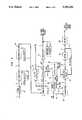
- FIG. 1is a simplified flow diagram schematically illustrating the prior art semi-continuous process for the production of industrial ethanol based on the dry-milling of corn, in which process various zones are identified by the unit operation therein; and, in phantom outline, a prior art microfiltration step for clarifying thin stillage to produce a filtrate which is concentrated to syrup.
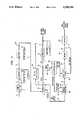
- FIG. 2is a simplified flow diagram schematically illustrating the substitution of a membrane separation zone for the evaporators in the prior art process shown in FIG. 1.
- FIG. 3is a simplified schematic flow diagram of a membrane separation zone in which step-wise membrane separations of thin stillage are continuously effected with successively more restrictive membranes, each with a permeate recovery of at least 50%.
- the UF membrane meanscomprises two modules connected in series, each housing tubular membranes and operated in a cross-flow mode to avoid blinding the membranes.
- the NF and RO modules in the membrane separation zoneare spiral-wound polymeric membranes which are more economical than tubular membranes.
- Each step of the membrane separation processis operable for a period of time sufficient to allow the substitution of a membrane separation zone for a conventional evaporation zone in a commercial facility.
- FIG. 1The overall process for the dry milling of corn for the production of industrial ethanol by fermentation is schematically illustrated in simplified form in FIG. 1 in which each unit operation preceding distillation is a batch operation.
- Feed corn introduced at 1is milled in a corn milling zone 10 where the corn is pulverized to a powdery mass of "corn meal” which is discharged at 2 into a liquefaction zone 20.
- Steam and alpha amylaseare also introduced into zone 20 to produce a "corn slurry" which is cooked before it is discharged at 3 into a saccharification zone 30 into which gluco amylase is introduced to convert the corn to sugar.
- a sugary mass of "corn mash" 4is discharged into fermentation zone 40 which is inoculated with yeast selected to produce a high yield of ethanol, in the concentration range from 8% to about 12%, in the presence of lactic acid and glycerol.
- Carbon dioxide gas produced during fermentationis discharged at 5 and is flowed to a CO 2 gas purification zone 50 in which the gas is purified prior to being sold.
- a beer 6is discharged to an ethanol distillation zone 60 including an ethanol column, and, an azeotropic distillation column, from which wet ethanol 7 is flowed to a dehydration zone 70.
- the dried ethanol 8is "doctored" with denaturant and detergent before it is sold.
- Whole stillage bottoms from the ethanol column in the distillation zone 60is discharged at WS to a centrifugation zone 80 from which a wet cake 9 is discharged to a dryer feed mixing zone 90 in which a DDG recycle stream 11 is mixed with the wet cake.
- the mixed wet cake 9 and DDG recycle 11is discharged at 12 to a drying zone 110 including plural rotary dryers.
- a portion of the dried solids 13 from the drying zone 110is recycled as the DDG recycle 11.
- Dried solids 13are cooled in cooling zone 120 before being shipped as distillers dried grains (DDGS).
- the thin stillage liquid discharge TS of a centrifugeis led to an evaporation zone 140 where it is concentrated to a syrup 14 which is mixed with wet cake 9 from the centrifuge before the mixture is dried in drying zone 110.
- the conc of solids in thin stillage TSwas decreased by removing solids >0.2 ⁇ m in the prior art microfilatration zone 130 shown in phantom outline.
- the microfiltrate 31was flowed to the evaporator to form a syrup 16, used as described before.
- membrane separation zone 100comprising the membrane filtration processes described hereinabove, are carried out.
- membrane separation zone 100is substituted for the evaporation zone of the prior art process.
- Thin stillage TSis flowed to the membrane separation zone 100 and demineralized (RO) water 17, recovered from the thin stillage is recycled to the fermentation zone 40.
- Lactic acid and glycerol 18are recovered together from the thin stillage. If separation of the lactic acid from the glycerol is desired, the mixture 18 is led to a liquid-liquid extraction unit or other suitable unit operation (not shown) which is operated under conditions effective to make the separation desired. Details of the membrane separation zone 100 are schematically illustrated in FIG. 3.
- Thin stillagehas a pH in the range from 3 to 5 and contains from about 5-15% total solids, typically 6-12% by wt. From about 3 to 7% by wt are soluble solids, the remaining being insoluble.
- the analysis of the solids which include lactic acid and glycerolis as follows:
- FIG. 3there is illustrated a continuous step-wise membrane separation process in which thin stillage feed F is held in a feed tank 21 from which a stream 22 is pumped through pump 23 to UF membrane means 24.
- the UF meanscomprises plural UF modules through which stream 22 is pumped in series, in a cross-flow mode, that is, the stream 22 is flowed through tubular membranes so that permeate leaves the a shell-and-tube type module through the walls of the tubes in a direction substantially orthogonal to the direction of flow of the thin stillage through the tubes.
- the thin stillagemay be flowed through the shell side so that permeate leaves through the tubes and concentrate leaves through the shell side.
- the thin stillage Fis flowed through the tube side of the UF means 24.
- UF concentrate 25is discharged to dryer feed mixing zone 90 (shown in FIG. 2).
- UF permeate 26is pumped by pump 27 to a NF membrane means 28 containing plural NF modules with spiral-wound semipermeable membranes, from which a NF concentrate 29 is discharged to dryer feed mixing zone 90.
- NF permeate 31is pumped by high pressure pump 32 to RO module means 33 containing plural RO modules with spiral-wound RO membranes from which RO concentrate 34 is discharged containing a major proportion, preferably at least 70%, and most preferably essentially all, the lactic acid and glycerol in stream 16.
- RO permeate 35is essentially pure water which may be used as boiler feed, or, more preferably recycled to the fermenter in the fermentation zone 40 (shown in FIGS. 1 & 2).
- each membrane means 24, 28 and 33be operated in the "feed and bleed" mode to improve recovery.
- a large stream of concentratefrom 2 to 20 times larger than the flow rate to the module, is recirculated by a recirculation pump. Since the "head" on the recycle pump is determined mainly by the losses due to pressure drop through the module, operation of such a system allows a very high mass flow through the module at the elevated pressure (supplied by the feed pump for that module) at relatively small cost.
- the following mass balance for lactic acid and glycerol through the membrane separation meansis for a typical thin stillage flow rate of 900 gal/min in which the total conc of lactic acid and glycerol is less than 3% w/w:
- the foregoing mass balanceis not based on a diafiltration option for improved recovery of lactic acid and glycerol to enhance the yield in the UF and NF filtration steps.
- the recycle stream used in a "feed-and-bleed" modeis diluted with RO water.
- the yield of lactic acid and glycerolis enhanced.
- Such diafiltrationmay be practiced in any manner known in the art, the goal being to recycle diluted concentrate at relatively low cost to enhance yield of product.
- UF membraneswhich have a pore size of ⁇ 0.05 ⁇ m and provide good service are as follows:
- membranes having a channel smaller than 4 mmare more economical to use, their use incurs a higher risk of pluggage.
- a smaller pore sizemay be used, as was reported by Burris, supra, but whichever MF membrane is used, the MF permeate will be flowed to the membrane separation zone 100, and the MF concentrate flowed to the dryer feed mixing zone 90, or the drying zone 110.
- the use of the evaporation zone 140(see FIG. 1) is avoided.
- permeate recovery obtained through each membrane zonewill depend upon the amount of concentrate recycled, and whether the zone is operated in a diafiltration mode. Since the overall recovery of NF permeate is desirably about 80% it will be appreciated that operation of the membrane modules without recycling concentrate is not practical. The same consideration applies to recovery of RO water.
Landscapes
- Chemical & Material Sciences (AREA)
- Organic Chemistry (AREA)
- Engineering & Computer Science (AREA)
- Zoology (AREA)
- Life Sciences & Earth Sciences (AREA)
- Wood Science & Technology (AREA)
- General Health & Medical Sciences (AREA)
- Bioinformatics & Cheminformatics (AREA)
- Genetics & Genomics (AREA)
- General Engineering & Computer Science (AREA)
- Chemical Kinetics & Catalysis (AREA)
- Health & Medical Sciences (AREA)
- Biochemistry (AREA)
- Microbiology (AREA)
- Biotechnology (AREA)
- Water Supply & Treatment (AREA)
- General Chemical & Material Sciences (AREA)
- Organic Low-Molecular-Weight Compounds And Preparation Thereof (AREA)
- Preparation Of Compounds By Using Micro-Organisms (AREA)
- Separation Using Semi-Permeable Membranes (AREA)
Abstract
Description
______________________________________ Range ______________________________________ Total proteins 0.7 to 2.5% by wt Total fats 0.3 to 2.0% by wt Lactic acid 0.5 to 2.5% by wt Glycerol 0.5 to 2% by wt ______________________________________
TABLE 1 ______________________________________ Stream Identif. 16 19 21 24 25 28 29 Flow rate, gpm 900 180 720 180 540 54 486 Lactic acid, % w/w 1.7 1.7 1.7 2.5 1.4 14.0 <0.1 Glycerol, % w/w 1.1 1.2 1.0 1.0 1.0 9.8 <0.1 ______________________________________
______________________________________ Ceramem PMA-0050-P-4 mm Alcoa 19P19-40-500 Å Ceramem PMA-0010-P-4 mm Alcoa 19P19-60-500 Å Ceramem PMA-0005-P-4 mm Alcoa 19P19-40-100 Å Alcoa 19P19-60-100 Å Alcoa 19P19-40-50 Å Alcoa 19P19-60-50 Å and Millipore ceramic <500 Å ______________________________________
Claims (12)
Priority Applications (2)
| Application Number | Priority Date | Filing Date | Title |
|---|---|---|---|
| US07/912,320US5250182A (en) | 1992-07-13 | 1992-07-13 | Membrane-based process for the recovery of lactic acid and glycerol from a "corn thin stillage" stream |
| CA002099835ACA2099835A1 (en) | 1992-07-13 | 1993-07-05 | Membrane-based process for the recovery of lactic acid and glycerol from a corn thin stillage" stream |
Applications Claiming Priority (1)
| Application Number | Priority Date | Filing Date | Title |
|---|---|---|---|
| US07/912,320US5250182A (en) | 1992-07-13 | 1992-07-13 | Membrane-based process for the recovery of lactic acid and glycerol from a "corn thin stillage" stream |
Publications (1)
| Publication Number | Publication Date |
|---|---|
| US5250182Atrue US5250182A (en) | 1993-10-05 |
Family
ID=25431721
Family Applications (1)
| Application Number | Title | Priority Date | Filing Date |
|---|---|---|---|
| US07/912,320Expired - Fee RelatedUS5250182A (en) | 1992-07-13 | 1992-07-13 | Membrane-based process for the recovery of lactic acid and glycerol from a "corn thin stillage" stream |
Country Status (2)
| Country | Link |
|---|---|
| US (1) | US5250182A (en) |
| CA (1) | CA2099835A1 (en) |
Cited By (101)
| Publication number | Priority date | Publication date | Assignee | Title |
|---|---|---|---|---|
| US5378369A (en)* | 1993-02-11 | 1995-01-03 | Sasol Chemical Industries (Proprietary) Limited | Solvent extraction |
| DE4342345A1 (en)* | 1993-12-11 | 1995-06-14 | Merck Patent Gmbh | Decolorization of fermentation solutions |
| WO1995017242A1 (en)* | 1993-12-20 | 1995-06-29 | Zenon Environmental Inc. | Hollow fiber semipermeable membrane of tubular braid and method for producing it |
| US5454952A (en)* | 1990-11-09 | 1995-10-03 | Applied Membrand Systems Pty Ltd. | Method and apparatus for fractionation of sugar containing solution |
| US5492625A (en)* | 1994-04-07 | 1996-02-20 | Glitsch, Inc. | Method of recovering carboxylic acids from dilute solutions |
| US5501798A (en)* | 1994-04-06 | 1996-03-26 | Zenon Environmental, Inc. | Microfiltration enhanced reverse osmosis for water treatment |
| US5503750A (en)* | 1993-10-04 | 1996-04-02 | Russo, Jr.; Lawrence J. | Membrane-based process for the recovery of lactic acid by fermentation of carbohydrate substrates containing sugars |
| US5635071A (en) | 1995-01-20 | 1997-06-03 | Zenon Airport Enviromental, Inc. | Recovery of carboxylic acids from chemical plant effluents |
| WO1997028890A1 (en)* | 1996-02-05 | 1997-08-14 | Veikko Jolkin | Method to treat whey |
| US20030019736A1 (en)* | 2001-06-06 | 2003-01-30 | Garman Daniel T. | System and method for producing energy from distilled dry grains and solubles |
| US6517875B1 (en)* | 1998-07-13 | 2003-02-11 | Sapporo Breweries Limited | Solid fermentation-promoting substance and method for preparation thereof |
| EP1022051A3 (en)* | 1999-01-22 | 2003-03-12 | Nitto Denko Corporation | Treatment system and treatment method employing spiral wound type membrane module |
| US6555003B2 (en)* | 2001-01-19 | 2003-04-29 | Basic American, Inc. | Potato wastewater treatment method |
| US20030205514A1 (en)* | 2002-05-03 | 2003-11-06 | Potter J. Leon | Water filtration system for food processing line |
| US20040005677A1 (en)* | 2002-07-05 | 2004-01-08 | Eddington John M. | Novel lactobacillus strains and use thereof in fermentation process for L-lactic acid production |
| ES2200719A1 (en)* | 2003-10-10 | 2004-03-01 | Buenaviva Invest S L | Recuperation of lactic products and derivatives consists of screening and lactic acid separation after homogenization |
| US20040091538A1 (en)* | 2002-10-31 | 2004-05-13 | Crystal Pollock-Dove | Dosage form providing ascending release of liquid formulation |
| US20040129637A1 (en)* | 2000-07-07 | 2004-07-08 | Hidayat Husain | Multi-stage filtration and softening module and reduced scaling operation |
| US20040159357A1 (en)* | 1999-08-31 | 2004-08-19 | Dct Double-Cone Technology Ag | Separating arrangement for treatment of fluids |
| US20040222158A1 (en)* | 2003-03-14 | 2004-11-11 | Hidayat Husain | Nanofiltration system for water softening with internally staged spiral wound modules |
| US6817315B1 (en) | 2002-08-26 | 2004-11-16 | Steven Tsengas | Cat litter |
| US20040234649A1 (en)* | 2003-03-10 | 2004-11-25 | Broin And Associates, Inc. | Method for producing ethanol using raw starch |
| US20050006295A1 (en)* | 2003-02-10 | 2005-01-13 | Upen Bharwada | Water treatment system |
| US20050023222A1 (en)* | 2003-05-30 | 2005-02-03 | Brian Baillie | Filtration apparatus and method |
| US20050056600A1 (en)* | 2003-09-11 | 2005-03-17 | Harris Group Inc. | Nanofilter system and method of use |
| US20050233030A1 (en)* | 2004-03-10 | 2005-10-20 | Broin And Associates, Inc. | Methods and systems for producing ethanol using raw starch and fractionation |
| WO2005099476A1 (en)* | 2004-04-06 | 2005-10-27 | Novozymes North America, Inc. | Improved distillation process |
| US20050239181A1 (en)* | 2004-03-10 | 2005-10-27 | Broin And Associates, Inc. | Continuous process for producing ethanol using raw starch |
| US20050252858A1 (en)* | 2004-05-13 | 2005-11-17 | Peyton Thomas O | Fuel and by-products from fermentation still bottoms |
| US20060041152A1 (en)* | 2004-08-17 | 2006-02-23 | Cantrell David F | Method of processing ethanol byproducts and related subsystems |
| US20070036881A1 (en)* | 2005-08-12 | 2007-02-15 | Mpc Inc. | Electrocoagulation and polymeric suspended solids reduction |
| US20070037267A1 (en)* | 2005-05-02 | 2007-02-15 | Broin And Associates, Inc. | Methods and systems for producing ethanol using raw starch and fractionation |
| US20070178567A1 (en)* | 2005-10-10 | 2007-08-02 | Lewis Stephen M | Methods and systems for producing ethanol using raw starch and selecting plant material |
| US20070190211A1 (en)* | 2005-12-15 | 2007-08-16 | Friis Torben L | Milk mineral water, processes for manufacturing thereof and beverages containing milk mineral water |
| WO2004113548A3 (en)* | 2003-06-13 | 2007-08-16 | Nat Corn Growers Ass | Distillers solubles as a constituent for nisin and lactic acid production from dairy cheese by products |
| US20070199894A1 (en)* | 2005-05-12 | 2007-08-30 | Peyton Thomas O | By-products from fermentation still bottoms |
| CN100339350C (en)* | 2005-08-03 | 2007-09-26 | 韩清秀 | Process for organic acid extraction from fermentation liquid using membrane method |
| US20070238891A1 (en)* | 2006-02-16 | 2007-10-11 | Winsness David J | Method of freeing the bound oil present in whole stillage and thin stillage |
| US20080110577A1 (en)* | 2006-03-15 | 2008-05-15 | Winsness David J | Method and systems for enhancing oil recovery from ethanol production byproducts |
| US20080254165A1 (en)* | 2007-04-12 | 2008-10-16 | Rashid Patel | Novel manufacturing process for milk acid |
| US20080299632A1 (en)* | 2007-05-31 | 2008-12-04 | Gs Cleantech Corporation | Methods for Recovering Oil from a Fractionated Dry Milling Process |
| KR100877384B1 (en) | 2008-06-30 | 2009-01-07 | 바이오원 (주) | Method for Purifying Crude Glycerin Using Filtering Technique |
| US20090008235A1 (en)* | 2007-07-02 | 2009-01-08 | I3 Nanotec Llc. | Membrane-based hybrid process for separation of mixtures of organics, solids, and water |
| US20090014387A1 (en)* | 2005-04-19 | 2009-01-15 | Probst Thomas H | Hydraulically integrated solids/liquid separation system and method for wastewater treatment |
| KR100887885B1 (en) | 2007-05-25 | 2009-03-06 | 주식회사 진로 | Manufacturing method of natural mineral water using nano membrane and reverse osmosis membrane filtration and manufacturing method of liquor and beverage using same |
| WO2009038758A1 (en)* | 2007-09-20 | 2009-03-26 | Verenium Corporation | Wastewater treatment system |
| DE202007017698U1 (en) | 2007-12-19 | 2009-04-23 | Agraferm Technologies Ag | Apparatus for the conversion of fermentation broth obtained in the production of ethanol as waste product into biogas |
| EP2072615A2 (en) | 2007-12-19 | 2009-06-24 | Agraferm Technologies AG | Apparatus and process for the conversion into biogas of fermentation stillage arising as a waste product of ethanol production |
| EP1955981A3 (en)* | 2006-09-29 | 2009-10-07 | Prokop Invest, a.s. | Method of energy appreciation of the products from purification of stillage from ethanol production and the equipment for implementation of this method |
| CN100556875C (en)* | 2007-09-07 | 2009-11-04 | 浙江大学 | A kind of reverse osmosis-distillation integration process that reclaims glycerine in the low-concentration sweet water |
| WO2009146526A1 (en)* | 2008-06-02 | 2009-12-10 | University Of Saskatchewan | Recovery of multiple compounds and recyclable water from thin stillage |
| US20100082312A1 (en)* | 2008-09-30 | 2010-04-01 | Rockwell Automation Technologies, Inc. | Optimizing product drying through parallel lines of centrifuges and dryer process units |
| US20100144892A1 (en)* | 2008-12-10 | 2010-06-10 | Draco Natural Products, Inc. | Method of producing organic certified glycerin |
| WO2010066513A1 (en)* | 2008-12-09 | 2010-06-17 | Evonik Stockhausen Gmbh | Method for producing acrolein comprising the regeneration of a raw glycerin phase |
| US20100159514A1 (en)* | 2008-12-23 | 2010-06-24 | Poet Research, Inc. | System for production of ethanol and co-products with fractionation of feedstock and solvent washing of fermentation product |
| US20100190222A1 (en)* | 2007-06-29 | 2010-07-29 | Toray Industries, Inc. | Lactic acid production method |
| US20100233771A1 (en)* | 2009-03-03 | 2010-09-16 | Mcdonald William F | System for pre-treatment of biomass for the production of ethanol |
| US20110028759A1 (en)* | 2009-07-28 | 2011-02-03 | Hyflux Ip Resources Pte Ltd | Process for the Purification of Organic Acids |
| US20110143013A1 (en)* | 2008-12-31 | 2011-06-16 | Poet Research Incorporated | Zein composition and methods of production |
| WO2011095805A1 (en) | 2010-02-03 | 2011-08-11 | Cpi Innovation Services Limited | Methods and process plant for the treatment of aqueous organic waste streams |
| WO2012021956A1 (en)* | 2010-08-19 | 2012-02-23 | Companhia Refinadora Da Amazônia | Method for obtaining lactic acid with a high degree of purity from fermentative liquor |
| US8153006B1 (en) | 2008-06-05 | 2012-04-10 | Procorp Enterprises, Llc | Anaerobic treatment process for ethanol production |
| US20120261342A1 (en)* | 2008-12-05 | 2012-10-18 | Gilles Tastayre | Process for improving the precipitation of calcium and/or magnesium salts in the regeneration of used alkaline cleaning solution |
| US20120267064A1 (en)* | 2009-12-16 | 2012-10-25 | Bengt Joensson | Lignosulfonate of a certain quality and method of preparation of lignosulfonate of a certain quality |
| US20130052703A1 (en)* | 2011-08-24 | 2013-02-28 | Hitachi Plant Technologies, Ltd. | Manufacturing process of purified lactic acid |
| WO2013019977A3 (en)* | 2011-08-02 | 2013-04-18 | Purdue Research Foundation | Extraction, purification, and processing of phytoglycogen |
| US20130121891A1 (en)* | 2011-11-01 | 2013-05-16 | Icm, Inc. | Selected solids separation |
| WO2012177922A3 (en)* | 2011-06-24 | 2013-05-16 | Icm, Inc. | Suspended solids separation systems and methods |
| US8450094B1 (en) | 2009-03-03 | 2013-05-28 | Poet Research, Inc. | System for management of yeast to facilitate the production of ethanol |
| US8524473B2 (en)* | 2002-10-28 | 2013-09-03 | Little Sioux Corn Processors | Ethanol production process using cold traps |
| US20130264285A1 (en)* | 2010-08-13 | 2013-10-10 | Hatch Ltd. | Process and facility to treat contaminated process water |
| US8735544B1 (en)* | 1999-01-13 | 2014-05-27 | Little Sioux Corn Processors, Llc | Value added whole stillage by-products from an ethanol production process |
| WO2014099078A2 (en) | 2012-12-19 | 2014-06-26 | Buckman Laboratories International, Inc. | Methods and systems for bio-oil recovery and separation aids therefor |
| US8815552B2 (en) | 2009-03-03 | 2014-08-26 | Poet Research, Inc. | System for fermentation of biomass for the production of ethanol |
| US8859808B2 (en) | 2010-08-19 | 2014-10-14 | Paulo Yoshida | Method for obtaining lactic acid with a high degree of purity from fermentative liquor |
| US20140317945A1 (en)* | 2009-05-26 | 2014-10-30 | Fluid Quip Inc. | Methods for producing a high protein corn meal from a whole stillage byproduct and system therefore |
| US8962059B1 (en) | 2011-05-27 | 2015-02-24 | Superior Oil Company, Inc. | Bio-based oil composition and method for producing the same |
| US8986551B2 (en) | 2010-08-06 | 2015-03-24 | Icm, Inc. | Suspended solids separation systems and methods |
| US9068206B1 (en) | 2009-03-03 | 2015-06-30 | Poet Research, Inc. | System for treatment of biomass to facilitate the production of ethanol |
| US20150305370A1 (en)* | 2014-04-28 | 2015-10-29 | James Robert Bleyer | Methods for managing the composition of distillers grain co-products |
| US20160152931A1 (en)* | 2011-04-18 | 2016-06-02 | Poet Research, Inc. | Systems and methods for stillage fractionation |
| US9534182B1 (en) | 2012-12-18 | 2017-01-03 | LiquiTech, LLC | Method of producing industrial corn base oil from a fermentation byproduct of a corn ethanol production process |
| US20170022585A1 (en)* | 2014-04-17 | 2017-01-26 | Paladin Intellectual Property Pty Ltd | Method for recovering an acid or base |
| US20170107159A1 (en)* | 2015-10-15 | 2017-04-20 | Poet Research, Inc. | Methods of extracting inorganic nutrients from pretreated biomass to form a fertilizer composition, and related systems |
| EP3171966A4 (en)* | 2014-07-21 | 2018-03-14 | Xyleco, Inc. | Processing biomass |
| EP3400775A1 (en)* | 2017-05-09 | 2018-11-14 | getproject GmbH & Co. KG | Device for recovering lactic acid from silage biomass and method for treating silage |
| WO2019108433A1 (en) | 2017-11-28 | 2019-06-06 | Buckman Laboratories International, Inc. | Methods to lower oil content in distillers grains |
| US10532938B2 (en) | 2013-03-14 | 2020-01-14 | Bl Technologies, Inc. | Membrane filtration system with concentrate staging and concentrate recirculation, switchable stages, or both |
| US10875889B2 (en) | 2018-12-28 | 2020-12-29 | Fluid Quip Technologies, Llc | Method and system for producing a zein protein product from a whole stillage byproduct produced in a corn dry-milling process |
| US10926267B2 (en) | 2017-11-27 | 2021-02-23 | Fluid Quip Technologies, Llc | Method and system for reducing the unfermentable solids content in a protein portion at the back end of a corn dry milling process |
| US20220015381A1 (en)* | 2020-07-15 | 2022-01-20 | Poet Research, Inc. | Methods and systems for concentrating a solids stream recovered from a process stream in a biorefinery |
| US11248197B2 (en) | 2015-11-25 | 2022-02-15 | Poet Grain (Octane), Llc | Processes for recovering products from a corn fermentation mash |
| US11254955B2 (en) | 2015-11-25 | 2022-02-22 | Poet Grain (Octane), Llc | Processes for separating whole stillage to produce a fiber rich product that includes C5 and C6 polysaccharides |
| CN114380925A (en)* | 2021-12-30 | 2022-04-22 | 武汉美味源生物工程有限公司 | Method for drying corn distillers' grains and extracting soluble polysaccharide |
| CN114455758A (en)* | 2022-01-11 | 2022-05-10 | 四川绵竹剑南春酒厂有限公司 | Solid-liquid separation process for wine production |
| CN114477579A (en)* | 2022-01-24 | 2022-05-13 | 四川绵竹剑南春酒厂有限公司 | Process for treating waste liquid after production of wine seasoning liquid |
| US20220240544A1 (en)* | 2021-01-28 | 2022-08-04 | Digested Organics Llc | Method to produce high protein residuals |
| US11718863B2 (en) | 2015-11-25 | 2023-08-08 | Poet Grain (Octane), Llc | Processes for recovering products from a slurry |
| US20230313090A1 (en)* | 2022-04-01 | 2023-10-05 | Dta Llc | Biogas and residue processing from thin stillage |
| EP4438568A2 (en) | 2018-02-22 | 2024-10-02 | Botanical Water Technologies IP Ltd | Systems and methods for the preparation of plant derived products using osmosis techniques |
| US12213497B2 (en) | 2021-05-12 | 2025-02-04 | Fluid Quip Technologies, Llc | Method and system for producing a protein and fiber feed product from a whole stillage byproduct produced in a corn dry milling process |
Citations (1)
| Publication number | Priority date | Publication date | Assignee | Title |
|---|---|---|---|---|
| US4624805A (en)* | 1984-09-27 | 1986-11-25 | The Texas A&M University System | Process for recovery of protein from agricultural commodities prior to alcohol production |
- 1992
- 1992-07-13USUS07/912,320patent/US5250182A/ennot_activeExpired - Fee Related
- 1993
- 1993-07-05CACA002099835Apatent/CA2099835A1/ennot_activeAbandoned
Patent Citations (1)
| Publication number | Priority date | Publication date | Assignee | Title |
|---|---|---|---|---|
| US4624805A (en)* | 1984-09-27 | 1986-11-25 | The Texas A&M University System | Process for recovery of protein from agricultural commodities prior to alcohol production |
Non-Patent Citations (9)
| Title |
|---|
| "Cross-Flow Ceramic Membrane Microfiltration for the Clarification of Ethanol Stillbottoms" by Brian D. Burris presented to Intnl. Conf. on (Fuel) Alcohols etc. |
| "Membrance Process Designs in the Recovery of Bio-Fuels and Bio-Chemicals" by S. A. Leeper Idaho National Engineering Laboratory, Idaho Falls, ID. 83415. |
| "Nanofiltration Extends the Range of Membrane Filtration" by Peter Eriksson Environmental Progress vol. 7, No. 1 pp. 58-62 Feb. 1988. |
| "Reverse Osmosis of Lactic Acid Fermentation Broths" by Laura R. Schlicher & Munir Cheryan, J. Chem. Tech. Biotechnol 02 vol. 49, pp. 129-140 1990. |
| Cross Flow Ceramic Membrane Microfiltration for the Clarification of Ethanol Stillbottoms by Brian D. Burris presented to Intnl. Conf. on (Fuel) Alcohols etc.* |
| Membrance Process Designs in the Recovery of Bio Fuels and Bio Chemicals by S. A. Leeper Idaho National Engineering Laboratory, Idaho Falls, ID. 83415.* |
| Nanofiltration Extends the Range of Membrane Filtration by Peter Eriksson Environmental Progress vol. 7, No. 1 pp. 58 62 Feb. 1988.* |
| Reverse Osmosis of Lactic Acid Fermentation Broths by Laura R. Schlicher & Munir Cheryan, J. Chem. Tech. Biotechnol 02 vol. 49, pp. 129 140 1990.* |
| Ultrafiltration & Reverse Osmosis Technology & Alcohol Applications by Craig Brandon, Bill McFadden and Rodney L. Simms presented at 1991 Fuel Alcohol Workshop.* |
Cited By (203)
| Publication number | Priority date | Publication date | Assignee | Title |
|---|---|---|---|---|
| US5454952A (en)* | 1990-11-09 | 1995-10-03 | Applied Membrand Systems Pty Ltd. | Method and apparatus for fractionation of sugar containing solution |
| US5378369A (en)* | 1993-02-11 | 1995-01-03 | Sasol Chemical Industries (Proprietary) Limited | Solvent extraction |
| US5503750A (en)* | 1993-10-04 | 1996-04-02 | Russo, Jr.; Lawrence J. | Membrane-based process for the recovery of lactic acid by fermentation of carbohydrate substrates containing sugars |
| DE4342345C2 (en)* | 1993-12-11 | 1998-10-22 | Merck Patent Gmbh | Decolorization of fermentation solutions |
| DE4342345A1 (en)* | 1993-12-11 | 1995-06-14 | Merck Patent Gmbh | Decolorization of fermentation solutions |
| WO1995017242A1 (en)* | 1993-12-20 | 1995-06-29 | Zenon Environmental Inc. | Hollow fiber semipermeable membrane of tubular braid and method for producing it |
| US5501798A (en)* | 1994-04-06 | 1996-03-26 | Zenon Environmental, Inc. | Microfiltration enhanced reverse osmosis for water treatment |
| US5492625A (en)* | 1994-04-07 | 1996-02-20 | Glitsch, Inc. | Method of recovering carboxylic acids from dilute solutions |
| US5624566A (en)* | 1994-04-07 | 1997-04-29 | Glitsch, Inc. | Method and apparatus for recovering carboxylic acids from dilute solutions |
| US5635071A (en) | 1995-01-20 | 1997-06-03 | Zenon Airport Enviromental, Inc. | Recovery of carboxylic acids from chemical plant effluents |
| WO1997028890A1 (en)* | 1996-02-05 | 1997-08-14 | Veikko Jolkin | Method to treat whey |
| US6270823B1 (en) | 1996-02-05 | 2001-08-07 | Veikko Jolkin | Method to treat whey |
| US6517875B1 (en)* | 1998-07-13 | 2003-02-11 | Sapporo Breweries Limited | Solid fermentation-promoting substance and method for preparation thereof |
| US8735544B1 (en)* | 1999-01-13 | 2014-05-27 | Little Sioux Corn Processors, Llc | Value added whole stillage by-products from an ethanol production process |
| EP1022051A3 (en)* | 1999-01-22 | 2003-03-12 | Nitto Denko Corporation | Treatment system and treatment method employing spiral wound type membrane module |
| US7128092B2 (en)* | 1999-08-31 | 2006-10-31 | Dct Double-Cone Technology Ag | Separating arrangement for treatment of fluids |
| US20040159357A1 (en)* | 1999-08-31 | 2004-08-19 | Dct Double-Cone Technology Ag | Separating arrangement for treatment of fluids |
| US20040129637A1 (en)* | 2000-07-07 | 2004-07-08 | Hidayat Husain | Multi-stage filtration and softening module and reduced scaling operation |
| US6555003B2 (en)* | 2001-01-19 | 2003-04-29 | Basic American, Inc. | Potato wastewater treatment method |
| US20030019736A1 (en)* | 2001-06-06 | 2003-01-30 | Garman Daniel T. | System and method for producing energy from distilled dry grains and solubles |
| US20030205514A1 (en)* | 2002-05-03 | 2003-11-06 | Potter J. Leon | Water filtration system for food processing line |
| US20040005677A1 (en)* | 2002-07-05 | 2004-01-08 | Eddington John M. | Novel lactobacillus strains and use thereof in fermentation process for L-lactic acid production |
| US7300787B2 (en) | 2002-07-05 | 2007-11-27 | Archer-Daniels-Midland Company | Lactobacillus strains and use thereof in fermentation for L-lactic acid production |
| US6817315B1 (en) | 2002-08-26 | 2004-11-16 | Steven Tsengas | Cat litter |
| US8524473B2 (en)* | 2002-10-28 | 2013-09-03 | Little Sioux Corn Processors | Ethanol production process using cold traps |
| US20040091538A1 (en)* | 2002-10-31 | 2004-05-13 | Crystal Pollock-Dove | Dosage form providing ascending release of liquid formulation |
| US20050006295A1 (en)* | 2003-02-10 | 2005-01-13 | Upen Bharwada | Water treatment system |
| US8409639B2 (en) | 2003-03-10 | 2013-04-02 | Poet Research, Inc. | Methods and systems for producing ethanol using raw starch and fractionation |
| US8679793B2 (en) | 2003-03-10 | 2014-03-25 | Poet Research, Inc. | Method for producing ethanol using raw starch |
| US8470550B2 (en) | 2003-03-10 | 2013-06-25 | Poet Research, Inc. | Composition comprising raw starch for the production of ethanol |
| US8497082B2 (en) | 2003-03-10 | 2013-07-30 | Poet Research, Inc. | Composition comprising corn flour and saccharification enzymes |
| US8748141B2 (en) | 2003-03-10 | 2014-06-10 | Poet Research, Inc. | Methods and systems for producing ethanol using raw starch and fractionation |
| US20070202214A1 (en)* | 2003-03-10 | 2007-08-30 | Broin & Associates, Inc. | Methods and systems for producing ethanol using raw starch and fractionation |
| US20070196907A1 (en)* | 2003-03-10 | 2007-08-23 | Broin & Associates, Inc. | Method For Producing Ethanol Using Raw Starch |
| US8409640B2 (en) | 2003-03-10 | 2013-04-02 | Poet Research, Inc. | Methods and systems for producing ethanol using raw starch and fractionation |
| US20110111085A1 (en)* | 2003-03-10 | 2011-05-12 | Poet Research, Inc. | Methods and systems for producing ethanol using raw starch and fractionation |
| US20110097446A1 (en)* | 2003-03-10 | 2011-04-28 | Poet Research, Inc. | Method for producing ethanol using raw starch |
| US7842484B2 (en) | 2003-03-10 | 2010-11-30 | Poet Research, Inc. | Method for producing ethanol using raw starch |
| US20040234649A1 (en)* | 2003-03-10 | 2004-11-25 | Broin And Associates, Inc. | Method for producing ethanol using raw starch |
| US7919291B2 (en) | 2003-03-10 | 2011-04-05 | Poet Research, Inc. | Method for producing ethanol using raw starch |
| US20110070618A1 (en)* | 2003-03-10 | 2011-03-24 | Poet Research, Inc. | Method for producing ethanol using raw starch |
| US20040222158A1 (en)* | 2003-03-14 | 2004-11-11 | Hidayat Husain | Nanofiltration system for water softening with internally staged spiral wound modules |
| US20050284806A1 (en)* | 2003-03-14 | 2005-12-29 | Hidayat Husain | Nanofiltration system for water softening with internally staged spiral wound modules |
| US20050023222A1 (en)* | 2003-05-30 | 2005-02-03 | Brian Baillie | Filtration apparatus and method |
| WO2004113548A3 (en)* | 2003-06-13 | 2007-08-16 | Nat Corn Growers Ass | Distillers solubles as a constituent for nisin and lactic acid production from dairy cheese by products |
| US7077953B2 (en)* | 2003-09-11 | 2006-07-18 | Harris Group, Inc. | Nanofilter system and method of use |
| US20050056600A1 (en)* | 2003-09-11 | 2005-03-17 | Harris Group Inc. | Nanofilter system and method of use |
| ES2200719B1 (en)* | 2003-10-10 | 2005-05-01 | Buenaviva Invest, S.L. | PROCEDURE FOR THE RECOVERY OF DAIRY AND DERIVATIVE PRODUCTS AND APPLIANCE FOR THEIR REALIZATION. |
| ES2200719A1 (en)* | 2003-10-10 | 2004-03-01 | Buenaviva Invest S L | Recuperation of lactic products and derivatives consists of screening and lactic acid separation after homogenization |
| US20050239181A1 (en)* | 2004-03-10 | 2005-10-27 | Broin And Associates, Inc. | Continuous process for producing ethanol using raw starch |
| US20050233030A1 (en)* | 2004-03-10 | 2005-10-20 | Broin And Associates, Inc. | Methods and systems for producing ethanol using raw starch and fractionation |
| US20080210541A1 (en)* | 2004-04-06 | 2008-09-04 | Novozymes North America, Inc. | Distillation Process |
| WO2005099476A1 (en)* | 2004-04-06 | 2005-10-27 | Novozymes North America, Inc. | Improved distillation process |
| US7267774B2 (en) | 2004-05-13 | 2007-09-11 | Nouveau Inc. | Fuel and by-products from fermentation still bottoms |
| US20050252858A1 (en)* | 2004-05-13 | 2005-11-17 | Peyton Thomas O | Fuel and by-products from fermentation still bottoms |
| EP1748835B1 (en)* | 2004-05-13 | 2012-05-02 | Nouveau, Inc. | Method for producing a beverage from fermentation still bottoms |
| WO2006023432A2 (en) | 2004-08-17 | 2006-03-02 | Cantrell Winsness Technologies, Llc | Method of processing ethanol byproducts and related subsytems |
| US8008517B2 (en) | 2004-08-17 | 2011-08-30 | Gs Cleantech Corporation | Method of recovering oil from thin stillage |
| EP1778608A4 (en)* | 2004-08-17 | 2008-09-17 | Gs Ethanol Technologies Inc | Method of processing ethanol byproducts and related subsytems |
| US9212334B2 (en) | 2004-08-17 | 2015-12-15 | Gs Cleantech Corporation | Methods of processing ethanol byproducts and related subsystems |
| US20060041153A1 (en)* | 2004-08-17 | 2006-02-23 | Cantrell David F | Method of processing ethanol byproducts and related subsystems |
| US10655083B2 (en) | 2004-08-17 | 2020-05-19 | Gs Cleantech Corporation | Method of processing ethanol byproducts and related subsystems |
| US20100004474A1 (en)* | 2004-08-17 | 2010-01-07 | Gs Cleantech Corporation | Methods Of Processing Ethanol Byproducts And Related Subsystems |
| US20060041152A1 (en)* | 2004-08-17 | 2006-02-23 | Cantrell David F | Method of processing ethanol byproducts and related subsystems |
| US8283484B2 (en) | 2004-08-17 | 2012-10-09 | Gs Cleantech Corporation | Methods of processing ethanol byproducts and related subsystems |
| US20090259060A1 (en)* | 2004-08-17 | 2009-10-15 | Gs Cleantech Corporation | Method of processing ethanol byproducts and related subsystems |
| US7601858B2 (en) | 2004-08-17 | 2009-10-13 | Gs Cleantech Corporation | Method of processing ethanol byproducts and related subsystems |
| US8008516B2 (en) | 2004-08-17 | 2011-08-30 | David Fred Cantrell | Method of processing ethanol byproducts and related subsystems |
| US9012668B2 (en) | 2005-03-16 | 2015-04-21 | Gs Cleantech Corporation | Method and systems for enhancing oil recovery from ethanol production byproducts |
| US9320990B2 (en) | 2005-03-16 | 2016-04-26 | Ya Global Investments, L.P. | Method and systems for enhancing oil recovery from ethanol production byproducts |
| US8679353B2 (en) | 2005-03-16 | 2014-03-25 | Gs Cleantech Corporation | Method and systems for enhancing oil recovery from ethanol production byproducts |
| US9108140B2 (en) | 2005-03-16 | 2015-08-18 | Gs Cleantech Corporation | Method and systems for washing ethanol production byproducts to improve oil recovery |
| US7648634B2 (en) | 2005-04-19 | 2010-01-19 | Procorp Enterprises, Llc | Method for wastewater treatment |
| US20090014387A1 (en)* | 2005-04-19 | 2009-01-15 | Probst Thomas H | Hydraulically integrated solids/liquid separation system and method for wastewater treatment |
| US20070037267A1 (en)* | 2005-05-02 | 2007-02-15 | Broin And Associates, Inc. | Methods and systems for producing ethanol using raw starch and fractionation |
| US7569146B2 (en)* | 2005-05-12 | 2009-08-04 | Nouveau Inc. | By-products from fermentation still bottoms |
| US20070199894A1 (en)* | 2005-05-12 | 2007-08-30 | Peyton Thomas O | By-products from fermentation still bottoms |
| CN100339350C (en)* | 2005-08-03 | 2007-09-26 | 韩清秀 | Process for organic acid extraction from fermentation liquid using membrane method |
| US20070036881A1 (en)* | 2005-08-12 | 2007-02-15 | Mpc Inc. | Electrocoagulation and polymeric suspended solids reduction |
| US20070178567A1 (en)* | 2005-10-10 | 2007-08-02 | Lewis Stephen M | Methods and systems for producing ethanol using raw starch and selecting plant material |
| US8597919B2 (en) | 2005-10-10 | 2013-12-03 | Poet Research, Inc. | Methods and systems for producing ethanol using raw starch and selecting plant material |
| US7919289B2 (en) | 2005-10-10 | 2011-04-05 | Poet Research, Inc. | Methods and systems for producing ethanol using raw starch and selecting plant material |
| US20070190211A1 (en)* | 2005-12-15 | 2007-08-16 | Friis Torben L | Milk mineral water, processes for manufacturing thereof and beverages containing milk mineral water |
| US20070238891A1 (en)* | 2006-02-16 | 2007-10-11 | Winsness David J | Method of freeing the bound oil present in whole stillage and thin stillage |
| US7608729B2 (en) | 2006-02-16 | 2009-10-27 | Gs Cleantech Corporation | Method of freeing the bound oil present in whole stillage and thin stillage |
| US20090250412A1 (en)* | 2006-02-16 | 2009-10-08 | Gs Cleantech Corporation | Method of freeing the bound oil present in whole stillage and thin stillage |
| US8168037B2 (en) | 2006-03-15 | 2012-05-01 | Gs Cleantech Corporation | Method and systems for enhancing oil recovery from ethanol production byproducts |
| US20080110577A1 (en)* | 2006-03-15 | 2008-05-15 | Winsness David J | Method and systems for enhancing oil recovery from ethanol production byproducts |
| EP1955981A3 (en)* | 2006-09-29 | 2009-10-07 | Prokop Invest, a.s. | Method of energy appreciation of the products from purification of stillage from ethanol production and the equipment for implementation of this method |
| US20080254165A1 (en)* | 2007-04-12 | 2008-10-16 | Rashid Patel | Novel manufacturing process for milk acid |
| KR100887885B1 (en) | 2007-05-25 | 2009-03-06 | 주식회사 진로 | Manufacturing method of natural mineral water using nano membrane and reverse osmosis membrane filtration and manufacturing method of liquor and beverage using same |
| US20080299632A1 (en)* | 2007-05-31 | 2008-12-04 | Gs Cleantech Corporation | Methods for Recovering Oil from a Fractionated Dry Milling Process |
| US8349597B2 (en) | 2007-06-29 | 2013-01-08 | Toray Industries, Inc. | Lactic acid production method |
| EP2175029A4 (en)* | 2007-06-29 | 2012-07-04 | Toray Industries | Lactic acid production method |
| US20100190222A1 (en)* | 2007-06-29 | 2010-07-29 | Toray Industries, Inc. | Lactic acid production method |
| US8759045B2 (en) | 2007-06-29 | 2014-06-24 | Toray Industries, Inc. | Lactic acid production method |
| US20090008235A1 (en)* | 2007-07-02 | 2009-01-08 | I3 Nanotec Llc. | Membrane-based hybrid process for separation of mixtures of organics, solids, and water |
| US8425734B2 (en)* | 2007-07-02 | 2013-04-23 | I3 Nanotec Llc | Membrane-based hybrid process for separation of mixtures of organics, solids, and water |
| CN100556875C (en)* | 2007-09-07 | 2009-11-04 | 浙江大学 | A kind of reverse osmosis-distillation integration process that reclaims glycerine in the low-concentration sweet water |
| WO2009038758A1 (en)* | 2007-09-20 | 2009-03-26 | Verenium Corporation | Wastewater treatment system |
| US9102544B2 (en) | 2007-09-20 | 2015-08-11 | Bp Corporation North America Inc. | Wastewater treatment system |
| US20110049054A1 (en)* | 2007-09-20 | 2011-03-03 | Verenium Corporation | Wastewater treatment system |
| DE102007061137A1 (en) | 2007-12-19 | 2009-06-25 | Agraferm Technologies Ag | Apparatus and process for the conversion of fermentation broth resulting from ethanol production as waste product into biogas |
| US8962309B2 (en) | 2007-12-19 | 2015-02-24 | Agraferm Technologies Ag | Apparatus and process for the conversion into biogas of fermentation stillage arising as a waste product of ethanol production |
| US20090176289A1 (en)* | 2007-12-19 | 2009-07-09 | Agraferm Technologies Ag | Apparatus And Process For The Conversion Into Biogas Of Fermentation Stillage Arising As A Waste Product Of Ethanol Production |
| EP2072615A2 (en) | 2007-12-19 | 2009-06-24 | Agraferm Technologies AG | Apparatus and process for the conversion into biogas of fermentation stillage arising as a waste product of ethanol production |
| EP2581439A1 (en) | 2007-12-19 | 2013-04-17 | Agraferm Technologies AG | Device and method for converting fermentation stillage, accruing as waste product at the production of ethanol, in biogas |
| DE202007017698U1 (en) | 2007-12-19 | 2009-04-23 | Agraferm Technologies Ag | Apparatus for the conversion of fermentation broth obtained in the production of ethanol as waste product into biogas |
| US20110130586A1 (en)* | 2008-06-02 | 2011-06-02 | University Of Saskatchewan | Recovery of multiple compounds and recyclable water from thin stillage |
| EP2297291A4 (en)* | 2008-06-02 | 2012-08-22 | Univ Saskatchewan | OBTAINING MULTIPLE COMPOUNDS AND RECYCLABLE WATER FROM THIN-FILAMENT |
| US8835665B2 (en) | 2008-06-02 | 2014-09-16 | University Of Saskatchewan | Recovery of multiple compounds and recyclable water from thin stillage |
| WO2009146526A1 (en)* | 2008-06-02 | 2009-12-10 | University Of Saskatchewan | Recovery of multiple compounds and recyclable water from thin stillage |
| US8153006B1 (en) | 2008-06-05 | 2012-04-10 | Procorp Enterprises, Llc | Anaerobic treatment process for ethanol production |
| WO2010002165A3 (en)* | 2008-06-30 | 2010-04-22 | 한국 알엠아이(주) | Crude glycerol purification method employing filtering technology |
| KR100877384B1 (en) | 2008-06-30 | 2009-01-07 | 바이오원 (주) | Method for Purifying Crude Glycerin Using Filtering Technique |
| US20100082312A1 (en)* | 2008-09-30 | 2010-04-01 | Rockwell Automation Technologies, Inc. | Optimizing product drying through parallel lines of centrifuges and dryer process units |
| US8103385B2 (en)* | 2008-09-30 | 2012-01-24 | Rockwell Automation Technologies, Inc. | Optimizing product drying through parallel lines of centrifuges and dryer process units |
| US20120261342A1 (en)* | 2008-12-05 | 2012-10-18 | Gilles Tastayre | Process for improving the precipitation of calcium and/or magnesium salts in the regeneration of used alkaline cleaning solution |
| WO2010066513A1 (en)* | 2008-12-09 | 2010-06-17 | Evonik Stockhausen Gmbh | Method for producing acrolein comprising the regeneration of a raw glycerin phase |
| US8524945B2 (en) | 2008-12-09 | 2013-09-03 | Evonik Degussa Gmbh | Method for producing acrolein comprising the regeneration of a raw glycerin phase |
| US20100144892A1 (en)* | 2008-12-10 | 2010-06-10 | Draco Natural Products, Inc. | Method of producing organic certified glycerin |
| US8454802B2 (en)* | 2008-12-23 | 2013-06-04 | Poet Research, Inc. | System for production of ethanol and co-products with solvent washing of fermentation product |
| US20100159550A1 (en)* | 2008-12-23 | 2010-06-24 | Poet Research, Inc. | System for production of ethanol and co-products with apparatus for solvent washing of fermentation product |
| US20100159514A1 (en)* | 2008-12-23 | 2010-06-24 | Poet Research, Inc. | System for production of ethanol and co-products with fractionation of feedstock and solvent washing of fermentation product |
| US20100159549A1 (en)* | 2008-12-23 | 2010-06-24 | Poet Research, Inc. | System for production of ethanol and co-products with separation and solvent washing of fermentation product |
| US8449728B2 (en)* | 2008-12-23 | 2013-05-28 | Poet Research, Inc. | System for production of ethanol and co-products with fractionation of feedstock and solvent washing of fermentation product |
| US8603786B2 (en) | 2008-12-23 | 2013-12-10 | Poet Research, Inc. | System for production of ethanol and co-products with apparatus for solvent washing of fermentation product |
| US20100159548A1 (en)* | 2008-12-23 | 2010-06-24 | Poet Research, Inc. | System for production of ethanol and co-products with solvent washing of fermentation product |
| US9487565B2 (en) | 2008-12-31 | 2016-11-08 | Poet Research, Inc. | Zein composition and methods of production |
| US20110143013A1 (en)* | 2008-12-31 | 2011-06-16 | Poet Research Incorporated | Zein composition and methods of production |
| US8795760B2 (en) | 2008-12-31 | 2014-08-05 | Poet Research, Inc. | Zein composition and methods of production |
| US8450094B1 (en) | 2009-03-03 | 2013-05-28 | Poet Research, Inc. | System for management of yeast to facilitate the production of ethanol |
| US9416376B2 (en) | 2009-03-03 | 2016-08-16 | Poet Research, Inc. | System for management of yeast to facilitate the production of ethanol |
| US20100233771A1 (en)* | 2009-03-03 | 2010-09-16 | Mcdonald William F | System for pre-treatment of biomass for the production of ethanol |
| US8815552B2 (en) | 2009-03-03 | 2014-08-26 | Poet Research, Inc. | System for fermentation of biomass for the production of ethanol |
| US9234167B2 (en) | 2009-03-03 | 2016-01-12 | Poet Research, Inc. | System for management of yeast to facilitate the production of ethanol |
| US9068206B1 (en) | 2009-03-03 | 2015-06-30 | Poet Research, Inc. | System for treatment of biomass to facilitate the production of ethanol |
| US20150164114A1 (en)* | 2009-05-26 | 2015-06-18 | Fluid Quip, Inc. | Methods for producing a high protein corn meal from a whole stillage byproduct and system therefore |
| US10519398B1 (en) | 2009-05-26 | 2019-12-31 | Fluid Quip, Inc. | Methods for producing a high protein corn meal from a whole stillage byproduct and system therefore |
| US10800994B2 (en) | 2009-05-26 | 2020-10-13 | Fluid Quip Technologies, Llc | Methods for producing a high protein corn meal from a whole stillage byproduct and system therefore |
| US20140317945A1 (en)* | 2009-05-26 | 2014-10-30 | Fluid Quip Inc. | Methods for producing a high protein corn meal from a whole stillage byproduct and system therefore |
| US10190076B2 (en)* | 2009-05-26 | 2019-01-29 | Fluid Quip, Inc. | Methods for producing a high protein corn meal from a whole stillage byproduct and system therefore |
| US12031105B2 (en) | 2009-05-26 | 2024-07-09 | Fluid Quip Technologies, Llc | Methods for producing a high protein corn meal from a whole stillage byproduct and system therefore |
| US10160932B2 (en)* | 2009-05-26 | 2018-12-25 | Fluid Quip, Inc. | Methods for producing a high protein corn meal from a whole stillage byproduct and system therefore |
| US10233404B2 (en)* | 2009-05-26 | 2019-03-19 | Fluid Quip, Inc. | Methods for producing a high protein corn meal from a whole stillage byproduct and system therefore |
| US20150299615A1 (en)* | 2009-05-26 | 2015-10-22 | Fluid Quip, Inc. | Methods for producing a high protein corn meal from a whole stillage byproduct and system therefore |
| US11603507B2 (en) | 2009-05-26 | 2023-03-14 | Fluid Quip Technologies, Llc | Methods for producing a high protein corn meal from a whole stillage byproduct and system therefore |
| US10266790B2 (en) | 2009-05-26 | 2019-04-23 | Fluid Quip, Inc. | Methods for producing a high protein corn meal from a whole stillage byproduct and system therefore |
| US20110028759A1 (en)* | 2009-07-28 | 2011-02-03 | Hyflux Ip Resources Pte Ltd | Process for the Purification of Organic Acids |
| US20120267064A1 (en)* | 2009-12-16 | 2012-10-25 | Bengt Joensson | Lignosulfonate of a certain quality and method of preparation of lignosulfonate of a certain quality |
| US9447131B2 (en)* | 2009-12-16 | 2016-09-20 | Domsjö Fabriker Ab | Lignosulfonate of a certain quality and method of preparation of lignosulfonate of a certain quality |
| WO2011095805A1 (en) | 2010-02-03 | 2011-08-11 | Cpi Innovation Services Limited | Methods and process plant for the treatment of aqueous organic waste streams |
| US8986551B2 (en) | 2010-08-06 | 2015-03-24 | Icm, Inc. | Suspended solids separation systems and methods |
| US20130264285A1 (en)* | 2010-08-13 | 2013-10-10 | Hatch Ltd. | Process and facility to treat contaminated process water |
| US8859808B2 (en) | 2010-08-19 | 2014-10-14 | Paulo Yoshida | Method for obtaining lactic acid with a high degree of purity from fermentative liquor |
| WO2012021956A1 (en)* | 2010-08-19 | 2012-02-23 | Companhia Refinadora Da Amazônia | Method for obtaining lactic acid with a high degree of purity from fermentative liquor |
| US10465152B2 (en)* | 2011-04-18 | 2019-11-05 | Poet Research, Inc. | Systems and methods for stillage fractionation |
| US11104873B2 (en) | 2011-04-18 | 2021-08-31 | Poet Research, Inc. | Systems and methods for stillage fractionation |
| US11905502B2 (en) | 2011-04-18 | 2024-02-20 | Poet Research, Inc. | Systems and methods for stillage fractionation |
| US20160152931A1 (en)* | 2011-04-18 | 2016-06-02 | Poet Research, Inc. | Systems and methods for stillage fractionation |
| US10980263B2 (en) | 2011-05-27 | 2021-04-20 | Solenis Technologies, L.P. | Bio-based oil composition and method for producing the same |
| US8962059B1 (en) | 2011-05-27 | 2015-02-24 | Superior Oil Company, Inc. | Bio-based oil composition and method for producing the same |
| WO2012177922A3 (en)* | 2011-06-24 | 2013-05-16 | Icm, Inc. | Suspended solids separation systems and methods |
| WO2013019977A3 (en)* | 2011-08-02 | 2013-04-18 | Purdue Research Foundation | Extraction, purification, and processing of phytoglycogen |
| US20130052703A1 (en)* | 2011-08-24 | 2013-02-28 | Hitachi Plant Technologies, Ltd. | Manufacturing process of purified lactic acid |
| US9375731B2 (en)* | 2011-11-01 | 2016-06-28 | Icm, Inc. | Selected solids separation |
| US20130121891A1 (en)* | 2011-11-01 | 2013-05-16 | Icm, Inc. | Selected solids separation |
| US9534182B1 (en) | 2012-12-18 | 2017-01-03 | LiquiTech, LLC | Method of producing industrial corn base oil from a fermentation byproduct of a corn ethanol production process |
| WO2014099078A2 (en) | 2012-12-19 | 2014-06-26 | Buckman Laboratories International, Inc. | Methods and systems for bio-oil recovery and separation aids therefor |
| US9328311B2 (en) | 2012-12-19 | 2016-05-03 | Buckman Laboratories International, Inc. | Methods and systems for bio-oil recovery and separation aids therefor |
| US10532938B2 (en) | 2013-03-14 | 2020-01-14 | Bl Technologies, Inc. | Membrane filtration system with concentrate staging and concentrate recirculation, switchable stages, or both |
| US10995016B2 (en) | 2013-03-14 | 2021-05-04 | Bl Technologies, Inc. | Membrane filtration system with concentrate staging and concentrate recirculation, switchable stages, or both |
| US11027989B2 (en) | 2013-03-14 | 2021-06-08 | Bl Technologies, Inc. | Membrane filtration system with concentrate staging and concentrate recirculation, switchable stages, or both |
| US11377713B2 (en) | 2014-04-17 | 2022-07-05 | Paladin Intellectual Property Pty Ltd | Method for recovering an acid or base |
| US11047021B2 (en)* | 2014-04-17 | 2021-06-29 | Paladin Intellectual Property Pty Ltd | Uranium extraction plant, uranium recovery, and acid or base recovery |
| US20170022585A1 (en)* | 2014-04-17 | 2017-01-26 | Paladin Intellectual Property Pty Ltd | Method for recovering an acid or base |
| US20150305370A1 (en)* | 2014-04-28 | 2015-10-29 | James Robert Bleyer | Methods for managing the composition of distillers grain co-products |
| EP3171966A4 (en)* | 2014-07-21 | 2018-03-14 | Xyleco, Inc. | Processing biomass |
| US10618850B2 (en)* | 2015-10-15 | 2020-04-14 | Poet Research, Inc. | Methods of extracting inorganic nutrients from pretreated biomass to form a fertilizer composition, and related systems |
| US20170107159A1 (en)* | 2015-10-15 | 2017-04-20 | Poet Research, Inc. | Methods of extracting inorganic nutrients from pretreated biomass to form a fertilizer composition, and related systems |
| US11718863B2 (en) | 2015-11-25 | 2023-08-08 | Poet Grain (Octane), Llc | Processes for recovering products from a slurry |
| US11987774B2 (en) | 2015-11-25 | 2024-05-21 | Poet Grain (Octane), Llc | Processes for recovering products from a corn fermentation mash |
| US11254955B2 (en) | 2015-11-25 | 2022-02-22 | Poet Grain (Octane), Llc | Processes for separating whole stillage to produce a fiber rich product that includes C5 and C6 polysaccharides |
| US11286509B2 (en) | 2015-11-25 | 2022-03-29 | Poet Grain (Octane), Llc | Processes for recovering products from a corn fermentation mash |
| US11248197B2 (en) | 2015-11-25 | 2022-02-15 | Poet Grain (Octane), Llc | Processes for recovering products from a corn fermentation mash |
| US11713474B2 (en) | 2015-11-25 | 2023-08-01 | Poet Grain (Octane), Llc | Processes for producing one or more fermentation products in a second fermentation |
| EP3400775A1 (en)* | 2017-05-09 | 2018-11-14 | getproject GmbH & Co. KG | Device for recovering lactic acid from silage biomass and method for treating silage |
| US12048935B2 (en) | 2017-11-27 | 2024-07-30 | Fluid Quip Technologies, Llc | Method and system for reducing the unfermentable solids content in a protein portion at the back end of a corn dry milling process |
| US10926267B2 (en) | 2017-11-27 | 2021-02-23 | Fluid Quip Technologies, Llc | Method and system for reducing the unfermentable solids content in a protein portion at the back end of a corn dry milling process |
| WO2019108433A1 (en) | 2017-11-28 | 2019-06-06 | Buckman Laboratories International, Inc. | Methods to lower oil content in distillers grains |
| US11388912B2 (en) | 2017-11-28 | 2022-07-19 | Buckman Laboratories International, Inc. | Methods to lower oil content in distillers grains |
| EP4438568A2 (en) | 2018-02-22 | 2024-10-02 | Botanical Water Technologies IP Ltd | Systems and methods for the preparation of plant derived products using osmosis techniques |
| US10875889B2 (en) | 2018-12-28 | 2020-12-29 | Fluid Quip Technologies, Llc | Method and system for producing a zein protein product from a whole stillage byproduct produced in a corn dry-milling process |
| US11730172B2 (en)* | 2020-07-15 | 2023-08-22 | Poet Research, Inc. | Methods and systems for concentrating a solids stream recovered from a process stream in a biorefinery |
| US20220015381A1 (en)* | 2020-07-15 | 2022-01-20 | Poet Research, Inc. | Methods and systems for concentrating a solids stream recovered from a process stream in a biorefinery |
| US20220240544A1 (en)* | 2021-01-28 | 2022-08-04 | Digested Organics Llc | Method to produce high protein residuals |
| US12302926B2 (en)* | 2021-01-28 | 2025-05-20 | Digested Organics Llc | Method to produce high protein residuals |
| US12213497B2 (en) | 2021-05-12 | 2025-02-04 | Fluid Quip Technologies, Llc | Method and system for producing a protein and fiber feed product from a whole stillage byproduct produced in a corn dry milling process |
| CN114380925A (en)* | 2021-12-30 | 2022-04-22 | 武汉美味源生物工程有限公司 | Method for drying corn distillers' grains and extracting soluble polysaccharide |
| CN114455758A (en)* | 2022-01-11 | 2022-05-10 | 四川绵竹剑南春酒厂有限公司 | Solid-liquid separation process for wine production |
| CN114477579A (en)* | 2022-01-24 | 2022-05-13 | 四川绵竹剑南春酒厂有限公司 | Process for treating waste liquid after production of wine seasoning liquid |
| US20230313090A1 (en)* | 2022-04-01 | 2023-10-05 | Dta Llc | Biogas and residue processing from thin stillage |
| US12415975B2 (en)* | 2022-04-01 | 2025-09-16 | Dta, Llc | Biogas and residue processing from thin stillage |
Also Published As
| Publication number | Publication date |
|---|---|
| CA2099835A1 (en) | 1994-01-14 |
Similar Documents
| Publication | Publication Date | Title |
|---|---|---|
| US5250182A (en) | Membrane-based process for the recovery of lactic acid and glycerol from a "corn thin stillage" stream | |
| US5503750A (en) | Membrane-based process for the recovery of lactic acid by fermentation of carbohydrate substrates containing sugars | |
| US5635071A (en) | Recovery of carboxylic acids from chemical plant effluents | |
| CA2627405C (en) | Process for recovering xylose by nanofiltration | |
| US8628642B2 (en) | Processing plant for performing membrane-based hybrid process for separation of mixtures of organics, solids, and water | |
| US8252350B1 (en) | Ethanol recovery from fermentation broth | |
| US8859808B2 (en) | Method for obtaining lactic acid with a high degree of purity from fermentative liquor | |
| JPH03209339A (en) | Production of ethanol, glycerol, succinic acid, lactic acid, betaine, potassium sulfate, l-biloglutamic acid, free-flowing dry particles of distillers, soluble product thereof and solid fertilizer | |
| WO2009038758A1 (en) | Wastewater treatment system | |
| US5773076A (en) | Process for recovery of insoluble protein from steep water | |
| WO2017036934A1 (en) | Method and system for obtaining a carboxylic acid which is produced in a fermentation process | |
| US20120149076A1 (en) | Integration of fermentaiton with membrane | |
| Habert et al. | Membrane separation processes | |
| US5851405A (en) | Process for clarifying vinasse | |
| CN107435084A (en) | It is a kind of that cane molasses are carried out with refined technique using multistage membrane filtration | |
| CA2875083C (en) | Process for producing sugar solution | |
| CN113842779B (en) | A continuous membrane filtration system and filtration method for erythritol fermentation broth | |
| US4717482A (en) | Production of low alcoholic content beverages | |
| CN215049775U (en) | Extraction and concentration device for 1, 3-propylene glycol fermentation liquor | |
| Habert et al. | 5 Membrane Separation | |
| EP4308533B1 (en) | Recovery of diols from a mixture | |
| WO2025101191A1 (en) | System and method for sequestration of bioinhibitors from a fermentation broth | |
| John et al. | Membrane Processing Techniques in Food Engineering | |
| CN1865271A (en) | Method for preparing crystal maltitol using maltose of 45%-50% purity | |
| Abbara et al. | Utilizing of membrane filtration in the sugar Industry: a review |
Legal Events
| Date | Code | Title | Description |
|---|---|---|---|
| AS | Assignment | Owner name:ZENON ENVIRONMENTAL, INC., A CANADIAN CORP., CANAD Free format text:ASSIGNMENT OF ASSIGNORS INTEREST.;ASSIGNORS:BENTO, JOHN M.A.;FLEMING, HUBERT L.;REEL/FRAME:006229/0400;SIGNING DATES FROM 19920707 TO 19920708 | |
| AS | Assignment | Owner name:NEW ENERGY COMPANY OF INDIANA LIMITED, INDIANA Free format text:ASSIGNMENT OF ASSIGNORS INTEREST.;ASSIGNOR:ZENON ENVIRONMENTAL INC.;REEL/FRAME:006271/0122 Effective date:19920921 | |
| AS | Assignment | Owner name:CANADIAN IMPERIAL BANK OF COMMERCE, CANADA Free format text:SECURITY INTEREST;ASSIGNOR:ZENON ENVIRONMENTAL INC.;REEL/FRAME:008085/0586 Effective date:19960626 | |
| FPAY | Fee payment | Year of fee payment:4 | |
| FEPP | Fee payment procedure | Free format text:PAT HLDR NO LONGER CLAIMS SMALL ENT STAT AS SMALL BUSINESS (ORIGINAL EVENT CODE: LSM2); ENTITY STATUS OF PATENT OWNER: LARGE ENTITY | |
| FPAY | Fee payment | Year of fee payment:8 | |
| REMI | Maintenance fee reminder mailed | ||
| AS | Assignment | Owner name:ZENON ENVIRONMENTAL INC., CANADA Free format text:RELEASE OF SECURITY INTEREST;ASSIGNOR:CANADIAN IMPERIAL BANK OF COMMERCE;REEL/FRAME:016460/0742 Effective date:20050829 | |
| LAPS | Lapse for failure to pay maintenance fees | ||
| STCH | Information on status: patent discontinuation | Free format text:PATENT EXPIRED DUE TO NONPAYMENT OF MAINTENANCE FEES UNDER 37 CFR 1.362 | |
| FP | Lapsed due to failure to pay maintenance fee | Effective date:20051005 |