US5211450A - Empty/load valve - Google Patents
Empty/load valveDownload PDFInfo
- Publication number
- US5211450A US5211450AUS07/758,558US75855891AUS5211450AUS 5211450 AUS5211450 AUS 5211450AUS 75855891 AUS75855891 AUS 75855891AUS 5211450 AUS5211450 AUS 5211450A
- Authority
- US
- United States
- Prior art keywords
- ratio
- valve
- empty
- piston
- port
- Prior art date
- Legal status (The legal status is an assumption and is not a legal conclusion. Google has not performed a legal analysis and makes no representation as to the accuracy of the status listed.)
- Expired - Lifetime
Links
- 239000012530fluidSubstances0.000claimsdescription18
- 230000006872improvementEffects0.000claimsdescription4
- 239000011435rockSubstances0.000description8
- 230000008859changeEffects0.000description2
- 230000004044responseEffects0.000description2
- 238000004904shorteningMethods0.000description2
- 230000007246mechanismEffects0.000description1
- 238000005096rolling processMethods0.000description1
- 238000011144upstream manufacturingMethods0.000description1
Images

Classifications
- B—PERFORMING OPERATIONS; TRANSPORTING
- B60—VEHICLES IN GENERAL
- B60T—VEHICLE BRAKE CONTROL SYSTEMS OR PARTS THEREOF; BRAKE CONTROL SYSTEMS OR PARTS THEREOF, IN GENERAL; ARRANGEMENT OF BRAKING ELEMENTS ON VEHICLES IN GENERAL; PORTABLE DEVICES FOR PREVENTING UNWANTED MOVEMENT OF VEHICLES; VEHICLE MODIFICATIONS TO FACILITATE COOLING OF BRAKES
- B60T8/00—Arrangements for adjusting wheel-braking force to meet varying vehicular or ground-surface conditions, e.g. limiting or varying distribution of braking force
- B60T8/18—Arrangements for adjusting wheel-braking force to meet varying vehicular or ground-surface conditions, e.g. limiting or varying distribution of braking force responsive to vehicle weight or load, e.g. load distribution
- B60T8/1837—Arrangements for adjusting wheel-braking force to meet varying vehicular or ground-surface conditions, e.g. limiting or varying distribution of braking force responsive to vehicle weight or load, e.g. load distribution characterised by the load-detecting arrangements
- B60T8/185—Arrangements for detecting vehicle level
- B—PERFORMING OPERATIONS; TRANSPORTING
- B60—VEHICLES IN GENERAL
- B60T—VEHICLE BRAKE CONTROL SYSTEMS OR PARTS THEREOF; BRAKE CONTROL SYSTEMS OR PARTS THEREOF, IN GENERAL; ARRANGEMENT OF BRAKING ELEMENTS ON VEHICLES IN GENERAL; PORTABLE DEVICES FOR PREVENTING UNWANTED MOVEMENT OF VEHICLES; VEHICLE MODIFICATIONS TO FACILITATE COOLING OF BRAKES
- B60T8/00—Arrangements for adjusting wheel-braking force to meet varying vehicular or ground-surface conditions, e.g. limiting or varying distribution of braking force
- B60T8/18—Arrangements for adjusting wheel-braking force to meet varying vehicular or ground-surface conditions, e.g. limiting or varying distribution of braking force responsive to vehicle weight or load, e.g. load distribution
- B60T8/1893—Arrangements for adjusting wheel-braking force to meet varying vehicular or ground-surface conditions, e.g. limiting or varying distribution of braking force responsive to vehicle weight or load, e.g. load distribution especially adapted for railway vehicles
Definitions
- the present inventionrelates to empty-load changeover apparatus and more specifically, to a combined empty-load changeover and load-sensing and proportioning device.
- Another object of the present inventionis to provide an empty-load device which protects against erroneous and false indication of car loading by movement of the load-sensing arm caused by rock and roll of the car.
- an empty-load devicehaving a single housing, which includes a brake cylinder, control valve, and equalizing valve ports.
- a sensing piston and ratio pistonare interconnected by a push rod which selectively controls the fluid pressure at the brake cylinder port in accordance with sense load force.
- a ratio valvebypasses the ratio piston and in combination limits the fluid pressure at the brake cylinder port.
- the improvement of the structureincludes the ratio valve being mounted on and travelling with the ratio piston.
- the push rodengages and maintains the ratio valve open except for empty sensed load force.
- the ratio valveis a check valve including a valve seat in the ratio piston, a valving element, a spring cage, and a valve spring in the ratio piston.
- the ratio piston and the sensing pistonface each other, and the brake cylinder port lies therebetween.
- the ratio valveis on the opposite and smaller surface of the ratio piston.
- the push rodwhich engages the ratio valve, in combination with the valve spring and spring cage maintains the ratio piston against a first stop in the housing for brake release and for a loaded sensed load force.
- the ratio pistondisengages the first stop for an empty sensed load force and the push rod engages the valving element and positions the ratio piston for variations of the empty sensed load force.
- the ratio pistonis also repositioned by differential pressure across the ratio valve for an empty sense load force.
- the equalization portis disconnected from the control valve port and connected to an exhaust port when the ratio piston engage the first stop and is connected to the control valve port and disconnected from the exhaust port when the ratio piston disengages from the first stop.
- the unique relationship of the push rod with the spring loaded ratio valve mounted in the ratio pistonprovides protection from the false indication of ca loading by variations from the normal loaded and empty load positions of the sensing arm caused by rock and roll.
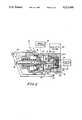
- FIG. 1is a cross-sectional view of an empty-load device incorporating the principles of the present invention in the release position.
- FIG. 2is a cross-sectional view of the valve of FIG. 1 in the loaded-load position.
- FIG. 3is a cross-sectional view of the valve of FIG. 1 in the empty-load position.
- An empty-load device 10 shown in FIGS. 1-3includes a housing 12 having first housing portion 14 joined to a second housing portion 16.
- the housing 12includes a control valve port 20, a brake cylinder port 22, an equalizing volume port 24, and exhaust port 26.
- a control valve 28is connected to control valve port 20; brake cylinder 30 is connected to brake cylinder port 22; and an equalizing volume 32 is mounted to the housing portion 16 and connected to equalizing volume port 24.
- a load-sensing lever 34is pivotally connected at 36 to the housing portion 14 and is also pivotally connected at 38 to a push rod 40 extending from the housing portion 14. The sensing lever 34 contacts a portion of an unloaded structure of a railroad car track to sense the load force of the car.
- a sensing piston 42includes a pair of members which are connected to the body 12 by a diaphragm.
- the sensing piston 42is secured to the push rod 40 between a shoulder 41 on the push rod and a threaded fastener 43.
- a spring 44extends between the housing portion 14 and a face of the sensing piston 42 and biases the sensing piston 42 to the right in the figures.
- the housing portion 14, the sensing lever 34, the push rod 40, the spring 44, and a sensing piston 42is substantially as that shown in the Scott U.S. Pat. No. 3,671,086 and is the valve known as SC-1. This reduces the number of special parts.
- the push rod 40includes an actuator 46 threadably received therein and extending through a ratio piston 48.
- the ratio piston 48includes a first surface 50 facing a surface of the sensing piston 42 with the brake cylinder port 22 therebetween.
- a second surface 52 of the ratio portion 40is smaller than the first surface 50.
- the second surface 52also includes the end of the ratio piston 52A.
- a ratio valve, which bypasses the ratio piston when open,is mounted on and travels with the ratio piston 48.
- the ratio valveincludes a valve seat 54 in the smaller surface 52 of the ratio valve seat 48, a valving member 56, a biasing spring 58, a spring cage 60, and retainer 62.
- the ratio valve as illustratedis a check valve which is responsive to the position of the actuator portion 46 of the push rod 40 as well as the differential pressure thereacross.
- the housing portion 16includes a first bore 64 and a second smaller bore 66 to receive the ratio piston 48.
- the end wall of bore 66acts as a stop for the ratio pistons 48 in its release or loaded position as illustrated in FIGS. 1 and 2.
- a stop ring 68is provided in the larger bore 64 as a stop adjacent to the empty load position illustrated in FIG. 3.
- the exterior surface of the ratio piston 48is separated from the internal bores 64 and 66 to create a vent space 71 therebetween which is sealed by seals 70 and 72.
- sensing piston 42the ratio piston 48, the ratio valve and the push rod 40 are all coaxial.
- the ratio of travel of the sensing lever 34 to the sensing piston 42is 5:1.
- Sensing piston 42travels, for example 1 inch between the release position of FIG. 1 to the empty position of FIG. 3.
- the tip of the sensing lever 34is adjusted for its nominal loaded and unloaded position with respect to the rail car truck and the actuator 46 is adjusted relative to push rod 40 for the nominally defined loaded valve position.
- the ratio valve spring 58maintains the valving element 56 in contact with the actuator portion 46 of the push rod 40 and also acts by itself as well as in combination with the cage 60 to position the ratio piston 48 in response to the positioning of the push rod 40.
- FIG. 1The release or charging position of the empty-load device is illustrated in FIG. 1.
- spring 44moves the sensing piston 42 to the right forcing the valving element 56 and the cage 60 into contact with retainer 62 forcing the ratio piston 48 into abutment with the interior end face of bore 66.
- Valving element 56is displaced from the seat 54, and therefore the brake cylinder port 22 is connected with the control valve port 20 through the ratio piston 48.
- the ratio valvebypasses the ratio piston.
- the sensing lever 34is against the body 12 as a result of the pressure of spring 44.
- the sensing lever 34may move above or below the nominal loaded car position due to the rock and roll of the rail car. If the rocking and rolling produces a shortening or raising in the figures of the sensing lever 34, the push rod 40 and actuator 46 will move to the right further opening the ratio check valve. Since the ratio piston 48 is still against the end wall of bore 66 and maintained there by the valve spring 58, movement of the push rod 40 does not affect the connection of the equalizing port 24 with respect to the control valve port 20 and the exhaust port 26. Thus a shortening of the sensing lever 34 does not affect the brake cylinder pressure.
- the fluid pressure at the control valve portflows through the open ratio valve to the brake cylinder 30.
- spring 44is compressed and push rod 40 moves to the left extending sensing lever 34 down. If the rail car is unloaded or empty, the sensing lever 34 would continue downward.
- the valving element 56will engage the valve seat 54. This cuts off the flow from the control valve port 20 to the brake cylinder port 22.
- the actuator 46disengages from the closed valving element 56.
- the ratio piston 48will move to the left due to the differential pressure.
- seal 72passes to the left of the equalizing volume port 24 disconnecting it from the exhaust port 26 and connecting it to the control valve port 20. Fluid pressure at the control valve port 20 will then charge or fill the equalizing volume 32 causing a momentary stall in the movement of the ratio piston 48 while the equalizing volume is charging. Depending upon the value of the pressure at the control valve port 20, the ratio piston 48 will stop when the differential pressure thereacross its reciprocal of the 60 percent ratio.
- the ratio piston 48 and the closed ratio valvewill continue moving to the left until the ratio valving element 56 comes into contact with the actuator 46 of the push rod 40. Since the ratio of the ratio piston 48 is the same whether the ratio valve is open or closed, the ratio piston will continue moving unseating the check valve by contact with the actuator 46. Fluid pressure will then flow through the open check valve between the control valve port 20 and the brake cylinder port 22 until the desired ratio is met in the brake cylinder port 22. Once this desired ratio is met, the ratio piston 48 will move back toward the right under the influence of the differential pressure and the biasing of the valve spring 58 until the valving element 56 seats on valve seat 54. This will terminate the fluid flow through the ratio piston 48. Any incremental increase in service or emergency fluid pressure in the empty load condition, will be proportioned by the ratio piston 48 and ratio valve to provide an appropriate ratio between the control valve port 20 and the brake cylinder port 22.
- the actuator 40will move to the left disengaging from the valving element 56 and therefore will have no effect. If the car is completely empty and the sensing piston 42 is engaged against the housing, no further movement of the push rod 40 is possible.
- the push rod 40 and actuator 46move to the right contacting the ratio valve.
- the ratio valve spring 58apply force to move the ratio piston 48 back to the right, any added pressure flowing through the ratio valve will provide an increase of pressure locally on the large face 50 of the ratio piston. This will further increases the movement or repositioning of the ratio piston to the right and quickly move the seat 54 onto the valving element 56 to close the ratio valve. Since the ratio valve is closed quickly and the increase in pressure on the face 52 is localized, the pressure at the brake cylinder port 22 will not substantially change.
- the initial release from the control valve 28exhausts fluid pressure from the control valve port 20 and the equalizing volume port 24 to the control valve 28. Since the combined upstream piping volume and the volume of the equalizing volume 32 are much smaller than the downstream volume within port 22 of the housing 12 and the brake cylinder 30, the immediate imbalance of pressure across the ratio piston 48 will be detected. The imbalance will cause the ratio piston 48 to move back to the right re-engaging with the end wall of bore 66. This disconnects the equalizing volume port 24 from the control valve port 20 and connects it to the exhaust port 26 as illustrated in FIG. 1. The differential pressure across the valving element 56 will overcome the bias of the ratio valve spring 58 opening the ratio valve. Thus, the brake cylinder pressure at brake port 22 will flow through the unseated valve to the control valve port 20.
Landscapes
- Engineering & Computer Science (AREA)
- Transportation (AREA)
- Mechanical Engineering (AREA)
- Hydraulic Control Valves For Brake Systems (AREA)
Abstract
Description
The present invention relates to empty-load changeover apparatus and more specifically, to a combined empty-load changeover and load-sensing and proportioning device.
An empty-load changeover apparatus currently in use as a changeover device mounted to pipe bracket and a separate load-sensing mechanism is shown in U.S. Pat. No. 3,671,086 to Scott and generally known as an SC-1 valve. This apparatus is much too large and heavy to be mounted on a railroad truck. U.S. Pat. No. 4,653,812 to Engle discloses a combined empty-load changeover and load-sensing device capable of being mounted to a railroad truck, but is also much too large and heavy. A much lighter and more compact empty-load valve device is shown in U.S. Pat. No. 4,844,554 to Rojecki. Although Rojecki was an improvement over the prior art, it was a specialty valve.
Thus, it is an object of the present invention to provide an empty-load device which has a minimum piping requirement and uses more standard parts.
Another object of the present invention is to provide an empty-load device which protects against erroneous and false indication of car loading by movement of the load-sensing arm caused by rock and roll of the car.
These other objects are achieved by an empty-load device having a single housing, which includes a brake cylinder, control valve, and equalizing valve ports. A sensing piston and ratio piston are interconnected by a push rod which selectively controls the fluid pressure at the brake cylinder port in accordance with sense load force. A ratio valve bypasses the ratio piston and in combination limits the fluid pressure at the brake cylinder port. The improvement of the structure includes the ratio valve being mounted on and travelling with the ratio piston. The push rod engages and maintains the ratio valve open except for empty sensed load force. The ratio valve is a check valve including a valve seat in the ratio piston, a valving element, a spring cage, and a valve spring in the ratio piston. The ratio piston and the sensing piston face each other, and the brake cylinder port lies therebetween. The ratio valve is on the opposite and smaller surface of the ratio piston.
The push rod, which engages the ratio valve, in combination with the valve spring and spring cage maintains the ratio piston against a first stop in the housing for brake release and for a loaded sensed load force. The ratio piston disengages the first stop for an empty sensed load force and the push rod engages the valving element and positions the ratio piston for variations of the empty sensed load force. The ratio piston is also repositioned by differential pressure across the ratio valve for an empty sense load force.
The equalization port is disconnected from the control valve port and connected to an exhaust port when the ratio piston engage the first stop and is connected to the control valve port and disconnected from the exhaust port when the ratio piston disengages from the first stop.
The unique relationship of the push rod with the spring loaded ratio valve mounted in the ratio piston provides protection from the false indication of ca loading by variations from the normal loaded and empty load positions of the sensing arm caused by rock and roll.
Other objects, advantages and novel features of the present invention will become apparent from the following detailed description of the invention when considered in conjunction with the accompanying drawings.
FIG. 1 is a cross-sectional view of an empty-load device incorporating the principles of the present invention in the release position.
FIG. 2 is a cross-sectional view of the valve of FIG. 1 in the loaded-load position.
FIG. 3 is a cross-sectional view of the valve of FIG. 1 in the empty-load position.
In a rail brake system, emergency and auxiliary reservoirs are charged from a brake pipe through a control valve. In a charged system, no fluid pressure is present in a brake cylinder. The control valve monitors the brake pipe and supplies pressure from the reservoir to or removes pressure from the brake cylinder in response to change of pressure in the brake pipe. Brake pipe systems are well known as described in the patents discussed above.
An empty-load device 10 shown in FIGS. 1-3 includes ahousing 12 havingfirst housing portion 14 joined to asecond housing portion 16. Thehousing 12 includes acontrol valve port 20, abrake cylinder port 22, an equalizingvolume port 24, andexhaust port 26. Acontrol valve 28 is connected tocontrol valve port 20;brake cylinder 30 is connected tobrake cylinder port 22; and an equalizingvolume 32 is mounted to thehousing portion 16 and connected to equalizingvolume port 24. A load-sensing lever 34 is pivotally connected at 36 to thehousing portion 14 and is also pivotally connected at 38 to apush rod 40 extending from thehousing portion 14. The sensing lever 34 contacts a portion of an unloaded structure of a railroad car track to sense the load force of the car.
Asensing piston 42 includes a pair of members which are connected to thebody 12 by a diaphragm. Thesensing piston 42 is secured to thepush rod 40 between ashoulder 41 on the push rod and a threadedfastener 43. Aspring 44 extends between thehousing portion 14 and a face of thesensing piston 42 and biases thesensing piston 42 to the right in the figures. It should be noted that thehousing portion 14, thesensing lever 34, thepush rod 40, thespring 44, and asensing piston 42 is substantially as that shown in the Scott U.S. Pat. No. 3,671,086 and is the valve known as SC-1. This reduces the number of special parts.
Thepush rod 40 includes anactuator 46 threadably received therein and extending through aratio piston 48. Theratio piston 48 includes afirst surface 50 facing a surface of thesensing piston 42 with thebrake cylinder port 22 therebetween. Asecond surface 52 of theratio portion 40 is smaller than thefirst surface 50. Thesecond surface 52 also includes the end of the ratio piston 52A. A ratio valve, which bypasses the ratio piston when open, is mounted on and travels with theratio piston 48. The ratio valve includes avalve seat 54 in thesmaller surface 52 of theratio valve seat 48, avalving member 56, abiasing spring 58, aspring cage 60, andretainer 62. The ratio valve as illustrated is a check valve which is responsive to the position of theactuator portion 46 of thepush rod 40 as well as the differential pressure thereacross.
Thehousing portion 16 includes afirst bore 64 and a secondsmaller bore 66 to receive theratio piston 48. The end wall ofbore 66 acts as a stop for theratio pistons 48 in its release or loaded position as illustrated in FIGS. 1 and 2. Astop ring 68 is provided in thelarger bore 64 as a stop adjacent to the empty load position illustrated in FIG. 3. The exterior surface of theratio piston 48 is separated from theinternal bores vent space 71 therebetween which is sealed byseals ratio piston 48 in the release or the loaded load position of FIGS. 1 and 2, theinternal space 71 connects the equalizingvolume port 24 with theexhaust port 26 and disconnects the equalizingport 24 from thecontrol valve port 20. When theratio piston 48 is moved to its empty load position as illustrated in FIG. 3, theinternal space 71 is connected only to theexhaust port 26 and theequalization volume port 24 is disconnected from theexhaust port 26 and is connected to thecontrol valve port 20.
It should be noted that thesensing piston 42, theratio piston 48, the ratio valve and thepush rod 40 are all coaxial. The ratio of travel of thesensing lever 34 to thesensing piston 42 is 5:1. Sensingpiston 42 travels, for example 1 inch between the release position of FIG. 1 to the empty position of FIG. 3. The tip of thesensing lever 34 is adjusted for its nominal loaded and unloaded position with respect to the rail car truck and theactuator 46 is adjusted relative topush rod 40 for the nominally defined loaded valve position. Theratio valve spring 58 maintains thevalving element 56 in contact with theactuator portion 46 of thepush rod 40 and also acts by itself as well as in combination with thecage 60 to position theratio piston 48 in response to the positioning of thepush rod 40.
The release or charging position of the empty-load device is illustrated in FIG. 1. With no pressure on thecontrol valve port 20,spring 44 moves thesensing piston 42 to the right forcing thevalving element 56 and thecage 60 into contact withretainer 62 forcing theratio piston 48 into abutment with the interior end face ofbore 66.Valving element 56 is displaced from theseat 54, and therefore thebrake cylinder port 22 is connected with thecontrol valve port 20 through theratio piston 48. Thus, the ratio valve bypasses the ratio piston. Thesensing lever 34 is against thebody 12 as a result of the pressure ofspring 44.
During braking of a loaded car, pressure from thecontrol valve port 20 passes through thevalve seat 54 of theratio piston 48 to thebrake cylinder port 22 and intobrake cylinder 30. When the fluid pressure on the face ofsensing piston 42 matches the equivalent pressure applied byspring 44, the sensing,piston 42 will move to the left against the resistance ofspring 44. This lowers thesensing lever 34 into contact with the rail car truck. For example, thespring 44 may be rated for 15 psi of pressure on thesensing piston 42. Theratio valve spring 58 causes theratio valving element 56 to maintain contact with theactuator 46 of thepush rod 40 during its travel to the left. Since the car is loaded, thesensing piston 42,push rod 40 andvalving element 56 reach the positions illustrated in FIG. 2.Valving element 56 is still displaced from thevalve seat 54 and the control valve pressure atport 20 is transmitted unproportioned or unratioed to thebrake cylinder port 22.
During the operation of the train, thesensing lever 34 may move above or below the nominal loaded car position due to the rock and roll of the rail car. If the rocking and rolling produces a shortening or raising in the figures of thesensing lever 34, thepush rod 40 andactuator 46 will move to the right further opening the ratio check valve. Since theratio piston 48 is still against the end wall ofbore 66 and maintained there by thevalve spring 58, movement of thepush rod 40 does not affect the connection of the equalizingport 24 with respect to thecontrol valve port 20 and theexhaust port 26. Thus a shortening of thesensing lever 34 does not affect the brake cylinder pressure.
If the rock and roll causes thesensing lever 34 to lengthen the travel or extend down in the figures, this will move thepush rod 40 and thevalve actuator 46 to the left. This erroneous travel would have no affect on the open connection between thecontrol valve port 20 and thebrake cylinder port 22 unless thevalving element 56 comes into contact with thevalve seat 54. This would represent, for example, 80 percent of the arm travel or 31/2 inches of travel of thepush rod 40 and a 20 percent load. If the erroneous indication, by a lengthening of the push rod to indicate almost empty load allows thevalving element 56 to close onseat 54, the fluid pressure at thecontrol port 20 must exceed the pressure inbrake cylinder port 22 by the reciprocal of the ratio piston ratio. Using a typical example of a 60 percent portioning or ratio between faces 50 and 52 of theratio piston 48 and a 15psi spring 44, pressure onface 52 would have to exceed 25 psi before theratio piston 48 would move off the stop from the positions shown in FIGS. 1 and 2. Recognizing that rock and roll motion are equal and opposite and occur in alternating sequence, the erroneous lengthening must occur for a sufficient amount of time to allow the brake pressure atcontrol port 20 to rise to 25 psi before it occupies its opposite rock or roll position. Thus the erroneous signal must be maintained, for example at least 1 to 3 seconds. This is highly unlikely in the real world.
With the loaded load position of FIG. 2, when the brakes are released, the fluid pressure at the brake cylinder will flow frombrake cylinder port 22 through the open ratio valve in theratio piston 48 to thecontrol valve port 20 where it is exhausted at thecontrol valve 28. When the pressure onsensing piston 42 from thebrake cylinder port 22 diminishes below 15 psi, thespring 44 moves thepush rod 40,actuator portion 46,valving element 56,valve spring 58 andcage 60 to the right to come to rest in its final position as illustrated in FIG. 1.
For a brake application of an empty loaded car, the fluid pressure at the control valve port flows through the open ratio valve to thebrake cylinder 30. After the 15 psi fluid pressure builds up at thebrake cylinder port 22,spring 44 is compressed and pushrod 40 moves to the left extendingsensing lever 34 down. If the rail car is unloaded or empty, thesensing lever 34 would continue downward. Once thepush rod 40 reaches approximately less than 20 percent left of its travel which represents a 20 percent loaded car, thevalving element 56 will engage thevalve seat 54. This cuts off the flow from thecontrol valve port 20 to thebrake cylinder port 22. As thesensing lever 34 continues further downward and thepush rod 40 continues to the left, theactuator 46 disengages from theclosed valving element 56.
As described above, when the fluid pressure at theport 20 reaches a reciprocal of the ratio of the ratio piston or for example 25 psi, theratio piston 48 will move to the left due to the differential pressure.
As theratio piston 48 moves to the left, seal 72 passes to the left of the equalizingvolume port 24 disconnecting it from theexhaust port 26 and connecting it to thecontrol valve port 20. Fluid pressure at thecontrol valve port 20 will then charge or fill the equalizingvolume 32 causing a momentary stall in the movement of theratio piston 48 while the equalizing volume is charging. Depending upon the value of the pressure at thecontrol valve port 20, theratio piston 48 will stop when the differential pressure thereacross its reciprocal of the 60 percent ratio.
If the pressure at thecontrol valve port 20 is sufficiently high, theratio piston 48 and the closed ratio valve will continue moving to the left until theratio valving element 56 comes into contact with theactuator 46 of thepush rod 40. Since the ratio of theratio piston 48 is the same whether the ratio valve is open or closed, the ratio piston will continue moving unseating the check valve by contact with theactuator 46. Fluid pressure will then flow through the open check valve between thecontrol valve port 20 and thebrake cylinder port 22 until the desired ratio is met in thebrake cylinder port 22. Once this desired ratio is met, theratio piston 48 will move back toward the right under the influence of the differential pressure and the biasing of thevalve spring 58 until thevalving element 56 seats onvalve seat 54. This will terminate the fluid flow through theratio piston 48. Any incremental increase in service or emergency fluid pressure in the empty load condition, will be proportioned by theratio piston 48 and ratio valve to provide an appropriate ratio between thecontrol valve port 20 and thebrake cylinder port 22.
If an erroneous or false indication in car weight due to rock and roll is caused by thesensing lever 34 having a lengthened travel or extending further down the figures, theactuator 40 will move to the left disengaging from thevalving element 56 and therefore will have no effect. If the car is completely empty and thesensing piston 42 is engaged against the housing, no further movement of thepush rod 40 is possible.
If an erroneous or false indication in the car weight due to rock and roll is caused by thesensing lever 34 moving up from its nominal position, thepush rod 40 andactuator 46 move to the right contacting the ratio valve. Not only will theratio valve spring 58 apply force to move theratio piston 48 back to the right, any added pressure flowing through the ratio valve will provide an increase of pressure locally on thelarge face 50 of the ratio piston. This will further increases the movement or repositioning of the ratio piston to the right and quickly move theseat 54 onto thevalving element 56 to close the ratio valve. Since the ratio valve is closed quickly and the increase in pressure on theface 52 is localized, the pressure at thebrake cylinder port 22 will not substantially change.
The initial release from thecontrol valve 28 exhausts fluid pressure from thecontrol valve port 20 and the equalizingvolume port 24 to thecontrol valve 28. Since the combined upstream piping volume and the volume of the equalizingvolume 32 are much smaller than the downstream volume withinport 22 of thehousing 12 and thebrake cylinder 30, the immediate imbalance of pressure across theratio piston 48 will be detected. The imbalance will cause theratio piston 48 to move back to the right re-engaging with the end wall ofbore 66. This disconnects the equalizingvolume port 24 from thecontrol valve port 20 and connects it to theexhaust port 26 as illustrated in FIG. 1. The differential pressure across thevalving element 56 will overcome the bias of theratio valve spring 58 opening the ratio valve. Thus, the brake cylinder pressure atbrake port 22 will flow through the unseated valve to thecontrol valve port 20. Once the pressure atbrake cylinder port 22 becomes less than the pressure applied byspring 44, thespring 44 moves thepush rod 40 to the right. When actuator 46 engages valvingmember 56, it drives it to its fully right position as illustrated in FIG. 1 holding the valve open. This mechanical driving of the ratio valve is a redundant to the differential pressure to retain the valve open as well as retaining the ratio piston against its first stop.
Although the present invention has been described and illustrated in detail, it is to be clearly understood that the same is by way of illustration and example only, and is not to be taken by way of limitation. The spirit and scope of the present invention are to be limited only by the terms of the appended claims.
Claims (19)
1. An empty-load device including:
a housing having brake cylinder, control valve and equalizing volume ports;
sensing means, having a sensing piston, for sensing load force bearing on a railroad car truck;
ratio means, having a ratio piston and a ratio valve operated by said ratio piston, for limiting fluid pressure at the brake cylinder port from said control valve port;
equalizing valve for connecting said control valve port and said equalizing volume port;
a push rod, operatively connected to said sensing piston, said equalizing valve and said ratio means, for selectively controlling fluid pressure at the brake cylinder port in accordance with said sensed load force; the improvement comprising:
said ratio valve including a valving element and a valve seat mounted on and traveling with said ratio piston.
2. An empty-load device according to claim 1, wherein said ratio valve is a check valve including a valve seat on said ratio piston, a valving element and a valve spring in said ratio piston.
3. An empty-load device according to claim 2, wherein
said ratio piston has a first surface exposed to said control valve port and a second surface larger than said first surface and exposed to said brake cylinder port; and
said ratio valve is at said first surface.
4. An empty-load device according to claim 3, wherein said sensing piston has a first surface facing said second surface of said ratio piston and exposed to said brake cylinder port.
5. An empty-load device according to claim 2, wherein said push rod engages and opens said ratio valve except for an empty sensed load force and said valve spring maintains said ratio piston against a first stop in said housing for a brake release and for a loaded sensed load force.
6. An empty-load device according to claim 5, wherein said ratio piston disengages said first stop for an empty sensed load force and said push rod engages said valving element and pistons said ratio piston for variations from said empty sensed load force.
7. An empty-load device according to claim 6, wherein said ratio piston is also repositioned by differential pressure across said ratio valve for an empty sensed load force.
8. An empty-load device according to claim 5, wherein said equalizing volume port is disconnected by said equalizing valve from said control valve port when said ratio piston engages said first stop and is connected by said equalizing valve to said control valve port when said ratio piston disengages said first stop.
9. An empty-load device according to claim 5 wherein said ratio valve includes a spring cage, and said spring cage also maintains said ratio piston against said first stop for a brake release.
10. An empty-load device according to claim 1, wherein said push rod engages and opens said ratio valve except for and empty sensed load force and said ratio valve maintains said ratio piston against a first stop in said housing for a brake release and for a loaded sensed load force.
11. An empty-load device according to claim 10, wherein said ratio piston disengages said first stop for an empty sensed load force and said push rod engages said ratio valve and positioned said ratio piston for variations from said empty sensed load force.
12. An empty-load device according to claim 11, wherein said ratio piston is also repositioned by differential pressure across said ratio valve for an empty sensed load force.
13. An empty-load device according to claim 10, wherein said equalizing volume port is disconnected by said equalizing valve from said control valve port when said ratio piston engages said first stop and is connected by said equalizing valve to said control valve port when said ratio piston disengages said first stop.
14. An empty-load device according to claim 1, wherein said brake cylinder port is between said sensing piston and said ratio piston, which are coaxial.
15. An empty-load device according to claim 1, wherein said push rod engages and opens said ratio valve except for an empty sensed load force.
16. An empty-load device according to claim 1 wherein:
said housing includes an exhaust port; and
said equalizing volume port is connected to said exhaust port and disconnected from said control valve port by said equalizing valve when said ratio piston is in brake release or a loaded load position and is disconnected from said exhaust port and connected to said control valve port by said equalizing valve when said ratio piston in an empty load position.
17. An empty-load device including;
a housing having a brake cylinder, control valve and equalizing volume ports;
sensing means having a sensing piston for sensing load force bearing on a railroad car truck;
ratio means having a ratio piston and a ratio valve operated by said ratio piston for limiting fluid pressure at the brake cylinder port from said control valve port;
equalizing valve for connecting said control valve port and said equalizing volume port;
a push rod, operatively connected to said sensing piston, said equalizing valve and said ratio means for selectively controlling fluid pressure at the brake cylinder port in accordance with said sensed load force; the improvement comprising:
said ratio valve is connected to said ratio piston by a spring; and
said push rod engages said ratio valve to open said ratio valve and to positions said ratio piston for variations of sensed load force via said spring.
18. An empty-load device according to claim 17, wherein said ratio piston is also repositioned by differential pressure across said ratio valve for an empty sensed load force.
19. An empty-load device according to claim 17 wherein:
said housing includes an exhaust port; and
said equalizing volume port is connected to said exhaust port and disconnected from said control valve port by said equalizing valve when said ratio piston is in a brake release or a loaded load position and is disconnected from said exhaust port and connected to said control valve port by said equalizing valve when said ratio piston is in an empty load position.
Priority Applications (1)
| Application Number | Priority Date | Filing Date | Title |
|---|---|---|---|
| US07/758,558US5211450A (en) | 1991-09-12 | 1991-09-12 | Empty/load valve |
Applications Claiming Priority (1)
| Application Number | Priority Date | Filing Date | Title |
|---|---|---|---|
| US07/758,558US5211450A (en) | 1991-09-12 | 1991-09-12 | Empty/load valve |
Publications (1)
| Publication Number | Publication Date |
|---|---|
| US5211450Atrue US5211450A (en) | 1993-05-18 |
Family
ID=25052171
Family Applications (1)
| Application Number | Title | Priority Date | Filing Date |
|---|---|---|---|
| US07/758,558Expired - LifetimeUS5211450A (en) | 1991-09-12 | 1991-09-12 | Empty/load valve |
Country Status (1)
| Country | Link |
|---|---|
| US (1) | US5211450A (en) |
Cited By (12)
| Publication number | Priority date | Publication date | Assignee | Title |
|---|---|---|---|---|
| US5662389A (en)* | 1996-09-10 | 1997-09-02 | New York Air Brake Corporation | Variable load EP brake control system |
| US6079795A (en)* | 1998-06-08 | 2000-06-27 | Westinghouse Air Brake Technologies Corporation | Load proportional brake cylinder pressure limiting system |
| US6206483B1 (en)* | 1998-04-29 | 2001-03-27 | New York Air Brake Corporation | Empty-load device with brake cylinder test port |
| CN1090576C (en)* | 1995-08-30 | 2002-09-11 | 自动车机器株式会社 | Load sensing proportioning valve |
| US6561595B2 (en) | 2001-06-28 | 2003-05-13 | New York Air Brake Corporation | Brake assembly, system and method |
| US6648424B2 (en) | 2002-03-29 | 2003-11-18 | New York Air Brake Corporation | Brake system with graduated empty/load |
| US6666528B1 (en) | 2002-08-28 | 2003-12-23 | New York Air Brake Corporation | Empty load device |
| US6698849B1 (en)* | 2000-11-20 | 2004-03-02 | Westinghouse Air Brake Technologies Corporation | Pneumatic pressure control device for an empty/load changeover valve on a railway car |
| US6915884B1 (en)* | 1999-01-15 | 2005-07-12 | Glide-Rite Products Limited | Load sensing system |
| US20080168896A1 (en)* | 2007-01-12 | 2008-07-17 | New York Air Brake Corporation | Lock-Out for Empty Load Device |
| WO2009105143A1 (en)* | 2008-02-18 | 2009-08-27 | New York Air Brake Corporation | Ecp brake with dual mode empty load |
| US20100007203A1 (en)* | 2008-07-11 | 2010-01-14 | Mahaney Shawn D | Signal control device |
Citations (17)
| Publication number | Priority date | Publication date | Assignee | Title |
|---|---|---|---|---|
| US3285674A (en)* | 1963-07-17 | 1966-11-15 | Girling Ltd | Control valves for air braking systems |
| US3606485A (en)* | 1969-12-29 | 1971-09-20 | Westinghouse Air Brake Co | Empty-load relay valve device |
| US3671086A (en)* | 1970-12-16 | 1972-06-20 | Westinghouse Air Brake Co | Empty-load changeover apparatus |
| US3927916A (en)* | 1973-06-20 | 1975-12-23 | Jidosha Kiki Co | Combined load-sensing proportion and relay valve |
| US3929384A (en)* | 1974-10-09 | 1975-12-30 | Southern Railway Co | Empty and load brake apparatus |
| US3936097A (en)* | 1973-05-30 | 1976-02-03 | Jidosha Kiki Co., Ltd. | Relay valve combined with a load-sensing proportion valve |
| US4045094A (en)* | 1973-05-30 | 1977-08-30 | Jidosha Kiki Co., Ltd. | Relay valve combined with a load-sensing proportion valve |
| DE2640993A1 (en)* | 1976-09-11 | 1978-03-16 | Knorr Bremse Gmbh | ADJUSTABLE LOAD BRAKE VALVE, ESPECIALLY FOR LOAD-CONTROLLED RAILWAY AIR PRESSURE BRAKES |
| DE3216407A1 (en)* | 1982-03-11 | 1983-09-15 | Wabco Westinghouse Fahrzeugbremsen GmbH, 3000 Hannover | Brake force regulator for pressure medium operated brake systems |
| US4444439A (en)* | 1980-11-03 | 1984-04-24 | Wabco Fahrzeugbremsen Gmbh | Apparatus for adjusting a mechanically-controlled, load-dependent braking-power regulator |
| US4453779A (en)* | 1982-02-18 | 1984-06-12 | American Standard Inc. | Adjustable variable load control valve device |
| US4597610A (en)* | 1979-09-25 | 1986-07-01 | Robert Bosch Gmbh | Load-dependent brake force governor |
| US4653812A (en)* | 1985-09-16 | 1987-03-31 | General Signal Corporation | Truck mounted pneumatic brake control system |
| US4844554A (en)* | 1988-05-26 | 1989-07-04 | General Signal Corporation | Empty-load valve device |
| DE3922892A1 (en)* | 1989-07-12 | 1991-01-17 | Bosch Gmbh Robert | Load dependent braking force controller - uses twin piston system adaptable to range of vehicles |
| US5005915A (en)* | 1990-02-20 | 1991-04-09 | American Standard Inc. | Empty/load changeover valve for railway car |
| US5106168A (en)* | 1990-07-11 | 1992-04-21 | Westinghouse Air Brake Company | Empty-load changeover valve for railway car |
- 1991
- 1991-09-12USUS07/758,558patent/US5211450A/ennot_activeExpired - Lifetime
Patent Citations (17)
| Publication number | Priority date | Publication date | Assignee | Title |
|---|---|---|---|---|
| US3285674A (en)* | 1963-07-17 | 1966-11-15 | Girling Ltd | Control valves for air braking systems |
| US3606485A (en)* | 1969-12-29 | 1971-09-20 | Westinghouse Air Brake Co | Empty-load relay valve device |
| US3671086A (en)* | 1970-12-16 | 1972-06-20 | Westinghouse Air Brake Co | Empty-load changeover apparatus |
| US3936097A (en)* | 1973-05-30 | 1976-02-03 | Jidosha Kiki Co., Ltd. | Relay valve combined with a load-sensing proportion valve |
| US4045094A (en)* | 1973-05-30 | 1977-08-30 | Jidosha Kiki Co., Ltd. | Relay valve combined with a load-sensing proportion valve |
| US3927916A (en)* | 1973-06-20 | 1975-12-23 | Jidosha Kiki Co | Combined load-sensing proportion and relay valve |
| US3929384A (en)* | 1974-10-09 | 1975-12-30 | Southern Railway Co | Empty and load brake apparatus |
| DE2640993A1 (en)* | 1976-09-11 | 1978-03-16 | Knorr Bremse Gmbh | ADJUSTABLE LOAD BRAKE VALVE, ESPECIALLY FOR LOAD-CONTROLLED RAILWAY AIR PRESSURE BRAKES |
| US4597610A (en)* | 1979-09-25 | 1986-07-01 | Robert Bosch Gmbh | Load-dependent brake force governor |
| US4444439A (en)* | 1980-11-03 | 1984-04-24 | Wabco Fahrzeugbremsen Gmbh | Apparatus for adjusting a mechanically-controlled, load-dependent braking-power regulator |
| US4453779A (en)* | 1982-02-18 | 1984-06-12 | American Standard Inc. | Adjustable variable load control valve device |
| DE3216407A1 (en)* | 1982-03-11 | 1983-09-15 | Wabco Westinghouse Fahrzeugbremsen GmbH, 3000 Hannover | Brake force regulator for pressure medium operated brake systems |
| US4653812A (en)* | 1985-09-16 | 1987-03-31 | General Signal Corporation | Truck mounted pneumatic brake control system |
| US4844554A (en)* | 1988-05-26 | 1989-07-04 | General Signal Corporation | Empty-load valve device |
| DE3922892A1 (en)* | 1989-07-12 | 1991-01-17 | Bosch Gmbh Robert | Load dependent braking force controller - uses twin piston system adaptable to range of vehicles |
| US5005915A (en)* | 1990-02-20 | 1991-04-09 | American Standard Inc. | Empty/load changeover valve for railway car |
| US5106168A (en)* | 1990-07-11 | 1992-04-21 | Westinghouse Air Brake Company | Empty-load changeover valve for railway car |
Cited By (21)
| Publication number | Priority date | Publication date | Assignee | Title |
|---|---|---|---|---|
| CN1090576C (en)* | 1995-08-30 | 2002-09-11 | 自动车机器株式会社 | Load sensing proportioning valve |
| US5662389A (en)* | 1996-09-10 | 1997-09-02 | New York Air Brake Corporation | Variable load EP brake control system |
| AU716572B2 (en)* | 1996-09-10 | 2000-03-02 | New York Air Brake Llc | Variable load EP brake control system |
| US6206483B1 (en)* | 1998-04-29 | 2001-03-27 | New York Air Brake Corporation | Empty-load device with brake cylinder test port |
| US6079795A (en)* | 1998-06-08 | 2000-06-27 | Westinghouse Air Brake Technologies Corporation | Load proportional brake cylinder pressure limiting system |
| US6217130B1 (en) | 1998-06-08 | 2001-04-17 | Westinghouse Air Brake Technologies Corporation | Load proportional brake cylinder pressure limiting system |
| US6915884B1 (en)* | 1999-01-15 | 2005-07-12 | Glide-Rite Products Limited | Load sensing system |
| AU781116B2 (en)* | 2000-11-20 | 2005-05-05 | Westinghouse Air Brake Technologies Corporation | Pneumatic pressure control device for an empty/load changeover valve on a railway car |
| US6698849B1 (en)* | 2000-11-20 | 2004-03-02 | Westinghouse Air Brake Technologies Corporation | Pneumatic pressure control device for an empty/load changeover valve on a railway car |
| US6561595B2 (en) | 2001-06-28 | 2003-05-13 | New York Air Brake Corporation | Brake assembly, system and method |
| US6648424B2 (en) | 2002-03-29 | 2003-11-18 | New York Air Brake Corporation | Brake system with graduated empty/load |
| US6666528B1 (en) | 2002-08-28 | 2003-12-23 | New York Air Brake Corporation | Empty load device |
| US7857398B2 (en) | 2007-01-12 | 2010-12-28 | New York Air Brake Corporation | Lock-out for empty load device |
| US20080168896A1 (en)* | 2007-01-12 | 2008-07-17 | New York Air Brake Corporation | Lock-Out for Empty Load Device |
| US8226174B2 (en) | 2008-02-18 | 2012-07-24 | New York Air Brake Corporation | ECP brake with dual mode empty load |
| CN101932485A (en)* | 2008-02-18 | 2010-12-29 | 纽约气闸公司 | Ecp brake with dual mode empty load |
| WO2009105143A1 (en)* | 2008-02-18 | 2009-08-27 | New York Air Brake Corporation | Ecp brake with dual mode empty load |
| CN101932485B (en)* | 2008-02-18 | 2013-04-24 | 纽约气闸公司 | Rail transit brake system and empty load device |
| AU2008350910B2 (en)* | 2008-02-18 | 2014-05-29 | New York Air Brake Llc | ECP brake with dual mode empty load |
| US20100007203A1 (en)* | 2008-07-11 | 2010-01-14 | Mahaney Shawn D | Signal control device |
| US8845036B2 (en)* | 2008-07-11 | 2014-09-30 | Amsted Rail—Faiveley, LLC | Signal control device |
Similar Documents
| Publication | Publication Date | Title |
|---|---|---|
| JP2564100B2 (en) | Air-fuel switching valve device used in railway vehicle brake control device | |
| US5211450A (en) | Empty/load valve | |
| CA2153853C (en) | Electro-pneumatic freight brake control system | |
| US5106168A (en) | Empty-load changeover valve for railway car | |
| CA2710869C (en) | Ecp brake with dual mode empty load | |
| US5005915A (en) | Empty/load changeover valve for railway car | |
| JP2670425B2 (en) | Brake control device for locomotive | |
| US4776648A (en) | Relay valve assembly | |
| US4453777A (en) | Relay valve assembly | |
| CA1320990C (en) | Empty-load valve device | |
| AU779224B2 (en) | Short travel detector for empty/load brake control | |
| US6206483B1 (en) | Empty-load device with brake cylinder test port | |
| US6666528B1 (en) | Empty load device | |
| US5269595A (en) | Empty/load changeover valve for railway car | |
| US4111495A (en) | Load sensing proportioner with proportioner delay | |
| US3994533A (en) | Inertia-type hydraulic brake pressure control valve | |
| AU719626B2 (en) | Electro-pneumatic valve control | |
| US4421360A (en) | Relay valve assembly | |
| US4441764A (en) | Relay valve assembly | |
| CA2391073C (en) | Brake assembly, system and method | |
| US3966271A (en) | Fluid brake control system | |
| USRE29831E (en) | Fluid brake control system | |
| CA1278598C (en) | Protection valve for spring parking brake system | |
| US4084858A (en) | Uncoupling valve with override feature | |
| CA2277976C (en) | Electro-pneumatic freight brake control system |
Legal Events
| Date | Code | Title | Description |
|---|---|---|---|
| AS | Assignment | Owner name:KNORR BRAKE HOLDING CORPORATION Free format text:ASSIGNMENT OF ASSIGNORS INTEREST.;ASSIGNORS:GAYFER, ROBERT;ROJECKI, WALTER E.;REEL/FRAME:005903/0215 Effective date:19911010 | |
| STCF | Information on status: patent grant | Free format text:PATENTED CASE | |
| FPAY | Fee payment | Year of fee payment:4 | |
| FEPP | Fee payment procedure | Free format text:PAYOR NUMBER ASSIGNED (ORIGINAL EVENT CODE: ASPN); ENTITY STATUS OF PATENT OWNER: LARGE ENTITY | |
| FPAY | Fee payment | Year of fee payment:8 | |
| REMI | Maintenance fee reminder mailed | ||
| FPAY | Fee payment | Year of fee payment:12 |