US5179651A - Apparatus for retrieval and processing of selected archived images for display at workstation terminals - Google Patents
Apparatus for retrieval and processing of selected archived images for display at workstation terminalsDownload PDFInfo
- Publication number
- US5179651A US5179651AUS07/651,454US65145491AUS5179651AUS 5179651 AUS5179651 AUS 5179651AUS 65145491 AUS65145491 AUS 65145491AUS 5179651 AUS5179651 AUS 5179651A
- Authority
- US
- United States
- Prior art keywords
- image
- display
- images
- image data
- data
- Prior art date
- Legal status (The legal status is an assumption and is not a legal conclusion. Google has not performed a legal analysis and makes no representation as to the accuracy of the status listed.)
- Expired - Fee Related
Links
Images



Classifications
- G—PHYSICS
- G06—COMPUTING OR CALCULATING; COUNTING
- G06F—ELECTRIC DIGITAL DATA PROCESSING
- G06F3/00—Input arrangements for transferring data to be processed into a form capable of being handled by the computer; Output arrangements for transferring data from processing unit to output unit, e.g. interface arrangements
- G06F3/14—Digital output to display device ; Cooperation and interconnection of the display device with other functional units
- G06F3/153—Digital output to display device ; Cooperation and interconnection of the display device with other functional units using cathode-ray tubes
- H—ELECTRICITY
- H04—ELECTRIC COMMUNICATION TECHNIQUE
- H04L—TRANSMISSION OF DIGITAL INFORMATION, e.g. TELEGRAPHIC COMMUNICATION
- H04L12/00—Data switching networks
- H04L12/28—Data switching networks characterised by path configuration, e.g. LAN [Local Area Networks] or WAN [Wide Area Networks]
- H—ELECTRICITY
- H04—ELECTRIC COMMUNICATION TECHNIQUE
- H04L—TRANSMISSION OF DIGITAL INFORMATION, e.g. TELEGRAPHIC COMMUNICATION
- H04L69/00—Network arrangements, protocols or services independent of the application payload and not provided for in the other groups of this subclass
- H04L69/04—Protocols for data compression, e.g. ROHC
- H—ELECTRICITY
- H04—ELECTRIC COMMUNICATION TECHNIQUE
- H04L—TRANSMISSION OF DIGITAL INFORMATION, e.g. TELEGRAPHIC COMMUNICATION
- H04L9/00—Cryptographic mechanisms or cryptographic arrangements for secret or secure communications; Network security protocols
- H04L9/40—Network security protocols
- H—ELECTRICITY
- H04—ELECTRIC COMMUNICATION TECHNIQUE
- H04N—PICTORIAL COMMUNICATION, e.g. TELEVISION
- H04N1/00—Scanning, transmission or reproduction of documents or the like, e.g. facsimile transmission; Details thereof
- H04N1/21—Intermediate information storage
- H04N1/2166—Intermediate information storage for mass storage, e.g. in document filing systems
- H04N1/2179—Interfaces allowing access to a plurality of users, e.g. connection to electronic image libraries
- G—PHYSICS
- G09—EDUCATION; CRYPTOGRAPHY; DISPLAY; ADVERTISING; SEALS
- G09G—ARRANGEMENTS OR CIRCUITS FOR CONTROL OF INDICATING DEVICES USING STATIC MEANS TO PRESENT VARIABLE INFORMATION
- G09G2360/00—Aspects of the architecture of display systems
- G09G2360/04—Display device controller operating with a plurality of display units
Definitions
- a typical computer network systemincludes a digital processor, a main disk for storage and several workstations which are serviced by the digital processor and which share the information stored in the main disk.
- Each workstationgenerally includes one or more display and keyboard terminals which enable a user to process and view data retrieved on a selected basis from the main disk.
- the cost of the display hardware and the speed with which images can be loaded from the main storage or an image archiveis critical and of prime importance. Nowhere is this more so than in a workstation with many high resolution displays, such as one would find in a medical workstation or other workstation used for diagnostic purposes and in an image processing workstation.
- the present inventionprovides a digital image processing and display system which optimizes the time and cost efficiencies of display hardware and data transmission.
- One feature of the systemis that separate communication channels are provided to workstations of the display system from a digital processor and image archive for control data and image data.
- the image archive and digital processorare tightly coupled forming an image archive/processor unit.
- a one way optical LANcarries image data from the image archive/processor unit to a workstation of the display system while a general purpose LAN carries control data, image address data and user supplied graphics data from the unit to a workstation.
- a high-speed-image busis used to carry image data alone while a general-purpose-control bus is employed to carry control and graphics data.
- the digital image processing and display systemincludes a display controller scheme in which a group of display monitors is driven in a paint-free fashion, that is by an abrupt, whole image changeover as opposed to a line by line changeover of images, such that instantaneous changeover from one image to a new image is provided upon the display monitors.
- the display controller schemethere is at least one more controller than monitor, and each controller is connected to a different monitor to drive the monitor. Each controller is also able to be loaded with a different image to display that image on the respective monitor.
- a cross-bar switchis used to connect the controllers with the monitors in a one-to-one correspondence relationship, there being one controller at all times unconnected to any monitor.
- the unconnected display controlleris free to be supplied with image data from the image archive through a local buffer or from another display controller which is connected to a monitor. Once the unconnected display controller is loaded with the desired image data, a currently connected display controller is disconnected from its monitor while the unconnected display controller is connected to the monitor.
- the unconnecting of the one display controller and connecting of the other display controller holding the desired new image dataprovides an instantaneous changeover between images, and as a result, a paint-free, steady display of a succession of images on the monitor.
- the present inventionadaptively applies different ones of various compression schemes to each part of a data word of an image according to high order and low order bits of the word. That is, different compression schemes are used for the high and low order bits of the same image data word, and the compression schemes of either (or both) the high order or low order bits may change from one sequence of image data words to the next.
- Such an adaptive application of compression schemesenables those compression schemes which best condense long series of similar bytes and those compression schemes which more advantageously condense short series of similar bytes to do so in the same image.
- prior art systemsemploy only one compression scheme to handle all data words of an image.
- a Run Length Coding methodis used to compress high order bytes of image words, and various Run Length Coding schemes and two different Delta Coding schemes are used to compress the low order bytes of the image words which tend to change more frequently than the high order bytes.
- any one monitormay temporarily serve as a graphic or iconic control screen showing the placement of images on all other monitors. Furthermore, user interaction with this control screen can effect the movement and selection of both the images being displayed and those to be displayed on the other monitors.
- the one chosen monitorthus serves as a central control monitor through which the user requests and arranges images to be displayed with respect to the other monitors.
- the usermay specify which images and the order in which those images are to be displayed, the order including serial arrangement as well as simultaneous display in different partitions, i.e. rectangular areas, on the monitor.
- Such a display of the specified imagesis provided without noticeable delay caused by another user at another workstation of display monitors requesting the same or other images to be displayed.
- radiological imagesare selected and viewed from the monitors of a workstation.
- the imagesmay be displayed in various orientations and gray scale transformations on several monitors and/or in different partitions of one monitor as desired for diagnosis or other purposes.
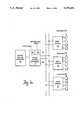
- FIG. 1ais a schematic view of a network of workstations connected to a central image archive/processor embodying a display system of the present invention.
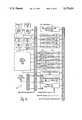
- FIG. 1bis a schematic view of the image handling and display portion of one workstation of the network of FIG. 1a.
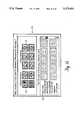
- FIG. 1cis an illustration of an image display format supported by the multiple monitors in the workstation of FIG. 1b.
- FIG. 1dis a schematic view of one portion of the display format of FIG. 1c supported by a control monitor.
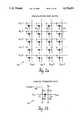
- FIG. 2ais a schematic view of a crossbar switch employed in the workstation of FIG. 1b.
- FIG. 2bis an electrical schematic diagram of a transfer gate employed in the crossbar switch of FIG. 2a.
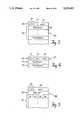
- FIG. 3is a schematic view of the data structure employed by the Run Length Coding--Long method of compression of image data in the display system of FIGS. 1a and 1b.
- FIG. 4is a schematic view of the data structure employed by the Run Length Coding--Short method of compression in the display system of FIGS. 1a and 1b.
- FIG. 5is a schematic view of the data structure employed by the Delta-2 method of compression in the display system of FIGS. 1a and 1b.
- FIG. 6is a schematic view of the data structure employed by the Delta-4 method of compression in the display system of FIGS. 1a and 1b.
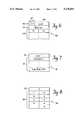
- FIG. 7is a schematic view of the data structure employed by the Nibble 8/16 method of compression in the display system of FIGS. 1a and 1b.
- FIG. 8is a schematic view of the data structure employed by the Nibble 12/16 method of compression in the display system of FIGS. 1a and 1b.
- FIG. 9is a schematic view of the data structure employed by the Nested method of compression in the display system of FIGS. 1a and 1b.
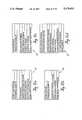
- FIG. 10is a schematic view of the data structure used to encode one image with the methods of compression of FIGS. 3-9 adaptively applied to high and low order bytes of data words of the image.
- FIG. 11is an illustration of image display software used to support the workstations of the network in FIG. 1a.
- FIGS. 12a-12dare illustrations of the data structures employed in the software of FIG. 11.
- FIGS. 1a and 1bAn image/graphics display and processing system embodying the present invention is provided in FIGS. 1a and 1b. Images of interest are previously generated by other means and are stored in an image archive/processor 17, in a compressed or uncompressed form.
- the system of the present inventionprovides retrieval of selected images from the archive/processor 17 and processing and display of retrieved images, with or without superimposed graphics, at various workstation terminals 15 in a network of workstations which share both a system control processor 13, referred to as the host computer, and the image archive/processor 17. Further, the system provides a view of desired images over several monitors 23 of a workstation 15 and/or over different user partitions of a single monitor in a user specified manner.
- one user selected monitor 70provides a view of the user selected images being displayed and those to be displayed on each remaining monitor 23 of the workstation 15 as illustrated in FIGS. 1c and 1d.
- the userarranges each desired image to be displayed currently or in the future on a specified monitor or partition thereof, at a desired grey level transformation and/or orientation.
- Graphical and/or iconic indicationsaid the user in accomplishing his desired ordering of images, such as a miniaturized display or other identification of the next image 72 to be displayed on a monitor 23 and an indication of that relationship between the image 72 and monitor 23.
- the one selected monitor 70serves as an organizational member of the workstation 15 which enables the user to view desired images on the remaining workstation monitors 23 while, in a provided work area 76, processing another image off line for future viewing.
- the one monitor 70may be any of the monitors of the workstation 15 as described later.
- LANLocal Area Network
- Graphics data and text datasuch as geometric markings (lines, boxes, etc.) provided by the user to be overlaid on image data are transferred on the general purpose LAN 21.
- Control data and image address dataare also passed to the workstations 15 on the general purpose LAN 21.
- the image archive/processor 17preferably employs a cache 44 (FIG. 1a) of the most recently accessed images and an anticipatory cache 46 for holding images determined to be images that are likely to-be-accessed next. These caches 44, 46 operate in a manner common in the art.
- each command asked of image archive/processor 17has associated with it a priority. This prevents those image processing commands which take inordinate time and resources from blocking or delaying more routine commands generated from other workstations.
- a fast queue and a slow queueare employed by the image archive/processor 17.
- an image only handling modulecalled an image LAN controller 37 receives the image data directed to that workstation 15 from the Optical LAN 31.
- the image LAN controller 37is coupled to the Optical LAN 31 in a receive only manner, and preferably comprises TAXI chips of Advanced Micro Devices, Inc. or the like for receiving the image data.
- the image LAN controller 37transfers the image data on a 32 bit wide image processing bus 39, or appropriate bus and places the image data into a cache/working buffer 35. In some cases, the image LAN controller 37 decompresses the image data before placing the image data into the cache/working buffer 35.
- the cache/working buffer 35is a multimegabyte memory whose primary purpose is to locally hold, for the workstation 15, image data representing images retrieved from the image archive/processor 17.
- the cache/working buffer 35is formed of standard dynamic RAM chips with access times of about 100 nanoseconds.
- the cache/working buffer 35is dual-ported and is accessed sequentially through either the image processing bus 39 or a suitably wide (e.g. 32 bit wide) high speed image bus 19. More specifically, the image processor bus 39 conveys image data between the cache/working buffer 35 and the image graphic processors, and the high speed image bus 19 transfers image data from cache/working buffer 35 to image display controllers 25 (to be described).
- lookup table 41Between the cache/working buffer 35 and the high speed image bus 19 are a lookup table 41 and a subsampling subsystem 42.
- the lookup table 41performs grey scale transformation by simple substitution through a RAM which is preferably 4K bytes deep. That is, look-up table 41 translates image data from an input scale of pixel values to a desired output scale of pixel values on their way onto the high speed image bus 19.
- the contents of look up table 41are modifiable by the image-graphic processor 43.
- Subsystem 42effects the magnification or minification of images to be displayed.
- the subsystem 42in the case of magnification, duplicates the image data flowing therethrough and in the case of minification subsamples the image data flowing therethrough. For example, for an image to be magnified by a factor of 2, the subsystem 42 replicates each pixel and replicates each line of the image.
- each workstation terminal 15there is a display sub-system which enables the workstation 15 to display and manipulate images and graphics on a predetermined number of monitors 23 or screens connected to the workstation terminal.
- An illustration of a single workstation 15 with four display monitors 23is provided in FIG. 1b although any number of monitors of any type could be used.
- each monitor 23displays images in black and white and graphics in color. In some cases color images and black and white graphics may be preferred and are similarly provided.
- Thisis accomplished through an assembly of video mixers 29, graphic display controllers 27 and image display controllers 25.
- each monitor 23is connected to a different video mixer 29 which, combines video graphic signals from one dedicated graphic display controller 27 and video image signals from one changeable image display controller 25, to be described later.
- Each graphic display controller 27is a 768 by 1024 by 4 bit display controller whose primary purpose is to generate a high bandwidth analog video graphic display signal from digital information.
- the display memory of each graphic display controller 27supports limited access, simultaneous with display, via a general purpose control bus 20.
- each graphic display controller 27contains a triple 4-bit RAMDAC and thus, outputs a video RGB signal in the case of color graphics.
- Other output signals of each graphic display controller 27are attribute bits for indicating graphic blinking and presence of graphic data. Modification of the graphic display controller 27 memory and creation of graphics through the graphic display controller 27 is performed by the image graphic processor 43 through the general purpose control bus 20.
- Each image display controller 25is a 1536 ⁇ 2048 ⁇ 8 bit display controller whose primary purpose is to generate a high bandwidth, for example approximately 250 mhz, analog video display signal from a digital pixel map.
- the display memory on each image display controller 25does not support simultaneous access but instead can be taken off line (i.e. disconnected from video mixer access) and accessed (i.e. read from or written to) via the high speed image bus 19. Because image data at this stage has already been translated by look-up table 41, each image display controller 25 does not depend on a look-up table of its own unlike display controllers in existing display systems, and each display controller 25 outputs a single standard analog video signal plus synchronization signals.
- each image display controller 25comprises 3 megabytes of RAM, a rectangle loader (described later), a display timing generator, a video digital-to-analog converter and a high speed image bus interface.
- the high speed image bus 19provides an image-data-only transfer channel from the cache/working buffer 35 to the image display controllers 25 and between image display controllers 25.
- the high speed image bus 19carries four 8-bit image pixel values per transfer and normally operates in a block-transfer burst mode.
- the general purpose control bus 20is used to carry control and status information to all components of the workstation 15 and does not necessarily carry image data.
- Having one more image display controller 25 than monitor 23enables the display subsystem of workstation 15 to provide the user with a more paint-free (i.e. abrupt changeover) looking display from image to image. Further, the easiest and fastest method of loading an image display controller 25 is to do so when the image display controller 25 is not currently supporting a monitor 23 and is totally available for receiving from the high speed image bus 19 a newly retrieved or modified image to be displayed next.
- a crosspoint or crossbar switch 25is used to quickly connect the disconnected, available image display controller 25 with any monitor 23 and thus route the video image signals from the available image display controller 25 to any monitor 23. This connecting of any four of the five image display controllers 25 to the monitors 23 is schematically illustrated in FIG. 1b and shown in more detail in FIGS. 2a and 2b.
- the crossbar switch 45is a configuration of transfer gates 47 positioned at each intersection of the five input rows and four output columns, the rows being input lines (Ein) from the image display controllers 25 and the columns being output lines (Eout) to the monitors 23. Only one transfer gate 47 per column is allowed to be conducting at one time. Each transfer gate 47 performs as a high speed analog switch and conveys high frequency signals with low distortion and minimal noise. Referring to FIG. 2b within each transfer gate 47, a diode 51 is forward biased by an incoming control signal 49 and serves as a low resistance ohmic device which carries the input signal (Ein) unchanged to the output line (Eout).
- Capacitors C1 and C2perform DC blocking functions and have values chosen sufficiently large so as to not degrade the low frequency components of the transferred input signal.
- Resistor pairs R1-R2 and R3-R4perform impedence matching functions.
- FIG. 1bAn example of the operation of the crossbar switch 45 during the loading of one image onto a full display screen of monitor 23 labelled Monitor 2 in FIG. 1b follows. Assume that crossbar switch currently directs image signals from input line Ein 1 supplied by image display controller 25 to Monitor 2 through output line Eout 2.
- the image graphic processor 43(FIG. 1b) determines which image display controller 25 is the available one. Assuming the available image display controller 25 is the one which supplies input line Ein 3 (FIG. 2a), the image graphic processor 43 transfers the desired image data from the cache/working buffer 35, across the high speed image bus 19 and into the image display controller associated with input line Ein 3.
- the image graphic processor 43After the controller is fully loaded, the image graphic processor 43 generates a control signal for reverse biasing diode 51 at all transfer gates 47 in the second column (i.e. the Eout 2 line connected to Monitor 2 ) of FIG. 2a except the one located in the row labelled Ein 3. Consequently, the crossbar switch 45 disconnects the initial connection from Ein 1 to Eout 2 (i.e. from image display controller 25 at Ein 1 to Monitor 2 at Eout 2) and routes only the video image signal from the image display controller Ein 3 to Monitor 2 .
- the foregoing loadis accomplished at the highest rate that the cache working buffer 35 can sustain since the available image display controller's complete memory bandwidth is available. Further, from the user's point of view, the newly loaded image just popped up on the monitor screen as opposed to being painted line by line on the screen.
- RGB image datamay be used in the case of color images.
- a general purpose LAN interface 33 and the image graphic processor 43provide the decision making and driving forces of the image/graphics display and processing system within a workstation 15.
- the image graphic processor 43coordinates all data transfers between the various components within a workstation 15, performs all local image processing, and performs all graphic generation, and coordinates interaction with the user.
- the image graphic processor 43performs user desired local image processing on requested images held in the cache/working buffer 35 and transfers the processed images to image display controllers 25 which subsequently drive monitors 23 with the processed images.
- the image-graphic processor 43in tandem with the cache working buffer 35 enables the cache working buffer 35 to subsample an image if the partition of a monitor screen (the desired destination) is smaller than the image. In that situation, the image-graphic processor 43 also specifies to the receiving image display controller 25 the first column on the monitor screen to start laying in the image, the number of pixels to copy before proceeding to the next row in the bit map for the screen partition and other pertinent data moving information.
- Each image display controller 25employs an image rectangle loader 38 for receiving and interpreting the specified information from cache working buffer 35.
- the image rectangle loader 38generates the proper digital pixel image and provides this map to the associated DAC which subsequently drives the target monitor partician with the desired image.
- the image graphic processor 43comprises either a processor of the TI34010 type manufactured by Texas Instruments, Inc. including its attendant program and scratch memory or an MC68030 by Motorola and its attendant program and scratch memory.
- Other image graphic processorswhich similarly provide such processing and moving of image data are suitable.
- the general purpose LAN interface 33carries to the image archive/processor 17, via the general purpose LAN 21, information about the workstation 15, such as, image display and processing commands, and general system coordination commands. Since all command and control information travels over the general purpose LAN 21, the optical LAN 31 is left available to carry image data alone. That is, the optical LAN 31 is able to transfer image data free of control data and therefore achieve an image transfer efficiency rate of about 95%. A useable image data transfer rate of about 13 megabytes per second is also achieved unlike image transfer rates of existing display systems.
- the general purpose LAN interface 33is an Ethernet link.
- the serial connection of the Optical LAN 31, Image LAN controller 37 and cache/working buffer 35 through a dedicated image processing bus 39provides for a cost efficient system.
- the cost of implementing a fully functional Optical LAN controlleri.e. one which is responsible for both image buffer memory and the handling of data control signals
- the image LAN controller 37 directly providing image data to the cache/working buffer 35 from the Optical LAN 31 through image processing bus 39requires no permanently designed packet size for the transfer of data. Thus the packet size can be adjusted dynamically to be most efficient for each type of image data transferred.
- the present inventionomits unnecessary copying of image data found in other display systems between the Optical LAN 31 and cache/working buffer 35.
- the image-graphic processor 43forwards the request to the image archive/processor 17 over the general purpose LAN 21.
- the image archive/processor 17provides the image graphic processor 43 pertinent specifications of the images and an indication of whether the images will be shortly transmitted on the optical LAN 31.
- the image graphic processor 43through the general purpose control bus 20 allocates room in the cache/working buffer 35 for the requested images. Currently held image data within the cache/working buffer 35 is deleted as space is required.
- the image graphic processor 43 through the general purpose control bus 20intitializes the image LAN controller 37 to receive and possibly decompress the requested images.
- the image-graphic processor 43 of each workstation 15 and the image archive/processor 17communicate with each other to provide the requested images to the proper workstation 15 and to satisfy any other requests from other workstations 15.
- the imagesare packetized and sent one at a time from the image archive/processor 17 to the image LAN controller 37 on the optical LAN 31.
- the image-graphic processor 43monitors the status of the image LAN controller 37 and cache/working buffer 35 to assure that the image transmission was error free. If not, the image-graphic processor 43 requests the image archive/processor 17 to retransmit the needed image data.
- the image graphic processor 43causes (i) the desired image to be found in the cache/working buffer 35, (ii) the image data representing the image to be translated by the lookup table 41 and possibly modified by subsample subsystem 42, and (iii) the translated/modified image data to be placed on the high speed image bus 19.
- the image datais transferred through the high speed image bus 19 to the image display controller 25 which is currently available as detected by the image-graphic processor 43 over the general purpose control bus 20.
- the image graphic processor 43enables the available image display controller 25 and the crossbar switch 45 to drive the particular monitor 23 with the desired image data.
- control datawas carried on the general purpose control bus 20, and as a result the high speed image bus 19 was enabled to carry image data alone. Further, the highest rate of data transfer from the cache/working buffer 35 to the image display controller 25 is achieved by the available image display controller 25 having its complete memory bandwidth available because it is not currently driving a display monitor 23.
- the image-graphic processor 43checks the cache working buffer 35 for the stored copy of the one displayed image. If a copy of the one image is not found, the image graphic processor 43 requests over the general purpose LAN 21 the image from the image archive/processor 17. Once the copy of the image is found in the cache/working buffer 35, the image graphic processor 43 locates over the general purpose bus 20 the available image display controller 25. Next, through the general purpose control bus 20, the image graphic processor 43 generates a new lookup table 41 in the cache working buffer 35 according to the desired requested grey scale transformation.
- the image graphic processor 43transfers the copy of the image stored in the cache/working buffer 35 from the buffer, through the new lookup table 41 and optionally subsystem 42, across the high speed bus 19 and into the available image display controller 25. Through the crossbar switch 45, the image graphic processor 43 enables the newly loaded available image display controller 25 to drive the same monitor 23 on which the image was formerly being displayed but with a grey scale transformation as requested.
- the image graphic processor 43copies the full contents of the image display controller 25, which is currently enabling display of the one desired-for-processing image and the other images, into the available image display controller 25. This copy is accomplished at full memory bandwidth across the high speed image bus 19 and is performed as the data is addressed for display without taking the currently used image display controller 25 off line.
- the copy timeis at most the amount of time to display two or three image frames.
- This type of data transfer over the high speed image bus 19 from one image display controller 25 to anotheris called "snapping".
- the image graphic processor 43then proceeds to generate the new look-up table 41 and subsequently transfers the copy of the to-be-processed image from buffer 35, through new look-up table 41, optionally through subsampler system 42, across high speed bus 19 and into the proper partition (i.e. the position of the subject image) of the available image display controller 25. Switching of crossbar switch 45 to drive the monitor 23 with the newly loaded image display controller 25 is then as previously described.
- the image graphic processor 43performs the calculations required and properly modifies the desired image. Through the general purpose control bus 20, the image graphic processor 43 allocates sufficient space in the cache working buffer 35 to temporarily hold the edge enhanced image. Throughout the edge enhancement process, the image graphic processor 43 uses the image processing bus 39 to transfer image data processed by the processor 43 to and from the cache/working buffer 35. In order to display the edge enhanced image, the image graphic processor 43 locates the available image display controller 25 over the general purpose control bus 20 and copies the edge enhanced image to the available image display controller 25 over the high speed image bus 19. The newly loaded available image display controller 25 is then connected to a user selected monitor 23 via crossbar switch 45 to drive that monitor with the edge enhanced image.
- edge enhanced imageis desired to be displayed on a monitor 23 along with images which are currently being displayed on that monitor 23, then the contents of the image display controller 25 currently connected to the monitor 23 must be snapped into the available image display controller 25 before the edge enhanced image is copied into the desired portion of the image display controller 25 as described above.
- a user request to make a duplicate of a displayed image from one monitor 23 or partition thereof to another monitor 23 or partition thereofis handled by the image graphic processor 43 as a general load.
- a copy of the desired imageis obtained from the cache/working buffer 35 and transferred on the high speed image bus 19 to the available image display controller 25. Snapping the contents of the image display controller 25 supporting the other monitor 23 into the available image display controller 25 is done as necessary.
- the newly loaded available image display controller 25is then connected to the other monitor 23 to display a duplicate of the desired image in the desired manner (i.e. on a full screen or partition thereof).
- the image datais passed from the image archive 17 to a workstation 15 in a compressed form.
- imagesare compressed subsequent to entry into the image archive/processor 17 for storage.
- Data compression in this contextis only effective if the decompression time is negligible in relation to the time saved to transmit the data.
- it is desirable to be able to decompress the image data in real timespecifically, to decompress the image data simultaneously with the receipt of the data. This implies that the decompression time per unit of data be less than or equal to the transfer time of the unit of data divided by the compression ratio (defined later).
- each pixel of an imageis represented by either:
- Each of the foregoing representations of an image pixelis generally referred to as a "data word".
- the "data words"are stored in a file and are usually ordered in a row-by-row fashion such that the data word representing the upper left hand pixel of an image is at the beginning of the file, the next data word of the file represents the pixel to the right of the upper left hand pixel in the same row, and so on with the data word representing the pixel in the lower right hand corner of the image being last in the file.
- the compression manipulations of the present inventiondo not require a particular ordering of the data words in an image file corresponding to pixels of an image, either row-column or column-row ordering will yield essentially the same results.
- the first two compression methodsare based on Run Length Coding methods which are applicable for image data in which the more significant bits of data words corresponding to a succession of pixels of an image change less often than the less significant bits of the data words, from one pixel to the next. Such image data is considered to have a high auto-correlation coefficient.
- the Run Length Coding methodsare most advantageously applied to the high order bits of the data words of such image data.
- the second two compression methodsare based upon Delta Coding techniques which are applicable to image data with a medium to low auto-correlation coefficient and local pixel value variance.
- the next two methodsare based on simple nibble packing and are applicable for desired instances of quick minimal compression.
- the last methodinvolves a technique of nested coding and is a fusion of the techniques for 8-bit data compression with Run Length Coding for the high order bits of image data.
- the first byte in compression unit 53is a control byte 55 with three fields.
- the first field 59comprises the two highest order bits of the control byte 55 and provides an indication of the type of compression method used to compress the image data within the compression unit.
- the two bits set to zeroindicates the Run Length Coding-Long method.
- different compression methodsare used within the same image and thus at decompression time the type of compression method used for the data within the compression unit can be readily determined from the first field of the control byte.
- the second fieldis the third highest order bit 57 and provides an indication of the form (i.e. type of run) of the image data being coded.
- the form bit 57is set to zero if a run of sames is being coded and is set to one if a run of differents is being coded.
- the third field, called the count field 61comprises the remaining five bits of the control byte 55 and indicates the number of bytes of image data in the run indicated by the form bit 57.
- the value of the count field 61is in the range of 2 to 33; for a run of differents the value of the count field 61 is in the range of 1 to 32.
- biased unsigned integersare used for the values of the count field 61.
- the following bytes 65 in the compression unit 53are the bytes of image data.
- the values of these data bytes 65are set to the pixel values which upon decompression are to be repeated in the manner indicated by the form bit 57.
- the first data byte 63will be the pixel value to be repeated the number of times indicated by the count field.
- data bytes l through data byte n, where n equals the number indicated by the count field 61hold the pixel values to be used upon decompression.
- the compression ratio cis calculated and equals the ratio of the number of bytes of image data before compression to the number of bytes in the compression unit.
- the compression ratio c for a run of samesequals n/2, where n is the length of the run (in bytes).
- Run Length Coding-LongExamples of the compression of data and the resulting compression ratio using the Run Length Coding-Long method follow.
- An example of Run Length Coding-Long (Sames)is provided first and an example of Run Length Coding-Long (Diffs) is provided second.
- the compression unitwould have:
- the compression unitwould have:
- the compression unit generated by Method 2is illustrated in FIG. 4.
- the first byte, the control byte 69, of compression unit 67has a first field 71 for indicating the compression method used and has two count fields 73, 75 for respectively indicating the number of bytes of two runs of sames encoded in the compression unit.
- the first field 71comprises the two highest order bits of the control byte as in Method 1 but are set to 01 to indicate the Run Length Coding--Short method.
- the two count fields 73, 75are each 3 bits long and hold values in the range of 1 to 8.
- the byte 77 succeeding the control byte 69is the data byte which corresponds to the first count field 73 and holds the pixel value to be repeated upon decompression the number of times indicated by the first count field 73.
- the data byte 79 succeeding the first data byte 77holds the pixel value to be repeated upon decompression the number of times indicated by the second count field 75.
- the compression ratio cequals n/3, where n is the number of bytes of data before compression.
- a sequence of pixel valuesis represented as a sequence of "delta values" which are computed by subtracting a previous pixel value from the succeeding pixel value for each pixel value in the sequence beginning with the second pixel value.
- the original sequence of 112, 113, 110, 111is delta compressed to the "difference sequence" of 1, -3, 1.
- the compression unit generated by a typical Delta compression schemecomprises a starting pixel value, the number of pixel values to be generated from the compression unit upon decompression, and the sequence of delta values.
- the Delta-2 compression methodgenerates a compression unit 89 illustrated in FIG. 5.
- the first byte, the control byte 81has a two bit first field 83, which is similar to the first control byte field of the previously described compression methods, and a 6-bit count field 85.
- the first field 83is set to 10 to indicate the Delta-2 compression method.
- the count field 85is set to the number of delta values held in this compression unit 89.
- the byte which succeeds the control byte 81holds the starting pixel value of the uncoded image data (i.e. sequence of pixel values).
- the remaining bytes 91each hold four delta values in the range of -1, 0, 1, 2.
- the compression ratio cis
- a range of delta values from -1 to +2is insufficient to efficiently encode the data.
- the advantage of such a compression schemeis that for noise data which is inappropriate for Run Length Coding or Delta-2 encoding, a compression ratio of about 2 can be achieved.
- Control byte 95the first byte, comprises a first field 97 and a count field 99.
- the two highest order bits of control byte 95form the first field 97 and are set to 11 to indicate the Delta-4 compression method.
- the remaining six bits of control byte 95form the count field 99 and are set to the number of pixel values which are compressed into the compression unit 93.
- the second byte 101 of the compression unit 93holds the starting pixel value.
- the succeeding bytes 100each hold up to two delta values in the range of -7 to +8, each delta value being represented in 4 bits.
- the compression ratio cis
- the Nibble 8/16 compression methodencodes only the meaningful part, that is the lower byte, of the word and discards the upper byte which is always zero. Although this compression method is simple and quick, it is not efficient.
- the compression ratio cequals 2n/(1+n), where n is the number of pixel values being compressed.
- FIG. 7provides an illustration of the compression unit 14 associated with the Nibble 8/16 compression method.
- the first byte 16i.e. control byte
- the succeeding bytes 18represent the low order bytes of the subject pixel values.
- FIG. 8Provided in FIG. 8 is an illustration of the compression unit generated from the Nibble 12/16 compression of hex pixel values 0312, 0345, 0465.
- the control byte 22, the first byte, of compression unit 78is set to the value 3, the number of pixel values compressed into the compression unit.
- the second and succeeding bytes 24are data bytes each of which at most hold representations of two nibbles.
- the low order portion of a data byte 24is set to represent a nibble of a pixel value before the high order portion of the data byte 24 is set to represent the next meaningful nibble (i.e. non-zero nibble) in the sequence of pixel values.
- the lower order bits of the second byte in compression unit 78is set to a value of 2, the value of the lowest order nibble in the first pixel value 0312, and the higher order bits of the second byte have a value of 1, the value of the second lowest order nibble in first pixel value 0312.
- the third byte in compression unit 78holds in its lower order portion the value 3 which corresponds to the remaining non-zero nibble in first pixel value 0312.
- the higher order portion of the third byteholds a 5, the value of the next meaningful nibble in the given sequence of pixel values in order of lowest nibble to highest nibble per pixel value.
- the rest of the data bytes in compression unit 78are likewise set.
- the pixel valuesare held in a compression unit with a control byte and a series of data bytes.
- the control byteis set to the number of 16-bit pixel values held by the compression unit for a sequence of pixel values.
- Each data byteholds a byte of a pixel value.
- the first data byteholds the lower order byte of the first pixel value in a sequence of 16-bit pixel values
- the second data byteholds the high order byte of that first pixel value.
- the third data byteholds the lower order byte of the second pixel value, and so on.
- a Nested compression methodadvantageously uses the method of Run Length Coding to compress the high order byte of a 16 bit pixel value or the high order nibble of a 12 bit pixel value, and uses one of the first four described methods (Run Length Coding-- Long, Run Length Coding--Short, Delta-2, Delta-4) to compress the low order byte of the 16-bit or 12-bit pixel value.
- the Nested compression methodis accomplished by the following steps:
- a "type field" of the headerindicates the major type of compression being used.
- the Nested codeis indicated and the constant field (1 byte long) is set to the value of the high order byte/nibble which, upon decompression, is to be repeated the number of times indicated by the field labelled #CU's.
- the #CU's fieldalso indicates the number of following compression units 30 that encode the corresponding low order bytes which have been compressed by one of the compression methods for 8-bit pixel values. If the type field of the header 28 is set to 01, then Nibble 8/16, 12/16 or 16/16 Coding is indicated, and the succeeding compression units 30 hold pixel data compressed by one of the foregoing nibble packing methods.
- Applicanthas found that nearly always the auto-correlation coefficient and the variance of the rolling average of pixel values changes for different areas of an image.
- the present inventionuses different methods on different parts of the image.
- One adaptive techniqueis to try each compression method on an upcoming sequence of image data and compare their compression ratios.
- the present inventionemploys an adaptive technique which checks compression methods in an order according to the length of a run of sames in the sequence of image data.
- the Run Length Coding--Long Methodis the optimal compression method because no other method can yield a higher compression ratio. If the run of sames is 11 or 12 bytes long, however, then the Run Length Coding--Short method provides the optimal compression, and so on. In the case where no run of sames if found, then the pixel values are most efficiently stored sequentially by the Run Length Coding-Long (Diffs) Method. No other methods need to be checked, only the length of the run of sames and the table need to be checked. If decisive values can not be reached then the individual compression ratio for the methods are compared and the method having the best compression ratio chosen.
- FIG. 10The data structure used to accomplish the foregoing adaptive compression is illustrated in FIG. 10.
- a sequence of compression units 36is formed.
- Each compression unitis one of the types described above, and series of compression units correspond to certain sequences of image data.
- Each series of compression units 36is preceeded by a compression unit header 34 which indicates the number of compression units 36 before the next compression unit header 34. Other information concerning the associated series of compression units 36 may also be indicated in the compression unit header 34.
- An image header 32is used as the first byte of the data structure and indicates that the following sequence of compression unit headers 34 and associated compression units 36 encodes all image data of a particular image.
- One field in the image headerprovides the total number of compression unit headers to be processed for the image.
- Another field in the image headerprovides an identification of the image which the data structure represents.
- different compression methodsare adaptively used for different bytes of image data.
- higher ordered bits/bytesare condensed by one of several compression algorithms and lower ordered bits/bytes are compressed by a different compression method depending on the information carried by the image data word.
- Other image data wordsmay use even two more different compression methods for their higher and lower ordered bits/bytes respectively.
- Some modes of image data transmission from the image archive/processor 17 to the image LAN controller 37 or a workstation 15may require the data to be sent in fixed length packets. For example, to achieve maximum efficiency under the Ethernet LAN (Local Area Network), the packets should be 1,514 bytes long. When these packets are received, they are read into memory buffers of the image LAN controller 37. In the preferred embodiment, neither a compression unit header or a compression unit span packets and thus memory buffers of controller 37 to avoid spending more time than that which is available to switch input buffers.
- the memory buffers of image LAN controller 37may be paged or bank selected or of any other type of memory arrangement where more than one physical bank of memory occupies the same logical address and only one bank at a time is enabled for access.
- the image dataAs the image data is being received it is decompressed and placed into the image LAN controller memory buffers. It is preferred that the image data generated upon decompression of each compression unit not span pages or banks because more time than that which is available to switch banks/pages may be required. Packet boundaries and memory buffer page/bank boundaries may be detected by conventional means and methods to achieve the foregoing.
- the foregoing features of the display system of the present inventionare implemented by the following image display software routines which form a main support program 80 (FIG. 11) executed in the image graphic processor 43.
- the image display software routinesare designed to provide (i) "virtual image processing" and (ii) a program which is easy for applications programmers to use.
- the image display softwareprocesses images locally within a subject workstation 15 when possible and otherwise processes images through image archive/processor 17 with the assumption that all necessary image data is in image archive 17 (i.e. without transferring image data from workstation 15 to the image archive/processor 17).
- Such a processing schemeenables each user at a workstation 15 in the network of FIG. 1a to retrieve and process images from archive/processor 17 without affecting retrieval and processing performance at the other workstations 15 in the network, and thus in a transparent manner with respect to users of the other workstations 15.
- the support program 80determines whether the transform is transformable through local processing or is so computationally intensive that the transform must be performed by the image archive/processor 17.
- the image graphic/processor 43sends a request over the general purpose LAN 21 to the image archive/processor 17.
- the requestidentifies the function to be performed and the image on which the function is to be performed. Additionally, the request indicates the workstation to which the transformed image is to be sent.
- the image archive/processor 17Upon receiving the request, the image archive/processor 17 performs the indicated function and sends an indication to the specified workstation to request the image when the workstation is ready.
- the image graphic/processor 43 of the workstationin turn requests the image archive/processor 17 to transmit the transformed image over the optical LAN 31 to the workstation 15.
- Thisallows the high performance image processing equipment of the image archive/processor 17 to be transparently shared between the many workstations 15.
- the image archive/processor 17preferably contains the image cache 44 which holds for quick access a number of the most recently accessed images.
- the main support program 80is designed such that it has few procedure calls for supporting the image handling and displaying of images in each workstation 15.
- the image display softwareis operated by changing data structures which represent the desired effect instead of by issuing explicit commands to the main support program. Specifically, the image display software manipulates data structures which represent how the images are to be displayed on the monitors 23 and then invokes a procedure "DO-TRAVERSE-SCREEN-PARTITION-DATABASE" 54 that causes all necessary local and image archive/processing steps to be carrier out.
- the major data bases of the main support program 80 with their associated data structures as illustrated in FIGS. 12a-12dare a screen-layout-database 50, an image database 60, display database 66 and screen partition database 62.
- the screen-layout-database 50comprises a number of possible layouts for a monitor screen. In particular it enumerates the locations of the rectangular regions that the screen has been partitioned into. Associated with each partition are a number of attributes, such as, GRID present (is a grid to be drawn onto the partition), SELECTABLE (is this partition selectable by the user using the mouse), TRANSFORMABLE (can images in this partition be transformed or otherwise manipulated), etc. Additionally, this structure contains the locations for graphic or textual objects that will be placed by default onto the display screen.
- Each screen-layout recordhas a unique ID and a textual description.
- the image database 60catalogs each image within the workstation 15 by a unique identification number assigned to the image upon retrieval from the image archive/processor 17.
- the image database 60holds a record for each image in the workstation 15, each record describing an image. In particular each record describes:
- the physical-characteristic-of-the-imageincluding the number of columns and rows in the image, the number of bits in each pixel, the type of pixel data (integer, floating), the number of data values that make up each pixel (1 number for REAL pixels, 2 numbers for IMAGINARY, etc.);
- the default-display-attributes for the imagethat is how the image is initially to be displayed in a partition. It lists attributes such as ZOOM (what magnification is to be applied to the image), ORIENTATION (what is the default gray scale transformation to be applied to the image), etc.
- the image-owner's-demographicsincluding what the image is, what it is about, and how was it acquired.
- the imageis a computed-tomogram of the brain
- the imageis the sixth in a series of twenty of the patient John Doe
- John Doeis a 28 year old male with Social Security number 123-23-1234.
- An index treemay be used to provide conversion between the image identification number and the system wide known image name.
- the display database 66comprises a number of records, one for each kind of different hardware display (i.e. monitor) known to the workstation.
- This database 66describes the pixel resolution of the display monitor (number of rows and columns), the bit depth of the display monitor (1 bit, 8 bits, etc.), the capabilities of the display monitor (monochrome, color, hardware zoom functions, etc.), and pointers to the low-level support software for this display monitor.
- the low-level routinesare a consistent set of routines for all displays that provide for very simple display functions such as initialize the display monitor, load a rectangular region of display memory with the specified data, etc.
- the above three databases the Screen-layout 50, the Image 60 and the Display 66are primarily read-only and are not usually modified by the image display software or the application programmer.
- the screen-partition database 62comprises a number or records, one for each partition on each screen of the monitors 23. By manipulating the contents of this database 62 the user, through the application programmer, causes the desired images to be manipulated and processed.
- Each record of this database 62has the following parts:
- CURRENT-DISPLAY-ATTRIBUTESwhich indicate how the image is currently to be displayed on the corresponding screen partition.
- This partis formed of a number of fields each describing a particular display attribute.
- OVERLAY-GRAPHICSwhich describes the graphic primitives currently on the image and that have been drawn upon the image by the user or by system utilities.
- NON-COMMUTING TRANSFORMSwhich lists the non-commuting or order dependent transforms applied to the image. That is, for some image transforms the order in which they have been applied to an image is important. That is, for two non-commuting image transforms F and G applied to image 1, we have F(G(1)) does not equal G(F(1)).
- This part of data structure 62represents a time ordered list of the non-commuting transforms applied to the image, their associated parameters, and the current display attributes.
- the screen partition database 62provides a compressed and complete description of all images on all monitors in the workstation 15.
- the module DO-TRAVERSE-S-P-DATABASEis responsible for traversing the screen-partition database 62 to search for any COMMANDS-TO-EXECUTE or HIGH-LEVEL-TRANSFORMS needing to be performed for a user request. For each image processing command found, the module 54 decides if the command can be done locally (i.e., within the work-station 15) or must be performed by the shared image archive/processor 17. For each command to be performed locally, the module 54 passes the request to the module DO-IMAGE-FUNCTION 58.
- module DO-TRAVERSE-SCREEN-PARTICIAN-DATABASE 54makes two requests through modules HEAD-END-COMMUNICATION 74 and IMAGE-DATA-CACHE 56.
- a first requestinvolves application of the particular command to the specified image.
- the second requestasks that the resultant image be transmitted to the work-station 15 and module PENDING-MONITOR 52 be informed that an image with a specified ID is expected, and furthermore, upon its arrival is to be placed at a specified screen and partition (via the command IMAGE-LOAD).
- the module DO-TRAVERSE-S-P-DATABASE 54clears the request for the command from the COMMANDS-TO-EXECUTE or the HIGH-LEVEL-TRANSFORM field of the Screen Partician Database 62.
- the module DO-IMAGE-FUNCTION 58collects all the relevant data necessary to perform the function on the image at the designated screen and partition, as requested by the module DO-TRAVERSE-S-P-DATABASE 54. This includes gathering the location of the partition, the physical attributes of the image, and pointers to the image data in the local cache/working buffer 35. If all the data is in the workstation 15, specifically the image data is in the local cache/working buffer 35, this module 58 passes the request command along with the associated supporting image data to the module IMAGE-PRIMITIVE 64 for processing. Otherwise, its work is completed.
- the module IMAGE PRIMITIVE 64chooses the appropriate display-specific-low-level-driver, converts the relatively high-level requests received from DO-IMAGE-FUNCTION 58 to the low-level data abstractions needed by the functions of the display-specific low-level drivers, decides which low-level functions are needed to perform the requested function, and then invokes these functions in the display-specific low-level driver.
- Each display specific low-level-driversupports a collection of low level functions of various types that perform for each type of hardware display a uniform set of functions such as, initialize the display, clear the display, and load a block of pixel data into a rectangular section of display memory. There is one collection of low level functions for each type of hardware display connected to the workstation 15.
- the module IMAGE DATA CACHE 56manages a block of local high-speed storage that is used as a local cache for images.
- the IMAGE DATA CACHE module 56either 1) if the image data is present, returns pointers to module DO-IMAGE-FUNCTION 58, or 2) if the image data is not present, passes a request to module HEAD-END-COMMUNICATIONS 74.
- module 74requests the image archive/processor 17 to (i) send the needed image data, and (ii) inform module PENDING-MONITOR 52 that an image with a specified ID is expected and that upon its arrival is to be placed at a specified screen and partition with the original desired function.
- the module HEAD-END-COMMUNICATIONS 74manages requests for image archive/processor 17 support. For incoming images, HEAD-END-COMMUNICATIONS module 74 requests module IMAGE-DATA-CACHE 56 to store images and then informs module PENDING-MONITOR 52 of the image arrival. Additionally, this module 74 passes requests to module PENDING-MONITOR 52 from module IMAGE-DATA-CACHE 56.
- the module PENDING-MONITOR 52logs multiple messages specifying that soon images will be received from the image archive/processor 17 that are intended to be placed upon specific screens and partitions. Upon receiving from module HEAD-END-COMMUNICATIONS 74 a message that an image with a particular ID has arrived, module PENDING-MONITOR 52 searches within an internal data structure for the message that indicates what screen and partition the image is to be displayed upon. Upon finding the associated message, module PENDING-MONITOR 52 inserts either the original command or the command to load the specified image upon the indicated screen and partition into the screen-partition database. The PENDING-MONITOR 52 then invokes module DO-TRAVERSE-S-P- DATABASE 54 to process the function/command as though the function was being invoked for the first time directly by a user request.
- DO-TRAVERSE-S-P-DATABASE 54passes the request to module Do-Image-Function 58 and clears the command from the screen partician database 62.
- DO-IMAGE-FUNCTION 58requests and receives from the IMAGE-DATA-CACHE 56 pointers to the image data in the cache/working buffer 35. After collecting the pointer to the image data and all necessary information (such as coordinates of the destination screen and partition, description of the image x-y pixels, bit depth, etc.), the DO-IMAGE-FUNCTION module 58 passes the collected information and an indication of the destination partition to image primitive module 64.
- IMAGE-PRIMITIVES-64determines which DISPLAY-SPECIFIC-LOW-LEVEL-FUNCTIONS are needed to perform the requested functions and which driver to invoke. IMAGE-PRIMITIVE 64 thereafter invokes the necessary routines in the appropriate driver.
- the chosen low-level functionsmove, and if necessary transform, the pixel data to the display buffers to modify the monitors as desired.
- DO-TRAVERSE-S-P-DATABASE 54determines that the command can be serviced locally and passes the request to DO-IMAGE-FUNCTION 58 which requests the image data from the image cache/working buffer 35 via IMAGE-DATA-CACHE 56. Finding the image data is not in the cache 35, DO-IMAGE-FUNCTION comes to completion.
- IMAGE-DATA-CACHE 56passes a message to HEAD-END-COMMUNICATION MODULE 74 to request the image archive/processor 17 to send the desired image to the workstation 15.
- Module 74transfers the request to image archive/processor 17 and informs the pending monitor 52 that image data is expected from the image archive/processor 17 and is intended to be loaded into a specified screen and partition with the original commands.
- module HEAD-END-COMMUNICATION 74receives the image and thereafter 1) requests module IMAGE-DATA-CACHE 56 to place the received image into the image cache/working buffer 35 and 2) informs the module PENDING-MONITOR 52 that an image with a specified ID has arrived into the cache 35.
- Module PENDING-MONITOR 52looks up the image ID in its internal data structure to determine which screen and partition the image is to be placed upon.
- Module PENDING-MONITOR 52modifies the appropriate screen-partition database record and indicates which command is to be performed.
- the PENDING-MONITOR 52then invokes the module DO-TRAVERSE-S-P-DATABASE 54. The remaining processing is as in the first case since now there is a command that can be serviced locally and the image data is now in the local image cache 35.
- Module DO-TRAVERSE-S-P-DATABASEpasses the request on to module HEAD-END-COMMUNICATION 74 requesting that the image archive-processor 17 perform the desired function on the specified image and then send the transformed image to the workstation 15.
- Module HEAD-END-COMMUNICATION 74sends the request to the image archive/processor 17 and informs module PENDING-MONITOR 52 that soon an image will be received and that image is intended to be loaded upon a specified screen and partition.
- module HEAD-END-COMMUNICATION 74receives the transformed image and 1) requests module IMAGE-DATA-CACHE 56 to place the transformed image into the local image cache 35 and 2) informs module PENDING-MONITOR 52 than an image with a specified ID has arrived into the local cache 35.
- Module PENDING-MONITOR 52looks up the image ID in its internal data structure to determine which screen and partition the image is to be placed upon.
- the module PENDING-MONITOR 52next modifies the appropriate screen-partition database record and indicates that the command is an IMAGE-LOAD.
- the PENDING-MONITOR 52then invokes the module DO-TRAVERSE-S-P-DATABASE 54. The remaining processing is as in the first case since now there is a command that can be serviced locally (IMAGE-LOAD) and the image data is now in the local image cache 35.
- radiological image datasuch as x-rays and magnetic resonance images are stored in an image archive 17 and are transferred to workstations 15 on the one-way optical bus 31 upon user request.
- Graphics datasuch as text and geometric markings (lines, boxes, etc.) provided and overlaid on a displayed image by a doctor during diagnosis, are passed to the workstations 15 via the general purpose bus 21.
Landscapes
- Engineering & Computer Science (AREA)
- Signal Processing (AREA)
- Computer Networks & Wireless Communication (AREA)
- Computer Security & Cryptography (AREA)
- Theoretical Computer Science (AREA)
- Human Computer Interaction (AREA)
- Multimedia (AREA)
- Physics & Mathematics (AREA)
- General Engineering & Computer Science (AREA)
- General Physics & Mathematics (AREA)
- Library & Information Science (AREA)
- Digital Computer Display Output (AREA)
- Processing Or Creating Images (AREA)
Abstract
Description
This application is a division of application Ser. No. 07/268,781, filed Nov. 8, 1988, now U.S. Pat. No. 5,046,027.
A typical computer network system includes a digital processor, a main disk for storage and several workstations which are serviced by the digital processor and which share the information stored in the main disk. Each workstation generally includes one or more display and keyboard terminals which enable a user to process and view data retrieved on a selected basis from the main disk. In such workstations the cost of the display hardware and the speed with which images can be loaded from the main storage or an image archive is critical and of prime importance. Nowhere is this more so than in a workstation with many high resolution displays, such as one would find in a medical workstation or other workstation used for diagnostic purposes and in an image processing workstation.
In the transmission of image data from an image archive or an image processor to a display workstation, the speed at which the image is transmitted is of paramount importance. There are generally two solutions that can be addressed to decrease this time. One solution is to increase the bandwidth of the communication channel between the image archive and workstation. A second solution is to compress the data prior to transmission. Data compression, in this context, is only effective if the decompression time is negligible in relation to the time saved to transmit the data. There are two main classes of image compression algorithms, noisy algorithms and exact algorithms. Noisy algorithms are those that produce a small difference between the original image and one that has undergone a compression-decompression cycle. Exact algorithms, are those that leave the image completely unchanged upon being decompressed.
Various arrangements of display hardware and use of various compression schemes have been used to provide optimum image display systems within a computer network assembly but none are problem free, simple or inexpensive.
The present invention provides a digital image processing and display system which optimizes the time and cost efficiencies of display hardware and data transmission. One feature of the system is that separate communication channels are provided to workstations of the display system from a digital processor and image archive for control data and image data. In the preferred embodiment, the image archive and digital processor are tightly coupled forming an image archive/processor unit. A one way optical LAN (Local Area Network) carries image data from the image archive/processor unit to a workstation of the display system while a general purpose LAN carries control data, image address data and user supplied graphics data from the unit to a workstation. Within the workstation, a high-speed-image bus is used to carry image data alone while a general-purpose-control bus is employed to carry control and graphics data.
In addition, the digital image processing and display system includes a display controller scheme in which a group of display monitors is driven in a paint-free fashion, that is by an abrupt, whole image changeover as opposed to a line by line changeover of images, such that instantaneous changeover from one image to a new image is provided upon the display monitors. In the display controller scheme, there is at least one more controller than monitor, and each controller is connected to a different monitor to drive the monitor. Each controller is also able to be loaded with a different image to display that image on the respective monitor.
In the preferred embodiment, a cross-bar switch is used to connect the controllers with the monitors in a one-to-one correspondence relationship, there being one controller at all times unconnected to any monitor. The unconnected display controller is free to be supplied with image data from the image archive through a local buffer or from another display controller which is connected to a monitor. Once the unconnected display controller is loaded with the desired image data, a currently connected display controller is disconnected from its monitor while the unconnected display controller is connected to the monitor. The unconnecting of the one display controller and connecting of the other display controller holding the desired new image data provides an instantaneous changeover between images, and as a result, a paint-free, steady display of a succession of images on the monitor.
With respect to the aspect of minimizing data transfer time between the image archive/processor unit and the workstations, the present invention adaptively applies different ones of various compression schemes to each part of a data word of an image according to high order and low order bits of the word. That is, different compression schemes are used for the high and low order bits of the same image data word, and the compression schemes of either (or both) the high order or low order bits may change from one sequence of image data words to the next. Such an adaptive application of compression schemes enables those compression schemes which best condense long series of similar bytes and those compression schemes which more advantageously condense short series of similar bytes to do so in the same image. Typically, prior art systems employ only one compression scheme to handle all data words of an image. In the preferred embodiment, a Run Length Coding method is used to compress high order bytes of image words, and various Run Length Coding schemes and two different Delta Coding schemes are used to compress the low order bytes of the image words which tend to change more frequently than the high order bytes.
The foregoing aspects of the display system of the present invention enable "virtual image processing". In such image processing, a network of workstations share the image archive/processor unit without compromising speed of performance. This is accomplished by a processing scheme which does not require image data to be passed between the workstations and image archive/processor unit but only from the image archive/processor unit to the workstations. As a result, the use of the image archive/processor unit by each workstation is transparent to the other users. In a preferred embodiment, any one monitor may temporarily serve as a graphic or iconic control screen showing the placement of images on all other monitors. Furthermore, user interaction with this control screen can effect the movement and selection of both the images being displayed and those to be displayed on the other monitors. The one chosen monitor thus serves as a central control monitor through which the user requests and arranges images to be displayed with respect to the other monitors. For each monitor of the workstation, the user may specify which images and the order in which those images are to be displayed, the order including serial arrangement as well as simultaneous display in different partitions, i.e. rectangular areas, on the monitor. Such a display of the specified images is provided without noticeable delay caused by another user at another workstation of display monitors requesting the same or other images to be displayed.
In a particular medical application of the image processing and display system, radiological images are selected and viewed from the monitors of a workstation. The images may be displayed in various orientations and gray scale transformations on several monitors and/or in different partitions of one monitor as desired for diagnosis or other purposes.
The foregoing and other objects, features and advantages of the invention will be apparent from the following more particular description of preferred embodiments of the invention, as illustrated in the accompanying drawings in which like reference characters refer to the same parts throughout the different views. The drawings are not necessarily to scale, emphasis instead being placed upon illustrating the principles of the invention.
FIG. 1a is a schematic view of a network of workstations connected to a central image archive/processor embodying a display system of the present invention.
FIG. 1b is a schematic view of the image handling and display portion of one workstation of the network of FIG. 1a.
FIG. 1c is an illustration of an image display format supported by the multiple monitors in the workstation of FIG. 1b.
FIG. 1d is a schematic view of one portion of the display format of FIG. 1c supported by a control monitor.
FIG. 2a is a schematic view of a crossbar switch employed in the workstation of FIG. 1b.
FIG. 2b is an electrical schematic diagram of a transfer gate employed in the crossbar switch of FIG. 2a.
FIG. 3 is a schematic view of the data structure employed by the Run Length Coding--Long method of compression of image data in the display system of FIGS. 1a and 1b.
FIG. 4 is a schematic view of the data structure employed by the Run Length Coding--Short method of compression in the display system of FIGS. 1a and 1b.
FIG. 5 is a schematic view of the data structure employed by the Delta-2 method of compression in the display system of FIGS. 1a and 1b.
FIG. 6 is a schematic view of the data structure employed by the Delta-4 method of compression in the display system of FIGS. 1a and 1b.
FIG. 7 is a schematic view of the data structure employed by theNibble 8/16 method of compression in the display system of FIGS. 1a and 1b.
FIG. 8 is a schematic view of the data structure employed by the Nibble 12/16 method of compression in the display system of FIGS. 1a and 1b.
FIG. 9 is a schematic view of the data structure employed by the Nested method of compression in the display system of FIGS. 1a and 1b.
FIG. 10 is a schematic view of the data structure used to encode one image with the methods of compression of FIGS. 3-9 adaptively applied to high and low order bytes of data words of the image.
FIG. 11 is an illustration of image display software used to support the workstations of the network in FIG. 1a.
FIGS. 12a-12d are illustrations of the data structures employed in the software of FIG. 11.
An image/graphics display and processing system embodying the present invention is provided in FIGS. 1a and 1b. Images of interest are previously generated by other means and are stored in an image archive/processor 17, in a compressed or uncompressed form. The system of the present invention provides retrieval of selected images from the archive/processor 17 and processing and display of retrieved images, with or without superimposed graphics, atvarious workstation terminals 15 in a network of workstations which share both asystem control processor 13, referred to as the host computer, and the image archive/processor 17. Further, the system provides a view of desired images overseveral monitors 23 of aworkstation 15 and/or over different user partitions of a single monitor in a user specified manner.
In the preferred embodiment, within eachworkstation 15, one user selectedmonitor 70 provides a view of the user selected images being displayed and those to be displayed on each remainingmonitor 23 of theworkstation 15 as illustrated in FIGS. 1c and 1d. Thus, through this onemonitor 70, the user arranges each desired image to be displayed currently or in the future on a specified monitor or partition thereof, at a desired grey level transformation and/or orientation. Graphical and/or iconic indications aid the user in accomplishing his desired ordering of images, such as a miniaturized display or other identification of thenext image 72 to be displayed on amonitor 23 and an indication of that relationship between theimage 72 and monitor 23. In addition, a single cursor is employed and is moveable from monitor to monitor in a fashion that allows all the monitors to effectively be a single large display screen. Further, the one selectedmonitor 70 serves as an organizational member of theworkstation 15 which enables the user to view desired images on the remaining workstation monitors 23 while, in a providedwork area 76, processing another image off line for future viewing. The onemonitor 70 may be any of the monitors of theworkstation 15 as described later.
With reference to FIG. 1a, through ageneral purpose LAN 21 thehost computer 13 controls the flow of image data and graphics data to theworkstations 15. The image data of selected images requested at by a workstation are passed to theworkstation 15 on an optical Local Area Network (LAN) 31 which is a high speed, unidirectional, primarily image carrying channel from the image archive/processor 17 to theworkstations 15. Graphics data and text data such as geometric markings (lines, boxes, etc.) provided by the user to be overlaid on image data are transferred on thegeneral purpose LAN 21. Control data and image address data are also passed to theworkstations 15 on thegeneral purpose LAN 21.
For greater time efficiency, the image archive/processor 17 preferably employs a cache 44 (FIG. 1a) of the most recently accessed images and ananticipatory cache 46 for holding images determined to be images that are likely to-be-accessed next. Thesecaches
In addition, to ensure fair utilization of image archive/processor 17 bymany workstations 15, each command asked of image archive/processor 17 has associated with it a priority. This prevents those image processing commands which take inordinate time and resources from blocking or delaying more routine commands generated from other workstations. To implement such priority, a fast queue and a slow queue are employed by the image archive/processor 17.
In eachworkstation 15 as shown in FIG. 1b, an image only handling module called an image LAN controller 37 receives the image data directed to thatworkstation 15 from theOptical LAN 31. The image LAN controller 37 is coupled to theOptical LAN 31 in a receive only manner, and preferably comprises TAXI chips of Advanced Micro Devices, Inc. or the like for receiving the image data. After receiving the image data, the image LAN controller 37 transfers the image data on a 32 bit wide image processing bus 39, or appropriate bus and places the image data into a cache/workingbuffer 35. In some cases, the image LAN controller 37 decompresses the image data before placing the image data into the cache/workingbuffer 35.
The cache/workingbuffer 35 is a multimegabyte memory whose primary purpose is to locally hold, for theworkstation 15, image data representing images retrieved from the image archive/processor 17. Preferably the cache/workingbuffer 35 is formed of standard dynamic RAM chips with access times of about 100 nanoseconds. The cache/workingbuffer 35 is dual-ported and is accessed sequentially through either the image processing bus 39 or a suitably wide (e.g. 32 bit wide) high speed image bus 19. More specifically, the image processor bus 39 conveys image data between the cache/workingbuffer 35 and the image graphic processors, and the high speed image bus 19 transfers image data from cache/workingbuffer 35 to image display controllers 25 (to be described). Between the cache/workingbuffer 35 and the high speed image bus 19 are a lookup table 41 and asubsampling subsystem 42. The lookup table 41 performs grey scale transformation by simple substitution through a RAM which is preferably 4K bytes deep. That is, look-up table 41 translates image data from an input scale of pixel values to a desired output scale of pixel values on their way onto the high speed image bus 19. The contents of look up table 41 are modifiable by the image-graphic processor 43.
Also within eachworkstation terminal 15, there is a display sub-system which enables theworkstation 15 to display and manipulate images and graphics on a predetermined number ofmonitors 23 or screens connected to the workstation terminal. An illustration of asingle workstation 15 with four display monitors 23 is provided in FIG. 1b although any number of monitors of any type could be used. Preferably, each monitor 23 displays images in black and white and graphics in color. In some cases color images and black and white graphics may be preferred and are similarly provided. This is accomplished through an assembly ofvideo mixers 29,graphic display controllers 27 andimage display controllers 25. There is onevideo mixer 29 and onegraphic display controller 27 for eachmonitor 23, and at least one moreimage display controller 25 than number ofmonitors 23. Thus, each monitor 23 is connected to adifferent video mixer 29 which, combines video graphic signals from one dedicatedgraphic display controller 27 and video image signals from one changeableimage display controller 25, to be described later.
Eachgraphic display controller 27 is a 768 by 1024 by 4 bit display controller whose primary purpose is to generate a high bandwidth analog video graphic display signal from digital information. The display memory of eachgraphic display controller 27 supports limited access, simultaneous with display, via a general purpose control bus 20. Also, eachgraphic display controller 27 contains a triple 4-bit RAMDAC and thus, outputs a video RGB signal in the case of color graphics. Other output signals of eachgraphic display controller 27 are attribute bits for indicating graphic blinking and presence of graphic data. Modification of thegraphic display controller 27 memory and creation of graphics through thegraphic display controller 27 is performed by the imagegraphic processor 43 through the general purpose control bus 20.
Eachimage display controller 25 is a 1536×2048×8 bit display controller whose primary purpose is to generate a high bandwidth, for example approximately 250 mhz, analog video display signal from a digital pixel map. The display memory on eachimage display controller 25 does not support simultaneous access but instead can be taken off line (i.e. disconnected from video mixer access) and accessed (i.e. read from or written to) via the high speed image bus 19. Because image data at this stage has already been translated by look-up table 41, eachimage display controller 25 does not depend on a look-up table of its own unlike display controllers in existing display systems, and eachdisplay controller 25 outputs a single standard analog video signal plus synchronization signals. Generally, eachimage display controller 25 comprises 3 megabytes of RAM, a rectangle loader (described later), a display timing generator, a video digital-to-analog converter and a high speed image bus interface.
The high speed image bus 19 provides an image-data-only transfer channel from the cache/workingbuffer 35 to theimage display controllers 25 and betweenimage display controllers 25. In the preferred embodiment, the high speed image bus 19 carries four 8-bit image pixel values per transfer and normally operates in a block-transfer burst mode. On the other hand, the general purpose control bus 20 is used to carry control and status information to all components of theworkstation 15 and does not necessarily carry image data.
Having one moreimage display controller 25 than monitor 23 enables the display subsystem ofworkstation 15 to provide the user with a more paint-free (i.e. abrupt changeover) looking display from image to image. Further, the easiest and fastest method of loading animage display controller 25 is to do so when theimage display controller 25 is not currently supporting amonitor 23 and is totally available for receiving from the high speed image bus 19 a newly retrieved or modified image to be displayed next. A crosspoint orcrossbar switch 25 is used to quickly connect the disconnected, availableimage display controller 25 with anymonitor 23 and thus route the video image signals from the availableimage display controller 25 to anymonitor 23. This connecting of any four of the fiveimage display controllers 25 to themonitors 23 is schematically illustrated in FIG. 1b and shown in more detail in FIGS. 2a and 2b.
In a preferred embodiment, thecrossbar switch 45 is a configuration oftransfer gates 47 positioned at each intersection of the five input rows and four output columns, the rows being input lines (Ein) from theimage display controllers 25 and the columns being output lines (Eout) to themonitors 23. Only onetransfer gate 47 per column is allowed to be conducting at one time. Eachtransfer gate 47 performs as a high speed analog switch and conveys high frequency signals with low distortion and minimal noise. Referring to FIG. 2b within eachtransfer gate 47, adiode 51 is forward biased by anincoming control signal 49 and serves as a low resistance ohmic device which carries the input signal (Ein) unchanged to the output line (Eout). When thediode 51 is reverse biased by thecontrol signal 49, the high impedence of thediode 51 effectively blocks the input signal (Ein). Capacitors C1 and C2 perform DC blocking functions and have values chosen sufficiently large so as to not degrade the low frequency components of the transferred input signal. Resistor pairs R1-R2 and R3-R4 perform impedence matching functions.
An example of the operation of thecrossbar switch 45 during the loading of one image onto a full display screen ofmonitor 23 labelled Monitor2 in FIG. 1b follows. Assume that crossbar switch currently directs image signals frominput line Ein 1 supplied byimage display controller 25 to Monitor2 throughoutput line Eout 2. The image graphic processor 43 (FIG. 1b) determines whichimage display controller 25 is the available one. Assuming the availableimage display controller 25 is the one which supplies input line Ein 3 (FIG. 2a), the imagegraphic processor 43 transfers the desired image data from the cache/workingbuffer 35, across the high speed image bus 19 and into the image display controller associated withinput line Ein 3. After the controller is fully loaded, the imagegraphic processor 43 generates a control signal forreverse biasing diode 51 at alltransfer gates 47 in the second column (i.e. theEout 2 line connected to Monitor2) of FIG. 2a except the one located in the row labelledEin 3. Consequently, thecrossbar switch 45 disconnects the initial connection fromEin 1 to Eout 2 (i.e. fromimage display controller 25 atEin 1 to Monitor2 at Eout 2) and routes only the video image signal from the imagedisplay controller Ein 3 to Monitor2.
It is noted that the foregoing load is accomplished at the highest rate that thecache working buffer 35 can sustain since the available image display controller's complete memory bandwidth is available. Further, from the user's point of view, the newly loaded image just popped up on the monitor screen as opposed to being painted line by line on the screen.
Also, it is understood that color images having red, green and blue components provide 3 inputs per input line shown in FIG. 2a. Hence, a crossbar switch for handling RGB image data may be used in the case of color images.
Referring back to FIG. 1b, a generalpurpose LAN interface 33 and the imagegraphic processor 43 provide the decision making and driving forces of the image/graphics display and processing system within aworkstation 15. The imagegraphic processor 43 coordinates all data transfers between the various components within aworkstation 15, performs all local image processing, and performs all graphic generation, and coordinates interaction with the user. In particular, the imagegraphic processor 43 performs user desired local image processing on requested images held in the cache/workingbuffer 35 and transfers the processed images to imagedisplay controllers 25 which subsequently drive monitors 23 with the processed images.
Further, the image-graphic processor 43 in tandem with thecache working buffer 35 enables thecache working buffer 35 to subsample an image if the partition of a monitor screen (the desired destination) is smaller than the image. In that situation, the image-graphic processor 43 also specifies to the receivingimage display controller 25 the first column on the monitor screen to start laying in the image, the number of pixels to copy before proceeding to the next row in the bit map for the screen partition and other pertinent data moving information. Eachimage display controller 25 in turn employs animage rectangle loader 38 for receiving and interpreting the specified information fromcache working buffer 35. Theimage rectangle loader 38 generates the proper digital pixel image and provides this map to the associated DAC which subsequently drives the target monitor partician with the desired image.
Preferably the imagegraphic processor 43 comprises either a processor of the TI34010 type manufactured by Texas Instruments, Inc. including its attendant program and scratch memory or an MC68030 by Motorola and its attendant program and scratch memory. Other image graphic processors which similarly provide such processing and moving of image data are suitable.
The generalpurpose LAN interface 33 carries to the image archive/processor 17, via thegeneral purpose LAN 21, information about theworkstation 15, such as, image display and processing commands, and general system coordination commands. Since all command and control information travels over thegeneral purpose LAN 21, theoptical LAN 31 is left available to carry image data alone. That is, theoptical LAN 31 is able to transfer image data free of control data and therefore achieve an image transfer efficiency rate of about 95%. A useable image data transfer rate of about 13 megabytes per second is also achieved unlike image transfer rates of existing display systems.
Preferably, the generalpurpose LAN interface 33 is an Ethernet link.
The serial connection of theOptical LAN 31, Image LAN controller 37 and cache/workingbuffer 35 through a dedicated image processing bus 39 provides for a cost efficient system. The cost of implementing a fully functional Optical LAN controller (i.e. one which is responsible for both image buffer memory and the handling of data control signals) is about ten times more expensive than using the image LAN controller 37 for buffer memory and the separate general purpose control bus 20 for control purposes. In addition, the image LAN controller 37 directly providing image data to the cache/workingbuffer 35 from theOptical LAN 31 through image processing bus 39, requires no permanently designed packet size for the transfer of data. Thus the packet size can be adjusted dynamically to be most efficient for each type of image data transferred. Furthermore, there are no intermediary data packet handling modules from which the image data must be copied before the image data is copied into the cache/workingbuffer 35. Hence the present invention omits unnecessary copying of image data found in other display systems between theOptical LAN 31 and cache/workingbuffer 35.
Time and economy advantages in image retrieval and display of images within aworkstation 15 are also gained by using the separate buses (i.e. the high speed image and general purpose control buses 19, 20) for image data and control data as opposed to one bus within the workstation as is commonly done. This point is most easily understood by way of the following examples of operation of the image/graphics display and processing system of FIG. 1b.
When a user of aworkstation 15 requests a number of images to be loaded into the workstation, the image-graphic processor 43 forwards the request to the image archive/processor 17 over thegeneral purpose LAN 21. In response, the image archive/processor 17 provides the imagegraphic processor 43 pertinent specifications of the images and an indication of whether the images will be shortly transmitted on theoptical LAN 31. The imagegraphic processor 43 through the general purpose control bus 20 allocates room in the cache/workingbuffer 35 for the requested images. Currently held image data within the cache/workingbuffer 35 is deleted as space is required. The imagegraphic processor 43 through the general purpose control bus 20 intitializes the image LAN controller 37 to receive and possibly decompress the requested images. The image-graphic processor 43 of eachworkstation 15 and the image archive/processor 17 communicate with each other to provide the requested images to theproper workstation 15 and to satisfy any other requests fromother workstations 15.
The images are packetized and sent one at a time from the image archive/processor 17 to the image LAN controller 37 on theoptical LAN 31. During the transfer of requested images, the image-graphic processor 43 monitors the status of the image LAN controller 37 and cache/workingbuffer 35 to assure that the image transmission was error free. If not, the image-graphic processor 43 requests the image archive/processor 17 to retransmit the needed image data.
Subsequent to the retrieval of the requested images, a user request to display on aparticular monitor 23 one of the retrieved images is satisfied in the following manner. The imagegraphic processor 43 causes (i) the desired image to be found in the cache/workingbuffer 35, (ii) the image data representing the image to be translated by the lookup table 41 and possibly modified bysubsample subsystem 42, and (iii) the translated/modified image data to be placed on the high speed image bus 19. The image data is transferred through the high speed image bus 19 to theimage display controller 25 which is currently available as detected by the image-graphic processor 43 over the general purpose control bus 20. As explained in detail above, one of the severalimage display controllers 25 is always available. Through the general purpose control bus 20, the imagegraphic processor 43 enables the availableimage display controller 25 and thecrossbar switch 45 to drive theparticular monitor 23 with the desired image data.
It is noted that all control data was carried on the general purpose control bus 20, and as a result the high speed image bus 19 was enabled to carry image data alone. Further, the highest rate of data transfer from the cache/workingbuffer 35 to theimage display controller 25 is achieved by the availableimage display controller 25 having its complete memory bandwidth available because it is not currently driving adisplay monitor 23.
When a user requests a grey scale transformation of a displayed image on amonitor 23 the following occurs. Over the general purpose bus 20, the image-graphic processor 43 checks thecache working buffer 35 for the stored copy of the one displayed image. If a copy of the one image is not found, the imagegraphic processor 43 requests over thegeneral purpose LAN 21 the image from the image archive/processor 17. Once the copy of the image is found in the cache/workingbuffer 35, the imagegraphic processor 43 locates over the general purpose bus 20 the availableimage display controller 25. Next, through the general purpose control bus 20, the imagegraphic processor 43 generates a new lookup table 41 in thecache working buffer 35 according to the desired requested grey scale transformation. The imagegraphic processor 43 transfers the copy of the image stored in the cache/workingbuffer 35 from the buffer, through the new lookup table 41 and optionally subsystem 42, across the high speed bus 19 and into the availableimage display controller 25. Through thecrossbar switch 45, the imagegraphic processor 43 enables the newly loaded availableimage display controller 25 to drive thesame monitor 23 on which the image was formerly being displayed but with a grey scale transformation as requested.
If the image which is desired to be processed is currently displayed on only one partition of a monitor 23 (as opposed to a full screen display) and other images which are not to be changed are displayed in the remaining partition of themonitor 23, then the other images must be preserved in the image display controller switching process described above. This is accomplished in the following manner. After the imagegraphic processor 43 has located the availableimage display controller 25, the image graphic processor copies the full contents of theimage display controller 25, which is currently enabling display of the one desired-for-processing image and the other images, into the availableimage display controller 25. This copy is accomplished at full memory bandwidth across the high speed image bus 19 and is performed as the data is addressed for display without taking the currently usedimage display controller 25 off line. The copy time is at most the amount of time to display two or three image frames. This type of data transfer over the high speed image bus 19 from oneimage display controller 25 to another is called "snapping". The imagegraphic processor 43 then proceeds to generate the new look-up table 41 and subsequently transfers the copy of the to-be-processed image frombuffer 35, through new look-up table 41, optionally throughsubsampler system 42, across high speed bus 19 and into the proper partition (i.e. the position of the subject image) of the availableimage display controller 25. Switching ofcrossbar switch 45 to drive themonitor 23 with the newly loadedimage display controller 25 is then as previously described.
In a request to edge enhance an image, the imagegraphic processor 43 performs the calculations required and properly modifies the desired image. Through the general purpose control bus 20, the imagegraphic processor 43 allocates sufficient space in thecache working buffer 35 to temporarily hold the edge enhanced image. Throughout the edge enhancement process, the imagegraphic processor 43 uses the image processing bus 39 to transfer image data processed by theprocessor 43 to and from the cache/workingbuffer 35. In order to display the edge enhanced image, the imagegraphic processor 43 locates the availableimage display controller 25 over the general purpose control bus 20 and copies the edge enhanced image to the availableimage display controller 25 over the high speed image bus 19. The newly loaded availableimage display controller 25 is then connected to a user selectedmonitor 23 viacrossbar switch 45 to drive that monitor with the edge enhanced image.
If the edge enhanced image is desired to be displayed on amonitor 23 along with images which are currently being displayed on thatmonitor 23, then the contents of theimage display controller 25 currently connected to themonitor 23 must be snapped into the availableimage display controller 25 before the edge enhanced image is copied into the desired portion of theimage display controller 25 as described above.
A user request to make a duplicate of a displayed image from onemonitor 23 or partition thereof to anothermonitor 23 or partition thereof is handled by the imagegraphic processor 43 as a general load. A copy of the desired image is obtained from the cache/workingbuffer 35 and transferred on the high speed image bus 19 to the availableimage display controller 25. Snapping the contents of theimage display controller 25 supporting theother monitor 23 into the availableimage display controller 25 is done as necessary. The newly loaded availableimage display controller 25 is then connected to theother monitor 23 to display a duplicate of the desired image in the desired manner (i.e. on a full screen or partition thereof).
To further minimize transfer time of image data, the image data is passed from theimage archive 17 to aworkstation 15 in a compressed form. Generally, images are compressed subsequent to entry into the image archive/processor 17 for storage. Data compression in this context is only effective if the decompression time is negligible in relation to the time saved to transmit the data. Furthermore, in many applications it is desirable to be able to decompress the image data in real time, specifically, to decompress the image data simultaneously with the receipt of the data. This implies that the decompression time per unit of data be less than or equal to the transfer time of the unit of data divided by the compression ratio (defined later). For high speed optical LANs (Local Area Networks) whose unit of data transfer rates approach the maximum hardware speed used to implement them, a further implication directs that the decompression scheme require only a few primitive mathematical operations (i.e. addition, shifting, etc.) per image pixel.
The foregoing requirements of a time efficient decompression scheme forbid use of the traditional schemes such as Huffman coding, Linear-predictor coding, etc. since they require many complex operations (multiplication and variable code word size lookup) to be performed for each decompressed pixel. Two classes of compression schemes that satisfy the foregoing requirements are Run Length Coding and Delta Coding schemes. Improved versions of these compression schemes plus a "Nested Adaptive Coding" compression scheme are employed in the present invention.
Generally, each pixel of an image is represented by either:
sixteen data bits, stored in four consecutive nibbles (4 bits) of a sixteen bit word;
twelve data bits, stored in three low order nibbles of a sixteen bit word with the high order nibble set equal to zero;
eight data bits, stored in two low order nibbles of a sixteen bit word with the two high order nibbles set equal to zero; or
eight data bits, stored in an eight-bit byte.
Each of the foregoing representations of an image pixel is generally referred to as a "data word". The "data words" are stored in a file and are usually ordered in a row-by-row fashion such that the data word representing the upper left hand pixel of an image is at the beginning of the file, the next data word of the file represents the pixel to the right of the upper left hand pixel in the same row, and so on with the data word representing the pixel in the lower right hand corner of the image being last in the file. The compression manipulations of the present invention do not require a particular ordering of the data words in an image file corresponding to pixels of an image, either row-column or column-row ordering will yield essentially the same results.
In the preferred embodiment, four methods of compression are made available for compressing 8-bit (1 byte) long image data and three other compression methods are made available for compressing image data which are longer than 8 bits. The first two compression methods are based on Run Length Coding methods which are applicable for image data in which the more significant bits of data words corresponding to a succession of pixels of an image change less often than the less significant bits of the data words, from one pixel to the next. Such image data is considered to have a high auto-correlation coefficient. The Run Length Coding methods are most advantageously applied to the high order bits of the data words of such image data. The second two compression methods are based upon Delta Coding techniques which are applicable to image data with a medium to low auto-correlation coefficient and local pixel value variance. The next two methods are based on simple nibble packing and are applicable for desired instances of quick minimal compression. The last method involves a technique of nested coding and is a fusion of the techniques for 8-bit data compression with Run Length Coding for the high order bits of image data.
Compression Method 1: Run Length Coding-Long
In encoding image data with Run Length Coding methods, data is determined to have one of two forms, a run of sames and a run of differents. In a run of sames, there is a series of similar valued pixels. The corresponding coding comprises the pixel value which is repeated and a count of the number of times the pixel value is repeated. In a run of differents, there is a series of different valued pixels. The corresponding coding comprises the count of different bytes and the list of the pixel values.Compression Method 1 is efficient for image data having long series or runs of similar pixel values (i.e. where the length of the run is greater than about 8). The method is most easily understood by the data structure it generates. Such a structure is referred to as a compression unit and is illustrated in FIG. 3. Other compression methods generate other compression units which are discussed later.
The first byte incompression unit 53 is a control byte 55 with three fields. Thefirst field 59 comprises the two highest order bits of the control byte 55 and provides an indication of the type of compression method used to compress the image data within the compression unit. The two bits set to zero indicates the Run Length Coding-Long method. As will be described later, different compression methods are used within the same image and thus at decompression time the type of compression method used for the data within the compression unit can be readily determined from the first field of the control byte. The second field is the thirdhighest order bit 57 and provides an indication of the form (i.e. type of run) of the image data being coded. Theform bit 57 is set to zero if a run of sames is being coded and is set to one if a run of differents is being coded. The third field, called thecount field 61, comprises the remaining five bits of the control byte 55 and indicates the number of bytes of image data in the run indicated by theform bit 57. In the preferred embodiment, for a run of sames the value of thecount field 61 is in the range of 2 to 33; for a run of differents the value of thecount field 61 is in the range of 1 to 32. Also, biased unsigned integers are used for the values of thecount field 61.
The followingbytes 65 in thecompression unit 53 are the bytes of image data. The values of thesedata bytes 65 are set to the pixel values which upon decompression are to be repeated in the manner indicated by theform bit 57. For a run of sames, thefirst data byte 63 will be the pixel value to be repeated the number of times indicated by the count field. For a run of differents, data bytes l through data byte n, where n equals the number indicated by thecount field 61, hold the pixel values to be used upon decompression.
In order to determine how well a compression method compresses data, the compression ratio c is calculated and equals the ratio of the number of bytes of image data before compression to the number of bytes in the compression unit. For the Run Length Coding-Long method the compression ratio c for a run of sames equals n/2, where n is the length of the run (in bytes). For a run of differents, the compression ratio is c=n/(n+1), always less than unity.
Examples of the compression of data and the resulting compression ratio using the Run Length Coding-Long method follow. An example of Run Length Coding-Long (Sames) is provided first and an example of Run Length Coding-Long (Diffs) is provided second.
A run of 16 bytes, each having a value equal to 6
The compression unit would have:
Control byte=[00, 0, 16]
The compression ratio is 16/2=8. If the length of the run is greater than the maximum value that thecount field 61 can represent, the data sequence would be encoded with a series of "sames" compression units.
A sequence of bytes having thevalues
The compression unit would have:
Control byte=[00, 1, 6]
The compression ratio is c=6/(6+1)=0.86.
Compression Method 2: Run Length Coding--Short
For image data comprised of many short runs (less than 8 bytes per run), the following method is used in which two short runs are coded in one compression unit. The advantage of this method is that only half a byte is expended for control information per byte of image data whereas in previously described Method 1 a full byte is expended for control information for each data run.
The compression unit generated byMethod 2 is illustrated in FIG. 4. The first byte, thecontrol byte 69, ofcompression unit 67 has afirst field 71 for indicating the compression method used and has twocount fields first field 71 comprises the two highest order bits of the control byte as inMethod 1 but are set to 01 to indicate the Run Length Coding--Short method. The twocount fields
Thebyte 77 succeeding thecontrol byte 69 is the data byte which corresponds to thefirst count field 73 and holds the pixel value to be repeated upon decompression the number of times indicated by thefirst count field 73. Similarly, thedata byte 79 succeeding thefirst data byte 77 holds the pixel value to be repeated upon decompression the number of times indicated by thesecond count field 75.
For a data sequence which forms a double run of sames the compression ratio c equals n/3, where n is the number of bytes of data before compression.
An example of a compression unit generated bycompression Method 2 for a sequence of nine bytes having thevalues
Control byte=[01, 4, 5]
Compression ratio c=9/3=3
Compression Method 3: Delta--2
Generally, in a Delta compression scheme a sequence of pixel values is represented as a sequence of "delta values" which are computed by subtracting a previous pixel value from the succeeding pixel value for each pixel value in the sequence beginning with the second pixel value. For example, the original sequence of 112, 113, 110, 111 is delta compressed to the "difference sequence" of 1, -3, 1. More specifically, the compression unit generated by a typical Delta compression scheme comprises a starting pixel value, the number of pixel values to be generated from the compression unit upon decompression, and the sequence of delta values.
Further, just as in Run Length Coding compression methods there is a structurally imposed upper limit to the length of a run (the maximum value that the count field could represent), the same behavior manifests here. The number of bits allocated for coding each delta value implies a range of allowable delta values. For instance, 2-bit delta values allow differences from -1 to +2 to be expressed and 4 bits allow ranges from -7 to +8 to be expressed. Thus, long runs of image data which are expressible within a range of delta values may have to be encoded in multiple compression units.
The Delta-2 compression method generates acompression unit 89 illustrated in FIG. 5. The first byte, the control byte 81, has a two bitfirst field 83, which is similar to the first control byte field of the previously described compression methods, and a 6-bit count field 85. Thefirst field 83 is set to 10 to indicate the Delta-2 compression method. Thecount field 85 is set to the number of delta values held in thiscompression unit 89. The byte which succeeds the control byte 81 holds the starting pixel value of the uncoded image data (i.e. sequence of pixel values). The remainingbytes 91 each hold four delta values in the range of -1, 0, 1, 2. For a sequence of pixel values expressible as a sequence of 2-bit delta values, the compression ratio c is
c=n/(2+Int[((n-1)/4)+0.5])
where Int[ ] returns the greatest integer.
An example of the compression unit generated bycompression Method 3 for the sequence of tenbytes having values
Control Byte=[10, 9]
starting value byte=[3]
where x is an ignored value. The compression ratio c=10/(2+3)=2.
Compression Method 4: Delta-4
For some classes of image data, a range of delta values from -1 to +2 is insufficient to efficiently encode the data. Thus it may be advantageous to use four bits to encode the delta values in a range of -7 to +8. The advantage of such a compression scheme is that for noise data which is inappropriate for Run Length Coding or Delta-2 encoding, a compression ratio of about 2 can be achieved.
Acompression unit 93 for the Delta-4 compression method is illustrated in FIG. 6. Control byte 95, the first byte, comprises afirst field 97 and acount field 99. The two highest order bits of control byte 95 form thefirst field 97 and are set to 11 to indicate the Delta-4 compression method. The remaining six bits of control byte 95 form thecount field 99 and are set to the number of pixel values which are compressed into thecompression unit 93.
Thesecond byte 101 of thecompression unit 93 holds the starting pixel value. The succeedingbytes 100 each hold up to two delta values in the range of -7 to +8, each delta value being represented in 4 bits. For a series of pixel values expressible as a sequence of 4-bit delta values, the compression ratio c is
c=n/(2+Int[((n-1)/2)+0.5])
where Int [ ] returns the greatest integer.
Compression Method 5:Nibble 8/16
In the case where 8-bit pixel values are stored in a 16-bit word, theNibble 8/16 compression method encodes only the meaningful part, that is the lower byte, of the word and discards the upper byte which is always zero. Although this compression method is simple and quick, it is not efficient. The compression ratio c equals 2n/(1+n), where n is the number of pixel values being compressed.
FIG. 7 provides an illustration of thecompression unit 14 associated with theNibble 8/16 compression method. The first byte 16 (i.e. control byte) of thecompression unit 14 holds the number of pixel values compressed into the compression unit. The succeedingbytes 18 represent the low order bytes of the subject pixel values.
An example of a compression unit generated by theNibble 8/16 method compressing the sequence of hex values of 0012, 0023, 0034, 0045, 0045, 0065 follows.
Control byte=[6]
The compression ratio c=2×6/(1+6)=12/7=1.71
Compression Method 6: Nibble 12/16
For the case of 12-bit pixel data stored in a 16-bit word, again a simple and quick compression method is to code only the three low order nibbles and not the upper nibble which is always zero. However, compressing in that manner implies that a pixel value will cross byte boundaries (i.e. will be represented by parts of two bytes). Also, although fast, the compression method is not efficient. The compression ratio C is equal to 2n/(1+1.5n), where n is the number of pixel values being compressed. The maximum compression is 1.33.
Provided in FIG. 8 is an illustration of the compression unit generated from the Nibble 12/16 compression of hex pixel values 0312, 0345, 0465. Thecontrol byte 22, the first byte, ofcompression unit 78 is set to thevalue 3, the number of pixel values compressed into the compression unit. The second and succeedingbytes 24 are data bytes each of which at most hold representations of two nibbles. Preferably, the low order portion of adata byte 24 is set to represent a nibble of a pixel value before the high order portion of thedata byte 24 is set to represent the next meaningful nibble (i.e. non-zero nibble) in the sequence of pixel values. Hence, the lower order bits of the second byte incompression unit 78 is set to a value of 2, the value of the lowest order nibble in the first pixel value 0312, and the higher order bits of the second byte have a value of 1, the value of the second lowest order nibble in first pixel value 0312. The third byte incompression unit 78 holds in its lower order portion thevalue 3 which corresponds to the remaining non-zero nibble in first pixel value 0312. The higher order portion of the third byte holds a 5, the value of the next meaningful nibble in the given sequence of pixel values in order of lowest nibble to highest nibble per pixel value. The rest of the data bytes incompression unit 78 are likewise set.
The compression ratio c=2×3/(1+4.5)=6/5.5=1.09.
Compression ofNibble 16/16
For the case of 16-bit pixel values stored in 16 bit words, compression is not efficient. In such a case, the pixel values are held in a compression unit with a control byte and a series of data bytes. The control byte is set to the number of 16-bit pixel values held by the compression unit for a sequence of pixel values. Each data byte holds a byte of a pixel value. Preferably, the first data byte holds the lower order byte of the first pixel value in a sequence of 16-bit pixel values, and the second data byte holds the high order byte of that first pixel value. The third data byte holds the lower order byte of the second pixel value, and so on.
Compression Method 7: Nested
As mentioned before in reference to the auto-correlation coefficient, the most significant bits of pixel values in an image will nearly always change very slowly relative to the change of the least significant bits of the pixel values. Hence, a Nested compression method advantageously uses the method of Run Length Coding to compress the high order byte of a 16 bit pixel value or the high order nibble of a 12 bit pixel value, and uses one of the first four described methods (Run Length Coding-- Long, Run Length Coding--Short, Delta-2, Delta-4) to compress the low order byte of the 16-bit or 12-bit pixel value. In particular, the Nested compression method is accomplished by the following steps:
(1) Scan the upcoming pixel values to determine the run length of constant (i.e. same) upper order bytes/nibbles
(2) If the length of the run is greater than 3 then encode the constant upper order byte/nibbles, and apply to the low order bytes one of the four mentioned compression methods for 8-bit pixel values, else use the appropriate nibble packing compression methods (i.e.Methods 5 and 6).
An illustration of acompression unit 26 for implementing the Nested compression method is provided in FIG. 9. The first three bytes form acompression unit header 28. A "type field" of the header indicates the major type of compression being used. Preferably if the type field is set to 00, then the Nested code is indicated and the constant field (1 byte long) is set to the value of the high order byte/nibble which, upon decompression, is to be repeated the number of times indicated by the field labelled #CU's. The #CU's field also indicates the number of followingcompression units 30 that encode the corresponding low order bytes which have been compressed by one of the compression methods for 8-bit pixel values. If the type field of theheader 28 is set to 01, thenNibble 8/16, 12/16 or 16/16 Coding is indicated, and the succeedingcompression units 30 hold pixel data compressed by one of the foregoing nibble packing methods.
Adaptive Compression Methods
Applicant has found that nearly always the auto-correlation coefficient and the variance of the rolling average of pixel values changes for different areas of an image. Thus, to obtain higher compression efficiency the present invention uses different methods on different parts of the image. However, before the time of compression, it is unknown which methods will work best (i.e. will result in the highest compression ratio) in which regions of an image. Hence it is necessary to use adaptive techniques. One adaptive technique is to try each compression method on an upcoming sequence of image data and compare their compression ratios. However, the present invention employs an adaptive technique which checks compression methods in an order according to the length of a run of sames in the sequence of image data.
For 8-bit image data, the following table summarizes the order of the methods to try and the number of consecutive bytes with the same value at which no further checking is needed to determine that the method provides optimal compression relative to the other methods. In addition, the maximum compression ratio is listed.
______________________________________ # bytes Max. Method to test Compression ______________________________________ RLC-Long (Sames) 13 16.50 RLC-Short 11 6.33 Delta-2 8 3.47 Delta-4 6 1.89 RLC-Long (Diffs) NA 0.97 ______________________________________
According to the table, if a run of sames of 13 bytes or more is found in the sequence of pixel values of interest, then the Run Length Coding--Long Method is the optimal compression method because no other method can yield a higher compression ratio. If the run of sames is 11 or 12 bytes long, however, then the Run Length Coding--Short method provides the optimal compression, and so on. In the case where no run of sames if found, then the pixel values are most efficiently stored sequentially by the Run Length Coding-Long (Diffs) Method. No other methods need to be checked, only the length of the run of sames and the table need to be checked. If decisive values can not be reached then the individual compression ratio for the methods are compared and the method having the best compression ratio chosen.
For 12-bit and 16-bit image data, a high order byte/nibble run of sames of sufficient length to justify Nesting coding must be determined. If such a run of sames is not found in the sequence of image data, then the 12-bit or 16-bit pixel values are compressed by one of the nibble packing compression methods described previously. If a run of sames which justifies compression by Nesting coding is found, then a determination of the optimal compression method for the lower order bytes is made. Preferably this determination is made by the table described above.
The data structure used to accomplish the foregoing adaptive compression is illustrated in FIG. 10. As a result of the determination of an optimal compression method for each series of image data in an image, a sequence ofcompression units 36 is formed. Each compression unit is one of the types described above, and series of compression units correspond to certain sequences of image data. Each series ofcompression units 36 is preceeded by acompression unit header 34 which indicates the number ofcompression units 36 before the nextcompression unit header 34. Other information concerning the associated series ofcompression units 36 may also be indicated in thecompression unit header 34. Animage header 32 is used as the first byte of the data structure and indicates that the following sequence ofcompression unit headers 34 and associatedcompression units 36 encodes all image data of a particular image. One field in the image header provides the total number of compression unit headers to be processed for the image. Another field in the image header provides an identification of the image which the data structure represents.
In sum, in the present invention, different compression methods are adaptively used for different bytes of image data. In particular, higher ordered bits/bytes are condensed by one of several compression algorithms and lower ordered bits/bytes are compressed by a different compression method depending on the information carried by the image data word. Other image data words may use even two more different compression methods for their higher and lower ordered bits/bytes respectively.
Some modes of image data transmission from the image archive/processor 17 to the image LAN controller 37 or aworkstation 15 may require the data to be sent in fixed length packets. For example, to achieve maximum efficiency under the Ethernet LAN (Local Area Network), the packets should be 1,514 bytes long. When these packets are received, they are read into memory buffers of the image LAN controller 37. In the preferred embodiment, neither a compression unit header or a compression unit span packets and thus memory buffers of controller 37 to avoid spending more time than that which is available to switch input buffers. In the same light, the memory buffers of image LAN controller 37 may be paged or bank selected or of any other type of memory arrangement where more than one physical bank of memory occupies the same logical address and only one bank at a time is enabled for access. As the image data is being received it is decompressed and placed into the image LAN controller memory buffers. It is preferred that the image data generated upon decompression of each compression unit not span pages or banks because more time than that which is available to switch banks/pages may be required. Packet boundaries and memory buffer page/bank boundaries may be detected by conventional means and methods to achieve the foregoing.
Software Support
The foregoing features of the display system of the present invention are implemented by the following image display software routines which form a main support program 80 (FIG. 11) executed in the imagegraphic processor 43. The image display software routines are designed to provide (i) "virtual image processing" and (ii) a program which is easy for applications programmers to use. In "virtually" processing images, the image display software processes images locally within asubject workstation 15 when possible and otherwise processes images through image archive/processor 17 with the assumption that all necessary image data is in image archive 17 (i.e. without transferring image data fromworkstation 15 to the image archive/processor 17). Such a processing scheme enables each user at aworkstation 15 in the network of FIG. 1a to retrieve and process images from archive/processor 17 without affecting retrieval and processing performance at theother workstations 15 in the network, and thus in a transparent manner with respect to users of theother workstations 15.
For example, when a user requests an image transform, thesupport program 80 determines whether the transform is transformable through local processing or is so computationally intensive that the transform must be performed by the image archive/processor 17. In the latter case, the image graphic/processor 43 sends a request over thegeneral purpose LAN 21 to the image archive/processor 17. The request identifies the function to be performed and the image on which the function is to be performed. Additionally, the request indicates the workstation to which the transformed image is to be sent. Upon receiving the request, the image archive/processor 17 performs the indicated function and sends an indication to the specified workstation to request the image when the workstation is ready. The image graphic/processor 43 of the workstation in turn requests the image archive/processor 17 to transmit the transformed image over theoptical LAN 31 to theworkstation 15. This allows the high performance image processing equipment of the image archive/processor 17 to be transparently shared between themany workstations 15. For this scheme to work effectively, the image archive/processor 17 preferably contains theimage cache 44 which holds for quick access a number of the most recently accessed images.
To provide a program which is easy for applications programmers to use, themain support program 80 is designed such that it has few procedure calls for supporting the image handling and displaying of images in eachworkstation 15. To that end, the image display software is operated by changing data structures which represent the desired effect instead of by issuing explicit commands to the main support program. Specifically, the image display software manipulates data structures which represent how the images are to be displayed on themonitors 23 and then invokes a procedure "DO-TRAVERSE-SCREEN-PARTITION-DATABASE" 54 that causes all necessary local and image archive/processing steps to be carrier out.
The major data bases of themain support program 80 with their associated data structures as illustrated in FIGS. 12a-12d are a screen-layout-database 50, animage database 60,display database 66 and screen partition database 62. The screen-layout-database 50 comprises a number of possible layouts for a monitor screen. In particular it enumerates the locations of the rectangular regions that the screen has been partitioned into. Associated with each partition are a number of attributes, such as, GRID present (is a grid to be drawn onto the partition), SELECTABLE (is this partition selectable by the user using the mouse), TRANSFORMABLE (can images in this partition be transformed or otherwise manipulated), etc. Additionally, this structure contains the locations for graphic or textual objects that will be placed by default onto the display screen. For instance, the location where the name of the image is to be shown, the location where the orientation of the image (top, left, etc.) is to be shown, etc. There may be numerous screen-layout records each corresponding to a different layout of the screen. Each screen-layout record has a unique ID and a textual description.
Theimage database 60 catalogs each image within theworkstation 15 by a unique identification number assigned to the image upon retrieval from the image archive/processor 17. Theimage database 60 holds a record for each image in theworkstation 15, each record describing an image. In particular each record describes:
1) the physical-characteristic-of-the-image including the number of columns and rows in the image, the number of bits in each pixel, the type of pixel data (integer, floating), the number of data values that make up each pixel (1 number for REAL pixels, 2 numbers for IMAGINARY, etc.);
2) the default-display-attributes for the image, that is how the image is initially to be displayed in a partition. It lists attributes such as ZOOM (what magnification is to be applied to the image), ORIENTATION (what is the default gray scale transformation to be applied to the image), etc.
3) the image-owner's-demographics including what the image is, what it is about, and how was it acquired. For example, the image is a computed-tomogram of the brain, the image is the sixth in a series of twenty of the patient John Doe, and that John Doe is a 28 year old male with Social Security number 123-23-1234.
An index tree may be used to provide conversion between the image identification number and the system wide known image name.
Thedisplay database 66 comprises a number of records, one for each kind of different hardware display (i.e. monitor) known to the workstation. Thisdatabase 66 describes the pixel resolution of the display monitor (number of rows and columns), the bit depth of the display monitor (1 bit, 8 bits, etc.), the capabilities of the display monitor (monochrome, color, hardware zoom functions, etc.), and pointers to the low-level support software for this display monitor. The low-level routines are a consistent set of routines for all displays that provide for very simple display functions such as initialize the display monitor, load a rectangular region of display memory with the specified data, etc.
The above three databases the Screen-layout 50, theImage 60 and theDisplay 66 are primarily read-only and are not usually modified by the image display software or the application programmer.
The screen-partition database 62 comprises a number or records, one for each partition on each screen of themonitors 23. By manipulating the contents of this database 62 the user, through the application programmer, causes the desired images to be manipulated and processed. Each record of this database 62 has the following parts:
1) an IMAGE-ID-NUMBER which uniquely identifies throughout the system the image in the screen partition corresponding to this record;
2) a CURRENT-DISPLAY-ATTRIBUTES which indicate how the image is currently to be displayed on the corresponding screen partition. This includes attributes such as ZOOM, ORIENTATION, GREY-SCALE-TRANSFORMATION, and CENTER (where the center of the image is in relation to the center of the partition). This part is formed of a number of fields each describing a particular display attribute.
3) a HIGH-LEVEL-TRANSFORM which describes the next high-level function to be performed upon this image, such as a filter transform, edge enhancement, image smooth, etc. In addition this part holds any of the necessary parameters necessary to further specify the transform, for example, filter coefficients.
4) COMMANDS-TO-EXECUTE that indicates which of the current-display-attributes fields have been modified.
5) OVERLAY-GRAPHICS which describes the graphic primitives currently on the image and that have been drawn upon the image by the user or by system utilities.
6) NON-COMMUTING TRANSFORMS which lists the non-commuting or order dependent transforms applied to the image. That is, for some image transforms the order in which they have been applied to an image is important. That is, for two non-commuting image transforms F and G applied toimage 1, we have F(G(1)) does not equal G(F(1)). This part of data structure 62 represents a time ordered list of the non-commuting transforms applied to the image, their associated parameters, and the current display attributes.
Thus, the screen partition database 62 provides a compressed and complete description of all images on all monitors in theworkstation 15.
Referring now to FIG. 11, the major program modules or image display software routines are described next. The module DO-TRAVERSE-S-P-DATABASE is responsible for traversing the screen-partition database 62 to search for any COMMANDS-TO-EXECUTE or HIGH-LEVEL-TRANSFORMS needing to be performed for a user request. For each image processing command found, themodule 54 decides if the command can be done locally (i.e., within the work-station 15) or must be performed by the shared image archive/processor 17. For each command to be performed locally, themodule 54 passes the request to the module DO-IMAGE-FUNCTION 58. For each command that is to performed by the shared image archive/processor 17, module DO-TRAVERSE-SCREEN-PARTICIAN-DATABASE 54 makes two requests through modules HEAD-END-COMMUNICATION 74 and IMAGE-DATA-CACHE 56. A first request involves application of the particular command to the specified image. The second request asks that the resultant image be transmitted to the work-station 15 and module PENDING-MONITOR 52 be informed that an image with a specified ID is expected, and furthermore, upon its arrival is to be placed at a specified screen and partition (via the command IMAGE-LOAD). Also the module DO-TRAVERSE-S-P-DATABASE 54 clears the request for the command from the COMMANDS-TO-EXECUTE or the HIGH-LEVEL-TRANSFORM field of the Screen Partician Database 62.
The module DO-IMAGE-FUNCTION 58 collects all the relevant data necessary to perform the function on the image at the designated screen and partition, as requested by the module DO-TRAVERSE-S-P-DATABASE 54. This includes gathering the location of the partition, the physical attributes of the image, and pointers to the image data in the local cache/workingbuffer 35. If all the data is in theworkstation 15, specifically the image data is in the local cache/workingbuffer 35, thismodule 58 passes the request command along with the associated supporting image data to the module IMAGE-PRIMITIVE 64 for processing. Otherwise, its work is completed.
The module IMAGE PRIMITIVE 64 chooses the appropriate display-specific-low-level-driver, converts the relatively high-level requests received from DO-IMAGE-FUNCTION 58 to the low-level data abstractions needed by the functions of the display-specific low-level drivers, decides which low-level functions are needed to perform the requested function, and then invokes these functions in the display-specific low-level driver. Each display specific low-level-driver supports a collection of low level functions of various types that perform for each type of hardware display a uniform set of functions such as, initialize the display, clear the display, and load a block of pixel data into a rectangular section of display memory. There is one collection of low level functions for each type of hardware display connected to theworkstation 15.
The moduleIMAGE DATA CACHE 56 manages a block of local high-speed storage that is used as a local cache for images. When pointers to image data are requested by module DO-IMAGE-FUNCTION 58 the IMAGEDATA CACHE module 56 either 1) if the image data is present, returns pointers to module DO-IMAGE-FUNCTION 58, or 2) if the image data is not present, passes a request to module HEAD-END-COMMUNICATIONS 74. Inturn module 74 requests the image archive/processor 17 to (i) send the needed image data, and (ii) inform module PENDING-MONITOR 52 that an image with a specified ID is expected and that upon its arrival is to be placed at a specified screen and partition with the original desired function.
The module HEAD-END-COMMUNICATIONS 74 manages requests for image archive/processor 17 support. For incoming images, HEAD-END-COMMUNICATIONS module 74 requests module IMAGE-DATA-CACHE 56 to store images and then informs module PENDING-MONITOR 52 of the image arrival. Additionally, thismodule 74 passes requests to module PENDING-MONITOR 52 from module IMAGE-DATA-CACHE 56.
The module PENDING-MONITOR 52 logs multiple messages specifying that soon images will be received from the image archive/processor 17 that are intended to be placed upon specific screens and partitions. Upon receiving from module HEAD-END-COMMUNICATIONS 74 a message that an image with a particular ID has arrived, module PENDING-MONITOR 52 searches within an internal data structure for the message that indicates what screen and partition the image is to be displayed upon. Upon finding the associated message, module PENDING-MONITOR 52 inserts either the original command or the command to load the specified image upon the indicated screen and partition into the screen-partition database. The PENDING-MONITOR 52 then invokes module DO-TRAVERSE-S-P-DATABASE 54 to process the function/command as though the function was being invoked for the first time directly by a user request.
Interaction between the foregoing program modules for image processing most commands typically starts with the application programmer changing the image ID number, current display attributes, and/or high level transforms in the screen partician database 62 to effect the desired function. This in effect records any changes needed on themonitors 23 or in the user desired images. The commands-to-execute field is modified either explicitly by the application programmer or indirectly by the process of modifying the other three fields. After indicating all changes to the display screens 23 through changes to the screen-partition database 62 the applications programmer has only to invoke the module DO-TRAVERSE-SCREEN-PARTITION-DATABASE 54 to cause the display screens 23 to be updated to reflect the database 62. Thereafter one of three main control flow paths is taken through themain support program 80 of FIG. 11 depending on if the image data is present in the cache/workingbuffer 35 and if the request image processing command can be performed locally or must instead be performed by the image archive/processor 17.
In the first case where the function or command can be done locally and the image data is in the cache/workingbuffer 35, DO-TRAVERSE-S-P-DATABASE 54 passes the request to module Do-Image-Function 58 and clears the command from the screen partician database 62. DO-IMAGE-FUNCTION 58 requests and receives from the IMAGE-DATA-CACHE 56 pointers to the image data in the cache/workingbuffer 35. After collecting the pointer to the image data and all necessary information (such as coordinates of the destination screen and partition, description of the image x-y pixels, bit depth, etc.), the DO-IMAGE-FUNCTION module 58 passes the collected information and an indication of the destination partition to imageprimitive module 64. In turn IMAGE-PRIMITIVES-64 determines which DISPLAY-SPECIFIC-LOW-LEVEL-FUNCTIONS are needed to perform the requested functions and which driver to invoke. IMAGE-PRIMITIVE 64 thereafter invokes the necessary routines in the appropriate driver. The chosen low-level functions move, and if necessary transform, the pixel data to the display buffers to modify the monitors as desired.
In a second case, DO-TRAVERSE-S-P-DATABASE 54 determines that the command can be serviced locally and passes the request to DO-IMAGE-FUNCTION 58 which requests the image data from the image cache/workingbuffer 35 via IMAGE-DATA-CACHE 56. Finding the image data is not in thecache 35, DO-IMAGE-FUNCTION comes to completion. IMAGE-DATA-CACHE 56 passes a message to HEAD-END-COMMUNICATION MODULE 74 to request the image archive/processor 17 to send the desired image to theworkstation 15.Module 74 transfers the request to image archive/processor 17 and informs the pendingmonitor 52 that image data is expected from the image archive/processor 17 and is intended to be loaded into a specified screen and partition with the original commands.
After some unspecified time module HEAD-END-COMMUNICATION 74 receives the image and thereafter 1) requests module IMAGE-DATA-CACHE 56 to place the received image into the image cache/workingbuffer 35 and 2) informs the module PENDING-MONITOR 52 that an image with a specified ID has arrived into thecache 35. Module PENDING-MONITOR 52 looks up the image ID in its internal data structure to determine which screen and partition the image is to be placed upon. Module PENDING-MONITOR 52 then modifies the appropriate screen-partition database record and indicates which command is to be performed. The PENDING-MONITOR 52 then invokes the module DO-TRAVERSE-S-P-DATABASE 54. The remaining processing is as in the first case since now there is a command that can be serviced locally and the image data is now in thelocal image cache 35.
In the case where the function cannot be processed locally, as determined by the module DO-TRAVERSE-S-P-DATABASE 54, the following occurs.
By definition the image data cannot be in thelocal cache 35 at this time and the original image is at the image archive/processor 17. Module DO-TRAVERSE-S-P-DATABASE passes the request on to module HEAD-END-COMMUNICATION 74 requesting that the image archive-processor 17 perform the desired function on the specified image and then send the transformed image to theworkstation 15.
Module HEAD-END-COMMUNICATION 74 sends the request to the image archive/processor 17 and informs module PENDING-MONITOR 52 that soon an image will be received and that image is intended to be loaded upon a specified screen and partition.
After some unspecified time module HEAD-END-COMMUNICATION 74 receives the transformed image and 1) requests module IMAGE-DATA-CACHE 56 to place the transformed image into thelocal image cache 35 and 2) informs module PENDING-MONITOR 52 than an image with a specified ID has arrived into thelocal cache 35. Module PENDING-MONITOR 52 looks up the image ID in its internal data structure to determine which screen and partition the image is to be placed upon. The module PENDING-MONITOR 52 next modifies the appropriate screen-partition database record and indicates that the command is an IMAGE-LOAD. The PENDING-MONITOR 52 then invokes the module DO-TRAVERSE-S-P-DATABASE 54. The remaining processing is as in the first case since now there is a command that can be serviced locally (IMAGE-LOAD) and the image data is now in thelocal image cache 35.
While the invention has been particularly shown and described with reference to a preferred embodiment thereof, it will be understood by those skilled in the art that various changes in form and details may be made therein without departing from the spirit and scope of the invention as defined by the appended claims. For example, in a particular application of the image/graphics system of FIGS. 1a-1b, radiological image data such as x-rays and magnetic resonance images are stored in animage archive 17 and are transferred toworkstations 15 on the one-wayoptical bus 31 upon user request. Graphics data, such as text and geometric markings (lines, boxes, etc.) provided and overlaid on a displayed image by a doctor during diagnosis, are passed to theworkstations 15 via thegeneral purpose bus 21.
Claims (50)
1. An image display system for operation in conjunction with computer means and a remote source of images which are selectively displayed, the system comprising:
a plurality of display means for displaying user selected images, each display means having a screen from which a user views the images;
processing means for receiving user selected images from the remote source and for driving a corresponding user selected display means to display the selected image;
an image data channel dedicated to transferring image data indicative of the selected images from the remote source to the processing means, the image data channel primarily carrying image data; and
a host channel coupled to the computer means for providing command and control signals to the processing means to enable the transferring of image data from the remote source on the image data channel to the processing means, such that image data is carried on the image data channel and is separated from command and control signals on the host channel.
2. An image display system as claimed in claim 1 wherein the image data channel is unidirectional and has a relatively high bandwidth.
3. An image display system as claimed in claim 1 wherein the host channel provides and receives command and control signals to and from the processing means in a manner that enables the image data channel to transfer image data substantially free of such command and control signals.
4. An image display system as claimed in claim 1 wherein the means for processing further comprises means for receiving image data from the image data channel and for decompressing the image data with different schemes according to high and low order parts.
5. An image display system as claimed in claim 1 wherein the display means are display monitors for displaying medical images.
6. An image display system, comprising:
a source of images having computer means;
b. a plurality of independent workstations having access to and sharing the source of images, each workstation having:
i) a multiplicity of display means for displaying user selected images from the source of images; and
ii) processing means for receiving user selected images from the source and for driving a user selected display means within the workstation to display the selected images; and
c. channel means for providing image data to the workstations from the source of images, and for coupling the source and workstations together to enable processing of image data by the processing means and computer means of the source of images in a manner free of transmission of image data from the workstations to the source, such that receiving and processing of images in each workstation appears to be independent and interference free of receiving and processing of images in the other workstations.
7. An image display system as claimed in claim 6 wherein the channel means include:
an image data channel coupled to each workstation and, for each workstation, the image data channel being dedicated to transferring image data indicative of the selected images from the source to the processing means of the workstation; and
a host channel connected to the source of images and coupled to each workstation, for each workstation the host channel and the processing means of the workstation communicating command and control signals to each other to enable transferring of image data from the source to the processing means of the workstation on the image data channel.
8. An image display system as claimed in claim 7 wherein the image data channel is unidirectional and has a relatively high bandwidth.
9. An image display system as claimed in claim 7 wherein for each workstation the host channel provides and receives command and control signals to and from the processing means in a manner that enables the image data channel to transfer image data substantially free of such command and control signals.
10. An image display system as claimed in claim 6 wherein the computer means of the source includes an image cache for holding last used images transferred to workstations from the source.
11. An image display system as claimed in claim 6 wherein the computer means of the source includes an image cache for holding images anticipated to be transferred from the source to the workstations.
12. An image display system as claimed in claim 6 wherein the computer means of the source employs assignment of priorities to processing tasks such that frequently desired tasks are given higher priority than computationally intensive tasks.
13. An image display system as claimed in claim 6 wherein:
the source of images includes compression means for compressing initial image data indicative of original images with different schemes according to high and low order bits of the initial image data; and
the processing means of each workstation further comprises decompression means for receiving compressed image data transferred on the image data channel from the source and for decompressing the compressed image data with the different schemes used by the compression means.
14. An image display system as claimed in claim 6 wherein the processing means includes:
a first routine for passing to the computer means of the source each user image processing request which includes a function unable to be performed by the processing means; and
a second routine for subsequently receiving from the computer means image data generated from the user image processing request as performed by the computer means and for loading the image data into a user desired display means.
15. An image display system as claimed in claim 6 wherein the processing means includes:
a first routine for passing to the computer means of the source each user command to process an image which is remote from the workstation, and
a second routine for subsequently receiving from the computer means the image and for locally processing the user command with the received image.
16. An image display system for displaying images selected from a remote source, the system comprising:
at least one display means;
processing means for driving the display means with user desired images selected from the remote source and stored in local memory of the processing means;
an image data base for indicating original attributes including dimensions of each selected image retrieved from the remote source and subsequently stored in the local memory;
means for partitioning each display means in a user desired manner, the partitioning means separating a display means into separate distinct portions for displaying selected images; and
a display data base having a record for each partition of each display means, each record providing, for a corresponding partition of a display means, an indication of a user selected image to be displayed therein with respective user desired display attributes thereof, the processing means using the display data base to drive the display means such that the user desired images selected from the remote source are displayed in user desired partitions of the display means with the user desired attributes.
17. An image display system as claimed in claim 16 wherein the processing means comprises:
an initial routine for changing the display database upon a user request for a desired image process to be performed on a desired image forming a processed image, the initial routine changing the display database to indicate the desired image and processor function associated with the desired process; and
a traverse routine for subsequently reading the display database in response to the changing of the display database, the traverse routine causing the processor function to be performed and thereafter driving the display means such that the requested processed image is displayed on a user desired display means.
18. An image display system as claimed in claim 17 wherein the desired image is stored in local memory and the traverse routine performs the image process locally.
19. An image display system as claimed in claim 16 wherein:
the remote source includes computer means; and
the processing means includes:
a first routine for passing to the computer means of the source each user image processing request which includes a function unable to be performed by the processing means; and
a second routine for subsequently receiving from the computer means image data generated from the user image processing request as performed by the computer means and for loading the image data into a user desired display means.
20. An image display system as claimed in claim 16 wherein:
the remote source includes computer means; and
the processing means includes:
a first routine for passing to the computer means of the source each user command to process an image which is remote from the workstation, and
a second routine for subsequently receiving from the computer means the image and for locally processing the user command with the received image.
21. An image display system as claimed in claim 16 wherein, in response to a user request to copy an image from an initial partician of one display means to a different partician of another display means, the processing means copies the image indicated in the record corresponding to the initial partition into the record corresponding to the different partition and thereafter drives the display means according to the records of the display database.
22. An image display system as claimed in claim 16 wherein, in response to a user request to copy a whole screen view of one display means to a second display means, the processing means:
(i) through the means for partitioning, changes partitioning of the second display means to match partitioning of the one display means;
copies the records corresponding to the partitions of the one display means into the respective records corresponding to the matching partitions of the second display means; and
(iii) drives the display means according to the records of the display database.
23. An image display system as claimed in claim 16 further comprising means for saving a display status of the system, the means including:
an indication of the partitioning of each display means; and
a copy of the display database.
24. An image display system as claimed in claim 16 wherein each record of the display database includes an ordered list of non-commuting transforms applied to the image to be displayed in the corresponding partition, the list of non-commuting transforms together with the display attributes providing an indication of formation of the image.
25. An image display system as claimed in claim 24 wherein the processing means includes:
a first flag for indicating for each user image processing request whether the request can be processed locally; and
a second flag for indicating for each user image processing request whether the request included commuting transforms on an image.
26. An image display system as claimed in claim 25 wherein the processing means appends non-commuting transforms to the respective list as a function of indications of the second flag.
27. An image display system as claimed in claim 16 wherein each record of the display database includes an indication of user selected graphics overlayed on the image to be displayed in the corresponding partition.
28. An image display system as claimed in claim 16 wherein the image database includes for each selected image:
a first field for indicating physical characteristics of the image;
a second field for indicating default display attributes; and
a third field for indicating image owner information.
29. An image display system as claimed in claim 16 wherein the means for partitioning include a screen layout database for indicating a multiplicity of possible screen layouts including partitions of a display means, the screen layout database having a record for each possible screen layout, each record including:
an identification field for textually describing the respective screen layout;
a count field for indicating the number of partitions involved in the screen layout;
a location and attribute field indicating location and attributes of each partition in the screen layout; and
a graphics field indicating default location of non-image data to be displayed in the screen layout.
30. An image display system as claimed in claim 16 wherein each record of the display database includes;
an image identifier which uniquely identifies the selected image to be displayed in the partition of the display means corresponding to the record;
an attributes element for indicating how the image is to be currently displayed, the attributes element having an attribute field for each possible attribute;
a transform field for indicating a high level function to be currently performed on the image;
a changed-attribute field indicating attribute fields which have been modified;
a graphics field for indicating graphics which are currently overlayed on the image; and
a list of non-commuting transforms which have been applied to the image.
31. An image display system as claimed in claim 16 further comprising a display means database for describing the display means, the display means database having a record for each display means, each record including:
a resolution component for indicating pixel resolution, spatial resolution and bit depth of the respective display means;
a function field for indicating possible physical functions of the display means; and
a pointer to low level processor support means.
32. An image display system for displaying images selected from a remote source of compressed images, the image display system comprising:
an image channel for receiving from the source image data indicative of the images, the image data being in the form of a series of data words, each data word having a sequence of high order parts and a corresponding sequence of low order parts; and
decompression means for decompressing image data received through the image channel, the decompression means decompressing high order parts and corresponding low order parts of a series of different data words with different methods.
33. An image display system as claimed in claim 32 wherein the decompression means decompresses high order parts of the series of different data words by Run Length Coding when the high order parts within the series change less often than the corresponding low order parts.
34. An image display system as claimed in claim 32 wherein the the decompression means decompresses the low order parts of the series of different data words by Delta Coding.
35. An image display system as claimed in claim 32 wherein the decompression means decompresses the high order parts of the series of different data words according to number of similar high order parts in immediate succession in the series.
36. An image display system as claimed in claim 35 wherein the decompression means decompresses the high order parts of the series by:
Run Length Coding--Long method, if the number of similar high order parts in succession is 13 or more;
Run Length Coding--Short method, if the number of similar high order parts in succession is at least 11;
Delta--2 Coding method, if the number of similar high order parts in succession is at least 8; and
Delta--4 Coding method, if the number of similar high order parts in succession is at least 6.
37. An image display system as claimed in claim 32 wherein the image data received from the source comprises:
a series of compression units, each compression unit being preceeded by a respective compression unit header which identifies the compression unit; and
an image header identifying the number of compression unit headers within the data storage element.
38. An image display system as claimed in claim 37 further comprising:
a buffer memory for locally holding image data received from the source and for subsequently providing said data to the decompression means;
processing means for transferring on the image channel whole compression units from the source to the buffer memory in a compression unit by compression unit manner.
39. An image display system as claimed in claim 37 further comprising a segmented buffer memory for locally holding decompressed image data resulting from decompression of compression units of image data received from the source, the buffer memory having a plurality of segments, resulting decompressed image data from one compression unit being held in one segment of the buffer memory for each compression unit.
40. An image display system for displaying images stored in a remote source, comprising:
a processor;
a plurality of display means simultaneously driven by the processor to display user selected images from the remote source, one display means providing both an indication of images currently being displayed on the other display means and an indication of user selected images to be displayed on the other display means; and
image control means for processing through the processor user selections of images to be displayed and user selections of display means on which each image is to be displayed.
41. An image display system as claimed in claim 40 wherein the images include medical images.
42. An image display system as claimed in claim 40 further comprising a cursor which is moveable from display means to display means, the cursor being displayed on one display means at a time.
43. In an image display system, having a plurality of display means for displaying user selected images, a method of displaying images selected from a remote source, comprising the steps of:
providing processor means for receiving user selected images from the remote source and for driving a corresponding user selected display means to display the selected image;
transferring image data indicative of the selected images from the remote source to the processing means on an image only carrying channel; and
providing on a host channel command and control signals between a host processor and the processing means to enable the transferring of image data from the remote source on the image only carrying channel to the processor means.
44. A method for displaying images as claimed in claim 43 wherein the step of providing processor means includes providing means for receiving image data from the image only carrying channel and for decompressing the image data with different schemes according to high and low order bits.
45. In a network of independent workstations, each workstation having a plurality of display means for displaying user selected images from a remote source shared by the workstations, a method of displaying images comprising the steps of:
providing a host computer supporting each workstation;
providing in each workstation processing means for receiving user selected images from the source and for driving user selected display means within the workstation to display the selected images;
transferring image data indicative of the selected images from the remote source to the processing means on a unidirectional image-only carrying channel;
for each workstation, transferring on a host channel between the host computer and the processing means of a workstation command and control signals to enable the transferring of image data from the remote source on the image-only carrying channel to the processing means, and processing the image data locally, with respect to the workstation, using the processing means, such that receiving and processing of images in each workstation appears to be independent and interference free of receiving and processing of images on the other workstations.
46. In an image display system for displaying images selected from a remote source of compressed images, the image display system having a channel for receiving from the source image data indicative of the images in the form of a series of data words each data word having a sequence of high order parts and a corresponding sequence of low order parts, the method of decompressing image data comprising:
decompressing high order parts and corresponding low order parts of a series of different data words with different methods.
47. A method of decompressing as claimed in claim 46 wherein the step of decompressing with different methods includes decompressing high order parts and corresponding low order parts of a data word with different methods for each data word.
48. A method of decompressing as claimed in claim 46 wherein the step of decompressing includes decompressing high order parts of a series of different data words with different methods.
49. A method as claimed in claim 46 wherein the step of decompressing includes decompressing low order parts of a series of different data words with different methods.
50. In an image display system for displaying images stored in a remote source, the method of displaying images comprising:
providing a processor;
providing a plurality of display means simultaneously driven by the processor to display user selected images from the remote source, one display means providing both an indication of images currently being displayed on the other display means and an indication of user selected images to be displayed on the other display means; and
processing through the processor, while images are being displayed on the display means, user selected images to be later displayed in user selected partitions of the display means.
Priority Applications (1)
| Application Number | Priority Date | Filing Date | Title |
|---|---|---|---|
| US07/651,454US5179651A (en) | 1988-11-08 | 1991-02-05 | Apparatus for retrieval and processing of selected archived images for display at workstation terminals |
Applications Claiming Priority (2)
| Application Number | Priority Date | Filing Date | Title |
|---|---|---|---|
| US07/268,781US5046027A (en) | 1988-11-08 | 1988-11-08 | Apparatus and method for processing and displaying images in a digital procesor based system |
| US07/651,454US5179651A (en) | 1988-11-08 | 1991-02-05 | Apparatus for retrieval and processing of selected archived images for display at workstation terminals |
Related Parent Applications (1)
| Application Number | Title | Priority Date | Filing Date |
|---|---|---|---|
| US07/268,781DivisionUS5046027A (en) | 1988-11-08 | 1988-11-08 | Apparatus and method for processing and displaying images in a digital procesor based system |
Publications (1)
| Publication Number | Publication Date |
|---|---|
| US5179651Atrue US5179651A (en) | 1993-01-12 |
Family
ID=26953321
Family Applications (1)
| Application Number | Title | Priority Date | Filing Date |
|---|---|---|---|
| US07/651,454Expired - Fee RelatedUS5179651A (en) | 1988-11-08 | 1991-02-05 | Apparatus for retrieval and processing of selected archived images for display at workstation terminals |
Country Status (1)
| Country | Link |
|---|---|
| US (1) | US5179651A (en) |
Cited By (125)
| Publication number | Priority date | Publication date | Assignee | Title |
|---|---|---|---|---|
| WO1993017393A1 (en)* | 1992-02-25 | 1993-09-02 | Salient Software, Inc. | Direct read of block compressed data file |
| WO1994010624A1 (en)* | 1992-11-05 | 1994-05-11 | Giga Operations Corporation | Video processing hardware |
| US5325297A (en)* | 1992-06-25 | 1994-06-28 | System Of Multiple-Colored Images For Internationally Listed Estates, Inc. | Computer implemented method and system for storing and retrieving textual data and compressed image data |
| EP0612168A3 (en)* | 1993-02-18 | 1995-04-12 | Ibm | Data communication apparatus. |
| US5416902A (en)* | 1992-01-10 | 1995-05-16 | Tokyo Gas Co., Ltd. | Computer-based system and method for editing figures |
| US5434590A (en)* | 1990-12-11 | 1995-07-18 | International Business Machines Corporation | Multimedia system |
| US5446740A (en)* | 1993-12-17 | 1995-08-29 | Empire Blue Cross/Blue Shield | Method of and apparatus for processing data at a remote workstation |
| US5447153A (en)* | 1993-07-02 | 1995-09-05 | Eastman Kodak Company | Real-time window/leveling on a radiographic workstation |
| US5450130A (en)* | 1994-03-30 | 1995-09-12 | Radius Inc. | Method and system for cell based image data compression |
| US5454079A (en)* | 1992-10-03 | 1995-09-26 | International Business Machines Corporation | Computer workstation |
| US5539426A (en)* | 1989-03-31 | 1996-07-23 | Kabushiki Kaisha Toshiba | Image display system |
| US5551428A (en)* | 1992-11-24 | 1996-09-03 | Eastman Kodak Company | Automatic routing to selected destinations of storage phosphor images |
| US5577190A (en)* | 1991-12-13 | 1996-11-19 | Avid Technology, Inc. | Media editing system with adjustable source material compression |
| US5577208A (en)* | 1991-06-25 | 1996-11-19 | Alcatel Nv | "Multimedia" intercommunication between workstations having auxiliary unit directly connected to output of workstation and input to display wherein local and remote image data are combined |
| US5581731A (en)* | 1991-08-30 | 1996-12-03 | King; Edward C. | Method and apparatus for managing video data for faster access by selectively caching video data |
| US5664111A (en)* | 1994-02-16 | 1997-09-02 | Honicorp, Inc. | Computerized, multimedia, network, real time, interactive marketing and transactional system |
| US5713043A (en)* | 1995-01-04 | 1998-01-27 | International Business Machines Corporation | Method and system in a data processing system for efficient determination of quality of service parameters |
| US5724605A (en)* | 1992-04-10 | 1998-03-03 | Avid Technology, Inc. | Method and apparatus for representing and editing multimedia compositions using a tree structure |
| US5777630A (en)* | 1994-06-16 | 1998-07-07 | International Business Machines Corporation | Method and apparatus for displaying image and facsimile data on a non-programmable-terminal attached to a host computer by a work station controller |
| US5790708A (en)* | 1993-03-25 | 1998-08-04 | Live Picture, Inc. | Procedure for image processing in a computerized system |
| US5850526A (en)* | 1996-02-07 | 1998-12-15 | Kingston Technology Co. | LAN station for determining the destination LAN station is capable of decompressing by comparing destination address to block of addresses assigned by a LAN manufacturer |
| US5857109A (en)* | 1992-11-05 | 1999-01-05 | Giga Operations Corporation | Programmable logic device for real time video processing |
| US5926288A (en)* | 1996-09-16 | 1999-07-20 | Eastman Kodak Company | Image handling system and method using mutually remote processor-scanner stations |
| US5936616A (en)* | 1996-08-07 | 1999-08-10 | Microsoft Corporation | Method and system for accessing and displaying a compressed display image in a computer system |
| EP0889636A3 (en)* | 1997-06-30 | 1999-10-20 | Fuji Photo Film Co., Ltd. | Image communication system and method |
| US6023531A (en)* | 1991-12-13 | 2000-02-08 | Avid Technology, Inc. | Quantization table adjustment |
| EP0933694A4 (en)* | 1997-07-18 | 2000-05-31 | Pfu Ltd | HIGH DEFINITION DISPLAY AND ASSOCIATED PROGRAM RECORDING MEDIUM |
| US6108104A (en)* | 1996-09-16 | 2000-08-22 | Eastman Kodak Company | Image handling method and system |
| EP1127547A1 (en)* | 2000-02-22 | 2001-08-29 | Nemoto Kyorindo Co., Ltd. | Display device for a medical tomographic image |
| US6337882B1 (en)* | 1998-03-06 | 2002-01-08 | Lucent Technologies Inc. | Method and apparatus for generating unlimited selected image views from a larger image |
| EP1175058A1 (en)* | 2000-07-21 | 2002-01-23 | Alcatel | Processor system, and terminal, and network-unit, and method |
| US6381557B1 (en) | 1998-11-25 | 2002-04-30 | Ge Medical Systems Global Technology Company, Llc | Medical imaging system service evaluation method and apparatus |
| US6381029B1 (en) | 1998-12-23 | 2002-04-30 | Etrauma, Llc | Systems and methods for remote viewing of patient images |
| US20020069354A1 (en)* | 2000-02-03 | 2002-06-06 | Fallon James J. | Systems and methods for accelerated loading of operating systems and application programs |
| US20020073114A1 (en)* | 2000-10-30 | 2002-06-13 | Nicastro Cherisse M. | Business asset management system |
| US20020080871A1 (en)* | 2000-10-03 | 2002-06-27 | Realtime Data, Llc | System and method for data feed acceleration and encryption |
| US20020101436A1 (en)* | 2001-02-01 | 2002-08-01 | Kaushal Shastri | Image display method, apparatus and storage medium |
| US20020191692A1 (en)* | 2001-02-13 | 2002-12-19 | Realtime Data, Llc | Bandwidth sensitive data compression and decompression |
| US20030018802A1 (en)* | 2001-07-23 | 2003-01-23 | Romanik Philip B. | Image transfer and archival system |
| US20030069897A1 (en)* | 2000-10-10 | 2003-04-10 | Roy Stephen C. | Systems and methods for enhancing the viewing of medical images |
| US20030090692A1 (en)* | 1999-11-04 | 2003-05-15 | Cooper Michael Richard | Method for enabling a client to specify the characteristics of an image to be downloaded from a server |
| US6578002B1 (en) | 1998-11-25 | 2003-06-10 | Gregory John Derzay | Medical diagnostic system service platform |
| US6577324B1 (en)* | 1992-06-03 | 2003-06-10 | Compaq Information Technologies Group, L.P. | Video and audio multimedia pop-up documentation by performing selected functions on selected topics |
| US20030110197A1 (en)* | 1995-08-16 | 2003-06-12 | Craig Hansen | System and method to implement a matrix multiply unit of a broadband processor |
| US6601104B1 (en) | 1999-03-11 | 2003-07-29 | Realtime Data Llc | System and methods for accelerated data storage and retrieval |
| US6604158B1 (en) | 1999-03-11 | 2003-08-05 | Realtime Data, Llc | System and methods for accelerated data storage and retrieval |
| US20030191876A1 (en)* | 2000-02-03 | 2003-10-09 | Fallon James J. | Data storewidth accelerator |
| US20030202217A1 (en)* | 1991-11-07 | 2003-10-30 | Canon Kabushiki Kaisha | Facsimile system |
| US6657631B1 (en) | 2000-07-31 | 2003-12-02 | Hewlett-Packard Development Company, L.P. | Real time control of multiple compression techniques within a graphics display subsystem |
| US20040008214A1 (en)* | 2002-07-11 | 2004-01-15 | Sun Microsystems, Inc., A Delaware Corporation | Tagging repeating images for improved compression |
| US20040008205A1 (en)* | 2002-07-11 | 2004-01-15 | Sun Microsystems, Inc., A Delaware Corporation | Tagging single-color images for improved compression |
| US20040008213A1 (en)* | 2002-07-11 | 2004-01-15 | Sun Microsystems, Inc., A Delaware Corporation | Tagging multicolor images for improved compression |
| US20040044672A1 (en)* | 2002-01-31 | 2004-03-04 | Herman Spencer | Intelligent business system cache manager |
| US20040059119A1 (en)* | 2000-12-18 | 2004-03-25 | Societe L'oreal S.A. | Synergistically high SPF photoprotective UV-screening compositions comprising benzotriazole-substituted silicon/dibenzoylmethane/diarylbutadiene compounds |
| US20040056783A1 (en)* | 1998-12-11 | 2004-03-25 | Fallon James J. | Content independent data compression method and system |
| US20040098548A1 (en)* | 1995-08-16 | 2004-05-20 | Craig Hansen | Programmable processor and method with wide operations |
| US20040098567A1 (en)* | 1995-08-16 | 2004-05-20 | Microunity Systems Engineering, Inc. | System and software for catenated group shift instruction |
| US6757888B1 (en)* | 2000-09-08 | 2004-06-29 | Corel Inc. | Method and apparatus for manipulating data during automated data processing |
| US20040199750A1 (en)* | 1995-08-16 | 2004-10-07 | Micro Unity Systems Engineering, Inc. | Programmable processor with group floating-point operations |
| US20050010678A1 (en)* | 2003-02-27 | 2005-01-13 | Bea Systems, Inc. | Methods utilizing a debugging proxy |
| US6850956B1 (en)* | 2000-09-08 | 2005-02-01 | Corel Inc. | Method and apparatus for obtaining and storing data during automated data processing |
| EP1205868A3 (en)* | 2000-11-14 | 2005-02-23 | Eastman Kodak Company | A method and apparatus for archiving and distributing enhanced and unenhanced digital medical images |
| US6868193B1 (en) | 2000-09-08 | 2005-03-15 | Corel Inc. | Method and apparatus for varying automated data processing |
| US20050143641A1 (en)* | 2003-12-25 | 2005-06-30 | Olympus Corporation | Medical information processing system |
| US6925593B1 (en) | 2000-09-08 | 2005-08-02 | Corel Corporation | Method and apparatus for transferring data during automated data processing |
| US6938030B1 (en) | 2000-09-08 | 2005-08-30 | Corel Corporation | Method and apparatus for facilitating accurate automated processing of data |
| US20050197860A1 (en)* | 2004-02-23 | 2005-09-08 | Rademr, Inc. | Data management system |
| US6944865B1 (en) | 2000-09-08 | 2005-09-13 | Corel Corporation | Method and apparatus for saving a definition for automated data processing |
| US6961922B1 (en) | 2000-09-08 | 2005-11-01 | Corel Corporation | Method and apparatus for defining operations to be performed during automated data processing |
| US20060025670A1 (en)* | 2004-07-07 | 2006-02-02 | Young Kim | System and method for efficient diagnostic analysis of ophthalmic examinations |
| US7000223B1 (en) | 2000-09-08 | 2006-02-14 | Corel Corporation | Method and apparatus for preparing a definition to control automated data processing |
| US7046250B1 (en)* | 2002-07-11 | 2006-05-16 | Sun Microsystems, Inc. | Caching fonts for improved bandwidth of transmitted text |
| US7058901B1 (en)* | 2002-10-29 | 2006-06-06 | Koninklijke Philips Electronics N.V. | Methods and apparatus for controlling the display of medical images |
| US20070016686A1 (en)* | 2005-07-13 | 2007-01-18 | Hollebeek Robert J | Retrieval system and retrieval method for retrieving medical images |
| US20070098280A1 (en)* | 2005-10-31 | 2007-05-03 | Northrop Grumman Corporation | Open system architecture for surveillance systems with efficient bandwidth management |
| WO2006049802A3 (en)* | 2004-10-28 | 2007-05-10 | Motorola Inc | Method and system for freshness indication of location data |
| US20070174209A1 (en)* | 2000-10-03 | 2007-07-26 | Realtime Data Llc | System and method for data feed acceleration and encryption |
| US20070182835A1 (en)* | 2005-02-01 | 2007-08-09 | Mitsubishi Electric Corporation | Video information distribution and display system |
| US7271924B1 (en)* | 1999-10-15 | 2007-09-18 | Seiko Epson Corporation | Printer, control method for the same, and control device |
| US7296238B1 (en) | 2000-09-08 | 2007-11-13 | Corel Corporation | Method and apparatus for triggering automated processing of data |
| US20080013136A1 (en)* | 2006-07-14 | 2008-01-17 | Fuji Xerox Co., Ltd. | Image processing apparatus and image forming apparatus |
| US20080037876A1 (en)* | 1999-08-09 | 2008-02-14 | Michael Galperin | Object based image retrieval |
| US7509366B2 (en) | 1995-08-16 | 2009-03-24 | Microunity Systems Engineering, Inc. | Multiplier array processing system with enhanced utilization at lower precision |
| US20090082637A1 (en)* | 2007-09-21 | 2009-03-26 | Michael Galperin | Multi-modality fusion classifier with integrated non-imaging factors |
| US20090094309A1 (en)* | 1995-08-16 | 2009-04-09 | Microunity Systems Engineering, Inc. | System and method to implement a matrix multiply unit of a broadband processor |
| US20090158012A1 (en)* | 1995-08-16 | 2009-06-18 | Microunity Systems Engineering, Inc. | Method and Apparatus for Performing Improved Group Instructions |
| US20090276186A1 (en)* | 2008-05-02 | 2009-11-05 | Inguran, Llc | Flow cytometer remote monitoring system |
| US20090322765A1 (en)* | 1998-03-02 | 2009-12-31 | Gordon Fraser Grigor | Method and Apparatus for Configuring Multiple Displays Associated with a Computing System |
| US20100117933A1 (en)* | 1998-04-30 | 2010-05-13 | David Gothard | High resolution computer operated digital display system |
| US7747673B1 (en) | 2000-09-08 | 2010-06-29 | Corel Corporation | Method and apparatus for communicating during automated data processing |
| US7793217B1 (en) | 2004-07-07 | 2010-09-07 | Young Kim | System and method for automated report generation of ophthalmic examinations from digital drawings |
| US20100309208A1 (en)* | 1998-04-30 | 2010-12-09 | Dave Gothard | Remote Control Electronic Display System |
| US7853833B1 (en) | 2000-09-08 | 2010-12-14 | Corel Corporation | Method and apparatus for enhancing reliability of automated data processing |
| US20100316276A1 (en)* | 2009-06-16 | 2010-12-16 | Robert Torti | Digital Medical Record Software |
| US20110032259A1 (en)* | 2009-06-09 | 2011-02-10 | Intromedic Co., Ltd. | Method of displaying images obtained from an in-vivo imaging device and apparatus using same |
| EP2275921A3 (en)* | 1995-07-31 | 2011-02-16 | Canon Kabushiki Kaisha | Image processing apparatus |
| US20110054798A1 (en)* | 2008-05-02 | 2011-03-03 | Inguran, Llc | Flow cytometer remote monitoring system |
| US20110107048A1 (en)* | 2009-10-30 | 2011-05-05 | Apple Inc. | Importing Media Content Items |
| US7953612B1 (en) | 2006-07-17 | 2011-05-31 | Ecomglobalmedical Research & Development, Inc | System and method for providing a searchable database of surgical information |
| US20110199243A1 (en)* | 2000-10-03 | 2011-08-18 | Realtime Data LLC DBA IXO | System and Method For Data Feed Acceleration and Encryption |
| US8027537B1 (en) | 2007-05-18 | 2011-09-27 | The United States Of America As Represented By The Secretary Of The Air Force | Visual object identification by computational majority voting |
| US20120194540A1 (en)* | 2004-11-04 | 2012-08-02 | Dr Systems, Inc. | Systems and methods for matching, naming, and displaying medical images |
| US20130016917A1 (en)* | 2011-07-11 | 2013-01-17 | International Business Machines Corporation | Image Compression |
| US20130066554A1 (en)* | 2002-12-30 | 2013-03-14 | Facebook, Inc. | Presenting a travel route using more than one presentation style |
| US20130216112A1 (en)* | 2012-02-17 | 2013-08-22 | Joachim Graessner | Structured, image-assisted finding generation |
| US8610746B2 (en) | 2004-11-04 | 2013-12-17 | Dr Systems, Inc. | Systems and methods for viewing medical 3D imaging volumes |
| US8626527B1 (en) | 2004-11-04 | 2014-01-07 | Dr Systems, Inc. | Systems and methods for retrieval of medical data |
| US8712120B1 (en) | 2009-09-28 | 2014-04-29 | Dr Systems, Inc. | Rules-based approach to transferring and/or viewing medical images |
| US8751268B1 (en) | 2006-11-22 | 2014-06-10 | Dr Systems, Inc. | Smart placement rules |
| US8879807B2 (en) | 2004-11-04 | 2014-11-04 | Dr Systems, Inc. | Systems and methods for interleaving series of medical images |
| US8913808B2 (en) | 2004-11-04 | 2014-12-16 | Dr Systems, Inc. | Systems and methods for viewing medical images |
| US9092727B1 (en) | 2011-08-11 | 2015-07-28 | D.R. Systems, Inc. | Exam type mapping |
| US9142035B1 (en)* | 2013-03-05 | 2015-09-22 | Amazon Technologies, Inc. | Item dimension verification at packing |
| US9235905B2 (en) | 2013-03-13 | 2016-01-12 | Ologn Technologies Ag | Efficient screen image transfer |
| US9390153B1 (en)* | 2012-02-21 | 2016-07-12 | Dmitriy Tochilnik | User-configurable radiological data transformation routing and archiving engine |
| US9485475B2 (en) | 2013-03-15 | 2016-11-01 | Arthrex, Inc. | Surgical imaging system and method for processing surgical images |
| US9501627B2 (en) | 2008-11-19 | 2016-11-22 | D.R. Systems, Inc. | System and method of providing dynamic and customizable medical examination forms |
| US20170230603A1 (en)* | 2016-02-04 | 2017-08-10 | Samsung Electronics Co., Ltd. | High resolution user interface |
| US10665342B2 (en) | 2013-01-09 | 2020-05-26 | Merge Healthcare Solutions Inc. | Intelligent management of computerized advanced processing |
| US10909168B2 (en) | 2015-04-30 | 2021-02-02 | Merge Healthcare Solutions Inc. | Database systems and interactive user interfaces for dynamic interaction with, and review of, digital medical image data |
| US11373000B1 (en) | 2021-10-22 | 2022-06-28 | Akoya LLC | Systems and methods for managing tokens and filtering data to control data access |
| US11379617B1 (en) | 2021-10-22 | 2022-07-05 | Akoya LLC | Systems and methods for managing tokens and filtering data to control data access |
| US11379614B1 (en) | 2021-10-22 | 2022-07-05 | Akoya LLC | Systems and methods for managing tokens and filtering data to control data access |
| US11496483B1 (en)* | 2021-10-22 | 2022-11-08 | Akoya LLC | Systems and methods for managing tokens and filtering data to control data access |
| US11641357B1 (en)* | 2021-10-22 | 2023-05-02 | Akoya LLC | Systems and methods for managing tokens and filtering data to control data access |
Citations (3)
| Publication number | Priority date | Publication date | Assignee | Title |
|---|---|---|---|---|
| US5012405A (en)* | 1986-10-17 | 1991-04-30 | Hitachi, Ltd. | File management system for permitting user access to files in a distributed file system based on linkage relation information |
| US5036315A (en)* | 1988-09-06 | 1991-07-30 | Spectragraphics, Inc. | Simultaneous display of interleaved windowed video information from multiple asynchronous computers on a single video monitor |
| US5040142A (en)* | 1988-01-29 | 1991-08-13 | Hitachi, Ltd. | Method of editing and circulating an electronic draft document amongst reviewing persons at remote terminals attached to a local area network |
- 1991
- 1991-02-05USUS07/651,454patent/US5179651A/ennot_activeExpired - Fee Related
Patent Citations (3)
| Publication number | Priority date | Publication date | Assignee | Title |
|---|---|---|---|---|
| US5012405A (en)* | 1986-10-17 | 1991-04-30 | Hitachi, Ltd. | File management system for permitting user access to files in a distributed file system based on linkage relation information |
| US5040142A (en)* | 1988-01-29 | 1991-08-13 | Hitachi, Ltd. | Method of editing and circulating an electronic draft document amongst reviewing persons at remote terminals attached to a local area network |
| US5036315A (en)* | 1988-09-06 | 1991-07-30 | Spectragraphics, Inc. | Simultaneous display of interleaved windowed video information from multiple asynchronous computers on a single video monitor |
Cited By (325)
| Publication number | Priority date | Publication date | Assignee | Title |
|---|---|---|---|---|
| US5539426A (en)* | 1989-03-31 | 1996-07-23 | Kabushiki Kaisha Toshiba | Image display system |
| US5434590A (en)* | 1990-12-11 | 1995-07-18 | International Business Machines Corporation | Multimedia system |
| US5577208A (en)* | 1991-06-25 | 1996-11-19 | Alcatel Nv | "Multimedia" intercommunication between workstations having auxiliary unit directly connected to output of workstation and input to display wherein local and remote image data are combined |
| US5581731A (en)* | 1991-08-30 | 1996-12-03 | King; Edward C. | Method and apparatus for managing video data for faster access by selectively caching video data |
| US20030202217A1 (en)* | 1991-11-07 | 2003-10-30 | Canon Kabushiki Kaisha | Facsimile system |
| US7110134B2 (en)* | 1991-11-07 | 2006-09-19 | Canon Kabushiki Kaisha | Facsimile system |
| US5577190A (en)* | 1991-12-13 | 1996-11-19 | Avid Technology, Inc. | Media editing system with adjustable source material compression |
| US6553142B2 (en) | 1991-12-13 | 2003-04-22 | Avid Technology, Inc. | Quantization table adjustment |
| US6687407B2 (en) | 1991-12-13 | 2004-02-03 | Avid Technology, Inc. | Quantization table adjustment |
| US6023531A (en)* | 1991-12-13 | 2000-02-08 | Avid Technology, Inc. | Quantization table adjustment |
| US5416902A (en)* | 1992-01-10 | 1995-05-16 | Tokyo Gas Co., Ltd. | Computer-based system and method for editing figures |
| WO1993017393A1 (en)* | 1992-02-25 | 1993-09-02 | Salient Software, Inc. | Direct read of block compressed data file |
| US5724605A (en)* | 1992-04-10 | 1998-03-03 | Avid Technology, Inc. | Method and apparatus for representing and editing multimedia compositions using a tree structure |
| US6118444A (en)* | 1992-04-10 | 2000-09-12 | Avid Technology, Inc. | Media composition system with enhanced user interface features |
| US6577324B1 (en)* | 1992-06-03 | 2003-06-10 | Compaq Information Technologies Group, L.P. | Video and audio multimedia pop-up documentation by performing selected functions on selected topics |
| US5325297A (en)* | 1992-06-25 | 1994-06-28 | System Of Multiple-Colored Images For Internationally Listed Estates, Inc. | Computer implemented method and system for storing and retrieving textual data and compressed image data |
| US5454079A (en)* | 1992-10-03 | 1995-09-26 | International Business Machines Corporation | Computer workstation |
| US5857109A (en)* | 1992-11-05 | 1999-01-05 | Giga Operations Corporation | Programmable logic device for real time video processing |
| US5497498A (en)* | 1992-11-05 | 1996-03-05 | Giga Operations Corporation | Video processing module using a second programmable logic device which reconfigures a first programmable logic device for data transformation |
| WO1994010624A1 (en)* | 1992-11-05 | 1994-05-11 | Giga Operations Corporation | Video processing hardware |
| US5551428A (en)* | 1992-11-24 | 1996-09-03 | Eastman Kodak Company | Automatic routing to selected destinations of storage phosphor images |
| EP0612168A3 (en)* | 1993-02-18 | 1995-04-12 | Ibm | Data communication apparatus. |
| US6181836B1 (en) | 1993-03-25 | 2001-01-30 | Mgi Software Corporation | Method and system for non-destructive image editing |
| US5790708A (en)* | 1993-03-25 | 1998-08-04 | Live Picture, Inc. | Procedure for image processing in a computerized system |
| US5907640A (en)* | 1993-03-25 | 1999-05-25 | Live Picture, Inc. | Functional interpolating transformation system for image processing |
| US6512855B1 (en) | 1993-03-25 | 2003-01-28 | Roxio, Inc. | Method and system for image processing |
| US6763146B2 (en) | 1993-03-25 | 2004-07-13 | Roxio, Inc. | Method and system for image processing |
| USRE43747E1 (en) | 1993-03-25 | 2012-10-16 | Intellectual Ventures I Llc | Method and system for image processing |
| US5447153A (en)* | 1993-07-02 | 1995-09-05 | Eastman Kodak Company | Real-time window/leveling on a radiographic workstation |
| US5446740A (en)* | 1993-12-17 | 1995-08-29 | Empire Blue Cross/Blue Shield | Method of and apparatus for processing data at a remote workstation |
| US5724574A (en)* | 1993-12-17 | 1998-03-03 | Remote Systems Company, Llc | Method and apparatus for transferring data to a remote workstation using communications established as a background function at time workstation |
| US5568489A (en)* | 1993-12-17 | 1996-10-22 | Empire Blue Cross/Blue Shield | Method and apparatus for processing data received at a remote workstation |
| US20070192205A1 (en)* | 1994-02-16 | 2007-08-16 | Kenneth Nahan | Method, device, and computer product for selling property |
| US5999915A (en)* | 1994-02-16 | 1999-12-07 | Honicorp, Inc. | Computerized, multimedia, network, real time, interactive marketing and transactional system |
| US20050021423A1 (en)* | 1994-02-16 | 2005-01-27 | Kenneth Nahan | Computerized, multimedia, network, real time, interactive marketing and transactional system |
| US7593869B2 (en) | 1994-02-16 | 2009-09-22 | Elliot Capital Llc | Method and system for electronically executing sale transactions across a plurality of networked terminals |
| US5664111A (en)* | 1994-02-16 | 1997-09-02 | Honicorp, Inc. | Computerized, multimedia, network, real time, interactive marketing and transactional system |
| US5450130A (en)* | 1994-03-30 | 1995-09-12 | Radius Inc. | Method and system for cell based image data compression |
| US5777630A (en)* | 1994-06-16 | 1998-07-07 | International Business Machines Corporation | Method and apparatus for displaying image and facsimile data on a non-programmable-terminal attached to a host computer by a work station controller |
| US5713043A (en)* | 1995-01-04 | 1998-01-27 | International Business Machines Corporation | Method and system in a data processing system for efficient determination of quality of service parameters |
| EP2275921A3 (en)* | 1995-07-31 | 2011-02-16 | Canon Kabushiki Kaisha | Image processing apparatus |
| US20090094309A1 (en)* | 1995-08-16 | 2009-04-09 | Microunity Systems Engineering, Inc. | System and method to implement a matrix multiply unit of a broadband processor |
| US7849291B2 (en) | 1995-08-16 | 2010-12-07 | Microunity Systems Engineering, Inc. | Method and apparatus for performing improved group instructions |
| US20080091925A1 (en)* | 1995-08-16 | 2008-04-17 | Microunity Systems | Method and software for group floating-point arithmetic operations |
| US7353367B2 (en) | 1995-08-16 | 2008-04-01 | Microunity Systems Engineering, Inc. | System and software for catenated group shift instruction |
| US7565515B2 (en) | 1995-08-16 | 2009-07-21 | Microunity Systems Engineering, Inc. | Method and software for store multiplex operation |
| US7526635B2 (en) | 1995-08-16 | 2009-04-28 | Micounity Systems Engineering, Inc. | Programmable processor and system for store multiplex operation |
| US20080059767A1 (en)* | 1995-08-16 | 2008-03-06 | Microunity Systems Engineering, Inc. | Method and Apparatus for Performing Improved Group Floating-Point Operations |
| US20090158012A1 (en)* | 1995-08-16 | 2009-06-18 | Microunity Systems Engineering, Inc. | Method and Apparatus for Performing Improved Group Instructions |
| US7660973B2 (en) | 1995-08-16 | 2010-02-09 | Microunity Systems Engineering, Inc. | System and apparatus for group data operations |
| US7386706B2 (en) | 1995-08-16 | 2008-06-10 | Microunity Systems Engineering, Inc. | System and software for matched aligned and unaligned storage instructions |
| US7301541B2 (en) | 1995-08-16 | 2007-11-27 | Microunity Systems Engineering, Inc. | Programmable processor and method with wide operations |
| US7660972B2 (en) | 1995-08-16 | 2010-02-09 | Microunity Systems Engineering, Inc | Method and software for partitioned floating-point multiply-add operation |
| US7730287B2 (en) | 1995-08-16 | 2010-06-01 | Microunity Systems Engineering, Inc. | Method and software for group floating-point arithmetic operations |
| US7516308B2 (en) | 1995-08-16 | 2009-04-07 | Microunity Systems Engineering, Inc. | Processor for performing group floating-point operations |
| US20030110197A1 (en)* | 1995-08-16 | 2003-06-12 | Craig Hansen | System and method to implement a matrix multiply unit of a broadband processor |
| US7260708B2 (en) | 1995-08-16 | 2007-08-21 | Microunity Systems Engineering, Inc. | Programmable processor and method for partitioned group shift |
| US7818548B2 (en) | 1995-08-16 | 2010-10-19 | Microunity Systems Engineering, Inc. | Method and software for group data operations |
| US7222225B2 (en) | 1995-08-16 | 2007-05-22 | Microunity Systems Engineering, Inc. | Programmable processor and method for matched aligned and unaligned storage instructions |
| US7509366B2 (en) | 1995-08-16 | 2009-03-24 | Microunity Systems Engineering, Inc. | Multiplier array processing system with enhanced utilization at lower precision |
| US7483935B2 (en) | 1995-08-16 | 2009-01-27 | Microunity Systems Engineering, Inc. | System and method to implement a matrix multiply unit of a broadband processor |
| US7464252B2 (en) | 1995-08-16 | 2008-12-09 | Microunity Systems Engineering, Inc. | Programmable processor and system for partitioned floating-point multiply-add operation |
| US20080091758A1 (en)* | 1995-08-16 | 2008-04-17 | Microunity Systems | System and apparatus for group floating-point arithmetic operations |
| US7430655B2 (en) | 1995-08-16 | 2008-09-30 | Microunity Systems Engineering, Inc. | Method and software for multithreaded processor with partitioned operations |
| US7216217B2 (en) | 1995-08-16 | 2007-05-08 | Microunity Systems Engineering, Inc. | Programmable processor with group floating-point operations |
| US7213131B2 (en) | 1995-08-16 | 2007-05-01 | Microunity Systems Engineering, Inc. | Programmable processor and method for partitioned group element selection operation |
| US20080162882A1 (en)* | 1995-08-16 | 2008-07-03 | Microunity Systems | System and apparatus for group data operations |
| US7653806B2 (en) | 1995-08-16 | 2010-01-26 | Microunity Systems Engineering, Inc. | Method and apparatus for performing improved group floating-point operations |
| US20080177986A1 (en)* | 1995-08-16 | 2008-07-24 | Microunity Systems | Method and software for group data operations |
| US7987344B2 (en) | 1995-08-16 | 2011-07-26 | Microunity Systems Engineering, Inc. | Multithreaded programmable processor and system with partitioned operations |
| US20040098548A1 (en)* | 1995-08-16 | 2004-05-20 | Craig Hansen | Programmable processor and method with wide operations |
| US20040098567A1 (en)* | 1995-08-16 | 2004-05-20 | Microunity Systems Engineering, Inc. | System and software for catenated group shift instruction |
| US20040103266A1 (en)* | 1995-08-16 | 2004-05-27 | Microunity Systems Engineering, Inc. | Programmable processor and method for partitioned group shift |
| US8001360B2 (en) | 1995-08-16 | 2011-08-16 | Microunity Systems Engineering, Inc. | Method and software for partitioned group element selection operation |
| US20080222398A1 (en)* | 1995-08-16 | 2008-09-11 | Micro Unity Systems Engineering, Inc. | Programmable processor with group floating-point operations |
| US20040158689A1 (en)* | 1995-08-16 | 2004-08-12 | Microunity Systems Engineering, Inc. | System and software for matched aligned and unaligned storage instructions |
| US20040156248A1 (en)* | 1995-08-16 | 2004-08-12 | Microunity Systems Engineering, Inc. | Programmable processor and method for matched aligned and unaligned storage instructions |
| US8117426B2 (en) | 1995-08-16 | 2012-02-14 | Microunity Systems Engineering, Inc | System and apparatus for group floating-point arithmetic operations |
| US20040199750A1 (en)* | 1995-08-16 | 2004-10-07 | Micro Unity Systems Engineering, Inc. | Programmable processor with group floating-point operations |
| US20040205325A1 (en)* | 1995-08-16 | 2004-10-14 | Microunity Systems Engineering, Inc. | Method and software for store multiplex operation |
| US20040205324A1 (en)* | 1995-08-16 | 2004-10-14 | Microunity Systems Engineering, Inc. | Method and software for partitioned floating-point multiply-add operation |
| US20040210746A1 (en)* | 1995-08-16 | 2004-10-21 | Microunity Systems Engineering, Inc. | Programmable processor and system for store multiplex operation |
| US20040210745A1 (en)* | 1995-08-16 | 2004-10-21 | Microunity Systems Engineering, Inc. | Multithreaded programmable processor and system with partitioned operations |
| US20040215942A1 (en)* | 1995-08-16 | 2004-10-28 | Microunity Systems Engineering, Inc. | Method and software for multithreaded processor with partitioned operations |
| US8195735B2 (en) | 1995-08-16 | 2012-06-05 | Microunity Systems Engineering, Inc. | System and method to implement a matrix multiply unit of a broadband processor |
| US8289335B2 (en) | 1995-08-16 | 2012-10-16 | Microunity Systems Engineering, Inc. | Method for performing computations using wide operands |
| US5850526A (en)* | 1996-02-07 | 1998-12-15 | Kingston Technology Co. | LAN station for determining the destination LAN station is capable of decompressing by comparing destination address to block of addresses assigned by a LAN manufacturer |
| US5936616A (en)* | 1996-08-07 | 1999-08-10 | Microsoft Corporation | Method and system for accessing and displaying a compressed display image in a computer system |
| US5926288A (en)* | 1996-09-16 | 1999-07-20 | Eastman Kodak Company | Image handling system and method using mutually remote processor-scanner stations |
| US6278531B1 (en) | 1996-09-16 | 2001-08-21 | Eastman Kodak Company | Image handling method and system |
| US6108104A (en)* | 1996-09-16 | 2000-08-22 | Eastman Kodak Company | Image handling method and system |
| US7315386B1 (en) | 1997-06-30 | 2008-01-01 | Fujifilm Corporation | Image communication system and method |
| EP0889636A3 (en)* | 1997-06-30 | 1999-10-20 | Fuji Photo Film Co., Ltd. | Image communication system and method |
| EP0933694A4 (en)* | 1997-07-18 | 2000-05-31 | Pfu Ltd | HIGH DEFINITION DISPLAY AND ASSOCIATED PROGRAM RECORDING MEDIUM |
| US8860633B2 (en)* | 1998-03-02 | 2014-10-14 | Ati Technologies Ulc | Method and apparatus for configuring multiple displays associated with a computing system |
| US20090322765A1 (en)* | 1998-03-02 | 2009-12-31 | Gordon Fraser Grigor | Method and Apparatus for Configuring Multiple Displays Associated with a Computing System |
| US6337882B1 (en)* | 1998-03-06 | 2002-01-08 | Lucent Technologies Inc. | Method and apparatus for generating unlimited selected image views from a larger image |
| US8330613B2 (en) | 1998-04-30 | 2012-12-11 | Locke International Teast | Remote control electronic display system |
| US20100309208A1 (en)* | 1998-04-30 | 2010-12-09 | Dave Gothard | Remote Control Electronic Display System |
| US20100117933A1 (en)* | 1998-04-30 | 2010-05-13 | David Gothard | High resolution computer operated digital display system |
| US6578002B1 (en) | 1998-11-25 | 2003-06-10 | Gregory John Derzay | Medical diagnostic system service platform |
| US6381557B1 (en) | 1998-11-25 | 2002-04-30 | Ge Medical Systems Global Technology Company, Llc | Medical imaging system service evaluation method and apparatus |
| US20110037626A1 (en)* | 1998-12-11 | 2011-02-17 | Fallon James J | Data Compression Systems and Methods |
| US8933825B2 (en) | 1998-12-11 | 2015-01-13 | Realtime Data Llc | Data compression systems and methods |
| US10033405B2 (en) | 1998-12-11 | 2018-07-24 | Realtime Data Llc | Data compression systems and method |
| US7358867B2 (en) | 1998-12-11 | 2008-04-15 | Realtime Data Llc | Content independent data compression method and system |
| US7352300B2 (en) | 1998-12-11 | 2008-04-01 | Realtime Data Llc | Data compression systems and methods |
| US7161506B2 (en) | 1998-12-11 | 2007-01-09 | Realtime Data Llc | Systems and methods for data compression such as content dependent data compression |
| US8502707B2 (en) | 1998-12-11 | 2013-08-06 | Realtime Data, Llc | Data compression systems and methods |
| US7714747B2 (en) | 1998-12-11 | 2010-05-11 | Realtime Data Llc | Data compression systems and methods |
| US20070109155A1 (en)* | 1998-12-11 | 2007-05-17 | Fallon James J | Data compression systems and methods |
| US8717203B2 (en) | 1998-12-11 | 2014-05-06 | Realtime Data, Llc | Data compression systems and methods |
| US9054728B2 (en) | 1998-12-11 | 2015-06-09 | Realtime Data, Llc | Data compression systems and methods |
| US20040056783A1 (en)* | 1998-12-11 | 2004-03-25 | Fallon James J. | Content independent data compression method and system |
| US7378992B2 (en) | 1998-12-11 | 2008-05-27 | Realtime Data Llc | Content independent data compression method and system |
| US8643513B2 (en) | 1998-12-11 | 2014-02-04 | Realtime Data Llc | Data compression systems and methods |
| US6381029B1 (en) | 1998-12-23 | 2002-04-30 | Etrauma, Llc | Systems and methods for remote viewing of patient images |
| US7319540B2 (en) | 1998-12-23 | 2008-01-15 | Stryker Corporation | Systems and methods for remote viewing of patient images |
| US6798533B2 (en) | 1998-12-23 | 2004-09-28 | Etrauma, Llc | Systems and methods for remote viewing of patient images |
| US7180624B2 (en) | 1998-12-23 | 2007-02-20 | Stryker Corporation | Systems and methods for remote viewing of patient images |
| US7564579B2 (en) | 1998-12-23 | 2009-07-21 | Stryker Corporation | Systems and methods for remote viewing of patient images |
| US20070016454A1 (en)* | 1998-12-23 | 2007-01-18 | Stryker Corporation | Systems and methods for remote viewing of patient images |
| US20080059233A1 (en)* | 1998-12-23 | 2008-03-06 | Stryker Corporation | Systems and methods for remote viewing of patient images |
| US20040257608A1 (en)* | 1998-12-23 | 2004-12-23 | Kishore Tipirneni | Systems and methods for remote viewing of patient images |
| US20070050514A1 (en)* | 1999-03-11 | 2007-03-01 | Realtime Data Llc | System and methods for accelerated data storage and retrieval |
| US6601104B1 (en) | 1999-03-11 | 2003-07-29 | Realtime Data Llc | System and methods for accelerated data storage and retrieval |
| US20060015650A1 (en)* | 1999-03-11 | 2006-01-19 | Fallon James J | System and methods for accelerated data storage and retrieval |
| US8275897B2 (en) | 1999-03-11 | 2012-09-25 | Realtime Data, Llc | System and methods for accelerated data storage and retrieval |
| US7395345B2 (en) | 1999-03-11 | 2008-07-01 | Realtime Data Llc | System and methods for accelerated data storage and retrieval |
| US6604158B1 (en) | 1999-03-11 | 2003-08-05 | Realtime Data, Llc | System and methods for accelerated data storage and retrieval |
| US7415530B2 (en) | 1999-03-11 | 2008-08-19 | Realtime Data Llc | System and methods for accelerated data storage and retrieval |
| US8504710B2 (en) | 1999-03-11 | 2013-08-06 | Realtime Data Llc | System and methods for accelerated data storage and retrieval |
| US8756332B2 (en) | 1999-03-11 | 2014-06-17 | Realtime Data Llc | System and methods for accelerated data storage and retrieval |
| US20040073746A1 (en)* | 1999-03-11 | 2004-04-15 | Fallon James J. | System and methods for accelerated data storage and retrieval |
| US7321937B2 (en) | 1999-03-11 | 2008-01-22 | Realtime Data Llc | System and methods for accelerated data storage and retrieval |
| US20070067483A1 (en)* | 1999-03-11 | 2007-03-22 | Realtime Data Llc | System and methods for accelerated data storage and retrieval |
| US20070050515A1 (en)* | 1999-03-11 | 2007-03-01 | Realtime Data Llc | System and methods for accelerated data storage and retrieval |
| US9116908B2 (en) | 1999-03-11 | 2015-08-25 | Realtime Data Llc | System and methods for accelerated data storage and retrieval |
| US20100318684A1 (en)* | 1999-03-11 | 2010-12-16 | Realtime Data Llc | System and methods for accelerated data storage and retrieval |
| US10019458B2 (en) | 1999-03-11 | 2018-07-10 | Realtime Data Llc | System and methods for accelerated data storage and retrieval |
| US7130913B2 (en) | 1999-03-11 | 2006-10-31 | Realtime Data Llc | System and methods for accelerated data storage and retrieval |
| US20060184696A1 (en)* | 1999-03-11 | 2006-08-17 | Fallon James J | System and methods for accelerated data storage and retrieval |
| US8719438B2 (en) | 1999-03-11 | 2014-05-06 | Realtime Data Llc | System and methods for accelerated data storage and retrieval |
| US20080037876A1 (en)* | 1999-08-09 | 2008-02-14 | Michael Galperin | Object based image retrieval |
| US8775451B2 (en)* | 1999-08-09 | 2014-07-08 | Almen Laboratories, Inc. | Object based image retrieval |
| US20070296999A1 (en)* | 1999-10-15 | 2007-12-27 | Seiko Epson Corporation | Printer, Control Method For The Same, And Control Device |
| US7271924B1 (en)* | 1999-10-15 | 2007-09-18 | Seiko Epson Corporation | Printer, control method for the same, and control device |
| US7515286B2 (en) | 1999-10-15 | 2009-04-07 | Seiko Epson Corporation | Printer, control method for the same, and control device |
| US7099040B1 (en)* | 1999-11-04 | 2006-08-29 | International Business Machines Corporation | Method for enabling a client to specify the characteristics of an image to be downloaded from a server |
| US20030090692A1 (en)* | 1999-11-04 | 2003-05-15 | Cooper Michael Richard | Method for enabling a client to specify the characteristics of an image to be downloaded from a server |
| US8112619B2 (en) | 2000-02-03 | 2012-02-07 | Realtime Data Llc | Systems and methods for accelerated loading of operating systems and application programs |
| US8880862B2 (en) | 2000-02-03 | 2014-11-04 | Realtime Data, Llc | Systems and methods for accelerated loading of operating systems and application programs |
| US20110231642A1 (en)* | 2000-02-03 | 2011-09-22 | Realtime Data LLC DBA IXO | Systems and Methods for Accelerated Loading of Operating Systems and Application Programs |
| US8090936B2 (en) | 2000-02-03 | 2012-01-03 | Realtime Data, Llc | Systems and methods for accelerated loading of operating systems and application programs |
| US7376772B2 (en) | 2000-02-03 | 2008-05-20 | Realtime Data Llc | Data storewidth accelerator |
| US9792128B2 (en) | 2000-02-03 | 2017-10-17 | Realtime Data, Llc | System and method for electrical boot-device-reset signals |
| US7181608B2 (en) | 2000-02-03 | 2007-02-20 | Realtime Data Llc | Systems and methods for accelerated loading of operating systems and application programs |
| US20100332700A1 (en)* | 2000-02-03 | 2010-12-30 | Realtime Data Llc | Data storewidth accelerator |
| US20020069354A1 (en)* | 2000-02-03 | 2002-06-06 | Fallon James J. | Systems and methods for accelerated loading of operating systems and application programs |
| US20030191876A1 (en)* | 2000-02-03 | 2003-10-09 | Fallon James J. | Data storewidth accelerator |
| KR100799515B1 (en)* | 2000-02-22 | 2008-01-31 | 가부시키가이샤 네모또 쿄린도 | Medical tomography display |
| EP1127547A1 (en)* | 2000-02-22 | 2001-08-29 | Nemoto Kyorindo Co., Ltd. | Display device for a medical tomographic image |
| EP1175058A1 (en)* | 2000-07-21 | 2002-01-23 | Alcatel | Processor system, and terminal, and network-unit, and method |
| WO2002009388A1 (en)* | 2000-07-21 | 2002-01-31 | Alcatel | Processor, system, and terminal, and network-unit, and method |
| US20020136212A1 (en)* | 2000-07-21 | 2002-09-26 | Nelly Vanvor | Processor, system and terminal, and network-unit, and method |
| US6657631B1 (en) | 2000-07-31 | 2003-12-02 | Hewlett-Packard Development Company, L.P. | Real time control of multiple compression techniques within a graphics display subsystem |
| US7747673B1 (en) | 2000-09-08 | 2010-06-29 | Corel Corporation | Method and apparatus for communicating during automated data processing |
| US7853833B1 (en) | 2000-09-08 | 2010-12-14 | Corel Corporation | Method and apparatus for enhancing reliability of automated data processing |
| US8694601B2 (en) | 2000-09-08 | 2014-04-08 | 8324450 Canada Inc. | Method and apparatus for communicating during automated data processing |
| US6757888B1 (en)* | 2000-09-08 | 2004-06-29 | Corel Inc. | Method and apparatus for manipulating data during automated data processing |
| US6850956B1 (en)* | 2000-09-08 | 2005-02-01 | Corel Inc. | Method and apparatus for obtaining and storing data during automated data processing |
| US6868193B1 (en) | 2000-09-08 | 2005-03-15 | Corel Inc. | Method and apparatus for varying automated data processing |
| US6925593B1 (en) | 2000-09-08 | 2005-08-02 | Corel Corporation | Method and apparatus for transferring data during automated data processing |
| US8271576B2 (en) | 2000-09-08 | 2012-09-18 | Corel Corporation | Method and apparatus for communicating during automated data processing |
| US6938030B1 (en) | 2000-09-08 | 2005-08-30 | Corel Corporation | Method and apparatus for facilitating accurate automated processing of data |
| US6944865B1 (en) | 2000-09-08 | 2005-09-13 | Corel Corporation | Method and apparatus for saving a definition for automated data processing |
| US6961922B1 (en) | 2000-09-08 | 2005-11-01 | Corel Corporation | Method and apparatus for defining operations to be performed during automated data processing |
| US7000223B1 (en) | 2000-09-08 | 2006-02-14 | Corel Corporation | Method and apparatus for preparing a definition to control automated data processing |
| US7962618B2 (en) | 2000-09-08 | 2011-06-14 | Corel Corporation | Method and apparatus for communicating during automated data processing |
| US20110126199A1 (en)* | 2000-09-08 | 2011-05-26 | Corel Corporation | Method and Apparatus for Communicating During Automated Data Processing |
| US7296238B1 (en) | 2000-09-08 | 2007-11-13 | Corel Corporation | Method and apparatus for triggering automated processing of data |
| US20110010438A1 (en)* | 2000-09-08 | 2011-01-13 | Corel Corporation | Method and Apparatus for Communicating During Automated Data Processing |
| US20020080871A1 (en)* | 2000-10-03 | 2002-06-27 | Realtime Data, Llc | System and method for data feed acceleration and encryption |
| US20090287839A1 (en)* | 2000-10-03 | 2009-11-19 | Realtime Data Llc | System and method for data feed acceleration and encryption |
| US8742958B2 (en) | 2000-10-03 | 2014-06-03 | Realtime Data Llc | Methods for encoding and decoding data |
| US20070174209A1 (en)* | 2000-10-03 | 2007-07-26 | Realtime Data Llc | System and method for data feed acceleration and encryption |
| US10284225B2 (en) | 2000-10-03 | 2019-05-07 | Realtime Data, Llc | Systems and methods for data compression |
| US9967368B2 (en) | 2000-10-03 | 2018-05-08 | Realtime Data Llc | Systems and methods for data block decompression |
| US9859919B2 (en) | 2000-10-03 | 2018-01-02 | Realtime Data Llc | System and method for data compression |
| US8717204B2 (en) | 2000-10-03 | 2014-05-06 | Realtime Data Llc | Methods for encoding and decoding data |
| US10419021B2 (en) | 2000-10-03 | 2019-09-17 | Realtime Data, Llc | Systems and methods of data compression |
| US8692695B2 (en) | 2000-10-03 | 2014-04-08 | Realtime Data, Llc | Methods for encoding and decoding data |
| US7417568B2 (en) | 2000-10-03 | 2008-08-26 | Realtime Data Llc | System and method for data feed acceleration and encryption |
| US7400274B2 (en) | 2000-10-03 | 2008-07-15 | Realtime Data Llc | System and method for data feed acceleration and encryption |
| US20110199243A1 (en)* | 2000-10-03 | 2011-08-18 | Realtime Data LLC DBA IXO | System and Method For Data Feed Acceleration and Encryption |
| US8723701B2 (en) | 2000-10-03 | 2014-05-13 | Realtime Data Llc | Methods for encoding and decoding data |
| US9141992B2 (en) | 2000-10-03 | 2015-09-22 | Realtime Data Llc | Data feed acceleration |
| US7777651B2 (en) | 2000-10-03 | 2010-08-17 | Realtime Data Llc | System and method for data feed acceleration and encryption |
| US9667751B2 (en) | 2000-10-03 | 2017-05-30 | Realtime Data, Llc | Data feed acceleration |
| US9143546B2 (en) | 2000-10-03 | 2015-09-22 | Realtime Data Llc | System and method for data feed acceleration and encryption |
| US20030069897A1 (en)* | 2000-10-10 | 2003-04-10 | Roy Stephen C. | Systems and methods for enhancing the viewing of medical images |
| US7106479B2 (en) | 2000-10-10 | 2006-09-12 | Stryker Corporation | Systems and methods for enhancing the viewing of medical images |
| US20020073114A1 (en)* | 2000-10-30 | 2002-06-13 | Nicastro Cherisse M. | Business asset management system |
| US20040015367A1 (en)* | 2000-10-30 | 2004-01-22 | Nicastro Cherisse M. | Business asset management system using virtual areas |
| EP1205868A3 (en)* | 2000-11-14 | 2005-02-23 | Eastman Kodak Company | A method and apparatus for archiving and distributing enhanced and unenhanced digital medical images |
| US20040059119A1 (en)* | 2000-12-18 | 2004-03-25 | Societe L'oreal S.A. | Synergistically high SPF photoprotective UV-screening compositions comprising benzotriazole-substituted silicon/dibenzoylmethane/diarylbutadiene compounds |
| US7259729B2 (en)* | 2001-02-01 | 2007-08-21 | Fujifilm Corporation | Image display method, apparatus and storage medium |
| US20020101436A1 (en)* | 2001-02-01 | 2002-08-01 | Kaushal Shastri | Image display method, apparatus and storage medium |
| US20090154545A1 (en)* | 2001-02-13 | 2009-06-18 | Realtime Data Llc | Bandwidth sensitive data compression and decompression |
| US8553759B2 (en) | 2001-02-13 | 2013-10-08 | Realtime Data, Llc | Bandwidth sensitive data compression and decompression |
| US20110235697A1 (en)* | 2001-02-13 | 2011-09-29 | Realtime Data, Llc | Bandwidth Sensitive Data Compression and Decompression |
| US8073047B2 (en) | 2001-02-13 | 2011-12-06 | Realtime Data, Llc | Bandwidth sensitive data compression and decompression |
| US8867610B2 (en) | 2001-02-13 | 2014-10-21 | Realtime Data Llc | System and methods for video and audio data distribution |
| US9769477B2 (en) | 2001-02-13 | 2017-09-19 | Realtime Adaptive Streaming, LLC | Video data compression systems |
| US20100316114A1 (en)* | 2001-02-13 | 2010-12-16 | Realtime Data Llc | Bandwidth sensitive data compression and decompression |
| US8054879B2 (en) | 2001-02-13 | 2011-11-08 | Realtime Data Llc | Bandwidth sensitive data compression and decompression |
| US20020191692A1 (en)* | 2001-02-13 | 2002-12-19 | Realtime Data, Llc | Bandwidth sensitive data compression and decompression |
| US7386046B2 (en) | 2001-02-13 | 2008-06-10 | Realtime Data Llc | Bandwidth sensitive data compression and decompression |
| US9762907B2 (en) | 2001-02-13 | 2017-09-12 | Realtime Adaptive Streaming, LLC | System and methods for video and audio data distribution |
| US20080232457A1 (en)* | 2001-02-13 | 2008-09-25 | Realtime Data Llc | Bandwidth sensitive data compression and decompression |
| US10212417B2 (en) | 2001-02-13 | 2019-02-19 | Realtime Adaptive Streaming Llc | Asymmetric data decompression systems |
| US8929442B2 (en) | 2001-02-13 | 2015-01-06 | Realtime Data, Llc | System and methods for video and audio data distribution |
| US8934535B2 (en) | 2001-02-13 | 2015-01-13 | Realtime Data Llc | Systems and methods for video and audio data storage and distribution |
| US20030018802A1 (en)* | 2001-07-23 | 2003-01-23 | Romanik Philip B. | Image transfer and archival system |
| US7565441B2 (en)* | 2001-07-23 | 2009-07-21 | Romanik Philip B | Image transfer and archival system |
| US8943119B2 (en) | 2001-09-04 | 2015-01-27 | Microunity Systems Engineering, Inc. | System and method to implement a matrix multiply unit of a broadband processor |
| US20040044672A1 (en)* | 2002-01-31 | 2004-03-04 | Herman Spencer | Intelligent business system cache manager |
| US7305397B2 (en)* | 2002-01-31 | 2007-12-04 | Tririga Llc | Caching data communications to reduce latency |
| US7046250B1 (en)* | 2002-07-11 | 2006-05-16 | Sun Microsystems, Inc. | Caching fonts for improved bandwidth of transmitted text |
| US20040008205A1 (en)* | 2002-07-11 | 2004-01-15 | Sun Microsystems, Inc., A Delaware Corporation | Tagging single-color images for improved compression |
| US20040008213A1 (en)* | 2002-07-11 | 2004-01-15 | Sun Microsystems, Inc., A Delaware Corporation | Tagging multicolor images for improved compression |
| US20040008214A1 (en)* | 2002-07-11 | 2004-01-15 | Sun Microsystems, Inc., A Delaware Corporation | Tagging repeating images for improved compression |
| US7012612B1 (en)* | 2002-07-11 | 2006-03-14 | Sun Microsystems, Inc. | Context dependent image caching |
| US7058901B1 (en)* | 2002-10-29 | 2006-06-06 | Koninklijke Philips Electronics N.V. | Methods and apparatus for controlling the display of medical images |
| US20130066554A1 (en)* | 2002-12-30 | 2013-03-14 | Facebook, Inc. | Presenting a travel route using more than one presentation style |
| US8954274B2 (en) | 2002-12-30 | 2015-02-10 | Facebook, Inc. | Indicating a travel route based on a user selection |
| US10113880B2 (en)* | 2002-12-30 | 2018-10-30 | Facebook, Inc. | Custom printing of a travel route |
| US20050010678A1 (en)* | 2003-02-27 | 2005-01-13 | Bea Systems, Inc. | Methods utilizing a debugging proxy |
| US7530053B2 (en)* | 2003-02-27 | 2009-05-05 | Bea Systems, Inc. | Methods utilizing a debugging proxy |
| US20050143641A1 (en)* | 2003-12-25 | 2005-06-30 | Olympus Corporation | Medical information processing system |
| US20050197860A1 (en)* | 2004-02-23 | 2005-09-08 | Rademr, Inc. | Data management system |
| US20060025670A1 (en)* | 2004-07-07 | 2006-02-02 | Young Kim | System and method for efficient diagnostic analysis of ophthalmic examinations |
| US7818041B2 (en)* | 2004-07-07 | 2010-10-19 | Young Kim | System and method for efficient diagnostic analysis of ophthalmic examinations |
| US7793217B1 (en) | 2004-07-07 | 2010-09-07 | Young Kim | System and method for automated report generation of ophthalmic examinations from digital drawings |
| US8504574B2 (en) | 2004-10-28 | 2013-08-06 | Motorola Mobility Llc | Method and system for freshness indication of location data |
| WO2006049802A3 (en)* | 2004-10-28 | 2007-05-10 | Motorola Inc | Method and system for freshness indication of location data |
| US10614615B2 (en) | 2004-11-04 | 2020-04-07 | Merge Healthcare Solutions Inc. | Systems and methods for viewing medical 3D imaging volumes |
| US20120194540A1 (en)* | 2004-11-04 | 2012-08-02 | Dr Systems, Inc. | Systems and methods for matching, naming, and displaying medical images |
| US8610746B2 (en) | 2004-11-04 | 2013-12-17 | Dr Systems, Inc. | Systems and methods for viewing medical 3D imaging volumes |
| US9501863B1 (en) | 2004-11-04 | 2016-11-22 | D.R. Systems, Inc. | Systems and methods for viewing medical 3D imaging volumes |
| US10540763B2 (en) | 2004-11-04 | 2020-01-21 | Merge Healthcare Solutions Inc. | Systems and methods for matching, naming, and displaying medical images |
| US10782862B2 (en) | 2004-11-04 | 2020-09-22 | Merge Healthcare Solutions Inc. | Systems and methods for viewing medical images |
| US8879807B2 (en) | 2004-11-04 | 2014-11-04 | Dr Systems, Inc. | Systems and methods for interleaving series of medical images |
| US8626527B1 (en) | 2004-11-04 | 2014-01-07 | Dr Systems, Inc. | Systems and methods for retrieval of medical data |
| US8913808B2 (en) | 2004-11-04 | 2014-12-16 | Dr Systems, Inc. | Systems and methods for viewing medical images |
| US10437444B2 (en) | 2004-11-04 | 2019-10-08 | Merge Healthcare Soltuions Inc. | Systems and methods for viewing medical images |
| US9734576B2 (en) | 2004-11-04 | 2017-08-15 | D.R. Systems, Inc. | Systems and methods for interleaving series of medical images |
| US9727938B1 (en) | 2004-11-04 | 2017-08-08 | D.R. Systems, Inc. | Systems and methods for retrieval of medical data |
| US10438352B2 (en) | 2004-11-04 | 2019-10-08 | Merge Healthcare Solutions Inc. | Systems and methods for interleaving series of medical images |
| US9542082B1 (en) | 2004-11-04 | 2017-01-10 | D.R. Systems, Inc. | Systems and methods for matching, naming, and displaying medical images |
| US9471210B1 (en) | 2004-11-04 | 2016-10-18 | D.R. Systems, Inc. | Systems and methods for interleaving series of medical images |
| US10096111B2 (en) | 2004-11-04 | 2018-10-09 | D.R. Systems, Inc. | Systems and methods for interleaving series of medical images |
| US10790057B2 (en) | 2004-11-04 | 2020-09-29 | Merge Healthcare Solutions Inc. | Systems and methods for retrieval of medical data |
| US11177035B2 (en) | 2004-11-04 | 2021-11-16 | International Business Machines Corporation | Systems and methods for matching, naming, and displaying medical images |
| US8731259B2 (en)* | 2004-11-04 | 2014-05-20 | Dr Systems, Inc. | Systems and methods for matching, naming, and displaying medical images |
| US20070182835A1 (en)* | 2005-02-01 | 2007-08-09 | Mitsubishi Electric Corporation | Video information distribution and display system |
| US8291456B2 (en)* | 2005-02-01 | 2012-10-16 | Mitsubishi Electric Corporation | Video information distribution and display system |
| US20070016686A1 (en)* | 2005-07-13 | 2007-01-18 | Hollebeek Robert J | Retrieval system and retrieval method for retrieving medical images |
| US7536057B2 (en)* | 2005-10-31 | 2009-05-19 | Northrop Grumman Corporation | Open system architecture for surveillance systems with efficient bandwidth management |
| US20070098280A1 (en)* | 2005-10-31 | 2007-05-03 | Northrop Grumman Corporation | Open system architecture for surveillance systems with efficient bandwidth management |
| US8373904B2 (en)* | 2006-07-14 | 2013-02-12 | Fuji Xerox Co., Ltd. | Image processing apparatus and image forming apparatus |
| US20080013136A1 (en)* | 2006-07-14 | 2008-01-17 | Fuji Xerox Co., Ltd. | Image processing apparatus and image forming apparatus |
| US7953612B1 (en) | 2006-07-17 | 2011-05-31 | Ecomglobalmedical Research & Development, Inc | System and method for providing a searchable database of surgical information |
| US9754074B1 (en) | 2006-11-22 | 2017-09-05 | D.R. Systems, Inc. | Smart placement rules |
| US10157686B1 (en) | 2006-11-22 | 2018-12-18 | D.R. Systems, Inc. | Automated document filing |
| US8751268B1 (en) | 2006-11-22 | 2014-06-10 | Dr Systems, Inc. | Smart placement rules |
| US9672477B1 (en) | 2006-11-22 | 2017-06-06 | D.R. Systems, Inc. | Exam scheduling with customer configured notifications |
| US10896745B2 (en) | 2006-11-22 | 2021-01-19 | Merge Healthcare Solutions Inc. | Smart placement rules |
| US8027537B1 (en) | 2007-05-18 | 2011-09-27 | The United States Of America As Represented By The Secretary Of The Air Force | Visual object identification by computational majority voting |
| US20090082637A1 (en)* | 2007-09-21 | 2009-03-26 | Michael Galperin | Multi-modality fusion classifier with integrated non-imaging factors |
| US20090276186A1 (en)* | 2008-05-02 | 2009-11-05 | Inguran, Llc | Flow cytometer remote monitoring system |
| US10425466B2 (en) | 2008-05-02 | 2019-09-24 | Inguran, Llc | Flow cytometer remote monitoring system |
| US20110054798A1 (en)* | 2008-05-02 | 2011-03-03 | Inguran, Llc | Flow cytometer remote monitoring system |
| US8060353B2 (en) | 2008-05-02 | 2011-11-15 | Iguran LLC | Flow cytometer remote monitoring system |
| US8670942B2 (en) | 2008-05-02 | 2014-03-11 | Inguran, Llc | Flow cytometer remote monitoring system |
| US9501627B2 (en) | 2008-11-19 | 2016-11-22 | D.R. Systems, Inc. | System and method of providing dynamic and customizable medical examination forms |
| US10592688B2 (en) | 2008-11-19 | 2020-03-17 | Merge Healthcare Solutions Inc. | System and method of providing dynamic and customizable medical examination forms |
| US20110032259A1 (en)* | 2009-06-09 | 2011-02-10 | Intromedic Co., Ltd. | Method of displaying images obtained from an in-vivo imaging device and apparatus using same |
| US20100316276A1 (en)* | 2009-06-16 | 2010-12-16 | Robert Torti | Digital Medical Record Software |
| US8744147B2 (en)* | 2009-06-16 | 2014-06-03 | Robert Torti | Graphical digital medical record annotation |
| US9386084B1 (en) | 2009-09-28 | 2016-07-05 | D.R. Systems, Inc. | Selective processing of medical images |
| US10607341B2 (en) | 2009-09-28 | 2020-03-31 | Merge Healthcare Solutions Inc. | Rules-based processing and presentation of medical images based on image plane |
| US9501617B1 (en) | 2009-09-28 | 2016-11-22 | D.R. Systems, Inc. | Selective display of medical images |
| US9684762B2 (en) | 2009-09-28 | 2017-06-20 | D.R. Systems, Inc. | Rules-based approach to rendering medical imaging data |
| US9934568B2 (en) | 2009-09-28 | 2018-04-03 | D.R. Systems, Inc. | Computer-aided analysis and rendering of medical images using user-defined rules |
| US9892341B2 (en) | 2009-09-28 | 2018-02-13 | D.R. Systems, Inc. | Rendering of medical images using user-defined rules |
| US9042617B1 (en) | 2009-09-28 | 2015-05-26 | Dr Systems, Inc. | Rules-based approach to rendering medical imaging data |
| US8712120B1 (en) | 2009-09-28 | 2014-04-29 | Dr Systems, Inc. | Rules-based approach to transferring and/or viewing medical images |
| US20110107048A1 (en)* | 2009-10-30 | 2011-05-05 | Apple Inc. | Importing Media Content Items |
| US8176285B2 (en) | 2009-10-30 | 2012-05-08 | Apple Inc. | Importing media content items |
| US20130016917A1 (en)* | 2011-07-11 | 2013-01-17 | International Business Machines Corporation | Image Compression |
| US8811756B2 (en)* | 2011-07-11 | 2014-08-19 | International Business Machines Corporation | Image compression |
| US9092727B1 (en) | 2011-08-11 | 2015-07-28 | D.R. Systems, Inc. | Exam type mapping |
| US9092551B1 (en) | 2011-08-11 | 2015-07-28 | D.R. Systems, Inc. | Dynamic montage reconstruction |
| US10579903B1 (en) | 2011-08-11 | 2020-03-03 | Merge Healthcare Solutions Inc. | Dynamic montage reconstruction |
| US20130216112A1 (en)* | 2012-02-17 | 2013-08-22 | Joachim Graessner | Structured, image-assisted finding generation |
| US9390153B1 (en)* | 2012-02-21 | 2016-07-12 | Dmitriy Tochilnik | User-configurable radiological data transformation routing and archiving engine |
| US10665342B2 (en) | 2013-01-09 | 2020-05-26 | Merge Healthcare Solutions Inc. | Intelligent management of computerized advanced processing |
| US11094416B2 (en) | 2013-01-09 | 2021-08-17 | International Business Machines Corporation | Intelligent management of computerized advanced processing |
| US10672512B2 (en) | 2013-01-09 | 2020-06-02 | Merge Healthcare Solutions Inc. | Intelligent management of computerized advanced processing |
| US9818235B1 (en) | 2013-03-05 | 2017-11-14 | Amazon Technologies, Inc. | Item dimension verification at packing |
| US9142035B1 (en)* | 2013-03-05 | 2015-09-22 | Amazon Technologies, Inc. | Item dimension verification at packing |
| US9848207B2 (en) | 2013-03-13 | 2017-12-19 | Ologn Technologies Ag | Efficient screen image transfer |
| US9235905B2 (en) | 2013-03-13 | 2016-01-12 | Ologn Technologies Ag | Efficient screen image transfer |
| US9485475B2 (en) | 2013-03-15 | 2016-11-01 | Arthrex, Inc. | Surgical imaging system and method for processing surgical images |
| US10909168B2 (en) | 2015-04-30 | 2021-02-02 | Merge Healthcare Solutions Inc. | Database systems and interactive user interfaces for dynamic interaction with, and review of, digital medical image data |
| US10929508B2 (en) | 2015-04-30 | 2021-02-23 | Merge Healthcare Solutions Inc. | Database systems and interactive user interfaces for dynamic interaction with, and indications of, digital medical image data |
| US11064150B2 (en)* | 2016-02-04 | 2021-07-13 | Samsung Electronics Co., Ltd. | High resolution user interface |
| US20170230603A1 (en)* | 2016-02-04 | 2017-08-10 | Samsung Electronics Co., Ltd. | High resolution user interface |
| US11373000B1 (en) | 2021-10-22 | 2022-06-28 | Akoya LLC | Systems and methods for managing tokens and filtering data to control data access |
| US11379617B1 (en) | 2021-10-22 | 2022-07-05 | Akoya LLC | Systems and methods for managing tokens and filtering data to control data access |
| US11379614B1 (en) | 2021-10-22 | 2022-07-05 | Akoya LLC | Systems and methods for managing tokens and filtering data to control data access |
| US11496483B1 (en)* | 2021-10-22 | 2022-11-08 | Akoya LLC | Systems and methods for managing tokens and filtering data to control data access |
| US11641357B1 (en)* | 2021-10-22 | 2023-05-02 | Akoya LLC | Systems and methods for managing tokens and filtering data to control data access |
| US12093421B2 (en) | 2021-10-22 | 2024-09-17 | Akoya LLC | Systems and methods for managing tokens and filtering data to control data access |
Similar Documents
| Publication | Publication Date | Title |
|---|---|---|
| US5179651A (en) | Apparatus for retrieval and processing of selected archived images for display at workstation terminals | |
| US5046027A (en) | Apparatus and method for processing and displaying images in a digital procesor based system | |
| US4897799A (en) | Format independent visual communications | |
| EP0235456B1 (en) | Image processing apparatus and method with blocks of compressed data | |
| US6348925B1 (en) | Method and apparatus for block data transfer to reduce on-chip storage for interpolative video resizing | |
| US7595808B2 (en) | Method and apparatus for updating a color look-up table | |
| WO1990013876A1 (en) | Method and apparatus for manipulating digital video data | |
| US6023266A (en) | PCMCIA video card | |
| US5450098A (en) | Tri-dimensional visual model | |
| US5452378A (en) | Image digitizer including pixel engine | |
| WO2003041001A1 (en) | Display parameter-dependent pre-transmission processing of image data | |
| US5274794A (en) | Method and apparatus for transferring coordinate data between a host computer and display device | |
| WO1999041734A1 (en) | Progressively-sectioned graphics (psg) file and software enabling selective download, upload and display | |
| JP2004509528A (en) | Data transfer between RGB color space and YCrCb color space for DCT interface | |
| JPH06309376A (en) | Compressed picture display device and picture file retrieval system using the same | |
| US6707434B1 (en) | Computer workstation | |
| US7346220B2 (en) | Method and apparatus for reducing the bandwidth required to transmit image data | |
| GB2271253A (en) | Data compression at a video conference computer workstation | |
| JP2859772B2 (en) | Image signal processing method, apparatus, image database and information retrieval terminal apparatus | |
| Liou et al. | A new microcomputer based imaging system with C/sup 3/technique | |
| JP3002619B2 (en) | Image processing control device | |
| JPH07220051A (en) | Image data conversion system | |
| JPH05268480A (en) | Picture retrieval system | |
| JPH07147677A (en) | Information transmission system | |
| Fahy et al. | X window image extension standard: what it means to medical imaging |
Legal Events
| Date | Code | Title | Description |
|---|---|---|---|
| CC | Certificate of correction | ||
| REMI | Maintenance fee reminder mailed | ||
| LAPS | Lapse for failure to pay maintenance fees | ||
| FP | Lapsed due to failure to pay maintenance fee | Effective date:19970115 | |
| STCH | Information on status: patent discontinuation | Free format text:PATENT EXPIRED DUE TO NONPAYMENT OF MAINTENANCE FEES UNDER 37 CFR 1.362 |