US5179550A - System and method for controlling a multi-point matrix switch - Google Patents
System and method for controlling a multi-point matrix switchDownload PDFInfo
- Publication number
- US5179550A US5179550AUS07/665,891US66589191AUS5179550AUS 5179550 AUS5179550 AUS 5179550AUS 66589191 AUS66589191 AUS 66589191AUS 5179550 AUS5179550 AUS 5179550A
- Authority
- US
- United States
- Prior art keywords
- ports
- switch
- control system
- identified
- source
- Prior art date
- Legal status (The legal status is an assumption and is not a legal conclusion. Google has not performed a legal analysis and makes no representation as to the accuracy of the status listed.)
- Expired - Lifetime
Links
- 239000011159matrix materialSubstances0.000titleclaimsabstractdescription29
- 238000000034methodMethods0.000titleclaimsabstractdescription11
- 238000004891communicationMethods0.000claimsabstractdescription29
- 230000006870functionEffects0.000description20
- 239000013598vectorSubstances0.000description8
- 238000013459approachMethods0.000description5
- 230000005540biological transmissionEffects0.000description4
- 238000010586diagramMethods0.000description4
- 230000003068static effectEffects0.000description4
- 230000008878couplingEffects0.000description3
- 238000010168coupling processMethods0.000description3
- 238000005859coupling reactionMethods0.000description3
- 230000002452interceptive effectEffects0.000description2
- 230000004044responseEffects0.000description2
- 230000008054signal transmissionEffects0.000description2
- 239000000872bufferSubstances0.000description1
- 239000003086colorantSubstances0.000description1
- 230000000694effectsEffects0.000description1
- 238000012423maintenanceMethods0.000description1
- 239000007787solidSubstances0.000description1
- 238000012360testing methodMethods0.000description1
Images




Classifications
- H—ELECTRICITY
- H04—ELECTRIC COMMUNICATION TECHNIQUE
- H04B—TRANSMISSION
- H04B7/00—Radio transmission systems, i.e. using radiation field
- H04B7/14—Relay systems
- H04B7/15—Active relay systems
- H04B7/185—Space-based or airborne stations; Stations for satellite systems
- H04B7/1853—Satellite systems for providing telephony service to a mobile station, i.e. mobile satellite service
- H04B7/18569—Arrangements for system physical machines management, i.e. for construction operations control, administration, maintenance
- H04B7/18571—Arrangements for system physical machines management, i.e. for construction operations control, administration, maintenance for satellites; for fixed or mobile stations
- H—ELECTRICITY
- H04—ELECTRIC COMMUNICATION TECHNIQUE
- H04Q—SELECTING
- H04Q3/00—Selecting arrangements
- H04Q3/0016—Arrangements providing connection between exchanges
- H04Q3/0062—Provisions for network management
- H—ELECTRICITY
- H04—ELECTRIC COMMUNICATION TECHNIQUE
- H04Q—SELECTING
- H04Q2213/00—Indexing scheme relating to selecting arrangements in general and for multiplex systems
- H04Q2213/13541—Indexing scheme relating to selecting arrangements in general and for multiplex systems routing
Definitions
- This inventionrelates to user-controlled interactive computer display systems, and more particularly to a system and method for controlling a multi-point matrix switch.
- Multi-point matrix switchesare employed for routing signal traffic to and from multiple sources and destinations in communication systems. These switches are employed, in particular, in satellite communication systems, where tens of thousands of individual switch connections may be controlled separately to route telemetry, command, and status data to and from satellites and land-based systems.
- the mainframe computersmust be programmed initially by several operators to enter signal path information.
- the formatting of this informationis quite complex and confusing to the operators.
- Each operatortypically looks up source and destination information from a reference document.
- Logical port assignmentsmust then be cross-referenced meticulously with physical port assignments for particular satellites and land-based systems.
- This methodologypermits the operator to identify possible routing paths so that he or she may then key in the necessary path information.
- This informationmust be provided by the operator in precisely-defined text string formats in order to route connections successfully between various source and destination nodes in the communications network.
- the present inventionis a system and method for controlling a multi-point matrix switch (13) to route signals in a communication system (11).
- the inventionidentifies source and destination ports (129, 133) in the communication system (11) and then polls identified ports (129, 133) to recognize those that are available for communication.
- Identified and recognized ports (129, 133)are displayed graphically so that at least one path (139) between recognized source ports (129, 133) and associated recognized destination ports (129, 133) may be selected graphically by user (159) input.
- Selected path (139) informationis then submitted to switch (13) to cause switch (13) to route signals through the selected paths (139) by connecting recognized source ports (129, 133) to associated recognized destination ports (129, 133).
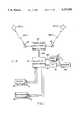
- FIG. 1is a satellite communication system (11) employing a multi-point matrix switch (13).
- FIG. 2is a block diagram of relevant portions of the multi-point matrix switch (13), mainframe computers (17), and the PC system (15) shown in FIG. 1.
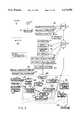
- FIG. 3is a block diagram showing the logical flow for controlling the multi-point matrix switch (13).
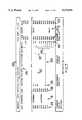
- FIG. 4is a graphic representation of a display (183) for source (19) and destination (21) selection.
- FIG. 5is a graphic representation of a parameters-setting window (125) superimposed over the source and destination selection display (183).
- FIG. 6is a graphic representation of a global polling window (127) superimposed over the source and destination selection display (183).
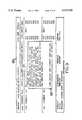
- FIG. 7is a graphic representation of a display (189) for a scroll area for build and connect vector assignment.
- FIG. 8is a graphic representation of a detail information window (143) superimposed over the vector assignment scroll area of FIG. 7.
- FIG. 9is a graphic representation of a help window (145) superimposed over the vector assignment scroll area of FIG. 7.
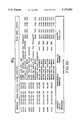
- FIG. 10is a graphic representation of a display for a log scrolling area (195).
- a communication systemin general, is shown having a network of nodes which communicate with each other; in this particular case, what is shown is a satellite communication system 11, where satellites 27 communicate with sources 19 and destinations 21 communicate with a family of satellites 27.
- some satellites 27may function as sources 19 or destinations 21, whereupon means are provided onboard satellite 27 for originating or receiving data.
- informationsuch as command, status, and telemetry are communicated over this system 11.
- sources 19may send command information to satellite 27, and satellite 27 then returns status or telemetry information to several destinations 21.
- antennae 25are employed respectively, for receiving and transmitting signals to and from satellite 27.
- source 19may send requests along with signal information to request transmission to particular destinations 21.
- Transceiver 23is coupled to antennae 25. In many applications, a multiplexer and a de-multiplexer are also coupled to transceiver 23 to multiplex and demultiplex signals when appropriate for transmitting or receiving. Transceiver 23 may function as source 19 or destination 21 in most cases.
- a multi-point matrix switch 13is shown coupled to sources 19 and destinations 21. This type of switch, to the extent it may be discussed herein, is arranged as a matrix of switch points defined by the intersection of rows and columns of input and output signal lines respectively. Thus, by engaging multiple switch points on a given input signal line, the given input signal may be routed to several output lines. In the present embodiment, switch 13 contains 45,000 possible switch points.
- switch 13is configured to route signals from sources 19 to destinations 21, switch 13 is equipped to route signals as well in the opposite direction, e.g., destination-to-source.
- Uplink satellite signals 151are transferred from sources 19 to satellite 27 via switch 13, and downlink signals 151 are transferred from satellites 27 coupled to destinations 21 via switch 13.
- switch 13is coupled to transceiver/multiplexer/demultiplexer 23 over what are shown to be redundant channels 153 for primary and backup signal transmission and reception.
- switch 13is coupled over redundant channels 155, 157, respectively, to at least one mainframe computer 17 and to a personal computer (PC) 15.
- PCpersonal computer
- system 11employs several mainframes 17 for overall system redundancy.
- the inventionresides at least partly in coupling PC 15 to switch 13 in lieu of mainframes 17 coupling to switch 13, insofar as PC 15 provides graphical displays which assist an operator 159 to build and connect signal routing paths.
- PC 15provides graphical displays which assist an operator 159 to build and connect signal routing paths.
- FIG. 2a block diagram of the relevant portions of switch 13, mainframes 17, and PC 15 are illustrated. It is the intent in the present invention that PC 15 replace and substantially improve upon the switch-controlling functions of mainframes 17 particularly with regard to signal routing.
- a Data Distribution Element (DDE) 31, included within switch 13,allows switch 13 to accomplish routing at very high traffic rates and switching speeds. Included within DDE 31 are source data circuits 33 and destination data circuits 35 for transferring signal data to and from sources 19 and destinations 21 to which circuits 33, 35 are coupled respectively.
- DDE 31includes source data circuits 33 and destination data circuits 35 for transferring signal data to and from sources 19 and destinations 21 to which circuits 33, 35 are coupled respectively.
- DRG switches 37are Data Routing Group (DRG) switches 37.
- DRG switches 37coupled to circuits 33, 35, function to receive signals from an external control source to enable switch 13 to route signals responsively.
- DRG switches 37contain a DRG switch controller 39 for communicating with the external control source through standard communication ports, not shown here.
- the DRG switch controller 39includes ports for primary and back-up connections 161, 163.
- Each mainframe 17comprises an interface unit 41 for communicating with DRG switches 37 such that mainframes 17 function as external control sources to switch 13.
- PC 15functions as an improved external control source to switch 13, submitting selected signal path information thereto.
- PC 15may be coupled to DRG switch controller 39 over redundant primary and backup channels 161, 163.
- Channels 161, 163are configured preferably to be RS232-compatible.
- PC 15communicates with DRG switch controller 39 through an RS232 communication port 45 within PC 15.
- PC 15may be embodied as any one of several standard IBM-compatible personal computer systems. Accordingly, PC 15 includes CPU 165, memory 175, and graphics display 43 coupled to CPU 165.
- Memory 175comprises Real Time (R/T) database 177, Look-Ahead database 179, and scroll image 181.
- Display 43displays graphically source and destination selections 121, 123, shown subsequently in FIG.
- PC 15comprises input devices, such as keyboard 49, which typically includes function keys not shown here, and mouse 47. These input devices 49, 47, also coupled to CPU 165, permit the operator 159 to select graphically at least one path between displayed source and destination selections 121, 123.
- disk 119coupled to CPU 165, containing software routines, (typically .EXE programs in the MS-DOS operating system environment), MBASE 51 and MATRIX 53, which are executable on PC 15.
- Disk 119may also contain, when generated subsequently as described herein, log file 162, STATE.DAT 169, SOURCE.DAT 171, and DEST.DAT 173. Disk 119 may be included in PC 15 or coupled externally thereto as a remote storage system.
- MBASE 51 and MATRIX 53are described in greater detail by a block diagram showing their logical flow. Routines 51, 53 run on PC 15 to control switch 13 by pre-configuring and submitting signal path information thereto. MATRIX 53 serves as the main switch 13 control program, while MBASE 51 functions as the supporting database program for MATRIX 53. Together with PC 15, MBASE 51 and MATRIX 53 comprise the control system of the present invention and function as the improved external control source to switch 13.
- INIT 61is shown as the entry point for MBASE 51. INIT 61 opens files, starts keyboard 49 and mouse 47 drivers, and sets display screen 43 and selection menus.
- MBASE 51executes INIT 61, it then executes main task 63 to generate three .DAT files: STATE.DAT 169, SOURCE.DAT 171, and DEST.DAT 173, as shown respectively, at blocks 65, 67, and 69. These files serve to provide static steering parameters, preferably configured as link lists.
- task 63functions as a major executing node for managing subfunctions to complete complex jobs.
- task 63generates STATE.DAT 169 to create system default parameters, such as maximum fan-out, maximum fan-in, maximum bytes in log, and password information, as well as other parameters.
- Maximum fan-in and fan-out parametersdefine the number of signal connections that may be routed respectively to destinations 21 or from sources 19.
- Maximum bytesspecifies the size limit of text files containing logging information, if invoked; and permissible user passwords are included in STATE.DAT 65.
- blocks 65 and 67 for generating SOURCE.DAT 171 and DEST.DAT 173function to identify sources 19 and destinations 21 in communication system 11.
- Each of blocks 65, 67, and 69are so-called "queued" routines, because they are woken-up by a caller to perform duties while the caller continues on its way, thereby permitting concurrent functioning by CPU 165.
- MATRIX 53accomplishes operational functions.
- the entry point for MATRIX 53is INIT Graphics 71, where the graphics mode is set. From that point, MATRIX 53 performs Input STATE.DAT 73 to obtain state data from disk 119 that has been set by routine 65 for purposes of determining system limit checks and initialization.
- Step 73is a so-called "serial" routine because, when entered, it completes its function without being accessed again. Routines may be both queued and serial.
- Password Entry 75is a serial routine for querying operator 159. Step 75 ensures that password entries match passwords stored in STATE.DAT 169. After Password Entry 75, INIT Logging 77, another serial routine, opens log file 162 and sets up initial parameters for logging task 95, described herein.
- the next stepis INIT Static Source Link Lists 79, also a serial routine, which reads in SOURCE.DAT 171 and creates a link list head for each valid source 19 selection included in SOURCE.DAT 171.
- INIT Static Dest Link List 81another serial routine, is the next step. This step 81 reads DEST.DAT 173 and creates a link list head for each valid destination 21 selection included in DEST.DAT 173.
- MATRIX 53After MATRIX 53 performs INIT Static Dest Link List 81, it performs INIT Executive task 83, a serial routine, to set initialization variables for the main routines called by Executive Task 89. From task 83, MATRIX 53 may proceed to Executive Task 89, a major executing node for managing subfunctions, or to routines 85 and 87, both queued routines.
- Routine 85is a Request Communication Port Window for queuing up requests for such a window at completion of initialization, e.g., steps 71, 73, 75, 77, 79, 71 and 83.
- the execution of routine 85coaxes operator 159 to establish the RS232 port connection to DRG 37.
- Routine 87is a Request Polling Window for queuing up requests for such a window at completion of initialization and coaxes operator 159 to request DRG 37 to send its current switch 13 configuration to circuits 33, 35.
- Routine 87permits Real Time (R/T) Database Manager 109 to create an image, R/T database 177, of system 11 configuration in memory 175, thereby recognizing those sources 19 and destinations 21 available for communication.
- R/TReal Time
- Executive Task 89is the central contact task from which all main functions are activated.
- One such functionis Operator Interface Task 91, a queued task for collecting inputs from operator 159 for various activities.
- task 91collects input from mouse intercept 101, another queued routine, which gathers mouse 47 movements and button presses.
- Keyboard intercept 103also a queued routine, receives and buffers keyboard 49 entries.
- function key intercept 105also a queued routine, receives and decodes special function key entries.
- Executive Task 89is also connected to Help Screen Task 93, a queued task, for assisting operator 159 to determine current environment status of system 11.
- Task 89queues up for display appropriate Help Window 145, as shown in FIG. 9, and obtains environment information from Operator Interface Task 91 and Disk Access Task 117, discussed later.
- Executive Task 89also activates a Logging Task 95, a queued task, for receiving messages from various other tasks and formatting texts, time date tags, and writes to disk 119.
- Executive Task 89also activates a Comm Port I/O Task 97, a queued task, for accepting requests from R/T Database Manager 109 to transmit DRG 37 commands to default switch controller 39, as well as to configure and reconfigure link level parameters in files 169, 171, 173.
- Task 97furthermore accepts asynchronous interrupts from the RS232 hardware connected to DRG switch controller 39 and listens for responses from DRG 37 following transmissions by operator 159 of commands via task 91. Moreover, task 97 may call Command/Link Level Error Checking 99 for input error-checking to sample received DRG 37 status frames for valid content, size, and range, and then establish the appropriate returned response to display 43 and log file 162.
- Routine 107accepts requests from Operator Input Task 91 and builds an image, Look-Ahead database 179, of the selected requests in memory 175. These requests are then checked against a list of rules, stored preferably in STATE.DAT 169, that govern Look-Ahead database 179. Thus, by permitting operator 159 to pre-configure future path connections, which are verified by PC 15 as acceptable to switch 13, routine 107 ascertains that signal routing is accomplished easily and cost-effectively. Look-Ahead Database Manager 107 has disk level file access through Disk Access Task 117, a queued routine.
- R/T Database Manager 109also activates R/T Database Manager 109, a queued task.
- R/T Database Manager 109accepts requests from Comm Port Task 97, builds memory images, R/T database 177, of system 11 configuration retrieved by routine 85, and accepts requests from operator 159 and Look-Ahead Database Manager 107 for release of switch 13 commands to Comm Port Task 97.
- R/T Database Manager 109also has disk level file access to disk 119 through Disk Access Task 117.
- Both Look-Ahead and R/T Database Managers 107, 109are coupled to queue logging interfaces at Logging Task 95.
- Memory Task 111a queued task, is coupled synchronously to database managers 107, 109 for controlling all memory 175 accesses to optimize space control in databases 177, 179.
- Display Task 113a queued task, accepts pointers to scroll memory image 181 for viewing Look-Ahead and R/T Memory images 177, 179.
- Task 113operates in synchronization with Operator Interface Task 91 for screen option selection and system configuration display.
- Task 113receives information from several different tasks over asynchronous connections, as shown in FIG. 3.
- Task 113is coupled to Windows 115 for providing representations of graphic screens in display 43, illustrated subsequently in FIGS. 4 through 10.
- task 113provides operator 159 with interactive computer display 43 to identify sources 19 and destinations 21, poll for availability, select routing paths for connection, verify selections, and submit selections to switch 13 for signal routing.
- operator 159When the improved external control source operates to control switch 13, e.g., when MBASE 51 and MATRIX 53 .EXE files execute on PC 15, operator 159 typically uses one or more screens 183, 185, 187, 189, 191, 193, and 195, shown in FIGS. 4 through 10, to assist him or her in performing signal routing through switch 13.
- Each of these screensare formatted similarly with a "Matrix Data Routing Group control" heading, including "Free RAM size" information, on top of each screen, as represented in display 43.
- the bottom of each screentypically contains a message for operator 159, as well as an indication of whether the screen contains classified or unclassified information.
- FIG. 4illustrates screen 183 showing high-level source 19 and destination 21 selections.
- Source 19 selectionsare listed and itemized in columns on the left side under a source list 121
- destination selectionsare listed in columns on the right side under a destination list 123.
- source 19 and destination 21 locations on the screenmay be arranged differently as long as selection lists 121, 123 are organized collectively for easy graphical presentation and user-selection.
- source list 121contains satellite nodes, in this case, SCFNHSA as the first option.
- SCFNHSAsatellite nodes
- the "c" flag adjacent to this optionidentifies source 19 as being connected and therefore unavailable for a new connection at this time.
- destinations 121are provided typically indicating various land-based nodes in the satellite communication network 11. Land-based nodes might include computer systems, laboratories, and other command, control, and status (CCS) systems. Destinations 21 are identified similarly with a "c" flag when appropriate.
- FIG. 5illustrates window 125 superimposed over screen 185 shown in FIG. 4.
- Window 125is a DRG communications and general operation parameters-setting window.
- Window 125lists various user-definable parameters, starting with a parameter called Active DRG, for defining DRG switch controller 39 to be used.
- the next two parameters, DRG 1 comm port and DRG 2 comm portallow operator 159 to specify the appropriate DRG comm port, e.g. primary or backup, to be coupled to an external control source, such as PC 15 or mainframes 17.
- DRG Timeoutallows operator 159 to specify, in milliseconds, timeout information useful for handshaking. This parameter optimizes the interface to CPU 165 controlling DRG 37 interface, in this case a Z80 microprocessor.
- In/Out Latencyis the next DRG parameter listed in window 125 for specifying, in milliseconds, the wait time between command retransmissions to switch 13. This parameter is tuneable by resending commands.
- the next DRG parameteris called Maximum Errors. This parameter may need to be set higher for certain directives routed through switch 13.
- the Retries DRG parameterspecifies the number of attempts automatically-invoked when resending a command to switch 13.
- the Clock Mode parameterallows the user to specify "C" for clock when an external clock signal (not shown) is used to synchronize data transmission, or "B" for bypass, when data are sent asynchronously, independently of the clock.
- the last DRG parameteris Zone 3 Format, which allows operator 159 to use a high-level macro by entering "M" for merged. This particular entry is appropriate when sending command and status simultaneously. Normally, each one the DRG parameters has been pre-set to a default value. Moreover, window 125 indicates to operator 159 the availability of function keys for invoking system utilities, such as F1 for Help and F6 for Self Test.
- Switch 13During the course of operating the satellite communication system 11, different categories of information are routed through switch 13. These categories may include, for instance, command, status, telemetry and system time, or clock, information. Additional categories may be primary or back-up, whereupon primary information is typically sent through high-bandwidth channels, while back-up information may be sent through low-bandwidth channels, which offer potentially lower signal transmission quality. Sometimes signals may be classified and called “red” signals, or unclassified and called “black” signals. System 11 is configured to deal with each of these different categories of signals or information. In this regard, FIG.
- FIG. 6shows a Global Polling Window 127 superimposed on screen 187, which allows operator 159 to "poll", or determine which destinations 21 and sources 19 are available for receiving or transmitting data pursuant to the listed categories of information, such as Black Primary Command (BPC), Black Primary Status (BPS), Back-Up Command (BUC), Back-Up Status (BUS), Black Telemetry (BTL), and Irig B (system time).
- BPCBlack Primary Command
- BPSBlack Primary Status
- BUCBack-Up Command
- BUSBack-Up Status
- BTLBlack Telemetry
- Irig Bsystem time
- the present inventionis configured to distinguish between different signal types, e.g., digital/analog, TTL/MOS, etc.
- FIG. 7illustrates scroll area screen 189 for assigning "build” and "connect” vectors.
- Vectorsgraphically represent signal paths between sources 19 and destinations 21.
- Buildvectors represent future paths pre-configured by Look-Ahead Database Manager 107.
- Connectvectors represent active switch 13 paths that are currently routing signals, as configured in R/T Database Manager 109.
- Screen 189shows physical ports 129 with corresponding logical ports 133 on both sides of screen 189.
- each source 19 or destination 21has at least one physical port 129 assigned to it to identify uniquely to switch 13 actual points for signal reception or transmission.
- each source 19 or destination 21has logical port 133 corresponding to each physical port 129; however, logical ports 133 are only assigned uniquely within each source 19 or destination 21.
- particular logical port 133 assignmentsmay be duplicated among different sources 19 or destinations 21.
- Physical and logical ports 129, 133 for sources 19are listed on the left side of screen 189, while physical and logical ports 129, 133 for destinations 21 are listed on the right side.
- Sources 19, such as SCFNHSAare similarly listed on the left side, while destinations 21, such as MCC9, are listed on the right side. It is particularly useful to operator 159 to have physical and logical ports 129, 133 aligned appropriately against sources 19 and destinations 21 in a graphical and easy-to-read format. Screen 189 is scrollable to permit operator 189 to view more source 19 and destination 21 selections from different information categories.
- flags 135are provided, including a "c” flag for "connect” and "b” flag for "build".
- the "c” flagindicates to operator 159 which ports 133, 129 are coupled through which signals are actually being transmitted.
- the "b” flagindicates to operator 159 which paths between sources 19 and destinations 21 are not yet coupled, but are merely “built”. Thus, built paths are pre-configured for future coupling and have their configurations stored in Look-Ahead Database Manager 107.
- An "e” flagis also provided for indicating erroneous connect or build attempts.
- the lines shown connecting source ports 129, 133 to destination ports 129, 133visually represent signal routing paths between sources 19 and destinations 21, as selected by operator 159.
- Operator 159 selectionis accomplished interactively through input devices, e.g., keyboard 49, mouse 47, and function keys 105.
- vector paths 139are drawn hierarchically such that most recently-selected path 137, appears to be three-dimensionally above previously-selected paths. This three-dimensional orientation is accomplished by drawing path 137 as a solid line, and earlier-drawn lines are drawn with a break 197 in the path, e.g., to illustrate that a later-drawn path is laid above earlier paths. This orientation is useful for operator 159 to understand the sequence of builds and connects, as well as for debugging purposes.
- paths 139may be represented in different schema, such as patterns or colors, as defined by Display Task 113, for identifying particular paths to operator 159.
- Current select status 199 near the top of screen 189provides operator 159 with dynamic information, including active category or "box,” and the most recently selected source and destination in the active box.
- screen 191shows a window 143 superimposed over screen 187 of FIG. 7.
- Window 143provides operator 159 with detailed information about particular paths.
- screen 193shows Help Window 145 providing operator 159 with context-sensitive help messages.
- FIG. 10shows screen 195 displaying a typical output report from log file 162.
- Screen 195is scrollable and typically lists a number of successful and unsuccessful attempts at building and connecting signal routing paths 139.
Landscapes
- Engineering & Computer Science (AREA)
- Computer Networks & Wireless Communication (AREA)
- Physics & Mathematics (AREA)
- Astronomy & Astrophysics (AREA)
- Aviation & Aerospace Engineering (AREA)
- General Physics & Mathematics (AREA)
- Signal Processing (AREA)
- User Interface Of Digital Computer (AREA)
- Use Of Switch Circuits For Exchanges And Methods Of Control Of Multiplex Exchanges (AREA)
- Controls And Circuits For Display Device (AREA)
Abstract
Description
Claims (21)
Priority Applications (4)
| Application Number | Priority Date | Filing Date | Title |
|---|---|---|---|
| US07/665,891US5179550A (en) | 1991-03-07 | 1991-03-07 | System and method for controlling a multi-point matrix switch |
| CA002061378ACA2061378C (en) | 1991-03-07 | 1992-02-18 | System and method for controlling a multi-point matrix switch |
| JP4080345AJPH05199552A (en) | 1991-03-07 | 1992-03-03 | Apparatus and method for controlling multipoint- type matrix switch |
| EP92301938AEP0507457A1 (en) | 1991-03-07 | 1992-03-06 | System and method for controlling a multi-point matrix switch |
Applications Claiming Priority (1)
| Application Number | Priority Date | Filing Date | Title |
|---|---|---|---|
| US07/665,891US5179550A (en) | 1991-03-07 | 1991-03-07 | System and method for controlling a multi-point matrix switch |
Publications (1)
| Publication Number | Publication Date |
|---|---|
| US5179550Atrue US5179550A (en) | 1993-01-12 |
Family
ID=24671976
Family Applications (1)
| Application Number | Title | Priority Date | Filing Date |
|---|---|---|---|
| US07/665,891Expired - LifetimeUS5179550A (en) | 1991-03-07 | 1991-03-07 | System and method for controlling a multi-point matrix switch |
Country Status (4)
| Country | Link |
|---|---|
| US (1) | US5179550A (en) |
| EP (1) | EP0507457A1 (en) |
| JP (1) | JPH05199552A (en) |
| CA (1) | CA2061378C (en) |
Cited By (19)
| Publication number | Priority date | Publication date | Assignee | Title |
|---|---|---|---|---|
| US5249181A (en)* | 1992-03-25 | 1993-09-28 | Motorola, Inc. | Call processing using logical channel assignments |
| US5276445A (en)* | 1990-11-30 | 1994-01-04 | Sony Corporation | Polling control system for switching units in a plural stage switching matrix |
| US5455917A (en)* | 1991-07-26 | 1995-10-03 | Tandem Computers Incorporated | Apparatus and method for frame switching |
| US5652888A (en)* | 1993-11-16 | 1997-07-29 | Microsoft Corporation | System for interconnecting software components in an object oriented programming environment using a separate editor object for each run-time object instantiated for each selected component |
| WO1997027710A1 (en)* | 1996-01-25 | 1997-07-31 | Con-X Corporation | Method and apparatus for a cross-connect system with automatic facility information transference to a remote location |
| US5729684A (en)* | 1995-05-16 | 1998-03-17 | Intel Corporation | Method and apparatus for heterogeneous multimedia conferencing using multipoint references |
| US5805614A (en)* | 1996-07-03 | 1998-09-08 | General Signal Corporation | Fault tolerant switch fabric with control and data correction by hamming codes |
| US5812556A (en)* | 1996-07-03 | 1998-09-22 | General Signal Corporation | Fault tolerant switch fabric with control and data correction by hamming codes and error inducing check register |
| WO1999018696A1 (en)* | 1997-10-07 | 1999-04-15 | Extreme Networks | Network interconnect device and protocol for communicating data among packet forwarding devices |
| US5974467A (en)* | 1997-08-29 | 1999-10-26 | Extreme Networks | Protocol for communicating data between packet forwarding devices via an intermediate network interconnect device |
| US6031349A (en)* | 1993-08-25 | 2000-02-29 | Con-X Corporation | Cross-connect method and apparatus |
| US6393483B1 (en)* | 1997-06-30 | 2002-05-21 | Adaptec, Inc. | Method and apparatus for network interface card load balancing and port aggregation |
| US6519540B1 (en)* | 1994-10-04 | 2003-02-11 | Iris Technologies, Inc. | Signal router with cross-point view graphical interface |
| US20060235956A1 (en)* | 2005-03-30 | 2006-10-19 | Sony Corporation | Information process distribution system, information processing apparatus and information process distribution method |
| US20070214412A1 (en)* | 2002-09-30 | 2007-09-13 | Sanavigator, Inc. | Method and System for Generating a Network Monitoring Display with Animated Utilization Information |
| US7310774B1 (en)* | 2000-08-28 | 2007-12-18 | Sanavigator, Inc. | Method for displaying switch port information in a network topology display |
| US20080228963A1 (en)* | 2007-03-15 | 2008-09-18 | Takashi Hironaka | Method and apparatus for transferring settings and other configuration information from one consumer electronics device to another |
| US9525638B2 (en) | 2013-10-15 | 2016-12-20 | Internap Corporation | Routing system for internet traffic |
| US20180001950A1 (en)* | 2016-07-01 | 2018-01-04 | Jeffrey M. Allen | Handlebar accessory mount |
Families Citing this family (3)
| Publication number | Priority date | Publication date | Assignee | Title |
|---|---|---|---|---|
| US5619503A (en)* | 1994-01-11 | 1997-04-08 | Ericsson Inc. | Cellular/satellite communications system with improved frequency re-use |
| ID24678A (en)* | 1997-06-06 | 2000-07-27 | Salbu Res & Dev Pty Ltd | OPERATION METHOD OF A MULTI STATION NETWORK |
| CN119047108B (en)* | 2024-10-31 | 2025-02-07 | 成都华兴汇明科技有限公司 | Visual radio frequency switch matrix equipment configuration method and device |
Citations (7)
| Publication number | Priority date | Publication date | Assignee | Title |
|---|---|---|---|---|
| US4220823A (en)* | 1978-07-21 | 1980-09-02 | Stromberg-Carlson Corporation | Selectively controlled digital pad |
| US4389642A (en)* | 1981-07-01 | 1983-06-21 | Kahn William M | Digital matrix switching |
| US4495615A (en)* | 1981-09-22 | 1985-01-22 | Statt der Nederlanden (Stattsbedrijf der Posterijen, Telegrafie en Telefonie) | Method and device for controlling a switching network |
| US4797875A (en)* | 1985-07-08 | 1989-01-10 | Siemens Aktiengesellschaft | Method for monitoring and controlling the traffic in digital transmission networks |
| US4905233A (en)* | 1987-11-23 | 1990-02-27 | Harris Corporation | Multiple path routing mechanism for packet communications network |
| US4953159A (en)* | 1989-01-03 | 1990-08-28 | American Telephone And Telegraph Company | Audiographics conferencing arrangement |
| US4961070A (en)* | 1988-06-02 | 1990-10-02 | Motorola, Inc. | Radio console with CRT display |
Family Cites Families (4)
| Publication number | Priority date | Publication date | Assignee | Title |
|---|---|---|---|---|
| US4775973A (en)* | 1986-10-22 | 1988-10-04 | Hewlett-Packard Company | Method and apparatus for a packet-switched network communications measurement matrix display |
| JPH0253356A (en)* | 1988-08-18 | 1990-02-22 | Fujitsu Ltd | Idle line retrieving system |
| JP2547084B2 (en)* | 1988-11-29 | 1996-10-23 | 富士通株式会社 | Communication network management control method |
| CA2017974C (en)* | 1989-08-07 | 1998-06-16 | Richard Alan Becker | Dynamic graphical analysis of network data |
- 1991
- 1991-03-07USUS07/665,891patent/US5179550A/ennot_activeExpired - Lifetime
- 1992
- 1992-02-18CACA002061378Apatent/CA2061378C/ennot_activeExpired - Lifetime
- 1992-03-03JPJP4080345Apatent/JPH05199552A/enactivePending
- 1992-03-06EPEP92301938Apatent/EP0507457A1/ennot_activeCeased
Patent Citations (7)
| Publication number | Priority date | Publication date | Assignee | Title |
|---|---|---|---|---|
| US4220823A (en)* | 1978-07-21 | 1980-09-02 | Stromberg-Carlson Corporation | Selectively controlled digital pad |
| US4389642A (en)* | 1981-07-01 | 1983-06-21 | Kahn William M | Digital matrix switching |
| US4495615A (en)* | 1981-09-22 | 1985-01-22 | Statt der Nederlanden (Stattsbedrijf der Posterijen, Telegrafie en Telefonie) | Method and device for controlling a switching network |
| US4797875A (en)* | 1985-07-08 | 1989-01-10 | Siemens Aktiengesellschaft | Method for monitoring and controlling the traffic in digital transmission networks |
| US4905233A (en)* | 1987-11-23 | 1990-02-27 | Harris Corporation | Multiple path routing mechanism for packet communications network |
| US4961070A (en)* | 1988-06-02 | 1990-10-02 | Motorola, Inc. | Radio console with CRT display |
| US4953159A (en)* | 1989-01-03 | 1990-08-28 | American Telephone And Telegraph Company | Audiographics conferencing arrangement |
Non-Patent Citations (2)
| Title |
|---|
| AFSCF Training, Manual, RTS DSM Operations, vol. 1, Course No. 255, (Preliminary) Jul. 1985.* |
| AFSCF Training, Manual, RTS DSM Operations, vol. 2, Course No. 255, (Preliminary) Jul. 1985.* |
Cited By (27)
| Publication number | Priority date | Publication date | Assignee | Title |
|---|---|---|---|---|
| US5276445A (en)* | 1990-11-30 | 1994-01-04 | Sony Corporation | Polling control system for switching units in a plural stage switching matrix |
| US5455917A (en)* | 1991-07-26 | 1995-10-03 | Tandem Computers Incorporated | Apparatus and method for frame switching |
| US5249181A (en)* | 1992-03-25 | 1993-09-28 | Motorola, Inc. | Call processing using logical channel assignments |
| US5812934A (en)* | 1993-08-25 | 1998-09-22 | Con-X Corporation | Method and apparatus for a cross-connect system with automatic facility information transference to a remote location |
| US6031349A (en)* | 1993-08-25 | 2000-02-29 | Con-X Corporation | Cross-connect method and apparatus |
| US6265842B1 (en) | 1993-08-25 | 2001-07-24 | Con-X Corporation | Cross-connect method and apparatus |
| US5805896A (en)* | 1993-11-16 | 1998-09-08 | Microsoft Corporation | System for writing main memory address of object to secondary storage when storing object and reading main memory address of object when retrieving object from secondary storage |
| US5652888A (en)* | 1993-11-16 | 1997-07-29 | Microsoft Corporation | System for interconnecting software components in an object oriented programming environment using a separate editor object for each run-time object instantiated for each selected component |
| US6182160B1 (en) | 1993-11-16 | 2001-01-30 | Microsoft Corporation | Method and system for using editor objects to connect components |
| US6519540B1 (en)* | 1994-10-04 | 2003-02-11 | Iris Technologies, Inc. | Signal router with cross-point view graphical interface |
| US5729684A (en)* | 1995-05-16 | 1998-03-17 | Intel Corporation | Method and apparatus for heterogeneous multimedia conferencing using multipoint references |
| WO1997027710A1 (en)* | 1996-01-25 | 1997-07-31 | Con-X Corporation | Method and apparatus for a cross-connect system with automatic facility information transference to a remote location |
| US5812556A (en)* | 1996-07-03 | 1998-09-22 | General Signal Corporation | Fault tolerant switch fabric with control and data correction by hamming codes and error inducing check register |
| US5805614A (en)* | 1996-07-03 | 1998-09-08 | General Signal Corporation | Fault tolerant switch fabric with control and data correction by hamming codes |
| USRE41397E1 (en)* | 1997-06-30 | 2010-06-22 | Adaptec, Inc. | Method and apparatus for network interface card load balancing and port aggregation |
| US6393483B1 (en)* | 1997-06-30 | 2002-05-21 | Adaptec, Inc. | Method and apparatus for network interface card load balancing and port aggregation |
| US5974467A (en)* | 1997-08-29 | 1999-10-26 | Extreme Networks | Protocol for communicating data between packet forwarding devices via an intermediate network interconnect device |
| US6023471A (en)* | 1997-10-07 | 2000-02-08 | Extreme Networks | Network interconnect device and protocol for communicating data among packet forwarding devices |
| WO1999018696A1 (en)* | 1997-10-07 | 1999-04-15 | Extreme Networks | Network interconnect device and protocol for communicating data among packet forwarding devices |
| US7310774B1 (en)* | 2000-08-28 | 2007-12-18 | Sanavigator, Inc. | Method for displaying switch port information in a network topology display |
| US20070214412A1 (en)* | 2002-09-30 | 2007-09-13 | Sanavigator, Inc. | Method and System for Generating a Network Monitoring Display with Animated Utilization Information |
| US8862998B2 (en) | 2002-09-30 | 2014-10-14 | Brocade Communications Systems, Inc. | Method and system for generating a network monitoring display with animated utilization information |
| US20060235956A1 (en)* | 2005-03-30 | 2006-10-19 | Sony Corporation | Information process distribution system, information processing apparatus and information process distribution method |
| US20080228963A1 (en)* | 2007-03-15 | 2008-09-18 | Takashi Hironaka | Method and apparatus for transferring settings and other configuration information from one consumer electronics device to another |
| US9525638B2 (en) | 2013-10-15 | 2016-12-20 | Internap Corporation | Routing system for internet traffic |
| US20180001950A1 (en)* | 2016-07-01 | 2018-01-04 | Jeffrey M. Allen | Handlebar accessory mount |
| US10189525B2 (en)* | 2016-07-01 | 2019-01-29 | Jeffrey M. Allen | Handlebar accessory mount |
Also Published As
| Publication number | Publication date |
|---|---|
| EP0507457A1 (en) | 1992-10-07 |
| CA2061378C (en) | 1995-01-03 |
| JPH05199552A (en) | 1993-08-06 |
Similar Documents
| Publication | Publication Date | Title |
|---|---|---|
| US5179550A (en) | System and method for controlling a multi-point matrix switch | |
| EP0834121B1 (en) | Reconfigurable algorithmic networks for aircraft data management | |
| US5500934A (en) | Display and control system for configuring and monitoring a complex system | |
| US5689637A (en) | Console simulator, multi-console management system and console management distribution system | |
| US7020089B2 (en) | Information processing apparatus and method of controlling the information processing apparatus | |
| US5146561A (en) | Communication network data manager system | |
| US7280955B2 (en) | Universal system component emulator with human readable output | |
| JP2662157B2 (en) | Host access table construction method and data processing subsystem | |
| EP0477124B1 (en) | Method and apparatus for distributed processing of display panel information | |
| US5590314A (en) | Apparatus for sending message via cable between programs and performing automatic operation in response to sent message | |
| JPH03217894A (en) | Method of controlling cursor movement and display | |
| US20030225934A1 (en) | Disk array apparatus setting method, program, information processing apparatus and disk array apparatus | |
| US7464133B1 (en) | Server/client system | |
| US20030061334A1 (en) | Method, apparatus, system, computer program and computer program product of network management | |
| US6182106B1 (en) | Method and system for providing a common hardware system console interface in data processing systems | |
| US5339450A (en) | Computer system including a terminal operable as a service processor and a work station | |
| US20060112245A1 (en) | Storage system transfering volume information | |
| US20050165787A1 (en) | Management computer and method of managing data storage apparatus | |
| EP0575145B1 (en) | Open distributed digital control system | |
| US6032176A (en) | Data-independent type computer system: processing machine, data machine and man-machine interface therein | |
| JPH06110663A (en) | Network integrated construction system, network connection device installation method, and network parameter setting method | |
| KR100300783B1 (en) | configuration method of high availability system | |
| JP3062575B2 (en) | Process monitoring system | |
| JP2538981B2 (en) | How to build a function-distributed system | |
| Wolfe | Systems functional design specifications for the Shuttle Program Information Management System (SPIMS) |
Legal Events
| Date | Code | Title | Description |
|---|---|---|---|
| AS | Assignment | Owner name:LORAL AEROSPACE CORP., 600 THIRD AVENUE, NEW YORK, Free format text:ASSIGNMENT OF ASSIGNORS INTEREST.;ASSIGNOR:SIMPSON, WILLIAM B.;REEL/FRAME:005651/0155 Effective date:19910306 | |
| STCF | Information on status: patent grant | Free format text:PATENTED CASE | |
| FEPP | Fee payment procedure | Free format text:PAYOR NUMBER ASSIGNED (ORIGINAL EVENT CODE: ASPN); ENTITY STATUS OF PATENT OWNER: LARGE ENTITY | |
| FPAY | Fee payment | Year of fee payment:4 | |
| AS | Assignment | Owner name:LOCKHEED MARTIN AEROSPACE CORPORATION, MARYLAND Free format text:CHANGE OF NAME;ASSIGNOR:LORAL AEROSPACE CORPORATION;REEL/FRAME:009430/0939 Effective date:19960429 | |
| AS | Assignment | Owner name:LOCKHEED MARTIN CORPORATION, MARYLAND Free format text:MERGER;ASSIGNOR:LOCKHEED MARTIN AEROSPACE CORP.;REEL/FRAME:009833/0831 Effective date:19970627 | |
| FEPP | Fee payment procedure | Free format text:PAYER NUMBER DE-ASSIGNED (ORIGINAL EVENT CODE: RMPN); ENTITY STATUS OF PATENT OWNER: LARGE ENTITY Free format text:PAYOR NUMBER ASSIGNED (ORIGINAL EVENT CODE: ASPN); ENTITY STATUS OF PATENT OWNER: LARGE ENTITY | |
| FPAY | Fee payment | Year of fee payment:8 | |
| FPAY | Fee payment | Year of fee payment:12 |