US5177791A - Secure translation of usage-control values for cryptographic keys - Google Patents
Secure translation of usage-control values for cryptographic keysDownload PDFInfo
- Publication number
- US5177791A US5177791AUS07/753,245US75324591AUS5177791AUS 5177791 AUS5177791 AUS 5177791AUS 75324591 AUS75324591 AUS 75324591AUS 5177791 AUS5177791 AUS 5177791A
- Authority
- US
- United States
- Prior art keywords
- key
- encrypting
- usage
- control value
- input
- Prior art date
- Legal status (The legal status is an assumption and is not a legal conclusion. Google has not performed a legal analysis and makes no representation as to the accuracy of the status listed.)
- Expired - Lifetime
Links
- 238000013519translationMethods0.000titleclaimsabstractdescription38
- 238000000034methodMethods0.000claimsdescription37
- 238000009434installationMethods0.000claimsdescription10
- 238000012545processingMethods0.000claimsdescription3
- 230000001143conditioned effectEffects0.000claims1
- 230000003750conditioning effectEffects0.000claims1
- 239000013598vectorSubstances0.000description33
- 230000014616translationEffects0.000description22
- 230000008569processEffects0.000description16
- 230000007246mechanismEffects0.000description13
- 238000010586diagramMethods0.000description12
- 238000000926separation methodMethods0.000description6
- 230000005540biological transmissionEffects0.000description2
- 230000008859changeEffects0.000description2
- 230000008878couplingEffects0.000description2
- 238000010168coupling processMethods0.000description2
- 238000005859coupling reactionMethods0.000description2
- 230000008676importEffects0.000description2
- 238000013507mappingMethods0.000description2
- 230000000873masking effectEffects0.000description2
- 238000006243chemical reactionMethods0.000description1
- 238000004891communicationMethods0.000description1
- 230000000694effectsEffects0.000description1
- 239000012467final productSubstances0.000description1
- 238000011900installation processMethods0.000description1
- 238000012986modificationMethods0.000description1
- 230000004048modificationEffects0.000description1
- 239000000047productSubstances0.000description1
- 230000009467reductionEffects0.000description1
- 238000012546transferMethods0.000description1
Images


Classifications
- H—ELECTRICITY
- H04—ELECTRIC COMMUNICATION TECHNIQUE
- H04L—TRANSMISSION OF DIGITAL INFORMATION, e.g. TELEGRAPHIC COMMUNICATION
- H04L9/00—Cryptographic mechanisms or cryptographic arrangements for secret or secure communications; Network security protocols
- H04L9/08—Key distribution or management, e.g. generation, sharing or updating, of cryptographic keys or passwords
- H04L9/088—Usage controlling of secret information, e.g. techniques for restricting cryptographic keys to pre-authorized uses, different access levels, validity of crypto-period, different key- or password length, or different strong and weak cryptographic algorithms
- H—ELECTRICITY
- H04—ELECTRIC COMMUNICATION TECHNIQUE
- H04L—TRANSMISSION OF DIGITAL INFORMATION, e.g. TELEGRAPHIC COMMUNICATION
- H04L2209/00—Additional information or applications relating to cryptographic mechanisms or cryptographic arrangements for secret or secure communication H04L9/00
- H04L2209/08—Randomization, e.g. dummy operations or using noise
Definitions
- This inventionrelates to computers and computer system complexes capable of performing cryptographic operations. More particularly, this invention describes a secure mechanism for translating usage-control values for cryptographic keys, for example - to exchange the keys between systems which use incompatible key usage-control values for enforcing key separation.
- KEKskey-encrypting-keys
- a permutation of the KEKis known to be used for, and associated with, a particular key usage (or key type).
- KEK permutationwhen a fixed variant constant is Exclusive ORed with the KEK to produce the KEK permutation), or a KEK derivative in control vector based systems (when the value used in the Exclusive ORing process is a meaning-significant bit pattern), the process of applying and unapplying the necessary KEK permutations is a simple one when a single permutation scheme is used on one system, or across systems. In this case, there is one set of variant constants, or one set of control vectors. However, if communicating systems use different sets of variant constants and/or control vectors to enforce key separation, then applying and unapplying the permutations is a more complex process.
- usage-control valueis used to mean either a variant constant or a control vector, or an equivalent parameter.
- KEK derivativeor “derivative of the KEK” is used to mean the result of Exclusive ORing the KEK with a usage-control value.
- One method for dealing with this problemis to install a shared KEK between the two systems, where the value of the KEK installed in one of the systems is adjusted to compensate for the difference between the usage-control values used in the two systems.
- This methodadds complexity to the key installation process and increases the number of keys which must be installed since a different key must be installed for each type of key to be transmitted between the two systems.
- Another object of this inventionis to provide for secure translation of a key type between one usage-control value and another usage-control value on the same system.
- the functions provided for conversion of key typesare patterned closely after known functions for translation of PIN's, cipher text, and keys.
- This inventionprovides a mechanism for securely translating usage-control values for cryptographic keys --for example, to transmit one such key (enciphered under a derivative of a shared key-encrypting key) between two systems which use incompatible schemes to enforce key separation.
- the mechanismcreates a set of two "dummy keys" which it uses in its processing for each key type to be either sent to or received from another system (i.e., it requires 2N dummy keys at a system to receive keys of N different key types from another system).
- existing cryptographic operationsmay be used to perform the individual steps required for the translation process.
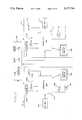
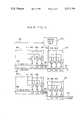
- FIG. 1is a block diagram illustrating the functional environment of the present invention.
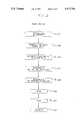
- FIG. 2is a flowchart illustrating the translate-out control flow.
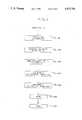
- FIG. 3is a flowchart illustrating the translate-in control flow.
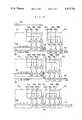
- FIG. 4is a block diagram illustrating the RFIK instruction.
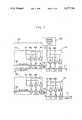
- FIG. 5is a block diagram illustrating the RTEK instruction.
- FIG. 6is a block diagram illustrating the RTMK instruction (known in the prior art).
- FIG. 7is a block diagram illustrating the RFMK instruction (known in the prior art).
- FIG. 8is a block diagram illustrating the EIK instruction (known in the prior art).
- ImporterThis key is used to protect keys of any type which are sent from another system to this system.
- Two systemsmust share a common key for exchanging keys; the key is an importer at the receiver and is an exporter at the originator.
- FIG. 1shows, in block diagram form, an overview of the operation of the present invention.
- System A (101)uses shared key-encrypting-key KEKl (110A) and KEK2 (110B) for transmitting working keys to and receiving from System B (102).
- Usage-control value A (106A)is used to enforce key separation at System A for working keys of type T; usage-control value B (107B) is used for key type T at System B.
- System Adesires to transmit working key 1 (104) (a key of type T) to System B, it uses a translate out process (103) to secure working key 1 for transmission.
- Translate out process 103takes as input working key 1 (104), usage-control value A (106A), usage-control value B (107A), and shared KEKl (110A).
- Process 103interacts with cryptographic engine 105, creates two dummy keys P (108) and Q (109), and sends the necessary data securely to system B.
- system Adesires to receive a key of type T from system B
- system Auses a translate in process (111) to receive working key 1 (115) in a form it can deal with.
- Process 111takes as input usage-control value B (107B), usage-control A (106A), and shared key-encrypting-key KEK2 (110B). It interacts with cryptographic engine 105, creates two dummy keys X (112) and Y (113), and produces working key 1 in usable form (114).
- FIG. 2illustrates control flow for the translate-out process.
- the processis used to export a key and also change the key type from the one specified by CV i to the one specified by V.
- Steps 201 to 205create two dummy keys, and establish the operating environment.
- a shared KEKis installed as an exporter at the sending system. This means that the KEK is encrypted as eMK.ex(KEK).
- a random numberis generated (the method of generation is not important for understanding of this invention, and can be any of numerous techniques known in the art) to form a dummy key, P.
- the second dummy key Qis generated as
- Pis encrypted as a key of type T2 using the EIK function (known to the prior art).
- This functioncan only be executed in a special mode for security (see U.S. patent application, Ser. No. 07/672,265, by R. M. Smith Sr., et al., filed 3/20/91, assigned to the assignee of the present invention and incorporated herein by reference).
- This modecan be enabled or disabled by means of a manual key switch.
- FIG. 8illustrates the EIK function in detail.
- Pis encrypted as: eMK.t2(P).
- Qis encrypted as an exporter using the EIK function. That is, Q is encrypted as: eMK.ex(Q).
- Dummy keyscan only be installed in the special-security mode. High security is obtained by disabling the mode during normal operation so that no program can create dummy keys for unintended translations.
- the dummy keysare installed by means of the EIK function, they are stored in program accessible storage and protected by the operating system. Instead of using the encipher under importer key function, installation of dummy keys could also be performed by means of manual key entry, which is described in the aforementioned patent application, Ser. No. 07,672,265, entitled "Method and Apparatus for Validating Entry of Cryptographic Keys".
- eMK.eV iK
- RFMKis executed using as input i, eMK.ex(Q), and eMK.CV i (K).
- RFMKis known in the prior art, and is explained in greater detail in FIG. 7.
- the result of executing this operationis eQ.CV i (K).
- the resultcan be written equivalently as eP.V(K).
- the result of 206is input to an RTEK operation (with V, eMK.t2(P), and eMK.ex(KEK)).
- the RTEK operationis explained in greater detail in FIG. 5.
- the result of this RTEKis eKEK.V(K), which is the value exported to the other system 208.
- FIG. 3illustrates control flow for the translate-in process.
- the processis used to import a key, and also change the key type from the one specified by V to the one specified by CV i .
- Steps 301 to 305create two dummy keys, and establish the operating environment.
- the shared KEKis installed as an importer at the receiving system. This means that the KEK is encrypted as eMK.im(KEK).
- a random numberis generated (again, means of generation not important for the invention) to form a dummy key, X.
- the second dummy key Yis generated as:
- Xis encrypted as an importer key using the EIK function (in the special mode).
- FIG. 8shows detail for the EIK function.
- Xis encrypted as: eMK.im(X).
- Yis encrypted as a key of type Tl using EIK. That is, Y is encrypted as: eMK.t1(Y).
- Dummy keyscan only be installed in the special-security mode. High security is obtained by disabling the mode during normal operation so that no program can create dummy keys for unintended translations. Once the dummy keys are installed by means of the EIK function, they are stored in program accessible storage and protected by the operating system.
- RTMKan RTMK operation (along with i and eMK.im(X)).
- the RTMK operation(known in the prior art) is explained in greater detail in FIG. 6.
- the result of this RTMK operationis eMK.CV i (K), which is the working key in usable form on the receiving system.
- key type t 1is an exporter and key type t 2 is an importer.
- RFIK and RTEKbecome identical to a translate-key function.
- the translation of the usage-control value of the working key from CVi to Vis controlled by the two coupled dummy keys Q and P (or X and Y), which are in the encrypted form.
- the dummy key P (or X)is simply a random number
- the dummy key Q (or Y)must have a specific relationship with P (or X) in order to successfully perform the intended translation. If a malicious program replaces one of the coupled dummy keys with a unrelated dummy key or an arbitrary number, or replaces both coupled dummy keys with unrelated dummy keys or arbitrary numbers, in an attempt to create an undesirable translation, the process will produce an unpredictable result because of the novel mechanism of coupling the dummy keys.
- the prior artrequires two new key types and, thus, requires additional complexity in key management. Additionally, the process of generating dummy keys in this invention is much simpler than the process of generating masking vectors in the prior art, and can be efficiently automated. This is because the usage-control value is treated as a constant, which can be referred to by a name, in this invention while, in the prior art, the usage-control value is bit-significant and each bit must be explicitly named and separately specified by the user.
- Steps 202 to 205may be executed only once at system initialization.
- Step 201 or (301)will be executed only as often as a new key-encrypting-key is installed.
- Steps 206 and 207are executed each time a key is translated.
- Step 208, the transmission of the key to another systemmay consist of an actual transfer across communication lines, may be accomplished by means of a shared direct access device, or in some cases, the translated key may be used by the current system.
- the key used as the input to translate inmay have been created by another system and transmitted to this one, or the key may have originated at this system.
- an alternative embodiment for the installation of the dummy keysis to manually install these values by means of a manual key input device.
- the RFMK and RTMK functions shown in FIG. 2can be combined into a single function.
- the RFIK and RTMK functions shown in figure 3can be combined into a single function.
- the information supplied to such a functioncan be in a form other than a pair of dummy keys.
- the informationcould be an encrypted form of the two usage-control values.
- the installation of dummy keysbecomes the installation of this information, sometimes called a translation control value.
- translation control valueconsisting of a pair of dummy keys.
- the translation control valueswould normally be generated by a software utility invoked during system initialization. This setup utility would generate a pair of values for each desired mapping. The information would be placed in a table which could have the following form:
- id1, id2, etc.are indexes to the table and are used to select the correct entry to be used for a specific translation.
- DKal and DKbl, DKa2 and DKb2, etc.are the encrypted dummy key pairs. The pair DKla, DKlb would allow translation from Usage-Control Value-1 to Usage-Control Value -2, and so forth.
- a Usage-Control Valuecan be a Control Vector, Variant, or other mask value.
- FIG. 4shows, in block diagram form, the logic for the RFIK (Reencipher From Import Key) operation.
- the functionreenciphers a working key, K, from encrypted under a derivative of an importer, that is, KEK.CV 1 , to become encrypted under the same derivative of another key-encrypting key, that is KI.CV i .
- the "e” blocksrepresent logical encipherment functions under the conventional DES algorithms; the “d” blocks represent logical decipherment; the "+” blocks represent Exclusive-OR operations; MKL represents the left-half of the master key; MKR represents the right half of the master key; im1 represents a control vector for the left half of an importer key; imr represents the control vector for the right half of an importer key; t11 represents a control vector for the left half of a key with type t1; t1r represents a control vector for the right half of a key with type t1; KEK is a key-encrypting key, with KEKL and KEKR being the left and right halves, respectively. KI is a key-encrypting key, with KIL and KIR being the left and right halves, respectively. This notation will be used in subsequent figures also.)
- FIG. 4shows that there are six basic inputs to the RFIK instruction (CV i (401); eMK.im1 (KEKL) (402); eMK.imr(KEKR) (403); eMK.t11(KIL) (404); eMK.t1r(KIR) (405); and eMKK.CV i (K) (406). And the output is eKI.CV i (K) (419).
- Six major functional blocksare shown (413, 414, 415, 416, 417, 418). The first five of which result in "clear" key internal, transitional values (420, 421, 422, 423, 424), each used in subsequent functional blocks, and the last one of which produces the instruction's final product (419).
- FIG. 5shows, in block diagram form, the logic for the RTEK (Reencipher to Exporter Key) operation.
- the functionreenciphers a working key, K, from encrypted under a derivative of a key-encrypting key. That is, KO.CV i , to become encrypted under the same derivative of an exporter key. That is, KEK.CV i .
- t21represents a control vector for the left half of a key with type t2
- t2rrepresents a control vector for the right half of a key with type t2.
- ex1represents a control vector for the left half of an exporter key; exr represents a control vector for the right half of an exporter key.
- KOis a key-encrypting key, with KOL and KOR being the left and right halves, respectively.
- RTEKThere are six inputs for RTEK: CV i (501); eMK.ex1 (KEKL) (502); eMK.exr (KEKR) (503); eMK.t21 (KOL) (504); eMK.t2r (KOR) (505); eKO.CV i (K) (506). There is one final result: eKEK.CV i (K) (507). There are six major functional blocks (508, 509, 510, 511, 512, 513), the first five producing clear key internal results used in subsequent blocks (514, 515, 516, 517, 518), and the last one producing the instructions ultimate result (507).
- FIG. 6shows, in block diagram form, the logic for the RTMK (Reencipher to Master Key) operation--known in the prior art.
- the functionreenciphers a working key, K, from encrypted under a derivative of an importer key. That is, KEK.CV i , to become encrypted under the same derivative of the master key, that is MK.CV i .
- FIG. 7show, in block diagram form, the logic for the RFMK (Reencipher from Master Key) operation--known in the prior art.
- the functionreenciphers a working key, K, from encrypted under a derivative of the master key, that is MK.CV i , to become encrypted under the same derivative of an exporter key, that is KEK.CV i .
- FIG. 8shows, in block diagram form, the logic for the EIK (Encipher under Importer Key) operation--known in the prior art.
- the functionencrypts a working key, K, under the specified derivative of a importer key, that is KEK.CV i .
- EIKEncipher under Importer Key
- An alternative method to transmit keys between systems using different usage-control values, without the use of this invention,is to install a special shared KEK between the two systems, where the value of the KEK installed in one of the systems is adjusted to compensate for the difference between the usage-control values used in the two systems.
- the invention described hereinhas the following advantages over that alternative method:
- One pair of dummy KEKscan be used for any number of different shared KEKs, whereas with the alternative, each KEK used for exchange must be installed in the special way.
- shared KEKscan be installed in the normal fashion. With the alternative, special procedures are required for the installation of shared KEKs.
Landscapes
- Engineering & Computer Science (AREA)
- Computer Security & Cryptography (AREA)
- Computer Networks & Wireless Communication (AREA)
- Signal Processing (AREA)
- Storage Device Security (AREA)
Abstract
Description
______________________________________ Notation Description ______________________________________ V a usage-control value which may not be a valid control vector supported by this system. CVi the ith control vector. im the control vector for an importer. ex the control vector for an exporter. t1 the control vector for an unspecified key type, T1. t2 the control vector for an unspecified key type, T2. + Exclusive OR. K a cryptographic key. K.CVi K + CVi. MK Master key. eK(x) Encipherment of x using key K. dK(x) Decipherment of x using key K. eKEK.CVi(K) Encipherment of K using KEK.CVi. dKEK.CVi(K) Decipherment of K using KEK.CVi. ______________________________________
Q=P+V+CV.sub.i
Y=X+V+CV.sub.i
______________________________________ id1 (DKa1, DKb2) id2 (DKa2, DKb2) . . . idn (DKan, DKbn) ______________________________________
Claims (24)
Priority Applications (1)
| Application Number | Priority Date | Filing Date | Title |
|---|---|---|---|
| US07/753,245US5177791A (en) | 1991-08-30 | 1991-08-30 | Secure translation of usage-control values for cryptographic keys |
Applications Claiming Priority (1)
| Application Number | Priority Date | Filing Date | Title |
|---|---|---|---|
| US07/753,245US5177791A (en) | 1991-08-30 | 1991-08-30 | Secure translation of usage-control values for cryptographic keys |
Publications (1)
| Publication Number | Publication Date |
|---|---|
| US5177791Atrue US5177791A (en) | 1993-01-05 |
Family
ID=25029807
Family Applications (1)
| Application Number | Title | Priority Date | Filing Date |
|---|---|---|---|
| US07/753,245Expired - LifetimeUS5177791A (en) | 1991-08-30 | 1991-08-30 | Secure translation of usage-control values for cryptographic keys |
Country Status (1)
| Country | Link |
|---|---|
| US (1) | US5177791A (en) |
Cited By (21)
| Publication number | Priority date | Publication date | Assignee | Title |
|---|---|---|---|---|
| US5325434A (en)* | 1991-10-25 | 1994-06-28 | Koninklijke Ptt Nederland N.V. | Method for authenticating communications participants, system for application of the method and first communications participant and second communication participant for application in the system |
| US5381480A (en)* | 1993-09-20 | 1995-01-10 | International Business Machines Corporation | System for translating encrypted data |
| US5400403A (en)* | 1993-08-16 | 1995-03-21 | Rsa Data Security, Inc. | Abuse-resistant object distribution system and method |
| US5412723A (en)* | 1994-03-01 | 1995-05-02 | International Business Machines Corporation | Mechanism for keeping a key secret from mobile eavesdroppers |
| US5502767A (en)* | 1994-05-27 | 1996-03-26 | Sasuta; Michael | Method for maintaining secure information synchronization on a control channel |
| US5517567A (en)* | 1994-08-23 | 1996-05-14 | Daq Electronics Inc. | Key distribution system |
| US5666414A (en)* | 1996-03-21 | 1997-09-09 | Micali; Silvio | Guaranteed partial key-escrow |
| US5703949A (en)* | 1994-04-28 | 1997-12-30 | Citibank, N.A. | Method for establishing secure communications among processing devices |
| US5841864A (en)* | 1996-08-05 | 1998-11-24 | Motorola Inc. | Apparatus and method for authentication and session key exchange in a communication system |
| US6026163A (en)* | 1995-12-13 | 2000-02-15 | Micali; Silvio | Distributed split-key cryptosystem and applications |
| US6088797A (en)* | 1994-04-28 | 2000-07-11 | Rosen; Sholom S. | Tamper-proof electronic processing device |
| US6333983B1 (en) | 1997-12-16 | 2001-12-25 | International Business Machines Corporation | Method and apparatus for performing strong encryption or decryption data using special encryption functions |
| US20020126847A1 (en)* | 1999-12-22 | 2002-09-12 | Wajs Andrew Augustine | Method for operating a conditional access system for broadcast applications |
| US7028187B1 (en) | 1991-11-15 | 2006-04-11 | Citibank, N.A. | Electronic transaction apparatus for electronic commerce |
| US7065655B1 (en)* | 2000-11-21 | 2006-06-20 | Lucent Technologies Inc. | Secure enclosure for key exchange |
| US20060153378A1 (en)* | 2005-01-11 | 2006-07-13 | International Business Machines Corporation | Read/write media key block |
| US20080260158A1 (en)* | 2002-08-09 | 2008-10-23 | Broadcom Corporation | Methods and apparatus for initialization vector pressing |
| US20090319227A1 (en)* | 2008-06-20 | 2009-12-24 | International Business Machines Corporation | Adaptive traitor tracing |
| US20090320130A1 (en)* | 2008-06-20 | 2009-12-24 | International Business Machines Corporation | Traitor detection for multilevel assignment |
| US20100040231A1 (en)* | 2008-08-15 | 2010-02-18 | International Business Machines Corporation | Security Classes in a Media Key Block |
| US8571209B2 (en) | 2009-01-19 | 2013-10-29 | International Business Machines | Recording keys in a broadcast-encryption-based system |
Citations (2)
| Publication number | Priority date | Publication date | Assignee | Title |
|---|---|---|---|---|
| US5081677A (en)* | 1990-08-31 | 1992-01-14 | International Business Machines Corp. | Crypotographic key version control facility |
| US5103478A (en)* | 1989-04-27 | 1992-04-07 | International Business Machines Corporation | Secure management of keys using control vectors with multi-path checking |
- 1991
- 1991-08-30USUS07/753,245patent/US5177791A/ennot_activeExpired - Lifetime
Patent Citations (2)
| Publication number | Priority date | Publication date | Assignee | Title |
|---|---|---|---|---|
| US5103478A (en)* | 1989-04-27 | 1992-04-07 | International Business Machines Corporation | Secure management of keys using control vectors with multi-path checking |
| US5081677A (en)* | 1990-08-31 | 1992-01-14 | International Business Machines Corp. | Crypotographic key version control facility |
Cited By (30)
| Publication number | Priority date | Publication date | Assignee | Title |
|---|---|---|---|---|
| US5325434A (en)* | 1991-10-25 | 1994-06-28 | Koninklijke Ptt Nederland N.V. | Method for authenticating communications participants, system for application of the method and first communications participant and second communication participant for application in the system |
| US7028187B1 (en) | 1991-11-15 | 2006-04-11 | Citibank, N.A. | Electronic transaction apparatus for electronic commerce |
| US5400403A (en)* | 1993-08-16 | 1995-03-21 | Rsa Data Security, Inc. | Abuse-resistant object distribution system and method |
| US5381480A (en)* | 1993-09-20 | 1995-01-10 | International Business Machines Corporation | System for translating encrypted data |
| US5412723A (en)* | 1994-03-01 | 1995-05-02 | International Business Machines Corporation | Mechanism for keeping a key secret from mobile eavesdroppers |
| US6336095B1 (en) | 1994-04-28 | 2002-01-01 | Citibank, N.A. | Method for electronic merchandise dispute resolution |
| US5703949A (en)* | 1994-04-28 | 1997-12-30 | Citibank, N.A. | Method for establishing secure communications among processing devices |
| US7478239B1 (en) | 1994-04-28 | 2009-01-13 | Citibank, N.A. | Electronic ticket vending system |
| US6088797A (en)* | 1994-04-28 | 2000-07-11 | Rosen; Sholom S. | Tamper-proof electronic processing device |
| US6175921B1 (en) | 1994-04-28 | 2001-01-16 | Citibank, N.A. | Tamper-proof devices for unique identification |
| US5502767A (en)* | 1994-05-27 | 1996-03-26 | Sasuta; Michael | Method for maintaining secure information synchronization on a control channel |
| US5517567A (en)* | 1994-08-23 | 1996-05-14 | Daq Electronics Inc. | Key distribution system |
| US6026163A (en)* | 1995-12-13 | 2000-02-15 | Micali; Silvio | Distributed split-key cryptosystem and applications |
| US5666414A (en)* | 1996-03-21 | 1997-09-09 | Micali; Silvio | Guaranteed partial key-escrow |
| US5841864A (en)* | 1996-08-05 | 1998-11-24 | Motorola Inc. | Apparatus and method for authentication and session key exchange in a communication system |
| US6333983B1 (en) | 1997-12-16 | 2001-12-25 | International Business Machines Corporation | Method and apparatus for performing strong encryption or decryption data using special encryption functions |
| US20020126847A1 (en)* | 1999-12-22 | 2002-09-12 | Wajs Andrew Augustine | Method for operating a conditional access system for broadcast applications |
| US7155611B2 (en)* | 1999-12-22 | 2006-12-26 | Irdeto Access, B.V. | Method of operating a conditional access system for broadcast applications |
| US7065655B1 (en)* | 2000-11-21 | 2006-06-20 | Lucent Technologies Inc. | Secure enclosure for key exchange |
| US7961882B2 (en) | 2002-08-09 | 2011-06-14 | Broadcom Corporation | Methods and apparatus for initialization vector pressing |
| US20080260158A1 (en)* | 2002-08-09 | 2008-10-23 | Broadcom Corporation | Methods and apparatus for initialization vector pressing |
| US20060153378A1 (en)* | 2005-01-11 | 2006-07-13 | International Business Machines Corporation | Read/write media key block |
| US7971070B2 (en) | 2005-01-11 | 2011-06-28 | International Business Machines Corporation | Read/write media key block |
| US8108928B2 (en) | 2008-06-20 | 2012-01-31 | International Business Machines Corporation | Adaptive traitor tracing |
| US20090320130A1 (en)* | 2008-06-20 | 2009-12-24 | International Business Machines Corporation | Traitor detection for multilevel assignment |
| US20090319227A1 (en)* | 2008-06-20 | 2009-12-24 | International Business Machines Corporation | Adaptive traitor tracing |
| US8122501B2 (en) | 2008-06-20 | 2012-02-21 | International Business Machines Corporation | Traitor detection for multilevel assignment |
| US20100040231A1 (en)* | 2008-08-15 | 2010-02-18 | International Business Machines Corporation | Security Classes in a Media Key Block |
| US8422684B2 (en) | 2008-08-15 | 2013-04-16 | International Business Machines Corporation | Security classes in a media key block |
| US8571209B2 (en) | 2009-01-19 | 2013-10-29 | International Business Machines | Recording keys in a broadcast-encryption-based system |
Similar Documents
| Publication | Publication Date | Title |
|---|---|---|
| US5177791A (en) | Secure translation of usage-control values for cryptographic keys | |
| US4238853A (en) | Cryptographic communication security for single domain networks | |
| US4993069A (en) | Secure key management using control vector translation | |
| EP0002389B1 (en) | Multiple domain data communication | |
| US4386234A (en) | Cryptographic communication and file security using terminals | |
| EP0002390B1 (en) | Method for cryptographic file security in multiple domain data processing systems | |
| EP0531784B1 (en) | Apparatus for encryption and decryption using split key | |
| US6907127B1 (en) | Hierarchical key management encoding and decoding | |
| US6105133A (en) | Bilateral authentication and encryption system | |
| US6333983B1 (en) | Method and apparatus for performing strong encryption or decryption data using special encryption functions | |
| CA1317677C (en) | Secure management of keys using control vectors | |
| US6028937A (en) | Communication device which performs two-way encryption authentication in challenge response format | |
| EP0292790B1 (en) | Controlling the use of cryptographic keys via generating station established control values | |
| US4238854A (en) | Cryptographic file security for single domain networks | |
| US5214698A (en) | Method and apparatus for validating entry of cryptographic keys | |
| US4322576A (en) | Message format for secure communication over data links | |
| EP0529261B1 (en) | A hybrid public key algorithm/data encryption algorithm key distribution method based on control vectors | |
| US4924515A (en) | Secure management of keys using extended control vectors | |
| US7110548B1 (en) | Cryptographic communication method, encryption algorithm shared control method, encryption algorithm conversion method and network communication system | |
| US4193131A (en) | Cryptographic verification of operational keys used in communication networks | |
| US6189095B1 (en) | Symmetric block cipher using multiple stages with modified type-1 and type-3 feistel networks | |
| JPS5925411B2 (en) | Cryptographic processing equipment | |
| CN115865448B (en) | Data self-encryption device and method | |
| WO1998047258A2 (en) | Bilateral authentication and encryption system | |
| US6975728B1 (en) | Hierarchical key management |
Legal Events
| Date | Code | Title | Description |
|---|---|---|---|
| AS | Assignment | Owner name:INTERNATIONAL BUSINESS MACHINES CORPORATION, A COR Free format text:ASSIGNMENT OF ASSIGNORS INTEREST.;ASSIGNORS:YEH, PHIL CHI-CHUNG;SMITH, RONALD M.;REEL/FRAME:005896/0900 Effective date:19910830 | |
| AS | Assignment | Owner name:INTERNATIONAL BUSINESS MACHINES CORPORATION, A COR Free format text:ASSIGNMENT OF ASSIGNORS INTEREST.;ASSIGNORS:JOHNSON, DONALD B.;LE, AN V.;MATYAS, STEPHEN M.;AND OTHERS;REEL/FRAME:005896/0888 Effective date:19910924 Owner name:INTERNATIONAL BUSINESS MACHINES CORPORATION, A COR Free format text:ASSIGNMENT OF ASSIGNORS INTEREST.;ASSIGNOR:ABRAHAM, DENNIS G.;REEL/FRAME:005896/0894 Effective date:19910919 | |
| STCF | Information on status: patent grant | Free format text:PATENTED CASE | |
| CC | Certificate of correction | ||
| FEPP | Fee payment procedure | Free format text:PAYOR NUMBER ASSIGNED (ORIGINAL EVENT CODE: ASPN); ENTITY STATUS OF PATENT OWNER: LARGE ENTITY | |
| FPAY | Fee payment | Year of fee payment:4 | |
| FEPP | Fee payment procedure | Free format text:PAYER NUMBER DE-ASSIGNED (ORIGINAL EVENT CODE: RMPN); ENTITY STATUS OF PATENT OWNER: LARGE ENTITY Free format text:PAYOR NUMBER ASSIGNED (ORIGINAL EVENT CODE: ASPN); ENTITY STATUS OF PATENT OWNER: LARGE ENTITY | |
| REFU | Refund | Free format text:REFUND - PAYMENT OF MAINTENANCE FEE, 4TH YEAR, LARGE ENTITY (ORIGINAL EVENT CODE: R183); ENTITY STATUS OF PATENT OWNER: LARGE ENTITY | |
| FPAY | Fee payment | Year of fee payment:8 | |
| FPAY | Fee payment | Year of fee payment:12 | |
| REMI | Maintenance fee reminder mailed |