US5055048A - Dental laser assembly - Google Patents
Dental laser assemblyDownload PDFInfo
- Publication number
- US5055048A US5055048AUS07/493,965US49396590AUS5055048AUS 5055048 AUS5055048 AUS 5055048AUS 49396590 AUS49396590 AUS 49396590AUS 5055048 AUS5055048 AUS 5055048A
- Authority
- US
- United States
- Prior art keywords
- laser
- tooth
- output
- pulse
- removal
- Prior art date
- Legal status (The legal status is an assumption and is not a legal conclusion. Google has not performed a legal analysis and makes no representation as to the accuracy of the status listed.)
- Expired - Lifetime
Links
Images


Classifications
- A—HUMAN NECESSITIES
- A61—MEDICAL OR VETERINARY SCIENCE; HYGIENE
- A61C—DENTISTRY; APPARATUS OR METHODS FOR ORAL OR DENTAL HYGIENE
- A61C1/00—Dental machines for boring or cutting ; General features of dental machines or apparatus, e.g. hand-piece design
- A61C1/0046—Dental lasers
- A—HUMAN NECESSITIES
- A61—MEDICAL OR VETERINARY SCIENCE; HYGIENE
- A61B—DIAGNOSIS; SURGERY; IDENTIFICATION
- A61B17/00—Surgical instruments, devices or methods
- A61B17/24—Surgical instruments, devices or methods for use in the oral cavity, larynx, bronchial passages or nose; Tongue scrapers
- A—HUMAN NECESSITIES
- A61—MEDICAL OR VETERINARY SCIENCE; HYGIENE
- A61B—DIAGNOSIS; SURGERY; IDENTIFICATION
- A61B18/00—Surgical instruments, devices or methods for transferring non-mechanical forms of energy to or from the body
- A61B18/18—Surgical instruments, devices or methods for transferring non-mechanical forms of energy to or from the body by applying electromagnetic radiation, e.g. microwaves
- A61B18/20—Surgical instruments, devices or methods for transferring non-mechanical forms of energy to or from the body by applying electromagnetic radiation, e.g. microwaves using laser
- A—HUMAN NECESSITIES
- A61—MEDICAL OR VETERINARY SCIENCE; HYGIENE
- A61N—ELECTROTHERAPY; MAGNETOTHERAPY; RADIATION THERAPY; ULTRASOUND THERAPY
- A61N5/00—Radiation therapy
- A61N5/06—Radiation therapy using light
- A61N5/0601—Apparatus for use inside the body
- A61N5/0603—Apparatus for use inside the body for treatment of body cavities
- A—HUMAN NECESSITIES
- A61—MEDICAL OR VETERINARY SCIENCE; HYGIENE
- A61B—DIAGNOSIS; SURGERY; IDENTIFICATION
- A61B18/00—Surgical instruments, devices or methods for transferring non-mechanical forms of energy to or from the body
- A61B2018/00636—Sensing and controlling the application of energy
- A—HUMAN NECESSITIES
- A61—MEDICAL OR VETERINARY SCIENCE; HYGIENE
- A61B—DIAGNOSIS; SURGERY; IDENTIFICATION
- A61B18/00—Surgical instruments, devices or methods for transferring non-mechanical forms of energy to or from the body
- A61B2018/00636—Sensing and controlling the application of energy
- A61B2018/00696—Controlled or regulated parameters
- A61B2018/00702—Power or energy
- A—HUMAN NECESSITIES
- A61—MEDICAL OR VETERINARY SCIENCE; HYGIENE
- A61B—DIAGNOSIS; SURGERY; IDENTIFICATION
- A61B18/00—Surgical instruments, devices or methods for transferring non-mechanical forms of energy to or from the body
- A61B18/18—Surgical instruments, devices or methods for transferring non-mechanical forms of energy to or from the body by applying electromagnetic radiation, e.g. microwaves
- A61B18/20—Surgical instruments, devices or methods for transferring non-mechanical forms of energy to or from the body by applying electromagnetic radiation, e.g. microwaves using laser
- A61B2018/2015—Miscellaneous features
- A61B2018/2025—Miscellaneous features with a pilot laser
- A—HUMAN NECESSITIES
- A61—MEDICAL OR VETERINARY SCIENCE; HYGIENE
- A61C—DENTISTRY; APPARATUS OR METHODS FOR ORAL OR DENTAL HYGIENE
- A61C1/00—Dental machines for boring or cutting ; General features of dental machines or apparatus, e.g. hand-piece design
- A—HUMAN NECESSITIES
- A61—MEDICAL OR VETERINARY SCIENCE; HYGIENE
- A61C—DENTISTRY; APPARATUS OR METHODS FOR ORAL OR DENTAL HYGIENE
- A61C19/00—Dental auxiliary appliances
- A61C19/06—Implements for therapeutic treatment
- A61C19/063—Medicament applicators for teeth or gums, e.g. treatment with fluorides
- A61C19/066—Bleaching devices; Whitening agent applicators for teeth, e.g. trays or strips
- A—HUMAN NECESSITIES
- A61—MEDICAL OR VETERINARY SCIENCE; HYGIENE
- A61N—ELECTROTHERAPY; MAGNETOTHERAPY; RADIATION THERAPY; ULTRASOUND THERAPY
- A61N5/00—Radiation therapy
- A61N5/06—Radiation therapy using light
- A61N5/0601—Apparatus for use inside the body
- A61N5/0603—Apparatus for use inside the body for treatment of body cavities
- A61N2005/0606—Mouth
Definitions
- the present inventionrelates generally to laser assemblies and, more particularly, to a laser assembly particularly suited for dental applications such as the eradication of carious lesions, the treatment of sensitive teeth, and the removal of soft tissue.
- Neodymium dopes Yttrium Aluminum Garnet (Nd:YAG) laser systemsthat have been used for medical surgical applications.
- These previously known laser systemstypically have been constructed to provide very high average powers, i.e. in the range of 60 to 100 watts of continuous power. Consequently, these previously known systems have required high power electrical supply systems, typically 220 volts.
- Nd:YAG laser systemparticularly suited for dental laser applications.
- Such applicationsinclude the eradication of carious lesions, the treatment of sensitive teeth, as well as the removal of soft tissue.
- the present inventionprovides a dental laser assembly which overcomes all of the above mentioned disadvantages of the previously known devices.
- the dental laser assembly of the present inventioncomprises a housing having a cavity in which a pulsed Nd:YAG laser is contained.
- An exciting flash lampis also contained within the cavity and, upon excitation, causes the laser to emit a pulsed laser beam along a predetermined axis.
- the repetition rate for the laseris approximately one to 10,000 pulses per second and a duration at each pulse between several picoseconds and several milliseconds.
- the average power of the laseris between one tenth and 50 watts and is adjustable.
- An optical fiberis connected through a coupling to the housing so that the axis of the optical fiber is coincidental with the axis of the laser beam output.
- the other end of the fiber opticis connected to an elongated handpiece.
- This handpiecepreferably includes either a mirror assembly or an arcuate fiber optic segment or ceramic tip so that the handpiece directs the laser beam in a direction substantially perpendicular to the axis of the handpiece. This allows the handpiece to be inserted and manipulated into the mouth of the patient and used in the fashion of a conventional dentist drill.
- the laser assembly of the present inventioncomprises a continuous wave, low powered visibility laser having its output coaxial with the output from the pulsed layer.
- the continuous wave laseris preferably a helium-neon (HeNe) laser so that its output is in the visible range of the human eye.
- HeNehelium-neon
- the pulse laserupon excitation of the pulsed laser, the pulse laser generates an output capable of removing carious lesions, the treatment of sensitive teeth, as well as removing soft tissue.
- the optical segment on the handpieceis preferably removable for cleaning and sterilization and replaceable with different optical segments for different dental applications.
- FIG. 1is a view illustrating the main unit of a preferred embodiment of the laser assembly of the present invention
- FIG. 2is a view illustrating the delivery system for the preferred embodiment of the invention.
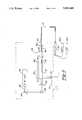
- FIG. 3is a diagrammatic view illustrating the preferred embodiment of the present invention.
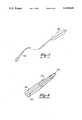
- FIG. 4is a side sectional view illustrating a preferred handpiece of the present invention.
- FIG. 5is a fragmentary sectional view similar to FIG. 4 but illustrating a different tip
- FIG. 6is a view similar to FIG. 4 but illustrating still another further modification thereof
- FIG. 7is a sectional view of an alternative embodiment of the cable and handpiece
- FIG. 8is a fragmentary sectional view similar to FIG. 6 showing a further alternative embodiment of the tip
- FIG. 9is a crossectional view of a tooth.
- FIG. 10is a crossectional view illustrating an endontic procedure.
- a preferred embodiment of the dental laser assembly 10 of the present inventionis thereshown and comprises a main unit 12 and the fiber optic laser beam delivery system 14.
- the main unit 12preferably includes rollers 16 at one end for mobility so that the main unit 12 can be moved as desired.
- the other end of the main unitrests on posts 17.
- the unitis lifted with a retractable handle 19 so as to be moved on the rollers 16.
- the main unit 12includes a fiber optic output connector 26 along one side.
- a control panel 20is provided at the top of the main unit 12 to control the activation and use of the dental laser system 10.
- the fiber optic cable assemblycomprises an elongated fiber optic 22 which is flexible.
- One end 24 of the fiber optic 22is received within the fiber optic connector 26.
- a lock nut 28 adjacent the end 24 of the fiber optic 22locks to the connector 18 in order to secure the fiber optic 22 to the main unit 12 for a reason to be subsequently described.
- a handpiece 30is provided at the opposite end 75 of the fiber optic cable 22.
- the fiber optic cable 22delivers a laser beam from the end 24 to the handpiece 30.
- an ND:YAG laser 32is contained within a cavity 34 in the main unit 12.
- the YAG laser 32is positioned within the cavity 34 so that the laser 32 generates a laser output beam along a predetermined axis 36.
- Any conventional means, such as a flash lamp 38,is also contained within the cavity 34 to excite the laser 32 so that the laser 32 generates a pulsed output.
- the YAG laserhas a pulse repetition rate of between one and 10,000 pulses/sec., an average power of up to 50 watts and preferably between one tenth and fifty watts, a pulse duration of between a picosecond and several milliseconds and a peak energy of up to five joules/pulse.
- the peak powerwill vary depending upon the pulse duration and pulse energy and, similarly, the average power will vary depending upon the energy of each pulse, and the repetition rate.
- the output power of the laseris less than 50 watts, the laser can be operated from a standard 110 volt electrical power supply and without the necessity of an external cooling system to cool the laser cavity 34.
- control panel 20Conventional electronics operated through the control panel 20 enable the average power, pulse energy, and pulse repetition rate to be user selected. These factors will vary in dependence upon the dental procedure involved as subsquently discussed.
- a reflecting mirror 40is positioned adjacent one end of the laser 32 while a semi-reflective mirror 42 is positioned adjacent the other end of the laser 32.
- the mirrors 40 and 42thus cause the laser 32 to generate an output along the axis 46, through a fiber focus lens 48 and into one end 50 of the fiber optic 22.
- the fiber optic 22then carries or delivers the laser output from the laser 32 to the handpiece 30 which will be subsequently described in greater detail.
- a shutter solenoid 54is also preferably contained within the main housing 12 and operates a movable shutter 56 (illustrated only diagrammatically). With the shutter 56 in its upper or retracted position, illustrated in solid line, the laser beam from the laser 32 passes through the lens 48 and out through the fiber optic 22. Conversely, with the shutter 56 in its extended position, illustrated in phantom line, the shutter 56 blocks the output from the laser 32 to prevent unintended laser outputs from the handpiece 30.
- the main unit 12also includes a continuous wave laser 60, such as a helium-neon HeNe) laser.
- a continuous wave laser 60such as a helium-neon HeNe
- Such a laserprovides a very low power output but, unlike the Nd:YAG laser 32, the output from the helium-neon laser 60 is in the visible range.
- the output 62 from the HeNe laser 60is reflected by prisms 64 and 66 through a mirror 40 so that the HeNe laser output 62 is coaxial with the axis 36 and thus with the laser outputs from the Nd:YAG laser 32.
- both the laser output from the continuous laser 60 as well as the pulse laser 32are delivered through the fiber optic cable 22 to the handpiece 30.
- the continuous laser output 62provides an aiming output since the output from the pulse laser 32 is invisible.
- the main housingfurther includes a cooling system 110 for cooling the pulsed laser 32.
- the cooling systemcan be of any conventional construction, for example, having a coolant of 50% ethylene glycol and 50% deionized water. This coolant is pumped by a pump while a flowmeter 112 monitors the flow of the coolant. The fluid is pumped through the laser cavity and through a radiator and then circulated. In the event that the flow of the coolant is interrupted, the laser 32 is deactivated in order to prevent the laser 32 from overheating.
- the cooling system 110is housed separately from the main housing. Such an arrangement is advantageous in that it (1) minimizes the size of the housing and (2) allows the cooling system 110 to be combined with the cooling systems for other equipment used by the dentist.
- one preferred embodiment of the handpieceis thereshown and comprises an elongated body 70 having a first end 72 and a second end 74.
- the fiber optic cable 22extends through the handpiece body 70 from the end 72 and terminates at a point 76 short of the handpiece end 74.
- the output from the end 75 of the fiber opticis concentrated by a collimating lens 78 to a mirror 80.
- the mirror 80reflects the laser output substantially at a right angle to the axis of the handpiece body 70, through a lens 81 and a protective window 82 and so that the laser output focuses at a point 84 adjacent to the output window 82 of the handpiece body 70.
- the handpiece 30is of substantially the same shape and size as a conventional dentist drill.
- the handpiece body 70can be easily manipulated in the mouth of the patient in the same fashion as a dental drill.
- both the continuous wave from the laser 60 as well as the pulsed output from the laser 32are delivered through the fiber optic 22, through the collimating lens 78 (FIG. 4), mirror 80, focusing lens 81 and window 82 so that both lasers focus at the point 84. Since only the output from the continuous wave laser 60 is in the visible range, the laser beams can be easily focused since the size of the visible laser 60 is smallest at the point 84. When the laser is properly focused, activation of the pulse laser 32 removes the carious lesions, or the soft tissue as the case may be. Furthermore, the laser beam simultaneously sterilizes the work area during use which is particularly advantageous for the removal of soft tissue and dental decay.
- the actual power and energy levels used by the operator or dentistwill vary depending upon the desired dental procedure. It has been found, for example, that lasing the enamel of a healthy tooth with relatively low energy levels, e.g. less than 100 millijoules per pulse, desensitizes the tooth by temporarily sealing or otherwise deactivating the dentinal tubules which normally carry the pain signals of the tooth.
- the average power required for soft tissue proceduresis higher than for tooth procedures, and requires higher pulse repetition rates. Accordingly, a variable pulse repetition rate is provided to provide a smoother output and a higher average power.
- a pigmentcan also be sprayed on the tooth prior to lasing. This pigment spray enhances light absorption by the tooth.
- lasing teethmay carbonize the outer layer of the tooth. Removal of this carbon can be easily achieved by treating the carbonized portion of the tooth with an oxihalogen, preferably a hypo chlorite such as diluted sodium hypo chlorite or other hypo chlorites or chlorides or using water, and then lasing the tooth.
- an oxihalogenpreferably a hypo chlorite such as diluted sodium hypo chlorite or other hypo chlorites or chlorides or using water, and then lasing the tooth.
- External cooling of the toothmay also be necessary at high average power levels as well as high energy/pulse levels and under most circumstances with the holmium YAG laser.
- Such tooth coolingcan be accomplished in any conventional fashion, such as by spraying water on the tooth from a source 300 (FIG. 3). Since certain types of laser emissions are absorbed by water, a drying means 302, such as an air sprayer, is activated after each water spray but prior to a subsequent activation of the pulsed laser.
- high energy levelsi.e. energy levels between 100 millijoules/pulse and five joules/pulse
- the tooth 200has an enamel outer shell 202, dentin 204 and a pulp chamber 206.
- the pulp chamberis opened at 210 (FIG. 10) and a laser tip 212 is inserted.
- Activation of the laser at high power and/or energy levelseradicates the soft tissue in the pulp chamber 206 as desired.
- the lasersterilizes the pulp chamber 206 and prevents infection.
- the pigmented materialif desired, can be applied with a nozzle or manually.
- the laser of the present inventionis advantageous for removing tartar buildup on the teeth.
- the laseris focussed at the tartar and repeatedly activated until the tartar is removed.
- the preferred embodiment of the laser of the present inventionhas also proven useful for apical fusion of foramina.
- the laseris focussed at the tooth area surrounding the foramina nd repeatedly activated until the area surrounding the foramina melts and fuses the foramina shut.
- This tooth material surrounding the foraminatypically comprises healthy dentin.
- the lasercan also be used for shaping the canal during an endontic or root canal procedure.
- the laseris aimed at the good or undiseased dentin surrounding the nerve canal in the tooth.
- the laseris then repeatedly activated thereby eradicating the dentin and shaping or enlarging the root canal as well as sterilizing the root canal.
- the laser of the present inventioncan also be used to heat gutta percha in the cavity left by the removal of a carious lesion. This renders the gutta percha more fluid so that it flows deeper into crevices of the cavity and creates a better bond between the gutta percha and the cavity.
- the laser of the present inventionhas also been used for the bloodless removal of soft tissue.
- the laseris aimed at the soft tissue which is to be removed and repeatedly activated.
- the laser beamsimultaneously cuts the soft tissue and seals the blood vessels at the sound site as well as sterilizing the wound site. This in turn produces essentially a bloodless removal of the soft tissue.
- the laser of the present inventioncan also be used for anesthetizing a tooth prior to preparation of the tooth with conventional instruments for removal of decay and/or propon material restoration.
- the entire crown and/or root of the toothis lased on all surfaces including, but not limited to, the buccal, lingual, and occlusal surfaces thereby anesthetizing the entire target tooth.
- the laser beamacts to temporarily close the tubuals and depolarize the nerve cells of the odontablast layer of the pulp for a time period sufficient to permit the dental procedure to be performed. In either event, the laser penetrates the enamel, which may range up to 2> mm thick, in order to anesthetize the tooth temporarily.
- the laser of the present inventioncan also be used for removing tooth enamel. Such removal is oftentimes necessary in order to eradicate diseased dentin behind the enamel.
- a holmium doped YAG laserhas proven especially effective for the removal of enamel.
- An erbium doped YAG laserhas also proven effective for enamel removal although, at present, erbium YAG lasers are more destructive to optical fibers of the type used in a dental delivery system than a holmium YAG laser.
- cooling the tooth during enamel removalenables faster removal of the enamel without damaging the tooth. Such cooling can be accomplished by spraying a fluid, such as air or water, on the tooth during the enamel removal.
- the lasercan also be used for the intraoral welding of dental applicances, such as braces and bridges, in the mouth.
- Synthetic hydroxapititecan also be welded to the teeth to replace fillings by the laser.
- the lasercan be used to incise the upper or lower frenum both labial or lingual.
- the advantageis that with the laser this procedure may not be necessary and bleeding probably will not occur.
- a lower frenectomyis typically performed to cure a malady called "tongue tied".
- the lasercan also be used to remove amalgam.
- the laser of this inventioncan also be used to etch the enamel prior to restoration with various types of composites. Under current therapy it is necessary prior to installing the restoration to seal the dentin with a material such as calcium hydroxide which acts as a thermal liner, rinse, dry, etch the enamel with phosphoric acid or a like agent, rinse, dry then restore. A substantial time and material benefit is realized with the laser in that all the above steps in a tooth restoration are unnecessary.
- the laseris passed over the intended etch surface of the enamel during the removal of decay or just prior to installation of the sealing or bonding material. These procedures are completed without anesthesia in most cases thereby creating a significant cost savings to the patient and/or doctor. The same procedure is used to etch enamel prior to bonding for brackets that fix to braces.
- the laserhas an energy output of between 0.1 millijoules per pulse and 5 joules per pulse, an average power of less than 50 watts and a pulse repetition rate of up to 10,000 pulses per second.
- the end 74' of the handpiece body 30'includes an internally threaded bore 90.
- This bore 90detachably receives an externally threaded tip 92.
- the tip 92includes an elongated throughbore 94 in which an arcuate fiber optic segment 96 is contained.
- the fiber optic segment 96is arranged in the top 92 so that one end 98 is aligned with the end 75 of the fiber optic 22 so that the laser output from the fiber optic 22 passes through the fiber optic 96 to its external end 100.
- the external end 100 of the fiber otpic segment 96is preferably a contact point so that the laser output is focused at the end 100 of the fiber optic segment 96.
- the fiber optic segment 96is preferably arcuate so that the contact end 100 is substantially at a right angle from the axis of the handpiece body 30'.
- FIG. 6a modification of the tip 92 is thereshown in which the throughbore 94' is linear rather than arcuate as shown in FIG. 5. Consequently, the contact end 100' of the fiber optic segment 96' is aligned with the axis of the handpiece body 30'. In all other respects, however, the tip 94' shown in FIG. 6 is the same as the tip 92 shown in FIG. 5 and, for that reason, will not be again described.
- FIG. 7another embodiment of a delivery system is shown. This comprises a single fiber 22 throughout and from input to output ends. A simple handpiece 98 is used to hold the fiber for use in the mouth.
- a tip 101is shown that is designated to fit on the body 30'.
- the tip 101is made of a ceramic material that acts as a thermal insulator.
- a metal heating tip 102is mounted in the tip 101 to extend from the distal end of the cable 22.
- the laser beamis delivered to the heating tip by the cable 22 to exit the distal end of the cable to strike the heating tip 102.
- the heating tipis made of a suitable material such as stainless steel which may be heated quickly to a high temperature and then used to cut and cauterize soft tissue in the mouth.
- tips 92which are interchangeable with the tips 92 or 92' shown in FIGS. 5 and 6 are also possible.
- the present inventionprovides a simple and yet highly effective dental laser system for removing carious lesions, enamel and soft tissue as well as sterilization and other dental procedures.
- the lasercan also be used in endodontic applications for eradicating diseased nerve tissue as well as sterilizing the root canal. There are many advantages to the dental laser system of the present invention.
- the dental laser system of the present inventionis not only portable but it can also be operated from standard line current of 110 volts. As such, special electrical wiring is not required in order to utilize the dental laser system of the present invention.
- a still further advantage of the dental laser system of the present inventionis that the delivery system utilizes a handpiece dimensioned to simulate the conventional dental handpiece used by dentists. As such, the handpiece of the present invention can be easily maneuvered in the patient's mouth. Furthermore, the replaceable tips for the handpiece further enhance the flexibility of the operation and use of the dental laser of the present invention.
Landscapes
- Health & Medical Sciences (AREA)
- Life Sciences & Earth Sciences (AREA)
- Veterinary Medicine (AREA)
- Surgery (AREA)
- Physics & Mathematics (AREA)
- Animal Behavior & Ethology (AREA)
- General Health & Medical Sciences (AREA)
- Public Health (AREA)
- Biomedical Technology (AREA)
- Engineering & Computer Science (AREA)
- Nuclear Medicine, Radiotherapy & Molecular Imaging (AREA)
- Optics & Photonics (AREA)
- Heart & Thoracic Surgery (AREA)
- Otolaryngology (AREA)
- Dentistry (AREA)
- Oral & Maxillofacial Surgery (AREA)
- Medical Informatics (AREA)
- Molecular Biology (AREA)
- Epidemiology (AREA)
- Electromagnetism (AREA)
- Pulmonology (AREA)
- Pathology (AREA)
- Radiology & Medical Imaging (AREA)
- Dental Tools And Instruments Or Auxiliary Dental Instruments (AREA)
- Radiation-Therapy Devices (AREA)
Abstract
Description
Claims (25)
Priority Applications (5)
| Application Number | Priority Date | Filing Date | Title |
|---|---|---|---|
| US07/493,965US5055048A (en) | 1988-08-25 | 1990-03-15 | Dental laser assembly |
| US07/804,834US5324200A (en) | 1988-08-25 | 1991-12-06 | Method for enlarging and shaping a root canal |
| US07/804,835US5180304A (en) | 1988-08-25 | 1991-12-06 | Method for apical fusion of the foramina |
| US07/834,662US5275564A (en) | 1988-08-25 | 1992-02-12 | Dental laser assembly |
| US07/834,378US5232367A (en) | 1988-08-25 | 1992-02-12 | Method for sterilizing and closing accessory canals of a tooth |
Applications Claiming Priority (2)
| Application Number | Priority Date | Filing Date | Title |
|---|---|---|---|
| US23645088A | 1988-08-25 | 1988-08-25 | |
| US07/493,965US5055048A (en) | 1988-08-25 | 1990-03-15 | Dental laser assembly |
Related Parent Applications (1)
| Application Number | Title | Priority Date | Filing Date |
|---|---|---|---|
| US07/342,190Continuation-In-PartUS4940411A (en) | 1988-08-25 | 1989-04-24 | Dental laser method |
Related Child Applications (3)
| Application Number | Title | Priority Date | Filing Date |
|---|---|---|---|
| US07/706,258DivisionUS5122060A (en) | 1988-08-25 | 1991-05-28 | Method for creating an etch in dentin |
| US07/707,162DivisionUS5123845A (en) | 1988-08-25 | 1991-05-28 | Dental laser assembly |
| US70716391ADivision | 1988-08-25 | 1991-05-28 |
Publications (1)
| Publication Number | Publication Date |
|---|---|
| US5055048Atrue US5055048A (en) | 1991-10-08 |
Family
ID=26929777
Family Applications (1)
| Application Number | Title | Priority Date | Filing Date |
|---|---|---|---|
| US07/493,965Expired - LifetimeUS5055048A (en) | 1988-08-25 | 1990-03-15 | Dental laser assembly |
Country Status (1)
| Country | Link |
|---|---|
| US (1) | US5055048A (en) |
Cited By (58)
| Publication number | Priority date | Publication date | Assignee | Title |
|---|---|---|---|---|
| US5180304A (en)* | 1988-08-25 | 1993-01-19 | American Dental Laser, Inc. | Method for apical fusion of the foramina |
| US5188532A (en)* | 1988-12-21 | 1993-02-23 | Endo Technic Corporation | Vaporizing tartar and calculus around a tooth root |
| US5205734A (en)* | 1992-01-21 | 1993-04-27 | University Of Pittsburgh Of The Commonwealth System Of Higher Education | Apparatus for removing ceramic orthodontic brackets and an associated method |
| US5281141A (en)* | 1992-03-16 | 1994-01-25 | Medical Laser Technology, Inc. | Dental laser apparatus and method for treating tooth decay |
| US5324200A (en)* | 1988-08-25 | 1994-06-28 | American Dental Technologies, Inc. | Method for enlarging and shaping a root canal |
| US5346489A (en)* | 1992-11-18 | 1994-09-13 | Luxar Corporation | Medical laser delivery system |
| US5350299A (en)* | 1992-03-27 | 1994-09-27 | American Dental Technologies, Inc. | Dental treatment system |
| US5390204A (en)* | 1992-09-25 | 1995-02-14 | Incisive Technologies, Inc. | Intracavity modulated pulsed laser with a variably controllable modulation frequency |
| US5401171A (en)* | 1992-07-20 | 1995-03-28 | Paghdiwala; Abid F. | Dental laser device and method |
| US5435724A (en)* | 1993-03-04 | 1995-07-25 | International Business Machines Corporation | Dental procedures and apparatus using ultraviolet radiation |
| US5456603A (en)* | 1992-03-16 | 1995-10-10 | Kowalyk; Kenneth | Dental laser apparatus and method for treating tooth decay |
| US5525058A (en)* | 1992-03-27 | 1996-06-11 | American Dental Technologies, Inc. | Dental treatment system |
| US5554029A (en)* | 1994-05-31 | 1996-09-10 | Medical Laser Technology, Inc. | Dental laser apparatus and method for ablating non-metallic dental material from a tooth |
| US5616141A (en)* | 1993-04-09 | 1997-04-01 | Ion Laser Technology | Laser system for use in dental procedures |
| US5759031A (en)* | 1991-12-06 | 1998-06-02 | American Dental Technologies, Inc. | Dental air abrasive and laser system |
| US5800165A (en)* | 1995-03-28 | 1998-09-01 | Loma Linda University Medical Center | Dental instrument and method of bleaching teeth using a laser |
| WO1998038876A1 (en)* | 1997-03-03 | 1998-09-11 | Maekelae Anu Maarit | Method of inhibiting growth of microorganisms by laser radiation |
| US5846080A (en)* | 1995-12-20 | 1998-12-08 | W&H Dentalwerk Gmbh | Laser dental devices and methods |
| US5897321A (en)* | 1995-07-24 | 1999-04-27 | International Business Machines Corporation | Dental procedures and apparatus using ultraviolet radiation |
| US6019605A (en)* | 1998-08-18 | 2000-02-01 | Myers; Terry D. | Method for treating periodontal disease |
| US6053731A (en)* | 1997-03-07 | 2000-04-25 | Kaltenbach & Voigt Gmbh & Co. | Device for the recognition of caries, plaque or bacterial infection of teeth |
| US6147149A (en)* | 1999-03-03 | 2000-11-14 | Glouster Co., Inc. | Adhesive caulking material which can mimic the appearance of a multicolored stone surface |
| US6149895A (en)* | 1998-02-17 | 2000-11-21 | Kreativ, Inc | Dental bleaching compositions, kits & methods |
| US6575964B1 (en) | 1998-02-03 | 2003-06-10 | Sciton, Inc. | Selective aperture for laser delivery system for providing incision, tissue ablation and coagulation |
| US6616451B1 (en)* | 1997-06-20 | 2003-09-09 | Biolase Technology, Inc. | Electromagnetic radiation emitting toothbrush and dentifrice system |
| US6743221B1 (en) | 2001-03-13 | 2004-06-01 | James L. Hobart | Laser system and method for treatment of biological tissues |
| US20040127892A1 (en)* | 2002-01-31 | 2004-07-01 | Harris David M. | Periodontal laser and methods |
| US6770069B1 (en) | 2001-06-22 | 2004-08-03 | Sciton, Inc. | Laser applicator |
| US6953341B2 (en) | 2003-08-20 | 2005-10-11 | Oralum, Llc | Toothpick for light treatment of body structures |
| US7090497B1 (en) | 2001-02-21 | 2006-08-15 | Harris David M | Method of periodontal laser treatment |
| US20060183072A1 (en)* | 2003-04-25 | 2006-08-17 | Michael Black | Device for application of multiple hygienic effects |
| US20060281042A1 (en)* | 2005-05-18 | 2006-12-14 | Biolase Technology, Inc. | Electromagnetic radiation emitting toothbrush and dentifrice system |
| US20070009856A1 (en)* | 2005-05-25 | 2007-01-11 | Biolase Technology, Inc. | Device having activated textured surfaces for treating oral tissue |
| US20090061391A1 (en)* | 2007-09-01 | 2009-03-05 | Fotona D.D. | Method for Operating a Laser System and Laser System for Bleaching Teeth |
| US20100047734A1 (en)* | 2008-08-20 | 2010-02-25 | PathoLase, Inc. | Periodontal laser treatment and laser applicator |
| US20100132173A1 (en)* | 2008-11-24 | 2010-06-03 | Benjamin Arcand | System and method for reducing environmental crematorial release of mercury from mercury-containing dental amalgam |
| US20100167228A1 (en)* | 1997-06-20 | 2010-07-01 | Rizoiu Ioana M | Electromagnetic radiation emitting toothbrush and dentifrice system |
| WO2013103794A1 (en)* | 2012-01-06 | 2013-07-11 | Dentsply International Inc. | System and method for performing endodontic procedures with lasers |
| US9597160B1 (en) | 2015-11-12 | 2017-03-21 | Millennium Healthcare Technologies, Inc. | Laser-assisted periodontics |
| US9622840B2 (en) | 2010-06-15 | 2017-04-18 | The Procter & Gamble Company | Methods for whitening teeth |
| US9675426B2 (en) | 2010-10-21 | 2017-06-13 | Sonendo, Inc. | Apparatus, methods, and compositions for endodontic treatments |
| US9877801B2 (en) | 2013-06-26 | 2018-01-30 | Sonendo, Inc. | Apparatus and methods for filling teeth and root canals |
| US9943379B2 (en) | 2016-01-29 | 2018-04-17 | Millennium Healthcare Technologies, Inc. | Laser-assisted periodontics |
| US10010388B2 (en) | 2006-04-20 | 2018-07-03 | Sonendo, Inc. | Apparatus and methods for treating root canals of teeth |
| US10098717B2 (en) | 2012-04-13 | 2018-10-16 | Sonendo, Inc. | Apparatus and methods for cleaning teeth and gingival pockets |
| US10363120B2 (en) | 2012-12-20 | 2019-07-30 | Sonendo, Inc. | Apparatus and methods for cleaning teeth and root canals |
| US10420630B2 (en) | 2009-11-13 | 2019-09-24 | Sonendo, Inc. | Liquid jet apparatus and methods for dental treatments |
| US10722325B2 (en) | 2013-05-01 | 2020-07-28 | Sonendo, Inc. | Apparatus and methods for treating teeth |
| US10806544B2 (en) | 2016-04-04 | 2020-10-20 | Sonendo, Inc. | Systems and methods for removing foreign objects from root canals |
| US10835355B2 (en) | 2006-04-20 | 2020-11-17 | Sonendo, Inc. | Apparatus and methods for treating root canals of teeth |
| US11077425B2 (en) | 2016-09-02 | 2021-08-03 | Regents Of The University Of Minnesota | Systems and methods for body-proximate recoverable capture of mercury vapor during cremation |
| US11173019B2 (en) | 2012-03-22 | 2021-11-16 | Sonendo, Inc. | Apparatus and methods for cleaning teeth |
| US11213375B2 (en) | 2012-12-20 | 2022-01-04 | Sonendo, Inc. | Apparatus and methods for cleaning teeth and root canals |
| US11350993B2 (en) | 2006-08-24 | 2022-06-07 | Pipstek, Llc | Dental and medical treatments and procedures |
| USD997355S1 (en) | 2020-10-07 | 2023-08-29 | Sonendo, Inc. | Dental treatment instrument |
| US12059316B2 (en) | 2022-09-08 | 2024-08-13 | Enamel Pure | Systems and methods for dental treatment and verification |
| US12114924B2 (en) | 2006-08-24 | 2024-10-15 | Pipstek, Llc | Treatment system and method |
| US12333722B1 (en) | 2024-03-28 | 2025-06-17 | Enamel Pure, Inc. | Systems and methods for predicting medical conditions usingmachine learning correlating dental images and medical data |
Citations (8)
| Publication number | Priority date | Publication date | Assignee | Title |
|---|---|---|---|---|
| US3826431A (en)* | 1973-04-16 | 1974-07-30 | Velsicol Chemical Corp | Multiple spray head |
| DE2948580A1 (en)* | 1978-12-04 | 1980-06-19 | Morita Mfg | DEVICE FOR CARIES PREVENTION BY TREATING WITH LASER RAYS |
| US4503853A (en)* | 1981-09-04 | 1985-03-12 | Kabushiki Kaisha Morita Seisakusho | Contra angle handpiece for dental treatment by laser beams |
| FR2597745A1 (en)* | 1986-04-24 | 1987-10-30 | Levy Guy | Process for connection between two materials, by fusion obtained by means of a laser beam, applicable in dentistry |
| EP0286766A1 (en)* | 1985-12-30 | 1988-10-19 | Vicente M. Torres Zaragoza | Method and device for producing the whitening of live teeth with pathological and normal colorations |
| US4818230A (en)* | 1985-12-13 | 1989-04-04 | Myers William D | Method for removing decay from teeth |
| US4877401A (en)* | 1988-03-09 | 1989-10-31 | University Of Utah | Method of preventing tooth decay by laser beam irradiation and chemical treatment |
| US4940411A (en)* | 1988-08-25 | 1990-07-10 | American Dental Laser, Inc. | Dental laser method |
- 1990
- 1990-03-15USUS07/493,965patent/US5055048A/ennot_activeExpired - Lifetime
Patent Citations (8)
| Publication number | Priority date | Publication date | Assignee | Title |
|---|---|---|---|---|
| US3826431A (en)* | 1973-04-16 | 1974-07-30 | Velsicol Chemical Corp | Multiple spray head |
| DE2948580A1 (en)* | 1978-12-04 | 1980-06-19 | Morita Mfg | DEVICE FOR CARIES PREVENTION BY TREATING WITH LASER RAYS |
| US4503853A (en)* | 1981-09-04 | 1985-03-12 | Kabushiki Kaisha Morita Seisakusho | Contra angle handpiece for dental treatment by laser beams |
| US4818230A (en)* | 1985-12-13 | 1989-04-04 | Myers William D | Method for removing decay from teeth |
| EP0286766A1 (en)* | 1985-12-30 | 1988-10-19 | Vicente M. Torres Zaragoza | Method and device for producing the whitening of live teeth with pathological and normal colorations |
| FR2597745A1 (en)* | 1986-04-24 | 1987-10-30 | Levy Guy | Process for connection between two materials, by fusion obtained by means of a laser beam, applicable in dentistry |
| US4877401A (en)* | 1988-03-09 | 1989-10-31 | University Of Utah | Method of preventing tooth decay by laser beam irradiation and chemical treatment |
| US4940411A (en)* | 1988-08-25 | 1990-07-10 | American Dental Laser, Inc. | Dental laser method |
Non-Patent Citations (2)
| Title |
|---|
| "Heatless Laser Etching", Popular Science, Dec. 1983, p. 114. |
| Heatless Laser Etching , Popular Science , Dec. 1983, p. 114.* |
Cited By (101)
| Publication number | Priority date | Publication date | Assignee | Title |
|---|---|---|---|---|
| US5324200A (en)* | 1988-08-25 | 1994-06-28 | American Dental Technologies, Inc. | Method for enlarging and shaping a root canal |
| US5180304A (en)* | 1988-08-25 | 1993-01-19 | American Dental Laser, Inc. | Method for apical fusion of the foramina |
| US5188532A (en)* | 1988-12-21 | 1993-02-23 | Endo Technic Corporation | Vaporizing tartar and calculus around a tooth root |
| US5759031A (en)* | 1991-12-06 | 1998-06-02 | American Dental Technologies, Inc. | Dental air abrasive and laser system |
| US5205734A (en)* | 1992-01-21 | 1993-04-27 | University Of Pittsburgh Of The Commonwealth System Of Higher Education | Apparatus for removing ceramic orthodontic brackets and an associated method |
| US5456603A (en)* | 1992-03-16 | 1995-10-10 | Kowalyk; Kenneth | Dental laser apparatus and method for treating tooth decay |
| US5281141A (en)* | 1992-03-16 | 1994-01-25 | Medical Laser Technology, Inc. | Dental laser apparatus and method for treating tooth decay |
| US5746596A (en)* | 1992-03-27 | 1998-05-05 | American Dental Technologies, Inc. | Dental treatment method |
| US5525058A (en)* | 1992-03-27 | 1996-06-11 | American Dental Technologies, Inc. | Dental treatment system |
| US5350299A (en)* | 1992-03-27 | 1994-09-27 | American Dental Technologies, Inc. | Dental treatment system |
| US5401171A (en)* | 1992-07-20 | 1995-03-28 | Paghdiwala; Abid F. | Dental laser device and method |
| US5621745A (en)* | 1992-09-25 | 1997-04-15 | American Dental Technologies, Inc. | Intracavity modulated pulsed laser and methods of using the same |
| US5390204A (en)* | 1992-09-25 | 1995-02-14 | Incisive Technologies, Inc. | Intracavity modulated pulsed laser with a variably controllable modulation frequency |
| US5346489A (en)* | 1992-11-18 | 1994-09-13 | Luxar Corporation | Medical laser delivery system |
| US5435724A (en)* | 1993-03-04 | 1995-07-25 | International Business Machines Corporation | Dental procedures and apparatus using ultraviolet radiation |
| US5785703A (en)* | 1993-03-04 | 1998-07-28 | International Business Machines Corporation | Dental procedures and apparatus using ultraviolet radiation |
| US5968036A (en)* | 1993-03-04 | 1999-10-19 | International Business Machines Corporation | Dental procedures and apparatus using ultraviolet radiation |
| US5616141A (en)* | 1993-04-09 | 1997-04-01 | Ion Laser Technology | Laser system for use in dental procedures |
| US5554029A (en)* | 1994-05-31 | 1996-09-10 | Medical Laser Technology, Inc. | Dental laser apparatus and method for ablating non-metallic dental material from a tooth |
| US5800165A (en)* | 1995-03-28 | 1998-09-01 | Loma Linda University Medical Center | Dental instrument and method of bleaching teeth using a laser |
| US5897321A (en)* | 1995-07-24 | 1999-04-27 | International Business Machines Corporation | Dental procedures and apparatus using ultraviolet radiation |
| US5846080A (en)* | 1995-12-20 | 1998-12-08 | W&H Dentalwerk Gmbh | Laser dental devices and methods |
| WO1998038876A1 (en)* | 1997-03-03 | 1998-09-11 | Maekelae Anu Maarit | Method of inhibiting growth of microorganisms by laser radiation |
| US6053731A (en)* | 1997-03-07 | 2000-04-25 | Kaltenbach & Voigt Gmbh & Co. | Device for the recognition of caries, plaque or bacterial infection of teeth |
| EP1985255A1 (en)* | 1997-06-20 | 2008-10-29 | BioLase Technology, Inc. | Electromagnetic radiation emitting toothbrush and dentifrice system |
| US20070298369A1 (en)* | 1997-06-20 | 2007-12-27 | Biolase Technology, Inc. | Electromagnetic radiation emitting toothbrush and dentifrice system |
| US7261558B2 (en) | 1997-06-20 | 2007-08-28 | Biolase Technology, Inc. | Electromagnetic radiation emitting toothbrush and dentifrice system |
| US20100167228A1 (en)* | 1997-06-20 | 2010-07-01 | Rizoiu Ioana M | Electromagnetic radiation emitting toothbrush and dentifrice system |
| US6616451B1 (en)* | 1997-06-20 | 2003-09-09 | Biolase Technology, Inc. | Electromagnetic radiation emitting toothbrush and dentifrice system |
| US20040091834A1 (en)* | 1997-06-20 | 2004-05-13 | Rizoiu Ioana M. | Electromagnetic radiation emitting toothbrush and dentifrice system |
| US6575964B1 (en) | 1998-02-03 | 2003-06-10 | Sciton, Inc. | Selective aperture for laser delivery system for providing incision, tissue ablation and coagulation |
| US6149895A (en)* | 1998-02-17 | 2000-11-21 | Kreativ, Inc | Dental bleaching compositions, kits & methods |
| US6019605A (en)* | 1998-08-18 | 2000-02-01 | Myers; Terry D. | Method for treating periodontal disease |
| US6147149A (en)* | 1999-03-03 | 2000-11-14 | Glouster Co., Inc. | Adhesive caulking material which can mimic the appearance of a multicolored stone surface |
| US20100151407A1 (en)* | 2000-11-15 | 2010-06-17 | Rizoiu Ioana M | Device having activated textured surfaces for treating oral tissue |
| US7090497B1 (en) | 2001-02-21 | 2006-08-15 | Harris David M | Method of periodontal laser treatment |
| US6743221B1 (en) | 2001-03-13 | 2004-06-01 | James L. Hobart | Laser system and method for treatment of biological tissues |
| US7220256B2 (en) | 2001-03-13 | 2007-05-22 | Hobart James L | Laser system and method for treatment of biological tissues |
| US6770069B1 (en) | 2001-06-22 | 2004-08-03 | Sciton, Inc. | Laser applicator |
| US20040127892A1 (en)* | 2002-01-31 | 2004-07-01 | Harris David M. | Periodontal laser and methods |
| US20060183072A1 (en)* | 2003-04-25 | 2006-08-17 | Michael Black | Device for application of multiple hygienic effects |
| US6953341B2 (en) | 2003-08-20 | 2005-10-11 | Oralum, Llc | Toothpick for light treatment of body structures |
| US20050267451A1 (en)* | 2003-08-20 | 2005-12-01 | Michael Black | Device for application of multiple hygienic effects |
| US7942667B2 (en) | 2005-05-18 | 2011-05-17 | Biolase Technology, Inc. | Electromagnetic radiation emitting toothbrush and dentifrice system |
| US20090056044A1 (en)* | 2005-05-18 | 2009-03-05 | Rizoiu Ioana M | Electromagnetic radiation emitting toothbrush and dentifrice system |
| US7467946B2 (en) | 2005-05-18 | 2008-12-23 | Biolase Technology, Inc. | Electromagnetic radiation emitting toothbrush and dentifrice system |
| US20060281042A1 (en)* | 2005-05-18 | 2006-12-14 | Biolase Technology, Inc. | Electromagnetic radiation emitting toothbrush and dentifrice system |
| US20070009856A1 (en)* | 2005-05-25 | 2007-01-11 | Biolase Technology, Inc. | Device having activated textured surfaces for treating oral tissue |
| US8241035B2 (en) | 2005-05-25 | 2012-08-14 | Biolase, Inc. | Device having activated textured surfaces for treating oral tissue |
| US10010388B2 (en) | 2006-04-20 | 2018-07-03 | Sonendo, Inc. | Apparatus and methods for treating root canals of teeth |
| US11918432B2 (en) | 2006-04-20 | 2024-03-05 | Sonendo, Inc. | Apparatus and methods for treating root canals of teeth |
| US10835355B2 (en) | 2006-04-20 | 2020-11-17 | Sonendo, Inc. | Apparatus and methods for treating root canals of teeth |
| US10617498B2 (en) | 2006-04-20 | 2020-04-14 | Sonendo, Inc. | Apparatus and methods for treating root canals of teeth |
| US10039625B2 (en) | 2006-04-20 | 2018-08-07 | Sonendo, Inc. | Apparatus and methods for treating root canals of teeth |
| US10016263B2 (en) | 2006-04-20 | 2018-07-10 | Sonendo, Inc. | Apparatus and methods for treating root canals of teeth |
| US12213731B2 (en) | 2006-08-24 | 2025-02-04 | Pipstek, Llc | Dental and medical treatments and procedures |
| US11426239B2 (en) | 2006-08-24 | 2022-08-30 | Pipstek, Llc | Dental and medical treatments and procedures |
| US12114924B2 (en) | 2006-08-24 | 2024-10-15 | Pipstek, Llc | Treatment system and method |
| US11350993B2 (en) | 2006-08-24 | 2022-06-07 | Pipstek, Llc | Dental and medical treatments and procedures |
| US11684421B2 (en) | 2006-08-24 | 2023-06-27 | Pipstek, Llc | Dental and medical treatments and procedures |
| US20090061391A1 (en)* | 2007-09-01 | 2009-03-05 | Fotona D.D. | Method for Operating a Laser System and Laser System for Bleaching Teeth |
| US8011923B2 (en) | 2007-09-01 | 2011-09-06 | Fotona D.D. | Method for operating a laser system for bleaching teeth |
| US20100047734A1 (en)* | 2008-08-20 | 2010-02-25 | PathoLase, Inc. | Periodontal laser treatment and laser applicator |
| US20100132173A1 (en)* | 2008-11-24 | 2010-06-03 | Benjamin Arcand | System and method for reducing environmental crematorial release of mercury from mercury-containing dental amalgam |
| US8402619B2 (en) | 2008-11-24 | 2013-03-26 | Minnesota Funeral Directors Association | System and method for reducing environmental crematorial release of mercury from mercury-containing dental amalgam |
| US10420630B2 (en) | 2009-11-13 | 2019-09-24 | Sonendo, Inc. | Liquid jet apparatus and methods for dental treatments |
| US11160645B2 (en) | 2009-11-13 | 2021-11-02 | Sonendo, Inc. | Liquid jet apparatus and methods for dental treatments |
| US12268565B2 (en) | 2009-11-13 | 2025-04-08 | Sonendo, Inc. | Liquid jet apparatus and methods for dental treatments |
| US9622840B2 (en) | 2010-06-15 | 2017-04-18 | The Procter & Gamble Company | Methods for whitening teeth |
| US11793620B2 (en) | 2010-06-15 | 2023-10-24 | The Procter & Gamble Company | Methods for whitening teeth |
| US12376951B2 (en) | 2010-06-15 | 2025-08-05 | The Procter & Gamble Company | Methods for whitening teeth |
| US10667893B2 (en) | 2010-06-15 | 2020-06-02 | The Procter & Gamble Company | Methods for whitening teeth |
| US9642687B2 (en) | 2010-06-15 | 2017-05-09 | The Procter & Gamble Company | Methods for whitening teeth |
| US10702355B2 (en) | 2010-10-21 | 2020-07-07 | Sonendo, Inc. | Apparatus, methods, and compositions for endodontic treatments |
| US10806543B2 (en) | 2010-10-21 | 2020-10-20 | Sonendo, Inc. | Apparatus, methods, and compositions for endodontic treatments |
| US12186151B2 (en) | 2010-10-21 | 2025-01-07 | Sonendo, Inc. | Apparatus, methods, and compositions for endodontic treatments |
| US9675426B2 (en) | 2010-10-21 | 2017-06-13 | Sonendo, Inc. | Apparatus, methods, and compositions for endodontic treatments |
| WO2013103794A1 (en)* | 2012-01-06 | 2013-07-11 | Dentsply International Inc. | System and method for performing endodontic procedures with lasers |
| US11173019B2 (en) | 2012-03-22 | 2021-11-16 | Sonendo, Inc. | Apparatus and methods for cleaning teeth |
| US11284978B2 (en) | 2012-04-13 | 2022-03-29 | Sonendo, Inc. | Apparatus and methods for cleaning teeth and gingival pockets |
| US10631962B2 (en) | 2012-04-13 | 2020-04-28 | Sonendo, Inc. | Apparatus and methods for cleaning teeth and gingival pockets |
| US10098717B2 (en) | 2012-04-13 | 2018-10-16 | Sonendo, Inc. | Apparatus and methods for cleaning teeth and gingival pockets |
| US11213375B2 (en) | 2012-12-20 | 2022-01-04 | Sonendo, Inc. | Apparatus and methods for cleaning teeth and root canals |
| US11103333B2 (en) | 2012-12-20 | 2021-08-31 | Sonendo, Inc. | Apparatus and methods for cleaning teeth and root canals |
| US10363120B2 (en) | 2012-12-20 | 2019-07-30 | Sonendo, Inc. | Apparatus and methods for cleaning teeth and root canals |
| US10722325B2 (en) | 2013-05-01 | 2020-07-28 | Sonendo, Inc. | Apparatus and methods for treating teeth |
| US11701202B2 (en) | 2013-06-26 | 2023-07-18 | Sonendo, Inc. | Apparatus and methods for filling teeth and root canals |
| US9877801B2 (en) | 2013-06-26 | 2018-01-30 | Sonendo, Inc. | Apparatus and methods for filling teeth and root canals |
| US9597160B1 (en) | 2015-11-12 | 2017-03-21 | Millennium Healthcare Technologies, Inc. | Laser-assisted periodontics |
| US11490990B2 (en) | 2015-11-12 | 2022-11-08 | Millennium Healtcare Technologies, Inc. | Laser-assisted periodontics |
| US9943379B2 (en) | 2016-01-29 | 2018-04-17 | Millennium Healthcare Technologies, Inc. | Laser-assisted periodontics |
| US12011326B2 (en) | 2016-01-29 | 2024-06-18 | Millennium Healthcare Technologies, Inc. | Laser apparatus and method of use for dental surgery |
| US11273006B2 (en) | 2016-01-29 | 2022-03-15 | Millennium Healthcare Technologies, Inc. | Laser-assisted periodontics |
| US10806544B2 (en) | 2016-04-04 | 2020-10-20 | Sonendo, Inc. | Systems and methods for removing foreign objects from root canals |
| US11077425B2 (en) | 2016-09-02 | 2021-08-03 | Regents Of The University Of Minnesota | Systems and methods for body-proximate recoverable capture of mercury vapor during cremation |
| USD997355S1 (en) | 2020-10-07 | 2023-08-29 | Sonendo, Inc. | Dental treatment instrument |
| US12059316B2 (en) | 2022-09-08 | 2024-08-13 | Enamel Pure | Systems and methods for dental treatment and verification |
| US12059315B2 (en) | 2022-09-08 | 2024-08-13 | Enamel Pure | Systems and methods for estimating a trend associated with dental tissue |
| US12251282B2 (en) | 2022-09-08 | 2025-03-18 | Enamel Pure | Systems and methods for dental treatment and remote oversight |
| US12390317B2 (en) | 2022-09-08 | 2025-08-19 | Enamel Pure, Inc. | Systems and methods for dental treatment and verification |
| US12333722B1 (en) | 2024-03-28 | 2025-06-17 | Enamel Pure, Inc. | Systems and methods for predicting medical conditions usingmachine learning correlating dental images and medical data |
Similar Documents
| Publication | Publication Date | Title |
|---|---|---|
| US5055048A (en) | Dental laser assembly | |
| US5123845A (en) | Dental laser assembly | |
| US5275564A (en) | Dental laser assembly | |
| US5324200A (en) | Method for enlarging and shaping a root canal | |
| US4940411A (en) | Dental laser method | |
| US5122060A (en) | Method for creating an etch in dentin | |
| US5180304A (en) | Method for apical fusion of the foramina | |
| US5232367A (en) | Method for sterilizing and closing accessory canals of a tooth | |
| US5401171A (en) | Dental laser device and method | |
| US5290274A (en) | Laser apparatus for medical and dental treatments | |
| Pirnat | Versatility of an 810 nm diode laser in dentistry: an overview | |
| US5342198A (en) | Dental laser | |
| Eversole et al. | Pulpal response to cavity preparation by an erbium, chromium: YSGG laser-powered hydrokinetic system | |
| US5257935A (en) | Dental laser | |
| George | Laser in dentistry-Review | |
| Hedge et al. | Lasers in dentistry: an unceasing evolution | |
| JP5235572B2 (en) | Optical fiber tip processing method and treatment system for dental laser treatment apparatus | |
| Parker | Laser/Light Application in Dental Procedures | |
| de Paula Eduardo et al. | The use of lasers for endodontic applicationsin dentistry | |
| Ranjana et al. | Application of laser in dentistry: A brief review | |
| Romanos | Laser Fundamental Principles | |
| Dostálová et al. | Lasers in dentistry | |
| Eshghi et al. | An Investigation of Clinical Laser Applications in Dentistry; a Review and Outlook | |
| US11963831B2 (en) | Analgesic device and procedure for use | |
| Dixit et al. | Laser-A New Vision In Conservative Dentistry And Endodontics. |
Legal Events
| Date | Code | Title | Description |
|---|---|---|---|
| AS | Assignment | Owner name:AMERICAN DENTAL LASER, INC., A CORP. OF DELAWARE, Free format text:ASSIGNMENT OF ASSIGNORS INTEREST.;ASSIGNORS:VASSILIADIS, ARTHUR;SHAFFER, JOSEPH W.;FULLMER, DAVID J.;AND OTHERS;REEL/FRAME:005279/0072 Effective date:19900301 | |
| STCF | Information on status: patent grant | Free format text:PATENTED CASE | |
| REMI | Maintenance fee reminder mailed | ||
| FPAY | Fee payment | Year of fee payment:4 | |
| SULP | Surcharge for late payment | ||
| AS | Assignment | Owner name:NBD BANK, MICHIGAN Free format text:ASSIGNMENT OF ASSIGNORS INTEREST;ASSIGNOR:AMERICAN DENTAL TECHNOLOGIES, INC.;REEL/FRAME:009605/0387 Effective date:19980926 | |
| FPAY | Fee payment | Year of fee payment:8 | |
| AS | Assignment | Owner name:AMERICAN MEDICAL TECHNOLOGIES, INC., TEXAS Free format text:CHANGE OF NAME;ASSIGNOR:AMERICAN DENTAL TECHNOLOGIES, INC.;REEL/FRAME:011072/0941 Effective date:20000706 | |
| FPAY | Fee payment | Year of fee payment:12 | |
| AS | Assignment | Owner name:BL ACQUISITION CORP., CALIFORNIA Free format text:ASSIGNMENT OF ASSIGNORS INTEREST;ASSIGNOR:AMERICAN MEDICAL TECHNOLOGIES, INC.;REEL/FRAME:014321/0001 Effective date:20030521 | |
| AS | Assignment | Owner name:AMERICAN DENTAL TECHNOLOGIES, INC., TEXAS Free format text:ASSIGNMENT OF ASSIGNORS INTEREST;ASSIGNOR:BANKONE, NA;REEL/FRAME:014788/0160 Effective date:20030516 | |
| AS | Assignment | Owner name:AMERICAN DENTAL TECHNOLOGIES, INC., TEXAS Free format text:ASSIGNMENT RELEASE;ASSIGNOR:BANK ONE, N.A. ¢SUCCESSOR BY MERGER TO NBD BANK!;REEL/FRAME:015027/0879 Effective date:20030516 |