US5048524A - Blood parameter measurement - Google Patents
Blood parameter measurementDownload PDFInfo
- Publication number
- US5048524A US5048524AUS07/318,779US31877989AUS5048524AUS 5048524 AUS5048524 AUS 5048524AUS 31877989 AUS31877989 AUS 31877989AUS 5048524 AUS5048524 AUS 5048524A
- Authority
- US
- United States
- Prior art keywords
- blood
- energy
- optical
- receptacle
- coefficients
- Prior art date
- Legal status (The legal status is an assumption and is not a legal conclusion. Google has not performed a legal analysis and makes no representation as to the accuracy of the status listed.)
- Expired - Lifetime
Links
- 210000004369bloodAnatomy0.000titleclaimsabstractdescription162
- 239000008280bloodSubstances0.000titleclaimsabstractdescription162
- 238000005259measurementMethods0.000titledescription26
- 230000003287optical effectEffects0.000claimsabstractdescription76
- QVGXLLKOCUKJST-UHFFFAOYSA-Natomic oxygenChemical compound[O]QVGXLLKOCUKJST-UHFFFAOYSA-N0.000claimsabstractdescription68
- 239000001301oxygenSubstances0.000claimsabstractdescription68
- 229910052760oxygenInorganic materials0.000claimsabstractdescription68
- 239000013307optical fiberSubstances0.000claimsabstractdescription44
- 238000000034methodMethods0.000claimsabstractdescription42
- 238000005534hematocritMethods0.000claimsabstractdescription25
- 238000012512characterization methodMethods0.000claimsabstractdescription17
- 230000008033biological extinctionEffects0.000claimsdescription45
- 239000000835fiberSubstances0.000claimsdescription16
- 239000012530fluidSubstances0.000claimsdescription8
- 238000000411transmission spectrumMethods0.000claimsdescription8
- 238000011010flushing procedureMethods0.000claimsdescription6
- 229920006395saturated elastomerPolymers0.000claimsdescription6
- 238000003780insertionMethods0.000claimsdescription5
- 230000037431insertionEffects0.000claimsdescription5
- 238000001228spectrumMethods0.000claimsdescription5
- 230000004087circulationEffects0.000claimsdescription4
- 210000004204blood vesselAnatomy0.000abstractdescription6
- 230000005540biological transmissionEffects0.000abstractdescription2
- 108010054147HemoglobinsProteins0.000description35
- 102000001554HemoglobinsHuman genes0.000description35
- 108010064719OxyhemoglobinsProteins0.000description17
- 239000007788liquidSubstances0.000description15
- 239000000126substanceSubstances0.000description9
- 238000002834transmittanceMethods0.000description8
- 230000000694effectsEffects0.000description6
- 230000006870functionEffects0.000description6
- 238000004519manufacturing processMethods0.000description5
- 239000000203mixtureSubstances0.000description5
- 239000002250absorbentSubstances0.000description4
- 210000001367arteryAnatomy0.000description4
- 238000004364calculation methodMethods0.000description4
- 210000000624ear auricleAnatomy0.000description4
- 238000001356surgical procedureMethods0.000description4
- FAPWRFPIFSIZLT-UHFFFAOYSA-MSodium chlorideChemical compound[Na+].[Cl-]FAPWRFPIFSIZLT-UHFFFAOYSA-M0.000description3
- 238000004458analytical methodMethods0.000description3
- 238000010586diagramMethods0.000description3
- 210000003743erythrocyteAnatomy0.000description3
- 238000013213extrapolationMethods0.000description3
- 238000005286illuminationMethods0.000description3
- 210000000056organAnatomy0.000description3
- 210000003462veinAnatomy0.000description3
- IJGRMHOSHXDMSA-UHFFFAOYSA-NAtomic nitrogenChemical compoundN#NIJGRMHOSHXDMSA-UHFFFAOYSA-N0.000description2
- 230000017531blood circulationEffects0.000description2
- 230000005587bubblingEffects0.000description2
- 238000012417linear regressionMethods0.000description2
- 210000004072lungAnatomy0.000description2
- INGWEZCOABYORO-UHFFFAOYSA-N2-(furan-2-yl)-7-methyl-1h-1,8-naphthyridin-4-oneChemical compoundN=1C2=NC(C)=CC=C2C(O)=CC=1C1=CC=CO1INGWEZCOABYORO-UHFFFAOYSA-N0.000description1
- 101150108015STR6 geneProteins0.000description1
- 101100386054Saccharomyces cerevisiae (strain ATCC 204508 / S288c) CYS3 geneProteins0.000description1
- 208000003443UnconsciousnessDiseases0.000description1
- 208000027418Wounds and injuryDiseases0.000description1
- 230000002745absorbentEffects0.000description1
- 230000004913activationEffects0.000description1
- 230000002411adverseEffects0.000description1
- 230000032683agingEffects0.000description1
- 235000013405beerNutrition0.000description1
- 230000006378damageEffects0.000description1
- 108010002255deoxyhemoglobinProteins0.000description1
- 230000036541healthEffects0.000description1
- 230000002949hemolytic effectEffects0.000description1
- 208000015181infectious diseaseDiseases0.000description1
- 208000014674injuryDiseases0.000description1
- 230000031700light absorptionEffects0.000description1
- 238000012986modificationMethods0.000description1
- 230000004048modificationEffects0.000description1
- 238000012544monitoring processMethods0.000description1
- 210000003205muscleAnatomy0.000description1
- 229910052757nitrogenInorganic materials0.000description1
- 238000007781pre-processingMethods0.000description1
- 230000008569processEffects0.000description1
- 238000012545processingMethods0.000description1
- 102000004169proteins and genesHuman genes0.000description1
- 108090000623proteins and genesProteins0.000description1
- 239000007787solidSubstances0.000description1
- 101150035983str1 geneProteins0.000description1
- 238000012360testing methodMethods0.000description1
- 210000001835visceraAnatomy0.000description1
Images
Classifications
- G—PHYSICS
- G01—MEASURING; TESTING
- G01N—INVESTIGATING OR ANALYSING MATERIALS BY DETERMINING THEIR CHEMICAL OR PHYSICAL PROPERTIES
- G01N21/00—Investigating or analysing materials by the use of optical means, i.e. using sub-millimetre waves, infrared, visible or ultraviolet light
- G01N21/17—Systems in which incident light is modified in accordance with the properties of the material investigated
- G01N21/25—Colour; Spectral properties, i.e. comparison of effect of material on the light at two or more different wavelengths or wavelength bands
- G01N21/31—Investigating relative effect of material at wavelengths characteristic of specific elements or molecules, e.g. atomic absorption spectrometry
- G01N21/314—Investigating relative effect of material at wavelengths characteristic of specific elements or molecules, e.g. atomic absorption spectrometry with comparison of measurements at specific and non-specific wavelengths
- A—HUMAN NECESSITIES
- A61—MEDICAL OR VETERINARY SCIENCE; HYGIENE
- A61B—DIAGNOSIS; SURGERY; IDENTIFICATION
- A61B5/00—Measuring for diagnostic purposes; Identification of persons
- A61B5/145—Measuring characteristics of blood in vivo, e.g. gas concentration or pH-value ; Measuring characteristics of body fluids or tissues, e.g. interstitial fluid or cerebral tissue
- A61B5/14535—Measuring characteristics of blood in vivo, e.g. gas concentration or pH-value ; Measuring characteristics of body fluids or tissues, e.g. interstitial fluid or cerebral tissue for measuring haematocrit
- A—HUMAN NECESSITIES
- A61—MEDICAL OR VETERINARY SCIENCE; HYGIENE
- A61B—DIAGNOSIS; SURGERY; IDENTIFICATION
- A61B5/00—Measuring for diagnostic purposes; Identification of persons
- A61B5/145—Measuring characteristics of blood in vivo, e.g. gas concentration or pH-value ; Measuring characteristics of body fluids or tissues, e.g. interstitial fluid or cerebral tissue
- A61B5/14542—Measuring characteristics of blood in vivo, e.g. gas concentration or pH-value ; Measuring characteristics of body fluids or tissues, e.g. interstitial fluid or cerebral tissue for measuring blood gases
- A—HUMAN NECESSITIES
- A61—MEDICAL OR VETERINARY SCIENCE; HYGIENE
- A61B—DIAGNOSIS; SURGERY; IDENTIFICATION
- A61B5/00—Measuring for diagnostic purposes; Identification of persons
- A61B5/145—Measuring characteristics of blood in vivo, e.g. gas concentration or pH-value ; Measuring characteristics of body fluids or tissues, e.g. interstitial fluid or cerebral tissue
- A61B5/1455—Measuring characteristics of blood in vivo, e.g. gas concentration or pH-value ; Measuring characteristics of body fluids or tissues, e.g. interstitial fluid or cerebral tissue using optical sensors, e.g. spectral photometrical oximeters
- A61B5/1459—Measuring characteristics of blood in vivo, e.g. gas concentration or pH-value ; Measuring characteristics of body fluids or tissues, e.g. interstitial fluid or cerebral tissue using optical sensors, e.g. spectral photometrical oximeters invasive, e.g. introduced into the body by a catheter
- A—HUMAN NECESSITIES
- A61—MEDICAL OR VETERINARY SCIENCE; HYGIENE
- A61B—DIAGNOSIS; SURGERY; IDENTIFICATION
- A61B2562/00—Details of sensors; Constructional details of sensor housings or probes; Accessories for sensors
- A61B2562/08—Sensors provided with means for identification, e.g. barcodes or memory chips
- G—PHYSICS
- G01—MEASURING; TESTING
- G01N—INVESTIGATING OR ANALYSING MATERIALS BY DETERMINING THEIR CHEMICAL OR PHYSICAL PROPERTIES
- G01N2201/00—Features of devices classified in G01N21/00
- G01N2201/06—Illumination; Optics
- G01N2201/062—LED's
- G01N2201/0627—Use of several LED's for spectral resolution
- G—PHYSICS
- G01—MEASURING; TESTING
- G01N—INVESTIGATING OR ANALYSING MATERIALS BY DETERMINING THEIR CHEMICAL OR PHYSICAL PROPERTIES
- G01N2201/00—Features of devices classified in G01N21/00
- G01N2201/08—Optical fibres; light guides
- G01N2201/0826—Fibre array at source, distributing
Definitions
- the present inventionrelates generally to the measurement of parameters of human blood and more particularly to an apparatus and method for measuring blood parameters such as oxygen saturation level and hematocrit in a living patient.
- a continuous and adequate supply of oxygenis essential to health. Diminution or interruption of the oxygen supply, even for a brief moment, can result in unconsciousness, injury to vital organs, and death. Thus it is often medically necessary to monitor the amount of oxygen being received by the body, especially during critical surgical procedures in which there is an inherent risk of interruption of the oxygen supply.
- Monitoring the oxygen being received by the bodyis accomplished by measuring the oxygen content of the blood, because it is the blood that carries oxygen from the lungs to all parts of the body.
- Oxygen in the bloodis actually carried by hemoglobin, a protein in red blood cells.
- the bloodcomes into contact with free oxygen in the lungs, and the hemoglobin combines with molecules of the free oxygen. As the blood flows it carries the hemoglobin and the oxygen throughout the body. The oxygen is released by the hemoglobin to the muscles and other bodily organs where it is used.
- Hemoglobin which is combined with oxygenis called oxyhemoglobin; hemoglobin which is not combined with oxygen is known as deoxyhemoglobin or reduced hemoglobin.
- oxyhemoglobinHemoglobin which is not combined with oxygen
- deoxyhemoglobin or reduced hemoglobinHemoglobin which is not combined with oxygen
- deoxyhemoglobin or reduced hemoglobinAt any given time and location in the body, a certain fraction s of the hemoglobin in the blood is oxyhemoglobin and the remaining fraction 1-s is reduced hemoglobin.
- the oxygen content of a sample of bloodis usually expressed as a saturation level percentage, which is the ratio of oxyhemoglobin to total hemoglobin. If the fraction s of oxyhemoglobin in a certain sample of blood is 25%, that sample is said to be 25% saturated with oxygen or to have a blood oxygen level of 25%.
- the total amount of oxygen in the bloodis determined not only by the oxygen saturation level but also by the total amount of hemoglobin present in the red blood cells. Thus, it is important to know the hemoglobin concentration (hematocrit) h, as well as the saturation level in order to determine how much oxygen is being carried by the blood.
- Both oxyhemoglobin and reduced hemoglobinabsorb light, but certain wavelengths are absorbed more readily by the one than by the other. This difference is easily seen with the unaided eye in that freshly oxygenated blood (in which most of the hemoglobin is oxyhemoglobin) is bright red in color whereas blood from which the oxygen has been removed (most of the hemoglobin being reduced hemoglobin) is darker and has a bluish hue. Accordingly, various devices and methods have been proposed for determining the amount of oxygen in the blood by measuring the attenuation of a beam of light as it passes through a sample of blood.
- U.S. Pat. No. 3,638,640issued to Robert F. Shaw on Feb. 1, 1972, typifies a class of such proposals in which light is directed through an ear lobe or the like. Shaw seeks to determine the oxygen level of the blood in the ear lobe by measuring the attenuation of the light at each of a plurality of wavelengths as the light passes through the ear lobe.
- U.S. Pat. No. 3,799,672issued to Gerald G. Vurek on Mar. 26, 1974 illustrates another device which is based on the principle of attenuation of light passing through a sample of blood. Instead of directing the light through an ear lobe or other bodily appendage, Vurek passes the light through a sample of blood circulating from a patient through a plastic tube outside the body.
- two optical fibersare introduced into a blood vessel. Light passes into the bloodstream through one of the fibers; some of this light is reflected back through the other fiber, and the oxygen level of the blood is determined by measuring the intensity of the reflected light at each of a plurality of wavelengths.
- U.S. Pat. No. 4,623,248 issued to John M. Sperinde on Nov. 18, 1986is illustrative of such devices.
- the present inventionprovides an apparatus and method for measuring blood parameters such as oxygen saturation level and hematocrit in real time at any desired location in the body of a living patient by directing light through a blood sample of known width and calculating the parameters based on a set of molecular extinction coefficients and optical scattering coefficients.
- apparatusincludes a receptacle into which blood flows, a light source such as a set of light-emitting diodes ("LEDs") which provide light at known wavelengths, a guide for guiding the light into the receptacle, a receiver for receiving the light after it has passed through the receptacle, a sensor for measuring the intensity of the light after it has passed through the receptacle, and a computer which computes a parameter of the blood according to the measured intensity of the light.
- the sensormay also provide a reference measurement of the intensity of the incident light as provided by the LEDs.
- the inventionis preferably embodied in a catheter having a distal tip which can be guided through the blood vessels to a desired location in the body.
- a notch located near the tip of the catheterserves as the receptacle.
- An optical fiberguides the light from the LEDs to the notch and another fiber guides the light from the notch back to the sensor.
- An optional lumenextends through the catheter to the notch whereby a flushing fluid can be injected through the tubelet to flush the notch.
- the catheterpreferably includes a built-in characterization device for providing a characteristic value, such as the width of the notch or the wavelengths of the light provided by the LEDs, for use by the computer.
- bloodcirculates out of the body of the patient, through a measurement chamber, and back to the patient.
- the lightpasses through the measurement chamber and the blood therein.
- a constrictor in the circulation tubingcreates a pressure drop so that the blood can be withdrawn from an artery at a relatively high pressure and returned to a vein at a relatively low pressure.
- the inventionprovides a method of measuring blood parameters by means of the apparatus described above.
- the methodcomprises the steps of passing sequential bursts of light through the blood, each burst characterized by one of a plurality of preselected wavelengths; measuring the intensity of each burst of light after it has passed through the blood; and computing a parameter of the blood according to these measured intensities.
- the sequential bursts of lightare also passed through a calibration fluid to provide a set of measured calibration intensities for use in performing the computations.
- a high degree of accuracyis achieved in part by using optical scattering coefficients which are characteristic of whole blood in addition to molecular extinction coefficients of oxyhemoglobin and reduced hemoglobin in performing the calculations.
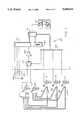
- FIG. 1is a diagrammatic illustration of apparatus for measuring a parameter of blood according to the invention
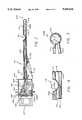
- FIG. 2is a pictorial diagram of a catheter embodying the apparatus of FIG. 1 as adapted for measuring a parameter of blood at a desired location in the body of a patient;
- FIG. 3is a closeup view of the mixing ball of the catheter of FIG. 2;
- FIG. 4is a closeup view of the receptacle of the catheter of FIG. 2;
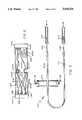
- FIG. 5is a pictorial diagram of an alternate embodiment of the apparatus of FIG. 1 as adapted for measuring a parameter of blood which is circulating outside the body of a patient;
- FIG. 6is a sectional view taken along the line 6--6 of FIG. 5;
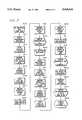
- FIG. 7is a flowchart depicting the steps of measuring a blood parameter according to the invention.
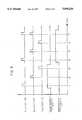
- FIG. 8is a timing diagram showing the time sequence of activation of the LEDs of FIG. 1.
- the inventionis embodied in a novel method and apparatus for measuring a blood parameter such as oxygen concentration level and hematocrit.
- a catheter having a receptacle or notch near its distal tipis adapted for insertion into a blood vessel.
- the tipis guidable to a desired location in the body of the patient.
- Light from a plurality of LEDsis guided through the notch and any blood therein.
- the attenuation of the light by the bloodis measured, and the desired blood parameter is calculated according to a plurality of predetermined molecular extinction coefficients and optical scattering coefficients.
- Apparatus embodying the inventionprovides a simple and accurate way to measure blood oxygen level and hematocrit in real time at any desired location in the body or (by means of an alternate embodiment of the invention) in blood circulating outside the body.
- the measurementsare not affected by any reflections from blood vessel walls or the like.
- the use of reference measurements and optical scattering coefficients in performing the calculationsleads to a high degree of accuracy.
- the apparatusis economical to manufacture due in part to inclusion of an optional characterization device and hence is disposable after a single use.
- Ithe measured intensity of the light through the substance
- I 0the intensity of the incident light
- ⁇the molecular extinction coefficient of the substance at the wavelength of the incident light
- dthe width of the substance through which the light passes.
- equation (1)For a substance consisting of a mixture of a light-absorbent liquid and a transparent liquid, equation (1) becomes
- cthe concentration of the absorbent liquid in the mixture.
- equation (1)For a substance consisting of a mixture of two light-absorbent liquids, equation (1) becomes
- ⁇ 1the molecular extinction coefficient of the first liquid
- c 1the concentration of the first liquid
- ⁇ 2the molecular extinction coefficient of the second liquid
- c 2the concentration of the second liquid.
- Equation (3)Equation (3)
- human bloodcomprises a mixture of oxyhemoglobin, reduced hemoglobin and other components. Both oxyhemoglobin and reduced hemoglobin absorb light, but each has a different molecular extinction coefficient.
- the other components of the bloodare generally transparent; however, these components have a scattering effect on light, and the magnitude of this effect is a function of the wavelength of the incident light and the oxygen saturation s of the blood.
- This scattering effectdoes not follow the Bouguer-Lambert law but can be expressed as an exponential function of an "optical scattering coefficient" which is a function of the oxygen saturation level s of the blood.
- Equations 5(a), 5(b) and 5(c)together constitute a set of equations which can be solved for s and h according to the method of the invention as described hereafter.
- the molecular coefficients of extinctionmay be determined experimentally by measuring the attenuation of light of a known wavelength which is transmitted through a blood sample of known width d, hematocrit h and oxygen saturation level s.
- Equation (5d)Equation 5d
- ⁇ sare known and the equation can be solved for ⁇ s for that wavelength. This procedure is repeated for each wavelength of interest until a set of ⁇ s , one for each wavelength of interest, have been computed.
- Equation (5)vanish and Equation (5) becomes
- Equation (5)vanishes and Equation (5) becomes:
- a transmittance spectrometerwhich can be used to carry out the above measurements comprises, for example, a light source which transmits light through a sample of blood having a precisely measured width, then through a diffraction grating onto a charge coupled device ("CCD") to obtain a signal which quantitatively indicates the absorption of light at various wavelengths.
- CCDcharge coupled device
- This signalis preferably digitized and provided to a computer which then computes the molecular extinction coefficients at any desired wavelength.
- a preferred embodiment of apparatus for measuring a parameter of a sample of bloodcomprises means defining a receptacle 11 for receiving a sample of blood; generating means such as a plurality of LEDs 13, 15 and 17 for generating bursts of optical energy, each burst characterized by one of a plurality of preselected wavelengths; guide means such as a plurality of optical fibers 19, 21 and 23 for guiding the energy into any blood in the receptacle 11; receiving means such as an optical fiber 25 for receiving the energy after it has passed through the blood in the receptacle 11; measuring means such as a measurement photocell 27 for measuring the intensity of each burst of received energy; and computing means generally designated 29, operative to compute the desired parameter of the blood according to the measured intensities of the received bursts of energy and a plurality of predetermined molecular extinction coefficients and optical scattering coefficients.
- the apparatuspreferably includes means such as a plurality of optical fibers 31, 33 and 35 and a reference photocell 37 to provide a reference indicative of the intensity of the optical energy as provided by the LEDs 13, 15 and 17.
- the referenceis used to correct for any instability or drift of the intensity of the light source.
- a characterization devicesuch as a set of characterization resistors 39, 41 and 43 is preferably included for providing a characteristic value of the apparatus to the computing means 29.
- This characteristic valuecomprises, for example, the width d of the receptacle 11 and the values of the wavelengths ⁇ 1 , ⁇ 2 and ⁇ 3 of the light provided by the LEDs 13, 15 and 17.
- the computing means 29utilizes the reference and the characteristic value in performing the computations involved in finding s and h.
- the computing means 29preferably includes a logarithmic amplifier 45 which receives output signals from the photocells 27 and 37 and logarithmically amplifies these signals. Equations (5a), (5b) and (5c) above are based on the log of the measured light intensity, and therefore much pre-processing is accomplished by utilizing a logarithmic amplifier. In addition, such an amplifier is well adapted for a wide dynamic range of input signals; the amplifier preferably has a range of about ⁇ 4 decades. The log gain of the amplifier is nominally set to one volt per decade. Any errors due to such factors as temperature drift and component aging are measured and corrected by the microprocessor by means of techniques which are known to those skilled in the art.
- An analog-to-digital (“A-to-D”) converter 47converts the amplified signals provided by the amplifier 45 into digital form.
- the A-to-D converter 47also provides a digital signal indicative of the values of the characterization resistors 39, 41 and 43.
- a memory 49stores digital representations of the molecular coefficients of extinction and the optical scattering coefficients of extinction.
- a central processing unit (“CPU”) 51such as a microprocessor chip receives the digital signals from the A-to-D converter 47 and from the memory 49 and performs the computations.
- the CPU 51controls the illumination of the LEDs 13, 15 and 17 through a control bus 53.
- the CPU 51also controls which of the photocells 27 and 37 is connected to the amplifier 45 by a switching means 55.
- the switching means 55is depicted as a mechanical switch, but a solid state switch or the like could be used instead.
- the values of the blood oxygen level s and hematocrit h as computed by the CPU 51are displayed on readouts 57 and 59.
- the values "75" and "42" shown in the figureare typical values which might be displayed as a result of the analysis of a typical sample of blood.
- the inventionis preferably embodied in a catheter generally designated 101 as shown in FIGS. 2 through 4.
- a cathetergenerally designated 101 as shown in FIGS. 2 through 4.
- FIGS. 2 through 4Several of the components of this embodiment are analogous to components shown in the more general embodiment of FIG. 1, and for convenience such components are identified by the same reference numerals as their FIG. 1 counterparts plus the suffix "A".
- the catheter 101includes an elongated catheter tube 103 adapted for insertion into a body of a living being, a distal extremity 105 of the tube 103 being guidable to a desired location in the body and having a receptacle 11A shaped as a semicircular notch in the tube 103 for receiving a sample of blood at said location.
- a proximal end 107 of the tube 103is connected to a housing 109 in which are located a plurality of LEDs 13A, 15A and 17A for generating bursts of optical energy.
- Each LEDproduces optical energy having a different preselected wavelength.
- the numerical values of these wavelengthsare not critical so long as these values are precisely known.
- the LEDsare pulsed at a low duty cycle and high current to maximize the signal-to-noise ratio.
- a plurality of optical fibers 19A, 21A and 23Aserve as guide means for guiding the energy from the LEDs 13A, 15A and 17A, respectively, through the catheter to a proximal side of the receptacle 11A and thence into any blood in the receptacle 11A.
- the fibersare terminated in a tight bundle within the blood sample and are cleared or polished to provide a good optical interface with the blood.
- a receiving means 25Awhich includes an optical fiber 111, a mixing ball 113, and another optical fiber 115, receives the optical energy after it has passed through the blood in the receptacle 11A.
- the fiber 111receives the energy at a distal side of the receptacle 11A and carries the energy from the receptacle 11A to the mixing ball 113.
- the fiber 115carries the energy from the mixing ball 113 back through the catheter to a measurement photocell 27A in the housing 109.
- the mixing ball 113is used because the fiber 111 cannot be bent into a U-shape so as to reverse directions within the narrow confines of the tube 103.
- the width of the notch 11A between its proximal and distal sidesis optimally about 0.025 inches, although a notch having a width between about 0.019 inches and 0.035 inches could be used.
- the diameters of the various optical fibersshould be sufficiently small in relation to the width of the notch 11A as to permit light entering the notch from any of the fibers to spread enough to reach the fiber 111 across the notch.
- the mixing ball 113is optimally about 3 times the diameter of the fibers 111 and 115.
- the photocell 27Areceives the energy from the fiber 115 and provides a signal indicative of the intensity of the energy.
- the housing 109includes a plurality of electrical contacts 117 for connection to the computing means 29 of FIG. 1 or the like.
- a plurality of optical fibers 31A, 33A and 35A and a reference photocell 37Aserve as means to provide a reference indicative of the intensity of the optical energy as provided by the LEDs 13A, 15A and 17A, respectively.
- the fibers 31A, 33A and 35Aare contained entirely within the housing 109 and serve to guide light from their associated LEDs to the photocell 37A.
- a plurality of resistors 39A, 41A and 43Aserve as a characterization device to provide a characteristic value of the catheter 101 to the computing means 29.
- this characteristic valuemight comprise the wavelengths ⁇ 1 , ⁇ 2 and ⁇ 3 associated with the LEDs 13A, 15A and 17A and the width d of the receptacle 11A. It will be apparent that a greater or lesser number of resistors than three might be used for this purpose.
- Means for flushing the receptacle 11Aare preferably provided.
- This meanscomprises, for example, a tubelet 119 defining a lumen 121 which extends through the catheter tube 103 from a fixture 123 adjacent the housing 109 to the receptacle 11A.
- a flushing fluidsuch as a saline solution can be injected through the lumen 121 into the receptacle 11A to flush the receptacle and remove any clotted blood or the like.
- FIGS. 5 and 6An alternate embodiment of the invention generally designated 201 is shown in FIGS. 5 and 6.
- FIGS. 5 and 6An alternate embodiment of the invention generally designated 201 is shown in FIGS. 5 and 6.
- Several of the components of this embodimentare analogous to components shown in the more general embodiment of FIG. 1, and for convenience such components are identified by the same reference numerals as their FIG. 1 counterparts plus the suffix "B".
- the apparatus 201includes means such as a portion of a clear-walled tube 203 defining a measurement chamber 205; circulation means such as the tube 203 for circulating blood through the chamber 205; optical energy generating means such as LEDs 13B, 15B and 17B; guide means such as optical fibers 19B, 21B and 23B for guiding the energy through any blood in the chamber 205; receiving means such as an optical fiber 25B for receiving the energy after it has passed through the blood in the chamber 205; and measuring means such as a photocell 27B for measuring the intensity of each burst of received energy.
- Computing means 29 or the likeis used to compute the oxygen saturation s and hematocrit h of the blood.
- a pair of hypodermic needles 207 and 209are preferably used for withdrawing blood from, and returning blood to, the patient.
- Optional constriction meanssuch as a constrictor 211 creates a pressure drop as the blood circulates through the tube 203. This permits the blood to be withdrawn from an artery 213 at a relatively high pressure and returned to a vein 215 at a relatively low pressure.
- the LEDs 13B, 15B and 17B and the photocell 27Bare contained within a housing 217. Electrical contacts (not shown) in opposing ends 219 and 221 of the housing 217 are provided for connection of the various components in the housing to the computing means.
- a plurality of optical fibers 31B, 33B and 35B and a photocell 37Bserve as means to provide a reference indicative of the intensity of the optical energy as provided by the LEDs 13B, 15B and 17B, respectively.
- the fibers 31B, 33B and 35Bpreferably extend from their respective LEDs to a first side of a gap 223 defined in the housing 217 and having a width similar to the width of the chamber 205.
- Another fiber 225carries light from an opposing side of the gap 223 to the photocell 37B.
- a plurality of resistors 39B, 41B and 43Bserve as a characterization device to provide information such as wavelengths and the width of the chamber 205.
- the characterization resistorsare selected during manufacture to indicate the wavelengths of the LEDs and the width of the notch or chamber, thereby making it unnecessary to precisely control these quantities. This helps make it possible to manufacture the catheter 101 or the apparatus 201 economically so as to facilitate one-time use and disposal. It will be apparent that if desired the wavelengths of the LEDs and the width of the notch or chamber may be precisely controlled during manufacture, the values of the wavelengths and width stored in the memory 49, and the characterization device omitted.
- a method according to the invention of measuring a parameter of a sample of bloodincludes the steps of passing sequential bursts of optical energy through a sample of blood from a patient, each burst characterized by one of a plurality of preselected wavelengths (block 301); measuring the intensity of each burst of energy after it has passed through the sample (block 303); and computing a parameter of the sample of blood according to the measured intensities of the received bursts of energy and a plurality of predetermined molecular extinction coefficients and optical scattering coefficients (block 305).
- the bursts of energyare passed through blood at a preselected location within the body of the patient. In another embodiment the bursts of energy are passed through blood as the blood circulates through a circulation path which extends in a loop out of and back into the body of the patient.
- the methodincludes the steps of providing a reference indicative of the intensity of the optical energy as provided by the generating means and utilizing said reference in computing the parameter of the blood (blocks 307, 309, 311 and 313). Additionally, the steps of passing sequential bursts of energy through a calibration fluid, each burst characterized by one of said wavelengths (block 315); measuring the intensity of each burst of energy after it has passed through the calibration fluid (block 317); and utilizing these measured calibration intensities in computing the parameter of the blood are also performed.
- the apparatusshould be calibrated immediately prior to use. This is accomplished, for example, by filling the receptacle 11 with a clear liquid such as saline solution (block 319).
- the amplifier 45is connected to the measurement photocell 27 (block 321).
- the three LEDsare pulsed in sequence (block 315) and the intensity of the amplifier output is measured while each LED is illuminated (block 317).
- the amplifieris connected to the reference photocell 37 (block 323), the LEDs are pulsed again (block 325), and the intensity of the amplifier output corresponding with the illumination of each LED is again measured (block 327).
- two of the LEDsare pulsed simultaneously (block 329) and the intensity of the amplifier output is measured (block 331).
- the results of these measurementsmay be expressed in tabular form as follows:
- Equation (6)can be solved by iteration according to the following Algorithm 1 (block 333):
- the receptacleis filled with a sample of the blood to be analyzed (block 335).
- the catheter embodiment 101If the catheter embodiment 101 is being used, it is inserted into the body and the notch 11A is guided to the desired location (e.g., a ventricle of the heart).
- the notch 11Ais preferably flushed with saline solution after reaching the desired position to remove any clotted blood or the like, or any blood carried along from some other part of the body, and then is allowed to fill with blood at the desired location.
- a flow of blood through the chamber 205is established, for example by inserting the needles 207 and 209 into the patient's artery 213 and vein 215, respectively.
- the amplifieris connected to the measurement photocell (block 337).
- the three LEDsare pulsed in sequence (block 301) and the intensity of the amplifier output is measured while each LED is illuminated (block 303).
- the amplifieris connected to the reference photocell (block 339), the LEDs are pulsed again (block 307), and the intensity of the amplifier output corresponding with the illumination of each LED is again measured (block 309).
- two of the LEDsare pulsed simultaneously (block 311) and the intensity of the amplifier output is measured (block 313).
- This sequence of operation of the LEDsis similar to the sequence depicted in FIG. 8 as utilized during the calibration sequence discussed above. The results of these measurements may be expressed in tabular form as follows:
- Equation (7)is calculated by solving the following Equation (7) for m: ##EQU3## Equation (7) can be solved by means of Algorithm 1 as set forth above (block 341). The system measurement gain m is recalculated at each measurement to compensate for any drift in the amplifier 45 or in any of the other components.
- log transmissions L 1 , L 2 and L 3corresponding with ⁇ 1 , ⁇ 2 and ⁇ 3 respectively, are computed (block 347) as follows: ##EQU4##
- Equations (5a), (5b) and (5c)constitute a set of three equations in which s and h are unknown and in which optical scattering coefficients ⁇ z1 (s), ⁇ z2 (s) and ⁇ z3 (s) are functions of s and therefore are also unknown because s has not yet been determined.
- Algorithm 2is allowed to loop as many times as necessary to achieve the desired degree of accuracy. 16 iterations will usually be sufficient.
- the inventionprovides a method and apparatus for accurately measuring parameters such as oxygen level and hematocrit of the blood of a patient in real time and at any desired location in the body of the patient or in blood circulating outside the patient.
- the apparatus of the inventionis particularly well adapted for use during critical surgical procedures.
- the accuracy of the inventionis enhanced by provision for reference and calibration measurements and by the use of optical scattering coefficients of the blood. Performance is not adversely affected by any reflections from blood vessel walls or the like. Any chance of infection by use of the invention is minimized because the apparatus is economical to manufacture and hence is disposable after a single use.
Landscapes
- Physics & Mathematics (AREA)
- Health & Medical Sciences (AREA)
- Life Sciences & Earth Sciences (AREA)
- Spectroscopy & Molecular Physics (AREA)
- General Health & Medical Sciences (AREA)
- Pathology (AREA)
- Molecular Biology (AREA)
- Veterinary Medicine (AREA)
- Heart & Thoracic Surgery (AREA)
- Medical Informatics (AREA)
- Engineering & Computer Science (AREA)
- Surgery (AREA)
- Animal Behavior & Ethology (AREA)
- Biophysics (AREA)
- Public Health (AREA)
- Biomedical Technology (AREA)
- Optics & Photonics (AREA)
- Chemical & Material Sciences (AREA)
- Analytical Chemistry (AREA)
- Biochemistry (AREA)
- General Physics & Mathematics (AREA)
- Immunology (AREA)
- Measurement Of The Respiration, Hearing Ability, Form, And Blood Characteristics Of Living Organisms (AREA)
Abstract
Description
I=I.sub.0 e.sup.-βd (1)
I=I.sub.0 e.sup.-βcd (2)
I=I.sub.0 e.sup.-β.sbsp.1.sup.c.sbsp.1.sup.d e.sup.-β.sbsp.2.sup.c.sbsp.2.sup.d (3)
I=I.sub.0 e.sup.-β.sbsp.1.sup.c.sbsp.1.sup.d e.sup.-β.sbsp.2.sup.(1-c.sbsp.1.sup.)d (3a)
I=I.sub.0 e.sup.-β.sbsp.s.sup.shd e.sup.-β.sbsp.r.sup.(1-s)hd e.sup.-β.sbsp.z(s) (4)
______________________________________ β.sub.s = molecular extinction coefficient of oxyhemoglobin; β.sub.r = molecular extinction coefficient of reduced hemoglobin; β.sub.z(s) = optical scattering coefficient as a function of s; h = concentration of hemoglobin in the blood (expressed in units of hematocrit); and s = ratio of oxyhemoglobin to total hemoglobin. ______________________________________
ln I.sub.0 -ln I=β.sub.s shd+β.sub.r (1-s)hd+β.sub.z(s)(5)
______________________________________ I.sub.01 = intensity of incident light at wavelength λ.sub.1 ; I.sub.02 = intensity of incident light at wavelength λ.sub.2 ; I.sub.03 = intensity of incident light at wavelength λ.sub.3 ; I.sub.1 = intensity of light at wavelength λ.sub.1 after passing through blood; I.sub.2 = intensity of light at wavelength λ.sub.2 after passing through blood; I.sub.3 = intensity of light at wavelength λ.sub.3 after passing through blood; β.sub.s1 = coefficient of oxyhemoglobin at wavelength λ.sub.1 ; β.sub.s2 = coefficient of oxyhemoglobin at wavelength λ.sub.2 ; β.sub.s3 = coefficient of oxyhemoglobin at wavelength λ.sub.3 ; β.sub.r1 = coefficient of reduced hemoglobin at wavelength λ.sub.1 ; β.sub.r2 = coefficient of reduced hemoglobin at wavelength λ.sub.2 ; β.sub.r3 = coefficient of reduced hemoglobin at wavelength λ.sub.3 ; β.sub.z1(s) = optical scattering coefficient at wavelength λ.sub.1 and blood oxygen level s; β.sub.z2(s) = optical scattering coefficient at wavelength λ.sub.2 and blood oxygen level s; and β.sub.z3(s) = optical scattering coefficient at wavelength λ.sub.3 and blood oxygen level s. ______________________________________
ln I.sub.0 -ln I=β.sub.s shd (5d)
ln I.sub.0 -ln I=β.sub.r (1-s)hd (5e)
ln I.sub.0 -ln I=β.sub.s shd+β.sub.z(s=1) (5f)
TABLE 1 ______________________________________ WAVE- LENGTH COLOR PATH of LIGHT INTENSITY ______________________________________ λ.sub.1 IR Receptacle (clear liquid) p λ.sub.2 Red Receptacle (clear liquid) q λ.sub.3 Orange Receptacle (clear liquid) r λ.sub.1 IR Reference t λ.sub.2 Red Reference u λ.sub.3 Orange Reference v λ.sub.1 + λ.sub.2 IR + Red Reference w ______________________________________ where: p = measured intensity of light at λ.sub.1 through clear liquid; q = measured intensity of light at λ.sub.2 through clear liquid; r = measured intensity of light at λ.sub.3 through clear liquid; t = measured intensity of light at λ.sub.1 through reference path; u = measured intensity of light at λ.sub.2 through reference path; v = measured intensity of light at λ.sub.3 through reference path; and w = measured intensity of light at λ.sub.1 and λ.sub.2 through reference path.
______________________________________ALGORITHM 1 ______________________________________ 10 IF u > t THEN exchange u and t in statements 20 and 25 15 LET k = 1 20 ##STR1## 25 ##STR2## 30 ##STR3## 35 GOTO statement 20 ______________________________________
TABLE 2 ______________________________________ WAVELENGTH COLOR PATH of LIGHT INTENSITY ______________________________________ λ.sub.1 IR Gap (blood) P λ.sub.2 Red Gap (blood) Q λ.sub.3 Orange Gap (blood) R λ.sub.1 IR Reference T λ.sub.2 Red Reference U λ.sub.3 Orange Reference V λ.sub.1 + λ.sub.2 IR + Red Reference W ______________________________________ where: P = measured intensity of light at λ.sub.1 through blood; Q = measured intensity of light at λ.sub.2 through blood; R = measured intensity of light at λ.sub.3 through blood; T = measured intensity of light at λ.sub.1 through reference path; U = measured intensity of light at λ.sub.2 through reference path; V = measured intensity of light at λ.sub.3 through reference path; and W = measured intensity of light at λ.sub.1 and λ.sub.2 through reference path.
______________________________________ β.sub.r1 molecular extinction coefficient for reduced hemoglobin at λ.sub.1 (e.g., infra-red); β.sub.s1 molecular extinction coefficient for oxyhemoglobin at λ.sub.1 ; β.sub.r2 molecular extinction coefficient for reduced hemoglobin at λ.sub.2 (e.g., red); β.sub.s2 molecular extinction coefficient for oxyhemoglobin at λ.sub.2 ; β.sub.r3 molecular extinction coefficient for reduced hemoglobin at λ.sub.3 (e.g., orange); β.sub.s3 molecular extinction coefficient for oxyhemoglobin at λ.sub.3 ; β.sub.z1(s=1) optical scattering coefficient at λ.sub.1 for s = 1; β.sub.z2(s=1) optical scattering coefficient at λ.sub.2 for s = 1; β.sub.z3(s=1) optical scattering coefficient at λ.sub.3 for s = 1; β.sub.z1(s=0) optical scattering coefficient at λ.sub.1 for s = 0; β.sub.z2(s=0) optical scattering coefficient at λ.sub.2 for s = 0; β.sub.z3(s=0) optical scattering coefficient at λ.sub.3 for s ______________________________________ = 0;
______________________________________ ALGORITHM 2 ______________________________________ SET INITIAL CONDITIONS: 10 LET β.sub.1 = mβ.sub.r1 ; 15 LET β.sub.2 = mβ.sub.s1 ; 20 LET β.sub.3 = mβ.sub.r2 ; 25 LET β.sub.4 = mβ.sub.s2 ; 30 LET β.sub.5 = mβ.sub.r3 ; 35 LET β.sub.6 = mβ.sub.s3 ; 40 LET β.sub.7 = mβ.sub.z1(s=1) ; 45 LET β.sub.8 = mβ.sub.z2(s=1) ; 50 LET β.sub.9 = mβ.sub.z3(s=1) ; 55 LET β.sub.10 = mβ.sub.z1(s=0) ; 60 LET β.sub.11 = mβ.sub.z2(s=0) ; 65 LET β.sub.12 = mβ.sub.z3(s=0) ; 70 LET s = 0.75; 75 LET x = 40d; PERFORM CALCULATIONS: 80 LET β.sub.13 = β.sub.10 - s(β.sub.10 - β.sub.7) 85 LET β.sub.14 = β.sub.11 - s(β.sub.11 - β.sub.8) 90 LET β.sub.15 = β.sub.12 - s(β.sub.12 - β.sub.9) 95 ##STR4## 100 LET s = ##STR5## 105 ##STR6## 110 GOTO Statement 80 115 ##STR7## ______________________________________
Claims (40)
Priority Applications (1)
| Application Number | Priority Date | Filing Date | Title |
|---|---|---|---|
| US07/318,779US5048524A (en) | 1989-03-03 | 1989-03-03 | Blood parameter measurement |
Applications Claiming Priority (1)
| Application Number | Priority Date | Filing Date | Title |
|---|---|---|---|
| US07/318,779US5048524A (en) | 1989-03-03 | 1989-03-03 | Blood parameter measurement |
Publications (1)
| Publication Number | Publication Date |
|---|---|
| US5048524Atrue US5048524A (en) | 1991-09-17 |
Family
ID=23239549
Family Applications (1)
| Application Number | Title | Priority Date | Filing Date |
|---|---|---|---|
| US07/318,779Expired - LifetimeUS5048524A (en) | 1989-03-03 | 1989-03-03 | Blood parameter measurement |
Country Status (1)
| Country | Link |
|---|---|
| US (1) | US5048524A (en) |
Cited By (64)
| Publication number | Priority date | Publication date | Assignee | Title |
|---|---|---|---|---|
| EP0484547A4 (en)* | 1990-05-18 | 1992-07-08 | Mitsubishi Rayon Co., Ltd. | Catheter for measurement and method of measuring oxygen saturation degree or flow speed of blood |
| WO1993006775A1 (en)* | 1991-10-03 | 1993-04-15 | Medtronic, Inc. | Method and apparatus for determining oxygen saturation |
| US5280786A (en)* | 1992-01-21 | 1994-01-25 | Fiberoptic Sensor Technologies, Inc. | Fiberoptic blood pressure and oxygenation sensor |
| US5315995A (en)* | 1992-03-19 | 1994-05-31 | Henry Ford Hospital | Method and apparatus for continuous measurement of central venous oxygen saturation during human cardiopulmonary resuscitation and clinical shock |
| US5331958A (en)* | 1992-03-31 | 1994-07-26 | University Of Manitoba | Spectrophotometric blood analysis |
| US5339375A (en)* | 1991-10-03 | 1994-08-16 | Medtronic, Inc. | Connector for coupling a multiple channel cable to a cuvette |
| US5349954A (en)* | 1993-07-23 | 1994-09-27 | General Electric Company | Tumor tissue characterization apparatus and method |
| US5361759A (en)* | 1990-07-04 | 1994-11-08 | Charing Cross & Westminster Medical School | Meconium monitoring system |
| WO1995008183A1 (en)* | 1993-09-14 | 1995-03-23 | Bard Fiberoptic Technologies, Inc. | Fiberoptic pressure sensor having drift correcting means for in situ calibration |
| US5422478A (en)* | 1992-04-17 | 1995-06-06 | Fiberoptic Sensor Technologies, Inc. | Fiberoptic pressure sensor having drift correction means for insitu calibration |
| US5601080A (en)* | 1994-12-28 | 1997-02-11 | Coretech Medical Technologies Corporation | Spectrophotometric blood analysis |
| WO1997022293A1 (en)* | 1995-12-20 | 1997-06-26 | Nellcor Puritan Bennett Incorporated | Method and apparatus for facilitating compatibility between pulse oximeters and sensor probes |
| US5706808A (en)* | 1995-01-31 | 1998-01-13 | Kleinerman; Marcos Y. | Fiber optic system for measuring cardiac output |
| US5800349A (en)* | 1996-10-15 | 1998-09-01 | Nonin Medical, Inc. | Offset pulse oximeter sensor |
| US5803908A (en)* | 1990-10-06 | 1998-09-08 | In-Line Diagnostics Corporation | System for noninvasive hematocrit monitoring |
| US5934277A (en)* | 1991-09-03 | 1999-08-10 | Datex-Ohmeda, Inc. | System for pulse oximetry SpO2 determination |
| US6041246A (en)* | 1997-10-14 | 2000-03-21 | Transonic Systems, Inc. | Single light sensor optical probe for monitoring blood parameters and cardiovascular measurements |
| US6064474A (en)* | 1998-02-06 | 2000-05-16 | Optical Sensors, Inc. | Optical measurement of blood hematocrit incorporating a self-calibration algorithm |
| WO2000028322A1 (en)* | 1998-11-06 | 2000-05-18 | Medtronic Avecor Cardiovascular, Inc. | Apparatus and method to determine blood parameters |
| US6115621A (en)* | 1997-07-30 | 2000-09-05 | Nellcor Puritan Bennett Incorporated | Oximetry sensor with offset emitters and detector |
| WO2001003572A1 (en)* | 1999-07-08 | 2001-01-18 | Steffen Leonhardt | Device for measuring the blood-sugar level in humans |
| US6231514B1 (en) | 1996-06-26 | 2001-05-15 | Tobo, Llc | Device for use in temporary insertion of a sensor within a patient's body |
| US6284142B1 (en) | 1999-09-03 | 2001-09-04 | Baxter International Inc. | Sensing systems and methods for differentiating between different cellular blood species during extracorporeal blood separation or processing |
| US6294094B1 (en)* | 1999-09-03 | 2001-09-25 | Baxter International Inc. | Systems and methods for sensing red blood cell hematocrit |
| US6343223B1 (en)* | 1997-07-30 | 2002-01-29 | Mallinckrodt Inc. | Oximeter sensor with offset emitters and detector and heating device |
| US6348156B1 (en) | 1999-09-03 | 2002-02-19 | Baxter International Inc. | Blood processing systems and methods with sensors to detect contamination due to presence of cellular components or dilution due to presence of plasma |
| WO2002089661A1 (en) | 2001-05-09 | 2002-11-14 | Olympus Optical Co., Ltd. | Optical imaging device and optical imaging detecting method |
| US20030130570A1 (en)* | 1997-10-14 | 2003-07-10 | Transonic Systems, Inc. | Sensor calibration and blood volume determination |
| US20030222029A1 (en)* | 1999-09-03 | 2003-12-04 | Baxter International Inc. | Red blood cell processing systems and methods which control red blood cell hematocrit |
| US20040015138A1 (en)* | 2002-07-16 | 2004-01-22 | Clifford Currier | Multiple lumen catheter having a soft tip |
| US20040015061A1 (en)* | 2002-07-16 | 2004-01-22 | Clifford Currier | Central venous catheter having a soft tip and fiber optics |
| US6687519B2 (en) | 1990-10-06 | 2004-02-03 | Hema Metrics, Inc. | System and method for measuring blood urea nitrogen, blood osmolarity, plasma free hemoglobin and tissue water content |
| EP0693900B1 (en)* | 1993-04-12 | 2004-03-17 | Hema Metrics, Inc. | System and method for noninvasive hematocrit monitoring |
| US6714803B1 (en) | 1991-09-03 | 2004-03-30 | Datex-Ohmeda, Inc. | Pulse oximetry SpO2 determination |
| US6716176B1 (en) | 2002-09-30 | 2004-04-06 | Tobo, Llc | Device for use in temporary insertion of a sensor within a patient's body |
| US6725072B2 (en) | 1990-10-06 | 2004-04-20 | Hema Metrics, Inc. | Sensor for transcutaneous measurement of vascular access blood flow |
| US20040082841A1 (en)* | 2002-10-24 | 2004-04-29 | Furnary Anthony P. | Method and apparatus for monitoring blood condition and cardiopulmonary function |
| US20040079707A1 (en)* | 2001-08-16 | 2004-04-29 | Baxter International Inc. | Red blood cell processing systems and methods with deliberate under spill of red blood cells |
| US6746407B2 (en) | 2000-12-29 | 2004-06-08 | Hema Metrics, Inc. | Method of measuring transcutaneous access blood flow |
| US6804543B2 (en) | 1998-02-05 | 2004-10-12 | Hema Metrics, Inc. | Sensor for transcutaneous measurement of vascular access blood flow |
| US20050113719A1 (en)* | 2003-09-26 | 2005-05-26 | Vahid Saadat | Left atrial access apparatus and methods |
| US20060009740A1 (en)* | 2001-08-28 | 2006-01-12 | Michael Higgins | Multiple lumen catheter having a soft tip |
| US6987994B1 (en) | 1991-09-03 | 2006-01-17 | Datex-Ohmeda, Inc. | Pulse oximetry SpO2 determination |
| US20070197888A1 (en)* | 2006-02-21 | 2007-08-23 | Physical Logic Ag | Blood Oxygenation Sensor |
| US20070201031A1 (en)* | 2006-02-28 | 2007-08-30 | Physical Logic Ag | Optical Blood Pressure and Velocity Sensor |
| US20070203414A1 (en)* | 2006-02-21 | 2007-08-30 | Physical Logic Ag | Optical Sensing Catheter System |
| US20080045822A1 (en)* | 2003-12-22 | 2008-02-21 | Phillips Justin P | Optical Fibre Catheter Pulse Oximeter |
| US7511031B2 (en) | 1999-01-15 | 2009-03-31 | Lights Sciences Oncology, Inc. | Noninvasive vascular therapy |
| US20090156916A1 (en)* | 2007-12-18 | 2009-06-18 | Huisun Wang | Catheter systems with blood measurement device and methods |
| US20120041290A1 (en)* | 2009-01-23 | 2012-02-16 | Beth Israel Deaconess Medical Center, Inc | Endoscopic polarized multispectral light scattering scanning method |
| US8175668B1 (en) | 2007-10-23 | 2012-05-08 | Pacesetter, Inc. | Implantable multi-wavelength venous oxygen saturation and hematocrit sensor and method |
| US8385999B1 (en)* | 2008-02-08 | 2013-02-26 | Pacesetter, Inc. | Processing venous oxygen saturation and hematocrit information in an implantable sensor |
| US8926520B2 (en) | 2012-07-20 | 2015-01-06 | Endophys Holdings, Llc | Transducer interface system and method |
| US20160123998A1 (en)* | 2013-05-10 | 2016-05-05 | University Of Utah Research Foundation | Devices, Systems, and Methods for Measuring Blood Loss |
| US20160377535A1 (en)* | 2015-06-23 | 2016-12-29 | Empire Technology Development Llc | Real-time monitoring of material composition for quality control |
| US9833557B2 (en) | 2014-12-19 | 2017-12-05 | Fenwal, Inc. | Systems and methods for determining free plasma hemoglobin |
| US10690684B2 (en) | 2013-05-10 | 2020-06-23 | Majelco Medical, Inc. | Apparatus and system for measuring volume of blood loss |
| US10743776B2 (en) | 2016-04-11 | 2020-08-18 | Majelco Medical, Inc. | Apparatus and system for measuring volume of blood loss |
| US10830687B2 (en)* | 2016-06-22 | 2020-11-10 | Uponor Oyj | Measuring arrangement for in-line holography microscopy |
| US10994076B1 (en) | 2019-07-25 | 2021-05-04 | Circulatech, Llc | Methods and devices to prevent obstructions in medical tubes |
| EP3695204A4 (en)* | 2017-10-09 | 2021-07-07 | TSI Incorporated | Particle counter component calibration |
| CN113749653A (en)* | 2020-06-01 | 2021-12-07 | 江苏赛腾医疗科技有限公司 | Blood oxygen monitoring equipment and blood oxygen monitoring method |
| US12029533B2 (en) | 2013-07-18 | 2024-07-09 | Endophys Holdings, Llc | Blood pressure analysis system and method |
| US12310704B2 (en) | 2019-09-13 | 2025-05-27 | Endophys Holdings, Llc | Blood pressure monitoring with zero function system and method |
Citations (28)
| Publication number | Priority date | Publication date | Assignee | Title |
|---|---|---|---|---|
| US3068742A (en)* | 1959-06-15 | 1962-12-18 | American Optical Corp | Means for performing colorimetry |
| US3123066A (en)* | 1964-03-03 | brumley | ||
| US3638640A (en)* | 1967-11-01 | 1972-02-01 | Robert F Shaw | Oximeter and method for in vivo determination of oxygen saturation in blood using three or more different wavelengths |
| US3799672A (en)* | 1972-09-15 | 1974-03-26 | Us Health Education & Welfare | Oximeter for monitoring oxygen saturation in blood |
| US3802776A (en)* | 1971-03-23 | 1974-04-09 | Siemens Ag | Photometer for determining the oxygen content of blood |
| US3807390A (en)* | 1972-12-04 | 1974-04-30 | American Optical Corp | Fiber optic catheter |
| US3814081A (en)* | 1971-04-02 | 1974-06-04 | Olympus Optical Co | Optical measuring catheter |
| US4050450A (en)* | 1976-03-05 | 1977-09-27 | American Optical Corporation | Reflection standard for fiber optic probe |
| US4066361A (en)* | 1974-05-01 | 1978-01-03 | Baxter Travenol Laboratories, Inc. | Method and apparatus for deriving oxygen association curves |
| US4086915A (en)* | 1975-04-30 | 1978-05-02 | Harvey I. Kofsky | Ear oximetry process and apparatus |
| US4114604A (en)* | 1976-10-18 | 1978-09-19 | Shaw Robert F | Catheter oximeter apparatus and method |
| US4167331A (en)* | 1976-12-20 | 1979-09-11 | Hewlett-Packard Company | Multi-wavelength incremental absorbence oximeter |
| US4266554A (en)* | 1978-06-22 | 1981-05-12 | Minolta Camera Kabushiki Kaisha | Digital oximeter |
| US4273442A (en)* | 1978-04-07 | 1981-06-16 | Max Planck Gesellschaft Zur Forderung Der Wissenschaften E.V. | Spectral photometer for medical applications |
| US4303336A (en)* | 1978-08-28 | 1981-12-01 | Baxter Travenol Laboratories, Inc. | Method and apparatus for making a rapid measurement of the hematocrit of blood |
| US4304488A (en)* | 1977-10-26 | 1981-12-08 | Toshio Asakura | Blood oxygen analyzer |
| US4403038A (en)* | 1979-04-11 | 1983-09-06 | Toshio Asakura | Buffered serum substitute for blood oxygen analyzer |
| US4407290A (en)* | 1981-04-01 | 1983-10-04 | Biox Technology, Inc. | Blood constituent measuring device and method |
| US4416285A (en)* | 1978-11-29 | 1983-11-22 | Oximetrix, Inc. | Improved optical catheter and method for making same |
| US4449535A (en)* | 1981-03-25 | 1984-05-22 | Compagnie Industrielle Des Lasers Cilas Alcatel | Apparatus for measuring in situ the state of oxidation-reduction of a living organ |
| US4523279A (en)* | 1980-11-24 | 1985-06-11 | Oximetrix, Inc. | Apparatus for determining oxygen saturation levels in blood |
| US4621643A (en)* | 1982-09-02 | 1986-11-11 | Nellcor Incorporated | Calibrated optical oximeter probe |
| US4622974A (en)* | 1984-03-07 | 1986-11-18 | University Of Tennessee Research Corporation | Apparatus and method for in-vivo measurements of chemical concentrations |
| US4623248A (en)* | 1983-02-16 | 1986-11-18 | Abbott Laboratories | Apparatus and method for determining oxygen saturation levels with increased accuracy |
| US4651741A (en)* | 1985-05-30 | 1987-03-24 | Baxter Travenol Laboratories, Inc. | Method and apparatus for determining oxygen saturation in vivo |
| WO1988004155A1 (en)* | 1986-12-12 | 1988-06-16 | Mark Yelderman | Oximeter apparatus and method for measuring arterial blood constituents |
| US4776340A (en)* | 1987-03-23 | 1988-10-11 | Spectramed, Inc. | Hematocrit measurement by differential optical geometry in a short-term diagnostic cardiovascular catheter, and application to correction of blood-oxygen measurement |
| US4803992A (en)* | 1980-10-28 | 1989-02-14 | Lemelson Jerome H | Electro-optical instruments and methods for producing same |
- 1989
- 1989-03-03USUS07/318,779patent/US5048524A/ennot_activeExpired - Lifetime
Patent Citations (29)
| Publication number | Priority date | Publication date | Assignee | Title |
|---|---|---|---|---|
| US3123066A (en)* | 1964-03-03 | brumley | ||
| US3068742A (en)* | 1959-06-15 | 1962-12-18 | American Optical Corp | Means for performing colorimetry |
| US3638640A (en)* | 1967-11-01 | 1972-02-01 | Robert F Shaw | Oximeter and method for in vivo determination of oxygen saturation in blood using three or more different wavelengths |
| US3802776A (en)* | 1971-03-23 | 1974-04-09 | Siemens Ag | Photometer for determining the oxygen content of blood |
| US3814081A (en)* | 1971-04-02 | 1974-06-04 | Olympus Optical Co | Optical measuring catheter |
| US3799672A (en)* | 1972-09-15 | 1974-03-26 | Us Health Education & Welfare | Oximeter for monitoring oxygen saturation in blood |
| US3807390A (en)* | 1972-12-04 | 1974-04-30 | American Optical Corp | Fiber optic catheter |
| US4066361A (en)* | 1974-05-01 | 1978-01-03 | Baxter Travenol Laboratories, Inc. | Method and apparatus for deriving oxygen association curves |
| US4086915A (en)* | 1975-04-30 | 1978-05-02 | Harvey I. Kofsky | Ear oximetry process and apparatus |
| US4050450A (en)* | 1976-03-05 | 1977-09-27 | American Optical Corporation | Reflection standard for fiber optic probe |
| US4114604A (en)* | 1976-10-18 | 1978-09-19 | Shaw Robert F | Catheter oximeter apparatus and method |
| US4167331A (en)* | 1976-12-20 | 1979-09-11 | Hewlett-Packard Company | Multi-wavelength incremental absorbence oximeter |
| US4304488A (en)* | 1977-10-26 | 1981-12-08 | Toshio Asakura | Blood oxygen analyzer |
| US4273442A (en)* | 1978-04-07 | 1981-06-16 | Max Planck Gesellschaft Zur Forderung Der Wissenschaften E.V. | Spectral photometer for medical applications |
| US4266554A (en)* | 1978-06-22 | 1981-05-12 | Minolta Camera Kabushiki Kaisha | Digital oximeter |
| US4303336A (en)* | 1978-08-28 | 1981-12-01 | Baxter Travenol Laboratories, Inc. | Method and apparatus for making a rapid measurement of the hematocrit of blood |
| US4416285A (en)* | 1978-11-29 | 1983-11-22 | Oximetrix, Inc. | Improved optical catheter and method for making same |
| US4403038A (en)* | 1979-04-11 | 1983-09-06 | Toshio Asakura | Buffered serum substitute for blood oxygen analyzer |
| US4803992A (en)* | 1980-10-28 | 1989-02-14 | Lemelson Jerome H | Electro-optical instruments and methods for producing same |
| US4523279A (en)* | 1980-11-24 | 1985-06-11 | Oximetrix, Inc. | Apparatus for determining oxygen saturation levels in blood |
| US4449535A (en)* | 1981-03-25 | 1984-05-22 | Compagnie Industrielle Des Lasers Cilas Alcatel | Apparatus for measuring in situ the state of oxidation-reduction of a living organ |
| US4407290A (en)* | 1981-04-01 | 1983-10-04 | Biox Technology, Inc. | Blood constituent measuring device and method |
| US4407290B1 (en)* | 1981-04-01 | 1986-10-14 | ||
| US4621643A (en)* | 1982-09-02 | 1986-11-11 | Nellcor Incorporated | Calibrated optical oximeter probe |
| US4623248A (en)* | 1983-02-16 | 1986-11-18 | Abbott Laboratories | Apparatus and method for determining oxygen saturation levels with increased accuracy |
| US4622974A (en)* | 1984-03-07 | 1986-11-18 | University Of Tennessee Research Corporation | Apparatus and method for in-vivo measurements of chemical concentrations |
| US4651741A (en)* | 1985-05-30 | 1987-03-24 | Baxter Travenol Laboratories, Inc. | Method and apparatus for determining oxygen saturation in vivo |
| WO1988004155A1 (en)* | 1986-12-12 | 1988-06-16 | Mark Yelderman | Oximeter apparatus and method for measuring arterial blood constituents |
| US4776340A (en)* | 1987-03-23 | 1988-10-11 | Spectramed, Inc. | Hematocrit measurement by differential optical geometry in a short-term diagnostic cardiovascular catheter, and application to correction of blood-oxygen measurement |
Non-Patent Citations (4)
| Title |
|---|
| "An Integrated Circuit-Based Optical Sensor for In Vivo Measurement of Blood Oxygenation", by J. M. Schmitt, J. D. Miendl, F. G. Mihm, IEEE Transactions on Biomedical Engineering, vol. BME-33, No. 2, Feb. 1986, pp. 98-107. |
| An Integrated Circuit Based Optical Sensor for In Vivo Measurement of Blood Oxygenation , by J. M. Schmitt, J. D. Miendl, F. G. Mihm, IEEE Transactions on Biomedical Engineering, vol. BME 33, No. 2, Feb. 1986, pp. 98 107.* |
| Merrick et al., Hewlett Packard Journal, vol. 28, No. 2, Oct. 1976, pp. 2 9.* |
| Merrick et al., Hewlett-Packard Journal, vol. 28, No. 2, Oct. 1976, pp. 2-9. |
Cited By (106)
| Publication number | Priority date | Publication date | Assignee | Title |
|---|---|---|---|---|
| EP0484547A4 (en)* | 1990-05-18 | 1992-07-08 | Mitsubishi Rayon Co., Ltd. | Catheter for measurement and method of measuring oxygen saturation degree or flow speed of blood |
| US5361759A (en)* | 1990-07-04 | 1994-11-08 | Charing Cross & Westminster Medical School | Meconium monitoring system |
| US6687519B2 (en) | 1990-10-06 | 2004-02-03 | Hema Metrics, Inc. | System and method for measuring blood urea nitrogen, blood osmolarity, plasma free hemoglobin and tissue water content |
| US6725072B2 (en) | 1990-10-06 | 2004-04-20 | Hema Metrics, Inc. | Sensor for transcutaneous measurement of vascular access blood flow |
| US5803908A (en)* | 1990-10-06 | 1998-09-08 | In-Line Diagnostics Corporation | System for noninvasive hematocrit monitoring |
| US20040116817A1 (en)* | 1990-10-06 | 2004-06-17 | Steuer Robert R. | Sensor for transcutaneous measurement of vascular access blood flow |
| US6714803B1 (en) | 1991-09-03 | 2004-03-30 | Datex-Ohmeda, Inc. | Pulse oximetry SpO2 determination |
| US5934277A (en)* | 1991-09-03 | 1999-08-10 | Datex-Ohmeda, Inc. | System for pulse oximetry SpO2 determination |
| US6385471B1 (en) | 1991-09-03 | 2002-05-07 | Datex-Ohmeda, Inc. | System for pulse oximetry SpO2 determination |
| US6987994B1 (en) | 1991-09-03 | 2006-01-17 | Datex-Ohmeda, Inc. | Pulse oximetry SpO2 determination |
| US5339375A (en)* | 1991-10-03 | 1994-08-16 | Medtronic, Inc. | Connector for coupling a multiple channel cable to a cuvette |
| US5341804A (en)* | 1991-10-03 | 1994-08-30 | Medtronic, Inc. | System for disabling oximeter in presence of ambient light |
| WO1993006775A1 (en)* | 1991-10-03 | 1993-04-15 | Medtronic, Inc. | Method and apparatus for determining oxygen saturation |
| US5280786A (en)* | 1992-01-21 | 1994-01-25 | Fiberoptic Sensor Technologies, Inc. | Fiberoptic blood pressure and oxygenation sensor |
| AU661116B2 (en)* | 1992-03-19 | 1995-07-13 | Henry Ford Hospital | Method and apparatus for measuring central venous oxygen saturation during human cardiopulmonary resuscitation and clinical shock |
| US5315995A (en)* | 1992-03-19 | 1994-05-31 | Henry Ford Hospital | Method and apparatus for continuous measurement of central venous oxygen saturation during human cardiopulmonary resuscitation and clinical shock |
| US5331958A (en)* | 1992-03-31 | 1994-07-26 | University Of Manitoba | Spectrophotometric blood analysis |
| US5422478A (en)* | 1992-04-17 | 1995-06-06 | Fiberoptic Sensor Technologies, Inc. | Fiberoptic pressure sensor having drift correction means for insitu calibration |
| EP0693900B1 (en)* | 1993-04-12 | 2004-03-17 | Hema Metrics, Inc. | System and method for noninvasive hematocrit monitoring |
| US5349954A (en)* | 1993-07-23 | 1994-09-27 | General Electric Company | Tumor tissue characterization apparatus and method |
| WO1995008183A1 (en)* | 1993-09-14 | 1995-03-23 | Bard Fiberoptic Technologies, Inc. | Fiberoptic pressure sensor having drift correcting means for in situ calibration |
| US5601080A (en)* | 1994-12-28 | 1997-02-11 | Coretech Medical Technologies Corporation | Spectrophotometric blood analysis |
| US5706808A (en)* | 1995-01-31 | 1998-01-13 | Kleinerman; Marcos Y. | Fiber optic system for measuring cardiac output |
| US5807247A (en)* | 1995-12-20 | 1998-09-15 | Nellcor Puritan Bennett Incorporated | Method and apparatus for facilitating compatibility between pulse oximeters and sensor probes |
| WO1997022293A1 (en)* | 1995-12-20 | 1997-06-26 | Nellcor Puritan Bennett Incorporated | Method and apparatus for facilitating compatibility between pulse oximeters and sensor probes |
| US6231514B1 (en) | 1996-06-26 | 2001-05-15 | Tobo, Llc | Device for use in temporary insertion of a sensor within a patient's body |
| US5800349A (en)* | 1996-10-15 | 1998-09-01 | Nonin Medical, Inc. | Offset pulse oximeter sensor |
| US6115621A (en)* | 1997-07-30 | 2000-09-05 | Nellcor Puritan Bennett Incorporated | Oximetry sensor with offset emitters and detector |
| US6343223B1 (en)* | 1997-07-30 | 2002-01-29 | Mallinckrodt Inc. | Oximeter sensor with offset emitters and detector and heating device |
| US20030130570A1 (en)* | 1997-10-14 | 2003-07-10 | Transonic Systems, Inc. | Sensor calibration and blood volume determination |
| US6493567B1 (en) | 1997-10-14 | 2002-12-10 | Transonic Systems, Inc. | Single light sensor optical probe for monitoring blood parameters and cardiovascular measurements |
| US6718190B2 (en) | 1997-10-14 | 2004-04-06 | Transonic Systems, Inc. | Sensor calibration and blood volume determination |
| US7734322B2 (en) | 1997-10-14 | 2010-06-08 | Transonic Systems, Inc. | Blood volume determination and sensor calibration |
| US6041246A (en)* | 1997-10-14 | 2000-03-21 | Transonic Systems, Inc. | Single light sensor optical probe for monitoring blood parameters and cardiovascular measurements |
| US6804543B2 (en) | 1998-02-05 | 2004-10-12 | Hema Metrics, Inc. | Sensor for transcutaneous measurement of vascular access blood flow |
| US6064474A (en)* | 1998-02-06 | 2000-05-16 | Optical Sensors, Inc. | Optical measurement of blood hematocrit incorporating a self-calibration algorithm |
| US6144444A (en)* | 1998-11-06 | 2000-11-07 | Medtronic Avecor Cardiovascular, Inc. | Apparatus and method to determine blood parameters |
| WO2000028322A1 (en)* | 1998-11-06 | 2000-05-18 | Medtronic Avecor Cardiovascular, Inc. | Apparatus and method to determine blood parameters |
| US7767208B2 (en) | 1999-01-15 | 2010-08-03 | Light Sciences Oncology, Inc. | Noninvasive vascular therapy |
| US7511031B2 (en) | 1999-01-15 | 2009-03-31 | Lights Sciences Oncology, Inc. | Noninvasive vascular therapy |
| US6885881B2 (en) | 1999-07-08 | 2005-04-26 | Steffen Leonhardt | Device for measuring human blood sugar levels |
| WO2001003572A1 (en)* | 1999-07-08 | 2001-01-18 | Steffen Leonhardt | Device for measuring the blood-sugar level in humans |
| US6419822B2 (en) | 1999-09-03 | 2002-07-16 | Baxter International Inc. | Systems and methods for sensing red blood cell hematocrit |
| US7463343B2 (en) | 1999-09-03 | 2008-12-09 | Fenwal, Inc. | Sensing systems and methods for differentiating between different cellular blood species during extracorporeal blood separation or processing |
| US20030222029A1 (en)* | 1999-09-03 | 2003-12-04 | Baxter International Inc. | Red blood cell processing systems and methods which control red blood cell hematocrit |
| US7420660B2 (en) | 1999-09-03 | 2008-09-02 | Fenwal, Inc. | Systems and methods for optically sensing characteristics of a blood flow |
| US20080094610A1 (en)* | 1999-09-03 | 2008-04-24 | Muller Matthew R | Sensing systems and methods for differentiating between different cellular blood species during extracorporeal blood separation or processing |
| US20080088820A1 (en)* | 1999-09-03 | 2008-04-17 | Muller Matthew R | Sensing systems and methods for differentiating between different cellular blood species during extracorporeal blood separation or processing |
| US6537445B2 (en) | 1999-09-03 | 2003-03-25 | Baxter International Inc. | Sensing systems and methods for differentiating between different cellular blood species during extracorporeal blood separation or processing |
| US7282154B2 (en) | 1999-09-03 | 2007-10-16 | Fenwal, Inc. | Red blood cell processing systems and methods which control red blood cell hematocrit |
| US20060060540A1 (en)* | 1999-09-03 | 2006-03-23 | Matthew Muller | Red blood cell processing systems and methods which control red blood cell hematocrit |
| US6348156B1 (en) | 1999-09-03 | 2002-02-19 | Baxter International Inc. | Blood processing systems and methods with sensors to detect contamination due to presence of cellular components or dilution due to presence of plasma |
| US6294094B1 (en)* | 1999-09-03 | 2001-09-25 | Baxter International Inc. | Systems and methods for sensing red blood cell hematocrit |
| US7011761B2 (en)* | 1999-09-03 | 2006-03-14 | Baxter International Inc. | Red blood cell processing systems and methods which control red blood cell hematocrit |
| US6284142B1 (en) | 1999-09-03 | 2001-09-04 | Baxter International Inc. | Sensing systems and methods for differentiating between different cellular blood species during extracorporeal blood separation or processing |
| US20040220484A1 (en)* | 2000-12-29 | 2004-11-04 | Steuer Robert R | Method of measuring transcutaneous access blood flow |
| US6987993B2 (en) | 2000-12-29 | 2006-01-17 | Hema Metrics, Inc. | Sensor for transcutaneous measurement of vascular access blood flow |
| US6746407B2 (en) | 2000-12-29 | 2004-06-08 | Hema Metrics, Inc. | Method of measuring transcutaneous access blood flow |
| US20040116790A1 (en)* | 2000-12-29 | 2004-06-17 | Steuer Robert R. | Sensor for transcutaneous measurement of vascular access blood flow |
| US20040122330A1 (en)* | 2000-12-29 | 2004-06-24 | Steuer Robert R. | Sensor for transcutaneous measurement of vascular access blood flow |
| US6937882B2 (en) | 2000-12-29 | 2005-08-30 | Hema Metrics, Inc. | Sensor for transcutaneous measurement of vascular access blood flow |
| EP1360927A4 (en)* | 2001-05-09 | 2008-05-14 | Olympus Optical Co | Optical imaging device and optical imaging detecting method |
| WO2002089661A1 (en) | 2001-05-09 | 2002-11-14 | Olympus Optical Co., Ltd. | Optical imaging device and optical imaging detecting method |
| US20040079707A1 (en)* | 2001-08-16 | 2004-04-29 | Baxter International Inc. | Red blood cell processing systems and methods with deliberate under spill of red blood cells |
| US6878105B2 (en) | 2001-08-16 | 2005-04-12 | Baxter International Inc. | Red blood cell processing systems and methods with deliberate under spill of red blood cells |
| US20060009740A1 (en)* | 2001-08-28 | 2006-01-12 | Michael Higgins | Multiple lumen catheter having a soft tip |
| US20040015061A1 (en)* | 2002-07-16 | 2004-01-22 | Clifford Currier | Central venous catheter having a soft tip and fiber optics |
| US7029467B2 (en) | 2002-07-16 | 2006-04-18 | Edwards Lifesciences Corporation | Multiple lumen catheter having a soft tip |
| US20040015138A1 (en)* | 2002-07-16 | 2004-01-22 | Clifford Currier | Multiple lumen catheter having a soft tip |
| US6999809B2 (en) | 2002-07-16 | 2006-02-14 | Edwards Lifesciences Corporation | Central venous catheter having a soft tip and fiber optics |
| US6716176B1 (en) | 2002-09-30 | 2004-04-06 | Tobo, Llc | Device for use in temporary insertion of a sensor within a patient's body |
| US7010337B2 (en) | 2002-10-24 | 2006-03-07 | Furnary Anthony P | Method and apparatus for monitoring blood condition and cardiopulmonary function |
| US8078249B2 (en) | 2002-10-24 | 2011-12-13 | Sensicor, Llc | Method and apparatus for monitoring blood condition and cardiopulmonary function |
| US20040082841A1 (en)* | 2002-10-24 | 2004-04-29 | Furnary Anthony P. | Method and apparatus for monitoring blood condition and cardiopulmonary function |
| US20060149145A1 (en)* | 2002-10-24 | 2006-07-06 | Furnary Anthony P | Method and apparatus for monitoring blood condition and cardiopulmonary function |
| US20050113719A1 (en)* | 2003-09-26 | 2005-05-26 | Vahid Saadat | Left atrial access apparatus and methods |
| US20080045822A1 (en)* | 2003-12-22 | 2008-02-21 | Phillips Justin P | Optical Fibre Catheter Pulse Oximeter |
| US20070203414A1 (en)* | 2006-02-21 | 2007-08-30 | Physical Logic Ag | Optical Sensing Catheter System |
| US7519407B2 (en) | 2006-02-21 | 2009-04-14 | Physical Logic Ag | Optical sensing catheter system |
| US20070197888A1 (en)* | 2006-02-21 | 2007-08-23 | Physical Logic Ag | Blood Oxygenation Sensor |
| US20070201031A1 (en)* | 2006-02-28 | 2007-08-30 | Physical Logic Ag | Optical Blood Pressure and Velocity Sensor |
| US8175668B1 (en) | 2007-10-23 | 2012-05-08 | Pacesetter, Inc. | Implantable multi-wavelength venous oxygen saturation and hematocrit sensor and method |
| US20090156916A1 (en)* | 2007-12-18 | 2009-06-18 | Huisun Wang | Catheter systems with blood measurement device and methods |
| US8385999B1 (en)* | 2008-02-08 | 2013-02-26 | Pacesetter, Inc. | Processing venous oxygen saturation and hematocrit information in an implantable sensor |
| US20120041290A1 (en)* | 2009-01-23 | 2012-02-16 | Beth Israel Deaconess Medical Center, Inc | Endoscopic polarized multispectral light scattering scanning method |
| US9788728B2 (en)* | 2009-01-23 | 2017-10-17 | Beth Israel Deaconess Medical Center, Inc. | Endoscopic polarized multispectral light scattering scanning method |
| US8926520B2 (en) | 2012-07-20 | 2015-01-06 | Endophys Holdings, Llc | Transducer interface system and method |
| US12186061B2 (en) | 2012-07-20 | 2025-01-07 | Endophys Holdings, Llc | Transducer interface system and method |
| US12053266B2 (en) | 2012-07-20 | 2024-08-06 | Endophys Holdings, Inc. | Transducer interface system and method |
| US10690684B2 (en) | 2013-05-10 | 2020-06-23 | Majelco Medical, Inc. | Apparatus and system for measuring volume of blood loss |
| US10041960B2 (en)* | 2013-05-10 | 2018-08-07 | University Of Utah Research Foundation | Devices, systems, and methods for measuring blood loss |
| US20160123998A1 (en)* | 2013-05-10 | 2016-05-05 | University Of Utah Research Foundation | Devices, Systems, and Methods for Measuring Blood Loss |
| US11022619B2 (en) | 2013-05-10 | 2021-06-01 | University Of Utah Research Foundation | Devices, systems, and methods for measuring blood loss |
| US12029533B2 (en) | 2013-07-18 | 2024-07-09 | Endophys Holdings, Llc | Blood pressure analysis system and method |
| US9833557B2 (en) | 2014-12-19 | 2017-12-05 | Fenwal, Inc. | Systems and methods for determining free plasma hemoglobin |
| US10197496B2 (en)* | 2015-06-23 | 2019-02-05 | Empire Technology Development Llc | Real-time monitoring of material composition for quality control |
| US20160377535A1 (en)* | 2015-06-23 | 2016-12-29 | Empire Technology Development Llc | Real-time monitoring of material composition for quality control |
| US10743776B2 (en) | 2016-04-11 | 2020-08-18 | Majelco Medical, Inc. | Apparatus and system for measuring volume of blood loss |
| US10830687B2 (en)* | 2016-06-22 | 2020-11-10 | Uponor Oyj | Measuring arrangement for in-line holography microscopy |
| EP3695204A4 (en)* | 2017-10-09 | 2021-07-07 | TSI Incorporated | Particle counter component calibration |
| US12005232B1 (en) | 2019-07-25 | 2024-06-11 | CirculaTech LLC | Methods and devices to prevent obstructions in medical tubes |
| US10994076B1 (en) | 2019-07-25 | 2021-05-04 | Circulatech, Llc | Methods and devices to prevent obstructions in medical tubes |
| US12310704B2 (en) | 2019-09-13 | 2025-05-27 | Endophys Holdings, Llc | Blood pressure monitoring with zero function system and method |
| WO2021243744A1 (en)* | 2020-06-01 | 2021-12-09 | 江苏赛腾医疗科技有限公司 | Blood oxygen monitoring device and blood oxygen monitoring method |
| CN113749653A (en)* | 2020-06-01 | 2021-12-07 | 江苏赛腾医疗科技有限公司 | Blood oxygen monitoring equipment and blood oxygen monitoring method |
| CN113749653B (en)* | 2020-06-01 | 2025-05-02 | 江苏赛腾医疗科技有限公司 | A blood oxygen monitoring device and a blood oxygen monitoring method |
Similar Documents
| Publication | Publication Date | Title |
|---|---|---|
| US5048524A (en) | Blood parameter measurement | |
| US5999841A (en) | Apparatus for measuring circulating blood volume | |
| DK2034893T3 (en) | Measurement of tissue oxygenation | |
| EP0850013B1 (en) | Procedure for the determination of fractional oxygen saturation | |
| EP0224571B1 (en) | Method and apparatus for determining oxygen saturation in vivo | |
| US8078250B2 (en) | Method for spectrophotometric blood oxygenation monitoring | |
| JP3625475B2 (en) | Non-intrusive system for monitoring hematocrit values | |
| US6411832B1 (en) | Method of improving reproducibility of non-invasive measurements | |
| US4446871A (en) | Optical analyzer for measuring a construction ratio between components in the living tissue | |
| Polanyi et al. | In vivo oximeter with fast dynamic response | |
| US5803908A (en) | System for noninvasive hematocrit monitoring | |
| EP0828533B1 (en) | Method and apparatus for rapid non-invasive determination of blood composition parameters | |
| US20010047128A1 (en) | Method for non-invasive spectrophotometric blood oxygenation monitoring | |
| EP0748609A1 (en) | Improved medical monitoring system | |
| WO1999029231A1 (en) | Apparatus and method for improved photoplethysmographic monitoring of multiple hemoglobin species using emitters having optimized center wavelengths | |
| ZA914977B (en) | Non-invasive measurement of blood glucose | |
| US5154176A (en) | Liver function testing apparatus | |
| WO1999056616A1 (en) | Non-invasive measurement of blood glucose | |
| JPH05269116A (en) | Improved artery blood monitor device | |
| Merschbrock et al. | Fast wavelength scanning reflectance spectrophotometer for noninvasive determination of hemoglobin oxygenation in human skin | |
| JP2007502681A (en) | Method and apparatus for determining blood constituents using ratiometric absolute pulse spectroscopy | |
| JPH07120384A (en) | Optical measuring method and device | |
| KR19990029222A (en) | Method and apparatus for measuring blood component concentration in blood | |
| KR100224809B1 (en) | Device for measuring anemia | |
| JPH0628655B2 (en) | Oxygen saturation measuring device |
Legal Events
| Date | Code | Title | Description |
|---|---|---|---|
| AS | Assignment | Owner name:CAMINO LABORATORIES, INC., CALIFORNIA Free format text:ASSIGNMENT OF ASSIGNORS INTEREST.;ASSIGNOR:BAILEY, WILBER H.;REEL/FRAME:005052/0053 Effective date:19890216 | |
| STCF | Information on status: patent grant | Free format text:PATENTED CASE | |
| FPAY | Fee payment | Year of fee payment:4 | |
| AS | Assignment | Owner name:CAMINO NEUROCARE, INC., CALIFORNIA Free format text:MERGER AND CHANGE OF NAME;ASSIGNOR:CAMINO LABORATORIES, INC. A DELAWARE CORPORATION;REEL/FRAME:007435/0347 Effective date:19950120 | |
| AS | Assignment | Owner name:FLEET CAPITAL CORPORATION, ILLINOIS Free format text:SECURITY INTEREST;ASSIGNOR:CAMINO NEUROCARE, INC.;REEL/FRAME:008886/0651 Effective date:19980108 | |
| AS | Assignment | Owner name:CAMINO NEUROCARE, INC., WISCONSIN Free format text:RELEASE OF SECURTIY INTEREST;ASSIGNOR:LASALLE NATIONAL BANK;REEL/FRAME:009463/0375 Effective date:19980122 | |
| FEPP | Fee payment procedure | Free format text:PAT HLDR NO LONGER CLAIMS SMALL ENT STAT AS INDIV INVENTOR (ORIGINAL EVENT CODE: LSM1); ENTITY STATUS OF PATENT OWNER: LARGE ENTITY | |
| FPAY | Fee payment | Year of fee payment:8 | |
| FEPP | Fee payment procedure | Free format text:PAYER NUMBER DE-ASSIGNED (ORIGINAL EVENT CODE: RMPN); ENTITY STATUS OF PATENT OWNER: LARGE ENTITY Free format text:PAYOR NUMBER ASSIGNED (ORIGINAL EVENT CODE: ASPN); ENTITY STATUS OF PATENT OWNER: LARGE ENTITY | |
| FPAY | Fee payment | Year of fee payment:12 |