US4982725A - Endoscope apparatus - Google Patents
Endoscope apparatusDownload PDFInfo
- Publication number
- US4982725A US4982725AUS07/535,216US53521690AUS4982725AUS 4982725 AUS4982725 AUS 4982725AUS 53521690 AUS53521690 AUS 53521690AUS 4982725 AUS4982725 AUS 4982725A
- Authority
- US
- United States
- Prior art keywords
- above mentioned
- bending
- controlling
- circuit
- switch
- Prior art date
- Legal status (The legal status is an assumption and is not a legal conclusion. Google has not performed a legal analysis and makes no representation as to the accuracy of the status listed.)
- Expired - Lifetime
Links
Images










Classifications
- A—HUMAN NECESSITIES
- A61—MEDICAL OR VETERINARY SCIENCE; HYGIENE
- A61B—DIAGNOSIS; SURGERY; IDENTIFICATION
- A61B1/00—Instruments for performing medical examinations of the interior of cavities or tubes of the body by visual or photographical inspection, e.g. endoscopes; Illuminating arrangements therefor
- A61B1/12—Instruments for performing medical examinations of the interior of cavities or tubes of the body by visual or photographical inspection, e.g. endoscopes; Illuminating arrangements therefor with cooling or rinsing arrangements
- A—HUMAN NECESSITIES
- A61—MEDICAL OR VETERINARY SCIENCE; HYGIENE
- A61B—DIAGNOSIS; SURGERY; IDENTIFICATION
- A61B1/00—Instruments for performing medical examinations of the interior of cavities or tubes of the body by visual or photographical inspection, e.g. endoscopes; Illuminating arrangements therefor
- A61B1/00002—Operational features of endoscopes
- A61B1/00039—Operational features of endoscopes provided with input arrangements for the user
- A61B1/00042—Operational features of endoscopes provided with input arrangements for the user for mechanical operation
- A—HUMAN NECESSITIES
- A61—MEDICAL OR VETERINARY SCIENCE; HYGIENE
- A61B—DIAGNOSIS; SURGERY; IDENTIFICATION
- A61B1/00—Instruments for performing medical examinations of the interior of cavities or tubes of the body by visual or photographical inspection, e.g. endoscopes; Illuminating arrangements therefor
- A61B1/00002—Operational features of endoscopes
- A61B1/00043—Operational features of endoscopes provided with output arrangements
- A61B1/00055—Operational features of endoscopes provided with output arrangements for alerting the user
- A—HUMAN NECESSITIES
- A61—MEDICAL OR VETERINARY SCIENCE; HYGIENE
- A61B—DIAGNOSIS; SURGERY; IDENTIFICATION
- A61B1/00—Instruments for performing medical examinations of the interior of cavities or tubes of the body by visual or photographical inspection, e.g. endoscopes; Illuminating arrangements therefor
- A61B1/00147—Holding or positioning arrangements
- A61B1/0016—Holding or positioning arrangements using motor drive units
- A—HUMAN NECESSITIES
- A61—MEDICAL OR VETERINARY SCIENCE; HYGIENE
- A61B—DIAGNOSIS; SURGERY; IDENTIFICATION
- A61B1/00—Instruments for performing medical examinations of the interior of cavities or tubes of the body by visual or photographical inspection, e.g. endoscopes; Illuminating arrangements therefor
- A61B1/005—Flexible endoscopes
- A61B1/0051—Flexible endoscopes with controlled bending of insertion part
- A61B1/0052—Constructional details of control elements, e.g. handles
- A—HUMAN NECESSITIES
- A61—MEDICAL OR VETERINARY SCIENCE; HYGIENE
- A61B—DIAGNOSIS; SURGERY; IDENTIFICATION
- A61B1/00—Instruments for performing medical examinations of the interior of cavities or tubes of the body by visual or photographical inspection, e.g. endoscopes; Illuminating arrangements therefor
- A61B1/005—Flexible endoscopes
- A61B1/009—Flexible endoscopes with bending or curvature detection of the insertion part
- A—HUMAN NECESSITIES
- A61—MEDICAL OR VETERINARY SCIENCE; HYGIENE
- A61B—DIAGNOSIS; SURGERY; IDENTIFICATION
- A61B5/00—Measuring for diagnostic purposes; Identification of persons
- A61B5/68—Arrangements of detecting, measuring or recording means, e.g. sensors, in relation to patient
- A61B5/6846—Arrangements of detecting, measuring or recording means, e.g. sensors, in relation to patient specially adapted to be brought in contact with an internal body part, i.e. invasive
- A61B5/6885—Monitoring or controlling sensor contact pressure
Definitions
- This inventionrelates to an endoscope apparatus provided with an endoscope having a driving means for bending a bendable part with a motor.
- an endoscope(scope or fiber scrope) whereby, by inserting an elongate insertable part into a body cavity, organs within the body cavity can be diagnosed or inspected. It is used for not only medical but also industrial uses in observing or inspecting objects within a pipe of a boiler, machine or chemical plant or within a machine.
- CCDcharge coupled device
- An endoscope apparatus provided with a means for solving the above described problemis suggested, for example, in the publication of Japanese patent application laid open No. 87530/1986.
- the insertable partfor example, of a medical endoscope through, for example, a spleen bent part of a large bending angle in the large intestine
- the insertable part on the tip sidewill only push the body cavity wall in the spleen bent part, it will be difficult to insert the insertable part and further the insertable part on the tip side will be Pushed back by the body cavity wall in some case.
- the pesent applicantsuggests to make the bending angle of the bendable part substantially straight by using an elastic sheath for the bendable part to utilize the elasticity of this sheath as shown in the publication of Japanese patent application laid open No. 252128/1988.
- An object of the present inventionis to provide an endoscope apparatus whereby, in order to make a safe and quick inspection, in case the insertable part is bent and contacts an object to be inspected, this contact state will be able to be avoided.
- Another object of the present inventionis to provide an endoscope apparatus whereby, in order to make an accurate and quick inspection, in case the above mentioned insertable part is bent and the bending direction is missed, the insertable part will be able to be bent in a predetermined angle so as to be able to be easily inserted by such control as an automatic control or switching.
- a further object of the present inventionis to provide an endoscope apparatus whereby, in case the insertable part is bent to contact an inspected object during the insertion, the contact state will be prior avoided even during the bending operation and the bending angle will be kept in a predetermined shape by such control as by switching a switch.
- An object of the pesent inventionis to provide an endoscope apparatus whereby, in order to avoid the contact state of the insertable part with an inspected object or to make a predetermined bending angle, in consideration of the safety, the insertable part is bent quicker or, on the contrary, slower than an ordinary bending operation so as to control the bending operation at a speed adapted to the state.
- Another object of the present inventionis to provide an endoscope apparatus whereby, as connected with the endoscope by a connecting means connectable with an endoscope having a bending resistance detecting means, by the result of the detection by the bending resistance detecting means, the bending part of the endoscope is driven or the bending driving part provided within the endoscope is controlled so as to reduce the bending resistance to be lower than a predetermined bending resistance value.
- the endoscope apparatus of the present inventioncomprises an endoscope having an elongate insertable part having a bendable part which can be bent and a driving means for bending and driving the above mentioned bendable part, a first bending controlling means for controlling the above mentioned driving means and a second bending controlling means for controlling the above mentioned driving means independently of the above mentioned first bending controlling means when the above mentioned first bending controlling means is controllable.
- the endoscope apparatus of the present inventionfurther comprises a bending resistance detecting means for detecting the bending resistance, for example, of the insertable part.
- the endoscope apparatus of the present inventioncomprises also a switching means for controlling, for example, the second bending controlling means.
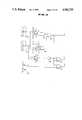
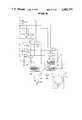
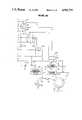
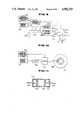
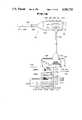
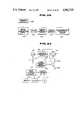
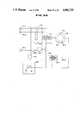
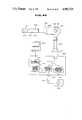
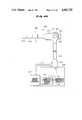
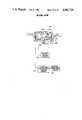
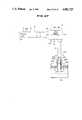
- FIGS. 1 to 4relate to the first embodiment of the present invention.
- FIG. 1is a block diagram showing an endoscope apparatus.
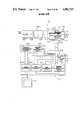
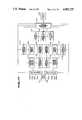
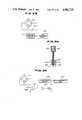
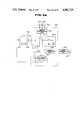
- FIG. 2is a circuit diagram showing a concrete formation of a bending switch controlling circuit.
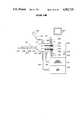
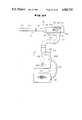
- FIG. 3is a circuit diagram showing a concrete formation of a contact pressure detecting circuit.
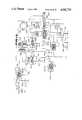
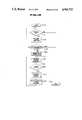
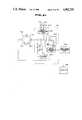
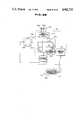
- FIG. 4is a circuit diagram showing a concrete formation of a USM controlling circuit.
- FIG. 5relates to the second embodiment of the present invention.
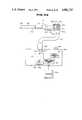
- FIG. 5is a circuit diagram showing a concrete formation of a USM controlling circuit.
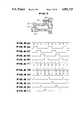
- FIGS. 6 to 8relate to the third embodiment of the present invention.
- FIG. 6is a concrete formation diagram of a USM controlling circuit.
- FIG. 7is a sectioned view of an essential part of a USM.
- FIG. 8is a time chart showing an operation of a USM controlling circuit.
- FIG. 9relates to the fourth embodiment of the present invention.
- FIG. 9is a formation diagram of a USM controlling circuit.
- FIG. 10relates to the fifth embodiment of the present invention.
- FIG. 10is a formation diagram of a bending motor controlling circuit.
- FIG. 11is a sectioned view of a means for detecting a bending resistance.
- FIGS. 12 to 14relate to the sixth embodiment of the present invention.
- FIG. 13is a block diagram showing a formation of an ultrasonic motor controlling circuit.
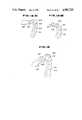
- FIGS. 14(A) and 14(B)are explanatory views of an insertable part inserted into a spleen bent part.
- FIG. 15relates to the seventh embodiment of the present invention.
- FIG. 15is an explanatory view of an endoscope as inserted at the tip into a spleen bent part.
- FIG. 16is an explanatory view showing a formation of an endoscope apparatus.
- FIG. 17is an explanatory view showing a formation of an endoscope apparatus.
- FIG. 18relates to the ninth embodiment of the present invention.
- FIG. 18is an explanatory view showing a formation of an endoscope apparatus.
- FIG. 19relates to the tenth embodiment of the present invention.
- FIG. 19is an explanatory view of a bending controlling method.
- FIGS. 20 to 30relate to means for notifying the operator of the state of an endoscope apparatus.
- FIG. 20is an explanatory view of an endoscope apparatus.
- FIG. 21is a block diagram of a bending resistance notifying means.
- FIG. 22is an explanatory view of an endoscope apparatus.
- FIG. 23is a block diagram of a motor abnormal operatiion notifying means.
- FIG. 24is an explanatory view of an endoscope apparatus.
- FIG. 25is a block diagram of a bending angle notifying means.
- FIG. 26is an explanatory view of a joy stick type bending switch.
- FIG. 27is a block diagram of a bending resistance notifying means.
- FIG. 28is a block diagram of a bending resistance notifying means.
- FIG. 29is an explanatory view of a joy stick type bending switch.
- FIG. 30is a block diagram of a bending resistance notifying means.
- FIGS. 31 to 35relate to the 11th embodiment of the present invention.
- FIG. 31is a block diagram of a circuit for detecting and notifying the driving state of an endoscope bendable part.
- FIG. 32is a formation view of an electronic endoscope apparatus.
- FIG. 33is a sectioned view of an essential part of an ultrasonic motor.
- FIG. 34is an explanatory view of a bendable part driving mechanism.
- FIG. 35is a formation view of a bending driving circuit of an endoscope bendable part.
- FIG. 36relates to the 12th embodiment of the present invention.
- FIG. 36is a block diagram of a circuit for detecting and notifying the driving state of an endoscope bendable part.
- FIGS. 37 and 38relate to the 13th embodiment of the present invention.
- FIG. 37is a formation view of a fiber scope.
- FIG. 38is a block diagram of a circuit for detecting and notifying the driving state of an endoscope bendable part.
- FIGS. 39 and 40relate to the 14th embodiment of the present invention.
- FIG. 39is a formation view of an endoscope apparatus.
- FIG. 40is an explanatory view of a means for notifying a bending resistance.
- FIG. 41relates to the 15th embodiment of the present invention.
- FIG. 41is an explanatory view of a means for notifying a bending resistance.
- FIG. 42relates to the 16th embodiment of the present inventiion.
- FIG. 42is a formation view of an electronic endoscope apparatus.
- FIGS. 43 to 45relate to the 17th embodiment of the present invention.
- FIG. 43is a formation view of an endoscope apparatus.
- FIG. 44is an explanatory view of a means for detcting a bending resistance.
- FIG. 45is an explanatory view of a means for notifying a bending resistance.
- FIG. 46relates to the 18th embodiment of the present invention.
- FIG. 46is an explanatory view of a means for notifying a bending resistance.
- FIGS. 47 and 48relate to the 19th embodiment of the present invention.
- FIG. 47is an explanatory view showing the formatiion of an essential part of an endoscope apparatus.
- FIG. 48is a circuit diagram showing a driving system of a DC motor.
- FIG. 49relates to a modification of the 19th embodiment.
- FIG. 49is an explanatory view showing a tip part of an insertable part of an endoscope.
- FIGS. 1 to 4is shown the first embodiment of the present invention.
- an endoscope 1is to be removably connected to a universal controlling apparatus (mentioned as a UCA hereinafter) 2 through a connector 3.
- a universal controlling apparatushereinafter
- the above mentioned endoscope 1comprises an elongate, for example, flexible insertable part 4 to be inserted into a body cavity or the like, a thick holding part 5 connected to the above mentioned insertable part 4 at the rear end, a flexible universal cable 6 extended sidewise from the above mentioned holding part 5 at the rear end and the above mentioned connector 3 provided at the tip of the above mentioned universal cable 6.
- the above mentioned insertable part 4comprises a rigid tip part 7, a bendable part 8 capable of being bent and provided on the rear side adjacent to the above mentioned tip part 7 and a flexible tube part 9 provided in the rear of the abve mentioned bendable part 8.
- An objective lens 32is provided in the above mentioned tip part 7.
- a solid state imaging device 33is arranged in the image forming position of the above mentioned objective lens 32.
- An image of an object to be imagedis to be formed on the imaging surface of the above mentioned solid state imaging device 33.
- Signal lines(not illustrated) are connected to the above mentioned solid state imaging device 33 and are inserted through the above mentioned universal cable 6 to transmit an image signal of the object to a video processor 24 within the above mentioned UCA 2 through the above mentioned connector 3.
- a contact pressure sensor 40 for detecting a contact pressure when the above mentioned bendable part 8 is bent upward to contact at the above mentioned tip part 7 with a body cavity interior or the like, a contact pressure sensor 41 for detecting a downward contact pressure in the same manner and contact pressure sensors (not illustrated) for detecting rightward and leftward contact pressures in the same mannerare pasted to the above mentioned tip part 7.
- Signal lines (not illustrated)are connected respectively to the above mentioned contact pressure sensors 40 and 41 and are inserted through the above mentioned universal cable 6 to transmit respective contact pressure detecting signals to a contact pressure detecting circuit 26 within the above mentioned UCA through the above mentioned connector 3.
- An oscillating wave motor (mentioned as a USM hereinafter) 12 as a motor driven, for example, by ultrasonic waves to pull a vertically bending wire 10 through a reduction gear 11 and a USM 15 to pull a horizontally bending wire 13 through a reduction gear 14are provided within the above mentioned holding part 5.
- the above mentioned holding part 5is provided on the surface with an air/water feeding button, sucking button, CO 2 , gas feeding button, forceps raising mechanism, video processor controlling freezing and releasing and VTR starting switches, bending direction controlling bending switch 16 and free/lock switch (mentioned as an F/L switch hereinafter) 42 relating to the present invention.
- the above mentioned F/L switch 42is a combination of a switch 43 and resistance 44 which can be equivalently represented.
- endoscope 1Within the above mentioned endoscope 1 are built-in a light guide fiber, air/water feeding tube, treating instrument inserting channel and others.
- the above mentioned UCA 2is provided with a lamp 17 feeding an illuminating light to the above mentioned endoscope 1, air feeding pump 18 feeding air, water feeding tank 19 storing water to be fed, water feeding pump 20 to feed water, bending switch controlling circuit 21 for controlling the above mentioned bending switch 16, USM controlling circuits 22 and 23 for controlling the above mentioned USM's 12 and 15, the above mentioned video processor 24 for processing the image signal obtained by the above mentioned endoscope 1, a bending angle detecting circuit 25 for detecting the bending angle of the above mentioned bendable part 8 and the above mentioned contact pressure detecting circuit 26 for detecting the contacting pressure with a body cavity wall.
- the above mentioned UCA 2may be made by electrically and physically connecting apparatus of respectively separate formations.
- a monitor 27is connected to the above mentioned video processor 24 so that the image signal variously processed by the above mentioned video processor 24 may be displayed.
- the above mentioned bending angle detecting circuit 25is to obtain the bending angle detecting information from rotation angle sensors 30 and 31 formed of photoreflectors or the like and feed the information to the above mentioned video processor 24.
- the contact pressure detecting signals from the above mentioned contact pressure sensors 40 and 41 and the right and left contact pressure sensors (not illustrated)are to be input into the above mentioned contact pressure detecting circuit 26.
- the contact pressuresare detected from these contact pressure detecting signals and are fed to the above mentioned USM controlling circuits 22 and 23 and the above mentioned video processor 24.
- the above mentioned contact pressure sensors 40 and 41are equivalent to variable resistances so that, the larger the contact pressure, the lower the resistance value and, in case there is no contact pressure, the resistance will be high.
- the image signal from the above mentioned solid state imaging device 33 and the signal from the above mentioned contact pressure detecting circuit 26are variously processed such as synthesized and are displayed in the above mentioned monitor 27.
- the above mentioned bending switch 16is a joy stick type switch so that, when a lever 28 is inclined, the bending of the above mentioned bendable part 8 will be controlled to be in respective vertical/horizontal directions and, in response to the inclination, when the angle of inclination is small, the resistance value will be small and, when the angle of inclination is large, the resistance value will be large. Also, in the respective vertical/horizontal directions, when the bendable part is upward (downward), it will not be able to be bent downward (upward) and, when it is bent rightward (leftward), it will not be able to be bent leftward (rightward). In the combinations of upward and rightward, upward and leftward, downward and rightward and downward and leftward, it can be bent simultaneously. That is to say, it can be bent in the intermediate direction of each combination. By the way, the above mentioned bending switch 16 is to be automatically returned to the neutral position by the energizing force of a spring or the like.
- the above mentioned bending switch 16can be equivalently represented by a switch 50 showing that the above mentioned lever 28 is inclined upward, a variable resistance 52 showing the angle of upward inclination of the above mentioned lever 28, in the same manner, a switch 51 showing that the above mentioned lever 28 is inclined downward, a variable resistance 53 showing the angle of upward inclination of the above mentioned lever 28, a switch not illustrated showing that the above mentioned lever 28 is inclined rightward and leftward and a variable resistance showing the angles of rightward and leftward inclinations of the above mentioned lever 28.
- FIG. 2shows a formation of the above mentioned bennding switch controlling circuit 21 for controlling the above mentioned bendable part 8 to be bent upward and downward.
- the formation for controlling the above mentioned bendable part 8 to be bent rightward and leftwardis the same as of bending upward and downward and therefore shall not be described here.
- the above mentioned variable resistance 52is connected at one end to a constant current source through the above mentioned switch 50, is earthed at the other end and is connected at the intermediate point to a comparator 54 at the irreversible input end, to a comparator 56 at the irreversible input end and to an S terminal.
- the above mentioned variable resistance 53is connected at one end to a constant current source through the above mentioned switch 51, is earthed at the other end and is connected at the intermediate point to a comparator 55 at the irreversible input end, to the above mentioned comparator 56 at the reversible input end and to a T terminal.
- the above mentioned comparator 54is connected at the irreversible input end with the above mentioned variable resistance 52 and at the reversible input end with a comparative potential.
- the above mentioned comparator 55is connected at the irreversible input end with the above mentioned variable resistance 53 and at the reversible end with a comparative potential.
- the above mentioned comparator 56is connected at the irreversible input end with the above mentioned variable resistance 52 and at the reversible input end with the above mentioned variable resistance 53.
- the above mentioned comparator 54is connected at the output end A to an OR circuit 57 at the first input end.
- the above mentioned comparator 55is connected at the output end B to the above mentioned OR circuit 57 at the second input end.
- the above mentioned comparator 56is connected at the output end C to an AND circuit 58 at the first input end and to an AND circuit 59 at the first input end through an inverter 60.
- the above mentioned OR circuit 57is connected at the output end to the above mentioned AND circuits 58 and 59 at the second input ends and to a P terminal.
- the above mentioned AND circuit 58is connecated at the output end to a Q terminal.
- the above mentioned AND circuit 59is connected at the output end to an R terminal.
- FIG. 3shows a formation of processing the contact pressure detecting signals of the above mentioned contact pressure sensors 40 and 41 pasted to the upper and lower positions of the above mentioned tip part 7.
- the formation of processing the contact pressure detecting signals of the contact pressure sensors pasted to the right and leftis the same as in the upper and lower lower positions and therefore shall not be explained here.
- the above mentioned contact pressure sensor 40is connected at one end to an electric power source, is earthed at the other end and is connected at the intermediate point to a comparator 70 at the reversible input end and to a comparator 72 at the reversible input end.
- the above mentioned contact pressure sensor 41is connected at one end to an electric power source, is earthed at the other end and is connected at the intermediate point to a comparator 71 at the reversible input end and to the above mentioned comparator 72 at the irreversible input end.
- the above mentioned resistance 44is earthed at one end, is connected at the other end to an electric power source through the above mentioned switch 43 and is connected as the output end G of the above mentioned F/L switch 42 to the AND circuits 73 and 74 at the second input ends.
- the above mentioned comparator 70is connected at the reversible input end with the above mentioned contact pressure sensor 40 and at the irreversible input end with a comparative potential.
- the above mentioned comparator 71is connected at the reversible input end with the above mentioned contact pressure sensor 41 and at the irreversible input end with a comparative potential.
- the above mentioed comparator 72is connected at the reversible input end with the above mentioned contact pressure sensor 40 and at the irreversible input end with the above mentioned contact pressure sensor 41.
- the above mentioned comparator 70is connected at the output end D with the above mentioned AND circuit 73 at the first input end.
- the above mentioned comparator 71is connected at the output end E with the above mentioned AND circuit 74 at the first input end.
- the above mentioned AND circuit 73is connected at the output end with an OR circuit 75 at the first input end.
- An AND circuit 74is connected at the output end with the above mentioned OR circuit 75 at the second input end.
- the above mentioned OR circuit 75is connected at the output end with the above mentioned AND circuits 76 and 77 at the input ends and with a U terminal.
- the above mentioned comparator 72is connected at the output end F with the AND circuits 76 and 77 at the first input ends through an inverter 78.
- the above mentioned AND circuit 76is connected at the output end with a V terminal.
- the above mentioned AND circuit 77is connected at the output end with a W terminal.
- FIG. 4shows a formation of the above mentioned USM controlling circuit 22 for controlling the above mentioned USM 12 in the vertical direction.
- the above mentioned USM controlling circuit 23 for controlling the USM 15 in the horizontal directionis the same as in the vertical direction and therefore shall not be described here.
- the P to T terminalsare connected respectively to terminals of the same names of the above mentioned bending switch controlling circuit 21 shown in FIG. 2.
- the U to W terminalsare connected respectively to terminals of the same names of the above mentioned contact pressure detecting circuit 26 shown in FIG. 3.
- the above mentioned P terminalis connected to AND circuits 82, 83 and 84 at the second input ends through an inverter 81 and to an OR circuit 80 at the first input end.
- the above mentioned Q terminalis connected to a switch 86 at the control end K and to an OR circuit 85 at the first input end.
- the above mentioned R terminalis connected to a switch 88 at the control end L and to an OR circuit 87 at the first input end.
- the above mentioned U terminalis connected to the above mentioned AND circuit 82 at the first input end.
- the above mentioned V terminalis connected to the above mentioned AND circuit 83 at the first input end.
- the abve mentioned W terminalis connected to the above mentioned AND circuit 84 at the first input end.
- the above mentioned AND circuit 82is connected at the output end to a switch 90 at the control end M and to the above mentioned OR circuit 80 at the second input end.
- the above mentioned AND circuit 83is connected at the output end to the above mentioned OR circuit 85 at the second input end.
- the above mentioned AND circuit 84is connected at the output end to the above mentioned OR circuit 87 at the second input end.
- the above mentioned OR circuit 80is connecated at the output end to a switch 92 at the control end H.
- the above mentioned OR circuit 85is connected at the output end to a switch 93 at the control end I.
- the above mentioned OR circuit 87is connected at the output end to a switch 94 at the control end J.
- a variable resistance 91is connected at one end to an electric power source, is earthed at the other end and is connected at the intermediate point to a frequency controlling circuit 89 at the input end through the above mentioned switch 90.
- the above mentioned frequency controlling circuit 89is connected at the input end to the above mentioned S terminal through the above mentioned switch 86, to the above mentioned T terminal through the above mentioned switch 88 and to the abpve mentioned variable resistance 91 at the intermediate point through the above mentioned switch 90.
- the above mentioned frequency controlling circuit 89is connected at the output end to a sine wave generating circuit 95 at the control input end.
- the above mentioned sine wave generating circuit 95is connected at the output end to a 90 degree phase shifter 96, 270 degree phase shifter 97 and amplifier 98 at the input ends through the above mentioned switch 92.
- An amplifier 99is connected at the input end to the above mentioned 90 degree phase shifter 96 at the output end through the above mentioned switch 93 and to the above mentioned 270 degree phase shifter 97 at the output end through the above mentioned switch 94.
- the above mentioned amplifiers 98 and 99are connected at the output ends to the above mentioned USM 12.
- the above mentioned comparator 56will be of "H” at the output end C by comparing the voltage of the above mentioned variable resistance 52 at the intermediate point connected to the irreversible input end and the voltage of the above mentioned variable resistance at the intermediate point connected to the reversible input end with each other.
- the above mentioned OR circuitwill be of "H” and the input end connected to the output end C of the above mentioned comparator 56 will be also of "H”
- the above mentioned AND circuit 58will be of "H” at the output end.
- the above mentioned inverter 60will be of "L” at the output end.
- the above mentioned P terminalwill be of "H”
- the above mentioned Q terminalwill be of "L”
- the above mentioned S terminalwill be of a voltage corresponding to the inclination of the above mentioned lever 28 and the above mentioned T terminal will be of zero potential.
- the above mentioned comparator 56will be of "L” at the output end by comparing the voltage of the above mentioned variable resistance 52 at the intermediate point connected to the irreversible input end and the voltage of the above mentioned variable resistance 53 at the intermediate point with each other.
- the above mentioned inverter 60will be of "H” at the output end. Therefore, as the input end connected to the output end of the above mentioned OR circuit 57 will be of "H” and the input end connected to the output end of the above mentioned inverter 60 will be also of "H”, the above mentioned AND circuit 59 will be of "H” at the output end.
- the above mentioned lever 28 of the above mentioned bending switch 16is inclined so that the above mentioned bendable part 8 may bend downward, the abode mentioned P terminal will be of "H”, the above mentioned Q terminal will be of "L”, the abve mentioned R terminal will be of "H”, the above mentioned T terminal will be of a voltage corresponding to the inclination of the above mentioned lever 28 and the above mentioned S terminal will be of zero voltage.
- the above mentioned contact pressure sensor 41will be of a high impedance and its output voltage will not exceed a threshold level, the above mentioned comparator 71 will be of "L” at the ourput end E. Therefore, as the output end E of the above mentioned comparator 71 will be of "L”, even if the input end connected to the output end G of the above mentiioned F/L switch 42 is of "H” or "L”, the above mentioned AND circuit 74 will be of "L”at the output end.
- the above mentioned comparator 72will be of "H” at the output end F by comparing the voltage of the above mentioned contact pressure sensor 40 at the intermediate point connected to the reversible input end and the voltage of the above mentioned contact pressure sensor 41 at the intermediate point connected to the irreversible input end with each other. Therefore, as the input end connected to the above mentioned OR circuit 75 will be of “H” and the input end connected to the output end of the above mentioned comparator 72 will be of "H”, the above mentioned AND circuit 77 will be of "H” at the output end. As the input end connected to the above mentioned comparator 72 will be of "H”, the above mentioned inverter 78 will be of "L” at the output end. Therefore, even if the input end connected to the above mentioned OR circuit 75 is of "H”, as the input end connected to the above mentioned inverter 78 will be of "L”, the above mentioned AND circuit 76 will be of "L” at the output end.
- the above mentioned contact pressure sensor 40will be of a high impedance and its output voltage will not exceed the threshold level, the above mentioned comparator 70 will be of "L” at the output end D. Therefore, even if the output end E of the above mentioned comparator 70 is of "L” and the input end connected to the output end G of the above mentioned F/L switch 42 is of "H”, the above mentioned AND circuit 73 will be of "L” at the output end.
- the above mentioned comparator 72will be of "L” at the output end F by comparing the voltage of the above mentioned contact pressure sensor 40 at the intermediate point connected to the reversible input end and the voltage of the above mentioned contact pressure sensor 41 at the intermediate point connected to the irreversible input end with each other. Therefore, as the input end connected to the above mentioned comparator 72 will be of “L”, the above mentione inverter 78 will be of "H” at the output end. Thereby, as the input end connected to the above mentioned OR circuit 75 will be of "H” and the input end connected to the output end of the above mentioned inverter 78 will be of "H”, the above mentioned AND circuit 78 will be of "H” at the output end. Even if the input end connected to the above mentioned OR circuit 75 is of "H”, as the input end connected to the above mentionend comparator 72 will be of "L”, the above mentioned AND circuit 77 will be of "L” at the output end.
- the above mentioned OR circuit 80will be of "L” at the output end because the input end connected to the above mentioned F terminal will be of “L” and the inpput end connected to the output end of the above mentioned AND circuit 82 will be also of “L”.
- the above mentioned switch 92will be OFF because the control end H connected to the output end of the above mentioned OR circuit 80 will be of "L”. Therefore, as the above mentioned switch 92 will be OFF, the output of the above mentioned sine wave generating circuit 95 will not be input into the above mentioned 90 degree phase shifter 96, 270 degree phase shifter 97 and amplifier 98.
- the above mentioned OR circuit 85will be of "L” because the input end connected to the above mentioned Q terminal will be of “L” and the input end connected to the output end of the above mentioned AND circuit 83 will be also of “L”. Therefore, the above mentioned switch 93 will be OFF because the above mentioned OR circuit 85 will be of "L” at the output end connected to the control end I. Also, the above mentioned OR circuit 87 will be of "L” at the output end because the input end connected to the above mentioned R terminal will be of "L” and the input end connected to the output end of the above mentioned AND circuit 84 will be also of “L”. Therefore, the above mentioned switch 94 will be OFF because the output end of the above mentioned OR circuit 87 connected to the control end J will be of "L".
- the above mentioned switches 86 and 88will be both OFF because the control ends K and L connected respectively to the above mentioned Q and R are of "L".
- the above mentioned switch 90will be OFF because the control end M connected to the output end of the above mentioned AND circuit 82 will be of "L”.
- the above mentioned frequency controlling circuit 89will be opened at the input end because the above mentioned switches 86, 88 and 90 will be respectively OFF.
- the above mentioned P terminalwill be of "H”
- the above mentioned Q terminalwill be of "H”
- the above mentioned R terminalwill be of "L”
- the above mentioned S terminalwill be of a voltage corresponding to the inclination of the above mentioned lever 28. Therefore, the above mentioned inverter 81 will be of "L” at the output end because the input end connected to the above mentioned P terminal will be of "H”.
- the above mentioned AND circuit 82will be of "L” at the output end because the input end connected to the output end of the above mentioned inverter 81 will be of "L” and even if the input end connected to the above mentioned U terminal is of "H".
- the above mentioned AND circuit 83will be of "L” at the output end because the input end connected to the output end of the above mentioned inverter 81 will be of “L” and even if the input end connected to the above mentioned V terminal is of "H” or “L”.
- the above mentioned AND circuit 84will be of "L” at the output end because the input end connected to the output end of the above mentioned inverter 81 will be of “L” and even if the input end connected to the above mentioned W terminal is of "H” or "L".
- the above mentioned OR circuit 80will be "H” at the output end because the input end connected to the above mentioned P terminal will be of “H” and even if the input end connected to the output end of the above mentioned AND circuit 82 is of "L". Therefore, the above mentioned switch 92 will be ON because the control end H connected to the output end of the above mentioned OR circuit 80 will be of "H”. Thereby, as the above mentioned switch 92 will be ON, the output of the above mentioned sine wave generating circuit 95 will be input into the above mentioned 90 degree phase shifter 96, 270 deree phase shifter 97 and amplifier 98.
- the above mentioned OR circuit 85will be of "H” at the output end because the input end connected to the above mentioed Q terminal will be of "H” and even if the input end connected to the outpurt end of the above mentioned AND circuit 83 is of "L". Therefore, the above mentioned switch 93 will be ON because the control end I connected to the output end of the above mentioned OR circuit 85 will be of "H”. Thereby, as the above mentioned switch 93 will be ON, the output of the above mentioned 90 degree phase shifter 96 will be input into the above mentioned amplifier 99.
- the above mentioned switch 86will be ON because the control end K connected to the above mentioned Q terminal will be of "H”.
- the above mentioned switch 88will be OFF because the control end L connected to the above mentioned R terminal will be of "L”.
- the above mentioned switch 90will be OFF because the output end of the above mentioned AND circuit 82 connected to the control end M will be of "L”. Therefore, the voltage of the above mentioned S terminal will be applied to the input end of the above mentioned frequency controlling circuit 89. Thereby, the above mentioned frequency controlling circuit 89 will control the output frequency of the above mentioned sine wave generating circuit 95.
- the output of the above mentioned sine wave generating circuit 95will be input into the above mentioned amplifier 98
- the output of the above mentioned 90 degree phase shifter 96will be input into the above mentioned amplifier 99
- the outputs of the above mentioned amplifiers 98 and 99will be input into the above mentioned USM 12 provided in the above mentlioned holding part 5 of the above mentioned endoscope 1.
- the rotating speed of the above mentioned USM 12depends on the output frequency of the above mentioned sine wave generating circuit 95.
- the output frequency of the above mentioned sine wave generating circuit 95will become high and the rotating speed of the above mentioned USM 12 will be low.
- the output frequency at which the inclination of the above mentioned lever 28 becomes maximumis so set as to be a frequency somewhat higher than the resonance frequency of the above mentioned USM 12.
- the output of the above mentioned sine wave generating circuit 95will be applied to the above mentioned USM 12 through the above mentioned amplifier 98, 90 degree phase shifter 96 and amplifier 99 and the above mentioned USM 12 will rotate at a speed corresponding to the inclination of the above mentioned lever 28 so as to bend the above mentioned bendable part 8 upward.
- the above mentioned AND circuit 83will be of "L” at the output end because the input end connected to the output end of the above mentioned inverter 81 will be of “L” and even if the input end connected to the above mentione V terminal is of "H” or “L”.
- the above mentioned AND circuit 84will be of "L” at the output end because the input end connected to the output end of the above mentioned inverter 81 will be of “L” and even if the input end connected to the above mentione W terminal is of "H” or "L".
- the above mentioned OR circuit 80will be of "H” at the output end because the input end connected to the above mentioned P terminal will be of “H” and even if the input end connected to the output end of the above mentioned AND circuit 82 is “L". Therefore, the above mentioned switch 92 will be ON because the control end H connected to the output end of the above mentioned OR circuit 80 will be of "H”. Thereby, as the above mentioned switch 92 will be ON, the output of the above mentioned sine wave generating circuit 95 will be input into the above mentioned 90 degree phase shifter 96, 270 degree phase shifter 97 and amplifier 98.
- the above mentioned OR circuit 87will be of "H” at the output end because the input end connected to the above mentioned R terminal will be of “H” and even if the input end connected to the output end of the above mentioned AND circuit 84 is of "L". Therefore, the above mentioned switch 94 will be ON because the control end I connected to the output end of the above mentioned OR circuit 87 will be of "H”. Thereby, as the above mentioned switch 94 will be ON, the output of the above mentioned 270 degree phase shifter 97 will be input into the above mentioned amplifier 99.
- the above mentioned OR circuit 85will be of "L” at the output end because the input end connected to the above mentioned Q terminal will be of “L” and the input end connected to the outpput end of the above mentioned AND circuit 83 will be also of “L”. Therefore, the above mentioned switch 93 will be OFF because the control end I connected to the output end of the above mentioned OR circuit 85 will be of "L”. Thereby, as the above mentione switch 93 will be OFF, the output of the above mentioned 90 degree phase shifter 96 will not be input into the above mentione amplifier 99.
- the above mentioned switch 86will be OFF because the control end K connected to the above mentioned Q terminal will be of "L".
- the above mentioned switch 88will be ON because the control end L connected to the above mentioned R terminal will be of "H”.
- the above mentioned switch 90will the OFF because the control end M connected to the output end of the above mentioned AND circuit 82 will be of "L”. Therefore, the voltage of the above mentioned T terminal will be applied to the above mentioned frequency controlling circuit 89 at the input end. Thereby, the above mentioned frequency controlling circuit 89 will control the output frequency of the above mentioned sine wave generating circuit 95.
- the output of the above mentioned sine wave generating circuit 95will be input into the above mentioned amplifier 98.
- the output of the above mentioned 270 degree phase shifter 97will be input into the above mentioned amplifier 99.
- the outputs of the above mentioned amplifiers 98 and 99will be input into the above mentioned USM 12 provided in the above mentioned holding part 5 of the above mentionend endoscope 1.
- the output of the sire wave generating circuit 92will be applied to the above mentioned USM 12 through the above mentioned amplifier 98, 270 degree phase shifter 97 and amplifier 99 and the above mentioned USM 12 will rotate at a speed corresponding to the inclination of the above mentioned lever 28 so as to bend the above mentioned bendable part 8 downward.
- the above mentioned AND circuit 82will be of "H” at the output end because the input end connected to the above mentioned U terminal will be of “H” and the input end connected to the output end of the above mentioned inverter 81 will be also of "H".
- the above mentioned AND circuit 84will be of "H” at the output end because the input end connected to the above mentioned W terminal will be of "H” and the input end connected to the output end of the above mentioned inverter 81 will be also of "H”.
- the above mentioned AND circuit 83will be of "L” at the output end because the input end connected to the above mentioned V terminal will be of "L” and even if the input terminal connected to the output end of the above mentioned inverter 81 is of "H".
- the above mentioned switch 90will be ON because the control end M connected to the output end of the above mentioned AND circuit 82 will be of "H". Also, the above mentioned switches 86 and 88 will be OFF because the control ends K and L connected respectively to the above mentioned Q and R terminals will be of "L”. Therefore, the voltage of the above mentioned variable resistance 91 at the intermediate point will be applied to the above mentioned frequency controlling circuit 89 at the input end. By the way, the voltage of the above mentioned variable resistance 91 at the intermediate point is so set as to be such voltage as slowly rotates the above mentioned USM 12.
- the above mentioned OR circuitwill be of "H” at the output end because the input end connected to the AND circuit 82 will be of "H” and even if the input end connected to the above mentioned P terminal is of "L". Therefore, the above mentioned switch 92 will be ON because the control end H connected to the output end of the above mentioned OR circuit 80 will be of "H”. Thereby, the output of the above mentioned sine wave generating circuit 95 will be input into the above mentioned amplifier 98, 90 degree phase shifter 96 and 270 degree phase shifter 97 through the above mentioned switch 92.
- the above mentioned OR circuit 87will be of "H” at the output end because the input end connected to the output end of the above mentioned AND circuit 84 will be of "H” and even if the input end connected to the above mentioned R terminal is of "L". Therefore, the above mentioned switch 94 will be ON because the control end J connected to the output end of the above mentioned OR circuit 87 will be of "H”. Thereby, the output of the above mentioned 270 degree phase shifter 97 will be input into the above mentioned amplifier 99 through the above mentioned switch 94.
- the output of the sine wave generating circuit 92will be applied to the above menntioned USM 12 through the above mentioned amplifier 98, 270 degree phase shifter 97 and amplifier 99 and the above mentioned USM 12 will rotate at a speed set by the above mentioned variable resistance 91 so as to bend the above mentioned bendable part 8 downward.
- the above mentioned AND circuit 83will be of "H” at the output end because the input end connected to the above mentioned V terminal will be of "H” and the input end connected to the output end of the above mentioned inverter 81 will be also of “H”.
- the above mentioned AND circuit 84will be of "L” at the output end because the input end connected to the above mentioned W terminal will be of "L” and even if the input end connected to the output end of the above mentioned inverter 81 is of "H".
- the above mentioned switch 90will be ON because the control end M connected to the output end of the above mentioned AND circuit 82 will be of "H”.
- the above mentioned switches 86 and 88will be OFF because the control ends K and L connected respectively to the above mentioned Q and R terminals will be of "L”. Therefore, the voltage of the above mentioned variable resistance 91 at the intermediate point will be applied to the above mentioned frequency controlling circuit 89 at the input end.
- the above mentioned OR circuit 80will be of "H” at the output end because the input end connected to the above mentionend AND circuit 82 will be of "H” and even if the input end connected to the above mentioned P terminal is of "L". Therefore, the above mentioned switch 92 will be ON because the control end H connected to the output end of the above mentioned OR circuit will be of "H”. Thereby, the output of the above mentioned sine wave generating circuit 95 will be input into the above mentioned amplifier 98, 90 degree phase shifter 96 and 270 degree phase shifter through the above mentioned switch 92.
- the above mentioned OR circuit 85will be of "H” at the output end because the input end connected to the output end of the above mentioned AND circuit 83 will be of "H” and even if the input end connected to the above mentioned Q terminal is of "L". Therefore, the above mentioned switch 93 will be ON because the control end I connected to the output end of the above mentioned OR circuit 87 will be of "H”. Thereby, the output of the above mentioned 90 degree phase shifter 96 will be input into the above mentioned amplifier 99 through the above mentioned switch 93.
- the output of the sine wave generating circuit 92will be applied to the above mentioned USM 12 through the above mentioned amplifier 98, 90 degree phase shifter 96 and amplifier 99 and the above mentioned USM 2 will rotate at a speed set by the above mentioned variable resistance 91 so as to bend the above mentioned bendable part upward.
- the above mentioned tip part 7when the above mentioned F/L switch 42 is switched to be free (F) and the above mentioned bending switch 16 is not operated, the above mentioned tip part 7 will contact on the side part with such inspected part as a part within a body cavity under a predetermined pressure, the above mentioned bendable part 8 will be bent under a bending resistance and the above mentioned tip part 7 will be moved in the direction of reducing the bending resistance so that the fear of hurting the inspected part with the above mentioned tip part 7 may be eliminated. In the case of pulling the above mentioned insertable part 4 out of the inspected object, without operating the above mentioned bending switch 16, the above mentioned tip part 7 will be able to be pulled out smoothly following the form of the inspected object so that a safe diagnosis or inspection may be made.
- the above mentioned tip part 7can be contacted with the inspected part by the judgment of the operator.
- the contact pressurebending resistance
- FIG. 5is shown the second embodiment of the present invention.
- the formation of the bending switch controlling circuitis the same as in FIG. 2 of the first embodiment and shall not be described here.
- FIG. 5shows the formation of the USM controlling circuit 22 controlling the above mentioned USM 12 in the vertical direction.
- the above mentioned USM controlling circuit 23 controlling the USM 15 in the horizontal directionis the same as in the vertical direction and shall not be described here.
- the P to R terminalsare connected to AND circuits 101, 102 and 103 at the first input ends.
- the above mentioned U terminalis connected to the above mentioned AND circuits 101, 102 and 103 at the second input ends through an inverter 109, to an OR circuit 106 at the second input end and to a switch 110 at the control end P.
- the V and W terminalsare connected respectively to OR circuits 107 and 108 at the second input ends.
- the above mentioned AND circuit 101is connected at the output end to the above mentioned OR circuit 106 at the first input end.
- the above mentioned AND circuit 102is connected at the output end to a switch 104 at the control end N and to the above mentioned OR circuit 107 at the first input end.
- the above mentioned AND circuit 103is connected at the output end to a switch 105 at the control end 0 and to the above mentioned OR circuit 108 at the first input end.
- the above mentioned OR circuit 106is connected to a switch 92 at the control end H.
- the above mentioned OR circuit 107is connected to a switch 93 at the control end I.
- the above mentioned OR circuit 108is connected at the output end to a switch 94 at the control end J.
- a variable resistance 111is connected at one end to an electric source, is earthed at the other end and is connected at the intermediate point to a frequency controlling circuit 89 through the above mentioned switch 110.
- the above mentioned frequency controlling circuit 89is connected at the input end to the above mentioned S terminal through the above mentioned switch 104, to the above mentioned R terminal through the above mentioned switch 105 and to the above mentioned variable resistance 111 at the intermediate point through the above mentioned switch 110.
- the above mentioned frequency controlling circuit 89is connected at the output end to a sine wave generating circuit 95 at the control input end.
- the above mentioned sine wave generating circuit 95is connected at the output end to a 90 degree phase shifter 96, the above mentioned 270 degree phase shifter 97 and an amplifier 98 at the input ends through the above mentioned switch 92.
- An amplifier 99is connected at the input end to the above mentioned 90 degree phase shifter 96 at the output end through the above mentioned switch 93 and to the above mentioned 270 degree phase shifter 97 at the output end through the above mentioned switch 94.
- the above mentioned amplifiers 98 and 99are connected at the output ends to a USM 12.
- the above mentioned AND circuit 102will be of "L” at the output end because, even if the input end connected to the above mentioned Q terminal is of "H” or “L”, the input end connected to the output end of the above mentioned inverter 109 will be of "L”.
- the above mentioned AND circuit 103will be of "L” at the output end because, even if the input end connected to the above mentioned R terminal is of "H” or “L”, the input end connected to the output end of the above mentioned inverter 109 will be of "L”.
- the above mentioned OR circuit 106will be of "H" at the output end because, even if the input end connected to the output end of the above mentioned AND circuit 101 is of "L", the input end connected to the above mentioned U terminal will be of "H". Thereby, the above mentioned switch 92 will be ON because the control end H connected to the output end of the above mentioned OR circuit will be of "H".
- the above mentioned switch 104will be OFF because the control end N connected to the output end of the above mentioned AND circuit 102 will be of "L".
- the above mentioned switch 105will be OFF because the control end O connected to the output end of the above mentioned AND circuit 103 will be of "L”.
- the above mentioned switch 110will be ON because the control end P connected to the above mentioned U terminal will be of "H”. Therefore, the voltage of the above mentioned variable resistance 111 at the intermediate point will be applied to the above mentioned frequency controlling circuit 89 at the input end.
- the above mentioned OR circuit 108will be of "H" at the output end because, even if the input end connected to the output end of the above mentioned AND circuit 103 is of "L", the input end connected to the above mentioned W terminal will be of "H". Therefore, the above mentioned switch 94 will be ON because the control end J connected to the above mentioned OR circuit 108 will be of "H".
- the output of the sine wave generating circuit 92will be applied to the above mentioned USM 12 through the above mentioned amplifier 98, 270 degree phase shifter 97 and amplifier 99 and the above mentioned USM 12 will rotate at a speed set by the above mentioned variable resistance 111 so as to bend the above mentioned bendable part 8 downeard.
- the above mentioned AND circuit 102will be of "L” at the outpue end because, even if the input end connected to the above mentioned Q terminal is of "H” or “L”, the input end connected to the output end of the above mentioned inverter 109 will be of "L”.
- the above mentioned AND circuit 103will be of "L” at the outpue end because, even if the input end connected to the above mentioned R terminal is of "H” or "L”, the input end connected to the output end of the above mentioned inverter 109 will be of "L”.
- the above mentioned OR circuit 106will be of "H" at the output end because, even if the input end connected to the output end of the above mentioned AND circuit 101 is of "L", the input end connected to the above mentioned U terminal will be of "H". Thereby, the above mentioned switch 92 will be ON because the control end H connected to the output end of the above mentioned OR circuit 106 will be of "H".
- the above mentioned switch 104will be OFF because the control end N connected to the output end of the above mentioned AND circuit 102 will be of "L".
- the above mentioned switch 105will be OFF because the control end O connected to the output end of the above mentioned AND circuit 103 will be of "L”.
- the above mentioned switch 110will be ON because the control end P connected to the above mentioned U terminal will be of "H”. Therefore, the voltage of the above mentioned variable resistance at the intermediate point will be applied to the above mentioned frequency controlling circuit 89 at the input end.
- the above mentioned OR circuit 107will be of "H" at the output end because, even if the input end connected to the output end of the above mentioned AND circuit 102 is of "L", the input end connected to the above mentioned V terminal will be of "H". Therefore, the above mentioned switch 93 will be ON because the control end I connected to the above mentioned OR circuit 107 will be of "H".
- the output of the above mentioned sine wave generating circuit 95will be applied to the above mentioned USM 12 through the above mentioned amplifier 98, 90 degree phase shifter 96 and amplifier 99 and the above mentioned USM 12 will rotate at a speed set by the above mentioned variable resistance 111 so as to bend the above mentioned bendable part 8 upward.
- the above mentioned inverter 109will be of "H” because the input end connected to the above mentioned U terminal will be of "L".
- the above mentioned AND circuit 101will be of "H” at the output end because the input end connected to the above mentioned P terminal will be of H” and the input end connected to the output end of the above mentioned inverter 109 will be also of "H".
- the above mentioned AND circuit 102will be of "H” at the output end because the input end connected to the above mentioned Q terminal will be of "H” and the input end connected to the output end of the above mentioned inverter 109 will be also of "H”.
- the above mentioned AND circuit 103will be of "L” at the output end because the input end connected to the above mentioned R terminal will be of "L” and even if the input end connected to the output end of the above mentioned inverter 109 is of "H".
- the above mentioned OR circuit 106will be of "H" at the output end because the input end connected to the output end of the above mentioned AND circuit 101 will be of "H” and even if the input end connecated to the above mentioned U terminal is of "L". Thereby, the above mentioned switch 92 will be ON because the control end H connected to the output end of the above mentioned OR circuit 106 will be of "H".
- the above mentioned switch 105will be OFF because the control end 0 connected to the output end of the above mentioned AND circuit 103 will be of "L".
- the above mentioned switch 110will be OFF because the control end P connected to the above mentioned U terminal will be “L”.
- the above mentioned switch 104will be ON because the the control end N connected to the output end of the above mentioned AND circuit 102 will be of "H”. Therefore, the voltage of the above mentioned S terminal will be applied to the above mentioned frequency controlling circuit 89 at the input end.
- the above mentioned OR circuit 107will be of "H” at the output end because the input end connected to the output end of the above mentioned AND circuit 102 will be of "H” and even if the input end connected to the above mentioned V terminal is of "L". Therefore, the above mentioned switch 93 will be ON because the control end I connected to the output end of the above mentioned OR circuit 107 will be of "H".
- the above mentioned AND circuit 102will be of "L” at the output end because the input end connected to the above mentioned Q terminal will be of “L” and even if the input end connected to the output end of the above mentioned inverter 109 is of "H".
- the above mentioned AND circuit 103will be of "H” at the output end because the input end connected to the above mentioned R terminal will be of "H” and the input end connected to the output end of the above mentioned inverter 109 will be also of "H".
- the above mentioned OR circuit 106will be of "H” at the output end because the input end connected to the output end of the above mentioned AND circuit 101 will be of "H” and even if the input end connected to the above mentioned U terminal is of "L". Thereby, the above mentioned switch 92 will be ON because the control end H connected to the output end of the above mentioned OR circuit 106 will be of "H".
- the above mentioned switch 104will be OFF because the control end N connected to the output end of the above mentioned AND circuit 102 will be of "L".
- the above mentioned switch 110will be OFF because the control end P connected to the above mentioned U terminal will be of "L”.
- the above mentioned switch 105will be ON because the control end O connected to the output end of the above mentioned AND circuit 103 will be of "H”. Therefore, the voltage of the above mentioned T terminal will be applied to the above mentioned frequency controlling circuit 89 at the input end.
- the above mentioned OR circuit 107will be of "L” at the output end because the input end connected to the output end of the above mentioned AND circuit 102 will be of “L” and the input end connected to the above mentioned V terminal will be also of “L”. Therefore, the above mentioned switch 93 will be, OFF because the control end I connected to the output end of the above mentioned OR circuit 107 will be of "L”.
- the output of the sine wave generating circuit 92will be applied to the above mentioned USM 12 through the above mentioned amplifier 98, 270 degree phase shifter and amplifier 99 and the above mentioned USM 12 will rotate at a speed corresponding to the inclination of the above mentioned lever 28 so as to bend the above mentioned bendable part 8 downward.
- FIGS. 6 to 8is shown the third embodiment of the present invention.
- FIG. 6shows the formation of the above mentioned USM controlling circuit for controlling the USM in the vertical direction.
- the above mentioned USM controlling circuit for controlling the USM in the horizontal directionis the same as in the vertical direction and shall not be described here.
- a bending ON/OFF switch (which shall be mentioned as a bending switch hereinafter) 200is connected at one end with an electric power source, is earthed at the other end through a resistance 201 and is connected to an analogue switch 205 at the control end.
- a bending direction switch (mentioned as a direction switch hereinafter) 202is connected at one end with an electric power source, is earthed at the other end through a resistance 203 and is connected to a ring counter 210 at the control end x.
- a VCO (voltage controlled oscillator) 204is connected at the output end through the above mentioned analogue switch 205 to the above mentioned ring counter which is a serial-in/parallel-out 4-bit right and left shift register at the clock end a and is connected to a monostable multivibrator (mentioned as a monomulti hereinafter) 206 at the input end.
- the above mentioned monomulti 206is connected at the output end to a saw tooth generating circuit 207 at the input end.
- the above mentioned saw tooth generating circuit 207is formed, for example, of resistances 207b, 207c and 207f, capacitors 207a and 207g, a diode 207d and a transistor 207e.
- a speed controlling volume 209is earthed at one end, is connected at the other end to an electric power source and is connected at the intermediate point g to a comparator 208 at the irreversible input end.
- the above mentioned comparator 208is connected at the irreversible input end with the above mentioned speed controlling volume 209 at the intermediate point g and is connected at the reversible input end with the above mentioned saw tooth generating circuit 207 at the output end.
- the above mentioned ring counter 210is connected at the output ends b, c, d and e respectively to AND circuits 211, 212, 213 and 214 at the first input ends.
- the above mentioned comparator 208is connected at the outpput end to the above mentioned AND circuits 211, 212, 213 and 214 at the second input ends.
- the above mentioned AND circuits 211, 212, 213 and 214are connected at the output ends to a switching circuit 215 at the input ends.
- the above mentioned switching circuit 215is formed of four Darlington circuits (only one formation is illustrated) each formed, for example, of resistances 215a and 215b, transistors 215c and 215d and a diode 215e.
- the above mentioned switching circuit 215is push-pull connected at the output end to transistors 216 and 217 on the primary sides.
- the above mentioned transistors 216 and 217are connected at the intermediate points to an electric power source.
- the above mentioned transistors 216 and 217 on the secondary sidesare earthed at one end and are connected at the other end to a USM 225 through current probes 218 and 219 and are connected to phase detecting circuits 222 and 223 at the first input ends.
- the above mentioned current probes 218 and 219are connected at the output ends to amplifiers 220 and 221 at the input ends.
- the above mentioned amplifiers 220 and 221are connected at the output ends to the above mentioned phase detecting circuits 222 and 223 at the second input ends.
- the above mentioned phase detecting circuits 222 and 223are connected at the output ends to a piezoelectric device driving circuit 224 at the first and second input ends.
- the above mentioned piezoelectric device driving circuit 224is connected at the output end 224a to a piezoelectric device 250 shown in FIG. 7.
- a feedback circuit 226is connected at the input end to the above mentioned USM 225 and is connected at the output end to the above mentioned VCO 204 at the input end.
- the above mentioned feedback circuit 226is formed, for example, of variable resistances 226f and 226b, a resistance 226c, capacitor 226d, dioide 226e and comparator 226a.
- FIG. 7is a sectioned view of an essential part of the above mentioned USM 225.
- a rotor 251is pressed by the above mentioned piezoelectric device 250 into contact with a stator 253.
- a wire 252is fixed on the periphery of the above mentioned rotor 251.
- the above nceioned piezoelectric device 250is fixed by an E-ring 254 which is engaged with the stator 253.
- the above mentioned comparator 208will compare the output signal of the above mentioned saw tooth generating circuit 207 connected at the reversible input end and the voltage at the intermediate point g of the above mentioned speed controlling volume connected at the irreversible input end with each other and, as shown in FIG. 8(h), will output a signal which will be of "H” for the period when the output signal of the above mentioned saw tooth generating circuit 207 is lower than the voltage of the above mentioned speed controlling volume 209.
- the above mentioned AND circuits 211, 212, 213 and 214will be of "H” at the output ends when the input end connected to the above mentioned ring counter 210 is of “H” and the input end connected to the above mentionend comparator 208 is also of "H”. That is to say, a PWM (pulse width modulating) circuit is formed of the above mentioned monomulti 206, saw tooth generating circuit 207, comparator 208 and AND circuits 211, 212, 213 and 214.
- the above mentioned switching circuit 215will feed sine waves and cosine waves, for example, of 100 V rms to the above mentioned USM 225 through the above mentioned transistors 216 and 217 and the above mentioned stator 253 of the above mentioned USM 225 will rotate in the direction of bending the bendable part upward at a speed corresponding to the period of "H" of the output pulses of the above mentioned AND circuits 211, 212, 213 and 214.
- the above mentioned VCO 204is made by the control of the above mentioned feedback circuit 226 to output a signal of a frequency somewhat higher than the resonance frequency of the above mentioned USM 225.
- the electric power fed to the above mentioned USM 225will be of a phase difference of 90 degrees between the voltage and current.
- the larger the loadthe smaller the phase difference between the voltage and current.
- the voltages fed from the above mentioned transisters 216 and 217 on the secondary sidesare input into the above mentioned phase difference detecting circuits 222 and 223 and the currents fed to the above mentioned USM 225 are detected by the above mentioned current probes 218 and 219 and are input into the above mentioned phase detecting circuit 222 and 223 through the above mentioned amplifiers 220 and 221.
- phase difference detecting circuits 222 and 223will judge the phase difference between the voltage and current. If the phase difference is, for example, below 5 degrees, they will judge that the above mentioned USM 225 will be overloaded, that is, that the bending resistance will be very large and will output signals to the above mentioned piezoelectric device driving circuit 224.
- the above mentioned piezoelectric device driving circuit 224will drive the above mentioned piezoelectric device 250 in the extending direction in case the signals from the above mentioned phase detecting circuits 222 and 223 are not input but will drive the above mentioned piezoelectric device 250 in the contracting direction in case the signals from the above mentioned phase detecting circuits 222 and 223 are input.
- the above mentioned piezoelectric device 250in case the above mentioned USM 225 is in a non-loaded state of no bending resistance, the above mentioned piezoelectric device 250 will press the above mentioned rotor 251 into contact with the above mentioned stator 253 and the above mentioned rotor 251 will be operatively connected with the above mentioned stator 253 and will push and pull the above mentioned wire 252 but, in case the above mentioned USM 225 is in an overloaded state of a very large bending resistance, the above mentioned piezoelectric device 250 will disengage the above mentioned rotor 251 and stator 253 with each other and the above mentioned wire 252 will become free.
- the means for releasing the pressed contact (energizing force) of the rotor and stator of the USMmay be made, for example, of a form memorizing alloy.
- This embodimenthas also the same effects as of the above described second embodiment.
- FIG. 9is shown the fourth embodiment of the present invention.
- the above mentioned USM controlling circuit in the vertical directionis shown and the above mentioned USM controlling circuit in the horizontal direction is of the same formation and shall not be described here.
- a switch controlling circuit 302is connected at the input end with a bending resistance detecting circuit 300 and bending switch circuit 301 and is connected at the output ends with a switch 304 at the control end and a switch 308 at the control end.
- a sine wave generating circuit 303is connected at the output end with a 90 degree phase shifter 305, 270 degree phase shifter 306 and amplifier 307 at the inpput ends through the above mentioned switch 304.
- the above mentionend 90 degree phase shifter 305 and 270 degree phase shifter 306are connected at the output ends to an amplifier 309 at the input end through the above mentioned switch 308.
- the above mentioned amplifiers 307 and 309are connected at the output ends to a USM 310.
- the above mentioned bending switch circuit 301When the bending switch is operated, the above mentioned bending switch circuit 301 will output a signal corresponding to the bending direction to the above mentioned switch controlling circuit 302 which will switch ON the above mentioned switch 304 even if the bending directiion is upward or downward. Thereby, the output of the above mentioned sine wave generating circuit 303 will be input into the above mentioned 90 degree phase shifter 305, 270 degree phase shifter 306 and amplifier 307 at the input ends through the above mentioned switch 304.
- the above mentioned switch controlling circuit 302will control the above mentioned switch 308 to connect the above mentioned amplifier 309 with the above mentioned 90 degree phase shifter 305 if the output of the above mentioned bending switch circuit 301 is an upward bending signal but will control the above mentioned switch 308 to connect the above mentioned amplifier 309 with the above mentioned 270 degree phase shifter 306 if the output of the above mentioned bending switch circuit 301 is a downward bending signal.
- either one of the output of the above mentioned amplifier 307 and the output of the above mentioned 90 degree phase shifter 305 or 270 degree phase shifter through the above mentioned switch 308will be applied to the above mentioned USM 310.
- the above mentioned USM 310will rotate in the direction of bending the bendable part upward if the output of the above mentionend amplifier 307 and the output of the above mentioned 90 degree phase shifter 305 are applied but will rotate in the direction of bending the bendable part downward if the output of the above mentioned amplifier 307 and the output of the above mentioned 270 degree phase shifter 306 are applied.
- the above mentioned bending resistance detecting circuit 300detects a bending resistance
- the above mentioned bending resistance detecting circuit 300will output a signal to the above mentioned switch controlling circuit 302.
- the above mentioned switch controlling circuit 302will control the above mentioned switch 308 to be neutral, that is, to open the above mentioned amplifier 309 at the input end.
- the above mentioned switch controlling circuit 302will control the above mentioned switch 304 to be ON.
- FIG. 10is shown the fifth embodiment of the present invention.
- a bending motor controlling circuit in the vertical directionis shown.
- a bending motor controlling circuit in the horizontal directionis the same as in the vertical direction and shall not be described here.
- the bending motor controlling circuitis formed of a bending resistance detecting circuit 350, bending switch circuit 351, motor 352 which is, for example, an electromagnetic motor, clutch 353, gear 354 and pulley 355.
- the above mentioned motor 352will be stopped and normally and reversely rotated by a control signal of the above mentioned bending switch circuit 351.
- the torque of the above mentioned motor 351will be transmitted to the above mentioned gear 354 through the above mentioned clutch 353 and will rotate the above mentioned pulley 355.
- the means for detecting a bending resistanceis not limited to the one shown in the first to fifth embodiments but may be a pressure sensor 403 pasted to at least one of removal preventing stoppers 402 provided at the ends of bending wires 400 within a relaxation removing mechanism 401 provided in the intermediate part of the bending wires as shown, for example, in FIG. 11.
- FIGS. 12 to 14is shown the sixth embodiment of the present invention.
- an endoscope apparatuscomprises an endoscope 501 formed to be elongate so as to be able to be inserted, for example, into a body cavity, a universal control apparatus (mentioned as a UCA hereinafter) 502 to which a universal cord 506 of the above mentioned endoscope 501 is connected by a connector 503 and a monitor 527 in which such imaged object as a part within a body cavity is displayed by an output signal of a video processor 524 provided within the above mentioned UCA 502.
- a universal control apparatusmentioned as a UCA hereinafter
- the above mentioned endoscope 501comprises, for example, an elongate flexible insertable part 504, a thick holding part 505 connected to the above mentioned insertable part 504 at the rear end, a flexible universal cable extended sidewise of the above mentioned holding part 505 and a connector 503 provided at the end of the above mentioned universal cable 506.
- the above mentioned insertable part 504comprises a rigid tip forming part in which an imaging device for imaging an object to be imaged is arranged, a bendable part 508 bendable vertically/horizontally and connected to the above mentioned tip forming part 507 at the rear end and a flexible tube part 509 connected to the above mentioned bendable part 508 at the rear end.
- An objective lens 532is provided in the above mentioned tip forming part 507.
- a solid state imaging device 533is arranged in the image forming position of the above mentioned objective lens 532.
- a signal line not illustrated provided within the endoscope 501is connected to the above mentioned solid state imaging device 533 and is connected to a video processor 524 provided within the UCA 502 through the connector 503.
- a contact pressure sensor not illustrated detecting the contact pressure when the above mentioned bendable part 508 is bent and the above mentioned tip forming part 507 contacts a body cavity interior or the likeis arranged in the above mentioned tip forming part 507.
- a signal line not illustrated provided within the endoscope 501is connected to the above mentioned contact pressure sennsor and is connected to a contact pressure detecting circuit 526 provided within the UCA 502 through the connector 503.
- Such oscillating wave motor (mentioned as a USM hereinafter) 512 as a motor driven, for example, by an ultrasonic driving signal for pulling a bending wire 510 in the vertical direction through a reduction gear 511 and a USM 515 for pulling a bending wire 513 in the horizontal direction through a reduction gear 514are provided within the above mentioned holding part 505.
- rotation angle sensors 530 and 531 formed of photoreflectors or the likeare provided within the above mentioned holding part 505.
- a signal line not illustrated provided within the universal cable 506is connected to the above mentioned rotation angle sensors 530 and 531 and is connected to a bending angle detecting circuit 525 provided within the UCA 502 through the connector 503.
- a bending switch 516 for controlling the bending direction of the bendable part 508, a switch 529 for making the bendable part 508, for example, of a substantially straight bending angle and an air/water feeding button, sucking button, CO, gas feeding button, forceps raising mechanism, video processor controlling freezing and releasing switches and VTR starting switch not illustratedare provided on the sheath of the above mentioned holding part 505.
- a signal line not illustrated provided within the universal cable 506is connected to the above mentioned bending switch 516 and is connected to a bending switch controlling circuit 521 provided within the UCA 502 through the connector 503.
- Signal lines not illustrated provided within the universal cable 506are connected to the above mentioned switch 529 and are to be connected to the USM controlling circuits 522 and 523 provided within the UCA 502 through the connector 503.
- endoscope 501a light guuide fiber, air/water feeding tube and treating instrument channel.
- the above mentioned UCA 502may be provided with a lamp 517 feeding an illuminating light to the above mentioned light guide fiber, an air feeding pump 518 feeding air to the above mentioned air/water feeding tube, a water feeding pump 520 for feeding water to the above mentioned air/water feeding tube, a water feeding tank storing, for example, water which is a fluid for feeding water, a bending switch controlling circuit 521 for controlling the above mentioned bonding switch 516, USM controlling circuits 522 and 5232 for controlling the above mentioned USM 512 and 515, a video processor 524 for converting the imaging signal of the above mentioned solid state imaging device 533, processing various signals and outputting them as video signals to the above mentioned monitor 527, a bending angle detecting circuit 525 detecting the bending angle of the above mentioned bendable part 508 and a contact pressure detecting circuit 526 processing the signal of the above mentioned contact pressure sensor.
- the UCA 502may be of respectively separately formed apparatus as electrically and physically connected.
- the above mentioned bending switch controlling circuit 521is connected at the input end with the bending switch 516 and at the output ends with the USM controlling circuits 522 and 523.
- the above mentioned bending angle detecting circuit 525is connected at the input end with the rotation angle sensors 530 and 531 and at the output end with the USM controlling circuits 522 and 523 and video processor 524.
- the above mentioned contact pressure detecting circuit 526is connected at the input end with a contact pressure sensor not illustrated and at the output end with the video processor 524.
- the above mentioned USM controlling circuit 522is connected at the output end with the above mentioned USM 512 by a signal line not illustrated provided within the above mentioned universal cable 506 through the connector 503.
- the above mentioned USM controlling circuit 523is connected at the output end with the above mentioned USM 515 by a signal line not illustrated provided within the above mentioned universal cable 506 through the above mentioned connector 503.
- the above mentioned bending switch 516is of a joy stick type form and comprises a switch controlling the bending direction of the above mentioned bendable part 508 by inclining the lever 528, for example, vertically/horizontally and a variable resistance varying in the resistance value in response to the inclination of the lever 528.
- the above mentioned bending direction controlling switchcomprises a switch of upward and downward bending directions and a switch of rightward and leftward bending directions.
- the above mentioned switch of upward and downward directions and switch of rightward and leftward directionscan operate simultaneously.
- the above mentioned bending switch 516is so made that the above mentioned lever 528 may be returned to the neutral position by such energizing force as of a spring.
- the conncrete circuit formation of the above mentioned USM controlling circuit 522 controlling the above mentioned USM 512is shown in FIG. 13.
- the above mentioned USM controlling circuit 523 controlling the above mentioned USM 515is of the same formation and operation as of the above mentioned USM controlling circuit and therefore shall not be described here.
- the case that the bending indicating direction is upwardshall be represented by “U” and the case that it is downward shall be represented by “D”.
- the USM controlling circuit 523there shall be re-read "upward” as “rightward”, “downward” as "leftward”, U as R, D as L, the USM 512 as the USM 515, the reduction gear 511 as the reduction gear 514 and the bending wire 510 as the bending wire 513.
- the above mentioned bending switch 516can be equevalently represented by switches 532, 533 and 534 and variable resistances 535 and 536.
- the above mentioned switch 532is connected at the transfer end (mentioned as a T end hereinafter) to a constant current circuit 537 at one end, at the U end to the variable resistance 535 at one end and at the D end to the variable resistance 536 at one end.
- the above mentioned constant current circuit 537is earthed at the: other end.
- the above mentioned variable resistance 535is earthed at the other end and is connected at the intermediate point to a comparing circuit 538 at the U speed setting input end.
- the above mentioned variable resistance 536is earthed at the other end and is connected at the intermediate point to the comparing circuit 538 at the D speed setting input end.
- the above mentioned comparing circuit 538is earthed at the earthing end.
- the above mentioned switch 533is connected at the T end to a power source circuit 539 at the output end (+6V) and is connected at the U and D ends to an OR circuit 549 at the first input end.
- the above mentioned switches 532, 533 and 534will not be connected at the T ends to the U and D ends in case the lever 528 of the above mentioned bending switch 516 is in the neutral position.
- the above mentioned switches 532, 533 and 534will be connected at the T ends simultaneously to the U or D end.
- An encoder 544 for detecting the rotation speed of the above mentioned USM 512is arranged in the above mentioned USM 512 and is connected at the output end to the above mentioned comparing circuit 538 at the speed detecting input end. Also, the above mentioned USM 512 is connected at one end to a feedback circuit 543 at the first input end.
- the above mentioned comparing circuit 538is connected at the output end to a driving amplitude indicating circuit 545 at the indication input end.
- the above mentioned driving amplitude indicating circuit 545is connected at the output end to the above mentioned feedback circuit 543 at the second input end through a switch 551b.
- the above mentioned feedback circuit 543is earthed at the first input end through a variable resistance 543a.
- the above mentioned variable resistance 543ais connected at the intermediate point to a diode 543b at the anode.
- the above mentioned diode 543bis connected at the cathode to an operating amplifier 543e at the reversible input end and is connected to a capacitor 543c and resistance 543d respectively at one end.
- the above mentioned capacitor 543c and resistance 543dare earthed at the other ends.
- the above mentioned feedback circuit 543is connected at the second input end to the above mentioned operating amplifier 543e at the irreversible input end.
- the above mentioned feedback circuit 543is connected at output end, that the operating amplifier 543e is connected at the output end to a pulse oscillating circuit 542 at the control input end.
- the above mentioned pulse oscillating circuit 542is connected at the output end to a ring counter 541 at the clock end a through a switch 551a.
- the above mentioned pulse oscillating circuit 542is connected at the power source end to the above mentioned power source circuit at the output end (+6V).
- the capacitor 542b and variable resistance 542a connected to the above mentioned pulse oscillating circuit 542are earthed.
- the above mentioned ring counter 541is a serial in/out 4-bit right and left shift register, is connected at the shifting direction controlling end b to the power source circuit 539 at the output end (+6V) through a resistance 541a and is earthed through a switch 552.
- the above mentioned ring counter 541is connected at the output ends c to f to a switching circuit 540 at the respective input ends and is connected at the power source end to the above mentioned power source circuit 539 at the output end (+6V).
- the above mentioned switching circuit 540is formed of Darlington-connected transistors, for example, of four circuits or the like and is connected at the output end to a transformer 546 at both ends on the primary side and to a transformer 547 at both ends on the primary side.
- transformers 546 and 547are connected at the intermediate points on the primary sides to the above mentioned power source circuit 539 at the output end (+12V) and are connected each at one end on the secondary side to the above mentioned USM 412 at the electrodes and are earthed at the other ends on the secondary sides.
- the above mentioned switches 551a and 551bare connected at the control ends to the above mentioned OR circuit 549 at the output end.
- the above mentioned OR circuit 549is connected at the first input end to the above mentioned switch 533 at the U and D ends as described above and is connected at the second input end to a later described straight return controlling circuit 550 at the control output end.
- the above mentioned switch 552is connected at the control end to the above mentioned OR circuit 548 at the output end.
- the above mentioned OR circuit 548is connected at the first input end to the above mentioned switch 534 at the D end as described above and is connected at the second input end to a later described straight return controlling circuit 550 at the D bending controlling output end.
- the above mentioned straight return controlling circuit 550has an input end connected to a terminal 550a and an input end connected to a terminal 550b.
- the above mentioned terminal 550ais connected to the above mentioned switch 529 and the above mentioned terminal 550b is connected to the above mentioned bending angle detecting circuit 525.
- the above mentioned straight return controlling circuit 550is connected at the D bending controlling output end to the above mentioned OR circuit 548 at the second input end as described above and is connected at the control output end to the above mentioned driving amplitude indicating circuit 545 at the straight return controlling end and to the OR circuit 549 at the second input end as described above.
- the above mentioned power source circuit 539is connected at the input end to a power source (+12V) through a fuse 553. Further, the above mentioned power source circuit 539 is connected at the input end to a constant voltage device 539a at the input end through the output end (+12V) and a resistance 539b and is earthed through an electrolytic capacitor 539c.
- the above mentioned constant voltage device 539ais earthed at the output end through an electrolytic capacitor 539d, is connected to the output end (+6) and is earthed at the earthing end.
- a light source of the lamp 517 provided within the UCA 502will be led through a light guide not illustrated and will be radiated to a part to be inspected or the like from the exit end surface of the above mentioned light guide arranged in the tip forming part 507 of the endoscope 501.
- the image of the object to be imaged radiated by this light sourcewill be formed on the imaging surface of the solid state imaging device 533 by the objective lens 532.
- the above mentioned solid state imaging device 533will be fed with a driving signal from the video processor 524.
- the image of the object formed on the imaging surfacewill be photoelectrically converted by this driving signal so as to be an imaging signal which will be input into the video processor 524 provided within the UCA 502 by an imaging signal line not illustrated.
- the above mentioned video processor 524will convert the above mentioned imaging signal to a video signal, will at the same time synthesize the bending angle by the bending angle detecting circuit 525 and the contact pressure by the contact pressure detecting circuit 526 into a video signal which will be output to the monitor 527.
- the image of the imaged object, bending angle and contact pressurewill be displayed in the monitor 527.
- the T end and U end of the switch 532will be connected with each other, an electric current. for example, of 1 mA will flow to the variable resistance 535 from the constant current circuit 537, a voltage (mentioned as a speed setting voltage hereinafter) corresponding to the inclination of the lever 528 will be produced at the center of the above mentioned variable resistance 535 and this speed setting voltage will be applied to the comparing circuit 538 at the U speed setting input end.
- a speed setting voltagehereinafter
- the encoder 544will make an F/V conversion of converting the number of revolutions of the USM 512 to a voltage proportional to the number of revolutions.
- the speed voltagewhich is a voltage of this converted number of revolutions will be applied to the above mentioned comparing circuit 538 at the speed detecting input end.
- the above mentioned comparing circuit 538will compare the above described speed setting voltage and speed voltage with each other and will output such control signal as will elevate the speed to the driving amplitude indicating circuit 545 in case the above mentioned speed voltage is lower than the above mentioned speed setting voltage but will output such control signal as will reduce the speed to the above mentioned driving amplitude indicating circuit 545 in case the above mentioned speed voltage is higher than the above mentioned speed setting voltage.
- the T end and U end of the switch 533will be connected with each other, the output (+6V) of the power source circuit 539 will be applied to the OR circuit 549 at the first input end, the above mentioned OR circuit 549 will be of the logical signal "H" at the output end and the switches 551a and 551b will be ON.
- the above mentioned driving amplitude indicating circuit 545will outut a driving amplitude indicating signal to the feedback circuit 543 through the switch 551b by the control signal input at the indicating input end from the above mentioned comparing circuit 538.
- the above mentioned feedback circuit 543will output a frequency controlling signal to the pulse oscillating circuit 542 from the driving amplitude indicating signal of the above mentioned driving amplitude indicating circuit 545 and the feedback signal from the above mentioned USM 512.
- the above mentioned pulse oscillating circuit 542will oscillate a frequency four times as high as the starting frequency in case the USM 512 is stationary, will be controlled by the above mentioned frequency controlling signal when it is input and will oscillate a frequency four times as high as the driving frequency.
- the clock signal of the frequency four times as high as the starting frequency or driving frequencywill be input into the ring counter 541 at the clock end a through the above mentioned switch 551a.
- the D end and T end of the switch 534will not be connected with each other and the OR circuit 548 will be of the logical signal "L" at the first input end. Further, the straight return controlling circuit 550 will be of the logical signal “L” at the bending controlling output end because the switch 529 will not be pushed. Thereby, the OR circuit 548 will be of the logical signal "L” at the second input end. That is to say, the OR circuit 548 will be of the logical signal "L” at the output end and the switch 552 will be OFF.
- the transformers 546 and 547will be earthed at both ends on the primary sides, for example, sequentially by the logical signal of the above described ring counter 541.
- a sine wave voltagefor example, of 100 V rms will be produced in the above mentioned transformers 546 and 547 on the secndary sides and will be fed as a driving voltage to the above mentioned USM 512.
- the phase angle of the voltage fed to the other electrodewill be delayed or advanced by 90 degrees with respect to the phase angle of the voltage fed to one electrode by the ring counter 541.
- the above mentioned USM 512will be rotated by the above mentioned driving voltage and the driving force of the USM 512 will be transmitted to the reduction gear 511 which will pull the bending wire 510 and will bend the bendable part 508 upward.
- the T end and D end of the switch 532will be connected with each other and an electric current, for example, of 1 mA will flow from the constant current circuit 537 to the variable resistance 536 and a speed setting voltage corresponding to the inclination of the lever 528 will be produced in the above mentioned variable resistance 536 at the intermediate point and will be applied to the comparing circuit 538 at the D speed setting input end.
- the T end and D end of the switch 533will be connected with each other, the output (+6V) of the power source circuit 539 will be appplied to the OR circuit 549 at the first input end, the OR circuit 549 will be of the logical signal "H" at the output end and the switches 551a and 551b will be ON.
- the T end and D end of the switch 534will be connected with each other, the output (+6V) of the power source circuit 539 will be applied to the OR circuit 548 at the first input end, the OR circuit 548 will be of the logical signal "H" at the output end and the switch 552 will be ON.
- the above mentioned USM 512will be rotated by the driving voltage as described above and the driving force of the USM 512 will be transmitted to the above mentioned reduction gear 511.
- the above mentioned gear 511will pull the above mentioned bending wire 510 and will bend the above mentioned bendable part 508 downward.
- the tip side of the insertable partreaches the spleen bending part 562 which is a junction of the descending colon region 561 and horzontal colon region 563, the operator will push down the switch 529 while pushing in the insertable part 504.
- the above mentioned straight return controlling circuit 550will detect the pushing down of the switch 529 with the terminal 550a and will make the logical signal at the controlling output end "H". Futher, the above mentioned straight return controlling circuit 550 will obtain the bending direction of the above mentioned bendable part 508 from the bending angle detecting circuit 525 with the terminal 550b. If this bending direction is upward, the above mentioned straight return controlling circuit 550 will make the logical signals at the control output end and D bending controlling output end "H". Thereby, the logical signals of the OR circuits 548 and 549 at the second input ends and of the driving amplitude indicating circuit 545 at the straight return controlling end will be "H".
- the logical signal of the above mentioned OR circuit 548will be "H” at the output end, the switch 552 will be ON as described above, the logical signal of the above mentioned OR circuit 549 at the output end will be “H” and the switches 551a and 551b will be CN as described above.
- the above mentioned driving amplitude indicating circuit 545will output such driving amplitude indicating signal that the amplitude of the driving voltage will be maximum by the logical signal at the straight return controlling end to the feedback circuit 543 through the switch 551b.
- the above mentioned feedback circuit 543will output a frequency controlling signal to the pulse oscillating circuit 542 as described above.
- the pulse oscillating circuit 542will output a clock signal at the clock end a of the ring counter through the switch 551a as described above. As the switch 552 will be ON, the ring counter 541 will output to the switching circuit 540 a logical signal so as to bend the above mentioned bendable part 508 downward as described above.
- the above mentioned straight return controlling circuit 550will make the logical signal at the controlling output end "H" if the bending direction of the above mentioned bendable part 508 obtained from the above mentioned bending angle detecting circuit 525 by the terminal 550b is downward.
- FIG. 15is shown the seventh embodiment of the present inention.
- FIG. 15is an explanatory view of the tip part of an endoscoe as inserted in a spleen bending part.
- the endoscope apparatusis less the switch 529 of the above described sixth embodiment shown in FIGS. 12 and 13, the terminal 550a of the USM controlling circuits 522 and 523 is connected to a later described contact pressure sensor and the same formations shall bear the same reference numerals and shall not be explained here.
- the insertable part 504 of the endoscope 501 in this embodimentcomprises a tip forming part 507, a bendable part 508 connected to the above mentioned tip forming part 507 at the rear end and a flexible tube part 509 connected to the above mentioned bendable part 508 at the rear end.
- a contact pressure sensor 566is pasted to the peripheral surface in the substantial center in the lengthwise direction of the above mentioned bendable part 508.
- a signal line not illustratedis connected to the above mentioned contact pressure sensor 566 and is connected to the straight return controlling circuit 550 at the terminal 550.
- the above mentioned insertable part 504in case the above mentioned insertable part 504 is inserted, for example, into the large intestine and, as shown in FIG. 15, the tip side of the above mentioned insertable part 504 reaches a spleen bending part 562 which is a junction of the descending colon region 561 and horizontal colon region 563, when the operator pushes in the insertable part 504, the above mentioned contact pressure sensor 566 will contact the body cavity wall.
- the above mentioned straight return controlling circuit 550will control the above mentioned bendable part 508 so as to be substantially straight the same as in the sixth embodiment.
- the bendable part 508may be made to bend in a predetermined direction instead of being made to be substantially straight and may be made capable of setting the predetermined direction.
- FIGS. 16 and 17is shown the eighth embodiment of the present invention.
- the endoscope apparatus of this embodimentcomprises an endoscope 501 which is a fiber scope, a light source apparatus 661 feeding a light source to the above mentioned endoscope 501, an AWS unit 662 controlling later described feeding and sucking air and water of the above mentioned endoscope 501 and a bending controlling apparatus 663 controlling a later described bending driving motor provided within the above mentioned endoscope 501.
- the above mentioned endoscope 501comprises an elongate insertable part 504, a thick operating part 505 connected to the above mentioned insertable part 504 at the rear end, an eyepiece part 651 connected to the above mentioned operating part 505 and for observing a part to be inspected or the like, for example, with a naked eye, a universal cord 506 extended sidewise out of the above mentioned operating part 505 and a connector 503 provided on the above mentioned universal cord 506 at the end.
- the above mentioned insertable part 504comprises a tip forming part 507, bendable part 508 and flexible tube par 509.
- the above mentioned operating part 505is provided with an air feeding switch 652 feeding air to a part to be inspected or the like by the above mentioned endoscope 501, a water feeding switch 653 feeding water to a part to be inspected or the like by the above mentioned endoscope 501, a sucking switch 654 sucking a fluid from the inspected part or the like by the above mentioned endoscope 501, a bending speed setting switch 655 setting the bending speed of the above mentioned bendable part 508, a functional switch 656 for performing on the hand base side, for example, one function of a switch setting various functions and provided in a later described bending controlling apparatus 663, a bending switch 657 is a neutral type momentary switch controlling the bending in the vertical direction of the above mentioned bendable part 508 and a bending switch 658 which is a neutral type momentary switch controlling the bending in the horizontal direction of the above mentioned bendable part 508.
- the above mentioned connector 503is removably connected to the above mentioned light source apparatus 503 and has relay cords 664 and 665 connected, for example, removably on the side.
- the above mentioned relay cord 664connects the above mentioned endoscope 501 and AWS unit 662 with each other.
- the above mentioned relay cord 665connects the above mentioned endoscope 501 and bending controlling apparatus 663 with each other.
- the above mentioned AWS unit 662is provided with respective air feeding, water feeding and sucking pumps not illustrated and control valves not illustrated corresponding respectively to the above mentioned pumps.
- the above mentioned AWS unit 662is to be connected with the above mentioned air feeding switch 652, water feeding switch 653 and sucking switch 654 provided in the above mentioned operating part 505 of the above mentioned endoscope 501.
- the above mentioned air feeding switch 652, water feeding switch 653 and sucking switch 654control the pumps and control valves not illustrated of the above mentioned AWS unit 662 to operate the air feeding, water feeding and sucking functions.
- the housing (sheath) of the above mentioned bending controlling apparatus 663is provided with a speed displaying part 671 displaying the bending speed of the above mentioned bendable part 508, a bending angle displaying part 672 displaying the bending angle, a bending resistance displaying part 673 displaying the bending resistance of the above mentioned bendable part 508 from the driving power to a later described motor, a switch part 675 setting various functions driving the above mentioned bendable part 508, a power source switch 676 and a switch state displaying part (mentioned as an SW state displaying part hereinafter) 674 displaying the state of the above mentioned switch part 675.
- a speed displaying part 671displaying the bending speed of the above mentioned bendable part 508, a bending angle displaying part 672 displaying the bending angle, a bending resistance displaying part 673 displaying the bending resistance of the above mentioned bendable part 508 from the driving power to a later described motor, a switch part 675 setting various functions driving the above mentioned bendable
- the above mentioned speed displaying part 671comprises a display 671a showing that the above mentioned bendable part 508 is in the state of bending at a low speed (L), a display 671b showing that the above mentioned bendable part 508 is in the state of bending at an ordinary speed (M) and a display 671c showing that the above mentioned bendable part 508 is in the state of bending at a high speed (H).
- the above mentioned displays 671a to 671care, for example, of LED's.
- the driving power (voltage/current) to a later described bending driving partwill vary, the bending speed of the above mentioned bendable part 508 will be sequentially repeatedly switched, for example, to the low speed (L), ordinary speed (M) and high speed (H) and these states will be displayed in the displays 671a to 671c of the above mentioned displaying part 671.
- the above mentioned bending angle displaying part 672comprises a bending angle display 672a displaying the bending angle in the vertical direction of the above mentioned bendable part 508 and a bending angle display 672b displaying the bending angle in the horizontal direction.
- the above mentioned bending angle displays 672a and 672bare formed, for example, of multi-rows of LED's so that the bending angle may be displayed by ligting one of the above mentioned LED's.
- the above mentioned bending resistance display 673comprises a bending resistance display 673a displaying the bending resistance sustained by the above mentioned tip forming part 507 in the vertical direction and a bending resistance display 673b displaying the bending resistance sustained by the above mentioned tip forming part 507 in the horizontal direction.
- the above mentioned bending resistance displays 673a and 673bare formed, for example, of multi-rows of LED's so that the bending resistance may be displayed by lighting in the form of bars a plurallity of the above mentioned LED's.
- the above mentioned switch part 675comprises a free-engaging switch 675a freeing the above mentioned bendable part 508, a fine vibrating switch 675b fine vibrating the above mentioned bendable part 508, a mode switching switch 675c switching the mode of the fine vibration of the above mentioned bendable part 508, for example, to be in the UD direction and RL direction, a straight balancing switch 675 making the present state of the above mentioned bendable part 508 straight and making the above mentioned bending controlling apparatus 663 recognize it, a kind setting switch 675e setting the kind of the endoscope and a straight return switch 675f making the above mentioned bendable part 508 substantially straight.
- the above mentioned fine vibrating switch 675bWhenever the above mentioned fine vibrating switch 675b is pushed down, it will repeat to be ON-OFF and, in case it is ON, the above mentioned bendable part 508 will bend, for exammple, resectively by 10 degrees, for example, in the vertical/horizontal directions from the bending direction at that time, that is, will fine vibrate.
- the above mentioned straight balance switch 675dmakes the present bending angle of the above mentioned bendable part straight and makes the above mentioned bending controlling apparatus 663 recognize it.
- the operatorwill confirm by sight the straight state and will operate the above mentioned straight balance switch 675d but, in case the above mentioned insertable part 504 is inserted into a complicatedly bent part, so that the inserting direction of the above mentioned insertable part 508 may not be missed, the bending state of the above mentioneed bendable part 508 then will be able to be memorized.
- the above mentioned SW state displaying part 674comprises a display 674a lighting in case the above mentioned free-engagine switch 675a is, for example, in the free state, a display 674b lighting in case the above mentioned fine vibrating switch 675b is, for example, ON, a display 674c lighting in case the above mentioned mode switching switch 675c selects, for example, a rotating motion, a display 674d lighting in case the above mentioned straight balance switch 675d is, for example, pushed down, a display 674e lighting in case the above mentioned kind setting switch 675e is, for example, pushed down and a display 674f lighting in case the above mentioned straight return switch 675f is, for example, pushed down.
- the above mentioned displays 674a to 674fare, for example, of LED's.
- the functional switch 656 provided on the operating part 505 of the above mentioned endoscope 501is to function parallelly with one of the switches of the above mentioned switch part 675.
- the electric formation of the above mentioned endoscope apparatuscomprises a bending wire 510 bending the above mentioned bendable part 508 in the vertical direction, a pulley 684a on which the above mentioned bending wire 510 is wound, a gear 681a formed of a plurality of the above mentioned pulleys 684a as pivoted, a motor 682a which is, for example, a direct current motor rotating the above mentioned pulley 684a through the above mentioned gear 681a, an encoder 683a detecting the rotating direction and speed of the above mentioned motor 682a, a bending wire 513 bending the above mentioned bendable part 508 in the horizontal direction, a pulley 684b on which the above mentioned bending wire 513 is wound, a gear 681 formed of a plurality of the above mentioned pulleys 684b as pivoted, a motor 682b which is, for example, a direct current motor rotating the above mentioned pulley 684b through the above mentioned gear 681b, an encoder 6
- a vertical direction bending driving part 680ais formed of the above mentioned gear 681a, motor 682a and encoder 683a.
- a horizontal direction bending driving part 680bis formed of the above mentioned gear 681b, motor 682b and encoder 683b.
- the above mentioned bending driving parts 680a and 680bare provided, for example, within the above mentioned operating part 505.
- the above mentioned bending controlling circuit 670is connected at the input end with the above mentioned switch part 675 and encoders 683a and 683b and is connected at the output end with the above mentioned display controlling circuit 676 at the input end, the above mentioned power feeding circuits 677a and 677b at the input ends and the above mentioned display controlling circuits 679a and 679b at the first input ends.
- the above mentioned encoder 683ais connected to the above mentioned display controlling circuit 679a at the second input end.
- the above mentioned encoder 683bis connected to the above mentioned display controlling circuit 679b at the second input end.
- the above mentioned display controlling circuit 679ais connected at the output end to the above mentioned bending angle display 672a.
- the above mentioned display controlling circuit 679bis connected at the output end to the above mentioned bending angle display 672.
- the above mentioned power feeding circuit 677ais connected at the driving output end to the above mentioned motor 682a and is connected at the power output end to the above mentioned display controlling circuit 678a at the input end.
- the above mentioned power feeding circuit 677bis connected at the driving output end to the above mentioned motor 682b and is connected at the power output end to the above mentioned display controlling circuit 678b at the input end.
- the above mentioned display controlling circuit 678ais connected at the output end to the above mentioned bending resistance display 673a.
- the above mentioned display controlling circuit 678bis connected at the output end to the above mentioned bending resistance display 673b.
- the bending controlling circuit 670When the bending controlling circuit 670 detects that the straight return switch 675f is pushed dwon from the switch part 675, it will compare the vertical and horizontal bending angles of the bendable part 508 detected by the encoders 683a and 683b with. for example, the substantially straight predetermined bending angle set by the straight balance switch 675 and will output a controlling signal to the above mentioned power feeding circuits 677a and 677b so that the above mentioned bendable part 508 may be of the above described predetermined bending angle.
- the motors 682a and 682bwill rotate with the driving power fed from the above mentioned power feeding circuits 677a and 677b and this rotation will be transmitted to the pulleys 684a and 684b through the gears 681a and 681b.
- the above mentioned pulleys 684a and 684bwill rotate, the bending wires 510 and 513 wound respectively on the above mentioned pulleys 684a and 684b will be pulled and the above mentioned bendable part 508 will bend so as to be of a predetermined angle which is, for example, substantially straight.
- the tendable part 508can be made to be of a predetermined bending angle set in advance by the straight balance switch 675d.
- the present bending direction of the above mentioned bendable part 508will be memorized by the above mentioned straight balance switch 675d and then, even when it is bent in the respective directions, by the straight return switch 675f, the inserting direction of the above mentioned insertable part 504 will not be missed, the subsequent insertion will be able to be made and there will be an effect that the inserting operatability will improve.
- FIG. 18is shown the ninth embodiment of the present invention.
- the endoscope apparatus of this embodimentcomprises an endoscope 501 formed of an insertable part 504 and a thick connector 503 connected to the above mentione insertable part 504 at the rear end, a bending controlling apparatus 663 having a built-in video processor to which the connector 503 of the above mentioned endoscope 501 is removably connected, a light source apparatus 661, an AWS unit 662 and a monitor 527.
- the above mentioned bending controlling apparatus 663is provided internally with a video processor not illustrated, a bending controlling circuit not illustrated, a motor 685 bending and driving a bendable part 508 in the vertical direction, a gear 687 pivoted to the driving shaft of the above mentioned motor 685, a motor 686 bending and driving the above mentioned bendable part 508 in the horizontal direction and a gear 688 pivoted to the driving shaft of the above mentioned motor 685.
- the housing (sheath) of the above mentioned bending controlling apparatus 663is provided with a bending direction memorizing switch 693 memorizing the bending direction of the above mentioned bendable part 508, a bending direction return switch 694 returning the above mentioned bendable part 508 in the bending direction memorized by the above mentioned bending direction memorizing switch 693, a switch part not illustrated and an SW state displaying part not illustrated.
- the above mentioned connector 503is provided internally with a gear 689 engaged with the above mentioned gear 687, a pulley 691 arranged on the above mentioned gear 689, a gear 690 engaged with the above mentioned gear 688 and a pulley 592 arranged on the above mentioned gear 690.
- a bending wire 510is wound on the above mentioned pulley 691.
- a bending wire 513is wound on the above mentioned pulley 692.
- a light guide cable 695connected to the above mentioned light source apparatus 661 at one end, a relay cable 664 connected to the above mentioned AWS unit at one end and a later described connector 697.
- the above mentioned light guide cable 695is removably connected at the other end to the above mentioned light source apparatus 661.
- the above mentioned relay cable 664is removably connected at the other end to the above mentioned AWS unit 662.
- a calble 696is extended from the operating part 505 and is provided at the end with the above mentioned connector 697.
- the above mentioned operating part 505is provided with an air feeding switch, water feeding switch, sucking switch, bending speed setting switch, functional switch and bending switch not illustrated.
- the above mentioned bending controlling circuit not illustratedwill control and drive the motors 685 and 686 to rotate to return the above mentioned bendable part 508 as described above.
- gears 687 and 688 pivoted to the driving shafts of the above mentioned motors 685 and 686will be operatively connected with the rotations of the above mentioned motors 685 and 686 and the gears 689 and 690 engaged respectively with the above mentioned gears 687 and 688 will rotate.
- the straight balance switch and straight return switchcan be used as limited to the function of making the bendable part 508 substantially straight, a predetermined bending angle can be set by the bending direction memorizing switch 693 and bending direction return switch 694 and there is an effect that the operatability is improved by memorizing the bending direction respecrtively independently.
- FIG. 19is shown the tenth embodiment of the present invention.
- FIG. 19is an explanatory view of a bending controlling method.
- the endoscope apparatusis the same as in the sixth to ninth embodiments and only the controlling method shall be explained.
- the above described bending angle of 1 stepis set to be below the width of the predetermined bending angle.
- the predetermined bending anglein the case of making the bendable part, for example, a substantially straight predetermined bending angle, by gradually bending it, the predetermined bending angle will be able to be made while confirming the state of the inspected object. There is an effect that, in case the safety is required, it will be able to be secured.
- control circuit 583will output a control signal to an electromagnetic switching valve driving circuit 584 and electromagnetic valve driving circuit 585, the electromagnetic switching valve driving circuit 584 will drive an electromagnetic switching valve 577 to be switched to the side of a water feeding bypass 574 and the electromagnetic valve driving circuit 585 will close an electromagnetic valve 578.
- electromagnetic switching valve driving circuit 584will drive an electromagnetic switching valve 577 to be switched to the side of a water feeding bypass 574 and the electromagnetic valve driving circuit 585 will close an electromagnetic valve 578.
- Such fluidas, for example, water introduced into a water feeding tank 580 by air fed from an air feeding source 579 will be pressurized and will be jetted to an observing window 586 from a water feeding pipe line 571 through the above mentioned electromagnetic switching valve 577 and water feeding bypass 574.
- the reference numeral 572represents an air feeding pipe line for feeding air
- 573represents a check valve for preventing the back flow of the feed water from the air feeding pipe line 572
- 575represents an air and water feeding valve for ordinarily feeding air/water by the operator
- 576represents an O-ring for air-tightening the above mentioned air and water feeding valve 575.
- the water feeding bipass 574may be arranged up to the tip forming part so as to jet water on the lengthwise front surface of the tip forming part.
- the above described recognizing meansmay be used in the endoscope using a motor so that the operator may recognize that the motor mis-operates. More particularly, when an operating switch 596 provided in an operating part 594 is operated, a driving controlling circuit 600 provided in a driving controlling part 595 will control the driving of the motor 597 and will output to the bending direction detecting circuit 601 a signal showing the bending direction.
- the above mentioned motor 597is provided with a pulley 598 for bending a bendable part 592 and the above mentioned pulley 598 is provided with a potentiometer 599.
- a potentiosignal from the above mentioned potentiometer 599will be input as a bending angle signal into a bending angle detecting circuit 602.
- the above mentioned bending direction detecting circuit 601 and bending angle detecting circuit 602will output the input signals as comparable signals to a judging circuit 603.
- the above described signals of the above mentioned bending direction detecting circuit 601 and bending angle detecting circuit 602will be judged and, in case the bending direction is different from the operator's recognition, that is, in case the motor 597 mis-operates, a control signal may be output to the above described control circuit 583 and such fluid as, for example, water may be jetted to the above described observing window.
- the motor driving controlling circuit 600is controlled with an operating switch 596, the motor 597 is driven by the above mentioned motor driving controlling circuit 600, the bending angle by the above described potentiometer is detected by the bending angle detecting circuit 602 and a control circuit 604 controls an electromagnetic servo valve driving circuit 605 with a signal from the above mentioned bending angle detecting circuit 602.
- the above mentioned electromagnetic servo valve driving circuit 605controls the opening of an electromagnetic servo valve 636 so as to vary in response to the bending angle so that air fed from an air feeding source not illustrated by the opening of the above mentioned electromagnetic servo valve 636 may be jetted out of a jetting port 637 provided in the operating part through an air feeding pipe line 572 and the operator may recognize the bending angle.
- the reference numeral 573represents a check valve preventing the back flow of water fed from the air feeding pipe line 572 and 575 represents an air and water feeding valve for the operator to ordinarily feed air/water.
- the audio fequency signal generating circuit 615will output to an adder 617 at one end an audible signal, for example, of 1.5 KH 2 which is a signal of a frequency in an audible range.
- the above mentioned adder 617is connected at the other end to a VCO (voltage controlled oscillator) 617 driving controlling the rotation of a USM 612 at the output end.
- the above mentioned adder 617will superimpose the audible signal from the audio frequency signal generating circuit 615 on the driving power from the VCO 619 and will feed it to the piezoelectric body of the USM 612. Thereby, an alarming sound will be issued from the piezoelectric body of the above mentioned USM 612.
- the above mentioned control circuit 614will drive a motor 611 and will control a clutch 610 to be connected with the motor 611. Therefore, the driving force of the motor 611 will rotate a gear 609 throgh the clutch 610.
- a joy stick return member 608will be operatively connected with the rotation of the above mentioned gear 609 and a joy stick 606 which is an opeating switch will be returned to a neutral position.
- the position of the joy stick 606will be detected by a joy stick angle detecting circuit 616 from the output signal of a potentiometer 607 arranged on the above mentioned joy stick return member 608 and will be output to the above mentioned control circuit 614.
- the above mentioned VCO 619will be controlled by a feedback controlling circuit 618 detecting a feedback signal from the USM 612 at one end.
- a detecting circuit 623is connected at one input end through a resistance 623a to the driving signal line on one side connected to the electrode of the USM 612 and is earthed at the other input end.
- the above mentioned detecting circuit 623will detect the over-current of the USM 612 and will outut it to an LED driver 624 and electrifying circuit 626.
- an LED driver 624will light an LED 625 provided within the joy stick 606 and the electrifying circuit 626 will drive an electromagnetic coil 627.
- the above mentioned joy stic 606will be lifted upward and, as described above, the LED 624 will be lighted. Therefore, the operator can recognize that the bending resistance has increased.
- the above mentioned joy stick 606will be pushed downward by a coil spring 628 and the above mentioned electromagnetic coil 627 will be held in a fixed position by springs 629.
- FIGS. 31 to 35is shown the 11th emboddiment of the present invention.
- the electronic endoscope apparatuscomprises an endoscope 711 formed to be elongate so as to be insertable, for example, into a body cavity, a video processor apparatus 760 provided internally with a light source unit to which a universal cord 714 of the above mentioned endoscope 711 is to be connected by a connector 722 and a monitor 763 displaying such inspected object as a part within a body cavity by an output signal of the video processor apparatus 760.
- the above mentioned endoscope 711comprises an elogate insertable part 712, a thick operating part 713 connected to this insertable part at the rear end, a universal cord 714 extended sidewise out of this operating part 713 and a connector 22 provided on this universal cord 714 at the end.
- the above mentioned insertable part 712comprises a tip forming part 715 in which an imaging device or the like imaging an object to be imaged is arranged, a vertically/horizontally bendable part 716 connected to this tip forming part 715 at the rear end and a flexible tube part 717 connected to this bendable part 716 at the rear end.
- the above mentioned operating part 713is internally provided with a case 725 in which a later described bending operating apparatus for bending and driving the above mentioned bendable part is arranged and is provided with an air and water feeding switch 719, sucking switch 720 and switch part 721.
- the switch part 721is provided with an upward bending switch 721a, downward bending switch 721b, leftward bending switch 721c and rightward bending switch 721d for indicating the bending directions of the bendable part 716.
- the above mentioned video processor apparatus 760is provided with the above described light source unit 710 formed of a reflector 765 and illuminating bulb 766 for feeding an illuminating light to a light guide 723 projecting out of the above mentioned connector 722, a video signal processing unit 762 for converting and variously processing the imaging signal from the imaging device arranged in the above mentioned tip forming part and outputting it as a video signal to the above mentioned monitor 763, a later described motor controlling unit 762 for controlling the above mentioned bending operating apparatus part 729 arranged in the above mentioned operating part 713 and a free switch 764 for freeing the above mentioned bendable part 716 arranged in the sheath of the above mentioned video processor apparatus.
- the above described light source unit 710formed of a reflector 765 and illuminating bulb 766 for feeding an illuminating light to a light guide 723 projecting out of the above mentioned connector 722
- a video signal processing unit 762for converting and variously processing the imaging signal from the imaging device arranged in the above mentioned
- frames(only one frame is illustrated as a frame 728) of two sets each consisting of a main frame 726 and sub-frame 727 forming the space at a fixed spacing are arranged symmetrically on the right and left within the above mentioned case 725 provided within the above mentioned operating part 713.
- a bending operating apparatus part 729 for the vertical bending operationis assembled with this on frame 729 and a bending operating apparatus part (not illustrated) for the horizontal bending operation is assembled with the other frame.
- An oscillating wave motor unit 731 driven, for example, by ultrasonic wavesis incorporated in the sub-frame 727 supported by the above mentioned main frame 726.
- the oscillating wave motor 732 in this oscillating wave motor unit 731consists of a substantially disc-like stator 733 and a rotor 734 in close contact with the surface opposed to the case 725 side on the periphery of this stator 733 and a piezoelectric body 735 is bonded and fixed to the surface on the periphery of the stator 733 positioned on the side opposite the rotor 734.
- the rotor 734is fitted and fixed to a rotary shaft 736 at the tip.
- the rotary shaft 736is borne in the intermediate parts by a thrust bearing 737 and first radial ball bearing 738 which are housed and supported within the same first bearing box 739.
- This first bearing box 739is jointed and secured to the above mentioned sub-frame 727 by screws 741.
- the above mentioned stator 733is fitted to the first bearing box 739 on the outer periphery and is fastened and fixed with a nut 743 screwed to a scew 742 formed on the outer periphery of the above mentioned first bearing box 739. That is to say, the stator 733 is fixed and can not rotate.
- the above mentioned thrust bearing 737is fixed in a predetermined position on the peripheral surface of the rotary shaft 736 by a snap ring 745 supported by a washer 747 fitted in a groove 746 formed on the peripheral surface of the rotary shaft 736.
- This rotary shaft 736is supported on the inner end side by a second radial bearing 748 held in a second bearing box 770 fitted to the main frame 726.
- a dish spring 749is fitted by calking to the thus supported rotary shaft 736 at the outer end.
- the above mentioned rotor 734is strongly energized by this dish spring so as to be pushed against the stator 733.
- a rubber sheet 744 for protecting the rotor 734 from being hurt and for preventing the rotor 734 and rotary shaft 736 from slippingis provided between the rotor 734 and dish spring 739.
- a driving gear 751 for such transmitting gear mechanism as, for example, a transmitting gear train 750 as positioned intermediately between the first radial bearing 738 and second radial bearing 748is secured by such means as shrink fitting to the rotary shaft 736 of this oscillating wave motor unit 731.
- This driving gear 751meshes with a driven gear 752 rotatably supported on a shaft 753 provided between the main frame 726 and sub-frame 727.
- a washer 754 made, for example, of a resinis inserted between this driven gear 752 and sub-frame 727 so that the rotation of the driven gear may be smooth.
- a sprocket 755 as a pulling operation rotoris supported between the driven gear 752 and main frame 726 so as to be freely rotatable with respect to the shaft 753 and is connected with the driven gear 752 by engagement or, for example, by screws not illustrated so as to integrally rotate.
- a chain 756is wound on this sprocket 755 and bending operation wires 758 are connected to this chain 756 at the respective ends through connecting pieces 757.
- This chain 756 and bending operation wires 758form pulling members.
- the respective bending operation wires 758are connected to the bendable part 716 at the tip or to the tip forming part 715 at the rear end through the insertable part 712.
- the bending operation wires 758will be pushed or pulled in response to the rotating direction to bend the bendable part 716 of the insertable part 712.
- a partition plate 759is set to prevent them from contacting with each other.
- the rotary shaft 736 and sprocket 755are arranged as displaced in the lengthwise direction from each other.
- the width a between the chains 756 corresponding to the outside diameter of the sprocket 755is larger than the outside diameter d of the second bearing box 770 positioned within this width a. Therefore, the second bearing box 770 is arranged with a space between the chains 756 so that the second bearing box 770 may not contact the chain 756.
- FIG. 31The formation of a circuit of detecting and reporting the bending and driving state in the vertical direction of the endoscope insertable part is shown in FIG. 31.
- the formation of a circuit of detecting and reporting the bending and driving state in the horizontal directionis the same and therefore shall not be described here.
- the above mentioned motor controlling unit 761comprises a switch controlling part to which the above mentioned upward bending switch 721a, downward bending switch 721b and free switch 764 are connected at the input end, a power source 802 for feeding a driving power to an oscillating wave motor 732, a signal detecting part 804 for detecting the above mentioned driving power and a 90 degree phase shifter 803 for controlling the phase of the driving power on one side fed to the oscillating wave motor.
- the above mentioned power source 802is provided with a switch 821 for switching the driving power ON/OFF.
- the power source through this switch 821is connected to an electrode 800 provided in a piezoelectric body 735 of the oscillating wave motor 732 and to the signal detecting part 804 at the first input end. Further, the power source through the above mentioned switch 821 is connected to the signal detecting part 804 at the second input end through a switching switch 820 controlling the rotating state and free state of the above mentioned oscillating wave motor 732 and to the 90 degree phase shifter 803 at the input end.
- the above mentioned signal detecting part 804is connected at the outut end to the above described video signal processing unit 762 at the input end.
- the above mentioned video signal processing unit 762is connected at the output end to a monitor 763 at the input end.
- the above mentioned 90 degree phase shifter 803is connected at the output end to an electrode 801 provided in the piezoelectric body 735 of the oscillating wave motor 732.
- the above mentioned switch controlling part 767is connected at the power source controlling output end to the above mentioned switch 821 at the control end.
- the above mentioned switch controlling part 767is connected at the driving controlling output end to the switching switch 820 at the control end.
- the above mentioned switch controlling part 767is connected at the upward controlling output end to the above mentioned 90 degree phase shifter 803 at the upward controlling end.
- the above mentioned switch controlling part 767is connected at the downward controlling output end to the above mentioned 90 degree phase shifter 803 at the downsard controlling end.
- FIG. 35The formation of a bending driving circuit for vertically bending the endoscope bendable part 716 is shown in FIG. 35.
- the horizontally bending driving circuuitis of the same formation and therefore shall not be described here.
- a switch 721a outputting a logical signal for upward bending the above mentioned bendable part 716is connected at the output end to an OR circuit 830 at the first input end, an OR circuit 832 at the first input end and the 90 degree phase shifter 803 at the upward controlling end.
- a switch 721b outputting a logical signal for downward bending the above mentioned bendable part 716is connected at the output end to the OR circuit 830 at the second input end, the OR circuit 832 at the second input end and the 90 degree phase shifter 803 at the downward controlling end.
- a switch 764 outputting a logical signal for freeing the above mentioned bendable part 716is connected at the output end to an inverter 833, to the OR circuit 830 at the third input end and to a circuit not illustrated for controlling a horizontal oscillating wave motor.
- the above mentioned OR circuuit 830is connected at the output end to the above described switch 821 at the control end.
- the above mentioned OR circuit 832is connected at the output end to an AND circuit 831 at the first input end.
- the above mentioned inverter 833is connected at the output end to the AND circuit at the second input end.
- the above mentioned AND circuit 831is connected at the output end to a switch 820 at the control end.
- the other connectionsare the same as in the above described FIG. 31 and shall not be described here.
- the light of the illuminating bulb 766will be reflected by the reflector 765 so as to be a light source, will be radiated to the light guide 723 on the entrance end surface, will be led through the above mentioned light guide 723 and will be radiated to an object to be imaged not illustrated from the exit end surface of the above mentioned light guide 723 arranged in the tip forming part 715 of the endoscope 711.
- the image of the above mentioned object illuminated by this light sourcewill be formed on the photoelectrically converting surface of an imaging device arranged in the above mentioed tip forming part 715 so as to be a photoelectrically converted signal which will be input into the video signal processing unit 762 by the signal line and will become a video signal to be displayed in the monitor 763.
- the output of the free switch 764 shown in FIG. 35will be a logical signal "L".
- the output of the inverter 833will be a logical signal "H” and will be applied to the AND circuit 831 at the second input end. Therefore, the logical signal output by the AND circuit 831 will depend on the output signal of the OR circuit 832 connected at the first input end and the switch 820 will be controlled by the above mentioned output signal. That is to say, when the upward bending switch 721a or downward bending switch 721b is pushed, the switching switch 820 will be ON.
- the above mentioned driving voltage V o Sin ( ⁇ t )will be applied to the 90 degree phase shifter 803 and signal detecting part 804.
- the 90 degree phase shifter 803will advance the phase of the above mentioned driving voltage V o Sin ( ⁇ t ) by 90 degrees so as to be of a driving voltage V o Sin ( ⁇ t + ⁇ /2 which will be applied to the electrode 801.
- the driving voltage V o Sin ( ⁇ t )will be applied to the electrode 800 of the piezoelectric body 735 pasted to the stator 733 of the oscillating wave motor 732, the driving voltage V o Sin ( ⁇ t + ⁇ /2 ) will be applied to the electrode 801 of the above mentioned piezoelectric body 735 and a proceeding wave will be produced in the above mentioned stator 733.
- the rotor 734will rotate in a predetermined direction
- the rotary shaft 736 fixed to the above mentioned rotor 734 and the driving gear 751 fixed to the above mentioned rotary shaft 736will be operatively connected with each other and the sprocket 755 connected to the above mentioned driven gear 752 will rotate.
- the 90 degree phase shifter 803will delay the phase of the above mentioned driving voltage V o Sin ( ⁇ t ) by 90 degrees so as to be a driving voltage V o Sin ( ⁇ t- ⁇ /2 ) which will be applied to the electrode 801.
- the driving voltage V o Sin ( ⁇ t)will be applied to the electrode 800 of the piezoelectric body 735 pasted to the stator 733 of the oscillating wave motor 732, the driving voltage V o Sin ( ⁇ t- ⁇ /2 ) will be applied to the electrode 801 of the above mentioned piezoelectric body 735 and a proceeding wave will be produced in the above mentioned stator 733.
- the rotor 734will rotate in the direction reverse to the case of bending the bendable part 716 upward.
- the chain 756 wound on the driven sprocket 755will move in response, one of the bending wires 758 connected to the chain 756 at the ends through the connecting pieces 757 will be payed out to be pushed and the other will be pulled in. Therefore, the bendable part 716 of the insertable part 712 will bend so as to direct the tip part 715 downward.
- the signal detecting part 804With the driving voltage V o Sin ( ⁇ t) applied at the first input end and second input end, the signal detecting part 804 will detect that a proceeding wave has been produced in the oscillating wave motor 732 and will output a detecting signal to the video signal processing unit 762 shown in FIG. 31 through the output end 804.
- video signal processing unit 762such image signal as characters displaying that a proceeding wave has been produced in the oscillating wave motor 732, that is, that the bendable part is bending operating will be synthesized, for example, with a video signal, will be output and will be displayed in the monitor 763.
- the output of the free switch 764 connected at the third input endis a logical signal "H”
- the output of the OR circuit 830will be a logical signal "H”
- the switch 821will be ON and the driving voltage V o Sin ( ⁇ t) will be applied to the electrode 800 from the power source. That is to say, the driving voltage V o Sin ( ⁇ t) will be applied to the electrode 800 of the piezoelectric body 735 pasted to the stator 733 of the oscillating wave motor 732, no driving voltage will be applied to the electrode 801 of the above mentioned piezoelectric body 735 and a standing wave will be produced in the above mentioned stator 733. Thereby, the rotor 734 will become free and the bendable part 716 of the insertable part 712 will be freely bent by the external force applied to the tip part 715.
- the signal detecting part 804will detect that a standing wave has been produced in the oscillating wave motor 732 and will output a detecting signal to the video signal processing unit 762 shown in FIG. 31 through the output end 804a.
- video signal processing unit 762such image signal as characters displaying that a standing wave has been produced in the oscillating wave motor 732, that is, that the bendable part is free will be synthesized, for example, with a video signal, will be output and will be displayed in the monitor 763.
- the signal detecting part 804will always monitor the driving voltage fed to the oscillating wave motor 732 and will display in the monitor 763 that a proceeding wave or standing wave is produced in the stator 733 of the above mentioned oscillating wave motor 732, that is, a rotating state or free state so as to be recognized by the operator.
- FIG. 36is shown the 12th embodiment of the present invention.
- FIG. 36is a block diagram showing the formation of a circuit for detecting and reporting the state of driving an endoscope bendable part in the vertical direction.
- the formation of a circuit for detecting and reporting the bending driving state in the horizontal directionis also the same and shall not be described here.
- the formation of the endoscope apparatusis the same as in FIG. 32 of the 11th embodiment.
- the same components as in the 11th embodimentshall bear the same reference numerals and shall not be explained here.
- the above mentioned motor controlling unit 761comprises a switch controlling part 767 connected at the input end with the above mentioned upward bending switch 721a, downward bending switch 721b and free switch 764, a power source 802 for feeding a driving power to the oscillating wave motor 732, a signal detecting part 804 for detecting the above mentioned driving power and a 90 degree phase shifter 803 for controlling the phase of the driving power on one side fed to the oscillating wave motor.
- the above mentioned power source 802is provided with a switch 821 for switching the driving power ON/OFF.
- the power source through this switch 821is connected to an electrode 800 provided in the piezoelectric body 735 of the oscillating wave motor 732 and to the signal detecting part 804 at the first input end. Further, the power source through the above mentioned switch 821 is connected to the signal detecting part 804 at the second input end and to the 90 degree phase shifter 803 at the input end through the ON contact of a switching switch 805 controlling the rotating state and free state of the oscillating wave motor.
- the above mentioned signal detecting part 804is connected at the output end to a voice generating unit 806 at the input end.
- the voice generating unit 806is connected at the output end to a speaker 807.
- the above mentioned 90 degree phase shifter 803 at the output end and the above mentioned switch 805 at the OFF contactare connected to an electrode 801 provided in the piezoelectric body 735 of the oscillating wave motor 732.
- the above mentioned switch 821is connected at the control end with the above mentioned switch controlling part 767 at the power source controlling output end.
- the switching switch 805is connected at the control end with the above mentioned switch controlling part 767 at the driving controlling output end.
- the above mentioned 90 degree phase shifter 803is connected at the upward controlling end with the above mentioned switch controlling part 767 at the upward controlling output end.
- the above mentioned 90 degree phase shifter 803is connected at the downward controlling end with the above mentioned switch controlling part 767 at the upward controlling output end.
- the switch controlling part 767will control the switches 821 and 805 to be ON. Further, the switch controlling circuit 767 will control the above mentioned 90 degree phase shifter 803 to advance the phase by 90 degrees the same as in the 11th embodimet in the driving voltage applied to the 90 degree phase shifter 803 and to apply it to the electrode 801.
- the switch controlling part 767will control the switches 821 and 805 to be ON. Further, the switch controlling circuit 767 will control the above mentioned 90 degree phase shifter 803 to delay the phase by 90 degrees the same as in the 11th embodiment in the driving voltage applied to the 90 degree phase shifter and apply it to the electrode 801.
- the switch controlling part 767will control the switch 821 to be ON and the switching switch 805 to be OFF.
- the driving voltage V o Sin ( ⁇ t) through the switch 821 of the power source 802will be applied to the electrode 800 and also to the electrode 801 through the OFF contact of the switch 805.
- a standing wavewill be produced in the stator 733 and the oscillating wave motor 732 will become free the same as in the 11th embodiment.
- the signal detecting part 804will detect that the driving voltage is fed to the piezoelectric body 735 so that a standing wave may be produced in the stator 733 the same as in the 11th embodiment and will output the above mentioned detecting signal to the voice generating unit 806. Thereby, the voice generating unit 806 will report with a voice through the speaker 807 that a standng wave is produced in the oscillating wave motor 732, that is, that the bendable part 716 is free.
- FIGS. 37 and 38is shown the 13th embodiment of the present invention.
- FIG. 38is a block diagram showing the formation of a circuit for detecting and reporting the driving state of the endoscope bendable part in the vertical direction.
- the formation of the circuit for detecting and reporting the bending driving state in the horizontal stateis the same and shall not be described here.
- the same components as in the 11th embodimentshall bear the same reference numerals and shall not be described here.
- the present inventionis applied to an endoscope 711 using an image guide fiber bundle.
- the above mentioned endoscope 711is provided in a tip forming part 715 with an objective lens not illustrated.
- the entrance end surface of the image guide fiber bundle provided within an insertable part 712 and operating part 713is arranged in the image forming position of this objective lens.
- An eyepiece part 808is provided at the rear end of the operating part 713.
- the exit end surface of the above mentioned image guide fiber bundleis arranged as opposed to an eyepiece not illustrated provided in the eyepiece part 808 so that the image of such object to be imaged as a body cavity interior may be observed with a naked eye or the like through the eyepiece.
- the above mentioned operating part 713is provided with the free switch 764 provided in the light source apparatus 760 in the 11th embodiment and is further internally provided with a bimorph 814 for having the operator recognize that a standing wave is produced in a later described oscillating wave motor.
- An oscillator 812 fitted to the oscillating part of this bimorph 814projects out of the sheath of the operating part 713.
- a light source unit 710 feeding a light source to the above mentioned endoscope 711 and a motor controlling unit 761 driving and controlling the oscillating wave motor provided within the operating partare connected with each other through a cable 811 provided at the ends with connectors 809 and 810 and are to be connected with the endoscope 711 through a connector 722 of the endoscope 711 connected to a light source unit 710.
- the control of the oscillating wave motor 732 and the means for detecting that a standing wave is produced in the oscillating wave motorare the same as in the 11th embodiment.
- the driving voltage applied to the electrodes 800 and 801 provided in the piezoelectric body 735 of the oscillating wave motor 732is detected by the signal detecting part 804 and the bimorph driving unit 813 is controlled by this detected signal.
- the bimorph driving unit 813will oscillate and drive the bimorph 814 so that the oscillator 812 may oscillate and, by this oscillation, the operator may recognize that the bendable part is free.
- the means of detecting the driving voltage applied to the oscillating wave motorhas been explained but a means of detecting the driving current flowing into the oscillating wave motor may be used.
- the notifying meansmay be of a combination of the 11th to 13th embodiments.
- such displaying means as an LEDmay be provided in the operating part.
- such displaying meansas, for example, an LED may be provided within the above mentioned eyepiece part and a signal detecting part may be provided in the operating part.
- this embodimentcan be adapted not only to a proceeding wave type oscillating wave motor but also to a composite oscillator type oscillating wave motor.
- control signal of the electromagnetic clutch or the likemay be made an input signal of the signal detecting part.
- FIGS. 39 and 40is shown the 14th embodiment of the present invention.
- the electronic endoscope apparatuscomprises an endoscope 901 formed to be elongate so as to be insertable, for example, into a body cavity, a light source apparatus 906 provided with a later described video processor 918 and connected with a universal cord 904 of the above mentioned endoscope 901 by a connector 905 and a monitor 907 displaying such object to be imaged as a part within a body cavity by an output signal of the above mentioned video processor 918.
- the above mentioned endoscope 901comprises an elongate insertable part 902, a thick operating part 903 connected to this insertable part at the rear end, a universal cord 904 extended sidewise out of this operating part 904 and a connector 905 provided at the end of this universal cord 904.
- the above mentioned insertable part 902comprises a tip forming part 908 provided with a pressure detecting device 911 for detecting the contact pressure, the exit end surface of a light guide not illustrated and an imaging device for imaging an object to be imaged, a vertically/horizontally bendable part 909 connected to this tip forming part 908 at the rear end and a flexible tube part 910 connected to this bendable part 909 at the rear end.
- the above mentioned operating part 903is provided internally with a motor not illustrated for bending and driving the bendable part 909, an air and water feeding switch 912, a sucking switch 913 and a bending switch outputting a control signal for controlling the above mentioned motor and internally provided with a later described bimorph.
- the above mentioned light guideis provided within the insertable part 902, operating part 903 and universal cord 904 and projects on the entrance end surface out of the connector 905.
- the above mentioned light source apparatus 906is provided with a light source unit not illustrated for feeding an illuminating light to the light guide not illustrated provided within the above mentioned endoscope 901 and projecting out of the connector 905, a bending motor driving circuit 915 driving the above mentioned motor by the control signal of the above mentioned bending switch, a bending resistance detecting circuit 916 processing the pressure signal from the above mentioned pressure detecting device 911, a bimorph driving circuit 917 driving a bimorph provided within the above mentioned bending switch 914 and a video processor 918 converting and variously processing the imaging signal from the imaging device arranged in the above mentioned tip forming part 908 and outputting it as a video signal to the above mentioned monitor 907.
- a substantially circular recessis formed in the operating part 903, a substrate 920 in which comb-like electrodes are formed at intervals of 90 degrees on the same periphery is fixed as by bonding to the bottom of the above mentioned recess, such conductive member as, for example, a conductive rubber 921 is arranged on this substrate 920 and a later described pad 927 above this conductive rubber 921 is fixed to the operating part by such force as will not make the above mentioned conductive rubber 921 conductive with a fixing bolt 924 and nut 925 arranged on the above mentioned pad 927.
- the above mentioned pad 927is formed of a substantially disc-like lower pad 923 positioned on the above mentioned recess side and an upper pad 926 positioned on the sheath side of the above mentioned operating part 903,
- the above described fixing bolt 924is arranged substantially in the center of the above mentioned lower pad 923. Further, projections 922 are provided at intervals of 90 degrees in the positions on the above described comb-like electrodes on the above mentioned conductive rubber 921 side.
- the above mentioned upper pad 926has a space between it and the above mentioned lower pad 927.
- a hole 932is made in the part positioned on the sheath side of the above mentioned operating part of the above mentioned upper pad 926 and is sealed with a rubber cover 934 on the sheath side of the above mentioned operating part 903.
- a later described bimorph 928 embedded at one endis arranged in the above described space between the upper pad 926 and lower pad 923.
- piezoelectric bodies 929are pasted to both surfaces of a substantially plate-like elastic plate 930 which is embedded at one end in the above mentioned pad 926 and has at the other end a pin 931 erected so as to pass through the above mentioned hole 932 so that the above mentioned bimorph 928 may oscillate at the other end as shown by the arrow with one end embedded in the above mentioned pad 926 as a fulcrum.
- the upper pad 926 of the above mentioned pad 927 and the sheath of the above mentioned operating part 903are bridged with each other by a rubber cover 933.
- the bending switch 914 and operating part 903are made water-tight by the above mentioned rubber covers 933 and 934.
- the endoscope 901when the endoscope 901 is connected to the light source apparatus 906 by the connector 905, the light source unit not illustrated and the entrance end surface of the light guide not illustrated will be opposed to each other and the bending motor driving circuit 915, bending resistance detecting circuit 916, bimorph driving circuit 917 and video processor 918 will be connected with the endoscope 901.
- an illuminating light from the above mentioned light source unitwill be fed to the above mentioned light guide on the entrance end surface, will be led through the above mentioned light guide and will be radiated to a part within a body cavity or the like from the exit end surface of the tip part 908.
- the image of the object irradiated with this illuminating lightwill be formed on the photoelectric converting surface of the solid state imaging device not illustrated by the objective lens not illustrated arranged in the tip part 908, will become a photoelectrically converted signal and will be input into the video processor 918, will be converted to a video signal and variously processed by the above mentioned video processor 918 and will be displayed in the above mentioned monitor 907.
- the bendable part 909In the case of operating the bendable part 909 to be bent, as shown in FIG. 40, when the upper pad 926 of the bending switch 914 is pushed in a predetermined direction with the face of a finger 935, the projections 922 arranged on the lower pad 923 will press the conductive rubber 921. Thereby, the conductive rubber 921 will vary in the resistance value in response to this pressing and the variation of this resistance value will be transmitted to the bending motor driving circuit 915 through the comb-like electrode formed on the substrate 920.
- the bending motor driving circuit 915will judge the bending direction of the bendable part 909 by the comb-like electrode whose resistance value has varied and the driving speed by the resistance value and will drive the bending motor not illustrated. By the operation of this bending motor, the bendable part 909 will bend in the predetermined direction and the tip part 908 will be directed in the predetermined direction.
- the pressure detecting device 911will output to the bending resistance detecting circuit 916 the above mentioned contact pressure as an electric signal of the resistance value varriation or electromotive force.
- this electric signalis judged to be an electric signal higher than the predetermined contact pressure, for example, the contact pressure set freely by the operator, the bending resistance detecting circuit 916 will output a control signal to the bimorph driving circuit 917.
- the bimorph driving circuit 917will output a driving signal to the bimorph 928.
- the bimorph 928will oscillate with one end embedded in the upper pad 926 as a fulcrum and the pin 931 will move in response to the above mentioned oscillation and will sting the face of the finger 935 of the operator through the rubber cover 934.
- the tip part 908 of the endoscope 901will contact such part to be inspected as the body cavity wall. There is an effect that, in case the contact pressure becomes higher than the predetermined value, the operator will be able to recognize the above mentioned state by the bending switch 914.
- FIG. 41is shown the 15th embodiment of the present invention.
- the electronic endoscope apparatus in this embodimentis the same as in the 14th embodiment.
- the same components as in the 14th embodimentshall bear the same reference numerals and shall not be explained here.
- a lower pad 941 of a bending switch 914 in this embodimentis formed to be substantially disc-like and projections 922 are provided on the above described conductive rubber 921 side of the above mentioned lower pad 941. Further, in this lower pad 941, a bar-like projection 942 is formed substantially in the center so as to project on the surface in the same direction as of the above mentioned projection 922. By varying the diameter and length of this bar-like projection 942, the stroke (inclination when pushed down) of the bending switch 914 can be varied.
- a fixing bolt 940is formed to have a recess so as to engage in the upper part with the above mentionend bar-like projection 942 and is arranged substantially in the center of a substrate 920.
- a rubber cover 943is applied to cover the above described upper pad 926, lower pad 941, conductive rubber 921 and substrate 920 and is formed to be turned at the end on the side opposite the conductive rubber on the outer periphery of the substrate 920.
- the thus formed bending switch 914is fixed in the recess of the above described operating part 903 with the fixing bolt 940 and nut 925. Further, the rubber cove 943 is also fixed by being held between the substrate 920 and the sheath of the operating part 903.
- the rubber cover 943is fixed as by bonding at the end on the side opposite the conductive rubber 921 on the outer periphery of the substrate 920 and then may be fixed in the recess of the operating part 903 with the fixing bolt 940 and nut 025.
- the operation in this embodimentis the same as in the 14th embodiment.
- the rubber cover 943will act as a packing between the bending switch 914 and operating part 903 and there will be an effect that the water-tightness will improve.
- FIG. 42is shown the 16th embodiment of the present invention.
- the light source apparatus 950 in this embodimentis of a formation in which a bending remote control 951 can be connected to the light source apparatus 906 of the 14th embodiment.
- the above mentioned bending remote control 951is provided with the above described bending switch 914.
- a connecting cord 952is extended and is provided at the end with a connector 953.
- the above mentioned bending remote control 951is connected with the light source apparatus 950 by a connector 953 and is to be connected with a bending motor driving circuit 915 and bimorph driving circuit 917 provided in the light source apparatus 950.
- the bending switch 914 provided in the bending remote control 951may be the one explained in the 15th embodiment.
- FIGS. 43 to 45is shown the 17th embodiment of the present invention.
- the endoscope apparatuscomprises an endoscope 960 which is a fiber scope formed to be elongate so as to be insertable, for example, into a body cavity, a later described light source apparatus 966 to which a universal cord 964 of the above mentioned endoscope 960 is connected by a connector 965 and a later described bending motor driving apparatus 968 connected by a connecting cable 967 extended to the above mentioned connector 965.
- the above mentioned endoscope 960comprises an elogate insertable part 961, a thick operatig part 903 connected to this insertable part 961 at the rear end, an eyepiece part 963 provided at the rear end of this operating part 903, the universal cord 964 extended sidewise of the above mentioned operating part 903, a connector 965 provided on this universal cord at the end and the connecting cable 967 extended sidewise out of this connector 965.
- the above mentioned insertable part 961comprises a tip forming part 962 in which the exit end surface of the above described light guide and the entrance end surface of a later described image guide are arranged, a bendable part 909 connected to this tip forming part at the rear end and a flexible tube part 910 connected to this bendable part 909 at the rear end.
- the above mentioned light guideis provided within the insertable part 961, operating part 903 and universal cord 964 and projects on the entrance end surface out of the connector 965.
- the above mentioned image guideis provided within the insertable part 961 and operating part 903 and is opposed on the exit end surface to an eyepiece not illustrated arranged in the above mentioned eyepiece part 963.
- the above mentioned light source apparatus 966is provided with a light source unit not illustrated for feeding an illuminating light to the light guide not illustrated provided within the above mentioned endoscope 960 and projecting out of the connector 965, a bending resistance detecting circuit 916 and a laminated actuator driving circuit 969 driving a laminated actuator provided within a later described bending switch 914.
- the above mentioned bending motor driving apparatus 968is provided with a bending motor driving circuuit driving the bending motor with a control signal of the bending switch 914.
- the above mentioned bendable part 909is to be bent vertically/horizontally by pushing and pulling bending wires 972 wound on pulleys 971 fitted and fixed to the shafts of motors 970.
- Stress detecting devices 973 for detecting the stresses of the above mentioned bending wires 972are provided, for example, near the pulleys 971 of the above mentioned bending wires 972 and are connected at the signal ends to a bending resistance detecting circuit 916.
- the lower pad 980 of the bending switch 914 in this embodimentis formed to be substantially disc-like and is provided with projections 922 on the above described conductive rubber 921 side. Further, this lower pad 980 has a bar-like projection 942 formed substantially in the center to project on the surface in the same direction as of the above mentioned projections 922, a laminated actuator 982 fixed, for example, by bonding at one end to the pheripheral part on the surface opposite this bar-like projection 942 and a supporting part 983 formed near the laminated actuator 982.
- the upper pad 981has a space between it and the above mentioned lower pad 980, is provided with a hole 932 in the part positioned on the sheath side of the above mentioned operating part 903 of the above mentioned pad 981 and has a supporting part 984 formed to be opposed to the supporting part 983 of the lower pad 980.
- the above mentioned laminated actuator 982has at the other end an elastic plate 930 fixed, for example, by bonding at one end.
- the elastic plate 930has at the other end a pin 931 erected.
- a rubber cover 943is applied to cover the above described upper pad 81, lower pad 980, conductive rubber 921 and substrate 920 and is formed to be turned at the end on the side opposite the conductive rubber 921 on the outer periphery of the substrate 920.
- the thus formed bending switch 914is fixed to the recess of the above described operating part 903 with a fixing bolt 940 and nut 925. Further, the rubber cover 943 is also fixed as held between the substrate 920 and the sheath of the operating part 903.
- the illuminating light from the above mentioned light source unitwill be led by the above mentioned light guide and will be radiated to such part as is within a body cavity from the exit end surface of the tip part 962.
- the image of the object to be imaged erradiated with this illuminating lightwill be formed on the entrance end surface of the above mentioned image guide by the objective lens not illustrated arranged in the tip part 962, will be led through the above mentioned image guide and will be observed by a naked eye or the like with an eyepiece not illustrated arranged as opposed to the exit end surface of the above mentioned image guide in the eyepiece part 963.
- the bending resistance detecting circuit 916will output a control signal to the laminated actuator driving circuit 969 shown in FIG. 45. With this control signal, the laminated actuator driving circuit 969 will output a driving signal to the laminated actuator 982.
- the laminated actuator 982will oscillate and the pin 931 will be moved in esponse to the above mentioned oscillation by the elastic plate 930 supported by the supporting parts 983 and 984 and will sting the face of the finger of the operator through the rubber cover 943.
- FIG. 46is shown the 18th embodiment of the present invention.
- the lower pad 990 of the bending switch 914 in this embodimentis formed to be substantially disc-like, is provided with projections 922 on the above described conductive rubber 921 side, has a bar-like projection 942 formed substantially in the center to project on the surface in the same direction as of the above mentioned projections 922 and is provided on the surface opposite the above mentioned bar-like projectin 942 with the laminated actuator 982, for example, by boding at one end.
- the upper pad 991has a space between it and the above mentioned lower pad and is provided with a hole 932 in the part opposed to the above mentioned laminated actuator 982 and positioned on the sheath side of the above mentioned operating part.
- a rubber cover 943is applied to cover the above described upper cover pad 981, lower pad 980, conductive rubber 921 and substrate 920 and is formed to be turned at the end on the side opposite the conductive rubber 921 on the outer periphery of the substrate 920.
- the upper pad 991 and lower pad 990may be made a pad of one member having a recess formed and provided in the above mentioned recess with the above mentioned laminated actuator 982.
- the form of the bending switchmay be cruciform or polygonal instead of being circular.
- the means of stinging the operator with the oscillationmay vary the amplitude of the oscillation in response to the contact pressure or bending resistance.
- the above mentioned pressure detecting devicemay be used as one of the members forming the endoscope tip forming part and the above mentioned pressure detecting devices may be provided on all the peripheral surface on the outer periphery of the endoscope tip forming part.
- the means of detecting the bending resistancemay be a means of detecting it by the voltage of the driving power and the phase difference of the current.
- the means of detecting the bending resistancemay be a means wherein, for example, a photoreflector is provided on a pulley or the like and the driving power and the rotation amount of the above mentioned pulley are compared and detected by an operation process.
- the notifying meansmay be used in common with an outside displaying apparatus or warning apparatus.
- FIGS. 47 to 49relate to the 19th embodiment of the present invention.
- FIG. 47is an explanatory view showing the formation of the essential part of an endoscope apparatus.
- FIG. 48is a circuit diagram showing a DC motor driving system.
- FIG. 49is an explanatory view showing a tip part of an insertable part of an endoscope in a modification of this embodiment.
- the endoscope 1 in this embodimenthas an insertable part 4, operating part 5, universal cord 6 and connector 3 which is to be connected to the same bending controlling apparatus 663 as in the third embodiment.
- gears 689 and 690 and pulleys 691 and 692are provided within the connector 3 and bending wires 510 and 513 are fitted respectively to the above mentioned pulleys 691 and 692.
- a treating instrument channel not illustratedis provided within the insertable part 4 in this embodiment and a treating instrument raising stand 1141 for raising on the tip side the treating instrument inserted through the above mentioned treating instrument channel is provided within the tip part 7.
- a treating instrument raising wire 1142 for rotating this treating Unetrument raising stand 1141is fixed at the tip to this treating instrument raising stand 1141, is inserted through the insertable part 4 and is fitted at the rear end to a rack gear 1143 provided within the operating part 5.
- a pinion 1145 fitted to the output shaft of a DC motor 1144 provided within the operating part 5meshes with this rack gear 1143.
- a bending switch 16 for the bending operation and a treating instrument raising switch 1147are provided on the operating part 5.
- the DC motor 1144is connected at one input end to a relay 1151 at a movable contact ll51a and is connected at the other input end to a relay 1152 at a movable contact 1152a.
- a power source voltage (+12V)is applied to the above mentioned relays 1151 and 1152 respectively at fixed contacts ll51b and 1152b on one side and the above mentioned relays 1151 and 1152 are earthed respectively at the other fixed contacts 1151c and 1152c.
- the electromagnetic coil 1151d of the relay 1151is connected at one end to the above mentioned treating instrument raising switch 1147 at a fixed contact 1147a and to a diode 1153 at the cathode, is earthed at the other end and is connected to the above mentioned diode 1153 at the anode.
- the electromagnetic coil 1152d of the relay 1152is connected at one end to the above mentioned treating instrument raising switch 1147 at a fixed contact 1147b and to a diode 1154 at the cathode, is earthed at the other end and is connected to the above mentioned diode 1154 at the anode.
- Nothingis connected to the above mentioned treating instrument raising switch 1147 at another fixed contact 1147c.
- a power source voltage (+5V)is applied to the above mentioned treating instrument raising switch 1147 at a movable contact 1147d.
- the DC motor 1144will stop.
- the treating instrument raising wire 1142will be pushed or pulled and the treating instrument raising stand 1141 will be rotated.
- bending motors 685 and 686are provided in a bending controlling apparatus 663 outside the endoscope 1 and a treating instrument raising DC motor 1144 is provided within the operating part 5. Therefore, while preventing the reduction of the responsibility on the treating instrument, the treating instrument raising operation can be electrically made and, by providing the bending motors 685 and 686 outside the endoscope 1, the operating part 5 can be prevented from being made large.
- FIG. 49shows a modification of this embodiment in which the focus of the objective lens system is electrically adjusated.
- an objective lens system 1161is provided within the tip part 7 and at least a part of lenses 1161a of this objective lens system 1161 is held in a lens barrel 1162 movable in the optical axial direction.
- the focuscan be adjusted by moving the lenses 1161a in the optical axial direction.
- the tip surface of an image guide 1163 or a solid state imaging deviceis arranged in the image forming position of the above mentioned objective lens system 1161.
- a focus adjusting wire 1164is fixed at the tip to the above mentioned lens barrel 1162, is inserted through the insertable part 4 and is fitted at the rear end to the rack gear 1143 provided within the operating part 5 shown in FIG. 47.
- the reference numeral 1042represents a liht guide transmitting an illuminating light.
- the switch 1147 in FIGS. 47 and 48shall be a fucus adjusting switch.
- the DC motor 1144can be rotated normally and reversely or stopped and the lenses 1161a can be moved in the optical axial direction to adjust the focus.
- the focuscan be electrically adjusted and, by providing the bending motors 685 and 686 outside the endoscope 1, the operating part 5 can be prevented from being made large.
- the present inventioncan be applied not only to an electronic endoscope provided with a solid state imaging device in the tip part of the insertable part but also to an endoscope of the type that an object image formed by an objective lens is transmitted to the base side of the insertable part through an image guide and is observed by a naked eye in the eyepiece part or is imaged by an imaging means.
- the present inventioncan be applied not only to an oscillating wave motor but also to such electromagnetic motor as a stepping motor, DC motor or AC motor.
- the present inventioncan be applied not only to an endoscope apparatus used for medical purposes but also to an endoscope apparatus used, for example, for industrial purposes.
- the bendable part of an endoscopestrongly contacts such part to be inspected as a body cavity interior, the bendable part will be able to be operated so as to avoid the contact, a safe diagnosis or inspection will be able to be made, the operator will be able to have the bendable part at a predetermined bending angle which is substantially straight without requiring a skill, the inserting operation will be easy and the operatability will improve.
Landscapes
- Life Sciences & Earth Sciences (AREA)
- Health & Medical Sciences (AREA)
- Surgery (AREA)
- Engineering & Computer Science (AREA)
- Biophysics (AREA)
- Biomedical Technology (AREA)
- Veterinary Medicine (AREA)
- Public Health (AREA)
- Pathology (AREA)
- General Health & Medical Sciences (AREA)
- Animal Behavior & Ethology (AREA)
- Physics & Mathematics (AREA)
- Heart & Thoracic Surgery (AREA)
- Medical Informatics (AREA)
- Molecular Biology (AREA)
- Radiology & Medical Imaging (AREA)
- Optics & Photonics (AREA)
- Nuclear Medicine, Radiotherapy & Molecular Imaging (AREA)
- Mechanical Engineering (AREA)
- Endoscopes (AREA)
Abstract
Description
1. Field of the Invention:
This invention relates to an endoscope apparatus provided with an endoscope having a driving means for bending a bendable part with a motor.
2. Related Art Statement
There is already extensively used an endoscope (scope or fiber scrope) whereby, by inserting an elongate insertable part into a body cavity, organs within the body cavity can be diagnosed or inspected. It is used for not only medical but also industrial uses in observing or inspecting objects within a pipe of a boiler, machine or chemical plant or within a machine.
Further, there are used various endoscopes using such solid state imaging device as a charge coupled device (CCD) for the imaging means.
There is recently suggested an endoscope wherein a motor is used for a driving means for a bending operation of bending, for example, vertically/horizontally a bendable part provided in an insertable part of the above mentioned endoscope.
However, if the operation of bending the insertable part is thus electrically made, in the case of the bending operation, the bent state of the insertable part and the size of the load then will not be easily felt by hand. Therefore, there has been a problem that the insertable part will be bent more than is required within the body cavity and will contact at the tip with the body cavity wall or the like so strongly as to hurt it in the worst case.
An endoscope apparatus provided with a means for solving the above described problem is suggested, for example, in the publication of Japanese patent application laid open No. 87530/1986.
However, in the above described endoscope apparatus, in case the insertable part strongly contacts at the tip with the body cavity wall or the like, the bending will only stop but the problem that the danger of hurting the body cavity wall or the like will not be able to be avoided will still remain.
Also, in the case of inserting the insertable part, for example, of a medical endoscope through, for example, a spleen bent part of a large bending angle in the large intestine, if the insertable part is only pushed in, the insertable part on the tip side will only push the body cavity wall in the spleen bent part, it will be difficult to insert the insertable part and further the insertable part on the tip side will be Pushed back by the body cavity wall in some case.
In order to advance the insertable part in the above described state, it is necessary to make the bending angle of the bendable part substantially straighrt and at the same time to make an operation of pushing in the insertable part and there is a problem that the operation requires a skill.
As a means of solving such problems, for example, the pesent applicant suggests to make the bending angle of the bendable part substantially straight by using an elastic sheath for the bendable part to utilize the elasticity of this sheath as shown in the publication of Japanese patent application laid open No. 252128/1988.
However, in the endoscope using a motor for the driving means for bending the bendable part, in case the lever of a bending switch is placed in a neutral position, the bendable part will act to be fixed as bent in a predetermined direction, therefore there will be problems that, in order to make the bending angle a predetermined angle, for example, substantially straight, the lever will have to be operated to bend the bendable part in the direction reverse to the bending direction and that the direction will be missed during the operation and the operation will be complicated.
Further, in such endoscope having a motor as is described above, in case a momentary switch is used for the above mentioned bending switch, the operator will not be able to easily recognize the bending angle of the above mentioned bendable part and, even if a bending angle displaying means for displaying the bending angle is provided, the bending direction, for example, for making the bendable part substantially straight will have to be judged at a moment from the bending angle displayed by the bending angle displaying means and there is a problem that a skill is required.
An object of the present invention is to provide an endoscope apparatus whereby, in order to make a safe and quick inspection, in case the insertable part is bent and contacts an object to be inspected, this contact state will be able to be avoided.
Another object of the present invention is to provide an endoscope apparatus whereby, in order to make an accurate and quick inspection, in case the above mentioned insertable part is bent and the bending direction is missed, the insertable part will be able to be bent in a predetermined angle so as to be able to be easily inserted by such control as an automatic control or switching.
A further object of the present invention is to provide an endoscope apparatus whereby, in case the insertable part is bent to contact an inspected object during the insertion, the contact state will be prior avoided even during the bending operation and the bending angle will be kept in a predetermined shape by such control as by switching a switch.
An object of the pesent invention is to provide an endoscope apparatus whereby, in order to avoid the contact state of the insertable part with an inspected object or to make a predetermined bending angle, in consideration of the safety, the insertable part is bent quicker or, on the contrary, slower than an ordinary bending operation so as to control the bending operation at a speed adapted to the state.
Another object of the present invention is to provide an endoscope apparatus whereby, as connected with the endoscope by a connecting means connectable with an endoscope having a bending resistance detecting means, by the result of the detection by the bending resistance detecting means, the bending part of the endoscope is driven or the bending driving part provided within the endoscope is controlled so as to reduce the bending resistance to be lower than a predetermined bending resistance value.
The endoscope apparatus of the present invention comprises an endoscope having an elongate insertable part having a bendable part which can be bent and a driving means for bending and driving the above mentioned bendable part, a first bending controlling means for controlling the above mentioned driving means and a second bending controlling means for controlling the above mentioned driving means independently of the above mentioned first bending controlling means when the above mentioned first bending controlling means is controllable.
The endoscope apparatus of the present invention further comprises a bending resistance detecting means for detecting the bending resistance, for example, of the insertable part.
The endoscope apparatus of the present invention comprises also a switching means for controlling, for example, the second bending controlling means.
The second bending controlling means is provided with a means for controlling the bendable part to be of a bending angle, for example, with a predetermined time.
The other features and advantages of the present invention will become apparent enough with the following explanation.
FIGS. 1 to 4 relate to the first embodiment of the present invention.
FIG. 1 is a block diagram showing an endoscope apparatus.
FIG. 2 is a circuit diagram showing a concrete formation of a bending switch controlling circuit.
FIG. 3 is a circuit diagram showing a concrete formation of a contact pressure detecting circuit.
FIG. 4 is a circuit diagram showing a concrete formation of a USM controlling circuit.
FIG. 5 relates to the second embodiment of the present invention.
FIG. 5 is a circuit diagram showing a concrete formation of a USM controlling circuit.
FIGS. 6 to 8 relate to the third embodiment of the present invention.
FIG. 6 is a concrete formation diagram of a USM controlling circuit.
FIG. 7 is a sectioned view of an essential part of a USM.
FIG. 8 is a time chart showing an operation of a USM controlling circuit.
FIG. 9 relates to the fourth embodiment of the present invention.
FIG. 9 is a formation diagram of a USM controlling circuit.
FIG. 10 relates to the fifth embodiment of the present invention.
FIG. 10 is a formation diagram of a bending motor controlling circuit.
FIG. 11 is a sectioned view of a means for detecting a bending resistance.
FIGS. 12 to 14 relate to the sixth embodiment of the present invention.
FIG. 12 is a block diagram showing a formation of an endoscope apparatus.
FIG. 13 is a block diagram showing a formation of an ultrasonic motor controlling circuit.
FIGS. 14(A) and 14(B) are explanatory views of an insertable part inserted into a spleen bent part.
FIG. 15 relates to the seventh embodiment of the present invention.
FIG. 15 is an explanatory view of an endoscope as inserted at the tip into a spleen bent part.
FIGS. 16 and 17 relate to the eighth embodiment of the present invention.
FIG. 16 is an explanatory view showing a formation of an endoscope apparatus.
FIG. 17 is an explanatory view showing a formation of an endoscope apparatus.
FIG. 18 relates to the ninth embodiment of the present invention.
FIG. 18 is an explanatory view showing a formation of an endoscope apparatus.
FIG. 19 relates to the tenth embodiment of the present invention.
FIG. 19 is an explanatory view of a bending controlling method.
FIGS. 20 to 30 relate to means for notifying the operator of the state of an endoscope apparatus.
FIG. 20 is an explanatory view of an endoscope apparatus.
FIG. 21 is a block diagram of a bending resistance notifying means.
FIG. 22 is an explanatory view of an endoscope apparatus.
FIG. 23 is a block diagram of a motor abnormal operatiion notifying means.
FIG. 24 is an explanatory view of an endoscope apparatus.
FIG. 25 is a block diagram of a bending angle notifying means.
FIG. 26 is an explanatory view of a joy stick type bending switch.
FIG. 27 is a block diagram of a bending resistance notifying means.
FIG. 28 is a block diagram of a bending resistance notifying means.
FIG. 29 is an explanatory view of a joy stick type bending switch.
FIG. 30 is a block diagram of a bending resistance notifying means.
FIGS. 31 to 35 relate to the 11th embodiment of the present invention.
FIG. 31 is a block diagram of a circuit for detecting and notifying the driving state of an endoscope bendable part.
FIG. 32 is a formation view of an electronic endoscope apparatus.
FIG. 33 is a sectioned view of an essential part of an ultrasonic motor.
FIG. 34 is an explanatory view of a bendable part driving mechanism.
FIG. 35 is a formation view of a bending driving circuit of an endoscope bendable part.
FIG. 36 relates to the 12th embodiment of the present invention.
FIG. 36 is a block diagram of a circuit for detecting and notifying the driving state of an endoscope bendable part.
FIGS. 37 and 38 relate to the 13th embodiment of the present invention.
FIG. 37 is a formation view of a fiber scope.
FIG. 38 is a block diagram of a circuit for detecting and notifying the driving state of an endoscope bendable part.
FIGS. 39 and 40 relate to the 14th embodiment of the present invention.
FIG. 39 is a formation view of an endoscope apparatus.
FIG. 40 is an explanatory view of a means for notifying a bending resistance.
FIG. 41 relates to the 15th embodiment of the present invention.
FIG. 41 is an explanatory view of a means for notifying a bending resistance.
FIG. 42 relates to the 16th embodiment of the present inventiion.
FIG. 42 is a formation view of an electronic endoscope apparatus.
FIGS. 43 to 45 relate to the 17th embodiment of the present invention.
FIG. 43 is a formation view of an endoscope apparatus.
FIG. 44 is an explanatory view of a means for detcting a bending resistance.
FIG. 45 is an explanatory view of a means for notifying a bending resistance.
FIG. 46 relates to the 18th embodiment of the present invention.
FIG. 46 is an explanatory view of a means for notifying a bending resistance.
FIGS. 47 and 48 relate to the 19th embodiment of the present invention.
FIG. 47 is an explanatory view showing the formatiion of an essential part of an endoscope apparatus.
FIG. 48 is a circuit diagram showing a driving system of a DC motor.
FIG. 49 relates to a modification of the 19th embodiment.
FIG. 49 is an explanatory view showing a tip part of an insertable part of an endoscope.
In FIGS. 1 to 4 is shown the first embodiment of the present invention.
As shown in FIG. 1, an endoscope 1 is to be removably connected to a universal controlling apparatus (mentioned as a UCA hereinafter) 2 through aconnector 3.
The above mentioned endoscope 1 comprises an elongate, for example, flexibleinsertable part 4 to be inserted into a body cavity or the like, athick holding part 5 connected to the above mentionedinsertable part 4 at the rear end, a flexibleuniversal cable 6 extended sidewise from the above mentioned holdingpart 5 at the rear end and the above mentionedconnector 3 provided at the tip of the above mentioneduniversal cable 6. The above mentionedinsertable part 4 comprises arigid tip part 7, abendable part 8 capable of being bent and provided on the rear side adjacent to the above mentionedtip part 7 and a flexible tube part 9 provided in the rear of the abve mentionedbendable part 8.
An objective lens 32 is provided in the above mentionedtip part 7. A solidstate imaging device 33 is arranged in the image forming position of the above mentioned objective lens 32. An image of an object to be imaged is to be formed on the imaging surface of the above mentioned solidstate imaging device 33. Signal lines (not illustrated) are connected to the above mentioned solidstate imaging device 33 and are inserted through the above mentioneduniversal cable 6 to transmit an image signal of the object to avideo processor 24 within the above mentionedUCA 2 through the above mentionedconnector 3. Acontact pressure sensor 40 for detecting a contact pressure when the above mentionedbendable part 8 is bent upward to contact at the above mentionedtip part 7 with a body cavity interior or the like, acontact pressure sensor 41 for detecting a downward contact pressure in the same manner and contact pressure sensors (not illustrated) for detecting rightward and leftward contact pressures in the same manner are pasted to the above mentionedtip part 7. Signal lines (not illustrated) are connected respectively to the above mentionedcontact pressure sensors universal cable 6 to transmit respective contact pressure detecting signals to a contactpressure detecting circuit 26 within the above mentioned UCA through the above mentionedconnector 3.
An oscillating wave motor (mentioned as a USM hereinafter) 12 as a motor driven, for example, by ultrasonic waves to pull a vertically bendingwire 10 through areduction gear 11 and aUSM 15 to pull a horizontally bendingwire 13 through a reduction gear 14 are provided within the above mentioned holdingpart 5. The above mentioned holdingpart 5 is provided on the surface with an air/water feeding button, sucking button, CO2, gas feeding button, forceps raising mechanism, video processor controlling freezing and releasing and VTR starting switches, bending direction controlling bendingswitch 16 and free/lock switch (mentioned as an F/L switch hereinafter) 42 relating to the present invention. By the way, as shown in FIG. 3, the above mentioned F/L switch 42 is a combination of aswitch 43 and resistance 44 which can be equivalently represented.
Within the above mentioned endoscope 1 are built-in a light guide fiber, air/water feeding tube, treating instrument inserting channel and others.
The above mentionedUCA 2 is provided with a lamp 17 feeding an illuminating light to the above mentioned endoscope 1,air feeding pump 18 feeding air,water feeding tank 19 storing water to be fed,water feeding pump 20 to feed water, bendingswitch controlling circuit 21 for controlling the above mentioned bendingswitch 16,USM controlling circuits video processor 24 for processing the image signal obtained by the above mentioned endoscope 1, a bendingangle detecting circuit 25 for detecting the bending angle of the above mentionedbendable part 8 and the above mentioned contactpressure detecting circuit 26 for detecting the contacting pressure with a body cavity wall. By the way, the above mentionedUCA 2 may be made by electrically and physically connecting apparatus of respectively separate formations. Amonitor 27 is connected to the above mentionedvideo processor 24 so that the image signal variously processed by the above mentionedvideo processor 24 may be displayed.
The above mentioned bendingangle detecting circuit 25 is to obtain the bending angle detecting information fromrotation angle sensors video processor 24.
The contact pressure detecting signals from the above mentionedcontact pressure sensors pressure detecting circuit 26. The contact pressures are detected from these contact pressure detecting signals and are fed to the above mentionedUSM controlling circuits video processor 24. By the way, as shown in FIG. 3, the above mentionedcontact pressure sensors
In the above mentionedvideo processor 24, the image signal from the above mentioned solidstate imaging device 33 and the signal from the above mentioned contactpressure detecting circuit 26 are variously processed such as synthesized and are displayed in the above mentionedmonitor 27.
Now, the above mentioned bendingswitch 16 is a joy stick type switch so that, when alever 28 is inclined, the bending of the above mentionedbendable part 8 will be controlled to be in respective vertical/horizontal directions and, in response to the inclination, when the angle of inclination is small, the resistance value will be small and, when the angle of inclination is large, the resistance value will be large. Also, in the respective vertical/horizontal directions, when the bendable part is upward (downward), it will not be able to be bent downward (upward) and, when it is bent rightward (leftward), it will not be able to be bent leftward (rightward). In the combinations of upward and rightward, upward and leftward, downward and rightward and downward and leftward, it can be bent simultaneously. That is to say, it can be bent in the intermediate direction of each combination. By the way, the above mentioned bendingswitch 16 is to be automatically returned to the neutral position by the energizing force of a spring or the like.
As shown in FIG. 2, the above mentioned bendingswitch 16 can be equivalently represented by aswitch 50 showing that the above mentionedlever 28 is inclined upward, avariable resistance 52 showing the angle of upward inclination of the above mentionedlever 28, in the same manner, a switch 51 showing that the above mentionedlever 28 is inclined downward, a variable resistance 53 showing the angle of upward inclination of the above mentionedlever 28, a switch not illustrated showing that the above mentionedlever 28 is inclined rightward and leftward and a variable resistance showing the angles of rightward and leftward inclinations of the above mentionedlever 28.
FIG. 2 shows a formation of the above mentioned benndingswitch controlling circuit 21 for controlling the above mentionedbendable part 8 to be bent upward and downward. The formation for controlling the above mentionedbendable part 8 to be bent rightward and leftward is the same as of bending upward and downward and therefore shall not be described here.
The above mentionedvariable resistance 52 is connected at one end to a constant current source through the above mentionedswitch 50, is earthed at the other end and is connected at the intermediate point to acomparator 54 at the irreversible input end, to acomparator 56 at the irreversible input end and to an S terminal. The above mentioned variable resistance 53 is connected at one end to a constant current source through the above mentioned switch 51, is earthed at the other end and is connected at the intermediate point to acomparator 55 at the irreversible input end, to the above mentionedcomparator 56 at the reversible input end and to a T terminal. The above mentionedcomparator 54 is connected at the irreversible input end with the above mentionedvariable resistance 52 and at the reversible input end with a comparative potential. The above mentionedcomparator 55 is connected at the irreversible input end with the above mentioned variable resistance 53 and at the reversible end with a comparative potential. The above mentionedcomparator 56 is connected at the irreversible input end with the above mentionedvariable resistance 52 and at the reversible input end with the above mentioned variable resistance 53. The above mentionedcomparator 54 is connected at the output end A to anOR circuit 57 at the first input end. The above mentionedcomparator 55 is connected at the output end B to the above mentioned ORcircuit 57 at the second input end. The above mentionedcomparator 56 is connected at the output end C to an ANDcircuit 58 at the first input end and to an ANDcircuit 59 at the first input end through aninverter 60. The above mentioned ORcircuit 57 is connected at the output end to the above mentioned ANDcircuits circuit 58 is connecated at the output end to a Q terminal. The above mentioned ANDcircuit 59 is connected at the output end to an R terminal.
FIG. 3 shows a formation of processing the contact pressure detecting signals of the above mentionedcontact pressure sensors tip part 7. The formation of processing the contact pressure detecting signals of the contact pressure sensors pasted to the right and left is the same as in the upper and lower lower positions and therefore shall not be explained here.
The above mentionedcontact pressure sensor 40 is connected at one end to an electric power source, is earthed at the other end and is connected at the intermediate point to acomparator 70 at the reversible input end and to acomparator 72 at the reversible input end. The above mentionedcontact pressure sensor 41 is connected at one end to an electric power source, is earthed at the other end and is connected at the intermediate point to a comparator 71 at the reversible input end and to the above mentionedcomparator 72 at the irreversible input end. The above mentioned resistance 44 is earthed at one end, is connected at the other end to an electric power source through the above mentionedswitch 43 and is connected as the output end G of the above mentioned F/L switch 42 to the ANDcircuits comparator 70 is connected at the reversible input end with the above mentionedcontact pressure sensor 40 and at the irreversible input end with a comparative potential. The above mentioned comparator 71 is connected at the reversible input end with the above mentionedcontact pressure sensor 41 and at the irreversible input end with a comparative potential. Theabove mentioed comparator 72 is connected at the reversible input end with the above mentionedcontact pressure sensor 40 and at the irreversible input end with the above mentionedcontact pressure sensor 41. The above mentionedcomparator 70 is connected at the output end D with the above mentioned ANDcircuit 73 at the first input end. The above mentioned comparator 71 is connected at the output end E with the above mentioned ANDcircuit 74 at the first input end. The above mentioned ANDcircuit 73 is connected at the output end with an ORcircuit 75 at the first input end. An ANDcircuit 74 is connected at the output end with the above mentioned ORcircuit 75 at the second input end. The above mentioned ORcircuit 75 is connected at the output end with the above mentioned ANDcircuits comparator 72 is connected at the output end F with the ANDcircuits inverter 78. The above mentioned ANDcircuit 76 is connected at the output end with a V terminal. The above mentioned ANDcircuit 77 is connected at the output end with a W terminal.
FIG. 4 shows a formation of the above mentionedUSM controlling circuit 22 for controlling the above mentionedUSM 12 in the vertical direction. The above mentionedUSM controlling circuit 23 for controlling theUSM 15 in the horizontal direction is the same as in the vertical direction and therefore shall not be described here.
The P to T terminals are connected respectively to terminals of the same names of the above mentioned bendingswitch controlling circuit 21 shown in FIG. 2. The U to W terminals are connected respectively to terminals of the same names of the above mentioned contactpressure detecting circuit 26 shown in FIG. 3.
Also, the above mentioned P terminal is connected to ANDcircuits inverter 81 and to anOR circuit 80 at the first input end. The above mentioned Q terminal is connected to aswitch 86 at the control end K and to anOR circuit 85 at the first input end. The above mentioned R terminal is connected to aswitch 88 at the control end L and to anOR circuit 87 at the first input end. The above mentioned U terminal is connected to the above mentioned ANDcircuit 82 at the first input end. The above mentioned V terminal is connected to the above mentioned ANDcircuit 83 at the first input end. The abve mentioned W terminal is connected to the above mentioned ANDcircuit 84 at the first input end. The above mentioned ANDcircuit 82 is connected at the output end to aswitch 90 at the control end M and to the above mentioned ORcircuit 80 at the second input end. The above mentioned ANDcircuit 83 is connected at the output end to the above mentioned ORcircuit 85 at the second input end. The above mentioned ANDcircuit 84 is connected at the output end to the above mentioned ORcircuit 87 at the second input end. The above mentioned ORcircuit 80 is connecated at the output end to aswitch 92 at the control end H. The above mentioned ORcircuit 85 is connected at the output end to aswitch 93 at the control end I. The above mentioned ORcircuit 87 is connected at the output end to aswitch 94 at the control end J. Avariable resistance 91 is connected at one end to an electric power source, is earthed at the other end and is connected at the intermediate point to afrequency controlling circuit 89 at the input end through the above mentionedswitch 90. The above mentionedfrequency controlling circuit 89 is connected at the input end to the above mentioned S terminal through the above mentionedswitch 86, to the above mentioned T terminal through the above mentionedswitch 88 and to the abpve mentionedvariable resistance 91 at the intermediate point through the above mentionedswitch 90. The above mentionedfrequency controlling circuit 89 is connected at the output end to a sinewave generating circuit 95 at the control input end. The above mentioned sinewave generating circuit 95 is connected at the output end to a 90degree phase shifter 96, 270degree phase shifter 97 andamplifier 98 at the input ends through the above mentionedswitch 92. Anamplifier 99 is connected at the input end to the above mentioned 90degree phase shifter 96 at the output end through the above mentionedswitch 93 and to the above mentioned 270degree phase shifter 97 at the output end through the above mentionedswitch 94. The above mentionedamplifiers USM 12.
First of all, the operation of the above mentioned bendingswitch controlling circuit 21 shown in FIG. 2 shall be explained.
When the above mentionedlever 28 of the above mentioned bendingswitch 16 is in the neutral position, that is to say, the above mentionedswitches 50 and 51 are OFF, no current will flow through the above mentionedvariable resistances 52 and 53 and the electromotive voltage will be zero. Therefore, as the voltage at the input ends connected to the above mentionedvariable resistances 52 and 53 will be zero, the above mentionedcomparators comparators circuit 57 will be of "L" at the output end. That is to say, as the input end connected to the above mentioned ORcircuit 57 will be of "L", even if the input end connected to the output end of the above mentionedcomparator 56 is of a high level logical value (which shall be mentioned as "H" hereinafter) or "L", the above mentioned ANDcircuit 58 will be of "L" at the output end. Also, as the input end connected to the above mentioned ORcircuit 57 will be of "L", even if the input end connected to the output end of the above mentionedinverter 60 is of "H" or "L", the above mentioned ANDcircuit 59 will be of "L" at the output end.
That is to say, when the above mentionedlever 28 of the above mentioned bendingswitch 16 is in the neutral position, the above mentioned P to R terminals will be of "L" and the above mentioned S and T terminals will be of zero potential.
Here, if theabove mentioed lever 28 of the above mentioned bendingswitch 16 is inclined so that the above mentionedbendable part 8 may bend upward, the above mentionedswitch 50 will be ON and an electric current will flow through the above mentionedvariable resistance 52. Thereby, a voltage corresponding to the inclination of the above mentionedlever 28 will be produced at the intermediate point of the above mentionedvariable resistance 52. Therefore, when the voltage at the intermediate point of the above mentionedvariable resistance 52 gradually increases to exceed a threshold level, the above mentionedcomparator 54 will be of "H" at the output end A.
Also, as the above mentioned switch 51 will not be ON simultaneously with the above mentionedswitch 50 as described above, no current will flow through the above mentioned variable resistance 53 and the voltage of the above mentioned variable resistance 53 at the intermediate point will be zero. Therefore, as the voltage of the above mentioned variable resistance 53 at the intermediate point will be zero, the above mentionedcomparator 55 will be of "L" at the output end B.
Thereby, as the input end connected to the output end A of the above mentionedcomparator 54 will be of "H", even if the input end connected to the output end B of the above mentionedcomparator 55 is of "L" or "H", the above mentioned ORcircuit 57 will be of "H" at the output end.
Also, the above mentionedcomparator 56 will be of "H" at the output end C by comparing the voltage of the above mentionedvariable resistance 52 at the intermediate point connected to the irreversible input end and the voltage of the above mentioned variable resistance at the intermediate point connected to the reversible input end with each other. Thereby, as the input end connected to the output end of the above mentioned OR circuit will be of "H" and the input end connected to the output end C of the above mentionedcomparator 56 will be also of "H", the above mentioned ANDcircuit 58 will be of "H" at the output end. As the input end connected to the output end C of the abve mentionedcomparator 56 will be of "H", the above mentionedinverter 60 will be of "L" at the output end. Therefore, even if the input end connected to the output end of the above mentioned ORcircuit 57 is "H", as the input end connected to the output end of the above mentionedinverter 60 will be of " L", the above mentioned ANDcircuit 59 will be of "L" at the output end.
That is to say, when the above mentionedlever 28 of the above mentioned bendingswitch 16 is inclined so that the above mentionedbendable part 8 may bend upward, the above mentioned P terminal will be of "H", the above mentioned Q terminal will be of "L", the above mentioned S terminal will be of a voltage corresponding to the inclination of the above mentionedlever 28 and the above mentioned T terminal will be of zero potential.
Also when the above mentionedlever 28 of the above mentioned bendingswitch 16 is inclined so that the above mentioned bendable part may bend downward, the above mentioned switch 51 will be ON and an electric current will flow through the above mentioned variable resistance 53. Thereby, a voltage corresponding to the inclination of the above mentionedlever 28 will be produced in the above mentioned variable resistance at the intermediatae point. Therefore, when the voltage of the above mentioned variable resistance 53 at the intermediate point gradually increases to exceed a threshold level, the above mentionedcomparator 55 will be of "H" at the output end B.
As the above mentionedswitch 50 will not be ON simultaneously with the above mentioned switch 51 as described above, no current will flow through the above mentionedvariable resistance 52 and the voltage of the above mentionedvariable resistance 52 at the intermediate point will be zero. Therefore, as the voltage of the above mentionedvariable resistance 52 at the intermediate point is zero, the above mentionedcomparator 54 will be of "L" at the output end A.
Thereby, as the input end connected to the output end A of the above mentionedcomparator 54 will be of "L" but the input end connected to the output end B of the above mentionedcomparator 55 will be of "H", the above mentioned ORcircuit 57 will be of "H" at the output end.
Also, the above mentionedcomparator 56 will be of "L" at the output end by comparing the voltage of the above mentionedvariable resistance 52 at the intermediate point connected to the irreversible input end and the voltage of the above mentioned variable resistance 53 at the intermediate point with each other. Thereby, as the input end connected to the output end C of the above mentionedcomparator 56 will be of "L", the above mentionedinverter 60 will be of "H" at the output end. Therefore, as the input end connected to the output end of the above mentioned ORcircuit 57 will be of "H" and the input end connected to the output end of the above mentionedinverter 60 will be also of "H", the above mentioned ANDcircuit 59 will be of "H" at the output end. As the input end connected to the output end of the above mentioned ORcircuit 57 will be of "H" but the input end connected to the output end C of the above mentionedcomparator 56 will be of "L", the above mentioned ANDcircuit 58 will be of "L"at the output end.
That is to say, if the above mentionedlever 28 of the above mentioned bendingswitch 16 is inclined so that the above mentionedbendable part 8 may bend downward, the abode mentioned P terminal will be of "H", the above mentioned Q terminal will be of "L", the abve mentioned R terminal will be of "H", the above mentioned T terminal will be of a voltage corresponding to the inclination of the above mentionedlever 28 and the above mentioned S terminal will be of zero voltage.
By the way, a switch by which the above mentionedswitches 50 and 51 may be simultaneously ON may be used. In such case, a higher voltage value will be selected by the above mentionedcomparator 56.
The operation of the above mentioned contactpressure detecting circuit 26 shown in FIG. 3 shall be explained in the following.
When the above mentioned F/L switch 42 is locked (L), that is, the above mentionedswitch 43 is OFF, no current will flow through the above mentioned resistance 44 and the output end G of the above mentioned F/L switch 42 will be of "L". Therefore, as the input ends connected to the above mentioned F/L switch 42 are of "L", even if the input ends connected to the above mentioned compators 70 and 71 are of "H" or "L", the output ends of the above mentioned ANDcircuits
Thereby, as the input ends connected to the output ends of the above mentioned ANDcircuits circuit 75 will be of "L".
Therefore, as the input end connected to the above mentioned ORcircuit 75 will be of "L", even if the input end connected to the output end of the above mentionedinverter 78 is of "H", the output end of the above mentioned ANDcircuit 76 will be of "L". Also, as the input end connected to the above mentioned OR circuit will be of "L", even if the input end connected to the output end of the above mentionedcomparator 72 is of "H" or "L", the output end of the above mentioned ANDcircuit 77 will be of "L". Also, as the input end connected to the above mentioned ORcircuit 75 will be of "L", even if the input end connected to the output end of the above mentionedcomparator 72 is of "H" or "L", the output end of the above mentioned ANDcircuit 77 will be of "L".
That is to say, if the above mentioned F/L switch 42 is locked (L), even if the voltage of the above mentionedcontact pressure sensor 40 at the intermediate point gradually reduces until the output end of the above mentionedcomparator 72 becomes to be of "H" or, even if the voltage of the above mentionedcontact pressure sensor 41 at the intermediate point gradually reduces until the output end of the above mentionedcomparator 72 becomes to be of "H", the above mentioned U to W terminals will be of "L".
If the above mentioned F/L switch 42 is free (F), that is, if the above mentionedswitch 43 is ON, an electric current will flow through the above mentioned resistance 44 and the output end G of the above mentioned F/L switch 42 will become to be of "H".
In this state, if the above mentionedcontact pressure sensor 40 pasted to the upper part of the above mentionedtip part 7 contacts such inspected part as the inside wall of a body cavity, the voltage of the above mentionedcontact pressure sensor 40 at the intermediate point will gradually reduce so that, if the voltage of the above mentionedcontact pressure sensor 40 at the intermediate point exceeds a threshold level, the above mentionedcomparator 70 will be of "H" at the output end D. Therefore, as the input end connected to the output end D of the above mentionedcomparator 70 will be of "H" and the input end connected to the output end G of the above mentioned F/L switch 42 will be of "H", the above mentioned ANDcircuit 73 will be of "H" at the output end.
However, as the above mentionedcontact pressure sensor 41 will be of a high impedance and its output voltage will not exceed a threshold level, the above mentioned comparator 71 will be of "L" at the ourput end E. Therefore, as the output end E of the above mentioned comparator 71 will be of "L", even if the input end connected to the output end G of the above mentiioned F/L switch 42 is of "H" or "L", the above mentioned ANDcircuit 74 will be of "L"at the output end.
Thereby, as the input end connected to the output end of the above mentioned ANDcircuit 73 will be of "H", even if the input end connected to the output end of the above mentioned ANDcircuit 74 is of "L" or "H", the above mentioned ORcircuit 75 will be of "H" at the output end.
Also, the above mentionedcomparator 72 will be of "H" at the output end F by comparing the voltage of the above mentionedcontact pressure sensor 40 at the intermediate point connected to the reversible input end and the voltage of the above mentionedcontact pressure sensor 41 at the intermediate point connected to the irreversible input end with each other. Therefore, as the input end connected to the above mentioned ORcircuit 75 will be of "H" and the input end connected to the output end of the above mentionedcomparator 72 will be of "H", the above mentioned ANDcircuit 77 will be of "H" at the output end. As the input end connected to the above mentionedcomparator 72 will be of "H", the above mentionedinverter 78 will be of "L" at the output end. Therefore, even if the input end connected to the above mentioned ORcircuit 75 is of "H", as the input end connected to the above mentionedinverter 78 will be of "L", the above mentioned ANDcircuit 76 will be of "L" at the output end.
That is to say, when the above mentioned F/L switch 42 is locked (L), the above mentionedcontact pressure sensor 40 contacts such inspected part as the inside wall of a body cavity and the voltage of the above mentionedcontact pressure sensor 40 at the intermediate point gradually reduces until the above mentionedcomparator 70 becomes to be of "H" at the output end D, the above mentioned U terminal will be of "H", the above mentioned V terminal will be of "L" and the above mentioned W terminal will be of "H".
When the above mentionedcontact pressure sensor 41 pasted to the lower part of theinsertable part 7 contacts such inspected part as the inside wall of a body cavity, the voltage of the above mentionedcontact pressure sensor 41 at the intermediate point will gradually reduce so that, when the voltage of the above mentionedcontact pressure sensor 41 at the intermediate point exceeds a threshold level, the above mentioned comparator 71 will be of "H" at the output end E. Therefore, as the input end connected to the output end E of the above mentioned comparator 71 will be of "H" and the input end connected to the output end G of the above mentioned F/L switch 42 will be of "H", the above mentioned ANDcircuit 74 will be of "H" at the output end.
However, as the above mentionedcontact pressure sensor 40 will be of a high impedance and its output voltage will not exceed the threshold level, the above mentionedcomparator 70 will be of "L" at the output end D. Therefore, even if the output end E of the above mentionedcomparator 70 is of "L" and the input end connected to the output end G of the above mentioned F/L switch 42 is of "H", the above mentioned ANDcircuit 73 will be of "L" at the output end.
Thereby, as the input end connected to the output end of the above mentioned ANDcircuit 74 will be of "H", even if the input end connected to the output end of the above mentioned ANDcircuit 73 is of "L", the above mentioned ORcircuit 75 will be of "H" at the output end.
Also, the above mentionedcomparator 72 will be of "L" at the output end F by comparing the voltage of the above mentionedcontact pressure sensor 40 at the intermediate point connected to the reversible input end and the voltage of the above mentionedcontact pressure sensor 41 at the intermediate point connected to the irreversible input end with each other. Therefore, as the input end connected to the above mentionedcomparator 72 will be of "L", theabove mentione inverter 78 will be of "H" at the output end. Thereby, as the input end connected to the above mentioned ORcircuit 75 will be of "H" and the input end connected to the output end of the above mentionedinverter 78 will be of "H", the above mentioned ANDcircuit 78 will be of "H" at the output end. Even if the input end connected to the above mentioned ORcircuit 75 is of "H", as the input end connected to theabove mentionend comparator 72 will be of "L", the above mentioned ANDcircuit 77 will be of "L" at the output end.
That is to say, when the above mentioned F/L switch 42 is locked (L), the above mentionedcontact pressure sensor 41 contacts such inspected part as the inside wall of a body cavity and the voltage of the above mentionedcontact pressure sensor 41 at the intermediate point gradually reduces until the above mentioned comparator 71 becomes to be of "H" at the output end E, the above mentioned U terminal will be of "H", the above mentioned V terminal will be of "H" and the above mentioned W terminal will be of "L".
The operation of the above mentionedUSM controlling circuit 22 shown in FIG. 4 shall be explained in the following.
As described above, if the above mentionedlever 28 of the above mentioned bendingswitch 16 is in the neutral position and the above mentioned F/L switch 42 is (L), the above mentioned P to R terminals and the above mentioned U to W terminals will be of "L". Therefore, as the input end connected to the above mentioned P terminal will be of "L", the above mentionedinverter 81 will be of "H" at the output end. However, even if the input end connecated to the output end of the above mentionedinverter 81 is of "H", as the input end connected to the above mentioned U terminal will be of "L", the above mentioned ANDcircuit 82 will be of "L" at the output end. Even if the input end connected to the output end of the above mentionedinverter 81 is of "H", as the input end connected to the above mentioned V terminal will be of "L", the above mentioned ANDcircuit 83 will be of "L" at the output end. Even if the input end connected to the output end of the above mentionedinverter 81 is of "H", as the input end connected to the above mentioned W terminal will be of "L", the above mentioned ANDcircuit 84 will be of "L" at the output end.
Also, the above mentioned ORcircuit 80 will be of "L" at the output end because the input end connected to the above mentioned F terminal will be of "L" and the inpput end connected to the output end of the above mentioned ANDcircuit 82 will be also of "L". Thereby, the above mentionedswitch 92 will be OFF because the control end H connected to the output end of the above mentioned ORcircuit 80 will be of "L". Therefore, as the above mentionedswitch 92 will be OFF, the output of the above mentioned sinewave generating circuit 95 will not be input into the above mentioned 90degree phase shifter 96, 270degree phase shifter 97 andamplifier 98.
By the way, the above mentioned ORcircuit 85 will be of "L" because the input end connected to the above mentioned Q terminal will be of "L" and the input end connected to the output end of the above mentioned ANDcircuit 83 will be also of "L". Therefore, the above mentionedswitch 93 will be OFF because the above mentioned ORcircuit 85 will be of "L" at the output end connected to the control end I. Also, the above mentioned ORcircuit 87 will be of "L" at the output end because the input end connected to the above mentioned R terminal will be of "L" and the input end connected to the output end of the above mentioned ANDcircuit 84 will be also of "L". Therefore, the above mentionedswitch 94 will be OFF because the output end of the above mentioned ORcircuit 87 connected to the control end J will be of "L".
By the way, the above mentionedswitches switch 90 will be OFF because the control end M connected to the output end of the above mentioned ANDcircuit 82 will be of "L". Thereby, the above mentionedfrequency controlling circuit 89 will be opened at the input end because the above mentioned switches 86, 88 and 90 will be respectively OFF.
That is to say, when the above mentionedlever 28 of the above mentioned bendingswitch 16 is in the neutral position and the above mentioned F/L switch 42 is (L), the above mentionedUSM 12 will not be fed with the output of the sinewave generating circuit 92 and will be locked to be stationary so as not to easily collapse in the state even if an external force is applied.
Next, when the above mentionedlever 28 of the above mentioned bendingswitch 16 is inclined so that the above mentionedbendable part 8 may bend upward, the above mentioned P terminal will be of "H", the above mentioned Q terminal will be of "H", the above mentioned R terminal will be of "L" and the above mentioned S terminal will be of a voltage corresponding to the inclination of the above mentionedlever 28. Therefore, the above mentionedinverter 81 will be of "L" at the output end because the input end connected to the above mentioned P terminal will be of "H". Thereby, the above mentioned ANDcircuit 82 will be of "L" at the output end because the input end connected to the output end of the above mentionedinverter 81 will be of "L" and even if the input end connected to the above mentioned U terminal is of "H". Also, the above mentioned ANDcircuit 83 will be of "L" at the output end because the input end connected to the output end of the above mentionedinverter 81 will be of "L" and even if the input end connected to the above mentioned V terminal is of "H" or "L". The above mentioned ANDcircuit 84 will be of "L" at the output end because the input end connected to the output end of the above mentionedinverter 81 will be of "L" and even if the input end connected to the above mentioned W terminal is of "H" or "L".
The above mentioned ORcircuit 80 will be "H" at the output end because the input end connected to the above mentioned P terminal will be of "H" and even if the input end connected to the output end of the above mentioned ANDcircuit 82 is of "L". Therefore, the above mentionedswitch 92 will be ON because the control end H connected to the output end of the above mentioned ORcircuit 80 will be of "H". Thereby, as the above mentionedswitch 92 will be ON, the output of the above mentioned sinewave generating circuit 95 will be input into the above mentioned 90degree phase shifter 96, 270deree phase shifter 97 andamplifier 98.
Also, the above mentioned ORcircuit 85 will be of "H" at the output end because the input end connected to the above mentioed Q terminal will be of "H" and even if the input end connected to the outpurt end of the above mentioned ANDcircuit 83 is of "L". Therefore, the above mentionedswitch 93 will be ON because the control end I connected to the output end of the above mentioned ORcircuit 85 will be of "H". Thereby, as the above mentionedswitch 93 will be ON, the output of the above mentioned 90degree phase shifter 96 will be input into the above mentionedamplifier 99.
However, the above mentioned ORcircuit 87 will be of "L" at the output end because the input end connected to the above mentioned R terminal will be of "L" and the input end connected to the output end of the above mentioned ANDcircuit 84 will be also of "L". Therefore, the above mentionedswitch 94 will be OFF because the control end J connected to the output end of the above mentioned ORcircuit 87 will be of "L". Thereby, as the above mentionedswitch 94 will be OFF, the output of the above mentioned 270degree phase shifter 97 will not be input into the above mentionedamplifier 99.
The above mentionedswitch 86 will be ON because the control end K connected to the above mentioned Q terminal will be of "H". The above mentionedswitch 88 will be OFF because the control end L connected to the above mentioned R terminal will be of "L". The above mentionedswitch 90 will be OFF because the output end of the above mentioned ANDcircuit 82 connected to the control end M will be of "L". Therefore, the voltage of the above mentioned S terminal will be applied to the input end of the above mentionedfrequency controlling circuit 89. Thereby, the above mentionedfrequency controlling circuit 89 will control the output frequency of the above mentioned sinewave generating circuit 95.
Therefore, the output of the above mentioned sinewave generating circuit 95 will be input into the above mentionedamplifier 98, the output of the above mentioned 90degree phase shifter 96 will be input into the above mentionedamplifier 99 and the outputs of the above mentionedamplifiers USM 12 provided in the abovementlioned holding part 5 of the above mentioned endoscope 1.
By the way, the rotating speed of the above mentionedUSM 12 depends on the output frequency of the above mentioned sinewave generating circuit 95. When the inclination of the above mentionedlever 28 of the above mentioned bendingswitch 16 is small and the input voltage of the above mentionedfrequency controlling circuit 89 is low, the output frequency of the above mentioned sinewave generating circuit 95 will become high and the rotating speed of the above mentionedUSM 12 will be low. As the inclination of the above mentionedlever 28 becomes larger and the input voltage of the above mentionedfrequency controlling circuit 89 becomes larger, the output frequency will become lower to be equal to the resonance frequency of the above mentionedUSM 12. The output frequency at which the inclination of the above mentionedlever 28 becomes maximum is so set as to be a frequency somewhat higher than the resonance frequency of the above mentionedUSM 12.
That is to say, when the above mentionedlever 28 of the above mentioned bendingswitch 16 is inclined so that the above mentionedbendable part 8 may bend upward, the output of the above mentioned sinewave generating circuit 95 will be applied to the above mentionedUSM 12 through the above mentionedamplifier degree phase shifter 96 andamplifier 99 and the above mentionedUSM 12 will rotate at a speed corresponding to the inclination of the above mentionedlever 28 so as to bend the above mentionedbendable part 8 upward.
While the above mentionedlever 28 of the above mentioned bendingswitch 16 is being operated, the above mentioned P terminal will be of "H" and therefore, even if the above mentioned U to W terminals become to be of "H", the control of the above mentionedUSM 12 will not be influenced. That is to say, the control of the above mentioned bendingswitch controlling circuit 21 will be preferred to the control of the above mentioned contactpressure detecting circuit 26.
When the above mentionedlever 28 of the above mentioned bendingswitch 16 is inclined so that the above mentionedbendable part 8 may bend downward, the above mentioned P terminal will be of "H", the above mentioned Q terminal will be of "L" and the above mentioned T terminal will be of a voltage corresponding to the inclination of the above mentionedlever 28. Therefore, the above mentionedinverter 81 will be of "L" at the output end because the input end connected to the above mentioned P terminal will be of "H". Thereby, the above mentioned ANDcircuit 82 will be of "L" at the output end because the input end connected to the output end of the above mentionedinverter 81 will be of "L" and even if the input end connected to the above mentione U terminal is of "H" or "L". The above mentioned ANDcircuit 83 will be of "L" at the output end because the input end connected to the output end of the above mentionedinverter 81 will be of "L" and even if the input end connected to the above mentione V terminal is of "H" or "L". The above mentioned ANDcircuit 84 will be of "L" at the output end because the input end connected to the output end of the above mentionedinverter 81 will be of "L" and even if the input end connected to the above mentione W terminal is of "H" or "L".
Also, the above mentioned ORcircuit 80 will be of "H" at the output end because the input end connected to the above mentioned P terminal will be of "H" and even if the input end connected to the output end of the above mentioned ANDcircuit 82 is "L". Therefore, the above mentionedswitch 92 will be ON because the control end H connected to the output end of the above mentioned ORcircuit 80 will be of "H". Thereby, as the above mentionedswitch 92 will be ON, the output of the above mentioned sinewave generating circuit 95 will be input into the above mentioned 90degree phase shifter 96, 270degree phase shifter 97 andamplifier 98.
The above mentioned ORcircuit 87 will be of "H" at the output end because the input end connected to the above mentioned R terminal will be of "H" and even if the input end connected to the output end of the above mentioned ANDcircuit 84 is of "L". Therefore, the above mentionedswitch 94 will be ON because the control end I connected to the output end of the above mentioned ORcircuit 87 will be of "H". Thereby, as the above mentionedswitch 94 will be ON, the output of the above mentioned 270degree phase shifter 97 will be input into the above mentionedamplifier 99.
However, the above mentioned ORcircuit 85 will be of "L" at the output end because the input end connected to the above mentioned Q terminal will be of "L" and the input end connected to the outpput end of the above mentioned ANDcircuit 83 will be also of "L". Therefore, the above mentionedswitch 93 will be OFF because the control end I connected to the output end of the above mentioned ORcircuit 85 will be of "L". Thereby, as theabove mentione switch 93 will be OFF, the output of the above mentioned 90degree phase shifter 96 will not be input into theabove mentione amplifier 99.
Also, the above mentionedswitch 86 will be OFF because the control end K connected to the above mentioned Q terminal will be of "L". The above mentionedswitch 88 will be ON because the control end L connected to the above mentioned R terminal will be of "H". The above mentionedswitch 90 will the OFF because the control end M connected to the output end of the above mentioned ANDcircuit 82 will be of "L". Therefore, the voltage of the above mentioned T terminal will be applied to the above mentionedfrequency controlling circuit 89 at the input end. Thereby, the above mentionedfrequency controlling circuit 89 will control the output frequency of the above mentioned sinewave generating circuit 95.
Therefore, the output of the above mentioned sinewave generating circuit 95 will be input into the above mentionedamplifier 98. The output of the above mentioned 270degree phase shifter 97 will be input into the above mentionedamplifier 99. The outputs of the above mentionedamplifiers USM 12 provided in the above mentioned holdingpart 5 of the above mentionend endoscope 1.
That is to say, when the above mentionedlever 28 of the above mentionend bending switch is inclined so that the above mentionedbendable part 8 may bend downward, the output of the sirewave generating circuit 92 will be applied to the above mentionedUSM 12 through the above mentionedamplifier 98, 270degree phase shifter 97 andamplifier 99 and the above mentionedUSM 12 will rotate at a speed corresponding to the inclination of the above mentionedlever 28 so as to bend the above mentionedbendable part 8 downward.
When the above mentionedlever 28 of the above mentioned bendingswitch 16 is in the neutral positiion, the above mentioned P to R terminals will be of "L". In this state, when the above mentionedcontact pressure sensor 40 contacts such inspected part as a part within a body cavity, the above mentioned U terminal will be of "H", the above mentioned V terminal will be of "L" and the above mentioned W terminal will be of "H". Therefore, the above mentionedinverter 81 will be of "H" at the output end because the input end connected to the above mentioned P terminal will be of "L". Thereby, the above mentioned ANDcircuit 82 will be of "H" at the output end because the input end connected to the above mentioned U terminal will be of "H" and the input end connected to the output end of the above mentionedinverter 81 will be also of "H". The above mentioned ANDcircuit 84 will be of "H" at the output end because the input end connected to the above mentioned W terminal will be of "H" and the input end connected to the output end of the above mentionedinverter 81 will be also of "H". However, the above mentioned ANDcircuit 83 will be of "L" at the output end because the input end connected to the above mentioned V terminal will be of "L" and even if the input terminal connected to the output end of the above mentionedinverter 81 is of "H".
Thereby, the above mentionedswitch 90 will be ON because the control end M connected to the output end of the above mentioned ANDcircuit 82 will be of "H". Also, the above mentionedswitches variable resistance 91 at the intermediate point will be applied to the above mentionedfrequency controlling circuit 89 at the input end. By the way, the voltage of the above mentionedvariable resistance 91 at the intermediate point is so set as to be such voltage as slowly rotates the above mentionedUSM 12.
Also, the above mentioned OR circuit will be of "H" at the output end because the input end connected to the ANDcircuit 82 will be of "H" and even if the input end connected to the above mentioned P terminal is of "L". Therefore, the above mentionedswitch 92 will be ON because the control end H connected to the output end of the above mentioned ORcircuit 80 will be of "H". Thereby, the output of the above mentioned sinewave generating circuit 95 will be input into the above mentionedamplifier degree phase shifter 96 and 270degree phase shifter 97 through the above mentionedswitch 92.
The above mentioned ORcircuit 87 will be of "H" at the output end because the input end connected to the output end of the above mentioned ANDcircuit 84 will be of "H" and even if the input end connected to the above mentioned R terminal is of "L". Therefore, the above mentionedswitch 94 will be ON because the control end J connected to the output end of the above mentioned ORcircuit 87 will be of "H". Thereby, the output of the above mentioned 270degree phase shifter 97 will be input into the above mentionedamplifier 99 through the above mentionedswitch 94.
That is to say, when the above mentionedcontact pressure sensor 40 pasted to the upper part of the above mentionedinsertable part 4 contacts such inspected part as a part within a body cavity, the output of the sinewave generating circuit 92 will be applied to theabove menntioned USM 12 through the above mentionedamplifier 98, 270degree phase shifter 97 andamplifier 99 and the above mentionedUSM 12 will rotate at a speed set by the above mentionedvariable resistance 91 so as to bend the above mentionedbendable part 8 downward.
When the above mentioned contact pressure sensor pasted to the lower part of the above mentionedinsertable part 4 contacts such inspected part as a part within a body cavity, the above mentioned U terminal will be of "H", the above mentioned V terminal will be of "H" and the above mentione W terminal will be of "L". Therefore, the above mentionedinverter 81 will be of "H" at the output end because the input end connected to the above mentioned P terminal will be of "L". Thereby, the above mentioned ANDcircuit 82 will be of "H" at the output end because the input end connected to the above mentioned U terminal will be of "H" and the input end connected to the output end of the above mentionedinverter 81 will be also of "H". Also, the above mentioned ANDcircuit 83 will be of "H" at the output end because the input end connected to the above mentioned V terminal will be of "H" and the input end connected to the output end of the above mentionedinverter 81 will be also of "H". However, the above mentioned ANDcircuit 84 will be of "L" at the output end because the input end connected to the above mentioned W terminal will be of "L" and even if the input end connected to the output end of the above mentionedinverter 81 is of "H".
Thereby, the above mentionedswitch 90 will be ON because the control end M connected to the output end of the above mentioned ANDcircuit 82 will be of "H". The above mentionedswitches variable resistance 91 at the intermediate point will be applied to the above mentionedfrequency controlling circuit 89 at the input end.
The above mentioned ORcircuit 80 will be of "H" at the output end because the input end connected to the above mentionend ANDcircuit 82 will be of "H" and even if the input end connected to the above mentioned P terminal is of "L". Therefore, the above mentionedswitch 92 will be ON because the control end H connected to the output end of the above mentioned OR circuit will be of "H". Thereby, the output of the above mentioned sinewave generating circuit 95 will be input into the above mentionedamplifier degree phase shifter 96 and 270 degree phase shifter through the above mentionedswitch 92.
The above mentioned ORcircuit 85 will be of "H" at the output end because the input end connected to the output end of the above mentioned ANDcircuit 83 will be of "H" and even if the input end connected to the above mentioned Q terminal is of "L". Therefore, the above mentionedswitch 93 will be ON because the control end I connected to the output end of the above mentioned ORcircuit 87 will be of "H". Thereby, the output of the above mentioned 90degree phase shifter 96 will be input into the above mentionedamplifier 99 through the above mentionedswitch 93.
That is to say, when the above mentionedcontact sensor 41 pasted to the lower part of the above mentionedinsertable part 4 contacts such inspected part as a part within a body cavity, the output of the sinewave generating circuit 92 will be applied to the above mentionedUSM 12 through the above mentionedamplifier degree phase shifter 96 andamplifier 99 and the above mentionedUSM 2 will rotate at a speed set by the above mentionedvariable resistance 91 so as to bend the above mentioned bendable part upward.
The essential parts of the above described operations of the above mentioned bendingswitch controlling circuit 21, contactpressure detecting circuit 26 andUSM controlling circuit 22 are shown in Table 1. By the way, in the table, "UD" represents an operating direction of the above mentionedbendable part 8 by the above mentioned bendingswitch 16, each of "P" to "T" represents a logical value or potential of the bending switch controlling circuit, "FL" represents a state of the above mentioned F/L switch 42, "Contact" represents a detecting direction of the above mentioned contact pressure sensor- 40 or 41, each of "U" to "W" represents a logical value of the terminal of the contact pressure detecting circuit, each of 86, 88, 90, 92, 93 and 94 represents the state of each switch of the above mentionedUSM controlling circuit 22, the zero potential and the state that the switch is OFF are blank in "S" and "T" and "X" represents that any state will do.
TABLE 1 __________________________________________________________________________UD P Q R S T FL 86 88 90 92 93 94 Contact U V W __________________________________________________________________________Central L L L L X L L L Central L L L F None L L L Central L L L F ON ON ON Upward H L H Central L L L F ON ON ON Downward H H L Upward H H L υ F ON ON ON None L L L Upward H H L υ F ON ON ON X H X X Downward H L H υ F ON ON ON None L L L Downward H L H υ F ON ON ON X H X X __________________________________________________________________________
In the thus formed first embodiment, when the above mentioned F/L switch 42 is switched to be free (F) and the above mentioned bendingswitch 16 is not operated, the above mentionedtip part 7 will contact on the side part with such inspected part as a part within a body cavity under a predetermined pressure, the above mentionedbendable part 8 will be bent under a bending resistance and the above mentionedtip part 7 will be moved in the direction of reducing the bending resistance so that the fear of hurting the inspected part with the above mentionedtip part 7 may be eliminated. In the case of pulling the above mentionedinsertable part 4 out of the inspected object, without operating the above mentioned bendingswitch 16, the above mentionedtip part 7 will be able to be pulled out smoothly following the form of the inspected object so that a safe diagnosis or inspection may be made. Also, by switching the above mentioned F/L switch 42 to be locked (L) or operating the lever of the bending switch, the above mentionedtip part 7 can be contacted with the inspected part by the judgment of the operator. In such case, the contact pressure (bending resistance) will be displayed in the above mentionedmonitor 27 so that the operator may give an accurate judgment.
In FIG. 5 is shown the second embodiment of the present invention. By the way, the formation of the bending switch controlling circuit is the same as in FIG. 2 of the first embodiment and shall not be described here.
In the block diagram showing the endoscope apparatus in this embodiment, the above mentioned F/L switch 42 shown in FIG. 1 of the first embodiment is removed and the formation of the contact pressure detecting circuiut is of the contact pressure detecting circuit shown in FIG. 3 of the first embodiment as the F/L switch is always ON.
FIG. 5 shows the formation of theUSM controlling circuit 22 controlling the above mentionedUSM 12 in the vertical direction. The above mentionedUSM controlling circuit 23 controlling theUSM 15 in the horizontal direction is the same as in the vertical direction and shall not be described here.
The P to R terminals are connected to ANDcircuits circuits inverter 109, to an ORcircuit 106 at the second input end and to aswitch 110 at the control end P. The V and W terminals are connected respectively to ORcircuits circuit 101 is connected at the output end to the above mentioned ORcircuit 106 at the first input end. The above mentioned ANDcircuit 102 is connected at the output end to aswitch 104 at the control end N and to the above mentioned ORcircuit 107 at the first input end. The above mentioned ANDcircuit 103 is connected at the output end to aswitch 105 at thecontrol end 0 and to the above mentioned ORcircuit 108 at the first input end. The above mentioned ORcircuit 106 is connected to aswitch 92 at the control end H. The above mentioned ORcircuit 107 is connected to aswitch 93 at the control end I. The above mentioned ORcircuit 108 is connected at the output end to aswitch 94 at the control end J. A variable resistance 111 is connected at one end to an electric source, is earthed at the other end and is connected at the intermediate point to afrequency controlling circuit 89 through the above mentionedswitch 110. The above mentionedfrequency controlling circuit 89 is connected at the input end to the above mentioned S terminal through the above mentionedswitch 104, to the above mentioned R terminal through the above mentionedswitch 105 and to the above mentioned variable resistance 111 at the intermediate point through the above mentionedswitch 110. The above mentionedfrequency controlling circuit 89 is connected at the output end to a sinewave generating circuit 95 at the control input end. The above mentioned sinewave generating circuit 95 is connected at the output end to a 90degree phase shifter 96, the above mentioned 270degree phase shifter 97 and anamplifier 98 at the input ends through the above mentionedswitch 92. Anamplifier 99 is connected at the input end to the above mentioned 90degree phase shifter 96 at the output end through the above mentionedswitch 93 and to the above mentioned 270degree phase shifter 97 at the output end through the above mentionedswitch 94. The above mentionedamplifiers USM 12.
The operation of the thus formed USM controlling circuit shall be explained.
When the above mentionedcontact pressure sensor 40 pasted to the upper part of the above mentionedinsertable part 4 contacts such part to be inspected as a part within a body cavity, the above mentioned U terminal will be of "H", the above mentioned V terminal will be of "L" and the above mentioned W terminal will be of "H". Therefore, the output of the above mentioned 109 will be of "L" because the input end connected to the above mentioned U terminal will be of "H". Therefore, the above mentioned ANDcircuit 101 will be of "L" at the output end because, even if the input end connected to the above mentioned P terminal is of "H" or "L", the input end connected to the output end of the above mentionedinverter terminal 109 will be of "L". Also, the above mentioned ANDcircuit 102 will be of "L" at the output end because, even if the input end connected to the above mentioned Q terminal is of "H" or "L", the input end connected to the output end of the above mentionedinverter 109 will be of "L". The above mentioned ANDcircuit 103 will be of "L" at the output end because, even if the input end connected to the above mentioned R terminal is of "H" or "L", the input end connected to the output end of the above mentionedinverter 109 will be of "L".
Also, the above mentioned ORcircuit 106 will be of "H" at the output end because, even if the input end connected to the output end of the above mentioned ANDcircuit 101 is of "L", the input end connected to the above mentioned U terminal will be of "H". Thereby, the above mentionedswitch 92 will be ON because the control end H connected to the output end of the above mentioned OR circuit will be of "H".
The above mentionedswitch 104 will be OFF because the control end N connected to the output end of the above mentioned ANDcircuit 102 will be of "L". The above mentionedswitch 105 will be OFF because the control end O connected to the output end of the above mentioned ANDcircuit 103 will be of "L". However, the above mentionedswitch 110 will be ON because the control end P connected to the above mentioned U terminal will be of "H". Therefore, the voltage of the above mentioned variable resistance 111 at the intermediate point will be applied to the above mentionedfrequency controlling circuit 89 at the input end.
The above mentioned ORcircuit 108 will be of "H" at the output end because, even if the input end connected to the output end of the above mentioned ANDcircuit 103 is of "L", the input end connected to the above mentioned W terminal will be of "H". Therefore, the above mentionedswitch 94 will be ON because the control end J connected to the above mentioned ORcircuit 108 will be of "H".
However, the above mentioned ORcircuit 107 will be of "L" at the output end because the input end connected to the output end of the above mentioned ANDcircuit 102 will be "L" and the input end connected to the above mentioned V terminal will be also of "L". Therefore, the above mentionedswitch 93 will be OFF because the control end I connected to the above mentioned ORcircuit 107 will be of "L".
That is to say, in this embodiment, the same as in the first embodiment, when the above mentionedcontact pressure sensor 40 pasted to the upper part of the above mentionedinsertable part 4 contacts such part to be inspected as a part within a body cavity, the output of the sinewave generating circuit 92 will be applied to the above mentionedUSM 12 through the above mentionedamplifier 98, 270degree phase shifter 97 andamplifier 99 and the above mentionedUSM 12 will rotate at a speed set by the above mentioned variable resistance 111 so as to bend the above mentionedbendable part 8 downeard.
When the above mentioned U terminal is of "H", even if the above mentioned P to R terminals are of "H", the control of the above mentionedUSM 12 will not be influenced. That is to say, the control of the contact pressure detecting circuit will be preferred to the control of the bending switch controlling circuit.
Also, when the above mentionedcontact pressure sensor 41 pasted to the lower part of the above mentionedinsertable part 4 contacts such part to be inspected as a part within a body cavity, the above mentioned U terminal will be of "H", the above mentioned V terminal will be of "H" and the above mentioned W terminal will be of "L". Therefore, the output of the above mentionedinverter 109 will be of "L" because the input end connected to the above mentioned U terminal will be of "H". Therefore, the above mentioned ANDcircuit 101 will be of "L" at the outpue end because, even if the input end connected to the above mentioned P terminal is of "H" or "L". the input end connected to the output end of the above mentionedinverter 109 will be of "L". The above mentioned ANDcircuit 102 will be of "L" at the outpue end because, even if the input end connected to the above mentioned Q terminal is of "H" or "L", the input end connected to the output end of the above mentionedinverter 109 will be of "L". The above mentioned ANDcircuit 103 will be of "L" at the outpue end because, even if the input end connected to the above mentioned R terminal is of "H" or "L", the input end connected to the output end of the above mentionedinverter 109 will be of "L".
The above mentioned ORcircuit 106 will be of "H" at the output end because, even if the input end connected to the output end of the above mentioned ANDcircuit 101 is of "L", the input end connected to the above mentioned U terminal will be of "H". Thereby, the above mentionedswitch 92 will be ON because the control end H connected to the output end of the above mentioned ORcircuit 106 will be of "H".
Also, the above mentionedswitch 104 will be OFF because the control end N connected to the output end of the above mentioned ANDcircuit 102 will be of "L". The above mentionedswitch 105 will be OFF because the control end O connected to the output end of the above mentioned ANDcircuit 103 will be of "L". However, the above mentionedswitch 110 will be ON because the control end P connected to the above mentioned U terminal will be of "H". Therefore, the voltage of the above mentioned variable resistance at the intermediate point will be applied to the above mentionedfrequency controlling circuit 89 at the input end.
The above mentioned ORcircuit 107 will be of "H" at the output end because, even if the input end connected to the output end of the above mentioned ANDcircuit 102 is of "L", the input end connected to the above mentioned V terminal will be of "H". Therefore, the above mentionedswitch 93 will be ON because the control end I connected to the above mentioned ORcircuit 107 will be of "H".
However, the above mentioned ORcircuit 108 will be of "L" at the output end because the input end connected to the output end of the above mentioned ANDcircuit 103 will be of "L" and the input end connected to the above mentioned W terminal will be also of "L". Therefore, the above mentionedswitch 94 will be OFF because the control end J connected to the above mentioned ORcircuit 108 will be of "L".
Therefore, the same as in the first embodiment, when the above mentionedcontact pressure sensor 41 pasted to the upper part of the above mentionedinsertable part 4 contacts such part to be inspected as a part within a body cavity, the output of the above mentioned sinewave generating circuit 95 will be applied to the above mentionedUSM 12 through the above mentionedamplifier degree phase shifter 96 andamplifier 99 and the above mentionedUSM 12 will rotate at a speed set by the above mentioned variable resistance 111 so as to bend the above mentionedbendable part 8 upward.
When the above mentionedcontact pressure sensor 40 pasted to the upper part of the above mentionedinsertable part 4 and the above mentionedcontact pressure sensor 41 pasted to the lower part are not in contact with such part to be inselected as a part within a body cavity, if the above mentionedlever 28 of the above mentioned bendingswitch 16 is inclined so that the above mentionedbendable part 8 may bend upward, the above mentioned P terminal will be of "H", the above mentioned Q terminal will be of "H", the above mentioned R terminal will be of "L", the above mentioned U to W terminals will be of "L" and the above mentioned S terminal will be of a voltage corresponding to the inclination of the above mentionedlever 28. Therefore, the above mentionedinverter 109 will be of "H" because the input end connected to the above mentioned U terminal will be of "L". Thereby, the above mentioned ANDcircuit 101 will be of "H" at the output end because the input end connected to the above mentioned P terminal will be of H" and the input end connected to the output end of the above mentionedinverter 109 will be also of "H". Also, the above mentioned ANDcircuit 102 will be of "H" at the output end because the input end connected to the above mentioned Q terminal will be of "H" and the input end connected to the output end of the above mentionedinverter 109 will be also of "H". The above mentioned ANDcircuit 103 will be of "L" at the output end because the input end connected to the above mentioned R terminal will be of "L" and even if the input end connected to the output end of the above mentionedinverter 109 is of "H".
Also, the above mentioned ORcircuit 106 will be of "H" at the output end because the input end connected to the output end of the above mentioned ANDcircuit 101 will be of "H" and even if the input end connecated to the above mentioned U terminal is of "L". Thereby, the above mentionedswitch 92 will be ON because the control end H connected to the output end of the above mentioned ORcircuit 106 will be of "H".
The above mentionedswitch 105 will be OFF because thecontrol end 0 connected to the output end of the above mentioned ANDcircuit 103 will be of "L". The above mentionedswitch 110 will be OFF because the control end P connected to the above mentioned U terminal will be "L". However, the above mentionedswitch 104 will be ON because the the control end N connected to the output end of the above mentioned ANDcircuit 102 will be of "H". Therefore, the voltage of the above mentioned S terminal will be applied to the above mentionedfrequency controlling circuit 89 at the input end.
The above mentioned ORcircuit 107 will be of "H" at the output end because the input end connected to the output end of the above mentioned ANDcircuit 102 will be of "H" and even if the input end connected to the above mentioned V terminal is of "L". Therefore, the above mentionedswitch 93 will be ON because the control end I connected to the output end of the above mentioned ORcircuit 107 will be of "H".
However, the above mentioned ORcircuuit 108 will be of "L" at the output end because the input end connected to the above mentioned ANDcircuit 103 will be of "L" and the input end connected to the above mentioned W terminal will be also of "1". Therefore, the above mentionedswitch 94 will be OFF because the control end J connected to the output end of the above mentioned ORcircuit 108 will be of "L".
That is to say, the same as in the first embodiment, when the above mentionedlever 28 of the above mentioned bendingswitch 16 is bent so that the above mentionedbendable part 8 may bend upward, the output of the sinewave generating circuit 92 will be applied to the above mentioned USM 112 through the above mentionedamplifier degree phase shifter 96 andamplifier 99 and the above mentionedUSM 12 will rotate at a speed corresponding to the inclination of theabove mentionend lever 28.
When the above mentionedlever 28 of the above mentioned bendingswitch 16 is inclined so that the above mentionedbendable part 8 may bend downward, the above mentioned P terminal will be of "H", the above mentioned Q terminal will be of "L", the above mentioned U to W terminals will be of "L" and the above mentioned T terminal will be of a voltage corresponding to the inclination of the above mentionedlever 28. Therefore, the above mentionedinverter 109 will be of "H" at the output end because the input end connected to the above mentioned U terminal will be of "L". Thereby, the above mentioned ANDcircuit 101 will be of "H" at the output end because the input end connected to the above mentioned P terminal will be of "H" and the input end connected to the output end of the above mentionedinverter 109 will be also of "H". The above mentioned ANDcircuit 102 will be of "L" at the output end because the input end connected to the above mentioned Q terminal will be of "L" and even if the input end connected to the output end of the above mentionedinverter 109 is of "H". The above mentioned ANDcircuit 103 will be of "H" at the output end because the input end connected to the above mentioned R terminal will be of "H" and the input end connected to the output end of the above mentionedinverter 109 will be also of "H".
Also, the above mentioned ORcircuit 106 will be of "H" at the output end because the input end connected to the output end of the above mentioned ANDcircuit 101 will be of "H" and even if the input end connected to the above mentioned U terminal is of "L". Thereby, the above mentionedswitch 92 will be ON because the control end H connected to the output end of the above mentioned ORcircuit 106 will be of "H".
The above mentionedswitch 104 will be OFF because the control end N connected to the output end of the above mentioned ANDcircuit 102 will be of "L". The above mentionedswitch 110 will be OFF because the control end P connected to the above mentioned U terminal will be of "L". However, the above mentionedswitch 105 will be ON because the control end O connected to the output end of the above mentioned ANDcircuit 103 will be of "H". Therefore, the voltage of the above mentioned T terminal will be applied to the above mentionedfrequency controlling circuit 89 at the input end.
The above mentioned ORcircuit 107 will be of "L" at the output end because the input end connected to the output end of the above mentioned ANDcircuit 102 will be of "L" and the input end connected to the above mentioned V terminal will be also of "L". Therefore, the above mentionedswitch 93 will be, OFF because the control end I connected to the output end of the above mentioned ORcircuit 107 will be of "L".
However, the above mentioned ORcircuit 108 will be of "H" at the output end because the input end connected to the above mentioned ANDcircuit 103 will be of "H" and even if the input end connected to the above mentoned W terminal is of "L". Therefore, the above mentionedswitch 94 will be ON because the control end J connected to the output end of the above mentioned ORcircuit 108 will be of "H".
That is to say, the same as in the first embodiment, when the above mentionedlever 28 of the above mentioned bendingswitch 16 is inclined so that the above mentionedbendable part 8 may bend downward, the output of the sinewave generating circuit 92 will be applied to the above mentionedUSM 12 through the above mentionedamplifier 98, 270 degree phase shifter andamplifier 99 and the above mentionedUSM 12 will rotate at a speed corresponding to the inclination of the above mentionedlever 28 so as to bend the above mentionedbendable part 8 downward.
The essential parts of the above described operations of the above mentioned bendingswitch controlling circuit 21, contactpressure detecting circuit 26 andUSM controlling circuit 22 are shown in Table 2. By the way, in the table, "UD" represents an operating direction of the above mentionedbendable part 8 by the above mentioned bendingswitch 16, "P" to "T" represent logical values or potentials of the terminals of the bending switch controlling circuit, "Contact" represents detecting directions of the above mentionedcontact pressure sensors USM controlling circuit 22 and "S" and "T" represent by the blanks zero potential and OFF states of the switches.
TABLE 2 __________________________________________________________________________UD P Q R S T 105 110 92 93 94Contact U V W 104 __________________________________________________________________________Central L L L None L L L Central L L L ON ON ON Upward H L H Central L L L ON ON ON Downward H H L Upward H H L υ ON ON None L L L ON Upward H H L υ ON ON ON Upward H L H Downward H L H υ ON ON ON None L L L Downward H L H υ ON ON ON Downward H H L __________________________________________________________________________
In the thus formed second embodiment, there are effects that, even while the above mentioned bendingswitch 16 is being operated, the above mentionedtip part 7 will contact on the side part with such part to be inspected as a part within a body cavity under a predetermined pressure, the above mentionedbendable part 8 will be bent under a bending resistance, the above mentionedtip part 7 will be moved in the direction of reducing the bending resistance and there will be no fear of hurting the inspected part with the above mentionedtip part 7.
In FIGS. 6 to 8 is shown the third embodiment of the present invention.
FIG. 6 shows the formation of the above mentioned USM controlling circuit for controlling the USM in the vertical direction. The above mentioned USM controlling circuit for controlling the USM in the horizontal direction is the same as in the vertical direction and shall not be described here.
A bending ON/OFF switch (which shall be mentioned as a bending switch hereinafter) 200 is connected at one end with an electric power source, is earthed at the other end through aresistance 201 and is connected to ananalogue switch 205 at the control end. A bending direction switch (mentioned as a direction switch hereinafter) 202 is connected at one end with an electric power source, is earthed at the other end through aresistance 203 and is connected to aring counter 210 at the control end x. A VCO (voltage controlled oscillator) 204 is connected at the output end through the above mentionedanalogue switch 205 to the above mentioned ring counter which is a serial-in/parallel-out 4-bit right and left shift register at the clock end a and is connected to a monostable multivibrator (mentioned as a monomulti hereinafter) 206 at the input end. The above mentionedmonomulti 206 is connected at the output end to a sawtooth generating circuit 207 at the input end. The above mentioned sawtooth generating circuit 207 is formed, for example, ofresistances capacitors diode 207d and a transistor 207e. Aspeed controlling volume 209 is earthed at one end, is connected at the other end to an electric power source and is connected at the intermediate point g to acomparator 208 at the irreversible input end. The above mentionedcomparator 208 is connected at the irreversible input end with the above mentionedspeed controlling volume 209 at the intermediate point g and is connected at the reversible input end with the above mentioned sawtooth generating circuit 207 at the output end. The above mentionedring counter 210 is connected at the output ends b, c, d and e respectively to ANDcircuits comparator 208 is connected at the outpput end to the above mentioned ANDcircuits circuits switching circuit 215 at the input ends. The above mentioned switchingcircuit 215 is formed of four Darlington circuits (only one formation is illustrated) each formed, for example, ofresistances 215a and 215b,transistors diode 215e. The above mentioned switchingcircuit 215 is push-pull connected at the output end totransistors transistors transistors USM 225 throughcurrent probes circuits current probes amplifiers 220 and 221 at the input ends. The above mentionedamplifiers 220 and 221 are connected at the output ends to the above mentionedphase detecting circuits phase detecting circuits device driving circuit 224 at the first and second input ends. The above mentioned piezoelectricdevice driving circuit 224 is connected at theoutput end 224a to apiezoelectric device 250 shown in FIG. 7. Afeedback circuit 226 is connected at the input end to the above mentionedUSM 225 and is connected at the output end to the above mentionedVCO 204 at the input end. The above mentionedfeedback circuit 226 is formed, for example, ofvariable resistances resistance 226c,capacitor 226d, dioide 226e andcomparator 226a.
FIG. 7 is a sectioned view of an essential part of the above mentionedUSM 225. Arotor 251 is pressed by the above mentionedpiezoelectric device 250 into contact with astator 253. Awire 252 is fixed on the periphery of the above mentionedrotor 251. The above mmentionedpiezoelectric device 250 is fixed by an E-ring 254 which is engaged with thestator 253.
The operation of the thus formed above mentioned USM controlling circuit shall be explained.
When the above mentioned bendingswitch 200 is ON, an electric current will flow through the above mentionedresistance 201 which will be of "H" at the point in contact with the above mentionedanalogue switch 205 at the control end. Therefore, the above mentionedanalogue switch 205 will be ON. Thereby, an output signal of a waveform shown, for example, in FIG. 8(a) of the above mentionedVCO 204 will be input into the above mentionedring counter 210 at the clock terminal a through the above mentionedanalogue switch 205. The same output signal of the above mentionedVCO 204 will be input also into the above mentionedmonomulti 206 at the input end.
At the same time, when the above mentioneddirection switch 202 is ON, an electric current will flow through the above mentionedresistance 203 which will be of "H" at the point in contact with the above mentionedring counter 210 at the control end x. Thereby, in the above mentionedring counter 210, as the control end x will be of "H", as shown in FIGS. 8(a) to (e), at the time point when the input signal at the clock end a falls from "H" to "L", "H" will be output at the output ends b to d sequentially in the order of b, c, d and e. Also, the above mentionedmonomulti 206 will control the above mentioned sawtooth generating circuit 207 with the output signal of the above mentionedVCO 204 shown in FIG. 8(a) and the above mentioned sawtooth generating circuit 207 will output the saw tooth signal shown in FIG. 8(f). Thereby, as shown in FIG. 8(g), the above mentionedcomparator 208 will compare the output signal of the above mentioned sawtooth generating circuit 207 connected at the reversible input end and the voltage at the intermediate point g of the above mentioned speed controlling volume connected at the irreversible input end with each other and, as shown in FIG. 8(h), will output a signal which will be of "H" for the period when the output signal of the above mentioned sawtooth generating circuit 207 is lower than the voltage of the above mentionedspeed controlling volume 209.
Also, as shown in FIGS. 8(i) to (l). the above mentioned ANDcircuits ring counter 210 is of "H" and the input end connected to theabove mentionend comparator 208 is also of "H". That is to say, a PWM (pulse width modulating) circuit is formed of the above mentionedmonomulti 206, sawtooth generating circuit 207,comparator 208 and ANDcircuits
Thereby, the above mentioned switchingcircuit 215 will feed sine waves and cosine waves, for example, of 100 V rms to the above mentionedUSM 225 through the above mentionedtransistors stator 253 of the above mentionedUSM 225 will rotate in the direction of bending the bendable part upward at a speed corresponding to the period of "H" of the output pulses of the above mentioned ANDcircuits USM 225, the above mentionedVCO 204 is made by the control of the above mentionedfeedback circuit 226 to output a signal of a frequency somewhat higher than the resonance frequency of the above mentionedUSM 225.
When the above mentioneddirection switch 202 is OFF, no current will flow through the above mentionedresistance 203 and the above mentionedring counter 210 will be of "L" at the control end x. Thereby, in the above mentionedring counter 210, as the control end x will be of "L", "H" will be output at the output ends b to d sequentially in the order of e, d, c and b. By the way, the above mentioned ANDcircuits circuit 215 andtransistors USM 225 will rotate in the direction of bending the bendable part downward at a speed corresponding to the period of "H" of the output pulses of the above mentioned ANDcircuits
Now, in case the above mentionedUSM 225 is in a non-loaded state, that is, there is no bending resistance, the electric power fed to the above mentionedUSM 225 will be of a phase difference of 90 degrees between the voltage and current. However, the larger the load, the smaller the phase difference between the voltage and current.
Therefore, in this embodiment, the voltages fed from the above mentioned transisters 216 and 217 on the secondary sides are input into the above mentioned phasedifference detecting circuits USM 225 are detected by the above mentionedcurrent probes phase detecting circuit amplifiers 220 and 221.
Thereby, the above mentioned phasedifference detecting circuits USM 225 will be overloaded, that is, that the bending resistance will be very large and will output signals to the above mentioned piezoelectricdevice driving circuit 224.
The above mentioned piezoelectricdevice driving circuit 224 will drive the above mentionedpiezoelectric device 250 in the extending direction in case the signals from the above mentionedphase detecting circuits piezoelectric device 250 in the contracting direction in case the signals from the above mentionedphase detecting circuits
That is to say, in case the above mentionedUSM 225 is in a non-loaded state of no bending resistance, the above mentionedpiezoelectric device 250 will press the above mentionedrotor 251 into contact with the above mentionedstator 253 and the above mentionedrotor 251 will be operatively connected with the above mentionedstator 253 and will push and pull the above mentionedwire 252 but, in case the above mentionedUSM 225 is in an overloaded state of a very large bending resistance, the above mentionedpiezoelectric device 250 will disengage the above mentionedrotor 251 andstator 253 with each other and the above mentionedwire 252 will become free.
By the way, by being provided either with the above mentionedcurrent probe 218, amplifier 220 andphase detecting circuit 222 or with the above mentionendcurrent probe 219,amplifier 221 andphase detecting circuit 223, the same operation can be obtained.
Further, the means for releasing the pressed contact (energizing force) of the rotor and stator of the USM may be made, for example, of a form memorizing alloy.
This embodiment has also the same effects as of the above described second embodiment.
In FIG. 9 is shown the fourth embodiment of the present invention. By the way, the above mentioned USM controlling circuit in the vertical direction is shown and the above mentioned USM controlling circuit in the horizontal direction is of the same formation and shall not be described here.
Aswitch controlling circuit 302 is connected at the input end with a bendingresistance detecting circuit 300 and bendingswitch circuit 301 and is connected at the output ends with aswitch 304 at the control end and aswitch 308 at the control end. A sinewave generating circuit 303 is connected at the output end with a 90degree phase shifter 305, 270degree phase shifter 306 andamplifier 307 at the inpput ends through the above mentionedswitch 304. Theabove mentionend 90degree phase shifter 305 and 270degree phase shifter 306 are connected at the output ends to anamplifier 309 at the input end through the above mentionedswitch 308. The above mentionedamplifiers USM 310.
The operation of the thus formed USM controlling circuit shall be explained.
When the bending switch is operated, the above mentioned bendingswitch circuit 301 will output a signal corresponding to the bending direction to the above mentionedswitch controlling circuit 302 which will switch ON the above mentionedswitch 304 even if the bending directiion is upward or downward. Thereby, the output of the above mentioned sinewave generating circuit 303 will be input into the above mentioned 90degree phase shifter 305, 270degree phase shifter 306 andamplifier 307 at the input ends through the above mentionedswitch 304. The above mentionedswitch controlling circuit 302 will control the above mentionedswitch 308 to connect the above mentionedamplifier 309 with the above mentioned 90degree phase shifter 305 if the output of the above mentioned bendingswitch circuit 301 is an upward bending signal but will control the above mentionedswitch 308 to connect the above mentionedamplifier 309 with the above mentioned 270degree phase shifter 306 if the output of the above mentioned bendingswitch circuit 301 is a downward bending signal.
Therefore, either one of the output of the above mentionedamplifier 307 and the output of the above mentioned 90degree phase shifter 305 or 270 degree phase shifter through the above mentionedswitch 308 will be applied to the above mentionedUSM 310. Thereby, the above mentionedUSM 310 will rotate in the direction of bending the bendable part upward if the output of theabove mentionend amplifier 307 and the output of the above mentioned 90degree phase shifter 305 are applied but will rotate in the direction of bending the bendable part downward if the output of the above mentionedamplifier 307 and the output of the above mentioned 270degree phase shifter 306 are applied.
However, when the above mentioned bendingresistance detecting circuit 300 detects a bending resistance, the above mentioned bendingresistance detecting circuit 300 will output a signal to the above mentionedswitch controlling circuit 302. Thereby, the above mentionedswitch controlling circuit 302 will control the above mentionedswitch 308 to be neutral, that is, to open the above mentionedamplifier 309 at the input end.
Therefore, only the signal of the above mentioned sinewave generating circuit 303 through the above mentionedswitch 304 andamplifier 307 will be applied to the above mentionedUSM 310. Thereby, only a standing wave will be generated in the above mentionedUSM 310. As a result, the holding torque of the above mentionedUSM 310 will greatly reduce.
That is to say, when the holding torque of the above mentionedUSM 310 reduces, the bendable part held by the above mentionedUSM 310 will become free.
In case the bending switch is not operated, that is, in case the above mentionedswitch 304 is OFF and the above mentionedswitch 308 is neutral, when the above mentioned bendingresistance detecting circuit 300 detects a bending resistance, the above mentioned bendingresistance detecting circuit 300 will output a signal to the above mentionedswitch controlling circuit 302. Thereby, the above mentionedswitch controlling circuit 302 will control the above mentionedswitch 304 to be ON.
Therefore, only the signal of the above mentioned sinewave generating circuit 303 through the above mentionedswitch 304 andamplifier 307 will be applied to the above mentionedUSM 310. Thereby, a standing wave will be generated in the above mentionedUSM 310. As a result, the holding torque of the above mentionedUSM 310 will greatly reduce.
That is to say, when the holding torque of the above mentionedUSM 310 reduces, the bendable part held by the above mentionedUSM 310 will become free.
The effects of this embodiment are also the same as the effects of the second to fourth embodiments.
In FIG. 10 is shown the fifth embodiment of the present invention. By the way, a bending motor controlling circuit in the vertical direction is shown. A bending motor controlling circuit in the horizontal direction is the same as in the vertical direction and shall not be described here.
The bending motor controlling circuit is formed of a bendingresistance detecting circuit 350, bendingswitch circuit 351,motor 352 which is, for example, an electromagnetic motor, clutch 353,gear 354 andpulley 355.
The operation of the thus formed bending motor controlling circuit shall be explained.
The above mentionedmotor 352 will be stopped and normally and reversely rotated by a control signal of the above mentioned bendingswitch circuit 351. The torque of the above mentionedmotor 351 will be transmitted to the above mentionedgear 354 through the above mentioned clutch 353 and will rotate the above mentionedpulley 355.
However, when the above mentioned bendingresistance detecting circuit 350 detects a bending resistance, a signal will be output to the above mentionedclutch 353. Thereby, the above mentioned clutch 353 will stop the transmission of the torque of themotor 351 to the above mentionedgear 354. Therefore, the above mentionedgear 354 andpulley 355 will become free.
That is to say, the bendable part held by the above mentionedmotor 352 will become free.
The effects of this embodiment are also the same as the effects of the second to fourth embodiments.
By the way, the means for detecting a bending resistance is not limited to the one shown in the first to fifth embodiments but may be apressure sensor 403 pasted to at least one ofremoval preventing stoppers 402 provided at the ends of bendingwires 400 within arelaxation removing mechanism 401 provided in the intermediate part of the bending wires as shown, for example, in FIG. 11.
In FIGS. 12 to 14 is shown the sixth embodiment of the present invention.
As shown in FIG. 12, an endoscope apparatus comprises anendoscope 501 formed to be elongate so as to be able to be inserted, for example, into a body cavity, a universal control apparatus (mentioned as a UCA hereinafter) 502 to which auniversal cord 506 of the above mentionedendoscope 501 is connected by aconnector 503 and amonitor 527 in which such imaged object as a part within a body cavity is displayed by an output signal of avideo processor 524 provided within the above mentionedUCA 502.
The above mentionedendoscope 501 comprises, for example, an elongate flexibleinsertable part 504, athick holding part 505 connected to the above mentionedinsertable part 504 at the rear end, a flexible universal cable extended sidewise of the above mentioned holdingpart 505 and aconnector 503 provided at the end of the above mentioneduniversal cable 506. The above mentionedinsertable part 504 comprises a rigid tip forming part in which an imaging device for imaging an object to be imaged is arranged, abendable part 508 bendable vertically/horizontally and connected to the above mentionedtip forming part 507 at the rear end and aflexible tube part 509 connected to the above mentionedbendable part 508 at the rear end.
Anobjective lens 532 is provided in the above mentionedtip forming part 507. A solidstate imaging device 533 is arranged in the image forming position of the above mentionedobjective lens 532. A signal line not illustrated provided within theendoscope 501 is connected to the above mentioned solidstate imaging device 533 and is connected to avideo processor 524 provided within theUCA 502 through theconnector 503. Further, a contact pressure sensor not illustrated detecting the contact pressure when the above mentionedbendable part 508 is bent and the above mentionedtip forming part 507 contacts a body cavity interior or the like is arranged in the above mentionedtip forming part 507. A signal line not illustrated provided within theendoscope 501 is connected to the above mentioned contact pressure sennsor and is connected to a contactpressure detecting circuit 526 provided within theUCA 502 through theconnector 503.
Such oscillating wave motor (mentioned as a USM hereinafter) 512 as a motor driven, for example, by an ultrasonic driving signal for pulling abending wire 510 in the vertical direction through areduction gear 511 and aUSM 515 for pulling abending wire 513 in the horizontal direction through a reduction gear 514 are provided within the above mentioned holdingpart 505. Further,rotation angle sensors part 505. A signal line not illustrated provided within theuniversal cable 506 is connected to the above mentionedrotation angle sensors angle detecting circuit 525 provided within theUCA 502 through theconnector 503. A bendingswitch 516 for controlling the bending direction of thebendable part 508, aswitch 529 for making thebendable part 508, for example, of a substantially straight bending angle and an air/water feeding button, sucking button, CO, gas feeding button, forceps raising mechanism, video processor controlling freezing and releasing switches and VTR starting switch not illustrated are provided on the sheath of the above mentioned holdingpart 505. A signal line not illustrated provided within theuniversal cable 506 is connected to the above mentioned bendingswitch 516 and is connected to a bendingswitch controlling circuit 521 provided within theUCA 502 through theconnector 503. Signal lines not illustrated provided within theuniversal cable 506 are connected to the above mentionedswitch 529 and are to be connected to theUSM controlling circuits UCA 502 through theconnector 503.
Also, within the above mentionedendoscope 501 are provided a light guuide fiber, air/water feeding tube and treating instrument channel.
The above mentionedUCA 502 may be provided with alamp 517 feeding an illuminating light to the above mentioned light guide fiber, anair feeding pump 518 feeding air to the above mentioned air/water feeding tube, awater feeding pump 520 for feeding water to the above mentioned air/water feeding tube, a water feeding tank storing, for example, water which is a fluid for feeding water, a bendingswitch controlling circuit 521 for controlling the above mentionedbonding switch 516,USM controlling circuits 522 and 5232 for controlling the above mentionedUSM video processor 524 for converting the imaging signal of the above mentioned solidstate imaging device 533, processing various signals and outputting them as video signals to the above mentionedmonitor 527, a bendingangle detecting circuit 525 detecting the bending angle of the above mentionedbendable part 508 and a contactpressure detecting circuit 526 processing the signal of the above mentioned contact pressure sensor. By the way, theUCA 502 may be of respectively separately formed apparatus as electrically and physically connected.
As described above, the above mentioned bendingswitch controlling circuit 521 is connected at the input end with the bendingswitch 516 and at the output ends with theUSM controlling circuits
As described above, the above mentioned bendingangle detecting circuit 525 is connected at the input end with therotation angle sensors USM controlling circuits video processor 524.
As described above, the above mentioned contactpressure detecting circuit 526 is connected at the input end with a contact pressure sensor not illustrated and at the output end with thevideo processor 524.
The above mentionedUSM controlling circuit 522 is connected at the output end with the above mentionedUSM 512 by a signal line not illustrated provided within the above mentioneduniversal cable 506 through theconnector 503. The above mentionedUSM controlling circuit 523 is connected at the output end with the above mentionedUSM 515 by a signal line not illustrated provided within the above mentioneduniversal cable 506 through the above mentionedconnector 503.
Now, the above mentioned bendingswitch 516 is of a joy stick type form and comprises a switch controlling the bending direction of the above mentionedbendable part 508 by inclining thelever 528, for example, vertically/horizontally and a variable resistance varying in the resistance value in response to the inclination of thelever 528. The above mentioned bending direction controlling switch comprises a switch of upward and downward bending directions and a switch of rightward and leftward bending directions. The above mentioned switch of upward and downward directions and switch of rightward and leftward directions can operate simultaneously. The above mentioned bendingswitch 516 is so made that the above mentionedlever 528 may be returned to the neutral position by such energizing force as of a spring.
The conncrete circuit formation of the above mentionedUSM controlling circuit 522 controlling the above mentionedUSM 512 is shown in FIG. 13. The above mentionedUSM controlling circuit 523 controlling the above mentionedUSM 515 is of the same formation and operation as of the above mentioned USM controlling circuit and therefore shall not be described here. By the way, the case that the bending indicating direction is upward shall be represented by "U" and the case that it is downward shall be represented by "D". In theUSM controlling circuit 523, there shall be re-read "upward" as "rightward", "downward" as "leftward", U as R, D as L, theUSM 512 as theUSM 515, thereduction gear 511 as the reduction gear 514 and thebending wire 510 as thebending wire 513.
The above mentioned bendingswitch 516 can be equevalently represented byswitches variable resistances switch 532 is connected at the transfer end (mentioned as a T end hereinafter) to a constantcurrent circuit 537 at one end, at the U end to thevariable resistance 535 at one end and at the D end to thevariable resistance 536 at one end. The above mentioned constantcurrent circuit 537 is earthed at the: other end. The above mentionedvariable resistance 535 is earthed at the other end and is connected at the intermediate point to a comparingcircuit 538 at the U speed setting input end. The above mentionedvariable resistance 536 is earthed at the other end and is connected at the intermediate point to the comparingcircuit 538 at the D speed setting input end. The above mentioned comparingcircuit 538 is earthed at the earthing end. The above mentionedswitch 533 is connected at the T end to apower source circuit 539 at the output end (+6V) and is connected at the U and D ends to an ORcircuit 549 at the first input end. The above mentionedswitches lever 528 of the above mentioned bendingswitch 516 is in the neutral position. The above mentionedswitches
Anencoder 544 for detecting the rotation speed of the above mentionedUSM 512 is arranged in the above mentionedUSM 512 and is connected at the output end to the above mentioned comparingcircuit 538 at the speed detecting input end. Also, the above mentionedUSM 512 is connected at one end to afeedback circuit 543 at the first input end.
The above mentioned comparingcircuit 538 is connected at the output end to a drivingamplitude indicating circuit 545 at the indication input end. The above mentioned drivingamplitude indicating circuit 545 is connected at the output end to the above mentionedfeedback circuit 543 at the second input end through a switch 551b.
The above mentionedfeedback circuit 543 is earthed at the first input end through a variable resistance 543a. The above mentioned variable resistance 543a is connected at the intermediate point to adiode 543b at the anode. The above mentioneddiode 543b is connected at the cathode to an operating amplifier 543e at the reversible input end and is connected to a capacitor 543c and resistance 543d respectively at one end. The above mentioned capacitor 543c and resistance 543d are earthed at the other ends. The above mentionedfeedback circuit 543 is connected at the second input end to the above mentioned operating amplifier 543e at the irreversible input end.
The above mentionedfeedback circuit 543 is connected at output end, that the operating amplifier 543e is connected at the output end to apulse oscillating circuit 542 at the control input end. The above mentionedpulse oscillating circuit 542 is connected at the output end to aring counter 541 at the clock end a through a switch 551a. The above mentionedpulse oscillating circuit 542 is connected at the power source end to the above mentioned power source circuit at the output end (+6V). Thecapacitor 542b andvariable resistance 542a connected to the above mentionedpulse oscillating circuit 542 are earthed.
The above mentionedring counter 541 is a serial in/out 4-bit right and left shift register, is connected at the shifting direction controlling end b to thepower source circuit 539 at the output end (+6V) through a resistance 541a and is earthed through aswitch 552. The above mentionedring counter 541 is connected at the output ends c to f to aswitching circuit 540 at the respective input ends and is connected at the power source end to the above mentionedpower source circuit 539 at the output end (+6V).
The above mentioned switchingcircuit 540 is formed of Darlington-connected transistors, for example, of four circuits or the like and is connected at the output end to atransformer 546 at both ends on the primary side and to atransformer 547 at both ends on the primary side.
The above mentionedtransformers power source circuit 539 at the output end (+12V) and are connected each at one end on the secondary side to the above mentioned USM 412 at the electrodes and are earthed at the other ends on the secondary sides.
The above mentioned switches 551a and 551b are connected at the control ends to the above mentioned ORcircuit 549 at the output end. The above mentioned ORcircuit 549 is connected at the first input end to the above mentionedswitch 533 at the U and D ends as described above and is connected at the second input end to a later described straightreturn controlling circuit 550 at the control output end.
The above mentionedswitch 552 is connected at the control end to the above mentioned ORcircuit 548 at the output end. The above mentioned ORcircuit 548 is connected at the first input end to the above mentionedswitch 534 at the D end as described above and is connected at the second input end to a later described straightreturn controlling circuit 550 at the D bending controlling output end.
The above mentioned straightreturn controlling circuit 550 has an input end connected to a terminal 550a and an input end connected to a terminal 550b. The above mentioned terminal 550a is connected to the above mentionedswitch 529 and the above mentioned terminal 550b is connected to the above mentioned bendingangle detecting circuit 525. The above mentioned straightreturn controlling circuit 550 is connected at the D bending controlling output end to the above mentioned ORcircuit 548 at the second input end as described above and is connected at the control output end to the above mentioned drivingamplitude indicating circuit 545 at the straight return controlling end and to theOR circuit 549 at the second input end as described above.
The above mentionedpower source circuit 539 is connected at the input end to a power source (+12V) through afuse 553. Further, the above mentionedpower source circuit 539 is connected at the input end to aconstant voltage device 539a at the input end through the output end (+12V) and aresistance 539b and is earthed through anelectrolytic capacitor 539c. The above mentionedconstant voltage device 539a is earthed at the output end through anelectrolytic capacitor 539d, is connected to the output end (+6) and is earthed at the earthing end.
The operation of the thus formed endoscope apparatus shall be explained.
A light source of thelamp 517 provided within theUCA 502 will be led through a light guide not illustrated and will be radiated to a part to be inspected or the like from the exit end surface of the above mentioned light guide arranged in thetip forming part 507 of theendoscope 501. The image of the object to be imaged radiated by this light source will be formed on the imaging surface of the solidstate imaging device 533 by theobjective lens 532.
The above mentioned solidstate imaging device 533 will be fed with a driving signal from thevideo processor 524. The image of the object formed on the imaging surface will be photoelectrically converted by this driving signal so as to be an imaging signal which will be input into thevideo processor 524 provided within theUCA 502 by an imaging signal line not illustrated.
The above mentionedvideo processor 524 will convert the above mentioned imaging signal to a video signal, will at the same time synthesize the bending angle by the bendingangle detecting circuit 525 and the contact pressure by the contactpressure detecting circuit 526 into a video signal which will be output to themonitor 527.
That is to say, the image of the imaged object, bending angle and contact pressure will be displayed in themonitor 527.
In the case of bending thebendable part 508 upward, thelever 528 of the bendingswitch 516 will be operated in a predetermined direction.
Thereby, the T end and U end of theswitch 532 will be connected with each other, an electric current. for example, of 1 mA will flow to thevariable resistance 535 from the constantcurrent circuit 537, a voltage (mentioned as a speed setting voltage hereinafter) corresponding to the inclination of thelever 528 will be produced at the center of the above mentionedvariable resistance 535 and this speed setting voltage will be applied to the comparingcircuit 538 at the U speed setting input end.
Theencoder 544 will make an F/V conversion of converting the number of revolutions of theUSM 512 to a voltage proportional to the number of revolutions. The speed voltage which is a voltage of this converted number of revolutions will be applied to the above mentioned comparingcircuit 538 at the speed detecting input end.
The above mentioned comparingcircuit 538 will compare the above described speed setting voltage and speed voltage with each other and will output such control signal as will elevate the speed to the drivingamplitude indicating circuit 545 in case the above mentioned speed voltage is lower than the above mentioned speed setting voltage but will output such control signal as will reduce the speed to the above mentioned drivingamplitude indicating circuit 545 in case the above mentioned speed voltage is higher than the above mentioned speed setting voltage.
At the same time, the T end and U end of theswitch 533 will be connected with each other, the output (+6V) of thepower source circuit 539 will be applied to theOR circuit 549 at the first input end, the above mentioned ORcircuit 549 will be of the logical signal "H" at the output end and the switches 551a and 551b will be ON.
The above mentioned drivingamplitude indicating circuit 545 will outut a driving amplitude indicating signal to thefeedback circuit 543 through the switch 551b by the control signal input at the indicating input end from the above mentioned comparingcircuit 538.
The above mentionedfeedback circuit 543 will output a frequency controlling signal to thepulse oscillating circuit 542 from the driving amplitude indicating signal of the above mentioned drivingamplitude indicating circuit 545 and the feedback signal from the above mentionedUSM 512.
The above mentionedpulse oscillating circuit 542 will oscillate a frequency four times as high as the starting frequency in case theUSM 512 is stationary, will be controlled by the above mentioned frequency controlling signal when it is input and will oscillate a frequency four times as high as the driving frequency. The clock signal of the frequency four times as high as the starting frequency or driving frequency will be input into thering counter 541 at the clock end a through the above mentioned switch 551a.
The D end and T end of theswitch 534 will not be connected with each other and theOR circuit 548 will be of the logical signal "L" at the first input end. Further, the straightreturn controlling circuit 550 will be of the logical signal "L" at the bending controlling output end because theswitch 529 will not be pushed. Thereby, theOR circuit 548 will be of the logical signal "L" at the second input end. That is to say, theOR circuit 548 will be of the logical signal "L" at the output end and theswitch 552 will be OFF.
Therefore, in the above mentionedring counter 541, as theswitch 552 will be OFF, that is, will be of the logical signal "H" at the shifting direction controlling end b, the logical signals at the output ends c to f will be switched to be "H" sequentially, for example, in the order of the output ends f, e, d and c and these logical signals will be applied respectively to theswitching circuit 540.
In the above mentioned switchingcircuit 540, thetransformers ring counter 541.
Thereby, a sine wave voltage, for example, of 100 V rms will be produced in the above mentionedtransformers USM 512.
In this driving voltage, the phase angle of the voltage fed to the other electrode will be delayed or advanced by 90 degrees with respect to the phase angle of the voltage fed to one electrode by thering counter 541.
The above mentionedUSM 512 will be rotated by the above mentioned driving voltage and the driving force of theUSM 512 will be transmitted to thereduction gear 511 which will pull thebending wire 510 and will bend thebendable part 508 upward.
In the case of bending thebendable part 508 downward, thelever 528 of the bendingswitch 516 will be operated in a predetermined direction.
Thereby, the T end and D end of theswitch 532 will be connected with each other and an electric current, for example, of 1 mA will flow from the constantcurrent circuit 537 to thevariable resistance 536 and a speed setting voltage corresponding to the inclination of thelever 528 will be produced in the above mentionedvariable resistance 536 at the intermediate point and will be applied to the comparingcircuit 538 at the D speed setting input end.
At the same time, the T end and D end of theswitch 533 will be connected with each other, the output (+6V) of thepower source circuit 539 will be appplied to theOR circuit 549 at the first input end, theOR circuit 549 will be of the logical signal "H" at the output end and the switches 551a and 551b will be ON.
Further, the T end and D end of theswitch 534 will be connected with each other, the output (+6V) of thepower source circuit 539 will be applied to theOR circuit 548 at the first input end, theOR circuit 548 will be of the logical signal "H" at the output end and theswitch 552 will be ON.
Thereby, in the above mentionedring counter 541, as theswitch 552 will be ON, that is, will be of the logical signal "L" at the shifting direction controlling end b, the logical signals at the output ends e to f will be switched to be "H" sequentially, for example, in the order of c, d, e and f and these logical signals will be applied respectively to theswitching circuit 540.
The above mentionedUSM 512 will be rotated by the driving voltage as described above and the driving force of theUSM 512 will be transmitted to the above mentionedreduction gear 511. The above mentionedgear 511 will pull the above mentionedbending wire 510 and will bend the above mentionedbendable part 508 downward.
The operations of the other formations are the same as in the case of bending thebendable part 508 upward and therefore shall not be described here.
Here, in case the above mentionedinsertable part 504 is inserted, for example, into the large intestine and, as shown in FIG. 14(A), the tip side of the insertable part reaches thespleen bending part 562 which is a junction of the descendingcolon region 561 andhorzontal colon region 563, the operator will push down theswitch 529 while pushing in theinsertable part 504.
The above mentioned straightreturn controlling circuit 550 will detect the pushing down of theswitch 529 with the terminal 550a and will make the logical signal at the controlling output end "H". Futher, the above mentioned straightreturn controlling circuit 550 will obtain the bending direction of the above mentionedbendable part 508 from the bendingangle detecting circuit 525 with the terminal 550b. If this bending direction is upward, the above mentioned straightreturn controlling circuit 550 will make the logical signals at the control output end and D bending controlling output end "H". Thereby, the logical signals of theOR circuits amplitude indicating circuit 545 at the straight return controlling end will be "H". Therefore, the logical signal of the above mentioned ORcircuit 548 will be "H" at the output end, theswitch 552 will be ON as described above, the logical signal of the above mentioned ORcircuit 549 at the output end will be "H" and the switches 551a and 551b will be CN as described above. At the same time, the above mentioned drivingamplitude indicating circuit 545 will output such driving amplitude indicating signal that the amplitude of the driving voltage will be maximum by the logical signal at the straight return controlling end to thefeedback circuit 543 through the switch 551b. The above mentionedfeedback circuit 543 will output a frequency controlling signal to thepulse oscillating circuit 542 as described above. The pulseoscillating circuit 542 will output a clock signal at the clock end a of the ring counter through the switch 551a as described above. As theswitch 552 will be ON, thering counter 541 will output to the switching circuit 540 a logical signal so as to bend the above mentionedbendable part 508 downward as described above.
Also, the above mentioned straightreturn controlling circuit 550 will make the logical signal at the controlling output end "H" if the bending direction of the above mentionedbendable part 508 obtained from the above mentioned bendingangle detecting circuit 525 by the terminal 550b is downward.
The operations of theOR circuit 549 and drivingamplitude indicating circuit 545 are the same as in the above described case that the bending direction of thebendable part 508 is upward, theswitch 552 will be OFF and therefore a logical signal will be output so as to bend the above mentionedbendable part 508 upward as described above.
That is to say, when theswitch 529 is pushed down, the above mentionedbendable part 508 will quickly bend downward or upward to be substantially straight with the bending angle zero as shown in FIG. 14(B). Therefore, the insertion will become easy. In case the bending state of the above mentionedbendable part 508 can not be caught, if the above mentionedswitch 529 is pushed down, the above mentionedbendable part 508 will be able to be made substantially straight and there will be an effect that the operatability will improve.
In FIG. 15 is shown the seventh embodiment of the present inention.
FIG. 15 is an explanatory view of the tip part of an endoscoe as inserted in a spleen bending part. By the way, the endoscope apparatus is less theswitch 529 of the above described sixth embodiment shown in FIGS. 12 and 13, the terminal 550a of theUSM controlling circuits
As shown in FIG. 15, theinsertable part 504 of theendoscope 501 in this embodiment comprises atip forming part 507, abendable part 508 connected to the above mentionedtip forming part 507 at the rear end and aflexible tube part 509 connected to the above mentionedbendable part 508 at the rear end.
Acontact pressure sensor 566 is pasted to the peripheral surface in the substantial center in the lengthwise direction of the above mentionedbendable part 508. A signal line not illustrated is connected to the above mentionedcontact pressure sensor 566 and is connected to the straightreturn controlling circuit 550 at the terminal 550.
In such formation, in case the above mentionedinsertable part 504 is inserted, for example, into the large intestine and, as shown in FIG. 15, the tip side of the above mentionedinsertable part 504 reaches aspleen bending part 562 which is a junction of the descendingcolon region 561 andhorizontal colon region 563, when the operator pushes in theinsertable part 504, the above mentionedcontact pressure sensor 566 will contact the body cavity wall. When the contact pressure of the above mentionedcontact pressure sensor 566 becomes a predetermined pressure, the above mentioned straightreturn controlling circuit 550 will control the above mentionedbendable part 508 so as to be substantially straight the same as in the sixth embodiment.
That is to say, there is an effect that the above mentionedbendable part 508 will become straight and will be able to be easily passed through thespleen bending part 562.
The other formations, operations and effects are the same as in the sixth embodiment.
By the way, in the sixth and seventh embodiments, thebendable part 508 may be made to bend in a predetermined direction instead of being made to be substantially straight and may be made capable of setting the predetermined direction.
In FIGS. 16 and 17 is shown the eighth embodiment of the present invention.
By the way, the same components as in the sixth and seventh embodiments shall bear the same reference numerals and shall not be described here.
As shown in FIG. 16, the endoscope apparatus of this embodiment comprises anendoscope 501 which is a fiber scope, alight source apparatus 661 feeding a light source to the above mentionedendoscope 501, anAWS unit 662 controlling later described feeding and sucking air and water of the above mentionedendoscope 501 and abending controlling apparatus 663 controlling a later described bending driving motor provided within the above mentionedendoscope 501.
The above mentionedendoscope 501 comprises an elongateinsertable part 504, athick operating part 505 connected to the above mentionedinsertable part 504 at the rear end, aneyepiece part 651 connected to the above mentioned operatingpart 505 and for observing a part to be inspected or the like, for example, with a naked eye, auniversal cord 506 extended sidewise out of the above mentioned operatingpart 505 and aconnector 503 provided on the above mentioneduniversal cord 506 at the end.
The above mentionedinsertable part 504 comprises atip forming part 507,bendable part 508 andflexible tube par 509.
The above mentioned operatingpart 505 is provided with anair feeding switch 652 feeding air to a part to be inspected or the like by the above mentionedendoscope 501, awater feeding switch 653 feeding water to a part to be inspected or the like by the above mentionedendoscope 501, a suckingswitch 654 sucking a fluid from the inspected part or the like by the above mentionedendoscope 501, a bendingspeed setting switch 655 setting the bending speed of the above mentionedbendable part 508, afunctional switch 656 for performing on the hand base side, for example, one function of a switch setting various functions and provided in a later described bendingcontrolling apparatus 663, a bending switch 657 is a neutral type momentary switch controlling the bending in the vertical direction of the above mentionedbendable part 508 and a bending switch 658 which is a neutral type momentary switch controlling the bending in the horizontal direction of the above mentionedbendable part 508.
The above mentionedconnector 503 is removably connected to the above mentionedlight source apparatus 503 and hasrelay cords
The above mentionedrelay cord 664 connects the above mentionedendoscope 501 andAWS unit 662 with each other. The above mentionedrelay cord 665 connects the above mentionedendoscope 501 and bendingcontrolling apparatus 663 with each other.
The above mentionedAWS unit 662 is provided with respective air feeding, water feeding and sucking pumps not illustrated and control valves not illustrated corresponding respectively to the above mentioned pumps.
The above mentionedAWS unit 662 is to be connected with the above mentionedair feeding switch 652,water feeding switch 653 and suckingswitch 654 provided in the above mentioned operatingpart 505 of the above mentionedendoscope 501.
The above mentionedair feeding switch 652,water feeding switch 653 and suckingswitch 654 control the pumps and control valves not illustrated of the above mentionedAWS unit 662 to operate the air feeding, water feeding and sucking functions.
The housing (sheath) of the above mentioned bendingcontrolling apparatus 663 is provided with aspeed displaying part 671 displaying the bending speed of the above mentionedbendable part 508, a bendingangle displaying part 672 displaying the bending angle, a bendingresistance displaying part 673 displaying the bending resistance of the above mentionedbendable part 508 from the driving power to a later described motor, aswitch part 675 setting various functions driving the above mentionedbendable part 508, apower source switch 676 and a switch state displaying part (mentioned as an SW state displaying part hereinafter) 674 displaying the state of the above mentionedswitch part 675.
The above mentionedspeed displaying part 671 comprises adisplay 671a showing that the above mentionedbendable part 508 is in the state of bending at a low speed (L), a display 671b showing that the above mentionedbendable part 508 is in the state of bending at an ordinary speed (M) and adisplay 671c showing that the above mentionedbendable part 508 is in the state of bending at a high speed (H). The above mentioneddisplays 671a to 671c are, for example, of LED's.
Whenever the bendingspeed setting switch 655 of the above mentionedendoscope 501 is pushed down, the driving power (voltage/current) to a later described bending driving part will vary, the bending speed of the above mentionedbendable part 508 will be sequentially repeatedly switched, for example, to the low speed (L), ordinary speed (M) and high speed (H) and these states will be displayed in thedisplays 671a to 671c of the above mentioned displayingpart 671.
The above mentioned bendingangle displaying part 672 comprises abending angle display 672a displaying the bending angle in the vertical direction of the above mentionedbendable part 508 and abending angle display 672b displaying the bending angle in the horizontal direction. The above mentioned bendingangle displays
The above mentioned bendingresistance display 673 comprises a bendingresistance display 673a displaying the bending resistance sustained by the above mentionedtip forming part 507 in the vertical direction and a bendingresistance display 673b displaying the bending resistance sustained by the above mentionedtip forming part 507 in the horizontal direction. The above mentioned bendingresistance displays
The above mentionedswitch part 675 comprises a free-engagingswitch 675a freeing the above mentionedbendable part 508, afine vibrating switch 675b fine vibrating the above mentionedbendable part 508, amode switching switch 675c switching the mode of the fine vibration of the above mentionedbendable part 508, for example, to be in the UD direction and RL direction, astraight balancing switch 675 making the present state of the above mentionedbendable part 508 straight and making the above mentioned bendingcontrolling apparatus 663 recognize it, akind setting switch 675e setting the kind of the endoscope and astraight return switch 675f making the above mentionedbendable part 508 substantially straight.
In case the above mentioned bending switches 657 and 658 are not being operated, whenever the above mentioned free-engagingswitch 675a is pushed down, a free state that a later described bending driving part can freely rotate and an engaged state that it is difficult to rotate will be switched to each other. In case a direct current motor is used, for example, for the above mentioned bending driving part, the driving power applying end of the above mentioned direct current motor will be opened when in the free state but will be shorted when in the engaged state.
Whenever the above mentionedfine vibrating switch 675b is pushed down, it will repeat to be ON-OFF and, in case it is ON, the above mentionedbendable part 508 will bend, for exammple, resectively by 10 degrees, for example, in the vertical/horizontal directions from the bending direction at that time, that is, will fine vibrate.
Whenever the above mentionedmode switching switch 675c is pushed down, the above described fine vibrating direction will be switched to be in the vertical direction and horizontal direction.
The above mentionedstraight balance switch 675d makes the present bending angle of the above mentioned bendable part straight and makes the above mentioned bendingcontrolling apparatus 663 recognize it. Usually, in case the endoscope is replaced or the like, the operator will confirm by sight the straight state and will operate the above mentionedstraight balance switch 675d but, in case the above mentionedinsertable part 504 is inserted into a complicatedly bent part, so that the inserting direction of the above mentionedinsertable part 508 may not be missed, the bending state of the above mentioneedbendable part 508 then will be able to be memorized.
Whenever the above mentionedkind setting switch 675e is pushed down, the maximum value of the driving power adapted to the endoscope connected to the above mentioned bendingcontrolling apparatus 663 will be set.
When the above mentionedstraight return switch 675f is pushed down, the above mentionedbendable part 508 will be bent to be in the substantially straight state set by the above mentionedstraight balance switch 675d or in a predetermined bending direction.
The above mentioned SWstate displaying part 674 comprises adisplay 674a lighting in case the above mentioned free-engagine switch 675a is, for example, in the free state, adisplay 674b lighting in case the above mentionedfine vibrating switch 675b is, for example, ON, adisplay 674c lighting in case the above mentionedmode switching switch 675c selects, for example, a rotating motion, adisplay 674d lighting in case the above mentionedstraight balance switch 675d is, for example, pushed down, adisplay 674e lighting in case the above mentionedkind setting switch 675e is, for example, pushed down and adisplay 674f lighting in case the above mentionedstraight return switch 675f is, for example, pushed down. The above mentioneddisplays 674a to 674f are, for example, of LED's.
As described above, thefunctional switch 656 provided on theoperating part 505 of the above mentionedendoscope 501 is to function parallelly with one of the switches of the above mentionedswitch part 675.
As shown in FIG. 17, the electric formation of the above mentioned endoscope apparatus comprises a bending wire 510 bending the above mentioned bendable part 508 in the vertical direction, a pulley 684a on which the above mentioned bending wire 510 is wound, a gear 681a formed of a plurality of the above mentioned pulleys 684a as pivoted, a motor 682a which is, for example, a direct current motor rotating the above mentioned pulley 684a through the above mentioned gear 681a, an encoder 683a detecting the rotating direction and speed of the above mentioned motor 682a, a bending wire 513 bending the above mentioned bendable part 508 in the horizontal direction, a pulley 684b on which the above mentioned bending wire 513 is wound, a gear 681 formed of a plurality of the above mentioned pulleys 684b as pivoted, a motor 682b which is, for example, a direct current motor rotating the above mentioned pulley 684b through the above mentioned gear 681b, an encoder 683b detecting the rotating direction and speed of the above mentioned motor 682b, the above mentioned switch part 675, a bending controlling circuit 670 controlling the bending by the signals from the above mentioned switch part 675 and encoders 683a and 683b, the above mentioned speed displaying part 671, the above mentioned SW state displaing part 674, a display controlling circuit 676 controlling the displaying of the above mentioned speed displaying part 671 and SW state displaying part 674 by the signal from the above mentioned bending controlling circuit 670, the above mentioned bending angle displays 672a and 672b, a display controlling circuit 679a controlling the above mentioned bending angle display 672a by the signals from the above mentioned bendinnng controlling circuit 670 and encoder 683a, a display controlling circuit 679b controlling the above mentioned bernding angle display 672b by the signals from the above mentioned bending controlling circuit 670 and encoder 683b, a power feeding circuit 677a feeding a driving power to the above mentioned motor 682a by the controlling signal of the above mentioned bending controlling circuit 670, a power feeding circuit 677b feeding a driving power to the above mentioned motor 682b by the controlling signal of the above mentioned bending controlling circuit 670, the above mentioned bending resistance display 673a, a display controlling circuit 678a detecting the bending resistance sustained in the vertical direction by the above mentioned bendable part 508 from the power fed to the above mentioned motor 682a by the above mentioned power feeding circuuit 677a and controlling the above mentioned bending resistance display 673a, the above mentioned bending resistance display 673b and a display controlling circuit 678b detecting the bending resistance sustained in the vertical direction by the above mentioned bendable part 508 from the power fed to the above mentioned motor 682b by the above mentioned power feeding circuuit 677b and controlling the above mentioned bending resistance display 673b. A vertical direction bending drivingpart 680a is formed of the above mentioned gear 681a,motor 682a and encoder 683a. A horizontal direction bending drivingpart 680b is formed of the above mentioned gear 681b,motor 682b and encoder 683b.
The above mentioned bendingdriving parts part 505.
The above mentioned bendingcontrolling circuit 670 is connected at the input end with the above mentionedswitch part 675 and encoders 683a and 683b and is connected at the output end with the above mentioneddisplay controlling circuit 676 at the input end, the above mentionedpower feeding circuits display controlling circuits
The above mentioned encoder 683a is connected to the above mentioneddisplay controlling circuit 679a at the second input end. The above mentioned encoder 683b is connected to the above mentioneddisplay controlling circuit 679b at the second input end.
The above mentioneddisplay controlling circuit 679a is connected at the output end to the above mentioned bendingangle display 672a. The above mentioneddisplay controlling circuit 679b is connected at the output end to the above mentioned bendingangle display 672.
The above mentionedpower feeding circuit 677a is connected at the driving output end to the above mentionedmotor 682a and is connected at the power output end to the above mentioneddisplay controlling circuit 678a at the input end. The above mentionedpower feeding circuit 677b is connected at the driving output end to the above mentionedmotor 682b and is connected at the power output end to the above mentioneddisplay controlling circuit 678b at the input end.
The above mentioneddisplay controlling circuit 678a is connected at the output end to the above mentioned bendingresistance display 673a. The above mentioneddisplay controlling circuit 678b is connected at the output end to the above mentioned bendingresistance display 673b.
The operation of the thus formed endoscope apparatus shall be explained.
When thebending controlling circuit 670 detects that thestraight return switch 675f is pushed dwon from theswitch part 675, it will compare the vertical and horizontal bending angles of thebendable part 508 detected by the encoders 683a and 683b with. for example, the substantially straight predetermined bending angle set by thestraight balance switch 675 and will output a controlling signal to the above mentionedpower feeding circuits bendable part 508 may be of the above described predetermined bending angle.
Thereby, themotors power feeding circuits pulleys
Therefore, the above mentionedpulleys wires pulleys bendable part 508 will bend so as to be of a predetermined angle which is, for example, substantially straight.
By the way, even in case the function of the above mentioned straightretuen switch 675f is allotted to thefunctional switch 656 provided on theoperating part 504, when the above mentionedfunctional switch 656 is pushed down, it will operate the same.
That is to say, thetendable part 508 can be made to be of a predetermined bending angle set in advance by thestraight balance switch 675d. In case the the above mentionedinsertable part 504 is inserted, for example, into a complicatedly bent part, the present bending direction of the above mentionedbendable part 508 will be memorized by the above mentionedstraight balance switch 675d and then, even when it is bent in the respective directions, by thestraight return switch 675f, the inserting direction of the above mentionedinsertable part 504 will not be missed, the subsequent insertion will be able to be made and there will be an effect that the inserting operatability will improve.
The other formations, operations and effects are the same as in the above described sixth and seventh embodiments.
In FIG. 18 is shown the ninth embodiment of the present invention.
By the way, the same components as in the sixth to eighth embodiments shall bear the same reference numerals and shall not be described here.
As shown in FIG. 18, the endoscope apparatus of this embodiment comprises anendoscope 501 formed of aninsertable part 504 and athick connector 503 connected to the above mentioneinsertable part 504 at the rear end, abending controlling apparatus 663 having a built-in video processor to which theconnector 503 of the above mentionedendoscope 501 is removably connected, alight source apparatus 661, anAWS unit 662 and amonitor 527.
The above mentioned bendingcontrolling apparatus 663 is provided internally with a video processor not illustrated, a bending controlling circuit not illustrated, amotor 685 bending and driving abendable part 508 in the vertical direction, agear 687 pivoted to the driving shaft of the above mentionedmotor 685, amotor 686 bending and driving the above mentionedbendable part 508 in the horizontal direction and agear 688 pivoted to the driving shaft of the above mentionedmotor 685.
The housing (sheath) of the above mentioned bendingcontrolling apparatus 663 is provided with a bendingdirection memorizing switch 693 memorizing the bending direction of the above mentionedbendable part 508, a bendingdirection return switch 694 returning the above mentionedbendable part 508 in the bending direction memorized by the above mentioned bendingdirection memorizing switch 693, a switch part not illustrated and an SW state displaying part not illustrated.
The above mentionedconnector 503 is provided internally with agear 689 engaged with the above mentionedgear 687, apulley 691 arranged on the above mentionedgear 689, agear 690 engaged with the above mentionedgear 688 and apulley 592 arranged on the above mentionedgear 690. Abending wire 510 is wound on the above mentionedpulley 691. Abending wire 513 is wound on the above mentionedpulley 692.
To the above mentionedconnector 503 are removably connected alight guide cable 695 connected to the above mentionedlight source apparatus 661 at one end, arelay cable 664 connected to the above mentioned AWS unit at one end and a later describedconnector 697.
The above mentionedlight guide cable 695 is removably connected at the other end to the above mentionedlight source apparatus 661. The above mentionedrelay cable 664 is removably connected at the other end to the above mentionedAWS unit 662.
Acalble 696 is extended from the operatingpart 505 and is provided at the end with the above mentionedconnector 697.
The above mentioned operatingpart 505 is provided with an air feeding switch, water feeding switch, sucking switch, bending speed setting switch, functional switch and bending switch not illustrated.
The operation of the thus formed endoscope apparatus shall be explained.
When the above mentioned bendingdirection memorizing switch 693 is pushed down, the present bending direction of thebendable part 508 will be memorized in a bending controlling circuit not illustrated.
Here, in case the above mentionedbendable part 508 is bent vertically/horizontally in order to confirm the inserting direction, for example, of theinsertable part 504 and is then to be returned in the bending direction as before the above mentioned bendable part was bent horizontally/vertically as described above, a bendingdirection returning switch 694 will be pushed down.
The above mentioned bending controlling circuit not illustrated will control and drive themotors bendable part 508 as described above.
Thereby, thegears motors motors gears gears
By the rotation of the above mentionedgears pulleys gears wires
Therefore, the above mentionedbendable part 508 will return in the bending direction memorized in the above mentioned bendingdirection memorizing switch 693.
That is to say, the straight balance switch and straight return switch can be used as limited to the function of making thebendable part 508 substantially straight, a predetermined bending angle can be set by the bendingdirection memorizing switch 693 and bendingdirection return switch 694 and there is an effect that the operatability is improved by memorizing the bending direction respecrtively independently.
The other formations, operations and effects are the same as in the sixth to eighth embodiments.
In FIG. 19 is shown the tenth embodiment of the present invention.
FIG. 19 is an explanatory view of a bending controlling method.
By the way, the endoscope apparatus is the same as in the sixth to ninth embodiments and only the controlling method shall be explained.
As shown in FIG. 19, in this embodiment, in the case of bending the bendable part in a predetermined bending direction, it will not be bent in the predetermined bending direction in a moment but will be gradually bent.
In this embodiment, beginning at the step (mentioned as S hereinafer)100, it is judged at S101 whether the straight return switch or bending direction return switch (generally mentioned as a return switch hereinafter) is pushed down or not.
In case it is judged by the above mentioned S101 that the return switch is not pushed down (NO), the process of this embodiment will end at S109 but, in case it is judged that the return switch is pushed (YES), the value of the bending angle by the encoder will be read out at S102.
Then, it is judged at S103 whether the value of the bending angle read out is a predetermined bending angle or not.
In case it is judged at S103 that it is the predetermined bending angle (YES), the process of this embodiment will end at the above mentioned S109 but, in case it is judged that it is not the predetermined bending angle (NO). a driving power will be fed to the bending motor at S104.
Then, at S105, the value of the bending angle by the encoder is read out.
Then, at S106, it is judged whether the value of the read out bending angle has reached the bending angle of the gradually bending 1 step or not.
In case it is judged by the above mentioned S106 that it is not the bending angle of 1 step (NO), the process from S105 will be repeated and the bending of the bendable part will be continued.
In case it is judged that it is the bending angle of 1 step (YES), the feed of the driving power fed at the above mentioned S104 will be stopped, the process will be interrupted for a predetermined time by S108 and the process from the above mentioned S101 will be repeated to gradually reach the predetermined bending angle.
The above described bending angle of 1 step is set to be below the width of the predetermined bending angle.
By the way, in case the power feed is made momentarily at the above mentioned S104 and it is judged that the judgment by S106 is not of the bending angle of 1 step (NO), the process from S104 will be repeated and further S107 may be omitted so as to approach the bending angle of 1 step.
That is to say, in the case of making the bendable part, for example, a substantially straight predetermined bending angle, by gradually bending it, the predetermined bending angle will be able to be made while confirming the state of the inspected object. There is an effect that, in case the safety is required, it will be able to be secured.
The other formations, operations and effects are the same as in the sixth to ninth embodiments.
Now, in case the bendable part of the endoscope is bent and the tip forming part strongly contacts such part to be inspected as the body cavity wall, the operator had better be made to recognize that state. Therefore, as shown in FIGS. 20 and 21, acontact pressure sensor 570 is arranged in the above mentioned tip forming part so that the contact pressure detected by the above mentioedcontact pressure sensor 570 may be detected as a bending resistance by aresistance detecting circuit 581. In case the detected signal from theresistance detecting circuit 581 is compared with the predetermined value in a comparingcircuit 582 and this compared result is judged to exceed the predetermined value, a control signal will be output to acontrol circuit 583. Thereby, the above mentionedcontrol circuit 583 will output a control signal to an electromagnetic switchingvalve driving circuit 584 and electromagneticvalve driving circuit 585, the electromagnetic switchingvalve driving circuit 584 will drive anelectromagnetic switching valve 577 to be switched to the side of awater feeding bypass 574 and the electromagneticvalve driving circuit 585 will close anelectromagnetic valve 578. Such fluid as, for example, water introduced into awater feeding tank 580 by air fed from anair feeding source 579 will be pressurized and will be jetted to an observingwindow 586 from a waterfeeding pipe line 571 through the above mentionedelectromagnetic switching valve 577 andwater feeding bypass 574.
Thereby, while observing the inspected object, the operator can recognize that the above described bending resistance is large. By the way, thereference numeral 572 represents an air feeding pipe line for feeding air, 573 represents a check valve for preventing the back flow of the feed water from the airfeeding pipe line water feeding valve 575.
By the way, thewater feeding bipass 574 may be arranged up to the tip forming part so as to jet water on the lengthwise front surface of the tip forming part.
Also, as shown in FIGS. 22 and 23, the above described recognizing means may be used in the endoscope using a motor so that the operator may recognize that the motor mis-operates. More particularly, when anoperating switch 596 provided in anoperating part 594 is operated, a drivingcontrolling circuit 600 provided in adriving controlling part 595 will control the driving of themotor 597 and will output to the bending direction detecting circuit 601 a signal showing the bending direction. The above mentionedmotor 597 is provided with apulley 598 for bending abendable part 592 and the above mentionedpulley 598 is provided with apotentiometer 599. A potentiosignal from the above mentionedpotentiometer 599 will be input as a bending angle signal into a bendingangle detecting circuit 602. The above mentioned bendingdirection detecting circuit 601 and bendingangle detecting circuit 602 will output the input signals as comparable signals to a judgingcircuit 603. In the above mentioned judgingcircuit 603, the above described signals of the above mentioned bendingdirection detecting circuit 601 and bendingangle detecting circuit 602 will be judged and, in case the bending direction is different from the operator's recognition, that is, in case themotor 597 mis-operates, a control signal may be output to the above describedcontrol circuit 583 and such fluid as, for example, water may be jetted to the above described observing window.
In the endoscope using the motor, the operator can not easily find the bending angle of the bendable part. Therefore, as shown in FIGS. 24 and 25, the motor drivingcontrolling circuit 600 is controlled with anoperating switch 596, themotor 597 is driven by the above mentioned motor drivingcontrolling circuit 600, the bending angle by the above described potentiometer is detected by the bendingangle detecting circuit 602 and acontrol circuit 604 controls an electromagnetic servovalve driving circuit 605 with a signal from the above mentioned bendingangle detecting circuit 602. The above mentioned electromagnetic servovalve driving circuit 605 controls the opening of anelectromagnetic servo valve 636 so as to vary in response to the bending angle so that air fed from an air feeding source not illustrated by the opening of the above mentionedelectromagnetic servo valve 636 may be jetted out of a jettingport 637 provided in the operating part through an airfeeding pipe line 572 and the operator may recognize the bending angle. By the way, thereference numeral 573 represents a check valve preventing the back flow of water fed from the airfeeding pipe line
In an endoscope using a USM as a motor, when the bending resistance is large, an over-current will flow through the USM. As shown in FIGS. 15 and 27, this over-current is detected by a resistance 6l3a connected to adetector 613 at one input end and is compared with the current of a comparable voltage source 6l3b connected to the above mentioneddetector 613 at the other input end and, in case a predetermined current value is exceeded, the above mentioneddetector 613 will output a detecting signal to an audio frequencysignal generating circuit 615 andcontrol circuit 614. By this detecting signal, the audio fequencysignal generating circuit 615 will output to anadder 617 at one end an audible signal, for example, of 1.5 KH2 which is a signal of a frequency in an audible range. The above mentionedadder 617 is connected at the other end to a VCO (voltage controlled oscillator) 617 driving controlling the rotation of aUSM 612 at the output end. The above mentionedadder 617 will superimpose the audible signal from the audio frequencysignal generating circuit 615 on the driving power from theVCO 619 and will feed it to the piezoelectric body of theUSM 612. Thereby, an alarming sound will be issued from the piezoelectric body of the above mentionedUSM 612. The above mentionedcontrol circuit 614 will drive amotor 611 and will control a clutch 610 to be connected with themotor 611. Therefore, the driving force of themotor 611 will rotate agear 609 throgh the clutch 610. A joystick return member 608 will be operatively connected with the rotation of the above mentionedgear 609 and ajoy stick 606 which is an opeating switch will be returned to a neutral position. The position of thejoy stick 606 will be detected by a joy stickangle detecting circuit 616 from the output signal of apotentiometer 607 arranged on the above mentioned joystick return member 608 and will be output to the above mentionedcontrol circuit 614. By the way, the above mentionedVCO 619 will be controlled by afeedback controlling circuit 618 detecting a feedback signal from theUSM 612 at one end.
Also, as described above, in the endoscope using the USM as a motor, when the bending resistance is large, an over-current will flow through the USM. As shown in FIG. 28, this over-current will be detected by a current detecting circuit 621 from acurrent probe 620 provided on a driving signal line on one side connected to the electrode of theUSM 612 and the above mentioned driving signal line and this detected result will be displayed in a monitor not illustrated by aCRT displaying circuit 622.
Also, as described above, in the endoscope using the USM as a motor, when the bending resistance is large, an over-current will flow through the USM. As shown in FIGS. 29 and 30, a detectingcircuit 623 is connected at one input end through aresistance 623a to the driving signal line on one side connected to the electrode of theUSM 612 and is earthed at the other input end. The above mentioned detectingcircuit 623 will detect the over-current of theUSM 612 and will outut it to anLED driver 624 andelectrifying circuit 626. Thereby, anLED driver 624 will light anLED 625 provided within thejoy stick 606 and theelectrifying circuit 626 will drive anelectromagnetic coil 627. By the above mentionedelectromagnetic coil 627, the above mentionedjoy stic 606 will be lifted upward and, as described above, theLED 624 will be lighted. Therefore, the operator can recognize that the bending resistance has increased. By the way, in an ordinary case, the above mentionedjoy stick 606 will be pushed downward by acoil spring 628 and the above mentionedelectromagnetic coil 627 will be held in a fixed position by springs 629.
In FIGS. 31 to 35 is shown the 11th emboddiment of the present invention.
As shown in FIG. 32, the electronic endoscope apparatus comprises anendoscope 711 formed to be elongate so as to be insertable, for example, into a body cavity, avideo processor apparatus 760 provided internally with a light source unit to which auniversal cord 714 of the above mentionedendoscope 711 is to be connected by aconnector 722 and amonitor 763 displaying such inspected object as a part within a body cavity by an output signal of thevideo processor apparatus 760.
The above mentionedendoscope 711 comprises an elogateinsertable part 712, athick operating part 713 connected to this insertable part at the rear end, auniversal cord 714 extended sidewise out of thisoperating part 713 and aconnector 22 provided on thisuniversal cord 714 at the end. The above mentionedinsertable part 712 comprises atip forming part 715 in which an imaging device or the like imaging an object to be imaged is arranged, a vertically/horizontallybendable part 716 connected to thistip forming part 715 at the rear end and aflexible tube part 717 connected to thisbendable part 716 at the rear end. The above mentioned operatingpart 713 is internally provided with acase 725 in which a later described bending operating apparatus for bending and driving the above mentioned bendable part is arranged and is provided with an air andwater feeding switch 719, suckingswitch 720 and switchpart 721. Theswitch part 721 is provided with anupward bending switch 721a, downward bendingswitch 721b, leftward bendingswitch 721c and rightward bending switch 721d for indicating the bending directions of thebendable part 716.
The above mentionedvideo processor apparatus 760 is provided with the above describedlight source unit 710 formed of areflector 765 and illuminatingbulb 766 for feeding an illuminating light to alight guide 723 projecting out of the above mentionedconnector 722, a videosignal processing unit 762 for converting and variously processing the imaging signal from the imaging device arranged in the above mentioned tip forming part and outputting it as a video signal to the above mentionedmonitor 763, a later describedmotor controlling unit 762 for controlling the above mentioned bendingoperating apparatus part 729 arranged in the above mentioned operatingpart 713 and afree switch 764 for freeing the above mentionedbendable part 716 arranged in the sheath of the above mentioned video processor apparatus.
As shown in FIG. 33, frames (only one frame is illustrated as a frame 728) of two sets each consisting of amain frame 726 andsub-frame 727 forming the space at a fixed spacing are arranged symmetrically on the right and left within the above mentionedcase 725 provided within the above mentioned operatingpart 713. A bendingoperating apparatus part 729 for the vertical bending operation is assembled with this onframe 729 and a bending operating apparatus part (not illustrated) for the horizontal bending operation is assembled with the other frame.
As these bending operating apparatus parts for the vertical/horizontal bending operations are of the same formation, one bendingoperating apparatus part 729 for the vertical bending operation shall be explained. An oscillatingwave motor unit 731 driven, for example, by ultrasonic waves is incorporated in thesub-frame 727 supported by the above mentionedmain frame 726. Theoscillating wave motor 732 in this oscillatingwave motor unit 731 consists of a substantially disc-like stator 733 and arotor 734 in close contact with the surface opposed to thecase 725 side on the periphery of thisstator 733 and apiezoelectric body 735 is bonded and fixed to the surface on the periphery of thestator 733 positioned on the side opposite therotor 734. Therotor 734 is fitted and fixed to arotary shaft 736 at the tip. Therotary shaft 736 is borne in the intermediate parts by athrust bearing 737 and firstradial ball bearing 738 which are housed and supported within the samefirst bearing box 739. Thisfirst bearing box 739 is jointed and secured to the above mentionedsub-frame 727 byscrews 741. The above mentionedstator 733 is fitted to thefirst bearing box 739 on the outer periphery and is fastened and fixed with anut 743 screwed to ascew 742 formed on the outer periphery of the above mentionedfirst bearing box 739. That is to say, thestator 733 is fixed and can not rotate.
The above mentioned thrustbearing 737 is fixed in a predetermined position on the peripheral surface of therotary shaft 736 by asnap ring 745 supported by awasher 747 fitted in agroove 746 formed on the peripheral surface of therotary shaft 736. Thisrotary shaft 736 is supported on the inner end side by a secondradial bearing 748 held in asecond bearing box 770 fitted to themain frame 726.
On the other hand, adish spring 749 is fitted by calking to the thus supportedrotary shaft 736 at the outer end. The above mentionedrotor 734 is strongly energized by this dish spring so as to be pushed against thestator 733. Arubber sheet 744 for protecting therotor 734 from being hurt and for preventing therotor 734 androtary shaft 736 from slipping is provided between therotor 734 anddish spring 739.
Adriving gear 751 for such transmitting gear mechanism as, for example, a transmittinggear train 750 as positioned intermediately between the firstradial bearing 738 and secondradial bearing 748 is secured by such means as shrink fitting to therotary shaft 736 of this oscillatingwave motor unit 731. Thisdriving gear 751 meshes with a drivengear 752 rotatably supported on ashaft 753 provided between themain frame 726 andsub-frame 727. Awasher 754 made, for example, of a resin is inserted between this drivengear 752 andsub-frame 727 so that the rotation of the driven gear may be smooth. Asprocket 755 as a pulling operation rotor is supported between the drivengear 752 andmain frame 726 so as to be freely rotatable with respect to theshaft 753 and is connected with the drivengear 752 by engagement or, for example, by screws not illustrated so as to integrally rotate.
Further, as shown in FIG. 34, achain 756 is wound on thissprocket 755 and bendingoperation wires 758 are connected to thischain 756 at the respective ends through connectingpieces 757. Thischain 756 and bendingoperation wires 758 form pulling members. The respectivebending operation wires 758 are connected to thebendable part 716 at the tip or to thetip forming part 715 at the rear end through theinsertable part 712. As described later, when thesprocket 755 rotates, the bendingoperation wires 758 will be pushed or pulled in response to the rotating direction to bend thebendable part 716 of theinsertable part 712. By the way, as shown in FIG. 33, between the transmittinggear train 750 andchain 756 side, apartition plate 759 is set to prevent them from contacting with each other.
On the other hand, as shown in FIG. 34, therotary shaft 736 andsprocket 755 are arranged as displaced in the lengthwise direction from each other. The width a between thechains 756 corresponding to the outside diameter of thesprocket 755 is larger than the outside diameter d of thesecond bearing box 770 positioned within this width a. Therefore, thesecond bearing box 770 is arranged with a space between thechains 756 so that thesecond bearing box 770 may not contact thechain 756.
The formation of a circuit of detecting and reporting the bending and driving state in the vertical direction of the endoscope insertable part is shown in FIG. 31. By the way, the formation of a circuit of detecting and reporting the bending and driving state in the horizontal direction is the same and therefore shall not be described here.
As shown in FIG. 31, the above mentionedmotor controlling unit 761 comprises a switch controlling part to which the above mentioned upward bendingswitch 721a, downward bendingswitch 721b andfree switch 764 are connected at the input end, apower source 802 for feeding a driving power to anoscillating wave motor 732, asignal detecting part 804 for detecting the above mentioned driving power and a 90degree phase shifter 803 for controlling the phase of the driving power on one side fed to the oscillating wave motor. The above mentionedpower source 802 is provided with aswitch 821 for switching the driving power ON/OFF. The power source through thisswitch 821 is connected to anelectrode 800 provided in apiezoelectric body 735 of theoscillating wave motor 732 and to thesignal detecting part 804 at the first input end. Further, the power source through the above mentionedswitch 821 is connected to thesignal detecting part 804 at the second input end through a switchingswitch 820 controlling the rotating state and free state of the above mentionedoscillating wave motor 732 and to the 90degree phase shifter 803 at the input end. The above mentionedsignal detecting part 804 is connected at the outut end to the above described videosignal processing unit 762 at the input end. The above mentioned videosignal processing unit 762 is connected at the output end to amonitor 763 at the input end. The above mentioned 90degree phase shifter 803 is connected at the output end to anelectrode 801 provided in thepiezoelectric body 735 of theoscillating wave motor 732. The above mentionedswitch controlling part 767 is connected at the power source controlling output end to the above mentionedswitch 821 at the control end. The above mentionedswitch controlling part 767 is connected at the driving controlling output end to the switchingswitch 820 at the control end. The above mentionedswitch controlling part 767 is connected at the upward controlling output end to the above mentioned 90degree phase shifter 803 at the upward controlling end. The above mentionedswitch controlling part 767 is connected at the downward controlling output end to the above mentioned 90degree phase shifter 803 at the downsard controlling end.
The formation of a bending driving circuit for vertically bending the endoscopebendable part 716 is shown in FIG. 35. By the way, the horizontally bending driving circuuit is of the same formation and therefore shall not be described here.
Aswitch 721a outputting a logical signal for upward bending the above mentionedbendable part 716 is connected at the output end to an ORcircuit 830 at the first input end, an ORcircuit 832 at the first input end and the 90degree phase shifter 803 at the upward controlling end. Aswitch 721b outputting a logical signal for downward bending the above mentionedbendable part 716 is connected at the output end to theOR circuit 830 at the second input end, theOR circuit 832 at the second input end and the 90degree phase shifter 803 at the downward controlling end. Aswitch 764 outputting a logical signal for freeing the above mentionedbendable part 716 is connected at the output end to aninverter 833, to theOR circuit 830 at the third input end and to a circuit not illustrated for controlling a horizontal oscillating wave motor. The above mentioned ORcircuuit 830 is connected at the output end to the above describedswitch 821 at the control end. The above mentioned ORcircuit 832 is connected at the output end to an ANDcircuit 831 at the first input end. The above mentionedinverter 833 is connected at the output end to the AND circuit at the second input end. The above mentioned ANDcircuit 831 is connected at the output end to aswitch 820 at the control end. The other connections are the same as in the above described FIG. 31 and shall not be described here.
The operation of the thus formed electronic endoscope apparatus shall be explained. By the way, the case of vertically bending controlling thebendable part 716 shall be described but the operation of the circuit and the like in the case of horizontally bending controlling the bendable part is the same as in this explanation and shall not be described here.
As shown in FIG. 32, the light of the illuminatingbulb 766 will be reflected by thereflector 765 so as to be a light source, will be radiated to thelight guide 723 on the entrance end surface, will be led through the above mentionedlight guide 723 and will be radiated to an object to be imaged not illustrated from the exit end surface of the above mentionedlight guide 723 arranged in thetip forming part 715 of theendoscope 711. The image of the above mentioned object illuminated by this light source will be formed on the photoelectrically converting surface of an imaging device arranged in the above mentioedtip forming part 715 so as to be a photoelectrically converted signal which will be input into the videosignal processing unit 762 by the signal line and will become a video signal to be displayed in themonitor 763.
In case thefree switch 764 is not pushed, the output of thefree switch 764 shown in FIG. 35 will be a logical signal "L". Thereby, the output of theinverter 833 will be a logical signal "H" and will be applied to the ANDcircuit 831 at the second input end. Therefore, the logical signal output by the ANDcircuit 831 will depend on the output signal of theOR circuit 832 connected at the first input end and theswitch 820 will be controlled by the above mentioned output signal. That is to say, when theupward bending switch 721a or downward bendingswitch 721b is pushed, the switchingswitch 820 will be ON.
Therefore, when theupward bending switch 721a is pushed and the output of the above mentioned upward bendingswitch 721a becomes a logical signal "H", the output of theOR circuit 830 will become a logical signal "H" and the output of theOR circuit 832 will become also a logical signal "H". By the above mentioned ORcircuit 830, theswitch 821 will be ON and a driving voltage V o Sin ( ω t ) will be applied to theelectrode 800 from thepower source 802. At the same time, as described above, the output of the ANDcircuit 831 will become a logical signal "H" and the switchingswitch 820 will be ON. Therefore, the above mentioned driving voltage V o Sin ( ω t ) will be applied to the 90degree phase shifter 803 andsignal detecting part 804. Thereby, with the logical signal "H" which is the output of the above mentione upward bendingswitch 721a input at the upward bending controlling end, the 90degree phase shifter 803 will advance the phase of the above mentioned driving voltage V o Sin ( ω t ) by 90 degrees so as to be of a driving voltage V o Sin ( ω t +π/2 which will be applied to theelectrode 801. That is to say, the driving voltage V o Sin ( ω t ) will be applied to theelectrode 800 of thepiezoelectric body 735 pasted to thestator 733 of theoscillating wave motor 732, the driving voltage V o Sin ( ω t +π/2 ) will be applied to theelectrode 801 of the above mentionedpiezoelectric body 735 and a proceeding wave will be produced in the above mentionedstator 733. Thereby, therotor 734 will rotate in a predetermined direction, therotary shaft 736 fixed to the above mentionedrotor 734 and thedriving gear 751 fixed to the above mentionedrotary shaft 736 will be operatively connected with each other and thesprocket 755 connected to the above mentioned drivengear 752 will rotate. Thereby, thechain 756 wound on thesprocket 755 will move in response, one of the bendingwires 758 connected to thechain 756 at the ends through the connectingpieces 757 will be payed out to be pushed and the other wire will be pulled in. Therefore, thebendable part 716 of theinsertable part 712 will bend to direct thetip part 715 upward.
Also, when thedownward bending switch 721b is pushed and the output of the above mentioned downward bendingswitch 721b becomes a logical signal "H", the output of theOR circuit 830 will become a logical signal "H" and the output of theOR circuit 832 will also become a logical signal "H". Thereby, the same as in the case of bending thebendable part 716 upward, the driving voltage V o Sin ( ω t ) will be applied to theelectrode 800 from thepower source 802. At the same time, the above mentioned driving voltage V o Sin ( ω t ) will be applied to the 90degree phase shifter 803 andsignal detecting part 804. Thereby, with the logical signal "H" which is the output of the above mentioned downward bendingswitch 721b input at the downward bending controlling end, the 90degree phase shifter 803 will delay the phase of the above mentioned driving voltage V o Sin ( ω t ) by 90 degrees so as to be a driving voltage V o Sin ( ω t-π/2 ) which will be applied to theelectrode 801. That is to say, the driving voltage V o Sin (ω t) will be applied to theelectrode 800 of thepiezoelectric body 735 pasted to thestator 733 of theoscillating wave motor 732, the driving voltage V o Sin ( ω t-π/2 ) will be applied to theelectrode 801 of the above mentionedpiezoelectric body 735 and a proceeding wave will be produced in the above mentionedstator 733. Thereby, therotor 734 will rotate in the direction reverse to the case of bending thebendable part 716 upward. As described above, thechain 756 wound on the drivensprocket 755 will move in response, one of the bendingwires 758 connected to thechain 756 at the ends through the connectingpieces 757 will be payed out to be pushed and the other will be pulled in. Therefore, thebendable part 716 of theinsertable part 712 will bend so as to direct thetip part 715 downward.
With the driving voltage V o Sin (ω t) applied at the first input end and second input end, thesignal detecting part 804 will detect that a proceeding wave has been produced in theoscillating wave motor 732 and will output a detecting signal to the videosignal processing unit 762 shown in FIG. 31 through theoutput end 804. In the above mentioned videosignal processing unit 762, such image signal as characters displaying that a proceeding wave has been produced in theoscillating wave motor 732, that is, that the bendable part is bending operating will be synthesized, for example, with a video signal, will be output and will be displayed in themonitor 763.
Here, when the free switch 64 is pushed and the output of the above mentionedfree switch 764 becomes a logical signal "H", the output of theinverter 833 will become a logical signal "L" and will be applied to the ANDcircuit 831 at the second input end. Thereby, the output signal of the ANDcircuit 831 will become a logical signal "L" even if the output of theOR circuit 832 connected at the first input end is a logical signal "H". That is to say, even if theupward bending switch 721a and downward bendingswitch 721b are pushed, the switchingswitch 820 will not be ON. Therefore, no driving voltage will be applied to the 90degree phase shifter 803 andsignal detecting part 804. However, as the output of thefree switch 764 connected at the third input end is a logical signal "H", the output of theOR circuit 830 will be a logical signal "H", theswitch 821 will be ON and the driving voltage V o Sin (ω t) will be applied to theelectrode 800 from the power source. That is to say, the driving voltage V o Sin (ω t) will be applied to theelectrode 800 of thepiezoelectric body 735 pasted to thestator 733 of theoscillating wave motor 732, no driving voltage will be applied to theelectrode 801 of the above mentionedpiezoelectric body 735 and a standing wave will be produced in the above mentionedstator 733. Thereby, therotor 734 will become free and thebendable part 716 of theinsertable part 712 will be freely bent by the external force applied to thetip part 715.
Also, with the driving voltage V o Sin (ω t) applied at the first input end and the non-signal state at the second input end, thesignal detecting part 804 will detect that a standing wave has been produced in theoscillating wave motor 732 and will output a detecting signal to the videosignal processing unit 762 shown in FIG. 31 through theoutput end 804a. In the above mentioned videosignal processing unit 762, such image signal as characters displaying that a standing wave has been produced in theoscillating wave motor 732, that is, that the bendable part is free will be synthesized, for example, with a video signal, will be output and will be displayed in themonitor 763.
Further, in case theupward bending switch 721a, downward bendingswitch 721b andfree switch 764 are not pushed, that is, when theswitch 821 and switchingswitch 820 are OFF, no driving voltage will be applied to theelectrodes piezoelectric body 735 pasted to thestator 733 of theoscillating wave motor 732. Thereby, therotor 734 will be locked so as not to easily rotate and thebendable part 716 of theinsertable part 712 will not be easily bent even by an external force applied to thetip part 715.
By the above described operation, thesignal detecting part 804 will always monitor the driving voltage fed to theoscillating wave motor 732 and will display in themonitor 763 that a proceeding wave or standing wave is produced in thestator 733 of the above mentionedoscillating wave motor 732, that is, a rotating state or free state so as to be recognized by the operator.
In FIG. 36 is shown the 12th embodiment of the present invention.
FIG. 36 is a block diagram showing the formation of a circuit for detecting and reporting the state of driving an endoscope bendable part in the vertical direction. The formation of a circuit for detecting and reporting the bending driving state in the horizontal direction is also the same and shall not be described here. The formation of the endoscope apparatus is the same as in FIG. 32 of the 11th embodiment. The same components as in the 11th embodiment shall bear the same reference numerals and shall not be explained here.
As shown in FIG. 36, the above mentionedmotor controlling unit 761 comprises aswitch controlling part 767 connected at the input end with the above mentioned upward bendingswitch 721a, downward bendingswitch 721b andfree switch 764, apower source 802 for feeding a driving power to theoscillating wave motor 732, asignal detecting part 804 for detecting the above mentioned driving power and a 90degree phase shifter 803 for controlling the phase of the driving power on one side fed to the oscillating wave motor. The above mentionedpower source 802 is provided with aswitch 821 for switching the driving power ON/OFF. The power source through thisswitch 821 is connected to anelectrode 800 provided in thepiezoelectric body 735 of theoscillating wave motor 732 and to thesignal detecting part 804 at the first input end. Further, the power source through the above mentionedswitch 821 is connected to thesignal detecting part 804 at the second input end and to the 90degree phase shifter 803 at the input end through the ON contact of a switchingswitch 805 controlling the rotating state and free state of the oscillating wave motor. The above mentionedsignal detecting part 804 is connected at the output end to avoice generating unit 806 at the input end. Thevoice generating unit 806 is connected at the output end to aspeaker 807. The above mentioned 90degree phase shifter 803 at the output end and the above mentionedswitch 805 at the OFF contact are connected to anelectrode 801 provided in thepiezoelectric body 735 of theoscillating wave motor 732. The above mentionedswitch 821 is connected at the control end with the above mentionedswitch controlling part 767 at the power source controlling output end. The switchingswitch 805 is connected at the control end with the above mentionedswitch controlling part 767 at the driving controlling output end. The above mentioned 90degree phase shifter 803 is connected at the upward controlling end with the above mentionedswitch controlling part 767 at the upward controlling output end. The above mentioned 90degree phase shifter 803 is connected at the downward controlling end with the above mentionedswitch controlling part 767 at the upward controlling output end.
The operation of the circuit for detecting and reporting the driving state of the endoscope bendable part in the vertical direction shall be explained.
The same as in the 11th embodiment, when theupward bending switch 721 is pushed, theswitch controlling part 767 will control theswitches switch controlling circuit 767 will control the above mentioned 90degree phase shifter 803 to advance the phase by 90 degrees the same as in the 11th embodimet in the driving voltage applied to the 90degree phase shifter 803 and to apply it to theelectrode 801.
Also, the same as in the 11th embodiment, when thedownward bending switch 721b is pushed, theswitch controlling part 767 will control theswitches switch controlling circuit 767 will control the above mentioned 90degree phase shifter 803 to delay the phase by 90 degrees the same as in the 11th embodiment in the driving voltage applied to the 90 degree phase shifter and apply it to theelectrode 801.
Here, when thefree switch 764 is pushed, the same as in the 11th embodiment, theswitch controlling part 767 will control theswitch 821 to be ON and the switchingswitch 805 to be OFF. Thereby, the driving voltage V o Sin ( ω t) through theswitch 821 of thepower source 802 will be applied to theelectrode 800 and also to theelectrode 801 through the OFF contact of theswitch 805. Thereby, a standing wave will be produced in thestator 733 and theoscillating wave motor 732 will become free the same as in the 11th embodiment. When the same driving voltage is given to theelectrodes stator 733 will become larger than in the 11th embodiment and thebendable part 716 will freely move in response to the smaller external force applied to thetip part 715 of theinsertable part 712.
Thesignal detecting part 804 will detect that the driving voltage is fed to thepiezoelectric body 735 so that a standing wave may be produced in thestator 733 the same as in the 11th embodiment and will output the above mentioned detecting signal to thevoice generating unit 806. Thereby, thevoice generating unit 806 will report with a voice through thespeaker 807 that a standng wave is produced in theoscillating wave motor 732, that is, that thebendable part 716 is free.
In this embodiment, even if the operator does not always monitor the monitor, by being notified with a voice, he will be able to recognize that thebendable part 716 is free.
In FIGS. 37 and 38 is shown the 13th embodiment of the present invention.
FIG. 38 is a block diagram showing the formation of a circuit for detecting and reporting the driving state of the endoscope bendable part in the vertical direction. The formation of the circuit for detecting and reporting the bending driving state in the horizontal state is the same and shall not be described here. The same components as in the 11th embodiment shall bear the same reference numerals and shall not be described here.
As shown in FIG. 37, in this embodiment, the present invention is applied to anendoscope 711 using an image guide fiber bundle. The above mentionedendoscope 711 is provided in atip forming part 715 with an objective lens not illustrated. The entrance end surface of the image guide fiber bundle provided within aninsertable part 712 and operatingpart 713 is arranged in the image forming position of this objective lens. Aneyepiece part 808 is provided at the rear end of the operatingpart 713. The exit end surface of the above mentioned image guide fiber bundle is arranged as opposed to an eyepiece not illustrated provided in theeyepiece part 808 so that the image of such object to be imaged as a body cavity interior may be observed with a naked eye or the like through the eyepiece.
Also, the above mentioned operatingpart 713 is provided with thefree switch 764 provided in thelight source apparatus 760 in the 11th embodiment and is further internally provided with abimorph 814 for having the operator recognize that a standing wave is produced in a later described oscillating wave motor. Anoscillator 812 fitted to the oscillating part of thisbimorph 814 projects out of the sheath of the operatingpart 713.
Alight source unit 710 feeding a light source to the above mentionedendoscope 711 and amotor controlling unit 761 driving and controlling the oscillating wave motor provided within the operating part are connected with each other through acable 811 provided at the ends withconnectors endoscope 711 through aconnector 722 of theendoscope 711 connected to alight source unit 710.
In this embodiment, the control of theoscillating wave motor 732 and the means for detecting that a standing wave is produced in the oscillating wave motor are the same as in the 11th embodiment. The driving voltage applied to theelectrodes piezoelectric body 735 of theoscillating wave motor 732 is detected by thesignal detecting part 804 and thebimorph driving unit 813 is controlled by this detected signal. In case a standing wave is produced in the oscillating wave motor, that is, in case thebendable part 716 is free, thebimorph driving unit 813 will oscillate and drive thebimorph 814 so that theoscillator 812 may oscillate and, by this oscillation, the operator may recognize that the bendable part is free.
In this embodiment, by being notified by the oscillation that thebendable part 716 is free, the operator can recognize it by the body feel.
By the way, in the 11th to 13th embodiments, the means of detecting the driving voltage applied to the oscillating wave motor has been explained but a means of detecting the driving current flowing into the oscillating wave motor may be used.
Further, the notifying means may be of a combination of the 11th to 13th embodiments. For example, such displaying means as an LED may be provided in the operating part.
Also, in the endoscope having an eyepiece part, such displaying means as, for example, an LED may be provided within the above mentioned eyepiece part and a signal detecting part may be provided in the operating part.
Further, this embodiment can be adapted not only to a proceeding wave type oscillating wave motor but also to a composite oscillator type oscillating wave motor.
For example, for a combination of a DC motor and electromagnetic clutch, the control signal of the electromagnetic clutch or the like may be made an input signal of the signal detecting part.
In FIGS. 39 and 40 is shown the 14th embodiment of the present invention.
As shown in FIG. 39, the electronic endoscope apparatus comprises anendoscope 901 formed to be elongate so as to be insertable, for example, into a body cavity, alight source apparatus 906 provided with a later describedvideo processor 918 and connected with auniversal cord 904 of the above mentionedendoscope 901 by aconnector 905 and amonitor 907 displaying such object to be imaged as a part within a body cavity by an output signal of the above mentionedvideo processor 918.
The above mentionedendoscope 901 comprises an elongateinsertable part 902, athick operating part 903 connected to this insertable part at the rear end, auniversal cord 904 extended sidewise out of thisoperating part 904 and aconnector 905 provided at the end of thisuniversal cord 904. The above mentionedinsertable part 902 comprises atip forming part 908 provided with apressure detecting device 911 for detecting the contact pressure, the exit end surface of a light guide not illustrated and an imaging device for imaging an object to be imaged, a vertically/horizontallybendable part 909 connected to thistip forming part 908 at the rear end and aflexible tube part 910 connected to thisbendable part 909 at the rear end.
The above mentioned operatingpart 903 is provided internally with a motor not illustrated for bending and driving thebendable part 909, an air andwater feeding switch 912, a suckingswitch 913 and a bending switch outputting a control signal for controlling the above mentioned motor and internally provided with a later described bimorph.
The above mentioned light guide is provided within theinsertable part 902, operatingpart 903 anduniversal cord 904 and projects on the entrance end surface out of theconnector 905.
The above mentionedlight source apparatus 906 is provided with a light source unit not illustrated for feeding an illuminating light to the light guide not illustrated provided within the above mentionedendoscope 901 and projecting out of theconnector 905, a bendingmotor driving circuit 915 driving the above mentioned motor by the control signal of the above mentioned bending switch, a bendingresistance detecting circuit 916 processing the pressure signal from the above mentionedpressure detecting device 911, abimorph driving circuit 917 driving a bimorph provided within the above mentioned bendingswitch 914 and avideo processor 918 converting and variously processing the imaging signal from the imaging device arranged in the above mentionedtip forming part 908 and outputting it as a video signal to the above mentionedmonitor 907.
In the above mentioned bendingswitch 914, as shown in FIG. 40, a substantially circular recess is formed in theoperating part 903, asubstrate 920 in which comb-like electrodes are formed at intervals of 90 degrees on the same periphery is fixed as by bonding to the bottom of the above mentioned recess, such conductive member as, for example, aconductive rubber 921 is arranged on thissubstrate 920 and a later describedpad 927 above thisconductive rubber 921 is fixed to the operating part by such force as will not make the above mentionedconductive rubber 921 conductive with a fixingbolt 924 andnut 925 arranged on the above mentionedpad 927.
The above mentionedpad 927 is formed of a substantially disc-likelower pad 923 positioned on the above mentioned recess side and anupper pad 926 positioned on the sheath side of the above mentioned operatingpart 903,
The above described fixingbolt 924 is arranged substantially in the center of the above mentionedlower pad 923. Further,projections 922 are provided at intervals of 90 degrees in the positions on the above described comb-like electrodes on the above mentionedconductive rubber 921 side.
The above mentionedupper pad 926 has a space between it and the above mentionedlower pad 927. Ahole 932 is made in the part positioned on the sheath side of the above mentioned operating part of the above mentionedupper pad 926 and is sealed with arubber cover 934 on the sheath side of the above mentioned operatingpart 903. Further, a later describedbimorph 928 embedded at one end is arranged in the above described space between theupper pad 926 andlower pad 923.
In the above mentionedbimorph 928,piezoelectric bodies 929 are pasted to both surfaces of a substantially plate-likeelastic plate 930 which is embedded at one end in the above mentionedpad 926 and has at the other end apin 931 erected so as to pass through the above mentionedhole 932 so that the above mentionedbimorph 928 may oscillate at the other end as shown by the arrow with one end embedded in the above mentionedpad 926 as a fulcrum.
Theupper pad 926 of the above mentionedpad 927 and the sheath of the above mentioned operatingpart 903 are bridged with each other by arubber cover 933.
The bendingswitch 914 and operatingpart 903 are made water-tight by the above mentioned rubber covers 933 and 934.
The operation of the thus formed electronic endoscope apparatus shall be explained.
In the electronic endoscope apparatus, as shown in FIG. 39, when theendoscope 901 is connected to thelight source apparatus 906 by theconnector 905, the light source unit not illustrated and the entrance end surface of the light guide not illustrated will be opposed to each other and the bendingmotor driving circuit 915, bendingresistance detecting circuit 916,bimorph driving circuit 917 andvideo processor 918 will be connected with theendoscope 901.
Further, when a power source is input into thelight source apparatus 906, an illuminating light from the above mentioned light source unit will be fed to the above mentioned light guide on the entrance end surface, will be led through the above mentioned light guide and will be radiated to a part within a body cavity or the like from the exit end surface of thetip part 908. The image of the object irradiated with this illuminating light will be formed on the photoelectric converting surface of the solid state imaging device not illustrated by the objective lens not illustrated arranged in thetip part 908, will become a photoelectrically converted signal and will be input into thevideo processor 918, will be converted to a video signal and variously processed by the above mentionedvideo processor 918 and will be displayed in the above mentionedmonitor 907.
In the case of operating thebendable part 909 to be bent, as shown in FIG. 40, when theupper pad 926 of the bendingswitch 914 is pushed in a predetermined direction with the face of afinger 935, theprojections 922 arranged on thelower pad 923 will press theconductive rubber 921. Thereby, theconductive rubber 921 will vary in the resistance value in response to this pressing and the variation of this resistance value will be transmitted to the bendingmotor driving circuit 915 through the comb-like electrode formed on thesubstrate 920. The bendingmotor driving circuit 915 will judge the bending direction of thebendable part 909 by the comb-like electrode whose resistance value has varied and the driving speed by the resistance value and will drive the bending motor not illustrated. By the operation of this bending motor, thebendable part 909 will bend in the predetermined direction and thetip part 908 will be directed in the predetermined direction.
Here, in case thetip part 908 contacts such part to be inspected as the body cavity wall, thepressure detecting device 911 will output to the bendingresistance detecting circuit 916 the above mentioned contact pressure as an electric signal of the resistance value varriation or electromotive force. In case this electric signal is judged to be an electric signal higher than the predetermined contact pressure, for example, the contact pressure set freely by the operator, the bendingresistance detecting circuit 916 will output a control signal to thebimorph driving circuit 917. By this control signal, thebimorph driving circuit 917 will output a driving signal to thebimorph 928. By this driving signal, thebimorph 928 will oscillate with one end embedded in theupper pad 926 as a fulcrum and thepin 931 will move in response to the above mentioned oscillation and will sting the face of thefinger 935 of the operator through therubber cover 934.
By the above described operation, thetip part 908 of theendoscope 901 will contact such part to be inspected as the body cavity wall. There is an effect that, in case the contact pressure becomes higher than the predetermined value, the operator will be able to recognize the above mentioned state by the bendingswitch 914.
In FIG. 41 is shown the 15th embodiment of the present invention.
By the way, the electronic endoscope apparatus in this embodiment is the same as in the 14th embodiment. The same components as in the 14th embodiment shall bear the same reference numerals and shall not be explained here.
As shown in FIG. 41, alower pad 941 of a bendingswitch 914 in this embodiment is formed to be substantially disc-like andprojections 922 are provided on the above describedconductive rubber 921 side of the above mentionedlower pad 941. Further, in thislower pad 941, a bar-like projection 942 is formed substantially in the center so as to project on the surface in the same direction as of the above mentionedprojection 922. By varying the diameter and length of this bar-like projection 942, the stroke (inclination when pushed down) of the bendingswitch 914 can be varied. A fixingbolt 940 is formed to have a recess so as to engage in the upper part with the above mentionend bar-like projection 942 and is arranged substantially in the center of asubstrate 920.
Further, arubber cover 943 is applied to cover the above describedupper pad 926,lower pad 941,conductive rubber 921 andsubstrate 920 and is formed to be turned at the end on the side opposite the conductive rubber on the outer periphery of thesubstrate 920.
The thus formed bendingswitch 914 is fixed in the recess of the above described operatingpart 903 with the fixingbolt 940 andnut 925. Further, therubber cove 943 is also fixed by being held between thesubstrate 920 and the sheath of the operatingpart 903.
By the way, therubber cover 943 is fixed as by bonding at the end on the side opposite theconductive rubber 921 on the outer periphery of thesubstrate 920 and then may be fixed in the recess of the operatingpart 903 with the fixingbolt 940 and nut 025.
The operation in this embodiment is the same as in the 14th embodiment. When theupper pad 926,lower pad 941,conductive rubber 921 andsubstrate 920 are formed integrally with therubber cover 943, therubber cover 943 will act as a packing between the bendingswitch 914 and operatingpart 903 and there will be an effect that the water-tightness will improve.
The other effects are the same as in the 14th embodiment.
In FIG. 42 is shown the 16th embodiment of the present invention.
By the way, the same components as in the 14th and 15th embodiments shall bear the same reference numerals and shall not be explained here.
As shown in FIG. 42, thelight source apparatus 950 in this embodiment is of a formation in which a bendingremote control 951 can be connected to thelight source apparatus 906 of the 14th embodiment.
The above mentioned bendingremote control 951 is provided with the above described bendingswitch 914. A connectingcord 952 is extended and is provided at the end with aconnector 953.
The above mentioned bendingremote control 951 is connected with thelight source apparatus 950 by aconnector 953 and is to be connected with a bendingmotor driving circuit 915 andbimorph driving circuit 917 provided in thelight source apparatus 950.
The bendingswitch 914 provided in the bendingremote control 951 may be the one explained in the 15th embodiment.
The operation in this embodiment is the same as in the 14th and 15th embodiments.
That is to say, there is an effect that, in case thetip part 908 of theendoscope 901 contacts such part to be inspected as the body cavity wall and the contact pressure has become higher than a predetermined value, the operator will be able to recognize the above mentioned state even by the bendingswitch 914 provided in the bending remote control.
The other effects are the same as in the 14th and 15th embodiments.
In FIGS. 43 to 45 is shown the 17th embodiment of the present invention.
By the way, the same components as in the 14th to 16th embodiments shall bear the same reference numerals and shall not be explained here.
As shown in FIG. 43, the endoscope apparatus comprises anendoscope 960 which is a fiber scope formed to be elongate so as to be insertable, for example, into a body cavity, a later describedlight source apparatus 966 to which auniversal cord 964 of the above mentionedendoscope 960 is connected by aconnector 965 and a later described bendingmotor driving apparatus 968 connected by a connectingcable 967 extended to the above mentionedconnector 965.
The above mentionedendoscope 960 comprises an elogateinsertable part 961, a thickoperatig part 903 connected to thisinsertable part 961 at the rear end, aneyepiece part 963 provided at the rear end of thisoperating part 903, theuniversal cord 964 extended sidewise of the above mentioned operatingpart 903, aconnector 965 provided on this universal cord at the end and the connectingcable 967 extended sidewise out of thisconnector 965.
The above mentionedinsertable part 961 comprises atip forming part 962 in which the exit end surface of the above described light guide and the entrance end surface of a later described image guide are arranged, abendable part 909 connected to this tip forming part at the rear end and aflexible tube part 910 connected to thisbendable part 909 at the rear end.
The above mentioned light guide is provided within theinsertable part 961, operatingpart 903 anduniversal cord 964 and projects on the entrance end surface out of theconnector 965.
The above mentioned image guide is provided within theinsertable part 961 and operatingpart 903 and is opposed on the exit end surface to an eyepiece not illustrated arranged in the above mentionedeyepiece part 963.
The above mentionedlight source apparatus 966 is provided with a light source unit not illustrated for feeding an illuminating light to the light guide not illustrated provided within the above mentionedendoscope 960 and projecting out of theconnector 965, a bendingresistance detecting circuit 916 and a laminatedactuator driving circuit 969 driving a laminated actuator provided within a later described bendingswitch 914.
The above mentioned bendingmotor driving apparatus 968 is provided with a bending motor driving circuuit driving the bending motor with a control signal of the bendingswitch 914.
As shown in FIG. 44, the above mentionedbendable part 909 is to be bent vertically/horizontally by pushing and pulling bendingwires 972 wound onpulleys 971 fitted and fixed to the shafts ofmotors 970.
Stress detectingdevices 973 for detecting the stresses of the above mentioned bendingwires 972 are provided, for example, near thepulleys 971 of the above mentioned bendingwires 972 and are connected at the signal ends to a bendingresistance detecting circuit 916.
As shown in FIG. 45, thelower pad 980 of the bendingswitch 914 in this embodiment is formed to be substantially disc-like and is provided withprojections 922 on the above describedconductive rubber 921 side. Further, thislower pad 980 has a bar-like projection 942 formed substantially in the center to project on the surface in the same direction as of the above mentionedprojections 922, alaminated actuator 982 fixed, for example, by bonding at one end to the pheripheral part on the surface opposite this bar-like projection 942 and a supportingpart 983 formed near thelaminated actuator 982.
Theupper pad 981 has a space between it and the above mentionedlower pad 980, is provided with ahole 932 in the part positioned on the sheath side of the above mentioned operatingpart 903 of the above mentionedpad 981 and has a supportingpart 984 formed to be opposed to the supportingpart 983 of thelower pad 980.
The above mentionedlaminated actuator 982 has at the other end anelastic plate 930 fixed, for example, by bonding at one end. Theelastic plate 930 has at the other end apin 931 erected.
Further, arubber cover 943 is applied to cover the above describedupper pad 81,lower pad 980,conductive rubber 921 andsubstrate 920 and is formed to be turned at the end on the side opposite theconductive rubber 921 on the outer periphery of thesubstrate 920.
The thus formed bendingswitch 914 is fixed to the recess of the above described operatingpart 903 with a fixingbolt 940 andnut 925. Further, therubber cover 943 is also fixed as held between thesubstrate 920 and the sheath of the operatingpart 903.
The operation of the thus formed endoscope apparatus shall be explained.
The illuminating light from the above mentioned light source unit will be led by the above mentioned light guide and will be radiated to such part as is within a body cavity from the exit end surface of thetip part 962. The image of the object to be imaged erradiated with this illuminating light will be formed on the entrance end surface of the above mentioned image guide by the objective lens not illustrated arranged in thetip part 962, will be led through the above mentioned image guide and will be observed by a naked eye or the like with an eyepiece not illustrated arranged as opposed to the exit end surface of the above mentioned image guide in theeyepiece part 963.
In the case of bending operating thebendable part 909, when the bendingswitch 914 is operated, a driving power will be fed to themotors 970 shown in FIG. 44 from the bending motor driving apparatus and themotors 970 will rotate. Thepulleys 971 will rotate in response to the rotation of thesemotors 970 to push and pull the bendingwires 972 wound on the above mentionedpulleys 970 so as to bend thebendable part 909 vertically/horizontally. The stresses, that is, bending resistances on these bendingwires 972 will be made such electric signals as of the resistance value variations or electromotive forces by thestress detecting device 973 and will be input into the bendingresistance detecting circuit 916.
Here, in case thetip part 962 contacts a body cavity wall or the like, when the stress, that is, bending resistance applied to thebending wire 972 increases and is judged to be a bending resistance higher than a predetermined bending resistance, for example, than a bending resistance freely set by the operator, the bendingresistance detecting circuit 916 will output a control signal to the laminatedactuator driving circuit 969 shown in FIG. 45. With this control signal, the laminatedactuator driving circuit 969 will output a driving signal to thelaminated actuator 982. With this driving signal, thelaminated actuator 982 will oscillate and thepin 931 will be moved in esponse to the above mentioned oscillation by theelastic plate 930 supported by the supportingparts rubber cover 943.
In this embodiment, there is an effect that the present invention can be adapted even to an endoscope difficult to arrange the pressure detecting device in thetip part 962.
The other effects are the same as in the 14th to 16th embodiments.
In FIG. 46 is shown the 18th embodiment of the present invention.
By the way, the same components as in the 14th to 17th embodiments shall bear the same reference numerals and shall not be explained here.
As shown in FIG. 46, thelower pad 990 of the bendingswitch 914 in this embodiment is formed to be substantially disc-like, is provided withprojections 922 on the above describedconductive rubber 921 side, has a bar-like projection 942 formed substantially in the center to project on the surface in the same direction as of the above mentionedprojections 922 and is provided on the surface opposite the above mentioned bar-like projectin 942 with thelaminated actuator 982, for example, by boding at one end.
The upper pad 991 has a space between it and the above mentioned lower pad and is provided with ahole 932 in the part opposed to the above mentionedlaminated actuator 982 and positioned on the sheath side of the above mentioned operating part.
Further, arubber cover 943 is applied to cover the above describedupper cover pad 981,lower pad 980,conductive rubber 921 andsubstrate 920 and is formed to be turned at the end on the side opposite theconductive rubber 921 on the outer periphery of thesubstrate 920.
By the way, the upper pad 991 andlower pad 990 may be made a pad of one member having a recess formed and provided in the above mentioned recess with the above mentionedlaminated actuator 982.
In this embodiment, there is an effect that the oscillation of thelaminated actuator 982 can directly sting the face of the finger of the operator through therubber cover 943.
The other effects are the same as in the 14th to 17th embodiments.
By the way, in the 14th to 18th embodiment, the form of the bending switch may be cruciform or polygonal instead of being circular.
Also, the means of stinging the operator with the oscillation may vary the amplitude of the oscillation in response to the contact pressure or bending resistance.
By the way, in the case of making the pressure detecting device a means of detecting the bending resistance, the above mentioned pressure detecting device may be used as one of the members forming the endoscope tip forming part and the above mentioned pressure detecting devices may be provided on all the peripheral surface on the outer periphery of the endoscope tip forming part.
Also, in the oscillating wave motor, the means of detecting the bending resistance may be a means of detecting it by the voltage of the driving power and the phase difference of the current.
Further, the means of detecting the bending resistance may be a means wherein, for example, a photoreflector is provided on a pulley or the like and the driving power and the rotation amount of the above mentioned pulley are compared and detected by an operation process.
The notifying means may be used in common with an outside displaying apparatus or warning apparatus.
FIGS. 47 to 49 relate to the 19th embodiment of the present invention. FIG. 47 is an explanatory view showing the formation of the essential part of an endoscope apparatus. FIG. 48 is a circuit diagram showing a DC motor driving system. FIG. 49 is an explanatory view showing a tip part of an insertable part of an endoscope in a modification of this embodiment.
As shown in FIG. 47, the same as in the first embodiment, the endoscope 1 in this embodiment has aninsertable part 4, operatingpart 5,universal cord 6 andconnector 3 which is to be connected to the samebending controlling apparatus 663 as in the third embodiment. The same as in the ninth embodiment, gears 689 and 690 andpulleys connector 3 and bendingwires pulleys
Also, a treating instrument channel not illustrated is provided within theinsertable part 4 in this embodiment and a treatinginstrument raising stand 1141 for raising on the tip side the treating instrument inserted through the above mentioned treating instrument channel is provided within thetip part 7. A treatinginstrument raising wire 1142 for rotating this treatinginsatrument raising stand 1141 is fixed at the tip to this treatinginstrument raising stand 1141, is inserted through theinsertable part 4 and is fitted at the rear end to arack gear 1143 provided within the operatingpart 5. Apinion 1145 fitted to the output shaft of aDC motor 1144 provided within the operatingpart 5 meshes with thisrack gear 1143.
A bendingswitch 16 for the bending operation and a treatinginstrument raising switch 1147 are provided on theoperating part 5.
The formation of the above mentionedDC motor 1144 driving system shall be explained with reference to FIG. 48.
TheDC motor 1144 is connected at one input end to arelay 1151 at a movable contact ll51a and is connected at the other input end to arelay 1152 at amovable contact 1152a. A power source voltage (+12V) is applied to the above mentionedrelays relays fixed contacts electromagnetic coil 1151d of therelay 1151 is connected at one end to the above mentioned treatinginstrument raising switch 1147 at afixed contact 1147a and to a diode 1153 at the cathode, is earthed at the other end and is connected to the above mentioned diode 1153 at the anode. In the same manner, theelectromagnetic coil 1152d of therelay 1152 is connected at one end to the above mentioned treatinginstrument raising switch 1147 at a fixed contact 1147b and to adiode 1154 at the cathode, is earthed at the other end and is connected to the above mentioneddiode 1154 at the anode. Nothing is connected to the above mentioned treatinginstrument raising switch 1147 at another fixedcontact 1147c. A power source voltage (+5V) is applied to the above mentioned treatinginstrument raising switch 1147 at amovable contact 1147d.
The operation of this embodiment shall be explained in the following.
When themovable contact 1147d of the treatinginstrument raising switch 1147 is connected to the fixedcontact 1147a, an electric current will flow to theelectromagnetic coil 1151d of therelay 1151, themovable contact 1151a and fixedcontact 1151b will be connected with each other, no current will flow to theelectromagnetic coil 1152d of therelay 1152 and themovable contact 1152a and fixedcontact 1152c will be connected with each other. Therefore, a power source voltage will be applied to theDC motor 1144 at one input end and theDC motor 1144 will be earthed at the other input end. On the contrary, when themovable contact 1147d of the treatinginstrument raising switch 1147 is connected to the fixed contact 1147b, themovable contact 1151a and fixedcontact 1151c of therelay 1151 will be connected with each other, themovable contact 1152a and fixedcontact 1152b of therelay 1152 will be connected with each other, theDC motor 1144 will be earthed at one input end and a power source voltage will be applied to theDC motor 1144 at the other input end. When themovable contact 1147 of the treatinginstrument raising switch 1147 is thus selectively connected to one of the fixedcontacts 1147b and 1147c, theDC motor 1144 will rotate normally or reversely. Also, when themovable contact 1147d of the treatinginstrument raising switch 1147 is connected to the fixedcontact 1147c, theDC motor 1144 will stop. Thus, the treatinginstrument raising wire 1142 will be pushed or pulled and the treatinginstrument raising stand 1141 will be rotated.
Thus, in this embodiment, bendingmotors bending controlling apparatus 663 outside the endoscope 1 and a treating instrument raisingDC motor 1144 is provided within the operatingpart 5. Therefore, while preventing the reduction of the responsibility on the treating instrument, the treating instrument raising operation can be electrically made and, by providing the bendingmotors part 5 can be prevented from being made large.
FIG. 49 shows a modification of this embodiment in which the focus of the objective lens system is electrically adjusated. As shown in FIG. 49, anobjective lens system 1161 is provided within thetip part 7 and at least a part oflenses 1161a of thisobjective lens system 1161 is held in alens barrel 1162 movable in the optical axial direction. The focus can be adjusted by moving thelenses 1161a in the optical axial direction. The tip surface of animage guide 1163 or a solid state imaging device is arranged in the image forming position of the above mentionedobjective lens system 1161. Afocus adjusting wire 1164 is fixed at the tip to the above mentionedlens barrel 1162, is inserted through theinsertable part 4 and is fitted at the rear end to therack gear 1143 provided within the operatingpart 5 shown in FIG. 47. The other formations are the same as in the case of the treating instrument raising shown in FIGS. 47 and 48. By the way, thereference numeral 1042 represents a liht guide transmitting an illuminating light. Theswitch 1147 in FIGS. 47 and 48 shall be a fucus adjusting switch.
In this modification, by operating the above mentionedswitch 1147, theDC motor 1144 can be rotated normally and reversely or stopped and thelenses 1161a can be moved in the optical axial direction to adjust the focus.
According to this modification, while preventing the reduction of the responsibility of the focus adjustment, the focus can be electrically adjusted and, by providing the bendingmotors part 5 can be prevented from being made large.
The other formations, operations and effects of this embodiment and its modification are the same as in the third embodiment.
By the way, the present invention can be applied not only to an electronic endoscope provided with a solid state imaging device in the tip part of the insertable part but also to an endoscope of the type that an object image formed by an objective lens is transmitted to the base side of the insertable part through an image guide and is observed by a naked eye in the eyepiece part or is imaged by an imaging means.
The present invention can be applied not only to an oscillating wave motor but also to such electromagnetic motor as a stepping motor, DC motor or AC motor.
Further, the present invention can be applied not only to an endoscope apparatus used for medical purposes but also to an endoscope apparatus used, for example, for industrial purposes.
As described above, according to the present invention, there are such effects that, in case the bendable part of an endoscope strongly contacts such part to be inspected as a body cavity interior, the bendable part will be able to be operated so as to avoid the contact, a safe diagnosis or inspection will be able to be made, the operator will be able to have the bendable part at a predetermined bending angle which is substantially straight without requiring a skill, the inserting operation will be easy and the operatability will improve.
It is apparent that, in the present invention, working modes different in a wide range can be formed on the basis of this invention without deviating from the spirit and scope of the invention. This invention is not restricted by its specific working mode except being limited by the appended claims.
Claims (38)
1. An endoscope apparatus comprising:
an endoscope having an elongate insertable part having a bendable part and a driving means for bending and driving said bendable part;
a first bending controlling means for controlling said driving means; and
a second bending controlling means for controlling said driving means independently of said first bending controlling means when said first bending controlling means is controllable.
2. An endoscope apparatus comprising:
an endoscope having an elongate insertable part having a bendable part and a driving means for bending and driving said bendable part;
a first bending controlling means for controlling said driving means;
a second bending controlling means for controlling said driving means independently of said first bending controlling means when said first bending controlling means is controllable; and
a bending resistance detecting means for detecting the bending resistance of said insertable part.
3. An endoscope apparatus comprising:
an endoscope having an elongate insertable part having a bendable part and a driving means for bending and driving said bendable part;
a first bending controlling means for controlling said driving means;
a second bending controlling means for controlling said driving means independently of said first bending controlling means when said first bending controlling means is controllable; and
a switch means for controlling said second bending controlling means.
4. An endoscope apparatus according to claim 1 wherein said driving means includes an oscillating wave motor.
5. An endoscope apparatus according to claim 1 wherein said driving means includes an electromagnetic motor.
6. An endoscope apparatus according to claim 1 wherein said second bending controlling means includes a means for controlling said bendable part so as to be of a predetermined bending angle with a predetermined time.
7. An endoscope apparatus according to claim 2 wherein said bending resistance detecting means includes a contact sensor provided at the tip of said insertable part.
8. An endoscope apparatus according to claim 2 wherein said bending resistance detecting means includes a contact sensor interposed by a bending wire connecting said bendable part and bending driving means with each other.
9. An endoscope apparatus according to claim 2 wherein said driving means includes an oscillating wave motor and said bending resistance detecting means includes a means for detecting the bending resistance by the difference of a phase angle of the voltage and current of an electric power fed to said oscillating wave motor.
10. An endoscope apparatus according to claim 2 wherein said driving means includes an electromagnetic motor and said bending resistance detecting means inclues a means for detecting the bending resistance from the power amount of the driving power fed to said electromagnetic motor.
11. An endoscope apparatus according to claim 2 further comprising a bending resistance reducing means for reducing the bending resistance on the basis of the output of said bending resistance detecting means.
12. An endoscope apparatus accoring to claim 11 further comprising a selecting means for selecting whether said bending resistance reducing means is to be used or not.
13. An endoscope apparatus according to claim 11 wherein said bending resistance reducing means inclues being selecated prior to said first bending controlling means.
14. An endoscope apparatus according to claim 11 wherein said driving means includes an oscillating wave motor and said bending resistance reducing means includes a control means for controlling said oscillating wave motor to be free.
15. An endoscope apparatus according to claim 14 wherein said oscillating wave motor is controlled to separate the rotor and stator from each other in case said oscillating wave motor is to be made free.
16. An endoscope apparatus according to claim 11 wherein said driving means includes an oscillating wave motor and said bending resistance reducing means includes a controlling means for generating a standing wave in said oscillating wave motor.
17. An endoscope apparatus according to claim 11 wherein said bending resistance reducing means includes a means for controlling said second bending controlling means to drive said driving means in the direction of reducing the bending resistance.
18. An endoscope apparatus according to claim 11 wherein said bending resistance reducing means includes a means for controlling a driving force transmitting means to be free.
19. An endoscope apparatus according to claim 18 wherein said transmitting meanns includes an electromagnetic clutch.
20. An endoscope apparatus according to claim 2 wherein said second bending controlling means includes a means for controlling said bendable part to of a predetermined bending angle by the control of said bending resistance detecting means.
21. An endoscope apparatus according to claim 20 wherein said predetermined bending angle is substantially straight.
22. An endoscope apparatus according to claim 20 further comprising at least one bending angle setting means for setting said predetermined bending angle.
23. An endoscope apparatus according to claim 3 wherein said second bending angle controlling means includes a means for controlling said bendable part to be of a predetermined bending angle at predetermined time intervals.
24. An endoscope apparatus according to claim 3 wherein said second bending controlling means includes a means for controlling said bendable part to be of a predetermined bending angle by the control of said switch means.
25. An endoscope apparatus according to claim 24 wherein said predetermined bending angle is substantially straight.
26. An endoscope apparatus according to claim 24 further comprising at least one bending angle setting means for setting said predetermined bending angle.
27. An endoscope apparatus according to claim 1 wherein said second bending controlling means is of the case that said driving means is controlled by said first bending controlling means and for controling said driving means.
28. An endoscope apparatus according to claim 6 wherein said second bending controlling means is for controlling said bendable part to be of a predetermined bending angle at a bending speed higher than the bending speed by said first bending controlling means.
29. An endoscope apparatus according to claim 6 wherein said second bending controlling means is for controlling said bendable part to be of a predetermined bending angle at a bending speed lower than the bending speed by said first bending controlling means.
30. An endoscope apparatus according to claim 2 wherein said second bending controlling means is controlled on the basis of the output from said bending resistance detecting means.
31. An endoscope apparatus according to claim 2 wherein said second bending controlling means will control said driving means even in case said first bending controlling means is controlling said driving means.
32. An endoscope apparatus according to claim 3 wherein said second control means will control said driving means even in case said first bending controlling means is controlling said driving means on the basis of the control of said switch means.
33. An endoscope apparatus according to claim 3 wherein said second control means will conntrol said driving means even in case said first bending controlling means is not controlling said driving means on the basis of the control of said switch means.
34. An endoscope apparatus comprising:
an endoscope having an elongate insertable part having a bendable part and a driving means for bending driving said bendable part;
a bending controlling means for controlling said driving means; and
a means for controlling said driving means so as to reduce a bending resistance to be at least lower than a predetermined value when said bending resistance of said insertable part reaches said predetermined value during the operation.
35. An endoscope bending driving controlling apparatus comprising:
a connecting means having a bending resistance detecting means for detecting the bending resistance of the insertable part and at least electrically connectable with an endoscope bent and driven by a driving means; and
a means for controlling said bending controlling means so as to reduce said bending resistance to be lower than at reast a predetermined value when the detected result of said bending resistance detecting means reaches said predetermined value during the operation.
36. An endoscope bending driving controlling apparatus according to claim 35 further internally provided with said driving means.
37. An endoscope bending driving controlling apparatus according to claim 35 wherein said endoscope is internally provided with said driving means.
38. An endoscope bending driving controlling apparatus according to claim 35 further comprising a light source means generating an illuminating light and feeding said illuminating light to said endoscope through said connecting means.
Applications Claiming Priority (6)
| Application Number | Priority Date | Filing Date | Title |
|---|---|---|---|
| JP1-173604 | 1989-07-04 | ||
| JP1173604AJP2761246B2 (en) | 1989-07-04 | 1989-07-04 | Endoscope device |
| JP1-230234 | 1989-09-05 | ||
| JP23023489 | 1989-09-05 | ||
| JP2-86178 | 1990-03-30 | ||
| JP2086178AJP3017769B2 (en) | 1989-09-05 | 1990-03-30 | Endoscope device |
Publications (1)
| Publication Number | Publication Date |
|---|---|
| US4982725Atrue US4982725A (en) | 1991-01-08 |
Family
ID=27305111
Family Applications (1)
| Application Number | Title | Priority Date | Filing Date |
|---|---|---|---|
| US07/535,216Expired - LifetimeUS4982725A (en) | 1989-07-04 | 1990-06-08 | Endoscope apparatus |
Country Status (1)
| Country | Link |
|---|---|
| US (1) | US4982725A (en) |
Cited By (83)
| Publication number | Priority date | Publication date | Assignee | Title |
|---|---|---|---|---|
| US5179935A (en)* | 1990-05-17 | 1993-01-19 | Olympus Optical Co., Ltd. | Endoscope provided in the insertable section with a flexible part which can be made linear |
| EP0543738A1 (en)* | 1991-11-22 | 1993-05-26 | Welch Allyn, Inc. | Detachable servo actuated insertion tube for borescope or endoscope |
| US5339799A (en)* | 1991-04-23 | 1994-08-23 | Olympus Optical Co., Ltd. | Medical system for reproducing a state of contact of the treatment section in the operation unit |
| US5350355A (en)* | 1992-02-14 | 1994-09-27 | Automated Medical Instruments, Inc. | Automated surgical instrument |
| US5351677A (en)* | 1991-04-24 | 1994-10-04 | Olympus Optical Co., Ltd. | Medical system having object information reproduction means for palpation |
| US5400769A (en)* | 1991-02-18 | 1995-03-28 | Olympus Optical Co., Ltd. | Electrically bendable endoscope apparatus having controlled fixed bending speed |
| US5469840A (en)* | 1991-12-10 | 1995-11-28 | Olympus Optical, Ltd. | Electromotive warping type endoscope with velocity control |
| US5626595A (en)* | 1992-02-14 | 1997-05-06 | Automated Medical Instruments, Inc. | Automated surgical instrument |
| US5658238A (en)* | 1992-02-25 | 1997-08-19 | Olympus Optical Co., Ltd. | Endoscope apparatus capable of being switched to a mode in which a curvature operating lever is returned and to a mode in which the curvature operating lever is not returned |
| WO1998029032A1 (en)* | 1997-01-03 | 1998-07-09 | Biosense Inc. | Conformal catheter |
| US5842972A (en)* | 1996-08-07 | 1998-12-01 | Olympus Winter & Ibe Gmbh | Endoscope optics |
| US6016440A (en)* | 1996-07-29 | 2000-01-18 | Bruker Analytik Gmbh | Device for infrared (IR) spectroscopic investigations of internal surfaces of a body |
| US6223066B1 (en) | 1998-01-21 | 2001-04-24 | Biosense, Inc. | Optical position sensors |
| US6272371B1 (en) | 1997-01-03 | 2001-08-07 | Biosense Inc. | Bend-responsive catheter |
| US6325808B1 (en) | 1998-12-08 | 2001-12-04 | Advanced Realtime Control Systems, Inc. | Robotic system, docking station, and surgical tool for collaborative control in minimally invasive surgery |
| US6392327B1 (en)* | 2000-03-29 | 2002-05-21 | James L. Sackrison | Sonic transducer and feedback control method thereof |
| US6551237B2 (en)* | 2001-04-24 | 2003-04-22 | Olympus Optical Co., Ltd. | Centering mechanism for controlling the bending of an electrically bendable endoscope, and an endoscope system |
| US20040034279A1 (en)* | 2002-03-22 | 2004-02-19 | Olympus Optical Co., Ltd. | Endoscope apparatus having electric bending endoscope |
| US20040073084A1 (en)* | 2002-09-30 | 2004-04-15 | Olympus Optical Co., Ltd. | Electrically-bent endoscope |
| US20040073083A1 (en)* | 2002-09-30 | 2004-04-15 | Olympus Optical Co., Ltd. | Electric bending endoscope |
| US20040073085A1 (en)* | 2002-09-30 | 2004-04-15 | Olympus Optical Co., Ltd. | Electric bending endoscope |
| US20040193015A1 (en)* | 2002-02-07 | 2004-09-30 | Olympus Optical Co., Ltd, | Electric bending endoscope |
| US20040199052A1 (en)* | 2003-04-01 | 2004-10-07 | Scimed Life Systems, Inc. | Endoscopic imaging system |
| US20040204628A1 (en)* | 2003-01-17 | 2004-10-14 | Tokendo | Videoendoscope |
| US6832984B2 (en) | 1997-08-21 | 2004-12-21 | Paul Stelzer | Minimally invasive surgery device |
| US20040267093A1 (en)* | 2003-04-25 | 2004-12-30 | Olympus Corporation | Electric bending endoscope |
| US20050038317A1 (en)* | 2004-10-11 | 2005-02-17 | Nitesh Ratnakar | Dual View Endoscope |
| US20050119527A1 (en)* | 2003-04-01 | 2005-06-02 | Scimed Life Systems, Inc. | Force feedback control system for video endoscope |
| US20050197536A1 (en)* | 2003-04-01 | 2005-09-08 | Banik Michael S. | Video endoscope |
| US20050222499A1 (en)* | 2003-04-01 | 2005-10-06 | Banik Michael S | Interface for video endoscope system |
| US20060068360A1 (en)* | 2004-09-30 | 2006-03-30 | Scimed Life Systems, Inc. | Single use fluid reservoir for an endoscope |
| US20060069305A1 (en)* | 2004-09-30 | 2006-03-30 | Boston Scientific Scimed, Inc. | Device with enhanced indication of use and prevention of re-use |
| US20060069310A1 (en)* | 2004-09-30 | 2006-03-30 | Couvillon Lucien A Jr | Programmable brake control system for use in a medical device |
| US20060100484A1 (en)* | 2003-05-14 | 2006-05-11 | Olympus Corporation | Electrical bending endoscope |
| US20060111613A1 (en)* | 2004-09-30 | 2006-05-25 | Boston Scientific Scimed, Inc. | Selectively rotatable shaft coupler |
| US20060114986A1 (en)* | 2004-09-30 | 2006-06-01 | Knapp Keith N Ii | Adapter for use with digital imaging medical device |
| US20060173244A1 (en)* | 2004-09-30 | 2006-08-03 | Boston Scientific Scimed, Inc. | System and method of obstruction removal |
| US20060259041A1 (en)* | 2005-05-13 | 2006-11-16 | Hoffman David W | Endoscopic apparatus with integrated variceal ligation device |
| US20060293562A1 (en)* | 2004-02-26 | 2006-12-28 | Olympus Corporation | Endoscope and endoscopic system |
| US20070049800A1 (en)* | 2005-08-30 | 2007-03-01 | Boston Scientific Scimed, Inc. | Method for forming an endoscope articulation joint |
| US20070150155A1 (en)* | 2004-08-19 | 2007-06-28 | Toshimasa Kawai | Electrically-operated curving control device |
| US20070161861A1 (en)* | 2004-08-19 | 2007-07-12 | Olympus Corporation | Electrically-operated curving control device |
| US20070173694A1 (en)* | 2004-09-27 | 2007-07-26 | Olympus Corporation | Bending control device |
| US20070173688A1 (en)* | 2003-07-23 | 2007-07-26 | Young-Woo Kim | Laproscope with flexible binocular camera |
| US20070225564A1 (en)* | 2006-03-27 | 2007-09-27 | Boston Scientific Scimed, Inc. | Medical devices with local drug delivery capabilities |
| US20070238927A1 (en)* | 2004-12-03 | 2007-10-11 | Olympus Corporation | Power driven bending endoscope with detachable insertion portion |
| US20070249907A1 (en)* | 2006-04-20 | 2007-10-25 | Boulais Dennis R | Imaging assembly with transparent distal cap |
| US20070265500A1 (en)* | 2005-01-17 | 2007-11-15 | Olympus Corporation | Electric bending endoscope device |
| US20080125628A1 (en)* | 2005-06-24 | 2008-05-29 | Olympus Medical Systems Corp. | Endoscope |
| US20080242929A1 (en)* | 2007-03-26 | 2008-10-02 | Olympus Medical Systems Corp. | Automatic insertion electronic endoscope apparatus and control program for the same |
| US20080262310A1 (en)* | 2006-01-13 | 2008-10-23 | Olympus Medical Systems Corp. | Electric bending endoscope |
| US20090012365A1 (en)* | 2005-07-22 | 2009-01-08 | Olympus Medical Systems Corp. | Endoscope |
| US7479106B2 (en) | 2004-09-30 | 2009-01-20 | Boston Scientific Scimed, Inc. | Automated control of irrigation and aspiration in a single-use endoscope |
| US20090076330A1 (en)* | 2007-09-19 | 2009-03-19 | Fujifilm Corporation | Endoscope |
| US20090177032A1 (en)* | 1999-04-14 | 2009-07-09 | Garibaldi Jeffrey M | Method and apparatus for magnetically controlling endoscopes in body lumens and cavities |
| US7591783B2 (en) | 2003-04-01 | 2009-09-22 | Boston Scientific Scimed, Inc. | Articulation joint for video endoscope |
| US7597662B2 (en) | 2004-09-30 | 2009-10-06 | Boston Scientific Scimed, Inc. | Multi-fluid delivery system |
| US20100204547A1 (en)* | 2007-11-29 | 2010-08-12 | Olympus Medical Systems Corp. | Endoscope bending control apparatus and endoscope system |
| US20100256448A1 (en)* | 2003-04-01 | 2010-10-07 | Boston Scientific Scimed, Inc. | Fluid manifold for endoscope system |
| US7846107B2 (en) | 2005-05-13 | 2010-12-07 | Boston Scientific Scimed, Inc. | Endoscopic apparatus with integrated multiple biopsy device |
| CN101267762B (en)* | 2005-11-22 | 2010-12-29 | 奥林巴斯医疗株式会社 | endoscope |
| US20110071355A1 (en)* | 2005-02-23 | 2011-03-24 | Olympus Medical Systems Corp. | Endoscope apparatus |
| US20110152884A1 (en)* | 2008-09-01 | 2011-06-23 | Koninklijke Philips Electronics N.V. | Tilting prevention for depilating devices |
| US7967759B2 (en) | 2006-01-19 | 2011-06-28 | Boston Scientific Scimed, Inc. | Endoscopic system with integrated patient respiratory status indicator |
| US20110213206A1 (en)* | 2004-08-09 | 2011-09-01 | Boston Scientific Scimed, Inc. | Fiber optic imaging catheter |
| US20110301414A1 (en)* | 2010-06-04 | 2011-12-08 | Robert Hotto | Intelligent endoscopy systems and methods |
| US8083671B2 (en) | 2004-09-30 | 2011-12-27 | Boston Scientific Scimed, Inc. | Fluid delivery system for use with an endoscope |
| EP2289591A3 (en)* | 2005-06-14 | 2012-01-04 | Olympus Medical Systems Corp. | Endoscope treatment instrument and treatment instrument apparatus for endoscope |
| US8202265B2 (en) | 2006-04-20 | 2012-06-19 | Boston Scientific Scimed, Inc. | Multiple lumen assembly for use in endoscopes or other medical devices |
| US20120296159A1 (en)* | 2010-07-29 | 2012-11-22 | Olympus Medical Systems Corp. | Supporting apparatus for medical device |
| US8357148B2 (en) | 2004-09-30 | 2013-01-22 | Boston Scientific Scimed, Inc. | Multi-functional endoscopic system for use in electrosurgical applications |
| US20130165945A9 (en)* | 2007-08-14 | 2013-06-27 | Hansen Medical, Inc. | Methods and devices for controlling a shapeable instrument |
| CN103517664A (en)* | 2012-02-27 | 2014-01-15 | 奥林巴斯医疗株式会社 | Endoscope with a detachable handle |
| EP2702926A1 (en)* | 2012-08-31 | 2014-03-05 | Karl Storz GmbH & Co. KG | Shaft for a flexible endoscope or a flexible endoscopic instrument |
| CN103800017A (en)* | 2012-11-08 | 2014-05-21 | 上海微创电生理医疗科技有限公司 | Device and method for detecting contact pressure between catheter and tissue |
| US20150099926A1 (en)* | 2013-10-03 | 2015-04-09 | Endochoice, Inc. | Endoscope with Integrated Sensors |
| US20150313446A1 (en)* | 2013-02-05 | 2015-11-05 | Olympus Corporation | Robotic-assisted surgical system and control method thereof |
| US20170251905A1 (en)* | 2005-11-22 | 2017-09-07 | Intuitive Surgical Operations, Inc. | Method of determining the shape of a bendable instrument |
| US20180132699A1 (en)* | 2015-05-28 | 2018-05-17 | Olympus Corporation | Endoscope system |
| RU2686393C2 (en)* | 2013-12-20 | 2019-04-25 | Сафран Хеликоптер Энджинз | Endoscope and method for use thereof |
| US11064869B2 (en) | 2004-03-23 | 2021-07-20 | Boston Scientific Scimed, Inc. | In-vivo visualization system |
| WO2022240980A1 (en)* | 2021-05-13 | 2022-11-17 | Boston Scientific Scimed, Inc. | Motorized control for medical device |
| US11819192B2 (en) | 2004-03-23 | 2023-11-21 | Boston Scientific Scimed, Inc. | In-vivo visualization system |
Citations (6)
| Publication number | Priority date | Publication date | Assignee | Title |
|---|---|---|---|---|
| JPS5339685A (en)* | 1976-09-22 | 1978-04-11 | Canon Kk | Endscope with mechanism for freely moving flexible tube |
| US4292961A (en)* | 1978-12-26 | 1981-10-06 | Olympus Optical Company Ltd. | Apparatus for automatically controlling the position of endoscopes or similar devices in a cavity |
| JPS5957906A (en)* | 1982-09-28 | 1984-04-03 | Komatsu Ltd | Method for purifying kish graphite |
| US4559928A (en)* | 1981-10-22 | 1985-12-24 | Olympus Optical Co., Ltd. | Endoscope apparatus with motor-driven bending mechanism |
| JPS6187530A (en)* | 1984-10-05 | 1986-05-02 | オリンパス光学工業株式会社 | Endoscope |
| JPS63252128A (en)* | 1987-04-10 | 1988-10-19 | オリンパス光学工業株式会社 | Endoscope |
- 1990
- 1990-06-08USUS07/535,216patent/US4982725A/ennot_activeExpired - Lifetime
Patent Citations (6)
| Publication number | Priority date | Publication date | Assignee | Title |
|---|---|---|---|---|
| JPS5339685A (en)* | 1976-09-22 | 1978-04-11 | Canon Kk | Endscope with mechanism for freely moving flexible tube |
| US4292961A (en)* | 1978-12-26 | 1981-10-06 | Olympus Optical Company Ltd. | Apparatus for automatically controlling the position of endoscopes or similar devices in a cavity |
| US4559928A (en)* | 1981-10-22 | 1985-12-24 | Olympus Optical Co., Ltd. | Endoscope apparatus with motor-driven bending mechanism |
| JPS5957906A (en)* | 1982-09-28 | 1984-04-03 | Komatsu Ltd | Method for purifying kish graphite |
| JPS6187530A (en)* | 1984-10-05 | 1986-05-02 | オリンパス光学工業株式会社 | Endoscope |
| JPS63252128A (en)* | 1987-04-10 | 1988-10-19 | オリンパス光学工業株式会社 | Endoscope |
Cited By (159)
| Publication number | Priority date | Publication date | Assignee | Title |
|---|---|---|---|---|
| US5179935A (en)* | 1990-05-17 | 1993-01-19 | Olympus Optical Co., Ltd. | Endoscope provided in the insertable section with a flexible part which can be made linear |
| US5400769A (en)* | 1991-02-18 | 1995-03-28 | Olympus Optical Co., Ltd. | Electrically bendable endoscope apparatus having controlled fixed bending speed |
| US5339799A (en)* | 1991-04-23 | 1994-08-23 | Olympus Optical Co., Ltd. | Medical system for reproducing a state of contact of the treatment section in the operation unit |
| US5351677A (en)* | 1991-04-24 | 1994-10-04 | Olympus Optical Co., Ltd. | Medical system having object information reproduction means for palpation |
| EP0543738A1 (en)* | 1991-11-22 | 1993-05-26 | Welch Allyn, Inc. | Detachable servo actuated insertion tube for borescope or endoscope |
| US5469840A (en)* | 1991-12-10 | 1995-11-28 | Olympus Optical, Ltd. | Electromotive warping type endoscope with velocity control |
| US5632758A (en)* | 1992-02-14 | 1997-05-27 | Automated Medical Instruments, Inc. | Automated surgical instrument |
| US5626595A (en)* | 1992-02-14 | 1997-05-06 | Automated Medical Instruments, Inc. | Automated surgical instrument |
| US5350355A (en)* | 1992-02-14 | 1994-09-27 | Automated Medical Instruments, Inc. | Automated surgical instrument |
| US5658238A (en)* | 1992-02-25 | 1997-08-19 | Olympus Optical Co., Ltd. | Endoscope apparatus capable of being switched to a mode in which a curvature operating lever is returned and to a mode in which the curvature operating lever is not returned |
| US6016440A (en)* | 1996-07-29 | 2000-01-18 | Bruker Analytik Gmbh | Device for infrared (IR) spectroscopic investigations of internal surfaces of a body |
| US5842972A (en)* | 1996-08-07 | 1998-12-01 | Olympus Winter & Ibe Gmbh | Endoscope optics |
| WO1998029032A1 (en)* | 1997-01-03 | 1998-07-09 | Biosense Inc. | Conformal catheter |
| US6063022A (en)* | 1997-01-03 | 2000-05-16 | Biosense, Inc. | Conformal catheter |
| EP1491139A3 (en)* | 1997-01-03 | 2005-06-01 | Biosense Webster, Inc. | Bend-responsive catheter |
| AU735196B2 (en)* | 1997-01-03 | 2001-07-05 | Biosense, Inc. | Conformal catheter |
| US6272371B1 (en) | 1997-01-03 | 2001-08-07 | Biosense Inc. | Bend-responsive catheter |
| US6832984B2 (en) | 1997-08-21 | 2004-12-21 | Paul Stelzer | Minimally invasive surgery device |
| US6223066B1 (en) | 1998-01-21 | 2001-04-24 | Biosense, Inc. | Optical position sensors |
| US6325808B1 (en) | 1998-12-08 | 2001-12-04 | Advanced Realtime Control Systems, Inc. | Robotic system, docking station, and surgical tool for collaborative control in minimally invasive surgery |
| US20090177032A1 (en)* | 1999-04-14 | 2009-07-09 | Garibaldi Jeffrey M | Method and apparatus for magnetically controlling endoscopes in body lumens and cavities |
| US6392327B1 (en)* | 2000-03-29 | 2002-05-21 | James L. Sackrison | Sonic transducer and feedback control method thereof |
| US6551237B2 (en)* | 2001-04-24 | 2003-04-22 | Olympus Optical Co., Ltd. | Centering mechanism for controlling the bending of an electrically bendable endoscope, and an endoscope system |
| US20070112255A1 (en)* | 2002-02-07 | 2007-05-17 | Olympus Optical Co., Ltd. | Electric bending endoscope |
| US20040193015A1 (en)* | 2002-02-07 | 2004-09-30 | Olympus Optical Co., Ltd, | Electric bending endoscope |
| US7918790B2 (en) | 2002-02-07 | 2011-04-05 | Olympus Corporation | Electric bending endoscope |
| US20040034279A1 (en)* | 2002-03-22 | 2004-02-19 | Olympus Optical Co., Ltd. | Endoscope apparatus having electric bending endoscope |
| US7331924B2 (en)* | 2002-03-22 | 2008-02-19 | Olympus Corporation | Endoscope apparatus having electric bending endoscope |
| US20040073083A1 (en)* | 2002-09-30 | 2004-04-15 | Olympus Optical Co., Ltd. | Electric bending endoscope |
| US7722532B2 (en)* | 2002-09-30 | 2010-05-25 | Olympus Optical Co., Ltd. | Electric bending endoscope |
| US6932761B2 (en)* | 2002-09-30 | 2005-08-23 | Olympus Corporation | Electrically-bent endoscope |
| US20040073085A1 (en)* | 2002-09-30 | 2004-04-15 | Olympus Optical Co., Ltd. | Electric bending endoscope |
| US20040073084A1 (en)* | 2002-09-30 | 2004-04-15 | Olympus Optical Co., Ltd. | Electrically-bent endoscope |
| US7008376B2 (en)* | 2002-09-30 | 2006-03-07 | Olympus Corporation | Electric bending endoscope |
| US7074182B2 (en)* | 2003-01-17 | 2006-07-11 | Tokendo | Videoendoscope |
| US20040204628A1 (en)* | 2003-01-17 | 2004-10-14 | Tokendo | Videoendoscope |
| US7578786B2 (en) | 2003-04-01 | 2009-08-25 | Boston Scientific Scimed, Inc. | Video endoscope |
| US20050222499A1 (en)* | 2003-04-01 | 2005-10-06 | Banik Michael S | Interface for video endoscope system |
| US8608648B2 (en) | 2003-04-01 | 2013-12-17 | Boston Scientific Scimed, Inc. | Articulation joint |
| US20050197536A1 (en)* | 2003-04-01 | 2005-09-08 | Banik Michael S. | Video endoscope |
| US8118732B2 (en)* | 2003-04-01 | 2012-02-21 | Boston Scientific Scimed, Inc. | Force feedback control system for video endoscope |
| US20050119527A1 (en)* | 2003-04-01 | 2005-06-02 | Scimed Life Systems, Inc. | Force feedback control system for video endoscope |
| US20040199052A1 (en)* | 2003-04-01 | 2004-10-07 | Scimed Life Systems, Inc. | Endoscopic imaging system |
| US8425408B2 (en) | 2003-04-01 | 2013-04-23 | Boston Scientific Scimed, Inc. | Articulation joint for video endoscope |
| US7413543B2 (en) | 2003-04-01 | 2008-08-19 | Scimed Life Systems, Inc. | Endoscope with actively cooled illumination sources |
| US8622894B2 (en) | 2003-04-01 | 2014-01-07 | Boston Scientific Scimed, Inc. | Articulation joint |
| US20100048999A1 (en)* | 2003-04-01 | 2010-02-25 | Boston Scientific Scimed, Inc. | Video endoscope |
| US9913573B2 (en) | 2003-04-01 | 2018-03-13 | Boston Scientific Scimed, Inc. | Endoscopic imaging system |
| US20100256448A1 (en)* | 2003-04-01 | 2010-10-07 | Boston Scientific Scimed, Inc. | Fluid manifold for endoscope system |
| US8475366B2 (en) | 2003-04-01 | 2013-07-02 | Boston Scientific Scimed, Inc. | Articulation joint for a medical device |
| US8535219B2 (en) | 2003-04-01 | 2013-09-17 | Boston Scientific Scimed, Inc. | Fluid manifold for endoscope system |
| US10765307B2 (en) | 2003-04-01 | 2020-09-08 | Boston Scientific Scimed, Inc. | Endoscopic imaging system |
| US20100076266A1 (en)* | 2003-04-01 | 2010-03-25 | Boston Scientific Scimed, Inc | Articulation joint for video endoscope |
| US11324395B2 (en) | 2003-04-01 | 2022-05-10 | Boston Scientific Scimed, Inc. | Endoscopic imaging system |
| US7591783B2 (en) | 2003-04-01 | 2009-09-22 | Boston Scientific Scimed, Inc. | Articulation joint for video endoscope |
| US20040267093A1 (en)* | 2003-04-25 | 2004-12-30 | Olympus Corporation | Electric bending endoscope |
| US7662092B2 (en)* | 2003-04-25 | 2010-02-16 | Olympus Corporation | Endoscope device with electrically actuated bending |
| US20060100484A1 (en)* | 2003-05-14 | 2006-05-11 | Olympus Corporation | Electrical bending endoscope |
| EP1691667A4 (en)* | 2003-07-23 | 2010-05-05 | Nat Cancer Ct | LAPAROSCOPE WITH SOFT BINOCULAR CAMERA |
| US20070173688A1 (en)* | 2003-07-23 | 2007-07-26 | Young-Woo Kim | Laproscope with flexible binocular camera |
| US20060293562A1 (en)* | 2004-02-26 | 2006-12-28 | Olympus Corporation | Endoscope and endoscopic system |
| US7942810B2 (en)* | 2004-02-26 | 2011-05-17 | Olympus Corporation | Endoscope and endoscopic system |
| US12213650B2 (en) | 2004-03-23 | 2025-02-04 | Boston Scientific Scimed, Inc. | In-vivo visualization system |
| US11064869B2 (en) | 2004-03-23 | 2021-07-20 | Boston Scientific Scimed, Inc. | In-vivo visualization system |
| US11819192B2 (en) | 2004-03-23 | 2023-11-21 | Boston Scientific Scimed, Inc. | In-vivo visualization system |
| US11832793B2 (en) | 2004-03-23 | 2023-12-05 | Boston Scientific Scimed, Inc. | Vivo visualization system |
| US10058236B2 (en) | 2004-08-09 | 2018-08-28 | Boston Scientific Scimed, Inc. | Fiber optic imaging catheter |
| US9215970B2 (en) | 2004-08-09 | 2015-12-22 | Boston Scientific Scimed, Inc. | Fiber optic imaging catheter |
| US20110213206A1 (en)* | 2004-08-09 | 2011-09-01 | Boston Scientific Scimed, Inc. | Fiber optic imaging catheter |
| US20070161861A1 (en)* | 2004-08-19 | 2007-07-12 | Olympus Corporation | Electrically-operated curving control device |
| US7981028B2 (en)* | 2004-08-19 | 2011-07-19 | Olympus Corporation | Electrically-operated curving control device |
| EP1787572A4 (en)* | 2004-08-19 | 2009-07-01 | Olympus Corp | Electric curving control apparatus |
| US7938773B2 (en) | 2004-08-19 | 2011-05-10 | Olympus Corporation | Electrically-operated curving control device |
| US8708895B2 (en) | 2004-08-19 | 2014-04-29 | Olympus Corporation | Electrically-operated curving control device |
| US20070150155A1 (en)* | 2004-08-19 | 2007-06-28 | Toshimasa Kawai | Electrically-operated curving control device |
| US20070173694A1 (en)* | 2004-09-27 | 2007-07-26 | Olympus Corporation | Bending control device |
| US8038605B2 (en)* | 2004-09-27 | 2011-10-18 | Olympus Corporation | Bending control device |
| US20060173244A1 (en)* | 2004-09-30 | 2006-08-03 | Boston Scientific Scimed, Inc. | System and method of obstruction removal |
| US7479106B2 (en) | 2004-09-30 | 2009-01-20 | Boston Scientific Scimed, Inc. | Automated control of irrigation and aspiration in a single-use endoscope |
| US7241263B2 (en) | 2004-09-30 | 2007-07-10 | Scimed Life Systems, Inc. | Selectively rotatable shaft coupler |
| US20080103362A1 (en)* | 2004-09-30 | 2008-05-01 | Scimed Life Systems, Inc. | Programmable brake control system for use in a medical device |
| US8435172B2 (en) | 2004-09-30 | 2013-05-07 | Boston Scientific Scimed, Inc. | Automated control of irrigation and aspiration in a single-use endoscope |
| USRE46007E1 (en) | 2004-09-30 | 2016-05-24 | Boston Scientific Scimed, Inc. | Automated control of irrigation and aspiration in a single-use endoscope |
| US8357148B2 (en) | 2004-09-30 | 2013-01-22 | Boston Scientific Scimed, Inc. | Multi-functional endoscopic system for use in electrosurgical applications |
| US8353860B2 (en) | 2004-09-30 | 2013-01-15 | Boston Scientific Scimed, Inc. | Device for obstruction removal with specific tip structure |
| US20060068360A1 (en)* | 2004-09-30 | 2006-03-30 | Scimed Life Systems, Inc. | Single use fluid reservoir for an endoscope |
| US20060069305A1 (en)* | 2004-09-30 | 2006-03-30 | Boston Scientific Scimed, Inc. | Device with enhanced indication of use and prevention of re-use |
| US20060114986A1 (en)* | 2004-09-30 | 2006-06-01 | Knapp Keith N Ii | Adapter for use with digital imaging medical device |
| US8199187B2 (en) | 2004-09-30 | 2012-06-12 | Boston Scientific Scimed, Inc. | Adapter for use with digital imaging medical device |
| US8197400B2 (en) | 2004-09-30 | 2012-06-12 | Boston Scientific Scimed, Inc. | Selectively rotatable shaft coupler |
| US20060111613A1 (en)* | 2004-09-30 | 2006-05-25 | Boston Scientific Scimed, Inc. | Selectively rotatable shaft coupler |
| US7597662B2 (en) | 2004-09-30 | 2009-10-06 | Boston Scientific Scimed, Inc. | Multi-fluid delivery system |
| US8083671B2 (en) | 2004-09-30 | 2011-12-27 | Boston Scientific Scimed, Inc. | Fluid delivery system for use with an endoscope |
| US20060069310A1 (en)* | 2004-09-30 | 2006-03-30 | Couvillon Lucien A Jr | Programmable brake control system for use in a medical device |
| US8585584B2 (en)* | 2004-10-11 | 2013-11-19 | Nitesh Ratnakar | Dual view endoscope |
| US9629521B2 (en) | 2004-10-11 | 2017-04-25 | Nitesh Ratnakar | Dual view endoscope |
| US20050038317A1 (en)* | 2004-10-11 | 2005-02-17 | Nitesh Ratnakar | Dual View Endoscope |
| US20100217076A1 (en)* | 2004-10-11 | 2010-08-26 | Nitesh Ratnakar | Dual view endoscope |
| US8715168B2 (en) | 2004-10-11 | 2014-05-06 | Nitesh Ratnakar | Dual view endoscope |
| US7828723B2 (en) | 2004-12-03 | 2010-11-09 | Olympus Corporation | Power driven bending endoscope with detachable insertion portion |
| EP1818005A4 (en)* | 2004-12-03 | 2009-08-12 | Olympus Corp | Power driven bending endoscope with detachable insertion portion |
| US20070238927A1 (en)* | 2004-12-03 | 2007-10-11 | Olympus Corporation | Power driven bending endoscope with detachable insertion portion |
| US20070265500A1 (en)* | 2005-01-17 | 2007-11-15 | Olympus Corporation | Electric bending endoscope device |
| US20110071355A1 (en)* | 2005-02-23 | 2011-03-24 | Olympus Medical Systems Corp. | Endoscope apparatus |
| US8753261B2 (en)* | 2005-02-23 | 2014-06-17 | Olympus Medical Systems Corp. | Endoscope apparatus |
| US8097003B2 (en) | 2005-05-13 | 2012-01-17 | Boston Scientific Scimed, Inc. | Endoscopic apparatus with integrated variceal ligation device |
| US7846107B2 (en) | 2005-05-13 | 2010-12-07 | Boston Scientific Scimed, Inc. | Endoscopic apparatus with integrated multiple biopsy device |
| US8585715B2 (en) | 2005-05-13 | 2013-11-19 | Boston Scientific Scimed, Inc. | Endoscopic apparatus with integrated variceal ligation device |
| US20060259041A1 (en)* | 2005-05-13 | 2006-11-16 | Hoffman David W | Endoscopic apparatus with integrated variceal ligation device |
| EP2289591A3 (en)* | 2005-06-14 | 2012-01-04 | Olympus Medical Systems Corp. | Endoscope treatment instrument and treatment instrument apparatus for endoscope |
| US20080125628A1 (en)* | 2005-06-24 | 2008-05-29 | Olympus Medical Systems Corp. | Endoscope |
| US7780593B2 (en)* | 2005-06-24 | 2010-08-24 | Olympus Medical Systems Corp. | Endoscope |
| US20090012365A1 (en)* | 2005-07-22 | 2009-01-08 | Olympus Medical Systems Corp. | Endoscope |
| US10052013B2 (en) | 2005-08-30 | 2018-08-21 | Boston Scientific Scimed, Inc. | Medical device comprising segments |
| US11957312B2 (en) | 2005-08-30 | 2024-04-16 | Boston Scientific Scimed, Inc. | Method for forming an endoscope articulation joint |
| US11191424B2 (en) | 2005-08-30 | 2021-12-07 | Boston Scientific Scimed, Inc. | Method for forming an endoscope articulation joint |
| US9439557B2 (en) | 2005-08-30 | 2016-09-13 | Boston Scientific Scimed, Inc. | Articulation joint |
| US8052597B2 (en) | 2005-08-30 | 2011-11-08 | Boston Scientific Scimed, Inc. | Method for forming an endoscope articulation joint |
| US20070049800A1 (en)* | 2005-08-30 | 2007-03-01 | Boston Scientific Scimed, Inc. | Method for forming an endoscope articulation joint |
| US20170251905A1 (en)* | 2005-11-22 | 2017-09-07 | Intuitive Surgical Operations, Inc. | Method of determining the shape of a bendable instrument |
| CN101267762B (en)* | 2005-11-22 | 2010-12-29 | 奥林巴斯医疗株式会社 | endoscope |
| US11617499B2 (en) | 2005-11-22 | 2023-04-04 | Intuitive Surgical Operations, Inc. | System for determining the shape of a bendable instrument |
| US11096563B2 (en)* | 2005-11-22 | 2021-08-24 | Intuitive Surgical Operations, Inc. | Method of determining the shape of a bendable instrument |
| US8622895B2 (en)* | 2006-01-13 | 2014-01-07 | Olympus Medical Systems Corp. | Electric bending endoscope |
| US20080262310A1 (en)* | 2006-01-13 | 2008-10-23 | Olympus Medical Systems Corp. | Electric bending endoscope |
| US7967759B2 (en) | 2006-01-19 | 2011-06-28 | Boston Scientific Scimed, Inc. | Endoscopic system with integrated patient respiratory status indicator |
| US8888684B2 (en) | 2006-03-27 | 2014-11-18 | Boston Scientific Scimed, Inc. | Medical devices with local drug delivery capabilities |
| US20070225564A1 (en)* | 2006-03-27 | 2007-09-27 | Boston Scientific Scimed, Inc. | Medical devices with local drug delivery capabilities |
| US7955255B2 (en) | 2006-04-20 | 2011-06-07 | Boston Scientific Scimed, Inc. | Imaging assembly with transparent distal cap |
| US9358363B2 (en) | 2006-04-20 | 2016-06-07 | Boston Scientific Scimed, Inc. | Multiple lumen assembly for use in endoscopes or other medical devices |
| US20070249907A1 (en)* | 2006-04-20 | 2007-10-25 | Boulais Dennis R | Imaging assembly with transparent distal cap |
| US8870753B2 (en) | 2006-04-20 | 2014-10-28 | Boston Scientific Scimed, Inc. | Imaging assembly with transparent distal cap |
| US8202265B2 (en) | 2006-04-20 | 2012-06-19 | Boston Scientific Scimed, Inc. | Multiple lumen assembly for use in endoscopes or other medical devices |
| US20080242929A1 (en)* | 2007-03-26 | 2008-10-02 | Olympus Medical Systems Corp. | Automatic insertion electronic endoscope apparatus and control program for the same |
| US20130165945A9 (en)* | 2007-08-14 | 2013-06-27 | Hansen Medical, Inc. | Methods and devices for controlling a shapeable instrument |
| US20090076330A1 (en)* | 2007-09-19 | 2009-03-19 | Fujifilm Corporation | Endoscope |
| US20100204547A1 (en)* | 2007-11-29 | 2010-08-12 | Olympus Medical Systems Corp. | Endoscope bending control apparatus and endoscope system |
| US8211009B2 (en)* | 2007-11-29 | 2012-07-03 | Olympus Medical Systems Corp. | Endoscope bending control apparatus and endoscope system |
| CN102137602A (en)* | 2008-09-01 | 2011-07-27 | 皇家飞利浦电子股份有限公司 | Tilting prevention for depilating devices |
| US8496670B2 (en)* | 2008-09-01 | 2013-07-30 | Koninklijke Philips N.V. | Tilting prevention for depilating devices |
| RU2494662C2 (en)* | 2008-09-01 | 2013-10-10 | Конинклейке Филипс Электроникс Н.В. | Prevention of inclination of depilating devices |
| US20110152884A1 (en)* | 2008-09-01 | 2011-06-23 | Koninklijke Philips Electronics N.V. | Tilting prevention for depilating devices |
| US20110301414A1 (en)* | 2010-06-04 | 2011-12-08 | Robert Hotto | Intelligent endoscopy systems and methods |
| US20120296159A1 (en)* | 2010-07-29 | 2012-11-22 | Olympus Medical Systems Corp. | Supporting apparatus for medical device |
| CN102858225A (en)* | 2010-07-29 | 2013-01-02 | 奥林巴斯医疗株式会社 | Medical instrument holding device |
| CN102858225B (en)* | 2010-07-29 | 2015-04-22 | 奥林巴斯医疗株式会社 | Medical instrument holding device |
| CN103517664B (en)* | 2012-02-27 | 2016-12-14 | 奥林巴斯株式会社 | endoscope |
| CN103517664A (en)* | 2012-02-27 | 2014-01-15 | 奥林巴斯医疗株式会社 | Endoscope with a detachable handle |
| US10206560B2 (en) | 2012-08-31 | 2019-02-19 | Karl Storz Se & Co. Kg | Shank for a flexible endoscope or a flexible endoscopic instrument |
| EP2702926A1 (en)* | 2012-08-31 | 2014-03-05 | Karl Storz GmbH & Co. KG | Shaft for a flexible endoscope or a flexible endoscopic instrument |
| CN103800017A (en)* | 2012-11-08 | 2014-05-21 | 上海微创电生理医疗科技有限公司 | Device and method for detecting contact pressure between catheter and tissue |
| CN103800017B (en)* | 2012-11-08 | 2016-04-13 | 上海微创电生理医疗科技有限公司 | The apparatus and method of the contact pressure between detected catheter and tissue |
| EP2953520A4 (en)* | 2013-02-05 | 2016-11-09 | Olympus Corp | Robotic-assisted surgical system and control method thereof |
| US20150313446A1 (en)* | 2013-02-05 | 2015-11-05 | Olympus Corporation | Robotic-assisted surgical system and control method thereof |
| US20150099926A1 (en)* | 2013-10-03 | 2015-04-09 | Endochoice, Inc. | Endoscope with Integrated Sensors |
| RU2686393C2 (en)* | 2013-12-20 | 2019-04-25 | Сафран Хеликоптер Энджинз | Endoscope and method for use thereof |
| US10694928B2 (en)* | 2015-05-28 | 2020-06-30 | Olympus Corporation | Endoscope system |
| US20180132699A1 (en)* | 2015-05-28 | 2018-05-17 | Olympus Corporation | Endoscope system |
| WO2022240980A1 (en)* | 2021-05-13 | 2022-11-17 | Boston Scientific Scimed, Inc. | Motorized control for medical device |
Similar Documents
| Publication | Publication Date | Title |
|---|---|---|
| US4982725A (en) | Endoscope apparatus | |
| US5060632A (en) | Endoscope apparatus | |
| EP1972257B1 (en) | Electric bending endoscope | |
| US8382659B2 (en) | Endoscope apparatus and controlling method thereof comprising curving control mechanism | |
| JP2000005127A5 (en) | ||
| JPH09509874A (en) | Electronic endoscope with zoom lens system | |
| JP2005319291A (en) | Autoclave sterilizable video camera for endoscope | |
| JP3322356B2 (en) | Flexible tube | |
| JPH05300873A (en) | Bending controller for endoscope | |
| JP4108776B2 (en) | Endoscope device | |
| JP2951997B2 (en) | Endoscope device | |
| JP3007699B2 (en) | Endoscope device | |
| JPH06169883A (en) | Curving operation device for endoscope | |
| JPH04263830A (en) | Endoscope device | |
| JP3143152B2 (en) | Endoscope device | |
| JP3017769B2 (en) | Endoscope device | |
| JPH06217925A (en) | Connection system of endoscope | |
| JP2710419B2 (en) | Endoscope device | |
| JP2761246B2 (en) | Endoscope device | |
| JP3181703B2 (en) | Electric curved endoscope device | |
| JP3030131B2 (en) | Endoscope device | |
| JP5544116B2 (en) | Lens position control device for electronic endoscope | |
| JP3080963B2 (en) | Endoscope device | |
| JP2000019428A (en) | Endoscopic device | |
| JPH06304126A (en) | Bending device |
Legal Events
| Date | Code | Title | Description |
|---|---|---|---|
| AS | Assignment | Owner name:OLYMPUS OPTICAL CO., LTD., JAPAN Free format text:ASSIGNMENT OF ASSIGNORS INTEREST.;ASSIGNORS:HIBINO, HIROKI;NAGAYAMA, YOSHIKATSU;YOSHIKAWA, MUTSUMI;AND OTHERS;REEL/FRAME:005343/0827 Effective date:19900525 | |
| STCF | Information on status: patent grant | Free format text:PATENTED CASE | |
| FEPP | Fee payment procedure | Free format text:PAYOR NUMBER ASSIGNED (ORIGINAL EVENT CODE: ASPN); ENTITY STATUS OF PATENT OWNER: LARGE ENTITY | |
| FPAY | Fee payment | Year of fee payment:4 | |
| FPAY | Fee payment | Year of fee payment:8 | |
| FPAY | Fee payment | Year of fee payment:12 |