US4971356A - Puzzle weight for ballast in motor vehicles - Google Patents
Puzzle weight for ballast in motor vehiclesDownload PDFInfo
- Publication number
- US4971356A US4971356AUS07/335,737US33573789AUS4971356AUS 4971356 AUS4971356 AUS 4971356AUS 33573789 AUS33573789 AUS 33573789AUS 4971356 AUS4971356 AUS 4971356A
- Authority
- US
- United States
- Prior art keywords
- pieces
- ballast
- puzzle
- shaped
- casing
- Prior art date
- Legal status (The legal status is an assumption and is not a legal conclusion. Google has not performed a legal analysis and makes no representation as to the accuracy of the status listed.)
- Expired - Fee Related
Links
Images

Classifications
- B—PERFORMING OPERATIONS; TRANSPORTING
- B62—LAND VEHICLES FOR TRAVELLING OTHERWISE THAN ON RAILS
- B62D—MOTOR VEHICLES; TRAILERS
- B62D49/00—Tractors
- B62D49/08—Tractors having means for preventing overturning or tipping
- B62D49/085—Counterweight
- B—PERFORMING OPERATIONS; TRANSPORTING
- B62—LAND VEHICLES FOR TRAVELLING OTHERWISE THAN ON RAILS
- B62D—MOTOR VEHICLES; TRAILERS
- B62D37/00—Stabilising vehicle bodies without controlling suspension arrangements
- B62D37/04—Stabilising vehicle bodies without controlling suspension arrangements by means of movable masses
Definitions
- This inventionrelates to ballast for but not limited to motor vehicles to facilitate easier handling and better ride on dry roads and better traction in mud and snow
- ballast for pickup boxes and car trunkshave been confined to loose pieces that slide around when accelerating, braking or turning.
- Receptacles that hold ballasthave also been made that bolt to the sides of pickup boxes.
- One such receptacleis comprised of three compartments bolted to each side of pickup. These could be filled with liquid or sand for weight. If the liquid was water it would freeze in winter and burst containers. If the liquid was gas, oil or water mixed with antifreeze and the user wanted to drain this liquid for less weight, other containers would be needed to store it. This would be unhandy and very messy. These receptacles could also be filled with sand but it would be most difficult to take out when not needed. The receptacles would also limit the size of the load capability of the pickup because of their bulk.
- ballastis snapped in and out of brackets bolted to the sides of the pickup.
- This type of ballast when filledis extremely heavy and hard to handle while removing and putting back in.
- the bracketsare exposed and susceptible to damage with ballast removed. They also don't fit all brands or sizes of pickups.
- ballastthat could be used in all types of vehicles and is easy to take in and out.
- ballastfor all types of vehicles, ballast will lay flat on the floor, doesn't take up much room, won't damage a load or luggage by contact, is easy to put in or take out, stores easily when not in use, protects the pickup box or car trunk from damage by the load, can be reversed when showing signs of wear, and is appealing to the eye.
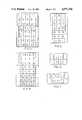
- FIG. 1shows perspective top view of the puzzle weights in an exploded view of one way they could be fitted together.
- FIG. 2shows a sectional view of typical puzzle weight taken along the line 42--42 of FIG. 1.
- FIG. 3shows top view of one configuration of puzzle weights in a full sized pickup box.
- FIG. 4shows top view of different configuration in a full sized pickup box.
- FIG. 5shows top view of a configuration of puzzle weights in a small pickup box.
- FIG. 6shows top view of a configuration of puzzle weights in a small car trunk.
- FIG. 7shows top view of a configuration of puzzle weights in a large car trunk.
- FIG. 1shows perspective top view with weights set apart for the purpose of explanation.
- FIG. 1shows four separate embodiments 11, 12, 13 and 14.
- the corner embodiment 11, side embodiment 12 filler embodiment 13, and side embodiment 14which is the same as 12 but is shown upside down for clarification.
- Each embodiment 11, 12, 13 and 14is a hollow casing made of plastic or similar material. Each is made in such a way that it can be filled with concrete, sand or similar material and be fitted together to form ballast for vehicles.
- Each embodiment 11, 12, 13 and 14typically has a slip resistant flat surface on top 16 and 48, and bottom 18 and 50, rounded corners 20 and is rounded on all edges 22 and angles 24. They have flat sides 28 all around with designated holes 26 for pouring in ballast and holding plug furnished by others.
- Embodiments 11, 12 and 14each have a typical puzzle tab 30 that is formed by acute angles 32 in such a way that when fitted from the top into the typical puzzle insert 34 that is formed by matching acute angles 36 they will not slide apart when moved forward, backward or laterally.
- Embodiment 13 filler casingis typically square with all sides 38 of equal length to the typical sides 40 of embodiments 12 and 14 so that it fits into void left when fitting embodiments 11, 12 and 14 together as shown in exploded view in FIG. 1 and in top views in FIGS. 3, 4 and 5.
- FIG. 2shows section 42 of embodiment 13 in FIG. 1 and is typical of the structures of embodiments 11, 12 and 14.
- Each embodiments 11, 12, 13 and 14is a completely enclosed casing typically made with a thin polyethelene plastic shell 44 that can be filled with concrete 46, sand or other suitable material for ballast.
- each individual casingis shown by number 11, 12 or 13 in their respective plaCes in the different patterns.
- To fit Casings togetherlay corner casing 11 down flat in one corner of whichever pattern you decide to use. Take another casing, either corner casing 11 or side casing 12 depending again on which pattern you are using, and insert puzzle tab 30 into puzzle tab insert 34 from the top. Proceed in the same manner with each casing until a complete perimeter is formed. If needed fill inside area with appropriate number of filler casing 13.
- the puzzle tabs 30 when installed in the puzzle tab inserts 34keep the whole pattern together and help prevent it from sliding around.
- These patterns of puzzle weightslay flat in the cargo area so vehicle can be used for loads in a regular manner without interference. They are tough enough to hold up under normal use. They have rounded edges so they can be taken in and out with ease.
- the casingare the same on each respective side so they can be turned over for the same effect.
Landscapes
- Engineering & Computer Science (AREA)
- Chemical & Material Sciences (AREA)
- Combustion & Propulsion (AREA)
- Transportation (AREA)
- Mechanical Engineering (AREA)
- Toys (AREA)
Abstract
Description
This invention relates to ballast for but not limited to motor vehicles to facilitate easier handling and better ride on dry roads and better traction in mud and snow
Most users of vehicle ballast prefer something that is not bulky and is out of the way. This facilitates the use of a car trunk or pickup box for what it was made for, hauling loads. They also want to be able to remove such ballast if a need arises to haul heavier loads.
Heretofore the ballast for pickup boxes and car trunks have been confined to loose pieces that slide around when accelerating, braking or turning. Receptacles that hold ballast have also been made that bolt to the sides of pickup boxes.
One such receptacle is comprised of three compartments bolted to each side of pickup. These could be filled with liquid or sand for weight. If the liquid was water it would freeze in winter and burst containers. If the liquid was gas, oil or water mixed with antifreeze and the user wanted to drain this liquid for less weight, other containers would be needed to store it. This would be unhandy and very messy. These receptacles could also be filled with sand but it would be most difficult to take out when not needed. The receptacles would also limit the size of the load capability of the pickup because of their bulk.
Another type of ballast is snapped in and out of brackets bolted to the sides of the pickup. This type of ballast when filled is extremely heavy and hard to handle while removing and putting back in. The brackets are exposed and susceptible to damage with ballast removed. They also don't fit all brands or sizes of pickups.
There is nothing in prior art that I can find that is designed for passenger cars.
Most users, therefore, would find it desirable to have ballast that could be used in all types of vehicles and is easy to take in and out.
Accordingly I claim the following as the objects and advantages of the invention: to provide ballast for all types of vehicles, ballast will lay flat on the floor, doesn't take up much room, won't damage a load or luggage by contact, is easy to put in or take out, stores easily when not in use, protects the pickup box or car trunk from damage by the load, can be reversed when showing signs of wear, and is appealing to the eye.
Readers with imagination will find further advantages and an unlimited number of uses from the ensuing description and drawings.
FIG. 1 shows perspective top view of the puzzle weights in an exploded view of one way they could be fitted together.
FIG. 2 shows a sectional view of typical puzzle weight taken along theline 42--42 of FIG. 1.
FIG. 3 shows top view of one configuration of puzzle weights in a full sized pickup box.
FIG. 4 shows top view of different configuration in a full sized pickup box.
FIG. 5 shows top view of a configuration of puzzle weights in a small pickup box.
FIG. 6 shows top view of a configuration of puzzle weights in a small car trunk.
FIG. 7 shows top view of a configuration of puzzle weights in a large car trunk.
11 corner ballast casing
12 side ballast casing
13 filler ballast casing
14 side ballast casing that is the same casing as 12 but is turned over
16 top surface
18 bottom surface
20 typical round corners
22 typical round edges
24 typical rounded angles
26 holes for pouring in ballast
28 flat sides
30 puzzle tabs
32 acute angles
34 puzzle tab insert
36 acute angles
38 sides ofembodiment 13
40 sides ofembodiments
42 cross section ofembodiment 13
44 casing structure
46 concrete filler
48 flat top of casing
50 flat bottom of casing
FIG. 1 shows perspective top view with weights set apart for the purpose of explanation. FIG. 1 shows fourseparate embodiments corner embodiment 11,side embodiment 12filler embodiment 13, andside embodiment 14 which is the same as 12 but is shown upside down for clarification.
Eachembodiment
Eachembodiment top 16 and 48, andbottom rounded corners 20 and is rounded on alledges 22 andangles 24. They have flat sides 28 all around with designatedholes 26 for pouring in ballast and holding plug furnished by others.
FIG. 2shows section 42 ofembodiment 13 in FIG. 1 and is typical of the structures ofembodiments embodiments plastic shell 44 that can be filled withconcrete 46, sand or other suitable material for ballast.
After filling the number ofcasings number corner casing 11 down flat in one corner of whichever pattern you decide to use. Take another casing, eithercorner casing 11 orside casing 12 depending again on which pattern you are using, and insertpuzzle tab 30 into puzzle tab insert 34 from the top. Proceed in the same manner with each casing until a complete perimeter is formed. If needed fill inside area with appropriate number offiller casing 13. Thepuzzle tabs 30 when installed in the puzzle tab inserts 34 keep the whole pattern together and help prevent it from sliding around. These patterns of puzzle weights lay flat in the cargo area so vehicle can be used for loads in a regular manner without interference. They are tough enough to hold up under normal use. They have rounded edges so they can be taken in and out with ease. The casing are the same on each respective side so they can be turned over for the same effect.
While the above description contains many specificities, the reader should not construe these as limitations on the scope of the invention, but merely as exemplifications of preferred embodiments thereof. Those skilled in the art will envision many possible variation that are within its scope For example, skilled artisans will readily be able to change the dimensions and shapes of the various embodiments. TheY will be able to make embodiments out of many different materials. They will be able to make the ballast first then cover it with some sort of material and accomplish the same effect. Accordingly the reader is requested to determine the scope of the invention by the appended claims and their legal equivalents, and not by the examples which have been given.
Claims (4)
1. Ballast used in combination with a pickup truck having a horizontal open, load carrying bed, said ballast including:
(a) plurality of jigsaw puzzle shaped weighted pieces, each said piece having an outer casing of polymeric material and which casing has a generally flat bottom and is filled with a weighty material, and each said piece having a generally dovetail shaped tenon in one side and a complementary shaped mortise in another side of said piece, and said tenon of each said piece adapted to make locking engagement with a mortise of an adjoining one of said pieces, and said pieces adapted to lay flat on said load carrying bed and to be joined together to form a closed array of a plurality of interlocking pieces wherein the tenon of each of said pieces engages a mortise of an adjoining one of said pieces so as to hold said interlocking pieces against relative lateral movement.
2. Ballast as defined in claim 1 wherein said plurality of puzzle shaped pieces includes pieces that are adapted to be corner pieces for said array, and each said corner piece having a mortise that lies adjacent to a side having a tenon.
3. Ballast as defined in claim 2 including a plurality of generally square-shaped weighted pieces, each having an outer casing of polymeric material which casing is filled with a weighty material.
4. Ballast as defined in claim 3 wherein said puzzle shaped pieces and said generally square-shaped pieces lie in a generally rectangular array with said generally square shaped pieces at the interior of said rectangular array and surrounded by interlocking puzzle shaped pieces.
Priority Applications (1)
| Application Number | Priority Date | Filing Date | Title |
|---|---|---|---|
| US07/335,737US4971356A (en) | 1989-04-10 | 1989-04-10 | Puzzle weight for ballast in motor vehicles |
Applications Claiming Priority (1)
| Application Number | Priority Date | Filing Date | Title |
|---|---|---|---|
| US07/335,737US4971356A (en) | 1989-04-10 | 1989-04-10 | Puzzle weight for ballast in motor vehicles |
Publications (1)
| Publication Number | Publication Date |
|---|---|
| US4971356Atrue US4971356A (en) | 1990-11-20 |
Family
ID=23313057
Family Applications (1)
| Application Number | Title | Priority Date | Filing Date |
|---|---|---|---|
| US07/335,737Expired - Fee RelatedUS4971356A (en) | 1989-04-10 | 1989-04-10 | Puzzle weight for ballast in motor vehicles |
Country Status (1)
| Country | Link |
|---|---|
| US (1) | US4971356A (en) |
Cited By (32)
| Publication number | Priority date | Publication date | Assignee | Title |
|---|---|---|---|---|
| US5181760A (en)* | 1990-04-05 | 1993-01-26 | Paul Muno | Motor vehicle trailer with counterbalancing weights |
| USD346991S (en) | 1992-09-02 | 1994-05-17 | Krieger Jr Robert H | Weighted bed liner for pickup trucks |
| US5330227A (en)* | 1993-01-04 | 1994-07-19 | Anderson Alger J | Storable truck bed weights for improved traction and handling |
| US5795006A (en)* | 1996-07-22 | 1998-08-18 | Beckstrom; John D. | Anti-skid vehicle cargo bed insert |
| US6079741A (en)* | 1998-04-24 | 2000-06-27 | Maver; Ryan D. | Vehicle bed ballast apparatus |
| US6283527B1 (en)* | 2000-10-20 | 2001-09-04 | Donald G. Desmarais | Ballast for cargo beds of trucks |
| USD449575S1 (en) | 2000-12-13 | 2001-10-23 | Bruce Duane Wamsley | Blocking device for use in a vehicle |
| US20020145277A1 (en)* | 2001-01-27 | 2002-10-10 | Dombey Philip L. | Vehicle traction enhancer |
| US6471245B1 (en)* | 1999-08-04 | 2002-10-29 | Agco Gmbh & Co. | Ballast weight arrangement |
| US6516948B1 (en) | 2001-03-05 | 2003-02-11 | Jose A. Caballero | Item carrying system |
| US6575679B2 (en) | 2000-12-14 | 2003-06-10 | Gerard Bourgault | Secure accessory system for a truck box |
| US20040227338A1 (en)* | 2003-04-17 | 2004-11-18 | Ryan James Joseph | Ballast system for use in a cargo bed of a vehicle |
| US20070018444A1 (en)* | 2005-07-21 | 2007-01-25 | Michael Gibson | Truck bed ballast bag |
| US20070046011A1 (en)* | 2005-08-26 | 2007-03-01 | Bovy Jamie J | Static-type antiskid counter weight apparatus for a motor vehicle |
| US20070284865A1 (en)* | 2006-06-09 | 2007-12-13 | Watkins Travis R | Truck bed ballast system |
| US20080129028A1 (en)* | 2006-12-04 | 2008-06-05 | Deere & Company | Three point hitch ballast assembly for working machine |
| US20080197615A1 (en)* | 2007-01-16 | 2008-08-21 | Connolly Michael R | Modular weight systems for automobiles |
| US20080246262A1 (en)* | 2007-04-06 | 2008-10-09 | Adams Edie A | Automobile Ballast Device |
| US20080309059A1 (en)* | 2007-06-15 | 2008-12-18 | Aaron Clements | Vehicle traction enhancement system |
| US7552944B1 (en) | 2006-07-31 | 2009-06-30 | Chaden L.L.C. | Vehicle ballast system |
| US20090189405A1 (en)* | 2008-01-25 | 2009-07-30 | Kokladas Shawn P | Cargo and weight holding truck bed accessory |
| US20100224583A1 (en)* | 2009-03-09 | 2010-09-09 | Mentink Trevor D | Counterweight block and assemblies for cranes |
| US20100259060A1 (en)* | 2009-04-08 | 2010-10-14 | Bourgault Industries Ltd. | Secure Accessory and Ballast System for Vehicles |
| CN101974969A (en)* | 2010-10-20 | 2011-02-16 | 苏州红呈木业有限公司 | Mosaic floor |
| US20130153314A1 (en)* | 2010-03-01 | 2013-06-20 | Alan Niedzwiecki | Stackable disaster relief vehicle |
| US20140265412A1 (en)* | 2013-03-14 | 2014-09-18 | Jennifer Ellis | Adjustable Bedliner Ballast System For Vehicles |
| US20150129626A1 (en)* | 2013-11-08 | 2015-05-14 | Dan Malin | Container |
| US20170369110A1 (en)* | 2016-06-22 | 2017-12-28 | Althimasse | Ballasting device for a tractor, especially a farming tractor |
| US10030340B2 (en)* | 2013-12-26 | 2018-07-24 | Dynapac Do Brasil Indústria E Comércio De Máquinas Ltda | Machine weight regulation system |
| USRE47899E1 (en)* | 2010-04-23 | 2020-03-10 | The Raymond Corporation | Operator ride enhancement system |
| CN114771671A (en)* | 2022-04-01 | 2022-07-22 | 安徽省龙佳交通设备有限公司 | Full-bearing type method for transporting semitrailer carriage specially for logistics |
| US11414105B2 (en)* | 2017-08-14 | 2022-08-16 | Siemens Mobility GmbH | Ballast arrangement for a rail vehicle, and method for producing a ballast device |
Citations (3)
| Publication number | Priority date | Publication date | Assignee | Title |
|---|---|---|---|---|
| WO1979001026A1 (en)* | 1978-05-03 | 1979-11-29 | Ssab Svenskt Stal Ab | Weights for working and transport mechanisms |
| US4339142A (en)* | 1980-08-20 | 1982-07-13 | Douglas Tanner | Inner tube traction device |
| US4796914A (en)* | 1988-01-14 | 1989-01-10 | Raynor Leighton A | Truck bed liner with ballast chamber |
- 1989
- 1989-04-10USUS07/335,737patent/US4971356A/ennot_activeExpired - Fee Related
Patent Citations (3)
| Publication number | Priority date | Publication date | Assignee | Title |
|---|---|---|---|---|
| WO1979001026A1 (en)* | 1978-05-03 | 1979-11-29 | Ssab Svenskt Stal Ab | Weights for working and transport mechanisms |
| US4339142A (en)* | 1980-08-20 | 1982-07-13 | Douglas Tanner | Inner tube traction device |
| US4796914A (en)* | 1988-01-14 | 1989-01-10 | Raynor Leighton A | Truck bed liner with ballast chamber |
Cited By (48)
| Publication number | Priority date | Publication date | Assignee | Title |
|---|---|---|---|---|
| US5181760A (en)* | 1990-04-05 | 1993-01-26 | Paul Muno | Motor vehicle trailer with counterbalancing weights |
| USD346991S (en) | 1992-09-02 | 1994-05-17 | Krieger Jr Robert H | Weighted bed liner for pickup trucks |
| US5330227A (en)* | 1993-01-04 | 1994-07-19 | Anderson Alger J | Storable truck bed weights for improved traction and handling |
| US5795006A (en)* | 1996-07-22 | 1998-08-18 | Beckstrom; John D. | Anti-skid vehicle cargo bed insert |
| US6079741A (en)* | 1998-04-24 | 2000-06-27 | Maver; Ryan D. | Vehicle bed ballast apparatus |
| US6471245B1 (en)* | 1999-08-04 | 2002-10-29 | Agco Gmbh & Co. | Ballast weight arrangement |
| US6283527B1 (en)* | 2000-10-20 | 2001-09-04 | Donald G. Desmarais | Ballast for cargo beds of trucks |
| USD449575S1 (en) | 2000-12-13 | 2001-10-23 | Bruce Duane Wamsley | Blocking device for use in a vehicle |
| US6575679B2 (en) | 2000-12-14 | 2003-06-10 | Gerard Bourgault | Secure accessory system for a truck box |
| US20020145277A1 (en)* | 2001-01-27 | 2002-10-10 | Dombey Philip L. | Vehicle traction enhancer |
| US6516948B1 (en) | 2001-03-05 | 2003-02-11 | Jose A. Caballero | Item carrying system |
| US20040227338A1 (en)* | 2003-04-17 | 2004-11-18 | Ryan James Joseph | Ballast system for use in a cargo bed of a vehicle |
| US7264273B2 (en) | 2003-04-17 | 2007-09-04 | Ryan Iii James Joseph | Ballast system for use in a cargo bed of a vehicle |
| US20070018444A1 (en)* | 2005-07-21 | 2007-01-25 | Michael Gibson | Truck bed ballast bag |
| US20070046011A1 (en)* | 2005-08-26 | 2007-03-01 | Bovy Jamie J | Static-type antiskid counter weight apparatus for a motor vehicle |
| US7523961B2 (en) | 2006-06-09 | 2009-04-28 | Watkins Travis R | Truck bed ballast system |
| US20070284865A1 (en)* | 2006-06-09 | 2007-12-13 | Watkins Travis R | Truck bed ballast system |
| US7552944B1 (en) | 2006-07-31 | 2009-06-30 | Chaden L.L.C. | Vehicle ballast system |
| US7618062B2 (en)* | 2006-12-04 | 2009-11-17 | Deere & Company | Three point hitch ballast assembly for working machine |
| US20080129028A1 (en)* | 2006-12-04 | 2008-06-05 | Deere & Company | Three point hitch ballast assembly for working machine |
| US20080197615A1 (en)* | 2007-01-16 | 2008-08-21 | Connolly Michael R | Modular weight systems for automobiles |
| US8186716B2 (en)* | 2007-01-16 | 2012-05-29 | Connolly Michael R | Modular weight systems for automobiles |
| US20080246262A1 (en)* | 2007-04-06 | 2008-10-09 | Adams Edie A | Automobile Ballast Device |
| US7607692B2 (en) | 2007-04-06 | 2009-10-27 | Adams Edie A | Automobile ballast device |
| US20080309059A1 (en)* | 2007-06-15 | 2008-12-18 | Aaron Clements | Vehicle traction enhancement system |
| US7717486B2 (en)* | 2008-01-25 | 2010-05-18 | Kokladas Shawn P | Cargo and weight holding truck bed accessory |
| US20090189405A1 (en)* | 2008-01-25 | 2009-07-30 | Kokladas Shawn P | Cargo and weight holding truck bed accessory |
| US20100224583A1 (en)* | 2009-03-09 | 2010-09-09 | Mentink Trevor D | Counterweight block and assemblies for cranes |
| JP2015051881A (en)* | 2009-03-09 | 2015-03-19 | マニタウォック クレイン カンパニーズ, エルエルシーManitowoc Crane Companies, Llc | Counter-weight block for crane and assembly |
| US8960460B2 (en) | 2009-03-09 | 2015-02-24 | Manitowoc Crane Companies, Llc | Counterweight block and assemblies for cranes |
| US20100259060A1 (en)* | 2009-04-08 | 2010-10-14 | Bourgault Industries Ltd. | Secure Accessory and Ballast System for Vehicles |
| US8011692B2 (en) | 2009-04-08 | 2011-09-06 | Bourgault Industries Ltd. | Secure accessory and ballast system for vehicles |
| US8950530B2 (en)* | 2010-03-01 | 2015-02-10 | Alan Niedzwiecki | Stackable disaster relief vehicle |
| US9623922B2 (en)* | 2010-03-01 | 2017-04-18 | Alan Niedzwiecki | Stackable disaster relief vehicle |
| US20130153314A1 (en)* | 2010-03-01 | 2013-06-20 | Alan Niedzwiecki | Stackable disaster relief vehicle |
| US20150129335A1 (en)* | 2010-03-01 | 2015-05-14 | Alan Niedzwiecki | Stackable disaster relief vehicle |
| USRE48991E1 (en)* | 2010-04-23 | 2022-03-29 | The Raymond Corporation | Operator ride enhancement system |
| USRE47899E1 (en)* | 2010-04-23 | 2020-03-10 | The Raymond Corporation | Operator ride enhancement system |
| CN101974969A (en)* | 2010-10-20 | 2011-02-16 | 苏州红呈木业有限公司 | Mosaic floor |
| US20140265412A1 (en)* | 2013-03-14 | 2014-09-18 | Jennifer Ellis | Adjustable Bedliner Ballast System For Vehicles |
| US9096180B1 (en)* | 2013-11-08 | 2015-08-04 | Dan Malin | Container |
| US9085267B2 (en)* | 2013-11-08 | 2015-07-21 | Dan Malin | Container |
| US20150129626A1 (en)* | 2013-11-08 | 2015-05-14 | Dan Malin | Container |
| US10030340B2 (en)* | 2013-12-26 | 2018-07-24 | Dynapac Do Brasil Indústria E Comércio De Máquinas Ltda | Machine weight regulation system |
| US20170369110A1 (en)* | 2016-06-22 | 2017-12-28 | Althimasse | Ballasting device for a tractor, especially a farming tractor |
| US10286965B2 (en)* | 2016-06-22 | 2019-05-14 | Althimasse | Ballasting device for a tractor, especially a farming tractor |
| US11414105B2 (en)* | 2017-08-14 | 2022-08-16 | Siemens Mobility GmbH | Ballast arrangement for a rail vehicle, and method for producing a ballast device |
| CN114771671A (en)* | 2022-04-01 | 2022-07-22 | 安徽省龙佳交通设备有限公司 | Full-bearing type method for transporting semitrailer carriage specially for logistics |
Similar Documents
| Publication | Publication Date | Title |
|---|---|---|
| US4971356A (en) | Puzzle weight for ballast in motor vehicles | |
| US6077007A (en) | Pick-up truck bed organizer and method | |
| US5381940A (en) | Tray combinations | |
| US6079741A (en) | Vehicle bed ballast apparatus | |
| CA2928926C (en) | Stabilizing cargo organizer | |
| US4750773A (en) | Foldaway box or cabinet | |
| US4306390A (en) | Recreational vehicle enclosure | |
| DE19641386C2 (en) | Loading area construction | |
| US5788310A (en) | Pickup truck bed liner dividing system | |
| DE60202892T2 (en) | Portable insulated container for transporting refrigerated products or frozen goods | |
| US4917429A (en) | Truck bed divider assembly | |
| CA2122760A1 (en) | Interlock panel | |
| CA2662222C (en) | Secure accessory and ballast system for vehicles | |
| US12325556B2 (en) | Repositionable divider and container reinforcing coupler | |
| DE19650767A1 (en) | Storage system for car boot | |
| US3893500A (en) | Tire chain caddy | |
| US6027139A (en) | Ballast container for truck beds | |
| US3314688A (en) | Mobile vehicle for food storage | |
| US6575679B2 (en) | Secure accessory system for a truck box | |
| JPS6147343A (en) | Baggage case set | |
| US20080099520A1 (en) | Truck bed box | |
| EP0850804B1 (en) | Storage bin | |
| CA2292875C (en) | Sled shed | |
| DE19516025A1 (en) | Plastics crates for transporting and storing goods | |
| DE8127183U1 (en) | Tool box for motor vehicles |
Legal Events
| Date | Code | Title | Description |
|---|---|---|---|
| REMI | Maintenance fee reminder mailed | ||
| FPAY | Fee payment | Year of fee payment:4 | |
| SULP | Surcharge for late payment | ||
| REMI | Maintenance fee reminder mailed | ||
| LAPS | Lapse for failure to pay maintenance fees | ||
| FP | Expired due to failure to pay maintenance fee | Effective date:19981120 | |
| STCH | Information on status: patent discontinuation | Free format text:PATENT EXPIRED DUE TO NONPAYMENT OF MAINTENANCE FEES UNDER 37 CFR 1.362 |