US4931721A - Device for automatically ascertaining capacitance, dissipation factor and insulation resistance of a plurality of capacitors - Google Patents
Device for automatically ascertaining capacitance, dissipation factor and insulation resistance of a plurality of capacitorsDownload PDFInfo
- Publication number
- US4931721A US4931721AUS07/288,495US28849588AUS4931721AUS 4931721 AUS4931721 AUS 4931721AUS 28849588 AUS28849588 AUS 28849588AUS 4931721 AUS4931721 AUS 4931721A
- Authority
- US
- United States
- Prior art keywords
- capacitor
- relay
- insulation resistance
- measurement devices
- measuring
- Prior art date
- Legal status (The legal status is an assumption and is not a legal conclusion. Google has not performed a legal analysis and makes no representation as to the accuracy of the status listed.)
- Expired - Fee Related
Links
- 239000003990capacitorSubstances0.000titleclaimsabstractdescription119
- 238000009413insulationMethods0.000titleclaimsabstractdescription23
- 238000012360testing methodMethods0.000claimsabstractdescription70
- 238000005259measurementMethods0.000claimsdescription42
- 239000011159matrix materialSubstances0.000claimsdescription10
- 230000004044responseEffects0.000claimsdescription4
- 238000007599dischargingMethods0.000claimsdescription2
- 239000002184metalSubstances0.000claimsdescription2
- 230000035939shockEffects0.000claimsdescription2
- 230000009977dual effectEffects0.000description8
- 239000000523sampleSubstances0.000description8
- 238000010586diagramMethods0.000description5
- 239000010408filmSubstances0.000description4
- 230000000694effectsEffects0.000description3
- 239000000919ceramicSubstances0.000description2
- 239000004020conductorSubstances0.000description2
- 238000004519manufacturing processMethods0.000description2
- 238000012986modificationMethods0.000description2
- 230000004048modificationEffects0.000description2
- 239000004593EpoxySubstances0.000description1
- 102100035233FurinHuman genes0.000description1
- 101001022148Homo sapiens FurinProteins0.000description1
- 101001128694Homo sapiens Neuroendocrine convertase 1Proteins0.000description1
- 101000601394Homo sapiens Neuroendocrine convertase 2Proteins0.000description1
- 101001072067Homo sapiens Proprotein convertase subtilisin/kexin type 4Proteins0.000description1
- 101000701936Homo sapiens Signal peptidase complex subunit 1Proteins0.000description1
- 101000828971Homo sapiens Signal peptidase complex subunit 3Proteins0.000description1
- 101000979222Hydra vulgaris PC3-like endoprotease variant AProteins0.000description1
- 101000979221Hydra vulgaris PC3-like endoprotease variant BProteins0.000description1
- 102100032132Neuroendocrine convertase 1Human genes0.000description1
- 102100037732Neuroendocrine convertase 2Human genes0.000description1
- 239000004962Polyamide-imideSubstances0.000description1
- 102100036371Proprotein convertase subtilisin/kexin type 4Human genes0.000description1
- 102100038946Proprotein convertase subtilisin/kexin type 6Human genes0.000description1
- 101710180552Proprotein convertase subtilisin/kexin type 6Proteins0.000description1
- 239000004963TorlonSubstances0.000description1
- 229920003997Torlon®Polymers0.000description1
- 230000000712assemblyEffects0.000description1
- 238000000429assemblyMethods0.000description1
- 238000004590computer programMethods0.000description1
- 238000010276constructionMethods0.000description1
- -1etc.)Substances0.000description1
- 239000011888foilSubstances0.000description1
- 230000036039immunityEffects0.000description1
- 238000003780insertionMethods0.000description1
- 230000037431insertionEffects0.000description1
- 239000011810insulating materialSubstances0.000description1
- 238000002955isolationMethods0.000description1
- 239000000463materialSubstances0.000description1
- 239000011104metalized filmSubstances0.000description1
- 238000000034methodMethods0.000description1
- 229920002312polyamide-imidePolymers0.000description1
Images
Classifications
- G—PHYSICS
- G01—MEASURING; TESTING
- G01R—MEASURING ELECTRIC VARIABLES; MEASURING MAGNETIC VARIABLES
- G01R27/00—Arrangements for measuring resistance, reactance, impedance, or electric characteristics derived therefrom
- G01R27/02—Measuring real or complex resistance, reactance, impedance, or other two-pole characteristics derived therefrom, e.g. time constant
- G01R27/26—Measuring inductance or capacitance; Measuring quality factor, e.g. by using the resonance method; Measuring loss factor; Measuring dielectric constants ; Measuring impedance or related variables
- G—PHYSICS
- G01—MEASURING; TESTING
- G01R—MEASURING ELECTRIC VARIABLES; MEASURING MAGNETIC VARIABLES
- G01R31/00—Arrangements for testing electric properties; Arrangements for locating electric faults; Arrangements for electrical testing characterised by what is being tested not provided for elsewhere
- G01R31/01—Subjecting similar articles in turn to test, e.g. "go/no-go" tests in mass production; Testing objects at points as they pass through a testing station
- G01R31/013—Testing passive components
- G01R31/016—Testing of capacitors
Definitions
- the present inventionrelates to automated test equipment for the testing of capacitors.
- Capacitors manufactured using a film dielectricare typically characterized by the same electrical parameters as are ceramic or electrolytic capacitors. Representative of such parameters used to characterize film dielectric capacitors are capacitance, insulation resistance (i.e., leakage current), and dissipation factor. These are the parameters typically tested in order to insure that the manufacturing process produces devices that meet acceptable specified limits.
- the present inventionrelates to an apparatus for automatically measuring characteristics, such as capacitance, dissipation factor and insulation resistance, of each one of a plurality of capacitors.
- the apparatusincludes a predetermined number of test fixtures, each test fixture being adapted to receive one of the capacitors to be tested, and a plurality of measurement devices for measuring various parameters.
- a relay matrixhaving a plurality of relays therein, is connected such that each test fixture may be connected to one of the measurement devices and to a high voltage source of electrical potential.
- Control meansis provided for asserting the measurement devices and for controlling the output of the voltage source to apply a predetermined high voltage to each capacitor connected to the source by the energization of a relay.
- the apparatusfurther includes recording means associated with the measurement devices for recording the measured values of the capacitor.
- the energizing means, the control means, and the recording meansare implemented using a digital computer operating in accordance with a program.
- Each test fixtureis configured from a socket having a body with a first and a second group of receptacles disposed in the body. Each group contains at least one receptacle.
- a first lead on each capacitor being testedis receivable by a receptacle in the first group of receptacles and a second lead on the capacitor is receivable by a receptacle in the second group.
- the first receptacleis connected to a first contact set and the second receptacle is connected to a second contact set of the relay associated with the test fixture.
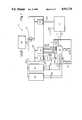
- FIG. 1is a system block diagram of the automatic capacitor testing apparatus in accordance with the present invention
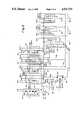
- FIG. 2is a schematic diagram of the interconnection circuitry in the capacitor holding assembly used in the capacitor testing apparatus of the present invention
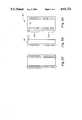
- FIGS. 3A, 3B and 3Care, respectively, a plan, side elevational and bottom views of the physical structure of a capacitor test socket assembly for use in the capacitor testing apparatus of the present invention.
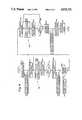
- FIG. 4is a flow diagram of the operation of the automatic capacitor testing apparatus in accordance with the present invention.
- FIG. 1shown is a system block diagram of an automatic capacitor testing apparatus in accordance with the present invention for automatically measuring various predetermined parameters of each of a plurality of capacitors.
- the testing apparatusis generally indicated by reference character 10.
- the parameters able to be testedinclude capacitance, insulation resistance (i.e., leakage current), and dissipation factor.
- the testing apparatus 10includes a controllable high voltage source 12 of electrical potential, an N position capacitor holding assembly 16, an interface 18, a combination inductance, capacitance and resistance (LCR) measurement device 20, a picoampere current measurement device 22, temperature measuring device 24 and a programmable controller 26.
- the interface 18is implemented using a card cage such as that manufactured by Hewlett Packard Inc., Palo Alto, Calif. and sold as the model number HP 6942A multiprogrammer interface.
- Suitable for use as the controller 26is the device manufactured by Hewlett Packard Inc., Palo Alto, Calif. and sold under model number HP 9826.
- the combination inductance, capacitance and resistance (LCR) device 20is preferably implemented using a Hewlett Packard HP 4274A instrument.
- the picoampere current measuring device 22is preferably a Hewlett Packard HP 4140B instrument.
- the temperature measuring device 24is preferably implemented using a device manufactured by John Fluke Manufacturing Co, Everett, Wash. and sold under model number 2170A. If desired the assembly 16 may be thermally insulated and/or temperature controlled to insure a particular predetermined temperature under which the capacitors are to be tested.
- the source 12is connected by a high voltage input line 32 and a high voltage ground line 34 to the capacitor holding assembly 16.
- the lines 32 and 34are implemented as a coaxial cable.
- the use of a coaxial cable throughout the apparatus 10is preferred to insure immunity to electrical noise.
- Suitable for use as the source 12is a high voltage power supply such as that manufactured and sold by Bertan Company of Syosset, N.Y. and sold as model number 205A-01R.
- the assembly 16contains an interconnection network generally indicated by reference numeral 30 and a predetermined number N of test fixtures 38-1 through 38-N.
- high voltageis meant to denote dc voltages up to one thousand (1000) volts.
- a temperature probe 24PDisposed in the holding assembly 16 in temperature sensing proximity to the fixtures 38 is a temperature probe 24P connected to the temperature measuring instrument 24 over a line 24L.
- the probe 24P and the line 24Lare provided as a part of the instrument 24, but it should be appreciated that a separate probe or probes may be used to measure the temperature of the fixtures and to provide a signal representing the same to the instrument over a suitable interconnection line(s).
- the lines 32 and 34are connected by a coaxial jack 40, through a relay 98, to a high rail 42 and a common potential point 94.
- a high resistance (on the order of fifty thousand ohms) and high wattage (on the order of twenty five watts) resistor 46is connected in series between jack 40 and the high rail 42 to protect the power supply 12.
- a door interlock switch 48 and a door actuated rail shorting switch 50are both physically mounted within a metal enclosure provided for the capacitor holding assembly 16. A portion of the enclosure is diagrammatically indicated by the reference character E.
- the enclosure Eis provided with an access door diagrammatically indicated by the reference character D.
- the enclosure E having the door D thereinmay be formed by any suitable construction well within the skill of the art or any commercially available electrical box may be used.
- the interlock switch 48is implemented using a pair of microswitches 48A, 48B, from which emanate a pair of lines 48L.
- the lines 48Lare connected to a distribution board 52 (see FIG. 1).
- the output 54 from the board 52is connected to the enable terminal of the supply 12.
- Suitable for use as the microswitches 48are devices manufactured by Omron Corp., of Schaumburg, Ill. and sold as model number S-5HL12-IAS-K.
- the rail shorting switch 50is formed by a pair of contacts 50X, 50Y that are bridged by a contact disc 50D.
- the disc 50Dis connected to a spring loaded plunger 50P that physically engages the door D of the enclosure E.
- the plunger 50Pcauses the disc 50D to disengage from the contacts 50X, 50Y.
- the door Dis opened switches 48 open, thereby disabling the high voltage supply 12 via the board 52 and the line 54 therefrom.
- the disc 50Dengages the contacts 50X, 50Y and shorts the high rail 42 to chassis ground on enclosure E to prevent an electrical shock hazard to the operator.
- FIG. 2depicts the disc 50D in the position it occupies relative to the contacts 50X, 50Y when the door D is closed.
- each test fixture 38is connected between the high rail 42 and the low rail 44.
- Each test fixture 38is adapted to receive one of the capacitors to be tested.
- Each fixture 38includes a socket assembly, generally indicated by reference character 60, and a relay 66.
- Each relay 66includes two pairs of contacts 66C1 and 66C2 and an actuating coil 66S.
- the coil 66S of each relay 66is connected over lines 68 extending to the interface 18 as will be described.
- Suitable for use as the relays 66are those high insulation resistance, flying lead relays manufactured by Douglas Randall Company of Pawcatuck, Conn. as model number 379525.
- the socket assembly 60physically comprises a body portion 70 formed of an insulating material such as polyamide-imide, manufactured by Amoco Chemical Co. under the trademark Torlon.
- the body portion 70has a predetermined number of receptacles 72 arranged therein. In the preferred instance the receptacles 72 are arranged in two groupings indicated by the reference characters 72A and 72B.
- the socket assembly 60is implemented using a zero insertion force, dual in line planar device such as that manufactured and sold by Textool Incorporated, Irving, Tex., under model number 240-3346-00-2402.
- the assemblycontains dual rows of adjacent receptacles, and thus may be used to define a pair of socket assemblies.
- the assemblyis modified by removing several of the receptacles and associated pins and wiring together the remaining pins to define the receptacle groupings discussed above. This increases the electrical isolation of the receptacles in each grouping.
- the openings from which the receptacles have been removedare filled with a nonconducting polymeric material such as epoxy.
- the interconnection network 30includes a dedicated relay arrangement adapted to interconnect each of the test devices to the high and low rails 42 and 44, respectively.
- the network 30includes a first relay arrangement 80 that interconnects the LCR instrument 20 to the rails 42 and 44 and a second relay arrangement 85 that interconnects both the measurement and the voltage source terminals of the picoampere instrument 22 to the rails 42 and 44 and a third relay arrangement 86 that interconnects only the measurement terminals of the picoampere instrument 22 and the separate external high voltage source 12 to the rails 42 and 44.
- the first relay arrangement 80is implemented using a pair of double pole, normally open relays 81, 82, each identical to the relay 66.
- the relay 81includes a dual contact set 81C1, 81C2 and an actuating coil 81S while the relay 82 includes a dual contact set 82C1, 82C2 and an actuating coil 82S.
- the pair of relays 81, 82is required to implement the first relay arrangement 80 since the particular measuring instrument (the LCR instrument 20) has four measuring terminals.
- One side of the contacts of the relays 81, 82 of the first relay arrangement 80is connected to the instrument 20 over a group 83 of four lines 83L-1, 83L-2, 83L-3 and 83L-4.
- Each of the lines 83L-1, 83L-2, 83L-3 and 83L-4is preferably implemented using a coaxial cable.
- the other side of the contacts 81C1 and 81C2 of the relay 81is connected to the high rail 42 over lines 84L-1 and 84L-2.
- the other side of the contacts 82C1 and 82C2 of the relay 82is connected to the low rail 44 over lines 84L-3 and 84L-4.
- the coils of the relays 81, 82are wired in parallel and connect to the interface 18 over a pair of control lines 80L.
- the second and third relay arrangements 85 and 86are each implemented using a pair of double pole, normally open relays 87, 88, and 87, 98, respectively, each identical to the relay 81.
- the relay 87includes a dual contact set 87C1, 87C2 and an actuating coil 87S while the relay 88 includes a dual contact set 88C1, 88C2 and an actuating coil 88S.
- the pair of relays 87, 88is required to implement the second relay arrangement 85 since the particular measuring instrument (the picoampere measuring instrument 22), when using its internal voltage source, has four required connections, two measurement terminals and two voltage terminals.
- One side of the contacts of the relays 87, 88 of the second relay arrangement 85is connected to the instrument 22 over a group 90 of four lines 90L1, 90L2, 90L3 and 90L4.
- the lines 90L1 and 90L2are preferably implemented as the two inner conductors of a triaxial cable.
- the lines 90L3 and 90L4are preferably implemented as the center conductor and the shield of a coaxial cable.
- a high resistance (on the order of fifty thousand ohms) and high wattage (on the order of twenty five watts) resistor 91is connected in series between line 90L3 and the high rail 42 to protect the internal voltage source of picoampere instrument 22.
- the other side of the contact 87C1 of the relay 87is connected to the low rail 44 over a line 92L1.
- the other side of the contact 88C1 of the relay 88is connected to the high rail 42 over a line 92L3.
- the other side of the contacts 87C2 and 88C2 of the relays 87, 88are connected to a point of common potential 94.
- the coils of the relays 87, 88each connect to the interface 18 over pairs of control lines 87L, 88L.
- the third relay arrangement 86is comprised of the pair of relays 87, 98 (each identical to the relay 81).
- the relay 98includes a dual contact set 98C1, 98C2 and an actuating coil 98S.
- the pair of relays 87, 98is required to implement the third relay arrangement 86 since the particular measuring instrument (the picoampere measuring instrument 22), when used with a separate external voltage source, has two required connections (the two measurement terminals) and the separate external voltage source has two required connections.
- the coil 98S of the relay 98is connected to the interface 18 over a pair of control lines 98L.
- One side of the contact 98C1is connected to the high rail 42.
- the other side of the contact 98C1is connected to the supply 12 over the line 32.
- the first side of the contact 98C2is connected to the point of common potential 94.
- the second side of the contact 98C2is connected to the supply 12 over the line 34.
- the interconnection network 30further includes a discharge relay arrangement 102 comprising a relay 103 identical to the relay 81.
- the relay 103includes a dual contact set 103C1, 103C2 and an actuating coil 103S.
- the coil 103S of the relay 103is connected to the interface 18 over a pair of control lines 103L.
- One side of the contact 103C1is connected to the high rail 42.
- the other side of the contact 103C1is connected in series with a high resistance (on the order of fifty thousand ohms) and high wattage (on the order of twenty five watts) resistor 106 to chassis ground of enclosure E.
- One side of the contact 103C2is connected to the low rail 44.
- the other side of the contact 103C2is connected in series with another high resistance (on the order of fifty thousand ohms) and high wattage (on the order of twenty five watts) resistor 108 to chassis ground of enclosure E.
- the discharge relay arrangement 102provides means to dissipate stored energy remaining across a capacitor in the test fixture and thus provides capacitor discharge means connected across the fixtures for discharging a capacitor previously connected to either the internal high voltage source of the picoampere instrument 22 or the separate external high voltage source 12.
- the interconnection arrangement above described for interconnecting the particular test instrument to the holding assembly 16is necessary to permit accurate measurement by the instrument of the desired parameter.
- the shielding of the cables, the interconnection of their shields to a common potential, and the very high insulation resistance (on the order of hundreds of thousands of megohms) of the relays usedallows an accurate measurement to be made.
- the key point to noteis that even though the capacitor being tested is physically remote from the instrument, in accordance with the present invention it appears as if it is electrically proximal to the instrument.
- the relays in the capacitor holding assembly 16 together with the relays in the interconnection network 30cooperate to form a relay matrix connected between the test fixtures 38 and the plurality of measurement devices 20, 22 (and, when used in conjunction with the test instrument 22, as will be developed, the high voltage supply 12).
- the relay output control 110includes, in the preferred case, one or more output modules such as those manufactured by Hewlett Packard Inc., Palo Alto, Calif. and sold under model number 69730A.
- the relay control 110is connected to the relay control lines 68 emanating from the coils of each of the relays 66 respectively disposed in each of the test fixtures 38 and to the relay control lines 80L, 87L, 88L, 98L and 103L.
- the relay output control 110is connected to an internal bus 114.
- the bus 114is connected through an interface 116 and over a communications bus 120 to the programmable controller 26.
- the communications bus 120may be implemented in accordance with IEEE Standard 488.
- the controller 26 and the relay output control 110act together to assert the coil 66S associated with a given one of the relays 66 by sending an enabling signal over the control lines 68 associated with the predetermined relay 66.
- the controller 26 and the relay output control 110also act together to assert one or more of the paired coils 81S, 82S, the coils 87S and 88S, and the coils 87S and 98S respectively associated with a given one or more of their associated relays by sending an enabling signal over the appropriate respective control lines 80L, 87L, 88L and 98L.
- the controller 26 and the relay output control 110together define means for energizing predetermined combinations of the relays in the relay matrix in accordance with a predetermined sequence thereby to connect a capacitor mounted in predetermined ones of the text fixtures with predetermined ones of the measurement devices.
- the controller 26 and the relay output control 110additionally act together to assert the coil 103S associated with the discharge relay 103 by sending an enabling signal over the appropriate control line 103L.
- a digital output module 122Also mounted in the interface 18 is a digital output module 122.
- Preferred for use as the digital output module 122is the device manufactured by Hewlett Packard Inc., Palo Alto, Calif. and sold under model number 69731A.
- the output of the module 122is applied to the high voltage supply 12 over the lines 124.
- the digital output module 122is connected to the internal bus 114 and, thus, to the programmable controller 26. In a manner to be described the controller 26 together with the digital output module 122 to define control means for controlling the output of the voltage source 12 to apply a predetermined high voltage.
- a digital input module 126mounted in the interface 18 .
- Preferred for use as the digital input module 126is the device manufactured by Hewlett Packard and sold under model number 69771A.
- the input of the module 126is connected to the temperature measuring instrument 24 over the lines 128.
- the module 126is connected to the internal bus 114 and thus to the programmable controller 26.
- the probe 24Pprovides means for generating a signal representative of the temperature on the interior of the capacitor holding assembly 16 and, thus, of a capacitor in a test fixture while the the instrument 24, the module 126 and the controller 26 cooperate to define means for recording the temperature.
- the value of the temperatureis stored in the memory of the controller 26.
- any suitable recording device indicated diagrammatically at 26Rcould be used in conjunction with the controller 26.
- the device 26Rmay take the form of a magnetic media recording device, a hardcopy printer, a plotter and/or a CRT display.
- the instruments 20 and 22are interconnected to the controller 26 over the communications bus 120.
- the operation of the apparatus heretofore set forthwill be explained in the context of testing multiple capacitors for various parameters, including, for example, capacitance, dissipation factor and insulation resistance.
- the operatorinitializes the apparatus 10 by energizing the hardware and loading the program defining the test protocol into the controller 26.
- the individual capacitorsare loaded with one lead of the capacitor inserted into a receptacle in the receptacle group 72A and other lead into a receptacle in receptacle group 72B.
- the appropriate receptacle in the particular receptacle groupis selected based upon the physical size of the capacitor.
- test detail informationincludes operator name, job number, starting sample number, total number of samples, and the number of voltages and the specific voltage levels at which insulation resistance is to be measured.
- the automatic test sequencebegins.
- the test protocolsequentially discharges all the capacitors to be tested, measures the temperature of the capacitor holding assembly 16, selects a test instrument to be used to make one or more measurements of selected parameters on each capacitor.
- the capacitors to be testedare then connected sequentially to the selected test instrument, the parameters measured and recorded by the controller.
- the controlleragain sequentially discharges all the capacitors.
- the next test instrumentis selected and the capacitors are again connected sequentially, the parameter(s) measured and recorded. This sequence is repeated until all parameters of all capacitors have been recorded.
- the temperature of the capacitor holding assembly 16is measured a second time to insure that the temperature has not changed substantially since the testing began. After all parameters have been measured the controller again sequentially discharges all the capacitors.
- the discharge relay 103is asserted under program control to dissipate any residual charge on the capacitor.
- the coil 103S of the discharge relay 103is asserted over the line 103L by the control module 110 in response to the controller 26.
- a predetermined delaytypically six seconds
- the relay 103is opened. Calls to the routine 154 are made throughout the program listing and are indicated therein by the dashed suffix following the reference character 154.
- the overall temperature of the capacitor holding assembly 16is measured by causing the digital input module 126 to read the output of the digital temperature measuring device 24. Calls to the routine 156 are made throughout the program listing and are indicated therein in the manner similar to that discussed above.
- the controller 26under program control, selects a predetermined one of the measurement instruments.
- the parameters of capacitance and dissipation factorare measured simultaneously for each selected capacitor. After all capacitors have been measured for these parameters then insulation resistance is measured for each capacitor.
- the measurement of capacitance and dissipation factoris effected by the controller 26, as generally indicated at 158.
- the LCR instrument 20is connected to the selected capacitor by causing the relay control module 110 to close the relay arrangement 80. This is effected by the assertion of the relay coils 81S and 82S over the line 80L.
- the controller 26, under program controlselects a predetermined one of the capacitors (corresponding to number of the fixture at which testing is to begin). The desired one of the capacitors is selected by closing the corresponding one of the relays 66-1 through 66-N by the controller 26 sending a command to the relay output control 110 which asserts the appropriate one of the coils 66S in the appropriate relay 66 to connect the fixture between the high and low rails 42 and 44, respectively.
- a predetermined combination of relays in the relay matrixhas been energized to connect a predetermined one of the test fixtures with a predetermined one of the measurement devices.
- the controller 26then begins the measurement of at least a predetermined one of the parameters of that selected capacitor.
- the particular one of the measurement devices connected to the particular test fixture via the energized relays in the relay matrixis asserted.
- the controller 26sends a command over the bus 120 to the LCR instrument 20 asserting it to simultaneously measure the capacitance and dissipation factor of the selected capacitor.
- the instrumentperforms the measurement and reports the results to the controller 26 over the bus 120.
- the resultis stored in the memory of the controller 26.
- capacitance and dissipation factorare measured simultaneously, although they may be measured separately.
- the routine 154is again performed, thus the discharge key 103 is again asserted under program control to dissipate any residual charge on the capacitor.
- the overall temperature of the capacitor holding assembly 16is again measured by causing the digital input module 126 to read the output of the digital temperature measuring device 24.
- Block 160Ais a branch to either connect the internal voltage source of picoampere instrument 22 or to connect a separate external voltage source 12. The following paragraph assumes that the internal voltage source of the instrument 22 is used.
- the controller 26commands the instrument 22 to apply a desired electrical potential (initially specified by the operator) to the selected capacitor.
- the controller 26asserts the appropriate relay arrangement 85 over the lines 87L, 88L from the relay control module 110.
- Relay 87connects the measurement terminals of picoampere instrument 22 and relay 88 connects the internal source of voltage potential to the rails 42, 44.
- the controller 26, under program controlthen selects a predetermined one of the capacitors.
- the desired one of the capacitorsis selected by closing the corresponding one of the relays 66-1 through 66-N by the controller 26 sending a command to the relay output control 110 which asserts the appropriate one of the coils 66S in the appropriate relay 66 to connect the fixture between the high and low rails 42 and 44, respectively.
- the instrument 22is then asserted, at 160E, by the controller 26 to measure (after a predetermined time delay, if desired) the leakage current through the selected capacitor at this applied voltage.
- the reported value of leakage currentis stored by the controller 26 in its memory.
- the controller 26asserts the third relay arrangement 86 over the lines 87L, 98L from the relay control module 110.
- Relay 87again connects the measurement terminals of picoampere instrument 22 to the rails 42, 44.
- the relay 98connects the supply 12 to the high rail 42 and the common point 94 and thus to the selected capacitor.
- a similar sequencewould be utilized if the picoampere measurement instrument 22 does not contain an internal source of potential.
- a commandis sent from the controller 26 via the digital output module 122 to set the output voltage of the supply 12.
- the instrument 22measures (after a predetermined time delay, if desired) the leakage current through the selected capacitor at this applied voltage.
- the measured value of leakage currentis read and stored by the controller 26 in its memory.
- the above sequence160A through 160F is repeated for each specified voltage. After the capacitors have been measured at each specified voltage, the capacitor discharge routine 154 is again performed.
- the instrumentis disconnected from the selected capacitor by turning off the relay arrangement 86.
- the overall temperature of the capacitor holding assembly 16is again measured by causing the digital input module 126 to read the output of the digital temperature measuring device 24.
- routine 154is again performed.
- the discharge relay 103is again asserted in a manner identical to that described above.
- the controller 26then signals the operator that the tests have been completed.
- the operatoropens the door D of the holding assembly 16 and removes the capacitors therefrom.
- the controller 26reports the test results in the desired format. Examples of such formats include printed tables of values or plotted histograms of the desired parameters.
- the informationmay also be stored on magnetic media for archival purposes.
Landscapes
- Engineering & Computer Science (AREA)
- Power Engineering (AREA)
- Physics & Mathematics (AREA)
- General Physics & Mathematics (AREA)
- Measurement Of Resistance Or Impedance (AREA)
- Testing Electric Properties And Detecting Electric Faults (AREA)
Abstract
Description
1. Field of the Invention
The present invention relates to automated test equipment for the testing of capacitors.
2. Description of the Prior Art
Capacitors manufactured using a film dielectric are typically characterized by the same electrical parameters as are ceramic or electrolytic capacitors. Representative of such parameters used to characterize film dielectric capacitors are capacitance, insulation resistance (i.e., leakage current), and dissipation factor. These are the parameters typically tested in order to insure that the manufacturing process produces devices that meet acceptable specified limits.
Individual pieces of test equipment are available for testing each of these various parameters. However, in order to obtain statistically significant results a large number of capacitors should be tested. Testing capacitors according to present industry practice is a time-consuming and labor intensive process. To effect such testing each capacitor is presently individually connected in turn to each piece of test apparatus and the appropriate test run on that apparatus. Since the testing of all of the capacitors should be effected under substantially identical test conditions, such as temperature and humidity, it is difficult to guarantee that such will be the case when a large number of capacitors are individually tested. Accordingly, it is believed advantageous to provide an apparatus which will automatically test each of a plurality of capacitor samples for each of a predetermined number of parameters under substantially identical test conditions.
The present invention relates to an apparatus for automatically measuring characteristics, such as capacitance, dissipation factor and insulation resistance, of each one of a plurality of capacitors. The apparatus includes a predetermined number of test fixtures, each test fixture being adapted to receive one of the capacitors to be tested, and a plurality of measurement devices for measuring various parameters. A relay matrix, having a plurality of relays therein, is connected such that each test fixture may be connected to one of the measurement devices and to a high voltage source of electrical potential. Also included in the test apparatus is means for energizing predetermined ones of the relays in accordance with a predetermined sequence thereby to connect the capacitor associated with each relay to the desired measurement device. Control means is provided for asserting the measurement devices and for controlling the output of the voltage source to apply a predetermined high voltage to each capacitor connected to the source by the energization of a relay.
The apparatus further includes recording means associated with the measurement devices for recording the measured values of the capacitor. In the preferred instance the energizing means, the control means, and the recording means are implemented using a digital computer operating in accordance with a program.
Each test fixture is configured from a socket having a body with a first and a second group of receptacles disposed in the body. Each group contains at least one receptacle. A first lead on each capacitor being tested is receivable by a receptacle in the first group of receptacles and a second lead on the capacitor is receivable by a receptacle in the second group. The first receptacle is connected to a first contact set and the second receptacle is connected to a second contact set of the relay associated with the test fixture.
The invention will be more fully understood from the following detailed description thereof, taken in connection with the accompanying drawings, which form a part of this application and in which:
FIG. 1 is a system block diagram of the automatic capacitor testing apparatus in accordance with the present invention;
FIG. 2 is a schematic diagram of the interconnection circuitry in the capacitor holding assembly used in the capacitor testing apparatus of the present invention;
FIGS. 3A, 3B and 3C are, respectively, a plan, side elevational and bottom views of the physical structure of a capacitor test socket assembly for use in the capacitor testing apparatus of the present invention; and
FIG. 4 is a flow diagram of the operation of the automatic capacitor testing apparatus in accordance with the present invention.
An Appendix containing a listing of a computer program in HP BASIC 2.1 language is appended to this application following the specification preceding the claims. The Appendix forms part of this application.
Throughout the following detailed description similar reference characters refer to similar elements in all figures of the drawings.
With reference to FIG. 1 shown is a system block diagram of an automatic capacitor testing apparatus in accordance with the present invention for automatically measuring various predetermined parameters of each of a plurality of capacitors. The testing apparatus is generally indicated byreference character 10. The parameters able to be tested include capacitance, insulation resistance (i.e., leakage current), and dissipation factor.
Thetesting apparatus 10 includes a controllablehigh voltage source 12 of electrical potential, an N positioncapacitor holding assembly 16, aninterface 18, a combination inductance, capacitance and resistance (LCR)measurement device 20, a picoamperecurrent measurement device 22,temperature measuring device 24 and aprogrammable controller 26. Theinterface 18 is implemented using a card cage such as that manufactured by Hewlett Packard Inc., Palo Alto, Calif. and sold as the model number HP 6942A multiprogrammer interface. Suitable for use as thecontroller 26 is the device manufactured by Hewlett Packard Inc., Palo Alto, Calif. and sold under model number HP 9826. The combination inductance, capacitance and resistance (LCR)device 20 is preferably implemented using a Hewlett Packard HP 4274A instrument. The picoamperecurrent measuring device 22 is preferably a Hewlett Packard HP 4140B instrument. Thetemperature measuring device 24 is preferably implemented using a device manufactured by John Fluke Manufacturing Co, Everett, Wash. and sold under model number 2170A. If desired theassembly 16 may be thermally insulated and/or temperature controlled to insure a particular predetermined temperature under which the capacitors are to be tested.
Thesource 12 is connected by a highvoltage input line 32 and a highvoltage ground line 34 to thecapacitor holding assembly 16. Thelines apparatus 10 is preferred to insure immunity to electrical noise. Suitable for use as thesource 12 is a high voltage power supply such as that manufactured and sold by Bertan Company of Syosset, N.Y. and sold as model number 205A-01R. Theassembly 16 contains an interconnection network generally indicated byreference numeral 30 and a predetermined number N of test fixtures 38-1 through 38-N. As used herein, high voltage is meant to denote dc voltages up to one thousand (1000) volts. Disposed in theholding assembly 16 in temperature sensing proximity to thefixtures 38 is atemperature probe 24P connected to thetemperature measuring instrument 24 over aline 24L. In the preferred implementation theprobe 24P and theline 24L are provided as a part of theinstrument 24, but it should be appreciated that a separate probe or probes may be used to measure the temperature of the fixtures and to provide a signal representing the same to the instrument over a suitable interconnection line(s).
As may be understood from FIG. 2, thelines relay 98, to ahigh rail 42 and a commonpotential point 94. A high resistance (on the order of fifty thousand ohms) and high wattage (on the order of twenty five watts)resistor 46 is connected in series between jack 40 and thehigh rail 42 to protect thepower supply 12. Adoor interlock switch 48 and a door actuatedrail shorting switch 50 are both physically mounted within a metal enclosure provided for thecapacitor holding assembly 16. A portion of the enclosure is diagrammatically indicated by the reference character E. The enclosure E is provided with an access door diagrammatically indicated by the reference character D. The enclosure E having the door D therein may be formed by any suitable construction well within the skill of the art or any commercially available electrical box may be used. Theinterlock switch 48 is implemented using a pair ofmicroswitches 48A, 48B, from which emanate a pair oflines 48L. Thelines 48L are connected to a distribution board 52 (see FIG. 1). Theoutput 54 from theboard 52 is connected to the enable terminal of thesupply 12. Suitable for use as themicroswitches 48 are devices manufactured by Omron Corp., of Schaumburg, Ill. and sold as model number S-5HL12-IAS-K. Therail shorting switch 50 is formed by a pair ofcontacts 50X, 50Y that are bridged by a contact disc 50D. The disc 50D is connected to a spring loadedplunger 50P that physically engages the door D of the enclosure E. When the door D is closed theplunger 50P causes the disc 50D to disengage from thecontacts 50X, 50Y. When the door D is opened switches 48 open, thereby disabling thehigh voltage supply 12 via theboard 52 and theline 54 therefrom. Also, upon further opening of the door D the disc 50D engages thecontacts 50X, 50Y and shorts thehigh rail 42 to chassis ground on enclosure E to prevent an electrical shock hazard to the operator. FIG. 2 depicts the disc 50D in the position it occupies relative to thecontacts 50X, 50Y when the door D is closed.
As is seen in FIG. 2 eachtest fixture 38 is connected between thehigh rail 42 and thelow rail 44. Eachtest fixture 38 is adapted to receive one of the capacitors to be tested. Eachfixture 38 includes a socket assembly, generally indicated byreference character 60, and a relay 66. Each relay 66 includes two pairs of contacts 66C1 and 66C2 and anactuating coil 66S. Thecoil 66S of each relay 66 is connected overlines 68 extending to theinterface 18 as will be described. Suitable for use as the relays 66 are those high insulation resistance, flying lead relays manufactured by Douglas Randall Company of Pawcatuck, Conn. as model number 379525.
As seen in FIGS. 3A through 3C thesocket assembly 60 physically comprises abody portion 70 formed of an insulating material such as polyamide-imide, manufactured by Amoco Chemical Co. under the trademark Torlon. Thebody portion 70 has a predetermined number of receptacles 72 arranged therein. In the preferred instance the receptacles 72 are arranged in two groupings indicated by thereference characters
In the preferred case thesocket assembly 60 is implemented using a zero insertion force, dual in line planar device such as that manufactured and sold by Textool Incorporated, Irving, Tex., under model number 240-3346-00-2402. The assembly contains dual rows of adjacent receptacles, and thus may be used to define a pair of socket assemblies. The assembly is modified by removing several of the receptacles and associated pins and wiring together the remaining pins to define the receptacle groupings discussed above. This increases the electrical isolation of the receptacles in each grouping. The openings from which the receptacles have been removed are filled with a nonconducting polymeric material such as epoxy.
Theinterconnection network 30 includes a dedicated relay arrangement adapted to interconnect each of the test devices to the high andlow rails network 30 includes afirst relay arrangement 80 that interconnects theLCR instrument 20 to therails second relay arrangement 85 that interconnects both the measurement and the voltage source terminals of thepicoampere instrument 22 to therails third relay arrangement 86 that interconnects only the measurement terminals of thepicoampere instrument 22 and the separate externalhigh voltage source 12 to therails
In the preferred embodiment illustrated in FIG. 2 thefirst relay arrangement 80 is implemented using a pair of double pole, normallyopen relays 81, 82, each identical to the relay 66. The relay 81 includes a dual contact set 81C1, 81C2 and an actuating coil 81S while therelay 82 includes a dual contact set 82C1, 82C2 and an actuating coil 82S. The pair ofrelays 81, 82 is required to implement thefirst relay arrangement 80 since the particular measuring instrument (the LCR instrument 20) has four measuring terminals. One side of the contacts of therelays 81, 82 of thefirst relay arrangement 80 is connected to theinstrument 20 over agroup 83 of four lines 83L-1, 83L-2, 83L-3 and 83L-4. Each of the lines 83L-1, 83L-2, 83L-3 and 83L-4 is preferably implemented using a coaxial cable. The other side of the contacts 81C1 and 81C2 of the relay 81 is connected to thehigh rail 42 over lines 84L-1 and 84L-2. The other side of the contacts 82C1 and 82C2 of therelay 82 is connected to thelow rail 44 over lines 84L-3 and 84L-4. The coils of therelays 81, 82 are wired in parallel and connect to theinterface 18 over a pair ofcontrol lines 80L.
The second andthird relay arrangements open relays relay 88 includes a dual contact set 88C1, 88C2 and an actuating coil 88S. The pair ofrelays 87, 88 is required to implement thesecond relay arrangement 85 since the particular measuring instrument (the picoampere measuring instrument 22), when using its internal voltage source, has four required connections, two measurement terminals and two voltage terminals. One side of the contacts of therelays 87, 88 of thesecond relay arrangement 85 is connected to theinstrument 22 over agroup 90 of four lines 90L1, 90L2, 90L3 and 90L4. The lines 90L1 and 90L2 are preferably implemented as the two inner conductors of a triaxial cable. The lines 90L3 and 90L4 are preferably implemented as the center conductor and the shield of a coaxial cable. A high resistance (on the order of fifty thousand ohms) and high wattage (on the order of twenty five watts)resistor 91 is connected in series between line 90L3 and thehigh rail 42 to protect the internal voltage source ofpicoampere instrument 22. The other side of the contact 87C1 of the relay 87 is connected to thelow rail 44 over a line 92L1. The other side of the contact 88C1 of therelay 88 is connected to thehigh rail 42 over a line 92L3. The other side of the contacts 87C2 and 88C2 of therelays 87, 88 are connected to a point ofcommon potential 94. The coils of therelays 87, 88 each connect to theinterface 18 over pairs ofcontrol lines
Thethird relay arrangement 86 is comprised of the pair of relays 87, 98 (each identical to the relay 81). Therelay 98 includes a dual contact set 98C1, 98C2 and anactuating coil 98S. The pair ofrelays 87, 98 is required to implement thethird relay arrangement 86 since the particular measuring instrument (the picoampere measuring instrument 22), when used with a separate external voltage source, has two required connections (the two measurement terminals) and the separate external voltage source has two required connections. Thecoil 98S of therelay 98 is connected to theinterface 18 over a pair ofcontrol lines 98L. One side of the contact 98C1 is connected to thehigh rail 42. The other side of the contact 98C1 is connected to thesupply 12 over theline 32. The first side of the contact 98C2 is connected to the point ofcommon potential 94. The second side of the contact 98C2 is connected to thesupply 12 over theline 34.
Theinterconnection network 30 further includes adischarge relay arrangement 102 comprising arelay 103 identical to the relay 81. Therelay 103 includes a dual contact set 103C1, 103C2 and anactuating coil 103S. Thecoil 103S of therelay 103 is connected to theinterface 18 over a pair ofcontrol lines 103L. One side of the contact 103C1 is connected to thehigh rail 42. The other side of the contact 103C1 is connected in series with a high resistance (on the order of fifty thousand ohms) and high wattage (on the order of twenty five watts)resistor 106 to chassis ground of enclosure E. One side of the contact 103C2 is connected to thelow rail 44. The other side of the contact 103C2 is connected in series with another high resistance (on the order of fifty thousand ohms) and high wattage (on the order of twenty five watts)resistor 108 to chassis ground of enclosure E. Thedischarge relay arrangement 102 provides means to dissipate stored energy remaining across a capacitor in the test fixture and thus provides capacitor discharge means connected across the fixtures for discharging a capacitor previously connected to either the internal high voltage source of thepicoampere instrument 22 or the separate externalhigh voltage source 12.
The interconnection arrangement above described for interconnecting the particular test instrument to the holdingassembly 16 is necessary to permit accurate measurement by the instrument of the desired parameter. The shielding of the cables, the interconnection of their shields to a common potential, and the very high insulation resistance (on the order of hundreds of thousands of megohms) of the relays used allows an accurate measurement to be made. The key point to note is that even though the capacitor being tested is physically remote from the instrument, in accordance with the present invention it appears as if it is electrically proximal to the instrument.
The relays in thecapacitor holding assembly 16 together with the relays in theinterconnection network 30 cooperate to form a relay matrix connected between thetest fixtures 38 and the plurality ofmeasurement devices 20, 22 (and, when used in conjunction with thetest instrument 22, as will be developed, the high voltage supply 12).
Mounted in theinterface 18 is a relay output control arrangement generally indicated byreference character 110. Therelay output control 110 includes, in the preferred case, one or more output modules such as those manufactured by Hewlett Packard Inc., Palo Alto, Calif. and sold under model number 69730A. Therelay control 110 is connected to therelay control lines 68 emanating from the coils of each of the relays 66 respectively disposed in each of thetest fixtures 38 and to therelay control lines relay output control 110 is connected to aninternal bus 114. Thebus 114 is connected through aninterface 116 and over a communications bus 120 to theprogrammable controller 26. The communications bus 120 may be implemented in accordance withIEEE Standard 488. Thecontroller 26 and therelay output control 110 act together to assert thecoil 66S associated with a given one of the relays 66 by sending an enabling signal over thecontrol lines 68 associated with the predetermined relay 66. Thecontroller 26 and therelay output control 110 also act together to assert one or more of the paired coils 81S, 82S, the coils 87S and 88S, and thecoils 87S and 98S respectively associated with a given one or more of their associated relays by sending an enabling signal over the appropriaterespective control lines controller 26 and therelay output control 110 together define means for energizing predetermined combinations of the relays in the relay matrix in accordance with a predetermined sequence thereby to connect a capacitor mounted in predetermined ones of the text fixtures with predetermined ones of the measurement devices. Thecontroller 26 and therelay output control 110 additionally act together to assert thecoil 103S associated with thedischarge relay 103 by sending an enabling signal over theappropriate control line 103L.
Also mounted in theinterface 18 is adigital output module 122. Preferred for use as thedigital output module 122 is the device manufactured by Hewlett Packard Inc., Palo Alto, Calif. and sold under model number 69731A. The output of themodule 122 is applied to thehigh voltage supply 12 over thelines 124. Thedigital output module 122 is connected to theinternal bus 114 and, thus, to theprogrammable controller 26. In a manner to be described thecontroller 26 together with thedigital output module 122 to define control means for controlling the output of thevoltage source 12 to apply a predetermined high voltage.
Also mounted in theinterface 18 is adigital input module 126. Preferred for use as thedigital input module 126 is the device manufactured by Hewlett Packard and sold under model number 69771A. The input of themodule 126 is connected to thetemperature measuring instrument 24 over thelines 128. Themodule 126 is connected to theinternal bus 114 and thus to theprogrammable controller 26. Theprobe 24P provides means for generating a signal representative of the temperature on the interior of thecapacitor holding assembly 16 and, thus, of a capacitor in a test fixture while the theinstrument 24, themodule 126 and thecontroller 26 cooperate to define means for recording the temperature. In the embodiment described the value of the temperature is stored in the memory of thecontroller 26. Of course, any suitable recording device indicated diagrammatically at 26R could be used in conjunction with thecontroller 26. As an example, thedevice 26R may take the form of a magnetic media recording device, a hardcopy printer, a plotter and/or a CRT display.
Theinstruments controller 26 over the communications bus 120.
The operation of the apparatus heretofore set forth will be explained in the context of testing multiple capacitors for various parameters, including, for example, capacitance, dissipation factor and insulation resistance. With reference to the block diagram of the program shown in FIG. 4, at 150 the operator initializes theapparatus 10 by energizing the hardware and loading the program defining the test protocol into thecontroller 26.
The operator then loads the capacitors to be tested into the appropriate test fixtures 38-1 through 38-N. Not all of the fixtures need be used. The individual capacitors are loaded with one lead of the capacitor inserted into a receptacle in thereceptacle group 72A and other lead into a receptacle inreceptacle group 72B. The appropriate receptacle in the particular receptacle group is selected based upon the physical size of the capacitor. Once the capacitors are locked in place, the door D of the enclosure surrounding the holdingassembly 16 is closed, thus closing theinterlock switch 48 and opening therail shorting switch 50, thereby allowing a voltage to appear across thehigh rail 42 and thelow rail 44.
As also shown at 152, the operator provides sample identification and test details. Examples of the former include sample description, capacitor type (metallized film, film/foil, electrolytic, multilayer ceramic, etc.), film thickness, and testing date. Test detail information includes operator name, job number, starting sample number, total number of samples, and the number of voltages and the specific voltage levels at which insulation resistance is to be measured.
In summary, upon the operator's command, the automatic test sequence begins. The test protocol sequentially discharges all the capacitors to be tested, measures the temperature of thecapacitor holding assembly 16, selects a test instrument to be used to make one or more measurements of selected parameters on each capacitor. The capacitors to be tested are then connected sequentially to the selected test instrument, the parameters measured and recorded by the controller. The controller again sequentially discharges all the capacitors. The next test instrument is selected and the capacitors are again connected sequentially, the parameter(s) measured and recorded. This sequence is repeated until all parameters of all capacitors have been recorded. The temperature of thecapacitor holding assembly 16 is measured a second time to insure that the temperature has not changed substantially since the testing began. After all parameters have been measured the controller again sequentially discharges all the capacitors. In this way it may be seen that the apparatus in accordance with the present invention automatically tests each of a plurality of capacitor samples for each of a predetermined number of parameters under substantially identical test conditions.
As seen at 154 in FIG. 4 thedischarge relay 103 is asserted under program control to dissipate any residual charge on the capacitor. Thecoil 103S of thedischarge relay 103 is asserted over theline 103L by thecontrol module 110 in response to thecontroller 26. After a predetermined delay (typically six seconds), to dissipate any remaining charge on the capacitor, therelay 103 is opened. Calls to the routine 154 are made throughout the program listing and are indicated therein by the dashed suffix following thereference character 154.
As also seen at 156 the overall temperature of thecapacitor holding assembly 16 is measured by causing thedigital input module 126 to read the output of the digitaltemperature measuring device 24. Calls to the routine 156 are made throughout the program listing and are indicated therein in the manner similar to that discussed above.
In general once the temperature has been measured thecontroller 26, under program control, selects a predetermined one of the measurement instruments. In the discussion that follows it is assumed that the parameters of capacitance and dissipation factor are measured simultaneously for each selected capacitor. After all capacitors have been measured for these parameters then insulation resistance is measured for each capacitor.
The measurement of capacitance and dissipation factor is effected by thecontroller 26, as generally indicated at 158.
As seen at 158A theLCR instrument 20 is connected to the selected capacitor by causing therelay control module 110 to close therelay arrangement 80. This is effected by the assertion of the relay coils 81S and 82S over theline 80L. As seen at 158B, thecontroller 26, under program control, then selects a predetermined one of the capacitors (corresponding to number of the fixture at which testing is to begin). The desired one of the capacitors is selected by closing the corresponding one of the relays 66-1 through 66-N by thecontroller 26 sending a command to therelay output control 110 which asserts the appropriate one of thecoils 66S in the appropriate relay 66 to connect the fixture between the high andlow rails
From the foregoing it may be appreciated that a predetermined combination of relays in the relay matrix has been energized to connect a predetermined one of the test fixtures with a predetermined one of the measurement devices.
Thecontroller 26 then begins the measurement of at least a predetermined one of the parameters of that selected capacitor. As seen at 158C, the particular one of the measurement devices connected to the particular test fixture via the energized relays in the relay matrix is asserted. In the specific instance under discussion thecontroller 26 sends a command over the bus 120 to theLCR instrument 20 asserting it to simultaneously measure the capacitance and dissipation factor of the selected capacitor. The instrument performs the measurement and reports the results to thecontroller 26 over the bus 120. As seen at 158D the result is stored in the memory of thecontroller 26.
In the particular LCR meter used, capacitance and dissipation factor are measured simultaneously, although they may be measured separately.
As set forth at 158E, once all of the tests being are performed theinstrument 20 it is disconnected from the selected capacitor by turning off therelay arrangement 80.
As seen at the call 154-2, the routine 154 is again performed, thus thedischarge key 103 is again asserted under program control to dissipate any residual charge on the capacitor.
As seen at 156-2 the overall temperature of thecapacitor holding assembly 16 is again measured by causing thedigital input module 126 to read the output of the digitaltemperature measuring device 24.
As generally indicated at 160, the remaining parameter of the selected capacitor, viz., the insulation resistance, is measured. This parameter is obtained by measuring the leakage current of the selected capacitor at one or more predetermined applied electrical potentials. The necessary electrical potential may be obtained in any convenient manner. For example, in the preferredmeasurement instrument 22 identified above an internal voltage source is associated therewith.Block 160A is a branch to either connect the internal voltage source ofpicoampere instrument 22 or to connect a separateexternal voltage source 12. The following paragraph assumes that the internal voltage source of theinstrument 22 is used.
To effect the measurement, as seen at 160B, thecontroller 26 commands theinstrument 22 to apply a desired electrical potential (initially specified by the operator) to the selected capacitor. At 160C thecontroller 26 asserts theappropriate relay arrangement 85 over thelines relay control module 110. Relay 87 connects the measurement terminals ofpicoampere instrument 22 andrelay 88 connects the internal source of voltage potential to therails controller 26, under program control, then selects a predetermined one of the capacitors. The desired one of the capacitors is selected by closing the corresponding one of the relays 66-1 through 66-N by thecontroller 26 sending a command to therelay output control 110 which asserts the appropriate one of thecoils 66S in the appropriate relay 66 to connect the fixture between the high andlow rails
Theinstrument 22 is then asserted, at 160E, by thecontroller 26 to measure (after a predetermined time delay, if desired) the leakage current through the selected capacitor at this applied voltage. At 160F the reported value of leakage current is stored by thecontroller 26 in its memory.
If the specified insulation resistance test voltage of the capacitor exceeds te voltage limit of the instrument's internal voltage source, it is necessary to connect a separate external source of voltage to the selected capacitor. In the embodiment illustrated, this separate external source of voltage or potential is supplied from thesource 12. As seen at 160C thecontroller 26 asserts thethird relay arrangement 86 over thelines relay control module 110. Relay 87 again connects the measurement terminals ofpicoampere instrument 22 to therails relay 98 connects thesupply 12 to thehigh rail 42 and thecommon point 94 and thus to the selected capacitor. A similar sequence would be utilized if thepicoampere measurement instrument 22 does not contain an internal source of potential. Once the separate external supply is connected, a command is sent from thecontroller 26 via thedigital output module 122 to set the output voltage of thesupply 12. Once the external voltage is applied, theinstrument 22 measures (after a predetermined time delay, if desired) the leakage current through the selected capacitor at this applied voltage. At 160F the measured value of leakage current is read and stored by thecontroller 26 in its memory.
Once the given one of the capacitors is measured in the manner outlined above, a different capacitor is selected by opening the previously closed relay 66 and closing the relay 66 associated with next capacitor to be tested. The testing of each selected capacitor proceeds in a fashion corresponding to that discussed heretofore.
If multiple test voltages have been specified by the operator the above sequence (160A through 160F) is repeated for each specified voltage. After the capacitors have been measured at each specified voltage, thecapacitor discharge routine 154 is again performed.
At 160G once all the capacitors have been tested the instrument is disconnected from the selected capacitor by turning off therelay arrangement 86.
The overall temperature of thecapacitor holding assembly 16 is again measured by causing thedigital input module 126 to read the output of the digitaltemperature measuring device 24.
As seen at the call 154-3, the routine 154 is again performed. Thedischarge relay 103 is again asserted in a manner identical to that described above.
Thecontroller 26 then signals the operator that the tests have been completed. The operator opens the door D of the holdingassembly 16 and removes the capacitors therefrom. At 164 thecontroller 26 reports the test results in the desired format. Examples of such formats include printed tables of values or plotted histograms of the desired parameters. As seen at 166, the information may also be stored on magnetic media for archival purposes.
Those skilled in the art, having the benefit of the teachings of the present invention, may effect numerous modifications thereto. It should be understood that such modifications are to be construed as lying within the contemplation of the present invention, as defined by the appended claims. ##SPC1## ##SPC2## ##SPC3## ##SPC4## ##SPC5##
Claims (20)
1. Apparatus for automatically measuring various parameters of each of a plurality of capacitors comprising:
a predetermined number of test fixtures, each test fixture being adapted to receive one of the capacitors to be tested;
a plurality of measurement devices each operable to measure at least one predetermined parameter of a capacitor, one of the measurement devices being operative to measure the capacitance and the dissipation factor of the capacitor and a different one of the measurement devices being operative to measure the insulation resistance of the capacitor by measuring the leakage current of the capacitor at a predetermined applied DC electrical potential;
a relay matrix connected between the test fixtures and the plurality of measurement devices;
means for energizing predetermined combinations of relays in the relay matrix in accordance with a predetermined sequence thereby to connect predetermined ones of the test fixtures with predetermined ones of the measurement devices; and
control means for asserting the particular one of the measurement devices connected to the particular test fixture via the energized relays in the relay matrix to measure the predetermined parameter of the capacitor.
2. The apparatus of claim 1 wherein one of the measurement devices is operative to measure the capacitance of the capacitor.
3. The apparatus of claim 2 wherein a different one of the measurement devices is operative to measure the dissipation factor of the capacitor.
4. The apparatus of claim 3 wherein a different one of the measurement devices is operative to measure the insulation resistance of the capacitor by measuring the leakage current of the capacitor at a predetermined applied electrical potential.
5. The apparatus of claim 4 further comprising a separate source of high voltage electrical potential operative in response to the control means and in conjunction with the device for measuring the insulation resistance of the capacitor.
6. The apparatus of claim 4 wherein the device for measuring the insulation resistance of the capacitor includes an internal source of electrical potential.
7. The apparatus of claim 1 wherein one of the measurement devices is operative to measure the dissipation factor of the capacitor.
8. The apparatus of claim 3 wherein a different one of the measurement devices is operative to measure the insulation resistance of the capacitor by measuring the leakage current of the capacitor at a predetermined applied electrical potential.
9. The apparatus of claim 8 further comprising a separate source of high voltage electrical potential operative in response to the control means and in conjunction with the device for measuring the insulation resistance of the capacitor.
10. The apparatus of claim 8 wherein the device for measuring the insulation resistance of the capacitor includes an internal source of electrical potential.
11. The apparatus of claim 1 wherein one of the measurement devices is operative to measure the insulation resistance of the capacitor by measuring the leakage current of the capacitor at a predetermined applied electrical potential.
12. The apparatus of claim 11 further comprising a separate source of high voltage electrical potential operative in response to the control means and in conjunction with the device for measuring the insulation resistance of the capacitor.
13. The apparatus of claim 11 wherein the device for measuring the insulation resistance of the capacitor includes an internal source of electrical potential.
14. The apparatus of claim 1 further comprising:
means for generating a signal representative of the temperature of the capacitor connected to the measurement device.
15. The apparatus of claim 14 further comprising:
means for recording the signal representative of the temperature of the capacitor connected to the measurement device.
16. The apparatus of claim 1 wherein each relay in the relay matrix comprises a high insulation resistance flying lead relay.
17. The apparatus of claim 1 wherein the measurement devices and the relays in the relay matrix are connected by coaxial cables, each cable having a first and a second end and having a shield, the shields of the cables being connected to a common potential at the first end of each shield.
18. The apparatus of claim 1 further comprising:
a metal housing, each of the test fixtures being mounted in the housing,
a door on the housing,
a door actuated switch connected between the high voltage source and ground potential, the switch being responsive to the opening of the door to prevent an electrical shock hazard to an operator.
19. The apparatus of claim 1 having a chassis ground, each test fixture having a first terminal and a second terminal respectively connectible to a high voltage rail and a low voltage rail, the apparatus further comprising:
capacitor discharge means connected across all of the test fixtures, for discharging a capacitor previously connected to a source of voltage, by the energization of a relay, wherein the discharge means comprises a first high resistance, high wattage resistor connected between the first terminal of the test fixture and chassis ground and a second high resistance, high wattage resistor connected between the second terminal of the test fixture and chassis ground.
20. The apparatus of claim 1 further comprising:
means for recording the measured parameters of each of a plurality of capacitors.
Priority Applications (9)
| Application Number | Priority Date | Filing Date | Title |
|---|---|---|---|
| US07/288,495US4931721A (en) | 1988-12-22 | 1988-12-22 | Device for automatically ascertaining capacitance, dissipation factor and insulation resistance of a plurality of capacitors |
| DE68920886TDE68920886T2 (en) | 1988-12-22 | 1989-12-21 | DEVICE FOR AUTOMATICALLY DETERMINING CAPACITY, LOSS FACTOR AND INSULATION RESISTANCE OF A NUMBER OF CAPACITORS. |
| ES90901438TES2069730T3 (en) | 1988-12-22 | 1989-12-21 | DEVICE FOR AUTOMATIC ASSESSMENT OF CAPACITANCE, DISSIPATION FACTOR AND INSULATION RESISTANCE OF A PLURALITY OF CAPACITORS. |
| JP2501898AJP2624573B2 (en) | 1988-12-22 | 1989-12-21 | Automatic inspection equipment for capacitance, emission rate and insulation resistance of multiple capacitors |
| EP90901438AEP0449967B1 (en) | 1988-12-22 | 1989-12-21 | Device for automatically ascertaining capacitance, dissipation factor and insulation resistance of a plurality of capacitors |
| PCT/US1989/005739WO1990007127A1 (en) | 1988-12-22 | 1989-12-21 | Device for automatically ascertaining capacitance, dissipation factor and insulation resistance of a plurality of capacitors |
| AT90901438TATE117807T1 (en) | 1988-12-22 | 1989-12-21 | DEVICE FOR AUTOMATICALLY DETERMINING THE CAPACITY, LOSS FACTOR AND INSULATION RESISTANCE OF A MULTIPLE CAPACITORS. |
| KR1019900701825AKR940006338B1 (en) | 1988-12-22 | 1989-12-21 | Device for automatically checking the capacitance, heat dissipation factor and insulation resistance of multiple capacitors |
| CA002006602ACA2006602A1 (en) | 1988-12-22 | 1989-12-22 | Device for automatically ascertaining capacitance, dissipation factor and insulation resistance of a plurality of capacitors |
Applications Claiming Priority (1)
| Application Number | Priority Date | Filing Date | Title |
|---|---|---|---|
| US07/288,495US4931721A (en) | 1988-12-22 | 1988-12-22 | Device for automatically ascertaining capacitance, dissipation factor and insulation resistance of a plurality of capacitors |
Publications (1)
| Publication Number | Publication Date |
|---|---|
| US4931721Atrue US4931721A (en) | 1990-06-05 |
Family
ID=23107363
Family Applications (1)
| Application Number | Title | Priority Date | Filing Date |
|---|---|---|---|
| US07/288,495Expired - Fee RelatedUS4931721A (en) | 1988-12-22 | 1988-12-22 | Device for automatically ascertaining capacitance, dissipation factor and insulation resistance of a plurality of capacitors |
Country Status (9)
| Country | Link |
|---|---|
| US (1) | US4931721A (en) |
| EP (1) | EP0449967B1 (en) |
| JP (1) | JP2624573B2 (en) |
| KR (1) | KR940006338B1 (en) |
| AT (1) | ATE117807T1 (en) |
| CA (1) | CA2006602A1 (en) |
| DE (1) | DE68920886T2 (en) |
| ES (1) | ES2069730T3 (en) |
| WO (1) | WO1990007127A1 (en) |
Cited By (26)
| Publication number | Priority date | Publication date | Assignee | Title |
|---|---|---|---|---|
| JPH0560811A (en)* | 1991-08-30 | 1993-03-12 | Nec Corp | Insulation resistance measuring instrument |
| US5510719A (en)* | 1993-08-20 | 1996-04-23 | Murata Manufacturing Co., Ltd. | Method for screening early failure of ceramic capacitor |
| US6043665A (en)* | 1996-12-05 | 2000-03-28 | Murata Manufacturing Co., Ltd. | Capacitor charging current measurement method |
| US6198290B1 (en)* | 1997-07-18 | 2001-03-06 | Mark Krinker | Method to detect defective capacitors in circuit and meters for that |
| US6459707B1 (en)* | 1998-12-22 | 2002-10-01 | National Instruments Corporation | Relay multiplexer system and method for prevention of shock hazard |
| US6518777B2 (en)* | 1999-12-20 | 2003-02-11 | Murata Manufacturing Co., Ltd. | Method and apparatus for measuring insulation resistance |
| US6677637B2 (en) | 1999-06-11 | 2004-01-13 | International Business Machines Corporation | Intralevel decoupling capacitor, method of manufacture and testing circuit of the same |
| US6907363B1 (en)* | 2001-10-15 | 2005-06-14 | Sandia Corporation | Automatic insulation resistance testing apparatus |
| US7215127B1 (en)* | 2006-01-13 | 2007-05-08 | Advanced Semiconductor Engineering, Inc. | Detecting fixture and method thereof for detecting capacitors |
| US20070119121A1 (en)* | 2005-11-28 | 2007-05-31 | Pdc Facilities, Inc. | Filling machine |
| US20080123225A1 (en)* | 2006-11-29 | 2008-05-29 | Fanuc Ltd | Motor drive apparatus |
| US20080133153A1 (en)* | 2006-11-30 | 2008-06-05 | Electro Scientific Industries, Inc. | Self test, monitoring, and diagnostics in grouped circuitry modules |
| US20080129310A1 (en)* | 2006-11-30 | 2008-06-05 | Electro Scientific Industries, Inc. | Zero Motion Contact Actuation |
| US20080129306A1 (en)* | 2006-11-30 | 2008-06-05 | Electro Scientific Industries, Inc. | Multi-Point, Multi-Parameter Data Acquisition For Multi-Layer Ceramic Capacitor Testing |
| US20080129312A1 (en)* | 2006-11-30 | 2008-06-05 | Electro Scientific Industries, Inc. | Passive Station Power Distribution For Cable Reduction |
| US20080133168A1 (en)* | 2006-11-30 | 2008-06-05 | Electro Scientific Industries, Inc. | Synchronizing control of test instruments |
| US20090243636A1 (en)* | 2008-03-31 | 2009-10-01 | Electro Scientific Industries, Inc. | Programmable gain trans-impedance amplifier overload recovery circuit |
| WO2012100390A1 (en)* | 2011-01-24 | 2012-08-02 | Liu Guoguang | Detection device for capacitors |
| CN102749482A (en)* | 2011-04-22 | 2012-10-24 | 鸿富锦精密工业(深圳)有限公司 | Capacitor testing jig and capacitor testing device with same |
| US8461849B1 (en) | 2006-11-30 | 2013-06-11 | Electro Scientific Industries, Inc. | Multivariate predictive insulation resistance measurement |
| US9791494B2 (en) | 2012-01-20 | 2017-10-17 | Lear Corporation | Apparatus and method for diagnostics of a capacitive sensor |
| US9939459B2 (en) | 2016-04-19 | 2018-04-10 | The Boeing Company | System and method for performing a test on a pitot probe heating element |
| US10260983B2 (en) | 2014-01-20 | 2019-04-16 | Lear Corporation | Apparatus and method for diagnostics of a capacitive sensor with plausibility check |
| CN110554270A (en)* | 2019-08-24 | 2019-12-10 | 上海佳特高电压电气设备有限公司 | Power capacitance test line measurement and control system |
| CN112763833A (en)* | 2020-12-23 | 2021-05-07 | 成功工业(惠州)有限公司 | 0-10KV capacity test method under high voltage |
| WO2022081320A1 (en)* | 2020-10-15 | 2022-04-21 | Electro Scientific Industries, Inc. | Systems and methods for use in handling components |
Families Citing this family (1)
| Publication number | Priority date | Publication date | Assignee | Title |
|---|---|---|---|---|
| JP3077122B2 (en) | 1998-06-22 | 2000-08-14 | 株式会社村田製作所 | Capacitor insulation resistance measurement method |
Citations (16)
| Publication number | Priority date | Publication date | Assignee | Title |
|---|---|---|---|---|
| US2925553A (en)* | 1955-07-22 | 1960-02-16 | Western Electric Co | Electrical test sets |
| US3042860A (en)* | 1959-01-26 | 1962-07-03 | Western Electric Co | Capacitance measuring and dielectric strength test set |
| US3281675A (en)* | 1963-08-22 | 1966-10-25 | Western Electric Co | Circuit for testing a capacitor for momentary breakdown when a d. c. voltage is applied thereto including means responsive to charging of the capacitor |
| US3465403A (en)* | 1965-12-28 | 1969-09-09 | Western Electric Co | Method of establishing a testing procedure for self-healing capacitors |
| US3496464A (en)* | 1968-02-02 | 1970-02-17 | Aai Corp | Automatic circuit testing apparatus including impedance matched coaxial signal transmission systems |
| US3508146A (en)* | 1968-08-14 | 1970-04-21 | Thomas Jefferson Jackson | Measurement of voltage-leakage in capacitors |
| US3518537A (en)* | 1967-11-28 | 1970-06-30 | Richard Mcfee | Apparatus and method for determining the capacitance and conductance of capacitors |
| US3530379A (en)* | 1967-04-13 | 1970-09-22 | Schlumberger Instrumentation | Capacitance measuring apparatus utilizing voltage ramps of predetermined slope |
| US3652929A (en)* | 1970-02-09 | 1972-03-28 | Western Electric Co | Method for healing short circuits in capacitors |
| US3840809A (en)* | 1972-12-04 | 1974-10-08 | Ibm | Non-destructive measurement of dielectric properties |
| US4218649A (en)* | 1978-04-24 | 1980-08-19 | Bell Telephone Laboratories, Incorporated | High voltage leakage and breakdown test circuit |
| US4337561A (en)* | 1981-08-03 | 1982-07-06 | William James | Plate separator construction method |
| US4345204A (en)* | 1980-10-20 | 1982-08-17 | Armstrong World Industries, Inc. | Bridgeless dielectric measurement |
| US4404517A (en)* | 1979-10-09 | 1983-09-13 | Kenji Machida | Impedance measuring device |
| US4481464A (en)* | 1981-10-30 | 1984-11-06 | Hewlett-Packard Company | Apparatus for measuring time variant device impedance |
| US4509012A (en)* | 1982-12-30 | 1985-04-02 | Lin Shi Tron | Method for determining the characteristic behavior of a metal-insulator-semiconductor device in a deep depletion mode |
- 1988
- 1988-12-22USUS07/288,495patent/US4931721A/ennot_activeExpired - Fee Related
- 1989
- 1989-12-21WOPCT/US1989/005739patent/WO1990007127A1/enactiveIP Right Grant
- 1989-12-21ATAT90901438Tpatent/ATE117807T1/ennot_activeIP Right Cessation
- 1989-12-21ESES90901438Tpatent/ES2069730T3/ennot_activeExpired - Lifetime
- 1989-12-21KRKR1019900701825Apatent/KR940006338B1/ennot_activeExpired - Fee Related
- 1989-12-21JPJP2501898Apatent/JP2624573B2/ennot_activeExpired - Lifetime
- 1989-12-21DEDE68920886Tpatent/DE68920886T2/ennot_activeExpired - Fee Related
- 1989-12-21EPEP90901438Apatent/EP0449967B1/ennot_activeExpired - Lifetime
- 1989-12-22CACA002006602Apatent/CA2006602A1/ennot_activeAbandoned
Patent Citations (16)
| Publication number | Priority date | Publication date | Assignee | Title |
|---|---|---|---|---|
| US2925553A (en)* | 1955-07-22 | 1960-02-16 | Western Electric Co | Electrical test sets |
| US3042860A (en)* | 1959-01-26 | 1962-07-03 | Western Electric Co | Capacitance measuring and dielectric strength test set |
| US3281675A (en)* | 1963-08-22 | 1966-10-25 | Western Electric Co | Circuit for testing a capacitor for momentary breakdown when a d. c. voltage is applied thereto including means responsive to charging of the capacitor |
| US3465403A (en)* | 1965-12-28 | 1969-09-09 | Western Electric Co | Method of establishing a testing procedure for self-healing capacitors |
| US3530379A (en)* | 1967-04-13 | 1970-09-22 | Schlumberger Instrumentation | Capacitance measuring apparatus utilizing voltage ramps of predetermined slope |
| US3518537A (en)* | 1967-11-28 | 1970-06-30 | Richard Mcfee | Apparatus and method for determining the capacitance and conductance of capacitors |
| US3496464A (en)* | 1968-02-02 | 1970-02-17 | Aai Corp | Automatic circuit testing apparatus including impedance matched coaxial signal transmission systems |
| US3508146A (en)* | 1968-08-14 | 1970-04-21 | Thomas Jefferson Jackson | Measurement of voltage-leakage in capacitors |
| US3652929A (en)* | 1970-02-09 | 1972-03-28 | Western Electric Co | Method for healing short circuits in capacitors |
| US3840809A (en)* | 1972-12-04 | 1974-10-08 | Ibm | Non-destructive measurement of dielectric properties |
| US4218649A (en)* | 1978-04-24 | 1980-08-19 | Bell Telephone Laboratories, Incorporated | High voltage leakage and breakdown test circuit |
| US4404517A (en)* | 1979-10-09 | 1983-09-13 | Kenji Machida | Impedance measuring device |
| US4345204A (en)* | 1980-10-20 | 1982-08-17 | Armstrong World Industries, Inc. | Bridgeless dielectric measurement |
| US4337561A (en)* | 1981-08-03 | 1982-07-06 | William James | Plate separator construction method |
| US4481464A (en)* | 1981-10-30 | 1984-11-06 | Hewlett-Packard Company | Apparatus for measuring time variant device impedance |
| US4509012A (en)* | 1982-12-30 | 1985-04-02 | Lin Shi Tron | Method for determining the characteristic behavior of a metal-insulator-semiconductor device in a deep depletion mode |
Non-Patent Citations (8)
| Title |
|---|
| Hashimoto et al., "An Automatic Wide-Range Digital LCR Meter", Hewlett-Packard Journal, vol. 28, No. 1, pp. 9-15, Sep. 1976. |
| Hashimoto et al., An Automatic Wide Range Digital LCR Meter , Hewlett Packard Journal, vol. 28, No. 1, pp. 9 15, Sep. 1976.* |
| Maeda et al., "Multi-Frequency LCR Meters Test Components Under Realistic Conditions", Hewlett-Packard Journal, vol. 30, No. 2, pp. 24-31, Feb. 1979. |
| Maeda et al., Multi Frequency LCR Meters Test Components Under Realistic Conditions , Hewlett Packard Journal, vol. 30, No. 2, pp. 24 31, Feb. 1979.* |
| Maeda, K., "An Automatic, Precision 1-Mhz Digital LCR Meter", Hewlett-Packard Journal, vol. 25, No. 7, pp. 2-9, Mar. 1974. |
| Maeda, K., An Automatic, Precision 1 Mhz Digital LCR Meter , Hewlett Packard Journal, vol. 25, No. 7, pp. 2 9, Mar. 1974.* |
| Shatzkes et al., "Statistics of Breakdown", IBM Journal of Research and Development, vol. 25, May 1981, pp. 167-175. |
| Shatzkes et al., Statistics of Breakdown , IBM Journal of Research and Development, vol. 25, May 1981, pp. 167 175.* |
Cited By (41)
| Publication number | Priority date | Publication date | Assignee | Title |
|---|---|---|---|---|
| JPH0560811A (en)* | 1991-08-30 | 1993-03-12 | Nec Corp | Insulation resistance measuring instrument |
| US5510719A (en)* | 1993-08-20 | 1996-04-23 | Murata Manufacturing Co., Ltd. | Method for screening early failure of ceramic capacitor |
| US6043665A (en)* | 1996-12-05 | 2000-03-28 | Murata Manufacturing Co., Ltd. | Capacitor charging current measurement method |
| US6198290B1 (en)* | 1997-07-18 | 2001-03-06 | Mark Krinker | Method to detect defective capacitors in circuit and meters for that |
| US6459707B1 (en)* | 1998-12-22 | 2002-10-01 | National Instruments Corporation | Relay multiplexer system and method for prevention of shock hazard |
| US20070204447A1 (en)* | 1999-06-11 | 2007-09-06 | International Business Machines Corporation | Intralevel decoupling capacitor, method of manufacture and testing circuit of the same |
| US6677637B2 (en) | 1999-06-11 | 2004-01-13 | International Business Machines Corporation | Intralevel decoupling capacitor, method of manufacture and testing circuit of the same |
| US6882015B2 (en) | 1999-06-11 | 2005-04-19 | International Business Machines Corporation | Intralevel decoupling capacitor, method of manufacture and testing circuit of the same |
| US20050139959A1 (en)* | 1999-06-11 | 2005-06-30 | International Business Machines Corporation | Intralevel decoupling capacitor, method of manufacture and testing circuit of the same |
| US7195971B2 (en) | 1999-06-11 | 2007-03-27 | International Business Machines Corporation | Method of manufacturing an intralevel decoupling capacitor |
| US7323382B2 (en) | 1999-06-11 | 2008-01-29 | International Business Machines Corporation | Intralevel decoupling capacitor, method of manufacture and testing circuit of the same |
| US6518777B2 (en)* | 1999-12-20 | 2003-02-11 | Murata Manufacturing Co., Ltd. | Method and apparatus for measuring insulation resistance |
| US6907363B1 (en)* | 2001-10-15 | 2005-06-14 | Sandia Corporation | Automatic insulation resistance testing apparatus |
| US20070119121A1 (en)* | 2005-11-28 | 2007-05-31 | Pdc Facilities, Inc. | Filling machine |
| US7215127B1 (en)* | 2006-01-13 | 2007-05-08 | Advanced Semiconductor Engineering, Inc. | Detecting fixture and method thereof for detecting capacitors |
| US20080123225A1 (en)* | 2006-11-29 | 2008-05-29 | Fanuc Ltd | Motor drive apparatus |
| US20080133168A1 (en)* | 2006-11-30 | 2008-06-05 | Electro Scientific Industries, Inc. | Synchronizing control of test instruments |
| US7602192B2 (en) | 2006-11-30 | 2009-10-13 | Electro Scientific Industries, Inc. | Passive station power distribution for cable reduction |
| US20080129306A1 (en)* | 2006-11-30 | 2008-06-05 | Electro Scientific Industries, Inc. | Multi-Point, Multi-Parameter Data Acquisition For Multi-Layer Ceramic Capacitor Testing |
| US20080129312A1 (en)* | 2006-11-30 | 2008-06-05 | Electro Scientific Industries, Inc. | Passive Station Power Distribution For Cable Reduction |
| US20080133153A1 (en)* | 2006-11-30 | 2008-06-05 | Electro Scientific Industries, Inc. | Self test, monitoring, and diagnostics in grouped circuitry modules |
| US7443179B2 (en) | 2006-11-30 | 2008-10-28 | Electro Scientific Industries, Inc. | Zero motion contact actuation |
| US20080129310A1 (en)* | 2006-11-30 | 2008-06-05 | Electro Scientific Industries, Inc. | Zero Motion Contact Actuation |
| US8461849B1 (en) | 2006-11-30 | 2013-06-11 | Electro Scientific Industries, Inc. | Multivariate predictive insulation resistance measurement |
| US7683630B2 (en) | 2006-11-30 | 2010-03-23 | Electro Scientific Industries, Inc. | Self test, monitoring, and diagnostics in grouped circuitry modules |
| US7734976B2 (en) | 2006-11-30 | 2010-06-08 | Electro Scientific Industries, Inc. | Synchronizing control of test instruments |
| US20100171512A1 (en)* | 2006-11-30 | 2010-07-08 | Electro Scientific Industries, Inc. | Self-Testing, Monitoring and Diagnostics in Grouped Circuitry Modules |
| US8090551B2 (en) | 2006-11-30 | 2012-01-03 | Electro Scientific Industries, Inc. | Self-testing, monitoring and diagnostics in grouped circuitry modules |
| US8054085B2 (en) | 2008-03-31 | 2011-11-08 | Electro Scientific Industries, Inc. | Programmable gain trans-impedance amplifier overload recovery circuit |
| US20090243636A1 (en)* | 2008-03-31 | 2009-10-01 | Electro Scientific Industries, Inc. | Programmable gain trans-impedance amplifier overload recovery circuit |
| US8686739B2 (en) | 2008-03-31 | 2014-04-01 | Electro Scientific Industries, Inc. | Programmable gain trans-impedance amplifier overload recovery circuit |
| WO2012100390A1 (en)* | 2011-01-24 | 2012-08-02 | Liu Guoguang | Detection device for capacitors |
| US20120268150A1 (en)* | 2011-04-22 | 2012-10-25 | Hon Hai Precision Industry Co., Ltd. | Capacitor test fixture and test system employing the same |
| CN102749482A (en)* | 2011-04-22 | 2012-10-24 | 鸿富锦精密工业(深圳)有限公司 | Capacitor testing jig and capacitor testing device with same |
| TWI464420B (en)* | 2011-04-22 | 2014-12-11 | Hon Hai Prec Ind Co Ltd | Capcitance testing jig and capacitance testing device using the same |
| US9791494B2 (en) | 2012-01-20 | 2017-10-17 | Lear Corporation | Apparatus and method for diagnostics of a capacitive sensor |
| US10260983B2 (en) | 2014-01-20 | 2019-04-16 | Lear Corporation | Apparatus and method for diagnostics of a capacitive sensor with plausibility check |
| US9939459B2 (en) | 2016-04-19 | 2018-04-10 | The Boeing Company | System and method for performing a test on a pitot probe heating element |
| CN110554270A (en)* | 2019-08-24 | 2019-12-10 | 上海佳特高电压电气设备有限公司 | Power capacitance test line measurement and control system |
| WO2022081320A1 (en)* | 2020-10-15 | 2022-04-21 | Electro Scientific Industries, Inc. | Systems and methods for use in handling components |
| CN112763833A (en)* | 2020-12-23 | 2021-05-07 | 成功工业(惠州)有限公司 | 0-10KV capacity test method under high voltage |
Also Published As
| Publication number | Publication date |
|---|---|
| WO1990007127A1 (en) | 1990-06-28 |
| ES2069730T3 (en) | 1995-05-16 |
| ATE117807T1 (en) | 1995-02-15 |
| CA2006602A1 (en) | 1990-06-22 |
| EP0449967B1 (en) | 1995-01-25 |
| KR910700467A (en) | 1991-03-15 |
| EP0449967A1 (en) | 1991-10-09 |
| KR940006338B1 (en) | 1994-07-18 |
| JP2624573B2 (en) | 1997-06-25 |
| DE68920886T2 (en) | 1995-08-10 |
| JPH04504167A (en) | 1992-07-23 |
| EP0449967A4 (en) | 1992-10-14 |
| DE68920886D1 (en) | 1995-03-09 |
Similar Documents
| Publication | Publication Date | Title |
|---|---|---|
| US4931721A (en) | Device for automatically ascertaining capacitance, dissipation factor and insulation resistance of a plurality of capacitors | |
| US4906939A (en) | Device for automatically ascertaining capacitor breakdown voltage | |
| US4528504A (en) | Pulsed linear integrated circuit tester | |
| US5097213A (en) | Apparatus for automatic testing of electrical and electronic connectors | |
| US3676777A (en) | Apparatus for automatically testing integrated circuit devices | |
| US3975680A (en) | Non-contact coupling plate for circuit board tester | |
| US3939410A (en) | Arrangement for testing metal-clad, high-voltage installations | |
| CN106597207B (en) | A kind of passive detection system and detection method of integrated electronic equipment cable plugging state | |
| US5241277A (en) | Test system for automatic testing of insulation resistance, capacitance and attenuation of each contact pair in a filter pin connector | |
| US3524178A (en) | Voltage indicator and test device | |
| JPH06213966A (en) | Method and apparatus for inspection of circuit board | |
| US4045735A (en) | Apparatus for testing electronic devices having a high density array of pin leads | |
| US4810972A (en) | Automatic short circuit tester control device | |
| CN110174532B (en) | A capacitor carrier box and method for capacitor testing and aging using the same | |
| US5933019A (en) | Circuit board testing switch | |
| US3496464A (en) | Automatic circuit testing apparatus including impedance matched coaxial signal transmission systems | |
| US5438272A (en) | Voltage-stressing and testing of networks using moving probes | |
| Serban et al. | Universal platform for PCB functional testing | |
| Arunachalam et al. | Extended application for the impulse-based frequency response analysis: Preliminary diagnosis of partial discharges in transformer | |
| US4506212A (en) | Method and apparatus for testing integrated circuits using AC test input and comparison of resulting frequency spectrum outputs | |
| US3440609A (en) | Digital synchronization system | |
| US2652534A (en) | Switching apparatus for electron | |
| JPH0634699A (en) | Multi-core circuit automatic insulation testing method and device | |
| US3848190A (en) | Signal conditioner test set | |
| Boniface et al. | Test bench of the barrel calorimeter modules |
Legal Events
| Date | Code | Title | Description |
|---|---|---|---|
| AS | Assignment | Owner name:E.I. DU PONT DE NEMOURS AND COMPANY, DELAWARE Free format text:ASSIGNMENT OF ASSIGNORS INTEREST.;ASSIGNORS:BERRIGAN, PAUL J.;BRENNAN, MICHAEL J. JR.;REEL/FRAME:005027/0529;SIGNING DATES FROM 19881219 TO 19881220 | |
| FPAY | Fee payment | Year of fee payment:4 | |
| FPAY | Fee payment | Year of fee payment:8 | |
| REMI | Maintenance fee reminder mailed | ||
| LAPS | Lapse for failure to pay maintenance fees | ||
| LAPS | Lapse for failure to pay maintenance fees | Free format text:PATENT EXPIRED FOR FAILURE TO PAY MAINTENANCE FEES (ORIGINAL EVENT CODE: EXP.); ENTITY STATUS OF PATENT OWNER: LARGE ENTITY | |
| STCH | Information on status: patent discontinuation | Free format text:PATENT EXPIRED DUE TO NONPAYMENT OF MAINTENANCE FEES UNDER 37 CFR 1.362 | |
| FP | Lapsed due to failure to pay maintenance fee | Effective date:20020605 |