US4903031A - Satellite receiver - Google Patents
Satellite receiverDownload PDFInfo
- Publication number
- US4903031A US4903031AUS07/110,537US11053787AUS4903031AUS 4903031 AUS4903031 AUS 4903031AUS 11053787 AUS11053787 AUS 11053787AUS 4903031 AUS4903031 AUS 4903031A
- Authority
- US
- United States
- Prior art keywords
- recitation
- satellite
- memory
- flag
- transponder
- Prior art date
- Legal status (The legal status is an assumption and is not a legal conclusion. Google has not performed a legal analysis and makes no representation as to the accuracy of the status listed.)
- Expired - Fee Related
Links
- 230000015654memoryEffects0.000claimsabstractdescription66
- 230000004044responseEffects0.000claimsabstractdescription8
- 230000005764inhibitory processEffects0.000claimsdescription2
- 230000005055memory storageEffects0.000claims6
- 230000001747exhibiting effectEffects0.000claims1
- FGUUSXIOTUKUDN-IBGZPJMESA-NC1(=CC=CC=C1)N1C2=C(NC([C@H](C1)NC=1OC(=NN=1)C1=CC=CC=C1)=O)C=CC=C2Chemical compoundC1(=CC=CC=C1)N1C2=C(NC([C@H](C1)NC=1OC(=NN=1)C1=CC=CC=C1)=O)C=CC=C2FGUUSXIOTUKUDN-IBGZPJMESA-N0.000description4
- YTAHJIFKAKIKAV-XNMGPUDCSA-N[(1R)-3-morpholin-4-yl-1-phenylpropyl] N-[(3S)-2-oxo-5-phenyl-1,3-dihydro-1,4-benzodiazepin-3-yl]carbamateChemical compoundO=C1[C@H](N=C(C2=C(N1)C=CC=C2)C1=CC=CC=C1)NC(O[C@H](CCN1CCOCC1)C1=CC=CC=C1)=OYTAHJIFKAKIKAV-XNMGPUDCSA-N0.000description2
- GNFTZDOKVXKIBK-UHFFFAOYSA-N3-(2-methoxyethoxy)benzohydrazideChemical compoundCOCCOC1=CC=CC(C(=O)NN)=C1GNFTZDOKVXKIBK-UHFFFAOYSA-N0.000description1
- 230000000881depressing effectEffects0.000description1
- 238000001514detection methodMethods0.000description1
- 238000010586diagramMethods0.000description1
- 230000006870functionEffects0.000description1
- 238000000034methodMethods0.000description1
- 230000005236sound signalEffects0.000description1
Images

Classifications
- H—ELECTRICITY
- H01—ELECTRIC ELEMENTS
- H01Q—ANTENNAS, i.e. RADIO AERIALS
- H01Q3/00—Arrangements for changing or varying the orientation or the shape of the directional pattern of the waves radiated from an antenna or antenna system
- H01Q3/005—Arrangements for changing or varying the orientation or the shape of the directional pattern of the waves radiated from an antenna or antenna system using remotely controlled antenna positioning or scanning
Definitions
- the present inventionrelates to a satellite receiver to receive the radio wave from the satellite and, more particularly, to a satellite receiver which inhibits the reception of the program which should not be seen by children.
- the satellite receiveradapted to receive the radio wave from the satellite directs the parabola antenna toward designated one of several satellites placed in a geostationary orbit in the equatorial space and then receives the radio wave which is generated from the designated satellite by the parabola antenna.
- the received signalis transmitted through the feed horn to switch the horizontally polarized wave and vertically polarized wave to the low noise amplifier and amplified.
- the amplified output of the low noise amplifieris converted to the frequency of, e.g., 1 GHz by the block down converter and supplied to the receiver including an image receiver and received.
- the satelliteis provided with the transponders of, for example, twenty-four channels at intervals of 40 MHz.
- the antenna controllerreceives the output from the receiver and supplies a drive output to the parabola antenna and rotates the parabola antenna in the directions of east and west in response to the output from the receiver, thereby directing the antenna toward the designated satellite. In this manner, the antenna controller can select the proper satellite.
- the receiver itselfis locked. Therefore, when the receiver is locked, all of the functions of the receiver cannot be operated, so that there is a drawback such that no radio wave can be received.
- the present inventionis made in consideration of the above-mentioned point and it is an object of the invention to solve the foregoing drawback and provide a satellite receiver which can receive the radio waves other than the radio wave from the transponder which is inhibited due to the lock.
- a satellite receiveris provided with transponder designating means for designating the number corresponding to a desired transponder and transponder selecting means for selecting the radio wave from the transponder and enabling this radio wave to be received.
- the satellite receiver of the inventionalso has memory means for storing the number designated by the transponder designating means in response to an instruction of the lock. When the lock is instructed, the number designated by the transponder designating means is stored.
- the satellite receiverfurther comprises: detecting means for comparing the memory content of the memory means with the number corresponding to the transponder selected by the transponder selecting means and thereby detecting the coincidence between them; and control means for substantially disabling the transponder selecting means to receive the selected radio wave while a coincidence detection output is being generated from the detecting means.
- the number corresponding to the transponder designated by the transponder designating meansis stored in the memory means.
- the radio wave from the transponder selected by the transponder selecting meansis selected and received, thereby allowing the radio wave from this transponder to be seen and listened.
- the number corresponding to the transponder selected by the transponder selecting meansis also supplied to the detecting means and compared with the memory content of the memory means.
- the detecting meanswhen the number corresponding to the transponder selected by the transponder selecting means doesn't coincide with the memory content of the memory means, the detecting means generates no output. Therefore, the reception of the radio wave from the selected transponder will not be influenced.
- the detecting meansWhen the memory content of the memory means coincides with the selected transponder number, the detecting means generates an output.
- the reception of the radio wave from the transponder selected by the transponder selecting meansis substantially disabled. Therefore, the radio wave from the designated transponder cannot be received.
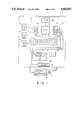
- FIG. 1is a diagram showing an arrangement of an embodiment of a receiver according to the present invention.
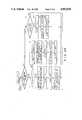
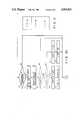
- FIGS. 2A, 2B, and 2Care flowcharts showing the operation sequence of the receiver of FIG. 1.
- a receiver 1is provided with a control unit 5 consisting of a microcomputer.
- the control unit 5essentially comprises a CPU 51, a ROM 52 in which programs are stored, a RAM 53 to store data, an input port 54, and an output port 55.
- the RAM 53is provided with memory areas SR, TR, M, and TL, and a flag area F.
- the memory area SRstores the number corresponding to the satellite which is selected.
- the memory area TRstores the number corresponding to the transponder which is selected.
- the memory area Mstores the recitation number to lock.
- the memory area TLstores the number corresponding to the transponder which is locked.
- the flag area Fstores three first to third flags.
- the receiver 1is also provided with a satellite designation key 2, a transponder designation key 3, and a lock instruction key 4.
- the satellite designation key 2consists of, e.g., a ten-key switch and serves to designate the number corresponding to the selected satellite.
- the transponder designation key 3serves to designate the number corresponding to the selected transponder.
- the lock instruction key 4serves to instruct the lock and change of the recitation number.
- the outputs of the keys 2 to 4are supplied to the input port 54. These outputs are then supplied from the input port 54 to the CPU 51 and subjected to the processes for comparison and the like in accordance with the program stored in the ROM 52.
- the data processed by the CPU 51is supplied through the output port 55 to a demodulator 6, a switch 7, a display 9, and an antenna controller 10 in accordance with the program stored in the ROM 52.
- the switch 7is arranged between the demodulator 6 and a television (TV) receiver 8 and serves to selectively disconnect the video signal and the audio signal.
- the display 9is composed of an indicator 91 to display the number corresponding to the satellite and the number corresponding to the transponder and a lamp 92 to indicate the state of the parental lock.
- the number corresponding to the satelliteis referred to as the satellite number and the number corresponding to the transponder is referred to as the transponder number hereinafter.
- the satellite designation switch 2also serves as a switch to set the recitation number.
- the lock instruction key 4is pressed once, the parental lock is performed.
- the key 4is continuously pressed twice, the recitation number is changed.
- flag "1”is used to discriminate from the instruction of change of the recitation number to the end of this change.
- Flag "1”is set by continuously pressing the lock key 4 twice.
- Flag "2”is used to discriminate whether the recitation number has newly been set or not.
- Flag "3"is used to discriminate whether the parental lock has been made or not.
- the satellite and transponder which are intended to be lockedare selected and the lock instruction key 4 is pressed once.
- the lamp 92flickers and the number of the selected transponder is stored into the memory area TL and the parental lock is executed.
- the transponderWhen the transponder is selected in the parental locked state, a check is made to see if the selected transponder coincides with the parental locked transponder or not. If YES, the lamp 92 flickers and the video image cannot be seen and the audio sound cannot be heard as well. If they are not coincident, the lamp 92 is lit up and the video image and the like are returned to the normal states, so that the program can be seen and heard in an ordinary manner. In this case, the satellite cannot be selected nor changed.
- the parental locked stateis released by inputting the recitation number to cancel the lock.
- the data which is inputted from the satellite designation key 2 in the parental locked stateis handled as the recitation number.
- a checkis then made to see if the input recitation number coincides with the memory content of the memory area M or not. If they are coincident, the lamp 92 is lit off and the memory content of the memory area TL, namely, the number of locked transponder is cleared. Thus, the parental lock is released. If they are not coincident, the parental lock is not released but it is necessary to again input the recitation number.
- the lock instruction key 4is continuously pressed twice to change the recitation number. Due to this, the indication of the indicator 91 is lit off and the lamp 92 flickers. Next, the recitation number is inputted. A check is made to see if the input recitation number coincides with the memory content of the memory area M or not. If they coincide, the recitation number indication of the indicator 91 is lit off. Subsequently, by inputting the new recitation number and pressing the lock instruction key 4 once, the new recitation number is stored into the memory area M. Thereafter, the lamp 92 is lit off and the indicator 91 displays the number of selected satellite and the number of selected transponder.
- step aa check is first made to see if the key 4 has been pressed once within a predetermined period of time or not (step a). If NO in step a, a check is then made to see if the lock instruction key 4 has continuously been pressed twice within a predetermined period of time or not (step b). If NO in step b, a check is made to see if the satellite designation key 2 has been pressed or not (step c). If NO in step c, a check is made to see if the transponder designation key 3 has been pressed or not (step d). If NO in step d, step a is executed. Namely, when none of the keys 2 to 4 is pressed, the steps a to d is repeated.
- step ethe operator ordinarily presses the satellite designation key 2 for reception.
- the depression of the key 2is detected by the CPU 51 and a check is made to see if flag "1" has been set or not (step e) subsequent to step c. If NO in step e, namely, when the lock instruction key 4 is not continuously pressed twice and the change of the recitation number is not instructed, a check is then made to see if flag "3" has been set or not (step f) subsequent to step e. If flag "3" is not set in step f, namely, when the parental lock is not performed yet, the number of the satellite designated by the key 2 is displayed by the indicator 91 and also stored into the memory area SR (step g).
- the code data corresponding to the number of the satellite designated by the key 2is supplied to an antenna controller 10 (step h).
- the antenna controller 10drives a motor 11, thereby allowing an actuator to direct a parabola antenna 12 toward the satellite designated by the key 2.
- step ithe number of the transponder designated by the transponder designation key 3 is displayed by the indicator 91 and also stored into the memory area TR (step i ) subsequent to step d.
- step ithe number of the transponder designated by the transponder designation key 3 is displayed by the indicator 91 and also stored into the memory area TR (step i ) subsequent to step d.
- step ithe number of the transponder designated by the transponder designation key 3 is displayed by the indicator 91 and also stored into the memory area TR (step i ) subsequent to step d.
- the data corresponding to the designated transponder numberis supplied to the demodulator 6.
- the demodulator 6is tuned so as to receive the frequency signal of the designated transponder in accordance with the supplied data and the received signal is demodulated.
- An output of the demodulator 6is supplied to the TV receiver 8 through the switch 7 and received (step j).
- step ka check is made to see if flag "3" has been set or not (step
- the satellite and transponderare selected and a desired radio wave is received.
- step lWhen the lock instruction key 4 is then once pressed, this depression is detected by the CPU 51 and a check is made to see if flag "2" to discriminate the new setting of the recitation number has been set or not (step l) after step a. If NO in step l, namely, when the parental lock is executed, lamp 92 flickers (step m) after step l. After step m, the memory content indicative of the selected transponder number in the memory area TR is transferred to the memory area TL and set to the transponder number which is locked (step n). Flag "3" representative of the lock state is set (step o). After step o, the code data to lock the selected position of the satellite is supplied to the antenna controller 10 (step p).
- the controller 10mechanically fixes the rotational position of the parabola antenna 12 to the position responsive to the code data. Therefore, the parabola antenna is fixed toward the satellite selected immediately before locking. After step p, the switch 7 is turned off (step q). Thus, the parental lock is performed in step n and the video image cannot be seen and the audio sound cannot be heard.
- flag "3"has already been set to 1, so that none of steps g and h is executed.
- the antenna controller 10doesn't drive the parabola antenna 12.
- step fBy pressing the satellite designation key 2 after the parental lock was performed, steps e and f are executed subsequent to step c. In this case, since the lock instruction key 4 is not continuously pressed twice, flag "1" is not set but in step o, flag "3" is set to 1. Therefore, it is determined that flag "3" has been set in step f.
- step fthe indication of the indicator 91 is shifted to the left (step r). Then, the satellite number designated by the satellite designation key 2 is sequentially indicated in the least digit of the indicator 91 (step s). After step s, a check is made to see if the memory content of the memory area M coincides with the display content of the indicator 91 or not (step t). In this case, the number designated by depressing the satellite designation key 2 is taken as the recitation number designated. By repeating this operation, the recitation number is designated due to the depression of the satellite designation key 2.
- step ris executed but steps g and h are not executed. Consequently, the parabola antenna 12 is not driven and the satellite is not selected and the number designated by pressing the satellite designation key 2 is processed as the recitation number designated. Therefore, step t is executed after steps f, r, and s and a check is made to see if the memory content of the memory area M coincides with the recitation number designated by the key 2 or not. If they don't coincide in step t, step d is executed after step t. The selection of new satellite is inhibited as mentioned above, but the transponder can be selected.
- steps i, j, and kare executed after step d.
- step kit is determined in step k that flag "3" has been set, so that the memory content of the memory area TR and the memory content of the memory area TL are compared (step z) after step k. If they coincide in step z, the switch 7 is turned off (step aa). Then, the lamp 92 flickers (step ab) and the receiver waits until step a and subsequent steps are executed. Therefore, when steps aa and ab were executed, the video image is not displayed by the receiver and the audio sound is not generated therefrom. Thus, the parental locked broadcast cannot be seen nor heard unless the parental lock is released.
- step zif they don't coincide in step z, the switch 7 is turned on (step ac) and the lamp 92 is lit up (step ad).
- the receiverthen waits until the step a and subsequent steps are executed. Consequently, when steps ac and ad were executed, the video image and audio sound of the radio wave from the selected transponder can be displayed and generated by the receiver 1.
- the satellitecannot be selected but it is possible to display and hear only the radio wave from the parental unlocked transponder in the satellite to which the parabola antenna faces at present.
- step aenamely, when the lock instruction key 4 is not continuously pressed twice and the recitation number is not changed, the switch 7 is turned on (step af) after step ae. Then, the code data to unlock the selection of the satellite is supplied to the antenna controller 10 (step ag). The controller 10 again drives the antenna in accordance with the code data.
- step agthe lamp 92 is lit off (step ah) and flag "3" is reset (step ai).
- step aithe memory content of the memory area TL is cleared (step aj).
- the parental locked transponderdoesn't exist any more and the parabola antenna is driven by the antenna controller 10 in correspondence to the designated satellite in step c. Further, the designated transponder is designated in correspondence to the transponder in step d. In this case, step a and subsequent steps are executed after step k and steps z and aa to ad are skipped.
- the parental lockis released by inputting the recitation number which coincides with the recitation number stored previously, so that the satellite can be designated by the satellite designation key 2.
- the radio wave from the transponder designated by the transponder designation switch 3can be displayed and heard.
- step bWhen it is determined in step b that the lock instruction key 4 has continuously been pressed twice, flag "1" is set (step ak) after step b.
- the indication of the indicator 91is lit off (step al).
- step althe lamp 92 flickers (step am) and steps c and e are executed. Since it is decided that flag "1" has been set in step e (this corresponds to the case where the lock instruction key 4 is continuously pressed twice within a predetermined period of time to change the recitation number and thus flag "1" has been set in step ak), steps r, s, and t are executed after step e. Therefore, the recitation number is designated due to the depression of the key 2 in step c.
- step tsince the updated recitation number may be difference from that stores in memory area M, the sequence flows to step a.
- This depressionis detected in step a, so that step l is executed after step a.
- flag "2"has been set in step ao, the display content of the indicator 91 (in this case, the recitation number is displayed on the indicator 91) is stored into the memory area M (step v) after step l.
- the recitation numberis stored into the memory area M.
- step vflag "2" is reset (step w) and the lamp 92 is lit off (step x).
- step xthe memory contents stored in the memory areas SR and TR are displayed on the indicator 91 (step y). Therefore, the indication on the indicator 91 is returned to the indication before the recitation number is set.
- the updated recitation numberis newly stored into the memory area in place of the previous recitation number and the recitation number is updated in this manner.
Landscapes
- Input Circuits Of Receivers And Coupling Of Receivers And Audio Equipment (AREA)
- Circuits Of Receivers In General (AREA)
Abstract
Description
This application is a continuation of Ser. No. 841,617, filed Mar. 20, 1986, now abandoned.
1. Field of the Invention
The present invention relates to a satellite receiver to receive the radio wave from the satellite and, more particularly, to a satellite receiver which inhibits the reception of the program which should not be seen by children.
2. Related Background Art
The satellite receiver adapted to receive the radio wave from the satellite directs the parabola antenna toward designated one of several satellites placed in a geostationary orbit in the equatorial space and then receives the radio wave which is generated from the designated satellite by the parabola antenna. The received signal is transmitted through the feed horn to switch the horizontally polarized wave and vertically polarized wave to the low noise amplifier and amplified. The amplified output of the low noise amplifier is converted to the frequency of, e.g., 1 GHz by the block down converter and supplied to the receiver including an image receiver and received. On the other hand, the satellite is provided with the transponders of, for example, twenty-four channels at intervals of 40 MHz. The antenna controller receives the output from the receiver and supplies a drive output to the parabola antenna and rotates the parabola antenna in the directions of east and west in response to the output from the receiver, thereby directing the antenna toward the designated satellite. In this manner, the antenna controller can select the proper satellite.
However, all of the programs from the satellites are not always suitable for children to see. There are also some programs which, the parents consider, should not be seen by the children. There is the case where the parents want to prevent the radio waves of such programs from being received by the children. Such an inhibition of reception will be referred to as a lock or parental lock in this specification.
In the conventional satellite receiver, the receiver itself is locked. Therefore, when the receiver is locked, all of the functions of the receiver cannot be operated, so that there is a drawback such that no radio wave can be received.
The present invention is made in consideration of the above-mentioned point and it is an object of the invention to solve the foregoing drawback and provide a satellite receiver which can receive the radio waves other than the radio wave from the transponder which is inhibited due to the lock.
A satellite receiver according to the present invention is provided with transponder designating means for designating the number corresponding to a desired transponder and transponder selecting means for selecting the radio wave from the transponder and enabling this radio wave to be received.
The satellite receiver of the invention also has memory means for storing the number designated by the transponder designating means in response to an instruction of the lock. When the lock is instructed, the number designated by the transponder designating means is stored.
On the other hand, the satellite receiver further comprises: detecting means for comparing the memory content of the memory means with the number corresponding to the transponder selected by the transponder selecting means and thereby detecting the coincidence between them; and control means for substantially disabling the transponder selecting means to receive the selected radio wave while a coincidence detection output is being generated from the detecting means.
In the constitution according to the invention as mentioned above, when the lock is instructed, the number corresponding to the transponder designated by the transponder designating means is stored in the memory means.
In addition, the radio wave from the transponder selected by the transponder selecting means is selected and received, thereby allowing the radio wave from this transponder to be seen and listened. Simultaneously, the number corresponding to the transponder selected by the transponder selecting means is also supplied to the detecting means and compared with the memory content of the memory means. As the result of the comparison by the detecting means, when the number corresponding to the transponder selected by the transponder selecting means doesn't coincide with the memory content of the memory means, the detecting means generates no output. Therefore, the reception of the radio wave from the selected transponder will not be influenced. When the memory content of the memory means coincides with the selected transponder number, the detecting means generates an output. Thus, in response to an output of the control means, the reception of the radio wave from the transponder selected by the transponder selecting means is substantially disabled. Therefore, the radio wave from the designated transponder cannot be received.
FIG. 1 is a diagram showing an arrangement of an embodiment of a receiver according to the present invention; and
FIGS. 2A, 2B, and 2C are flowcharts showing the operation sequence of the receiver of FIG. 1.
Referring to FIG. 1, areceiver 1 is provided with acontrol unit 5 consisting of a microcomputer. Thecontrol unit 5 essentially comprises aCPU 51, aROM 52 in which programs are stored, aRAM 53 to store data, aninput port 54, and anoutput port 55. TheRAM 53 is provided with memory areas SR, TR, M, and TL, and a flag area F. The memory area SR stores the number corresponding to the satellite which is selected. The memory area TR stores the number corresponding to the transponder which is selected. The memory area M stores the recitation number to lock. The memory area TL stores the number corresponding to the transponder which is locked. The flag area F stores three first to third flags.
Thereceiver 1 is also provided with asatellite designation key 2, atransponder designation key 3, and alock instruction key 4. Thesatellite designation key 2 consists of, e.g., a ten-key switch and serves to designate the number corresponding to the selected satellite. Thetransponder designation key 3 serves to designate the number corresponding to the selected transponder. Thelock instruction key 4 serves to instruct the lock and change of the recitation number. The outputs of thekeys 2 to 4 are supplied to theinput port 54. These outputs are then supplied from theinput port 54 to theCPU 51 and subjected to the processes for comparison and the like in accordance with the program stored in theROM 52. The data processed by theCPU 51 is supplied through theoutput port 55 to ademodulator 6, aswitch 7, adisplay 9, and anantenna controller 10 in accordance with the program stored in theROM 52. Theswitch 7 is arranged between thedemodulator 6 and a television (TV)receiver 8 and serves to selectively disconnect the video signal and the audio signal. Thedisplay 9 is composed of anindicator 91 to display the number corresponding to the satellite and the number corresponding to the transponder and alamp 92 to indicate the state of the parental lock. The number corresponding to the satellite is referred to as the satellite number and the number corresponding to the transponder is referred to as the transponder number hereinafter.
As will be obvious from the description in conjunction with flowcharts, which will be explained later, thesatellite designation switch 2 also serves as a switch to set the recitation number. When thelock instruction key 4 is pressed once, the parental lock is performed. When thekey 4 is continuously pressed twice, the recitation number is changed. In addition, flag "1" is used to discriminate from the instruction of change of the recitation number to the end of this change. Flag "1" is set by continuously pressing thelock key 4 twice. Flag "2" is used to discriminate whether the recitation number has newly been set or not. Flag "3" is used to discriminate whether the parental lock has been made or not.
The outline will be described before the operation sequence of the embodiment is explained in detail.
To perform the parental lock, the satellite and transponder which are intended to be locked are selected and thelock instruction key 4 is pressed once. Thus, thelamp 92 flickers and the number of the selected transponder is stored into the memory area TL and the parental lock is executed.
When the transponder is selected in the parental locked state, a check is made to see if the selected transponder coincides with the parental locked transponder or not. If YES, thelamp 92 flickers and the video image cannot be seen and the audio sound cannot be heard as well. If they are not coincident, thelamp 92 is lit up and the video image and the like are returned to the normal states, so that the program can be seen and heard in an ordinary manner. In this case, the satellite cannot be selected nor changed.
The parental locked state is released by inputting the recitation number to cancel the lock. In the embodiment, the data which is inputted from thesatellite designation key 2 in the parental locked state is handled as the recitation number. A check is then made to see if the input recitation number coincides with the memory content of the memory area M or not. If they are coincident, thelamp 92 is lit off and the memory content of the memory area TL, namely, the number of locked transponder is cleared. Thus, the parental lock is released. If they are not coincident, the parental lock is not released but it is necessary to again input the recitation number.
Thelock instruction key 4 is continuously pressed twice to change the recitation number. Due to this, the indication of theindicator 91 is lit off and thelamp 92 flickers. Next, the recitation number is inputted. A check is made to see if the input recitation number coincides with the memory content of the memory area M or not. If they coincide, the recitation number indication of theindicator 91 is lit off. Subsequently, by inputting the new recitation number and pressing thelock instruction key 4 once, the new recitation number is stored into the memory area M. Thereafter, thelamp 92 is lit off and theindicator 91 displays the number of selected satellite and the number of selected transponder.
When the program starts, flags "1" to "3" are cleared and the recitation number is stored into the memory area M. After completion of the initialization, the receiver waits until thesatellite designation key 2,transponder designation key 3, or lockinstruction key 4 is pressed.
It is now assumed that none of thekeys 2 to 4 is pressed. In the program sequence, a check is first made to see if thekey 4 has been pressed once within a predetermined period of time or not (step a). If NO in step a, a check is then made to see if thelock instruction key 4 has continuously been pressed twice within a predetermined period of time or not (step b). If NO in step b, a check is made to see if thesatellite designation key 2 has been pressed or not (step c). If NO in step c, a check is made to see if thetransponder designation key 3 has been pressed or not (step d). If NO in step d, step a is executed. Namely, when none of thekeys 2 to 4 is pressed, the steps a to d is repeated.
First, the operator ordinarily presses thesatellite designation key 2 for reception. The depression of thekey 2 is detected by theCPU 51 and a check is made to see if flag "1" has been set or not (step e) subsequent to step c. If NO in step e, namely, when thelock instruction key 4 is not continuously pressed twice and the change of the recitation number is not instructed, a check is then made to see if flag "3" has been set or not (step f) subsequent to step e. If flag "3" is not set in step f, namely, when the parental lock is not performed yet, the number of the satellite designated by thekey 2 is displayed by theindicator 91 and also stored into the memory area SR (step g). Next, the code data corresponding to the number of the satellite designated by thekey 2 is supplied to an antenna controller 10 (step h). In response to the code data, theantenna controller 10 drives a motor 11, thereby allowing an actuator to direct aparabola antenna 12 toward the satellite designated by thekey 2.
When the operator subsequently presses thetransponder designation key 3, this depression is detected by theCPU 51 and the number of the transponder designated by thetransponder designation key 3 is displayed by theindicator 91 and also stored into the memory area TR (step i ) subsequent to step d. Next, the data corresponding to the designated transponder number is supplied to thedemodulator 6. Thedemodulator 6 is tuned so as to receive the frequency signal of the designated transponder in accordance with the supplied data and the received signal is demodulated. An output of thedemodulator 6 is supplied to theTV receiver 8 through theswitch 7 and received (step j). After step j, a check is made to see if flag "3" has been set or not (step k). If NO in step k, namely, when the parental lock is not performed yet, step a is executed after step k.
As described above, the satellite and transponder are selected and a desired radio wave is received.
When thelock instruction key 4 is then once pressed, this depression is detected by theCPU 51 and a check is made to see if flag "2" to discriminate the new setting of the recitation number has been set or not (step l) after step a. If NO in step l, namely, when the parental lock is executed,lamp 92 flickers (step m) after step l. After step m, the memory content indicative of the selected transponder number in the memory area TR is transferred to the memory area TL and set to the transponder number which is locked (step n). Flag "3" representative of the lock state is set (step o). After step o, the code data to lock the selected position of the satellite is supplied to the antenna controller 10 (step p). Thecontroller 10 mechanically fixes the rotational position of theparabola antenna 12 to the position responsive to the code data. Therefore, the parabola antenna is fixed toward the satellite selected immediately before locking. After step p, theswitch 7 is turned off (step q). Thus, the parental lock is performed in step n and the video image cannot be seen and the audio sound cannot be heard. When the satellite is designated by thesatellite designation key 2 in step c in the parental locked state, flag "3" has already been set to 1, so that none of steps g and h is executed. Theantenna controller 10 doesn't drive theparabola antenna 12.
By pressing thesatellite designation key 2 after the parental lock was performed, steps e and f are executed subsequent to step c. In this case, since thelock instruction key 4 is not continuously pressed twice, flag "1" is not set but in step o, flag "3" is set to 1. Therefore, it is determined that flag "3" has been set in step f. After step f, the indication of theindicator 91 is shifted to the left (step r). Then, the satellite number designated by thesatellite designation key 2 is sequentially indicated in the least digit of the indicator 91 (step s). After step s, a check is made to see if the memory content of the memory area M coincides with the display content of theindicator 91 or not (step t). In this case, the number designated by depressing thesatellite designation key 2 is taken as the recitation number designated. By repeating this operation, the recitation number is designated due to the depression of thesatellite designation key 2.
Next, even if thekey 2 is newly pressed in the parental locked state as well, flag "3" is set in this state, so that step r is executed but steps g and h are not executed. Consequently, theparabola antenna 12 is not driven and the satellite is not selected and the number designated by pressing thesatellite designation key 2 is processed as the recitation number designated. Therefore, step t is executed after steps f, r, and s and a check is made to see if the memory content of the memory area M coincides with the recitation number designated by the key 2 or not. If they don't coincide in step t, step d is executed after step t. The selection of new satellite is inhibited as mentioned above, but the transponder can be selected. When the transponder is designated by thetransponder designation key 3, steps i, j, and k are executed after step d. In this case, it is determined in step k that flag "3" has been set, so that the memory content of the memory area TR and the memory content of the memory area TL are compared (step z) after step k. If they coincide in step z, theswitch 7 is turned off (step aa). Then, thelamp 92 flickers (step ab) and the receiver waits until step a and subsequent steps are executed. Therefore, when steps aa and ab were executed, the video image is not displayed by the receiver and the audio sound is not generated therefrom. Thus, the parental locked broadcast cannot be seen nor heard unless the parental lock is released.
On the contrary, if they don't coincide in step z, theswitch 7 is turned on (step ac) and thelamp 92 is lit up (step ad). The receiver then waits until the step a and subsequent steps are executed. Consequently, when steps ac and ad were executed, the video image and audio sound of the radio wave from the selected transponder can be displayed and generated by thereceiver 1. In this case, the satellite cannot be selected but it is possible to display and hear only the radio wave from the parental unlocked transponder in the satellite to which the parabola antenna faces at present.
On the other hand, in the parental locked state, when thesatellite designation key 2 is pressed and steps e, f, r, s, and t are executed and the memory content of the memory area M coincides with the recitation number designated by thesatellite designation key 2 in step t, a check is made to see if flag "1" has been set or not (step ae) after step t. If NO in step ae, namely, when thelock instruction key 4 is not continuously pressed twice and the recitation number is not changed, theswitch 7 is turned on (step af) after step ae. Then, the code data to unlock the selection of the satellite is supplied to the antenna controller 10 (step ag). Thecontroller 10 again drives the antenna in accordance with the code data. After step ag, thelamp 92 is lit off (step ah) and flag "3" is reset (step ai). After step ai, the memory content of the memory area TL is cleared (step aj). Thus, the parental locked transponder doesn't exist any more and the parabola antenna is driven by theantenna controller 10 in correspondence to the designated satellite in step c. Further, the designated transponder is designated in correspondence to the transponder in step d. In this case, step a and subsequent steps are executed after step k and steps z and aa to ad are skipped.
As described above, the parental lock is released by inputting the recitation number which coincides with the recitation number stored previously, so that the satellite can be designated by thesatellite designation key 2. In addition, the radio wave from the transponder designated by thetransponder designation switch 3 can be displayed and heard.
When it is determined in step b that thelock instruction key 4 has continuously been pressed twice, flag "1" is set (step ak) after step b. Next, the indication of theindicator 91 is lit off (step al). After step al, thelamp 92 flickers (step am) and steps c and e are executed. Since it is decided that flag "1" has been set in step e (this corresponds to the case where thelock instruction key 4 is continuously pressed twice within a predetermined period of time to change the recitation number and thus flag "1" has been set in step ak), steps r, s, and t are executed after step e. Therefore, the recitation number is designated due to the depression of the key 2 in step c. When the newly designated recitation number coincides with the memory content of the memory area M in step t, a check is then made to see if flag "1" has been set or not (step ae). In this case, it is determined that flag "1" has been set in step ae similarly to the case in step e. After step ae, flag "1" is reset (step an) and flag "2" is then set (step ao) and the indication of theindicator 91 is lit off (step ap). Subsequent to steps a and b, the updated recitation number is set by pressing thesatellite designation key 2. Since flap "1"=.0. and flap "2"=2 because steps an and ao have been taken. Accordingly, the sequence flows to steps r, s, and t. At step t, since the updated recitation number may be difference from that stores in memory area M, the sequence flows to step a. This depression is detected in step a, so that step l is executed after step a. Since flag "2" has been set in step ao, the display content of the indicator 91 (in this case, the recitation number is displayed on the indicator 91) is stored into the memory area M (step v) after step l. Thus, the recitation number is stored into the memory area M. After step v, flag "2" is reset (step w) and thelamp 92 is lit off (step x). After step x, the memory contents stored in the memory areas SR and TR are displayed on the indicator 91 (step y). Therefore, the indication on theindicator 91 is returned to the indication before the recitation number is set. The updated recitation number is newly stored into the memory area in place of the previous recitation number and the recitation number is updated in this manner.
Claims (6)
1. A satellite receiver for receiving and reproducing a signal from a transponder of a satellite, comprising:
a receiver unit means;
said receiver unit means having an output means for supplying a demodulated signal from designated satellite and transponder;
a reproduction unit means for exhibiting a reproduction of the demodulated signal from the output means of said receiver unit means;
a control unit means including
(a) a first memory means for storing designated satellite and transponder numbers, and
(b) a second memory means for storing satellite and transponder numbers to be locked by a parental lock signal,
(c) a coincidence determining means for comparing the memory contents of said first memory means with said second memory means to determine whether said designated satellite and transponder numbers corresponds with said satellite and transponder numbers to be locked, and
(d) a means for generating a parental lock signal when said coincidence determining means determines that the memory contents of said first and second memory means coincide;
a means for disabling the reproduction at said reproduction unit means for the demodulated signal which has been received from said designated satellite and transponder in response to said parental lock signal;
a third memory means for storing a recitation number and means for inputting a recitation number, wherein the inhibition of reproduction by said means for disabling is released in response to the occurrence of a coincidence between the stored recitation number and the input recitation number; and
a flag means responsive to a recitation number update instruction for raising a flag, wherein said control unit responsive to the coincidence of the input recitation number with the recitation number stored in said third memory means releases the receiver from the parental lock when said flag means does not raise the flag and rewrites said third memory with the input updated recitation number when said flag means raises the flag.
2. A satellite receiver according to claim 1, wherein said control unit means transfers the memory content of said first memory means into said second memory means in response to said parental lock instruction.
3. A satellite receiver for receiving and reproducing a signal from a designated satellite, comprising:
a receiver unit means;
a control unit means responsive to a parental lock instruction for entering into a parental lock mode;
a recitation memory storage means for storing a recitation code which is used for release of the parental lock mode; and
a means for entering a reference code and an update recitation code to said control unit means;
said control unit means also being responsive to the coincidence of (a) the entered reference code with (b) the recitation code which is stored in said recitation memory storage means for rewriting said recitation memory storage means with the entered update recitation code.
4. A satellite receiver according to claim 3, wherein the reproduction of the signal from the designated satellite is inhibited in the parental lock mode.
5. A satellite receiver according to claim 3, wherein an antenna is mechanically locked in the parental lock mode.
6. A satellite receiver for receiving and reproducing a signal from a designated satellite, comprising:
a receiver unit means;
a control unit means responsive to a parental lock instruction for entering a parental lock mode;
a recitation memory storage means for storing a recitation code;
a flag means responsive to a recitation code update instruction for raising a flag; and
a means for entering a reference code and an update recitation code to said control unit means;
said control unit means also being responsive to the coincidence of the entered reference code with the recitation code which is stored in said recitation memory storage means for releasing the parental lock mode when said flag means does not raise the flag and for rewriting said recitation memory storage means with the entered update recitation code when said flag means raises the flag.
Applications Claiming Priority (6)
| Application Number | Priority Date | Filing Date | Title |
|---|---|---|---|
| JP60-59554 | 1985-03-26 | ||
| JP60-42366[U] | 1985-03-26 | ||
| JP60-59553 | 1985-03-26 | ||
| JP60059554AJPS61219279A (en) | 1985-03-26 | 1985-03-26 | Satellite receiver |
| JP1985042366UJPH0445311Y2 (en) | 1985-03-26 | 1985-03-26 | |
| JP60059553AJPS61219278A (en) | 1985-03-26 | 1985-03-26 | Satellite receiver |
Related Parent Applications (1)
| Application Number | Title | Priority Date | Filing Date |
|---|---|---|---|
| US06841617Continuation | 1986-03-20 |
Publications (1)
| Publication Number | Publication Date |
|---|---|
| US4903031Atrue US4903031A (en) | 1990-02-20 |
Family
ID=27291182
Family Applications (1)
| Application Number | Title | Priority Date | Filing Date |
|---|---|---|---|
| US07/110,537Expired - Fee RelatedUS4903031A (en) | 1985-03-26 | 1987-10-20 | Satellite receiver |
Country Status (1)
| Country | Link |
|---|---|
| US (1) | US4903031A (en) |
Cited By (51)
| Publication number | Priority date | Publication date | Assignee | Title |
|---|---|---|---|---|
| US5371795A (en)* | 1988-05-04 | 1994-12-06 | Right Hemisphere Pty., Ltd. | Automatic censorship of video programs |
| US5550575A (en)* | 1994-05-04 | 1996-08-27 | West; Brett | Viewer discretion television program control system |
| US5552837A (en)* | 1995-03-01 | 1996-09-03 | Gemstar Development Corporation | Remote controller for scanning data and controlling a video system |
| US5559550A (en)* | 1995-03-01 | 1996-09-24 | Gemstar Development Corporation | Apparatus and methods for synchronizing a clock to a network clock |
| US5949471A (en)* | 1993-07-29 | 1999-09-07 | Gemstar Development Corporation | Apparatus and method for improved parental control of television use |
| US5969748A (en)* | 1996-05-29 | 1999-10-19 | Starsight Telecast, Inc. | Television schedule system with access control |
| US20020095673A1 (en)* | 1996-04-01 | 2002-07-18 | Leung Wing P. | Apparatus and method for parental control using V-Chip plus+ and master password |
| US20020154055A1 (en)* | 2001-04-18 | 2002-10-24 | Robert Davis | LAN based satellite antenna/satellite multiswitch |
| US20040128681A1 (en)* | 1998-09-16 | 2004-07-01 | Kenneth Hancock | V-Chip plus +: in-guide user interface apparatus and method for programmable blocking of television and other viewable programming, such as for parental control of a television receiver |
| US20040177368A1 (en)* | 2003-03-06 | 2004-09-09 | Wegener Communications, Inc. | Apparatus and method for addressing control in a network for distributed data |
| US20040235442A1 (en)* | 2003-05-19 | 2004-11-25 | Toporski Todd A. | Method to block audio and data in a digital radio receiver |
| US6975245B1 (en)* | 2000-09-18 | 2005-12-13 | Battelle Energy Alliance, Llc | Real-time data acquisition and telemetry based irrigation control system |
| US7020689B2 (en) | 2003-03-07 | 2006-03-28 | Wegener Communications, Inc. | System and method for command transmission utilizing an email return path |
| US20060085724A1 (en)* | 2003-05-30 | 2006-04-20 | Wegener Communications, Inc. | Error correction apparatus and method |
| US20060225100A1 (en)* | 2005-04-01 | 2006-10-05 | James Thomas H | System architecture for control and signal distribution on coaxial cable |
| US20060225102A1 (en)* | 2005-04-01 | 2006-10-05 | James Thomas H | Narrow bandwidth signal delivery system |
| US20060225104A1 (en)* | 2005-04-01 | 2006-10-05 | James Thomas H | Power balancing signal combiner |
| US20060225099A1 (en)* | 2005-04-01 | 2006-10-05 | James Thomas H | Backwards-compatible frequency translation module for satellite video delivery |
| US20060225098A1 (en)* | 2005-04-01 | 2006-10-05 | James Thomas H | Transponder tuning and mapping |
| US20060225101A1 (en)* | 2005-04-01 | 2006-10-05 | James Thomas H | Signal injection via power supply |
| US20060225103A1 (en)* | 2005-04-01 | 2006-10-05 | James Thomas H | Intelligent two-way switching network |
| US20060236342A1 (en)* | 2005-03-30 | 2006-10-19 | Gerard Kunkel | Systems and methods for video-rich navigation |
| US7142809B1 (en) | 2001-02-27 | 2006-11-28 | The Directv Group, Inc. | Device and method to locally fill gaps in spotbeam satellite systems with frequency re-use |
| US20070083898A1 (en)* | 2005-10-12 | 2007-04-12 | John Norin | Band upconverter approach to Ka/Ku signal distribution |
| US20070089142A1 (en)* | 2005-10-14 | 2007-04-19 | John Norin | Band converter approach to Ka/Ku signal distribution |
| US20070220559A1 (en)* | 2005-09-02 | 2007-09-20 | The Directv Group, Inc. | Frequency translation module discovery and configuration |
| US20070220580A1 (en)* | 2002-03-14 | 2007-09-20 | Daniel Putterman | User interface for a media convergence platform |
| US20070250909A1 (en)* | 2005-09-02 | 2007-10-25 | The Directv Group, Inc. | Network fraud prevention via registration and verification |
| US20080016535A1 (en)* | 2005-09-02 | 2008-01-17 | The Directv Group, Inc. | Frequency shift key control in video delivery systems |
| US20080022319A1 (en)* | 2006-06-09 | 2008-01-24 | Hanno Basse | Presentation modes for various format bit streams |
| US20080060021A1 (en)* | 2006-06-16 | 2008-03-06 | Hanno Basse | Digital storage media command and control data indexing |
| US20090144836A1 (en)* | 2004-11-24 | 2009-06-04 | Koninklijke Philips Electronics, N.V. | Decoding/decrypting based on security score |
| US20090328105A1 (en)* | 2008-06-27 | 2009-12-31 | Guideworks, Llc | Systems and methods for ranking assets relative to a group of viewers |
| US20100153885A1 (en)* | 2005-12-29 | 2010-06-17 | Rovi Technologies Corporation | Systems and methods for interacting with advanced displays provided by an interactive media guidance application |
| US20100251281A1 (en)* | 2005-11-14 | 2010-09-30 | Guideworks, Llc | Media control system with viewer rewards |
| USRE41919E1 (en) | 2003-06-25 | 2010-11-09 | Steve Olivier | Rapid decryption of data by key synchronization and indexing |
| USRE41993E1 (en) | 1993-07-29 | 2010-12-07 | Gemstar Development Corporation | Apparatus and method for improved parental control of television use |
| US7954127B2 (en) | 2002-09-25 | 2011-05-31 | The Directv Group, Inc. | Direct broadcast signal distribution methods |
| US7958531B2 (en) | 2005-04-01 | 2011-06-07 | The Directv Group, Inc. | Automatic level control for incoming signals of different signal strengths |
| US20110162000A1 (en)* | 1998-11-30 | 2011-06-30 | United Video Properties, Inc. | Interactive television program guide system with title and description blocking |
| US7991348B2 (en) | 2005-10-12 | 2011-08-02 | The Directv Group, Inc. | Triple band combining approach to satellite signal distribution |
| US8079044B1 (en) | 2006-04-10 | 2011-12-13 | Rovi Guides, Inc. | Systems and methods for providing parental control asset searching |
| US8229383B2 (en) | 2009-01-06 | 2012-07-24 | The Directv Group, Inc. | Frequency drift estimation for low cost outdoor unit frequency conversions and system diagnostics |
| US8238813B1 (en) | 2007-08-20 | 2012-08-07 | The Directv Group, Inc. | Computationally efficient design for broadcast satellite single wire and/or direct demod interface |
| US8402488B2 (en) | 2006-12-28 | 2013-03-19 | Rovi Guides, Inc | Systems and methods for creating custom video mosaic pages with local content |
| US8712318B2 (en) | 2007-05-29 | 2014-04-29 | The Directv Group, Inc. | Integrated multi-sat LNB and frequency translation module |
| US8719857B1 (en) | 2005-08-24 | 2014-05-06 | Rovi Guides, Inc. | Systems and methods for providing parental control features in video mosaic environments |
| US8719875B2 (en) | 2006-11-06 | 2014-05-06 | The Directv Group, Inc. | Satellite television IP bitstream generator receiving unit |
| US8984550B2 (en) | 2005-11-14 | 2015-03-17 | Rovi Guides, Inc. | Parental media palettes |
| US9807436B2 (en) | 2014-07-23 | 2017-10-31 | Rovi Guides, Inc. | Systems and methods for providing media asset recommendations for a group |
| US9942618B2 (en) | 2007-10-31 | 2018-04-10 | The Directv Group, Inc. | SMATV headend using IP transport stream input and method for operating the same |
Citations (9)
| Publication number | Priority date | Publication date | Assignee | Title |
|---|---|---|---|---|
| US4232396A (en)* | 1978-07-14 | 1980-11-04 | Grimes Arnold S | Television channel lock-out apparatus |
| US4317213A (en)* | 1980-05-09 | 1982-02-23 | Dilorenzo Mark | Television reception interfering apparatus |
| US4510623A (en)* | 1982-07-23 | 1985-04-09 | General Electric Company | Television channel lockout |
| US4599647A (en)* | 1983-11-03 | 1986-07-08 | General Instrument Corporation | Receiver with interface for interaction with controller-decoder |
| US4675732A (en)* | 1984-12-19 | 1987-06-23 | Nordspace Aktiebolag | Satellite/hybrid television system |
| US4685131A (en)* | 1985-03-11 | 1987-08-04 | General Instrument Corp. | Program blocking method for use in direct broadcast satellite system |
| US4718107A (en)* | 1986-02-14 | 1988-01-05 | Rca Corporation | Parental control for CATV converters |
| US4723320A (en)* | 1985-03-28 | 1988-02-02 | Satellite Technology Services, Inc. | Dual communication link for satellite TV receiver |
| US4768229A (en)* | 1986-07-21 | 1988-08-30 | Zenith Electronics Corporation | Restrictive access control system |
- 1987
- 1987-10-20USUS07/110,537patent/US4903031A/ennot_activeExpired - Fee Related
Patent Citations (9)
| Publication number | Priority date | Publication date | Assignee | Title |
|---|---|---|---|---|
| US4232396A (en)* | 1978-07-14 | 1980-11-04 | Grimes Arnold S | Television channel lock-out apparatus |
| US4317213A (en)* | 1980-05-09 | 1982-02-23 | Dilorenzo Mark | Television reception interfering apparatus |
| US4510623A (en)* | 1982-07-23 | 1985-04-09 | General Electric Company | Television channel lockout |
| US4599647A (en)* | 1983-11-03 | 1986-07-08 | General Instrument Corporation | Receiver with interface for interaction with controller-decoder |
| US4675732A (en)* | 1984-12-19 | 1987-06-23 | Nordspace Aktiebolag | Satellite/hybrid television system |
| US4685131A (en)* | 1985-03-11 | 1987-08-04 | General Instrument Corp. | Program blocking method for use in direct broadcast satellite system |
| US4723320A (en)* | 1985-03-28 | 1988-02-02 | Satellite Technology Services, Inc. | Dual communication link for satellite TV receiver |
| US4718107A (en)* | 1986-02-14 | 1988-01-05 | Rca Corporation | Parental control for CATV converters |
| US4768229A (en)* | 1986-07-21 | 1988-08-30 | Zenith Electronics Corporation | Restrictive access control system |
Non-Patent Citations (4)
| Title |
|---|
| "STV: Satellite Television Magazine", (1/85); Ad for Draco Aimer III. |
| STV: Satellite Television Magazine , (1/85); Ad for Draco Aimer III.* |
| The Houston Satellite Systems' "Tracker IV", Satellite TV/January, Staff Report. |
| The Houston Satellite Systems Tracker IV , Satellite TV/January, Staff Report.* |
Cited By (81)
| Publication number | Priority date | Publication date | Assignee | Title |
|---|---|---|---|---|
| US5371795A (en)* | 1988-05-04 | 1994-12-06 | Right Hemisphere Pty., Ltd. | Automatic censorship of video programs |
| USRE41993E1 (en) | 1993-07-29 | 2010-12-07 | Gemstar Development Corporation | Apparatus and method for improved parental control of television use |
| US5949471A (en)* | 1993-07-29 | 1999-09-07 | Gemstar Development Corporation | Apparatus and method for improved parental control of television use |
| US6072520A (en)* | 1993-07-29 | 2000-06-06 | Gemstar Development Corporation | System for improved parental control of television use |
| US6321381B1 (en) | 1993-07-29 | 2001-11-20 | Gemstar Development Corporation | Apparatus and method for improved parental control of television use |
| US5550575A (en)* | 1994-05-04 | 1996-08-27 | West; Brett | Viewer discretion television program control system |
| US5552837A (en)* | 1995-03-01 | 1996-09-03 | Gemstar Development Corporation | Remote controller for scanning data and controlling a video system |
| US5559550A (en)* | 1995-03-01 | 1996-09-24 | Gemstar Development Corporation | Apparatus and methods for synchronizing a clock to a network clock |
| US8006260B2 (en) | 1996-04-01 | 2011-08-23 | Gemstar Development Corporation | Apparatus and method for parental control using V-chip plus+ and master password |
| US20020095673A1 (en)* | 1996-04-01 | 2002-07-18 | Leung Wing P. | Apparatus and method for parental control using V-Chip plus+ and master password |
| US8635642B2 (en) | 1996-04-01 | 2014-01-21 | Gemstar Development Corporation | Apparatus and method for parental control using V-Chip plus+ and master password |
| US20080178210A1 (en)* | 1996-05-29 | 2008-07-24 | Marcy Casement | Television schedule system with access control |
| US9414119B2 (en) | 1996-05-29 | 2016-08-09 | Rovi Guides, Inc. | Television schedule system with access control |
| US6144401A (en)* | 1996-05-29 | 2000-11-07 | Starsight Telecast, Inc. | Television schedule system with access control |
| US8245250B2 (en) | 1996-05-29 | 2012-08-14 | Starsight Telecast, Incorporated | Television schedule system with access control |
| US5969748A (en)* | 1996-05-29 | 1999-10-19 | Starsight Telecast, Inc. | Television schedule system with access control |
| US20040128681A1 (en)* | 1998-09-16 | 2004-07-01 | Kenneth Hancock | V-Chip plus +: in-guide user interface apparatus and method for programmable blocking of television and other viewable programming, such as for parental control of a television receiver |
| US20110162000A1 (en)* | 1998-11-30 | 2011-06-30 | United Video Properties, Inc. | Interactive television program guide system with title and description blocking |
| US6975245B1 (en)* | 2000-09-18 | 2005-12-13 | Battelle Energy Alliance, Llc | Real-time data acquisition and telemetry based irrigation control system |
| US7142809B1 (en) | 2001-02-27 | 2006-11-28 | The Directv Group, Inc. | Device and method to locally fill gaps in spotbeam satellite systems with frequency re-use |
| US7308230B2 (en) | 2001-02-27 | 2007-12-11 | The Directv Group, Inc. | Device and method to locally fill gaps in spotbeam satellite systems with frequency re-use |
| US20070037512A1 (en)* | 2001-02-27 | 2007-02-15 | Godwin John P | Device and method to locally fill gaps in spotbeam satellite systems with frequency re-use |
| US20020154055A1 (en)* | 2001-04-18 | 2002-10-24 | Robert Davis | LAN based satellite antenna/satellite multiswitch |
| US20070220580A1 (en)* | 2002-03-14 | 2007-09-20 | Daniel Putterman | User interface for a media convergence platform |
| US7954127B2 (en) | 2002-09-25 | 2011-05-31 | The Directv Group, Inc. | Direct broadcast signal distribution methods |
| US7930711B2 (en) | 2003-03-06 | 2011-04-19 | Wegener Communications, Inc. | Apparatus and method for addressing control in a network for distributed data |
| US20040177368A1 (en)* | 2003-03-06 | 2004-09-09 | Wegener Communications, Inc. | Apparatus and method for addressing control in a network for distributed data |
| US7020689B2 (en) | 2003-03-07 | 2006-03-28 | Wegener Communications, Inc. | System and method for command transmission utilizing an email return path |
| US20040235442A1 (en)* | 2003-05-19 | 2004-11-25 | Toporski Todd A. | Method to block audio and data in a digital radio receiver |
| US7937638B2 (en) | 2003-05-30 | 2011-05-03 | Wegener Communications, Inc. | Error correction apparatus and method |
| US20060085724A1 (en)* | 2003-05-30 | 2006-04-20 | Wegener Communications, Inc. | Error correction apparatus and method |
| US7296204B2 (en) | 2003-05-30 | 2007-11-13 | Wegener Communications, Inc. | Error correction apparatus and method |
| US20080228787A1 (en)* | 2003-05-30 | 2008-09-18 | Wegener Communications, Inc. | Error Correction Apparatus and Method |
| US7506235B2 (en) | 2003-05-30 | 2009-03-17 | Wegener Communications | Error correction apparatus and method |
| USRE41919E1 (en) | 2003-06-25 | 2010-11-09 | Steve Olivier | Rapid decryption of data by key synchronization and indexing |
| US20090144836A1 (en)* | 2004-11-24 | 2009-06-04 | Koninklijke Philips Electronics, N.V. | Decoding/decrypting based on security score |
| US20060236342A1 (en)* | 2005-03-30 | 2006-10-19 | Gerard Kunkel | Systems and methods for video-rich navigation |
| US8752094B2 (en) | 2005-03-30 | 2014-06-10 | Rovi Guides, Inc. | Systems and methods for video-rich navigation |
| US20060225099A1 (en)* | 2005-04-01 | 2006-10-05 | James Thomas H | Backwards-compatible frequency translation module for satellite video delivery |
| US20060225101A1 (en)* | 2005-04-01 | 2006-10-05 | James Thomas H | Signal injection via power supply |
| US8549565B2 (en) | 2005-04-01 | 2013-10-01 | The Directv Group, Inc. | Power balancing signal combiner |
| US20060225100A1 (en)* | 2005-04-01 | 2006-10-05 | James Thomas H | System architecture for control and signal distribution on coaxial cable |
| US8621525B2 (en) | 2005-04-01 | 2013-12-31 | The Directv Group, Inc. | Signal injection via power supply |
| US20060225102A1 (en)* | 2005-04-01 | 2006-10-05 | James Thomas H | Narrow bandwidth signal delivery system |
| US20060225104A1 (en)* | 2005-04-01 | 2006-10-05 | James Thomas H | Power balancing signal combiner |
| US8024759B2 (en) | 2005-04-01 | 2011-09-20 | The Directv Group, Inc. | Backwards-compatible frequency translation module for satellite video delivery |
| US7900230B2 (en) | 2005-04-01 | 2011-03-01 | The Directv Group, Inc. | Intelligent two-way switching network |
| US20060225098A1 (en)* | 2005-04-01 | 2006-10-05 | James Thomas H | Transponder tuning and mapping |
| US7987486B2 (en) | 2005-04-01 | 2011-07-26 | The Directv Group, Inc. | System architecture for control and signal distribution on coaxial cable |
| US20060225103A1 (en)* | 2005-04-01 | 2006-10-05 | James Thomas H | Intelligent two-way switching network |
| US7945932B2 (en) | 2005-04-01 | 2011-05-17 | The Directv Group, Inc. | Narrow bandwidth signal delivery system |
| US7950038B2 (en) | 2005-04-01 | 2011-05-24 | The Directv Group, Inc. | Transponder tuning and mapping |
| US7958531B2 (en) | 2005-04-01 | 2011-06-07 | The Directv Group, Inc. | Automatic level control for incoming signals of different signal strengths |
| US8719857B1 (en) | 2005-08-24 | 2014-05-06 | Rovi Guides, Inc. | Systems and methods for providing parental control features in video mosaic environments |
| US10045087B1 (en) | 2005-08-24 | 2018-08-07 | Rovi Guides, Inc. | Systems and methods for providing parental control features in video mosaic environments |
| US7937732B2 (en) | 2005-09-02 | 2011-05-03 | The Directv Group, Inc. | Network fraud prevention via registration and verification |
| US20070220559A1 (en)* | 2005-09-02 | 2007-09-20 | The Directv Group, Inc. | Frequency translation module discovery and configuration |
| US20070250909A1 (en)* | 2005-09-02 | 2007-10-25 | The Directv Group, Inc. | Network fraud prevention via registration and verification |
| US20080016535A1 (en)* | 2005-09-02 | 2008-01-17 | The Directv Group, Inc. | Frequency shift key control in video delivery systems |
| US8789115B2 (en) | 2005-09-02 | 2014-07-22 | The Directv Group, Inc. | Frequency translation module discovery and configuration |
| US20070083898A1 (en)* | 2005-10-12 | 2007-04-12 | John Norin | Band upconverter approach to Ka/Ku signal distribution |
| US7991348B2 (en) | 2005-10-12 | 2011-08-02 | The Directv Group, Inc. | Triple band combining approach to satellite signal distribution |
| US8019275B2 (en) | 2005-10-12 | 2011-09-13 | The Directv Group, Inc. | Band upconverter approach to KA/KU signal distribution |
| US20070089142A1 (en)* | 2005-10-14 | 2007-04-19 | John Norin | Band converter approach to Ka/Ku signal distribution |
| US20100251281A1 (en)* | 2005-11-14 | 2010-09-30 | Guideworks, Llc | Media control system with viewer rewards |
| US8984550B2 (en) | 2005-11-14 | 2015-03-17 | Rovi Guides, Inc. | Parental media palettes |
| US8863168B2 (en) | 2005-11-14 | 2014-10-14 | Rovi Guides, Inc. | Media control system with viewer rewards |
| US20100153885A1 (en)* | 2005-12-29 | 2010-06-17 | Rovi Technologies Corporation | Systems and methods for interacting with advanced displays provided by an interactive media guidance application |
| US8079044B1 (en) | 2006-04-10 | 2011-12-13 | Rovi Guides, Inc. | Systems and methods for providing parental control asset searching |
| US20080022319A1 (en)* | 2006-06-09 | 2008-01-24 | Hanno Basse | Presentation modes for various format bit streams |
| US20080060021A1 (en)* | 2006-06-16 | 2008-03-06 | Hanno Basse | Digital storage media command and control data indexing |
| US8719875B2 (en) | 2006-11-06 | 2014-05-06 | The Directv Group, Inc. | Satellite television IP bitstream generator receiving unit |
| US8402488B2 (en) | 2006-12-28 | 2013-03-19 | Rovi Guides, Inc | Systems and methods for creating custom video mosaic pages with local content |
| US8712318B2 (en) | 2007-05-29 | 2014-04-29 | The Directv Group, Inc. | Integrated multi-sat LNB and frequency translation module |
| US8238813B1 (en) | 2007-08-20 | 2012-08-07 | The Directv Group, Inc. | Computationally efficient design for broadcast satellite single wire and/or direct demod interface |
| US9942618B2 (en) | 2007-10-31 | 2018-04-10 | The Directv Group, Inc. | SMATV headend using IP transport stream input and method for operating the same |
| US8510778B2 (en) | 2008-06-27 | 2013-08-13 | Rovi Guides, Inc. | Systems and methods for ranking assets relative to a group of viewers |
| US9148701B2 (en) | 2008-06-27 | 2015-09-29 | Rovi Guides, Inc. | Systems and methods for ranking assets relative to a group of viewers |
| US20090328105A1 (en)* | 2008-06-27 | 2009-12-31 | Guideworks, Llc | Systems and methods for ranking assets relative to a group of viewers |
| US8229383B2 (en) | 2009-01-06 | 2012-07-24 | The Directv Group, Inc. | Frequency drift estimation for low cost outdoor unit frequency conversions and system diagnostics |
| US9807436B2 (en) | 2014-07-23 | 2017-10-31 | Rovi Guides, Inc. | Systems and methods for providing media asset recommendations for a group |
Similar Documents
| Publication | Publication Date | Title |
|---|---|---|
| US4903031A (en) | Satellite receiver | |
| CA1278393C (en) | Television receiver | |
| JPH0576010A (en) | Television receiver | |
| JPH044615A (en) | Radio receiver | |
| US5771080A (en) | Television signal tuning device | |
| EP0389012B1 (en) | Broadcast receiver for radio or television signals, including a memory for storing preset stations | |
| US5575000A (en) | Automatic broadcasting channel setting system and the method thereof | |
| EP0854572A2 (en) | Remote control signal transmission device | |
| HU212955B (en) | Channel selection method and device for tuning a multi-standard tv receiver | |
| JPH0246109Y2 (en) | ||
| JPH0445311Y2 (en) | ||
| EP0881830B1 (en) | Video signal player | |
| JPH0420554B2 (en) | ||
| JPH04122179A (en) | Channel display device | |
| JP3389348B2 (en) | Tuning device, television receiver and video tape recorder using the same | |
| JPH06132785A (en) | Automatic tuning device | |
| JPH0420555B2 (en) | ||
| JPH05304637A (en) | Television receiver | |
| JPS6187412A (en) | Television receiver | |
| JP3320916B2 (en) | Receiver tuning method and receiver | |
| JPS5864819A (en) | radio receiver | |
| JPS6359233A (en) | Satellite broadcast reception equipment | |
| JPH0591441A (en) | Television receiver | |
| JP2926727B2 (en) | Receiver | |
| JP4128273B2 (en) | Receiving machine |
Legal Events
| Date | Code | Title | Description |
|---|---|---|---|
| FPAY | Fee payment | Year of fee payment:4 | |
| FPAY | Fee payment | Year of fee payment:8 | |
| REMI | Maintenance fee reminder mailed | ||
| LAPS | Lapse for failure to pay maintenance fees | ||
| STCH | Information on status: patent discontinuation | Free format text:PATENT EXPIRED DUE TO NONPAYMENT OF MAINTENANCE FEES UNDER 37 CFR 1.362 | |
| FP | Lapsed due to failure to pay maintenance fee | Effective date:20020220 |