BACKGROUND OF THE INVENTIONThis invention relates to image processors. In particular, a 2×2 window serial neighborhood transformation processor operates on separate segments of a partitioned image data matrix.
BACKGROUNDNeighborhood image processors are a class of devices that operate upon a first array or matrix of image sensor data values stored in cells or registers of an image data memory. The image data values stored in each of the cells generally originate from discrete pixels in the image generated by a 2-dimensional sensor plane responsive to light projected thereon. Neighborhood image processors operate on the image data values to generate subsequent transformation matrixes in which each cell thereof has a value depending upon its value in the preceding matrix of the image data memory and the values of its surrounding or neighboring cells in the preceding matrix. In turn, subsequent transformations can be generated by operating on the previous transformation matrix. Neighborhood transformation processes are crucial to efficient low-level, high-data rate processing in image processing, image understanding, machine vision applications, and the like. Computational requirements of neighborhood transformation processors can be in the billions of operations per second. This is so because of the high data rates involved in image processing (about 8 million pixels per second for 525 line T.V. video) and large number of operations which must be performed in executing algorithms (several hundred operations per pixel). Neighborhood transformation processors have proven to be effective in extracting many primitive characteristics from imagery which are valuable in understanding image content and in image data compression (for example, finding boundaries or edges of objects, i.e. Sobel and Roberts edges).
Generally, the invention of the present application has broader applications than image processors. The present invention is also intended to be applicable to any two dimensional array of data which needs to be transformed by the neighborhood transformation process.
An example of a neighborhood image processor is disclosed in U.S. Pat. No. 4,484,349, issued to David L. McCubbrey, and is herein incorporated by reference. McCubbrey discloses a serial neighborhood processor which employs a chain or a pipeline of individually programmable serial neighborhood transformation stages. Each stage is capable of generating the transformed value of one pixel within a single clock pulse interval. The output of each serial neighborhood transformation stage occurs at the same rate as its input. This allows the output of one stage to be provided to the input of a subsequent stage which may perform different neighborhood transformations. Each stage thus performs one specific transformation over the entire image.
Further, McCubbrey discloses the technique of partitioning the image matrix s that contiguous segments of the image can be processed simultaneously by two or more adjacent serial neighborhood transformation processors. In such a system, provisions must be provided to bi-directionally transfer data between adjacent serial neighborhood processors. This transfer becomes necessary when neighboring cells of the cell being transformed in one processor is contained in the image matrix segment of an adjacent image matrix segment.
BRIEF DESCRIPTION OF THE INVENTIONThe object of the present invention is to provide a simple architecture for a neighborhood transformation module which can be incorporated into a parallel pipeline image processor.
Another object of the invention is to provide a neighborhood transformation module architecture which performs neighborhood transformations on a 2×2 window.
The present invention contemplates a neighborhood transformation module (NTM) for performing a 2×2 window transformation. In the present invention, the NTM is comprised of two storage registers separated by a segment delay. The input to the first storage register, the outputs of the first and second storage registers and the output of the segment delay are presented to a multipath switch for subsequent neighborhood transformation processing. Further, the 2×2 neighborhood transformation module architecture also includes two shift registers and an additional storage register for transferring data between parallel neighborhood transformation modules.
In the preferred embodiment, one of the shift registers of the NTM module latches onto an edge data value for availability by adjacent (parallel) NTM modules. The binary data of the shift register is serially passed to an adjacent NTM's input shift register. The input shift register is appropriately connected to the multipath switch so that the neighborhood transformation can be performed using adjacent NTM's edge data.
Further, the present invention contemplates the use of raster scan reversals in combination with the 2×2 window neighborhood transformation scheme. The neighborhood transformation module architecture of the present invention permits the scan reversal by the same NTM architecture without any additional change in hardware or control synchronization.
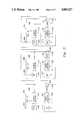
DESCRIPTION OF THE DRAWINGSFIG. 1 is a block diagram of a parallel partition serial neighborhood image processing system.
FIG. 2 is a block diagram of a neighborhood transformation module in accordance with the present invention.
FIG. 3 is a block diagram showing the interconnection of three parallel neighborhood transformation modules.
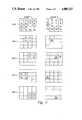
FIGS. 4a-4d are diagramatic representations of raster scan control schemes.
FIG. 5 is a diagram illustrating the neighborhood transformation windows on a memory map.
FIG. 6 is a clock cycle timing illustrating the operation of the neighborhood transformation module of FIG. 2.
FIG. 7 is a memory map of a 3-segment partitioned memory in accordance with the present invention.
FIG. 8 is a clock cycle timing table illustrating the operation of the neighborhood transformation module with the reverse scan of FIG. 4b.
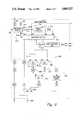
FIG. 9 is another embodiment of the neighborhood transformation module in accordance with the present invention.
DETAILED DESCRIPTION OF THE INVENTIONIllustrated in FIG. 1 is a parallel pipeline image processor similar to that shown in U.S. Pat. No. 4,484,349 described earlier. Image sensor data from a two dimensionalimage sensor plane 10 having N-columns and M-rows is transferred to an image data memory means 20. For exposition purposes, thememory 10 can be visualized as a two dimensional array of storage registers also having M-rows and N-columns. Each of the registers inmemory 20 can be addressed by its row and column address. As should be understood by those skilled in the art, many techniques of memory mapping may be employed to obtain the intended result of keeping track of the location of the image. Further illustrated in FIG. 1,memory 20 is geographically divided into K-partitions (K =3 in the drawing) numerically identified as 21, 22, and 23. Each of the partitions is comprised of M-rows and P-columns. In the present invention, the partitions are preferably identical in array size.
Data from afirst partition 21 is serially presented to neighborhood transformation module (NTM) 30. The output ofNTM 30 is serially presented to NTM 40. Theoutput 60 of NTM 40 is shown coupled back into memory means 20.
In a similar manner, asecond partition 22 of memory means 20 is serially presented to NTM 31 and NTM 41 in succession Theoutput 61 of NTM 41 is coupled back to memory means 20. Likewise, the 3rd partition identified by thenumeral 2 is presented toNTM 32 and NTM 42 in succession, and theoutput 62 ofmodule 42 is also coupled back to memory means 20.
In practice,NTM modules 30, 31 and 32 are substantially identical and perform substantially the same neighborhood transformation process (i.e., they utilize substantially the same neighborhood transformation algorithm). Similarly,NTM modules 40, 41 and 42 are substantially identical, and are intended to perform an identical neighborhood transformation. The transformation algorithm performed by the first transformation stage includingNTM modules 30, 31, and 32, and the transformation algorithm performed by the second transformation stage includingNTM modules 40, 41, and 42 are usually different, although may be the same algorithm. Each of the algorithms performed by each of the stages depends on the type of image processing desired. In the present invention, each of the neighborhood transformation modules are identical except for control information (not shown) which can change the algorithm performed by each of the NTM modules.
Again referring to FIG. 1, interconnection means 51 provides a path for transferring edge data betweenmodules 30 and 31. Similarly, interconnection means 52 provides means for transferring edge data betweenmodules 31 and 32. Interconnection means 53 transfers edge data betweenmodules 40 and 41, and interconnection means 54 provides a path for transferring edge data betweenmodules 41 and 42.
It should be recognized by those skilled in the art that there may be a number of partitions between the second partition identified bynumeral 22 and the 3rd partition identified bynumeral 23. The number of partitions selected is a matter of design choice.
Also shown in FIG. 1,memory 20 includes an output means 70 which is generally intended to be connected to autilization device 71, such as display electronics for video output. However, it should also be recognized that the output ofmodules 40, 41 and 42 could also be used as a direct connection to a utilization device.
The description so far presented is, in part, essentially that known in the art, and particularly described by U.S. Pat. No. 4,484,349. Illustrated in FIG. 2 is a schematic block diagram of one of the neighborhood transformation modules shown in FIG. 1 in accordance with the present invention in which a 2×2 window transformation is an integral part of the transformation process. In FIG. 2, the single signal lines illustrated may actually be a plurality of signal lines, i.e. a parallel signal buss.
The architecture of theneighborhood transformation module 100 illustrated in FIG. 2 is operative to perform a 2×2 window neighborhood transformation as aforesaid, and may be used for any of the NTM modules of FIG. 1. Each NTM module includes an input means 201 presented to a storage register (SR) 203.Storage register 203 includes anoutput 204, also identified by the signal letter "A", which is presented to an input ofstorage register 205 andmultipath switch 207 on connection means 204a and 204b, respectively.Storage register 205 includes anoutput 206, also identified by the signal letter "B", presented tooutput shift register 211,delay register 212, andmultipath switch 207 on connection means 206a, 206b, and 206c, respectively.Output shift register 211 includes anoutput 218 also identified by signal letter "H". Delayregister 212 includes anoutput 213, also identified by the signal letter "C", presented tostorage register 215 andmultipath switch 207 on connection means 213a and 213b, respectively.Storage register 215 includes anoutput 219, also identified by the signal letter "D", presented tomultipath switch 207.
Module 100 further includesinput shift register 221 having itsoutput 225, also identified by signal letter F, presented tostorage register 223 andmultipath switch 207 on connection means 225a and 225b, respectively. Theoutput 227, also identified by signal letter G, ofstorage register 223 is connected tomultipath switch 207 on connection means 227. Theinput shift register 221 receives its input via input means 231 or 233 throughmultiplexer 235 under control of switch control S2.
Multipath switch 207 provides fouroutputs 241, 242, 243, and 244, having signals identified by signal letters "a", "b", "c" and "d", respectively. These outputs are presented as inputs toneighborhood transformation processor 250 which includes arithmetic logic units (ALU) 251, 252 and 253.ALU 251 operates on signals "a" and "b", andALU 252 operates on signals "c" and "d". The output ofALU 251 is presented toALU 253 through astorage register 255. Similarly the output ofALU 252 is presented toALU 253 throughstorage register 257. It should be noted that the input, output, and internal connections ofprocessor 250 as just described is only exemplary in nature for performing the intended function.
Each of the storage registers, thedelay register 212, and arithmetic logic units are intended to be synchronously operated by a central clock signal CK1 (not shown). The clock signal CK1 has been left out of the diagram in order to simplify the drawing for ease in understanding the present invention. (synchronous and asynchronous control being well understood in the control arts). Both theoutput shift register 211 and theinput shift register 221 are shown to be serially shifted by a common clock signal CK2. However, independent clock signals may be utilized. (It should be noted that the input to shiftregister 221 and the output ofshift register 211 are serial in form, and therefore simplifies the architecture since no parallel buss line is required). Further,output shift register 211 also includes an enabling signal El to cause the storage of the output ofregister 205, under control of El.Storage register 223 also includes enabling signal E2 to cause the storage of the output ofinput shift register 221 under control of E2. Lastly,multipath switch 207 is illustrated having a control switch signal S1 which will function in a manner as will be described below.
FIG. 3 illustrates the parallel pipeline neighborhood transformation processor of the present invention in which the array is divided into three partitions. The purpose of FIG. 3 is to illustrate the connections between three identicalneighborhood transformation modules 100, and in particular show the connections between the input andoutput shift register 211 and 221, respectively, between the modules to permit the transferring of edge data information in a manner as will be described.
In FIG. 3, the left hand NTM module is identified asmodule 301, the right hand NTM module is identified as 303, and the middle NTM module is identified as 302. All of theNTM modules 301, 302, and 303 are identical--similar tomodules 30, 31, and 3 of FIG. 1. Components in each of theNTM modules 301 , 302, 303 which have the same intended function as in FIG. 2 have identical numerical designations as those ofNTM module 100 of FIG. 2. The output ofoutput shift register 211 ofmodule 302 is connected to input means 233 ofpreceeding module 301 and input means 231 of followingmodule 303. The output ofshift register 211 ofmodule 301 is presented to input means 231 of followingmodule 302. The output ofoutput shift register 211 ofmodule 303 is presented to input means 233 ofpreceeding module 302.
FIGS. 4a, 4b, 4c, and 4d illustrate raster line scan control schemes and a neighborhood transformation memory mapping scheme in accordance with the present invention. In particular, FIG. 4a shows a raster line scan moving from left to right and from top to bottom--i.e., right/down-scan. Further, data of the 2×2 window having four corner addresses a, b, c, and d are operated on with the decision that the resultant transformation of the aforesaid 4 corner data values will be stored in the memory means 20 address location corresponding to the former location of the b-address. The above control scheme is further illustrated in FIG. 5.
FIG. 5 illustrates a small matrix example of addresses in memory A having 4 columns and 4 rows. Each of the cells in the memory A matrix is identified by a numeric address 1a to 16a. AtStep 1, a first 2×2 neighborhood transformation operates on data incells 1a, 2a, 5a and 6a, and stores the result NT1 in the location ofaddress 5b of memory B--memory B having corresponding numeral addresses as memory A. InStep 2 the raster scan moves over 1 column and performs the neighborhood transformation on data incells 2a, 3a, 6a and 7a, and stores the result NT2 incell 6b. AfterStep 3, the result of the neighborhood transformation oncells 3a, 4a, 7a and 8a is stored inaddress 7b and identified as NT3. Note that afterStep 3, no further valid 2×2 window transformations can be performed on data values inrows 1 and 2. Therefore, Step 4 (not shown) produces invalid data as noted by the asterisk incell 8b. At the end ofStep 4, the raster line scan is reset down one row and back to the left side as illustrated by Step K. In Step K, a neighborhood transformation NT4 is performed oncells 5 a, 6a, 9a and 10a and stored inaddress 9b. Step N illustrates the next to the last 2×2 window transformation to be performed on data values in the matrix of data values stored in memory A. In Step N, a neighborhood transformation NT11 is performed oncells 11a, 12a, 15a and 16a and stored inaddress 15b.
It should be recognized by those skilled in the art, that after a complete raster scan of an image stored in memory A, and utilization of a 2×2 window neighborhood transformation scan, and utilization of the storage of the resultant transformations in corresponding addresses of the b cell in memory B, the resulting image is one in which the image shrinks because the top row and the right column no longer have valid neighborhood transformation data. This is particularly indicated in FIG. 5 by the asterisks in the top row and right column of memory B after Step N. Further, the resultant image in the memory matrix has shifted down one row and to the left one column.
It should be appreciated by those skilled in the art that for each neighborhood transformation, for example by the second transformation byNTM modules 40, 41, and 42 illustrated in FIG. 3, the image in the memory will shift an additional row nd column in the same direction for the same raster line scan pattern. As will be discussed later, the architecture of the present invention can utilize a reverse scan, as illustrated in FIG. 4b, utilizing the same NTM module and control scheme with the result that the resultant neighborhood transformation image will be shifted in a complimentary manner to reposition the image centrally within the image memory map.
The operation of the neighborhood transformation module of FIG. 2 will be described with reference to FIG. 3, the clock cycle timing table presented in FIG. 6, the memory diagrams of FIG. 7, and the raster line scan diagram of FIG. 4a.
FIG. 7 illustrates 3-segment partitioned image data memory maps A, B and A+ similar to FIG. 5. Each memory map has 4 rows and 12 columns. Further, consider that the image data and corresponding memory map is divided into 3 segments as illustrated inmemory map segments 601, 602 and 603. In each of the memory maps, the upper left memory cell is identified byaddress 1, and the lowest right hand cell identified byaddress 16. Further, it should be assumed that the output data from thememory partitions 601, 602, and 603 are sequentially fed on a signal buss (by connections not shown) into each of thetransformation modules 301 302, and 303, respectively, as illustrated in FIG. 3 in accordance with the raster line scan as illustrated in FIG. 4a. That is, the cell data is sequentially fed, for a selected clock cycle, from the memory, one cell at a time and one line at a time, starting with the address corresponding to the upper left corner of the memory map and scanning from the left to the right for each line scan. The details in FIG. 6 show the address of the data (not the data itself) on input means a, b, c and d which are presented to theneighborhood transformation processor 250 for each clock cycle CK1.
The clock cycle timing table in FIG. 6 and the memory map diagrams illustrated in FIG. 7 diagrammatically illustrate the operation of any of the NTM modules, but particularly for themiddle NTM module 302, for a right/down-scan. The heading of the table of FIG. 6 indicates the signal letters as defined earlier with respect to FIG. 2. The numeral under the "letter" columns indicate the cell address of the particular partitioned memory. The following exposition describes the flow of data following each complete clock cycle CK1. The "circled" cells indicate needed edge data by the adjacent NTM module. "Boxed" cell data indicates the cell data required for theneighborhood 2×2 transformation.
After the the second clock cycle, signal B, containing data ofcell 1, is loaded intoshift register 211 upon command of signal E1. In the timing background for the example illustrated, at a generally faster clock rate CK2, the contents ofoutput shift register 211 is serially shifted into theinput shift register 223 of the precedingNTM module 301 through connectingmeans 231. At the same time the contents of theoutput shift register 211 of the followingNTM module 303 is serially shifted intoinput shift register 221 ofmodule 302 through connecting mean 233. Upon command of signal E2, signal F is loaded intoSR 223. In like manner, after the 6th clock cycle, the contents ofcell 5 is loaded intoinput shift register 221. Thus, before the 10th clock cycle, signal G represents the contents ofcell 1 and signal F represents the contents ofcell 5. The combination ofoutput shift register 211 andinput shift register 221 allows passage and storage of edge data over a single serial data transmission line between NTM modules. This allows, therefore, background timing activity while cell data is passed throughregisters 205, 212, and 215, and minimum signal lines between NTM modules.
Generally, it should be noted that clock rate CK2 need not be faster than CK1, and may actually be the same as CK1. That is, CK2 may be the same as CK1 (or even slower) if the number of columns per segment is greater than the number of bits per data value stored in a memory cell (i.e., the length of the output serial shift register, e.g. register 211).
A discussion of the function of thedelay register 212 and the size of delay will now be presented. In the example as illustrated in FIG. 6, the memory image is divided into 3 segments in which each segment includes 4 columns. For proper operation of theNTM module 100, delay register 212 must be equivalent to N-total-image-columns (12) divided by the number of K-partitions (3) less 1--i.e., (N/K) -1. In the instant example, the delay register must provide the equivalent of 3 clock cycles (12 divided by 3 less 1). Therefore, in the present example, the delay register must be the equivalent of 3 clock cycles long before data is available at thedelay register output 213, identified by the letter "C". Accordingly, the contents of cell no. 1 is available at C after the fifth clock cycle. After the sixth clock cycle, the value of signals A, B, C, and D are precisely the window pattern of FIG. 4a and the window illustrated atStep 1 of FIG. 5 for memory A. Namely, D has the value of cell no. 1, and C has the value of cell no. 2, B has the cell value of no. 5, and A has the value of cell no. 6. In like manner, after each clock cycle CK1, the values of A, B, C, and D correspond to thescanning 2×2 window.
The discussion which follows describes the operation of the multipath switch in order to perform neighborhood transformations at partition edges. After the sixth clock cyclemultipath switch 207 is set by switch S1 to present the outputs A, B, C and D as the inputs a, b, c and d toneighborhood transformation processor 250. After the 7th clock cycle, the beginning of the neighborhood transformation ofcells 2, 3, 6 and 7, begins inprocessor 250. The transformation process takes place sequentially through one or more clock cycles until the data is available at theoutput 290 ofprocessor 250 for subsequent storage in memory B or presentation to a subsequent transformation stage as illustrated in FIG. 1. Assuming there is only one transformation stage, the data represented by signals A, B, C, and D after the 6th, 7th, and 8th clock cycles correspond to the 2×2 window moving as shown bySteps 1, 2, and 3, respectively, of FIG. 5. In these circumstances, themultipath switch 207 control signal S1 is such to allow signals A, B, C, and D to become the input signals a, b, c, and d presented to theneighborhood processor 250. Therefore, the neighborhood transformation values NT1, NT2, and NT3 can be calculated sequentially by the neighborhood transformation processor.
However, after the 9th clock cycle, the middle NTM module requires edge data from the followingNTM module 303. In these circumstances, switch control S1 is changed to control themultipath switch 207 to cause the connection of signal G toprocessor 250 input signal a, and signal F toprocessor 250 input signal c. At this point,processor 250 can perform the neighborhood transformation NT4 on the proper 2×2 window cell data as illustrated by window 610 in FIG. 7.
After the 9th clock cycle,SR 223 is again enabled to store signal F. Further, after the 10th clock cycle,cell 9 is serially passed to input register 221 for use after the 13th clock cycle when edge data is again required to obtain the NT8 transformation. The pattern, of course, repeating for edge data needed at the 17th clock cycle. Thus, a complete raster line scan utilizing a 2×2 window scan is completed after the 17 clock cycles. Since each of theNTM modules 301, 302, and 303 are operating in the same way at the same time, the complete image is transformed after the the 17 clock cycles.
As shown in FIG. 7, the neighborhood transformations NT1 through NT12 are stored in memory B with the image shifted to the right and down as already discussed. However, as indicated earlier, a pipeline of processors can serially process the output of the neighborhood transformation processor in order to further transform the image data before being passed back to memory B. It should be understood that memory B may be the same memory A, or alternatively be a separate partition of a memory at least equal to the size of memory A.
In the present invention, the same NTM modules with the same control scheme can be used in order to reposition the image in the memory plane without a complex or sophisticated memory control scheme. In the present invention, all that is required is simply reversing the scan of the memory as particularly illustrated by FIG. 4b--namely, scan left and up. The table illustrated in FIG. 8 shows the signal values, like the table in FIG. 6, for the situation in which the scan is the left-up-scan. The results are particularly illustrated by the memory map of FIG. 7 in which the values of memory B are reversed scanned and stored in memory A+. The resultant image in memory A+ has shifted to the right and up--opposite of the resultant shift cause by the right-down -scan.
It should be noted, however, that when the scan is reversed as aforesaid, it is necessary when obtaining edge data for the window, that the edge data must be obtained from the preceding NTM module. In these circumstances, signal S2 is operated to cause themultiplexer 235 to connect the connecting means 31 to the input ofinput shift register 221. The remaining signals and operation of the NTM module remain the same as in the previous discussion.
It should be noted that the window storage scheme when using the reverse scan is the same as the right-down-scan. Namely, results are store in the "b" cell location. A comparison of the 2×2 windows of FIG. 4a and 4b indicate that the image is turned upside down and right-to-left. Accordingly, after the reverse scan the above state inverted picture scan may be read directly from the memory without further processing or memory control. Further complimentary scans like those shown in FIGS. 4c and 4d, and the like, can also be processed by the NTM module of the present invention.
FIG. 9 illustrates an enhanced version of the NTM module as shown in FIG. 2 with enhanced capability of image processing algorithms and the like. Like functioning components as FIG. 2 have the same numeral designations in FIG. 9. The NTM module of FIG. 9 includes amultipath switch 900 for serially presenting either of two image matrixes throughNTM transformation processor 950 or providing various combinations. The multipath switch can select connection from either of the twoinput signal 201 or 902, and connect them to any of three ormore output lines 911, 912, or 913 under control of command signal input S9.Output 911 is similar to output means 204 of FIG. 2.Output 912 allows connection directly tomultipath switch 207 for further selective processing by a more complex multipath switch and neighborhood transformation processor.
As illustrated in FIG. 9,processor 950 includes an additional ALU 955 andDecision Logic Circuit 956 along with a plurality of storage registers (SR) for proper timing of the signal processing. Like the NTM module of FIG. 2, theoutput 990 ofprocessor 950 can be sequentially processed again in the usual pipeline or passed back to memory as already described.
The NTM module of FIG. 9 includingprocessor 950 allows tremendous latitude in combining images, both current and past images, to provide a wide variety of image processing strategies. It should be understood that common to both of the NTM modules of FIG. 2 and FIG. 9 is the use of the 2×2 window neighborhood transformation architecture which is extremely simple in design and allows greater flexibility in image processing and faster throughput.
It should be understood that although the NTM module utilizing the 2×2 window has been illustrated with regard to image processing applications, it is within the true spirit and scope of the present invention to be applicable to any data matrix in which neighborhood transformation processing is required. Further it should be understood that there are a variety of memory mapping schemes which may be utilized without departing from the true spirit and intent of the present invention.
It should also be noted that the term storage register may be provided by a wide variety of circuit techniques to provide the intended function. Although the invention has been described with 4×4 memory maps, any memory size is applicable within the scope of the present invention.
Lastly, themultipath switch 207 has been illustrated to provide specific switch connections A, B, C, and D, to outputs a, b, c, and d, respectively. However, the generalized use ofmultipath switch 207 allows A, B, C, and D to be arbitrarily connected to a, b, c, and d in a variety of ways, e.g. A to d, B to a, C to b, and D to e, etc.